
A Very Medieval End
King Henry I of England died in Normandy on December 1, 1135, after suddenly falling ill. For centuries, the explanation has been irresistible: the king ignored his doctors, gorged himself on his favorite lampreys, and paid for the feast with his life. The story is ancient, but whether the lampreys were what actually killed him is another matter.
The Legend Has A Source
Unlike many colorful medieval stories, we can pinpoint where this one appears. The earliest known written account comes from Henry of Huntingdon, a 12th-century English chronicler and archdeacon. His Historia Anglorum, or History of the English People, is the earliest source for the famous tale of Henry I dying from a “surfeit of lampreys.”
Henry of Huntingdon was not writing centuries after the event. He was a contemporary of the king and lived until roughly 1157. His history is an important source for 12th-century England, although, like other medieval chroniclers, he also had an eye for memorable stories. His work is also the earliest surviving source for another famous royal anecdote: King Cnut ordering the tide to stop.
Henry Couldn't Resist
According to Henry of Huntingdon's account, the king arrived at Saint-Denis-le-Fermont in Normandy and ate lampreys despite his physician warning him against them. Henry apparently loved the fish and refused to give them up. The chronicler connected this indulgence directly with the illness that followed.
The king became seriously sick and deteriorated rapidly. Later generations boiled the episode down to one wonderfully gruesome phrase: Henry died from a “surfeit of lampreys.”
What Is A Lamprey?
That raises an obvious question for modern readers: why would anyone willingly eat one?
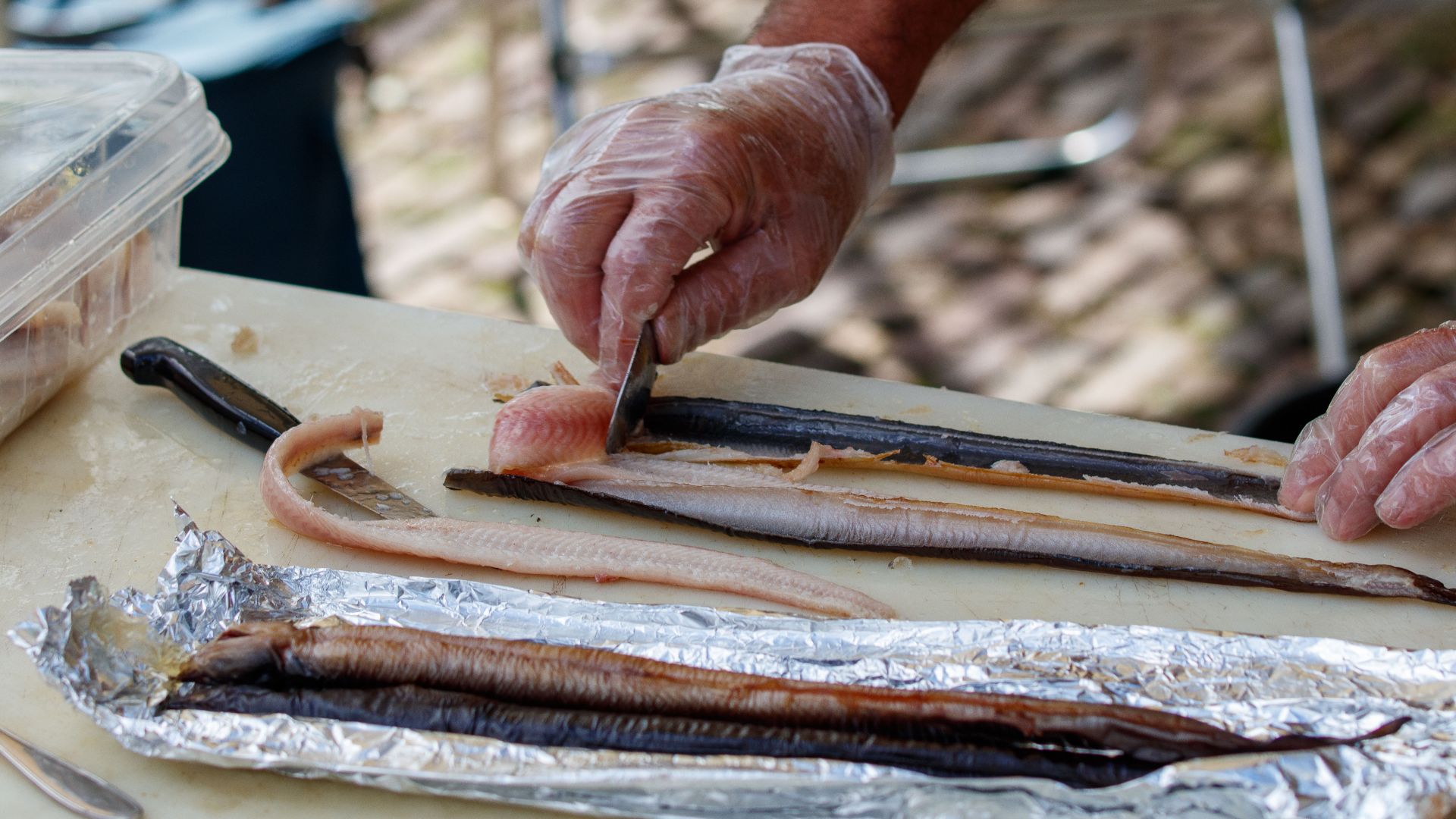
Lampreys are ancient, eel-like jawless fish with circular mouths lined with teeth. Some species attach themselves to other fish and feed on them. They look like something invented for a horror movie, but medieval diners viewed them very differently.
Lampreys were a luxury food, particularly among royalty and the wealthy. Their rich, meat-like flesh also made them attractive on religious fast days when Christians were prohibited from eating meat.

History's most fascinating stories and darkest secrets, delivered to your inbox daily.
Kings Loved Them
Henry's enthusiasm was hardly unique. Lampreys became closely associated with the English monarchy, particularly those caught around the River Severn.
Gloucester developed a famous tradition of presenting lamprey pies to the monarch. By 1200, King John valued the custom enough to fine Gloucester when the city failed to provide the expected pie. Variations of the tradition survived for centuries, with lamprey pies eventually presented to modern monarchs on special royal occasions.
So the strange part of Henry's story isn't that a king would eagerly eat lampreys. That part is completely believable.
The Evidence Gets Thin
The problem begins when we try to prove that the lampreys killed him.
Other accounts of Henry's final illness do not independently establish the fatal lamprey feast. A modern scholarly examination of the tradition notes how scarce the evidence is. Roger of Wendover also described Henry's death, but it is Henry of Huntingdon who supplies the connection between the king's fatal illness and his appetite for lampreys.
That matters. Medieval chroniclers weren't doctors conducting autopsies. If Henry became violently ill soon after an enormous meal, connecting the two events would have seemed perfectly reasonable.
 Unknown authorUnknown author, Wikimedia Commons
His Symptoms Tell Another Story
Descriptions of Henry's illness include fever, sweating, convulsions and a rapid deterioration over several days. Those symptoms don't neatly match the documented effects of lamprey poisoning.
A 2023 medical analysis examined the surviving descriptions and concluded that lamprey poisoning was an unlikely explanation. The author instead proposed a serious infection, possibly Listeria monocytogenes affecting the central nervous system, as a better fit for the reported symptoms.
That doesn't mean we've finally diagnosed Henry I from nine centuries away. The surviving descriptions are far too limited for certainty, and the study itself acknowledges that a conclusive diagnosis is impossible.
Maybe Food Did Kill Him
There's an intriguing irony here. Even if lampreys themselves weren't poisonous, Henry's final meal still could conceivably have been connected with his death.
Listeria is a foodborne bacterium. The 2023 analysis therefore raises the possibility that contaminated food might have triggered Henry's illness without the lamprey itself possessing some uniquely lethal property. Other gastrointestinal or infectious illnesses remain possible as well.
In other words, the medieval chronicler may have noticed the right dinner while drawing the wrong medical conclusion.
 AnonymousUnknown author, Wikimedia Commons
The Legend Won
Whatever actually killed Henry, Henry of Huntingdon gave history a story too good to disappear. A powerful king is warned by his physician not to indulge in his favorite food. He ignores the warning, eats anyway, becomes desperately ill and dies.
Nearly 900 years later, we still repeat it.
Henry I may indeed have eaten lampreys shortly before his fatal illness. But the famous claim that he ate so many lampreys that they killed him is something the surviving evidence simply cannot prove. The “surfeit of lampreys” tells us almost as much about how medieval people explained death as it does about Henry's final meal.
You May Also Like:
Dark Facts About Henry I, The Man Who Should Never Have Been King