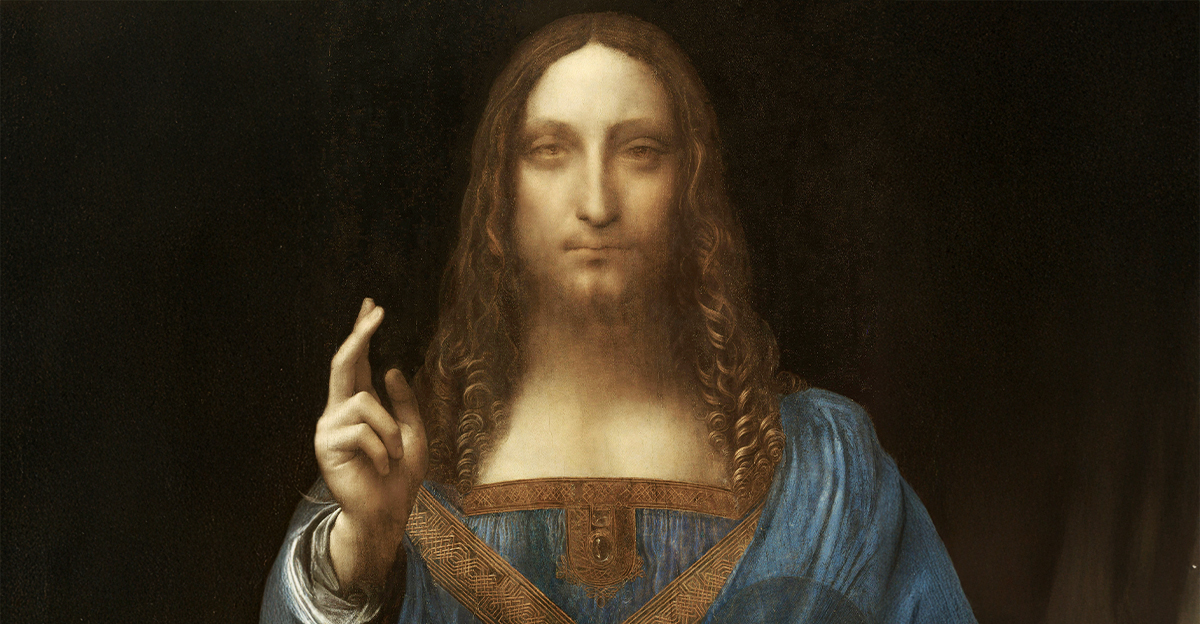
In 2005, a battered painting of Jesus Christ changed hands for less than the price of a used car. Twelve years later, it sold for an astonishing $450.3 million. The painting was Salvator Mundi, hailed as a lost masterpiece by Leonardo da Vinci. But behind that spectacular transformation lies an extraordinary question: Did Leonardo actually paint it?
A Bargain In New Orleans
The painting resurfaced in April 2005 at the St. Charles Gallery auction house in New Orleans. Art dealers Alexander Parish and Robert Simon acquired it for just $1,175. Catalogued as a work after Leonardo, the small wooden panel was darkened by varnish, damaged, and obscured by later repainting. The buyers suspected something more important might be hiding underneath.
 Public domain, Wikimedia commons
A Masterpiece Lost For Centuries
Salvator Mundi, meaning "Savior of the World," depicts Christ blessing the viewer while holding a transparent orb. The composition dates to Leonardo’s artistic world around 1500. A painting of this subject attributed to him was associated with England’s royal collections, but gaps in the ownership records make its identification with the rediscovered panel uncertain. In 1958, the panel sold for just £45, catalogued as a copy after Leonardo’s pupil Giovanni Antonio Boltraffio.
The Restorer Who Saw Something Extraordinary
The dealers entrusted the painting to conservator Dianne Dwyer Modestini, who carefully removed layers of old varnish and overpaint. Beneath the damage, she discovered remarkably delicate transitions of light and shadow, particularly around Christ’s face. Infrared examination also revealed changes to the position of a thumb, suggesting the painter had revised the composition rather than simply copying an existing image. Modestini became convinced that Leonardo himself had worked on it.
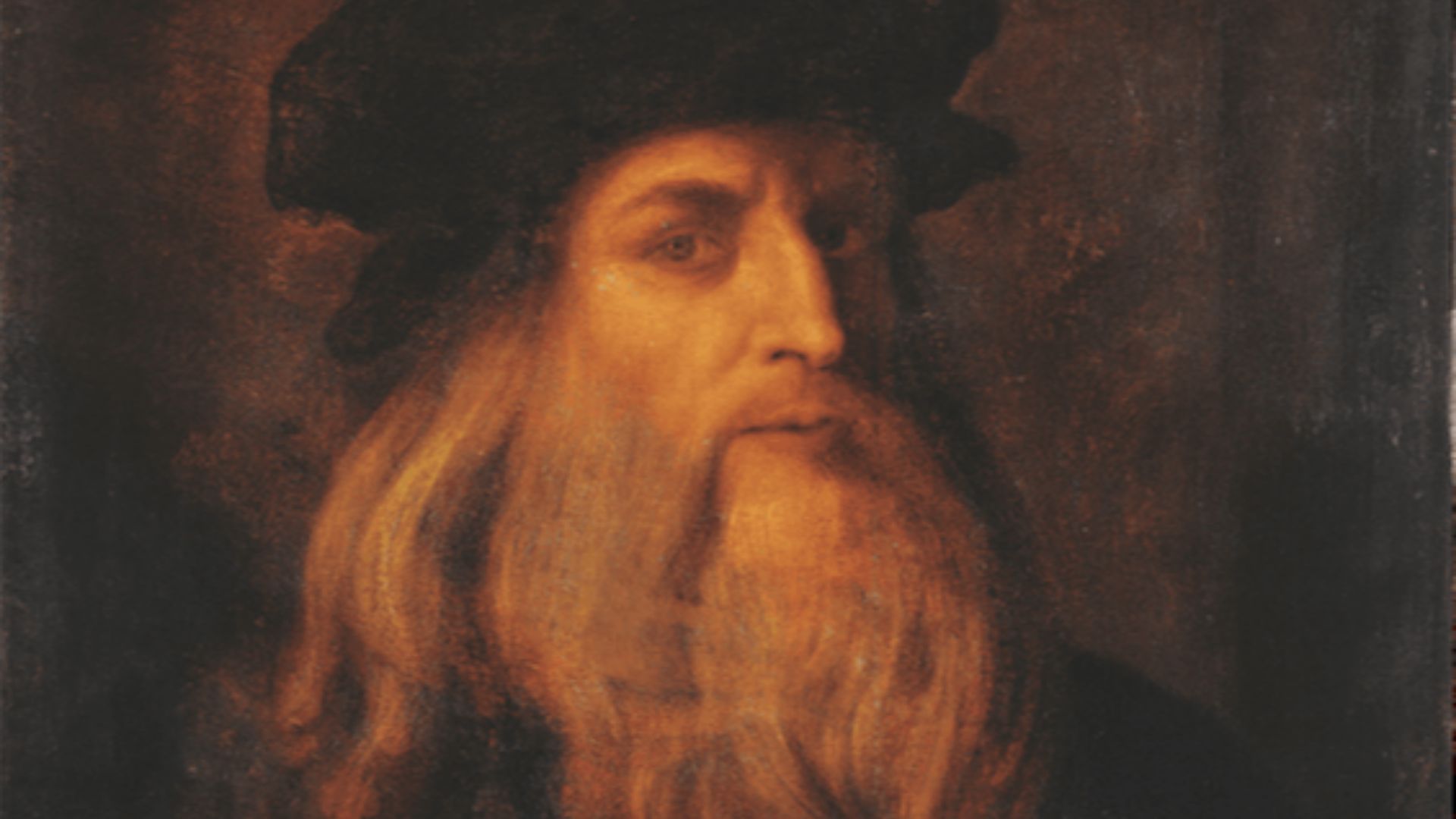 Formerly attributed to Leonardo da Vinci, Wikimedia Commons
The Evidence For Leonardo
Supporters pointed to the painting’s sophisticated handling of light, expensive pigments, and similarities to Leonardo’s known techniques. Preparatory drawings associated with the composition also strengthened the connection. Oxford art historian Martin Kemp became one of its most prominent defenders. After examinations involving leading scholars, London’s National Gallery exhibited Salvator Mundi as a Leonardo in 2011. For many observers, a lost masterpiece had finally returned.

History's most fascinating stories and darkest secrets, delivered to your inbox daily.
But Leonardo Had Assistants
Renaissance workshops complicate the idea of a painting having just one creator. Leonardo trained gifted pupils, including Boltraffio, who could work from their master’s drawings, copy compositions, or contribute to paintings under his supervision. As with other Da Vinci works, more than one version survives; in the case of Salvator Mundi, there are several versions. Consequently, establishing that Leonardo designed the image does not necessarily prove he personally painted every part of this particular panel. It might be his work, a collaboration, or largely a workshop production.
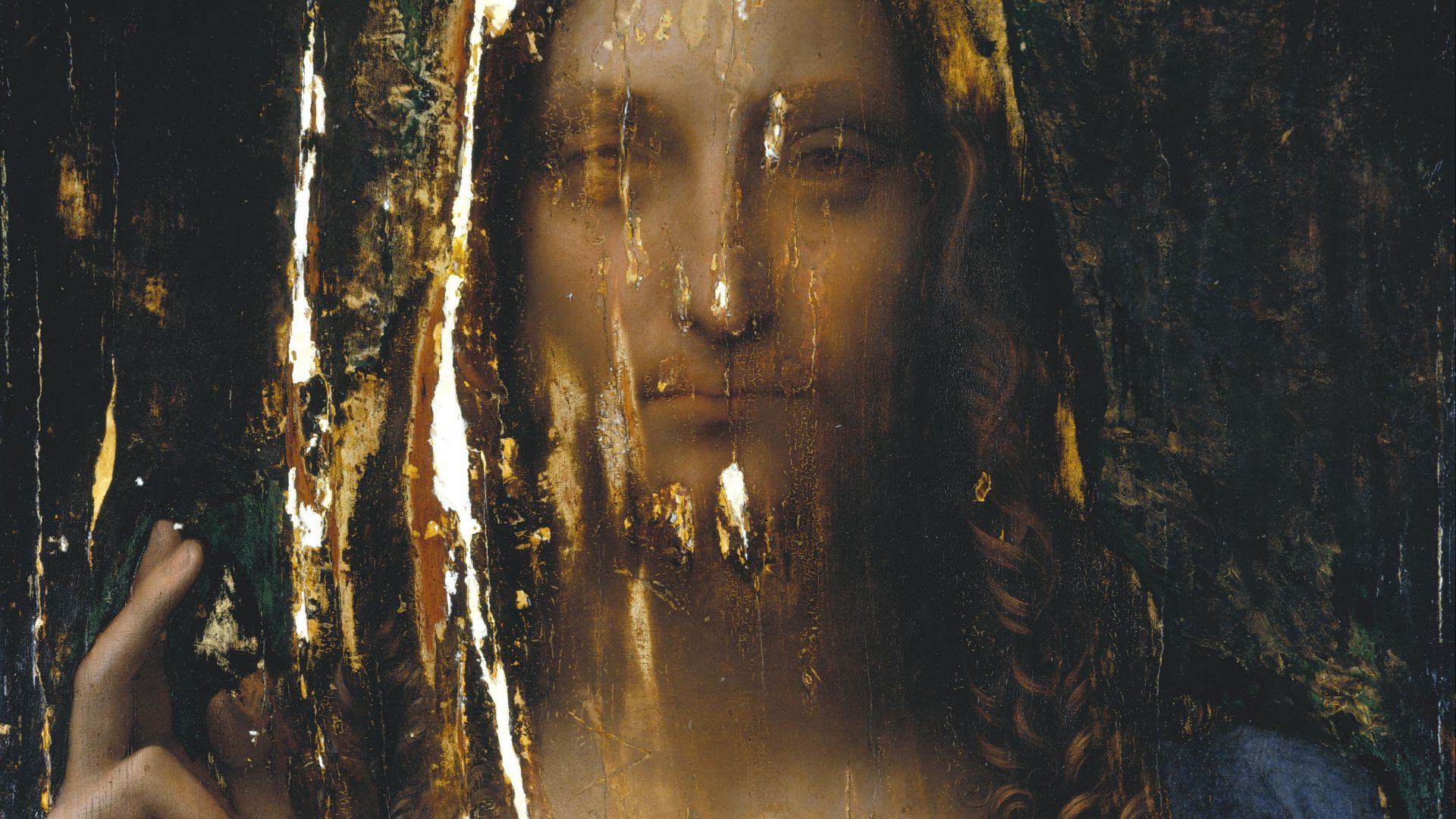 Leonardo da Vinci, Wikimedia Commons
The Experts Who Disagree
Metropolitan Museum of Art scholar Carmen Bambach, who examined the painting, has argued that most of its execution belongs to Boltraffio, with only limited contributions by Leonardo. German art historian Frank Zöllner has similarly questioned whether it should be considered a predominantly autograph Leonardo, pointing to stylistic inconsistencies and extensive restoration. Leonardo specialist Jacques Franck has challenged the composition itself, arguing that it lacks the dynamic movement characteristic of the master.
How Much Is Still Original?
One of the greatest problems is the painting’s condition. Centuries of damage, cleaning, and repainting have altered its surface. Modestini maintains that her restoration was carefully documented and preserved the surviving original material. Critics counter that substantial restoration makes it harder to judge the quality and authorship of the underlying painting. Scientific analysis can identify period-appropriate materials and techniques, but cannot conclusively establish which artist held the brush.
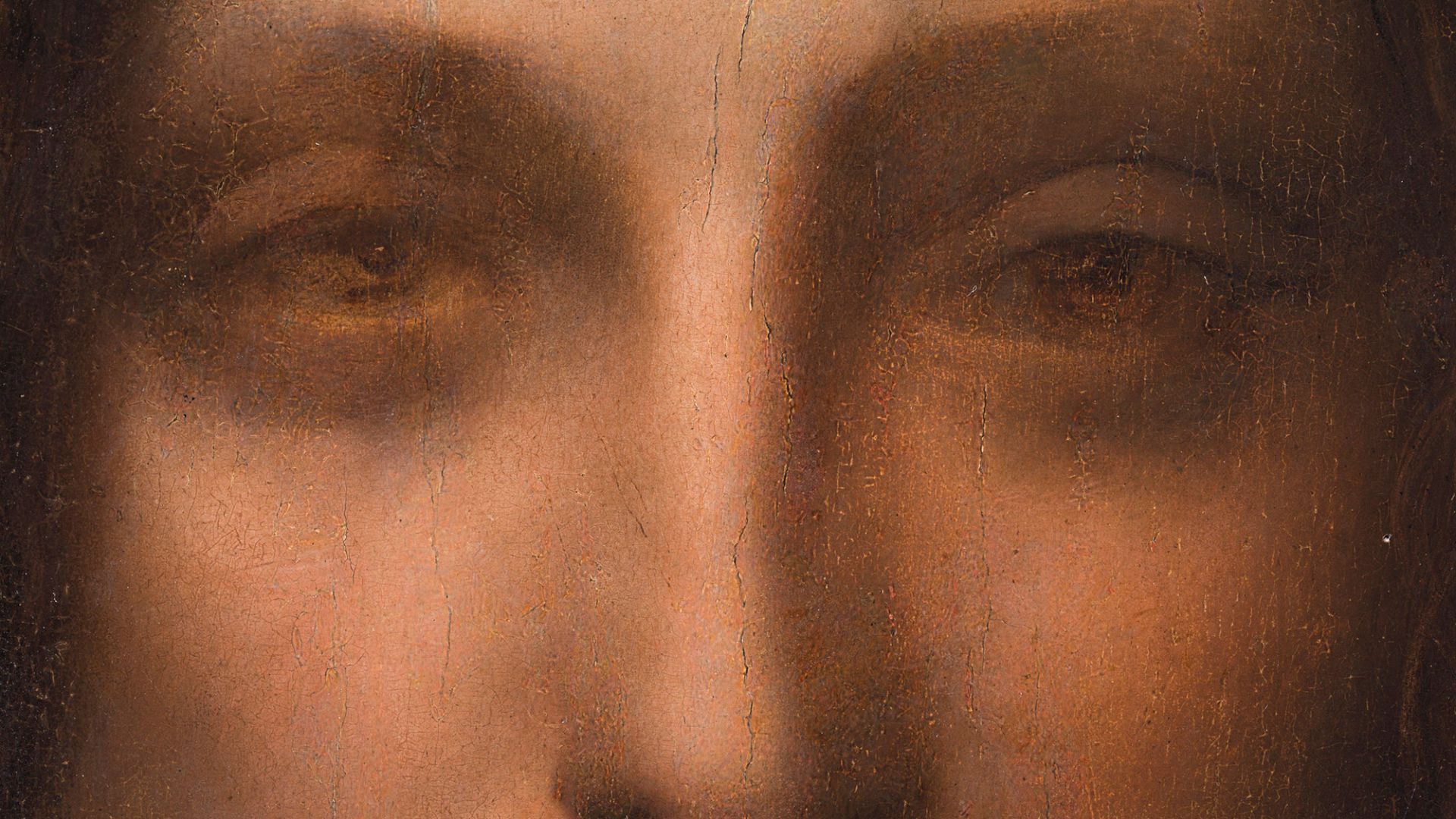 Leonardo da Vinci, Wikimedia Commons
The Auction That Shocked The World
On November 15, 2017, Christie’s auctioned Salvator Mundi in New York. After fierce bidding, it sold for $450.3 million, including fees, setting a world auction record for an artwork. Its extraordinary price depended heavily on the possibility that it was an authentic Leonardo. Yet the sale settled nothing about its disputed authorship. The painting subsequently disappeared from public exhibition, missing a planned appearance at the Louvre in 2019.
A Mystery Worth $450 Million
The debate remains unresolved. Supporters believe the surviving details reveal Leonardo’s unmistakable genius; skeptics see the work of his talented workshop, possibly enhanced by his own hand. Even examinations conducted for the Louvre have not produced universal scholarly agreement. The greatest irony is that the world’s most expensive auctioned painting remains a work whose creator cannot be identified with complete certainty. Its price is indisputable. Its authorship is not.
You May Also Like:
Facts About Priceless Works Of Art
The World’s Most Expensive Paintings
Unfinished Facts About Leonardo da Vinci, The Distracted Artist