
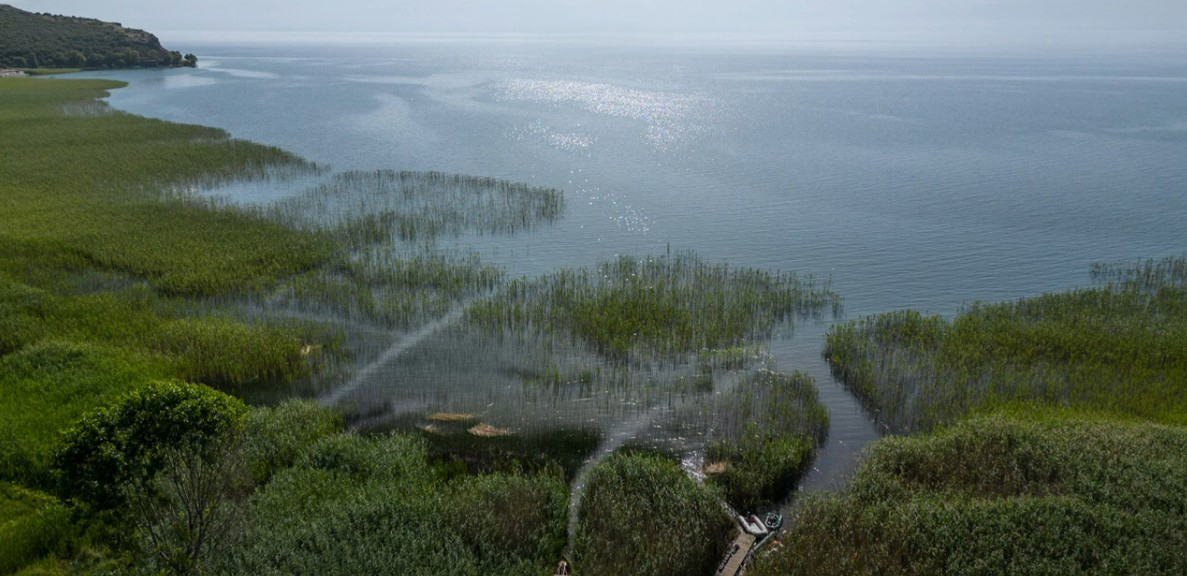
Archaeologists discovered Europe’s oldest known lakeside village in the tranquil waters of Lake Ohrid in the Balkans. Submerged off Albania’s shore near the town of Lin, this prehistoric village dates back to 6000–5800 BC, and challenges our understanding of early Neolithic life and defense.
History Submerged In An Ancient Lake
Lake Ohrid is one of Europe’s most ancient lakes and the lack of oxygen in its depths means that submerged organic materials can be preserved there indefinitely. The discovery was a result of this natural phenomenon: wood, tools, and even defensive fortifications have remained intact for thousands of years till today.

Architecture On Stilts
The homes of this ancient settlement were constructed on wooden stilts; building over marshy shores or shallow water would mitigate flooding and get some removal from ground predators. The strategy was an adaptation to the environmental conditions of the time, showing the people’s resourceful living strategies.
A Community Under Threat
The evidence here shows the villagers took defensive measures: archaeologists found about 100,000 pointed wooden stakes driven into the lake bed. The inescapable conclusion is that these were deliberate fortifications to ward off invaders or wild animals. This kind of defensive footing shows how determined the community was to protect itself.
A Thriving Neolithic Community
Ceramics, copper tools, animal bones, and botanical remains are the main kinds of artifacts that attest to a community that hunted, farmed, fished, and crafted tools. The village’s dimensions and sophistication suggest a population of 200 to 500 people, which in Neolithic times would have made it a significant hub.
Europe’s Changing Neolithic Timeline
Stilt villages also existed in the Alps, but these date to around 5000 BC. The Lake Ohrid site predates these by several centuries, and contains new evidence of the early sedentary communities that settled around lakes.

Persistent Questions And The Hunt For Clues
Only a tiny fraction of the estimated six-hectare (14.8-acre) site has been examined closely. Radiocarbon dating and tree ring analysis of over 1,000 wood samples is ongoing, but a comprehensive excavation would be a major long-term project spanning years or even decades.
Why The Site Matters
The discovery modifies what we know of the evolution of early European societies. It certainly underlines their architectural ingenuity, willingness to defend themselves, and adaptability to nature. The bottom line is that Neolithic people were more than capable of planning out settlements with maximum attention to every environmental factor around them.
You May Also Like:
Archaeologists discovered a perfectly preserved Bronze Age sword in a burial site in Bavaria.
The Carnac Stones In France Are Europe's Oldest Neolithic Monuments
Ancient Facts About Stonehenge, England's Most Mysterious Site