Table 12 Arrives
So this happened about six months ago, and I still think about it whenever I see someone walk into the restaurant with that specific energy. You know the kind—like they've already decided to be disappointed before they even sit down. This couple came in on a Tuesday night, which is usually pretty chill, and I was hosting because our regular host called in sick. The woman was maybe late forties, wearing one of those expensive-looking scarves, and the man with her looked uncomfortable in that way people do when they're trying too hard to seem relaxed. They requested a table near the window, which was fine, except we had three window tables open and somehow none of them were 'quite right.' I smiled through it because that's the job, right? Finally got them settled at Table 12. The whole interaction felt off from the start, like walking into a room where people had just stopped arguing. I grabbed menus and headed over to greet them properly. The woman waved me off before I even finished my greeting, and I had a sinking feeling this shift was about to get complicated.
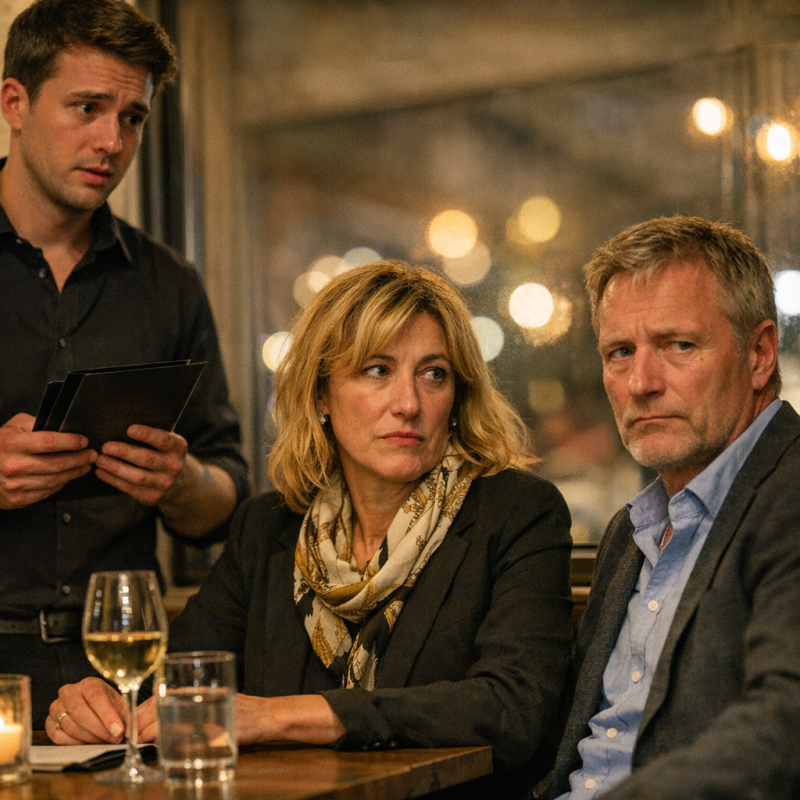 Image by FCT AI
First Impressions
I gave them a minute to look over the menu, then came back to take their drink order. The woman barely glanced up when she ordered a glass of Pinot Grigio, making it sound like I should already know which one she meant even though we had four on the menu. The man asked for water with lemon, then looked at me like he expected me to forget the lemon part. I assured him I'd remember. There was this weird tension between them—not quite arguing, but not comfortable either. I couldn't tell if they were mad at each other or if this was just their normal dynamic. Some couples are like that, I guess. When I asked if they needed more time with the food menu, the woman sighed in this exaggerated way that made the couple at Table 14 glance over. Then the man started. He pointed to the shrimp cocktail appetizer and asked how cold it was served. I said it was chilled, standard preparation. He nodded slowly, like he was filing that information away. Then he asked about portion size, then about the sauce. The man asked me three clarifying questions about the menu in a tone that felt less like curiosity and more like a test.
 Image by FCT AI
Kitchen Check-In
I punched in their drink order and headed back to the kitchen, where Carlos was prepping for the dinner rush. He looked up when I came in, probably because I had that expression—you know, the one servers get when they can already tell a table's going to be a problem. I told him about Table 12, how they were giving off difficult vibes before they'd even ordered food. Carlos just laughed and wiped his hands on his apron. He's worked in restaurants for like fifteen years, so nothing really fazes him anymore. He said some people come in looking for reasons to be unhappy, and there's not much you can do except smile and try not to let them ruin your tips from other tables. I appreciated the perspective, honestly. It helped me reset a little bit. I grabbed their drinks from the bar and took a breath before heading back out. Stay professional, stay pleasant, don't take it personally. That's the mantra. Carlos called after me as I pushed through the door. Carlos laughed and said, 'Just wait—they'll find something to complain about. They always do.'
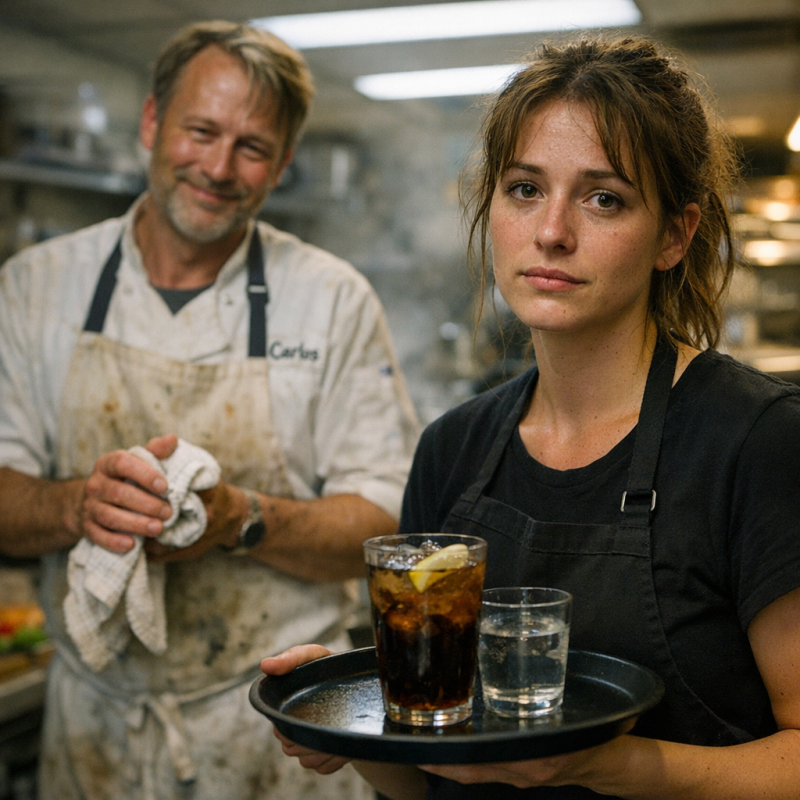 Image by FCT AI
The Shrimp Cocktail
They ended up ordering the shrimp cocktail to start, which I'd kind of expected after all those questions. I put the order in, and Carlos had it ready within ten minutes because Tuesday nights are slow enough that the kitchen moves fast. The presentation looked perfect—six jumbo shrimp arranged on ice with cocktail sauce and lemon wedges, exactly how we always serve it. I carried it out carefully, set it down in front of the woman with a smile, and asked if they needed anything else. For about thirty seconds, everything seemed fine. The man was looking at his phone. The woman was adjusting her napkin. I was about to walk away and check on my other tables when I saw it happen. Her whole face changed. Not like she'd tasted something bad—she hadn't even touched the food yet. It was this slow, deliberate shift in expression, like someone getting into character. I've seen plenty of genuine disappointment working this job, and this wasn't it. Then the woman frowned—not a small frown, but the kind that signals a performance is about to begin.
 Image by FCT AI
Too Cold
She pushed the plate slightly away from her and looked up at me with this pained expression. 'This is way too cold,' she said, loud enough that the couple at Table 14 definitely heard. I stood there trying to process what she'd just said. It's a shrimp cocktail. It's supposed to be cold. That's literally the entire point of the dish. I kept my voice calm and asked if she'd prefer something else, maybe something hot instead. She shook her head like I was missing something obvious. The man didn't say anything, just sat there looking at his phone like this wasn't happening. I offered to have the kitchen prepare it differently, even though I had no idea what that would mean for a cold appetizer. She wasn't listening. She cut me off mid-sentence and said she wanted to speak to my manager. Just like that. Diane, who was taking an order two tables over, glanced up with this 'yikes' expression. I felt my face get hot, that specific frustration that comes from knowing you're dealing with something completely irrational. Before I could offer a solution, she cut me off and demanded to speak to my manager.
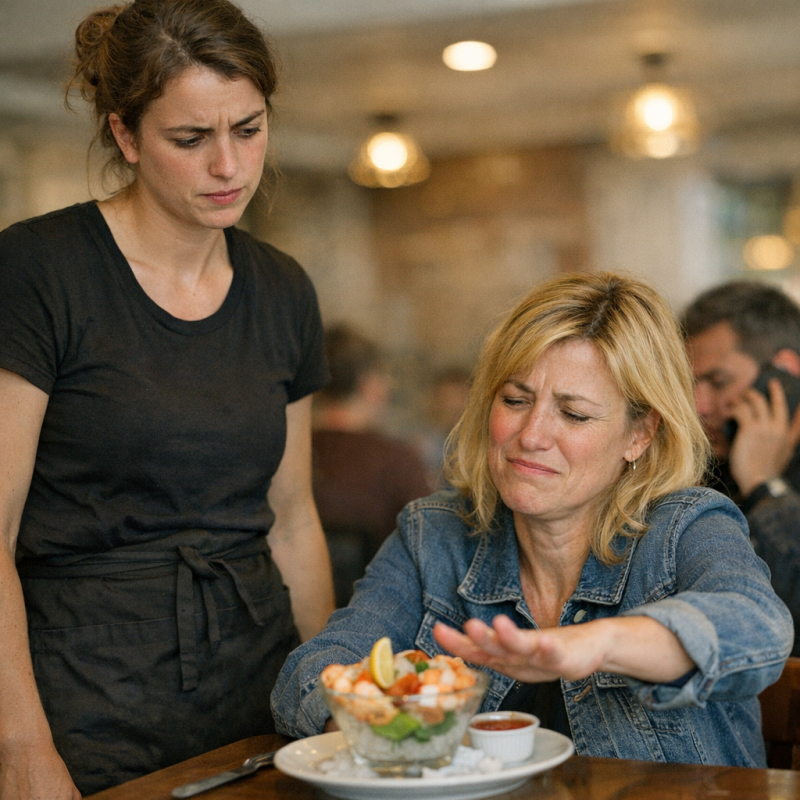 Image by FCT AI
Finding Mark
I walked toward the back, trying to keep my expression neutral even though I was annoyed. Mark was in the office doing paperwork, and he looked up when I knocked on the doorframe. I explained the situation as calmly as I could—woman at Table 12, shrimp cocktail, complaining it's too cold, wants to talk to you. I expected him to roll his eyes or make some comment about ridiculous customers, because that's usually how these conversations go. Managers and servers bond over the absurdity of the job. But Mark just nodded, his face totally calm. He asked which table, and I told him again. Twelve, by the window. He stood up and straightened his shirt, and there was something about the way he moved that seemed almost... prepared? I don't know how else to describe it. Not annoyed, not stressed. Just ready. I figured he was just being professional, going into manager mode to smooth things over and get them out of the restaurant happy. That's what good managers do, right? Mark raised an eyebrow when I explained the complaint, but his expression stayed calm—almost too calm.
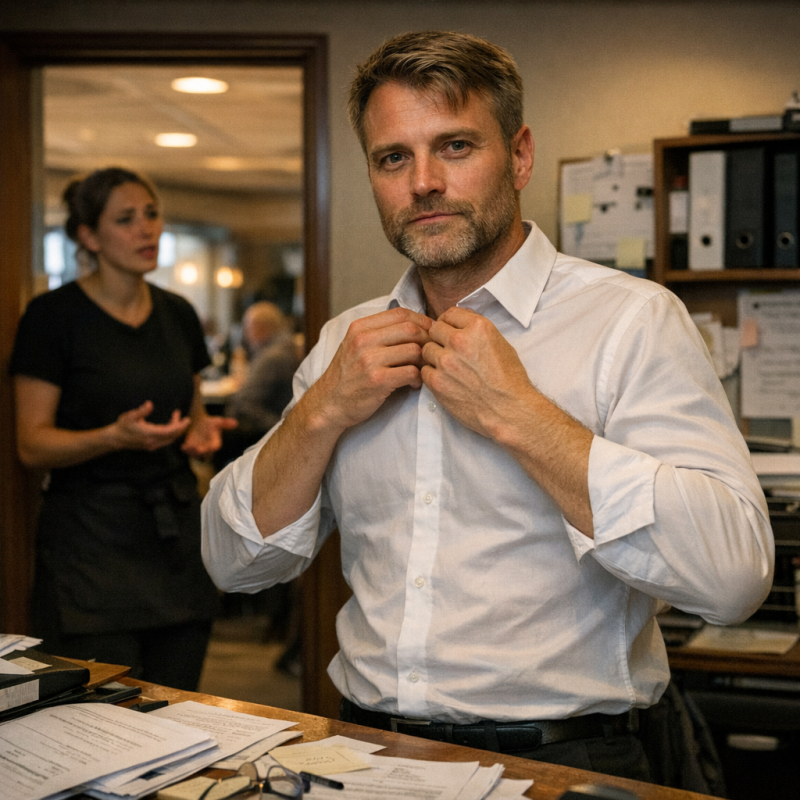 Image by FCT AI
Mark's Approach
I followed Mark back out to the dining room, staying a couple steps behind him like I usually do when a manager gets involved. He wasn't walking fast, but he wasn't dawdling either—just this steady, purposeful pace. I noticed he wasn't looking around the room the way managers usually do, checking on other tables or scanning for problems. He was focused entirely on Table 12. The woman had her arms crossed, and the man was still on his phone, though I saw him glance up as we approached. Trevor, this regular who always sits in my section on Tuesdays, was at the table next to them and definitely watching. I felt embarrassed, honestly, like I'd failed somehow even though I knew this wasn't my fault. Mark got within a few feet of the table, and I was expecting him to do the usual manager thing—apologize, offer to replace the dish, maybe comp something. But before he could say a word, the woman moved. She didn't just shift in her seat. She stood up, fast, like she'd been waiting for exactly this moment. The woman stood up before Mark even reached the table, and I realized she'd been waiting for this.
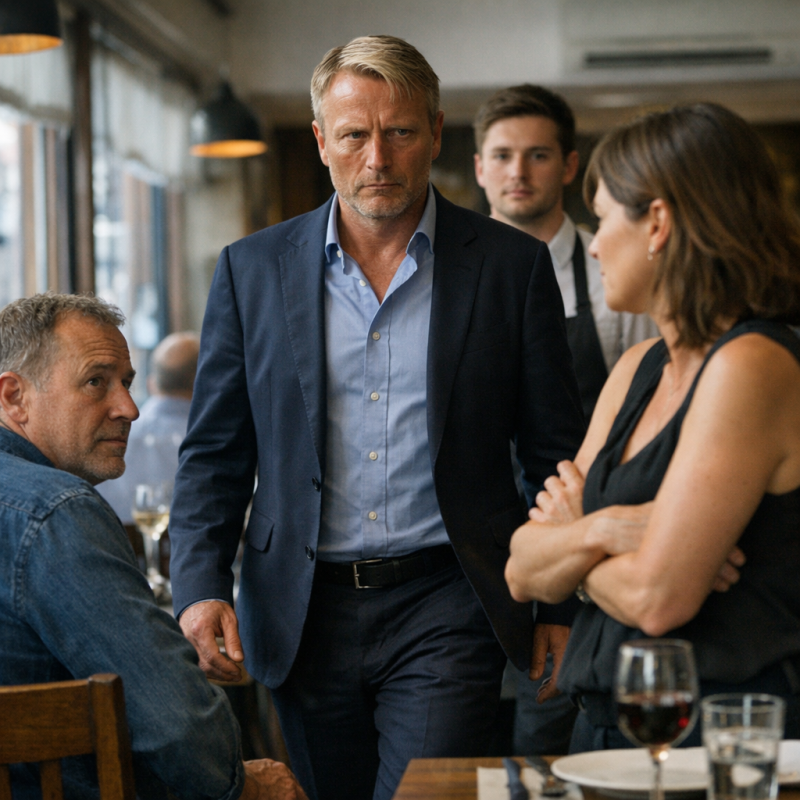 Image by FCT AI
The First Outburst
Her voice was loud. Not shouting exactly, but projected, like she wanted everyone in the section to hear. She launched into this whole thing about how the shrimp was inedible, how she couldn't believe we'd serve food that cold, how this was unacceptable and she'd never been treated so poorly at a restaurant. The couple at Table 14 stopped eating. Trevor put down his fork. Even the man with her looked uncomfortable, though he still didn't say anything. I just stood there, frozen, watching this woman perform outrage over a properly prepared appetizer. Mark kept his voice level and polite. He said he was sorry she was disappointed, and he'd be happy to bring her something else, completely on the house. He gestured toward the menu. She didn't even pause. Just kept talking, louder now, saying that wasn't the point, that we clearly didn't care about quality. The whole section had gone completely silent. I wanted to disappear. Mark kept his voice steady and offered a replacement, but she talked over him like he hadn't spoken at all.
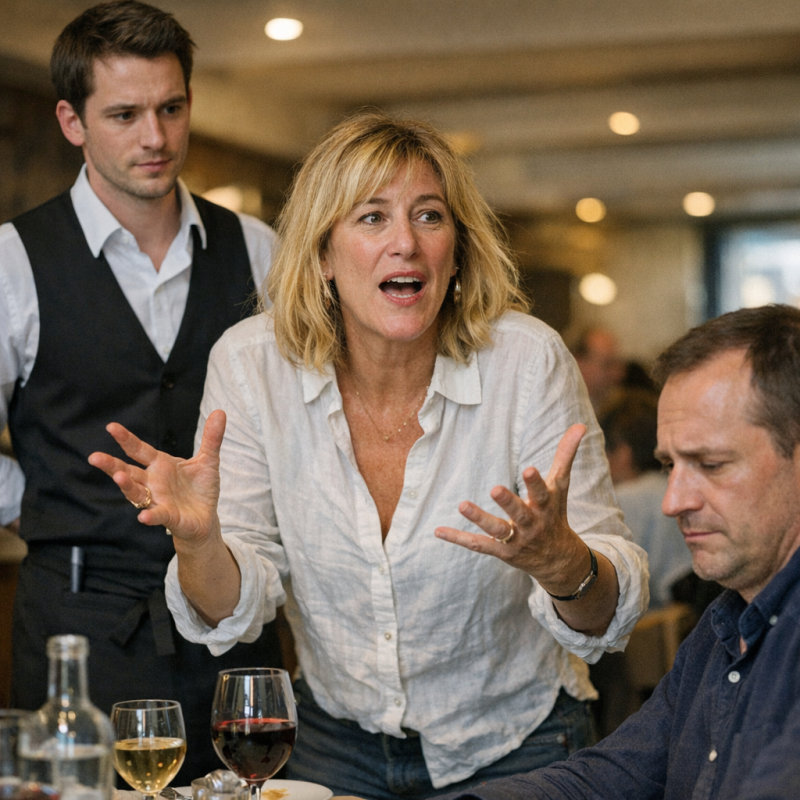 Image by FCT AI
Audience Reaction
I forced myself to look away from Table 12, scanning the rest of the dining room. Everyone was watching. The couple at Table 14 had given up any pretense of eating—they were just staring, forks suspended in mid-air. Trevor had his elbows on the table, chin in his hands, like he was watching a reality show. An older couple near the window looked genuinely distressed, like they wanted to help but didn't know how. The woman's voice kept carrying across the room, amplified by the awkward silence everyone else was maintaining. I could feel my face burning. This wasn't just embarrassing for her—it was embarrassing for us, for the restaurant, for Mark who was still standing there taking it. I wanted to tell her to stop, that she was making a scene, but I couldn't move. Then I noticed movement at a corner table. A woman in her thirties, dressed in business casual, had pulled out her phone. She angled it toward Table 12, not even trying to be subtle about it. One woman at a corner table pulled out her phone, and I wondered if this was about to end up online.
 Image by FCT AI

History's most fascinating stories and darkest secrets, delivered to your inbox daily.
The Man's Silence
The whole time, the man at Table 12 hadn't moved. He was just sitting there, arms crossed over his chest, watching his partner tear into Mark like he was watching TV. No embarrassment on his face. No attempt to calm her down or suggest they just leave. Nothing. He looked completely comfortable, which somehow made the whole thing worse. I kept expecting him to say something—anything—but he just sat there with this weirdly neutral expression. Not upset, not embarrassed, not even particularly interested. He shifted slightly in his chair, adjusted his crossed arms, and went right back to watching. The woman kept going, her voice hitting these shrill peaks that made me flinch, and he didn't even blink. It was like he'd tuned out the actual words and was just waiting for her to finish. Mark glanced at him once, just a quick look, but the man's expression didn't change. His face stayed completely blank, almost bored, like he'd seen this exact scene play out a hundred times before.
 Image by FCT AI
Screaming Escalation
Then she stepped closer to Mark. Like, right up in his personal space, close enough that I could see him lean back slightly. Her voice went from loud to actually screaming, spittle flying, finger jabbing toward his chest without quite touching him. She was saying something about reporting us, about making sure everyone knew how terrible we were, about ruining our reputation. I felt my whole body tense up. This was the moment, right? This was when Mark would finally lose it, when he'd tell her to get out, when his calm manager mask would crack and he'd show some actual human emotion. I was practically holding my breath, waiting for him to snap, to raise his voice, to do something. His jaw tightened. His shoulders straightened. And then his mouth curved up at the corners. But instead of snapping, Mark smiled—and somehow that was more unsettling than anything else.
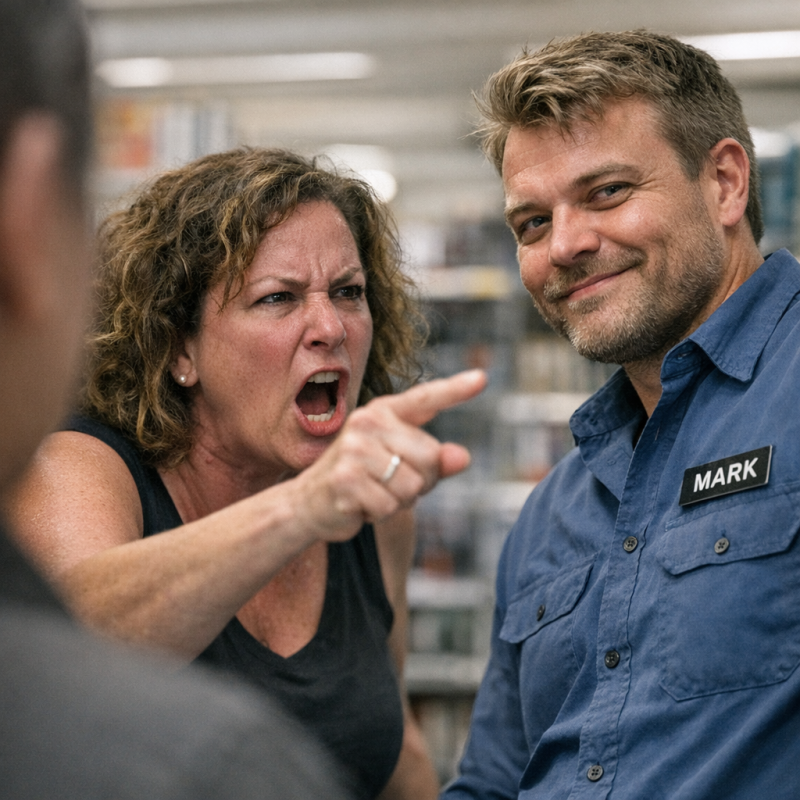 Image by FCT AI
The Turning Point
Mark's voice stayed level, almost gentle. 'Ma'am, I'm going to need you to lower your voice.' She didn't lower it. If anything, she got louder, something about how dare he tell her what to do, how she was the customer and she had rights. Out of the corner of my eye, I saw Rachel emerge from the kitchen, stopping short when she saw what was happening. She looked at me with wide eyes, mouthing 'what the heck?' I could only shake my head. The woman was still going, her face red now, really working herself up into a full rage. Mark let her finish her sentence. Then he held up one hand, palm out, in a stopping gesture. Something in his posture changed—his shoulders squared, his chin lifted slightly. The pleasant customer service smile disappeared. His voice stayed quiet, but it carried across the whole room. That's when Mark's tone shifted—just slightly—and said, 'I don't think we're going to be serving you tonight.'
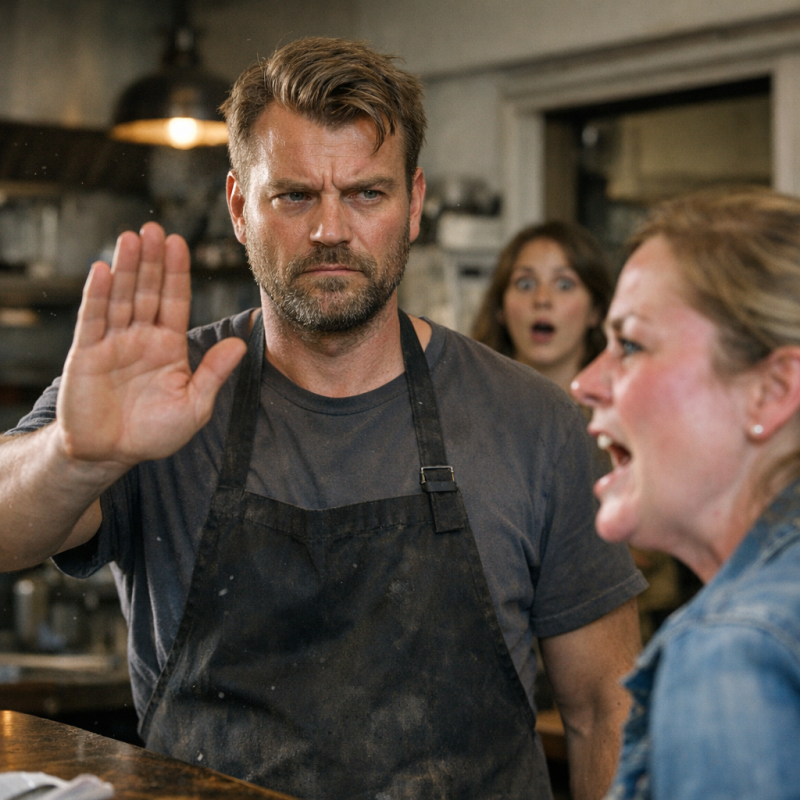 Image by FCT AI
Do You Know Who I Am?
The woman's face went through about five different expressions in two seconds. Shock, disbelief, then this twisted kind of outrage that made her look almost unhinged. 'Excuse me?' Her voice went even higher. 'Do you have any idea who I am? Do you realize what I can do to this place?' Oh god. Here it was. The inevitable 'do you know who I am' moment. I'd heard stories about customers who pulled this card, threatening bad reviews, social media campaigns, whatever. I braced myself for Mark to either cave—which seemed unlikely given how this was going—or to just repeat that she needed to leave. But he didn't do either. He looked at her for a long moment, and his expression was so calm it was almost scary. Then he said, very clearly, very deliberately: 'I do, actually.' The room seemed to tilt. Wait, what? Mark's response—'I do, actually'—hit like a bomb, and suddenly the room felt different.
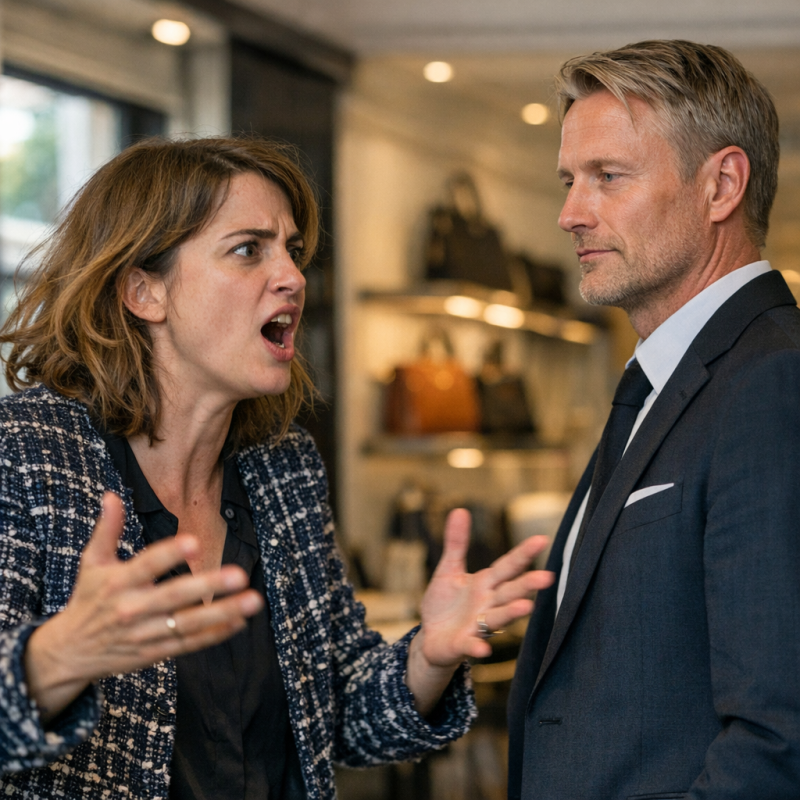 Image by FCT AI
The Phone Comes Out
Mark reached into his pocket. For a second I thought he was going to pull out a business card or something, but instead he took out his phone. He tapped the screen a few times, then turned it around to face the woman. I was standing off to the side, and from my angle I couldn't see what was on the screen clearly—just that it was some kind of image or video, something with text maybe. But I could see her face. The color drained from it completely. Her mouth opened, closed, opened again. Her eyes went wide, then narrowed, then darted to the side like she was looking for an escape route. Whatever Mark was showing her, it had rattled her badly. The confident, outraged customer persona cracked right down the middle. Her hands, which had been gesturing wildly just moments before, dropped to her sides. Her face went pale, and I realized whatever he was showing her had just changed everything.
 Image by FCT AI
Last Month's Review
Mark's voice stayed perfectly calm. 'You left a review at Bellino's last month. Same complaint. Cold shrimp cocktail.' The woman's eyes flickered. Oh. Oh no. This wasn't her first time doing this? Mark kept talking, still holding up his phone. 'Said the service was terrible. Said the food was inedible. Posted about it all over social media.' My brain was racing, trying to keep up. She'd done this before. At another restaurant. With the same complaint. That couldn't be a coincidence, could it? Was she just really unlucky with her shrimp orders, or—no. No, that didn't make sense. Mark wouldn't be this calm if it was just an unfortunate pattern. There was something else going on here. 'And you posted videos of that incident online,' Mark continued. My stomach dropped. Videos. She'd recorded herself having a meltdown at another restaurant and put it online, and I felt my stomach drop—this was bigger than I'd thought.
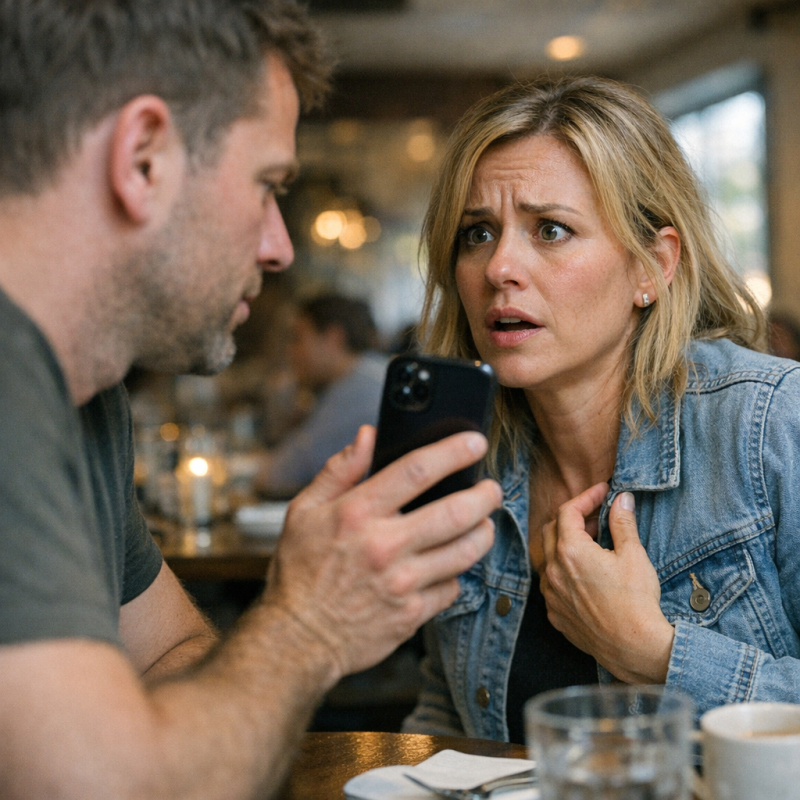 Image by FCT AI
Multiple Locations
Mark lowered his phone but kept his eyes locked on the woman. 'I manage three locations for this restaurant group,' he said. His voice was steady, matter-of-fact, like he was explaining a menu item. 'Bellino's is one of them. I was the manager on duty the night you came in last month.' Wait. What? My mind reeled. Mark had dealt with her before? At a different restaurant? The woman's face had gone from pale to gray. Her mouth opened, closed, opened again. No sound came out. For the first time since she'd walked through the door—since she'd ordered that stupid shrimp cocktail and launched into her performance—she was completely speechless. The man at the table finally moved, pushing his chair back slightly, like he was preparing to leave. Mark didn't look away from the woman. The woman's mouth opened and closed, and for the first time since she'd walked in, she had nothing to say.
 Image by FCT AI
The Man Intervenes
The man at Table 12 finally moved. He stood up abruptly, his chair scraping against the floor, and grabbed his jacket from the back of his seat. 'We should just go,' he muttered, not quite looking at the woman but not looking at anyone else either. His face was flushed, whether from embarrassment or anger I couldn't tell. The woman didn't respond. She just stood there in the middle of the dining room, her purse clutched against her chest like a shield. Her eyes darted around—at the other diners, at me, at Mark, back to the other diners. Everyone was watching. The elderly couple two tables over. The family with the toddler. Even the bartender had stopped mid-pour to stare. I felt a weird shift in my chest. A minute ago, I'd felt vindicated, almost triumphant. Now? Now I just felt... uncomfortable. Like I was watching someone come apart at the seams in real time. The man pulled on his jacket and stood there waiting, one hand on the back of his chair. But the woman didn't move—she just stood there, looking around the room at all the people watching.
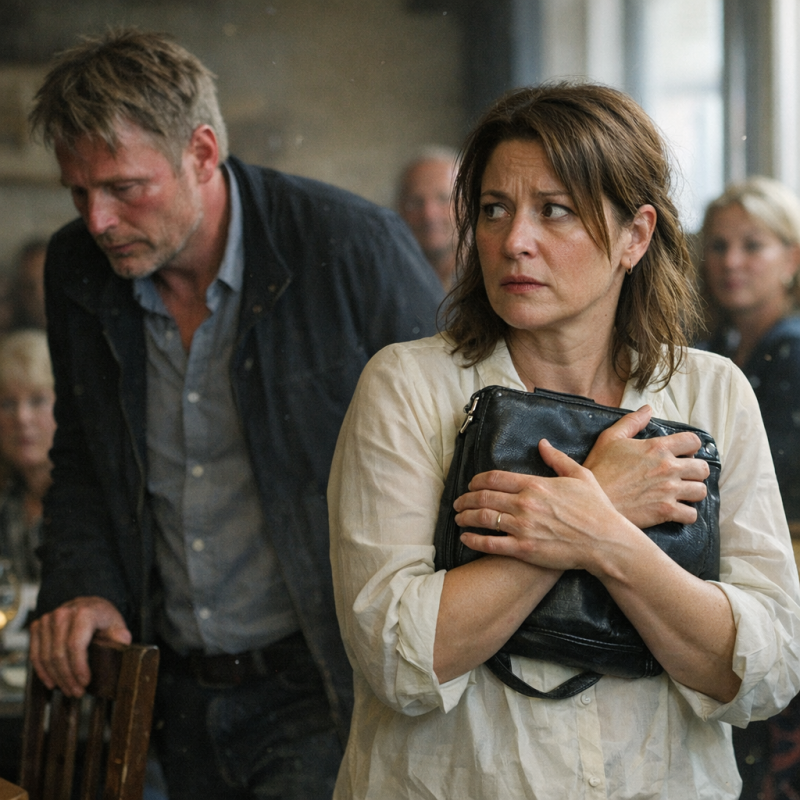 Image by FCT AI
The Silent Exit
The woman finally broke. Not with words, but with movement. She turned sharply on her heel and walked toward the door, her back rigid, her steps quick and mechanical. The man followed a few paces behind, his shoulders hunched like he was trying to make himself smaller. Neither of them said a word. Not to each other, not to us. The dining room stayed eerily quiet as they crossed the floor. I could hear the woman's heels clicking against the tile, the soft jingle of the door chime as the man pushed it open. A few diners shifted in their seats, cleared their throats, picked up their forks. But no one really started eating again until the door swung shut behind them and they disappeared into the parking lot. The silence lingered for another beat, thick and strange, like the air after a thunderstorm. I stood there with my arms crossed, my heart still pounding, trying to process what had just happened. Then I turned to Mark, who was sliding his phone back into his pocket like this was all perfectly normal. 'You knew who she was?' I asked.
 Image by FCT AI
Mark's Shrug
Mark gave this casual little shrug, like I'd just asked him if he preferred coffee or tea. 'Yeah,' he said. 'I mean, not her specifically at first. But people like her? They go from place to place looking for something to complain about.' He said it so lightly, so matter-of-fact, that it took me a second to absorb what he was actually saying. I blinked at him. 'Wait, so... this happens a lot?' 'Often enough,' he said. He glanced around the dining room, which was slowly returning to normal conversation levels. 'You start to notice patterns after a while. Same tactics, same complaints, same weird energy.' I tried to wrap my head around that. 'So what's the point? Is she trying to get free meals, or is it just... attention?' Mark looked at me with this knowing little smile, the kind that made me feel like I was still a step behind. 'Both,' he said.
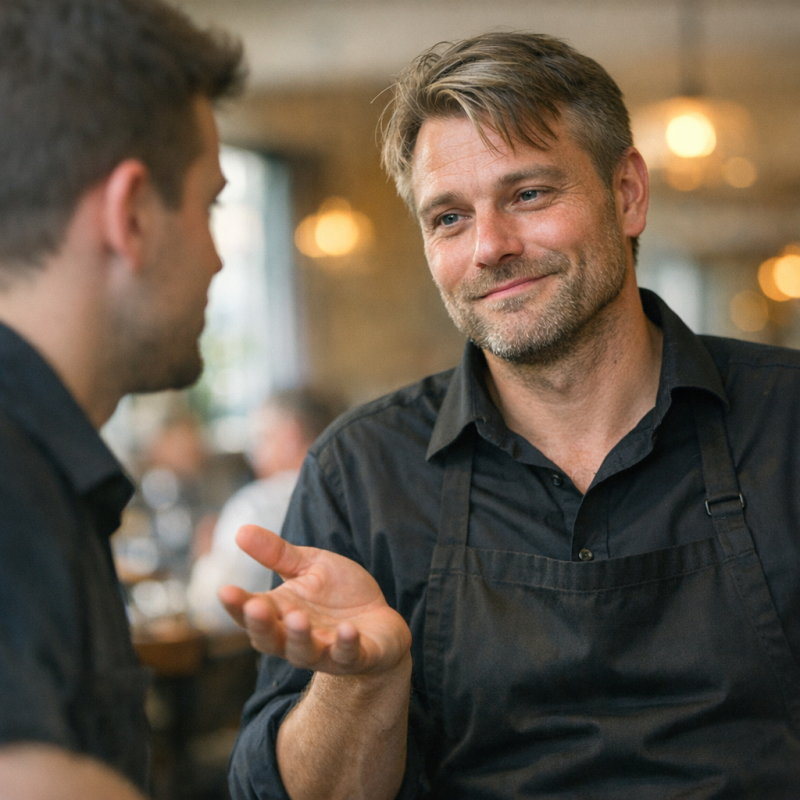 Image by FCT AI
Staff Debrief
The moment Mark disappeared into the back office, the other servers swarmed me like I'd just survived a celebrity encounter. Diane grabbed my arm first. 'Oh my God, what just happened?' she asked, her eyes huge. Carlos appeared at my other elbow, grinning. 'Did he really just pull out his phone and shut her down like that?' Rachel leaned against the server station, arms crossed, looking equal parts impressed and confused. 'I've never seen anyone handle a meltdown like that,' she said. I tried to explain what Mark had told me—that the woman went from restaurant to restaurant, that people like her existed, that he'd recognized the pattern. But even as I said it, I realized how vague it all sounded. I didn't actually know the details. I didn't know how Mark had known, or what he'd done before, or why he'd seemed so prepared. Diane leaned in closer, her voice dropping to a whisper. 'Did Mark really know her?' she asked. And I realized, standing there surrounded by my coworkers, that I didn't have the full answer yet.
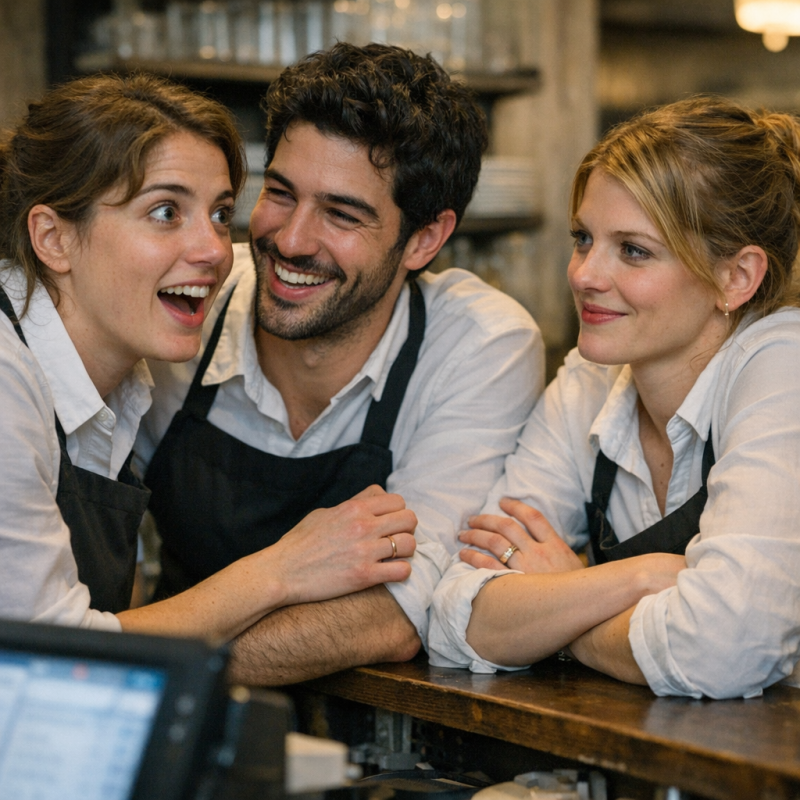 Image by FCT AI
Trying to Move On
I tried to get back into the rhythm of my shift. I refilled water glasses, took orders, smiled at customers, cleared plates. But my mind kept circling back to the way Mark had handled everything. That calm smile. The way he'd pulled out his phone like he'd been expecting this exact moment. The precision of it all. Every time I passed Table 12—now occupied by a sweet elderly couple who ordered the special and didn't complain about a single thing—I felt this weird prickle at the back of my neck. Something about the whole interaction felt off in a way I couldn't quite name. Not bad, exactly. Just... deliberate. Too smooth. Like Mark had known every step she'd take before she took it. I dropped off the elderly couple's desserts and found myself replaying the scene again. The woman's outrage. Mark's calm. The way he'd waited until just the right moment to speak. It almost felt rehearsed, but that was ridiculous, right? How could it be rehearsed? I couldn't shake the feeling that I'd witnessed something rehearsed.
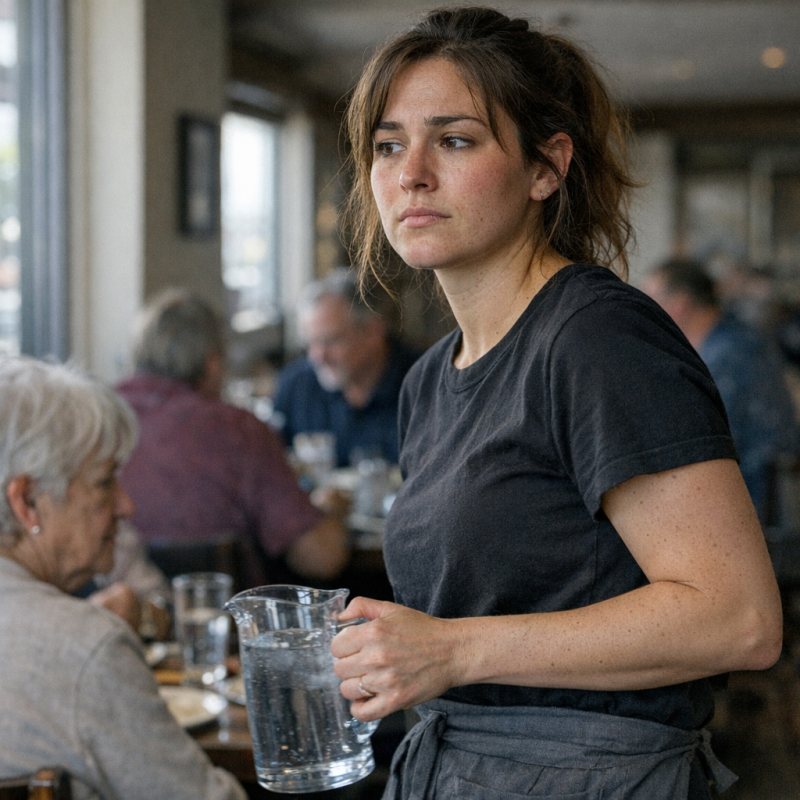 Image by FCT AI
Carlos's Theory
During a rare quiet moment between tables, Carlos sidled up to me at the server station. 'Hey,' he said, keeping his voice low. 'You know what I think? I think that woman might be one of those professional complainers.' I frowned at him. 'Professional complainers?' 'Yeah, you know. The people who go around to different restaurants and manufacture problems so they can get free food or settlements or whatever. There's like a whole thing about it online.' He pulled out his phone and started scrolling, his thumb moving fast across the screen. 'I saw this Reddit thread a few months ago. People sharing stories about serial refund scammers. It's wild.' He turned the phone toward me, and I found myself staring at a wall of text—post after post describing people who made a living off exploiting restaurant policies. Customers who claimed food poisoning without proof. People who staged allergic reactions. Couples who'd perfected the art of the dramatic walkout. My blood went cold.
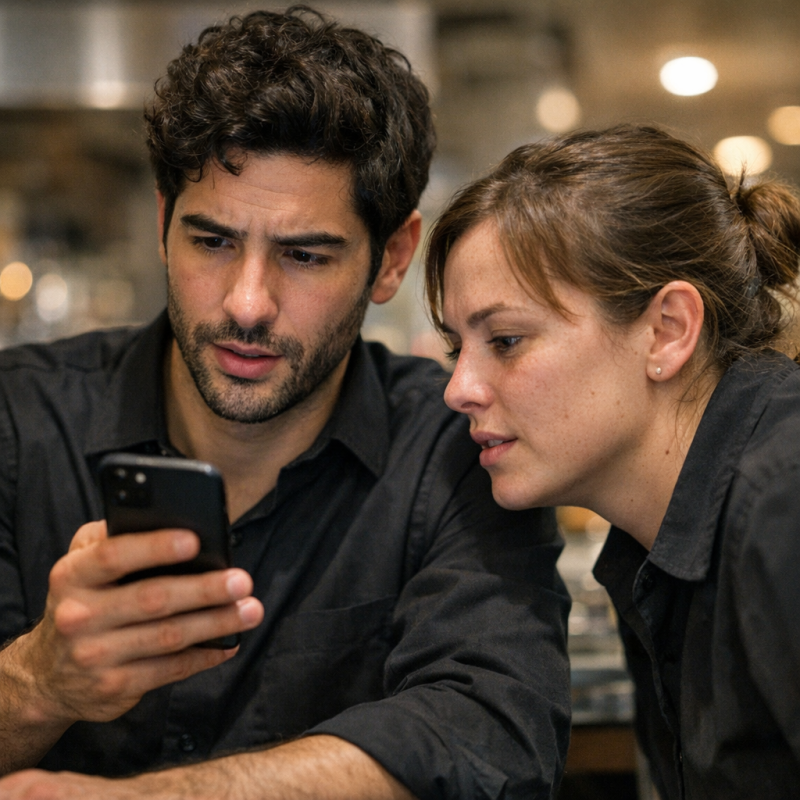 Image by FCT AI
The Reddit Rabbit Hole
I couldn't help myself. During my break, I pulled out my phone and started scrolling through the Reddit thread Carlos had shown me. The stories were everywhere. Hundreds of restaurant workers sharing experiences with customers who seemed to complain professionally. One server described a man who always found hair in his food, even when the kitchen staff wore nets and gloves. Another talked about a couple who rotated through every chain restaurant in town, complaining about undercooked chicken at each one. The patterns were so specific, so calculated. And the more I read, the more familiar they felt. Then I found it—a post from a manager in Ohio describing a woman who always complained about temperature. Too hot, too cold, never just right. She'd send back soup for being lukewarm, then complain the replacement was scalding. She'd claim the dining room was freezing, then say she was overheating five minutes later. The post was from three years ago, but I felt my hands start shaking.
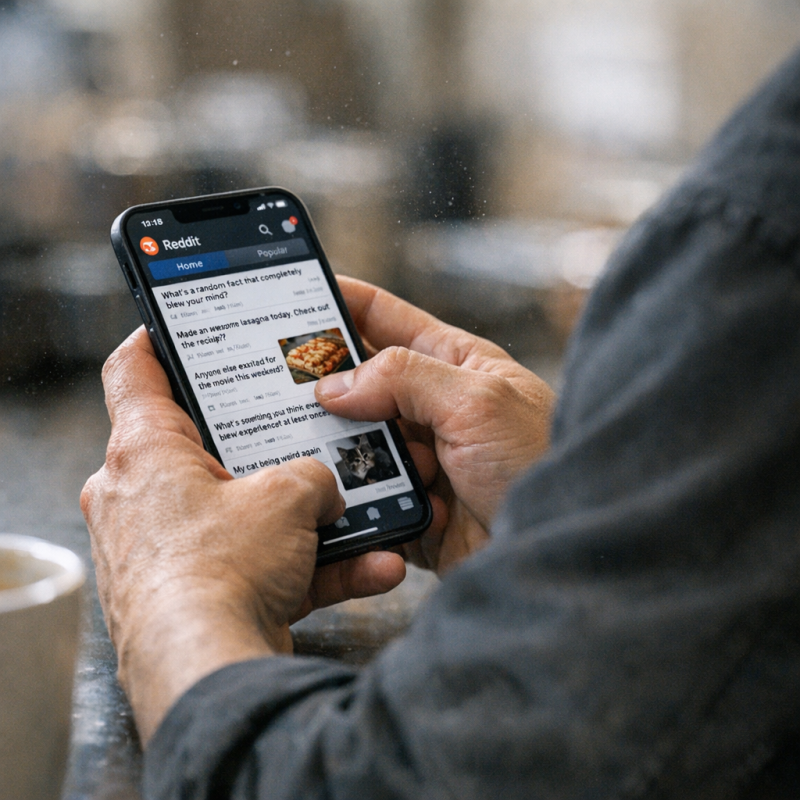 Image by FCT AI
Asking Mark Directly
I found Mark in his office during the tail end of my shift, sitting behind his desk with a stack of invoices. I didn't bother knocking. 'Mark,' I said, stepping inside and closing the door behind me. 'I need to ask you something.' He looked up, one eyebrow raised. 'Shoot.' 'That woman tonight. Was she a known scammer? Like, someone you've been tracking?' The question came out more blunt than I'd intended, but I was done dancing around it. I needed a real answer. Mark set down his pen and leaned back in his chair. He studied me for a long moment, his expression unreadable. The silence stretched between us, and I felt my frustration building. Just tell me, I wanted to say. Just explain what the heck happened tonight. Finally, he spoke. 'Let's just say I've been watching her for a while,' he said.
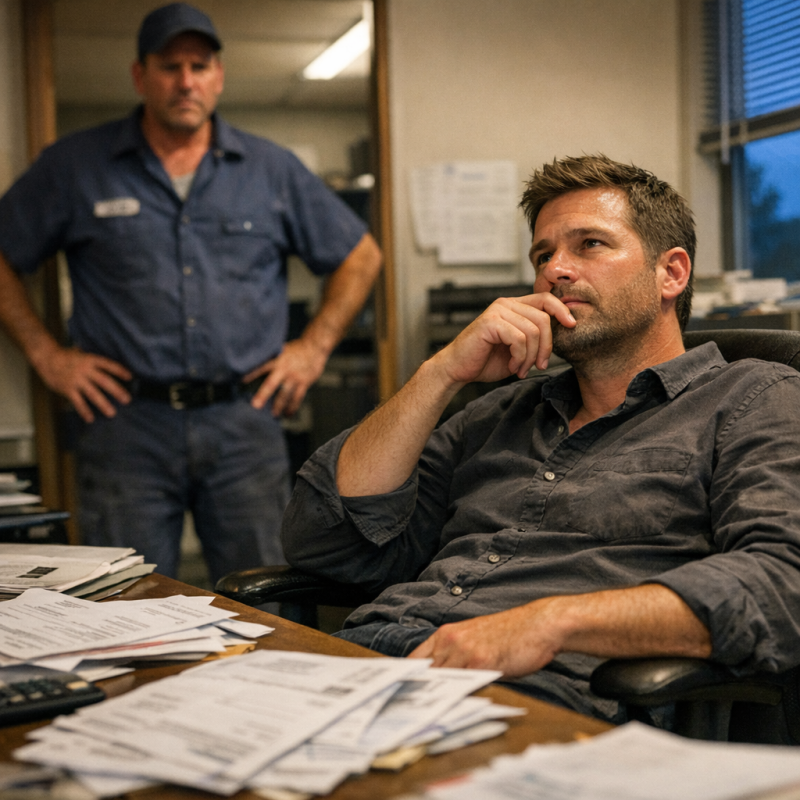 Image by FCT AI
The Other Location
'What other location?' I asked, leaning against the doorframe. Mark tapped his pen against the desk, considering his words. 'There's another restaurant across town,' he said. 'Same ownership group, different neighborhood. Nicer clientele, usually.' I crossed my arms, waiting for him to continue. He wasn't giving me much, and it was starting to grate on me. 'And?' I prompted. He met my eyes. 'She's been there before. Pulled a similar stunt about six months ago. Different complaint, same theatrics.' My stomach tightened. So it wasn't just tonight. It wasn't some one-off bad night for her. This was a pattern, a routine she'd perfected over time. I thought about the way she'd escalated so quickly, the script she seemed to be following. It made sense now, in the worst way. 'How many times?' I asked. Mark didn't answer immediately. He just looked at me with that measured, careful expression he always wore when he knew more than he was saying. 'Let me put it this way,' he finally said. 'When I asked if she'd pulled the same stunt there, he just nodded and said, 'Among other places.'
 Image by FCT AI
Diane's Confession
The next day, Diane caught me during a lull between tables. She glanced around like she didn't want anyone to overhear, then pulled me toward the back hallway. 'I need to tell you something,' she said, her voice low. I straightened up, suddenly alert. 'What?' She bit her lip, hesitating. 'That woman last night? I think I've seen her before.' My pulse quickened. 'Where?' 'At this Italian place I worked at last year. Maybe eight, nine months ago? She threw a fit about finding a hair in her pasta.' Diane's brow furrowed as she tried to recall the details. 'I wasn't sure at first, you know? It was dark last night, and I only saw her for a few seconds back then. But the way she screamed, the way she moved—it felt familiar.' We stood there in silence for a moment, both of us piecing it together. The more we talked, the more details Diane remembered. The entitled tone. The theatrics. The man sitting beside her, silent and detached. She wasn't sure it was the same person, but the more we talked, the more certain we both became.
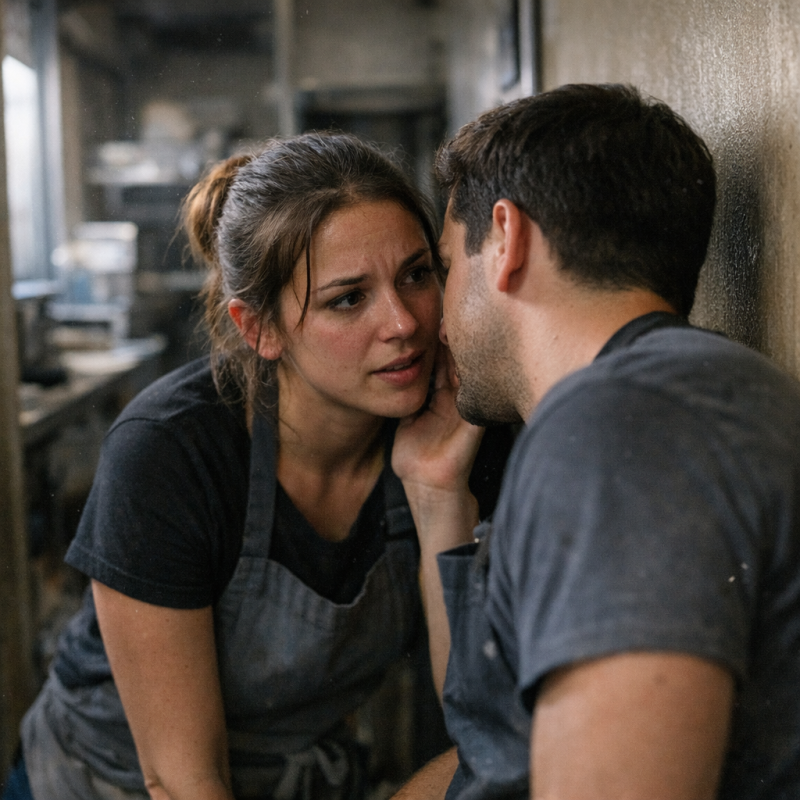 Image by FCT AI
The Video Search
That night at home, I couldn't let it go. I opened my laptop and started searching—'restaurant customer meltdown,' 'woman screaming at manager,' variations on the theme. YouTube, TikTok, even Reddit threads about nightmare customers. I scrolled through dozens of videos, most of them unrelated, until I found three that made me stop cold. The first was grainy, shot on someone's phone at a steakhouse. A blonde woman—maybe her, maybe not—was shouting about an overcharge. The second was clearer, filmed at what looked like a brunch spot. The woman's hair was darker, but the body language, the way she gestured wildly with her hands, it felt right. The third video, though. That one got me. It was filmed at a chain restaurant, the kind with decent lighting and lots of witnesses. The woman was standing at a table, her voice shrill and cutting, berating a manager about undercooked chicken. I leaned closer to the screen, replaying it twice. The angle of her shoulders. The performative outrage. In one video, she's screaming at a manager about undercooked chicken, and the angle—the performance—it all felt identical.
 Image by FCT AI
Sharing with the Team
I brought my phone to work the next shift and found Carlos and Rachel on break. 'You need to see this,' I said, pulling up the videos. They huddled around me, watching in silence. Carlos's jaw tightened as the third video played. 'That's her,' he muttered. 'That's definitely her.' Rachel's eyes widened. 'How many of these are there?' 'At least three that I found,' I said. 'Could be more.' We sat there, stunned, watching the same tired script play out in different restaurants, different cities. The outrage. The threats. The demands for refunds or comps. It was all there, documented by bystanders who had no idea they were capturing evidence of something bigger. Rachel leaned back, shaking her head. 'This is insane. She's just... going around doing this?' 'Looks like it,' I said. Carlos crossed his arms, his expression darkening. 'So how the heck did Mark know she was coming?' That was the question, wasn't it? The one that had been gnawing at me since the moment Mark told me to seat her in my section. Rachel asked, 'How did Mark know?' and I realized that was the question I still couldn't answer.
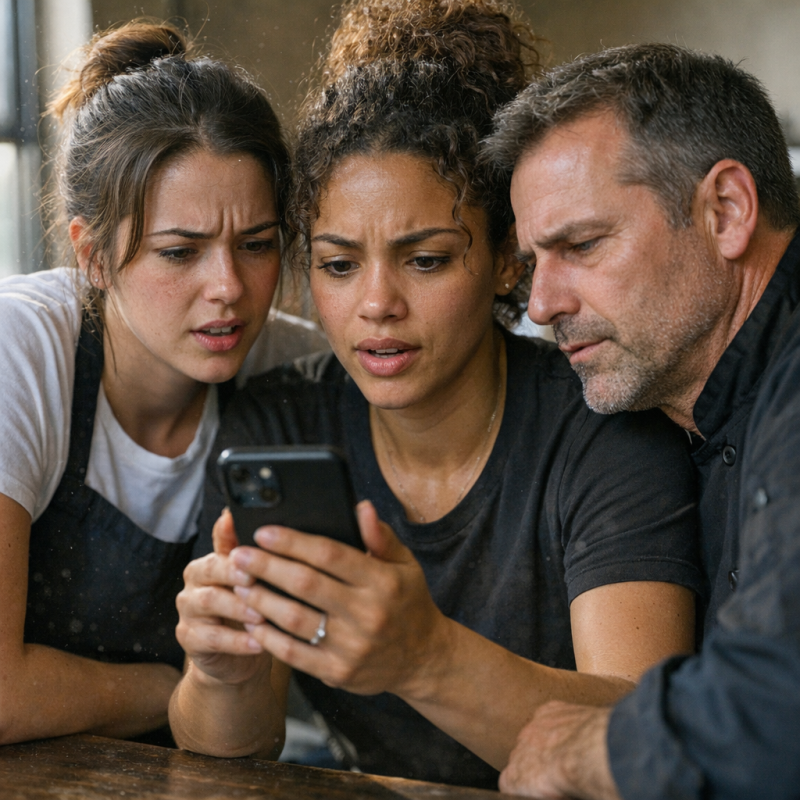 Image by FCT AI
Trevor's Perspective
A couple of days later, Trevor—the guest who'd been sitting near the woman that night—walked into the restaurant during the lunch shift. I recognized him immediately and felt a small jolt of surprise. He wasn't there to eat. He walked straight to the host stand and asked if Mark was available. I fetched Mark from the office, and Trevor shook his hand with genuine warmth. 'I just wanted to thank you,' Trevor said. 'For how you handled that situation the other night. I've been in the industry for years, and I know how hard it is to stand up to people like that.' Mark nodded, his expression modest but pleased. 'Just doing my job.' 'No,' Trevor said firmly. 'You did more than that. I've seen people like her ruin good restaurants. They bully staff, manipulate managers, and get away with it because no one wants the bad press.' He glanced at me, then back at Mark. 'I'm glad someone finally stood up to her.' Mark thanked him, and they exchanged a few more pleasantries before Trevor left. I stood there, watching the door close behind him, feeling a strange mix of pride and confusion. He said he'd seen people like her ruin good restaurants, and he was glad someone finally stood up to her.
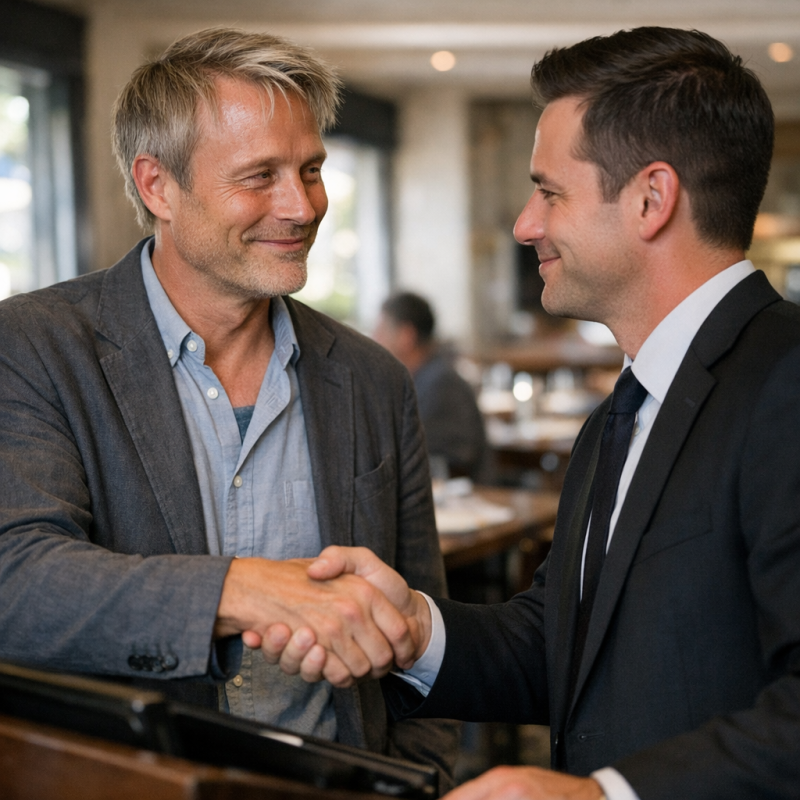 Image by FCT AI
The Man's Role
Later that night, as Carlos and I closed down the bar area, I brought up something that had been nagging at me. 'What about the guy?' I asked. Carlos looked up from wiping down the counter. 'What guy?' 'The one who was with her. Her husband, boyfriend, whatever. He just sat there the whole time, didn't say a word.' Carlos paused, thinking. 'Yeah, that was weird.' 'Do you think he knew?' I asked. 'Like, was he in on it?' Carlos shrugged, but I could see the wheels turning in his head. 'I mean, if she's doing this regularly, how could he not know? You don't just sit there through multiple public meltdowns without realizing something's up.' I nodded slowly. 'Maybe he benefits from it too. Free meals, refunds, whatever she manages to squeeze out of places.' The thought made my skin crawl. It was one thing to imagine her as some solo operator, but the idea of a partner—someone who silently enabled and profited from her scenes—felt even more insidious. Carlos suggested he might be in on it, and I couldn't shake the image of his bored, blank expression.
 Image by FCT AI
A Quiet Shift
A few days passed, and the incident started to fade into restaurant lore. People still talked about it, of course—everyone had their own version of the story by now. Carlos claimed he'd seen her trying to sneak back in through the side door. Diane swore the woman had threatened legal action. Rachel said she'd heard from a friend at another restaurant that the woman had been banned from half the places in the city. I didn't know what was true and what was exaggerated. That's how these things go in restaurants. A story gets told and retold until it takes on a life of its own, details shifting with each retelling. But for me, the story wasn't over. I couldn't let it go the way everyone else seemed to. Every time I saw Mark in the office or passing through the dining room, I felt that same nagging question rise up in my chest. How did he know? What wasn't he telling me? The others had moved on, but I was still stuck, still turning it over in my mind. But I still couldn't let it go, and every time I saw Mark, I wanted to ask him what he wasn't telling me.
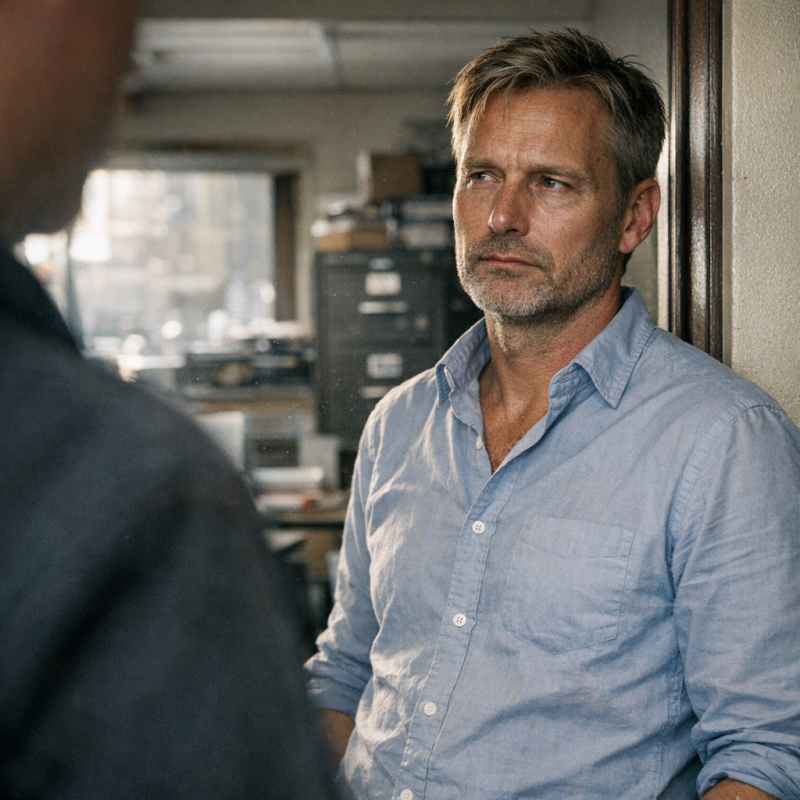 Image by FCT AI
The Manager Meeting
Mark called a staff meeting at the end of the week. We gathered in the back dining room before the dinner shift, and he stood at the front with his arms crossed, looking more serious than usual. 'I want to talk about customer conflict protocols,' he said. 'How we handle difficult situations, what our options are, and when to escalate.' It sounded routine, the kind of thing managers brought up after any major incident. But something about the way he said it felt deliberate, like there was a subtext I wasn't catching. He talked about de-escalation techniques, about knowing when to comp a meal and when to hold firm. Then he said something that made my ears perk up. 'We should also be documenting repeat problem customers,' he said. 'People who come in multiple times with the same complaints, who escalate situations unnecessarily. We need to keep track.' I glanced at Carlos, who raised an eyebrow. Diane was taking notes, but I could tell she was thinking the same thing I was. He mentioned that we should document repeat problem customers, and I wondered if he'd been doing exactly that.
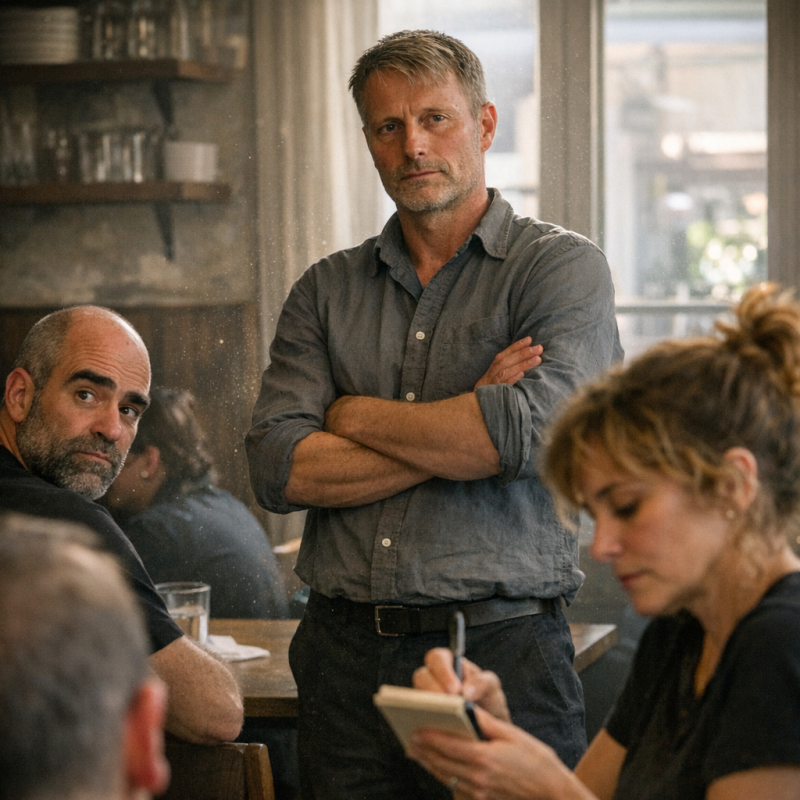 Image by FCT AI
A Similar Incident
Rachel caught me during a lull between lunch and dinner. 'Hey, something weird happened last week,' she said, leaning against the host stand. 'This woman came in complaining about her salmon being underseasoned. Normal enough, right? But then she started filming herself, talking about how disappointed she was, how she'd driven all the way here based on our reputation.' I felt my stomach tighten. 'What did you do?' I asked. Rachel shrugged. 'I got Mark immediately because it felt off. She was being so dramatic about it, like she wanted me to argue with her. And Mark just swooped in, apologized profusely, comped her entire meal, and she left happy.' I chewed my lip. 'That's it?' 'Yeah, but here's the thing—he handled it like he'd done it a hundred times before. No hesitation, no questions, just straight to the comp. Almost like he'd been expecting something exactly like that.' My mind started racing, connecting dots I didn't want to see. I asked if Mark handled it, and she said he defused it quickly—almost like he'd expected it.
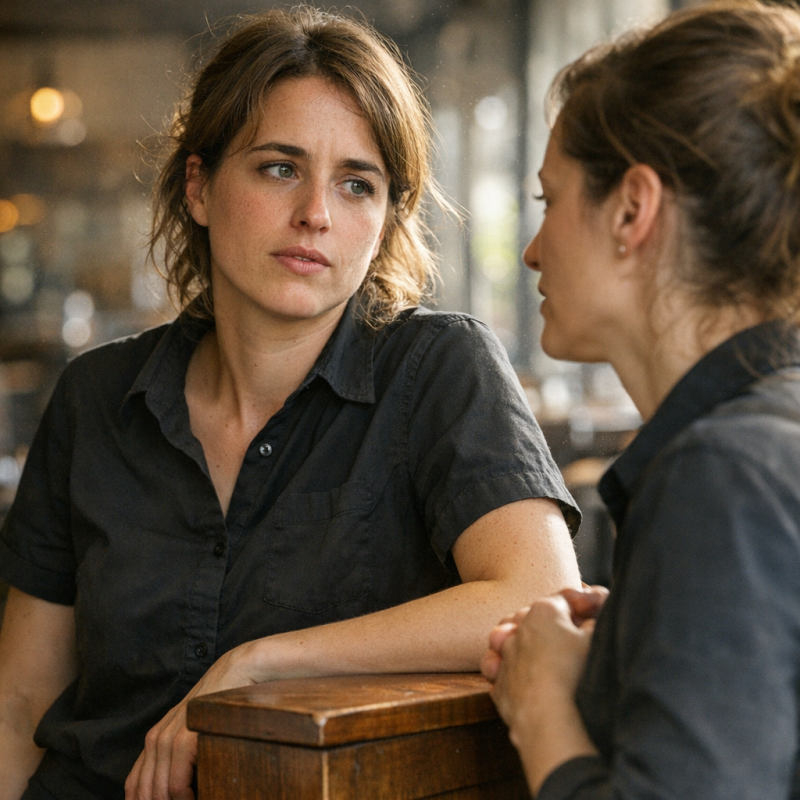 Image by FCT AI
The Industry Forum
I couldn't stop thinking about what Rachel had said, so that night I did what any millennial does when they're obsessing over something—I went down an internet rabbit hole. I started searching for things like 'restaurant customer complaints patterns' and 'serial complainers hospitality industry.' That's when I found it: a forum specifically for restaurant managers and hospitality workers. It was like stumbling into a secret club I didn't know existed. The posts were brutally honest, managers venting about nightmare customers, sharing war stories, asking for advice. I scrolled through thread after thread, my coffee getting cold beside me. People were describing situations that sounded exactly like what we'd dealt with. Temperature complaints. Dramatic escalations. Phones out, recording everything. Then I saw it, buried about six pages deep in the search results. One thread was titled 'The Serial Complainers Network,' and my heart started racing.
 Image by FCT AI
Connecting the Dots
I clicked on that thread and started reading. My stomach dropped further with every post. Managers from different cities, different restaurant types, all describing the same tactics. Someone wrote about a customer who'd ordered steak medium-rare three times in two months, claimed it was overcooked each time, always escalated just enough to get a comp. Another described a woman who'd complain about temperature—too cold, too hot, doesn't matter—then film the interaction. The descriptions were so specific, so familiar. One manager from Chicago wrote about how these customers seemed to know exactly how far to push without crossing into obvious fraud. They'd order expensive items, complain strategically, and walk away with free meals. The thread went on for pages. Then I got to a comment that made my blood run cold. One manager wrote, 'They're organized. They share intel,' and I felt sick.
 Image by FCT AI
Mark's Late Night
The next evening, I stayed late to finish some paperwork. Most of the staff had already left, and the restaurant had that quiet, echoey feeling it gets after closing. I was heading to grab my jacket when I noticed the light still on in Mark's office. Through the window in his door, I could see him hunched over his laptop, his face illuminated by the screen. He was scrolling through what looked like spreadsheets—rows and rows of data, too far away for me to read the details. His expression was intense, focused in a way that made me pause. I don't know why I stood there watching him. Maybe I was hoping to catch some glimpse of what he was really doing. He must have sensed someone there because he suddenly glanced up and caught me watching. His hand moved immediately to close the laptop, the screen going dark. When he glanced up and caught me watching, he closed his laptop quickly—and I knew he was hiding something.
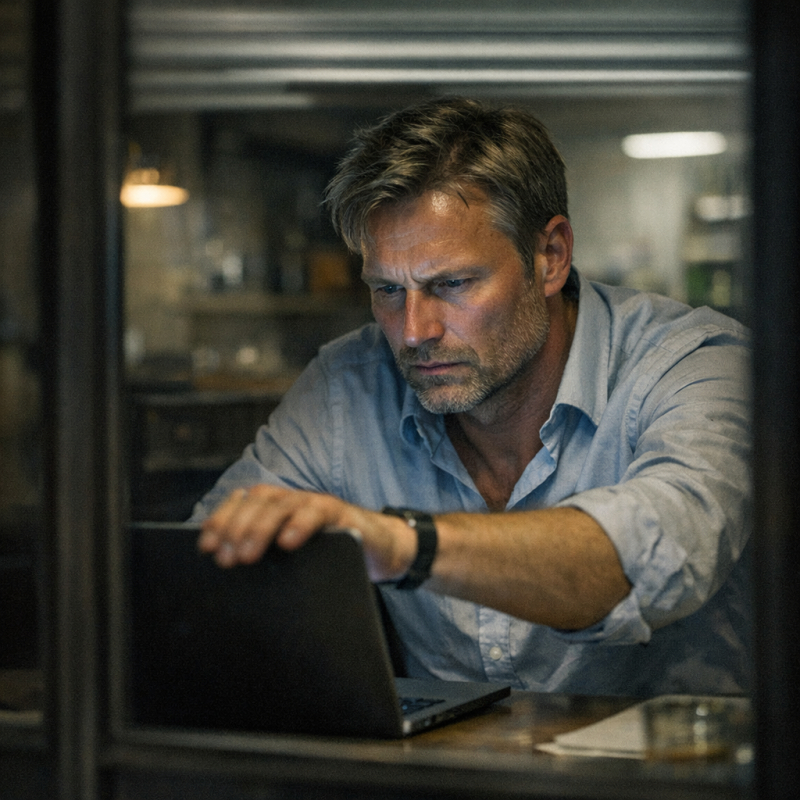 Image by FCT AI
Confronting Mark Again
I couldn't let it go anymore. The next day, I waited until the lunch rush was over, then walked straight to Mark's office and knocked. He looked up from his desk, and I could see him mentally preparing for whatever was coming. 'Can we talk?' I asked. He gestured to the chair across from him. 'Sure, what's up?' I sat down and decided to just go for it. 'Mark, are you tracking problem customers? Like, keeping records of people who come in and cause issues?' His expression didn't change, but something flickered in his eyes. He leaned back in his chair, studying me for a long moment. 'Why do you ask?' he said carefully. 'Because I've been putting things together. That woman, the way you handled her, what Rachel told me about another incident. You knew exactly what to do, like you'd been waiting for something.' He sighed and said, 'You're not going to let this go, are you?' and I knew I was onto something.
 Image by FCT AI
The Partial Admission
Mark rubbed his temples like he was deciding how much to tell me. 'Okay, yes,' he finally said. 'I keep notes on repeat problem customers. Across all three of my locations. I call it protective documentation.' He said it like it was the most reasonable thing in the world. 'Protective documentation,' I repeated slowly. 'So you've been tracking people?' He shook his head. 'Not tracking like surveillance. Just noting patterns. If someone comes in multiple times with suspicious complaints, I document it. Dates, what they ordered, what they complained about, how it was resolved. It's for legal protection, in case someone tries to claim we discriminated against them or mistreated them.' That made sense, I guess, but it still felt like there was more he wasn't saying. 'How many people are we talking about here?' I asked. He paused, choosing his words carefully. I asked how many people he was tracking, and he said, 'More than you'd think,' which didn't answer my question at all.
 Image by FCT AI
Diane's Discovery
Diane texted me later that day: 'Found something. Come over after work.' When I got to her apartment, she had her laptop open on the coffee table, a bottle of wine already uncorked. 'Okay, so I did some digging,' she said, pulling up a social media profile. And there she was—the woman from that day, smiling in her profile picture. Diane scrolled through the page, and my jaw literally dropped. It was full of restaurant reviews, but not normal ones. Dramatic videos of her complaining, long captions about poor service and disappointing meals. Each post had hundreds of likes, dozens of comments. 'She's building a following off this,' Diane said. 'Look at the engagement.' I watched one video where she talked about a 'horrifying experience' at some Italian place downtown, her voice dripping with indignation. One video had over 50,000 views, and in the comments, people were cheering her on—calling her a 'consumer advocate.'
 Image by FCT AI
The Comment Section
I couldn't stop myself from clicking into the comments section, even though I knew it would make me angrier. And wow, was I right. The comments weren't just supportive—they were collaborative. People were sharing their own complaint stories, swapping tactics, comparing notes on which restaurants were 'pushover' managers versus which ones stood their ground. One commenter wrote, 'Love how you stand up to these places! They think they can get away with anything.' Another said, 'Have you tried the trick where you say you're allergic after you've already eaten half the dish?' I felt nauseous. This wasn't just one opportunistic person. This was a whole community treating restaurant manipulation like a sport. Then I saw a comment that made everything crystal clear. Someone had written just three days ago, asking casually, almost innocently: One commenter wrote, 'Has anyone hit that seafood place on 5th yet?' and I realized they were coordinating.
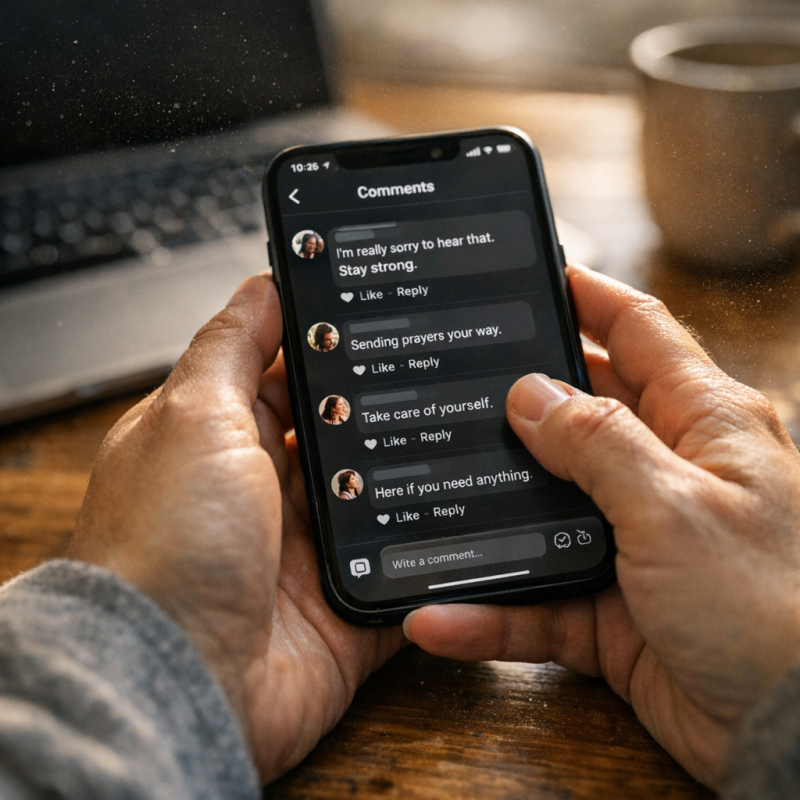 Image by FCT AI
Sharing the Evidence
I pulled out my phone the next day when Mark came in for the evening shift. My hands were actually shaking a little as I opened the screenshots I'd saved—the social media profiles, the comment threads, the whole coordinated operation. 'I found something,' I said, and his expression didn't change much, but he gestured for me to continue. I walked him through it all: the complaint tactics people were sharing, the way they discussed restaurants like target practice, the comment asking if anyone had 'hit' our location yet. He scrolled through the screenshots slowly, methodically, his face completely neutral. I kept waiting for surprise, for shock, for something that would match what I'd felt when I discovered it. Instead, he just nodded occasionally, zooming in on certain comments. When he finally looked up, there was something in his eyes I couldn't quite read—not surprise, but maybe... satisfaction? He handed my phone back and said, 'Good work,' in this quiet, measured way, and I realized with a jolt that he'd been waiting for me to find this on my own.
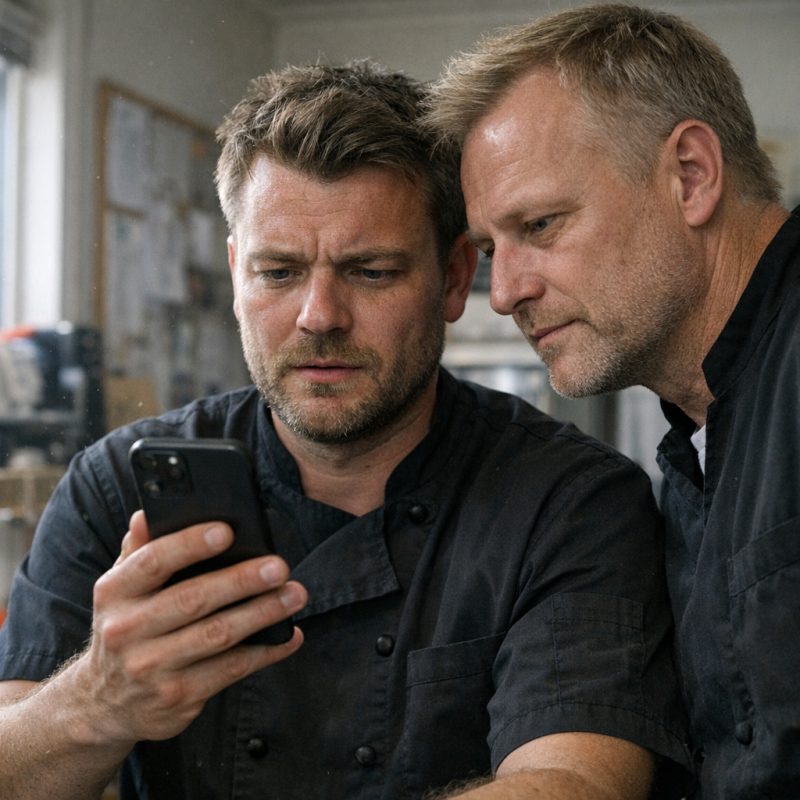 Image by FCT AI
The Question I Should Have Asked
That 'good work' kept replaying in my head for the rest of my shift. Not 'wow, I can't believe it' or 'this is crazy' or any normal reaction to discovering a coordinated scam operation. Just... good work. Like I'd completed an assignment he'd already known the answer to. It hit me then that I'd been asking the wrong question this whole time. The question wasn't whether Mark had recognized the woman when she walked in—it was how long he'd known about her before that day. How long he'd been watching. How long he'd been waiting. The thought made my stomach twist because it changed everything about that confrontation. I found him in his office during my break, door half-open like always. He looked up when I knocked, and I didn't bother with small talk. 'How long have you been tracking her?' I asked directly. He leaned back in his chair, studying me for a long moment. Then he gestured to the seat across from him and said, 'Sit down. This is going to take a while.'
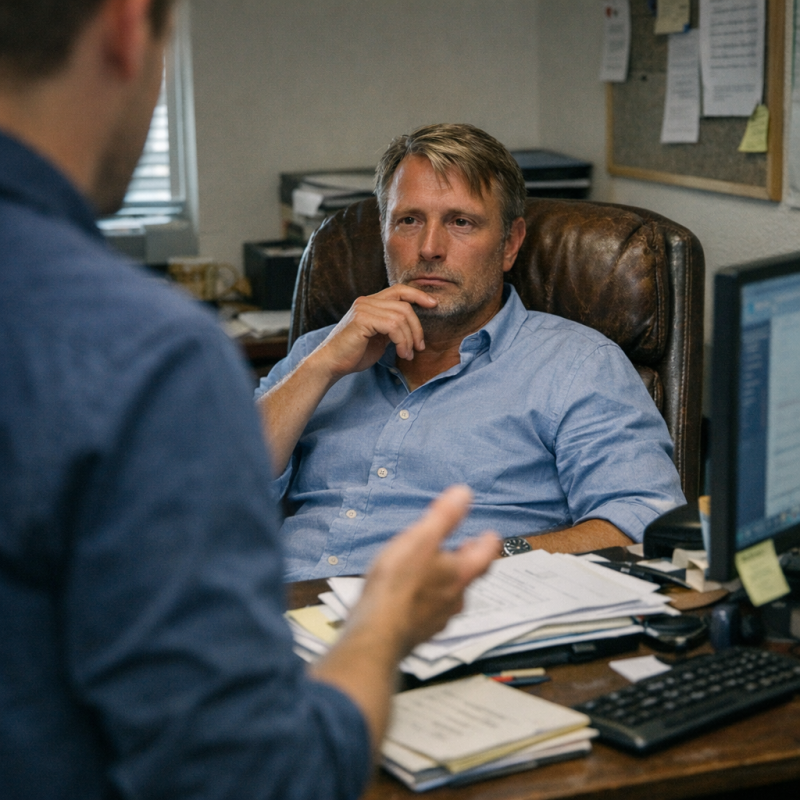 Image by FCT AI
The Beginning of the Story
Mark started at the beginning, which turned out to be about six months ago. His corporate office had started receiving complaints from multiple locations in the region—different restaurants, different customers, but the same patterns emerging. Food allegedly cold or undercooked, service supposedly rude or slow, demands for comps and refunds that seemed just rehearsed enough to sound authentic. 'At first, nobody connected the dots,' he said, scrolling through something on his computer. 'Each manager thought they just had a difficult customer. Bad luck. You know how it goes.' But the corporate compliance team had noticed something when they compiled quarterly reports: the complaints were increasing, and the language in many of them was almost identical. Same phrases, same escalation patterns, same threats about social media reviews. Mark said he'd started getting suspicious when he attended a regional managers meeting and everyone had similar stories. Different people, different faces, but the playbook was exactly the same. He suspected coordination, but he didn't have proof—not until he started cross-referencing dates and complaints himself.
 Image by FCT AI
The Spreadsheet
That's when Mark turned his monitor toward me, and I saw the spreadsheet I'd glimpsed through his office window weeks ago. Except now I could actually read it, and wow, it was extensive. Hundreds of entries, maybe more, stretching back months. Each row documented a complaint: date, location, customer description, items ordered, nature of complaint, resolution, cost to restaurant. The columns were color-coded—I couldn't tell what the colors meant, but there was clearly a system. 'I started building this after that managers meeting,' Mark said. 'Asked other managers to send me their complaint logs, started looking for patterns.' He scrolled down slowly so I could see the scope of it. Some entries had notes attached: 'Possible repeat offender' or 'Check social media.' My eyes were struggling to process all the data when he stopped scrolling and pointed to one cluster of entries, all highlighted in the same shade of red. 'This is her,' he said quietly, and I saw she'd hit seven different restaurants in just three months.
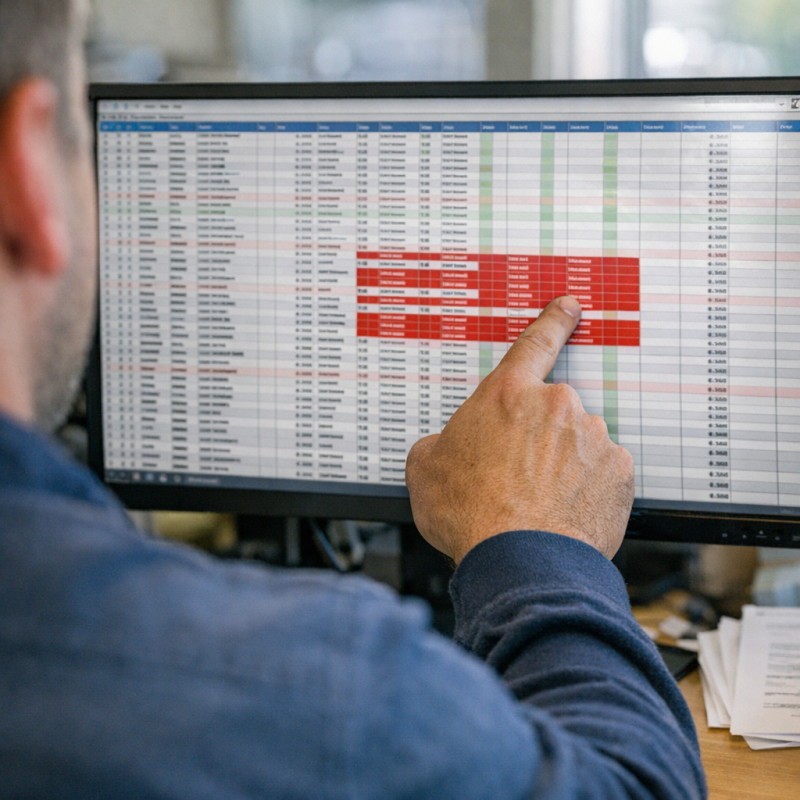 Image by FCT AI
The Other Players
I stared at the red-highlighted entries, feeling dizzy. Seven restaurants. Three months. But Mark wasn't done. He switched to a different tab in the spreadsheet, and I saw more clusters of color—blue, green, yellow, purple. Each one represented a different person, he explained. Different faces, different names, but the same methodical approach to extracting free meals and refunds. 'She isn't alone,' Mark said, his voice steady and factual. 'I've identified at least twelve others operating the same way in our region.' Twelve. The number sat heavy in my chest. He walked me through some of the patterns: one guy who always complained about steaks being overcooked, a woman who specialized in seafood allergies she conveniently remembered mid-meal, another who brought children and manufactured complaints about family-unfriendly service. 'They don't all know each other,' Mark continued, studying the spreadsheet like it was a puzzle he was still solving. 'But they're using the same playbook. Same tactics, same escalation strategies, same threats.' And I started to see the bigger picture he'd been piecing together for months.
 Image by FCT AI
The Social Media Connection
Then Mark said something that made my blood run cold: 'I found the same social media groups you did—months ago.' He said it so casually, like it was just another detail in his investigation, but I felt the air leave my lungs. Months ago. While I'd been serving tables and dealing with difficult customers and thinking Mark was just an unusually calm manager, he'd been monitoring the same online communities I'd just discovered. He'd been watching them coordinate, plan, share tactics. 'I've been tracking the posts,' he explained, opening a folder on his computer filled with screenshots. 'They're not particularly careful about operational security.' He showed me posts I'd seen and others I hadn't—discussions about which restaurants were 'easy marks,' debates about whether to escalate to corporate or stick with on-site managers, tips about timing complaints for maximum impact. Then he showed me the ones that made my hands go cold: posts where members discussed 'hitting' specific restaurants by name, including ours, with comments debating the best approach and what items to order.
 Image by FCT AI
Waiting for Her
Mark scrolled to a post from about three weeks before the woman had walked into our restaurant. Someone had mentioned our location specifically, asking if anyone had 'tested' us yet. Another commenter had responded that we might be worth trying, that we were busy enough that a complaint might get fast-tracked to avoid a scene. I remembered that day so clearly now—the lunch rush, the woman's precise timing, her immediate escalation. 'When I saw our restaurant mentioned in the group,' Mark said quietly, 'I knew she'd come eventually. So I waited.' The words hung in the air between us. Waited. Not hoped, not worried, not prepared just in case. Waited. Like he'd been expecting her. Like he'd known. I looked at him, really looked at him, and asked the question that had been building in my chest: 'Were you planning the confrontation all along?' He met my eyes steadily and said, 'I wanted to be ready when she showed up,' which still didn't quite answer my question.
 Image by FCT AI
The Full Truth
I waited, because that non-answer felt like it was hiding something bigger. Mark seemed to be weighing something internally, deciding how much to tell me. Finally, he exhaled and leaned forward. 'Okay. The full truth.' He wasn't just ready for her, he admitted. He'd been tracking her movements specifically for weeks after seeing her profile become more active in the groups. He'd reached out to other managers she'd targeted, compared notes, built a timeline of her complaints. 'We started coordinating,' he said, and the 'we' made my stomach drop. Other managers, plural. A network responding to the scammers' network. Mark had been sharing information, warning people, building a case. When he saw the posts targeting our restaurant, he'd prepared. Documented everything. Made sure he knew her tactics inside and out. 'I wanted her to walk into a situation she couldn't manipulate,' he said, his voice quiet but deliberate. 'Where someone knew exactly what she was doing.' And that's when I realized—the entire confrontation hadn't been spontaneous at all. It had been a deliberate trap.
 Image by FCT AI
The Network of Managers
Mark leaned back and pulled out his phone. 'It's not just me,' he said. 'There's a whole network of us.' He opened a messaging app I'd never heard of—something encrypted and private—and showed me a group chat. The member count at the top read fifty-three people. I blinked at the screen. Restaurant managers, bar owners, café supervisors. All across the city, maybe beyond. They were sharing photos, screenshots, incident reports. I scrolled through the messages with his permission, seeing names I recognized from other establishments. 'We started small,' Mark explained. 'Just a few of us comparing notes after we realized we kept seeing the same faces, the same complaints. Then it grew.' Someone had posted a spreadsheet. An actual spreadsheet with dates, locations, tactics used, amounts refunded. It was organized, methodical, almost corporate in its precision. This wasn't just frustrated venting in a group chat. This was a coordinated counter-operation, and I was staring at a private messaging group with over fifty members, all documenting and tracking the same people.
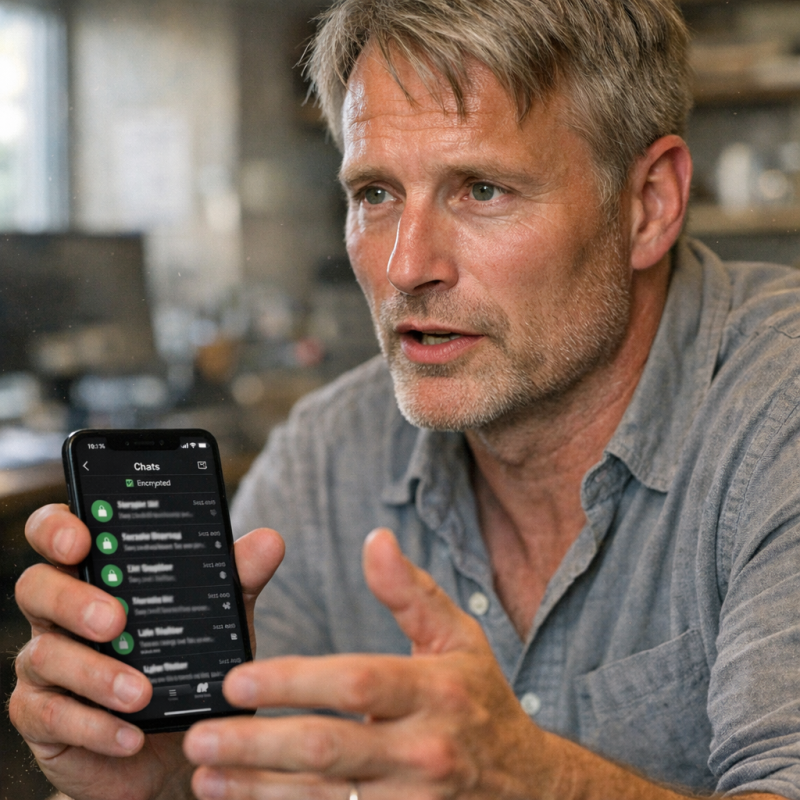 Image by FCT AI
Why He Didn't Tell Me
I looked up from the phone. 'Why didn't you tell me?' The question came out sharper than I intended. 'You knew she was coming. You could've warned me.' Mark set his phone down carefully, meeting my eyes. 'I needed it to look natural,' he said. 'If you'd known, you might've acted differently. Been on guard from the start. She's good at reading people—she would've sensed something was off.' I understood the logic, I really did. But sitting there, realizing I'd been a prop in his carefully staged confrontation, made something twist in my chest. 'So you just… used me?' He winced at the word. 'I needed someone to react authentically. To handle it the way any server would handle an unreasonable customer. If she'd suspected a setup, she would've walked out, and we'd have lost the chance to document everything.' He paused. 'I'm sorry. I really am.' And here's the thing—he apologized for using me as an unknowing part of the setup, and I didn't know whether to feel angry or impressed.
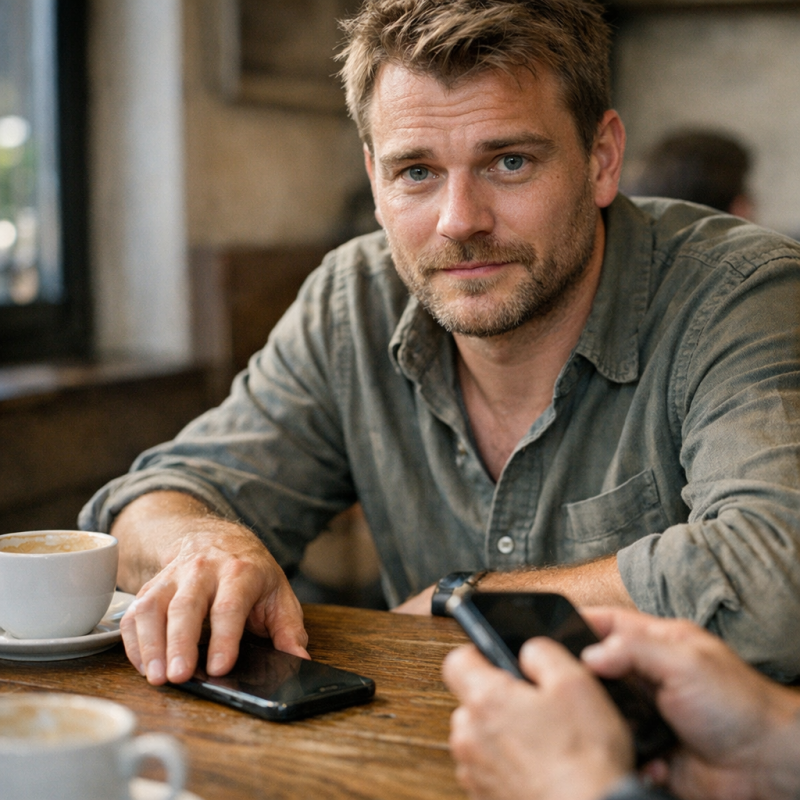 Image by FCT AI
The Recording
Mark hesitated, then said, 'There's something else.' Of course there was. He reached for his laptop and opened a folder labeled with that day's date. 'I set up a camera,' he admitted. 'Hidden, angled to catch the whole dining room. Not for social media or anything public—for documentation. Legal protection.' My mouth went dry. 'You recorded it?' He nodded. 'If she tried to sue, claimed we assaulted her or discriminated against her, we'd have clear evidence of exactly what happened. Video doesn't lie.' I thought about all the ways that interaction could've been twisted, all the things she could've claimed I said or did. A recording meant protection, sure, but it also meant Mark had been even more prepared than I'd realized. Every detail accounted for. Every angle covered. 'Do you want to see it?' he asked, turning the laptop toward me. My heart kicked up. I'd lived through that confrontation once already, but he offered to show me the footage, and I realized I was about to see the whole thing from a different angle.
 Image by FCT AI
Watching the Footage
Mark hit play. The angle was wide, capturing most of the dining room. I watched myself approach her table, saw the whole scene unfold from this new perspective. But knowing what I knew now—about the network, about Mark's preparation, about her pattern—every moment felt different. The way she'd performed her outrage, the calculated escalation, the appeal to other diners. It was all so transparent in hindsight. Mark appeared in the frame, and I watched him move with that same unsettling calm I'd noticed before. But on video, I could see what I'd missed in the moment: he was watching her like a chess player watches the board. Then it happened. The moment he mentioned the Facebook groups, the other restaurants. Her face changed. Just for a second—barely noticeable unless you were looking for it—her eyes widened. The performance cracked. You could actually see the realization hit her: he knew. He'd known all along. I could see the exact moment she realized Mark knew—her eyes widened just slightly—and the whole performance crumbled.
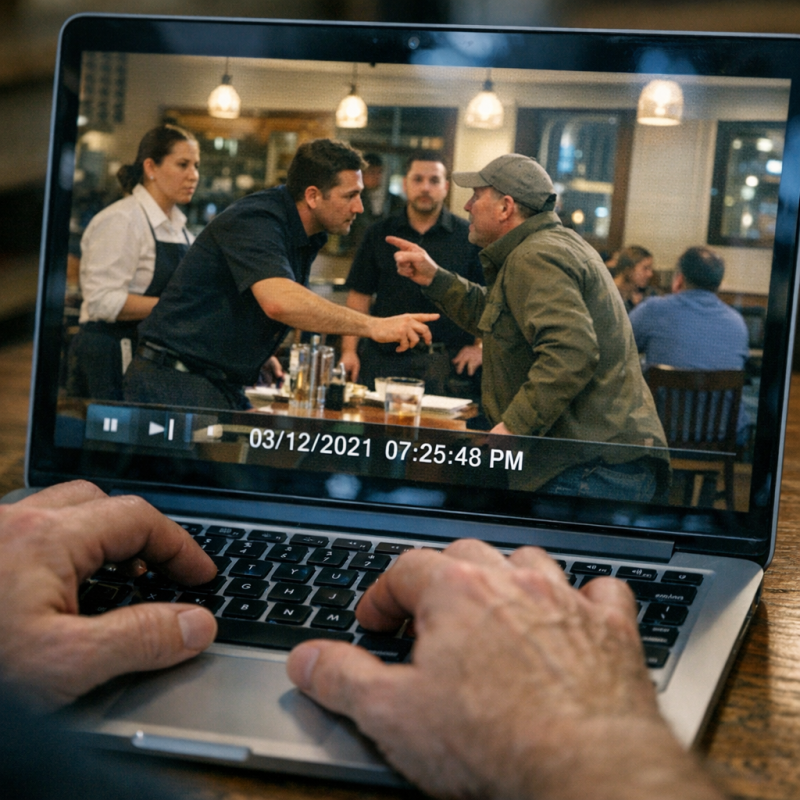 Image by FCT AI
The Legal Angle
Mark paused the video. 'We've been talking to lawyers,' he said quietly. 'Several of us in the network.' I turned to look at him. 'Lawyers? For what?' He pulled up another window on his laptop—email threads, legal consultation summaries. 'To see if what they're doing constitutes fraud. Intentionally making false complaints to obtain money or goods. It's not just about protecting ourselves—it's about whether we can actually stop them legally.' The emails were detailed. Discussions about burden of proof, about establishing a pattern, about the difference between a genuine complaint and systematic deception. One lawyer had written that with enough documentation across multiple establishments, they might have a case. 'How close are you?' I asked. Mark's expression was serious. 'Close. We're comparing records, building timelines. If we can show a clear pattern of intentional deception for financial gain across enough incidents…' He trailed off. He said they're close to having enough documentation to pursue legal action, and I realized this was bigger than one confrontation.
 Image by FCT AI
The Woman's Response
'She posted about it,' Mark said, pulling up Facebook on his phone. There it was: a long, detailed post from her account. She'd spun the whole incident as discrimination, painted herself as a victim of a hostile, abusive staff. 'I was humiliated in front of everyone,' she'd written. 'Screamed at, accused of lying, treated like a criminal for simply wanting what I paid for.' The post had dozens of comments when it first went up, mostly supportive. People outraged on her behalf. But then I scrolled further. That's when I saw them—restaurant managers from the network. They'd commented with receipts. Screenshots of her identical complaints at their establishments. Photos of her pulling the same tactics. Dates, times, refund amounts. One manager had written, 'This woman has filed the exact same complaint at seven restaurants in three months. Here's the documentation.' Another shared security footage. The narrative she'd tried to build was collapsing in real time, and this time, managers from multiple restaurants commented with their own documentation, and her narrative fell apart publicly.
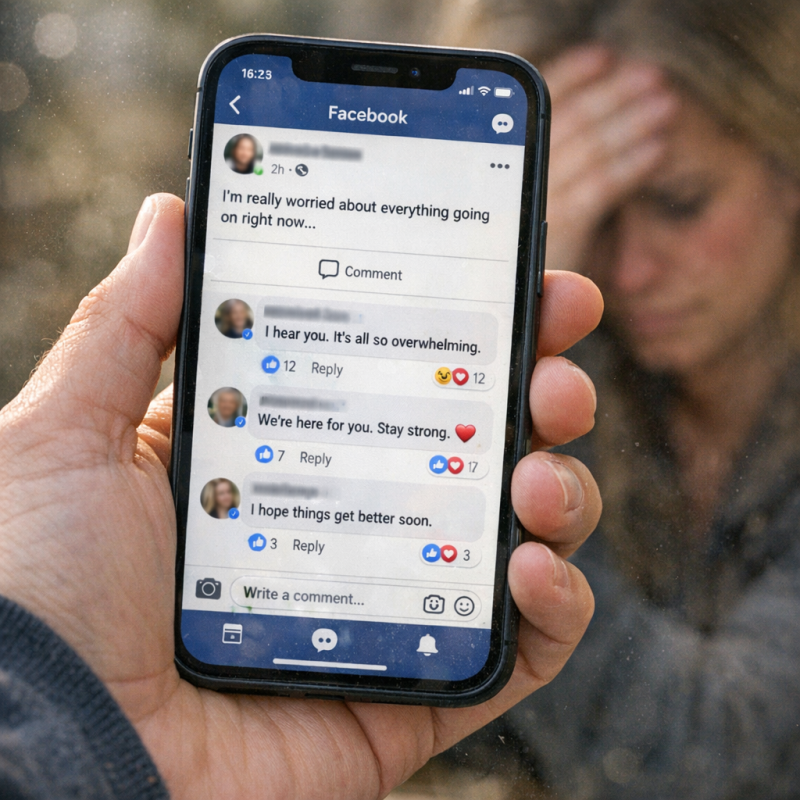 Image by FCT AI
The Backlash
I kept scrolling through the comments, watching it happen. Her followers—the people who'd initially jumped to her defense—were turning. 'Wait, is this true?' someone wrote. 'You did this at other places?' Another person posted, 'I shared your story. I felt so bad for you.' The evidence kept piling up. More managers chiming in, more documentation. Screenshots of her reviews, always the same complaints, always demanding refunds. Someone had even created a side-by-side comparison of her posts from different restaurants, showing how she'd used nearly identical language each time. The performance was exposed, stripped down to its mechanics. And her most vocal supporters were the angriest. They'd been used, manipulated into being her amplification network, and now they felt like fools. One commenter wrote, 'I defended you, and you were scamming the whole time?' and I watched her credibility evaporate in real time. She tried to respond, to backpedal, but every comment just dug her deeper. The 'consumer advocate' persona she'd built was disintegrating, and there was nothing she could do to stop it.
 Image by FCT AI
The Other Scammers Scatter
'It didn't stop with her,' Mark said, closing the Facebook window. 'Within three days of this going public, five other accounts we'd been tracking just… vanished. Deleted. Gone.' He showed me screenshots the network had saved before the accounts disappeared. Different people, same tactics. Same calculated complaints, same patterns. 'They were watching,' Mark continued. 'They saw what happened to her, saw that we were organized and documenting everything, and they scattered.' I thought about that—an entire network of scammers realizing they'd been exposed, that their tactics were known, that restaurant workers weren't isolated targets anymore. The power dynamic had shifted. 'Some of them might pop up again under different names,' Mark admitted. 'But for now, they know the game has changed. We're not just rolling over anymore.' He looked at me directly. 'They know we're watching now,' he said, and I realized this wasn't just about one woman—it was sending a message.
 Image by FCT AI
Corporate Recognition
Two weeks after everything went down, Mark called me into his office with this weird grin on his face. He had an email pulled up from corporate—not the usual 'please remember to wash your hands' nonsense, but an actual commendation. They'd reviewed the manager network he'd built, looked at the documentation system, the pattern tracking, all of it. And they were impressed. Like, genuinely impressed. 'They want to roll it out company-wide,' Mark said, scrolling through the email. 'Every location gets access to the database, the communication protocols, everything.' I just sat there processing that—this thing Mark had built out of frustration and determination was becoming official company policy. But then he got to the really wild part. 'They asked me to present it at the National Restaurant Association conference in May,' he said, and I could see he was trying to play it cool but was actually kind of blown away. 'Talk about combating organized scam operations in hospitality.' I realized right then that he'd turned a personal investigation into an industry solution, something that could protect workers everywhere.
 Image by FCT AI
Processing It All
It's been a few weeks now, and I'm still processing everything that happened. Not just the confrontation itself, but what it revealed about the world I work in every day. You think you understand your job, right? You think you know what you're dealing with. But there's this whole layer of calculated exploitation happening that most of us never see clearly because we're too close to it, too trained to just smile and de-escalate and move on. I keep thinking about all those other restaurants she'd hit, all those other workers who probably felt confused and guilty and like they'd somehow failed. People who had no idea they were being deliberately manipulated by someone running a script. And it wasn't just her—it was a whole network of people doing this, treating service workers like ATMs they could shake down with the right combination of tears and threats. The thing that really gets me is how invisible it all was until Mark started connecting the dots. How many of these predators are still out there, still working their angles? I used to think dealing with difficult customers was just part of the job, but now I see there's a difference between difficult and predatory.
 Image by FCT AI
The New Normal
Work has settled back into its normal rhythm, but it's a different normal now. We document more—not in a paranoid way, but systematically. Weird complaint? We make notes. Unusual refund request? We compare it to the database. Mark holds brief team meetings where we share patterns we've noticed, things that felt off. It's made us all more aware, more connected. We're not just coworkers anymore; we're actually looking out for each other in a way that feels deliberate and protective. Yesterday, Diane and I were doing side work together, and she mentioned how different things feel now. 'I used to dread certain types of customers,' she said, wiping down tables. 'Like, I'd see someone getting that look on their face and just feel my stomach drop, you know? Like here we go again.' She paused, folding her rag carefully. 'But now I feel like... I don't know. Safer? Knowing Mark actually has our backs. That we're not just on our own.' I realized that's what good management actually looks like—not just scheduling shifts and counting inventory, but creating a culture where people feel protected instead of expendable.
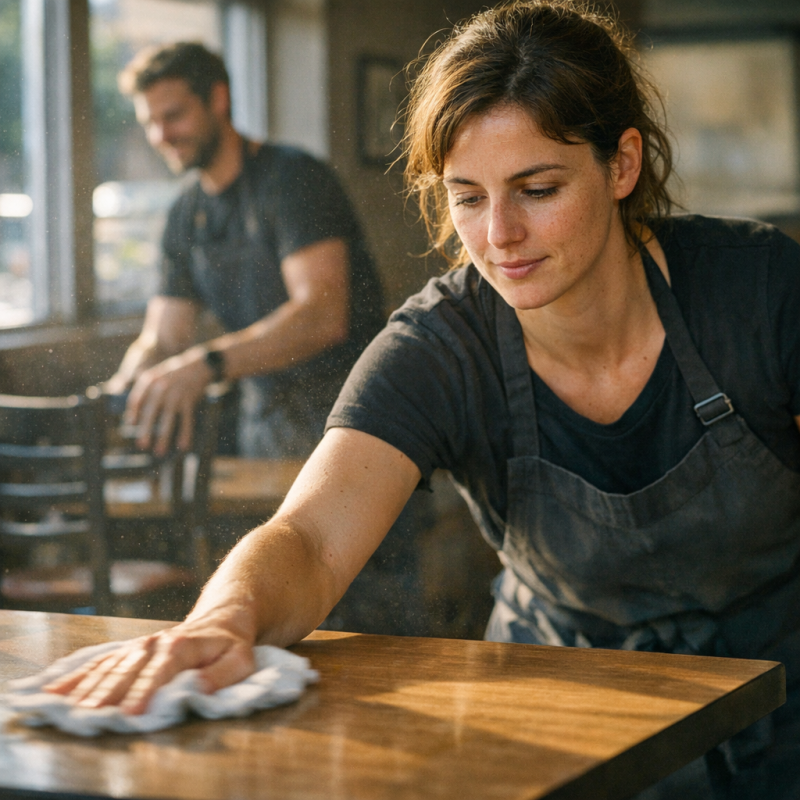 Image by FCT AI
The Lesson
I think about that night often—not just the confrontation itself, but what it taught me about power dynamics and exploitation and the invisible labor of staying kind in a world that sometimes punishes kindness. That woman walked in expecting to find easy targets, people too tired or too afraid of corporate blowback to fight back. She'd done it before, successfully, dozens of times. She had her script down, her tears ready, her threats calibrated. What she didn't count on was walking into a place where someone had been watching, documenting, preparing. Where her tactics were already known and catalogued. Where the manager she tried to intimidate had spent months building a network specifically designed to stop people like her. There's something deeply satisfying about that—about the moment when a predator realizes their prey isn't defenseless after all. Mark was right when he said it to her face: they really didn't know who they were messing with, and maybe that's the real lesson here—sometimes the people who look like easy targets are anything but.
 Image by FCT AI