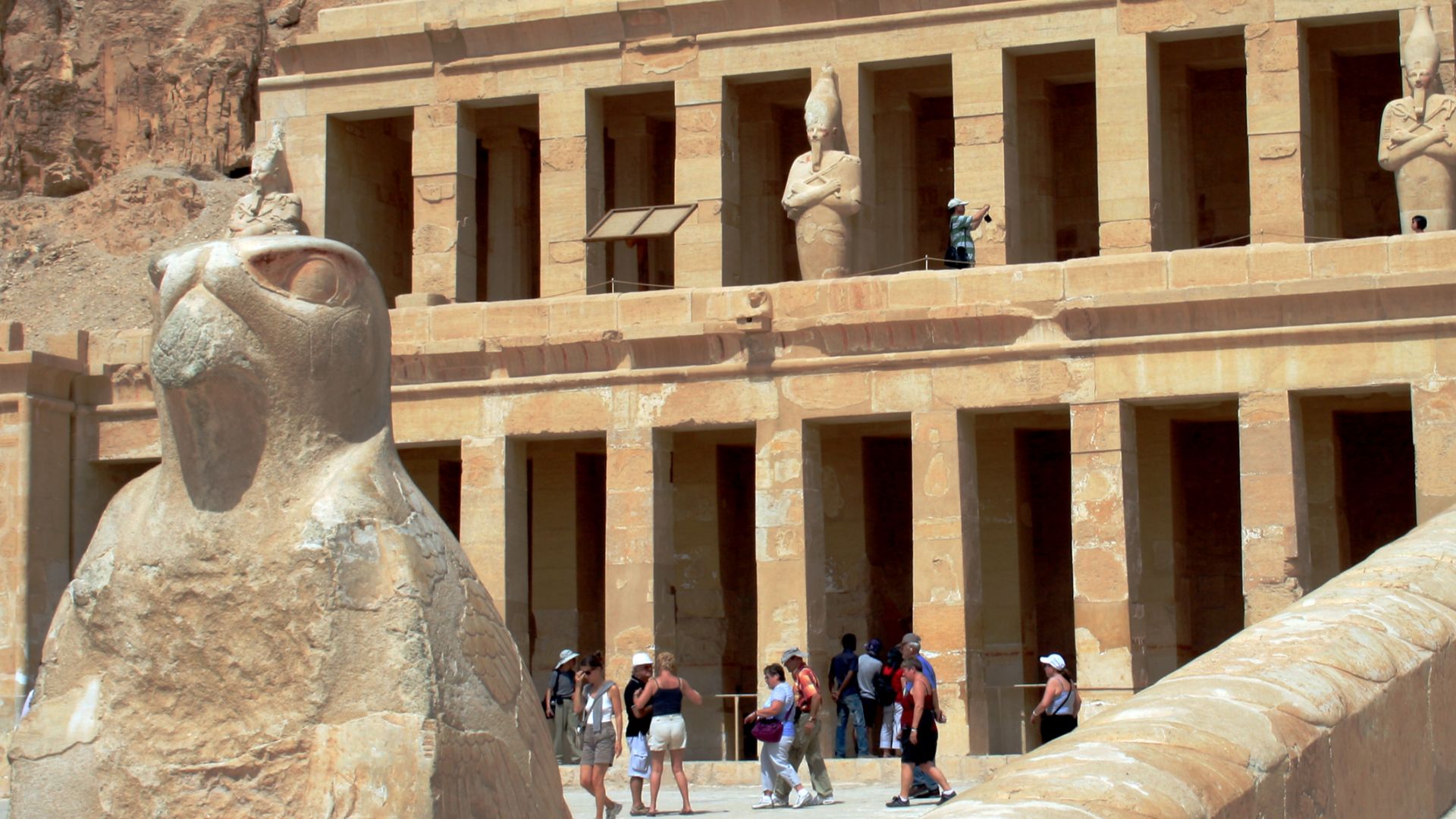
Archaeologists and restoration specialists began the painstaking work at Queen Hatshepsut's mortuary temple at Deir el-Bahari in Luxor, only to uncover remarkable evidence of ancient Egyptian artistic achievement and royal history.
A Temple Restored Through Time
The mortuary temple of Hatshepsut (c 1479–1458 BCE), known as Djeser-Djeseru or "Holy of Holies," is considered a masterpiece of ancient Egyptian architecture. After centuries of damage from earthquakes, stone robbery, and conversion into a Christian monastery, the temple has undergone extensive restoration.
Since 1961, the Polish Centre of Mediterranean Archaeology has conducted meticulous conservation work throughout the complex, culminating in its reopening to the public in March 2023. Archaeological excavations have unearthed the temple's original architectural elements, allowing experts to reconstruct the three-tiered structure with its grand colonnades.
The restoration efforts have focused on reassembling fallen pillared halls, replacing broken wall reliefs, and reinstalling colossal statues.
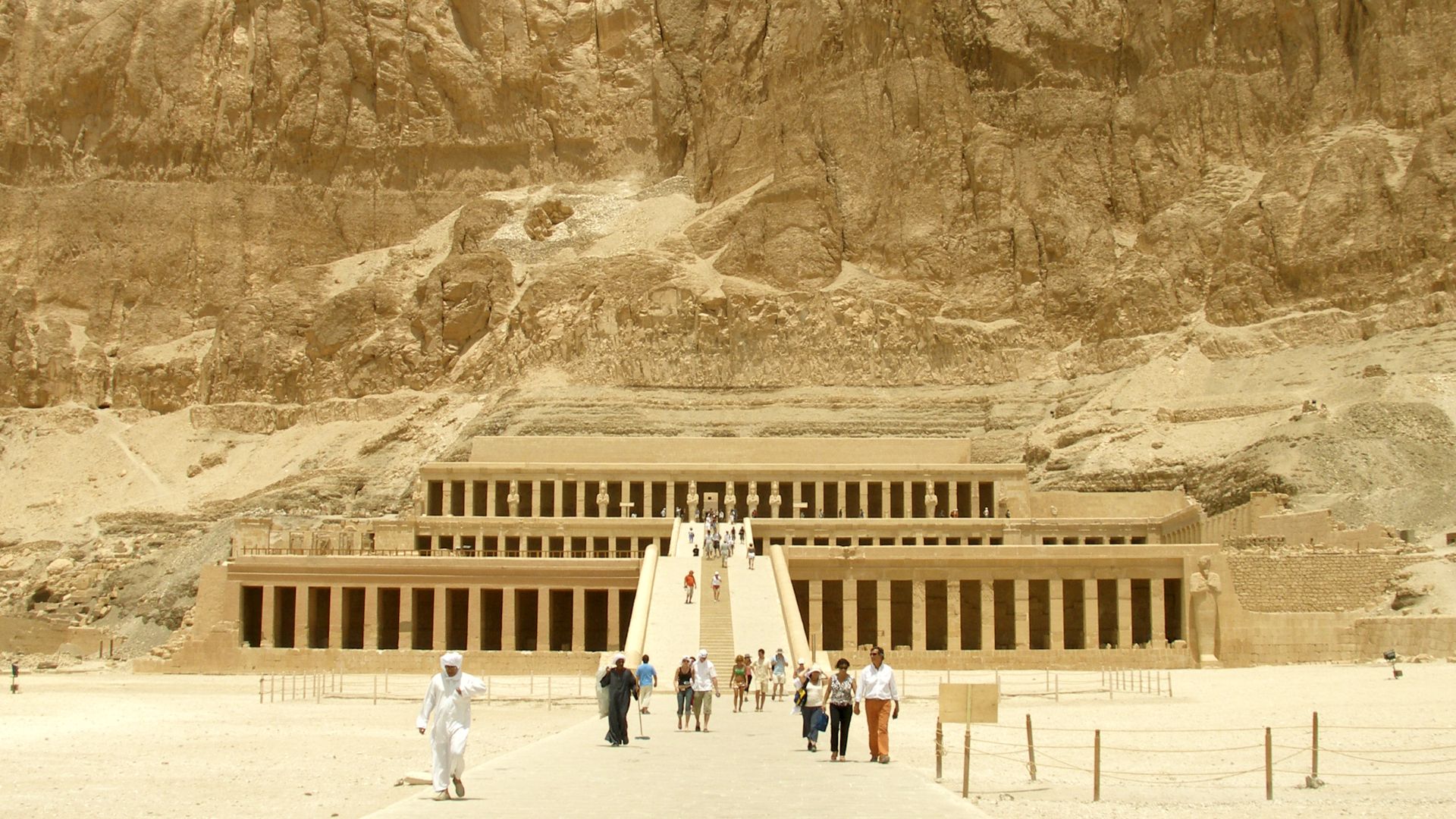 Vyacheslav Argenberg, Wikimedia Commons
Vivid Art And Royal Narratives
Recent archaeological discoveries near the causeway of Hatshepsut's temple have been particularly significant. A joint Egyptian mission led by the Zahi Hawass Foundation and the Supreme Council of Antiquities has found approximately 1,500 richly decorated stone blocks with rare bas-reliefs and inscriptions.
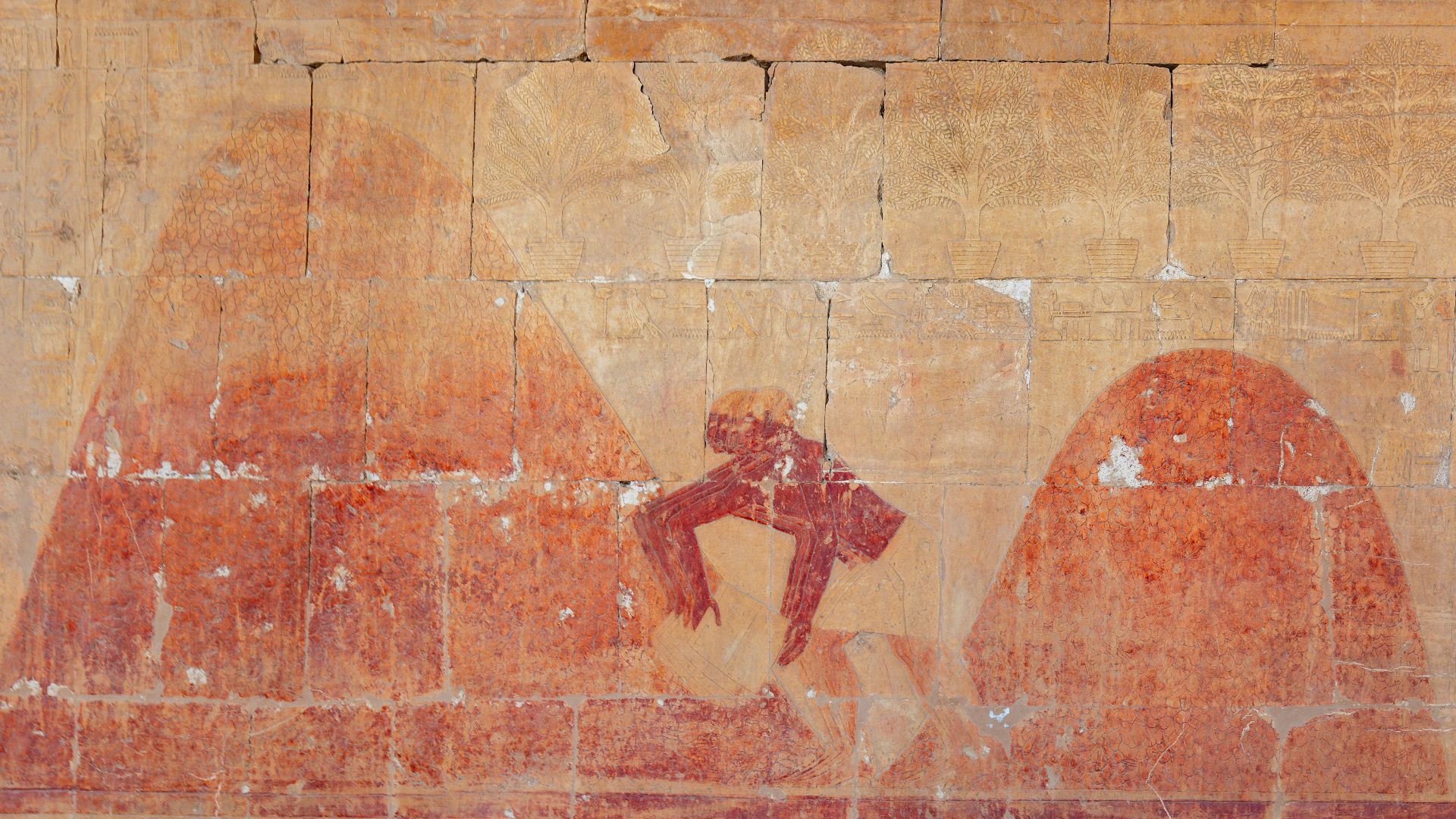
These blocks, many with their original vivid colors intact, showcase the artistic mastery achieved during the reigns of Hatshepsut and her successor, Thutmose III. Additionally, the restored reliefs reveal important religious and political narratives.
On the temple's walls, scenes depict Hatshepsut's divine birth, her coronation, and her famous trading expedition to the Land of Punt. These images were critical to legitimizing her unprecedented position as a female pharaoh. Other reliefs show offerings to various deities, including Amun-Re.
 Diego Delso, Wikimedia Commons
New Discoveries And Historical Insights
Among the most significant recent finds are the foundational remains of Hatshepsut's Valley Temple, which served as the main entrance to her funerary complex. Archaeologists have also found over 100 limestone and quartzite tablets inscribed with Hatshepsut's cartouches.
These discoveries have enhanced our understanding of ancient Egyptian history, mainly the transition from Egypt's Middle Kingdom to the 18th Dynasty. The temple itself highlights a rigid religious scenario, with spaces dedicated to various deities.
Restoration work continues to this day, with experts carefully reconstructing the temple's appearance while preserving its historical integrity. Each newly restored section offers fresh insights into one of history's most remarkable female rulers and the extraordinary monument she created to ensure her immortality.