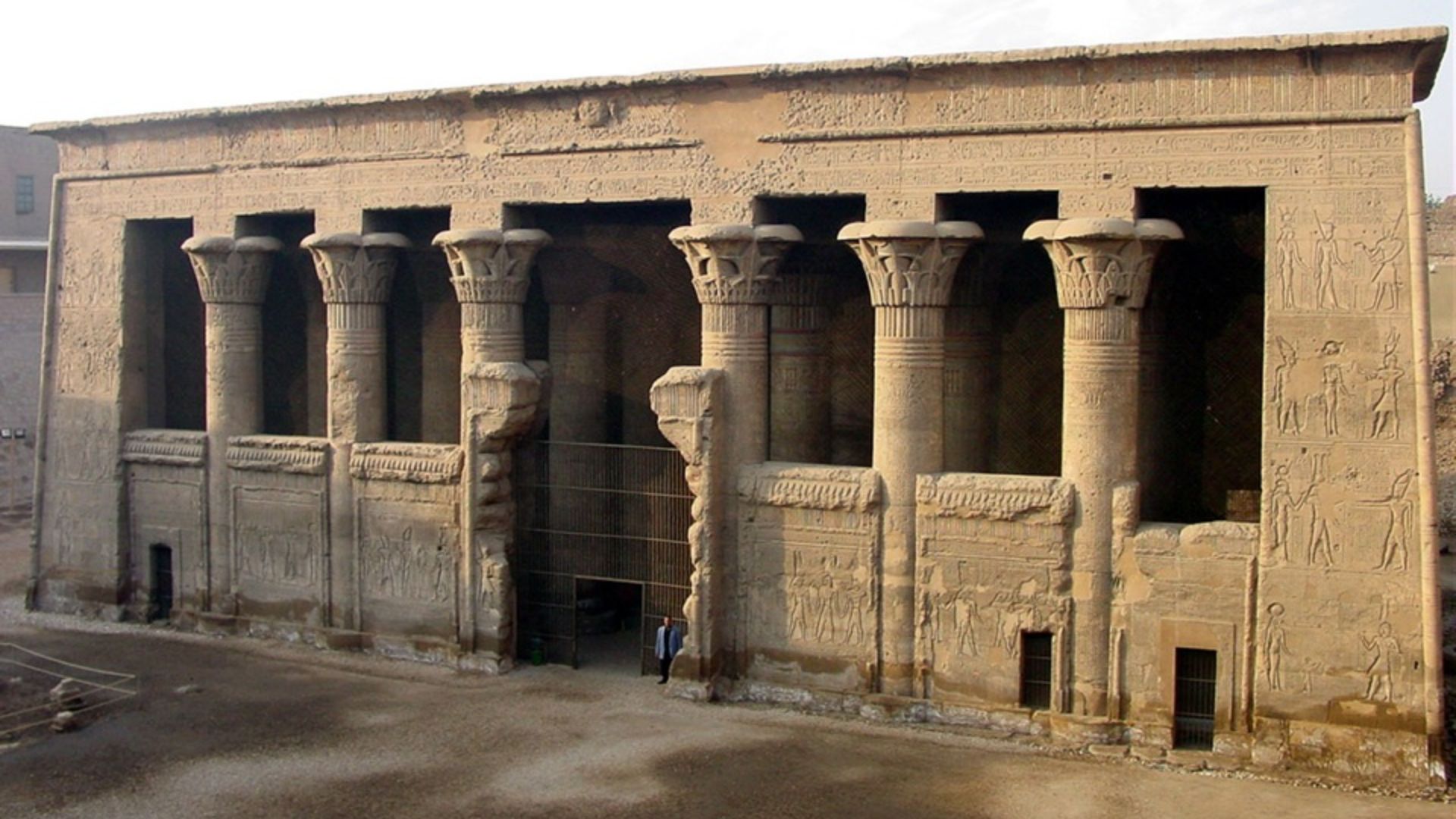
The Temple of Khnum at Esna, about 37 miles south of Luxor, is a late Ptolemaic- and Roman-era site that once stood as one of Upper Egypt’s major cult centers. In 2018, Egypt’s Ministry of Tourism and Antiquities partnered with the University of Tubingen in Germany to restore and document the monument’s heavily darkened reliefs.
Their goal was to uncover the original pigment and inscriptions obscured by centuries of soot, bird droppings, and grime.
The Hidden Canvas Comes To Life
For nearly two thousand years, the sandstone pronaos of the Temple of Khnum sat 30 feet below modern street level, cloaked in soot and debris from fires, floods, and reuse.
During the cleaning project that began in 2018, Egyptian-German teams removed thick layers of grime to reveal vividly painted reliefs and inscriptions that had long escaped notice.
Once the grime was gone, visitors could see the original pigments: deep lapis-blue backgrounds, crimson vulture wings, and bright yellow crowns. The effect is almost electric, as though the temple has just awakened.
 tutincommon (John Campana), Wikimedia Commons
Vultures, Crocodiles, And The Divine Cast
The newly exposed ceiling features 46 vulture figures representing the goddess Nekhbet (patron of Upper Egypt) and the goddess Wadjet (patron of Lower Egypt)—both depicted as outspread wings above the central bay. (Phys.org)
On adjacent reliefs, crocodile-headed gods—symbolic of water, chaos, and rebirth—appear alongside the ram-headed creator god Khnum, who was believed to shape humans on his potter’s wheel.
Together, these images form a visual narrative of divine power and protection, echoing the Nile’s vital role in sustaining life across Egypt.
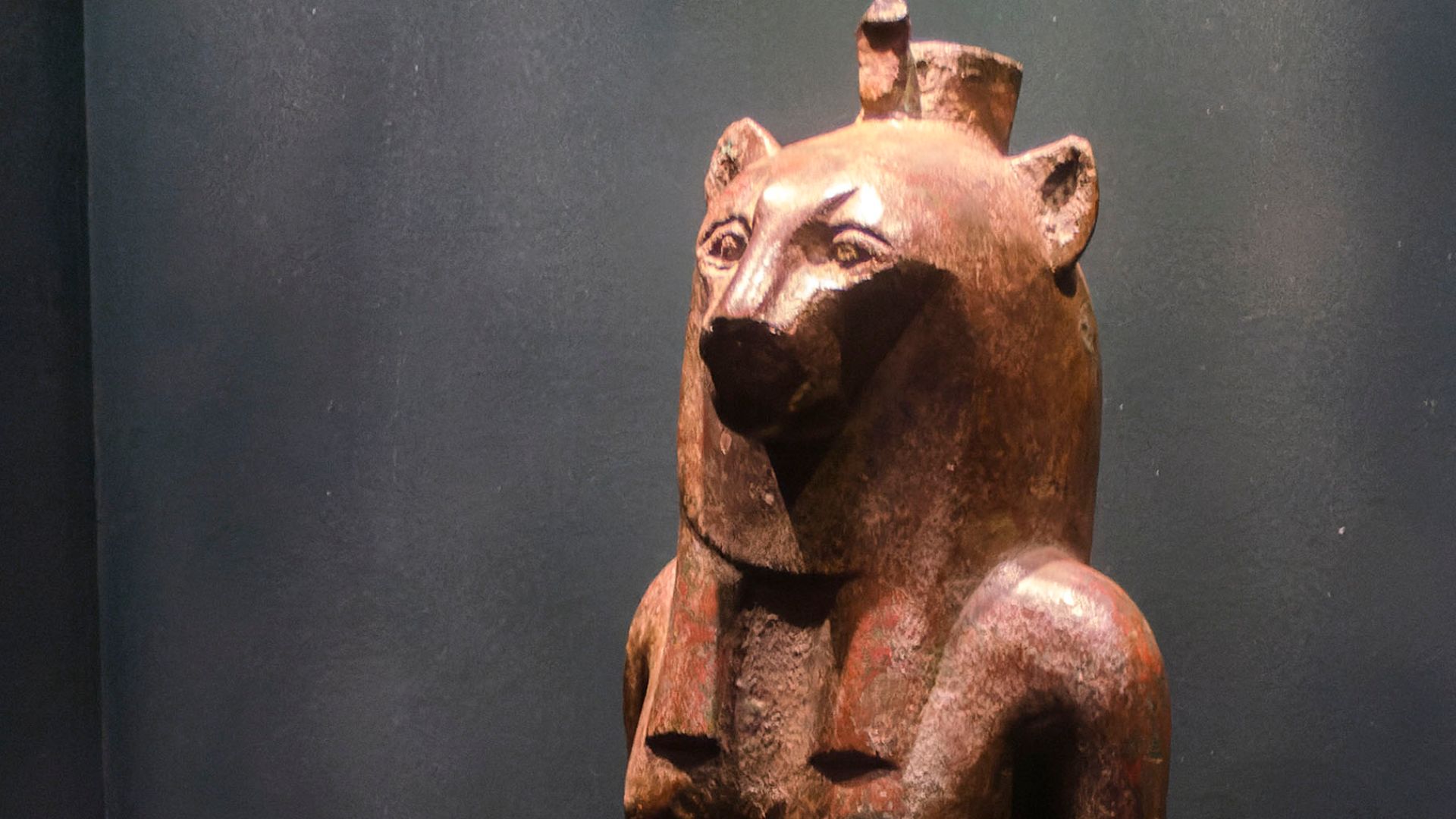 Angel M. Felicisimo from Merida, Espana, Wikimedia Commons
Architecture, Restoration, And What It Reveals
The hall you see today was completed during the Ptolemaic and Roman periods (about 3rd century BCE to 3rd century CE) under rulers such as Ptolemy VI and Roman Emperor Claudius.
Thanks to the careful cleaning of more than half the ceiling and eight out of eighteen columns, the structural and decorative program now appears as the ancient builders intended.
The newly exposed inscriptions include Roman cartouches and late-hieroglyphic texts, bridging Egyptian tradition with Greco-Roman rule. The effect: you walk into the temple and feel a precise choreography of stone and paint.
 Unknown authorUnknown author, Wikimedia Commons
A Lasting Impression
By shedding the centuries of darkness, this restoration has reanimated an ancient story. The Temple of Khnum speaks. It offers you vultures in mid-flight, crocodile gods wearing crowns, a creator god molding clay, and a civilization that believed in the power of color.