You don’t expect a road crew to make one of the most intriguing archaeological finds of the decade—but that’s exactly what happened in Sheyanxi Province.
While expanding a modern road near Taiyuan, workers unearthed a Tang Dynasty tomb sealed since AD 736. Inside, brilliant murals covered the walls. These tell stories not of emperors or battles, but of everyday life—and one remarkable face among them: a blonde, bearded man from far beyond China’s borders.
What was he doing there?
A Window Into Tang-Era Life
The newly discovered tomb belonged to a man who died in 736 AD, during China’s Tang Dynasty (618–907 AD), an era often called the golden age of cosmopolitanism. It was called the “golden age of cosmopolitanism” because the Tang Dynasty was unusually open to foreign cultures.
Chang’an, the capital, became a global hub where merchants and diplomats from Central Asia, India, Persia, and beyond mingled. For this reason, the capital was a vibrant mix of different cultures.
The tombs's painted walls—drenched in ochres, reds, greens, and blacks—depict servants threshing grain, carrying water, and preparing food.
These murals show what life looked like outside the palace walls. Rather than an idealized myth, the artist captured real textures of braided hair and horses mid-stride. That realism reflects how Tang artists celebrated daily labor as much as courtly life.
The detail also suggests the tomb’s occupant held high social standing; someone who wanted his resting place to mirror the rhythms and riches of earthly living.
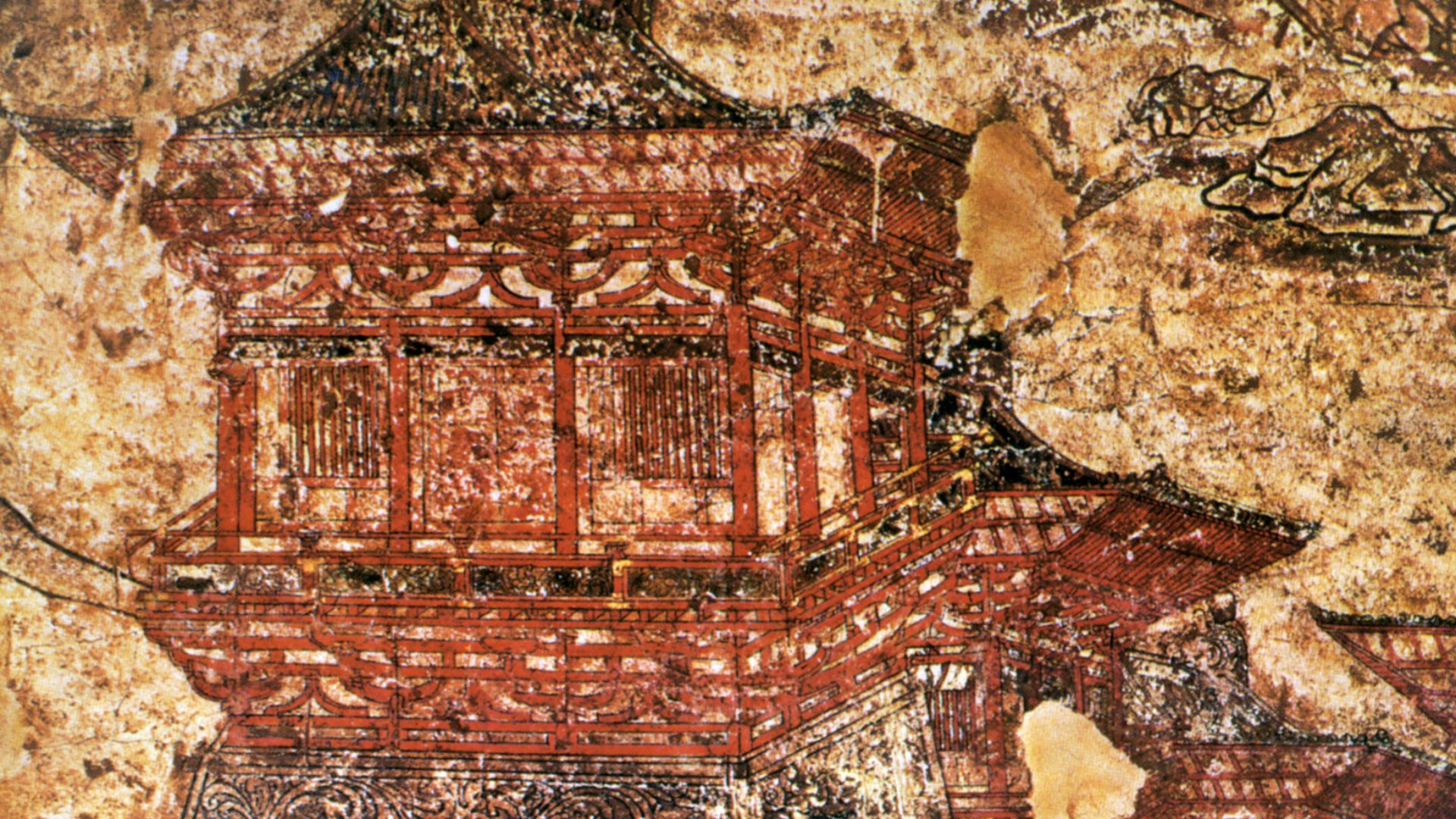 Unknown Tang-era tomb artist, Wikimedia Commons
The Stranger On The Wall
One image startles even seasoned archaeologists—a man with pale hair and a full beard, drawn with distinct Western facial features. He likely represented a Sogdian merchant or envoy from Central Asia, a region then flourishing with trade routes crisscrossing Persia and the Chinese frontier.
His inclusion isn’t decorative—it’s symbolic. Depicting a foreigner in a private tomb spoke volumes about status and connection. During the Tang period, different people from across the Silk Road mingled freely in Chinese cities. Portraying one on a tomb wall may have signaled worldly ties for the far-off lands that brought silk, glass, and spices.
This figure also confirms that cultural diversity reached inland provinces like Shanxi, far from the capital’s bustle.
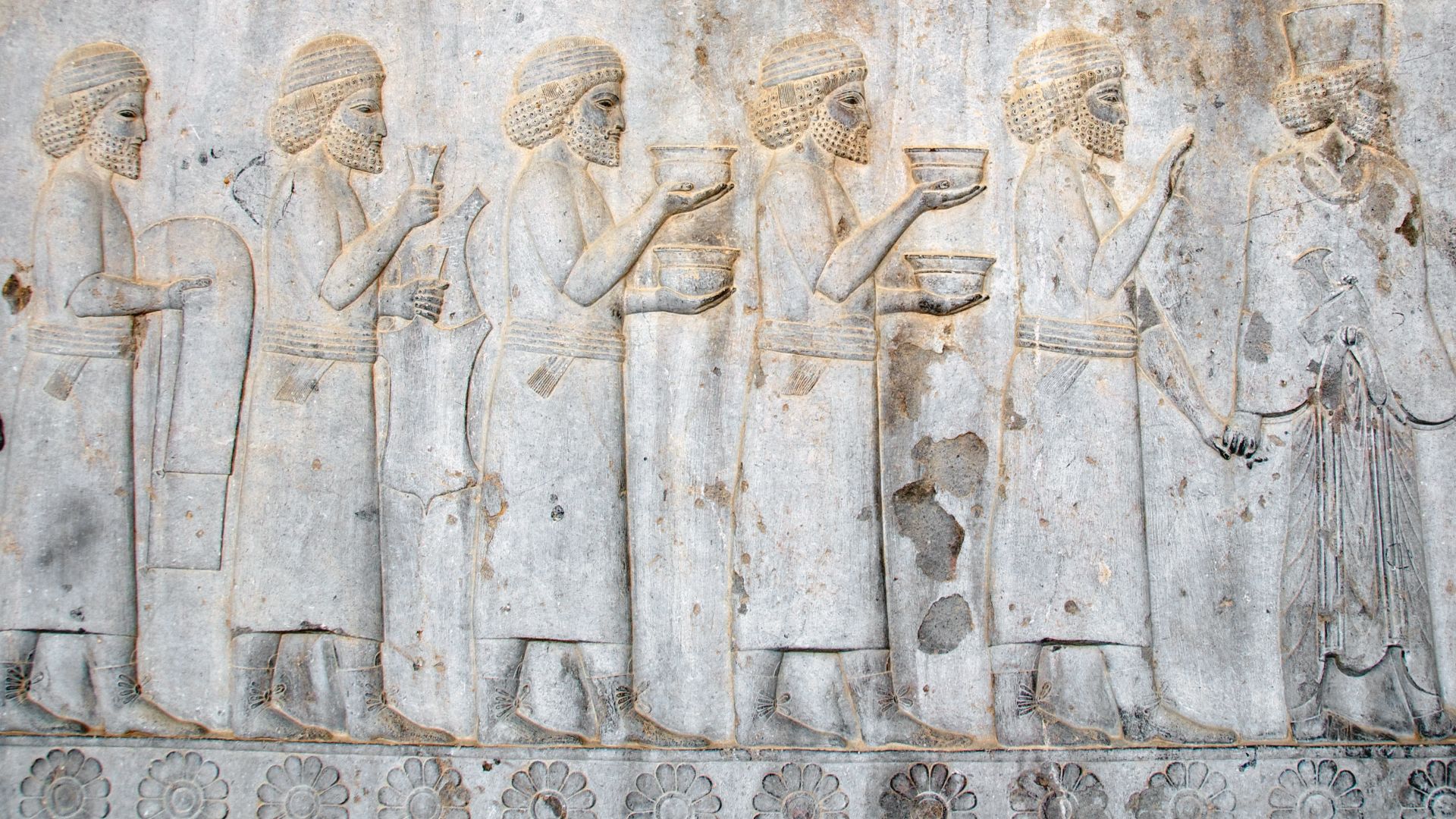 A.Davey from Portland, Oregon, EE UU, Wikimedia Commons
A Tomb Built For A Story
Archaeologists studying the layout noticed that the chamber wasn’t arranged as a simple resting place.
The placement of the murals also appears intentional. Scenes of household labor greet visitors first, as if grounding them in familiar routines, while figures tied to travel and commerce sit deeper inside. That ordering suggests the tomb’s owner wanted his legacy framed by both his domestic identity and his outward connections.
Even objects retrieved from ceramic shards and pottery fragments—fit that narrative. These were everyday possessions meant to follow him into the next world.
With its many painted faces, the tomb reads like a life story rendered in color and clay. It captures someone anchored in Shanxi but mindful of the traffic and ideas tracing the Silk Road. Familiar surroundings meet quiet ambition, and the murals act as purposeful clues to his self-image.
Why This Discovery Matters
Cultural exchange: The murals visually document the Tang dynasty’s openness. It blends Chinese and foreign elements into one harmonious scene.
Artistic mastery: Their preserved colors and brushwork reveal sophisticated pigment techniques that have withstood 1,300 years.
Historical bridge: The tomb links Central Asian trade networks with interior Chinese life, to illustrate how the Silk Road shaped social identity as much as commerce.
Each brushstroke reminds us that history is layered and occasionally surprising. The blonde figure’s face might seem out of place at first glance, but it gives the Tang dynasty’s spirit of exchange context.