The Bridge Twisted Apart
On November 7, 1940, Washington State's Tacoma Narrows Bridge began twisting violently in winds of roughly 40 mph. Sections of roadway eventually tore loose and plunged into Puget Sound. The spectacular collapse became one of engineering's most famous disasters, and its fundamental cause changed the way engineers thought about suspension bridges.
It Was Already Moving
The bridge had opened only four months earlier, on July 1, but its strange behavior wasn't entirely unexpected. Workers and motorists had already watched the roadway rise and fall in relatively modest winds, earning it the nickname "Galloping Gertie." Engineers attempted several measures to control the movement, but none solved the underlying aerodynamic problem.
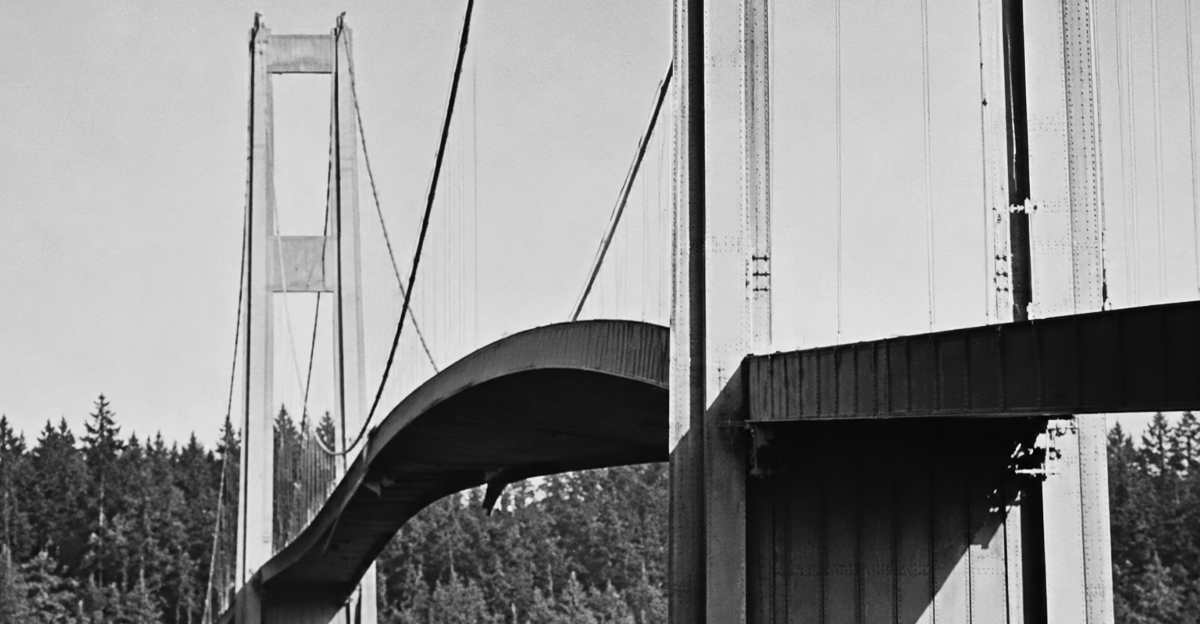 Screenshot of video of Tacoma Narrows Bridge collapse (modified); Public domain, Wikimedia Commons
Eight Feet Made Trouble
One seemingly small design decision proved enormously important. An earlier proposal by engineer Clark Eldridge called for a traditional 25-foot-deep stiffening truss beneath the roadway. The final design associated with engineer Leon Moisseiff instead used sleek, solid plate girders only eight feet deep. That made the bridge lighter, slimmer, and much more flexible.
The solid girders created another problem. Rather than allowing air to flow freely through an open truss, the eight-foot steel sides presented broad surfaces to the wind. Investigators later concluded that the deck and solid plate girders interacted with the wind aerodynamically, producing lift and contributing to the bridge's dangerous instability.
The Wind Found Weakness
November 7 was windy, but the bridge wasn't simply blown over by an extraordinary storm. Its vulnerability was more complicated. The long, narrow roadway possessed relatively little resistance to twisting, and aerodynamic forces could feed energy into its motion. That morning, its familiar vertical movement eventually transformed into something much more destructive.
A cable band on the north main cable slipped, helping divide the span into unequal sections and contributing to the transition from up-and-down movement to twisting. The deck entered what is now commonly described as torsional flutter, a self-excited aerodynamic instability in which the movement of the structure and the forces generated by the airflow reinforce one another.
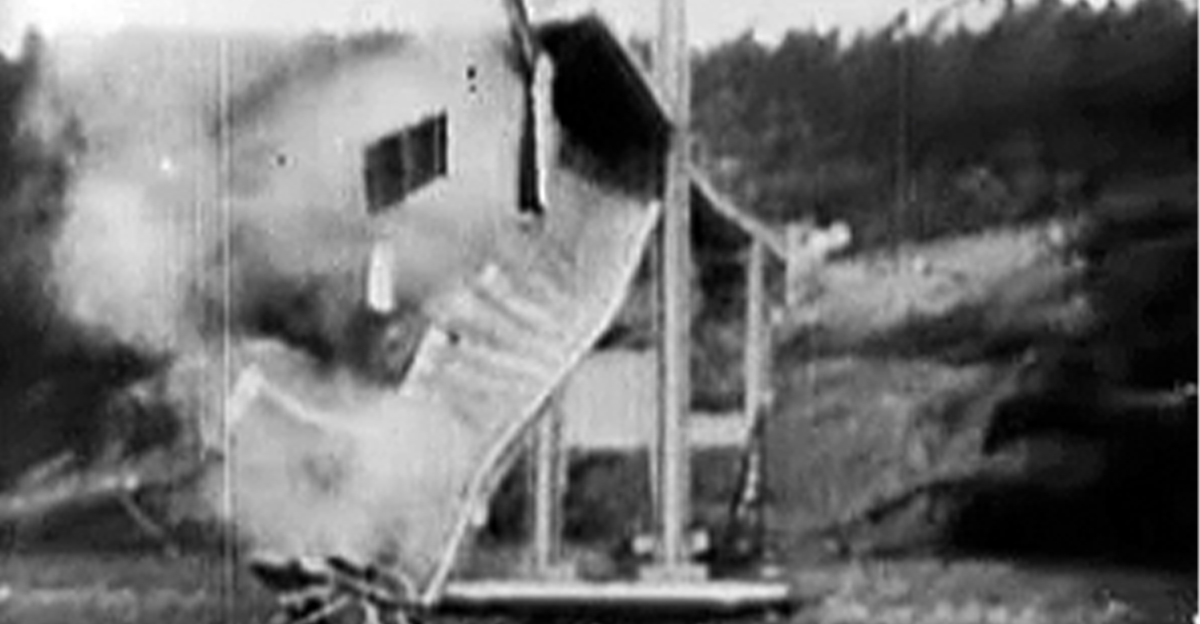 Screenshot of video of Tacoma Narrows Bridge collapse ; Public domain, Wikimedia Commons
Not Simple Resonance
The famous film of the disaster sometimes leads to a simplified explanation that wind happened to match the bridge's natural frequency and caused ordinary resonance. Modern explanations are more nuanced. The catastrophic twisting is primarily associated with aerodynamic instability and torsional flutter, rather than the straightforward textbook resonance demonstration sometimes used to describe the collapse.
The Steel Wasn't Bad
The collapse wasn't simply a case of weak steel or defective suspension cables. In fact, the main cables themselves did not snap. The fundamental problem was the extraordinarily flexible roadway and the way its shape interacted with moving air. The disaster exposed how incomplete engineers' understanding of bridge aerodynamics remained in 1940.
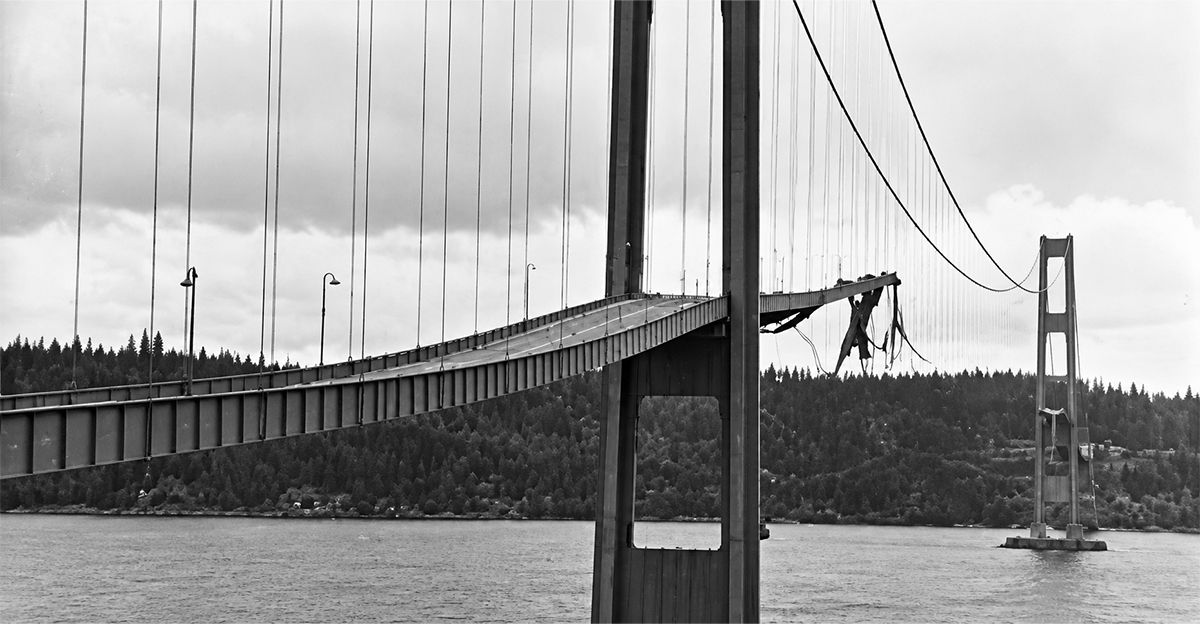 Stillman Fires Collection, Barney Elliott, Wikimedia Commons (modified)
Engineers Learned Quickly
Investigators concluded that excessive flexibility was central to the failure and recommended that future suspension bridges undergo aerodynamic testing. University of Washington engineer Frederick Farquharson subsequently used wind tunnels and scale models to study both the failed bridge and designs for its replacement. Those experiments helped establish bridge aerodynamics as an essential engineering discipline.
Gertie's Safer Successor
The replacement Tacoma Narrows Bridge, opened in 1950, was deliberately different. Engineers returned to a deep, open stiffening truss that allowed wind to pass through rather than meeting a broad solid surface. They also incorporated open roadway grating, lateral bracing, and hydraulic damping devices to further control movement.
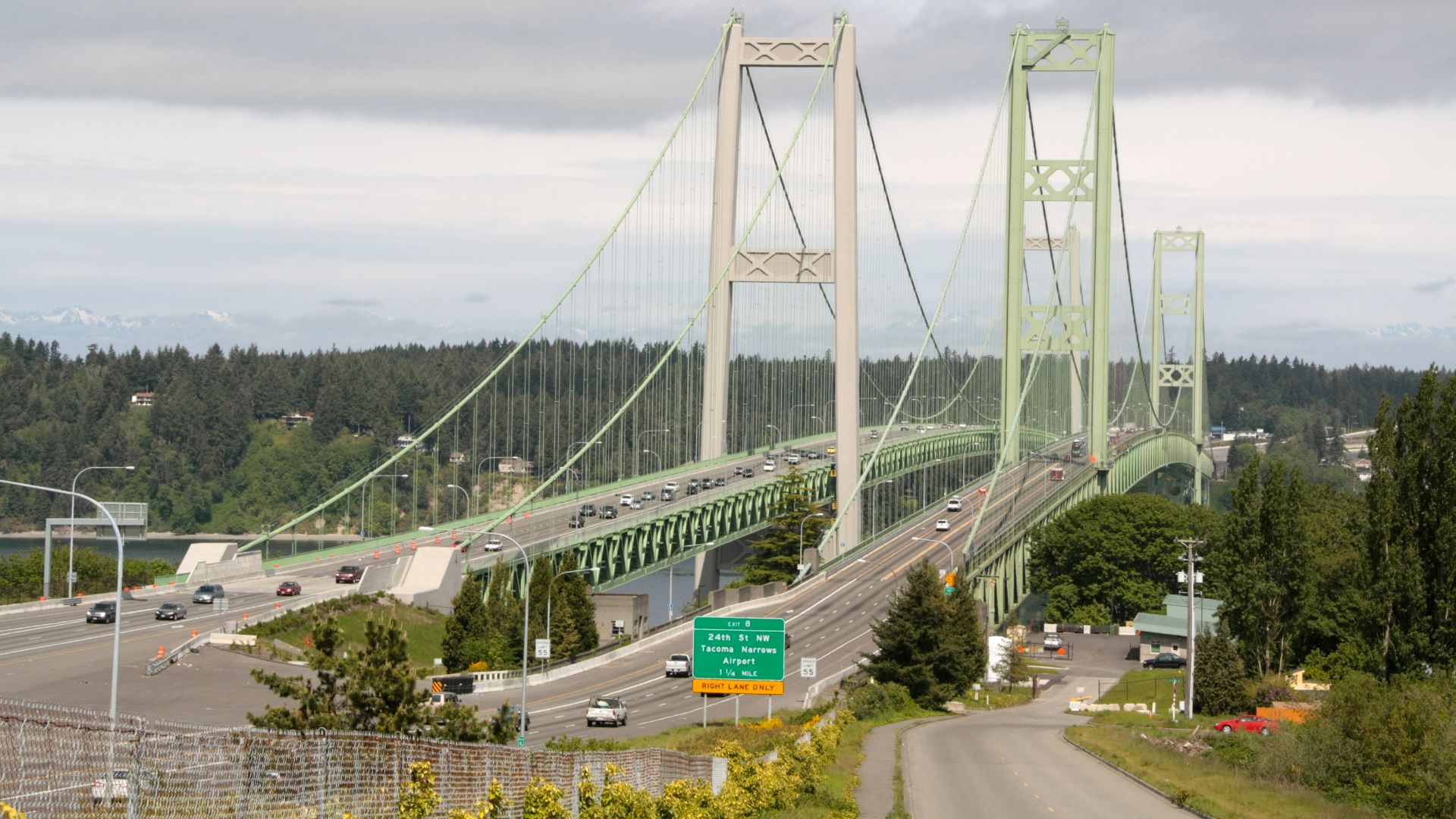
The lesson stretched far beyond Washington. Engineers around the world reevaluated suspension bridges and increasingly incorporated aerodynamic behavior and wind-tunnel testing into their work. Galloping Gertie's spectacular failure ultimately demonstrated something deceptively simple: a bridge doesn't merely have to support traffic and resist wind pressure. Its shape must also behave safely in the wind.
You May Also Like:
33 Of History's Most Unbelievable Screwups.
The Three Gorges Dam Is A Chinese Colossus
Ferdinand de Lesseps And The French Attempt To Build The Panama Canal