 Berthold Werner, CC BY-SA 3.0, Wikimedia Commons, Modified
The stone walls of Matera do not whisper history—they press it into the air. The scent of damp limestone still clings to cave ceilings carved thousands of years ago, while narrow passages funnel light exactly where ancient families needed it most. Long before electricity or plumbing, people here shaped homes directly into rock faces to create a settlement that never stopped evolving. Archaeological research over the last several decades has revealed that Matera's cave dwellings, known as the Sassi, are among the longest continuously inhabited regions on Earth. These findings challenge old assumptions about early human life, showing adaptability and social structure that lasted from the Paleolithic era through modern times.
When Stone Became Shelter
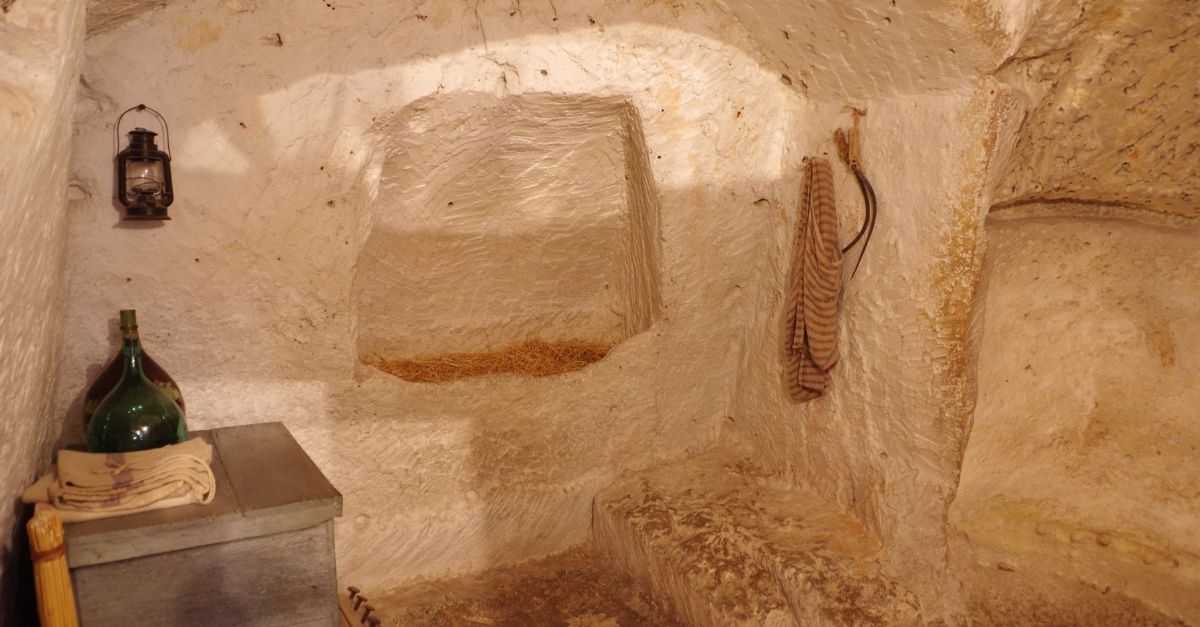
Archaeological evidence confirms that Matera’s caves were occupied as early as the Paleolithic period, more than 10,000 years ago. This places them among the oldest continuously used human dwellings in Europe. Excavations have uncovered stone tools, hearth remains, and flattened living surfaces carved straight into the limestone ravine walls. Such artifacts suggest repeated and deliberate use rather than short-term sheltering. In other words, these spaces were not emergency hideouts or seasonal camps. The caves maintained stable interior temperatures year-round, typically between 61°F and 68°F, shielding residents from summer heat and winter cold. That natural climate control reduced the need for migration and allowed communities to remain rooted. Over generations, inhabitants widened chambers and carved storage niches to create layered living spaces that housed families and livestock beneath the same stone ceiling—sometimes divided by only a few feet of rock.
From this foundation, researchers uncovered evidence of intentional design. Rainwater collection systems channeled runoff into cisterns carved beneath floors, some holding thousands of gallons. Foot-worn steps and soot-stained ceilings indicate repeated use over centuries. These details reveal continuity rather than abandonment. As societies transitioned from hunting-gathering to agriculture, the caves adapted right along with them. This continuity links early survival strategies directly to later settlement planning by offering a rare timeline of human adjustment etched in stone rather than buried underground.
 Gorup de Besanez, Wikimedia Commons
Homes That Grew With Their People
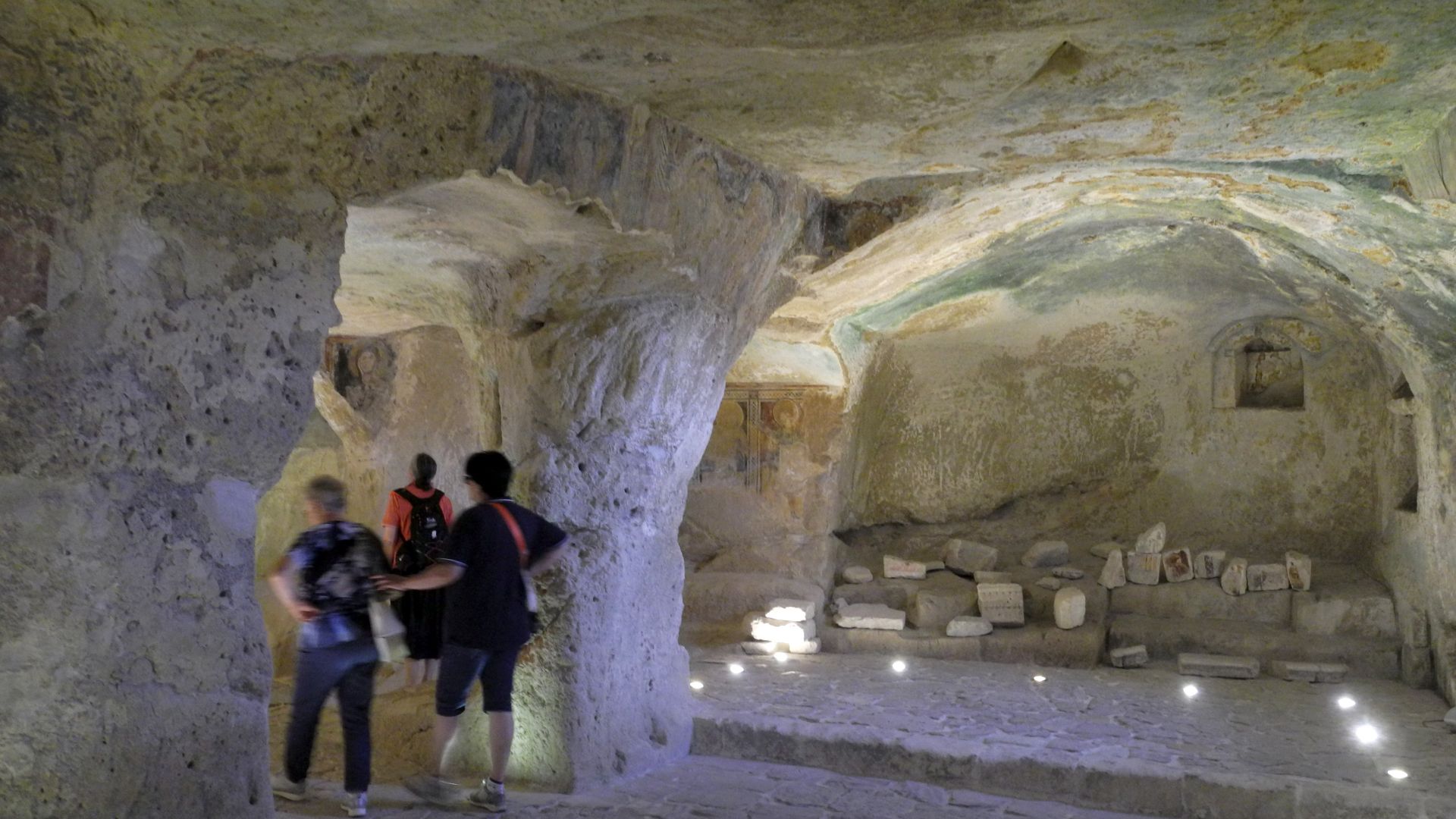
As centuries passed, Matera’s cave dwellings attracted more people and transformed into a dense urban network. By the Middle Ages, the Sassi housed entire neighborhoods stacked atop one another. Some multi-level structures rose three or four levels high. Archaeologists documented churches carved into rock faces, complete with frescoes dating back to the 8th and 9th centuries. These religious spaces shared walls with homes, workshops, and animal stalls. They revealed a tightly integrated community where daily life thrived within arm’s reach, shaped by shared resources and close social ties that go back hundreds of years.
Such development shows how long-term settlement shaped social organization. Narrow paths doubled as drainage routes, and shared courtyards became gathering spaces. Research indicates that up to 15,000 people lived in the Sassi by the early 20th century, many without modern sanitation. While later conditions grew overcrowded, earlier phases show deliberate planning that balanced population growth with available resources. This evolution demonstrates how ancient infrastructure, when continually adapted, can support generations without complete rebuilding. It’s a lesson modern urban planners still grapple with today.
Science Rewrites An Old Reputation
For much of the 1900s, Matera symbolized poverty after postwar reports described severe living conditions. In 1952, Italy eventually relocated residents due to health concerns. Yet archaeological and architectural research later reframed the narrative. Studies showed that the caves themselves were not inherently unhealthy. As a matter of fact, neglect and policy decisions caused a decline that affected the population. Once abandoned, preservation efforts began, and UNESCO designated Matera a World Heritage Site in 1993. The historical and anthropological value of this culturally rich site was finally recognized.
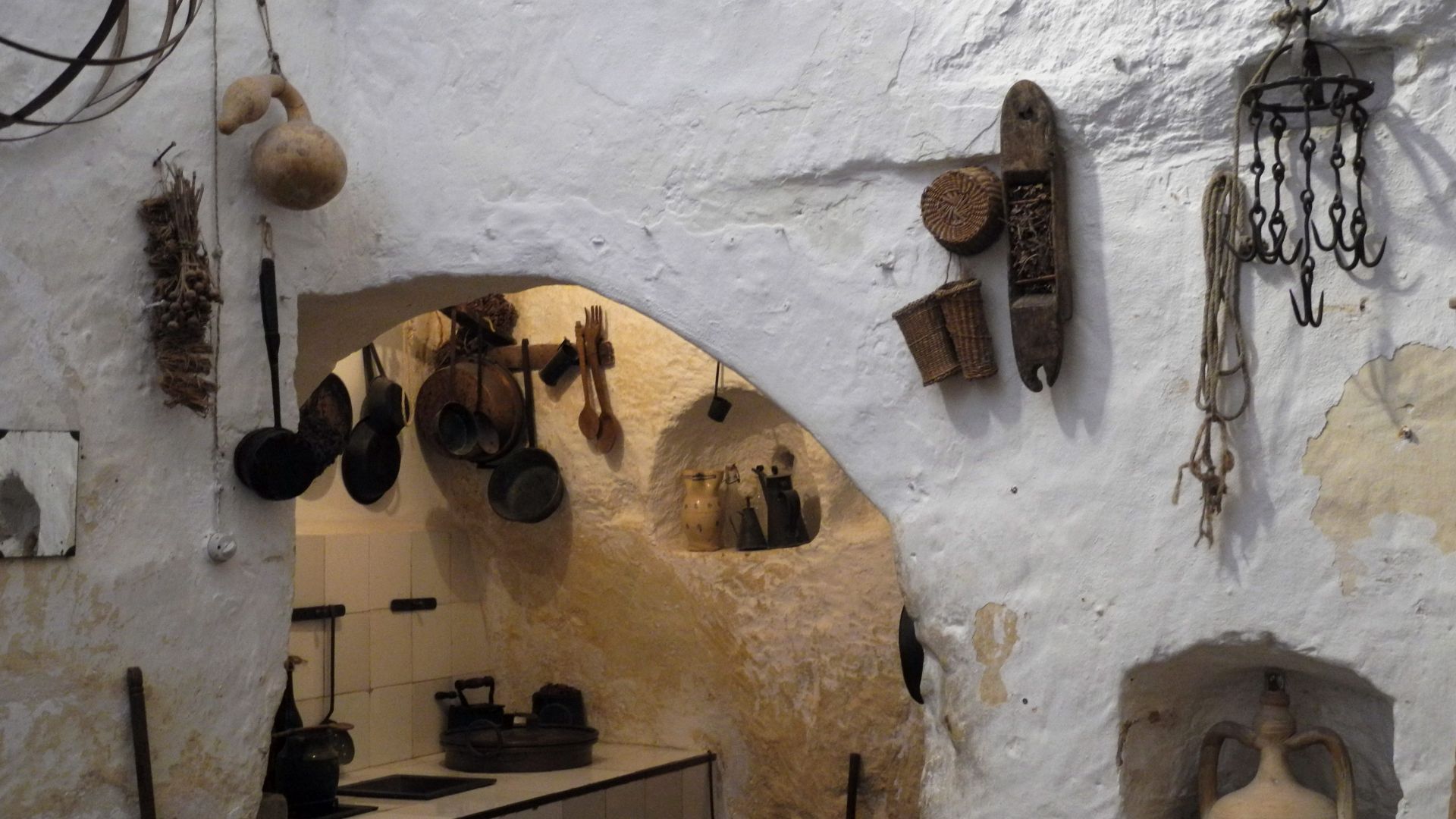
Recent research combines archaeology and environmental science to explain why the settlement thrived for so long. The limestone, soft enough to carve yet strong enough to support weight, allowed continuous modification. Natural ventilation reduced smoke buildup. Gravity-fed water systems required no mechanical aid. Today, restored cave homes operate as museums and hotels, still maintaining interior temperatures within a narrow range year-round. The same principles that supported Paleolithic families now attract modern visitors to close a long arc of human habitation without erasing its origins. The ongoing study of Matera proves that survival was engineered and passed down. Each carved step and water channel stands as evidence that long-term living, when aligned with environment and community, can outlast empires.
 Gorup de Besanez, Wikimedia Commons