The Exhausted Man
Ethan walked into my office on a Tuesday afternoon, and I knew immediately he wasn't sleeping. I've been doing this for fifteen years, so I can spot the signs—the gray complexion, the way someone's eyes don't quite focus when you're talking. But this was different. This wasn't just normal divorce stress. This was the kind of exhaustion that comes from being slowly ground down, day after day, until you're not even sure what's real anymore. He sat across from my desk and put his head in his hands before I'd even asked my first question. 'I need help,' he said. 'My wife has accused me of things I didn't do. Financial abuse. Emotional manipulation. She's telling everyone I've been controlling her for years.' I'd heard versions of this a thousand times before. Everyone's innocent in their own story. But then he looked up at me with this expression I couldn't quite read—not anger, not desperation, just this flat, defeated certainty. 'I didn't do any of it,' he said. And for the first time in years, I wasn't sure I was hearing the usual denial.
 Image by FCT AI
The Year-Long War
The case file Ethan brought me was thick enough to be a novel. Nearly a year of back-and-forth, accusations piling up like debris after a storm. Vanessa had filed complaints about financial control, emotional abuse, isolation tactics. Each one documented in careful detail, each one escalating just slightly from the last. I sat there flipping through page after page, and my coffee went cold while I read. Normally, in cases like this, you see inconsistencies—people contradict themselves, timelines don't match, emotions run hot and details get fuzzy. But these allegations were different. They were consistent. Almost too consistent. Every incident described with the same measured tone, the same level of specific detail, the same careful language. It felt rehearsed somehow, like she'd workshopped each complaint before submitting it. I couldn't put my finger on what bothered me exactly. Maybe it was just that she was organized and I was used to chaos. Maybe I was looking for problems that weren't there. But something about reading those pages made my stomach tighten in a way I couldn't explain. The accusations were overwhelming—but something about them felt too consistent, almost scripted.
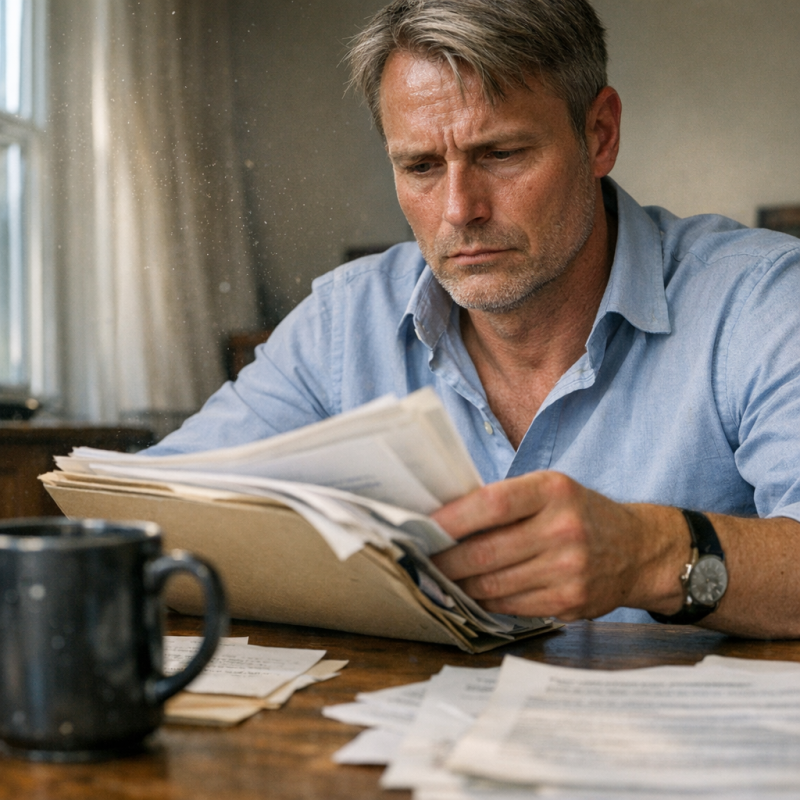 Image by FCT AI
The Woman in the Room
I met Vanessa for the first time at the mediation session three days later. She walked in wearing a navy dress, minimal jewelry, her hair pulled back in a way that suggested both professionalism and vulnerability. That's the only way I can describe it—she looked like someone who had been through a lot but was holding herself together through sheer will. She shook my hand with exactly the right amount of firmness, made eye contact for exactly the right duration. Everything about her felt calibrated. We sat down, and she answered every question with this measured precision that most people can't manage when they're talking about the end of their marriage. No hesitation. No fumbling for words. She described incidents of emotional abuse with the kind of detail that made the mediator nod sympathetically. Then, exactly twenty-three minutes into her statement, her voice cracked. Just once. A single tear rolled down her cheek, and she apologized quietly, reaching for a tissue. The mediator gave her a moment. Ethan stared at the table. And I sat there feeling this cold weight settle in my chest. She cried at exactly the right moment—and I realized this was going to be unlike any divorce I'd handled before.
 Image by FCT AI
Performed Grief
Vanessa controlled that room like a conductor leading an orchestra. Every pause, every tremor in her voice, every time she looked down at her hands—it all landed perfectly. She described years of what she called 'systematic isolation,' how Ethan had slowly cut her off from friends and family, how he'd monitored her spending, questioned her decisions. The mediator was leaning forward, fully invested. Her lawyer nodded along, occasionally interjecting to clarify a point. And the thing is, I couldn't point to anything false. I couldn't catch her in a contradiction or spot an obvious lie. It was the timing that got to me. The way she'd let silence hang just long enough before answering. The way her emotions seemed to arrive exactly when they'd have maximum impact. I glanced at Ethan. He was sitting there with his shoulders hunched, staring at a spot on the wall. When the mediator asked if he wanted to respond, he just shook his head. 'I've tried,' he said quietly. 'It doesn't matter what I say.' And I realized something that made my jaw tighten. Ethan barely spoke—he'd been drowned out so many times, he'd stopped trying.
 Image by FCT AI
The Daughter
Back in my office, Ethan pulled out his phone and showed me a photo of his daughter. Lily. Eight years old, gap-toothed smile, holding up a drawing she'd made. 'That's what this is really about,' he said. 'Vanessa wants full custody. She's telling the court I've been neglectful. That I forget to pick Lily up from school. That I don't know her teacher's name or her friends' parents.' His hands were shaking as he scrolled through his phone. 'But I have everything documented. Every school pickup. Every parent-teacher conference. I've got emails, photos, calendar entries.' He showed me timestamped pictures of himself at Lily's soccer games, at school events, helping with homework. Attendance records that showed he'd never missed a pickup. I looked at the evidence, then back at the custody motion Vanessa had filed. The discrepancy was stark. Either Ethan was an incredibly meticulous liar who fabricated months of evidence, or Vanessa was making claims that had no basis in reality. I didn't know which possibility unsettled me more. Vanessa claimed Ethan had been neglectful—but Ethan had photos and records that suggested otherwise.
 Image by FCT AI
Cropped Conversations
I spent that evening going through the evidence Vanessa had submitted. Text message screenshots, mostly—conversations where Ethan allegedly berated her, controlled her spending, questioned where she'd been. The messages looked damning at first glance. But then I noticed something. None of them had timestamps. No dates, no times, just the message bubbles themselves. In fifteen years of practicing law, I'd never seen someone submit text evidence without metadata. I made a note to request the full message threads with complete timestamps. When I called Vanessa's lawyer the next morning, there was a pause before she responded. 'I'll check with my client,' she said. Two hours later, I got an email. The phone had been damaged during the separation. Water damage, apparently. The original messages were lost, and these screenshots were all that remained. Apple couldn't recover the data. The excuse was plausible enough. Phones get damaged. Data gets lost. But the timing felt convenient in a way that made me set down my coffee and stare at the email. When I asked for the full thread, Vanessa's lawyer said the phone was damaged and the originals were lost.
 Image by FCT AI
The Associate
I needed another set of eyes, so I brought Rachel into the case. She's my associate—sharp as anything, graduated top of her class, and she has this ability to spot inconsistencies that I sometimes miss when I'm too close to a file. I gave her the financial documents and told her to look for anything unusual. It took her less than an hour. 'Marcus,' she said, walking into my office with her laptop, 'the numbers don't add up. Vanessa's claiming Ethan drained their savings, but her own bank statements show deposits that don't match her reported income. And there are transfers here that aren't explained anywhere in her filings.' She turned the screen toward me. Highlighted rows showed money moving between accounts in patterns that made no sense if Vanessa was the struggling victim she claimed to be. 'What do you think she's hiding?' Rachel asked. I stared at the spreadsheet, feeling that familiar tightness in my chest again. 'I don't know,' I said. 'But I'm starting to think it might be worse than hidden assets.' Rachel asked if I thought Vanessa was hiding assets—but I wondered if it was something worse than that.
 Image by FCT AI
The Missing Months
Rachel and I spent the next two days reconstructing the financial timeline. That's when we found the gap. Three months of bank statements—March, April, and May of the previous year—just missing. Not redacted. Not summarized. Completely absent from Vanessa's financial disclosure. I called Ethan immediately. 'Those months,' he said, his voice tight. 'That's when she claimed I drained our joint account. She told the court I took forty thousand dollars and left her with nothing.' I asked if he had records. 'Everything,' he said. 'I can prove I didn't touch that money. But if her statements are missing, how do we show where it actually went?' Rachel was watching me from across the desk, and I could see she was thinking the same thing I was. Missing evidence is one thing. Missing evidence from the exact time period you're making your most serious accusation? That's something else entirely. I hung up and looked at Rachel. 'This doesn't make sense,' I said. Ethan said those were the months she claimed he had drained their joint account—but there was no record of it.
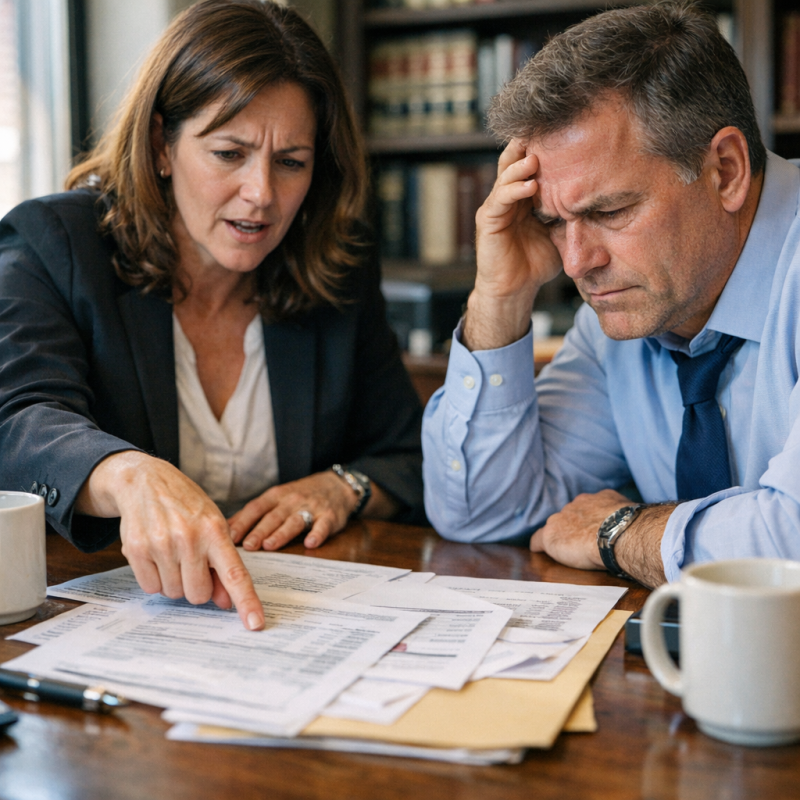 Image by FCT AI
The Witness List
The witness list came through on a Tuesday afternoon. Rachel dropped it on my desk without saying anything, but I could see it in her face—this wasn't going to be good. I scanned the names. Vanessa's sister Christine. Her college roommate. Two neighbors from their street. A former coworker of Ethan's who'd left the company under bad terms. Every single name had one thing in common: they were Vanessa's people. Not their people. Not mutual friends. Hers. I'd seen imbalanced witness lists before—divorces tend to polarize—but this felt different. The ratio was absurd. I called Ethan to go through the names, and he recognized most of them, though he hadn't spoken to several in years. When we got to Christine, he went quiet. 'She won't even take my calls anymore,' he said. 'We used to be close. I thought of her like a sister. Then about a year ago, she just... stopped.' I asked what happened. He didn't know. Just silence, he said, like someone had flipped a switch. One name stood out—Christine, Vanessa's sister—and Ethan said she hadn't spoken to him in over a year.
 Image by FCT AI

History's most fascinating stories and darkest secrets, delivered to your inbox daily.
The Night Shift
I stayed late that night, going through Vanessa's depositions line by line. My office was quiet, just the hum of the heating system and the occasional creak of the building settling. I had three separate transcripts in front of me—initial intake, first mediation, and the preliminary hearing. Same events. Same accusations. Same phrasing. I kept flipping back and forth, looking for the small variations that always show up when someone's recounting real memories. The way details shift slightly. The way emphasis changes. The way people remember things differently each time. But Vanessa's story didn't shift. Not even a little. The timeline she gave in February matched the timeline she gave in April, word for word in places. I've been doing this long enough to know how memory works. Real trauma? People stumble over it. They remember new details. They contradict themselves in small ways. But this was like she was reading from a script. I told myself maybe she just had a good memory. Maybe she'd been over it so many times in therapy that it had solidified. In my experience, real memories shift slightly each time they're told; Vanessa's never did.
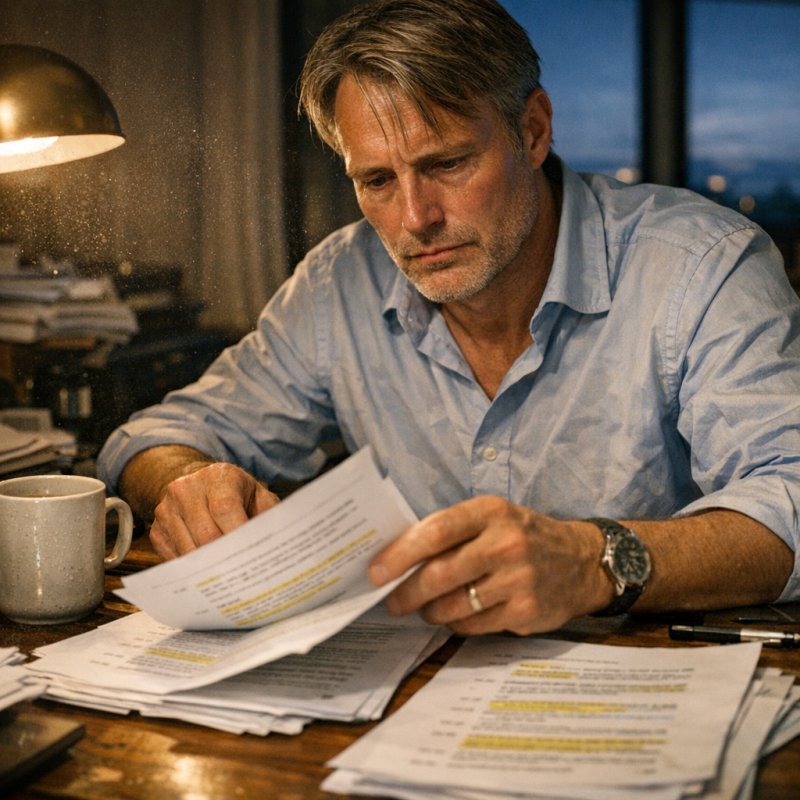 Image by FCT AI
The Senior Partner
I knocked on Gerald's door the next morning. He's been with the firm for thirty years, seen every kind of divorce case imaginable. If anyone could give me perspective, it was him. I laid out what we'd found—the missing statements, the one-sided witness list, the too-consistent testimony. Gerald listened, his fingers steepled in front of him like he was already formulating his response. When I finished, he leaned back. 'Marcus,' he said carefully, 'high-conflict divorces make everyone look crazy. You know that. The accuser sounds paranoid. The accused sounds defensive. Everyone's worst self comes out.' I nodded. I did know that. 'You're getting emotionally invested,' he continued. 'That's dangerous. Step back. Let the evidence speak.' He was right, technically. I knew he was right. But as I walked back to my office, I couldn't shake the feeling that this was different. Gerald's advice was sound—stay neutral, stay professional. But something about this case didn't fit the usual patterns, and pretending otherwise felt like willful blindness. Gerald said high-conflict divorces make people look crazy—but I couldn't shake the feeling that this was different.
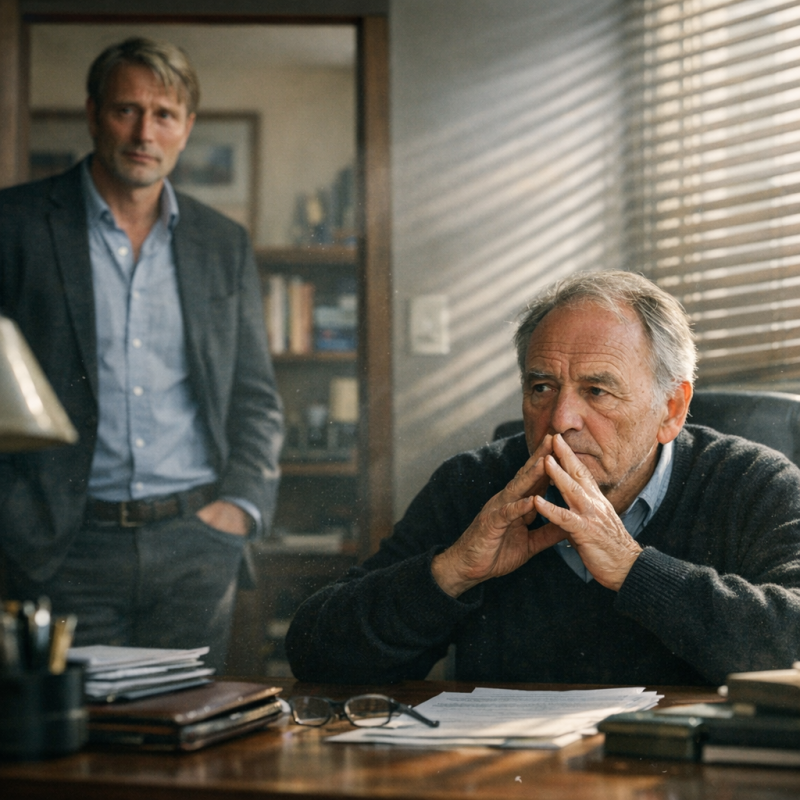 Image by FCT AI
The School Records
Ethan showed up the next day with a file box. 'School records,' he said, setting it down. 'Every report card, every attendance sheet, every communication from Lily's teachers since kindergarten.' I started going through them while he waited. Parent-teacher conferences—Ethan had attended every single one, often alone when Vanessa had work conflicts. Pickup logs showed his name more often than hers. Emergency contact forms listed him first. There were thank-you notes from teachers for his involvement in class projects, emails about volunteering for field trips. This wasn't the picture of a neglectful father. This was the opposite. I looked up at Ethan. 'Vanessa claimed you were never involved in Lily's schooling,' I said. He nodded, his jaw tight. 'She told the mediator I'd missed every important event. That I didn't know Lily's teachers' names.' I held up a conference summary from two years ago with his signature and detailed notes about Lily's reading progress. Every parent-teacher conference, every pickup, every emergency contact—Ethan was there.
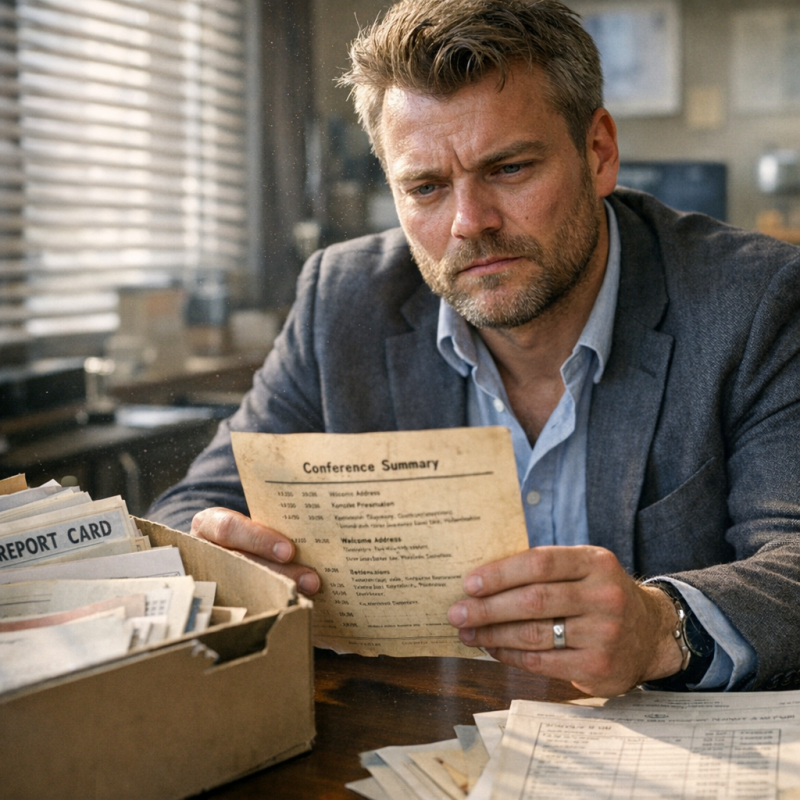 Image by FCT AI
The Redirection
The next mediation session felt different from the start. I came prepared with the school records, organized and highlighted. When it was my turn, I laid them out methodically—the attendance logs, the conference notes, the volunteer schedules. Vanessa's attorney looked uncomfortable. I thought we finally had something solid, something she couldn't spin. Then Vanessa spoke. 'Of course his name is on everything,' she said, her voice steady. 'He made sure of that. He charmed the teachers, made himself look involved. But they didn't see what happened at home. They didn't see how he'd promise Lily he'd help with her homework, then ignore her. How he'd volunteer for events just to look good, then barely interact with the other parents.' She turned to the mediator. 'He manipulated them the same way he manipulated me.' Just like that, we were off the school records entirely. The mediator was nodding, taking notes about emotional manipulation and public versus private behavior. The evidence was right there on the table, but suddenly no one was looking at it. She claimed Ethan manipulated the school staff, and suddenly the entire conversation shifted away from the evidence.
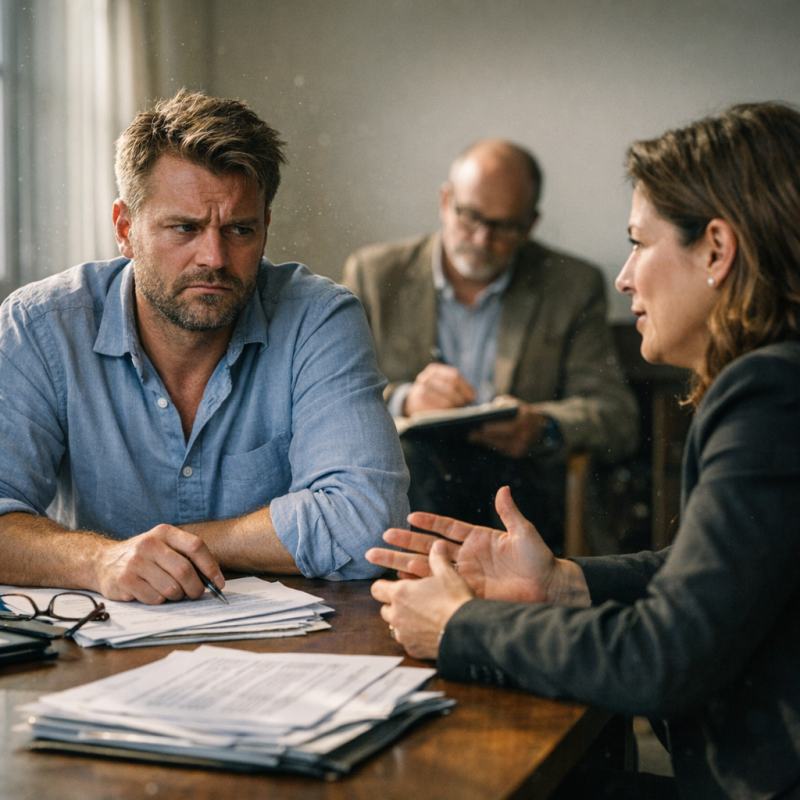 Image by FCT AI
The Sister
I scheduled Christine's deposition for the following week. Vanessa's sister had been on that witness list from the beginning, and if anyone knew the real family dynamic, it would be her. I'd done some background—Christine was two years older than Vanessa, worked as a physical therapist, had known Ethan for the entire length of the marriage. According to Ethan, they'd been close once. That made her sudden silence even stranger. When she arrived at the conference room, I noticed it immediately—the way her hands fidgeted with her purse strap, the way she wouldn't quite meet my eyes. Rachel set up the recording equipment while I made small talk, trying to put her at ease. It didn't work. Christine sat rigidly in her chair, answering my preliminary questions in a voice that was just a little too measured. Yes, she knew Ethan. Yes, she'd spent time with the family. Yes, she'd seen them interact with Lily. Everything was technically responsive but completely empty of detail. And the whole time, she kept glancing at the door like she was expecting someone. Christine arrived looking nervous—and I wondered if she knew something she wasn't supposed to say.
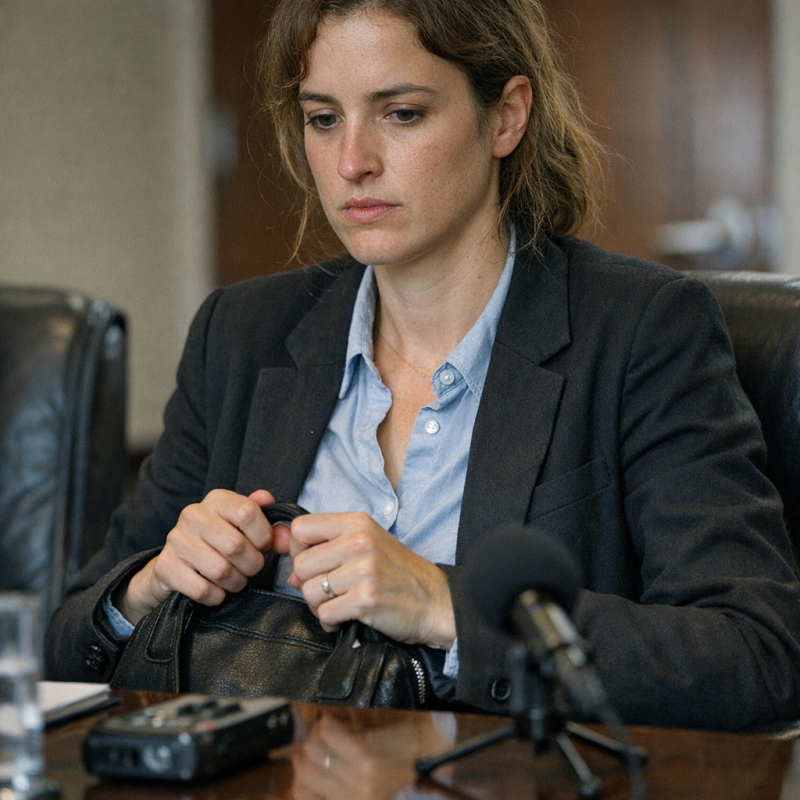 Image by FCT AI
The Careful Testimony
The deposition itself was an exercise in frustration. Every question I asked, Christine answered with the verbal equivalent of a shrug. 'I don't really remember.' 'I wasn't there for that.' 'It's hard to say.' I'd done enough depositions to recognize coaching when I saw it—or at least, when I felt it. Someone had told her to stay vague, to avoid specifics. When I asked about family gatherings, she gave me bland generalities. When I asked about arguments she might have witnessed, she claimed she couldn't recall any. It was like trying to grab smoke. Then I shifted tactics. 'Christine,' I said, 'in the time you've known your sister and Ethan, did Vanessa ever lie to you about him?' It was a direct question, simple. She should have answered immediately—either yes or no. Instead, she went completely still. The pause stretched out, five seconds that felt like thirty. Her eyes darted to the side, then back to me. Then she said, 'No,' in a voice that didn't sound convinced. When I asked if Vanessa ever lied about Ethan, Christine paused too long before answering no.
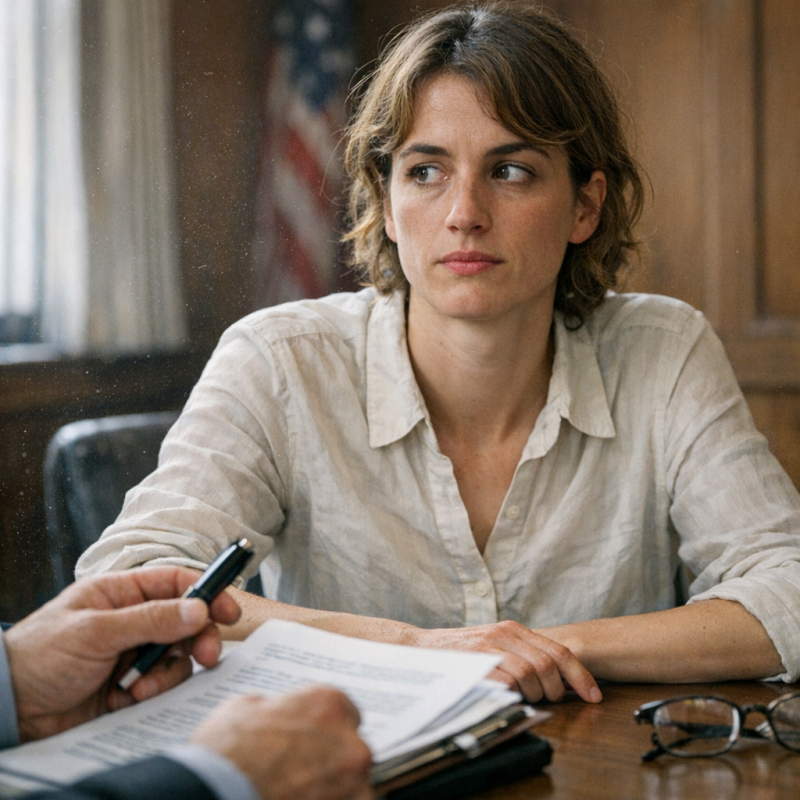 Image by FCT AI
The Email
The email from Ethan came late Friday afternoon. Subject line: 'Found something—probably nothing.' He'd been going through old accounts, he wrote, and remembered they'd had a shared cloud storage subscription that neither of them had canceled after the separation. He'd logged in for the first time in months to grab some old photos of Lily. While he was there, he'd noticed some folders he didn't recognize. 'I almost didn't send this,' the email said. 'It's probably just old files. But you said to send anything unusual.' I clicked the attachment. The cloud account opened in my browser—still active, still shared between both their email addresses. There were the usual folders: Photos, Documents, Taxes. And then, near the bottom, one labeled simply 'Drafts.' I'd seen plenty of draft folders before. Usually they contained unfinished letters, abandoned projects, random notes. But something about the name made my chest tighten. I clicked it. The folder loaded. And my stomach dropped like I'd just stepped off a cliff. I opened the attachment and saw a folder labeled 'Drafts'—and my stomach dropped.
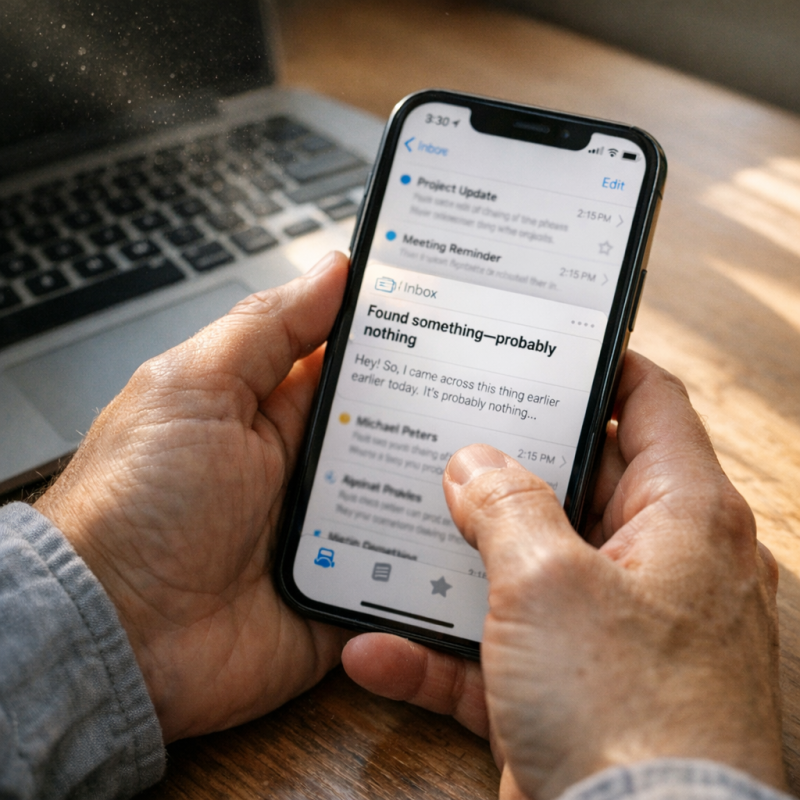 Image by FCT AI
The Drafts Folder
The folder opened like a punch to the gut. There were dozens of files inside—Word documents, PDFs, screenshots. I recognized most of them immediately. Bank statements. Text message screenshots. The invoice for Lily's therapy sessions. Every piece of evidence Vanessa had submitted in discovery was sitting right there. But that wasn't the disturbing part. The disturbing part was that there were multiple versions of everything. 'Bank Statement March - v1.' 'Bank Statement March - v2.' 'Bank Statement March - v3.' The same pattern repeated across a dozen files. I clicked on one at random—a credit card statement. The first version showed regular purchases: groceries, gas, utilities. The second version had different transactions highlighted in yellow. The third version was the one she'd submitted to the court. I sat back in my chair, my hands suddenly cold. Why would someone need three versions of the same document? My eye caught on another filename near the bottom of the list. 'Bank Statement - Final Version.' Which meant there were earlier versions she'd deliberately chosen not to use.
 Image by FCT AI
The Timestamps
I pulled up the text message screenshots next. Vanessa had submitted a series of exchanges between her and Ethan that supposedly showed him being hostile and dismissive about Lily's needs. I'd read them a dozen times. They'd been damning. Now I was looking at the originals in the cloud folder, and the timestamps told a completely different story. The screenshots Vanessa submitted were cropped—carefully, surgically cropped. The messages she'd included started mid-conversation, making Ethan's responses look cold and unfeeling. But the full exchange showed something else entirely. Ethan had been responding to Vanessa's accusation that he'd 'never cared' about Lily's anxiety. His reply—'I'm not doing this again'—looked dismissive in isolation. In context, it came after three paragraphs of him calmly explaining what he'd already done to help. The messages Vanessa had cropped out would have shown a father desperately trying to co-parent with someone who kept twisting his words. I felt my jaw clench so hard my teeth ached. She hadn't just presented selective evidence. She'd manufactured a narrative out of thin air. The messages she cropped out would have exonerated Ethan entirely.
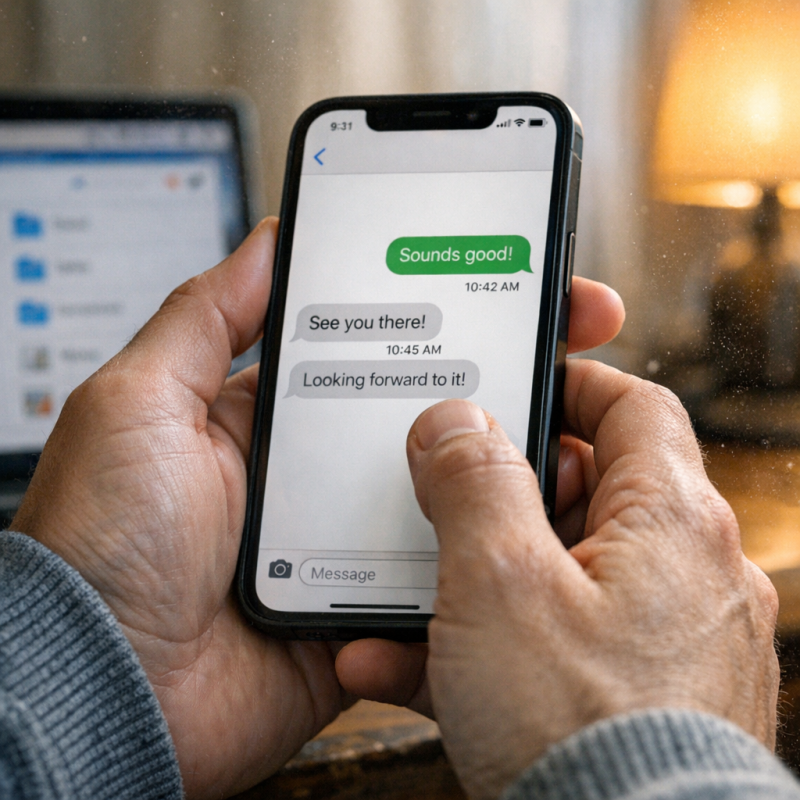 Image by FCT AI
The Notes
I almost missed it. Near the bottom of the folder was a document titled 'Timeline Notes - Personal.' I opened it expecting scheduling reminders, maybe therapy appointments. What I found made my blood run cold. It was a bulleted list, dated three months before Vanessa filed for divorce. 'March incident - emphasize emotional distress, mention Lily witnessed argument (she didn't but makes stronger case).' 'May therapy session - make sure to reference his absence even though he was traveling for work.' 'Bank statements - highlight purchases that look excessive, crop dates if needed.' There were more. A dozen items, each one a calculated instruction for how to twist reality. This wasn't someone documenting events as they happened. This was someone planning a story, deciding which lies would be most effective. I read the list three times, each pass making me feel sicker. I'd seen people stretch the truth in divorce cases. I'd seen people exaggerate and minimize and conveniently forget details. But this was something else. This wasn't a version of the truth. It was a script.
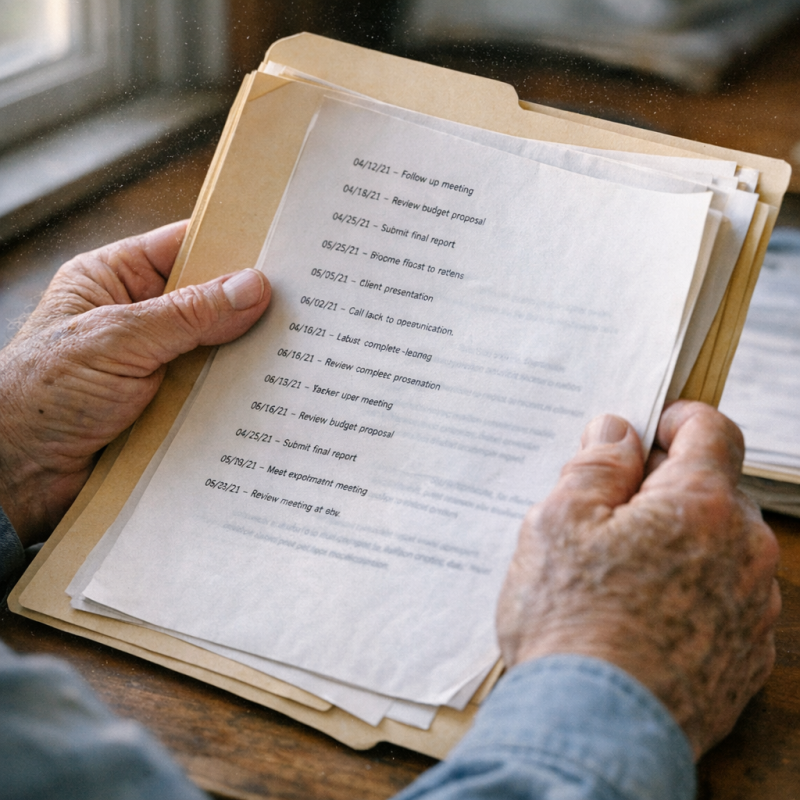 Image by FCT AI
The All-Nighter
I didn't go home that night. I called Sarah and told her I was working late, which was true but also felt like an understatement. What I was doing felt more like excavation—carefully, methodically digging through layers of deception to find something solid underneath. I made spreadsheets. I compared timestamps. I took screenshots of the cloud folder versions next to the court-submitted versions. Every discrepancy, every alteration, every cropped message got its own entry with supporting documentation. By three in the morning, my office looked like a conspiracy theorist's basement—papers everywhere, sticky notes covering my second monitor, cold coffee growing a film in five different mugs. But the case file I was building was airtight. Every piece of manufactured evidence was catalogued, cross-referenced, and backed up. I worked through the exhaustion, through the headache, through the moment around four a.m. when I started questioning whether I was losing my mind. By sunrise, I had something powerful—something that could destroy Vanessa's credibility completely. I leaned back in my chair as the first light came through the blinds, my eyes burning and my hands shaking slightly. But I knew I needed more. I needed proof that would hold up in court, that couldn't be dismissed or explained away.
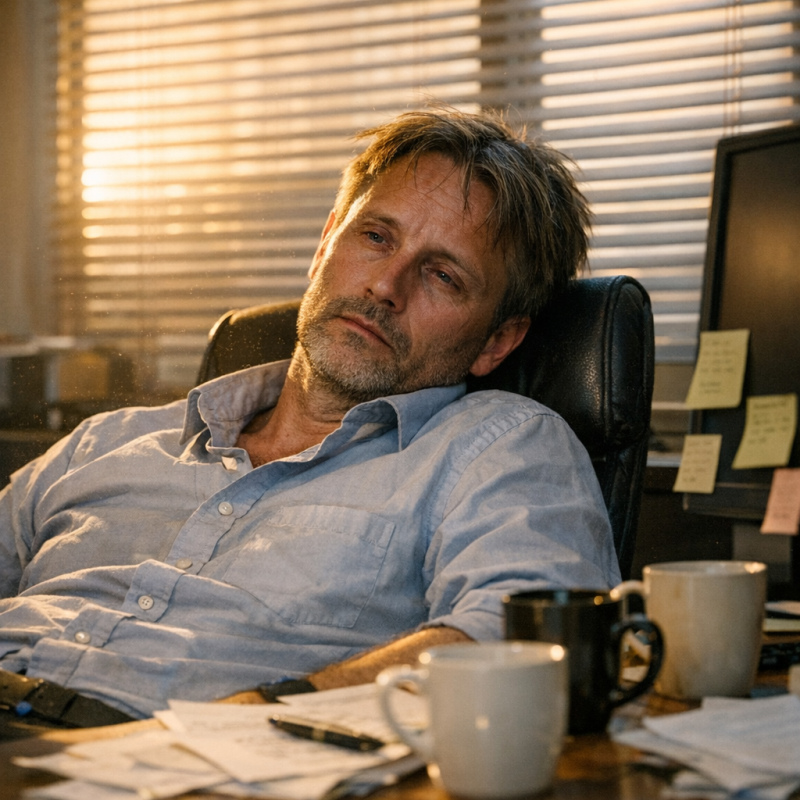 Image by FCT AI
The Forensic Expert
I found the forensic specialist through a colleague who'd used her in a fraud case. Her name was Dr. Patricia Chen, and her credentials took up two pages. When I called her office Monday morning, I tried to sound calm and professional. I probably failed. I explained what I'd found—the cloud folder, the multiple versions, the edited files. She listened without interrupting, which I appreciated. When I finished, there was a pause. 'You'll need a full metadata analysis,' she said. 'Document properties, edit history, timestamp verification. I can do it, but it's not fast.' I asked how long. 'A week, maybe ten days. I'll need access to the original files, and I'll need to document everything in a way that'll hold up under cross-examination.' A week felt like forever. The trial date wasn't set yet, but it would be soon. Still, I didn't have a choice. 'Do it,' I said. 'Whatever it takes.' After I hung up, I sat at my desk feeling the weight of what I'd just set in motion. For the next week, maybe longer, I'd be sitting on evidence that could change everything—and I couldn't tell anyone about it. The specialist said it would take a week, and I realized I was going to have to keep this quiet until then.
 Image by FCT AI
The Court Appearance
The hearing was routine—or it should have been. Just a status conference to update Judge Morrison on discovery and settlement discussions. Ethan sat beside me looking tired, and Vanessa sat across the aisle with her lawyer, perfectly composed. Judge Morrison looked like she'd rather be anywhere else. 'Counselors,' she said, barely glancing up from her notes, 'we've been at this for how many months now?' Her tone made it clear she already knew the answer and didn't like it. Vanessa's lawyer—a guy named Stevens who wore too much cologne—stood up smoothly. 'Your Honor, my client believes we've reached an impasse in settlement negotiations. We'd like to request an expedited trial date.' My stomach dropped. The forensic report wasn't done. I didn't have the ammunition I needed yet. But Judge Morrison was already nodding, clearly ready to move this case off her docket. 'Mr. Reeves?' she said, looking at me expectantly. Every instinct told me to stall, to request more time for additional discovery. But I also knew that asking for a delay would look weak—and might tip off Stevens that we'd found something. I stood up slowly. 'That's acceptable to us, Your Honor.' Vanessa's lawyer requested an expedited trial date, and I had no choice but to agree—even though the forensics weren't done yet.
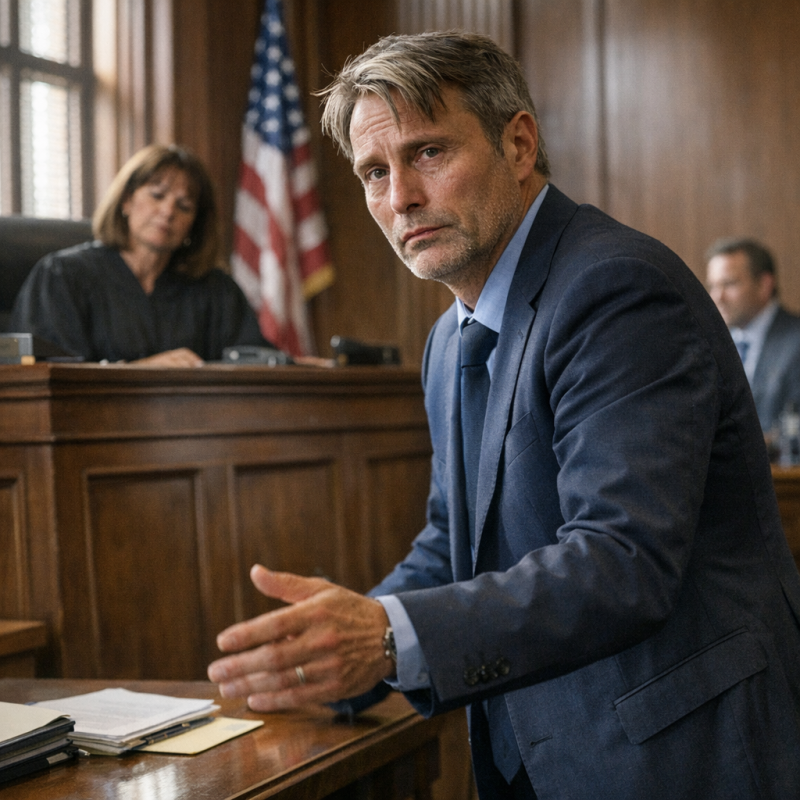 Image by FCT AI
The Waiting Game
The next five days were torture. I tried to focus on other cases—a custody dispute, two uncontested divorces, a prenup review. But every few hours I'd find myself checking my email, looking for an update from Dr. Chen. Nothing yet. Still processing. Need another day. I started losing track of conversations. A client would be talking about asset division and I'd realize I hadn't heard the last three sentences. I rewrote the same motion twice because I kept spacing out. On Thursday, Rachel knocked on my door around lunchtime. 'You okay?' she asked. She was holding two sandwiches from the deli downstairs, which meant she'd noticed I'd been skipping meals. I tried to smile. 'Yeah, just busy.' She set one sandwich on my desk and didn't leave. 'You've been staring at your computer screen for twenty minutes without moving,' she said. 'That's not busy, that's catatonic.' I looked at her—really looked at her—and realized I'd been avoiding eye contact with pretty much everyone for days. 'The Hartwell case,' I said finally. 'It's just... it's gotten complicated.' Rachel studied me for a long moment. 'You need to talk about it?' I shook my head. And then I realized something that made my chest tighten: I was more invested in this case than I'd ever been in my career.
 Image by FCT AI
The Report Arrives
The email from Dr. Chen arrived on a Tuesday morning at 8:47 a.m. Subject line: 'Forensic Analysis Complete - Hartwell.' My hand was shaking when I clicked it. The report was attached as a PDF—forty-three pages of technical analysis, metadata breakdowns, and timestamp comparisons. I started reading and felt something loosen in my chest that I hadn't realized was clenched. Every file had been edited. The bank statements had been altered using Adobe Acrobat's editing tools, with the modification dates carefully stripped from the metadata. The text message screenshots had been cropped, then re-saved with false timestamp data. Even the therapy invoices had been modified—line items changed, dates adjusted. Dr. Chen's analysis was meticulous, unimpeachable. She'd documented every change, every alteration, every piece of data that proved the files had been deliberately manipulated. She'd even recovered some of the original versions from backup timestamps. At the bottom of the report, she'd included a summary statement: 'In my professional opinion, these documents were systematically altered with the intent to deceive. The modifications were not accidental.' I sat back in my chair, the morning light streaming through my office window. Everything I'd suspected was now provable, documented, bulletproof. But presenting it in court—that was going to be its own challenge.
 Image by FCT AI
The Strategy Session
Rachel spread Dr. Chen's report across the conference table like we were planning a heist. 'We can't show our hand too early,' she said, tapping the metadata analysis. 'If Vanessa knows what we have, she'll pivot. She'll claim the files were corrupted, or someone else edited them, or she'll fabricate some explanation we haven't thought of yet.' I nodded, feeling that cold clarity you get when strategy clicks into place. We went through every piece of evidence—the timestamps, the modification logs, the recovered originals. The question wasn't whether we could prove the documents were fake. We could. The question was when to reveal it for maximum impact. 'What if we let her testify first?' Rachel said, leaning back in her chair. Her expression was calm, calculated. 'Let her commit to her story on the record. Every detail, every date, every claim. Then we show the judge exactly how she fabricated the evidence to support it.' I felt something shift in my chest—half confidence, half unease. It was risky. It meant watching Vanessa perform, knowing we had the ammunition to stop her but choosing to wait. But if we timed it right, she wouldn't be able to adjust her story after seeing what we had.
 Image by FCT AI
The Calm Before
I didn't sleep that night. I lay in bed staring at the ceiling, running through every possible scenario like a lawyer's version of counting sheep. What if the judge didn't understand the metadata? What if Vanessa's testimony was so compelling that the forensic evidence seemed like a technicality? What if we'd missed something? I kept replaying the mediation in my mind—Vanessa's face, so composed, so certain. The way she'd looked at Ethan like he was already defeated. She believed she'd win. I could see it in every gesture, every carefully chosen word. And honestly? Up until Dr. Chen's report, she probably would have. I thought about how she'd react when it all came apart. Would she break? Would she double down? Would she find some way to spin it that I hadn't anticipated? The not-knowing was worse than any courtroom argument. I'd seen a lot of people lie under oath. Some crumbled immediately. Others fought until the bitter end, clinging to their fabrications even when the evidence was stacked against them. I kept thinking about Vanessa's face in mediation—so composed, so sure of herself—and I wondered how she'd react when it all fell apart.
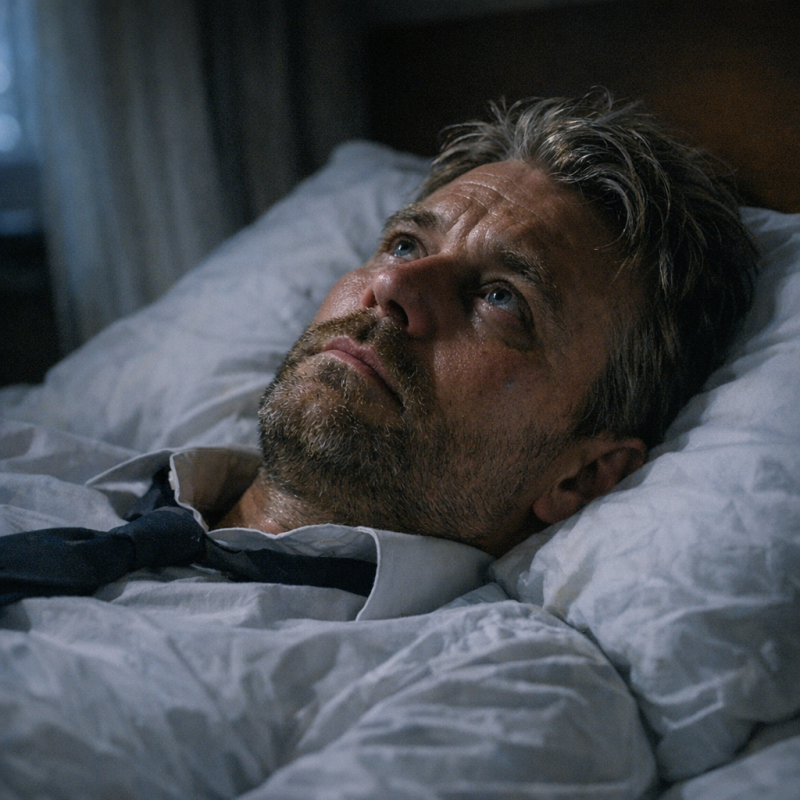 Image by FCT AI
Day One
The courtroom was smaller than I expected, with that institutional smell of old wood and recycled air. Judge Morrison sat behind the bench, her expression neutral and unreadable. Vanessa's lawyer stood to deliver the opening statement, and I felt my stomach tighten. He painted Ethan as a monster. Manipulative, neglectful, financially abusive. He described a pattern of control—Ethan isolating Vanessa from friends, monitoring her spending, undermining her parenting. He talked about their daughter Lily crying herself to sleep because her father 'couldn't be bothered' to show up for school events. It was a masterclass in narrative framing. Every word carefully chosen, every detail designed to provoke sympathy. I glanced at Vanessa. She sat beside her lawyer, hands folded in her lap, nodding along with this somber, wounded expression. Her eyes were slightly red, like she'd been crying before court. Judge Morrison was taking notes. I could see her expression shift, just slightly—from neutral to concerned. She was buying it. Every word, every manufactured detail. I watched Vanessa nod along, her expression somber and believable—and I knew the judge was buying it.
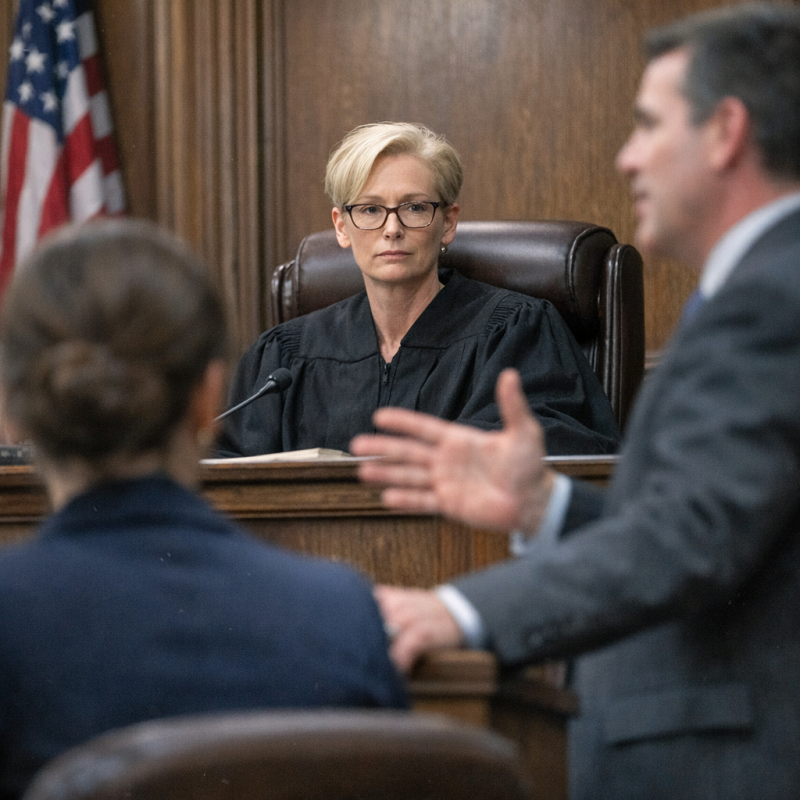 Image by FCT AI
The Perfect Victim
When Vanessa took the stand, I felt like I was watching a performance I'd paid too much to see. Her voice was soft, measured, with just the right amount of tremor. She described years of alleged emotional abuse—Ethan belittling her parenting, controlling their finances, making her feel worthless. She talked about finding receipts for expensive dinners she was never invited to, about being told she was 'too sensitive' when she confronted him. Her timing was impeccable. She paused in all the right places, her voice breaking just enough to seem genuine without tipping into melodrama. I glanced at the judge. Morrison was leaning forward slightly, her pen still. Then Vanessa's lawyer asked the question we'd been expecting. 'Mrs. Hartwell, are you afraid of your husband?' Vanessa's eyes filled with tears. Her voice cracked when she answered. 'Yes,' she whispered. 'I'm terrified of what he might do if he doesn't get his way.' I looked at Ethan. He'd gone pale, shrinking in his seat like the air had been sucked out of him. When the judge asked if she was afraid of Ethan, Vanessa's voice broke—and I saw Ethan shrink in his seat.
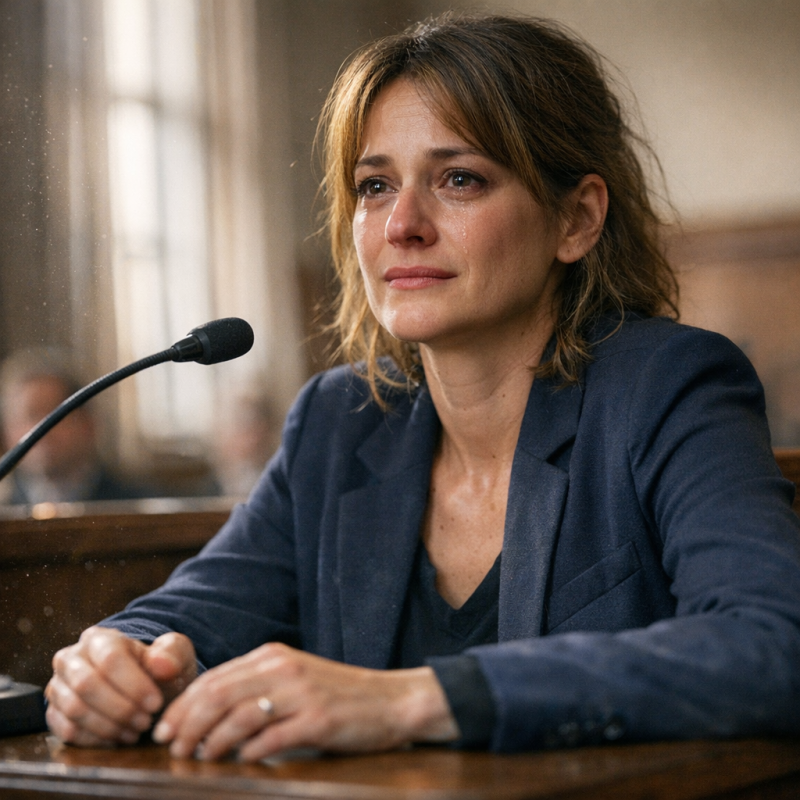 Image by FCT AI
The Child Psychologist
Vanessa's lawyer called Dr. Patel to the stand—a child psychologist with an impressive résumé and a calm, authoritative demeanor. She testified that she'd evaluated Lily and had 'concerns' about Ethan's parenting style. She used words like 'emotionally unavailable' and 'potentially harmful.' Judge Morrison was taking notes again. But when it was my turn to cross-examine, I kept my tone respectful, almost casual. 'Dr. Patel, how many sessions did you have with Lily?' She hesitated. 'One.' 'One session,' I repeated. 'And was anyone else present during that evaluation?' 'Mrs. Hartwell was present, yes.' 'The entire time?' 'Yes, the entire time.' I let that sit for a moment. 'So your professional opinion about Mr. Hartwell's parenting is based on one session with his daughter—during which his wife, who is seeking full custody, was present the entire time?' Dr. Patel shifted slightly. 'That's correct, but—' 'Thank you, Doctor.' I sat down. It wasn't a knockout blow, but I saw Judge Morrison's pen pause. When Marcus cross-examined her, he discovered she only met Lily once—and Vanessa was present the entire time.
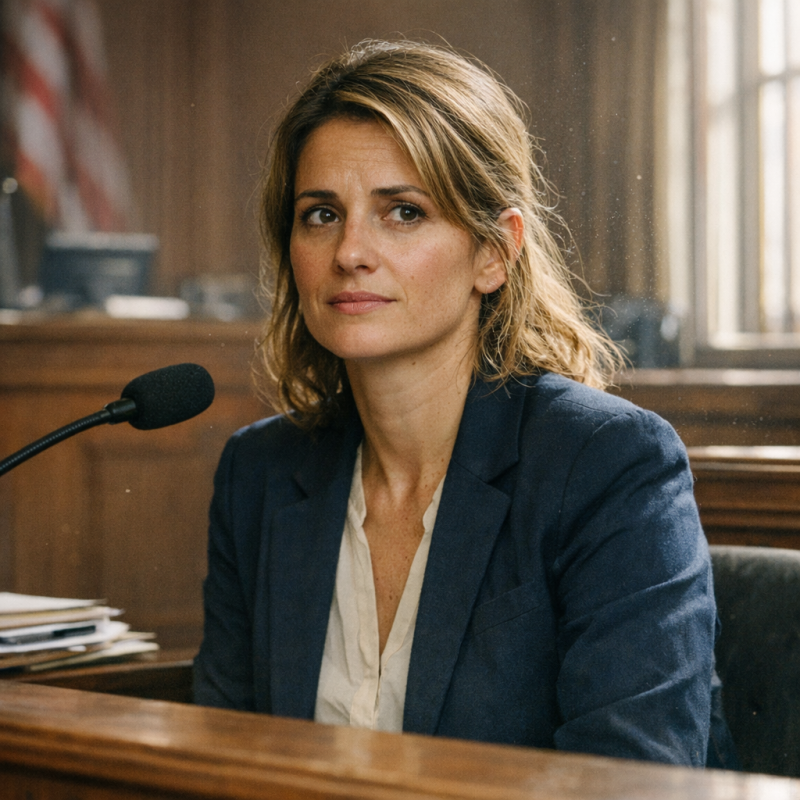 Image by FCT AI
The Financial Claims
Vanessa's lawyer moved to the financial claims next, presenting bank statements that allegedly showed Ethan draining their joint accounts and hiding assets. He introduced printouts, spreadsheets, highlighted transactions. The judge examined each document carefully. According to Vanessa's narrative, Ethan had systematically siphoned money for months—cash withdrawals, transfers to unknown accounts, unexplained charges. It was damning stuff. Or it would have been, if it were real. I leaned over to check the exhibit numbers, confirming what I already suspected. These were the same bank statements Vanessa had provided during discovery. The ones with the missing months. The ones Dr. Chen had torn apart in her forensic analysis. I felt a strange calm settle over me, the kind you get when you know the trap is set and you're just waiting for the right moment to spring it. Vanessa's lawyer was still talking, gesturing at the documents like they were gospel truth. Judge Morrison was nodding along, her expression grave. I glanced at Rachel. She met my eyes and gave the smallest nod. I noticed the bank statements were the same ones with the missing months—and I knew my moment was coming.
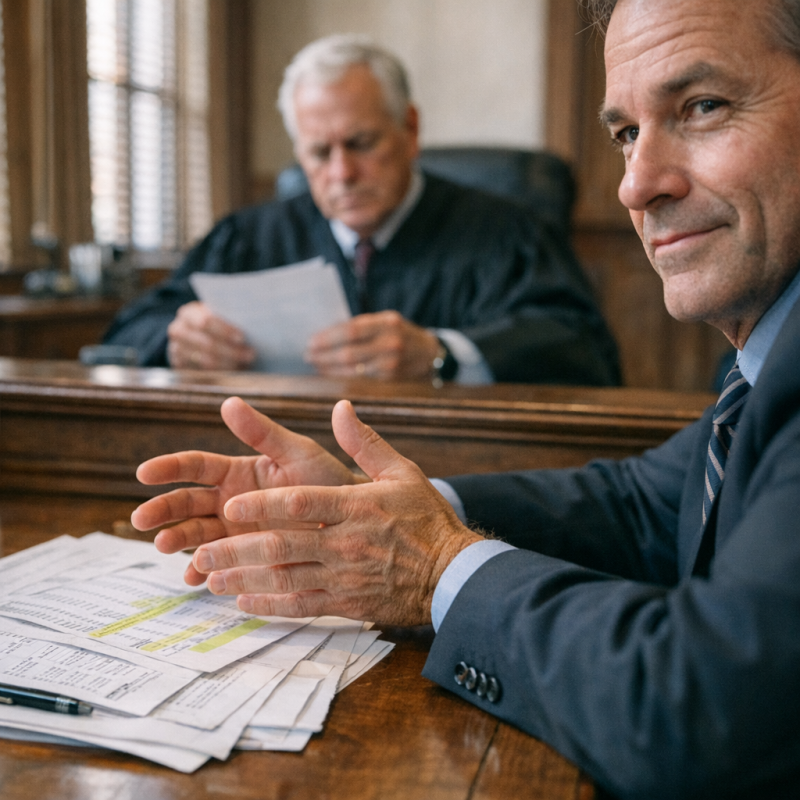 Image by FCT AI
Ethan's Turn
When Ethan took the stand, he was nervous but steady. I walked him through his testimony carefully—refuting each of Vanessa's claims with documentation. School event calendars showing he attended every parent-teacher conference. Bank records proving he never made the withdrawals she'd described. Text messages showing he'd repeatedly asked to see Lily and been refused. He was methodical, careful, honest. But then Vanessa's lawyer stood for cross-examination, and I felt the air shift. He tore into Ethan like a prosecutor going after a career criminal. He twisted Ethan's words, made his careful explanations sound like excuses. 'So you're saying your wife is lying?' 'No, I'm saying—' 'You're saying she fabricated all of this?' 'I'm saying the evidence doesn't—' 'Yes or no, Mr. Hartwell. Is your wife lying?' Ethan hesitated, and that hesitation made him look guilty. His voice got defensive, his answers evasive. I could see Judge Morrison's expression harden. We were losing ground. Vanessa's lawyer tore into him on cross-examination, twisting his words until he sounded defensive and evasive.
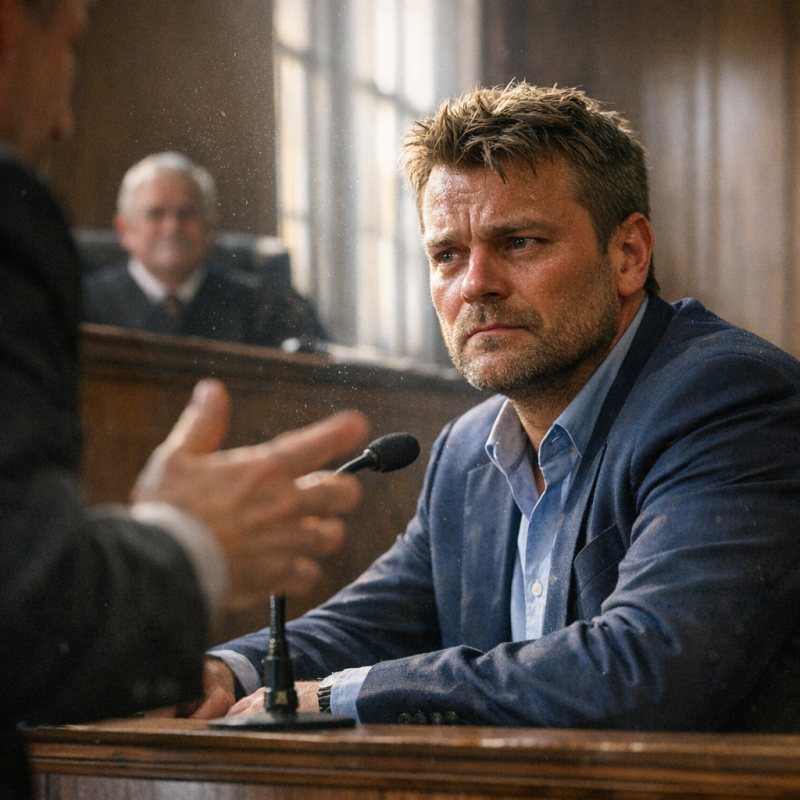 Image by FCT AI
The Redirect
I stood for redirect and kept my voice calm, almost gentle. 'Mr. Hartwell, let's go back to the school events your wife claims you missed.' I introduced the attendance logs—official records from Lily's school showing Ethan had signed in for every single event. Then the daycare logs, showing he'd picked Lily up on time, every time, for six months straight. I walked him through each document slowly, deliberately, rebuilding what Vanessa's lawyer had tried to tear down. 'And these records,' I said, holding up the logs. 'Are these something you created?' 'No,' Ethan said, his voice stronger now. 'They're official school documents.' 'Documents that contradict your wife's testimony?' 'Yes.' I let that hang in the air for a moment before sitting down. When I glanced at Judge Morrison, I saw something I hadn't seen before—a flicker of doubt crossing her face. She was looking at the school logs, then back at her notes from Vanessa's testimony. The pieces weren't fitting together anymore. For the first time, I saw doubt flicker across the judge's face—Vanessa's story wasn't as airtight as it seemed.
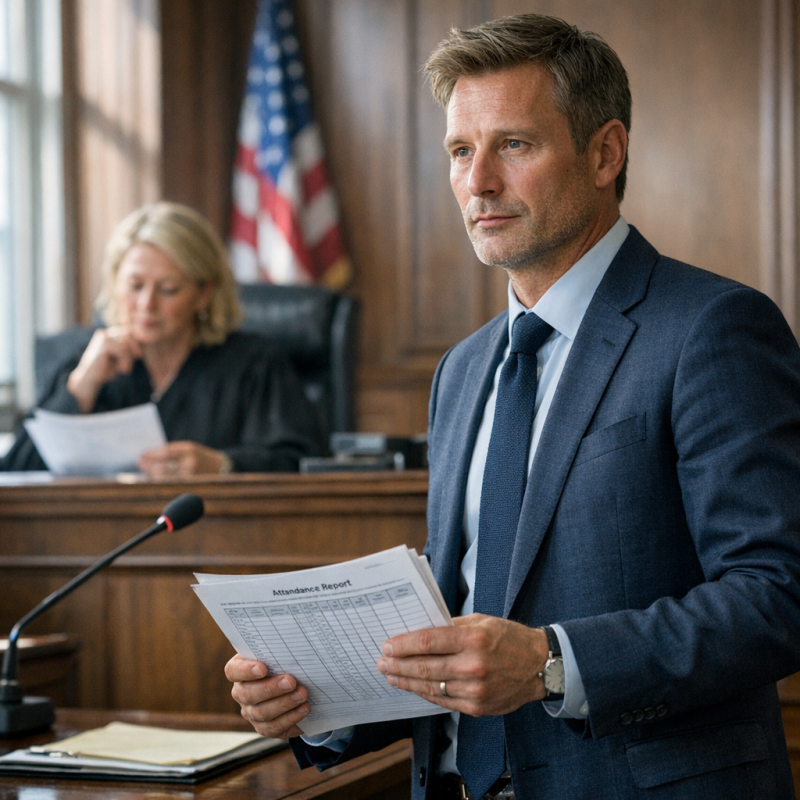 Image by FCT AI
The Recess
The judge called a fifteen-minute recess, and I stood to stretch. My back was killing me. That's when I noticed Vanessa in the hallway, leaning close to her lawyer, talking fast. Her hands were moving in tight, controlled gestures—not the calm, measured movements she'd maintained all trial. Her lawyer kept nodding, glancing down at his notes, then back at her. Something had shifted. I couldn't hear what they were saying, but I could see the tension in her shoulders, the way her jaw was set. This wasn't the composed, wronged wife from the stand. This was someone who'd just realized the game had changed. Rachel appeared at my elbow, her voice low. 'She just asked to see the trial schedule,' she whispered. 'She wants to know when you're presenting your evidence.' I felt my stomach tighten. It meant she knew something was coming. It meant she was trying to figure out how much time she had left. For the first time since this whole thing started, Vanessa looked rattled—and she was scrambling to figure out exactly when I'd drop the hammer.
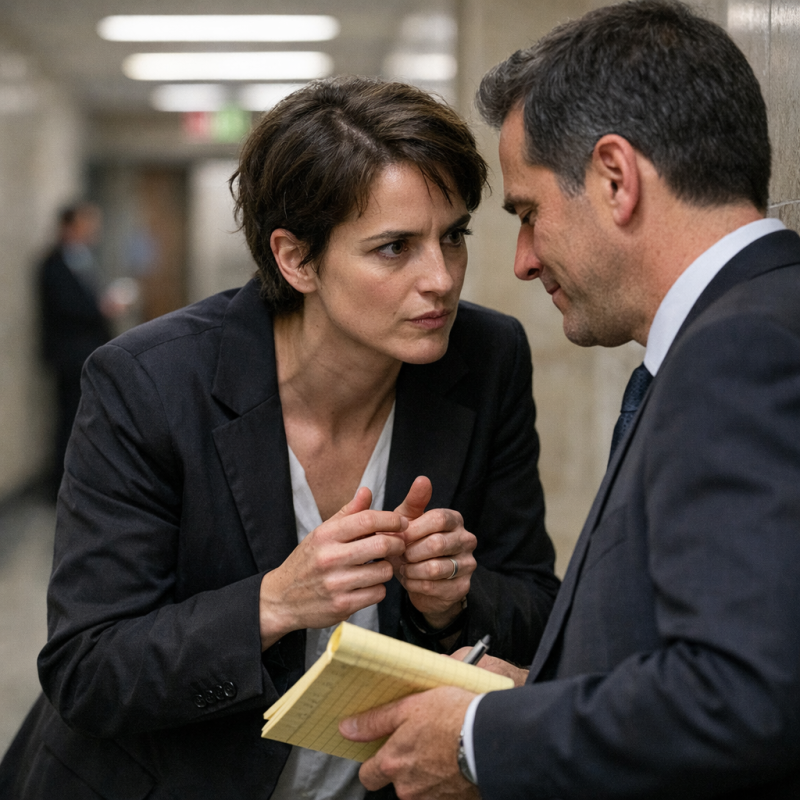 Image by FCT AI
The Text Messages
When we reconvened, I introduced Exhibit 12—the text message screenshots Vanessa had submitted as evidence of Ethan's cruelty. I walked the judge through them slowly. 'Your Honor, these are the messages Mrs. Hartwell presented to demonstrate a pattern of verbal abuse.' I pulled up the first one on the screen. Ethan's message: 'You're impossible to deal with.' Cold. Cutting. Exactly what Vanessa wanted the court to see. 'Now, I'd like to show the complete conversation,' I said. I clicked to the next slide. The full thread appeared, with timestamps intact. Two hours before Ethan's message, Vanessa had written: 'I'm taking Lily to my mother's for the weekend and you can't stop me.' Then: 'You don't deserve to see her.' Then: 'Maybe if you were a better father, I wouldn't have to protect her from you.' The courtroom went completely silent. Even the court reporter had stopped typing. Judge Morrison leaned forward, reading the screen carefully, her expression unreadable. Then she revealed the full conversation—with timestamps—and you could've heard a pin drop.
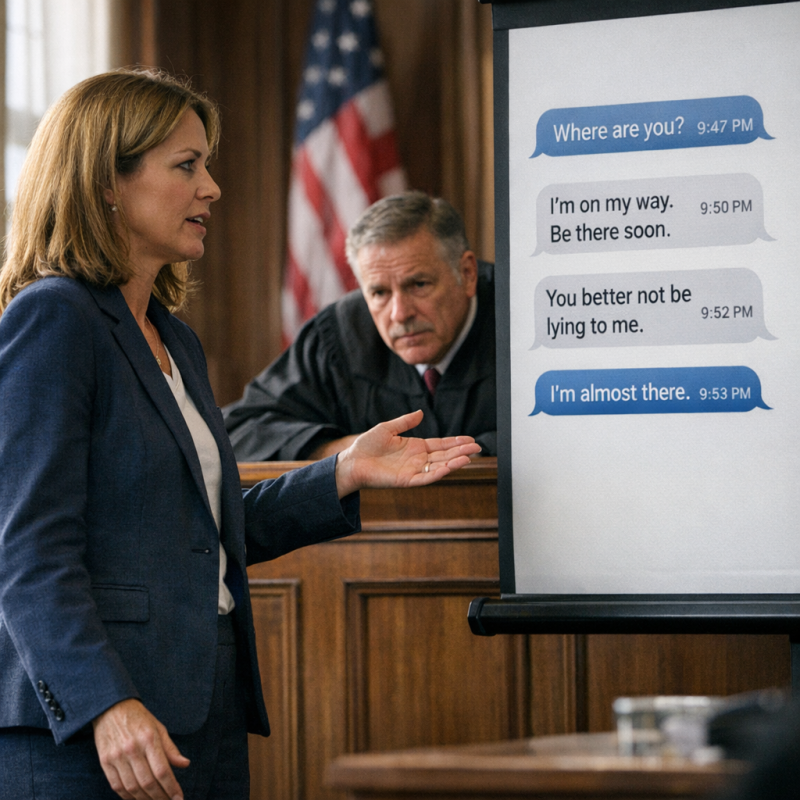 Image by FCT AI
The Forensic Specialist
I called Trevor Marsh to the stand. He was a digital forensics specialist I'd worked with on three previous cases, always calm, always precise. After he was sworn in, I walked him through his credentials—fifteen years in digital forensics, certifications that filled half a page. Then I got to the point. 'Mr. Marsh, did you examine the digital files submitted by Mrs. Hartwell?' 'I did,' Trevor said. 'And what did you find?' 'The files were deliberately altered,' he said. 'Timestamps were removed from the image metadata, and several documents showed evidence of cropping and selective editing.' Vanessa's lawyer stood immediately. 'Objection. This witness is speculating about intent.' 'I'm not speculating,' Trevor said calmly, before I could even respond. 'The metadata doesn't lie. When a file is edited, it leaves a digital signature. These files show multiple edits, all performed on the same device, all within a two-week period before they were submitted to the court.' The judge nodded slowly. Vanessa's lawyer sat back down. He had nothing—and Trevor's unshakeable composure made that abundantly clear.
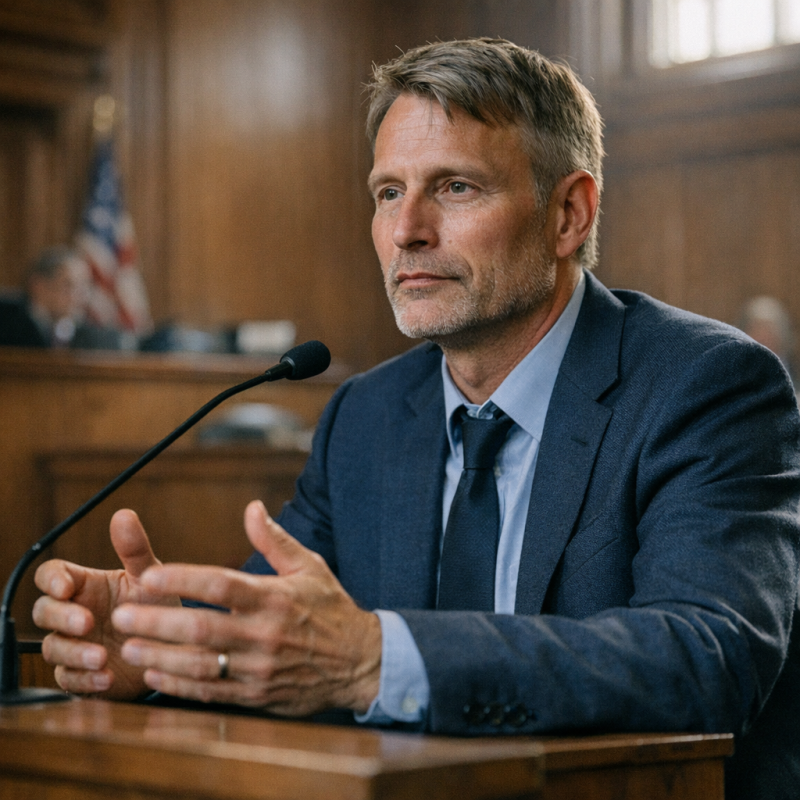 Image by FCT AI
The Cloud Account
Next, I introduced the cloud account evidence. Ethan and Vanessa had shared a cloud storage account during their marriage—one of those things couples set up and then forget about. Except Vanessa hadn't forgotten. She'd been using it to draft and refine her evidence. I pulled up the screen showing the shared folder structure. 'Your Honor, this is the Drafts folder from the jointly owned cloud account.' I clicked through. Multiple versions of the same document. Journal Entry—Draft 1. Journal Entry—Draft 2. Journal Entry—Final. Each one progressively more damning. Each one crafted with more precision. I let the judge read for a moment, watching her eyes move across the screen. Then I opened the properties panel, showing the edit history. All created by the same user. All within the same concentrated timeframe. Judge Morrison looked up. 'Counselor,' she said to Vanessa's lawyer, her voice measured. 'Can you explain how this is possible?' He stood, opened his mouth, then closed it again. For the first time in this entire trial, he had absolutely no answer.
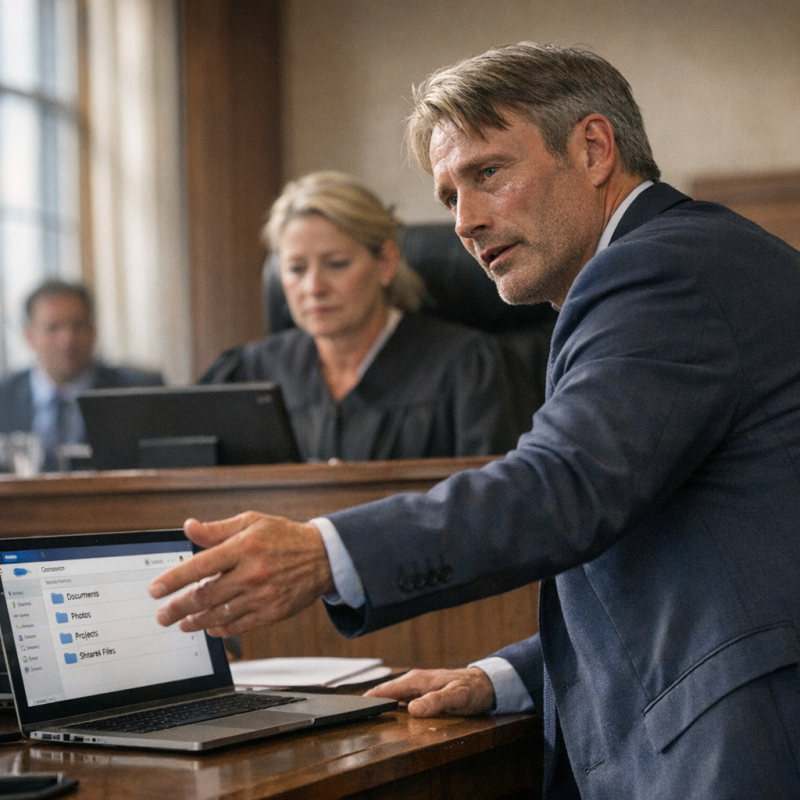 Image by FCT AI
The Timeline Notes
I clicked to the next file in the cloud folder. 'Timeline Notes—Private,' the filename read. I'd debated whether to show this one. It felt almost too perfect, too damning. But the judge needed to see it. I displayed it on the courtroom screen and read the bullet points aloud. 'Make it sound worse. Emphasize isolation. Remove any texts where I started the argument. Focus on school absences—check actual dates first.' The list went on. Nine points in total, each one a careful instruction for crafting a narrative. I heard Ethan inhale sharply beside me. Vanessa's face went completely blank. Not angry. Not defensive. Just... empty. And that's when I realized something that made my skin crawl. She hadn't known the cloud account was still active. She'd thought these notes were private, deleted, gone. She'd been meticulous about everything else, but she'd missed this one crucial detail. The shared account had never been formally closed, and every draft, every note, every calculated revision had been quietly backing up to the cloud this entire time.
 Image by FCT AI
The Objection
Vanessa's lawyer shot to his feet. 'Objection, Your Honor. This evidence was improperly obtained. The cloud account required a password, and my client's privacy—' 'The account was jointly owned,' I interrupted, keeping my voice level. 'Mr. Hartwell never relinquished access, and Mrs. Hartwell never changed the shared password or requested the account be closed. There's no impropriety here.' I pulled up the account agreement, already prepared for this exact objection. 'The terms of service clearly state that all users with authorized access have equal rights to the contents. Mr. Hartwell had those rights throughout the separation.' Judge Morrison studied the agreement for a long moment. I could see her weighing it, checking every angle. 'Objection overruled,' she said finally. 'The account was jointly owned and never formally closed. The evidence is admissible.' Vanessa's lawyer sank back into his chair. He'd tried, but the legal foundation was solid. There was no technicality to hide behind, no procedural error to exploit. The evidence was coming in, and there wasn't a thing he could do to stop it.
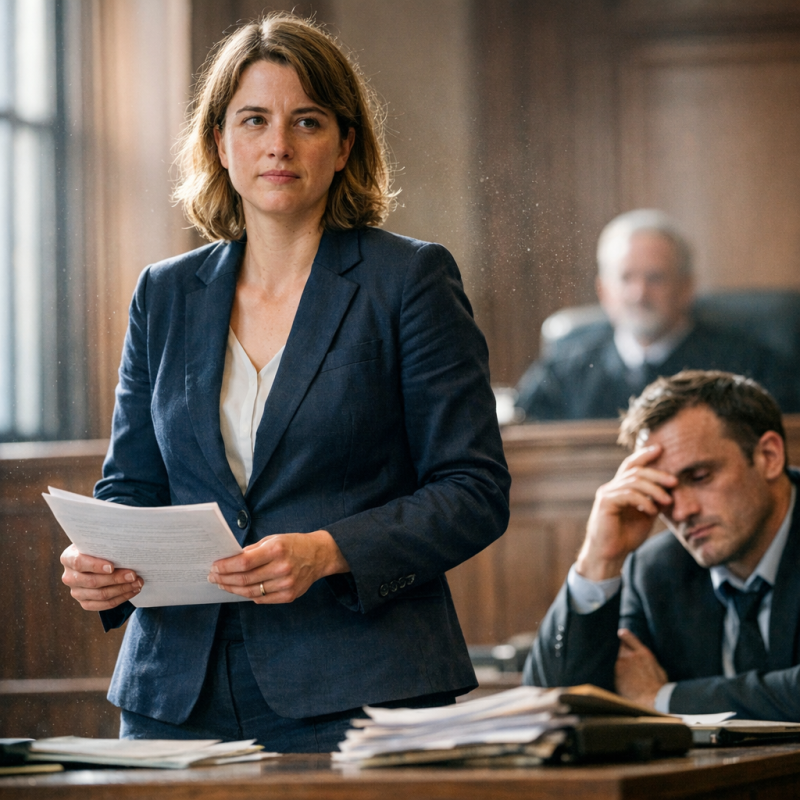 Image by FCT AI
The Cross-Examination
Vanessa's lawyer rose for cross-examination, and I could see him trying to regroup. 'Mr. Brennan, isn't it possible these files were created innocently? That Mrs. Hartwell was simply organizing her thoughts?' I stayed calm. 'The metadata shows deliberate editing and refinement over multiple sessions. The Timeline Notes explicitly reference removing contradictory evidence.' 'But you can't prove intent—' 'The forensic evidence proves alteration,' I said. 'The Timeline Notes document the methodology. The cropped text messages demonstrate the execution. The pattern is clear.' He shifted tactics. 'Your expert witness, Mr. Marsh—isn't digital forensics an imprecise science?' 'You'd have to ask him,' I said. 'But his testimony included specific metadata timestamps, edit histories, and device signatures. Those are objective facts, not interpretations.' The lawyer kept pushing, but every question he asked just gave me another opportunity to reinforce the evidence. The harder he fought, the worse it looked. I could see Judge Morrison watching the exchange, her expression growing more skeptical with each failed attempt to discredit the proof. He was drowning, and every objection was just pulling him deeper under.
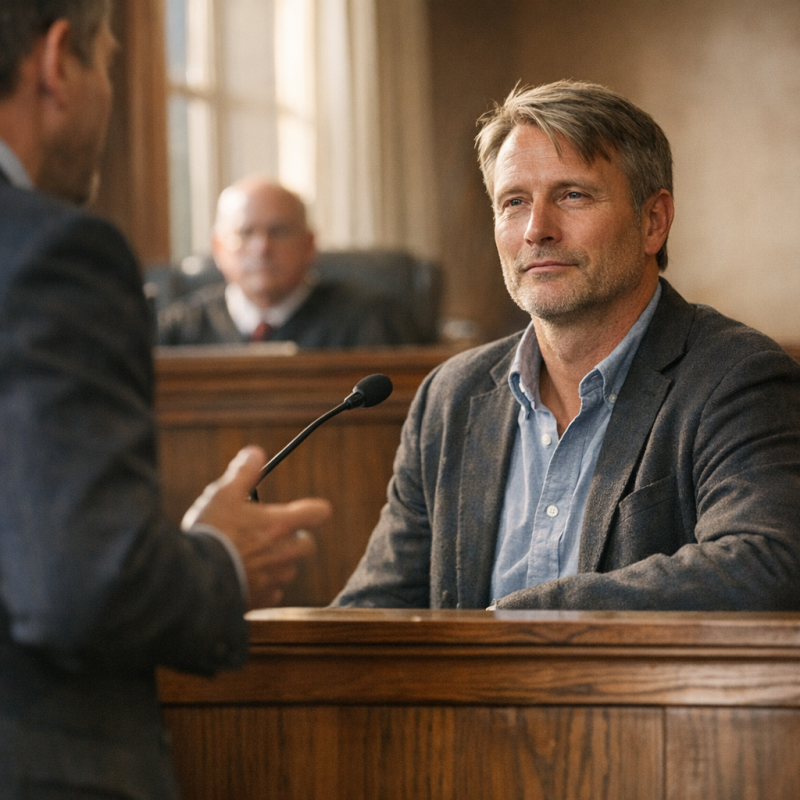 Image by FCT AI
The Unraveling
Judge Morrison looked at Vanessa. 'Mrs. Hartwell, I'm recalling you to the stand to address this new evidence.' Vanessa stood slowly. Her composure was still there, but it was thinner now, like ice in spring. She took the stand and waited. 'Mrs. Hartwell,' the judge said, 'can you explain the Timeline Notes document?' Vanessa's hands gripped the armrests. 'Those notes were taken out of context,' she said. Her voice was steady, but I heard the strain underneath. 'I was organizing my thoughts, trying to remember events clearly. The wording was... unfortunate, but I was just making sure I had my facts straight.' 'And the multiple draft versions of your journal entries?' the judge asked. 'I'm not a writer,' Vanessa said. 'I wanted to make sure I explained things properly. That's all.' It was a reasonable explanation. Technically plausible. But Judge Morrison's expression told me everything I needed to know. She wasn't buying it. Not anymore. The careful phrasing, the calculated reasonableness—it all just sounded like more manipulation now. Vanessa claimed the notes were just her organizing her thoughts, but the judge's expression made it clear she wasn't convinced.
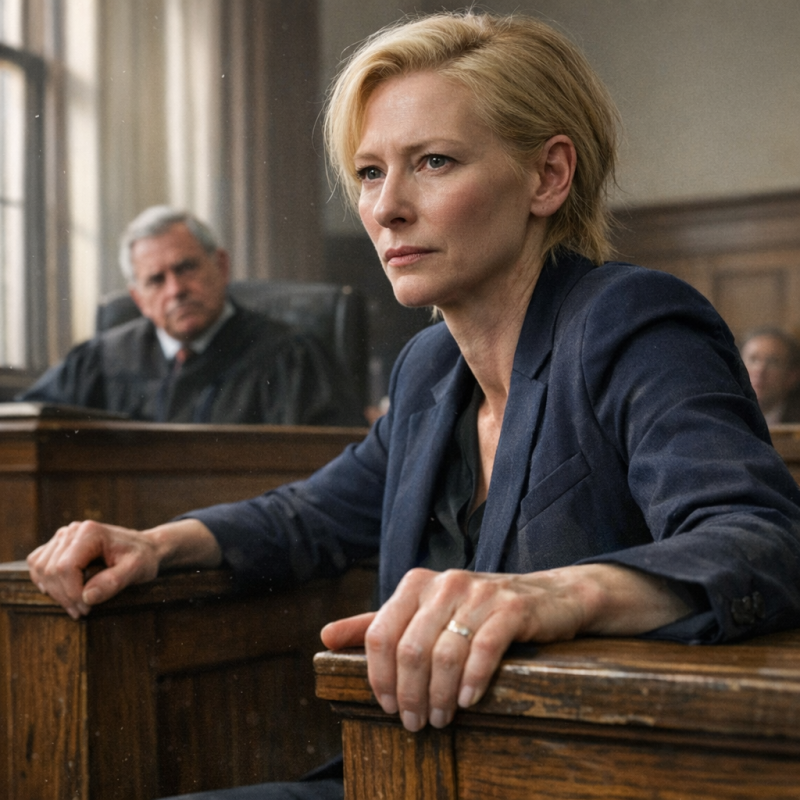 Image by FCT AI
The Recess Decision
Judge Morrison called a recess and asked both legal teams into chambers. Rachel squeezed my shoulder as we filed in. The judge's office was wood-paneled, stacked with case files. She sat behind her desk and looked at us both. 'I need to express serious concerns about Mrs. Hartwell's credibility,' she said. No preamble. Just cold fact. Vanessa's attorney shifted uncomfortably. 'Your Honor, my client has explained—' Judge Morrison held up a hand. 'Multiple drafts of journal entries. Timeline notes that read like coaching documents. I've been on the bench twenty-three years, counsel. I know the difference between memory organization and narrative construction.' She didn't say Vanessa was lying. She didn't have to. When we returned to the courtroom, I watched Vanessa lean close to her lawyer, whispering urgently. Her composure was cracking at the edges. Her attorney stood. 'Your Honor, given the... complexity of the new evidence introduced, we'd like to request a continuance to properly prepare our response.' I kept my face neutral, but inside, I was smiling. When the other side asks for more time, it means one thing: they're scrambling.
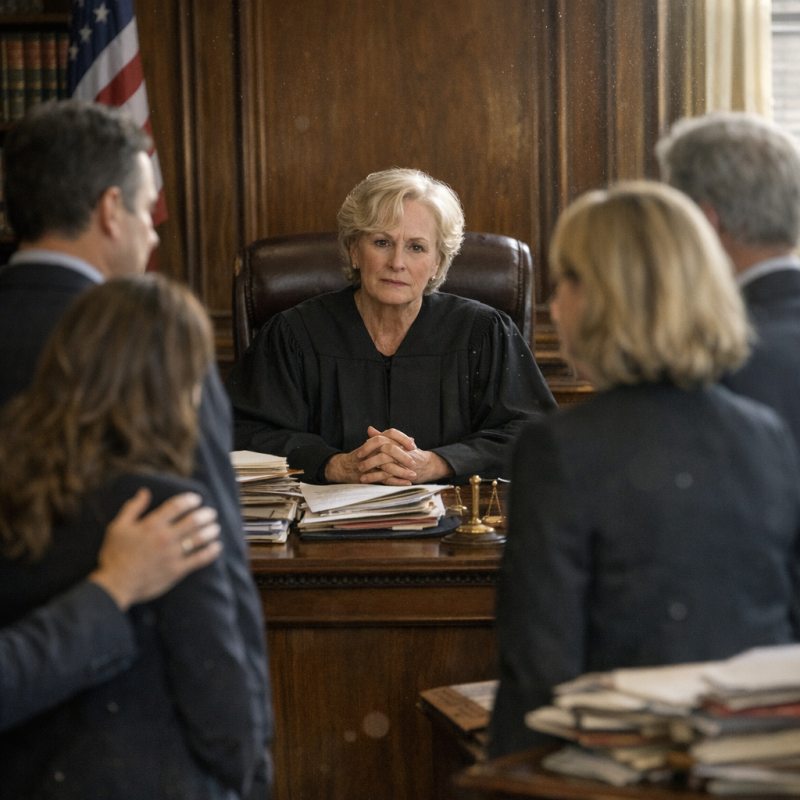 Image by FCT AI
The Weekend
The continuance gave us a long weekend, and I spent most of it at my desk with coffee and my laptop. I started digging into Vanessa's past, public records mostly. Marriage licenses, property transfers, court dockets. It took hours of searching, cross-referencing names and dates. And then I found it. A marriage license from twelve years ago in Connecticut. Vanessa Morrison—her maiden name—married to David Brennan. Then a divorce filing eighteen months later. I pulled the case summary. Allegations of financial abuse, hidden assets, emotional manipulation. The language was careful, clinical. But familiar. Very familiar. I kept digging and found a brief mention in a local news article about contentious divorces. The reporter had interviewed attorneys about high-conflict cases. One paragraph mentioned the Brennan divorce, describing 'accusations of domestic abuse and questions about the authenticity of evidence presented.' My stomach dropped. Questions about authenticity. I read that line three times. It might mean nothing. People have contentious divorces all the time. But the similarities to Ethan's case felt too close to ignore.
 Image by FCT AI
The Ex-Husband
Finding David Brennan took another day of searching. He'd moved to Vermont after the divorce, worked as an accountant for a small firm. I called his office, left a message saying I was an attorney working on a case that might involve his ex-wife. He called back that evening. His voice was cautious, guarded. 'What case?' he asked. I explained carefully, not revealing too much. There was a long silence on the other end. 'Vanessa,' he said finally. Just her name, heavy with something I couldn't quite identify. Exhaustion, maybe. Or fear. 'Mr. Brennan, I know this is difficult, but I need to ask you about your divorce. Specifically about the allegations made during those proceedings.' Another pause. 'I spent years trying to forget what happened,' he said quietly. 'I moved states. Changed jobs. I just wanted it behind me.' 'I understand,' I said. 'But if there's a pattern—' 'There is,' he interrupted. His voice was sharper now, more focused. 'And if talking to you means stopping her from doing it again, I'll tell you everything.'
 Image by FCT AI
The First Story
David and I met at a coffee shop in Burlington two days later. He looked tired, older than his forty-five years. We sat in a back corner, away from other customers. He told me about the divorce, and with every sentence, my chest got tighter. Accusations of financial control. Claims he'd hidden assets in offshore accounts. A journal documenting emotional abuse, presented with tearful testimony. False allegations of threatening behavior. 'She had documents,' David said. 'Emails I supposedly sent. Bank statements that didn't match my actual records. Her lawyer presented them like they were gospel.' It was Ethan's case all over again. The same tactics, the same narrative arc. 'Did you prove she fabricated evidence?' I asked. David's jaw tightened. 'I tried. My attorney found inconsistencies in the metadata on the emails. But proving fabrication is expensive, and by that point, I'd already spent forty thousand dollars. I couldn't keep fighting.' He looked down at his coffee. 'So I settled. Gave her most of what she wanted. Just to make it stop.' He'd run out of money before he could prove the truth.
 Image by FCT AI
The Second Name
I was about to thank David and leave when he said something that stopped me cold. 'You know she was with someone else between me and this current guy, right?' I stared at him. 'What?' 'A man named Kyle. Kyle Fischer. They were together for about two years, I think. Had a kid together.' He shook his head. 'I only know because a mutual acquaintance mentioned it. Said they'd gone through a brutal custody battle.' I wrote the name down with shaking hands. 'Do you know where I can find him?' David gave me what details he remembered, and I started searching the moment I got back to my hotel. Kyle Fischer. Age thirty-nine. Lived in Massachusetts now. I pulled his divorce records. And there it was. The same pattern. Allegations of abuse. Questions about evidence authenticity. A contentious custody fight that dragged on for months. He'd lost primary custody, same as David had lost most of his assets. Two cases. Two men. Two nearly identical outcomes. The pattern wasn't just consistent—it was practically scripted.
 Image by FCT AI
The Pattern
I spread everything across my desk Sunday night. David's case. Kyle's case. Ethan's case. Three files, three men, three sets of accusations. But when you laid them out side by side, the similarities were impossible to ignore. All three involved allegations of abuse—financial or emotional. All three included journals or documentation presented as contemporaneous but with suspicious formatting. All three had evidence that opposing counsel questioned but couldn't definitively disprove. All three men either settled or were fighting uphill battles. The tactics weren't just similar. They were nearly identical. Same narrative beats. Same types of evidence. Same emotional testimony style. I sat there for an hour, just staring at the timeline I'd constructed. This wasn't bad luck. This wasn't three separate high-conflict relationships that happened to go wrong. This was a methodology. A repeatable process. Vanessa knew exactly what to do, what to say, what evidence to create. She'd done it before. Twice. And she'd gotten away with it both times. The question now was whether I could prove it—and whether the judge would let me try.
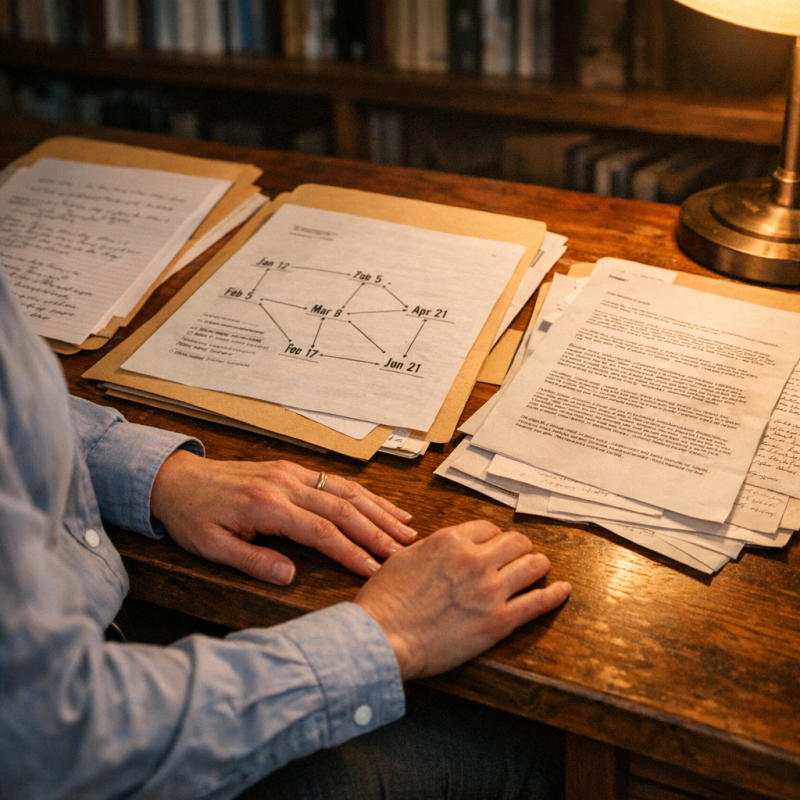 Image by FCT AI
The Legal Dilemma
Monday morning, I called Rachel before court resumed. We met at the office early, and I laid out everything I'd found. She listened without interrupting, her expression growing more serious with each detail. When I finished, she sat back in her chair. 'This is big, Marcus. Really big.' 'Can we introduce it?' I asked. 'Previous relationships, previous allegations, previous patterns?' Rachel was quiet for a moment, thinking. 'It's risky,' she said finally. 'Character evidence is usually inadmissible. The judge could rule that past relationships have no bearing on this case. Especially since neither David nor Kyle succeeded in proving fabrication.' 'But if she allows it?' Rachel met my eyes. 'If the judge allows it, and we can show this pattern clearly, it destroys Vanessa's credibility completely. Not just damages it—destroys it.' I nodded slowly. It was a gamble. A big one. If Judge Morrison shut it down, we'd look desperate, grasping at irrelevant history. But if she allowed it, everything changed. Rachel leaned forward. 'Do you want to take the risk?' I thought about Ethan, about David, about Kyle. Three men, same pattern. 'Yes,' I said. 'We're doing this.'
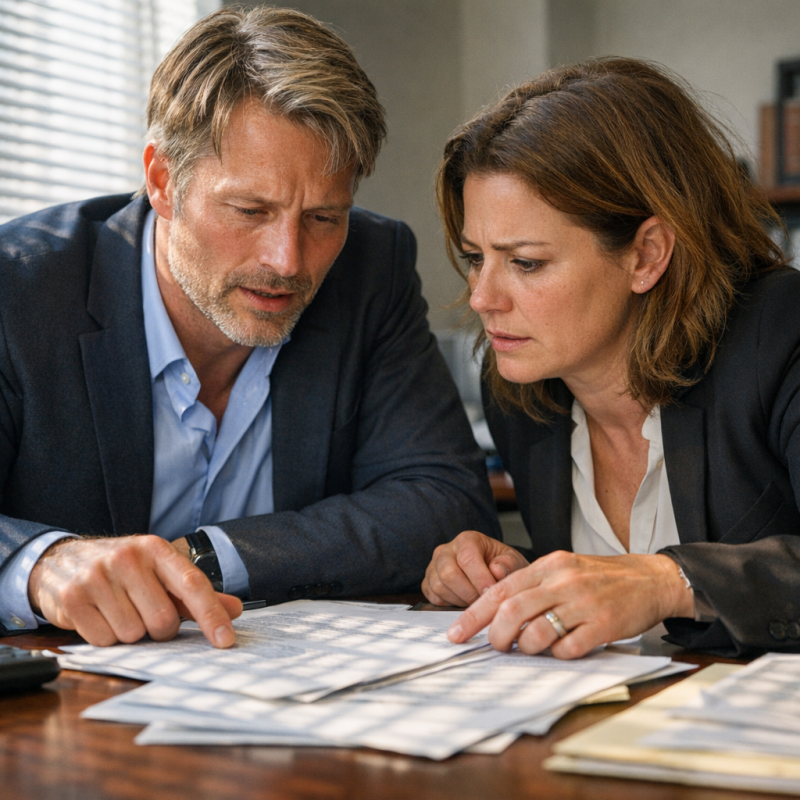 Image by FCT AI
The History Revealed
Court resumed Tuesday morning. Judge Morrison looked expectant, waiting for Vanessa's response to the fabrication evidence. Instead, I stood. 'Your Honor, before we proceed, I'd like to introduce additional evidence relevant to Mrs. Hartwell's credibility.' Her attorney objected immediately. 'Your Honor, we haven't been provided—' 'It's evidence of prior conduct,' I said calmly. 'Specifically, evidence that Mrs. Hartwell has been party to two previous divorces involving nearly identical allegations and evidence patterns.' The courtroom went completely silent. Judge Morrison's expression sharpened. 'Approach,' she said. We argued at the bench for ten minutes. Vanessa's lawyer called it character assassination. I called it pattern evidence directly relevant to the fabrication allegations. Finally, Judge Morrison made her ruling. 'I'm allowing it. The pattern of behavior, if established, goes directly to credibility on the current allegations.' I presented the files. David's case. Kyle's case. The timeline notes, the similar accusations, the questioned evidence. I walked through each parallel carefully, methodically. And when I finished, I looked at Vanessa. Her face had gone completely white.
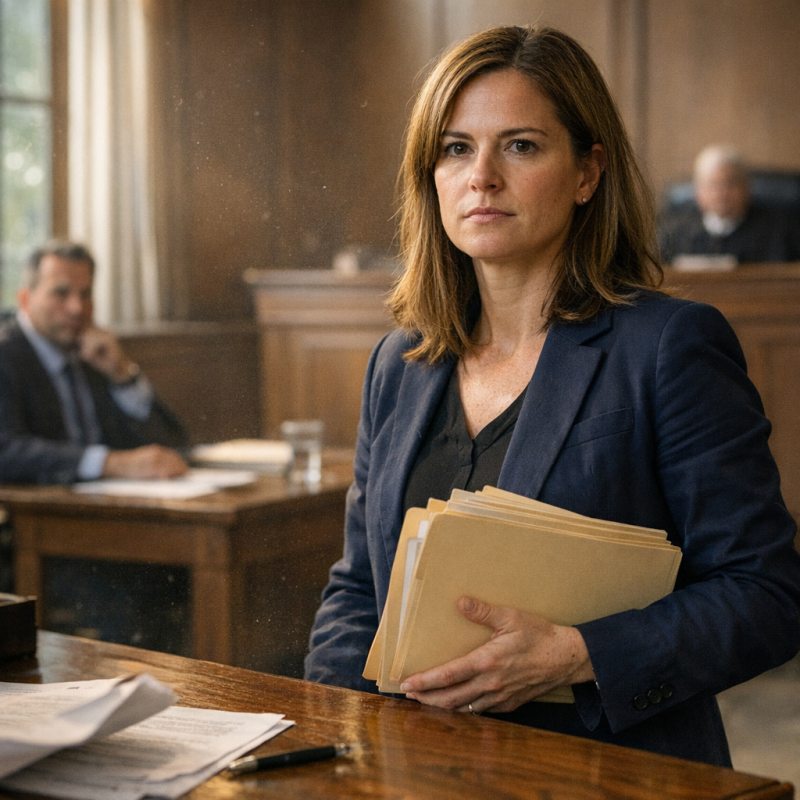 Image by FCT AI
The Testimony of the Ex
David Carrington took the stand at ten-thirty. He was nervous—hands fidgeting, voice slightly shaky at first—but he was honest. I walked him through his marriage to Vanessa, the allegations she'd made, the evidence that had appeared. 'Did you ever threaten your wife?' I asked. 'No,' he said firmly. 'Never. Not once.' I showed him the photographs from his case file, the ones Vanessa had submitted claiming abuse. He shook his head. 'That bruise on her arm? She got it moving boxes. I was there when it happened. She laughed about it.' Ethan was leaning forward in his seat, eyes locked on David. I could see the recognition on his face—the relief of finally hearing someone else say it. When I asked David why he hadn't fought harder in his own case, he looked directly at Ethan. 'I lost everything trying,' he said quietly. 'My savings, my reputation, two years of my life. I'm telling you this now because I don't want the same thing to happen to you.'
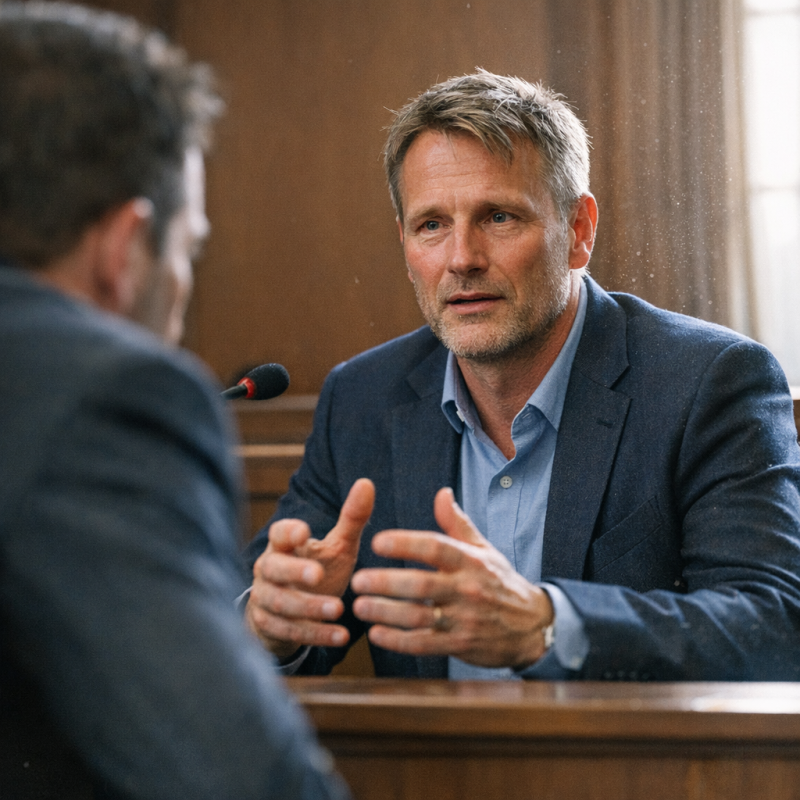 Image by FCT AI
The Collapse
Vanessa's lawyer tried to recover during cross-examination. She attacked David's credibility, questioned his motives for testifying, suggested he was bitter about his own divorce. But it didn't matter anymore. The pattern was too clear. Three cases, three sets of allegations, three collections of suspiciously similar evidence. Even Judge Morrison's expression had shifted—she wasn't neutral anymore. She was paying attention in a different way. The lawyer tried to argue that similarities didn't prove fabrication, that patterns could be coincidental. It sounded desperate even as she said it. I glanced at Vanessa. She was sitting completely still at the defense table, hands folded in front of her, staring at nothing. Her face had gone blank—not angry, not defensive, just empty. It was like watching someone check out mentally while their body remained in the chair. She didn't look at her lawyer. She didn't look at the judge. Vanessa had already left the courtroom in her mind.
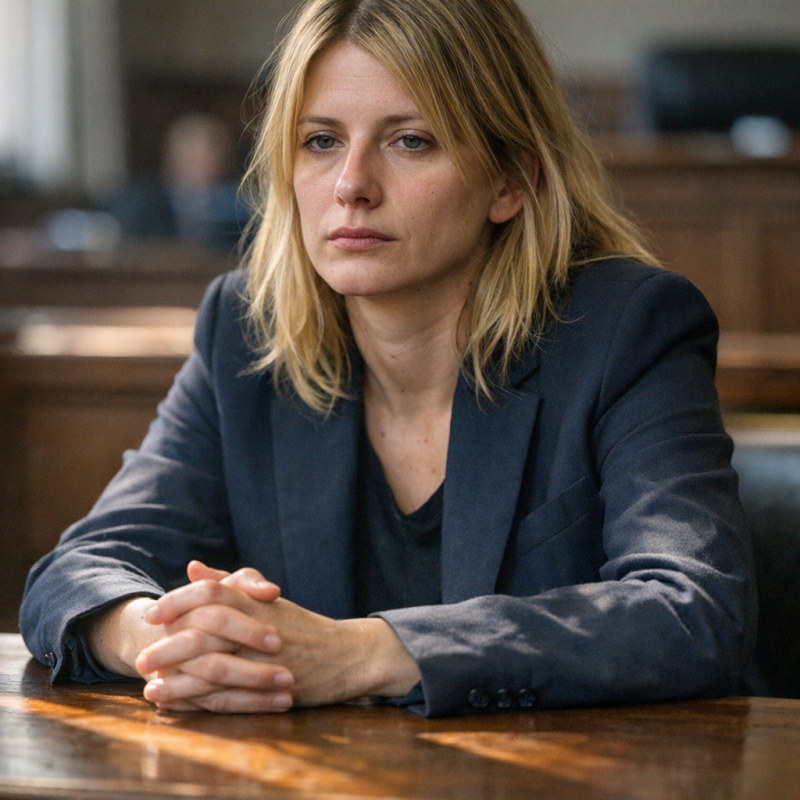 Image by FCT AI
The Judge's Questions
Judge Morrison set down her pen and looked directly at Vanessa. 'Mrs. Hartwell, I'd like to ask you some questions directly.' Vanessa's lawyer started to object, but the judge held up a hand. 'Your client may choose not to answer, but I'm asking.' Vanessa nodded slowly. The judge asked about the previous divorces, about the similarities in the allegations, about how the evidence had been gathered. Vanessa's answers came out vague and meandering. She claimed she didn't remember details. She said each situation had been different, even when presented with identical photograph angles. When asked about the forged signature on the business document, she said she 'must have been mistaken' about when Ethan signed it. Her voice was flat, mechanical. Every answer contradicted something she'd said before or failed to address the actual question. I watched Judge Morrison's face harden with each response. Her jaw tightened. Her eyes narrowed. This wasn't skepticism anymore—this was a judge who'd seen enough.
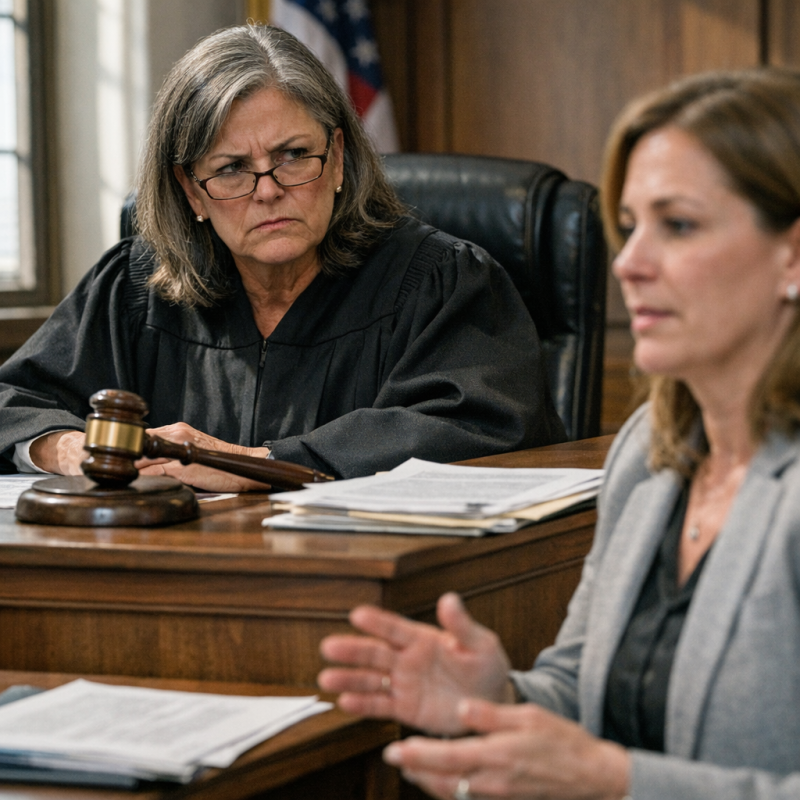 Image by FCT AI
The Custody Decision
Judge Morrison took a long breath before speaking. 'I'm issuing an interim custody order effective immediately,' she said. 'Mr. Hartwell is granted primary physical custody of the minor child, Lily Hartwell, pending a full custody evaluation by a court-appointed psychologist.' Ethan made a sound—half gasp, half sob. I put a hand on his shoulder to steady him. The judge continued: Vanessa would have supervised visitation rights, two afternoons per week, with a neutral third party present. The evaluation would take six weeks. Based on its findings, a permanent custody arrangement would be determined. I looked at Ethan. He was crying openly, silently, his whole body shaking. Then I looked at Vanessa. Nothing. No reaction at all. She sat there staring at the table in front of her, hands still folded, expression completely blank. It was like the verdict hadn't even registered—like she hadn't heard a single word the judge had said.
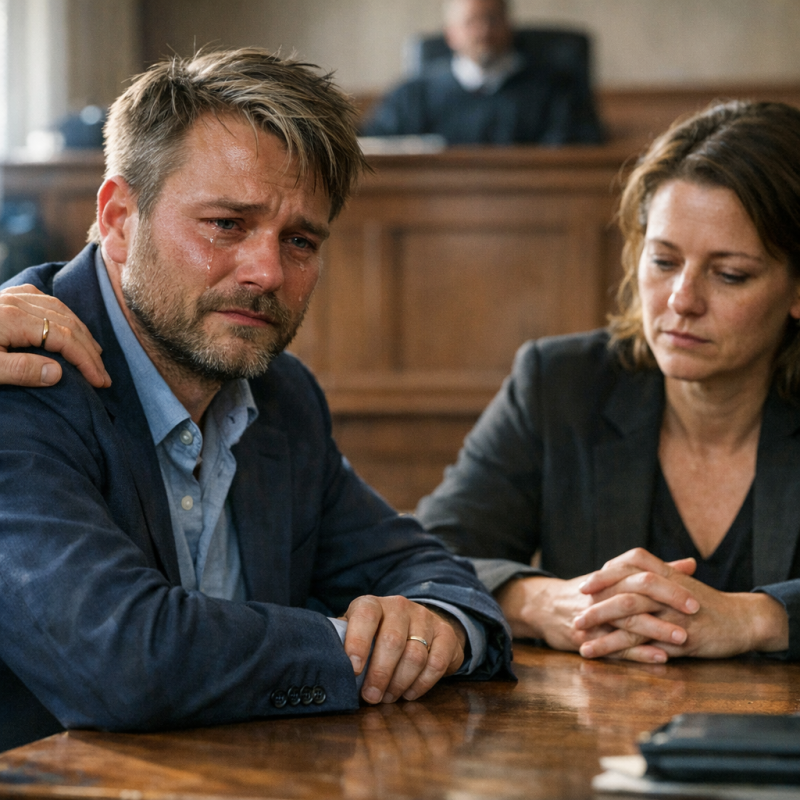 Image by FCT AI
The Financial Judgment
The judge wasn't finished. 'Regarding the financial claims,' she said, flipping through her notes. 'Mrs. Hartwell's requests for asset division are denied in their entirety. The evidence presented—particularly the fabricated documents and falsified financial records—invalidates her claims.' Ethan's hand gripped the edge of the table. 'Mr. Hartwell will retain sole ownership of the marital home, the joint savings accounts, and his business, Cooper & Hartwell Consulting. Mrs. Hartwell's claim that assets were hidden or misappropriated is unsupported by credible evidence.' It was a complete reversal. Everything Vanessa had claimed Ethan had stolen, everything she'd said he'd hidden—the judge was returning it all. Ethan would keep the house where Lily had grown up. The savings he'd built over fifteen years. The business he'd started from nothing. I felt something loosen in my chest that I hadn't realized was tight. This was vindication—real, total, unambiguous vindication.
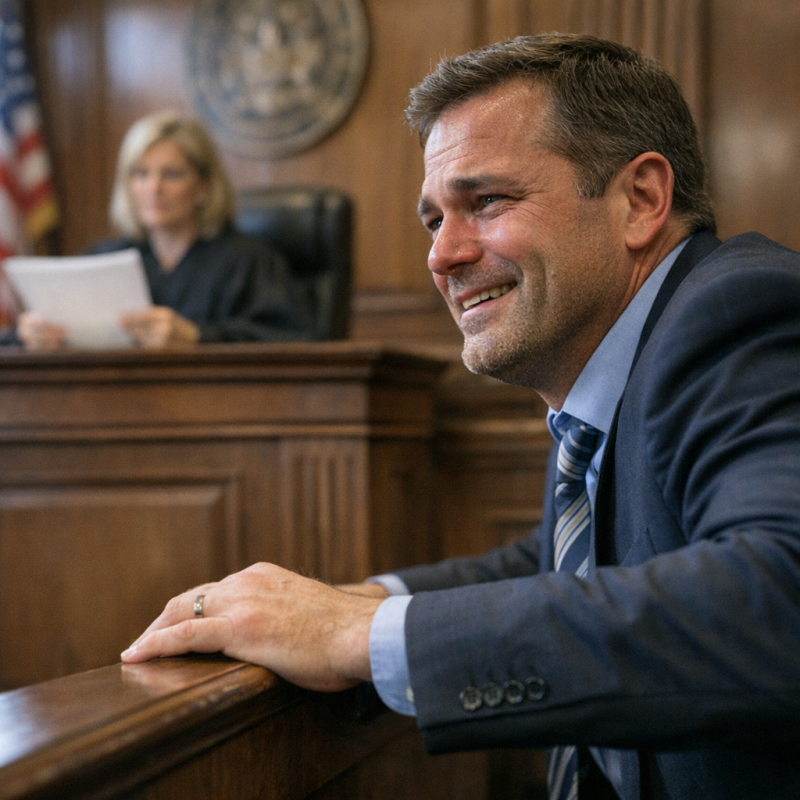 Image by FCT AI
The Contempt Warning
Judge Morrison looked directly at Vanessa again. 'Mrs. Hartwell, I need you to understand something,' she said, her voice hard. 'Fabricating evidence in a court of law is not just unethical. It's grounds for contempt of court. In severe cases, it can constitute criminal fraud.' The courtroom was dead silent. 'The documents you submitted—the forged signature, the falsified photographs, the manufactured timeline—represent a deliberate attempt to deceive this court and deprive your husband of his rights.' Vanessa still didn't react. She just sat there. 'I'm ordering the court clerk to forward the complete case file to the district attorney's office for review. They will determine whether criminal charges are warranted.' My stomach dropped. I'd won the case, gotten Ethan everything he'd asked for. But this—this was something else entirely. This was the weight of real consequences, the kind that didn't end when the gavel came down. The judge was talking about criminal prosecution now.
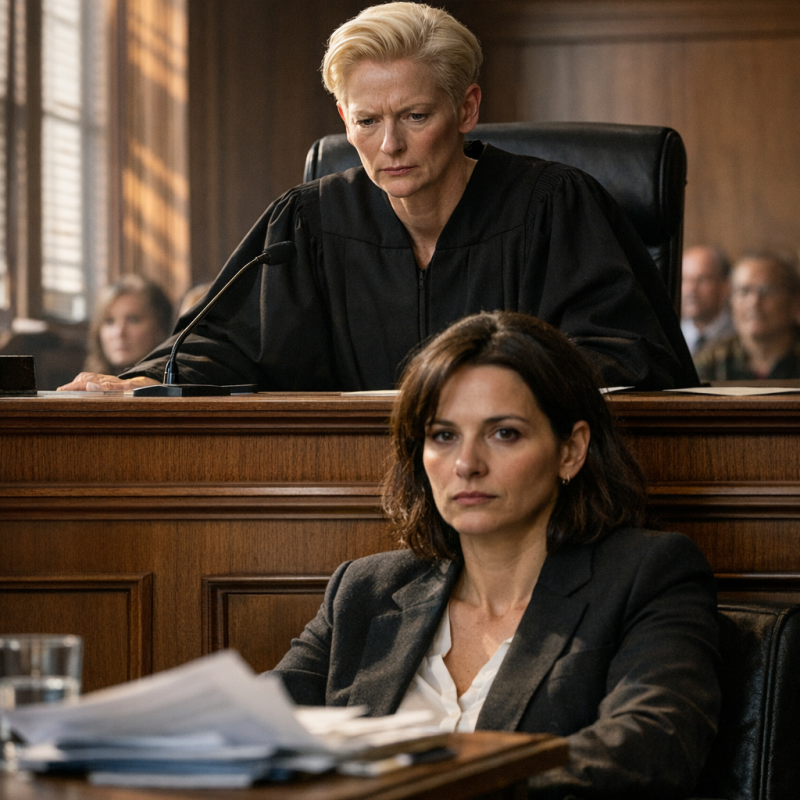 Image by FCT AI
The Exit
When Judge Morrison adjourned court, Vanessa stood slowly. She gathered her purse from under the table, collected a folder of papers, and buttoned her coat with mechanical precision. Her lawyer tried to speak to her, leaning in close, but Vanessa didn't acknowledge her. She just walked toward the courtroom exit, heels clicking on the tile floor. She didn't look at Ethan. She didn't look at me. She didn't look at anyone. Her face was still completely blank—not angry, not devastated, just empty. I watched her push through the double doors and disappear into the courthouse hallway. The whole courtroom seemed to exhale at once. People started gathering their things, whispering to each other, shuffling papers. But I stayed in my seat for a moment longer, staring at those doors. I knew I'd never forget the look on Vanessa's face when it all came apart—or rather, the complete absence of any look at all.
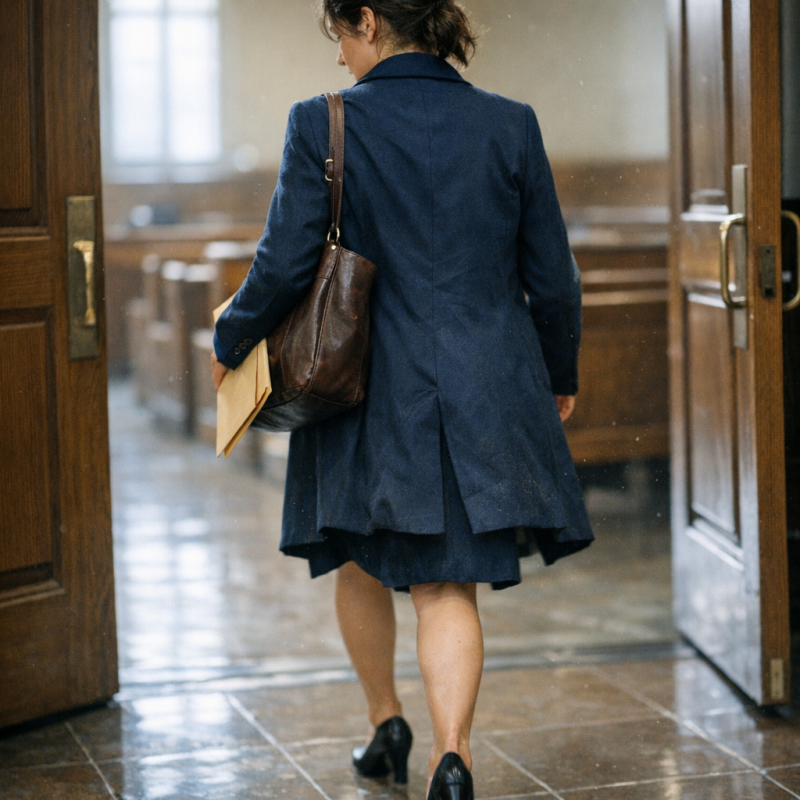 Image by FCT AI
Ethan's Reaction
I found Ethan in the hallway outside, leaning against the wall with his face in his hands. His shoulders were shaking. When he looked up and saw me, he tried to speak but couldn't get the words out. He just shook his head, tears streaming down his face. I stood next to him and waited. Finally, he managed: 'I never thought anyone would believe me.' His voice cracked. 'I thought I was going to lose everything. Lose Lily. I thought—' He broke off, covering his face again. I put a hand on his shoulder and let him cry. This was what relief looked like after months of terror, after thinking you were losing your daughter to someone capable of fabricating an entire reality. After believing the system might not work, that the truth might not matter. Standing there in that courthouse hallway, watching my client finally break down, I realized exactly how close we'd come to losing this case—and what that would have meant.
 Image by FCT AI
The Conversation with Rachel
Rachel met me for coffee two days after the hearing. She'd been following the case from the sidelines, watching me pour everything I had into it. 'I've known you for eight years,' she said, stirring her latte. 'I've never seen you fight like that for a client.' I stared at my cup. She was right. I'd crossed lines I'd never crossed before—got personally invested in a way that went against everything I'd learned in law school. 'This one was different,' I said. 'It wasn't just about custody or assets. It was about whether we'd let someone get away with destroying another person's reality.' Rachel nodded slowly. Then she asked the question I'd been avoiding: 'Are you worried about the others? The people who couldn't afford to fight back the way Ethan did?' I felt something tighten in my chest. The truth was, I'd been thinking about David and Kyle constantly. About how many others might be out there—people Vanessa had manipulated, discredited, ruined—who never had the resources or evidence to expose what she'd done. 'Yeah,' I admitted. 'I think about them all the time.'
 Image by FCT AI
The Aftermath
Three weeks later, I got the call I'd been waiting for. The DA's office had reviewed the evidence from our hearing—the recordings, the pattern documentation, everything—and they were moving forward with criminal charges against Vanessa. Fraud. Perjury. Filing false reports. The assistant DA told me they were building a case that went beyond just Ethan's situation. I felt something loosen in my chest that I hadn't realized was clenched. This wasn't just about one custody battle anymore. This was about accountability. A week after that, I heard through the legal grapevine that investigators had contacted both David and Kyle. They were being interviewed as potential witnesses, asked about their experiences with Vanessa, about patterns of behavior that mirrored what we'd documented in Ethan's case. The system was slow, and it was imperfect, but it was working. Other victims were getting a chance to be heard. The lies Vanessa had told for years were finally catching up to her—and this time, there would be consequences that went beyond a custody ruling.
 Image by FCT AI
Ethan and Lily
The email came on a Tuesday morning. Just a photo attachment from Ethan with a short message: 'Thought you'd want to see this.' I opened it and felt something catch in my throat. It was Ethan and Lily at a park, sitting on a bench together. She was leaning against his shoulder, both of them smiling—real smiles, the kind you can't fake. Lily was holding an ice cream cone. Ethan looked lighter somehow, like he'd been carrying a weight for so long that he'd forgotten what it felt like to stand up straight. The note below the photo said: 'First weekend together without supervised visits. Thank you for giving us our lives back.' I saved the photo and printed it out. Put it in a frame on my desk next to my law degree and bar certification. Some cases are just about winning. Some are about billable hours and legal strategy. But this one—this one mattered. It was a reminder that sometimes, when you fight hard enough and the evidence is strong enough and you refuse to let someone manipulate the system, justice actually works. Sometimes the good guys win.
 Image by FCT AI
The Rule I Broke
I've spent my entire career following one rule: stay neutral. Don't get emotionally invested. Your job is to represent your client's interests, not to become personally involved in their story. I broke that rule with Ethan's case, and I'd break it again in a heartbeat. Because here's what I learned: neutrality has its place, but so does conviction. Sometimes knowing when to stop being impartial is exactly what justice requires. Sometimes you have to care—really care—about whether the truth wins. I thought about Vanessa's face when Detective Morrison walked in with those recordings. The moment her carefully constructed reality started to crumble. The instant she realized we'd seen through every lie, every manipulation, every calculated move. For the first time in my career, I allowed myself to feel completely, unambiguously satisfied with an outcome. Not just because we won. Not just because Ethan got his daughter back. But because we'd exposed something that needed exposing, and maybe—just maybe—we'd prevented it from happening to someone else. That moment when everything clicked into place? When justice and truth finally aligned? Chef's kiss. Absolutely perfect.
 Image by FCT AI