The Phone Call That Changed Everything
I was thirteen when they told me I couldn't go to my grandfather's funeral. Not 'maybe' or 'we'll see'—just a flat no. My parents dropped me at Aunt Carol's house that Saturday morning with barely an explanation, and I remember feeling hurt more than anything else. Confused, you know? I sat on her floral couch watching some mindless TV show while my entire family gathered to say goodbye to Grandpa Frank without me. Around noon, Aunt Carol's phone rang. I could hear her in the kitchen, her voice tight and strained. 'What do you mean the coroner is still there?' she said. My stomach twisted. I'd never heard an adult sound that frightened. There was a long pause, then: 'No, no, I understand. We can't—' She stopped mid-sentence. I crept closer to the doorway, holding my breath. When she spoke again, her words came out barely audible, like she was forcing them through clenched teeth. Aunt Carol hung up the phone, her face drained of color, and whispered something I would never forget: 'They can't let anyone else see it.'
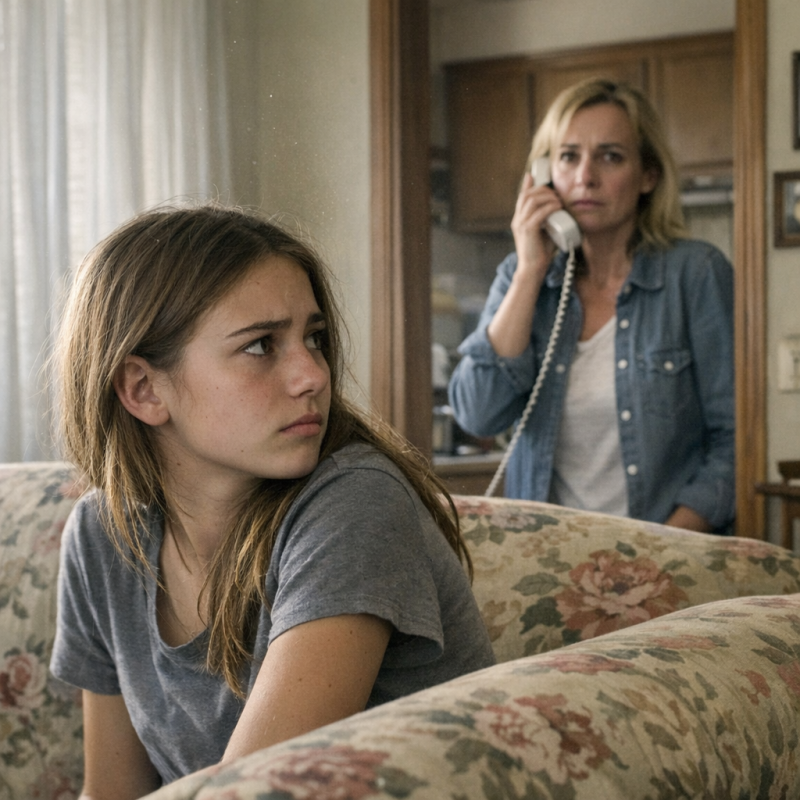 Image by FCT AI
The Man Who Never Missed a Game
Before all of this, Grandpa Frank was the person I probably loved most in the world. He showed up to every single one of my soccer games, even the ones in pouring rain. He'd stand on the sidelines in his old canvas jacket, clapping like I'd just scored the World Cup-winning goal even when I missed the net completely. He had this booming laugh that made everyone around him smile, and he told stories that went on forever—about his time in the army, about the farm he grew up on, about pranks he pulled on his sisters when they were kids. Everyone wanted to be around him. He made you feel like you were the most important person in the room. Looking back now, I can see the cracks I didn't notice then. The way he'd pause mid-story sometimes, searching for a word that should have come easily. How he checked door locks obsessively, sometimes two or three times before bed. But even then, I remembered the small things that didn't quite fit—like the way he always checked locks twice, and the towel he kept over the bathroom mirror at night.
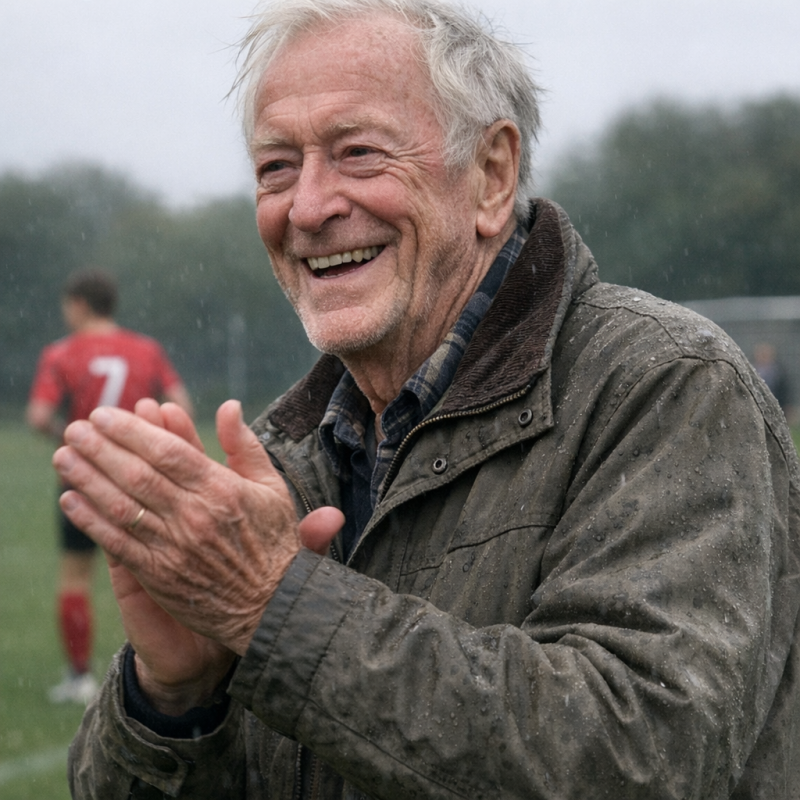 Image by FCT AI
The Heart Attack Story
Dad woke me at two in the morning. I heard his footsteps in the hallway first, that heavy, deliberate walk that meant something was wrong. He sat on the edge of my bed and turned on my lamp, squinting in the sudden brightness. 'Jamie, honey,' he said, and his voice cracked. 'Grandpa Frank passed away tonight.' I remember the room tilting sideways. How could that be possible? I'd seen him three days earlier and he was fine. Dad explained it was a heart attack. 'He was watching television,' Dad said, then repeated it again, like he'd memorized the phrase. 'Just watching television, and it happened very quickly. He didn't suffer.' I asked questions—too many questions, probably—trying to make it make sense. Where was Grandma? Was she okay? Did they call an ambulance? Dad answered each one mechanically, his responses sounding rehearsed. When I asked what hospital he'd been taken to, my father hesitated just long enough for me to notice—and said Grandpa never made it to one.
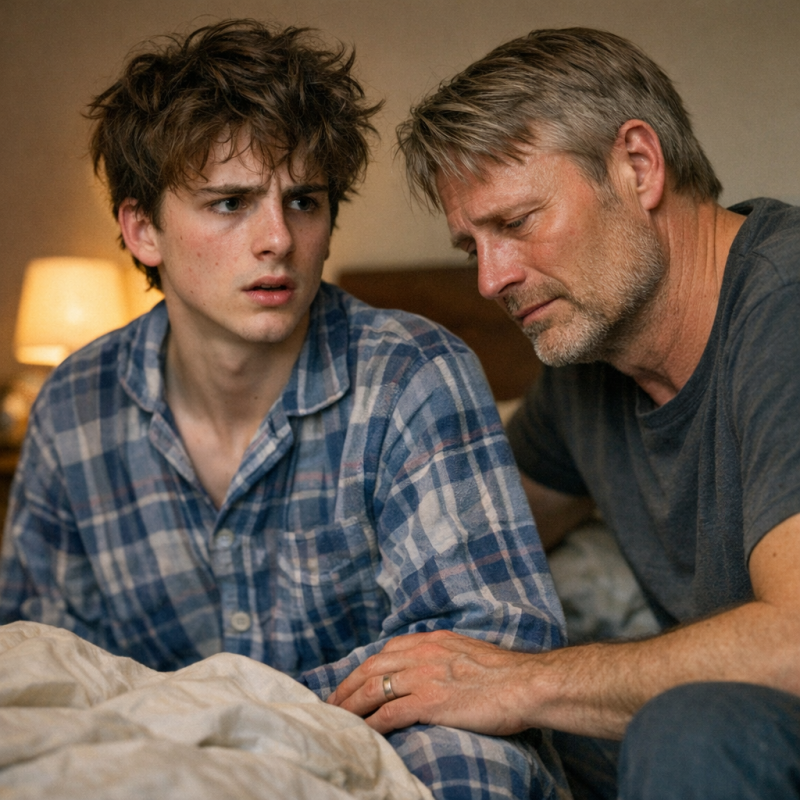 Image by FCT AI
Too Young for the Truth
The next morning, Mom sat me down at the kitchen table with that serious expression parents get when they're about to disappoint you. She held my hands and explained that the funeral 'wasn't appropriate' for someone my age. I remember staring at her, waiting for the real reason. Dad stood behind her with his arms crossed, nodding along like this made perfect sense. 'Sometimes these things are just for adults,' Mom said softly. 'It's going to be very emotional, very difficult. We want to remember Grandpa the way he was.' I argued, obviously. I said I was old enough, that I needed to say goodbye, that it wasn't fair. They wouldn't budge. Mom added that my younger cousins weren't going either, as if that would make me feel better about it. I sat there thinking about how that reasoning sounded hollow and wrong. My younger cousins weren't going either, they said—but that made no sense, because Grandpa loved family gatherings more than anything.
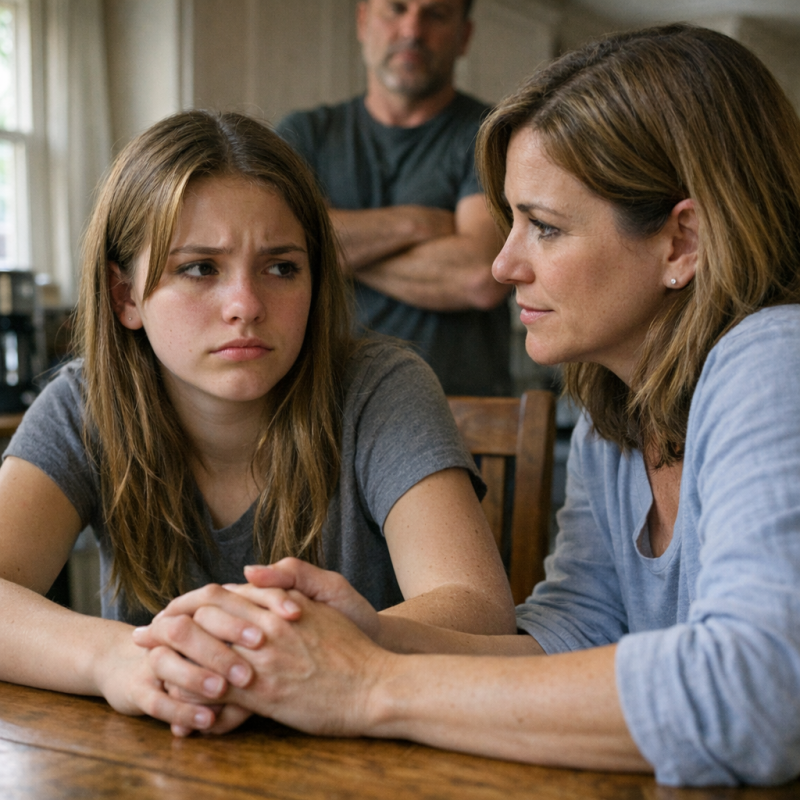 Image by FCT AI
The Silence That Followed
The weeks after the funeral felt like living in a house with a ghost no one would acknowledge. I'd try to talk about Grandpa—normal stuff, like remembering the time he taught me to fish or the way he'd sneak me extra dessert—and the entire room would freeze. My parents would exchange these loaded glances, the kind that spoke an entire conversation I wasn't part of. Mom would change the subject with painful obviousness. 'How's school going?' she'd ask, cutting me off mid-sentence. Dad would suddenly remember he needed to check something in the garage. The worst was when Grandma came over for dinner one night about three weeks later. I mentioned wanting to visit Grandpa's grave, just a simple statement, and she made this awful sound—half gasp, half sob. Her fork clattered onto her plate. She covered her face with her napkin and rushed out of the dining room. I sat there stunned while Mom went after her. Dad stared at his food like it held answers. Every time I mentioned his name, the adults in the room went quiet—and my grandmother started crying so hard she had to leave the table.
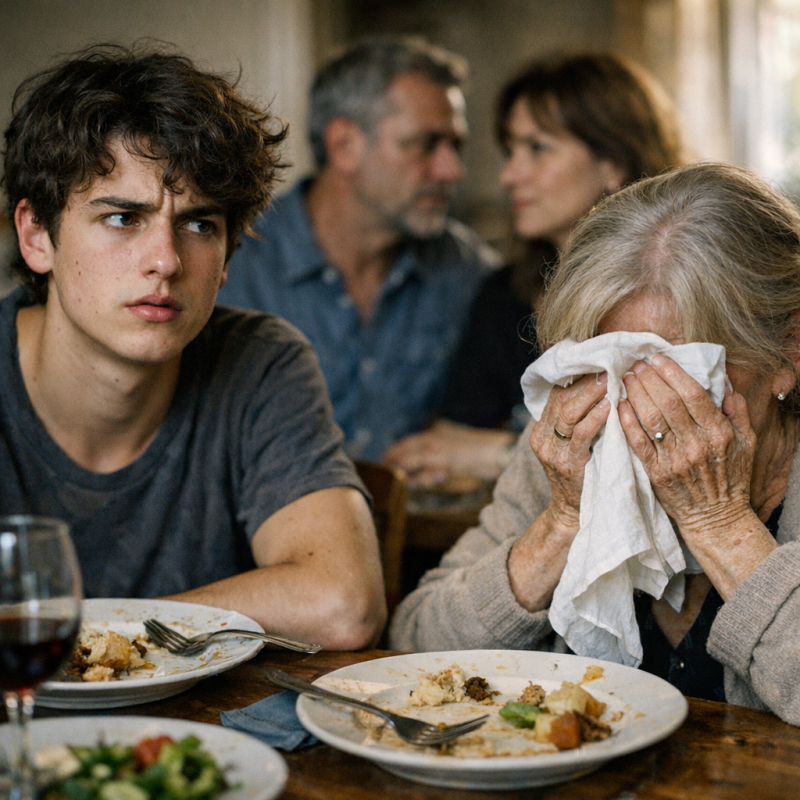 Image by FCT AI
The Question That Made Dad Angry
About a month later, I made the mistake of asking about the funeral itself. We were having dinner—spaghetti, I remember—and I'd been thinking about it all day at school. I asked Dad what songs they'd played, if people had shared stories, if anyone had mentioned the time Grandpa accidentally drove his truck into the lake. Normal funeral stuff, you know? Just wanting to picture it since I couldn't be there. Dad's entire body went rigid. His jaw clenched and I watched his knuckles turn white around his fork. 'Why do you keep bringing this up?' he snapped. His voice was sharp in a way I'd never heard before. Mom touched his arm gently, but he jerked away. 'Jamie, that's enough,' he said, but I hadn't even said anything else. I tried to explain I was just asking a question, just wondering, but his face had gone red. He slammed his hand on the table so hard the plates rattled, then walked out of the room without saying another word.
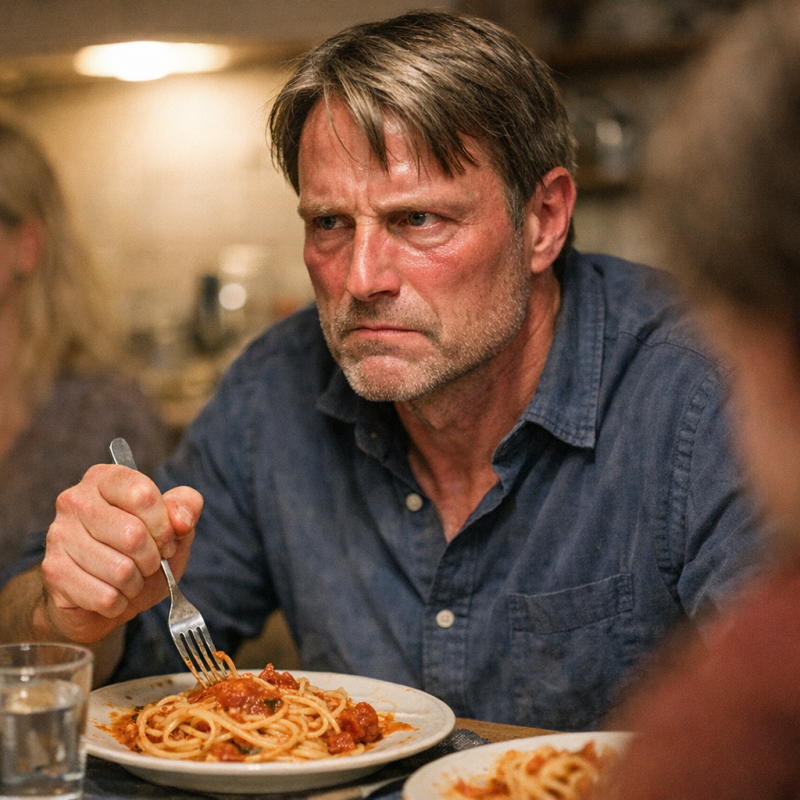 Image by FCT AI
What Happened to the House
I learned to stop asking direct questions after that, but I couldn't stop wondering. One afternoon, maybe two months after Grandpa passed away, I asked Dad what happened to the farmhouse. It seemed like a safe topic—practical, not emotional. We were in the car together, just the two of us, driving back from the grocery store. 'What are you and Uncle Tim doing with Grandpa's place?' I asked casually. I expected him to say they were sorting through things, or that Grandma was staying there, or something normal like that. Instead, Dad's response came immediately, almost too quickly. 'We sold the land,' he said, eyes fixed on the road ahead. No hesitation, no emotion, just that flat statement. But something about his tone felt wrong. The words came out too smooth, too practiced, like he'd been waiting for someone to ask. I watched his profile and noticed his jaw was tight, his grip on the steering wheel unnecessarily firm. 'We sold the land,' he said, but the way he said it—too fast, too rehearsed—made me certain he was lying.
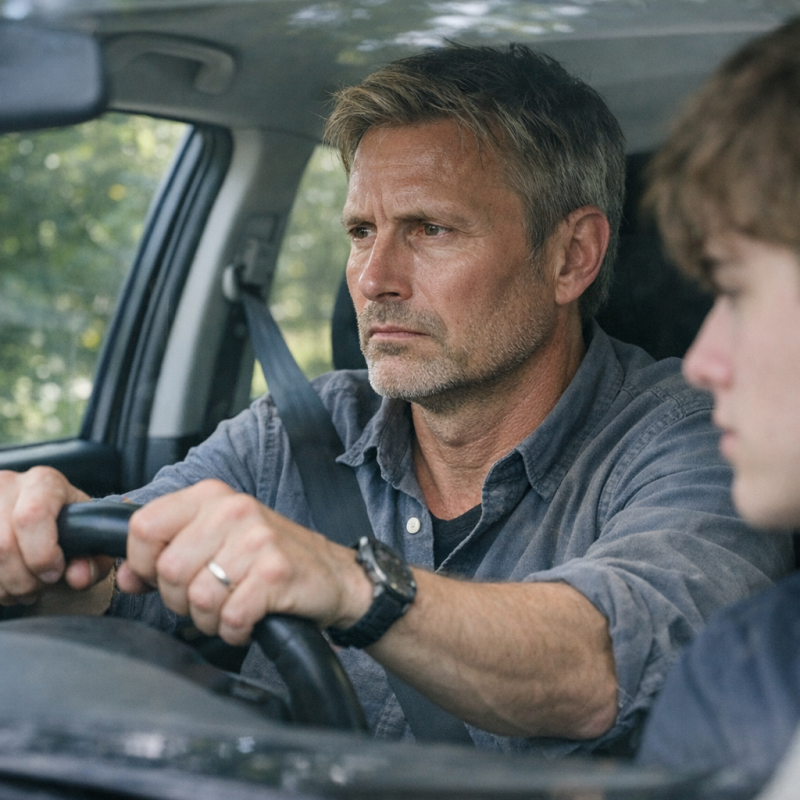 Image by FCT AI
The Dropped Plate
By the time summer rolled around, I'd mostly learned to live with the silence. I spent a lot of time at Aunt Carol's that July—she'd always been my favorite aunt, and I think my parents were glad to have me out of the house. One afternoon, she was making lunch and I was setting the table. I mentioned something completely innocent, just that it had been almost six months since the funeral. I wasn't even asking anything, just making conversation. The plate she was holding slipped right through her fingers. It hit the tile floor and shattered into what seemed like a thousand pieces, the crash echoing through her small kitchen. I jumped back from the shards that skittered across the floor. Aunt Carol didn't move to clean it up. She didn't apologize or laugh it off. She just stood there staring down at the broken ceramic, her hands trembling slightly. When she finally looked at me, her eyes were rimmed with red. She stared at the broken pieces on the floor and whispered, 'Please don't ask me about that day.'
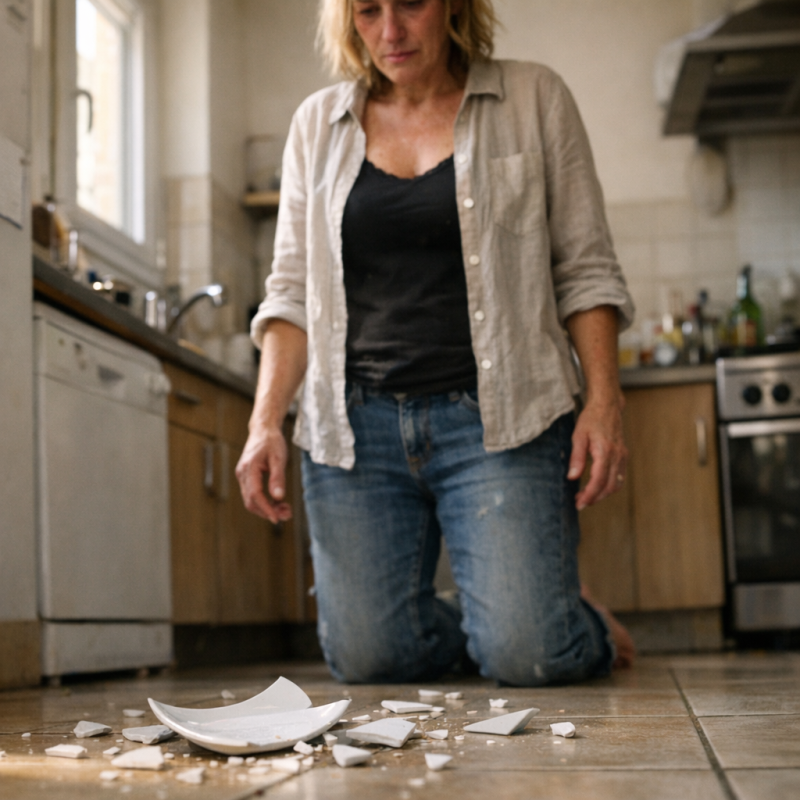 Image by FCT AI
The Things I Started Noticing
After that day at Aunt Carol's, I started thinking differently about everything. I couldn't just accept the silence anymore. I began making a mental list of all the weird things Grandpa Frank had done in those months before he died—things I'd noticed but never really thought about. Like how he always walked past mirrors without looking at them, or how he'd stop and stare at them sometimes with this expression I couldn't read. Or the way he'd check every door lock three times before bed, even though he lived alone on that farm. And the hospital thing—Dad had mentioned once that Grandpa refused to go for a routine checkup, said he'd rather die than set foot in a hospital again. At the time, I'd thought it was just him being stubborn. But now I wondered if there was more to it. I grabbed an old notebook from my school supplies and started writing everything down, every strange behavior I could remember. I kept it hidden under my mattress because I knew my parents wouldn't approve. I wrote them all down in a notebook I kept hidden under my mattress, and one pattern started emerging: Grandpa had been terrified of something.
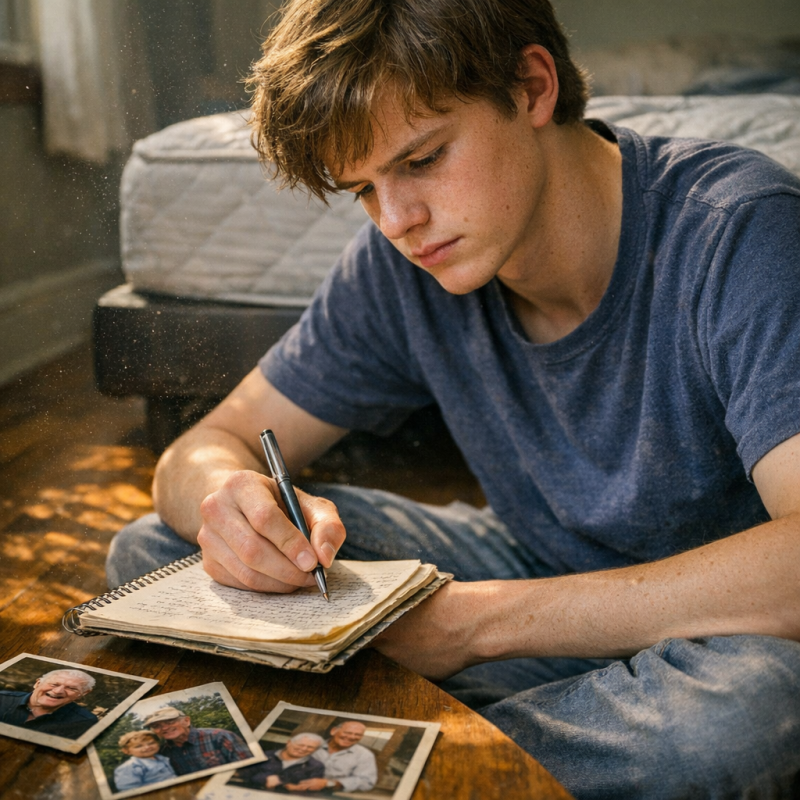 Image by FCT AI

History's most fascinating stories and darkest secrets, delivered to your inbox daily.
High School and Unanswered Questions
By the time I got to high school, most of my friends had moved on to worrying about SATs and college applications. I was still thinking about Grandpa Frank. I know how that sounds—obsessive, maybe even unhealthy. But I couldn't let it go. When I turned sixteen and got my driver's license, one of the first things I did was drive to the county clerk's office during lunch period. I told them I was doing a genealogy project for school, which wasn't technically a lie since I was researching my own family. The clerk pulled up the death certificate on her computer and let me take a photo of it with my phone. I studied it in my car for twenty minutes, reading every line. Heart attack. Natural causes. No autopsy required. Time of death estimated between 8 PM and midnight. Everything matched what my parents had told me. There were no red flags, no inconsistencies, nothing that would explain why my entire family had reacted like I'd stepped on a landmine whenever I brought it up. The death certificate confirmed everything my parents said: heart attack, natural causes, no foul play—but I knew there had to be something they weren't telling me.
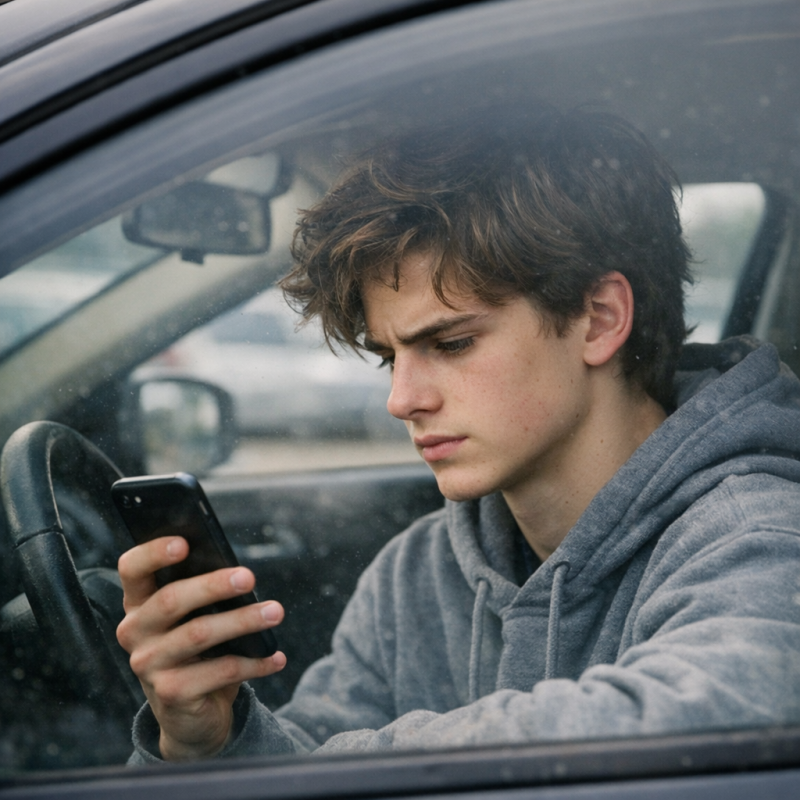 Image by FCT AI
The Photograph in the Attic
I was nineteen and home from college for winter break when I decided to search the attic. My parents were out doing last-minute Christmas shopping, and I knew I had a few hours alone in the house. The attic was one of those spaces that accumulates decades of stuff nobody wants to throw away but nobody needs either—boxes of old tax returns, my childhood toys, decorations for holidays we'd stopped celebrating. I was looking through a box labeled 'Frank's Things' that I'd never noticed before, probably brought over after the estate was supposedly settled. There were a few sweaters, some tools, a couple of books. At the bottom, underneath a flannel shirt, I found a photo album. The edges were burned, like someone had held it too close to a fire and then changed their mind. The leather cover was warped from heat damage. My hands were shaking as I opened it. Most of the pictures were normal—Grandpa as a young man, some wedding photos of him and Grandma before she passed, a few of my dad as a kid. Most of the pictures were normal—until I found one of Grandpa standing in front of his farmhouse, edges charred, as though someone had tried to destroy it.
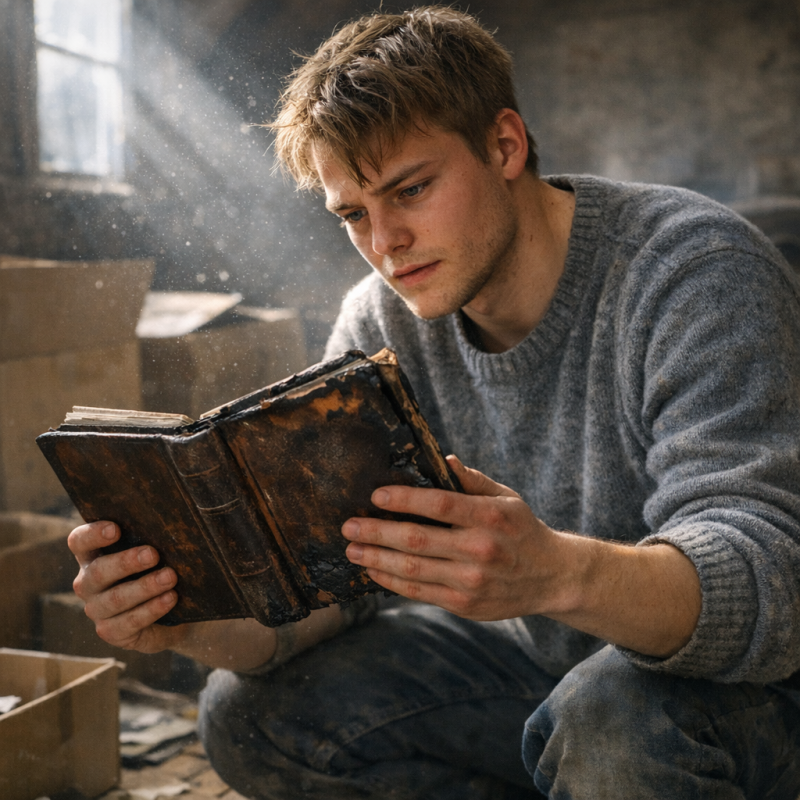 Image by FCT AI
Mom's Reaction to the Photo
I brought the album downstairs and waited for Mom to get home. When she walked through the door carrying shopping bags, I was sitting at the kitchen table with the burned album open in front of me. She saw it immediately. The color drained from her face so fast I thought she might actually faint. She dropped the shopping bags right there in the doorway and rushed over, snatching the album off the table like I'd been holding something dangerous. 'Where did you find this?' she asked, her voice barely above a whisper. I told her it was in the attic, in a box with Grandpa's name on it. She closed the album and held it against her chest, her knuckles white from gripping it so hard. I asked her why someone had tried to burn it. She wouldn't answer. I asked her what she was so afraid of. She just shook her head, and I could see her hands trembling against the leather cover. 'You need to let this go,' she whispered, her hands trembling—but her fear only made me more determined.
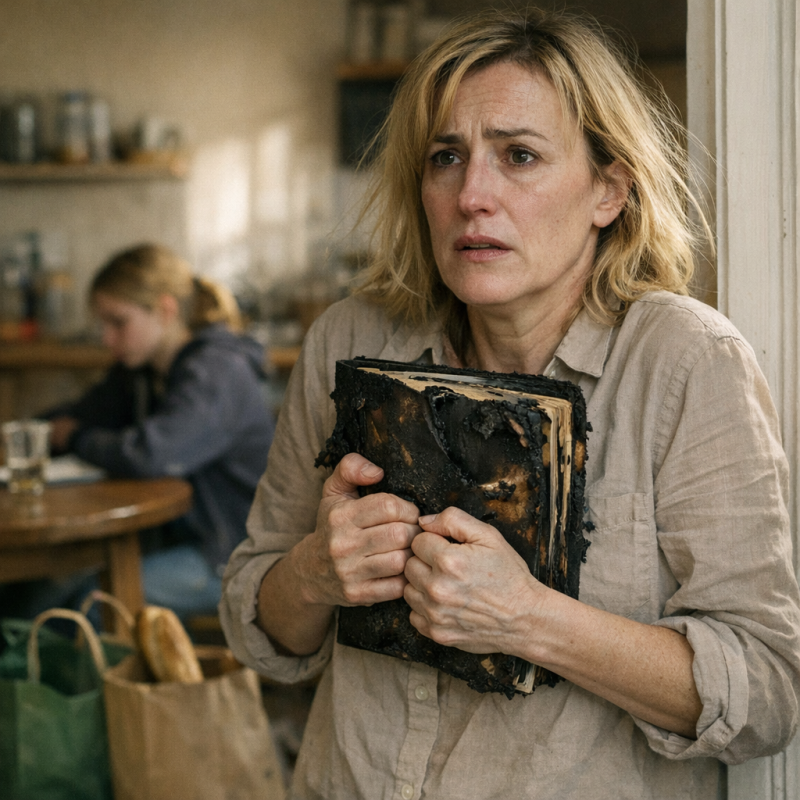 Image by FCT AI
The Drive to the Farmhouse
Two weeks after the photo album incident, I told my parents I was visiting a friend from college. Instead, I punched Grandpa Frank's old address into my GPS and started driving. It took almost three hours to get there, winding through back roads I half-remembered from childhood visits. Dad had said the property was sold right after Grandpa passed away, that some developer bought it and planned to tear down the old house. But as I got closer, I started to doubt that story. The roads got rougher, more overgrown. When I finally turned onto what should have been Grandpa's driveway, I had to slow down to a crawl because of the weeds. They'd grown so tall they scraped against the sides of my car. The mailbox was still standing at the road, rusted and tilted at an angle, with Frank's name still visible in faded letters. My heart was pounding as I followed that driveway. If the property had been sold, why would everything look so neglected? The property wasn't sold at all—it was abandoned, weeds swallowing the driveway, and the house still standing at the end of the dirt road like a rotting monument.
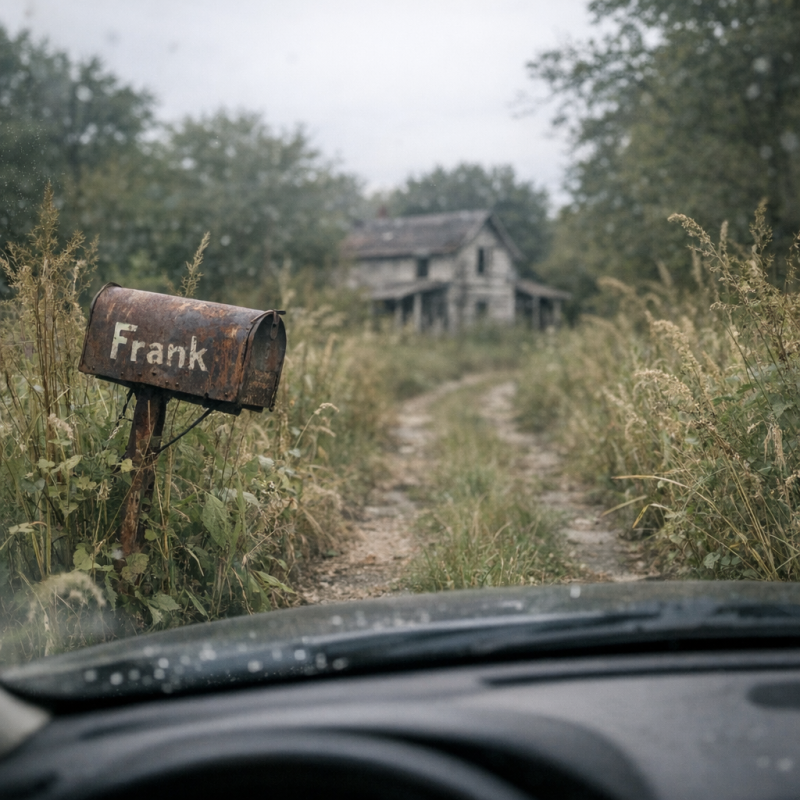 Image by FCT AI
Inside the Farmhouse
I sat in my car for a few minutes, just staring at the house. It looked smaller than I remembered, but otherwise exactly the same—white paint peeling, front porch sagging slightly on one side. The windows were dark. I got out and approached slowly, half expecting someone to appear and tell me I was trespassing. But there was only silence, broken by the wind moving through the overgrown grass. The front door was unlocked. I pushed it open and the hinges screamed. Inside, the air was stale and thick with dust, but everything was still there. Grandpa's furniture, his dishes in the kitchen cabinets, even his reading glasses on the side table next to his recliner. I walked from room to room in a daze. There was a coffee mug beside his chair, the liquid long since evaporated but leaving a brown ring at the bottom. Mail was scattered on the kitchen counter, dated from right before he passed. Nobody had cleaned this place out. Nobody had packed up his belongings. Plates in the cabinets, a coffee mug beside his recliner—it looked less like someone moved out and more like people fled in a hurry.
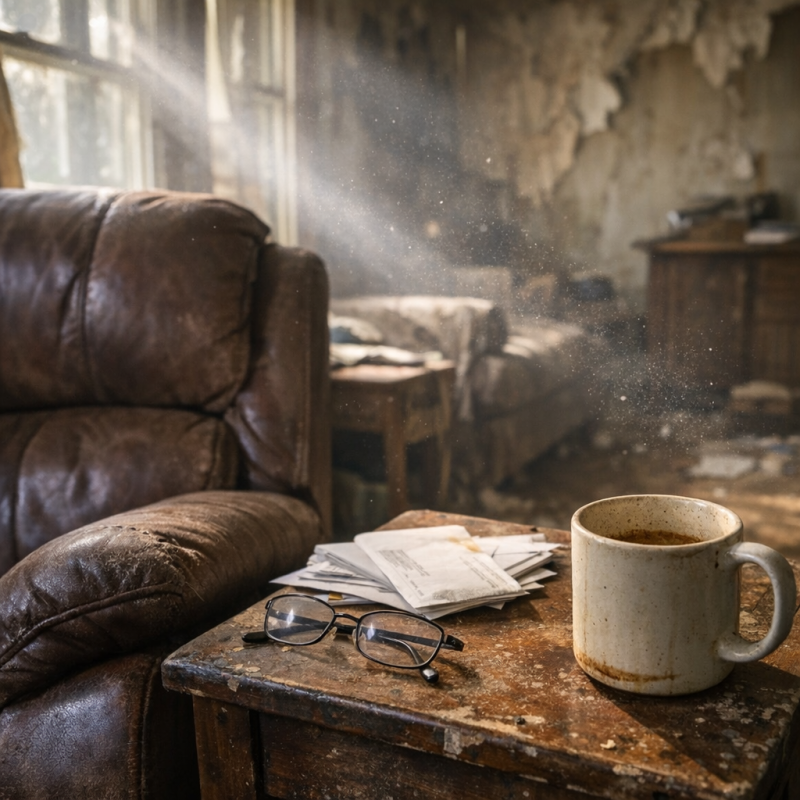 Image by FCT AI
The Covered Mirrors
As I moved through the house, something kept nagging at me, something off that I couldn't quite identify at first. Then I realized what it was: I hadn't seen my reflection once. I walked back to the bathroom and pushed the door open. The mirror above the sink was covered with a bedsheet, tucked carefully around the frame. I went to Grandpa's bedroom. Same thing—the dresser mirror was draped with a pillowcase. In the hallway, a decorative mirror on the wall had been turned to face the wood paneling. I remembered Grandpa's habit of covering the bathroom mirror at night, that quirk I'd thought was just him being eccentric. But this was different. This was every mirror in the entire house. And here's the thing that really got to me: Grandpa had lived alone. So if he died here, who had come back afterward to cover all these mirrors? Had my parents been here? Had they walked through this house doing this strange ritual before abandoning it completely? I remembered Grandpa's habit of covering the bathroom mirror at night—but why would someone come back after his death to cover them all?
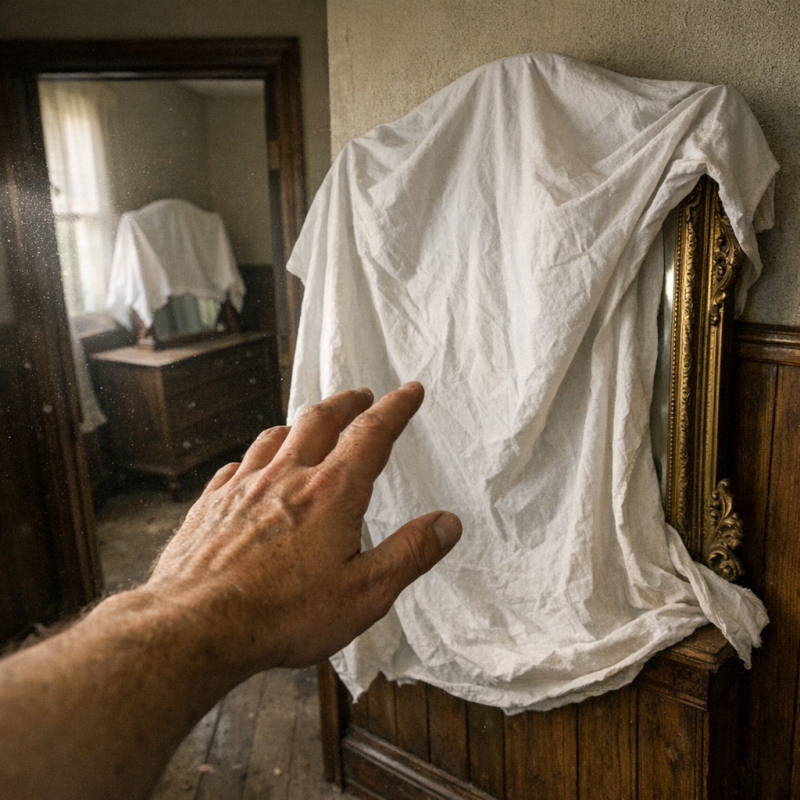 Image by FCT AI
The Dining Room Table
I saved the dining room for last. I don't know why—maybe some part of me knew it would be the hardest. This was where he'd died, where Dad and Uncle Jim had found him slumped over the table. The room looked ordinary enough at first glance. The table was still there, a simple wooden farmhouse table with six chairs around it. But when I looked closer, I saw the stains. Dark spots on the hardwood floor near the head of the table, barely visible under a layer of dust. I knelt down and touched one, and my fingers came away clean—whatever had spilled there had soaked into the wood long ago. Then I noticed the marks. Deep scratches in the floor, long gouges in the wood that started under the chair and dragged several inches toward the kitchen. I tried to picture what had happened. Grandpa sitting down for dinner, maybe feeling the first pain in his chest, trying to stand up, knocking the chair back as he fell. There were scuff marks near the head of the table, deep gouges in the wood floor, like someone had tried to stand up too fast—or like someone had fallen.
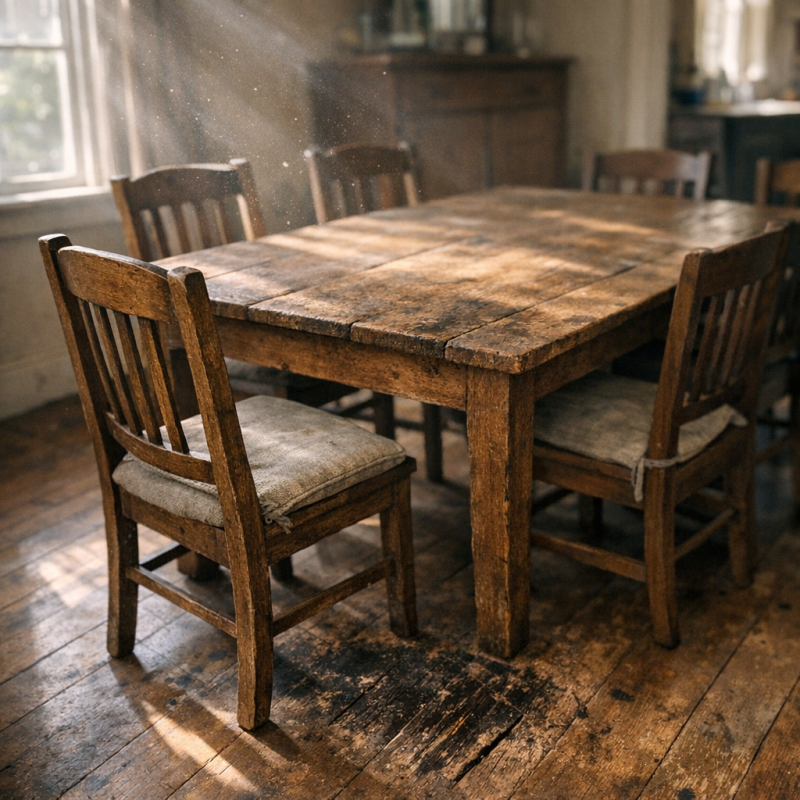 Image by FCT AI
The Upstairs Bedroom
The stairs creaked under my feet as I headed upstairs. I'd been putting it off, honestly—something about going into his private space felt wrong, like I was crossing a line even though he'd been gone for fifteen years. But I'd come this far. His bedroom was at the end of the hall, door slightly ajar. When I pushed it open, I half-expected it to look abandoned, stripped bare. Instead, it looked like he'd just stepped out for a walk. The bed was made with military precision. His reading glasses sat on the nightstand next to a water-stained coaster. And there, in a neat stack beside the lamp, were pamphlets. Medical pamphlets. I picked one up with shaking hands. 'Understanding Memory Loss.' Another one: 'Early Warning Signs of Dementia.' A third: 'When Should You See a Doctor About Forgetfulness?' I checked the dates printed on the backs. Every single one was from eight months before he passed away. Eight months. He'd known something was wrong, and he'd been researching it alone in this room while my family acted like everything was fine.
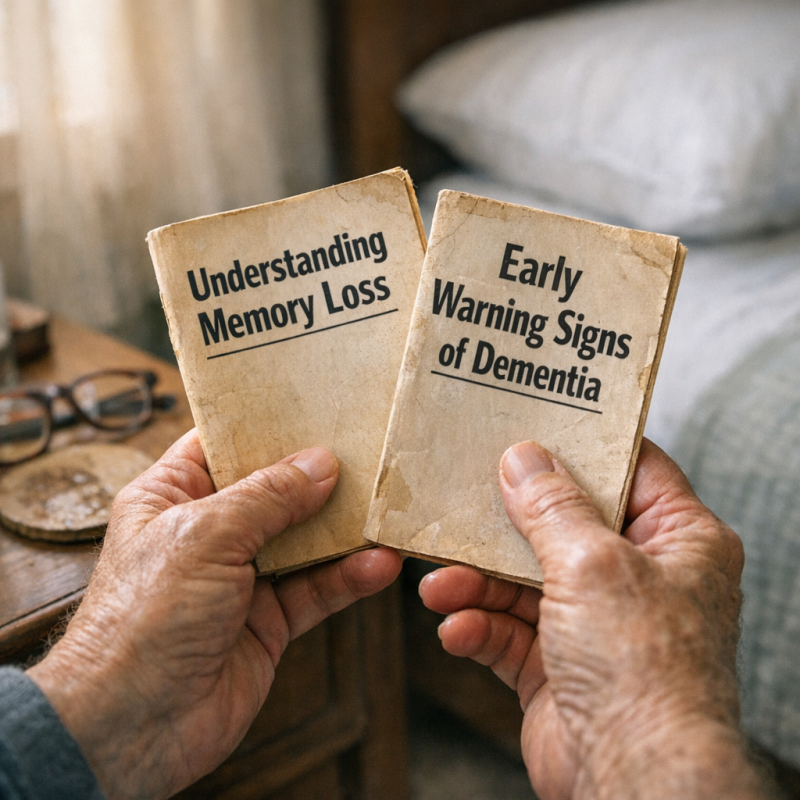 Image by FCT AI
The Letter Never Sent
I couldn't stop staring at those pamphlets. My hands were actually trembling as I set them back down. That's when I noticed the desk in the corner—an old rolltop that I'd seen in family photos but never paid much attention to. I pulled it open, not really knowing what I was looking for. Inside were bills, receipts, a few old birthday cards. And then, tucked in the back of the middle drawer, I found an envelope. It was addressed to 'Robert'—my dad—in Grandpa's handwriting, but it had never been sealed. Never been sent. I pulled out the single sheet of paper inside and started reading. The first line hit me like a punch to the chest. 'Robert, if you're reading this, it means I didn't have the courage to tell you in person—I'm losing my mind, and I'm scared.' I had to sit down on the edge of his bed. My grandfather, who'd always seemed so strong and unshakeable, had been terrified. And he'd passed away before he could bring himself to tell anyone.
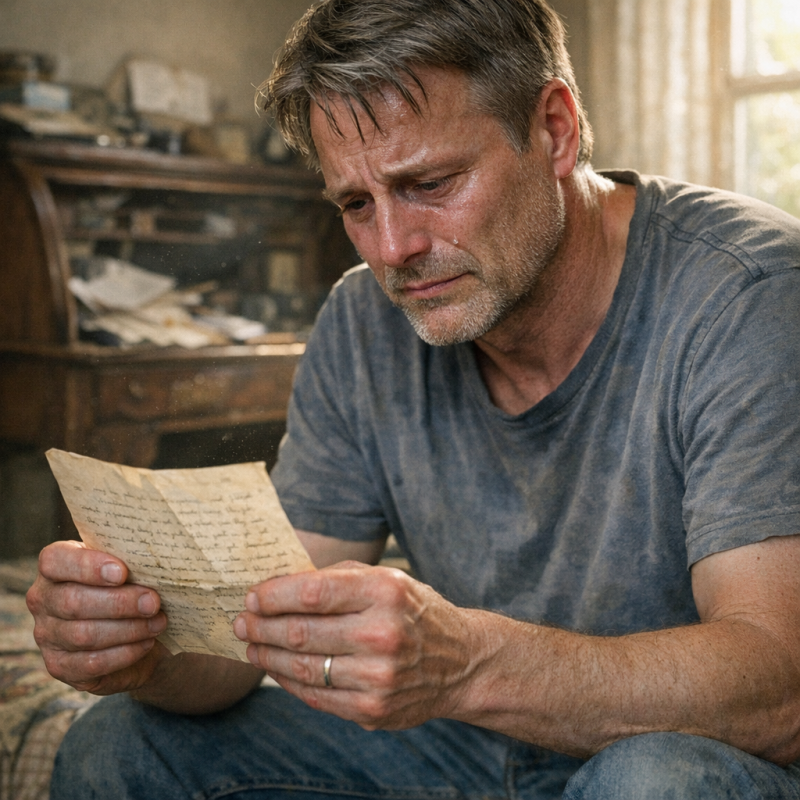 Image by FCT AI
Leaving the Farmhouse
I don't remember walking back down those stairs or locking up the farmhouse. My body was on autopilot. Everything I thought I knew about his death—the peaceful heart attack story—was crumbling. He hadn't just died suddenly. He'd been suffering in silence, watching himself slip away, too afraid or too proud to reach out. The drive home was a blur. I kept one hand on the wheel and felt the weight of that folded letter in my jacket pocket with the other. The sun was setting, turning the sky orange and purple, but I barely noticed. I couldn't stop thinking about that stack of pamphlets on his nightstand, all those months of research he'd done alone. And the question that kept circling in my mind wasn't 'what happened to him' anymore. It was something else entirely. I drove home in silence, the unsent letter folded in my pocket, and one question consuming me: if my family knew he was sick, why hide it?
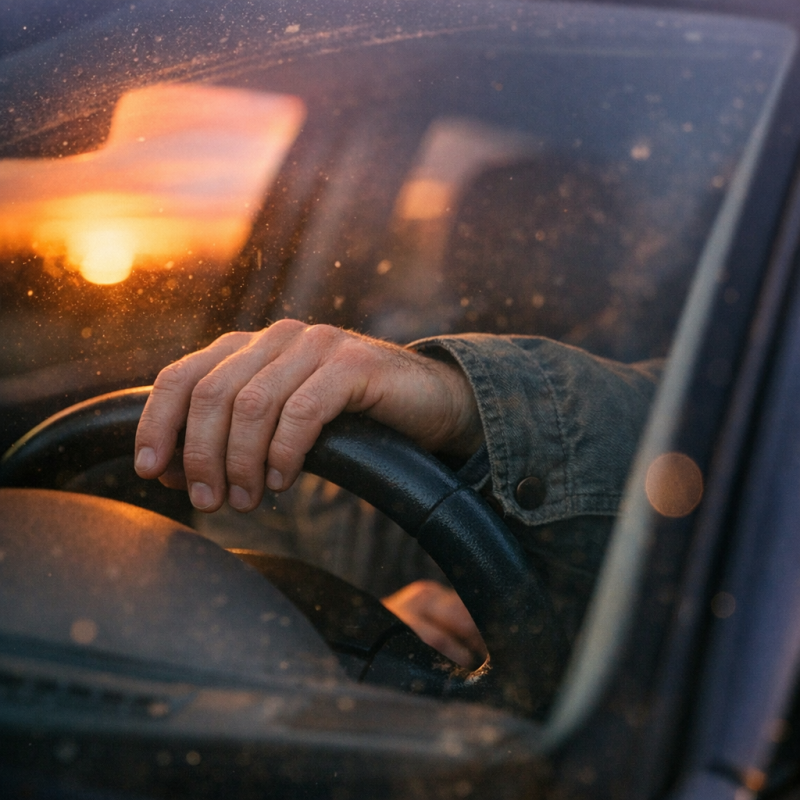 Image by FCT AI
The Confrontation at Dinner
I walked into dinner that night with the letter in my pocket, feeling its weight like a lead brick. Mom had made pot roast—one of those comfort meals she always turned to when she sensed tension—but I couldn't even look at my plate. Dad was cutting his meat, making small talk about work, and I just couldn't take it anymore. 'I went to the farmhouse today,' I said. The table went silent. Mom's fork stopped halfway to her mouth. Dad's knife paused mid-cut. 'You what?' Mom asked, her voice barely above a whisper. I pulled out the letter and set it on the table between us. 'I found this in Grandpa's desk. Addressed to you, Dad.' I watched his eyes scan the first line. The color drained from his face so fast I thought he might actually pass out. His hands started shaking. Mom reached for the letter, but Dad pulled it closer to himself, protective. My father's face went completely pale, and he said in a voice I'd never heard before: 'You went to the house?'
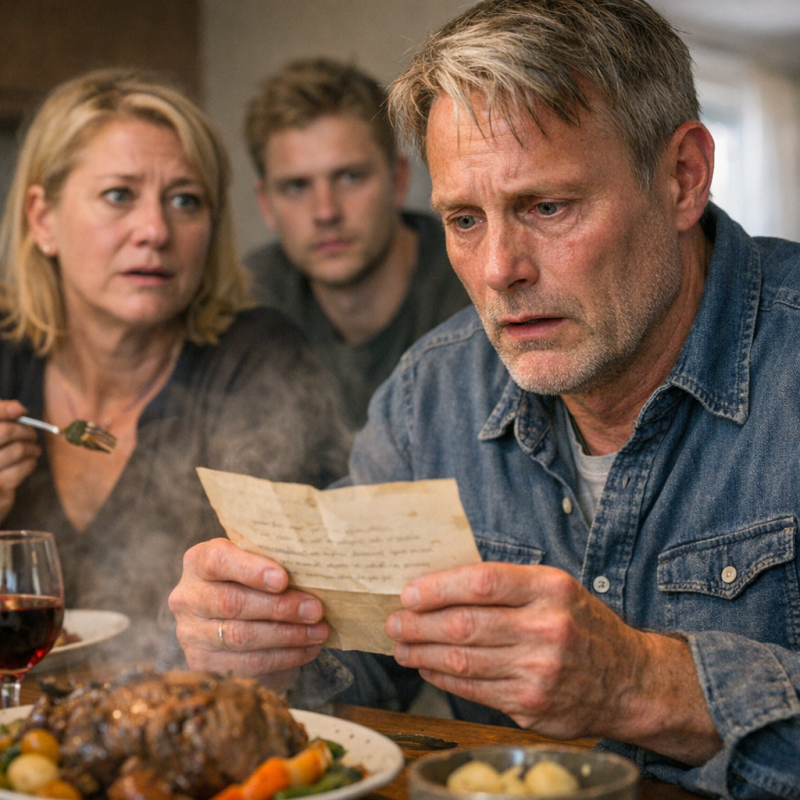 Image by FCT AI
Dad's Partial Admission
Dad set the letter down slowly, like it might explode. He rubbed his face with both hands, and when he finally looked at me, his eyes were red. 'Okay,' he said quietly. 'Yes. He was having some memory issues. We knew.' The admission should have felt like a victory, but something in his tone made my stomach turn. 'Memory issues,' I repeated. 'Dad, this letter says he was losing his mind. That's not forgetting where you put your keys.' He shook his head quickly. 'It wasn't that serious. He forgot appointments sometimes. Lost track of conversations. Normal aging stuff.' I tapped the letter on the table. 'Does this sound like normal aging to you? He was terrified.' Mom had gone completely still, staring at her plate. Dad's voice got defensive. 'He was overreacting. Lots of older people worry about dementia when it's just regular forgetfulness.' 'He forgot a few things, that's all,' Dad said—but the letter in my hand proved he was minimizing the truth.
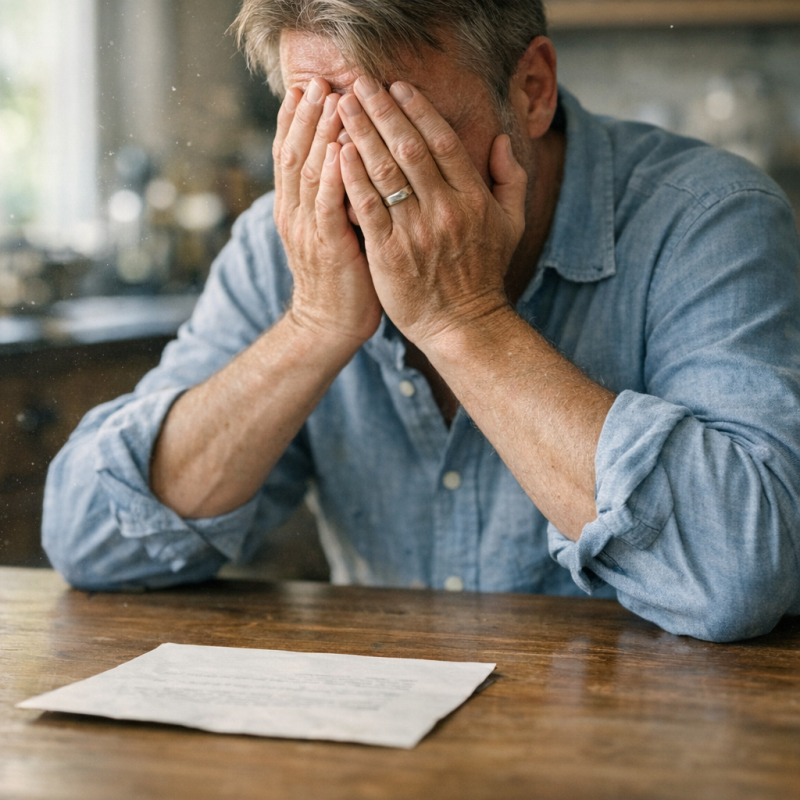 Image by FCT AI
Mom Walks Out
Mom's chair scraped against the floor. She stood up so abruptly that her napkin fell to the ground. Her eyes were filled with tears that she was clearly trying to hold back. 'I can't do this,' she said, her voice breaking. 'Mom—' I started, but she held up her hand. 'No. I can't sit here and go through this again. I can't.' She turned to leave the dining room, but paused in the doorway. Her hand gripped the frame so hard her knuckles went white. Dad called after her. 'Beth, please—' She didn't look at either of us. Just stared at the wall, shoulders shaking. The silence stretched out for what felt like forever. I felt awful—I'd made my mother cry, forced her to remember something she'd clearly spent years trying to forget. But I also felt frustrated because nobody would just tell me the truth. Before she left, she turned back and said something that made my blood run cold: 'You don't understand what you're asking us to relive.'
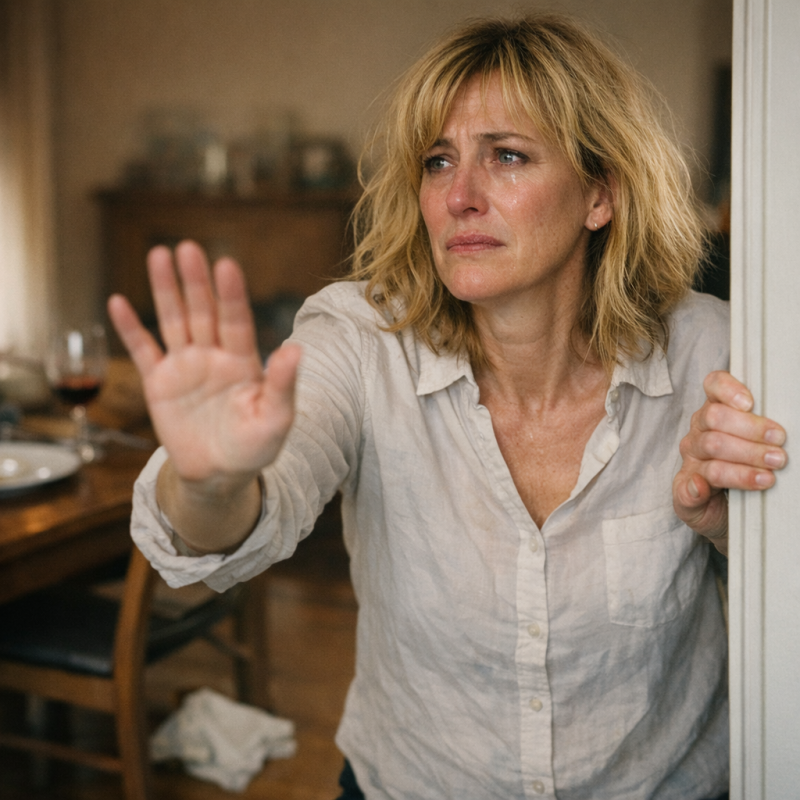 Image by FCT AI
The Overheard Argument
I couldn't sleep that night. I lay in bed staring at the ceiling, listening to the house settle, replaying Mom's words over and over. Around midnight, I heard voices downstairs. Angry whispers that gradually got louder. I crept out of bed and sat at the top of the stairs where I could hear them in the kitchen. 'We can't keep doing this,' Dad was saying. 'She found the letter. She's not going to let this go.' Mom's voice was thick with tears. 'I know, but Robert, if we tell the whole story, it'll destroy how they remember him. Is that what you want? For her to think of him that way?' There was a long pause. I held my breath, pressing myself against the wall. 'Maybe it should,' Dad said finally, his voice hollow. I heard Mom gasp. 'How can you say that?' 'Because I'm tired of carrying this alone,' he said. 'If we tell the whole story, it'll destroy how they remember him,' Mom said—and Dad replied, 'Maybe it should.'
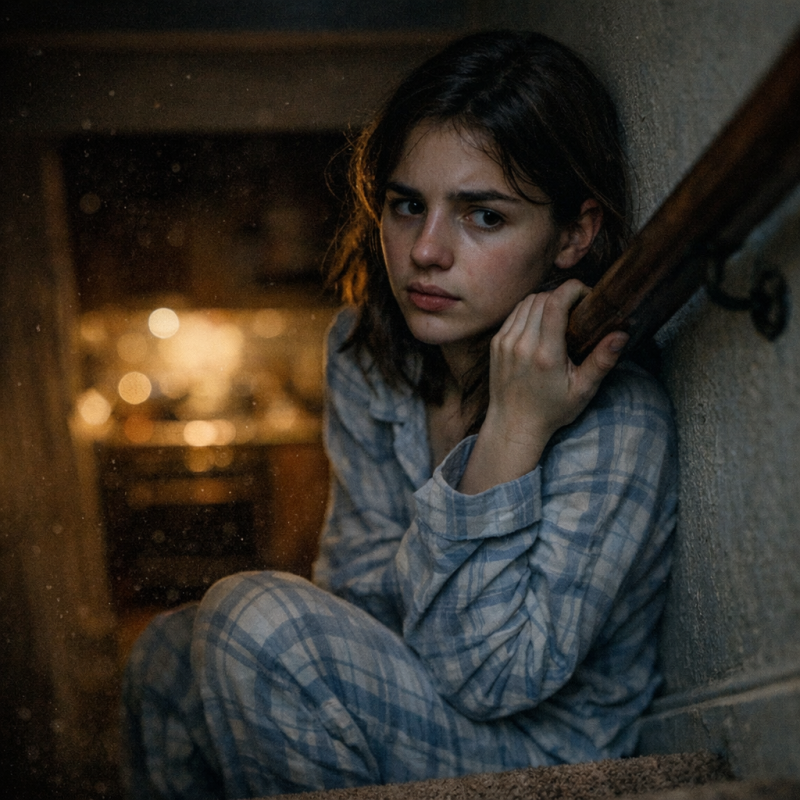 Image by FCT AI
Reaching Out to Grandmother
The next morning, I called Grandmother Eleanor before I could talk myself out of it. She lived three hours away in a retirement community and we usually only saw her on holidays. The phone rang four times before she picked up. 'Jamie?' she said, sounding surprised. 'Is everything okay?' My voice came out shakier than I intended. 'Grandma, I need to ask you about Grandpa Frank. About what really happened when he died.' The line went completely quiet. I checked my phone to make sure the call hadn't dropped. 'Grandma?' Still nothing. I was about to hang up when I finally heard her take a deep, shaky breath. 'You've been asking questions,' she said. It wasn't a question. 'I found some things at the farmhouse. And Mom and Dad won't tell me the truth. Please, I need to understand why everyone's been lying to me.' Another long silence. She was silent for so long I thought she'd hung up—then she said quietly, 'Come see me this weekend. It's time you knew.'
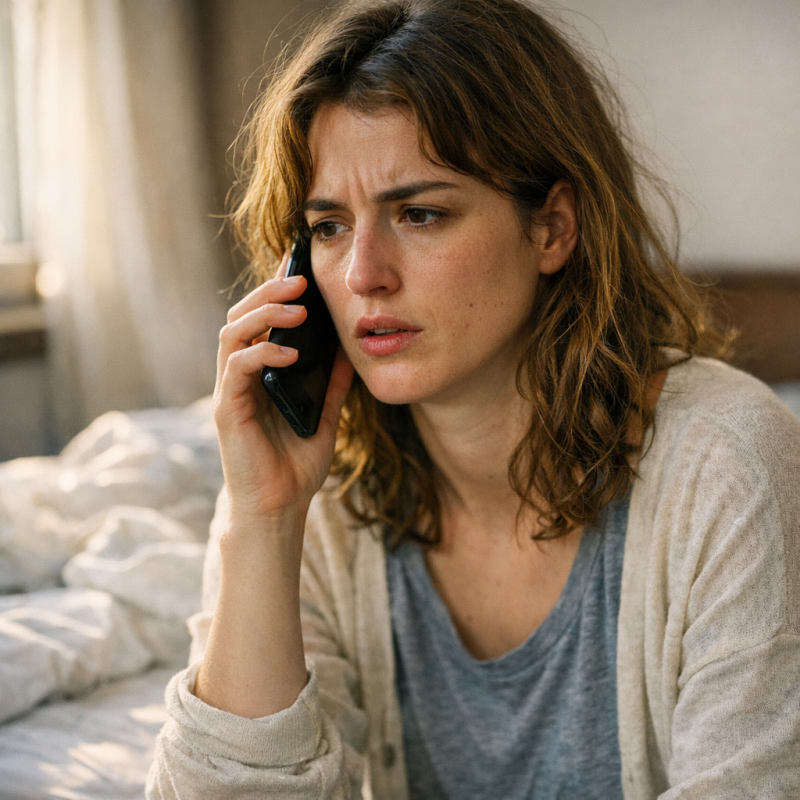 Image by FCT AI
The Weekend Visit
I drove to Grandmother Eleanor's retirement community that Saturday, gripping the steering wheel so hard my knuckles went white. The entire three-hour drive, I rehearsed what I'd say, how I'd ask the questions that had been eating at me for weeks. Her apartment was on the third floor of a brick building that smelled like cleaning products and old coffee. I knocked twice, my heart hammering. When she opened the door, I was struck by how much older she looked than at Christmas—more fragile, somehow, like the weight of what she'd been carrying had physically aged her. 'Come in, sweetheart,' she said quietly, but before I could step inside, before I could even say hello, she reached behind the door and pulled out a manila envelope. It looked old, the edges worn soft. She held it out to me with both hands, and I noticed they were shaking slightly. She opened the door looking older than I remembered, and before I could say anything, she handed me an envelope and said, 'Your grandfather wanted you to know the truth someday.'
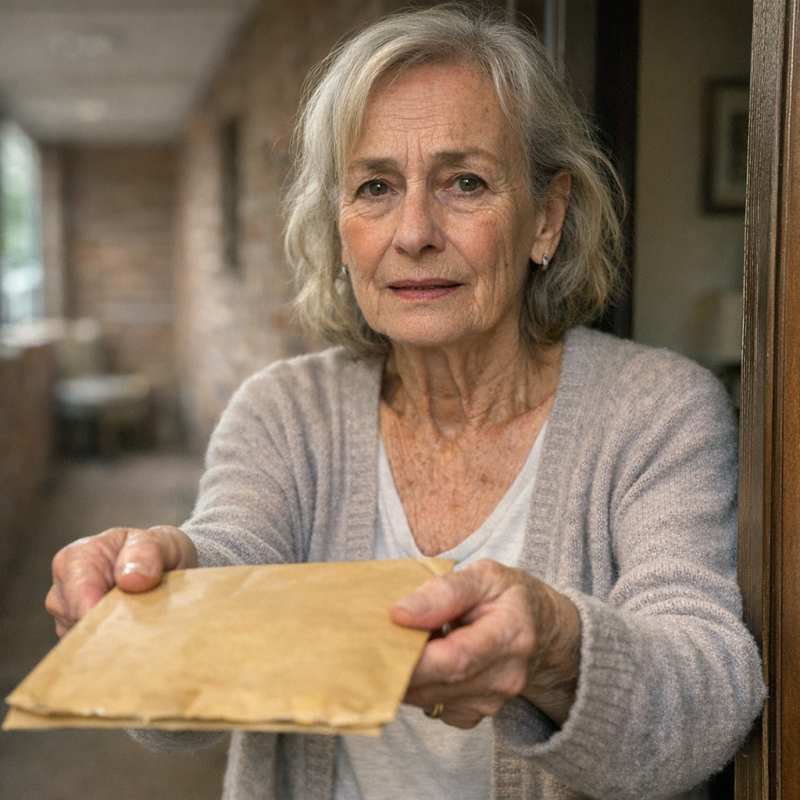 Image by FCT AI
The Medical Timeline
We sat at her small kitchen table, the envelope between us like a third presence. Eleanor poured tea neither of us would drink and started talking. 'It began about eight months before he died,' she said, her voice steady but quiet. 'Little things at first. He'd misplace his favorite screwdriver and spend an hour looking for it. He'd forget our neighbor's name—people we'd known for twenty years.' I wrapped my hands around the warm mug, listening. 'Then he started repeating himself. Telling me the same story twice in one conversation. Asking what day it was multiple times.' Her eyes got distant, like she was watching it happen all over again. 'I wanted him to see a doctor, but he refused. Got angry when I suggested it.' The timeline matched everything I'd found—the notes, the dates, the desperate attempts to hold onto his memories. She described small things at first—misplacing tools, forgetting names—but said it escalated faster than anyone expected.
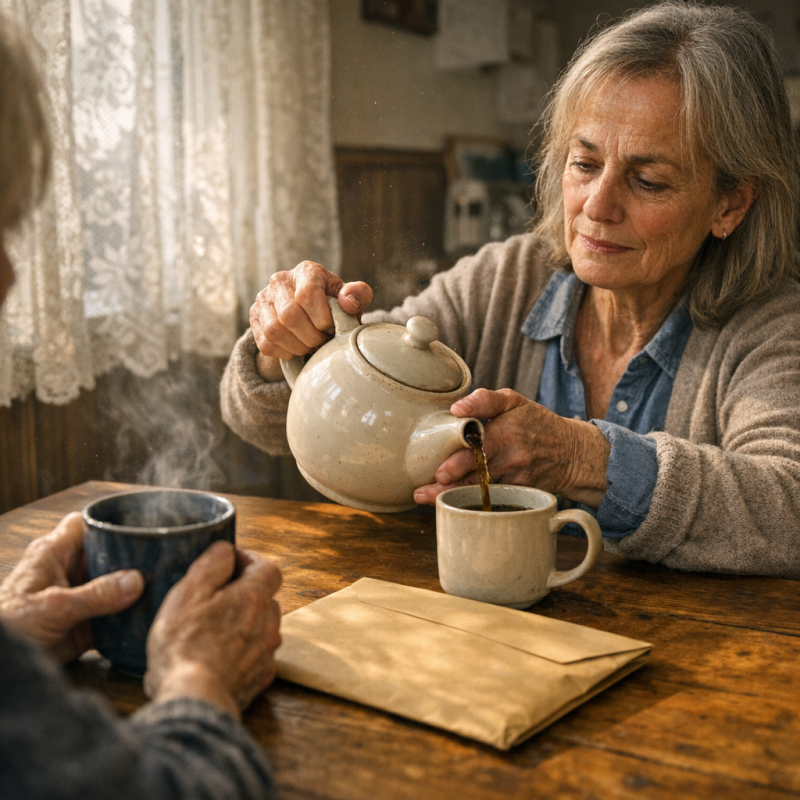 Image by FCT AI
Frank's Fear of Hospitals
Eleanor's hands trembled as she reached across the table and touched the envelope. 'Your grandfather's father—your great-grandfather—had dementia,' she said. 'Frank watched him deteriorate for five years. Watched this strong, proud man become someone who didn't recognize his own children, who had to be fed and changed like an infant.' I'd never heard this before. Nobody had ever mentioned it. 'It terrified Frank. He used to have nightmares about it, even decades later. That's why he wouldn't go to the doctor when his memory started failing—he knew what they'd find, and he couldn't bear it.' She wiped her eyes with a tissue she'd been clutching. 'He made me promise years ago that if it ever happened to him, I wouldn't force him into that situation. Wouldn't make him live through what his father had.' Her voice cracked. 'He swore he'd never let himself become that helpless,' she said, her voice breaking—'and he kept that promise in the worst way possible.'
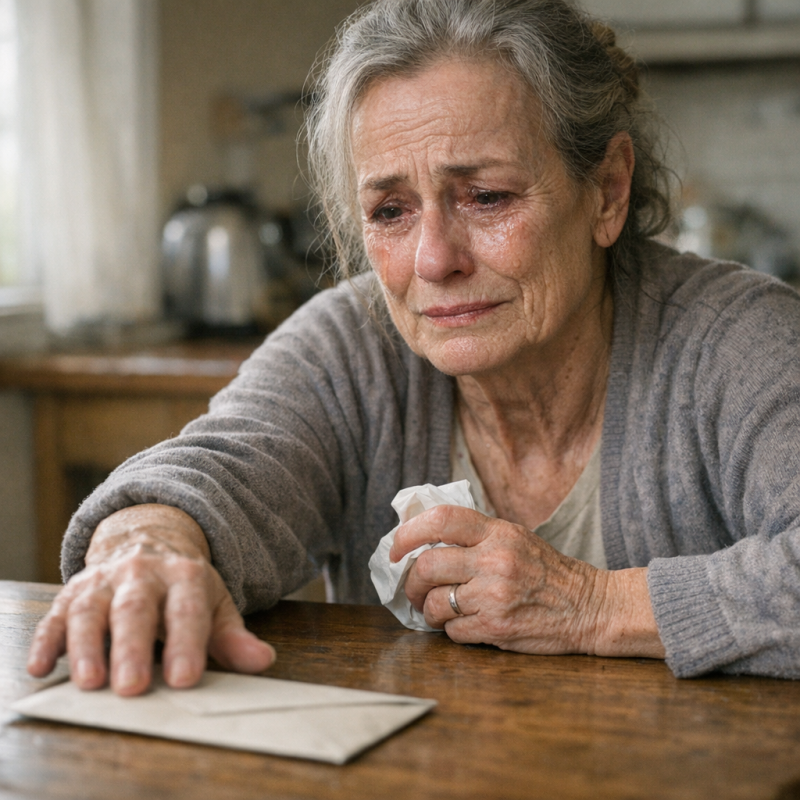 Image by FCT AI
The Church Gathering
Eleanor stood and walked to the window, looking out at the parking lot below. 'The night it happened, we were hosting a church gathering. Twenty people in our home—it was a potluck dinner, something we'd done dozens of times before.' I could picture their old house, the dining room filled with guests. 'Frank seemed fine at first. He greeted everyone, helped me set out the food. We sat down to eat, and he was laughing at someone's joke about the pastor's new car.' She turned back to face me. 'Then halfway through the meal, I noticed him looking around the table with this strange expression. Confused. Almost frightened.' My stomach tightened. 'He set down his fork very carefully and looked at all those familiar faces—people we'd known for years, decades some of them.' Eleanor's voice dropped to almost a whisper. 'Everything was normal until halfway through dinner, when Frank suddenly looked around the table and asked, 'Who are all these people?'
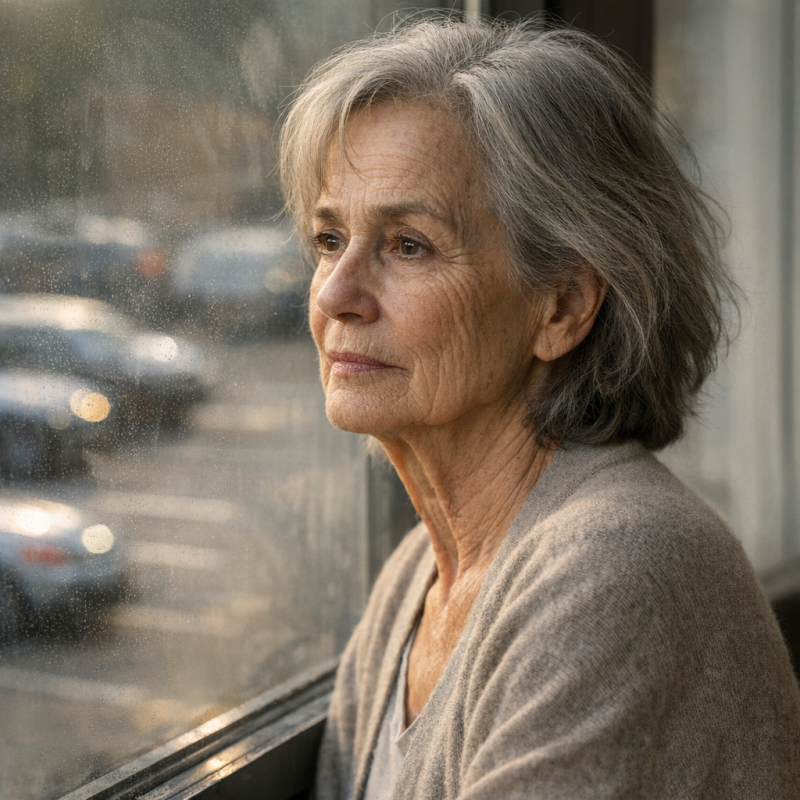 Image by FCT AI
The Accusation
Eleanor sat back down, moving like she'd aged another ten years in the last five minutes. 'At first, people thought he was joking. A couple of them laughed nervously. But I could see it in his eyes—genuine confusion, genuine fear.' She stared at her hands. 'He started accusing people of being in his house without permission. Asked why strangers were eating his food. Martha Thompson, who'd been our neighbor for thirty years, tried to calm him down, and he told her to get out.' I felt sick imagining it. 'He became paranoid, kept saying someone had been stealing tools from his workshop, rearranging things. The more people tried to reassure him, the more agitated he got.' Eleanor's voice broke. 'Then he turned to me. Looked right at me with those eyes I'd loved for forty years, and there was nothing there. No recognition. No love. Just confusion.' Then he looked directly at me, his wife of forty years, and asked who I was—and everyone at that table went silent.
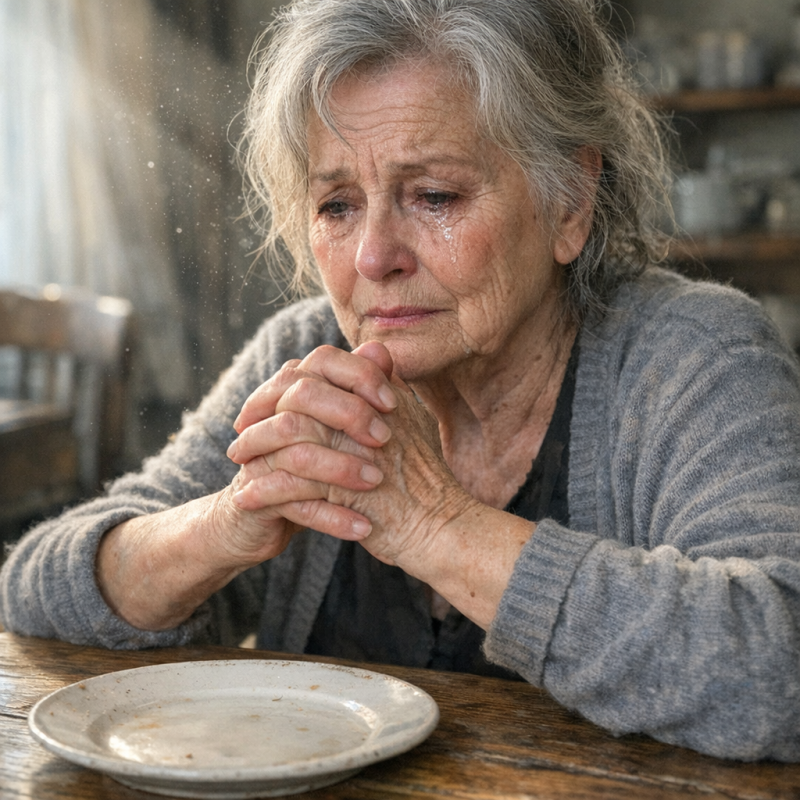 Image by FCT AI
The Panic
I don't think I was breathing. Eleanor continued, tears streaming down her face now. 'That's when he realized something was wrong. You could see it happen—this moment of clarity where he understood his mind was betraying him.' She pressed her tissue to her eyes. 'He grabbed his head with both hands and started crying. Not quiet tears, but deep, broken sobs. He kept saying, 'I can't remember. I can't remember. What's wrong with me?' Over and over.' I felt my own tears starting. 'He looked at me and said, 'I should know you. Why don't I know you?' And all those people—our friends, our neighbors—they just sat there watching him fall apart. Watching him panic because he couldn't trust his own brain anymore.' Eleanor's voice shook. 'He started crying and saying he couldn't remember things, couldn't trust his own brain—and twenty people watched him fall apart.'
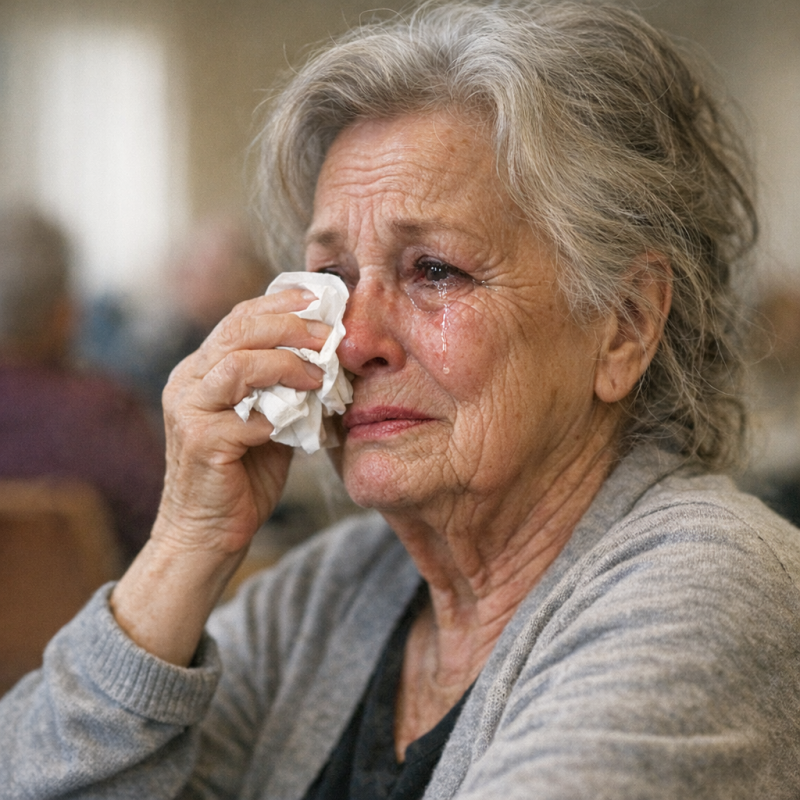 Image by FCT AI
The Statement
Eleanor stood again, this time walking to the kitchen counter, gripping it like she needed support. 'Then Frank stood up. Pushed his chair back so hard it fell over.' She was barely whispering now, and I had to lean forward to hear her. 'He looked at everyone—all those witnesses—and said very clearly, very calmly, that he wanted to die. That he'd rather be dead than lose his mind the way his father had.' My heart stopped. 'He said he'd lived a good life, but he wouldn't live like that. Wouldn't become a burden, wouldn't forget everyone he loved, wouldn't let dementia take everything that made him who he was.' Eleanor turned to face me, her face wet with tears. 'He said it in front of everyone—neighbors, church friends, people who'd known him his entire life—and then he collapsed.'
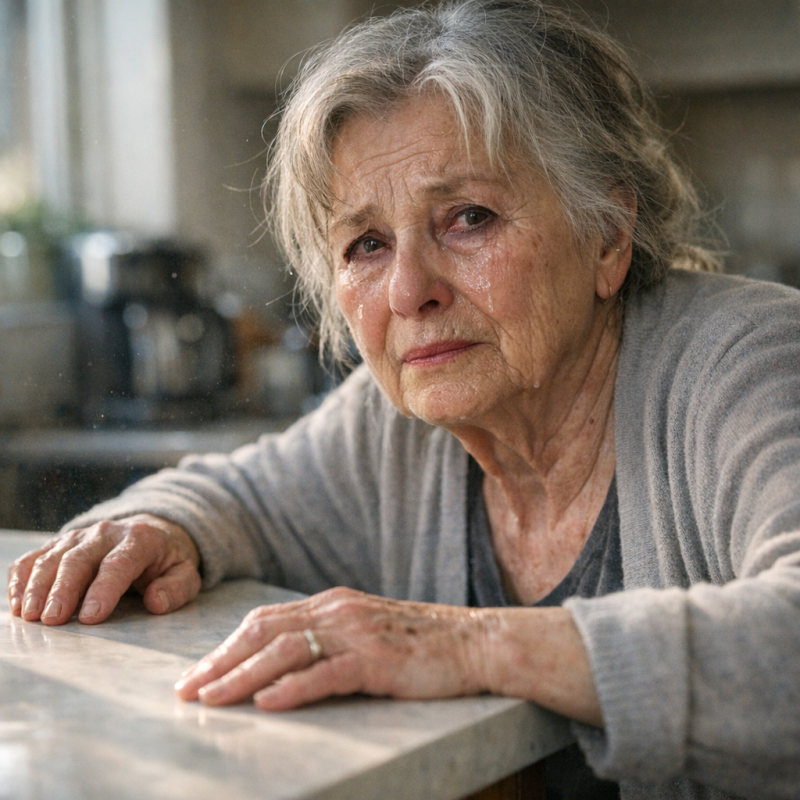 Image by FCT AI
The Heart Attack
Eleanor pulled out a chair and sat down heavily, like her legs wouldn't hold her anymore. 'He grabbed his chest and went down right there by the dining table. Someone called 911 while Martha started CPR, but I could tell.' She stared at the table. 'The paramedics worked on him for twenty minutes, got him into the ambulance. They told me later it was a massive heart attack. That the emotional stress, the panic, the fear—it all triggered it.' I finally understood why my parents had kept this from me. Why they'd never wanted me at the funeral, surrounded by people who'd witnessed this nightmare. 'They said extreme emotional distress can cause cardiac events. That fear and panic can spike your blood pressure, throw your heart rhythm into chaos.' Eleanor met my eyes. 'The paramedics said the stress likely caused it—that fear can literally stop a heart—and he passed before reaching the hospital.'
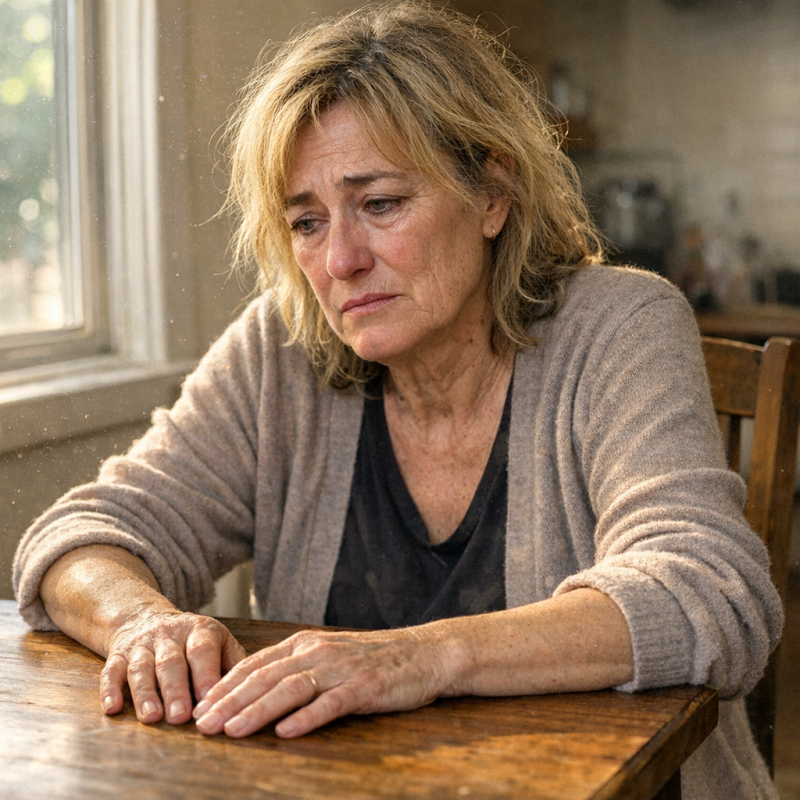 Image by FCT AI
Why the Secrecy
I finally had to ask the question that had been burning in my mind since this whole conversation started. 'But why hide it all from me?' I said, my voice sharper than I intended. 'Why not just tell me Grandpa had dementia? Why make up a story about a peaceful death at home?' Eleanor folded her hands on the table, and I saw them trembling slightly. 'It wasn't my choice, Jamie. It was your father's.' I stared at her, waiting. 'He couldn't stand the idea of you knowing what that day was really like. The confusion, the terror, Frank screaming about someone trying to hurt him—' She paused, gathering herself. 'Your dad watched his own father die in absolute fear, surrounded by strangers trying to restrain him. That image haunted him.' I still didn't fully understand. Lots of people have relatives with dementia. It's sad, but it's not some shameful secret. There had to be more to it than just wanting to spare me painful details. She looked down at her hands and said, 'Because your father couldn't bear for you to remember him that way—terrified and broken.'
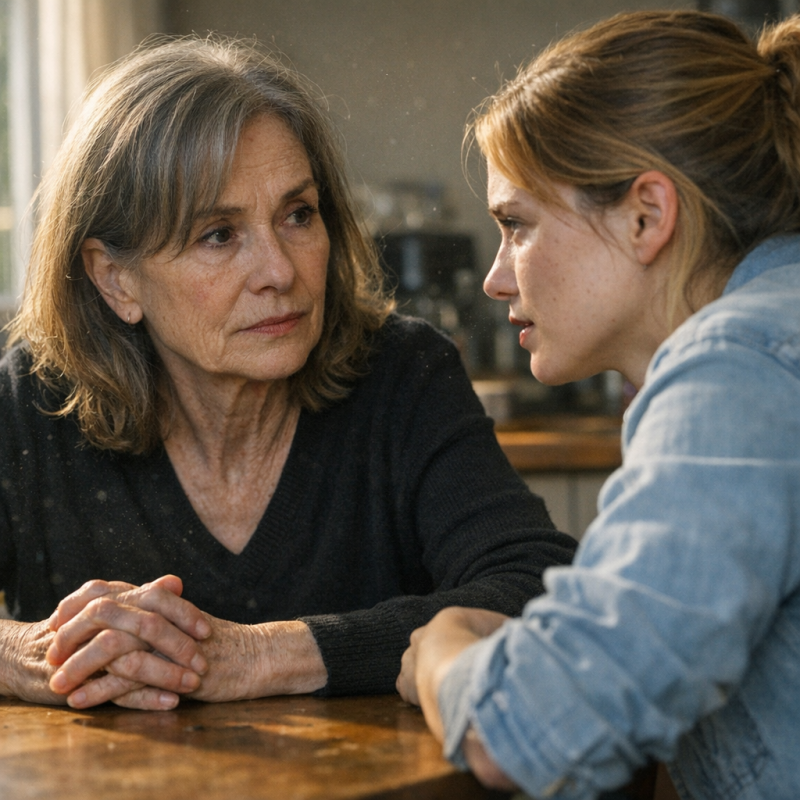 Image by FCT AI
The Envelope's Contents
Eleanor stood up and retrieved a manila envelope from the kitchen counter. 'I kept some things,' she said quietly. 'In case you ever asked.' I opened it right there at the table while she watched. Inside were newspaper clippings about the fundraiser—small-town coverage with photos of Frank looking proud and healthy. There were medical bills and notes scribbled in what I recognized as Eleanor's handwriting: dates, symptoms, doctor names crossed out. At the bottom was a handwritten letter on yellowed paper, the creases deep from being folded and refolded many times. The handwriting was shaky but legible. My hands went cold when I saw it was addressed to my father. I scanned the first few lines—Frank apologizing for being difficult, for not listening, for refusing help. Then I reached a sentence that stopped me completely. My throat tightened. I read it three times to make sure I wasn't misunderstanding. The letter was addressed to Dad, written weeks before Frank passed away, and one sentence made everything infinitely worse: 'I know what happened to my father, and I know what eventually happens to men like us.'
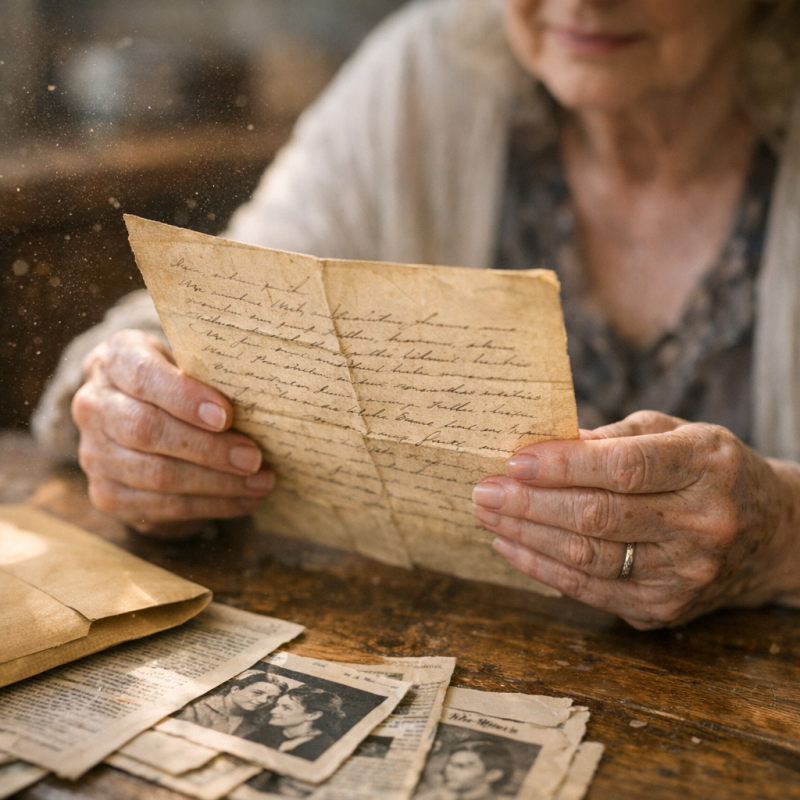 Image by FCT AI
Questions About Frank's Father
'What does that mean?' I asked, my voice barely above a whisper. 'Men like us?' Eleanor closed her eyes for a long moment. When she opened them again, they were filled with something that looked like old grief. 'Frank's father—your great-grandfather—he also had dementia.' I felt my stomach drop. 'Also?' She nodded slowly. 'It started when he was in his seventies. Back then, in the fifties, they didn't understand it the way we do now. They just called it senility, said it was part of getting old.' Her voice got quieter. 'But it got bad. Really bad. He became violent sometimes, didn't recognize his own children.' I was almost afraid to ask the next question. 'What happened to him?' Eleanor's face looked ancient in that moment, lined with decades of carrying this weight. 'He walked out to the barn one morning, and—' She stopped, swallowed hard. She said it so quietly I almost didn't hear: 'Your great-grandfather ended things himself when the disease got bad enough, and Frank was terrified he'd do the same.'
 Image by FCT AI
The Genetic Shadow
I sat there in Eleanor's kitchen, the letter still in my hands, and suddenly everything clicked into place like pieces of a puzzle I hadn't even known I was solving. Frank hadn't just been scared of having dementia. He'd been terrified of repeating his father's fate. Of losing himself so completely that death seemed like the only way out. And that letter—'men like us'—he'd believed it ran in the family. That it was inevitable. Maybe he thought he'd already started showing signs years before anyone else noticed. Maybe every time he forgot a name or misplaced his keys, he wondered if this was the beginning. I understood now why he'd hidden his symptoms, why he'd refused to see doctors. He was trying to outrun a fate he thought was already written. But there was something else in that realization, something that made my chest feel tight. That's when I understood: Grandpa wasn't just scared for himself—he was terrified of what he might have given to my father.
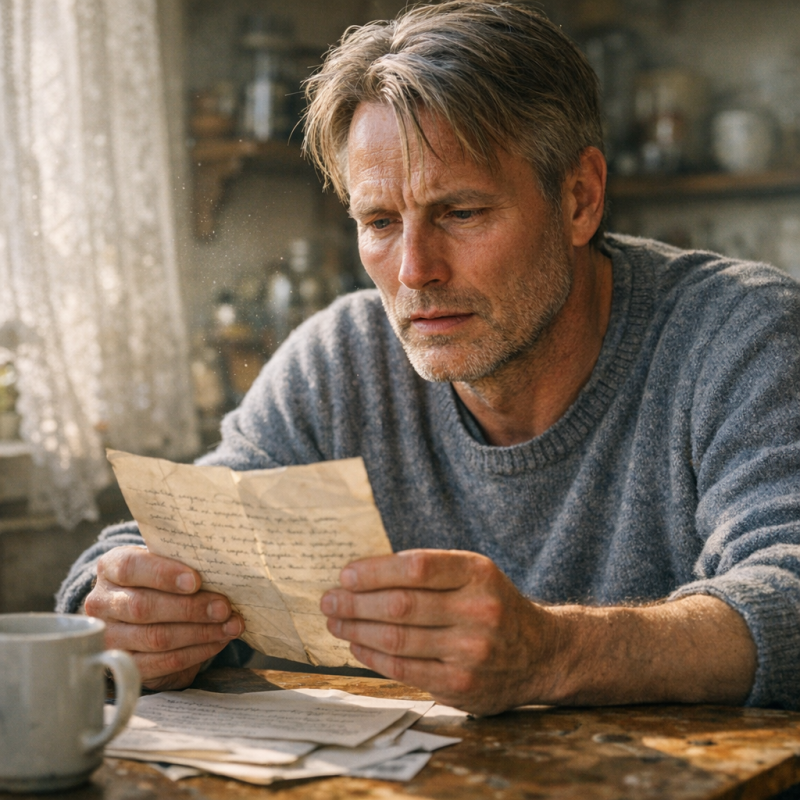 Image by FCT AI
The Town's Reaction
I looked up at Eleanor. 'What happened after? After the fundraiser?' Her expression darkened. 'Small towns have long memories, Jamie. And they talk.' She stood up and walked to the window, looking out at the street. 'The story spread like wildfire. By Monday morning, everyone knew what had happened. How Frank had lost his mind in front of the whole community, accusing Martha Thompson of trying to poison him.' I could picture it—the phone calls, the whispered conversations at the grocery store. 'People didn't know how to react. Some were sympathetic, but most were just uncomfortable. They'd stop by the hardware store and wouldn't quite meet his eyes. Or they'd cross the street to avoid talking to him.' Eleanor's voice got harder. 'Your father watched it all happen. He was there when customers stopped coming, when Frank's friends made excuses not to visit.' She turned back to me. Within days, people stopped coming to the hardware store—not out of cruelty, but out of discomfort—and your father watched his father's legacy crumble.
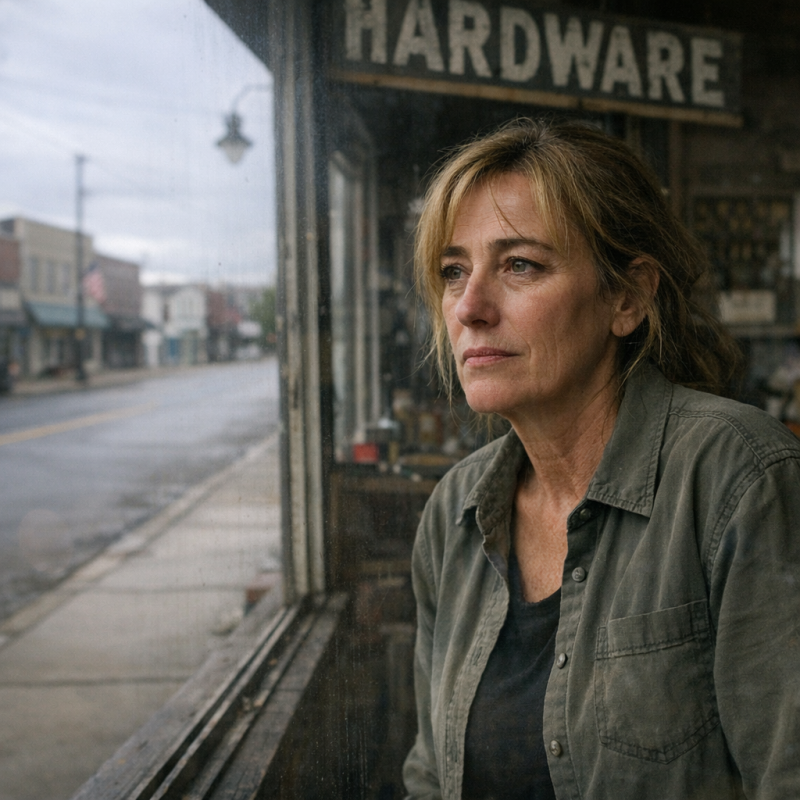 Image by FCT AI
Dad's Shame
'Your dad blamed himself,' Eleanor said, returning to her chair. 'He kept saying if only he'd noticed sooner, if only he'd forced Frank to get help.' I remembered Dad's face in all those old photos, how serious he always looked. Now I understood what I'd been seeing. 'He thought that maybe if Frank had gotten diagnosed earlier, started treatment, he could have managed the symptoms better. That maybe the breakdown wouldn't have happened in public like that.' Eleanor's eyes were wet. 'He tortured himself with it. Kept going over every missed sign, every conversation where Frank seemed a little off but your dad didn't push it.' I felt a wave of sympathy for him—fifteen years old, barely more than a kid, watching his father fall apart. Carrying the weight of thinking he could have prevented it. 'Your father thought if he'd forced him to see a doctor, maybe Frank wouldn't have broken down so publicly—and maybe people would still remember him as strong.'
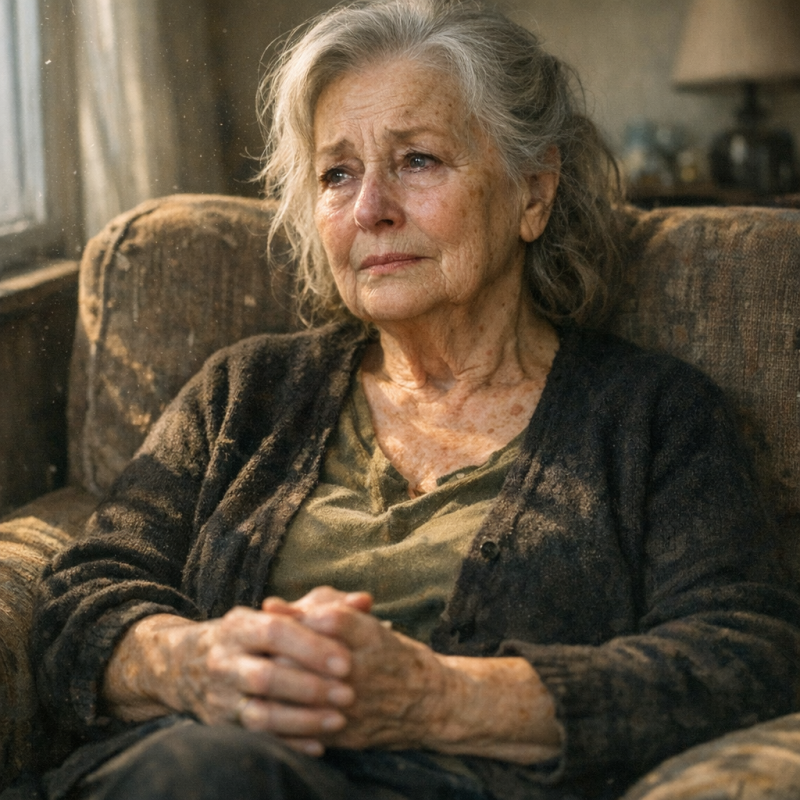 Image by FCT AI
Why They Refused to Demolish
Something else suddenly made sense. 'The farmhouse,' I said. 'That's why he could never deal with it.' Eleanor nodded. 'After Frank died, your dad inherited the property. People kept asking what he was going to do with it—sell it, rent it out, tear it down and build something new.' She wrapped her hands around her coffee mug even though it had to be cold by now. 'But he couldn't. Every option felt like erasing Frank completely. Like admitting his father's life had ended in such chaos that nothing could be salvaged from it.' I thought about that house sitting empty all these years, slowly deteriorating. 'Selling it meant strangers would walk through the rooms where Frank spent his last confused months. Tearing it down meant destroying the last physical evidence that Frank had existed at all.' Eleanor's voice was gentle but sad. He couldn't sell it, couldn't tear it down, and couldn't go back—so he just left it standing there like a monument to everything he couldn't fix.
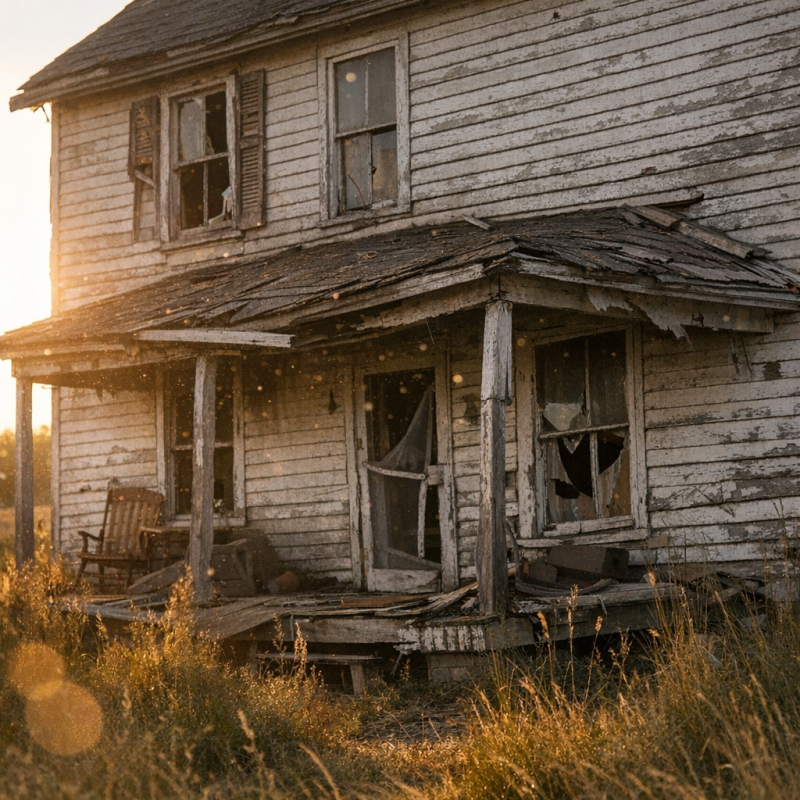 Image by FCT AI
The Missing Piece
I felt emotionally exhausted, but also grateful. 'Thank you for telling me all this,' I said. 'I know it wasn't easy.' Eleanor reached across the table and squeezed my hand. 'You deserved to know.' But even as I said it, I realized something still didn't add up. I understood now why Dad had been traumatized, why he'd wanted to protect Frank's memory, why the whole thing had been so devastating. But there was still one piece missing. 'I still don't completely understand,' I admitted. 'Why was Dad so adamant about keeping it from me specifically? Other families deal with this kind of thing. They talk about it, they process it together.' Eleanor's expression shifted, and I saw uncertainty there. She didn't have all the answers either. 'I've wondered that myself over the years,' she said slowly. 'I think there's something more, something your father's never fully expressed even to me.' She paused, choosing her words carefully. Eleanor looked at me with sad eyes and said, 'That's a question only your father can answer—and I'm not sure he knows how.'
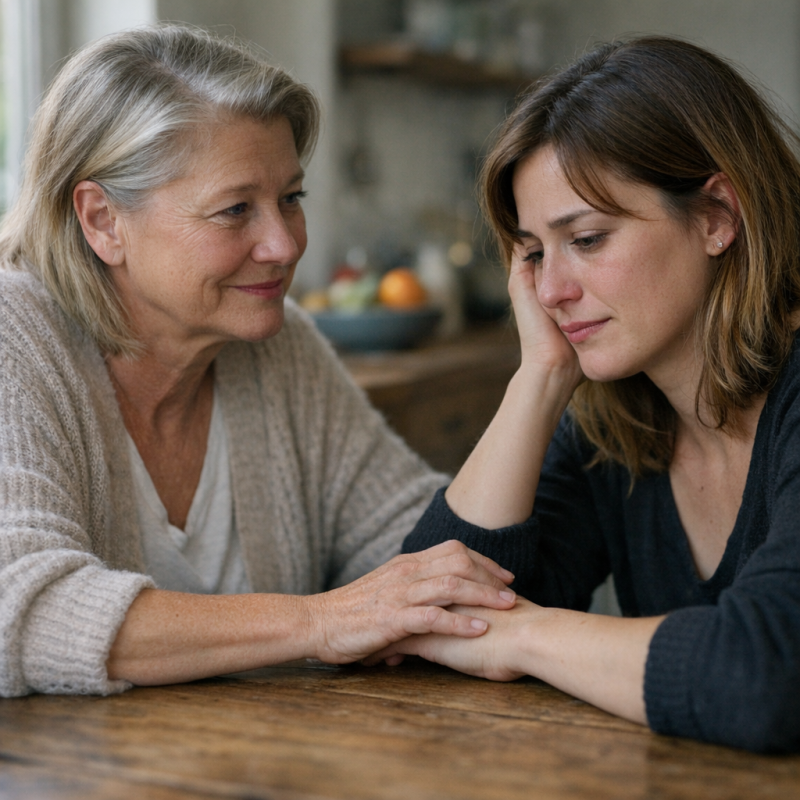 Image by FCT AI
Processing the Truth
I spent the next three days in this weird fog, just replaying everything Eleanor had told me. I'd go to work, answer phones, process orders, but my mind was somewhere else entirely. At night, I'd lie in bed imagining Grandpa Frank at that dinner table, confused and angry, while Dad watched his father disappear in real time. It explained so much—the silence, the tight-lipped refusal to discuss it, the way Dad's whole body tensed whenever dementia came up on TV. But there was something else gnawing at me, something I couldn't quite articulate. Dad hadn't just witnessed a tragedy. He'd been fundamentally changed by it in a way that went beyond normal grief. I kept thinking about how he'd described Grandpa before the illness—strong, respected, the kind of man everyone looked up to. And then I'd think about that final image Eleanor painted: Frank confused, violent, stripped of everything that made him who he was. The more I thought about it, the clearer it became. I kept replaying Grandpa's final moments in my mind, and one thought kept surfacing: my father didn't just lose his dad that night—he lost the version of himself he wanted to be.
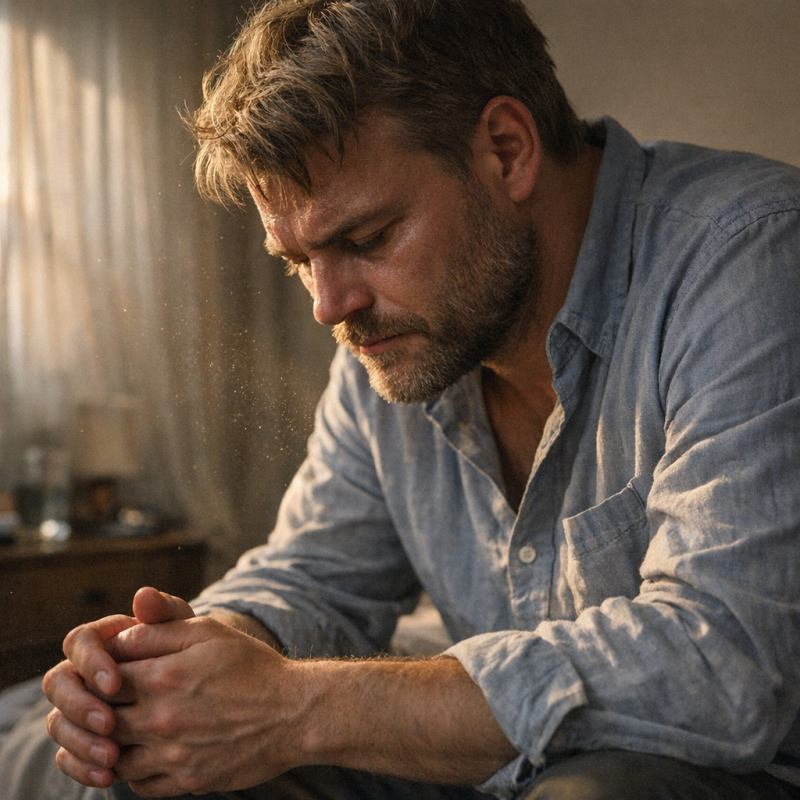 Image by FCT AI
The Decision to Confront Dad
I knew I had to talk to Dad one more time. Not to accuse him or make him feel worse, but because I finally understood enough to ask the right questions. I'd been approaching this whole thing wrong from the start—demanding answers about Grandpa when the real story was about Dad himself. So I picked up my phone and dialed his number before I could second-guess myself. He answered on the third ring, his voice careful, like he'd been expecting this call. 'Hey, Jamie.' 'Dad, I talked to Eleanor,' I said. 'I know what happened now.' There was a long pause. 'I figured you would eventually.' 'I need to talk to you. About all of it. But not at your house or mine.' I took a breath. 'Can we meet at the farmhouse?' The silence stretched so long I thought he might've hung up. I could hear him breathing, could almost feel him weighing whether he could face going back there. 'Dad?' 'Yeah,' he finally said, his voice thick. 'Yeah, okay. Tomorrow morning?' I called him and asked to meet at the farmhouse—the one place he'd been avoiding for fifteen years—and after a long silence, he agreed.
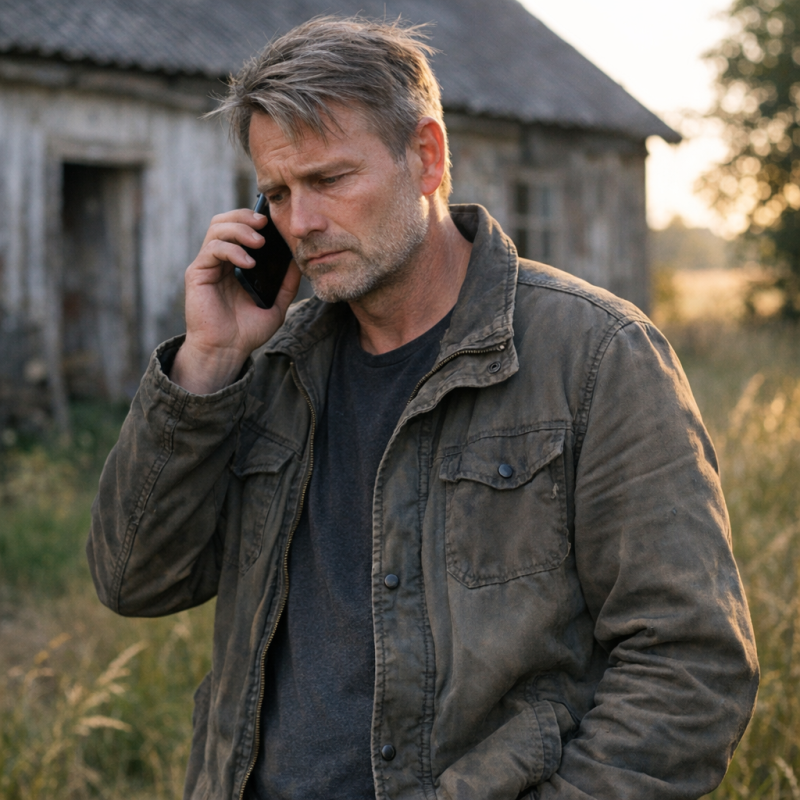 Image by FCT AI
Meeting at the Farmhouse
I got there first, parking at the end of the gravel driveway and just staring at the place. The farmhouse looked even more decrepit than I remembered from driving past it over the years. Paint peeling, gutters sagging, grass overgrown. Nobody had lived there since Grandma moved out. It was like a monument to everything my family refused to talk about. When Dad's truck pulled up behind mine, I watched him in my rearview mirror. He didn't get out right away. Just sat there with both hands on the steering wheel, staring straight ahead. Finally, he opened the door and stepped out, but he didn't walk toward me. He just stood there at the end of the driveway, looking at the house like it might swallow him whole. I walked over slowly, giving him space. His face was pale, jaw tight. 'You okay?' I asked. He shook his head slightly, not taking his eyes off the building. 'I haven't been here since the day we found him,' he said quietly. Then he looked at me, and I saw something in his expression I'd never seen before—raw, unguarded fear.
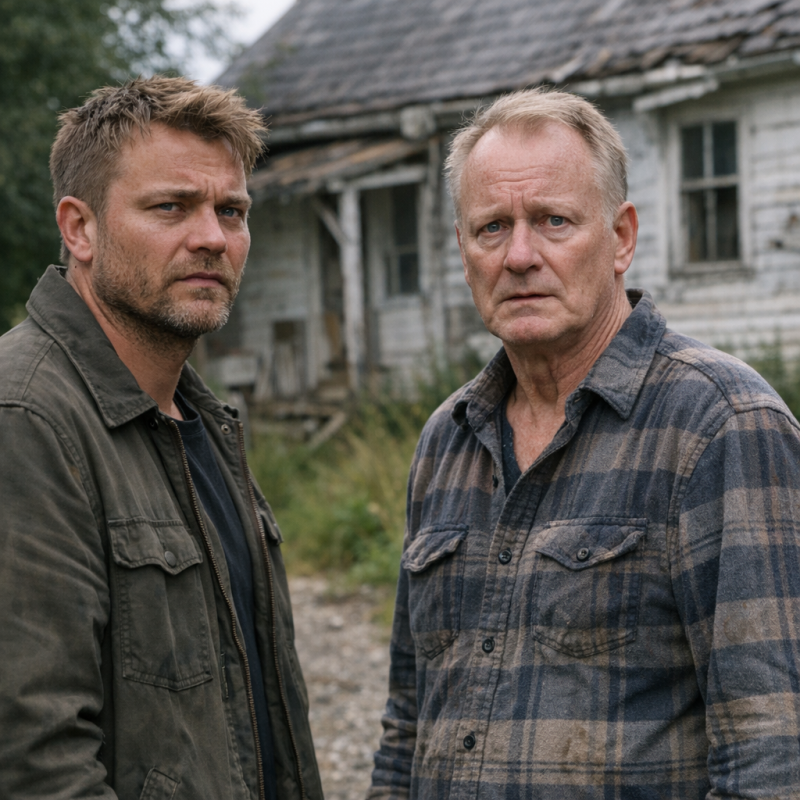 Image by FCT AI
Walking Through the House Together
We walked up to the porch together, neither of us saying much. Dad pulled out a key—I was surprised he still had it—and unlocked the front door. It creaked open, and the smell of dust and abandonment hit us immediately. Everything inside was frozen in time, furniture covered with yellowing sheets, family photos still on the walls. Dad moved through the rooms slowly, like he was visiting a crime scene. I followed, letting him set the pace. When we reached the kitchen, he stopped and gripped the doorframe. 'Mom was making dinner,' he said quietly. 'She called me because he was having a bad episode. Yelling at her, throwing things. When I got here, he was in the dining room.' He walked forward and I followed him into the next room. The dining table was still there, dusty and abandoned. Dad stood at the edge of it, staring down. 'He didn't recognize me,' Dad continued, his voice barely above a whisper. 'Thought I was an intruder. He tried to fight me.' He pointed to the dining room table and said, 'That's where he fell—and that's where I realized I'd spent my whole life terrified of becoming him.'
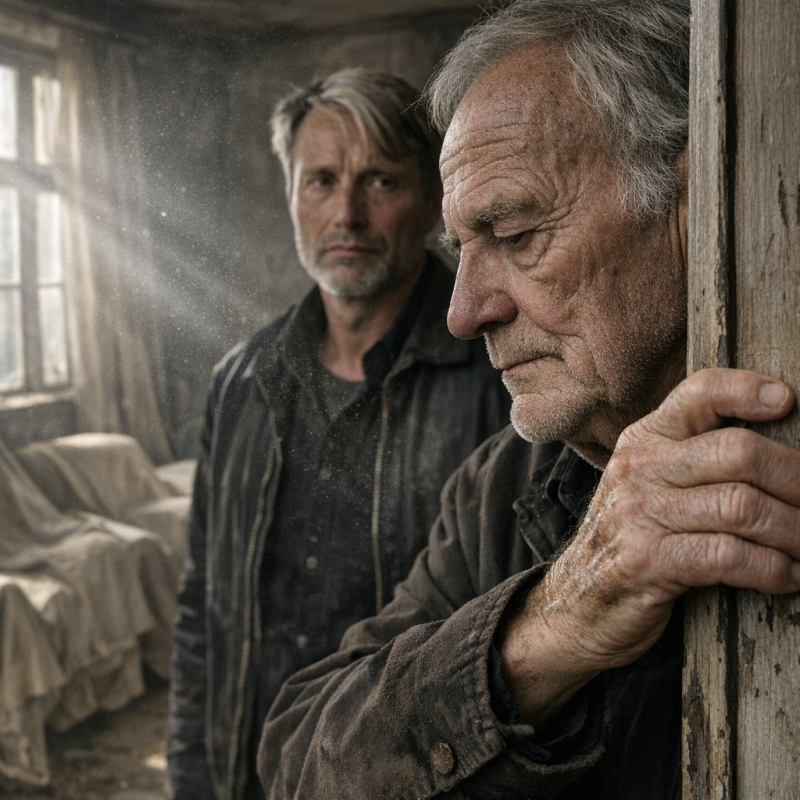 Image by FCT AI
Dad's Confession About Fear
Dad pulled out one of the chairs and sat down heavily, like his legs wouldn't hold him anymore. I sat across from him, the same table between us where Grandpa had collapsed all those years ago. 'I've been watching myself for signs ever since,' he said, not meeting my eyes. 'Every time I can't remember where I put my keys, every time I lose my train of thought, every time I walk into a room and forget why—I panic. I think, this is it. This is how it starts.' His hands were trembling on the table. 'The doctors say there's no genetic link with vascular dementia, but I don't believe them. How could I? I saw what it did to him. How fast it happened.' I felt my throat tighten. 'Dad...' 'You were thirteen,' he continued. 'You still looked at me like I could fix anything. Like I was strong and capable and had all the answers. And I couldn't let you see him like that, because...' He finally looked up at me. 'Every time I forget a word or lose my keys, I panic,' he said—'and I couldn't let you see your grandfather that way because I was terrified you'd eventually see me that way too.'
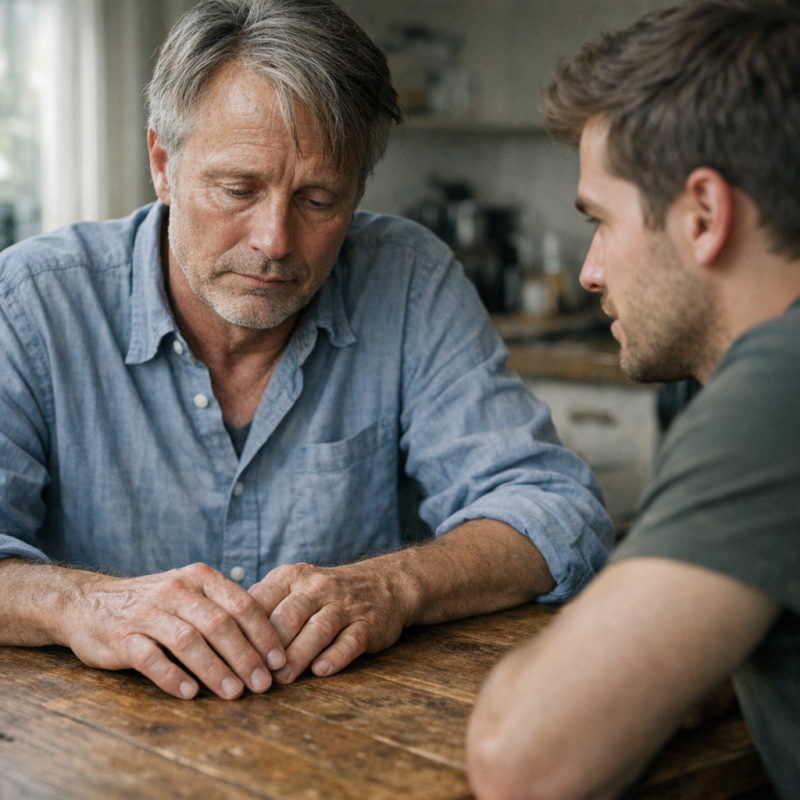 Image by FCT AI
The Weight of the Image
Dad stood up and walked to the window, looking out at the overgrown yard. 'My whole life, I was Frank's son,' he said. 'The guy everyone in town respected. The guy who could fix anything, build anything, handle anything. That's who I thought I was—that's who I tried to be for you.' He turned back to face me. 'And then in the span of six months, I watched him become someone completely different. Angry, confused, violent. The whole town saw it. At the grocery store, at church, everywhere we went, people would look at us with pity. They'd whisper. Some people stopped talking to us altogether, like it was contagious.' His voice cracked. 'I watched my father—this man I'd built my entire identity around—fall apart in public. And I realized that everything I thought was solid about him, about me, was just... fragile. It could all disappear.' I wanted to reach out to him, but I stayed in my seat, sensing he needed to get this out. 'When he fell apart in front of everyone, it shattered the image I had of him—and of myself—and I didn't know how to explain that to you.'
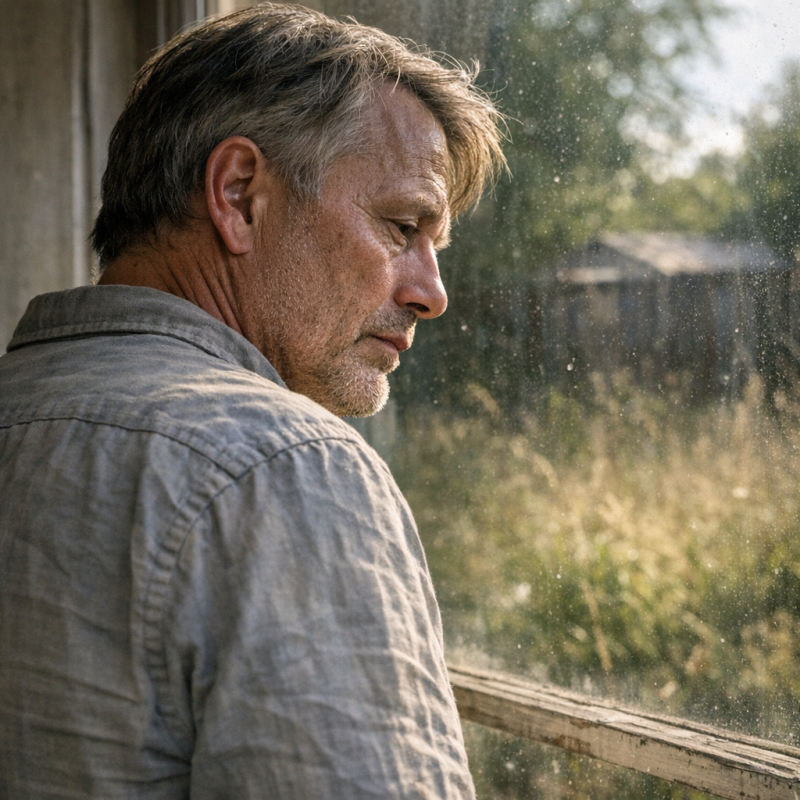 Image by FCT AI
The Small Town Pressure
Dad came back to the table and sat down again, this time closer. 'You grew up in the city, Jamie. You don't understand what it's like in a small town like this. Everyone knows everyone. Everyone remembers everything. Once you're labeled as weak or broken or crazy, that's it. That's who you are forever.' He rubbed his face with both hands. 'After Dad died, I couldn't go anywhere without seeing it in people's eyes. Poor Michael, whose father lost his mind. Poor Michael, who couldn't keep it together at the funeral. Poor Michael, who everyone now wonders about—will he end up the same way?' The bitterness in his voice was sharp. 'I didn't want that for you. I didn't want you growing up as the kid whose grandfather went crazy, whose father might be next. I wanted you to have a fresh start, away from all the gossip and judgment.' He looked at me with desperate intensity. 'In a place like this, once people see you break, they never forget it—and I couldn't stand the thought of that happening to you because of me.'
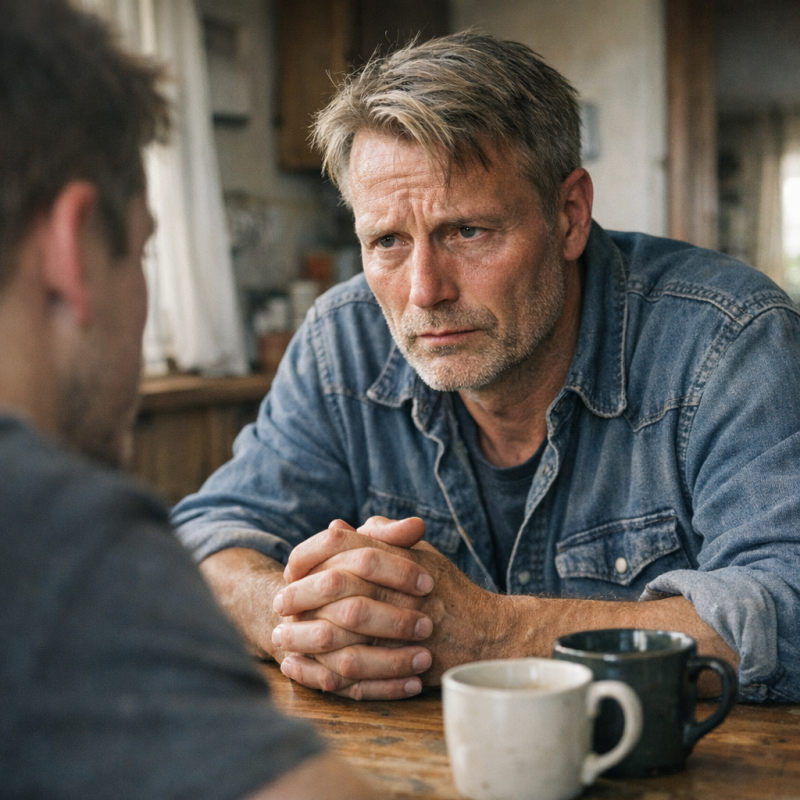 Image by FCT AI
The Real Reason for the Secrecy
We sat in silence for a long moment. Outside, I could hear birds and the wind rustling through the overgrown grass. Inside, the truth was finally surfacing. 'But that's not really why you kept it from me, is it?' I said quietly. Dad's face crumpled. He looked down at his hands, and I saw tears starting to form. 'No,' he whispered. 'No, it's not.' He took a shuddering breath. 'I told myself it was to protect you. To spare you the pain, to let you remember him as he was before. But that's not the whole truth.' Another breath. 'I was terrified, Jamie. Not just of getting sick myself, but of you seeing me the way I saw him at the end. Broken. Weak. Less than. I couldn't bear the thought of you losing respect for me the way I...' He couldn't finish the sentence, but he didn't need to. I understood. 'I didn't hide it to protect you from Grandpa's death,' he said, voice breaking—'I hid it to protect myself from what I might become, and from having to watch you lose respect for me the way I lost it for him.'
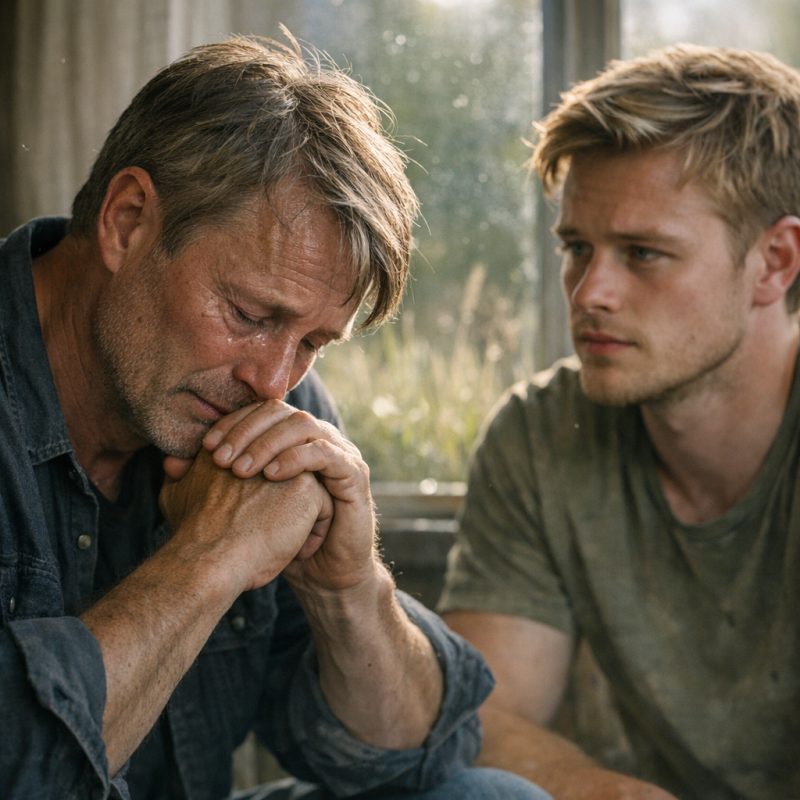 Image by FCT AI
The Complexity of Love and Shame
I sat there looking at my father, this man who'd been keeping secrets for fifteen years, and I didn't know what to feel. Part of me wanted to yell at him—to tell him he had no right to decide what I could or couldn't handle, that he'd stolen something from me that I could never get back. But another part of me saw the scared kid in him, the one who watched his own father deteriorate and made a terrified promise to himself that he'd never let anyone see him that way. The silence stretched between us. I could hear his breathing, still shaky from crying. He looked so small sitting there, this person I'd spent my whole life looking up to. And I realized something that made my chest ache: he hadn't been protecting me from Grandpa's death at all. He'd been protecting himself from his own future, from his own mortality, from the thought that I might someday see him the way he saw Frank in those final months. I wanted to be angry, but all I felt was sadness—because I finally understood that my father loved Grandpa and hated what he became in equal measure.
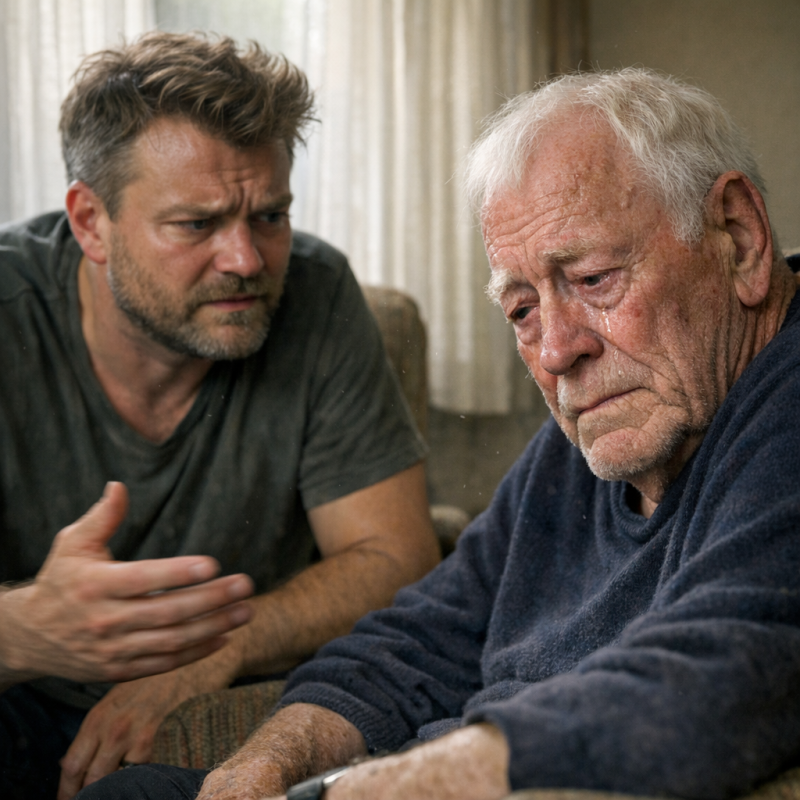 Image by FCT AI
What Frank Would Have Wanted
I took a breath, trying to organize my thoughts. There was a question forming in my mind, one I wasn't sure I should ask but knew I had to. 'Dad,' I said carefully, 'do you think Grandpa would have wanted to be remembered as perfect rather than human?' He looked up at me, surprised. I could see him really considering the question, wrestling with it. 'I mean,' I continued, 'you've spent all this time protecting this image of him as the strong, capable guy who never struggled. But was that really who he was? Was that who he wanted to be?' Dad closed his eyes. When he opened them again, they were clearer somehow, like he was seeing something for the first time. 'No,' he said quietly. 'Frank was... he was so much more complicated than that. He was funny and stubborn and sometimes petty. He burned everything he cooked and couldn't sing to save his life. He was real.' He paused, his voice catching. 'I think,' Dad said slowly, 'that Grandpa would have wanted you to remember him as both—and I robbed you of that choice because I was too scared to make it myself.'
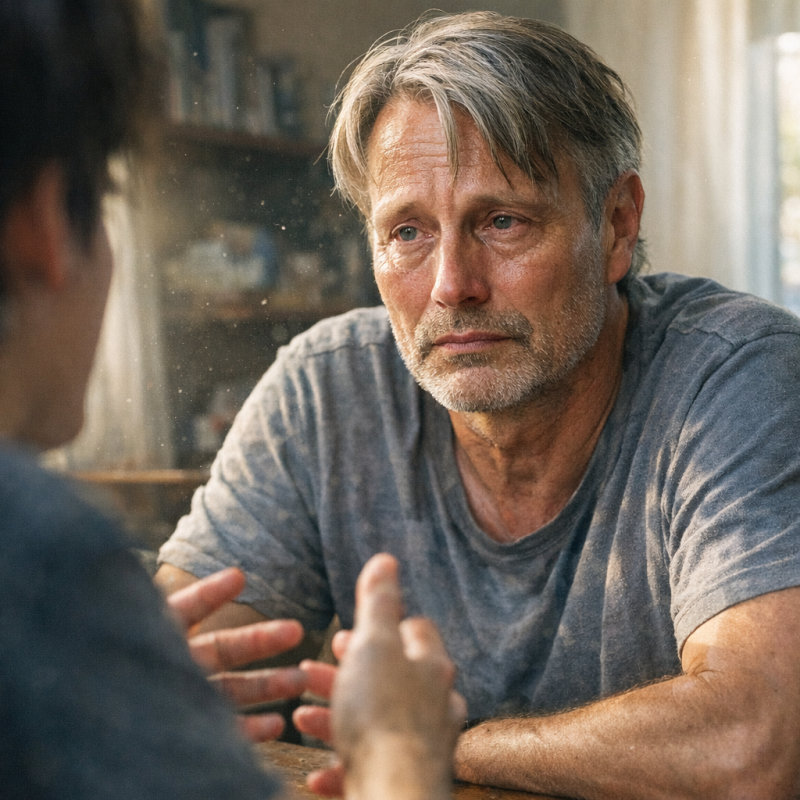 Image by FCT AI
The Apology
Dad covered his face with his hands for a moment, and when he lowered them, tears were streaming down his cheeks. I'd seen him cry maybe three times in my entire life before today. 'Jamie,' he said, his voice thick, 'I'm so sorry. I'm sorry I lied to you. I'm sorry I kept you away from the funeral, from the hospital, from all of it. You had every right to say goodbye to him, to know him fully, to understand what our family was facing.' He wiped at his eyes with the back of his hand. 'I told myself I was being a good father, protecting my kid. But I was just being a coward. I was so terrified of what I saw in that hospital room—so terrified of becoming that—that I convinced myself hiding it was the right thing to do. And every year that passed, it got easier to keep lying. Easier to pretend it never happened that way.' His shoulders shook. 'I'm sorry I made you spend fifteen years chasing ghosts,' he said, tears streaming down his face—'when the truth was just that I was too afraid to face myself.'
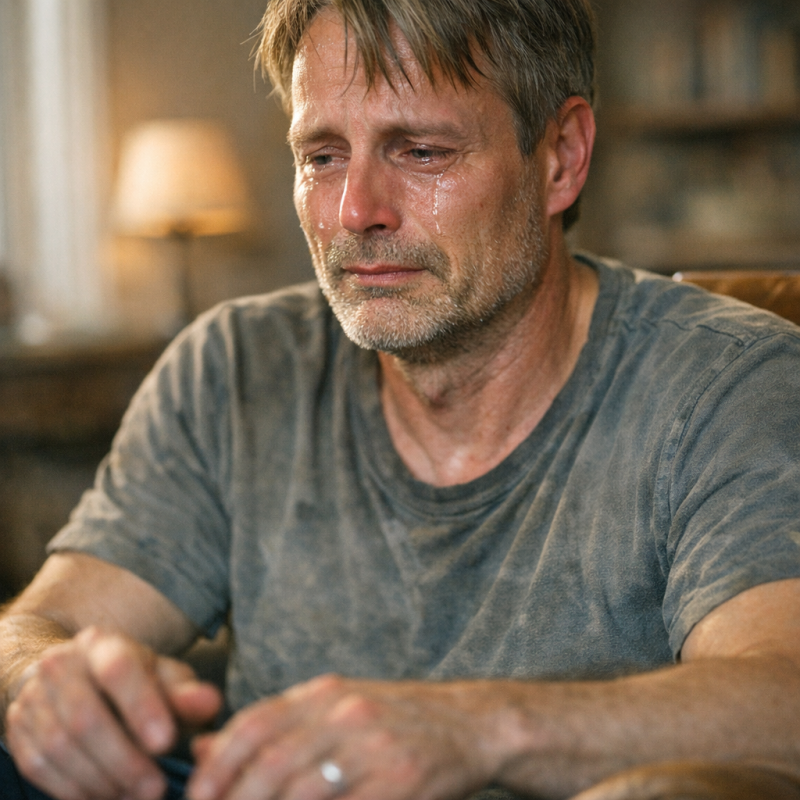 Image by FCT AI
Jamie's Grief for Both of Them
I moved closer to him on the couch, close enough that our shoulders were almost touching. For a long moment, I didn't say anything. I was grieving, but not just for Grandpa Frank. I was grieving for the father sitting next to me, the one who'd been carrying this fear around like a stone in his chest for fifteen years. 'Dad,' I said softly, 'I'm sad about Grandpa. I'm sad I didn't get to say goodbye, and I'm sad about how he died. But I'm also sad for you.' He looked at me, confusion and pain mixing on his face. 'You've been living with this terror for so long. Every time you forget a name or lose your keys or can't remember where you parked, you think it's starting. You think you're turning into him.' He started to protest, but I shook my head. 'I've watched you, Dad. For years now. I've seen the panic in your eyes.' I reached over and put my hand on his. 'You didn't just lose your dad that night,' I said—'you've been losing yourself ever since, one forgotten word at a time.'
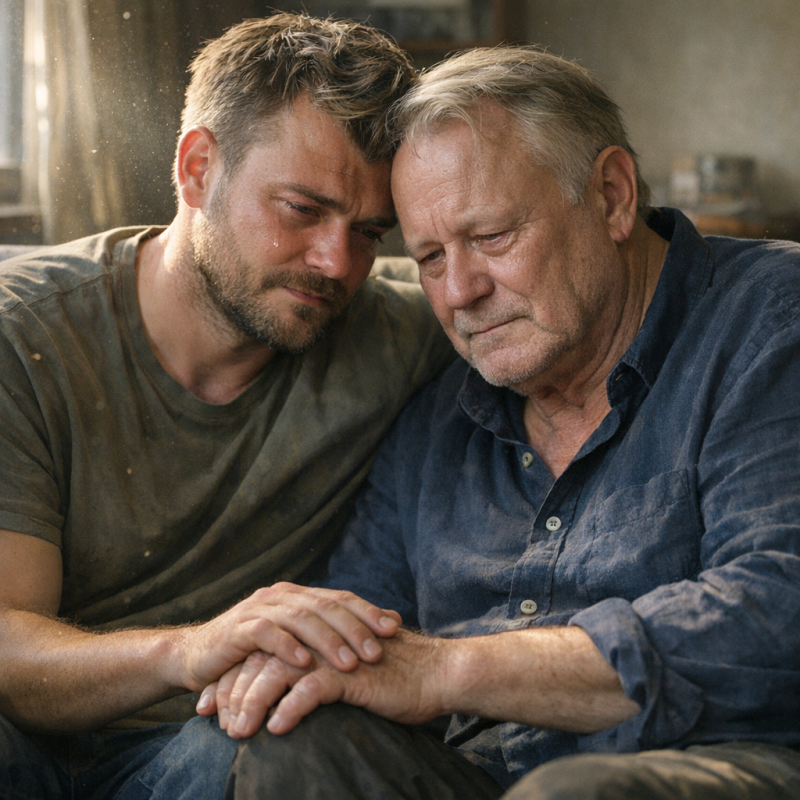 Image by FCT AI
Breaking the Cycle
Dad squeezed my hand, and for a minute we just sat there together in the silence of Grandpa's empty house. Then he took a deep breath. 'So what do we do now?' he asked. 'How do we... fix this?' I thought about it. 'I don't think we can fix it,' I said. 'What happened to Grandpa happened. What you've been going through happened. But maybe we can do things differently going forward.' He nodded slowly, waiting for me to continue. 'This family has been keeping secrets for too long. Grandpa's death, whatever he might have been afraid of, what you've been afraid of. Everyone's been so busy protecting everyone else that we've all been suffering alone.' I looked around the living room, at all the pictures on the walls, all those frozen moments of happiness. 'We can't change what happened to Grandpa,' I said, 'but we can decide how we remember him—and how we prepare for what might come next.'
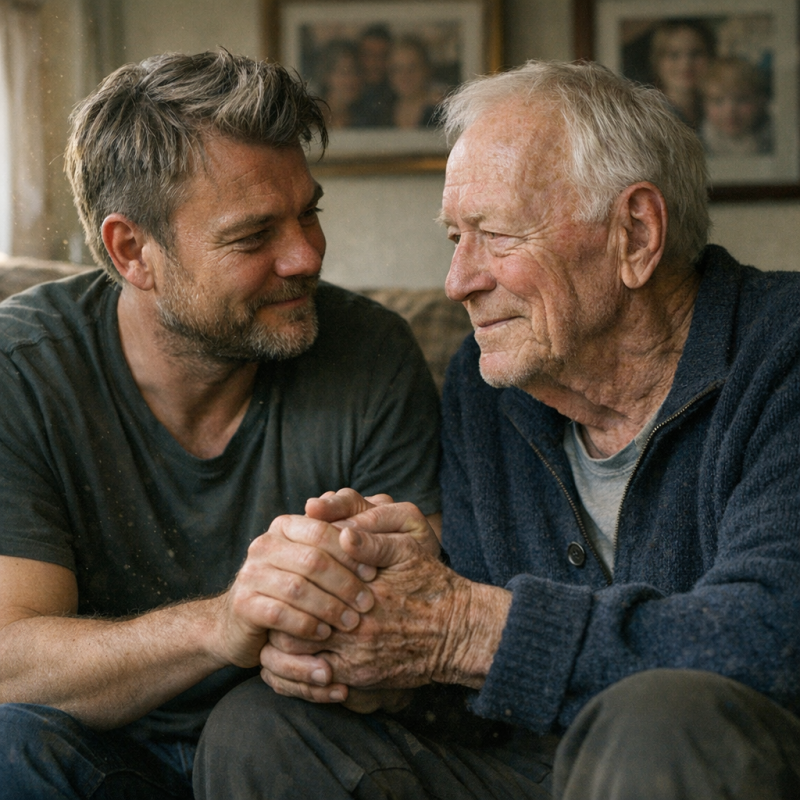 Image by FCT AI
Honoring Frank's Memory Honestly
Dad was quiet for a long time, absorbing what I'd said. Then he straightened up a little, wiping his face. 'You're right,' he said. 'We need to tell the truth. Not just to you, but to everyone. Your mom, Grandma, Carol. They all deserve to know why I... why we all kept this hidden.' I felt relief wash through me. 'So we tell them everything? The dementia, the fear, why you kept me away?' He nodded. 'Everything. The good and the bad. Because Frank was both, wasn't he? He was the grandpa who taught you to fish and the man who died terrified and confused. Both of those things are true. Both of those things matter.' Dad looked down at his hands, at the wedding ring he still wore. 'He deserves to be remembered honestly. Not as some saint, not as some cautionary tale, but as a real person who loved us and struggled and did his best.' Dad nodded slowly and said, 'He deserves to be remembered as the man who was terrified but loved us anyway—not as a myth I created to protect myself.'
 Image by FCT AI
The Family Meeting
Three days later, we gathered everyone at our house—Mom, Grandma Eleanor, and Aunt Carol, who drove up from Connecticut. They all knew something was coming. You could feel the tension in the air as we sat around the dining room table. Dad's hands were shaking as he started talking, but his voice was steady. He told them everything. About Grandpa's diagnosis, about the dementia, about the night Frank died thinking he was somewhere else entirely. He told them about his own fear of inheriting it, about why he'd kept me away from the funeral, about the lie we'd all been living with for fifteen years. There were tears. Mom reached across the table halfway through and took Dad's hand, holding it tight. Aunt Carol covered her mouth, shoulders shaking. Grandma Eleanor just nodded, tears streaming down her face like she'd been waiting for this moment for years. When Dad finished, nobody moved for a moment. Then Mom squeezed his hand tighter. Mom cried when Dad admitted what really happened, but she also reached across the table and held his hand—and for the first time in fifteen years, nobody looked away.
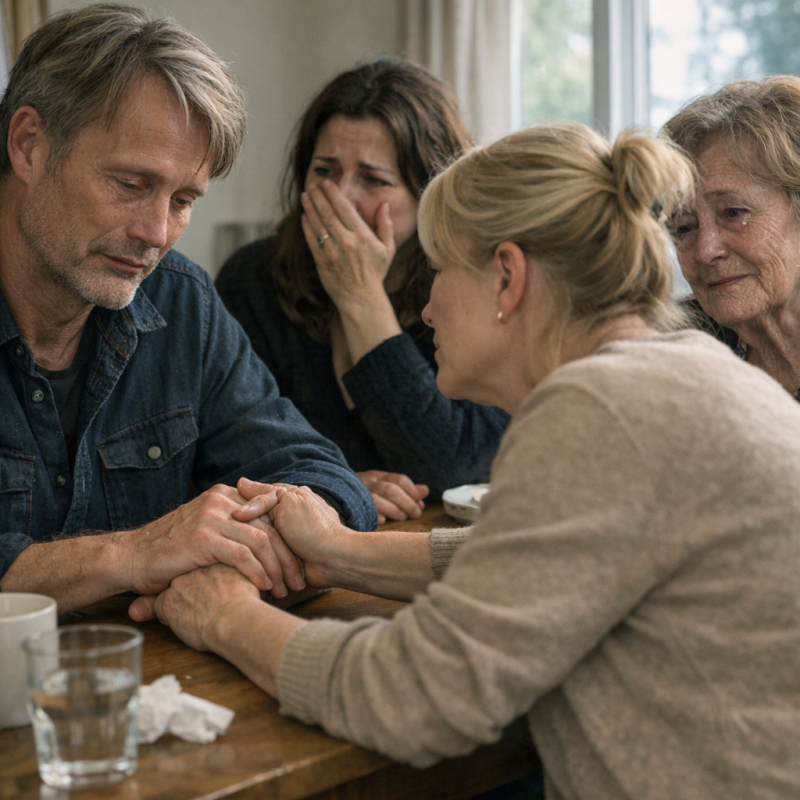 Image by FCT AI
Grandmother's Relief
After a long silence, Grandma Eleanor cleared her throat. Her voice was soft but steady when she spoke. 'I've wanted to tell you,' she said, looking at me. 'So many times over the years, I almost did. When you asked questions, when you clearly needed answers. But your father asked me not to, and I... I thought I was respecting his wishes. Respecting his grief.' She dabbed at her eyes with a tissue. 'But it wasn't just his grief to manage. It was mine too. It was all of ours.' She looked around the table at each of us. 'I've been carrying this secret like a weight on my chest. Every family gathering, every Christmas, every time someone mentioned Frank, I had to smile and nod and pretend we were only remembering the good parts. It was exhausting. It was lonely.' She reached over and put her hand on top of Dad's and Mom's joined hands. 'Thank you,' she whispered. 'Thank you for finally letting it out.' 'I've been carrying this alone for so long,' she said, voice shaking—'and I'm grateful you finally gave me permission to put it down.'
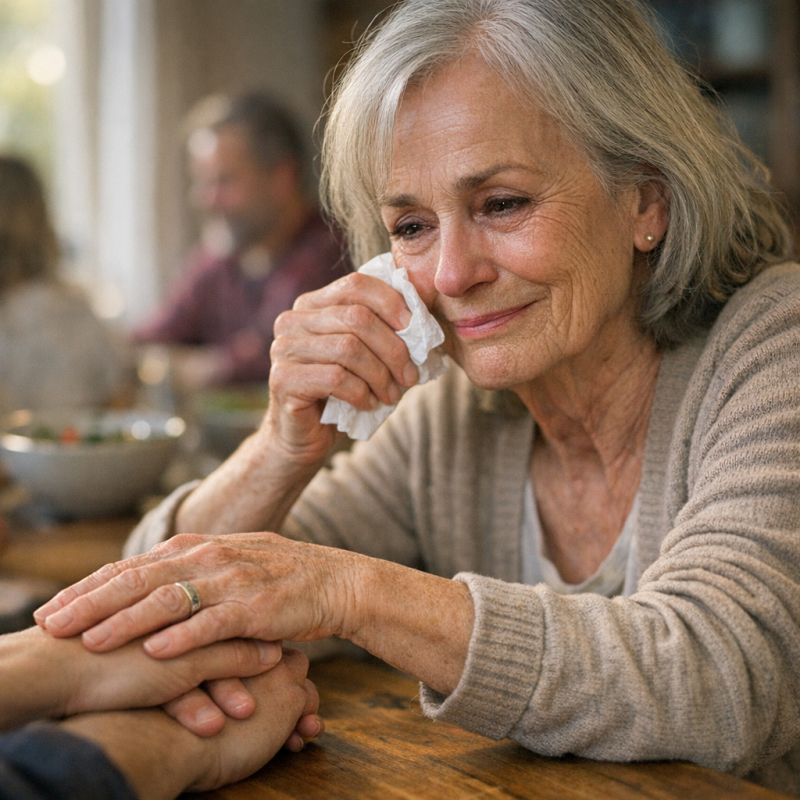 Image by FCT AI
Rewriting the Narrative
The conversation shifted then, from what had been to what could be. Mom suggested we stop telling the sanitized version at family gatherings—the one where Grandpa Frank was all wisdom and fishing trips. Dad nodded slowly, like he was finally giving himself permission to remember the whole man. 'He was funny,' he said quietly. 'God, he could make me laugh until I couldn't breathe. But he was also stubborn as hell, and some days he scared me.' Grandma Eleanor smiled through tears. 'That's the Frank I knew. That's the man I loved—all of him.' We sat there batting around ideas for how to honor him truthfully. Maybe we could talk about him more openly. Maybe we could acknowledge the hard parts without letting them erase the good. Aunt Carol leaned forward then, her eyes bright with something that looked like hope. 'What if we made a memory book?' she said. 'Not just the pretty stories, but the real ones—the fishing trips and the fear, the laughter and the tears. All of it together.' Everyone went quiet for a moment, considering. Then, one by one, we all nodded. Aunt Carol suggested we create a memory book with the real stories—the fishing trips and the fear, the laughter and the tears—and everyone agreed.
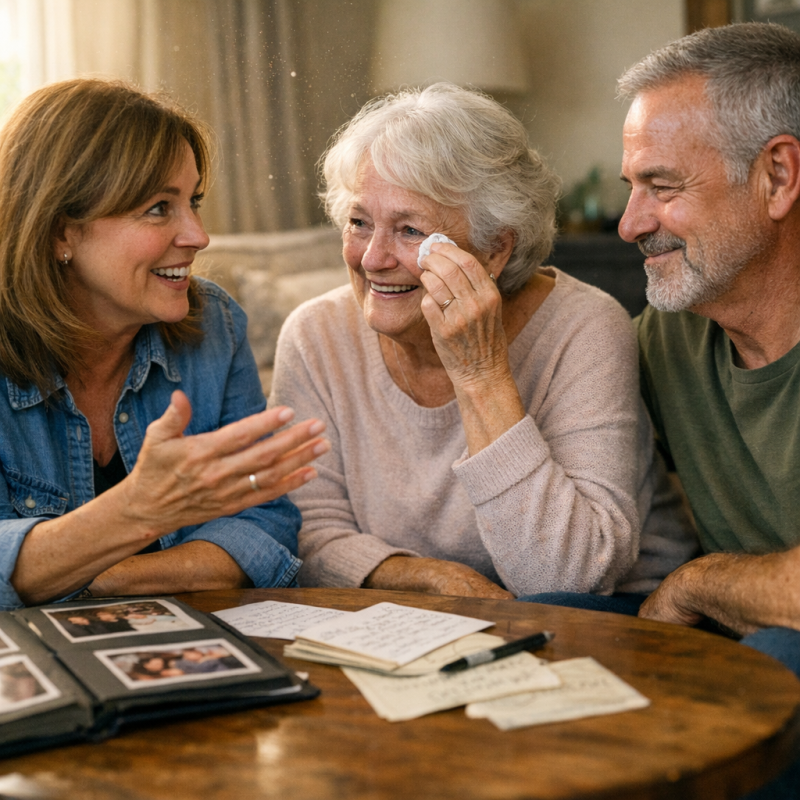 Image by FCT AI
Returning to the Farmhouse One Last Time
A week later, Dad and I drove out to the farmhouse one last time. He'd decided to sell it—finally let it go—but first, we wanted to collect a few things that mattered. The place looked smaller than I remembered, sadder somehow, with dust covering everything and that musty smell of abandonment. We walked through slowly, not saying much. Dad ran his hand along the kitchen counter where Grandpa used to make his terrible coffee. I stood in the doorway of the room where I'd slept during those childhood visits. 'What should we take?' I asked. Dad thought for a long moment. Then he went to the shed and came back with Grandpa's old fishing pole—the one with the duct tape repair on the handle. We grabbed his woodworking tools from the basement, the ones he'd used to make that birdhouse I still had. And finally, Dad picked up the chipped coffee mug from beside the recliner, the one that said 'World's Okayest Grandpa' that I'd given him years ago. We took his fishing pole, his woodworking tools, and the coffee mug from the recliner—pieces of the man he was, not the myth we tried to create.
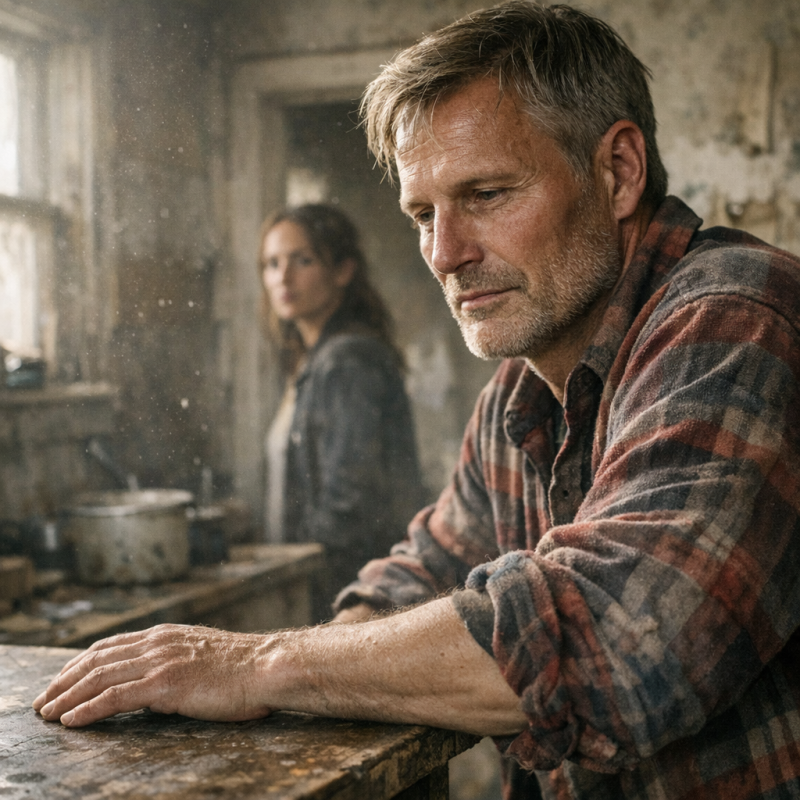 Image by FCT AI
What I Learned About Memory
Looking back now, I understand what this whole journey taught me about memory and family and the stories we construct around the people we lose. We think we're honoring them by smoothing out the rough edges, by making them into saints or heroes or perfect versions of themselves. But that's not honoring them—that's erasing them. The real people get lost somewhere in the retelling, buried under layers of what we wish had been true instead of what was. Grandpa Frank wasn't a monster, but he wasn't a storybook grandfather either. He was complicated. He was loving and terrifying, gentle and unpredictable, funny and sad all at once. He deserved to be remembered as all of those things, not just the comfortable parts. And my dad—he deserved to grieve the whole truth, not just the sanitized version. He deserved to be angry and relieved and guilty and free, all at the same time. That's what real grief looks like. That's what real love looks like too. I learned that protecting someone's memory isn't the same as protecting someone—and that the people we love deserve to be remembered in their full, messy humanity.
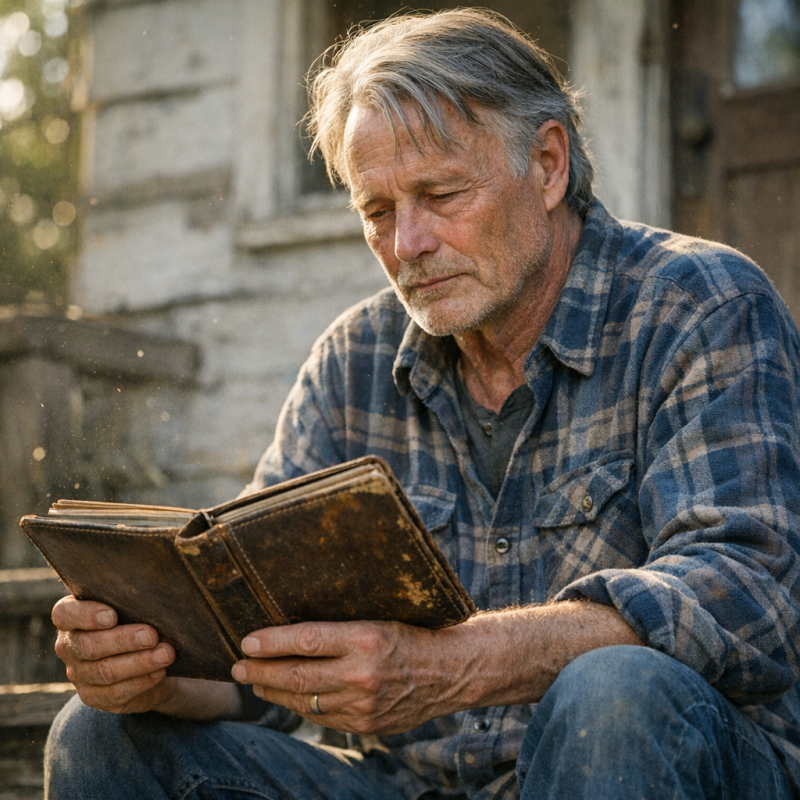 Image by FCT AI
Fifteen Years Later
So here we are, fifteen years after I found those records and finally understood why they kept me from the funeral. I'm thirty-nine now, with kids of my own who ask questions about their great-grandfather. And I tell them the truth—the whole truth. I tell them about the fishing trips and the woodworking and the terrible jokes. I also tell them about the illness that changed him, about how scared their grandfather was as a boy, about how hard it was for everyone. They listen with wide eyes, and they understand in the way kids do that people can be more than one thing at once. My father is seventy now, and I won't lie—his memory isn't what it used to be. Sometimes he forgets where he put his keys or repeats the same story twice in one conversation. But this time, we're not pretending it isn't happening. This time, we're not hiding or lying or building myths to protect ourselves from reality. We're facing it together, with honesty instead of shame, documenting what we need to, laughing about the small lapses, staying present through it all. My father is seventy now, and yes, his memory isn't what it used to be—but this time, we're facing it together, with honesty instead of shame, and that makes all the difference.
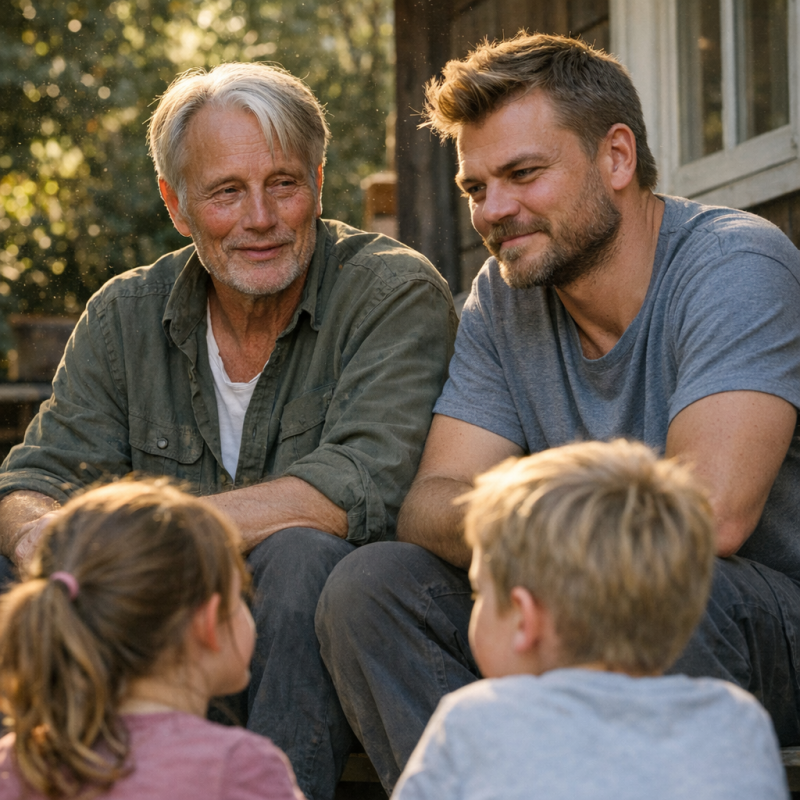 Image by FCT AI