The Meltdown That Started Everything
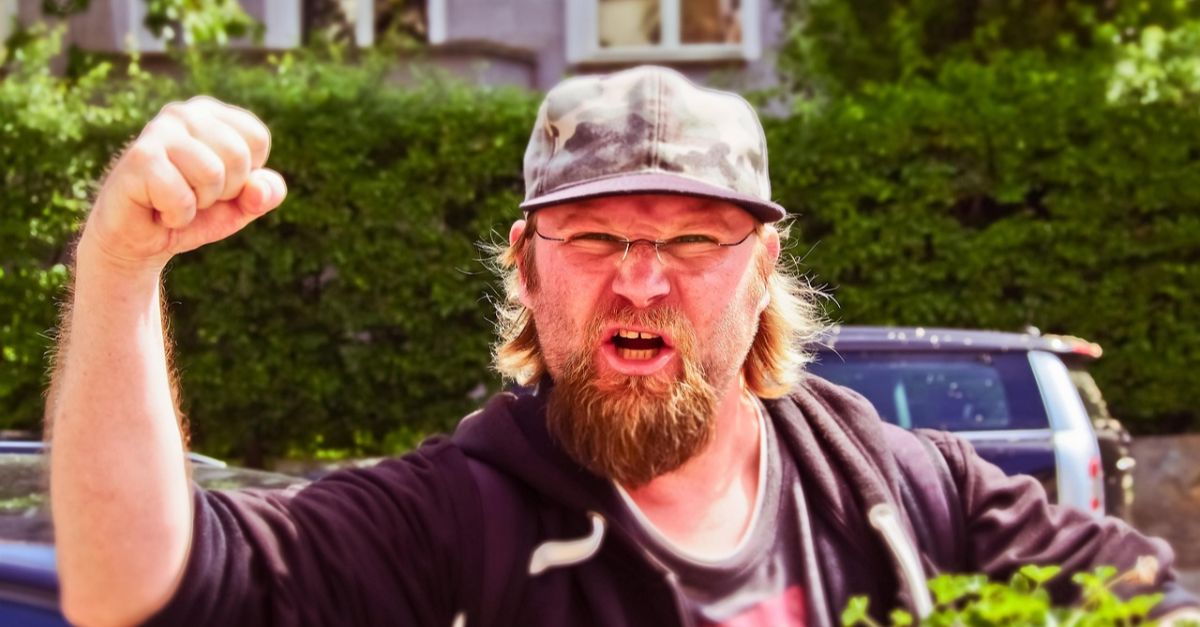
So my friend Jenna came to visit me last Saturday, and I swear the whole thing started before she'd even turned off her car. She parked legally on the street, right in front of my neighbor Greg's house—totally legal, no driveway blocking, nothing. I was walking down my front steps to greet her when Greg's door basically exploded open. He came storming out like she'd just keyed his Tesla or something. 'You can't park there,' he shouted, gesturing wildly at the perfectly legal spot. Jenna hadn't even gotten out yet. She rolled down her window, looking confused, and said something like, 'I'm sorry, is this your driveway?' Greg just shook his head, red-faced, insisting she needed to move immediately. No explanation. No courtesy. Just demands. I stood there feeling mortified, trying to smile apologetically at Jenna while simultaneously wanting to melt into the sidewalk. To her credit, Jenna just nodded calmly and said she'd move it. I honestly thought that would be the end of it—an awkward start to the weekend, nothing more. I had no idea that her decision to move the car would save her thousands—and destroy him.
Six Years of Opinions
Here's the thing about Greg: he'd been like this for the entire six years I'd lived on this street. He had opinions about everything—trash bins left out too long, kids playing too loudly, holiday decorations up past his personal deadline. I'd watched him lecture neighbors about their lawn height, complain about delivery trucks idling for thirty seconds, and once he actually knocked on my door to tell me my porch light was 'unnecessarily bright.' Everyone on the block had their own Greg story. The Johnsons next door had stopped engaging entirely. The couple across the street would just wave politely and keep walking when he started up. It was exhausting, honestly, but it seemed mostly harmless—just an uptight guy who needed to control his little corner of the universe. We'd all developed this silent agreement to just nod, smile, and go about our business. It worked well enough. He'd vent, we'd ignore, life went on. I'd actually gotten pretty good at the 'mm-hmm, I understand' routine while thinking about literally anything else. Most of us had learned to just nod and ignore him—but that was about to change.
Jenna Takes the Easy Way Out
Jenna handled the whole thing with way more grace than I would have. She just started her car back up, gave me this little shrug through the windshield, and drove down to find another spot. No argument, no pushback, not even a sarcastic comment. She ended up parking three houses down, in front of the Kellys' place, and walked back carrying her overnight bag like nothing had happened. 'Sorry about that,' I said as she reached my front steps. 'He's always been kind of intense.' Jenna laughed it off. 'No worries. Not worth the drama, right?' But honestly, it bothered me more than it bothered her. She'd done nothing wrong, and yet she'd been the one inconvenienced. The spot she'd originally taken was closer, easier, perfectly legal. Now she had to haul her stuff an extra fifty yards because Greg had decided to have a meltdown. It felt wrong, even if it was the path of least resistance. I kept thinking she'd given in too easily—like we all did with Greg. I thought she gave in too easily—but she'd just made the smartest decision of her weekend.
A Normal Saturday Afternoon
Once we got inside, the weirdness of the parking incident just kind of dissolved. We made coffee, settled onto my couch, and fell into that easy rhythm you only get with old friends. Jenna and I had known each other since college, and we'd gotten good at these catch-up visits—the kind where you skip past small talk and dive straight into the real stuff. She was telling me about her sister's upcoming wedding, this whole chaotic story involving a venue change and a passive-aggressive mother-in-law situation. I was laughing so hard I nearly spilled my coffee. Outside, the afternoon sunlight filtered through my living room curtains, warm and peaceful. Cars passed occasionally. Someone's lawnmower hummed in the distance. It was exactly the kind of relaxed Saturday I'd been looking forward to all week. Greg and his parking tantrum felt like a distant memory already, just another weird neighbor moment that would become a funny story later. Neither of us was thinking about the street, or cars, or what was happening outside. We were laughing about old family stories when the crash came—loud, metallic, and impossible to ignore.
The Sound That Changed Everything
The sound was violent. Not a fender-bender sound, but a full-on collision—metal crunching, glass shattering, that horrible screech of impact that makes your whole body tense up. Jenna and I both froze mid-sentence, our heads whipping toward the window. 'What the heck was that?' she said, already getting up. We rushed to the front window together, nearly tripping over each other, and I pulled the curtain aside. My heart was pounding. You always assume the worst with a sound like that—someone hurt, something terrible. The street was suddenly alive with neighbors emerging from their houses, all of us drawn to the same spot. I could see people pointing, phones already out. Someone was shouting. And then I saw it—right there in front of Greg's house, right in that exact spot where Jenna had originally parked. A massive landscaping truck had jumped the curb somehow, and there was debris everywhere. My brain was still catching up, still processing what I was seeing. When I saw what had happened, my stomach dropped—but not for the reason I expected.
The Wrong Car in the Wrong Place
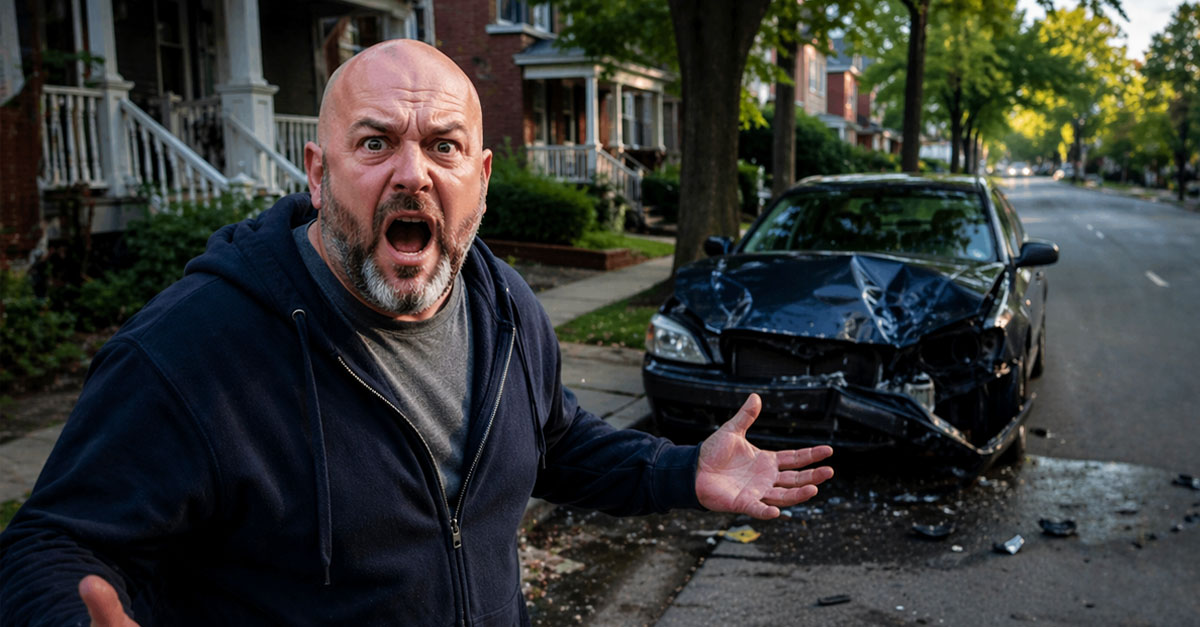
Greg's car was completely destroyed. I'm talking totaled. The landscaping truck had smashed into it with such force that the driver's side was caved in like a crushed soda can. The windshield was spiderwebbed with cracks, glass scattered across the pavement, and the whole front end was accordion-folded into something unrecognizable. The truck itself had stopped halfway onto the curb, its front bumper buried in what used to be a sedan. For a second, I just stared, taking in the sheer violence of the impact. Then something clicked in my brain. That spot. That exact spot. I turned to Jenna, and I could see the same realization washing over her face. Her eyes went wide, her hand came up to her mouth. 'That's where I was parked,' she whispered. The words hung there between us, heavy and surreal. If she hadn't moved her car twenty minutes earlier—if she'd stood her ground against Greg's tantrum—that would be her Honda crumpled on the street right now. And then it hit me—that would have been Jenna's car.
The Spot That Should Have Been Hers
We just stood there, staring through the window like we were watching something on TV instead of real life happening fifty feet away. Jenna's face had gone pale. 'Oh my God,' she kept saying, over and over. 'That would've been my car. That would've been my car.' I couldn't even respond. My brain was doing that thing where it runs through alternate timelines—Jenna still sitting in the driver's seat when the truck hit, the sound of impact with her inside, how different this moment would be. The thought made me physically sick. Instead, her car was safely parked three houses down, untouched, and she was standing here beside me, shaken but fine. The coincidence of it felt impossible, like something scripted. Greg's completely irrational meltdown about legal parking had somehow saved her from thousands in damage—maybe worse. Neither of us could process it yet. And then, as if the universe wasn't done delivering irony, Greg's front door flew open. We stood there in stunned silence as Greg came running out of his house, screaming.
Greg Loses It Again
Greg was absolutely losing it. He charged toward the landscaping truck driver, who'd climbed out looking dazed and apologetic, and just started yelling. I mean full-volume, red-faced, arms-flailing fury. 'What the heck is wrong with you?! Look what you did! Do you have any idea—' The driver, this big weathered guy in a work shirt, was holding up his hands trying to calm Greg down. 'Sir, I'm so sorry, the brakes failed, I tried to—' But Greg wasn't hearing it. He kept screaming over him, jabbing his finger toward the wreckage. Jenna and I had moved onto my front porch by then, along with half the neighborhood. Everyone was watching this scene unfold. The driver kept trying to explain, pulling out his phone to call his company, his insurance, whatever. He seemed genuinely shaken. But Greg just kept escalating, pacing back and forth, and I noticed he kept gesturing not just at his car but at the curb, at the spot itself. Something about his reaction felt off—too big, too frantic, like he was panicking about more than just the damage. But as the driver tried to explain, I noticed something that made my stomach twist.
The Driver's Defense
The driver pulled out his phone, scrolling through something while Greg continued his tirade. 'Sir,' the guy said, his voice remarkably calm considering the circumstances, 'I'm here for a scheduled job. Tree removal and stump grinding. You called our company three weeks ago.' Greg stopped mid-rant. Like, literally froze. 'What? No. No, I never—I didn't call anyone.' The driver held up his phone screen. 'I've got the work order right here. This address. Scheduled for today at two o'clock. We were supposed to back into your driveway to access the backyard.' Jenna and I exchanged glances. This was getting weird. Greg shook his head violently. 'That's not—I don't know what you're talking about. I never hired any landscaping company.' The driver's expression shifted from apologetic to confused. He looked at his phone again, then at Greg, then at the house number. 'This is 847 Maple, right?' 'Yes, but I'm telling you—' 'Then somebody scheduled this job, sir.' The air felt thick with something I couldn't quite name. If Greg didn't hire him, then who the heck did?

History's most fascinating stories and darkest secrets, delivered to your inbox daily.
The Paperwork Problem
The driver turned his phone toward us, and I could see it clearly—a legitimate-looking work order with Greg's address, a phone number, and detailed notes about removing a large oak in the backyard. It even had a confirmation number. Greg grabbed the phone out of the guy's hand, which, you know, not great. 'This is—someone made a mistake. Or this is fraud. I don't know, but it wasn't me.' His voice had this edge to it, not just anger but something closer to panic. The driver took his phone back carefully. 'Sir, someone called from this address. We confirmed twice. We don't just show up randomly.' I was trying to piece it together. A fake work order? But why? Who would do that? Jenna whispered, 'Could it be identity theft or something?' before I could stop her. Greg whipped around. 'Stay out of this. This has nothing to do with you.' Which, honestly, felt rich considering the whole parking lot drama that started this entire mess. But the driver was adamant, and so was Greg, and neither story made complete sense. Someone had definitely scheduled this job—but if it really wasn't Greg, then who had access to his information and wanted a landscaping truck at his house today?
Where the Car Shouldn't Be
While everyone argued, I found myself staring at the wreckage. Greg's Audi was crumpled against the fence post, and from where I stood on my porch, I could see the whole scene clearly. Something about it caught my eye—the positioning. The car wasn't just parked in front of his house. It was angled slightly, the rear end jutting out past where his driveway ended. I tilted my head, trying to gauge the distance. Our properties were clearly marked—there was a small decorative border between the driveways, those little landscape stones someone had placed years ago. Greg's car was definitely past that line. Not by much. Maybe a foot, maybe two. But enough that the back end of his car was blocking what should have been clear access to his driveway entrance. I'd never really paid attention before because, honestly, why would I? But now, watching the landscaping truck's crushed front end and the debris scattered across that exact spot, something clicked in my brain. The driver had been trying to back into the driveway entrance. And Greg's car was positioned right where it shouldn't be. It was subtle—but it looked like it might be over the line.
The Police Arrive
A patrol car pulled up about ten minutes later, lights off but still very official-looking. A female officer stepped out, mid-thirties maybe, with that particular expression cops get when they're already tired of whatever they're about to deal with. Greg practically rushed her. 'Officer, thank God. This man destroyed my car. His company needs to—' She held up a hand. 'Everyone just take a breath. Let me assess the situation first.' She walked around the accident scene slowly, taking photos with her phone, examining the truck's position, the fence, the debris field. Then she turned to look at Greg's car. Her gaze lingered there for a long moment. I watched her crouch down slightly, looking at where the Audi sat in relation to the driveway edge, the curb, the property line markers. She pulled out a small measuring tape from her belt—who knew cops carried those?—and stretched it from the curb to the car's bumper. Then she stood up, made a note on her pad, and her whole demeanor shifted. Not dramatic, just... sharper somehow. More focused. She looked at Greg with this expression I couldn't quite read. The officer took one look at Greg's car and her expression changed.
The Parking Violation
The officer walked back toward Greg, flipping through her notepad. 'Sir, I need to inform you that your vehicle is parked in violation of municipal code 12-408. You're blocking the driveway access zone.' Greg blinked. 'What? No. This is my driveway. I can park—' 'You can park in your driveway, yes. But the rear of your vehicle extends approximately eighteen inches beyond the property line into the public right-of-way, obstructing access to the driveway entrance. That's a citable offense.' I felt my jaw actually drop. Jenna grabbed my arm. The landscaping driver's expression shifted from worried to hopeful. Greg looked like he'd been slapped. 'That's—that's ridiculous. It's barely over the line!' The officer remained completely calm. 'The law doesn't have a threshold for 'barely,' sir. You're either in compliance or you're not. And this creates a visibility and access issue, which is exactly what appears to have contributed to this accident.' You could see it happening in real time—the color draining from Greg's face as he realized what this meant. All his fury, all his righteous indignation, all that screaming about property rights and rules and violations. Greg's face went pale—because suddenly, he wasn't the victim anymore.
Liability in Question
The officer continued, her voice professional but firm. 'I'm going to need to note this violation in my accident report. It may affect the liability determination.' Greg looked like he might actually pass out. 'Wait. What does that mean?' 'It means your insurance company will take into account that your vehicle was illegally parked in a location that obstructed clear access to the driveway. The truck driver was attempting to execute a scheduled, legitimate work order and his path was blocked by an illegally positioned vehicle.' She glanced at the landscaping driver. 'Obviously the brake failure will be investigated as well. I'm not saying you're entirely at fault here, sir, but you're also not entirely without fault.' The landscaping driver let out this long, shaky breath. I could practically see the weight lifting off his shoulders. Greg opened his mouth, closed it, opened it again. No words came out. The irony was so perfect it almost hurt. Mr. Property Rights, Mr. Rules and Regulations, Mr. I'll Call the Police on Anyone Who Breathes Wrong—had been parked illegally the whole time. The driver's company might not be fully responsible—and Greg knew it.
Linda's Confusion
That's when Greg's wife came outside. I'd seen Linda around the neighborhood before—she seemed nice enough, always waving, staying out of Greg's parking wars. She stood in their doorway looking at the destroyed car, the police officer, the crowd of neighbors, and her face went through about five emotions in three seconds. 'Greg? What happened? I heard the crash from upstairs and—' She stopped, taking in the full scene. 'Is everyone okay? What—why is there a landscaping truck in our fence?' Greg turned to her, and I swear I've never seen someone look so defeated. He tried to say something, but it came out as just a sound. Linda walked closer, her bathrobe tied tight against the cold. 'Did you hire someone to do yard work? I thought we were waiting until spring.' 'I didn't,' Greg managed. 'That's what I've been trying to tell them.' Linda looked more confused. 'Then why—' 'And my car was... the officer says it was parked illegally.' Linda's expression shifted to something between confusion and concern. She looked at the car, at the officer, back at Greg. She asked what happened, and Greg couldn't even look at her.
Jenna's Quiet Victory
Jenna and I eventually went back inside my house, leaving the circus outside to sort itself out. We stood in my kitchen, both of us just staring at each other in disbelief. 'Did that really just happen?' Jenna asked. 'I think so?' I filled a glass of water with shaking hands. 'I mean, that was... that was insane.' She started laughing, not cruelly, just this shocked, breathless kind of laugh. 'I was so stressed this morning. I was about to go out there and move my car just to avoid another confrontation. I was literally putting on my coat.' 'I know.' 'And instead, I did nothing. Just stayed inside. And somehow—' She gestured toward the window where we could still hear muffled voices. 'Somehow this happened instead.' The timing was absolutely unreal. If that truck had arrived five minutes earlier, before Greg moved his car to that spot. If it had arrived tomorrow. If Jenna had moved her car and he'd parked somewhere else. But no—it happened exactly when it happened, in the most perfectly ironic way possible. She'd avoided an argument and saved her car—while Greg destroyed his own.
The Neighborhood Watches
Within about twenty minutes, half the street had materialized. People I'd only waved to from a distance suddenly appeared on their porches, in their driveways, walking dogs they might not have even owned—all of them gravitating toward the spectacle. Mrs. Chen from three houses down. The college kids who rented the blue house. A couple I didn't recognize but who seemed very interested in the proceedings. Jenna and I watched from my front steps, and I could feel the energy shifting. It wasn't just rubbernecking anymore. People were lingering. Talking. One guy actually pulled out a lawn chair like he was settling in for a show. And then something interesting happened—people started talking to each other instead of just watching Greg. Little clusters formed. Conversations got animated. Mrs. Chen gestured emphatically toward Greg's house, telling something to the college kids who were nodding along. I caught fragments: 'blocked my,' 'wouldn't move,' 'every single time.' Everyone had a story about Greg—and suddenly, people were willing to share them.
Stories Start Surfacing
Mrs. Chen went first, loud enough that Jenna and I could hear from where we stood. Greg had apparently blocked her driveway for two hours last month, ignored her doorbell, then acted like she was the problem when he finally moved. The college kids jumped in—he'd left aggressive notes on their cars at least four times for parking 'too close' to his property line, even though they were clearly on public street. Another neighbor mentioned the time Greg called the city on him for a lawn violation that turned out to be completely made up. Each story had the same shape: Greg upset about parking or property lines, Greg escalating, Greg acting like he was the neighborhood parking enforcement officer. I was taking it all in, nodding along, when the guy with the lawn chair—I think his name was Marcus—mentioned that Greg once threatened to 'make his life a nightmare' over a garbage can placement. That one made my stomach drop a little. The phrasing was so specific, so deliberate. But one story stood out—because it suggested this wasn't just about control.
Dan's Old Complaint
That's when Dan shuffled over. He's this older guy, retired, walks with a cane, lives two doors down from Greg. He didn't say anything at first, just listened to everyone else, nodding slowly. Then he cleared his throat. 'I filed a complaint about him once,' he said quietly. 'Three years ago. He kept parking right across my driveway. Not in front of his house—mine. I couldn't get my car out for my doctor's appointment.' Dan said he'd asked nicely twice, then finally called the city. They sent someone out, documented it, gave Greg a warning. 'Should've been the end of it,' Dan said, shaking his head. 'But after that? He started parking there more. Not every day, but often enough that I knew it wasn't an accident. Always when I had somewhere to be.' Jenna and I exchanged a look. That wasn't parking incompetence. That was deliberate. The complaint was dismissed as a one-time issue—but Dan swore Greg started parking there more often after that.
The Week That Followed
Jenna left town the next day for a work trip, and I was alone to watch the aftermath unfold. It was weirdly captivating, like a slow-motion documentary. The tow truck came back to haul Greg's mangled car to a body shop. An insurance adjuster showed up, took photos, wrote things on a clipboard. A rental car appeared in Greg's driveway—some generic silver sedan. And Greg himself? He was a ghost. I'd see him occasionally, coming or going, always with his head down, always moving fast. He didn't make eye contact with anyone. Not with me when I was getting my mail. Not with Mrs. Chen when she was watering her garden. He'd practically sprint from his front door to his car. It was such a stark contrast to his usual vibe—the guy who'd stand in the middle of the street, arms crossed, making sure everyone knew he was watching. Now he was the one being watched, and he clearly hated it. He avoided eye contact with everyone—like he knew something we didn't.
The Tow Truck Incident
About a week after the whole incident, another tow truck showed up. This time it was taking Greg's damaged car away for what I assumed were more extensive repairs. I watched from my living room window as they loaded it up, Greg standing there with his arms folded, looking miserable. The truck rumbled away, leaving his driveway empty except for the rental car parked off to one side. And that's when I noticed it. With Greg's car gone—this massive SUV that had basically lived in that spot for years—the curb in front of his house was completely visible for the first time since I'd moved in. I'd never really looked at it before. Why would I? It was just curb. But now, with nothing blocking the view, I could see the edge of his driveway clearly. The concrete. The street markings. And something else. Without his car there, I could finally see the curb markings clearly—and they told a different story.
The Faded Red Paint
I walked outside like I was just checking my mailbox, casual, not suspicious. But I was absolutely staring at that curb. There, along the section right in front of Greg's driveway, was faded red paint. Not bright red. Not fresh. This was old, sun-bleached, worn down by years of weather and tires. But it was definitely red. Red curb. No parking. I stood there squinting at it, trying to figure out if I was seeing things. Nope. It was there. Faint, but unmistakable once you noticed it. I pulled out my phone and took a photo, zooming in to make sure it was documented. How had I never seen this before? Well, because Greg's car had been parked there, covering it, basically since I'd moved in. And clearly for years before that, given how faded the paint was. This wasn't some new development. This was old infrastructure, still technically marking the zone. It was old and barely visible—but it was definitely there.
Researching the Rules
That night, I went down a rabbit hole. I pulled up the city's parking code website, cross-referenced the municipal regulations, even found a PDF of 'Residential Parking Enforcement Guidelines.' And there it was, clear as day: faded or not, red curb zones remain legally enforceable unless officially removed or repainted by the city. The paint didn't need to be fresh. It just needed to be there. Which it was. I sat back in my chair, staring at my laptop screen. Greg had been parking in a no-parking zone. Right in front of his own house. For years. And he'd been the one screaming at everyone else about parking rules, about respecting boundaries, about following regulations. The irony was almost too perfect. But it also raised a huge question: why? Why would someone so obsessed with parking rules willingly break them himself, every single day, in the most visible possible way? It didn't make sense. Which meant Greg had been parking illegally for years—right in front of his own house.
The Insurance Adjuster Visits
Two days later, the insurance adjuster came back. She was methodical, professional, and very thorough. She knocked on my door mid-morning, introduced herself, and asked if I had a few minutes to answer some questions about the accident and 'the general parking situation on the street.' We stood on my porch, and she had this whole clipboard of notes. Had I witnessed the accident? Yes. Had I noticed any pattern to Mr. Greg's parking behavior? Uh. What did I know about parking restrictions in the area? I hesitated. I could feel the weight of the question. This wasn't small talk. She was building a case—either for or against paying out Greg's claim. And I had information now. Information about the faded red curb. Information about his illegal parking. Information that could completely change the outcome. My mind raced. Did I say something? Did I stay neutral? Did I show her the photo on my phone? When she asked me about it, I hesitated—because suddenly, my answer mattered.
Telling the Truth
I took a breath and told her everything. About the confrontation in the street, how Greg had screamed at me for parking near 'his' spot. About the faded red curb I'd discovered later, the one he parked in front of every single day. I pulled out my phone and showed her the photo I'd taken—the barely-there red paint, the clear violation. She studied it for a long moment, then made notes on her clipboard. Her expression didn't change, but I could feel the shift in the air. 'Mr. Richardson filed a claim stating he was legally parked when the accident occurred,' she said carefully. 'This information suggests otherwise.' I nodded, suddenly feeling a knot in my stomach. I wasn't lying. I was just telling the truth. But it felt heavier than that somehow, like I'd just lobbed a grenade into someone's life. She clicked her pen, made a few more notes. 'Thank you for your honesty,' she said. 'This will affect the claim—significantly.'
The Cold Shoulder
After that conversation, Greg stopped looking at me entirely. I'd see him coming out to his wrecked car, or walking to his mailbox, and he'd go full ice-mode. No nod. No acknowledgment. Not even the tight-lipped passive-aggressive thing he used to do. Just nothing. It was like I'd been erased from his peripheral vision. The street felt different too—smaller, colder. Every time I left my apartment, I braced for an encounter that never came. I'd hear his door open and my shoulders would tense, but he'd just walk past like I was invisible. It was almost worse than the yelling, to be honest. At least anger is direct. This was something else—silent, deliberate exclusion. I kept replaying the adjuster's visit in my head, wondering if Greg knew I'd talked to her. Wondering if someone had told him what I'd said. Or maybe he was just furious at the universe and I happened to be in it. I wasn't sure if he knew I'd talked to the adjuster—or if he was just angry at the world.
Linda's Small Talk
Linda caught me by the mailboxes a few days later. She had that overly cheerful voice people use when they're trying really hard to pretend everything's normal. 'Hey! How are you? Been meaning to say hi!' We made small talk about the weather, about a package she was expecting, about absolutely nothing of consequence. It was painfully awkward but kind of sweet, in a way. She was trying. I could tell she wanted to maintain some level of neighborly civility even though her husband had clearly written me off. So I played along, asked how she was doing, kept it light. Then, without really thinking, I mentioned the accident—just casually, like 'that must've been stressful for you guys.' Her whole demeanor shifted. The bright smile faded. She glanced back toward their apartment, then down at the mail in her hands. 'Yeah,' she said quietly. 'It's been... a lot.' She paused, choosing her words carefully. But when I mentioned the accident, she looked away and said something I didn't expect.
The Thing Linda Said
'Greg has always been particular about that curb space,' Linda said, almost under her breath. She wasn't looking at me—she was staring at the pavement like the words were written there. 'Particular' felt like a massive understatement, but I didn't push. She shifted her weight, clutching the mail tighter. 'He just... he really believes it's his spot, you know? Like it matters more than it probably should.' There was something in her voice—resignation, maybe, or exhaustion. Like this wasn't the first time Greg's parking obsession had caused problems. Like she'd had this conversation before, with someone else, about something else. I wanted to ask what she meant, but her body language was already closing off. She gave me a small, sad smile that didn't reach her eyes. 'Anyway. I should get back inside.' And she left, just like that, before I could respond. She said it like she was apologizing for something bigger—something she couldn't say out loud.
The Rental Car
The rental car showed up three days later. A bland silver sedan, the kind you forget the moment you stop looking at it. And guess where Greg parked it? Right there. In the exact same faded red curb zone his wrecked car had been sitting in before the accident. I'm not kidding. He got a replacement vehicle and immediately put it back in the illegal spot like nothing had happened. Like he hadn't just been in a collision because of that exact choice. Like the insurance claim and the adjuster's visit and everything else were completely irrelevant. I saw him get out, lock the door, and walk away without even a glance at the curb. My jaw actually dropped. I stood at my window just staring, trying to process what I was seeing. Was this denial? Defiance? Some kind of compulsion he couldn't control? It didn't make sense. After everything that happened, he went right back to parking there—like he was daring someone to say something.
The Photograph
I grabbed my phone without really thinking about it. Stepped out onto my porch, angled the camera, and snapped a photo of the rental car parked against that faded red curb. The same exact setup as before. Clear documentation. Then I just stood there, staring at the image on my screen, wondering what I was doing. Why did I take that picture? Was it for protection, in case something else happened? Was it because I thought someone might need proof later? Or was I building some kind of case against Greg, collecting evidence like I was preparing for trial? I honestly couldn't tell you. It felt justified in the moment—like I was just documenting reality. But there was also this uncomfortable edge to it, this sense that maybe I was getting too invested in his downfall. That maybe this had stopped being about parking and started being about something darker. I told myself it was just documentation—but part of me wondered if I was building a case.
The Code Enforcement Call
The city code enforcement officer showed up on a Thursday morning. I heard the official-looking SUV pull up and saw a guy in a polo shirt with a city badge get out, clipboard in hand. He walked straight to Greg's rental car, took photos, measured the curb, checked something on a tablet. I was watching from my window, confused. I hadn't called anyone. I'd thought about it, sure—especially after seeing that rental car in the same illegal spot—but I hadn't actually done it. Someone else had filed a complaint. An anonymous one, apparently, because the officer didn't knock on any doors or ask questions. He just did his inspection, made his notes, and waited. About ten minutes later, Greg came outside, probably wondering why someone was circling his car. The officer flagged him down. I couldn't hear the conversation, but I could see Greg's posture stiffen, see him gesturing at the curb, clearly trying to explain something. I didn't make that call—but someone did, and Greg was about to find out.
The Citation
The officer handed Greg a piece of paper. Even from my window, I could see it was official—crisp, formal, city-stamped. A citation. Greg took it, read it, and his whole body language changed. The defensiveness drained out of him. His shoulders dropped. He read it again, slower this time, like he was hoping the words would rearrange themselves into something less serious. They didn't. The officer said something else—probably explaining the fine, the hearing process, whatever comes next with this kind of violation. Greg just nodded numbly. He looked smaller somehow, deflated. And then I saw something I hadn't seen before, not even during the screaming match in the street. His hand holding that citation was shaking slightly. Not with anger. With something else. Fear, maybe. Or the realization that this wasn't going away, that he couldn't just bully or ignore his way out of it this time. He stood there reading the ticket, and for the first time, he looked genuinely scared.
The Question He Asked
Then Greg asked a question that made me stop mid-breath. 'How many times can someone get cited for this before it becomes a bigger problem?' His voice had this weird, careful quality to it—like he was trying to sound casual but couldn't quite pull it off. The officer paused, clearly measuring his response. 'Well, city policy is that three violations of the same code within a two-year period triggers an administrative hearing. That can lead to escalating fines, court involvement, things like that.' He said it matter-of-factly, the way someone explains a parking meter. But Greg's reaction was anything but casual. His face went pale. Actually pale—like the blood had literally drained from his cheeks. He looked down at the citation in his hand, then back at the officer, and I swear I could see the mental math happening behind his eyes. Why would he ask that question unless he was worried about the answer? Unless he already knew he was cutting it close? The officer handed him some paperwork and started walking back to his car, and Greg just stood there, frozen, staring at that piece of paper like it was a ticking bomb.
Digging Into Public Records
I couldn't stop thinking about Greg's question. That specific, pointed question about repeat violations. So I did what any reasonably curious person with too much time and an internet connection would do—I went digging through public records. Our city has this online portal where you can search code enforcement actions by address. I'd used it once before when I was house-hunting, just to check if properties had any major issues. I pulled it up, typed in Greg's address, and waited while the page loaded. Part of me expected to find nothing, to feel silly for going down this rabbit hole. But then the results populated. Citation records going back years. I scrolled through them, my stomach sinking with each entry. Parking violations. Driveway obstruction. Non-compliance with street parking ordinances. The language was bureaucratic and dry, but the pattern was unmistakable. I sat there staring at my laptop screen, my coffee going cold beside me, feeling like I'd just stumbled onto something I wasn't supposed to see. What I found made my stomach drop—because this wasn't his first violation. Or his second.
Three Prior Citations
Three prior citations. Three. All for the exact same violation—parking commercial vehicles on residential streets in violation of code 12.44. The first one was from almost exactly two years ago. Then another one fourteen months later. Then another one eight months after that. And now this fourth one, handed to him just minutes ago by that officer. I pulled out my phone and started calculating the timeline, actually writing down the dates to visualize it. Here's what made my blood run cold: none of them were close enough together to trigger that hearing the officer had mentioned. The spacing was just irregular enough to stay under the threshold. Two years, three violations maximum. But four citations over twenty-three months? That was pushing right up against the limit. I wanted to believe it was coincidence, that I was seeing patterns where none existed. But the dates kept nagging at me. They were spread out just enough to avoid triggering a hearing—like he'd been timing them.
The Neighbor Group Text
That evening, I got a notification that I'd been added to a group text. 'Oakmont Street Neighbors'—apparently it had been around for a while, but someone named Jenna had just added me. The messages were already flying. People sharing their Greg stories, their frustrations, their near-confrontations. Reading through the backlog was like scrolling through a greatest-hits compilation of neighborhood dysfunction. Karen from three houses down described the time he'd screamed at her teenage son for skateboarding too close to his truck. Mike mentioned the Christmas when Greg threatened to call the cops on everyone who parked on the street for a holiday party. There were probably forty messages, all variations on the same theme. Then someone—I think it was Jenna—wrote, 'I'm just glad someone finally stood up to him.' She followed it with a photo, and I had to zoom in to see what I was looking at. It showed Greg's truck parked in almost the exact same spot, blocking a driveway, but the metadata said it was from two years ago. Someone posted a photo from two years ago—and it raised questions I couldn't ignore.
Martha's Complaint History
Martha, the HOA president, messaged me privately the next morning. She wanted to talk, she said. We met for coffee at the place on Elm Street, and she brought a folder. An actual physical folder, stuffed with papers. 'I've been keeping track,' she said, sliding it across the table to me. Inside were printed emails, complaint forms, even handwritten notes from board meetings. Dozens of them. All about Greg. Parking complaints, noise complaints, aggressive behavior complaints. Some went back five years. 'Why didn't anyone do anything?' I asked, genuinely baffled. Martha had always struck me as the kind of person who thrived on enforcement, on rules and procedures. She sighed, stirring her latte slowly. 'I tried. I really did. But every time I brought it up at a meeting, people would get quiet. A few residents wanted to pursue it, but most just wanted to avoid confrontation.' She looked tired saying it, like she'd been carrying this weight for too long. 'But when I asked if anyone had ever taken action, she just sighed and said, 'People were afraid.'
The Theory Emerges
Sitting in my apartment that night, I kept replaying everything in my head. The citations. The complaints. The pattern of Greg exploding at anyone who parked near his house. And something clicked—not like a lightbulb moment, more like puzzle pieces slowly sliding into place. What if his aggression wasn't really about territory? What if it wasn't some macho dominance thing or anger management issues? I pulled up the citation records again, cross-referencing them with the dates people had mentioned in the group chat. Every time someone had parked near Greg's house and stayed there for any length of time, he'd lost it. But why would he care so much unless there was something specific to hide? And then the theory formed, cold and logical: if no one parked near him, no one would be there long enough to notice his truck blocking driveways or violating codes. No witnesses meant no reports. No reports meant staying under that three-violation threshold. If no one parked near him, no one could see—or report—his illegal parking.
Testing the Theory
I couldn't let it go. I spent the next two days reviewing everything I could find—the group chat history, the HOA complaints, the public records, even my own memories of the past year. I made a spreadsheet because I'm apparently that person now. Every single confrontation Greg had initiated, I logged it. The skateboarding kid incident? Three days after someone parked a minivan directly across from his house for a weekend. The Christmas party blowup? That was when cars lined both sides of the street for hours, right in his sightline. My own encounter? I'd parked legally but close enough to have a clear view of his driveway. Karen mentioned he'd screamed at her husband for parking his work van on the street 'too long'—she didn't specify how long, but I'd bet money it was long enough to notice things. Every data point supported the same conclusion. There were no exceptions, no outliers. It wasn't random—every single one followed the exact same pattern.
The Confrontation I Avoided
I thought about confronting him. I really did. I'd walk to my car and see his truck in the driveway and imagine marching up to his door, laying out everything I'd discovered, demanding an explanation. The fantasy was appealing—the righteous confrontation, the dramatic reveal, forcing him to admit what he'd been doing. But every time I got close to actually doing it, something stopped me. Maybe it was the memory of how he'd looked at me in the street, that cold rage in his eyes. Maybe it was Martha's words about people being afraid. Or maybe it was just common sense finally kicking in, reminding me that cornering someone who'd spent years intimidating an entire neighborhood probably wasn't the smartest move. He'd already shown what he was capable of when he felt threatened. What would he do if I accused him directly, if I showed him I'd connected all the dots? I wanted answers—but something told me pushing him would only make things worse.
The Insurance Decision
I heard it from Lisa first, actually. She'd run into someone from the insurance company at her yoga class or something equally suburban and random, and the story had made its way back to the neighborhood grapevine. Greg's insurance claim had been partially denied. Not completely—they'd covered some of it—but because his car had been parked illegally when it was hit, they'd determined he was partially at fault for the damages. Something about contributory negligence. The financial penalty was significant: he'd be paying thousands out of pocket for repairs that should have been fully covered. I felt this weird rush of vindication when I first heard it. Like, finally, there were actual consequences for his behavior. But that feeling lasted maybe five minutes before the guilt crept in. I hadn't meant for this to happen—I'd just reported what I saw. Still, I couldn't shake the knowledge that my photo, my complaint, had triggered this chain of events. And according to Lisa, Greg was furious. He hadn't named anyone specifically, but he'd made it clear he blamed 'nosy neighbors' for his predicament. He'd have to pay thousands out of pocket—and he knew exactly who was responsible for exposing him.
The Look He Gave Me
I saw him two days later. I was getting my mail, normal afternoon routine, when his truck pulled into the driveway. He got out, and for a second I thought maybe he'd just ignore me like usual. But then he stopped. Just stood there by his truck, keys still in his hand, staring directly at me. It wasn't a casual glance or accidental eye contact. It was deliberate, sustained, and absolutely hostile. I've never been good at confrontation, and my instinct was to look away, go inside, pretend I hadn't noticed. But something made me hold his gaze for a few seconds. Big mistake. The expression on his face wasn't angry in a hot, explosive way. It was cold. Calculated. Like he was making a mental note of something. When I finally did turn away and head back to my apartment, my hands were shaking so badly I could barely get the key in the lock. The whole interaction had lasted maybe twenty seconds, but it felt like a threat without words. I couldn't shake the feeling that this wasn't over—that he was planning something.
The Repaired Car Returns
The repair shop delivered Greg's car back on a Thursday afternoon. I happened to be working from home, laptop set up by the window, when the flatbed truck pulled up. Two guys unloaded it, Greg signed some paperwork, and they left. The car looked good as new—fresh paint, no visible damage from the accident. I figured he'd probably park it in the garage for a while, maybe be more careful about where he left it given what had just happened. I was so wrong. Within fifteen minutes of the delivery truck leaving, Greg came back outside and moved the car. And where did he park it? The exact same spot. Right over the line into the neighbor's space, blocking the sidewalk slightly, the whole familiar setup. I actually laughed out loud when I saw it, this surprised, disbelieving laugh. After everything—the accident, the insurance denial, the thousands of dollars he'd had to pay—he was doing it again. Immediately. It was like watching someone double down on a losing bet—but why would he risk it again?
The Night Visit
I woke up around two in the morning to use the bathroom, and that's when I saw him. My apartment faces the street, and there's a streetlight right outside that makes it hard to keep the bedroom completely dark. I glanced out the window on my way back to bed, just a casual look, and there was Greg. Standing next to his car in pajama pants and a t-shirt, staring at it. As I watched, he got in, started it up, and moved it forward maybe six inches. Then he got out, walked around it, stood there examining the position. Then he got back in and moved it backward. Not back to where it had been—just slightly different. He did this four or five times while I stood there watching, too confused to even feel tired anymore. Each adjustment was tiny, incremental, like he was trying to find some perfect position that met criteria only he understood. The whole thing felt obsessive, compulsive, almost ritualistic. I thought about taking a video but honestly felt too creeped out to even pull out my phone. He kept moving it inches at a time, like he was trying to find the exact right spot—but for what?
Martha's Warning
Martha called me the next evening. Not texted—actually called, which immediately put me on edge because Martha was strictly an email communicator. 'I thought you should know,' she said, skipping any pleasantries, 'Greg has been asking questions.' Apparently he'd approached her, wanting to know who had filed complaints about his parking. She'd refused to tell him, citing privacy policies, but he'd pressed. Asked if it was someone on the board. Asked if it was someone who lived nearby. She'd shut it down, but the conversation had rattled her. 'The thing is,' she continued, her voice dropping slightly, 'he mentioned you by name. Asked if you'd been to any meetings lately, if you'd raised any concerns.' My stomach dropped. 'What did you tell him?' 'Nothing. I said I couldn't discuss other residents with him.' There was a pause. 'But he seemed focused on you specifically. Very focused.' We talked for a few more minutes, Martha reminding me to document anything unusual, to call the police if I felt unsafe. Professional advice, delivered in her usual efficient tone. She said he seemed focused on me specifically—and that worried her.
The Anonymous Letter
The letter was in my mailbox on Saturday. Plain white envelope, no return address, my first name printed in generic computer font across the front. I almost threw it away thinking it was junk mail, but something made me open it. Inside was a single sheet of paper with four sentences: 'People who mind their own business tend to have fewer problems. Your recent interest in neighborhood matters has been noted. Perhaps it would be wise to focus on your own affairs going forward. This is friendly advice.' I read it three times, standing right there by the mailboxes, feeling my face get hot. The tone was so carefully calibrated—threatening without being explicitly threatening, the kind of message that would sound almost reasonable if you read it out loud to the police. 'Friendly advice.' Right. My hands were shaking again, that same physical response I'd had when Greg stared me down. But underneath the fear was something else: anger. Pure, clarifying anger. I'd done nothing wrong. I'd reported legitimate violations, followed proper channels, minded my own business right up until his behavior made that impossible. It wasn't signed, but I knew exactly who sent it—and what it meant.
Deciding to Dig Deeper
I spent most of Sunday thinking about that letter. Part of me wanted to take Martha's advice—drop it, move on, maybe even start looking for a new place to live. The easier path, definitely the safer one. But I kept coming back to something my dad used to say: bullies count on you backing down. And that's what Greg was, wasn't he? A bully with a parking obsession and apparently nothing better to do than intimidate his neighbors. By Monday morning, I'd made a decision. If Greg was this desperate to keep people from paying attention to his parking, there had to be a reason beyond simple entitlement. Normal entitled people don't send anonymous threats. They don't move their cars in the middle of the night like they're performing some weird ritual. I needed to understand what was actually going on, what he was really trying to hide. So I took a personal day from work, drove downtown to the city clerk's office, and started digging through public records. Code enforcement files, property records, anything associated with his address. It took four hours of searching through dusty archives and poorly scanned documents. What I found in the city archives changed everything I thought I knew about him.
The Real Reason
The code enforcement file was thick—years of documentation, complaints, notices, and responses. It turned out Greg had been fighting the city since 2019 over multiple parking violations on his property. Not just the street parking I'd witnessed, but commercial vehicle storage, unpermitted structures, the whole nine yards. The city had been building a case for a formal hearing that could result in substantial fines, potentially even a lien on his property. But here's the thing: they needed current, dated evidence and witness testimony to move forward. Every time they'd scheduled a hearing, Greg's lawyer had gotten it postponed by arguing the documentation was outdated or insufficient. And every time neighbors had filed complaints, those neighbors had mysteriously withdrawn them or moved away before they could testify. The pattern was right there in black and white. His aggressive behavior, the intimidation, the way he'd scared off anyone who paid too much attention—it wasn't just about being awful. It was strategic. A calculated effort to prevent anyone from documenting his violations long enough to get to that hearing. He wasn't just entitled—he was desperate to avoid a hearing that could result in fines or even legal action.
The Accumulation of Violations
Two days later, the code enforcement officer called me back with an update. Greg's citations from the accident—the illegal parking, the blocked fire lane, the unpermitted commercial vehicle storage—had pushed him over a threshold. The city had a three-strike policy for repeat offenders, and Greg had been sitting at two strikes for years. He'd managed to delay, postpone, get things dismissed on technicalities. But this third violation? It triggered an automatic mandatory hearing. No postponements allowed. No lawyer tricks to push it back another year. The hearing would happen within sixty days, and the accumulated evidence—including fresh documentation from the accident, photos from multiple neighbors, and witness statements—meant the city finally had an airtight case. I sat there holding the phone, feeling this weird mix of satisfaction and something darker I didn't want to examine too closely. Greg had spent years intimidating people, scaring off witnesses, making sure nobody stuck around long enough to nail him. And now? The very outcome he'd been desperately trying to avoid was now inevitable—because of the accident he caused.
Sharing the Discovery
I needed to tell someone, so I called Jenna that evening. She listened as I explained everything—the pattern in the city files, Greg's years of delays, how he'd systematically scared off anyone who might testify against him. 'That's... actually kind of brilliant in a horrible way,' she said. 'Like, evil genius level territorial behavior.' I laughed, but it felt hollow. 'The crazy part is the accident locked it all in. He can't postpone this one.' There was a pause on her end, and I heard her dog barking in the background. 'So he's finally going to face consequences,' she said slowly. 'After all this time.' 'Yeah,' I said. 'It's kind of perfect, right? Karma and all that.' Another pause, longer this time. I could practically hear her thinking. When she finally spoke again, her voice had changed—lower, more serious. 'You know what this means, though? If they're holding a hearing, they're going to want witnesses. People who can testify about his behavior, his pattern of violations.' She was silent for a long moment, then said something that made my blood run cold.
The Hearing Date
The official notice came on a Thursday afternoon, delivered by certified mail. I was getting my groceries from the car when I saw the postal carrier hand Greg an envelope at his door. Even from across the street, I could see the official city seal. Greg stood there on his porch, still in his work clothes, and tore it open right away. I should've looked away, minded my own business, but I couldn't help myself. I pretended to struggle with my grocery bags while watching from the corner of my eye. He pulled out what looked like a formal letter, multiple pages stapled together. The hearing notice. Two weeks from now, Wednesday at 2 PM, at the city administrative building. A mandatory code enforcement hearing regarding multiple violations and repeat offenses at his property address. I saw him flip through the pages, his posture changing with each one. His shoulders dropped. His head tilted back slightly, like he was trying to breathe. Then he looked down at the papers again, reading more carefully. I watched him read it, and I swear I saw his hands shaking.
The Neighborhood Decides
Martha called an informal neighborhood meeting three days later at her house. About eight of us showed up—mostly people from our street who'd dealt with Greg's parking chaos over the years. She'd gotten wind that the city was hoping for community testimony at the hearing, and she wanted to discuss whether we should attend. 'This is our chance,' Dan said immediately. 'To finally hold him accountable.' Others nodded in agreement. But I noticed a few people looked uncomfortable. 'I don't know,' one woman said quietly. 'It feels personal. Like we're ganging up on him.' 'He's broken the law repeatedly,' Martha countered, her voice measured but firm. 'The city needs factual testimony about the pattern of behavior. That's not ganging up—that's civic responsibility.' We went around the room, everyone sharing their experiences, their frustrations, their reluctance to escalate. The conversation got heavier as we realized what attending meant. This wasn't just complaining anymore—this was official testimony that could result in serious fines, possibly thousands of dollars. Martha said if we all spoke up, the outcome would be certain—but it felt like we were crossing a line.
Greg's Desperate Plea
I was watering my front garden on Sunday evening when Greg walked across the street. Not aggressively like before—slowly, almost hesitantly. 'Hey,' he said. 'Can I talk to you for a minute?' My stomach dropped. 'Sure,' I managed. He looked exhausted, older somehow. 'I know about the hearing,' he started. 'And I know people are planning to testify.' I didn't confirm or deny anything, just kept holding the hose. 'Look, I'm not going to pretend I haven't been difficult,' he continued. 'I know I have. But those fines they're talking about? They're not symbolic. We're talking maybe fifteen, twenty thousand dollars. Maybe more.' He ran his hand through his hair. 'I've got two kids. Linda's dad is sick, we're helping with his care. We can't afford that kind of hit right now.' I wanted to feel nothing, to remember all the times he'd been aggressive and awful. But standing there, looking at him, I saw just a tired middle-aged guy who'd dug himself into a hole. He said his family would suffer—and for the first time, I believed him.
Linda's Truth
Linda caught me at my mailbox the next afternoon. I almost didn't recognize her at first—I'd only seen her a handful of times over the years. 'I need to tell you something,' she said quietly, glancing back at their house. 'About Greg.' We stood there between our driveways while she explained what I'd never seen. How his need for control had extended to everything—their finances, their social life, even how she parked her own car. How his parking obsession had become a symbol of deeper issues, this desperate need to dominate every space around him. 'He's been like this for years,' she said, her voice cracking slightly. 'Getting worse. I've asked him to get help, to talk to someone. He won't.' I didn't know what to say. 'I know he talked to you,' she continued. 'Asked you not to testify.' I nodded. She looked me right in the eye then, and I saw something I hadn't expected—resolve. 'Don't let him guilt you. This has been coming for a long time.' She said she'd been hoping something would finally force him to change—and now it had.
The Hearing Arrives
The city administrative building smelled like old carpet and burnt coffee. The hearing room was smaller than I'd expected, more like a conference room than a courtroom. Greg sat at one table with his lawyer, looking uncomfortable in a suit. The hearing officer—a stern woman in her sixties—sat at the front with a stack of files. Martha testified first, calm and factual about the complaints and documentation. Dan went next, describing the pattern of aggressive behavior and intimidation he'd witnessed. Two other neighbors followed, each adding their own experiences to the record. The hearing officer took notes, asked clarifying questions, remained completely neutral. I sat in the back row, my heart pounding harder with each testimony. I'd planned what I was going to say, rehearsed it in my car. But as person after person spoke, as the pattern became undeniable, I felt the weight of what this meant. Greg kept his eyes down, his lawyer occasionally whispering to him. When the fourth neighbor finished, the hearing officer looked at her list. 'Next witness, please.' Martha glanced back at me and nodded. When it was my turn to speak, I looked at Greg and had to decide what kind of neighbor I wanted to be.
The Testimony
I walked to the front and stated my name and address for the record. My voice sounded steadier than I felt. The hearing officer asked me to describe my experiences with the parking violations at the property. I told the truth—the whole truth. The blocked driveways, the commercial vehicles parked illegally for months, the way he'd confronted me when I'd asked him politely to move. I described the pattern I'd observed, how he'd been systematically intimidating anyone who documented his violations. I didn't exaggerate or editorialize. I didn't need to—the facts spoke for themselves. But I also didn't hold back or soften things to spare his feelings. The hearing officer asked if I'd felt threatened by his behavior. 'Yes,' I said simply. 'Multiple times.' She made a note. I explained about the accident, how his illegally parked truck had contributed to the collision, how even that hadn't changed his behavior. The whole testimony took maybe five minutes. Factual, measured, devastating. When I finished, the hearing officer thanked me—and Greg wouldn't look at me at all.
The Ruling
The hearing officer took maybe thirty seconds to review her notes before delivering the ruling. Greg was found in violation of multiple city code sections—commercial vehicle parking in residential zones, blocking public sidewalks, repeated infractions despite warnings. The fines totaled several thousand dollars. He was given thirty days to remove all commercial vehicles from the residential area and required to submit a parking plan for city approval. If he violated the terms, the fines would double and further legal action would be taken. Greg sat completely still as she spoke, his jaw working like he was chewing words he couldn't spit out. The hearing officer asked if he understood the ruling. He nodded once, barely perceptible. She closed the file with a definitive snap that seemed to echo in the small room. As we all stood to leave, I caught one last glimpse of his face—not angry anymore, just exhausted and defeated. I filed out behind the code enforcement officer, my hands finally steady. As we walked down the hallway, I realized that everything Greg had done to protect himself—the intimidation, the cameras, the confrontations—had led directly to this moment.
The Aftermath
Within a week, the trucks disappeared from the fire zone. Just like that—no drama, no final confrontation, nothing. The red F-350 started parking in front of his own house, sometimes even in his driveway. The commercial vehicles vanished entirely, presumably relocated to whatever storage facility or business lot they should have been using all along. I'd catch glimpses of Greg coming and going, but he never looked my direction. No glares, no gestures, just careful avoidance. Jenna texted me a photo of the empty curb with a string of celebration emojis. Marcus stopped by one evening and we stood on my front step, looking at the now-clear street. 'I honestly didn't think he'd actually comply,' he admitted. 'I figured he'd find some loophole or just ignore it.' But Greg had apparently decided that further resistance wasn't worth whatever consequences would follow. The tension that had hung over our block for months started to dissipate, slowly but noticeably. People walked their dogs past his house without hurrying. Kids played basketball in driveways without their parents hovering nervously. The street felt different—like we'd all been holding our breath and finally exhaled.
A Quiet Conversation
It was a random Tuesday in early fall when Greg and I finally spoke again. I was pulling weeds from my front garden bed when he walked past with his dog—a rescue lab mix I'd never noticed before. He slowed, and I braced myself, unsure what to expect. 'Looks good,' he said, gesturing toward my garden. 'Thanks,' I replied carefully. 'You getting much rain over on your side?' The question was so mundane, so normal, that it took me a second to process. 'About the same as you, I'd guess,' I said. He almost smiled. 'Yeah, probably.' His dog sniffed toward my flowers and he gently pulled her back. 'Sorry about... well. Everything.' The apology was awkward, incomplete, but it seemed genuine. 'I appreciate that,' I said, because I didn't know what else to say. He nodded and continued his walk, and I went back to my weeds. The conversation lasted maybe forty-five seconds, but something had shifted. We weren't friends. We probably never would be. But we weren't enemies anymore either. It wasn't forgiveness, exactly—but it was something close to understanding.
The Perfect Irony
Looking back now, the whole thing feels almost absurd in its perfect construction. If Jenna hadn't moved her car that one morning, none of it would have happened. Greg would have continued parking illegally, the rest of us would have continued avoiding confrontation, and the whole dysfunctional ecosystem would have limped along indefinitely. But she moved her car, and that single act of basic consideration exposed the entire scheme he'd built. The cameras he'd installed to intimidate people instead documented his own violations. The confrontations he'd initiated to scare off complaints instead created witnesses willing to testify. The accident he'd dismissed as irrelevant became the incident that finally triggered official action. Every aggressive move he'd made to protect his illegal parking arrangement had actually sealed its destruction. I think about that sometimes when I'm stuck in my own patterns, trying to control outcomes through force rather than adaptation. There's a lesson buried somewhere in all this mess about how trying too hard to maintain the wrong thing only accelerates its collapse. Sometimes karma doesn't need help—it just needs someone to get out of the way.