The Fresh Start
Look, I'm not going to pretend we were buying some mansion or anything crazy like that. The house was a modest three-bedroom colonial with blue shutters and a driveway that actually fit two cars — which felt like a luxury after our cramped apartment downtown. Emily and I had been saving for years, and when we finally got the keys, I remember standing on the front lawn thinking this was it. Our fresh start. The neighborhood was the kind of place where people still waved from porches and kids rode bikes without helmets, you know? That first week was a blur of unpacking boxes, arguing about where the couch should go, and drinking wine on the back deck while the sun set behind the trees. Emily kept saying how friendly everyone seemed. She'd chat with the mail carrier, wave to joggers, compliment someone's dog. I loved watching her fall in love with the place. We'd finally done it — found our little piece of quiet. By the end of the first week, Emily had met nearly everyone on the street — except the man in the house directly next to ours, who watched from behind his curtains but never came out.
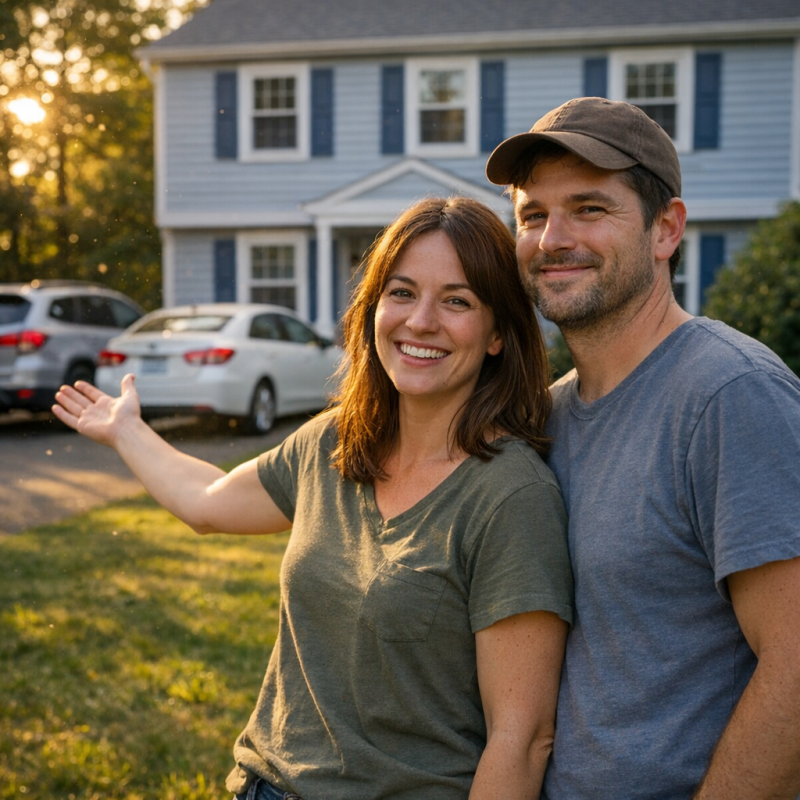 Image by FCT AI
Emily's Way
If you know Emily, you know she can't just move somewhere and not introduce herself. That's just not who she is. She grew up in one of those small towns where everyone knows everyone, and she's always believed that baking cookies for strangers is, like, a sacred duty or something. So that second weekend, she spent Saturday afternoon in the kitchen making these ridiculous chocolate chip cookies — the kind with sea salt on top that honestly should be illegal they're so good. I watched her pack them onto paper plates, wrapping each one with cellophane and those little ribbon bows she always keeps in the junk drawer. She went house to house, came back with stories about everyone. The retired couple two doors down who winter in Florida. The young family with twins across the street. Rachel, the woman who worked in publishing and had a garden I was already jealous of. Everyone loved her, obviously. Everyone always loves Emily. She saved one last plate for the house next door, the one with the truck always parked at an odd angle.
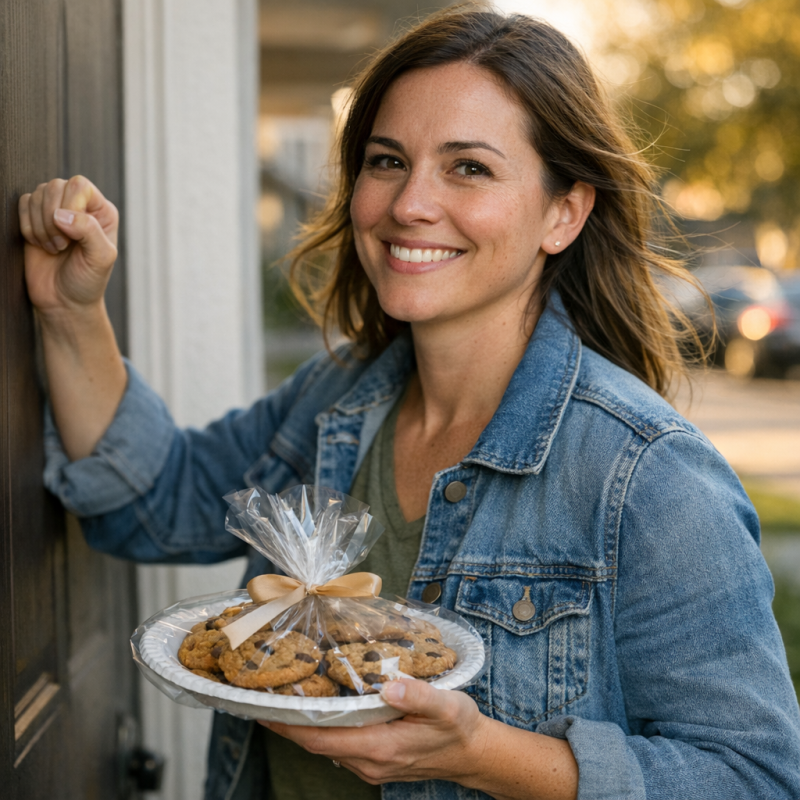 Image by FCT AI
The Closed Door
Emily walked over there on Sunday morning while I was mowing the lawn. I watched her knock, wait, knock again. I saw the door open maybe six inches, saw her smile and hold up the plate, saw her mouth moving the way it does when she's being extra friendly. The whole interaction lasted maybe twenty seconds. Then the door closed. Not slammed, but just... closed. She stood there for a moment looking at the plate still in her hands, then turned and walked back. His name was Carl, she told me. That's all she got. He'd taken the cookies without a word, nodded once, and shut the door before she could even finish introducing herself. 'Maybe he's just shy,' she said, laughing. 'Or maybe he hates chocolate chip.' She made jokes about it while we finished unpacking the garage, but I noticed she kept glancing toward his house. When she told me about it that evening, she laughed it off, but I could see something in her eyes — the first flicker of doubt about our perfect new neighborhood.
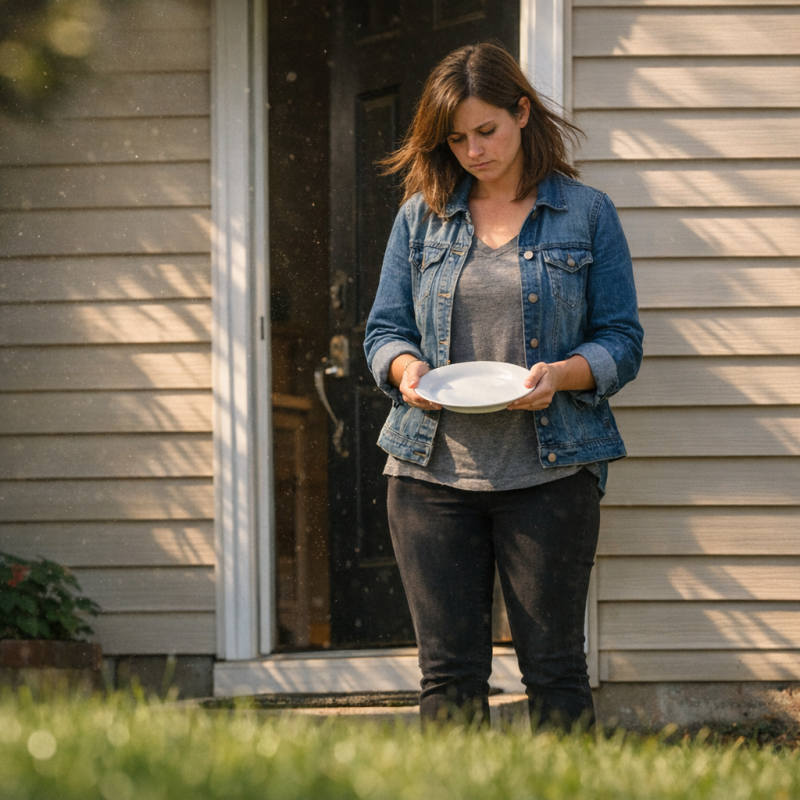 Image by FCT AI
The First Awkward Angle
The next Tuesday, I was running late for work and came out to find Carl's truck parked just slightly over the property line. Not blocking us completely, but enough that I had to do this awkward three-point turn to get out without scraping my bumper on his tailgate. I figured, whatever, the guy probably just misjudged the space. People do that. I didn't think much of it. But Wednesday morning, same thing. His truck was angled the exact same way, maybe even an inch closer to our driveway. I had to reverse, pull forward, reverse again — this whole dance that made me feel ridiculous. Thursday morning, Emily went out first and I watched from the kitchen window as she had to navigate around it. She didn't say anything when she came back in, just grabbed her coffee and kissed me goodbye. Friday, same deal. I started noticing the pattern. Always the same angle, always just enough to be inconvenient. It was easy to write off as careless parking — until it happened again the next morning, and the morning after that.
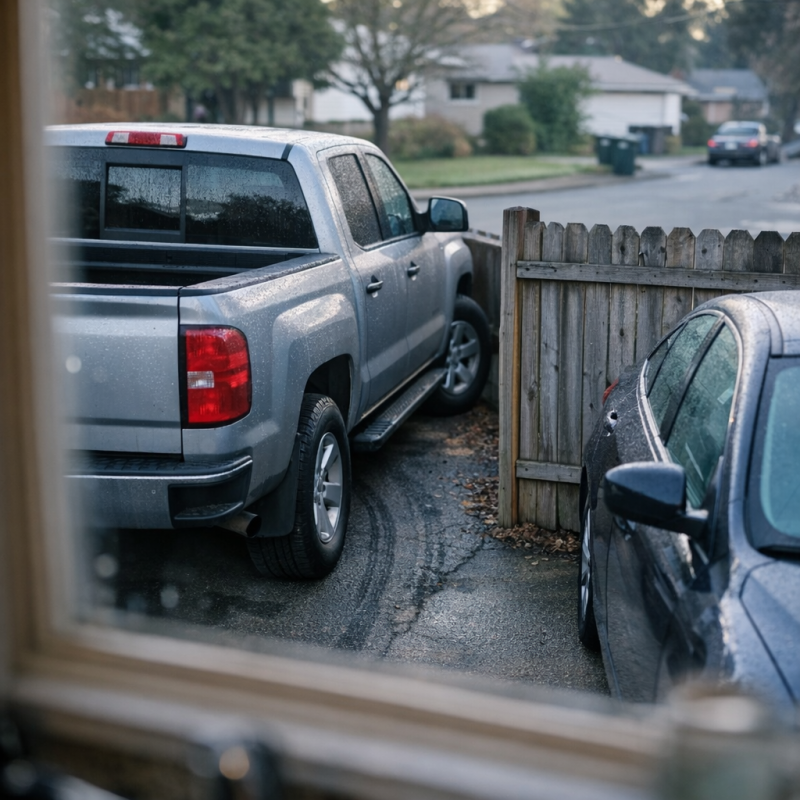 Image by FCT AI
Emily's Morning Routine
Here's the thing about Emily's job — she's a surgical nurse, and her shift starts at exactly eight a.m. Not 8:05, not 8:10. Eight. Which means she leaves the house at 7:45 every single morning, no exceptions. It's been her routine for six years. So when Carl's truck started making her late, it wasn't just annoying. It was actually affecting her work. Monday she left four minutes late. Tuesday, seven minutes. She never complained directly, but I could see the tension in her shoulders when she'd come back inside to grab something she forgot, checking her watch, that little crease forming between her eyebrows. Wednesday morning I heard her car start, then stop, then the front door opening again. She came back inside, ten minutes behind schedule, and said something that stuck with me: 'He was just sitting in his truck, David. Just sitting there.'
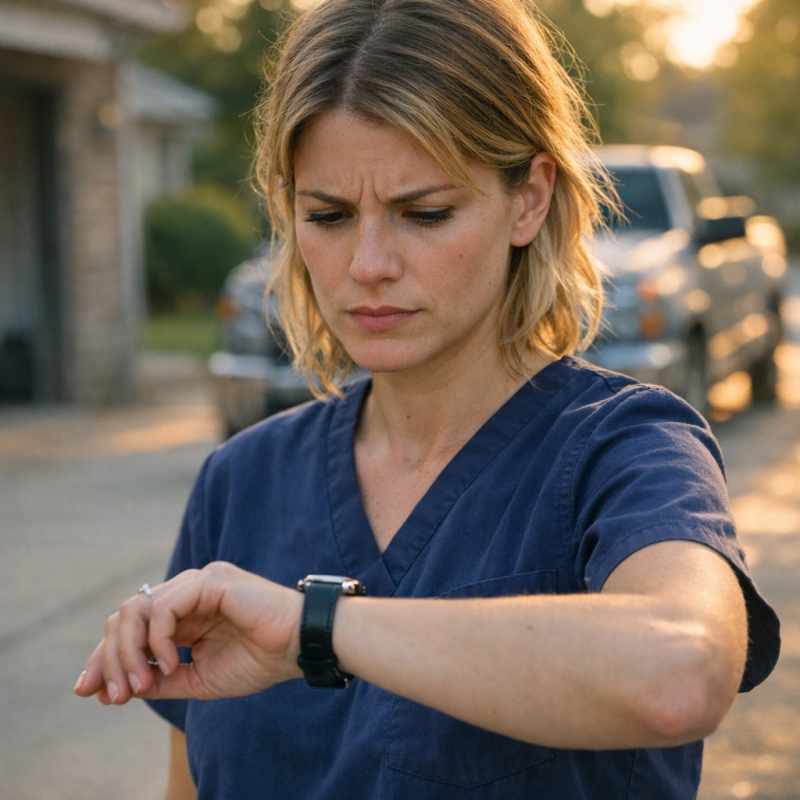 Image by FCT AI
The Watcher
I started paying more attention after that. On Thursday I got up early and looked out the bedroom window while making coffee. Carl was standing at his front window, just standing there, looking out toward our house. It was barely past six a.m. I watched him for maybe two minutes and he didn't move, didn't shift his weight, nothing. Friday night I took the trash out around nine and saw him again, same window, same stance. Emily didn't notice — she was inside watching something on her laptop — but I did. Saturday afternoon I was reading on the porch and caught him staring from his side window, the one that faced our driveway. He wasn't looking at anything in particular, or maybe he was. I couldn't tell. It's hard to explain the feeling, you know? Like when you sense someone's eyes on you but you can't prove it. I told myself people have routines, habits, reasons for looking out their own windows — but something about the way he stood there, motionless, made my skin crawl.
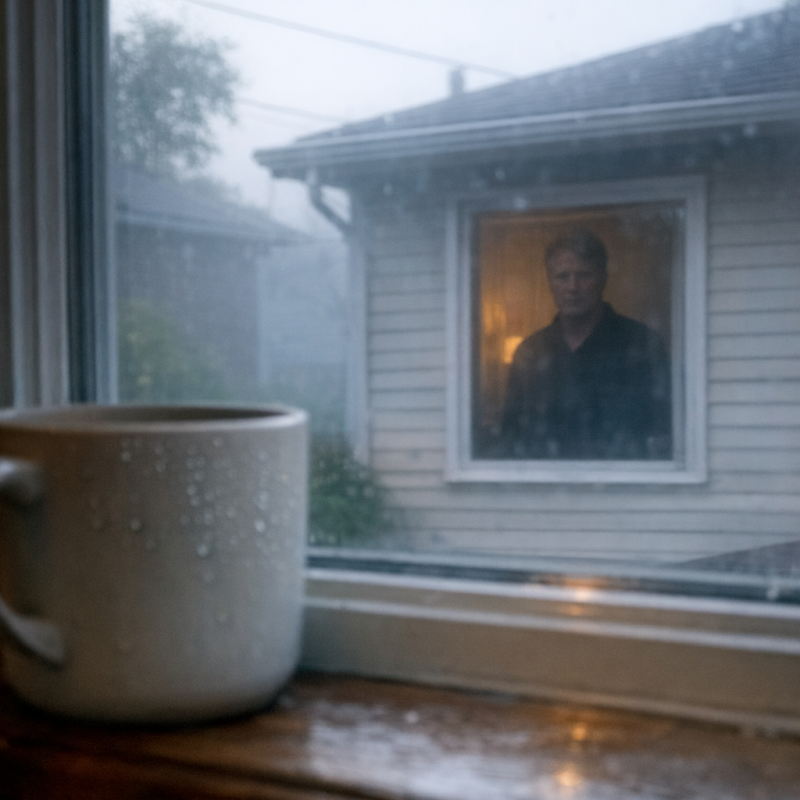 Image by FCT AI
The Polite Approach
I decided to be the bigger person. That's what you're supposed to do, right? Be neighborly, assume good intentions, all that. So Tuesday evening I walked over and knocked on his door, rehearsing my friendly tone in my head. Carl answered after the third knock. Up close he looked tired, maybe mid-fifties, with this gray stubble and deep lines around his eyes. I smiled, introduced myself properly, mentioned we'd been neighbors for almost three weeks now. He didn't smile back. I kept it light, said something like, 'Hey, I wanted to mention — your truck's been parked pretty close to our driveway lately, and it's making it tough for my wife to get out in the mornings. Any chance you could park a little further over?' I said it so carefully, so politely. Carl looked at me for a long moment, then said, 'I park where I want. If your wife's got a problem with it, that's her problem.'
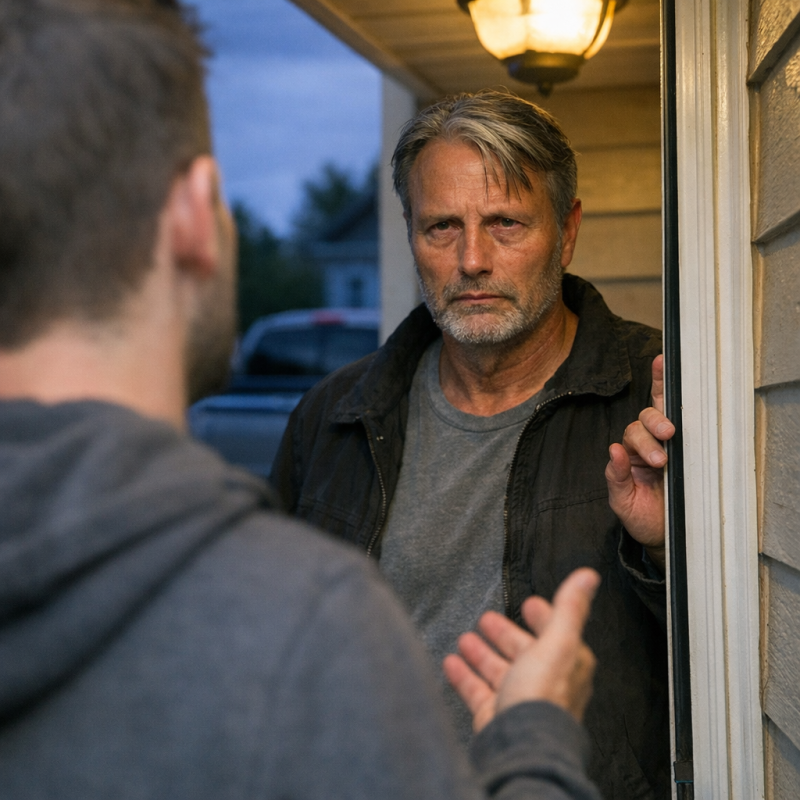 Image by FCT AI
Rachel's Sympathy
I was still processing that conversation when Rachel showed up Thursday night with a bottle of wine and this apologetic look on her face. She'd seen me talking to Carl, she said. Wanted to check in. Emily invited her inside and we sat in the living room while Rachel picked her words carefully, like she was walking through a minefield. She'd lived on the street for twelve years, she told us. Carl had been there even longer. 'He's always been... difficult,' she said, swirling her wine. 'Keeps to himself. Not exactly the welcome wagon type.' She didn't elaborate, didn't give specifics, but something in her tone made it clear there was more to the story. Emily asked if he'd ever caused problems before. Rachel hesitated, glanced toward Carl's house through our window, then shrugged. 'Just... he's had a rough few years,' she said vaguely. We talked about other things after that, neighborhood stuff, her garden, Emily's new job. It felt good to connect with someone normal. Before she left, she paused at the door and said quietly, 'Just... be careful with him, okay?'
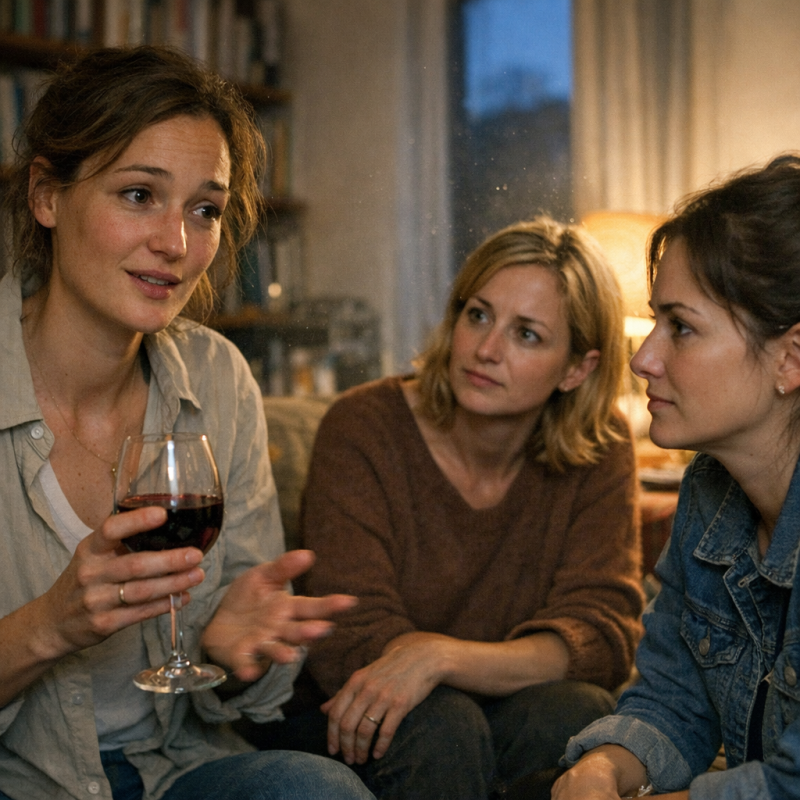 Image by FCT AI
The Complete Block
Friday morning, Emily left for work at seven-thirty as usual. I was making coffee when I heard her car start, then immediately shut off. Then silence. I walked to the window and my stomach dropped. Carl's truck was parked completely across our driveway entrance, like a barricade. Not angled. Not halfway. Fully blocking it. Emily got out of her car and stood there for a moment, staring at his house. I watched her walk to his front door and knock. She knocked again. And again. Five full minutes passed while I stood at our window, my coffee going cold in my hand, watching my wife knock on a stranger's door at seven-thirty in the morning. Finally, Carl opened it. I couldn't hear what was said, but I saw him look at her, then slowly — deliberately slowly — walk to his truck, get in, and move it. Not with any urgency. Like he had all the time in the world. Emily was fifteen minutes late to work, and when I asked her what he'd said, she just shook her head — because he hadn't said anything at all.
 Image by FCT AI

History's most fascinating stories and darkest secrets, delivered to your inbox daily.
Emily's Theory
That night, Emily sat on the couch with her knees pulled up, trying to make sense of it. 'Maybe he's just territorial,' she said quietly. 'You know, been here a long time, doesn't like new people.' I nodded, letting her talk. 'Or maybe he's lonely,' she continued. 'Rachel said he's had a rough few years. Maybe he just... doesn't know how to be neighborly.' She looked at me with those hopeful eyes, the ones that always saw the best in people. 'I could try talking to him again,' she offered. 'Like, really talking. Not just about the truck. Maybe if he understood we're not trying to cause problems...' I wanted to believe her. God, I wanted to. Emily had this way of connecting with people, of breaking through walls. It was one of the things I loved about her. But something about Carl's silence that morning, the deliberate slowness of his movements, the way he'd made her wait — it felt calculated. Purposeful. I didn't have the heart to tell her what I was really thinking — that this had nothing to do with territory or loneliness.
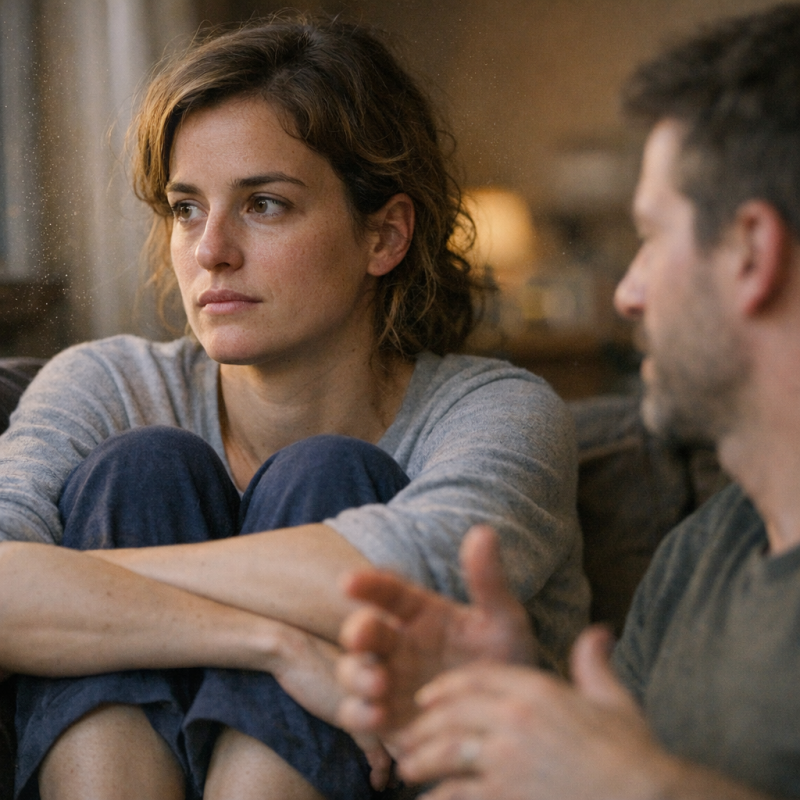 Image by FCT AI
The Sudden Appearances
It started the next day. Emily went out to check the mail around noon — I was working from home — and within thirty seconds, Carl's front door opened. He stepped onto his porch, coffee mug in hand, and just stood there. Watching her. She grabbed the mail quickly and came back inside. 'That was weird,' she said, but laughed it off. Two hours later, she went out to water the front flower bed. Before she even turned the hose on, there he was again. Standing in his driveway this time, pretending to inspect his truck. The next morning, she left for work and he emerged from his garage as she backed out. Every single time she stepped outside, he appeared. Like clockwork. Emily started noticing it too. I could see it in the way she'd pause before opening the front door, glancing through the window first. 'It's probably just coincidence,' she said one evening, but her voice was uncertain. She started timing her exits differently, trying to avoid him, but somehow he always knew when she'd be out there.
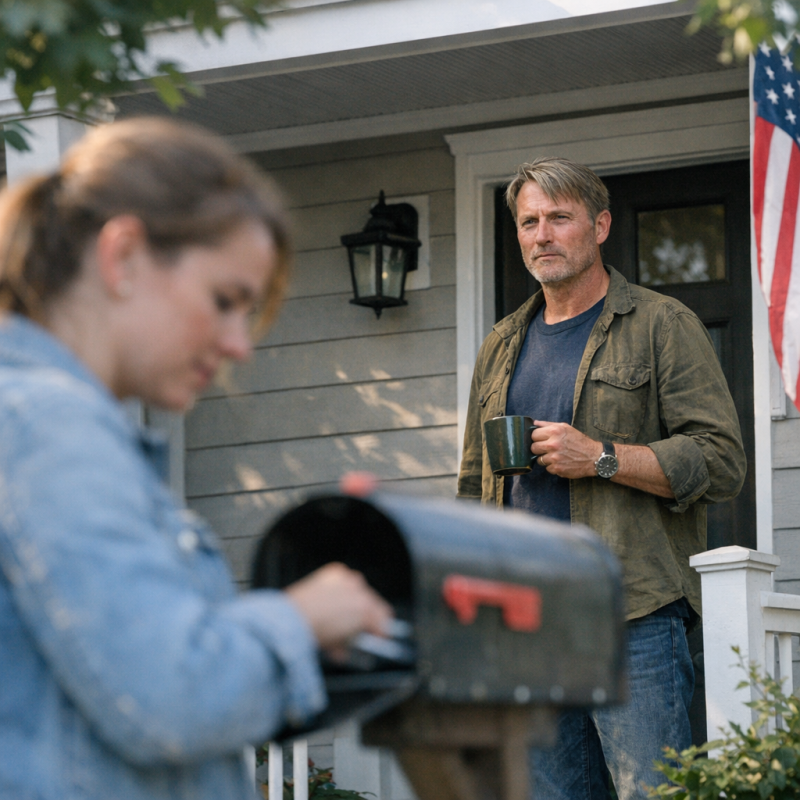 Image by FCT AI
Street Parking
By Tuesday, Emily had had enough of the driveway drama. 'I'll just park on the street,' she said that morning. 'Problem solved.' It seemed reasonable. We lived on a quiet street with plenty of curb space. She parked directly in front of our house, nowhere near Carl's property, and I thought maybe — finally — we'd found a workaround. Wednesday morning, Carl's truck was parked on the street too. Right in front of our house, just a few feet from Emily's car. Okay, I thought. Public street. He has every right. Thursday morning, his truck had moved closer. So close that when Emily came out to leave for work, she had to turn sideways to squeeze between the vehicles. I watched from the window as she navigated the tight space, her face flushed with frustration. Friday morning — and I'm not exaggerating here — I measured the gap. Eight inches. Maybe less. The next morning, his truck was parked just inches from her car — so close she had to squeeze between them to get to the driver's side.
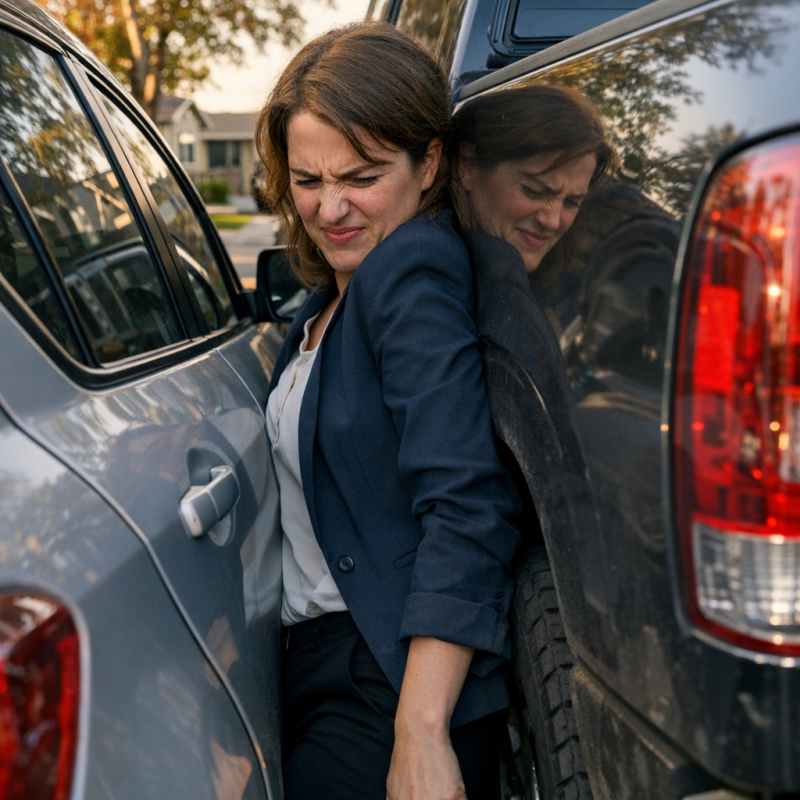 Image by FCT AI
The Photos
Sunday afternoon, Emily was getting groceries from her car when she froze. 'David,' she called out, her voice tight. I came outside and she pointed across the street. Carl was standing on his porch, phone raised, clearly taking pictures. Not even trying to hide it. The phone was aimed directly at our house — or her car, or her, I couldn't tell which. 'What the heck?' I muttered, and started walking toward him. He didn't lower the phone. Didn't move. Just kept taking photos as I crossed the street. 'Carl,' I said when I reached his yard. 'What are you doing?' He finally lowered the phone, looked at me with this blank expression. 'What are you photographing?' I asked, trying to keep my voice level. He smiled then. Not a friendly smile. Something else. Something that made my skin crawl. 'Evidence,' he said simply. I stared at him. 'Evidence of what?' But he just turned and walked back into his house, leaving me standing there. When I asked him what he was photographing, he just smiled and said, 'Evidence.'
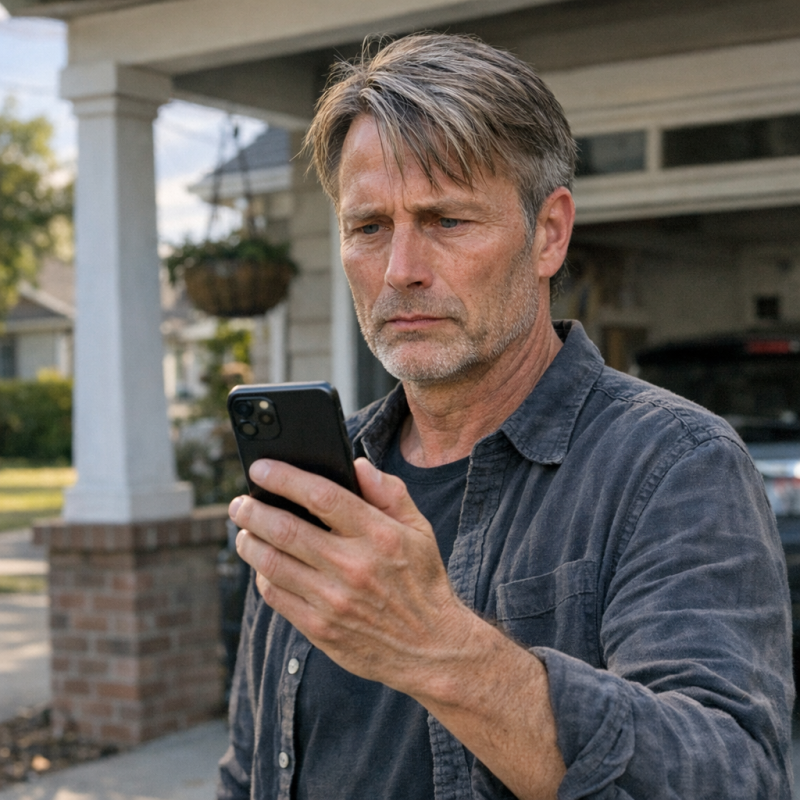 Image by FCT AI
The Second Attempt
Tuesday evening, I'd had enough. I walked across the street with my hands in my pockets, forcing myself to stay calm. I needed to try one more time. Maybe if I approached it differently, without Emily there, man to man. I knocked on Carl's door. Waited. Knocked again. 'Carl, it's David from across the street. I just want to talk for a minute.' Silence. I could hear movement inside. A shadow passed across the peephole. 'Carl, please. We're neighbors. Whatever's going on, we can work it out.' More silence. Then, muffled through the door: 'I got nothing to say to you.' His voice was flat, cold. 'I'm just trying to understand—' I started. 'I told you already,' he shouted, louder now, making me step back. 'I told you to mind your own business. Now screw off.' I stood there for a long moment, staring at his closed door, listening to the echo of his words. People were probably watching from their windows. 'Screw off,' he yelled again, and I realized talking wasn't going to solve this.
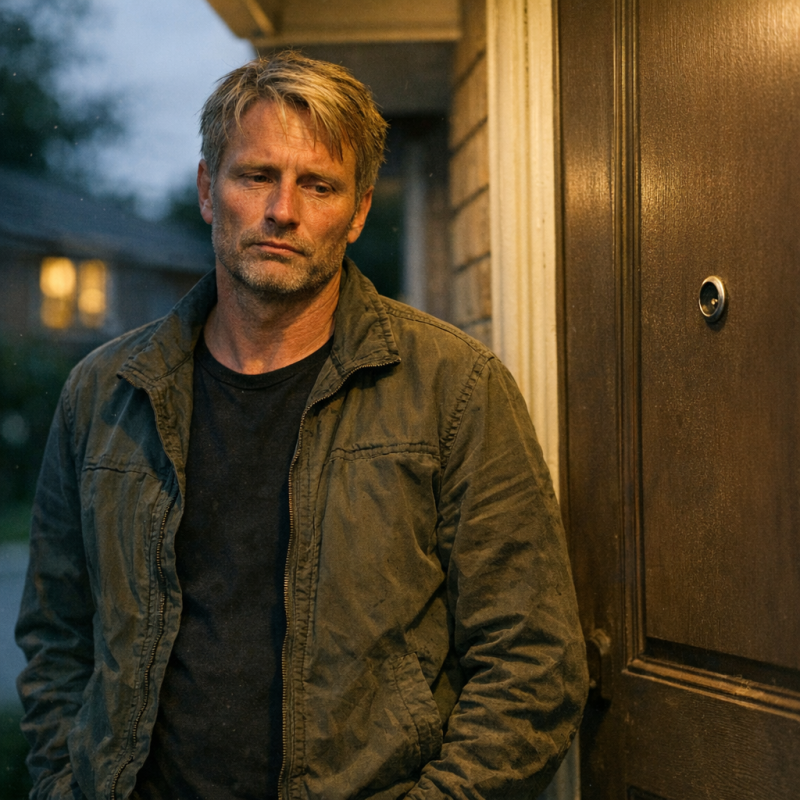 Image by FCT AI
Mr. Hernandez's Warning
I was checking our mailbox the next afternoon when Mr. Hernandez appeared beside me. He lived three houses down, always wore a cardigan even in warm weather, kept his lawn immaculate. We'd waved to each other a few times but never really talked. 'Your neighbor giving you trouble?' he asked quietly, nodding toward Carl's house. I wasn't sure how much to say. 'Just some parking issues,' I said carefully. Mr. Hernandez glanced around, then stepped closer. 'Carl's... he had some trouble. Years back.' He paused, weighing his words. 'What kind of trouble?' I asked. He shook his head. 'Not my story to tell. But he wasn't always like this.' The old man looked at Carl's house, then back at me. His expression was serious, almost worried. 'Just... be careful. Keep an eye on things.' I pressed him for more, but he was already backing away. 'Mr. Hernandez, what kind of trouble? What should I—' He stopped at the edge of his yard. 'Just don't let your wife be alone with him,' he said, and walked away before I could ask what he meant.
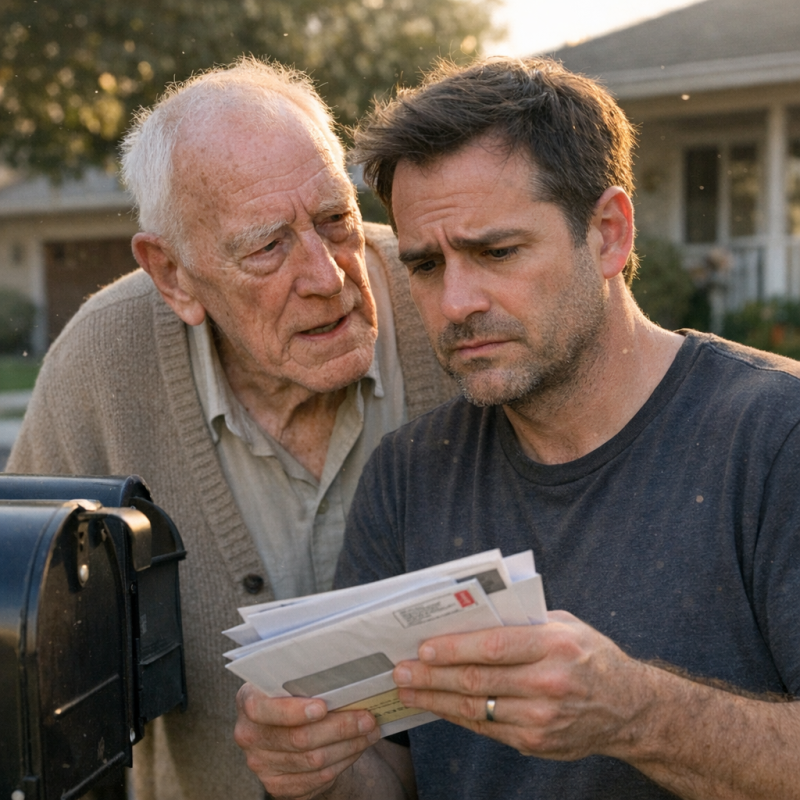 Image by FCT AI
Emily's Confidence Wanes
Emily changed after that. She'd always been the outgoing one between us, the first to wave at neighbors, to strike up conversations at the grocery store, to turn our house into a home. But now she'd check the windows before going outside. Every time. I'd catch her peeking through the blinds, scanning Carl's property for signs of movement before she'd even open the front door. She stopped using our front porch entirely, started going out the back to take out trash or get to her car through the side gate. When friends invited her out after work, she'd make excuses — didn't want to come home after dark, didn't want to park on the street at night. 'I'm fine,' she'd say when I asked, but her smile didn't reach her eyes anymore. She'd lost weight. Wasn't sleeping well. I'd wake up at two in the morning and find her at the bedroom window, just staring out at the street. I watched the light drain from her a little more each day, and I realized I had to do something — anything — to stop this.
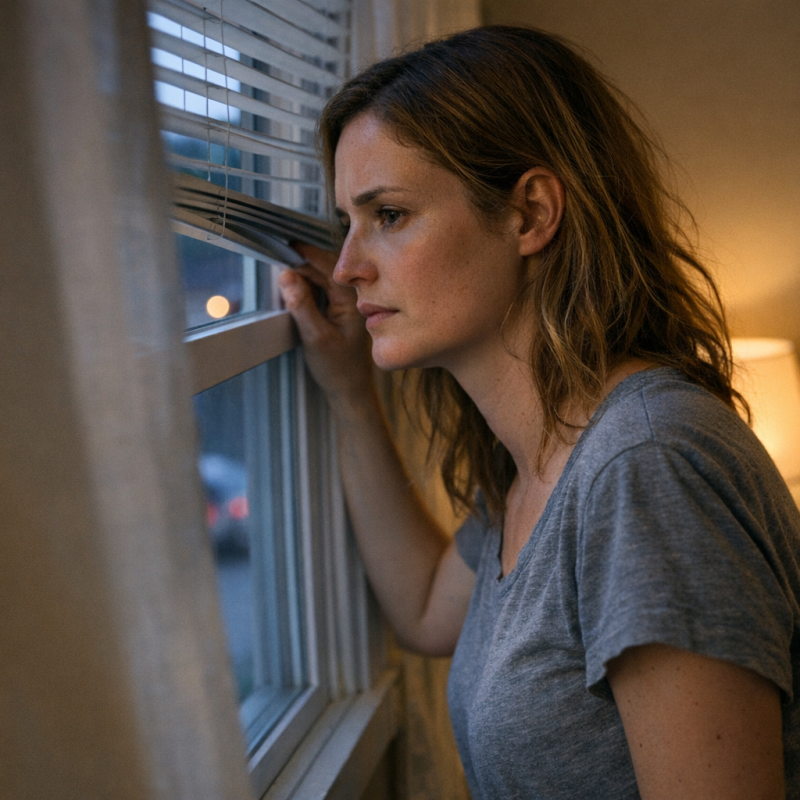 Image by FCT AI
David's Research
I started researching everything I could find about property disputes, neighbor harassment, legal boundaries. I'm talking hours every night after Emily fell asleep — sitting at the kitchen table with my laptop, coffee going cold beside me, falling down rabbit holes of municipal codes and state statutes. I read through forums where people dealt with nightmare neighbors, looked up restraining order requirements, studied harassment documentation guidelines. Most of it was discouraging. You need proof, evidence, witnesses. You need to demonstrate a pattern that rises to the level of actual legal harassment, not just someone being a pest. Carl had been careful, I realized. Everything he did lived in this grey area where it was annoying, unsettling, but not quite criminal. Then around two in the morning on the third night of research, I stumbled onto a municipal website section about property surveys and boundary disputes. I started reading about adverse possession, easements, setback requirements. And that's when I saw it — information about how property lines actually worked, how they could be verified, how they were legally enforced. That's when I found the section on property surveys and boundary disputes — and an idea began to form.
 Image by FCT AI
The Trash Incident
The trash cans appeared on a Thursday morning. Carl had positioned them right at what he clearly believed was the property line, but on our side of the driveway — just barely, maybe six inches over. Emily had to squeeze past them to get to her car, and I watched from the window as she navigated around them, her shoulders tense. When I went out to move them back to his side, Carl was suddenly there on his porch, coffee cup in hand, watching me. He didn't say anything. Just stood there with this slight smile, like he was daring me to acknowledge what he was doing. I moved the cans. The next morning, they were back. Same spot, same deliberate placement. This went on for a week. Every morning, the trash cans. Every morning, that subtle smirk from his porch. Emily stopped mentioning it, which somehow made it worse — like she'd accepted this as just part of our life now. I kept moving them, kept seeing that look on his face. It was a small thing, petty even — but it was one more reminder that he wasn't going to stop.
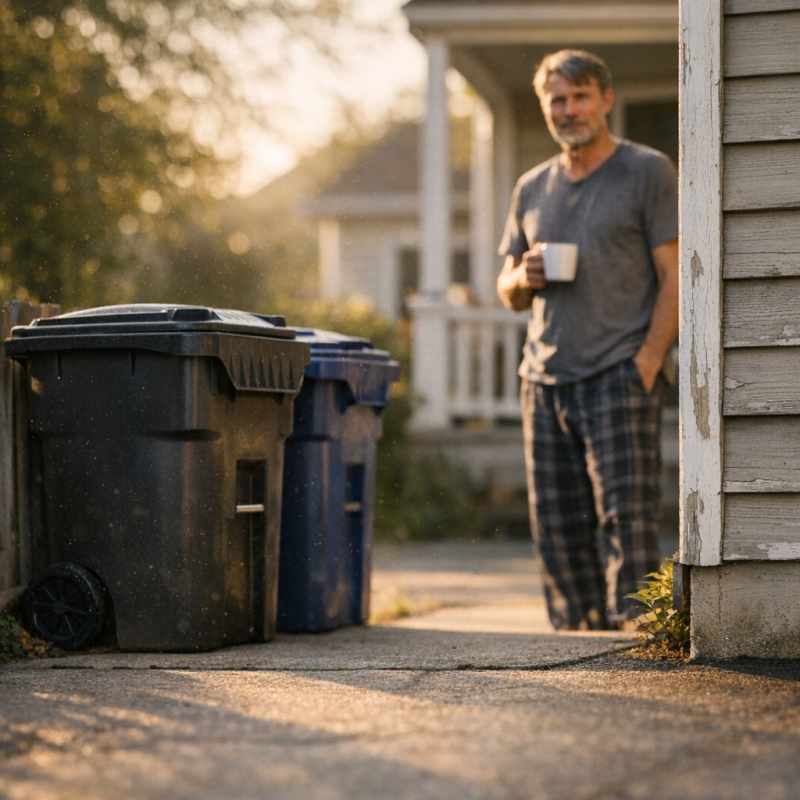 Image by FCT AI
Rachel's Story
I caught Rachel getting her mail one afternoon and walked over, trying to seem casual. We made small talk about the weather, her garden, normal neighbor stuff. Then I asked how long she'd known Carl. She got this careful look on her face, like she was choosing her words. 'About ten years now,' she said. 'He and his wife moved in together, but she left maybe... four years ago? Five?' I asked what happened, if she knew. Rachel glanced toward Carl's house, then back at me. 'I don't know the details. He doesn't talk about it. But I know it was bad. The divorce, I mean. She took him to the cleaners, from what I gathered. The house, most of his money. He barely kept this place.' She paused, her expression softening with something like pity. 'He used to be friendlier, you know? Would wave, help with heavy groceries, normal stuff. But after she left...' She trailed off, shaking her head. 'He used to be different,' she said. 'But after she left, something in him just... broke.'
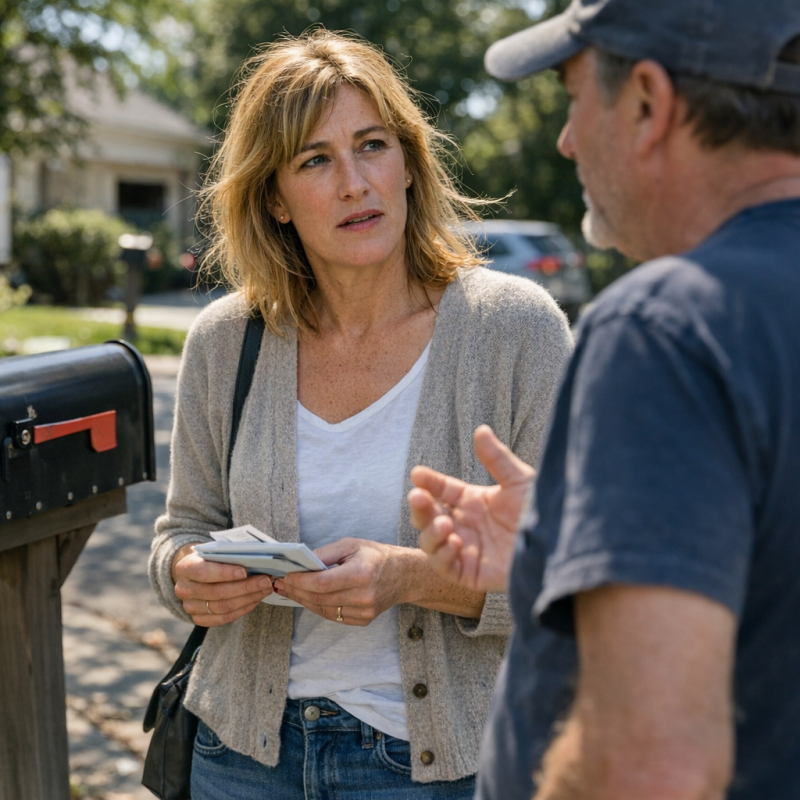 Image by FCT AI
The Anonymous Note
Emily found it on a Saturday afternoon when she went to check the mail. She came back inside holding a piece of paper, her face pale. 'David,' she said, and her voice had this hollow quality that made my stomach drop. I took the note from her. Plain white paper, no envelope, folded once. The words were written in pencil, all caps, shaky letters that looked almost deliberately disguised: 'YOU DON'T BELONG HERE.' That was it. Nothing else. No signature, no explanation, no specific threat — just those four words. Emily wrapped her arms around herself. 'It's him, right? It has to be him.' I wanted to say yes, wanted to march over there and confront Carl, but I couldn't prove anything. Anyone could have written it, technically. Could have been kids, could have been a prank, could have been anything. But I knew. We both knew. The handwriting was shaky, almost childish, and I couldn't prove it was Carl — but I didn't need proof to know.
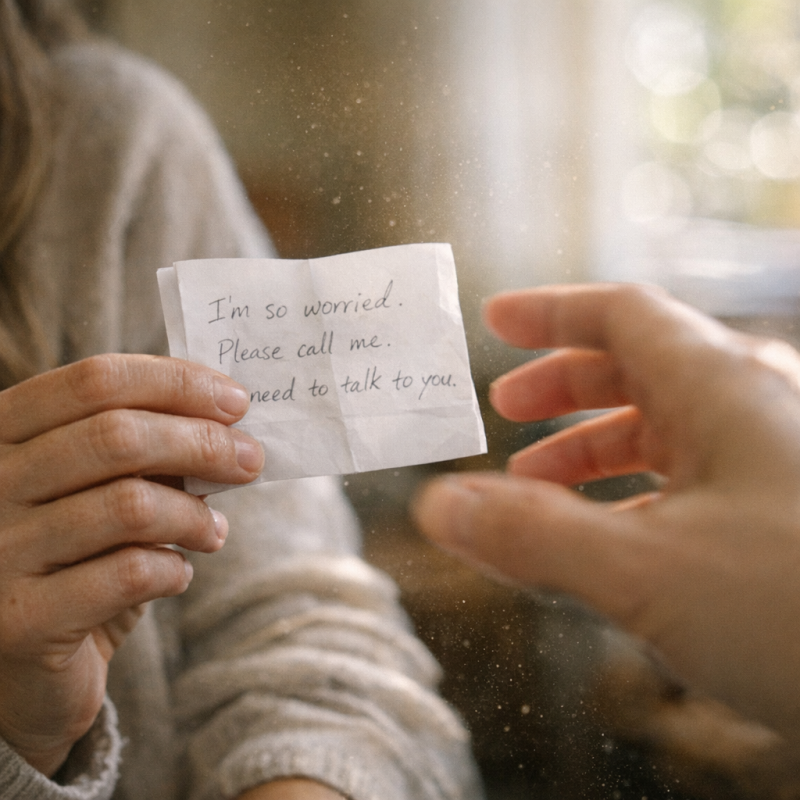 Image by FCT AI
Considering the Police
That night, we sat at the kitchen table and talked about calling the police. Actually calling them, making a formal report, getting something on record. Emily pulled up the non-emergency number on her phone, then just stared at it. 'What do we even say?' she asked. 'That our neighbor parks badly and put trash cans near our driveway? That we got an anonymous note?' I tried to list everything — the blocking, the staring, the following, the way he always seemed to be watching. But as I said it out loud, I heard how it sounded. Circumstantial. Subjective. Nothing concrete. Nothing provable. No property damage, no direct threats, no witnesses to anything really illegal. 'He hasn't actually done anything criminal,' I admitted. 'Not that we can prove.' Emily set her phone down. 'So we just... what? Live like this? Wait for him to do something worse?' Neither of us had an answer for that. 'What are we supposed to report?' Emily asked. 'Bad parking and weird vibes?'
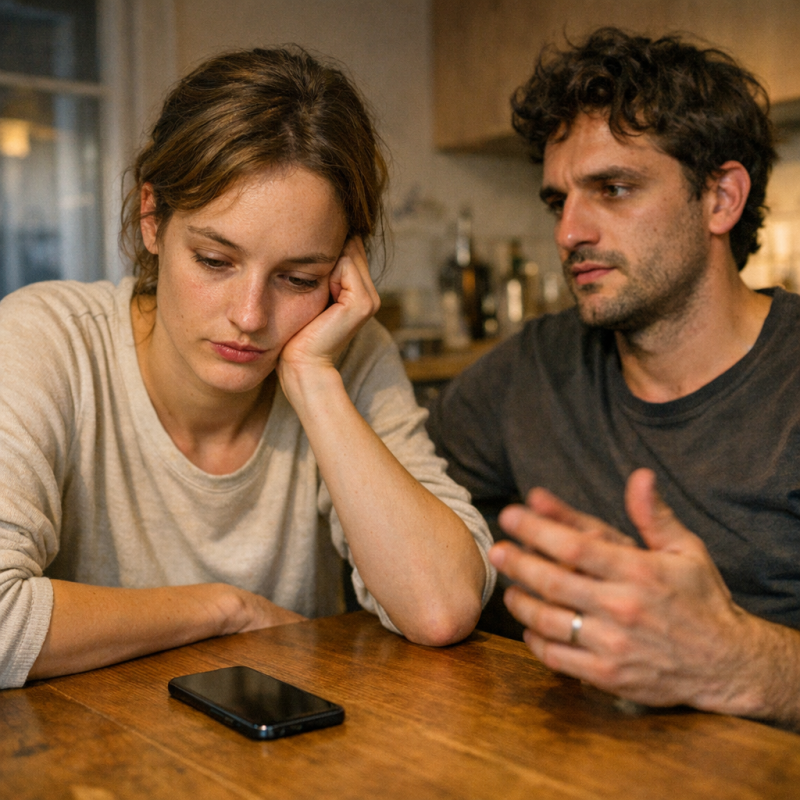 Image by FCT AI
Officer Martinez Visits
I called anyway. The non-emergency line, Monday morning. Explained the situation as calmly as I could to the dispatcher. She said she'd send an officer by to take a statement. Officer Martinez showed up that afternoon — mid-thirties, professional, actually seemed to listen. We sat in the living room and I walked him through everything. The parking, the watching, the note, Emily's fear. He took notes, asked clarifying questions, didn't dismiss us. Emily showed him the note, told him about the panic, the weight loss, how she didn't feel safe in her own home anymore. Martinez nodded, sympathetic. 'I understand this is affecting your quality of life,' he said. 'And I take that seriously.' Then came the but. I could see it in his face before he said it. 'The problem is, everything you're describing is... it's concerning, definitely. But it's not illegal. Parking on the street is allowed. Standing on his own property is allowed. Even the note, as threatening as it feels, doesn't contain a specific threat.' He looked genuinely sorry. 'I believe you,' Martinez said, 'but unless he threatens you directly or damages your property, there's not much we can do.'
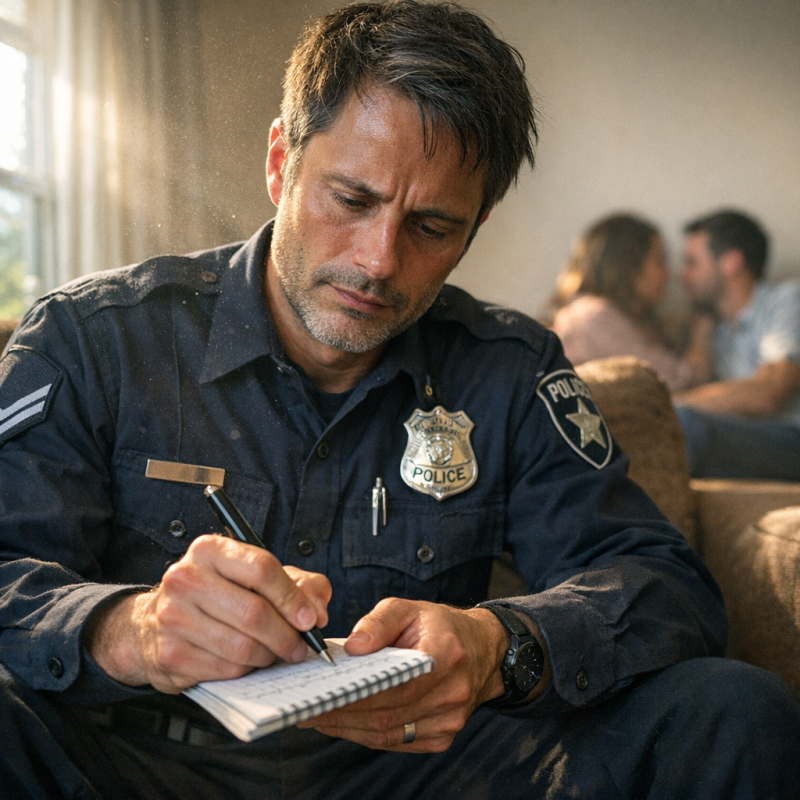 Image by FCT AI
Emily's Panic Attack
It happened two days later. I was inside when I heard Emily's car door slam, then nothing. I looked out the window and saw Carl's truck blocking our driveway again, saw Emily standing beside her car, just frozen. Carl was on his porch, arms crossed, watching her. Not moving, not speaking, just watching. I ran outside. Emily was hyperventilating, her hands shaking so badly she'd dropped her keys. Her face was white, tears streaming down her cheeks, and she was trying to breathe but couldn't quite catch it. 'I can't— I can't—' she gasped. I put my arms around her, tried to help her breathe slowly, but she was trembling all over. Carl stayed on his porch the entire time. Didn't move. Didn't offer help. Just watched my wife fall apart in our own driveway like it was a show put on for his entertainment. I got Emily inside, sat with her until the panic subsided, until her breathing evened out. She cried for twenty minutes. That was the moment I stopped caring about being reasonable.
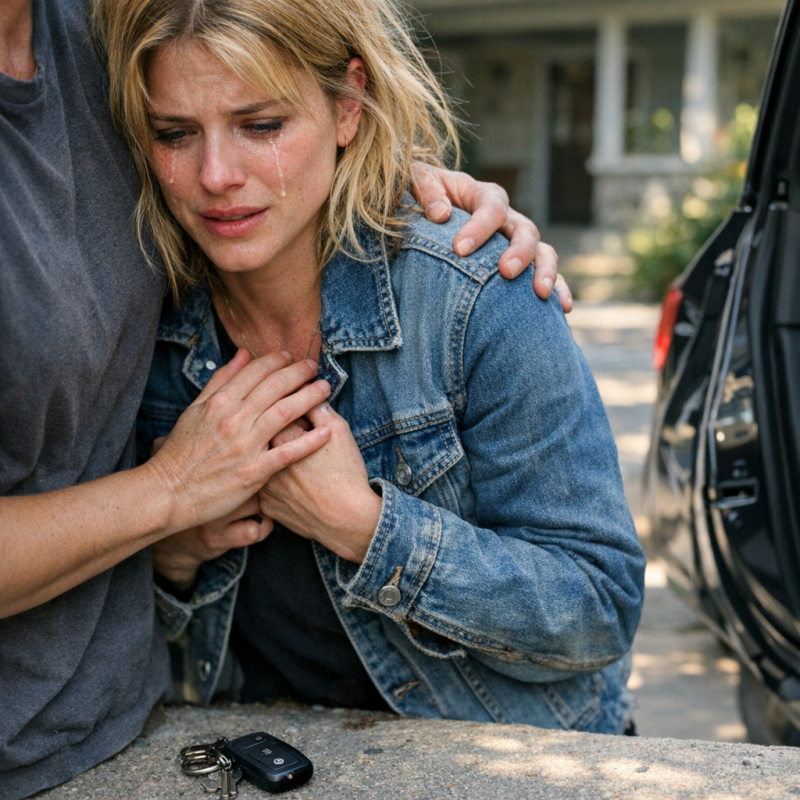 Image by FCT AI
The Decision
After Emily finally fell asleep that night, I sat in the dark living room and made a decision. I'd been trying to handle this the right way — polite conversations, police reports, documentation. Following the rules. But Carl wasn't playing by rules. He was playing a different game entirely, one where he made the moves and we just reacted, always scrambling, always defensive. That had to change. I thought about everything I'd learned in my research, about property lines and surveys and municipal codes. I thought about how Carl operated — carefully, deliberately, always just inside the boundaries of what was legal. He watched, waited, found the pressure points. He was patient. Methodical. If I wanted to stop him, I needed to be the same way. No more emotional reactions. No more hoping someone else would fix this. I needed to watch him the way he watched us, learn his patterns, find his weakness. And then I needed to act with the same cold precision he'd been using against us. If he wanted to play games with property lines and petty power moves, fine — I'd just have to beat him at his own game.
 Image by FCT AI
Watching the Watcher
I started watching Carl the way he'd been watching us. Not obviously — I wasn't going to stand at the window with binoculars or anything creepy like that. But I paid attention. I noticed things. He left for work at exactly 7:42 every weekday morning, never earlier, never later. He returned at 6:15 in the evening. On Tuesdays, he dragged his trash bins to the curb at precisely 8:00 PM, positioning them with almost military precision along his property line. He inspected his fence weekly, walking the entire perimeter with his hands clasped behind his back like he was surveying a kingdom. But the truck — God, the truck. That gleaming monstrosity was clearly his pride and joy. He parked it in the exact same spot every single time, adjusting and readjusting until it sat at the perfect angle. He waxed it. He detailed it. He washed that truck every Sunday morning, same time, same ritual — and I realized how much he cared about control.
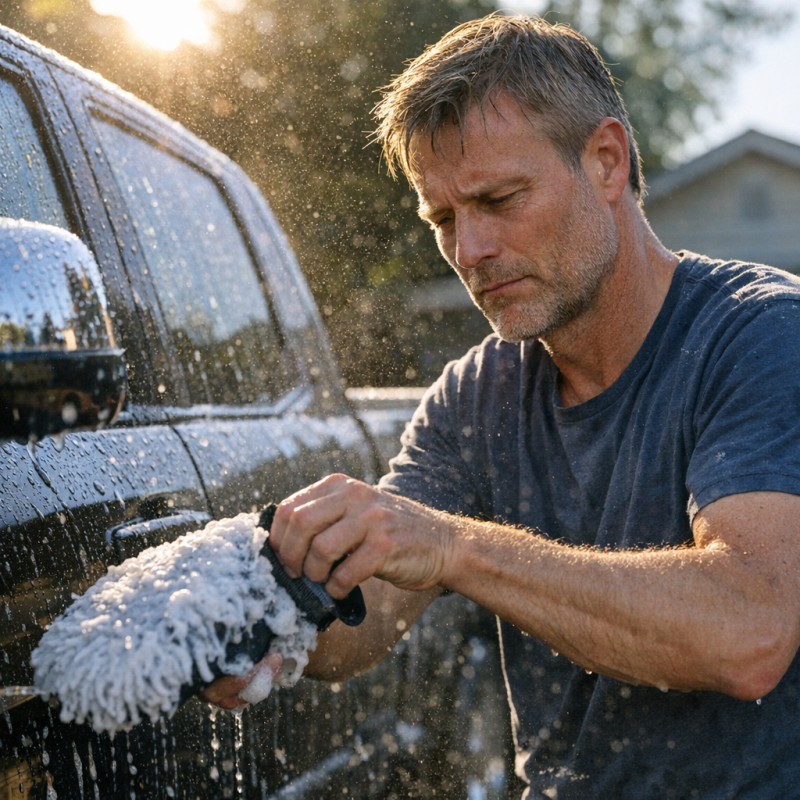 Image by FCT AI
The Survey Idea
The idea hit me on a Wednesday afternoon while I was sitting at my desk, supposedly working. Properties have official boundaries. Legal ones. They're not just decided by whoever acts like they own the space — there are actual survey markers, recorded documents, coordinates that define exactly where one person's land ends and another's begins. What if Carl's driveway wasn't entirely on his property? What if he'd been treating shared space, or even our space, as his own for so long that he'd just assumed it was his? The thought made my pulse quicken. I'd been so focused on the blocking, the harassment, the psychological warfare that I hadn't considered the most basic question: where did his property actually end? I closed my laptop and headed to the filing cabinet where we kept all our home purchase paperwork. Somewhere in those folders was documentation from when we'd closed on the house. I pulled out the closing documents from our home purchase and started searching for the original property survey.
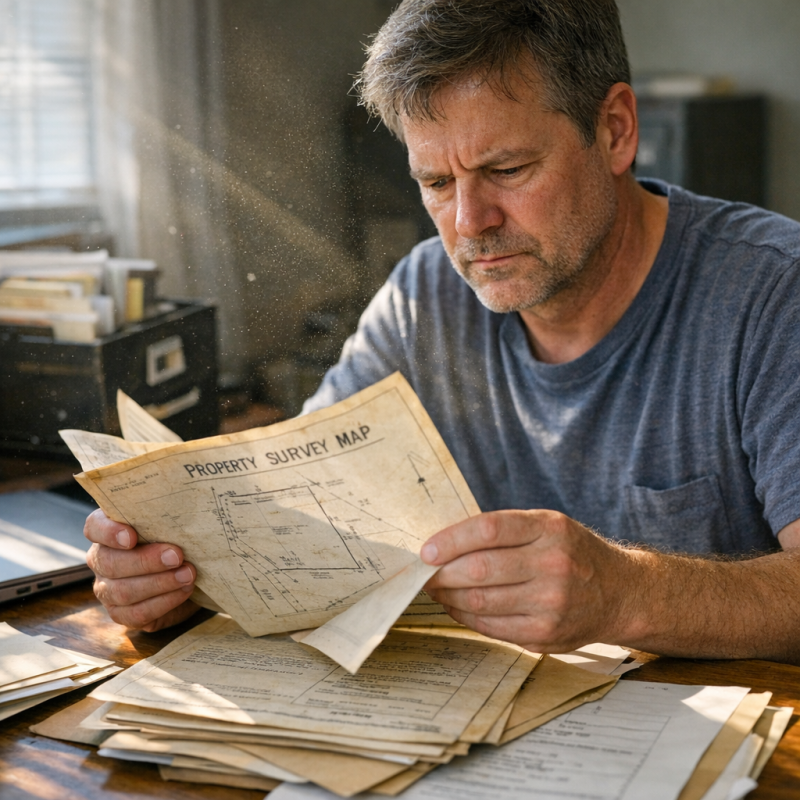 Image by FCT AI
The Old Survey
It took me twenty minutes to find it, buried beneath mortgage statements and inspection reports. The paper was slightly yellowed, creased from being folded and unfolded, but the diagram was clear enough. I spread it across the dining room table and studied it carefully. The survey showed our lot with precise measurements, boundary lines marked with technical annotations I had to look up online to fully understand. There were references to 'iron pins' and 'concrete monuments' — physical markers that had been placed in the ground when the properties were originally divided decades ago. I traced my finger along the eastern boundary, the side we shared with Carl. The line ran straight from the street to the back fence, marked with exact distances and angles. And then I saw it. The notation showed our property line extended several feet beyond where I'd assumed it was, beyond where Carl seemed to think it was. There it was, in faded ink — the exact coordinates of our property line, running right through the edge of what Carl treated as his driveway.
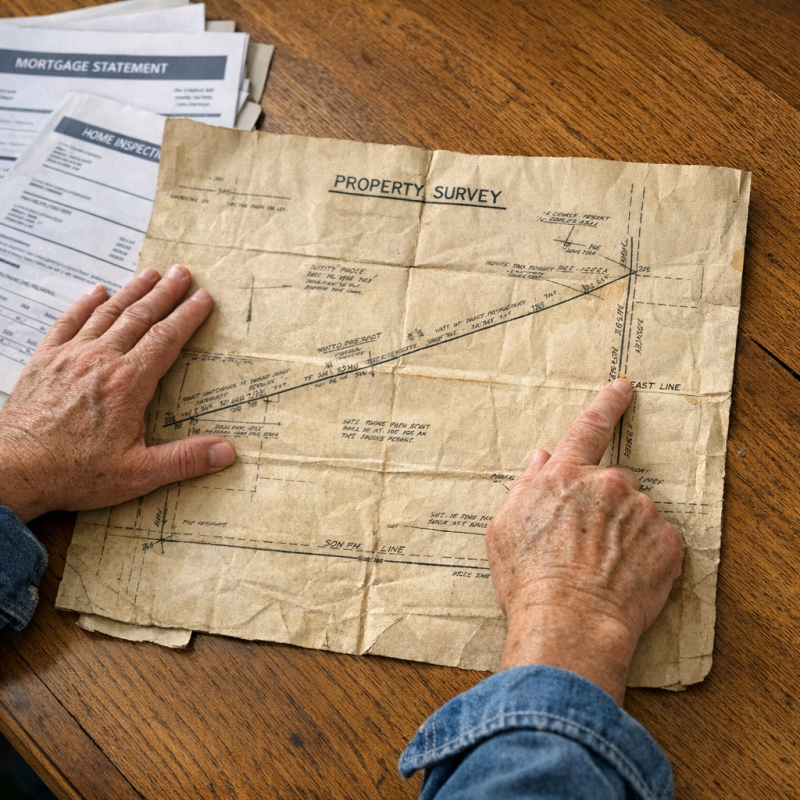 Image by FCT AI
Linda's Confirmation
I needed confirmation from someone who'd lived here longer, someone who might remember how things used to be. Linda was outside two days later, pruning her roses, and I wandered over casually, making small talk about the weather before easing into what I actually wanted to know. 'Hey, random question,' I said, keeping my tone light. 'Do you remember anything about the property lines around here? Like between our place and Carl's?' She straightened up, brushing dirt from her gardening gloves. 'Why do you ask?' 'Just curious. The driveway situation got me thinking.' Linda glanced toward Carl's house, then back at me. 'You know, I've lived here eighteen years, and Carl's driveway has always been a bit odd. The angle of it, I mean. It doesn't quite match up with the lot line the way most driveways do.' My heart started beating faster. 'Really?' 'I think part of it might actually be on the shared easement,' she said. 'Or maybe even your side. Nobody ever checked.'
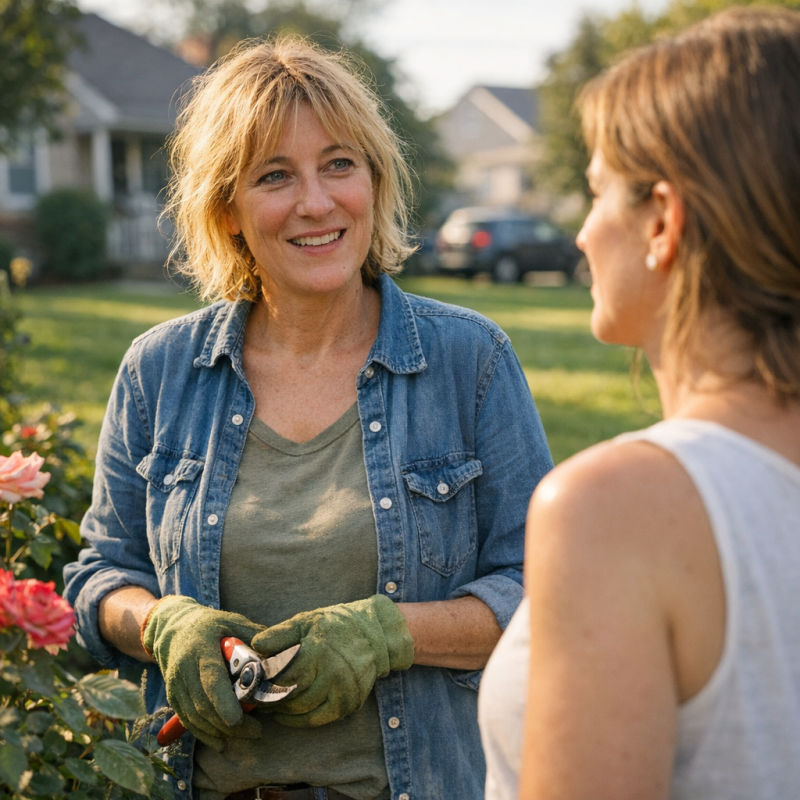 Image by FCT AI
The Night Walk
I waited until after midnight, when the neighborhood was completely quiet and Carl's house was dark. I grabbed a flashlight, the survey, a measuring tape, and headed outside. The survey indicated three boundary markers along our shared property line — iron pins driven into the ground that should still be there unless someone had deliberately removed them. I started at the street, sweeping the flashlight beam across the grass near the curb. It took fifteen minutes of searching before I found the first one: a metal cap flush with the ground, barely visible beneath a thin layer of dirt and old grass clippings. I marked it with a piece of flagging tape and moved to the second marker, midway down the property line. Found it. The third should be at the back corner, near the fence. I walked carefully, measuring as I went, and finally located it partially obscured by overgrown weeds. When I found the third marker, I measured the distance to Carl's truck's usual spot — and smiled.
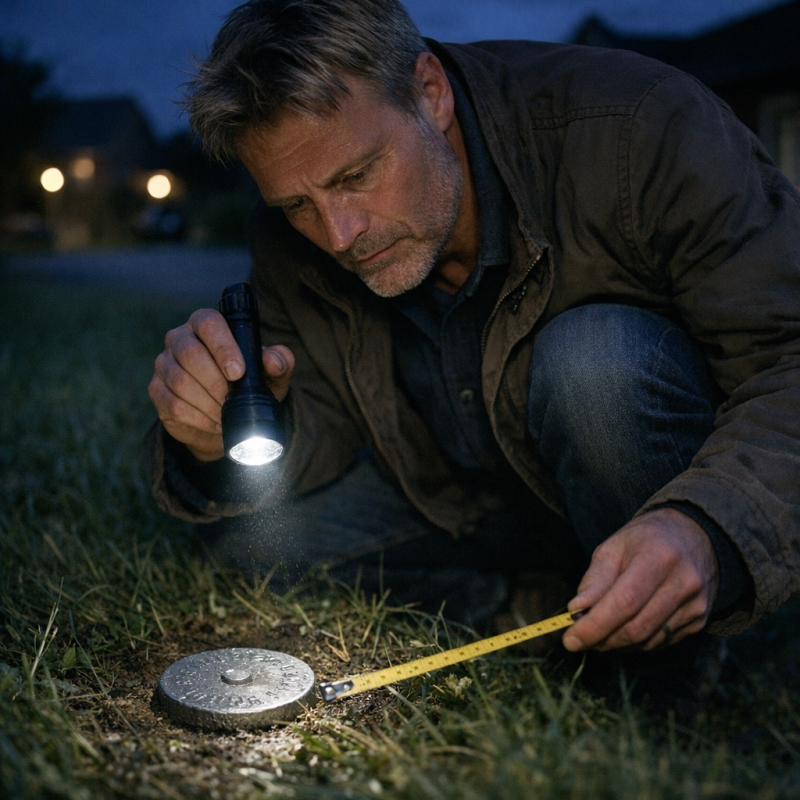 Image by FCT AI
Telling Emily
Emily was in the kitchen when I came back inside, making tea even though it was past one in the morning. 'Can't sleep?' I asked. 'Not lately,' she said quietly. I sat down across from her and explained what I'd found — the survey, the markers, the measurements. 'Part of his driveway is on our property, Em. Legally, officially, on our side of the line.' She stared at me, processing. 'What does that mean?' 'It means we have options. Real ones. We could have the property line professionally surveyed and marked. We could put up a fence, or bollards, or whatever we want — on our own property.' She was silent for a long moment, and I could see her weighing it, considering whether this would make things better or worse. Then Carl's truck rumbled past outside, even at this late hour, and something in her expression hardened. 'Do it,' she said quietly. 'I just want my life back.'
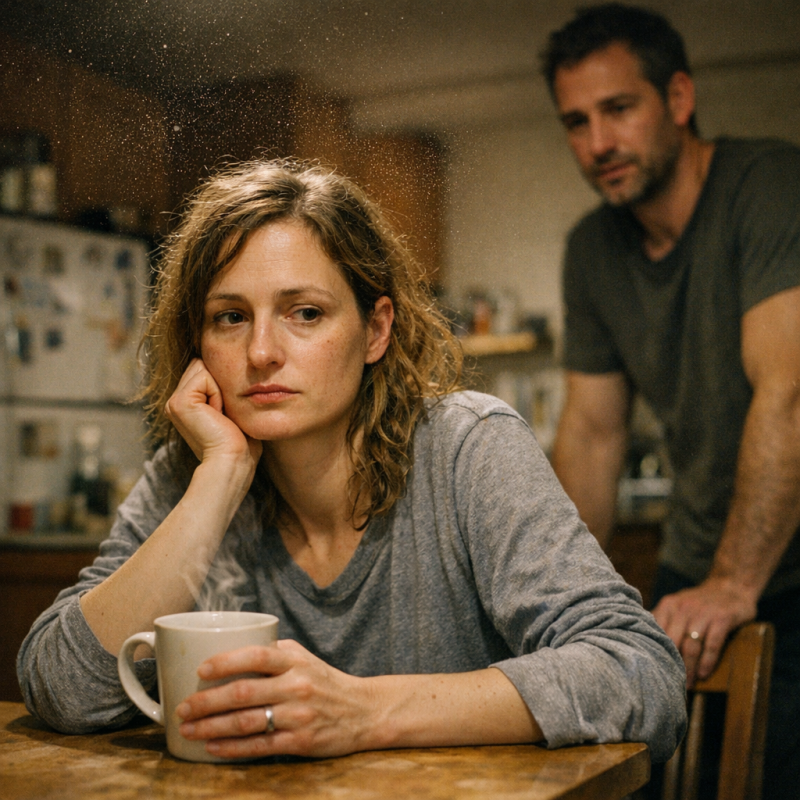 Image by FCT AI
The Contractor Search
I started making calls the next morning. The first contractor I reached didn't do residential boundary work. The second specialized in fencing but seemed hesitant when I mentioned there might be a dispute with a neighbor — he didn't want to get involved in 'drama,' he said. Fine. I kept searching. I found a company that specialized in property surveys and boundary establishment, run by a guy named Tom who'd been doing this for thirty years. When I explained the situation — the blocked driveway, the harassment, the discovery that our neighbor was parking on our land — he listened without interrupting. 'And you've verified the markers yourself?' he asked. 'I have. They're all still there.' 'Good. That makes this straightforward.' I felt a surge of hope. The third contractor I called listened to my story, chuckled, and said, 'I've seen this before. Let me come take a look.'
 Image by FCT AI
Carl's Escalation
Carl must have sensed something was different, though I have no idea how. Maybe he noticed me outside at odd hours. Maybe he saw me talking to Linda. Whatever it was, his behavior shifted. Two days after I'd contacted Tom, I noticed Carl had left a toolbox sitting right on the edge of the property line, exactly where I'd marked the boundary in my mind. The next day, a coil of garden hose appeared in roughly the same spot. Then a bag of concrete mix. Then a stack of lumber, positioned just carefully enough that it wasn't blocking anything obvious, but it was clearly encroaching into what should have been neutral space — or our space. Each item was placed with deliberate precision, like he was planting flags, marking territory. Testing boundaries. I watched from the window as he arranged a sawbuck exactly where I knew our property line ran. It was like he could sense something shifting — and wanted to stake his claim before it was too late.
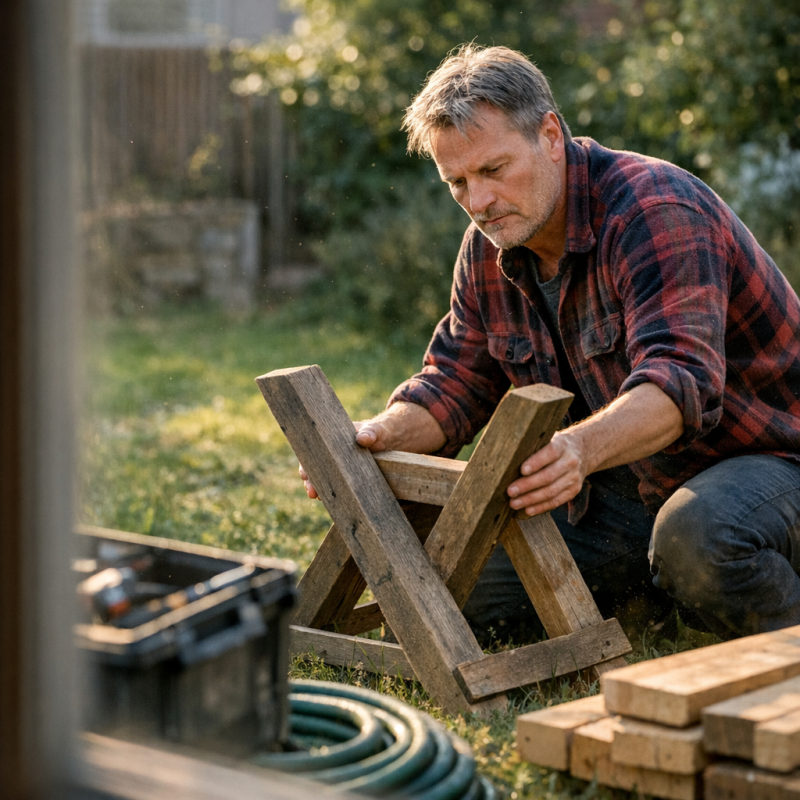 Image by FCT AI
The Stare-Down
It happened on a Thursday evening, right around dusk. I was taking out the recycling when I saw Carl standing in his driveway, hands in his pockets, just staring across the property line. Not at his house. Not at his yard. At me. I stopped mid-step, bin still in my hand, and we locked eyes. Neither of us said a word. The air felt thick, almost electric, like right before a thunderstorm breaks. He didn't move. I didn't move. We just stood there, maybe twenty feet apart, looking at each other across that invisible boundary that suddenly felt like a battle line. His expression was hard to read — not angry exactly, but challenging. Testing. I could feel my pulse in my throat. This wasn't a neighbor casually making eye contact while grabbing the mail. This was something else entirely. A declaration without words. I set the bin down slowly, never breaking eye contact, and straightened up. Still, he didn't speak. After what felt like forever but was probably only thirty seconds, he turned and walked back into his house. He looked at me like he was daring me to do something — so I decided I would.
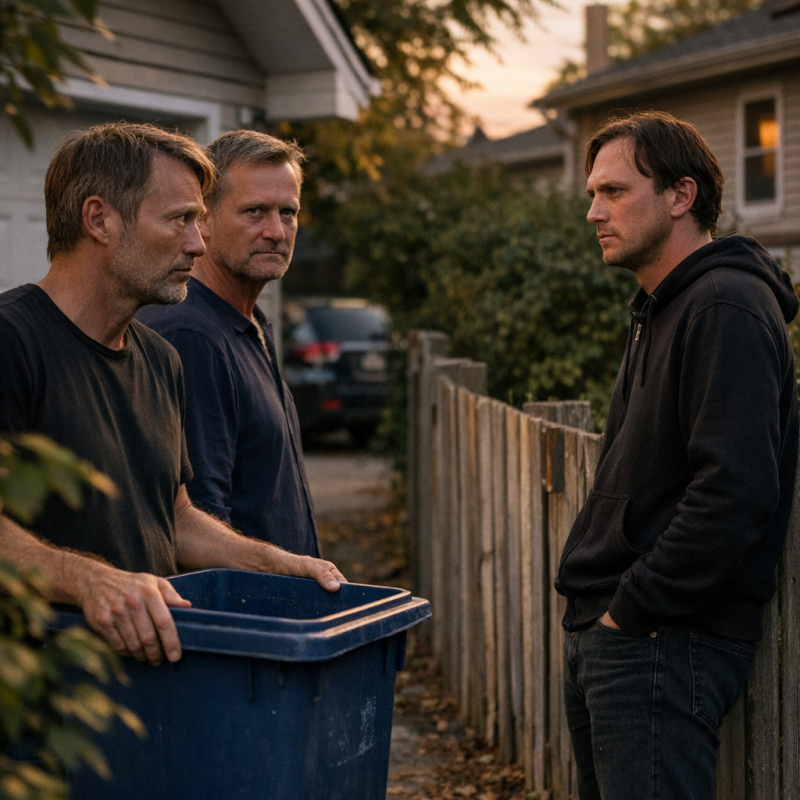 Image by FCT AI
The Night Before
Friday afternoon, I called Tom to confirm everything. 'Monday morning, eight AM sharp,' he said, his voice confident and reassuring. 'I'll have the crew there with surveying equipment, cones, everything official. We'll mark the line, show him the documents, and if he's got his truck where I think he does, we'll ask him to move it. Clean and professional.' I went over every detail with him twice. The survey was certified. The property line was documented. We had every legal right to mark our boundary and install the posts. Tom had done jobs like this before — boundary disputes that needed a professional touch to resolve. He knew exactly how to handle it. After I hung up, I sat at the kitchen table with the survey documents spread in front of me, triple-checking measurements, reading the legal descriptions until the words blurred together. Emily watched me from the doorway but didn't say anything. She knew what this meant to me. To us. I barely slept that night, running through every possible scenario, every way Carl might react.
 Image by FCT AI
Monday Morning Arrives
Monday morning arrived cold and clear. I was up before dawn, watching from the window with coffee in hand, waiting. At exactly 7:50 AM, like clockwork, Carl's truck rumbled to life. He pulled out of his driveway, swung around, and parked it in that same spot — the one that blocked Emily's path to the street. The one he'd been using for weeks. I heard Emily's footsteps behind me, felt her hand on my shoulder. 'Right on schedule,' she murmured. There was something almost surreal about watching him repeat the pattern, knowing what was about to happen. He climbed out of his truck, stretched, glanced toward our house with that same smug expression I'd seen too many times. Emily grabbed her keys and headed out to her car, playing her part perfectly. She started the engine, put it in reverse, and stopped — blocked, just like always. Carl was walking toward his front door, not even looking back. Emily looked at me from the driver's seat, trapped again — and I gave her a small nod.
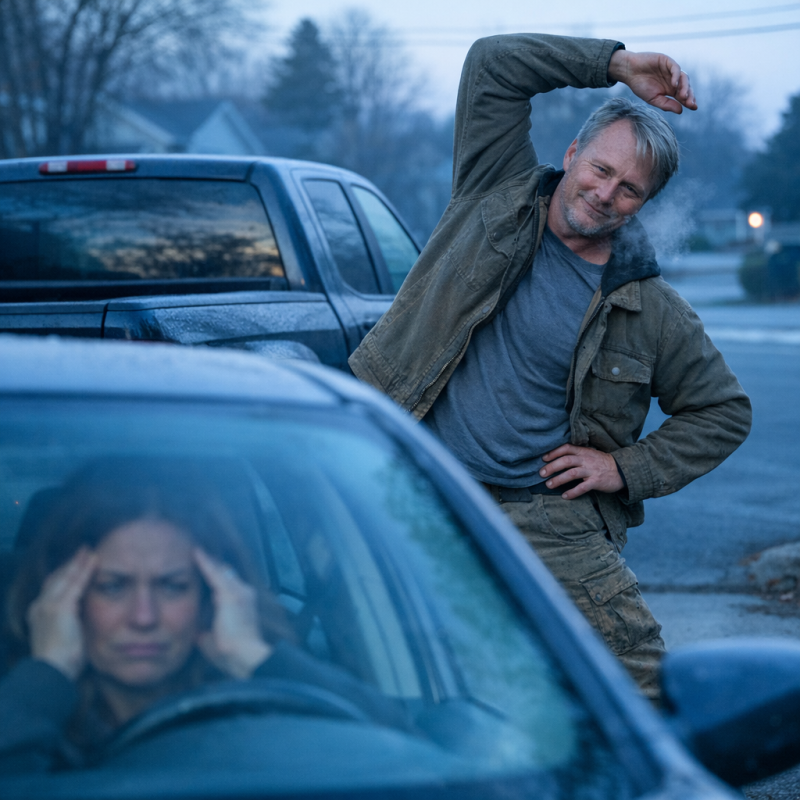 Image by FCT AI
The Crew Arrives
At precisely 8:00 AM, two white contractor trucks turned onto our street, Tom's logo visible on both sides. They pulled up in front of our house, and I watched from the porch as four guys in reflective vests climbed out, carrying bright orange traffic cones, surveying equipment, and measuring wheels. Tom stepped out of the lead truck, clipboard in hand, and gave me a quick nod. Professional. Official. Exactly what we needed. One of the crew members immediately started placing cones along the curb, marking off the work area. Another began setting up the surveying tripod, the kind you see on road construction sites, all precision instruments and official-looking gear. The whole scene screamed 'legitimate property work in progress.' Emily had turned off her car and gotten out, standing near me on the porch, arms crossed. I could see her trying not to smile. The crew moved with practiced efficiency, measuring, marking, consulting Tom's documents. The whole street suddenly looked different — purposeful, formal, unstoppable. Carl's front door flew open before the first cone hit the ground.
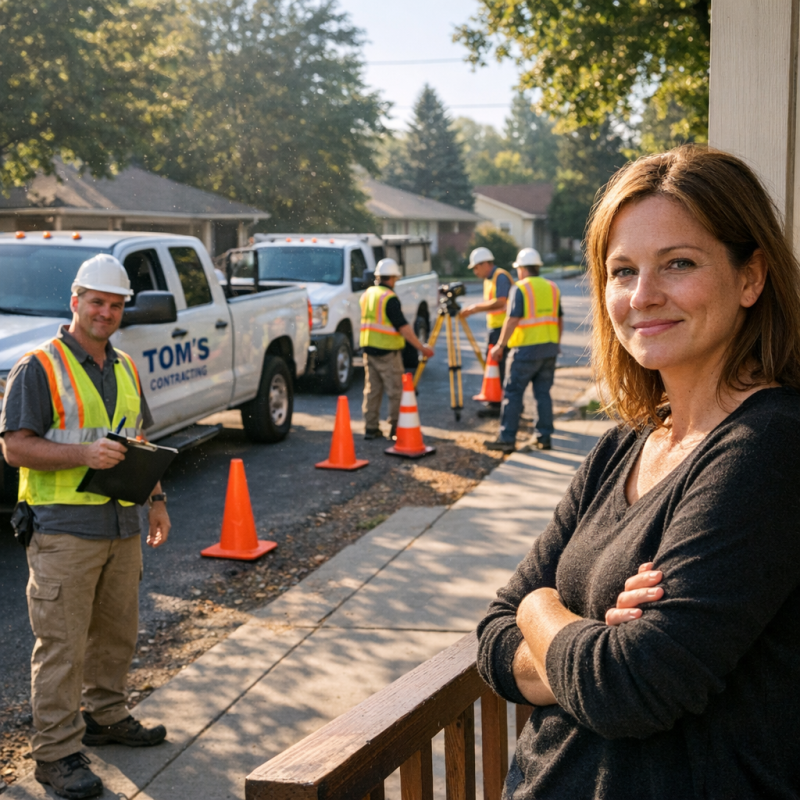 Image by FCT AI
Carl's Outburst
Carl came storming out like someone had set off a fire alarm in his house. 'What the heck is this?' he shouted, marching down his driveway toward the crew. 'You can't just — what are you doing on my property?' Tom turned calmly, clipboard still in hand, and I stepped down from the porch to join him. My heart was hammering, but I kept my expression neutral. 'We're surveying our property line,' I said evenly. 'Just making sure everything's properly marked.' Carl's face went red. 'Your property line? That's — you need to stop this right now. Right now!' He pointed at the crew like he had authority over them, like his shouting would somehow make them pack up and leave. Tom didn't flinch. 'Sir, we have the legal survey documents. We're well within our rights.' Carl turned to me, eyes wild. 'You can't do this!' he shouted, and I stepped forward, calm as I'd ever been, and said, 'Actually, we can.'
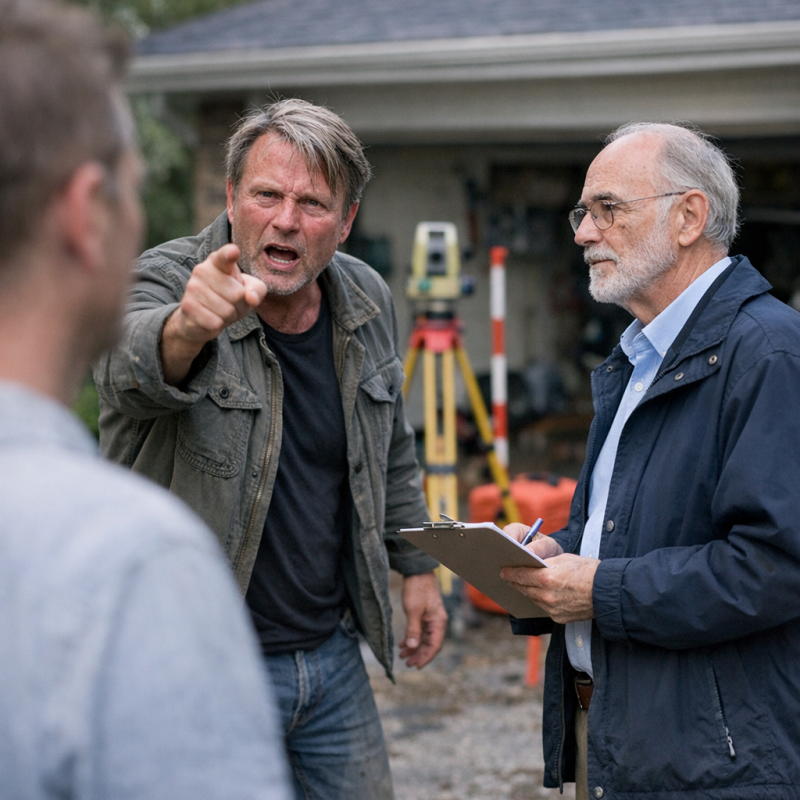 Image by FCT AI
The Survey Paperwork
Tom reached into his clipboard and pulled out the official survey documents, the ones with the county seal and the surveyor's certification. He held them out to Carl with professional courtesy. 'These are the certified property boundaries,' Tom said. 'You're welcome to review them.' Carl snatched the papers, his hands shaking slightly, and started scanning the pages. I watched his eyes move across the text, the measurements, the legal descriptions. Tom pointed to the map. 'That line there — that's the boundary between your properties. As you can see, it runs approximately here.' He gestured to where the crew had already started marking. Carl's breathing got heavier. He flipped to the second page, then back to the first, like he was looking for something that would prove us wrong. His jaw clenched. The color started draining from his face as the reality sank in. I didn't say anything. I just stood there and watched him read. Carl's face went from red to pale as he read, and I watched the exact moment he understood — his truck was on our land.
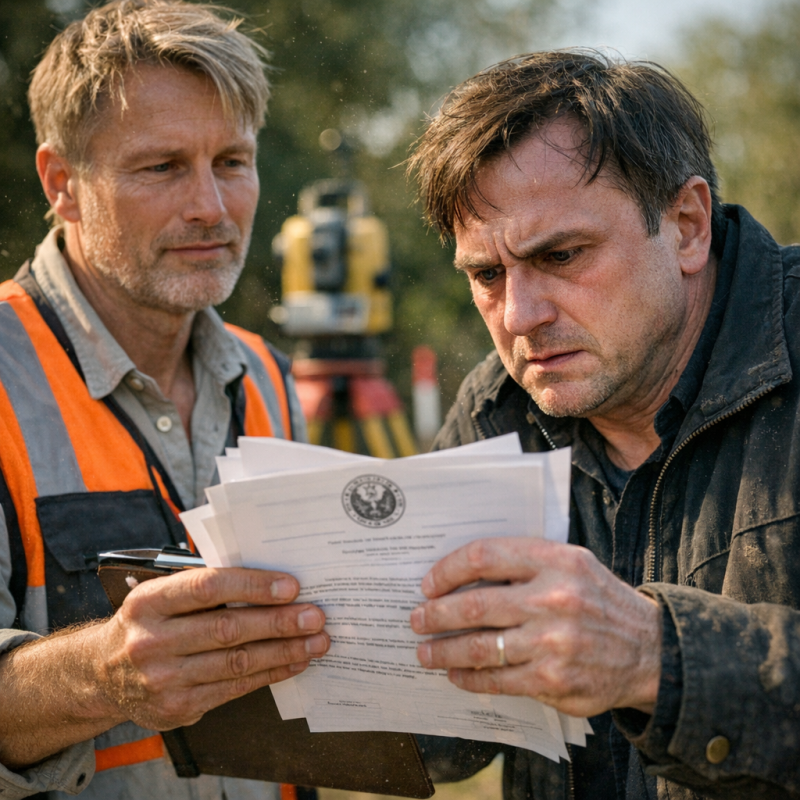 Image by FCT AI
Move the Truck
I let the silence sit for a moment, let him absorb what he was seeing on that paper. Then I spoke, keeping my voice calm and measured. 'Carl, your truck is parked on our property. I'm going to need you to move it so the crew can continue their work.' It wasn't a request, not really, though I phrased it politely enough. Tom stood beside me, silent backup, the crew behind us waiting patiently with their equipment. Carl looked up from the documents, his eyes moving from me to Tom to the survey markers to his truck. You could see the calculation happening behind his eyes — the realization that he had no leg to stand on, no argument that would hold up, no way to spin this in his favor. His mouth opened like he was going to say something, then closed again. For weeks, he'd had all the power. Now he had none. He looked smaller somehow, deflated. Carl stood frozen for a long moment, then without a word, climbed into his truck and backed it off our land.
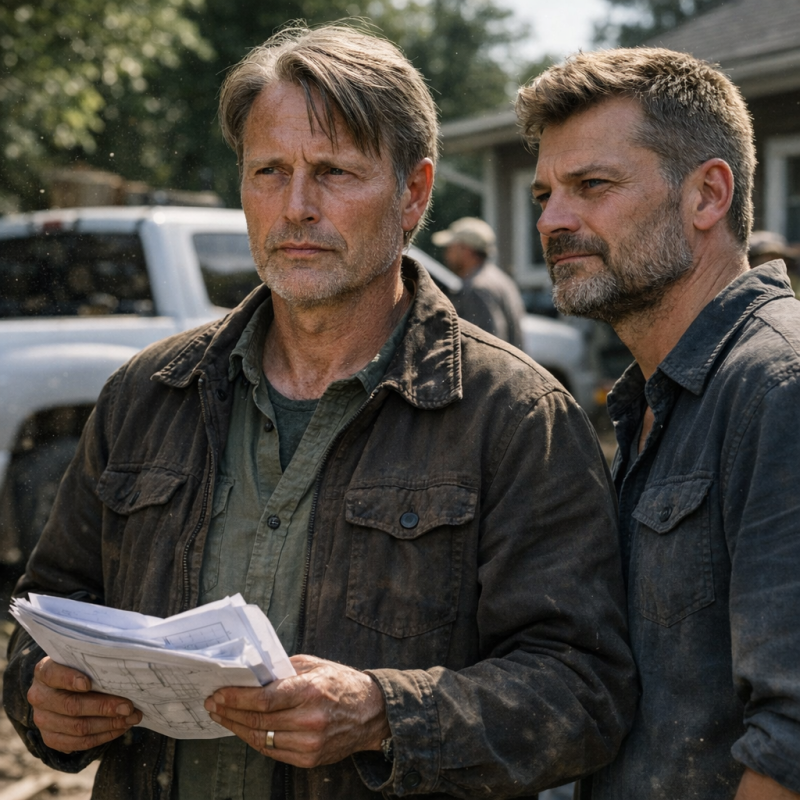 Image by FCT AI
The Stone Posts
Once Carl's truck was out of the way, the crew got to work immediately. They'd brought decorative stone posts — the kind you see marking estate entrances, about three feet tall, substantial and permanent. Tom had suggested them during our planning call. 'They look good, they're legal, and nobody's moving them without serious equipment,' he'd said. Now I watched as they used a post hole digger to create deep, clean holes along the exact property line the survey had established. The first post went in right where Carl used to park his truck, set in concrete, unmovable. Emily came and stood beside me, her hand finding mine. The crew worked methodically, measuring twice, installing once. By mid-morning, you could see the boundary taking shape — a clear, visible, legal demarcation that left zero room for interpretation. Carl's house was on his side. Our driveway was on ours. The line between them was now marked in stone. Each post that went into the ground was another nail in the coffin of Carl's little power game.
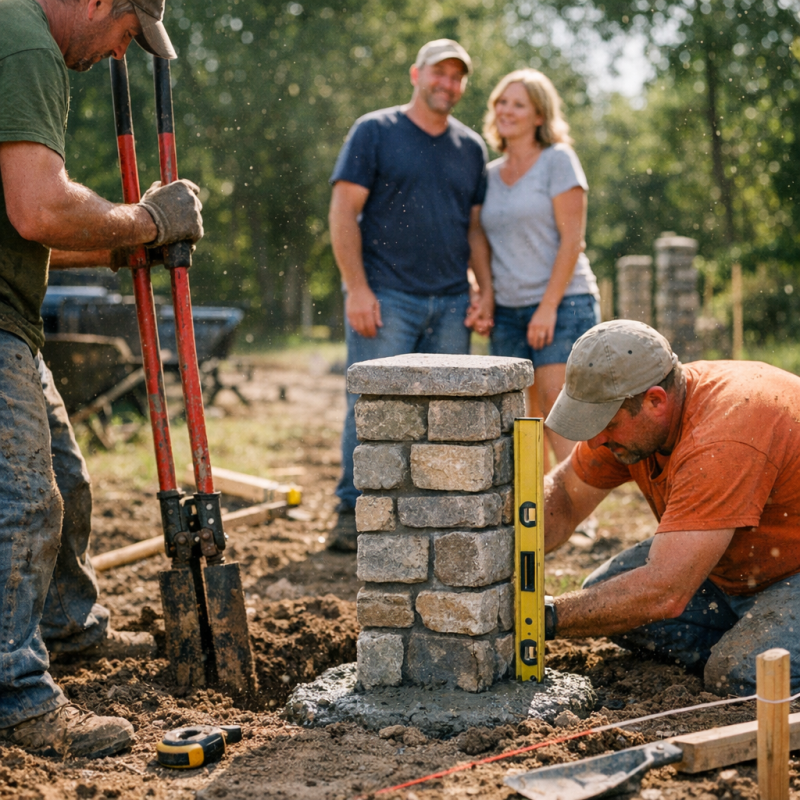 Image by FCT AI
Emily Leaves for Work
That morning, Emily came downstairs with her coffee and keys, and there was this lightness in her step I hadn't seen in weeks. She kissed me at the door, glanced out at the driveway — completely clear, posts marking our property line like sentries — and smiled. 'I'm actually leaving on time,' she said. 'Do you know how good that feels?' I walked her out, watching as she backed out smoothly, no obstacles, no Carl's truck blocking her way. She waved at me as she pulled out, smiling with real relief in her eyes. I waved back, feeling like maybe we'd actually won something here. But as I turned to head back inside, I caught movement in my peripheral vision. Carl's house. Second-floor window. He was standing there, completely still, just staring. Not at me. At the driveway where Emily had just been. His face was expressionless, hands at his sides, like he was carved from stone. The morning sun reflected off the glass, but I could still see him clearly. When I looked back at Carl's house, I saw him standing at the window, staring.
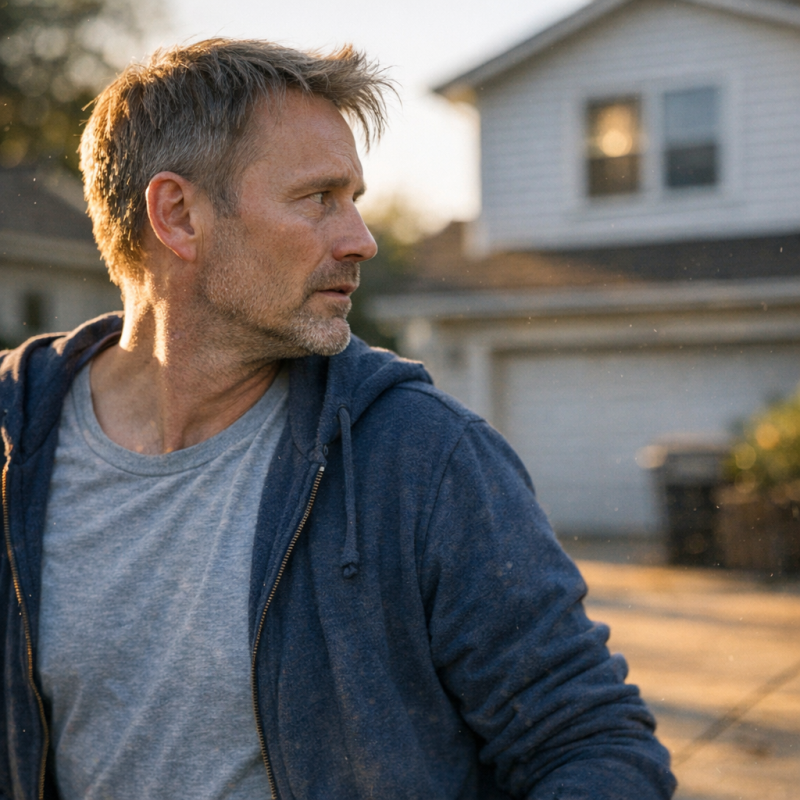 Image by FCT AI
The Quiet
The next few days were weirdly quiet. Carl's truck stayed in his driveway. We didn't see him outside at all. Emily left for work on time every morning, came home without incident, and we started to relax a little. Neighbors walked their dogs past our place, and life felt almost normal. Tom's crew finished the stone posts, cleaned up, and left us with a boundary that looked like it had always been there. 'Maybe he finally got the message,' Emily said one evening as we sat on the porch. I nodded, but something didn't sit right with me. The quiet felt wrong somehow. Like the pause before thunder. I'd glance at Carl's house throughout the day and see nothing — no movement, no signs of life except his truck parked in the same spot. The lights came on at night, went off in the morning. But I never saw him. Not once. I should have felt relieved, but instead I felt like I was waiting for something — something I couldn't name.
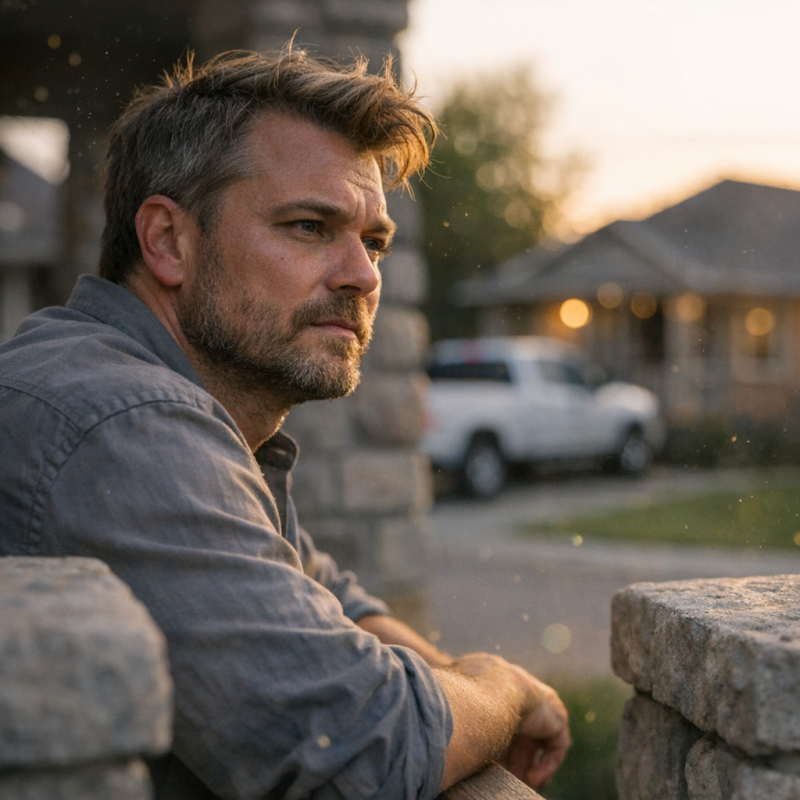 Image by FCT AI
The Late-Night Visit
It was past midnight when I heard it. A faint scraping sound, metal on concrete maybe, coming from outside. Emily was asleep upstairs, and the house was dark except for the light I'd left on in the kitchen. I got up, moved to the front window, and looked out. Carl was standing in his driveway. Just standing there in the dark, maybe fifteen feet from where Emily's car was parked on our side of the property line. He wasn't doing anything. Wasn't moving. Just staring at her car like he was memorizing it. The streetlight cast half his face in shadow, and his hands hung loose at his sides. I felt my chest tighten. This wasn't about parking anymore. I moved to the front door, opened it quietly, and flipped on the porch light. The yellow glow flooded the space between our houses. Carl should have turned, should have reacted, should have at least acknowledged that I'd caught him. When I turned on the porch light, he didn't move — just kept staring, like he was in a trance.
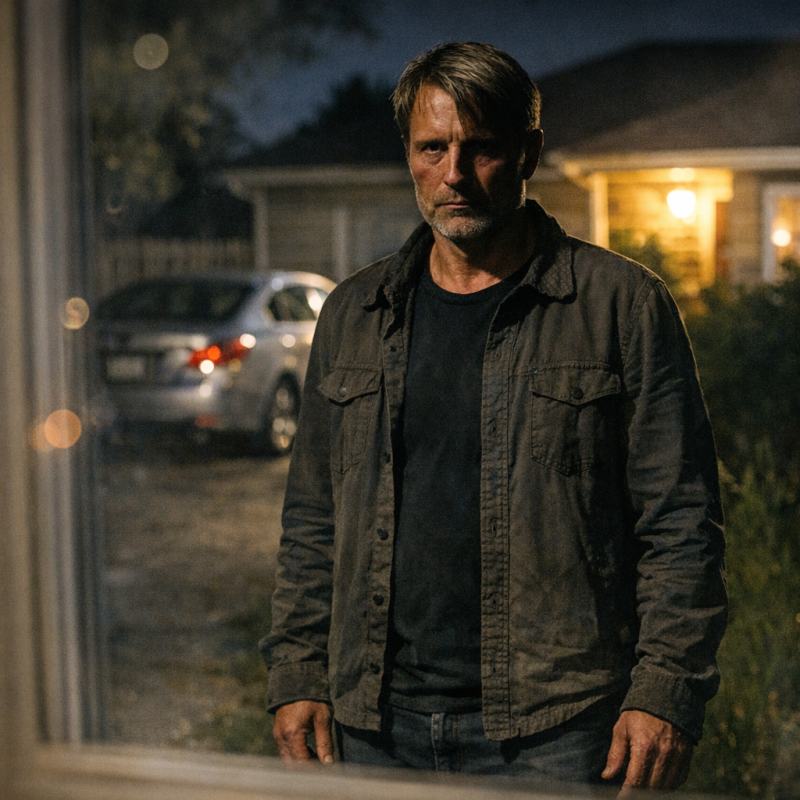 Image by FCT AI
Rachel's Full Warning
Rachel caught me the next afternoon while I was checking the mail. She walked across the street with purpose, her expression serious in a way I hadn't seen before. 'David, we need to talk,' she said quietly. 'About Carl.' We stood at the edge of my driveway, and she glanced back at his house like she was making sure he wasn't watching. 'I should have said something earlier,' she started, 'but I didn't think it was my place. And I didn't want to sound crazy.' I waited, feeling dread pool in my stomach. 'Carl's ex-wife,' Rachel continued, choosing her words carefully. 'They were married for almost ten years. She left him about three years ago, took the house they'd bought together in the divorce. He moved here afterward.' She paused, and I could see her weighing whether to continue. 'The thing is... she looked a lot like your wife.' My blood went cold. Rachel nodded, seeing my reaction. 'His wife looked a lot like Emily,' Rachel said quietly. 'Same hair, same smile. I should have told you sooner.'
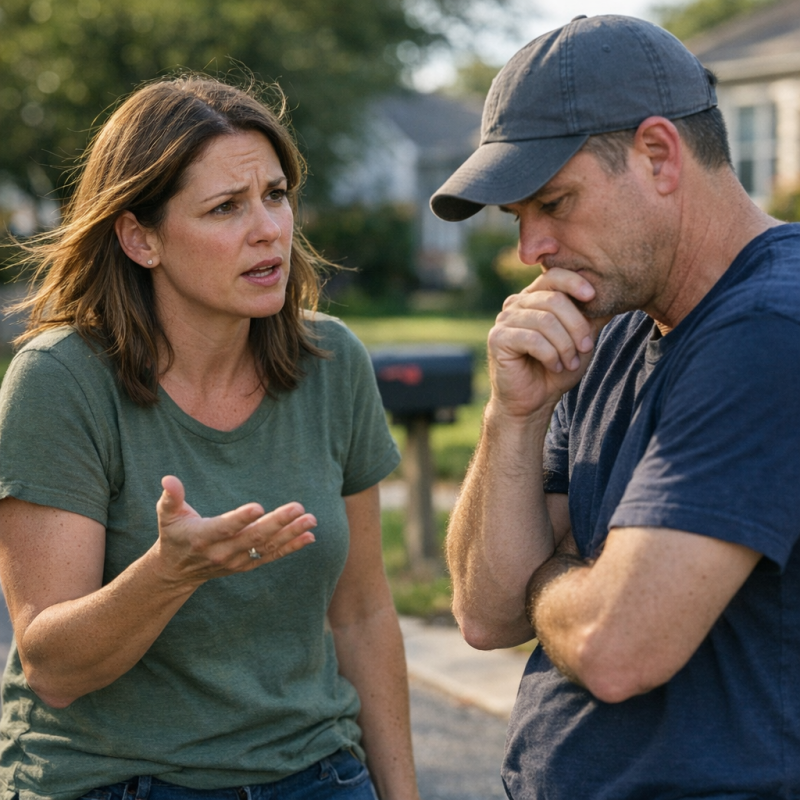 Image by FCT AI
The Old Photo
Rachel asked me to come to her house, said she had something to show me. Inside, she pulled out an old neighborhood directory from a drawer — the kind some communities put together with photos and contact info. 'This is from seven years ago,' she said, flipping through pages. 'Carl and his wife were living two streets over, before everything fell apart.' She stopped on a page and turned it toward me. There they were: Carl and a woman standing in front of a house, smiling for the camera. Carl looked younger, less worn down, almost happy. But it was the woman beside him that made my breath catch. Auburn hair falling past her shoulders. Bright eyes. A warm, genuine smile. The same build as Emily, same way of tilting her head slightly in photos. The similarities weren't just passing — they were striking, unmistakable. 'I noticed it the first time I saw Emily,' Rachel said softly. 'I thought maybe I was imagining it, but...' She trailed off. The woman in the photo could have been Emily's sister — same auburn hair, same bright eyes, same warm smile.
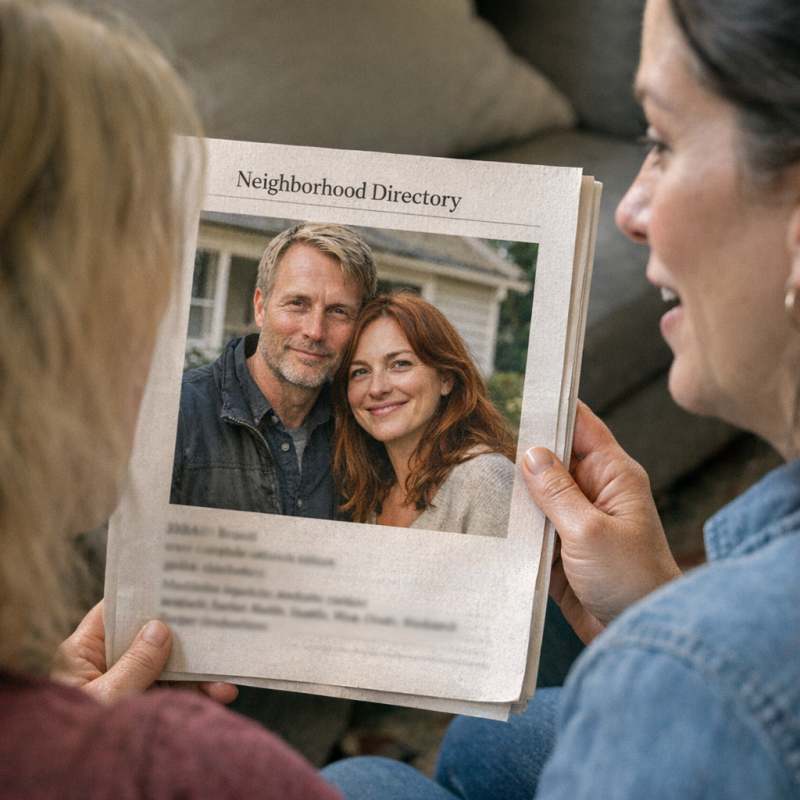 Image by FCT AI
The Divorce Details
I found Mr. Hernandez working in his garden that evening. He'd lived on the street longer than anyone, knew everyone's history. When I asked about Carl's divorce, his expression darkened. 'That was a bad situation,' he said, setting down his trowel. 'They'd been having problems for years, but she finally left him. Took him to court, got the house they'd bought together. Carl had to move out with almost nothing.' He shook his head. 'I only heard bits and pieces from mutual friends, but apparently he was... difficult. Controlling. She couldn't take it anymore.' Mr. Hernandez looked toward Carl's house with something like pity. 'The divorce destroyed him financially and emotionally. He blamed her for everything — the house, his money troubles, his isolation. Everything.' He turned back to me, and I saw concern in his eyes. 'When your wife moved in and I saw her, I thought about Carl's ex. The resemblance is remarkable.' He paused. 'He blamed her for everything,' Mr. Hernandez said. 'Every time he sees your wife, he probably sees her.'
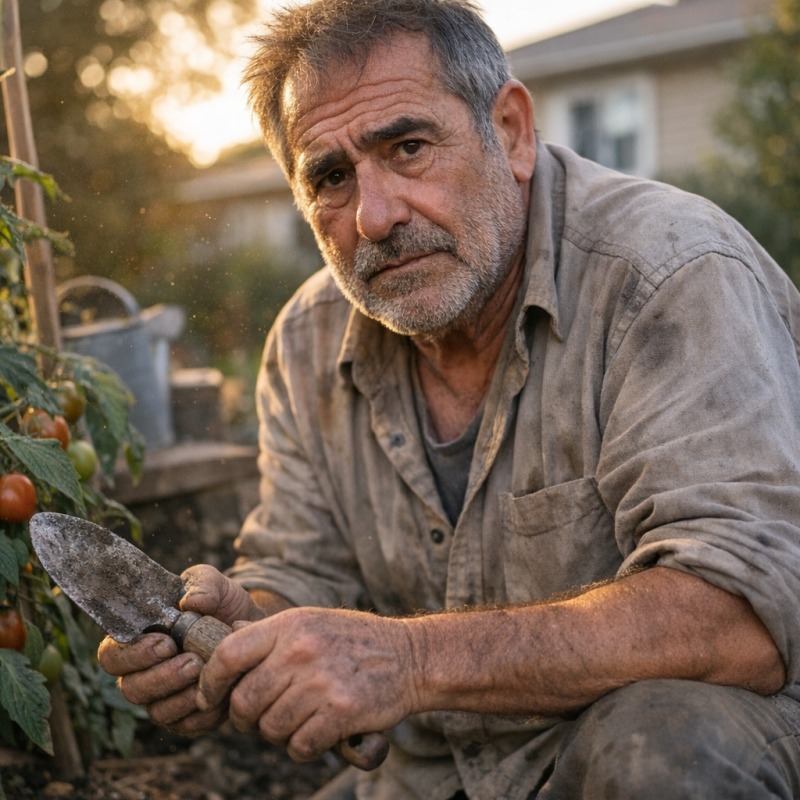 Image by FCT AI
David's Growing Dread
I sat in the living room that night after Emily went to bed, turning everything over in my mind. The harassment. The truck blocking our driveway every single morning. The way Carl always seemed to be watching when Emily left for work. His strange behavior at his window, in his driveway, staring at her car. It had never been about property disputes or parking etiquette. All those weeks of polite requests, escalating frustration, legal letters, surveys, stone posts — we'd been solving the wrong problem entirely. Carl wasn't defending some imagined boundary. He wasn't being a difficult neighbor. He was fixating on Emily. On a woman who looked like the person who'd left him, taken his house, destroyed his life. Every morning, he'd blocked her car so she couldn't leave. Every time he'd watched from his window, he wasn't seeing Emily — he was seeing someone else. And by putting up those posts, by winning the property dispute, we'd done nothing to address the actual threat. I stayed awake that night, watching Carl's darkened house, knowing now that we hadn't solved anything — we'd only made it worse.
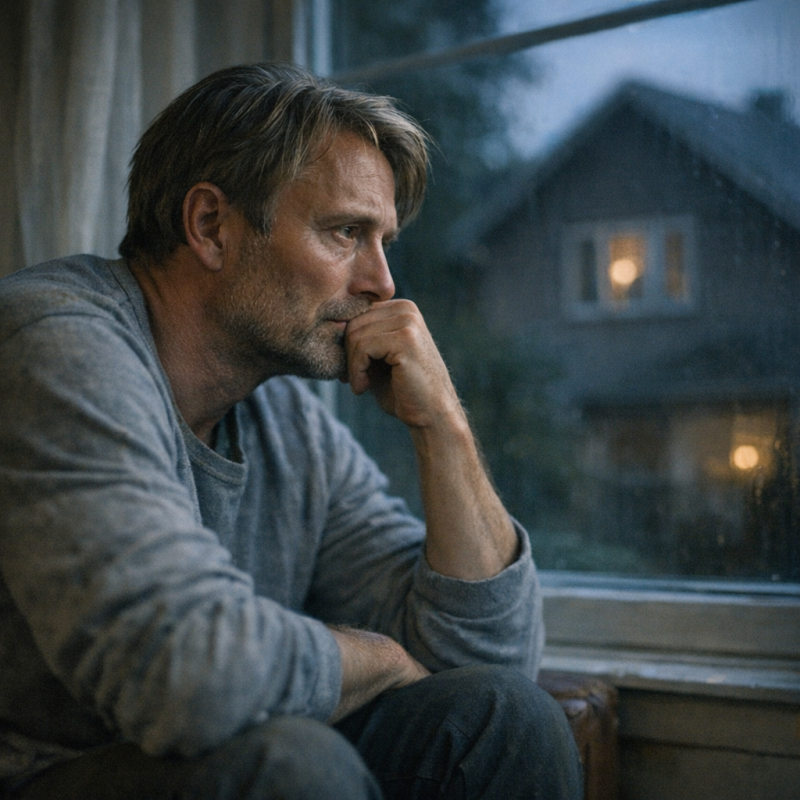 Image by FCT AI
The Truth About Carl
I called Rachel and Mr. Hernandez the next morning, asked them to meet me. We sat on Rachel's porch, and I laid out everything I'd observed. Rachel filled in the gaps. 'Carl's ex-wife — her name was Sarah — she didn't just leave him. She had to escape him. Friends told me he'd become obsessive, controlling where she went, who she talked to. The divorce was brutal. She got everything because the court saw documentation of his behavior.' Mr. Hernandez nodded grimly. 'After she left, Carl fell apart completely. Lost his job, lost his house in the settlement, moved here and just... shut down.' Rachel leaned forward. 'Then your wife moved in across the property line. Same hair color, same smile, same energy Sarah used to have.' The pieces locked into place with horrible clarity. 'He wasn't blocking your driveway because of property,' Mr. Hernandez said quietly. 'He was controlling when Emily could leave, like he used to do with Sarah.' Rachel's voice was barely a whisper. 'He's been living in the past,' Rachel said. 'And Emily walked into his line of sight looking like the woman who destroyed him.'
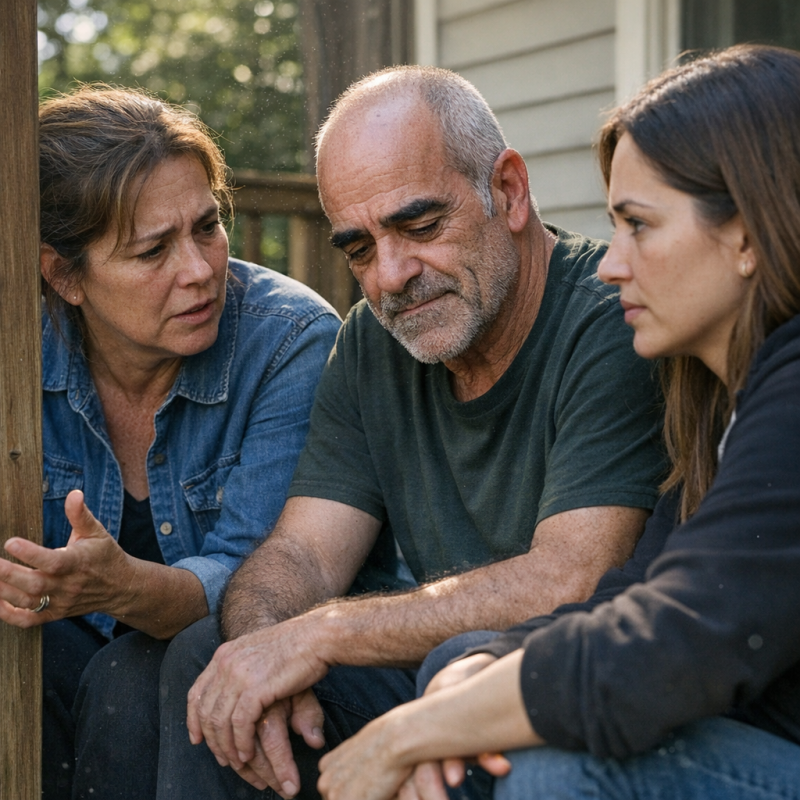 Image by FCT AI
Emily Deserves to Know
I sat in my car in our driveway for twenty minutes that afternoon, knowing Emily was inside waiting for me to come in from work. Rachel's words kept circling through my head. Emily had a right to know why this had happened to her. She deserved to understand that she hadn't done anything wrong, that Carl's obsession had nothing to do with who she actually was. But telling her meant giving her a burden she couldn't put down. How do you tell your wife that a stranger has been fixating on her because she looks like the woman who escaped him? That every time she smiled at him trying to be neighborly, he saw someone else entirely? That his controlling behavior wasn't about property at all, but about recreating patterns with a woman who happened to remind him of his traumatic past? I gripped the steering wheel until my knuckles went white. If I told her, she'd feel violated in a way that went beyond blocked driveways and property disputes. She'd question every interaction, wonder what he'd been thinking every time he looked at her. But if I didn't tell her, I'd be keeping secrets about her own safety, making decisions about what she could handle. 'She has a right to know,' I told myself — but I also knew that once I told her, we could never un-know it.
 Image by FCT AI
The Conversation
I found Emily in the kitchen making tea. She took one look at my face and set down the kettle. 'What happened?' she asked. I told her everything. About Sarah, about the divorce, about Carl's history of controlling behavior. About how Rachel had noticed the resemblance between them. Emily's face went through several transformations as I spoke. First shock, her hand rising to her mouth. Then this awful understanding as pieces clicked into place for her too. 'That's why he always stared at me,' she whispered. 'That's why he got so angry when I tried to be friendly.' The shock shifted to anger then, hot and sudden. 'He's been treating me like I'm her? Like I'm some replacement for his ex-wife?' Her voice rose. 'Every time I waved at him, every time I smiled — he wasn't even seeing me?' I reached for her hand but she pulled away, pacing the kitchen. Then something changed in her expression. The anger crystallized into something harder, more focused. 'We can't let this continue,' she said. 'He needs help, but we need to be safe.' She looked at me directly, and I saw the woman I'd married — strong, clear-eyed, determined. 'So what do we do now?' she asked, and I realized I didn't have an answer.
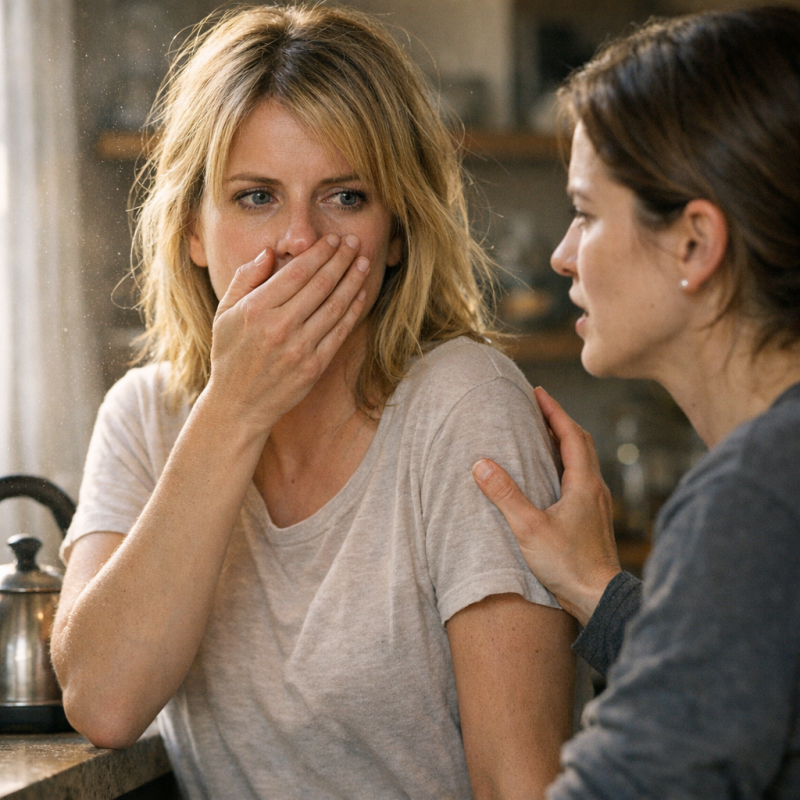 Image by FCT AI
Carl's Breakdown
It happened three nights later. We'd just gone to bed when the pounding started. Not knocking — pounding, desperate and arrhythmic, like someone trying to break through. Emily grabbed my arm as I got up. Through the bedroom window, I could see Carl's silhouette on our front porch, swaying. I called out that I was calling the police, but he just kept hammering on the door. 'Sarah!' he shouted, his voice slurred and broken. 'Sarah, please, I just need to talk to you!' Emily went rigid beside me. I moved to the door but didn't open it, phone in my other hand already dialing. 'Carl, you need to go home,' I said through the door. 'There's no Sarah here.' 'I saw her,' he sobbed. 'I saw her come home. Sarah, please, I'm sorry. I'm so sorry. I'll be better this time. I promise I'll be better.' His voice cracked completely. 'Just give me another chance. Please. I can't do this without you.' The pounding became weaker, more erratic. Through the peephole, I could see him leaning against the doorframe, tears streaming down his face. Emily stood behind me, frozen, as Carl sobbed on our doorstep, calling her by another woman's name.
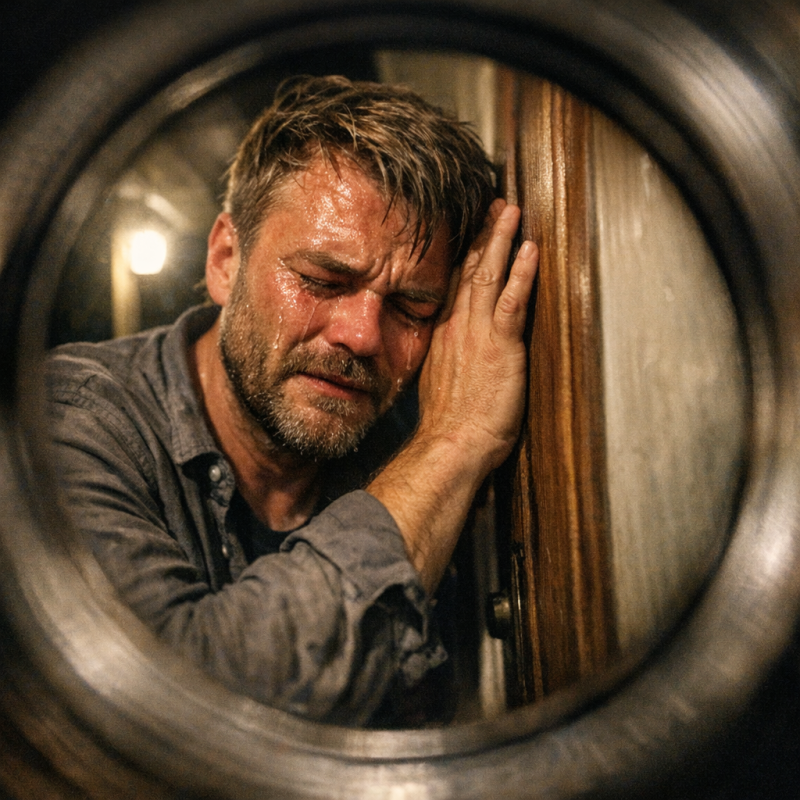 Image by FCT AI
The Police Return
Officer Martinez arrived within eight minutes. I kept talking to Carl through the door until I saw the patrol car's lights. Carl was still there, sitting now, his back against our door, mumbling Sarah's name over and over. When Martinez approached, Carl looked up with such confused hope that I felt something crack in my chest despite everything. 'Sarah?' he asked Martinez. 'Did Sarah call you?' Martinez crouched down beside him, speaking in low, calm tones I couldn't quite hear. Emily stood in the doorway behind me now, wrapped in her bathrobe, watching. Martinez helped Carl to his feet with surprising gentleness. Carl didn't resist, just kept looking around like he'd lost something precious and couldn't remember where. 'Is she here?' he asked Martinez. 'Is Sarah inside?' I explained everything to Martinez — the history we'd learned from Rachel, the escalating behavior, tonight's breakdown. Martinez nodded, his expression grave. He'd seen this before, I realized. He knew what we were dealing with now. Carl slumped against the patrol car, looking suddenly small and broken rather than threatening. Martinez looked at me and said, 'This time, we can help.'
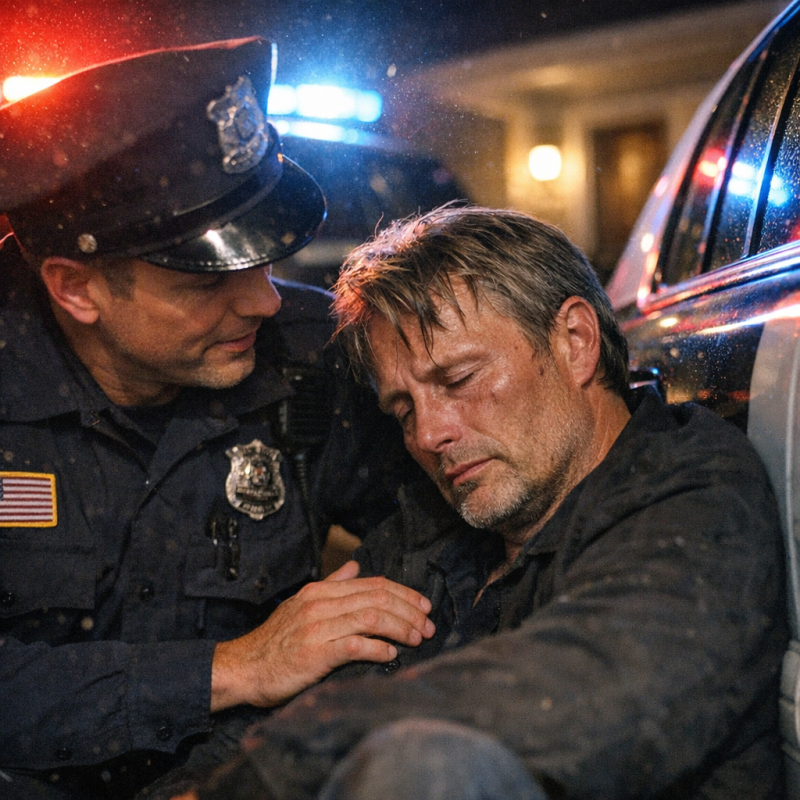 Image by FCT AI
The Restraining Order
The courthouse smelled like floor polish and anxiety. Emily and I sat on a wooden bench outside the hearing room, the temporary restraining order paperwork in my lap. Officer Martinez had walked us through the process, had even submitted his own report documenting Carl's breakdown. The hearing took less than fifteen minutes. We presented the evidence: the pattern of blocked driveways, the escalating confrontations, Rachel's testimony about Carl's history, Martinez's incident report from that night. The judge, a tired-looking woman in her sixties, read through everything with careful attention. When Emily described Carl calling her Sarah, calling her his ex-wife's name while pounding on our door at midnight, the judge's expression hardened. She granted the restraining order immediately. Full year. Carl was to stay at least five hundred feet away from our property, from Emily, from me. No contact whatsoever. We walked out into the bright afternoon, the order officially filed and served. Emily held the paperwork like it might dissolve in her hands. 'We're safe now,' I said, but it sounded hollow even to me. She looked at me with sad, knowing eyes. The judge granted it immediately — but Emily and I both knew a piece of paper wouldn't fix what was broken in Carl.
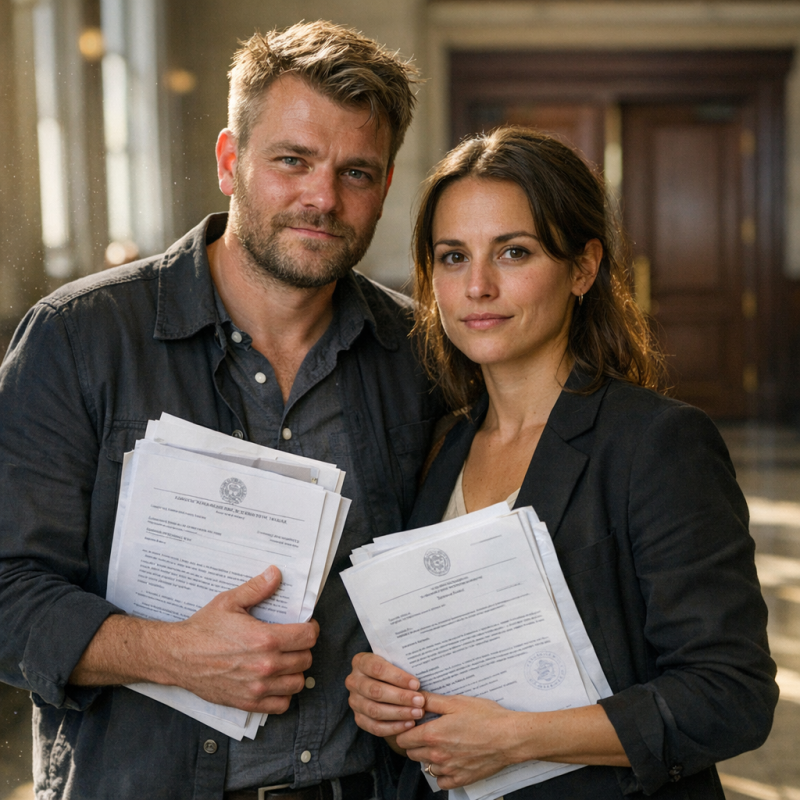 Image by FCT AI
Carl's Hospitalization
Rachel called me four days later. I was in the garage, finally able to park in our own driveway without anxiety, when my phone rang. 'I thought you should know,' she said. 'Carl's been hospitalized. Psychiatric hold. After the police incident, they did an evaluation and determined he was a danger to himself.' I sat down on my workbench. 'How long?' I asked. 'At least seventy-two hours, possibly longer depending on what the doctors find. His sister came from Ohio. She told me Carl hasn't been taking his medication for depression. Hasn't been seeing his therapist. Just been sitting in that house alone for months, deteriorating.' Through Rachel's window across the street, I could see Carl's dark house. Newspapers were piling up on his porch. 'His sister said he'd been talking about Sarah like she still lived there,' Rachel continued quietly. 'Like the divorce had just happened yesterday instead of three years ago. He's been stuck, David. Just completely stuck in that moment.' Part of me felt relief — he was finally getting help, finally removed from the situation. But another part felt this deep, complicated sadness. 'Maybe he'll finally get the help he needed all along,' Rachel said — but I couldn't shake the feeling that it was too late for everyone involved.
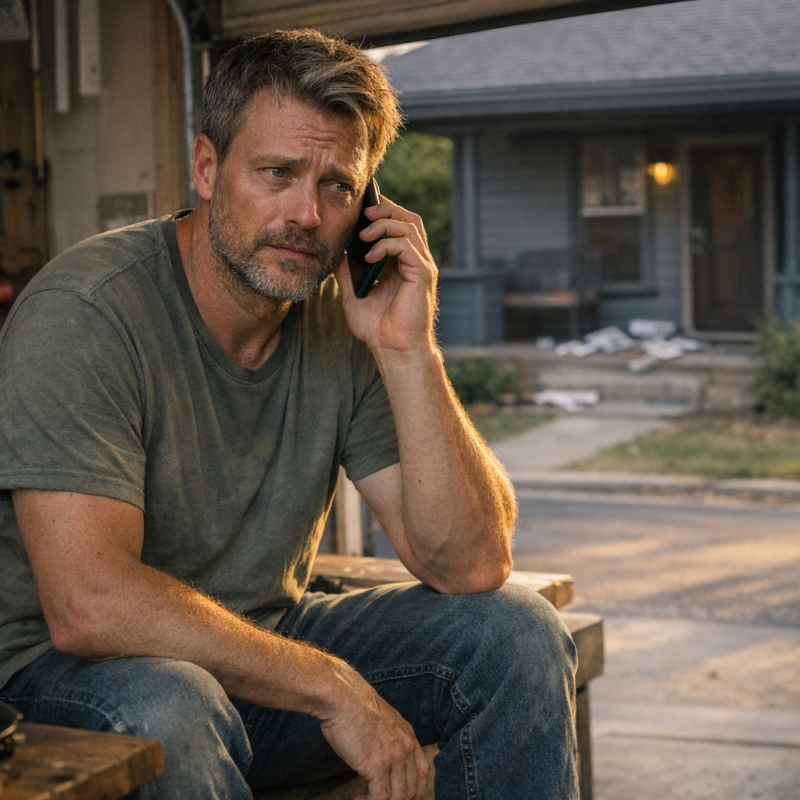 Image by FCT AI
Emily's Recovery
Emily started therapy the following week. She'd found someone who specialized in trauma and stalking situations. I drove her to the first appointment and waited in the car, giving her privacy. When she came out forty-five minutes later, her eyes were red but her shoulders looked lighter somehow. She started going twice a week. We'd sit together in the evenings, and sometimes she'd share what she was processing. 'Dr. Chen says what happened isn't about me at all,' Emily said one night, curled up on the couch beside me. 'But it feels personal. It feels like my existence, just being myself in my own home, caused all this.' I started to reassure her but she continued. 'That's the part I'm working through. How his delusion stole my sense of safety in our own house. How I can't unknow that he was watching me, projecting someone else onto me.' She was quiet for a moment, staring at nothing. 'I keep thinking about how he looked at me,' she said. 'Like I owed him something I didn't even know existed.'
 Image by FCT AI
The Empty House
Six weeks passed and Carl's house remained empty. The grass grew tall and wild. Mail spilled out of his box until the postal service stopped delivering. Someone — his sister, probably — came once to collect some belongings, but otherwise the house sat dark and abandoned. Mr. Hernandez mentioned that the sister was arranging for Carl to live in a residential treatment facility back in Ohio, near family who could support his recovery. The house would be sold eventually. Every morning I'd back out of our driveway, unobstructed, and I'd glance at that empty house. The for-sale sign went up in early October. Sometimes Emily and I would sit on our porch in the evenings, and the absence across the property line was louder than Carl's presence had ever been. We were safe now. The restraining order, the hospitalization, the distance — all the protections were in place. But the memory of his face that night, calling Emily by another woman's name, calling for someone who'd escaped him years ago, stayed with both of us. The house looked smaller somehow in its emptiness, less menacing, just sad. I found myself looking at it sometimes, wondering if he'd ever come back — and what I'd do if he did.
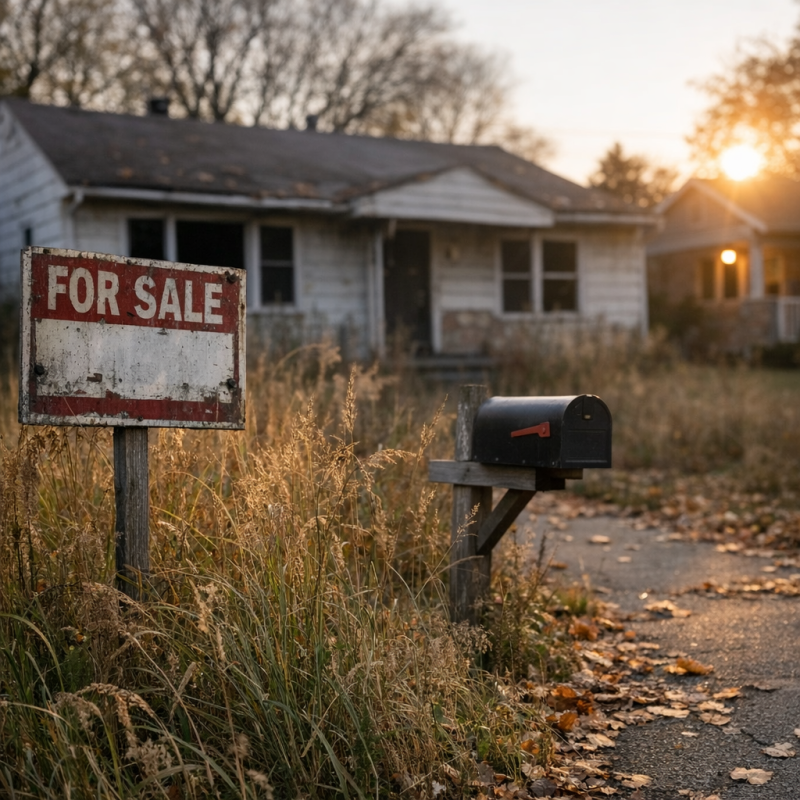 Image by FCT AI
The For Sale Sign
The 'For Sale' sign went up on a Tuesday morning. I was heading out to work when I saw the real estate agent hammering the stake into Carl's overgrown lawn. Rachel came over that evening with a bottle of wine and told us what she'd heard through the neighborhood grapevine. Carl's sister was selling the house as-is. He wasn't coming back. Ever. He'd been placed in a long-term residential facility in Ohio, near family who could monitor his medication and his progress. The house would sell to whoever wanted to deal with the neglected yard and the memories trapped inside those walls. Emily squeezed my hand when Rachel said it. I felt something loosen in my chest — not relief exactly, but something close to it. We weren't looking over our shoulders anymore. We didn't have to wonder if he'd show up in the middle of the night or if the restraining order would hold. It was done. Over. Rachel raised her glass and said, 'To better neighbors.' We drank to that. But when I looked at that sign swaying slightly in the breeze, I felt an unexpected sadness. Not for Carl, exactly, but for the whole messy situation. It felt like the end of something — not a happy ending, but an ending nonetheless.
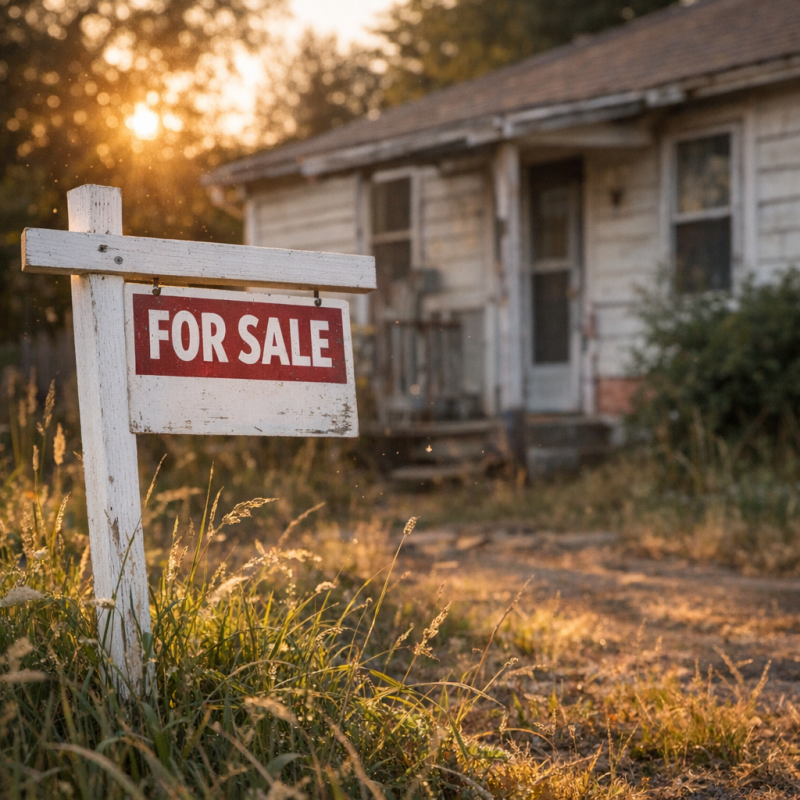 Image by FCT AI
New Neighbors
The moving truck arrived on a Saturday in late October. Emily and I watched from the porch as a young couple, maybe in their late twenties, unloaded boxes and furniture with the help of friends and family. They had a toddler, a little girl with curly hair who kept running circles around the front yard, laughing. It was the kind of sound that house hadn't heard in years. Emily baked cookies that afternoon — chocolate chip, her go-to welcome gesture — and we walked across the property line together. My heart was beating faster than it should have been. The last time we'd approached that door, everything had been different. But this time, when we knocked, a smiling woman answered, wiping paint from her hands. 'Hi! We're the Martins,' she said. 'Just moved in. Please excuse the chaos.' Emily handed her the cookies. 'We're David and Emily, right next door. Welcome to the neighborhood.' The woman's husband appeared behind her, holding their daughter. 'Oh man, cookies already? We're going to love it here.' They were warm. Normal. Kind. This time, the door opened wide, and they invited us in for coffee.
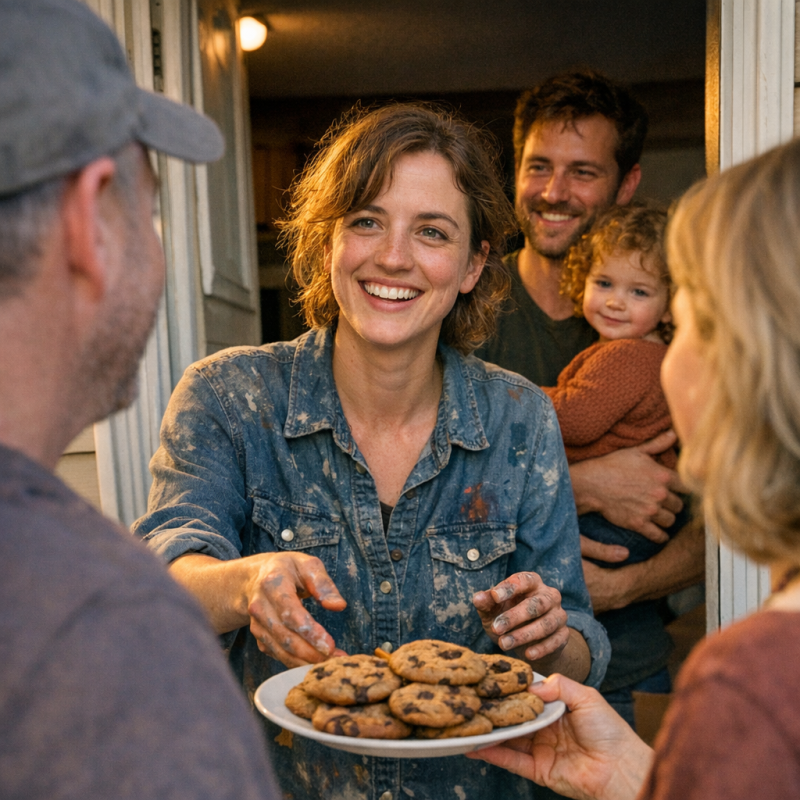 Image by FCT AI
The Stone Posts Remain
We kept the decorative stone posts. People asked us why — friends, family, even the Martins one evening when they were over for dinner. 'Didn't those cause all the trouble?' someone said. Emily looked at me, and I knew we were thinking the same thing. Those posts weren't about Carl. They were about us. About the line we'd drawn, literally and figuratively, when we realized that being nice wasn't the same as being safe. They marked the boundary we'd fought to establish, the one that said, 'This far, no further.' They reminded us that we'd stood our ground when it mattered. Every morning when I backed out of the driveway, I saw them flanking the entrance, solid and immovable. They weren't just decoration. They were proof that we'd survived something difficult, something that could have broken us, and we'd come out stronger. Emily planted flowers around them in the spring — bright red geraniums that bloomed all summer. The posts stayed. Every time I looked at them, I remembered that sometimes you have to stand your ground, even when the fight isn't the one you expected.
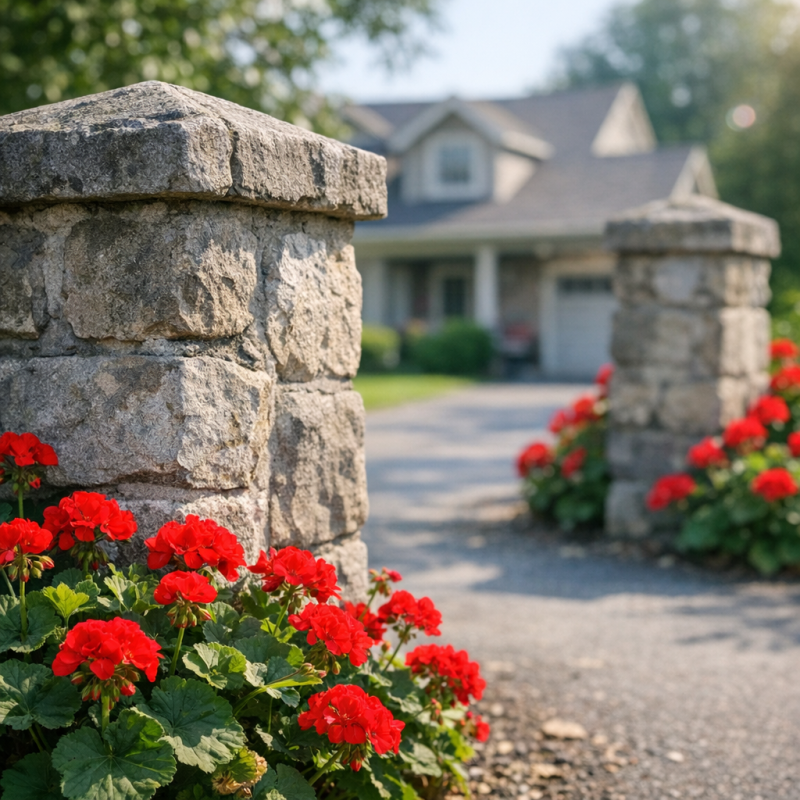 Image by FCT AI
What We Learned
Looking back now, I understand what that whole ordeal taught us. It wasn't just about property lines or parking disputes or even mental illness. It was about knowing when to be kind and when to be firm. When to extend grace and when to protect yourself. Emily and I learned that boundaries aren't cruel — they're necessary. We learned that compassion doesn't mean accepting harm. We learned that sometimes the right thing to do is the hardest thing to do, and you do it anyway because the alternative is worse. We also learned that we were stronger together than we'd realized. Every decision we made, from the survey to the cameras to the final police call, we made as a team. We never turned on each other, never blamed each other, never let the stress crack what we'd built. The Martins are good neighbors. Their daughter plays in the yard. They wave when we pass. It's what we'd hoped for when we first moved in, before everything went sideways. And those stone posts still stand at the edge of our driveway, a quiet reminder of everything we survived. We never asked for that fight, but we won it — not because we were cruel, but because we were careful, patient, and willing to protect what mattered most.
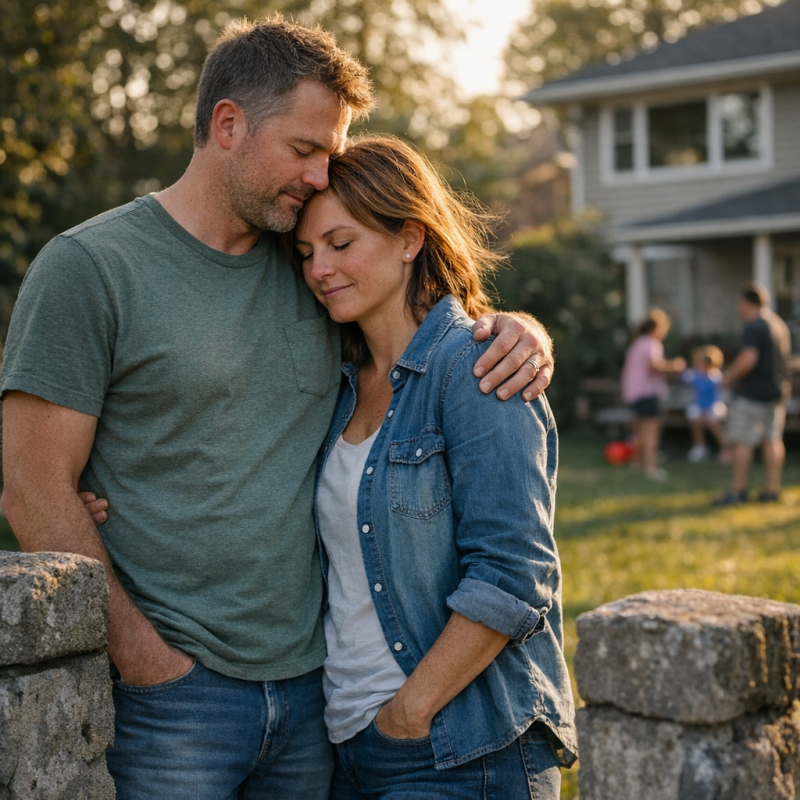 Image by FCT AI