The Morning I Heard My Son Scream
I'll never forget the sound of my eight-year-old son screaming like he was dying. It was Thanksgiving morning, barely six a.m., and I literally fell out of bed and sprinted down the hallway in my underwear. Oliver was in the bathroom, sobbing so hard he couldn't breathe, holding his hands up like they were on fire. They looked like someone had dipped them in concrete. His fingers were completely encased in this thick, greyish shell—layers and layers of dried glue mixed with what I later realized was my expensive nail polish. 'It's not working!' he kept screaming. 'Mom, it's not working!' I had no idea what he was talking about. I just grabbed his wrists and tried to stay calm while my brain was screaming that I was a terrible mother who'd somehow failed to notice my child had lost his mind. The glue had hardened so much that his fingers were stuck together, and when he tried to bend them, he screamed again. It took me twenty minutes of warm water and baby oil just to separate his fingers enough to see skin underneath. When I finally peeled the last layer away, I saw the raw, red skin underneath—and realized how close he'd come to something much worse.
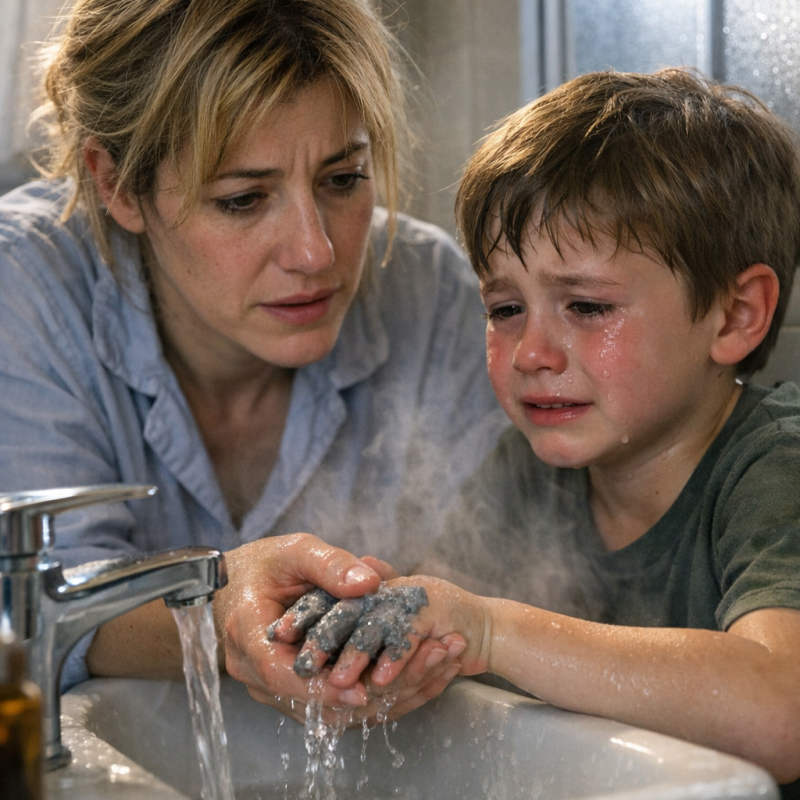 Image by FCT AI
Soaking His Hands in the Kitchen Sink
We spent two hours at the kitchen sink. Two hours. I filled a bowl with warm water and dish soap, then added olive oil because some mom blog I half-remembered said it worked on sticky stuff. Oliver sat on the counter, crying quietly now, while I carefully peeled away layer after layer of dried glue. His hands looked like they belonged to a burn victim. The skin underneath was angry and red, and I could see places where he'd actually pulled off the top layer trying to get the glue off himself. 'Baby, why?' I kept asking, but he just shook his head. Marcus was supposed to arrive in four hours for Thanksgiving dinner, and I was standing there in my bathrobe, picking craft glue off my son's hands like some kind of demented manicurist. Oliver flinched every time I pulled a piece away, but he didn't complain. He just stared at his hands like they'd betrayed him. I thought the worst part was over—that we'd just chalk this up to a kid being weird and stupid. As the final piece came off, Oliver whispered something that made my stomach drop: 'But Mom, the video said it would work if you believed hard enough.'
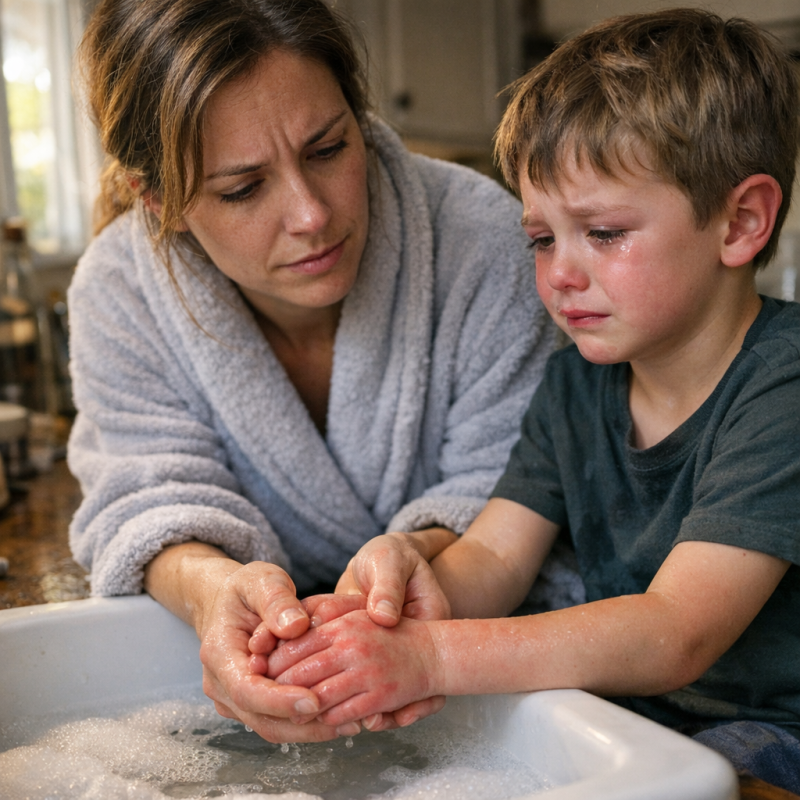 Image by FCT AI
Thanksgiving Dinner with Broken Trust
Marcus showed up at noon with a pumpkin pie and immediately knew something was wrong. I'd managed to bandage Oliver's hands and put on actual clothes, but there's only so much you can hide from your ex-husband when your kid looks like he lost a fight with a hot glue gun. 'What happened?' Marcus asked, and I made the mistake of telling him the truth. His face went through about five different expressions before landing on anger. 'You let him watch what?' Like I'd personally handed Oliver a tutorial on self-harm. We had this incredibly tense Thanksgiving dinner where Oliver pushed mashed potatoes around his plate with bandaged hands while Marcus kept shooting me these looks. I wanted to scream that I couldn't monitor every single thing our son did, that I was one person doing my best, that maybe if Marcus actually lived with us instead of showing up for holidays he'd understand how hard this was. But I didn't say any of that. I just smiled and pretended everything was fine while internally planning to lock down every device in the house. Later that night, I found Oliver's tablet hidden under his mattress—and when I opened the browser history, I felt my blood run cold.
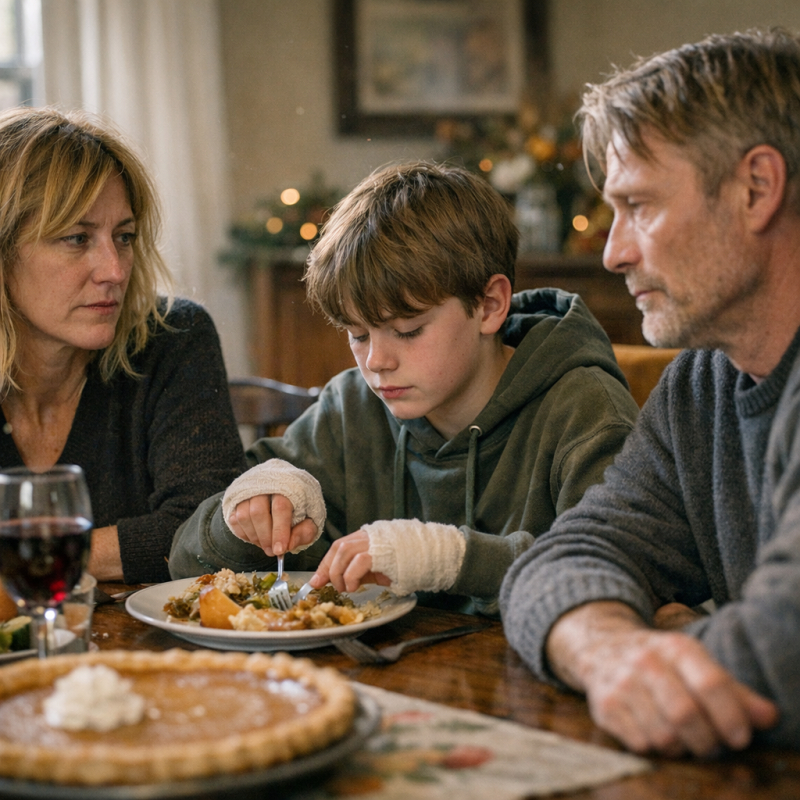 Image by FCT AI
The Rabbit Hole of Videos
I sat on Oliver's bedroom floor at midnight, scrolling through his tablet, and honestly? I wanted to throw up. There were dozens of videos. 'How to Change Your DNA with Your Mind.' 'Kids Who Transformed into Animals (REAL).' 'Secret Shapeshifter Test—Are You One of Them?' They all had these bright thumbnails with kids' faces and dramatic arrows and circles, the kind of clickbait garbage that YouTube supposedly doesn't allow but somehow always slips through. The glue thing? That came from a video called 'Shed Your Human Skin Tutorial' that had 2.3 million views. Two point three million. The comments were full of kids saying they'd tried it, that it 'almost worked,' that next time they'd 'believe harder.' I felt sick reading them. These weren't teenagers being edgy—these were young kids, Oliver's age or younger, genuinely trying to hurt themselves because some faceless creator told them it was magic. I screenshotted everything, my hands shaking. The last video in his history wasn't about glue or skin—it was titled 'How to Test If You're Really a Shapeshifter,' and it had been watched seventeen times.
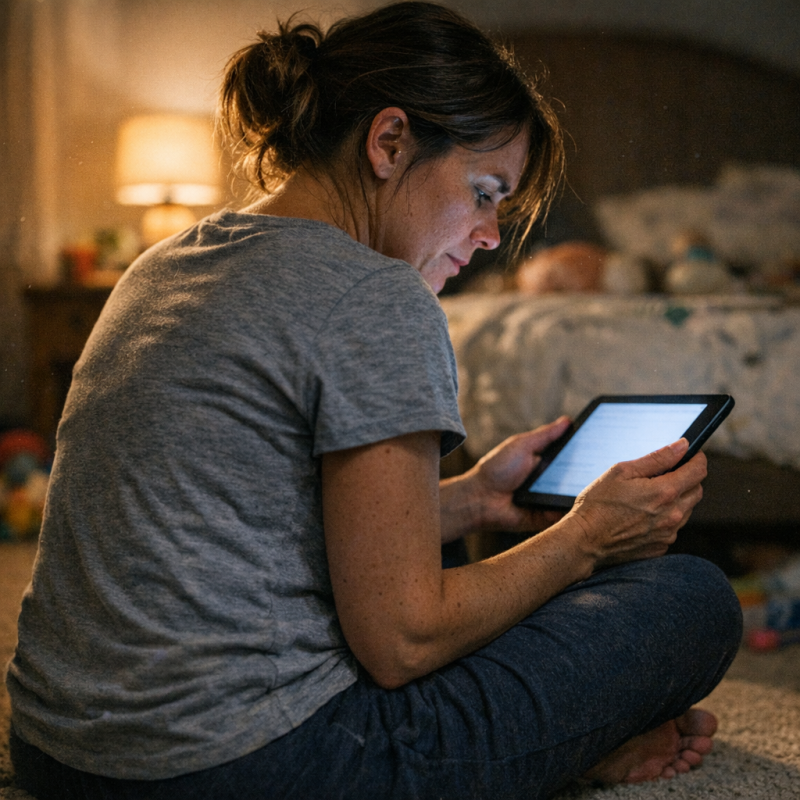 Image by FCT AI
The Pediatrician Who Didn't Laugh
Dr. Chen didn't laugh when I explained what happened. I'd kind of hoped she would—you know, that reassuring doctor chuckle that says 'kids do stupid things, he'll be fine.' Instead, she put on gloves and examined Oliver's hands in complete silence while I sat there feeling like I was being judged by the universe. 'Oliver,' she said gently, 'why did you think this would change you?' He mumbled something about wanting to be special, about the video saying anyone could transform if they tried hard enough. Dr. Chen asked him questions about school, about friends, about whether he ever felt like hurting himself. I watched my son's face while she asked, and I realized how little I actually knew about what went on in his head. The examination took twenty minutes. His hands were healing, she said, but I needed to watch for infection. Then she asked about his screen time, his internet access, whether this was the first 'experiment' he'd tried. I had to admit I didn't know. As we left, Dr. Chen pulled me aside and said quietly, 'Kids who do this once usually stop. But if it happens again, we need to talk about evaluation.'
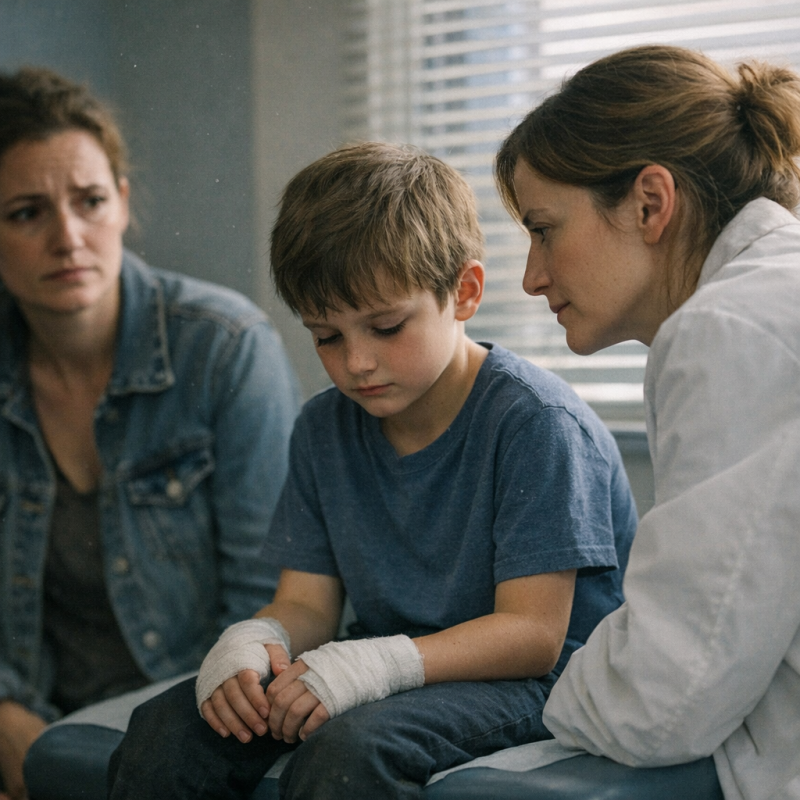 Image by FCT AI
Installing Every Parental Control Known to Man
I spent the entire weekend turning our house into a digital prison. Parental controls on everything. Screen time limits. Content filters set to maximum. I blocked YouTube entirely, then added fifty other sites that looked even remotely suspicious. Oliver watched me do it with this blank expression, like he'd expected it. We had 'the talk' about internet safety—several talks, actually—until I could see his eyes glazing over. I explained that people online lie, that videos aren't real, that he was perfect exactly as he was. He nodded and said 'okay, Mom' in that tone kids use when they're just waiting for you to stop talking. By Sunday night, I was exhausted. My back hurt from hunching over device settings, my voice was hoarse from explaining, and I felt like I'd aged about ten years in three days. I thought we'd turned a corner, that the combination of fear and consequences had gotten through to him. Then, as I was tucking him in, Oliver asked me a question that I didn't know how to answer: 'Mom, how do you know you're real?'
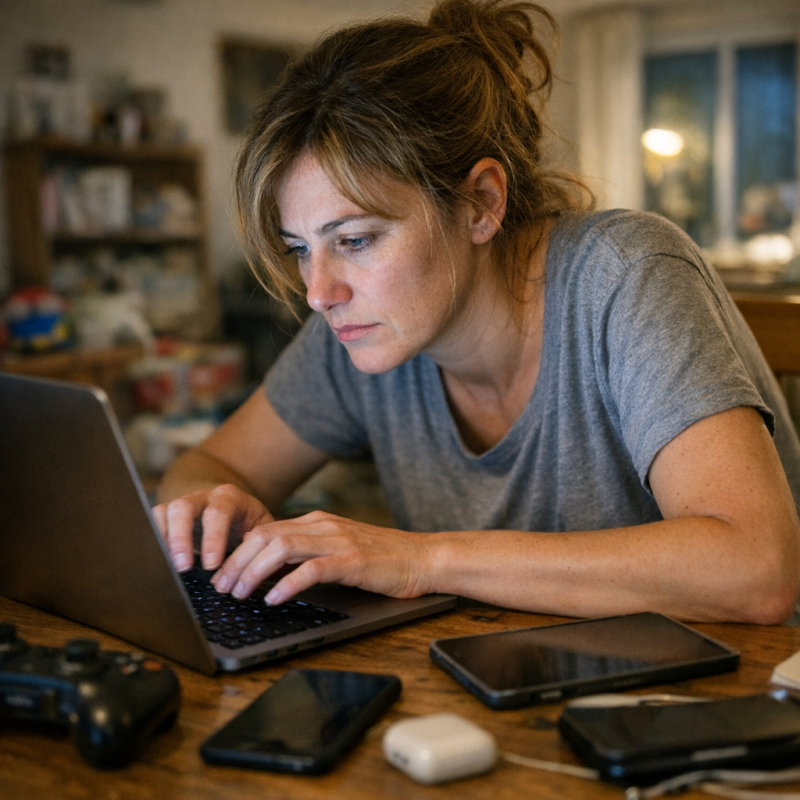 Image by FCT AI
The First Week Back at School
Monday morning felt like sending him into battle. Oliver's hands were still bandaged—not because they needed to be, really, but because I didn't want to deal with the questions if other kids saw the raw skin. I'd emailed his teacher a vague explanation about a 'craft accident,' which technically wasn't a lie. The first three days were quiet. Too quiet. I kept expecting a call from the school, but nothing came. I started to relax, thinking maybe we'd dodged the worst of it. Oliver seemed fine when he came home—he did his homework, played quietly, didn't mention transformation videos or shapeshifters. Maybe the whole thing had scared him straight. Maybe Dr. Chen was right and this was just a one-time thing. Maybe I could stop holding my breath every time his tablet chimed. Then Thursday evening happened. I was making dinner when the email came through. The subject line was 'Concerns About Oliver,' and my stomach immediately dropped. I opened it standing at the stove, wooden spoon in hand. The teacher's email arrived Thursday evening: 'Oliver has been telling the other children some concerning stories. Can we schedule a meeting?'
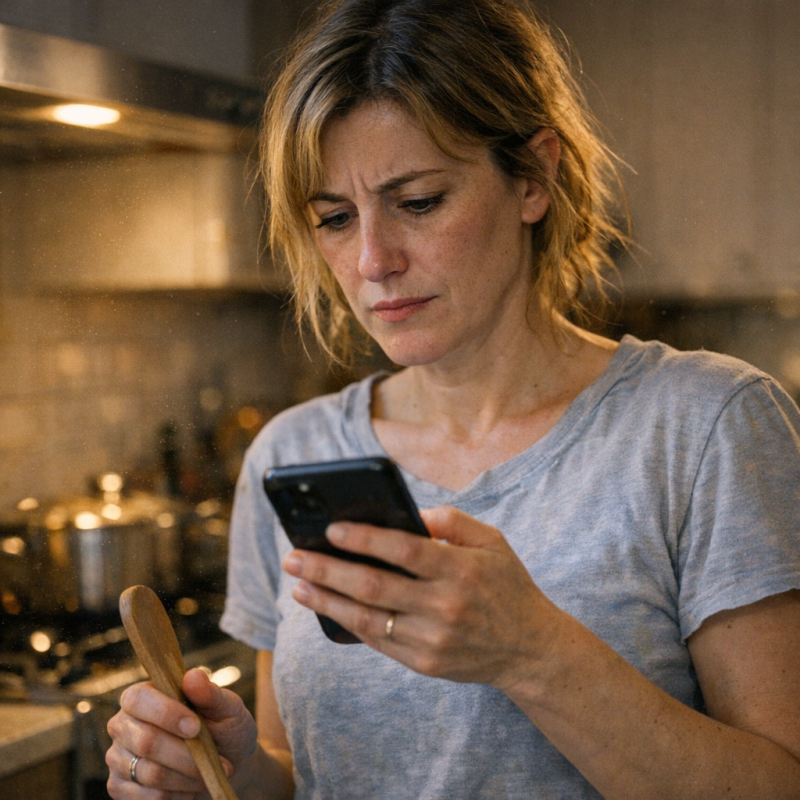 Image by FCT AI
What He Told the Other Kids
The meeting was Friday morning, before school started. Oliver's teacher, Mrs. Patterson, had this carefully neutral expression that immediately told me how bad this was going to be. Apparently, my son had been telling his classmates that he'd 'almost transformed' during Thanksgiving, that the glue thing was just the first test, that he was waiting for his 'real form' to emerge. Real form. Like he was a butterfly or something, except worse because butterflies don't traumatize their mothers. Some kids thought it was cool. Some kids thought he was weird. And one kid—Dylan—was apparently fascinated. 'Dylan's been asking Oliver a lot of questions,' Mrs. Patterson said carefully. 'About the videos. About how to do it.' Great. So now my son wasn't just hurting himself, he was potentially inspiring other kids to try. I wanted to melt into the floor. I apologized, explained about the parental controls, promised to talk to Oliver again. Mrs. Patterson nodded sympathetically, but I could see the concern in her eyes. The teacher hesitated before adding, 'There's one boy in particular who seems very interested in Oliver's stories—Dylan. His mother is… well, you'll meet her.'
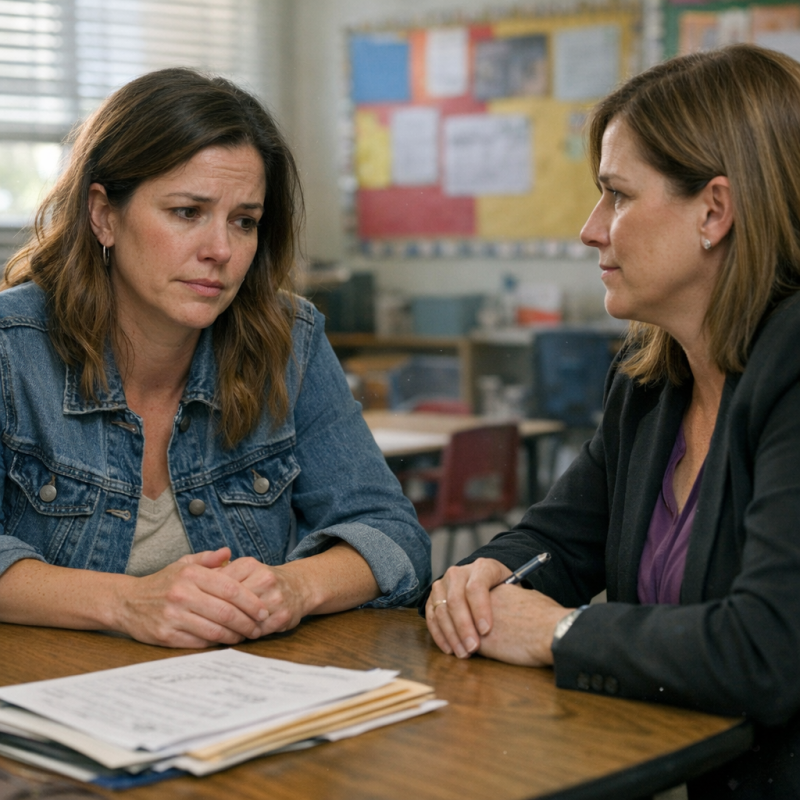 Image by FCT AI
Addressing the Imagination
That night, I sat Oliver down at the kitchen table and tried to explain the difference between imagination and reality. I used examples he could understand—how we pretend when we play games, how stories aren't real even when they feel real, how his body wasn't actually changing no matter what he saw in videos. He listened quietly, his small hands folded in his lap, looking so much like Marcus when he's thinking hard about something. I thought maybe I was getting through to him. I explained that people make videos that aren't true, that special effects can make anything look real, that his body was perfect and normal and human. 'Do you understand, sweetheart?' I asked, reaching across to squeeze his hand. 'Do you understand that you're not transforming into anything? That you're just Oliver, and that's wonderful?' He was quiet for a long moment, his eyes studying my face with this unsettling intensity. Then he nodded slowly, very deliberately. 'I understand, Mom,' he said softly. 'I just don't think you're right.'
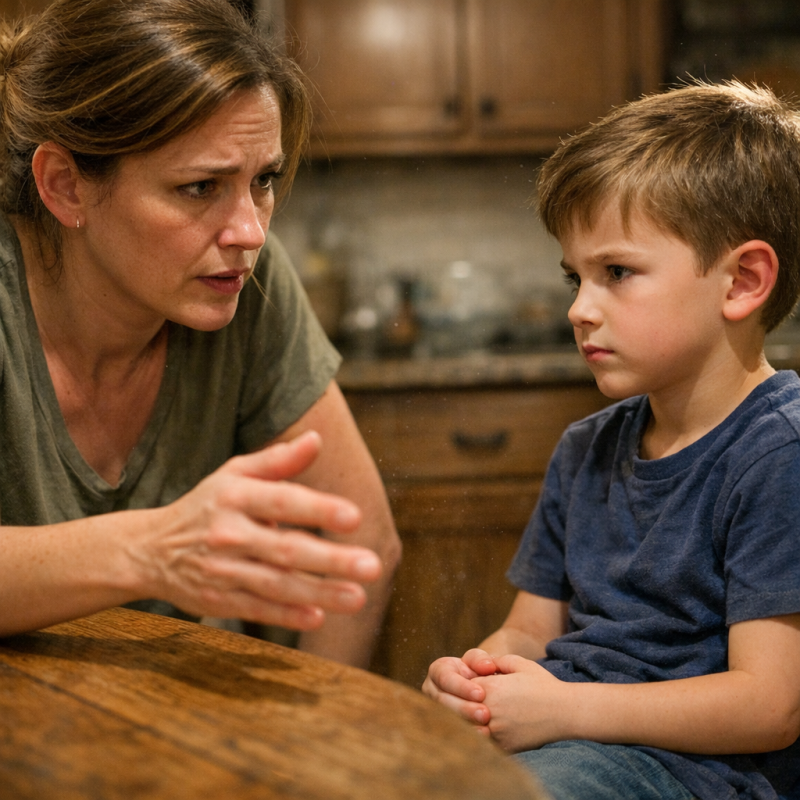 Image by FCT AI

History's most fascinating stories and darkest secrets, delivered to your inbox daily.
Marcus Suggests Therapy
Marcus called that weekend, and within five minutes we were fighting. He'd talked to Mrs. Patterson too—apparently she'd called him directly—and he was convinced Oliver needed therapy immediately. 'This isn't normal childhood imagination, Claire,' he kept saying. 'He genuinely believes he's transforming. That's delusional thinking.' I got defensive fast. I told him Oliver was just going through a phase, that we didn't need to pathologize everything, that dragging our son to a therapist would just make him feel broken. Marcus's voice got that tight, controlled quality it gets when he's really angry. 'So your plan is to do nothing? Wait until he hurts himself worse?' That stung because he was right, but I couldn't admit it. We went back and forth, voices rising, until I was so frustrated I just hung up on him. I sat there shaking with anger, telling myself Marcus was overreacting, that he didn't understand Oliver like I did. But later that night, alone in the dark, I found myself googling child psychologists in our area.
 Image by FCT AI
The Waitlist is Six Months
I called six different practices on Monday. Six. And every single one had the same answer: waiting lists stretching into summer, some even longer. One receptionist actually laughed—not meanly, just exhausted—when I asked if there were any cancellations. 'You and everyone else,' she said. I tried explaining that it was urgent, that my son was having trouble distinguishing fantasy from reality, that he'd hurt himself. She was sympathetic but firm. They were triaging based on immediate danger, and unless Oliver was actively self-harming, we'd have to wait our turn. I felt this crushing sense of isolation, like we were stuck in some holding pattern with no way out. The last receptionist I spoke to sighed heavily before adding something that's stuck with me. 'We're seeing a huge surge in requests,' she said quietly. 'Parents are reporting all kinds of internet-related incidents with their kids.' So it wasn't just us. That should have been comforting, but somehow it made everything worse.
 Image by FCT AI
Meeting Natalie at Pickup
A few days later, I was waiting at school pickup when this woman approached me. She was probably mid-thirties, impeccably dressed in that effortless way some people manage—good jeans, crisp white shirt, expensive-looking bag. 'You're Oliver's mom, right?' she said, smiling warmly. 'I'm Natalie. Dylan's mom.' Oh. The kid who'd been asking Oliver about the videos. I must have looked wary because she quickly added, 'Don't worry, I'm not here to complain. Actually, I wanted to thank you.' Thank me? For what? She explained that Dylan had been struggling socially, that he was a sensitive kid who had trouble connecting with other children. 'But he and Oliver just clicked,' she said. 'Dylan talks about him constantly. It's so nice to see him excited about a friend.' We chatted for a few minutes—she was easy to talk to, understanding about the whole video situation without being judgmental. As she walked away with Dylan, she called back, 'Maybe the boys could have a playdate sometime? Dylan hasn't stopped talking about Oliver.' Something about her smile made me uneasy.
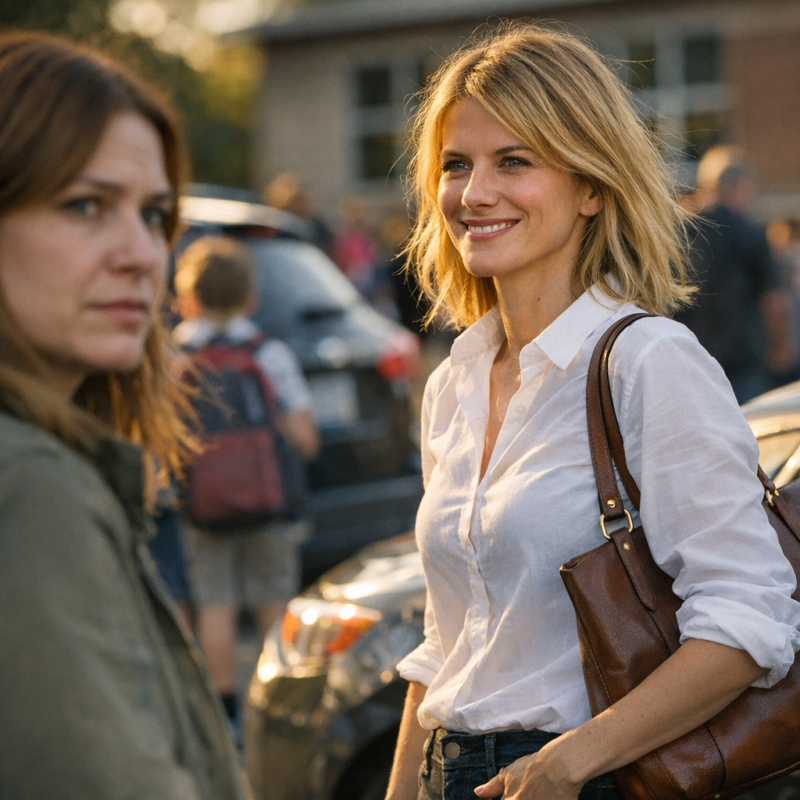 Image by FCT AI
The Playdate Invitation
Natalie texted me that same evening. She must have gotten my number from the school directory—not weird exactly, but it felt fast. Her messages were warm and friendly, full of compliments about how special Oliver was, how mature for his age, how Dylan really looked up to him. I'll admit, after feeling so isolated with the therapy waitlists and Marcus's judgment, it felt good to connect with another parent who seemed to get it. She shared a bit about Dylan—he was sensitive, creative, had been through 'some challenges' at his old school. Nothing specific, just enough to make me feel like we were in similar boats. We texted back and forth about the usual parent stuff—screen time struggles, picky eating, the chaos of second grade homework. Then she circled back to the playdate idea. 'I really think it would be good for both of them,' she wrote. 'Dylan needs a friend who understands him.' I was about to respond when another text came through. Her last text read: 'I think our boys have a lot in common. Dylan's been through some things too. It would be good for both of them.'
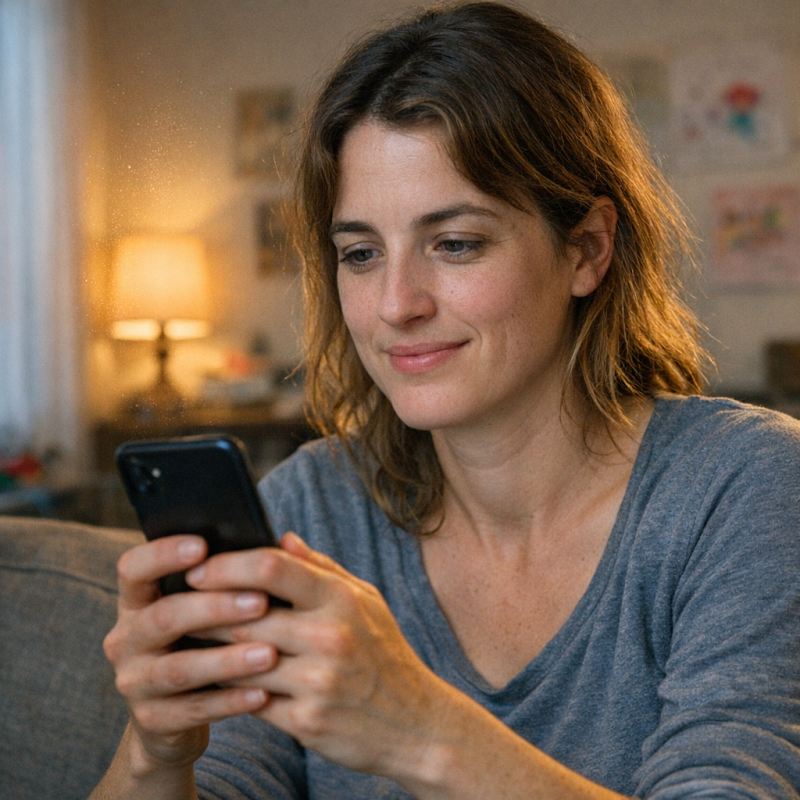 Image by FCT AI
The First Playdate
The following Saturday, I dropped Oliver at Dylan's house. Natalie answered the door with this huge welcoming smile, ushered Oliver inside like he was the most important guest she'd ever had. Their house was beautiful—one of those renovated Victorians with original hardwood and carefully curated bookshelves. I picked him up three hours later, and Oliver was practically vibrating with excitement in the car. 'We did experiments, Mom!' he announced. 'Dylan's mom helped us.' Experiments. My stomach tightened, but I kept my voice casual. 'What kind of experiments, buddy?' He launched into this enthusiastic explanation about testing hypotheses and making observations and recording data—all very scientific-sounding, which honestly surprised me. Maybe this was good? Maybe channeling his imagination into actual science would help? 'Dylan's mom is really smart,' Oliver continued. 'She said we're both scientists exploring the unknown. She said the best scientists are the ones who question everything.' I smiled, trying to share his excitement, but something about the phrasing bothered me. When I asked what kind of experiments, Oliver's eyes lit up: 'Dylan's mom said we're both scientists exploring the unknown.'
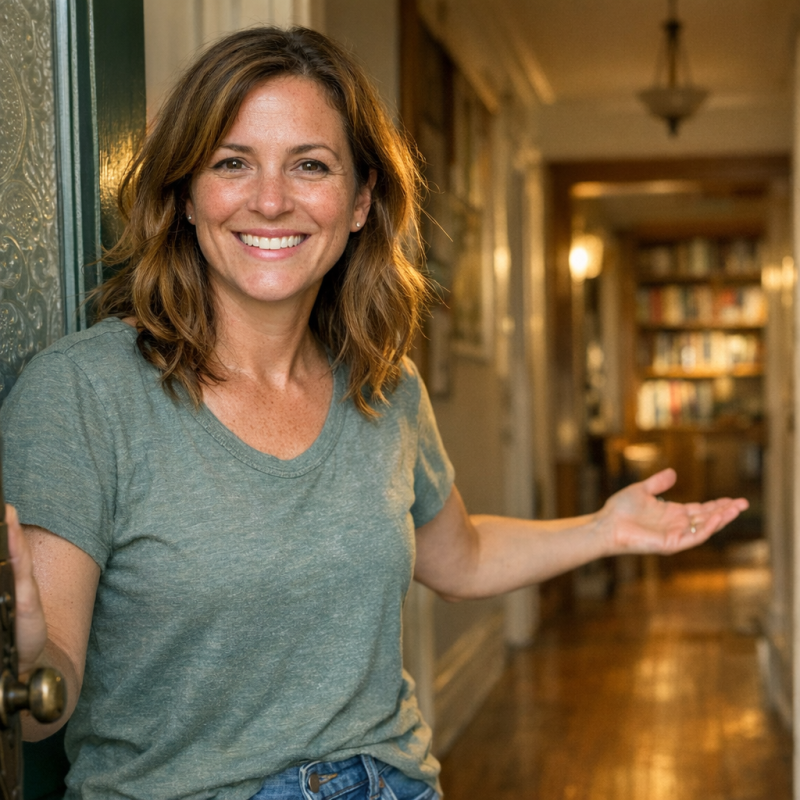 Image by FCT AI
Oliver's New Obsession with Science
Over the next two weeks, Oliver became obsessed with science. Suddenly everything was a hypothesis that needed testing, an observation that needed recording. He started carrying around this composition notebook, writing in it constantly. At first, I was thrilled—finally, something constructive! He was using scientific language, talking about controls and variables, even asking me to take him to the library for books on biology and chemistry. Marcus noticed too, actually complimented me on helping Oliver channel his energy positively. I didn't tell him it was mostly happening during playdates with Dylan. Then one evening, Oliver left his notebook on the kitchen table. I shouldn't have looked—I knew I shouldn't—but I did. Page after page of careful observations, all written in his neat second-grade handwriting. Observations about 'transformation triggers.' About which videos produced which sensations. About whether certain foods or times of day made the feeling stronger. My hands went cold as I flipped through. He showed me his notebook, filled with observations about 'transformation triggers'—and every entry was dated after his visits with Dylan.
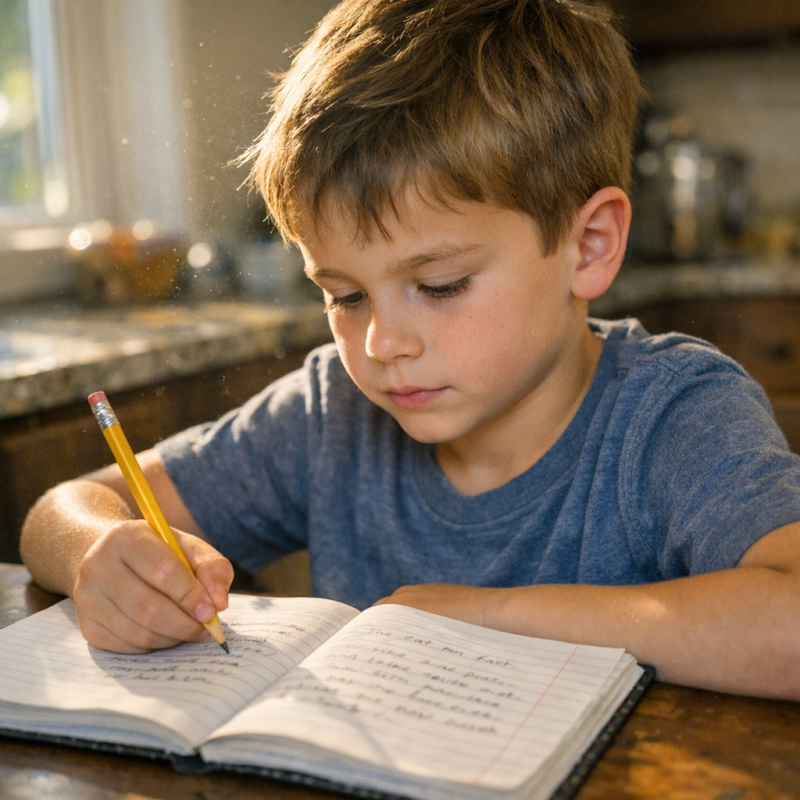 Image by FCT AI
Natalie Offers Parenting Advice
Natalie started texting me more frequently after that, always friendly, always supportive. But the messages started shifting from mom-chat to something else—advice I hadn't asked for. She'd send articles about raising creative children, tips for managing kids who 'think differently,' suggestions for how to nurture Oliver's interests while keeping him grounded. At first, I appreciated it. Then it started feeling like she was implying I didn't know how to handle my own son. One message particularly got under my skin: she explained her background in child development, mentioned she'd worked with 'many families navigating similar challenges.' Similar to what, exactly? I hadn't told her much about Oliver's transformation obsession. The texts kept coming—gentle, well-meaning, but increasingly presumptuous. She recommended books, suggested dietary changes, even offered to share Dylan's therapist's contact information. Wait, Dylan was in therapy? For what? I didn't ask. Her message ended with: 'I know how hard it is when they don't quite fit the mold. You're doing great, but don't hesitate to reach out if you need help.'
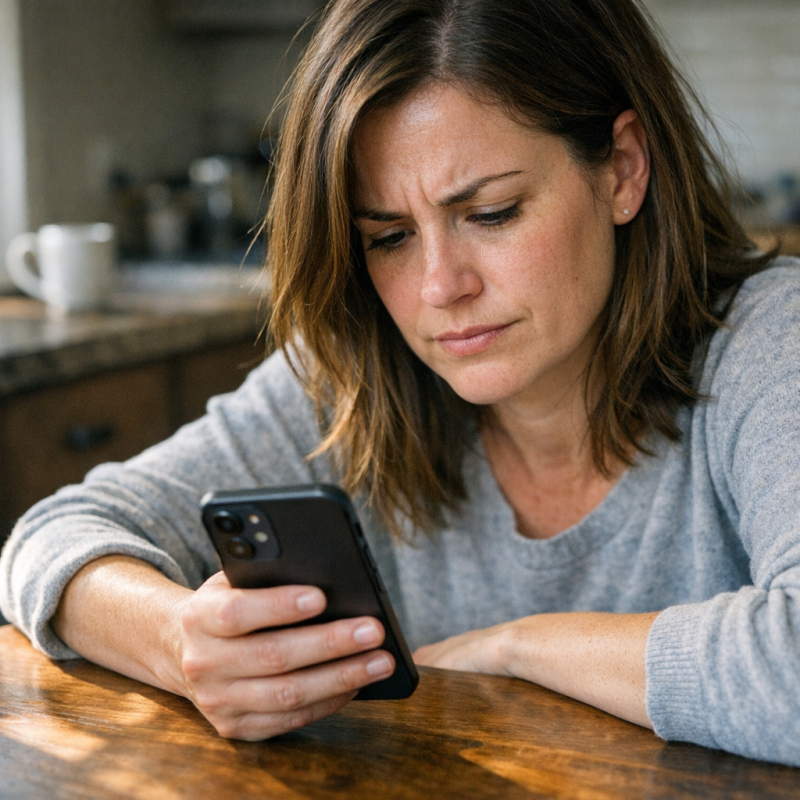 Image by FCT AI
The Baking Soda Volcano Incident
The school called me at work about the volcano. You know those baking soda volcanoes every kid makes at some point? Well, Oliver and Dylan decided to test 'eruption limits' during science time, and apparently they kept adding vinegar until it overflowed the tray, spilled across the table, and cascaded onto the floor like some kind of science fair apocalypse. When I picked Oliver up, he was still buzzing with excitement, talking about how they'd discovered the 'saturation point.' Dylan stood beside him, calm and observant, like he was taking mental notes. The teacher pulled me aside and said both boys insisted they were conducting legitimate research, but here's what bothered her—and me, once I really thought about it. Dylan had suggested they stop after the third addition. Oliver wanted to keep going. Dylan had stepped back before the real mess happened, almost like he knew exactly when things would go too far. Oliver, on the other hand, had vinegar-soaked sleeves and baking soda in his hair. The teacher told me both boys insisted they were testing 'eruption limits'—but only Dylan seemed to know to stop before it became a real problem.
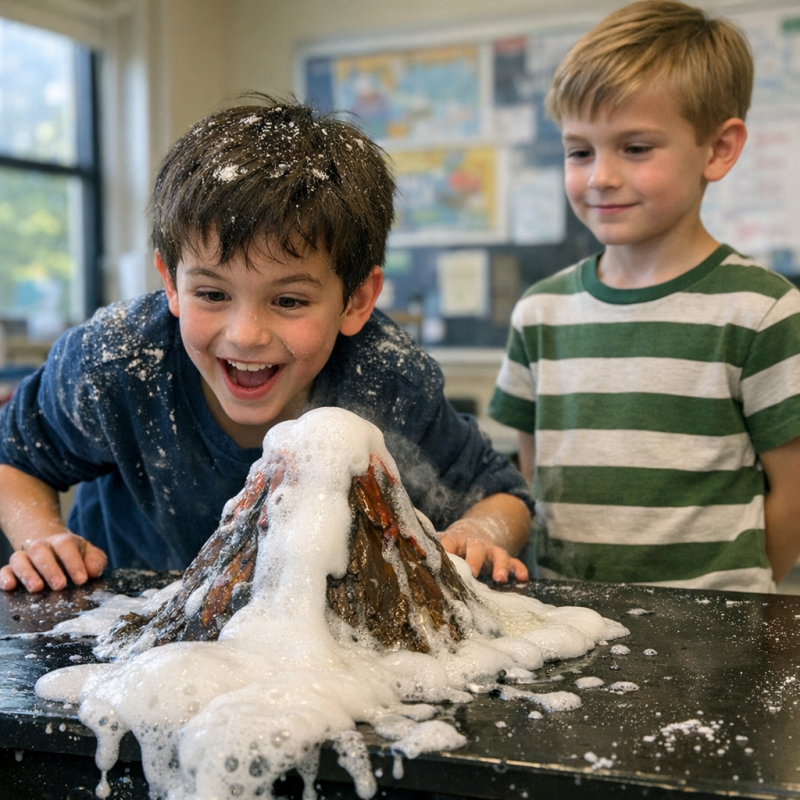 Image by FCT AI
Called to the Principal's Office
Principal Lawson's office smelled like coffee and disappointment. She sat across from me with Oliver's file open, her expression professionally sympathetic but firm. 'Oliver's a bright child,' she began—you know it's bad when they start with that. She explained that his behavior was becoming increasingly disruptive, that he was influencing other students to take risks during class activities, that his focus on experiments was overshadowing actual learning. I felt myself getting defensive, saying he was just curious, just creative, just being a kid. She nodded patiently, like she'd heard it all before. Then she mentioned other parents had expressed concerns about their children participating in Oliver's 'projects.' I felt my face flush. She assured me they wanted to support Oliver, but I needed to address this at home. I left feeling like I'd been called in for a performance review I was failing. As I reached the door, she mentioned that Dylan's mother had already been in twice this semester—'but always to advocate for Dylan, never because of problems.'
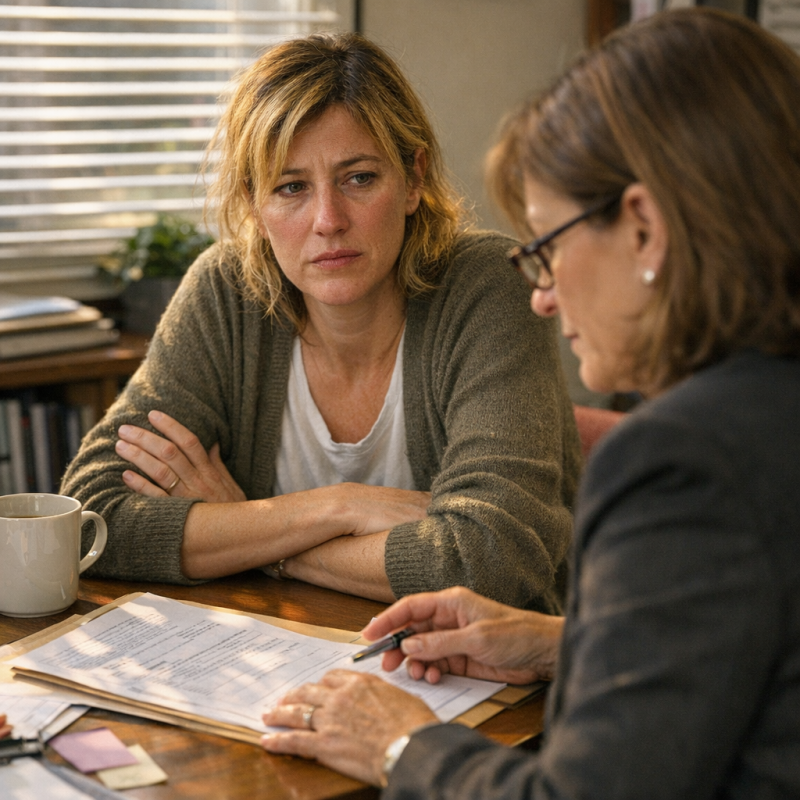 Image by FCT AI
Limiting Contact with Dylan
I sat Oliver down that evening and told him no more playdates with Dylan for a while. I tried to be gentle about it, explaining that they brought out risky behavior in each other, that they needed some space. His face crumpled immediately. 'But we're working on important stuff!' he protested, tears streaming down his cheeks. I held firm, saying he could play with other friends, that this wasn't punishment but a boundary. He sobbed like I'd taken away his best friend—which, I guess, I had. I felt horrible. Maybe I was overreacting. Maybe I was stifling his curiosity like everyone seemed to think. But I couldn't shake the image of him covered in baking soda, or the principal's careful comparison to Natalie's perfect advocacy. Oliver cried for nearly an hour, refusing dinner, refusing comfort. I sat on his bed trying to explain, but nothing helped. Through his sobs, Oliver said something that chilled me: 'But Dylan said this would happen. He said you wouldn't understand the science.'
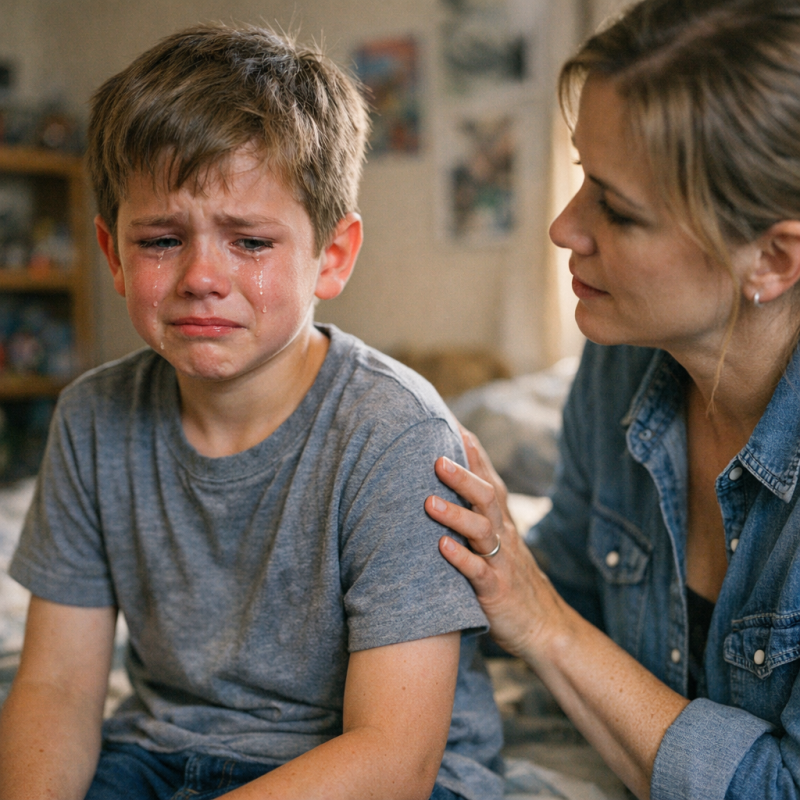 Image by FCT AI
Natalie's Concerned Text
Natalie's text came the next morning. 'Hi Claire, Dylan mentioned Oliver can't come over anymore? I'm so sorry if the volcano thing caused trouble. I know how hard it is when schools don't appreciate creative thinking.' I stared at my phone, immediately irritated. How did she already know about my conversation with Oliver? Had Dylan texted him? She continued: 'I remember when Dylan went through a similar phase. The key is channeling that energy, not suppressing it. Happy to share strategies that worked for us!' I typed and deleted three different responses. She was being helpful, right? Supportive? So why did it feel like criticism wrapped in kindness? Another text: 'I studied child development before Dylan was born—worked with many families navigating these challenges. Sometimes the most creative kids need the most freedom, even when it scares us.' I wanted to throw my phone. But a small voice in my head whispered: what if she's right? What if I'm the problem? Her final text read: 'I'm not trying to overstep, but sometimes gifted kids need more freedom than we're comfortable giving. Just something to consider.'
 Image by FCT AI
The Night of the Freezer Experiment
I found Oliver in the kitchen at eleven PM with his arm buried in the freezer up to his elbow. My heart nearly stopped. 'What are you doing?!' I yanked him back, examining his reddened skin. He pulled away, annoyed rather than scared. 'I'm testing my endurance threshold,' he explained calmly, like this was perfectly reasonable. 'I've been timing how long I can keep it in before it hurts too much. I'm up to four minutes.' Four minutes. His arm was ice-cold, the skin mottled. I grabbed a towel and wrapped it around his arm, my hands shaking. 'Where did you get this idea?' I demanded. He shrugged, suddenly evasive. 'Just thought of it.' But something made me check his smartwatch—the one Marcus had given him for emergencies. I scrolled through the messages, and there it was. When I asked where he got the idea, he wouldn't look at me—but I found a text from Dylan on his smartwatch: 'Did you try the cold test yet?'
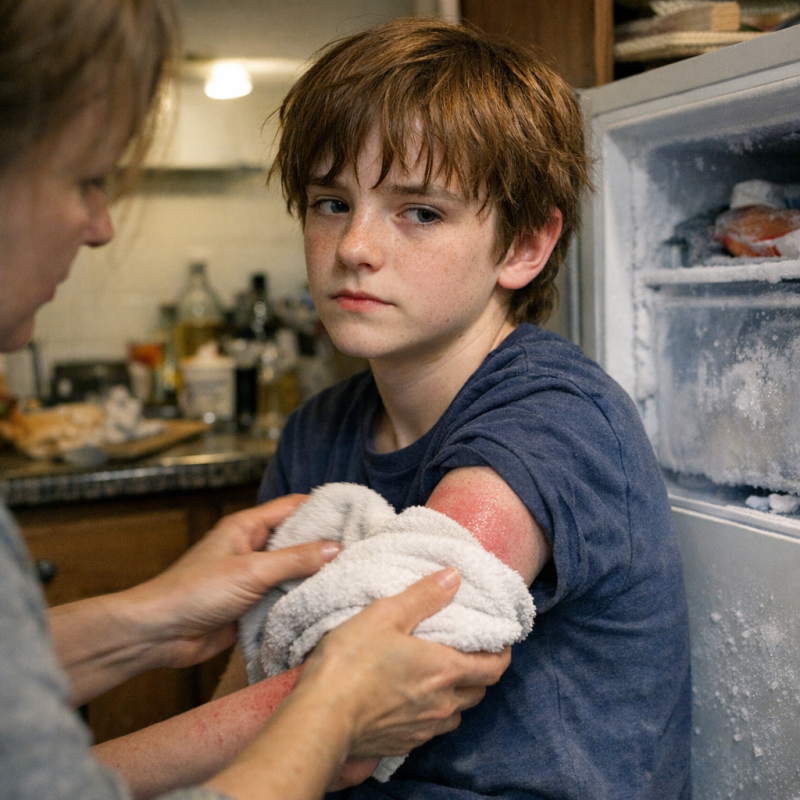 Image by FCT AI
Confronting Natalie at School
I cornered Natalie at school pickup the next day, my resolve hardened by a sleepless night. 'We need to talk about Dylan encouraging dangerous experiments,' I said, keeping my voice level. Parents milled around us, pretending not to listen. Natalie's expression shifted to concerned confusion. 'Dangerous? Claire, they're eight. They're exploring.' I told her about the freezer, the text messages. She touched my arm gently. 'I'm so sorry Oliver got hurt, but kids share ideas all the time. I can talk to Dylan about appropriate boundaries if you'd like?' Her tone was so reasonable, so understanding. I felt my righteous anger deflating. Was I overreacting again? Making Dylan the scapegoat for Oliver's choices? Her friend Janet stood nearby, watching our exchange with interest. 'I just think,' I said weakly, 'they shouldn't be texting about experiments without parent supervision.' Natalie nodded sympathetically. 'Of course. We'll address it.' I walked away feeling like I'd accomplished nothing. Natalie's friend Janet witnessed the whole exchange, and as I walked away, I heard her say to Natalie, 'Some parents just can't handle creative kids.'
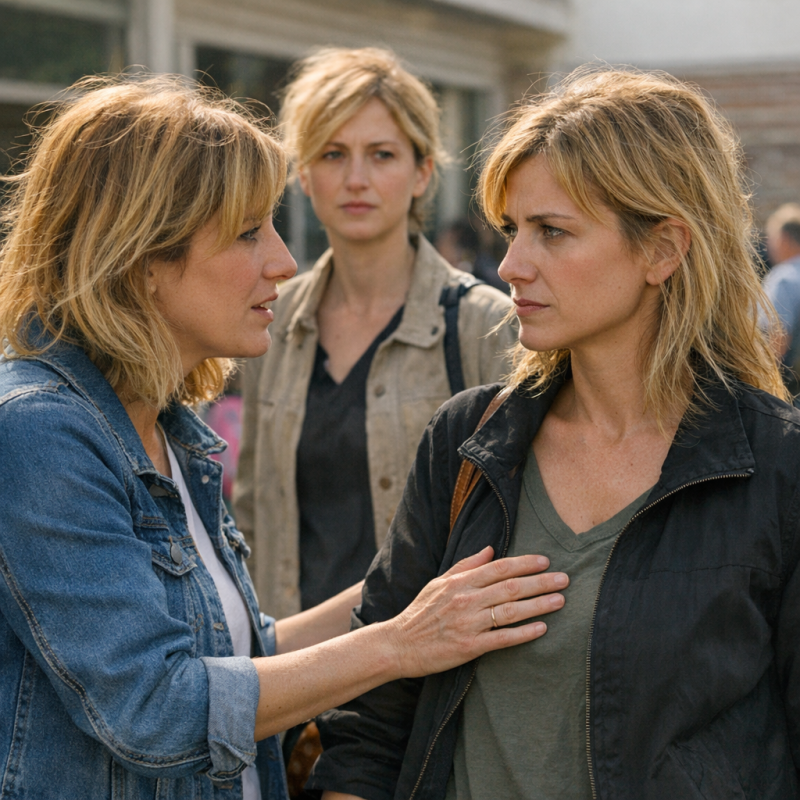 Image by FCT AI
The Smartwatch Gets Confiscated
That night I confiscated Oliver's smartwatch. He protested, but I was done negotiating. I sat at my kitchen table and scrolled through months of messages between him and Dylan. My stomach turned. The texts showed a clear pattern—Dylan suggesting experiments, Oliver reporting results, Dylan offering new variations. 'Try holding your breath underwater for longer each time.' 'See how high you can climb before getting scared.' 'Test if you can eat something expired and track symptoms.' Each message was framed as scientific inquiry, curiosity, exploration. But together they painted a picture of systematic risk escalation. And woven throughout were casual mentions: 'My mom says documentation is important.' 'My mom thinks your glue idea shows real innovative thinking.' Natalie had been aware. She'd been encouraging this. My hands trembled as I scrolled back further, looking for the beginning. The earliest message was from the day after Thanksgiving: 'My mom says your glue thing was cool. Want to try more stuff together?'
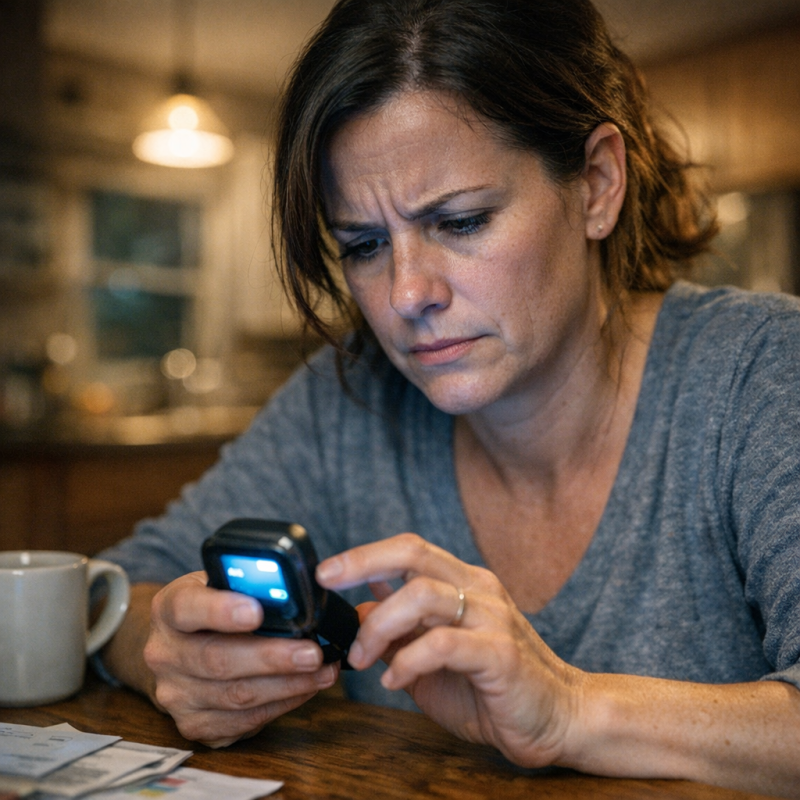 Image by FCT AI
Marcus Wants Full Custody
Marcus called two days later. I knew from his tone immediately that this wasn't a check-in. 'Claire, I've been thinking a lot about Oliver's safety.' My chest tightened. He listed the incidents: the glue, the volcano, the freezer, the calls from school. His voice was steady, almost rehearsed. 'I'm consulting with a lawyer about custody modification. I don't think you can keep him safe.' The words hit me like a physical blow. 'You can't be serious,' I managed. 'I'm completely serious. He's doing dangerous things under your supervision, the school is calling constantly, and you seem unable to set appropriate boundaries.' I tried to explain about Dylan, about Natalie, about the pattern I'd discovered, but I could hear how it sounded—like excuses, like deflection. 'I'm not trying to punish you,' Marcus said, though his tone suggested otherwise. 'I'm trying to protect our son.' My voice shook. 'He's my son too.' Before he hung up, he said, 'I've been documenting everything, Claire. Every incident. Every call from the school.'
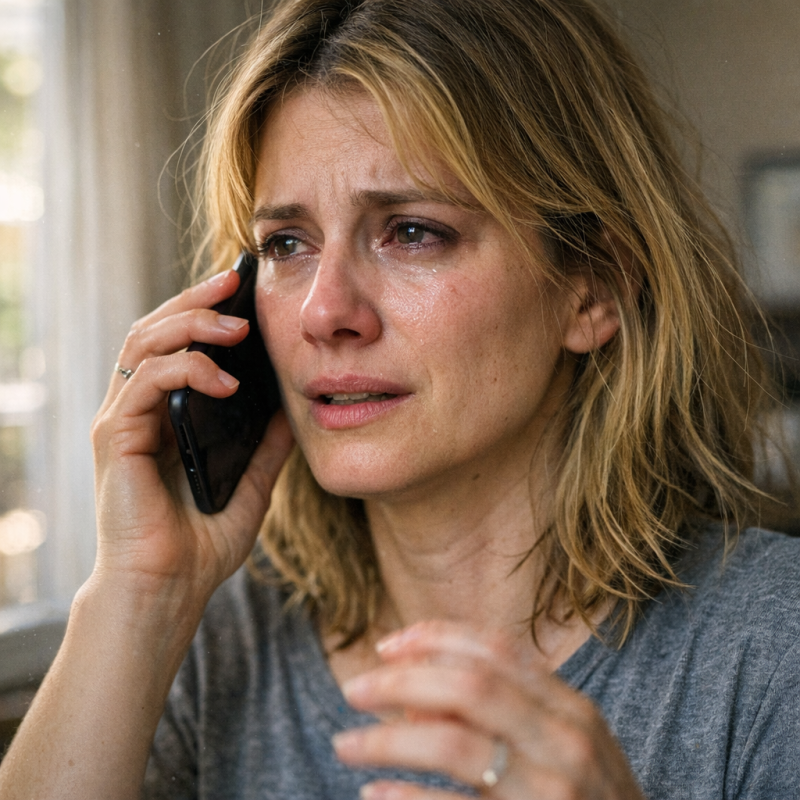 Image by FCT AI
The Parent-Teacher Conference
The conference room at Oliver's school smelled like stale coffee and laminated posters. Three teachers sat across from me, their faces arranged in that concerned-parent-meeting expression I'd come to dread. They took turns, each one adding another brick to the wall closing in around me. Ms. Peterson mentioned Oliver's fixation on 'extreme experiments.' Mr. Harrison brought up the repeated safety violations during science time. The art teacher—the art teacher—expressed concern about his drawings of 'testing scenarios.' I tried to explain about Dylan, about the influence, but I could see their eyes glazing over. They'd heard excuses before. 'We're just worried,' Ms. Peterson said gently, 'that Oliver doesn't seem to understand appropriate boundaries.' I nodded, took notes, promised to address it. Then, almost as an afterthought, she added something that made my skin crawl. 'Actually, Natalie—Dylan's mom—came in earlier this week. She's so engaged. Asked really thoughtful questions about how we handle children with boundary issues.' The room tilted slightly. Of course she had.
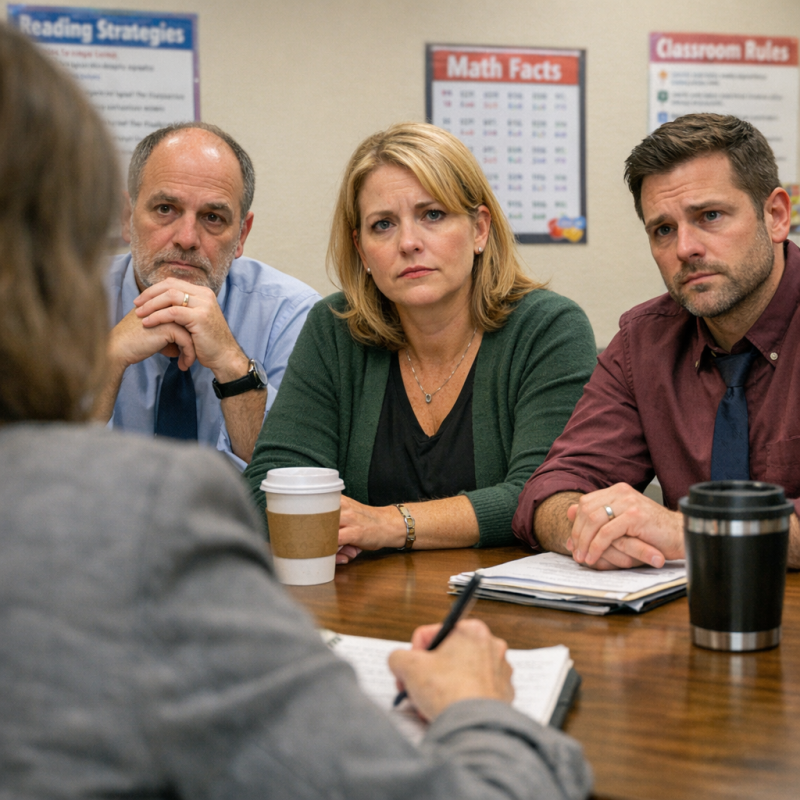 Image by FCT AI
Oliver Asks About Pain Tolerance
Oliver started asking questions that made my stomach drop. We were making dinner—something normal, something safe—when he said, 'Mom, how do you know when pain is dangerous versus just uncomfortable?' I stopped chopping vegetables. 'What do you mean, honey?' He was so casual about it, like he was asking about the weather. 'Like, some pain means you should stop, but some pain is just your body being scared, right? How do you tell the difference?' I asked where this was coming from. He shrugged. 'Just curious.' But I pressed, and finally he said, 'Dylan's mom says real scientists have to be willing to experience discomfort. That's how discoveries happen.' My knife clattered against the cutting board. Natalie was in my son's head, planting these ideas, framing recklessness as bravery. I tried to explain the difference between discomfort and danger, but Oliver looked disappointed, like I was the one who didn't understand. When I asked why he wanted to know, he said Dylan's mom had told them that 'real scientists have to be willing to experience discomfort.'
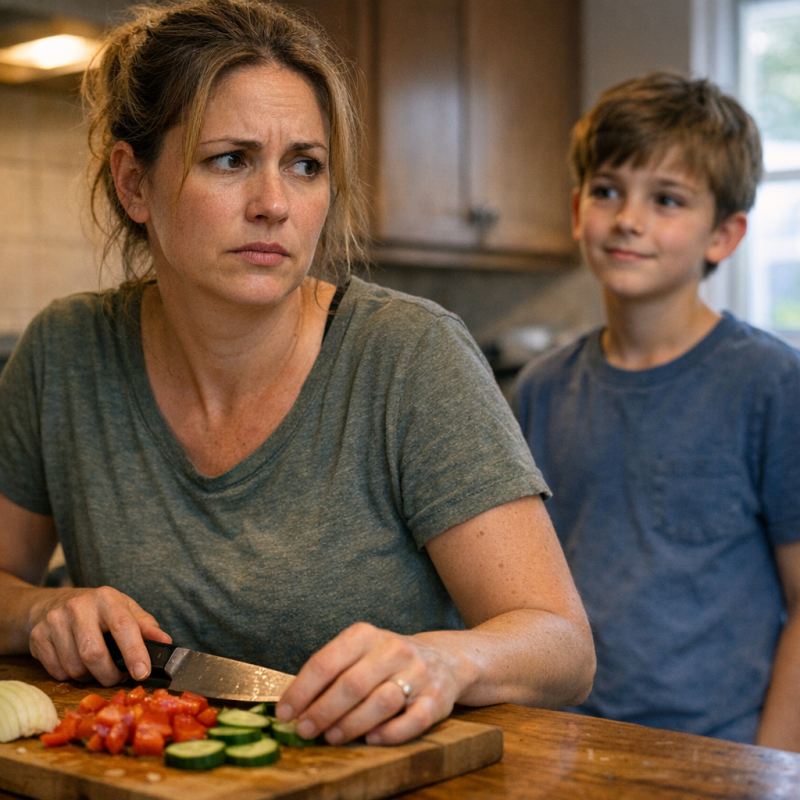 Image by FCT AI
The Breath-Holding Competition
The school called at 1:47 PM. Oliver had passed out during recess. I drove there doing at least fifteen over the limit, my hands shaking on the wheel. By the time I arrived, he was conscious, sitting in the nurse's office with an ice pack and that scared-kid look that broke my heart. They'd been doing a 'lung capacity test,' seeing who could hold their breath longest. Dylan had stopped at what the nurse called 'a reasonable point.' Oliver kept going. And going. Until he collapsed on the asphalt, face-first. The nurse was kind but firm: 'We can't have students passing out during recess, Mrs. Foster.' I held Oliver close, feeling his heartbeat against my chest, alive and steady. Then she mentioned something that made my blood freeze. Dylan had been timing him with a stopwatch, calling out intervals. Encouraging him to keep going. When Oliver started swaying, Dylan had stepped back and watched. The nurse told me Dylan stopped at a safe point, but Oliver kept going until he collapsed—and Dylan had been timing him with a stopwatch.
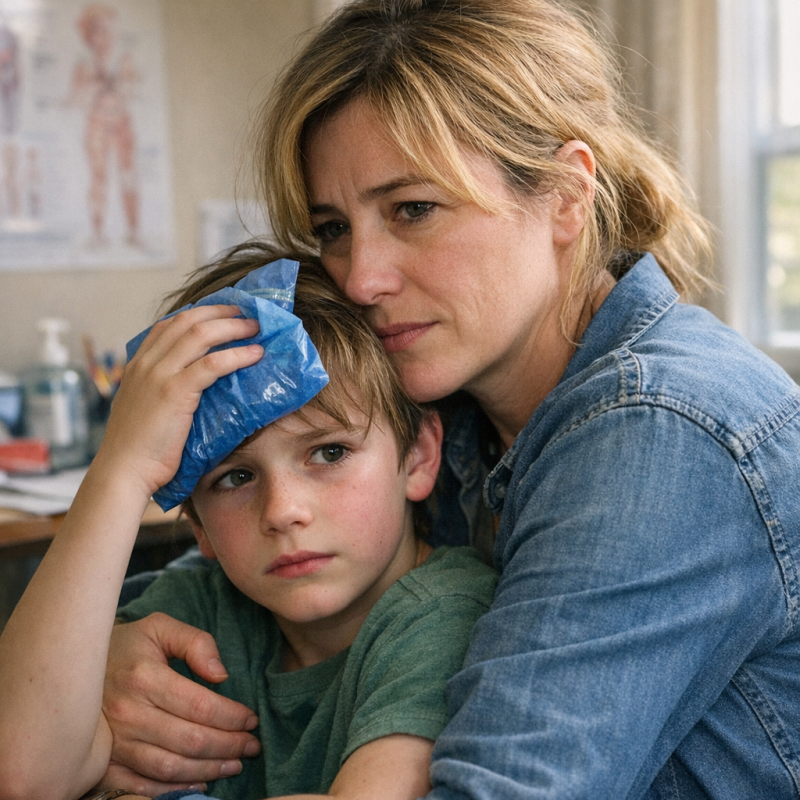 Image by FCT AI
Natalie Brings Flowers to the Hospital
We were still in the ER waiting room when Natalie appeared. She had flowers—cheerful yellow daisies that looked obscene under the fluorescent lights. 'Oh my God, Claire, I'm so sorry,' she said, rushing over. 'Dylan told me what happened and I just felt sick. I can't believe they took their game that far.' She sat down next to us, all maternal concern and sympathy. Talked about how boys get competitive, how science curiosity can go too far without supervision. She looked at Oliver with such tenderness. 'You scared us, buddy.' Part of me wanted to believe her. She seemed so genuinely upset. But something felt off, like watching a play where the actress is just slightly overacting. When the doctor finally cleared Oliver and we stood to leave, Natalie hugged me tight. Her perfume was overwhelming. Then she whispered in my ear, her breath warm against my skin: 'I know you're doing your best, Claire. This must be so hard for you.' It felt wrong.
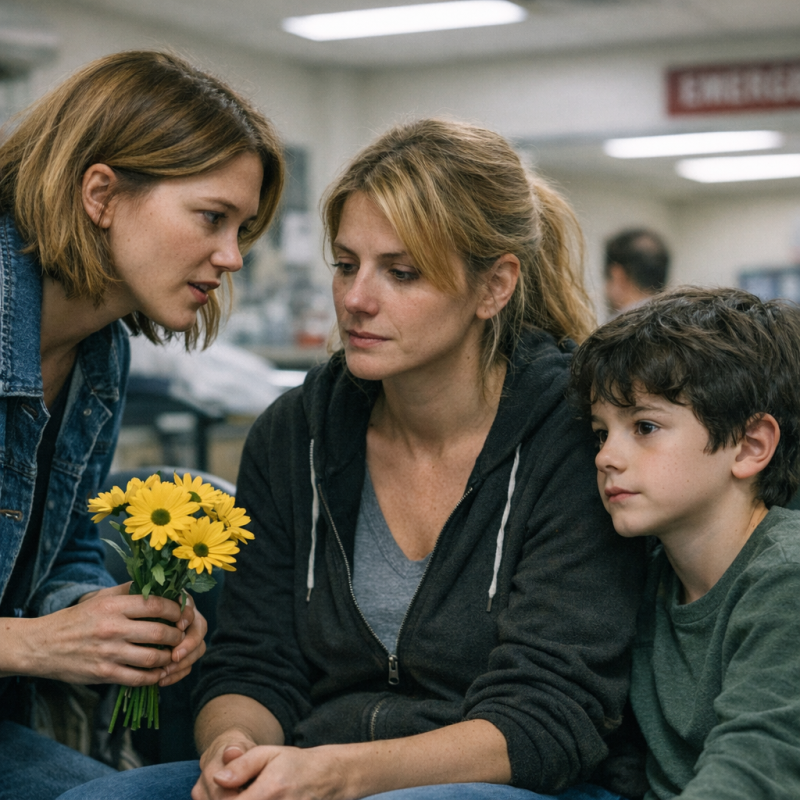 Image by FCT AI
Banned from Future Playdates
I sent Natalie the text that evening, after putting Oliver to bed. Kept it simple and firm: 'Oliver and Dylan can't have playdates anymore. I think it's best they spend time apart.' My finger hovered over the send button for a full minute before I pressed it. Her response came within seconds. 'I completely understand. You need to do what feels right for your family.' Then another message: 'Dylan will miss him, but I respect your decision as Oliver's mom.' It was perfect. Too perfect. Supportive without being defensive. Understanding without being hurt. Then, an hour later, one final text arrived that made my jaw clench. 'I respect your decision, but I hope you're not limiting Oliver's growth out of fear. Sometimes our protective instincts can hold our children back.' I stared at those words for ten minutes. The manipulation was so subtle, so carefully phrased. She wasn't arguing with me. She was planting doubt, making me question my own judgment. Natalie's response was calm and understanding, but her final text said, 'I respect your decision, but I hope you're not limiting Oliver's growth out of fear.'
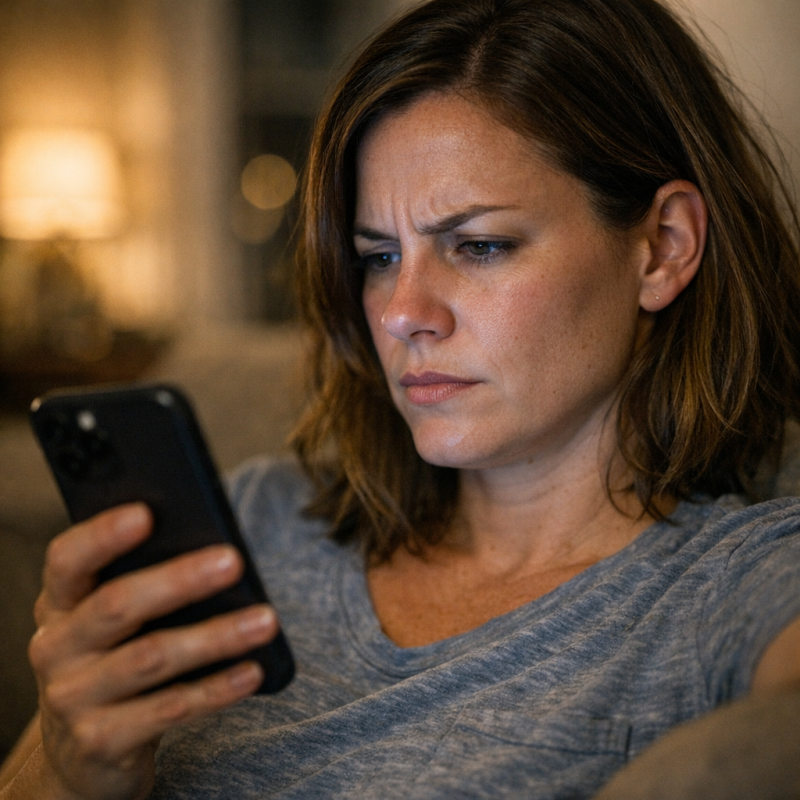 Image by FCT AI
Oliver's Depression
Oliver changed after I banned the playdates. Not dramatically—that would've been easier to address. Instead, he just… faded. Stopped talking about volcanoes and experiments. Stopped asking questions. He'd come home from school, do his homework in silence, then sit in front of the TV with blank eyes. I tried engaging him, suggesting activities we could do together, but he'd just shrug. 'I'm fine, Mom.' He wasn't fine. I could see it in the way he moved through the house like a ghost. Then Marcus called, his voice tight with accusation. 'Oliver told me something concerning during his visit.' My heart sank. 'What did he say?' There was a pause, and I could picture Marcus choosing his words carefully, weaponizing my son's sadness. 'He said you don't want him to be curious anymore. That you're stopping him from learning.' I tried to explain, but Marcus cut me off. 'I'm just telling you what he said, Claire.' Marcus called to say Oliver had told him during a visit, 'Mom doesn't want me to be curious anymore.' I felt like I was losing him.
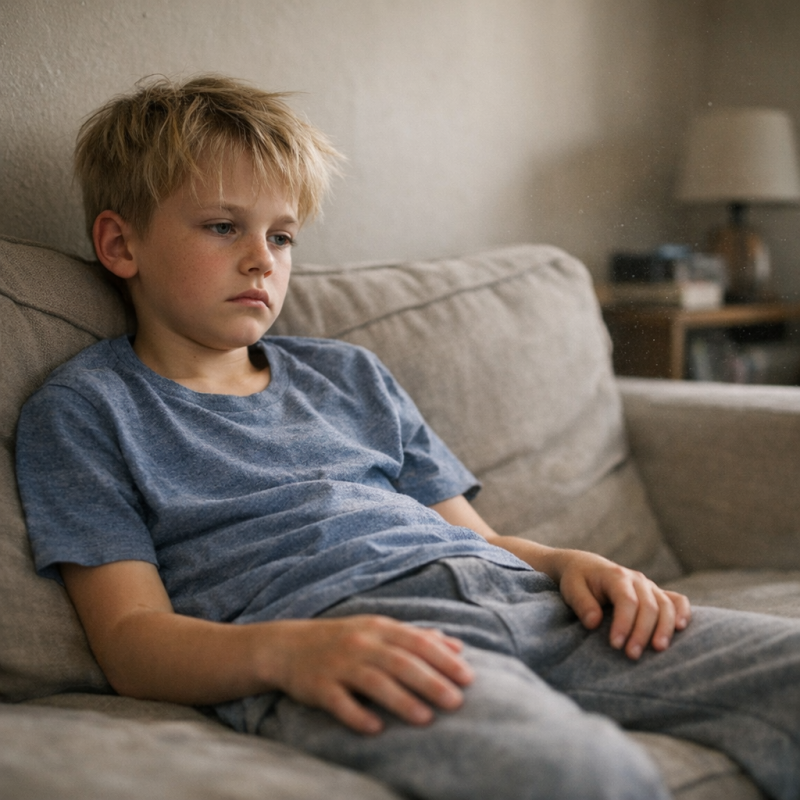 Image by FCT AI
The School Counselor's Report
The school counselor's office had motivational posters about feelings and being kind. Mrs. Richardson sat across from me with a manila folder that I knew contained documentation about my son. About me. 'Thank you for coming in, Mrs. Foster. I wanted to discuss some concerns about Oliver's emotional wellbeing.' She was gentle but direct. Oliver had been withdrawn in class. Had stopped participating. Had mentioned to his teacher that he felt 'trapped' at home. That word—trapped—hit me like a punch. 'We're recommending a psychological evaluation,' Mrs. Richardson continued. 'Just to make sure Oliver has the support he needs.' I nodded, numb. She explained the process, the forms I'd need to sign. Then she said something that made the room swim: 'I want you to know this isn't a judgment of your parenting. But the school is required to document when a child expresses concerns about their home environment.' Document. There was that word again. She told me that Oliver had mentioned feeling 'trapped' at home—and that the school was required to document concerns about his wellbeing.
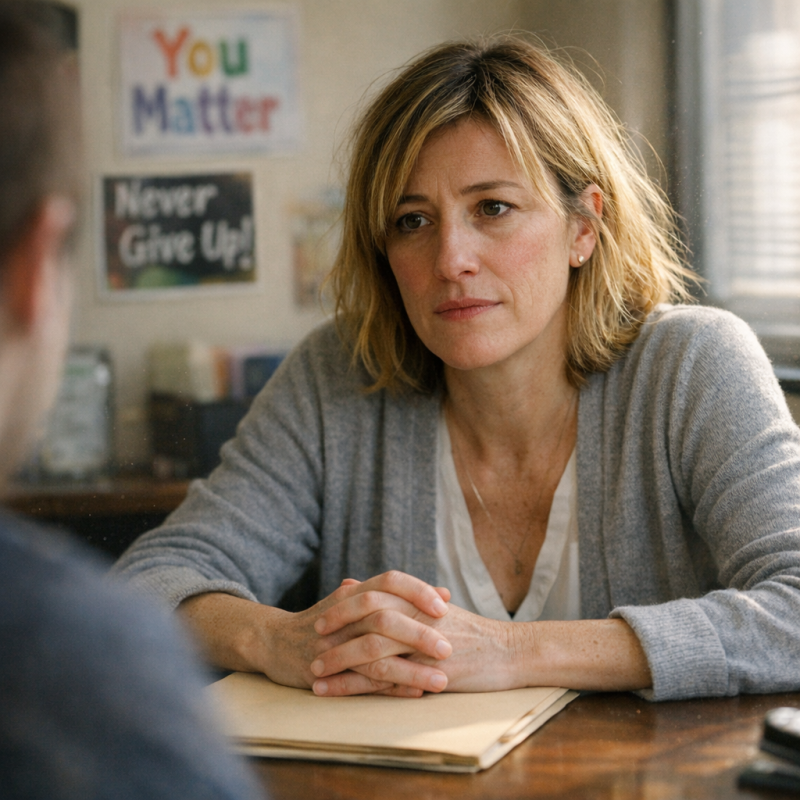 Image by FCT AI
Finding a Therapist Finally
I called in every favor I had to get the emergency appointment. Dr. Sarah Chen's office was in a converted Victorian house with toys in the waiting room that actually looked clean. I went alone for the initial consultation, and for forty-five minutes, I told her everything. The glue. The volcano. The freezer. Dylan's strange immunity to consequences. Natalie's too-perfect sympathy. Marcus's custody threats. The school's documentation. Dr. Chen listened without interrupting, taking occasional notes. When I finally finished, she sat back and looked at me with an expression I couldn't quite read. Not judgment. Something else. Understanding, maybe. 'Claire, I want to ask you something, and I need you to really think about it.' I nodded, desperate for validation, for someone to tell me I wasn't crazy. She leaned forward slightly, her voice careful and professional. 'In these experiments that Oliver has been doing—has anyone else been involved in encouraging them? An adult, perhaps?' The therapist listened to everything and then asked a question that made me freeze: 'Has anyone else been involved in encouraging these experiments?'
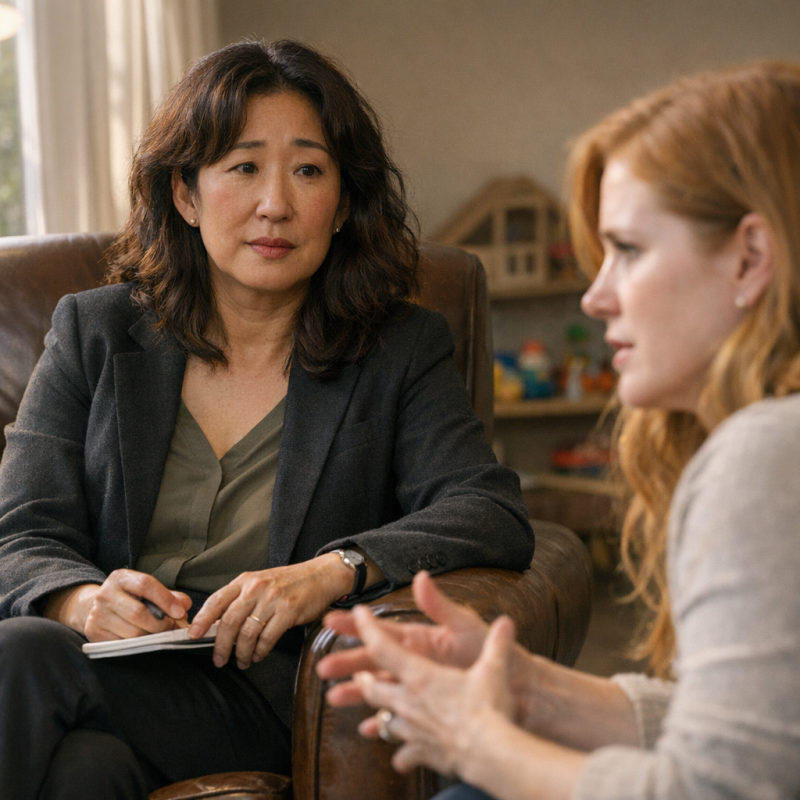 Image by FCT AI
Oliver's First Therapy Session
I sat in that waiting room for forty-five minutes, pretending to read a parenting magazine while my leg bounced uncontrollably. Oliver had gone in willingly enough, clutching the stuffed dog he hadn't touched in months. Through the door, I heard occasional murmurs but couldn't make out words. I kept thinking about what Dr. Chen had asked me—about whether an adult had been encouraging Oliver's experiments. The question had lodged in my brain like a splinter. When the session finally ended, Oliver came out looking calm, maybe even relieved. Dr. Chen asked if I could step into her office for a moment while Oliver played in the waiting room. Her expression made my stomach drop. She closed the door carefully and sat down across from me. 'Claire, I need to ask you about something Oliver mentioned repeatedly during our session.' I nodded, gripping the armrests of my chair. 'He talked extensively about a boy named Dylan and his mother. He seems very attached to both of them.' She paused, choosing her words carefully. When the therapist came out, she looked troubled: 'Oliver talked a lot about a boy named Dylan and his mother. I'd like to understand that relationship better.'
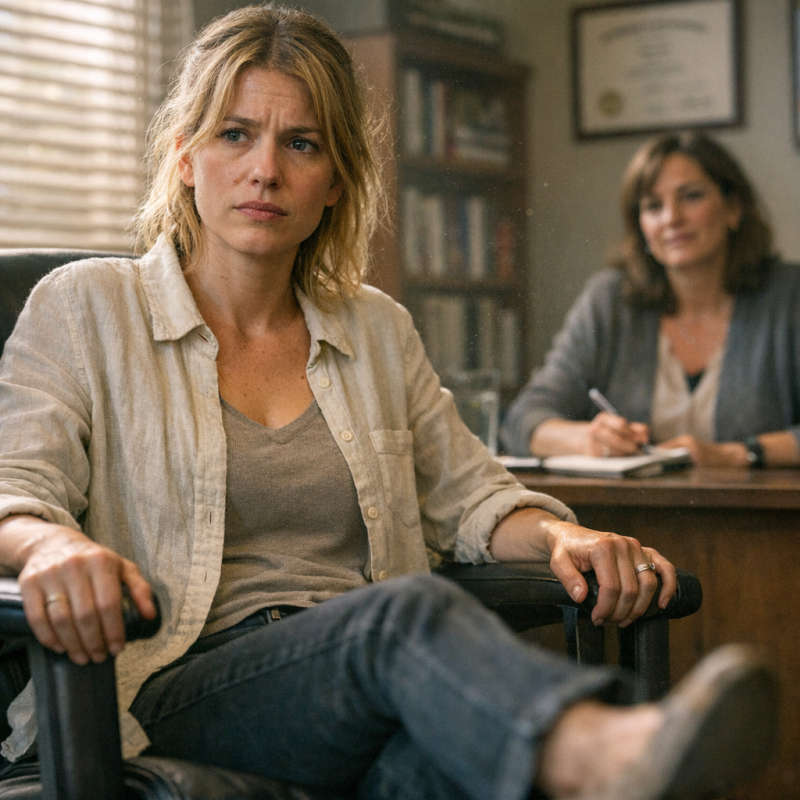 Image by FCT AI
Natalie's Public Sympathy Campaign
I didn't expect to run into Janet at pickup the next day. We'd been friendly once, before all of this started, before Oliver became the weird kid. She had that look people get when they're about to deliver bad news disguised as concern. 'Claire, can I talk to you for a second?' We stepped away from the other parents clustered near the entrance. Janet shifted her weight uncomfortably. 'Look, I wanted you to hear this from a friend. People have been talking.' My chest tightened. 'Talking about what?' She glanced around, lowering her voice. 'About how much you're dealing with. About Oliver's... struggles.' I waited, knowing there was more. 'Natalie's been really worried about you, actually. She's been telling everyone how stressed you seem, how she's tried to help but you won't accept it.' The world tilted slightly. 'Natalie said that?' Janet nodded, looking sympathetic. 'She's been so sweet about it, really. Very concerned.' Janet told me at pickup, 'Natalie's been so worried about you. She says you seem overwhelmed and she wishes you'd accept help.' I felt sick.
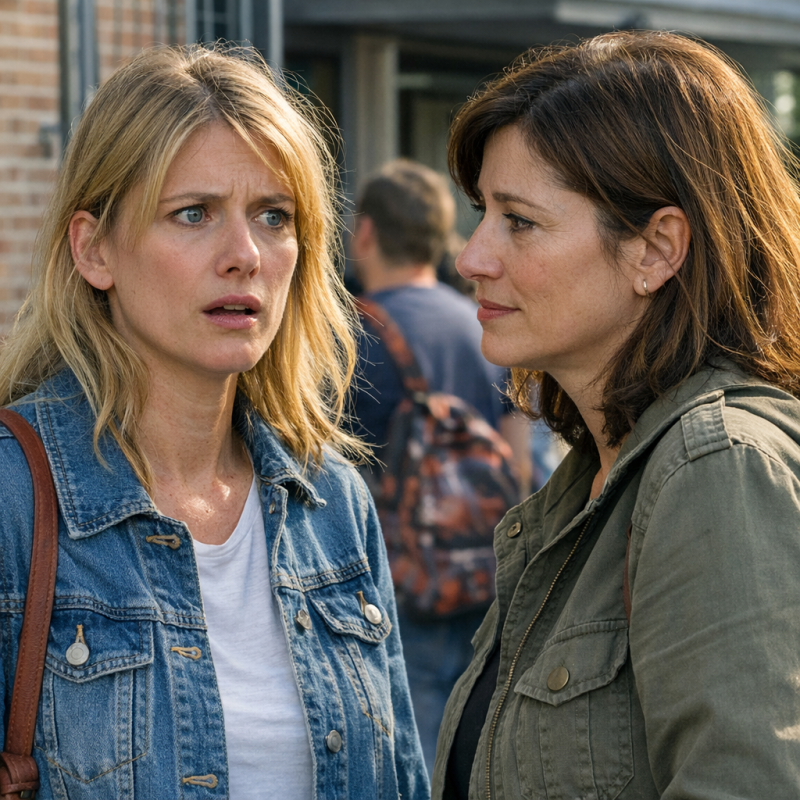 Image by FCT AI
The Petition
The email arrived three days later with the subject line: 'Petition for Enhanced Supervision Protocols.' I opened it standing in my kitchen, still holding my morning coffee. The language was carefully neutral, talking about 'children who require additional behavioral support' and 'ensuring safety for all students.' But everyone knew exactly which child they meant. There was only one kid doing dangerous experiments at Riverside Elementary. The petition had already collected thirty-seven signatures from parents in Oliver's grade. I scrolled through the names, recognizing most of them. These were people I'd chatted with at pickup, who'd attended the same school events. Then I reached the top of the list, where the petition's creator was identified. Natalie Brennan. But that wasn't even the worst part. Next to her signature, she'd added a personal note that made my hands shake. When I saw the list of signatures, Natalie's name was at the top—but next to it, she'd written, 'With love and concern for all our children.'
 Image by FCT AI
Marcus Files for Custody
The custody papers arrived by courier on a Wednesday morning. I signed for them in my pajamas, not understanding what they were until I opened the envelope. Marcus was filing for primary custody, citing my inability to provide a safe and stable environment. The petition detailed Oliver's behavioral issues, the school incidents, his declining mental health. Every failure I'd experienced as a mother, neatly itemized in legal language. My hands trembled as I turned the pages. There were exhibit labels referencing attached documentation. I flipped to the back and felt the blood drain from my face. Statements from Mrs. Patterson and the school counselor. A formal incident report I'd never seen before. Screenshots of text messages from other parents expressing concern about Oliver's behavior around their children. Even a brief statement from Dr. Morrison, Oliver's pediatrician, noting my 'apparent stress and anxiety during recent appointments.' It was comprehensive. Systematic. Devastating. The documentation included statements from the school, the counselor, and even screenshots of texts from other concerned parents—all painting me as neglectful.
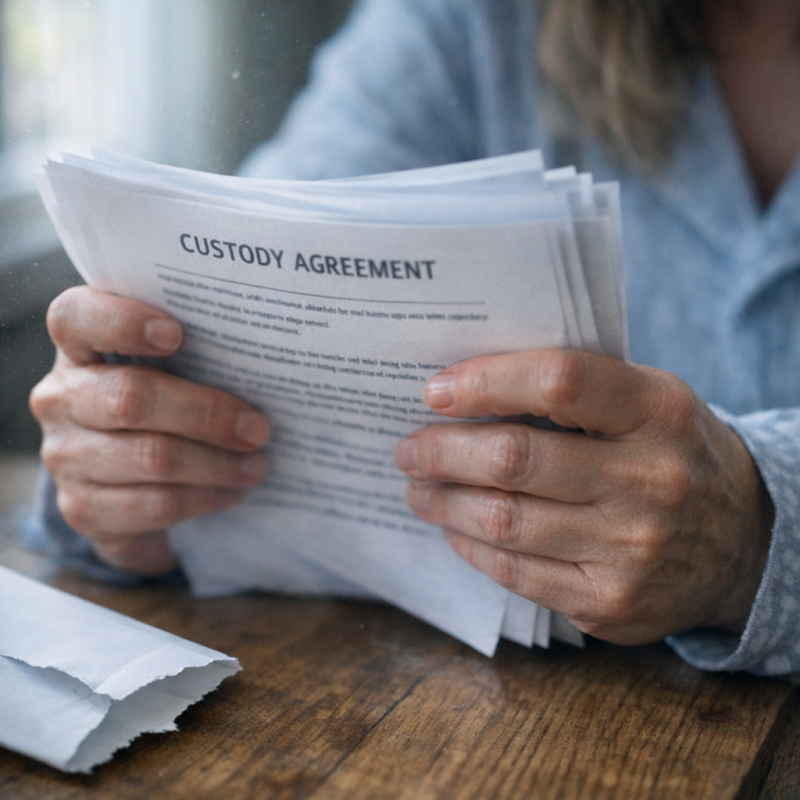 Image by FCT AI
Hiring a Lawyer
The family lawyer I hired came recommended by a friend of a friend. Rebecca Walsh had fifteen years of experience in custody cases, and her retainer cost more than I wanted to think about. She spent two hours reviewing Marcus's filing while I sat across from her desk, trying not to cry. Finally, she looked up, her expression measured. 'The evidence is concerning, I won't lie to you. But much of it is circumstantial or based on perception rather than fact.' She tapped the stack of papers. 'The question is whether there's any pattern suggesting bias or coordination in how this evidence was gathered.' I leaned forward. 'What do you mean?' Rebecca pulled out a notepad. 'Walk me through the timeline of events. When did the incidents start escalating? Who reported them? Who was present?' I started talking, and as I did, something clicked in my brain. The playground incident—Natalie had been there. The volcano—she'd helped plan it. The freezer—she'd been at my house that morning. The lawyer asked if anyone might have a motive to make me look bad—and suddenly, I thought of Natalie's constant presence at every incident.
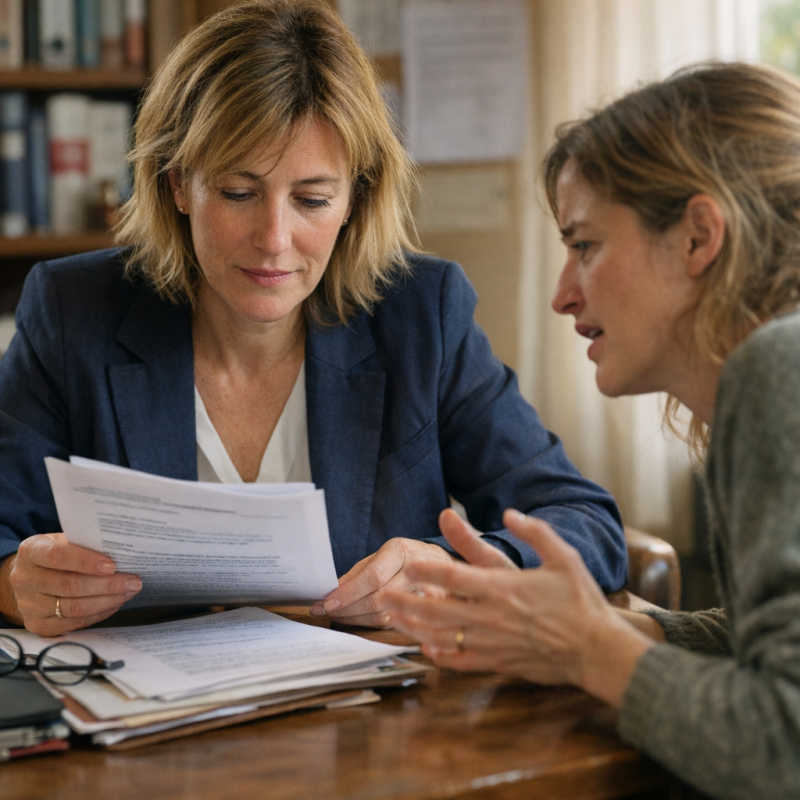 Image by FCT AI
Reviewing the Timeline
I stayed up until three in the morning creating a timeline on my laptop. Every incident, every complaint, every escalation. I included dates, locations, who was present, who reported it. The Excel spreadsheet grew longer as I dug through emails and text messages, reconstructing the past four months. At first, the pattern wasn't obvious. But then I added a column for when Oliver had met Dylan. September fifteenth. A Tuesday afternoon playdate that Natalie had suggested casually at pickup. I highlighted that date in yellow, then started color-coding everything that came after. The glue incident: two weeks post-playdate. The volcano: three weeks. The freezer: six weeks. Every single dangerous experiment had occurred after that first playdate. But there was more. Every incident that got reported to the school, every concerned parent who'd reached out, every piece of documentation now being used against me—they all traced back to one common element. Natalie had either been present, been informed immediately, or been the one expressing concern to others. Every single dangerous experiment, every school complaint, every concerned parent—it all traced back to the week after that first playdate.
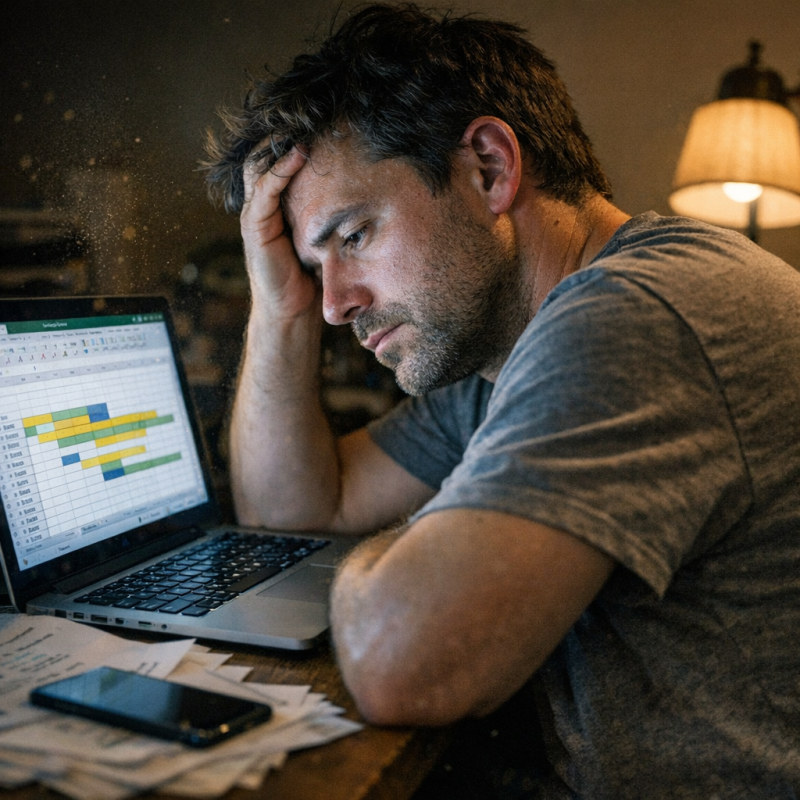 Image by FCT AI
The Therapist's Observation
Dr. Chen called me in for a consultation after Oliver's third session. I could tell by her tone on the phone that something had shifted. She sat me down in her office with that careful expression therapists get when they're approaching sensitive territory. 'Claire, I want to discuss something Oliver mentioned during our last two sessions. He's talked extensively about documenting his experiments.' I nodded, waiting. 'He's described keeping detailed notes about your reactions to various situations. The experiments themselves, yes, but specifically your emotional responses.' My mouth went dry. 'What do you mean, documenting?' Dr. Chen consulted her notes. 'According to Oliver, Natalie encouraged him to write down how you reacted to things. She called it important for understanding parent-child dynamics.' The room seemed to tilt. 'I need to be very careful here,' Dr. Chen continued, 'because I can't make accusations without evidence. But this pattern suggests possible manipulation of a minor for purposes I don't yet understand.' She met my eyes directly. The therapist said carefully, 'I can't make accusations, but this pattern suggests possible manipulation. I'm required to note this in my records.'
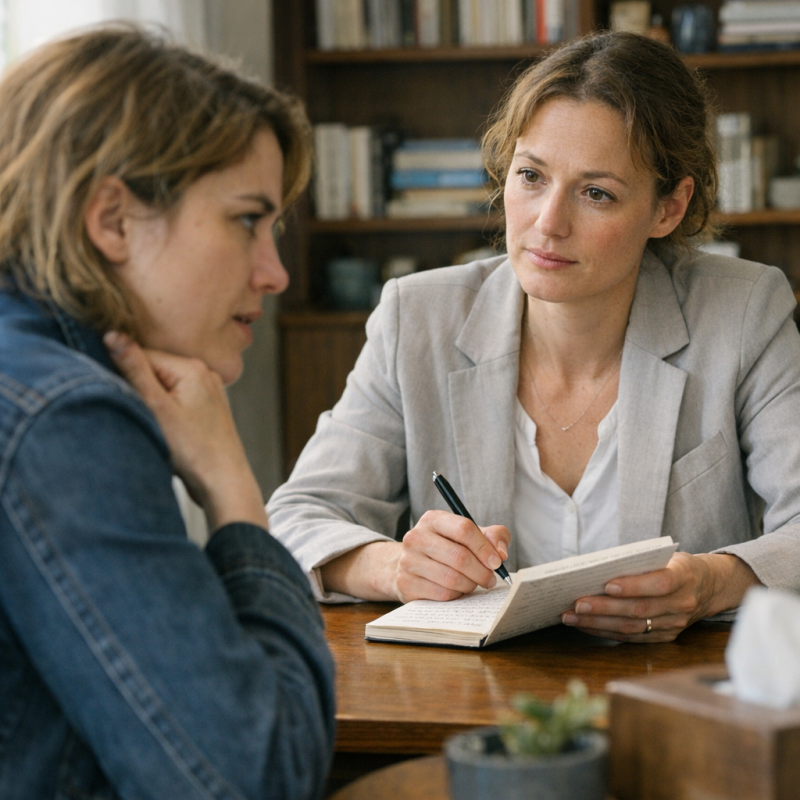 Image by FCT AI
Confronting Oliver About Natalie
That night, I sat with Oliver on his bed, trying to keep my voice calm and gentle. 'Sweetie, I need to ask you about something, and I need you to be completely honest with me. It's not about being in trouble.' He looked up from his book, wary but listening. 'When you did the experiments—the volcano, the freezer, all of them—did Natalie help you plan them?' Oliver nodded slowly. 'She said they were important research. That lots of kids don't get along with their parents because the parents don't understand science.' My heart was pounding, but I kept my voice steady. 'Did she ask you to write things down?' His eyes dropped to his lap. 'She gave me a special notebook. She said I should record what happened and how you reacted.' I felt something crack inside my chest. 'Why did she want you to do that?' Oliver's voice got very small, and I saw tears forming in his eyes. He was eight years old and had been used as a weapon against me. Through tears, Oliver admitted, 'She said if I wrote down how you reacted, it would help other kids whose moms don't understand them.'
The Legal Strategy Meeting
I sat across from my lawyer, Margaret, in her cramped office that smelled like stale coffee and old paper. She'd listened to everything about Natalie, the notebook, the 'research'—all of it. I watched her face for any sign of belief, of validation. Instead, she tapped her pen against her yellow legal pad and looked at me with careful eyes. 'Claire, I understand what you're saying. But here's the problem: even if we prove this woman encouraged Oliver's behavior, the court is going to ask one simple question.' She leaned forward. 'Why? What would motivate a near-stranger to systematically sabotage your relationship with your son?' I opened my mouth, then closed it. I had no answer. 'I don't know,' I admitted, feeling my determination start to crack. 'I just know she did it.' Margaret nodded slowly. 'That's not enough. Without motive, it sounds like you're deflecting blame from your own parenting. We need to understand why she would do this, or the whole argument falls apart.' My stomach dropped. I'd found the smoking gun, but without understanding why someone would pull the trigger, no one would believe me. The lawyer warned me, 'Even if we prove she encouraged the behavior, we still need to understand why. Without motive, it looks like you're making excuses.'
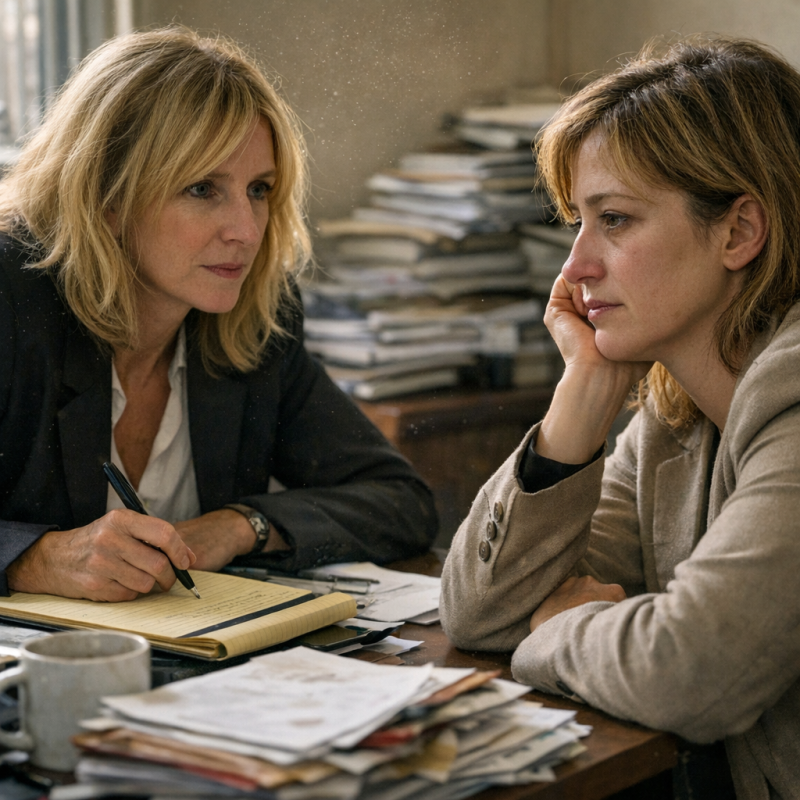 Image by FCT AI
Digging Into Natalie's Background
That night, I couldn't sleep. I kept hearing Margaret's voice: motive, motive, motive. So I did what any desperate person does at 2 AM—I started Googling. 'Natalie Henderson.' 'Natalie Henderson parenting.' 'Natalie Henderson advocacy.' At first, nothing useful came up. Then I found her Facebook profile, which led to an old blog she'd apparently abandoned years ago. The posts were mostly about parenting philosophies, child development, that kind of thing. Pretty standard stuff. But as I scrolled back through the archives, the content shifted. Posts about divorce. Posts about custody battles. Posts about 'toxic co-parents' and 'protecting your children from unfit guardians.' My hands started shaking as I clicked deeper. She wasn't just interested in these topics—she was practically an expert. Detailed breakdowns of legal strategies, documentation methods, building cases. This wasn't casual interest. This was someone who'd lived it, studied it, weaponized it. One blog post from three years ago caught my eye: 'When Family Courts Fail: How to Build Your Case Against an Unfit Co-Parent.'
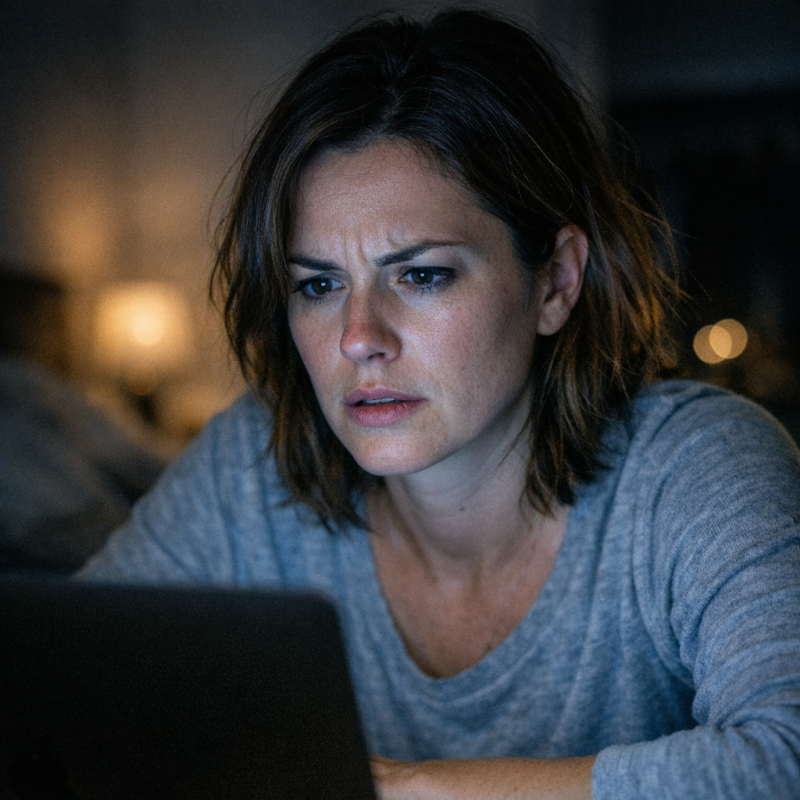 Image by FCT AI
The Blog Posts
I clicked on that post and started reading. My coffee went cold beside me as I scrolled through what was essentially a tactical manual for winning custody battles. Natalie wrote with the precision of someone who'd been through the worst and emerged with a battle plan. 'Documentation is everything,' one section began. 'Courts don't care about your feelings—they care about evidence.' She outlined techniques for creating situations that would reveal a co-parent's weaknesses. 'Provide opportunities for failure, then document the results.' Another section discussed the importance of 'community witnesses'—people who could testify to patterns of behavior. My chest felt tight. This was exactly what she'd done with me. The blog posts, the coffee dates, befriending Oliver, the notebook—it was all there, spelled out like a recipe. One post laid out a step-by-step approach: befriend the target, create opportunities for failure, document everything, and build a community narrative. I read that line three times, my vision blurring. She hadn't improvised this. She'd followed her own playbook, and I'd been too naive to see it coming.
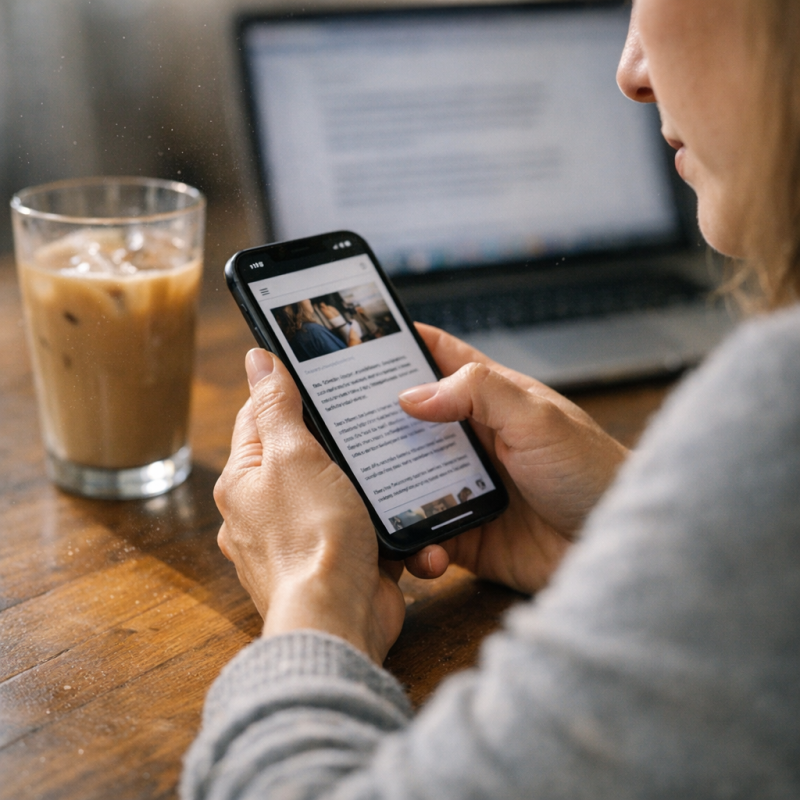 Image by FCT AI
Finding Natalie's Custody Case
I spent the next day digging through public records online, searching for anything connected to Natalie Henderson. It took hours of cross-referencing addresses and court databases, but finally I found it: Family Court case files from our county. Natalie Henderson versus James Brenner. Custody dispute. Ongoing. My heart was pounding as I clicked through the documents. The case had been active for over two years, with filings going back and forth like volleys in a tennis match. James—Dylan's father—was fighting for joint custody. Natalie was fighting for sole custody with supervised visitation only. I read through his statements, and my skin went cold. He described Natalie as manipulative, controlling, willing to fabricate situations to make him look bad. 'The respondent has demonstrated a pattern of creating incidents designed to portray me as neglectful,' one filing read. He accused her of coaching Dylan, staging scenarios, documenting normal parenting moments out of context. It was like reading my own story, but from two years ago. The most recent filing from Dylan's father accused Natalie of fabricating evidence and manipulating situations to make him look neglectful.
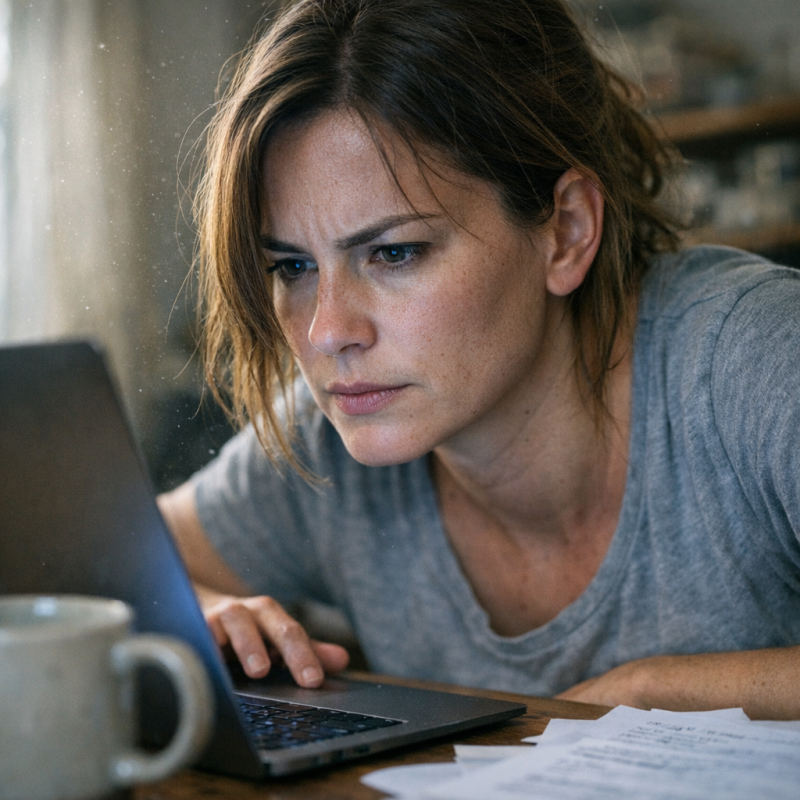 Image by FCT AI
The Comparison Strategy
I sat back from my laptop, my mind racing. Why would Natalie do this to me? We weren't in a custody battle together. We barely knew each other before this year. Then it hit me, and I actually said 'Oh my God' out loud in my empty kitchen. She wasn't building a case against me—she was building a case for herself. In her custody battle with James, Natalie needed to prove she was an exceptional parent. But how do you prove you're better than average? You create a comparison. You show the court another mother, another child, another situation—and you demonstrate how much better you handle it. While I was struggling with Oliver's incidents, Natalie was perfectly managing Dylan through everything. While my house descended into chaos, hers remained calm. While I lost my temper and made mistakes, she stayed composed and supportive. The court would see it all, and they'd think: this woman clearly knows how to parent a creative, energetic child, unlike that other mother. If she could point to another mother who couldn't handle her creative child while Natalie handled Dylan perfectly, it would strengthen her entire case.
 Image by FCT AI
Searching for Proof
I called Margaret immediately and explained my theory. She was quiet for a long moment. 'It makes sense,' she finally said. 'It gives us motive. But Claire, we need proof. We need evidence that she's been documenting your situation for her own case.' I tore through my memories like they were filing cabinets. Had I seen Natalie writing things down? Taking photos? Recording anything? I couldn't remember anything obvious. But then small details started surfacing. Natalie's phone was always out during our coffee dates, sitting face-up on the table between us. I'd thought she was just being rude, scrolling through social media while I talked. But what if she'd been recording our conversations? I remembered her asking specific questions about Oliver's incidents, always wanting details. 'What exactly did he say when you confronted him?' 'How did you react when you saw the freezer?' And her phone was always positioned just right, angled toward me. Then I remembered Natalie's phone was always out during our conversations, always angled just right—always recording.
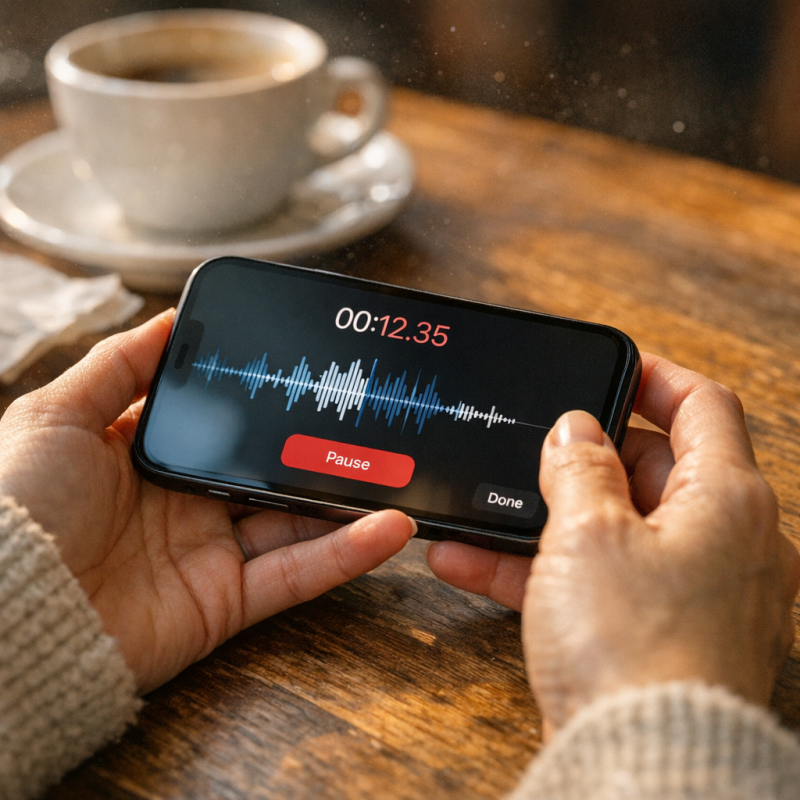 Image by FCT AI
The Subpoena
Margaret moved fast. Within days, she'd filed a motion to subpoena Natalie's phone records, computer files, and any documentation related to our family. Natalie's lawyer fought it, of course, claiming harassment and irrelevance. But Margaret argued that if Natalie had been involved in Oliver's behavior—which she'd essentially admitted by giving him the notebook—then her motives and documentation were directly relevant to the custody case against me. The judge agreed, probably because the whole situation was so bizarre it warranted investigation. I waited three weeks for the results, barely sleeping, barely functioning. Every morning I'd check my email obsessively. Every time Margaret's number appeared on my phone, my heart would stop. Then finally, on a Tuesday afternoon, her name lit up my screen. I answered before the first ring finished. Her voice was strange—tight, angry, almost excited. 'Claire, you need to come to my office right now. The subpoena results came in.' I grabbed my keys. When the documents arrived, my lawyer called immediately: 'Claire, you need to see this. It's worse than we thought.'
 Image by FCT AI
The Truth Revealed
Margaret spread the printed files across her conference table like evidence at a crime scene. I stood there, staring, unable to process what I was seeing. Natalie had documented everything. And I mean everything. There were videos of Oliver that I'd never seen being taken—shots from her car of him in our driveway, clips from our backyard that must have been filmed from her kitchen window. Photos of my house in various states of chaos, time-stamped and annotated. A spreadsheet tracking every incident, with columns for date, severity, my reaction, and 'comparative notes' about how Dylan was managing. There were recordings of our coffee conversations, transcribed and highlighted. Every confession I'd made, every moment of doubt, every frustrated admission—all preserved and labeled. But the worst part? The coaching notes. Detailed instructions Natalie had given Dylan on how to encourage Oliver's behavior. 'Suggest the volcano experiment.' 'Act excited about freezer science.' 'Tell him your mom thinks it's cool.' She'd used Dylan as bait. The files included videos, photos, annotated timelines, and even coaching notes she'd given Dylan on how to encourage Oliver's dangerous behavior—all labeled 'Comparative Parenting Evidence.'
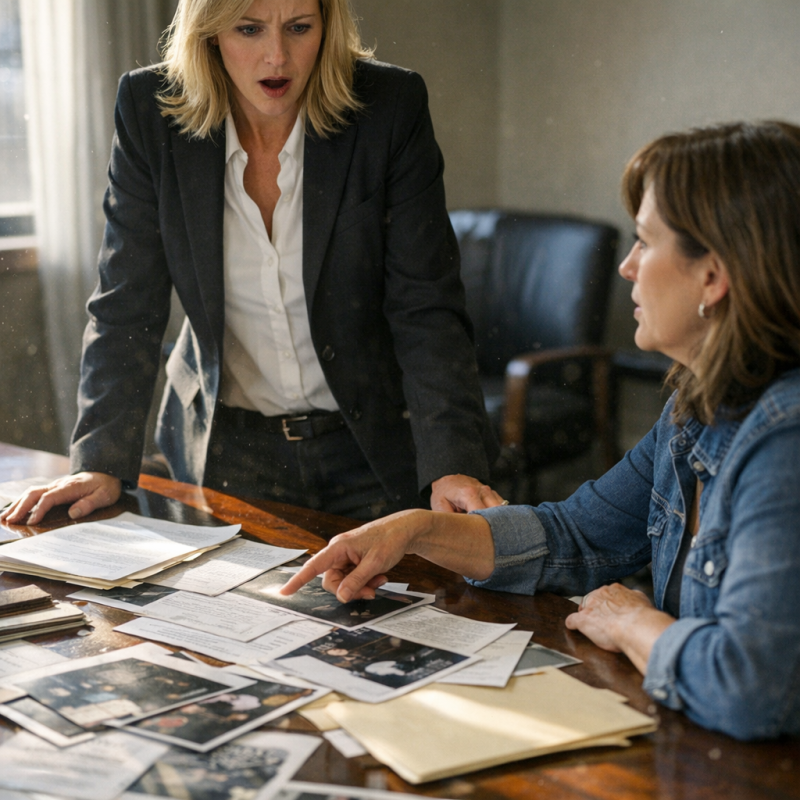 Image by FCT AI
Presenting the Evidence
Margaret laid it all out in Marcus's attorney's conference room. The videos. The spreadsheets. The coaching notes where Natalie instructed Dylan on how to encourage Oliver's dangerous behavior. Marcus sat across from me, his face going from skeptical to confused to horrified as Margaret walked through each piece of evidence. His lawyer kept interrupting with questions, but Margaret had answers for everything. Time stamps. Metadata. Cross-referenced documentation showing Natalie had been filming Oliver for months. I watched Marcus's hands grip the edge of the table when Margaret played the recording where I'd confessed to Natalie about feeling like a failure, and then showed Natalie's notes from that same day: 'Subject admits inadequacy. Perfect for petition support.' He looked physically sick. His attorney whispered something to him, and Marcus nodded slowly. When Margaret finished, the room went silent for what felt like an eternity. I couldn't read Marcus's expression. Then he looked directly at me, and his eyes were different than I'd ever seen them—raw and ashamed and something else I couldn't name. Marcus stared at the files in silence, then looked at me and said the words I'd been waiting to hear: 'I'm dropping the custody petition.'
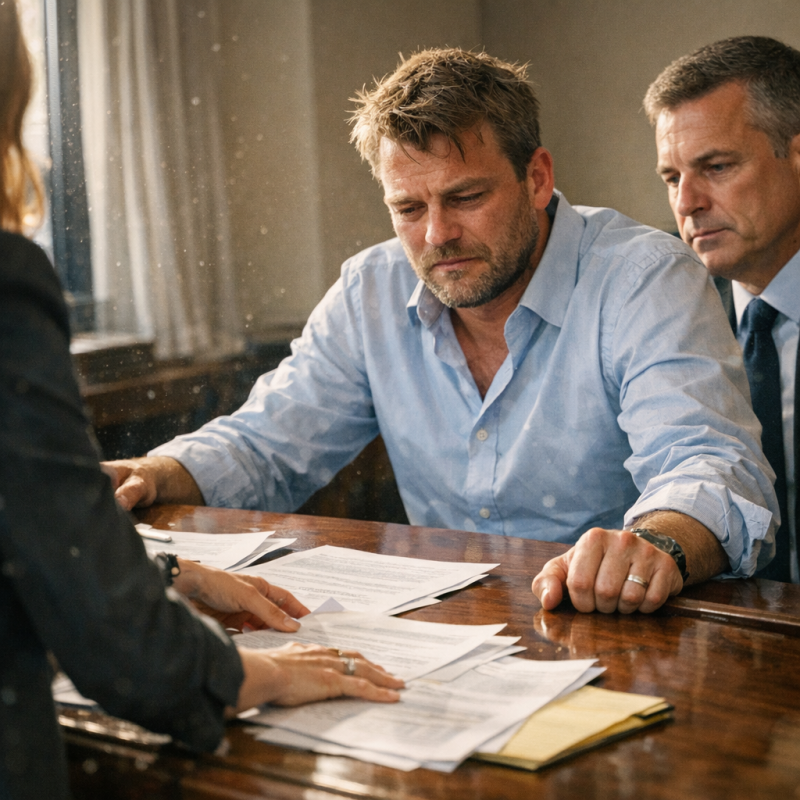 Image by FCT AI
Sharing Evidence with Dylan's Father
Margaret handled the actual contact, but I drafted the message myself. Dylan's father needed to know what Natalie had done—not just to Oliver and me, but to his own son. Margaret sent him everything: the videos showing Dylan being coached, the spreadsheets tracking our families' comparative chaos, the recordings where Natalie admitted using Dylan as bait to encourage Oliver's behavior. I included a personal note explaining that I'd seen Dylan as Oliver's friend, never realizing he was being weaponized against us both. The waiting was brutal. I kept checking my phone, imagining this man I'd never met reading through evidence that his ex-wife had been manipulating their child for years. Part of me worried he wouldn't believe it, that he'd think I was just another parent trying to interfere. But Margaret assured me the documentation was airtight. When his response finally came through her office, I read it three times to make sure I wasn't imagining it. His response came within hours: 'Thank you. I've been trying to prove this for two years. This might finally save my son.'
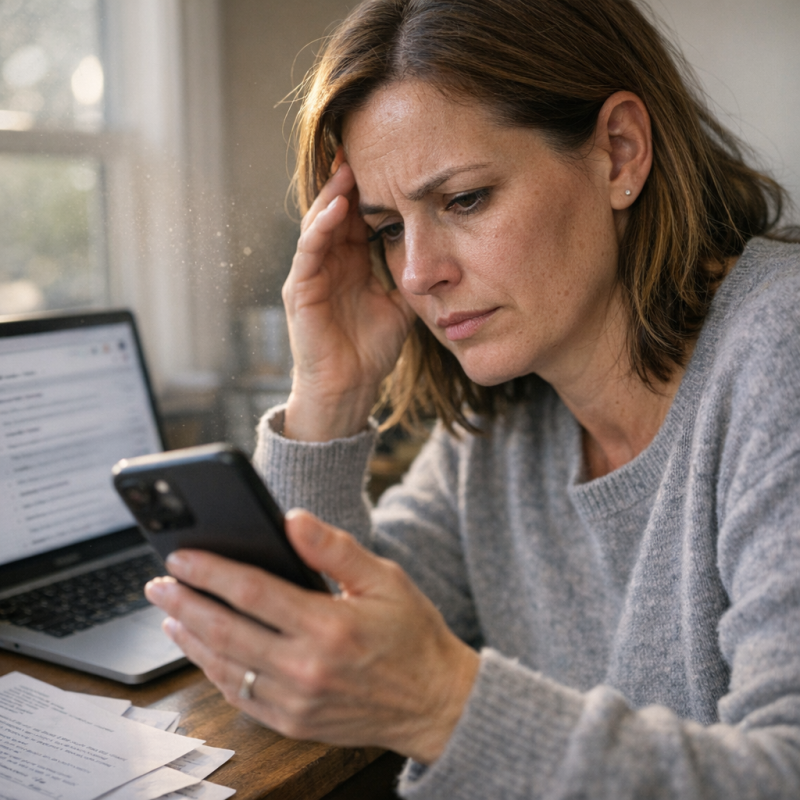 Image by FCT AI
The School Board Meeting
The school board meeting felt like walking into my own trial. Principal Lawson sat at the center of a long table, flanked by board members whose faces I recognized from fundraisers and assemblies. Margaret had coached me through the presentation, but my hands still shook as I clicked through slides showing Natalie's documentation. I explained how she'd manipulated other parents, collected footage of Oliver from her property, and manufactured situations to make him look dangerous. The board members' expressions shifted from polite attention to genuine alarm when I showed the spreadsheet tracking 'comparative incidents.' One board member asked if I'd contacted police. I explained that my attorney had advised starting here, where the immediate safety concern existed. Principal Lawson's face had gone pale. She asked to see the coaching notes again, the ones where Natalie told Dylan how to encourage Oliver's experiments. The room went quiet as everyone reread them. Then Principal Lawson stood up, and I braced myself for I don't know what. Principal Lawson publicly apologized, then announced that Natalie was being banned from school grounds pending investigation.
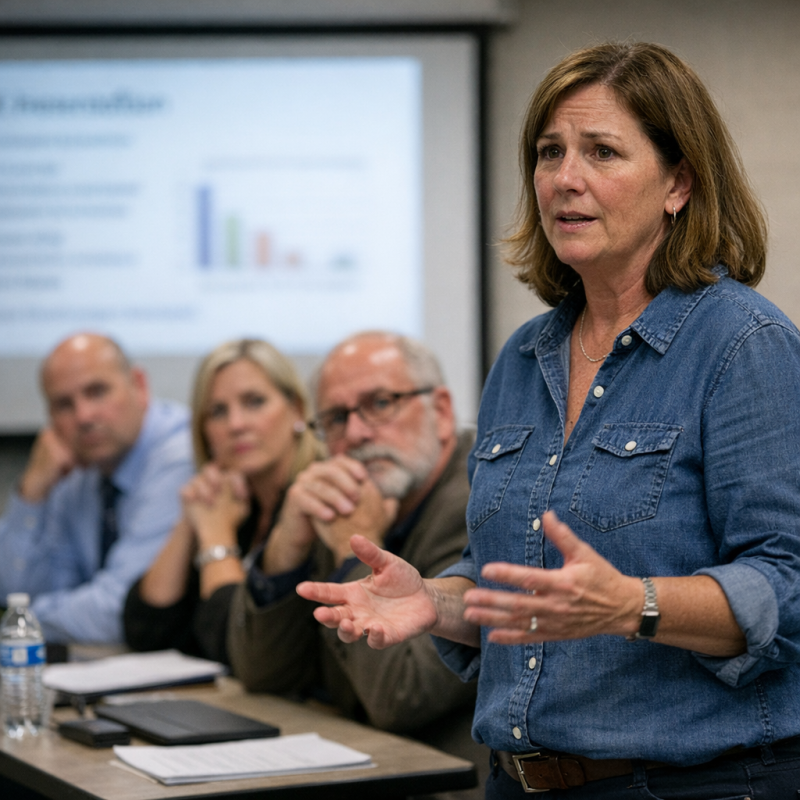 Image by FCT AI
Natalie's Confrontation
She was waiting by my car after the school board meeting. I saw Natalie before she saw me, pacing near the driver's side door, her whole body radiating fury. My first instinct was to turn around and find Margaret, but something made me keep walking. When Natalie spotted me, she started yelling before I was even close enough to hear clearly. Something about betrayal, about destroying her life, about taking everything from her. I kept my keys gripped between my fingers like Margaret had taught me and stopped a car-length away. 'You had no right,' Natalie hissed. 'No right to share those files. They were private documentation of legitimate concerns.' I almost laughed at the audacity. Private documentation she'd been preparing to use in court against me. But then her voice cracked, and I saw something behind the anger—genuine desperation. Her hands were shaking. She looked like she hadn't slept in days. 'I was just trying to prove I'm a good mother,' she said, and her voice went high and broken. She screamed at me that I'd ruined everything, that she was only trying to prove she was a good mother—and then she broke down crying.
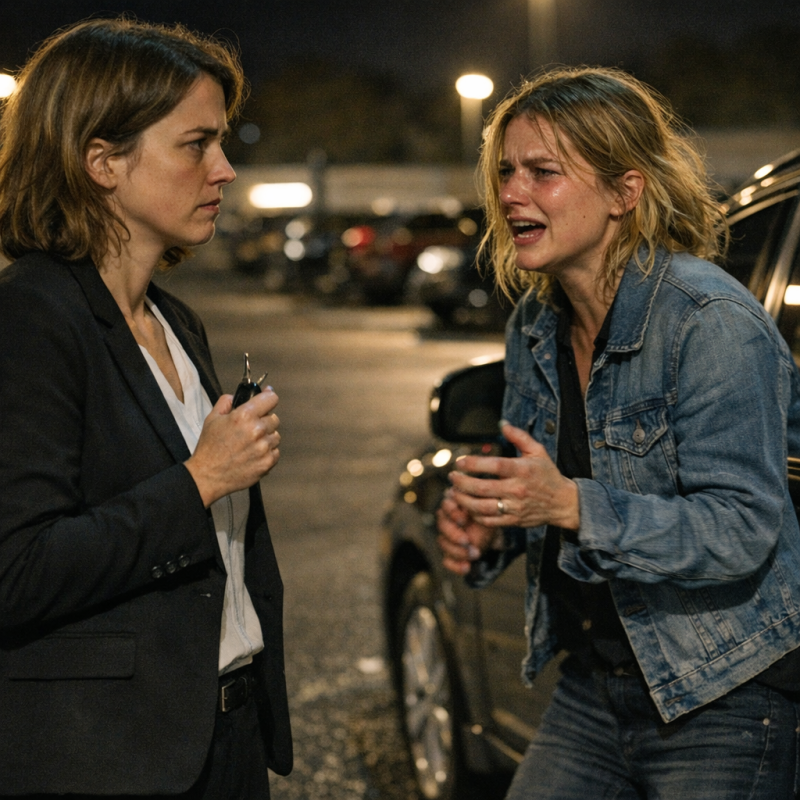 Image by FCT AI
The Custody Hearing Testimony
Dylan's father's attorney had prepared me, but nothing really prepares you for testifying in someone else's custody case. The courtroom was smaller than I expected, more like a conference room with a judge's bench. Natalie sat at the defendant's table, her face blank and unreadable. I didn't look at her as I was sworn in. The attorney asked me to describe how I'd met Natalie, how our friendship developed, and when I first noticed something was off. I explained the escalating playdates, the constant filming, the way she'd encouraged Oliver's dangerous behavior while documenting my reactions. The judge asked to see the evidence, and Margaret had prepared copies of everything. I watched Natalie's attorney object repeatedly, calling it hearsay, irrelevant, prejudicial. But the recordings spoke for themselves. You could hear Natalie's voice telling Dylan exactly what to suggest to Oliver. The judge asked me directly if I believed Natalie had manipulated Dylan. I said yes, absolutely, and explained that Dylan seemed like a sweet kid who'd been turned into a tool. The judge looked at Natalie and said, 'I'm ordering a full psychological evaluation before making any custody decisions.'
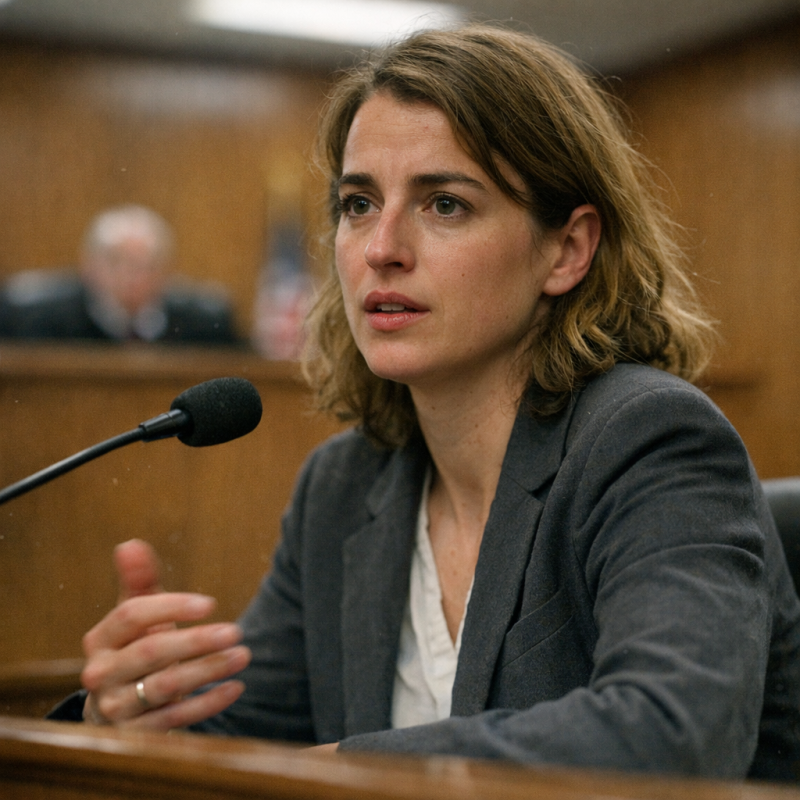 Image by FCT AI
Oliver's Recovery Begins
Dr. Reeves called me after Oliver's session with genuine excitement in her voice. 'We had a breakthrough,' she said. 'A real one.' Oliver had started talking about Dylan without prompting, about how their friendship had felt weird sometimes, like Dylan was always suggesting things that got Oliver in trouble. He'd described feeling confused about whether he was supposed to be the 'science kid' or just himself. Dr. Reeves said he'd shown more insight in that one session than in the previous month combined. When I picked Oliver up, he seemed lighter somehow. Less guarded. In the car, I asked him how therapy went, and he actually answered instead of shrugging. 'We talked about Dylan's mom,' he said quietly. 'Dr. Reeves says sometimes grown-ups do bad things even when they seem nice.' I gripped the steering wheel, trying to keep my voice steady. 'That's true,' I said. 'But that wasn't your fault.' Oliver nodded, then was quiet for a long moment. He told his therapist, 'I think I was trying to be someone else because Dylan's mom made it sound like who I was wasn't enough.'
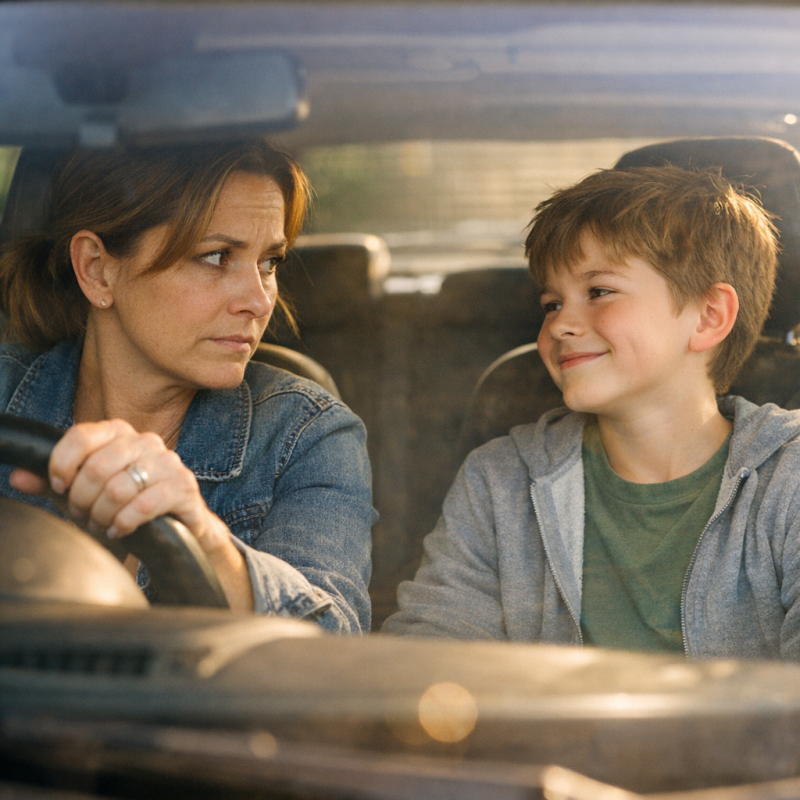 Image by FCT AI
Apologies from Other Parents
They came in small groups, awkward and apologetic. First it was Rebecca from Oliver's class, standing on my porch with a bottle of wine and genuine shame in her eyes. She admitted Natalie had shown her 'concerning videos' and had seemed so worried, so reasonable. Then Michael's dad called, saying he'd signed the petition because Natalie made it sound like a safety issue, and he felt sick knowing the truth. Each apology felt surreal, like watching people wake up from the same bad dream. Some brought explanations—Natalie had targeted their specific parental anxieties, had shared just enough 'evidence' to seem credible. Others just said they were sorry and they should have asked me directly. I accepted every apology with as much grace as I could manage, though part of me wanted to scream about how easily they'd believed the worst. But I got it. Natalie had been convincing. She'd built her case carefully. At the PTA meeting the following week, the energy felt different. People met my eyes again. Janet pulled me aside and said quietly, 'I should have questioned why she cared so much about your parenting. I'm sorry.'
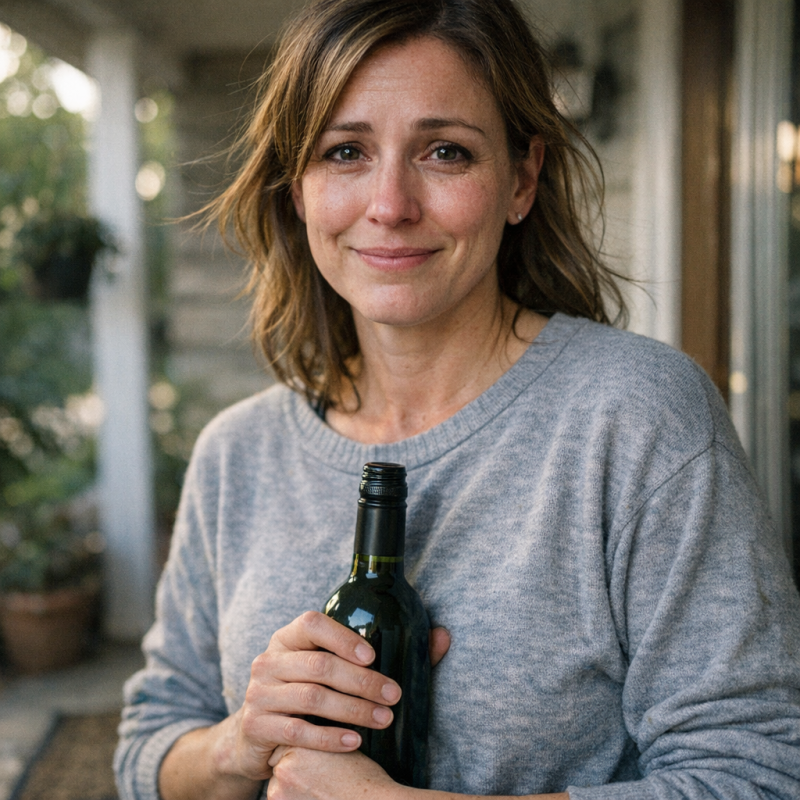 Image by FCT AI
Marcus Apologizes
Marcus asked to meet at a coffee shop, neutral territory. I almost said no, but Margaret thought it was a good sign—him wanting to talk face-to-face rather than through lawyers. He looked terrible when I arrived, like he'd aged five years in five weeks. We ordered coffee neither of us touched, and then he just started talking. He apologized for not questioning Natalie's motives, for letting his own fears about Oliver's behavior cloud his judgment. He admitted that part of him had wanted to believe I was failing because it meant he wasn't the problem, that our divorce hadn't broken something in Oliver. 'That's a horrible thing to admit,' he said, 'but it's true.' I didn't know what to say. I'd imagined this apology a thousand times, and in my head I'd been either gracious or devastating. In reality, I just felt tired. We talked for an hour about Oliver, about co-parenting going forward, about rebuilding trust. It felt fragile and uncomfortable and necessary. When we stood to leave, Marcus stopped me. He said, 'I should have trusted you. I let my own fears make me a weapon someone else used against you.'
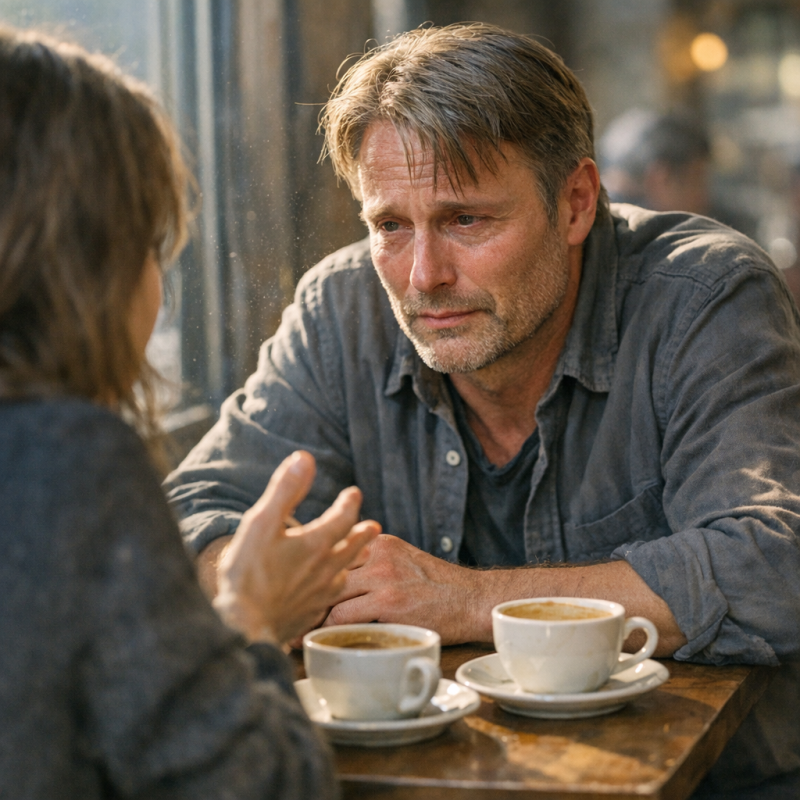 Image by FCT AI
The Final Court Decision
The judge took almost three weeks to make his ruling, and those were the longest three weeks of my life. When the decision finally came down, I wasn't even in the courtroom—Margaret called me while I was making lunch. Dylan's father had won primary custody. The psychological evaluation Natalie had been forced to undergo revealed patterns of manipulation, fabrication, and what the evaluator called 'concerning distortions of reality in service of personal grievances.' I sat down hard on the kitchen floor, phone pressed to my ear, and just cried. Not sad tears. Relief. Pure, overwhelming relief. Dylan was going home. A week later, Dylan's father asked to meet me for coffee. He looked different—lighter somehow, like he'd been carrying a boulder and someone had finally lifted it off his shoulders. He thanked me for testifying, for being willing to get involved when so many people had looked the other way. We talked for a few minutes about nothing important, and then we walked out into the bright afternoon. As we left the courthouse, Dylan's father told me, 'My son gets to come home now. Thank you for giving him that chance.'
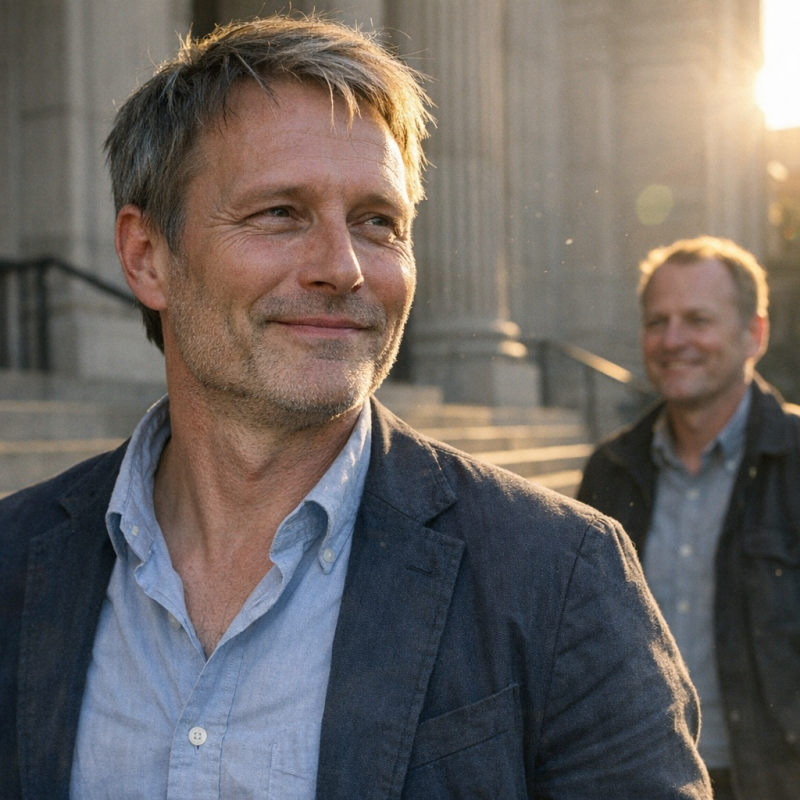 Image by FCT AI
Three Months Later
Three months passed like a long exhale. Oliver continued therapy with Dr. Rahman twice a week, and I watched something settle in him that had been restless for so long. He stopped asking about Natalie. He stopped flinching when I asked about his day. Marcus and I found our rhythm as co-parents—awkward at first, careful with each other, but genuinely trying. The school year ended without incident, and Oliver's teacher told me at the last parent conference that she'd seen real growth in his emotional regulation. Summer arrived with its lazy heat and slow mornings, and for the first time in what felt like forever, I didn't wake up with dread in my chest. We had movie nights. We went to the pool. We existed without crisis, and that felt like its own kind of miracle. One evening while we were making dinner together, Oliver was quieter than usual, thoughtful in that way kids get when something's weighing on them. Oliver asked me last week if I thought Dylan was okay now, and I realized my son's empathy had survived everything—maybe even grown stronger.
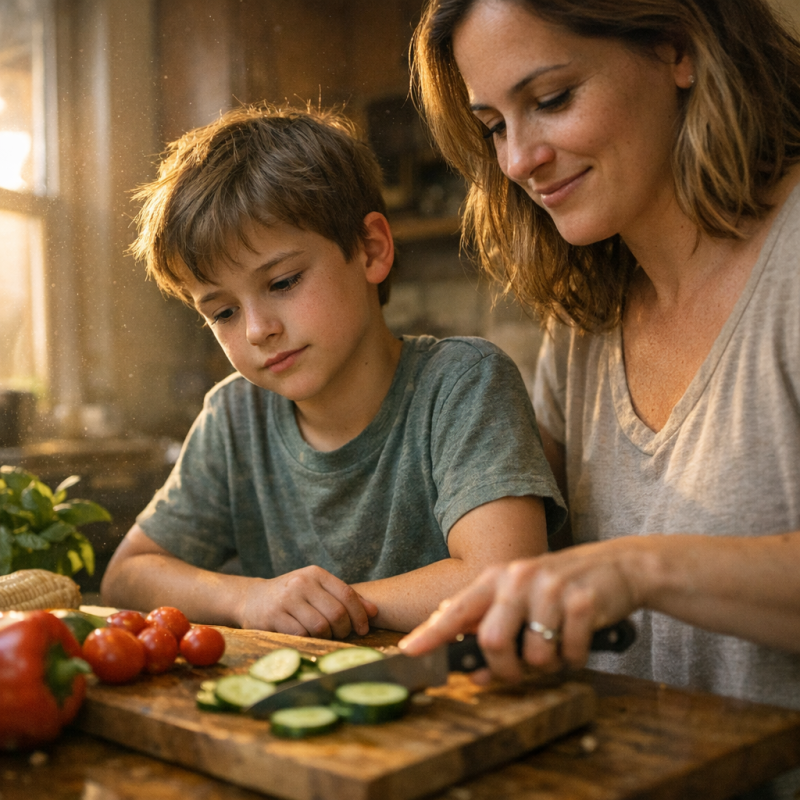 Image by FCT AI
Lessons Learned
I've spent a lot of time thinking about what I learned from all of this, and honestly, the lessons are messier than I'd like them to be. I learned that trusting your instincts doesn't always feel righteous—sometimes it feels like paranoia, like you're the crazy one, right up until the moment you're proven right. I learned that the people meant to protect children—teachers, administrators, other parents—can be manipulated just as easily as anyone else, maybe more easily because they want to believe they'd recognize real danger. I learned that documentation matters, that you can't rely on people remembering the truth when someone else is actively rewriting it. I learned that the internet creates vulnerabilities I never imagined, but also that the real danger often comes from someone looking you right in the eye. I thought about installing better security software, tighter controls, more monitoring. And I did, eventually. But the hardest truth? I installed parental controls to protect Oliver from the internet, but I never thought I'd need to protect him from another parent.
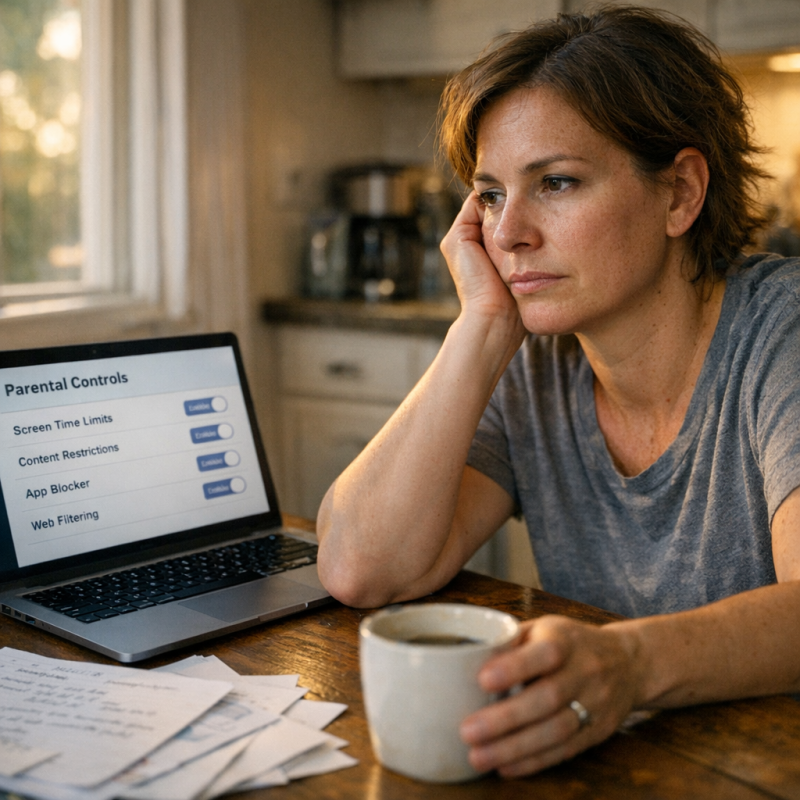 Image by FCT AI
Moving Forward
Oliver's ninth birthday fell on a Saturday in late August, warm and clear. We kept it simple—just Marcus, Oliver's grandparents, and a few friends from school. No bounce house, no elaborate theme, just pizza and a homemade chocolate cake that leaned slightly to one side. Oliver didn't seem to mind. He was laughing, running around the backyard with his friends, completely present in a way he hadn't been for so long. Marcus caught my eye across the patio and gave me a small smile, and I realized we'd actually made it through to the other side. Not unscathed—we'd never be unscathed—but intact. Stronger in the broken places, maybe. When it was time for cake, Oliver closed his eyes tight over the candles, making a wish he wouldn't tell me about even when I asked. The late afternoon sun caught his face just right, and he looked so much older than eight, so much wiser. As I watched him blow out his candles, I realized something: we didn't just survive what happened—we learned who we are when everything falls apart, and we're stronger for it.
 Image by FCT AI
 Image by FCT AI