
The Quiet Years
Mom died on a Tuesday in October, and I swear the color went out of Dad's world that same day. We'd always been close, the three of us—Sunday dinners, terrible dad jokes, Mom's legendary lasagna that none of us could replicate. After the funeral, Dad just sort of... folded inward. He'd wake up, go to work at the engineering firm, come home, eat something microwaveable, and sit in his recliner until bedtime. I tried calling every other day, visiting on weekends, but conversations felt like pulling teeth. He wasn't depressed exactly—at least not in any way I knew how to address—just profoundly absent. The house stayed frozen in time, Mom's gardening magazines still stacked on the coffee table, her reading glasses on the kitchen counter. For two years, that was our new normal. I worried constantly but didn't know how to reach him. Then one Saturday, Dad called me instead of the other way around, and his voice had this unfamiliar lightness to it. He'd met someone, he said. Her name was Susan. At first, we thought she was exactly what he needed.
 Image by FCT AI
Susan Makes Her Entrance
Susan arrived like a thunderclap in Dad's quiet life. She was younger than him by almost fifteen years, with bleached blonde hair, acrylic nails that clicked against everything, and a laugh you could hear from three rooms away. She wore bright colors—fuchsia, electric blue, animal prints—and talked constantly about restaurants I'd never heard of and wines I couldn't pronounce. Dad introduced us at a brunch place she'd picked, somewhere with twelve-dollar mimosas and Instagram-worthy plating. 'Your father is such a gem,' she told me, squeezing his arm while he actually blushed. I wanted to be happy for him. God, I really did. He seemed lighter around her, more animated than he'd been since Mom passed. But there was something about the way she commanded the conversation, redirected every topic back to herself, ordered for him without asking what he wanted. Little things. Uncomfortable things I told myself I was reading too much into because I was being overprotective. When we left, she'd already planned their next three weekends—a wine tasting, a concert, a weekend trip to the coast. She didn't ease into our lives; she took them over.
 Image by FCT AI
Redecorating History
The changes started small. First, Mom's floral curtains in the living room vanished, replaced by these sleek gray panels Susan said were 'more contemporary.' Then the antique side table Mom had refinished herself disappeared, swapped for some glass-and-chrome monstrosity from a furniture catalog. Every time I visited, something else was different. Mom's china cabinet—gone. The cozy reading nook with the worn armchair where Dad used to do crosswords—'updated' with a modern sectional that looked expensive and uncomfortable. Susan called it 'freshening up the space,' making it 'theirs' instead of a shrine to the past. I got that, I really did. But these weren't just objects; they were pieces of my mother, my childhood, our family history. I tried talking to Dad about it once, carefully, while Susan was out getting her nails done. 'Doesn't it feel too fast?' I asked him. He just smiled this distant, placating smile and said Susan was excited about making the house feel like home. But I could see what he refused to acknowledge—Susan wasn't making it feel like home. She was erasing every trace that my mother had ever existed there.
 Image by FCT AI
The Word 'Ours'
Susan had this way of talking about Dad's things that made my skin crawl. 'Our vacation home,' she'd say about the cabin Dad built with his own hands thirty years ago. 'Our investment portfolio.' 'Our vintage car'—the Mustang Dad had restored as a teenager. Everything became 'ours' with this possessive certainty, like she'd been there all along. She'd been in his life less than a year. I started keeping a mental tally of these moments, feeling petty and protective in equal measure. At a family barbecue, she told my aunt about plans for 'our kitchen renovation,' and I watched Dad's face—he looked mildly surprised, like this was the first he'd heard of it, but he didn't contradict her. Later, I pulled him aside near the grill. 'Dad, did you actually agree to renovate the kitchen?' He looked confused, maybe a little annoyed. 'Susan has good taste, honey. She knows about these things.' 'But it's your house,' I said. 'Our house,' he corrected gently, and I felt something crack inside my chest. When I mentioned the possessive language, how she claimed everything so quickly, he looked at me like I was inventing problems where none existed.
 Image by FCT AI
The Instagram Life
I probably shouldn't have started following Susan on Instagram, but morbid curiosity got the better of me. Her feed was a glossy, curated exhibition of excess—designer handbags artfully positioned on marble countertops, champagne flutes catching golden-hour light, restaurant dishes that cost more than my grocery budget. Every third post featured a new luxury purchase with captions like 'Treating myself because I deserve it' and 'Living my best life.' The comments were always the same people—women I didn't recognize—gushing over her 'amazing taste' and asking where she got things. What struck me wasn't just the materialism, though that was hard to ignore. It was the performance of it all. She wasn't just buying things; she was documenting every purchase, every experience, broadcasting this lifestyle like it was a brand. I scrolled back through months of posts. Expensive jewelry. Weekend trips to wine country. A new Mercedes—'early birthday gift from my amazing man,' the caption read, with three heart emojis. Dad had never mentioned buying her a car. Every post felt choreographed, staged for an invisible audience. I couldn't figure out who she was trying to impress, or why this performance felt so important to her.
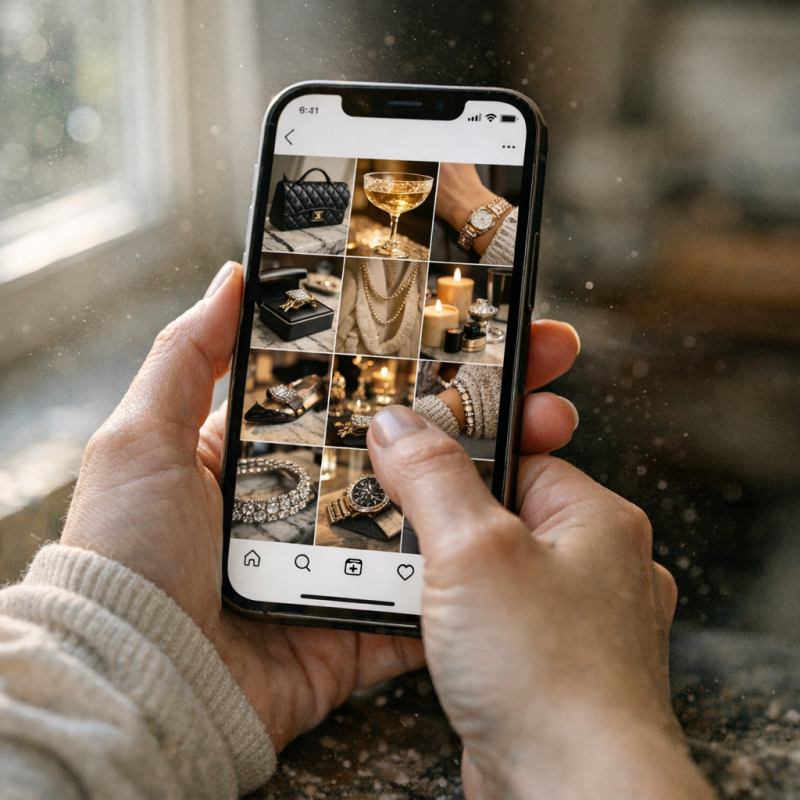 Image by FCT AI
Dad's Wallet Opens Wide
Dad paid for everything, and I mean everything. Susan didn't work—she'd mentioned something vague about being 'between careers' when they met—so every dinner, every piece of jewelry, every shopping trip came out of Dad's retirement savings. At first, it seemed generous, even romantic in a way. He'd been alone for so long, and if spoiling her made him happy, who was I to judge? But the scale of it started getting uncomfortable. A bracelet that cost more than my rent. First-class tickets to Paris. The kitchen renovation she'd mentioned became a sixty-thousand-dollar reality. I watched his credit card come out reflexively whenever they were together—she'd mention wanting something, and he'd just nod and hand it over. No discussion, no hesitation. The thing that bothered me most wasn't even the amount. It was the expectation. Susan never looked surprised or grateful; she looked entitled, like this was simply how things should be. And Dad never seemed to notice the difference between giving freely and being taken from. At first, his generosity seemed harmless, maybe even sweet. But over time, watching them together, it started to look like something else entirely.
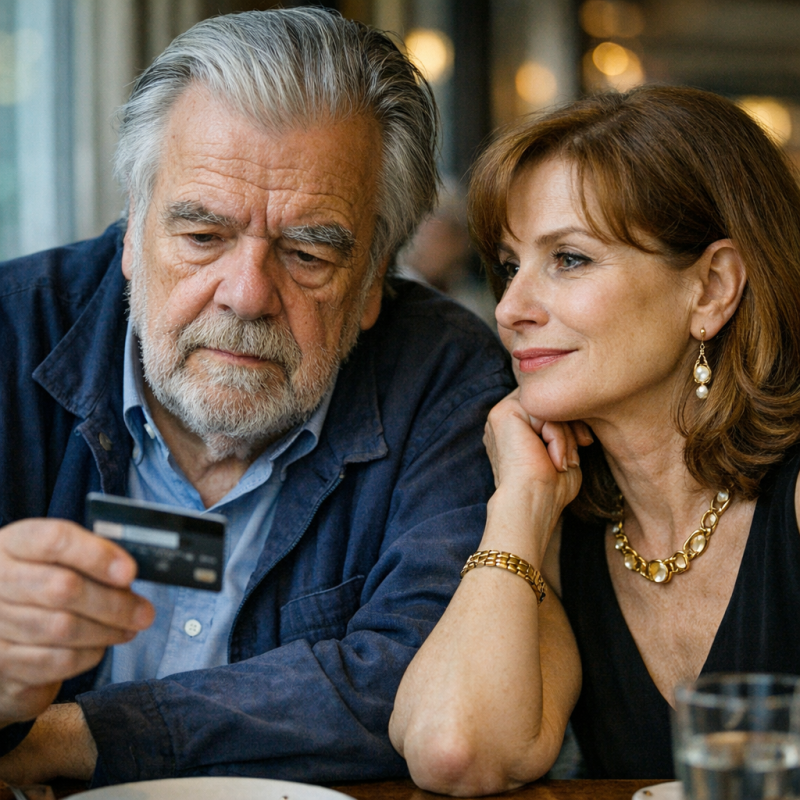 Image by FCT AI
The Joke That Wasn't
I was picking up Dad for lunch when I overheard it. Susan was on the phone in the kitchen, laughing that loud, performative laugh of hers. I was early, standing awkwardly in the entryway, and her voice carried. 'Oh honey, please,' she was saying to whoever was on the other end. 'Why would anyone marry for love when you can marry for comfort? Security is sexy.' More laughter. My stomach dropped like I'd missed a step going downstairs. She said it so casually, like it was an obvious truth everyone understood. I stood there frozen, unable to move, unable to unhear it. When Dad came downstairs, I told him, trying to keep my voice level. 'She was joking around with a friend, and she said... she said she married you for comfort, not love.' I watched his face carefully, waiting for the realization to hit. Instead, he just smiled and shook his head. 'You're taking it out of context, sweetheart. Susan has a dark sense of humor—you know that.' He brushed it off completely, but those words were burned into my brain now. When I told Dad, he dismissed it immediately, but I couldn't unhear what she'd actually meant.
 Image by FCT AI
Coffee with Rachel
I needed to talk to someone before I lost my mind, so I met Rachel at our usual coffee shop on a rainy Thursday afternoon. Rachel had been my best friend since college—she knew my family, knew my mom, knew how much Dad meant to me. I unloaded everything. The house changes, the possessive language, the spending, the Instagram performance, that awful comment about marrying for comfort. Rachel listened with her coffee growing cold, her expression carefully neutral. She had this way of listening that made you feel heard without judgment, but I could tell from her silence that she was thinking the same things I was. 'I sound paranoid, don't I?' I finally said. She stirred her coffee slowly. 'No. You sound worried.' We sat there for a moment, rain drumming against the window. Then she asked the question that had been circling my brain for months but I'd been too afraid to voice: 'Alex, what happens if your dad actually wakes up to this?' I didn't have an answer, but the question hung between us like smoke, and I realized I was genuinely terrified of what the answer might be.
 Image by FCT AI
The Sulking Starts
The shift happened over something small—Dad mentioned that maybe they didn't need new patio furniture when the old set was perfectly fine. Nothing dramatic, just a gentle suggestion. Susan didn't argue. She just went quiet. I mean completely silent—not the comfortable kind of quiet, but the kind that fills a room like poison gas. For three entire days, she barely spoke to him. She'd answer in clipped syllables if he asked her a direct question, but otherwise she moved through the house like a ghost with a grudge. I watched Dad try to fix it—he'd ask if she was okay, offer to take her to dinner, even backtrack on the furniture comment. She'd just give him this wounded look and walk away. By day three, I saw him looking at patio furniture websites on his laptop. The silence lifted immediately after he showed her what he'd found. She smiled, kissed his cheek, and suddenly the warmth returned like someone had flipped a switch. I realized then—it wasn't just disappointment I was witnessing. It was punishment.
 Image by FCT AI

History's most fascinating stories and darkest secrets, delivered to your inbox daily.
Questions Meet Fury
About a week later, Dad was going through their credit card statement at the kitchen table when his eyebrows pulled together. 'Honey, what's this charge for fifteen hundred dollars at Nordstrom?' he asked, his tone genuinely curious, not accusatory. The change in Susan was instantaneous. Her whole body went rigid and she spun around to face him with this expression I'd never seen before—jaw tight, eyes flashing. 'Are you seriously questioning how I spend money?' Her voice had this razor edge to it that made my stomach drop. 'After everything I do for this house, for you, you're going to nickel-and-dime me over a shopping trip?' Dad actually flinched. He tried to explain he was just asking, just wanted to understand the charges, but she cut him off. 'I don't have to justify myself to you. If you're going to treat me like some kind of criminal every time I buy something, maybe you should have married an accountant instead.' She stormed out of the room, leaving Dad staring at the statement with this stunned, almost hurt expression. The message was crystal clear—questioning her was not allowed.
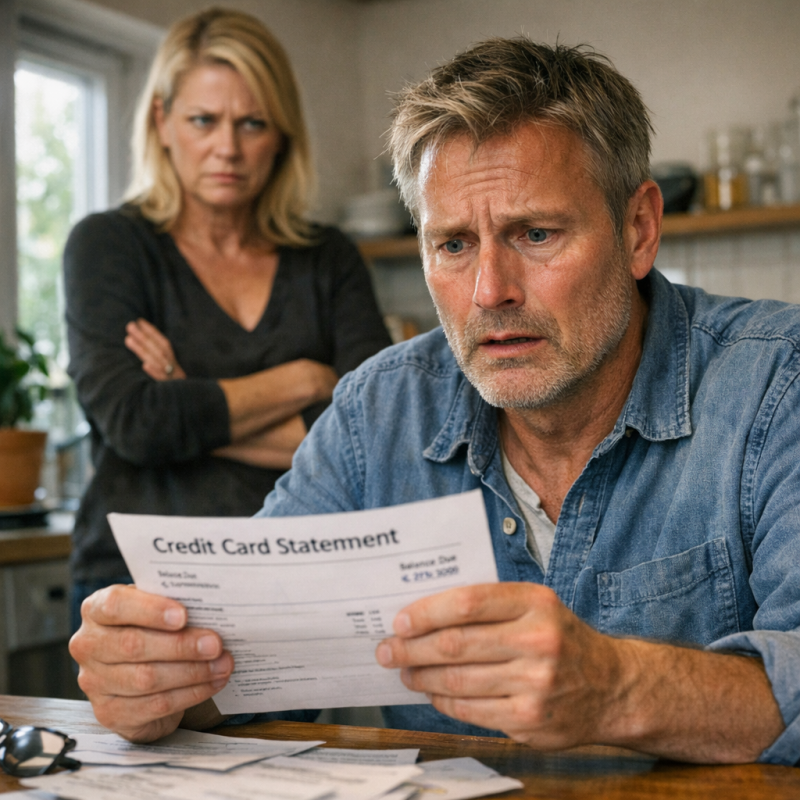 Image by FCT AI
Tom Comes Home
My younger brother Tom came home that weekend for the first time in months—he'd been working in Seattle and hadn't seen much of the Susan era up close. I didn't say anything to him beforehand; I wanted to see if he'd notice what I'd been seeing. It took exactly one dinner. Tom's always been perceptive, quieter than me but he reads people well. I caught him watching Susan during the meal, this subtle frown creasing his forehead as she criticized the restaurant Dad had chosen, then complained about the temperature in the house, then made a pointed comment about Dad's shirt being 'dated.' After dinner, when Susan went upstairs and Dad stepped outside to take a call, Tom grabbed my arm and pulled me into the kitchen. His face was pale. 'What the heck is going on with her?' he whispered urgently. I started to answer but he shook his head. 'She's scary, Alex. The way she talks to Dad—that's not normal.' Relief flooded through me so intensely I almost cried. I wasn't imagining things.
 Image by FCT AI
The Package Avalanche
The packages started arriving in waves—sometimes five or six deliveries in a single day, all addressed to Susan. Designer shoes, handbags, clothes, home décor items that didn't match anything in the house. The UPS driver knew our address by heart. I'd watch Dad's face every time he opened the door to another stack of boxes, this resigned weariness settling deeper into his features. What got me wasn't just the volume—it was the waste. I'd see shopping bags in the guest room with tags still attached weeks later, items she'd apparently forgotten she'd even ordered. A three-hundred-dollar cashmere throw still in its packaging. Shoes that had never been tried on. One afternoon I counted fourteen unopened boxes in the hallway alone, like a cardboard monument to compulsion. Dad walked past them without comment, but I saw him pause, just for a second, his hand resting on the doorframe. Many still had tags on them weeks later, unopened and forgotten.
 Image by FCT AI
Dad Starts Counting
I was grabbing coffee one morning when I spotted something that made me stop mid-pour—a small spiral notepad beside the stack of bills on Dad's desk, partially hidden under a magazine. I shouldn't have looked, but I did. Page after page of dates, amounts, merchant names, all in Dad's careful handwriting. He was tracking every charge, every purchase, documenting everything. Some entries had question marks beside them. Others had asterisks. The most recent page had a running total at the bottom that made my breath catch—I won't share the exact number, but let's just say it was more than I'd made in two years. He'd organized it by month, color-coded some entries, even cross-referenced a few with bank statements I could see paper-clipped together. This wasn't casual record-keeping—this was preparation. What struck me most was that he hadn't said a word to Susan about any of it. Not a single confrontation about the numbers he was so carefully tallying. He didn't say anything to Susan yet, but the silence felt heavier than any argument.
 Image by FCT AI
The Accusation
The confrontation came on a Tuesday evening. Dad had quietly suggested maybe they should set a monthly budget, nothing dramatic, just some structure. Susan's reaction was immediate and vicious. 'You've changed,' she said, her voice dripping with contempt. 'You used to be generous, spontaneous. Now you're just... stingy. Counting every penny like some miser.' She was standing in the kitchen doorway, arms crossed, and I was frozen at the dining table pretending to work on my laptop. 'This isn't about being stingy,' Dad said, and I heard something different in his voice—something firmer. 'This is about being reasonable. We've spent more in six months than—' 'Than what? Than I'm worth?' She cut him off with that same technique she always used, twisting his words into an attack on her value. 'If you didn't want to take care of a wife, you shouldn't have gotten married.' But this time, Dad didn't immediately backtrack or apologize. He just looked at her, really looked at her, with this expression that was equal parts sad and resolute. For the first time, I saw him not back down immediately.
 Image by FCT AI
The Lawyer's Office
Dad told me he had a lunch meeting downtown that Thursday, but something about the way he said it felt off—too casual, too deliberately vague. I didn't push. Later that evening, after Susan had gone to bed early with one of her headaches, he came and sat with me in the living room. 'I saw Marcus today,' he said quietly. Marcus Chen had been Dad's friend since law school, and he'd gone on to become one of the best divorce attorneys in the state. My heart jumped. 'Marcus handles family law now,' Dad continued, not quite meeting my eyes. He didn't need to say more—I understood exactly what kind of meeting it had been. We sat there in silence for a moment, the weight of it settling between us. Dad looked exhausted, but there was something else in his expression too, something I hadn't seen in months. A kind of clarity, maybe. Or relief, like he'd finally admitted something to himself that he'd been avoiding. When he came home, he looked different—tired, but somehow lighter.
 Image by FCT AI
The Card in His Name
The credit card statement arrived on a Saturday. I was there when Dad opened it—some bank I didn't recognize, addressed to him at our house. I watched his face drain of color as he read it. 'I didn't open this account,' he said, his voice strange and flat. The statement showed a fifteen-thousand-dollar balance, all charges from the past two months. Designer stores, jewelry, that furniture she'd bought. His hands were actually shaking as he pulled out his phone and called the bank's fraud department. I sat with him while he waited on hold, my stomach churning. The customer service rep confirmed what we'd already suspected—the application had been submitted online six weeks ago with all of Dad's information: Social Security number, income, everything. Susan had forged his signature electronically. She'd opened a credit card in his name without his knowledge or permission, then maxed it out like it was Monopoly money. Dad hung up the phone and just sat there, staring at the statement. That was the moment everything changed—there was no going back now.
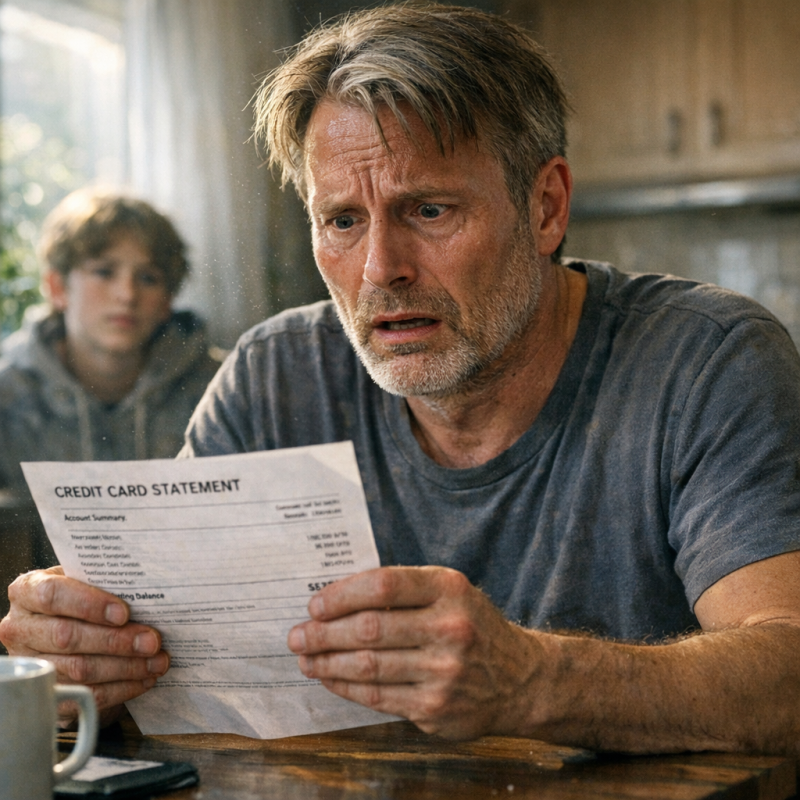 Image by FCT AI
Freezing the Accounts
Marcus walked Dad through everything methodically. I sat in on the meeting at Marcus's office, watching as he laid out spreadsheets and account statements across the conference table. 'We freeze the joint accounts first,' Marcus said, tapping his pen against a highlighted column. 'Then we open new ones in your name only. Transfer your direct deposits, your paycheck, your retirement contributions—everything she can't touch.' Dad signed form after form, his expression focused in a way I hadn't seen in months. Marcus had this whole system worked out, every step calculated to protect Dad's assets without alerting Susan. The bank manager they worked with was discreet, processing everything quietly. By the end of the week, the joint accounts were frozen solid, and Dad had new accounts Susan didn't even know existed. His paychecks started going to the new account. The credit cards were reassigned. Every financial thread connecting them was being systematically cut. I watched Dad initial another document and felt something like relief wash over me. Susan had no idea the ground was shifting beneath her feet.
 Image by FCT AI
The Divorce Papers
The process server showed up on a Tuesday morning while Susan was still in her robe. Dad had left for work early—Marcus had advised him to be elsewhere when it happened. I was at my apartment when Dad texted me: 'Papers served. It's done.' My hands were shaking as I read that message. I imagined the scene: the doorbell, Susan answering with her coffee, the polite 'Are you Susan Fletcher?' and then the manila envelope. The divorce petition, thick with legalese, formally ending their marriage. Dad told me later that his phone started ringing within minutes—Susan, calling over and over, screaming into his voicemail. He didn't answer. Marcus had been clear about that too: no contact except through lawyers. I sat in my apartment, staring at my phone, listening to the silence. But in my mind, I could hear her fury echoing across the city. The neighbors probably heard her. The whole block probably heard her. I wasn't there, but I heard her scream from three blocks away—or at least, that's what it felt like.
 Image by FCT AI
Susan's Public Meltdown Begins
Susan's Facebook became a train wreck I couldn't look away from. The first post appeared that afternoon: 'Some people show their true colors when things get hard. Betrayal comes from those you trust most.' Vague enough to maintain plausible deniability, specific enough that everyone knew what she meant. The comments rolled in—mostly from people I didn't recognize, her friends from book club and yoga. Diana was there, posting heart emojis and 'Thinking of you, hun!' But even through the screen, I could sense her discomfort. The next post was angrier: 'After everything I gave, everything I sacrificed, THIS is the thanks I get?' More comments, more support, but fewer of them now. By the third post—'Ungrateful men who don't appreciate what they have deserve to be ALONE'—even her closest friends seemed to be backing away. I watched Diana's comments get shorter, less enthusiastic. Just 'Hugs' instead of paragraphs. Susan was unraveling publicly, and her friends were starting to notice. I saw her friend Diana commenting supportive things, but even she seemed uncomfortable.
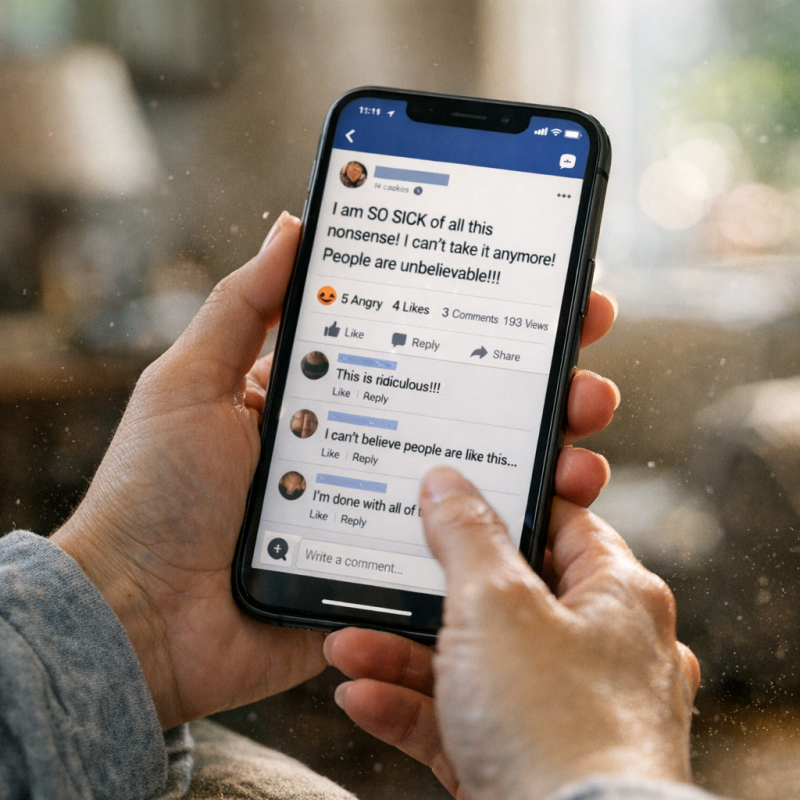 Image by FCT AI
The First Store Visit
I was grabbing milk and bread when I spotted her. Susan was three aisles over, her cart absolutely overflowing with groceries—the expensive kind, organic everything, imported cheeses, premium cuts of meat. She had her phone pressed to her ear, talking loudly enough that I could hear her from where I stood. 'Oh, absolutely,' she was saying, her voice bright and sharp. 'I'm not letting him dictate how I live my life. I deserve nice things.' I ducked behind an endcap display of cereal, watching her through the gaps between boxes. Her cart looked like she was shopping for a party—or like she was buying everything she'd ever wanted all at once. The way she laughed into the phone made my stomach turn. It wasn't a bitter laugh or a sad one. It was triumphant, almost giddy, like she'd just won something. I stayed hidden until she moved to the next aisle, then quickly checked out and left. She didn't see me, but her tone—triumphant, almost giddy—made my skin crawl.
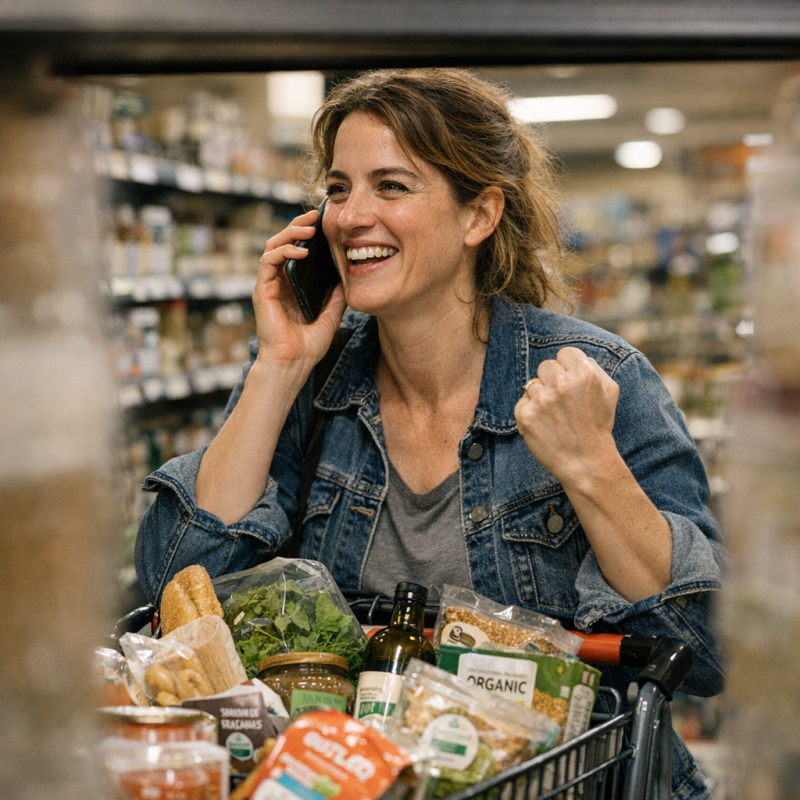 Image by FCT AI
Tom Calls with News
Tom's call came that evening while I was making dinner. 'Dude, I just saw your dad's ex at Best Buy,' he said, not even bothering with hello. 'She was buying, like, two laptops, a huge TV, sound system—the sales guy was practically salivating.' I put down the knife I'd been using to chop vegetables. 'When was this?' I asked. 'Like twenty minutes ago. I was picking up a charging cable and there she was, cart full of boxes, flashing a credit card around.' Tom paused. 'Alex, I know it's none of my business, but she looked way too happy. Like, weirdly happy. Is she okay?' I didn't know how to answer that. I'd seen her at the grocery store, triumphant and strange, and now this. Electronics worth thousands of dollars. What was she doing? 'Thanks for telling me,' I said finally. Tom made some joke about retail therapy, but after we hung up, I sat there staring at my half-chopped onions. 'She looked way too happy,' he said, and I felt my stomach drop.
 Image by FCT AI
Rachel's Warning
Rachel texted first, then called when I didn't respond fast enough. 'Okay, so this is weird,' she said when I picked up. 'I was at the mall with Emma, and we saw Susan. She had, like, four shopping bags from Nordstrom, and she was going into Macy's when we left.' I leaned against my kitchen counter, a strange dread building in my chest. 'Did she see you?' I asked. 'No, but Alex, she looked—I don't know how to describe it. She was shopping like there's no tomorrow.' Those words landed like a stone. Shopping like there's no tomorrow. The grocery store, the electronics, now department stores. Three different people had seen her in less than a week, all reporting the same thing: Susan on a massive spending spree, looking deliriously happy while doing it. But why? The divorce papers had just been served. Her life was falling apart. So why was she acting like she'd won the lottery? I wondered if that was exactly the problem—if Susan thought there was no tomorrow.
 Image by FCT AI
The Department Store Scene
I was supposed to be picking up a birthday gift for a coworker when I saw her. The department store was crowded, mid-afternoon on a Saturday, and there was Susan at the checkout counter with not one but two shopping carts completely full. Clothes, shoes, handbags, perfume—I could see designer labels from across the sales floor. She was talking to the cashier, gesturing dramatically, while the poor employee scanned item after item. I moved closer, hiding behind a display of scarves, and that's when I heard her say it. 'Just charge it,' Susan said, waving a credit card above her head like it was a winning lottery ticket. 'Charge it all.' The triumph in her voice was visceral, almost manic. The cashier looked overwhelmed, the total climbing higher and higher on the register display. I watched Susan sign the receipt with a flourish, saw her smile as she grabbed her bags. Something clicked in my mind—not quite understanding, but the edge of it, something dark and calculated that I couldn't quite name yet. The way she said 'charge it' made something click in my mind, but I couldn't quite name it yet.
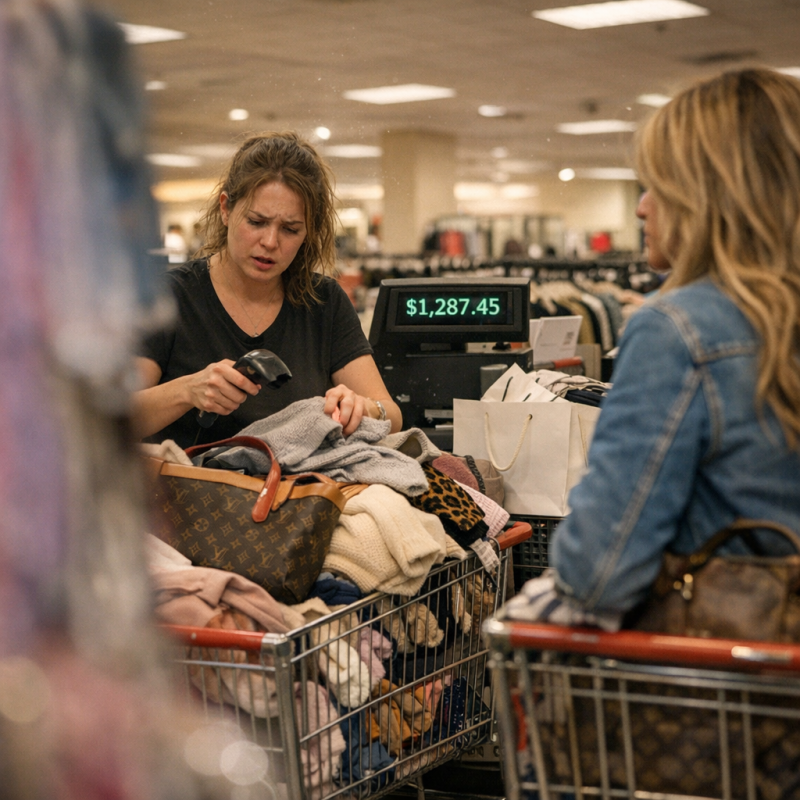 Image by FCT AI
Telling Dad
I went straight to Dad's house from the mall. He was in his office, going through paperwork, and he looked up when I appeared in the doorway. 'Susan's on a shopping spree,' I said without preamble. 'I just watched her buy thousands of dollars worth of stuff. Tom saw her at Best Buy, Rachel saw her at the mall, I saw her at the grocery store earlier this week. Dad, she's spending money like crazy.' I expected shock. I expected anger. I expected him to grab his phone and call Marcus immediately. Instead, Dad just set down his pen and sighed. 'I know,' he said quietly. 'Let her.' I stared at him. 'Let her? Dad, she's going to bankrupt you. She's—' 'Alex.' His voice was firm but not unkind. 'Trust me. Let her shop.' He went back to his paperwork like the conversation was over, like I hadn't just told him his ex-wife was on a spending rampage. I stood there, completely confused, my mind spinning. The calm in his voice was more unsettling than any outburst could have been.
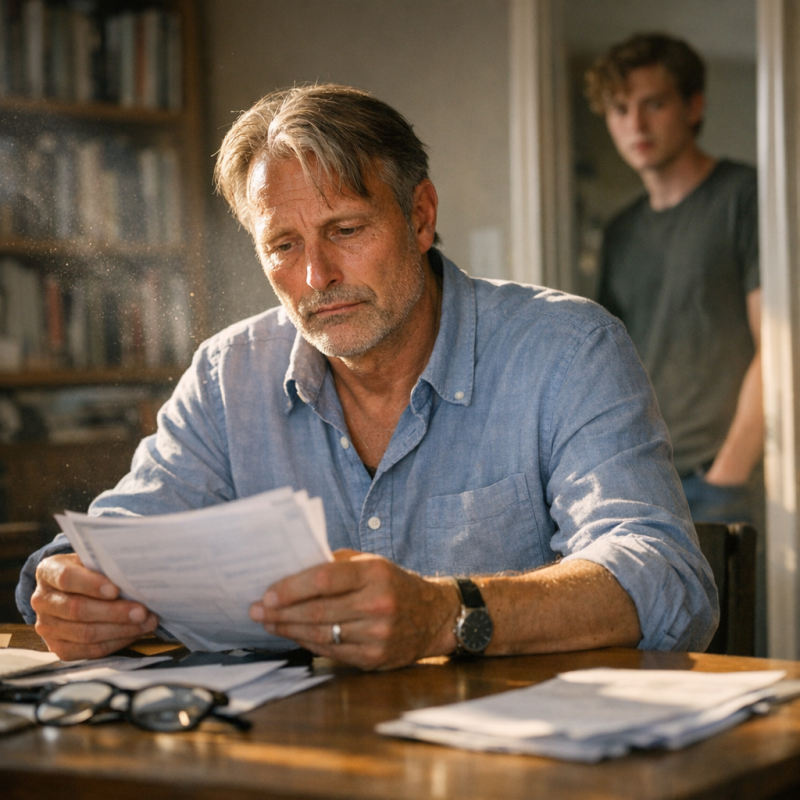 Image by FCT AI
The Confident Look
I left Dad's office feeling more confused than when I'd entered. There was something in his eyes I hadn't seen in years—steady, calm, almost confident. He wasn't panicking. He wasn't even mildly concerned. The man who'd been a wreck just months ago, who'd looked defeated and exhausted during those awful dinner conversations with Susan, now sat there going through paperwork like everything was perfectly under control. I tried to remember the last time I'd seen him like this. Maybe before he married Susan? Maybe earlier? It was unsettling in a way I couldn't quite articulate. Part of me felt relieved—God knows I wanted to believe he had some kind of plan. But another part of me kept circling back to the same questions: What does he know that I don't? Why would he let Susan keep spending? What could possibly make this okay? I wanted to trust it, but I couldn't shake the feeling that I was missing something huge.
 Image by FCT AI
The Shopping Continues
Over the next two weeks, reports kept coming in—Susan was everywhere, buying everything. Rachel texted me a photo of Susan leaving Nordstrom with six shopping bags. Tom called to say he'd spotted her at an upscale kitchen store, browsing stand mixers like she was planning to open a bakery. My cousin mentioned seeing her at a jewelry counter. A friend from book club said Susan had been at the home goods store, loading up her cart with expensive throw pillows and decorative vases. Each report felt like another punch to the gut. I started dreading my phone notifications, wondering who would spot her next and where. The worst part was imagining Dad getting the credit card statements, watching the numbers climb higher and higher. How much had she spent already? Ten thousand? Twenty? More? I tried calling him twice, but he didn't pick up. When he finally texted back, all he said was: 'Everything's fine. Stop worrying.' But I couldn't stop. It felt relentless, like she was on some kind of mission.
 Image by FCT AI
The Social Media Spectacle
Then Susan's Instagram became a parade of new purchases, each post more extravagant than the last. Designer handbags artfully arranged on her bed. A flat-lay of luxury skincare products. Photos of her wearing new outfits with tags still visible in the mirror selfies. She was documenting everything, and she was doing it publicly for everyone to see. The comments section was full of her friends gushing about how amazing she looked, how she deserved it all, how she was 'thriving.' I scrolled through post after post, my jaw clenched so tight it started to ache. But what really got me were the captions. 'New beginnings call for new things ✨' one read. Another said, 'Treating myself because no one else will 💅.' And my personal favorite: 'When life gives you lemons, buy yourself something pretty 🛍️.' Each one was a passive-aggressive dig, a public declaration that she was the victim here, that Dad had somehow wronged her. The captions were passive-aggressive digs about 'new beginnings' and 'treating yourself'—and they made my blood boil.
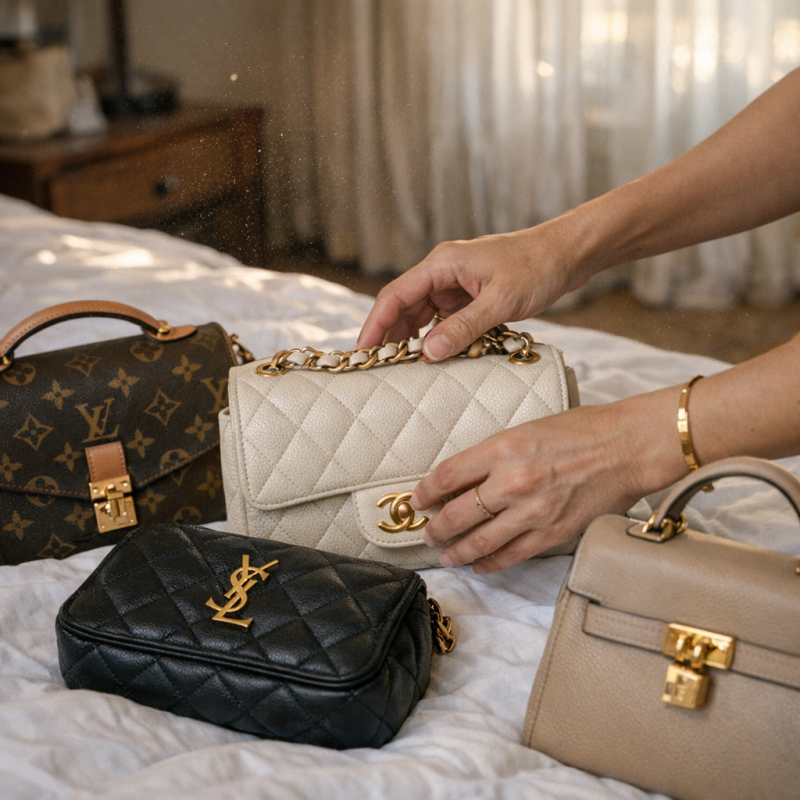 Image by FCT AI
Tom's Theory
I met Tom for coffee, and within five minutes I was ranting about Susan's Instagram feed. He listened patiently, stirring his drink, then set down his spoon and looked at me seriously. 'I think I know what she's doing,' he said. 'She's trying to hurt Dad financially before the divorce finalized. Think about it—she knows it's ending, she knows she's not getting what she wanted, so she's going to spend as much of his money as she can before the courts split everything up. It's revenge spending.' I sat back, considering this. It made perfect sense, actually. Susan was vindictive enough to do exactly that, to drain Dad's accounts out of pure spite. Tom continued, 'She probably figures she's entitled to it anyway, right? Like it's her last chance to get what she thinks she deserves.' I nodded slowly. The theory was logical, almost obvious now that he'd said it out loud. But even as I agreed with him, something nagged at me. It made sense, but something about Dad's reaction still didn't add up.
 Image by FCT AI
Marcus Visits
Marcus stopped by the house a few days later, and I happened to be there helping Dad organize some old files in the garage. I heard Marcus's voice in the kitchen and wandered in to say hello. He and Dad were standing by the counter, and as I entered, I caught them exchanging a look I couldn't quite read. It wasn't worried or conspiratorial exactly—more like satisfied? Knowing? They both turned to me with neutral expressions, but I'd seen it. That brief moment of silent communication between them. 'Hey, Marcus,' I said, trying to sound casual. 'Everything going okay with the divorce proceedings?' He smiled, that practiced lawyer smile that gave away nothing. 'Moving along right on schedule,' he said. I looked at Dad, who was pouring coffee like we were discussing the weather. 'And the, uh, the financial stuff? With Susan spending all that money?' I pressed. Marcus glanced at Dad again, just for a split second. When I asked if everything was okay, Marcus just smiled and said, 'It will be.'
 Image by FCT AI
The Worry That Wouldn't Leave
No matter how calm Dad seemed, I couldn't stop worrying that Susan would find a way to make him pay for everything. I lay awake at night running through scenarios in my head. What if she maxed out all the credit cards? What if she took out loans in his name? What if the divorce settlement required him to cover her debts? I didn't know enough about divorce law to understand how this all worked, and that uncertainty was eating at me. During the day, I found myself distracted at work, checking my phone obsessively for updates, refreshing Susan's Instagram to see what new nightmare she'd posted. My coworkers started asking if I was okay. I wasn't. I was consumed by this situation, by the fear that Dad was being too passive, too trusting. Maybe Marcus had given him bad advice. Maybe Dad was in denial about how serious this was. Or maybe—and this thought kept creeping in despite my worry—maybe there was something I didn't understand yet. Part of me wondered if he was underestimating her—or if I was underestimating him.
 Image by FCT AI
The Credit Card Bill
I couldn't take it anymore. I showed up at Dad's house unannounced one evening and found him making dinner. 'Dad, have you seen the credit card bills?' I asked, not bothering with pleasantries. He looked up from chopping vegetables, completely unfazed. 'Yes,' he said simply. 'And?' I pressed. 'And what?' he replied. 'Dad, Susan is spending thousands of dollars! Have you actually looked at the charges?' He set down the knife and turned to face me fully. 'Alex, I've seen every single charge. Every store, every purchase, every dollar.' His voice was measured, patient, like he was explaining something to a child. 'Then why aren't you doing anything?' I demanded. He just smiled slightly, that same calm expression I'd been seeing for weeks now. 'I told you to trust me,' he said. 'This is all going exactly as it should.' I stared at him, searching his face for some sign of delusion or denial, but found none. The way he said it, like he'd been expecting each one, sent a chill down my spine.
 Image by FCT AI
The Furniture Store Incident
A week later, I ran into Mrs. Chen from Dad's book club at the pharmacy. She grabbed my arm with obvious excitement, like she had gossip she'd been dying to share. 'Oh Alex, you'll never believe what I saw yesterday,' she said. 'I was at that fancy furniture store on Maple Street—you know, the one with the designer pieces?—and Susan was there. She bought an entire living room set. I mean everything: sofa, loveseat, coffee table, end tables, lamps. The works!' Mrs. Chen leaned in closer. 'And honey, she put it all on credit. I heard her talking to the salesperson about financing options. Must have been fifteen thousand dollars at least.' I thanked her and walked away in a daze. Fifteen thousand dollars. On furniture. While she was in the middle of a divorce. The audacity was breathtaking. I could picture it so clearly—Susan strolling through that showroom in her new designer outfit, pointing at expensive pieces like she was shopping for groceries. The image of Susan strolling through that showroom like she owned it made me want to scream.
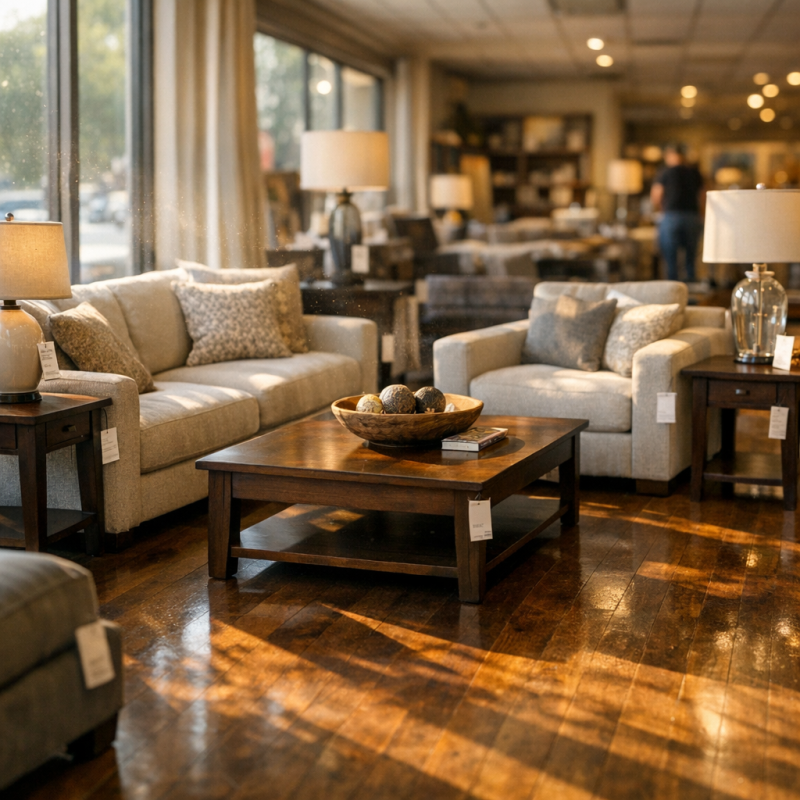 Image by FCT AI
Rachel's Question
Rachel came over that evening with Thai takeout and wine. We were sitting on my couch, picking at pad thai, when she asked the question that had been nagging at me for weeks. 'How is your dad so calm about this?' she said, gesturing with her fork. 'I mean, Susan's out there spending money like she's preparing for the apocalypse, and he's just... what? Reading books? Going to the gym?' I set down my container and stared at the wall. It was a fair question. Dad should have been furious, panicked, something. Instead, he seemed almost serene. Like he was watching a movie he'd already seen and knew exactly how it ended. 'I honestly don't know,' I admitted. 'Maybe he's just given up? Or maybe he knows something we don't?' Rachel raised an eyebrow at that, but I couldn't elaborate because I genuinely had no idea what was going on in my father's head. The mystery was driving me insane, but every time I tried to bring it up with him, the conversation went nowhere. All I could say was, 'I wish I knew.'
 Image by FCT AI
The Jewelry Store
My phone buzzed during my lunch break the next day. It was Tom. The message just said 'You need to see this' with a photo attached. I opened it and felt my stomach drop. There was Susan, walking out of Cartier—yeah, Cartier—with not one but three distinctive shopping bags hanging from her arms. She was wearing sunglasses despite the overcast day, head held high like she was on a runway. Tom's next message read: 'Saw her go in 45 minutes ago. She came out looking very pleased with herself.' I zoomed in on the photo, studying her expression. Something about it seemed off. Her smile was too wide, too fixed. There was a manic quality to it that made my skin crawl. This wasn't someone enjoying a shopping trip. This was someone spiraling, using retail therapy like a drug to fill some void or prove some point. I forwarded the photo to Rachel with shaking hands. The smile on her face looked almost manic.
 Image by FCT AI
The Uncomfortable Dinner
Dad invited me to dinner at his place that Thursday. Nothing fancy—he made his signature spaghetti carbonara and we sat at his small kitchen table like we'd done a thousand times before. But the whole meal felt weighted with things unsaid. I pushed pasta around my plate, watching him eat calmly, methodically. The questions were burning in my throat. What do you know? Why aren't you worried? What's your plan? But every time I opened my mouth to ask, the words died before they could form. Maybe I was afraid of the answer. Or afraid there wasn't one. Dad seemed content with the silence, occasionally asking me about work or whether I'd watched the latest episode of that show we both liked. Normal dad stuff. But there was something underneath, a current running through the conversation that I couldn't quite name. He looked at me once across the table, really looked at me, and I swear he almost said something—but then the moment passed.
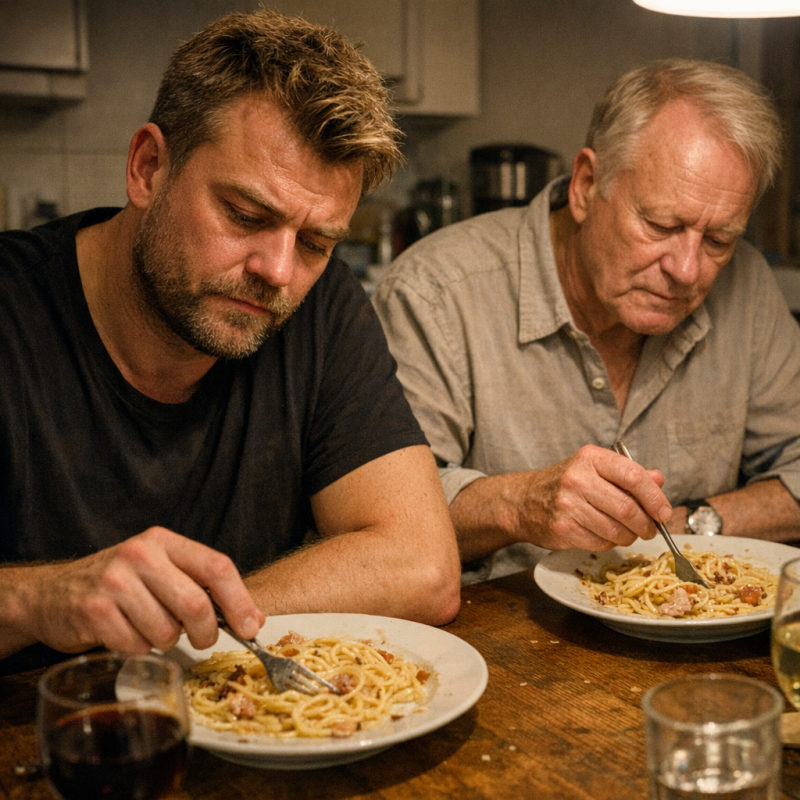 Image by FCT AI
Diana's Coffee
I was grabbing coffee at my usual spot when I spotted Diana sitting alone by the window. She looked terrible—dark circles under her eyes, shoulders slumped, stirring her latte without drinking it. Part of me wanted to walk right past her, but curiosity won. 'Diana,' I said, and she looked up with something like relief. We'd never been close, but right then she seemed desperate to talk to someone. 'How are you?' I asked, sliding into the seat across from her. She laughed, but it sounded hollow. 'Honestly? I'm exhausted. Susan calls me at all hours, sending me photos of things she's buying, talking about how she's 'investing in herself' and 'taking what's hers.' I've tried to tell her to slow down, but she won't listen.' Diana rubbed her eyes. 'I don't know what's gotten into her,' she admitted, and I realized even Susan's allies were starting to worry.
 Image by FCT AI
The Final Spree
Susan's Instagram story showed up on my feed two days later. It was a selfie taken in front of a boutique I recognized from magazines—the kind of place where a single handbag costs more than my monthly rent. She was beaming, making a peace sign, surrounded by glossy shopping bags. The caption read: 'Retail therapy saves lives 💅✨ #TreatYourself #NewBeginnings #LivingMyBestLife.' I stared at it for a full minute, feeling a mix of rage and disbelief. She'd hashtagged 'new beginnings' like she was some kind of inspirational figure instead of someone hemorrhaging money during a divorce. I screenshotted it and drove to Dad's house. He was in his garage, organizing tools. 'You need to see this,' I said, shoving my phone at him. Dad wiped his hands on a rag and studied the photo. His expression didn't change—no surprise, no anger. He just nodded slowly, like he'd been waiting for exactly this.
 Image by FCT AI
The Wait
Then came the strangest part: nothing happened. Days passed. Susan kept posting her shopping adventures—designer shoes one day, expensive skincare the next, a spa package after that. Dad kept going about his routine—work, gym, book club, cooking dinner. I kept checking my phone obsessively, waiting for news, for something to break. But everything just continued in this bizarre holding pattern. Tom would send me updates when he spotted Susan around town, always carrying bags, always wearing something new. Rachel would text asking if I'd heard anything. I hadn't. The waiting was torture. It felt like watching a pot that refused to boil, or standing on a fault line knowing an earthquake was coming but not when. Every day I expected the call, the crisis, the explosion. Instead, there was just this eerie calm. Dad seemed content to wait, though for what I couldn't imagine. The silence felt like the air before a storm.
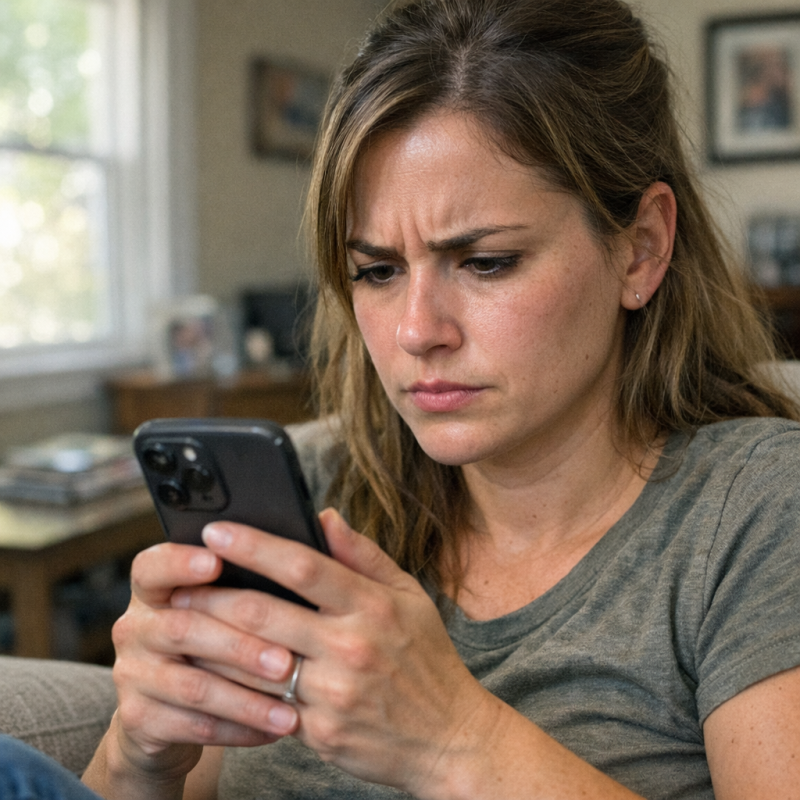 Image by FCT AI
The Phone Call
I was at work, trying to focus on a client email, when my phone lit up with an incoming call. Susan's name flashed on the screen. My first instinct was to let it go to voicemail—we hadn't spoken directly since the whole mess started, and I had no desire to change that. But something made me hesitate. Maybe it was morbid curiosity. Maybe I sensed this was important. My finger hovered over the decline button for three rings. On the fourth, I answered. 'Hello?' I said cautiously. There was a beat of silence, just breathing on the other end. Then the screaming started. Not words at first, just this raw, furious shriek that made me pull the phone away from my ear. My coworkers' heads turned in my direction. I grabbed my laptop and hurried to an empty conference room, my heart pounding. But curiosity won—and the second I picked up, she started screaming.
 Image by FCT AI
The Declined Cards
When Susan finally formed actual words, they came out in a torrent of rage. 'Do you know what just happened to me?' she screamed. 'Do you have ANY idea how humiliating—' She broke off into what sounded like a sob. I pressed the phone closer, trying to make sense of her rant. 'I was at Nordstrom,' she continued, her voice cracking. 'Nordstrom! I had an armful of things, I went to check out, and my card was declined. Fine, I thought, maybe there's a fraud alert. So I tried another card. Declined. Then another. Also declined!' Her voice was rising to a pitch that made me wince. 'The cashier had to call a manager. People were staring at me, Alex. Staring! Like I was some kind of criminal who couldn't pay for her purchases!' I could hear her breathing hard, working herself up to the real accusation. 'This is your father's fault!' she shrieked, and I felt my pulse quicken.
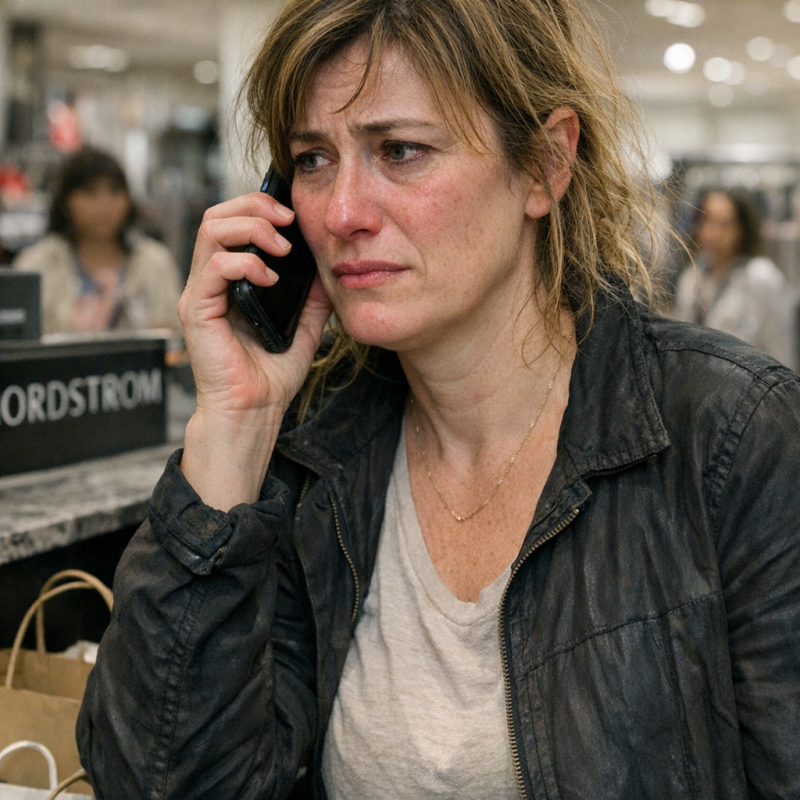 Image by FCT AI
The Accusation
Susan kept going, her voice shaking with indignation. 'Those cards were supposed to be his responsibility,' she insisted. 'We had an agreement! He was supposed to handle all of this during the separation!' I could hear her pacing on the other end, her shoes clicking against what I assumed was her apartment floor. 'He's screwing me over, Alex. Your father is deliberately trying to humiliate me, to make me look like some kind of—' She broke off again, breathing hard. 'I went to three different stores today. Three! And every single card was declined. Do you know how that feels?' I opened my mouth to respond, maybe to ask what exactly she meant by 'supposed to be his responsibility,' but something in the way she was talking made me pause. There was an edge of panic underneath the rage, something almost frantic. It wasn't just embarrassment I was hearing—it was genuine fear. I closed my mouth and kept listening instead.
 Image by FCT AI
The Liability Question
'They told me I was responsible for the balance,' Susan said, and her voice cracked on the word 'responsible' like it was a foreign concept. 'Can you believe that? Me! They said the accounts were in my name and that I was liable for—' She stopped abruptly, and I could almost hear the wheels turning. 'That can't be right. It has to be a mistake. Your father's name was on everything. He handled all the finances during the marriage, so obviously—' But she didn't sound convinced anymore. The righteous fury was starting to waver, replaced by something that sounded uncomfortably close to doubt. I gripped my phone tighter, thinking back to all those shopping trips she'd been taking. All those bags. All those receipts she'd probably never looked at closely. And suddenly, standing there in my living room, I started to wonder if Susan had made a terrible miscalculation.
 Image by FCT AI
The Question I Asked
The question came out before I could stop myself. 'Susan,' I said carefully, 'did you actually check who the accounts were under? Like, did you look at whose name was on the cards?' The silence that followed was deafening. No clicking heels. No angry breathing. Just dead air that stretched on for what felt like forever. 'I mean... they were the cards we always used,' she finally said, but her voice had gone small. Uncertain. 'The ones from the house. From the drawer in the kitchen. They were always—' She stopped. I could practically hear the realization creeping in. 'You didn't check,' I said quietly. It wasn't a question anymore. Another beat of silence. Then, in barely a whisper: 'No.' She hadn't checked. She'd just assumed. Assumed the cards still worked the way they always had. Assumed Dad was still on the hook for whatever she charged. She hadn't even thought to look.
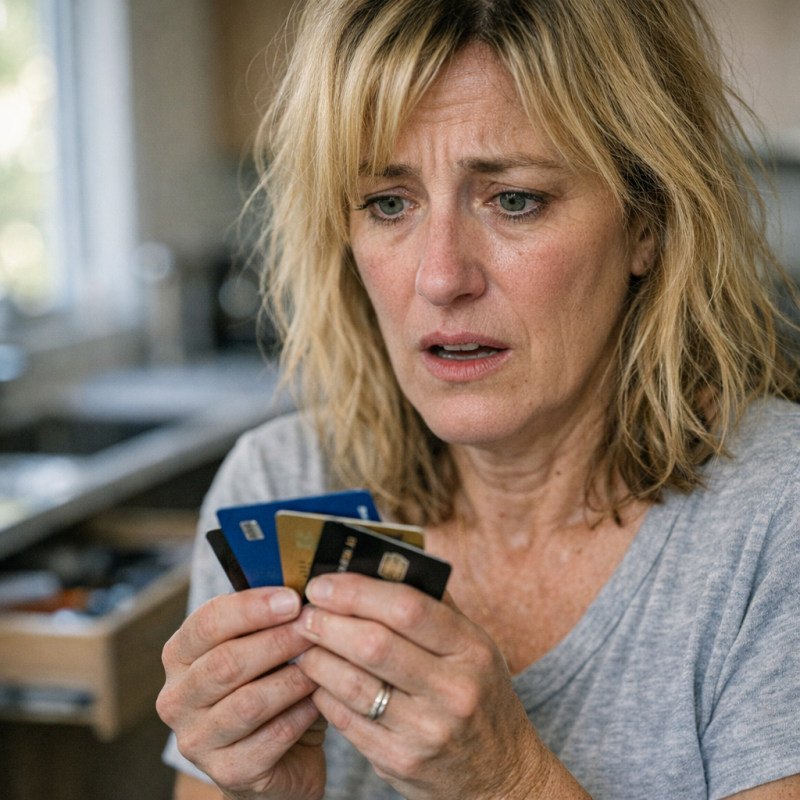 Image by FCT AI
The Quiet Revelation
'Dad's been working with Marcus for weeks,' I told her, and I could hear my own voice taking on an almost clinical quality. 'Separating accounts. Moving assets. Protecting himself legally.' I paused, letting it sink in. 'Every financial tie between you two? They've been systematically severed. Those cards you've been using? They're not his problem anymore, Susan. They're yours.' I should have felt bad about the way I said it, about the cold edge in my tone. But I didn't. After everything—the manipulation, the years of watching her work Dad over, the barely concealed contempt she'd always had for me—I felt something closer to satisfaction. The sound she made wasn't quite a scream. It was more like the air being punched out of her lungs, a strangled gasp of comprehension as her entire plan collapsed around her.
 Image by FCT AI
The Disconnection
The line went dead. No goodbye, no final accusation, just a click and then silence. I pulled the phone away from my ear and stared at it, half-expecting her to call back immediately, to scream at me some more, to demand I fix this somehow. But the screen stayed dark. Susan had hung up without another word, and I stood there in my living room feeling like I'd just witnessed something both satisfying and deeply unsettling. Because if what I suspected was true—if Dad had really planned this, if he'd known she would try to hurt him by spending his money and had turned the tables on her—then this was bigger than I'd realized. This wasn't just about protecting assets during a divorce. This was strategic. Calculated. And I needed to know how much he'd anticipated, how far ahead he'd been thinking. I needed to talk to Dad—I needed to know how much he'd known all along.
 Image by FCT AI
Confronting Dad
I didn't call first. I just got in my car and drove straight to Dad's house, my mind racing the entire way. When he answered the door, he looked calm. Too calm for someone whose ex-wife had just had a public meltdown at Nordstrom. 'We need to talk,' I said, pushing past him into the living room. He closed the door and turned to face me, and I asked him point-blank: 'How long have you known Susan would do this? The shopping spree, the cards—how long?' Dad walked over to his chair and sat down slowly, like he was choosing his words carefully. I stayed standing, arms crossed, waiting. The silence stretched between us. Finally, he looked up at me with an expression I couldn't quite read—not quite apologetic, not quite proud. 'Long enough to prepare,' he said.
 Image by FCT AI
The Timeline
Dad leaned back in his chair and started explaining. 'Marcus and I began separating the finances about three weeks ago,' he said. 'Before Susan even started her little revenge shopping trips. We moved assets, closed joint accounts, reassigned liabilities.' I sank down onto the couch, trying to process the timeline. 'Three weeks ago? But she's been shopping for—' 'I know,' he interrupted. 'I know exactly how long she's been at it.' He said it so calmly, like he was discussing the weather. Like he'd been watching the whole thing unfold from a safe distance. 'You saw it coming,' I said slowly. 'Before any of us did.' Dad nodded. 'I've known Susan for five years, Alex. I know how she operates when she feels cornered. I knew she'd try to hurt me financially. So Marcus and I made sure that when she did, the only person she'd be hurting was herself.' My jaw dropped as I realized he'd seen it coming before any of us did.
 Image by FCT AI
The Full Picture
Dad leaned forward, his voice steady and deliberate. 'Every credit card Susan's been using—the ones she thought were still tied to my accounts—Marcus had them legally reassigned to her name only. Weeks ago. Before she ever set foot in a single store.' I felt my eyes widen. 'So when she—' 'When she went on her shopping spree, thinking she was sticking it to me, running up my bills out of spite?' Dad nodded slowly. 'Every dollar she spent became her own debt. Her own legal liability. The bank statements, the credit card companies—they all have her information now, not mine.' I sat there trying to wrap my head around it. All those bags. All those receipts. Every purchase she'd made thinking she was hurting him, thinking she was getting the last laugh. 'She buried herself,' I said quietly. Dad's expression didn't change. 'She hadn't stuck it to him at all—she'd buried herself.'
 Image by FCT AI
The Reframe
Everything suddenly clicked into place. All those moments that had confused me—Dad's weird calm when Susan announced her shopping trip, the way he'd just shrugged and said 'let her,' how unbothered he'd seemed when she came home with bag after bag of expensive stuff. I'd thought he was being passive. Maybe even weak. But he hadn't been passive at all. He'd been waiting. Watching. Letting her dig her own grave with a platinum credit card she thought was his. Every purchase she made thinking she was hurting him, every swipe of that card with a vindictive little smile, every receipt she probably didn't even look at—all of it had been building her own personal financial disaster. Dad had known exactly what she was doing and exactly what would happen. He'd documented everything, worked with Marcus to set it all up legally, and then just... stepped back. Let her prove exactly who she was. Let her show her true colors in the most expensive way possible. He hadn't been passive; he'd been waiting for her to prove exactly who she was.
 Image by FCT AI
Marcus Confirms It
I needed to hear it from Marcus myself. When I called him, he confirmed every single detail Dad had told me. 'The credit card transfers were all done legally and properly,' he said, his voice carrying a hint of satisfaction I'd never heard from him before. 'We documented everything. Every statement, every notification sent to her new address, every legally required disclosure. It's all airtight.' He paused, then added something that surprised me. 'I've been practicing law for twenty-three years, and I have to say—I was impressed by how thoroughly your father approached this. He learned from what happened the first time. He kept records, he asked questions, he didn't let emotion cloud his judgment.' There was genuine respect in Marcus's voice. 'A lot of people in his position would have just reacted, gotten angry, made mistakes. But your father stayed calm and methodical.' Then Marcus said something that really stuck with me. 'Your father learned from his mistakes—he wasn't going to be taken advantage of again.'
 Image by FCT AI
Susan's Desperate Calls Begin
It started about two days later. Dad's phone began lighting up with Susan's calls. At first it was maybe three or four times a day. Then it became constant. She left voicemails—I heard a couple of them when Dad played them on speaker, his face completely neutral. Her voice went from irritated to angry to something approaching panic. 'You need to call me back. This is important. There's been some kind of mistake with the credit cards and you need to fix this.' Then: 'I know you're getting these messages. Stop being childish and call me.' Then: 'This isn't funny anymore. Call me back NOW.' The desperation in her voice grew with each message. You could actually hear her starting to realize that something had gone very, very wrong. That this wasn't just some billing error she could sweet-talk her way out of. That maybe, just maybe, she'd walked right into a trap of her own making. Dad listened to each voicemail with the same blank expression, then deleted it. He didn't answer a single one.
 Image by FCT AI
The Debt Collectors
Tom called me about a week after the voicemails started. 'You're not going to believe this,' he said, and I could hear the grin in his voice. 'Susan's been getting calls from collection agencies.' Apparently she'd complained to one of her friends—someone Tom knew through work—about the 'harassment' she was experiencing. The bills had come due. All of them. At once. And when she couldn't pay, when she probably tried to explain that these were supposed to be her ex-husband's charges, the credit card companies had pulled out the documentation. Her name. Her signature. Her address. Her sole legal responsibility. 'The friend said Susan was absolutely losing it,' Tom continued. 'Claimed it was all a mistake, that she'd been tricked, that it wasn't fair.' I couldn't help but laugh. It was the kind of justice that felt almost poetic. Turns out, maxing out credit cards you're solely responsible for has consequences.
 Image by FCT AI
The Social Media Silence
I'd been hate-following Susan's Instagram for months, if I'm being honest. It was a guilty pleasure, watching her carefully curated life, all those posed photos and humble-brags disguised as gratitude posts. But suddenly, around the same time the collection calls started, everything just... stopped. No new posts. No stories. No carefully filtered selfies with captions about 'living my best life' or 'blessed beyond measure.' The silence was deafening. I checked every day at first, almost unable to believe it. This was the woman who'd posted multiple times a day, who'd documented every meal, every outfit, every 'spontaneous' moment that was obviously staged. Her entire identity had been built on that carefully constructed online presence. And now there was nothing. I imagined her sitting in her apartment, staring at her phone, unable to post pictures of the designer bags she couldn't afford, the furniture that was about to be repossessed, the life that was crumbling around her. The woman who'd curated every moment of her life suddenly had nothing to show off.
 Image by FCT AI
Diana's Revelation
I hadn't talked to Diana in months when she reached out. 'I thought you should know,' she said carefully. 'Susan contacted me last week.' My stomach did a little flip. 'She asked me for money. Called it a loan, said she desperately needed help with some unexpected expenses, promised she'd pay me back within a month.' Diana's voice was calm but I could hear the discomfort underneath. 'I said no. I was polite about it, but I said no.' She paused. 'I talked to a few other people we both know. Apparently I'm not the first person she's asked. Or the last.' It was like watching someone's entire social network collapse in real time. All those friends she'd collected over the years, all those carefully maintained relationships, all those brunches and shopping trips and girls' nights—and when she actually needed help, when she reached out for real support, everyone stepped back. 'Everyone said no?' I asked. Diana's answer was quiet but firm. 'Diana had said no, and apparently, so had everyone else Susan asked.'
 Image by FCT AI
The Lawyer's Update
Marcus called with an update about three weeks into this whole mess. 'Thought you and your father would want to know—the divorce is moving forward smoothly now.' There was something almost surprised in his tone. 'Susan's stopped contesting everything. She's not fighting over assets anymore, not demanding her share of the house equity, not arguing about the timeline.' He explained that her lawyer had contacted him to basically fast-track the whole process. No more negotiations. No more demands. Just get it done. 'It's a complete one-eighty from where we started,' Marcus said. 'Initially she wanted to drag this out, fight over every detail, make him pay in every possible way. Now she's signing whatever we put in front of her.' I thought about those frantic voicemails, the collection calls, the friends who'd turned away. The walls had closed in and she'd realized she had no leverage left. No cards to play. Nothing. She'd gone from demanding everything to accepting anything just to end it.
 Image by FCT AI
The Furniture Returns
Mrs. Chen, the neighbor who lived in the building next to Susan's apartment complex, texted me out of nowhere. We'd met a few times when I'd helped Dad move some of his stuff out. 'You might want to know,' her message read, 'moving truck at Susan's today.' I called her immediately. 'Not a moving truck exactly,' Mrs. Chen clarified. 'Repossession company. I saw the logo on the side.' She described watching the workers loading up furniture—the white leather sectional Susan had posted about on Instagram, the brass and marble coffee table, the velvet armchairs. All the pieces she'd bought during that final shopping spree, the ones she'd arranged so carefully in her apartment, probably photographed from every angle for social media. 'They were very efficient,' Mrs. Chen said. 'Professional. In and out.' I imagined Susan watching from her window, or maybe she wasn't even there, couldn't bear to witness it. All those material symbols of her new life, her fresh start, her independence—gone. The living room set she'd been so proud of was gone in under an hour.
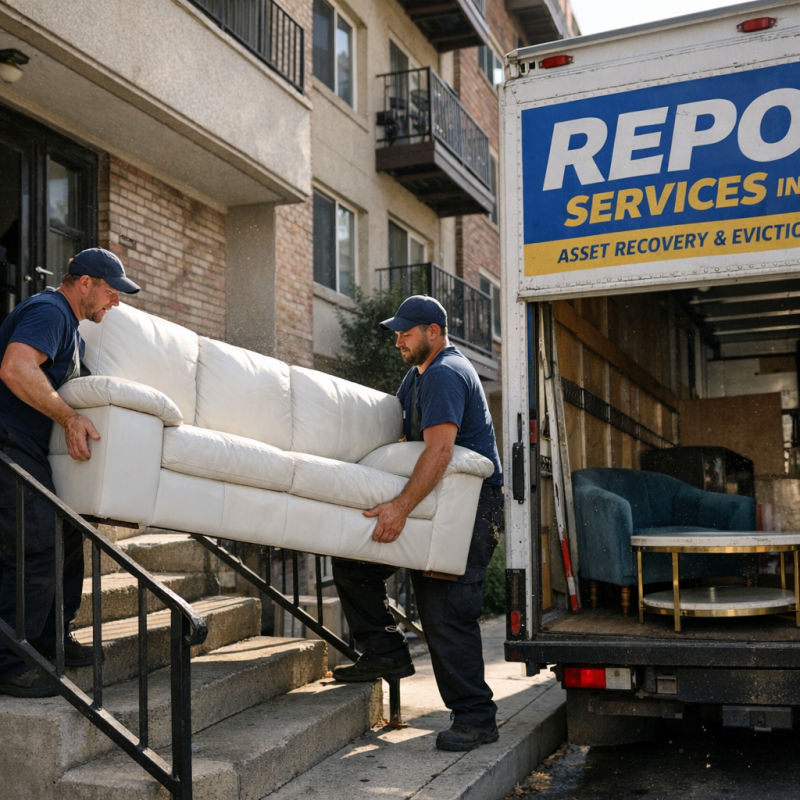 Image by FCT AI
The Final Confrontation
I saw her in the courthouse hallway, and honestly, I almost didn't recognize her. Susan stood near the window at the end of the corridor, staring out at nothing. She wasn't wearing designer clothes—just jeans and a plain sweater. No jewelry except simple studs in her ears. Her hair was pulled back in a ponytail, no makeup that I could see. She looked smaller somehow, like she'd physically shrunk. Dad was still in the courtroom with his lawyer, finalizing paperwork. I was waiting on a bench, scrolling through my phone, when I glanced up and there she was. Our eyes met for just a second. I expected something—anger, defiance, maybe even an attempt at conversation. But there was nothing. Just emptiness. She looked right through me like I was a stranger, then turned and started walking toward the exit. No acknowledgment, no parting shot, no final drama. She walked past me without a word, and I realized she had nothing left to say.
 Image by FCT AI
Dad's New Beginning
Dad emerged from the courtroom about twenty minutes later, his lawyer beside him with a folder of documents. I stood up as he approached, searching his face for signs of how he was feeling. He looked tired, obviously—this whole process had drained him. But there was something else too. His shoulders weren't hunched anymore. The tension that had been carved into his features for months seemed to have eased. He thanked his lawyer, shook hands, and then walked over to me. We headed toward the exit together, not saying much at first. Outside, the afternoon sun was bright, almost jarring after the fluorescent lights inside. Dad stopped on the courthouse steps, took a deep breath of fresh air, and just stood there for a moment. He seemed lighter somehow, like he'd set down a weight he'd been carrying for years. Then he looked at me, really looked at me, and said, 'I should have done this sooner.'
 Image by FCT AI
Lessons Learned
We went to his favorite Italian place that evening, nothing fancy, just good pasta and a quiet corner booth. Dad was more talkative than he'd been in months. He told me about the moments he'd ignored—the way Susan always seemed to need something, how she'd isolated him from friends, the shopping that never quite stopped. 'I wanted to believe the best in her,' he said, twirling spaghetti on his fork. 'I thought if I just loved her enough, gave her enough, it would be enough.' He talked about learning to set boundaries, about recognizing when someone's using you versus when they actually care. About the difference between generosity and being taken advantage of. It wasn't a bitter conversation—just honest, reflective. He seemed clearer about everything now, like he could finally see the whole picture. Toward the end of dinner, he reached across the table and squeezed my hand. He thanked me for never stopping to care, even when he didn't want to listen.
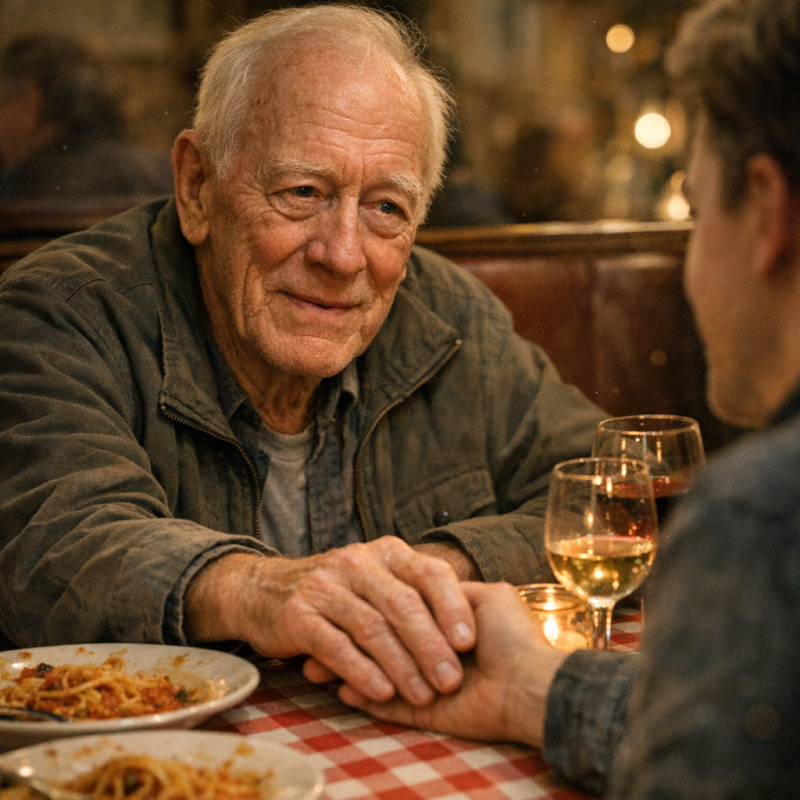 Image by FCT AI
The Last Word
Looking back now, the whole situation feels almost surreal. Susan came into our lives like a storm, disrupted everything, and left just as dramatically—but not in the way she'd planned. I realized Susan had taught us all something valuable: that trying to take advantage of someone's kindness can backfire in ways you never see coming. Dad learned to recognize manipulation. I learned when to fight for someone I love, even when they push back. And Susan? She learned that credit card fraud has consequences, that lawyers cost money she didn't have, that the lifestyle she wanted to maintain required actual resources. The apartment she'd furnished so carefully got emptied by repo companies. The luxury she'd posted about on social media vanished. Dad moved on, lighter and wiser. And in the end, the harpy Dad divorced didn't just lose her sugar daddy—she ended up saddling herself with a mountain of debt she created all on her own, learning the hard way that revenge has a price tag.
 Image by FCT AI