
The Routine Case That Felt Wrong
I've been doing housing mediations for six years, and I can usually tell within the first fifteen minutes how things are going to shake out. When Denise walked into the conference room that Tuesday morning, she had all the hallmarks of a landlord who'd done her homework—clean folder, documented complaints, calm demeanor. Aaron, her tenant, slouched in the chair across from her, arms crossed, jaw set. He started strong, actually. Pushed back on the noise complaints, questioned the timing of the 'unauthorized occupant' violation. I remember thinking this would take at least three sessions. Then something shifted. Denise mentioned something about 'protecting the other residents' and how she 'just wanted everyone to feel safe,' and Aaron's whole posture changed. He went quiet. Started nodding. Within forty minutes, he agreed to vacate within thirty days, waiving his right to contest. I kept asking if he wanted to take a break, review his options, but he just shook his head and reached for the pen. My job is to facilitate agreement, not question it, but something felt off about how quickly he'd folded. As Aaron signed the agreement, his eyes flicked to Denise—and she smiled.
 Image by FCT AI
The File Review
I stayed late that evening, which I almost never do. The case file sat on my desk like an accusation. I told myself I was just being thorough, doing my due diligence for the paperwork, but really I was looking for something to explain the feeling in my gut. The unauthorized occupant was listed as Sophie Chen, girlfriend, moved in approximately four months prior. Standard violation, except Aaron had actually disclosed her on his lease renewal request six weeks ago. Denise had approved it in writing. So why bring it up now as grounds for eviction? I flipped back through the noise complaints. There were five of them, all filed by Denise herself, all from the past three weeks. No other tenants had complained. I read them more carefully this time, looking for the usual stuff—loud music, stomping, parties. But that wasn't what they described. The complaints were vague, mentioning 'disruptive sounds' and 'concerning disturbances.' One specifically noted 'raised voices' at 11 PM. Another mentioned 'shouting' after midnight. The noise complaints weren't about property damage—they were about arguments and shouting late at night.
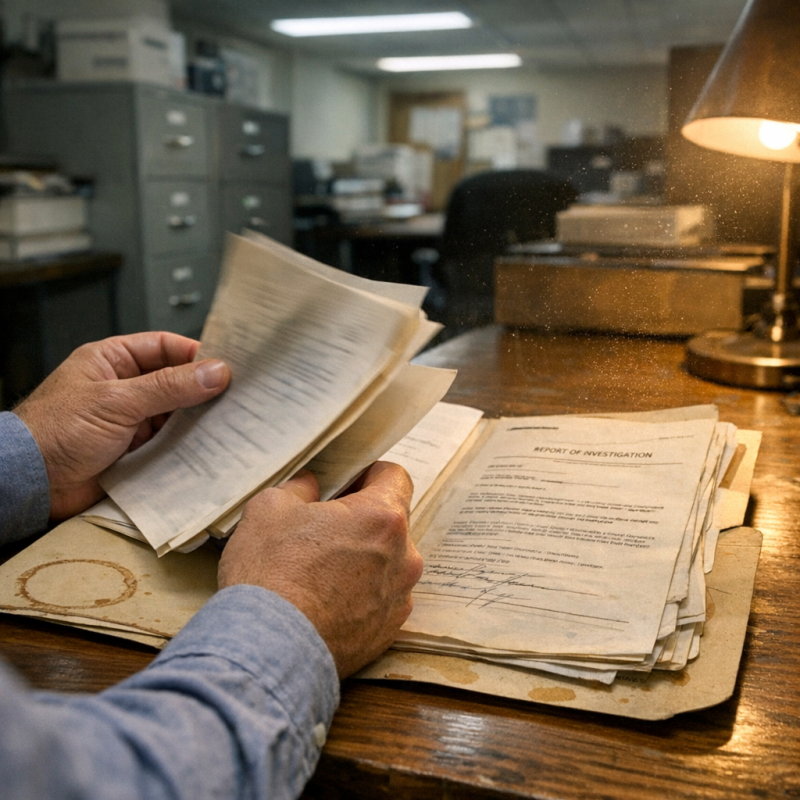 Image by FCT AI
Consulting Marcus
Marcus has been supervising mediators for fifteen years, so I figured if anyone could tell me I was overthinking this, it was him. I caught him between meetings Wednesday afternoon, case file in hand. 'Quick question about the Denise Hartwell case,' I started, trying to sound casual. He barely looked up from his coffee. I walked him through it—the quick capitulation, the approved unauthorized occupant suddenly becoming a violation, the oddly specific noise complaints. He listened with that half-attention supervisors give when they're already mentally in their next meeting. 'Did the tenant sign voluntarily?' he asked. Yes. 'Were proper procedures followed?' Yes. 'Then what's the problem, Maya?' I struggled to articulate it. It just felt wrong, I said. The timeline seemed manipulated. Marcus shrugged. 'Landlords are allowed to change their minds about occupants. Maybe the girlfriend turned out to be problematic.' But Aaron was the one being evicted, I pointed out. 'He agreed to it,' Marcus said, already turning back to his computer. 'We facilitate, we don't judge.' Marcus said the agreement was perfectly legal—and that's what bothered me most.
 Image by FCT AI
The Follow-Up Email
The email arrived Thursday morning, two days after the mediation. Subject line: 'Thank you for your professionalism.' I get these sometimes from satisfied clients, but usually weeks later, after everything's resolved. Denise's message was effusive—praising my 'efficient facilitation' and 'balanced approach,' thanking me for helping her 'navigate a sensitive situation.' She mentioned she'd already recommended our services to other property owners in her network. It was perfectly polite, professionally worded, the kind of feedback that would look great in my file. So why did reading it make my skin crawl? I scrolled back up to check the timestamp. 9:47 AM, Thursday. Aaron had signed the agreement Tuesday afternoon. He had thirty days to vacate, which meant he wouldn't actually be out until mid-November. The property wasn't even empty yet. There'd been no follow-up issues, no confirmation that he was complying with the timeline. Nothing had actually been resolved. But here was Denise, already sending thank-you notes like it was a done deal. She thanked me for helping her 'resolve a difficult situation with minimal disruption'—but Aaron hadn't even moved out yet.
 Image by FCT AI
The Waiting Period
The thirty-day waiting period is standard procedure. Aaron had until November 12th to move out, and unless someone filed a complaint or requested a follow-up, my role was done. I should have moved on to my other cases—I had eleven active files that actually needed attention. Instead, I kept opening Aaron's file. During lunch breaks. Between meetings. Once at 10 PM from my couch while pretending to watch TV. I memorized details that didn't matter: Aaron worked as a graphics designer, had lived in the apartment for eighteen months, paid rent on time every month until September when he was suddenly three days late. Three days. I kept replaying the mediation in my head, freeze-framing on moments. The way Aaron's hand had trembled slightly when he picked up the pen. How he wouldn't meet my eyes during the final review. That weird moment when Denise touched his shoulder and said, 'I know this is hard, but it's for the best,' and he'd flinched. Had he flinched? Or was I inventing that now? My partner asked me one night why I was so distracted, and I couldn't even explain it to them. I told myself I was being paranoid—but I couldn't stop checking the case file.
 Image by FCT AI
The Database Search
Our mediation database isn't sophisticated, but it's searchable. I ran Denise Hartwell's name during a slow Friday afternoon, telling myself I was just curious about whether she'd used our services before. I expected maybe one prior case, two at most. The search returned seven results. Seven cases spanning the past five years, all housing disputes, all involving properties Denise owned. I opened them one by one, my coffee going cold beside my keyboard. Different tenants, different addresses, but the pattern was weirdly consistent. Each case resolved in one or two sessions. Each involved lease violations that seemed technically valid but strangely timed. Three mentioned unauthorized occupants. Two cited noise complaints. One involved 'concerning behavior' that was never quite defined. Every single tenant had agreed to vacate voluntarily. No contested evictions. No lawyers involved. Just quick, clean separations facilitated by mediators like me who'd probably felt relieved to close the cases so efficiently. I sat back in my chair, staring at the screen. Seven cases in five years wasn't necessarily suspicious. Some landlords are just more proactive about using mediation. But still. Seven cases. Seven different tenants. All resolved within two sessions.
 Image by FCT AI
Sophie's Call
The call came through the main office line Monday afternoon. Our receptionist transferred it with a note: 'Sophie Chen, says it's about the Hartwell case.' I almost didn't pick up—I'm not supposed to discuss closed cases with third parties. But Sophie had been mentioned in the file, and technically the case wasn't fully closed until Aaron vacated. I answered professionally, expecting questions about the timeline or move-out procedures. Instead, Sophie's voice was tight, careful. 'I know this is weird,' she started. 'But I need to understand what happened in that mediation. Aaron won't talk about it.' I explained I couldn't discuss specifics without Aaron's consent. She went quiet for a moment. 'Can you just tell me—did he seem okay to you? Like, himself?' The question caught me off-guard. I gave some mediator-speak about how everyone processes conflict differently. 'No, I mean—' She paused, choosing words carefully. 'Did you notice anything wrong? About how he was acting?' My stomach dropped. I thought about Aaron's trembling hand, his sudden capitulation, that look he'd given Denise. She asked me if I noticed anything wrong about Aaron during the session—and I didn't know how to answer.
 Image by FCT AI
The Coffee Shop Meeting
Meeting Sophie was absolutely against protocol, and I knew it even as I suggested the coffee shop three blocks from my office. I told myself I was just gathering information, doing due diligence, but really I needed to understand why her question had rattled me so much. She looked younger than I expected, maybe late twenties, with dark circles under her eyes like she hadn't been sleeping well. We did the awkward small-talk thing for about thirty seconds before she cut to it. 'Aaron's been different since we moved into that apartment,' she said, stirring sugar into her coffee without looking at me. 'How different?' I asked. She struggled to articulate it—the same way I'd struggled with Marcus. Quieter, she said. More withdrawn. He used to be confident, made decisions easily, but lately he second-guessed everything. 'And he's always checking his phone,' she added. 'Like he's waiting for messages. When I ask who from, he just says it's the landlord, property stuff.' I felt something cold settle in my chest. 'How long has this been going on?' 'Since August, maybe? It got worse in September.' Right around when he was three days late on rent. Sophie told me Aaron had been different since they moved in—quieter, more withdrawn, always checking his phone.
 Image by FCT AI
The Lease Terms
Sophie pulled out her phone and started scrolling through photos. 'I took pictures of everything before we signed,' she said, which struck me as either paranoid or smart, I wasn't sure which yet. She found the lease and handed me the phone. I started reading through the standard stuff—rent amount, security deposit, utilities—and then I hit the occupancy clause. It specified Aaron as sole occupant, which was normal enough, but then it continued for another paragraph about visitors. Daytime guests allowed with reasonable notice. Overnight guests required written permission from landlord, to be granted or denied at landlord's sole discretion. Permission renewable monthly. I read it twice. 'Did his lawyer review this?' I asked. Sophie shook her head. 'He said it seemed standard. Was it not?' I'd been doing housing mediation for six years, reviewed hundreds of leases. Landlords sometimes restricted long-term guests to prevent unauthorized occupants, sure. But monthly renewal at sole discretion? That gave Denise complete control over who could even sleep over. It wasn't illegal—nothing in the lease was illegal—but it was absolutely a power play dressed up as property management. No overnight guests without written permission, renewable monthly at landlord's discretion—I'd never seen terms like that before.
 Image by FCT AI

History's most fascinating stories and darkest secrets, delivered to your inbox daily.
The Text Messages
Sophie hesitated, picking at her coffee cup lid. 'There's something else,' she said. 'But Aaron would be furious if he knew I was showing you.' She pulled up text messages between him and Denise. I started scrolling, and my stomach turned. September 4th: 'The bathroom faucet drips slightly.' September 6th: 'Kitchen light bulb needs replacing.' September 9th: 'Noticed paint chipping near window frame.' Every single message came from Denise, not Aaron. Questions about whether he was comfortable, if anything needed attention, reminders about minor lease terms. 'Does he respond to all these?' I asked. 'Most of them. She gets upset if he doesn't reply within a few hours.' I kept scrolling. September 12th: 'Just checking in, wanted to make sure you're settling in okay.' September 14th: 'Reminder that rent is due in two weeks, let me know if you need to discuss payment options.' September 15th: 'Did you get my message yesterday?' The timestamps showed messages at 7 AM, during lunch hours, late evening. I counted them twice to be sure. There were forty-three messages in one week—all from Denise, all about things that didn't seem urgent.
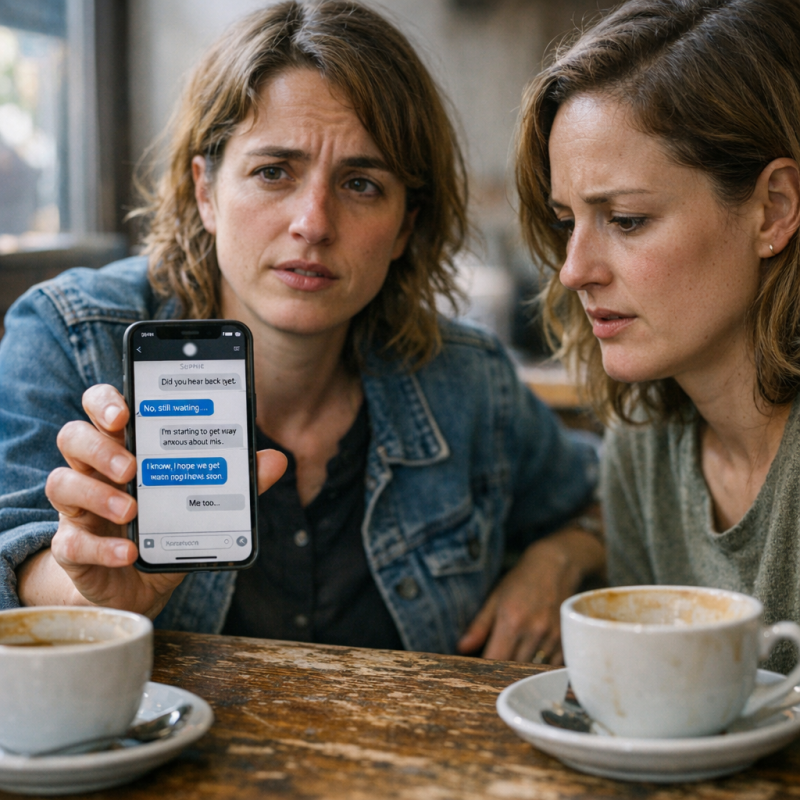 Image by FCT AI
The Professional Boundary
I sat in my car outside the coffee shop for twenty minutes after Sophie left, just staring at my phone. The professional thing to do was call Marcus immediately, tell him I'd met with a tenant's partner, explain my concerns about the lease and the texts. He'd probably be irritated about the protocol breach, but he'd listen. We could review the case together, maybe contact our professional oversight committee for guidance. That was the right move, the by-the-book move. Except I had nothing concrete. Unusual lease terms weren't evidence of anything illegal. Excessive texting could be explained as attentive property management. I'd be bringing Marcus suspicions, feelings, the kind of gut-level unease that doesn't translate well in professional settings. And if I was wrong—if Denise really was just a controlling landlord and Aaron genuinely wanted to move—I'd have compromised my credibility over nothing. But if I was right, if something genuinely predatory was happening and I'd already helped facilitate it through mediation, then I needed to understand the full scope before involving anyone else. I needed proof, not just uncomfortable patterns. The stakes felt paralyzing. If I was wrong, I'd compromise my credibility—but if I was right, I'd already done irreparable harm.
 Image by FCT AI
Elena's Perspective
Elena and I went to law school together before she specialized in housing rights and I went into mediation. We'd stayed friendly, met for drinks every few months, so calling her felt natural enough. I kept it hypothetical at first—'If you had a landlord who used lease terms to control tenant behavior, what would that look like legally?' She didn't hesitate. 'You're talking about coercive control,' she said. 'It's a pattern of behavior that makes someone dependent, isolated, regulated.' I described the lease terms, the excessive communication, Aaron's behavioral changes, all without using names. Elena listened quietly, and I could hear her tapping a pen against her desk. 'Here's the problem,' she finally said. 'Coercive control is real, it's damaging, and in housing contexts it can be devastating. But proving it legally? Nearly impossible. Each individual action looks reasonable on paper. Restrictive lease clause? Landlord's right. Frequent texts? Property management. You need to demonstrate a pattern of behavior intended to dominate and intimidate, and intent is key.' My hope deflated. 'So there's nothing—' 'I didn't say that,' Elena interrupted. 'I said it's hard to prove. Not impossible.' Elena said what I was describing sounded like coercive control—but proving it legally was almost impossible.
 Image by FCT AI
The Previous Tenants
I pulled my case files from the past eighteen months and found four other mediations involving Denise as landlord. All were tenant disputes, all ended with the tenant agreeing to vacate, all felt unnervingly similar now that I was looking for patterns. I noted down the tenant names and searched for contact information. LinkedIn, Facebook, public records—I felt slightly creepy doing it, but I needed to know if Aaron's situation was unique or part of something bigger. The first number I tried was disconnected. The second went to voicemail, and I left a message saying I was following up on a previous mediation case, nothing urgent. The third was also disconnected. The fourth rang six times before going to a full mailbox. The fifth actually answered, but it was a new owner of the phone number who'd never heard of the person I was asking for. I tried two more that evening after work. One went straight to voicemail. The other was disconnected. I sat at my kitchen table staring at my notes, feeling the investigation crumble before it even started. People moved, changed numbers, disappeared from public record all the time. It didn't mean anything suspicious. Three of the phone numbers were disconnected, and two others never called back.
 Image by FCT AI
The One Who Answered
The call came three days later while I was between mediation sessions. Unknown number, which I almost didn't answer, but something made me pick up. 'Is this Maya Chen?' a woman's voice asked. She sounded careful, guarded. I confirmed, and she said, 'You left me a message about a mediation case. I'm Claire Pearson.' My heart rate jumped. I'd almost forgotten which names I'd left messages for, there were so many dead ends. 'Yes, thank you for calling back,' I said, trying to sound calm and professional. 'I'm reviewing some past cases involving a particular landlord, and I wanted to ask if you'd be willing to discuss your experience.' Long silence. I could hear traffic in the background on her end. 'Why?' she finally asked. 'Is someone else having problems?' I chose my words carefully. 'I'm looking into whether there might be a pattern of concerning behavior. Anything you could share would be helpful.' Another silence, longer this time. 'I can't discuss it on the phone,' she said. 'There's too much, and I don't—I need to see who I'm talking to.' She paused. 'But if you want to meet in person, I'll consider it.' Claire said she couldn't discuss it on the phone—but if I wanted to meet in person, she'd consider it.
 Image by FCT AI
Claire's Story, Part One
We met at a Panera forty minutes from my office, neutral territory. Claire was maybe thirty, blonde hair pulled back, wearing scrubs like she'd come straight from a medical job. She ordered coffee and didn't touch it. 'I moved out eight months ago,' she told me, hands wrapped around the cup. 'I don't want any trouble, I don't want my name involved in anything official.' I promised confidentiality, said I was just trying to understand what happened. She looked at me for a long moment, deciding, then started talking. It began with texts, she said. Small maintenance issues, questions about whether she was comfortable, reminders about lease terms. Nothing aggressive, nothing she could point to as wrong. 'But it was constant,' Claire said. 'Every day, sometimes multiple times a day. And then she started showing up.' Unannounced visits, always with some excuse—checking the water heater, inspecting the smoke detectors, dropping off information about neighborhood events. Always within legal notice requirements, technically. 'But it felt like surveillance,' Claire said, her voice dropping. 'Like I couldn't relax in my own home because she might just appear.' I felt sick. The parallels to Aaron were unmistakable. Claire said it began with texts about minor maintenance issues—then escalated to unannounced visits.
 Image by FCT AI
Claire's Story, Part Two
Claire kept talking, and I kept taking mental notes because pulling out my phone felt too formal, too official. After six months, she said, she tried to break the lease early. Denise refused, cited terms about sixty-day notice and penalty fees that would have cost Claire two months' rent. 'So I stayed,' Claire said. 'And it got worse. More texts, more visits, questions about my work schedule, my relationships. She knew too much.' When the lease finally ended, Denise tried to keep the security deposit, claimed damages that didn't exist. Claire was exhausted, ready to walk away, but a friend convinced her to try mediation. 'The mediator seemed nice,' Claire said, and my chest tightened because I knew what was coming. 'But Denise brought all this documentation, made everything sound reasonable. She threatened to sue for damages if I didn't settle. The mediator said compromise was important.' Claire settled for half her deposit back. She just wanted out. 'Did the mediator notice anything wrong?' I asked, though I already knew. 'Did they seem concerned about how Denise was treating you?' Claire looked at me, eyes red. She asked me if the mediator noticed anything wrong—and when I said yes, she started crying.
 Image by FCT AI
The System Failure
After Claire left, I sat at my desk and stared at the mediation guidelines on my wall. They talked about neutrality, facilitation, creating safe spaces for dialogue. But nowhere—nowhere—did they mention what to do when someone weaponizes those principles. When someone shows up with documentation and calm explanations specifically designed to make their victim look unreasonable. I'd been trained to identify power imbalances in labor disputes, in divorce proceedings. But housing? Landlord-tenant situations? We treated those as transactional. Business disputes. I thought about the training modules I'd completed, the certifications I'd earned. We learned to spot coercion during the session—raised voices, threats, intimidation. But what about someone who'd already done the coercing before they walked through the door? Someone who'd spent months breaking down their target so thoroughly that by the time they reached mediation, the victim was just desperate to escape? The system assumed good faith from both parties. It assumed people came to mediation wanting resolution, not domination. And someone like Denise understood exactly how to exploit that assumption. I'd been trained to facilitate agreement—not to question whether someone should be agreeing at all.
 Image by FCT AI
Rachel's Warning
I called Rachel during my lunch break because I needed to talk to someone who understood the professional stakes. She's been mediating for twelve years, longer than anyone else at our agency. We met at the coffee shop across from the office, and I told her everything—Claire, Aaron, the patterns I was seeing. Rachel listened without interrupting, which should have warned me. When I finished, she put down her cup and said, 'Maya, you need to stop.' Not gently. Firmly. She said I was crossing lines that would destroy me professionally. That mediation agreements are binding precisely because mediators don't second-guess them afterward. 'Even if you're right,' she said, 'even if Denise is manipulating people, you can't reopen closed cases. You can't contact former clients. You definitely can't investigate ongoing cases you mediated.' I tried to explain about Aaron, about the move-out date, about Sophie's fear. Rachel cut me off. 'You think you're helping, but you're creating liability. For yourself, for the agency, for the entire mediation framework.' Her expression wasn't unkind, but it was final. Rachel said if I wasn't careful, I'd end up compromising not just this case, but my entire career.
 Image by FCT AI
The Move-Out Date Approaches
Two weeks. That's all Aaron had left before the move-out date in the settlement agreement. I kept thinking about what I could actually do within the bounds of my professional role, and the answer kept coming back: nothing. I couldn't contact him—that would be interfering. I couldn't advise him to break the agreement—that would invalidate my neutrality. I couldn't even recommend he get legal counsel without Denise claiming bias. The settlement was signed. Binding. Final. Every pathway I considered led back to the same wall. Sophie had been texting me updates even though I'd told her I couldn't officially help. Aaron had found a new place, she said. A room in someone's house, month-to-month. It sounded precarious but at least it was away from Denise. Then the texts changed tone. Aaron wasn't responding to her messages as quickly. He'd canceled their dinner plans twice. 'He says he's just stressed about the move,' Sophie wrote. But I could feel her doubt through the screen. When my phone rang at 9 PM on a Thursday, I knew before I answered. Sophie called again—Aaron had stopped answering her calls, and she was scared.
 Image by FCT AI
The Attempted Contact
I spent an entire evening convincing myself that calling Aaron directly was professionally defensible. Just a follow-up, I told myself. Just checking that he understood the timeline, had the resources he needed. Mediators do post-settlement check-ins sometimes, right? The rationalizations got thinner the more I examined them, but I called anyway. It rang four times and went to voicemail. His outgoing message was brief, impersonal. I left a message asking him to call me back, said I wanted to make sure everything was going smoothly with the transition. I didn't mention Sophie. I called again the next day. Another voicemail, this one more direct: 'Aaron, it's Maya Chen from the mediation agency. Please give me a call when you have a chance. I'd like to touch base before your move-out date.' Nothing. On the third day, I left a message that probably crossed every professional boundary I had left: 'Aaron, if you need help, if anything's changed, please reach out. You can talk to me.' I left three voicemails asking him to call me—and then Denise emailed asking why I was contacting her tenant.
 Image by FCT AI
The Formal Complaint
The email came through the agency's formal complaint portal, which meant it was automatically copied to Marcus and to the administrative review board. Denise wrote that she was 'concerned and confused' by my 'repeated attempts to contact Mr. Pearson directly.' She said it felt like harassment, like I was trying to undermine the settlement we'd all agreed to in good faith. Her language was perfect—not angry, just worried. Disappointed, even. She said she'd always respected the mediation process, had recommended our agency to others, but now she was questioning whether mediators were truly neutral. The phrase 'potential bias' appeared three times. She suggested that perhaps I had formed an inappropriate attachment to Aaron's case, that maybe I was too inexperienced to handle complex housing disputes. She attached timestamps of my calls. She'd been tracking them. The complaint ended with a request for the agency to review my conduct and ensure this didn't happen to other clients. It was a masterpiece of reasonable-sounding accusations, each one designed to make me look unhinged and unprofessional. Marcus called me into his office and asked if I'd lost my mind.
 Image by FCT AI
Meeting with David
David handles all legal issues for the agency, and he sat across from Marcus's desk with an expression I can only describe as exhausted patience. He'd already reviewed the complaint, he said. Already consulted with the board. This was serious. 'You contacted a party from a closed case,' David said, ticking off points on his fingers. 'Multiple times. Without the other party's knowledge or consent. After the settlement was finalized.' He asked what I'd been thinking. I tried to explain about the patterns, about Claire, about my growing certainty that Aaron was in danger. David listened, but his face didn't change. 'Maya, your feelings about the case don't matter. What matters is that you violated protocol. You've created liability.' He said Denise could argue that my contact with Aaron constituted interference, that it might have encouraged him to breach the agreement. That she could sue the agency for damages. 'Even if you're right about her,' David said, 'and that's a big if—you've handled this in exactly the wrong way.' Marcus sat silent, letting David do the talking. The message was clear. David said if I didn't stop, they'd have no choice but to suspend me pending investigation.
 Image by FCT AI
Sophie's Desperation
Sophie showed up at the agency reception desk on a Wednesday afternoon without an appointment, and the receptionist called me because Sophie refused to leave until she saw me. I brought her to a conference room, and the second the door closed she started crying. She hadn't seen Aaron in six days. He wouldn't let her come to the apartment, said he was packing and it was too chaotic. When she offered to help, he said Denise preferred he handle it alone. 'But that doesn't make sense,' Sophie said. 'Why would she care if I help him pack?' He'd missed their standing Sunday brunch. Didn't show up to her friend's birthday dinner. Every text from him felt shorter, more distant. 'I asked if something was wrong, if we were okay, and you know what he said?' Sophie looked at me with red, swollen eyes. 'He said everything was fine, he was just tired.' But his voice on the phone didn't sound tired. It sounded flat. Careful. I asked if he'd mentioned where exactly he was moving. Sophie shook her head. She said he told her Denise didn't want any 'complications' before the move-out—and she believed him because he sounded terrified.
 Image by FCT AI
The Risk Calculation
That night I sat at my kitchen table with my laptop and a legal pad and started writing. Every conversation with Aaron during mediation. Every document Denise had provided. The timeline of Claire's case. Sophie's observations. The emails, the voicemails, the complaint. I didn't know what I was going to do with it all. Probably nothing. Probably I'd just end up suspended or fired, with a file full of notes that proved I'd lost my objectivity. But someone needed to have this documented. Someone needed to have written down that Aaron Pearson seemed frightened in that mediation room, that the settlement felt wrong, that his isolation wasn't accidental. If something happened—and God, I hoped nothing would—there needed to be a record that someone had noticed. That someone had tried. I organized it chronologically, added timestamps, kept my language clinical and observational. No accusations, just facts. What was said, what was signed, what I'd witnessed. Rachel would have told me to delete it all. David would have called it evidence of my bias. Marcus would have fired me on the spot. I started writing down every detail, every conversation, every red flag I'd missed—just in case something worse happened.
 Image by FCT AI
The Property Visit
I drove out there at midnight. Stupid, I know. David would have lost his mind if he'd known, and Rachel would have reminded me about professional boundaries and liability and a dozen other reasons this was a terrible idea. But I couldn't sit at home anymore, staring at my notes, wondering what was actually happening in that duplex. I needed to see it. The neighborhood was quiet, tree-lined, the kind of place where you'd expect families and barbecues. I parked two houses down with my lights off. The duplex was well-maintained, freshly painted. Nothing sinister about it from the outside. I sat there for almost an hour, feeling increasingly ridiculous. What was I even looking for? Then I checked the time—1:47 AM—and looked back at the property. That's when I saw it. Denise's silver sedan in the driveway, the one I'd seen her drive to our office. And upstairs, in what had to be Aaron's unit based on the layout he'd described, a light was on. Bright and steady. I saw Denise's car in the driveway—and Aaron's light was on at two in the morning.
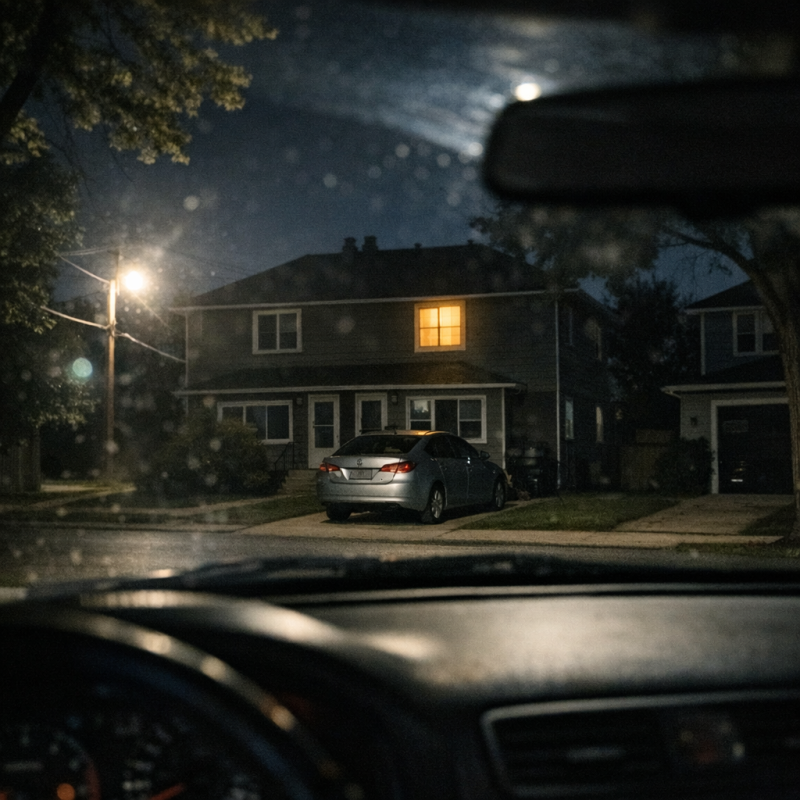 Image by FCT AI
The Neighbor Interview
I came back the next afternoon with a different approach. Knocked on the door of the house directly across the street, wearing my most apologetic smile. Told the woman who answered—mid-fifties, wearing gardening gloves—that I was looking for apartments in the area and wondered what the neighborhood was like. She was friendly, invited me onto her porch. We talked about schools and traffic for a few minutes before I casually mentioned the duplex. 'Oh, Denise's place,' she said. 'Nice enough, though I wouldn't want to live there.' I asked why. She glanced over at the duplex, lowered her voice. 'The young man upstairs—Aaron, I think—there were arguments for months. Late at night, voices raised. Her voice, mostly. His sounded... I don't know, defeated.' My stomach tightened. 'Does it still happen?' I asked. She shook her head. 'Actually, no. It's been quiet lately. Maybe three weeks?' I thanked her and walked back to my car on shaking legs. The neighbor said the arguments stopped about three weeks ago—right after the mediation.
 Image by FCT AI
Elena's Legal Opinion
Elena met me at a coffee shop near the courthouse. I'd texted her that morning asking if she had an hour, and she'd responded immediately. I spread out everything I'd compiled—my notes, the timeline, Sophie's observations, the neighbor's account. She read through it methodically, her expression growing more serious with each page. When she finished, she looked up at me. 'This is a textbook pattern of coercive control,' she said quietly. 'Financial manipulation, isolation from support systems, induced dependency. If this were a domestic relationship, we'd have grounds for protective orders.' My heart lifted for a moment. 'But?' Elena sighed. 'But it's a landlord-tenant dispute. Legally, there's nothing criminal here that we can prove. The settlement was signed voluntarily. The financial arrangement is unusual but not illegal. And the communication pattern...' She shook her head. 'It's concerning, but it's not actionable.' I felt something collapse inside me. 'So there's nothing?' Elena said unless Aaron files a complaint himself, there's nothing anyone can force to happen.
 Image by FCT AI
The Five-Day Countdown
Sophie called me on Tuesday morning, five days before Aaron was supposed to move out. Her voice was tight with worry. 'Maya, I need to tell you something. Aaron hasn't been to work in three days.' I gripped my phone tighter. 'What do you mean?' She explained that his supervisor had called her yesterday—she was still listed as an emergency contact from when they'd been together. Aaron hadn't shown up Monday, hadn't called in, wasn't answering his phone. They were worried about him. I asked if she'd tried contacting him. 'Of course,' Sophie said. 'I've called, I've texted. Nothing. It's like he's just... gone.' My mind raced through possibilities, none of them good. 'Could he be packing? Getting ready for the move?' Sophie's laugh was bitter. 'For three days straight without responding to anyone? Maya, something's wrong. I can feel it.' I told her I'd try to figure something out, but after we hung up, I just sat there. Sophie said his boss called her looking for him—and she had no idea where he'd been for three days.
 Image by FCT AI
The Welfare Check Request
Sophie showed up at my office that afternoon, determined. 'We need to do a wellness check,' she said. 'The police can do that, right?' I was hesitant—wellness checks were for imminent danger, and technically Aaron had just missed work and wasn't returning calls. But Sophie was insistent, and honestly, I was scared too. We went to the station together. The officer who took our report was polite but skeptical. Aaron was an adult, had no history of mental health crises, no threats of self-harm. Still, he said they'd send someone by. Two hours later, Sophie got the callback. The officers had gone to the duplex. Knocked on both doors. Denise had answered downstairs, told them Aaron was fine, just dealing with personal matters and preparing to move. She'd spoken to him that morning. Everything was under control. The officers had asked to speak to Aaron directly, but Denise said he was resting and didn't want to be disturbed. Without evidence of immediate danger, they couldn't force entry. The officer said unless there was evidence of immediate danger, they couldn't force entry—and Denise told them everything was fine.
 Image by FCT AI
The Voicemail
The voicemail came the next morning. I was getting coffee when my phone buzzed. Aaron's number. I nearly dropped my cup rushing to answer, but it went to voicemail before I could swipe. My hands shook as I listened to the message. 'Hi Maya, this is Aaron Pearson. I wanted to thank you for all your help with the mediation process. Everything is being handled now, and I'm... I'm in good hands. Denise has been very supportive during this transition. I appreciate your concern, but there's no need to worry. Everything's fine.' The words were right. Polite, reassuring, appropriate. But something about his voice made my skin crawl. Too even. Too measured. Like he was reading from a script, concentrating hard on getting each word exactly right. And then I heard it—in the background, so faint I almost missed it. A small sound. A door closing, maybe. Or someone shifting their weight. I played it again. And again. His voice was flat, rehearsed—and I could hear someone else in the room with him.
 Image by FCT AI
Rachel's Revelation
Rachel appeared in my office doorway late Friday afternoon. She glanced down the hallway before stepping inside and closing the door. 'I did something I probably shouldn't have,' she said quietly. I looked up from my computer. She'd been distant with me since our last conversation, careful to maintain professional boundaries. 'I looked into Denise Crawford's litigation history,' Rachel continued. 'Across multiple counties. Used some database access I have through the court system.' My pulse quickened. 'And?' Rachel's expression was grim. 'She's been involved in landlord-tenant disputes in three different counties over the past five years. Different properties, different tenants, but similar patterns. Cases that resolved quickly, often within weeks. Always settlements, never trials.' I started to ask questions, but Rachel held up her hand. 'I can't officially share this information. It would violate about six different protocols, and I could lose my access.' My heart sank. Then she turned to leave, pausing at the door. 'But I'm leaving early today,' she said. Rachel said she couldn't officially share what she found—but she left a folder on my desk before she left for the day.
 Image by FCT AI
The Folder
I waited until the office was nearly empty before opening the folder. Inside were printouts of case summaries—Rachel had pulled them from court databases across three counties. I spread them across my desk and started reading. Denise Crawford appeared as plaintiff in nine separate cases over five years. Different properties, different jurisdictions, but the pattern was unmistakable. Each case involved tenant disputes—damage claims, lease violations, unpaid rent. Each resolved within four to eight weeks. Each ended with settlements favorable to Denise. But it was the defendant list that made my blood run cold. Every single tenant was male. Every single one was in their twenties or early thirties. Every single case ended with the tenant forfeiting their security deposit and paying additional fees—amounts ranging from two thousand to eight thousand dollars. I pulled up a calculator and did the math. Even conservatively, Denise had collected over fifty thousand dollars from these settlements alone. Nine cases, nine young men, nine rapid resolutions. I grabbed my pen and started making notes, my hand shaking. Every single case involved a young male tenant, and every single one ended with the tenant forfeiting their deposit and paying additional fees.
 Image by FCT AI
The Anonymous Tip
I created a burner email account at 2 a.m. The subject line was simple: 'Pattern of tenant exploitation—documented evidence attached.' I compressed everything into a single PDF—Rachel's case summaries, the settlement patterns, the demographic data, my own notes showing the progression. The Fair Housing Alliance had a confidential tip line. I'd seen their posters in rental offices across the city. I hit send before I could second-guess myself, then sat back and stared at the ceiling. What if they ignored it? What if they already knew and didn't care? I checked my email obsessively for the rest of the night, refreshing every few minutes. At 6:47 a.m., a response appeared. The investigator's name was Patricia Chen. She thanked me for the documentation. Then she wrote something that made my hands go numb: 'We've been tracking similar patterns in this region for eighteen months but have been unable to secure victim cooperation for formal investigations. Most targets refuse to speak on record. Your documentation provides the first comprehensive overview we've seen.' They'd been watching this whole time, and no one would talk.
 Image by FCT AI
The Investigator
Patricia called me two hours later. I almost didn't answer—the number showed as restricted. But something made me pick up. She was direct, professional, and clearly exhausted. She'd been investigating landlord abuse cases for six years. She asked if we could meet in person, somewhere private. I suggested a coffee shop three neighborhoods away from my office. When she arrived, she carried a leather portfolio that looked like it weighed twenty pounds. She ordered black coffee, sat across from me, and pulled out a thick binder. 'The pattern you identified isn't random,' she said. 'We've documented it in forty-two cases across this metro area alone. Every victim is male, under thirty-five, recently relocated, and has minimal local support systems.' She flipped through pages of printed case files. 'The targeting is deliberate. They're chosen specifically because they're isolated, because they're unlikely to seek help, because they're statistically less likely to report abuse by a female authority figure.' My stomach dropped. She said Denise wasn't just exploiting tenants—she was selecting them specifically for vulnerability.
 Image by FCT AI
The Three-Day Countdown
Sophie called me at noon, her voice shaking. 'I got a text from Aaron's phone,' she said. 'He told me to stop contacting him.' I asked her to read it exactly. She did: 'Sophie, I need you to respect my decision. Stop reaching out. This is for your own good. I'm handling my situation and don't need interference.' The phrasing was wrong. Too formal. Too controlled. Aaron texted in fragments, used abbreviations, never capitalized properly. This sounded like someone trying to imitate him without understanding how he actually communicated. 'That's not him,' Sophie said. 'He'd never write like that. He doesn't use full sentences in texts. And he's never once told me something is for my own good—that's not how he talks.' We were three days from the move-out deadline. Three days until Aaron disappeared into whatever Denise had planned. And now we couldn't even reach him. Someone was controlling his phone. Someone was cutting off every connection he had. Sophie said it didn't sound like him—he'd never use phrases like 'for your own good.'
 Image by FCT AI
The Stakeout
We parked half a block away with a clear view of Aaron's unit. Sophie brought coffee and a phone charger. I brought binoculars and a notebook. It felt absurd, like we were playing detective in some badly written thriller. But we didn't know what else to do. The hours dragged. Lights went on and off in Aaron's windows. We saw shadows moving but couldn't make out details. Sophie kept checking her phone, hoping he'd respond. Nothing. Around midnight, I thought about giving up. Then at 4 a.m., headlights swept across the parking lot. Denise's silver sedan pulled into a space near the building. She got out carrying reusable grocery bags—the expensive kind from Whole Foods. She walked straight to Aaron's door. No knocking. No waiting. She pulled out a key, unlocked the door, and walked inside like she owned the place. Which, technically, she did. But landlords don't let themselves into occupied units at 4 a.m. with groceries. Sophie grabbed my arm so hard it hurt. At 4 a.m., we saw Denise arrive with grocery bags—and she used her own key to enter Aaron's unit.
 Image by FCT AI
The Decision to Document
We started documenting everything. Sophie had her phone camera. I had mine. We took photos with timestamps. Every time Denise's car appeared, we logged it. Every time she entered the unit, we noted the duration. It felt invasive and necessary in equal measure. We were watching someone's life get controlled in real time. The visits kept coming. 7:15 a.m., she arrived with a briefcase. 9:40 a.m., she returned with dry cleaning. 2:30 p.m., she was back again with what looked like takeout containers. None of it made sense for a landlord preparing a unit for turnover. This was something else entirely. We took shifts sleeping in the car. Sophie stayed awake from midnight to six. I took six to noon. By the second day, we had a timeline that made my skin crawl. Normal landlords do inspections, maybe coordinate repairs. They don't visit seven times in eighteen hours. They don't arrive before dawn. They don't use their key like it's their own home. We counted seven visits in eighteen hours—none of them during normal business hours.
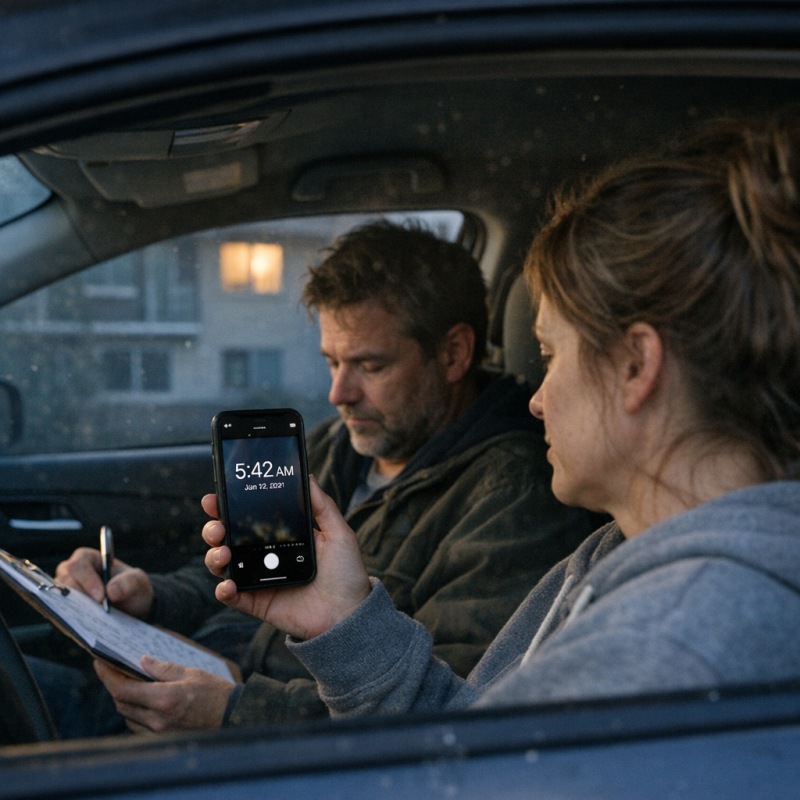 Image by FCT AI
Marcus Confronts Maya
Marcus's email arrived at 8:00 a.m.: 'My office. Now.' I knew before I walked in. His face was stone. He didn't offer me a seat. 'Denise Crawford has filed a second formal complaint,' he said. 'She's alleging harassment, professional misconduct, and breach of mediator neutrality. She's threatening legal action against the agency if we don't take immediate disciplinary action.' I tried to explain about the pattern, the case files, the advocacy organization. He held up his hand. 'Stop. I don't want to hear it. You were explicitly told to maintain professional boundaries. You were warned after the first complaint. Whatever you think you've discovered doesn't justify what you've done.' I could feel everything slipping away. 'Marcus, she's systematically exploiting vulnerable tenants. I have documentation—' He cut me off again. 'You've compromised your position and this agency's reputation. I have no choice.' He slid a folder across his desk. Official letterhead. Suspension notice. Effective immediately. Marcus said I was suspended immediately, pending a full ethics investigation.
 Image by FCT AI
The Two-Day Countdown
I had nothing left to lose. My professional reputation was already destroyed. My job was suspended. My credibility was in question. But Aaron was running out of time. So I made a decision that probably looked insane from the outside: I was going directly to Denise. No mediation protocols. No professional distance. Just me and the truth I'd uncovered. I drove to the property in the middle of the afternoon. Her car was in its usual spot. I walked up to her unit—not Aaron's, but hers—and knocked. My heart was pounding so hard I could feel it in my throat. I didn't have a plan. I didn't have a script. I just knew I needed to look her in the eye and tell her I knew what she was doing. The door opened. Denise stood there in casual clothes, hair pulled back, reading glasses hanging from a chain around her neck. She looked like someone's aunt. Like a book club member. Like a normal person. I drove to the property and knocked on Denise's door—and when she answered, she was smiling.
 Image by FCT AI
The Confrontation
I didn't ease into it. 'I know what you're doing,' I said. 'The pattern of cases. The targeting. The isolation. The coercive control. All of it.' Denise's smile didn't falter. She stepped aside and gestured for me to come in. Her condo was immaculate—leather furniture, abstract art, everything perfectly arranged. She sat down and folded her hands like we were having tea. 'Maya, everything I do is completely legal,' she said calmly. 'I screen my tenants carefully. I enforce my lease terms. I protect my property investments. When tenants violate agreements, I pursue remedies available under state law. That's not coercion—that's property management.' I brought up the visits, the frequency, the access. She shrugged. 'Landlords have right of entry for maintenance and inspections. It's in every standard lease.' I mentioned the settlements, the pattern. 'Settlements are voluntary,' she said. 'No one forces anyone to sign.' Her composure was terrifying. She wasn't defensive. She wasn't worried. She said the system protects property owners, not tenants who violate leases—and mediators who understand that keep their jobs.
 Image by FCT AI
The One-Day Countdown
I spent that entire day on the phone. I called tenant advocacy groups, legal aid clinics, domestic violence hotlines—anyone who might understand what was happening to Aaron. I explained the pattern, the isolation, the control. I sent emails with timelines attached. I left voicemails that probably sounded unhinged. A housing advocate in Portland listened patiently and then asked if Aaron had filed a complaint. No, I said. Had he asked for help? No. Was he in immediate physical danger? I didn't think so. She was sympathetic but clear—without his consent, without him initiating contact, they couldn't intervene. I tried a civil rights attorney next. Same response. I contacted the state housing authority. They said landlord-tenant disputes required the tenant to file. I even called a crisis intervention service, thinking maybe they could do a welfare check. They asked if he'd expressed suicidal intent. I said no, but he was being systematically broken down. They said that wasn't grounds for involuntary intervention. By evening, my throat hurt from talking and my hands were shaking from frustration. Everyone said the same thing: without Aaron filing a complaint himself, their hands were tied.
 Image by FCT AI
Sophie's Break-In Attempt
Sophie called me at ten that night. 'I'm going to check on him,' she said. 'Through the back window. The one that doesn't lock properly.' I told her that was breaking and entering. She said she didn't care. I asked what she thought she'd find. She said she didn't know, but sitting around doing nothing was getting to her. I heard myself say I'd come with her. We drove to Aaron's building in silence, parked a block away, and walked through the alley behind his unit. The window was on the ground floor, partially obscured by overgrown bushes. Sophie had a screwdriver. Her hands were steadier than mine. She worked the window frame quietly, and I kept watch, my heart hammering so hard I thought someone would hear it. The window slid open. Sophie was halfway through when we both froze. Aaron's voice came from inside, quiet and careful. 'Is this everything?' he asked. Then Denise's voice, calm and instructional: 'Check the list I gave you. Make sure nothing's left behind.' We made it to the window—and then we heard Aaron's voice inside, asking Denise if he'd packed everything correctly.
 Image by FCT AI
The Journalist
Two days later, I got an email from someone named Rachel Kimura with the subject line 'Re: Denise Hartwell inquiry.' She was a freelance journalist who'd covered housing issues for years, and she'd received my anonymous tip through a source submission form. She wanted to talk. We met at a coffee shop downtown, and I brought everything—my notes, the settlement patterns, the lease terms, the timeline. Rachel took photos of the documents with her phone and asked careful questions. She said she'd been hearing whispers about problematic landlords using mediation to avoid scrutiny, but nothing this systematic. She thought it could be a significant piece, maybe even picked up by a national outlet. I felt hope for the first time in days. Then she asked the question I'd been dreading: 'Which of the former tenants would be willing to go on record?' I'd already tried reaching out to three of them. One never responded. One told me to leave him alone. One said he'd signed an NDA as part of his settlement and couldn't talk. Rachel nodded slowly, like she'd expected that. She said she needed at least one victim willing to go on record—and none of Denise's former tenants would talk.
 Image by FCT AI
Move-Out Day
Sophie and I stood across the street the morning Aaron moved out. It was a cold Saturday, gray sky, the kind of weather that makes everything feel worse. The moving truck arrived at nine. Denise was already there, standing on the sidewalk with a clipboard, wearing a dark coat and boots. Aaron came out carrying a box. Then another. Then another. He moved mechanically, like someone going through motions they'd rehearsed. Denise checked items off her list each time he passed her. She didn't help. She just watched and documented. I wanted to run over there, to shout his name, to shake him until he remembered he didn't have to do this. Sophie's hand found mine and squeezed hard. 'He can't even see us,' she whispered. But that wasn't true. At one point, Aaron paused near the truck and glanced in our direction. For just a second, our eyes met across the street. I waited for recognition, for some flicker of the person I'd known. Nothing. Just empty compliance. He looked smaller somehow, diminished—and when he glanced in our direction, his eyes were empty.
 Image by FCT AI
The New Address
I followed the moving truck. I'm not proud of it, but I needed to know where Aaron was going. I stayed three cars back, my hands tight on the wheel, my chest aching with something between hope and dread. Maybe he'd found a new place on his own. Maybe this was him finally getting free. The truck drove for twenty minutes, heading toward the east side. It pulled up to a small duplex on a quiet street—older building, chain-link fence, overgrown yard. I parked down the block and watched Aaron and the movers unload. Then I pulled up the property records on my phone, fingers shaking as I typed in the address. The owner's name appeared on the screen, and my stomach dropped. Hartwell Property Management LLC. The same entity that owned his previous apartment. I checked the adjacent unit. Same owner. I checked the building next door. Same owner. This entire block was hers. Aaron wasn't moving to freedom or even neutral ground. He wasn't leaving her control—he was just being transferred to a different cage.
 Image by FCT AI
The Lease Terms, Part Two
Public records requests are slow, but sometimes you get lucky. I submitted one for any lease agreements filed with the city for Aaron's new address, citing a research project on tenant protections. Three days later, I received a scanned PDF. The new lease was thirty-two pages long. I read it in my car outside the records office, my hands shaking worse with each page. Everything from the previous lease was there—the behavior clauses, the inspection rights, the documentation requirements. But this version went further. Weekly check-in meetings, mandatory and scheduled. Itemized expense reports due monthly, covering all purchases over twenty dollars. A provision requiring Aaron to notify Denise of any guests at least forty-eight hours in advance. And the entry clause—Denise could access the property at any time, for any reason, without advance notice. Not for emergencies. Not for repairs. Just because the lease said she could. I sat there staring at the document until the words blurred. This wasn't a tenancy agreement. This lease required weekly check-ins, itemized expense reports, and gave Denise the right to enter without notice.
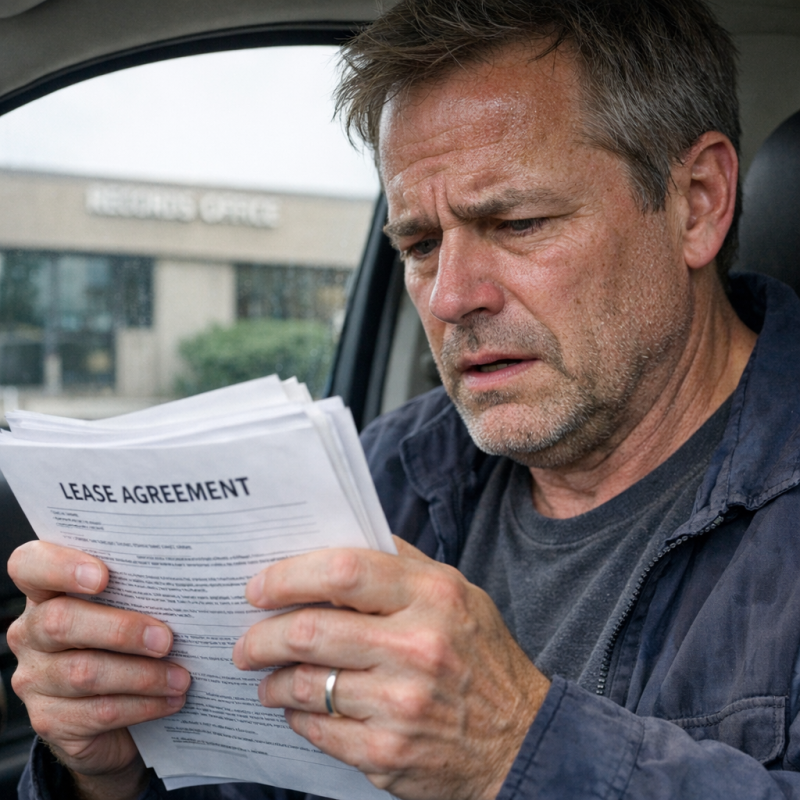 Image by FCT AI
Elena's Warning
Elena called me on a Tuesday afternoon. 'I found something,' she said, her voice tense. 'About Denise. Her background.' We met at a park near her office, and she handed me a folder. Inside were printouts—employment records, professional licenses, archived articles. Before Denise became a property manager, she'd worked in behavioral counseling. Specifically, she'd been a therapist specializing in cognitive behavioral modification for court-ordered clients. People with substance abuse issues, anger management problems, probation requirements. She'd run a private practice for eight years before transitioning into real estate. Elena had also found a discontinued blog Denise had written early in her counseling career. The posts discussed compliance techniques, reinforcement schedules, isolation as a behavioral tool. Clinical language, all of it perfectly legal in a therapeutic context. 'Look at the dates,' Elena said, pointing. 'She closed her practice the same month she bought her first rental property.' My mouth went dry. This wasn't accidental. This wasn't just a controlling personality. Elena said Denise knew exactly how to break someone down and rebuild them into compliance—and she'd turned it into a business model.
 Image by FCT AI
The Pattern Revealed
I sat at my kitchen table that night with everything spread out in front of me—the leases, the settlement patterns, the case notes, Denise's background, the property records. And suddenly, I could see the entire structure. Denise wasn't just exploiting tenants. She was systematically targeting vulnerable men—people in transition, people without strong support networks, people who'd be unlikely to fight back. She used the initial lease to establish legal control. She used inspections and violations to isolate them and create dependence. She used mediation to formalize her authority and make it all look voluntary. Then she extracted settlements that left them financially drained and legally silenced. And when she was done with one property, she moved them to another she owned, resetting the cycle with even stricter terms. Every tool she used was legal. Every document was properly filed. Every process followed procedure. She'd taken therapeutic techniques designed to help people and weaponized them into a system of control—and she'd hidden it all inside the housing system where no one was looking. She wasn't just a bad landlord—she was a predator who'd weaponized the entire housing system, and I'd been her unwitting accomplice.
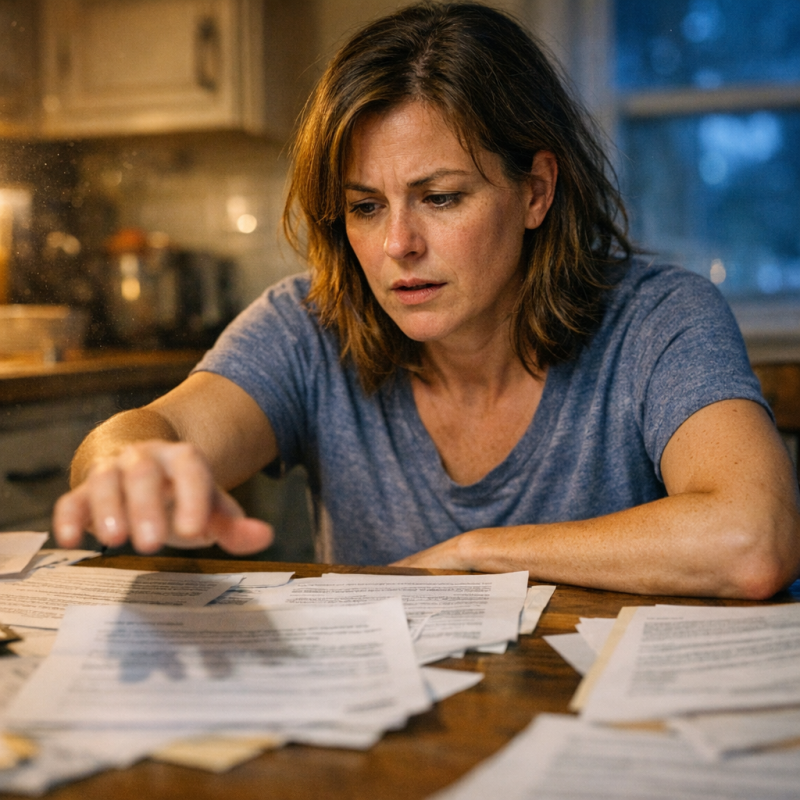 Image by FCT AI
The Other Victims
I reached out to the previous tenants again, but this time I changed my approach completely. Instead of asking about lease violations or settlement terms, I asked about isolation. About relationship changes. About their support networks before and after they met Denise. About decisions that felt like their own at the time but didn't make sense in hindsight. And suddenly, people started talking. Marcus told me how Denise had convinced him his family was 'toxic' and helped him cut contact. James described how she'd become his emergency contact, his reference, his primary relationship. David explained how she'd offered him career advice that somehow always led back to limiting his social circle. Each conversation made my stomach tighter. They all described the same inspection rituals. The same escalating violations. The same therapeutic language used to frame control as care. They all remembered feeling grateful to her even as their lives got smaller. Four of them agreed to talk on record—and every single story followed the same script Denise had used on Aaron.
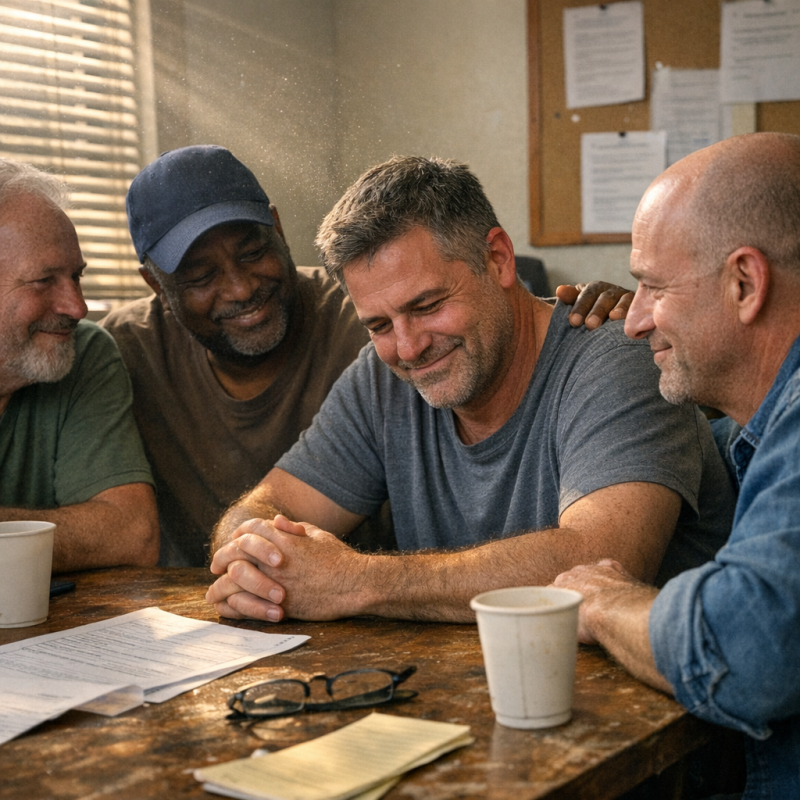 Image by FCT AI
Building the Case
Elena and I met with the housing journalist at a coffee shop downtown, spreading everything across two tables we'd pushed together. Lease documents. Settlement agreements. Property records showing transfers between Denise's LLCs. Timeline spreadsheets tracking the progression from initial contact to complete control. The journalist—Michael—had been researching housing fraud for years, but even he looked shaken as the pattern emerged. Elena walked him through the legal architecture: how each piece was technically legitimate but the whole structure constituted systematic coercive control. I provided the mediation records, showing how Denise had weaponized therapeutic frameworks. Michael contributed public records that revealed she'd been doing this since at least 2016, always moving victims between properties before anyone noticed the pattern. We worked for three days straight, building a case that documented everything. The manipulation tactics. The financial extraction. The psychological isolation. The legal entrapment. We had bank records, witness statements, expert analysis. We had everything except the one thing that mattered: a current victim willing to testify.
 Image by FCT AI
The Breaking Point
Sophie called me at eleven on a Thursday night. I almost didn't answer because I was finally sleeping for the first time in days, but something made me pick up. She was crying so hard I could barely understand her at first. 'It's Aaron,' she managed to say. 'He contacted me. Maya, he needs help.' My heart started pounding. She said he'd messaged her through an old email account, not his phone. Said he couldn't do this anymore. Said he needed to see someone who understood what was happening to him. Sophie had been gently staying in touch despite everything, sending occasional messages that didn't demand responses, just letting him know she was there. And finally, he'd reached out. 'Did he say what changed?' I asked. 'He said Denise is escalating. Something about a new contract he doesn't want to sign.' Sophie's voice steadied slightly. 'He wants to see you, Maya. He said you're the only person who might understand the whole picture.' She gave me his new address and said he wanted to see me—but we had to come before Denise's next check-in.
 Image by FCT AI
The Rescue Attempt
Sophie and I arrived at Aaron's new apartment twenty minutes before the window he'd given us. It was in a different part of town, another property I later confirmed belonged to one of Denise's LLCs. He answered the door looking thinner, older somehow, but physically okay. That initial relief lasted about five minutes. The apartment was nearly empty—just a mattress, a folding table, one chair. He apologized for the lack of furniture like he was embarrassed rather than trapped. We sat on the floor, and he started talking in this flat, exhausted voice about how the settlement had worked initially. How Denise had 'helped' him find this new place. How she'd connected him with a job opportunity when his savings ran out. 'I thought I was rebuilding,' he said quietly. 'I thought she was giving me a fresh start.' But the job came with mandatory direct deposit to an account she'd helped him open. With non-compete clauses that restricted his entire industry. With probationary terms that lasted indefinitely. He told us he couldn't leave because he'd signed a new employment contract—with a company Denise owned.
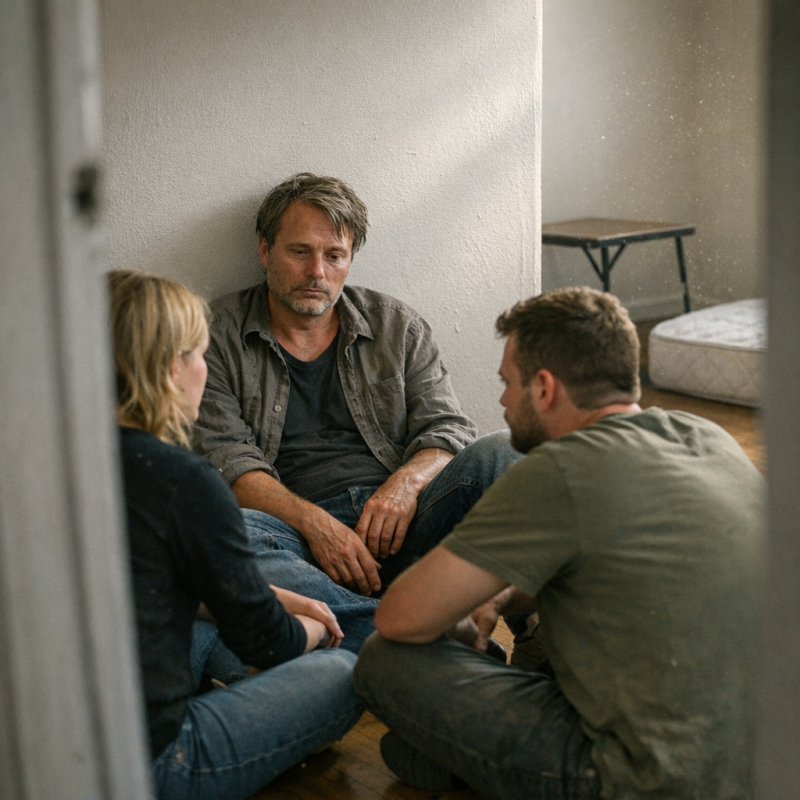 Image by FCT AI
Elena's Legal Strategy
I brought Aaron to Elena's office the next morning. She cleared her schedule and spent four hours walking us through the legal options. She explained that what Denise had done constituted criminal coercive control in our state—a relatively new statute that applied to non-intimate partner relationships. The employment contract could be challenged as unconscionable and potentially fraudulent. The settlement agreement could be voided due to duress. Civil suits could target the pattern of abuse across multiple victims. She laid out a pathway that actually existed, that could actually work. But then came the hard part. 'Aaron,' Elena said gently, 'I need you to understand what this process looks like. Depositions where her attorneys will question everything about your life. Hearings where you'll have to explain why you signed documents you now claim were coercive. Possibly a trial where all of this becomes public record.' She showed him timelines: months, maybe years. She explained how Denise would certainly fight back. How she'd use the legal system itself as a weapon. Elena said they had enough evidence—but Aaron would have to relive everything in depositions, hearings, and possibly trial.
 Image by FCT AI
Aaron's Decision
Aaron asked for the night to think about it. I offered to stay with him, but he said he needed to be alone to decide. Sophie and I waited at a diner nearby, barely touching our coffee, just sitting there in this awful limbo. He called the next morning at eight. His voice was different—still tired, but something had shifted. 'I'll do it,' he said. 'I'll testify.' We met him at Elena's office an hour later, and he explained his decision in a way that absolutely broke my heart. 'I've been thinking about the next person,' he told us. 'The next guy who seems a little isolated, a little vulnerable, a little too grateful when someone offers help. Denise is already looking—she's always looking. And if I don't stop her, she'll do this to him exactly like she did to me.' He signed the initial paperwork with hands that shook slightly. Authorized Elena to file on his behalf. Agreed to the depositions, the documentation, all of it. He said he'd lost everything already—the least he could do was make sure she lost something too.
 Image by FCT AI
Denise's Counterattack
Denise found out within forty-eight hours. I still don't know how—whether she had some alert on Aaron's name in court systems or if she just sensed the shift in control. But her response was immediate and overwhelming. She filed lawsuits against Aaron for breach of the employment contract, claiming he'd violated non-compete clauses. For property damage to both apartments, with fabricated inspection reports. For defamation, citing his cooperation with our investigation as proof of malicious intent. Each lawsuit was filed in a different jurisdiction: housing court, civil court, employment arbitration. Each one demanded immediate responses with tight deadlines. Each one required separate legal representation. Elena's face went pale when she saw the filings. 'This is SLAPP suit tactics,' she said. 'Strategic lawsuits against public participation. She's trying to bury him in legal costs and procedural complexity before we can even get our case heard.' Aaron sat there reading through the complaints, and I watched something in him start to crack. She filed seven separate lawsuits in three different jurisdictions—and she'd done it all in forty-eight hours.
 Image by FCT AI
The Public Exposure
Michael published his piece on a Tuesday morning. I'd seen the draft, but seeing it live—with Aaron's story, the pattern analysis, the evidence we'd compiled—hit differently. The headline read: 'How One Landlord Weaponized Housing Law to Create a System of Control.' It went viral within hours. My phone started ringing before noon. A victim I'd never contacted reached out through the mediator directory. Then another. Then three more. Elena called me around two, and I could hear the shock in her voice. 'Maya, I've gotten eight calls today. Eight different people who say they rented from Denise or one of her properties. They all describe the same thing.' By the end of the week, support groups were forming online. People were comparing notes, sharing documents, recognizing each other's experiences. The isolation Denise had so carefully constructed was breaking apart as victims realized they weren't alone. Some had been trapped for years. Some had gotten out but never understood what had happened to them until they read Michael's article. Within a week, twelve more people contacted Elena—and they all had the same story.
 Image by FCT AI
The Investigation Begins
The state housing authority called me first—a formal request for all documentation related to Denise's cases. Then the attorney general's office. Then someone from a fraud investigation unit I didn't even know existed. Elena and I spent three days in conference rooms, walking investigators through the patterns we'd identified. They had subpoenaed Denise's business records, and what they found was staggering. She didn't just own the properties I knew about. She had LLCs within LLCs, property management companies that cross-referenced other companies, rental agreements structured through multiple entities. The lead investigator—a woman named Patricia who'd been working housing fraud for fifteen years—told us she'd never seen anything this sophisticated. 'Most slumlords are just greedy and lazy,' she said. 'This is different. This is strategic.' They were tracking financial records, interviewing former tenants, examining lease structures across her entire portfolio. I felt this weird mix of vindication and horror as the scope became clear. Patricia called me two weeks later with preliminary findings. The investigator said they found forty-three properties across five states—and preliminary evidence suggested more than sixty victims.
 Image by FCT AI
The Long Process
The state housing commission invited me to testify about gaps in the mediation system six weeks after the investigation launched. I sat at a table facing twelve commissioners, most of whom looked like they'd rather be anywhere else. I explained how someone with legal knowledge and resources could weaponize neutrality—how the system assumed good faith from both parties, making it vulnerable to sophisticated manipulation. I talked about power imbalances that mediators aren't trained to recognize, about how 'voluntary agreement' becomes meaningless when one party controls all the information. A few commissioners asked good questions. One guy kept checking his phone. Another woman took notes the entire time, nodding occasionally. I submitted written recommendations: mandatory training on coercive control, protocols for identifying patterns across cases, safeguards when one party has legal representation and the other doesn't. I tried not to think about how many victims could have been protected if these safeguards had existed when I first met Aaron. The hearing lasted ninety minutes. They thanked me for my testimony and said they'd consider procedural reforms—but I knew how slowly systems change.
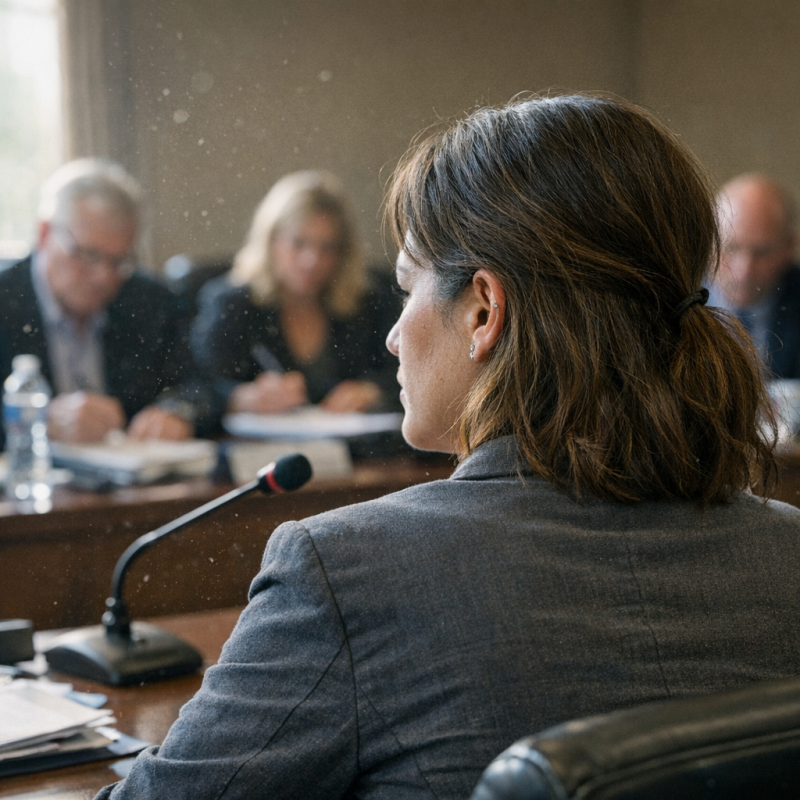 Image by FCT AI
Aaron's Recovery
Sophie texted me in March asking if I wanted to meet for coffee. She and Aaron were living in a small apartment in a different part of the city—nothing fancy, but theirs, with a landlord who actually fixed things when they broke. Aaron looked different. Thinner still, but less haunted. He was working part-time at a bookstore and seeing a therapist who specialized in trauma. 'I'm testifying at the hearing next month,' he told me. 'They need victim statements for the formal charges.' Sophie held his hand while he talked about it. He'd been contacted by three other former tenants who wanted to compare notes, to support each other through the legal process. 'It helps,' he said. 'Knowing it wasn't just me. That I wasn't crazy or weak or stupid.' I asked how he was really doing, and he was quiet for a moment. 'Some days are okay. Some days I see someone who looks like her and I panic. I'm learning, though.' He paused, staring into his coffee. Aaron said he still had nightmares about the lease signing—but he was learning to recognize when someone was trying to control him.
 Image by FCT AI
The New Case
I left the mediation agency in April and started working for the housing advocacy organization that had supported Aaron. My first case file arrived on a Tuesday morning—a tenant dispute that had been flagged for potential power imbalance. The landlord was offering a 'generous settlement' to resolve multiple code violations without inspection. The tenant was a recent immigrant with limited English, no legal representation, and a lease that included unusual clauses about dispute resolution. I sat at my desk reading through the intake form, and that familiar cold feeling crept up my spine. Different names, different property, but the same careful construction. The same strategic vulnerability. Maybe I was seeing patterns where none existed. Maybe this was just a standard bad landlord case. But I'd learned to trust that cold feeling, to look deeper when something felt off. I pulled up property records, cross-referenced the LLC, started mapping connections. This time I knew what to look for. This time I wouldn't be neutral. I read the intake form twice, looking for the red flags I'd missed before—because now I knew what to look for, and I'd never let myself be used like that again.
 Image by FCT AI