
The Moment Everything Changed
I'd taken the first aid course as an elective because it seemed like an easy A, honestly. Never thought I'd actually use any of it. But there I was in Mr. Hendricks' history class, half-listening to him drone on about the Treaty of Versailles, when Emily started making these weird choking sounds two rows over. At first, everyone kind of laughed—you know how high school is, everything's a potential joke until it isn't. But her face turned this awful grayish color, and she was clawing at her throat, and I just reacted. I got behind her, made the fist like they taught us, found the spot just above her navel. The first thrust didn't work and my heart was pounding so hard I thought I might pass out myself. Second attempt—this piece of hard candy shot out across the room and Emily gasped, actually gasped for air. Nurse Patterson came running, checked her over, told me I'd done everything perfectly. Mr. Hendricks patted my shoulder. The whole class was staring at me like I'd just performed surgery. By the next morning, the whole school was calling me a hero—but Emily's parents had a very different word in mind.
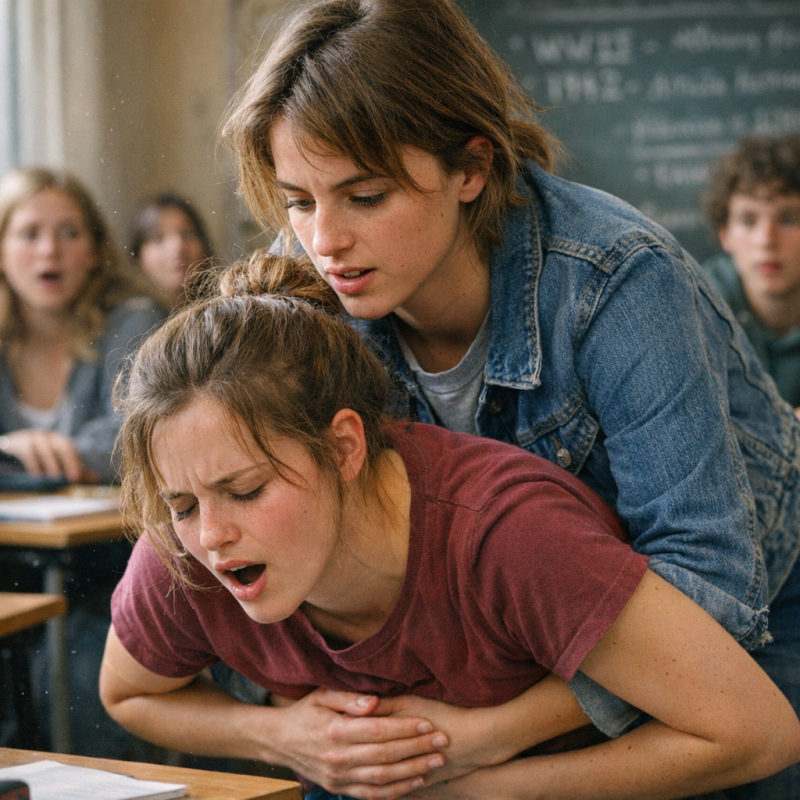 Image by FCT AI
Instant Fame
The weirdest part about saving someone's life? People treat you differently immediately, like you've unlocked some special status. Kids I'd never talked to were high-fiving me in the hallway. Mrs. Palmer let me skip the pop quiz in English. Jake wouldn't shut up about it at lunch, kept retelling the story to anyone within earshot, adding dramatic details that definitely hadn't happened. 'And Alex just swooped in like a superhero,' he kept saying. I mostly felt embarrassed, to be honest. Emily found me by my locker between third and fourth period, gave me this tight hug, and thanked me in front of like fifteen people. Her eyes were still a little red. 'You saved my life,' she said, and everyone around us went quiet. I mumbled something about just remembering the training. Laura from my math class started calling me 'the Heimlich hero,' which was absolutely going to stick whether I liked it or not. The attention made my skin crawl, but I figured it would blow over in a few days. Then the principal's secretary found me at lunch and said Emily's parents wanted to meet me.
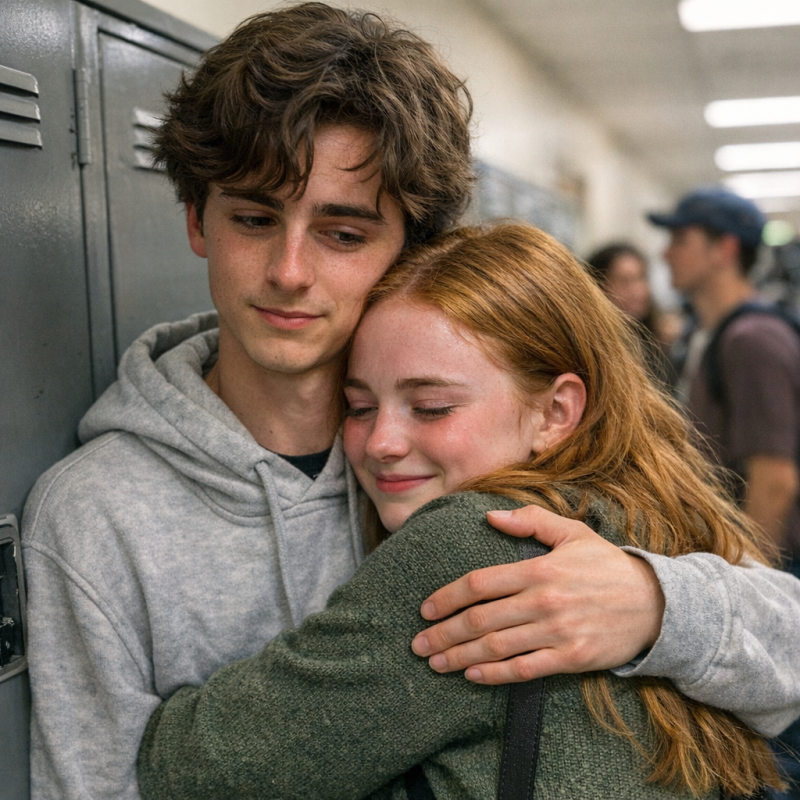 Image by FCT AI
The Meeting
Principal Gardner's office always smelled like old coffee and furniture polish. I walked in expecting handshakes, maybe one of those weird gift baskets people give. Emily was sitting in one of the chairs looking down at her hands. Her parents stood rather than sat—her mom in this sharp business suit, her dad in equally formal attire. No one smiled when I entered. Principal Gardner introduced everyone with this stiff formality that felt off. 'We wanted to discuss yesterday's incident,' Mrs. Morrison said, and the word 'incident' hung in the air weird. Not 'rescue,' not 'emergency.' Incident. I nodded, waiting for the thank you that never came. Mr. Morrison asked me to describe exactly what happened, so I did, step by step, the way I'd already told it a dozen times. His wife took notes on her phone. Actual notes. 'And you positioned yourself behind Emily?' she asked. 'That's correct,' I said, feeling weirdly formal myself now. Emily wouldn't look at me. When Mr. Morrison asked me exactly where I placed my hands, I realized this wasn't about saying thank you.
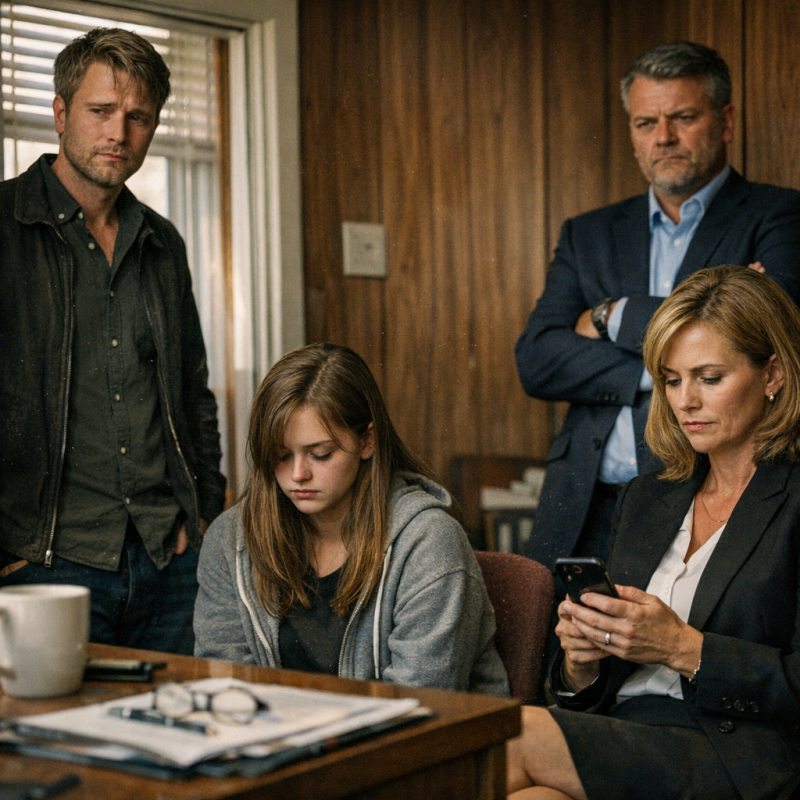 Image by FCT AI
Replaying Every Second
That night I couldn't sleep. I kept replaying the whole thing in my head like a video on loop. Had I grabbed too high? Too low? I remembered the instructor saying just above the navel, below the ribcage. I'd done that, right? I lay there in the dark, recreating the moment in my mind, trying to feel where my hands had been. The more I thought about it, the less certain I became about anything. My memory started doing that thing where details blur and shift. Was Emily wearing that blue sweater or the gray one? Did I actually check if she could speak before acting? The first aid manual was still in my backpack from the course last semester. I got up at like two in the morning and read through the Heimlich section three times by phone light. Stand behind the person. Make a fist. Place it above the navel. Thrust inward and upward. I'd followed every step exactly. The candy had come out. She'd breathed. Nurse Patterson had said I did it perfectly. I did everything exactly as I'd been taught—so why did I feel like I'd done something wrong?
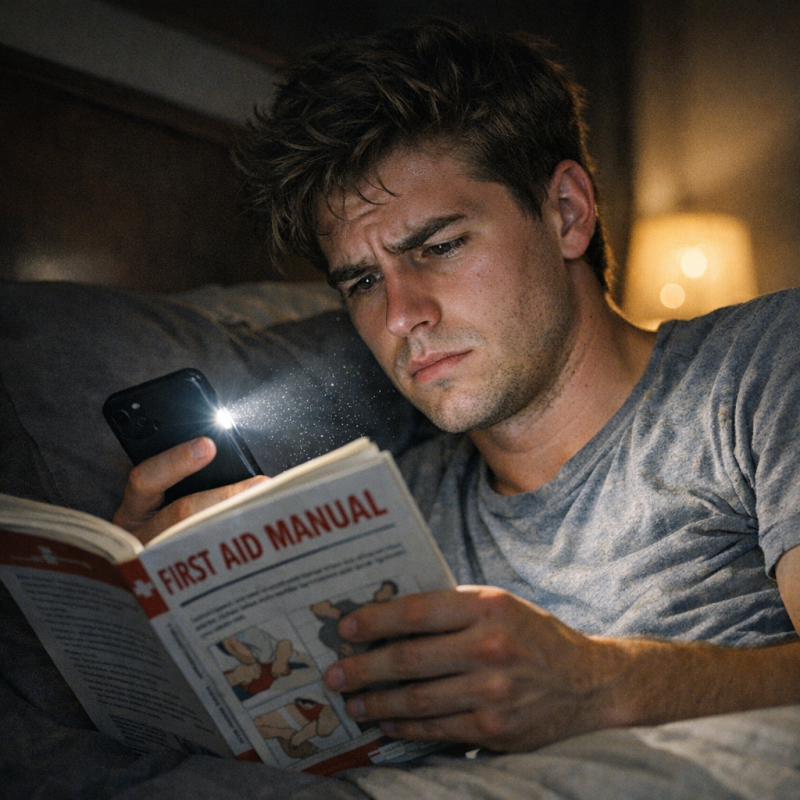 Image by FCT AI
My Parents Find Out
I heard my mom on the phone Thursday evening, her voice taking on that particular edge it gets when she's confused and trying not to show it. She came into the living room where I was pretending to do algebra homework. 'That was Principal Gardner,' she said. My dad looked up from his laptop. 'He wants to meet with us tomorrow. All three of us.' Her expression was this mix of concern and bewilderment. 'About Emily?' I asked, though I already knew. My dad closed the laptop. 'What exactly did they say in that first meeting?' he asked. I told them everything—the questions about hand placement, Mrs. Morrison taking notes, the weird absence of gratitude. Mom sat down next to me. 'You saved that girl's life,' she said firmly, like saying it with conviction could make the weirdness go away. 'You did exactly what you were supposed to do.' Dad was already in problem-solving mode, asking if I wanted him to call our lawyer friend, which seemed extreme but also oddly reassuring. My mother asked what we could possibly need to discuss, and I realized I didn't have an answer that made sense.
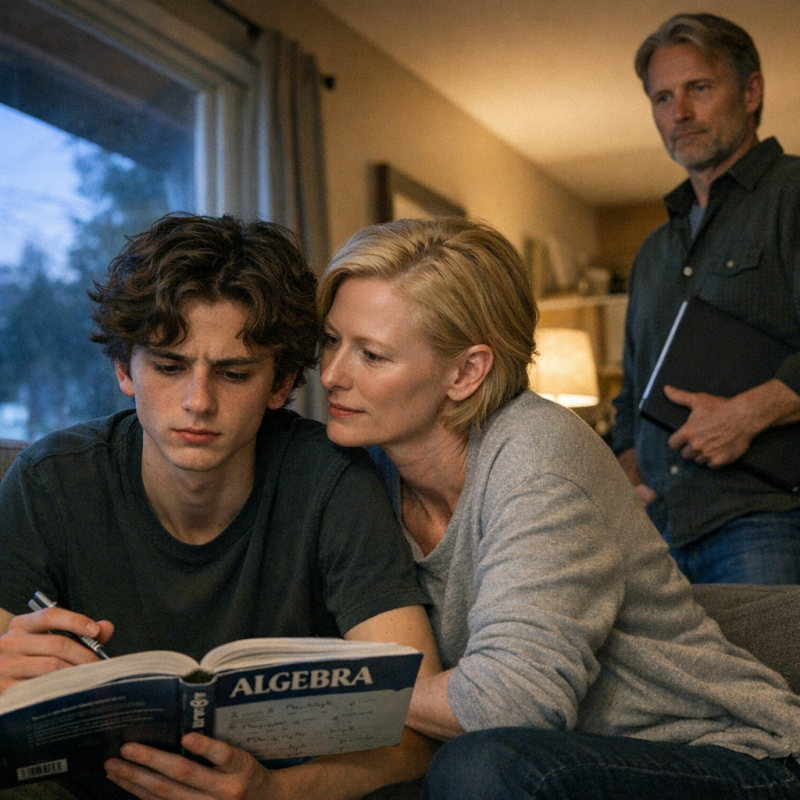 Image by FCT AI
Whispers in the Hallway
Friday felt different the moment I walked through the school doors. You know that feeling when people have been talking about you? Jake found me before first period. 'Dude, people are saying weird stuff,' he said. I asked what kind of weird stuff. He looked uncomfortable. 'Just ignore it.' But you can't ignore whispers that stop when you walk past, or the way certain people suddenly find their lockers fascinating when you approach. By lunch, Laura pulled me aside. 'Someone's spreading a rumor that the Heimlich thing was an excuse to... you know.' I didn't know, and then I did, and my face went hot. Third period, this junior I barely knew asked me straight-up if the choking had even been real. Jake nearly started a fight defending me. Between classes, I heard fragments: 'inappropriate touching,' 'her parents are angry,' 'always thought he was creepy.' None of it made sense. I'd saved her life in front of thirty witnesses. When someone asked if I'd 'copped a feel,' I finally understood that the story was being rewritten without me.
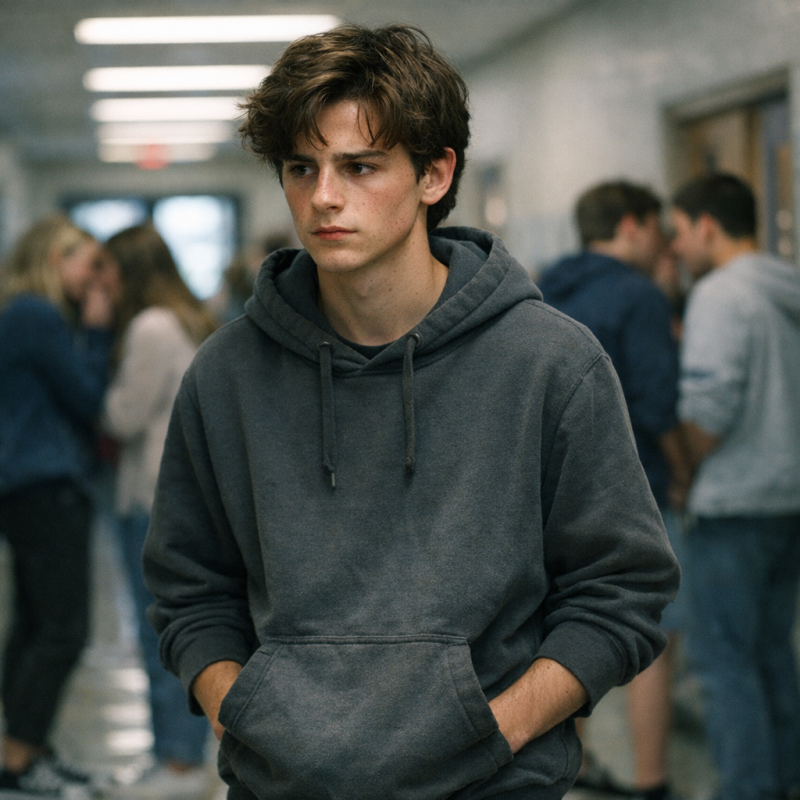 Image by FCT AI
Mandatory Counseling
Ms. Chen, the school counselor, had one of those offices trying too hard to be calming—beige walls, generic landscape prints, a bowl of smooth stones on the desk. She smiled when I came in Monday, but it was her professional smile, not a real one. 'This is just a check-in,' she said, which immediately made it feel like more than that. We talked about stress, about being in high-pressure situations, about how I was handling all the attention. Normal stuff. Then the questions shifted. 'When you made physical contact with Emily, what were you thinking about?' What was I thinking about? I was thinking about not letting someone choke in front of me. 'Walk me through your thought process about where to place your hands.' I explained the first aid training again. She nodded, writing things down. 'And you understood this required touching another student's body?' The way she said it made it sound wrong, made everything sound wrong. She asked if I understood the concept of consent, and I finally realized they thought I'd wanted to touch Emily.
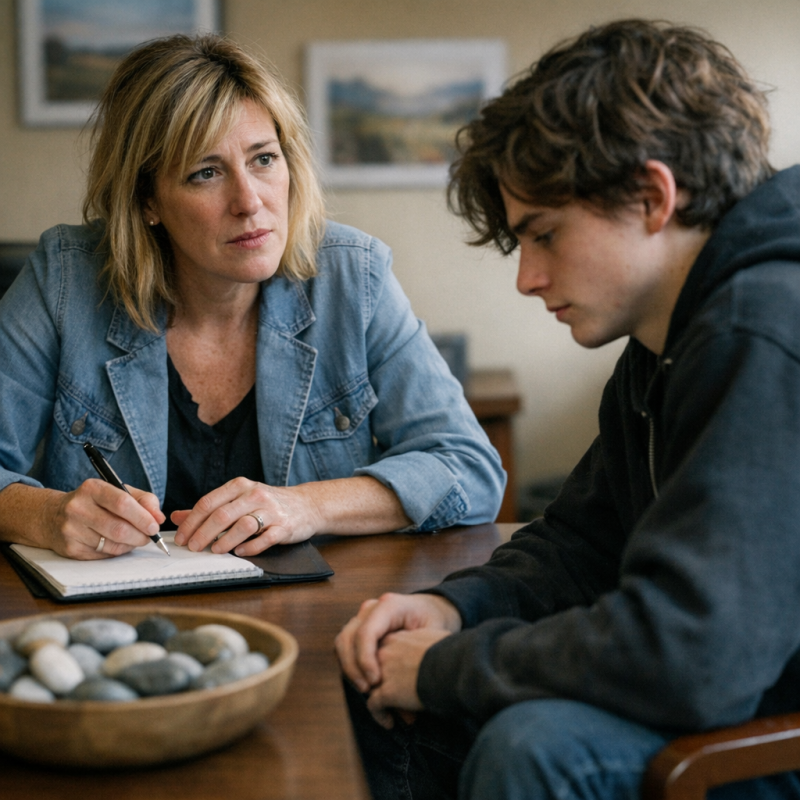 Image by FCT AI
Emily Stops Talking to Me
Emily and I had Spanish together, fourth period. We'd never been close friends, but we'd talked, worked on group projects, normal classmate stuff. After that counselor meeting, I noticed she started arriving late to class, taking a seat on the opposite side of the room. In the hallways, she'd see me coming and suddenly become very interested in her phone or turn down a different corridor. It hurt more than the rumors, honestly. I cornered her Wednesday after school, not aggressively, just asked if we could talk for a second. She looked around like she was checking if anyone was watching. 'Emily, what's going on?' I asked. She wouldn't meet my eyes. 'I can't talk to you, Alex.' Her voice was barely a whisper. 'Why not? I don't understand what I did wrong.' Something flickered across her face—guilt maybe, or sadness, I couldn't tell. Other students were passing by, some glancing our way. I tried to ask her what changed, but she just looked at me with something like pity and walked away.
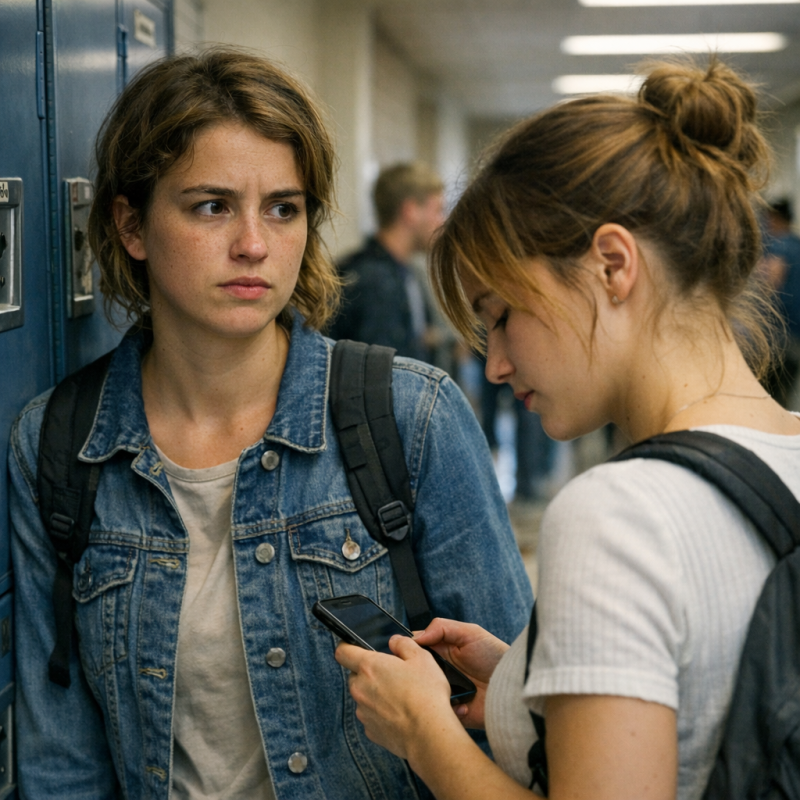 Image by FCT AI
The Second Meeting
Principal Gardner called my parents in for another meeting the following week, and this time the temperature in that conference room felt ten degrees colder. Mrs. Morrison sat across from us with her hands folded, looking like she'd walked straight out of a courtroom drama. Mr. Morrison was there too, mostly silent, nodding along to whatever his wife said. My mom squeezed my hand under the table. Principal Gardner started with the usual pleasantries, but Mrs. Morrison cut him off. 'We need to discuss boundaries,' she said, her voice steady and controlled. 'And appropriate force. My daughter was traumatized by the way she was grabbed.' I felt my stomach drop. Grabbed? I'd performed the Heimlich maneuver. My dad shifted beside me, and I could feel the tension radiating off him. Mrs. Morrison continued, talking about personal space, about trust, about how Emily had nightmares now. Every word felt like an accusation wrapped in concern. Then she turned to me directly. 'Has anyone taught you about respecting personal space, Alex?' That's when my dad finally lost his temper.
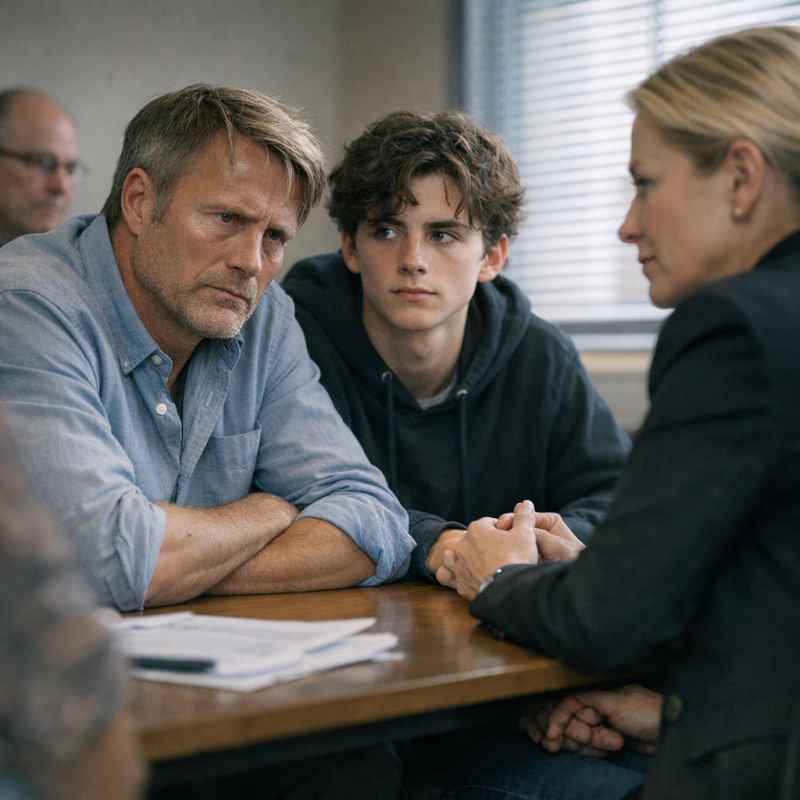 Image by FCT AI

History's most fascinating stories and darkest secrets, delivered to your inbox daily.
The Video Evidence
Two days after that disaster of a meeting, my dad and I went back to Principal Gardner's office with one simple request. 'There are security cameras in the cafeteria,' my dad said. 'We want to see the footage.' It seemed so obvious, you know? Like, here was actual evidence that would show exactly what happened, frame by frame. I felt this surge of hope for the first time in weeks. Gardner shifted in his chair, adjusted his glasses, did that thing where administrators buy time by shuffling papers. 'The footage does exist,' he finally said. 'But it's currently under review by the district's legal team.' My dad leaned forward. 'So we can see it after they review it?' Gardner looked uncomfortable. 'I'm afraid the footage is part of an ongoing investigation. It won't be made available to involved parties—only to the investigation itself.' I just stared at him. The one piece of objective evidence that could prove I'd done nothing wrong, and they were keeping it from me. My dad started arguing, talking about transparency and fairness, but I barely heard him. Principal Gardner said the footage was 'under review' and wouldn't be available to me—only to the investigation.
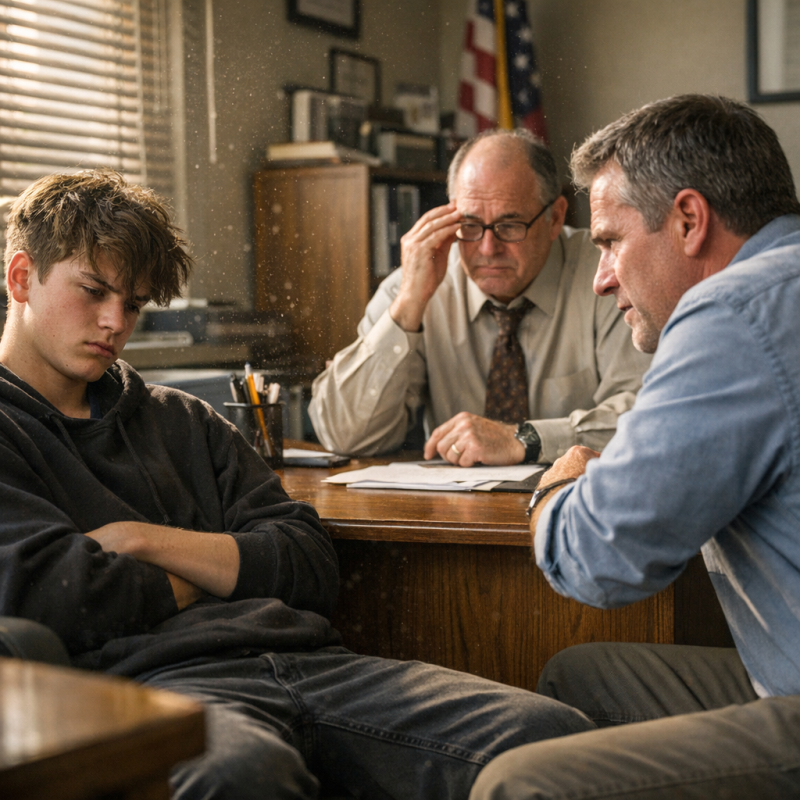 Image by FCT AI
Losing Friends
You know what's worse than being accused of something you didn't do? Watching people you thought were friends decide you're not worth the risk of knowing anymore. It happened gradually at first, then all at once. Kids who used to sit with me at lunch suddenly had other plans. Group chats went quiet when I posted. Jake stayed loyal, thank god—he'd show up at my locker between classes, walk with me down the hallways like a human shield. But everyone else? Gone. Tyler stopped answering my texts. Sarah literally turned around and walked the other way when she saw me coming. The worst part was understanding why. Nobody wanted to be associated with 'that situation.' Their parents heard rumors, made phone calls, issued warnings. I got it, honestly. Why would anyone risk their own reputation for someone who might be guilty of… what, exactly? Nobody even knew anymore. Then Laura found me after school one day, tears in her eyes. She'd been there, seen everything, watched Emily choking. 'I'm so sorry, Alex,' she whispered. Even Laura, who'd witnessed everything, told me she couldn't be seen with me anymore—her parents had forbidden it.
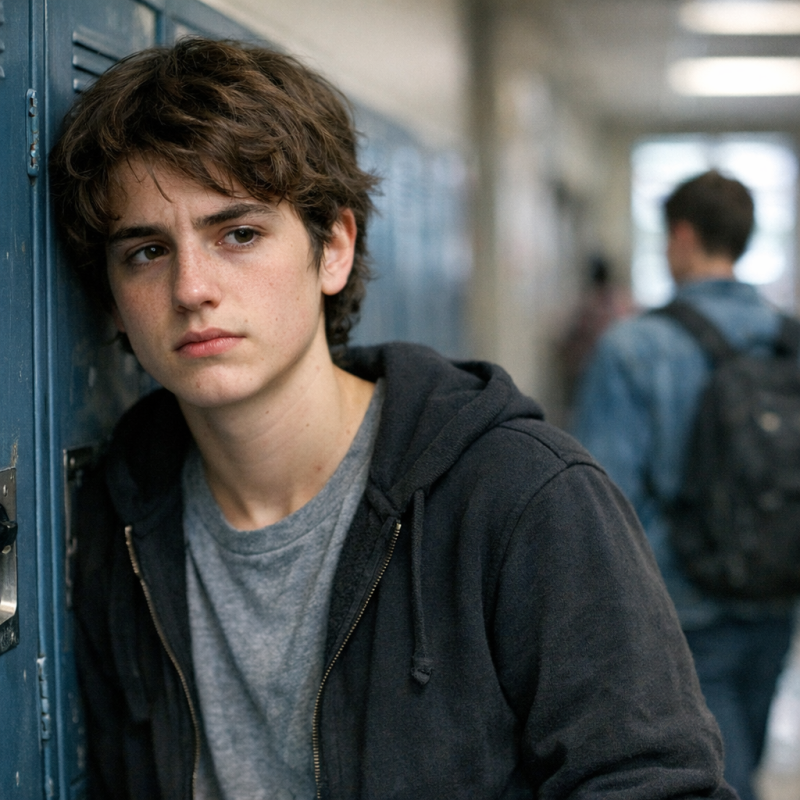 Image by FCT AI
The School Board Gets Involved
Mr. Fletcher arrived from the district office on a Tuesday morning, carrying a leather briefcase and wearing the kind of suit that meant serious business. He wasn't there to investigate what actually happened—that became clear pretty quickly. He was there to assess liability. My parents and I sat in Gardner's office again, same terrible chairs, while Fletcher asked questions that had nothing to do with the truth. 'What's the school's insurance coverage for incidents involving student-on-student physical contact?' 'Has there been any documentation of prior behavioral concerns?' He talked about us like we weren't even in the room. Gardner kept referring to his notes, looking more stressed than I'd ever seen him. Then Fletcher said something that made my blood run cold. 'The district can't afford another lawsuit. We had one last year that cost us considerably.' Another lawsuit. He was talking about money, about budget lines, about protecting the institution. My mom asked what any of this had to do with what actually happened in the cafeteria. Fletcher barely glanced at her. He said the district couldn't afford another lawsuit, and I realized I wasn't a person to them—I was a risk.
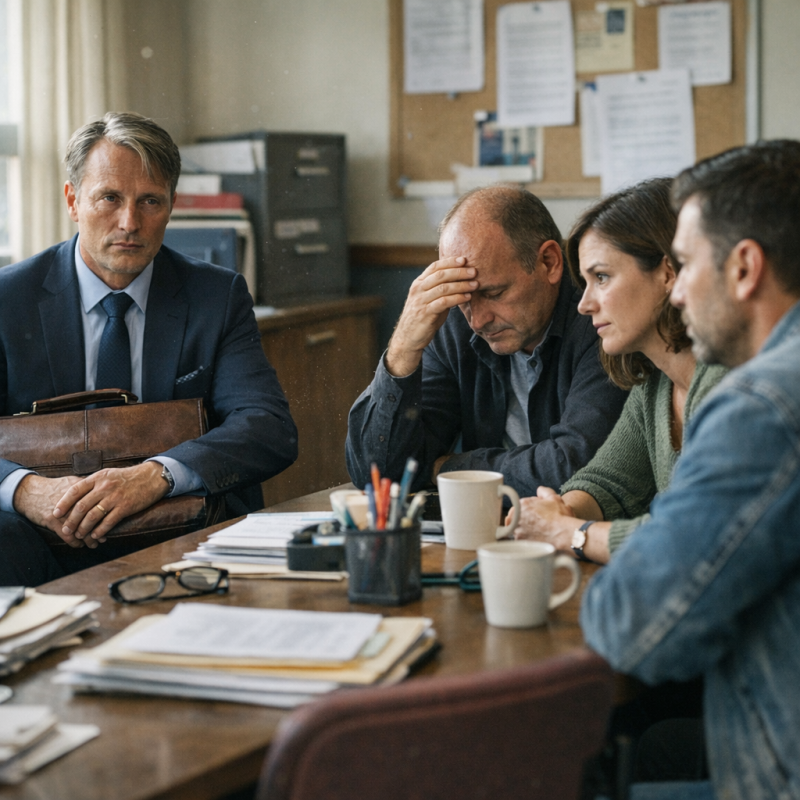 Image by FCT AI
What They're Really Asking For
My parents found out through the school's attorney what the Morrisons were actually asking for. Not just an apology—a formal, written apology from the school district acknowledging 'inappropriate conduct' and 'inadequate supervision.' Plus financial compensation for Emily's 'emotional distress and ongoing counseling needs.' We were sitting in our living room when mom read the demands out loud from the letter. Dad's face went red. I felt numb. The school attorney, this tired-looking woman named Ms. Chen, explained that the district was considering a settlement. 'It's fairly standard in these situations,' she said, like she was discussing a parking ticket. 'We acknowledge some wrongdoing, provide modest compensation, everyone moves on.' My father stood up. 'Wrongdoing? Alex saved their daughter's life.' Ms. Chen sighed. 'I understand your frustration, but from a legal standpoint—' 'What are we apologizing for?' my mother interrupted. Her voice was shaking. Ms. Chen looked at her with something like pity, the same look everyone seemed to give us lately. She said it didn't matter—it was cheaper than going to court.
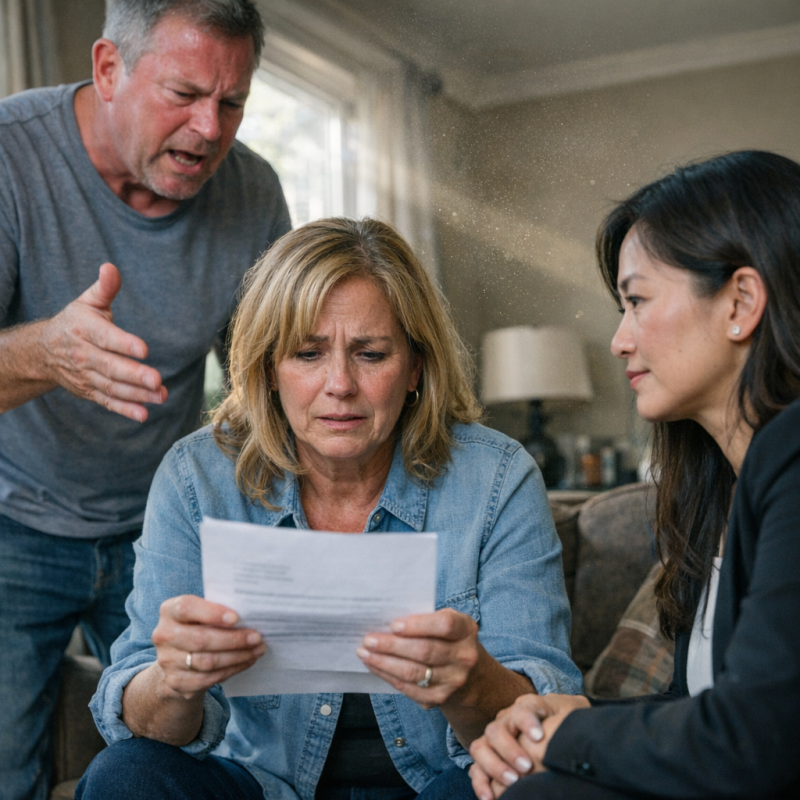 Image by FCT AI
Searching for Answers
I couldn't sleep that night, so I did what any desperate teenager would do—I started googling. 'Good samaritan sued,' 'teenager sued for helping,' 'choking victim lawsuit.' You wouldn't believe how many stories came up. Hundreds, maybe thousands. People who pulled drivers from burning cars and got sued for injuries. Someone who performed CPR and got taken to court for broken ribs. A guy who called 911 for an overdosing stranger and ended up named in a wrongful death suit. It was like falling down this horrible rabbit hole of no good deed goes unpunished. I read case after case, looking for something, anything, that matched my situation. Most were adults, and most involved actual injuries beyond the original emergency. Some were clearly frivolous, dismissed by judges who saw through the bullshit. But none of them explained my specific nightmare. None of them were about a fifteen-year-old kid who saved a classmate's life and then got destroyed for it. I found dozens of stories about good samaritans being sued—but nothing that explained why someone would go after a teenager who saved their daughter's life.
 Image by FCT AI
Hiring a Lawyer
My parents hired Dr. Yates on a Thursday afternoon. She was a family attorney, mid-fifties, with sharp eyes and an even sharper suit. We met in her office downtown, and she spent the first hour just listening to us explain everything from the beginning. She took notes in this old-fashioned leather notebook, asked clarifying questions, never interrupted. When we finished, she sat back in her chair and steepled her fingers. 'Okay,' she said. 'Here's what we're dealing with.' She explained that while Good Samaritan laws should protect me, minors existed in a legal gray area. The school's desire to settle was about protecting themselves, not about what was right. The Morrisons were leveraging institutional fear of litigation. Then she said something that's stuck with me ever since. 'This case isn't really about what happened in that cafeteria. The facts, as you've described them, are clearly in Alex's favor.' She looked directly at me. 'But facts matter less than narrative in situations like this. We need to be prepared for that reality.' Dr. Yates reviewed the case and said something I'll never forget: 'This isn't about what happened—it's about what they can make people believe happened.'
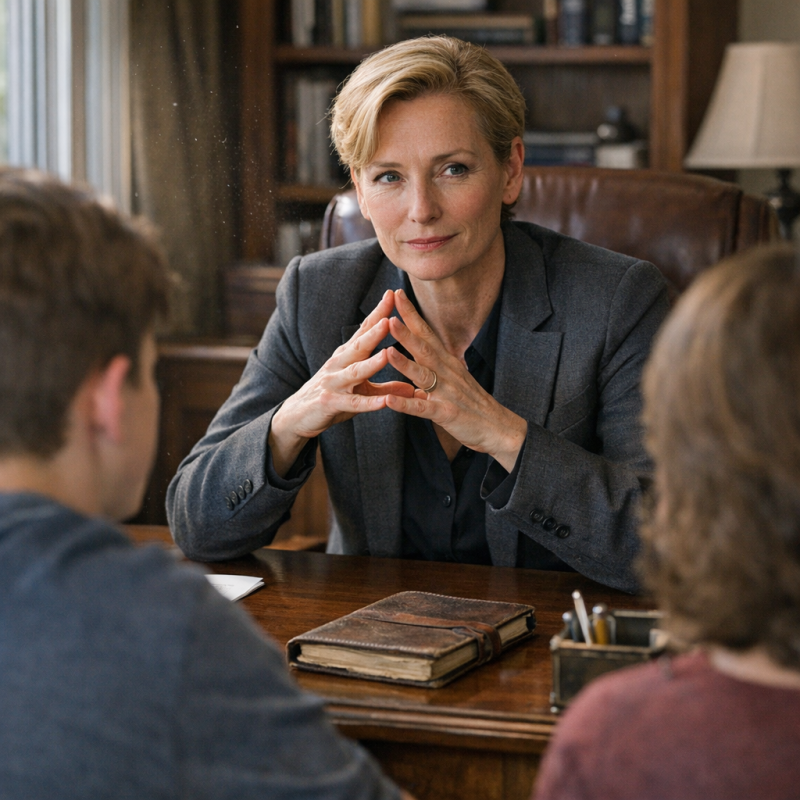 Image by FCT AI
The Mandatory Statement
Dr. Yates told me I needed to write a formal statement for the school's records—every detail, exactly as I remembered it, with precise timing if possible. She sat with me at her conference table, legal pad in front of me, while I tried to reconstruct those two minutes that had somehow destroyed my life. 'Be specific,' she said. 'But be careful. Every word will be analyzed, potentially used against you.' So I wrote. I described walking to the water fountain, hearing the commotion, seeing Emily's face turning colors. I detailed the Heimlich maneuver step by step, exactly as I'd learned it in health class. I mentioned the apple chunk hitting the floor, Emily gasping for air, the relief in her eyes. Dr. Yates read over my shoulder, occasionally suggesting rephrasing. 'Don't say you grabbed her—say you positioned your arms. Don't say she was scared—say she appeared to be choking.' Every word became a potential trap. After three drafts, she handed me the final version to sign. My hand shook a little as I held the pen. This statement would go into official records, be read by lawyers and administrators and who knows who else. As I signed my name at the bottom, I wondered if I was signing a confession or a defense.
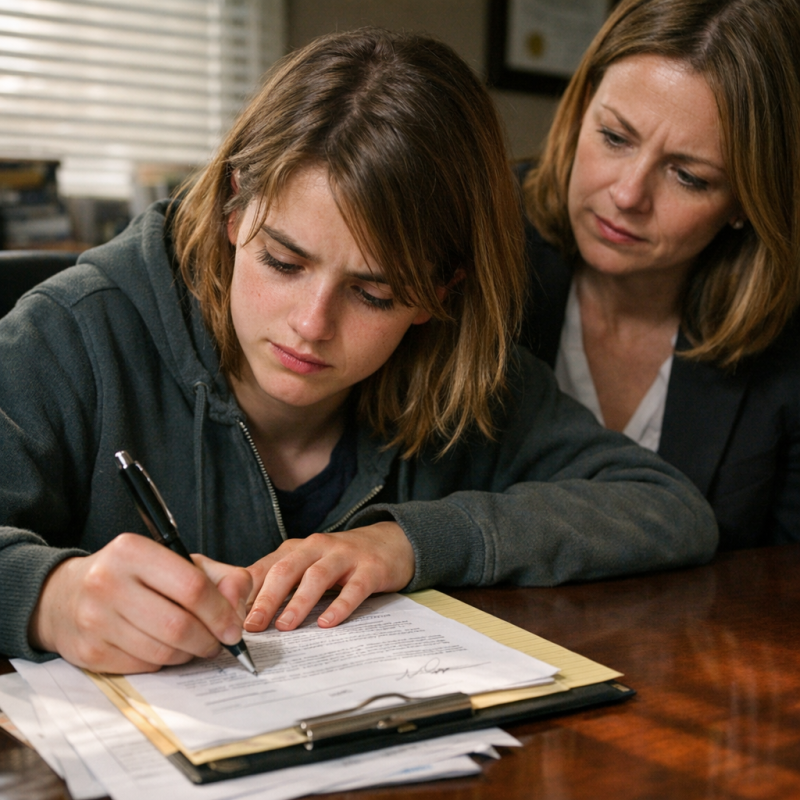 Image by FCT AI
The Teacher's Testimony
Mr. Hendricks sat in Principal Gardner's office three days after my written statement, and I was allowed to be present with Dr. Yates beside me. He looked uncomfortable in the formal setting, this teacher who normally joked around during lunch duty. 'I saw the whole thing,' he said, hands folded on the table. 'Alex acted exactly how you'd want someone to act in an emergency. Emily was clearly choking—her face was red, she couldn't speak, she was grabbing at her throat.' He described how I'd positioned myself behind her, performed the Heimlich correctly, how the candy had come out and hit the floor. 'Honestly, if Alex hadn't been there, I don't know what would have happened. I was too far away to help in time.' I felt this wave of relief wash over me—finally, an adult witness backing up my version of events. Mrs. Morrison had been sitting silently in the corner, but now she leaned forward. 'So you're saying my daughter was careless?' she asked, her voice sharp. 'That she was laughing and talking and brought this on herself?' Mr. Hendricks looked confused. 'I'm just saying what I saw—' But when he mentioned that Emily had been laughing and talking while eating the candy, Mrs. Morrison accused him of victim-blaming.
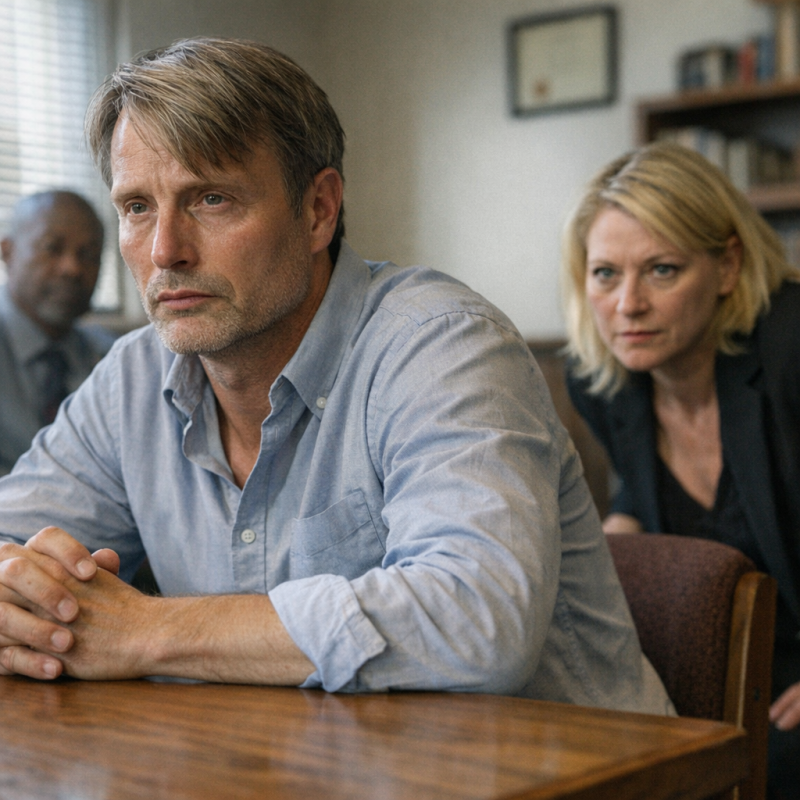 Image by FCT AI
The Police Visit
Officer Ramirez showed up at our house on a Thursday afternoon, and the moment I saw the police car in our driveway, my stomach dropped. My mom called Dr. Yates immediately, and she arrived before we even let him in. He was professional, almost friendly, taking notes while sitting at our kitchen table. 'This is just routine,' he kept saying. 'We need to document everything for the file.' But the questions weren't routine. How did I grab Emily? Did she resist? Did I consider asking a teacher for help first? Had I ever touched Emily before this incident? My dad's jaw was tight the whole time, and my mom kept glancing at Dr. Yates, who occasionally interjected to clarify what I meant. The whole interview took maybe forty minutes, but it felt like hours. Ramirez was packing up his notepad when he mentioned that the Morrisons had filed a formal complaint alleging improper contact with a minor. 'Improper contact?' my dad repeated. 'He saved her life.' Officer Ramirez gave this apologetic shrug. 'I understand, sir. But we have to investigate any allegation involving a minor.' He said it was just routine, but routine inquiries don't usually involve words like 'assault' and 'minor.'
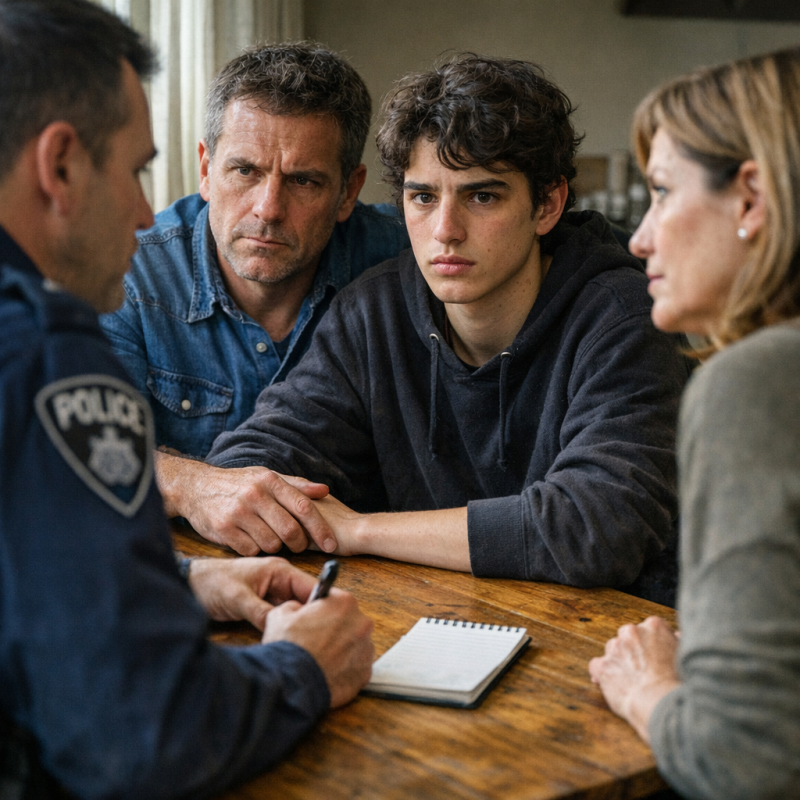 Image by FCT AI
Suspended From School
Principal Gardner called us into his office the next Monday, and I knew before he even started talking what was coming. My parents sat on either side of me, my mom's hand gripping mine. 'Alex, we've decided it's best if you take a temporary leave from school while this investigation continues,' he said, not quite meeting my eyes. 'Temporary leave' is just a nice way of saying suspended. I'd never even had detention before, and now I was being removed from school for saving someone's life. 'This is for your protection,' Gardner continued. 'Things are getting heated, and we want to avoid any confrontations.' My dad leaned forward. 'Confrontations? What confrontations?' Gardner shifted uncomfortably. 'Some parents have expressed concerns. There's been talk on social media. We think it's best for everyone if Alex stays home until this is resolved.' I sat there feeling like I was watching this happen to someone else. My mom was asking about schoolwork, homework packets, something about tutoring. But all I could think was that they were punishing me. Principal Gardner said it was for my own safety, but it felt like punishment for doing the right thing.
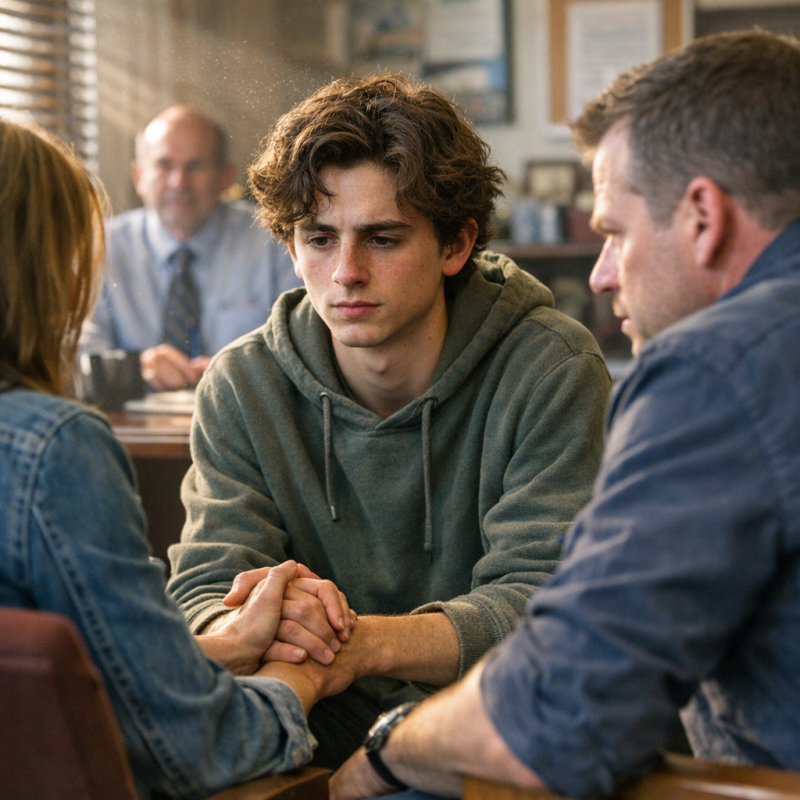 Image by FCT AI
Days Alone
The first day home alone felt weird, like playing hooky without the fun part. By day three, I'd started checking my phone obsessively, watching the whole thing spiral online. Someone had created a Facebook group about 'school safety,' and my name was all over it. I didn't have social media accounts myself—my parents were strict about that—but Jake kept sending me screenshots. Parents I'd never met were posting about how they'd always felt uncomfortable around me, which was insane because I barely talked to anyone. There were think pieces about teenage boys and boundaries, about consent and Good Samaritan laws. Local news had picked it up—'Student Suspended After Heimlich Incident'—and the comments were brutal. Half the people were defending me, half were calling me a predator in training. I stopped eating much. My mom would bring lunch to my room, and I'd pick at it while refreshing pages. I'd saved someone's life, and somehow I'd become the villain. The worst was this Reddit thread that got crossposted everywhere, analyzing my 'pattern of behavior' based on absolutely nothing. Someone posted a thread calling me a predator, and it had three thousand likes.
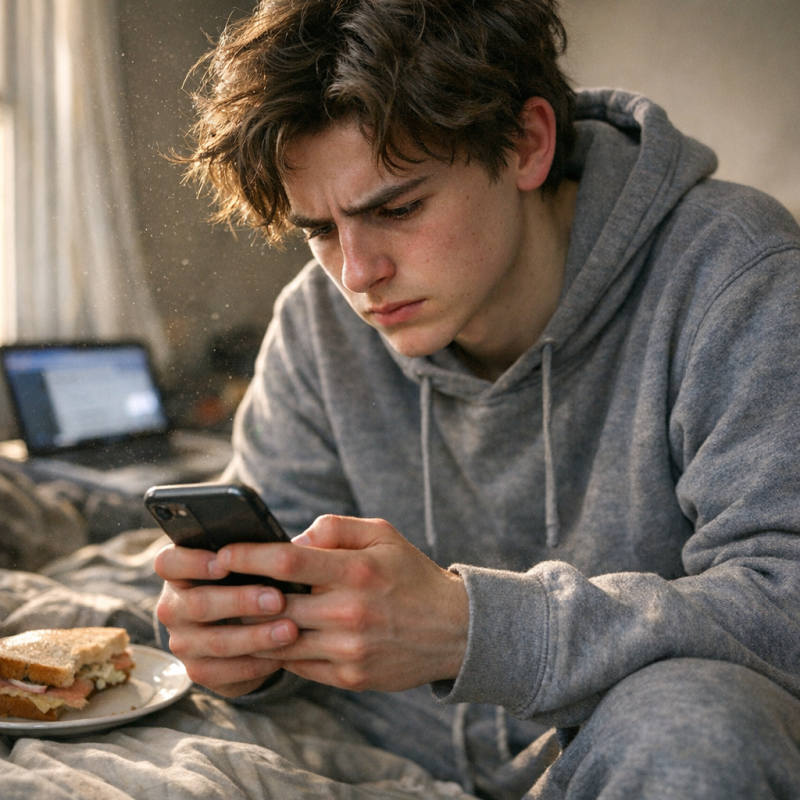 Image by FCT AI
Jake's Visit
Jake showed up at my back door on Friday afternoon, which was risky because technically he wasn't supposed to have contact with me—something about not influencing potential witnesses. But he didn't care. 'Dude, this is insane,' he said, dropping his backpack in my room. 'Everyone knows you didn't do anything wrong.' He filled me in on school gossip, who was saying what, which teachers were on my side. Most of them, apparently, but they couldn't say so publicly. 'Mrs. Chen asked about you yesterday. She looked really upset.' It helped, hearing that people remembered I was an actual human being. We played video games for a while, just normal stuff, and for an hour I almost forgot about everything. Then Jake mentioned it casually, like he was commenting on the weather. 'Emily hasn't been at school either,' he said. 'Since like, Tuesday.' I paused the game. 'What do you mean?' 'Just gone. Her mom called her out sick, but people are saying she's not actually sick.' My mind started spinning. Why would Emily be hiding? Was she embarrassed? Scared? He told me Emily had stopped coming to school too, and I couldn't shake the feeling that she was hiding from something.
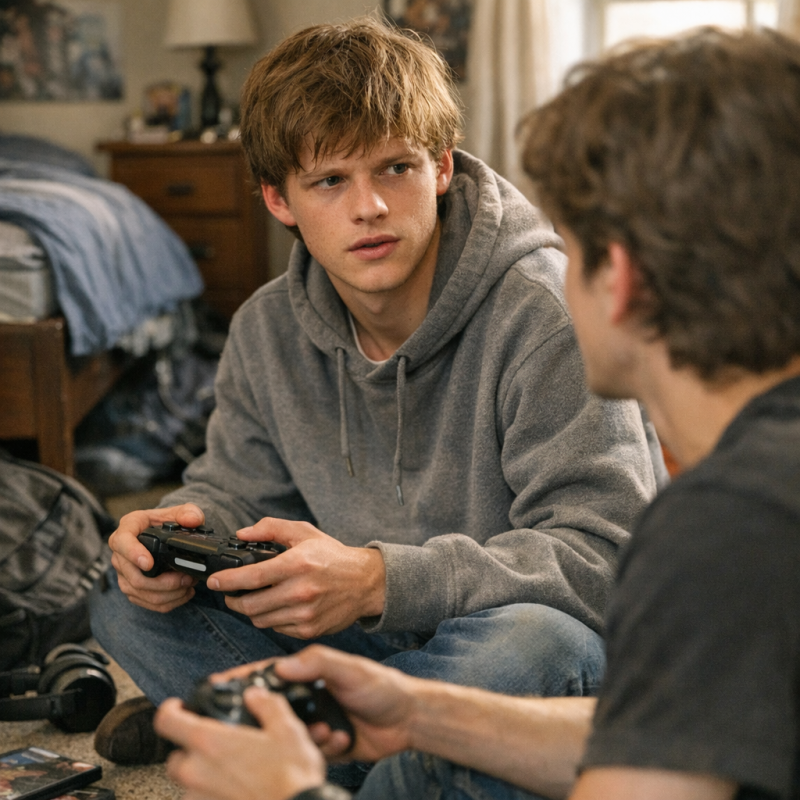 Image by FCT AI
The Medical Report
The medical report arrived on a Tuesday, and for about ten minutes, I thought everything would finally be over. The ER doctor's notes were clear: patient presented with signs of choking, airway obstruction confirmed, Heimlich maneuver performed by bystander, obstruction cleared successfully. Dr. Yates read it aloud to us in our living room, and my mom actually cried with relief. 'This proves it,' my dad said. 'This proves you did everything right.' The report detailed Emily's vitals, the candy lodged in her airway, her recovery. Medical terminology that basically translated to: Alex saved her life, full stop. Dr. Yates sent it to the school district, to Officer Ramirez, to everyone involved in the investigation. I felt lighter than I had in weeks. Then Mrs. Morrison released a statement through her lawyer. It acknowledged the medical findings but claimed I'd used 'excessive force' and caused Emily 'unnecessary physical and emotional trauma.' The statement talked about bruising on Emily's torso—which, yeah, that's what happens during the Heimlich. It mentioned Emily's ongoing anxiety and fear of school. But somehow, Mrs. Morrison spun it into a story about excessive force and unnecessary trauma.
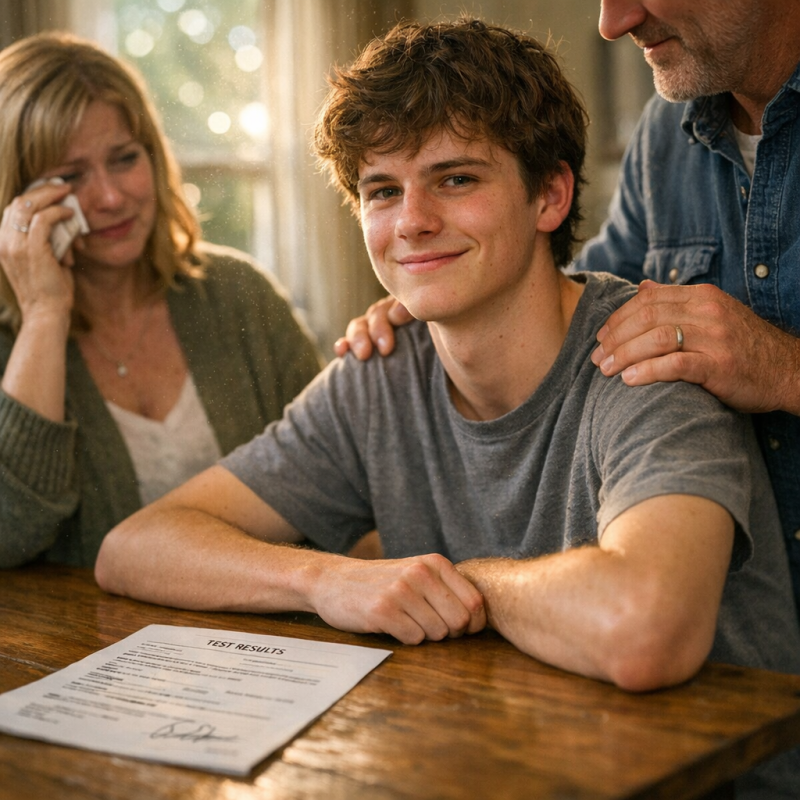 Image by FCT AI
What Emily Said
Dr. Yates came over to discuss Emily's official statement to the investigators, and I could tell by her face it wasn't good news. 'She's saying she doesn't clearly remember what happened,' Dr. Yates said carefully. 'That everything was confusing and scary.' Which didn't match what Emily had said right after—when she'd thanked me, when she'd seemed genuinely grateful. In her statement, Emily said she remembered choking but didn't remember asking for help or wanting anyone to touch her. She said my arms around her had hurt and scared her. She said she wasn't sure if she'd really been choking that badly. 'That's not what she said before,' I told Dr. Yates. 'I know,' she replied quietly. 'Memories can be complicated, especially after trauma.' But this felt different. The Emily who'd hugged me in the hallway and the Emily in this statement seemed like two different people. Her words sounded wrong, too formal, too carefully worded. Like someone had told her exactly what to say and what to leave out. She said she didn't remember asking for help, and I realized someone had coached her to forget.
 Image by FCT AI
The Settlement Offer
The school district's lawyer showed up at our house with Dr. Yates for what they called a 'strategy meeting.' Really, it was about money. The district was willing to offer the Morrisons a settlement—$75,000 plus coverage of Emily's therapy costs—if they'd agree to drop everything. No admission of wrongdoing from anyone, just a payment to make it all disappear. 'This is good news,' the district lawyer said, like he was doing us a favor. 'It means we can all move on.' My mom looked sick. 'But Alex didn't do anything wrong. Why would we pay them?' The lawyer got into this explanation about liability and risk management and how sometimes it's cheaper to settle than to fight, even when you're right. I sat there listening to them put a price tag on my reputation, my future, my life. The district would pay, which meant technically it wasn't our money, but it still felt like saying I was guilty. My dad was quiet through most of it, his face unreadable. Finally, he spoke up. 'What does this mean for Alex?' The lawyer shuffled his papers. My dad asked if that meant I was guilty, and the district's lawyer said it meant I was expensive.
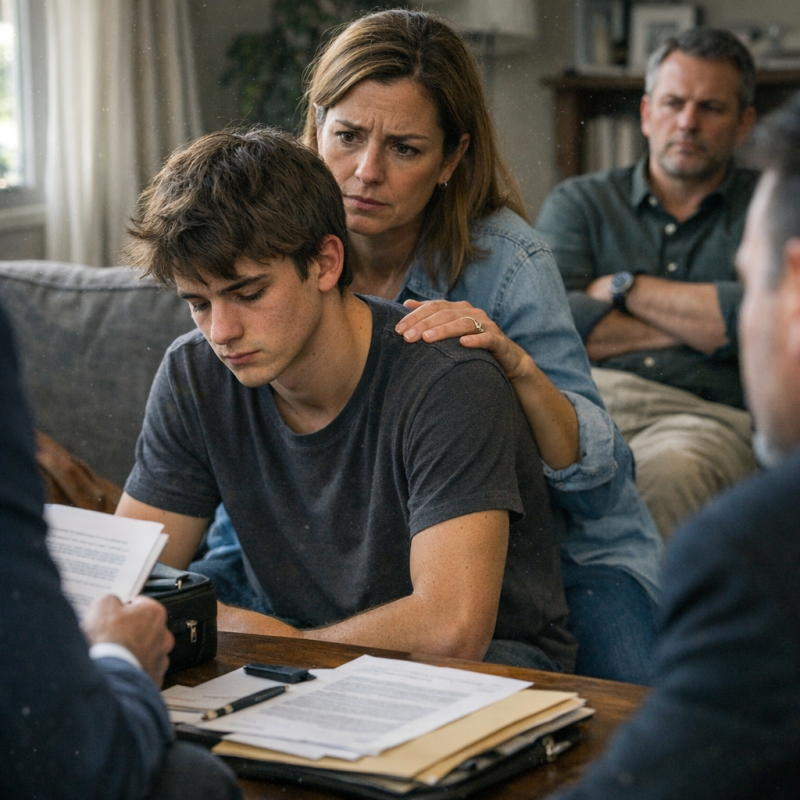 Image by FCT AI
My Mother's Breakdown
I found my mom in the kitchen at two in the morning, sitting at the table in the dark. Not doing anything. Just sitting there with her hands folded like she was praying, except her shoulders were shaking. When I turned on the light, she looked up at me with tears streaming down her face, and I realized she'd been crying for a while. 'I'm sorry,' I said automatically, because what else do you say when your mother is falling apart because of you? She wiped her face with her palms and tried to smile. 'You have nothing to be sorry for, Alex.' But we both knew that wasn't exactly true—I had something to be sorry for, even if it wasn't what the Morrisons claimed. I was sorry for bringing this into our home. For making her cry in the dark. For costing us money and sleep and peace. She reached across the table and took my hand. 'I'm so proud of you for saving Emily's life,' she said, her voice cracking. Then she asked the question that would haunt me for months: 'But do you ever wish you'd just let her choke?'
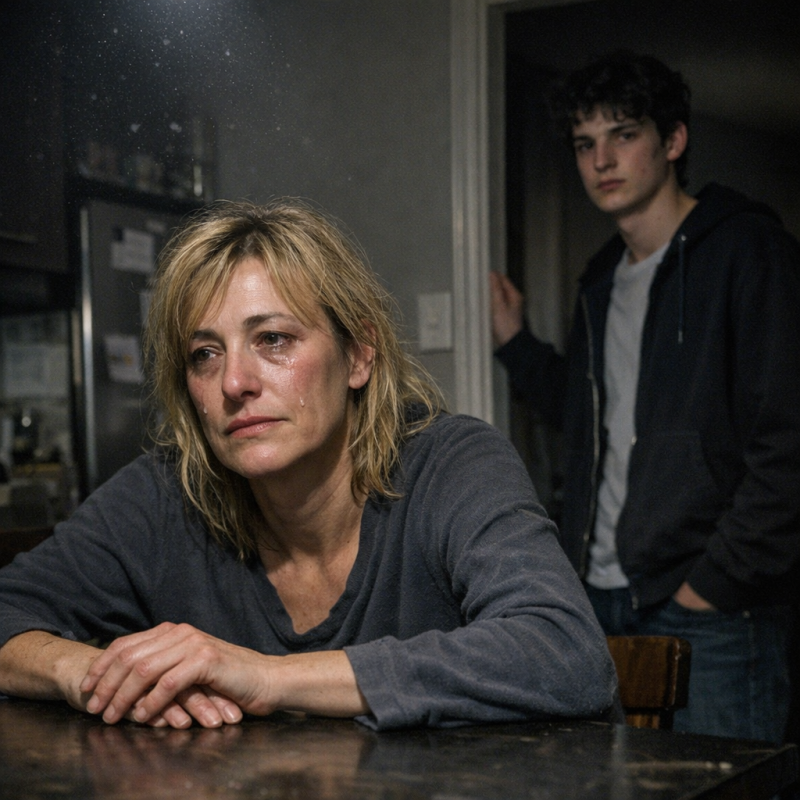 Image by FCT AI
Digging Into the Morrisons
Dr. Yates came by the house a few days later with his laptop and a notepad covered in scribbled notes. He'd been doing what he called 'due diligence'—basically digging into the Morrison family's history. My dad made coffee while Dr. Yates set up at our dining room table, and I could tell from his body language that he'd found something. 'I've been looking into their background,' he said carefully, glancing between my parents. 'Public records, mostly. Property records, school enrollments, that sort of thing.' He pulled up a map on his laptop showing different addresses across several states. 'They've moved around quite a bit in the past few years.' My mom leaned forward. 'Is that unusual?' Dr. Yates hesitated. 'It could be nothing. Job transfers, family reasons, who knows. But there's a pattern I'm trying to understand.' He circled an address in another state from two years ago. 'I need to make some calls, do more research before I draw any conclusions.' I felt this surge of hope—maybe there was an explanation for all of this—followed immediately by frustration. He found something—an address in another state from two years ago—but told us he needed more time before explaining what it meant.
 Image by FCT AI
The Classroom Returns to Normal
Jake came over after school and described what my old classroom was like now. There was a substitute teacher, some retired guy who didn't know anyone's names and just handed out worksheets. Emily's desk sat empty by the window—apparently she was still doing homeschool or online classes or whatever. 'It's weird,' Jake said, sprawled on my bedroom floor. 'It's like the whole thing just... evaporated. People talk about other stuff now. There was this big drama about someone's leaked texts, and that's all anyone cares about.' I should have felt relieved that I wasn't the main topic anymore, but instead I felt erased. Like I'd never existed at all. 'Do people ever mention me?' I asked, trying to sound casual. Jake looked uncomfortable. 'Sometimes. It's mixed, you know? Some people think you got screwed over. Others...' He trailed off. 'Others what?' He sat up, pulling at a thread on my carpet. 'I don't know, man. People are confused about the whole thing.' Then he admitted something that made my stomach drop. He said someone had carved 'hero or creep?' into my old desk, and no one had bothered to erase it.
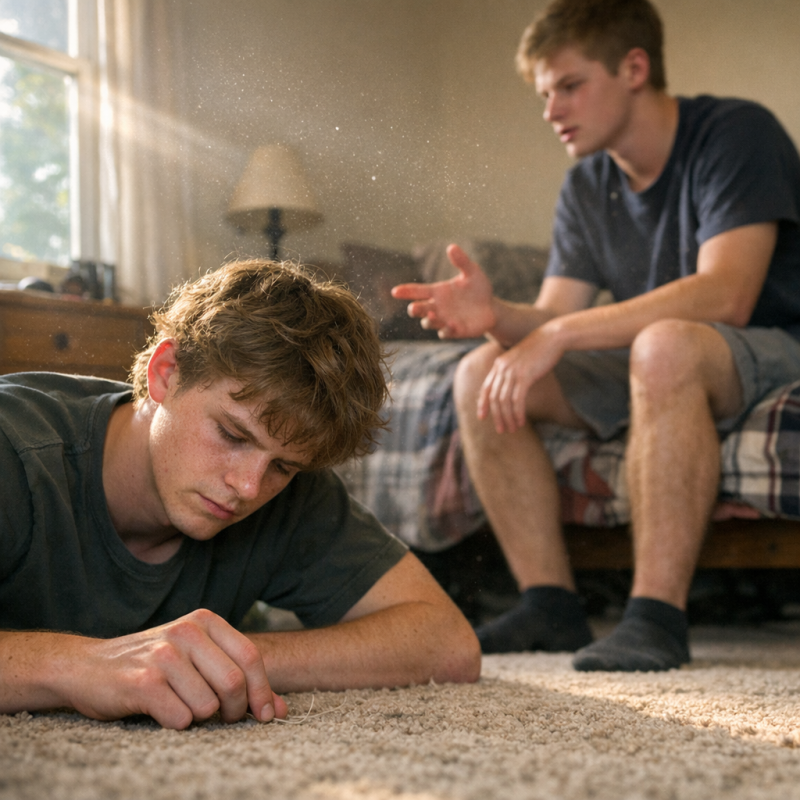 Image by FCT AI
The Newspaper Article
The local newspaper ran a story titled 'When Good Intentions Go Wrong: Teen Faces Consequences After Cafeteria Emergency.' My dad saw it first, came upstairs with the printed article in his hand and his face completely drained of color. They'd been careful—no names, just 'a fifteen-year-old student' and 'the family of the victim'—but they included enough details that anyone who knew about the incident would recognize it immediately. The article presented it as this balanced investigation into whether we need clearer consent laws for emergency situations, quoting experts on both sides. One doctor said any delay for consent could be fatal. A lawyer argued that bodily autonomy matters even in emergencies. They made it sound so academic, so theoretical—like it wasn't about real people whose lives were being destroyed. My mom made the mistake of reading the comments section online. People were vicious. Half said I was a hero being crucified. The other half said things I can't even repeat, speculating about my 'real' intentions. Someone started a whole thread debating whether teenage boys could be trusted to perform CPR on girls. They never mentioned my name, but everyone knew who they were talking about—and the comments section was merciless.
 Image by FCT AI
A Chance Encounter
I was at the grocery store with my mom, pushing the cart down the cereal aisle, when I saw Emily standing by the granola bars. For a second we both froze, just staring at each other like we'd seen ghosts. She looked different—thinner, maybe, or just tired. Her hair was pulled back in a messy ponytail. 'Alex,' she said quietly, taking a small step toward me. My mom touched my arm, a silent question, and I nodded that it was okay. Emily's eyes were wide, almost frantic. 'I—I wanted to...' She glanced around like she was checking if anyone was watching. 'This whole thing, it's—' She looked like she might actually explain, might finally tell me what was really happening. My heart was pounding because maybe, finally, I'd get some answers. She took a breath, and I could see her wrestling with something, some decision she was trying to make. 'I'm sorry that you—' But then Mrs. Morrison appeared at the end of the aisle, her face hardening the moment she saw us together. She started to say something that sounded like an apology, then her mother appeared and pulled her away without a word.
 Image by FCT AI
Therapy Sessions Begin
My parents found me a therapist—Dr. Chen, this woman with a calm voice and an office that smelled like lavender. I didn't want to go at first. Talking about feelings seemed pointless when the real problem was out there in the world, not in my head. But after a few sessions, I started to get it. She didn't try to fix anything or tell me what to think. She just listened and asked questions that made me uncomfortable in a productive way. We talked about the accusations, the isolation, the fear. About how I couldn't sleep because I kept replaying that moment in the cafeteria, wondering if I'd done something wrong without realizing it. 'You saved someone's life,' Dr. Chen said during one session. 'That's objectively true, regardless of what happened after. How does that feel?' I shrugged, picking at the arm of her couch. 'Complicated.' She nodded like she'd expected that answer. 'Do you regret doing it?' The question caught me off guard. A month ago, I would have said no immediately. But now? I thought about my mom crying in the dark, my dad's legal bills, my empty desk at school. She asked if I regretted saving Emily, and I realized I didn't have a simple answer anymore.
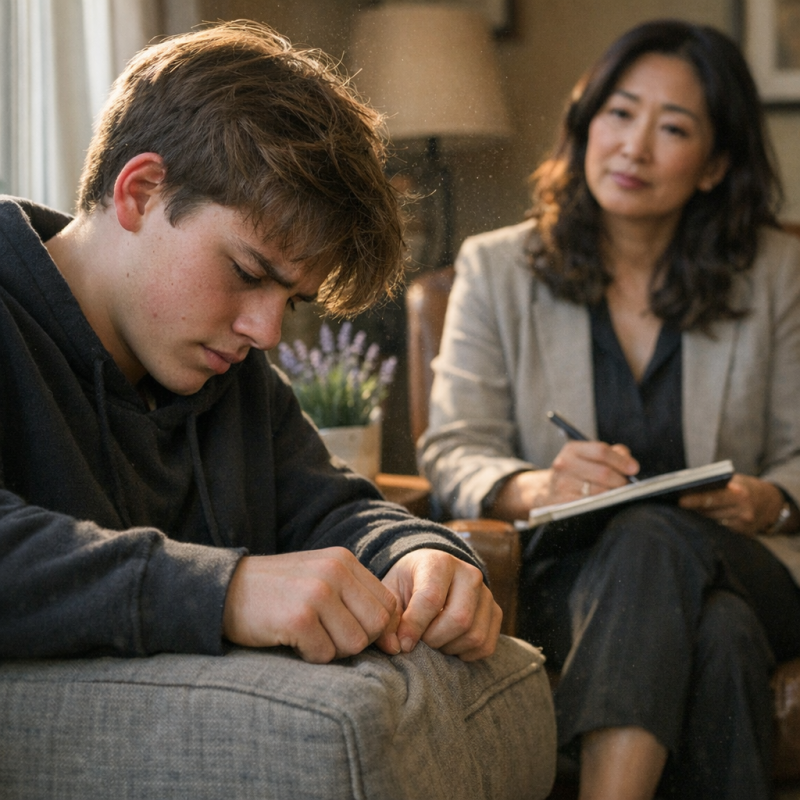 Image by FCT AI
The Settlement Is Rejected
The school district's lawyer called my parents with news: the Morrisons had rejected the settlement offer. Not only that, they were demanding $200,000 plus a formal letter from the school district acknowledging that I'd violated Emily's rights and promising disciplinary action. My dad was on speakerphone in the kitchen, and I watched his expression shift from surprise to confusion to anger. 'That's insane,' he said. 'The district already offered them more money than most people make in two years.' The lawyer agreed it was unusual. Most families in these situations wanted resolution, not escalation. Dr. Yates came over that evening to discuss strategy. He sat at our kitchen table with his notes spread out, looking troubled. 'These demands don't make sense from a settlement perspective,' he said slowly. 'If they genuinely believed Alex harmed Emily, why would money make it better? And if they're after money, why reject a substantial offer?' My mom asked what he thought it meant. Dr. Yates tapped his pen against his notepad, clearly choosing his words carefully. He said their demands didn't make sense unless they were trying to establish a record—but a record for what?
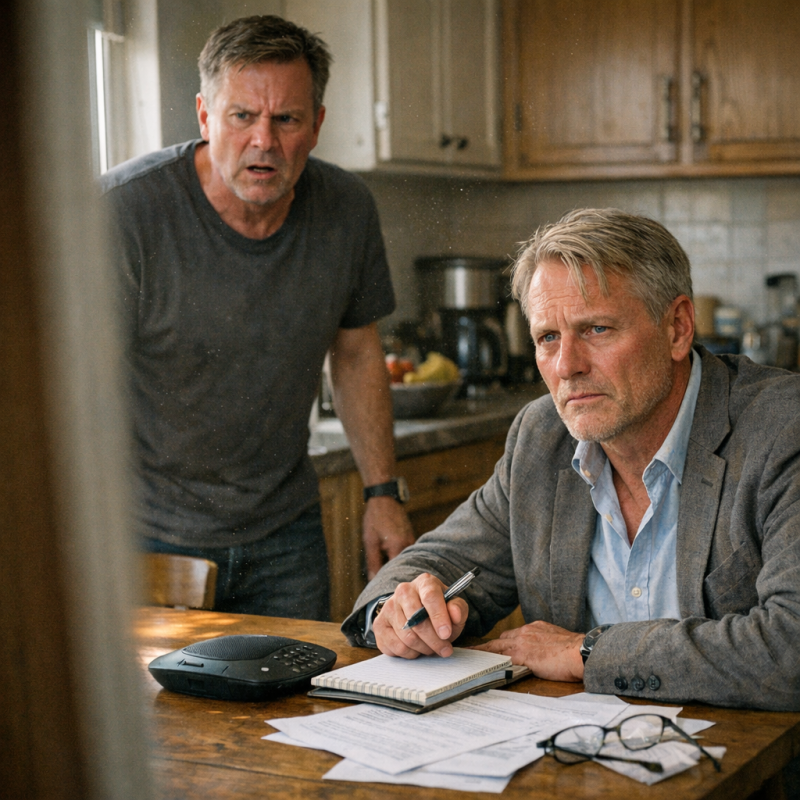 Image by FCT AI
The Security Footage Is Finally Released
The school finally released the security footage after weeks of legal back-and-forth. We all gathered in a conference room at the district office—me, my parents, Dr. Yates, the Morrisons, their lawyer, and two school administrators. The video was grainy but clear enough. You could see Emily start choking, see her stand up in distress, see me react immediately. The footage showed me performing the Heimlich exactly as I'd described, showed the food dislodge, showed Emily breathing again. It was all there, undeniable. My mom squeezed my hand so hard it hurt. For a moment, I thought this was it—finally, vindication. Proof that I'd done nothing wrong. But then Mrs. Morrison leaned forward, her eyes fixed on the screen. 'Can you play that part again?' she asked. The administrator rewound it. We watched me stand up and move toward Emily. 'See how fast he moves?' Mrs. Morrison said, her voice sharp. 'Like he was expecting it. Like he was waiting for it to happen.' Everyone stared at her. The video showed exactly what I'd said happened—but Mrs. Morrison asked why I moved so quickly, as if speed itself was suspicious.
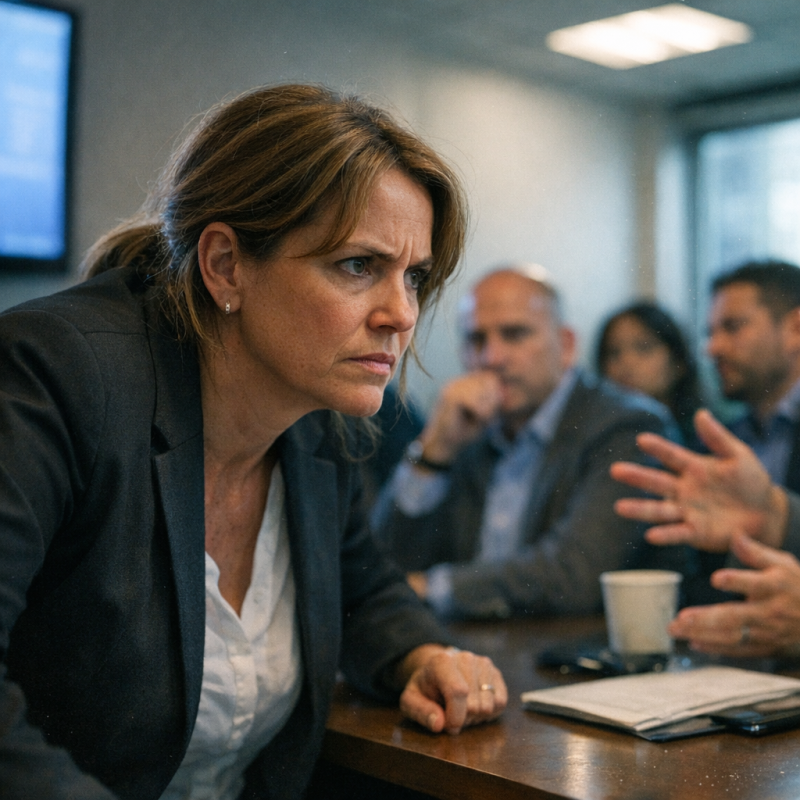 Image by FCT AI
Nurse Patterson Speaks Up
Nurse Patterson arrived at the next meeting like some kind of medical cavalry. She'd been the school nurse for twenty-three years, had EMT training, and she wasn't putting up with anyone's nonsense. She walked us through every aspect of what I'd done—hand placement, thrust technique, the way Emily had expelled the food. 'This young man performed a textbook Heimlich maneuver,' she said, looking directly at Mrs. Morrison. 'He saved your daughter's life, and he did it correctly.' My mom actually teared up. I felt this wave of validation wash over me. Finally, someone with authority was saying what we'd known all along. The administrators nodded. Even Mr. Morrison seemed to soften slightly. But then Nurse Patterson rewatched the footage, leaning closer to the screen. She paused it, her expression shifting into something I couldn't quite read. 'I've seen dozens of choking incidents,' she said slowly. 'Emily's response here—the way she stood, the universal choking sign, the duration before intervention—it all looks textbook.' She paused, frowning slightly. 'Almost too textbook for a genuine emergency.'
 Image by FCT AI
What 'Too Textbook' Means
I couldn't stop thinking about what Nurse Patterson had said. Too textbook. What did that even mean? I'd assumed her testimony would end everything, but instead, it had planted this seed in my mind that wouldn't stop growing. Late at night, I'd lie there replaying the incident frame by frame in my memory. Emily standing up. The hand at her throat. The way she'd looked at me. I'd been so focused on helping her that I hadn't really processed the details. But now, with Nurse Patterson's words echoing in my head, I started questioning everything. Had Emily actually been choking, or had it just looked that way? The food had come out—I'd seen it. That was real. But the way she'd stood, the exact placement of her hand on her throat, the timing of it all. My memory felt unreliable, contaminated by weeks of accusations and doubt. I kept trying to recall her face during those crucial seconds. The panic in her eyes had seemed genuine. But there was something else there too, something I couldn't quite name. I remembered Emily's eyes during the choking—panicked, yes, but was there something else? Something almost... aware?
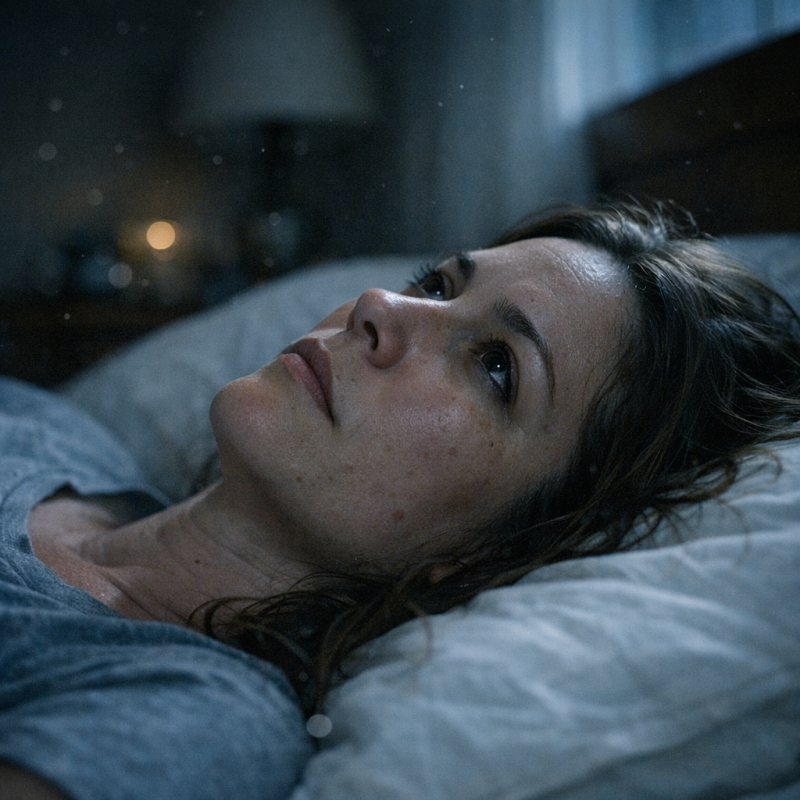 Image by FCT AI
Dr. Yates' Discovery
Dr. Yates called a private meeting with just my parents and me. He had this look on his face—part excitement, part concern—that immediately put me on edge. 'I've been doing some digging into the Morrison family,' he said, spreading out papers on the table. 'And I found something interesting.' Turns out the Morrisons had lived in Oregon before moving to our town. And before that, they'd been in Arizona. Three states in three years. My dad frowned. 'So they move around a lot. That's not necessarily suspicious.' But Dr. Yates shook his head. 'The pattern of movement is what caught my attention. They don't just move—they move suddenly, mid-school-year in some cases.' He pulled out another document. 'And here's where it gets interesting. In Oregon, there's a sealed juvenile case involving Emily.' My heart started pounding. A sealed case meant something legal had happened, something serious enough to involve courts. Dr. Yates met my eyes. 'I'm working with a colleague in Portland to see what we can find out.' He said in one of those states, there was a sealed juvenile case involving Emily—and he was working to unseal it.
 Image by FCT AI
The Morrisons Threaten to Sue Me Personally
The letter arrived on a Tuesday. Thick envelope, fancy letterhead, addressed to me personally—not my parents, me. Mom opened it with shaking hands, and I watched her face go pale as she read. The Morrisons' attorney was threatening to sue me directly for assault and battery, emotional distress, and something called 'intentional infliction of emotional harm.' Me. A fifteen-year-old kid. They wanted damages, they wanted medical costs, they wanted compensation for Emily's ongoing therapy. The numbers listed made me physically sick. My dad called Dr. Yates immediately, and he came over that evening. He read through the letter carefully, his expression grave. 'This is an intimidation tactic,' he said. 'They're trying to scare you into settling.' My mom asked if they could actually sue me, a minor. Dr. Yates hesitated. 'Technically, yes. It's unusual, but not impossible. They'd have to prove significant harm and intent.' He tried to sound reassuring. 'I think they're bluffing. This is pressure.' But I saw something in his face, a flicker of uncertainty that terrified me. Dr. Yates said they were bluffing—but the look on his face told me he wasn't entirely sure.
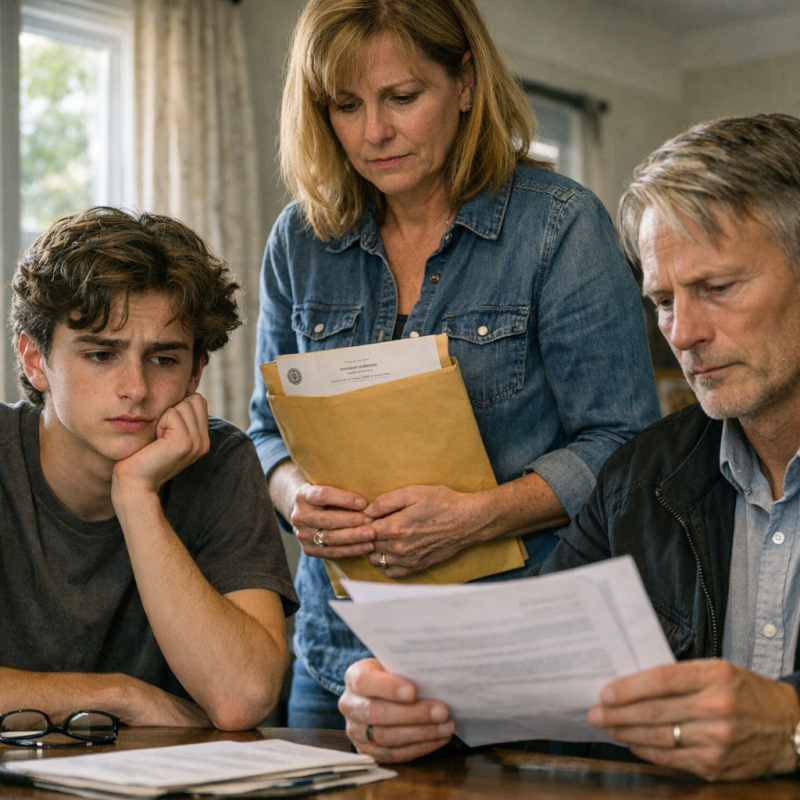 Image by FCT AI
Community Divided
Our town wasn't big enough to keep anything quiet. Within days, everyone had an opinion about what had happened. Some people were amazing—teachers who'd known me for years, parents of my friends, even some kids from school who started wearing these homemade 'Team Alex' shirts. Mrs. Chen from the grocery store hugged me in the cereal aisle and told me I was a hero. But then there were the others. People who whispered when I walked past, who pulled their kids away from me at the park. Someone spray-painted 'PERVERT' on our garage door. My mom found it before I did, and she was outside scrubbing it off, crying, when I got home from a legal meeting. Social media was a nightmare. The local Facebook groups were full of arguments—people defending me, people saying where there's smoke there's fire, people demanding 'both sides' be heard. A group of concerned parents started a petition to have me permanently banned from school property. For everyone's safety, they said. For Emily's peace of mind. I made the mistake of looking at it one night. A petition was started to have me permanently banned from school—and it had more signatures than I wanted to count.
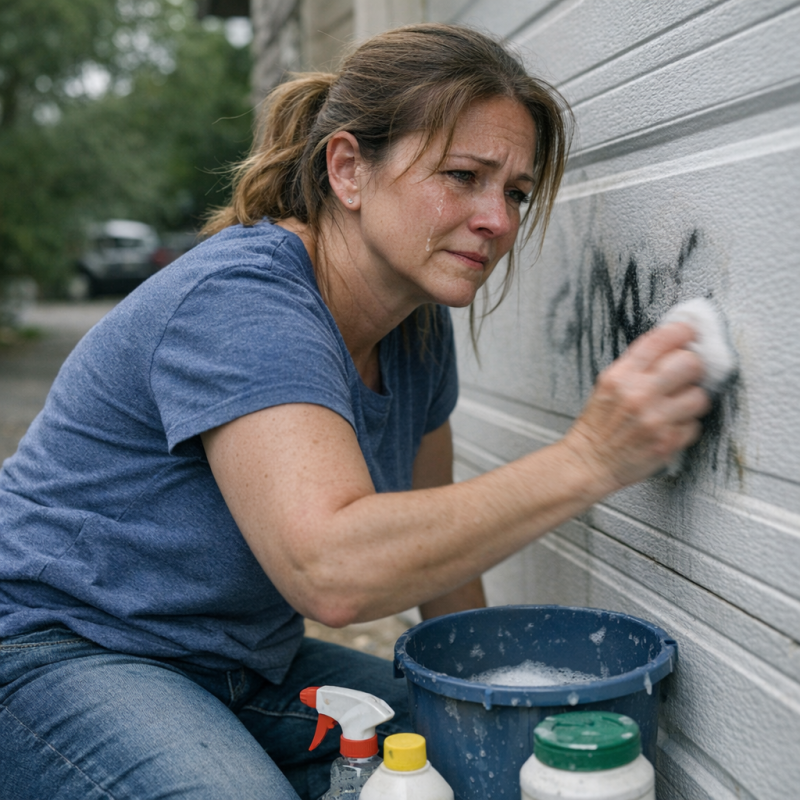 Image by FCT AI
The Anonymous Tip
Dr. Yates showed up at our house unannounced on a Saturday morning. He had his laptop with him and this strange expression—confused but energized. 'I received something unusual,' he said, opening his email. 'An anonymous tip.' My dad leaned over to look at the screen. The email had come from a burner account, one of those temporary addresses that self-destructs. No subject line. No explanation. Dr. Yates read it aloud: 'It happened before.' Then just a name: 'Riverside High School, Beaverton, Oregon.' That was it. The entire message. My mom asked who would send something like that, and why anonymously. Dr. Yates shook his head. 'I don't know. Could be someone from Oregon who knows the Morrisons. Could be someone trying to help without getting involved.' He'd already looked up the school—it existed, it was real, and it was in the town where the Morrisons had lived before moving here. My pulse was racing. Someone out there knew something. Someone was trying to tell us something important without revealing themselves. The email contained just three words and a school name: 'It happened before.'
 Image by FCT AI
The Oregon Connection
Dr. Yates didn't waste time. He contacted Riverside High School's administration, claiming to be investigating a legal matter involving a former student. It took days of calls and some creative lawyering, but eventually he got through to someone willing to talk—a vice principal who'd been there two years ago. When Dr. Yates called us with what he'd learned, I could hear the shock in his voice. There had been an incident. A choking incident in the cafeteria. Emily Morrison had been eating lunch when she started choking on food. Another student—a boy named Tyler Chen—had performed the Heimlich maneuver and saved her life. And then, just like with us, the Morrisons had accused Tyler of assault. They'd claimed he'd acted inappropriately, that he'd hurt Emily. The school had gotten involved, lawyers had been hired. 'What happened to Tyler?' my mom asked, her voice barely a whisper. Dr. Yates paused. 'His family settled out of court. Signed an NDA. They moved away six months later—Tyler's dad lost his job over it.' The room felt like it was spinning. This had happened before. The exact same thing. A boy had saved Emily from choking in the cafeteria—and his family had been forced to settle out of court and move away.
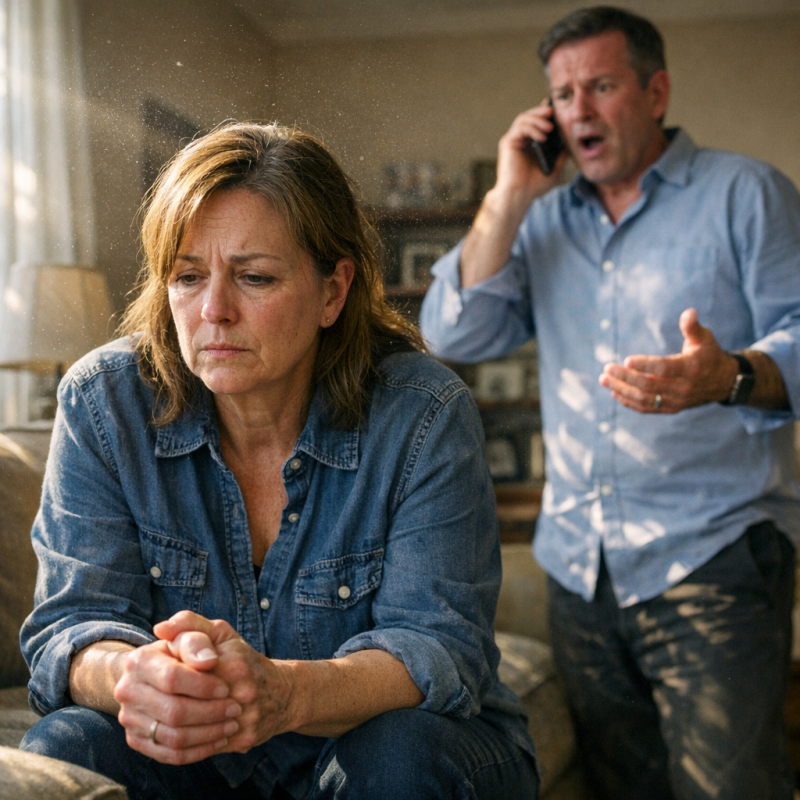 Image by FCT AI
Reaching Out to Oregon
Finding the Chen family took some work, but Dr. Yates managed it through professional networks. They'd moved to California, trying to start over. At first, Mrs. Chen didn't want to talk to us—she'd signed an NDA, she was terrified of legal consequences. But Dr. Yates explained that we were living through exactly what they'd endured, and finally, she agreed to a phone call. Her voice shook as she spoke. 'Tyler was a good kid. He saved that girl's life, and they destroyed us for it.' She described the accusations, the legal pressure, the community turning against them. It all sounded horrifyingly familiar. But then she said something that made my blood run cold. 'The thing is, the choking looked completely real. I was there that day—I saw it happen. Emily was genuinely in distress.' She paused. 'But then, about a month before we settled, it happened again. Emily choked in class, another student helped her. And that time, watching it unfold, knowing what the Morrisons had done to my son...' Her voice dropped to almost a whisper. The mother said Emily's choking looked real—until she saw it happen a second time in a different context, and then she knew.
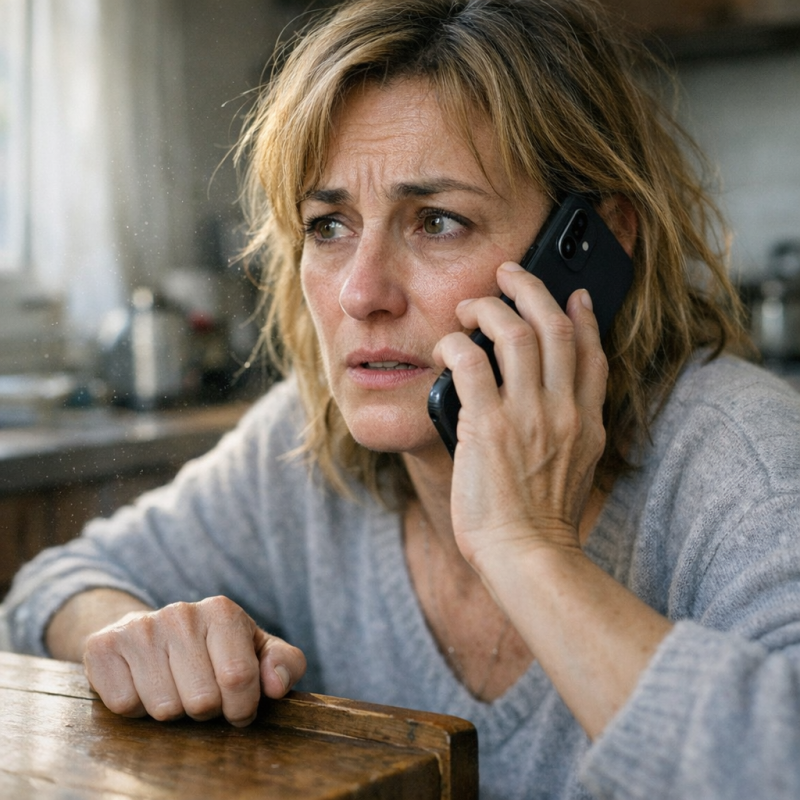 Image by FCT AI
The Third School
Dr. Yates called three days later, and the energy in his voice was different—sharper, almost electric. 'I found a third one,' he said. 'Arizona. Different district, different school, but guess who settled a case there two years before Tyler Chen?' I felt my stomach drop and soar at the same time. Another family destroyed. Another kid who'd tried to help. But also: proof. He'd dug through legal databases and found a sealed settlement involving the Morrison family at a school in Scottsdale. Different circumstances on paper, different alleged injuries, but the pattern was unmistakable. A student helps Emily, parents file complaint, school panics, settlement reached, family moves. Three schools in three years. The probability of coincidence was basically zero. I asked if this was enough to prove what they'd done. Dr. Yates went quiet for a second. 'It proves pattern,' he said. 'It proves intent. It proves they've weaponized the system.' Then he paused. 'But we still need one more piece: proof that Emily was actually faking the choking.'
 Image by FCT AI
The Medical Expert
Dr. Yates brought in a medical expert—a doctor who specialized in airway emergencies and had testified in court cases before. The guy reviewed everything: the school nurse's report from my incident, the medical records from Tyler Chen's case, even the Arizona settlement documents we'd managed to obtain. He sat across from us in Dr. Yates's office, flipping through pages with this detached, clinical expression. 'The symptoms described in each case are consistent with genuine choking,' he said, and my heart sank. But then he looked up. 'However, the timing and setting of each incident is statistically extraordinary.' He explained that real choking emergencies happen unpredictably—during meals, usually, or when someone's distracted. But Emily's incidents? All during class. All with witnesses. All with a specific type of student nearby who'd intervene. The probability of that pattern occurring naturally across three separate schools was infinitesimal. He closed the file and looked at Dr. Yates. 'In my professional opinion, these incidents weren't random. They were staged.'
 Image by FCT AI
Emily's Silence
I wanted so badly to talk to Emily. To confront her, to ask her why, to make her admit what she'd done. But Dr. Yates shut that down immediately—any contact with her could be twisted into harassment, and besides, what would it accomplish? Emily wasn't the mastermind here. She was fifteen, just like me, and she'd been doing this since she was at least twelve. That meant her mother had been controlling this for years. I couldn't imagine what that did to a person. Jake came over that night, the first time I'd really talked to him in weeks. He'd been keeping his distance, trying to stay out of the legal mess, but he knew I needed someone. We sat in my room not saying much, just existing in the same space. Then he mentioned he'd seen Emily at the library a few days earlier, sitting alone at a table, staring at nothing. 'She looked miserable,' he said quietly. 'Like someone carrying a secret that's destroying them.' He met my eyes. 'She looked like someone who desperately wanted to be caught.'
 Image by FCT AI
The Breaking Point
I hit a wall that week—emotionally, mentally, physically. I couldn't sleep. Couldn't focus on schoolwork. Couldn't think about anything except the case and what the Morrisons had done and whether any of this was even worth it. My parents looked as exhausted as I felt. My mom had lost weight. My dad had gone quiet in this scary, defeated way. One night at dinner, he put down his fork and said something I never expected. 'We could still settle. Walk away. Let them win.' I stared at him. My mom looked at him too, her expression unreadable. 'I'm serious,' he continued. 'Dr. Yates says we have a strong case, but strong doesn't mean guaranteed. If we fight this and lose, we lose everything—money, reputation, peace of mind. Maybe it's not worth it.' I wanted to argue. To say we had to fight, had to expose them, had to make sure they never did this to another family. But sitting there, looking at my parents' exhausted faces, I felt something crack inside me. For the first time, I seriously considered it.
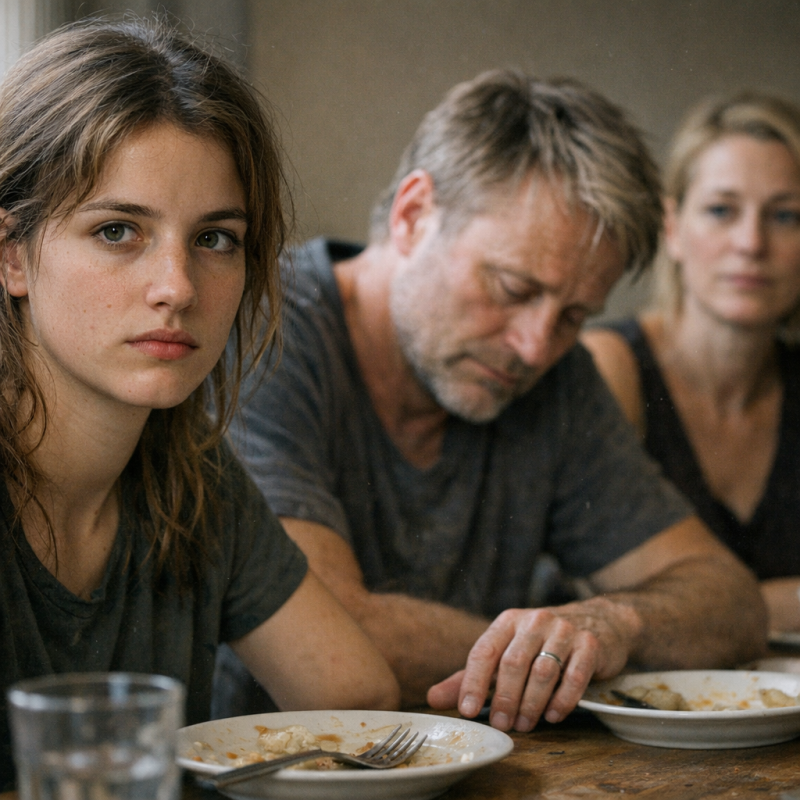 Image by FCT AI
The Anonymous Tipper Revealed
Dr. Yates called an emergency meeting two days later. When we arrived at his office, there was a woman on his laptop screen—video call, unfamiliar face, maybe mid-forties. She looked nervous and determined at the same time. 'This is Rebecca Hadley,' Dr. Yates said. 'She's Mr. Morrison's sister.' My brain short-circuited. The anonymous tipster. The person who'd been feeding Dr. Yates information this whole time. She looked at us through the screen with this pained expression. 'I'm sorry,' she said, voice shaking. 'I'm so sorry for what my brother and his wife have done to you.' She explained that she'd watched them do this before—not just at our school or Arizona or Tyler Chen's school, but at a fourth school before that, one we hadn't even found yet. Four families destroyed. Four kids punished for being good people. She said she'd kept quiet out of family loyalty, fear of retaliation, not wanting to believe her own brother could be so calculating. But watching them target another family, another kid who'd only tried to help? She couldn't stay silent anymore. Her voice cracked. 'I've watched them destroy four families in three years, and I couldn't let there be a fifth.'
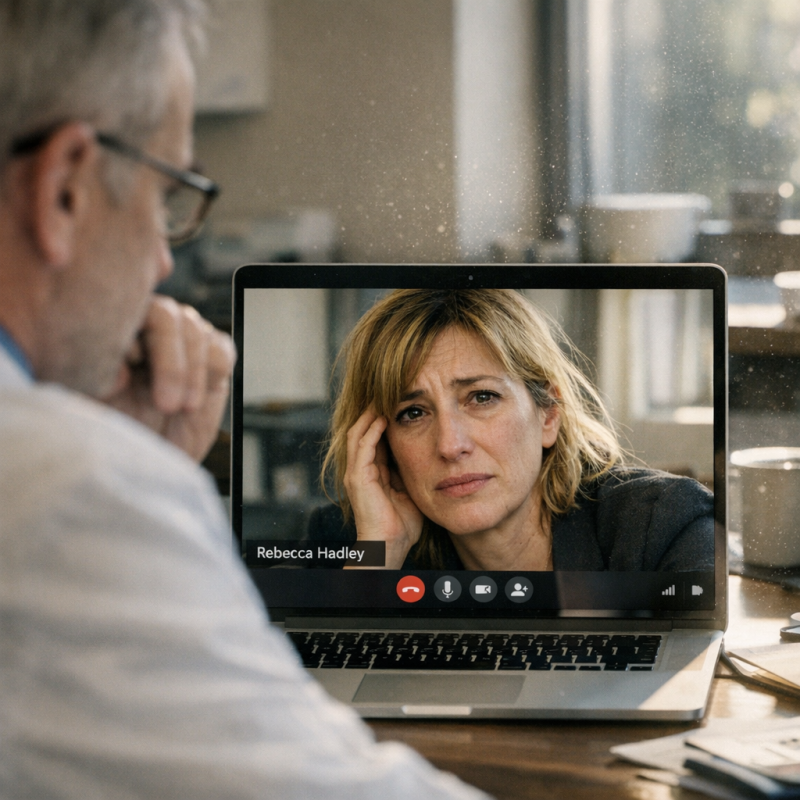 Image by FCT AI
Building the Case
With Rebecca's testimony, everything came together. Dr. Yates spent the next week assembling a comprehensive case that documented the entire pattern: four schools, four incidents, four families targeted after their children helped Emily during apparent choking emergencies. He had settlement documents, witness statements, medical expert analysis, and now insider testimony from someone who'd watched the Morrisons orchestrate the whole scheme. Sitting in his office, watching him organize the evidence into a presentation, I felt something I hadn't felt in months: hope. This was real. This was provable. This would end them. My parents looked lighter too, like they could finally see the finish line. But then Dr. Yates turned to us with that careful, lawyer expression he got when delivering bad news. 'This proves pattern,' he said. 'This proves they've targeted multiple families. This proves intent and malice.' He paused. 'But it's still circumstantial regarding the core question: did Emily fake the choking, or did she just exaggerate real incidents?' He met my eyes. 'We have enough to destroy them—but only if we can prove Emily was coached to fake it, not just encouraged to make mountains out of molehills.'
 Image by FCT AI
The Final Meeting Demand
The school scheduled one final mediation meeting—a last-ditch attempt to resolve everything before it exploded into actual litigation. Both families would be present. School officials would be there. And Dr. Yates would have the opportunity to present our case. It felt like a trap and an opportunity at the same time. My dad asked Dr. Yates point-blank if we should do it—walk into a room with the Morrisons, lay all our cards on the table, risk everything on one meeting. Dr. Yates was quiet for a long moment. 'It's all-or-nothing,' he finally said. 'If we present this evidence and the school doesn't act, if the Morrisons manage to spin it or discredit Rebecca or cast enough doubt, we'll have shown our entire hand. They'll know exactly how to counter us in court.' He looked at each of us. 'But if we succeed—if we expose them publicly, in front of witnesses, in a setting they can't control—they won't be able to recover.' My mom's hand found mine under the table. Dr. Yates's expression was grave. 'This is our only chance to expose them publicly—but if we fail, we'll lose everything.'
 Image by FCT AI
The Truth Comes Out
The mediation room felt too small for the amount of tension it held. The Morrisons sat on one side of the table looking polished and confident. Emily sat between them, staring at her hands. School officials flanked the mediator. Officer Ramirez was there too—Dr. Yates had insisted on having law enforcement present. Rebecca sat near us, looking like she might throw up. Dr. Yates stood and presented everything: four schools, four incidents, four families targeted. He showed the settlement documents, the medical expert's analysis, the statistical impossibility of the pattern. He played Rebecca's testimony. The room went completely silent. The Morrisons' lawyer started objecting, but Dr. Yates cut him off with documentation for every single claim. Mrs. Morrison's face had gone from confident to pale to something harder, more desperate. The mediator asked if they had a response. Mrs. Morrison stood up, gathering her things, clearly preparing to walk out and let her lawyers handle it. But then Emily made a sound—this small, broken sob. Everyone turned to look at her. She was crying, actually shaking, and when she looked up at her mother, the expression on her face was something between terror and relief. Her voice came out barely above a whisper, but in that silent room, everyone heard it: 'It's all true.'
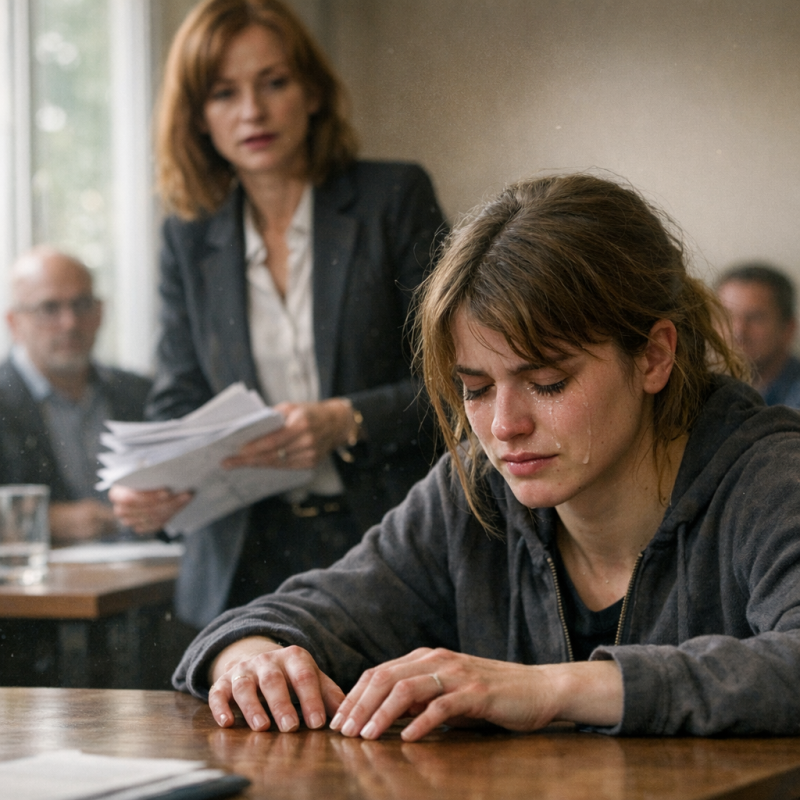 Image by FCT AI
Emily's Confession
Emily couldn't stop shaking. The words tumbled out between sobs—how her mother had started practicing with her when she was eleven, teaching her to hold food in her throat, to fake the panic, to time it perfectly. She described the sessions in their kitchen where Mrs. Morrison would coach her responses, write scripts for what to say afterward, make her rehearse until it looked natural. 'She told me we were just being prepared,' Emily whispered. 'That people would try to hurt us and we needed to protect ourselves.' The room was dead silent except for her crying. She explained how her mother picked the targets—always someone vulnerable, always someone kind who would help. After each incident, there were threats. If Emily ever told anyone, her mother said no one would believe her. They'd think she was crazy. They'd take her away from her family. Mrs. Morrison leaned forward like she was going to stop her daughter from talking, but Officer Ramirez moved between them. Emily looked directly at me, tears streaming down her face. 'I wanted to tell you from the beginning,' she said. 'But my mother said you'd never believe me.'
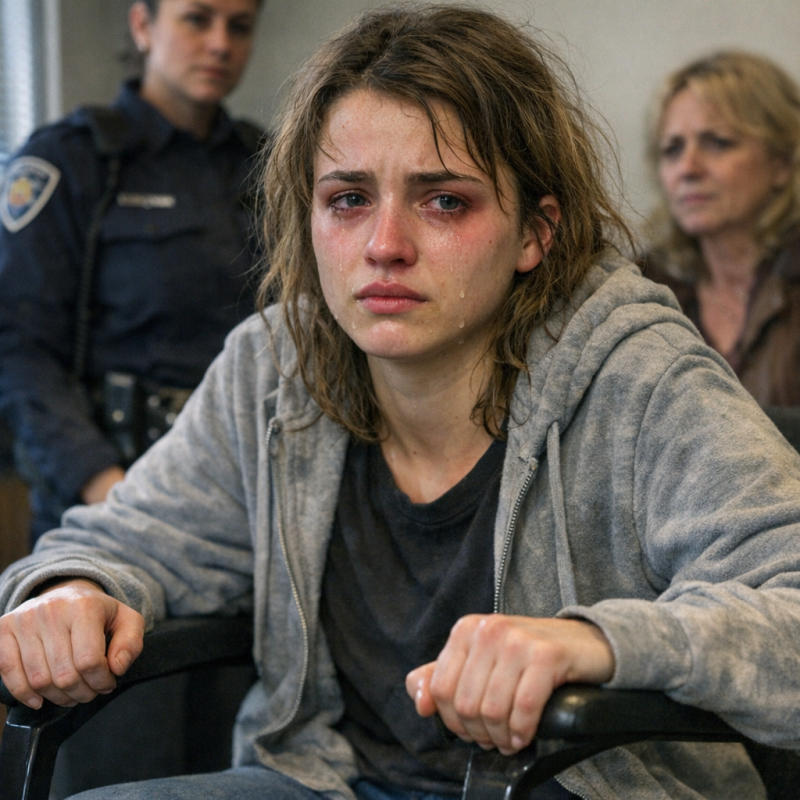 Image by FCT AI
Mrs. Morrison Unravels
Mrs. Morrison stood up so fast her chair fell backward. 'She's lying,' she said, her voice sharp and controlled. 'She's confused, she doesn't understand what she's saying.' But Emily just cried harder, and Mrs. Morrison's facade started cracking. She turned on her daughter with this vicious look I'd never seen before. 'After everything I've done for you,' she hissed. 'You ungrateful little—' The mediator actually stood up to intervene. Mrs. Morrison whipped around to face Dr. Yates, then the school officials, her voice rising. 'This is harassment. This is a conspiracy. You're manipulating a traumatized child.' She pointed at Rebecca. 'That woman is clearly mentally ill. And you,' she looked at my parents, 'you're desperate to save your son from the consequences of his actions.' Her lawyer was trying to calm her down, but she was spiraling, threatening lawsuits against everyone in the room, demanding we all be held accountable for this 'witch hunt.' That's when Officer Ramirez stepped forward and pulled out his handcuffs. He informed her that denying it wouldn't help—he was there to arrest her for fraud and child endangerment.
 Image by FCT AI
The Arrest
Everything happened very quickly after that. Officer Ramirez read Mrs. Morrison her rights while another officer who'd been waiting outside came in to assist. She kept talking, kept denying, kept threatening, even as they put the cuffs on her wrists. Mr. Morrison sat completely still, looking older than I'd ever seen him. Ramirez explained to the room that Mr. Morrison had cooperated with the investigation, providing financial records and testimony about his wife's activities. He wouldn't be arrested, but he'd face civil liability for the settlements he'd helped collect. 'I didn't know,' Mr. Morrison kept saying to no one in particular. 'I didn't know the extent of it.' Emily was sobbing into Rebecca's shoulder now, and I couldn't tell if it was relief or grief or both. Mrs. Morrison stopped struggling as they led her toward the door, her face settling into something cold and hard. Right before they took her out of the room, she looked back over her shoulder at Emily. Her lips moved silently, forming one word: 'traitor.' And watching Emily's face crumple, I knew she would need years to recover from this.
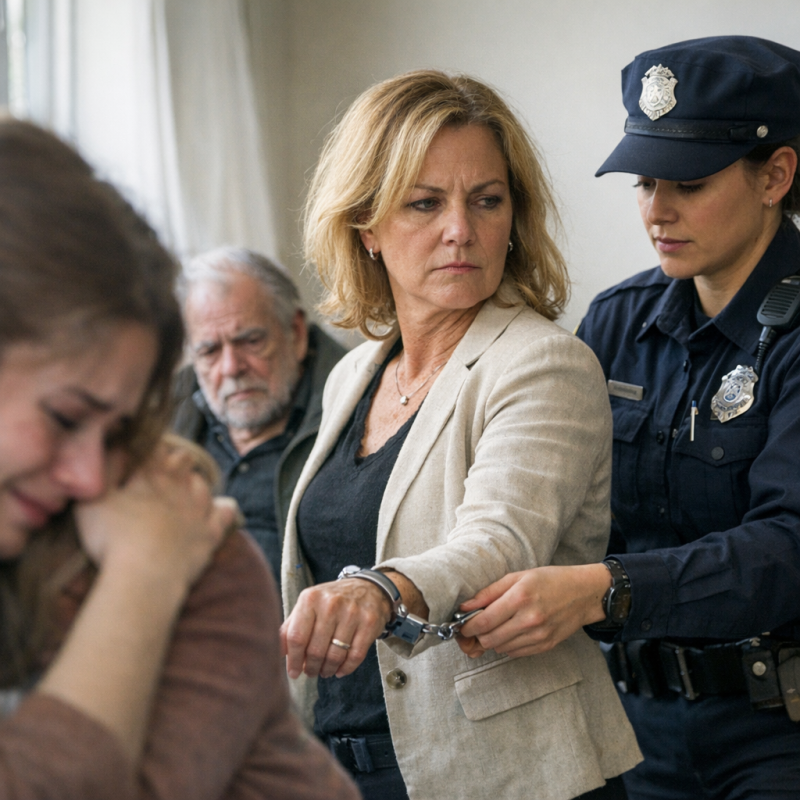 Image by FCT AI
School's Apology
The meeting with Principal Gardner happened two days later in his office. He looked uncomfortable, which honestly felt like justice in itself. The school board's attorney was there too, along with Mr. Fletcher and my parents. Gardner read from a prepared statement, acknowledging that the school had 'failed in its duty to protect a student who acted heroically in an emergency situation.' They apologized for the suspension, for the investigation, for not looking deeper when the inconsistencies started appearing. Mr. Fletcher actually looked me in the eye and said he was sorry—that he'd let procedure override his instinct that something was wrong. The board attorney explained they were expunging everything from my record, that there would be no permanent documentation of the accusation or suspension. Gardner said I could return to school immediately with full support from the administration. My mom was crying quietly, squeezing my dad's hand. I should have felt pure relief, pure vindication. Instead, I just felt tired and kind of empty. They offered to reinstate me immediately, but part of me wasn't sure I wanted to go back to a place that had abandoned me so easily.
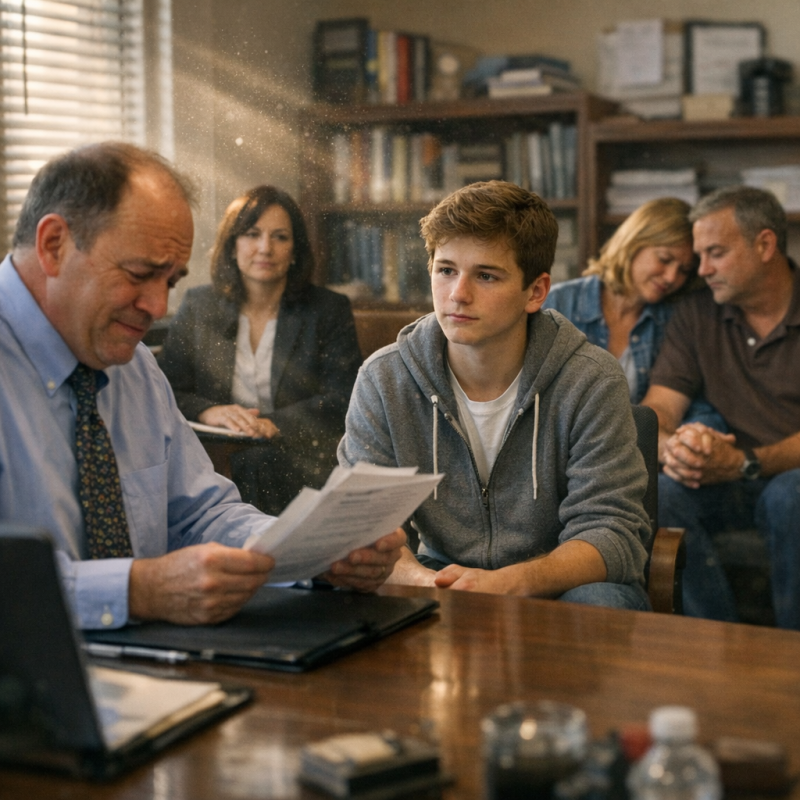 Image by FCT AI
The Prior Victims
Dr. Yates helped us connect with the three prior families over the next week. The Arizona parents called first, and the dad's voice broke when he thanked us for stopping the Morrisons. Their daughter had struggled with trust issues for years after the incident. The New Mexico family sent a long email describing the depression their son had fallen into, the therapy he'd needed, how the settlement money felt like blood money they'd wanted to refuse but couldn't afford to. The Oregon call was the hardest. The mother explained that her son—who'd been sixteen when it happened to him—had developed such severe anxiety that he'd dropped out of school entirely. He was twenty-two now and still lived at home, barely functional. 'He saved a girl's life and they destroyed him for it,' she said. 'When I heard what they tried to do to your family, I wanted to warn you, but our settlement had a non-disclosure clause.' Her voice got quiet. 'My son never recovered from what the Morrisons did to him.' And that's when I understood how close I came to that fate.
 Image by FCT AI
Emily Reaches Out
The letter arrived a week later, handwritten on plain notebook paper. Emily's handwriting was small and precise, the way she'd always taken notes in class. She started by saying she didn't expect me to forgive her, that she didn't deserve it. Then she explained what it had been like living in that house, under her mother's control, believing there was no way out. She wrote about the relief she'd felt when Dr. Yates and Rebecca exposed everything—like a weight had been lifted that she'd been carrying for years. The part that got me was when she described watching me defend myself at school, seeing my family fight back, and realizing for the first time that her mother wasn't invincible. 'You showed me that the truth could win,' she wrote. She was going to testify against her mother in the criminal case, no matter how hard it would be. She'd also entered therapy and was living with her aunt now. The last paragraph made my throat tight. 'I know this sounds strange, but I owe you my life twice now—once from the choking, and once from the truth.'
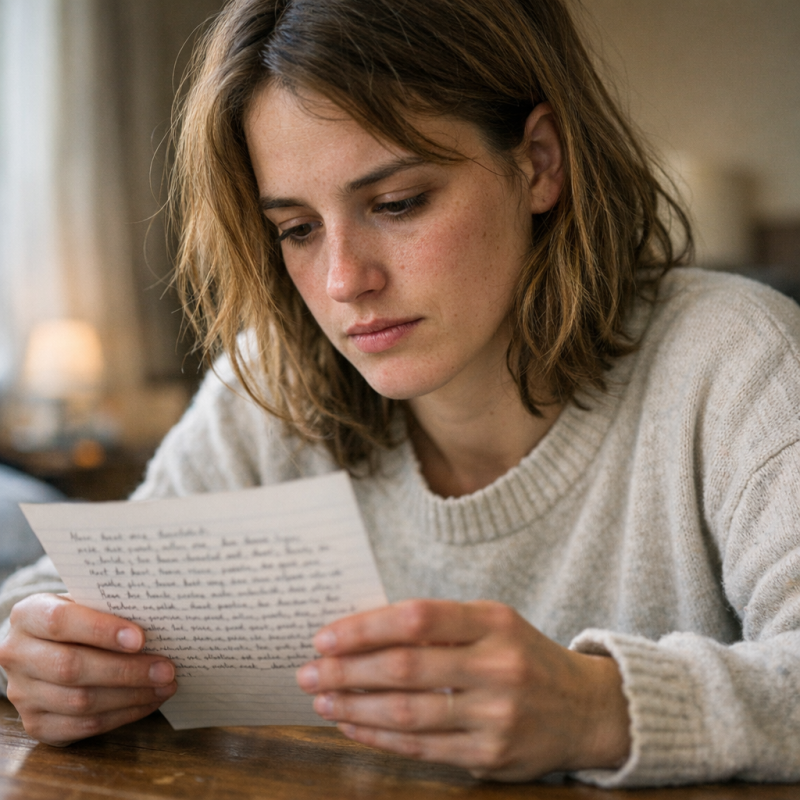 Image by FCT AI
The Media Turns
The news coverage shifted basically overnight. The same outlets that had run those 'questions remain' pieces suddenly published exposés about the Morrison fraud scheme. One headline called it 'A Mother's Munchausen Scheme: How One Family Targeted Good Samaritans Across Four States.' They interviewed Dr. Yates, quoted from Rebecca's testimony, showed photos of Mrs. Morrison being led away in handcuffs. Suddenly I was 'the brave teen who saved a girl's life and nearly lost everything,' 'the victim of an elaborate con,' 'a hero who stood up to a serial predator.' People shared the articles on social media with comments about how they'd always known I was innocent, how they'd had doubts about the story from the beginning. My phone blew up with messages from people I hadn't heard from in weeks. I should have felt vindicated, I guess. Instead, I felt weird and kind of violated all over again. They were writing about me like they knew me, like they understood what I'd been through. But reading about myself as a victim of a con artist felt almost as violating as being called a predator.
 Image by FCT AI
Returning to School
Walking back into school felt surreal. Jake met me at the entrance, gave me this awkward half-hug, and basically served as my bodyguard for the first few periods. People stared, but most of them smiled or nodded. A few classmates apologized for believing the rumors, for not standing by me. Laura hugged me in the hallway and said she'd never doubted me, which wasn't exactly true, but I appreciated it anyway. Mr. Hendricks welcomed me back to English class with a genuine smile, and a couple of kids actually clapped. It was weird and uncomfortable and kind of nice all at once. The strangest moment came in third period when I sat down at my usual desk. Someone had carved 'hero or creep?' into the wood weeks ago, and I'd spent way too much time staring at those words. But now there was fresh carving over it—someone had scratched out everything except 'hero,' and added a period. Just that one word: 'Hero.' I ran my finger over it, feeling the rough edges of the letters. It should have felt good, like vindication. Instead, it still felt like a question mark.
 Image by FCT AI
The Criminal Trial
The courtroom was packed. I sat with my parents, watching as prosecutor after prosecutor laid out Mrs. Morrison's pattern of manipulation. The detective testified about the falsified evidence. The forensics expert explained how the texts had been spoofed. Then came the victims—three other families who'd been targeted before us, people who'd settled quietly because fighting seemed impossible. One woman broke down describing how Mrs. Morrison had threatened to destroy her son's college prospects unless they paid fifty thousand dollars. Emily testified last, her voice shaking but steady. She talked about overhearing her mother planning the scheme, about being used as a prop, about the years of being treated like an asset instead of a daughter. Mrs. Morrison stared straight ahead, expressionless. Mr. Morrison wasn't there—he'd filed for divorce and moved across the state with Emily. The jury deliberated for six hours. When they returned with the guilty verdict, the courtroom erupted in whispers. I should have felt pure triumph, complete vindication. Instead, I looked at Emily crying in her aunt's arms and felt this weird mix of relief and sadness. When the guilty verdict was read, I felt relief—but also sadness for the family that had been destroyed by one person's greed.
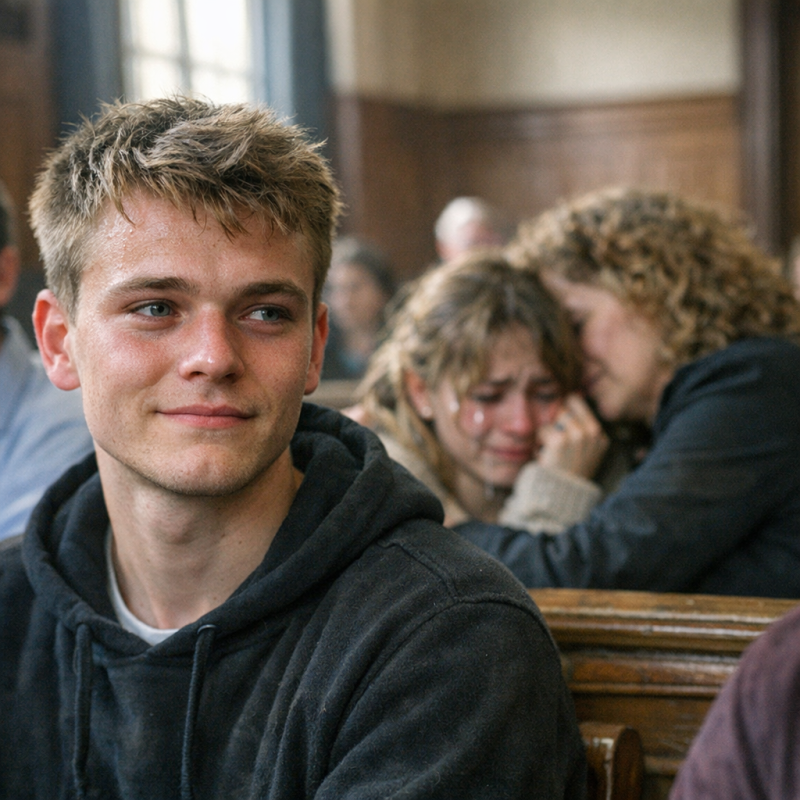 Image by FCT AI
Moving Forward
Six months passed. Spring turned to summer, and I started working at the community center teaching kids to swim. Funny how that worked out. The whole experience changed something fundamental in how I see the world, though. I used to think doing the right thing was simple—you help someone, they're grateful, life moves on. Now I know it's messier than that. Heroism isn't a single moment frozen in time; it's the aftermath you never see coming, the consequences that ripple outward in ways you can't predict. I'm more cautious now, but not cynical. More aware, but not paranoid. Jake and I still hang out constantly, and he jokes that I'm his claim to fame. My parents are different too—stronger, maybe, but also more protective. They installed a home security system and Mom still flinches when the phone rings. We all carry scars from this, invisible ones that only we understand. But here's what I figured out: saving someone isn't about the recognition or the gratitude. It's about knowing you acted when action was required, even if the cost was higher than you ever imagined. I learned that saving someone's life doesn't end when they start breathing again—sometimes that's when the hardest part begins.
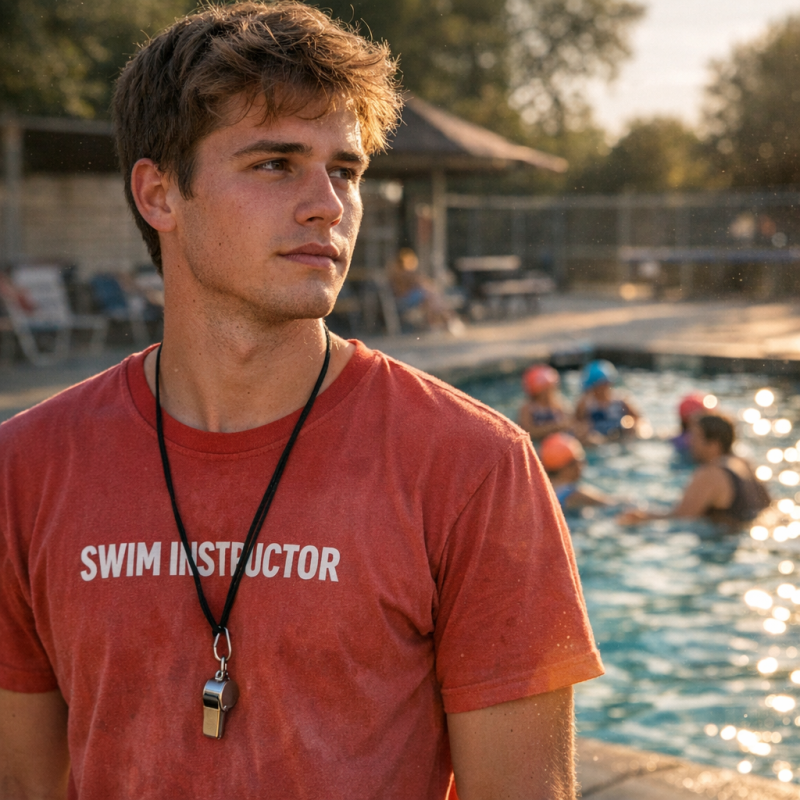 Image by FCT AI
Emily's New Life
Emily's living with her aunt now—Mr. Morrison's sister, who lives about forty miles away. She changed schools, started therapy twice a week, and from what I hear, she's doing okay. We don't talk much, which is probably healthy for both of us. Too much shared trauma, you know? But we text occasionally, these brief check-ins that feel important without being overwhelming. Last month she sent me a photo of her new dog, some rescue mutt with one floppy ear. 'Meet Charlie,' the text said. 'First decision I made entirely on my own.' I sent back a thumbs up and a heart. A few weeks ago, she texted something longer: 'Therapy is weird. I'm learning to recognize when I'm people-pleasing versus actually wanting something. Learning to be a person instead of a prop.' I stared at that message for a while before responding. 'That's huge,' I wrote. 'Seriously proud of you.' She sent back a simple 'Thanks. For everything.' We haven't spoken since, but that's fine. Some connections don't need constant maintenance. She sent me a text saying she was learning to be a person instead of a prop, and I told her I was proud of her.
 Image by FCT AI
The Right Thing
So that's the story of how I saved someone's life and almost lost everything because of it. People sometimes ask if I regret it, if knowing what I know now would change that moment in the classroom. The answer is always no. Always. What happened afterward—the accusations, the fear, the public humiliation, watching my parents suffer—none of it erases the fact that Emily would be dead if I'd hesitated. She'd be gone, and I'd spend the rest of my life wondering if I could have done something. That's a worse fate than anything Mrs. Morrison put us through. I'm seventeen now, heading to college next year. This experience taught me that courage isn't clean or simple. It's complicated and costly and sometimes profoundly unfair. But it's still worth it. The world needs people who act when action is required, who help when helping is hard. I'm not a hero—I'm just someone who refused to look away when it mattered. If I could go back to that classroom, knowing everything that would follow, I'd still stand up. I'd still wrap my arms around her. I'd still pull. Because that's what it means to be human—to help, even when the cost is higher than you ever imagined.
 Image by FCT AI