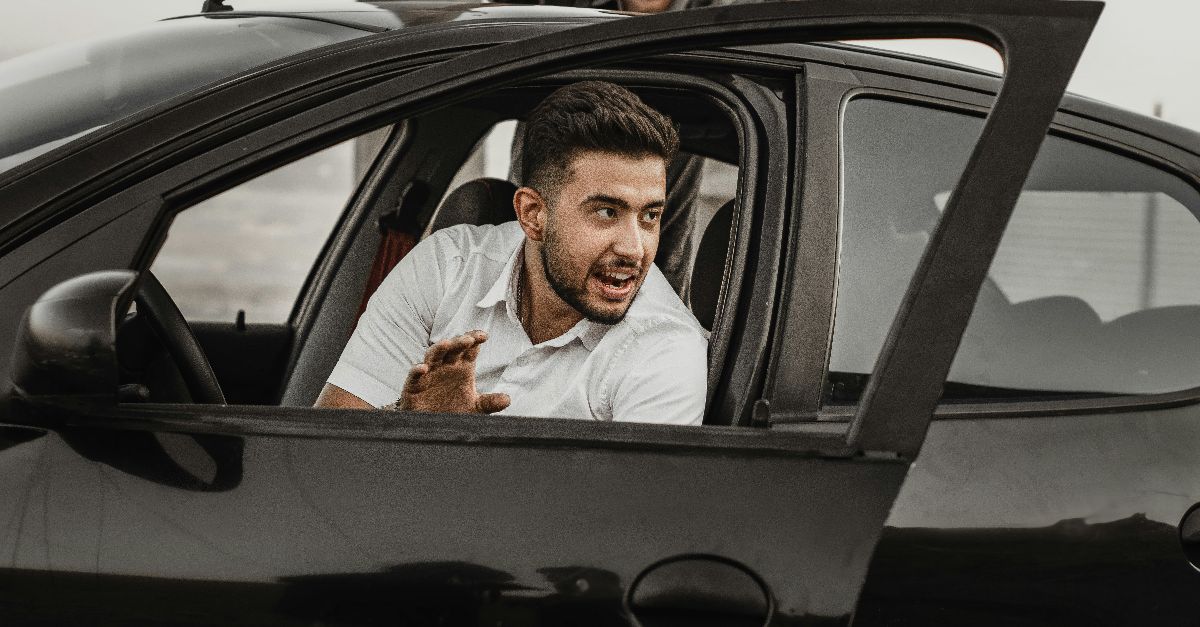
The Calm Before the Crash
So there I was, stuck in that weird pocket of rush hour where traffic actually moves, which honestly should've been my first clue the universe had plans. I was driving home in my beat-up '08 Civic—the one with the check engine light that's been on since Obama's first term—just vibing to a podcast about unsolved mysteries. Fitting, right? The light ahead turned red, so I stopped like a normal human being. I was literally sitting there, foot on the brake, thinking about whether I had enough leftovers at home or if I'd need to stop for food. Then WHAM. My whole car lurched forward and my phone went flying into the footwell. For a second, I just sat there gripping the steering wheel, trying to process what happened. Someone had rear-ended me. At a red light. While I was completely stopped. I took a breath, checked that I wasn't hurt, and reached for my door handle to do the responsible adult thing and exchange insurance information. I checked my mirrors and saw her waving her arms—like I'd caused this whole thing.
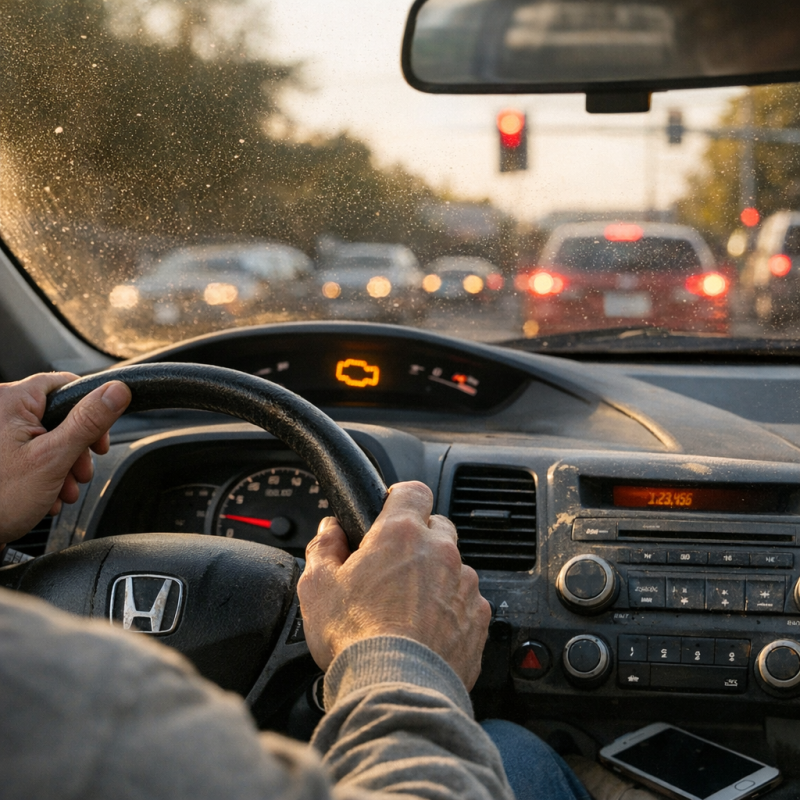 Image by FCT AI
You Cut Me Off
I got out of my car and immediately this woman—fifties, driving an SUV that cost more than my entire year's salary—came storming toward me. Before I could even say 'Are you okay?' she started screaming. And I mean SCREAMING. 'You cut me off! You cut RIGHT in front of me!' I just stood there, completely baffled, because I'd been stopped at that light for a good ten seconds before impact. 'Ma'am, I was stopped at the red light,' I said, trying to keep my voice level. 'You hit me from behind.' She wasn't having it. Her face was red, spit literally flying as she yelled about how I'd swerved into her lane. What lane? We were at a stoplight. There was no lane-changing happening. I pulled out my phone to document the damage and maybe call the police, and that's when she really lost it. She jabbed her finger in my direction, her whole body shaking with rage. Then she pointed at me and shouted something I never expected: 'You disrespecting millennial!'
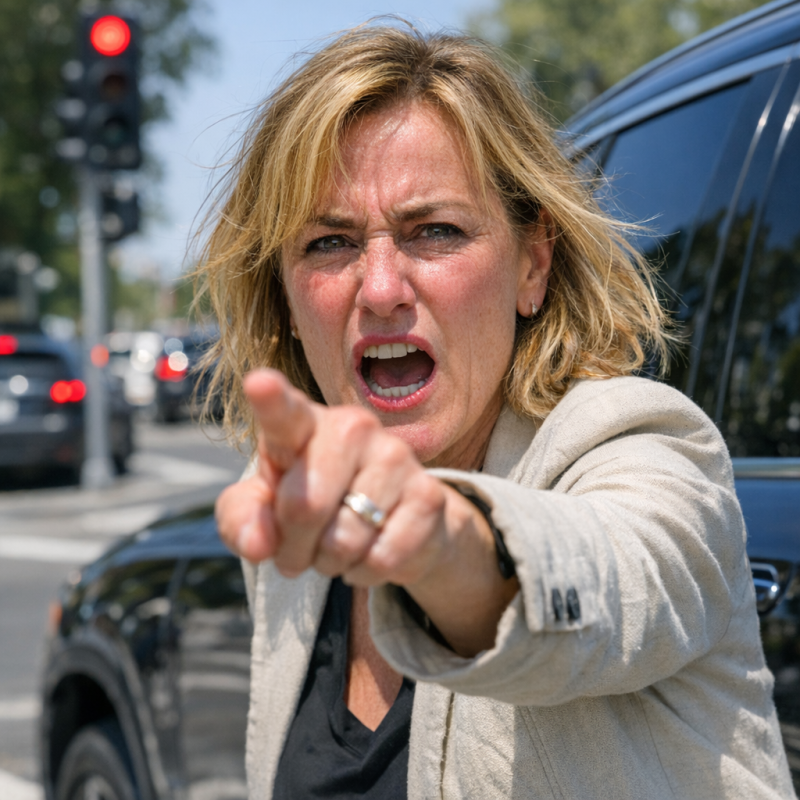 Image by FCT AI
The Escape
I actually laughed. Not because it was funny, but because my brain couldn't compute what was happening. 'Ma'am, I just need your insurance information,' I said, trying to redirect this absolute circus back to reality. She ignored me completely and started marching back to her SUV, still muttering about millennials and disrespect and God knows what else. 'Wait—we need to exchange information!' I called after her. She didn't even turn around. She just climbed into her pristine white SUV, slammed the door, and revved the engine. I stood there holding my phone like an idiot, thinking surely she's just moving her car to the side of the road, right? Wrong. She peeled out into traffic, nearly clipping another car, and disappeared around the corner. I looked down at my phone, then back at the empty space where her car had been. My bumper was dented, my neck was starting to hurt, and I had exactly zero pieces of information about who'd just hit me. She just drove off, leaving me standing there wondering if I'd imagined the whole thing.
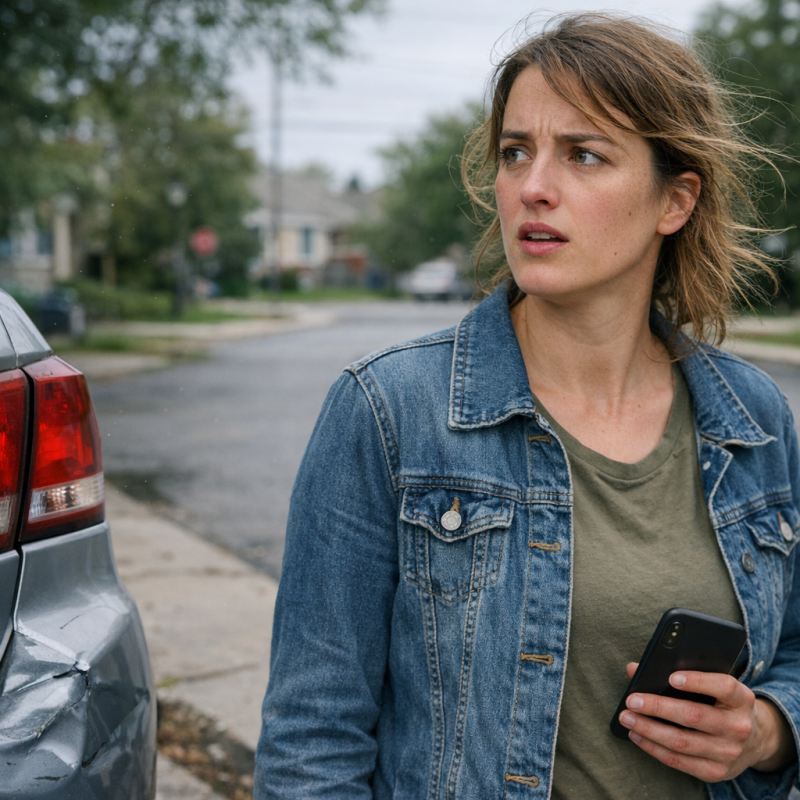 Image by FCT AI
The Chase That Wasn't
I jumped back in my car, hands shaking as I tried to remember anything useful about her vehicle. White SUV. Older woman. Completely unhinged. Not exactly a detailed police report. But I had to try something, right? Traffic started moving again and I pulled forward, scanning the road ahead. Maybe I could at least catch her license plate number. My neck was definitely starting to ache now, that delayed whiplash thing everyone warns you about. Two blocks ahead, traffic slowed to a crawl—typical rush hour nonsense. And then I saw it. Her white SUV, sitting in the right lane with its blinker on. My heart actually jumped. Thank God. She'd come to her senses. She was pulling over to do the right thing. I eased my car forward, already mentally rehearsing how I'd handle this calmly and maturely despite the absolute insanity of the past five minutes. I'd get her information, file a police report, and forget this ever happened. Relief washed over me—she was pulling over, and this would finally get sorted out.
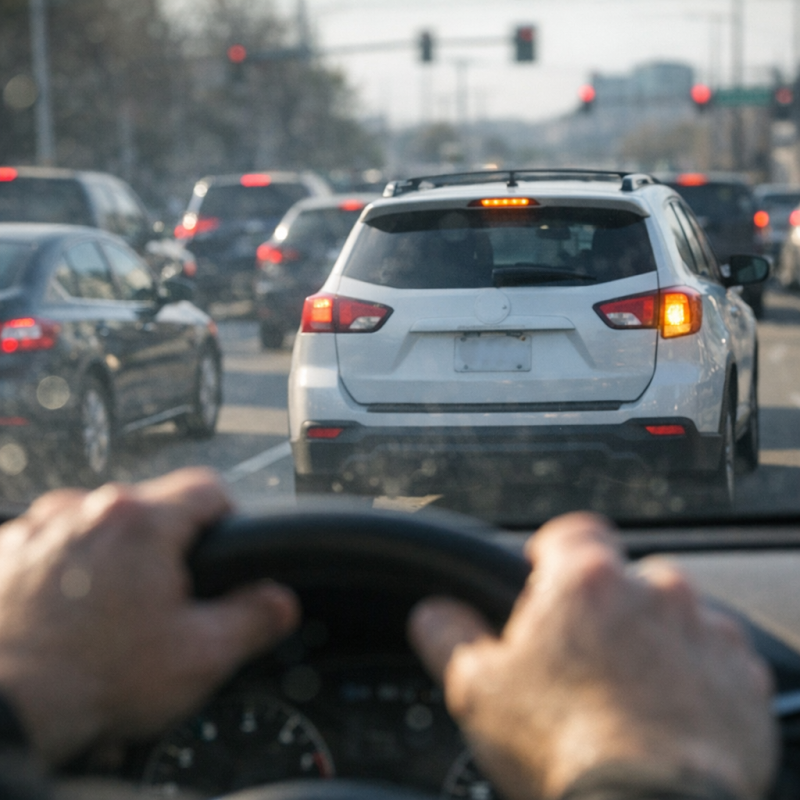 Image by FCT AI
The U-Turn
Except she didn't pull over. Instead, she cranked her wheel hard and made an illegal U-turn right across the median. Cars honked. Someone yelled out their window. I watched, completely frozen, as her SUV bounced over the curb and swung around until it was facing the opposite direction. Facing me. She stopped her car in the middle of the road, perpendicular to traffic, completely blocking the lane. Drivers behind her were swerving and honking, but she didn't move. She just sat there in her SUV, staring directly at my windshield. What the heck was she doing? Was this some kind of intimidation tactic? A game of chicken? My foot hovered over the gas pedal, every instinct screaming at me to just drive away. But I couldn't move. I was trapped in my lane by the car behind me, stuck watching this woman's face through two windshields as she revved her engine. People were starting to get out of their cars now, phones up, probably thinking they were about to witness road rage gone nuclear. My brain scrambled to catch up—was she trying to intimidate me?
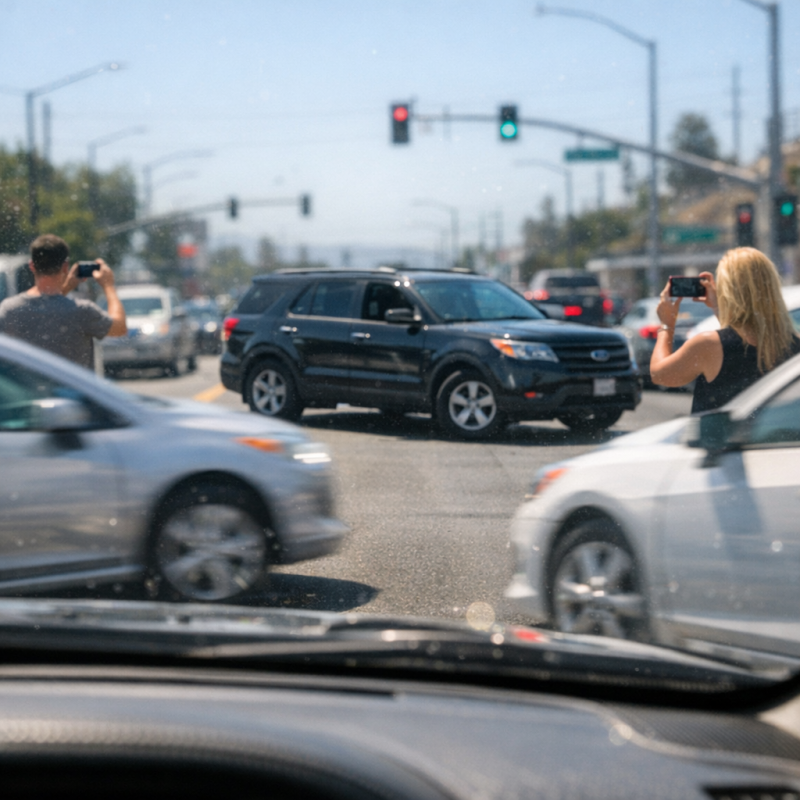 Image by FCT AI
Head-On
She floored it. I'm not exaggerating—she accelerated straight at me like she was trying to win a demolition derby. I barely had time to brace before her SUV slammed into the front of my Civic with this horrible crunching sound. My seatbelt locked. My body jerked forward then back. The whole car shuddered and I think I screamed, but I'm not sure because everything went into this weird slow-motion panic mode. Steam started hissing from under my hood. My hands were locked on the steering wheel, knuckles white. The airbags didn't deploy—because of course they didn't, this car was held together by duct tape and hope—but I was okay. Physically. Mentally? I was gone. I looked up and she was still there, still in her car, and she was SCREAMING. I couldn't make out the words through both our windshields but I could see her face, red and twisted, mouth moving nonstop. She hit me. On purpose. She deliberately crashed into me head-on in the middle of rush hour traffic. Through it all, she never stopped screaming—and I realized this was far from over.
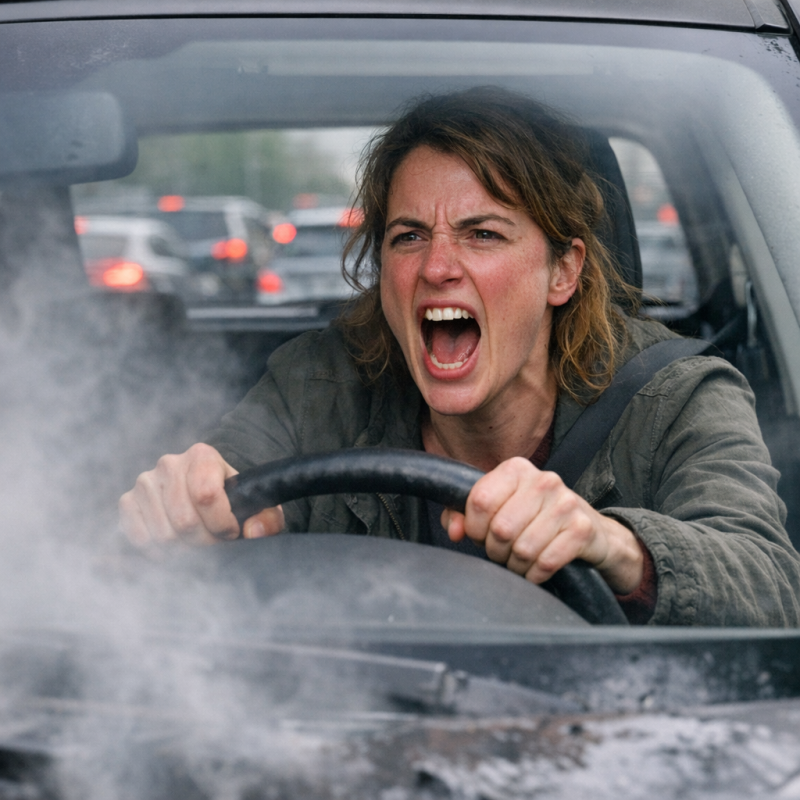 Image by FCT AI
The Crowd Forms
People were running over now. Car doors slamming, footsteps on asphalt, everyone talking at once. Someone knocked on my window—this guy in a business suit, maybe forty, looking genuinely concerned. 'Are you okay? Did you see that? She just hit you!' I nodded, couldn't speak yet. My door wouldn't open—something was jammed from the impact—so I rolled down the window instead. Outside, Patricia was out of her SUV now, still yelling, pacing back and forth between our smashed cars like she was the victim here. A woman with short dark hair was filming everything on her phone, slowly circling to get all the angles. Good. I needed witnesses because no one would ever believe this otherwise. The business suit guy—I'd later learn his name was Marcus—stood near my car like he was ready to intervene if Patricia came at me. The woman filming said something to her friend, loud enough for me to hear: 'This is insane.' A man nearby muttered, 'Is she serious right now?' and I realized I wasn't the only one seeing this madness.
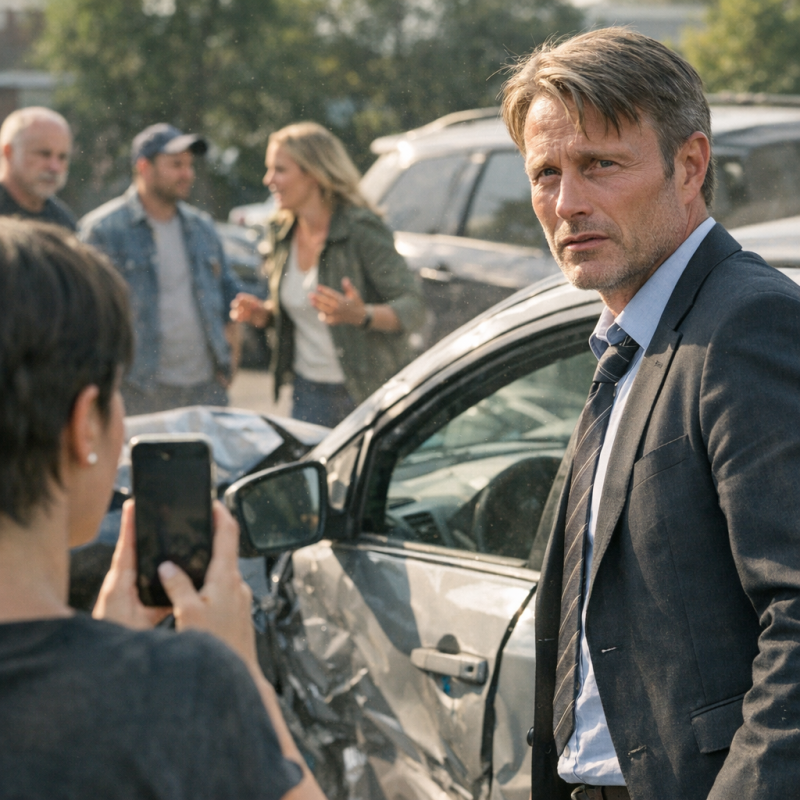 Image by FCT AI
The Rant
I finally managed to get my door open and climbed out on shaky legs, phone in hand, already dialing 911. Patricia saw me and completely lost whatever remaining grip on reality she'd had. 'Your generation RUINS EVERYTHING!' she shrieked, loud enough that people a block away probably heard. 'Entitled, lazy, always on your PHONES!' I mean, yeah, I was on my phone—calling the police because you committed vehicular assault, lady. Marcus stepped slightly between us, not threatening, just present. The woman filming—Tina, I think someone called her—moved closer to capture Patricia's rant. 'You think you can just disrespect people and get away with it? You think you OWN the road?' Patricia continued, spinning in circles now, addressing the growing crowd like she was giving a TED talk. I stood there, phone to my ear, listening to it ring while this woman accused me of crimes I didn't commit. 'Ma'am, you hit me,' I said as calmly as I could manage. 'Twice.' 'After what YOU did?' she laughed—and I had no idea what reality she was living in.
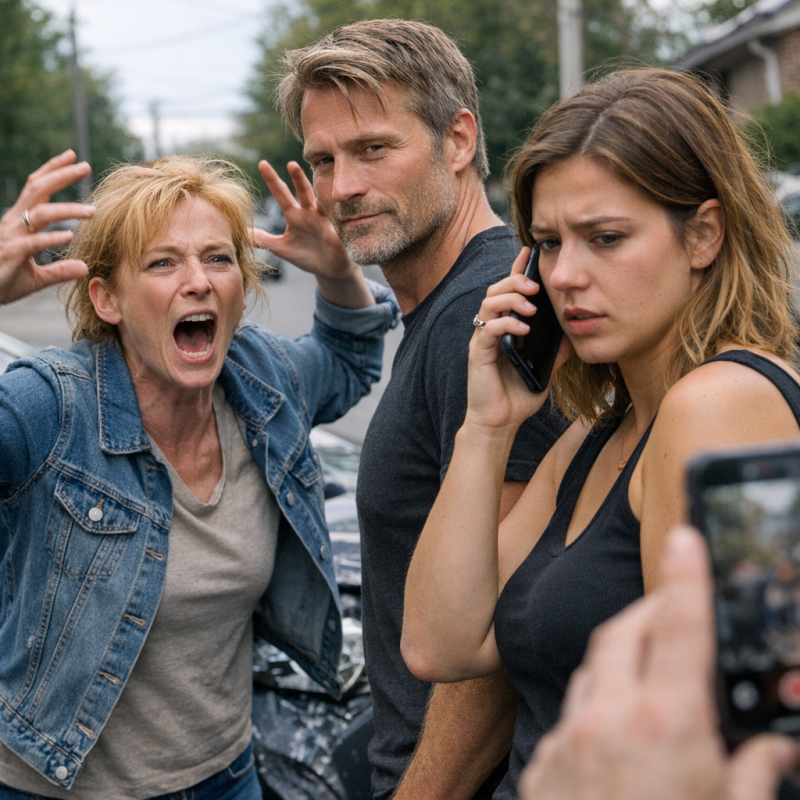 Image by FCT AI
Sirens
The sirens cut through Patricia's ranting, and honestly, I've never been so relieved to see flashing lights in my life. Two patrol cars pulled up, and officers stepped out—one guy, early thirties maybe, with this calm, assessing look, and one woman around the same age who immediately started scanning the scene. Marcus stepped back slightly, giving them space. Tina kept filming. And Patricia? Patricia immediately pivoted from unhinged screamer to concerned citizen so fast I got whiplash just watching it. 'Officers, thank God you're here!' she exclaimed, her whole demeanor shifting. The tears came instantly—I'm talking instant waterworks. 'This young man has been so aggressive, I feared for my safety!' I just stood there, mouth slightly open, watching this performance. The male officer—Martinez, according to his name tag—looked from her to me to the cars. His partner, Officer Chen, was already photographing the scene. Patricia clutched her chest dramatically. She pointed at me and shouted, 'This is the one!'—and I prayed the officers could see through her act.
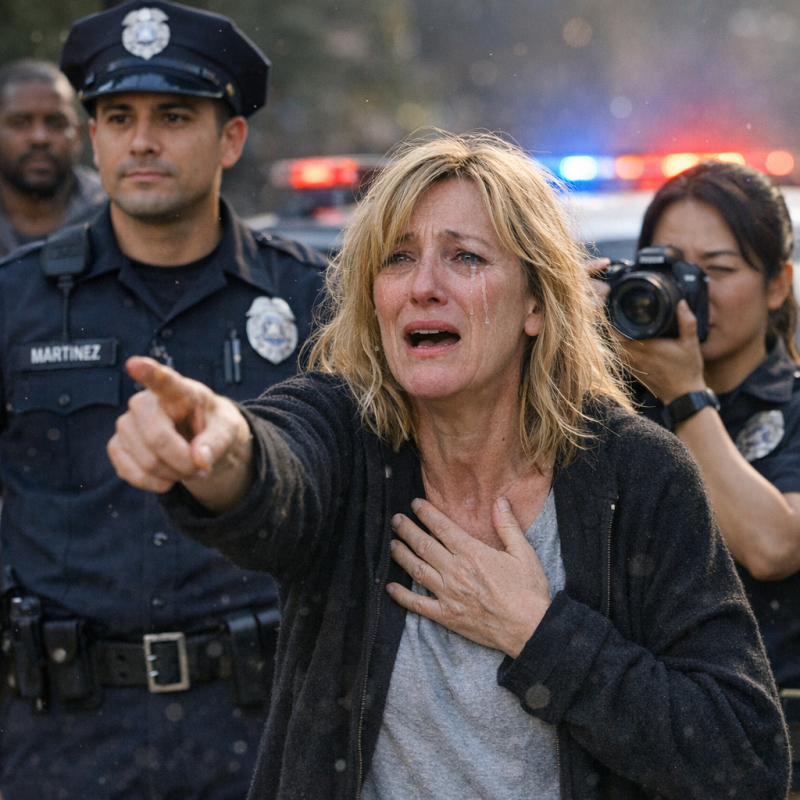 Image by FCT AI

History's most fascinating stories and darkest secrets, delivered to your inbox daily.
Competing Stories
Patricia launched into this completely fabricated story about how I'd been tailgating her, driving recklessly, making obscene gestures. According to her version of reality, she'd been forced to brake suddenly because I was intimidating her, and then I'd accelerated into her on purpose. 'He's been road-raging at me for blocks,' she said, voice trembling. 'I was terrified!' I waited for her to finish, my hands shaking slightly, before Officer Martinez turned to me. 'Sir, what's your account?' I took a breath, forcing myself to stay calm. 'She rear-ended me at the light,' I said, keeping my voice level. 'I got out to exchange information. She drove around me, then turned around and drove straight at me head-on while screaming about millennials.' I could hear how insane it sounded even as I said it. Patricia scoffed loudly. 'That's ridiculous! Why would I do that?' Martinez was writing everything down, face neutral. Officer Chen continued photographing—the damage patterns, the skid marks, the position of both vehicles. Officer Martinez glanced at the cars again, and I saw his expression shift—he wasn't buying it.
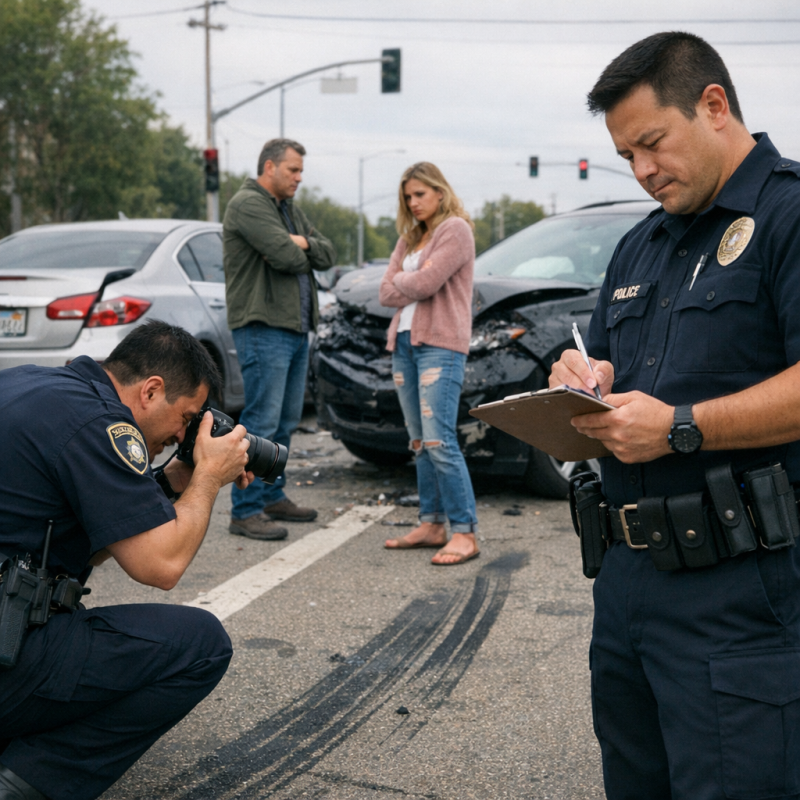 Image by FCT AI
The Witness Statements
'Excuse me, officers?' Marcus stepped forward, and I could've hugged him. 'I witnessed the whole thing.' Tina moved closer too. 'I got it on video.' Patricia's face went pale, then flushed red. 'These people don't know what they're talking about!' she snapped, but Officer Chen was already walking toward them. Marcus gave his statement clearly and calmly—he'd been walking his dog, heard the first impact, looked up to see Patricia's car accelerating backwards after rear-ending mine. Described how she'd driven around, circled back, and driven straight at me while I stood frozen in the street. Tina showed Officer Chen her phone, replaying the video. I couldn't see the screen from where I stood, but I watched Chen's eyebrows rise. 'Ma'am, this footage is pretty clear,' she said. Patricia tried to interrupt, claiming they were my friends, that this was all staged, that millennials stick together. Another witness I hadn't even noticed—a woman named Sarah—approached with her contact information. Marcus said, 'She drove straight at him,' and I felt the first real wave of relief.
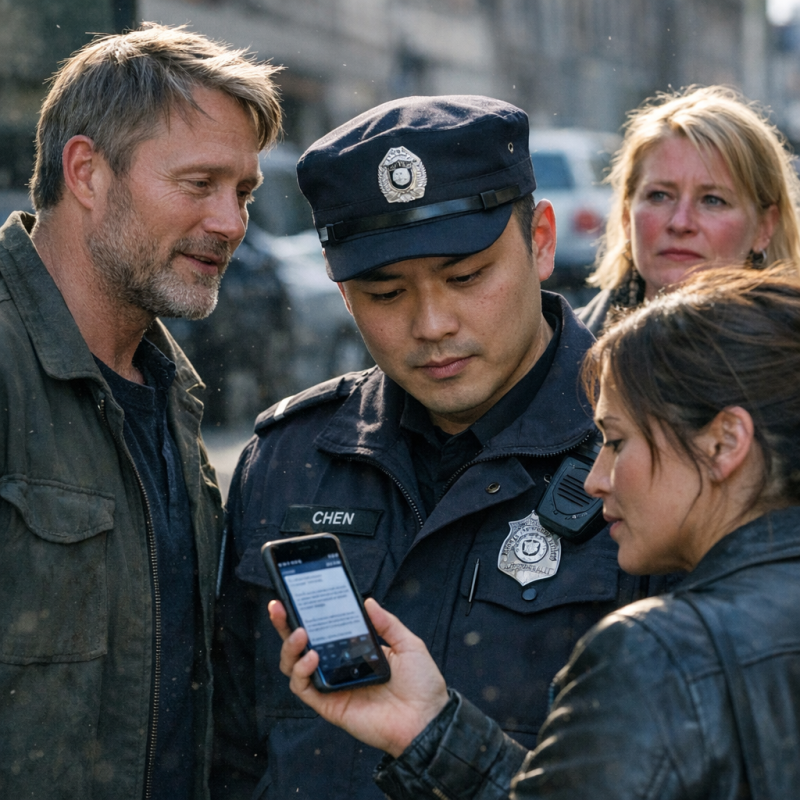 Image by FCT AI
The Disrespecting Millennial
Patricia, sensing she was losing control of the narrative, went back to her greatest hits. 'You DISRESPECTED me!' she shrieked at me, like saying it louder would make it true. I was exhausted. Bruised. My car was totaled. And I'd just been gaslit for twenty minutes by a woman who'd literally committed assault with a vehicle. Something in me just snapped—not into anger, but into this weird, punchy honesty. 'Ma'am,' I said, voice flat, 'the only thing I disrespected was my car's front bumper by letting you hit it twice.' There was a beat of silence. Officer Martinez's shoulders shook slightly. Then Officer Chen made this sound—like she was trying really hard not to laugh and failing. One of the officers let out a short, surprised laugh—and suddenly the whole scene shifted. Even Marcus cracked a smile. Patricia's mouth opened and closed. Her face went from red to purple. The righteous fury drained out of her, replaced by something that looked a lot like embarrassment. And honestly? That moment made the whole nightmare almost worth it.
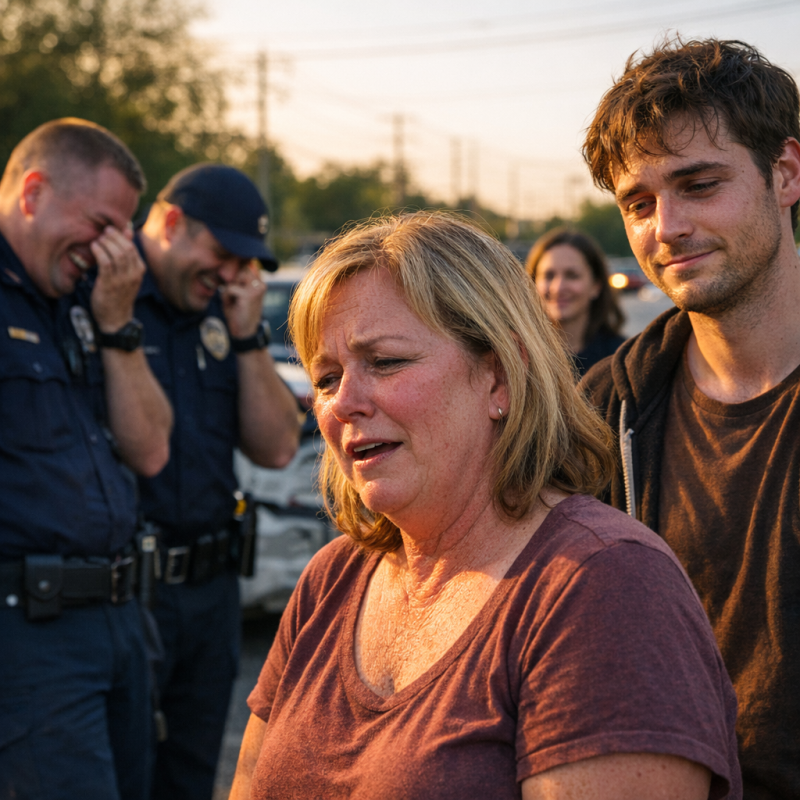 Image by FCT AI
The Report
Patricia went quiet after that, standing off to the side with her arms crossed while the officers finished documenting everything. The fight had gone out of her completely—turns out public humiliation is pretty effective. Officer Martinez walked me through the report, explaining that based on the physical evidence, witness statements, and video footage, Patricia would be cited for multiple violations. She'd be found at fault for both collisions. Sarah, the other witness, made sure I had her contact information for insurance purposes. 'Happy to testify if you need it,' she said quietly. The whole professional process of it felt surreal after the chaos. Martinez handed me a business card with the report number. 'Your insurance will need this,' he explained. 'Document everything—photos of your injuries, medical visits if you have any pain, everything.' Officer Chen walked over as they were wrapping up, her expression oddly serious. She glanced back at Patricia, then leaned in slightly. As they handed me the report number, Officer Chen said quietly, 'Keep all your documentation—you might need it.'
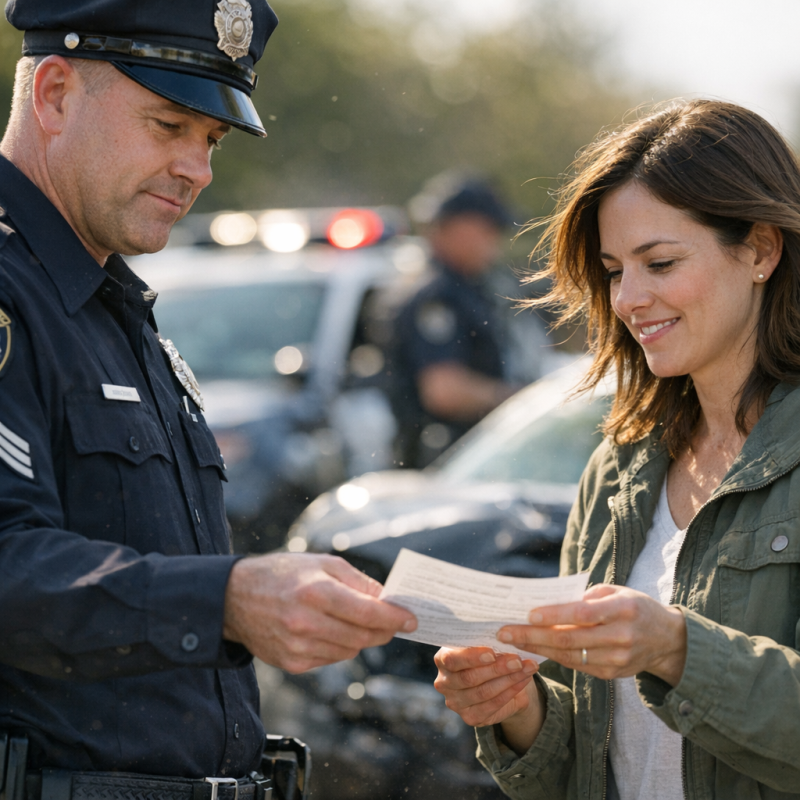 Image by FCT AI
The Tow
The tow truck arrived about fifteen minutes later, and watching them assess my car was its own special kind of depressing. The driver took one look and just shook his head. 'Yeah, this isn't going anywhere under its own power,' he said. The front end was completely crushed from Patricia's SUV driving straight into it. Fluid leaking everywhere. The frame looked bent. Meanwhile, Patricia's massive SUV had damage to the front and rear, but it was still drivable. Of course it was. She stood next to it, no longer making eye contact with anyone, waiting for the officers to finish so she could leave. Officer Martinez confirmed she was legally allowed to drive it away, though he strongly suggested she get it inspected. The tow truck driver loaded my poor car onto the flatbed with practiced efficiency. I signed the paperwork, got the towing company's information for my insurance. Patricia drove away without a word, not even a glance in my direction. The crowd had mostly dispersed. Marcus and Tina had left after giving their statements. Watching my car get loaded onto the flatbed, I couldn't shake the feeling that this was only the beginning.
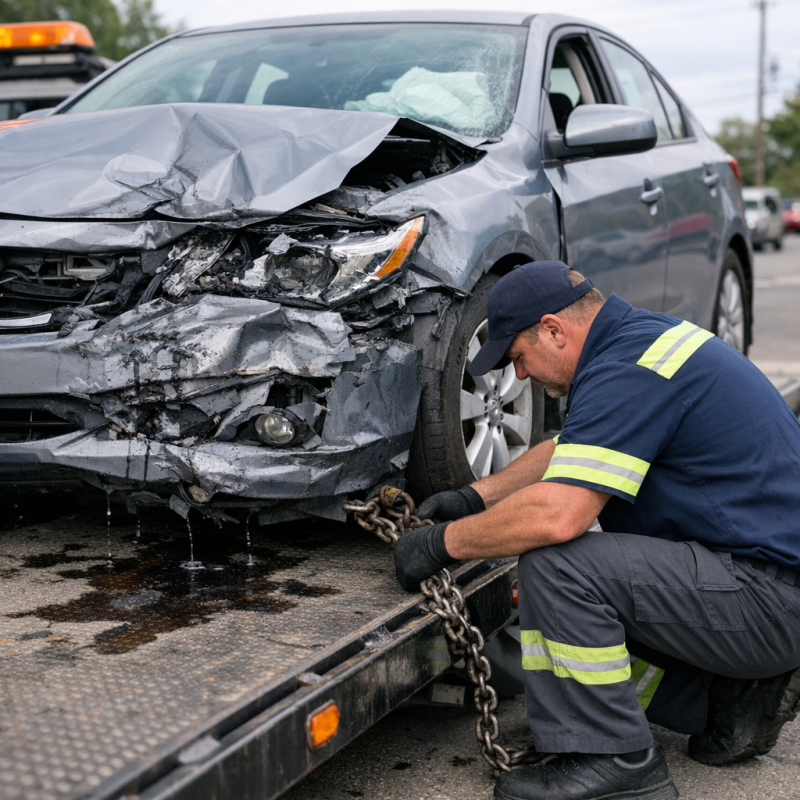 Image by FCT AI
The Ride Home
I called Jake, my roommate, because I needed a ride and honestly, I just needed someone familiar. He showed up twenty minutes later, took one look at my face, and said, 'What the heck happened to you?' I climbed into his car and the whole story just spilled out—the rear-ending, the screaming, the woman literally driving at me, the millennial rant, the witnesses, everything. Jake kept glancing over at me like he was trying to determine if I'd hit my head. 'Wait, she turned around and drove AT you?' he asked. 'While yelling about your generation?' 'Head-on,' I confirmed. 'Full acceleration.' He was quiet for a minute, processing. We hit a red light and he turned to look at me fully. 'And the cops saw the damage? And the witnesses backed you up?' 'One of them filmed it,' I said. 'The police have the video.' Jake went quiet for a moment, then said, 'Dude, that sounds completely insane—you need to document everything.' He wasn't wrong. I pulled out my phone and started typing notes while everything was still fresh.
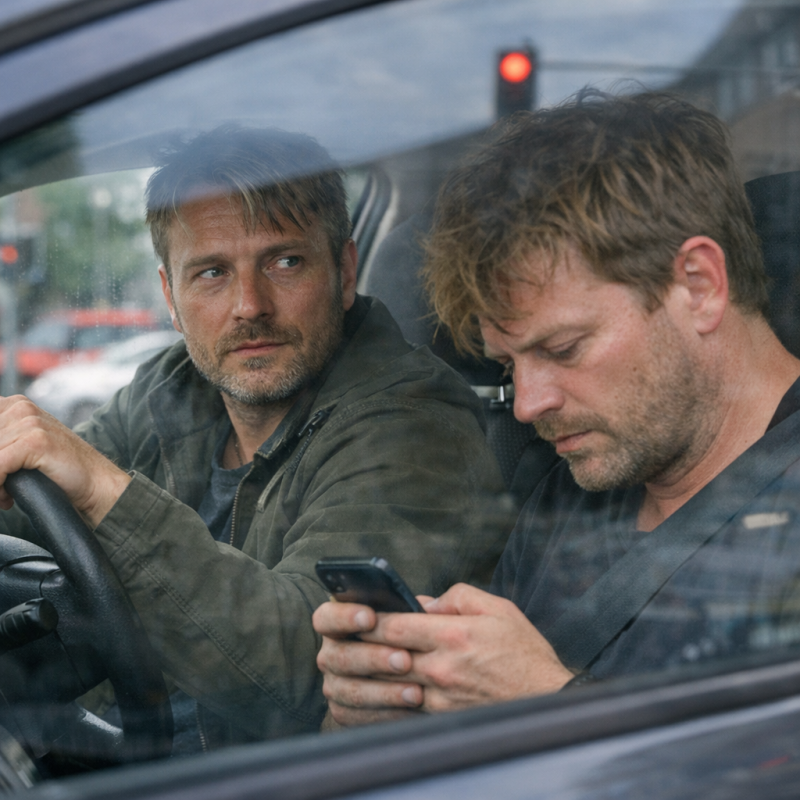 Image by FCT AI
The Adrenaline Crash
Back at our apartment, Jake made coffee while I sat on the couch, and that's when it hit me. Like, really hit me. The adrenaline that had been keeping me upright and functional for the past hour just drained away all at once. My hands started shaking. Not a little—a lot. Jake handed me the coffee mug and I had to set it down because I couldn't hold it steady. 'You okay?' he asked, sitting across from me. I wasn't. The whole thing kept replaying in my head, but now without the survival mode clouding everything. She'd driven at me. Accelerated toward me while I stood in the street. If I'd frozen for even a second longer, if I hadn't jumped aside... Jake seemed to sense I needed space to process, so he just sat there, present but quiet. I kept seeing her SUV coming at me, kept feeling that split-second of pure terror when I realized she wasn't stopping. My chest felt tight. I kept replaying the moment she accelerated toward me—and realized how easily it could have been worse.
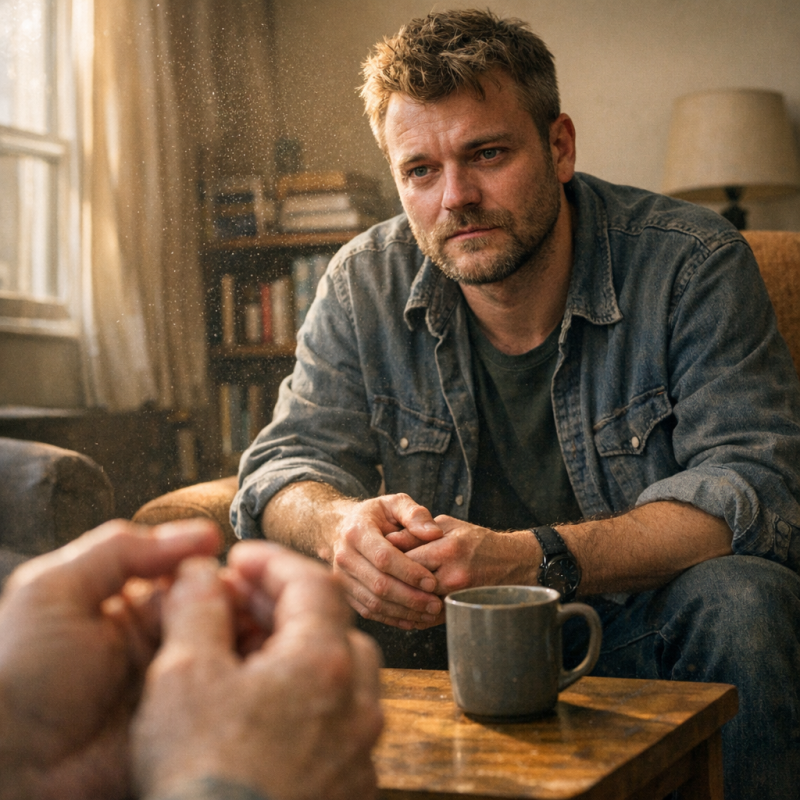 Image by FCT AI
The Insurance Call
The insurance call took twenty minutes, and I swear I could feel the adjuster's skepticism radiating through the phone. I walked her through it step by step—the initial rear-end collision, Patricia's sudden U-turn, me standing in the street trying to exchange information, and then the head-on impact. 'So she... turned around and drove at you?' the adjuster asked, her tone carefully neutral. 'Yes,' I confirmed, feeling increasingly aware of how insane this sounded. 'She made an illegal U-turn and accelerated directly toward me while I was standing in the intersection.' There was a pause. I could hear typing in the background. 'And you have witnesses to this?' 'Multiple,' I said. 'Plus dashcam footage from one of them.' More typing. I found myself getting defensive, overexplaining, adding details to make it sound more credible. The whole conversation had this weird energy where I felt like I was being interrogated rather than filing a legitimate claim. Finally, the adjuster cleared her throat. 'Can you repeat that last part about the U-turn?'
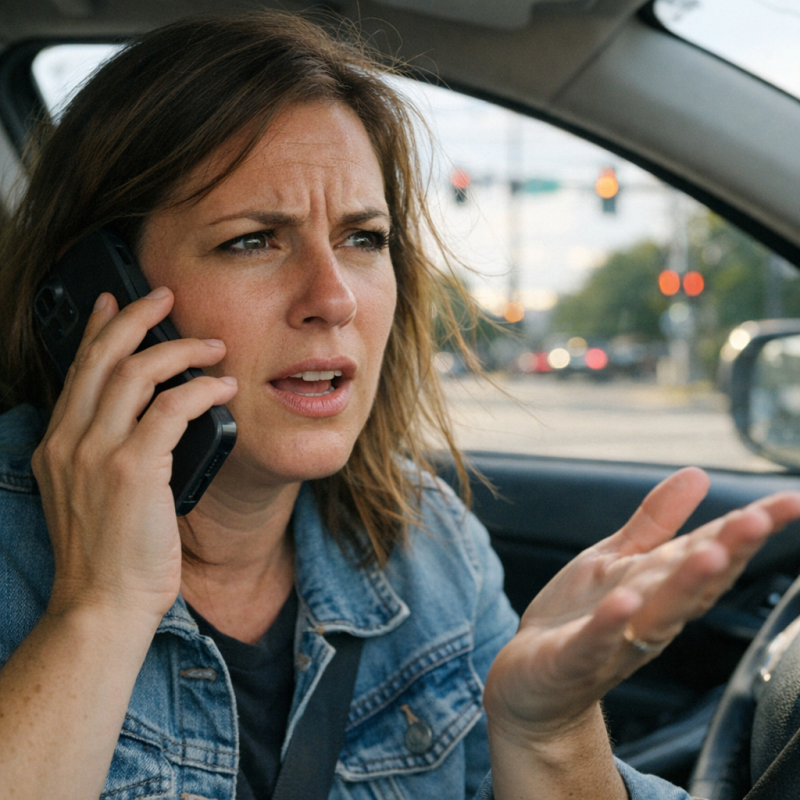 Image by FCT AI
The Photos
That night, I went through all the photos I'd taken at the scene, and honestly? I'd never been more grateful for my compulsive documentation habit. The rear bumper showed clear impact damage—paint transfer, dented metal, the whole thing. I'd photographed it from four different angles, making sure to capture Patricia's license plate in the background of at least two shots. Then there were the front-end photos, taken after she'd driven at me. The hood was crumpled, the grille shattered, headlight assembly completely destroyed. You could see the progression of damage, the story written in twisted metal and broken plastic. I'd also captured wide shots showing the positioning of both vehicles, the intersection layout, even the skid marks her tires had left when she accelerated toward me. Jake looked over my shoulder as I scrolled through them. 'You're thorough,' he said. 'I'm terrified of not being believed,' I corrected. Because that's what it was—this deep anxiety that without ironclad proof, people would think I was exaggerating or confused. The front-end damage told a story all its own—and I was grateful I'd had the presence of mind to capture it.
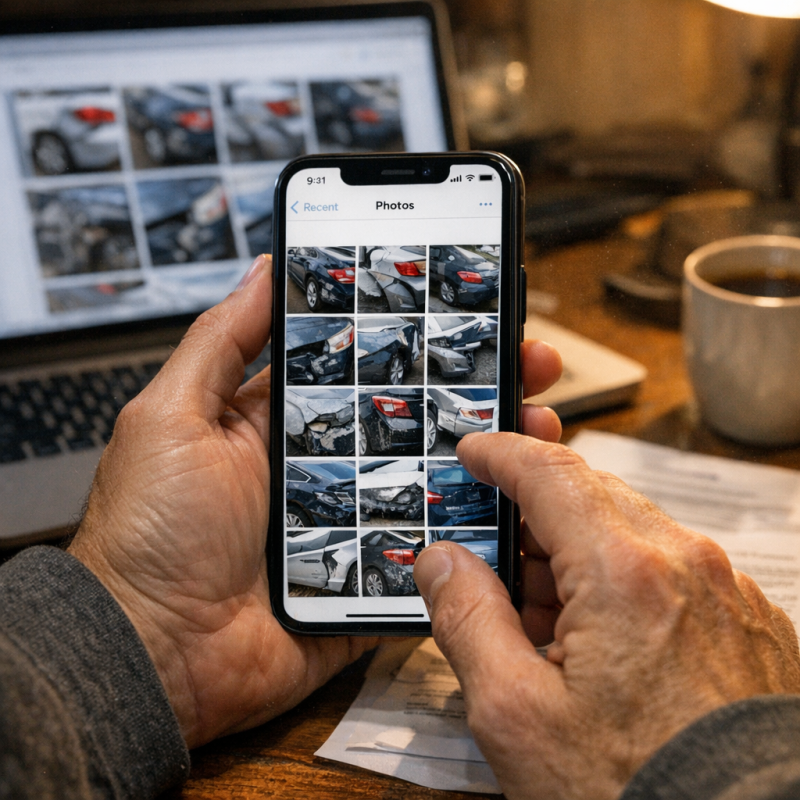 Image by FCT AI
The Witness Follow-Up
Marcus texted me two days later, and I'd honestly forgotten I'd given him my number in all the chaos. 'Hey, it's Marcus from the intersection,' the message read. 'Just wanted to check how you're doing and let you know I'm happy to provide a statement if your insurance needs it.' I felt this weird rush of relief reading that. Like, here was someone who'd witnessed the whole thing and was willing to go on record. I thanked him and said I'd definitely let him know if I needed anything. We exchanged a few more messages—he asked about my car, I told him about the repair estimate, normal post-accident small talk. Then he sent another text that made me sit up straighter. 'Also, I should mention—I have a dashcam. It was running during the whole incident.' I immediately asked if he'd be willing to share the footage. 'Of course,' he replied. 'I already downloaded it in case you needed it. Quality's pretty good.' My hands were actually shaking a little as I typed back my thanks. Having objective video evidence felt like winning the lottery. 'I recorded the whole thing,' Marcus texted, 'including the head-on collision. Let me know if you need it.'
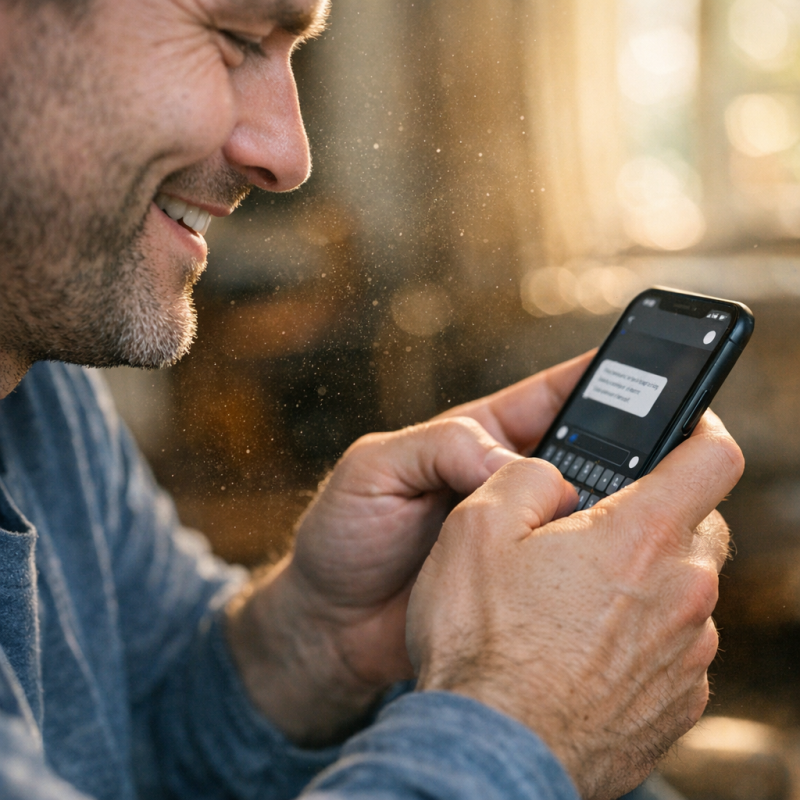 Image by FCT AI
The Video Evidence
Marcus sent the video file that evening, and I made Jake watch it with me because I needed someone else to confirm what I was seeing. The footage started about thirty seconds before the initial rear-end collision. You could see my car stopped at the red light, completely stationary. Then Patricia's SUV entered the frame and just... didn't stop. The impact was clearly visible, my car jolting forward. Then came the part I'd been dreading to see again. Patricia's U-turn was sharp and deliberate, no hesitation. And when I stepped into the intersection—God, watching myself standing there looked so vulnerable. You could see the exact moment she started accelerating. The SUV moved toward me with obvious intent, speed increasing, no brake lights. I'd jumped aside maybe two seconds before impact. 'Jesus,' Jake breathed. From Marcus's angle, you could see everything—Patricia's face visible through the windshield, the trajectory, the acceleration. It wasn't ambiguous. It wasn't a mistake. Watching Patricia accelerate toward me on video made my stomach drop all over again—it looked even more deliberate than I remembered.
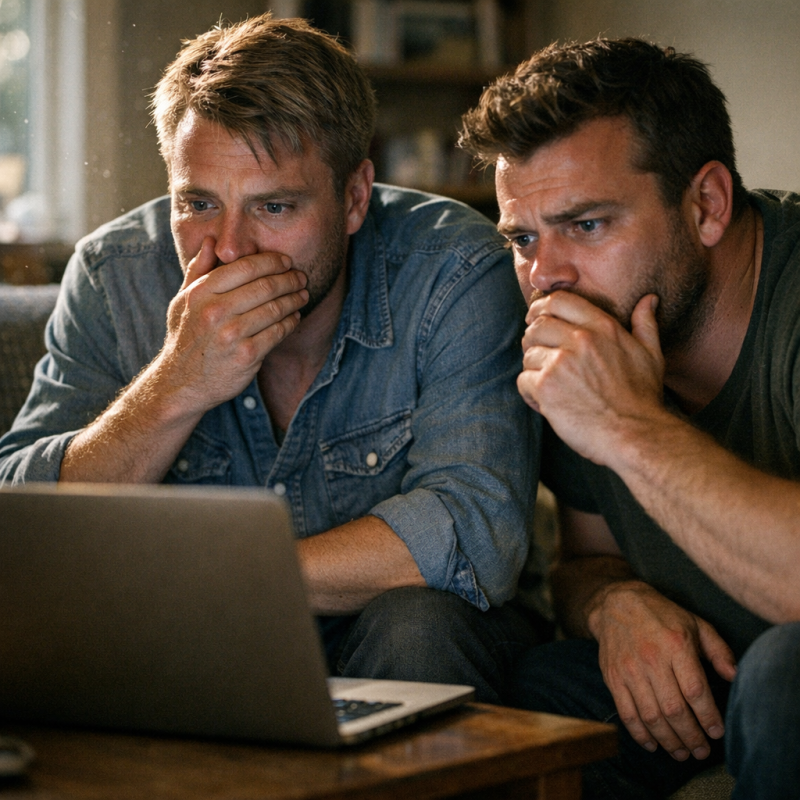 Image by FCT AI
The Estimate
The body shop called with the estimate three days later, and I literally had to ask the guy to repeat the number because I thought I'd misheard. Eight thousand dollars. For a car that was worth maybe twelve thousand before all this happened. 'The thing is,' the mechanic explained, walking me through the itemized list, 'you've got damage to two separate impact points. The rear collision affected the bumper, trunk alignment, tail lights, and there's frame damage we need to assess. Then the front-end collision destroyed the hood, grille, radiator, condenser—basically everything up there needs replacement.' I felt dizzy looking at the estimate sheet. My deductible was a thousand dollars, which I didn't exactly have lying around. And that was assuming Patricia's insurance accepted liability, which felt like a big assumption given how she'd fled the scene. 'How long for repairs?' I asked. 'Three weeks, maybe four,' he said. 'We're waiting on parts, and the frame work takes time.' I thanked him and walked back to the rental car, feeling the financial weight of this settling on my shoulders. 'Two collisions means basically a rebuild,' the mechanic explained, and I felt my stress level spike again.
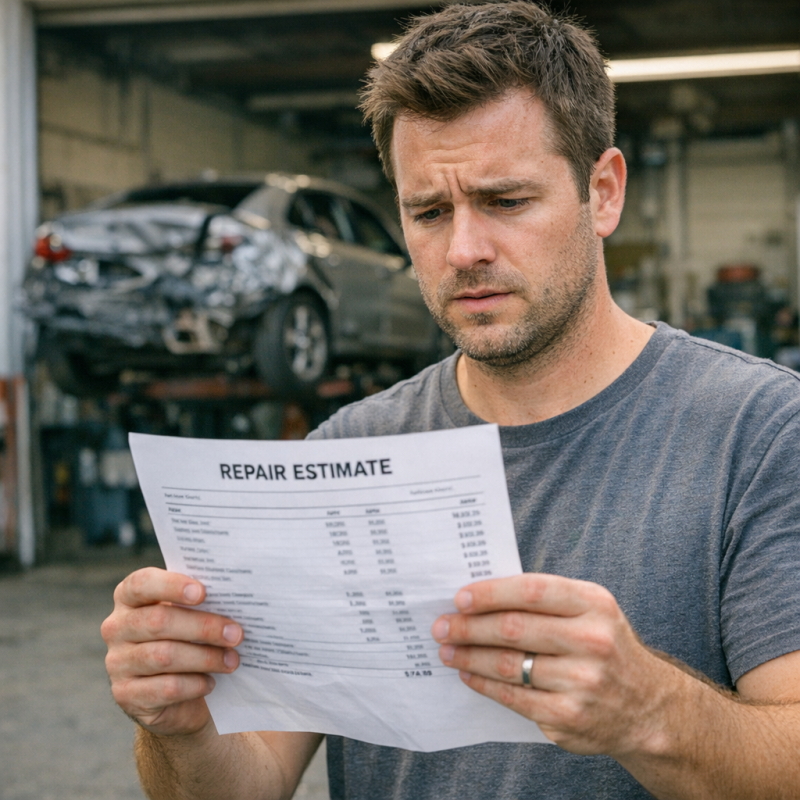 Image by FCT AI
The Citation
Officer Martinez called me a week after the incident, and I recognized his voice immediately. 'Just wanted to update you on the case,' he said. 'Patricia Whitmore received citations for the rear-end collision, failure to remain at the scene, reckless driving, and making an illegal U-turn. The DA's office is also reviewing the case for possible criminal charges.' That last part made my chest tighten. 'Criminal charges?' I repeated. 'For what?' 'Potentially assault with a deadly weapon,' Martinez said, his tone matter-of-fact. 'The dashcam footage you provided was pretty clear. She accelerated toward you while you were standing in the street. That's not just a traffic violation.' I sat down on my couch, processing this. I'd been thinking of this whole thing as a crazy road rage incident, insurance claim territory. But assault with a deadly weapon? That was serious. That was criminal court, potential jail time. 'What happens next?' I asked. 'The DA will review all the evidence and decide whether to press charges,' Martinez explained. 'Could take a few weeks. But I wanted you to know it's being taken seriously.' Officer Martinez mentioned there might be criminal charges—and suddenly this felt bigger than just an insurance claim.
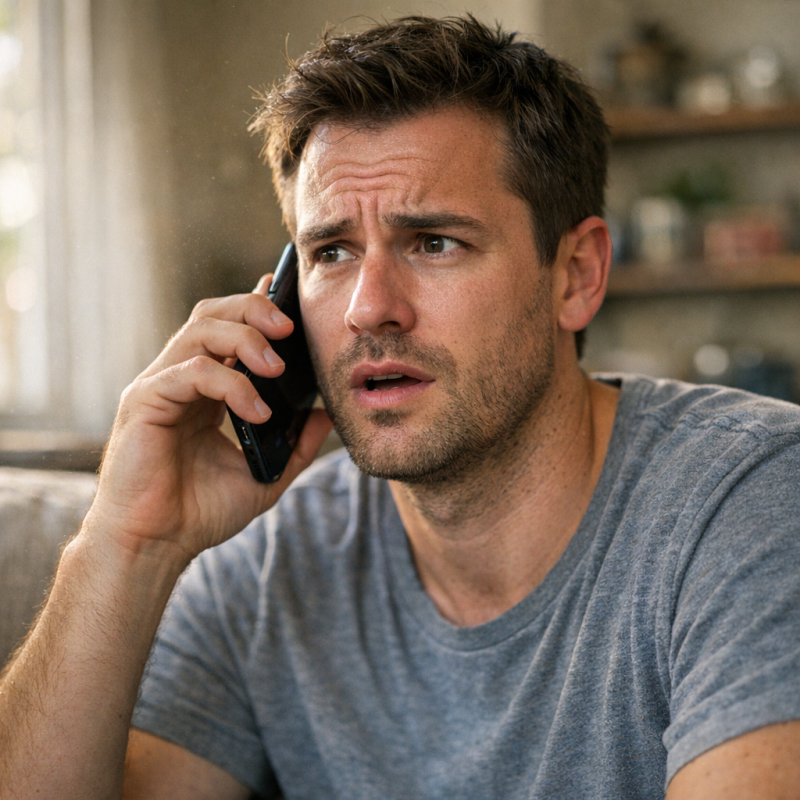 Image by FCT AI
The Social Media Impulse
Jake was scrolling through his phone that evening when he suddenly looked up at me with this gleam in his eye. 'Dude, you should post about this. Like, the whole story. It's absolutely viral gold.' I'd been avoiding social media since the accident, honestly. Something about it felt... I don't know, too exposed? 'I mean, think about it,' Jake continued. 'Woman rear-ends you, does a U-turn, then drives at you head-on while screaming about millennials? That's Reddit front page material. Twitter would lose its mind.' He wasn't wrong. I could already imagine the headlines, the outraged comments, the shares. 'You've got dashcam footage, witness statements, everything,' Jake pressed. 'It's a perfect story.' But every time I thought about posting it publicly, something in my gut twisted. Maybe it was just residual anxiety from the whole thing. Or maybe some instinct was telling me to keep this contained until I understood it better. 'I want to wait,' I said finally. 'Until the insurance stuff is sorted, at least. Maybe until the criminal case is decided.' Jake shrugged, clearly thinking I was being overly cautious. 'It's viral gold,' Jake insisted—but something made me want to keep this quiet until I knew more.
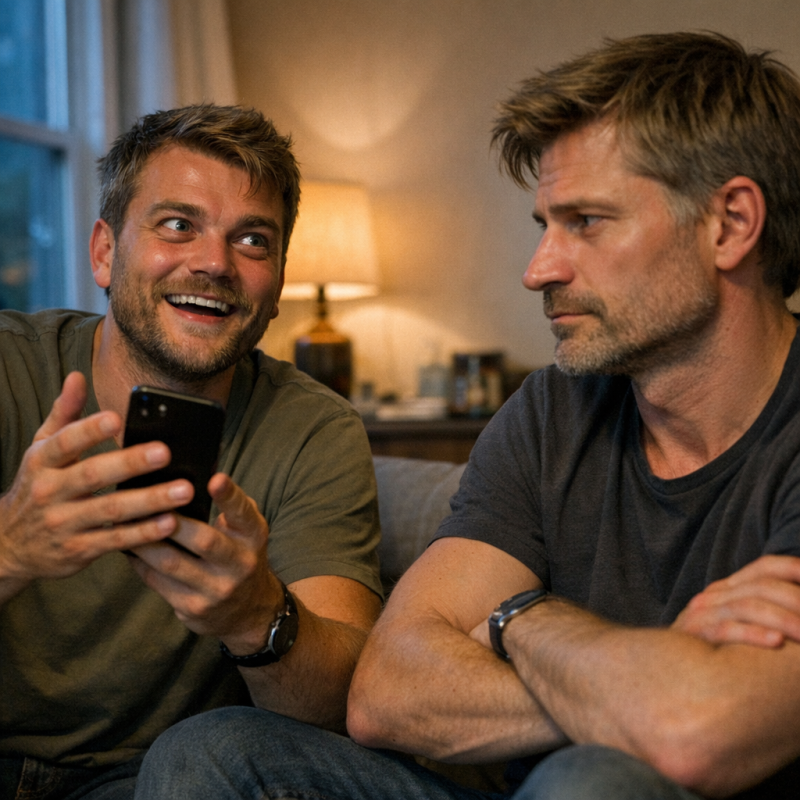 Image by FCT AI
The Rental Car
The rental car was fine—a generic sedan, beige interior, that new-car-rental smell. I signed the paperwork, adjusted the mirrors, and pulled out of the lot into traffic. And that's when it hit me: I was terrified. Every car that pulled up behind me at a stoplight made my heart rate spike. I kept checking the rearview mirror obsessively, watching for sudden movements, aggressive positioning, anything that looked remotely threatening. A guy in an SUV got a little too close at one red light, and I actually felt my hands start shaking on the wheel. This wasn't rational. I knew that. Statistically, the odds of someone rear-ending me and then making a U-turn to hit me head-on were astronomical. It had happened once; it wasn't going to happen again. But my nervous system hadn't gotten that memo. I found myself taking longer routes to avoid busy intersections, leaving extra space between me and other cars, always positioning myself with an escape route in mind. Jake had mentioned PTSD symptoms after accidents, but I'd brushed it off at the time. Now I wasn't so sure. Sitting in the rental, I realized I was anxious about every car behind me—she'd gotten into my head.
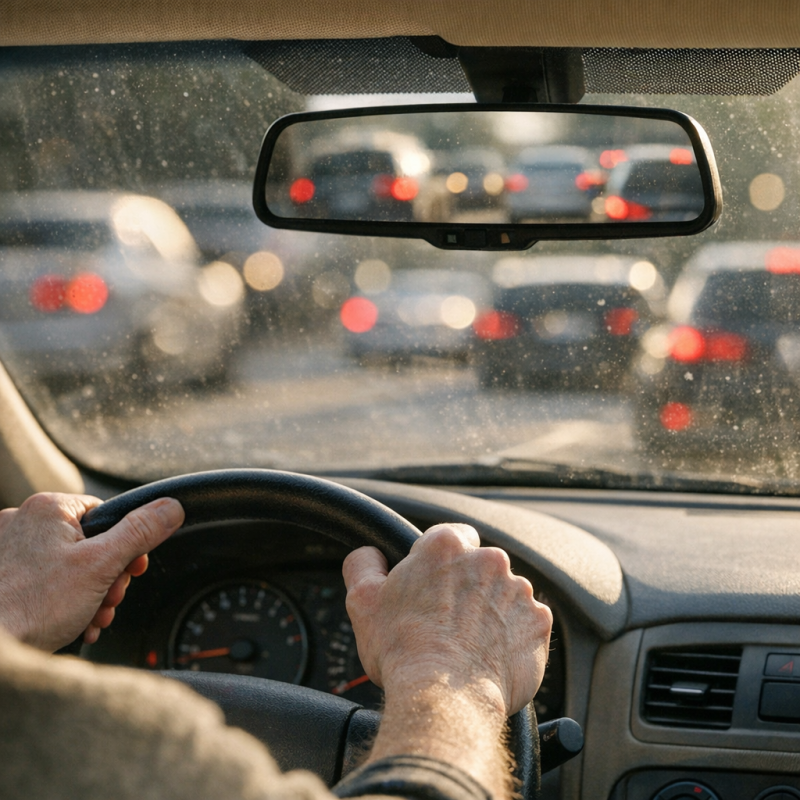 Image by FCT AI
The Detective
Three days after giving my statement, I got a call from a Detective Ramirez. Not the officer from the scene—an actual detective. My stomach dropped when he introduced himself. 'We're opening a more formal investigation into the incident,' he said, voice calm and professional. I asked if that was normal for a traffic accident, even a weird one. There was a pause. 'Mr. Alex, we've been looking into Ms. Patricia Henderson's history, and some things have come to our attention.' My pulse quickened. He asked if I'd be willing to come down to the station for a formal interview, said they wanted everything documented properly. I agreed, obviously. Then he added, almost casually, 'We're trying to establish a timeline of events and behavioral patterns.' Behavioral patterns? For a car accident? I asked what he meant. Another pause. 'We'd like to interview you formally,' Ramirez said, 'because this might not be her first incident.'
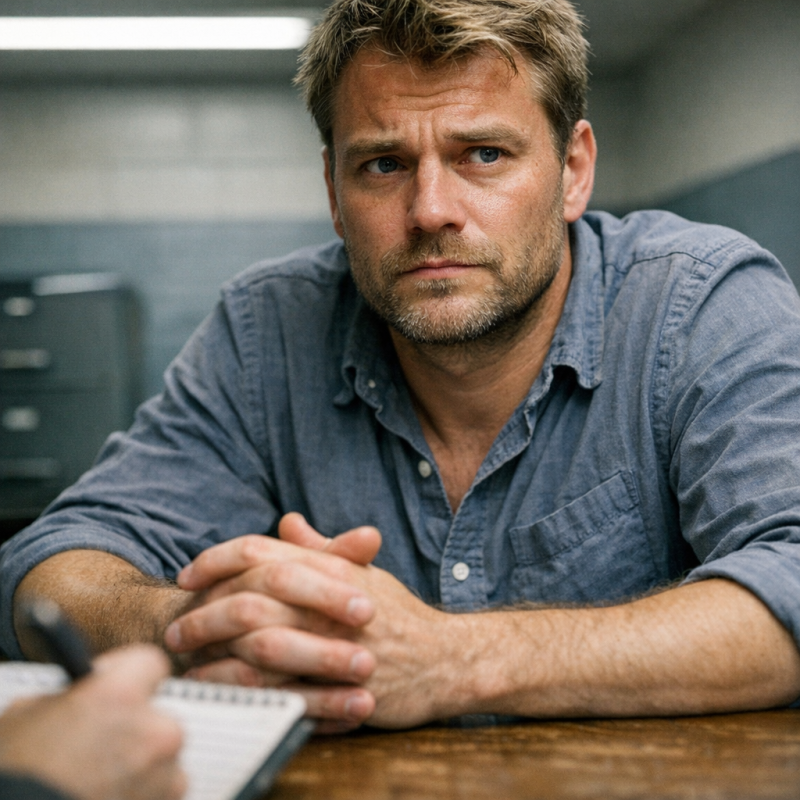 Image by FCT AI
The Formal Interview
The police station interview room was exactly like you'd imagine—gray walls, table bolted to the floor, that institutional smell. Detective Ramirez had me walk through the entire incident from the beginning. The first impact, the U-turn, her positioning in my lane, everything she said. He took notes on a laptop, occasionally asking me to repeat specific details. But here's what was weird: he kept circling back to her behavior. Not the mechanics of the collisions, not the damage, not even really the danger. He wanted to know how quickly she got out of her car. Whether her accusations came immediately or after a pause. If she seemed emotional or controlled. How she phrased things. Whether she looked at her phone. I answered everything as accurately as I could, but I kept wondering why these details mattered so much. The interview lasted almost two hours. When we finished, I felt drained. Ramirez kept asking about her behavior—not the collisions, but how she acted, what she said, how quickly she responded.
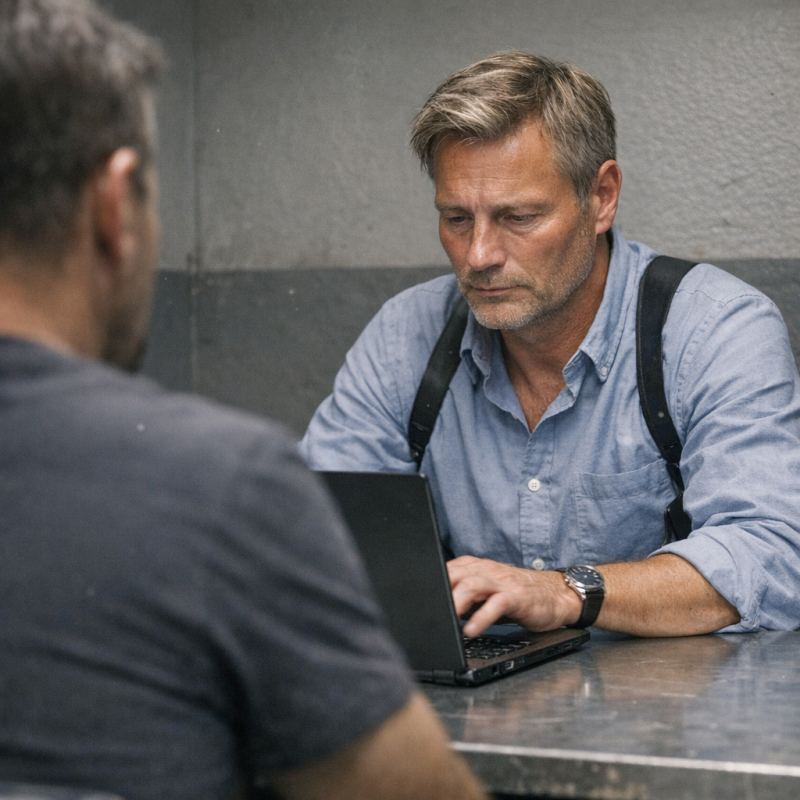 Image by FCT AI
The Question
Near the end of the interview, Ramirez leaned back in his chair and asked something that caught me completely off guard. 'Did Ms. Henderson's reactions seem rehearsed to you? Like she'd prepared what to say beforehand?' I blinked at him. Rehearsed? For a car accident? But then I actually thought about it. The way she'd immediately started yelling about millennials and phones, before even checking if I was okay or looking at the damage. How she'd positioned herself right in front of that dashcam. The speed of her accusations, the specific wording. It had all happened so fast, like she'd had her talking points ready. I told Ramirez this, watching his expression carefully. He just nodded, writing something down. 'And her positioning in the road after the U-turn—did that seem deliberate?' Jesus. Was he suggesting what I thought he was suggesting? I thought about it—the instant accusations, the immediate anger—and said, 'Maybe? It did feel... too fast.'
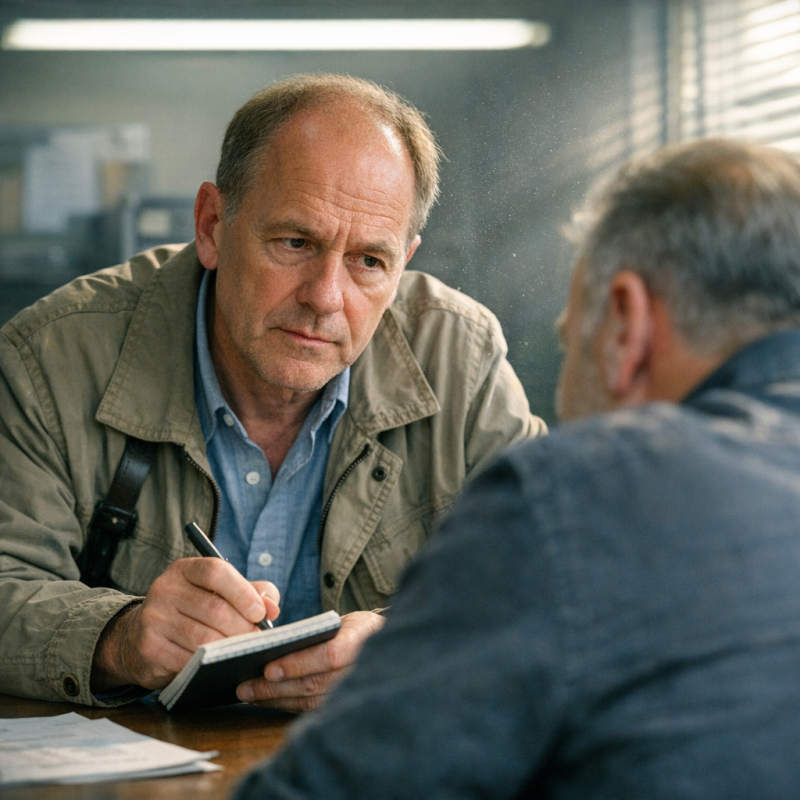 Image by FCT AI
The Other Victim
As the interview wrapped up, Ramirez mentioned almost offhandedly that they'd been speaking with other people. 'Other witnesses from the scene?' I asked. 'Not exactly,' he said. He glanced at his notes. 'We've interviewed a Mr. Henderson—no relation to Ms. Henderson, different person entirely—and we're reaching out to a few others.' Wait, what? Others who witnessed my accident? That didn't make sense. There'd only been a handful of people there. 'No,' Ramirez clarified, 'other people who've had incidents with Ms. Henderson.' My brain stuttered to a halt. Other incidents? Plural? How many were we talking about? I asked him directly. He closed his laptop. 'I can't discuss details of other investigations, but we're looking into some patterns.' Patterns. That word again. I pressed him for more information, but he was done talking. Said they'd be in touch. 'Other people?' I asked, and Ramirez just said, 'We're looking into some things.'
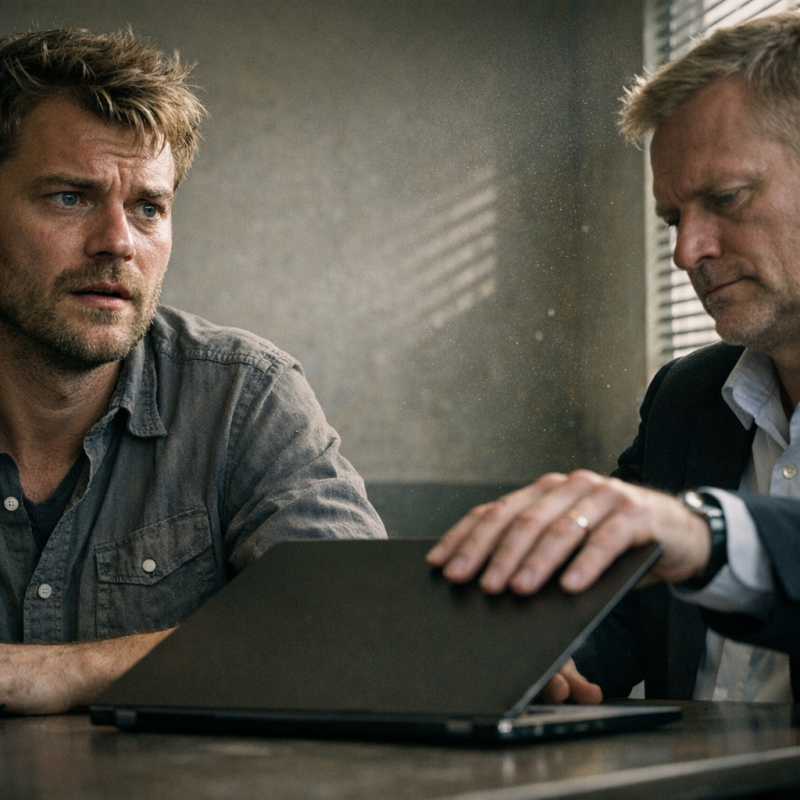 Image by FCT AI
The Search
I drove straight home and went immediately to my laptop. Patricia Henderson. I typed her name into Google, Facebook, LinkedIn, Twitter—everything I could think of. Surely if she'd been in multiple accidents, something would show up. A news article, a court record, a social media trail, anything. But there was nothing. I mean literally nothing. No Facebook profile, no LinkedIn, no Instagram. I found a few Patricia Hendersons, but none that matched her age or appearance. I tried adding the city name, variations of her name, searching for accident reports. Still nothing. I spent two hours going down every rabbit hole I could think of. Public records searches, reverse phone lookups, everything just short of hiring a private investigator. The complete absence of any digital footprint was bizarre. Most people my parents' age had at least something online, even if just a dusty Facebook account. There was nothing—no social media, no news articles, nothing—and somehow that absence felt more suspicious than finding something would have.
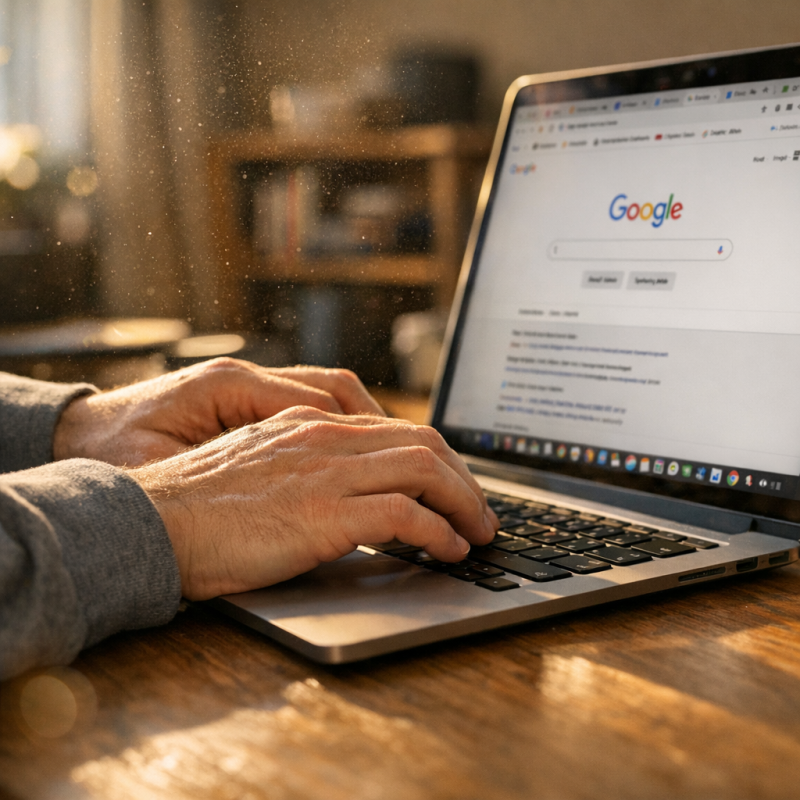 Image by FCT AI
The Sleepless Night
I didn't sleep that night. Just lay there in the dark, replaying the incident over and over with this new lens Ramirez had given me. The first rear-end collision—minor enough that it shouldn't have required a U-turn to exchange information. But she'd done it anyway. Then she'd positioned her car directly in my lane, not pulled to the side. The head-on impact, which she'd had time to avoid if she'd wanted to. Her immediate exit from the vehicle, the instant accusations, the way she'd made sure to perform her outrage in front of witnesses. The millennial comments that seemed designed to create a narrative. Every detail I'd initially written off as just a crazy angry person now looked different. Calculated. Deliberate. I kept thinking about what Ramirez had asked—did it seem rehearsed? The more I replayed it, the more it did. The way she positioned her car, the timing of her accusations—had any of it been an accident at all?
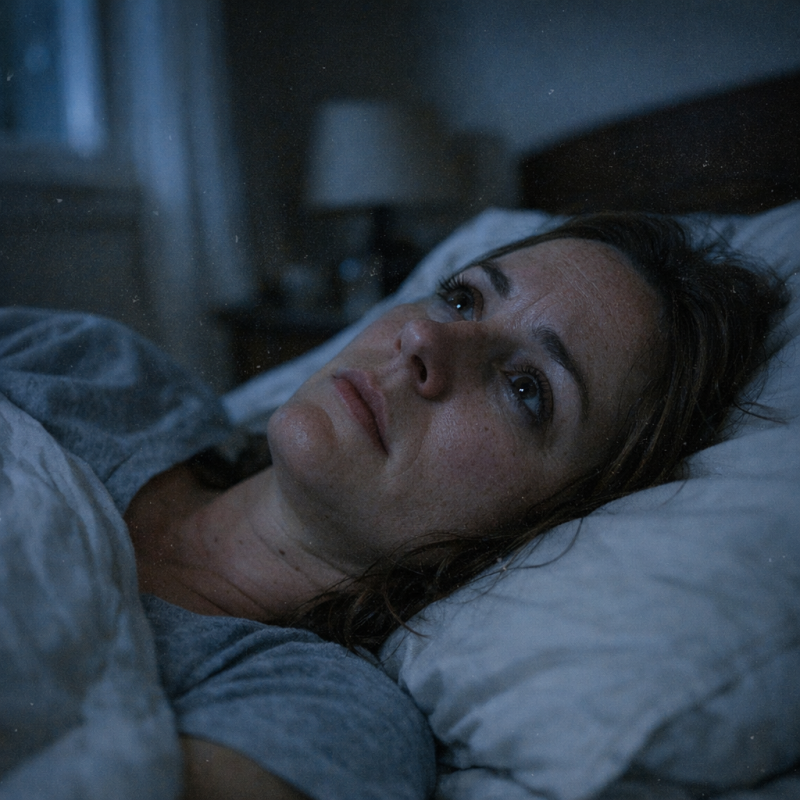 Image by FCT AI
The Work Distraction
Work the next day was a disaster. I sat at my desk, laptop open, email inbox filling up, and I couldn't process a single thing. Every few minutes I'd check my phone to see if Detective Ramirez had called or texted. Nothing. I'd refresh my email. Nothing. I tried to read a project brief and realized I'd scanned the same paragraph four times without absorbing a word. My coworker asked if I wanted to grab lunch, and I barely registered the question. All I could think about was Patricia Henderson, the 'other incidents,' the patterns Ramirez mentioned. What did it all mean? How many other people were there? What exactly was being investigated? Around eleven, my boss stopped by my desk. Asked if everything was okay, if I needed to take some time off after the accident. I assured her I was fine, totally fine. Then I realized I'd been staring at the same blank email for twenty minutes. My boss asked if I was okay, and I realized I hadn't processed a single email all morning.
 Image by FCT AI
The Other Witness
That afternoon, I got a DM on Facebook from someone named Laura. Took me a second to place her—she'd been one of the witnesses at the scene, the woman who'd stopped to make sure I was okay. 'Hey,' her message read, 'weird question, but did the police contact you again about that accident?' I immediately called her. She sounded as confused as I felt. Apparently Detective Ramirez had interviewed her too, asked her to describe everything she'd witnessed. But like me, she'd noticed the questions were strange. Not about what happened, but about how Patricia had behaved. Whether her anger seemed genuine. If her actions seemed coordinated. 'It was the weirdest interview I've ever given,' Laura said. 'They kept asking if she seemed like she knew what she was doing, like this was planned or something.' I felt a chill run through me. So it wasn't just me noticing this. The police were clearly investigating something specific. 'They kept asking if she seemed like she knew what she was doing,' Laura said, 'like this was planned or something.'
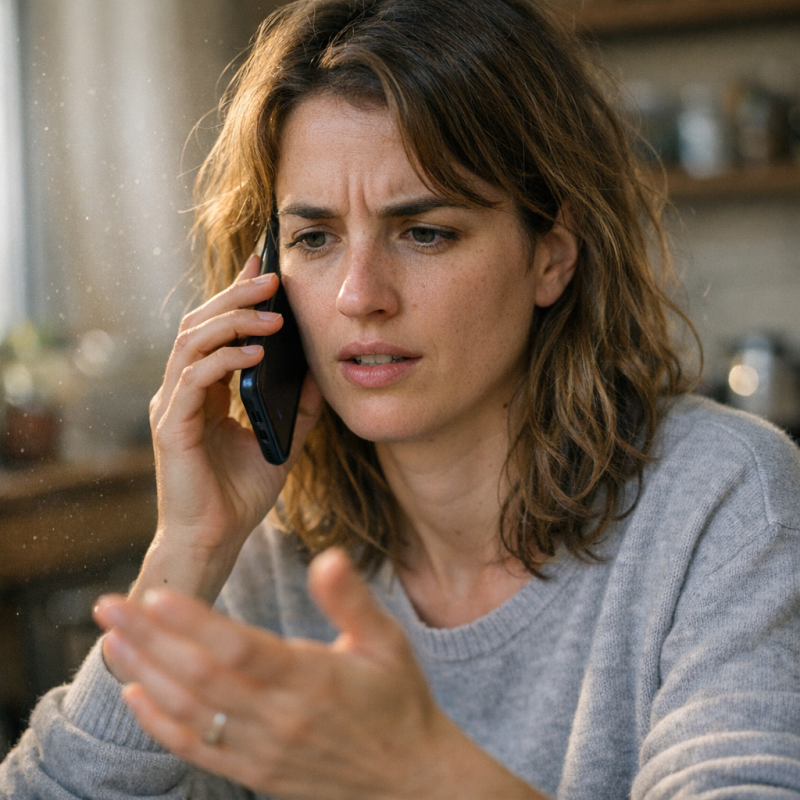 Image by FCT AI
The Insurance Adjuster's Tone
Two days after my conversation with Laura, my insurance adjuster called. His name was Greg, and until now our interactions had been pretty standard—polite, transactional, mostly him asking me to send photos or confirm details. But this call felt different. His tone was careful, measured, like he was choosing every word with precision. 'So, I wanted to give you an update on the claim,' he started. 'We've received the other party's statement and their counter-claim.' I sat up straighter. 'Counter-claim?' He paused. 'Yes. She's claiming you were the aggressor, that you caused the accidents through reckless driving, and that she suffered significant emotional trauma as a result.' I felt my blood pressure spike. 'Greg, there's dashcam footage. Witnesses. The police report—' 'I know,' he interrupted gently. 'And we've reviewed all of it.' Another pause. 'The other party has made some interesting claims,' he said, 'but between you and me, we're not taking them seriously.'
 Image by FCT AI
The Repair Delay
The body shop called me the next morning, and I was actually excited—finally, maybe I'd get my car back and this whole nightmare could start feeling less immediate. But the manager's tone killed that hope immediately. 'Hey Alex, so we've hit a snag with your repair timeline.' I sighed. 'How long are we talking?' 'That's the thing,' he said, sounding genuinely apologetic. 'We can't actually start the work yet. Your insurance company and the police department have both flagged the vehicle.' I frowned. 'Flagged it for what?' 'The investigation is still ongoing, apparently. They need the damage preserved as-is for their case.' My confusion must have been audible because he continued, 'Look, I don't know the details, but this isn't standard procedure for a normal accident claim.' I felt that familiar chill again. 'They're holding the car as potential evidence,' the manager explained, and my confusion deepened.
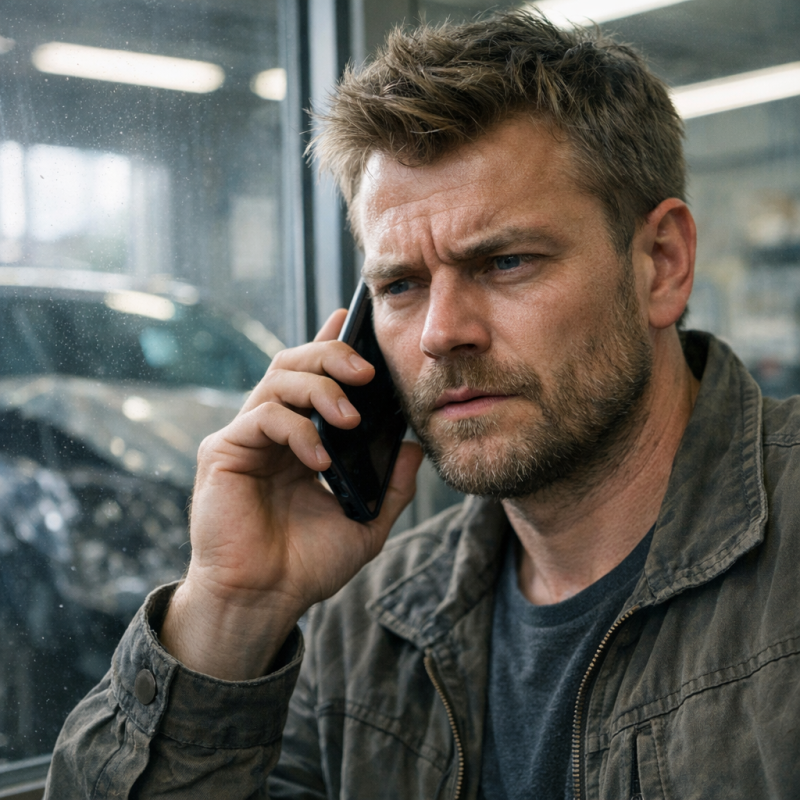 Image by FCT AI
The Weekend Spiral
That weekend I completely lost it, honestly. I couldn't stop thinking about everything—the accident, Patricia's bizarre behavior, the investigation, the insurance counter-claims. So I did what any reasonable person spiraling into obsession would do: I downloaded Marcus's dashcam footage onto my laptop and watched it approximately fifty thousand times. I mean, I really went full conspiracy theorist here. I had a notebook. I was taking timestamps. Jake would've staged an intervention if he'd seen me. But the more I watched, the more certain things jumped out at me. The way Patricia checked her rearview mirror before the first impact—not panicked, just checking. The deliberate speed of the second hit. How she'd positioned her car for maximum visibility during the screaming match. Every gesture seemed choreographed. Frame by frame, I could see her check her mirrors before the U-turn—like she was making sure people were watching.
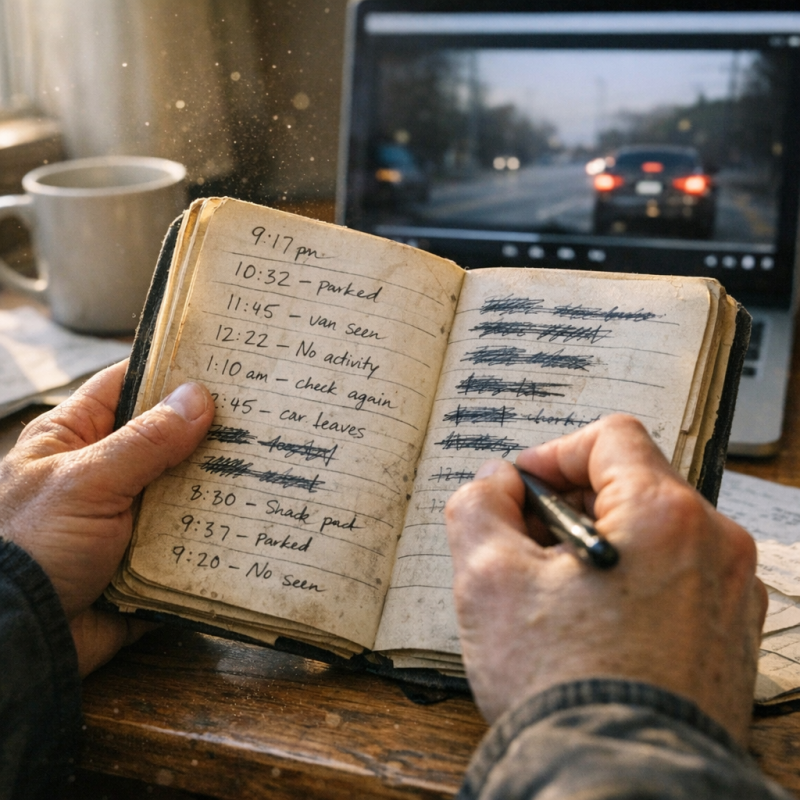 Image by FCT AI
The Confrontation Impulse
By Monday I'd convinced myself I needed to confront Patricia directly. Not violently or anything, just—I don't know, demand answers? Understand what the heck was going through her mind? I actually started drafting a message to send through her insurance company. That's when Jake showed up at my apartment, took one look at my laptop screen (still frozen on frame 247 of the footage), and immediately confiscated my phone. 'Absolutely not,' he said. 'Are you out of your mind?' I tried to argue that I deserved an explanation, that she owed me that much at least. Jake just shook his head. 'Dude, there's an active investigation. She's already trying to sue you. Anything you say to her becomes ammunition.' I started to protest. 'Think about it,' he continued. 'What if that's exactly what she wants? What if she's trying to bait you into contact so she can claim harassment?' 'Don't give her anything to use against you,' Jake warned, and I realized he was right.
The Waiting Game
Then came the worst part: nothing. Absolutely nothing happened for days. No calls from Detective Ramirez. No updates from my insurance. No letters from lawyers. Just silence. And let me tell you, waiting is so much worse than chaos. At least during chaos you're doing something, reacting, moving forward. This was just... limbo. I developed this pathetic routine where I'd check my email first thing every morning, then my voicemail, then my physical mailbox, hoping for literally any news. My coworkers probably thought I was having some kind of breakdown because I'd jump every time my phone buzzed. Laura and I texted occasionally—she was in the same boat, just waiting to hear if they needed anything else from her. 'This is torture,' she wrote one night. 'I just want to know what's happening.' Same, Laura. Same. Every morning I'd check my messages hoping for news—and every morning there was nothing.
 Image by FCT AI
The Lawyer Letter
The letter arrived on a Thursday. Certified mail, which is never good news. I signed for it at my apartment building's front desk, and the return address showed a law firm I didn't recognize. My stomach dropped before I even opened it. The letterhead was intimidating—one of those firms with like six names, all very serious-sounding. And the content? Absolutely unhinged. Patricia's lawyer was threatening a counter-suit for emotional distress, defamation, harassment, and 'intentional infliction of emotional harm.' According to her version of events, I had been driving aggressively, tailgating her, and had 'caused' her to rear-end me through intimidation. The second collision was her 'panic response' to my 'threatening behavior.' And apparently my 'public statements' (what public statements??) had damaged her reputation and caused severe psychological trauma. My hands shook as I read her claims—she was accusing me of aggressive driving, harassment, and causing the entire incident.
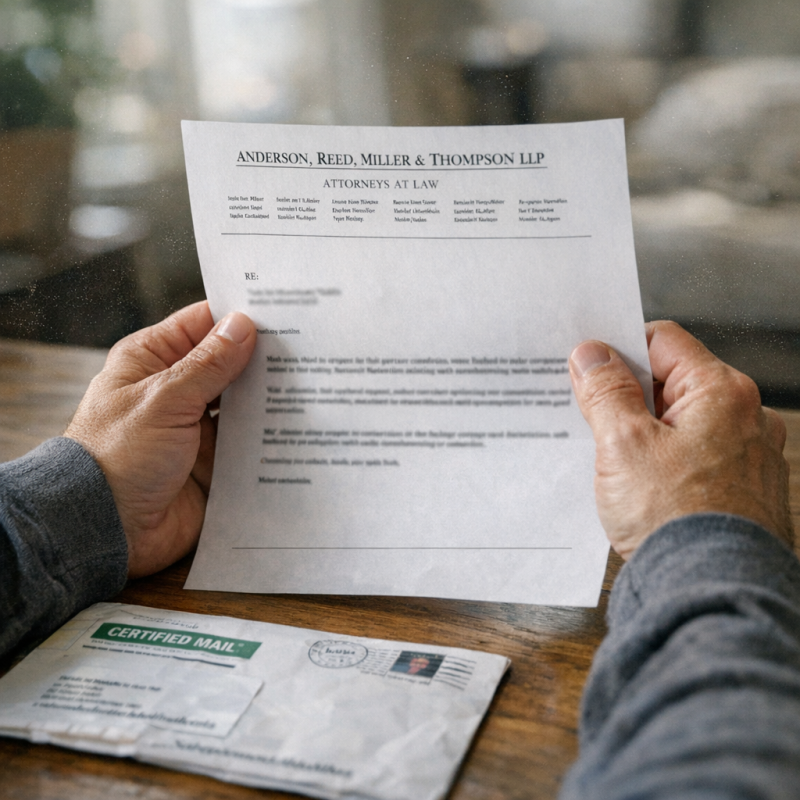 Image by FCT AI
The Legal Consultation
I immediately called a lawyer. Like, within five minutes of reading that letter, I was on the phone getting a consultation. The attorney—her name was Ms. Chen—listened to my panicked explanation, asked me to email her the letter and all my documentation, and told me to come in the next day. When I arrived at her office, she already had everything printed out and organized. 'Okay,' she said after reviewing it all, 'first thing: breathe. This lawsuit has zero merit.' She walked me through why—the dashcam footage alone demolished every single one of Patricia's claims, plus the witness statements, plus the police report. 'Counter-suits like this are actually pretty common in accident cases,' Ms. Chen explained. 'It's a intimidation tactic, hoping you'll settle to avoid the hassle.' I felt my shoulders relax slightly. But then she frowned at the letter again. 'This is a common tactic,' the lawyer said, 'but what's unusual is how aggressive she's being with someone who has this much evidence.'
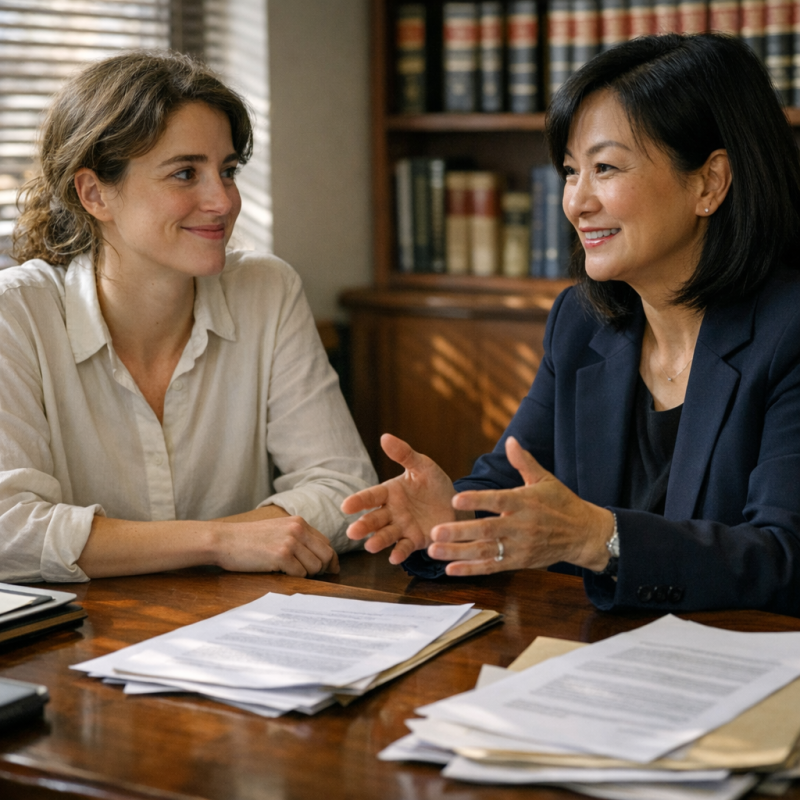 Image by FCT AI
The Deposition Notice
The deposition notice came a week later, and this time it was official court documentation. I'd never been deposed before, and the formal legal language made it sound incredibly intimidating. I was instructed to appear to give testimony regarding 'The People v. Patricia Whitmore, Case #CR-2024-8847.' Criminal case. Not civil, criminal. That detail hit me hard. I called Detective Ramirez immediately, maybe sounding more panicked than I should have. 'Is this normal?' I asked. 'Am I in trouble?' He actually laughed. 'No, Alex, you're not in trouble. You're a witness. A very important witness, actually.' He paused, and I could hear him considering his words. 'Look, I can't tell you everything yet, but your case isn't isolated. Patricia has a history, and we're building something comprehensive.' My mouth went dry. 'They're building something big,' Ramirez told me over the phone, 'and your case is a key part of it.'
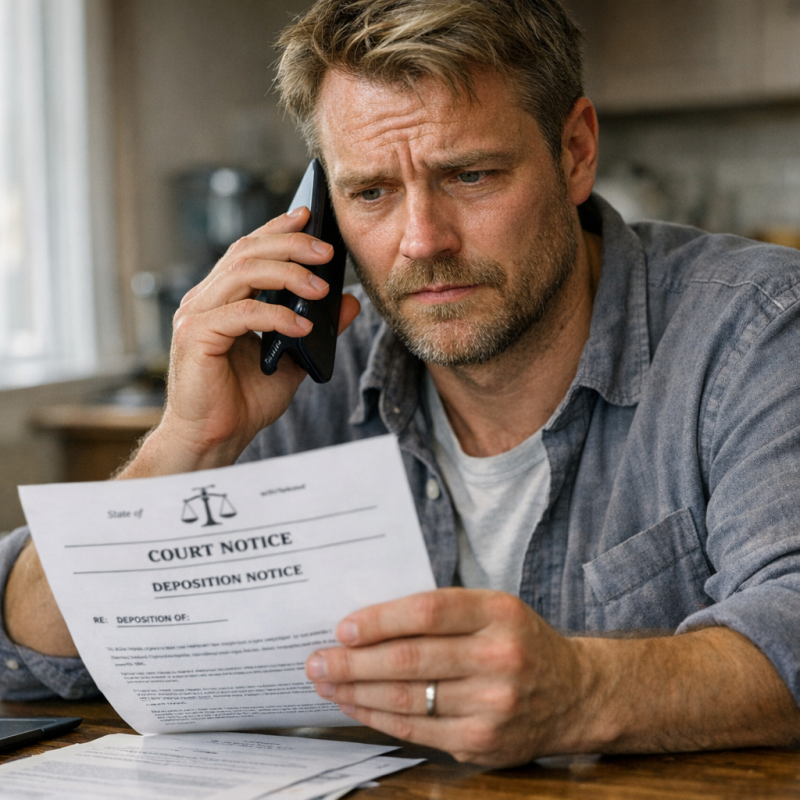 Image by FCT AI
The Research Rabbit Hole
Look, I'm not usually the type to go down internet rabbit holes at midnight, but I couldn't sleep. The deposition notice was sitting on my counter, and Ramirez's words kept echoing: 'Patricia has a history.' So I did what any anxious millennial does—I started Googling. 'Insurance fraud patterns.' 'Staged accident tactics.' 'Multi-collision fraud schemes.' And here's where it got weird. Article after article described this specific playbook: aggressive driver behavior at the scene, immediate victim-blaming before any assessment, sometimes even deliberate secondary collisions to complicate fault determination. The scammers would act erratic, overwhelm the other driver, make them doubt their own perception. One forensic investigator wrote about how the best fraudsters rehearse their emotional outbursts, fine-tuning the performance. I kept reading, hands shaking slightly as I scrolled. The patterns were so specific. The escalation. The screaming. The confidence despite being clearly at fault. My chest felt tight as I clicked through case study after case study. Article after article described the same pattern—aggressive behavior, victim blaming, escalating collisions—and I felt sick.
 Image by FCT AI
The Connection
I called Ramirez the next morning, probably too early, definitely too frantic. 'I've been reading about insurance fraud patterns,' I told him, trying to sound rational. 'The staged aggression, the secondary collisions, the immediate accusations—has Patricia done this before?' Silence on the other end. I pressed on. 'Because if she has, that would explain why she was so... prepared. So confident. The way she pointed at me instantly, like she'd rehearsed it.' More silence. I could hear him breathing, considering. 'I mean, you said she has a history. What kind of history are we talking about?' My voice cracked slightly. 'Am I the first person she's hit twice in one interaction, or is that part of her thing?' Still nothing. Then finally: 'Alex, these are excellent observations.' He paused. 'But I can't discuss details of an ongoing investigation.' Another pause, heavier this time. 'However...' He seemed to choose his words carefully. Ramirez was quiet for a long moment, then said, 'I can't discuss an ongoing investigation, but you're asking the right questions.'
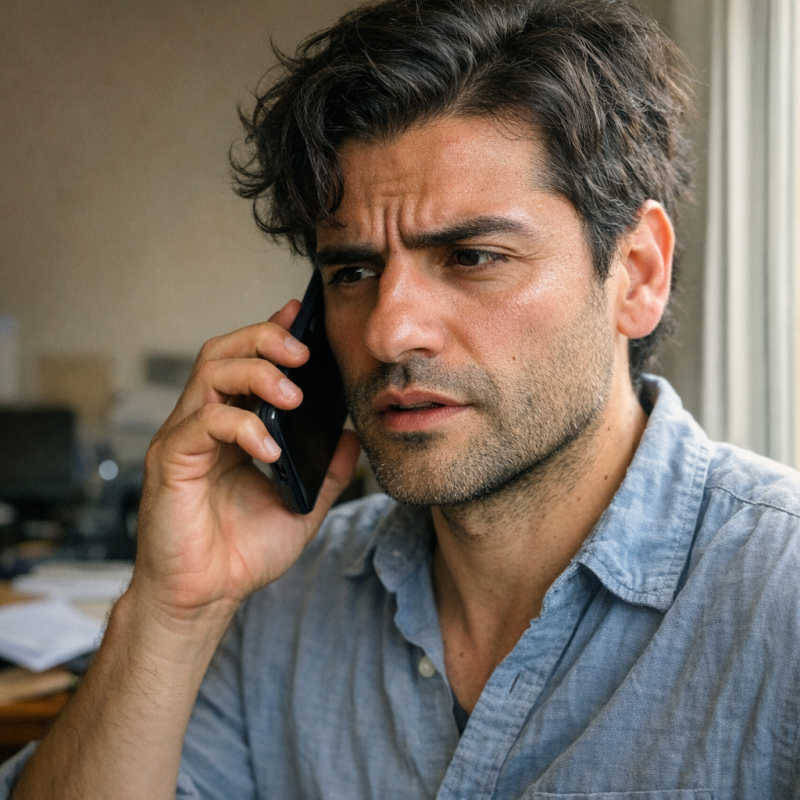 Image by FCT AI
The Pressure Builds
The deposition was scheduled for Thursday, which gave me exactly nine days to completely spiral. I'd faced her once already, sure, but that was chaos—adrenaline and confusion and just trying to survive the moment. This would be different. Controlled. We'd be in the same room, breathing the same air, and I'd have to look at her while recounting every detail. The woman who'd rear-ended me, screamed in my face, then literally driven at me head-on. My therapist said anxiety was normal, that anticipating a confrontation with someone who'd traumatized you triggers fight-or-flight responses. Cool, super helpful. Knowing the psychology didn't stop my hands from shaking when I thought about it. Didn't stop the nightmares where her SUV kept coming at me in slow motion. I'd catch myself replaying the moment she'd pointed at me, her face twisted with manufactured rage. Had it been manufactured? Was I seeing patterns that weren't there, or had I missed something obvious at the time? Jake found me pacing the apartment at 2 AM, and I couldn't explain why the thought of seeing her again made my chest tight.
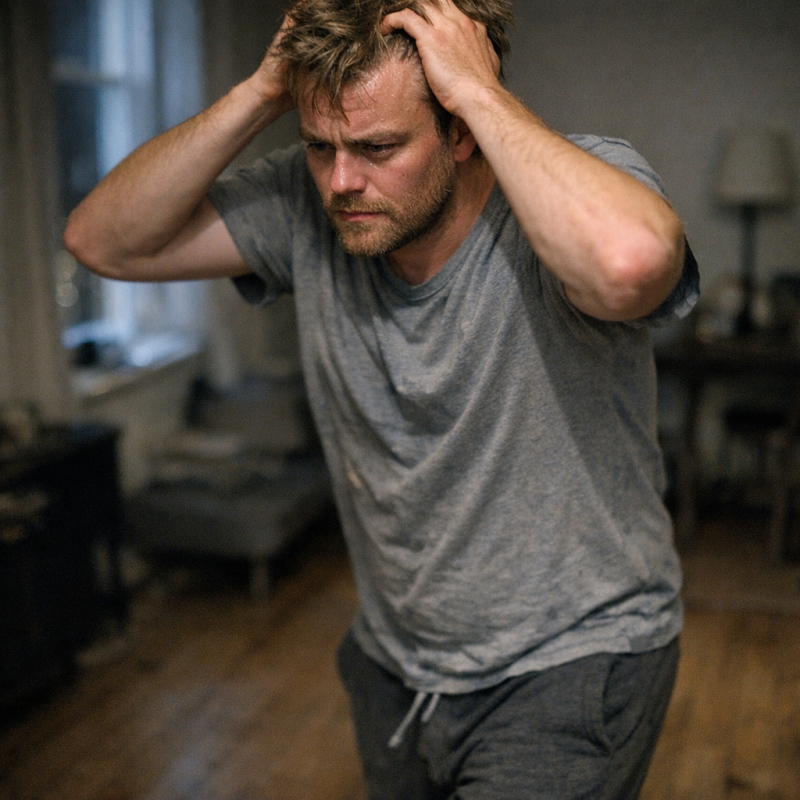 Image by FCT AI
The Prep Session
The prosecutors scheduled a prep session three days before the deposition. I met them in a conference room that smelled like stale coffee and recycled air. Two attorneys, both professional and focused, walked me through what to expect. 'Defense counsel will try to confuse the timeline,' the lead prosecutor told me. 'They'll suggest you misremembered, that stress distorted your perception.' I nodded, taking notes. 'Stick to what you observed in order. Don't speculate, don't interpret—just describe.' Then she leaned forward slightly. 'We need you to be extremely specific about Patricia's initial reaction. The moment after the first collision. What did she do first? What did she say? Her exact demeanor before she got out of the vehicle.' The way she emphasized it felt significant. 'You already have my statement,' I said. 'I know,' she replied, 'but I need you to really walk me through those first ten seconds. Her immediate response.' They knew something. I could feel it in how carefully they were framing their questions. The prosecutor said, 'We need you to be very specific about her initial reaction,' and I wondered what they'd found in those first seconds.
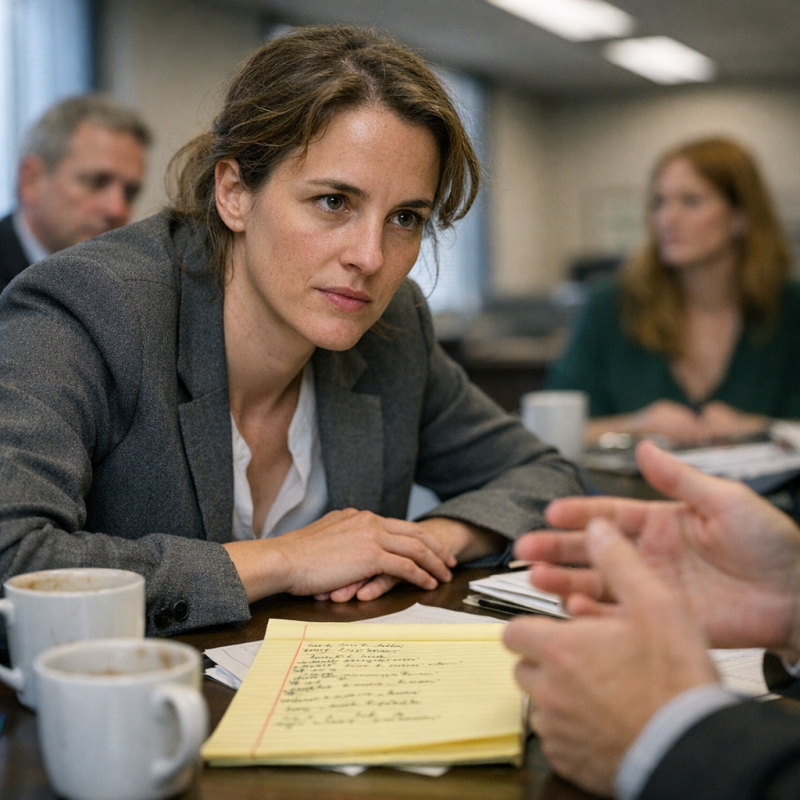 Image by FCT AI
The Night Before
The night before the deposition, I pulled out everything. My original notes from the scene, the photos, my timeline reconstruction, even the napkin where I'd scribbled details while sitting in that parking lot afterward. I wanted to be absolutely certain of my own memory before walking into that room. Reading through it all again was surreal—like reviewing evidence from someone else's life. But one thing jumped out at me that I hadn't fully processed before. In my immediate notes, written maybe twenty minutes after it happened, I'd documented: 'She pointed at me IMMEDIATELY after getting out. Before looking at cars. Before checking damage. Just pointed and started yelling about millennials.' The timeline was so specific. I'd noted it because it felt off even then, even in the chaos. She hadn't assessed anything. Hadn't examined her bumper or checked if I was injured or even glanced at the actual point of impact. Just exited her vehicle and went straight into accusations. Why would someone do that unless... unless they already knew what they were going to say? Looking at my notes from that day, one line jumped out: 'She pointed at me IMMEDIATELY'—before she could have assessed anything.
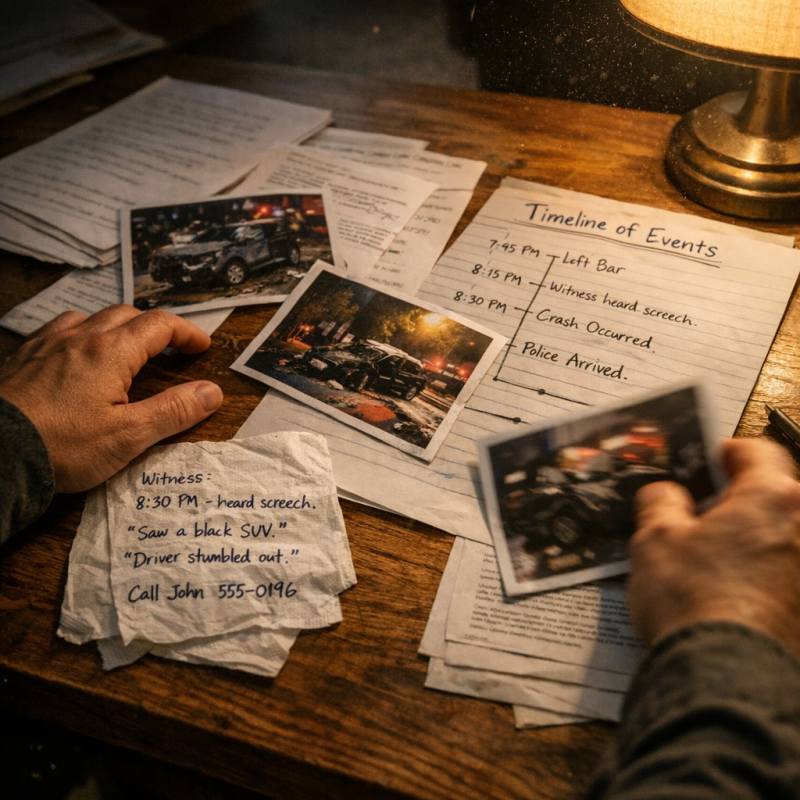 Image by FCT AI
The Deposition Day
The courthouse was one of those intimidating concrete buildings that makes everyone look guilty just walking in. I got through security, found the right floor, and followed the signs to the deposition room. My palms were sweating. Heart racing. I kept telling myself I was just telling the truth, that I had evidence, that I'd done nothing wrong. But none of that rational thinking stopped the visceral dread of seeing her again. When I opened the door, she was already there. Patricia. Sitting next to her lawyer at the far end of the conference table. I don't know what I expected—maybe some reaction, some flash of recognition or hostility. But she just glanced up briefly, completely neutral, then returned to whatever document she was reviewing. Her lawyer nodded at me professionally. The court reporter arranged her equipment. And Patricia sat there looking like someone waiting for a routine dental cleaning. Not like someone being deposed in a criminal case. Not like someone who'd committed vehicular assault. Just... bored. Mildly inconvenienced. As I walked into the room, I saw Patricia sitting with her lawyer—and her expression was completely calm, almost bored.
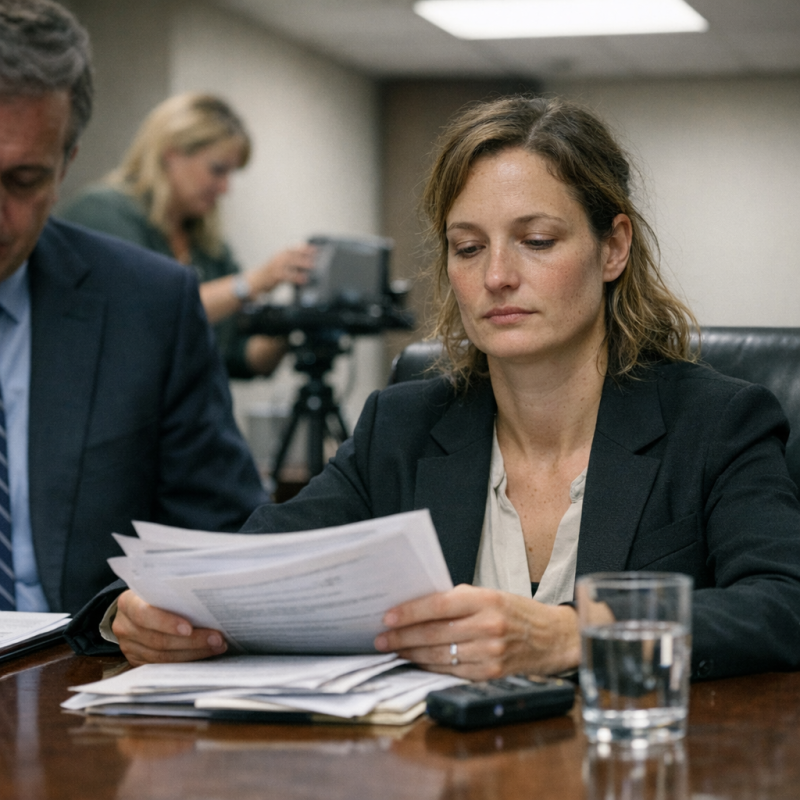 Image by FCT AI
The Testimony
They swore me in, and I started from the beginning. The prosecutors had coached me well—stick to observable facts, describe rather than interpret. I walked through the first collision, the moment she exited her vehicle pointing at me, her escalating rage, the witnesses, and then the second collision when she drove at me head-on. Patricia's lawyer listened carefully, occasionally making notes. Then he started probing. 'Now, Mr. Alex, you were admittedly startled by the initial collision, correct?' I agreed. 'And in stressful situations, perception can be unreliable, yes?' I saw where this was going. 'My perception was fine,' I said evenly. He smiled thinly. 'But isn't it possible you misremembered the sequence of events? That perhaps Ms. Whitmore's vehicle rolled forward accidentally rather than being deliberately driven at you?' I took a breath. This was the moment. 'No,' I said clearly. 'It's not possible I misremembered.' He raised an eyebrow, patronizing. 'And you're certain because...?' Her lawyer asked, 'Isn't it possible you misremembered the sequence?' and I said, 'I have video evidence.'
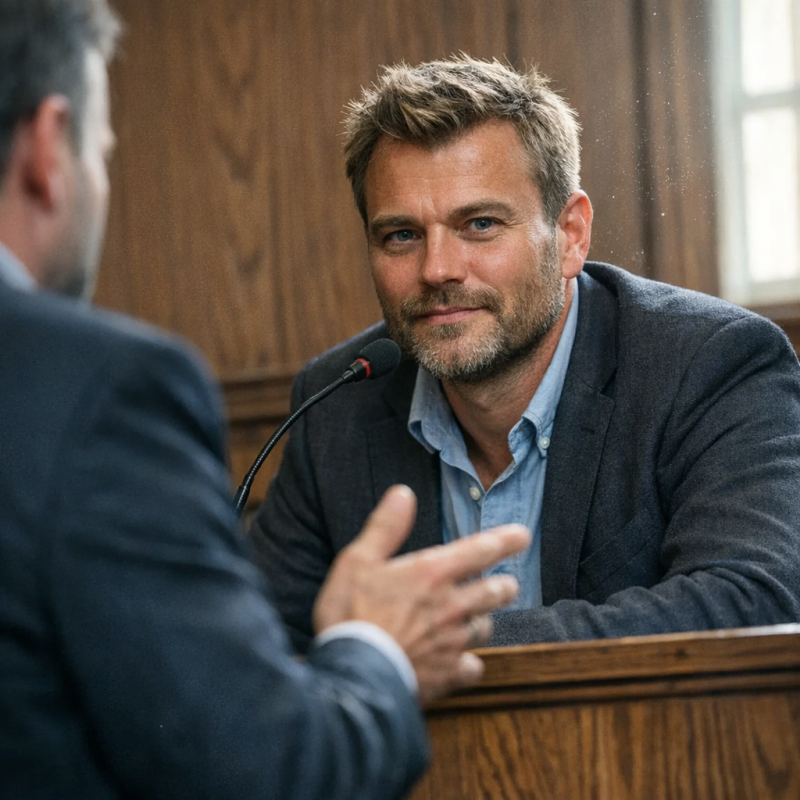 Image by FCT AI
The Pattern Revealed
After the deposition ended, I was gathering my things when Detective Ramirez caught me in the hallway. 'You did well in there,' he said. Then he glanced around and lowered his voice. 'Walk with me.' We found an empty conference room, and he closed the door. 'I can finally tell you some things now that you've given your testimony.' He looked tired. 'Patricia Whitmore has orchestrated at least seven insurance fraud schemes that we've documented. Same pattern every time—rear-end collision, aggressive confrontation, sometimes a secondary collision to muddy fault determination. She targets younger drivers, usually in older vehicles, people she thinks won't fight back.' My mouth went dry. 'Seven?' He nodded. 'That we know of. Could be more. She files claims, settles quickly, moves to a new area. Your case is different because you had witnesses and video, and because you pushed back.' He paused. 'She got sloppy. Overconfident.' Everything clicked into place—the immediate accusations, the escalation, the confidence—she'd done this before, and I'd almost been victim number eight.
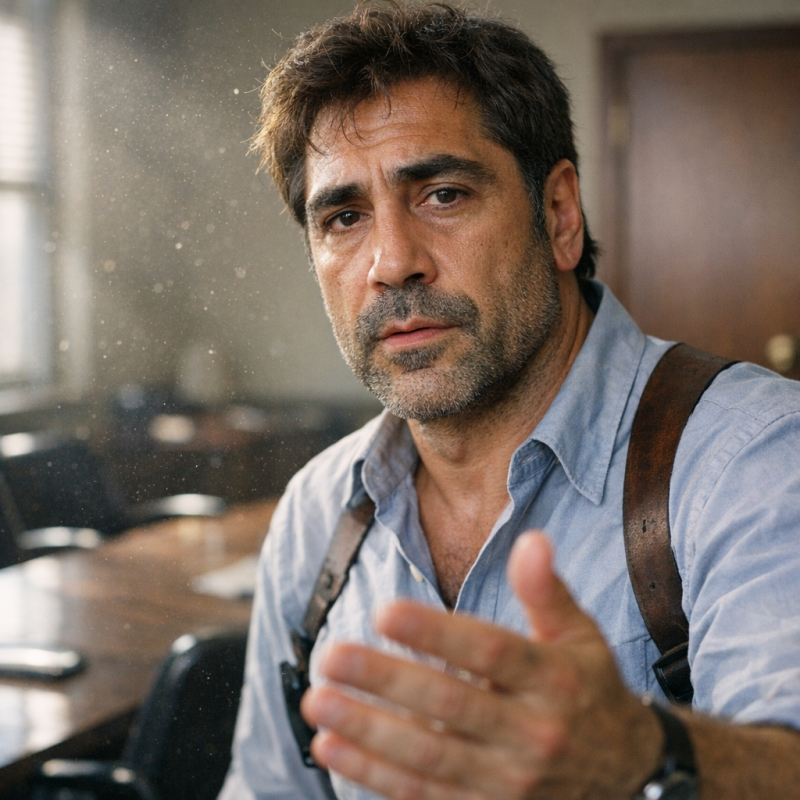 Image by FCT AI
The Other Victims
Ramirez pulled out a folder and spread seven incident summaries across the conference table. Each one made my stomach tighten. 'Rebecca Chen, 24, rear-ended at a Target parking lot—Patricia claimed neck injury, escalated to screaming about entitlement, Rebecca settled for $12,000.' He moved to the next sheet. 'Marcus Williams, 31, same pattern but she added property damage claims, settled for $18,000.' On and on it went. Every victim was under 35. Every collision happened in a parking lot or low-speed zone. Every confrontation included generational insults and manufactured rage. The settlements ranged from $8,000 to $30,000. 'She'd research her targets sometimes,' Ramirez said quietly. 'Look up their social media, find out if they had money for lawyers. Most didn't.' I stared at the summaries, feeling sick. These people had been terrorized, manipulated, pressured into paying just to make the nightmare stop. 'The $30,000 settlement,' I said, pointing to the highest amount. 'That's what she wanted from me, wasn't it?' Ramirez nodded grimly. One victim had paid thirty thousand dollars rather than fight—and I realized that's exactly what she'd expected from me.
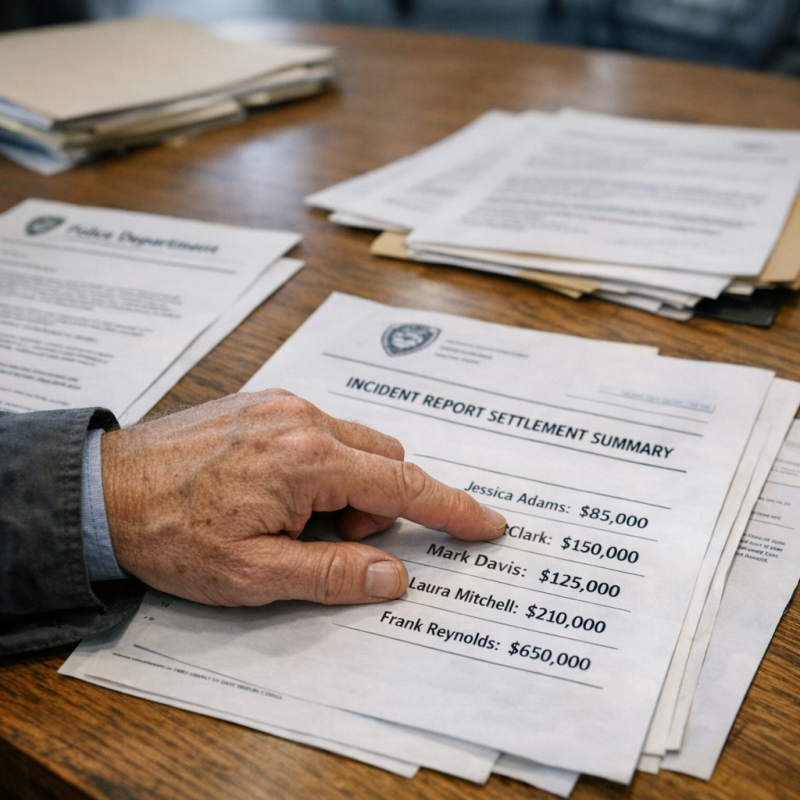 Image by FCT AI
The Unique Case
I pushed the summaries back across the table, hands shaking. 'So why didn't she just move on when I didn't settle? Why keep fighting?' Ramirez leaned back in his chair. 'Because your case is different. You had Rachel and the parking lot attendant as witnesses. You had dashcam footage from two angles. Most importantly, you documented everything and didn't back down.' He tapped my case file. 'Every other victim either had no witnesses or only partial evidence. Patricia could twist the narrative, make it he-said-she-said. With you, the evidence is ironclad.' I thought about the dashcam, the screenshots, the police report. Things I'd done automatically because I was anxious and detail-oriented, not because I knew I was fighting a serial fraudster. 'She's fighting because she knows this case could unravel everything,' Ramirez continued. 'If she loses here, it opens the door to investigate her other claims. The insurance companies start comparing notes. It all falls apart.' His expression was serious. 'You're the first one who had enough evidence to actually nail her,' Ramirez said, 'and that's why she's fighting so hard.'
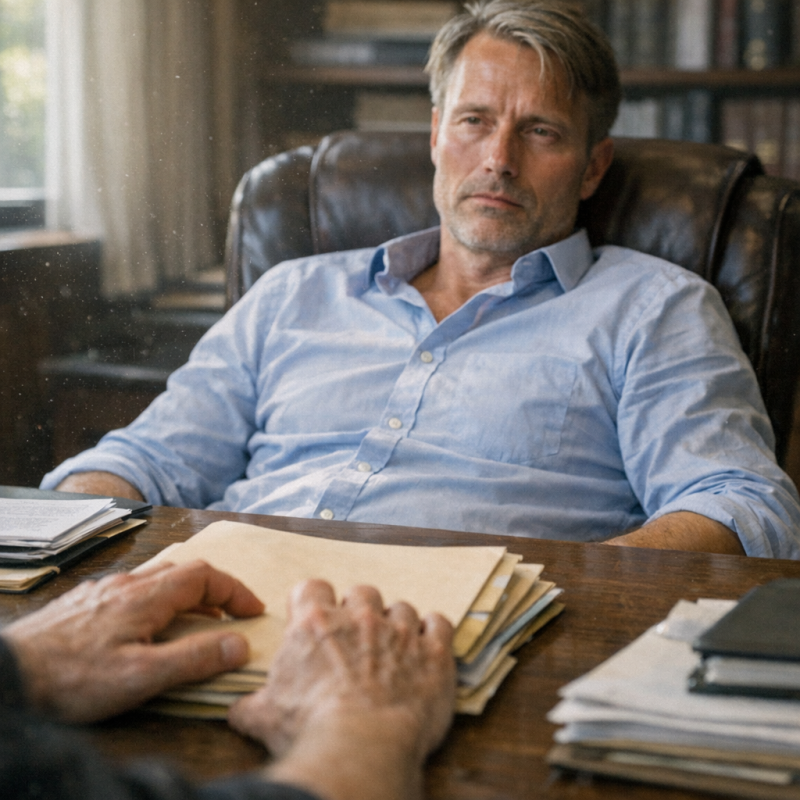 Image by FCT AI
The Criminal Charges
Two weeks after the deposition, I got an email from the district attorney's office with an attached PDF. My hands were shaking as I opened it. The subject line read: 'State v. Patricia Whitmore - Criminal Charges Filed.' The document was dense with legal language, but certain phrases jumped out. 'Multiple counts of insurance fraud.' 'Felony assault.' 'Pattern of criminal conduct.' I scrolled through page after page, my coffee going cold beside me. They'd built a case that spanned three years and four counties. Each scheme was outlined in clinical detail—the staged collisions, the manufactured injuries, the systematic targeting of younger drivers. The evidence section referenced my dashcam footage, witness statements, and something called 'pattern analysis from insurance database cross-referencing.' I'd never felt simultaneously vindicated and horrified. This woman had turned car accidents into a business model, and I'd almost been just another payday. I reached the end of the charging document and counted carefully, then counted again to be sure. Reading the charging document, I counted nine felony counts—and my incident accounted for three of them.
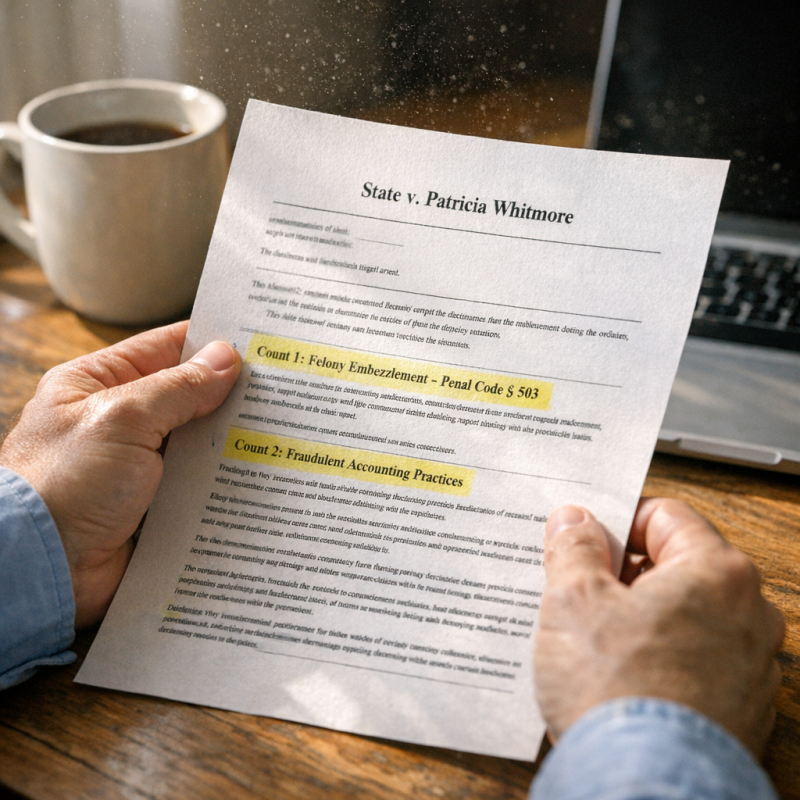 Image by FCT AI
The Media Attention
The morning after the charges went public, my phone started ringing. First it was a producer from the local news station. Then a reporter from the city newspaper. Then someone from a true crime podcast. I let them all go to voicemail while I sat on my couch, sort of stunned. By noon, there were articles online. 'Serial Fraud Driver Faces Nine Felony Counts.' 'Woman Allegedly Staged Accidents to Target Younger Drivers.' One headline called her the 'Road Rage Scammer,' which felt both accurate and weirdly sensationalized. My email inbox filled with interview requests. A few reporters had somehow found my social media. One message stood out—a veteran journalist from the ABC affiliate who covered consumer protection stories. Her email was straightforward and respectful, explaining that she wanted to give victims a voice, not just sensationalize the case. I stared at my phone for a long time. Part of me wanted to hide, to let the legal system handle everything quietly. But another part remembered those seven other victims who'd settled and disappeared. A reporter asked if I'd talk on camera, and for the first time I considered going fully public with what happened.
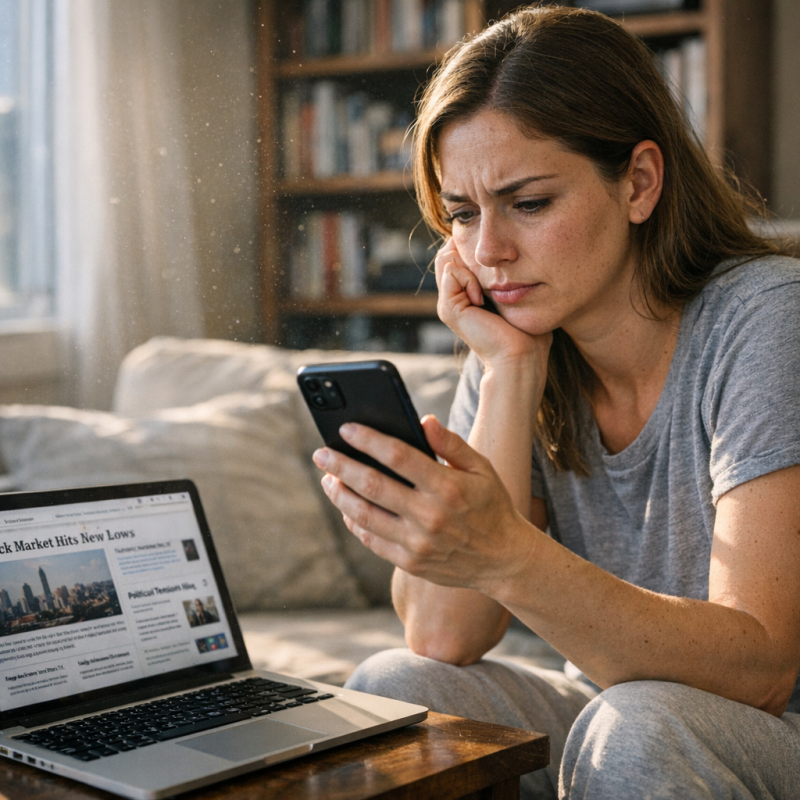 Image by FCT AI
The Decision to Speak
I called Ramirez first. 'Is it okay if I do an interview? Legally, I mean?' There was a pause. 'The criminal case is filed, so you're not jeopardizing the investigation. But let me check with the DA.' He called back an hour later with approval, plus the name of a media-savvy lawyer who could advise me. The lawyer's guidance was simple: stick to facts, describe your experience, don't speculate about Patricia's motives. 'You're not the prosecutor,' she said. 'You're a victim sharing your story.' I contacted the ABC journalist and agreed to meet. We did a pre-interview at a coffee shop where she explained the segment's focus—how insurance fraud affects real people, how victims can protect themselves. She wasn't looking for drama; she wanted awareness. That felt right. The interview was scheduled for the following Tuesday at the station. I told maybe three people. My hands were sweaty for days leading up to it. The morning of, I changed my shirt twice and rehearsed what I'd say, then forced myself to stop rehearsing because I sounded robotic. When I arrived at the studio, they mic'd me up and positioned the lights. The camera's red light blinked on, and I took a breath—it was time to tell the whole story.
 Image by FCT AI
The Interview
The interview lasted about twenty minutes, but they'd edit it down to a six-minute segment. The journalist was skilled at drawing out details—how the first collision felt, the confusion when Patricia started screaming, the moment I realized something was very wrong. I described the witnesses, the dashcam, the police report. Then she asked about Patricia's behavior. I paused, remembering that parking lot confrontation. 'She kept screaming that I was a disrespecting millennial who thought I owned the road,' I said. 'She made it about my age, my generation, like that somehow justified what she was doing. It wasn't about the accident. It was... performative. Calculated.' The journalist's eyes lit up—she knew that was the soundbite. The segment aired that evening during the six o'clock news. I watched it at home, cringing at my own face on screen but relieved I'd sounded coherent. By eight o'clock, my phone was exploding. The station had posted clips online. Someone had made a meme. Someone else had started a hashtag. Within hours, #DisrespectingMillennial was trending, and my phone wouldn't stop buzzing with messages of support.
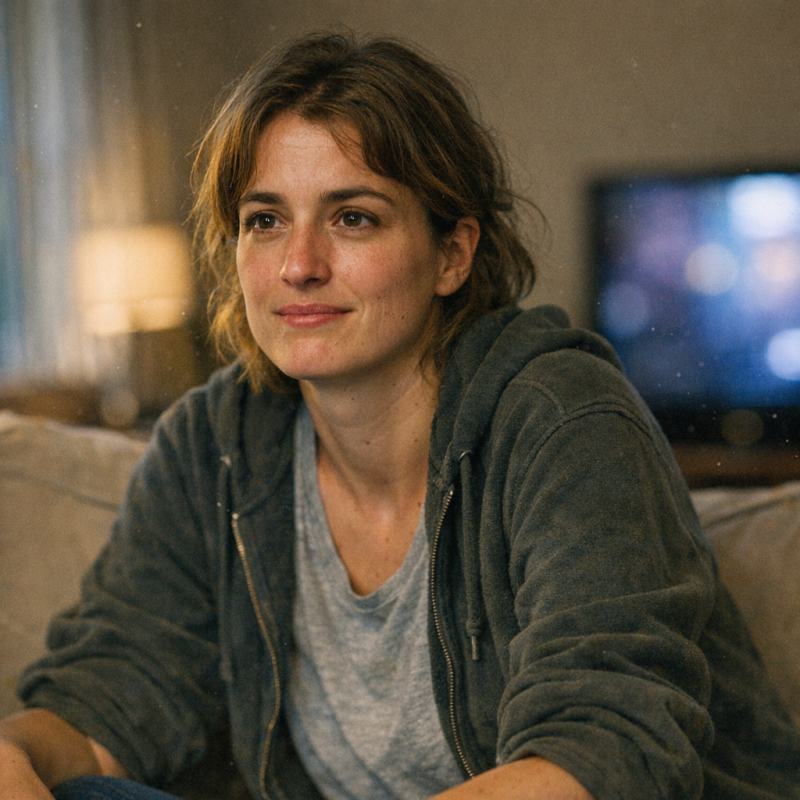 Image by FCT AI
The Domino Effect
The viral moment did something I hadn't anticipated—it brought people out of the woodwork. On Wednesday, Ramirez called. 'You need to see this,' he said. 'Three more victims contacted us after seeing your interview. They'd settled with Patricia years ago and never reported it as fraud.' My heart was pounding. 'Three more?' He sounded energized in a way I hadn't heard before. 'Same pattern. Young drivers, parking lot collisions, aggressive confrontations with generational insults, quick settlements. They saw your interview and realized they'd been scammed.' One victim was a 26-year-old teacher who'd paid $15,000 in 2019. Another was a 29-year-old nurse who'd settled for $22,000. The third was a 23-year-old grad student who'd been so traumatized she'd stopped driving for six months. They'd all stayed silent because Patricia made them feel like it was their fault, like they were the problem. Now they were angry. Now they wanted justice. The DA was already incorporating their cases into the criminal charges. The evidence was overwhelming. Ramirez called to say we now had ten incidents documented—and Patricia's lawyer was suddenly talking about a plea deal.
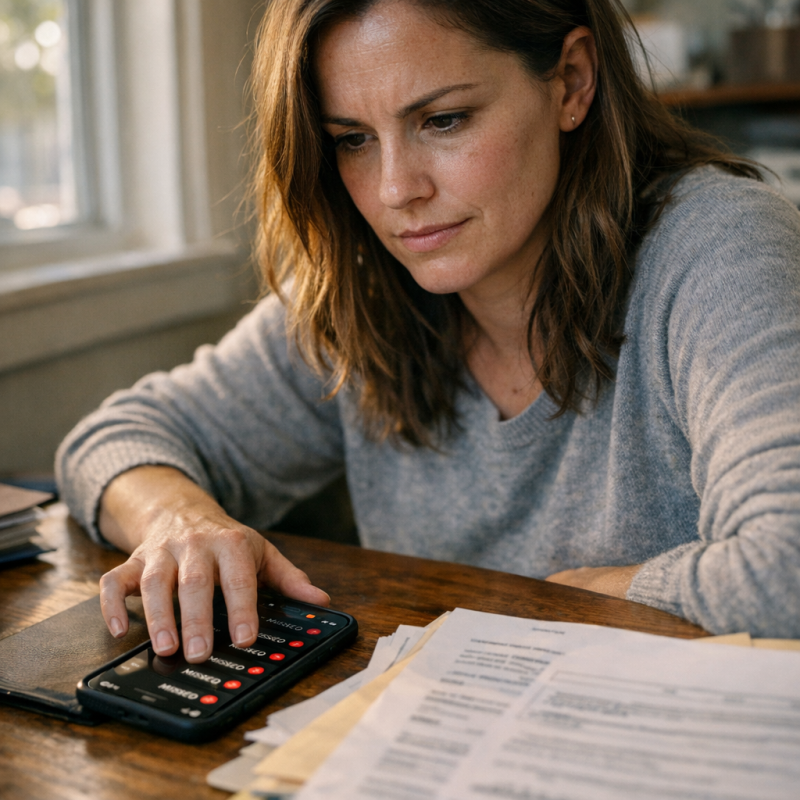 Image by FCT AI
The Plea Hearing
The plea hearing was scheduled for a Thursday morning in early November. I took the day off work. I needed to see this through, to witness whatever closure looked like. The courtroom was smaller than I'd expected, wood-paneled and fluorescent-lit. Patricia sat at the defense table in a gray suit, her hair pulled back, looking nothing like the screaming woman from the parking lot. Her lawyer stood beside her, shuffling papers. The judge entered, and we all rose. The prosecutor outlined the plea agreement—Patricia would plead guilty to six counts of insurance fraud and one count of assault, with the other charges dropped. She'd face restitution payments, probation, and a suspended prison sentence contingent on compliance. It felt simultaneously like justice and like she was getting off easy. The judge turned to Patricia. 'Do you understand these charges and accept this plea agreement?' I held my breath. Patricia stood, her voice flat and controlled. No rage. No manipulation. Just defeated acceptance. When the judge asked if she understood the charges, Patricia said 'Yes, your honor' in a voice devoid of the rage I remembered.
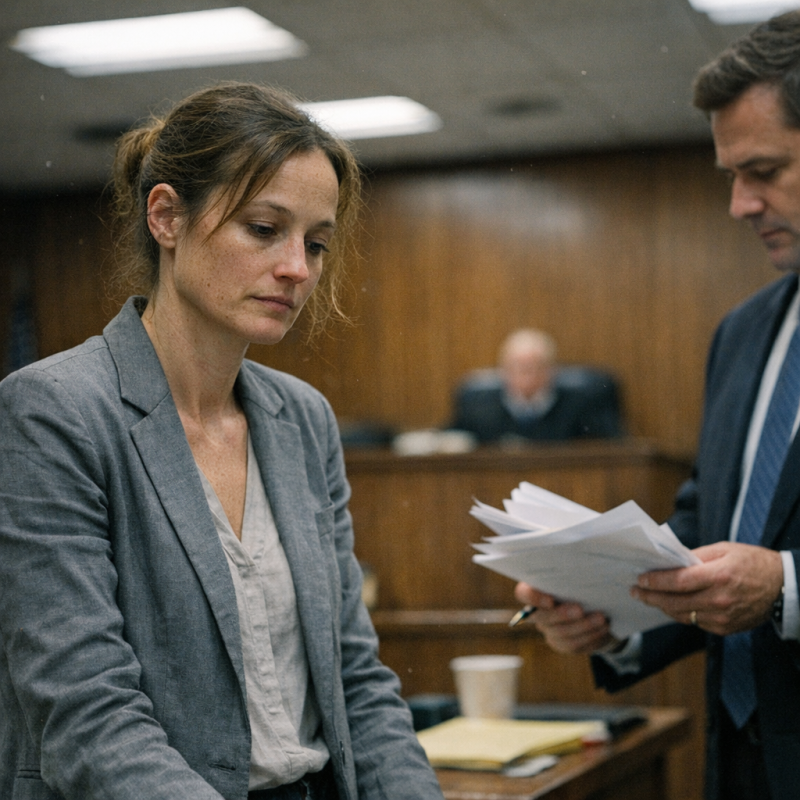 Image by FCT AI
The Sentencing
The judge didn't waste time. After hearing brief statements from the prosecutor and Patricia's attorney, she delivered the sentence with clinical precision. Three years in state prison, followed by five years of supervised probation. Full restitution to all victims—me, Mr. Henderson, and the eight others we'd identified through Detective Morrison's investigation. The total came to over $87,000. Patricia stood absolutely still as the judge spoke, her hands clasped in front of her. No theatrics. No outbursts. Just complete, deflated acceptance. When the bailiff approached to take her into custody, I expected something—some flash of the woman who'd screamed about avocado toast while ramming my car. But there was nothing. She gathered her belongings mechanically, nodded once to her attorney. Then, just before the bailiff led her through the side door, she looked directly at me. Not a glare. Not a plea. Just this hollow, exhausted acknowledgment that her life as she'd known it was over. As they led her away, she looked at me once—and there was no anger anymore, just empty acceptance.
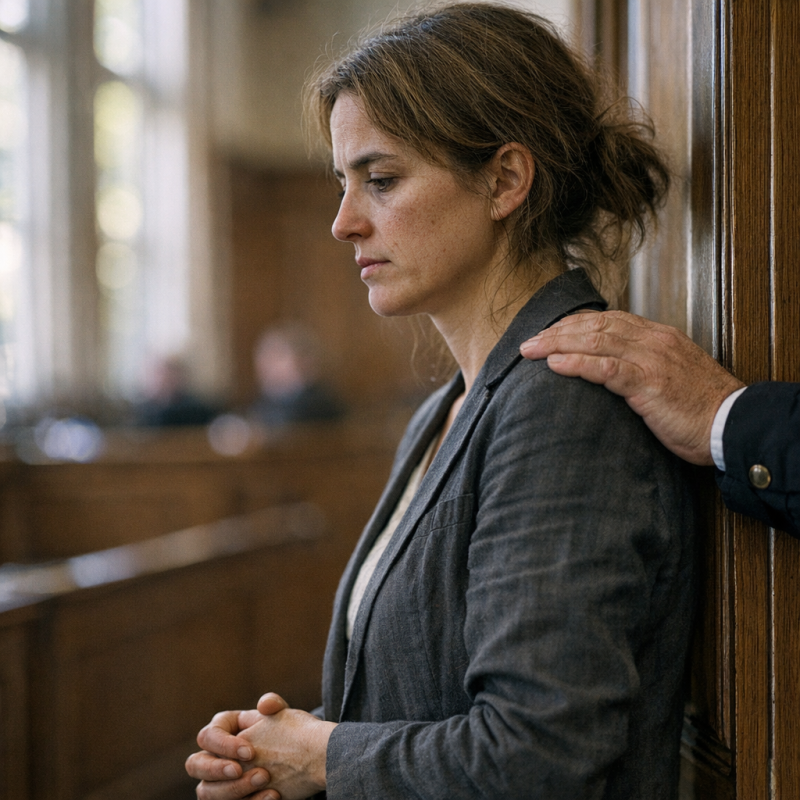 Image by FCT AI
The Repair Complete
Four months after the sentencing, the body shop finally called. My car was ready. I'd almost forgotten what it looked like without dents and scratches. The insurance had covered everything after Patricia's assets were seized—turned out she actually did have money stashed away, just not where anyone expected. When I arrived, the Civic sat gleaming under the fluorescent lights, looking better than it had in years. The shop manager walked me around it, pointing out the new bumper, the repainted rear quarter panel, the replaced headlight assembly. Everything looked perfect. Factory-fresh. Like the whole nightmare had never happened. I signed the paperwork, took the keys, and just stood there for a moment. The car represented so much more than transportation now. It was evidence. It was vindication. It was proof that chaos could be repaired, order could be restored. I opened the door and settled into the familiar driver's seat, adjusting the mirror. Sliding into the driver's seat felt strange—like closing a chapter I'd never expected to write.
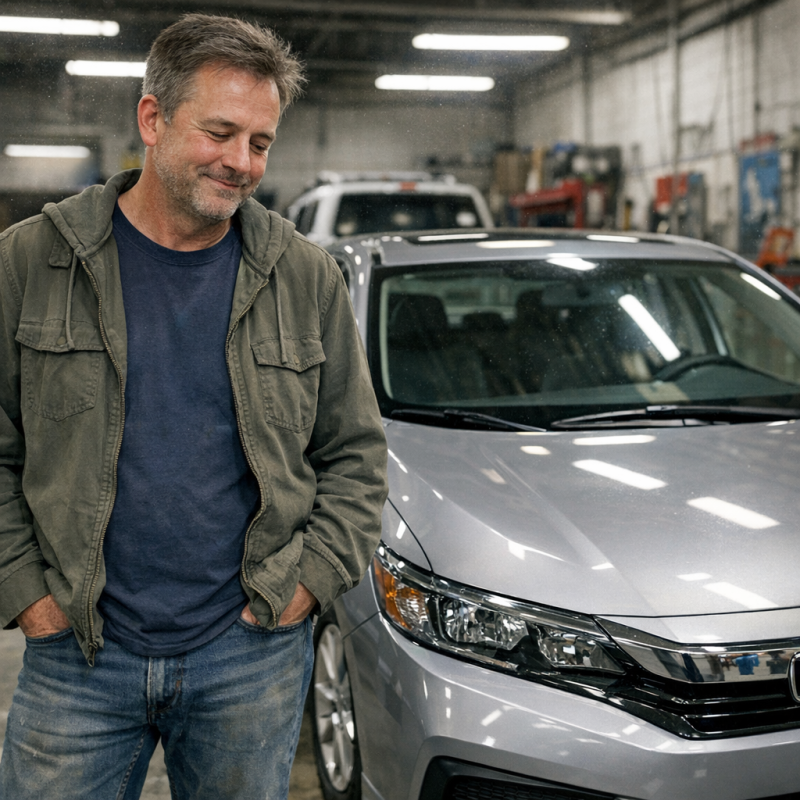 Image by FCT AI
The Aftermath
The experience changed me in ways I'm still processing. I'm more cautious now, sure—I always check my mirrors, never trust a parking lot confrontation at face value. But mostly, I'm just more aware that everyone's fighting battles you can't see. Some of them fight fair. Some don't. I stayed in touch with a few of the other victims through a group chat Detective Morrison helped facilitate. We'd check in occasionally, share updates about restitution payments, compare notes on our insurance settlements. It became this weird support network born from shared trauma. Last week, Mr. Henderson sent a message to the group. Just a simple text: 'Received my final restitution check today. First time in three years I can sleep without worrying about losing my home. Thank you all for speaking up.' I stared at that message for a long time. We'd helped each other, really. My dash cam footage had cracked the case, but his documentation had built it. Mr. Henderson sent a message saying he could finally sleep at night—and I realized we'd helped each other heal.
 Image by FCT AI
The Drive Home
Last Tuesday, I was driving home from work through the usual rush hour crawl. Nothing special. Just another Wednesday evening commute on the same route I've taken a thousand times. Traffic was moving slowly but steadily. Someone merged without signaling—I let them in. A delivery truck double-parked—I changed lanes calmly. An SUV stopped short at a yellow light—I braked smoothly, no drama. Everything that would've spiked my anxiety six months ago now just rolled off me like water. I thought about Patricia sometimes, wondered if prison was teaching her anything or just hardening her further. I thought about Mr. Henderson, finally sleeping peacefully. Mostly, though, I just drove. The mundane rhythm of brake lights and turn signals, the ordinary dance of sharing the road with strangers who probably weren't trying to destroy my life. Just people going places. Boring. Predictable. Wonderfully, beautifully normal. I stopped at a red light, checked my mirrors—purely habit now—and smiled at how boring it was, which was exactly perfect.
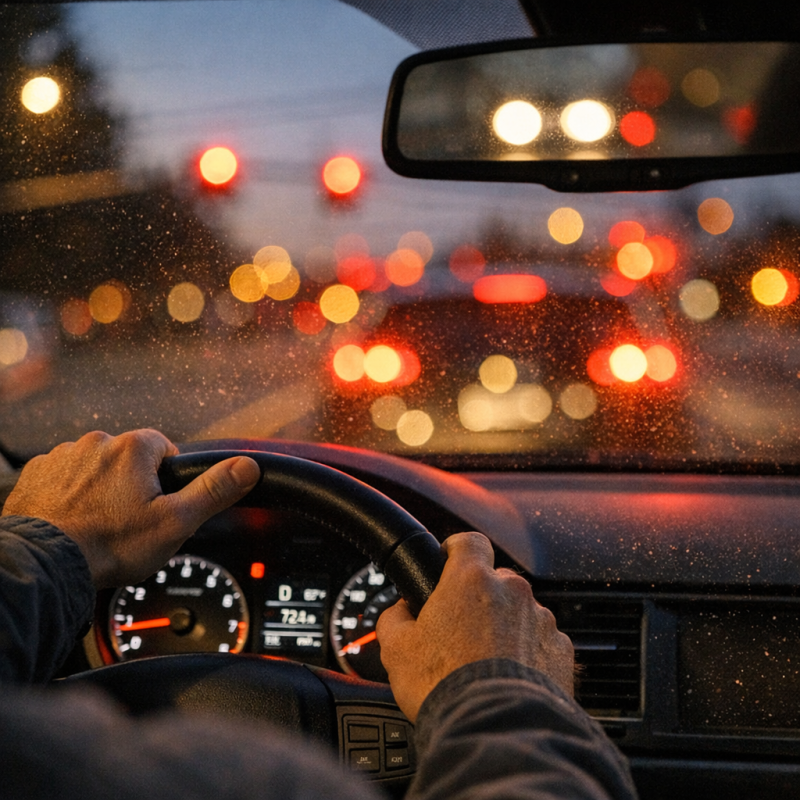 Image by FCT AI