The Day the Sky Wouldn't Cry
I stood outside the funeral home that morning trying to memorize the weight of the air, the exact shade of gray the sky had turned. My grandmother deserved tears from heaven, I thought, but the clouds just hung there, indifferent. People were arriving in dark clothes, moving slowly toward the entrance like they were wading through water. My mother was inside already, greeting everyone with that brave smile she'd been practicing all week. I couldn't go in yet. I needed another minute to pull myself together, to become the version of me who could accept condolences without crumbling. The hearse sat parked out front, black and gleaming, impossibly final. I kept staring at it, thinking about how my grandmother was in there, how she'd hate all this fuss. She would've told me to stop moping and get inside. I almost smiled at that. Then a woman in casual clothes marched toward me with a restless energy that didn't belong, and I had no idea my grief was about to take the strangest turn imaginable.
 Image by FCT AI
The Question That Made No Sense
She walked right up to me, this complete stranger, with a boy trailing behind her. He looked maybe eight, staring at nothing in particular with wide, unblinking eyes. The woman smiled brightly, gesturing toward the hearse like she'd spotted a celebrity. 'Excuse me,' she said, 'is that limo available? My son has never ridden in one, and it would just make his day.' I blinked at her, genuinely confused. Was she asking what I thought she was asking? 'That's not a limo,' I said slowly, my brain still processing. 'It's a hearse. For my grandmother's funeral.' I expected her to gasp, apologize, maybe disappear into the pavement from embarrassment. Instead, she glanced at it again, shrugged, and said, 'Oh. Well, same thing, basically. It's got the nice seats and everything, right?' Her tone was so casual, so unbothered. The boy still hadn't moved, hadn't looked at me once. When I told her it was a hearse, she shrugged and said, 'Same thing, basically'—and I realized she was serious.
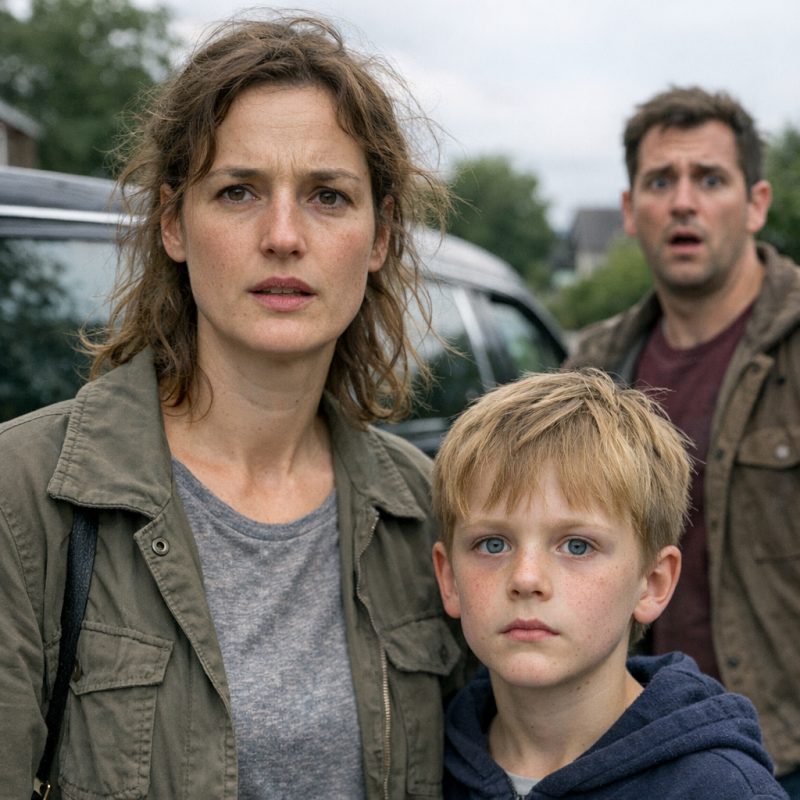 Image by FCT AI
The Boy Who Never Blinked
I tried to stay polite because that's what you do at funerals, right? You hold it together. 'I'm sorry, but that's really not possible,' I said, keeping my voice gentle. 'This is my grandmother's funeral service. The hearse isn't for rides.' The woman tilted her head like I'd said something unreasonable. The boy just kept staring past me, his expression completely blank. It was unnerving, honestly. He didn't fidget or whine or tug on his mother's sleeve like kids usually do. He just stood there, perfectly still, like someone had pressed pause on him. 'I understand it's a funeral,' the woman continued, her smile tightening, 'but he'd just sit quietly. It would only take five minutes. Just around the block.' Inside, I could see Aunt Carol and Uncle Frank through the window, greeting people, completely unaware of this surreal conversation happening outside. I felt like I was in some alternate reality. The woman pressed harder, insisting it was 'just a car' and her son 'wouldn't touch anything'—as if my grandmother's funeral was an inconvenience to her plans.
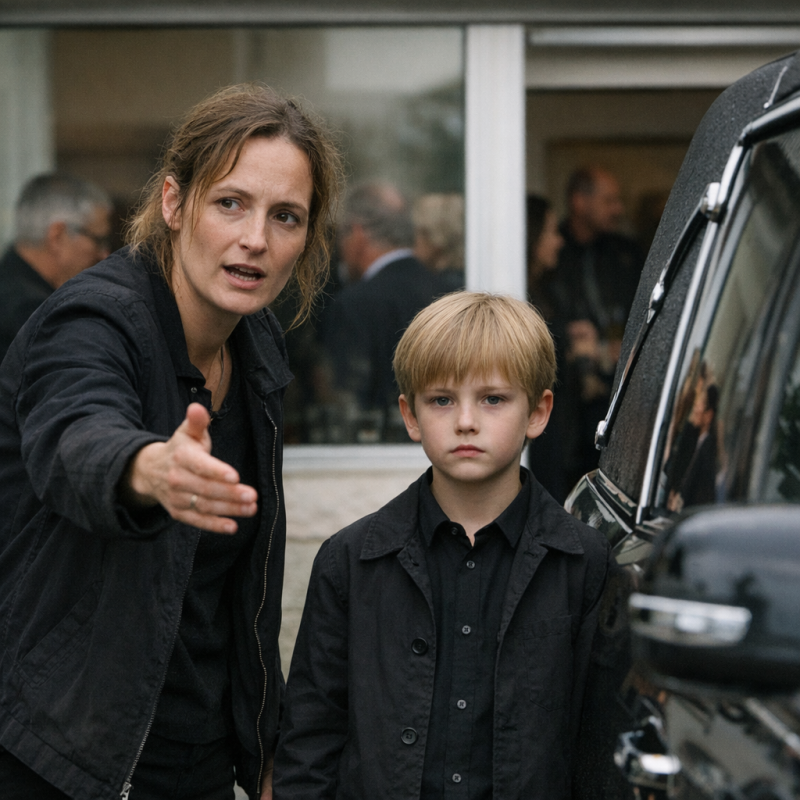 Image by FCT AI
Front or Back?
Something snapped in me then. Maybe it was the sleepless nights, maybe it was the weight of everything I'd been holding in, but I was done being polite. 'You want him to ride in the hearse?' I asked, my voice flat. 'Sure. Does he want to sit up front with the driver, or in the back with my grandmother's corpse?' The words came out sharper than I'd intended, but I meant every one of them. The woman's smile finally faltered. She stared at me like I'd just slapped her. Cousin Emily had stepped outside and was watching now, her mouth slightly open. The boy still didn't react, didn't even blink. For a second, I thought the woman might actually apologize, might realize how absurd this entire exchange had been. But no. For the first time, the woman hesitated—but instead of apologizing, she called me rude and walked away muttering about 'people with no compassion.' I watched her go, too stunned to even respond.
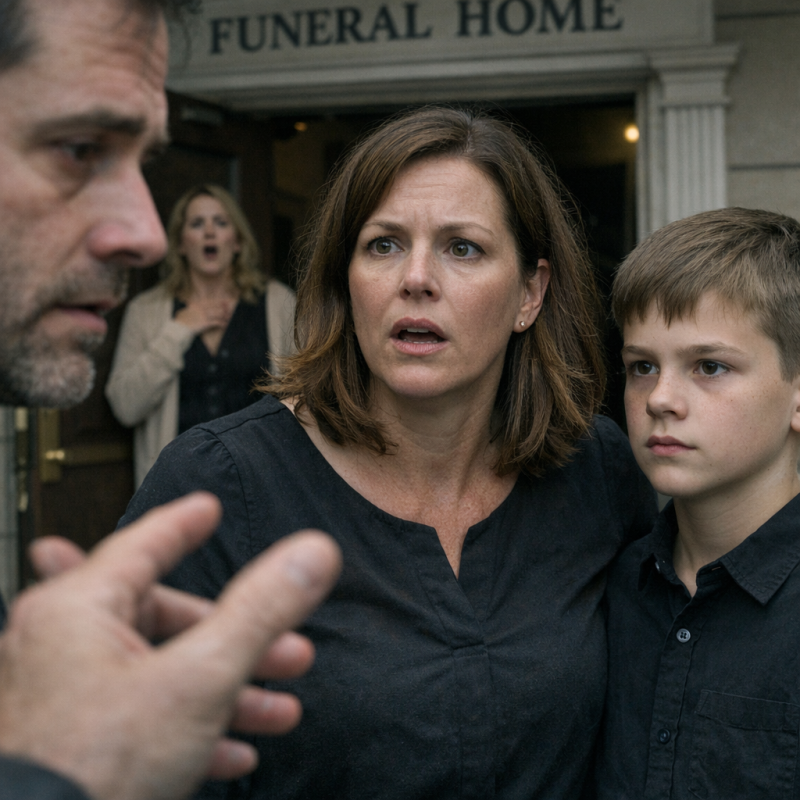 Image by FCT AI
When Grief Meets Absurdity
I went back inside on shaky legs, my hands trembling as I smoothed down my black dress. The funeral home smelled like lilies and old carpet, familiar and suffocating all at once. My mother caught my eye and mouthed, 'You okay?' I nodded, not trusting my voice. What was I supposed to say? That some stranger had just asked if her kid could joyride in Grandma's hearse? It sounded insane even in my own head. The service started, and I forced myself to focus. The pastor spoke about my grandmother's kindness, her terrible cooking, her stubborn love. People laughed softly at the stories. Margaret, our family friend, cried quietly in the second row. I tried to be present, to honor the woman who'd taught me how to play cards and cheat at Scrabble. But part of my brain kept replaying that bizarre encounter, the woman's entitled tone, the boy's empty stare. As the service began, I pushed the encounter from my mind—but hours later, when I told my family what happened, their laughter would turn to something darker.
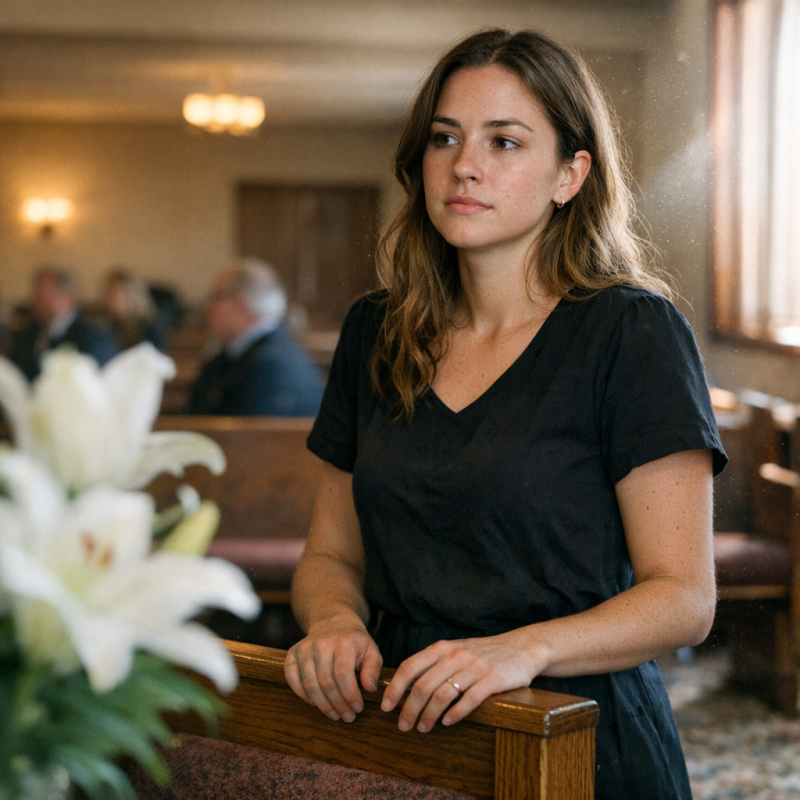 Image by FCT AI
The Story That Shouldn't Be Funny
We gathered at Uncle Frank's house after the burial, and someone poured wine while Cousin Emily ordered pizza because nobody had the energy to cook. The heaviness started to lift a little, the way it does when grief needs a break. That's when my mother asked why I'd looked so shaken before the service started. So I told them. The whole ridiculous story spilled out—the woman, the request, the 'same thing, basically' comment, my corpse response. For a moment, everyone just stared at me. Then Uncle Frank started laughing, this shocked, inappropriate bark of laughter he tried to stifle. Emily covered her mouth, her shoulders shaking. Even my mother cracked a smile despite herself. 'She did not say that,' Aunt Carol said, but she was grinning too. 'She absolutely did,' I insisted. The absurdity of it felt almost therapeutic, like a pressure valve releasing. We all needed this, I think. But Aunt Carol stopped laughing when she said, 'Wait—what did the woman look like?' and pulled out her phone with a strange expression.
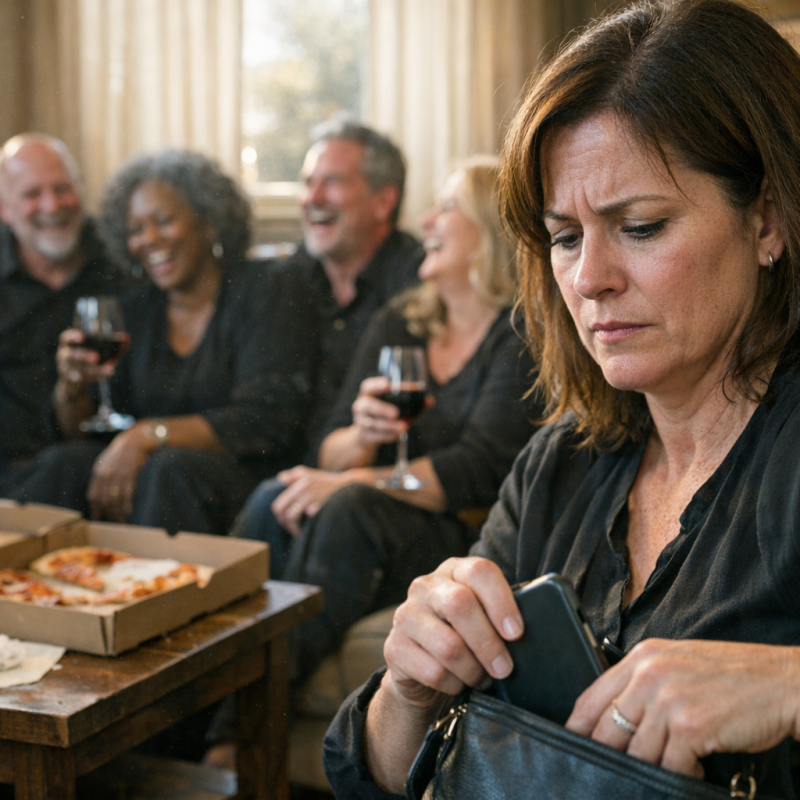 Image by FCT AI
The Facebook Group
Carol scrolled through her phone with this intense focus that made the room go quiet. 'There's this local Facebook group,' she said slowly, 'for reporting weird encounters around town. Someone posted something last week that sounds... familiar.' She turned the screen toward me. The group was called 'Brighton County Community Watch,' and there were dozens of posts. Carol pulled up one from ten days ago: a woman had approached someone at a memorial service at a different funeral home, asking if her child could 'try out' the funeral home's vintage car display. Another post from three weeks back described a similar woman demanding her kid be allowed to sit in a horse-drawn hearse at a cemetery, claiming it was 'educational.' My stomach felt strange. 'Is this the same person?' I asked, even though I already suspected the answer. Carol kept scrolling. One post described a woman who demanded her child be allowed to 'play' with a casket spray—and when refused, she threatened to sue for emotional distress.
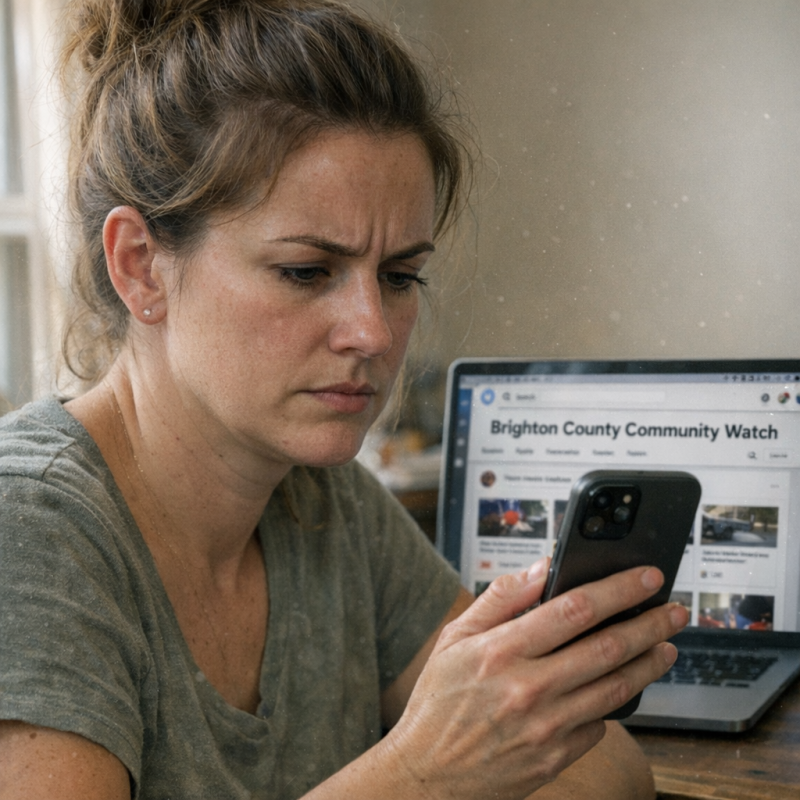 Image by FCT AI
Too Similar to Ignore
Sarah came over later that evening, and I showed her the Facebook group on my laptop. We sat on my couch reading through post after post, and the similarities were impossible to ignore. Mid-to-late thirties, blonde hair, aggressively casual clothes at formal events. Always polite at first, then increasingly demanding. And always, always with a silent child who never seemed to react to anything. 'This is so weird,' Sarah murmured, leaning closer to the screen. One woman described the kid as 'almost robotic.' Another said the child never made eye contact. In a post from two months ago, someone mentioned the woman left abruptly when they suggested calling the funeral director to ask permission. Another person said she'd vanished the moment they pulled out their phone to take a picture. Every single story ended the same way: the woman would leave quickly, often angrily, before anyone could get her name or any real information. But what bothered me most was that in every single story, the woman left just before anyone could get her name or call for help.
 Image by FCT AI
The Next Morning
I woke up the next morning to three missed calls from a number I didn't recognize. My head felt heavy from crying the night before, and for a second I'd forgotten about everything—the funeral, the woman, the Facebook group. Then I checked my voicemail. It was Mr. Thompson, the funeral director, and his voice had this tight, careful quality I hadn't heard during any of our previous conversations. 'Jordan, this is Richard Thompson from Riverside Funeral Home. I need you to call me back as soon as possible. It's... it's regarding an incident yesterday. Please call me directly.' My stomach dropped. An incident? I replayed every moment of the service in my head. Had something happened that I'd missed? Had someone complained about the arrangements? I called him back immediately, my hands shaking as I held the phone. He picked up on the first ring. 'Jordan, thank you for calling back,' he said, and I could hear him exhaling slowly. 'I need to ask you something, and please be honest with me.' I gripped the phone tighter. When I returned his call, his voice was tight with worry: 'Did you get into any kind of altercation yesterday before the service?'
 Image by FCT AI

History's most fascinating stories and darkest secrets, delivered to your inbox daily.
The Complaint
I felt my face go hot. 'Altercation? No. What are you talking about?' Mr. Thompson paused, and I heard papers rustling in the background. 'We received a formal complaint this morning from a woman who claims you verbally assaulted her and her disabled son in our parking lot yesterday. She says you were aggressive, used threatening language, and caused emotional distress to her child.' I actually laughed—it just came out, this shocked, disbelieving sound. 'That's insane. She approached me. She asked if her kid could ride in the hearse with my grandmother's body. I said no. That was it.' 'I believe you,' Mr. Thompson said quietly. 'But she's filed a written complaint, and she's threatening to post negative reviews across multiple platforms unless we address her concerns. She's also...' He trailed off. 'She's also what?' I pressed. 'She's demanding compensation,' he said. 'For what she's calling trauma and distress to her son.' My mouth went dry. He said the woman was demanding the funeral home pay for her son's 'therapy' and threatening to post reviews unless they settled immediately.
 Image by FCT AI
The Neighbor's Warning
Two days later, I drove to my grandmother's house to start sorting through her belongings. My mother couldn't face it yet, so I'd volunteered to at least organize things into boxes. I was carrying a load of books to my car when I saw Mrs. Holloway, my grandmother's neighbor, walking toward me with her small dog on a leash. 'Jordan, sweetheart, I'm so sorry for your loss,' she said, pulling me into a brief hug. 'Your grandmother was a wonderful woman.' We chatted for a few minutes about the service, and then she lowered her voice. 'Did anyone strange approach you at the funeral?' I froze. 'Why do you ask?' Mrs. Holloway glanced around as if checking for eavesdroppers. 'There's been a woman going around to funeral homes in the area. She shows up uninvited, makes bizarre requests, then files complaints and tries to get money out of people. I heard about it at my book club—one of the women's cousins dealt with her last month.' My heart started racing. 'What does she look like?' 'Blonde, mid-thirties, always has a quiet child with her,' Mrs. Holloway said. Mrs. Holloway said, 'She targets people when they're too broken to fight back—and by the time they realize what's happening, she's already gone.'
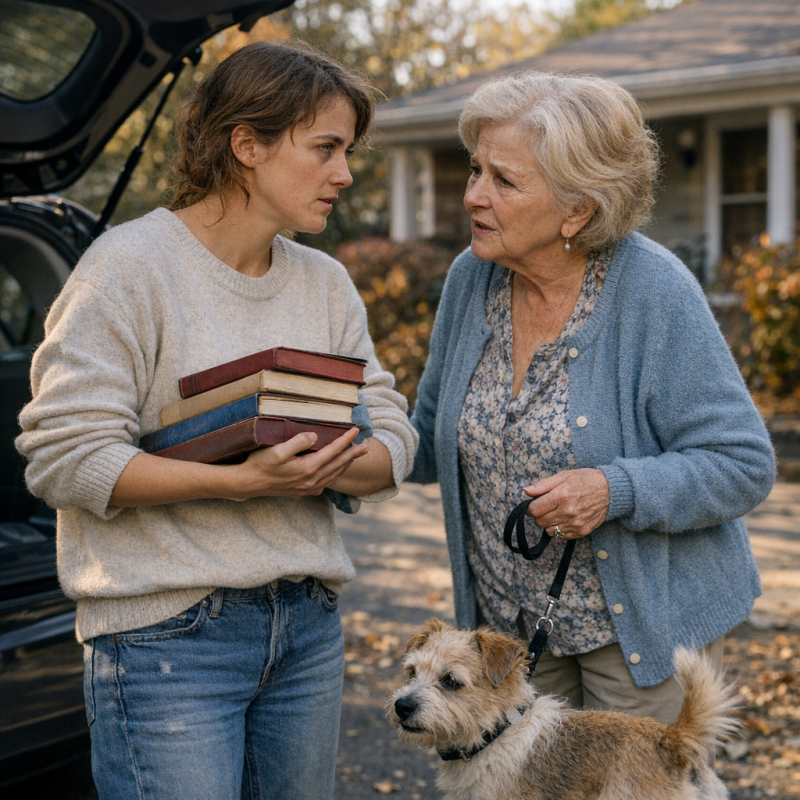 Image by FCT AI
The Settlement Offer
Three days after my conversation with Mrs. Holloway, I found a thick envelope in my mailbox. The return address was a law office I'd never heard of—Brennan & Associates, located two towns over. My hands were shaking as I tore it open. Inside was a formal letter on heavy cream stationery, the kind that's meant to look expensive and intimidating. It outlined the complaint against me in cold, legal language: verbal assault, intentional infliction of emotional distress, disability discrimination. The woman's name was listed as Jennifer Cortez, though I suspected that was fake. The letter detailed her son's supposed trauma and included medical terms I'm pretty sure were made up. And then, at the bottom, came the offer: they would drop the entire complaint, agree not to pursue further action, and sign a non-disclosure agreement in exchange for a one-time settlement payment of five thousand dollars. Five thousand dollars. For telling someone no. I read the letter three times, feeling sicker each time. The letter was professional, polite, and terrifying—because it meant she'd done this before, and she knew exactly how to make it work.
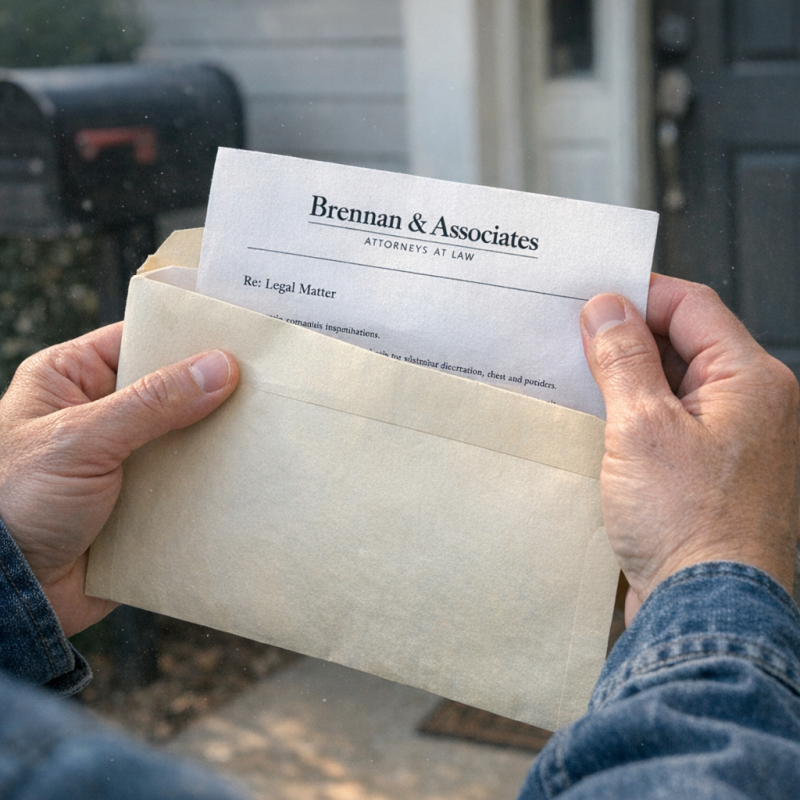 Image by FCT AI
Refusing to Be a Victim
I called Sarah first, then my mother, and we had an emergency conference call in my kitchen while I paced back and forth. 'You're not seriously considering paying this, are you?' Sarah asked immediately. 'Of course not,' I said. 'But what if she actually takes me to court? What if—' 'She won't,' my mother interrupted. 'This is extortion, Jordan. She's counting on you being too scared or too tired to fight back.' Sarah agreed. 'Everything we found in that Facebook group—this is exactly what she does. She makes it just uncomfortable enough that people pay to make her go away.' I knew they were right. Logically, I knew they were right. But I also knew that fighting this would mean more stress, more time, more energy spent on this horrible woman instead of on grieving my grandmother. 'I'm not paying,' I said finally. 'I'm going to respond through a lawyer and tell her to back off.' There was a pause on the line. But Sarah said something that chilled me: 'What if she's counting on you refusing? What if that's part of her plan?'
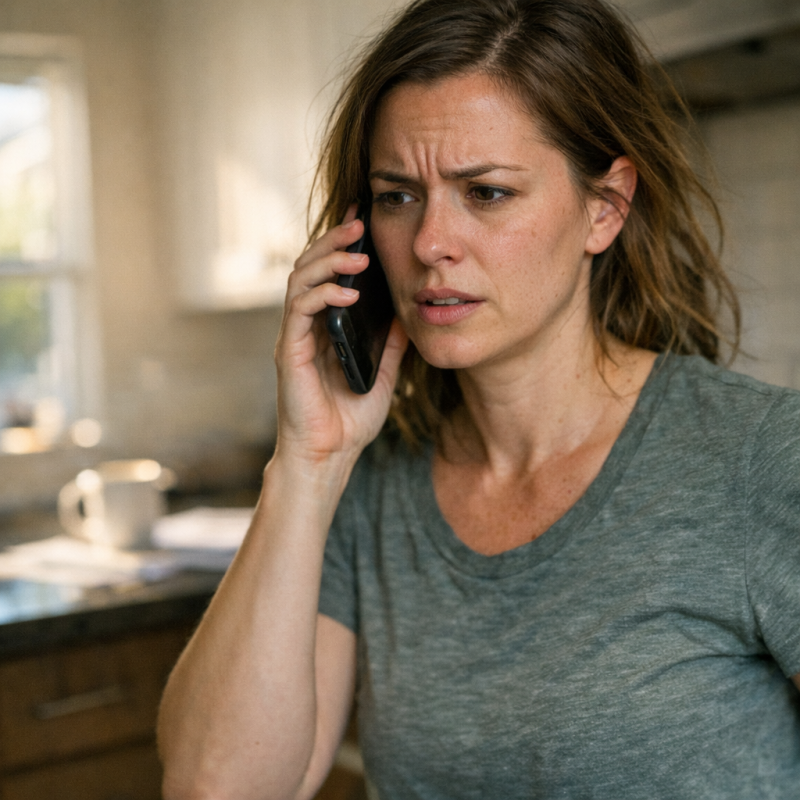 Image by FCT AI
The Lawyer's Tone
I found a lawyer through a friend's recommendation—someone who handled harassment and fraud cases. I explained everything over the phone: the funeral, the woman, the complaint, the settlement demand. He listened without interrupting, which I appreciated, and when I finished he let out a long breath. 'Okay,' he said. 'The good news is this sounds completely frivolous. Any judge would throw it out in five minutes.' I felt a flicker of relief. 'And the bad news?' 'The bad news is that defending yourself, even against a frivolous claim, costs money. Court fees, my fees, your time off work if it goes to trial. You could easily spend three or four thousand dollars proving you did nothing wrong.' I closed my eyes. 'So she wins either way.' 'That's the gamble she's making,' he said. 'She's betting that it's cheaper and easier for you to just pay her and move on.' We talked for another ten minutes about my options, but I barely heard him. As I hung up, I realized that was exactly what the woman wanted—for me to feel trapped between bad choices.
 Image by FCT AI
The Man Who Paid
I needed to get out of my apartment, so I went to a coffee shop near my office to try to get some work done. I was sitting by the window when I overheard two men talking at the next table. One of them—mid-forties, dark hair, tired eyes—was telling his friend about his father's memorial service two months ago. 'And then this woman shows up out of nowhere with her kid,' he was saying. 'Asks if the kid can ride in the funeral car. I said no, obviously, and she completely lost it. A week later I get a letter from a lawyer saying I discriminated against her disabled son.' I nearly dropped my coffee. I turned around before I could stop myself. 'I'm so sorry to interrupt,' I said, 'but did you pay her?' He looked startled. 'Yeah. Paid the settlement. It was five grand, and I just... my mom couldn't deal with it, so I paid to make it go away.' I pulled out my phone and showed him the photo I'd saved from the Facebook group. 'Is this her?' When I asked him to describe her, his face went pale and he said, 'You met her too?'
 Image by FCT AI
The Pattern Emerges
His name was Alex, and we ended up talking for over an hour. He'd been through the exact same thing—the bizarre request, the manufactured confrontation, the legal threat, the settlement demand. Even the amount was identical. 'She asked if my dad's ashes could be given to her son as a souvenir,' Alex said, shaking his head. 'A souvenir. Who even thinks of that?' We compared the letters we'd received. Same law firm. Same language. Same offer to sign an NDA and drop everything for five thousand dollars. 'Did you try to fight it?' I asked. Alex looked down at his coffee. 'I wanted to. But my mom was barely holding it together, and the lawyer we talked to said it would cost almost as much to defend as it would to just settle. So I paid.' He rubbed his face. 'I felt sick about it, but I kept telling myself it was easier this way. My mom wouldn't have to deal with court dates or depositions or any of it.' I understood completely. Alex said he paid because his mother was too distraught to deal with it—and he suspected that was exactly what the woman had counted on.
 Image by FCT AI
Building the List
I spent the next two days building a spreadsheet that would've made my old project manager weep with pride. Every story I'd found online went into it—dates, locations, funeral homes, what was requested, what was threatened, how much was settled for. I cross-referenced Facebook posts with overheard conversations Sarah had tracked down through her network. I noted similarities: the polite initial approach, the sudden escalation, the legal letter within days, the five-thousand-dollar settlement offer. The pattern was so consistent it felt mechanical. Most of the incidents were local, but as I dug deeper, I found mentions from neighboring counties too. A woman in Riverside. A family in Orange County. Someone's uncle in Ventura. The details varied slightly—sometimes it was ashes, sometimes a keepsake, once it was a piece of jewelry the deceased had been wearing—but the structure was always the same. Request, confrontation, threat, settlement. I color-coded everything, made notes in the margins, tried to find a name attached to any of it. Nothing. She was a ghost in every single story. By the time I finished, I had twelve separate incidents spanning three counties—and I still had no idea who she actually was.
 Image by FCT AI
The Anonymous Tip
The email arrived at two in the morning. I only saw it because I couldn't sleep and was scrolling through my phone in the dark, trying not to wake Sarah on the couch. The subject line read: 'About the woman at your grandmother's funeral.' No name on the sender, just a string of random letters and numbers. My stomach dropped. The message was brief. The sender said they'd been targeted six months ago at their father's funeral, paid the settlement, signed the NDA, and regretted it ever since. They'd seen my post in one of the grief support groups and recognized the exact same pattern. They offered to share documents—the demand letter, the settlement agreement, everything. 'I can't come forward publicly because of the NDA,' they wrote, 'but you need to know what you're dealing with.' Then they attached a scanned copy of a legal letter that looked identical to mine, down to the font. The email ended with a warning: 'She's more dangerous than you think—and she doesn't work alone.'
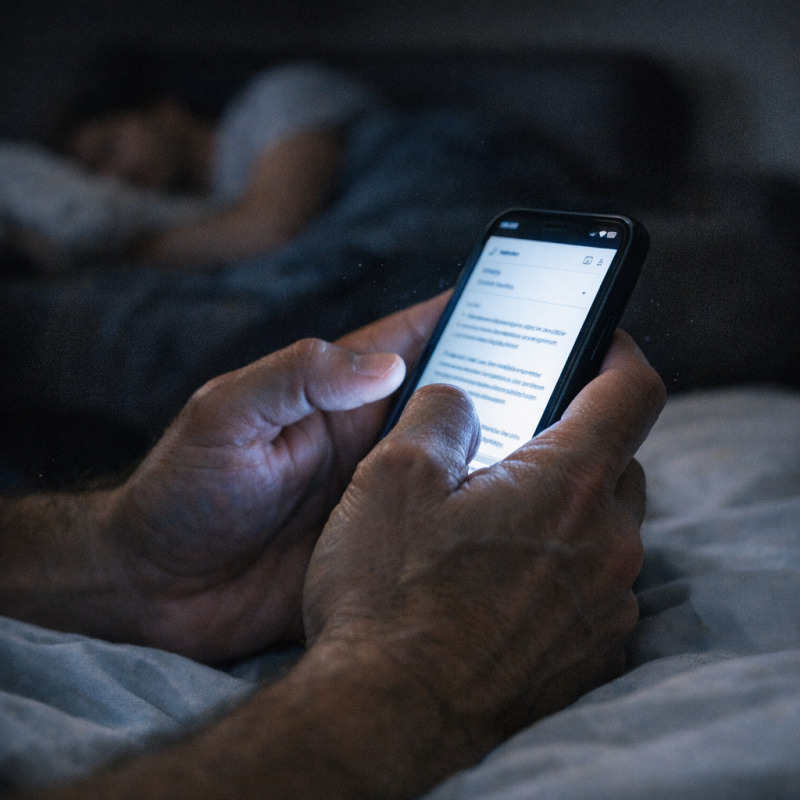 Image by FCT AI
Going to the Police
I printed everything and took it to the police station on Monday morning. Officer Ramirez listened carefully while I walked him through the spreadsheet, the emails, the identical legal letters. He was younger than I expected, maybe mid-thirties, and he took notes without interrupting. When I finished, he leaned back in his chair and sighed. 'Here's the problem,' he said. 'What you're describing—it's unethical, maybe, but it's not clearly illegal. She asked for something. You said no. She threatened to sue. That's her right, technically.' I stared at him. 'Even if she's doing it over and over?' He nodded. 'Unless we can prove fraud or extortion, there's not much we can do. Civil court, maybe, but that's expensive and slow.' I felt my chest tighten with frustration. He could see it. 'Look,' he said, more gently, 'I'm not saying you're wrong. I'm saying the law has limits.' I stood to leave, feeling defeated. As I left the station, Officer Ramirez called after me: 'Off the record? You're not the first person to come in about this. Keep digging.'
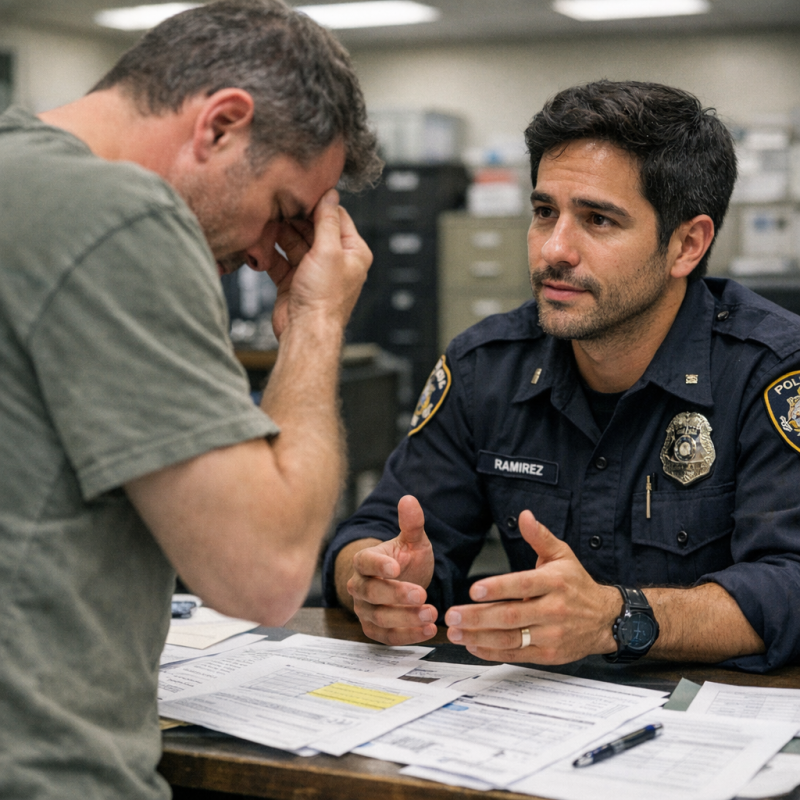 Image by FCT AI
The Meeting with Other Victims
Alex helped me organize the meeting. We found a community room at the library and sent out careful invitations to the people I'd identified. Five of us showed up—me, Alex, two women, and an older man who'd lost his wife. We went around the table, sharing what had happened. The similarities were staggering. Same approach, same escalation, same settlement amount. One of the women said the boy had knocked over a candle display at her uncle's service, and the mother claimed he'd been 'shoved' by mourners. Another said the woman accused her of using 'violent language' that traumatized the child, even though she'd barely spoken. The older man said the boy had tripped near his wife's casket and the woman insisted he'd been injured by 'reckless placement of flowers.' We all had the same legal letter. We'd all been offered the same settlement. It felt rehearsed, I said, and everyone nodded. But we didn't have proof of coordination yet—just a gut feeling that something was very, very wrong. One woman said the boy dropped a flower vase during her mother's wake and the entitled mother claimed he'd been 'traumatized' by Jordan's harsh words—even though they'd never met before.
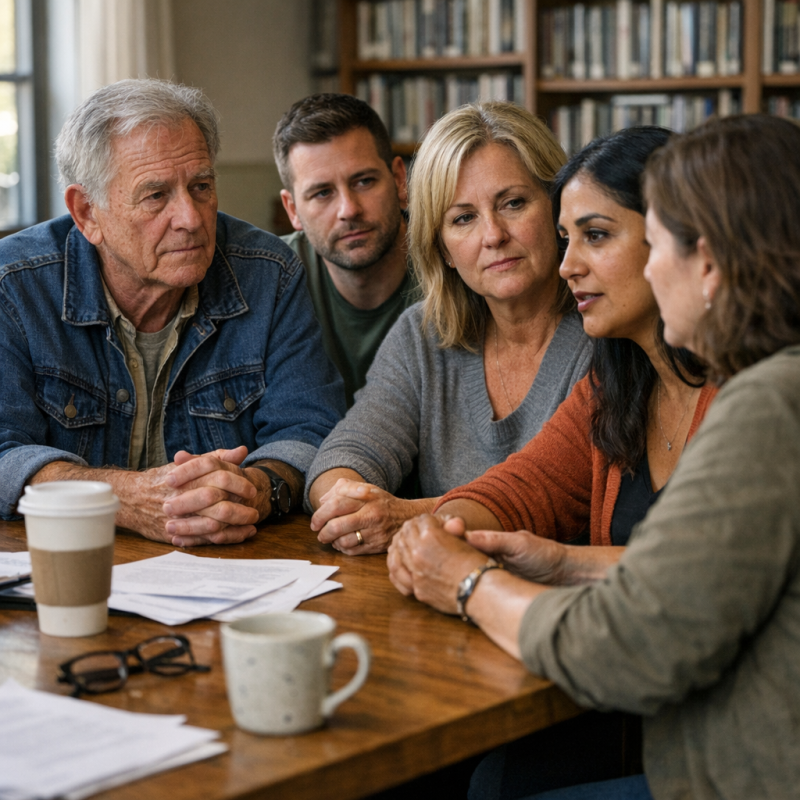 Image by FCT AI
The Boy's Injuries
That's when the second woman, Carol, mentioned the hospital visit. She said the demand letter claimed her son had suffered a panic attack after being verbally assaulted at her father's funeral. The letter included references to medical bills—an ER visit, a follow-up with a pediatrician, anxiety medication. 'They sent me copies of the bills,' Carol said, pulling them from her folder. We all leaned in. The documents looked official enough. Letterhead, dates, charges. But when Alex asked if she'd tried to verify them, Carol hesitated. 'I called the hospital once,' she admitted. 'They said they couldn't confirm or deny a patient visit without a release form. I didn't push it because I was so exhausted.' I looked at the bills more closely. No doctor's signature. No patient ID number. Just charges and totals. 'Did they ever send actual medical records?' I asked. Carol shook her head. 'They said it was protected under privacy laws.' But when pressed, she couldn't produce the hospital records—and the victim realized the whole injury might have been fabricated.
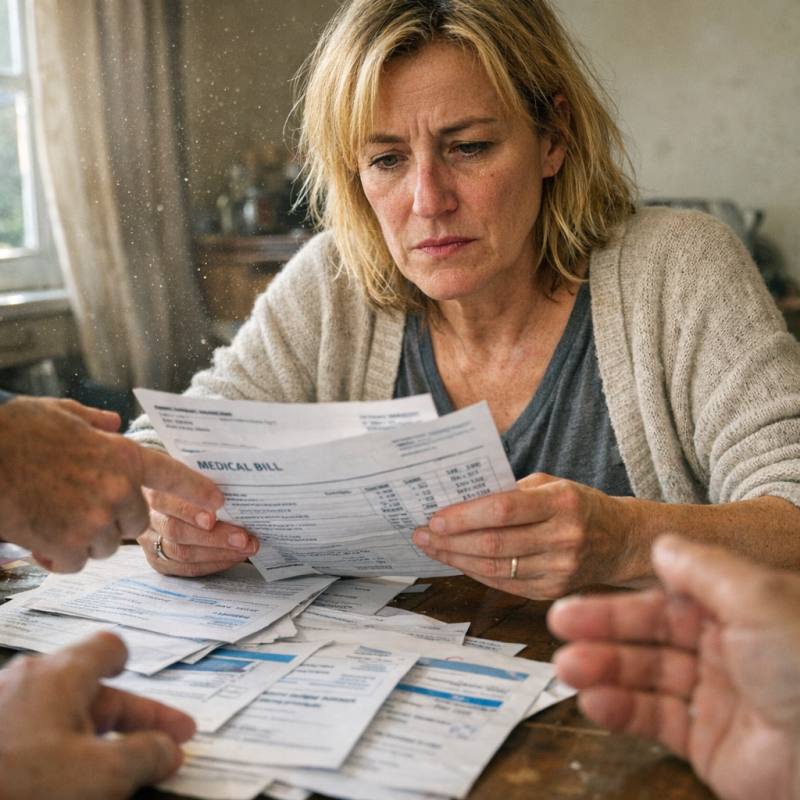 Image by FCT AI
Following the Money
Sarah met me for coffee the next day, and I told her what we'd found. 'We need to follow the money,' she said, and I loved her for thinking like a detective. We started compiling the names of the law firms from everyone's letters. Four different firms across the twelve incidents. I looked them all up. Two had websites that looked legitimate but generic—stock photos, vague bios, no client reviews. One had a disconnected phone number. The fourth had an address in a strip mall. Sarah and I drove out there on a Saturday. The address led to an empty storefront with papered-over windows and a 'For Lease' sign. We stood there staring at it. 'This doesn't make sense,' Sarah said. But it did, in a horrible way. Someone was creating fake firms, fake bills, fake documentation. The settlements were being paid to entities that barely existed. I pulled out my phone and took photos of the storefront, the address, everything. One of the firms had an address that turned out to be an empty storefront—and I realized we were dealing with something much more organized than I'd imagined.
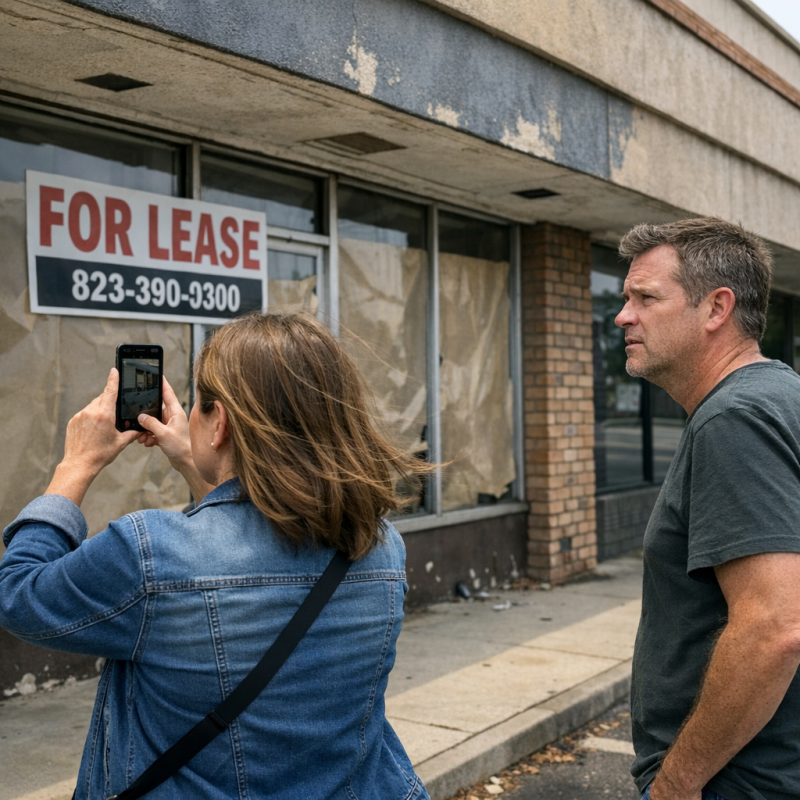 Image by FCT AI
The Photographer
I started reaching out to funeral homes, asking if they had security footage from the dates of the incidents. Most said they deleted recordings after thirty days. But one director, a kind older man named Mr. Patel, said he kept his archived longer because of liability concerns. He pulled up the date from Carol's father's service and let me look. The footage was grainy, black and white, but clear enough. I saw the woman and the boy entering. I saw them standing near the casket. And then I saw someone else—a third person, lingering near the back of the room, holding a phone. 'Do you know who that is?' I asked Mr. Patel. He squinted at the screen. 'I remember them, actually. They said they were waiting for a different service. I thought it was odd because they stood there for almost an hour.' I checked the timestamp. The funeral director said the third person claimed to be waiting for a different service—but the timestamp showed no other services were scheduled that day.
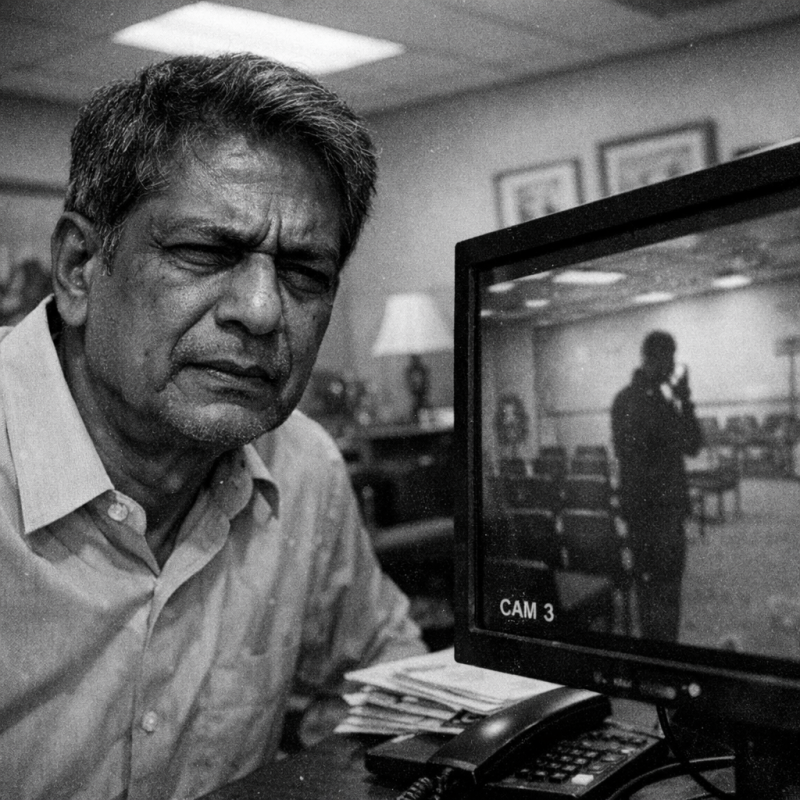 Image by FCT AI
The Video Evidence
Sarah and I went back to Mr. Patel and asked if he had any other footage. He pulled recordings from two more incidents on my list. We watched them side by side on his office computer. In every single one, the same thing happened. The woman approached someone. Words were exchanged. The situation escalated. And in the background, partially obscured, the same third person stood with a phone raised. They were filming. Sarah grabbed my arm. 'They're recording the confrontations,' she whispered. I nodded, my mouth dry. We watched one clip again, this time focusing only on the boy. He glanced toward the camera—just a quick flick of his eyes—and then suddenly stumbled near a casket, catching himself on the flowers. It looked like an accident. But that glance gave it away. He'd known where to look. He'd known what to do. I felt sick. In one clip, the boy glanced at the camera before suddenly 'tripping' near a casket—and I realized his injuries weren't accidents at all.
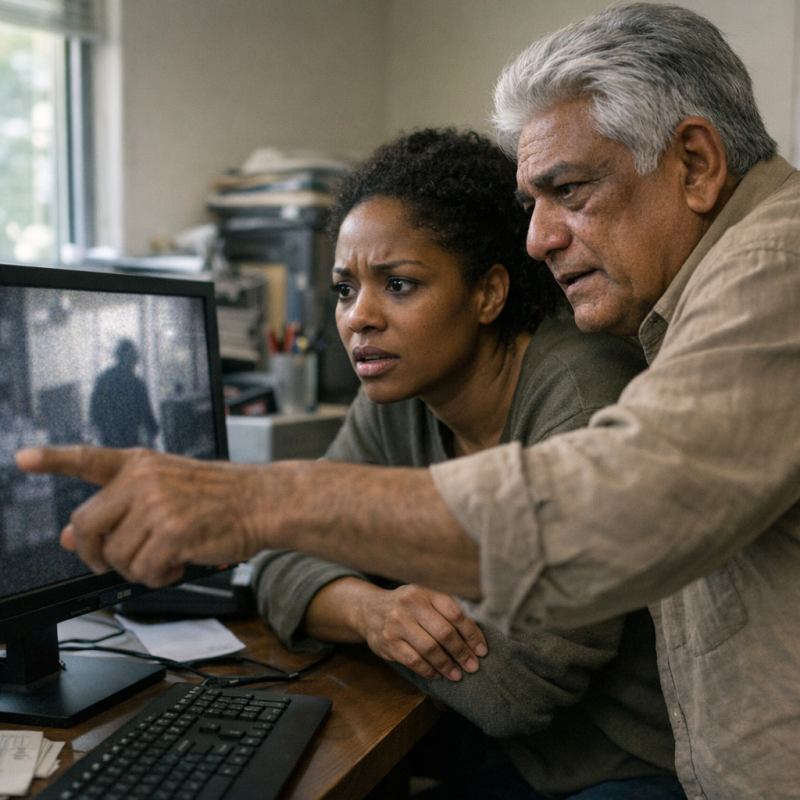 Image by FCT AI
The Child's Training
That night, I fell into a research hole I couldn't climb out of. I searched 'child exploitation in scams,' 'training children to fake injuries,' 'organized fraud using minors.' The results were worse than I'd imagined. Forum posts. News articles. Case studies. Children coached to cry on cue, to stumble at exactly the right moment, to look helpless when adults were watching. Some were taught scripts. Others were punished until they got it right. I thought about the boy—how his eyes had flicked toward the camera before he tripped. How quickly he'd started crying at the funeral. How he'd played his part perfectly, down to the trembling lip. It wasn't natural. It was rehearsed. And if he'd been trained to do this, then someone had spent time teaching him. Someone had used him, over and over, in situation after situation. I closed my laptop and sat in the dark, feeling my hands shake. The thought made me sick—because if he was being used like this, then the woman wasn't just a scammer, she was something much worse.
 Image by FCT AI
The Lawyer's Network
I needed help, so I called Alex. He worked in corporate compliance and knew how to trace business entities. When I explained what I'd found—the different law firms sending demand letters—he agreed to dig into their registrations. Two days later, he called me back. 'Jordan, this is weird,' he said. 'Three of those firms share the same registered agent. Like, the exact same address and contact info.' My stomach dropped. 'What does that mean?' 'It means they're connected,' he said. 'Maybe under the same umbrella. Maybe coordinated.' I asked him to send me everything he'd found. The firms had different names, different websites, but the paperwork led back to the same source. It wasn't a coincidence. It was a network. I tried looking up the registered agent myself, clicking through state databases and corporate records. But every search hit a wall. The name existed on paper, but nowhere else. No social media. No professional profiles. No history. When I tried to look up the registered agent's name, every link led to dead ends—as if someone had deliberately scrubbed their digital footprint.
 Image by FCT AI
The Social Media Clue
Sarah called me the next afternoon, breathless. 'I found her,' she said. 'Or I think I did. Instagram account. It's old, maybe two years, but she's in the photos.' She sent me screenshots. The woman looked younger, her hair a different color, but it was her. In every photo, she stood near crowds—outside concert venues, at farmers markets, near a hospital entrance. And in several pictures, the boy was with her. He looked smaller, maybe six or seven. Same blank expression. Same careful positioning near strangers. 'She's been doing this for years,' Sarah whispered. I started scrolling through the saved images, my heart pounding. There were captions, too. Vague references to 'tough days' and 'finding strength.' Nothing explicit. Nothing incriminating. But the pattern was there. She hunted places where people gathered. Where emotions ran high. I told Sarah to send me the account link so I could document everything. But when I clicked it ten minutes later, the page was gone. But the account was deleted within hours of Sarah finding it—and I knew she was watching us as closely as we were watching her.
 Image by FCT AI
The Threatening Email
The email arrived at 11:43 p.m. No subject line. The sender was a string of random letters and numbers. I almost deleted it. But something made me click. 'Ms. Jordan, you are engaging in targeted harassment and defamation. Cease all contact and investigation immediately or face legal action for stalking, invasion of privacy, and intentional infliction of emotional distress. This is your only warning.' My hands went cold. I read it three times, my pulse thudding in my ears. They knew my name. They knew I was investigating. And then I scrolled down and saw the attachment. It was a photo of me. Leaving the police station. Two days earlier. The angle was from across the street, zoomed in enough to show my face clearly. I slammed my laptop shut and stood up, pacing my apartment. Someone had followed me. Someone had been watching. They knew where I went. What I was doing. Who I was talking to. The email included a photo of me leaving the police station—proof that they knew exactly what I was doing.
 Image by FCT AI
The Breaking Point
My mother showed up unannounced the next morning. I opened the door and saw her standing there, eyes red, hands twisted together. 'I heard about the email,' she said quietly. Sarah must have told her. Mom stepped inside and sat on my couch, looking older than I'd ever seen her. 'Jordan, please. Just pay them. Whatever they're asking. I'll help. We'll figure it out.' I shook my head. 'Mom, if I pay, she'll just do this to someone else.' 'I don't care about someone else!' Her voice cracked. 'I care about you. These people are dangerous. They're following you. Threatening you. What if they do something worse?' I sat down beside her, feeling the weight of her fear pressing against my chest. She grabbed my hand. 'Your grandmother wouldn't want this. She'd want you safe.' I knew she was right about that. But I also knew Grandma would've fought back. She never let anyone push her around. I wanted to promise her I'd stop—but I knew if I gave up now, the woman would just move on to her next victim.
 Image by FCT AI
The Ally in the Shadows
The anonymous tipster emailed again that night. Same burner address. Different tone. 'I know you're scared. I know they threatened you. But I can help. I have information that can end this. Meet me tomorrow, 8 p.m., at the parking garage on Fifth and Elm. Top level. Come alone. Don't tell anyone. If you bring police or anyone else, I'm gone and you'll never hear from me again.' I stared at the message for a long time. Every true crime podcast I'd ever listened to screamed in my head. This was how people got hurt. This was how bad decisions happened. I should've forwarded it to Detective Chen. I should've told Sarah. I should've ignored it completely. But I thought about the boy. About the coordinated law firms. About the scrubbed digital trail and the photograph of me leaving the police station. Whoever this tipster was, they knew something. And I needed to know it too. They said to come alone and tell no one—and despite every instinct screaming this was a trap, I agreed.
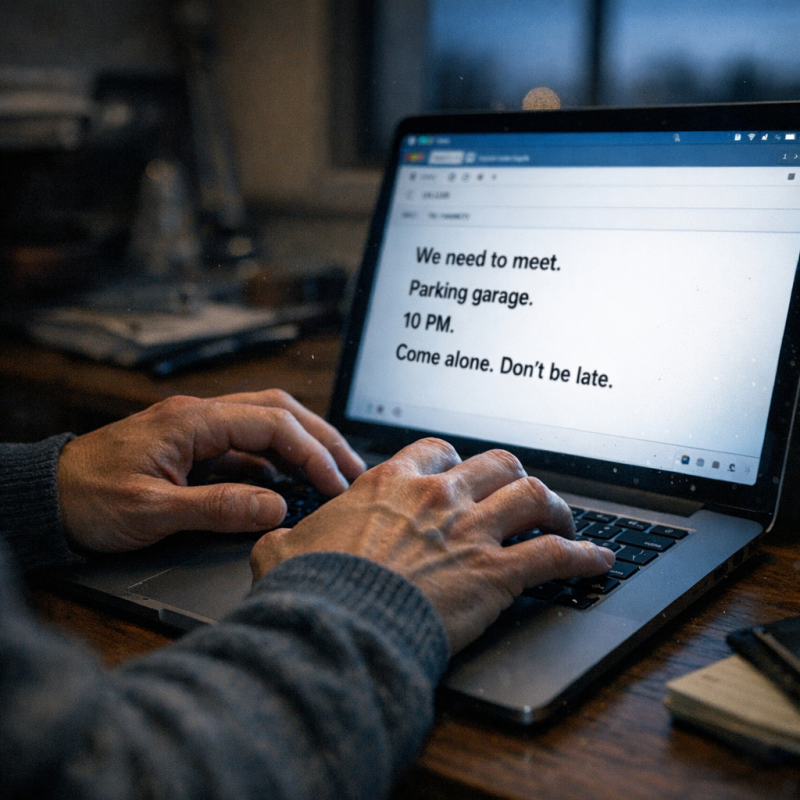 Image by FCT AI
The Parking Garage Meeting
The parking garage was nearly empty when I arrived. Fluorescent lights buzzed overhead, casting sickly shadows across the concrete. I parked on the top level and waited, hands gripping the steering wheel. At 8:07, a figure stepped out from behind a support column. A woman, maybe late thirties, thin and jittery. She glanced around before approaching my car. I rolled down the window halfway. 'You're Jordan?' she asked. I nodded. She looked terrified. 'I used to work with her,' she said, voice shaking. 'Not the funeral thing. Before that. We ran a different setup. Slip-and-fall claims at grocery stores. Fake injuries at restaurants. She was good at it. Too good.' My heart hammered. 'Why are you telling me this?' 'Because I got out,' she whispered. 'And I don't want anyone else getting trapped.' She handed me a folded piece of paper through the window. 'Addresses. Aliases. People she's worked with.' Then she stepped back. The tipster said, 'She's done this in four states. She targets grief because people don't fight back—and she always has a way out planned.'
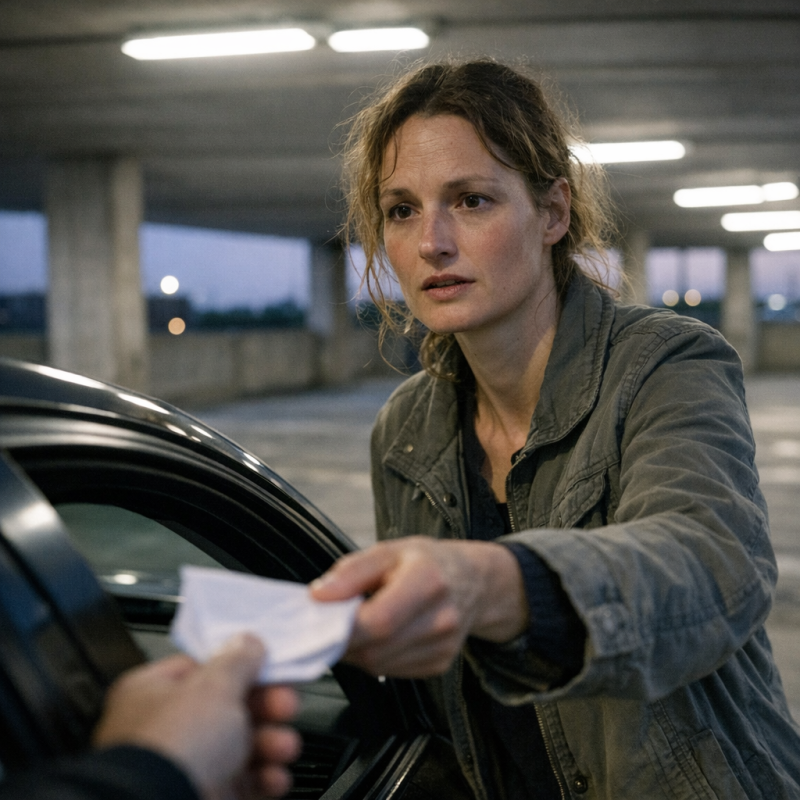 Image by FCT AI
Detective Chen Takes the Case
I went straight to the police station the next morning. I asked for Detective Lisa Chen by name. She met me in the same gray interview room, looking skeptical until I spread everything across the table. The video footage. The connected law firms. The informant's notes. The threatening email and the photograph. She studied it all in silence, her expression shifting from doubt to focus. 'This is organized,' she said finally. 'Not just one person. This is a network.' I nodded, relief flooding through me. 'So you'll investigate?' She leaned back, tapping her pen against the table. 'I'll open a case. Fraud. Possible extortion. If there's evidence of child exploitation, we'll loop in other agencies.' I felt something loosen in my chest—hope, maybe, or just exhaustion. Someone with authority was finally listening. But Chen's next words cut through my relief like a knife. She looked me straight in the eye, her voice calm but serious. But Detective Chen warned me: 'If she's as organized as you say, she'll see us coming—and she'll vanish before we can build a case.'
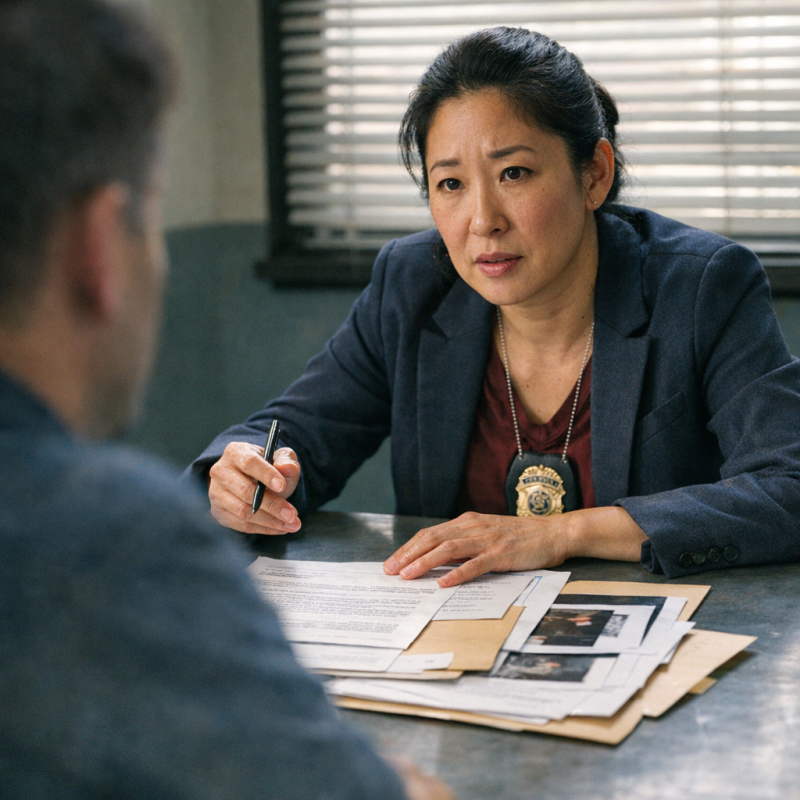 Image by FCT AI
The Surveillance Operation
Detective Chen moved fast. Within forty-eight hours, she'd coordinated with funeral homes across three counties, setting up surveillance protocols and distributing the woman's description. They installed cameras at five locations, positioned undercover officers at two others, and created a hotline for funeral directors to report suspicious activity. I checked in with Chen every other day, waiting for news. Each time, she had nothing. The first week dragged by with no sightings. The second week felt even worse. I started refreshing my phone obsessively, checking my email at two in the morning, convinced I'd somehow missed the call. Chen assured me the operation was solid, that patience was part of the process. But every day of silence felt like the woman slipping further away, like smoke dissipating before we could grab it. I kept picturing her in some new city, scanning obituaries, choosing her next target. The hope I'd felt when Chen opened the case started curdling into something heavier—doubt, maybe, or dread. For two weeks, nothing happened—and I started to fear she'd already moved on to another city, leaving us chasing ghosts.
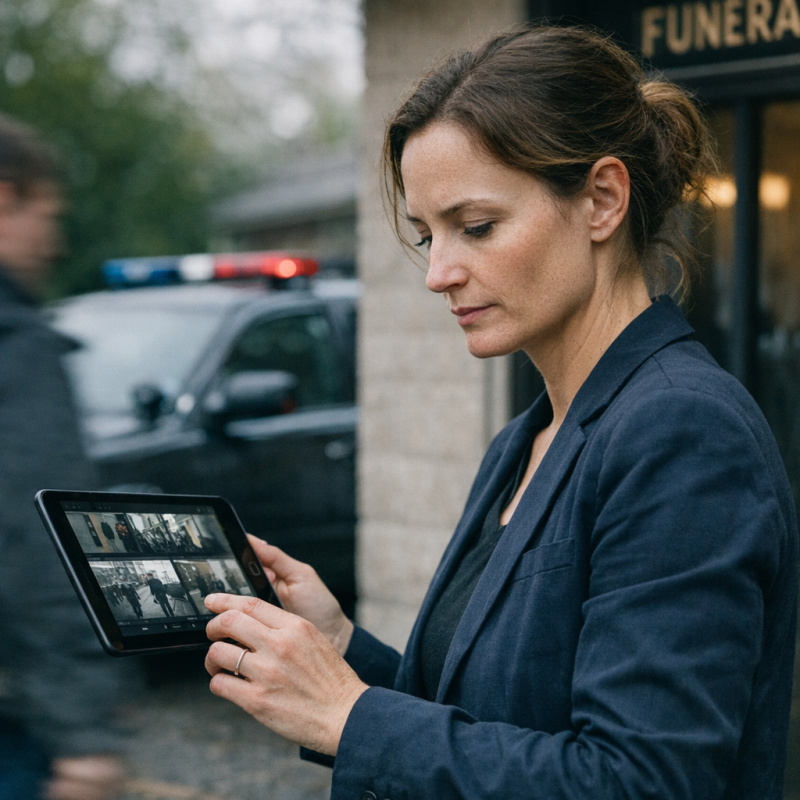 Image by FCT AI
The Next Target
Then my phone rang on a Tuesday afternoon. It wasn't Detective Chen. It was a funeral director named Mr. Thompson from a town about forty minutes away. He'd seen a post I'd made in a private forum for funeral professionals—a description of the woman, her tactics, a request for anyone who'd encountered something similar. His voice was cautious but certain. 'I think she was here this morning,' he said. 'Blonde woman, maybe late thirties, with a young boy. She came in asking about cremation urns for a service that doesn't exist in our records.' My heart kicked hard against my ribs. I asked him what she'd said, how she'd acted. He described the same restless energy, the same pointed questions, the boy hovering near expensive displays. She'd left when he started asking for verification details. But here's the part that made my breath catch. He said she was there that morning, asking bizarre questions about a cremation urn—and he'd managed to get a photo of her car's license plate.
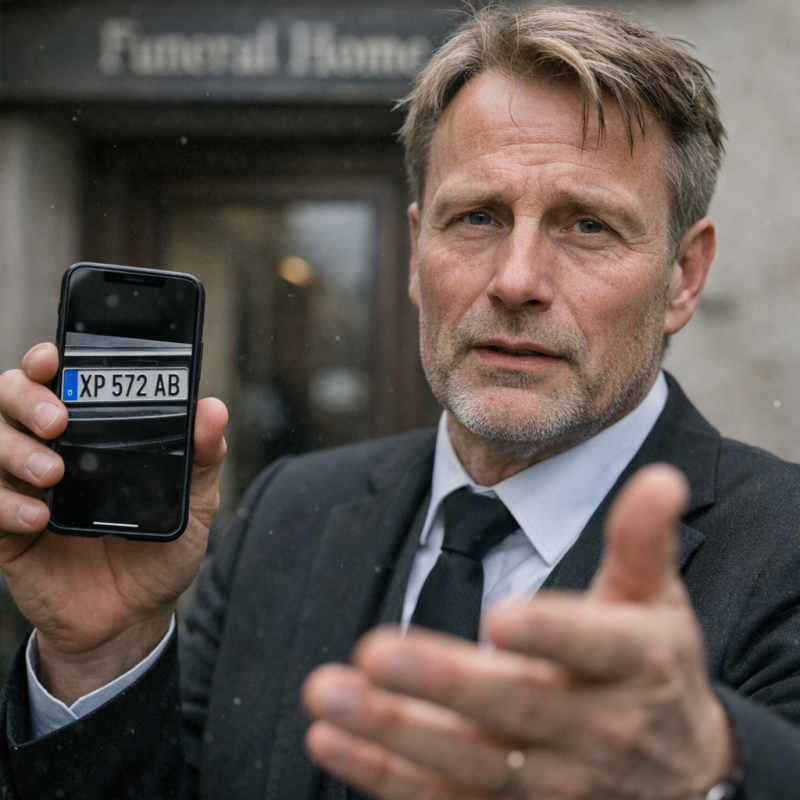 Image by FCT AI
Tracing the Vehicle
I forwarded the photo to Detective Chen within minutes. She called me back two hours later, and I could hear the shift in her tone—sharper, more focused. She'd run the plate through the system. The car was registered to a shell company, some generic LLC with no physical address, no listed employees, just a PO box in Delaware. Dead end, right? Except Chen kept digging. She pulled the registration history, traced the vehicle's movements through DMV records across state lines. What she found made my stomach drop. The car had been re-registered three times in eighteen months. First in Ohio, then Pennsylvania, then North Carolina. Each time, it happened right before a cluster of complaints started surfacing in online forums—grieving families mentioning strange encounters, pushy behavior at services, vague threats that never quite crossed into criminal territory. It was a pattern. Deliberate. Calculated. She wasn't just running a scam—she was running a circuit. But the registration history showed the car had been re-registered in three different states over the past eighteen months—always right before complaints started surfacing in new areas.
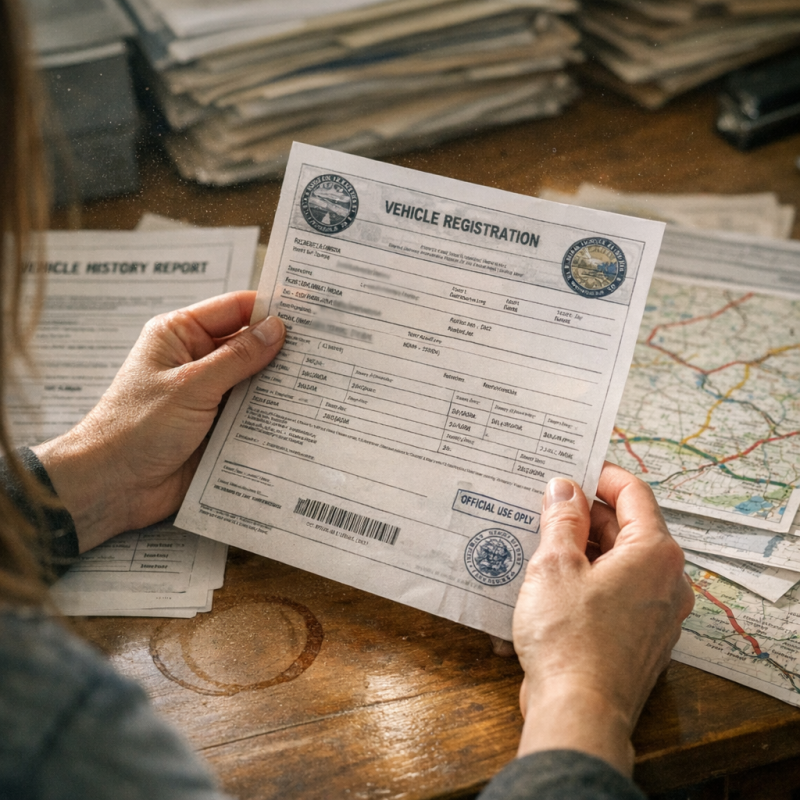 Image by FCT AI
The Legal Maze
I thought having the license plate would be enough. I was wrong. Detective Chen explained it to me over coffee, her expression patient but grim. The woman's operation existed in legal gray areas—harassment that stopped short of assault, implied threats that never became explicit, financial requests that could be argued as misunderstandings. She moved across jurisdictions before any single case could build momentum. Even with the evidence we had, prosecution would be complicated. Different states, different laws, different standards for what constituted fraud or extortion. A good lawyer could tie it up for years, argue she was just a grieving mother misunderstood by hostile strangers. Chen's frustration was obvious, controlled but simmering beneath her professional tone. She tapped her pen against the table, thinking. Then she looked at me directly. 'We need ironclad evidence,' she said. 'Not just circumstantial. Not just patterns.' I asked what that meant. Detective Chen said the only way to stop her was to catch her in the act—with video evidence, witnesses, and no room for her to claim misunderstanding.
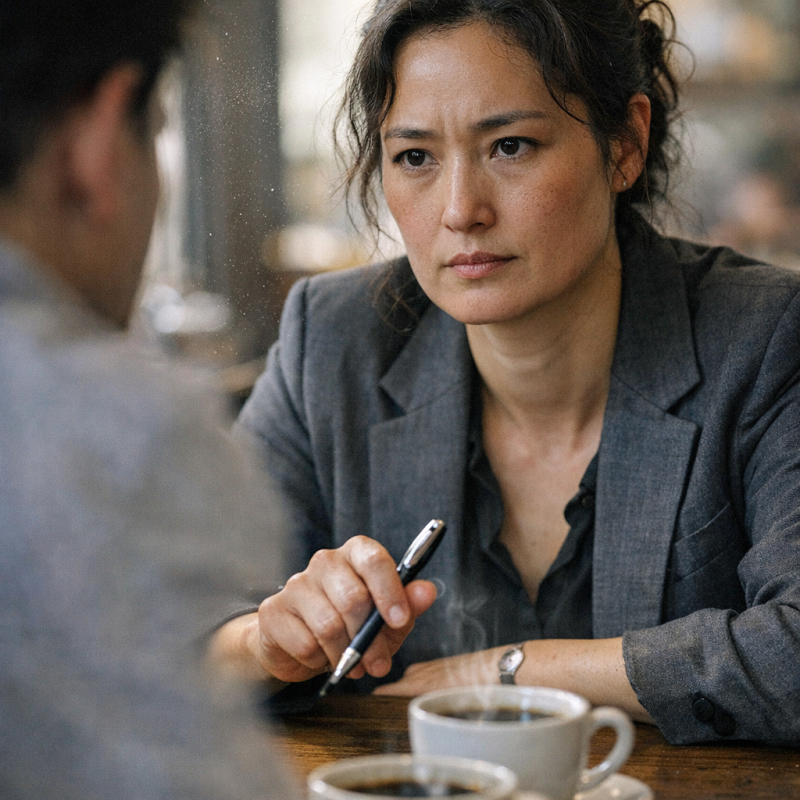 Image by FCT AI
The Decoy Funeral
Chen's proposal came a few days later, and it hit me like a punch to the chest. She wanted to set up a decoy funeral. A fake service, public enough to attract attention, designed specifically to lure the woman in. We'd have cameras everywhere, undercover officers posing as mourners, every angle covered. If she took the bait, we'd have everything we needed—video of her approach, audio of her tactics, witnesses who could testify. It made sense strategically. I understood the logic. But the idea of using grief as bait, of staging something so intimate and sacred just to trap someone, made me feel physically ill. Chen saw my hesitation. 'I know it's not ideal,' she said quietly. 'But it's the only way to protect the next family. And the one after that.' I thought about my grandmother, about the woman's cold eyes in that parking lot, about all the people she'd already hurt. I thought about the boy, trapped in whatever nightmare his mother had built. I agreed to help—but using my grandmother's memory as bait made me feel sick, even if it meant stopping the woman for good.
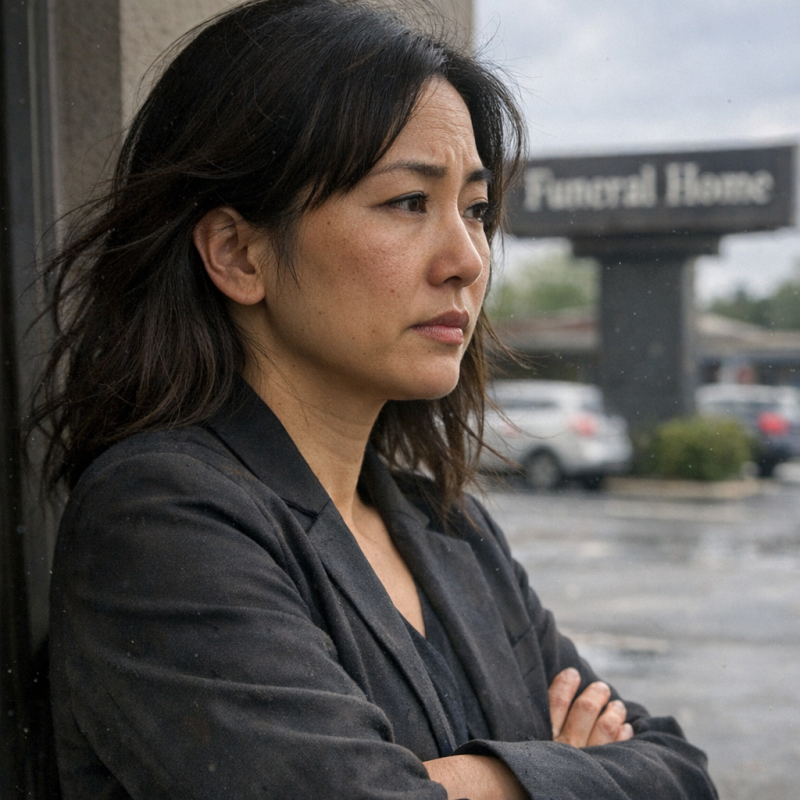 Image by FCT AI
Setting the Trap
Mr. Thompson agreed to host the decoy. He'd been in the business long enough to understand what we were trying to do, and he hated the idea of someone exploiting grieving families. We met at his funeral home on a Saturday to finalize the details. Detective Chen walked us through the setup—cameras hidden in floral arrangements, in ceiling fixtures, in the hallway leading to the restrooms. Two undercover officers would pose as distant relatives. Another would wait in an unmarked car outside. We'd list the service online, make it public, create an obituary for a fictional deceased with enough detail to seem real. Chen was thorough, meticulous, covering every angle. But as we went through the plan, I felt this creeping unease I couldn't shake. The woman had evaded consequences for months, maybe longer. She'd moved across states, adapted her tactics, stayed just ahead of every complaint. What made us think she wouldn't see this coming? As we finalized the details, I couldn't shake the feeling that we were underestimating her—that she'd find a way to turn our trap against us.
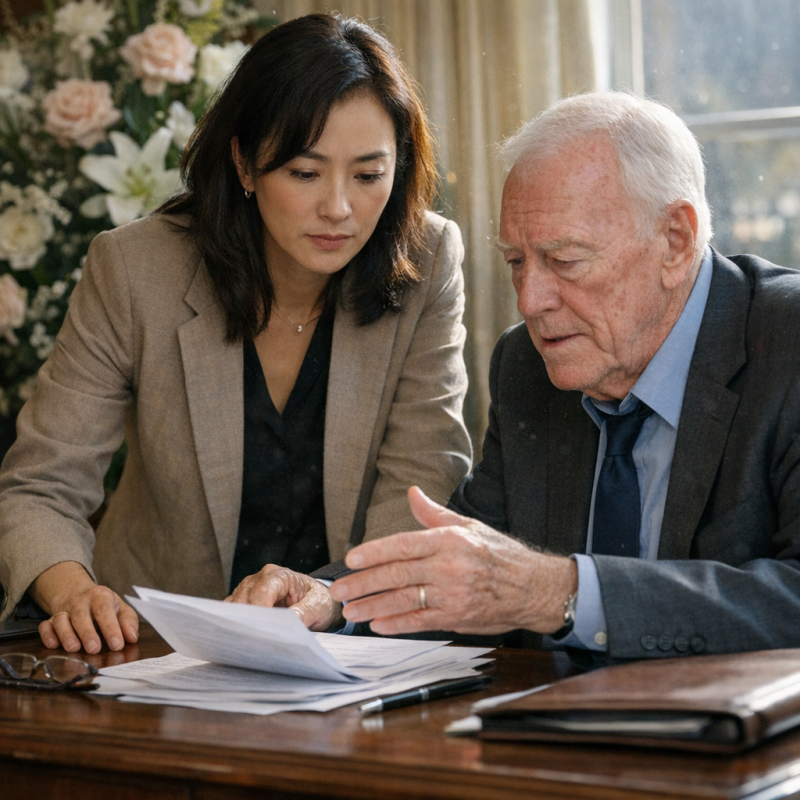 Image by FCT AI
The Day of the Decoy
The day of the decoy felt surreal. I sat in the funeral home's front row, surrounded by actors Chen had hired to play grieving family members. They were good—quiet tears, hushed conversations, the right body language. Anyone walking in would believe it. Soft music played. The flowers were real, because Mr. Thompson insisted fake ones would be obvious. Chen sat three rows back, dressed in black, a small camera clipped to her purse. The undercover officers blended in perfectly. We waited. An hour passed. Then two. A few genuine mourners wandered in by mistake, realized they had the wrong service, and left. I started to think she wouldn't come, that maybe she'd moved on, that we'd wasted everyone's time. My hands were shaking. Chen caught my eye and gave a small nod—stay patient. Then, just past the three-hour mark, I saw it through the window. A silver sedan pulling into the lot, moving slowly, deliberately. Three hours passed with no sign of her—and I was about to give up when a familiar car pulled into the parking lot.
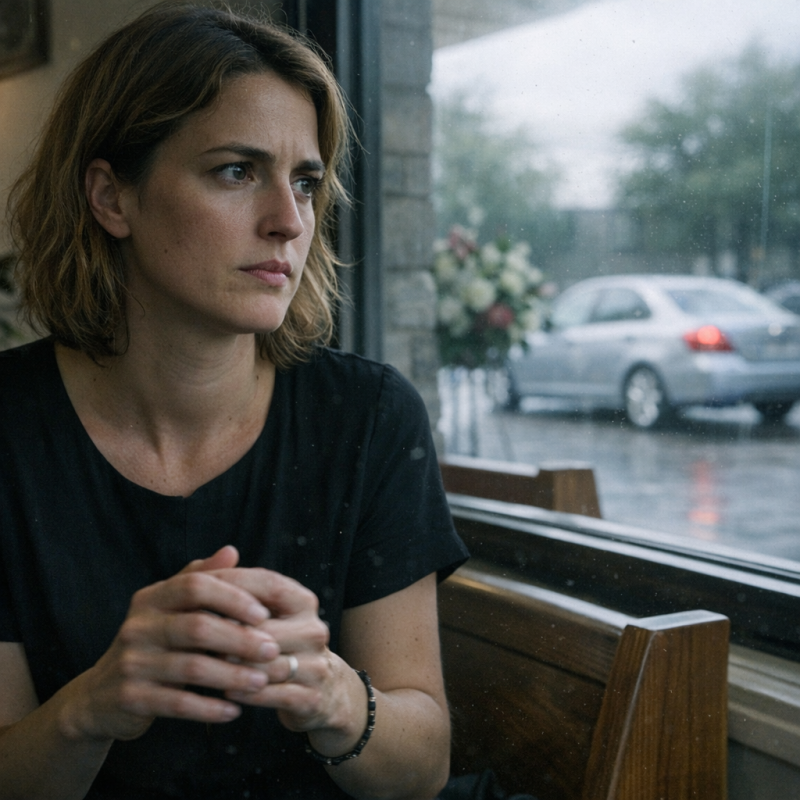 Image by FCT AI
She Walks In
The door opened. She walked in first, the boy trailing behind her. I recognized her immediately—same sharp features, same restless eyes scanning the room. She wore black, appropriate for a funeral, but her posture was wrong, too alert, too calculating. The boy stayed close to her side, his expression blank in that same unsettling way I remembered. They moved slowly down the side aisle, her gaze sweeping over the flowers, the mourners, the casket at the front. She paused near the guest book, pretending to read it. I forced myself to stay still, to not react, to let the cameras do their work. Chen didn't move. The officers didn't move. Everything was going according to plan. Then I noticed the boy's hand. He was holding something small, palm-sized, angled slightly upward. At first I thought it was a phone, but the shape was wrong—flatter, more deliberate. My stomach dropped. But this time, I noticed something I'd missed before—the boy was holding a small device in his palm, and I realized they were recording everything.
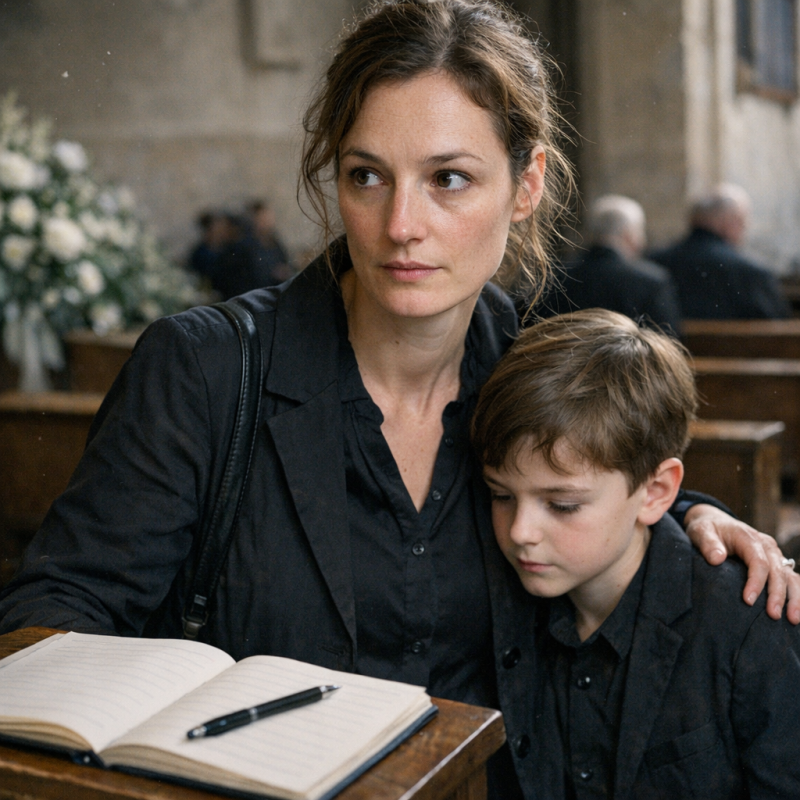 Image by FCT AI
The Performance Begins
She moved toward the flower arrangement near the memorial table, her son trailing just behind her. I watched from my position near the back wall, heart pounding but forcing myself to stay still. 'Excuse me,' she said loudly, her voice cutting through the quiet atmosphere. A staff member approached, probably thinking she needed directions. 'My son would love to touch these beautiful flowers. Would that be okay?' Her tone was sweet, almost simpering. The staff member—an older woman in a dark suit—smiled kindly but shook her head. 'I'm so sorry, but we ask that guests don't handle the arrangements. They're quite delicate.' It was polite. Reasonable. Exactly what you'd expect. And exactly what I'd seen trigger everything before. I held my breath. The boy took a small step backward, perfectly timed, perfectly angled. His foot caught the base of a tall candle stand, and it toppled sideways with a crash that echoed through the room. His mother's face transformed instantly—shock, then concern, then that familiar flash of calculated outrage I'd seen in my grandmother's funeral home.
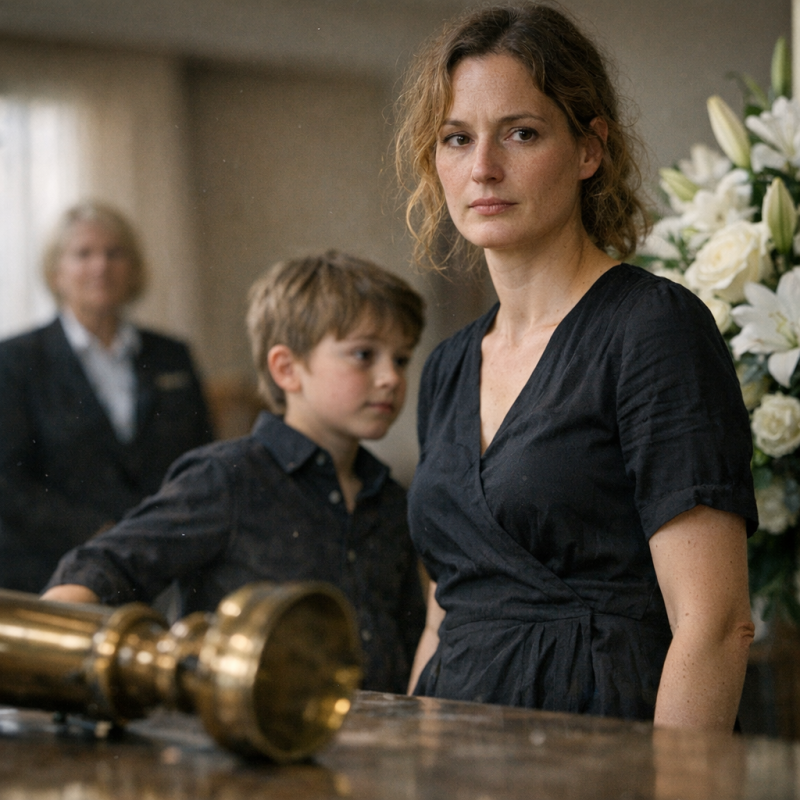 Image by FCT AI
The Confrontation Escalates
Her voice rose immediately, sharp and demanding. 'I need to speak to whoever's in charge. Right now.' The staff member stammered an apology, reaching down to right the candle stand, but the woman stepped in front of her. 'My son has been traumatized by this. You told him he couldn't touch something beautiful, and now he's been hurt because your equipment isn't properly secured.' The words felt rehearsed, each syllable landing with practiced precision. Other mourners had turned to watch now, uncomfortable witnesses to a scene that felt wrong in this sacred space. I recognized every beat of it—the escalating volume, the accusatory tone, the way she positioned herself as the injured party. 'He could have been seriously injured! What if that candle had been lit? What if he'd been burned?' She was building her case in real time, creating a narrative that anyone overhearing would find compelling. The boy stood beside her, lower lip trembling on cue. But this time, I wasn't the only one listening—Detective Chen stood in the corner, recording device visible in her hand, and two plainclothes officers had moved closer to document every word.
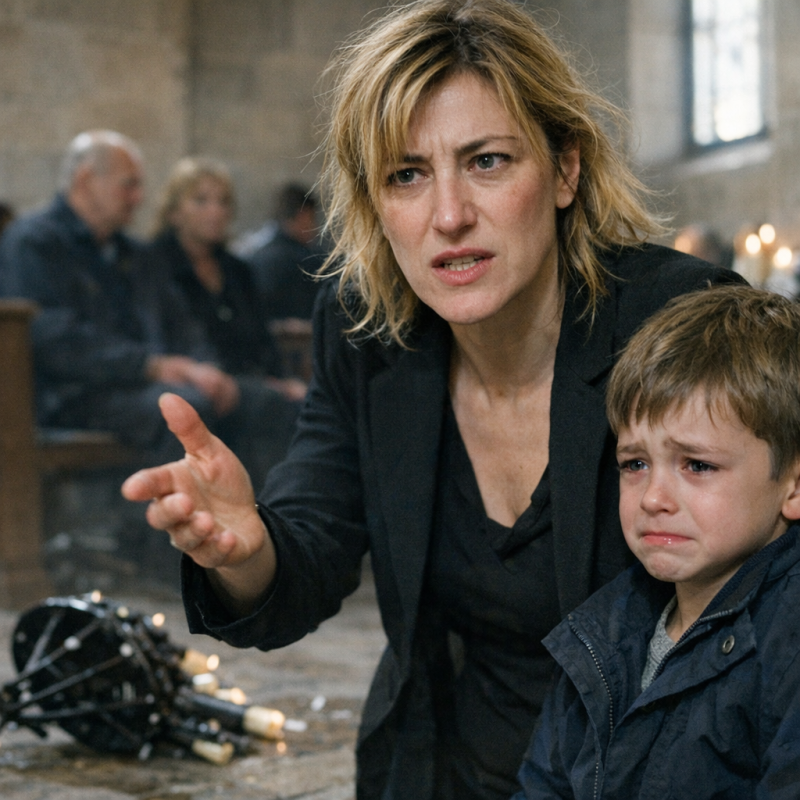 Image by FCT AI
The Boy's Collapse
The boy's breathing changed. I watched it happen—the sudden gasps, the hand clutching his chest, the wide-eyed panic that looked so convincing if you didn't know what to watch for. His mother dropped to her knees beside him, her voice rising to near-hysteria. 'Someone call 911! He can't breathe! Oh my God, he can't breathe!' People moved forward instinctively, wanting to help. The staff member pulled out her phone. It was the same performance, the same script, the same escalation I'd witnessed before. My chest felt tight watching it unfold again, knowing what came next. But then Detective Chen stepped forward, badge held high where everyone could see it. 'Police. Everyone stay where you are.' Her voice cut through the chaos with absolute authority. The room went silent. The boy's desperate gasping continued for maybe two more seconds. Then it stopped. Just stopped. Like someone had flipped a switch, his face went from panicked to blank, his breathing normalized instantly, and he looked up at his mother with an expression I can only describe as waiting for instructions.
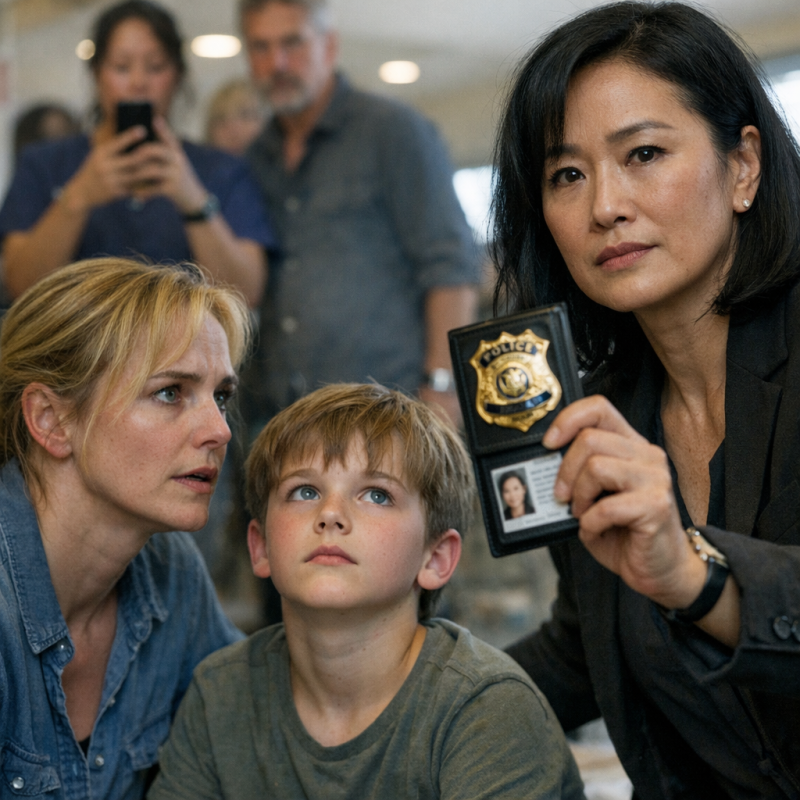 Image by FCT AI
The Cameras Roll
Detective Chen moved closer, her badge still visible. 'Ma'am, I need to inform you that this entire interaction has been recorded. You're currently under investigation for fraud, and I'm going to need you to stay right where you are.' The woman stood slowly, brushing off her knees with deliberate calm. The hysteria had evaporated completely. 'I don't know what you're talking about. My son was injured by negligent equipment placement.' Her voice was measured now, controlled. 'The cameras caught everything,' Chen continued. 'The staged fall. The coordinated performance. The fake medical emergency. All of it.' I expected panic. Denial. Something that looked like someone who'd just been caught red-handed. Instead, the woman's face went completely blank for just a moment—like she was processing, calculating, running through options at computer speed. Then she smiled. It was small, almost polite, and it made my blood run cold. 'I think,' she said calmly, adjusting the strap of her purse, 'I'd like to speak to my lawyer now.'
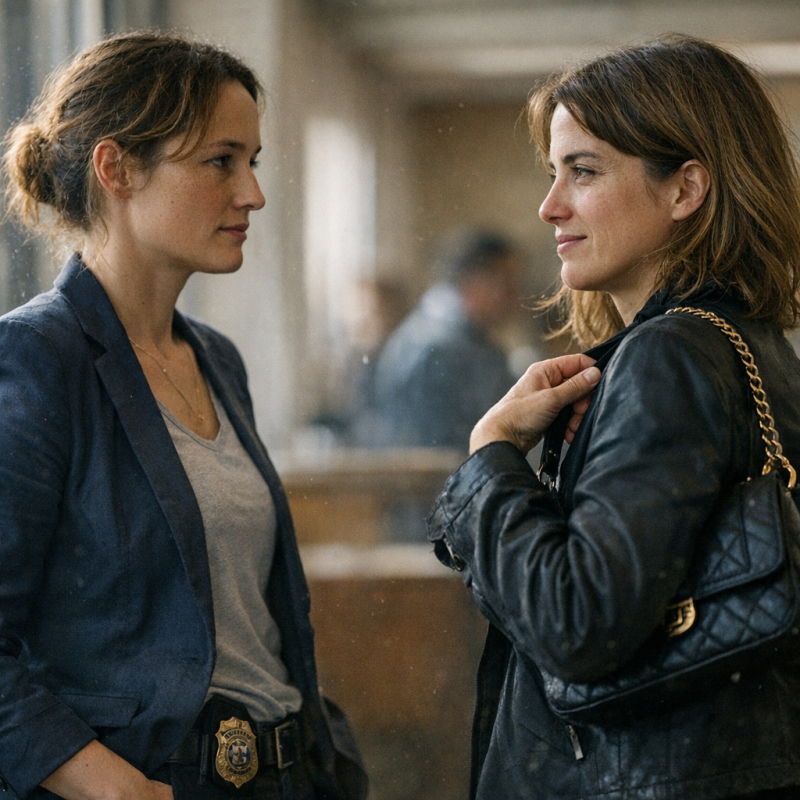 Image by FCT AI
The Recording That Changes Everything
Detective Chen pulled out a tablet, tapping the screen before turning it toward us. 'Before you do that, I think you should see this.' The video played in crystal clarity—the same scene we'd just witnessed, but from a different angle. I watched the boy approach the candle stand, then glance to his left for just a fraction of a second before executing his fall. It was subtle, barely noticeable unless you knew to look for it. Chen froze the frame. 'See that? He's looking at someone. Getting confirmation.' She advanced the footage, and there—partially hidden behind a pillar—stood a man with a phone raised, recording everything. My stomach dropped. 'That's your accomplice,' Chen said. 'We've identified him from three other incidents. Weddings, funerals, charity events. Always the same pattern—you create the scene, the boy performs the injury, and he captures it on video for your insurance claims and settlement negotiations.' The woman's expression didn't change, but I saw her jaw tighten slightly. The third person in the footage was the same mystery accomplice from previous incidents Detective Chen had mentioned—and they were all working together.
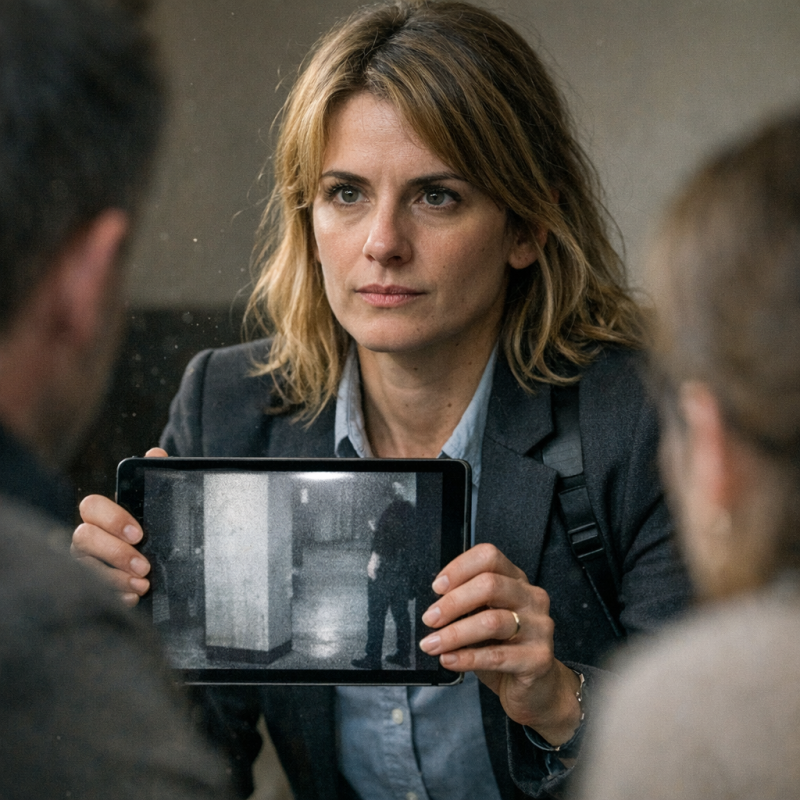 Image by FCT AI
The Network Unravels
Chen turned to me, her expression grim. 'This isn't just about your grandmother's funeral. We've been tracking similar operations for months.' She pulled up a map on her tablet, dots scattered across multiple states. 'Weddings where the cake table mysteriously collapsed. Funerals where valuable items went missing. Charity events where donors were accused of assault. Every single one followed the same pattern—vulnerable people in emotionally charged situations, too grief-stricken or too concerned about their reputations to fight back.' My head spun looking at the scope of it. Dozens of incidents. Maybe more. 'They target people who are already in crisis,' Chen continued. 'People who'll settle quietly rather than face a public battle during the worst moments of their lives.' I was still processing this when a man in an expensive suit walked through the door, moving with the confidence of someone who'd done this before. 'Nobody says anything else,' he announced, pulling out a business card. 'I'm representing my client. This interview is over.' He'd arrived within minutes of her request, and I realized their entire operation had contingency plans we'd never anticipated.
 Image by FCT AI
The Legal Shield
The lawyer—his card identified him as Marcus Webb—positioned himself between his client and Detective Chen. 'My client was simply seeking appropriate compensation for genuine distress caused by negligent facility management. If you conducted an undercover operation that targeted her specifically, we'll be arguing entrapment.' He spoke like he'd delivered this speech before. Probably had. Chen's jaw tightened, but she remained professional. 'We have evidence of systematic fraud spanning multiple jurisdictions.' Webb smiled. 'You have evidence of a concerned mother advocating for her son. Context matters, Detective.' I watched them begin negotiating terms for her release, discussing bail and court dates, and felt everything we'd worked for slipping away through legal loopholes I didn't understand. The woman stood there silently, that same small smile on her face, while her lawyer dismantled our case piece by piece. I must have looked devastated because Detective Chen touched my arm gently. 'Come with me,' she said quietly, guiding me toward a private room. 'We're not done yet—there's something you need to see.'
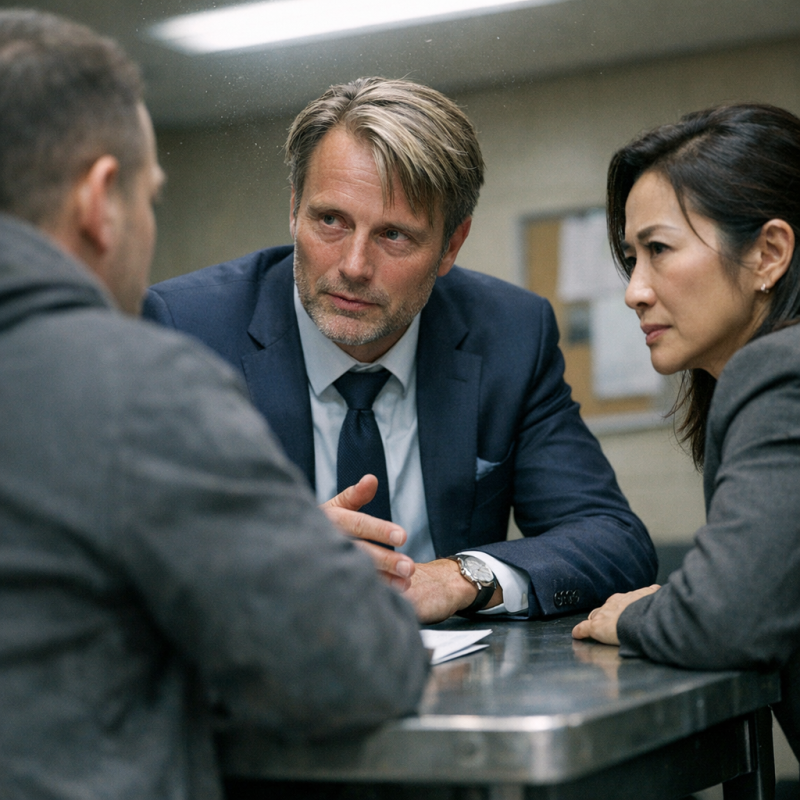 Image by FCT AI
The Pattern Revealed
Chen closed the door behind us and opened a thick file folder. 'We've been building this case longer than you know.' She spread out documents, photographs, video stills. Different locations. Different victims. But always the same faces. 'Eighteen months,' she said. 'That's how long we can prove she's been doing this. Systematically targeting funerals specifically because grieving families don't fight back. She chooses moments when people are too broken to defend themselves, performs these trained routines to manufacture incidents, then uses the footage to extort settlement payments.' I stared at the evidence, feeling sick. 'The boy?' I managed to ask. Chen's expression hardened. 'Not her son. Never was. He's what we call a trained performer—hired specifically for these operations. We found coaching videos, practice sessions, detailed scripts for different scenarios. He's been taught to fake injuries, to cry on command, to simulate medical emergencies convincing enough to terrify witnesses.' She pulled out a financial document. 'Over two hundred thousand dollars stolen from grieving families across four states. And he's just one of several children they've used and rotated through the operation over time.'
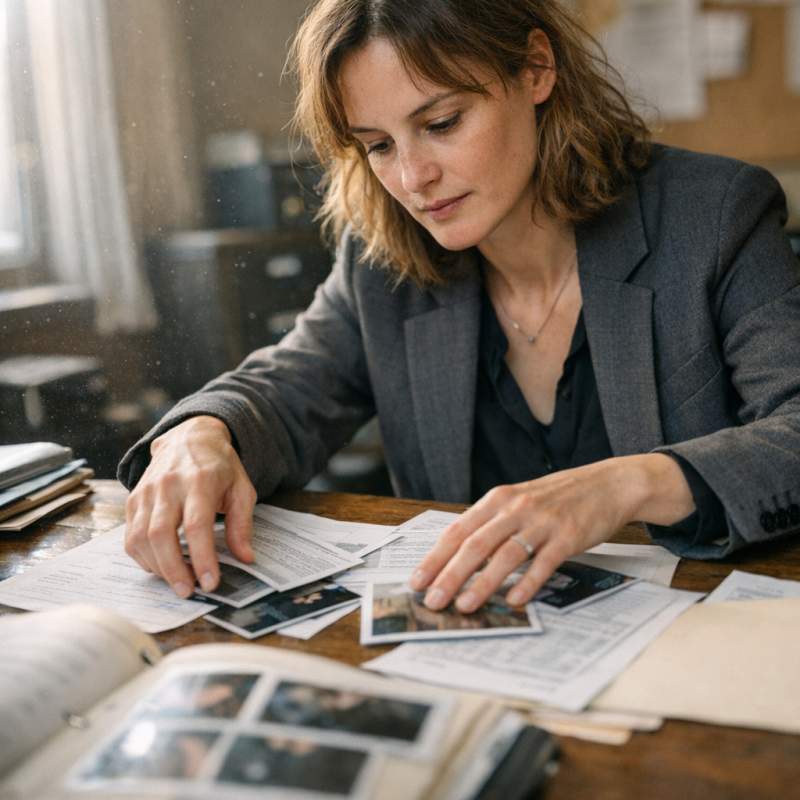 Image by FCT AI
Reframing Everything
I sat there after Chen left me alone with the files, replaying every single interaction through this completely different lens. The aggressive demand to ride in the back with my grandmother's body—designed to provoke exactly the kind of shocked refusal she could later weaponize. The manufactured outrage when I suggested alternatives, performed for the cameras she'd positioned. The way she'd escalated when I stayed calm, pushing harder for a reaction she could edit into something damning. Even the bizarre claim about her 'son's' therapeutic needs—all of it scripted, rehearsed, calculated to exploit the exact moment when I'd be too broken to think clearly. I felt physically sick understanding how deliberately she'd chosen that parking lot, that timing, those specific words. Nothing had been spontaneous. Nothing had been real. She'd watched me help my grandmother into that funeral home and seen only an opportunity, a mark, someone too devastated to defend herself properly. Chen had shown me the evidence, the pattern, but this part hit differently. Even my grandmother's funeral had been carefully chosen—the woman had been monitoring obituaries, selecting targets whose deaths were publicly announced.
 Image by FCT AI
The Other Children
Chen came back with more files, and that's when she showed me the photographs. Different children. Different ages. All used in similar operations across multiple states over the past several years. 'She rotates them,' Chen explained quietly. 'Uses each child until there's risk of recognition, then moves to another. We've identified at least five different children employed in this scheme.' I stared at the photos—kids who should've been in school, playing, being children. Instead they'd been trained to fake injuries, to cry on command, to help steal from grieving families. 'Where are they now?' I asked. Chen's expression tightened with professional anger. 'We've located four of them. Working with families and child protective services to get them into safe situations. The fifth we're still searching for.' She pulled out documentation of coaching sessions, practice videos, detailed scripts for different scenarios. These children had been as much victims as the families they'd been used against. Child protective services was already moving to remove the children from her custody—but we still didn't know where she'd hidden the money.
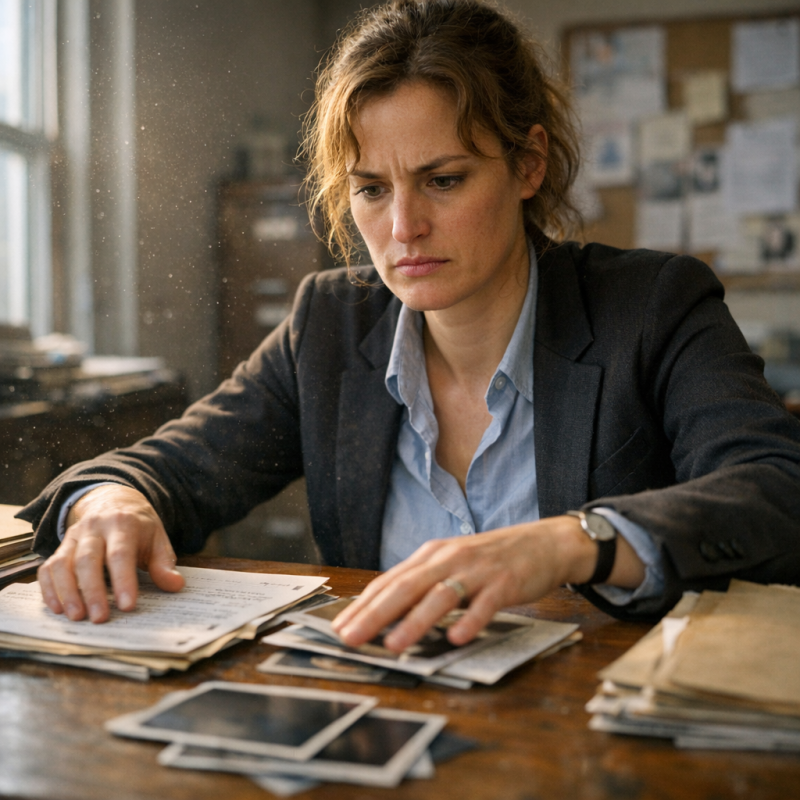 Image by FCT AI
The Arrest
I watched through the station window as they brought her in. She wasn't screaming anymore, wasn't performing. Just cold, calculating silence as Chen read her rights. 'You're under arrest for multiple counts of wire fraud, extortion, conspiracy to commit fraud, interstate racketeering, and child exploitation.' The list went on. Federal charges, state charges, charges that carried serious prison time. Other officers were arresting her accomplices simultaneously—the fake lawyer, the camera operators, everyone involved in the network. She stood there in handcuffs, that designer outfit finally looking as cheap as the scam she'd been running. I thought I'd feel satisfaction watching this moment. Victory, maybe. Justice for my grandmother, for all those families she'd terrorized. But mostly I just felt exhausted and angry that she'd gotten away with it for so long. Chen had built an airtight case. The evidence was overwhelming. This should've felt like closure. But as they led her out in handcuffs, she looked directly at me and smiled—and I knew this wasn't over.
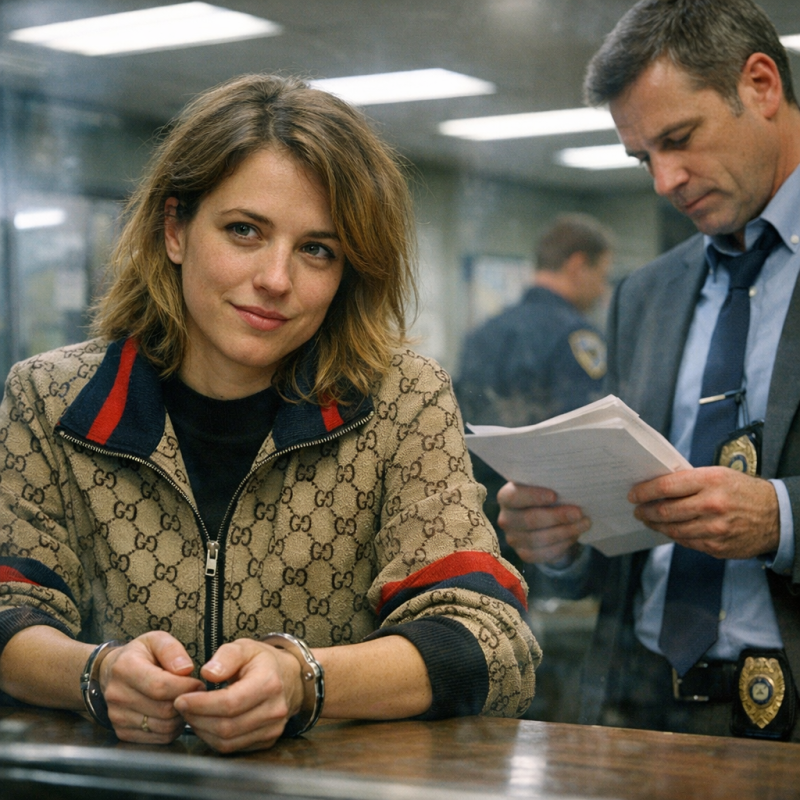 Image by FCT AI
The Media Firestorm
My phone started ringing within hours. Reporters, journalists, producers from news programs I'd actually watched. They all wanted the same thing—my story, my perspective, an interview about the woman who'd targeted my grandmother's funeral. I ignored most of them at first, still processing everything Chen had shown me. But one local reporter was persistent and respectful, and eventually I agreed to talk. She asked thoughtful questions about that day, about what I'd noticed, about why I'd refused to back down when the woman escalated. 'A lot of people would've just given her what she wanted to avoid confrontation,' she said. 'Especially on such a difficult day.' I thought about that. About how close I'd come to just letting her ride in the car to make her go away. About how my grief and shock had almost overridden my instinct that something was wrong. 'I couldn't let her disrespect my grandmother like that,' I said simply. Then she asked something that shifted my entire perspective. One reporter asked if I regretted confronting the woman at my grandmother's funeral—and I realized that moment had saved other families from the same pain.
 Image by FCT AI
The Victims Come Forward
Chen called me two days after the news coverage aired. 'You need to know something,' she said, and I could hear both satisfaction and sadness in her voice. 'We've been flooded with calls. Dozens of additional victims coming forward, people who saw the news and recognized her, recognized the pattern.' She sent me a summary document—it was staggering. Families across four states, all targeted at funerals, all manipulated during the worst moments of their lives. Many had paid settlements ranging from five thousand to thirty thousand dollars. 'Why didn't they report it?' I asked, though I already knew the answer. 'Shame,' Chen confirmed. 'They felt stupid for being manipulated. They were embarrassed that they'd fallen for it during such a vulnerable time. Some were threatened with public exposure if they went to police. Others just wanted to forget it ever happened.' I read through the summaries, each one a variation of what had almost happened to me. Each one a family that had paid to make the nightmare go away. The total amount stolen was closer to half a million dollars—and many victims said they'd kept quiet because they felt ashamed for being manipulated during such vulnerable moments.
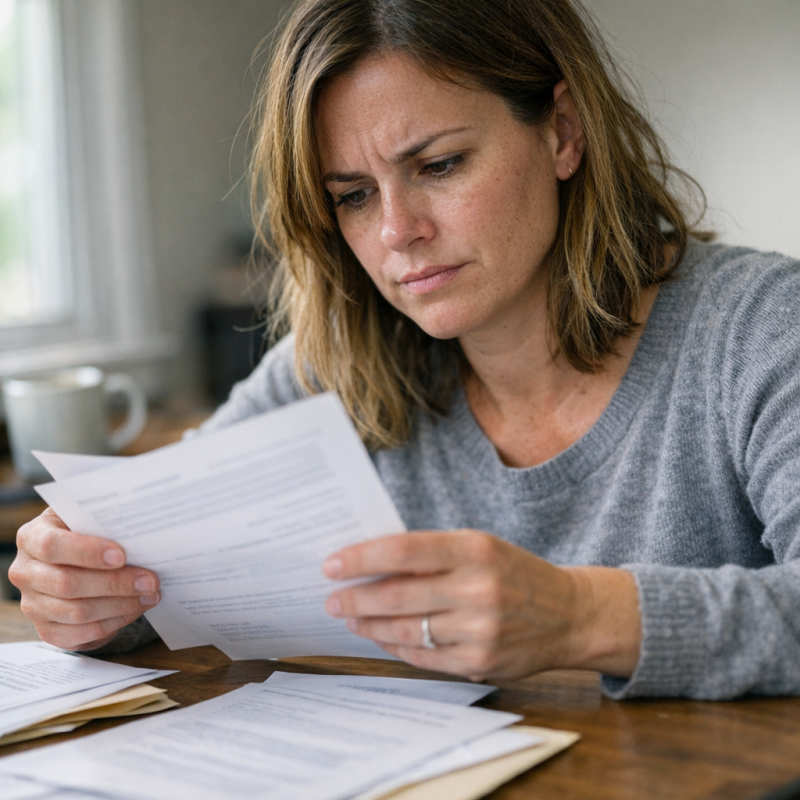 Image by FCT AI
The Boy's Testimony
Chen asked me to come back to the station a week later. 'I thought you'd want to know,' she said, leading me to a conference room. 'The child from your incident—he's been placed with protective services, and he's started talking.' She showed me a transcript of his testimony, and reading it broke something in me. He described the coaching sessions, how the woman had taught him to fake injuries convincingly, how to cry when needed, how to look scared and hurt. But what destroyed me was his reasoning. He'd thought they were helping people. 'She told him they were getting money for families who deserved it but were too scared to ask,' Chen explained. 'She framed it as a kind of social justice, helping the little guy stand up to big companies and corporations.' The kid had believed her. Had genuinely thought he was doing good work until he started seeing how traumatized the families actually were, how his performances weren't helping anyone. He said the woman promised him they were helping families get money they deserved—and he'd believed her until he saw how people really reacted.
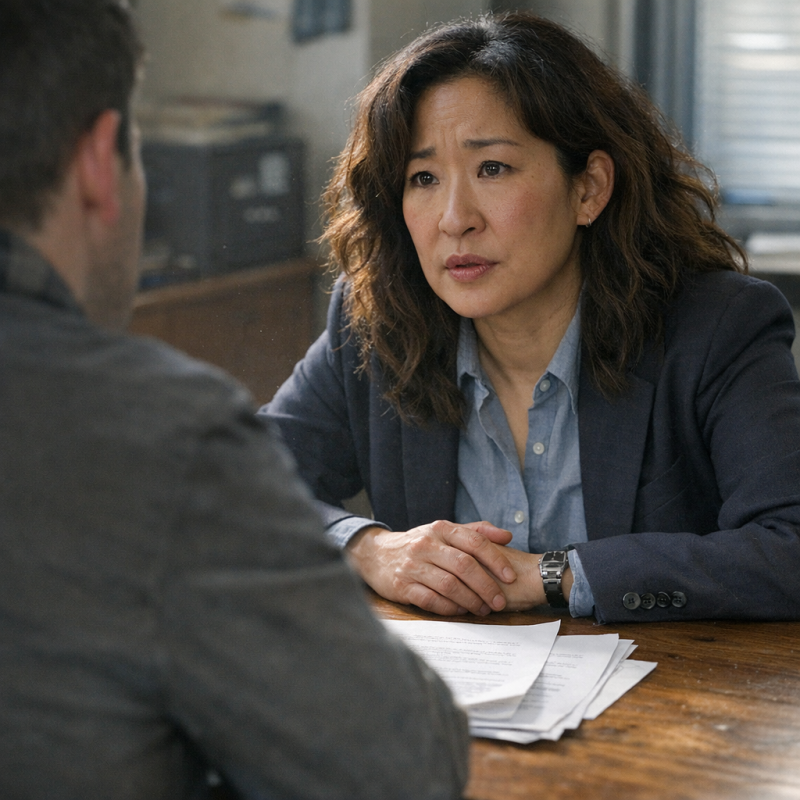 Image by FCT AI
The Accomplices Fall
The arrests kept coming over the next few weeks. Chen walked me through each one as the network collapsed—the fake lawyer who'd sent threatening letters to victims, the camera operators who'd positioned themselves at strategic locations, the people running fraudulent law firms that processed the settlement payments. It was bigger than I'd imagined, more organized, more deliberate. Each person had a specific role, and together they'd built a machine designed to extract money from grieving families. 'We've seized computers, financial records, communication logs,' Chen told me. 'The evidence is overwhelming. Everyone's facing serious federal charges.' I should've felt satisfied watching it all fall apart. And I did, mostly. But something nagged at me. 'What about the money?' I asked. Chen's expression darkened. 'That's the frustrating part. She's hidden it well—offshore accounts, cryptocurrency, shell companies. We're working with federal forensic accountants, but it's taking time.' She pulled out an interrogation transcript. 'She's not cooperating at all. Won't reveal account information, won't discuss asset locations.' But the woman still refused to reveal where the money had gone, protecting her assets even as her operation collapsed around her.
 Image by FCT AI
The Trial Preparation
The call came from the prosecutor's office three months after the arrest. They needed me to testify at trial. I'd known this was coming, had prepared myself mentally, but hearing it officially still made my stomach drop. The prosecutor was kind but direct—my testimony would be crucial in establishing the pattern of behavior, showing how she operated, demonstrating the emotional manipulation she employed. 'You'll need to describe that day in detail,' she explained. 'Everything she said, how she escalated, your emotional state at the time.' I could do that. I'd been reliving it anyway, understanding it better through the lens of everything I'd learned since. But then she warned me about the defense strategy. 'They're going to try to paint you as the aggressor. They'll argue you were emotionally unstable, that you overreacted to a simple request, that you escalated the situation unnecessarily.' The unfairness of it took my breath away. Even now, even with all the evidence, they'd try to make me the villain. My lawyer said the woman's defense would try to paint me as the aggressor—and I'd need to relive the worst day of my life to prove otherwise.
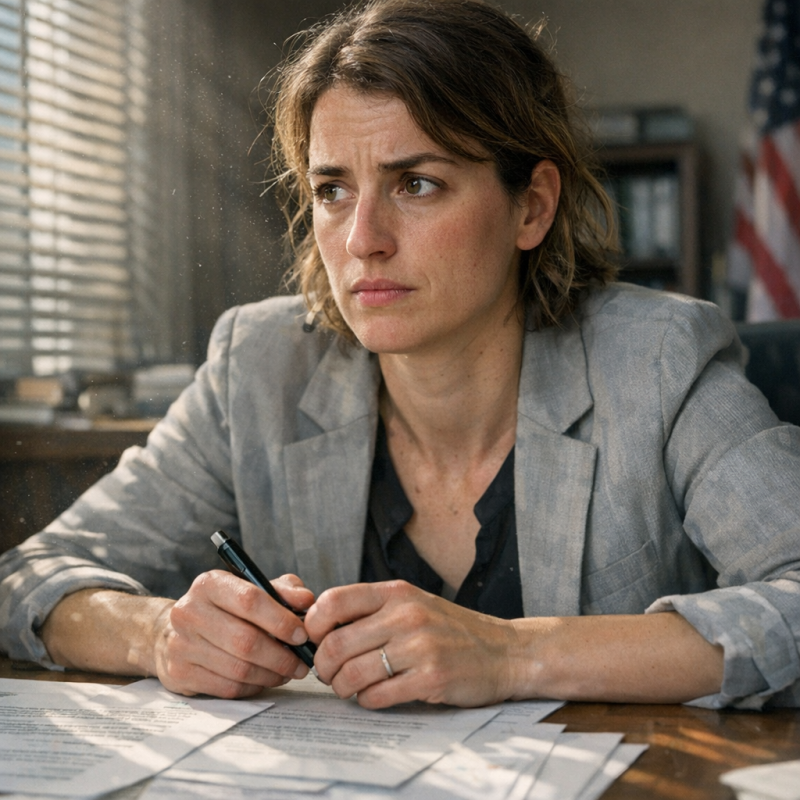 Image by FCT AI
The Courtroom
The courtroom was smaller than I'd imagined, fluorescent-lit and institutional. I took the stand with my hand on the Bible, swore to tell the truth, and looked directly at the prosecutor as she guided me through that day. I kept my voice steady, describing every detail—the woman's initial approach, her escalating demands, the way she'd turned my grief into a weapon. The woman sat at the defense table, perfectly composed, like she was watching someone else's trial. Then came cross-examination. Her attorney was aggressive, suggesting I'd been 'emotionally unstable,' that I'd 'lashed out unprovoked at a concerned mother.' He asked if I thought my behavior at a funeral was appropriate. I explained calmly that defending my grandmother's dignity was absolutely appropriate. He circled back, trying different angles, his voice dripping with condescension. 'Ms. Jordan, looking back now, do you regret the words you spoke that day?' The courtroom went silent. I looked at the jury, then back at him. 'The only thing I regret,' I said clearly, 'is that she's hurt so many people who were already hurting.'
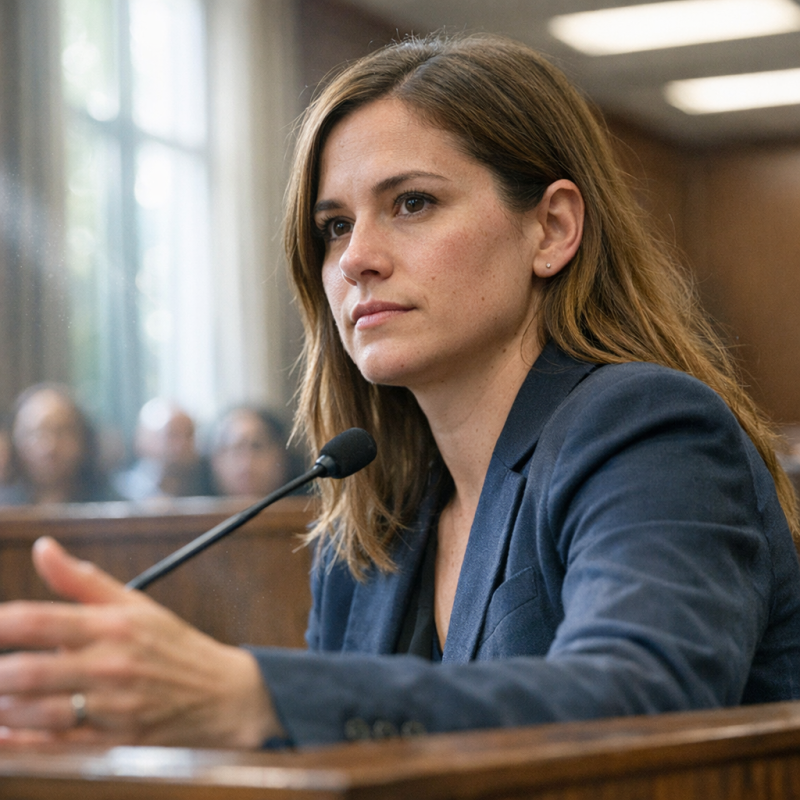 Image by FCT AI
The Verdict
The jury deliberated for six hours. When they filed back in, I couldn't read their faces. The foreman stood. Guilty on all counts—fraud, identity theft, elder exploitation, multiple charges I'd barely understood during the proceedings. The woman's face remained blank, but her hands gripped the table. The judge took his time with sentencing, reading through each victim's impact statement, acknowledging the calculated nature of her crimes. Seven years in state prison. Restitution orders for every identified victim. Registration as a convicted felon. Detective Chen caught my eye from the gallery and nodded. I should have felt triumphant. Justice had been served, definitively and publicly. But sitting there as the bailiff led her away, I felt something more complicated—relief, yes, but also a strange emptiness that settled in my chest. No verdict could give those families back what they'd lost. No sentence could undo the violation of their grief. As the courtroom emptied around me, I realized that winning hadn't filled the hole I'd been carrying since that day at the funeral home.
 Image by FCT AI
Healing in Pieces
The trial had given me purpose, a place to channel everything I'd been feeling. Without it, I was left with what I'd been avoiding for months—actual grief. I started therapy specifically for this, working through how the chaos had kept me from properly mourning. My therapist pointed out that I could describe the woman's crimes in detail but struggled to talk about my grandmother without deflecting. So I began the hard work of remembering her not as a victim in someone else's crime, but as the person who'd shaped my entire life. I looked through old photos, read her letters, let myself cry without the anger that had been protecting me. Three months after the verdict, I finally felt ready. I drove to the cemetery on a clear Saturday morning, brought wildflowers because she'd hated fussy arrangements. Standing at her grave, I told her everything—the whole bizarre, painful, ultimately redemptive story. And here's the thing that surprised me: as I talked, I could almost hear her reaction. She would have found the absurdity darkly funny, would have appreciated the cosmic justice. I visited her grave for the first time since the funeral and told her the whole strange story—and somehow, I felt her laughing.
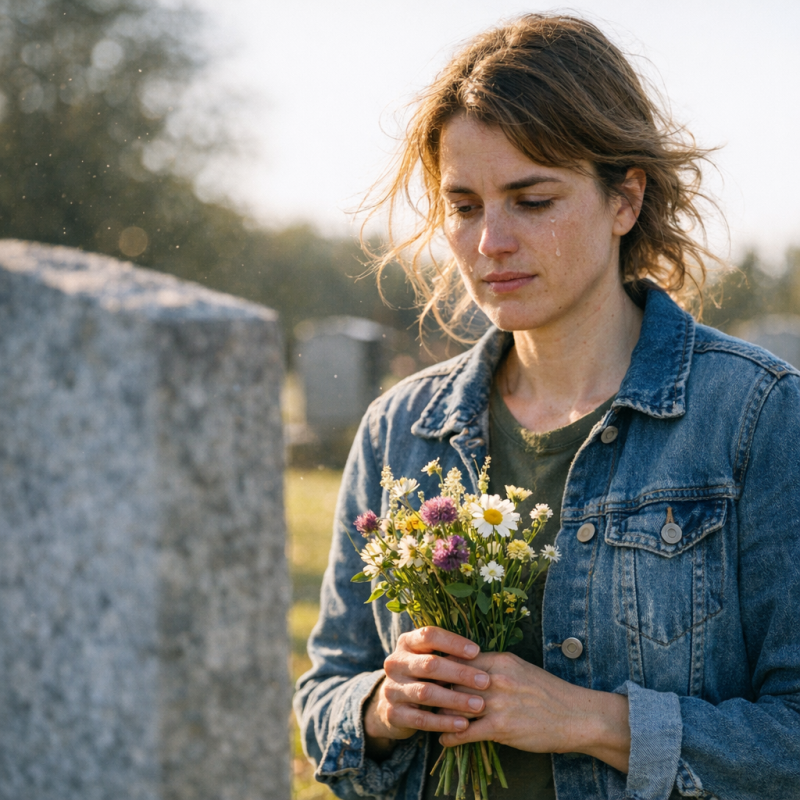 Image by FCT AI
The Foundation She Left
Sarah helped me set it up—a small nonprofit offering free advocacy for families targeted by scammers during funerals and medical crises. We partnered with funeral homes and hospitals to distribute information, created a hotline for victims, connected people with legal resources. It wasn't about revenge or even justice anymore. It was about the thing my grandmother had always embodied: practical compassion, showing up when people needed help. Our first case came through a funeral director who'd spotted warning signs—a woman lingering too long, asking too many questions about the deceased's finances. We intervened before anything happened, and the gratitude in that family's eyes reminded me why this mattered. I named the foundation after my grandmother, using her maiden name so it felt personal but professional. Each person we helped felt like honoring her memory in a way that verdicts and sentences never could. Sarah and I met weekly to review cases, and she always reminded me that I'd turned the worst experience into something meaningful. My grandmother taught me that no matter what happens, things have a way of turning out okay—and as I helped the first family navigate their own nightmare, I realized she was right all along.
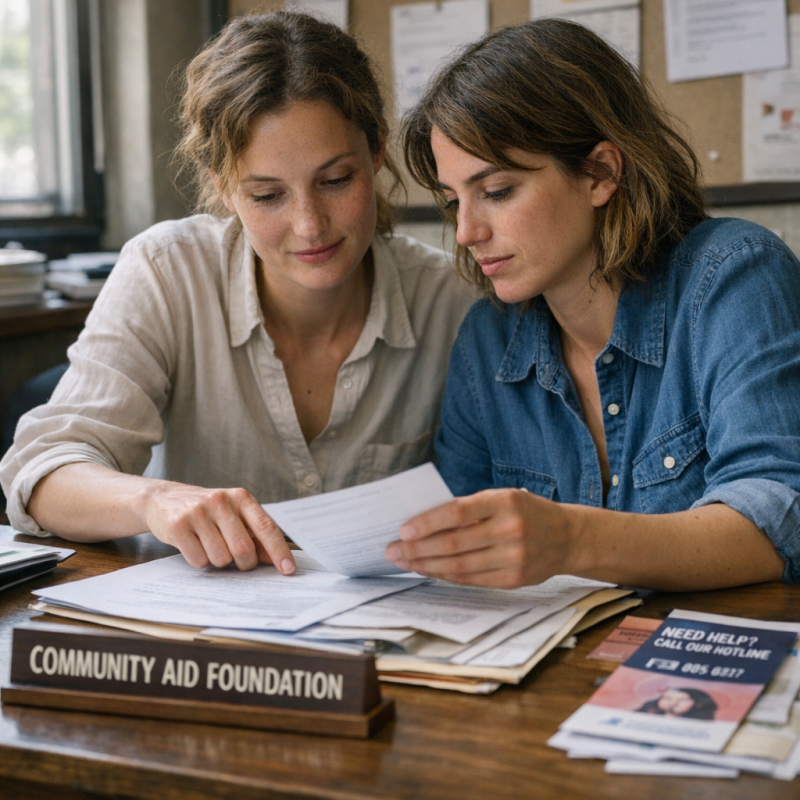 Image by FCT AI