
The Woman with the White Knuckles
I'm not someone who believes in gut feelings, usually. I'm practical, maybe a little cynical, and I've worked the front desk at the Riverside Inn long enough that eccentric guests barely register anymore. But Mrs. Delaney? She registered. It was a Tuesday afternoon, rain drumming against the lobby windows, when she walked in clutching a black leather purse with both hands like it might try to escape. Her knuckles were white. I noticed that first. She was maybe sixty, dressed in a beige coat that was too heavy for September, her hair pulled into a neat silver bun. When I asked how I could help her, she smiled—this tight, controlled thing—and explained that her house was undergoing renovations. She'd need a room for a few weeks, maybe longer. She didn't blink much while she talked. I processed her credit card, made small talk about the weather, handed her the key to room 307. Something about the way she smiled when I handed her the room key made my stomach twist—but I told myself I was overthinking it.
 Image by FCT AI
The First Week
The first week, Mrs. Delaney was what we in the hospitality industry call 'particular.' She requested extra towels folded in thirds, not halves. She wanted her wake-up call at exactly 6:47 a.m.—not 6:45, not 6:50. My manager Greg laughed it off when I mentioned it. 'We've had worse,' he said, shrugging. 'Remember the guy who only ate orange food?' He wasn't wrong. But there was something else. I'd see Mrs. Delaney in the hallways sometimes, just standing there near the ice machine or by the elevator, staring at nothing. Not scrolling her phone, not waiting for someone. Just staring, unblinking, like she was listening to something the rest of us couldn't hear. It creeped me out, honestly, but I figured everyone has their quirks. On the seventh night, I passed her room around 10 p.m. delivering extra blankets to 305, and I heard her whispering to someone inside—but according to our records, she was alone.
 Image by FCT AI
Room Service Ritual
Maya handles room service most nights, and she's got the patience of a saint. She has to, dealing with business travelers who order club sandwiches at 2 a.m. But even Maya started getting twitchy about Mrs. Delaney. 'Same order every single night,' Maya told me during our shift overlap, pulling her dark hair into a ponytail. 'Grilled chicken, steamed vegetables, no seasoning, glass of water with exactly three ice cubes. And the utensils have to be placed in this specific arrangement on the tray.' She demonstrated with her hands, miming the precise angles. I thought she was exaggerating until she showed me the diagram Mrs. Delaney had sketched on hotel stationery—actual measurements in millimeters. 'Is she an engineer or something?' I asked. Maya shook her head. 'I don't know what she is, but she scares me.' Then she mentioned that Mrs. Delaney once sent the tray back because the fork was 'three millimeters too far left'—and she said it without a hint of irony.
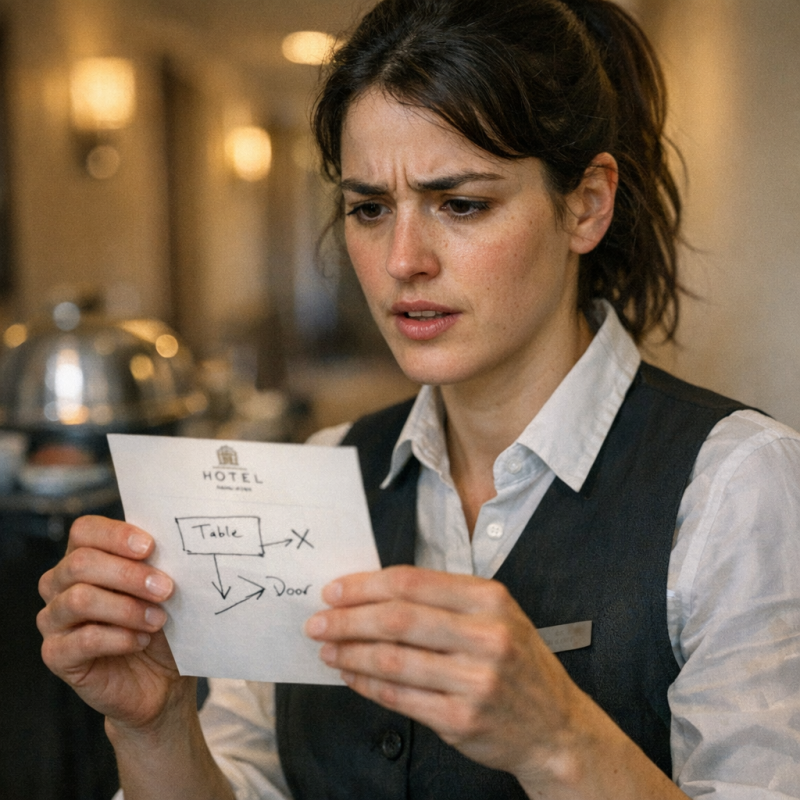 Image by FCT AI
The Curtain Angle
I witnessed it myself two days later. I was restocking the housekeeping cart on the third floor when I heard Mrs. Delaney's voice, sharp and precise, cutting through the hallway quiet. She was standing in her doorway, fully dressed despite it being barely 8 a.m., instructing one of our housekeepers about the curtains. 'The angle needs to be forty-five degrees from the window frame,' she was saying, demonstrating with her hand. 'When light enters the room, it should fall exactly here.' She pointed to a spot on the carpet. The housekeeper, Elena, nodded mutely, her face pale. Mrs. Delaney smiled that frozen smile, thanked her with excessive politeness, then retreated into her room. I walked over to Elena, who was gripping her cleaning supplies like a lifeline. 'You okay?' I asked. She shook her head, glancing back at room 307. As the housekeeper left, I saw her hands shaking—and she told me she'd never go near that room again if she could help it.
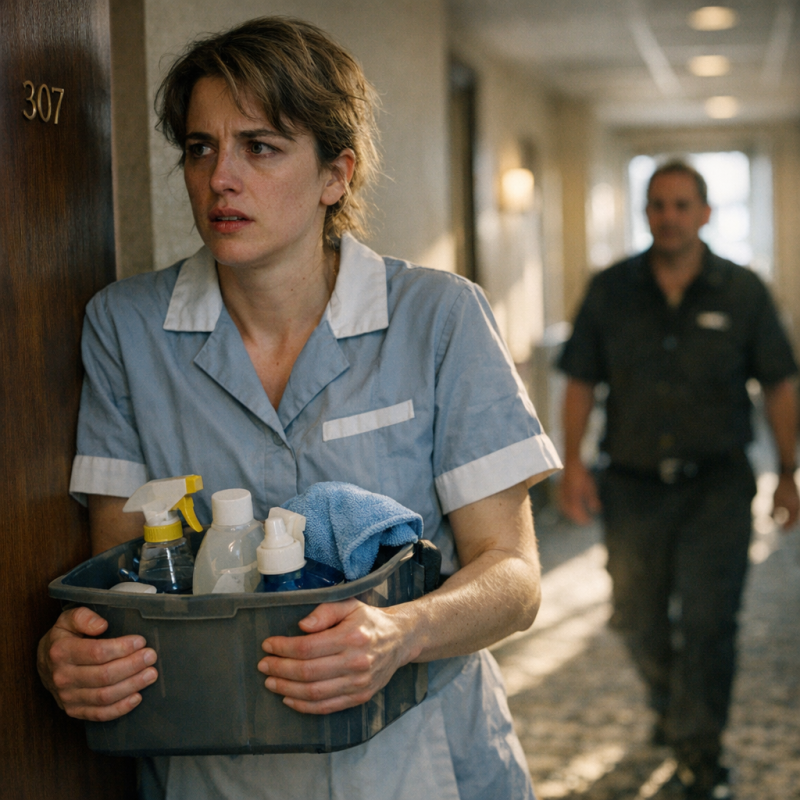 Image by FCT AI
The Couple in 214
The complaint came through Rhonda, our head housekeeper, who's dealt with literally everything in her twenty-three years at the hotel. But even she looked rattled when she pulled me aside Thursday morning. A young couple staying in room 214—directly below Mrs. Delaney—had reported being woken at 2 a.m. by knocking on their door. When the guy answered, half-asleep and annoyed, Mrs. Delaney stood there in her beige bathrobe asking if they could hear 'the scratching.' He said no, tried to close the door politely. She insisted. 'It's coming from your ceiling,' she said. 'From under my floor. Don't you hear it?' They didn't hear anything except her. Rhonda suggested we talk to Mrs. Delaney about disturbing other guests, but Greg hesitated. 'She's paid through the month,' he said. 'Let's just... monitor the situation.' They checked out early the next morning, and when Rhonda asked if they wanted a refund processed, they just said, 'Keep it—we're not coming back.'
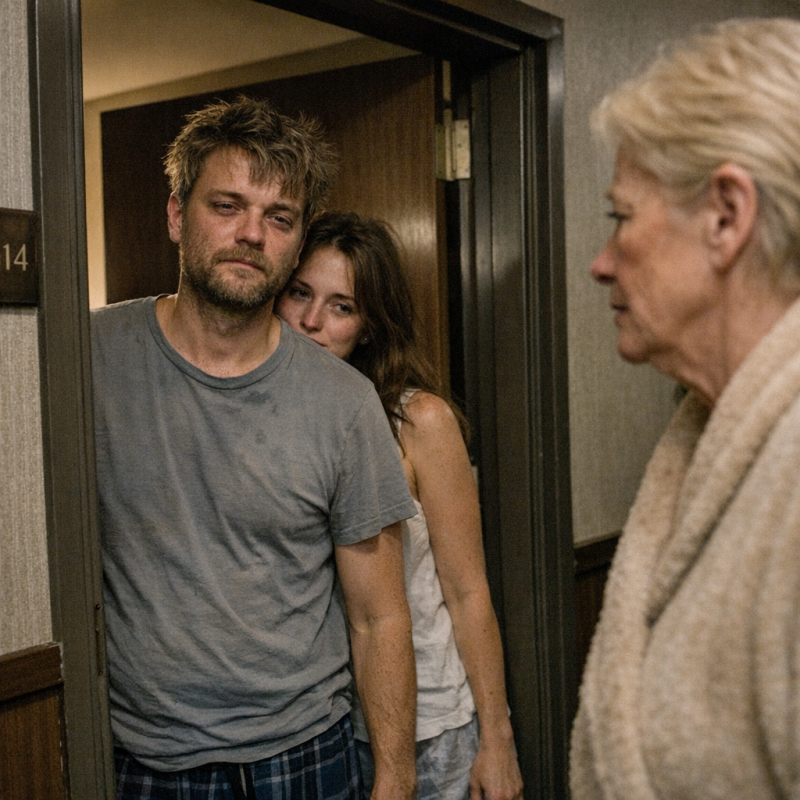 Image by FCT AI
The Lobby Incident
I was covering the evening shift when it happened. The lobby was quiet, just a few people checking email on their laptops, when I noticed Mrs. Delaney sitting next to a woman in her thirties who was clearly traveling alone. Mrs. Delaney was leaning in close, talking in that low, intense way she had, and I caught fragments: 'Do you believe objects can remember things? That they hold imprints of what happens to them?' The other woman's body language screamed discomfort—shoulders hunched, eyes darting around for an exit. When she spotted me behind the desk, her expression turned desperate. I walked over, forcing my customer-service smile. 'Mrs. Delaney, is there something I can help you with?' She turned to me slowly, that frozen smile spreading across her face. 'No, thank you, Jordan. We were just having such a nice chat.' The guest looked at me with wide eyes, silently begging for rescue—and when I intervened, Mrs. Delaney just smiled and said, 'We were having such a nice chat.'
 Image by FCT AI
The Housekeeping Refusal
It was week three when Mrs. Delaney started refusing housekeeping entirely. Elena tried first, knocking with her passkey ready, announcing herself like we're trained to do. The door opened maybe six inches, and Mrs. Delaney appeared in the gap, blocking the entrance with her body. 'I appreciate it, but I'll handle it myself,' she said. Elena explained that hotel policy requires rooms to be serviced every three days minimum. Mrs. Delaney's expression didn't change. 'I'm very particular about my space. I don't like people touching my things.' Elena tried again, professionally, citing health codes and liability. The smile on Mrs. Delaney's face widened slightly—almost imperceptibly—and she spoke so softly that Elena had to lean in to hear. When the housekeeper tried to explain hotel policy, Mrs. Delaney's smile widened—and she softly said, 'I don't like people touching my things.' Then she closed the door, lock clicking firmly into place. Elena came back downstairs pale and shaking.
 Image by FCT AI
Management Meeting
Greg called the meeting for Friday afternoon—me, him, and Carter from maintenance. We crowded into Greg's cramped office behind the front desk while he pulled up Mrs. Delaney's account on his computer. 'Okay, talk to me,' Greg said. I laid out everything: the complaints, the refusal of housekeeping, the bizarre behavior. Carter, who's usually unflappable, admitted he was worried about what might be happening in that room after three weeks without cleaning. 'Could be health hazards. Could be damage we don't know about.' Greg rubbed his face, clearly stressed. 'Has she violated any specific policies?' I thought about it. Technically? No. She'd paid on time, hadn't caused property damage, hadn't threatened anyone explicitly. 'We need to be careful here,' Greg said. 'Guest rights, legal issues, all of that.' Carter sighed, leaning back in his chair. Carter said, 'If she's paid up and not breaking anything, legally we can't do much'—and I realized we were stuck.
 Image by FCT AI
The First Garbage Bag
I was restocking brochures at the front desk when Mrs. Delaney came through the lobby, dragging something behind her. A huge black garbage bag, the industrial kind, stuffed so full it looked ready to split. She was breathing heavily, her face flushed, but when I moved to help she waved me off sharply. 'I'm fine,' she said, her voice tight. The bag scraped across the tile floor, and I could hear something solid shifting inside—not soft like clothes, but hard, heavy. Other guests stopped to stare. She didn't acknowledge them, just kept pulling that bag toward the elevator, her shoulders hunched with effort. I followed a few steps behind, professional concern kicking in. 'Mrs. Delaney, are you sure I can't help? That looks really heavy.' She stopped at the elevator, turned to face me, and for a second her expression was unreadable. When I asked what was inside, she laughed—a sharp, brittle sound—and said, 'Just things from home. You never know what you'll need.'
 Image by FCT AI

History's most fascinating stories and darkest secrets, delivered to your inbox daily.
More Bags
Over the next two weeks, it became a pattern. Mrs. Delaney would arrive with more garbage bags—sometimes two, sometimes three in a single trip. She'd park in the loading zone, haul them through the lobby, refuse any assistance, and disappear into her room. The bags were always black, always overstuffed, always heavy enough that she'd pause to catch her breath. Guests started whispering. Staff started watching. Maya cornered me one afternoon while Mrs. Delaney was upstairs. 'I've been keeping track,' she said, pulling out her phone to show me notes. 'Twelve bags. I counted twelve bags going into that room over the last two weeks.' I felt my stomach drop. 'What do you think she's doing?' Maya asked, and I had no answer. We stood there in silence, both of us staring at the elevator like it might offer some explanation. Maya told me she counted at least twelve bags going into that room, and she asked the question I'd been avoiding: 'What is she doing in there?'
The Glimpse
I was delivering her room service order—she'd started requesting meals brought to her door instead of coming down—when I finally saw inside. Just a glimpse, maybe three seconds, but it was enough. She cracked the door to take the tray, and behind her I could see garbage bags. Everywhere. Stacked along the walls, piled near the window, clustered around what I assumed was the bed but couldn't actually see. The room was dark despite it being mid-afternoon, the curtains drawn tight. There was barely any floor space visible. The smell that drifted out wasn't rotting or foul—just stale, closed-off, airless. Mrs. Delaney noticed me staring and quickly pulled the door closer to her body, blocking my view. 'Thank you,' she said curtly, taking the tray. The door shut in my face before I could respond. I stood there in the hallway, my heart pounding for reasons I couldn't articulate. It didn't look like a hotel room anymore—it looked like a storage unit, dark and cramped and wrong.
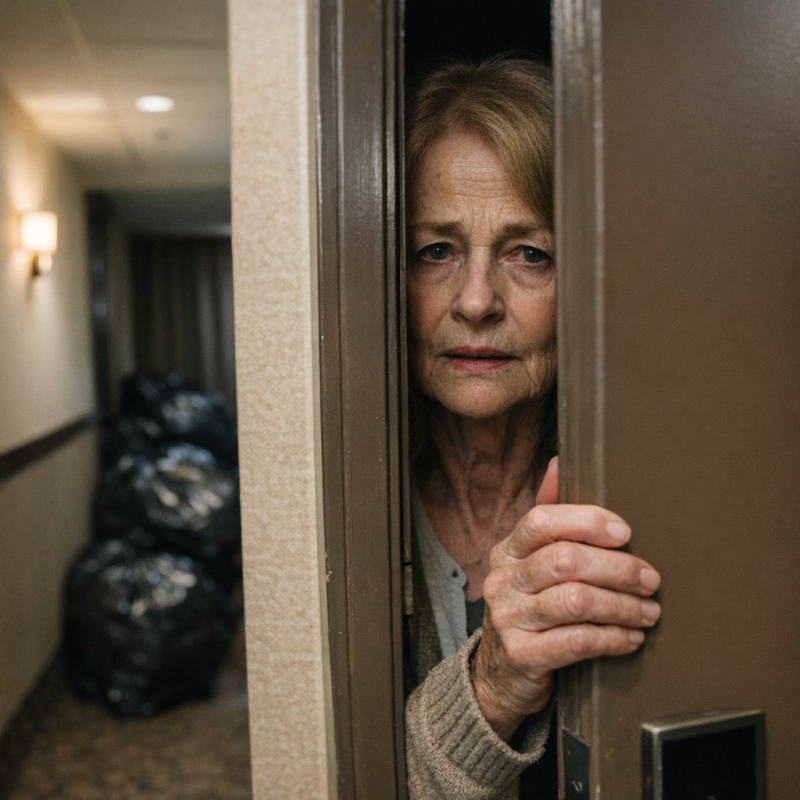 Image by FCT AI
Guest 301
Mr. Chen caught me during my shift the next day. He was staying in 302, right next door to Mrs. Delaney, and he looked exhausted. 'I need to report a noise complaint,' he said, but his tone was more concerned than annoyed. I grabbed the incident log, ready for the usual story—loud TV, phone conversations, whatever. But that wasn't it. 'I hear movement through the wall,' he explained. 'Late at night, after midnight. It sounds like she's dragging furniture around. Heavy furniture.' I wrote it down, trying to keep my expression neutral. 'How often?' I asked. 'Every night this week,' he said. 'The same pattern—dragging sounds, bumping against the wall, then silence. Then it starts again.' He leaned closer, lowering his voice. 'I wouldn't normally complain, but it goes on for hours. What could she possibly be moving?' I promised to look into it, but honestly, I had no idea what to tell him. He said it sounded like furniture being moved—over and over again, in the same pattern, for hours.
 Image by FCT AI
The Whispering Returns
I couldn't sleep that night. Around two in the morning, I drove back to the hotel—I lived close enough, and I told myself I was just checking on things. But really, I wanted to hear what Mr. Chen had described. I took the elevator to the third floor, the hallway silent and dim. Mrs. Delaney's door looked like every other door, nothing unusual. I stood there feeling ridiculous until I heard it. Whispering. Soft, rhythmic, almost melodic. Not conversation—too steady for that, too patterned. It reminded me of chanting, or maybe someone reciting something from memory. My skin prickled. I stepped closer, then closer still, until I was right up against the door. The whispering continued, and I realized I couldn't make out any actual words. It was just sound, repetitive and unsettling. I pressed my ear to the door, and the whispering stopped—then I heard footsteps approaching from inside, fast.
 Image by FCT AI
Staff Rumors
The housekeeping staff had started talking. I'd hear fragments of conversation in the break room, whispered theories and speculation. One morning I walked in to find Maya, Rhonda, and two other housekeepers clustered around the coffee maker, voices low. They went quiet when they saw me, but Maya waved me over. 'We're talking about 302,' she said. I sat down, and suddenly everyone had an opinion. One housekeeper thought Mrs. Delaney was hiding stolen goods. Another suggested she was mentally ill and needed help. Maya thought it was some kind of hoarding situation. Rhonda had been mostly silent, but when she finally spoke, her voice was measured and serious. 'I've worked here fifteen years,' she said. 'I've seen difficult guests, weird guests, guests with problems. This is different.' We all waited. She looked directly at me. 'I don't know what she's doing in that room, but my gut says it's not innocent.' Rhonda said quietly, 'I think she's dangerous,' and no one disagreed.
 Image by FCT AI
The New Hire
Elaine started on a Tuesday. She was twenty-four, fresh out of college, and genuinely excited about her first hospitality job. I spent the morning training her on the reservation system when Mrs. Delaney came to the front desk asking about her bill. Elaine, being new and eager, immediately smiled and offered to help. I watched Mrs. Delaney's face as she turned toward Elaine—that fixed smile, those unblinking eyes. She stood there just a fraction too long before responding, studying Elaine in a way that made my skin crawl. Elaine pulled up the account, explained the charges, and maintained her professional demeanor even though I could see her hands starting to shake slightly. Mrs. Delaney said nothing, just nodded once and walked away. The second she was out of earshot, Elaine turned to me, her face pale. 'Is she always like that?' she asked. I opened my mouth to explain and realized I didn't know where to start. Elaine asked me, 'Is she always like that?' and I realized I didn't know how to explain what 'like that' even meant.
 Image by FCT AI
Month Two
I was updating the occupancy spreadsheet when I noticed Mrs. Delaney's reservation had been extended again. Two months. She'd been here for two full months, and according to her original story, she was supposed to stay 'a few weeks' while her house was being renovated. I pulled up her full account history, something I probably should have done earlier. Payment after payment, all in cash, always on time. Never a credit card, never a check. And there, at the bottom, was another payment—for a full additional month. Paid three days ago. I hadn't even processed it; Greg must have. The math was staggering. She'd now paid for three months total. The renovation story was obviously a lie, but what was the truth? Why stay here, in this mid-tier hotel, refusing cleaning service and hauling mysterious bags into your room? I sat there staring at the screen, a cold certainty settling in my chest. When I checked her reservation, I saw she'd paid for another month in advance—in cash.
 Image by FCT AI
The Smell Begins
It started subtly—so subtly I almost convinced myself I was imagining it. A faint sourness in the air near the third-floor hallway, right around the corner from Mrs. Delaney's room. At first, I thought maybe someone had left takeout in a trash can or spilled something in the ice machine alcove. But by the third day, it was undeniable. That smell. Not quite garbage, not quite sewage, but something organic and wrong. I stood outside Room 312 one afternoon, pretending to check the ice machine, just breathing through my mouth and trying to pinpoint the source. It was definitely coming from her direction. Maybe not directly from her door, but close enough that I couldn't deny the connection anymore. I logged it in our maintenance notes, vague enough that Greg wouldn't panic: 'Odor reported, 3rd floor west wing.' By Thursday, I'd logged three separate complaints. The couple in 310 asked if we were having plumbing issues. The businessman in 314 requested a room change, citing 'unsanitary conditions.' Guests started asking if there was a plumbing problem, and I didn't know how to answer.
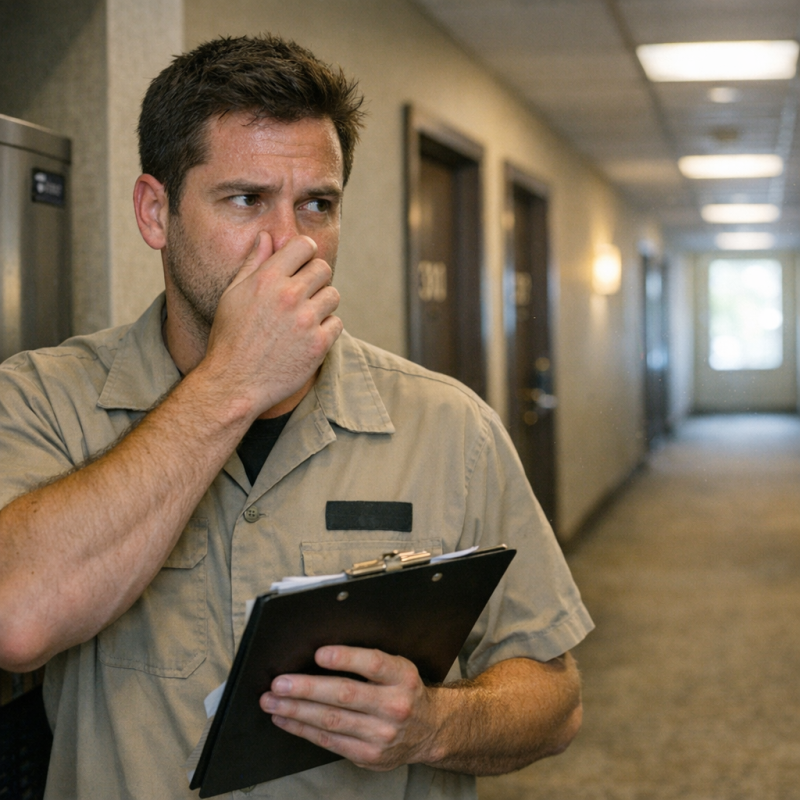 Image by FCT AI
Carter's Warning
Carter pulled me aside during his shift change, his expression more serious than I'd ever seen it. 'You smell that, right?' he asked, keeping his voice low even though the lobby was empty. I nodded, grateful someone else was acknowledging it. He'd been in hospitality longer than any of us—fifteen years across three different properties—and he'd seen things. 'Long-term guests who refuse cleaning service,' he said, crossing his arms, 'it never ends well. I've seen rooms with mold growing up the walls, pest infestations that spread to neighboring rooms, even structural damage from water being left to pool.' He glanced toward the elevators. 'You need to get Greg to act on this. If it's food waste, we're talking bacteria. If it's something worse—' He didn't finish the sentence. He didn't have to. The way he looked at me made my skin crawl. He said, 'If something's rotting in there, we could be looking at a biohazard situation,' and I felt my stomach drop.
 Image by FCT AI
Greg's Hesitation
I cornered Greg in his office the next morning, armed with Carter's warnings and a printed log of guest complaints. He listened, rubbing his temples like I was giving him a migraine. 'I hear you,' he said finally. 'But what do you want me to do? She's paid through the end of next month. She hasn't violated any hotel policies. Refusing housekeeping isn't illegal.' I stared at him. 'The smell is a health issue. Other guests are complaining. We have grounds.' He shook his head, looking genuinely anxious. 'Do we? What if she claims we're harassing her? What if she leaves a one-star review saying we discriminated against her because she's older, or a woman, or whatever angle she wants to take?' I could feel my frustration building into something hotter. 'So we just... do nothing?' He avoided my eyes. He said, 'We can't just kick her out without cause,' and I wanted to scream, 'What more cause do you need?'
 Image by FCT AI
The Midnight Encounter
I was covering the night shift that week, filling in for Carter's vacation days, and the hotel had that eerie 2 a.m. silence where every sound echoes. I was doing my hourly walk-through when I saw her. Mrs. Delaney, standing in the third-floor hallway, perfectly still, facing her own door. Not moving. Not fumbling with a key. Just standing there in that same beige coat, staring at the door like she was trying to remember something. I froze at the top of the stairwell, watching her. She didn't seem to notice me. For a full thirty seconds, she didn't move at all. No shifting weight, no fidgeting, nothing. It was unsettling in a way I couldn't quite name—like watching someone sleepwalk, except her eyes were open. Finally, I forced myself to speak. 'Mrs. Delaney? Are you alright?' When I said her name, she turned slowly—and for a moment, I swore she didn't recognize me.
 Image by FCT AI
The Health Inspector Threat
The guest in 310—a middle-aged woman with a no-nonsense demeanor and expensive luggage—marched up to the front desk Friday morning with a look that said she was done being polite. 'I want to speak to the manager,' she announced. Greg emerged from the back office, and I watched him try to deploy his usual charm. It didn't work. 'The smell on the third floor is unacceptable,' she said, her voice cutting through his placating murmurs. 'I've stayed in hostels cleaner than this. If you don't address it immediately, I'm calling the health inspector myself. And I will make sure everyone on TripAdvisor knows exactly what kind of establishment you're running here.' Greg's face went pale. After she left, he slumped against the desk. 'Okay,' he said quietly. 'Okay. We have to talk to her. Tomorrow morning. You'll come with me.' I nodded, feeling an odd mix of relief and dread. Greg scheduled the meeting for the next morning—and I couldn't shake the feeling that something bad was about to happen.
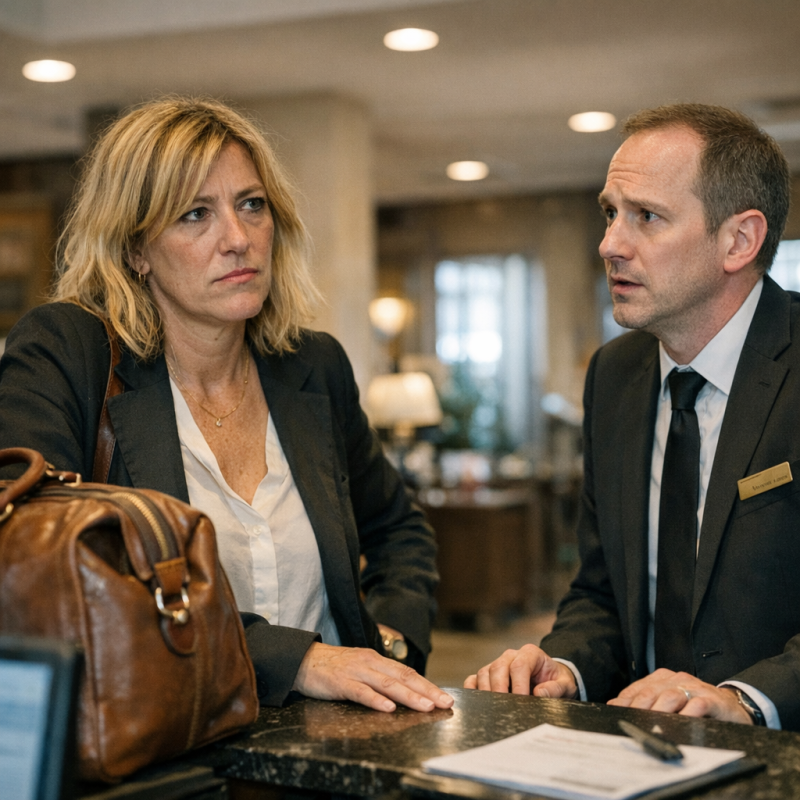 Image by FCT AI
The First Confrontation
We stood outside Room 312 at ten a.m. sharp, Greg straightening his tie like he was about to give a presentation. He knocked—three polite raps—and we waited. I could hear movement inside, slow and deliberate. When the door finally opened, it was just a crack, the chain still engaged. Mrs. Delaney's face appeared in the gap, composed and smiling. 'Good morning,' she said pleasantly. Greg launched into his prepared speech about guest concerns and hotel standards, his tone apologetic but firm. 'We need to arrange a time for housekeeping to service your room, Mrs. Delaney. There have been some... odor complaints from neighboring guests.' Her smile didn't waver. 'I haven't noticed any odor,' she said. 'Perhaps it's the ventilation system. Old buildings have smells.' Greg tried again, mentioning health codes and inspection protocols. She cut him off gently. She said, 'Things have smells,' with that frozen smile, and then added, 'But they're not what you think.'
 Image by FCT AI
Research
That afternoon, I locked myself in the back office with my laptop and started researching. I typed in every combination I could think of: 'guest refuses to leave hotel,' 'long-term hotel occupancy laws,' 'tenant rights extended stay.' What I found made my blood run cold. Apparently, in our state, if someone stays in a hotel for more than thirty consecutive days, they can potentially be classified as a tenant rather than a guest. Which means eviction becomes exponentially more complicated. You can't just cancel their reservation and call the cops. You need formal eviction proceedings. Court orders. Thirty-day notices. I found forum threads from other hotel managers describing nightmare scenarios: guests who stopped paying but couldn't be legally removed for months, squatters who knew exactly how to exploit the system. One article mentioned cases where people stayed rent-free for six months while the legal process played out. I stared at the screen, feeling sick. Mrs. Delaney had been here for three months. Paid in cash. No paper trail. I found dozens of articles about 'squatters' rights' and 'long-term occupancy laws'—and realized we might be trapped.
 Image by FCT AI
Maya's Theory
Maya found me in the break room that evening, staring blankly at the coffee maker. 'You look like death,' she said, not unkindly. I told her about the confrontation, the non-answer, the legal rabbit hole I'd fallen down. She listened quietly, then offered her own theory. 'What if she's just a hoarder?' Maya suggested. 'Like, clinically. My aunt was like that—she'd let trash pile up in her apartment because she couldn't bring herself to throw anything away. The shame was worse than the mess itself. Maybe Mrs. Delaney's stuck in that cycle, and she's too embarrassed to let anyone help her.' It was the most compassionate interpretation anyone had offered, and part of me desperately wanted it to be true. It would make Mrs. Delaney a victim of her own psychology rather than something more sinister. It would give the whole situation a sad but understandable shape. I wanted to believe Maya. I really did. It made sense—but something about it still felt wrong, like we were missing a piece of the puzzle.
 Image by FCT AI
The Second Glimpse
Two weeks later, I caught another glimpse inside her room—this time, completely by accident. Mrs. Delaney had ordered something from Amazon, and when I knocked to deliver it, she actually opened the door wider than usual to accept the package with both hands. The opening lasted maybe three seconds, but it was enough. The bags weren't randomly scattered anymore. They were organized. Stacked in neat rows along the walls, grouped by color or size or something I couldn't quite identify from my angle. Some were folded flat, others puffed full and arranged in deliberate columns that reached halfway to the ceiling. It looked almost architectural, like she was constructing something with purpose and precision. Before I could process what I was seeing, Mrs. Delaney stepped back and closed the door firmly, leaving me standing in the hallway with my mouth half-open. I walked back to the front desk in a daze, replaying those three seconds over and over in my mind. It wasn't random—it looked deliberate, almost like she was building something.
 Image by FCT AI
Month Three
When Mrs. Delaney hit the three-month mark, Greg called me into his office with a grim expression I'd never seen before. He had a legal pad covered in notes and a half-empty bottle of Tums on his desk. 'I talked to our lawyer,' he said, tapping his pen against the pad. 'After ninety days in some jurisdictions, she's technically a tenant, not a guest. Different rules apply.' I felt my stomach drop. 'What does that mean?' He leaned back in his chair, looking older than usual. 'It means we can't just lock her out or force her to leave without going through formal eviction proceedings. We'd need documented lease violations, unpaid rent—except she keeps paying on time, so we've got nothing solid.' I stared at him. 'How long would an eviction take?' Greg rubbed his face. 'Months, maybe. Depends on how much she fights it.' I left his office feeling like I'd just discovered we'd been caught in a trap we didn't know existed. Greg said we'd need to start formal eviction proceedings if we wanted her out—and that could take months.
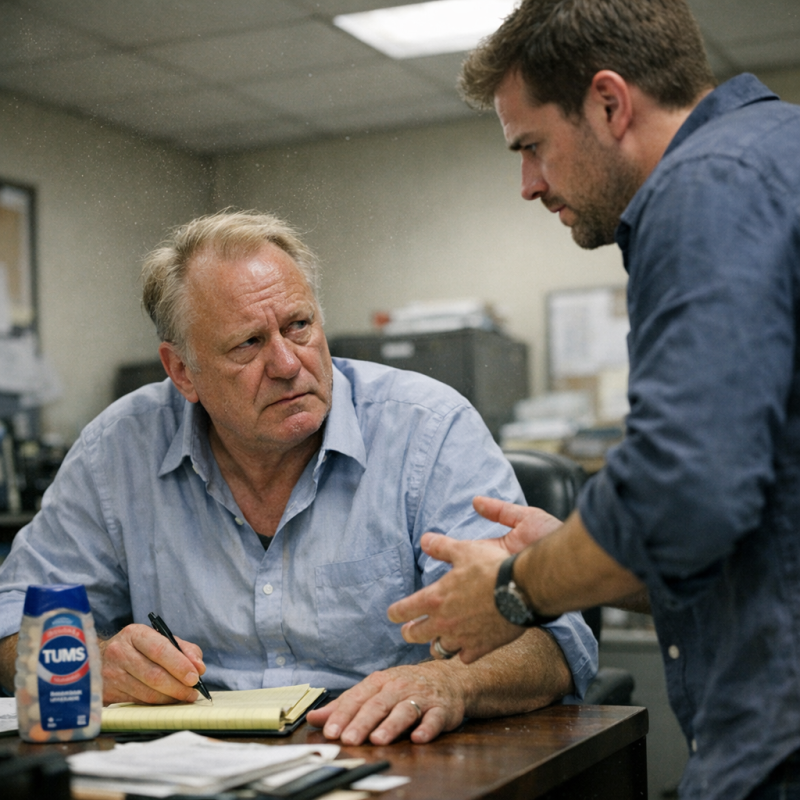 Image by FCT AI
The Scratching
The complaints started around week thirteen. First it was the couple in 304, right next door to Mrs. Delaney. They reported hearing scratching sounds through the wall, always late at night, like something dragging across the floor. Then the family in 306 mentioned it. Then the business traveler in 302. I tried to dismiss it—old building, settling pipes, whatever. But the consistency bothered me. It was always the same description: scratching, rhythmic, deliberate. Not mice or plumbing. Something else. One guest, a middle-aged woman with expensive luggage and a no-nonsense attitude, cornered me at the front desk one morning. 'I need to know,' she said quietly, 'do you have a pest problem? Because I can't sleep with that noise, and I'm not paying full price if there are rats in the walls.' I opened my mouth to reassure her, to offer the standard corporate response about how we take all concerns seriously. But the words stuck in my throat. One guest asked if we had a pest problem—and I realized I had no idea how to answer honestly.
 Image by FCT AI
Rhonda's Breaking Point
Rhonda found me in the back office during the morning shift change, arms crossed and jaw set. I knew that look. It meant someone was about to draw a line. 'I need to talk to you about 305,' she said, closing the door behind her. I braced myself. 'One of my housekeepers, Lucia, was walking past that room yesterday to get to the supply closet. She said she saw movement through the crack under the door—shadows, shifting back and forth, like someone pacing.' Rhonda's voice was firm. 'She got spooked. Won't go near that wing anymore, and honestly? I don't blame her.' I tried to respond, but Rhonda held up her hand. 'I'm not sending any more of my girls down there unless absolutely necessary. I'm not risking their safety or their mental health for this situation, Jordan. You and Greg need to handle it.' I wanted to argue, to remind her we were all in this together, but the truth was I understood completely. She said, 'I'm not risking my girls for this,' and I couldn't blame her.
 Image by FCT AI
The Package Delivery
The package arrived on a Tuesday afternoon, delivered by a generic courier service I didn't recognize. It was addressed to Mrs. Delaney in room 305, but there was no return address, no company logo, nothing identifying where it came from. I signed for it out of habit, then immediately regretted touching it. The box was heavier than it looked, dense and solid, and when I lifted it to carry upstairs, I caught a faint chemical smell—something sharp and industrial, like cleaning solution mixed with something else I couldn't identify. I knocked on Mrs. Delaney's door, holding the package awkwardly against my hip. She opened it just wide enough to see what I was holding, and her expression shifted instantly. Without a word, she snatched the box from my hands with surprising strength, her fingers gripping the cardboard edges so hard they left indentations. Then she looked directly at me, her face completely serious, and said in a low voice: 'You shouldn't have touched this.' The door closed before I could ask what she meant.
 Image by FCT AI
The Lawyer Consultation
Greg scheduled a meeting with the hotel's lawyer—a sharp woman named Patricia who specialized in hospitality law and tenant disputes. I sat in on the video call, hoping for some kind of solution, some legal magic that would make this nightmare end. Patricia listened to our summary, took notes, and then delivered the bad news with professional efficiency. 'Without documented violations or police involvement, your options are extremely limited,' she explained. 'You can't evict based on suspicion or discomfort. You need concrete evidence of lease violations—property damage, unpaid bills, illegal activity, threats to safety.' Greg leaned forward. 'What about the smell? The complaints from other guests?' Patricia shook her head. 'Unpleasant odors alone won't hold up unless you can prove health code violations, and that requires an official inspection she can refuse.' Then she asked the question that made my heart sink: 'Has she threatened anyone or damaged property?' Greg hesitated, then admitted the truth. 'No.' I watched our last hope evaporate. The lawyer asked, 'Has she threatened anyone or damaged property?' and Greg had to say no.
 Image by FCT AI
The Smell Worsens
By the end of month three, the smell had become impossible to ignore. It wasn't just unpleasant anymore—it was aggressive, invasive, seeping through the walls and infiltrating the entire third floor. Guests started requesting room changes before we could even offer them. Some just checked out early, forfeiting their reservations without asking for refunds. We had to cordon off the rooms adjacent to 305 and move everyone to the opposite wing, which meant we were essentially losing half our third-floor revenue. The front desk staff started getting creative with excuses—plumbing work, carpet replacement, routine maintenance. But people aren't stupid. They could smell it in the stairwell, in the elevator, sometimes even in the lobby when the air circulation was wrong. One morning, a businessman in his fifties approached me with genuine concern in his eyes. He spoke quietly, almost kindly: 'I don't mean to pry, but has someone died in there? Because that smell—it's not normal.' I stood there, frozen, searching for words. One guest asked if someone had died in there—and I couldn't say for certain that they hadn't.
 Image by FCT AI
Carter's Inspection Attempt
Carter volunteered to try what we were all thinking—force the issue under the guise of legitimate hotel business. 'I'll say we need to inspect the HVAC system,' he suggested. 'Mandatory maintenance. She can't refuse that, right?' I wasn't sure, but we were desperate enough to try. I went with him, mostly for moral support, and knocked while he stood beside me holding a toolbox for effect. Mrs. Delaney opened the door exactly six inches and looked at us with those calm, unreadable eyes. Carter launched into his speech about routine inspections and ventilation systems and hotel policy. She listened without interrupting, then spoke in that same measured tone she always used: 'Under tenant protection statutes, you're required to provide twenty-four hours written notice for non-emergency inspections. This doesn't qualify as an emergency, and I haven't received proper notice. I'm within my rights to refuse entry.' Carter's face went slack. I felt something cold settle in my stomach. She knew exactly what to say, like she'd memorized the script—and that's when I first wondered if she'd done this before.
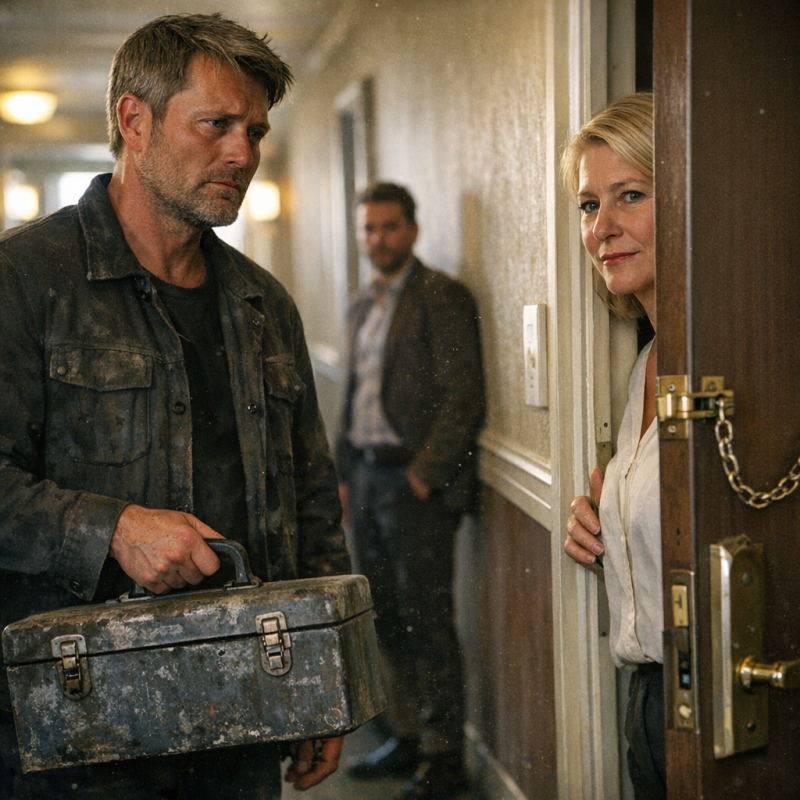 Image by FCT AI
Online Search
That night, I couldn't sleep, so I did what anyone does when they're desperate for answers—I googled it. 'Hotel guest won't leave.' 'Guest refuses to vacate room.' 'How to evict hotel guest.' The search results were a nightmare I wasn't prepared for. Forum after forum, Reddit thread after Reddit thread, all filled with horror stories about professional squatters who knew exactly how to exploit hospitality laws. Some stayed for months. Some threatened lawsuits if hotels tried to force them out. One property manager described losing thousands in legal fees fighting a guest who'd established residency after thirty days. I kept scrolling, my stomach tightening with each story. Then I found a post from three years ago on a hotel management forum. The OP described a woman in her sixties, well-dressed, polite, who'd stayed four months and knew tenant laws better than their own lawyer. She'd cited specific statutes when they tried to inspect her room. She always paid just enough to avoid immediate eviction. The post didn't include a name, but the description made my skin crawl. One forum post described a woman who lived in a hotel for six months rent-free by threatening legal action—and the description sounded eerily familiar.
 Image by FCT AI
Elaine's Close Call
The next morning, Elaine came into the back office looking like she'd seen a ghost. Her hands were shaking, and she kept glancing toward the hallway like Mrs. Delaney might appear at any second. 'What happened?' I asked. She'd been delivering the mail—a package had been left at the front desk for Room 214, but Elaine had misread it as 204. Mrs. Delaney's room. She'd knocked, and when Mrs. Delaney opened the door, Elaine had started to explain the mistake. That's when Mrs. Delaney grabbed her wrist and yanked her inside. Just for a second, maybe two. Then she released her, took the package, checked the label, and handed it back without a word. 'She didn't hurt you?' I asked. Elaine shook her head, but her eyes were wide. 'No, but Jordan—I saw inside. Just for a second.' She took a breath, trying to find the right words. 'It was like... organized chaos. Bags everywhere, but lined up perfectly. Stacks of newspapers arranged by date. Food containers in rows on the dresser.' Her voice dropped to a whisper. Elaine said she saw the inside for just a second—and she described it as 'a museum of trash, all lined up like it meant something.'
 Image by FCT AI
The Second Confrontation
Greg and I decided we had to try one more time, with a different angle. Health and safety. If we framed it as a legitimate concern for other guests, maybe she'd have to comply. We knocked together, presenting a united front. Mrs. Delaney opened the door with that same measured expression, like she'd been expecting us. Greg launched into his speech about needing to conduct a health inspection, that we'd received complaints about odors, that this was non-negotiable. She listened patiently, hands folded. When he finished, she tilted her head slightly. 'Do you have documentation of these complaints?' she asked. Greg stammered. We didn't—because the complaints were vague at best. 'Without documented evidence of a health hazard, you're conducting a fishing expedition,' she continued. 'That constitutes harassment under state landlord-tenant law. I could file a complaint with the housing authority.' Greg's resolve crumbled in real time. I watched him deflate, all the authority draining from his voice. 'We're just trying to—' 'I understand what you're trying to do,' she interrupted. She smiled wider than I'd ever seen and said, 'You do what you have to do—but I know my rights.'
 Image by FCT AI
Staff Meeting
We held an emergency staff meeting that afternoon in Greg's office—me, Greg, Carter, Rhonda, and Maya all crammed in there like we were planning a heist instead of trying to manage one guest. The frustration in that room was suffocating. Carter wanted to cut off her utilities. 'Make it uncomfortable enough that she leaves on her own.' Rhonda shut that down immediately—illegal and we'd be liable. Maya suggested we just wait her out, that eventually she'd run out of money or get bored. Greg looked like he wanted to agree, but I could see the stress eating him alive. I argued we needed to consult a lawyer, get proper eviction proceedings started, but Greg worried about the cost and the publicity. 'What if she goes to the media?' he kept saying. Round and round we went, every suggestion met with a reason it wouldn't work or would backfire. The longer we talked, the clearer it became that we were stuck. Mrs. Delaney had us in checkmate, and she knew it. We all agreed something had to be done—but no one could agree on what.
 Image by FCT AI
Month Four Begins
Month four began on a Tuesday, and I marked it on the calendar like it was a prison sentence. One hundred and twenty days. I'd started keeping a spreadsheet—partly to document everything, partly because the numbers made it real in a way that felt less like a nightmare. The financial damage was adding up. We'd turned away at least six bookings because guests on that floor complained about the smell or the weird woman who never left her room. Two guests had checked out early and demanded partial refunds. Our online reviews had taken a hit—one person mentioned 'strange long-term resident' and our rating dropped half a star. I showed Greg the numbers during his morning coffee, hoping it would finally push him to action. He stared at the spreadsheet, rubbing his temples. 'We can't afford a lawsuit,' he muttered. 'We can't afford this either,' I shot back. But he just shook his head, trapped between two bad options and paralyzed by both. We'd lost at least six bookings because of complaints about her—and Greg still wouldn't call the police.
 Image by FCT AI
The Police Call
Finally, finally, Greg cracked. He called the police for a wellness check, framing it as concern for a guest who never left her room and might need assistance. I stood next to him in the lobby when the officer arrived, hope fluttering stupidly in my chest. Maybe they'd see something we couldn't. Maybe they'd make her leave. We walked the officer up to Room 204, and Greg knocked. Mrs. Delaney answered within seconds, looking perfectly composed in a clean blouse and slacks. The officer asked if she was all right. She smiled warmly. 'I'm fine, officer. Just recovering from some personal matters and preferring privacy. Is there a problem?' He glanced into the room—she'd opened the door wider for him than she ever had for us—and I caught a glimpse of what looked like a perfectly normal hotel room. No visible trash. No chaos. How? The officer turned back to us. 'She seems fine,' he said, already moving toward the stairs. The whole thing took thirty seconds. The officer told Greg, 'She seems fine to me,' and I wanted to scream.
 Image by FCT AI
The Night Watch
I started staying late. Not because Greg asked me to, but because I needed to understand what she was doing in there. I'd park myself at the front desk after my shift, pretending to catch up on paperwork, but really just watching the stairs. Documenting. I kept a notebook, logging every time she left and returned. She had a pattern—leaving every three days or so, always between 9 and 11 PM, always returning within two hours. Always with bags. Sometimes shopping bags from discount stores. Sometimes black garbage bags. Sometimes those reusable grocery totes, bulging with contents I couldn't identify. I took photos when I could do it discreetly. Notes about what she wore, what she carried, how she moved. I was becoming obsessed, I knew that, but someone had to pay attention. Someone had to gather evidence. One night, around 10:30, I watched her struggle through the front door with a bag slung over her shoulder. A big black garbage bag, tied at the top. She could barely lift it, had to drag it a few feet, rest, then drag it again. One night, I saw her dragging a bag so heavy she could barely lift it—and I wondered what could possibly weigh that much.
 Image by FCT AI
The Renovation Story Cracks
I pulled out the registration form she'd filled out on day one. Mrs. Ellen Delaney. Home address in a suburb forty minutes away. Reason for stay: 'home renovations.' I'd never thought to verify it before—why would I? But now, with everything else unraveling, I needed to know if anything she'd told us was true. I called the number listed for her home phone. It rang four times before someone picked up. A man's voice, older, confused about why a hotel was calling. I explained I was trying to reach Mrs. Delaney. 'She doesn't live here,' he said. 'Who?' I asked, thrown. 'I bought this house eight months ago,' he continued. 'Don't know any Delaney.' I felt my pulse quicken. Maybe she'd moved. I asked if he knew anything about the previous owners. 'Sure,' he said. 'Young couple, got transferred for work. House sat empty a few months before I bought it.' I asked if there had been any renovations recently. He laughed. The neighbor said, 'That house has been empty for months,' and I felt my blood run cold.
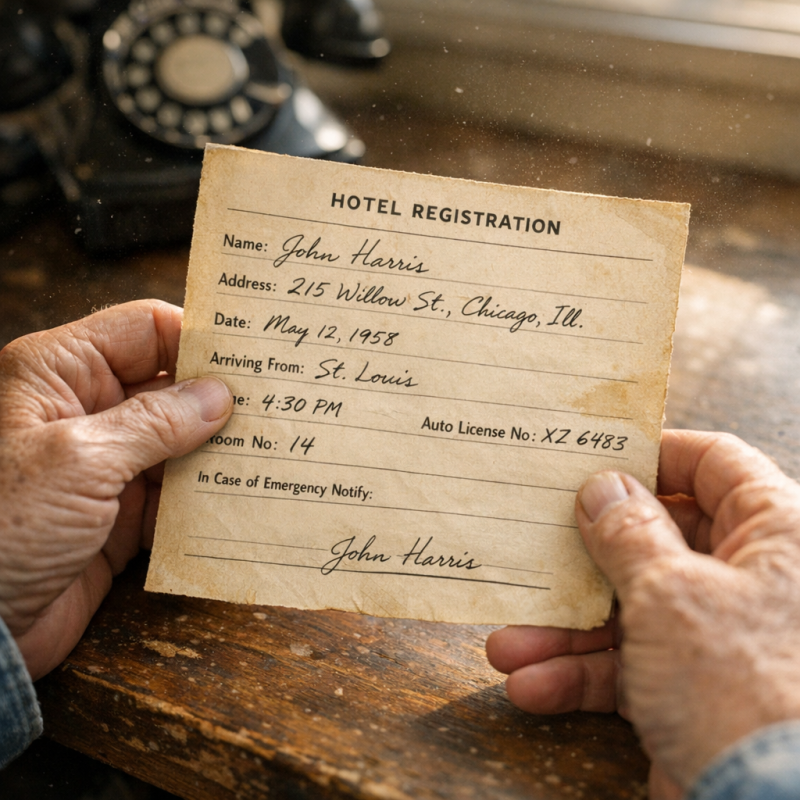 Image by FCT AI
Maya's Discovery
Maya caught me in the break room the next morning, her laptop already open. 'You need to see this,' she said, turning the screen toward me. It was a hotel review site—one of those industry forums where staff vent about nightmare guests. She'd been searching variations of Mrs. Delaney's behavior: long-term stay, refused housekeeping, erratic. The post was from a Holiday Inn in Ohio, dated eight months ago. 'Guest stayed 47 days claiming home emergency. Refused all room entry. When she finally left, room was immaculate but she disputed the entire bill through her credit card company. Claimed we harassed her, made her feel unsafe.' My hands went cold reading it. The details—the refusal of service, the sudden complaints, the months-long stay—it was all there. Another comment below it: 'Same thing happened at our Marriott in Pennsylvania. Different name, same MO.' Maya scrolled down. More stories. Different cities, different hotels, same pattern. The review that stopped my breath said, 'She knew exactly how to work the system,' and I realized we might be dealing with a professional.
 Image by FCT AI
The Eviction Notice
Greg finally pulled the trigger two days later. He'd consulted with the lawyer, filed the formal eviction paperwork—thirty days' notice to vacate the premises. It felt like a weight lifting, like we were finally doing something instead of just watching her play us. I went with him to deliver it, both of us standing outside Room 311 like we were approaching something dangerous. He knocked first. No answer. 'Mrs. Delaney, we have important documentation for you,' he called through the door. Still nothing. So we did what the lawyer suggested—slid the notice under the door, made sure it was fully inside. I heard movement then. Footsteps approaching. I held my breath, half expecting her to yank the door open, to scream or threaten or do something dramatic. But she didn't. Instead, from the other side of that door, I heard her laugh—low and bitter, like we'd just told her the punchline to a joke she'd already heard a thousand times.
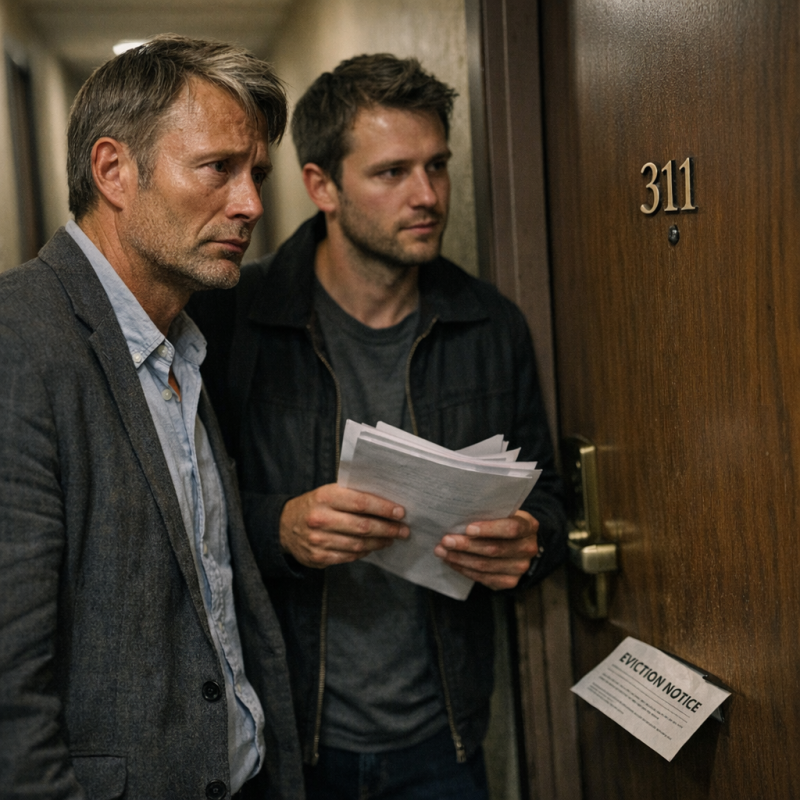 Image by FCT AI
Carter's Theory
Carter found me later that afternoon, looking grim. 'I've been thinking about this,' he said, leaning against the desk. 'What if the eviction is exactly what she wants?' I stared at him. 'What do you mean?' He rubbed his jaw. 'Think about it. She's been laying groundwork for weeks—complaining about noise, smells, maintenance issues we can't verify. Now we're formally evicting her. What if she turns around and sues? Claims we forced her out, harassed a long-term tenant, created unsafe conditions?' My stomach dropped. I hadn't considered that angle. 'She could claim discrimination, emotional distress, whatever,' Carter continued. 'Hotels settle those cases all the time because it's cheaper than fighting.' I thought about the midnight wandering, the bags, the refusals—all of it suddenly looking different through this lens. 'People like this always have an endgame,' he said quietly, and I started to see the shape of something I hadn't understood before.
 Image by FCT AI
The Cleaning Chemical Smell
The smell changed overnight. I noticed it on my next shift—that sour, organic rot scent that had been seeping from Room 311 for weeks was suddenly gone, replaced by something harsh and chemical. Bleach, definitely. Ammonia. And something else I couldn't identify, something astringent that made my eyes water when I got too close to her door. I stood there in the hallway, trying to make sense of it. What was she doing in there? Maya walked past and wrinkled her nose. 'Jesus, smells like a crime scene cleanup crew.' She meant it as a joke, but it landed wrong. That's exactly what it smelled like—industrial-strength cleaners, the kind you use when you're trying to eliminate evidence of something. I pressed my ear to the door, heard scrubbing sounds, water running. She was cleaning. Deep cleaning. After weeks of refusing housekeeping, of letting that sour smell build, now suddenly she was scrubbing everything down? It smelled like she was trying to erase something—and I couldn't shake the feeling she was preparing for an exit.
 Image by FCT AI
The Calm Before
Then everything just... stopped. Mrs. Delaney went quiet. No more midnight wandering in the hallways. No more mysterious bags carried up at odd hours. No more complaints about phantom maintenance issues or demanding conversations with Greg. She became a ghost in Room 311—we knew she was there, but we never saw her, never heard from her. It should have been a relief. For the first few days, I actually felt myself relax, thought maybe the eviction notice had scared her into behaving like a normal guest. But by day four of the silence, I was more on edge than ever. I'd gotten used to the chaos, the unpredictability. This calm felt wrong, like the air pressure dropping before a storm. I found myself walking past her room more often, listening for any sign of activity. The chemical smell had faded. Everything seemed normal. And that's what terrified me. The silence was worse than the chaos, because I knew she was planning something.
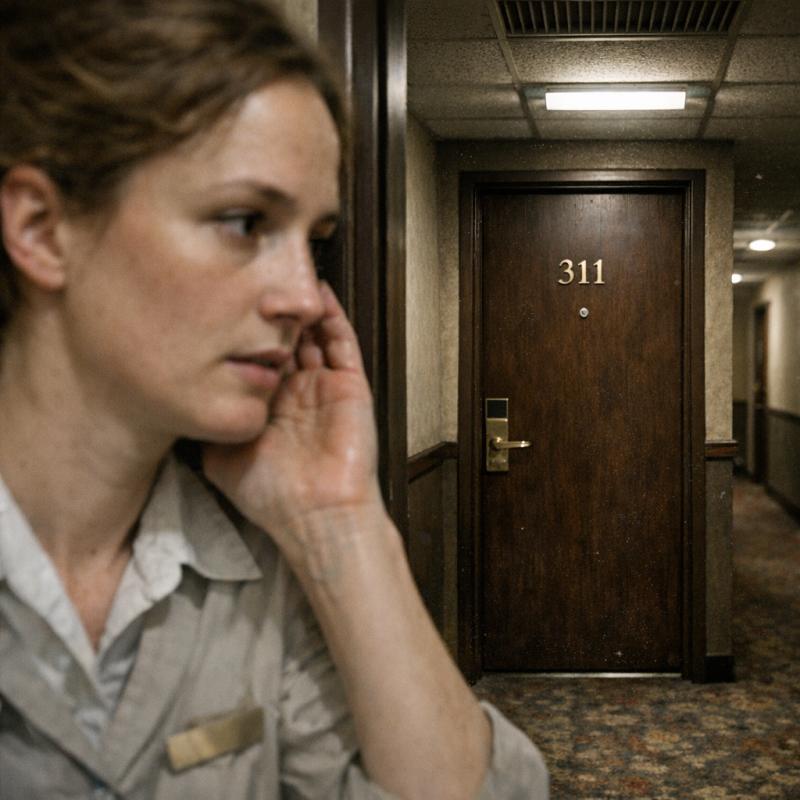 Image by FCT AI
The Background Check
I cornered Greg in his office. 'We need to run a background check,' I said. 'Maya found those reviews—we need to know who she actually is.' He hesitated, worried about privacy laws, but I pushed. 'She gave us false information. That address was fake. We have a right to know who's staying in our hotel.' It took three days and a service that cost two hundred dollars the hotel probably shouldn't have spent. When the results came back, Greg called me into his office and closed the door. The report was twelve pages long. Ellen Delaney. Ellen Morrison. Helen Delaney. Margaret Morrison. Four different names across three states—Ohio, Pennsylvania, New Jersey. Each one attached to unpaid hotel bills, disputed charges, complaints filed against properties. One case in Pittsburgh had gone to small claims court. The hotel lost. I read through the details, my hands shaking. She'd used at least four different names across three states—and every one led to unpaid hotel bills.
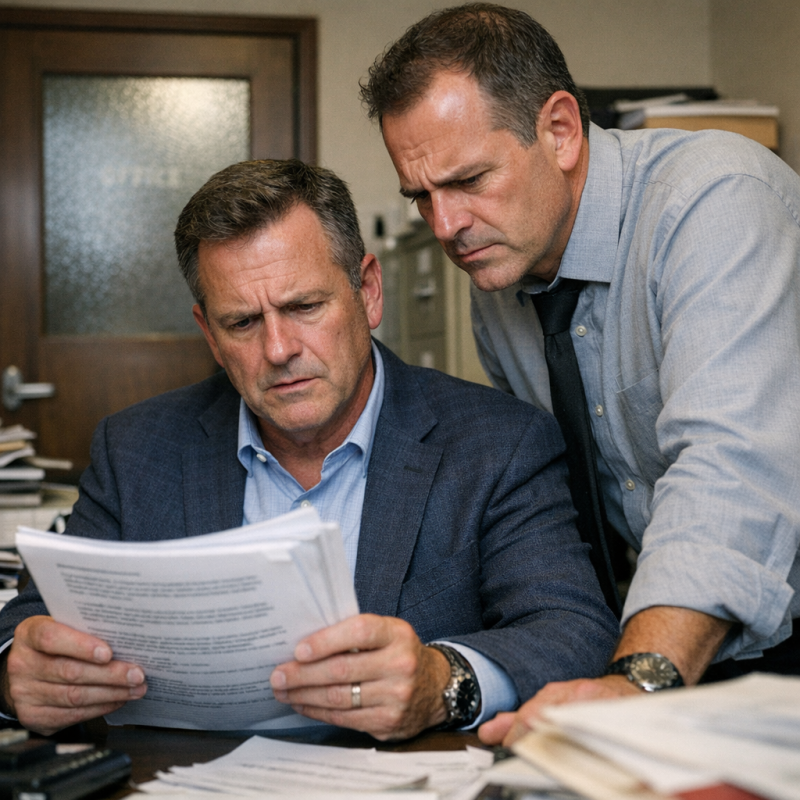 Image by FCT AI
The Day Before Checkout
I was taking out the trash the next morning when I saw her. Mrs. Delaney, walking to her car in the parking lot, carrying a small bag. Not bringing something in—taking something out. I watched from behind the dumpster enclosure as she opened her trunk, placed the bag carefully inside, then walked back toward the building. Twenty minutes later, she did it again. Another small bag, same careful placement. I checked the time—two days before her eviction deadline. She wasn't packing everything at once, making a dramatic exit. She was dismantling her setup piece by piece, methodically, so no one would notice. Over the next hour, I counted six trips. Each time, a different bag—small enough to be inconspicuous, frequent enough to clear out a lot of material. I thought about that immaculate room the reviews mentioned, the careful way she operated. She was leaving—but on her terms, not ours.
 Image by FCT AI
The Checkout
She checked out at six in the morning, before the day shift arrived. I happened to be there finishing night audit when she appeared at the desk, pulling a single small suitcase. Calm. Composed. Like she was ending a pleasant vacation. 'I'd like to settle my bill,' she said. I pulled up her account—she owed us for sixty-three days at the weekly rate, minus the deposit she'd put down on day one. Over four thousand dollars. 'I'll be disputing the charges,' she said pleasantly, sliding a form across the desk. It was already filled out—complaints about noise, unsafe conditions, harassment from staff, failure to provide promised services. 'My credit card company will be reversing the charges. But I wanted to thank you for your... hospitality.' She smiled then, and it was genuine. Warm, even. That's when it clicked—everything I'd been seeing but not understanding. The manic expressions, the bags, the midnight wandering, the refusal of housekeeping—it was all a performance. As she walked away, I realized everything—the manic expressions, the bags, the refusal of housekeeping—was a performance designed to exploit us.
 Image by FCT AI
The Door Opens
Carter met me outside the door at seven-thirty, both of us bracing for the worst. I'd seen hoarder rooms before—rotting food, black mold climbing the walls, carpets soaked through with God knows what. I slid the master key in and pushed the door open, expecting the smell to hit us first. But it didn't. The air was sharp with cleaning chemicals, almost medicinal. The room was spotless. I'm talking hotel-inspection clean. The bed was made with hospital corners. The desk was clear except for a few items arranged in perfect rows. The trash can was empty, lined with a fresh bag. Carter stepped inside, looked around, then looked at me. 'What the heck?' he said. I walked to the bathroom—gleaming. No hair in the drain, no soap scum, no water spots on the mirror. The towels were folded and stacked like we'd just delivered them. My hands started shaking because this wasn't right. This wasn't someone cleaning up before checkout. There was no damage, no rot, no chaos—just an impossible, deliberate order that made my skin crawl.
 Image by FCT AI
The Museum of Trash
I started looking closer at what she'd left behind. On the desk sat a plastic water bottle, a takeout container, a napkin, a receipt—all cleaned. Not just rinsed. Scrubbed. The water bottle had no label residue. The takeout container had been washed so thoroughly it looked new. The receipt was smoothed flat, pressed between the pages of the hotel service directory. On the dresser, more items arranged in a grid: a coffee cup, a plastic fork, three straws, a granola bar wrapper. All of them pristine, positioned like museum exhibits. Carter picked up the wrapper, turning it over. 'She washed a granola bar wrapper,' he said quietly. That's when it hit me. She wasn't hoarding trash—she was documenting it. Cleaning it. Displaying it. This was evidence. Proof that she hadn't damaged anything, that every item could be accounted for and inspected. She'd turned trash into a gallery, and I realized this was her way of proving she'd left the room 'undamaged.'
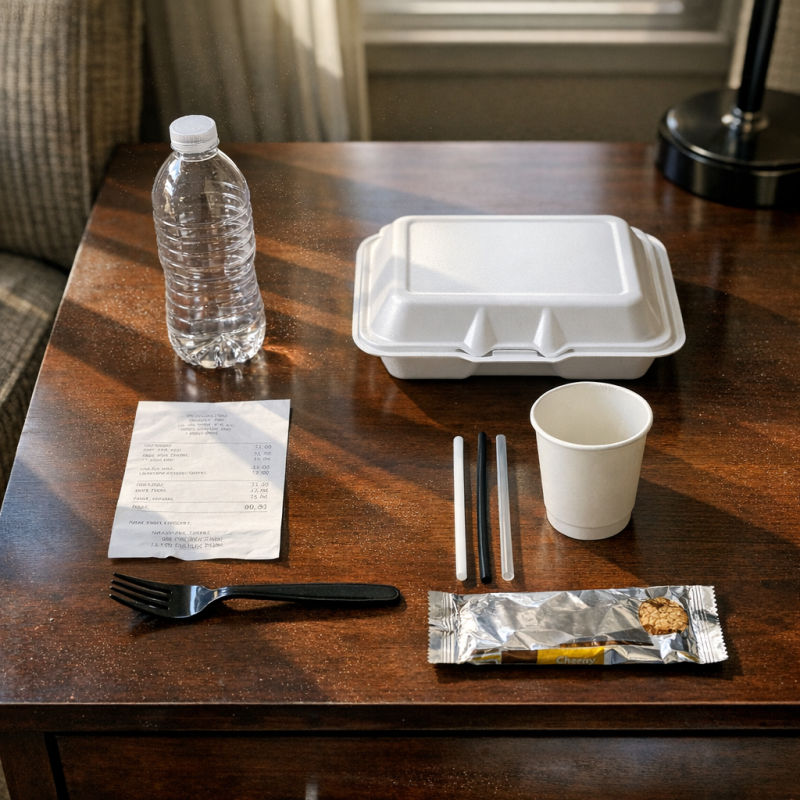 Image by FCT AI
The Notes
Then I saw the walls. At first I thought they were just marked up, maybe some light damage we could bill her for. But as I got closer, I realized they were covered in sticky notes. Hundreds of them. Maybe thousands. Tiny handwritten squares in cramped, meticulous handwriting. Carter was reading one near the window. 'Order prevents accusation,' he read aloud. I peeled one off near the bed. 'Clean means blameless.' Another: 'No stains, no claims.' They were everywhere—instructions, mantras, reminders. 'Document every surface.' 'Wipe twice, check three times.' 'They will look but they will not find.' My stomach turned because I was reading her playbook, the step-by-step strategy she'd used to protect herself. These weren't the ramblings of someone unstable. They were tactical. Methodical. I found one near the door that made my blood run cold. One note read, 'They'll look for damage but they won't find it,' and I realized she'd documented her own strategy.
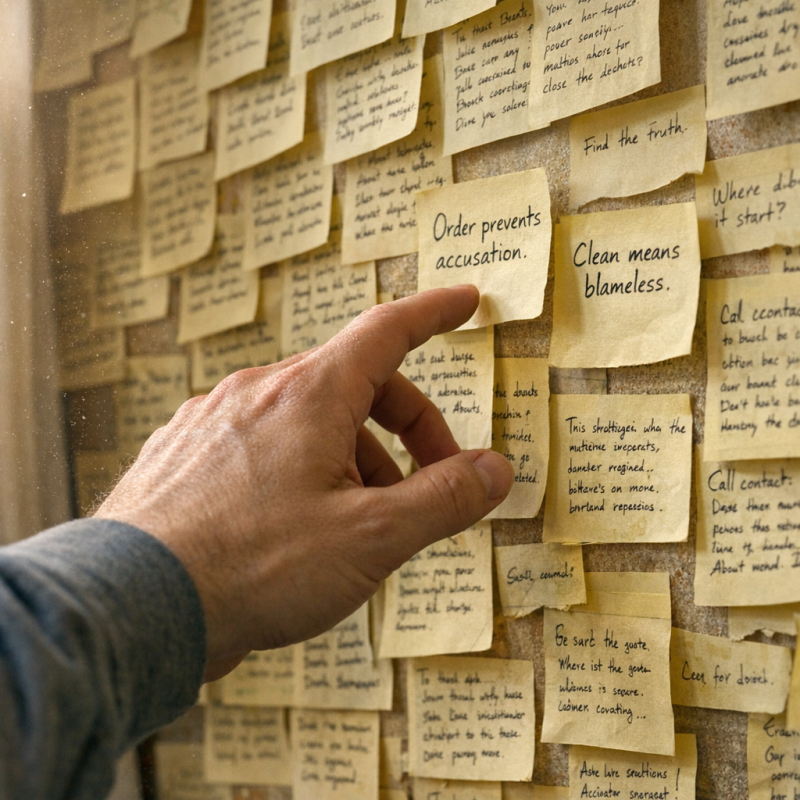 Image by FCT AI
The Chemical Evidence
The chemical smell was so strong it was making my eyes water. I opened the closet and found five empty bottles of bleach, three bottles of disinfectant spray, two jugs of floor cleaner. All empty. All lined up in a row like soldiers. She'd gone through gallons of the stuff, scrubbing every surface until there was nothing left to find. Carter ran his hand along the baseboards—spotless. He checked behind the nightstand—no dust, no grime, no buildup. The grout in the bathroom tiles was whiter than the day we'd installed it. She'd erased herself. That's what she'd done. Spent her final days methodically removing every trace of long-term occupancy, every sign of wear, every microscopic piece of evidence that could justify a damage claim. And it worked. Legally, we had nothing. No stains, no smells, no structural damage. She'd sanitized everything obsessively because she knew we'd check—and she left no proof of the damage she must have caused along the way.
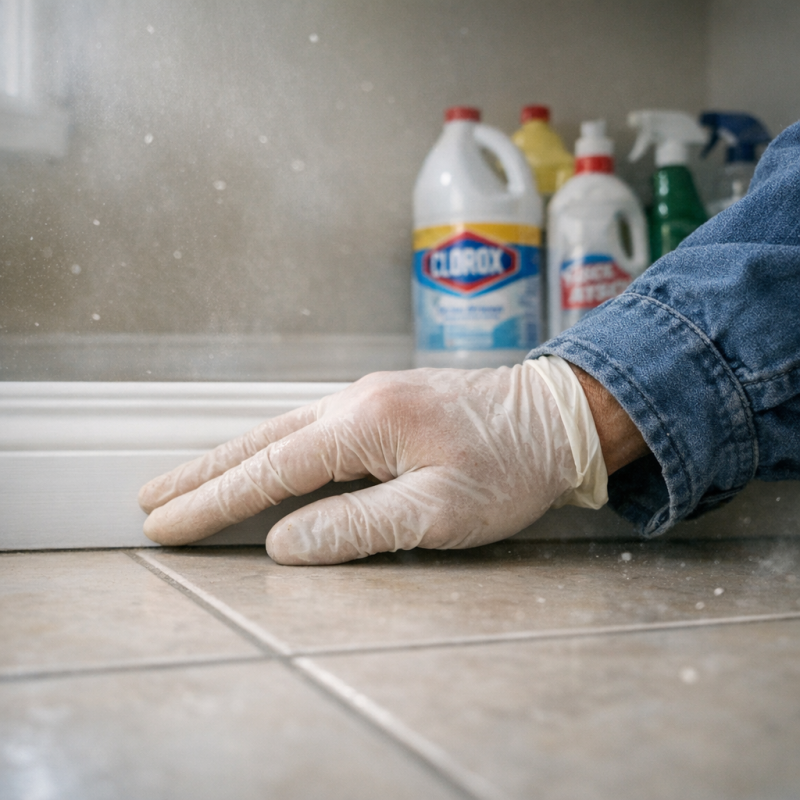 Image by FCT AI
Greg's Defeat
Greg came up to see it himself, walked through the room twice, then stood in the doorway with his arms crossed. 'We've got nothing,' he said. I started to argue but he cut me off. 'She paid her bill up to the last day. She violated no fire codes—everything she brought in is gone now. The room's undamaged. We can't prove harassment because she never threatened anyone. We can't prove fraud because she technically didn't lie about anything enforceable.' I felt my jaw clench. 'She scammed us, Greg.' 'I know,' he said quietly. 'But legally? She stayed in a hotel room. She kept it clean. She checked out. Where's the crime?' I wanted to scream that the crime was in the manipulation, the performance, the deliberate psychological warfare she'd waged against my entire staff. But he was right. We had no legal recourse. No damages to bill. No policy violations to enforce. He said, 'She played us perfectly,' and I felt the full weight of how powerless we'd been.
 Image by FCT AI
The Research
I went home and couldn't sleep, so I started searching. I typed variations of her story into Google—long-term hotel guest, dispute charges, chargeback scam. I found a Reddit thread from a hotel manager in Ohio describing almost the exact same situation two years ago. Different name—Patricia Winters—but same MO. Stayed sixty days, refused housekeeping, checked out clean, disputed charges. Then a Yelp review from a Holiday Inn in Michigan. Another from a Best Western in Pennsylvania. I started a spreadsheet, tracking dates and locations. By three in the morning, I'd found six hotels across three states where she'd pulled this. The names were different but the pattern was identical. Timelines matched, behaviors matched, even some of the phrasing in the dispute forms matched. She'd been refining this con for years, learning from each hotel, perfecting her performance at every stop. We weren't the first. We probably wouldn't be the last. She'd been doing this for years, perfecting her performance at every stop—and we were just the latest victims.
 Image by FCT AI
The Staff Debrief
I called an all-staff meeting the next morning and laid it all out. I showed them the Reddit threads, the reviews, the pattern. I walked them through every strange behavior—the midnight wandering, the refusal of housekeeping, the manic episodes in the hallway—and reframed each one as a deliberate tactic designed to keep us off-balance and afraid to enforce policy. Rhonda sat with her arms crossed, shaking her head. Elaine looked like she might cry. Carter just stared at the table. 'She knew exactly what she was doing,' I said. 'Every single moment was calculated to exploit our fear of confrontation, our policies, our desire to avoid conflict.' Maya spoke up, her voice small. 'She made us afraid to act,' she said, and the room went quiet. That was it exactly. She'd weaponized our professionalism, our empathy, our training to de-escalate and accommodate. We'd been outmaneuvered from day one. Maya said, 'She made us afraid to act,' and I realized that was the entire point.
 Image by FCT AI
The Police Report
I filed a police report the next day, bringing printed evidence of the pattern across multiple states. The officer listened, took notes, then leaned back in his chair. 'So she stayed at hotels, paid some of her bills, disputed charges she felt were unfair, and left the rooms clean?' I tried to explain the manipulation, the scam, the serial nature of it. He nodded sympathetically but I could see where this was going. 'Here's the thing,' he said. 'Disputing a credit card charge isn't illegal. Staying in a hotel room isn't illegal. Unless you can prove she lied on a legal document, or stole something, or caused damages you can quantify, there's no criminal statute being violated.' I felt my chest tighten. 'She's conning hotels across multiple states.' 'I believe you,' he said. 'But she's smart. She stays just inside the law.' The officer said, 'She's smart—she stays just inside the law,' and I wanted to throw something.
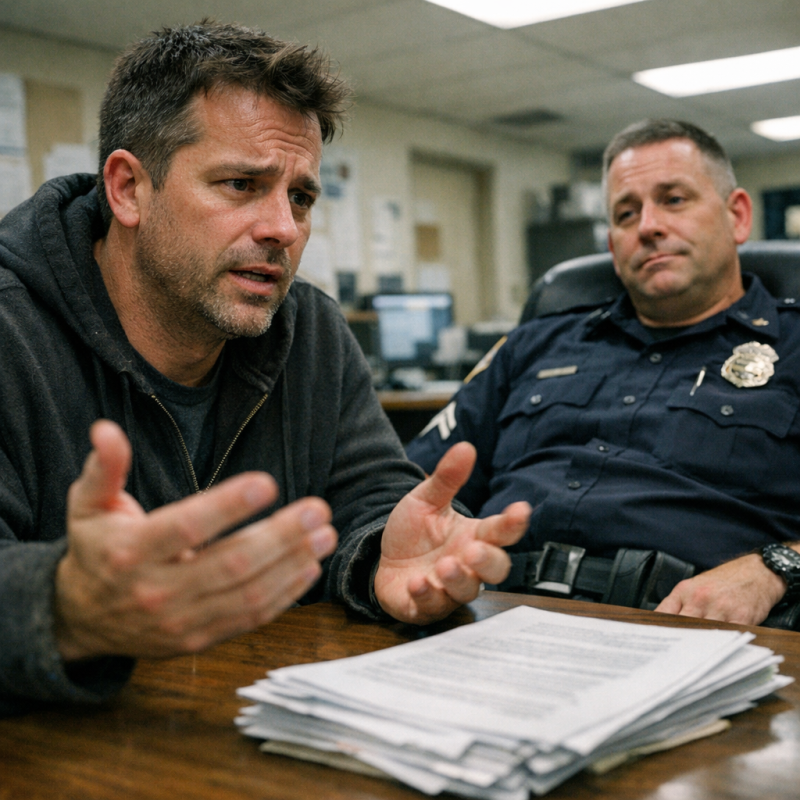 Image by FCT AI
The Review Warning
I couldn't let her do this to anyone else. That night, I created accounts on every hospitality industry forum I could find—the Hotel Management Network, Innkeepers Alliance, Boutique Hotel Owners Group. I posted detailed warnings with all her known aliases: Mrs. Delaney, Margaret Delaney, M. Delaney, Marjorie Delaney. I described her method—the extended stays, the partial payments, the pristine rooms, the chargeback scams. I laid out the exact pattern she followed, the timeline, the warning signs we'd missed. My hands shook as I typed it all out, reliving every manipulative conversation. I hit 'post' and felt something shift in my chest. At least other hotels would know what to look for. At least I'd tried. I checked my email an hour later and nearly dropped my phone. Three messages. Three different hotel managers, from Oregon, Colorado, and Virginia. Each one started the same way: 'I think she stayed with us too.' Within hours, three other hoteliers messaged me with their own stories—and I realized we were part of something much bigger.
 Image by FCT AI
The Aftermath
We changed everything after Mrs. Delaney. New policy: extended stays required a credit card authorization for the full estimated amount upfront, refreshed weekly. We implemented mandatory weekly housekeeping checks—polite but firm, non-negotiable. Background checks became standard for anyone booking more than two weeks. Rachel started a shared document tracking any guest who disputed charges, cross-referenced with the forum warnings I'd posted. It felt protective, necessary. But it also felt sad, you know? We'd always prided ourselves on being the kind of place that trusted people, that made guests feel at home rather than surveilled. Mrs. Delaney had taken that from us. I knew the new protocols were smart. I knew they'd catch most scammers. But late at night, staring at the updated policy manual, I also knew the truth. We implemented new long-term guest protocols, but I knew they wouldn't stop someone who really knew what they were doing.
 Image by FCT AI
The Lasting Question
The day before we rented Room 12 again, I went inside one last time. The air still smelled faintly of lavender, though we'd stripped and cleaned everything twice. I stood where her bed had been, looking at the bare mattress, the empty desk. All those perfect labels, the color-coded hangers, the alphabetized tea collection—was any of it real? Did she actually find comfort in that rigid order, or was it just set dressing, another manipulation to make us think we understood her? Maybe she really did crave control after a chaotic life. Maybe the structure was the only honest thing about her. Or maybe—and this haunted me more—she'd built it knowing exactly how it would look to us, how it would make us feel protective, reluctant to disturb her carefully constructed world. I'd never know which version was true. I wondered if she ever believed in the order she created, or if it was all just another layer of the con.
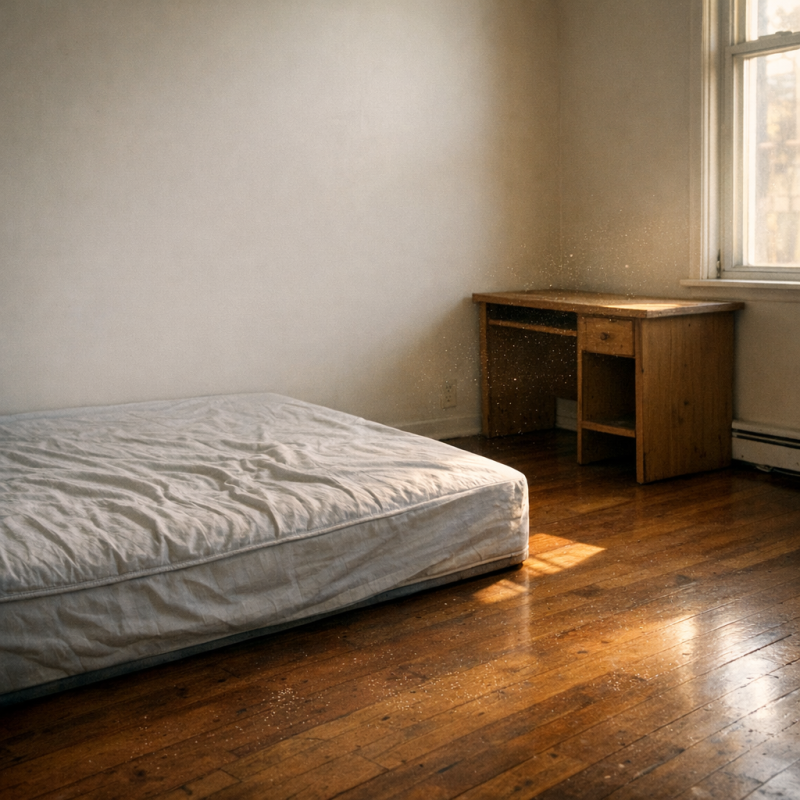 Image by FCT AI
The Next Guest
A woman checked in last Tuesday for a month-long stay. Professional, polite, mid-fifties. She paid two weeks upfront without hesitation and smiled warmly when I explained our updated housekeeping policy. 'Of course,' she said. 'Whatever you need.' Normal interaction. Completely routine. But I watched her eyes as she signed the registration form, tracked how she held her credit card, noticed she'd brought only two suitcases for a month. I checked her ID twice. I made a note of the card type, took a photo of her license 'for our records.' She didn't flinch. Maybe she's exactly who she appears to be. Maybe I've become paranoid. Or maybe Mrs. Delaney's real gift wasn't the scam itself—it was teaching me that hospitality and suspicion now live in the same space, that I'll never fully trust a long-term guest again. I smiled and handed over the room key, but this time I knew what to watch for—and I'd never stop watching.
 Image by FCT AI