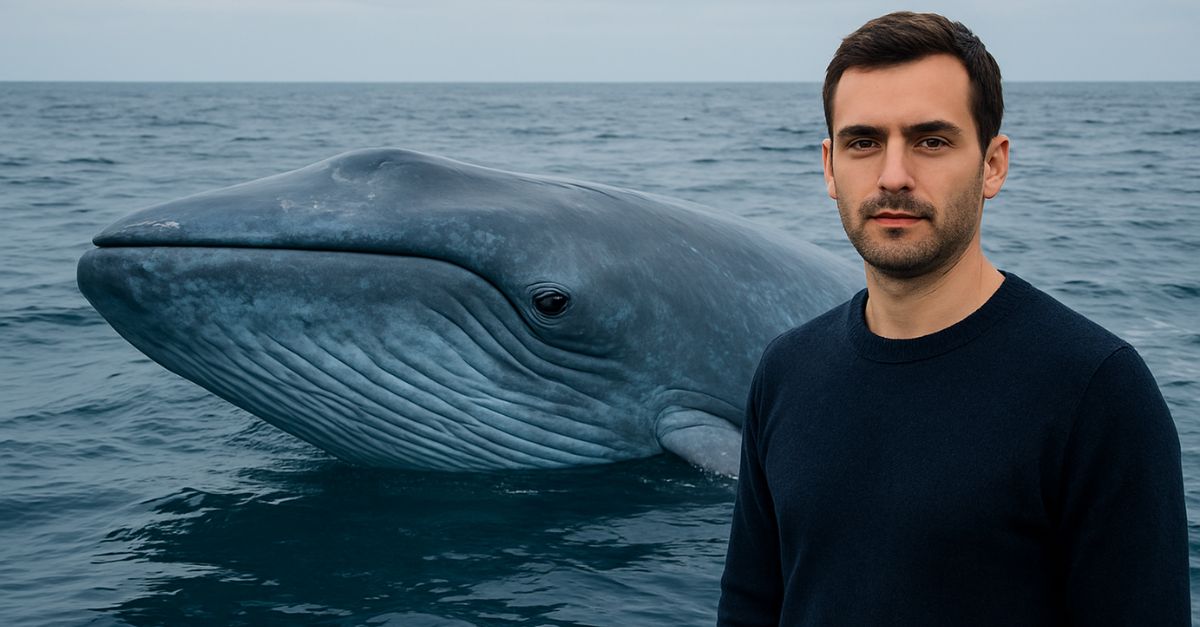
It’s hard to picture a creature so immense that a person could stand inside one of its arteries, yet that’s the reality of the blue whale—the largest animal ever to live on Earth. A detail like that can pull anyone out of the familiar scale of daily life and drop them into a world ruled by extremes. But the fascination doesn’t stop with size. When someone looks more closely at how a heart like this functions and what it sustains, the story grows far richer and far more compelling. Scientists have deeply explored its internal systems, revealing how this underwater marvel operates beneath the surface.
The Heart That Works On A Different Clock
A blue whale’s heart can weigh nearly as much as a motorcycle, but its size is a direct reflection of the incredible work it must do. Pushing blood through a body stretching close to 100 feet requires a pump that doesn’t rush and doesn’t waste energy. Instead, it moves almost like an engine that has learned the value of pacing itself. What’s fascinating is how this heart responds to the whale’s daily routine. During long dives, which can last more than 20 minutes, the whale’s entire body shifts into a slower gear. Oxygen is released carefully, and the heartbeat drops to astonishing lows. The whale doesn’t fight the ocean’s pressure; it settles into it. This is a strategy.
And once the blue whale returns to the surface, the heart adjusts again, ready to support the surge of activity that comes with surfacing above water. That adaptability is what keeps such an enormous animal thriving in a world where conditions can change in seconds. Instead of operating like a scaled-up version of other mammals, the blue whale’s heart behaves as a finely tuned system built specifically for a life lived in deep waters. Scientists were only able to measure this heart rate recently using non-invasive sensors attached temporarily to wild whales. Even they were stunned by what they found.
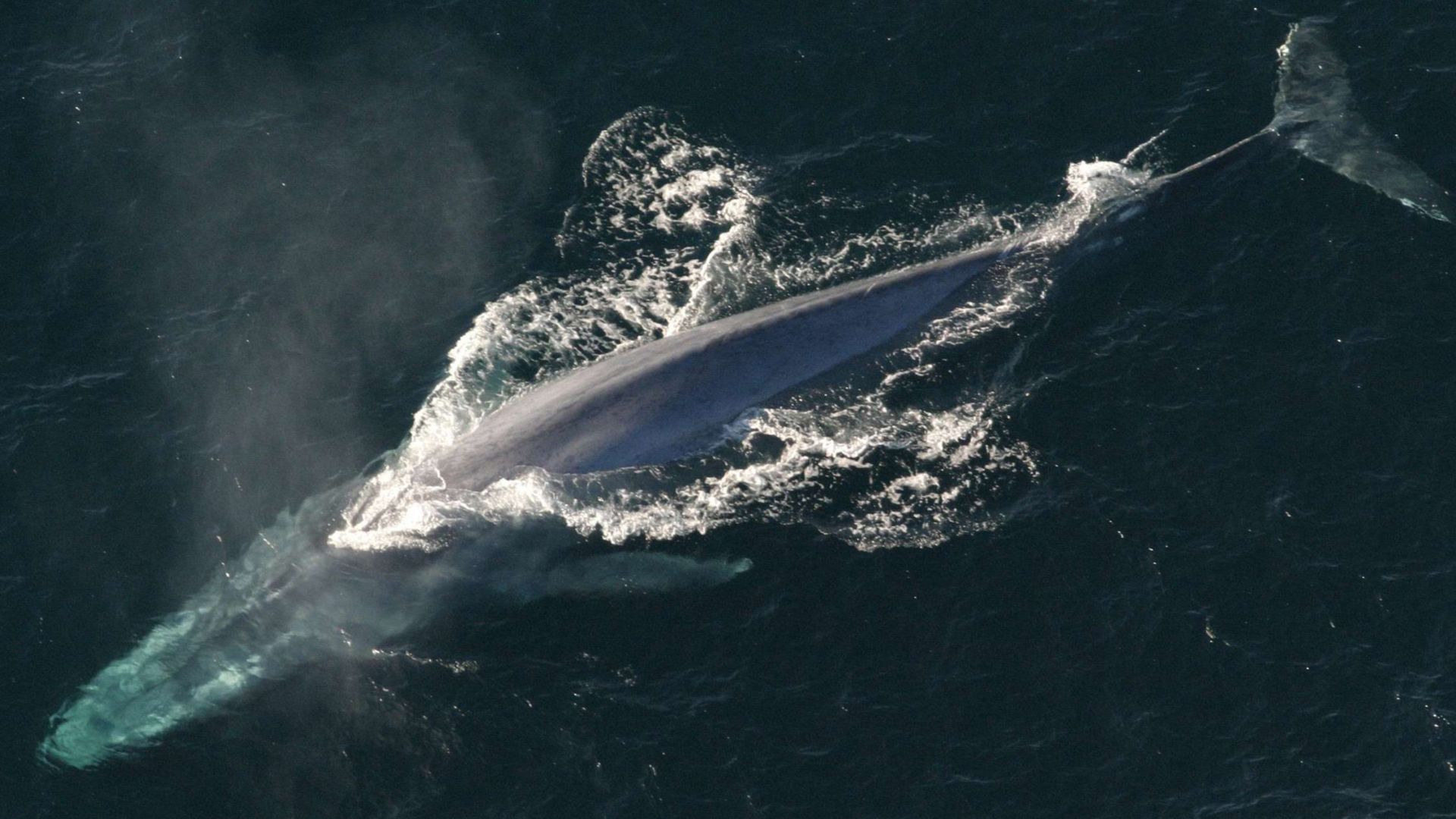 NOAA Photo Library, Wikimedia Commons
Arteries Built For An Ocean-Sized Body
The whale’s heart leads into an aorta wide enough to accommodate a small adult, and that detail alone hints at the extraordinary dimensions inside its body. But the arteries themselves tell a bigger story. They are engineered for distance. Blood has to travel from the whale’s chest all the way to its tail flukes, which exert enormous force every time the animal glides forward. That journey takes time, and the vessels adapt to that by maintaining steady pressure instead of sudden bursts. But that’s not all, because inside these vessels, blood carries an unusually high concentration of oxygenated blood.
Why? Blue whales store more oxygen per unit of body mass than other mammals, which allows their deep-water dives to last longer and cover more vertical distance. This is an evolutionary advantage. The more efficiently they can use oxygen, the more effectively they can work through water. These arteries also support the whale’s feeding behavior. Blue whales consume massive quantities of krill in seasonal feeding grounds, using bursts of acceleration to engulf entire swarms at once. After each feeding lunge, their bodies need rapid oxygen distribution to recover, and the arterial system makes that possible. Without this intricate network, the whale simply couldn’t perform the high-energy movements required to fuel its enormous body.
A Giant That Teaches Us How The Ocean Works
Understanding the blue whale’s heart also means recognizing what it reveals about the ocean that shaped it. A heart this enormous could only evolve in waters that once offered vast space and long-term stability. Its future still depends on those conditions, which are growing less certain. Warming seas shift krill populations, forcing whales to travel farther in search of food. Increasing underwater noise interferes with communication, disrupting feeding and mating. Ship traffic adds another threat, with collisions happening before whales can react. A heart that endured millions of years now faces challenges no earlier era ever placed before it.
Yet within this unfolding challenge lies a remarkable resilience. Blue whales have survived ice ages, shifting continents, and ancient disruptions far harsher than anything human history can describe. The same massive heart that beats slowly through cold, open water carries the memory of oceans far older than us. Seen through that lens, the whale becomes more than a biological giant—it becomes a living archive. Its size, migrations, and very heartbeat reflect what the ocean has allowed and reclaimed. Looking at it this way turns the whale into both a reminder of the ocean’s past and a guidepost for its future.
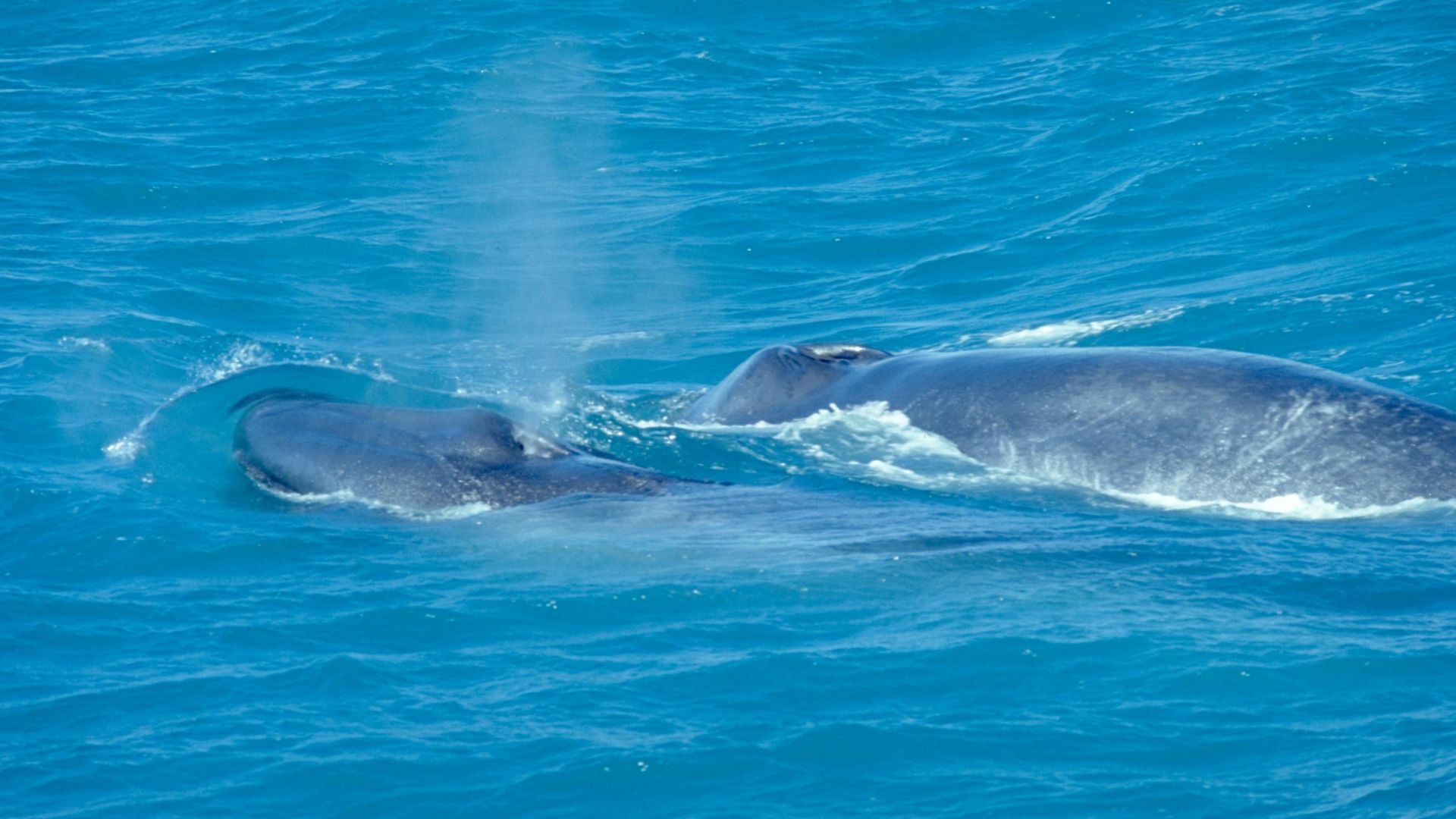 Andreas Tille, Wikimedia Commons