

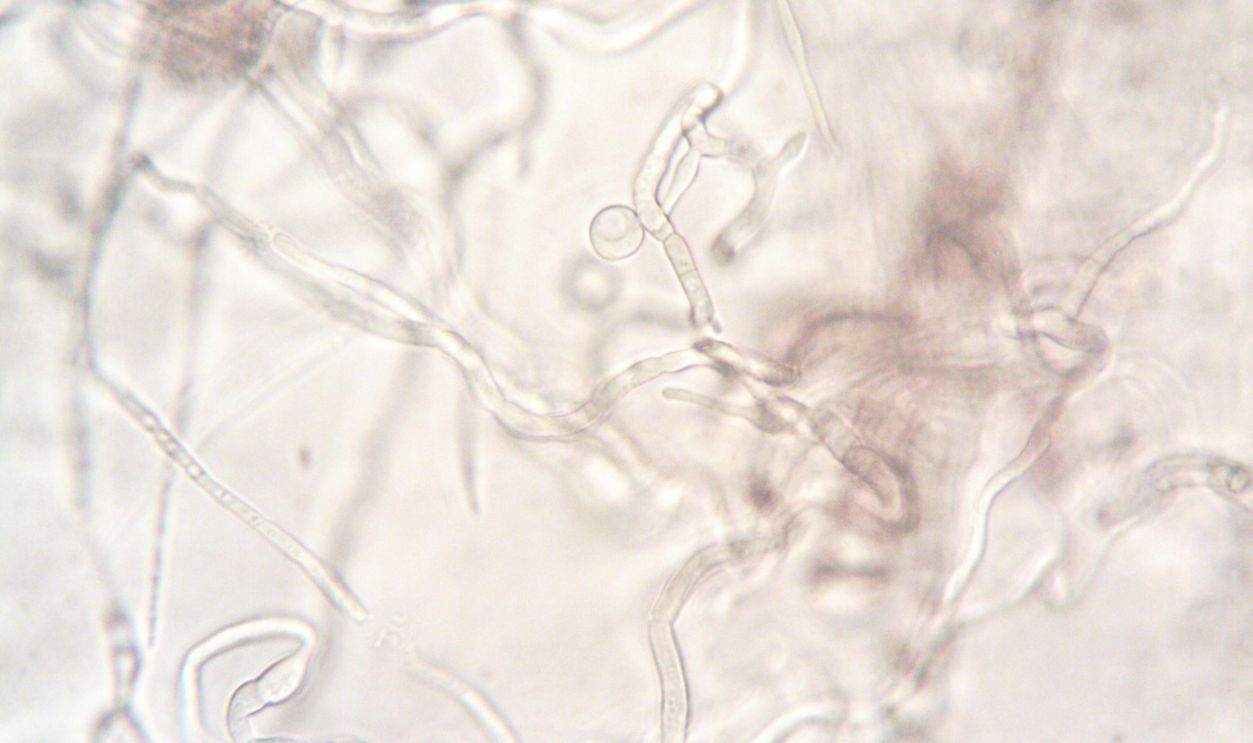
Bacteria rarely feel impressive in everyday life, but when you zoom in, all the way in, they dominate Earth in ways that are hard to grasp without numbers. Scientists estimate that bacteria account for an enormous percentage of the planet’s biomass. And when they calculated how tall a stack of every individual bacterium would be, the answer stunned the scientific community.
The combined height would stretch billions of light-years, far beyond the Milky Way. That scale raises questions about the quantity, distribution, and biological power of organisms most people never notice.
The Numbers Behind A Staggering Calculation
A widely cited figure from microbiology research estimates that Earth holds roughly five nonillion bacteria. That number is written as a five followed by thirty zeros. Yup, 30 zeros!
Scientists use cell dimensions—usually measured in micrometers—to estimate the average height of a single bacterium. When multiplied across the full population, the combined stack reaches billions of light-years.
This calculation conveys mass and number in a way that typical measurements cannot. Light-years describe distance based on the speed of light, which travels nearly six trillion miles per year. A total height in the billions means the combined bacterial stack would extend well past galaxies visible through high-powered telescopes. It also highlights the difference between what the human eye sees and what exists at the microscopic scale around us.
Most Bacteria Live In Places Humans Rarely Think About
Studies show that bacteria thrive across nearly every environment on Earth. Soil contains some of the densest microbial communities. Oceans hold enormous reserves of bacterial biomass, especially in nutrient-rich zones. Inside the human body, bacteria form part of essential biological systems, including the gut microbiome.
The distribution matters because the global count is based on all ecosystems combined. Deep-sea vents, underground aquifers, freshwater lakes, plant roots, and even polar ice contribute to the total. These varied environments support different species with different functions. When scientists examine new ecological zones, they frequently uncover new types of bacteria that expand the known count even further.
Bacteria Drive Key Biological And Environmental Processes
Bacteria participate in nutrient cycling, which supports plant growth, ocean productivity, and soil health. They break down organic material. They also release essential nutrients and interact with other microscopic organisms that sustain larger food chains. Some bacteria assist in nitrogen fixation, a process necessary for agriculture. Others help regulate carbon levels by converting carbon-based compounds in water and soil.
Medical research also uses knowledge of bacteria to guide antibiotic development and treatment strategies. Scientists continually monitor bacterial evolution because species adapt rapidly. These adaptations affect everything from disease behavior to public health. Understanding their role in global systems gives context to the massive scale described in the stacked-height calculation.
That scientific impact shapes another question: how do researchers even estimate such enormous totals?
How Scientists Arrive At A Global Bacterial Count
Researchers combine laboratory measurements with field samples taken from soil cores, ocean sediments, and environmental surveys. Microbial density varies widely across environments, so scientists analyze representative samples and scale those measurements to match known geographic and ecological boundaries. Advanced DNA sequencing helps identify species and population levels without growing every organism in a lab.
Data from satellite imaging and geological surveys support large-scale estimates. When combined, these methods build a global framework that remains one of the most detailed biological inventories ever created. Although bacterial counts change slightly as new ecosystems are studied, the general scale—expressed in nonillions—remains consistent across major research groups.
What This Size Means For Understanding Life On Earth
The stacked-height comparison helps illustrate the influence of microscopic organisms on global systems. It suggests that life on Earth is shaped more by abundance and distribution than by size. While bacteria are invisible to the human eye, their combined presence affects the environment.
Scientists use these measurements to evaluate how ecosystems respond to changes in temperature and resource use. In fact, bacterial shifts can serve as early indicators of ecological stress. This connection supports monitoring programs that track changes in water quality and natural habitats across continents.
Final Word
The scale of Earth’s bacterial population is difficult to picture, so scientists use comparisons that reveal its true magnitude. A hypothetical stack reaching billions of light-years underscores how much of life depends on organisms too small to see.