
Gateway In The Clouds
When the Empire State Building opened in 1931, its famous spire was supposed to do something far more extraordinary than decorate the New York skyline. It was designed to welcome enormous passenger airships arriving from across the Atlantic. Travelers would step off their flying hotels, descend through the skyscraper, and emerge onto Manhattan's streets. There was just one problem: nobody had figured out how to make it work.
When Airships Ruled The Skies
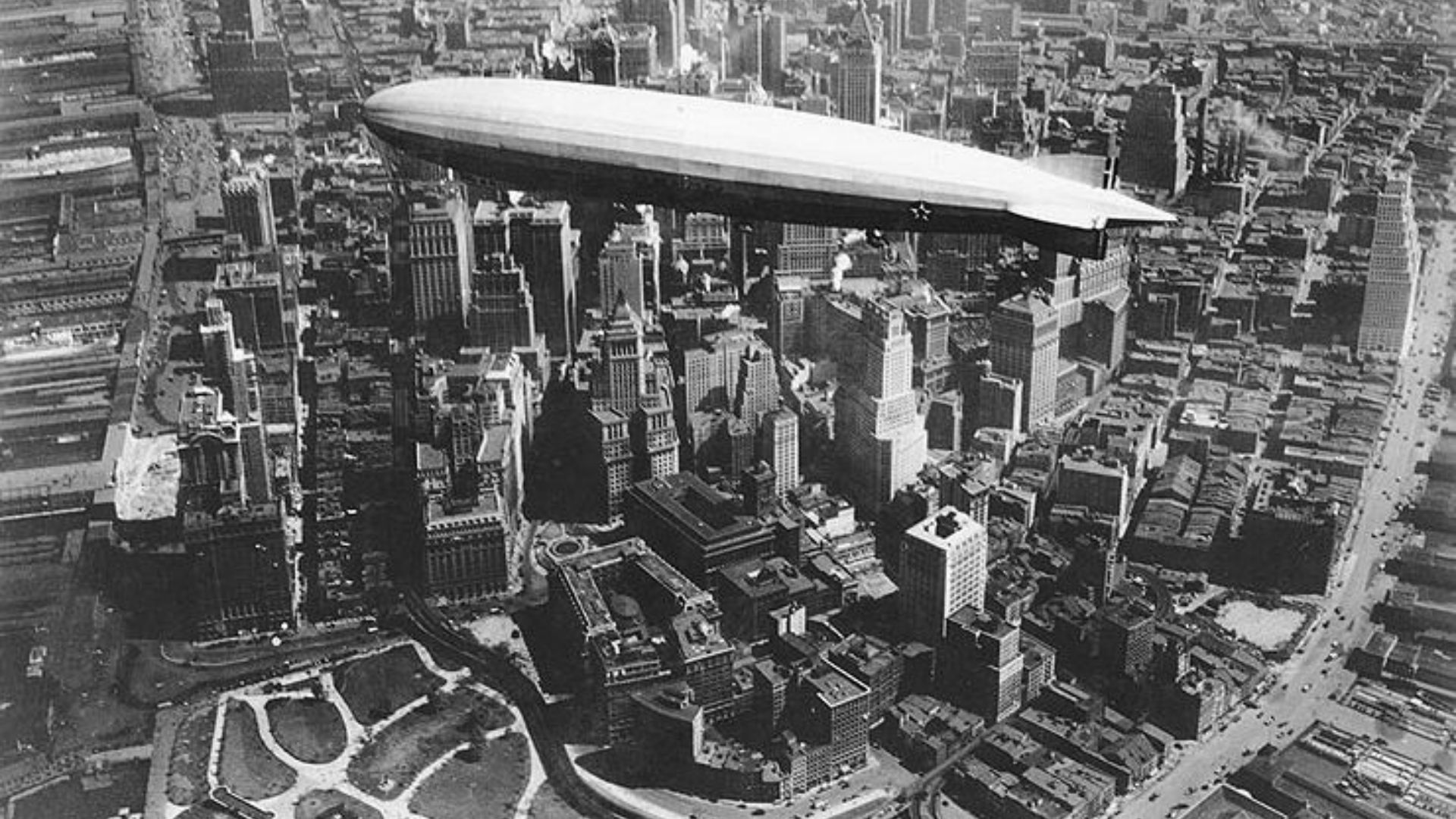
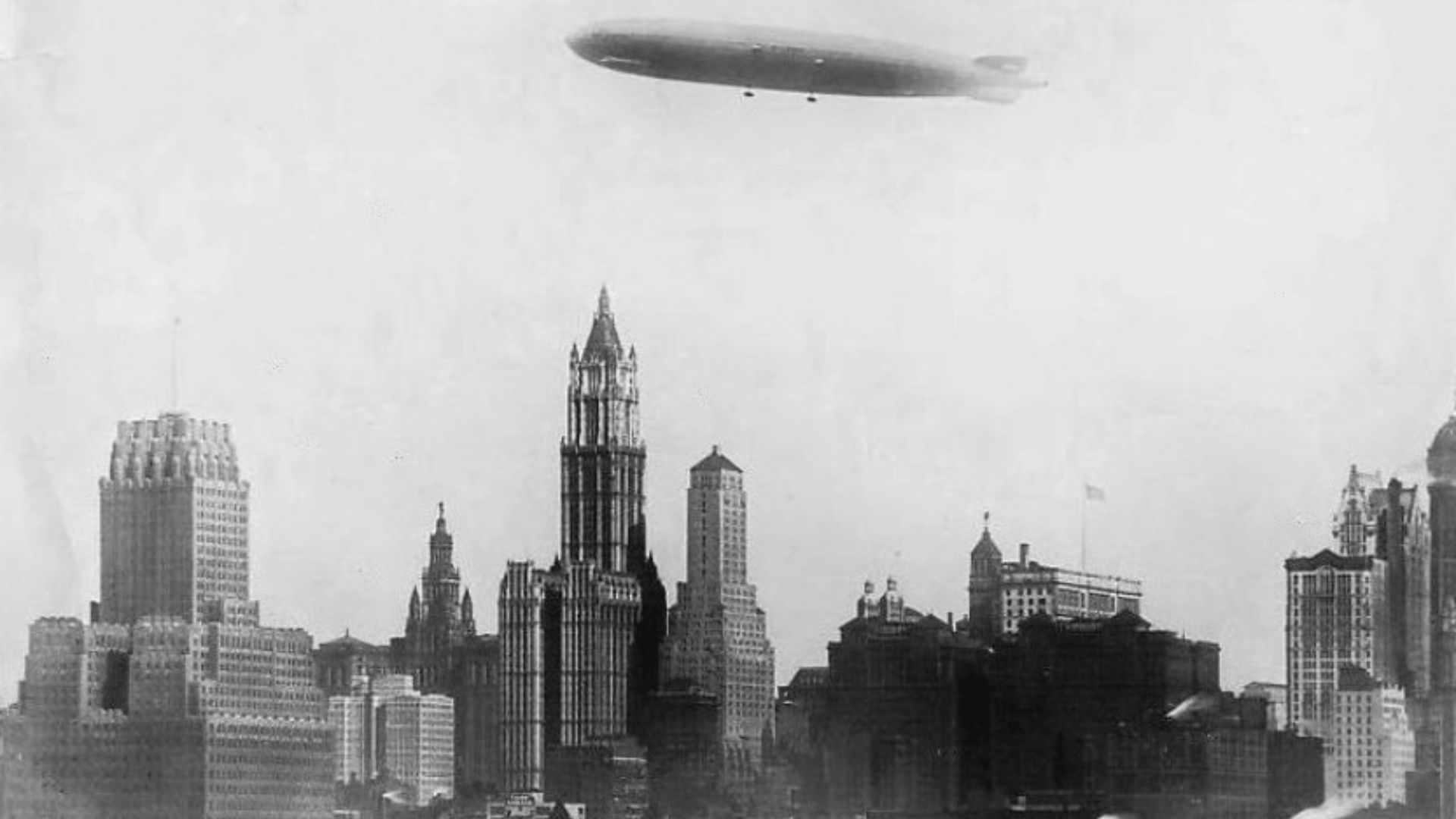
During the 1920s, giant dirigibles seemed to represent the future of international travel. Germany's Graf Zeppelin demonstrated that enormous lighter-than-air craft could carry passengers across oceans in relative comfort. These flying giants offered spacious cabins and spectacular views, although tickets were extraordinarily expensive. To wealthy travelers, airships promised an exciting alternative to ocean liners. And New York's developers saw an opportunity to bring that glamorous future directly into Manhattan.
 Bettmann, Getty Images; Factinate Ltd
A Race To The Top
Construction of the Empire State Building began during an extraordinary competition to erect the world's tallest skyscraper. The Chrysler Building, completed in 1930, was a formidable rival. Former New York governor Alfred E. Smith, who headed the Empire State Building's development company, wanted his project to claim the height record decisively. In late 1929, the developers announced an additional 200-foot tower. Officially, it would serve as a docking mast for transatlantic airships. Conveniently, it also made the skyscraper considerably taller than its competition.
An Airport Above Manhattan
The proposed arrangement sounded wonderfully futuristic. A dirigible would approach the building's summit and secure its nose to a mooring apparatus. Passengers would then cross a gangplank into a small reception area high above the city. From there, they could descend through the building, clear customs, collect their luggage, and reach street level. Smith even suggested that passengers could complete the journey from airship to sidewalk in approximately seven minutes. It was an irresistible vision of modern transportation.
The Tower Was Actually Built
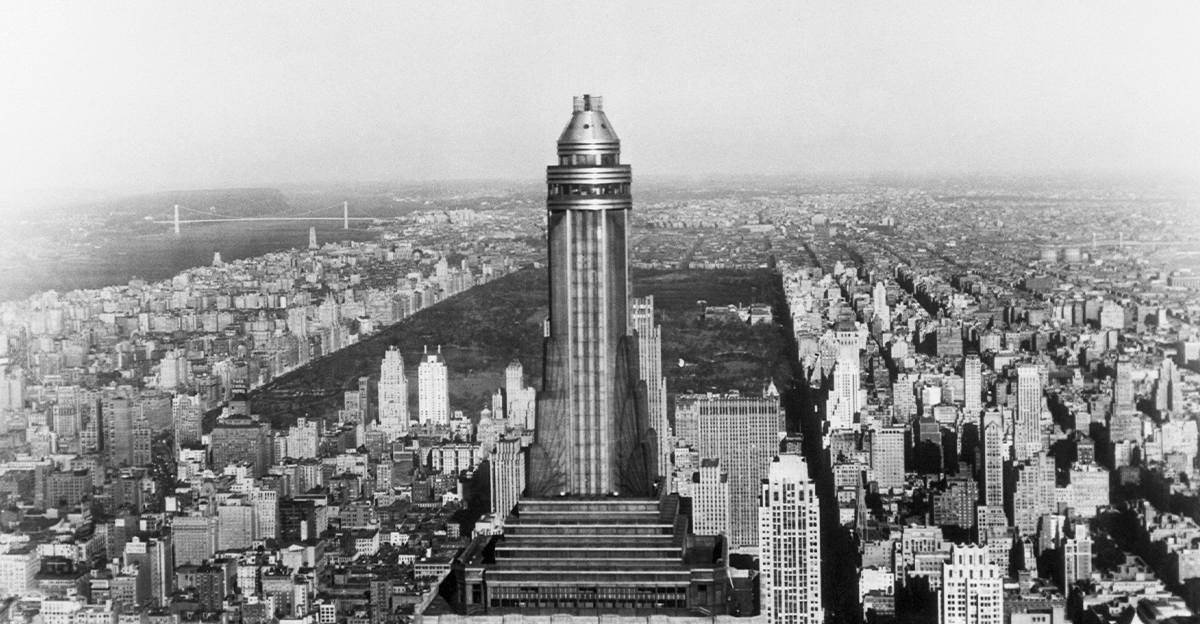
This wasn't merely an architect's fantasy. The Empire State Building's designers, Shreve, Lamb & Harmon, incorporated the mooring mast into the completed structure. Its elaborate Art Deco design featured gleaming metalwork and a small upper room intended for embarking passengers. The tower required structural considerations because an enormous airship tethered to the building could exert considerable force. When the skyscraper officially opened on May 1, 1931, the mast was there, waiting for its first international arrivals.
Nobody Had Solved The Wind
Unfortunately, docking an airship atop a skyscraper was considerably more difficult than docking one in an open field. Powerful, unpredictable winds swirled around the building's summit, making precise maneuvers hazardous. Large dirigibles ordinarily required substantial ground crews and considerable room to maneuver. Even if a pilot successfully secured the airship's nose, its enormous body could swing dangerously in the wind. Getting passengers safely across an exposed gangplank hundreds of feet above Manhattan presented another frightening challenge.
A Three-Minute Triumph
In September 1931, a privately owned dirigible managed to attach itself briefly to the Empire State Building's mast. The achievement lasted approximately three minutes. According to contemporary reporting, pilot William McCraken spent more than half an hour maneuvering in winds approaching 40 miles per hour. Traffic stopped below as New Yorkers watched the extraordinary spectacle. The brief attachment proved that an airship could make contact with the tower, but it was hardly evidence that passengers could safely disembark there.
The Great Newspaper Stunt
Another attempt later that September involved a Goodyear blimp and a bundle of newspapers. The idea was to transfer the papers to someone waiting atop the skyscraper, demonstrating a possible use for the mast. A surviving photograph shows the airship hovering near the building while a man attempted the exchange. It made for dramatic publicity, but it did little to resolve the fundamental problems of operating a commercial airship terminal. The dream was already looking increasingly unrealistic.
 Underwood & Underwood, Wikimedia Commons
The Photograph That Fooled Everyone
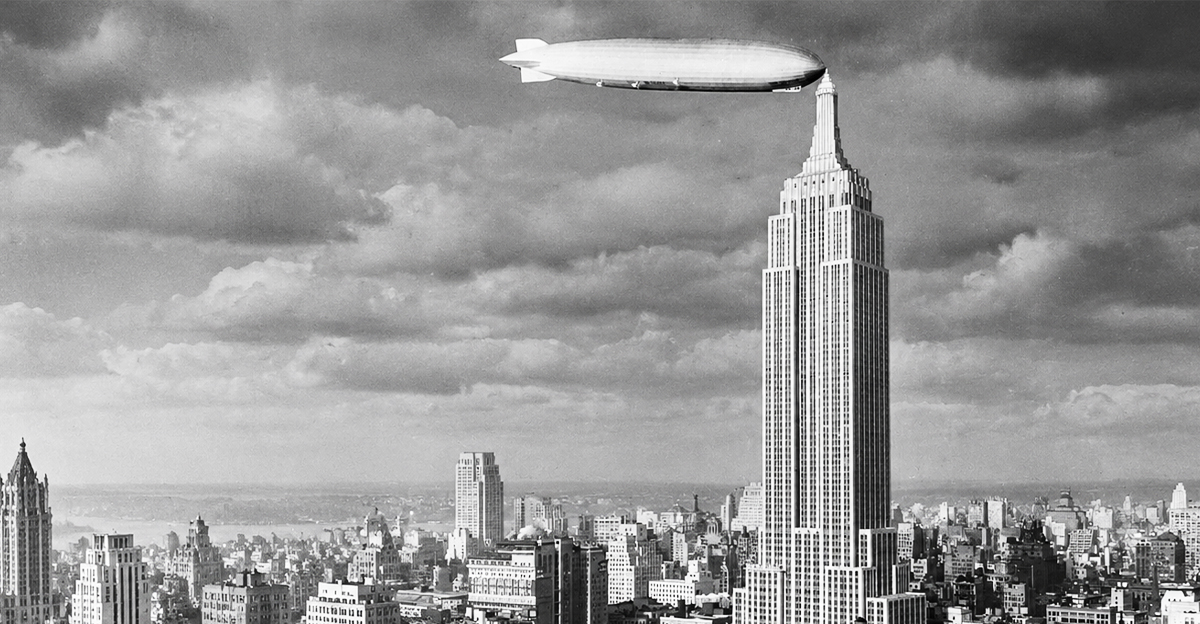
One particularly striking image appeared to show the U.S. Navy dirigible Los Angeles docked triumphantly atop the Empire State Building (at top). The photograph circulated in 1930, before the skyscraper was even completed. There was a simple explanation: it had been manipulated. The supposed docking scene was an early example of photographic fakery, illustrating the future that promoters wanted the public to imagine. The Metropolitan Museum of Art later included the picture in an exhibition about manipulated photography.
A Failed Dream Becomes An Icon
Regular passenger airship service never materialized, and the building's mast found a more practical purpose as a site for broadcasting equipment. The age of giant passenger dirigibles faded, particularly after the Hindenburg disaster in 1937. Yet the abandoned terminal left an extraordinary legacy. The Empire State Building's distinctive upper tower remains one of the most recognizable features of the Manhattan skyline. What began as an ambitious, arguably promotional transportation scheme became an enduring architectural landmark.
You May Also Like:
Ingenious Facts About Architectural Marvels
Hard-Working Facts About The Great Depression
Hectic Facts About New York City, The City That Never Sleeps