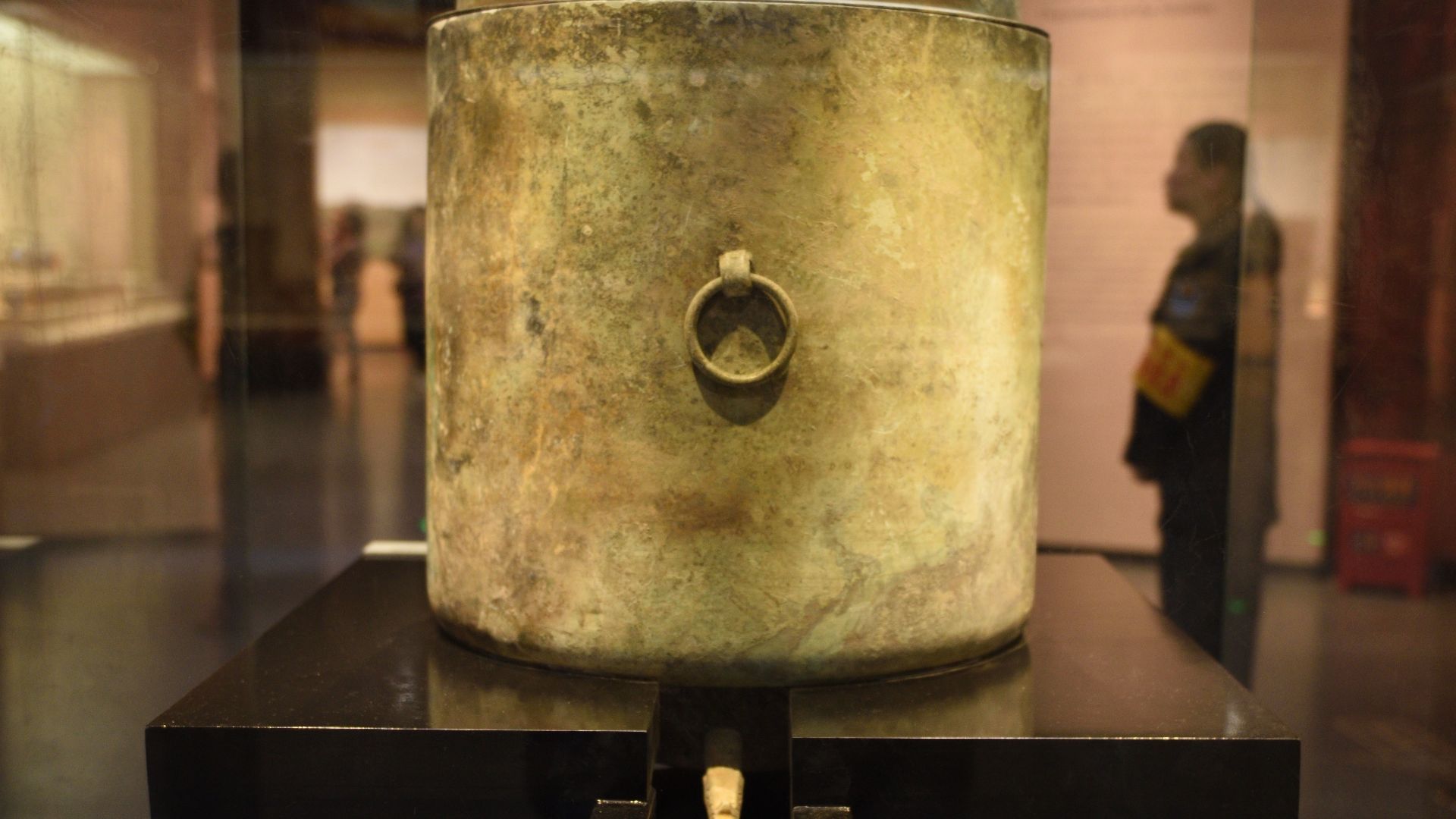

Every tomb has a moment when the earth stops hiding what it guarded. At Jiangxi’s Haihunhou site, that moment arrived when conservators brushed aside the last packed layers of soil, and metal began to glint like a buried school of fish. More than 6,000 armor plates appeared exactly where a Western Han noble once stored his armory. The sight was, of course, first archaeological, but then it also felt like a frozen echo of movement, a military presence waiting to be read. Understanding how these plates were crafted makes their reappearance after two thousand years all the more historically potent.
Armor Built For Movement, Burial, And A Story That Outlived Its Owner
These plates appeared in curved clusters; more than 6,000, each shaped so it could overlap the next. Western Han armorers cut and drilled them so the suit flexed with a soldier instead of fighting against his stride. That design made scale armor feel almost alive, shifting as its wearer turned sides. Seeing them arranged this way gives you a sense of discipline inside the workshops that produced them. Sizes match. Drill holes match. This was standardized equipment shaped by skilled craftspeople. The armor buried with the Marquis mirrored the gear of elite troops who trained under the dynasty.
In the armory, conservators found sword parts, dagger-axes, crossbow mechanisms, and fittings from lacquered scabbards. Even separated from their wooden handles, the metal pieces tell you how the weapons once moved. The three-part bronze crossbow trigger, for instance, still fits together neatly, built for a release crisp enough to matter in battle. Blades preserved in lacquer show how the Western Han balanced elegance with practicality. The coating protected the metal from moisture, leaving enough detail for researchers to study the shaping techniques. Some dagger-axes had grooves where long shafts attached.
These weren’t ceremonial poles meant to sit on stands—they were tools built for reach, leverage, and sharp, fast strikes. How did they narrow this down? Well, the wear marks appear along some edges, and this tells a lot. From these analyses, the grip fittings show signs of polishing from regular use. Those details place you in a real world of drills and patrols, not a curated display like a museum sometimes stages. The weapons meant something to the people who handled them, and the tomb captured (and stored) the evidence before time collapsed the wood around them. Thankfully, we now know about them.
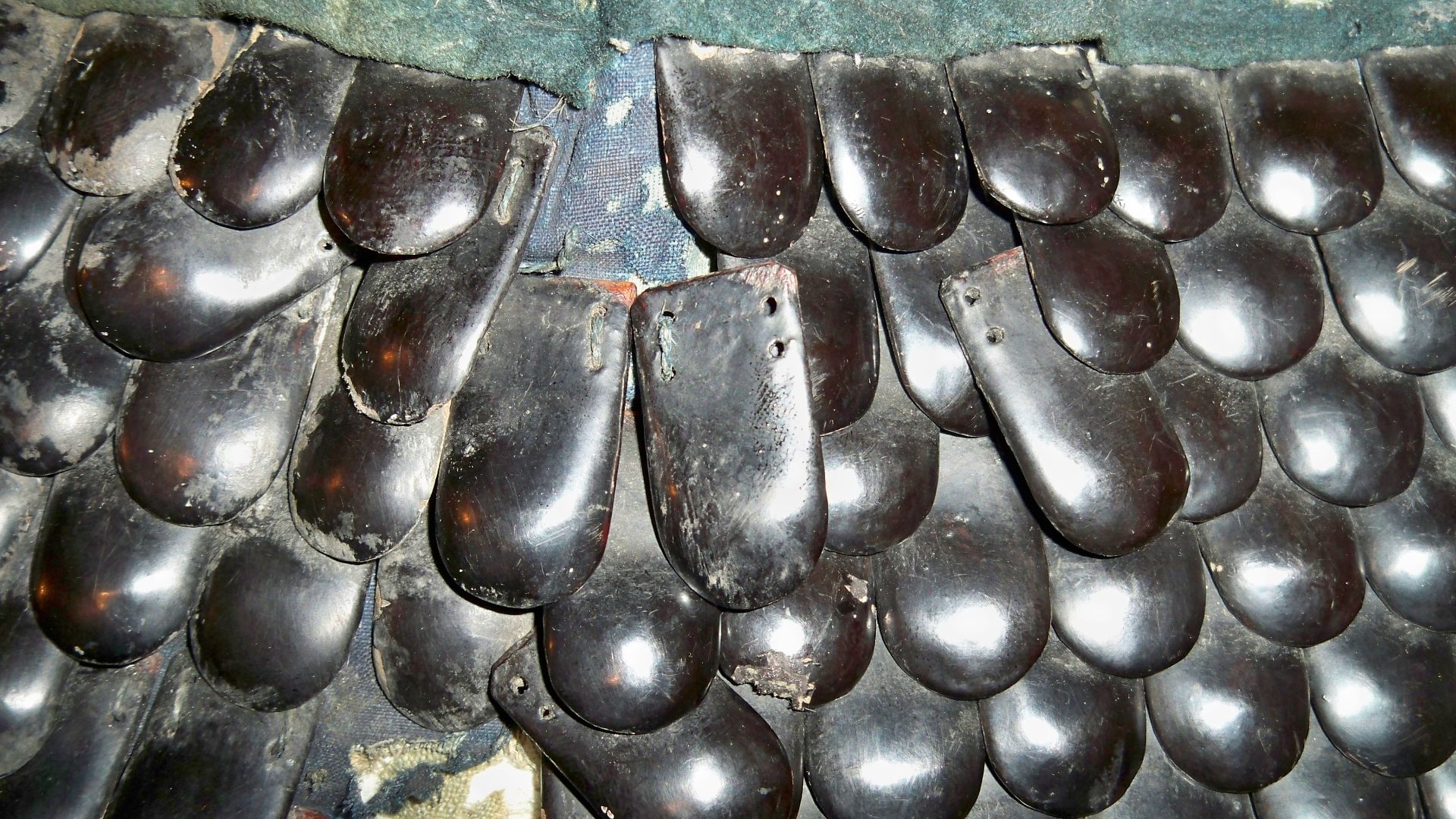 Samuraiantiqueworld, Wikimedia Commons
How One Tomb Shifted The Way Researchers Read The Western Han
The Haihun discovery shifts understanding of Western Han military life by offering physical proof. Thousands of intact plates let researchers reconstruct how scale armor actually worked. Matching dimensions across plates and weapons point to organized imperial workshops rather than scattered local production. The armory also challenges the idea that burial goods were symbolic; these were functional tools reflecting real service. Together, the armor and weapons reveal a military culture tied to order, hierarchy, and motion, offering a rare look into equipment someone genuinely relied on in life.
A Glimpse Into A Soldier’s Kit, Preserved Far From Any Battlefield
What lingers about the armory is the sheer concentration of detail. Plates cleaned one by one look almost fragile, yet together they speak of durability. When conservators placed them into trays, you could trace the curve of a torso or the slope of a shoulder. The armor carries the memory of motion even though nobody remains inside it. The weapons add another layer. They hint at training sessions and the kind of military culture that surrounded court politics. Liu He’s brief rise and fall as emperor gives the tomb additional weight—the armory reflects a life lived under both privilege and pressure.
If you zoom out for a moment, the discovery reminds you how much of history survives in pieces that don’t look dramatic at first glance. A plate the size of your palm, a thread hole, a trigger component—each one tells you what mattered to the people who shaped them. They wanted gear that moved with a soldier, protected him, and represented his place in the social order. Here, soil and craftsmanship worked together. And now that they’ve resurfaced, the plates, armor, and weapons offer a rare chance to see the Western Han through the equipment someone once trusted with his life.