

Many individuals with a faint indentation or tiny hole just in front of their ear go through life barely aware of it. It’s subtle, about the size of a freckle or the head of a pin, and usually doesn’t hurt or attract attention. Yet beneath that quiet surface lies a real anatomical feature with a name, a developmental origin, and a few surprising ties to our evolutionary past. This tiny opening, called a preauricular pit, isn’t the result of a piercing mishap or random blemish. In fact, doctors spot these holes during newborn exams, and researchers think they’re a congenital remnant of how the ear forms before birth—and possibly even a whisper of an ancient blueprint shared with fish thousands of generations ago.
A Congenital Quirk With A Path Under The Skin
A preauricular pit is a small, congenital opening located just in front of the outer ear, usually at the junction where the ear’s cartilage meets the side of the face. These pits don’t appear by accident; they occur while a fetus is developing in the womb. During the 6th week of gestation, the external ear (called the auricle) forms from a collection of small tissue bumps. If these bumps don’t fuse perfectly, a sinus tract or a narrow channel under the skin can remain, beginning at that tiny visible hole. That sinus tract is what makes this more than just a cosmetic indentation: it’s an actual anatomical channel that extends into deeper tissues.
Most of the time, this tiny tract is short and uncomplicated, so it doesn’t cause any trouble. But in some people, it can branch or extend further under the skin. As a result, it can set the stage for occasional issues such as infections or cyst formation later in life if germs enter the tract. Though rare, these pits may be part of broader congenital syndromes involving other organs or structures, so doctors sometimes screen for them in newborns. Despite sounding serious, most people with preauricular pits live perfectly healthy lives without symptoms. Often, simple monitoring and basic hygiene are all that’s needed, with treatment only considered if recurrent infections or discomfort develop.
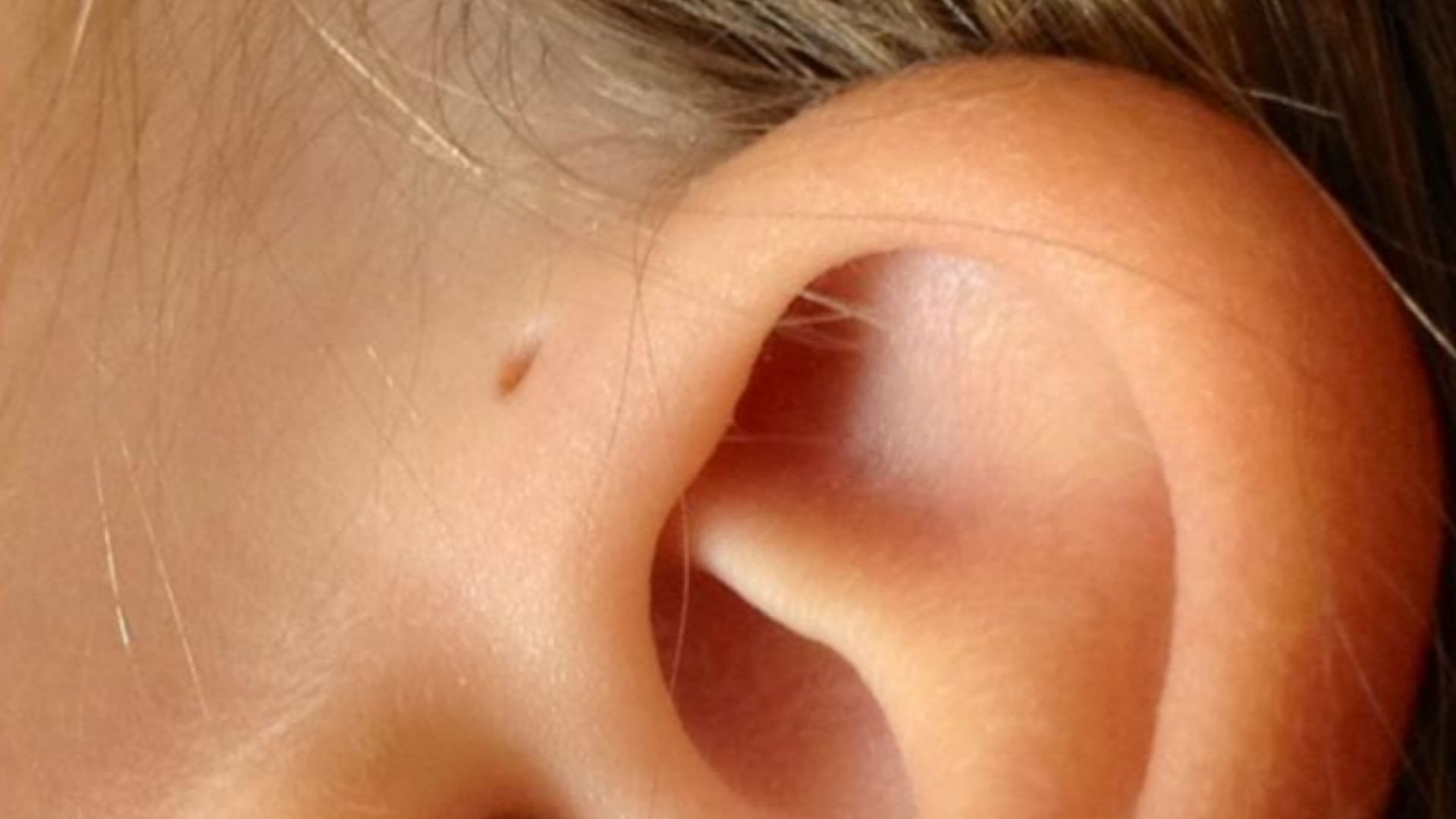 AdamMichaels784, Wikimedia Commons
A Theory That Connects Ears And Ancient Lineages
Some scientists think that tiny ear pits might reflect a faint trace of deep biological history, one that stretches back to our earliest vertebrate ancestors. While this idea isn’t proven, evolutionary biologists have speculated that structures like preauricular sinuses may originate from the same developmental processes that once formed gill structures in fish. Gills form from early embryonic tissues called pharyngeal arches, which also give rise to parts of the head and neck in humans. In our distant past, these pharyngeal arches developed gill slits that let aquatic ancestors extract oxygen from water.
As evolution progressed and vertebrates moved to land, the gill structures faded away, repurposed over millions of years for other functions. Today, those same pharyngeal arches help shape bones and cartilage in the face and ear. Even though the tiny ear hole itself isn’t a direct gill remnant, its connection to these developmental tissues fuels the theory. That developmental overlap is why some experts see a tenuous but fascinating link to fish anatomy. More recent scientific research has also traced how the outer ear’s cartilage shares gene activity elements with gill structures in early vertebrates. It’s important, however, to understand that this “fish gill” theory remains a scientific hypothesis. No direct evidence proves that the hole itself is a leftover fish trait. Instead, the idea emerges from broader similarities in developmental biology and common ancestry.
When To Watch And What You Should Know About Ear Pits
Most people with a preauricular pit never notice it until someone points it out. These small indentations are often harmless and don’t affect hearing or daily function. Still, that delicate sinus tract leading beneath the skin can occasionally be a pathway for bacteria. When germs enter the pit, it may become red or produce pus and signs of an infection. Most infections respond well to antibiotics, but repeated problems may require surgical removal of the entire tract to prevent recurrence. If you ever notice discomfort, drainage, or persistent irritation around that tiny opening, seeing a doctor is wise. They can determine whether the pit is at risk of forming a cyst or deeper infection and recommend treatment when needed. And if the pit never bothers you? Many adults go their entire lives without a single symptom.