
 Lubo Ivanko, Shutterstock, Modified
We’ve always been told that if you watch a chameleon closely behind any background, it flickers its colors and slips into invisibility mode. But boy, have we been wrong all along!
Those mesmerizing shifts are messages. Each color tells a different story you’re about to uncover, and the hint is that this is nature’s most vivid mood ring—alive and full of secrets waiting to be read.
Color Changes In Chameleons Convey Emotional States And Social Signals
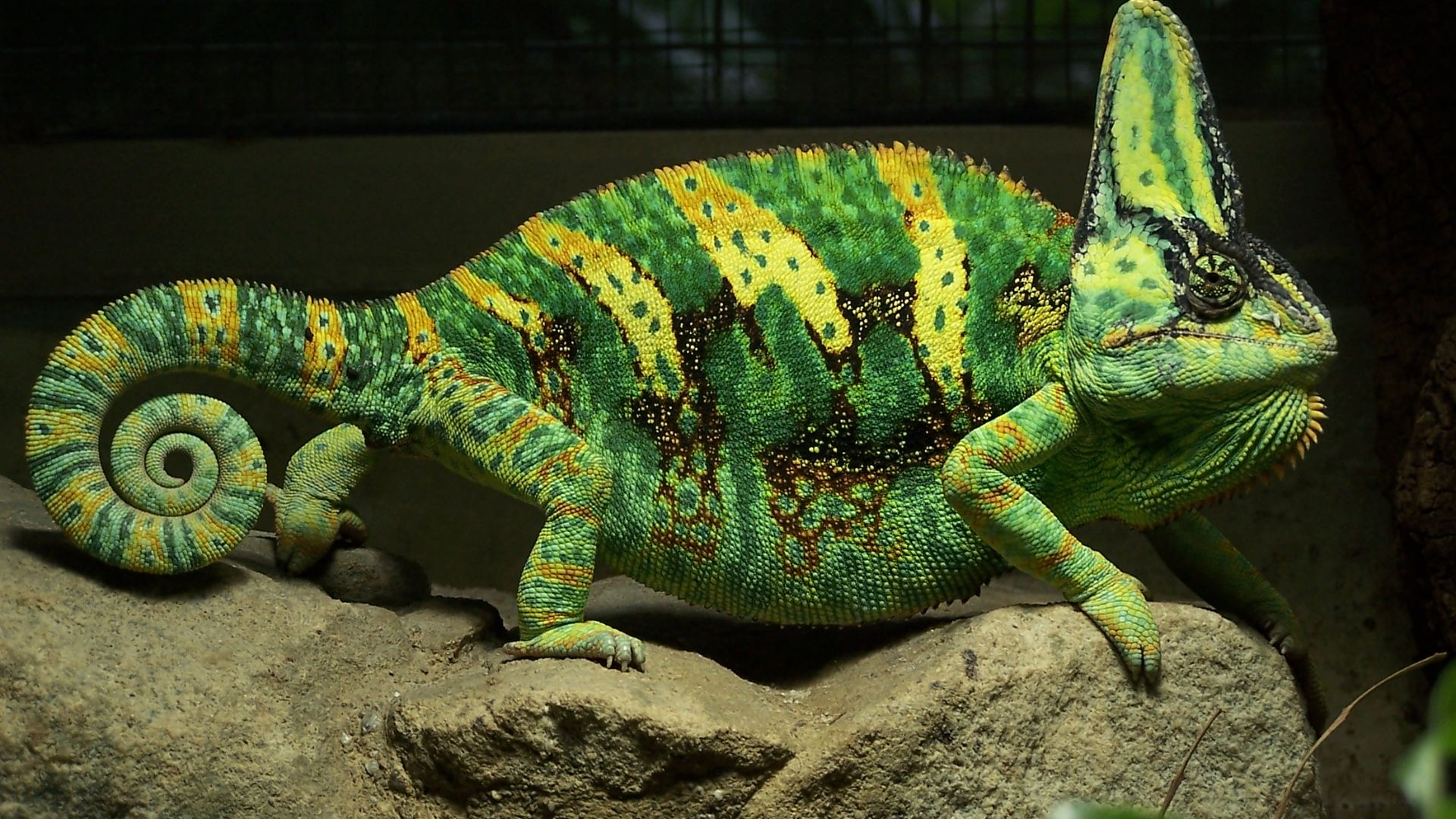
A 2013 study on veiled chameleons (Chamaeleo calyptratus) revealed that their striking color changes communicate emotion and social status more than camouflage.
Turns out, those color shifts are a whole conversation in motion. When a chameleon flashes bright stripes, it’s basically saying, “I’m coming for you”. A more vibrant head color is a flex of dominance. The quicker the color change, the bolder the mood.
Additionally, each body part sends its own message. For instance, side stripes show intent, head tones for power.
Chameleons Also Change Color To Regulate Body Temperature
Chameleons also change color to regulate body temperature, much like living thermostats. When they’re cold, they turn darker to absorb more heat. Once warmed, they shift to lighter shades to reflect sunlight.
As the day grows hotter, that darker coat fades to a lighter tone, shedding heat and staying cool. Beyond communication, those shifting shades double as a finely tuned survival mechanism, and they let chameleons thrive under the sun’s changing intensity.
Color Shifts Also Reveal Habitat Adaptation
Another layer to the story lies in where each species lives. Forest dwellers, who spend their lives weaving through branches and pockets of filtered light, tend to display subtler transitions and softer greens. These muted tones echo the dense canopy overhead.
In contrast, species from open scrublands or rocky terrain frequently show sharper transitions and bolder flashes. Their environment demands quicker signaling, whether it’s spotting a rival across sunlit ground or responding to predators in wide, exposed spaces.
Researchers have also noticed that populations living at higher elevations shift into darker palettes more readily, likely an evolutionary nudge to help them pull in warmth during cooler mountain mornings. So while mood and social cues play starring roles, the backdrop of each species’s home landscape influences how dramatically and how quickly those colors appear. In that sense, chameleons are responding to the places that shaped them.
Skin Science Behind The Show
Scientists discovered that under a chameleon’s transparent outer skin layer lie crystals in a lattice structure. When the creature’s mood shifts or body temperature changes, the spacing between those crystals alters, which wavelengths of light are reflected—hence the dramatic color changes.
These microscopic crystals act almost like adjustable mirrors, allowing the reptile to fine-tune how much light it bounces back. The system is so precise that small shifts in crystal distance can create entirely new shades you bear witness to. It’s a biological display panel powered not by pigment alone but by physics working in real time.
Communication Via Colors
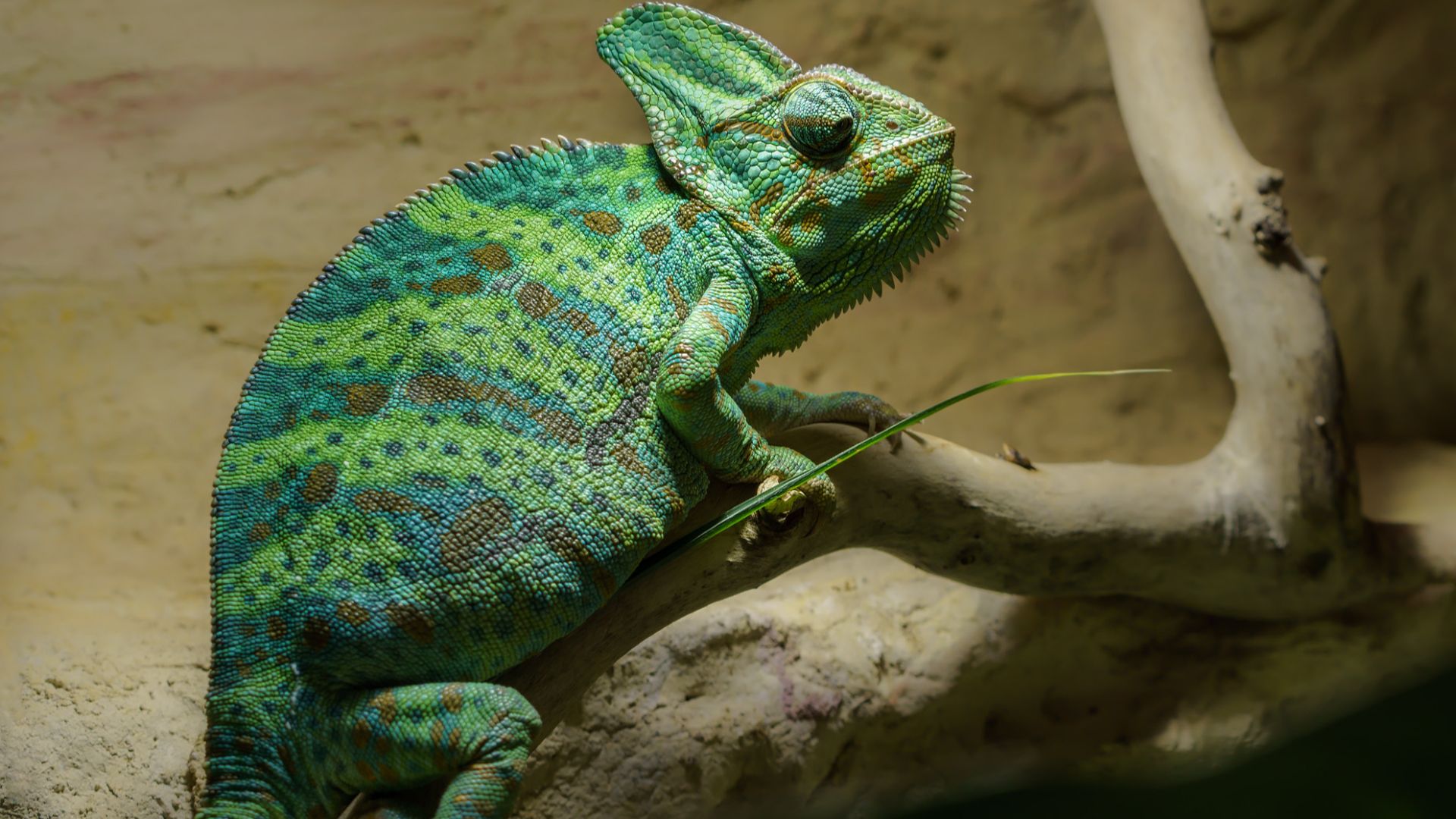
We all know that animals have specific behavior during mating season. Chameleons have their own version: during mating season or territorial stand-offs. In these scenarios, male chameleons often burst into vivid blues, reds, and oranges, while females may darken to indicate rejection or stress.
In other words, those vibrant flashes are megaphones. A male showing off in flamboyant patterns is trying to win a mate or intimidate a rival; a female going dark is sending a polite but firm “not interested” message, a visual boundary that prevents unnecessary conflict and keeps everyone at a safe distance.
If you’re wondering how they react when they say yes, that depends on the species. But generally, they’ll turn lighter or remain the same, a soft shift that signals comfort rather than confrontation, showing the other chameleon that the approach is welcome and the tension has eased.
These color signals help chameleons avoid physical fights—and they’re about much more than hiding. A change in hue can mean “I’m too hot,” “You’re in my territory,” or “I’m ready to mate”. In a way, it's a “colorful” conversation!
 Charles J. Sharp, Wikimedia Commons