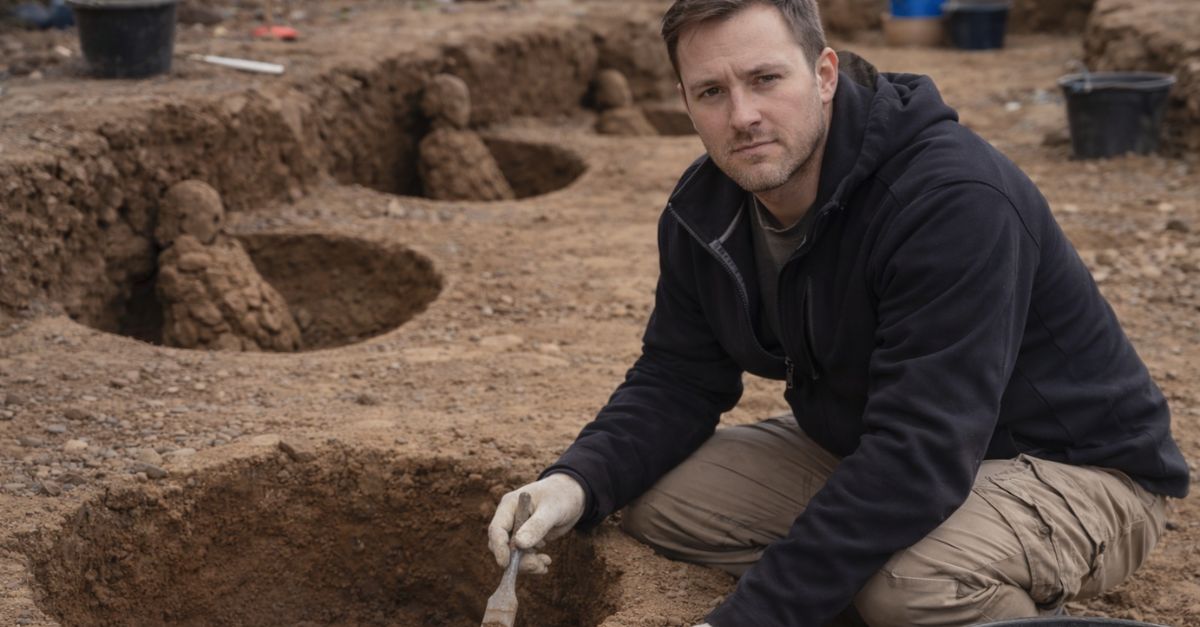
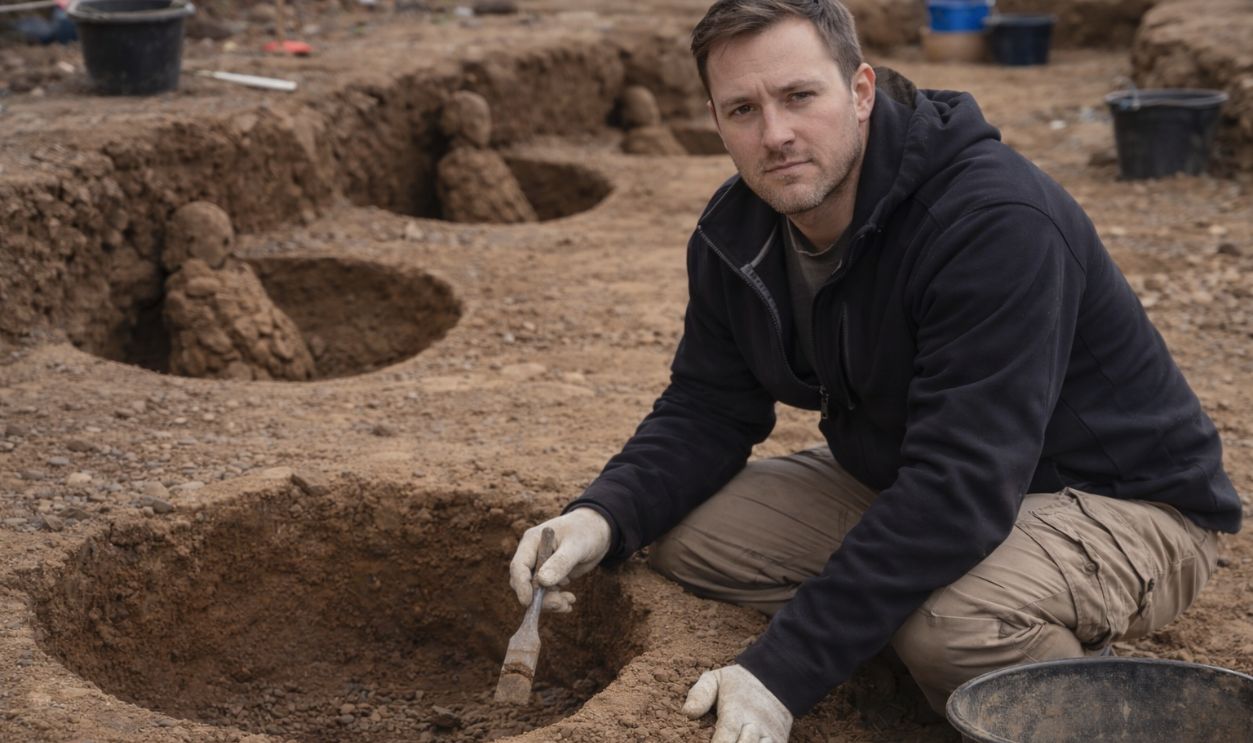
During preventive excavations at the Josephine Baker school in Dijon, on the site of the former Cordeliers convent garden, archaeologists uncovered Iron Age graves dating to the La Tene period (450–25 BCE) of Celtic Gaul. The space also had one artifact indicating 300–200 BCE. 13 individuals had been buried in a seated upright position at the base of circular pits. The discovery immediately set the site apart from typical late Gallic funerary practices, where cremation or horizontal burial dominated. As the soil was cleared layer by layer, the unusual posture of the dead suggested a carefully planned ritual rather than an improvised response to death. It prompted researchers to rethink how some Gallic communities expressed identity.
The excavation was followed by an initial archaeological evaluation, which began with mechanical stripping of the overlying garden and convent layers to bring out the secrets from the past. It was subsurface anomalies arranged in a straight line. Once digging started, archaeologists realized that the pits formed a north–south alignment stretching roughly 3.3 feet. Each grave measured close to one meter in diameter. Within them, the deceased leaned against the eastern wall, facing west, with bent legs and arms resting close to the torso. The repeated positioning of each burial was obvious. Rather than a random collection of graves, the site appeared organized. This means that they followed shared rules governing how the bodies were placed after their community members passed away.
A Burial Posture That Breaks Tradition
As the first skeleton emerged from the earth, its upright stance challenged expectations rooted in decades of Iron Age research. Most La Tene communities practiced cremation by scattering ashes in urns or depositing remains in flat graves. Seated burials are extremely rare, documented at only about a dozen sites. They yielded around 50 individuals, primarily in the northern half of France and in Switzerland. The Dijon discovery, therefore, added an important piece to an already limited archaeological puzzle. The pits were shaped to support the bodies, which prevented collapse during burial. This detail suggests that the living participants understood exactly how to maintain the seated position.
Aside from a single stone arm ring that helped date the site, the graves lacked weapons, jewelry, or lavish offerings often associated with elite Celtic burials. Instead, meaning seemed embedded in posture and placement. The living members had probably done this many times before, as it showed precision in terms of placement for all bodies in the cave. Documentation unfolded slowly to avoid damaging fragile bones that had been in the space for centuries. Soil conditions can compress skeletons over time, so archaeologists relied on detailed mapping and photography to preserve the original context that would help them decipher the area further.
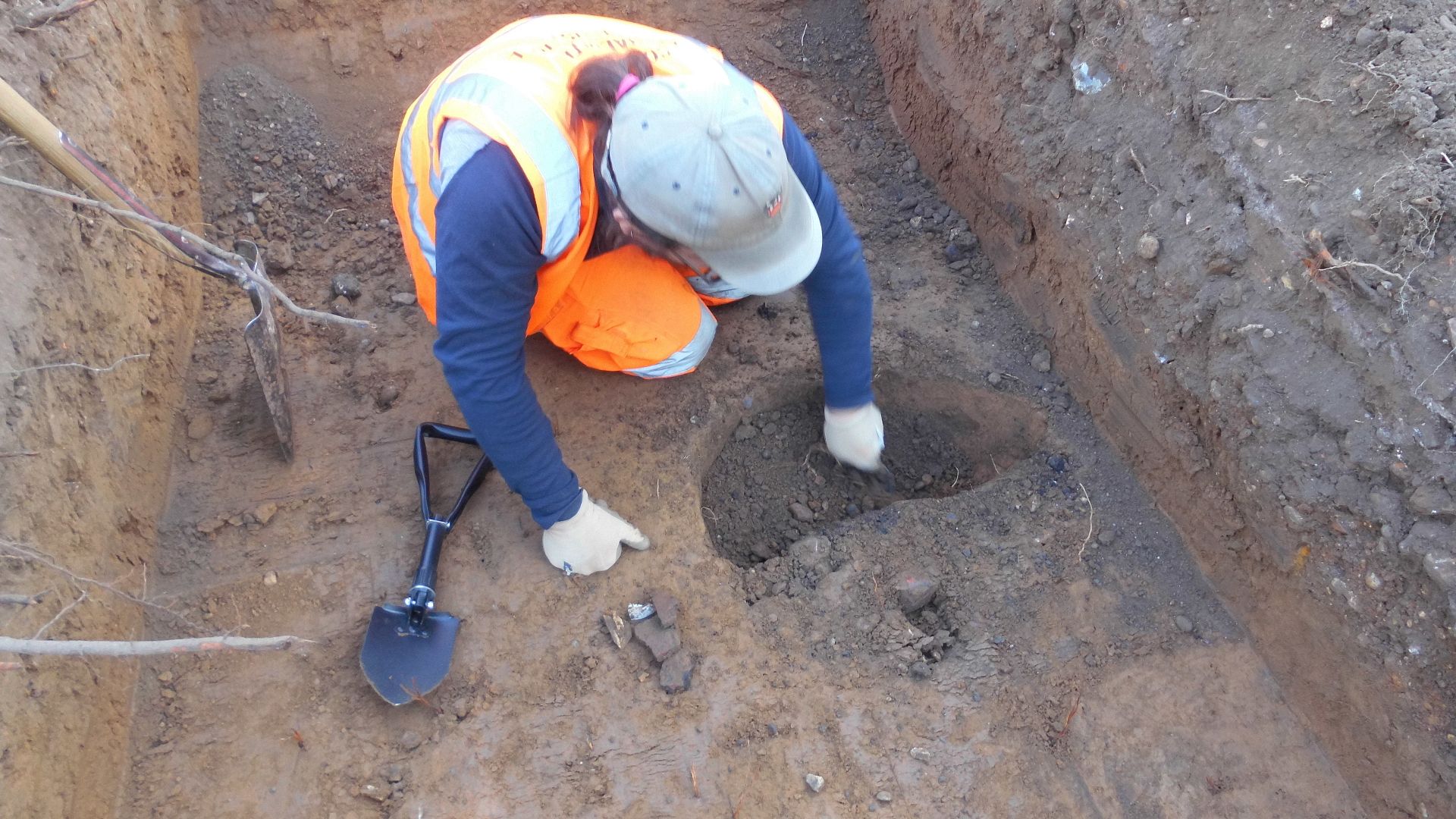 Dr Elliott Hicks, Colchester Archaeological Trust, Wikimedia Commons
Reading Ritual In The Area
As more graves were uncovered, attention shifted to the surrounding environment. The burial line appeared close to what may have been a boundary or transitional space. In late Gallic landscapes, such liminal zones often marked areas of ceremony or social distinction. Researchers compared the Dijon site with other seated burials discovered across the region. Although similarities exist, each location presents subtle differences in layout and context. This variation suggests that the practice was not widespread across all Celtic societies. Some archaeologists have proposed that the seated figures echoed imagery seen in Celtic art, where cross-legged or upright individuals appear in sculptural motifs linked to authority or contemplation. But these inferences are purely speculative.
When The Earth Holds Its Breath
Scientific analysis added further depth to the investigation. Osteological studies examined age, health, and potential signs of trauma, while spatial mapping allowed researchers to visualize how the graves related to one another. By combining biological data with archaeological context, experts sought to understand not only who these individuals were but how they fit into the social structure of late Gallic society. Digital recording techniques now allow the graves to be reconstructed virtually, preserving the original arrangement even after the remains have been lifted for study and conservation. This approach ensures that future scholars can revisit the site’s spatial relationships long after excavation ends.