
 Julia M Cameron, Pexels, Modified
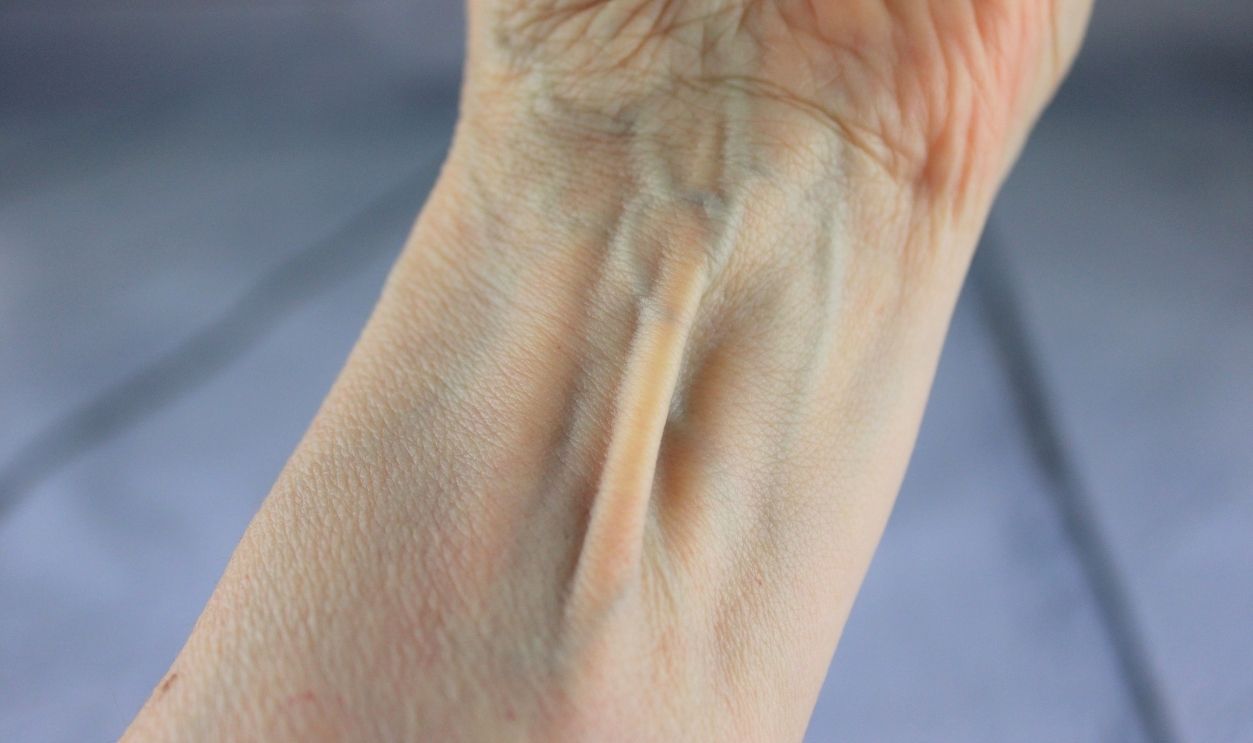
Run a finger down the center of the forearm, curl the fingers, and flex the wrist. For many people, a thin cord jumps into view, tight as a guitar string under the skin. It feels deliberate, almost important. Yet anatomy textbooks quietly point out something strange. That muscle can disappear entirely, and daily life carries on without a hitch. No lost strength. No missed motion. Still, it shows up in most arms, generation after generation. Why does the body keep something it can easily live without? The answer sits at the crossroads of anatomy, surgery, and human history, revealing how evolution sometimes keeps what it never truly needed.
The Muscle You Can Lose Without Noticing
Meet the palmaris longus, a slender forearm muscle that runs from the elbow area to the palm. It plays a small supporting role in wrist flexion, but its absence rarely changes how the hand works. Apparently, research estimates that 10 to 20% of people never develop it, but even so, grip strength, dexterity, and endurance remain intact. Surgeons know this muscle well for a simple reason. It can be removed for tendon grafts without causing functional problems. That fact alone reshapes how its value is viewed. A structure that can vanish or be borrowed without consequence earns a different label than muscles essential for movement or stability.
Because of that, researchers often describe the palmaris longus as nonessential rather than useless. It does something, but nothing the body cannot handle elsewhere. Other forearm muscles, the anterior and posterior compartments, pick up the slack with ease. This raises an obvious question. If it adds so little, why does it appear so reliably? Evolution tends to discard costly baggage, but for some reason, this muscle hangs on quietly, causing no trouble and asking for no attention. That quiet persistence sets the stage for a deeper look at how human anatomy carries forward traits that no longer pull much weight.
Why Surgeons Love It, And Patients Never Miss It
Medical textbooks rarely celebrate redundancy, but surgeons appreciate it. The palmaris longus has become a go-to donor for reconstructive procedures involving the hand, fingers, feet, and even the face. Its properties—length and straight course—make it ideal for repairs where strength demands stay modest. Once removed from the arm, patients do not report any noticeable changes in wrist power or in their ability to perform daily tasks. Opening jars, lifting groceries, typing, and driving all continue as usual. That practical outcome reinforces a simple point. The muscle contributes little to overall performance in modern humans.
The surgical usefulness of the palmaris longus highlights a broader principle. Human bodies contain overlapping anatomical systems built with backup plans. When one part fades in importance, others step in to cover the basics. Over time, some structures lose their starring role yet remain because they cause no harm. The palmaris longus fits that pattern well. It neither drains energy nor interferes with movement. With no downside, natural selection has little reason to erase it. As a result, it stays in circulation, passed along like an old tool tucked into a drawer, rarely used but never thrown away.
An Evolutionary Holdover With A Modern Twist
Anthropologists suggest that this muscle once mattered more to ancestors who relied heavily on climbing and gripping. Strong, repetitive grasping would have favored every extra bit of forearm tension available. Daily survival depended on holding things with endurance rather than precision. Under those conditions, even a small assist to wrist flexion carries value. Over time, tool design improved, and movement patterns shifted toward efficiency and fine control. As lifestyles changed, the palmaris longus lost relevance while neighboring muscles absorbed its workload. Nothing dramatic happened to remove it. The muscle simply stopped being essential while remaining harmless. That quiet body downgrade explains its frequent appearance today.
That persistence offers a clear lesson about how evolution operates across long spans of time. Bodies do not refresh features the way machines receive updates. Structures remain when they cause no harm and demand little energy to maintain. The palmaris longus fits that pattern neatly. It causes no pain and rarely draws attention. Because nothing pressures its removal, development continues to produce it generation after generation. And a simple wrist flex can reveal whether it formed or never appeared. The result feels trivial at first glance. Yet it reflects ancient instructions still active beneath modern skin. Quietly so.