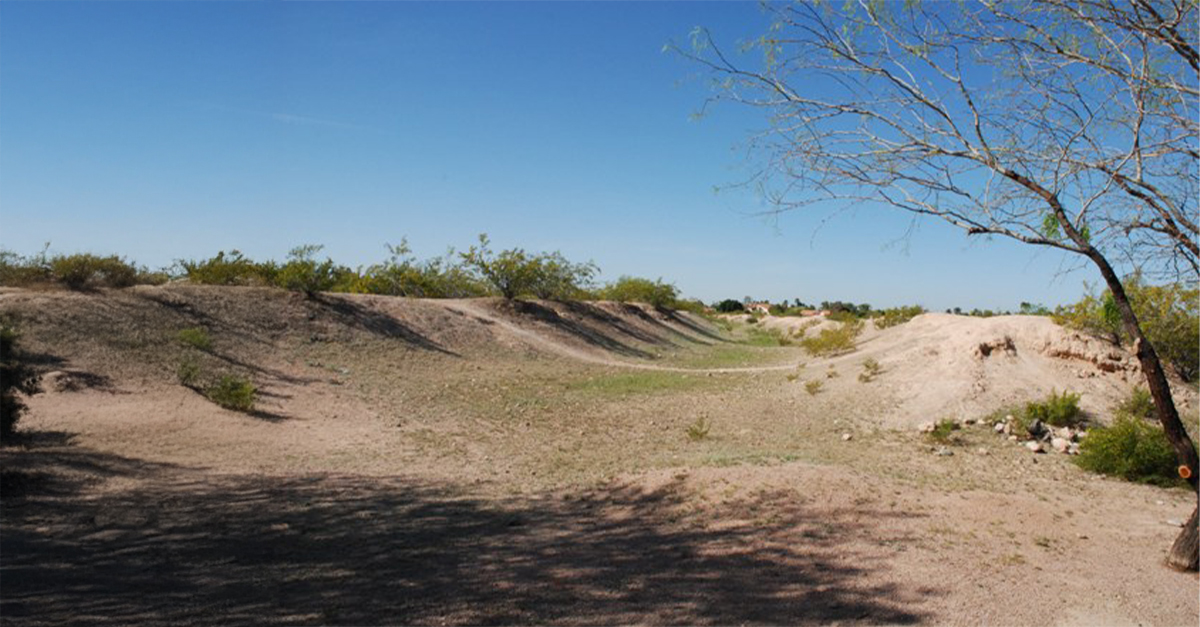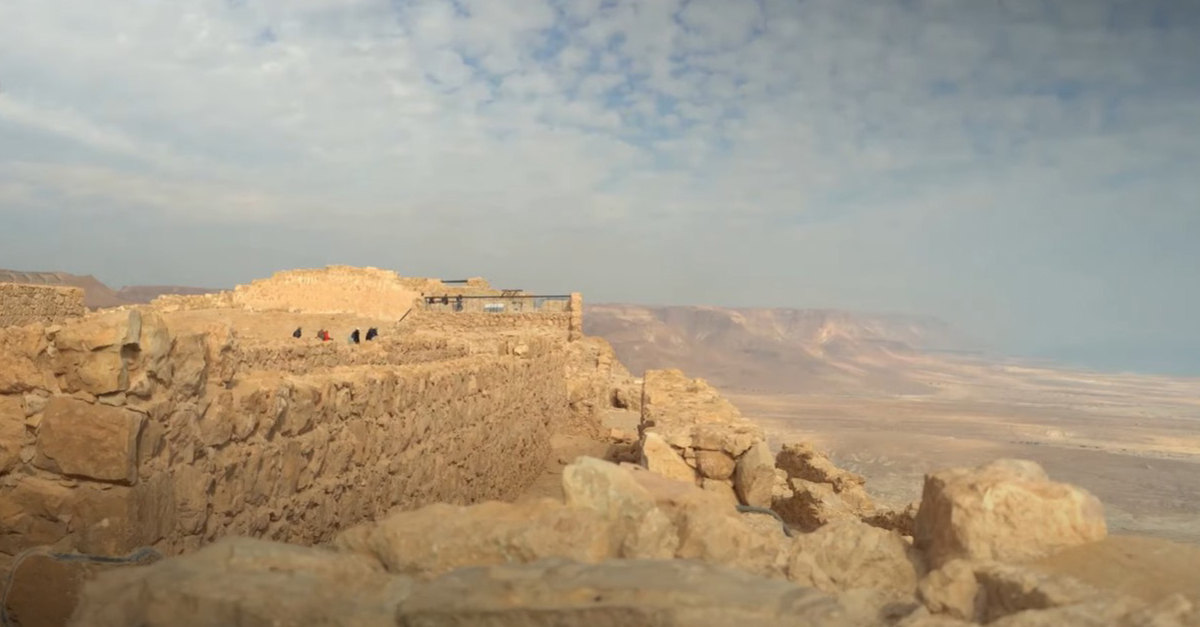
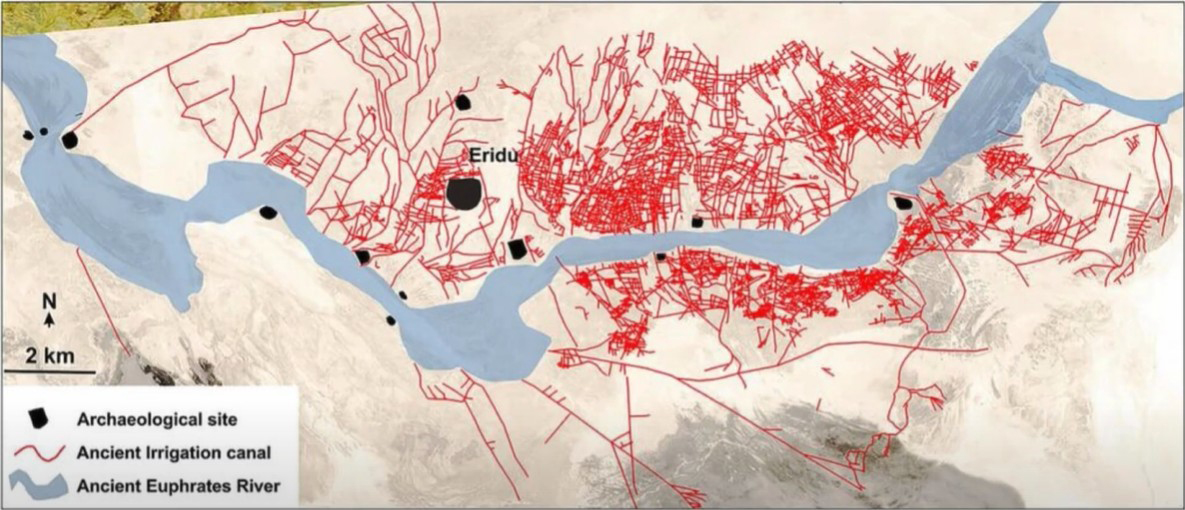
An international group of archaeologists recently discovered a vast, well-preserved network of ancient irrigation canals near Eridu in southern Iraq, regarded as the world’s first city. The discovery has outlined a versatile system of waterworks that supported early agriculture and a thriving urban population between the sixth and first millennia BCE.
Eridu: The World's First City
Nestled on the Euphrates floodplain south of Basra, Eridu was continuously inhabited from the sixth millennium BCE onward. Archaeological work shows it hosted religious centers, temples, and canals to support a bustling, and growing urban population. The recent canal findings reinforce the importance of controlled water systems for thriving Mesopotamian cities.
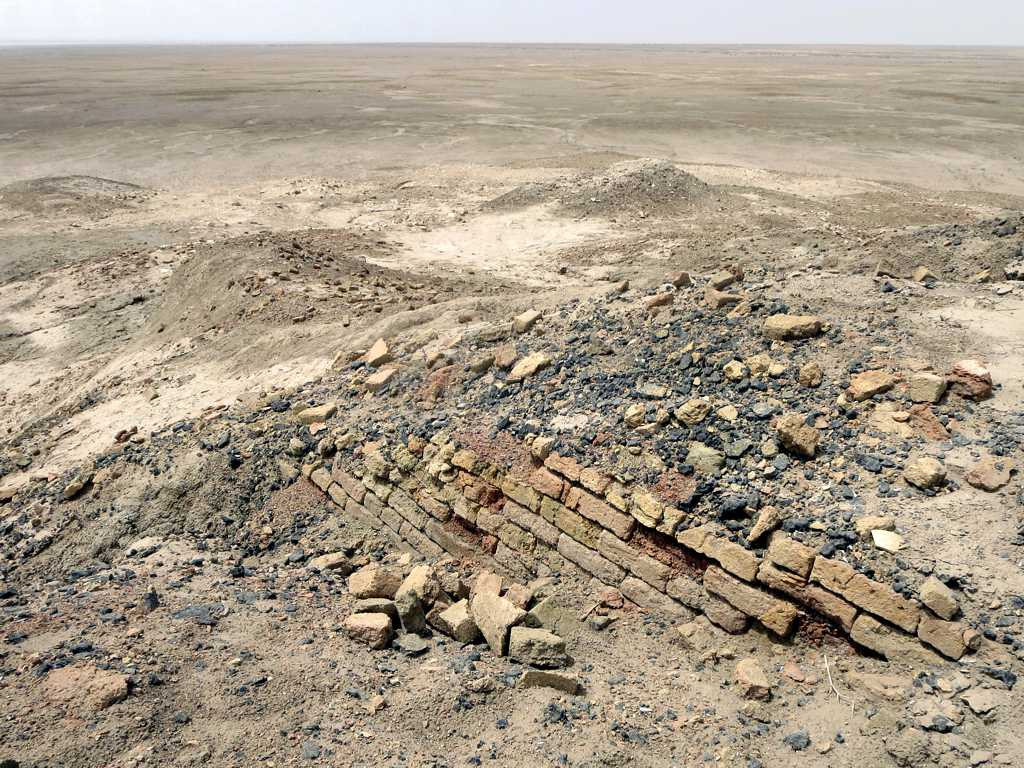 David Stanley from Nanaimo, Canada, Wikimedia Commons
Satellite Mapping An Amazing Canal System
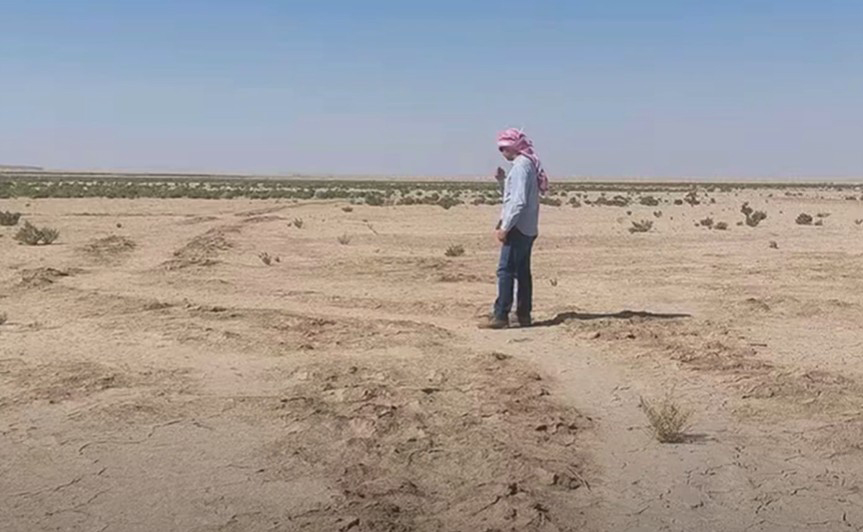
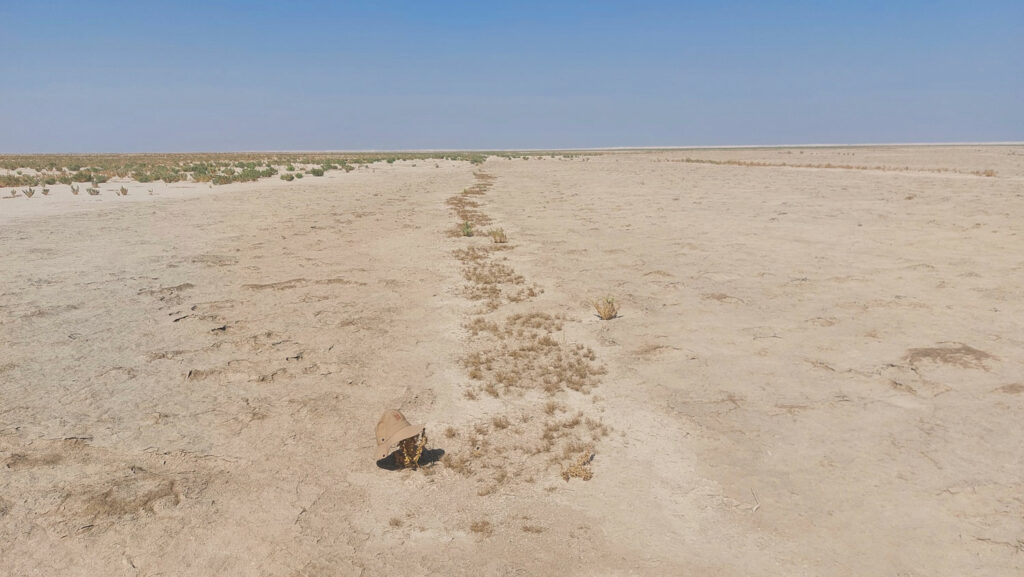
Using satellite images, geomorphology, drone surveys, and plain old-fashioned hard work, researchers mapped out more than 200 primary canals. These were commonly up to 9 km long and 2–5 m wide. Another 4,000 smaller branch canals fed around 700 ancient farms. These channels tapped the Euphrates River and irrigating a vast floodplain on an unprecedented scale.
Letting Gravity Do The Work
Engineers took advantage of the surrounding terrain and river behavior. Elevated levees controlled water flow, while canals relied on gravity. Breaks in levees, called crevasse splays, helped flood the fields when river levels rose. The system took into account the irrigation of the floodplain and crops at higher levels.
The Euphrates Changed Course
In the early first millennium BCE, the Euphrates shifted away from Eridu. This change sent the once-thriving metropolis into an irreversible decline. With the city abandoned, the canal network and landscape was left largely undisturbed. This kept the ancient waterways from being built over or silting up. The fortunate circumstance allows modern researchers to reconstruct its layout in great detail.
Incredible Window On Early Farming
These canals are a great addition to our knowledge on early agriculture. The evidence shows regular upkeep, seasonal cleaning, and structural ingenuity; this was a well-organized farming society. With irrigation, people could grow wheat, barley, legumes, and perhaps flax in amounts sufficient to feed urban populations. Alongside this activity a complex social hierarchy was developing and changing as well.
The Power Of Teamwork
The project was spearheaded by geoarchaeologist Jaafar Jotheri with the indispensable help of Durham University, University of Al-Qadisiyah (Iraq), Newcastle University, and funding from the prestigious British Institute for the Study of Iraq. It combines high-tech remote sensing with hands-on traditional excavation. It’s a great model for successful modern archaeology projects.
Context Within Mesopotamian Irrigation History
This discovery supports evidence from earlier finds, such as 6,000‑year‑old Samarran canals at Choga Mami, showing how irrigation made human settlement and development possible along with a ramping up of food production all across the Fertile Crescent. Eridu's system is a major milestone in this crucial part of Mesopotamian civilization.
What The Discovery Says About Urban Development
Smart, well-designed irrigation systems are crucial in the rise of cities. The Eridu canal network supplied water and transport, supporting the growth of centralized administration and labor coordination. These water systems likely shaped the growth of other Mesopotamian urban centers like Ur and Uruk.
The Potential For Future Discoveries
Researchers want to further examine and describe canal construction methods, maintenance routines, and environmental changes. The use of cuneiform texts, like maintenance logs from Mari could reveal insights into the fine details of irrigation labor, regulation, and economic organization of this increasingly complex civilization.
You May Also Like:
Bizarre And Disturbing Facts About The Ancient World
Amazing Facts About Historical Artifacts
Facts About Ancient Archaeological Discoveries
Sources: 1, 2, 3, 4, 5, 6, 7, 8, 9, 10, 11, 12, 13, 14, 15, 16