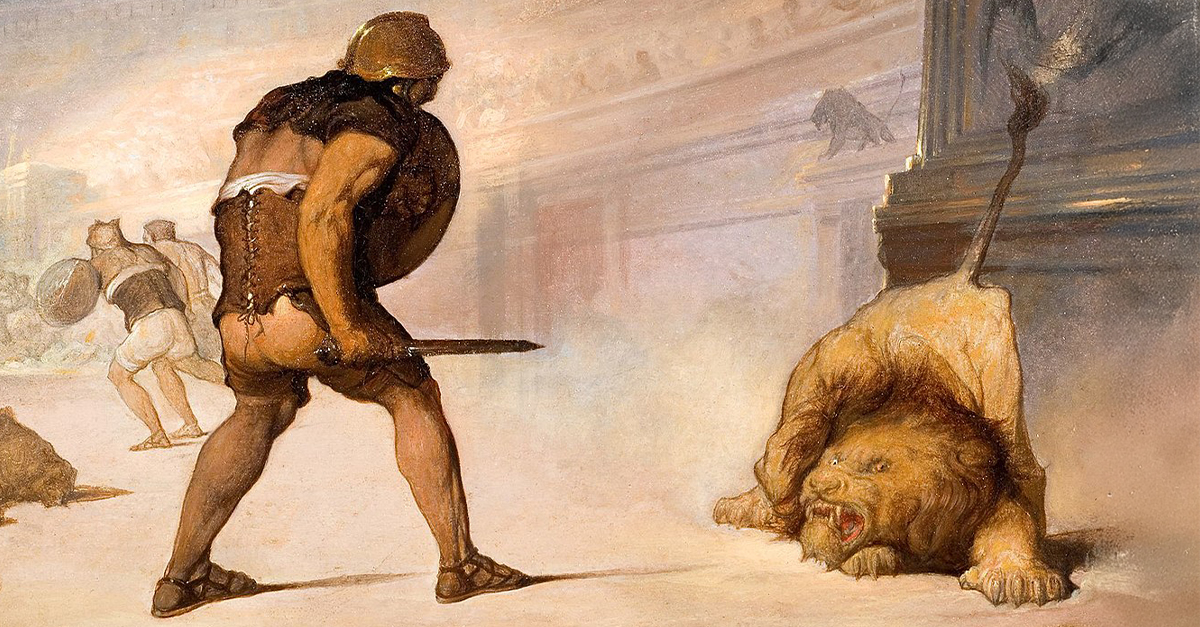
In April 2025, archaeologists announced an amazing discovery from Driffield Terrace cemetery in York: the bite marks on a third-century skeleton proving combat with a lion. This is the first hard physical evidence of human-animal combat in Roman Britain, totally overturning what we thought we knew about entertainment and mass spectacle in Rome’s far-flung provinces.
Discovery Of A Gladiator Graveyard
Digging at Driffield Terrace has been constant. So far researchers have hauled 80 male skeletons up out of the ground. These bones attest to men with a robust, muscular physique and many healed fractures, consistent with brutal gladiatorial training sessions. The haunting presence of decapitated remains and burials in along with horse bones is a mark of ritual burial rites reserved only for combatants.
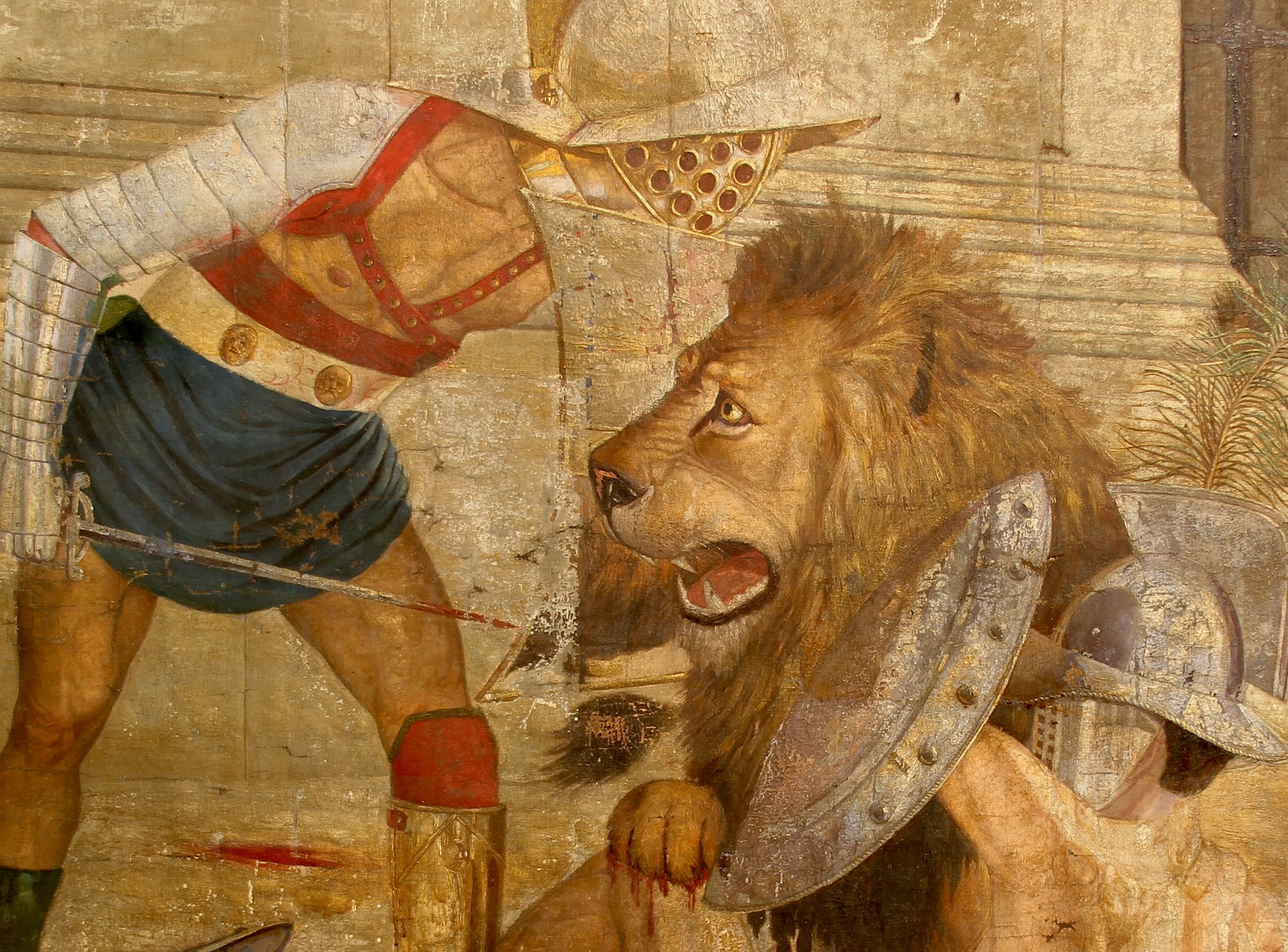 French Painting, Wikimedia Commons
The Awesome Strength Of A Lion’s Bite
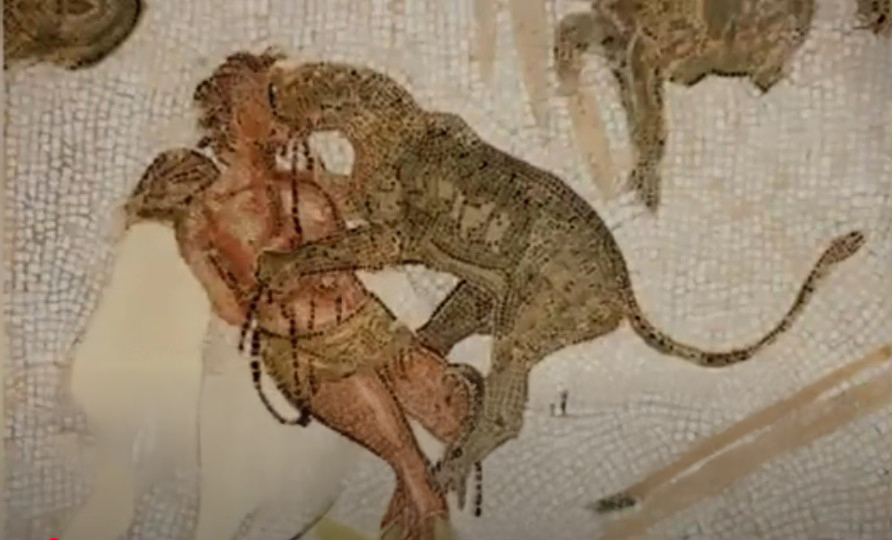
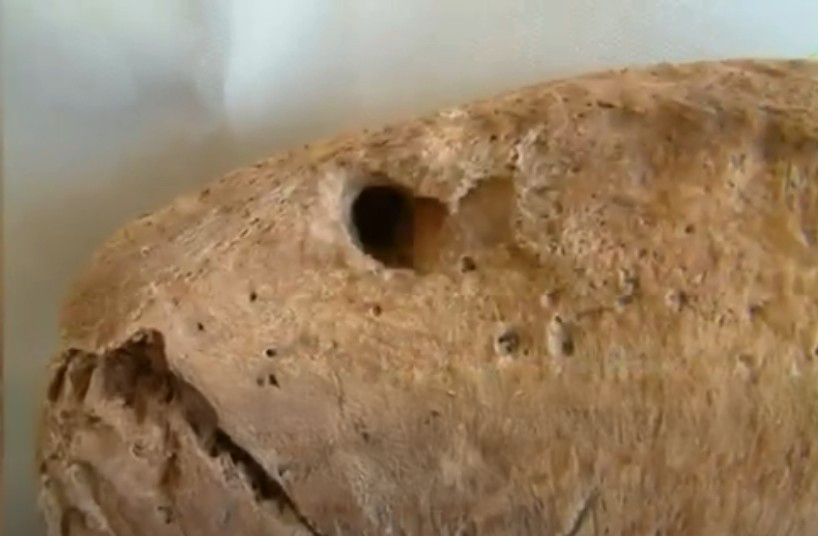
Research by Tim Thompson and his colleagues reviewed puncture wounds in the pelvis bone that closely match lion teeth imprints. Comparative studies of bones from big cats in British zoos confirmed the unmistakable truth that the injury was the final result of a lion’s fury. Though the wounds weren’t fatal, their place on the anatomy has the ominous implication of post-battle scavenging by the dangerous beast.
Gladiators Faced Off Against Wild Beasts
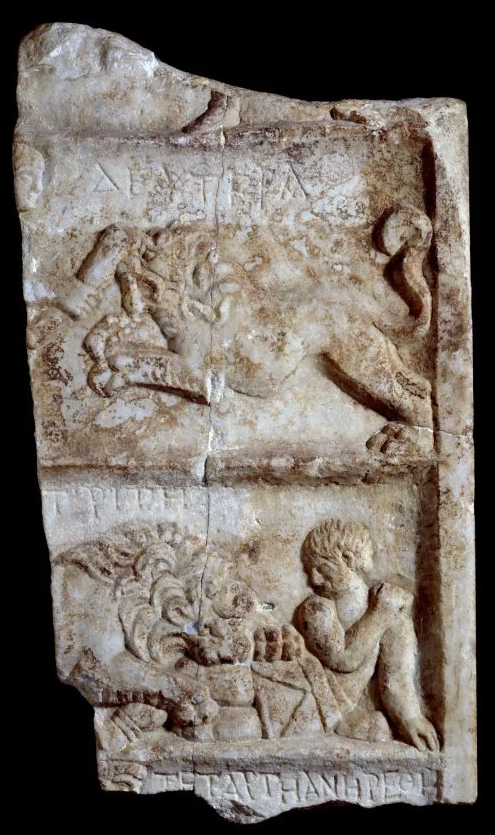
Small-scale confrontations between gladiators and exotic beasts, called venationes are well documented in Roman art and texts. But this is the first evidence to turn up of such a contest anywhere in the Roman realm. The York discovery proves that even the population of provincial backwaters like Eboracum (ancient York) felt right at home watching armed men collide in combat with big cats.
The Empire’s Vast Trade Network
Bringing lions from Africa to York substantiates the logistical prowess of the Roman empire. Eboracum in York was a frontier fortress in the third century AD, which just goes to show how dedicated the Romans were to these pursuits in a clear demonstration of the empire’s dominance.
The Real Meaning Of The Discovery
This discovery does away with the notion that violent spectacles such as this only took place in Rome itself. This brutal form of entertainment was popular thorughout the empire, with provincial citizens marvelling at the spectacle of man against animal. Tim Thompson asserts that the remains reveal the “first direct physical evidence for human-animal gladiatorial combat” in Europe.
Scholarly Reactions And Debates
Most scholars hailed the find as a huge breakthrough, but some also question the automatic assumption that the injured man was a gladiator, and not a condemned prisoner. Though that idea raises disturbing questions, the combination of multiple combat-related injuries and a burial context are strong circumstantial evidence supporting the gladiator interpretation. But the search for more clues is far from over.
The Investigation Plows Ahead
Astonishingly, despite all the widespread excavations over the years, the gladiator’s arena where so many fought and died remains undiscovered, buried under modern architecture. Researchers continue as best they can to pinpoint the spot, hoping to dig up more artifacts related to gladiator culture.
The Lion’s Roar That Echoes Across Time
The York discovery is a groundbreaking testament to the reach of Roman spectacle. It finally proves that lions prowled arenas far from Rome, and that fighters sometimes paid the ultimate price to entertain a demanding public. This humble crew of British archaeologists have put in the hard work and reaped the rewards: a total rethink of the scope of Roman culture beyond the Mediterranean.
You May Also Like:
Bloody Facts About The Most Ruthless Roman Emperors In History
Valiant Facts About Queen Boudica, The Scourge Of The Romans