
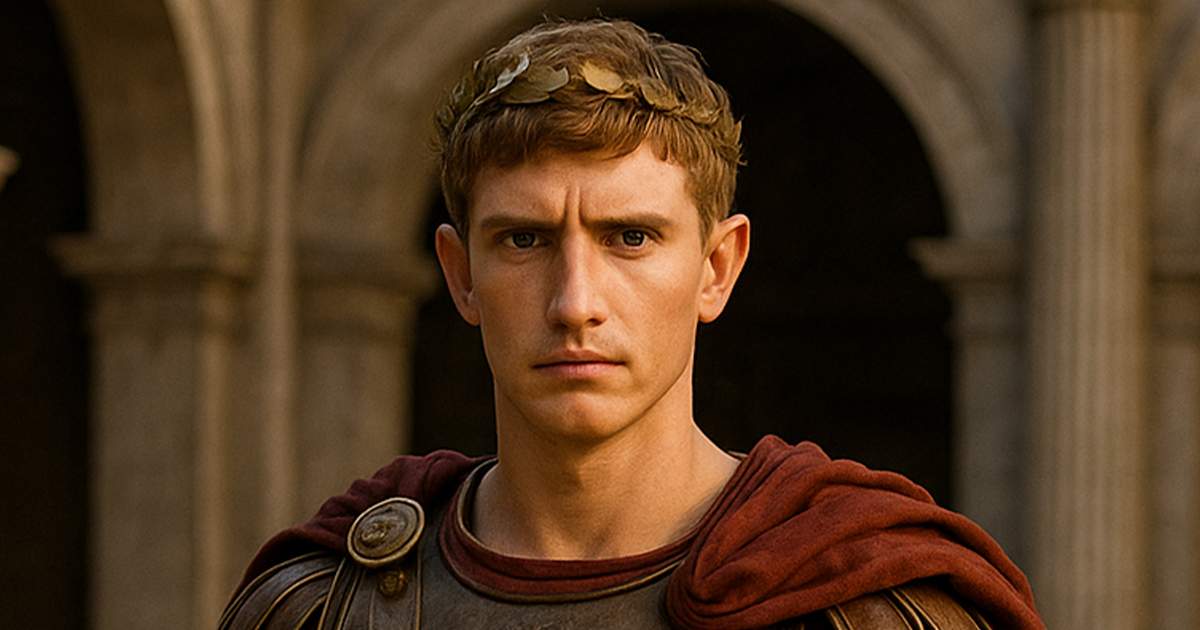
The Heir To Caesar
Julius Caesar was always going to be a tough act to follow, but Augustus didn’t just manage to outstrip his predecessor in power and become the first Emperor of Rome, he also outdid Caesar in pure scandal, violence, and vengeance. Behind his placid, imperial demeanor—the one every Roman citizen saw on their coins—Augustus hid dark, cunning secrets.
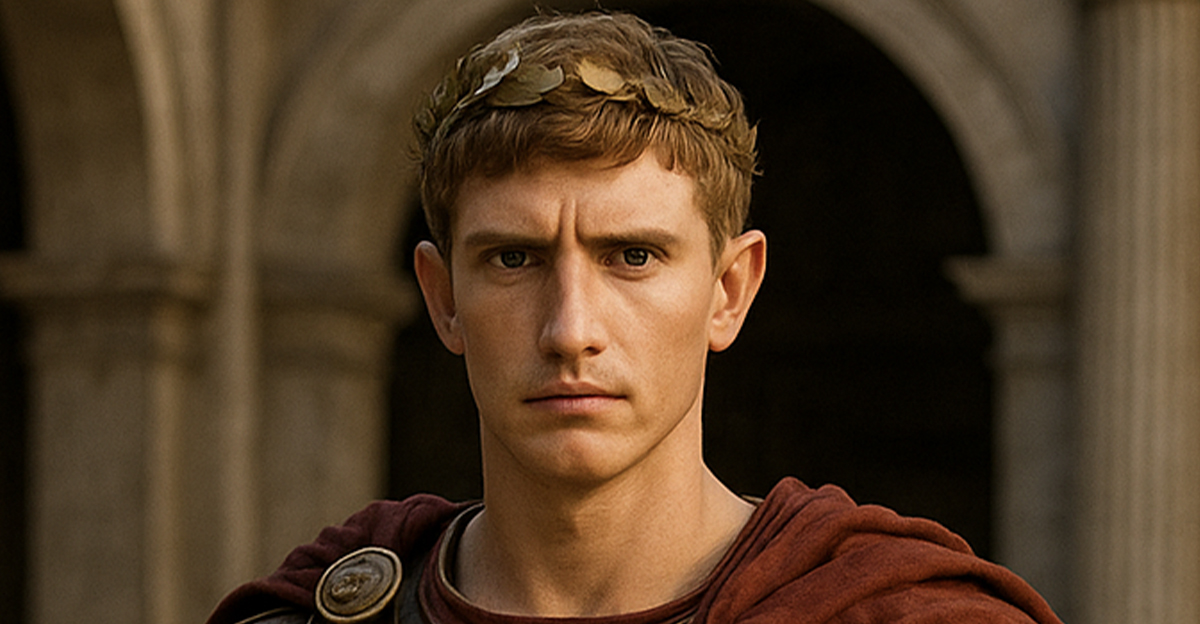
1. He Was Caesar’s Grand-Nephew
Born in 63 BC as Octavius, Augustus was powerful from the start. His father Gaius became a Roman senator and the governor of Macedonia, but it was his mother Atia who really set him up: She was the niece of Julius Caesar, the de facto ruler of the Romans. More than that, Augustus was largely raised by his grandmother, Julia, who was Caesar’s sister.
These connections would come in very handy.
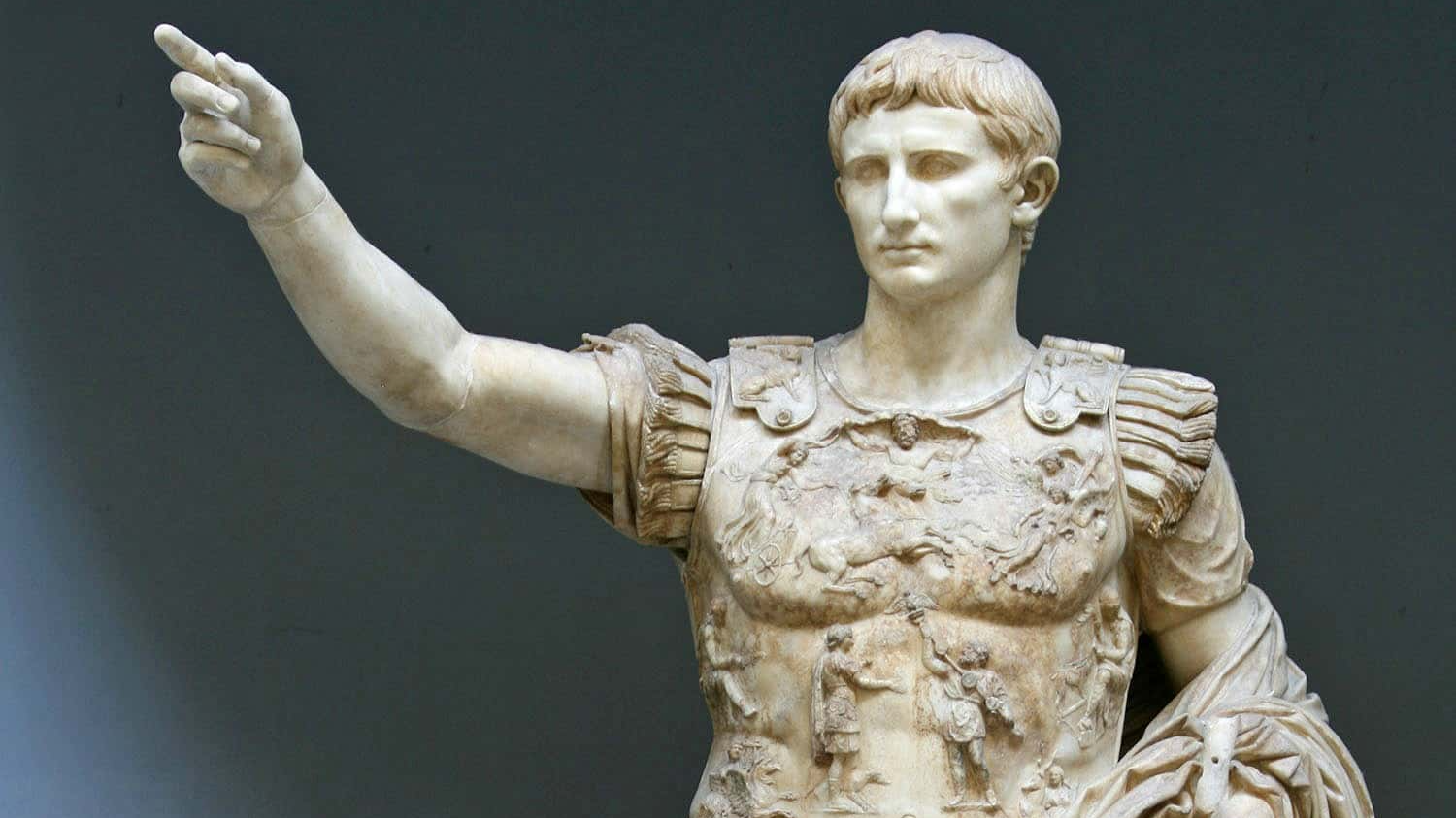 Vatican Museums, Wikimedia Commons
2. He Was The Favorite
By the time he was in his late teens, Augustus was firmly Julius Caesar’s pet, having fought with him on campaign and ridden next to him in a chariot at an official triumph celebration, a sign that Caesar thought of him as a son. When he became dictator, Caesar also made Augustus his magister equitim, or “master of the cavalry”—essentially his right-hand man.
But all this glory came at a cost.
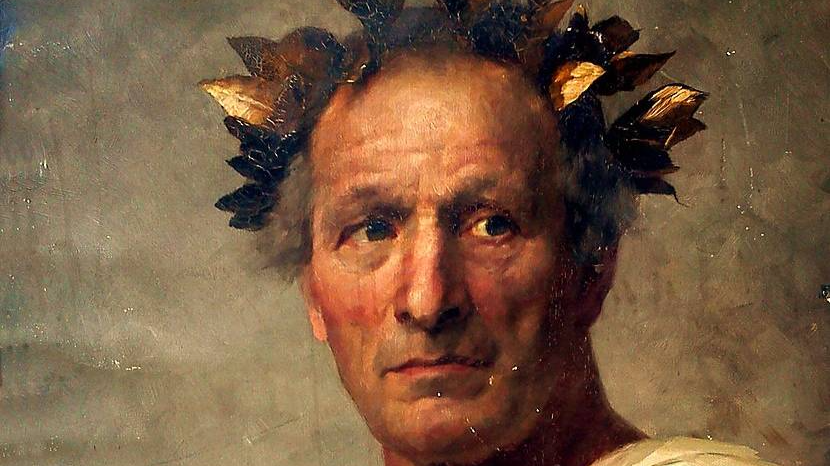 Clara Grosch, Wikimedia Commons
3. His Mother Tried To Warn Him
During these heady years, Augustus went from win to win without a thought, but there’s evidence his mother Atia knew what a dangerous game he was playing. In 47 BC, she deterred a 16-year-old Augustus from joining Caesar on campaign in Africa, though she was never again able to stop him from fighting. Soon enough, though, Atia’s worries were proven right.
 Auckland Museum, CC BY 4.0, Wikimedia Commons
4. His Mentor Met A Violent End
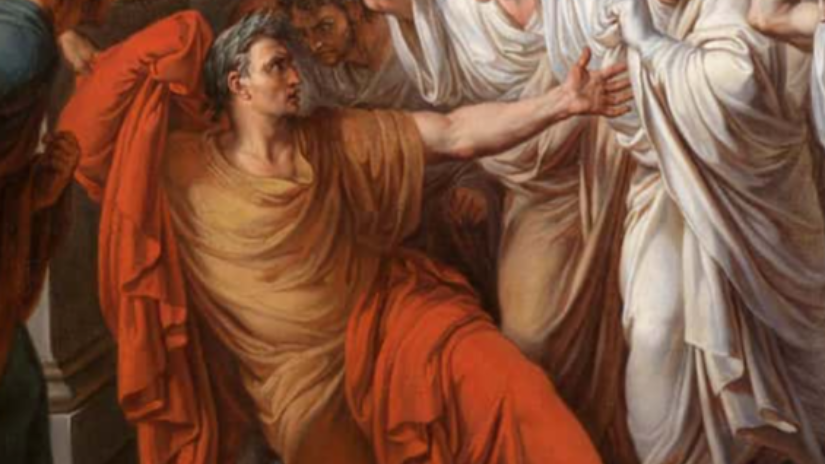
In 44 BC, while Augustus was away on officer training, calamity came to Rome. Julius Caesar was assassinated by a cadre of conspirators who believed he was gathering too much power. Suddenly, Rome’s future—not to mention Augustus’s—was thrown into chaos.
As the slain Caesar’s favorite, Augustus likely should have laid low for the next while…but that wasn’t the way he did things.
 Vincenzo Camuccini, Wikimedia Commons
5. He Was The Heir To Rome
Against the advice of the officers he was training with, the headstrong Augustus sailed to Italy to find out anything he could about the way the chips were falling in Rome. He made a stunning discovery. In Caesar’s most recent will, Augustus discovered that the late dictator had named him as his principal heir. Augustus’s response was more complicated than you might think.
 Penthouse Films International, Caligula (1979)
6. He Had A Decision To Make
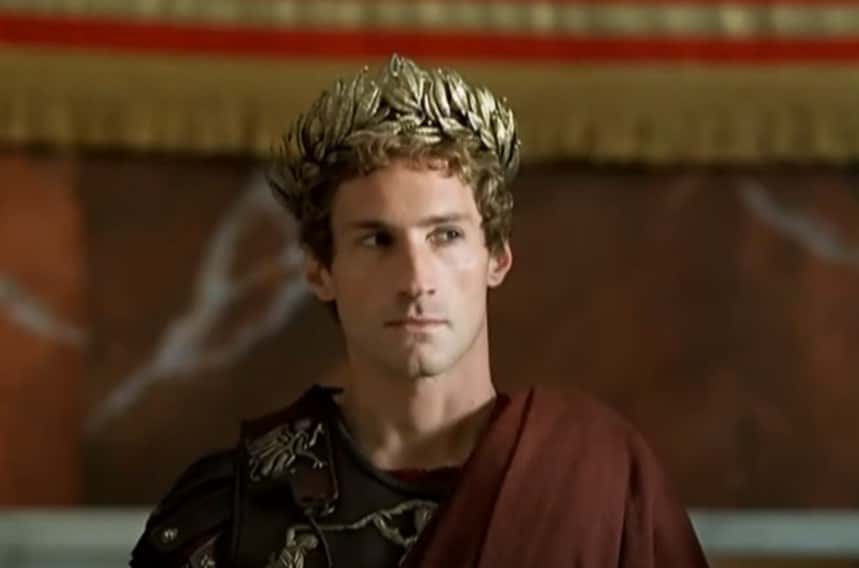
At this point, Augustus had two choices: Take up Caesar’s mantle and accept that he might get assassinated too; or pretend he’d never learned of the will’s contents and live a long, normal life, preferably far away from the center of the Roman Empire.
While some urged him to take up the safer option, his mother—usually so tense about his choices—told him to decide for himself. It was all the encouragement Augustus needed.
 Rai Fiction, Imperium: Augustus (2003)
7. He Made A Fateful Choice
In May of 44 BC, weeks after Julius Caesar perished, Augustus officially accepted his will and laid claim on all the political power this entailed. Knowing he had to act fast to shore up money and influence, he also demanded payment on hefty tributes that had been owed to Caesar, then used these sums to attract and pay a growing army of men at his disposal.
By that June, Augustus was immensely well protected and immensely rich. Not that you could tell from his looks.
 Unknown artistUnknown artist, Wikimedia Commons
8. He Was Handsome
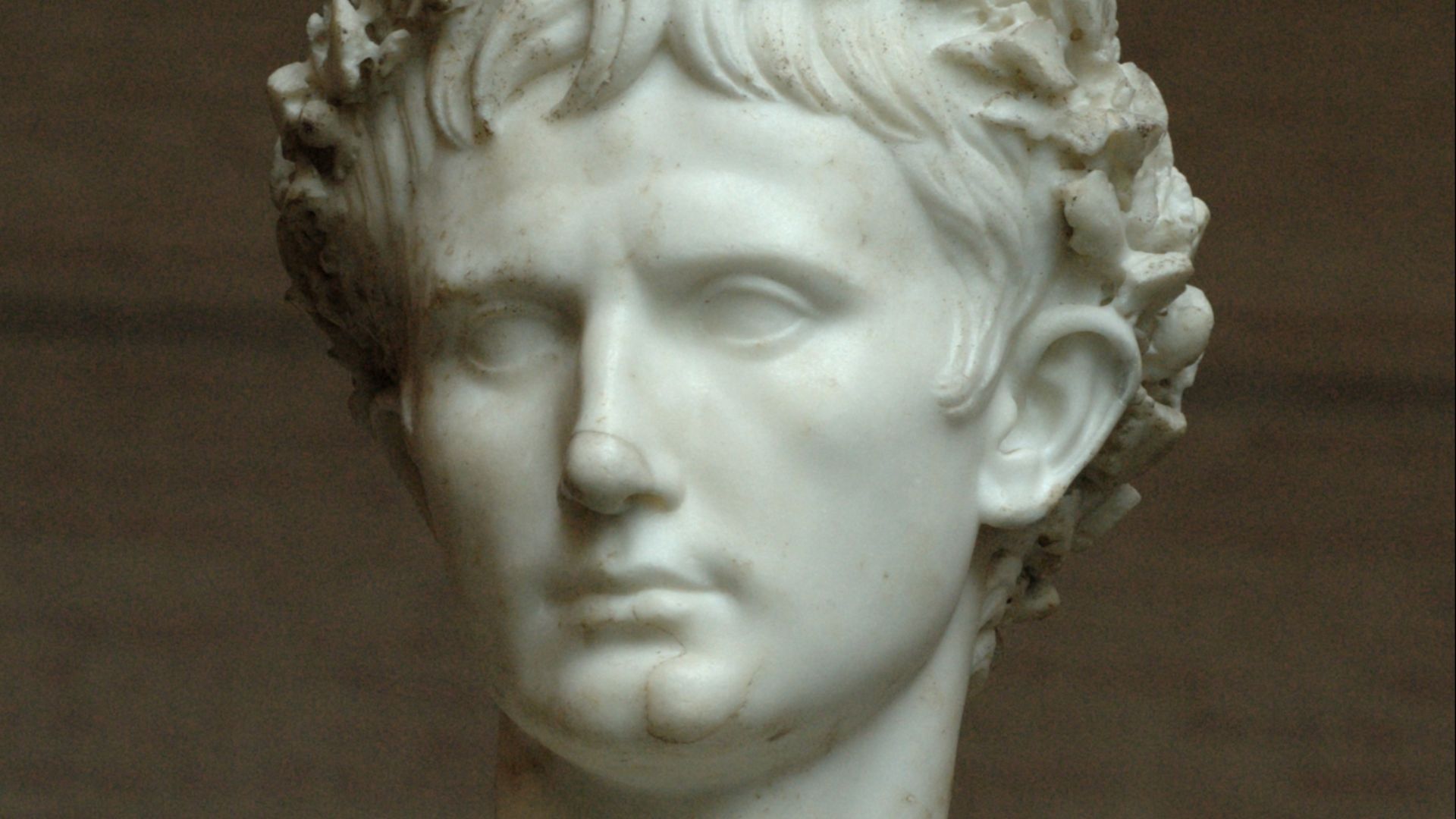
According to reports, Augustus was “unusually handsome” even as he “cared nothing for personal adornment”. He was so laissez-faire, in fact, that he’d often have several barbers working on his light brown hair at the same time, likely resulting in some strange cuts. But if he wasn’t self conscious about his looks, he was self-conscious about something else.

History's most fascinating stories and darkest secrets, delivered to your inbox daily.
9. He Was Short
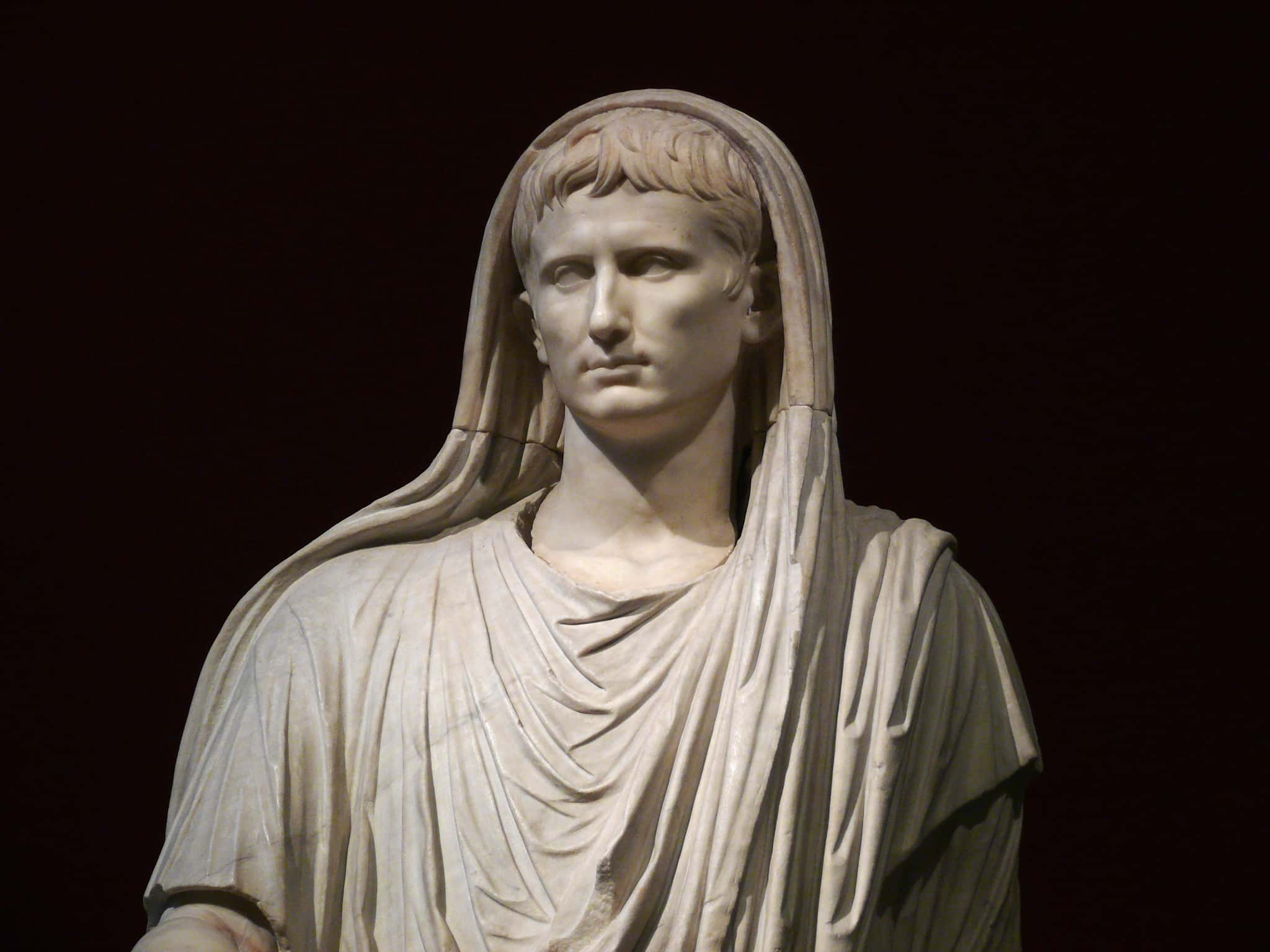
Although Augustus’s teeth were “wide apart, small, and ill-kept” and he had a unibrow, these physical features didn’t seem to bother him—his height, however, did. He was likely somewhere around 5 feet, 7 inches tall, and Augustus would reportedly wear high-soled shoes to make him look taller than he actually was. As it happened, he would need to intimidate people.
10. He Made A Powerful Enemy
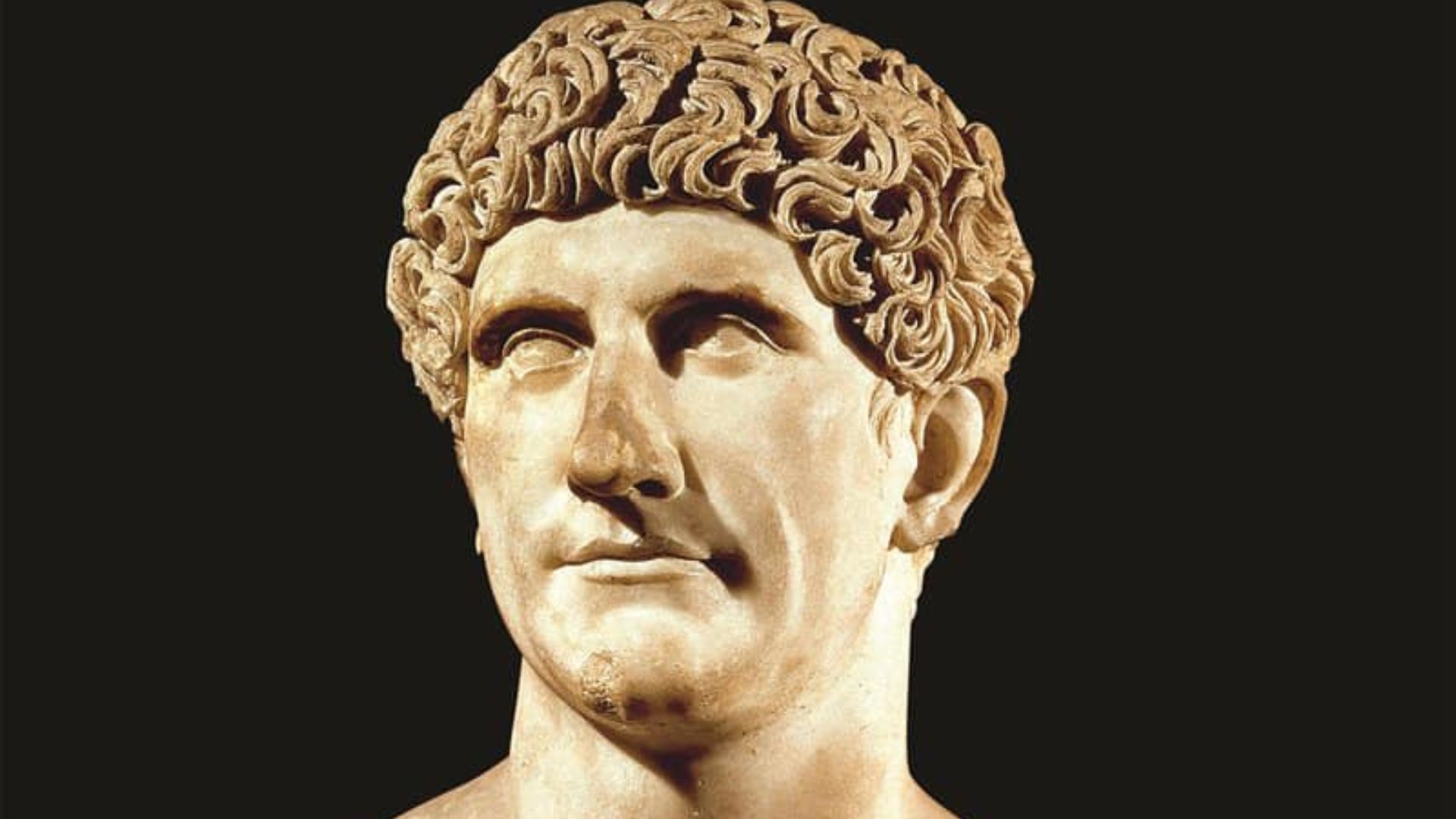
Augustus wasn’t the only power player in the vacuum that Julius Caesar had left in his wake: Mark Antony, a former colleague of Caesar, had already gathered significant political support, and was looking to install himself as Rome’s new leader. Antony struck out against Augustus, denying him funds, insulting him as low-born in public, and generally trying to curtail his burgeoning influence. But Augustus could play this game too.
11. He Gave As Good As He Got
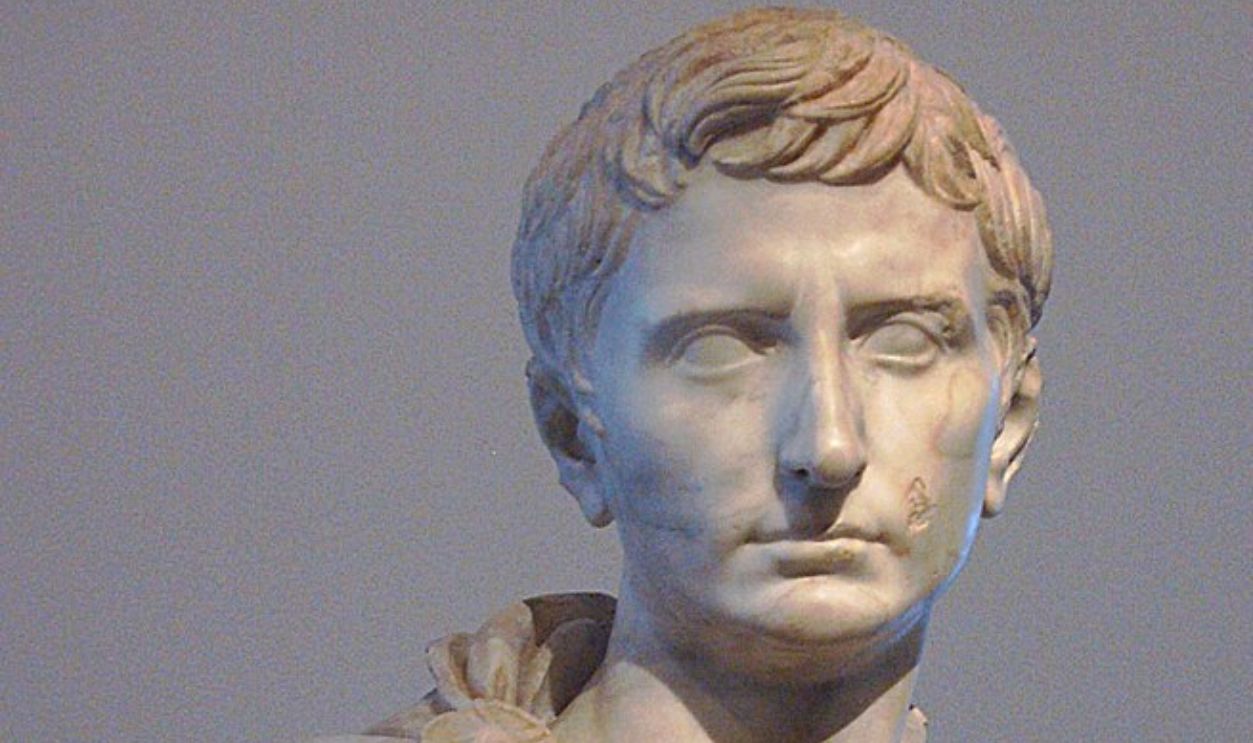
Augustus truly was the heir to Caesar, and he set about weakening Antony any way he could, including enticing away two of Antony's personal legions with the promise of better pay. The result was utterly satisfying. Before long, Antony had fled Rome for the province of Cisalpine Gaul, which he had recently designated as his own lands.
But it was here that this internal feud turned into all-out war.
 Gautier Poupeau from Paris, France, CC BY 2.0, Wikimedia Commons
12. His Nemesis Caused Trouble
Antony, despite his power base, had long been a thorn in the side of the Roman Senate—and he continued this over in Cisalpine Gaul. As it turned out, the lands Antony wanted weren’t quite vacant, and when he arrived he almost instantly had to begin a siege for them, despite the Senate begging, pleading, and then ordering him to stop the fighting.
In a twist of fate, this was all Augustus needed to cement his power.
 Pudelek, CC BY-SA 4.0, Wikimedia Commons
13. He Became Imperator
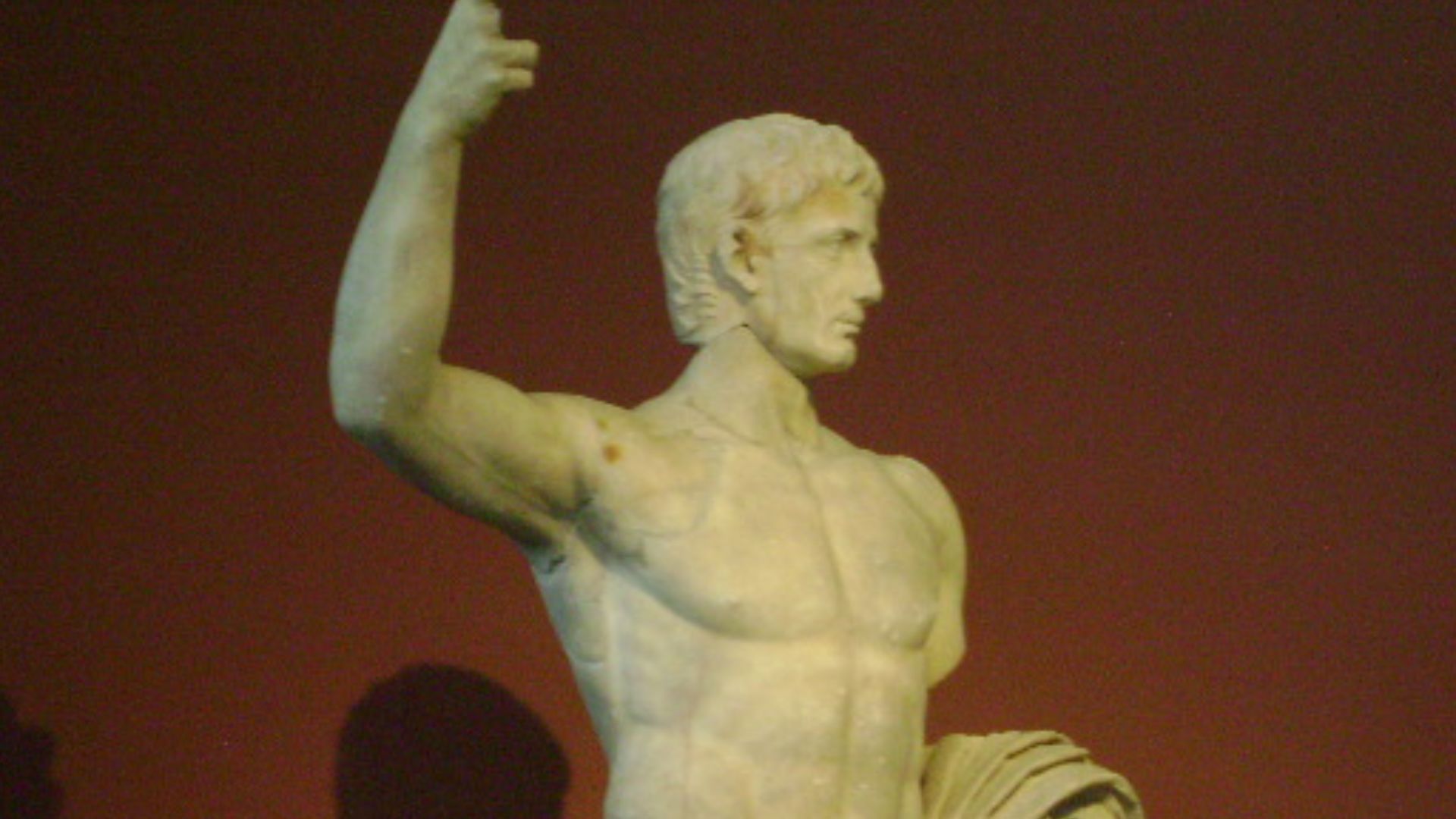
The Senate had little firepower of their own, so it was Augustus and his massive personal army who swooped in to battle against Antony in the province. His victory was total: Antony’s forces were defeated and Antony himself had to retreat, earning Augustus the title of imperator, or victorious commander. But Augustus had bigger plans than battle victory.
 Deiadameian, Wikimedia Commons
14. He Beat Them And Then Joined Them
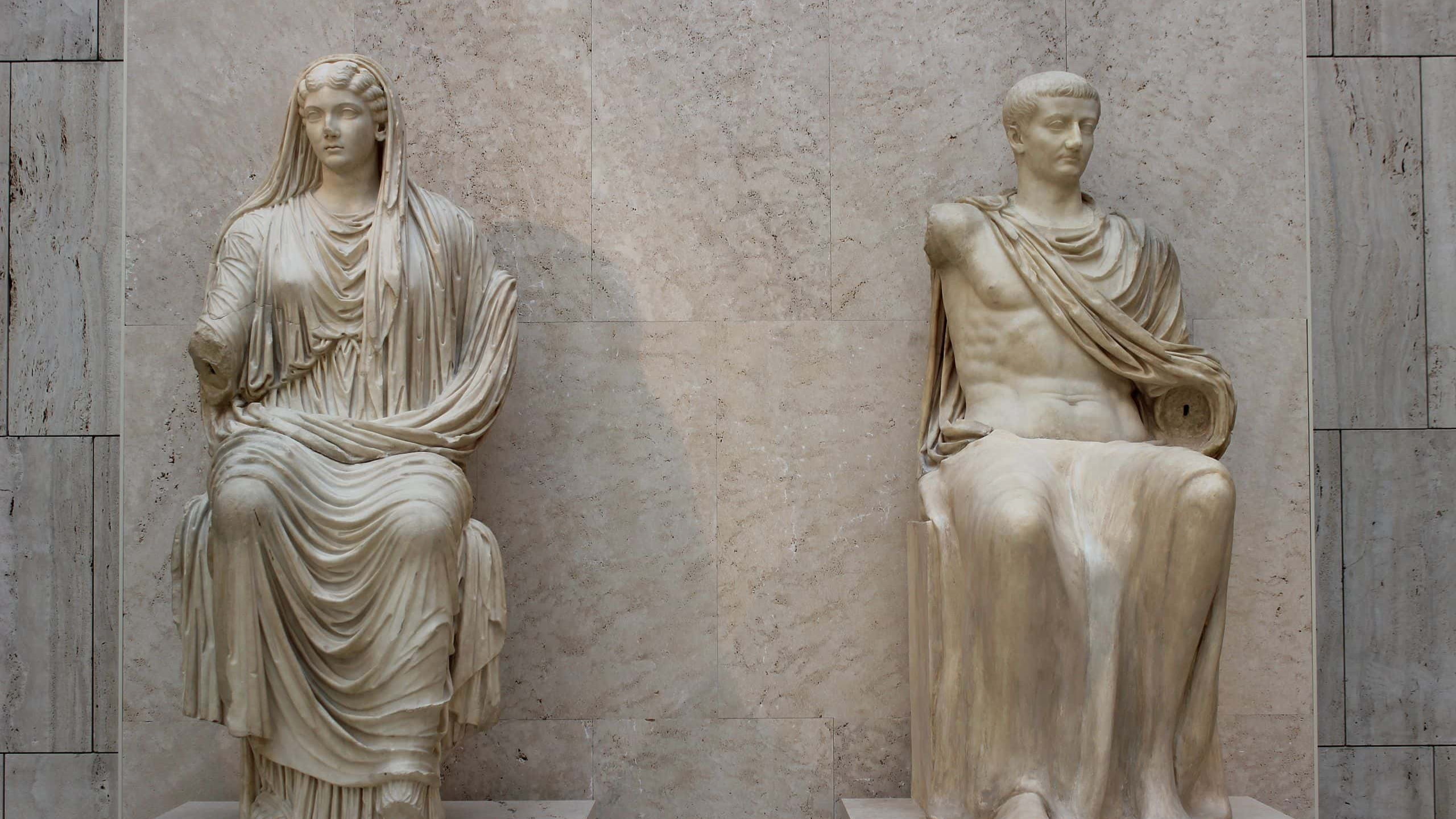
A win over Antony was all well and good, but Augustus knew to really cement his power, he’d have to join him. Their solution was almost unprecedented: Soon, he, Antony, and Antony’s ally Marcus Aemilius Lepidus formed the Second Triumvirate, which granted them near absolute power over Rome as a trio.
It was an uneasy alliance, and it had some big skeletons in its closet.
 Miguel Hermoso Cuesta, Wikimedia Commons
15. He Plotted Against His Opponents
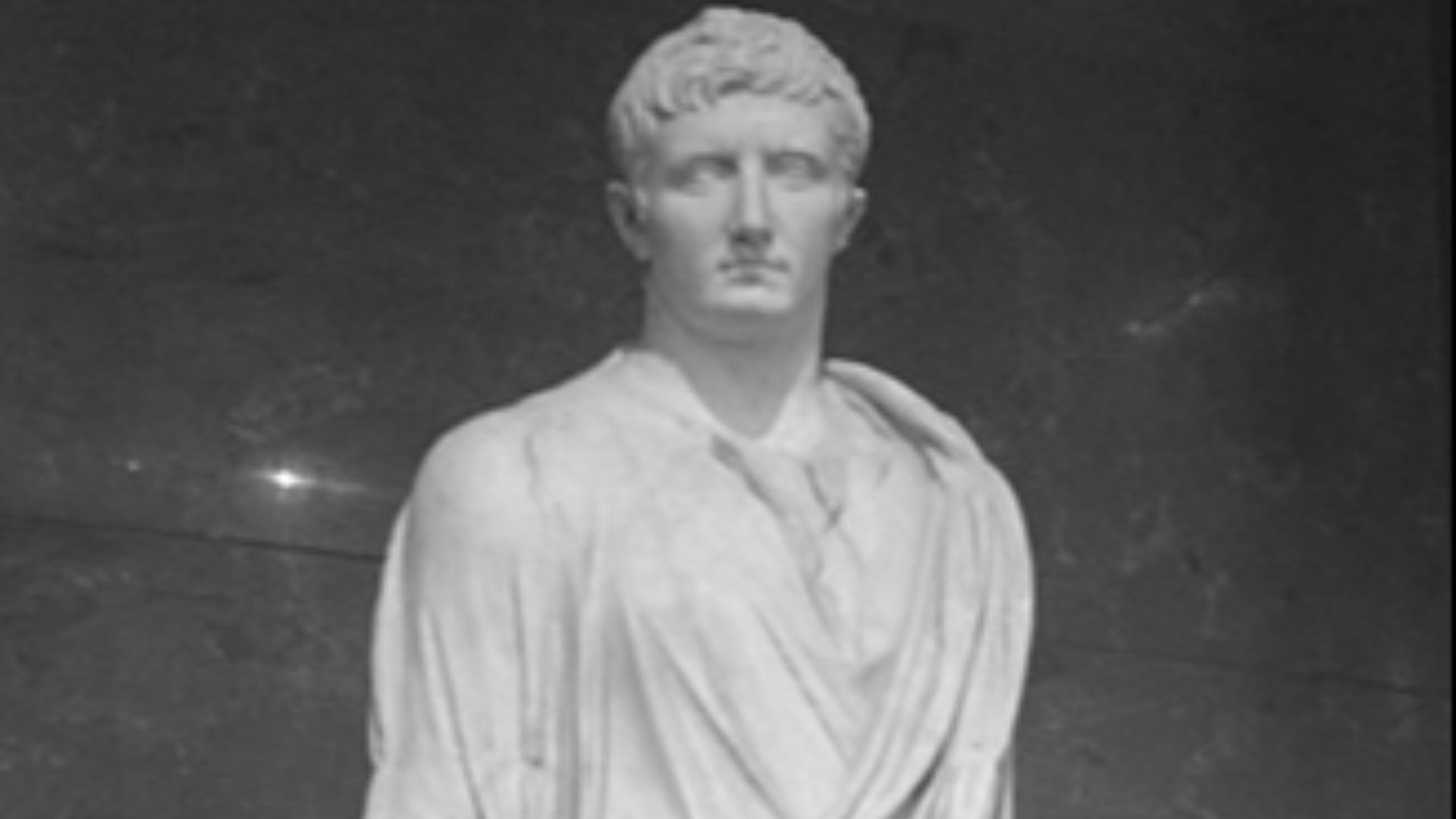
Augustus liked to trade on his connection to Caesar, who was now recognized as a divinity, by saying he was the “Son of the Divine”. But during this time, Augustus’s actions were unholy: Although accounts vary as to who was the worst of the three, during the Second Triumvirate Augustus, Antony, and Lepidus methodically set about eliminating their enemies through imprisonment or death.
When violence wouldn’t work, though, Augustus got creative.
 Unknown artistUnknown artist, Wikimedia Commons
16. He Made A Political Marriage
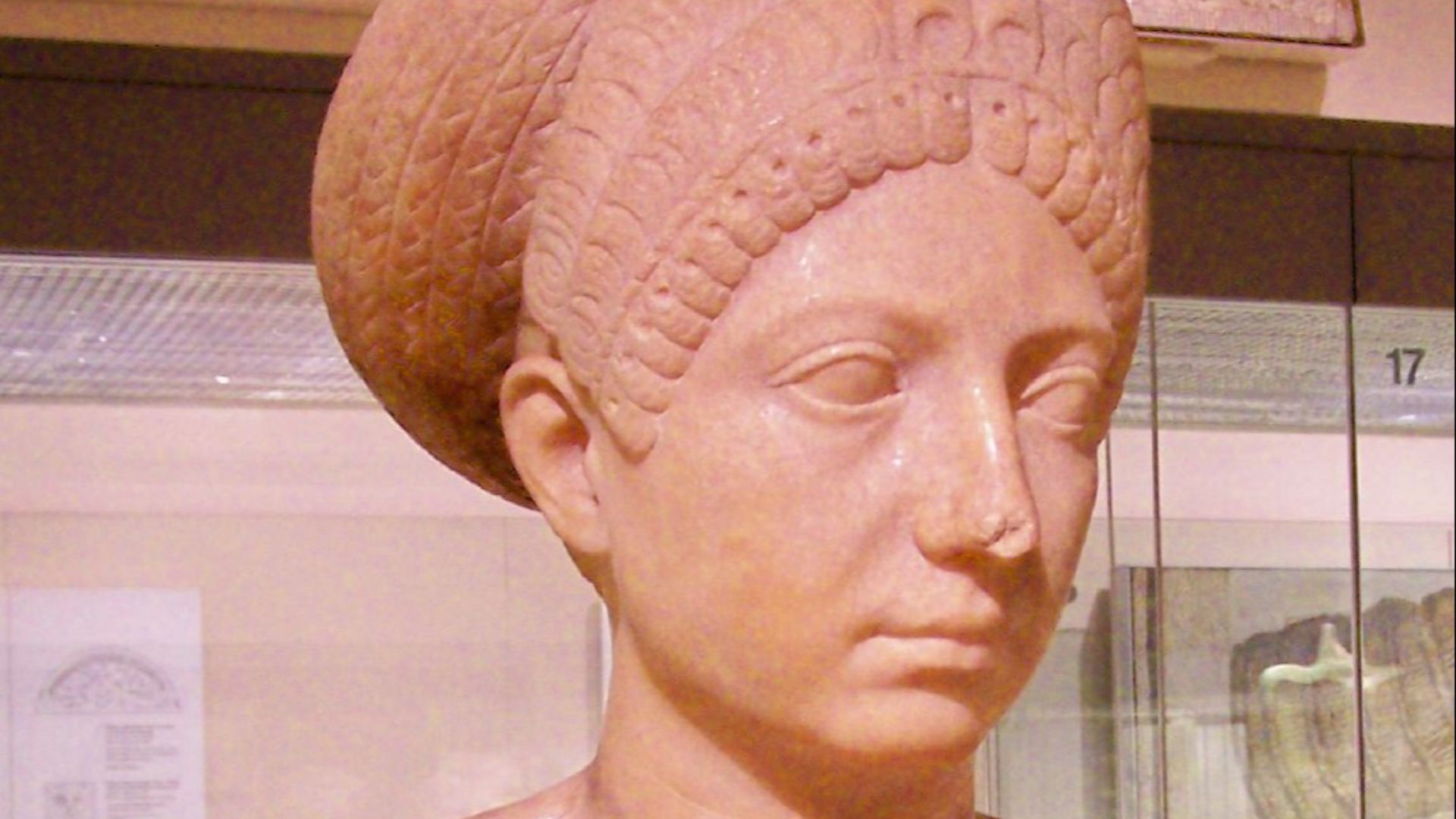
By 42 BC, it was time for Augustus to find a wife, and he didn’t have to look far. Although Lepidus offered up his wife’s niece Servilia, Augustus ultimately went with Mark Antony’s stepdaughter Claudia, who was the daughter of Antony’s formidable and wealthy wife Fulvia.
If things went according to plan, it would have strengthened their alliance. But…this was Ancient Rome.
 https://www.flickr.com/photos/soham_pablo/, Wikimedia Commons
17. He Changed His Mind
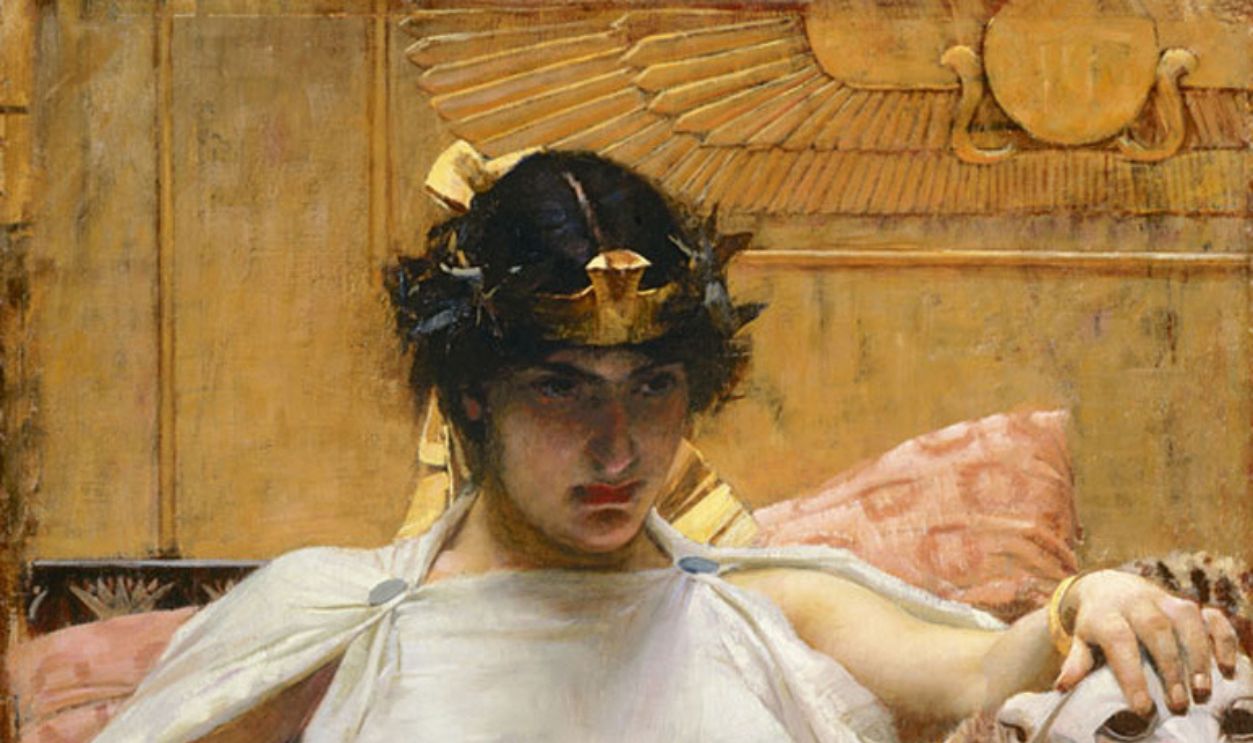
Shortly after marrying Claudia, Augustus threw a wrench into his alliance with Antony’s family. With the marriage apparently not going well, he returned his bride to her mother and announced that their union was 1) still unconsummated and 2) he wanted to divorce her. It had brutal consequences. Though Antony, who was currently away in Egypt having an affair with Julius Caesar’s old lover Cleopatra, was out of the picture for now, his wife Fulvia was incensed on everyone’s behalf—and she didn’t take it quietly.
 John William Waterhouse, Wikimedia Commons
18. His Mother-In-Law Targeted Him
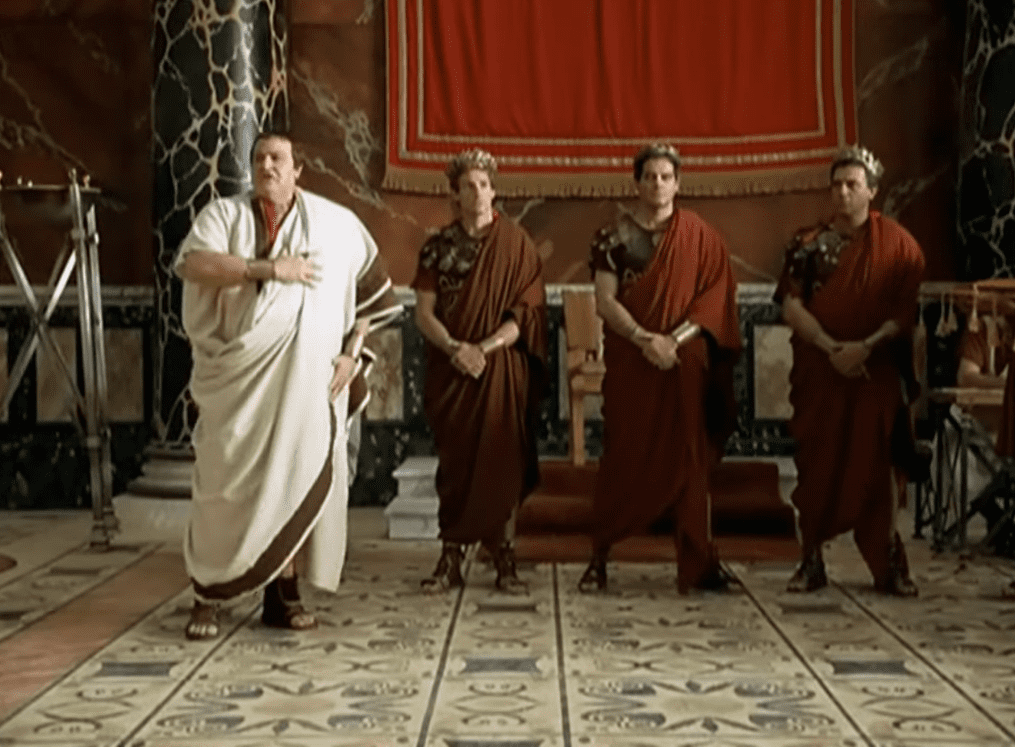
Suddenly, the offended Fulvia (and Antony’s brother Lucius) launched an all-out attack against Augustus. But once more, it only turned into an opportunity for Augustus to show his might: he beat back their forces and won a resounding victory, then exiled Fulvia to Sicyon where she soon took ill and passed.
It really did seem like Augustus had divine will on his side, and it couldn’t help but go to his head.
 EOS Entertainment, Imperium: Augustus (2003)
19. He Got A New Bride
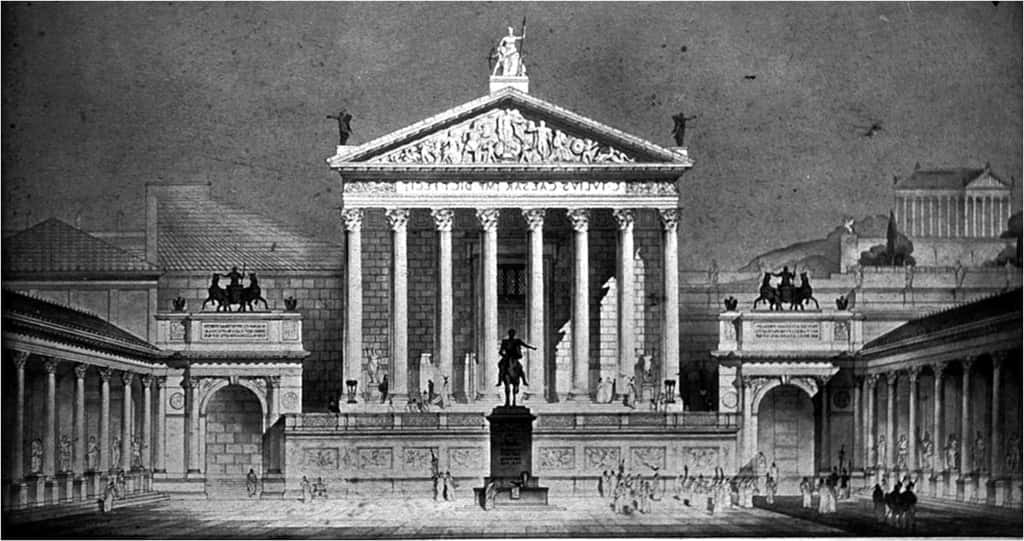
Soon after divorcing Claudia, Augustus made another bold move. In order to strengthen an alliance with the powerful general Sextus Pompeius, Augustus married one of the man’s relatives, Scribonia, and in doing so got a leg up once more over his frenemy Mark Antony, who had also been seeking an alliance with Pompeius.
This time, though, Augustus should have been careful what he wished for.
20. His Marriage Was Miserable
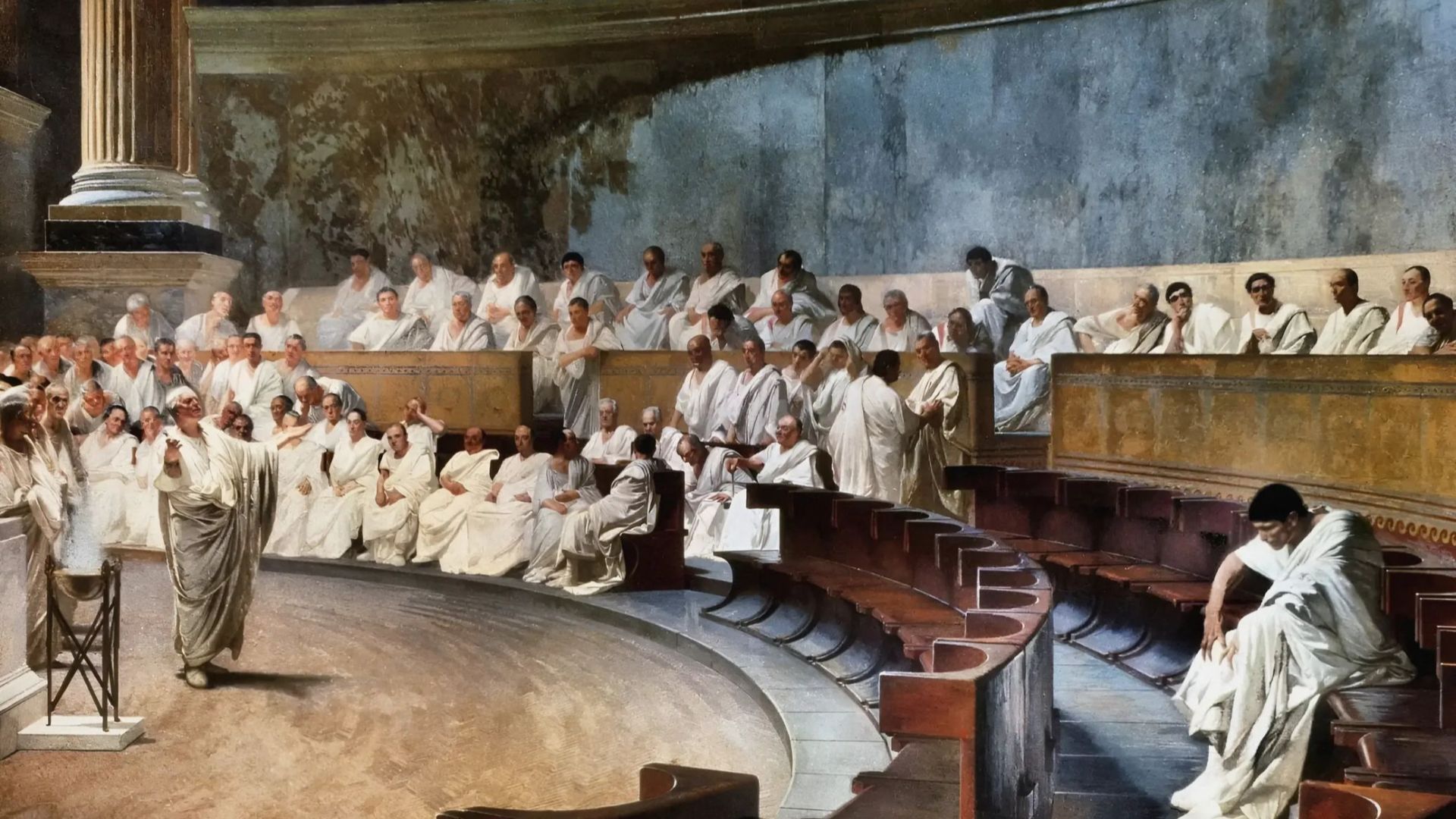
Augustus’s new marriage was purely a political alliance, and it felt like it. Indeed, poor Scribonia had actually been forced to divorce her husband in order to marry Augustus, and the new couple reportedly had chilly and unhappy relations. Not too unhappy, though: Scribonia was soon pregnant with Augustus’s child, which was more than his first wife could say.
Only, Augustus used this joyous news to complete his betrayal.
 Cesare Maccari, Wikimedia Commons
21. He Fell In Love At First Sight
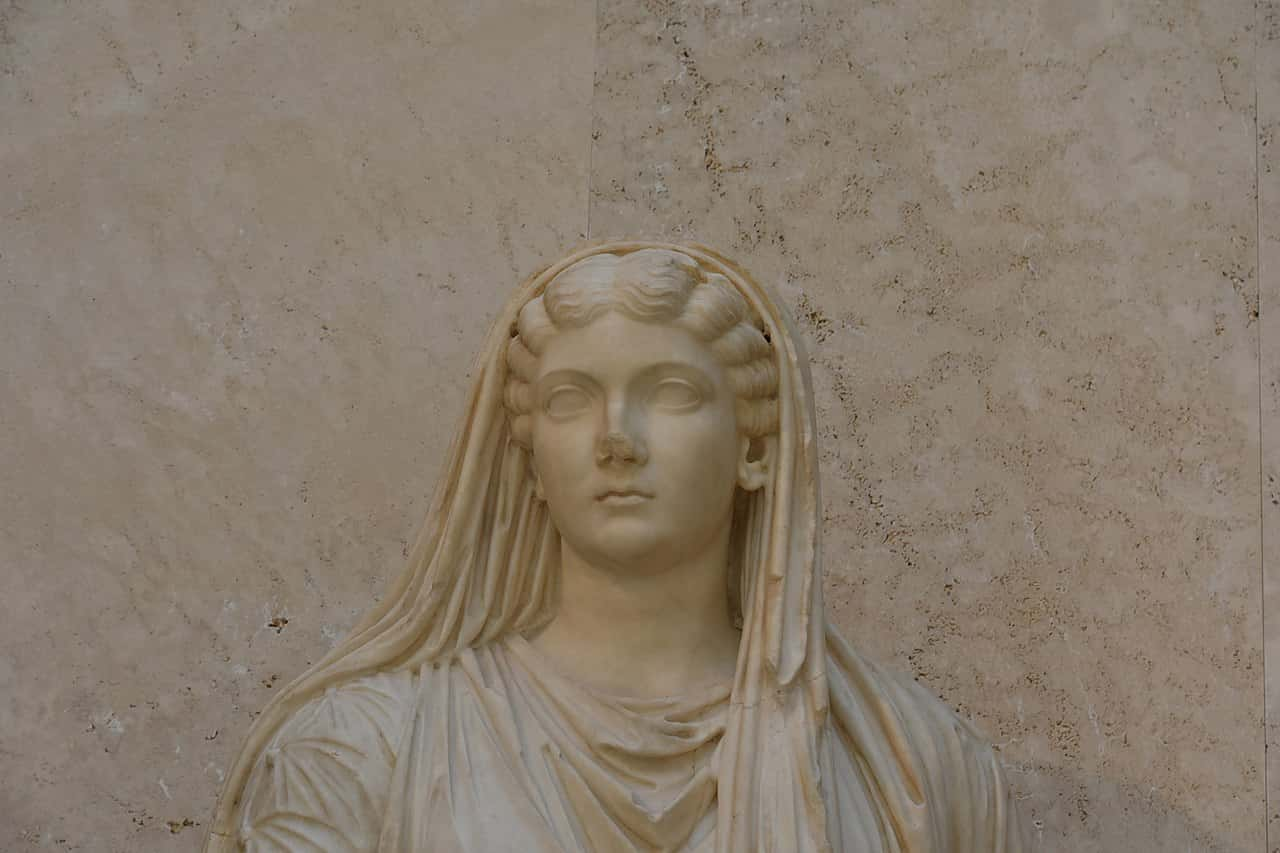
Augustus had made an absolute mess of marriage vows so far, but really he was just getting started. With his second wife pregnant at home, Augustus met Livia Drusilla, the current wife of powerful politician Tiberius Claudius Nero. Indeed, at the time of their first meeting Livia already had a son by Claudius Nero, Tiberius, and was pregnant with their second child, Drusus.
None of this mattered to Augustus. He immediately fell in love with her, and that meant everyone had to jump out of the way.
 Richard Mortel from Riyadh, Saudi Arabia, Wikimedia Commons
22. He Was A New Father And A Divorced Dad
By now, Augustus felt the world owed him everything, and he wasted no time getting exactly what he wanted from Livia. He promptly divorced his own wife Scribonia in October of 39 BC…and his timing couldn’t have been worse. It was the very same day Scribonia gave birth to Augustus’s daughter Julia. But that was just half the scandal.
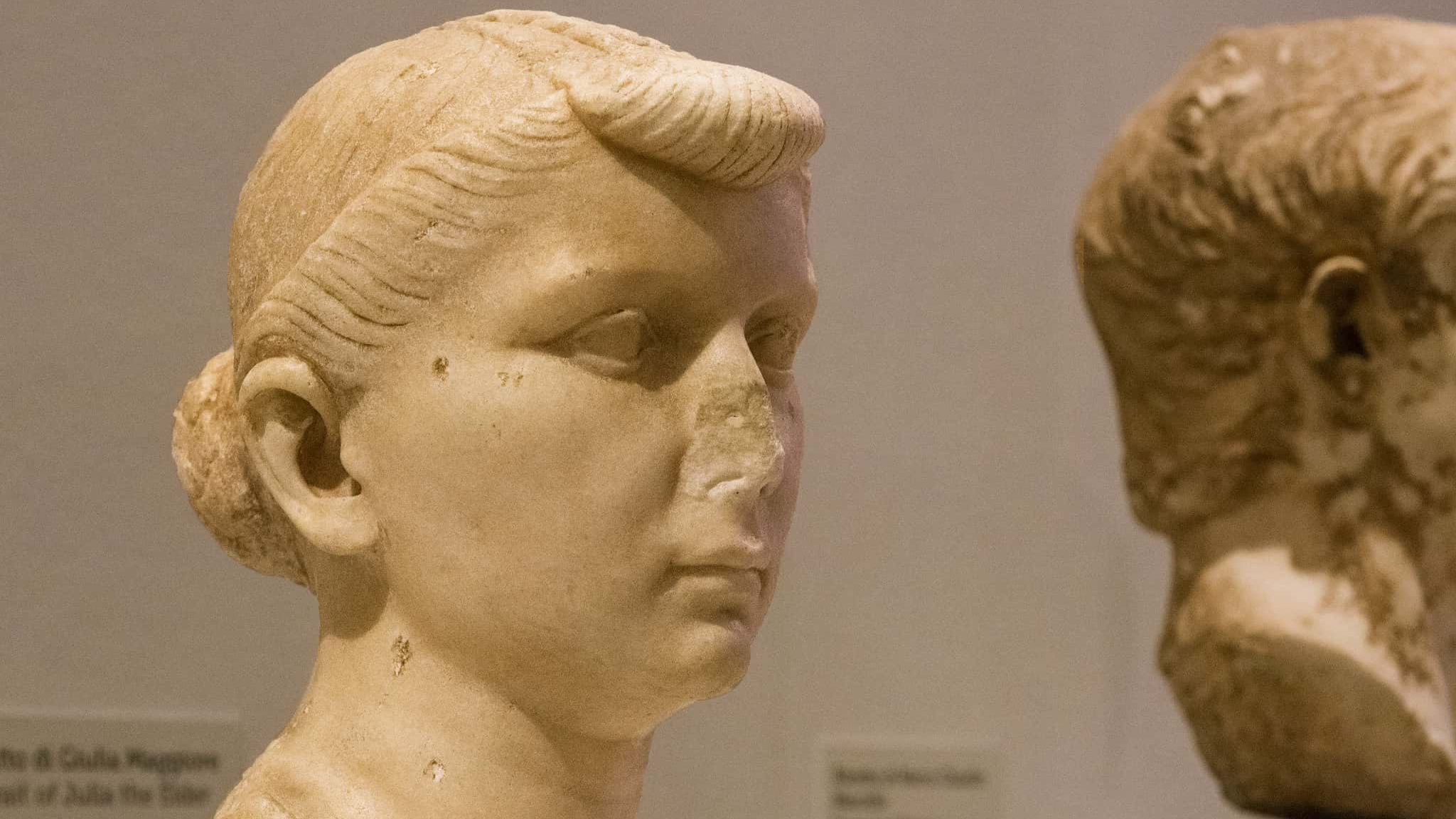
23. He Orchestrated His Next Marriage
Now that he was a free man, Augustus also had to make sure Livia was single too. So, when she was six months pregnant, he “convinced” her husband and father of her children to divorce her. Then, three days after she gave birth to her second son Drusus, he married her in a rushed ceremony just a few months after his own divorce went through.
His wedding was…interesting.
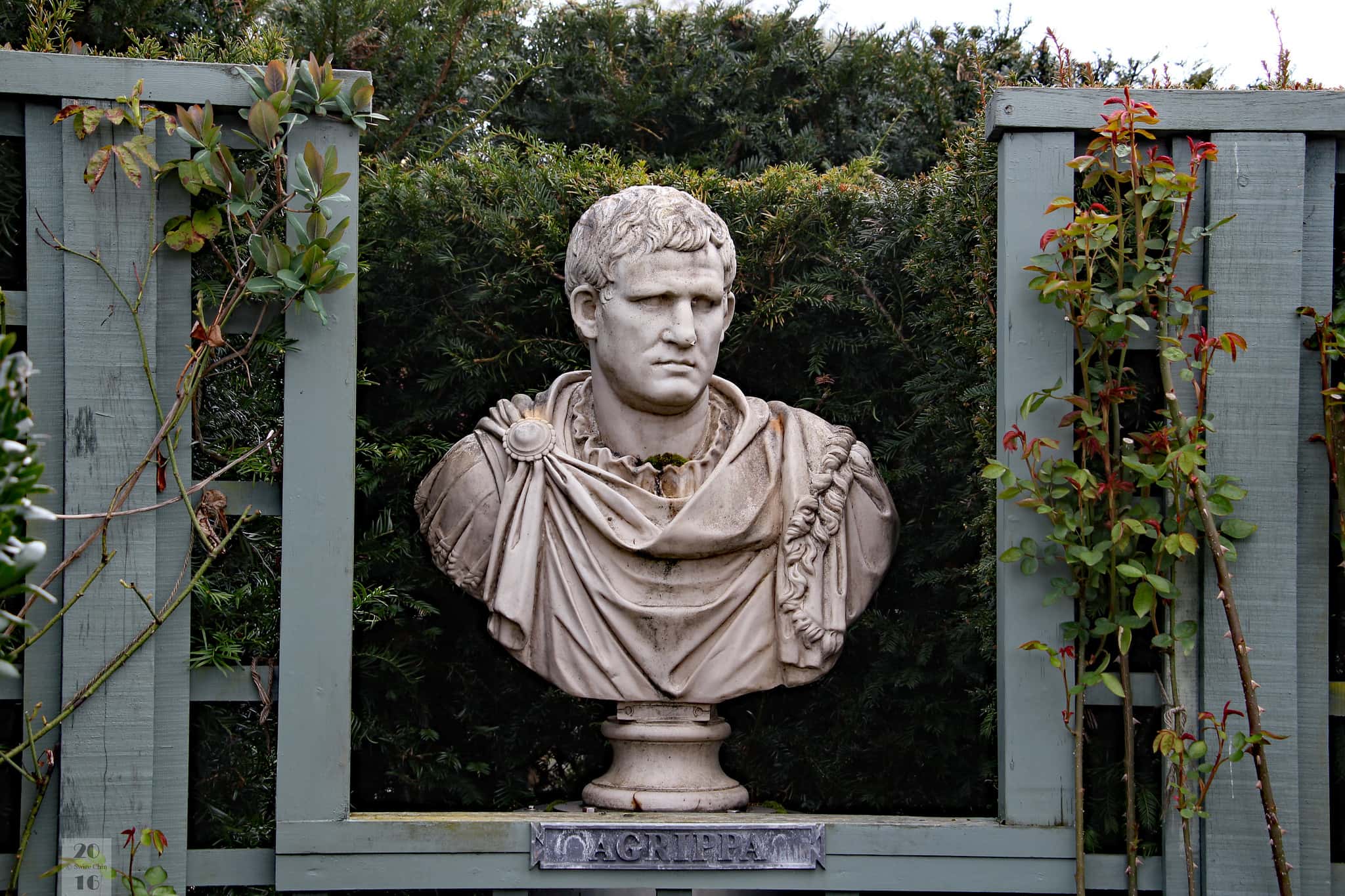
24. His Wedding Was Bizarre
Augustus may have been breaking up families left, right, and center, but he knew the value of good optics. As such, he “convinced” Livia’s recent ex-husband Tiberius Claudius Nero to give the bride away during the marriage “just as a father would,” thus showing Roman citizens that there were no hard feelings, that he still had the support of the powerful Claudius Nero, and that everything was really, totally fine.
To be fair, the consequences came from a different quarter entirely.
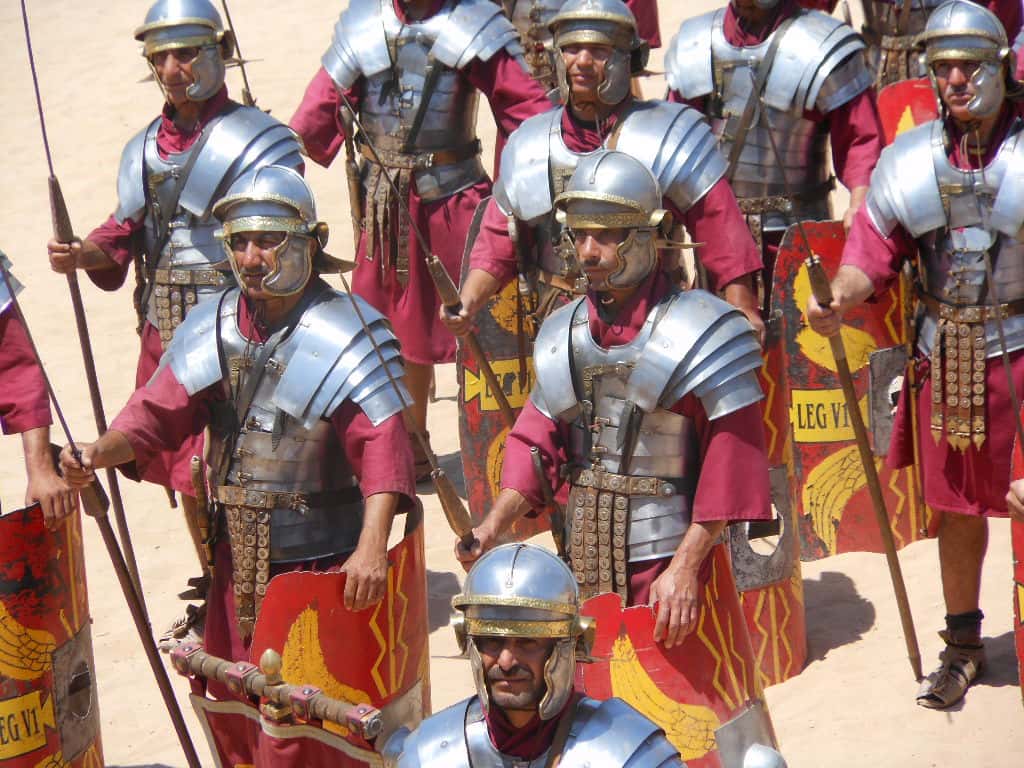
25. His Power Only Grew
Augustus’s hasty and insulting divorce from Scribonia necessarily destroyed his alliance with Sextus Pompeius (the whole reason for the marriage in the first place), and Pompeius instantly began attacking him. Even so, Augustus still found a way to come out on top. Augustus, Antony, and Lepidus—the whole Triumvirate— went full force against the general, and their victory was resounding.
In fact, Augustus emerged from the fracas more powerful than ever: After Lepidus tried and failed to go turncoat during the campaign, he was exiled from the Triumvirate, and only Augustus and Antony were left in power. But this? Was a horrible idea.
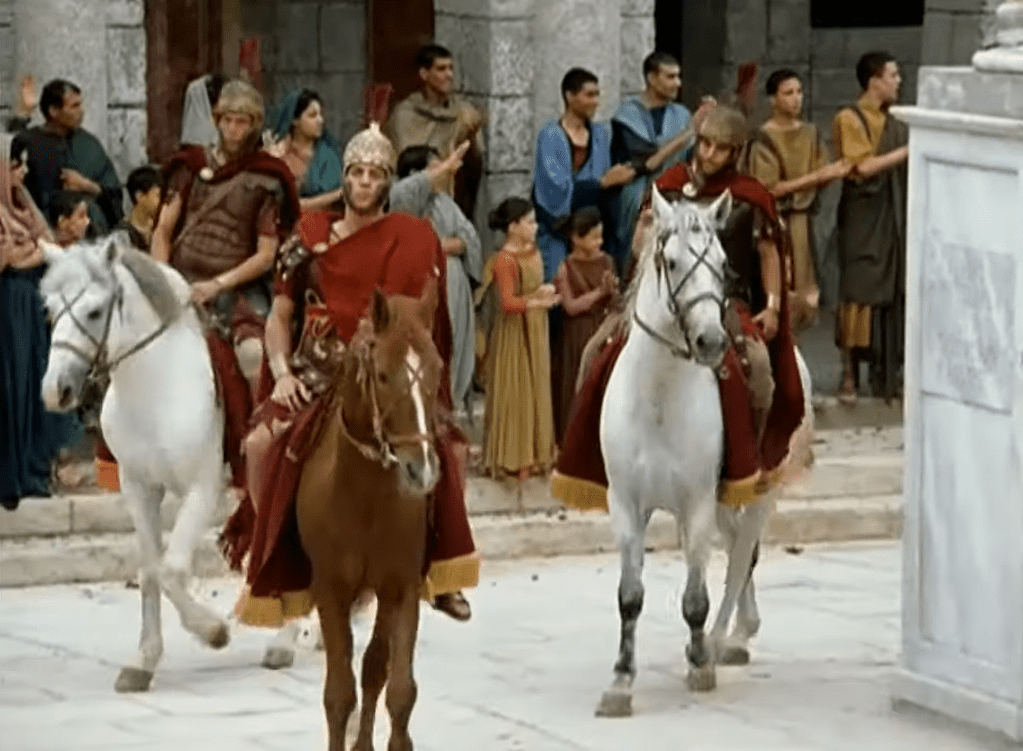 Imperium: Augustus (2003), EOS Entertainment
26. He Turned On His Frenemy
Augustus and Antony had always had a fraught alliance, and without the balance of a third person their relationship quickly devolved into potshots and feuding. As the years went on, the tension only ratcheted up, with Augustus using Antony’s relationship with Cleopatra—now three love children deep—as evidence he didn’t have Rome’s best interests at heart. And Augustus had more up his sleeve.
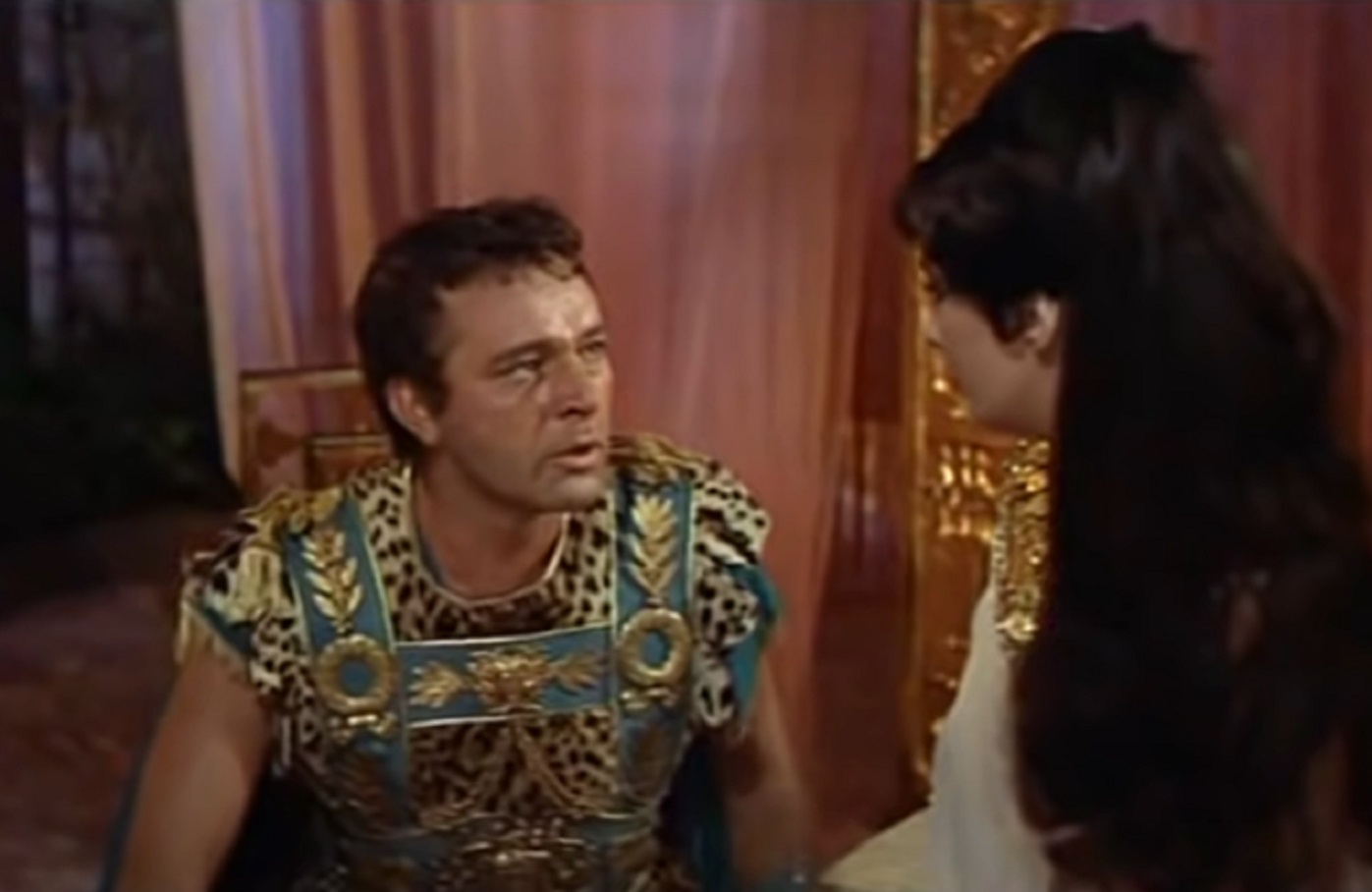 Twentieth Century Fox, Cleopatra (1963)
27. He Found A Secret Will
Eventually, almost all of Rome was divided into pro-Augustus or pro-Antony factions. Then Augustus played his ace in the hole. Augustus forced his way into the temple of the Vestal Virgins, where Roman luminaries often kept their legal documents, and found and published Antony’s secret will. Its contents destroyed Antony.
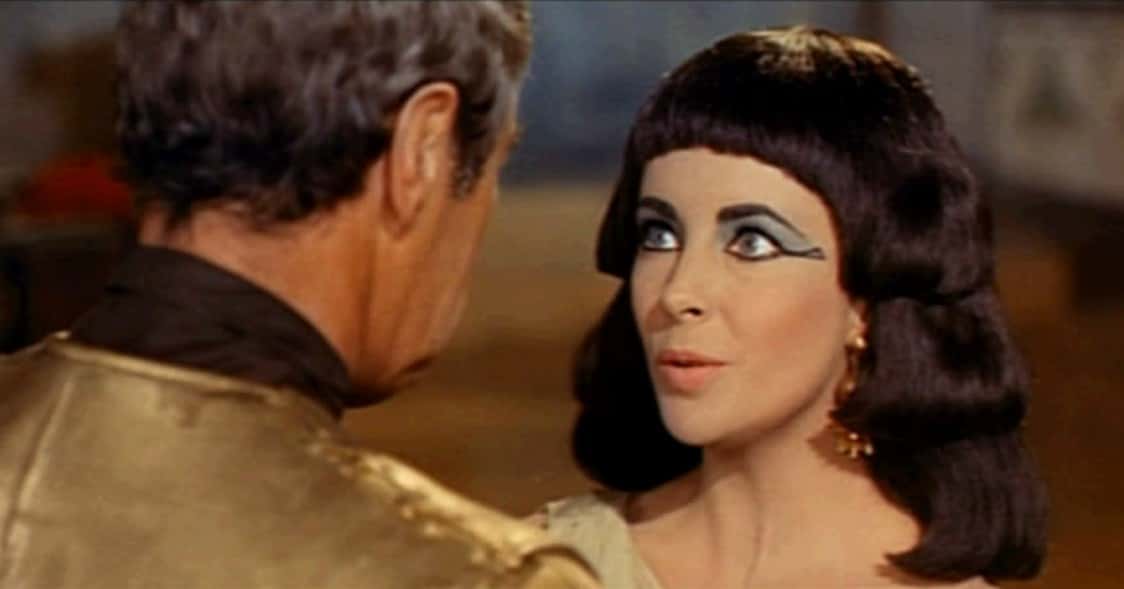 Trailer screenshot, Wikimedia Commons
28. He Exposed His Nemesis
Antony’s will was everything patriotic Romans feared it would be: In it, Antony gave Roman territories to his sons by Cleopatra, plus laid out plans for a tomb for both him and the Egyptian queen. It was the final straw for the Senate, who revoked Antony’s powers and declared war on Egypt in the name of Rome.
Well, Augustus was there to pick up the pieces.
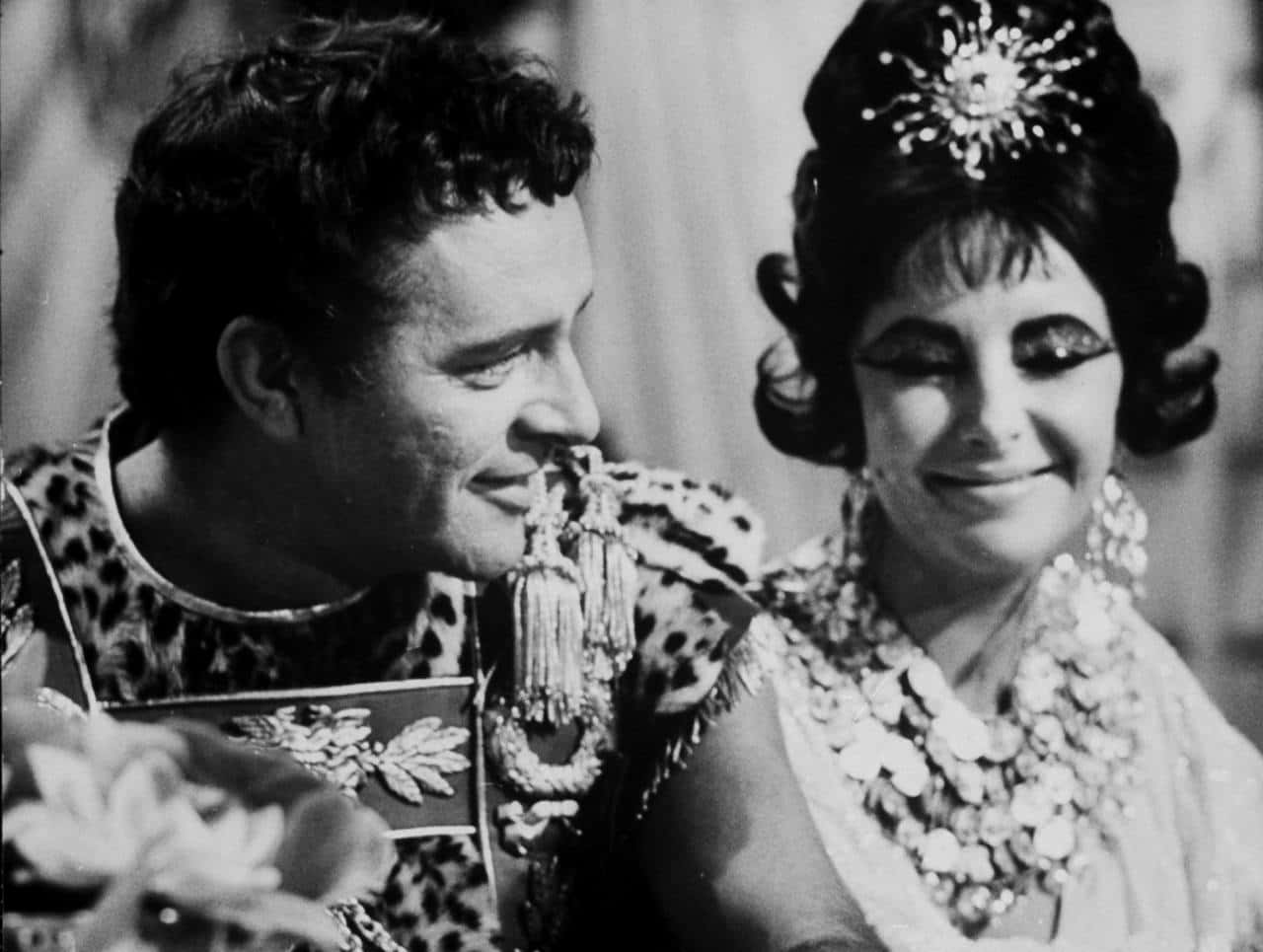
29. He Toppled His Enemy
For months, Augustus fought Antony’s forces in a series of decisive naval battles that had Antony fleeing and his men defecting almost daily to Augustus. Finally, on August 1, 30 BC, Antony conceded defeat in the most brutal way. Augustus’s long-time nemesis fell on his sword, reportedly dying in Cleopatra’s arms before Cleopatra also took her own life.
Yet even with Antony and Cleopatra gone, Augustus wasn’t out of victims.
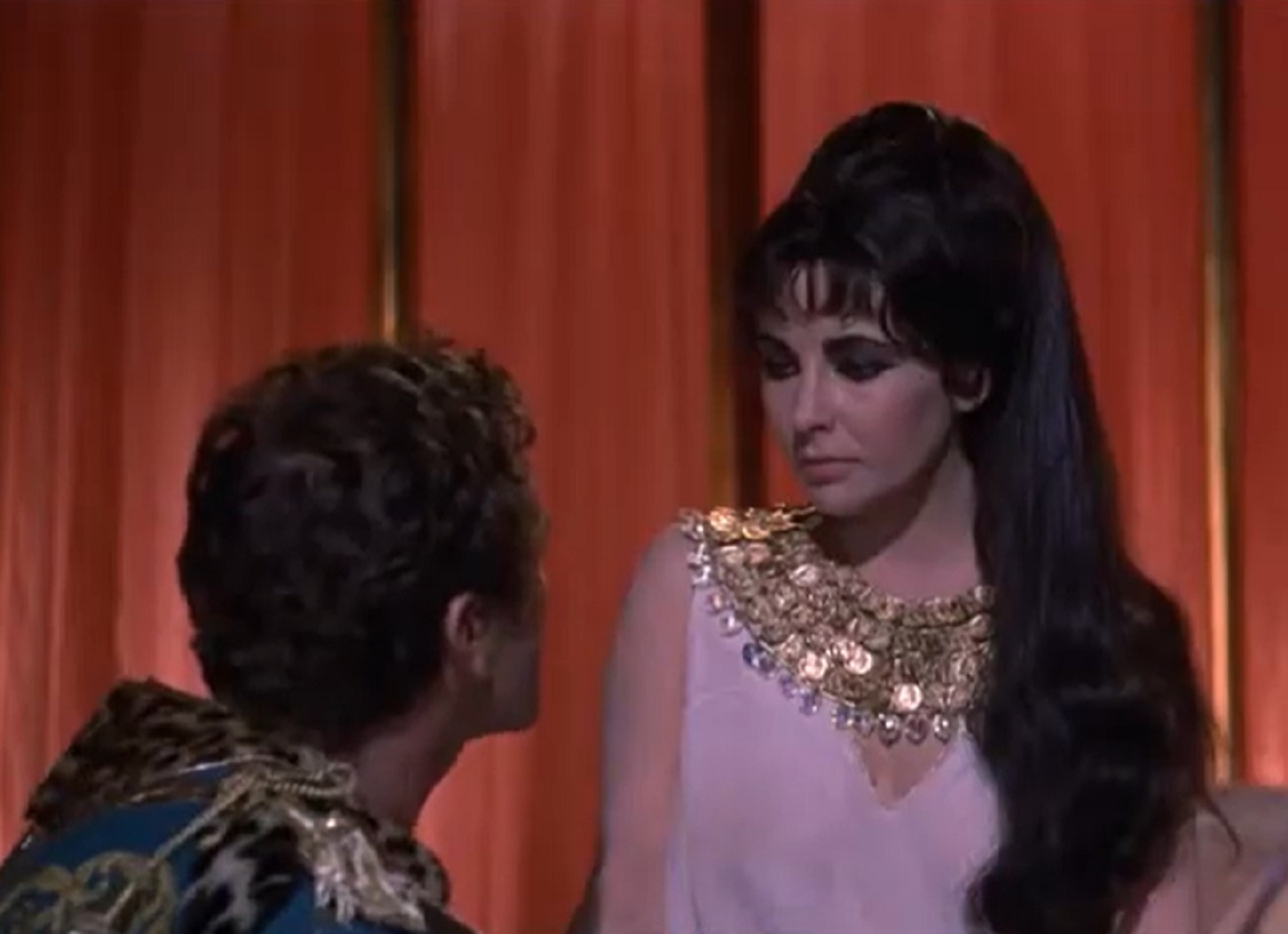 Twentieth Century Fox, Cleopatra (1963)
30. He Showed No Mercy
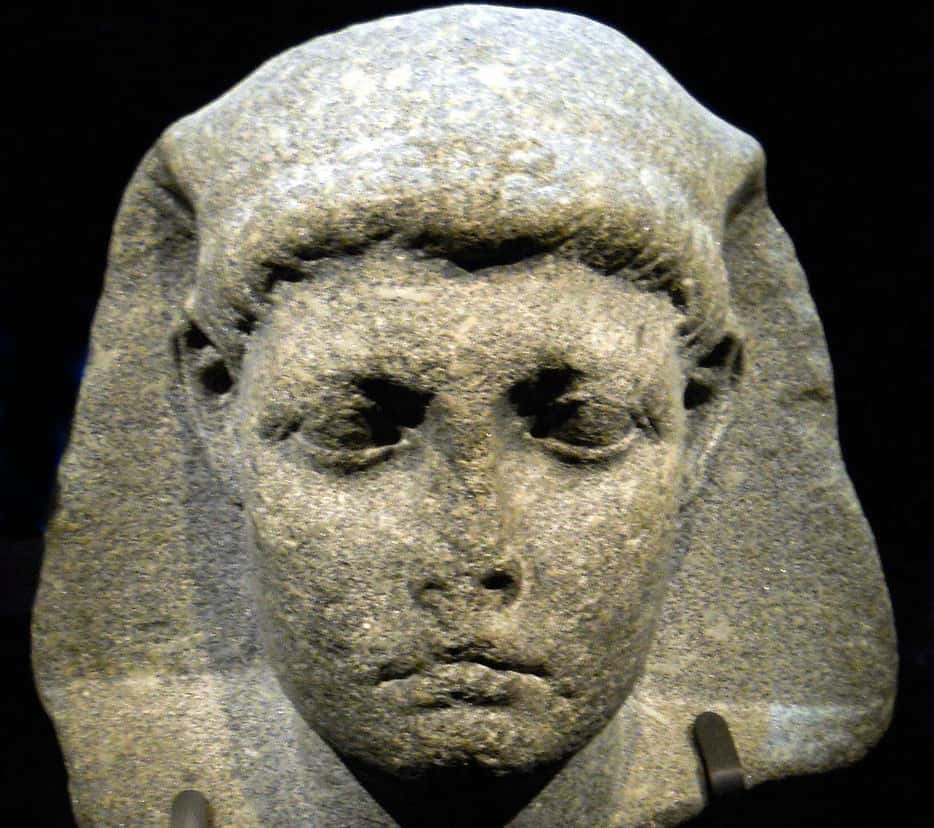
Augustus was no longer a callow boy, and he made a vicious decision. Although he allowed two of Cleopatra and Antony’s children to live, the Egyptian queen also had a love child by Julius Caesar, Caesarion, and Augustus couldn’t abide the boy surviving and later threatening his power. Following the advice that “two Caesars are one too many,” Augustus had Caesarion killed, crushing the last link to his mentor.
Augustus’s path to power was now clear of opponents—but it wasn’t free of danger.
 Sdwelch1031, Wikimedia Commons
31. His Home Was Falling Apart
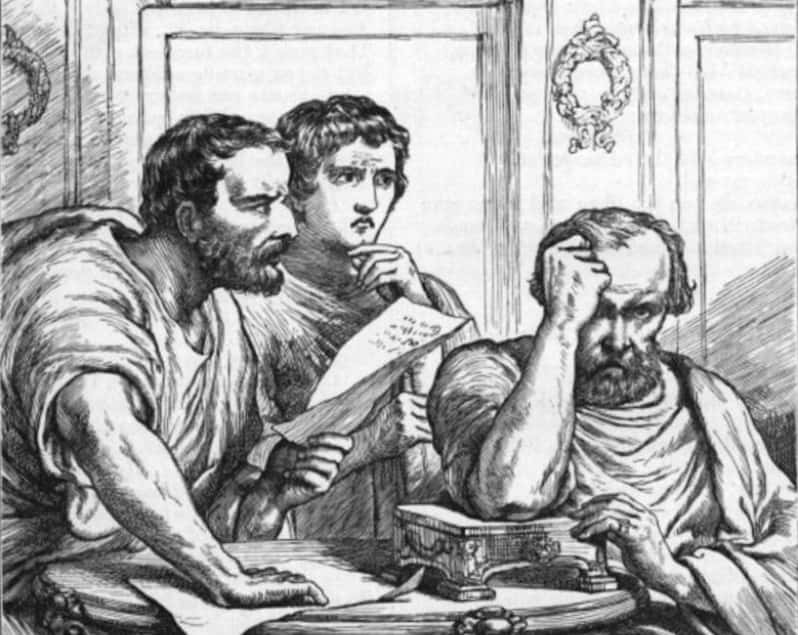
Augustus returned to Rome triumphant, but his victory was a double-edged sword. The years of unrest between Augustus and Antony had destabilized Rome to its very core, and the Republic was now in dire need of a guiding hand back to stability and the rule of law.
Then again, this was another opportunity for Augustus to gain power and become that guiding hand…but he had to be very cunning about how he did it.
 Henry Courtney Selous, Wikimedia Commons
32. He Was A Snake In The Grass
Augustus never forgot that Caesar had gone down for accruing too much power too fast, and he now built his own influence slowly, surely, and behind the scenes. He was also extremely careful to present himself as devoid of any ambitions toward dictatorship or monarchy, and instead leaned into the public image of being a “mere” restorer of the Republic….even as he made himself princeps, or “First Citizen” in the process.
It was only a matter of time, then, before a new title came his way.
33. He Became Emperor
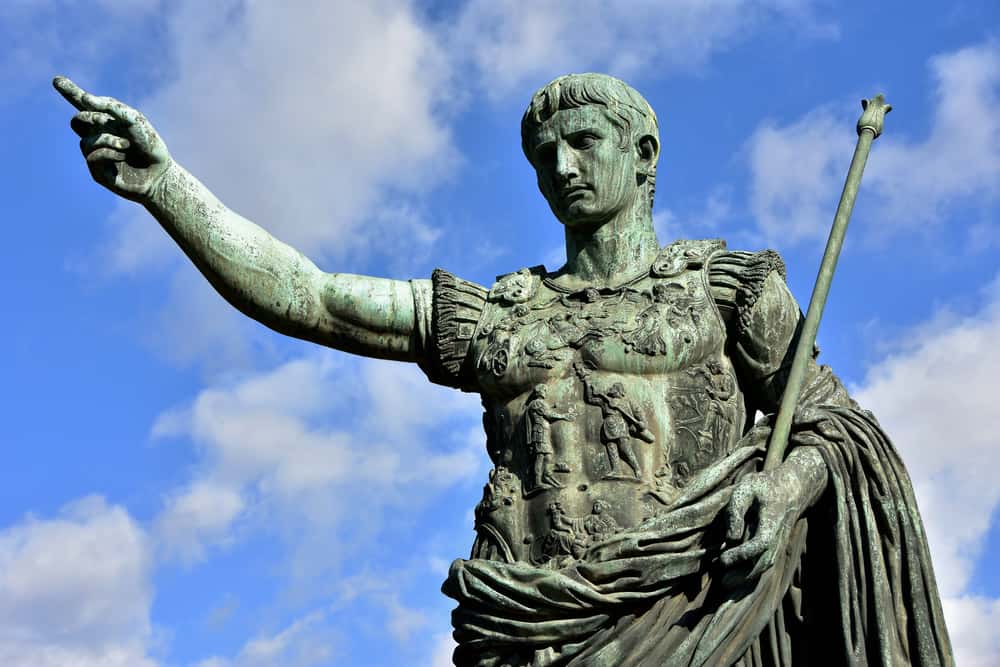
In 27 BC, the year that Augustus turned 36 years old, he achieved what Julius Caesar never did: He became, for all intents and purposes, the Emperor of Rome. That January, the Senate bestowed him the title of augustus, meaning “illustrious one” or “sublime,” the title we still know him by—and indeed, the title all Roman Emperors after him took. There was no Triumvirate, and there was no sharing power. There was just Augustus.
The power it gave him made big changes in Rome.
 EOS Entertainment, Imperium: Augustus (2003)
34. He Transformed Rome
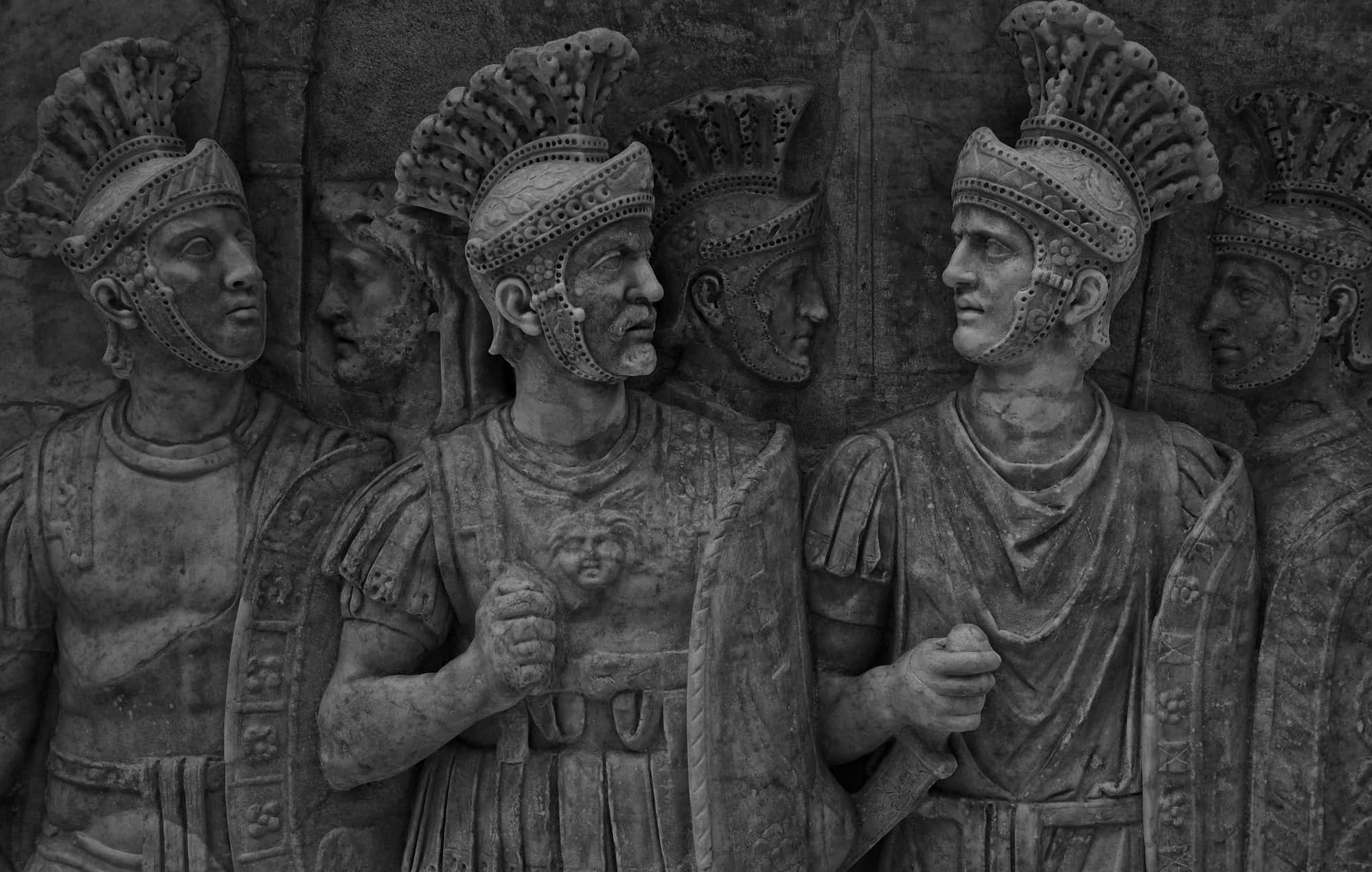
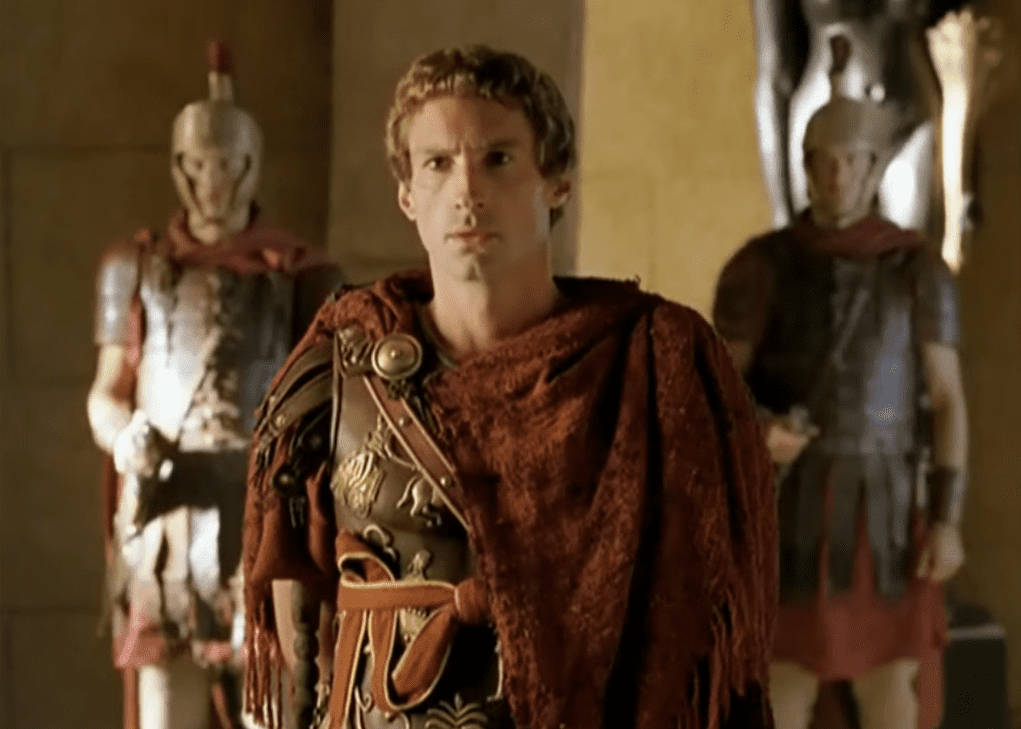
Augustus’s centralized influence allowed for rapid re-structuring of Roman society, including the Empire’s first police force, first firefighting cadre, and a host of other inaugural city officials. He also created a standing army for the entire Empire and established the infamous Praetorian Guard, which started as his personal bodyguard on the battlefield.
With his titles and his works, Augustus now neared god-like status. But inside his home, things were far from divine.
35. He Lost A Child
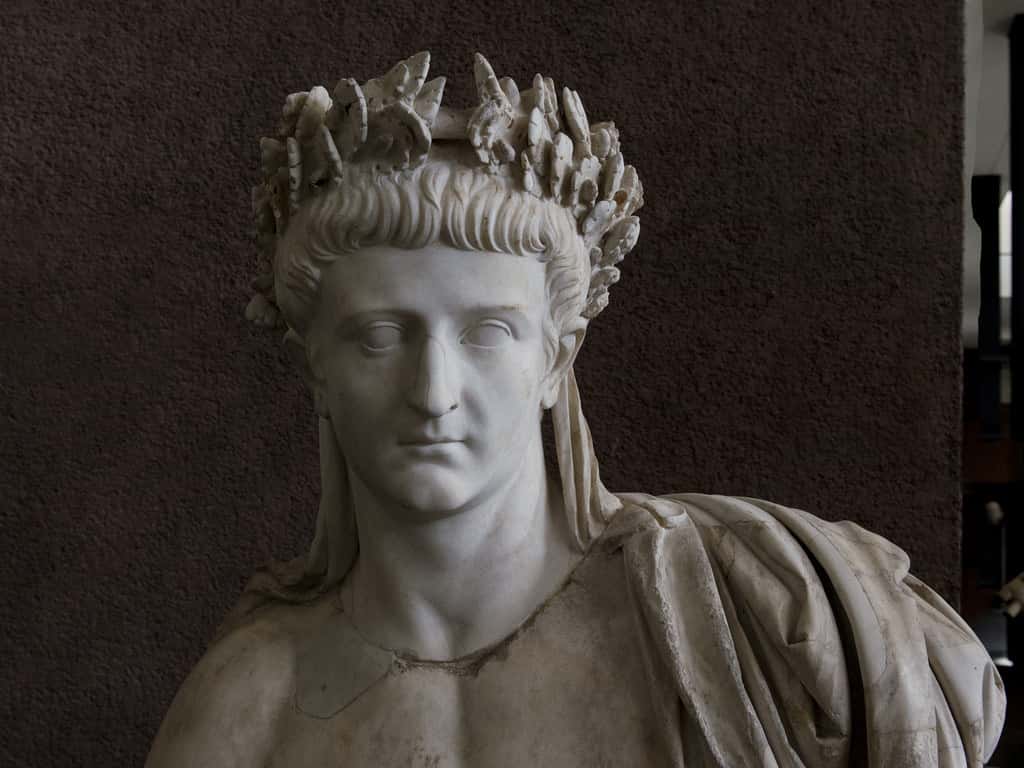
When Augustus threw away propriety and a powerful alliance to indulge in his lust and marry Livia Drusilla, he at least also had the excuse that Livia, having already had two sons, could also provide him with an heir in no time at all. But fate had crueler plans. Livia’s first pregnancy with Augustus was a stillbirth…and worse was to come.
36. His Marriage Was Barren
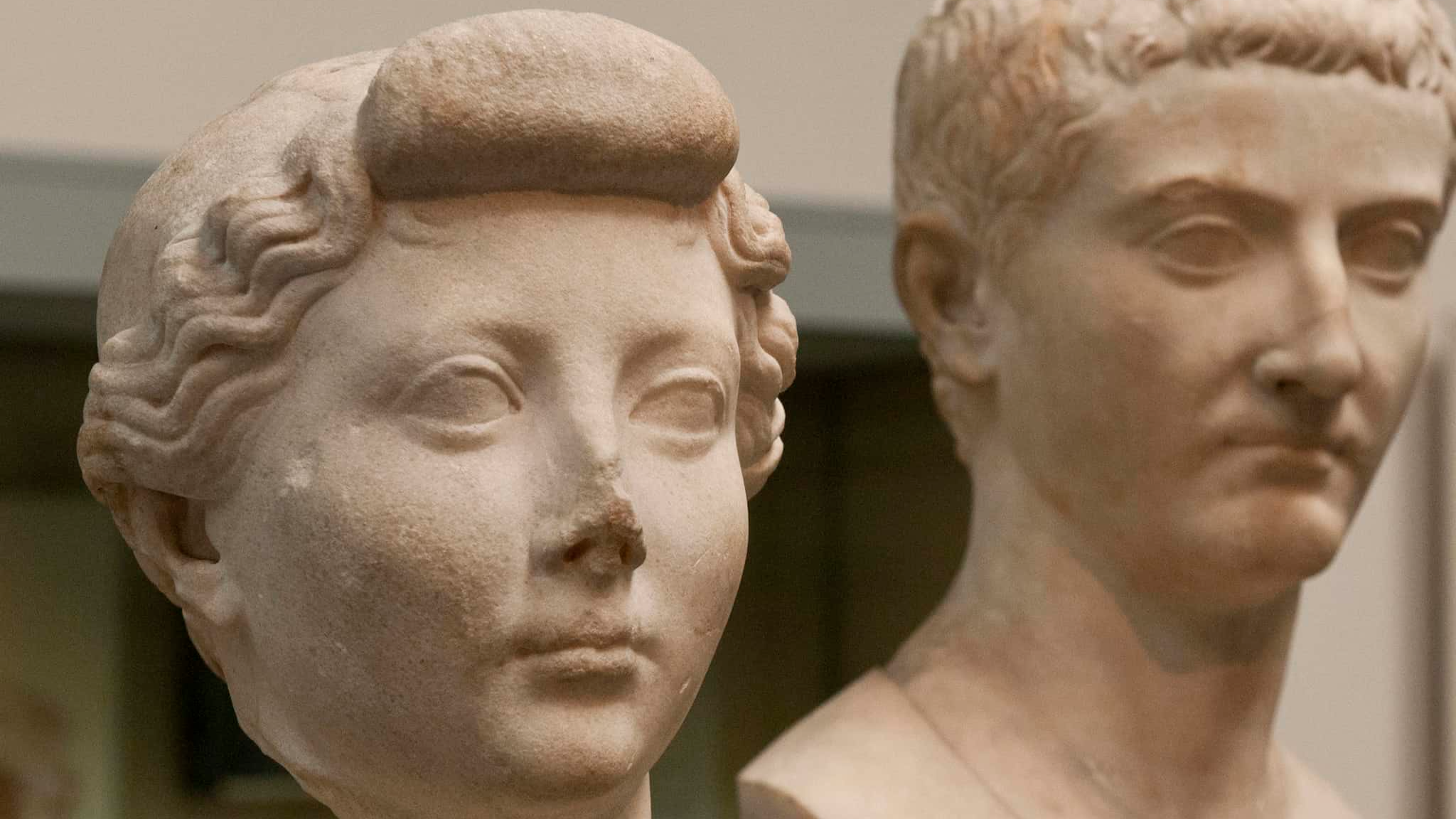
When Augustus returned home from his battles with Antony and Cleopatra, he was riding the biggest victories of his life—but his wife still hadn’t provided him with a son. In fact, she hadn’t provided him with any children at all. After the first stillbirth, it appears that Livia never conceived again, and Augustus’s daughter with his second wife Scribonia, Julia, would be his only child.
Still, this was one marriage Augustus wouldn’t leave.

37. He Was In A Power Couple
Despite their fertility issues, Augustus and Livia had an extremely successful marriage, and appeared to deeply care for one another. More than that, Livia was a no-nonsense kind of woman who wore little jewelry and shunned fashion trends—a perfect fit as Augustus rose to power but sought to downplay his own aims.
Instead, it was their children who suffered under the full glare of their parents’ ambitions.
38. He Needed Options
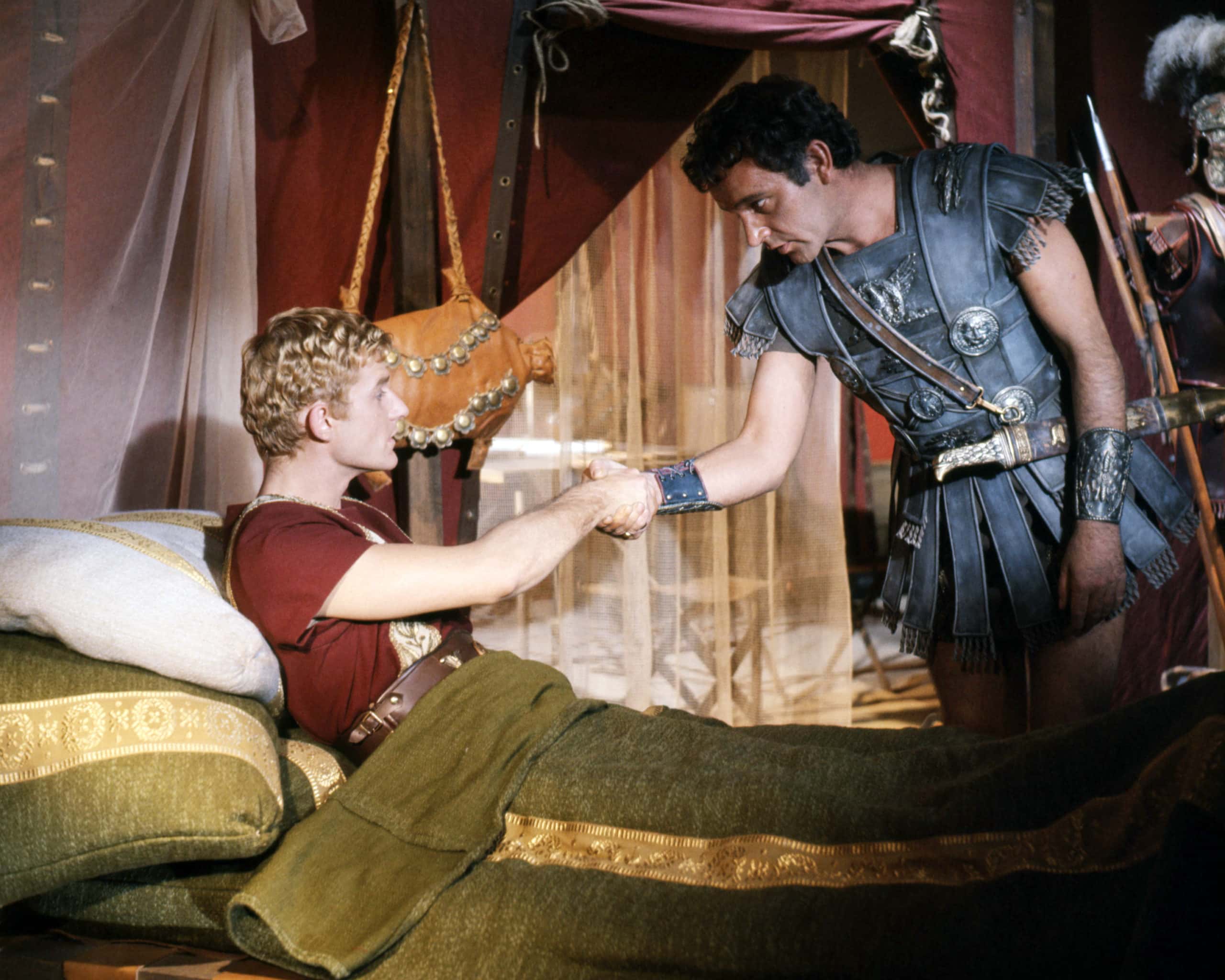
As it became clear that Augustus and Livia would have no children together, the new de facto Emperor and Empress of Rome had to change their succession plans. Livia began pushing her sons from her previous marriage, Tiberius and Drusus, into more and more positions of power, and the pair looked into advantageous marriages for them. But their best laid plans began to fall apart.
39. His Favorite Perished
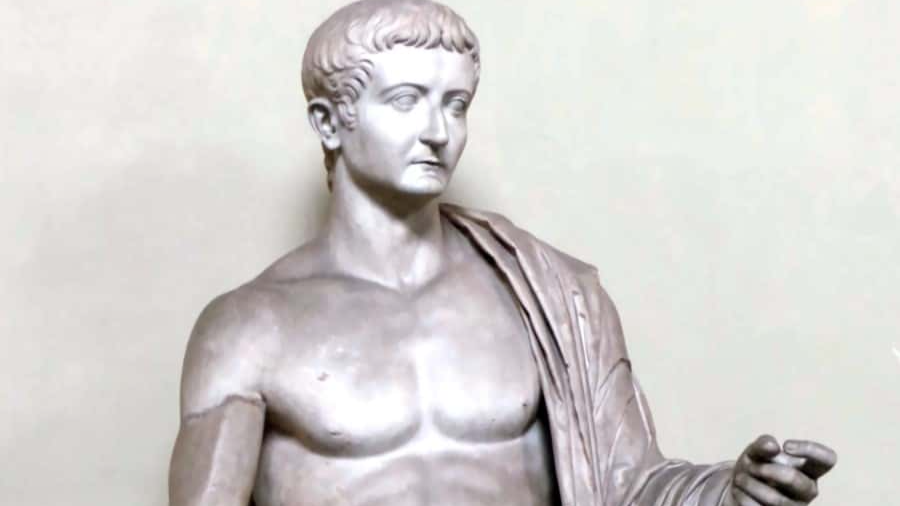
For a time, Drusus seemed to be the chosen one to succeed Augustus; the Emperor even married his stepson to his favorite niece, Antonia, and waited for the dynastic stability to come pouring in. Instead, Augustus got tragedy. Drusus was slain in a riding accident in 9 BC, and Augustus had to go back to the drawing board.
40. He Was A Nightmare Father
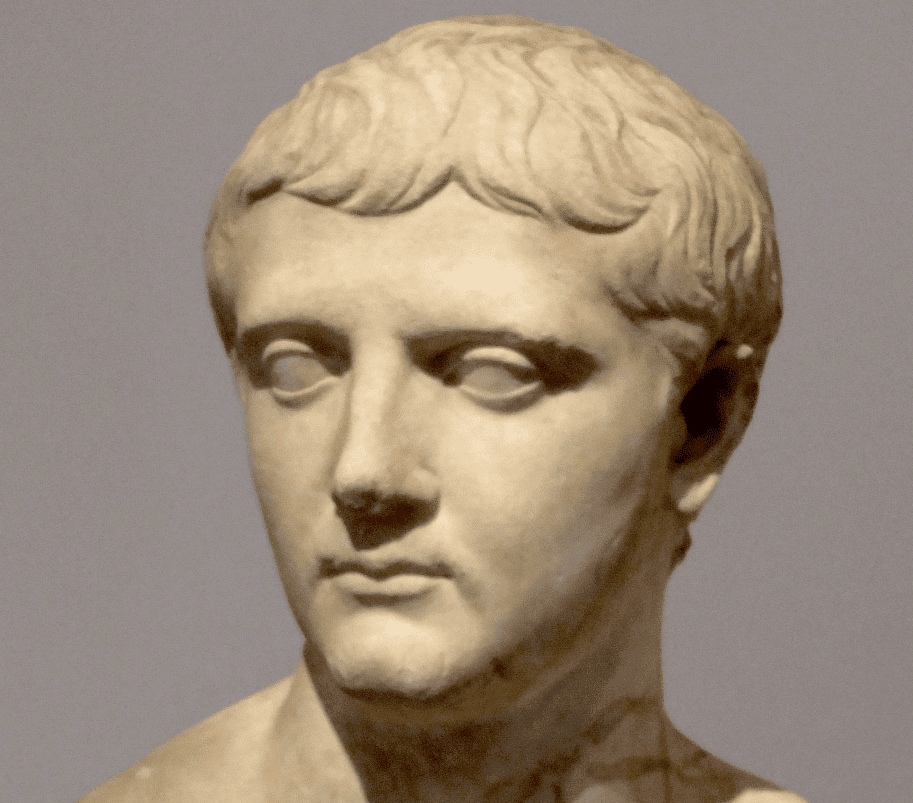
Augustus was an old fashioned—even for Ancient Rome—and controlling father to Julia. He dictated nearly everything his only daughter did, and she couldn’t even talk to someone unless Augustus approved of them first. As he once said: "There are two wayward daughters that I have to put up with: the Roman commonwealth and Julia”.
So it’s no surprise his marriage plans for her were diabolical.
 OSTILL is Franck Camhi, Shutterstock
41. His Daughter Was A Puppet
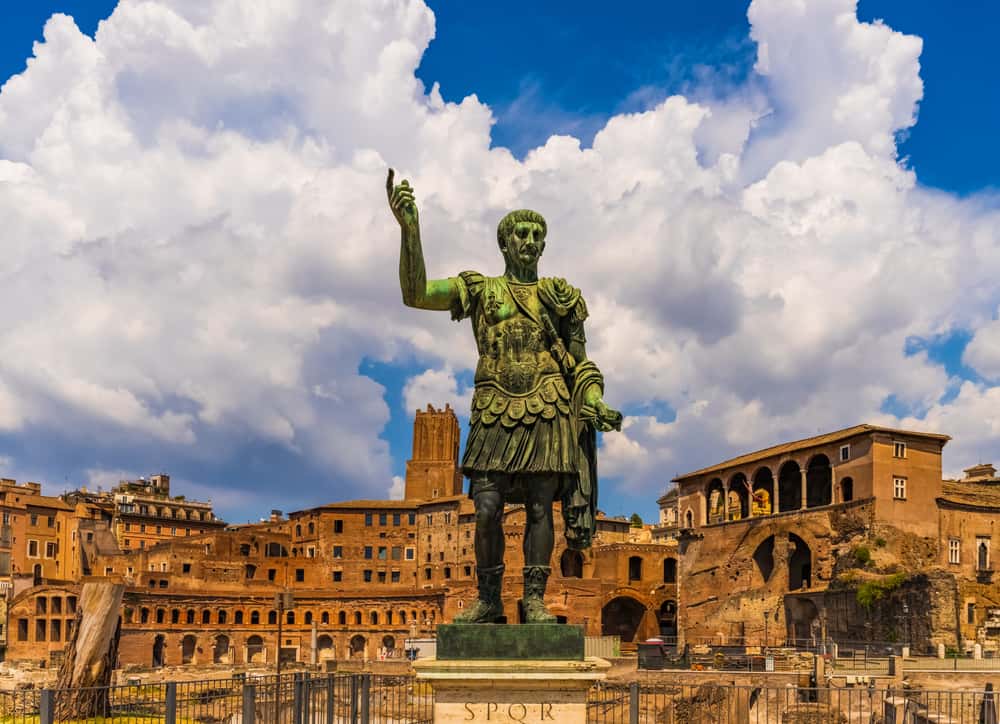
Following his controlling father instincts, Augustus treated Julia as a bridal pawn. Her first wedding was to her cousin when she was 14, and after that cousin perished young, she married her father’s right-hand man, Marcus Agrippa. Perhaps unsurprisingly, this too was not a blessed union: Although they had three sons together, rumors swirled that Julia was unfaithful.
Still, Julia couldn’t have been happy when Agrippa perished in 12 BC, particularly since when he passed she was still pregnant with their last son. Augustus, however, pounced on the opportunity.
 Carole Raddato from FRANKFURT, Germany, Wikimedia Commons
42. He Ordered His Daughter To Remarry
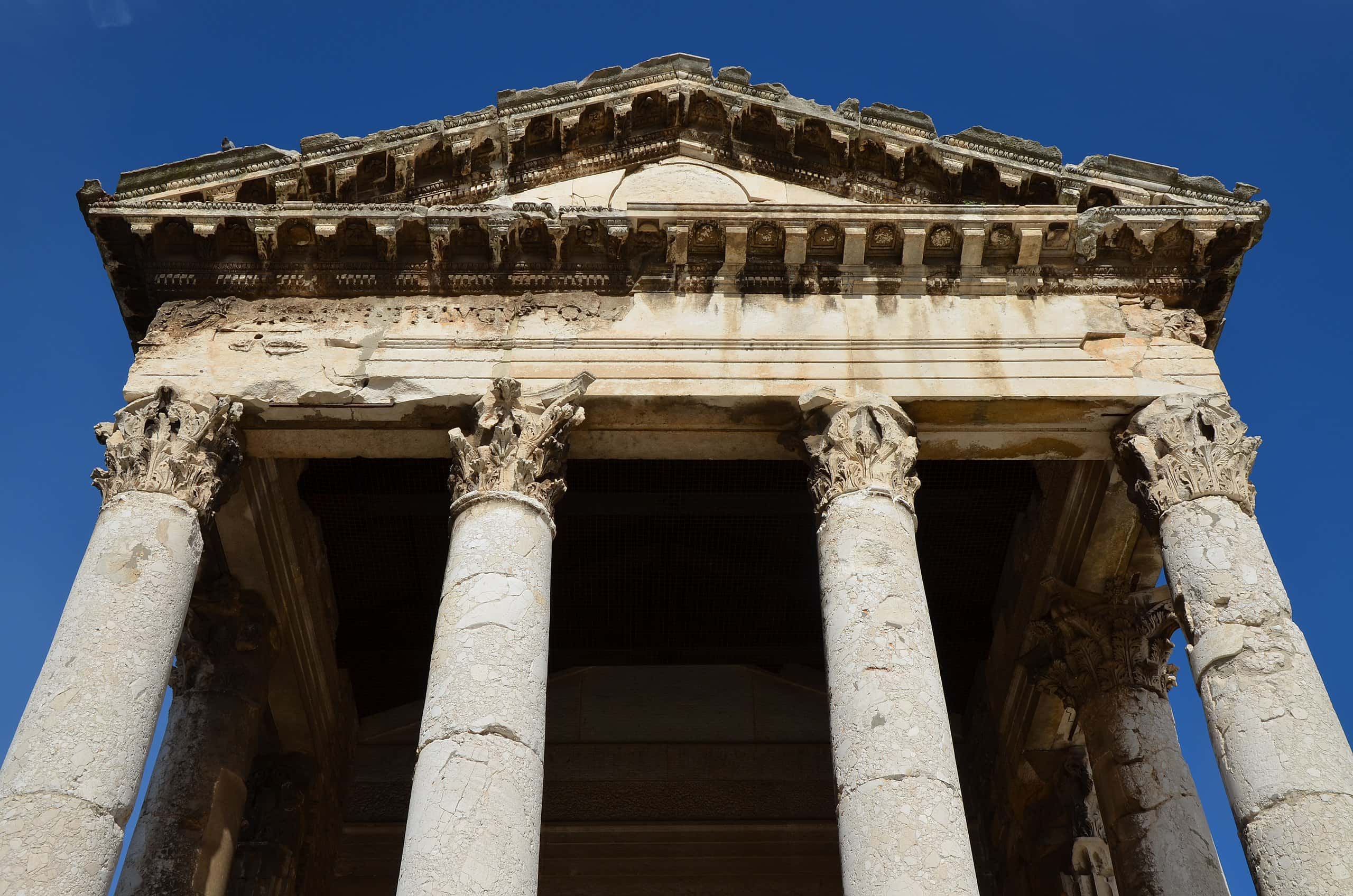
Augustus may have mourned the loss of his beloved friend and lieutenant Agrippa, but he certainly didn’t let it show on the outside. The minute that Julia had her baby, Augustus pulled his usual move and had her married off again, this time to her stepbrother Tiberius, who Augustus was considering as his heir.
This was, like so much of Augustus’s matchmaking, a terrible idea.
43. He Was A Cruel Matchmaker
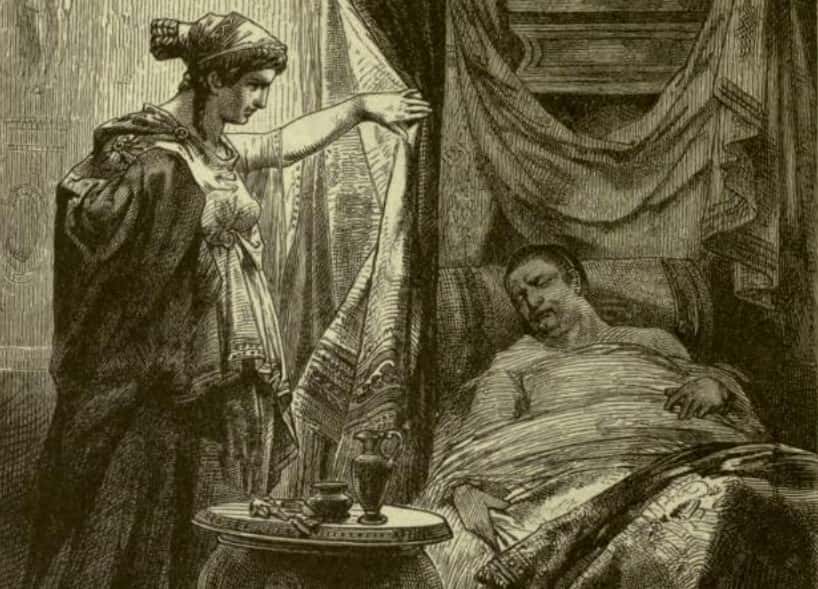
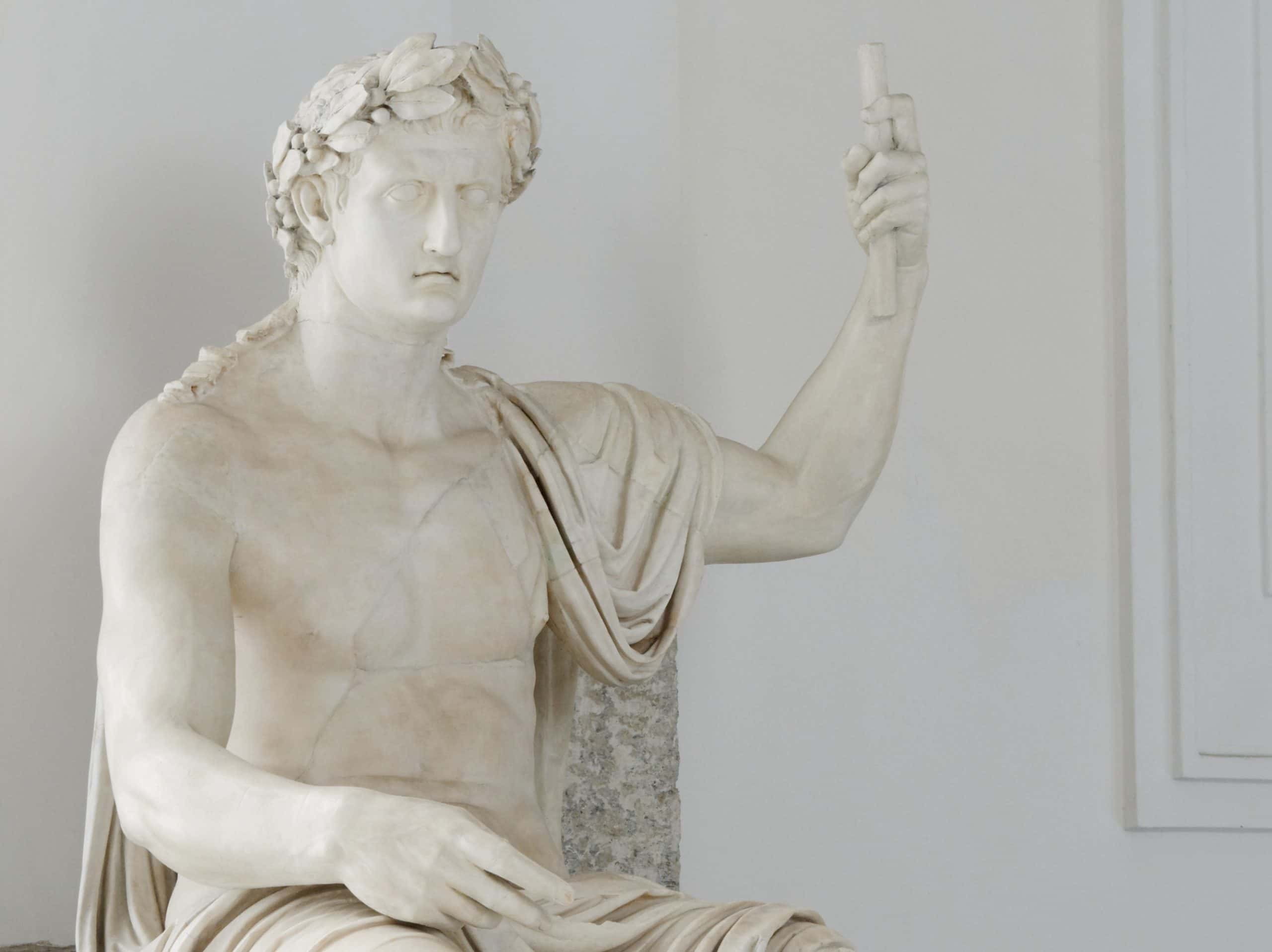
Just before he married Augustus’ daughter, Tiberius had been married to another woman, Vipsania, who he loved and adored—and who he was now forced to divorce because the Emperor of Rome said so. More than that, Tiberius had heard the whispers of Julia’s affairs, and he was less than pleased with his new bride.
Still, Augustus was satisfied with the union even if no one else was. But it would all catch up to him.
 Naples National Archaeological Museum, Wikimedia Commons
44. He Promoted His Grandsons
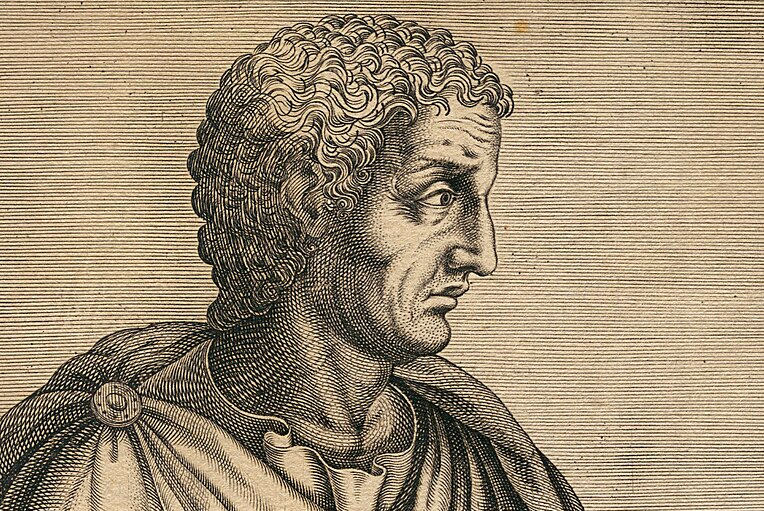
For a time, Augustus thought he had it all. No, Tiberius and Julia weren’t happy, but he also had Julia’s elder sons from her earlier marriage, Gaius and Lucius. And sure, her third son, Marcus, was a black sheep of the family, a “vulgar young man, brutal and brutish, and of depraved character,” who could never be Emperor of Rome—but who needed more than two solid heirs anyway?
So, Augustus felt his succession was more than secure. He should have thought again.
 Bibliotheque interuniversitaire de Sante, Wikimedia Commons
45. He Lost Everything
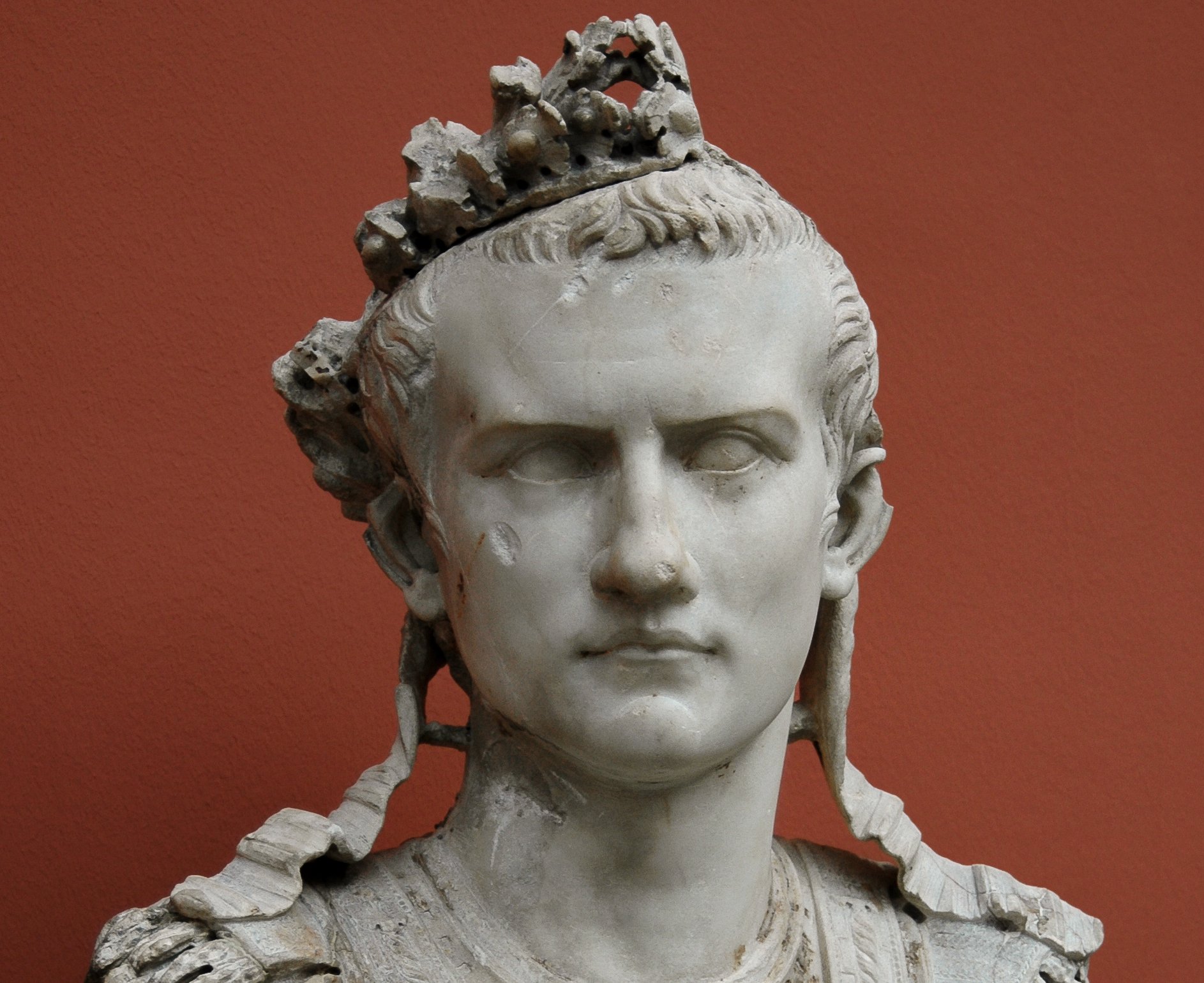
For a man who made so many frenetic marriages, Augustus had trouble getting and keeping heirs. In 2 BC, the rumors became fact and Julia was apprehended for adultery, forcing Augustus to declare her marriage to Tiberius null and void and cutting off the possibility of further heirs. The blows kept coming, though. In 2 AD, Augustus’s grandson Lucius perished, followed by his other grandson Gaius two years later.
In the blink of an eye, Augustus had nothing again. There was only one choice left.
 Sergey Sosnovskiy, CC BY-SA 2.0, Wikimedia Commons
46. He Finally Named A Successor
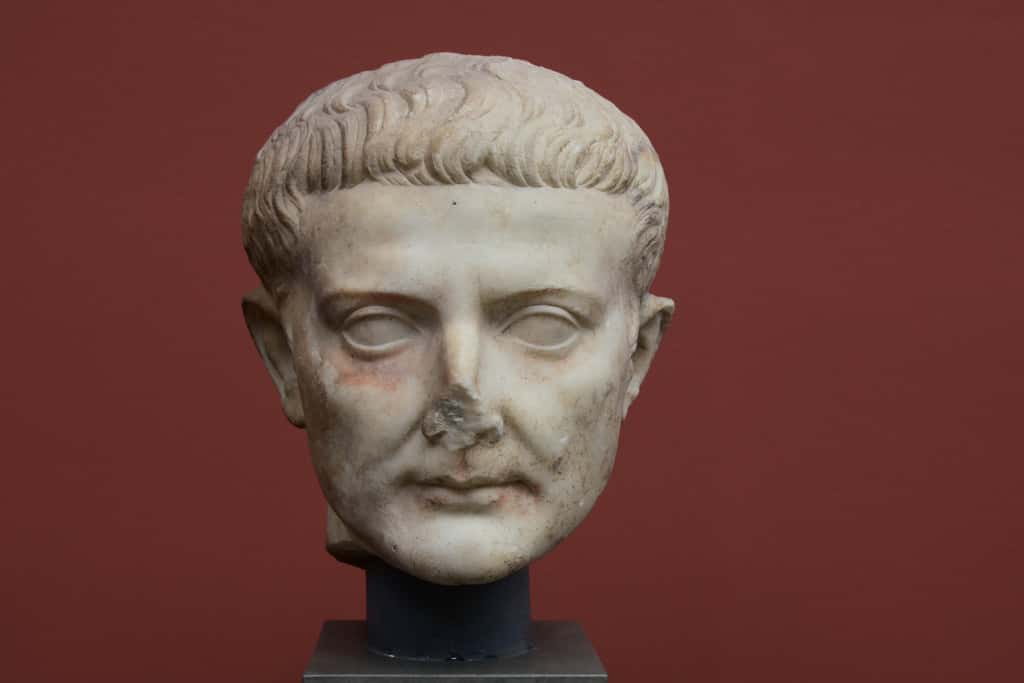
Out of blood relatives, in 4 AD Augustus called his stepson Tiberius to Rome—he had been hiding out after his miserable marriage—and officially adopted him, choosing him as his successor once and for all. Then he laid it on thick: He granted Tiberius the powers of a tribune and a proconsul, and lauded him with various titles and awards as his official, for real this time and he won’t die, heir. Then he set about teaching him.
47. He Taught Him The Ways Of Power
Augustus was fast approaching his 70s when he committed to Tiberius as his successor, an absolute eon for anyone in Ancient Rome. Nonetheless, he managed to shepherd Tiberius in the various ways of power for another decade, and—perhaps most surprisingly—Tiberius thanked him for it, often defending Augustus against critics despite all the turmoil the Emperor had put him through.
But all reigns must come to an end.
48. He Was An Actor
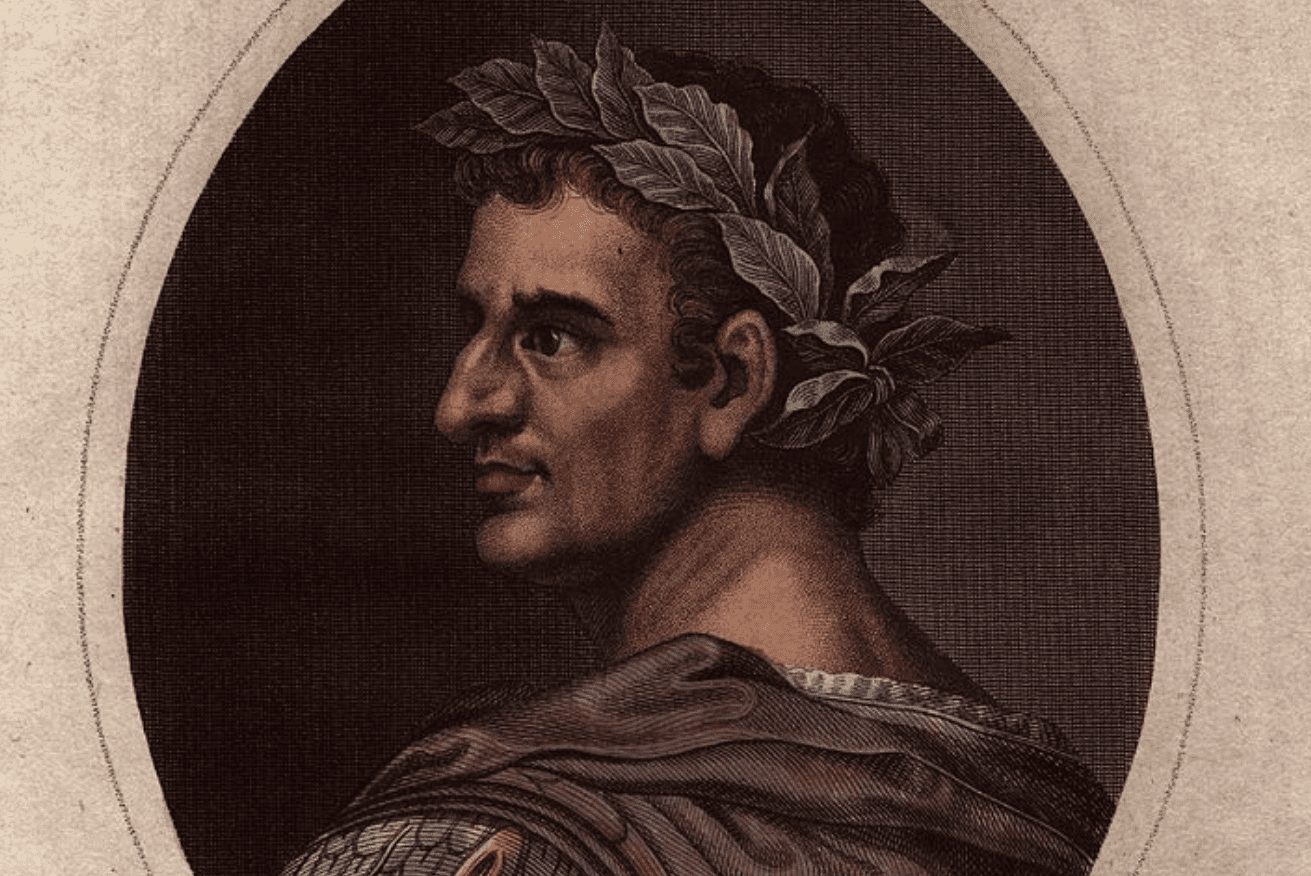
In August of 14 AD, the 75-year-old Augustus passed while visiting the city of Nola, turning Tiberius into the next Emperor. His last words were telling. According to reports, he said, “Have I played the part well? Then applaud as I exit”—words that reflect his tightly controlled image in Roman society and just how hard he worked to maintain it.
But according to some, it was at the very end that Augustus lost control.
49. His Wife May Have Poisoned Him
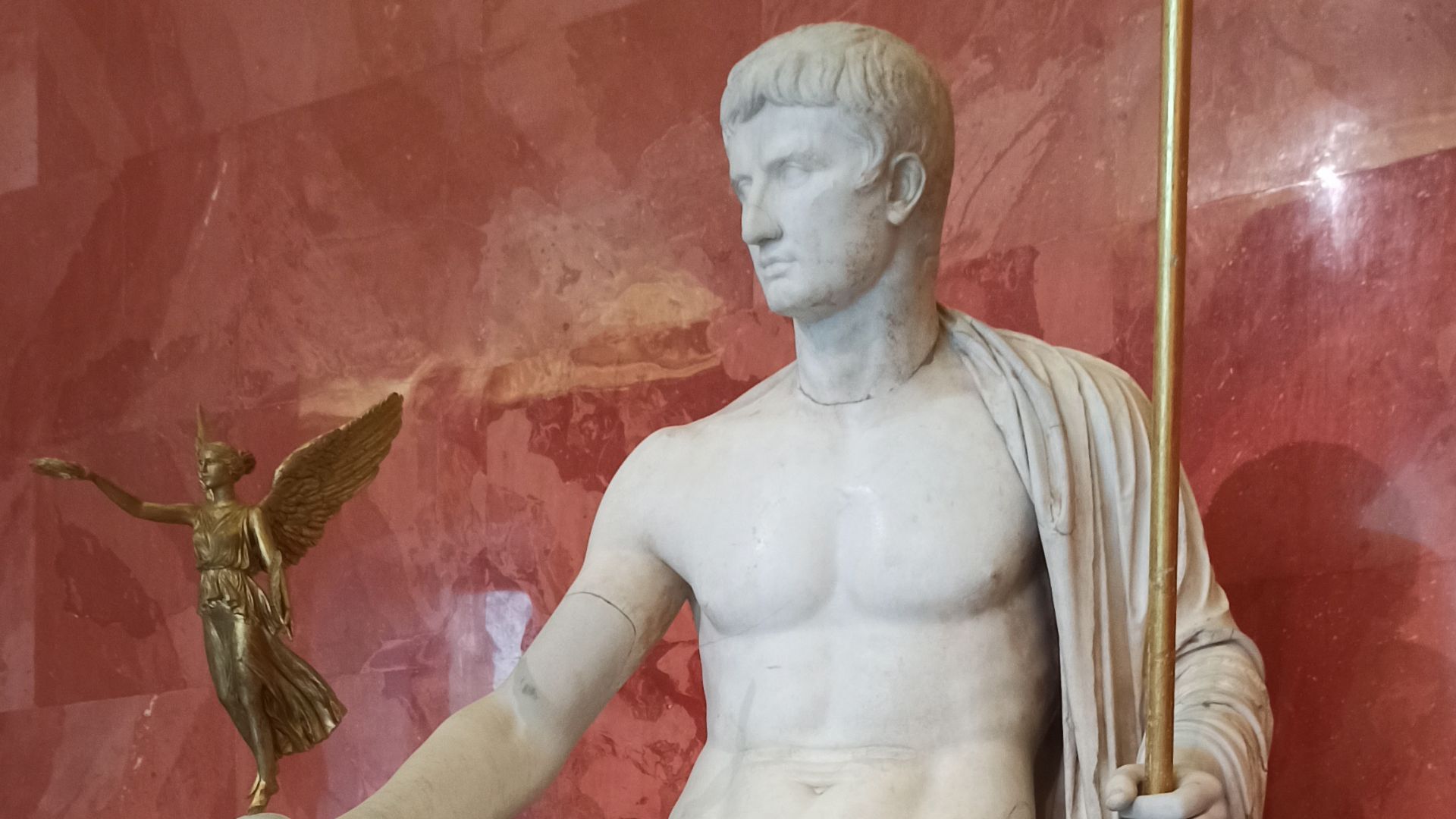
According to both Tacitus and Cassius Dio, Augustus didn’t have a natural demise: at the very end, his wife Livia poisoned him with fresh figs. Although some view this supposed event as a rumor spread by Augustus’s enemies, there is a more chilling possibility. Livia, always steadfast, may have poisoned Augustus, who had been suffering from health issues for years, at his own request.
Ever fixated on his image, Augustus may have wanted to control the timing of his demise.
50. He Was The First Of His Kind
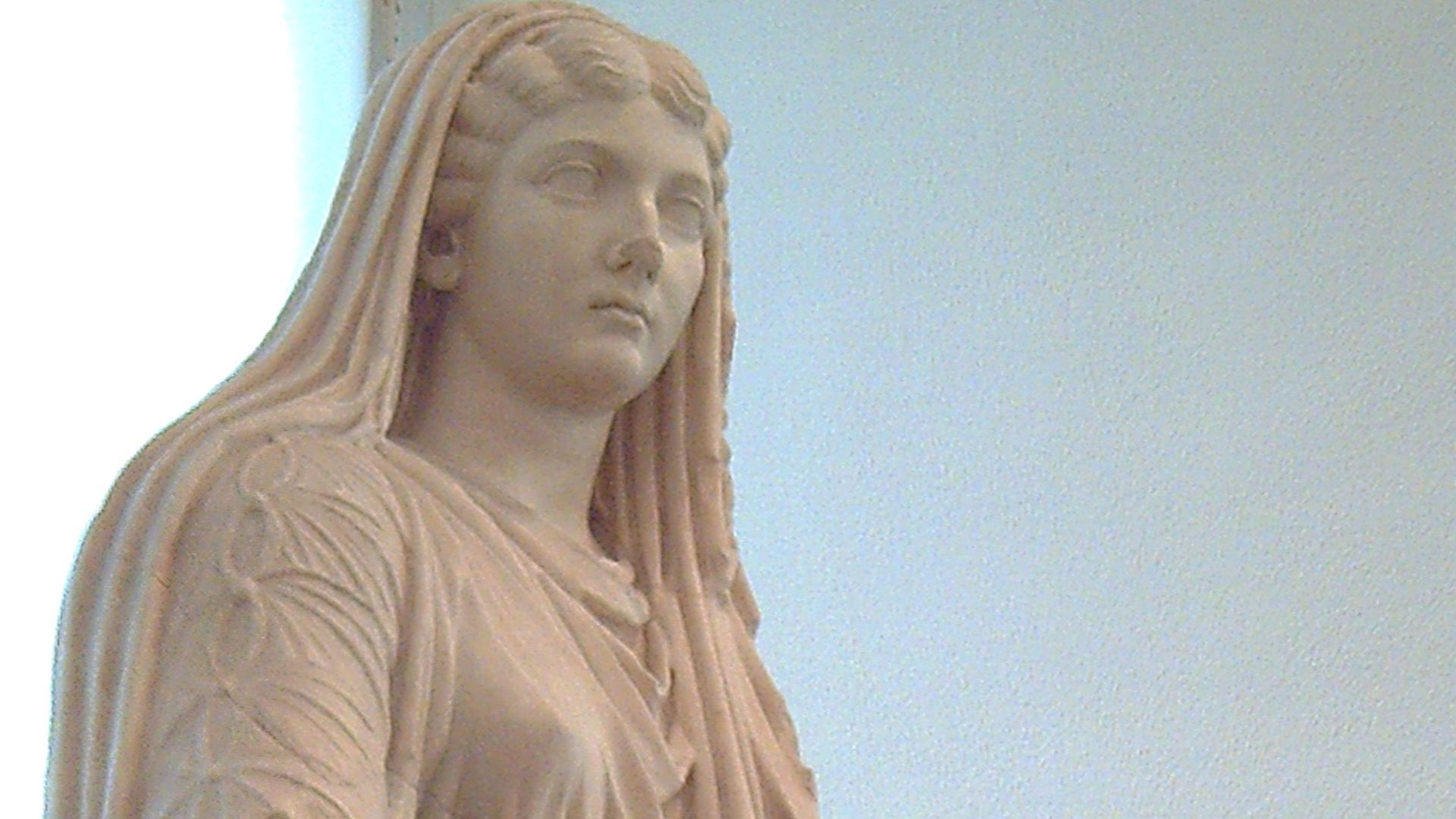
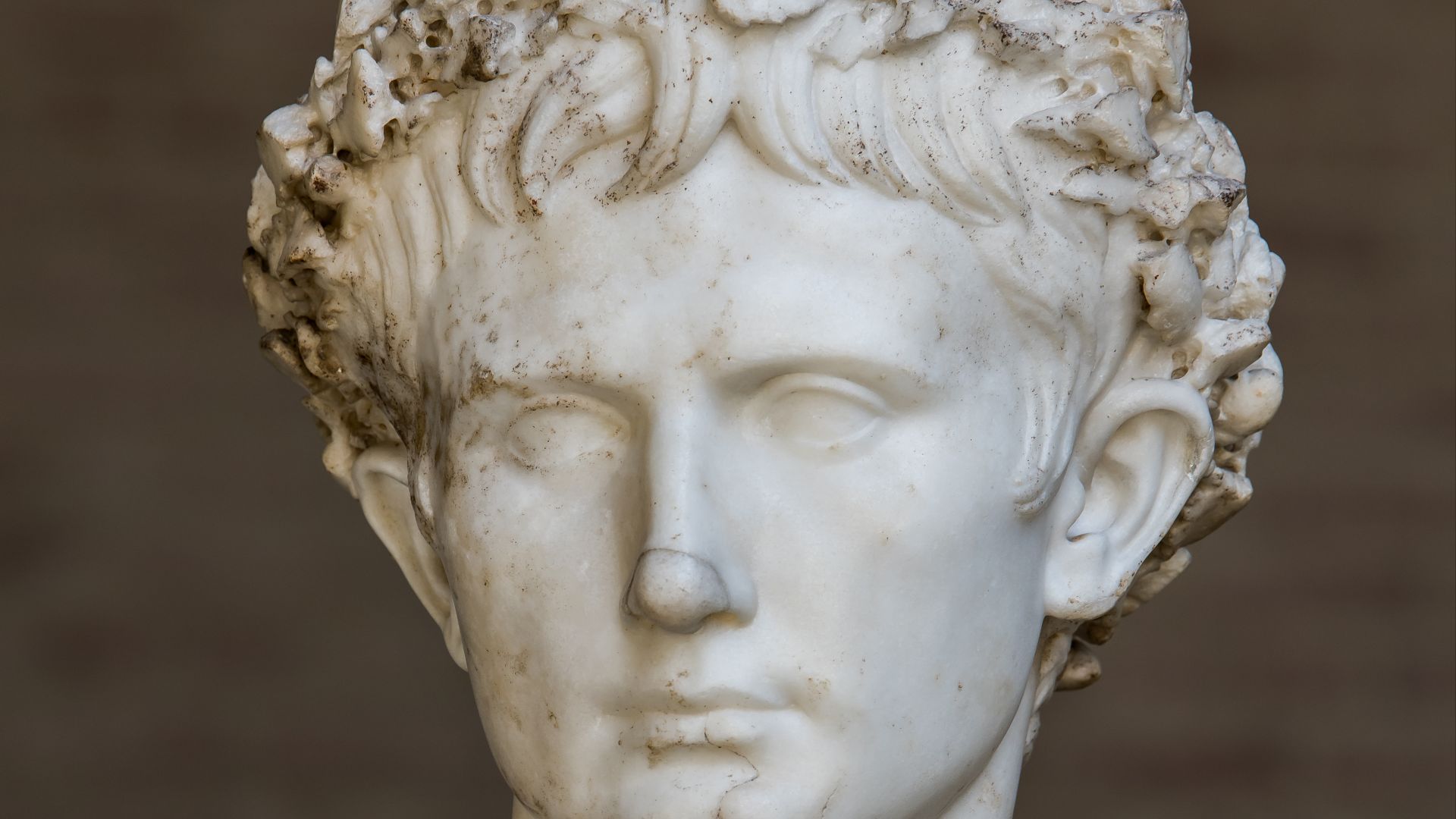
Augustus blazed a path in Rome that would continue on for centuries, and he did it by shoring up money, consolidating power, and playing the pitch-perfect part of a humble administrator—that is, when he wasn’t destroying marriages for the sake of his own blighted succession.
For all that, it worked. As he boasted on his deathbed, "I found a Rome of bricks; I leave to you one of marble”.
 Dan Mihai Pitea, Wikimedia Commons
You May Also Like:
Charles The Bold, The Scourge Of France
The Last Queen Of France
King Francis II, France’s Doomed Boy King











.jpg)

.jpg)
_-_Monument_of_Agonothetes.JPG)


_(29074219390).jpg)
.jpg)


.jpg)

.jpg)

_CIPB1135_(cropped).jpg)
.jpg)