
The Patient Who Thanked Me for Everything
I'll never forget the first time I met Jeannie. She was sitting up in her hospital bed when I came in for my shift, and the first thing she did was smile at me like I'd just done her the biggest favor in the world—even though I hadn't done anything yet except walk through the door. 'You must be Sarah,' she said, her voice soft but warm. 'Thank you for taking care of me.' I wasn't used to that. Most patients are scared or angry or in too much pain to think about pleasantries. But Jeannie was different. She had this quiet dignity about her, the kind that comes from years of grace under pressure. I noticed the framed photo on her bedside table—a man with kind eyes, probably her late husband. She caught me looking and said, 'That's Harold. He would have liked you.' I felt something tighten in my chest. She was so sweet, so grateful for every small thing I did. But there was one thing that stood out from the very first day—she was almost always alone.
 Image by FCT AI
The Diagnosis No One Wants to Hear
Dr. Martinez came in the next morning to deliver the prognosis I'd been dreading. I stood by the window while he sat down next to Jeannie's bed, his expression careful and practiced. 'Mrs. Patterson,' he said gently, 'the cancer has spread more aggressively than we hoped. We're looking at weeks, not months.' I watched Jeannie's face, expecting tears or denial or anger. Instead, she just nodded slowly, like she'd already known. 'How many weeks?' she asked, her voice steady. Dr. Martinez hesitated. 'It's hard to say exactly. Maybe four to six, possibly less.' She took a deep breath and folded her hands in her lap. 'Then I'd better make the most of them,' she said quietly. The doctor gave her some information about palliative care options and left. I busied myself checking her IV, trying not to let my own emotions show. As the doctor left, Jeannie asked me when her daughter was supposed to arrive—and I realized I hadn't seen anyone visit yet.
 Image by FCT AI
The Daughter Who Barely Stayed
Carol finally showed up three days later, sweeping into the room like she had somewhere more important to be. She was probably in her early fifties, dressed in expensive-looking clothes, and she barely glanced at her mother before pulling out her phone. 'Hi, Mom,' she said, her tone clipped and businesslike. 'I can't stay long. I have a meeting at two.' Jeannie's whole face had lit up when Carol walked in, but I watched that light dim as her daughter stayed by the door, scrolling through emails. They talked for maybe ten minutes—Carol asking practical questions about insurance and medical directives, Jeannie trying to steer the conversation toward family memories. It felt awkward and cold. When Carol finally left, she squeezed her mother's hand for exactly two seconds and said, 'I'll try to come back this weekend.' I busied myself with the medication cart, pretending I hadn't noticed. After Carol left, I found Jeannie staring at the doorway with an expression I couldn't read—something between sadness and resignation.
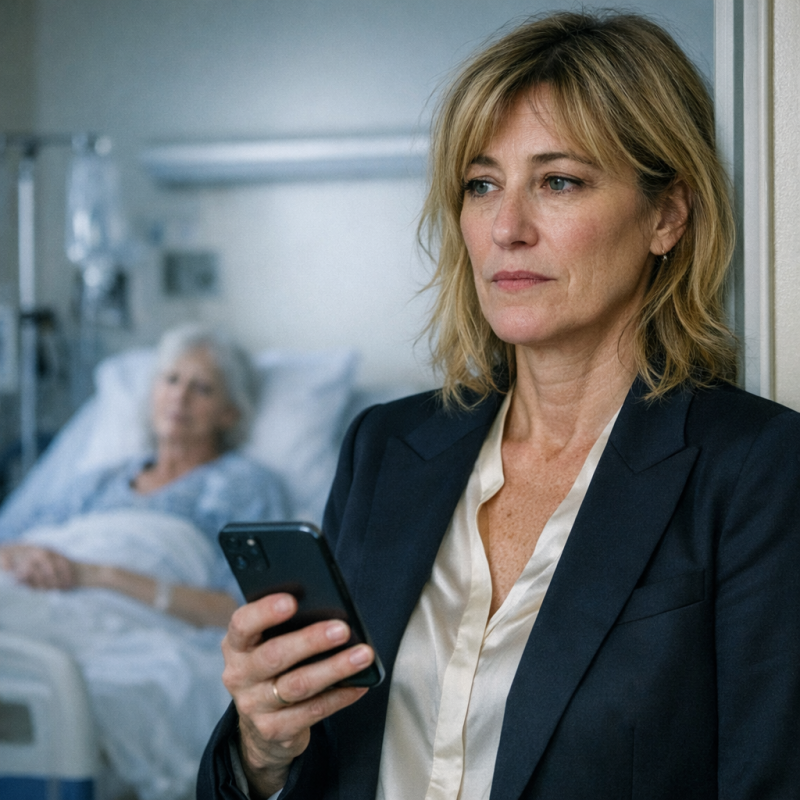 Image by FCT AI
The Nurse Who Noticed Everything
I talked to my colleague Rachel about it during our break that evening. We were in the staff lounge, both of us exhausted, and I couldn't stop thinking about the way Carol had barely looked at Jeannie. 'Is it normal for families to be like that?' I asked, stirring my terrible coffee. Rachel had been a hospice nurse for fifteen years—she'd seen everything. She shrugged and leaned back in her chair. 'Some families check out emotionally before the patient actually dies,' she said. 'It's their way of protecting themselves from the grief, I guess. Doesn't make it right, but it happens.' I thought about Jeannie's grateful smile, the way she thanked me for the smallest things. 'She seems so alone,' I said quietly. Rachel nodded, her expression sad. 'The hardest cases are the ones where you can see they were good people who deserved better.' She took a sip of her own coffee and looked at me. 'Sometimes the worst part isn't dying—it's being forgotten before you're gone.'
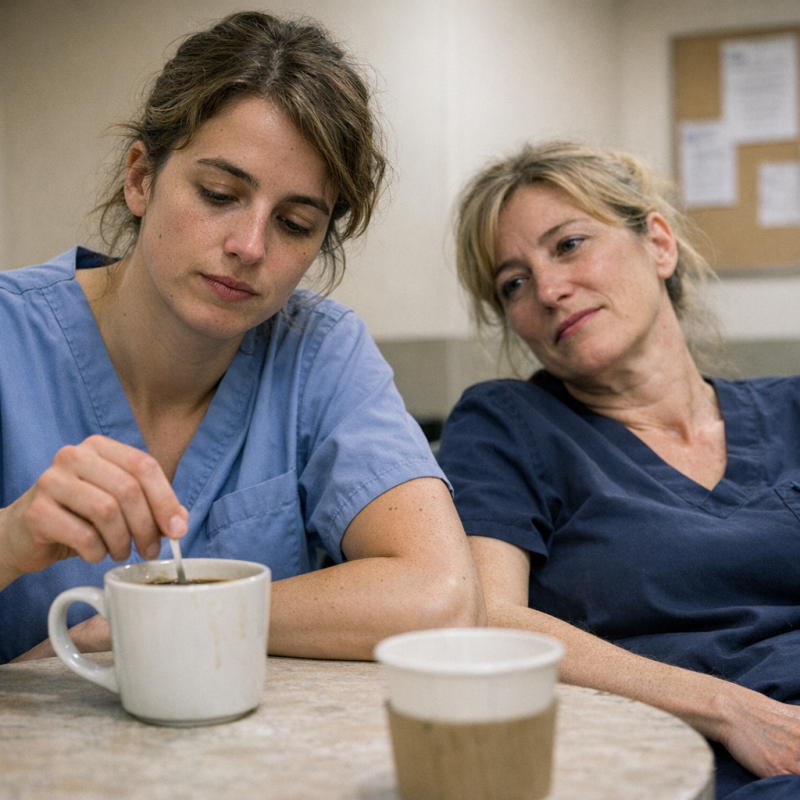 Image by FCT AI
The Routines That Kept Her Going
Over the next week, I learned Jeannie's rhythms. She liked her blinds open in the morning so she could see the sunrise. She preferred chamomile tea to coffee. She wanted to hear about my day, my life, anything that wasn't about illness or death. I'd pull up a chair during my breaks and tell her about my cat's ridiculous antics or the new restaurant that opened down the street. She'd listen like I was telling her the most fascinating story in the world. I made sure her blankets were tucked just right and that she had fresh flowers on her bedside table. These small things seemed to matter to her more than the medications I administered. She'd squeeze my hand and say, 'You're an angel, Sarah. I mean that.' I wasn't an angel—I was just doing my job—but something about Jeannie made me want to do more. One evening, while adjusting her blinds, Jeannie whispered, 'You're kinder to me than my own blood has been in years.'
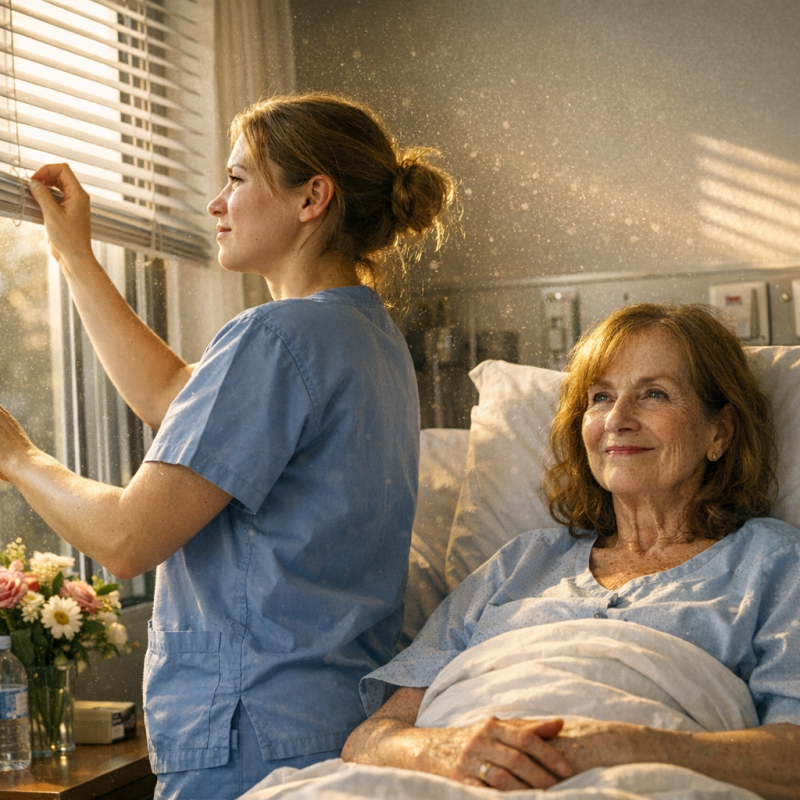 Image by FCT AI
The Questions She Wouldn't Answer
I couldn't stop thinking about what she'd said, so the next day I gently tried to ask her about it. 'Jeannie, can I ask you something personal?' I said while checking her vitals. She looked at me with those wise, tired eyes. 'Of course, dear.' I hesitated, trying to find the right words. 'You mentioned your family yesterday. Do you want to talk about it?' Her expression shifted, becoming carefully neutral. 'Oh, families are complicated, aren't they?' she said lightly, changing the subject before I could respond. 'Tell me, Sarah, do you have siblings?' I let her deflect, answering her questions about my sister while watching her face. She was skilled at this—redirecting conversations away from anything painful. When I tried again later, asking about Carol specifically, she just smiled that practiced smile. When I pressed a little more, her smile faded and she said, 'Some things are better left in the past where they belong.'
 Image by FCT AI
The Photo She Kept Touching
I started noticing how often Jeannie reached for that photo of Harold. She'd pick it up during quiet moments, tracing the outline of his face with her fingertips like she was trying to memorize something she was afraid of forgetting. Sometimes her lips would move slightly, like she was talking to him. It was tender and heartbreaking to watch. One afternoon, I sat down beside her bed while she was holding the frame. 'You really miss him, don't you?' I asked softly. She nodded, not taking her eyes off the photo. 'Every single day,' she whispered. 'He was my rock, my protector. The best man I ever knew.' There was something in her voice—not just grief, but something else I couldn't quite identify. I waited, hoping she'd say more. She set the photo down carefully, adjusting its position on the table. When I asked if she missed him, she nodded and said, 'Every day—but especially now that I understand what he was protecting me from.'
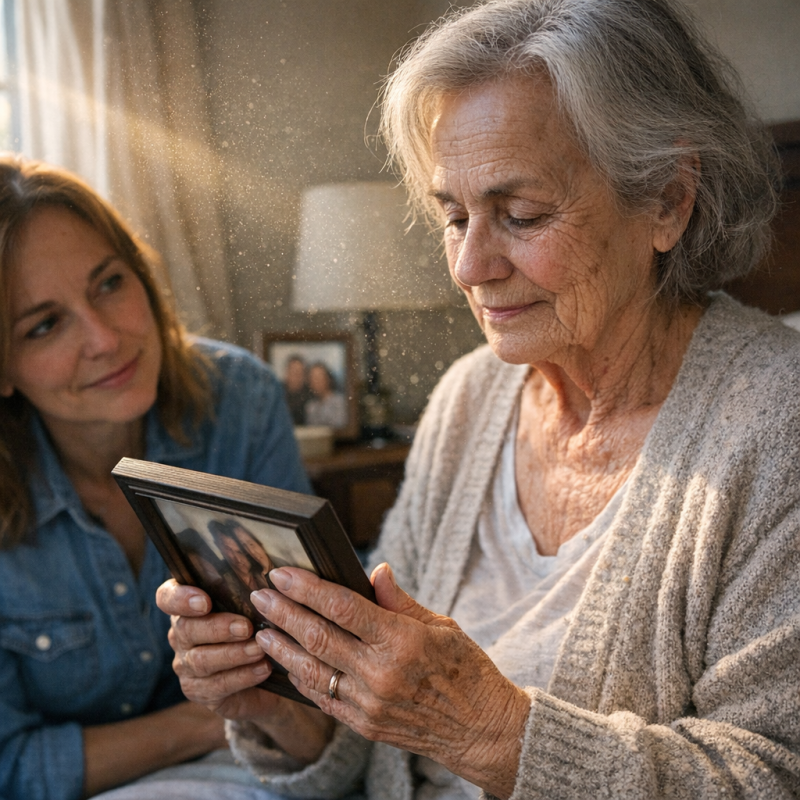 Image by FCT AI
The Night I Found Her Crying
It was around two in the morning when I heard the crying. I'd been doing my rounds, checking on patients, when I passed Jeannie's room and heard these gut-wrenching sobs coming from inside. I pushed the door open quietly and found her in the dark, tears streaming down her face. 'Jeannie, what's wrong? Are you in pain?' I asked, rushing to her side. She shook her head, unable to speak for a moment. I grabbed tissues and sat on the edge of her bed, waiting. 'It's not the cancer,' she finally managed to say. 'I've made my peace with dying, Sarah. I really have.' I was confused. 'Then what is it?' She wiped her eyes, her hands shaking. 'It's what comes before. It's what has to happen in these last few weeks.' I felt my chest tighten with worry. 'What do you mean?' When I asked what she meant, she looked at me with red eyes and said, 'It's what my daughter is planning to do with me.'
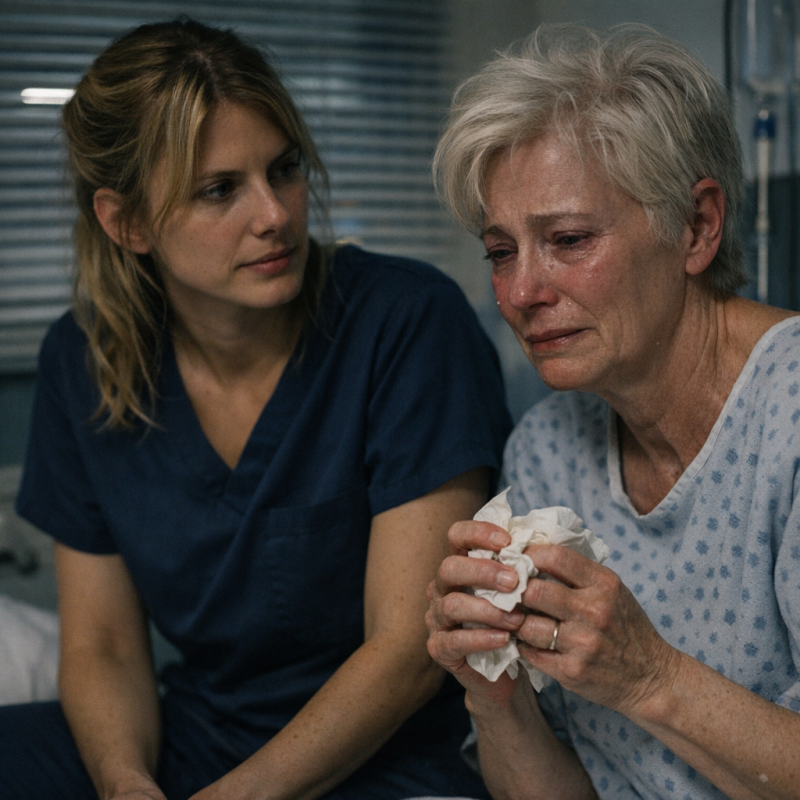 Image by FCT AI
The Hospice Facility She Feared
Jeannie took a shaky breath and explained it all to me. Carol had already made arrangements to transfer her to a hospice facility about forty miles away—a place Jeannie had heard horror stories about from other patients' families. 'It's understaffed,' she said, her voice breaking. 'People wait hours for pain medication. They leave patients alone in the dark.' I felt my stomach turn. I'd heard whispers about that facility too, the kind of place families chose when they couldn't afford better or didn't know the alternatives. But Jeannie had resources—Carol had told me herself they were comfortable. 'Why would she send you there?' I asked. 'There are better places, closer places.' Jeannie's eyes filled with fresh tears. 'Because she doesn't want anyone I know visiting me. She doesn't want me talking to people, making phone calls.' My mind was racing, trying to make sense of it. 'Jeannie, that doesn't—' She gripped my hand and whispered, 'She wants me out of the way quickly—before I can cause problems.'
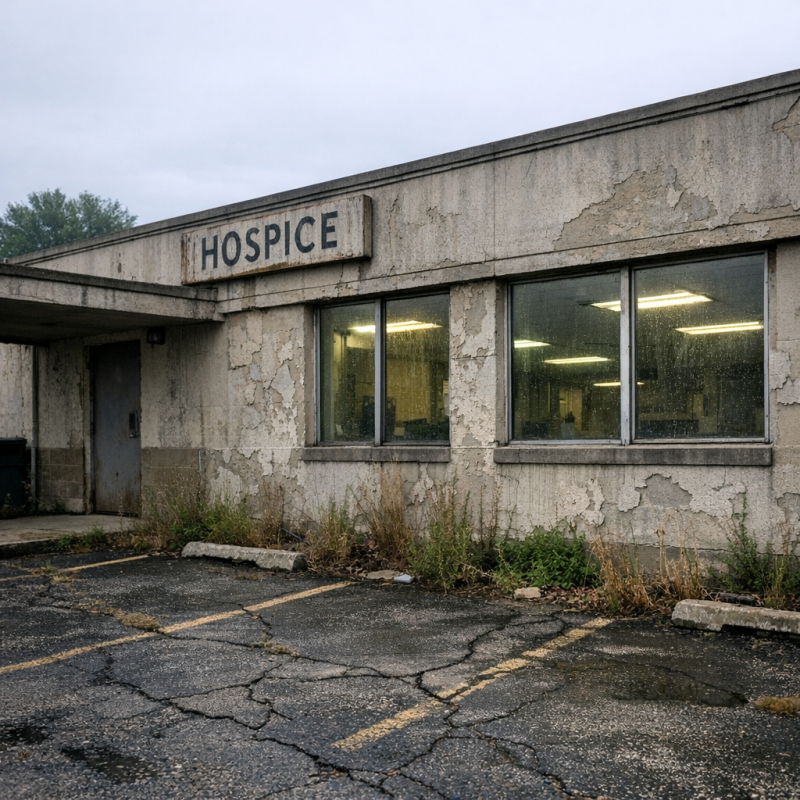 Image by FCT AI

History's most fascinating stories and darkest secrets, delivered to your inbox daily.
The Promise I Made
I sat there with her hand in mine, feeling the weight of what she'd just told me. The fear in her eyes was real, and I couldn't just walk away from it. I couldn't just nod sympathetically and go back to my charting like this was normal family dysfunction. 'Listen to me,' I said, squeezing her hand. 'I'm not going to let that happen without a fight, okay? I don't know how yet, but we'll figure something out.' She looked at me like I'd just offered her water in a desert. 'You'd do that? You'd risk—' 'Don't worry about what I'm risking,' I interrupted, though honestly I had no idea what I was getting myself into. I had no plan, no authority, no real power in this situation. I was just a nurse who'd made a promise I wasn't sure I could keep. But seeing the relief wash over her face made it impossible to take it back. I stayed with her until she fell asleep, then quietly left her room. As I left her room that night, I realized I'd just committed to something that could cost me my job—maybe more.
 Image by FCT AI
The Research That Kept Me Up All Night
I went home that night and couldn't sleep. Instead, I sat at my kitchen table with my laptop, typing searches into Google until my eyes burned. Patient rights. Hospice transfer regulations. Power of attorney limitations. Legal guardianship challenges. I read through so many forums and legal websites that the words started blurring together. I learned that patients technically had the right to refuse transfer, but families with power of attorney could override those wishes if they claimed the patient wasn't mentally competent. I discovered that reporting suspected abuse required actual evidence, not just gut feelings or patient fears. I found out that challenging a power of attorney in court was expensive, time-consuming, and rarely successful. Every article, every forum post, every legal FAQ pointed me toward the same conclusion. The system was set up to trust family members, to assume they had the patient's best interests at heart. And maybe usually they did. But what happened when they didn't? Everything I read pointed to the same ugly truth—family members with power of attorney held almost all the cards.
 Image by FCT AI
The Social Worker Who Tried to Help
The next morning, I tracked down Linda Chen, our hospital social worker. She was in her office, buried in paperwork as usual, but she looked up when I knocked. 'Sarah, come in. What's going on?' I closed the door behind me and sat down, trying to organize my thoughts. 'I need to talk to you about a patient—Jeannie Morrison in 412.' Linda nodded, pulling up something on her computer. 'The pancreatic cancer patient, right? What's the concern?' I explained the situation as carefully as I could—the planned transfer, Jeannie's fears, the daughter's cold visits, the feeling that something wasn't right. Linda listened, her expression growing more sympathetic but also more closed-off as I talked. When I finished, she was quiet for a moment. 'I understand your concern,' she said slowly. 'And I can see this is really bothering you. But Sarah, you have to understand the limitations here.' I leaned forward. 'What limitations?' Linda sighed and said, 'Unless you have proof of abuse or fraud, my hands are tied—family decisions trump patient wishes most of the time.'
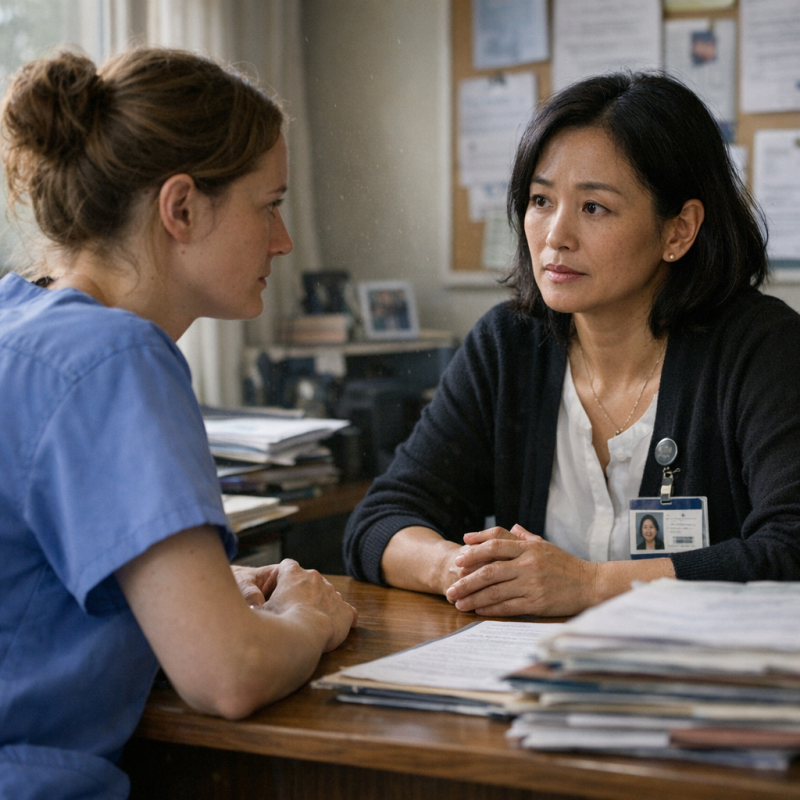 Image by FCT AI
The Second Visit That Felt Rehearsed
Carol showed up again three days later. I was at the nurses' station when I saw her walking down the hallway, and something made me follow at a distance. I told myself I was just checking on my patient, being thorough, but really I was watching. Observing. Looking for whatever it was that felt so wrong. Through the half-open door, I saw Carol lean over Jeannie's bed with this bright smile plastered on her face. 'How are you feeling today, Mother?' she asked, her voice dripping with concern that sounded like it came from a script. Jeannie's response was quiet, subdued. Carol fussed over her blankets, adjusted her pillows, asked about her pain levels—all the right questions, all the right gestures. But it felt like watching a performance, like every movement had been rehearsed. There was no real warmth there, no genuine connection. I stepped into the room to check vitals, trying to act natural. As Carol adjusted Jeannie's pillow with theatrical tenderness, I caught Jeannie's eye—and saw pure discomfort there.
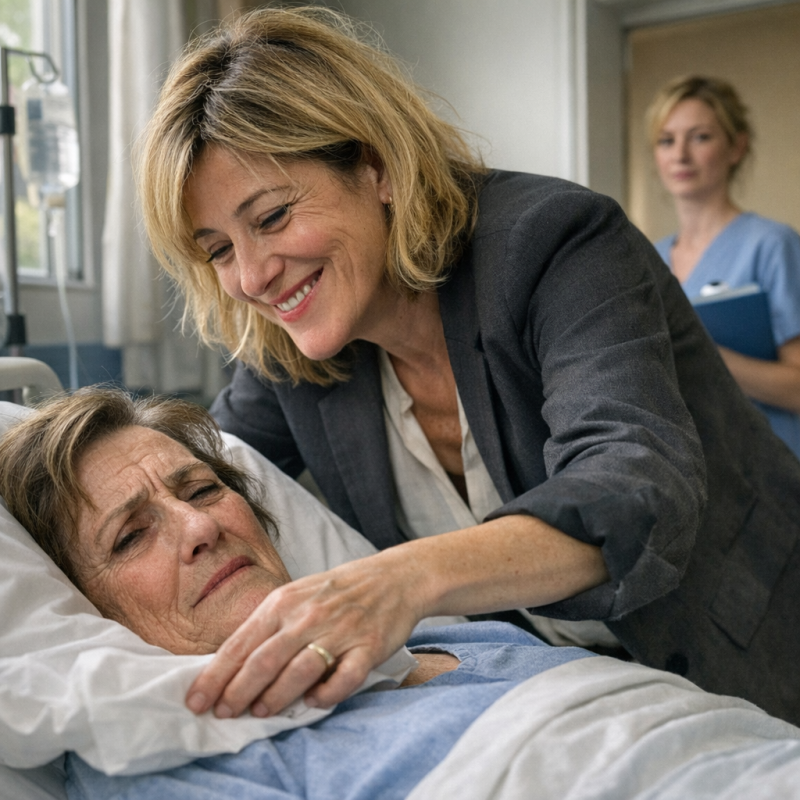 Image by FCT AI
The Conversation I Overheard
Carol stayed for exactly twenty minutes—I know because I watched the clock—before she excused herself and left. I was updating Jeannie's chart when I heard Carol's voice in the hallway, sharp and businesslike. She must have thought she was far enough from the room. 'I don't care what he says, we need to expedite the timeline,' she was saying into her phone. I froze, pen in hand. 'The facility has an opening next week and I need her moved by then. Have you handled the property situation yet?' There was a pause. 'Well, handle it faster. I can't keep making excuses for delays.' My heart was pounding. I stood up slowly, trying to decide whether to stay put or find a reason to walk past. Before I could decide, I shifted my weight and the floor creaked. Carol's head snapped around. Our eyes met. When Carol noticed me standing there, her expression shifted from annoyed to carefully pleasant in a heartbeat.
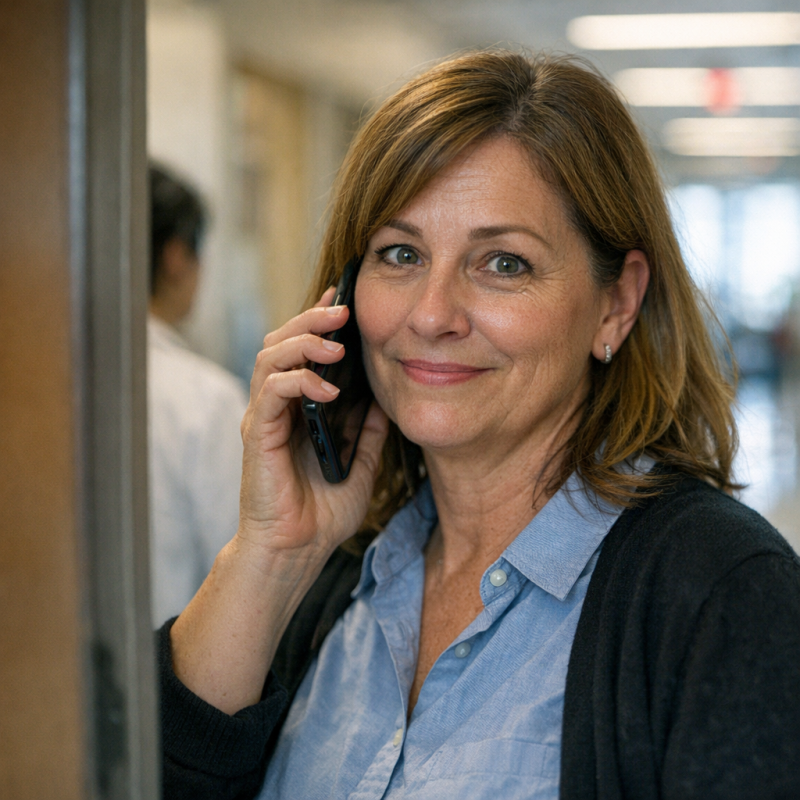 Image by FCT AI
The Smile That Didn't Reach Her Eyes
Carol walked toward me with that same practiced smile she'd used on Jeannie. 'Sarah, right? You've been so wonderful with my mother.' I managed a nod, trying to calm my racing pulse. 'Just doing my job.' She tilted her head, studying me in a way that made my skin crawl. 'I wanted to ask you something, actually. How has Mom seemed to you lately? Mentally, I mean.' The question caught me off guard. 'Mentally? She's sharp as ever. Very clear about what she wants.' Carol's smile tightened just slightly. 'Really? Because sometimes with the medications, the stress of the illness... I worry she might be getting confused. Saying things that don't quite make sense.' I felt my jaw clench. 'She seems perfectly lucid to me.' 'But you'd tell me if she said anything strange, wouldn't you?' Carol pressed. 'If she seemed disoriented or made accusations that didn't add up?' I held her gaze. 'I document everything in her medical chart.' She nodded slowly, then walked away without another word. As Carol walked away, I realized she'd just tried to plant doubt about Jeannie's competency—and I had no idea why.
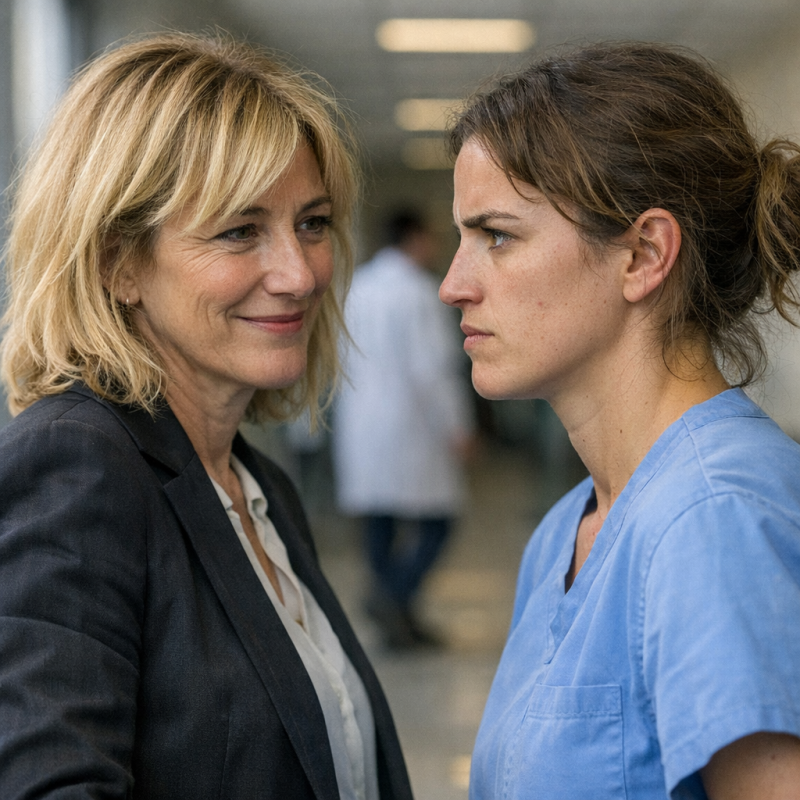 Image by FCT AI
The Administrator Who Cared About Liability
I knew I was in over my head, so I did what I probably should have done first—I went to administration. Mark Henderson, our hospital administrator, agreed to see me during his lunch break. I sat across from his desk and laid out everything: Jeannie's fears, the suspicious hospice transfer, the overheard phone conversation, Carol's questions about her mother's mental state. Mark listened, his expression neutral, occasionally jotting notes on a legal pad. When I finished, he set down his pen. 'I appreciate you bringing this to my attention, Sarah. I really do.' But I could hear the 'but' coming. 'But?' I prompted. He chose his words carefully. 'What you're describing is concerning from a human standpoint. I get that. But from a legal standpoint, we have no grounds to intervene in family decisions.' I felt frustration rising in my chest. 'Even when the patient is clearly afraid?' 'Has Mrs. Morrison filed a formal complaint?' he asked. 'Has she requested we block the transfer?' I shook my head. Mark leaned back in his chair and said, 'Unless the patient files a formal complaint or we have documented evidence, this is a family matter.'
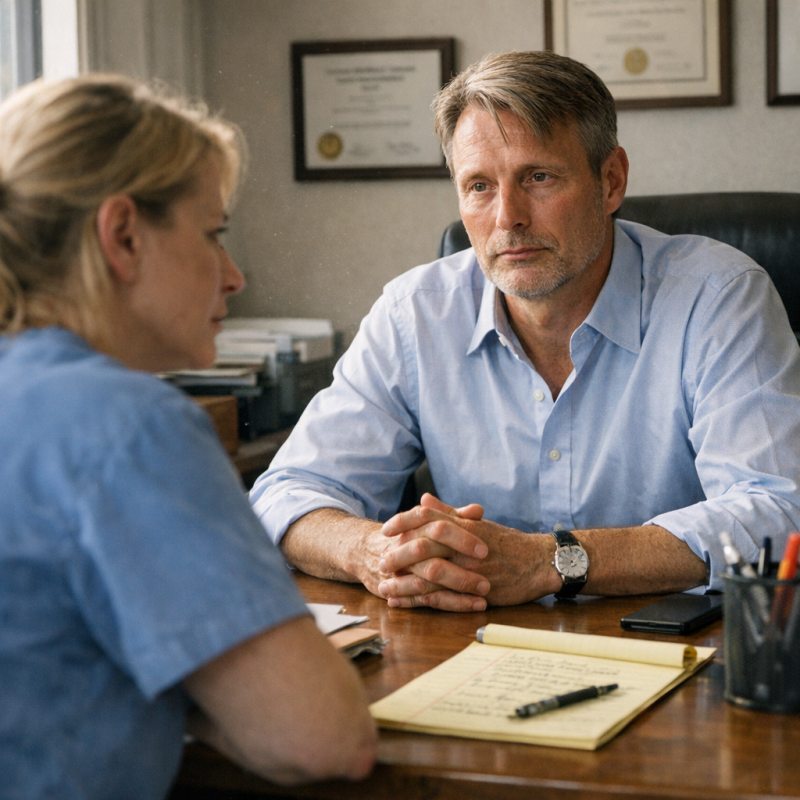 Image by FCT AI
The Documents She Found in the Trash
I was emptying Jeannie's wastebasket the next afternoon when I noticed the crumpled papers. Normally I wouldn't have looked twice, but something about the way they were balled up—deliberately, forcefully—made me pause. I smoothed one out on the bedside table. It was a letter, written in Jeannie's shaky handwriting, with several crossed-out lines and restarts. Then I found another. And another. All drafts of the same letter, each one abandoned partway through. Jeannie was napping, her breathing steady, and I knew I shouldn't be reading her private writings. But my hands kept smoothing out the crumpled pages. Some had only a few lines. Others made it half a page before trailing off. I could feel the frustration in every crossed-out word, every false start. She'd been trying to say something important, trying to get it right. The handwriting got shakier in the later drafts, like she was running out of time or energy. My chest felt tight as I read the opening lines over and over. The letters all started the same way: 'If you're reading this, I'm already gone, and there's something you need to know about Carol.'
 Image by FCT AI
The Story of Harold's Final Days
When Jeannie woke up, I asked her about Harold. I framed it gently, just curious about her late husband, but I needed to understand their family history. Her face softened at first, that distant look people get when remembering someone they loved. 'Harold was a good man,' she said quietly. 'Brilliant with numbers, terrible with people.' She smiled a little. 'Except me. He was good with me.' Then the smile faded. She told me he'd passed five years ago, pancreatic cancer, quick and brutal. Carol had taken over everything during his final illness—medical decisions, finances, funeral arrangements. 'I was grateful at the time,' Jeannie admitted. 'I couldn't function. I was falling apart.' She picked at the edge of her blanket, not meeting my eyes. I waited, sensing there was more. The room felt heavy with something unspoken. Finally, she continued, her voice barely above a whisper. 'Harold was foggy from the pain medication near the end, but he kept trying to tell me something. He'd grab my hand and say Carol's name, looking so urgent.' She paused, swallowing hard. She looked away and said quietly, 'Harold tried to warn me about something before he passed—but I was too grief-stricken to listen.'
 Image by FCT AI
The Night Shift Revelation
I couldn't sleep that night, so I pulled a double shift and spent the quiet hours going through Jeannie's medical records. Everything's digital now, which meant I could search by keyword, filter by who'd made requests or changes. I started looking for Carol's name in the notes. What I found made my stomach drop. Over the past six weeks, Carol had requested medication adjustments at least eight times. Not just requests to the doctors—she'd specifically asked about sedatives, pain management, anything that might make Jeannie drowsier or less alert. I cross-referenced the dates with my own observations. Every time Jeannie had seemed particularly foggy or out of it, there'd been a medication change requested by Carol days before. The nurses' notes were clinical, professional, nothing that screamed alarm. But the pattern was there once you knew to look for it. Dr. Martinez had signed off on most of them, probably trusting the daughter's concern for her mother's comfort. Why wouldn't he? I kept scrolling, my coffee going cold beside me. One notation caught my eye: 'Daughter expressed concern about patient's resistance to sedation—requested stronger doses.'
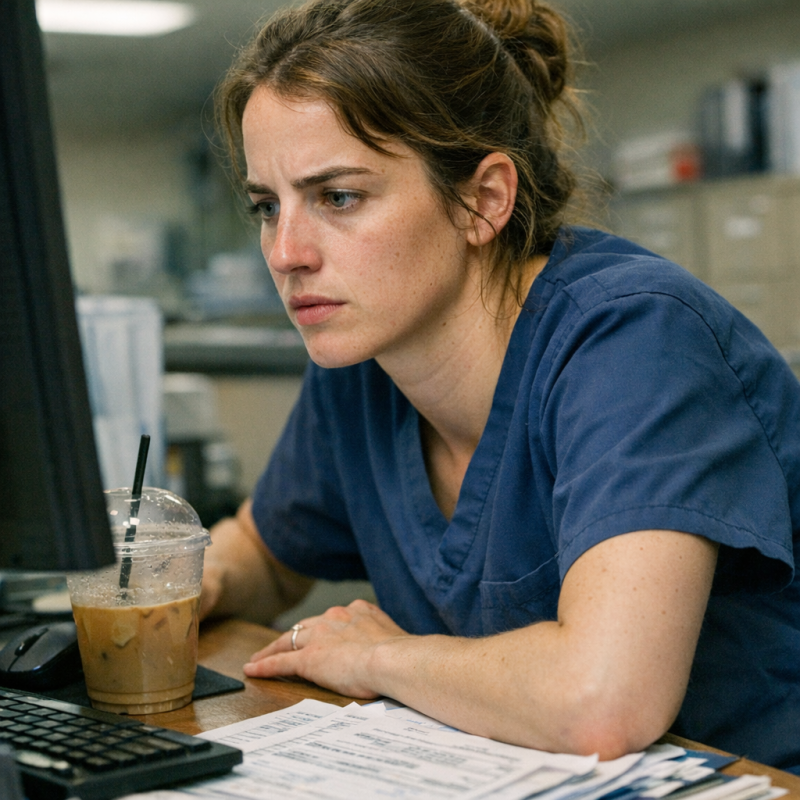 Image by FCT AI
The Question I Couldn't Stop Asking
I waited until morning to talk to Jeannie about the medications. She was alert that day, clearer than I'd seen her in weeks, and I wondered if reducing that one sedative dose had made the difference. I sat down beside her bed and asked how she'd been feeling lately. 'Tired,' she said immediately. 'So tired, all the time. I sleep and sleep and still feel exhausted.' She frowned. 'Is that normal?' I asked if she'd felt this way before her diagnosis. She thought about it, then shook her head. 'No, not like this. This is different. It's like I'm wrapped in fog.' My heart was pounding as I pulled up her medical records on the tablet. I showed her the medication changes, pointing out each time Carol had requested adjustments. Jeannie's face went pale as she read. Her hands started trembling, and I steadied the tablet for her. 'I didn't know about these,' she whispered. 'Nobody asked me. Nobody told me.' She looked up at me, and I saw real fear in her eyes now, not just anxiety but dawning horror. When I showed her the medical notes, her hands started shaking and she whispered, 'She's trying to keep me quiet.'
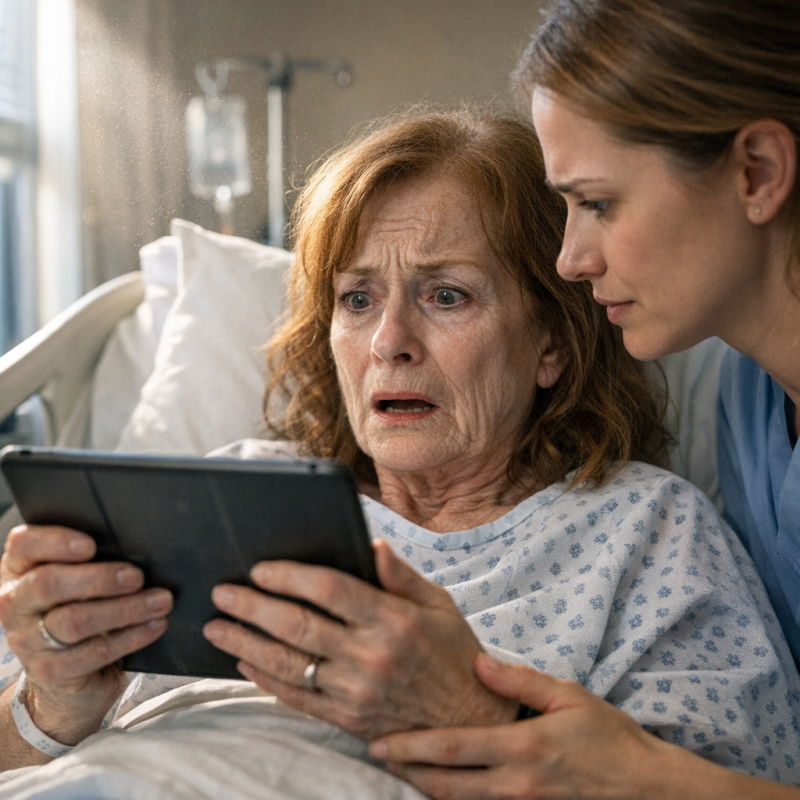 Image by FCT AI
The Ally I Didn't Expect
Rachel found me in the break room an hour later, staring at nothing. I must have looked as wrecked as I felt because she sat down without asking and just waited. Finally, I told her everything. The whole story spilled out—Jeannie's fears, the medication changes, the rushed hospice transfer, the crumpled letters. I expected her to tell me I was overreacting, reading too much into normal family dynamics. Instead, Rachel nodded slowly, her expression grim. 'I've been watching this situation too,' she admitted. 'Something felt off, but I couldn't put my finger on it.' She'd been a nurse for twenty-three years, she reminded me. She'd seen families at their best and worst. 'But this,' she said, 'this has all the hallmarks of something darker.' I felt relief wash over me—I wasn't crazy, wasn't seeing patterns that weren't there. Rachel leaned forward, her voice low even though we were alone. 'What do you need? How can I help?' I could have cried from the simple solidarity of it. Rachel pulled me aside and said, 'I've seen this before—families who can't wait for the inheritance—but I've never seen anyone fight back for the patient.'
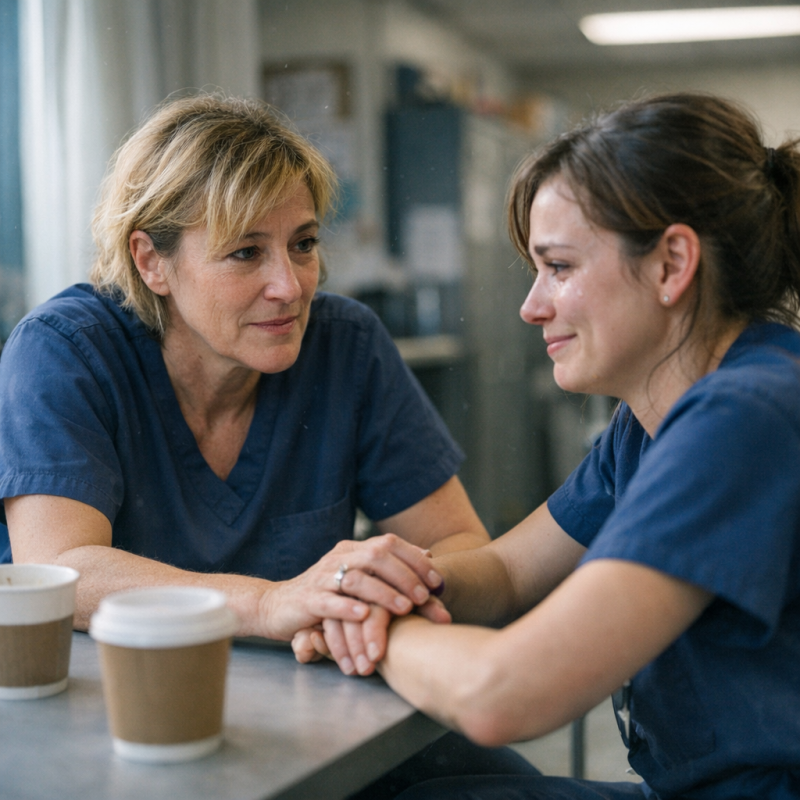 Image by FCT AI
The Transfer Date That Got Moved Up
The next morning, I checked Jeannie's transfer schedule and felt my blood run cold. The date had been moved up. Not by days—by two full weeks. The original transfer was supposed to happen at the end of the month. Now it was scheduled for next Tuesday. Five days away. I pulled up the authorization form and saw Carol's signature, but no medical justification for the change. No doctor's note, no documented decline in Jeannie's condition. Just a revised date and Carol's elegant handwriting. I found Carol in the hallway an hour later, ending a phone call. She looked polished as always, completely composed. I asked about the transfer change, keeping my voice neutral and professional. She didn't even hesitate. Her smile was tight, practiced, the kind that doesn't reach the eyes. 'We need to move quickly now,' she said smoothly. 'Mother's window for transition is narrowing.' I pushed back gently, mentioning that Jeannie seemed stable. Carol's expression hardened just slightly. When I asked Carol about it, she smiled tightly and said, 'Mother's condition is deteriorating faster than expected—we need to be proactive.'
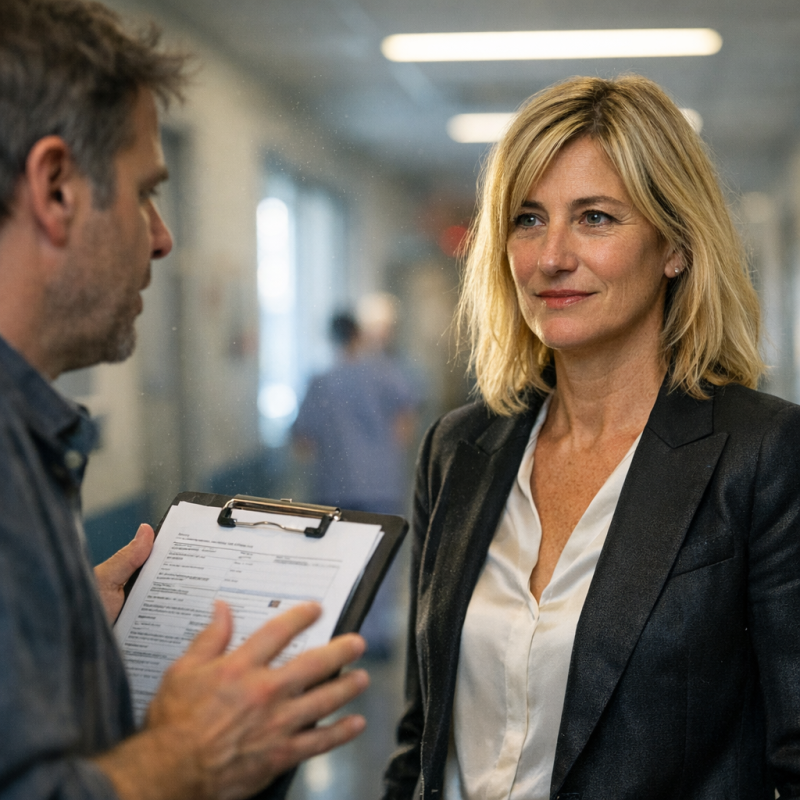 Image by FCT AI
The Medical Assessment That Didn't Add Up
I spent my entire shift documenting everything I could about Jeannie's actual condition. Vitals every two hours. Mental status checks. Physical assessments. I compared everything to her baseline from six weeks ago. Here's what I found: her blood pressure was stable, actually slightly better than before. Her oxygen saturation was good. Her pain levels were manageable with minimal medication. And most tellingly, since I'd started reducing the sedatives, her mental clarity had improved significantly. She was more alert, more engaged, more like herself. There was no medical deterioration. None. I printed everything out and brought it to Dr. Martinez during his afternoon rounds. He's thorough, the kind of doctor who actually reads the charts, and I watched his expression change as he reviewed the data. He flipped back and forth between current vitals and the transfer authorization. His frown deepened. 'This doesn't make sense,' he muttered, more to himself than to me. He looked up at me, then back at the paperwork. Dr. Martinez looked at the charts, frowned, and said, 'According to these numbers, there's no medical reason to rush the transfer.'
 Image by FCT AI
The Conversation I Recorded
I knew I needed actual evidence, something concrete that couldn't be explained away. So when Carol arrived that afternoon, I was ready. My phone was in my scrub pocket, recording app running. I'd positioned myself carefully, making sure the audio would be clear. I asked Carol to walk me through the transfer plan, playing the concerned nurse who just wanted to understand the timeline. She was happy to explain, confident in her control of the situation. I asked about Jeannie's awareness of the decision. 'Mom's too confused to really understand what's happening,' Carol said smoothly. Then, five minutes later, when I asked about the consent forms: 'She's aware enough to know this is what's best for her. She agreed to everything.' I nodded along, asked a few more questions, let Carol talk. She contradicted herself twice more, claiming Jeannie was both incompetent and competent depending on what narrative suited her needs. I thanked her for her time and went straight to the staff bathroom. Locked the door. Played back the recording. As I listened to the recording later, I realized Carol had claimed Jeannie was both 'too confused to make decisions' and 'aware enough to agree to the transfer.'
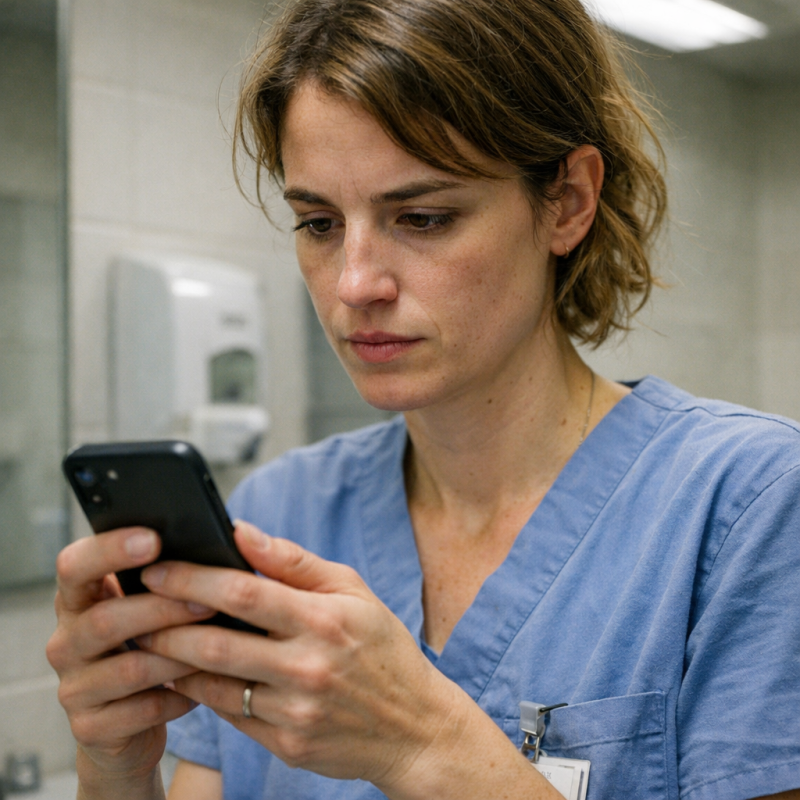 Image by FCT AI
The Legal Advice That Changed Everything
I called my friend Mark from law school that night—not my supervisor Mark, but Mark Chen, who specialized in elder law. He listened to everything I'd documented, the recording, the contradictions, all of it. 'Okay,' he said slowly. 'Here's the thing. If Jeannie is mentally competent—and it sounds like she is—she can revoke that power of attorney at any time. It's her right.' My heart lifted for the first time in days. 'But you need to move fast,' he continued. 'Once she's transferred to that hospice, it becomes much harder. Carol controls access, visitation, everything.' I asked what we needed to do. He walked me through it: independent competency assessment, documentation of Jeannie's wishes, a meeting with an attorney to execute the revocation. It sounded achievable. Then he paused. 'Sarah, you said Carol's been managing all the finances?' I confirmed. The lawyer leaned forward and said, 'You need to document everything—because if there's financial abuse happening, that power of attorney is a weapon.'
 Image by FCT AI
The Competency Assessment I Requested
I approached Dr. Martinez the next morning before rounds. He'd been Jeannie's physician throughout her stay, and I trusted him. I explained my concerns as carefully as I could—the inconsistencies in Carol's statements, Jeannie's clarity when we talked privately, the rushed transfer timeline. 'I think we need an independent competency assessment,' I said. Dr. Martinez studied me for a moment, then nodded. 'I've been uncomfortable with this transfer myself,' he admitted. 'Jeannie's prognosis isn't great, but she's not actively dying. This hospice placement feels premature.' He made some calls that afternoon. By evening, we had a psychiatrist scheduled for the following day. I knew I had to inform Carol—hospital policy required it. When I called her with the news, there was silence on the line. Then: 'I don't see why that's necessary.' Her voice was tight, controlled. 'Hospital protocol,' I said evenly. When Carol arrived an hour later, her carefully controlled demeanor cracked for just a moment—and what I saw underneath was pure fury.
 Image by FCT AI
The Threats That Came Next
The formal complaint arrived two days later. Carol had filed it with the hospital administration and the state nursing board, claiming I'd overstepped my professional boundaries, interfered with family decision-making, and caused emotional distress to both her and her mother. I read it in disbelief. She'd twisted everything—the private conversations with Jeannie, the competency assessment, even my questions about the transfer timeline. She made it sound like I'd manipulated a vulnerable patient against her family. My hands shook as I read her accusations. I'd been a nurse for seven years. I'd never had a single complaint. Now my entire career was at risk because I'd tried to protect a patient. Mark—my supervisor—called me into his office that afternoon. His expression was grave. 'I know you, Sarah,' he said. 'I know you wouldn't do this without good reason. But this is serious.' He slid a letter across his desk. Mark called me into his office and said, 'You're being placed on administrative review—and if this complaint holds, you could lose your license.'
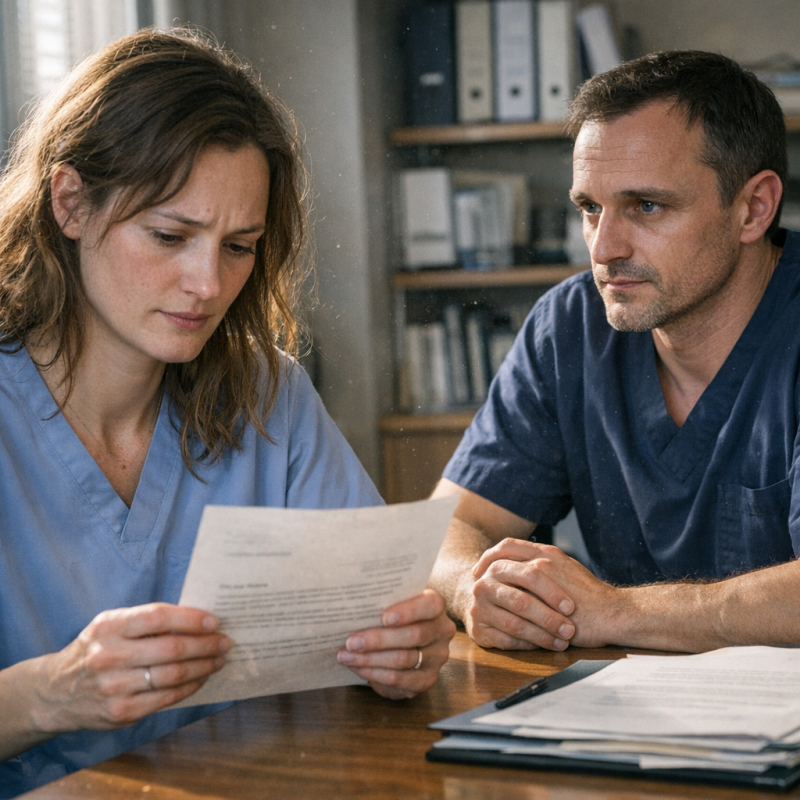 Image by FCT AI
The Hospice Director Who Saw the Truth
I needed to see the place Carol had chosen for myself. The hospice facility was forty minutes outside the city, down a service road I almost missed. The building was institutional and gray, nothing like the warm hospice centers I'd toured in nursing school. I told the receptionist I was considering options for a family member. She directed me to Patricia, the director, who gave me a tour. The rooms were clean but sparse. The staff seemed stretched thin. Afterward, Patricia asked if I had questions. I decided to be direct. 'Why would someone choose this facility specifically?' I asked. Patricia's professional smile faded. She looked tired suddenly, older. 'We're affordable,' she said quietly. 'We don't ask many questions. Some families... they need distance.' I felt cold. 'Distance?' She glanced toward the hallway, then back at me. Her voice dropped. Patricia looked at me sadly and said, 'Families choose us when they want their loved ones to disappear quietly—we're where people go to be forgotten.'
 Image by FCT AI
The Assessment That Proved Her Competent
The psychiatrist, Dr. Levine, spent ninety minutes with Jeannie. I waited outside, my stomach in knots. Everything depended on this assessment. When Dr. Levine emerged, she asked to speak with me privately. 'Your patient is fully competent,' she said. 'Oriented to person, place, and time. Her reasoning is clear, her memory intact. She understands her diagnosis and prognosis. There's absolutely no basis for someone else to be making her medical decisions.' Relief flooded through me. 'She can revoke the power of attorney?' I asked. 'Absolutely,' Dr. Levine confirmed. Then she paused, her expression troubled. 'Ms. Chen, I need to tell you something else. During our conversation, Jeannie expressed significant fear regarding her daughter's control of her finances. She used the term 'stolen' multiple times.' My breath caught. Dr. Levine handed me a copy of her report. The psychiatrist included a note: 'Patient expressed clear fear of family member and specific concerns about financial exploitation.'
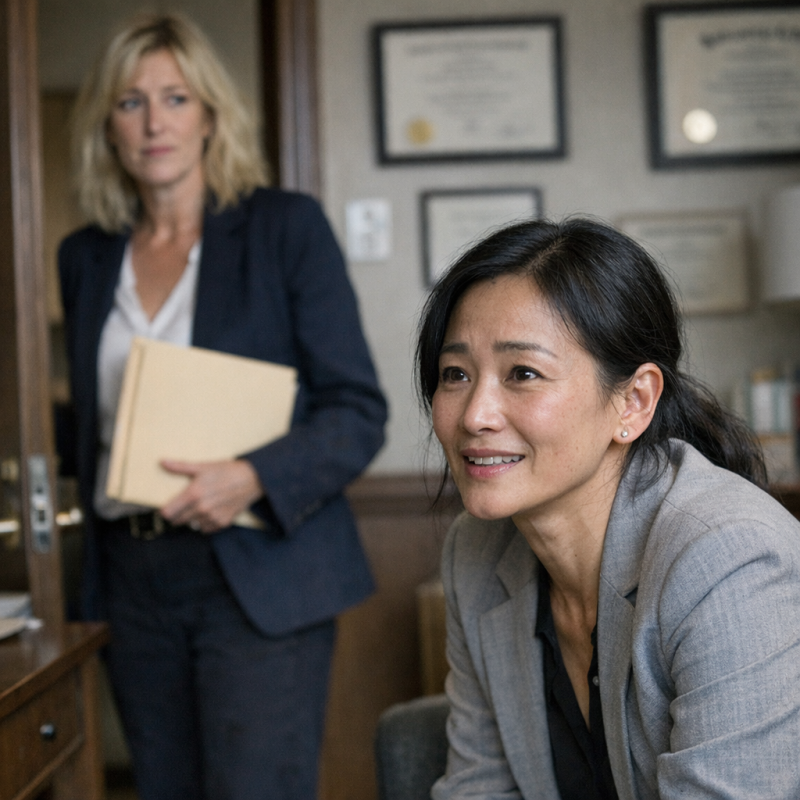 Image by FCT AI
The Power of Attorney She Revoked
Mark Chen met us at the hospital the next day. I'd arranged a private conference room, away from prying eyes and Carol's potential interference. Jeannie was nervous—I could see it in how she twisted her wedding ring. But when Mark explained that she had the legal right to revoke Carol's authority, something shifted in her expression. Determination, maybe. Or relief. Mark had prepared the documents in advance. He walked Jeannie through each section: revocation of medical power of attorney, revocation of financial power of attorney, designation of a neutral third party to manage her affairs temporarily. 'You understand what this means?' Mark asked gently. Jeannie nodded. 'It means I get to decide what happens to me,' she said quietly. 'It means Carol can't...' She didn't finish the sentence. She picked up the pen. Her signature was shaky but clear. I witnessed it, along with another nurse I trusted. As Jeannie signed the documents, her hands trembled, and she whispered, 'I should have done this years ago.'
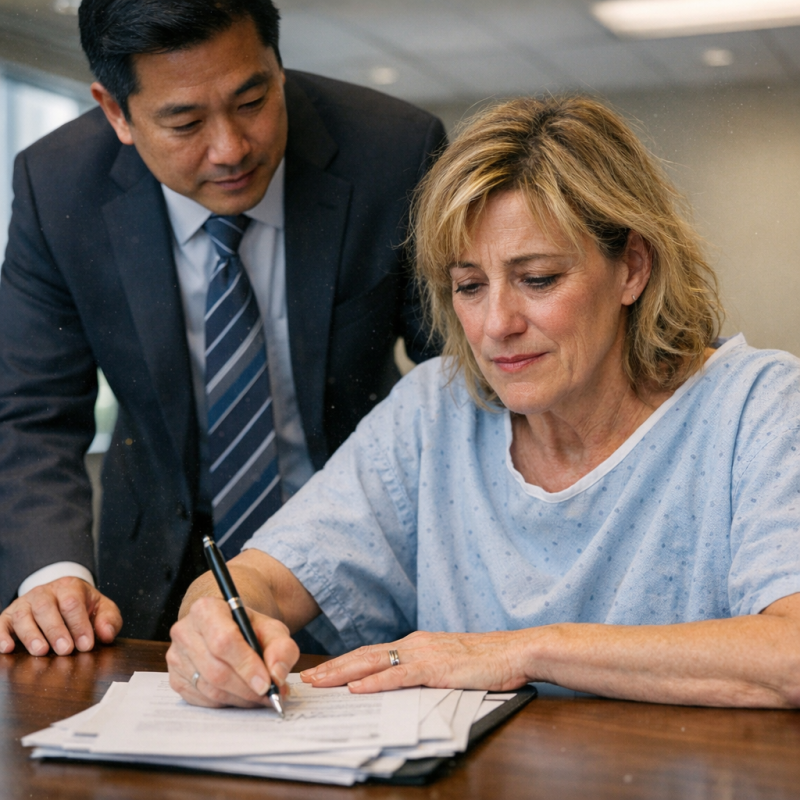 Image by FCT AI
The Explosion I Expected
Carol arrived at the hospital that evening for what she thought would be a routine visit. I was in Jeannie's room when she walked in, all smiles and concerned daughter performance. 'Hi, Mom,' she said warmly. Then she saw the papers on Jeannie's bedside table. The legal documents. Her smile froze. 'What's this?' she asked, picking up the revocation notice. Her eyes scanned it quickly. I watched her face change—the careful mask cracking like ice. 'You can't do this,' she said to Jeannie. 'You're not... you don't understand what you're signing.' 'I'm completely competent,' Jeannie said quietly. 'The psychiatrist confirmed it. And I'm revoking your power of attorney, Carol. All of it.' Carol's head snapped toward me. 'You did this,' she hissed. 'You manipulated her—' 'I helped her exercise her legal rights,' I said evenly. Carol's composure shattered completely. Her face flushed red, her hands clenched. Carol's voice turned cold and sharp: 'You have no idea what you've done—or what you're about to lose.'
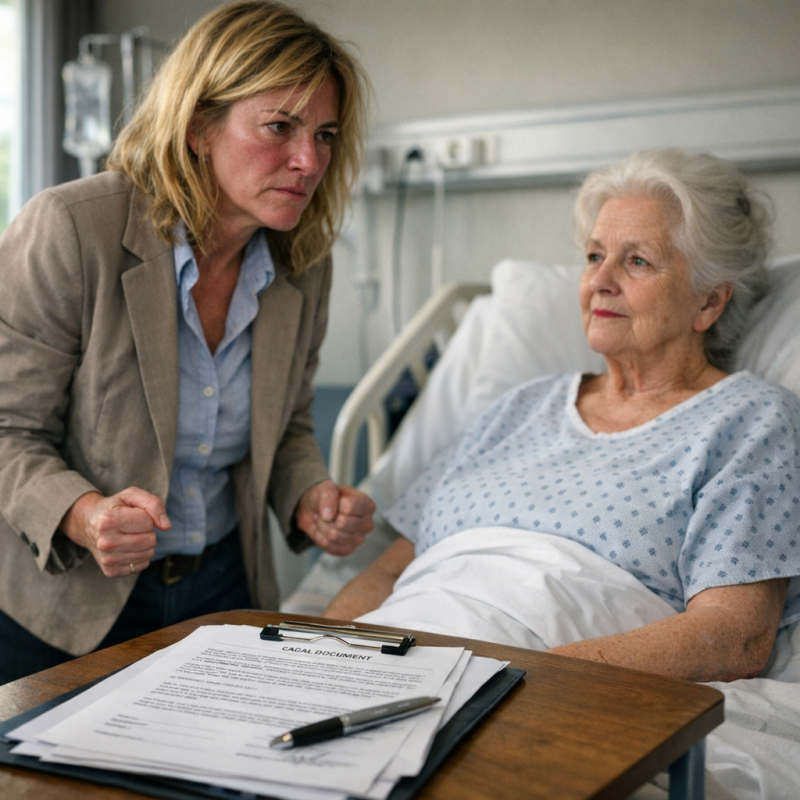 Image by FCT AI
The Financial Records She Demanded
The next morning, Jeannie made her first decision with her restored authority. She wanted a full accounting of her finances—every transaction Carol had made on her behalf for the past five years. Mark Chen had advised this step, and I was there when Jeannie called Carol to make the request. 'I need copies of all bank statements, investment accounts, property records, everything,' Jeannie said. Her voice was stronger than I'd heard it. On the other end of the line, Carol was silent for a long moment. Then: 'Mom, that's going to take time. I don't have all of that readily available.' 'You've been managing my money for years,' Jeannie said. 'You should have records.' 'I'll need to compile everything,' Carol said quickly. 'It's not all in one place. Give me a few weeks—' 'I want it by Friday,' Jeannie interrupted. Carol arrived at the hospital an hour later, flustered and defensive. Carol stammered excuses about 'needing time to compile everything' before storming out—and I knew we'd hit a nerve.
 Image by FCT AI
The Lawyer Who Handled Harold's Estate
I helped Jeannie track down the lawyer who'd handled Harold's estate after he passed. She remembered his name—Gordon Matthews—and his office wasn't far from the hospital. When we called, his secretary was pleasant enough at first. 'Oh yes, Mrs. Patterson,' she said warmly. 'Mr. Matthews handled everything for you back in 2018.' Jeannie explained that she needed copies of the estate documents, the will, anything that showed how her finances had been structured after Harold died. There was a pause on the line. 'Let me check our files,' the secretary said. We waited, Jeannie's hand trembling slightly as she held the phone. When the woman came back, her tone had shifted to something apologetic. 'I'm so sorry, Mrs. Patterson. According to our records, the original files were retrieved by the family years ago and never returned.' Jeannie's face went pale. 'What do you mean, retrieved?' 'It says here that your daughter Carol picked them up in 2019. We kept copies of some documents, but the originals—all the detailed financial records—those went with her.' I felt my stomach drop. The lawyer's secretary informed us that the original files had been 'retrieved by the family' years ago and never returned.
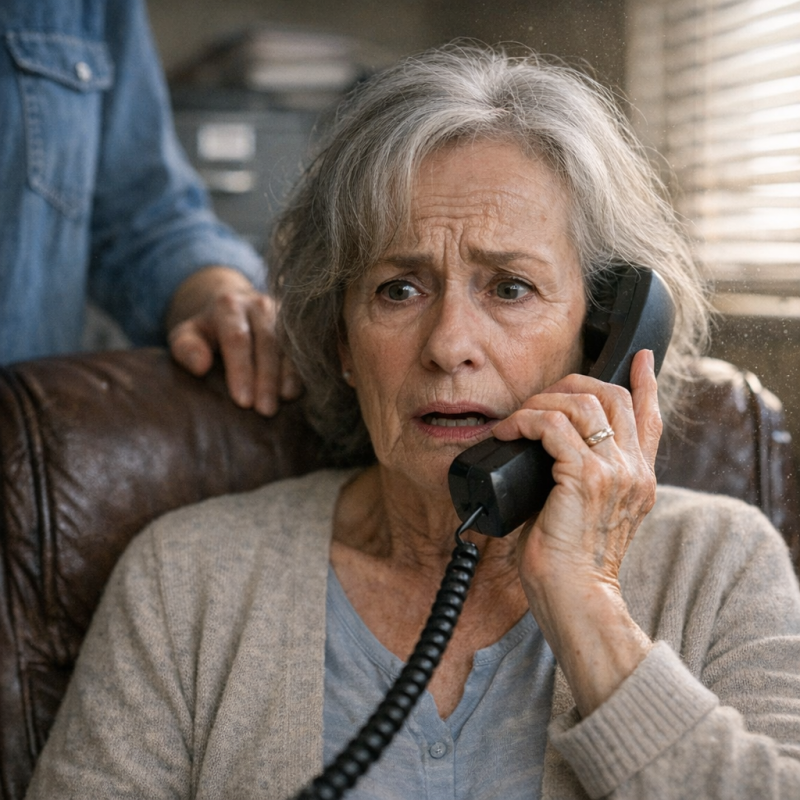 Image by FCT AI
The Grandson Who Didn't Know
Jeannie's grandson Tom showed up the next afternoon, and I could tell immediately something was off about his visit. He was in his mid-twenties, tall and uncomfortable in the hospital room like most young men are around illness. He'd brought flowers. 'Grandma,' he said, hovering near the doorway. But when Jeannie spoke to him—clearly, warmly, asking about his job and his girlfriend—he just stared. I watched his expression shift from polite concern to confusion. 'You sound... really good,' he said slowly. Jeannie smiled. 'I'm feeling much better, sweetheart.' Tom sat down, but he kept glancing between his grandmother and me like he was trying to reconcile two different realities. Finally, he said it: 'I don't understand. Mom said I shouldn't come because you wouldn't recognize me. She said you were confused, barely conscious most days.' Jeannie's smile faded. 'Carol told you that?' 'She's been telling everyone that,' Tom admitted. He looked genuinely shocked. 'But you're nothing like she described.' Tom looked shocked and said, 'Mom told me you were confused and barely conscious—but you're nothing like she described.'
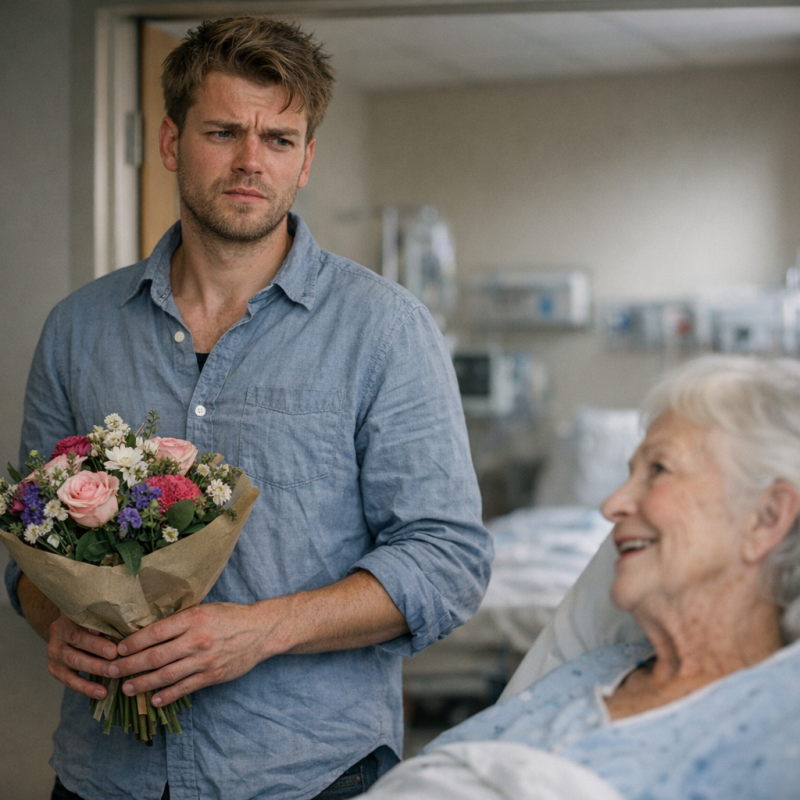 Image by FCT AI
The Bank Statements He Found
Tom called me two days later, and I could hear the strain in his voice immediately. 'Sarah, I need to talk to you. Not on the phone—can you meet me?' We met in the hospital cafeteria during my break. He had a folder with him, stuffed with papers. 'I went to my mom's house while she was at work,' he said quietly. 'I know I shouldn't have, but after what Grandma said, I had to look.' He spread the papers across the table. Bank statements. Investment accounts. All in Jeannie's name, dating back years. My hands shook as I looked through them. Withdrawals. Transfers. Huge amounts moving from Jeannie's accounts into ones I didn't recognize. 'These accounts,' Tom said, pointing. 'They're my mother's. I recognize the numbers.' There were dozens of transactions. Some for twenty thousand. Some for fifty. One for nearly a hundred. 'I added it up,' Tom whispered. His voice was shaking now. 'It's over four hundred thousand dollars.' Tom called me, voice shaking: 'There are hundreds of thousands of dollars missing—and my mother's name is on every transfer.'
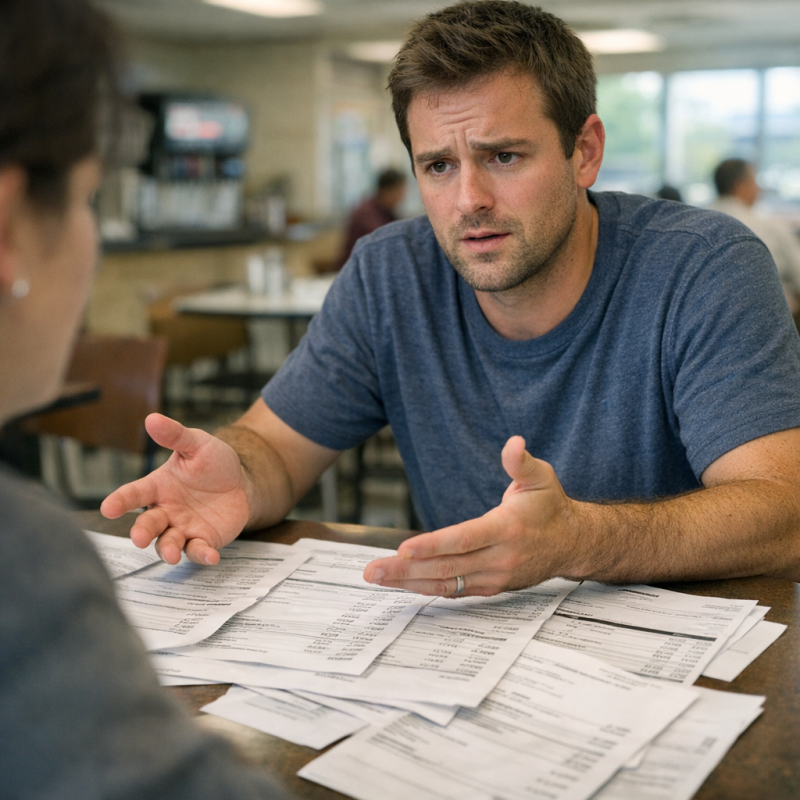 Image by FCT AI
The Paper Trail We Started Following
Rachel joined us that evening in an empty conference room, and we spread everything out. Tom's bank statements. The hospital records I'd quietly photocopied showing Jeannie's medication schedule. The timeline we were building felt damning, but I kept stopping myself from saying what it looked like. I didn't want to jump to conclusions, even though the evidence was right there. 'Look at this,' Rachel said, pointing to a fifty-thousand-dollar transfer in March 2020. I checked Jeannie's hospital records. 'She was admitted for pneumonia that week. They had her on heavy sedation.' Tom found another. 'June 2021. Sixty thousand.' 'Hospitalized for a fall,' I confirmed. 'Medicated for pain and anxiety.' We kept going. Every major withdrawal, every significant transfer—they all happened when Jeannie was either in the hospital or so heavily medicated at home that she wouldn't have been able to question anything. Rachel sat back, her face tight with anger. 'This isn't coincidence,' she said quietly. I nodded, feeling sick. The pattern was clear—every major withdrawal coincided with a time when Jeannie was either hospitalized or heavily medicated.
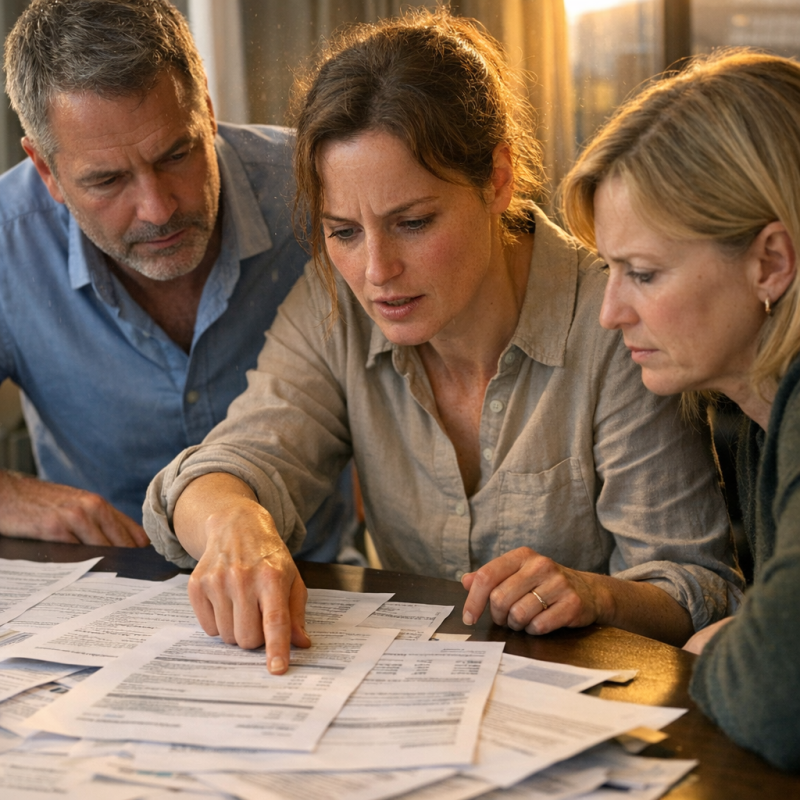 Image by FCT AI
The House That Was Already Sold
Tom showed up at the hospital the next morning looking like he hadn't slept. 'There's more,' he said, and I could see the devastation in his eyes. He pulled out a thick document—property sale records. 'I found these in the same file cabinet. Sarah, my mom sold Grandma's house.' I stared at him. 'What?' 'Last month. She sold it to a development company for $680,000.' Jeannie's house. The one she'd lived in with Harold for forty years. The one she'd mentioned wanting to return to. 'Jeannie never mentioned selling,' I said. 'She couldn't have,' Tom said. 'Look at the signature.' He showed me the sale documents, and I felt the air leave my lungs. The signature was supposed to be Jeannie's—it was labeled as hers—but it looked nothing like the signatures I'd seen her write on hospital forms. The letters were too smooth, too confident. Jeannie's real signature had a slight tremor now, a hesitation. When Tom showed me the sale documents, my hands went numb—the signature didn't look anything like Jeannie's handwriting.
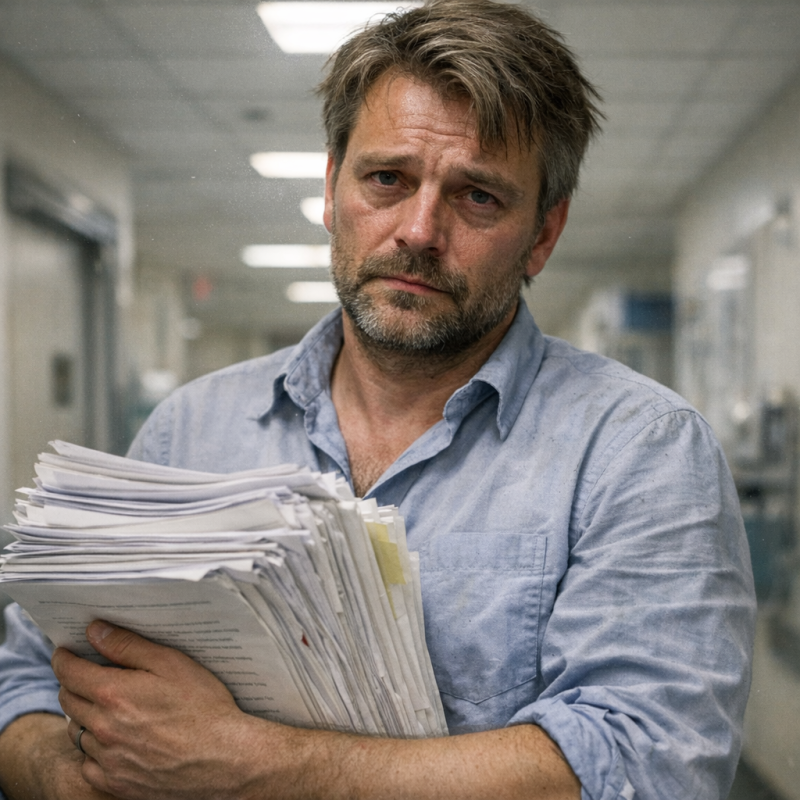 Image by FCT AI
The Decision to Report Her
Tom and I sat in my car in the hospital parking lot, trying to figure out what to do next. 'We have to report this,' I said. 'This is fraud. This is financial exploitation of a vulnerable adult. This is criminal.' Tom was pale but nodding. 'Adult Protective Services first, then maybe the police?' We called APS from my car, explained everything—the transfers, the forged signature, the house sale. The woman on the phone took notes, asked questions, told us someone would follow up within forty-eight hours. I felt relieved. Finally, someone official was going to intervene. But then Tom's phone rang. It was his mother. He didn't answer, but a voicemail came through immediately. He played it on speaker. Carol's voice was tight, defensive: 'Tom, I know what you're trying to do, and you need to stop. I've already filed a complaint with APS about the hospital staff manipulating your grandmother. This is going to blow back on all of you.' My blood went cold. But when we tried to file the report, we learned Carol had already filed her own complaint—claiming Jeannie was being manipulated by hospital staff.
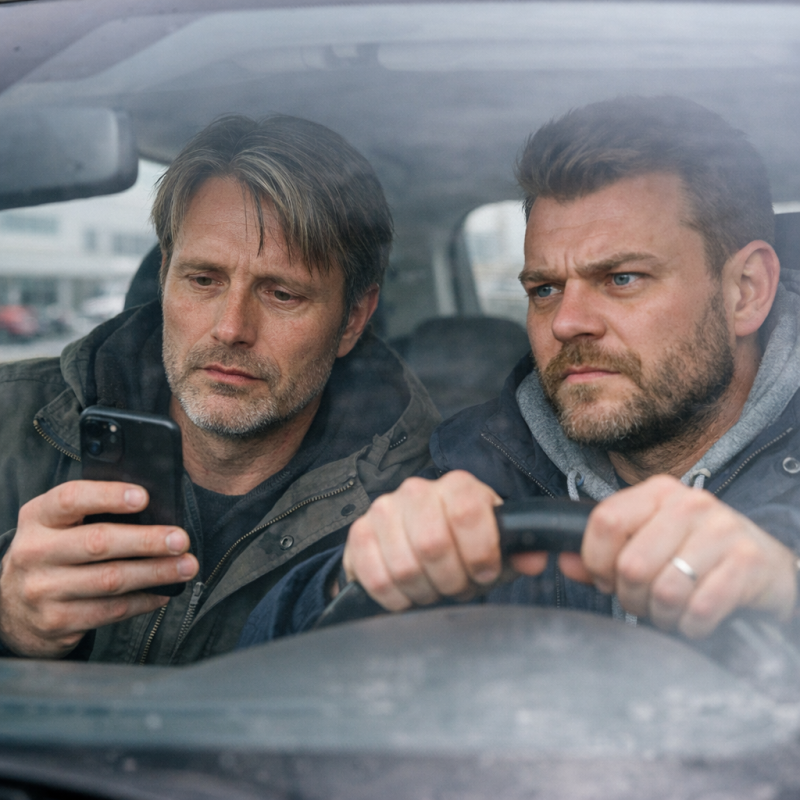 Image by FCT AI
The Investigation That Went Both Ways
The Adult Protective Services investigator showed up three days later—a tired-looking woman named Linda Chen who interviewed everyone. Me. Tom. Rachel. Carol. Jeannie. She took notes, reviewed documents, asked careful questions. I thought it would be obvious once she looked at the evidence, but I could tell she was treating this as two competing narratives. Carol's story versus ours. 'We're opening dual investigations,' Linda told me in the hallway outside Jeannie's room. 'One into the financial concerns you and Mr. Patterson raised, and one into the allegations of staff misconduct.' 'Misconduct?' I said. 'We're trying to protect her.' 'I understand,' Linda said, but her face was professional, neutral. 'But there are protocols. When a family member raises concerns about staff influence over a vulnerable patient, we have to take that seriously too.' My chest tightened. 'What does that mean?' Linda looked at me seriously, and I could see the weight of policy in her expression. The investigator looked at me seriously and said, 'Until we sort this out, you need to maintain professional distance from this patient.'
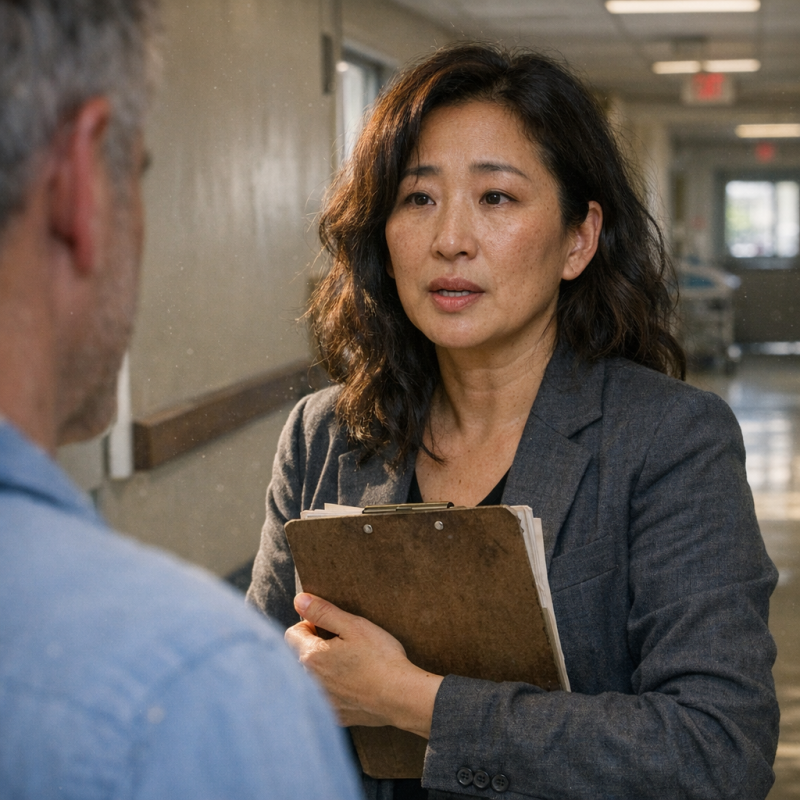 Image by FCT AI
The Days I Couldn't See Her
I wasn't allowed in Jeannie's room anymore. Hospital administration made it clear—until the APS investigation concluded, I was to have no direct patient contact with her. Someone else was assigned to her care. I'd pass by her room during my rounds and see Carol sitting there, talking quietly, holding Jeannie's hand like the devoted daughter. It made me feel physically ill. Jeannie looked different each time I glimpsed her through the doorway. More tired. More confused. The sharpness that had returned to her eyes over the past weeks was fading again. I felt helpless, watching from a distance while everything I'd worked to protect unraveled. Rachel found me in the break room one afternoon. Her face was tense. 'We need to talk,' she whispered. We stepped into the stairwell where no one could hear us. 'They've increased her sedation again,' Rachel said quietly. 'Carol requested it, said Jeannie was becoming agitated and paranoid. And the new attending physician approved it without question.' Rachel whispered to me in the hallway: 'They've increased her sedation again—Carol requested it and the new attending physician approved it.'
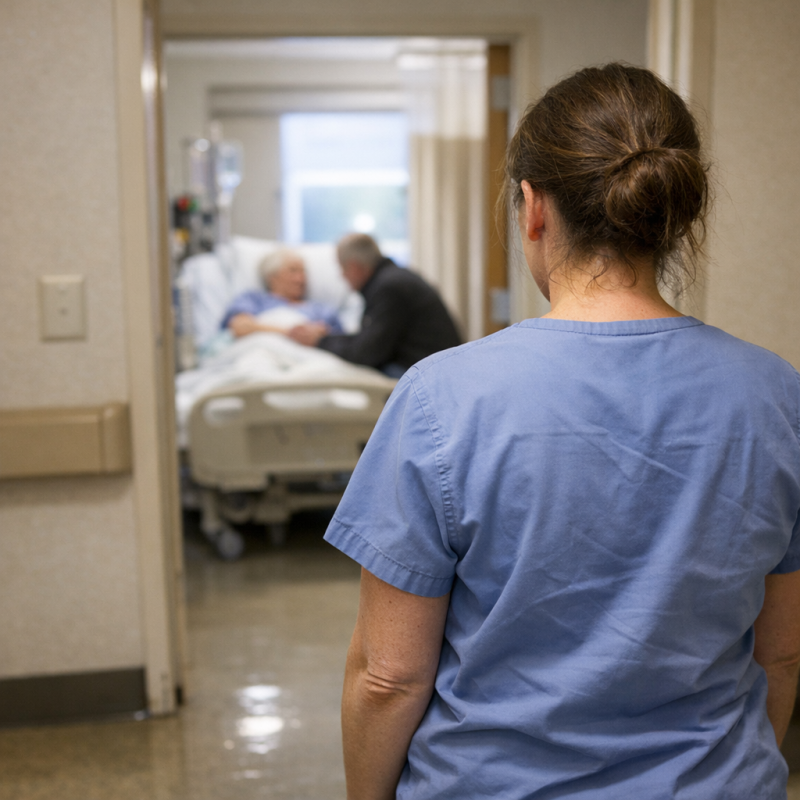 Image by FCT AI
The Message She Smuggled Out
Rachel found me two days later in the supply closet. I was restocking IV bags, trying to stay busy so I wouldn't think about Jeannie down the hall. Rachel glanced over her shoulder, then pressed something into my palm. It was a folded piece of paper, the edges rough like it had been torn from a notebook. 'She gave this to me this morning when Carol left the room,' Rachel whispered. 'She was crying.' My hands shook as I unfolded it. The handwriting was barely legible, shaky and uneven, like someone had written it with tremendous effort. 'Sarah—I'm so scared. She's keeping me so foggy I can barely think. The medication makes everything cloudy. I tried to tell the new nurse but she said I was confused. Carol watches me constantly. She smiles at the staff but when we're alone her face changes. Please help me. I don't know who else to trust.' I had to steady myself against the shelf. The words blurred as my eyes filled with tears. But it was the final line that made my blood run cold. The note ended with: 'She's going to make sure I don't wake up to see the investigation end. Please don't let her win.'
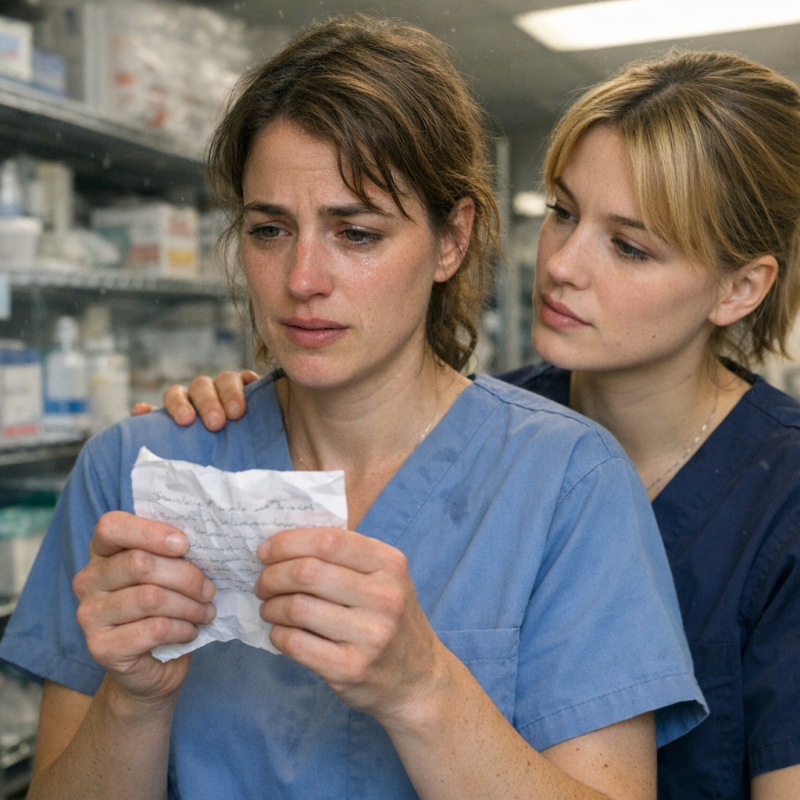 Image by FCT AI
The Risk I Had to Take
I waited until after midnight. The hallways were quiet except for the occasional beep of monitors and the soft shuffle of the night shift nurses. I knew I could lose my job for this. I could lose my license. But Jeannie's note was in my pocket, and I couldn't ignore what she'd written. I slipped into her room and closed the door quietly behind me. The lights were dimmed, and for a moment I thought she was asleep. But then her eyes opened, unfocused at first, then finding my face. 'Sarah,' she breathed. Her voice was so weak. I moved to her bedside and took her hand. It felt fragile, like bird bones. 'I got your note,' I whispered. 'I'm here.' Tears slid down her temples into her gray hair. 'I didn't know who else to tell,' she said. 'Everyone thinks I'm just a confused old woman.' 'You're not confused,' I told her firmly. 'I believe you.' She looked at me for a long moment, and something shifted in her expression. A clarity I hadn't seen in days. Jeannie gripped my hand weakly and whispered, 'I know what she's been doing all along—and I know why Harold tried to warn me.'
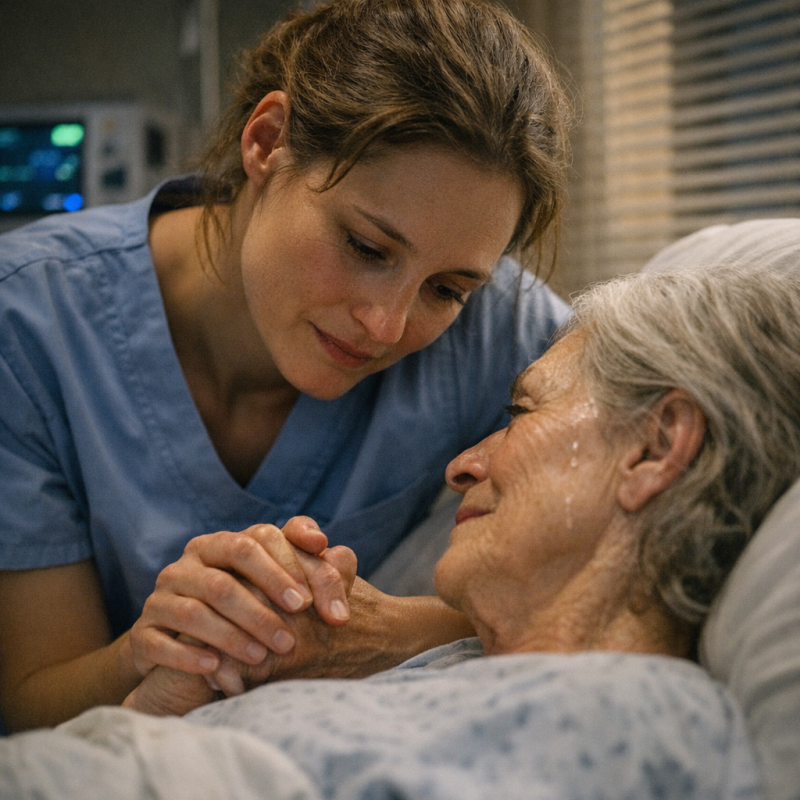 Image by FCT AI
The Story Harold Tried to Tell
I pulled a chair close to her bed, keeping my voice low. 'Tell me,' I said. Jeannie's eyes were wet but focused now, more alert than I'd seen her since the investigation started. 'Harold found documents,' she said slowly, like she was pulling the memory from deep water. 'Bank statements that didn't match what Carol told us. Checks he never signed. He was going through his files one afternoon and discovered she'd been taking money for years.' My stomach tightened. 'How long ago was this?' 'Three years,' Jeannie whispered. 'Right before he got sick. He was so upset, Sarah. He kept saying he needed to fix it, that he needed to protect me. But then the cancer came back so fast.' She closed her eyes, and I could see the grief wash over her face even now. 'He tried to handle it quietly at first. Didn't want to believe his own daughter would do that to us. But the evidence kept mounting.' I squeezed her hand gently. 'What happened?' Jeannie's voice broke: 'He tried to tell me on his deathbed, but Carol was always there, and I thought he was just confused from the medication.'
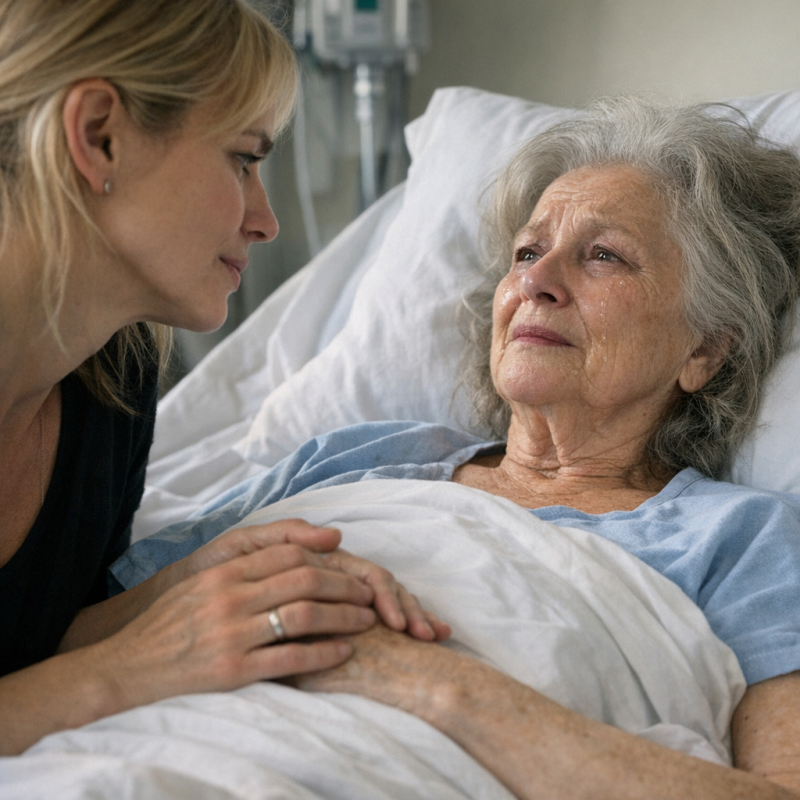 Image by FCT AI
The Safe Deposit Box He Left Behind
Jeannie was quiet for a moment, and I could see her struggling against the fog of medication to hold onto the thread of memory. 'The last week of his life, Harold kept talking about a box,' she continued. 'He'd say 'the box, Jeannie, remember the box' but it made no sense to me. Carol would pat his hand and tell him to rest.' The bitterness in her voice was sharp. 'After he died, I found a bank statement in his desk drawer. It had a charge for a safe deposit box I didn't know we had. I meant to ask Carol about it, but then the grief hit me so hard I could barely function for months.' She paused, taking shallow breaths. 'By the time I remembered, it seemed easier to just let it go. I told myself Harold had been confused, that I was imagining things.' I felt a surge of both hope and urgency. 'Do you still have access to the box?' Jeannie's hand moved to the collar of her hospital gown, fumbling with something. She pulled out a small key on a thin chain. Jeannie handed me a small key and said, 'He made me promise to open it if anything ever felt wrong—I should have opened it years ago.'
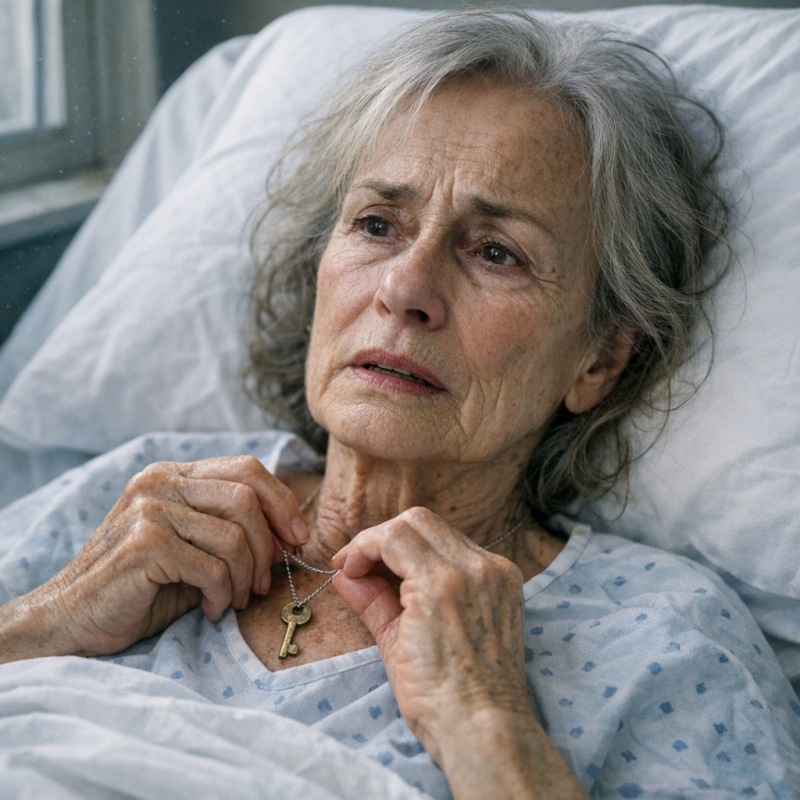 Image by FCT AI
The Evidence Harold Preserved
Tom met me at the bank the next morning. I'd called him at dawn, barely coherent, and he'd agreed immediately to come with me. The bank manager led us to a small private room and brought out the box. My hands trembled as I inserted the key. Inside were manila folders, neatly labeled in Harold's precise handwriting. Bank statements going back twelve years. Photocopies of checks with signatures that looked almost like Harold's but not quite. Transfer records. Property documents. A whole paper trail of theft, carefully documented and preserved. Tom sat beside me as we went through each folder, his face growing darker with every page. 'Jesus Christ,' he whispered. 'This is systematic. This is years of fraud.' At the bottom of the box was a sealed envelope addressed to Jeannie. I opened it with shaking fingers. Harold's letter was three pages long, written in the same careful hand as the folder labels. He detailed everything he'd discovered, every transaction, every lie. He wrote about his heartbreak at his daughter's betrayal and his determination to protect his wife. Harold's letter ended with: 'If you're reading this, I failed to protect you in life—but perhaps I can protect you in death.'
 Image by FCT AI
The Lawyer Who Wanted to Retire
I made an appointment with Martin Greyson, the lawyer listed on some of Harold's documents. He was in his early seventies, about to retire according to the secretary who scheduled my visit. His office was old-fashioned, filled with leather-bound books and the smell of pipe tobacco. 'I remember the Wilsons well,' he said when I explained why I'd come. 'Harold was a good man. Very thorough.' I showed him some of the documents from the safe deposit box. His expression shifted as he recognized them. 'I had my suspicions,' he admitted. 'When Harold passed, I took over Jeannie's estate management as executor. About six months ago, I scheduled a full audit of the estate before my retirement. Standard procedure, but also—' he paused, choosing his words carefully. 'Certain transactions over the years had raised red flags. Nothing I could prove, but enough to make me uncomfortable.' My pulse quickened. 'Did you tell Carol about the audit?' His eyebrows rose. 'Of course. She's the primary beneficiary and has power of attorney. She needed to be informed.' He leaned forward, his voice dropping. The lawyer said, 'I scheduled the audit because certain transactions raised red flags—and your daughter kept trying to convince me to cancel it.'
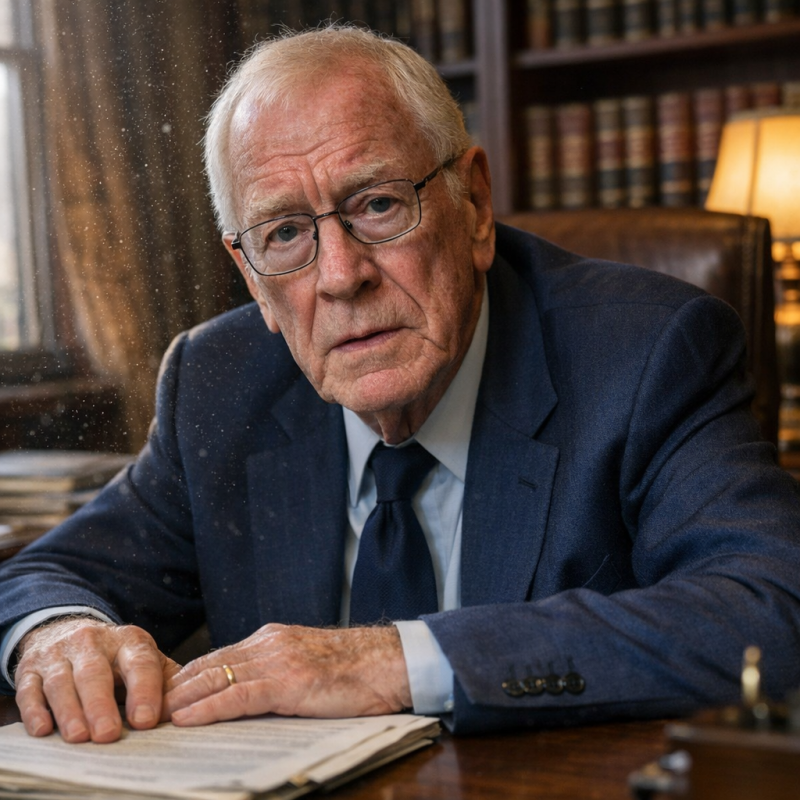 Image by FCT AI
The Timeline That Made Everything Click
I spread everything out on my kitchen table that night. The safe deposit box documents. My notes from visiting Greyson. The timeline of events at the hospital. I started mapping it all out on a large piece of paper, drawing lines between dates and events. The audit was scheduled for next month. Greyson had informed Carol of it six months ago. I traced my finger along the timeline. Five months ago, Carol had started suggesting hospice care to Jeannie. Four months ago, she'd pushed harder, talking about 'quality of life' and 'comfort measures.' Three months ago, she'd put the house on the market. Two months ago, Jeannie was admitted to our hospice unit. The medication increases started immediately. The social isolation. The gradual cognitive decline that I'd witnessed and questioned. Then the DNR designation, the morphine protocols, the intervention when I'd tried to help. Every single escalation corresponded to Carol's timeline, to her urgency to finish this before the audit could expose everything. I stared at the timeline and felt my stomach drop—Carol wasn't just stealing from her mother, she was racing against a deadline to cover her tracks.
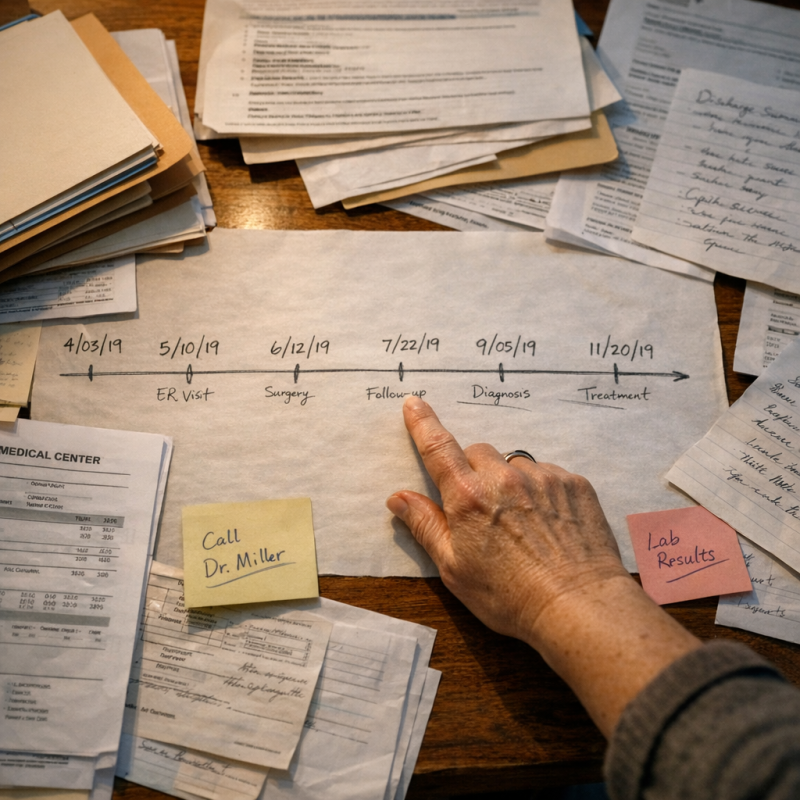 Image by FCT AI
The Truth About What Carol Had Been Doing
The APS investigator called me three days later. Her voice was tight, professional but strained. 'I need you to come to my office,' she said. 'We've completed our preliminary investigation.' I sat across from her desk, my heart hammering. She had folders spread out in front of her—some I recognized from Harold's safe deposit box, others that must have come from her own investigation. 'Sarah, what you reported was correct,' she began. 'But it was much worse than anyone initially understood. Carol Wilson has been systematically embezzling from her mother's estate for over twelve years. Forged signatures, unauthorized transfers, fraudulent property sales. She's taken nearly eight hundred thousand dollars.' I felt like I couldn't breathe. 'The hospice admission, the medication protocols, the isolation—it all coincides with the estate audit her mother's lawyer had scheduled. She needed Jeannie to die before that audit could proceed, before the lawyer could discover the full extent of the theft.' The investigator's expression was grim. She looked at me and said, 'She wasn't just neglecting her mother—she was making sure she died before anyone could discover what she'd stolen.'
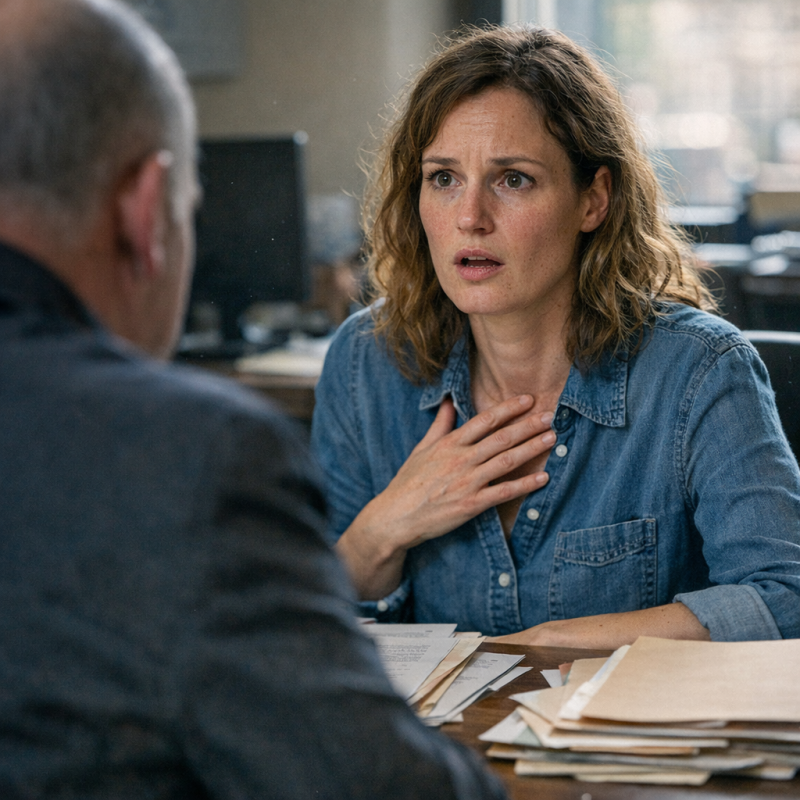 Image by FCT AI
The Arrest I Watched Happen
They arrested Carol on a Tuesday morning. I was at the nurses' station when I saw them coming down the hallway—two detectives and a uniformed officer. My heart was pounding so hard I could feel it in my throat. Carol was in the visitor's lounge, drinking coffee and scrolling through her phone like she didn't have a care in the world. I watched from a distance as they approached her, showed their badges, read her rights. Her face went from confusion to rage in seconds. She started shouting about lawsuits and harassment, her voice echoing down the corridor. But they just put the handcuffs on and began walking her toward the elevator. The route took them right past Jeannie's room. I was standing there, unable to move, unable to look away. Carol's eyes locked on mine as they led her past, and everything about her expression changed. The mask she'd worn for months—the concerned daughter, the overwhelmed caregiver—it all dropped away. What was left was pure, undiluted hatred. She stopped walking, forcing the officers to pause. Then she leaned toward me and hissed, 'You've destroyed everything.'
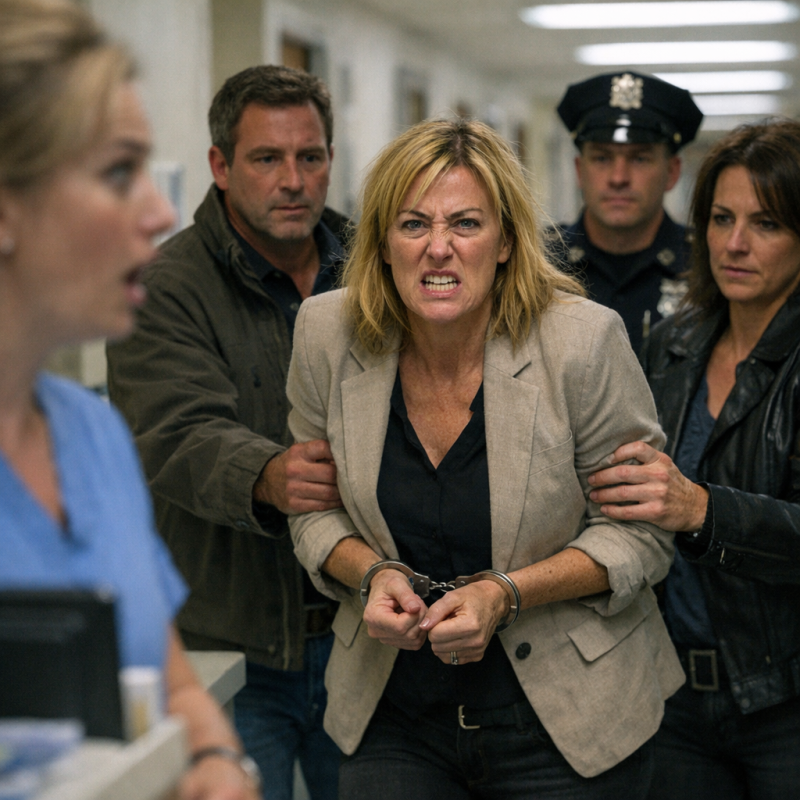 Image by FCT AI
The Relief That Came Too Late
Within twenty-four hours of Carol's arrest, the hospice orders were suspended. Dr. Martinez reviewed Jeannie's case himself and immediately adjusted her medication back to appropriate palliative levels. I was there when she started to come back to herself. It happened gradually over three days—first her eyes focusing more clearly, then her speech becoming less slurred, then actual conversations that made sense. She remembered my name. She asked what had happened, why she felt so foggy for so long. I told her the truth, as gently as I could. She cried, but they were tears of relief mixed with grief. 'I thought I was losing my mind,' she whispered. 'I thought I was already gone.' We sat together that afternoon, just talking. Really talking, the way we hadn't been able to in weeks. She told me about her garden, about Harold, about the life she'd built in that house Carol had stolen. Her clarity was such a gift. But I'm not going to lie—it was bittersweet. Because as Jeannie held my hand and thanked me, I could see how much the fight had taken out of her—and how little time she had left.
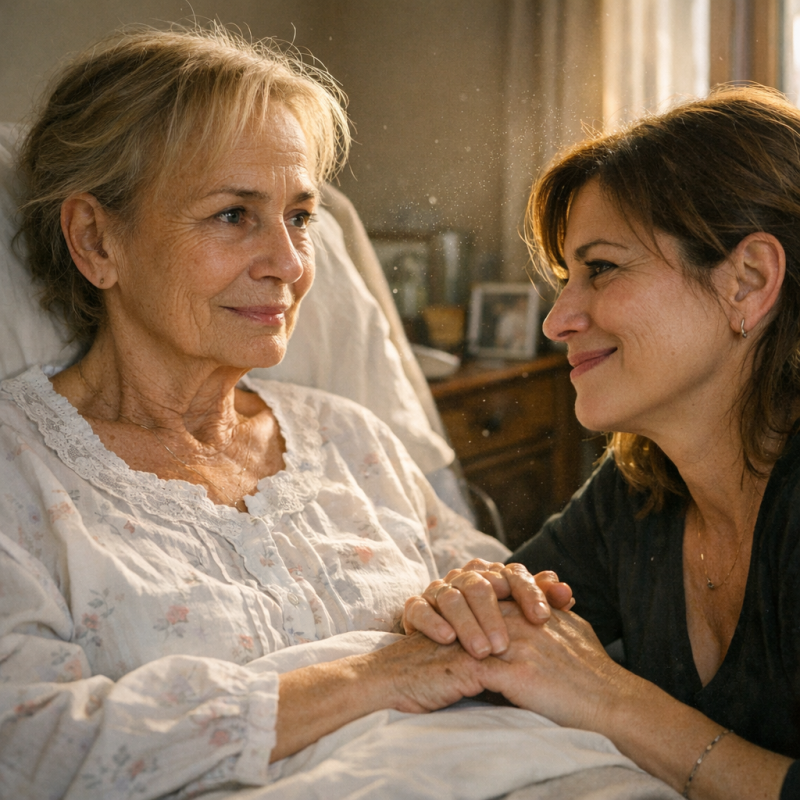 Image by FCT AI
The Choice She Made for Herself
Jeannie made the decision herself. No one pressured her, no one convinced her—she just knew what she wanted. 'I want to go home,' she told me one morning. 'Real hospice. The kind where I get to choose how I spend whatever time I have left.' I helped her navigate the options. We found a hospice agency that specialized in patient-directed care, one that would honor her choices about pain management, visitors, daily routines. She wanted to be surrounded by her things, she said. Her books, her quilts, the photos of Harold. She wanted to look out her own windows at her own garden. I watched her face as we made the arrangements, and I saw something I hadn't seen in months—peace. Not resignation, not defeat. Actual peace. She was taking back control of the one thing Carol couldn't steal: how she would face her own death. The social worker came to discuss the discharge plan, and Jeannie signed the papers with a steady hand. As we prepared for her discharge, Jeannie looked around her hospital room and said, 'I'm finally free to die the way I want to live—with dignity.'
 Image by FCT AI
The Home She Thought She'd Lost
Tom moved faster than I thought possible. He got an emergency injunction based on the evidence of Carol's fraud, arguing that the house sale was part of the criminal scheme. The judge agreed. Within a week, the sale was voided and the property was restored to Jeannie's name. I drove with her the day she went home. Tom had arranged everything—medical equipment, oxygen, a hospital bed if she wanted it. But when we pulled into the driveway, Jeannie insisted on walking to the door herself. I stayed close, steadying her, but I let her do it. The key was in Tom's hand—Carol had taken Jeannie's copies months ago—and he unlocked the door with shaking fingers. The house smelled stale from being closed up, but it was still hers. Same furniture, same curtains, same wedding photo on the mantel. Jeannie stood in the living room, taking it all in. She touched the back of her favorite chair, ran her fingers along the bookshelf. Then she turned to look at both of us, and I saw tears streaming down her face. Her voice was barely audible when she whispered, 'I never thought I'd sleep in my own bed again.'
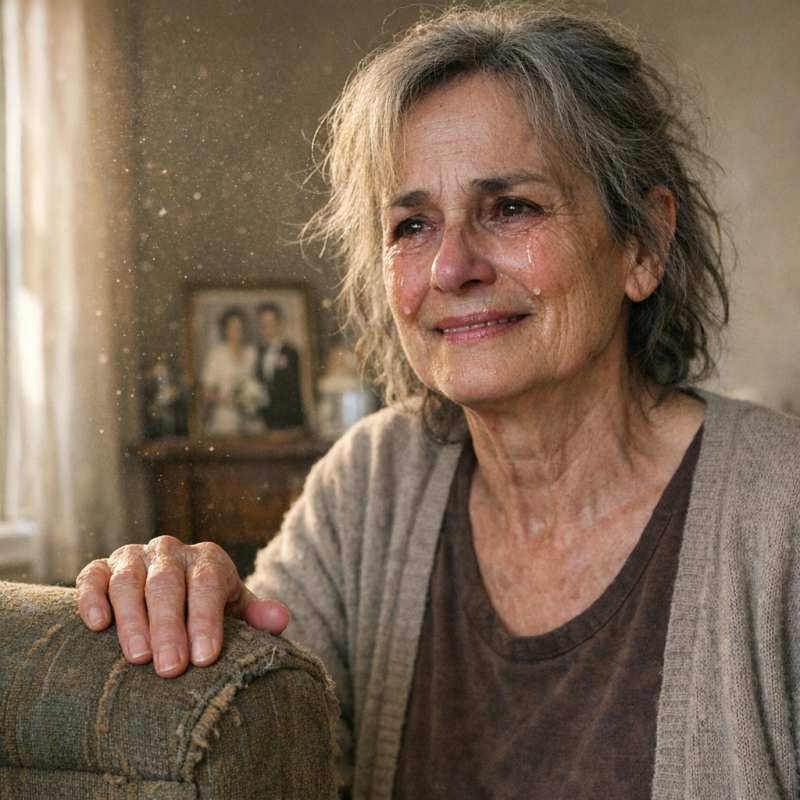 Image by FCT AI
The Final Days I Spent With Her
I took a leave of absence from the hospital. My supervisor understood—after everything that had happened, after everything I'd witnessed, she knew this was something I needed to do. The hospice agency welcomed me as Jeannie's primary nurse, and I moved into her guest room. We fell into a rhythm those final weeks. Morning coffee together, medication at regular intervals, stories in the afternoon. She told me about meeting Harold at a dance in 1965, about their wedding, about the miscarriages before Carol was born. She showed me photo albums and taught me about the plants in her garden. We watched old movies. We sat in comfortable silence. Some days were harder than others—pain that broke through, exhaustion that kept her in bed. But even on those days, there was a contentment I'd never seen in her at the hospital. She was home. She was herself. She was in control. One afternoon, sunlight streaming through the window, birds singing outside, Jeannie looked at me with clear, bright eyes. Her hand found mine and squeezed gently. 'You gave me something more precious than my house or my money—you gave me back my voice.'
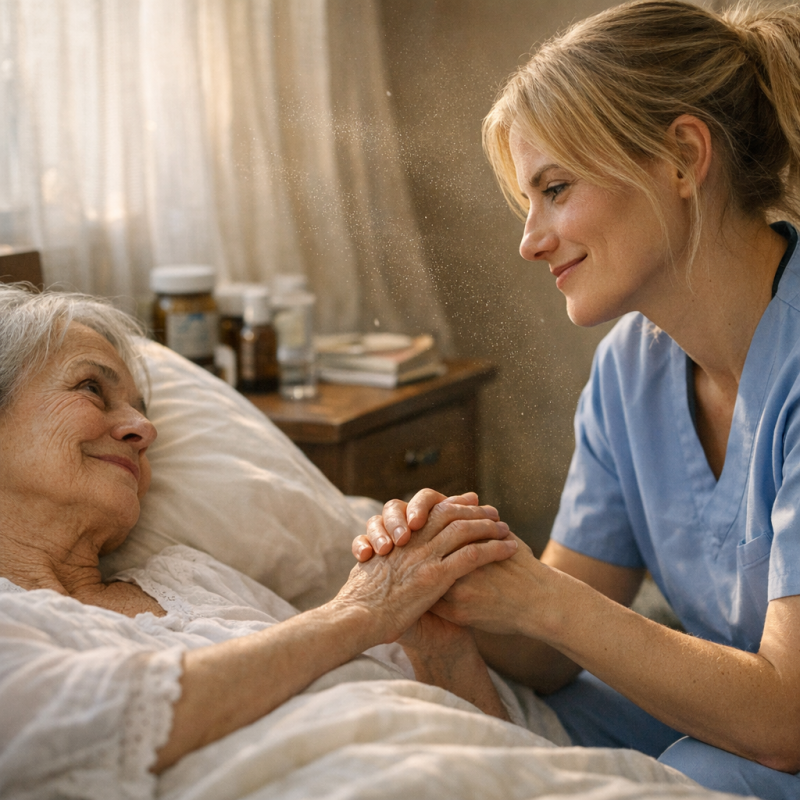 Image by FCT AI
The Apology That Never Came
The letter came on a Thursday. Tom brought it when he visited, his face tight with anger. 'It's from Mom,' he said. 'Her lawyer sent it. I haven't opened it.' Jeannie held the envelope for a long moment before asking me to read it to her. I did, though every word made me angrier. Carol blamed the stress, blamed the financial pressure, blamed the system. She said she'd only been trying to help, that she'd planned to pay everything back, that Sarah had misunderstood her intentions. She talked about how hard it had been caring for Jeannie, how exhausting, how thankless. Not once—not in three full pages—did she apologize. Not once did she acknowledge the harm she'd caused. Not once did she ask for forgiveness or express genuine remorse. When I finished reading, Jeannie was quiet for a long time. Then she held out her hand for the letter. I gave it to her, and she read it herself, slowly, her lips moving slightly. When she was done, she folded it carefully and handed it back to me. Her voice was calm, almost gentle, when she spoke. 'Some people never learn that love isn't something you can steal.'
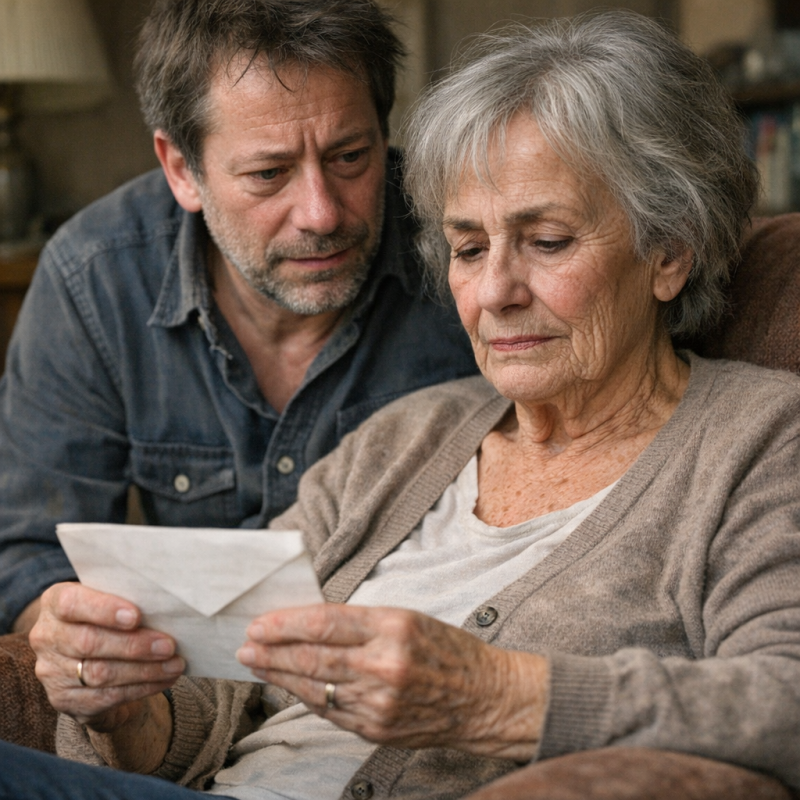 Image by FCT AI
The Grandson Who Learned to See
Tom came every day after that. Sometimes twice a day. He'd sit with Jeannie for hours, listening to stories he'd never heard before. She told him about his grandfather's service in Korea, about the business Harold had built from nothing, about family members Tom had never known existed. He brought a notebook and wrote things down—recipes, memories, advice. I watched them together and saw something beautiful happening. Tom was learning who his grandmother really was, not the diminished version Carol had presented. He saw her strength, her humor, her sharp mind. He understood, finally, what his mother's greed had cost them all. One evening, after Jeannie had fallen asleep, Tom and I sat in the kitchen drinking tea. He was quiet for a long time, just staring at his grandmother's handwriting in his notebook. Then he looked up at me, and his eyes were full of tears. His voice cracked when he spoke. 'I spent my whole life thinking my grandmother was fragile—I never realized she was the strongest person in our family.'
 Image by FCT AI
The Photo She Held Until the End
She started fading on a Sunday. I could see it in her breathing, in the way she drifted in and out of consciousness. Tom stayed close. We both knew it was time. That afternoon, during one of her lucid moments, Jeannie asked me to get something from her bedside drawer. It was the photo—Harold in his uniform, young and smiling. She'd kept it with her all this time. She held it against her chest with both hands, studying his face like she was memorizing it all over again. 'He told me to fight,' she whispered. 'In that letter. He said I was stronger than I knew, that I shouldn't let anyone diminish me.' I sat beside her, holding her free hand. 'You fought,' I told her. 'You won.' She smiled then, the most peaceful smile I'd ever seen on her face. Her breathing was slowing, becoming shallow. The afternoon light turned golden through the window. She looked at the photo one more time, then closed her eyes. Her voice was so soft I had to lean in to hear her. She whispered, 'Tell him I finally listened—tell him I fought back.'
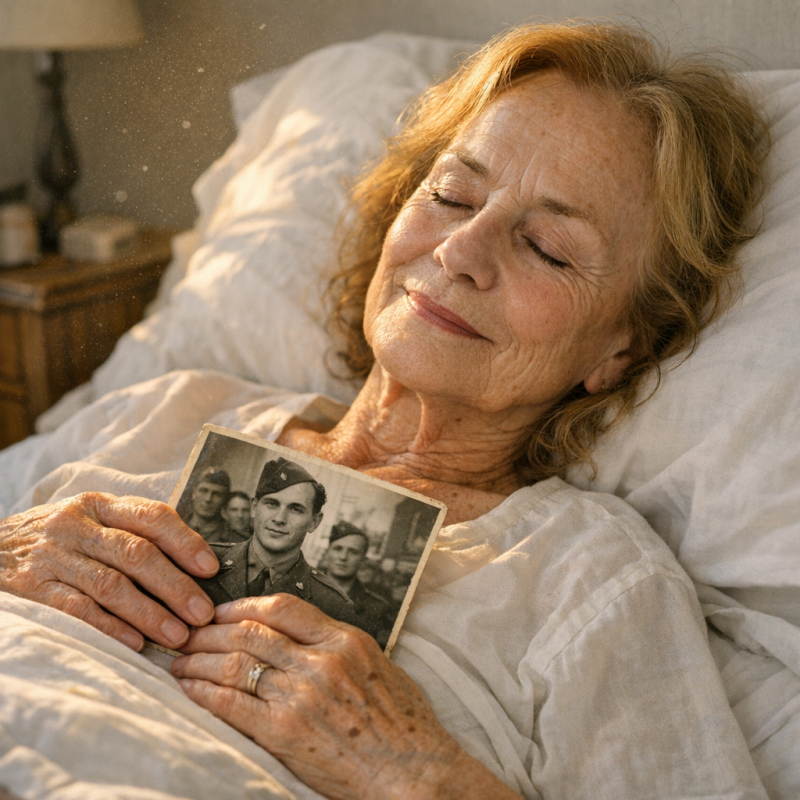 Image by FCT AI
The Morning She Slipped Away
She passed just after dawn on Tuesday. Tom and I were both there, one on each side of her bed. Her breathing had gotten so shallow during the night that I kept checking to make sure she was still with us. When the sun started coming through the window, she opened her eyes one last time. She looked at Tom first, then at me, and there was this complete peace on her face. No pain. No fear. Just... peace. Tom was holding her left hand, and I was holding her right. She squeezed both our hands—barely, but I felt it. Then she took one more breath and didn't take another. It was the quietest, most dignified death I'd ever witnessed. Tom started crying softly, and I realized I was crying too. I gently closed her eyes and straightened the blankets around her. She looked so peaceful lying there with Harold's photo still on her chest. The morning light made everything feel sacred somehow. As I closed her eyes for the last time, I realized she'd taught me something I'd never forget—that how we die matters as much as how we live.
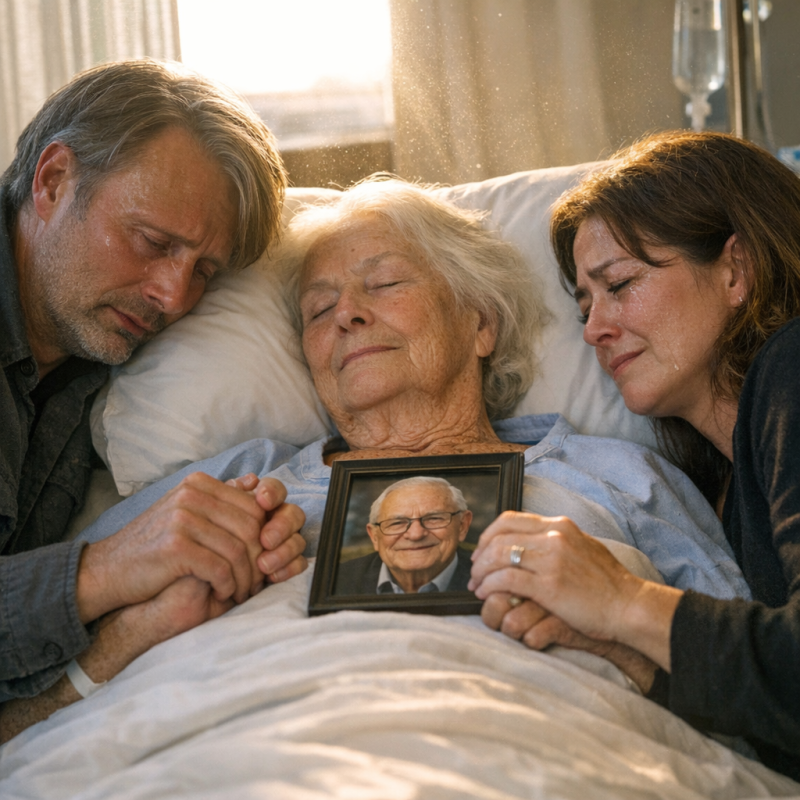 Image by FCT AI
The Trial I Attended
The trial happened six weeks later. I'd never testified in court before, and I was nervous walking into that courtroom. Carol sat at the defense table looking smaller than I remembered, almost fragile. But I thought about Jeannie and what she'd endured, and I stood up there and told them everything. The medication changes. The records I'd kept. The bruises I'd documented. Carol's lawyer tried to make me seem paranoid, said I was a young nurse overstepping boundaries. But the prosecutor showed the jury my notes, the photos, the hospital reports. Carol never looked at me once during my testimony. The jury deliberated for less than three hours. When they came back with the guilty verdict, I watched Carol's face crumple. She aged ten years in that moment. Her lawyer put his hand on her shoulder. People around me seemed satisfied, relieved even. But all I felt was this hollow sadness. When the guilty verdict was read, I felt no satisfaction—only sadness for what Jeannie had endured for so long.
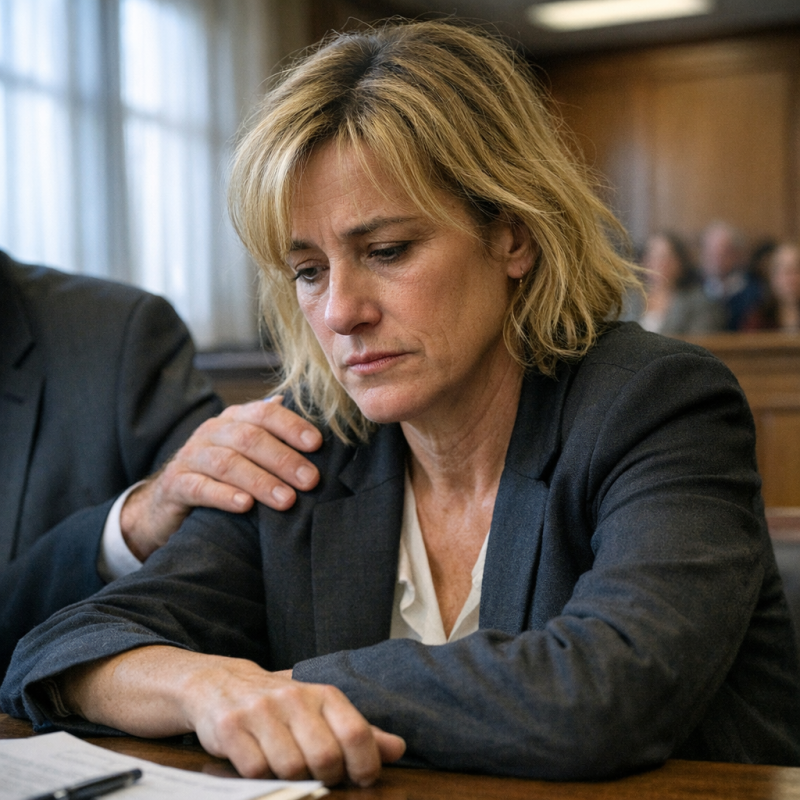 Image by FCT AI
The Changes I Helped Make
After the trial, the hospital asked me to help develop new protocols. Rachel was the one who reached out, actually. We met with administrators, legal teams, social workers. I showed them how I'd spotted the signs—the inconsistencies in medication, the patient's fear around certain visitors, the unexplained injuries. They created a mandatory training program for all nursing staff on identifying elder abuse by family members. There were new reporting procedures, better documentation requirements, regular patient welfare checks when abuse was suspected. Rachel told me they'd already caught two cases using the new protocols. Two elderly patients who might have suffered in silence like Jeannie had for so long. We were sitting in the hospital cafeteria when she said it, both of us drinking terrible coffee. She looked at me with this expression I couldn't quite read—pride mixed with something sadder. 'Jeannie's case changed everything,' she said. 'Now we're trained to see the signs you saw.'
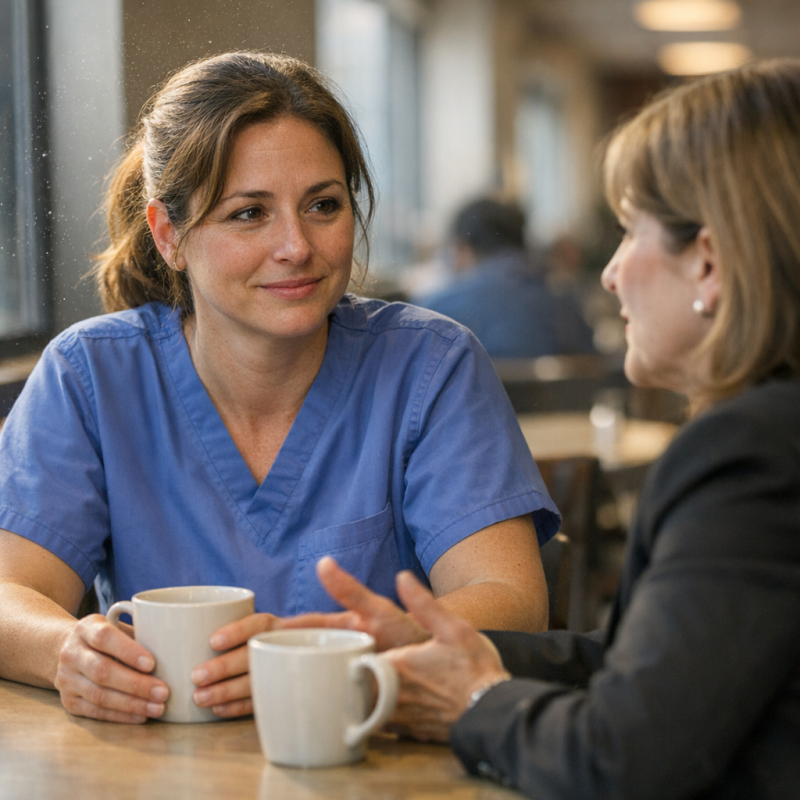 Image by FCT AI
The Thank You I'll Never Forget
I keep the thank-you note in my wallet. Jeannie had written it during one of her last good days, maybe a week before she died. Her handwriting was shaky but legible. I found it on my car windshield after a shift—she must have asked Tom to put it there. The paper's getting worn now from me unfolding it so many times, but I can't seem to stop rereading it. She thanked me for listening. For believing her. For not giving up even when it would have been easier. She wrote that she'd spent decades feeling invisible, like her pain didn't matter to anyone. She said I'd given her something back—not just safety, but dignity. The words still make me cry sometimes, especially on the hard shifts when I'm exhausted and questioning everything. I think about her whenever I see an elderly patient who seems afraid or too quiet. I look closer now. I ask more questions. I don't look away. The note ended simply: 'You saw me when everyone else looked away. Thank you for making me matter.'
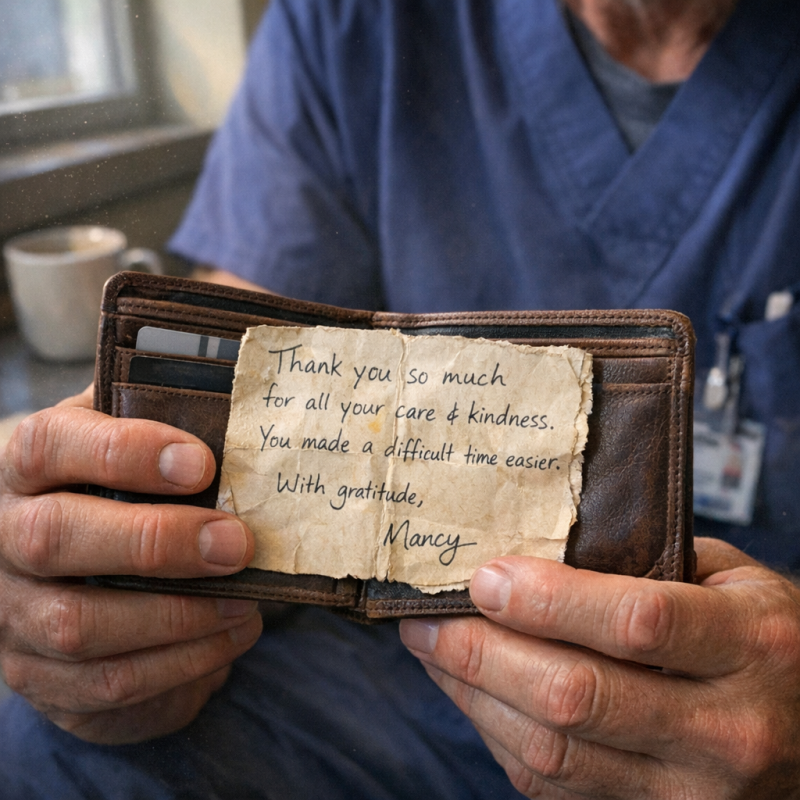 Image by FCT AI