
The Yellow Raincoat
I can still see that yellow raincoat. Bright as a sunflower, Margaret said when she bought it for Lily's seventh birthday. My granddaughter stood at the edge of our driveway that afternoon, twirling in it like she was auditioning for a musical, rain boots splashing in puddles that hadn't even formed yet. 'Grandpa, watch this!' she called, and I glanced up from my phone just long enough to wave. She waved back, grinning with those missing front teeth. The coat was too big on her—we'd bought it a size up so she could grow into it. I remember thinking we had time for that. Time for her to grow. Time for everything. Margaret was behind her on the porch, calling something about coming inside before the real rain started. Lily laughed and spun one more time. That image is burned into my brain now—the yellow coat twirling, her dark hair flying out, the pure joy on her face. It's the last clear memory I have of her. By the time I looked up from my phone, she was gone—and two years later, I still didn't know why.
 Image by FCT AI
The Day She Disappeared
It was just an ordinary Sunday. That's what kills me—how normal everything was. Margaret had made pancakes that morning. Lily ate three, drowning them in syrup the way kids do. We'd planned to take her to the park after lunch, but my brother called about Mom's estate and I stepped into the garage to take it. Three minutes. Maybe four. I can still hear his voice droning on about probate while I paced between our cars. When I came back inside, Margaret was standing in the kitchen doorway, her face white. 'Where's Lily?' she asked. I looked around—the living room was empty. 'I thought she was with you,' I said. We called her name. Checked her room, the bathroom, the basement. Margaret went out the back door while I searched upstairs again. My heart was hammering by then. I went outside through the front, scanning the yard, the street. That's when I saw it, lying in a heap near the mailbox. When I stepped outside, her yellow raincoat was crumpled on the ground—but Lily was nowhere.
 Image by FCT AI
The First Night
The officers arrived within eight minutes. I know because I watched the clock on the microwave like it might reverse time if I stared hard enough. Two officers, a man and a woman, asked us to describe what happened while more units canvassed the neighborhood. Neighbors appeared on their porches, then in our yard, calling Lily's name through the streets. Mrs. Chen from next door organized a search party. Margaret sat with Rachel on the couch—our daughter had rushed over the moment we called, her face destroyed. I watched Margaret hold Rachel, stroking her hair, whispering that everything would be okay. She looked like the perfect devastated grandmother. But I kept thinking about something strange. When I'd first come back inside and asked where Lily was, there'd been this split second—maybe I imagined it—where Margaret's expression wasn't confused. It was something else. Something almost like calculation. Then it was gone, replaced by appropriate panic. I shook the thought away. Grief does weird things to your brain. Margaret whispered to Rachel that everything would be okay—but her eyes were somewhere else entirely.
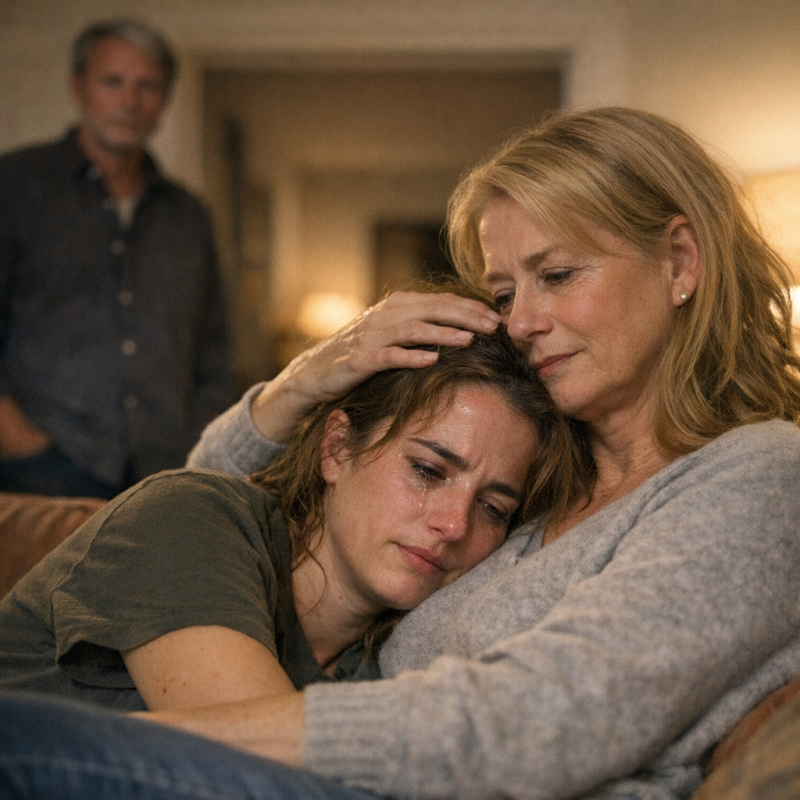 Image by FCT AI
The Search Intensifies
By dawn, we had over fifty people searching. They combed through the woods behind our property, calling Lily's name until their voices went hoarse. I walked the same paths over and over, trying to reconstruct every moment of that day. Had she mentioned wanting to go somewhere? Had someone knocked on the door? I replayed the morning in my mind like footage I could rewind and analyze. Margaret searched too, walking through the trees with the other volunteers, her face drawn and pale. She looked exactly like what she was supposed to be—a terrified grandmother. Rachel handed out photos of Lily to anyone who'd take one. I watched hope fall from people's faces as the hours passed. One woman found something near the creek and shouted. We all ran. My heart stopped when I saw the small shoe in her hand, mud-caked and tiny. Then Rachel looked at it and shook her head. 'That's not hers,' she said, voice flat. The volunteer apologized, crying herself now. One searcher found a small shoe near the creek—but it wasn't Lily's size.
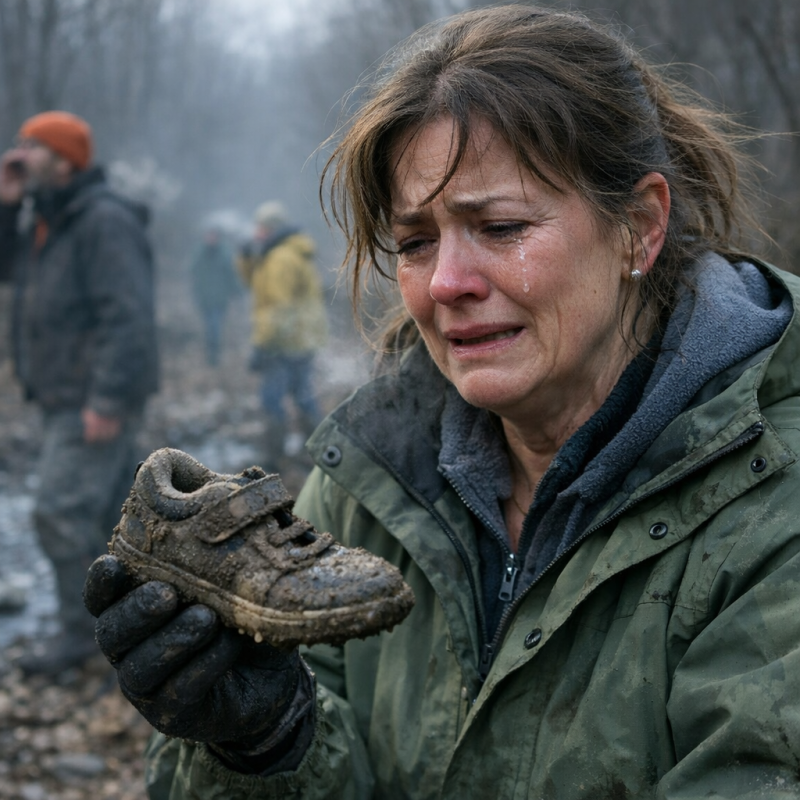 Image by FCT AI
Detective Carver
Detective Carver showed up on day three. Tall guy, maybe early fifties, with gray stubble and eyes that looked like they'd seen everything twice. He sat across from me at our dining table with a recorder between us and a notepad that was already half-filled. 'I need you to walk me through Sunday again, Mr. Brennan,' he said. His voice was kind but firm. So I did. Every detail. The pancakes, the phone call, the three minutes in the garage. He wrote things down I didn't think mattered—what hand I held the phone in, whether I'd locked the garage door behind me. 'Anyone have a grudge against your family?' he asked. 'Anyone going through financial troubles? Custody disputes?' I shook my head to everything. 'What about someone who paid unusual attention to Lily? Neighbors, family friends?' Again, nothing. We lived quietly. We were boring people. Safe people. Carver nodded like he'd expected as much. Then came the question that's haunted me ever since. Carver asked if there was anyone—anyone at all—who might want to take Lily, and I couldn't think of a single person.
 Image by FCT AI
Margaret's Interview
I stood in the hallway while Carver interviewed Margaret. I shouldn't have listened, but I couldn't help myself. Through the crack in the door, I watched her sit in the same chair I'd occupied an hour earlier, hands folded in her lap. Carver asked her the same questions. Where was she when Lily disappeared? 'In the kitchen, cleaning up from lunch,' Margaret said. Her voice was steady. Could she see the backyard from there? 'No, the window faces the side yard.' Did she hear anything unusual? 'Nothing. I had the radio on.' What about the front door—did she hear it open? 'I don't think so, but I might not have noticed.' He pressed her on timeline details, circled back to earlier questions with slight variations. It's an interrogation technique—I knew that from TV. You catch people in lies when their stories shift. But Margaret's didn't shift. Every answer was consistent, measured, appropriate. She even cried at the right moments. When Carver asked if she had any theories about what happened, she said, 'I think someone took her,' and her voice broke perfectly. Margaret's voice never wavered once during the entire interview—not once.
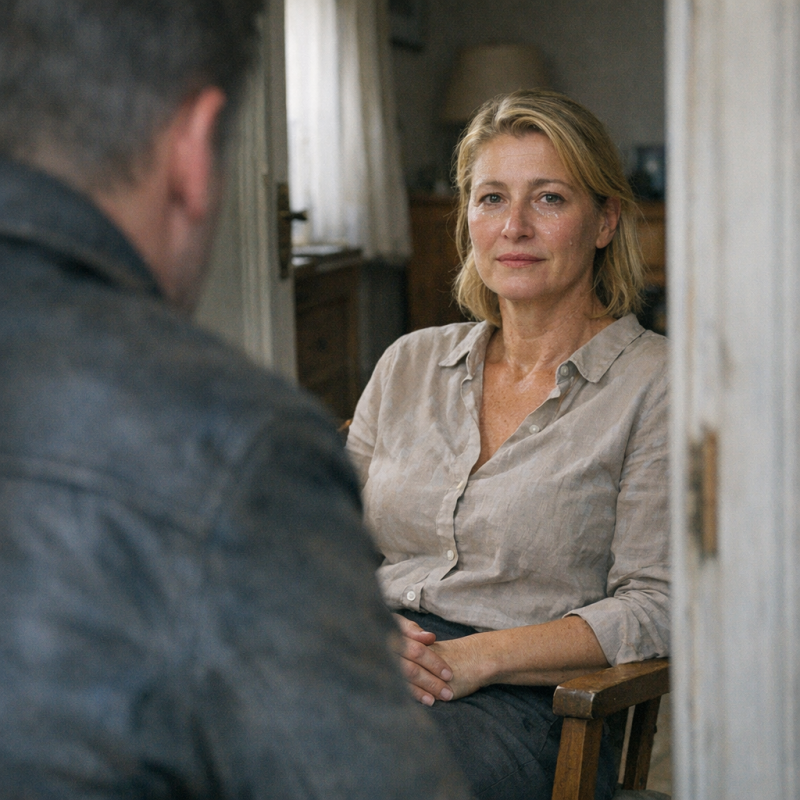 Image by FCT AI
The Media Circus
By the end of the first week, Lily's face was everywhere. Local news picked it up first, then regional, then national. Cable news ran her school photo—the one where she's wearing that blue dress with the white collar, smiling like she knows a secret. Nancy Grace dedicated a segment to it. Strangers on Facebook created finding pages and shared theories. Some were helpful. Some were insane. Margaret, Rachel, and I did a press conference at the precinct. The cameras felt like weapons pointed at us. Rachel could barely speak. I read from a statement Carver helped me write, begging anyone with information to come forward. Margaret sat beside me, tissues pressed to her eyes, the picture of grandmotherly anguish. Afterward, reporters shouted questions as we tried to leave. Most were about the search, about Lily. Then one guy in the back, young with a scraggly beard, yelled out something different. A reporter asked if we suspected anyone in the family, and the question hung in the air like poison.
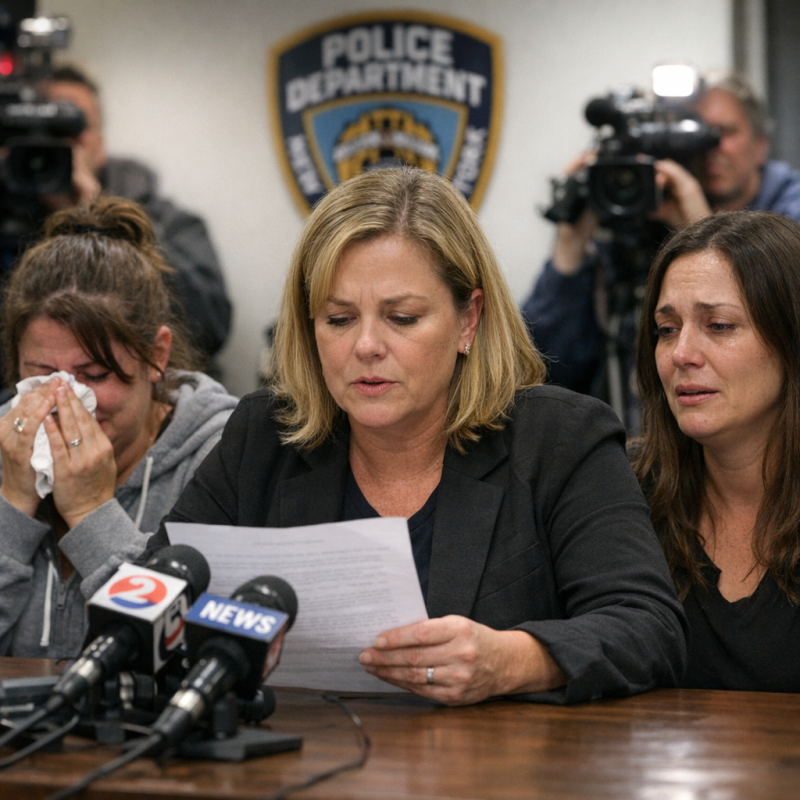 Image by FCT AI
Rachel's Breaking Point
Rachel fell apart completely on day nine. I found her in Lily's room, clutching a stuffed rabbit and sobbing so hard she was hyperventilating. I sat beside her on the small bed, surrounded by toys and books that might never be touched again. 'She's gone, Dad,' Rachel gasped between sobs. 'I know it. I know she's gone.' I tried to tell her not to give up hope, but the words felt hollow even as I said them. What hope was there after nine days? No leads, no sightings, no evidence of anything. Just a yellow raincoat lying in our driveway and a child vanished into nothing. 'I should never have left her with you,' Rachel said, and I felt the words like a punch to the gut. 'I should have stayed. I should have been here.' She didn't mean it cruelly—she was drowning in guilt. But so was I. I'd been on the phone. I'd looked away. I'd let my granddaughter disappear in the three minutes it took to discuss paperwork. Rachel screamed that she should never have left Lily with us—and part of me wondered if she was right.
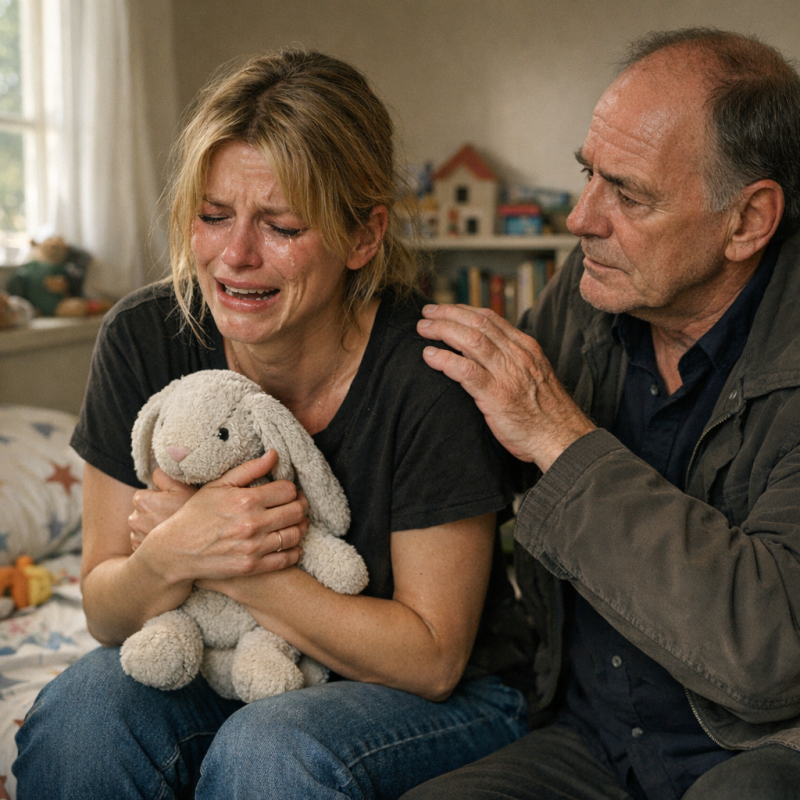 Image by FCT AI
The Vigil
The church organized a vigil on day ten. Hundreds of people showed up—neighbors, strangers, local business owners holding candles in the park where Lily used to play. I stood beside Rachel, who couldn't stop crying, her shoulders shaking with every sob. The crowd sang hymns and prayers, their voices breaking with emotion. Margaret stood on my other side, perfectly still. I remember watching people around us—grown men weeping, mothers clutching their own children tighter, everyone united in this shared grief. But Margaret just stood there, candle in hand, face composed. I told myself she was being strong for Rachel. That she was holding herself together because someone had to. People kept coming up to hug her, to whisper condolences, and she accepted them with quiet grace. But there was something about her stillness that unsettled me, even then. The wind picked up, and candles flickered all around us—people cupping their hands to protect the flames. Everyone else's candle flickered in the wind—but Margaret's burned steady, like she was somewhere else entirely.
 Image by FCT AI
The First Week Ends
Detective Carver came to the house on day seven with a look I'd come to recognize. He sat at our kitchen table, the same table where we'd first reported Lily missing, and told us the investigation was shifting focus. They were no longer treating this as an immediate rescue situation. He used careful language—'expanding the search parameters,' 'considering alternative scenarios'—but I understood what he meant. They were looking for a body now. Rachel made a sound like she'd been punched, a wounded animal noise that I'll never forget. I asked him what the chances were, and he wouldn't give me a number. He just said they were doing everything possible. Margaret sat across from him, hands folded on the table, face blank. I waited for her to cry, to scream, to demand they keep searching as if Lily was still alive. But she just nodded. Thanked him for his time. Walked him to the door like he'd delivered our mail. Carver told us to prepare for the possibility that Lily might not be found alive—but Margaret showed no reaction at all.
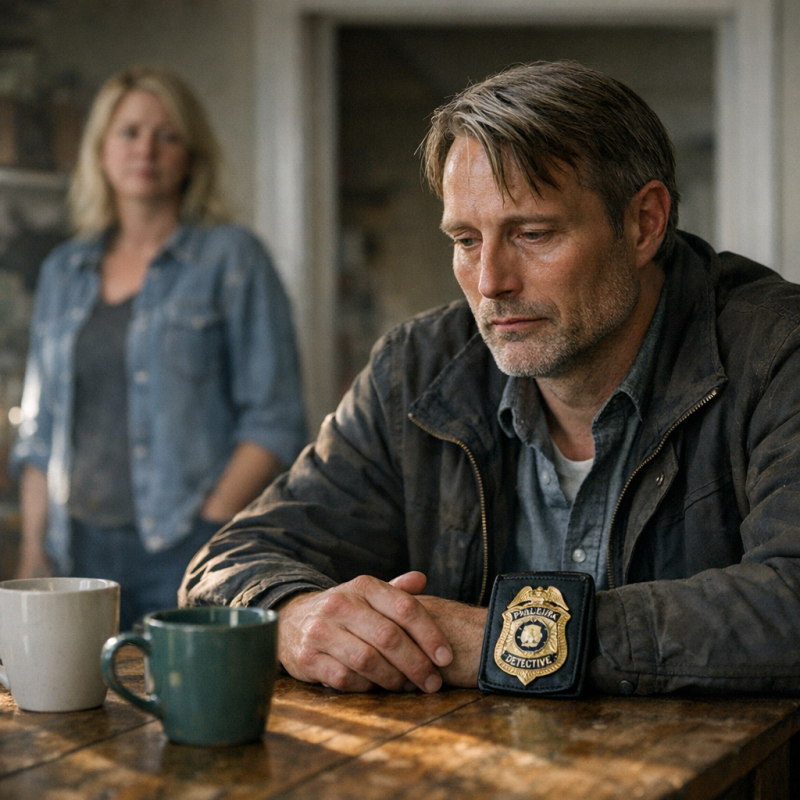 Image by FCT AI
Sleepless Nights
I stopped sleeping. Every night I'd lie there replaying that Sunday afternoon frame by frame, like footage I could rewind and change. The phone call. Looking away. Those three minutes. I'd close my eyes and see Lily's yellow raincoat on the driveway, over and over. Margaret would lie beside me, silent and still, and I thought she was awake too. Then around two or three in the morning, she started having nightmares. The first one scared me so badly I almost called an ambulance. She sat bolt upright, gasping, screaming Lily's name into the darkness. Her whole body was trembling, covered in sweat. I turned on the lamp and held her, asked her what she'd dreamed. She looked at me with these wide, terrified eyes and said she couldn't remember. This happened three nights in a row. Always Lily's name. Always the same terror. Then she'd claim the dream had vanished the moment she woke. I told myself it was grief manifesting in her sleep, that her subconscious was processing what her waking mind couldn't handle. She sat up screaming Lily's name—but when I asked what she'd dreamed, she said she couldn't remember.
 Image by FCT AI
The Suspect
On day sixteen, Carver called to tell us they'd made an arrest. A man named David Brennan, forty-three, with a record for child endangerment from eight years ago. He lived six blocks from us. He'd been seen in the area that Sunday. For the first time since Lily disappeared, I felt something like hope. Rachel drove over immediately and we sat together, waiting for updates. This was it, I thought. We'd found the monster. They'd make him tell us where she was. The media camped outside Brennan's house. His photo was everywhere—thin face, dead eyes, the kind of man you see in nightmares. I imagined what I'd do to him if I got close enough. What any grandfather would do. Carver said they were building the case, gathering evidence. Rachel couldn't eat or sleep, just paced our living room waiting for news. Then forty-eight hours later, my phone rang. Brennan's employer had security footage showing him at work during the exact window when Lily disappeared. Time-stamped, undeniable. They released him forty-eight hours later—his alibi was airtight.
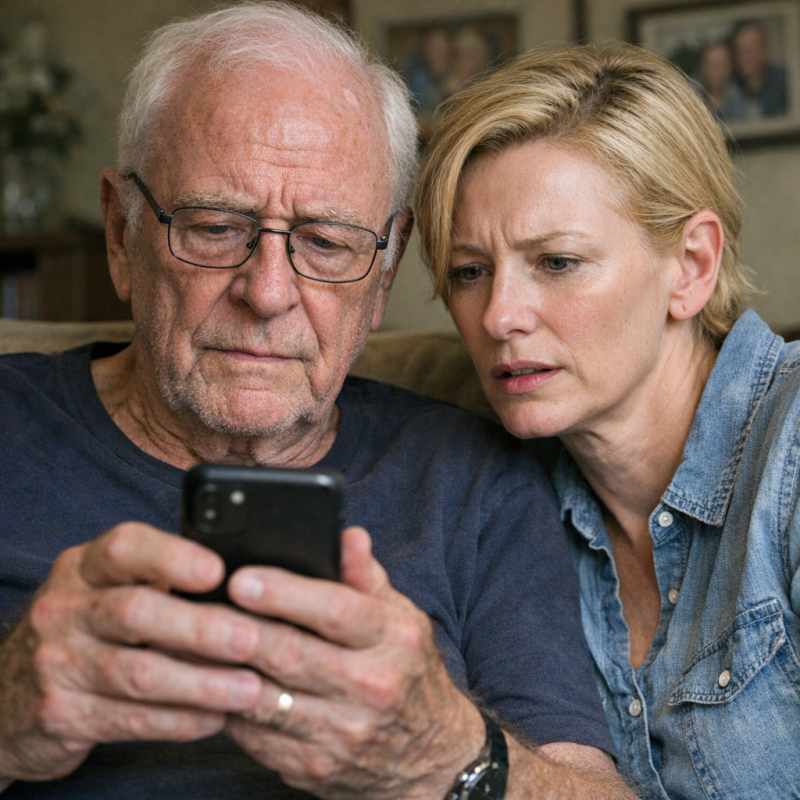 Image by FCT AI
One Month Later
One month after Lily vanished, I noticed the search volunteers had stopped coming. The weekend organized searches that had drawn dozens of people now attracted maybe four or five. The news moved on to other stories. Lily's missing poster, once on every storefront window, started disappearing—replaced by advertisements and community notices. The world was forgetting her. I couldn't accept it. I kept calling Carver, kept pushing, but I could hear the resignation in his voice. The case was going cold. Rachel came by less frequently, each visit more hollow than the last. And Margaret—Margaret stopped participating in the few rituals we'd maintained. The candle we lit every evening for Lily. The prayers before meals. One night I went to light the candle and found Margaret had put it away. I asked her why. She was doing dishes, her back to me, and she said it felt pointless. Pointless. I stood there holding the unlit candle, trying to process what I'd just heard. Margaret stopped lighting candles for Lily, and when I asked why, she said it felt pointless.
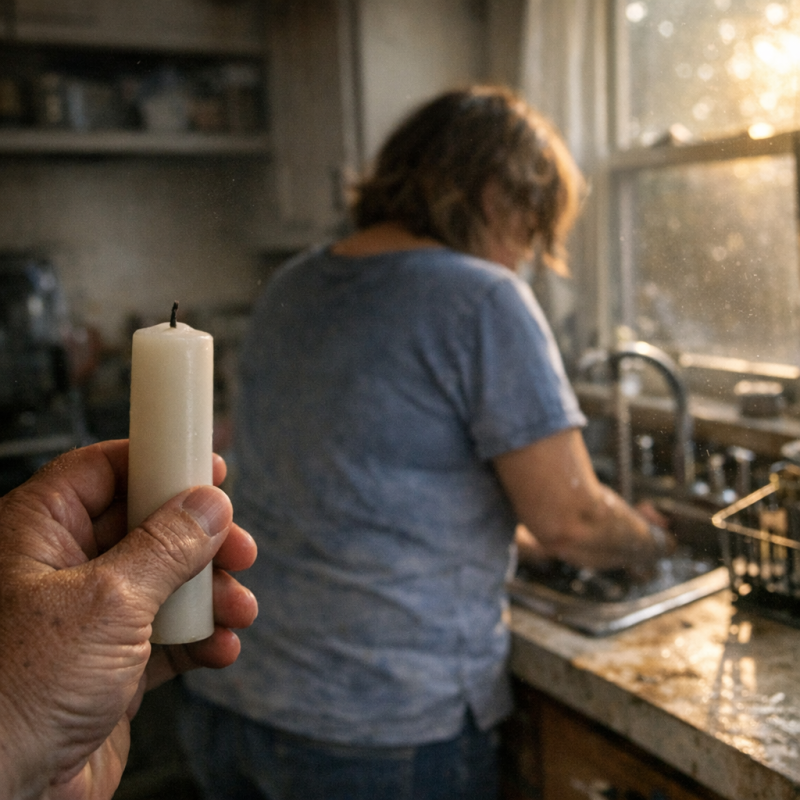 Image by FCT AI
Rachel's Marriage Collapses
Rachel's husband moved out six weeks after Lily disappeared. She called me from their apartment, voice flat, and told me Mark had packed his things. He couldn't handle it anymore, she said. The grief, the uncertainty, the way their entire life had become about a child who might never be found. I drove over and found her sitting on their couch surrounded by half-empty boxes. She looked like a ghost of herself—twenty pounds thinner, dark circles under her eyes, hair unwashed. We sat there together in silence for a long time. I wanted to tell her it would be okay, that her marriage could survive this, but I'd seen the statistics. Most couples don't make it through losing a child. Mark wasn't a bad man. He just couldn't carry the weight of it. Rachel told me she'd asked him to stay, then told him to leave, then didn't know what she wanted anymore. Everything was falling apart. Our family was disintegrating. And I felt responsible for all of it. She told me she didn't blame him for leaving—she blamed herself for not being there when Lily disappeared.
 Image by FCT AI
The Psychic
A woman named Celeste contacted Rachel through Facebook. She claimed to be a psychic medium with connections to missing children cases. Rachel called me, excited for the first time in weeks—Celeste had sent her a message describing visions of Lily. I felt my stomach drop. I knew what this was. Predators who prey on desperate families. But Rachel wanted to meet her, needed to believe someone could help. We met Celeste at a coffee shop. She was younger than I expected, dressed normally, spoke softly about her gift. She described seeing Lily in a wooded area, near water, wearing her yellow raincoat. Rachel grabbed my hand, tears streaming down her face. The woman described the raincoat in perfect detail—the toggles, the hood, the bright yellow color. She said Lily was cold but safe. That she could feel her presence. I wanted to believe her too, God help me. Then I got home and looked up the news coverage. The psychic described Lily's yellow raincoat perfectly—but that detail had been in every news report.
 Image by FCT AI
Margaret's Distance
Margaret started avoiding Lily's room entirely. I'd find her taking the long way around the upstairs hallway just to avoid passing the door. When Rachel came over and wanted to sit in there, to feel close to her daughter, Margaret would make excuses to be somewhere else. The photo albums stayed closed. The framed pictures of Lily on our mantel got turned face-down, one by one, when Margaret thought I wasn't watching. If Rachel mentioned Lily's favorite foods or the games they used to play, Margaret would change the subject or leave the room. I confronted her about it one evening. Asked why she was shutting out Lily's memory. She was folding laundry, moving mechanically, and she stopped. Looked at me with an expression I couldn't read. I asked if she was afraid of remembering. She said no, she was afraid of forgetting. That the memories were slipping away and it terrified her. But her eyes—they weren't sad. They were something else. I asked if she was afraid of remembering, and she said she was afraid of forgetting—but her eyes told a different story.
 Image by FCT AI
Three Months Gone
Detective Carver came to the house on a Tuesday afternoon, three months after Lily vanished. I knew from his face what he was going to say before he opened his mouth. The investigation was officially going cold. They'd followed every lead, interviewed everyone connected to our family, checked traffic cameras and financial records. Nothing. He sat at our kitchen table, the same table where Lily used to eat her breakfast, and told me they'd exhausted their resources. I asked if they'd keep looking, and he said of course, but his eyes told the truth. Without new evidence, there was nothing more they could do. Margaret stayed upstairs. Said she couldn't bear to hear it again. I thanked Carver for everything, shook his hand at the door. He looked genuinely sorry. Before he left, he put his hand on my shoulder and gave me this statistics—most missing children cases, he said, are solved in the first seventy-two hours. The ones that aren't? Well, he didn't finish that sentence, but he didn't need to. Carver said most missing children cases are solved in the first seventy-two hours—or never.
 Image by FCT AI
Rachel's Friend
Emma showed up at our door a week later, looking nervous. She was Rachel's closest friend since college, the kind of person who showed up without being asked. I let her in, made coffee. She asked to speak privately, and we sat in the living room while Margaret napped upstairs. Emma's hands shook as she held her mug. She said Rachel was scaring her. That she'd stopped answering texts for days at a time, stopped eating, stopped getting out of bed. I asked if she thought Rachel might hurt herself, and Emma's eyes filled with tears. She nodded. Said she'd gone over to Rachel's apartment two days ago and found her just staring at the wall, not even recognizing Emma was there. I felt my chest tighten, this new terror layering over the old. Emma hesitated, then said there was something else. She'd seen Rachel's computer screen, left open. Browser history showing searches about decomposition, about how long it takes. Emma said Rachel had been researching how long it takes for a body to decompose—and I felt sick.
 Image by FCT AI
The Intervention
We went to Rachel's apartment together, Emma and I. Found her exactly as Emma had described—hollow-eyed, unwashed, living in squalor. It took two hours of gentle persuasion before she agreed to see someone, a therapist Emma knew. I drove her to the first appointment, waited in the parking lot like she was a child again. When she came out, she looked exhausted but slightly more present. The therapist wanted to see her twice a week. Rachel agreed, but she made one thing clear to me on the drive home. She wouldn't talk about Lily in therapy. Couldn't. Said even thinking Lily's name made her want to break down, so she was learning to just not think it. I asked how that was supposed to work, and she stared out the window. Said she'd pretend, if she had to. Pretend the last five years never happened, pretend she never had a daughter. I told her that wasn't healthy, wasn't possible. Rachel said the only way she could survive was to pretend Lily never existed—but we all knew that was impossible.
 Image by FCT AI
Margaret's First Collapse
Margaret collapsed during dinner on a Thursday. One minute she was pushing food around her plate, the next she was on the floor. I called 9-1-1, rode with her in the ambulance, held her hand while she drifted in and out of consciousness. At the hospital, they ran tests—blood work, scans, the whole battery. A young doctor with kind eyes came to the waiting room around midnight. Said they'd found irregularities. Her heart, her blood pressure, something with her kidneys. They needed to run more tests, keep her overnight for observation. I sat beside her hospital bed, watching monitors beep and flash. She woke around three in the morning, groggy and confused. Asked where she was. I told her, asked how she felt. She said tired, just tired. The doctor came back in the morning, asked Margaret a series of questions about her medical history. Then he asked if she'd been under unusual stress lately. I looked at him, at his clipboard and his professional concern, and I almost laughed at the absurdity of the question.
 Image by FCT AI
Six Months
Six months to the day after Lily disappeared, I finally went into her bedroom. I'd avoided it, same as Margaret, but for different reasons. I was afraid of what I'd feel. The door stuck slightly—no one had opened it in weeks. Everything was exactly as she'd left it. Her bed was made, the way Rachel always made it when she visited. Books stacked on the nightstand. Drawings taped to the walls, crayon flowers and stick-figure families. I sat on the edge of her bed and the smell hit me—that little-girl smell of strawberry shampoo and something sweet I couldn't name. I picked up one of her books, ran my fingers over the cover. And then it broke, whatever dam I'd built inside myself. I sobbed until my ribs hurt, until I couldn't breathe, clutching that book like it could bring her back. I don't know how long I stayed there. An hour, maybe more. When I finally looked up, I saw her stuffed rabbit on the pillow, its button eyes staring at nothing. Her stuffed rabbit still sat on the pillow, waiting for her to come home—and I realized she never would.
 Image by FCT AI
The Diagnosis
Dr. Helena Moss delivered the diagnosis in her office, with Margaret and me sitting across from her desk. Progressive neurodegenerative disease, she said. Rare. Aggressive. The technical terms washed over me—I couldn't focus on the medical jargon. I asked the only question that mattered. How long. Dr. Moss folded her hands, met my eyes with practiced compassion. Months, she said. A year at most, depending on how quickly it progressed. Treatment could slow it, manage symptoms, but not stop it. Margaret sat perfectly still beside me. I expected tears, shock, something. But she just nodded, like Dr. Moss had confirmed an appointment time. I reached for her hand. Asked if she understood what the doctor was saying. She said yes, she understood perfectly. Thanked Dr. Moss for being honest. We scheduled follow-up appointments, collected prescriptions. In the car, I finally broke down, but Margaret stayed calm. Stared out the window at the passing traffic. She took the news calmly, almost as if she'd been expecting it—or worse, as if she welcomed it.
 Image by FCT AI
Caregiving
Our days took on a new rhythm after that. I became Margaret's caregiver, though she hated that word. Mornings meant medications—a growing array of pills organized in a weekly container. I'd help her dress when her hands shook too much. Drive her to appointments, wait in sterile rooms while doctors examined her. She deteriorated slowly at first, then faster. Lost weight. Moved more carefully, like her body was becoming unfamiliar. I cooked meals she barely touched, did laundry, managed the house. We didn't talk much about the diagnosis. What was there to say? Sometimes in the evenings, we'd sit together on the couch, watching television neither of us cared about. I'd look at her profile in the flickering light and remember the woman I married, forty years ago. Still beautiful, even now. Still unknowable. One night she reached for my hand, held it gently. Thanked me for staying, for taking care of her through everything. I told her that's what marriage meant. She thanked me for staying with her through everything—but she still wouldn't talk about Lily.
 Image by FCT AI
One Year Anniversary
Rachel organized a memorial service for Lily's first anniversary. She'd called a week before, voice fragile but determined. She needed to do this, she said. Needed to mark the day, to honor her daughter. She'd reserved a small room at a community center, invited the few family and friends who remained. Asked if we'd come. I said of course, absolutely. Margaret was in bed when I told her. She closed her eyes, said she couldn't. Too sick, too weak. The memorial was at two in the afternoon. I helped Margaret with her medication that morning, made sure she had water and her phone nearby. She looked so small in our bed, so frail. I asked one more time if she was sure. She nodded, said go be with Rachel, she needs you more. So I went. But driving there, hands tight on the steering wheel, I felt this creeping resentment. Margaret had made it to doctors' appointments, made it to the bathroom, made it downstairs when she wanted to. I stayed home with Margaret, but part of me wondered if her illness was just an excuse to avoid facing what she'd lost.
 Image by FCT AI
Rachel's Accusation
I found Rachel alone in the parking lot afterward, leaning against her car, arms wrapped tight around herself. She looked up when I approached, and her face crumpled. 'She couldn't even show up for this,' she said. 'Mom couldn't be bothered to remember my daughter for two hours.' I started to explain about the cancer, the medications, how weak Margaret had become. But Rachel cut me off. 'You know what I think?' she said, voice shaking. 'I think she never really loved Lily. I think she's actually relieved she's gone.' The words hit like a slap. I defended Margaret immediately—told Rachel she was grieving too, that the illness made everything harder, that she'd loved Lily as much as any of us. Rachel laughed, this bitter, broken sound. 'Then where is she, Dad? When has she actually been here for me? When has she cried for Lily where anyone could see?' I kept talking, kept making excuses, but something in my chest was tightening. Rachel wiped her eyes and said Margaret was hiding something—and for the first time, I couldn't completely disagree.
 Image by FCT AI
The Nightmare Pattern
The nightmares got worse over the next few weeks. Margaret would thrash in her sleep, crying out, sometimes sobbing so hard I'd have to shake her awake. I started keeping track without meaning to, listening for patterns in her distress. And there was one. Every time—every single time—she'd wake up gasping the same phrase: 'I couldn't save her.' The first few times, I assumed she meant Lily. Of course she meant Lily. We all carried that guilt, that desperate wish we could've done something different. But there was something in the way she said it that bothered me. Not the grief of a grandmother who'd lost a grandchild to tragedy, but something more immediate, more personal. Like she'd been there in the moment and failed. One night I held her until she stopped shaking, stroking her hair. When her breathing settled, I asked softly what she meant—what moment was she reliving? She turned her head and stared at me like she'd forgotten I was there—then said she didn't remember saying anything.
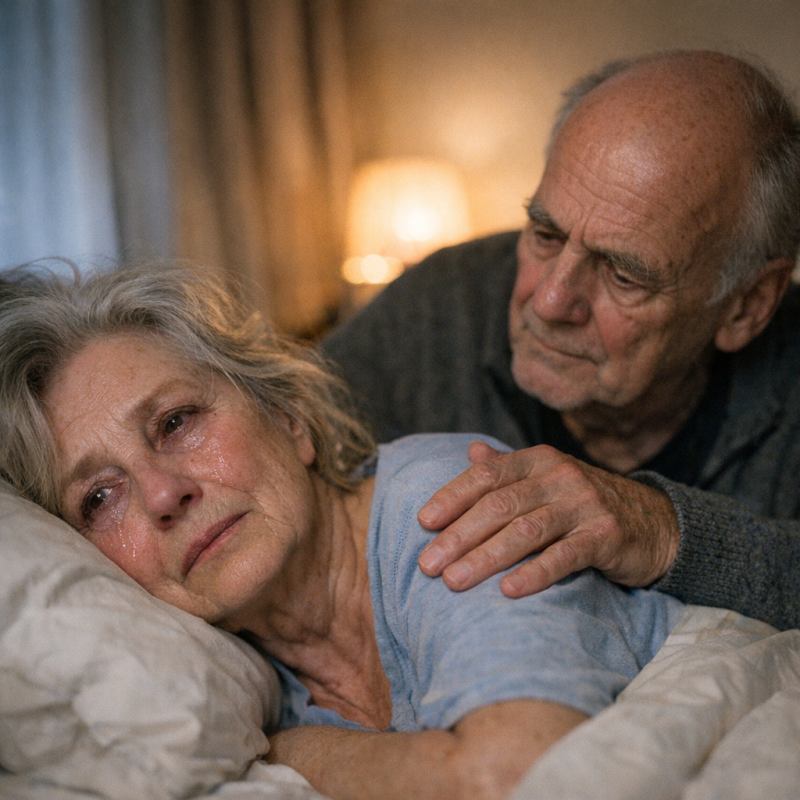 Image by FCT AI
The Old Colleague
Martin called me out of nowhere on a Tuesday morning. I hadn't heard from him in over a year, not since I'd gone back to work briefly after Lily disappeared. He'd been the colleague on the phone that day, the one who'd kept me talking while Lily vanished from our yard. 'Tom, hey,' he said, awkward and stilted. 'I was thinking about you. About your granddaughter. Did they—I mean, was there ever any news?' I told him no. Nothing. The line had gone cold months ago. He went quiet for a long moment, then said he'd been carrying something around with him. Guilt, he meant. He apologized for keeping me on the phone that day, his voice breaking slightly. Said he'd replayed that conversation a thousand times, wondered if I'd have noticed sooner if we'd hung up when I first suggested it. I told him it wasn't his fault—that I should've been watching, that the call was just an excuse, that I'd failed Lily all on my own. But we both knew I was lying.
 Image by FCT AI
Margaret's Confession Attempt
Margaret caught my hand one evening while I was adjusting her pillows. Her grip was weak but insistent. 'Thomas,' she said, 'I need to tell you something.' I sat down on the edge of the bed, waiting. Her mouth opened, closed. She looked at the ceiling, tears sliding down toward her temples. 'I wish I could undo the past,' she finally said. 'I wish I'd made different choices.' I asked what choices she meant—about Lily? About us? About her treatment? But she just shook her head, crying harder now. 'You don't understand,' she whispered. 'You think you know me. You think you know what happened. But you don't.' My pulse quickened. I leaned closer, told her she could say anything to me, that whatever it was, we'd face it together. Her eyes met mine for just a second, raw and desperate. She said there were things I didn't know about her—things she was ashamed of—but before I could ask, she pretended to fall asleep.
 Image by FCT AI
Eighteen Months
Eighteen months after Lily disappeared, the world kept turning whether we wanted it to or not. Rachel got a promotion at work. Started going to grief counseling that actually seemed to help. She cut her hair, bought new clothes, even mentioned she'd been on a few dates through some app. I saw her every couple weeks, and each time she looked a little less broken. Meanwhile, Margaret was disappearing inch by inch. The cancer was winning—everyone could see it now. Hospice had started coming three times a week. She rarely left the bedroom, rarely ate more than a few bites. The contrast was stark, almost cruel. Rachel rebuilding while Margaret crumbled. Past and present pulling me in opposite directions. One afternoon Rachel stopped by to drop off groceries. She told me about a guy she'd been seeing, someone kind who didn't push her to talk about Lily unless she wanted to. When I mentioned it to Margaret later, thinking it might lift her spirits, she just stared at the wall. 'That's good,' she said flatly. 'It's good that someone can move on.'
 Image by FCT AI
The Priest's Visit
Father Brennan came to the house on a grey Wednesday morning. Margaret had asked for him specifically, said she wanted to receive last rites while she was still lucid enough to participate. The priest was gentle, carrying his small case of holy oils and prayer cards. He greeted me warmly, then asked if he could speak with Margaret privately. I helped her sit up in bed, then stepped out into the hallway, closing the door behind me. I didn't mean to listen, but our house was small and the walls were thin. At first I heard just murmuring—his steady baritone, her weaker responses. Then Margaret started to cry. Not quiet tears, but deep, wrenching sobs that seemed to tear out of her chest. I put my hand on the doorknob, almost went in, but stopped myself. This was between her and God, I told myself. When Father Brennan finally emerged twenty minutes later, his face was drawn, almost pale. He touched my shoulder and said Margaret had a heavy soul that needed unburdening.
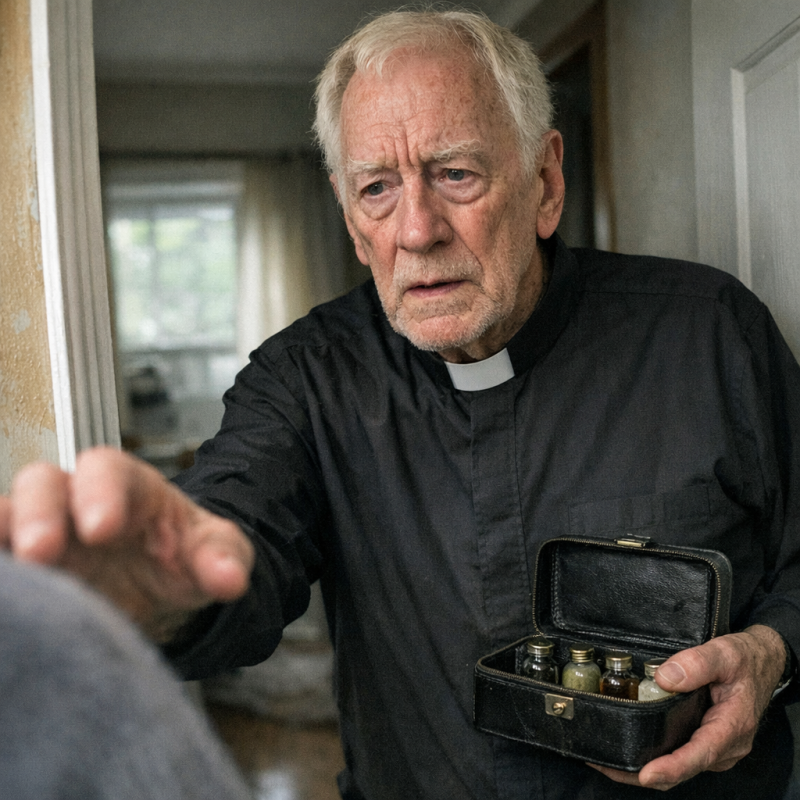 Image by FCT AI
The Question
I couldn't take it anymore. That night, after the hospice nurse left, I sat down beside Margaret's bed and asked directly. 'Do you know something about Lily's disappearance that you haven't told anyone?' The question hung in the dim room. Margaret's eyes widened slightly. She opened her mouth, closed it. Looked away toward the window where evening light was fading. 'No,' she said finally. 'Of course not. Why would you ask me that?' But even as she spoke, her hands started trembling. She was holding a plastic cup of water, and the shaking got worse, liquid sloshing against the sides. I kept my eyes on her face, watching her expression carefully. She looked back at me, held my gaze, repeated the denial. 'I don't know anything, Thomas. I wish I did.' The cup tilted and water spilled across her lap, soaking through the blanket. She looked me in the eye and said no—but her hands were shaking so badly she spilled her water.
 Image by FCT AI
The Locked Box
I was looking for Margaret's insurance documents—she'd asked me to make sure everything was in order—when I found it. Back corner of her closet, behind stacked shoeboxes and old sweaters. A small metal lockbox, dark grey, maybe the size of a large book. I'd never seen it before. Never even knew it existed. I carried it out to the bedroom, set it on the dresser. 'What's this?' I asked. Margaret's face went white. Actually white. She struggled to sit up, reaching toward it like I might open it right there. 'It's nothing,' she said quickly. 'Just old letters. Personal things.' I turned the box over in my hands. It was heavier than I expected, and the lock was sturdy. I asked why she'd never mentioned it, why it was hidden. She was breathing fast now, nearly panicking. 'Promise me you won't open it,' she said. 'Not now. Not until after I'm gone. Please, Thomas.' When I asked what was inside, she said it was just old letters—but she insisted I not open it until after she passed.
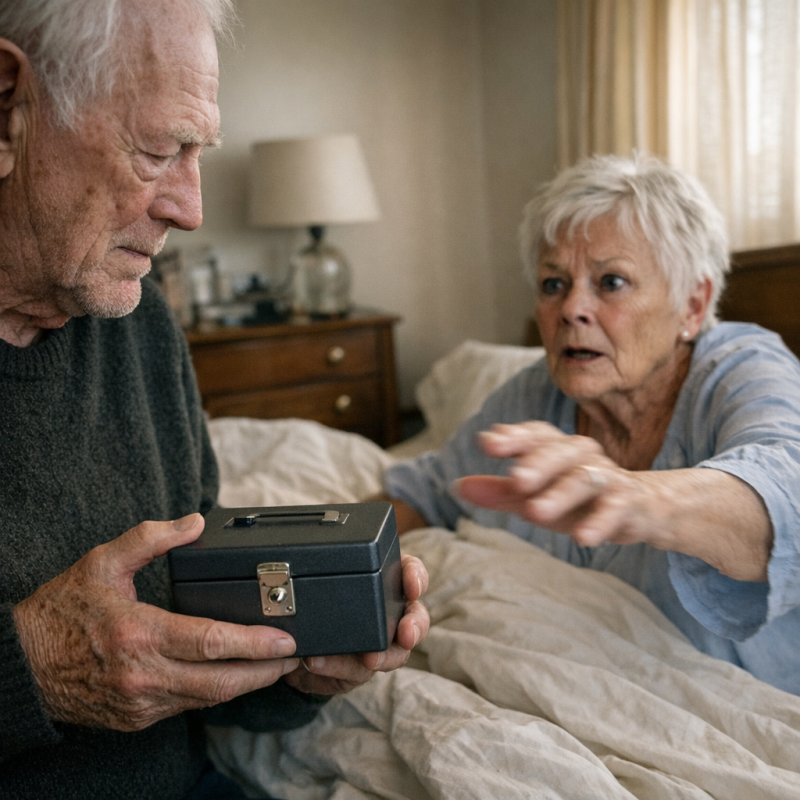 Image by FCT AI
Two Years
Two years to the day. I drove out to the park where she'd vanished, parked in the same spot where we'd parked that afternoon. The memorial someone had put up—stuffed animals and flowers—was long gone, just some faded ribbons tied to the fence. I walked the path we'd taken, stood where I'd last seen her running ahead. The leaves crunching under my feet sounded so loud in the silence. I tried to remember exactly what she'd been wearing. Pink jacket, definitely. But what color were her shoes? I closed my eyes and tried to hear her voice calling 'Grandpa!' the way she always did. But I couldn't quite get it right in my head anymore. The pitch was wrong, or the rhythm, or something. It was like trying to remember a song you used to know by heart. Dr. Moss had warned me this would happen—that memories fade, that the brain can't hold onto everything forever. I'd told her she was wrong. I'd told her I would never forget a single detail about my Lily. I stood there for an hour, trying to remember her laugh—and couldn't.
 Image by FCT AI
Margaret Hospitalized
Margaret collapsed in the bathroom three days later. I found her on the floor, conscious but unable to get up, her breathing shallow and rapid. The ambulance came within minutes. At the hospital, they ran tests and consulted and finally Dr. Moss came to talk to me in the waiting room. Her face told me everything before she opened her mouth. Margaret's organs were shutting down, she explained. The cancer had spread faster than anyone had anticipated. There wasn't anything more they could do except keep her comfortable. 'How long?' I asked. Dr. Moss looked at her clipboard, then back at me. 'Days,' she said quietly. 'Maybe a week at most. I'm so sorry, Thomas.' They moved Margaret to a private room, started her on morphine. Rachel came that evening, stood in the doorway crying before she even made it to the bed. I sat in the chair by the window and watched my wife of forty-three years slip away. Dr. Moss told me to prepare myself—Margaret had days, maybe a week at most.
 Image by FCT AI
Vigil
I didn't leave her side. The nurses brought me blankets, coffee, sandwiches I barely touched. Margaret drifted in and out, sometimes opening her eyes and looking right at me, sometimes staring at the ceiling muttering words I couldn't make out. Once she reached toward the foot of the bed and said 'not yet, just a little longer.' I asked who she was talking to. She didn't answer, just kept reaching. The morphine was making her see things, the nurses said. Completely normal. But it didn't feel normal. It felt like she was having conversations with someone I couldn't see, working through something I wasn't part of. At one point she started crying—real tears running down her face—and whispering 'I didn't mean it, I didn't mean it' over and over. I held her hand and told her it was okay, that everything was okay. Then she reached for someone invisible and whispered 'I'm so sorry, sweetheart'—and I knew she wasn't talking to me.
 Image by FCT AI
Rachel's Goodbye
Rachel came back the next morning with flowers—Margaret's favorites, yellow roses. She set them on the bedside table and took her mother's hand. 'Mom,' she said softly. 'It's Rachel. I'm here.' Margaret's eyes opened, more focused than they'd been in hours. She looked at Rachel and her face crumpled. 'I'm sorry,' she whispered. 'I'm so, so sorry.' Rachel glanced at me, confused, then back at her mother. 'Sorry for what, Mom? You don't have anything to be sorry for.' But Margaret just kept shaking her head, tears streaming down her face. 'Everything,' she said. 'I'm sorry for everything. For all of it. For what I did. For what I took from you.' Rachel tried to soothe her, told her to rest, that she was forgiven for whatever she thought she'd done wrong. But Margaret wouldn't stop. The word 'everything' kept coming out of her mouth like a prayer or a confession. Rachel asked what she was apologizing for, and Margaret just kept saying 'everything' over and over.
 Image by FCT AI
The Lucid Moment
That afternoon, Margaret had a moment of clarity. The fog in her eyes lifted and she looked at me—really looked at me—for the first time in days. 'Thomas,' she said, her voice stronger than it had been. I moved closer, took her hand. 'I'm here.' She squeezed my fingers with surprising strength. 'I need you to promise me something,' she said. 'Anything,' I told her, and I meant it. Whatever she needed in these final hours, I would give her. 'Promise you'll try to forgive me,' she said. 'For things you don't understand yet. Things that will make you hate me.' I told her that was impossible—I could never hate her. She shook her head urgently. 'Promise me, Thomas. Promise you'll at least try.' Her eyes were pleading, desperate. I didn't understand what she was asking, but I promised anyway. I told her I would forgive her for anything. The relief on her face was immediate. I promised—but I had no idea what I was promising to forgive.
 Image by FCT AI
The Long Night
I didn't sleep. Couldn't. I sat in that uncomfortable hospital chair and watched her chest rise and fall, each breath seeming harder than the last. The machines beeped steadily in the darkness. Outside the window, the parking lot lights cast orange shadows across the room. Around three AM, a nurse came in to check Margaret's vitals, adjusted something on the IV, left without a word. I kept thinking about what Margaret had said—about forgiveness, about things I didn't understand yet. What could she possibly need forgiveness for? What secrets was she taking with her? The questions circled in my head until dawn started to break, grey light filtering through the blinds. I must have dozed off because Margaret's voice startled me awake. She was looking right at me, more alert than she'd been since the hospital admission. 'Thomas,' she said clearly. 'I need to tell you something. About the day Lily disappeared.' Just before dawn, she opened her eyes and said she needed to tell me something about the day Lily disappeared.
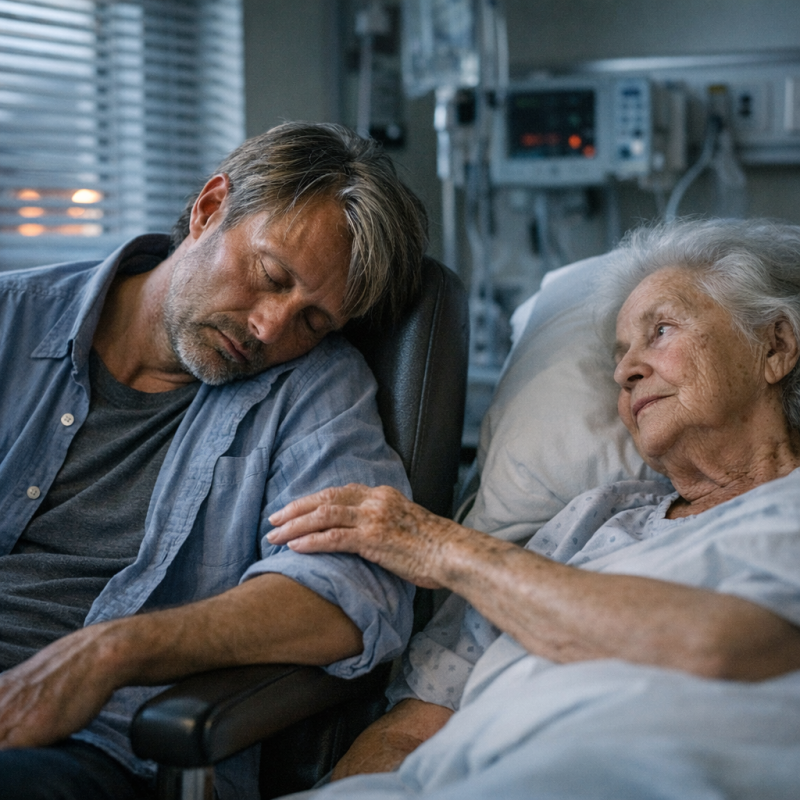 Image by FCT AI
It Wasn't An Accident
My heart stopped. Two years of questions, two years of searching, two years of not knowing—and now she was going to tell me something? 'What about it?' I asked, moving closer to the bed. Margaret's breathing was labored but her eyes were sharp, focused. 'It wasn't an accident,' she whispered. The words didn't make sense at first. 'What do you mean?' I asked. She closed her eyes like she was gathering courage, then opened them again. 'The detectives, the search parties, everyone looking—they were all looking for the wrong thing. They thought someone took her. A stranger.' My hands were shaking. 'What are you saying?' Margaret's face was wet with tears. 'It wasn't a stranger, Thomas. It wasn't an accident or a random abduction.' I asked what she meant, my voice barely working. She reached for my hand and held it tight. I asked what she meant, and she said the three words that destroyed everything: 'I took her.'
 Image by FCT AI
The Drive
I couldn't breathe. The room spun. 'You—what?' Margaret was crying now, words tumbling out between sobs. 'When you went to get the car, I told her we were going on a secret adventure. Just the two of us. A surprise for Grandpa. She was so excited, Thomas. She held my hand and we walked to my car.' I wanted to interrupt, to scream, to shake her, but I couldn't move. 'I drove us to that cabin,' she continued. 'The one my parents used to take me to in the Adirondacks. Remember I told you about it? It's been abandoned for years.' Lily had gotten in the car willingly. Had trusted her grandmother completely. Had thought it was an adventure. 'She kept asking when we were going to tell you,' Margaret whispered. 'She wanted you to come too. She trusted me, Thomas. She trusted me completely.' She said Lily trusted her completely—and that trust made what happened next even worse.
 Image by FCT AI
The Reason
'Rachel mentioned moving,' Margaret said, her voice barely audible. 'Do you remember? Three weeks before it happened, she said she might take a job in Portland. She was excited about it. A fresh start after the divorce.' I didn't remember. I'd probably nodded and said something supportive, the way you do. 'I couldn't let her take Lily across the country, Thomas. I just couldn't.' Her grip on my hand tightened. 'I kept imagining holidays without her. Birthdays over video chat. Watching her grow up in photographs.' This was supposed to be the explanation that made sense of everything, but it didn't. It just made it worse. 'I panicked,' she whispered. 'I know that sounds insane, but I panicked. I thought if I could just keep her for a few days, Rachel would realize how much she needed us. How much Lily needed to stay close to her grandmother.' The room felt smaller suddenly, the walls pressing in. She said she only meant to keep Lily for a few days—just long enough to make Rachel realize she couldn't take her away.
 Image by FCT AI
The Storm
'The storm hit that first night,' Margaret said, staring past me at something I couldn't see. 'I'd checked the forecast, but they said it would miss us. It didn't miss us.' Her breathing grew more labored, the machines beeping faster. 'Lily thought it was exciting at first. Like camping. We played games by candlelight when the power went out. She was laughing, Thomas. She was happy.' Then her voice cracked. 'But around midnight, she started wheezing. You know how she got when her asthma flared up.' I knew. God, I knew. We'd rushed her to the ER twice before she turned five. 'I tried to keep her calm, tried the breathing exercises Rachel taught us, but it kept getting worse. Her lips started turning blue in the candlelight.' Margaret's tears fell faster now. 'She kept asking for her inhaler, and Margaret realized she'd forgotten to bring it—but by then, the roads were already flooded.'
 Image by FCT AI
Before Morning
'I tried to drive anyway,' Margaret whispered. 'The water was up to the wheel wells before I even got to the main road. I had to turn back. I carried her inside and just held her, Thomas. I held her and promised her it would be okay.' She was sobbing now, words barely comprehensible. 'She kept asking for Rachel. For her mommy. And I couldn't give her that. I couldn't give her her medication. I couldn't give her anything.' The machines around us seemed to scream, but maybe that was just in my head. 'She passed away just before dawn. Her little body just... stopped fighting.' I felt something break inside my chest, something that would never heal. 'I buried her near the cabin. There's a spot under the pine trees where we used to have picnics when I was a girl. I wrapped her in my jacket and...' She couldn't finish. She said Lily's last words were 'I want Mommy'—and Margaret had to live with that for two years.
 Image by FCT AI
The Lie Continues
'How?' The word came out like gravel. 'How did you come back here and watch the searches? How did you comfort Rachel while our daughter cried herself to sleep every night? How did you sit across from me at breakfast every morning?' Margaret's face crumpled. 'That morning, something inside me ended, Thomas. The woman who came back wasn't me anymore. It was just a shell pretending to be alive.' She wanted me to understand, to forgive maybe, but there was no universe where this made sense. 'Every search party that went out, I prayed they'd find her. That someone would discover what I'd done and it would finally be over. But they never looked in the right places. And I couldn't tell them. I couldn't face what I'd become.' Her monitor showed her heart rate climbing. 'When I got sick, I almost felt relieved. Like finally, there'd be an end to this.' She claimed her illness was punishment, her body giving up because her soul already had—but I couldn't accept that as justice.
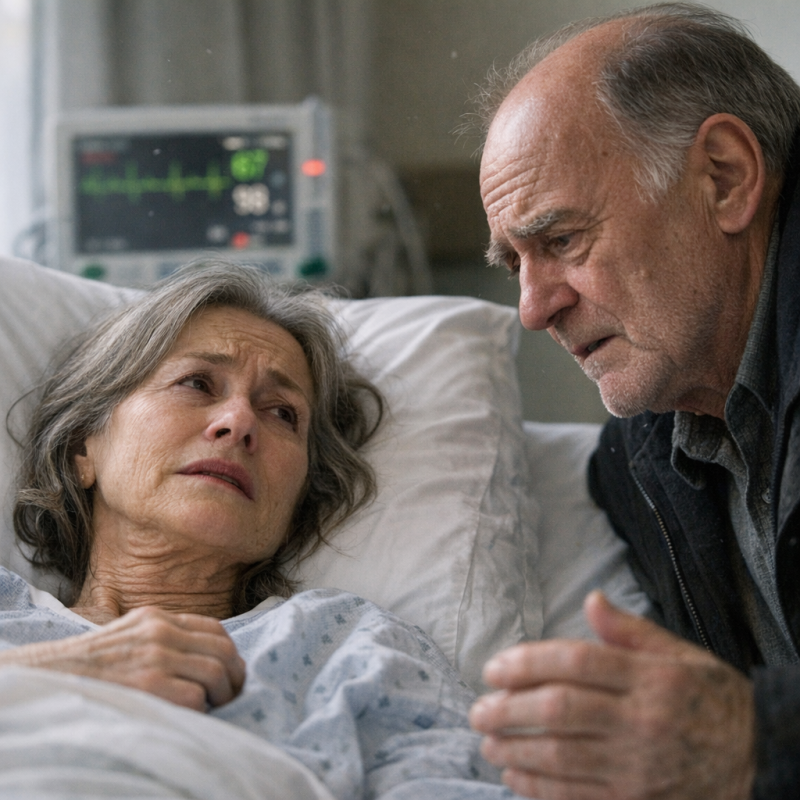 Image by FCT AI
Thomas Pulls Away
I pulled my hand away from hers. It was the first time in forty-three years of marriage I couldn't bear to touch her. My fingers felt contaminated, like they'd been holding something poisonous. I stood up, the chair scraping loud against the linoleum floor. 'Thomas, please—' Her voice broke. 'Please don't leave. I know you hate me. I know you should hate me. But please don't let me be alone at the end. I'm so scared.' I looked down at this woman I'd shared my entire adult life with, who'd given birth to our daughter, who'd been my partner in everything. And I didn't recognize her. I didn't know who she was. Maybe I never had. 'You were alone with this for two years,' I heard myself say. 'You chose to be alone with it. You chose that every single day.' 'Thomas—' 'Rachel was alone with her grief. Lily was alone at the end. You don't get to ask for company now.' She begged me not to leave her alone—but I walked out of the room anyway.
 Image by FCT AI
The Hallway
The hallway was bright. Too bright. Fluorescent lights humming overhead like nothing had changed. A nurse walked past me pushing a cart. Someone laughed at the nurse's station. The coffee machine gurgled in the break room. The world was just continuing like normal, like my wife hadn't just confessed to kidnapping and killing our granddaughter. I leaned against the wall because my legs didn't want to hold me anymore. A doctor nodded at me politely. I wondered what my face looked like. Could he see it? Could he tell I was standing there with knowledge that would destroy everything? Rachel was probably at home right now. Maybe she was looking at Lily's pictures. Maybe she was having a decent day for once, a day where the grief didn't completely suffocate her. And I had the power to take even that away from her. I could tell her the truth—that her mother killed her daughter, that the woman who'd held her when she cried had caused all of it. Or I could let Margaret pass away and take this nightmare to the grave with her. I realized I had to decide: tell Rachel the truth and destroy her all over again, or let Margaret take the secret to her grave.
 Image by FCT AI
Return to the Room
I don't know how long I stood there. Long enough that a different nurse asked if I was okay. Long enough that visiting hours were almost over. Long enough to realize I couldn't do it—couldn't abandon her, even after everything. Maybe that made me weak. Maybe that made me complicit. But forty-three years of marriage don't disappear because you want them to. I walked back to her room. She'd been crying; I could tell from her swollen eyes, the wet streaks on her face. She looked smaller somehow, like she'd aged another decade in the twenty minutes I'd been gone. 'I'm sorry,' she whispered when she saw me. 'I'm so sorry, Thomas.' I didn't sit down. Didn't take her hand. Just stood at the foot of the bed like a stranger. 'Is there anything else?' I asked. 'Anything you haven't told me?' She was quiet for a long moment. Too long. Then her eyes met mine with something that looked like fear. She whispered that there was more I needed to know—that what she'd told me wasn't the whole truth.
 Image by FCT AI
The Truth About The Plan
'It wasn't an impulse,' Margaret said, each word seeming to cost her everything. 'I'd been planning it for weeks. Since the day Rachel first mentioned Portland.' My blood went cold. 'What?' 'The cabin. I'd been going there, fixing it up. Stocking it with food, clothes in Lily's size, games, books. Everything a child would need.' She couldn't look at me anymore. 'I researched it, Thomas. How to disappear. How to homeschool a child off the grid. I read forums. I made lists.' This wasn't happening. This couldn't be happening. 'I convinced myself I could do it. That I could keep her safe, keep her happy. That eventually Rachel would move on, and Lily and I could start over somewhere new. Maybe Canada. Maybe Mexico.' Her voice dropped to barely a whisper. 'I'd even picked out new names for us. I had a whole life planned.' The woman I'd married, the woman I'd trusted with everything, had been someone else entirely. A stranger wearing Margaret's face. She said she'd convinced herself she could keep Lily forever, that they could start a new life somewhere far away—and I understood I'd never really known my wife at all.
 Image by FCT AI
The Evidence
I stared at her. 'The box. What's in the box, Margaret?' She swallowed hard, her breathing rattling. 'Everything. Maps to the cabin. Receipts for the supplies I bought. The journals where I planned it all out.' My hands went numb. 'You documented it?' 'I had to write it down,' she whispered. 'It was too much to keep only in my head. I needed to work through the logistics, the timeline. What I'd tell you when I took her. How long I could stay there before someone found us.' She looked at me then, really looked at me. 'I hid it all in that box. Locked it. I told myself I'd burn it all when we were safely away.' Her voice cracked. 'But I kept it. Even after—after it all went wrong. I kept every word I'd written.' I felt sick. 'Why?' 'Because I couldn't take the secret to the grave,' she said, tears streaming down her face. 'I needed someone to know who I really was.'
 Image by FCT AI
Why She's Confessing
'Why now?' I demanded, my voice breaking. 'Why tell me this NOW, when you're dying? When I can't—when there's nothing I can—' I couldn't finish. Margaret's face crumpled with something that might have been shame. 'Because I can't face the end carrying this weight,' she whispered. 'I thought I could. I've been carrying it for eighteen years, I thought I could carry it to the end.' She gripped the sheets. 'But dying changes things, Thomas. When you know you're about to face whatever comes next, you can't keep lying. Not to yourself. Not anymore.' I wanted to feel pity for her. Part of me did. But mostly I felt disgust. 'You want absolution,' I said flatly. 'No.' She shook her head weakly. 'I know what I am. I know what I did.' Her voice dropped to barely audible. 'I loved Lily too much—and that love turned into something monstrous I couldn't control.'
 Image by FCT AI
The Map
Margaret asked for paper and a pen. Her hands shook so badly I had to steady the notebook for her as she drew. 'The cabin's here,' she said, marking a spot. 'About three miles north, there's a clearing with three birch trees in a triangle. That's where—' She couldn't say it. She drew an X instead, her pen pressing hard enough to tear the paper. 'Twenty paces due east from the center of the three trees. I dug deep. Put her in blankets first. Made it—' Her voice broke. 'I tried to make it peaceful.' I stared at the map, this terrible gift she was giving me. Giving Rachel. 'She needs to know,' Margaret whispered. 'Rachel needs to bring her baby home. I took that from her once. I can give it back now.' She pushed the map toward me with trembling fingers. 'Let Rachel hate me if she needs to—but let her have closure.'
 Image by FCT AI
Thomas's Choice
I held that map in my hands and felt the weight of an impossible choice. Tell Rachel now, while Margaret still breathed? Let my daughter confront the woman who'd murdered her child, demand answers, scream her grief and rage at someone who could still hear it? Or wait. Tell her after. Spare her the agony of being in the same room with Lily's killer while she still drew breath. Margaret watched me, waiting. 'What will you do?' she asked quietly. I folded the map carefully, precisely. 'Rachel will know everything,' I said. 'Every detail. Every word you've told me. But not yet.' Margaret closed her eyes, whether in relief or resignation, I couldn't tell. 'Thank you,' she whispered. 'Don't,' I said sharply. 'Don't thank me. I'm not protecting you.' I chose to wait—not to protect Margaret, but to protect Rachel from having to forgive someone who was still breathing.
 Image by FCT AI
Margaret's Final Hours
Margaret slipped away gradually over the next few hours. The morphine took her deeper each time, her moments of consciousness growing shorter, cloudier. I sat in the chair beside her bed, watching this stranger wear my wife's face. The machines beeped their steady rhythm. Nurses came and went, checking vitals, adjusting dosages, speaking in soft, practiced tones. I felt nothing where love used to live. Just emptiness. A hollow space that forty-three years of marriage had occupied, now scraped clean by truth. Sometimes her eyes would flutter open, unfocused. Once she seemed to see me. Her lips moved. I leaned closer, expecting—I don't know what. Apology? Explanation? But she just said, 'Thank you for listening,' her words slurred and faint. Then she was gone again, sinking back into unconsciousness. Her last conscious words were 'thank you for listening'—as if confession was all she'd needed.
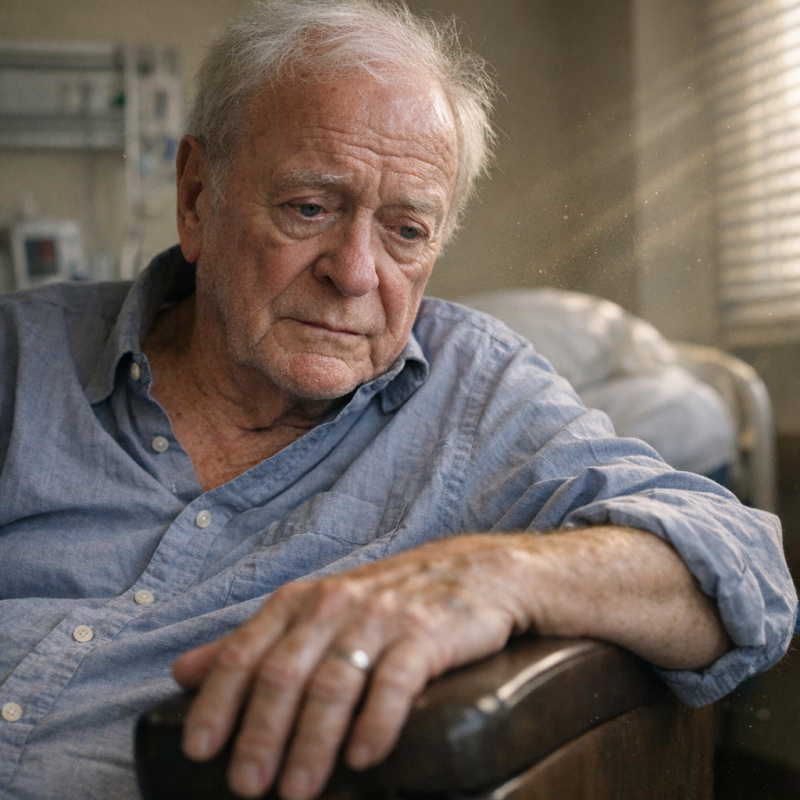 Image by FCT AI
The End
Margaret passes away at 5:47 AM. I know because I was watching the clock when the rhythm of her breathing changed, then stopped. The sky outside was just beginning to lighten, that gray pre-dawn moment between night and day. I was holding her hand—not because I wanted to, but because it seemed like what you were supposed to do. Habit. Forty-three years of habit doesn't end as easily as love does. The nurse came in, checked for a pulse, nodded gently. 'I'm so sorry for your loss,' she said, and I almost laughed. Loss? What had I lost? A murderer. A liar. A woman who'd never really existed. I felt relief more than grief. Relief that it was over. That she couldn't hurt anyone else. That I'd never have to look at her face again and wonder who was looking back. 'Do you want a few minutes alone with her?' the nurse asked quietly. I said no—I'd had enough of being alone with Margaret.
 Image by FCT AI
Opening the Box
I went home after the funeral home collected her body. The house felt different, though nothing had changed physically. I walked straight to our bedroom, to the closet, to the locked box. The key was still in Margaret's jewelry box where she'd said. My hands shook as I opened it. Inside were three spiral notebooks filled with Margaret's neat handwriting. Maps. Printed internet articles about homeschooling requirements and living off-grid. Receipts from hardware stores, grocery stores, children's clothing shops—all dated weeks before Lily disappeared. I opened the first journal randomly. 'June 15th: Bought three months' worth of non-perishables today. Thomas thinks I'm stockpiling for Y2K concerns. Let him think that.' My stomach churned. I flipped through pages of meticulous planning, obsessive detail, rationalizations that made my skin crawl. Then I found an entry dated three months before Lily vanished. One entry, dated three months before Lily disappeared, read: 'I've found the perfect place. She'll never want to leave.'
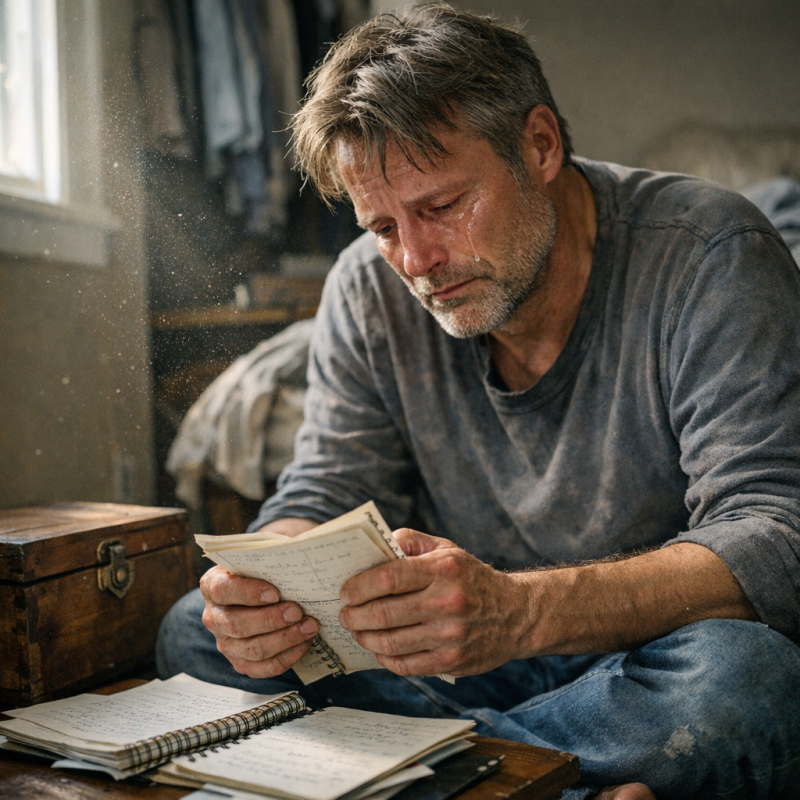 Image by FCT AI
Telling Rachel
I waited three days after Margaret's funeral. Let Rachel grieve what she thought she'd lost—a mother, complicated but still a mother. Then I called her. 'Can you come over? I need to talk to you about something.' She knew immediately something was wrong. She arrived within an hour, her face already tight with worry. We sat in my living room, the same room where she'd played as a child, where Lily had played. I told her everything. Every word Margaret had said. The planning. The journals. The cabin. The clearing with three birch trees. I watched my daughter's face crumble piece by piece as I spoke, watched her grief compound and transform into something I'd never seen before. When I finished, the silence stretched so long I thought she might not speak at all. Then Rachel asked only one question: 'Can you take me to where she buried my daughter?'
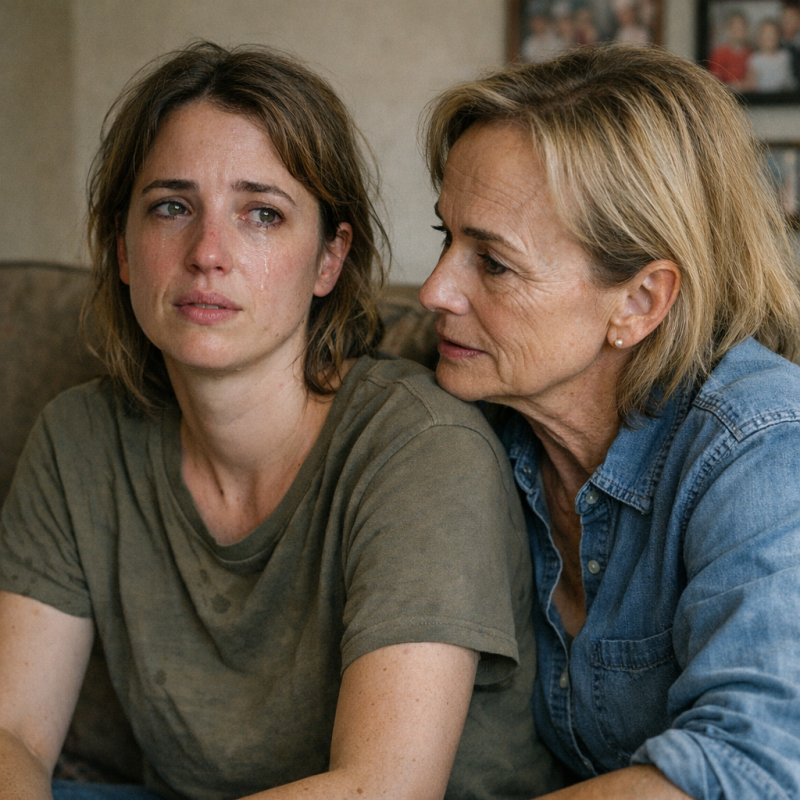 Image by FCT AI
The Cabin
We drove north in silence, Margaret's map on Rachel's lap, her fingers tracing the route like she was memorizing it. The cabin was exactly where Margaret had drawn it—three hours away, deep in state forest land, accessible only by a logging road that hadn't seen maintenance in years. My truck rattled over the ruts and my heart hammered against my ribs. When we finally saw it through the trees, Rachel made a sound I'll never forget—half gasp, half sob. The cabin was small, decrepit, windows broken, door hanging crooked. We sat in the truck for maybe five minutes, neither of us able to move. Then Rachel opened her door and walked toward it like she was being pulled by invisible strings. Inside, there was almost nothing—a cot, a few blankets, some empty water bottles. But in the corner, I found it. A small pink hair tie. Rachel picked it up, held it to her chest, and started to shake. We went outside to the clearing Margaret had marked. Three birch trees, exactly as she'd described. The ground beneath them looked undisturbed, covered in two years of leaves and forest debris. Rachel stood over the spot marked on the map and said, 'Call the authorities. I want to bring my baby home.'
 Image by FCT AI
Recovery
Detective Carver arrived with a forensic team within three hours. I'd never seen him in person before, only spoken on the phone during those desperate early weeks when Lily first vanished. He looked at me with something between pity and professional detachment, then turned his attention to the site. They worked carefully, methodically, photographing everything before they touched the ground. Rachel and I sat in my truck, watching through the windshield as they set up their equipment. When they started excavating, Rachel gripped my hand so hard I lost feeling in my fingers. It took them six hours. Six hours of digging, sifting, documenting. The sun was setting when Carver walked over to us, his face grim but not unkind. 'We've recovered remains consistent with a child of Lily's age and description,' he said. 'I'm so sorry.' Rachel collapsed against me, and I held her while she screamed into my shoulder. They let us stay while they finished their work, and we watched them place our little girl—what was left of her—into their van with a gentleness I hadn't expected. Detective Carver told me the case was closed—but for Rachel and me, it would never truly be over.
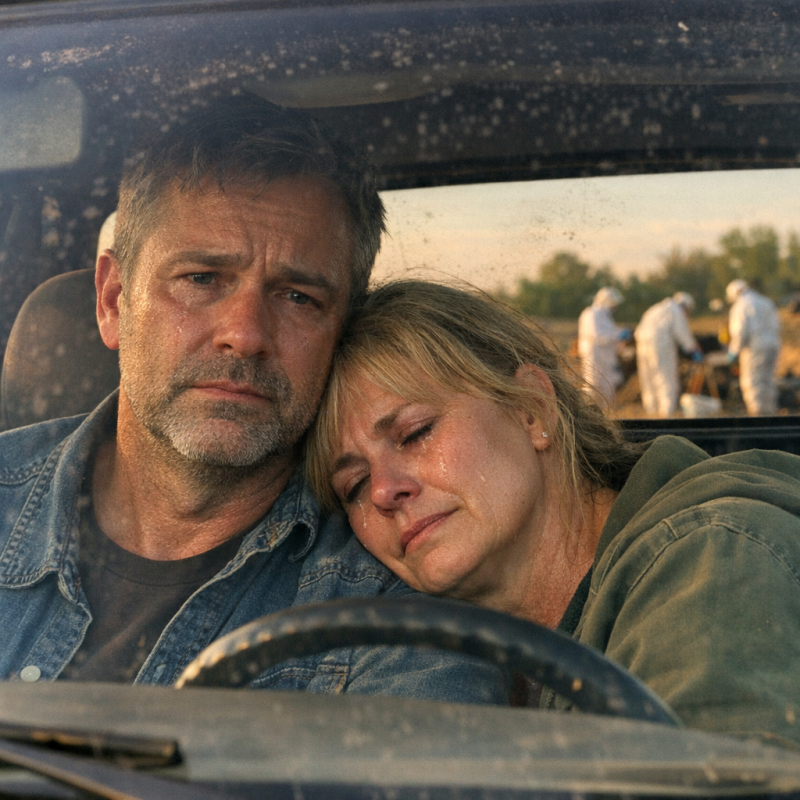 Image by FCT AI
Lily's Funeral
The funeral was on a Tuesday, two years and three months after Lily disappeared. Rachel chose a plot under an oak tree in the same cemetery where Margaret was buried, though on the opposite side—as far away as possible. About thirty people came. Emma flew in from Seattle, her face drawn and pale. She'd aged in those two years, we all had. The service was simple. Rachel had asked me to speak, but when I stood at the podium, I couldn't find words that made any sense. How do you eulogize a six-year-old who was stolen by her own grandmother? How do you talk about the yellow raincoat and the puddles and the laughter when everyone knows how it ended? I managed maybe two minutes before I had to sit down. Afterward, at my house, Emma asked if I'd ever go back to visit Margaret's grave. I told her I didn't know. She said Margaret was sick, that maybe we should try to understand. Rachel overheard and her face went hard. 'I'll never forgive her,' she said, her voice flat and final. 'Never.' I realized I didn't know if I could either—even though I'd promised.
 Image by FCT AI
The Yellow Raincoat
I go to Lily's grave every Sunday now. I bring flowers, usually daisies because they were her favorites. The headstone is simple: 'Lily Marie Crawford, Beloved Daughter and Granddaughter, Forever Six.' Sometimes I talk to her, tell her about the birds I saw that morning or how her mother is doing. Other times I just sit there in the quiet and remember. I can see her clearly now when I close my eyes—running through puddles in that bright yellow raincoat, her hair flying wild, her laugh echoing. I can see her waving to me from Rachel's car, her small hand pressed against the glass. For two years, those memories were tainted with not knowing, with the desperate wondering that ate me alive from the inside. Now I can remember her without that weight crushing my chest. But the questions haven't gone away—they've just changed shape. I don't wonder where she is anymore. I know where she is. I can see her waving now without wondering where she went—but I'll spend the rest of my life wondering why the person who was supposed to protect her became the person she needed protection from.
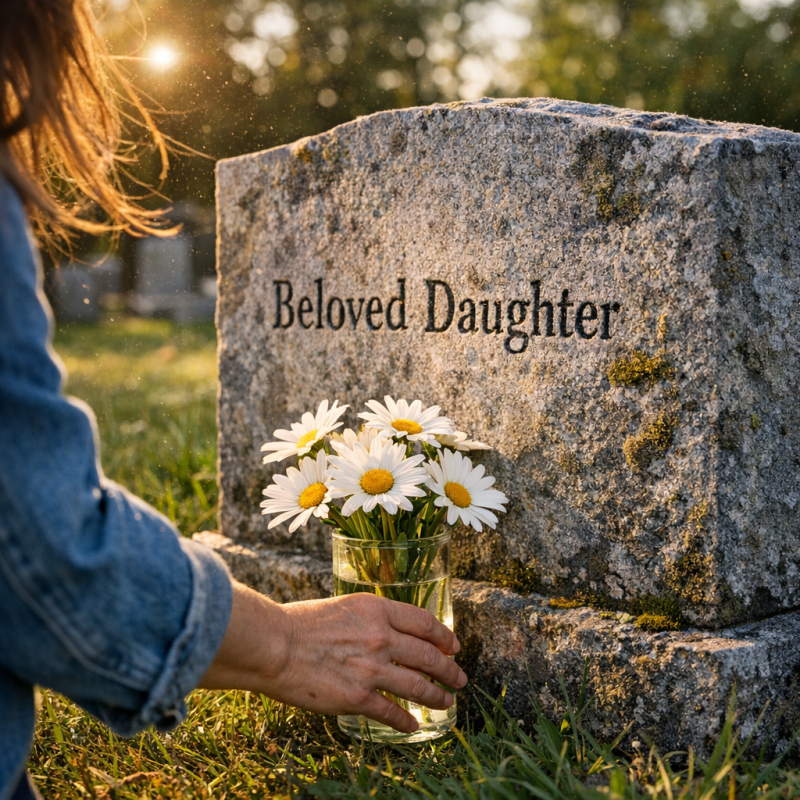 Image by FCT AI