
The Morning Everything Changed
I've owned my house for eight years, and I can tell you exactly how many people have permission to use my backyard pool: zero. So when I looked out my kitchen window that Saturday morning and saw two kids doing cannonballs while a woman lounged on my deck chair, I honestly thought I was still half-asleep. I threw on a shirt and headed outside, already rehearsing the polite-but-firm speech I'd give to whoever had wandered into the wrong yard. The gate latch had been acting up lately, so maybe they genuinely didn't realize this was private property. 'Excuse me,' I called out as I approached. The woman—mid-forties, designer sunglasses, that specific kind of confidence that comes from never being told no—looked up at me with this bright smile. 'Oh, hi! You must be Mark. We just moved in down the street. The realtor told us about the community pool access. This neighborhood is amazing!' I blinked at her. Community pool access. To my pool. In my backyard. 'I think there's been a misunderstanding,' I started, but she waved at me like I was the intruder—and that's when I knew this wasn't going to be simple.
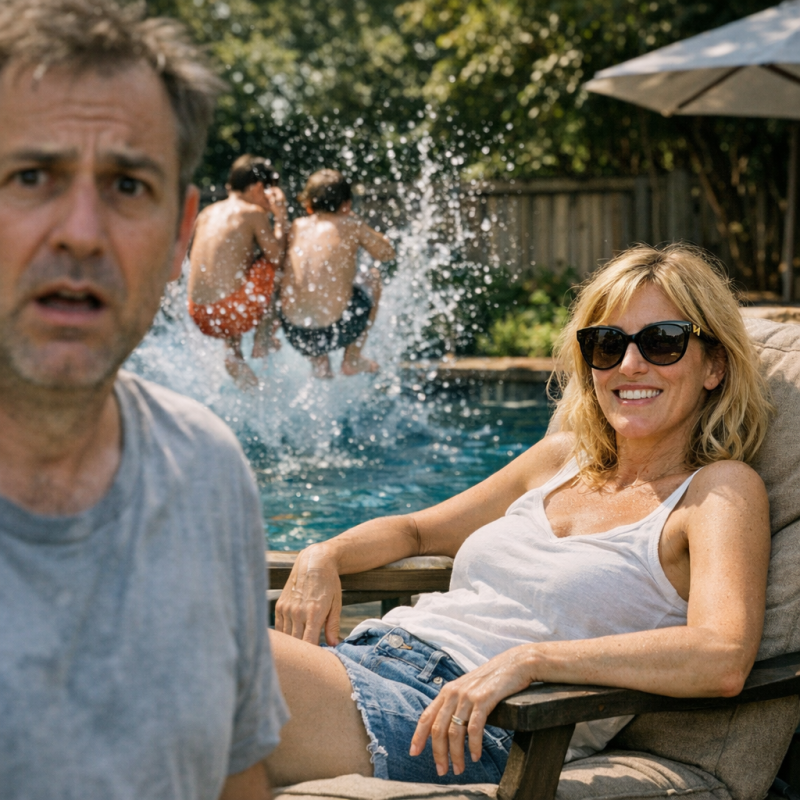 Image by FCT AI
When Polite Turned Into a Standoff
I kept my voice level, the way you do when you're trying not to sound like the crazy person even though you feel like you're living in an alternate reality. 'This is my private pool. There's no community access. I'm going to need you and your kids to leave.' She tilted her head like I'd just told her the earth was flat. 'That's not what Andrea from ReMax said. She specifically mentioned pool privileges.' I don't know any Andrea from ReMax, and even if I did, no realtor has the authority to give away access to my property. I told her this, as calmly as I could manage. Her whole demeanor shifted then. The friendly-neighbor act dropped, and suddenly I was the rude guy ruining her kids' fun. 'We're new to the neighborhood, and this is how you treat people? My children are just trying to cool off. It's ninety degrees.' I felt my jaw tighten. 'I understand it's hot, but this is still my property. I need you to leave, or I'll have to call the authorities.' She crossed her arms and said her kids were staying—and I realized words weren't going to work.
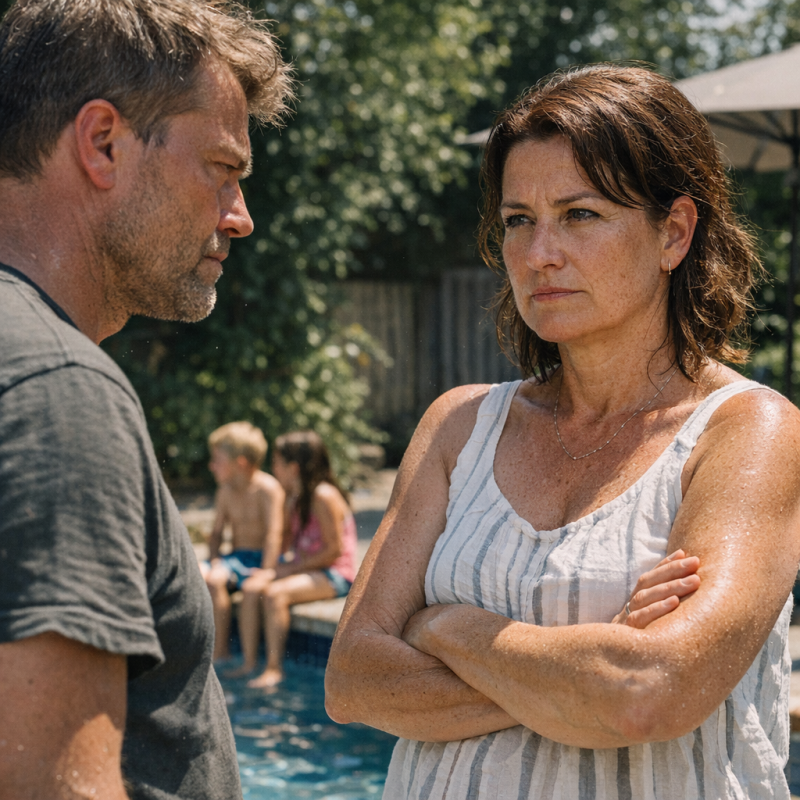 Image by FCT AI
She Started Filming Me
That's when she pulled out her phone. Before I could even process what was happening, she had it pointed directly at me, her thumb already on the record button. 'I'm documenting this,' she announced, loud enough that I'm sure the neighbors three houses down could hear. 'This man is harassing my family for using a community amenity.' I felt my face get hot. Community amenity. In my backyard. That I pay to maintain, clean, and insure. 'I'm not harassing anyone,' I said, trying to keep my voice steady even though my heart was pounding. 'I'm asking you to leave my private property.' She started narrating for the camera, her voice taking on this theatrical quality. 'We were told by a licensed real estate agent that this was available to neighborhood families. Now he's saying he'll call the authorities on children.' The way she said it made me sound like some kind of monster. I pulled out my own phone and dialed 9-1-1, because what else was I supposed to do? She aimed her phone at me and said loud enough for the recording: 'He's trying to intimidate us.'
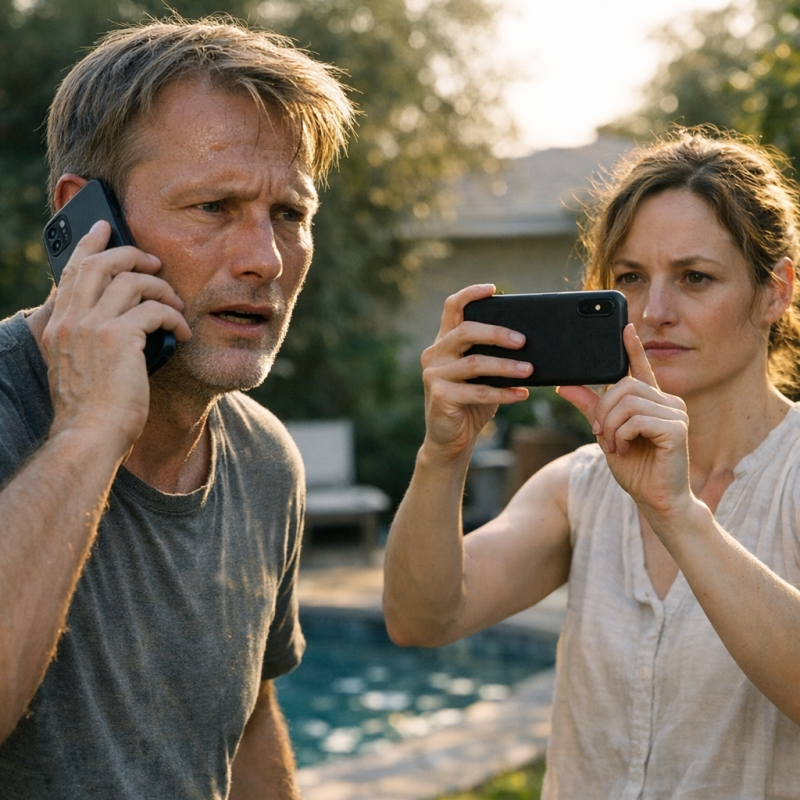 Image by FCT AI
The Authorities Arrived—And It Got Worse
Officer Rodriguez showed up about fifteen minutes later, and I felt this wave of relief wash over me. Finally, someone with actual authority who could sort this mess out. I started explaining the situation—how I'd found strangers in my pool, how I'd asked them to leave, how she'd refused and started recording me. But then I watched her transform right in front of me. The aggressive, entitled woman from two minutes ago vanished, replaced by this sweet, concerned mother who just wanted a nice day with her kids. 'Officer, I'm so sorry for the confusion,' she said, her voice soft and reasonable. 'Our realtor told us about pool access when we bought our house down the street. I had no idea this was a private situation. This gentleman became very aggressive when we tried to clarify.' Aggressive. I'd asked her to leave my property. That was it. The officer looked between us, his expression neutral but tired. He asked to see my property deed, which I had to go inside to get, leaving her alone with him for three minutes. The officer turned to me with a look that said he'd heard this kind of dispute a hundred times—and I had no idea whose side he'd take.
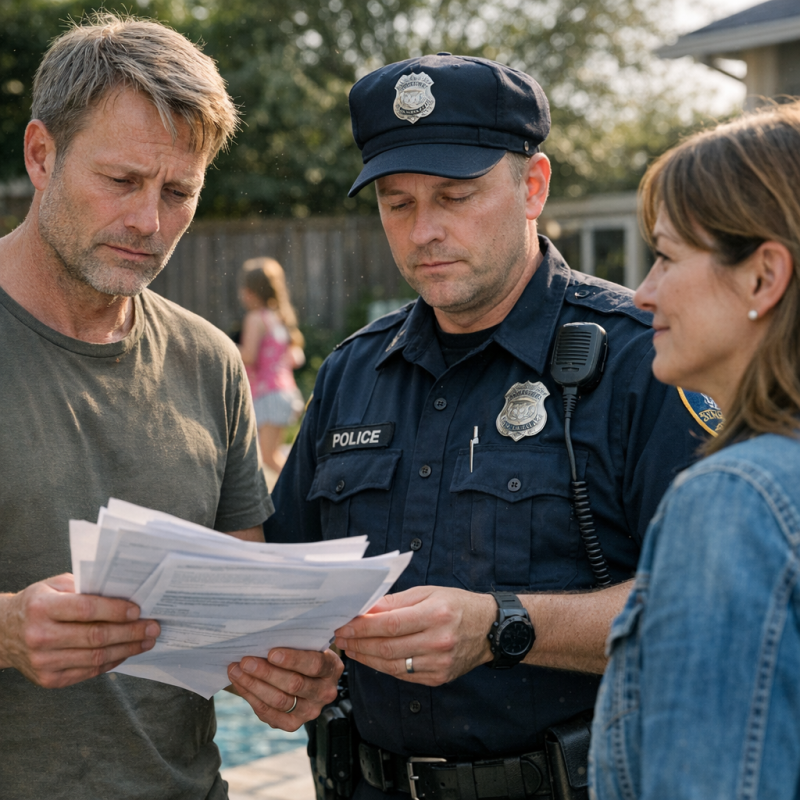 Image by FCT AI
Property Law Wasn't Enough
Officer Rodriguez checked my documents and confirmed what I already knew: this was my property, my pool, and I had every right to ask people to leave. 'Ma'am, I'm going to need you and your children to exit the property,' he said, his tone professional but firm. 'This is private property, and the owner has asked you to leave.' I felt vindicated for about three seconds. Then she launched into this protest that made my head spin. 'This is discrimination! You're taking his side because—' She stopped herself, but the implication hung in the air. The officer's expression didn't change, but I saw something flicker in his eyes. 'Ma'am, this has nothing to do with anything except property law. You're trespassing. Please gather your belongings.' She started shoving towels into her bag with sharp, angry movements, muttering about calling her lawyer and filing complaints. Her kids finally climbed out of the pool, dripping water all over my deck. She looked at the officer like he'd betrayed her—and I could see her gearing up for something bigger.
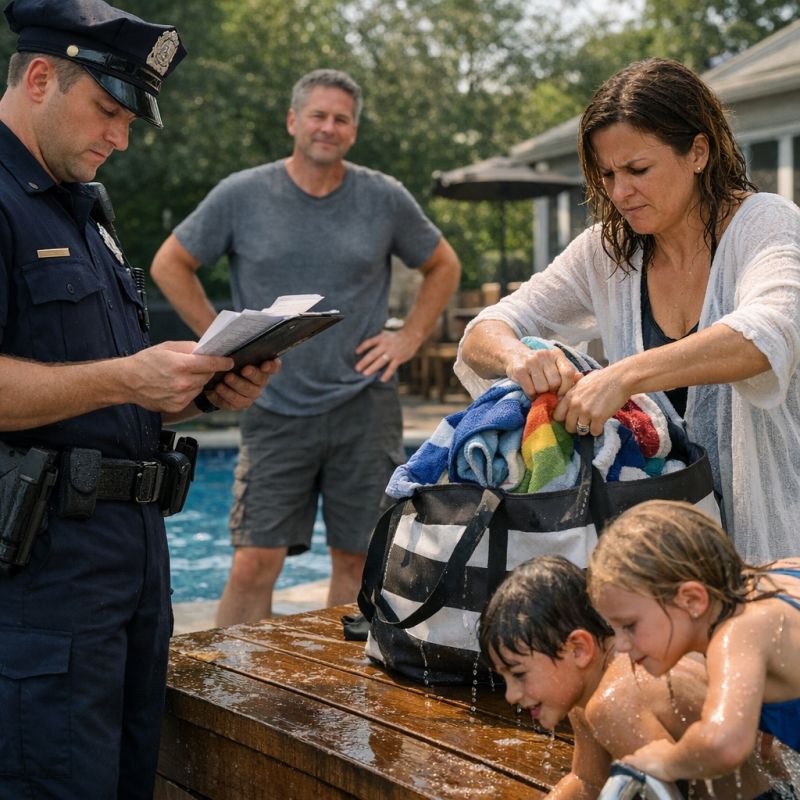 Image by FCT AI
The Fall That Changed Everything
Her son—maybe ten years old, skinny kid with chlorine-red eyes—was walking toward his towel when his foot slipped on the wet concrete. I saw it happen in slow motion: his legs went out from under him, and he went down hard on his side. The sound of his body hitting the deck made me wince. He started crying immediately, that loud, shocked kind of crying that kids do when they're more startled than hurt. I took a step forward, some instinct to help kicking in, but she was already there, dropping to her knees beside him. 'Oh my God, Jake! Are you okay? Can you move your arm?' She was touching his shoulder, his elbow, making this big show of checking him over. The kid was already trying to sit up, tears on his face but nothing that looked serious. No blood, no obvious injury, just a scared kid who'd taken a tumble. But she turned on me with this look of pure fury. He hit the deck hard, and before I could even process it, she was screaming that it was my fault.
 Image by FCT AI
Suddenly I Was the Villain
She cradled her son like he'd been gravely wounded, even though he was already wiping his eyes and looking more embarrassed than hurt. 'This is exactly what I was afraid of,' she said, directing her words at Officer Rodriguez but keeping her eyes on me. 'This pool is clearly unsafe. No slip-resistant coating, no warning signs, and he forced us to leave in an unsafe manner.' Forced them to leave. After they'd broken into my yard. 'My son could have a concussion. He could have broken bones. This is negligence.' The officer looked uncomfortable now, glancing between the kid and me. 'Ma'am, you were asked to leave because you were trespassing. The injury occurred while—' She cut him off. 'While we were being illegally evicted from a community space. I should sue you,' she said, pointing at me. The way she said it—not angry, not emotional, but cold and calculated—made my stomach drop. She said the words 'I should sue you' like she'd been waiting to say them all along.
 Image by FCT AI
The Neighbors Were Watching
After Officer Rodriguez helped them gather their stuff and escorted them out through my side gate, I just stood there in my backyard, dripping with sweat and adrenaline. The whole confrontation had lasted maybe forty-five minutes, but I felt like I'd been through a war. That's when I noticed Mrs. Chen from next door standing on her deck, watching. And the Martinezes across the street, visible through their front window. How long had they been there? What had they seen or heard? My phone buzzed—Tom from two houses down. 'Dude, everything okay? Saw the cop car.' I called him back and asked if he could come over, needing to talk to someone who knew me, who could confirm I wasn't losing my mind. He showed up five minutes later, and I walked him through the whole thing. But as I talked, I could see something in his expression—not quite disbelief, but not quite solidarity either. 'That's wild, man. Did you maybe come across a little harsh, though? I mean, they're just kids.' Tom looked at me like he wasn't sure whether to believe my side—and I realized the damage was already spreading.
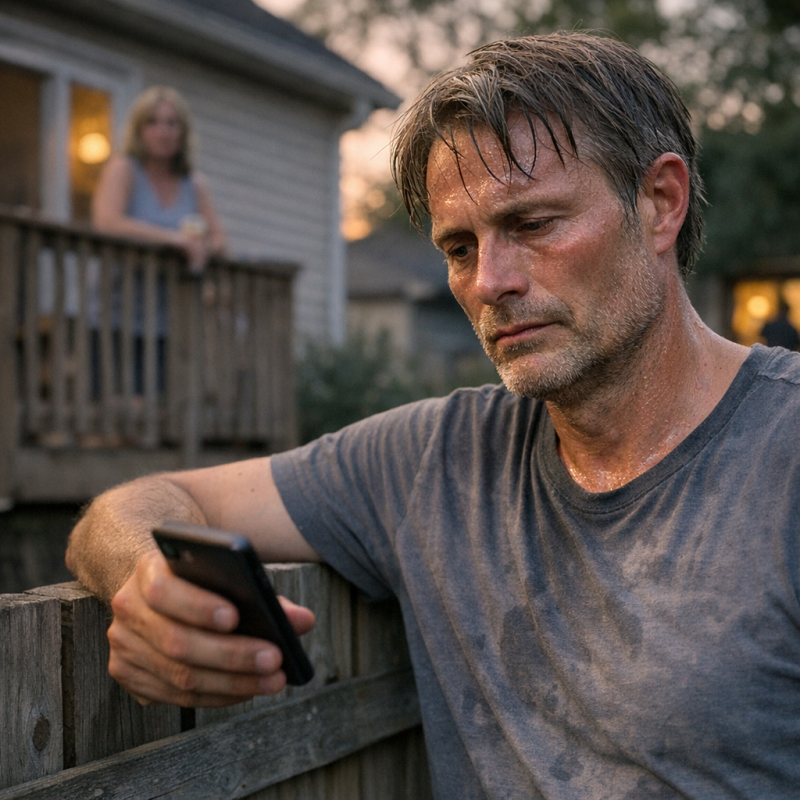 Image by FCT AI
I Couldn't Sleep That Night
I couldn't sleep that night. I kept replaying everything in my head—how I'd yelled, how her kids had looked scared, how Tom had given me that look like maybe I was the problem. Had I overreacted? Should I have just asked them nicely to leave first, even though they were literally trespassing on my property? Around two in the morning, I was still awake, staring at the ceiling and second-guessing every word I'd said. The potential lawsuit kept echoing in my mind. Could she actually sue me? For what—protecting my own backyard? But then I remembered her son had fallen, and my stomach twisted. What if she twisted the story, made it sound like I'd endangered them somehow? I didn't know anything about premises liability or any of that legal stuff. Maybe I should've been friendlier. Maybe I should've handled it differently. But how do you handle someone using your pool without permission? The more I thought about it, the more confused I got. I kept wondering if she actually meant it—or if this was just the beginning of something worse.
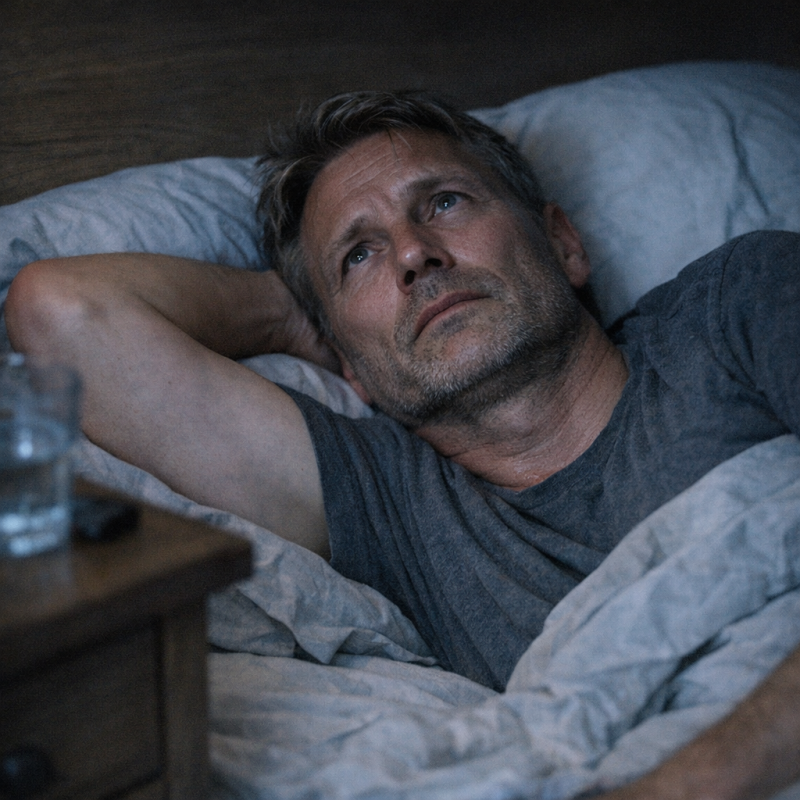 Image by FCT AI
The Gate Was Open Again
Two days later, I came home from work around six and immediately noticed something off. The side gate—the one Officer Rodriguez had made sure was closed and latched—was wide open again. My heart started pounding as I walked closer. There were wet footprints on the concrete path leading from the gate toward the pool area, still damp like someone had been there recently. I rushed to the backyard and checked the pool. Nothing seemed disturbed, but the gate to the pool fence was unlatched, swinging slightly in the breeze. I'd locked it. I knew I'd locked it that morning. My hands were shaking as I looked around, half-expecting to see someone still there, hiding behind the shed or the fence. But the yard was empty. Had Sharon come back? Had someone else found out about my pool? I stood there trying to make sense of it, feeling violated in a way I'd never experienced before. Someone had been in my yard while I was gone—and I had no idea if they were coming back.
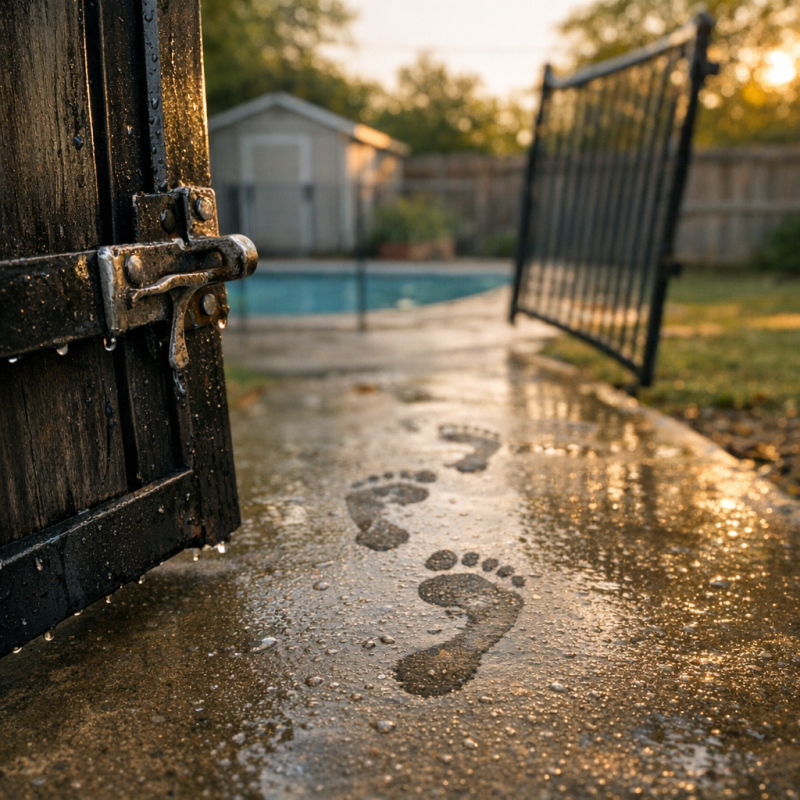 Image by FCT AI
I Installed Cameras
The next morning, I drove to Best Buy and dropped three hundred bucks on a security camera system. I'm not a tech guy, but the package said it was easy to install, and I was determined to figure it out. I spent the entire Saturday afternoon mounting cameras—one covering the side gate, one pointed at the pool, and one covering the back fence line. The app on my phone showed all three feeds in real time, and I tested it obsessively, walking around the yard to make sure every angle was covered. My neighbor Mrs. Chen came out while I was drilling into the fence post and asked what I was doing. I explained the situation, and she frowned. 'That's terrible, Mark. You shouldn't have to do this.' But I did have to do it. I felt like I was fortifying my own home against an invisible danger. Once everything was set up and working, I sat in my living room watching the feeds, feeling both safer and more paranoid at the same time. I set up the cameras expecting nothing—but part of me knew I'd need them sooner than I thought.
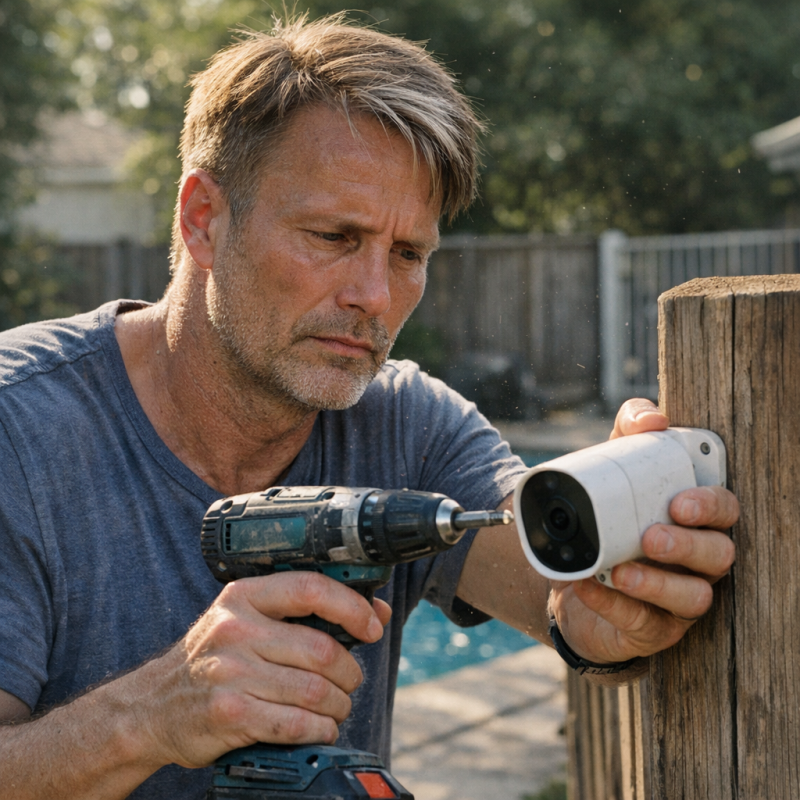 Image by FCT AI
Sharon 's Sister Showed Up at My Door
Three days after I installed the cameras, someone knocked on my front door. I opened it to find a woman I'd never seen before, probably in her late thirties, wearing a friendly smile and holding a plate of cookies. 'Hi, I'm Linda—Sharon's sister,' she said brightly. 'I wanted to introduce myself and maybe clear the air a little.' She looked harmless enough, but I felt my guard go up immediately. I invited her in, mostly because I didn't know what else to do. She set the cookies on my counter and launched into this whole speech about how Sharon was 'going through a tough time' and how the kids 'just loved swimming' and didn't I think we could all be neighborly about this? She kept emphasizing that word—neighborly. Like I was the one being unreasonable. I told her politely but firmly that Sharon had trespassed, refused to leave, and said she'd sue me. Linda's smile never wavered. 'I think there's just been a misunderstanding,' she said. 'Maybe we could all just move past it?' I said no. She smiled like we were friends, but her eyes were cold—and I wondered what Sharon had told her.
 Image by FCT AI
She Came Back
I was reviewing my camera footage the next evening, just checking to make sure everything was recording properly, when I saw something that made my blood run cold. There they were—Sharon, Linda, and both kids—walking through my side gate like they owned the place. The timestamp showed it was from that afternoon around two-thirty, while I'd been at work. I watched in disbelief as they set up towels, as the kids jumped in the pool, as Sharon and Linda sat in my deck chairs like they were at a resort. This was two days after Officer Rodriguez had explicitly told her to stay away. Two days after Linda had come to my door asking me to 'move past it.' They stayed for over an hour. The footage showed everything in perfect clarity—their faces, the kids swimming, Sharon laughing with her sister. At one point, Sharon looked directly at one of my cameras, and I swear she smirked. My hands were shaking as I backed up the footage to an external drive. She walked in like she'd never been told to stay away—and this time, I had it all on video.
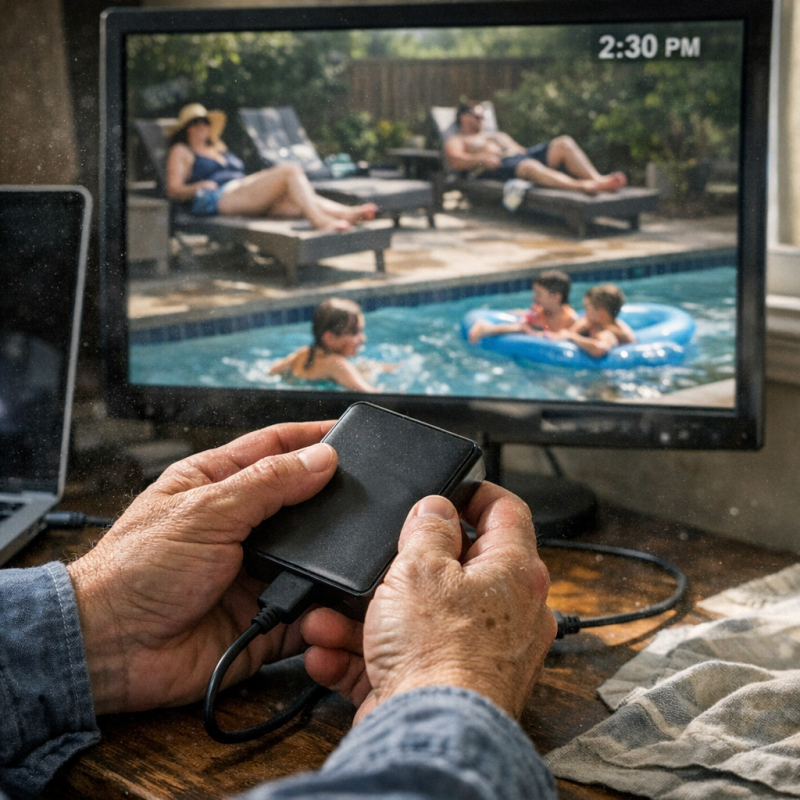 Image by FCT AI
I Called the Authorities Again
I called the precinct non-emergency line the next morning and explained the situation. They connected me with Detective Chen, who asked me to come down to the station with the footage. He was younger than I expected, maybe early forties, with this intense way of watching the video that made me feel like he was actually taking me seriously. He played it three times, making notes. 'You have a prior report on file?' he asked. I told him about Officer Rodriguez and the first incident. Detective Chen nodded slowly. 'This changes things. This isn't a neighbor dispute anymore—it's harassment. Unlawful trespass, specifically.' I felt this wave of relief wash over me. Finally, someone understood. But then he looked at me seriously and said, 'I need to warn you—pressing charges might escalate things with your neighbor. Are you prepared for that?' I thought about the open gate, the wet footprints, Linda's cold smile. I told him I was. Detective Chen looked at the footage and said, 'This isn't a neighbor dispute anymore—it's harassment.'
 Image by FCT AI
Sharon Was Taken Into Custody
Two days later, I was working from home when I heard the commotion outside. I looked out my front window and saw Detective Chen's unmarked car parked in front of Sharon's house, along with a patrol unit. My heart started racing. I watched as Detective Chen knocked on her door, and when Sharon answered, I could see her expression change from confusion to anger even from that distance. They talked for a few minutes, and then I saw him gesture toward the patrol car. She was being taken into custody. I couldn't hear what was being said, but I saw Sharon arguing, pointing at my house, her face red. Linda came out and tried to intervene, but Detective Chen calmly directed Sharon to the patrol car. One of the officers put handcuffs on her while her kids watched from the doorway. I felt sick watching it, even though I knew she'd brought this on herself. This was real now—charges, an arrest record, the whole thing. As they led her to the patrol car, she looked straight at my house—and I knew this wasn't over.
 Image by FCT AI
The Lawsuit Papers Arrived
The process server showed up at my door four days after Sharon's arrest. I signed for the envelope, my hands already shaking before I even opened it. Inside were legal documents—a civil complaint filed in county court. I sat down at my kitchen table and started reading. Sharon was suing me for negligence, premises liability, and personal injury related to her son's fall at my pool. She claimed I had failed to maintain a safe environment, failed to post adequate warnings, and had created an 'attractive nuisance' that endangered children. The medical bills she was claiming seemed inflated—emergency room visit, follow-up appointments, psychological counseling for trauma. And then I got to the amount she was seeking in damages. Fifty thousand dollars. I read that number three times, feeling my face get hot. This wasn't about her kid's scraped knee. This was calculated. This was planned. The timing, the return visit, Linda's friendly intervention—it all suddenly felt choreographed. I read the claim amount—fifty thousand dollars—and realized she'd been planning this all along.
 Image by FCT AI
Sarah Thought I Was Overreacting
I called Sarah that evening and told her about the lawsuit. I thought she'd be as outraged as I was, but her reaction caught me completely off guard. She listened quietly while I went through the whole thing—the fifty thousand dollars, the inflated medical claims, the obvious setup. When I finished, she sighed. 'Mark, maybe you should just settle,' she said. 'Give them a few thousand and make this go away.' I stared at the phone like it had betrayed me. I explained again that this was fraud, that Sharon had planned this, that paying her would be rewarding someone for breaking into my property. Sarah got defensive. 'I'm just being practical,' she said. 'Do you really want to spend months fighting this? The legal fees alone will cost more than settling.' I tried to make her understand—this wasn't about the money, it was about principle. But she kept pushing. 'Sometimes you have to pick your battles,' she said, and I could hear the exhaustion in her voice. We went in circles for twenty minutes before hanging up, both frustrated. She said, 'Maybe just pay them something small to make it go away'—and I couldn't believe she didn't see what I saw.
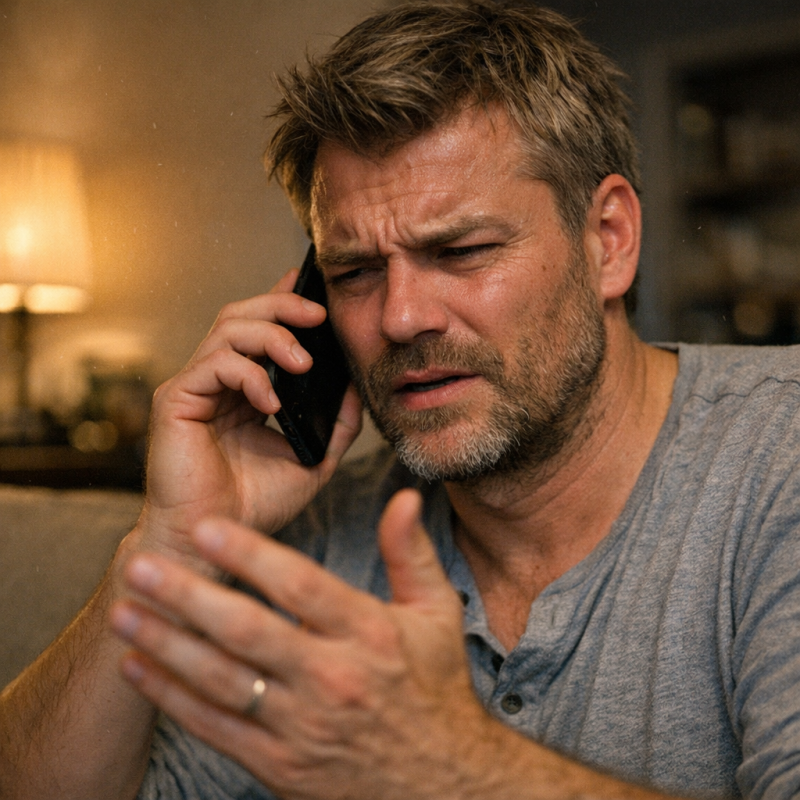 Image by FCT AI
I Started Digging Into Her Background
That night, I couldn't sleep. I kept thinking about Sharon, about how she'd shown up with Linda, how she'd come back the second time, how quickly everything had escalated. So I grabbed my laptop and started searching. I typed her name into Facebook, Instagram, every social media platform I could think of. What I found was almost nothing. She had a Facebook profile, but it was bare—maybe a dozen posts total, all from the past year. Generic stuff about the neighborhood, a few photos of her son that looked staged. No history before that. No tagged photos with friends. No check-ins at restaurants or parks. It felt wrong. Everyone I knew had years of digital footprints—embarrassing college photos, old relationships, job changes. Sharon's online presence looked like it had been created yesterday. I tried searching for her husband, but the name she'd mentioned didn't bring up anything connected to her. I searched for previous addresses, employment history, anything. The more I looked, the less I found. Her profiles were scrubbed clean—too clean—and I started wondering who she really was.
 Image by FCT AI
My Lawyer Had Bad News
I met with Attorney Barnes two days later. I brought him copies of everything—the lawsuit, the official report, my notes from both encounters. He read through it all carefully, his expression neutral. When he looked up, I was ready for him to tell me we'd destroy this case. Instead, he leaned back in his chair and folded his hands. 'Here's the reality,' he said. 'Even if this lawsuit is completely baseless, defending it will cost you between fifteen and twenty-five thousand dollars. Discovery, depositions, court filings, trial preparation—it adds up fast.' My stomach dropped. 'But I didn't do anything wrong,' I said. He nodded. 'That's usually irrelevant in these situations. The legal system doesn't distinguish between frivolous lawsuits and legitimate ones until you've already spent the money to prove it.' He explained that Sharon was probably counting on exactly this—that I'd look at the costs and decide settling for ten or fifteen thousand was the cheaper option. 'It's legal extortion,' I said. Barnes didn't disagree. He said, 'Even frivolous lawsuits cost money to defend'—and I realized she'd put me in a no-win situation.
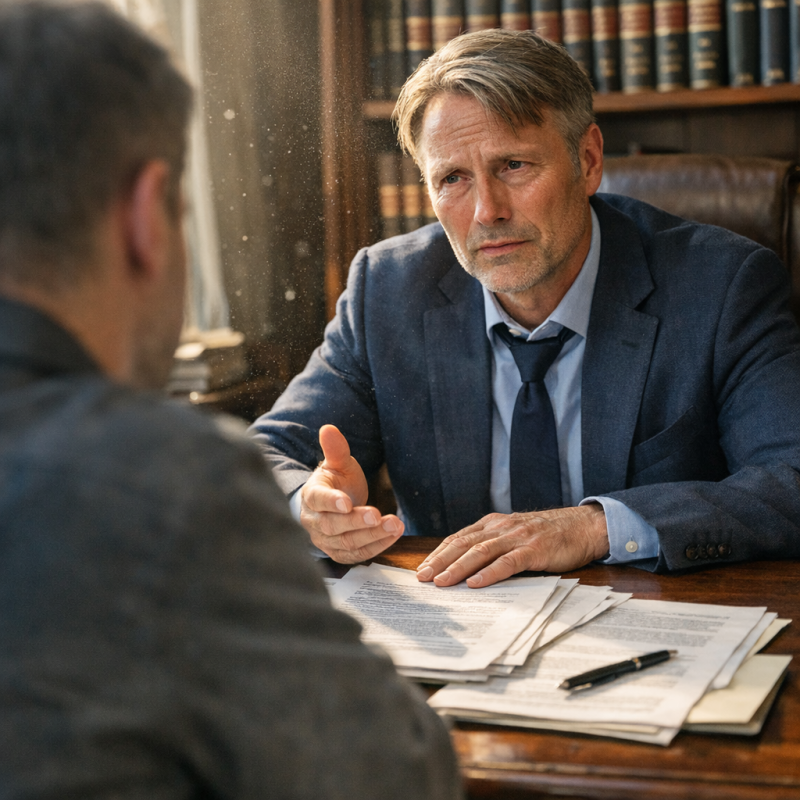 Image by FCT AI
The Neighbors Started Avoiding Me
The neighborhood started treating me differently. I noticed it first at the grocery store—Janet from three houses down saw me in the produce section and suddenly became very interested in the avocados. Then it happened again when I was getting my mail. The Richardsons across the street waved, but it was stiff, awkward. No one stopped to chat anymore. No one asked how I was doing. The worst was Tom. We'd been friendly since I moved in—we'd watched football together, borrowed tools, talked over the fence about lawn care. I saw him outside one Saturday morning and raised my hand to wave. He glanced at me, then looked away and went back inside his garage. Just like that. No acknowledgment. I stood there feeling like I'd been punched. I wanted to walk over and explain, to tell him what had really happened, but I knew how it would sound. The rumors were already circulating—I'd heard bits and pieces. Something about a lawsuit, a kid getting hurt, officers being called. The details didn't matter. Tom wouldn't even make eye contact—and I realized my reputation was being destroyed one conversation at a time.
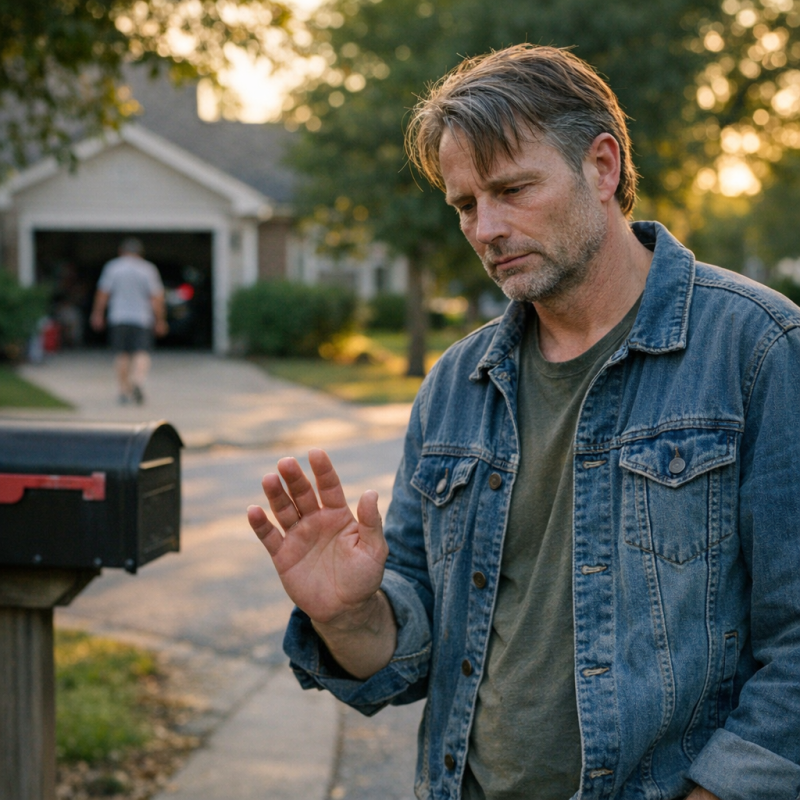 Image by FCT AI
Sharon's Story Was Everywhere
Sarah texted me a link two days later with no message, just the URL. I clicked it and found myself on the neighborhood Facebook group—the one I'd joined when I first moved in but never really used. Sharon had posted. The post was long, emotional, carefully written. She described her son's injury, the 'terrifying' encounter with an 'aggressive homeowner,' the trauma her family was experiencing. She painted herself as a concerned mother who'd made an innocent mistake and been treated like a offender. She never mentioned breaking into my yard twice. She never mentioned the officer finding her trespassing. She just focused on her son's tears, her fear, the 'hostile' way I'd spoken to her. The comments section was brutal. People I'd never met were calling me heartless, cruel, a danger to the neighborhood. A few suggested I shouldn't be allowed to have a pool if I was going to be so hostile to families. One person said they'd be filing complaints with the HOA. I scrolled through hundreds of responses, my hands shaking. Her post had two hundred comments—and almost all of them were calling me the villain.
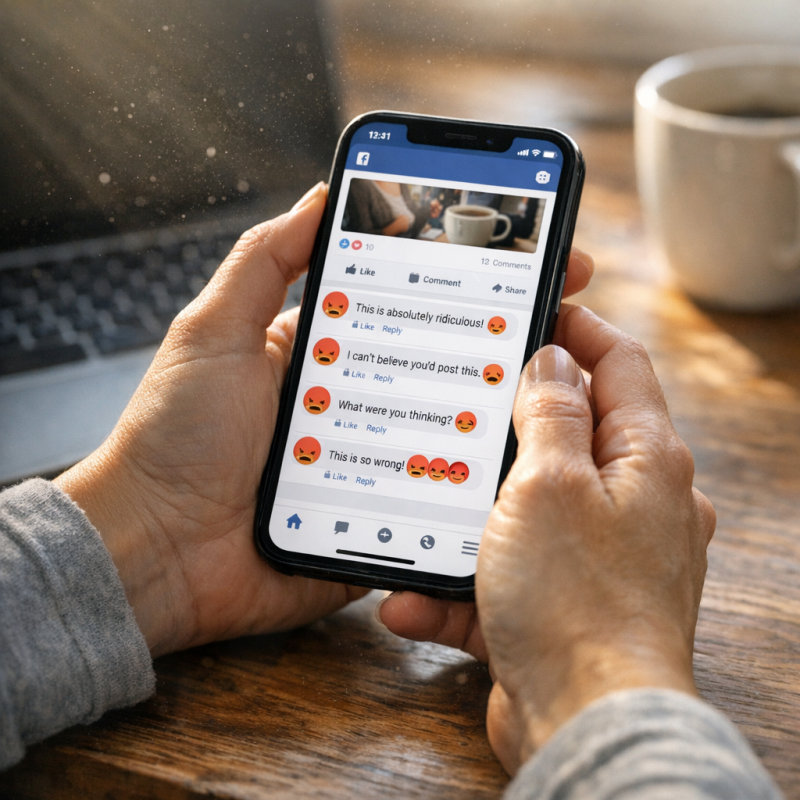 Image by FCT AI
I Found the Medical Records
Barnes called me three weeks into the lawsuit. 'We got the medical records,' he said, and I could hear something in his voice—satisfaction, maybe vindication. He emailed me the file and I opened it immediately. The emergency room report was only two pages. Sharon's son had been examined the night of the incident. The diagnosis was listed clearly: superficial contusion to the left knee. Minor abrasion. No fractures, no sprains, no significant swelling. Treatment: ice pack and over-the-counter pain medication. Follow-up: unnecessary unless symptoms worsened. I read it twice, then called Barnes back. 'This is it?' I asked. 'This is what she's claiming fifty thousand dollars for?' He confirmed. The medical evidence showed a scraped knee—exactly what I'd seen that day. Nothing more. But Sharon's lawsuit described a serious injury requiring multiple follow-up appointments, physical therapy consultations, and ongoing psychological treatment for trauma. The doctor's report said 'superficial contusion'—but her lawsuit claimed a serious injury requiring ongoing treatment.
 Image by FCT AI
Her Friend Backed Up Her Story
Barnes called again a week later, and this time his tone was different. Careful. 'We received a witness statement,' he said. 'From a woman named Debbie Chen. She claims she was with Sharon during the second incident.' My mind went blank. 'I don't know anyone named Debbie,' I said. He read from the document. Debbie stated she'd accompanied Sharon to my property, had witnessed my 'hostile behavior,' and could confirm Sharon's version of events. She described details—my raised voice, my aggressive posture, the way I'd 'cornered' Sharon by the gate. All of it was framed to make me look dangerous. 'This doesn't make sense,' I told Barnes. 'I was alone with Sharon . There was no one else there.' Barnes sighed. 'Her statement is very specific. She describes what you were wearing, the time of day, even quotes things you allegedly said.' I tried to remember every detail of that day. I'd been watching from my kitchen window. I'd seen Sharon at the fence. I'd gone outside. Just the two of us. No friend. No witness. Debbie swore she'd been there the whole time—but I'd never seen her before in my life.
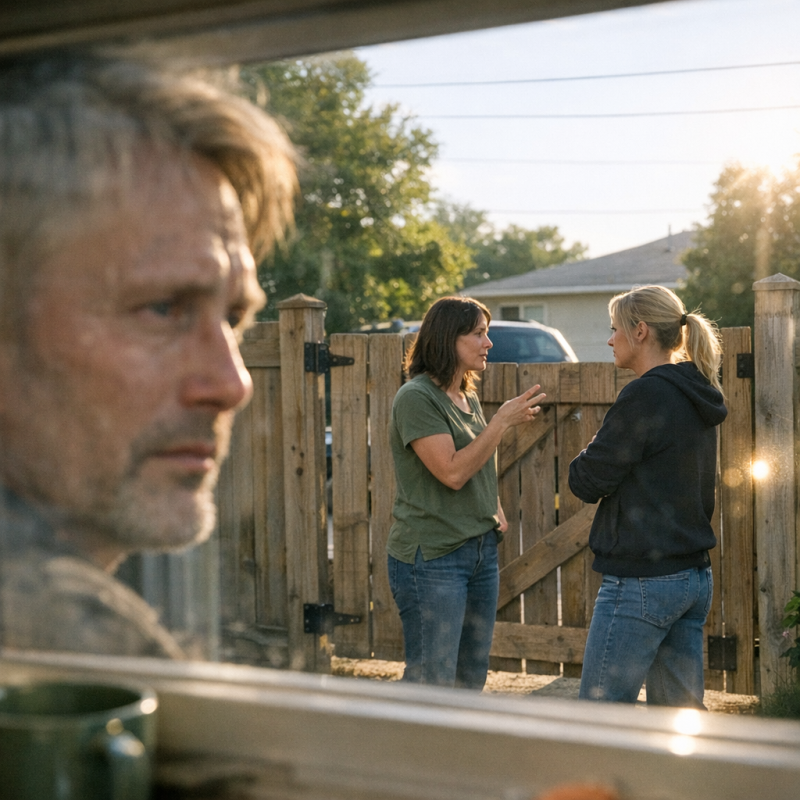 Image by FCT AI
Sarah Left
Sarah and I had another fight that night. The same argument we'd been having for weeks—she wanted me to settle, I refused. But this time felt different. Final. She stood in my living room with her arms crossed, and I could see she'd already made up her mind. 'I can't do this anymore, Mark,' she said quietly. 'This lawsuit, this obsession, this constant stress—it's too much.' I tried to explain that I wasn't obsessed, I was defending myself. She shook her head. 'You've let this take over your entire life. You don't talk about anything else. You barely sleep. And you won't even consider the possibility that maybe fighting isn't worth it.' We went back and forth, but there was no heat in it anymore. Just exhaustion. She told me she was going to stay with her sister for a while. 'A while' turned permanent three days later when she came back for her things. I helped her carry boxes to her car, both of us making small talk about nothing important. When the last box was loaded, we stood in my driveway in uncomfortable silence. She packed her things while I watched, and the silence between us said everything words couldn't.
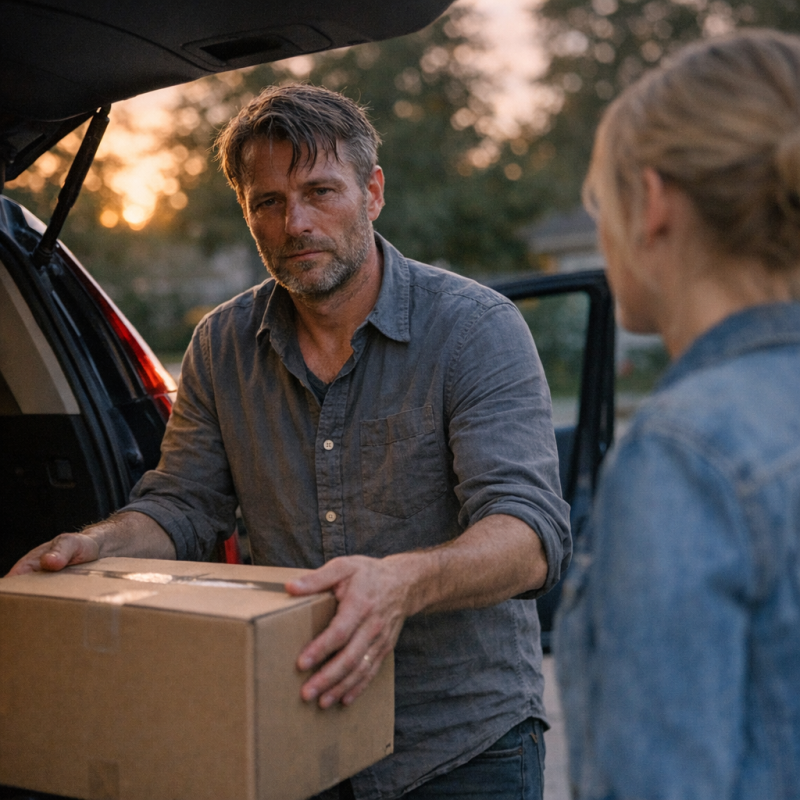 Image by FCT AI
I Hired a Private Investigator
After Sarah left, I sat in my empty house staring at my bank statements. I had maybe one card left to play, and it was going to cost me. I found a private investigator online—a guy named Dalton who'd worked fraud cases for insurance companies. His retainer was three thousand dollars. Three thousand dollars I didn't really have, not with legal fees already draining my savings account dry. But I was out of options. I met him at a coffee shop downtown, handed over everything I knew about Sharon, which honestly wasn't much. Her name. Her address. The lawsuit documents. He listened, took notes, didn't make promises. 'What exactly are you hoping I'll find?' he asked. I told him I didn't know—anything that explained why she was doing this to me. Any history. Any pattern. Anything that made sense of this nightmare. He nodded slowly. 'Give me two weeks'—and I prayed he'd find something that made sense of this nightmare.
 Image by FCT AI
The Deposition Was a Nightmare
The deposition happened in a conference room that smelled like stale coffee and desperation. Sharon's attorney was a sharp-dressed guy with cold eyes who treated me like I was already guilty. He asked about my job, my relationships, my background. Then he started digging into things that had nothing to do with the pool incident. Had I ever been in an argument with a neighbor before? Had I ever raised my voice in public? Had I ever been accused of aggressive behavior? Attorney Barnes objected when he could, but I still had to answer most of it. They twisted everything. My divorce became evidence of instability. A parking dispute from two years ago became a pattern of conflict. I kept my voice steady, but inside I was shaking with rage. Then Sharon's lawyer leaned forward with this smug expression and dropped the real twist. 'Isn't it true you have anger management issues?'—and I realized they were trying to destroy me completely.
 Image by FCT AI
Sharon's Son Was Photographed Playing Sports
Dalton called me on a Tuesday morning. 'Check your email,' he said. I opened it on my phone and found six photos. Sharon's son at a soccer game. Same kid who'd supposedly been traumatized and injured. The timestamps showed they were taken just three days earlier. In one photo, he was sprinting down the field. In another, he was jumping to head the ball. In a third, he was celebrating a goal with his teammates, arms raised, face full of joy. No signs of trauma. No hesitation. No fear of water or anything else they'd claimed in the lawsuit. I zoomed in on each image, hands trembling. This was it. This was proof that their injury claims were exaggerated at minimum, completely fabricated at worst. I forwarded everything to Attorney Barnes immediately. He was running and jumping like nothing had ever happened—and I finally had proof she was lying.
 Image by FCT AI
I Presented the Photos in Court
Sharon Attorney Barnes presented the surveillance photos in court the following week. He laid them out methodically, walking the judge through each one. Date stamps. Locations. The soccer game. The kid's obvious physical capability. Sharon sat across the courtroom with her lawyer, face carefully neutral, but I saw her jaw tighten. Her attorney objected, called it irrelevant, argued that physical activity didn't disprove emotional trauma. But the damage was done. Judge Martinez studied each photo carefully, adjusting his glasses. He asked Sharon's lawyer directly about the injury claims in the lawsuit. The response was evasive, full of legal language that said nothing. For the first time since this whole thing started, I felt like someone in authority might actually believe me. The hearing ended without a decision, but something had shifted. The judge looked at the photos, then at Sharon —and for the first time, I saw doubt in her eyes.
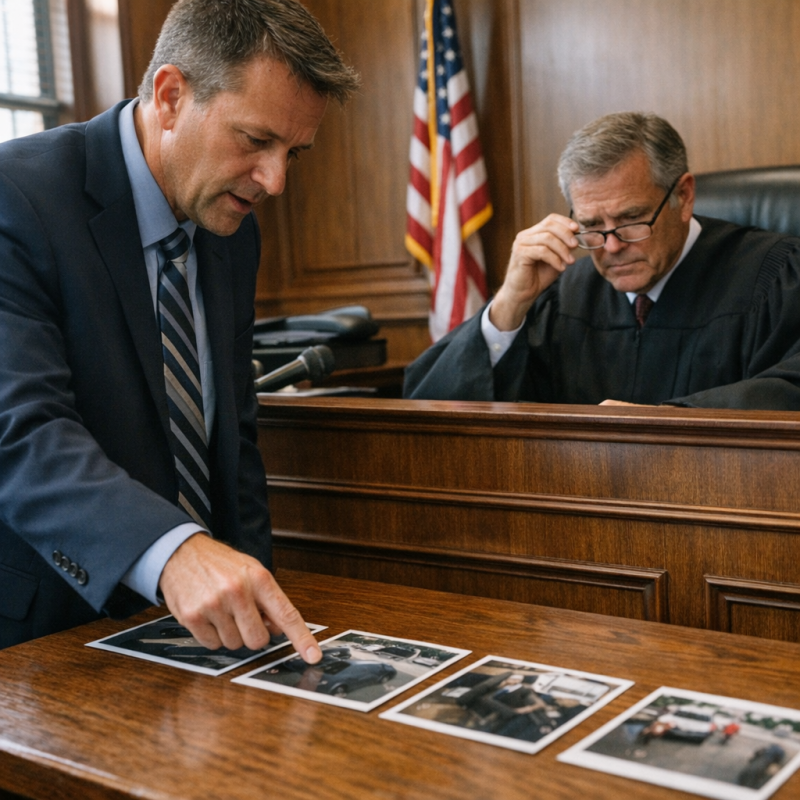 Image by FCT AI
She Filed a Restraining Order
The restraining order papers arrived at my door six days later. I read them standing in my driveway, unable to believe what I was seeing. According to Sharon's petition, I'd been following her family. Photographing her children without permission. Harassing them at public events. Creating an atmosphere of fear and intimidation. It was all lies. Complete fabrications. The photos Dalton took were from a public soccer game, and he'd taken them—not me. I hadn't been within a hundred yards of her or her family except in court. But there it was, in legal black and white. A request for a temporary restraining order. A hearing scheduled for the following week. A whole new legal battle opening up just as I'd started to gain ground in the first one. I called Attorney Barnes, voice shaking with fury. The papers accused me of following her kids—and I realized she was building a new attack from a different angle.
 Image by FCT AI
The Restraining Order Hearing
The restraining order hearing was worse than the deposition. Sharon showed up dressed conservatively, makeup subtle, clutching a tissue like a prop. Judge Martinez—a different judge from the lawsuit—asked her to describe why she felt unsafe. And man, she delivered. Her voice shook as she talked about seeing my car in her neighborhood. About feeling watched. About her children asking why that man was always around. She dabbed her eyes. She paused for effect. She was good. Really good. I wanted to jump out of my seat and scream that she was lying, but Attorney Barnes kept a hand on my arm. When it was my turn, I explained about the private investigator. About the photos being taken legally at a public event. About never going near her home. Judge Martinez listened, but I could see him weighing her tears against my words. She sobbed into a tissue while the judge listened—and I knew she was performing for an audience of one.
 Image by FCT AI
The Judge Denied the Restraining Order
Judge Martinez took less than five minutes to make his decision. He denied the restraining order. Insufficient evidence, he said. The photographs in question were taken at a public sporting event by a licensed investigator. No credible evidence of stalking or harassment had been presented. I felt my shoulders drop with relief I didn't know I'd been holding. Attorney Barnes gave me a small nod. But across the courtroom, Sharon's reaction told a different story. She wasn't devastated. Wasn't shocked. She just sat there, perfectly calm, already moving on. Her lawyer gathered papers without urgency. They exchanged a few quiet words. And when she stood to leave, she glanced at me with an expression I couldn't quite read. Not anger. Not defeat. Something else. Something calculating. The judge ruled in my favor—but Sharon's expression told me she had more moves left to play.
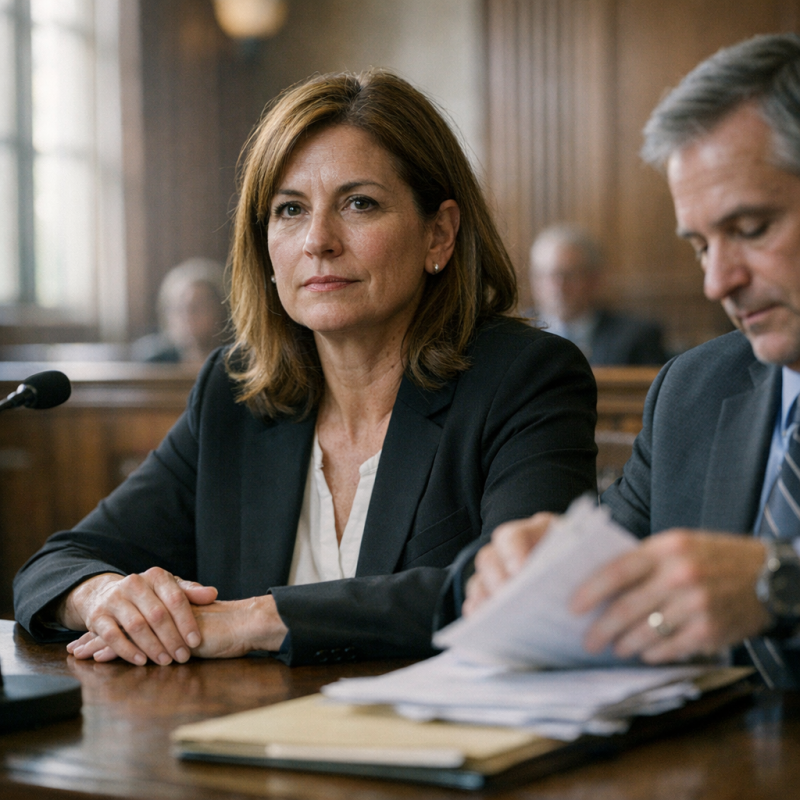 Image by FCT AI
I Found Her Previous Address
Dalton called me two days after the restraining order hearing. 'I found her previous address,' he said. 'Took some digging, but she lived in Ohio before moving here. Small suburb outside Cleveland.' He gave me the street name, the approximate dates she'd lived there. Three years, maybe four. Then she'd moved to my neighborhood. I asked him what he planned to do with the information. 'I'm going to make some calls,' he said. 'Property records. Court databases. See if there's anything interesting in her history there.' I felt something shift in my chest. Maybe hope. Maybe just desperation looking for a new direction. But if Sharon had done something like this before, if there was any pattern to find, maybe someone in Ohio would remember. Maybe someone would talk. He said, 'I'm going to contact some people there and see what they remember'—and I hoped they'd remember something useful.
 Image by FCT AI
A Former Neighbor Called Me
The woman on the phone said her name was Susan Miller. She'd gotten my number from Dalton, who'd tracked her down through property records in Ohio. 'I lived two doors down from Sharon for about three years,' she said. Her voice had this careful quality, like she was choosing every word. 'I wanted to warn you. She's… she's not what she seems.' I asked what she meant. There was a long pause. 'Sharon sued three people in our neighborhood before she left. One couple over a fence dispute. Another guy over a tree. And Mrs. Patterson over some damage to her garden—claimed she'd been hurt.' My hand tightened around the phone. 'Did any of them go to trial?' I asked. 'No,' Susan said. 'They all settled. She moved away right after the last one.' I felt something cold settle in my stomach. Not quite understanding, but sensing a shape to this I hadn't seen before. Something deliberate. Susan said she had to go but wished me luck. She said, 'Sharon sued three people in our neighborhood before she left'—and suddenly everything started making sense.
 Image by FCT AI
I Couldn't Prove a Pattern
I spent the next week trying to find proof. Court records from Ohio. Names of the people Sharon had sued. Anything that would show this wasn't the first time. But every door I knocked on seemed locked tight. The Ohio courts required formal requests for records, and even then, civil suits weren't always digitized or easily accessible. I called one of the people Susan had mentioned—the guy with the tree dispute—but he refused to talk to me. 'That's behind me,' he said. 'I don't want to get dragged back into it.' I understood, but it didn't help. Attorney Barnes explained that even if I found records, proving a pattern of behavior was complicated. 'Previous lawsuits don't automatically mean this one is fraudulent,' he said. 'She could argue each case had legitimate merit.' I felt the frustration building in my chest. I knew there was something there. Susan had confirmed it. But knowing and proving were two completely different things. Every door I knocked on closed in my face—and I realized proving she'd done this before was going to be nearly impossible.
 Image by FCT AI
Sharon's Lawyer Offered a Settlement
Attorney Barnes called me on a Thursday afternoon. 'Sharon's lawyer reached out with a settlement offer,' he said. I could hear the hesitation in his voice. 'They're proposing fifteen thousand dollars. You pay that, sign a confidentiality agreement, and the lawsuit goes away. No admission of liability.' Fifteen thousand. I sat down at my kitchen table and stared at nothing. It was a lot of money. More than I wanted to spend on this nightmare. But it was also less than what fighting the lawsuit all the way through trial would cost—Barnes had already warned me about that. 'It's tempting,' he said carefully. 'A lot of people take these offers to make the problem disappear.' I thought about Sharon walking away with fifteen grand. I thought about the people in Ohio who'd paid her off just to get their lives back. I thought about what kind of message it would send if I handed her money I didn't owe. Attorney Barnes said, 'It's a lot less than fighting it will cost'—and I had to decide if I was willing to reward her scam.
 Image by FCT AI
I Refused to Settle
I called Barnes back the next morning. 'Tell them no,' I said. 'I'm not settling.' There was a pause on the line. 'You're sure?' he asked. 'This is going to get expensive, Mark. And there's no guarantee we win.' I knew that. I'd been living with that knowledge for weeks. But the idea of giving Sharon fifteen thousand dollars—of rewarding whatever this was—made me feel sick. 'I'm sure,' I said. 'I didn't do anything wrong, and I'm not paying her to pretend I did.' Barnes let out a slow breath. 'All right,' he said. 'Then we prepare for trial. I'll let them know we're rejecting the offer.' He started talking about depositions, witness lists, trial strategy. It felt real in a way it hadn't before. This was actually going to court. In front of a judge. Maybe a jury. My life dissected and judged by strangers. But I couldn't back down now. I said, 'I'm not giving her a dime'—and I saw the respect in my lawyer's eyes, mixed with worry.
 Image by FCT AI
Linda Came Back With an Ultimatum
Linda showed up at my door two days after I rejected the settlement. I saw her through the window and considered not answering. But ignoring her felt like weakness. I opened the door but didn't invite her in. 'You made a mistake,' she said. No greeting, no pretense. 'Sharon offered you a way out and you turned it down.' I crossed my arms. 'I don't owe her anything,' I said. Linda's expression hardened. 'You think going to trial is going to help you? Everyone's going to hear about this. Your name in the paper. People testifying about what you did. It'll destroy your reputation permanently.' Her voice had an edge I hadn't heard before. 'You can still fix this. Drop the fight, pay the settlement, move on.' I felt anger rising in my chest. 'Or what?' I asked. Linda stared at me for a long moment. 'Or everyone will think you're a monster,' she said quietly. Then she turned and walked away. She said, 'Drop this or everyone will think you're a monster'—and I wondered if she was intimidating me or warning me.
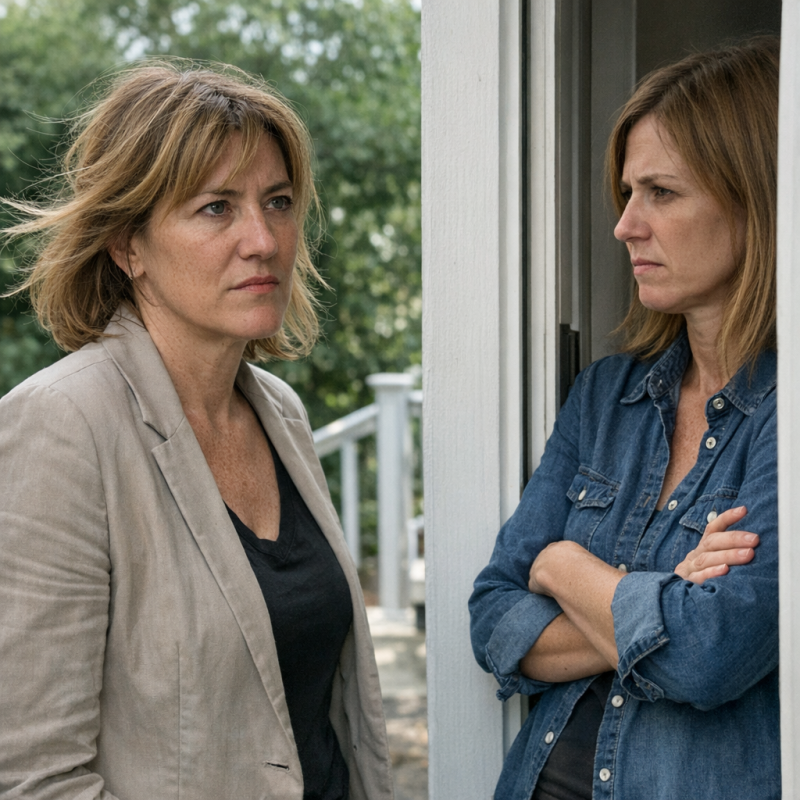 Image by FCT AI
The Trial Date Was Set
The notice came in the mail on a Monday. Official court letterhead, formal language, a date circled in my mind before I even finished reading. The trial was set for six weeks from now. Six weeks to prepare. Six weeks to gather evidence, coordinate witnesses, build a defense against accusations I still couldn't fully believe were real. I called Barnes immediately. 'Is that enough time?' I asked. 'It's what we have,' he said. 'We'll make it work.' But I could hear the stress in his voice too. There was so much to do. Depositions to schedule. Documents to organize. Dalton's findings to present in a way that would actually matter in court. I pulled out a calendar and counted down the days. Forty-two of them. Forty-two days until I sat in a courtroom and tried to convince a judge or jury that I wasn't the villain Sharon had painted me as. Forty-two days to prove the truth. It didn't feel like enough. Six weeks to prove I wasn't the villain—and I had no idea if that was enough time.
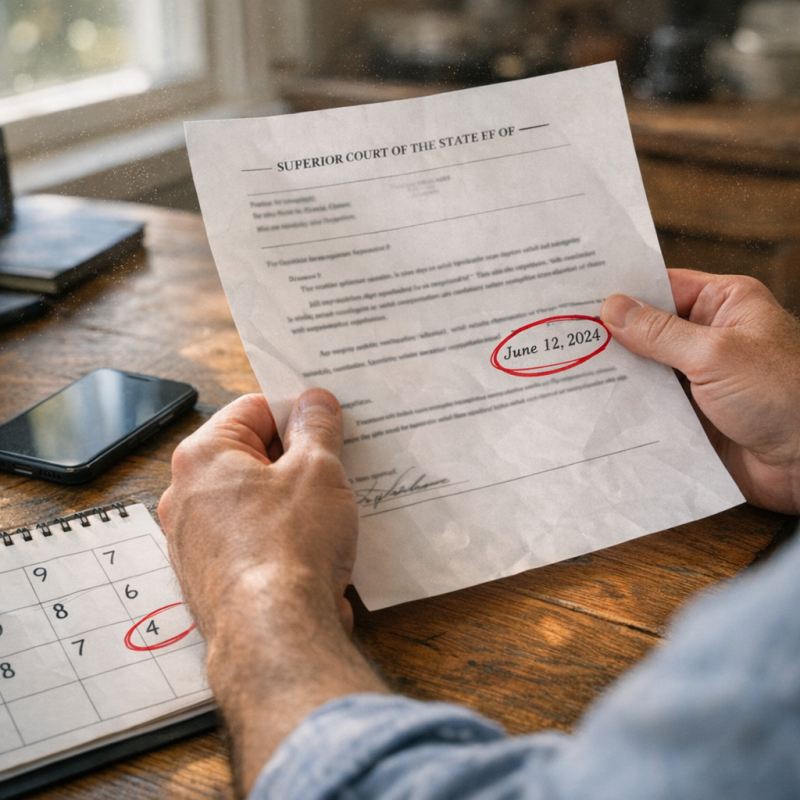 Image by FCT AI
I Started Having Panic Attacks
It hit me three weeks before trial. I was sitting in my car outside the grocery store, and suddenly I couldn't breathe. My chest tightened like someone was squeezing it. My heart pounded so hard I thought something was wrong with it—actually wrong, like a heart attack. My hands shook on the steering wheel. I didn't know what was happening. It took maybe two minutes, but it felt like an hour. When it finally passed, I sat there sweating and shaking, trying to understand what had just happened. I looked it up later that night. Panic attack. The symptoms matched perfectly. I'd never had one before. Never even come close. But the stress of everything—the lawsuit, the isolation, the constant pressure—had apparently found a new way to break through. I tried to tell myself it was just once. Just a fluke. But two days later it happened again. My chest tightened and I couldn't breathe—and I realized this fight was breaking me in ways I hadn't expected.
 Image by FCT AI
The PI Found Three More Victims
Dalton called me four days before trial. 'I found them,' he said. 'Three other people Sharon sued. One in Ohio, one in Pennsylvania, one in Indiana before that.' My heart started racing. 'What happened?' I asked. 'Same story every time,' Dalton said. 'She moves into a neighborhood, targets someone with a pool or a nice yard—something she can claim access to or injury from. She stages an incident, files a lawsuit, and settles out of court. Then she moves.' I felt something shift in my chest. Not quite relief, but vindication maybe. Proof that I wasn't crazy. That this was real. 'Can they testify?' I asked. Dalton hesitated. 'Two of them won't talk. They signed confidentiality agreements. But the third one—guy named Richard from Pennsylvania—he's willing to give a statement. He said he wishes he'd fought it.' I sat down, my hands shaking. All this time I'd been defending myself against what felt like random accusations. But it wasn't random. He said, 'Same playbook every time'—and I realized I'd been fighting a professional this whole time.
 Image by FCT AI
I Reached Out to Her Previous Victims
I spent the next two days trying to reach Sharon's previous victims. Dalton had given me their contact information, and I felt weird about cold-calling strangers to ask about their lawsuits. But I needed to hear their stories firsthand. Richard from Pennsylvania answered on the second ring. He listened while I explained my situation, and there was this long pause before he said, 'Yeah, that sounds exactly like what happened to me.' We talked for almost an hour. He told me about his pool, the trespassing, the injury claim, the lawsuit. It was like listening to my own story told by someone else. The woman from Ohio was harder to reach, but she finally called me back. She'd settled five years ago and still sounded angry about it. 'I knew something was off,' she said, 'but my lawyer convinced me to just pay her and move on.' The guy from Indiana wouldn't give details because of his confidentiality agreement, but he said enough. One of them said, 'I wish I'd fought her instead of settling'—and I knew I'd made the right choice.
 Image by FCT AI
They All Told the Same Story
The details were what got me. All three victims described almost identical experiences. Sharon had moved in near their properties. She'd started appearing in their yards or near their pools without permission. When confronted, she'd acted confused or apologetic at first. Then came the 'injury'—always something that couldn't be easily disproved, like a slip or a fall or some vague physical pain. The lawsuits followed within weeks. And in every case, she'd cried during depositions or settlement negotiations. Richard said she'd brought her daughters to one meeting to make him feel guilty. The Ohio woman told me Sharon had said she'd 'take everything' if she didn't settle. Every conversation I had felt like looking in a mirror. Same moves, same script, same outcome. I kept thinking about the tears she'd cried in front of my neighbors, the way she'd played the victim so convincingly. Every detail matched—the fake confusion, the tears, the warnings—and I began to suspect this wasn't just entitlement.
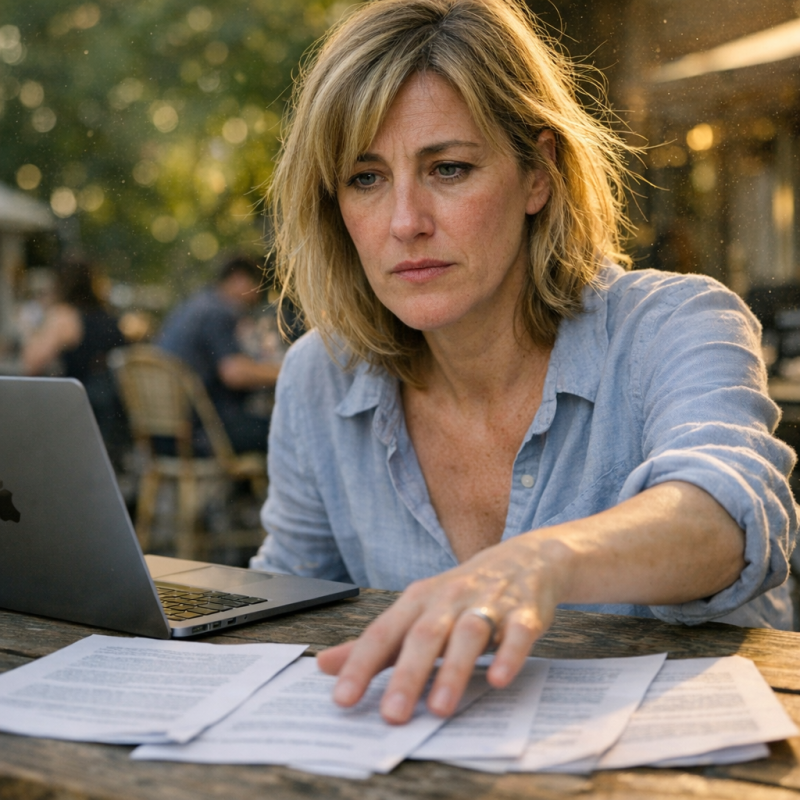 Image by FCT AI
Attorney Barnes Wanted to Subpoena the Victims
Attorney Barnes sat across from me in his office, reading through the notes I'd compiled from talking to Sharon's previous victims. He kept nodding as he read, occasionally circling something with his pen. 'This is good,' he said finally. 'This is really good.' He explained that we could potentially call these people as witnesses to establish a pattern of behavior. If the judge allowed it, their testimony would show that Sharon had done this before—that this wasn't just a misunderstanding or a legitimate injury claim. It was a repeating pattern. 'Pattern evidence is powerful,' Barnes said. 'It shows intent. It shows deliberate action.' He started sketching out a trial strategy that would put Richard on the stand to describe his experience with Sharon. The similarities would be undeniable. The jury would see that this wasn't my fault, that I wasn't the problem. He said, 'If we can prove she's done this before, the case falls apart'—but I wasn't sure the judge would allow it.
 Image by FCT AI
Sharon's Lawyer Tried to Block the Evidence
Two days later, Barnes called me sounding frustrated. Sharon's attorney had filed a motion to exclude any testimony about her previous lawsuits. The motion argued that her past was irrelevant to my case, that it would be prejudicial and confusing to the jury. Barnes read me parts of it over the phone. They claimed each case was unique, that what happened in Ohio or Pennsylvania had nothing to do with what happened in my backyard. It was a legal maneuver to keep the jury from hearing the truth. 'They're scared,' Barnes said. 'If they weren't, they wouldn't be fighting this hard to keep it out.' I felt this cold realization settle over me. Sharon knew. She knew exactly what we'd found and what it meant. She'd probably been through this before—maybe someone else had discovered her pattern and she'd managed to keep it quiet. The motion claimed her past was irrelevant—and I realized she knew exactly what we'd found.
 Image by FCT AI
The Judge Allowed Limited Testimony
The hearing on the motion happened three days before trial. I sat in the courtroom while both lawyers argued about whether the jury should hear about Sharon's previous lawsuits. Her attorney kept using words like 'prejudicial' and 'inflammatory.' Barnes countered that it was directly relevant to show a pattern of fraudulent behavior. Judge Martinez listened to both sides, occasionally asking questions. He looked tired, like he'd heard these same arguments a hundred times before. Finally, he made his ruling. He would allow one witness to testify about one prior case. Just one. The testimony would be limited in scope—no details about settlement amounts, no speculation about motives. Just the facts of what happened. Barnes squeezed my shoulder as we left the courtroom. 'It's something,' he said. 'It's more than nothing.' But I felt the weight of it. One witness, one story. It had to be enough. The judge said, 'One witness, one case'—and I prayed it would be enough to expose her.
 Image by FCT AI
I Couldn't Sleep the Night Before Trial
I didn't sleep at all the night before trial. I kept replaying everything in my head—every interaction with Sharon, every conversation with my lawyer, every piece of evidence we had. I thought about the surveillance footage, about Richard's testimony, about whether the jury would believe me or her. My mind wouldn't shut off. I'd close my eyes and see Sharon crying on the witness stand. I'd imagine the jury looking at me like I was the villain. Around three in the morning, I got up and made coffee. I sat at my kitchen table looking out at the pool, the same pool that had caused all of this. Part of me wished I'd never built it. Part of me wished I'd just settled like everyone else had. But another part of me knew I couldn't let her win. I'd come too far. I'd fought too hard. The sun started coming up, and I still felt sick with anxiety. I kept thinking, 'What if the jury believes her instead of me?'—and the fear was almost paralyzing.
 Image by FCT AI
The Trial Began
The courtroom felt smaller than I expected. I sat next to Barnes at the defense table, my hands clasped in front of me, trying to look calm. Sharon sat across the aisle with her lawyer, wearing a conservative dress and minimal makeup. She looked like someone's mom, not someone who'd put me through hell. The jury filed in—twelve faces I'd be trying to read for the next few days. Judge Martinez called the court to order, and Sharon 's attorney stood to give his opening statement. He painted her as a victim—a woman who'd been hurt on someone else's property and was simply seeking justice. He talked about her pain, her medical bills, her suffering. And then Sharon started crying. Not loud, dramatic sobs, but quiet tears that she dabbed away with a tissue. I watched the jury watching her. Some of them looked sympathetic. She dabbed her eyes with a tissue as her lawyer spoke—and I couldn't shake the feeling she'd rehearsed this moment a hundred times.
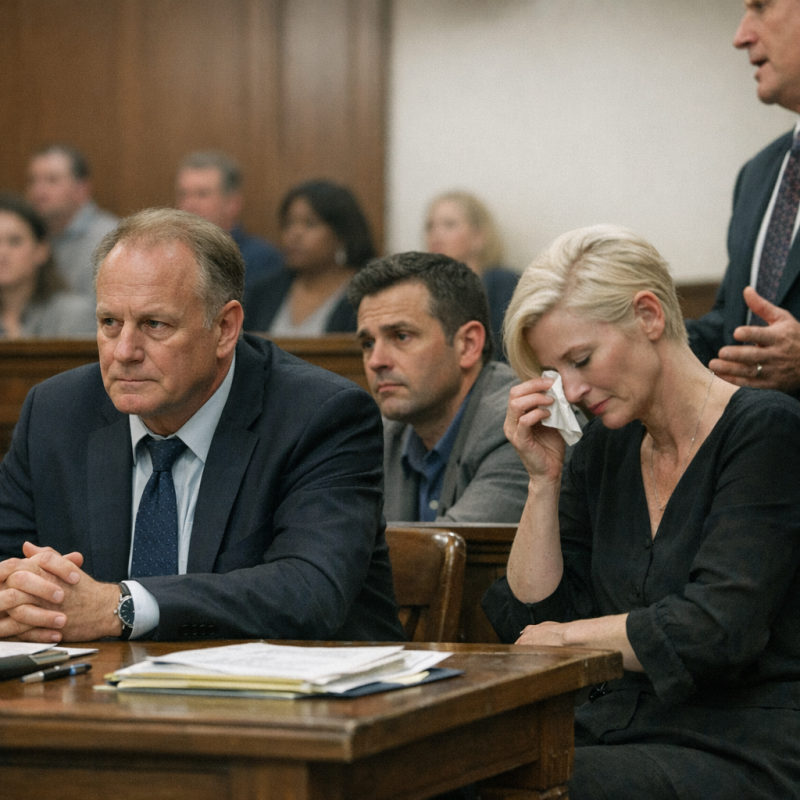 Image by FCT AI
The Previous Victim Testified—And Everything Changed
Richard took the stand on the second day of trial. He was nervous, fidgeting with his hands as Barnes asked him to describe his experience with Sharon. He told the story methodically—how she'd moved in near his property, how she'd repeatedly trespassed near his pool, how she'd claimed to slip and hurt herself, how she'd sued him. The courtroom was completely silent. Barnes asked him if anything about the experience felt unusual. Richard paused, then said, 'Looking back, yeah. It felt calculated. Like she knew exactly what she was doing.' Barnes pressed him on what he meant. Richard took a breath and said it plainly: 'She targets people with pools or nice properties. She gets onto their land somehow, stages an incident, and then sues. It's a pattern. It's what she does.' I watched Sharon's face. She didn't move, didn't react. But I saw her lawyer lean over and whisper something to her. The witness said, 'She's a professional—she targets people with property vulnerabilities and sues them'—and suddenly I understood what I'd been fighting all along.
 Image by FCT AI
Sharon's Lawyer Couldn't Explain It Away
Sharon's lawyer went after Richard hard during cross-examination. He tried to paint him as bitter, vindictive, someone who'd lost his lawsuit and was now trying to drag Sharon down with him. He asked if Richard had any proof of a 'pattern,' any documentation, any actual evidence beyond his own failed case. Richard didn't flinch. He calmly explained that after his experience, he'd done research—found public records, court filings, property disputes all involving Sharon or people connected to her. The lawyer kept pushing, his voice getting sharper, but Richard just kept answering. Steady. Detailed. Specific. I watched the jury. They were leaning forward now, paying close attention. One woman was taking notes. Then I glanced at Sharon. Her face had changed. The confident, calm expression she'd worn all week was gone. Her jaw was tight, her hands gripping the edge of the table. She looked cornered. Her lawyer tried one more angle, but Richard shut it down with a single sentence: 'I know what happened to me, and I know what she does.' The witness stayed calm and detailed—and I watched Sharon's facade start to crack in real time.
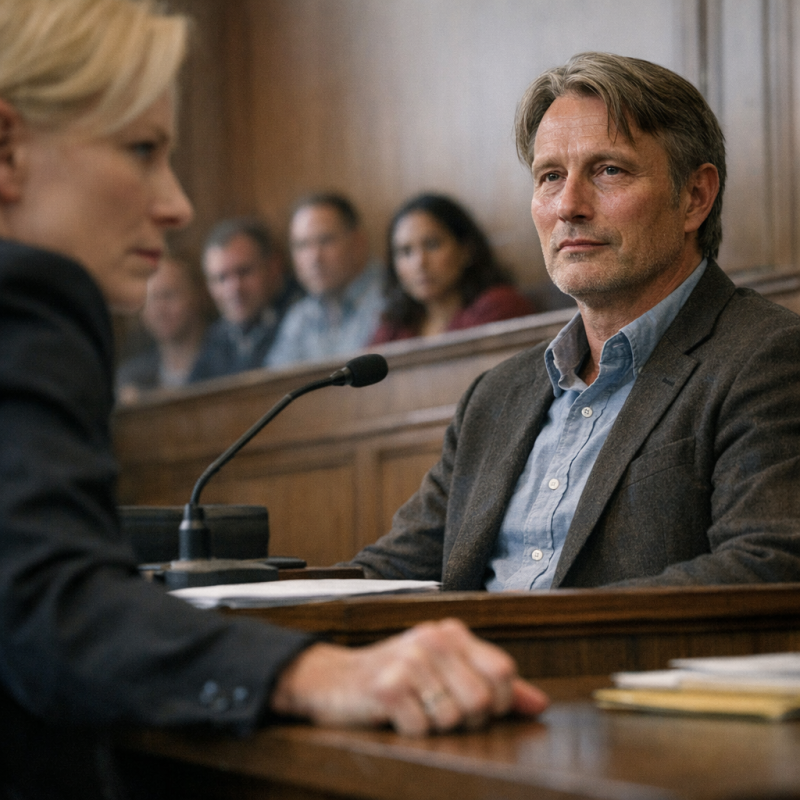 Image by FCT AI
I Took the Stand
When Barnes called me to the stand, I felt surprisingly calm. I'd been dreading this moment for weeks, but now that it was here, I just wanted to tell the truth. Barnes walked me through everything—buying the house, the first time Sharon showed up at my pool, the complaints, the official reports, the lawsuit. I explained how confused I'd been, how I'd tried to be reasonable, how nothing I did seemed to matter. He showed the jury my security footage, the photos, the timeline I'd put together. I answered every question as clearly as I could. At one point, Barnes asked me how all of this had affected my life. I paused. I told him I'd lost sleep, lost money, almost lost my home. That I'd felt trapped in a nightmare I didn't understand. I kept my voice steady, but I didn't hide how hard it had been. When I looked over at the jury, a couple of them nodded slightly. One older man looked genuinely sympathetic. I looked at the jury and told them the truth—and for the first time, I felt like someone was actually listening.
 Image by FCT AI
Sharon Testified—And Fell Apart
Sharon took the stand the next morning, and she started off strong. She told her story with tears in her eyes—how she'd been hurt, how I'd been negligent, how traumatic the whole experience had been for her. Her lawyer guided her through it gently, and she played the victim perfectly. But then Barnes stood up for cross-examination, and everything changed. He asked simple questions at first. 'Where exactly were you standing when you fell?' Sharon's answer didn't match what she'd said in her deposition. Barnes pulled out the transcript and read it aloud. She stumbled, tried to correct herself. He asked about her other lawsuits—past property disputes, other 'accidents.' She denied them, said they were different, unrelated. Barnes produced court records. One by one, he dismantled her story. Her voice got defensive, then flustered. She contradicted herself twice more in five minutes. The jury was watching her now with completely different eyes. Then Barnes asked the question that broke her. He looked directly at her and said, 'How many times have you sued a homeowner?'—and she went silent.
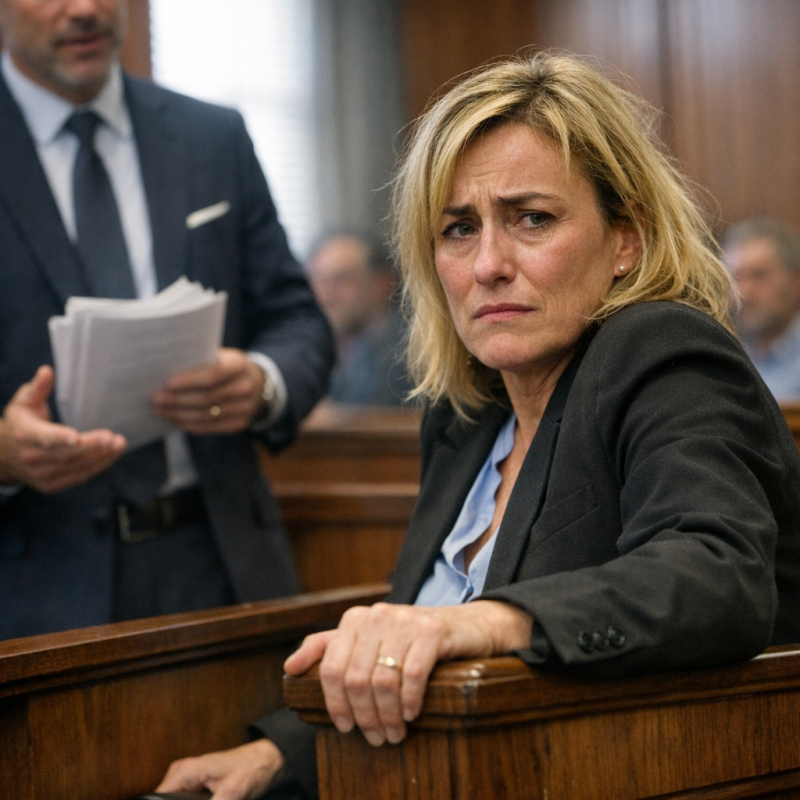 Image by FCT AI
The Jury Deliberated for Two Hours
The jury went out to deliberate just after lunch. Barnes told me it was a good sign that they'd heard enough—that they weren't asking for clarifications or additional evidence. But waiting was agony. I sat in the hallway outside the courtroom, unable to eat, unable to focus on my phone. Barnes tried to reassure me, but I could see he was tense too. Every time someone walked past, I thought they were coming to tell us the jury was back. Two hours felt like two days. I kept replaying moments from the trial in my head—Sharon's face when she couldn't answer Barnes's question, Richard's testimony, the jury's expressions. I tried to read meaning into all of it, but I had no idea which way this would go. Finally, a court officer came out and said the jury had reached a verdict. My stomach dropped. Barnes squeezed my shoulder and said, 'This is it.' We walked back into the courtroom and took our seats. When they filed back in, I couldn't tell if I was about to lose everything or finally be free.
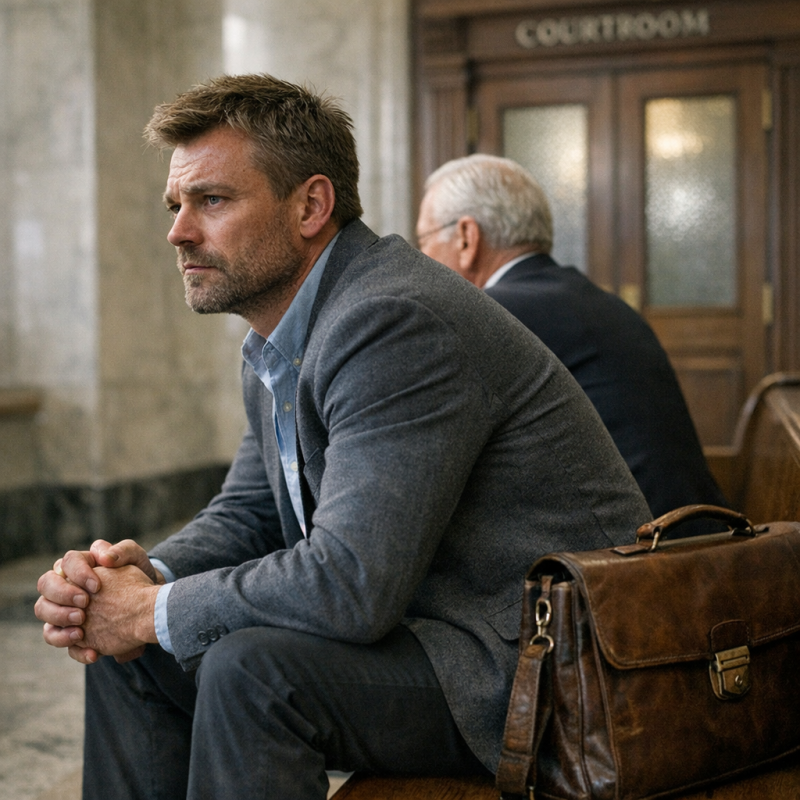 Image by FCT AI
The Verdict
Judge Martinez asked the jury foreman to stand. My heart was pounding so hard I could barely hear anything else. The foreman—a middle-aged guy in a suit—cleared his throat and read from the verdict form. 'In the matter of Sharon Walsh versus Mark Thompson, we the jury find in favor of the defendant.' I heard the words, but it took a second for them to register. In favor of the defendant. That was me. I'd won. The foreman continued, 'We find that the plaintiff's claims were without merit and that the evidence supports a finding of fraudulent intent.' Barnes let out a breath beside me. I just sat there, stunned. The judge thanked the jury and dismissed them. As they filed out, a couple of them glanced at me—one woman gave me a small, sympathetic nod. I looked over at Sharon. She was staring straight ahead, her face blank, but her hands were shaking. Her lawyer was whispering something to her, but she didn't respond. The foreman said 'not liable'—and I felt every muscle in my body finally relax.
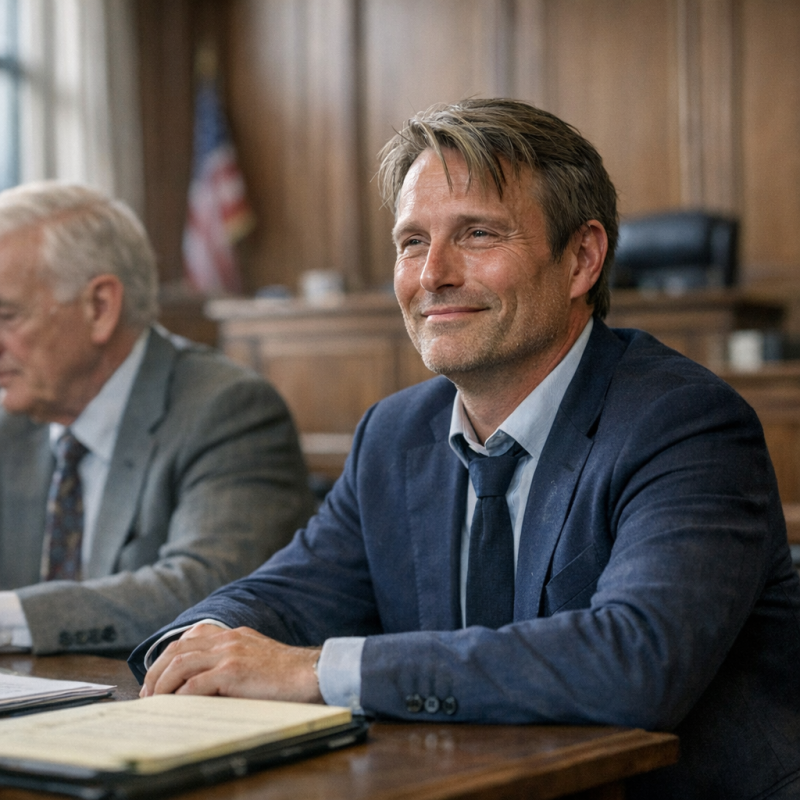 Image by FCT AI
The Judge Added Sanctions
Judge Martinez wasn't done. After the jury left, he looked at Sharon and her lawyer and said, 'I want to address the court's concerns regarding this case.' His voice was sharp, formal. He said that based on the evidence presented, he found clear indicators of manipulation of the legal system. He ordered Sharon to pay my legal fees in full—every dollar I'd spent defending myself. Her lawyer started to object, but the judge cut him off. Then he said something I didn't expect. He said he was referring the matter to the district attorney's office for investigation into possible fraud and conspiracy charges. The courtroom went completely silent. Sharon's face drained of color. Her lawyer looked stunned. The judge continued, explaining that the pattern of behavior, the contradictions in testimony, and the evidence of coordination suggested potential unlawful conduct. He said it calmly, almost matter-of-factly, but every word landed like a hammer. The judge said, 'This court does not tolerate manipulation of the legal system'—and Sharon's face went white.
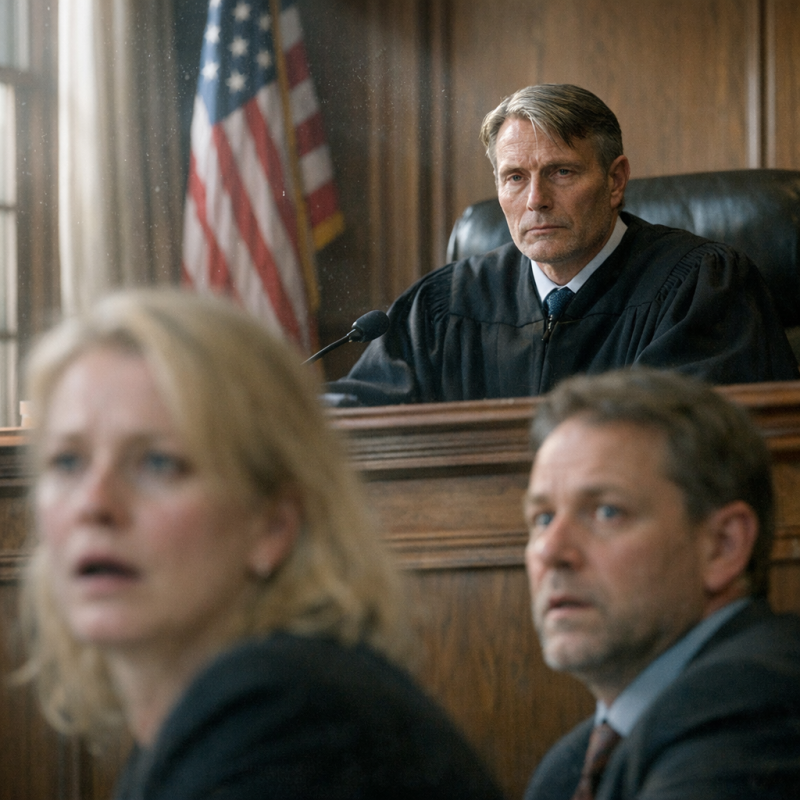 Image by FCT AI
Sharon Was Detained in the Courthouse
We were still in the courtroom when two detectives walked in. I recognized one of them—Detective Chen, who'd taken my report months ago when Sharon first sued me. He'd been respectful but skeptical back then. Now he looked all business. He approached Sharon and her lawyer, and I heard him say, 'Ms. Walsh, I need you to come with us.' Her lawyer immediately started talking, asking what this was about, saying she had a right to know the charges. Detective Chen said clearly, 'You're under arrest for fraud, conspiracy to commit fraud, and filing false reports.' Sharon stood frozen. Chen recited her rights—the whole Miranda warning, right there in front of everyone. Then he pulled out handcuffs. Sharon's lawyer protested, saying this was excessive, that she'd cooperate voluntarily. Chen just shook his head and cuffed her wrists behind her back. She didn't resist, didn't say anything. She just looked completely defeated. They led her toward the courtroom doors, and I watched, still barely able to process what was happening. They handcuffed her right there in the courtroom—and I realized her scam had finally caught up with her.
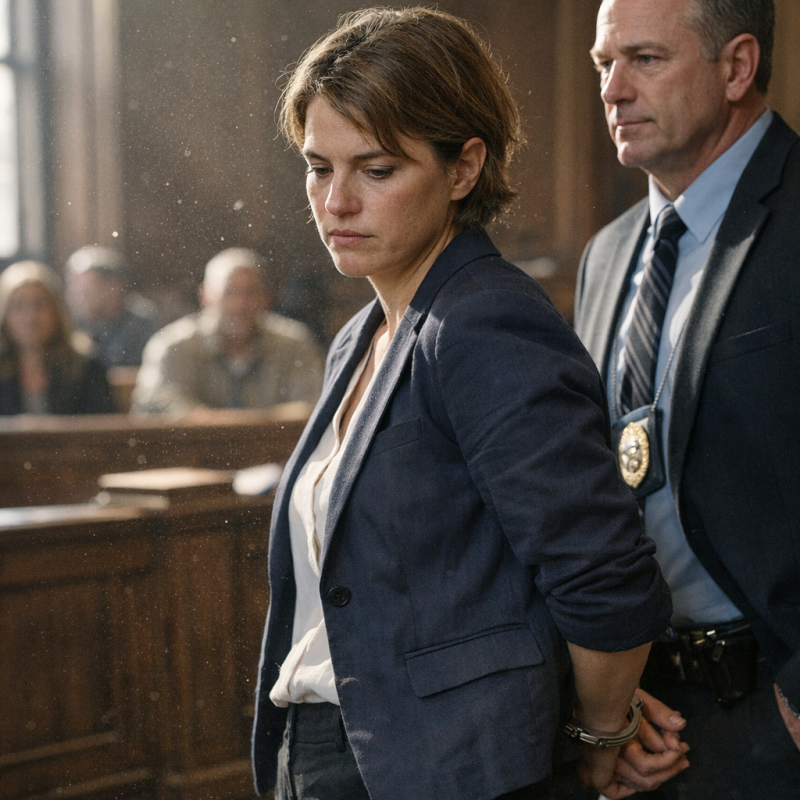 Image by FCT AI
Linda and Debbie Were Detained Too
Detective Chen came back an hour later and asked if he could speak with me and Barnes. We met him in one of the courthouse conference rooms. He explained that once they'd started digging into Sharon's activities, the whole thing unraveled fast. He said, 'We detained two more people this afternoon—Linda Walsh and Debbie Morrison.' I blinked. Linda was Sharon's sister. Debbie was the woman who'd testified as Sharon 's witness. Chen said they'd found evidence that all three of them had been working together for years. Linda would scout properties, identify targets with attractive premises and homeowner's insurance. Sharon would manufacture the 'accident.' Debbie would act as a witness or provide supporting testimony. They'd done it in three different counties, targeting at least eight homeowners. Some had settled quickly out of fear. Others, like me and Richard, had fought back. Chen said the DA was charging all three of them as co-conspirators. I just sat there, stunned. Detective Chen said, 'They've been running this scam together for five years'—and I couldn't believe how deep it went.
 Image by FCT AI
The Media Picked Up the Story
The story hit the local news first, then went regional. By the third day, I was seeing headlines like 'Multi-State Fraud Ring Exposed' and 'Homeowner Fights Back Against Insurance Scammers.' A reporter from the Tribune called me, then another from a TV station. They all wanted to know how I'd stayed strong, how I'd known to keep fighting. I didn't have a great answer. I just told them I couldn't let someone lie about me and get away with it. What shocked me was how many other people started reaching out. Former victims of Sharon 's crew. People who'd settled because they couldn't afford the legal fight. One guy messaged me on Facebook saying he'd paid Sharon fifteen thousand dollars three years ago because his lawyer said it was cheaper than going to trial. Another woman called crying, thanking me for exposing them. It was overwhelming, honestly. I felt proud, but also kind of gutted knowing how many lives they'd damaged. My phone wouldn't stop ringing—reporters, former victims, even people thanking me for exposing her.
 Image by FCT AI
Sharon Pleaded Guilty
Sharon's lawyer reached out to the DA two weeks after her arrest. Facing a mountain of evidence—surveillance footage, financial records, testimony from Richard and the other victims—she decided to plead guilty. Barnes called me the morning of her sentencing hearing. He said the judge was taking victim impact statements, and asked if I wanted to attend. I thought about it, but honestly, I didn't need to see her face again. I'd said what I needed to say in court already. Barnes went without me and called afterward. Sharon got three years in state prison for fraud, conspiracy, and filing false reports. Her sister Linda got two years. Debbie got eighteen months. The sentences felt almost anticlimactic after everything we'd been through. Three years sounded like a lot, but also not enough for five years of ruining people's lives. Still, it was over. She'd been held accountable. I sat with that for a while. Three years in prison—and I hoped it was enough time for her to understand the damage she'd caused.
 Image by FCT AI
Rebuilding My Life
Once the media attention died down, I started trying to put my life back together. I made a point of talking to my neighbors again—not just polite waves, but actual conversations. Most of them had seen the news coverage and were incredibly supportive. A few admitted they'd wondered about me during the whole mess, which I understood. It's hard not to question things when the authorities are involved. I didn't hold it against them. The hardest conversation was with Tom. He showed up one evening with a six-pack and knocked on my door. We sat on the back patio, and he didn't waste time. 'I'm sorry I doubted you,' he said, looking uncomfortable but sincere. 'I should've known you better than that.' I told him I got it. The whole situation had been designed to make me look guilty. We talked for two hours that night, just like old times. It felt good. Healing, even. Tom came over with a six-pack and said, 'I'm sorry I doubted you'—and I realized forgiveness was part of moving forward.
 Image by FCT AI
The Pool Is Mine Again
It was a quiet evening in late July when I finally sat by the pool alone, no lawyers, no stress, no cameras. Just me and the sound of the water filter humming. The surface was perfectly still, reflecting the sky as the sun started to set. I thought about everything that had happened—the arrest, the trial, the months of fear and uncertainty. I thought about Sharon and her whole twisted operation, about how close I'd come to losing everything. But I also thought about the people who'd stood by me. Barnes, who'd believed in the truth. Detective Chen, who'd dug deeper. Even Tom, who'd come back. The pool looked exactly the same as it always had, but I saw it differently now. It wasn't just a pool anymore. It was a reminder that some things are worth fighting for, even when the whole world seems stacked against you. I looked at the water and realized it wasn't just about the pool—it was about refusing to let someone rewrite my reality.
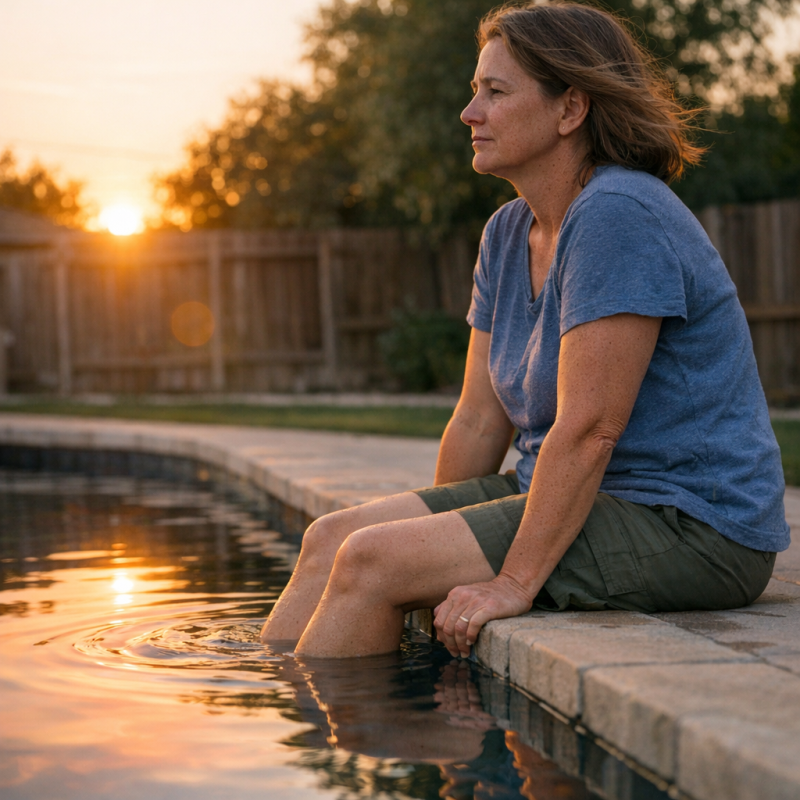 Image by FCT AI