
The Glass of Apple Juice
I was eight years old the first time I saw Melissa's face change. One second she was smiling at me across the kitchen counter, telling me how grown-up I looked. The next, her eyes locked onto the glass of apple juice I'd just set down. 'What is that?' she asked, her voice suddenly flat. I followed her gaze to the counter, confused. 'My juice?' I said. She walked over slowly, and I noticed my mom had left the room. Melissa pointed at the fingerprints on the glass, then at the wet ring it had left on the granite. 'Do you see this mess?' Her voice was quiet but sharp, like she was holding something back. I mumbled an apology and reached for a paper towel, my hands shaking. She didn't move, just watched me wipe it up, her jaw tight. When my mom came back, Melissa's smile returned instantly, like flipping a switch. Later, when I told Mom what happened, she sighed and said not to take it personally, that 'that's just how Melissa is sometimes'—but even then, something felt wrong about how quickly her face had changed.
 Image by FCT AI
The Pale Blue Dress
I started asking questions about Melissa after that day, trying to understand why she was always around. Mom showed me old photo albums with pictures of her and Melissa from high school, their arms draped around each other, matching smiles. They'd been inseparable since sophomore year, Mom said, her voice warm with nostalgia. There was even a photo from my parents' wedding where Melissa stood beside my mom in a pale blue dress, beaming at the camera. 'She's been there for everything,' Mom told me, flipping through the pages. I learned that when Dad left—I was six then, barely old enough to understand what divorce meant—Melissa had been the one who helped Mom through it. She brought groceries, watched me when Mom worked late, listened to her cry. Mom called her a lifesaver. After Dad left, Melissa's visits became more frequent. She had opinions about everything: what I should eat, how I should behave, whether my homework was good enough. After Dad left when I was six, Melissa became even more involved in our lives—and I had no idea that was the beginning of my nightmare.
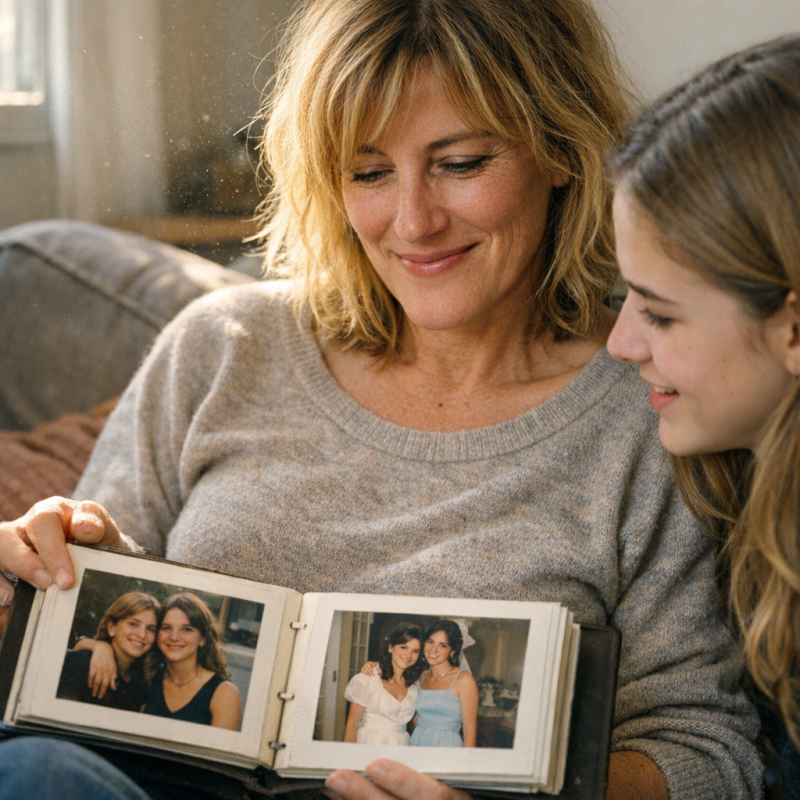 Image by FCT AI
Two Different Faces
It took me a while to notice the pattern, but once I did, I couldn't unsee it. Melissa had two completely different faces, and she switched between them depending on who was watching. When my mom was in the room, Melissa would ruffle my hair and call me 'sweetheart,' asking about school with this warm, interested voice. But the second Mom left—to answer the phone, to check the laundry, anything—Melissa's expression would shift. Her shoulders would stiffen. Her smile would disappear. She'd look at me like I was something unpleasant she had to tolerate. I started watching her more carefully, trying to understand what I was doing wrong. That's when I noticed how differently she treated Tyler, her son, who was two years younger than me. When he spilled things or made messes, she'd laugh and call him her 'little tornado.' When I did the same, I got that cold stare. She'd stroke my hair and call me 'sweetheart' in front of my mom, but the second Mom left the room, her eyes would go cold.
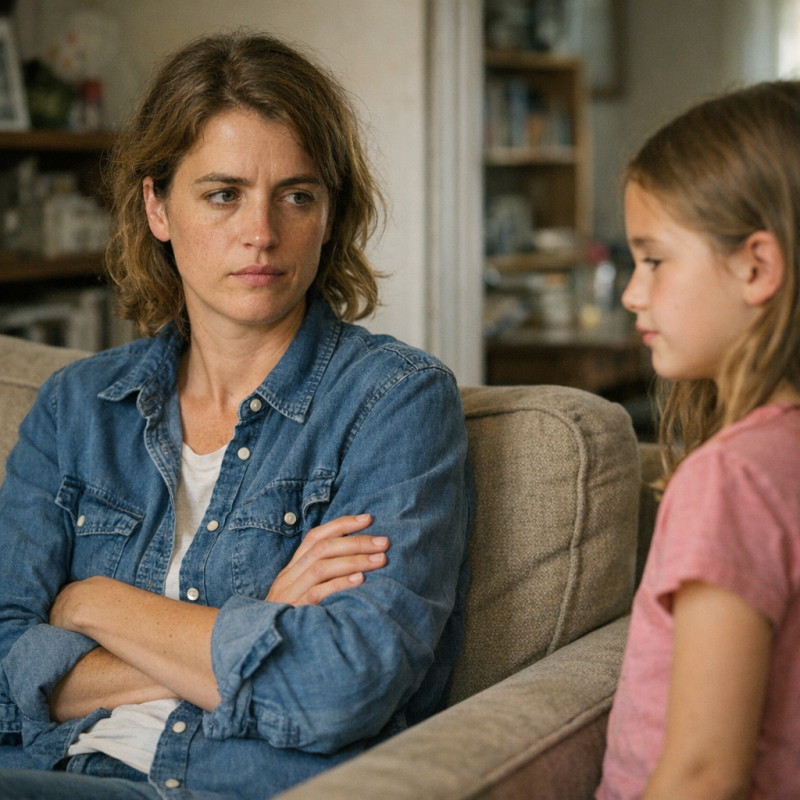 Image by FCT AI
My Little Tornado
The double standard became impossible to ignore. I remember one afternoon at Melissa's house when Tyler knocked over a ceramic lamp while running through the living room. It shattered everywhere, pieces scattering across the hardwood floor. Melissa just shook her head and smiled, saying 'My little tornado strikes again!' in this affectionate, amused voice. She helped him clean it up while he giggled. That same day, maybe an hour later, I accidentally knocked over my juice glass while reaching for a napkin. It wasn't even glass—just plastic—and barely any spilled. But Melissa's face transformed. She didn't yell, which almost made it worse. She just stared at me with this exhausted disappointment and said, 'Why do you always make everything harder?' Her voice was quiet, controlled. Tyler was right there, watching. He didn't defend me or seem confused by her reaction. I grabbed paper towels and cleaned it up, my face burning. When Tyler broke a lamp and I accidentally spilled juice on the same day, she called him adorable and told me I made everything harder.
 Image by FCT AI
The Shampoo Incident
I was ten when Melissa first left a mark. I'd taken a bath at her house and forgotten to rinse the shampoo residue from the tub. I didn't even realize I'd done anything wrong until I heard her footsteps in the hallway. She appeared in the bathroom doorway, staring at the bathtub, then at me. 'Come here,' she said quietly. I walked over, my heart already pounding. She grabbed my wrist—not dramatically, but hard enough that I gasped. Her fingers dug into my skin, and she held it there while she talked. 'Do you see that mess? Do you think someone else is going to clean up after you?' I nodded frantically, trying to pull away, but her grip tightened. 'You make everything harder,' she whispered, leaning close enough that I could smell her perfume. When she finally let go, I saw the white fingerprints on my wrist, already turning purple. She leaned close and whispered, 'You make everything harder,' and I realized I was terrified to tell my mom what was happening.
The Sick Days
I started faking sick to avoid going to Melissa's house. I'd complain of stomachaches on the mornings Mom had to work late, pressing my hand against my belly and making my voice weak. Sometimes it worked. Sometimes Mom would feel my forehead, frown, and let me stay home. But she started noticing the pattern. 'You're always sick on Thursdays,' she said once, suspicious. I didn't know what to say that wouldn't sound insane. How could I explain that Melissa scared me without proof? The bruise on my wrist had faded within days. I had nothing concrete, just this overwhelming dread. So I kept faking symptoms, and Mom kept getting more frustrated. I overheard her on the phone with Melissa one evening, and my stomach dropped when I heard Melissa's voice through the speaker: 'She does seem fragile lately, doesn't she? Maybe she's becoming a bit dramatic.' Mom sighed in agreement. A few days later, Mom used those exact same words to describe me to my teacher. Mom started worrying I was becoming 'fragile' and 'dramatic'—exactly the words Melissa used to describe me.
 Image by FCT AI
She's So Sensitive
Melissa got smarter about it. Instead of direct criticism, she started packaging her insults as concern. 'I'm just worried about her attitude,' she'd tell my mom while I was in earshot. 'She seems so negative lately. I just want her to be happy.' She'd say it with this sad, caring expression, and other adults ate it up. My teachers started asking if everything was okay at home. My mom's friends would give me sympathetic looks at gatherings. I felt like I was being rewritten, turned into this troubled, difficult child in everyone's eyes. When I pushed back—when I tried to defend myself or explain that Melissa wasn't as nice as everyone thought—it only made me look worse. 'Why are you being so mean about Melissa?' Mom would ask, genuinely hurt. 'She's been nothing but kind to you.' I'd try to explain, my voice getting louder and more desperate, which only proved Melissa's point about my 'attitude problem.' When I tried to defend myself, Mom sighed and said, 'Maybe Melissa has a point about your attitude.'
 Image by FCT AI
Almost Like Family
By the time I hit middle school, Melissa had completely embedded herself into our lives. She had a key to our house. She came to every birthday, every holiday, every casual dinner. Mom consulted her about everything—what classes I should take, whether I was old enough for a phone, if my friends were a good influence. Melissa always had opinions, delivered with that concerned, caring tone that made Mom trust her completely. I'd come home from school and find Melissa sitting at our kitchen table, drinking coffee with my mom like she lived there. Sometimes she'd already be in my room, 'tidying up,' she'd say, though I always felt like she'd been going through my things. Tyler came along sometimes, and he'd sprawl across our couch like he owned it while I felt like a guest in my own home. One night, Mom joked that Melissa knew me better than she did, and I felt my skin crawl.
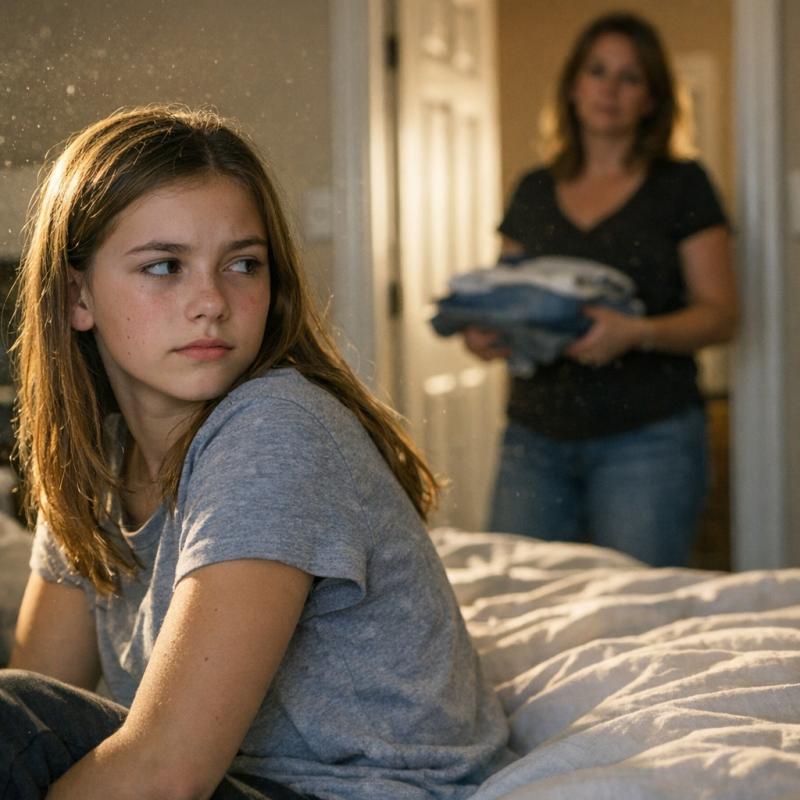 Image by FCT AI
The Late Night Argument
I was fourteen when I heard them arguing late one night. I'd gotten up to use the bathroom and heard voices from downstairs—sharp, tense voices that made me freeze at the top of the stairs. Melissa's voice cut through the quiet house: 'After everything I've done for you, you owe me.' The venom in those words made my stomach twist. I crept closer to the railing, holding my breath. I couldn't see them from where I stood, but I could hear everything. Mom's voice came next, and she sounded so tired, so defeated. 'I never asked you to sacrifice your life for us,' she said quietly. Sacrifice? What sacrifice? My mind raced, trying to piece together what they were talking about. Melissa had always just been Mom's friend, hadn't she? What could she have possibly sacrificed? The conversation dropped to murmurs after that, and I couldn't make out the words anymore. I stood there in the dark hallway, my heart pounding, wondering what sacrifice she meant.
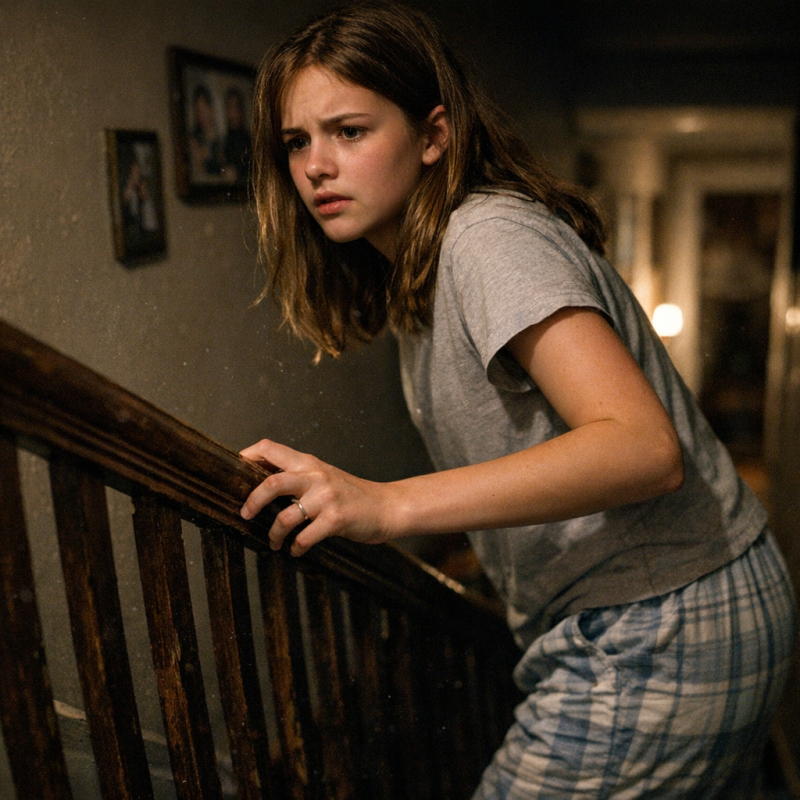 Image by FCT AI

History's most fascinating stories and darkest secrets, delivered to your inbox daily.
You're Manipulating Her
After that argument, something shifted. Melissa started looking at me differently—her eyes harder, her mouth tighter. She started calling me selfish, which came out of nowhere. 'You're so selfish,' she'd say when I asked Mom if we could do something together, just the two of us. 'You're manipulating her,' she accused one afternoon when Mom agreed to take me shopping instead of going to lunch with Melissa. I stared at her, completely bewildered. Manipulating her? How was asking my own mother to spend time with me manipulative? 'I see what you're doing,' Melissa continued, her voice low and intense. 'You think you can turn her against me.' I genuinely had no idea what she was talking about. I wasn't trying to turn anyone against anyone. I just wanted my mom. But the way Melissa looked at me when she said those things—her eyes had this strange, glassy quality, almost feverish. I had no idea what I was supposedly manipulating her into, but Melissa's eyes looked strange when she said it—almost like she believed it.
 Image by FCT AI
The Picture Frame
Tyler was over one weekend, running through the house like he always did, touching everything, knocking things over. I heard the crash from my room—glass shattering in the living room. When I came downstairs, one of Mom's picture frames was in pieces on the floor. Tyler stood there, wide-eyed, and the second he saw me, he pointed. 'She pushed me into it,' he told Melissa. My jaw dropped. I hadn't even been in the room. 'I didn't—' I started, but Melissa cut me off. 'Apologize to him,' she demanded. 'But I didn't do anything!' I protested. Mom was at work. It was just us. Melissa's face went rigid. 'Apologize. Now.' Her voice left no room for argument. I looked at Tyler, who was watching me with this little smirk playing at the corners of his mouth. He knew. He knew exactly what he was doing. I forced the words out: 'I'm sorry, Tyler.' He just nodded, satisfied. I hated Tyler for that smirk, but I hated myself more for not being able to stand up to either of them.
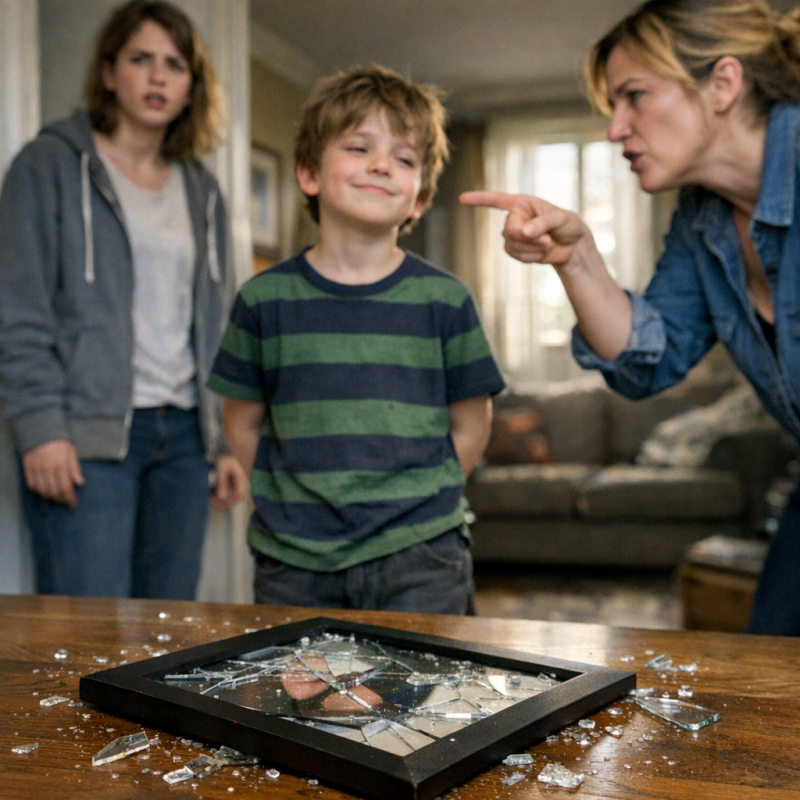 Image by FCT AI
The Car Accident
When I was sixteen, Mom got into a serious car accident. The call came during school, and suddenly I was being pulled out of class, sitting in a hospital waiting room, staring at sterile white walls. She'd been T-boned at an intersection—broken ribs, a concussion, her left leg shattered. The doctors said she'd be hospitalized for at least two weeks, maybe more. I felt numb, terrified, guilty for every time I'd ever been annoyed with her. And then Melissa arrived. She swept into the waiting room, took charge of everything, spoke to the doctors, made decisions. She put her hand on my shoulder, and I felt myself tense. 'You'll stay with me while your mother recovers,' she announced. Not asked. Announced. 'I can stay with—' I started to suggest my grandmother, a friend, anyone else. 'Nonsense,' Melissa interrupted smoothly. 'Your mother would want you with someone she trusts.' Mom, sedated and broken in a hospital bed, couldn't weigh in. Melissa insisted I stay at her house during Mom's recovery, and I felt my stomach drop with pure dread.
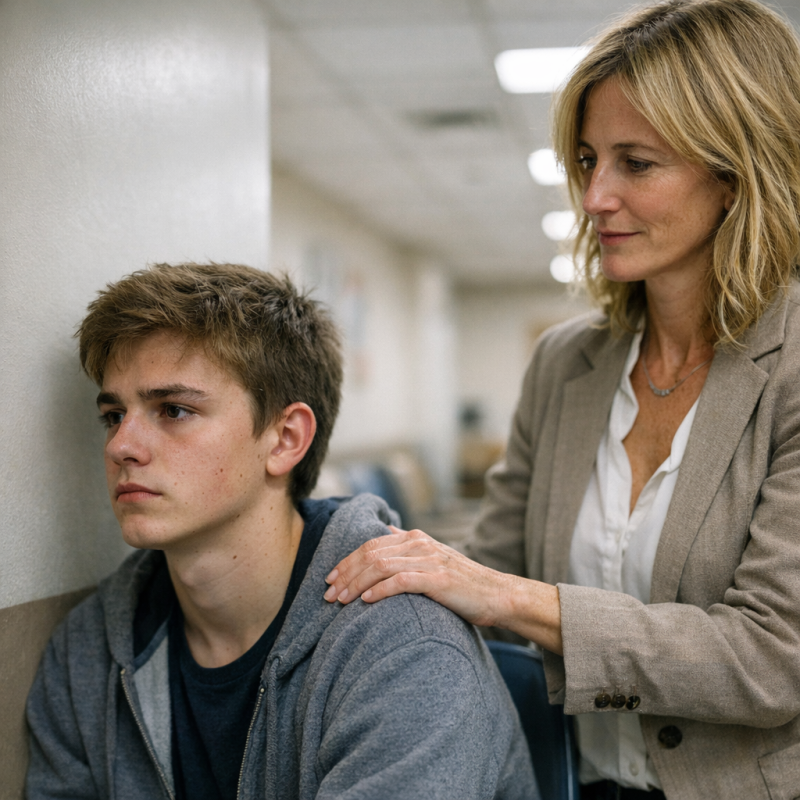 Image by FCT AI
Without the Mask
With my mom in the hospital, Melissa stopped pretending entirely. The mask—the one she wore around my mother, all sweetness and concern—just vanished. I saw the real her, and it was so much worse than I'd imagined. The first morning at her house, I woke up to screaming. Melissa was in the kitchen, her face red, gesturing at the sink. 'Are you kidding me with this?' she shrieked. I stared at the dishes—they weren't even mine. Tyler had made himself a snack the night before. 'I didn't—' I started. 'Don't you dare lie to me!' She got right in my face, so close I could smell her coffee breath. 'You're a guest in my home and you can't even clean up after yourself?' Tyler appeared in the doorway, still in his pajamas, and said nothing. He just watched. For the next hour, she berated me about respect, about gratitude, about what an ungrateful burden I was. On the first morning, she screamed at me about dishes that weren't even mine, and I realized these two weeks would be the worst of my life.
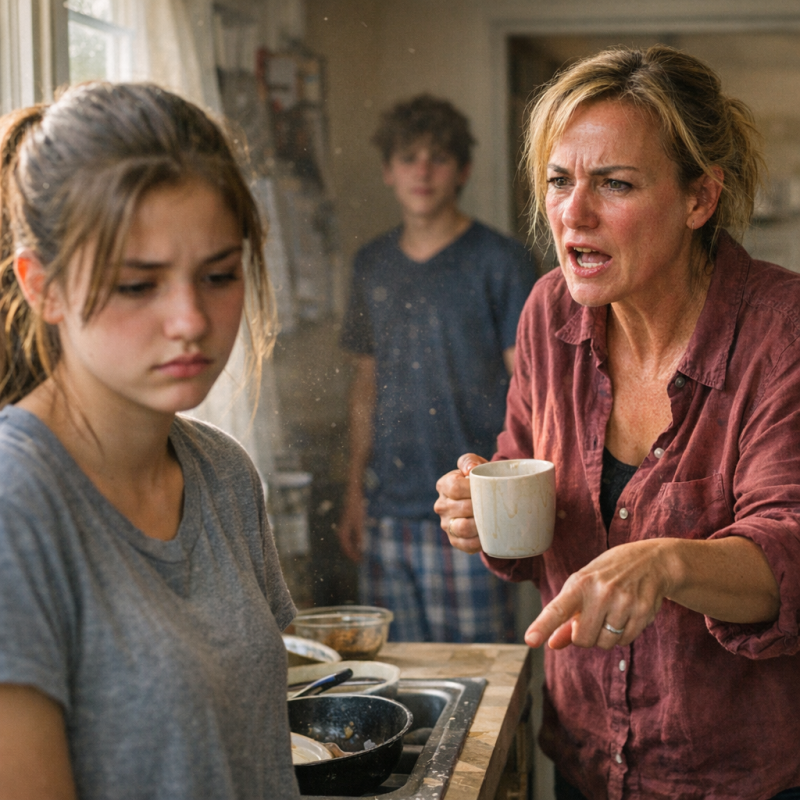 Image by FCT AI
The Sketchbook
I'd been working on a sketchbook for months—drawings of places I wanted to visit, portraits of people I'd seen, designs I'd imagined. It was the one thing that felt like mine, that gave me peace. I kept it in my backpack, which I'd left in Melissa's guest room. When I came home from visiting Mom at the hospital, the sketchbook was gone. I tore through my bag, panic rising. 'Where's my sketchbook?' I asked Melissa. She barely looked up from her magazine. 'That thing? I threw it away. Drawing when you should be studying—it's lazy.' My blood went cold. 'You threw it away?' 'It's garbage day tomorrow,' she said casually. 'Already in the bin outside.' I ran out to the trash cans, dug through rotting food and dirty tissues until I found it. The pages were torn, coffee-stained, deliberately ruined. She hadn't just thrown it away. She'd destroyed it first. I found it in the trash that night, pages torn and coffee-stained, and something inside me broke.
 Image by FCT AI
Your Mother Ruined My Life
Late one night, I couldn't sleep. I went downstairs to get water, and Melissa was sitting at the kitchen table in the dark, just sitting there. She turned when she heard me, and her expression was strange—raw, almost vulnerable. 'You know your mother ruined my life, right?' she said quietly. I froze, the glass in my hand. 'What?' I whispered. 'Everything was supposed to be different,' she continued, her voice distant. 'Everything. But she—' She stopped abruptly, seemed to catch herself. My heart was racing. 'What do you mean? How did she—' But Melissa's expression changed completely. She smiled, bright and sudden, like a switch had flipped. 'Go to bed,' she said cheerfully. 'You have school tomorrow.' I stood there, confused, trying to process what had just happened. The next morning, she acted completely normal, chatting about breakfast like nothing had happened. Before I could respond, she smiled abruptly and told me to go to bed—and the next morning, she acted like the conversation never happened.
 Image by FCT AI
Everything Was Supposed to Be Different
I couldn't stop thinking about what Melissa had said—that everything was supposed to be different. The words looped in my mind during class, during meals, during visits to see Mom in the hospital. What was supposed to be different? How had my mother ruined anything? I'd never heard that story, never heard anyone suggest Mom had done something wrong to Melissa. Everyone always talked about how generous Melissa was, how good she was to us. One afternoon, Tyler was sprawled on the couch, playing on his phone. I sat down carefully, trying to seem casual. 'Is your mom okay?' I asked. He glanced at me, then back at his screen. 'What do you mean?' 'She just seems... I don't know. Stressed?' He shrugged, his thumbs moving across the screen. 'She's always weird about your mom,' he said flatly, like it was the most obvious thing in the world. My stomach tightened. Always weird. Not lately. Always. I tried to ask Tyler if his mom was okay, but he just shrugged and said, 'She's always weird about your mom.'
 Image by FCT AI
Walking on Broken Glass
I don't know how else to describe those final days at Melissa's house except to say that I stopped being a person and became something else—something small and still, trying not to be noticed. Every morning felt like waking up in enemy territory. I'd creep downstairs, check where she was, calculate my movements around hers. Some days she'd ignore me completely, and I'd feel this pathetic rush of relief. Other days, she'd find reasons to call me into whatever room she was in, just to point out something I'd done wrong. 'You left a glass in the sink.' 'You're breathing too loud.' 'Why are you looking at me like that?' Tyler started avoiding me too, like whatever was wrong with me might be contagious. I ate my meals as quickly as possible and spent hours in that guest room, lying on the bed, staring at the ceiling. I counted the days until Mom's release the way prisoners mark time. Sixteen days. Thirteen days. Nine. I started counting down the days until Mom would be released, but I didn't know if I could survive that long.
 Image by FCT AI
Mom Comes Home
When Mom finally walked through our front door, I almost collapsed with relief. She looked thinner, tired, but she was home. She hugged me for a long time, and I remember thinking, 'It's over. I'm safe now.' We settled onto the couch with tea, and she asked how I'd been. This was my moment. I'd practiced what I'd say. 'Mom, I need to tell you about staying at Melissa's,' I started. She smiled, already interrupting. 'I know, honey. I'm so grateful to her. You have no idea how worried I was about you.' 'No, Mom, listen—' 'She texted me every day with updates. She really went out of her way.' My throat felt tight. 'She wasn't... she wasn't nice to me.' Mom's expression shifted—not to concern, but to confusion. 'What do you mean?' I tried to explain, but the words came out jumbled. The insults, the coldness, the way Melissa looked at me. As I spoke, Mom's face changed. Not to horror. To doubt. But when I tried to tell her what happened at Melissa's house, she looked at me like I was making it up.
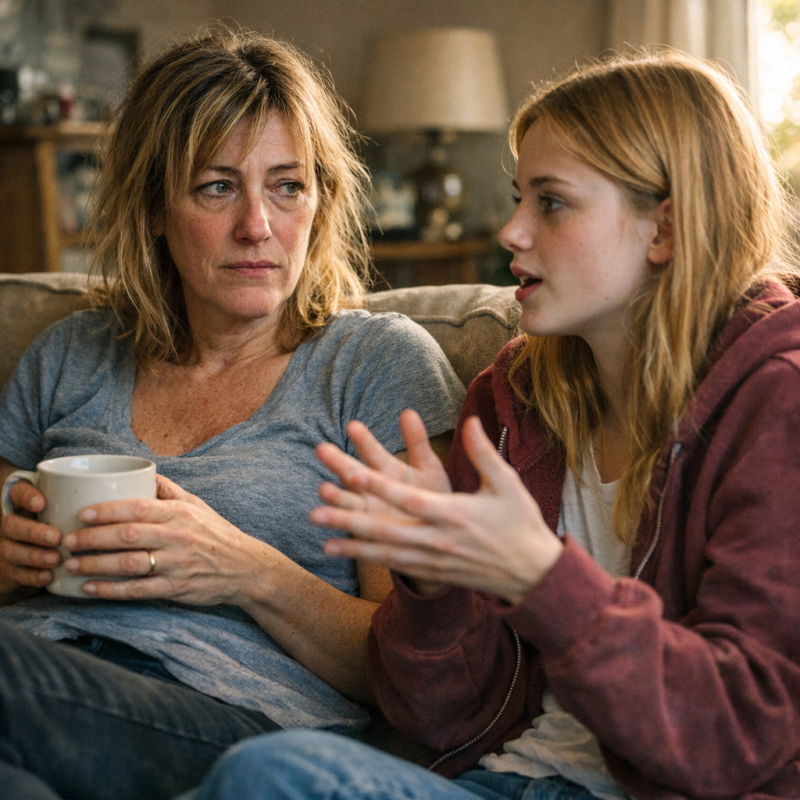 Image by FCT AI
The Biggest Fight
The fight started the next day when Mom mentioned Melissa might take me shopping that weekend. 'I'm not going,' I said. 'What? Why not?' 'I told you. I don't want to be around her.' Mom set down her coffee mug hard. 'This is ridiculous. What exactly did she do?' 'She was cruel to me!' 'Cruel how? Give me an example.' I tried. I really did. But when I described the moments—the comments, the looks, the tone—they sounded so small when said out loud. Mom's face hardened. 'So she what, didn't smile enough at you?' 'It's not—you weren't there!' 'She opened her home to you when I was in the hospital!' Mom's voice was rising now. 'Do you have any idea what she sacrificed? The least you can do is show some gratitude!' 'She hates me!' I screamed it, shocked by the sound of my own voice. 'She hates me and I don't know why!' Mom stared at me like I'd lost my mind. Mom accused me of being ungrateful after 'everything Melissa had done for us,' and I screamed that Melissa hated me—but I couldn't explain why.
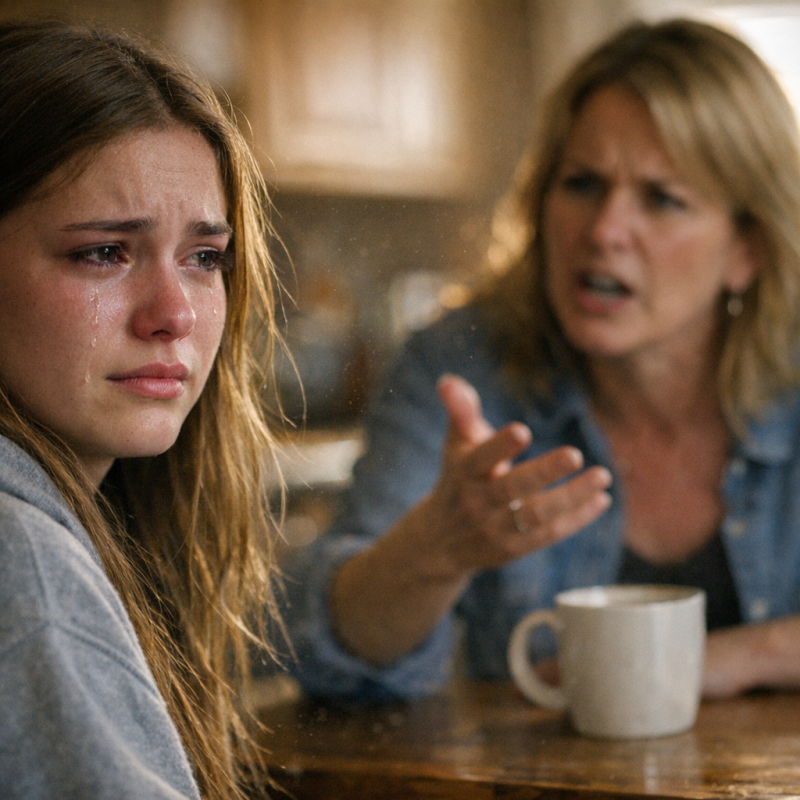 Image by FCT AI
Why Would She Hate You?
Mom's voice dropped to something quiet and confused. 'Why would Melissa hate you?' The question hung in the air between us. I opened my mouth, but nothing came out. Why would she? What had I done? I'd been a kid when we met. I'd never done anything to her. I'd always been polite, grateful even. 'I don't know,' I whispered. 'Exactly,' Mom said, and I could hear the frustration bleeding into pity. 'Honey, I think you're stressed. The hospital, the changes, maybe—' 'I'm not making it up.' 'I'm not saying you're lying. I'm saying maybe you misinterpreted—' 'I didn't misinterpret anything!' But even as I said it, I felt something shift inside me. That terrible question. Why would she hate you? I had no answer. And without an answer, everything I'd experienced started to feel less solid. Maybe I had been too sensitive. Maybe I'd imagined the malice in her voice. Maybe I was the problem. I had no answer that made sense, and in that moment, I started wondering if I was the problem after all.
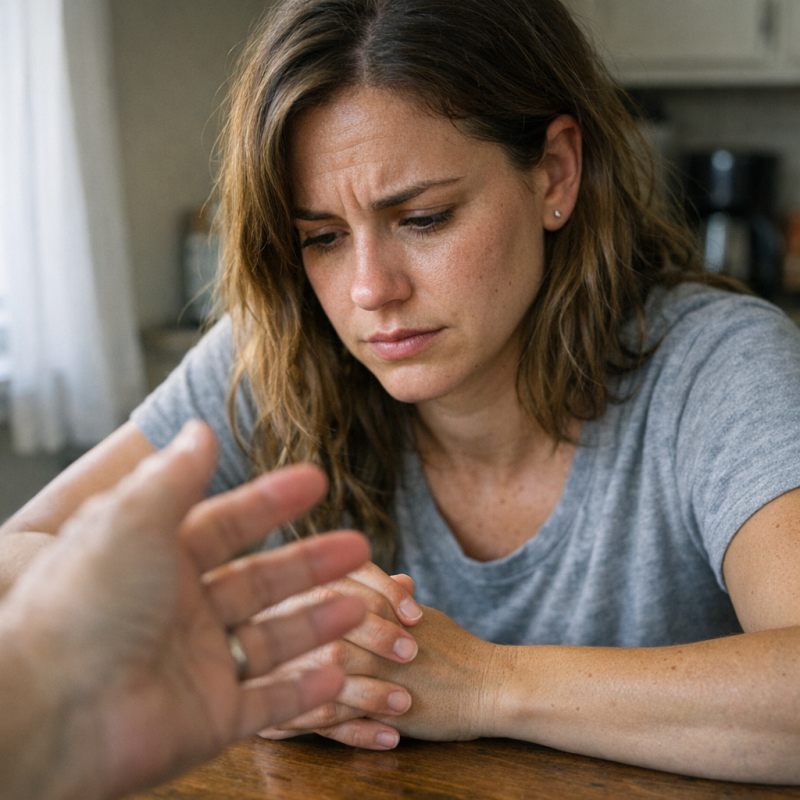 Image by FCT AI
The Uneasy Peace
After that fight, Mom and I just stopped talking about it. We'd both said too much and resolved nothing, so we did what our family had always done—we pretended the conversation never happened. She didn't invite Melissa over as often, which I think was her compromise. I didn't bring it up again, which was mine. But the damage was done. Something had changed between us. When we talked now, we stuck to safe topics: school, errands, what to have for dinner. Anything deeper felt dangerous. I'd catch her looking at me sometimes with this worried expression, like she was trying to figure out what was wrong with me. And whenever Melissa's name came up—'Oh, Melissa invited us to brunch,' or 'Melissa asked about you'—the air would get thick and strange. Mom would watch my face, and I'd try to keep it neutral. But my chest would tighten, and I'd have to focus on breathing normally. Every time Melissa's name came up, I felt my chest tighten with a fear I couldn't name.
 Image by FCT AI
High School Survival
High school became my escape plan. I joined every club that would have me—debate team, yearbook, volunteer tutoring. I stayed after school for study groups I didn't need. I took a part-time job at a coffee shop on weekends. Anything to be somewhere else. Mom thought I was just being ambitious, and I let her believe it. But really, I was running. The less time I spent at home, the less likely I was to see Melissa at family dinners or holiday parties. Except I couldn't avoid her completely. She still showed up for birthdays, for Christmas, for Mom's book club meetings that sometimes happened at our house. And every single time, my body betrayed me. My hands would start shaking when I heard her voice in the hallway. My stomach would drop when her car pulled into the driveway. I'd have to excuse myself to the bathroom and grip the sink, trying to calm down. Tyler was there sometimes too, taller now, looking bored on his phone. He never mentioned that conversation we'd had years ago. But Melissa still showed up at family events, and every time I saw her, my hands would start shaking.
 Image by FCT AI
College Applications
When college application season rolled around, I had one criterion that mattered more than academic programs or campus culture: distance. I looked at schools in other states—Massachusetts, Oregon, North Carolina. I didn't even consider the local university where Mom had hoped I'd go. Three hours minimum. That was my rule. Somewhere far enough that I couldn't be expected to come home every weekend. Mom noticed. 'These are all so far away,' she said, looking through my list. 'Yeah, I want to experience something new,' I said, which wasn't exactly a lie. 'But I'll miss you.' The guilt hit me like a punch. She'd been sick. We'd been through so much. And here I was, planning my escape like our home was a prison. 'I'll visit,' I promised. She looked hurt, and I hated myself for it. But she didn't understand. She couldn't understand. Distance wasn't about leaving her. Mom seemed hurt by my choices, but she didn't understand that distance was the only thing that would let me breathe again.
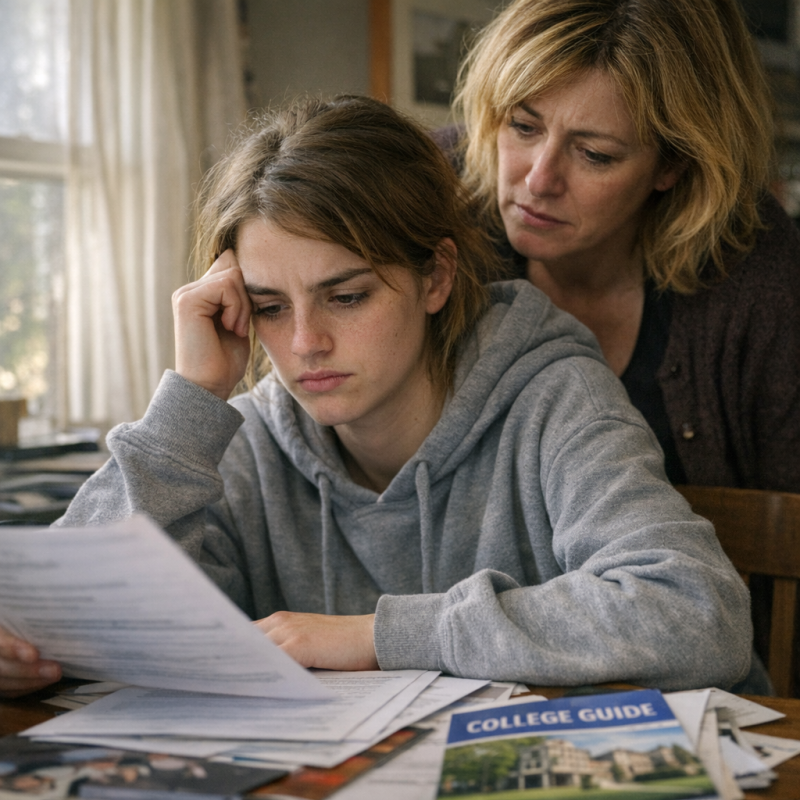 Image by FCT AI
The Graduation Party
Mom insisted on throwing me a graduation party, and of course Melissa was invited. Of course she came. I was standing near the snack table when I heard her voice rise above the chatter. 'Can I say a few words?' Everyone quieted down. Melissa stood in the center of our living room, holding a glass of wine, smiling at me. 'I just want to say how proud I am. I've watched this young woman grow up. I've been there through so many milestones—' Her voice caught, perfectly timed. '—and it's been such an honor to be part of her life.' People were wiping their eyes. Mom was beaming. Melissa walked over to me, arms outstretched. The hug happened in slow motion. Her arms wrapped around me, and I stood there, frozen. My arms hung at my sides. Someone was clapping, then everyone was. Melissa held me tight, her chin on my shoulder, and I could feel her smiling. I wanted to scream. I wanted to shove her away. But I just stood there, trapped. She hugged me in front of everyone, and I stood frozen while people applauded, feeling like I was trapped in a nightmare no one else could see.
 Image by FCT AI
Moving Day
The day I moved to college was the first time I'd felt like I could breathe in years. I remember standing in my dorm room, boxes everywhere, and just feeling this incredible lightness. Three hours away. Three hours between me and her. Mom helped me unpack, chattering excitedly about meal plans and laundry facilities. I kept waiting for the other shoe to drop. When we were done, we walked back to her car together. She started crying before we even reached it. 'I'm so proud of you,' she said, pulling me into a tight hug. I held her, feeling guilty for how relieved I was to see her go. Then I saw Melissa standing by the passenger door. Of course she'd come. Of course. Mom pulled away, wiping her eyes. Melissa walked toward me with her arms out. 'We had to both see you off,' she said. Her smile was warm, perfect. But her eyes—God, her eyes were completely cold. She hugged me, and I felt it again. That chill. That threat. She whispered so quietly only I could hear: 'Don't be a stranger.' As Mom hugged me goodbye with tears in her eyes, Melissa stood behind her with a smile that didn't reach her eyes, and I felt a chill run down my spine.
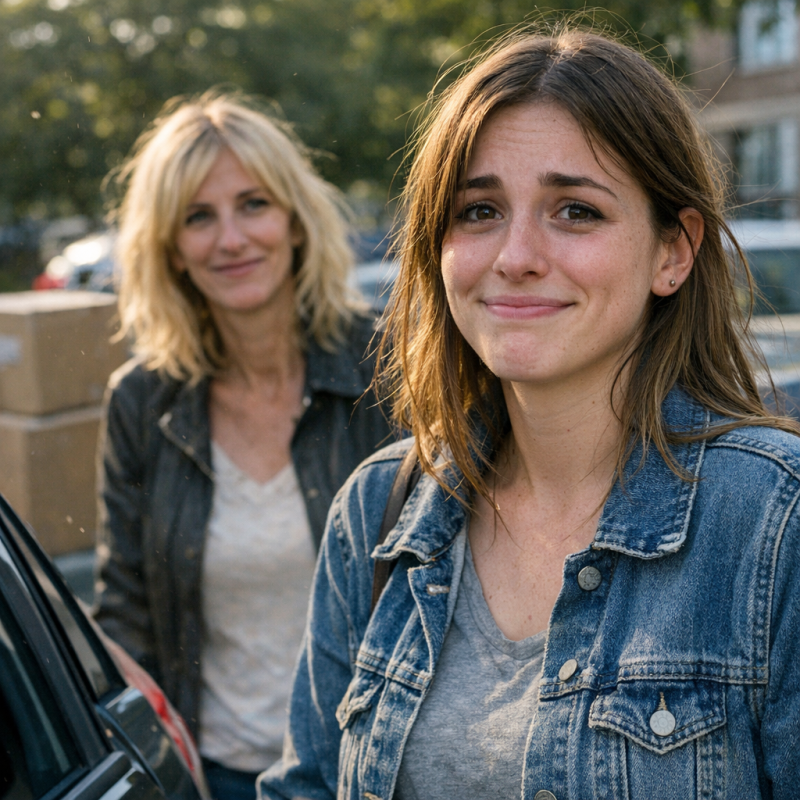 Image by FCT AI
Three Hours Away
College gave me the distance I desperately needed, and I rarely came home. I made every excuse in the book. Too much homework. Group projects. Club commitments. Work-study obligations. Some were true. Most weren't. Mom would call every week, asking when I'd visit. 'Just for a weekend,' she'd say. 'I miss you so much.' I'd feel this terrible weight in my chest. She didn't understand why I was avoiding her. How could she? I wasn't avoiding her—I was avoiding Melissa. But they were a package deal. They'd always been a package deal. Fall break came and went. I stayed on campus. Thanksgiving approached, and Mom started calling more frequently. 'Everyone wants to see you,' she said. Everyone. That meant Melissa too. My roommate invited me to her family's Thanksgiving in Vermont. I accepted immediately. When I told Mom, there was this long silence on the phone. 'I see,' she said quietly. Her voice was so small. So hurt. I tried to explain about the invitation, about not wanting to impose, but we both knew. Every time Mom called to invite me back for a holiday or weekend, I'd make an excuse, and I could hear the hurt in her voice.
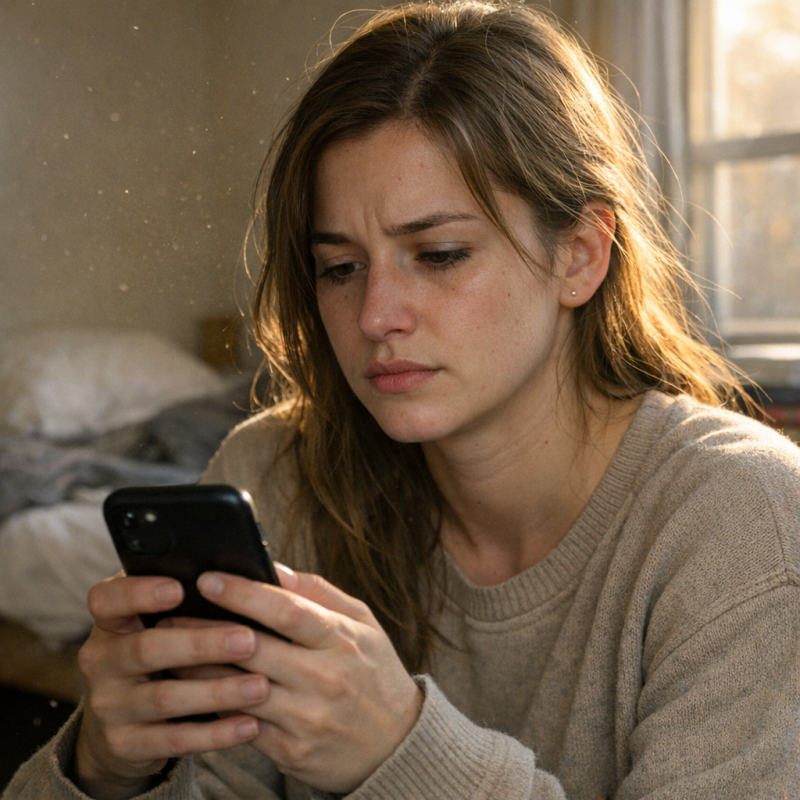 Image by FCT AI
The Therapy Session
In therapy, I tried to explain what Melissa had done to me, but it all sounded so petty when I said it out loud. 'She criticized my appearance,' I said. 'She gave me books about eating disorders. She made comments.' My therapist nodded, taking notes. I kept going, trying to make her understand. The bathroom incident. The dress. The constant watching. But as I listed everything, I could hear how it sounded. Mean, yes. But abuse? The word felt too big for what I was describing. 'And your mother never noticed any of this?' my therapist asked gently. I shook my head. 'She's very subtle. She only does it when we're alone.' Another note. More nodding. 'I want to explore something,' she said carefully. 'Is it possible your perception of these events has been influenced by other stressors? Childhood anxiety, perhaps? Sometimes our minds can interpret neutral actions as threatening when we're under stress.' I stared at her. Neutral actions. The room felt like it was tilting. I'd come here for validation, for someone to finally believe me. My therapist asked if I'd ever considered that my perception might be influenced by childhood stress, and I walked out feeling crazier than when I walked in.
 Image by FCT AI
Thanksgiving Avoidance
I spent Thanksgiving with my roommate's family rather than go home, and Mom didn't speak to me for a week afterward. Her silence was worse than anger would have been. I called her three times. She didn't answer. I texted. Nothing. I left a voicemail apologizing, trying to explain, and still—nothing. The guilt ate at me. I'd hurt her. I knew I'd hurt her. But the thought of sitting at that Thanksgiving table with Melissa, watching her play perfect family friend, made my skin crawl. Finally, on the eighth day, my phone rang. Mom. I answered so fast I almost dropped it. 'Hi, sweetie,' she said, her voice carefully neutral. We made small talk for a few minutes, dancing around the real issue. Then she took a breath. 'I need to ask you something, and I need you to be honest with me.' My heart started pounding. 'Are you avoiding me, or are you avoiding Melissa?' The question hung in the air between us. I opened my mouth. Closed it. Both, I wanted to say. Neither. I don't know anymore. When she finally called, she asked if I was avoiding her or avoiding Melissa, and I didn't know how to answer.
 Image by FCT AI
The Slow Repair
Over my sophomore year, Mom and I slowly started repairing our relationship through phone calls and video chats. We found a rhythm that worked. Sunday evenings, usually. She'd tell me about work, her garden, the neighbors. I'd share stories about classes and friends—carefully edited versions that made college sound fun but not so fun she'd worry. We laughed together again. I'd forgotten how much I loved her laugh. She started sending care packages. Homemade cookies, my favorite tea, silly socks. Little pieces of home that didn't hurt. We were rebuilding something. I could feel it. Then she'd casually mention Melissa. 'Melissa and I went to that new restaurant downtown.' 'Melissa says hello.' 'Melissa was asking about you.' Every single time, my throat would close up. My chest would get tight. The room would feel smaller. I'd change the subject immediately. Ask about the garden. The weather. Anything else. Mom would let me, but I could hear the confusion in her voice. The hurt. She didn't understand why I'd talk about anything except this one person. But every time she mentioned Melissa, I'd feel my throat close up, and I'd change the subject.
 Image by FCT AI
Tyler's Instagram
I found Tyler's Instagram account and saw posts that made him look like a normal, happy college student. He went to the state university, about an hour from where we grew up. His feed was typical college stuff—parties, football games, dorm room photos with friends. He looked good. Older, obviously. Handsome. Smiling in most pictures. I scrolled through months of posts, feeling like a creep but unable to stop. He seemed fine. Really fine. Maybe I'd been wrong to worry about him. Maybe Melissa was different with him. Maybe it had just been me. Then I found a photo from winter break. He was at Melissa's house for some holiday gathering. The Christmas tree was visible in the background. Tyler was smiling at the camera, but something about it looked off. I zoomed in on his face. His smile was perfect. But his eyes—God, his eyes looked exactly like mine had in all those childhood photos. Empty. Exhausted. Haunted. The expression of someone going through the motions. But in one photo at Melissa's house, he had the same exhausted look in his eyes that I remembered from my own childhood.
 Image by FCT AI
A Brief Visit Home
I finally agreed to visit home for a weekend, but only after confirming Melissa would be out of town. Mom mentioned she had a conference in Chicago. I checked three times to make sure. Asked for specific dates. Mom was so excited she actually squealed on the phone. I drove home on a Friday afternoon, nervous the entire way. But when I walked through the door and Mom hugged me, everything felt right. We spent the weekend like we used to. Made dinner together. Watched old movies. Talked about everything and nothing. She showed me her garden, which had grown beautiful. We drove to our favorite breakfast place Saturday morning. We stayed in our pajamas Sunday and did face masks. Not once did she mention Melissa. Not once did I feel that familiar dread. We were just us again. Mother and daughter. On Sunday night, as I was packing to leave, Mom stood in my doorway. 'I missed this,' she said softly. 'I missed you. This weekend—' Her voice caught. 'For the first time in years, I felt like I had my daughter back.' Mom and I had a wonderful two days together, and for the first time in years, she said she felt like she had her daughter back.
 Image by FCT AI
The Coffee Shop Encounter
During junior year, I ran into Melissa unexpectedly at a coffee shop near campus. I was in line, checking my phone, when I heard her voice. 'Oh my God! What are the odds?' My stomach dropped. I looked up. There she was. Melissa. Three hours from home. At my campus coffee shop. In my safe space. 'Hi,' I managed. She rushed forward, pulling me into a hug before I could react. 'I had a meeting nearby. A work thing. And I thought, let me grab coffee first, and here you are!' She was beaming. Talking fast. She insisted on buying my coffee, waving away my protests. We sat at a table. She asked about my classes, my friends, everything. Her voice was warm. Interested. The perfect family friend. But her eyes—they had that same quality I remembered. Cold. Calculating. Watching me with an intensity that made my skin crawl. She asked about my love life. My future plans. Whether I came home often. Each question felt like a probe. I made excuses and left after ten minutes, forgetting my coffee on the table. She acted delighted to see me and insisted on buying my coffee, but her eyes had that same cold look I remembered, and I left my drink untouched on the table.
 Image by FCT AI
The Phone Call I Avoided
After the coffee shop encounter, my phone started ringing. Melissa. Every few weeks, like clockwork. I never answered. She'd leave voicemails—long, rambling ones that started cheerful and ended with an edge I couldn't quite place. 'Just checking in on you, sweetie!' 'Thinking about you today!' 'Your mom mentioned you're doing so well!' Each message made my stomach turn. I'd delete them without listening all the way through. But one day, I forced myself to hear the whole thing. She was talking about how proud she was of me. How she'd watched me grow up. How special our bond was. Then she said it: 'I've always thought of you like a daughter, you know. You're so important to me.' I actually gagged. Ran to the bathroom and dry-heaved over the toilet. Like a daughter. This woman who'd screamed at me, terrorized me, made my childhood a minefield of fear and confusion. I blocked her number that night. But the words stayed with me, crawling under my skin like something toxic and alive. I've always thought of you like a daughter—and I felt physically sick.
 Image by FCT AI
Senior Year Begins
Senior year started with a kind of fierce determination I'd never felt before. I threw myself into everything—my thesis, my friendships, campus activities, job applications. I was building a life. A real one. A life that belonged to me, that Melissa could never touch or poison or take away. I went to parties. I stayed up late talking with roommates about everything and nothing. I applied for positions in cities I'd never visited, places with no connection to home. During the day, I was fine. Better than fine. I was thriving, or at least convincing everyone around me that I was. But at night, the nightmares came. I'd wake up gasping, sheets tangled around my legs, Melissa's face inches from mine in my mind. She'd be screaming. Always screaming. Her voice shredding the air, her eyes burning with that inexplicable rage. I'd sit up in the dark, reminding myself that I was twenty-one years old. I was safe. I was three hours away. But the fear felt exactly the same as when I was eight, and that realization terrified me more than the nightmares themselves.
 Image by FCT AI
Mom's New Boundaries
During one of our Sunday calls, Mom mentioned something that made me stop folding laundry mid-shirt. 'I've been setting some boundaries with Melissa,' she said, almost casually. My heart jumped. 'What kind of boundaries?' I asked, trying to keep my voice neutral. 'Oh, you know. Just... not always being available when she calls. Not dropping everything when she needs something. Taking more space.' It was vague, but it was something. A tiny crack in the foundation I thought would never shift. I felt this fragile spark of hope I didn't want to trust. 'That's good, Mom,' I said carefully. 'What made you decide to do that?' There was a long pause. Too long. I could hear her breathing on the other end. 'I'm starting to see things I missed before,' she finally said, her voice quiet and strange. 'Things I should have seen a long time ago.' She didn't elaborate. I didn't push. But something in her tone told me that whatever she was seeing, it was bigger than missed phone calls and forgotten boundaries.
 Image by FCT AI
The Job Offer
The job offer came in March—a position in Colorado, over a thousand miles from home. I accepted it immediately, before I could second-guess myself. When I told Mom, I expected her to be happy for me. Proud. She was quiet for a long moment, then I heard her start to cry. 'Mom? What's wrong?' 'Nothing's wrong,' she said through tears. 'I'm happy for you, sweetheart. I really am.' But her voice was breaking in a way that made my chest ache. Then she asked the question I'd been avoiding for years. 'Are you running from something? Or are you running toward something?' My throat closed up. I couldn't answer. Because the truth was both and neither and everything in between. I was running from a childhood I couldn't fix. From memories that wouldn't fade. From the possibility that Melissa might show up at another coffee shop, another safe space, smiling that horrible smile. But I was also running toward a life where none of that mattered anymore. 'I'm just ready for something new,' I finally said. Mom didn't ask again, but the question hung between us, unanswered and heavy.
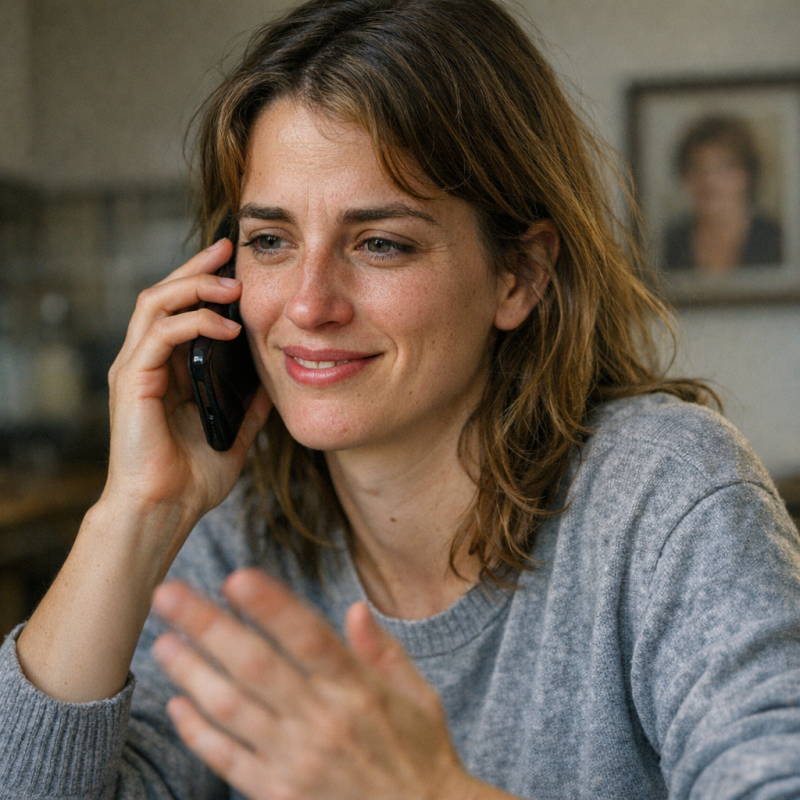 Image by FCT AI
Five Years Later
Five years passed faster than I expected. I built a life in Colorado—a good one. I had a job I liked, friends who didn't know my history, an apartment with plants that somehow stayed alive. Melissa became background noise. A name Mom mentioned occasionally on phone calls, someone whose birthday I'd forgotten, whose existence had faded to something distant and manageable. I thought I'd escaped. Really escaped. Not just physically, but emotionally. The nightmares came less frequently. I went weeks, then months, without thinking about her. I'd actually started to believe that distance and time had done what therapy and willpower couldn't—they'd freed me. I was twenty-seven. I had a promotion coming up. I was planning a trip to Iceland with a friend. Life felt normal in a way it never had before. Then one Tuesday evening, my phone rang. Mom's name on the screen. I almost didn't answer because I was making dinner. But something made me pick up. 'Hello?' Mom was crying. Not just crying—sobbing. Gasping for air between words. And I knew immediately that something had shattered.
 Image by FCT AI
Melissa Has Been Arrested
I turned off the stove, my hands already shaking. 'Mom, what happened? Are you okay? Is someone hurt?' She couldn't get words out for a moment, just these awful, wrenching sobs. Finally: 'It's Melissa. She's been arrested.' The words didn't make sense at first. Arrested? For what? My first emotion was relief—pure, shameful relief that made me feel like a terrible person. Then confusion crashed in. 'Arrested for what?' I asked. Mom was still crying, trying to catch her breath. 'I can't believe it. I can't believe I didn't see it. I didn't protect you. I didn't protect anyone.' 'Mom, slow down. What happened? What did she do?' There was a long, shaky breath on the other end. When Mom spoke again, her voice was hollow. Destroyed. 'It was Tyler who called the police.' My blood went cold. Tyler. Her nephew. The quiet kid with the sad eyes who'd grown into a quiet teenager I barely knew. The boy I'd envied because Melissa seemed to love him more than she'd ever loved me. Tyler had gone to the police.
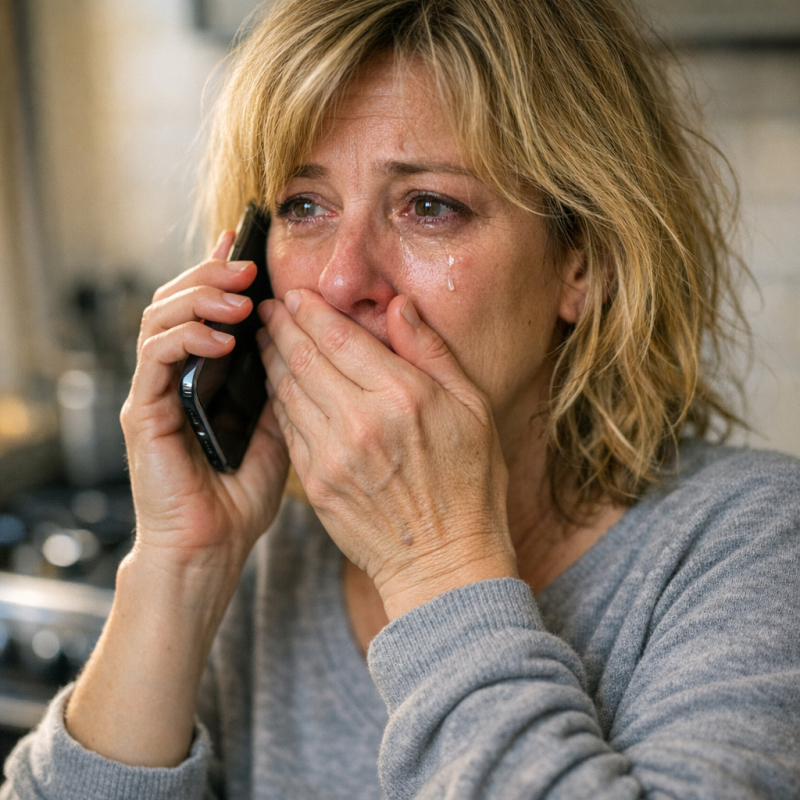 Image by FCT AI
Tyler's Report
Mom's words came faster now, spilling out like she'd been holding them back for too long. Tyler had finally told someone what had been happening for years. The emotional abuse. The manipulation. The rage that came out of nowhere and left him feeling like he was crazy, like he deserved it, like he was fundamentally broken. Melissa had been doing to him exactly what she'd done to me. Maybe worse. The screaming. The punishments that made no sense. The gaslighting. The way she'd make him feel special one moment and worthless the next. He'd kept it secret for years, thinking he was protecting the family, thinking no one would believe him. But something had finally broken, and he'd gone to the authorities. As Mom described it, my hands started shaking so hard I nearly dropped the phone. Everything I'd experienced hadn't been unique to me. I wasn't the only one. Tyler had suffered too—maybe even worse because he'd lived with her, because he couldn't escape to another room in someone else's house. All these years, I'd thought I was alone. I'd thought something about me had triggered her hatred. But it was never about me at all.
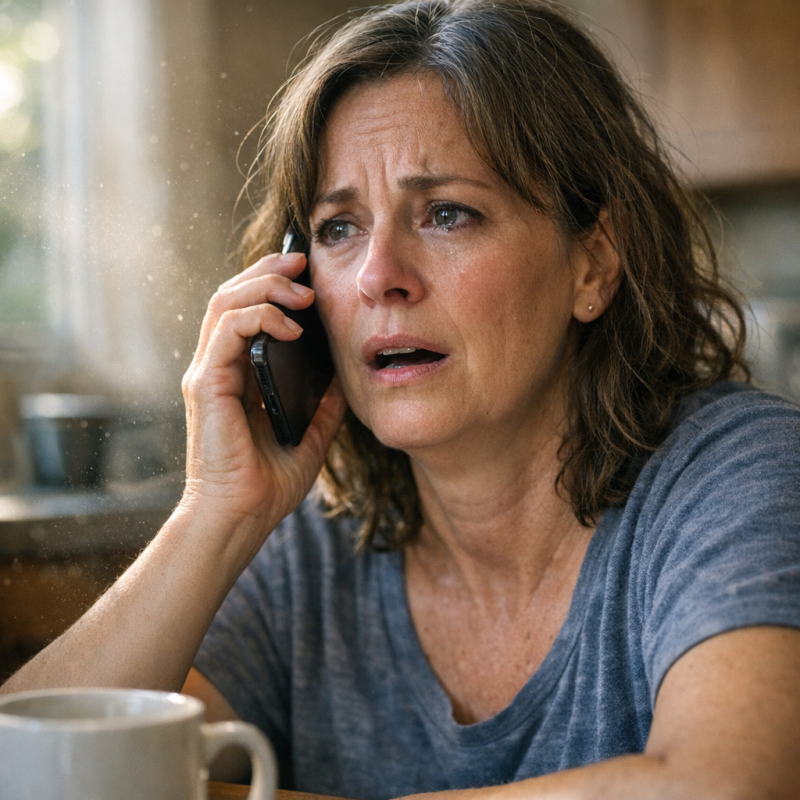 Image by FCT AI
The Investigation Expands
Over the next few days, Mom called with updates that got worse each time. The police had opened a broader investigation. They'd started interviewing extended family members. And other relatives were coming forward. Cousins I'd barely known. Family friends who'd spent time around Melissa. Each one had stories that made my stomach drop because they sounded horrifyingly familiar. The screaming fits that came out of nowhere. The cruel punishments for imagined infractions. The obsessive need to control and monitor. The emotional torture disguised as love and concern. One cousin described being locked in a closet for hours. Another talked about being told she was worthless, stupid, a burden on everyone around her. All of it hidden behind Melissa's charming public image. The woman who volunteered at church fundraisers. Who brought casseroles to neighbors. Who everyone thought was so helpful, so caring, so devoted to family. She'd been doing this to children for years. For decades maybe. And we'd all suffered alone, each of us thinking we were the only one, each of us too confused and scared to speak up. The pattern was undeniable now—screaming fits, cruel punishments, obsessive behavior, emotional torment, all hidden behind a charming public image.
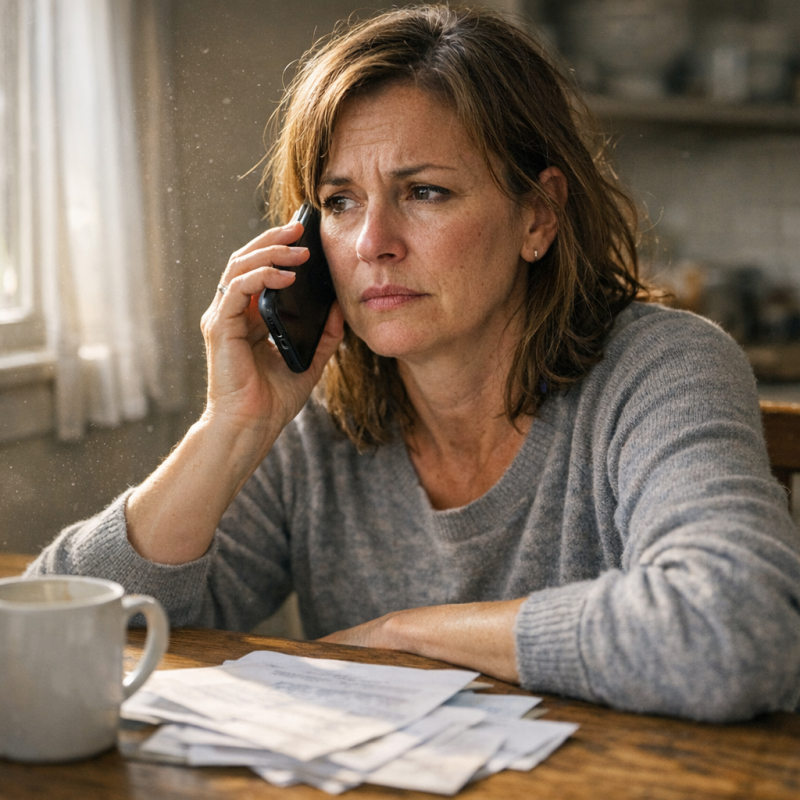 Image by FCT AI
I Wasn't Crazy
For the first time in my life, I had proof that I hadn't been crazy or oversensitive or dramatic. All those years I'd questioned myself, wondered if I was imagining things, told myself maybe I was just a difficult kid—all of it was validated now. The police reports. The other victims. The pattern that kept repeating across decades. I wasn't alone in this. I wasn't the problem. Melissa had done this deliberately, systematically, to multiple children who'd done nothing to deserve it. The relief was overwhelming, like finally being able to breathe after holding your breath for twenty years. I cried for hours that night, not from sadness but from the weight of validation. Someone believed me. Multiple someones. It was documented now, official, real. But even with all that proof, even with the pattern laid out so clearly, I still couldn't understand the core of it. The cruelty made no sense. The targeting felt so personal, so specific. Why me? Why Tyler? Why any of us?
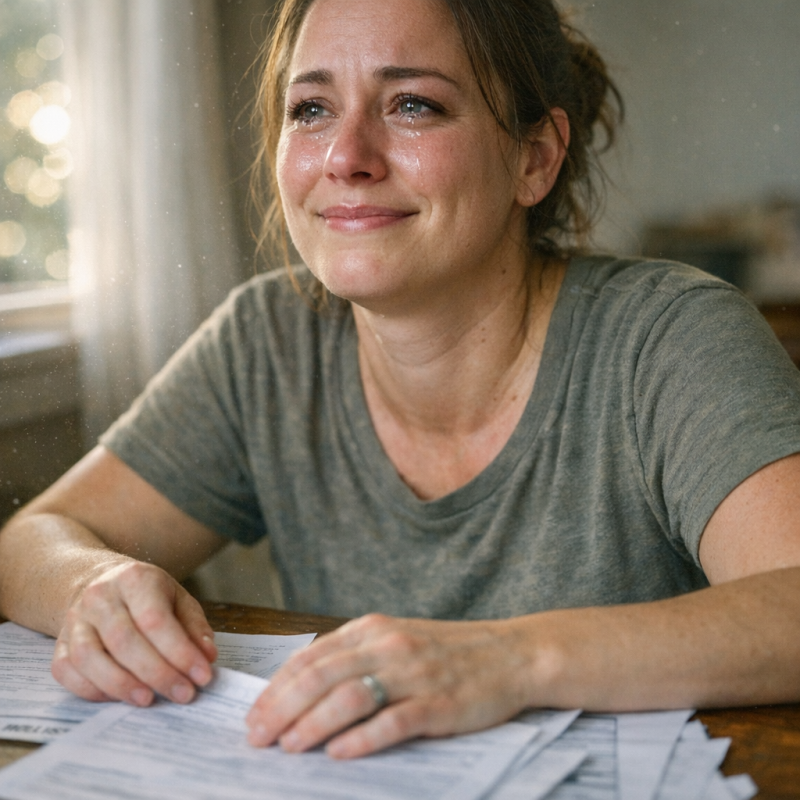 Image by FCT AI
Mom's Confession Begins
Mom called two days later and asked if she could come visit me. Her voice sounded strange, heavy in a way I'd never heard before. She drove three hours and arrived at my apartment looking like she'd aged ten years in the past month. Her face was drawn, eyes red-rimmed, and she barely made eye contact when I opened the door. We hugged, but I could feel her trembling. I made coffee because I didn't know what else to do with my hands. We sat in my small living room making awkward small talk about the drive and the weather, both of us avoiding what we really needed to discuss. Finally, she set down her cup and pulled a folder from her bag. Her hands shook as she placed it on the coffee table between us. She looked at me with an expression I'd never seen before—guilt mixed with something like dread. Then she sat down at my kitchen table and said, 'There's something I need to tell you about Melissa—something I only recently discovered.'
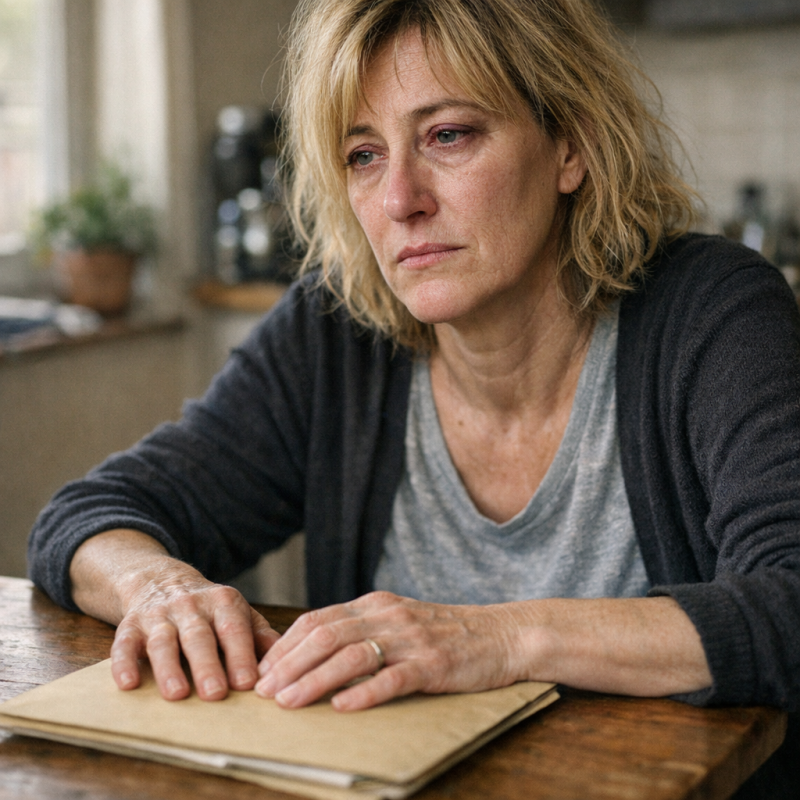 Image by FCT AI
The Old Emails
Mom showed me printed emails she'd found hidden in Melissa's things—messages Melissa had sent to someone years ago, before I was even born. The police had given Mom access during their investigation, thinking she might help fill in background information. She'd been going through boxes of Melissa's old correspondence when she found them. Page after page of printed emails, some dating back decades, all carefully preserved. I started reading, and my stomach turned. The messages were obsessive, rambling, filled with rage that seemed to have no clear target at first. Then I saw my father's name. Over and over. Paragraphs about him, about his smile, about conversations they'd had, about plans that never materialized. The tone shifted between longing and fury, sometimes within the same message. And then I saw my mother's name, and the word 'stolen' appeared again and again. The emails were obsessive, pages and pages about my father, filled with rage about my mother 'stealing' something that belonged to her.
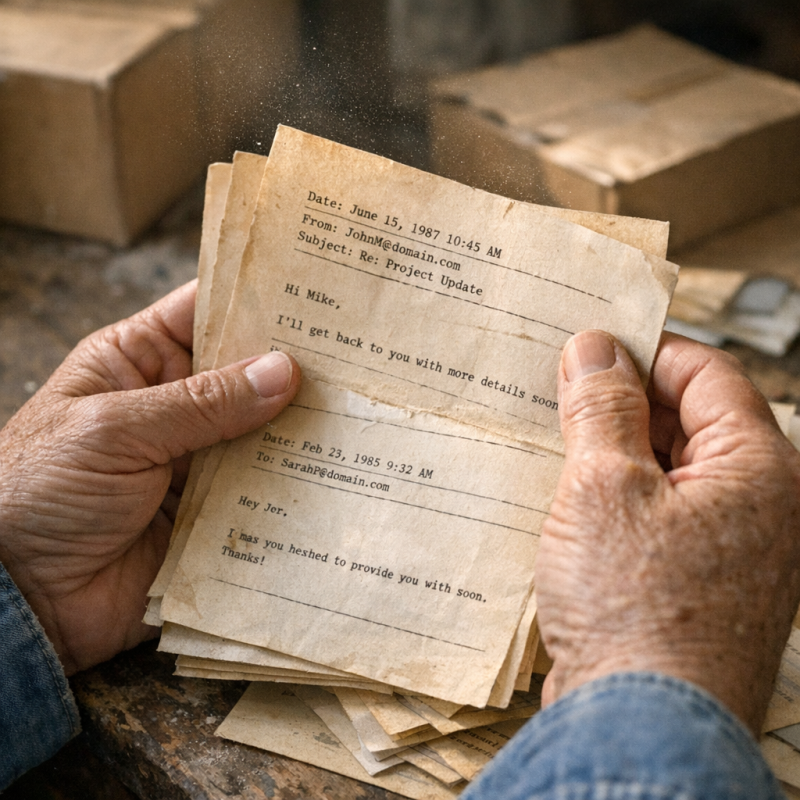 Image by FCT AI
Before Your Father Met Me
Mom's hands shook as she told me that before Dad met her, he had briefly dated Melissa in high school. They'd been together for a few months during senior year, nothing serious, at least not from his perspective. But apparently it had meant everything to Melissa. She'd already started planning their future—marriage, kids, the whole life. When Dad ended things and started dating my mother instead, Melissa had been devastated. My mother had always known about the high school relationship in passing, but she'd never realized the depth of Melissa's feelings, never understood that Melissa had never moved on. None of us had. Melissa had hidden it so well, playing the supportive friend for decades while harboring this twisted resentment underneath. My mind reeled as I processed this. Melissa and my father had dated? The woman who'd terrorized me had once been involved with my dad? Suddenly pieces I didn't even know were missing started falling into place.
 Image by FCT AI
She Never Got Over Him
Mom explained that Melissa had never gotten over my father, even after he chose my mother instead. She'd watched from the sidelines as they got married, as they built a life together, as they had me. And instead of moving on, instead of creating her own life, Melissa had inserted herself into ours. She'd positioned herself as Mom's best friend, always nearby, always helpful, always involved. We'd all thought she was just lonely, that she valued the friendship, that she genuinely cared about our family. But now I understood the truth. She hadn't been there out of love or friendship. She'd been there out of obsession, monitoring the life she thought should have been hers, unable to let go of what she'd lost. Every family dinner she attended. Every holiday she spent with us. Every moment she'd been in our home. It was all a lie. I felt sick as I realized that Melissa had spent my entire childhood close to our family not out of friendship, but out of some twisted obsession.
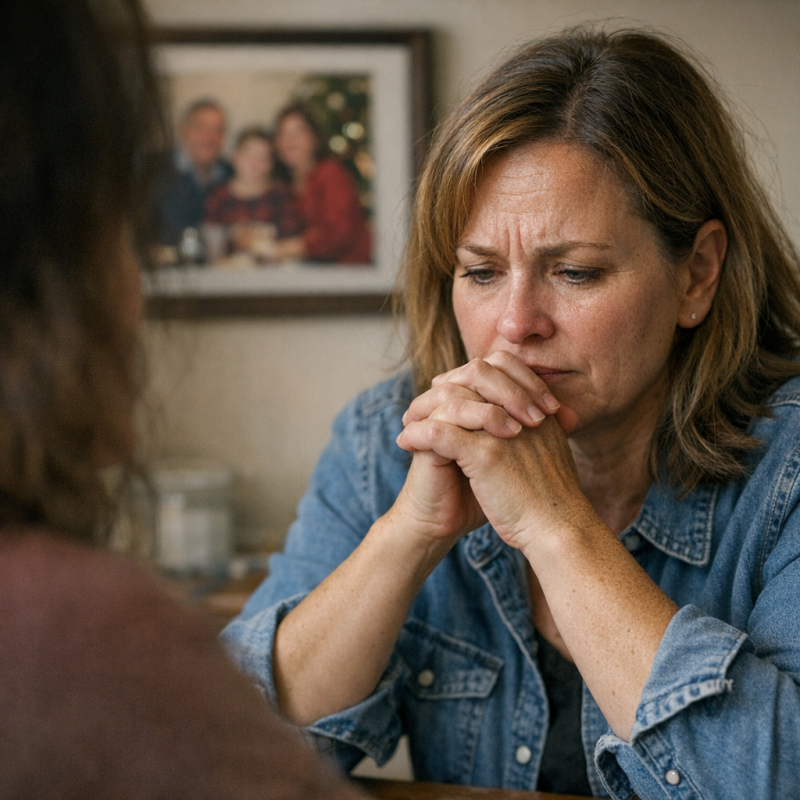 Image by FCT AI
The Life She Thought She Deserved
Mom read me parts of the emails where Melissa raged about the life she thought should have been hers—the marriage, the family, everything my parents had built together. She wrote about watching them from the outside, about the pain of seeing my father with someone else, about the injustice of it all. In Melissa's mind, my mother had stolen her future. And I was the proof that the theft had succeeded. I represented everything Melissa had lost. I was the child she thought she should have had. The family she thought should have been hers. Every time she looked at me, she saw the life that had been taken from her—or at least, that's how her delusion worked. The emails made it clear she blamed our existence for the fact that my father had never come back to her. In her twisted logic, if they hadn't had me, maybe their marriage wouldn't have lasted. Maybe he would have returned to her. Mom looked at me with tears in her eyes and said, 'She blamed you for the fact that we stayed together long enough to build that family.'
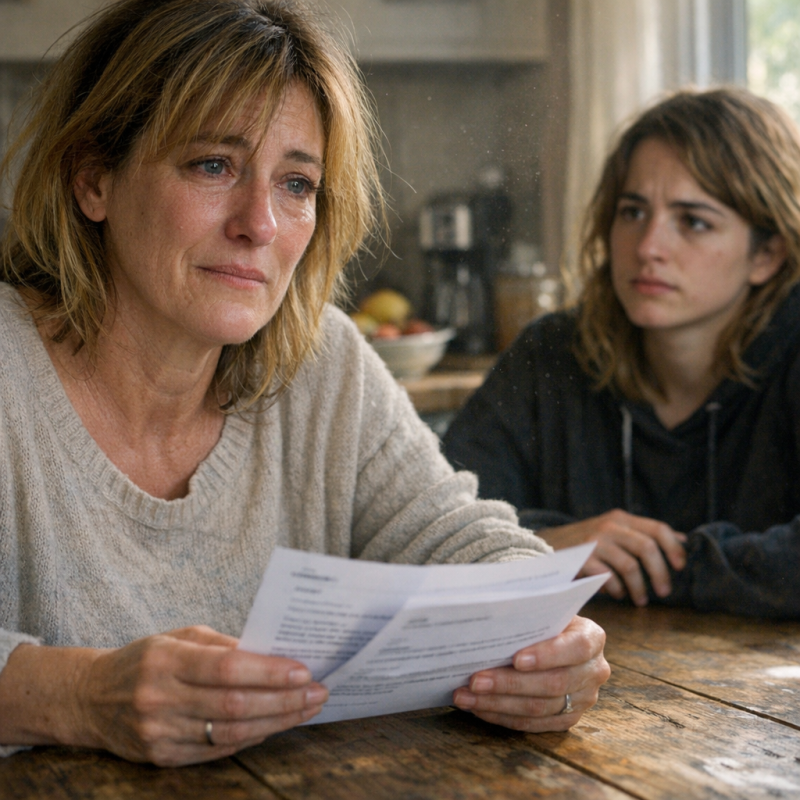 Image by FCT AI
Proof I Should Have Been Hers
It hit me all at once, this horrible clarity. I was proof that my mother got everything Melissa wanted, and Melissa spent decades punishing me for existing. Every cruel comment, every screaming fit, every time she made me feel worthless—it wasn't random. It was deliberate. I'd been targeted from the moment I was born because I represented Melissa's failure, her loss, the life she couldn't have. I'd spent my childhood thinking something was wrong with me, that I somehow brought out the worst in her. But I'd never done anything except exist. That was my crime in Melissa's eyes. Being born. Being proof that my parents' marriage was real and lasting. Being the child she thought should have been hers with my father. The realization was devastating. All those years of terror and confusion had been because of an obsession that had nothing to do with who I actually was. Mom shifted in her chair, and I could see there was something more she needed to say. 'But there was more I needed to tell you,' she said carefully, 'about why the arrest happened now, and what Tyler had finally revealed.'
 Image by FCT AI
The Fantasy She Couldn't Let Go
Mom revealed the complete truth then, the full scope of Melissa's delusion. Melissa had inserted herself into our lives deliberately, staying close to monitor and sabotage my parents' marriage while living out a proximity to the fantasy she couldn't release. She'd been waiting, all those years, for my parents to fail. For my father to realize he'd made a mistake. She'd positioned herself to be there when it happened, the supportive friend ready to step in. But it never happened. My parents stayed together. They built a family. And Melissa's resentment festered into something toxic and cruel. Mom's voice broke as she told me what had finally pushed Tyler to go to the police. In recent months, Melissa's delusion had gotten worse. She'd started calling Tyler by my father's name. She'd been talking to him as if he were someone else, confusing past and present, reality and fantasy. And Tyler had finally gone to police because Melissa had started calling him by my father's name, and he realized his mother had been using him as a stand-in for the child she thought she should have had—with my dad.
 Image by FCT AI
Looking Back With New Eyes
After Mom finished explaining everything, I sat there trying to reprocess my entire childhood through this horrifying new lens. Every memory suddenly looked completely different. The resentment in Melissa's voice when she'd snapped at me wasn't about me being difficult—it was about me existing at all. The way she'd treated Tyler, calling him worthless, erasing his identity—she'd been punishing him for not being the child she'd imagined having with my dad. Her constant presence in our lives hadn't been friendship. It had been surveillance, waiting, hoping for my parents' marriage to fail so she could finally step into the fantasy life she'd constructed. The fingerprints on the bathroom counter, the shampoo in the bathtub, the way she'd known exactly where everything was in our house—she'd been living out a parallel reality where this was her home, her family, her life. I felt physically sick thinking about how she'd looked at me all those years, seeing not a child but an obstacle, a theft, a daily reminder of everything she'd lost. Or thought she'd lost. Because none of it had ever been real to begin with. None of it had been random; it had all been part of a decades-long delusion I'd been trapped inside without knowing.
 Image by FCT AI
Tyler's Breaking Point
Mom explained that Tyler had reached his breaking point when Melissa started becoming more unstable, her fantasy bleeding more overtly into reality. He'd noticed her calling him by my father's name with increasing frequency, talking to him as if he were someone else entirely. She'd started making comments about 'the family we should have been,' speaking as if Tyler were someone else's son. That's when he'd gone through her things, looking for evidence that he wasn't losing his mind. What he'd found had been worse than he'd imagined. Journals spanning years, filled with detailed descriptions of the life she believed she should have had. Pages and pages about 'her' family, 'her' children, 'her' marriage. She'd written about holidays and birthdays as if they'd actually happened, events she'd constructed entirely in her mind. But the most disturbing part was what Tyler found in the more recent entries. His name had been crossed out and replaced with mine in multiple entries. She'd written about 'my daughter' and 'our child' as if Tyler had been a mistake, a placeholder, a substitution for the child she'd really wanted—the one my father had with my mother instead.
 Image by FCT AI
The Trial Begins
Tyler pressed charges for years of psychological abuse, and the case went to trial. I didn't expect to be part of it—I thought Tyler's experience was separate from mine, that his case would be about what she'd done to him. But the prosecutor explained that establishing a pattern of abusive behavior would strengthen Tyler's case, and my experiences were part of that pattern. So I agreed to testify. The trial began on a cold morning in late October. I sat in the hallway outside the courtroom, waiting to be called, and my whole body felt like it was vibrating. Mom sat beside me, holding my hand. Tyler was somewhere inside already, with his lawyers. I hadn't seen him since we were kids. Then the door opened and a court officer called my name. I stood up, and as I walked through that doorway, I saw her. Melissa was sitting at the defense table, and when our eyes met, she looked at me with the same cold contempt I remembered from childhood. The same look that used to make me feel like I'd done something unforgivable just by existing. Facing Melissa across a courtroom after all those years made my hands shake so badly I could barely hold the water glass.
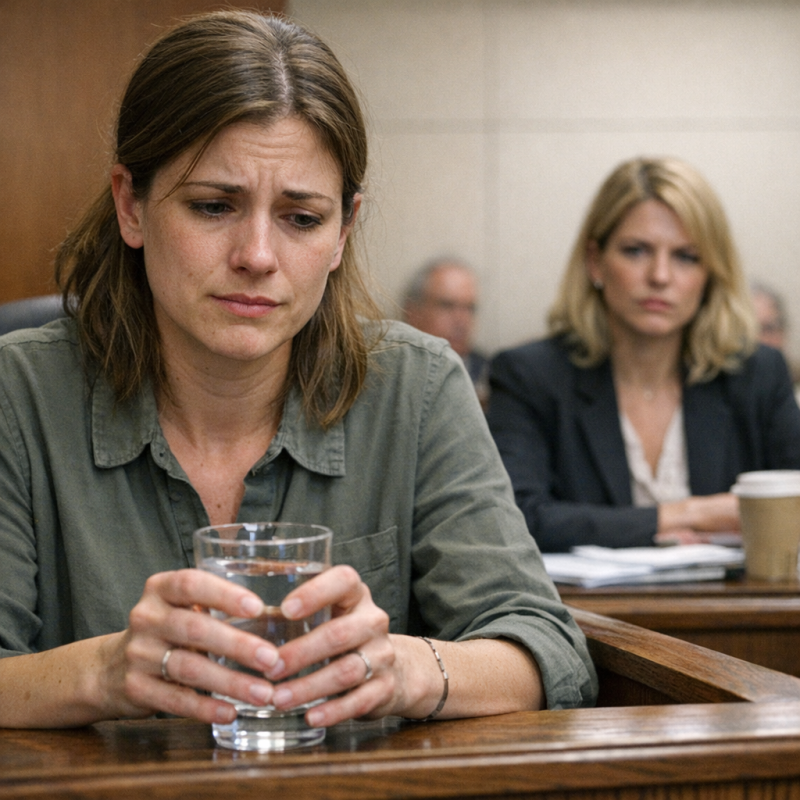 Image by FCT AI
On the Stand
I testified about the fingerprints on the counter, the shampoo in the bathtub, the sketchbook in the trash, and the decades of terror disguised as caregiving. I told them about the locked bathroom door, about her standing outside telling me what a disappointment I was. I described how she'd made me feel unwelcome in my own home, how her presence had filled every room with dread. The prosecutor asked specific questions, guiding me through each incident, and I answered as clearly as I could despite my shaking voice. I explained how she'd convinced everyone she was helping while systematically destroying my sense of safety. How she'd isolated me by making me seem like a problem child who needed her intervention. How every kind thing she'd done for my parents had come with a price I'd paid behind closed doors. Melissa's lawyer stood up for cross-examination, his expression skeptical. He asked about physical injuries, about witnesses, about documentation. He tried to make it sound like childhood anxiety, normal discipline, misunderstood intentions. When he asked if I had any 'physical evidence' of abuse, I looked directly at Melissa and said, 'The evidence is psychological, and it's permanent.'
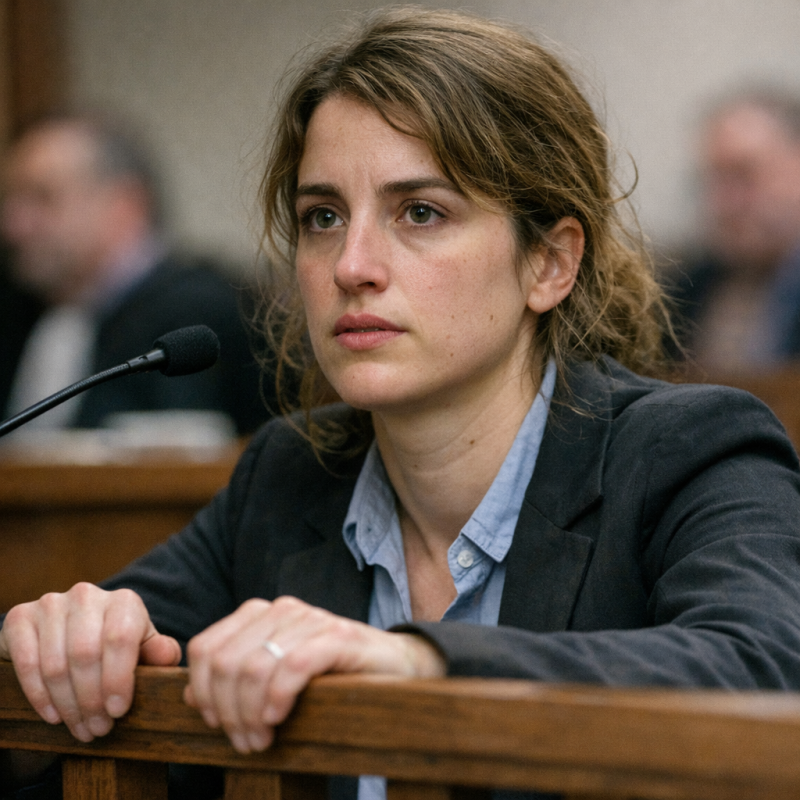 Image by FCT AI
Melissa Takes the Stand
When Melissa testified, she claimed everything she'd done had been out of love and concern for our family. Her voice was calm, measured, almost convincing. She described herself as a devoted friend who'd stepped in to help when my parents needed support. She said she'd been strict with me because I'd been a difficult child who needed structure. She made it sound reasonable, like she'd been doing us all a favor. She talked about how close she and my mother had been, how much she'd cared about our family's wellbeing. The defense attorney asked her about Tyler's allegations, and she denied them with the same measured tone. She said Tyler had always struggled with mental health issues, that he was confused, that he'd misinterpreted her concerns. She was polished, articulate, credible. I watched the jury, and some of them were nodding. My stomach dropped. She was going to get away with it. Then the prosecutor stood up for cross-examination. He asked her simple questions at first, about how long she'd known my parents, about when she'd met my father. Then he asked her directly about her relationship with my father before my parents got married. Her composure flickered. And when he pressed harder, asking her why she'd maintained such close involvement with our family for so long, her mask finally cracked, and she screamed, 'He was mine first!'
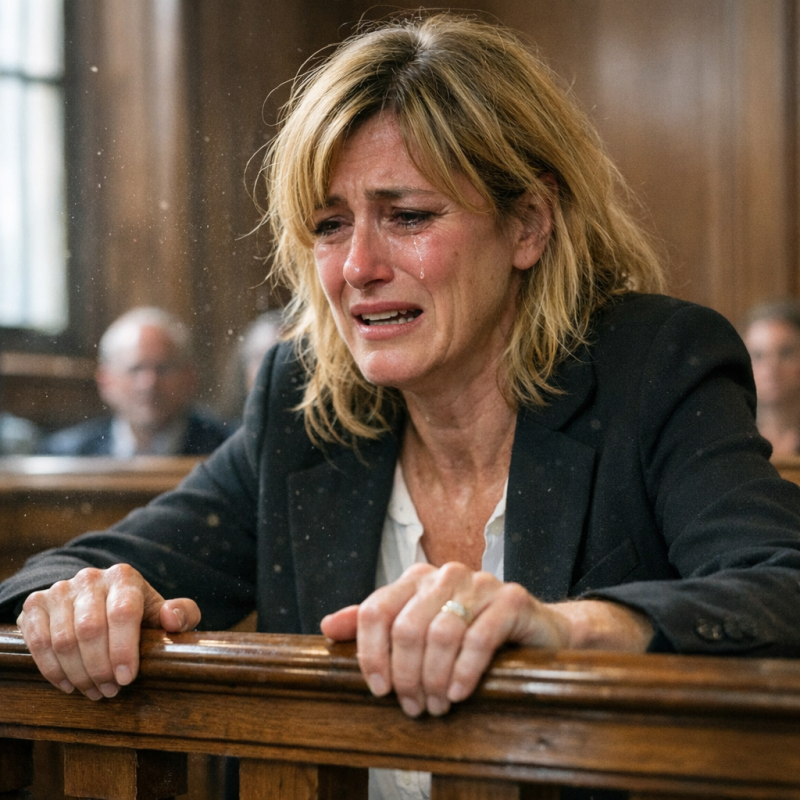 Image by FCT AI
The Courtroom Goes Silent
The courtroom went completely silent as Melissa continued her breakdown, revealing the depth of her delusion to everyone present. Her voice rose to a pitch I'd never heard before, decades of contained rage finally erupting. She talked about how my father had belonged to her, how they'd had plans, how my mother had stolen everything. She ranted about the life she should have lived, the family she should have had, the house that should have been hers. Her lawyer tried to interrupt her, to get her to stop talking, but she couldn't be contained anymore. The fantasy she'd protected for so long was pouring out in front of everyone. She talked about Tyler as if he'd been a mistake, a failed attempt at creating what should have been. She described my mother as a thief, an interloper, someone who'd destroyed everything. And then she turned in her seat and looked directly at me. Her face was contorted with fury, tears streaming down her cheeks. 'You took everything from me,' she said, her voice raw and broken. And I finally understood that in her mind, I had stolen a life that never existed.
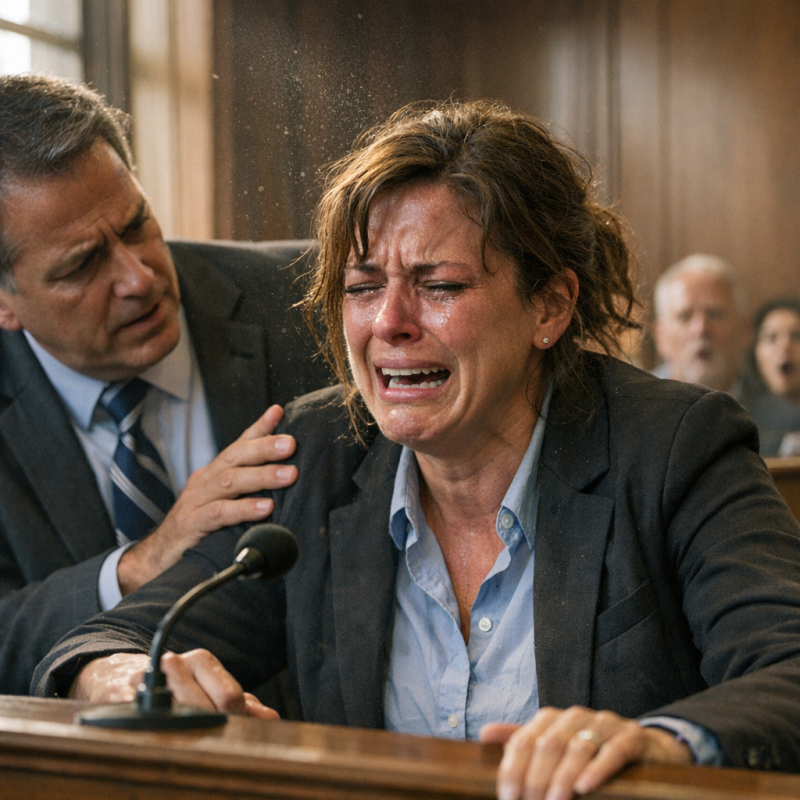 Image by FCT AI
Expert Testimony
A psychologist testified about obsessive delusions and how Melissa had built her entire identity around a fantasy that collapsed when my parents stayed together. The expert explained that some people construct elaborate alternate realities when faced with unbearable disappointment, and Melissa had spent decades living inside one. She'd maintained proximity to the fantasy by staying close to my family, but the cognitive dissonance between reality and delusion had created profound psychological instability. The psychologist described how she'd likely experienced my mother not as a friend but as someone playing a role in Melissa's constructed narrative—the temporary obstacle who would eventually disappear. And me? I'd represented the ultimate collapse of her fantasy. I was the permanent, undeniable proof that my father had chosen a different life, a different future, a different child. The expert explained that I had been both the symbol of her loss and the convenient target for rage she couldn't direct at my mother without destroying her access to the fantasy. She needed to maintain the friendship to stay close to the delusion, so she'd displaced all her fury onto me instead. A child couldn't fight back, couldn't expose her, couldn't threaten her position. It was clinical, systematic, and absolutely devastating to hear explained so clearly.
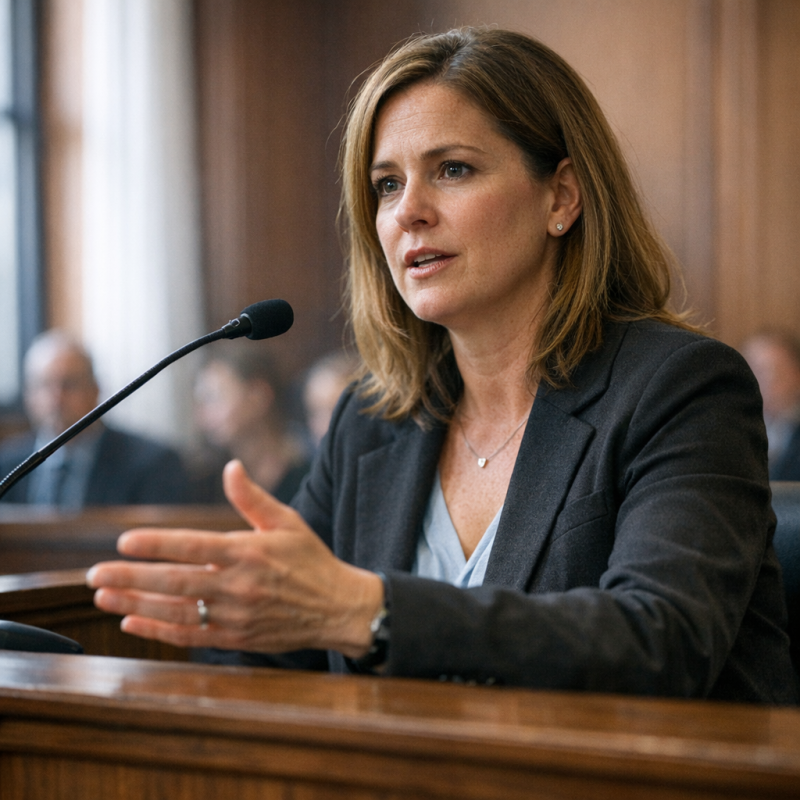 Image by FCT AI
Tyler's Testimony
Tyler took the stand and described years of being treated as a substitute for a child that never existed, a son for a marriage that never happened. His voice was steady but his hands gripped the witness stand so tightly his knuckles were white. He talked about growing up feeling like he'd disappointed his mother just by being himself, like no matter what he did, he could never be the right person. He described how she'd talk about 'the son she was supposed to have,' making him feel like a placeholder for someone better. He detailed how in recent years she'd started calling him by my father's name, having conversations with him as if he were someone else entirely. How she'd told him about the family they 'should have been,' speaking about my father as if they'd had a life together that Tyler had somehow ruined by being born. He explained that he'd finally realized his mother had never seen him as her actual son—he'd been a stand-in, a substitute, a fantasy child for a fantasy life. Then Tyler looked across the courtroom at me. His eyes met mine, and there was so much pain and understanding in his expression. He looked at me and said, 'I'm sorry I didn't protect you,' and I realized we'd both been prisoners in someone else's delusion.
 Image by FCT AI
The Verdict
The jury deliberated for three hours. I sat in the hallway with Mom and Tyler, none of us speaking much, all of us exhausted beyond words. When they called us back in, my heart was hammering so hard I thought everyone could hear it. The foreman stood and read the verdict: guilty on multiple counts of psychological abuse, harassment, stalking. Guilty, guilty, guilty. Each word felt like a validation I'd been waiting my whole life to hear. Someone had listened. Someone had believed me. The system that I'd thought would fail me actually worked. I watched as the bailiff approached Melissa, and for the first time in my entire life, I saw her look genuinely defeated. Her shoulders slumped. Her face went pale. As they led her away in handcuffs, she turned back toward where we were sitting, and her eyes found my mother. The look that passed between them was impossible to read—not quite hatred, not quite longing, something more complicated than either. As they led her away, she looked back at my mother one last time, and the expression on her face was almost like grief.
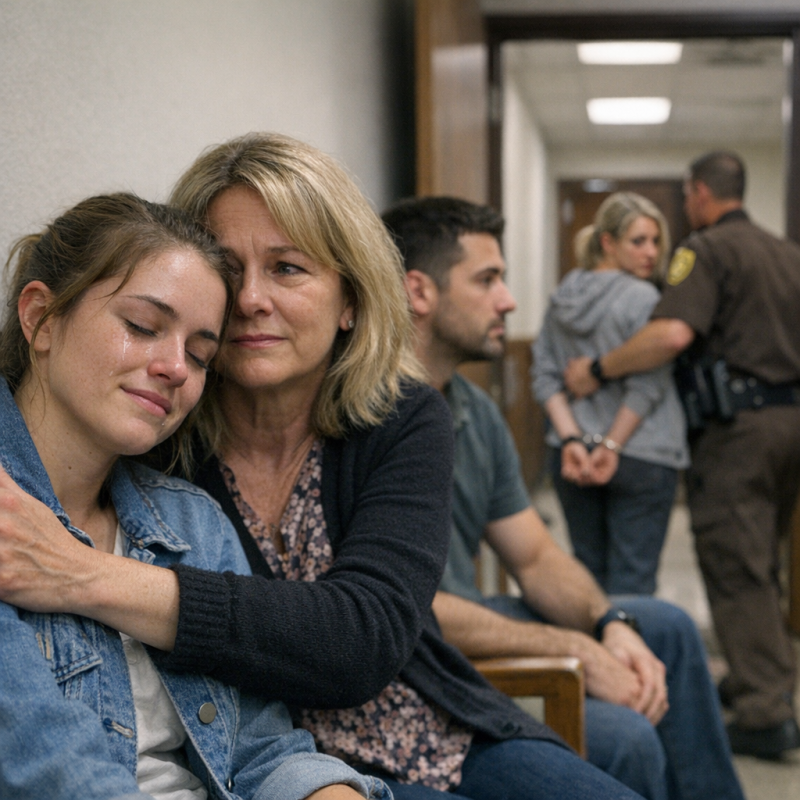 Image by FCT AI
After the Trial
In the weeks after the trial, I finally found a therapist who actually believed me from the first session. Dr. Chen didn't question whether I was exaggerating or misremembering. She didn't suggest I was being too sensitive. She listened to my story and said, 'That sounds terrifying,' and I actually cried with relief. We started unpacking decades of trauma—the constant surveillance, the gaslighting, the way Melissa had made me doubt my own sanity. I talked about how I'd spent years thinking I was crazy, thinking I'd imagined the worst of it. Dr. Chen helped me see patterns I'd never recognized, helped me understand that abuse doesn't have to leave visible scars to be real. About a month in, I asked if Mom could come to a session. I was nervous about it, worried we'd just rehash old arguments. But when she walked in and sat down, something was different. Mom came to one of my sessions, and for the first time, we talked honestly about how Melissa had damaged both of us.
 Image by FCT AI
Coffee with Tyler
Tyler and I met for coffee six months after the trial. It was his idea—he texted me out of nowhere asking if I'd want to catch up. I was nervous driving there, not sure what we'd even talk about. But when I sat down across from him at that little cafe, the conversation flowed naturally. We talked for hours about our experiences, about what it was like growing up in the shadow of Melissa's delusions. He told me about his childhood, about realizing he'd never be the son she wanted because he was the wrong person's son. I told him about the constant feeling of being watched, of never being safe. We compared notes on things we'd thought were normal until we realized they absolutely weren't. He talked about starting therapy, about how hard it was to admit he'd been a victim too. About how guilty he felt for not recognizing what was happening sooner. He told me he was in therapy too, and working on forgiving himself for not speaking up sooner—and I told him I was working on the same thing.
 Image by FCT AI
Looking Back Now
Looking back now, I finally understand that Melissa's behavior was never about me. It wasn't about anything I did or didn't do, wasn't about me being the wrong kind of child or saying the wrong things. It was about a fantasy she couldn't let go of—a life she'd built in her head where she married my father and had his children and lived happily ever after. When that didn't happen, when he chose my mother instead, she couldn't accept reality. So she created her own version where I became the obstacle, the thing standing between her and the life she thought had been stolen. She poured all that rage and grief and longing into tormenting a child who had no idea what any of it meant. I understand it now, and understanding helps. But I'm not healed completely, and I probably never will be—the fear still surfaces sometimes, the hypervigilance, the instinct to look over my shoulder. But I'm free from the weight of thinking I deserved what she did, and that freedom changes everything.
 Image by FCT AI