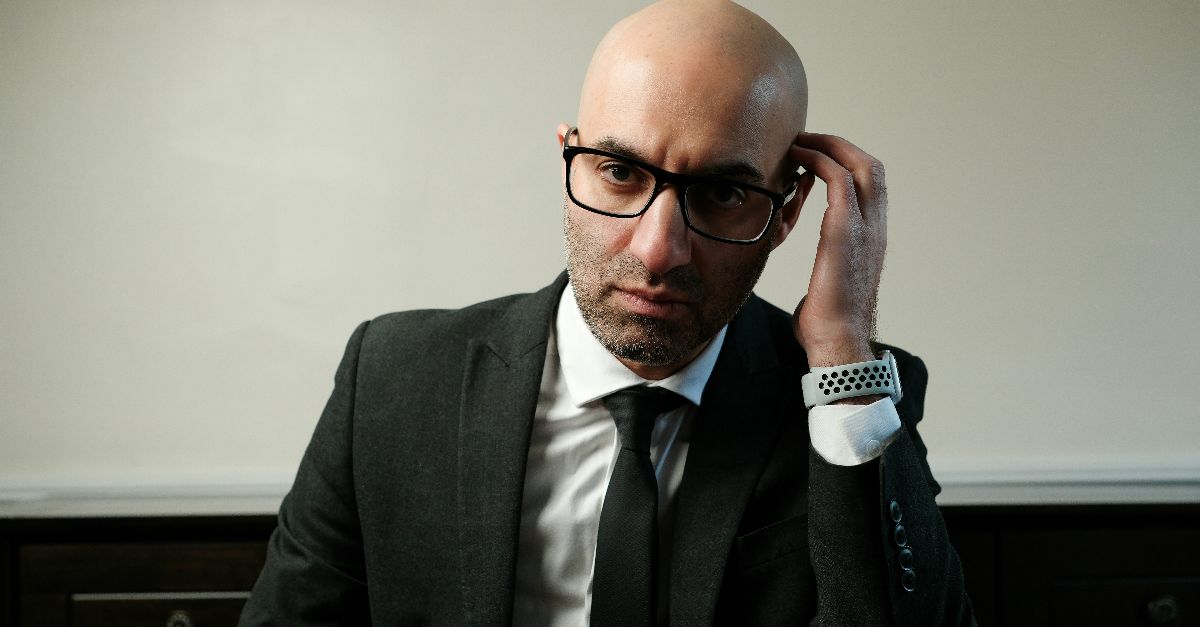
The Number That Wouldn't Change
So I'm sitting at my desk on a Thursday morning, logging into the payroll portal for what should've been a routine check of my direct deposit. I'd been working at the company for almost two years, and honestly, I'd gotten into the habit of barely glancing at the numbers anymore. They were always the same. Except this time, they weren't. I stared at the screen, did the mental math three times, and came up $900 short. Nine hundred dollars. That's not a rounding error or a missed lunch reimbursement—that's rent money. That's groceries for a month. I refreshed the page twice, thinking maybe the system glitched. Nothing changed. Then I remembered something Greg, my manager, had mentioned casually last week during a one-on-one. He'd said something about 'minor payroll adjustments' happening across the department, but he'd brushed past it so quickly I hadn't thought to ask what he meant. At the time, it seemed like standard corporate speak, the kind of thing managers say to fill silence. The more I stared at that number, the more Greg's casual words felt less like a warning and more like a confession.
 Image by FCT AI
The Polite Runaround
I'm not the type to immediately assume the worst, so I did what any reasonable person would do—I emailed payroll. I kept it professional, polite even, just asking if there'd been an error with my recent deposit and if they could look into it. I hit send and figured I'd have an answer by end of day, maybe an apology and a correction by next pay period. Instead, I got back one of those vague, corporate non-answers that somehow takes three paragraphs to say absolutely nothing. The gist was that 'compensation adjustments' were being handled at the departmental level and I should 'direct any concerns to my immediate supervisor.' Which meant Greg. The same Greg who'd already mentioned those mysterious adjustments. I read the email twice, looking for any actual information, any hint of what was going on or why my paycheck was suddenly lighter. There was nothing. Just bureaucratic deflection wrapped in professional language. The phrase 'compensation adjustments' sat in my inbox like a coded message I didn't want to decode.
 Image by FCT AI
The Meeting With No Answers
I scheduled a meeting with Greg the next morning, and honestly, I went in expecting a simple explanation. Maybe there was a legitimate budget issue I didn't know about. He sat across from me in the small conference room, Jennifer from HR taking notes in the corner like this was already more serious than I'd anticipated. I explained the discrepancy as calmly as I could. Greg leaned back in his chair, doing that thing where managers try to look thoughtful but really they're just stalling. Then he said it was an 'internal recalculation' due to budget constraints across the department. I asked what that meant, specifically. He waved a hand dismissively and said something about salary bands being reviewed and adjusted to reflect 'current market conditions.' When I pressed for details, his tone shifted—not aggressive exactly, but condescending. Like I was a child asking why the sky was blue. He told me it was 'above my level' to understand the full financial picture. Jennifer nodded along, adding nothing. When he said it was 'above my level,' something in his tone made my skin crawl—like he was daring me to push back.
 Image by FCT AI
The Quiet Decision
After that meeting, I sat in my car for twenty minutes before driving home. I was furious, sure, but more than that, I was calculating. I could escalate this immediately—make noise, demand answers, maybe even threaten to involve a lawyer. But something told me that would backfire. Greg had HR in his corner, or at least it seemed that way, and without proof that something genuinely shady was happening, I'd just look like a difficult employee complaining about policy. I needed to be smarter about this. So instead of firing off angry emails or scheduling another pointless meeting, I decided to do some digging on my own. If this was happening to me, maybe it was happening to others. If Greg's explanation didn't hold up under scrutiny, I wanted concrete evidence before I made a move. I'm not someone who goes looking for conflict, but I'm also not someone who gets walked over without a fight. I wasn't going to accuse anyone without evidence—but if Greg thought I'd just accept this, he was very wrong.
 Image by FCT AI
Patterns in the Past
I spent the weekend pulling up every pay stub I'd saved over the past eighteen months. I'm usually pretty organized about this stuff, so I had most of them in a folder on my laptop. At first glance, everything looked fine. But when I started comparing them month by month, line by line, I noticed things. Small things. A deduction here that didn't match the previous month. A slightly lower base amount there that I'd never questioned because it was only off by twenty or thirty dollars. Individually, they were easy to miss. I mean, who scrutinizes every single line item when the overall amount feels roughly correct? But laid out side by side, the inconsistencies were harder to ignore. I made a spreadsheet, color-coded the discrepancies, and tried to find a pattern. Was it seasonal? Random? Tied to performance reviews? I couldn't pin it down, but the nagging feeling in my gut grew stronger. The numbers were small enough to ignore individually, but together they painted a picture I couldn't unsee.
 Image by FCT AI
The Office Atmosphere
Monday morning, I walked into the office with fresh eyes. You know how you can work somewhere for months or years and just stop noticing the vibe? It's like white noise—you tune it out. But once you start paying attention, really paying attention, things jump out at you. People were tense. Not in an obvious, dramatic way, but in how they moved through the space. Conversations at the coffee machine would stop when Greg walked by. Emails were overly formal, overly cautious. Nobody seemed happy, but nobody seemed willing to say why. I started thinking about turnover. We'd lost three people in my department over the past six months, and I'd never really thought about why. Exit interviews happened behind closed doors, and then those people were just... gone. No goodbye lunches, no forwarding emails. It was like they evaporated. And when I casually mentioned one of them to a coworker, she just shrugged and changed the subject. People didn't talk about why others left—they just… didn't talk about it at all.
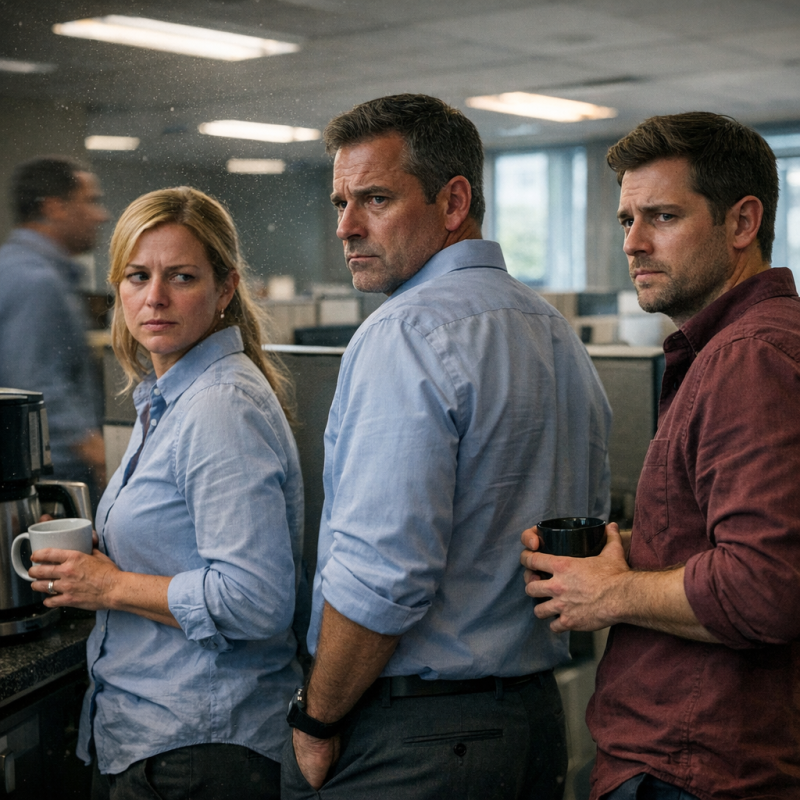 Image by FCT AI
The Budget Meeting
The following Wednesday, Greg called a team meeting to go over quarterly numbers. I almost didn't attend—these things were usually just PowerPoint slides full of corporate jargon and vague praise. But something made me sit in the back and actually listen. Greg stood at the front of the room, clicking through charts that showed revenue growth, client acquisition, and profit margins all trending upward. He used words like 'robust,' 'exceeding projections,' and 'unprecedented success.' He even mentioned potential bonuses if we kept up the momentum. I watched him gesture enthusiastically at a graph showing a seventeen percent increase in profitability over the previous quarter. And all I could think about was the conversation we'd had last week. The one where he'd told me my paycheck was short because of 'budget constraints.' The one where he'd made it sound like the company was barely scraping by. I looked around the room. Nobody else seemed to register the contradiction. If we were doing so well, why was my paycheck short?
 Image by FCT AI
Emily's Warning
I was packing up my desk at the end of the day when Emily, one of the junior coordinators, appeared at my cubicle. She looked nervous, glancing over her shoulder before leaning in close. She asked if I had a minute to talk, somewhere private. We ended up in the stairwell, where she fidgeted with her badge lanyard and spoke in a half-whisper. She told me she'd overheard Greg on a phone call last week—something about how I was being 'overpaid' and how he was 'correcting it' before upper management noticed. She said he'd used my name specifically. Emily apologized for not saying something sooner, but she wasn't sure if it was her place, and honestly, she seemed scared. I thanked her, kept my face neutral, and told her I'd handle it. But inside, my mind was racing. Overpaid? By whose calculation? And the idea that Greg was worried about upper management noticing—that was almost funny. Upper management—as if they didn't already know everything that happened in this company.
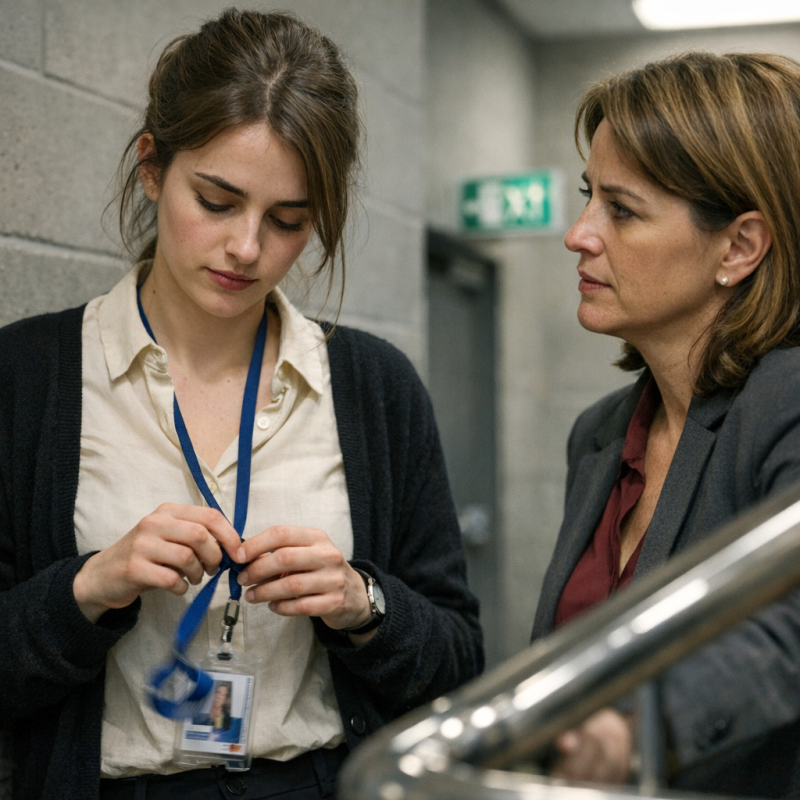 Image by FCT AI
The Misclassification Story
That night, I pulled up my offer letter, my job description, and the company's internal pay scale documentation I'd saved when I first started. I went through every line, cross-referencing the role title, the grade level, the salary band. Everything matched. My position was classified correctly from day one—I had the emails to prove it, including one from HR congratulating me on my 'Level 3 Coordinator' placement. The pay grade aligned with what I'd been promised, what I'd been receiving for months. I even checked the company handbook to see if there'd been any policy changes I'd missed. Nothing. No adjustments, no reclassifications, no fine print that would explain Greg's story. I sat there staring at my laptop screen, feeling my jaw tighten. If my job was never misclassified, then the 'correction' he'd mentioned to Emily wasn't a correction at all. There was no misclassification—which meant Greg was either incompetent or lying, and I was betting on the latter.
 Image by FCT AI

History's most fascinating stories and darkest secrets, delivered to your inbox daily.
The Casual Question
The next morning, I made it a point to swing by Mark's desk with coffee in hand, playing it casual. We chatted about the usual stuff—weekend plans, the broken printer on the third floor. Then I worked it into the conversation, like it was no big deal. 'Hey, did your paycheck seem normal this month?' I asked, taking a sip. Mark looked up, a little confused by the question, and shrugged. 'Yeah, same as always. Why?' I told him I'd just heard some people had issues with direct deposit timing, nothing serious. He shook his head, said everything came through fine for him. I thanked him and moved on before it seemed weird. But inside, I was taking notes. Mark was fine. His paycheck hadn't been touched. And he'd been here almost as long as I had, same level, similar responsibilities. So if budget constraints were real, why was I the only one affected?
 Image by FCT AI
The Second Check
I didn't stop with Mark. Over the next couple of days, I found subtle ways to ask around—casually, like I was just making conversation near the coffee machine or during lunch. I mentioned paycheck stuff to another coworker in passing, framed it like I was curious if anyone else had noticed discrepancies. Same answer every time. Nope, everything's fine. No deductions, no changes, no weird line items they couldn't explain. I started keeping a mental list, and the pattern was pretty darn clear. Everyone else was getting paid what they expected. It was just me sitting there with a chunk of my earnings gone and a manager who'd fed me a story that didn't hold up under even the lightest scrutiny. I remember sitting at my desk one afternoon, staring at my monitor, feeling the anger build in my chest like pressure in a closed system. Two people, no problems—just me, sitting here $900 lighter for no legitimate reason.
 Image by FCT AI
The Finance Inquiry
I decided to go directly to the source. If payroll had made an error, finance would have a record of it, right? I found Sarah, one of the finance coordinators, near the elevator and asked if I could schedule a quick meeting to discuss a paycheck question. She smiled, but it was the kind of smile that didn't reach her eyes. 'You'll want to go through your direct manager first,' she said, her tone polite but firm. I told her I had, and I was hoping to clarify some details directly with finance. She nodded slowly, like she was considering it, then suggested I submit a formal inquiry through the employee portal and someone would get back to me 'within five to seven business days.' Five to seven business days. For a question about my own paycheck. I thanked her and walked away, but I felt it in my gut—she wasn't going to help me. Sarah's smile was professional, but her eyes said, 'Don't ask questions you don't want answered.'
 Image by FCT AI
The Late Night Thought
That night, I couldn't sleep. I lay there staring at the ceiling, running through every possible option. I could file an HR complaint, but based on Sarah's response, I wasn't confident it would go anywhere quickly—or at all. I could confront Greg again, but what would that accomplish? He'd already lied to my face once. I could let it go, tell myself it wasn't worth the trouble, that $900 wasn't worth burning bridges or making myself a target. But every time I tried to convince myself of that, I felt this knot in my stomach, this anger that wouldn't let me just move on. It wasn't even about the money anymore. It was about the principle. It was about the fact that someone thought they could do this to me and get away with it. And then there was the other option—the one I'd been avoiding. I could let it go—or I could do what I'd been avoiding and make one phone call that would change everything.
 Image by FCT AI
The History Lesson
Here's the thing nobody at work knew: my dad wasn't just some random guy. He was on the board of directors for the parent company that owned our firm. When I applied for this job two years ago, I made a deliberate choice not to mention that connection. I used my mom's maiden name on my application, kept my LinkedIn vague, and never brought up family during the interview process. I wanted to earn my place on my own merit, not because of who I was related to. I didn't want to be 'the board member's kid'—I wanted to be Alex, the person who worked hard and got promoted because I deserved it. And for two years, it worked. I'd built relationships, earned respect, and nobody treated me differently because nobody knew. But now that anonymity felt like a double-edged sword. I'd worked so hard to be just another employee—and now that anonymity was the only reason Greg thought he could get away with this.
 Image by FCT AI
The Phone Call
I called my dad the next evening, after I got home from work. He answered on the second ring, his voice warm and casual, asking how I was doing. We made small talk for a minute, and then I told him I needed to talk to him about something that had happened at work. His tone shifted immediately—not angry, but focused, alert. I explained the whole thing: the missing $900, Greg's excuse, the misclassification story that didn't hold up, Emily's warning, the stonewalling from finance. He listened without interrupting, and when I finished, there was a pause. Then he asked me a few clarifying questions—dates, amounts, exactly what Greg had said. I answered as precisely as I could. When I was done, he was quiet for a moment, and then he said, 'Don't do anything else,' in that calm, measured tone he used when he was already ten steps ahead. 'Don't do anything else,' he said, and I knew that phrase meant the wheels were already turning.
 Image by FCT AI
The Restless Night
I barely slept that night. I kept running through scenarios in my head, imagining what the next day might look like. Would my dad call someone? Would there be a meeting? Would Greg get pulled into an office somewhere and suddenly realize he'd made a terrible miscalculation? Part of me felt relieved—like I'd finally handed the problem to someone who could actually do something about it. But another part of me felt this creeping dread, this sense that once you set certain things in motion, you can't take them back. I didn't regret calling my dad. I didn't regret telling him the truth. But lying there in the dark, staring at the shadows on my ceiling, I felt the weight of what was coming. I thought about Greg, sitting in his office, probably sleeping soundly, completely unaware. I didn't know exactly what my dad would do, but I knew Greg had no idea what was coming.
 Image by FCT AI
The Changed Atmosphere
I walked into the office around eight-thirty, same as always. But the second I stepped through those doors, I knew something was different. The usual morning chaos—people chatting by the coffee machine, someone complaining about traffic, the low hum of casual conversation—all of it was just… gone. People were at their desks, heads down, working with this weird intensity that felt completely forced. I made eye contact with Sarah from accounting, and she immediately looked away like I'd caught her doing something she shouldn't. Two people were whispering by the printer, and when I walked past, they stopped mid-sentence and scattered. The air felt thick, charged with something I couldn't name. I set my bag down at my desk and tried to look normal, tried to boot up my computer like it was just another Tuesday. But my hands were shaking slightly, and I kept glancing around, trying to figure out what had changed. Something had shifted overnight, and I wasn't sure if I was relieved or terrified.
 Image by FCT AI
The Closed Door
Greg's office door was closed. That might not sound like a big deal, but in the year and a half I'd worked there, I'd never seen that door shut during business hours. Greg had this whole open-door policy thing he was weirdly proud of, always making a point of how 'accessible' he was. He'd even made comments about managers who 'hid behind closed doors' like it was some moral failing. So seeing that door shut, with the blinds drawn, felt wrong in a way I couldn't quite articulate. I tried to focus on my work, pulled up a spreadsheet that needed updating, but my eyes kept drifting back to that closed door. No one went in. No one came out. Around ten, I saw someone walk past with a file folder, hesitate like they were going to knock, then think better of it and turn around. The whole floor seemed to be giving that corner of the office a wide berth, like it was radioactive or something. Greg's door was never closed—until today.
 Image by FCT AI
The HR Arrival
They showed up around ten-thirty. Two people I'd never seen before, dressed in that specific way that screamed corporate authority—dark suits, leather portfolios, expressions that gave away absolutely nothing. They didn't stop at reception to chat. They didn't make small talk. They walked straight through the office like they knew exactly where they were going, and within seconds they'd disappeared into the conference room on the executive floor. I wasn't the only one who noticed. Emily practically materialized at my desk. 'Who are they?' she whispered, eyes wide. I shrugged, tried to play it cool, but my heart was pounding. These weren't Janet and Tom from our regular HR department, the ones who organized the holiday party and sent out reminders about benefits enrollment. These were different. Within minutes, the whispers had spread throughout the entire floor. Something serious was happening. You could feel it in the way people stopped pretending to work and started exchanging nervous glances. These weren't our usual HR people—these were the kind who only showed up when something serious was happening.
 Image by FCT AI
The Waiting Game
I stared at my computer screen, watching the cursor blink in an empty cell, completely unable to remember what I was supposed to be entering. My brain kept looping back to the same question: had I done the right thing? I'd called my dad barely twelve hours ago. I'd laid out everything—the missing money, the pay stub discrepancies, the way Greg had brushed me off. And now, less than a day later, there were investigators in the building and Greg was locked in his office like a trapped animal. The timing was impossible to ignore. But what if I was wrong? What if there was some explanation I hadn't considered, and I'd just torpedoed someone's career over a misunderstanding? My stomach felt like it was full of concrete. I kept telling myself I'd done my due diligence, that I'd checked and double-checked the numbers, that I'd tried to handle it quietly first. But sitting there, watching the office buzz with tension, I couldn't shake this nauseating feeling that maybe I'd overreacted. Every minute felt like an hour, and I kept wondering if I'd made a terrible mistake.
 Image by FCT AI
The Summoning
Just before noon, Greg's door finally opened. I happened to be walking back from the bathroom when I saw him emerge, flanked by the two HR people from earlier. They didn't touch him or anything dramatic like that, but there was something about the way they positioned themselves—one on each side—that made it clear this wasn't a friendly conversation. Greg's face, usually so composed and smugly confident, looked completely drained of color. His jaw was tight, and he wouldn't make eye contact with anyone as they walked him toward the conference room. I'd seen Greg handle angry clients, impossible deadlines, even a minor office fire once—he'd always had this unshakeable calm about him, this irritating self-assurance that made you want to punch him and respect him at the same time. But the person I saw walking down that hallway looked like someone had just pulled the ground out from under his feet. He stumbled slightly on the carpet, caught himself, kept walking. I'd never seen Greg look anything less than confident—until he walked out of that room pale as paper.
 Image by FCT AI
The Disappearance
I came back from lunch around one-fifteen, and Greg's desk was empty. Not just empty like he'd stepped away for a meeting—empty like someone had systematically removed every trace of him. His family photos, the motivational quotes he had pinned to his corkboard, the coffee mug with the company logo that he drank from every single morning—all of it was gone. There was a cardboard box sitting on his chair, half-filled with what I assumed were his personal belongings, and a woman from facilities was carefully unplugging his computer monitors. She worked quickly, efficiently, like she'd done this before. No one was talking about it directly, but you could see people glancing over, trying to process what they were witnessing. Just this morning, Greg had been our manager. He'd had an office, authority, a whole career here. And now, barely three hours later, it was like he'd been erased. The woman taped up the box, picked it up, and walked away without a word. He was just… gone, like he'd never been there at all.
 Image by FCT AI
The Company Email
The email hit everyone's inbox at 2:47 PM. Subject line: 'Organizational Update.' I clicked it open with this weird sense of dread, and sure enough, it was exactly the kind of corporate non-statement you'd expect. Something about 'internal auditing procedures,' 'commitment to operational excellence,' and 'temporary adjustments to leadership structure in certain departments.' Greg's name didn't appear anywhere. My name didn't appear anywhere. There was nothing concrete, nothing specific, just a bunch of polished language that technically said something while revealing absolutely nothing. But everyone knew. You could hear it in the sudden silence that fell over the office after that email went out, in the way people started glancing at Greg's empty office with this new understanding. The company had just confirmed that something significant had happened without actually confirming anything at all. It was impressive, in a dystopian kind of way—this ability to acknowledge an event while simultaneously refusing to acknowledge it. No names, no details—but everyone knew something big had just happened.
 Image by FCT AI
The Hallway Conversations
By three o'clock, the theories were flying. I was in the break room refilling my water bottle when I heard Emily talking to Mark near the coffee maker. 'I heard he failed an audit,' Emily said, her voice low but excited in that way people get when they're sharing gossip. 'Someone told me it was inappropriate conduct,' Mark countered, shaking his head. 'That's why they moved so fast.' I kept my face neutral, focused on watching water fill my bottle like it was the most fascinating thing in the world. Around me, the speculation continued. Someone thought Greg had been caught falsifying sales reports. Someone else was convinced he'd had an affair with an executive's spouse. The theories got wilder as the afternoon wore on—corporate espionage, insider trading, embezzlement on a massive scale. I listened to all of it, said nothing, just nodded occasionally like I was as confused as everyone else. My coworkers were smart people, observant people, and yet not a single theory came anywhere close to the truth. I heard a dozen theories, and none of them came close to the truth.
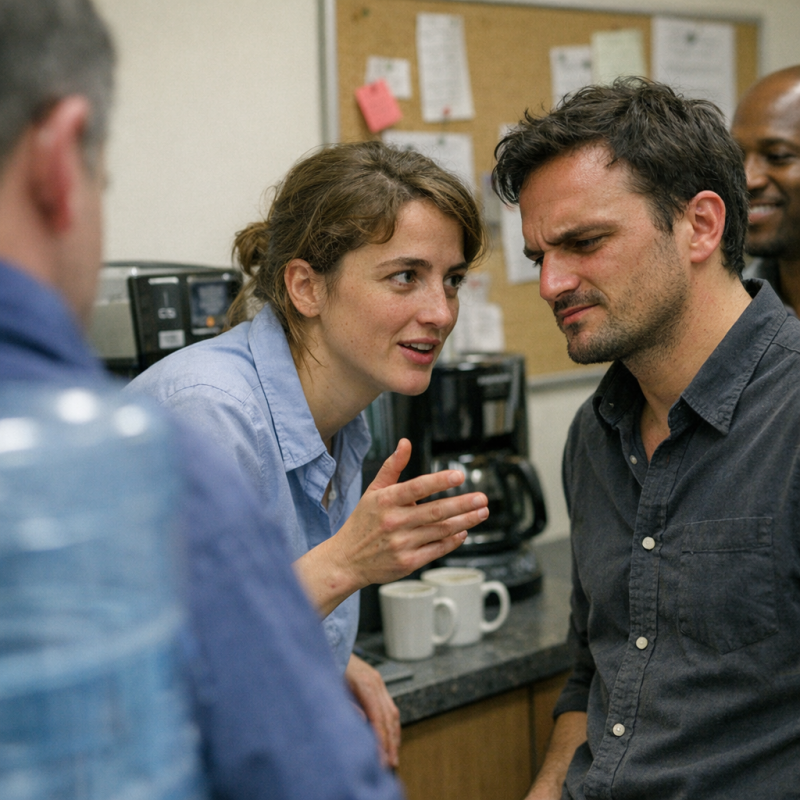 Image by FCT AI
The Awkward Questions
Emily caught me at my desk around four-thirty, perching on the edge with that concerned-friend expression that made my stomach tighten. 'Hey,' she said, voice low enough that it wouldn't carry. 'So, I know everyone's been speculating all day, and I don't want to be that person, but...' She paused, studying my face. 'Do you know anything about what happened with Greg? Like, anything at all?' My hands went still on my keyboard. She wasn't asking in a gossipy way—Emily was actually worried, maybe wondering if there was something she should be concerned about too. 'Why would I know anything?' I said, going for confused rather than defensive. She shrugged. 'You've been kind of quiet about it. Everyone else has a theory, but you haven't said a word.' The observation landed like an accusation even though I knew she didn't mean it that way. I forced myself to meet her eyes. 'I reported a paycheck issue,' I said, which was technically true but felt like a lie by omission.
 Image by FCT AI
The End-of-Day Summons
I was packing up my bag at 5:47, already mentally checked out and thinking about leftover Thai food at home, when the email notification popped up on my phone. Subject line: Meeting Request—Tomorrow 9 AM. The sender was David Carlson, VP of Operations, someone I'd never directly interacted with in my entire time at the company. My thumb hovered over the notification. The message was brief, almost terse: mandatory attendance, conference room B, executive meeting regarding recent personnel matters. No other details. No agenda. Just a summons that made my pulse kick up several notches. I looked around the office—most people were already gone, the overhead lights dimmed in that energy-saving way they did after six. My desk suddenly felt very small, very exposed. I'd kept my head down for over a year, and now I was being called into a room with people who could end careers with a sentence.
 Image by FCT AI
The Sleepless Preparation
I didn't sleep much that night. I kept running through possible scenarios, rehearsing answers to questions I couldn't predict. What would I say if they asked why I'd waited so long to report the discrepancy? How would I explain that I'd triple-checked everything because I didn't trust my own judgment? Around two in the morning, lying in the dark, a worse thought occurred to me: what if they knew who my father was? What if they'd always known, and this meeting was about that? Maybe they thought I'd been testing them, or setting some kind of trap, playing games with my anonymity like it was a power move instead of self-preservation. I'd been so careful to keep those worlds separate, to build something that was entirely mine. But careful isn't the same as invisible. The ceiling fan turned lazy circles above me, and I imagined walking into that conference room tomorrow, seeing recognition in their eyes before I even sat down. I'd wanted to be taken seriously on my own merit—and now I was about to find out if I ever had been.
 Image by FCT AI
The Executive Meeting Begins
Conference room B was all glass walls and expensive ergonomic chairs, the kind of space that reminded you exactly where you stood in the hierarchy. I arrived at 8:58, not wanting to be early enough to look anxious or late enough to seem disrespectful. David Carlson was there, along with another executive I recognized but couldn't name. And then I saw him. My father was sitting at the head of the table, looking exactly as comfortable as he always did in these settings—suit jacket perfectly pressed, reading glasses perched on his nose as he reviewed something on a tablet. My feet literally stopped moving. He glanced up, and for just a second, something passed across his face—recognition, maybe apology, I couldn't tell. 'Alex,' David said, gesturing to a chair. 'Thank you for coming. I believe you know everyone here?' His tone was professionally neutral, but there was something underneath it. The moment our eyes met, I realized everyone in this room had known exactly who I was from day one.
 Image by FCT AI
The Uncomfortable Truth
My father set down his tablet with deliberate care. 'For the record,' he said, voice formal in that way he used during board meetings, 'Alex is my daughter. I've recused myself from direct oversight of this matter, but given the circumstances, I thought transparency was appropriate.' The words hung in the air like an admission of guilt, though whose guilt I wasn't entirely sure. David nodded as if this was simply administrative housekeeping. 'We've been aware of your relationship since your hire date, Alex,' he said. 'You weren't as anonymous as you believed.' The floor felt unstable beneath me. All those months of carefully avoiding mentions of family, of dodging personal questions, of using my mother's maiden name on internal forms—all of it meaningless. They'd known. They'd watched me struggle with Greg's dismissiveness, watched me second-guess every missing dollar, watched me debate whether to speak up. And they'd said nothing. I'd thought I was building something on my own—but they'd all been watching, waiting, the whole time.
 Image by FCT AI
The Bigger Picture
David cleared his throat, pulling a folder from the stack in front of him. 'We want to be clear about the timeline here,' he said. 'An internal audit was initiated approximately six weeks ago, triggered by routine financial controls that flagged certain payroll patterns as irregular.' Six weeks. That was before I'd ever looked at my pay stub, before I'd noticed anything was wrong. 'The audit was ongoing but inconclusive,' David continued, 'until your complaint provided specific documentation that corroborated what we'd been seeing in broader data sets.' My father hadn't moved, his expression carefully neutral in that way that meant he was thinking several steps ahead. 'Your timesheet records and pay stubs gave us concrete examples,' David said. 'They established a pattern we'd suspected but couldn't prove.' I felt oddly disconnected from my own body, like I was watching this conversation happen to someone else. My missing $900 wasn't the beginning of the investigation—it was just the piece that made everything click into place.
 Image by FCT AI
The Initial Findings
The other executive—I caught his name badge finally, Richard something—spread several documents across the table's polished surface. 'Preliminary findings show payroll discrepancies across at least four departments,' he said, tapping one of the printouts. 'Different amounts, different timing, but similar patterns in how the adjustments were coded.' He was speaking carefully, I noticed, using words like 'discrepancies' and 'irregularities' instead of anything more direct. 'We're still determining the full scope,' David added. 'Some cases might be legitimate errors, system glitches, that kind of thing. We need forensic accounting to separate incompetence from...' He trailed off, not finishing the sentence. Four departments. That meant other people, other missing paychecks, other employees who might have noticed and said nothing just like I almost had. The numbers on the documents swam in front of my eyes—dates, amounts, employee IDs redacted for privacy. They were talking about irregularities like they were accounting errors—but I knew better.
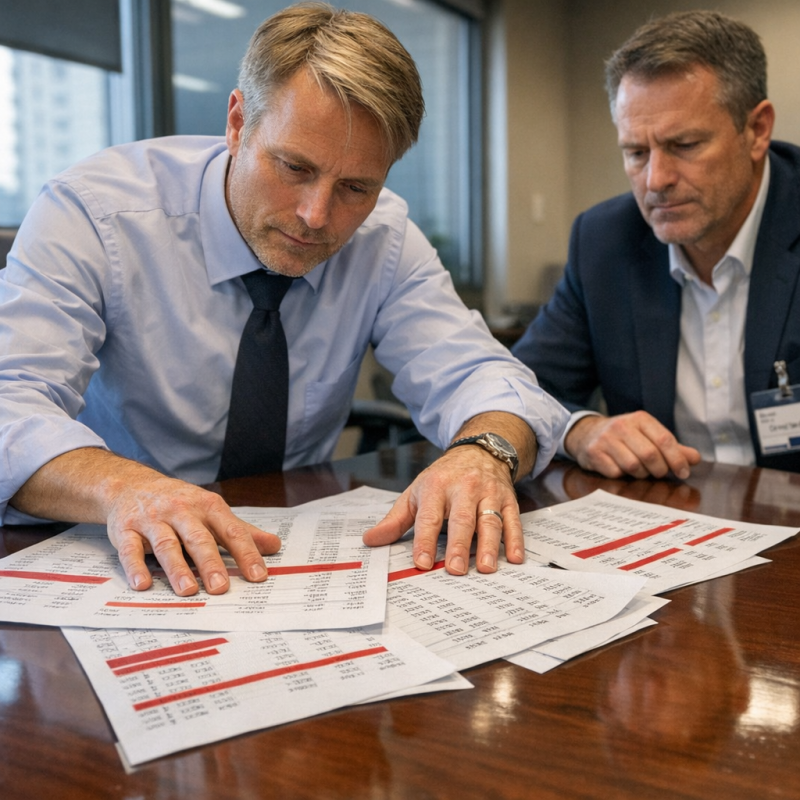 Image by FCT AI
The Question of Motive
I leaned forward, hands flat on the table. 'Do you think he was stealing from us?' I asked, not bothering to soften it with corporate euphemisms. The question landed like a stone in still water. David and Richard exchanged a glance—one of those quick, loaded looks that said they'd discussed this exact moment beforehand. 'We're not prepared to make allegations until the investigation is complete,' David said finally, his tone maddeningly measured. 'There are procedural considerations, due process concerns.' My father shifted in his chair but said nothing. Richard picked up a pen, set it down again. The silence stretched out, thick and uncomfortable, filled with everything they weren't saying. I could see it in their faces—they knew, or at least strongly suspected, but they were trapped by protocols and liability concerns and probably a corporate lawyer somewhere telling them to stick to the script. Their silence was more telling than any accusation could have been.
 Image by FCT AI
The Personal Cost
After the meeting ended, everyone filtered out except my father. He stayed seated, waiting until the room emptied completely before turning to me. 'Are you okay?' he asked, and the question was so simple, so dad-like, that something in my chest loosened. I sat back down. 'Honestly? I feel like an idiot,' I admitted. 'I kept telling myself I was being paranoid. That I was overreacting. And the whole time, I was just—' I gestured vaguely, searching for the right words. 'I should have caught this sooner.' He didn't rush to reassure me or wave away my frustration like some parents might. Instead, he just listened, watching me with that steady attention that made me feel like what I was saying actually mattered. 'You did catch it,' he said finally. 'That's what matters.' I shook my head. 'Months too late.' He leaned forward, elbows on the table, his expression serious. 'You weren't supposed to catch it,' he said quietly, and I realized he meant more than just the payroll issue.
 Image by FCT AI
The Return to Normalcy
I went back to my desk that afternoon determined to act normal. I logged into my email, pulled up the spreadsheet I'd been working on before everything exploded, tried to focus on the numbers in front of me. But the office felt different now—charged with a tension that hadn't been there before. People glanced at me when they thought I wasn't looking. Conversations stopped when I approached the break room. It wasn't hostile, exactly. More like everyone was recalibrating, trying to figure out what my presence meant now that they knew the truth. I was the person who'd brought down the hammer on Greg, sure. But I was also the owner's daughter who'd been working alongside them this whole time without saying a word. Someone brought me coffee—an odd gesture from a coworker who'd barely spoken to me in months. The kindness felt loaded with unspoken questions. I thanked her and tried to smile. I was the same person doing the same job—except now everyone knew I never had to be there at all.
 Image by FCT AI
The Audit Expands
The announcement came via company-wide email two days later. The audit would expand to cover the past eighteen months, reviewing all payroll records, expense reports, and departmental budgets. It was carefully worded, professionally neutral, but the implications rippled through the office like an electric current. I could feel the shift immediately. People huddled in small groups, voices low and urgent. Someone mentioned that Finance was requesting documentation going back farther than usual. Another person wondered aloud if their overtime had been processed correctly. David stopped by my desk mid-afternoon, his expression carefully blank. 'The external auditors will be here Monday,' he said. 'If anyone approaches you with questions about the investigation, please direct them to HR or myself.' I nodded, understanding the subtext—people were nervous, and management wanted to control the narrative. After he left, I watched my coworkers with new eyes, noticing the tension in their shoulders, the way they kept checking their phones. People were nervous, and I wondered how many of them had noticed things they'd never reported.
 Image by FCT AI
The Coworker Exodus
Emily caught me in the hallway that Friday, her voice pitched low. 'Can I ask you something?' She glanced around to make sure we were alone. 'Do you remember Sarah? And Marcus? And that woman from Accounting—Jennifer?' I nodded slowly. All three had left within the past year, their departures spaced out enough that I hadn't thought to connect them. 'They all quit within like, six months of each other,' Emily continued. 'And they all said it was for personal reasons, but now I'm wondering—' She trailed off, but I understood exactly what she was implying. I'd barely known Sarah, had exchanged maybe a dozen words with Marcus. Jennifer had seemed happy enough, from what I remembered. But looking back now, trying to recall their last weeks at the company, I realized I couldn't remember any of them seeming particularly excited about wherever they were going next. They'd just... left. Quietly. Without fanfare or farewell parties. Personal reasons—or they'd figured out something was wrong and decided it wasn't worth the fight.
 Image by FCT AI
The Data Dive
David requested a meeting Monday morning, and I showed up with everything I had. The printed pay stubs with their unexplained deductions. My spreadsheet tracking the discrepancies month by month. The emails where I'd asked Greg for clarification and received those vague, dismissive responses. Even the notes I'd scribbled to myself when I first started suspecting something was off. I'd kept it all because that's just how I am—meticulous to a fault, unable to throw things away until I'm absolutely certain they're useless. David and one of the external auditors spread everything across the conference table, photographing each document, making notes in a leather-bound notebook. 'This is extremely helpful,' the auditor said, her tone professionally neutral but her eyes sharp with interest. 'Your documentation is quite thorough.' I watched them work, seeing my careful record-keeping transform into evidence, each piece fitting into a larger puzzle. I'd kept records because I'm careful—but looking at them all together, they told a story I hadn't fully seen before.
 Image by FCT AI
The Legal Team Arrives
Lauren from Corporate Legal arrived Tuesday morning—sharp suit, sharper eyes, the kind of woman who notices everything and forgets nothing. She set up in one of the small conference rooms and started calling people in one by one. My turn came after lunch. She had my documentation spread out in front of her, already marked up with colored tabs and sticky notes. 'Walk me through your interactions with Greg Thompson,' she said, pen poised over a note pad. So I did. I described the way he'd dismiss my questions with a laugh and a 'don't worry about it.' The casual tone he'd use when explaining away discrepancies. How he'd made me feel slightly ridiculous for even asking, like I was being paranoid or didn't understand how payroll worked. As I talked, Lauren took notes, occasionally asking for specific dates or exact phrasing. And as I recounted each interaction, something crystallized in my mind. Lauren asked me to describe Greg's behavior in detail, and I realized every casual dismissal had been a calculated move.
 Image by FCT AI
The Pattern Emerges
Lauren leaned back in her chair, tapping her pen against the note pad. 'In your observation, did Greg treat all employees this way, or were there patterns in who he dismissed or took more seriously?' The question made me pause, really think about it. I remembered how he'd handled David's questions about budget discrepancies—professional, detailed, almost deferential. How he'd jumped to attention when Richard needed something. But with me? With Emily? With the handful of younger employees who occasionally asked about their paychecks? He'd been friendly, casual, just condescending enough to make you doubt yourself without being overtly rude. 'He picked his targets,' I said slowly, the realization forming as I spoke. 'People who wouldn't push back. Who'd accept his explanations and move on.' Lauren made a note, her expression unchanging. 'Young employees? Women? People new to the company?' I nodded, feeling sick. 'People who wouldn't make waves. People like me.' He chose people who wouldn't make waves—and I'd practically handed him permission by staying so quiet.
 Image by FCT AI
The Other Victims
Lauren set down her pen and looked at me directly. 'I want you to know that you're not the only employee who's reported similar experiences,' she said carefully. 'I can't discuss specifics, but your account is consistent with what we're hearing from others.' The words hit me harder than I expected. I'd been so focused on my own situation—my missing money, my ignored questions, my growing suspicion—that I hadn't fully considered the scope. But of course there were others. Greg wouldn't have risked his entire scheme on just one person. He would have tested the waters, found multiple people who seemed safe, who seemed unlikely to escalate or compare notes. People scattered across different departments, different shift schedules, people who might never talk to each other about their paychecks. 'How many others?' I asked, though I knew she probably couldn't tell me. Lauren's expression was professionally sympathetic but firm. 'I can't share those details yet. But you should know you weren't alone in this.' There were others—people who'd accepted the explanations, who'd never thought to question it.
 Image by FCT AI
The Numbers Add Up
Lauren pulled out another folder, this one thicker than the rest. 'I want to give you some context about the scope of what we've uncovered,' she said, flipping through pages filled with highlighted numbers. 'Based on our preliminary review, we're looking at tens of thousands of dollars that were misappropriated over the period we've been investigating.' I felt my stomach drop. Tens of thousands. My $900 had seemed like such a huge deal to me—and it was, considering my rent and bills—but hearing those words put it in a completely different light. 'How many people?' I asked quietly. She hesitated, choosing her words carefully. 'We're still working to identify everyone affected. Some cases are clearer than others. But it's significant.' I sat there trying to process it. All those people, probably wondering like I had if they'd done something wrong, if they'd misunderstood their contracts, if they were being unreasonable for questioning their paychecks. 'Your report was the catalyst,' Lauren said, and there was something almost gentle in her voice. 'You asking questions, escalating when you didn't get answers—that's what started this.' My $900 was nothing compared to the whole picture—but it was the piece that finally exposed everything.
 Image by FCT AI
The Waiting Period
Lauren warned me that the investigation would take several more weeks to complete. They needed to review every transaction, interview everyone involved, build a timeline that would hold up under scrutiny. 'I know this is frustrating,' she said as I gathered my things to leave. 'But we need to be thorough.' I understood, intellectually. But understanding didn't make it easier. I went back to work the next day, and the day after that, trying to focus on my actual job while this massive thing hung over everything. My coworkers would ask if I'd heard anything, and I'd have to say no, not yet, still waiting. The hardest part was not knowing what was happening on the other side. Was Greg being questioned? Did he know the walls were closing in? Or was he sitting at home, confident that he'd covered his tracks well enough that nothing would stick? The uncertainty was maddening. I'd check my email obsessively, hoping for updates that never came. I'd rehearse conversations in my head, imagining different outcomes, different resolutions. But all I could do was wait. Waiting was torture—especially knowing that somewhere, Greg was waiting too.
 Image by FCT AI
The Office Recovery
After about a week, corporate sent someone to take over as interim manager. His name was Robert, a middle-aged guy from another location who seemed competent but distant. He made it clear from day one that he wasn't there to make friends or implement big changes—just to keep things running while the investigation proceeded. And honestly? Things did start to feel more normal. We had our regular team meetings again. Schedules got posted on time. People stopped whispering quite as much in the break room. It was almost like nothing had happened, like we could all just go back to our routines and pretend the last few months hadn't been completely chaotic. But underneath that surface calm, everyone was still on edge. You could see it in the way people's eyes would dart to Robert's office when they walked past, wondering if he knew more than he was saying. You could hear it in the careful neutrality of conversations about Greg, about the investigation, about what might come next. We were functioning, sure. We were getting our work done. We were all pretending things were normal, but everyone was waiting for the other shoe to drop.
 Image by FCT AI
The Forensic Accounting
Sarah from Finance called me in the third week of waiting. I'd been expecting another routine check-in, maybe a request to clarify some detail from my earlier statements. Instead, she had news. 'I wanted to let you know that we've brought in forensic accountants,' she said, her voice carrying that same professional seriousness I'd heard from Lauren. 'They're going through every single transaction Greg had access to, building a complete picture of the financial irregularities.' Forensic accountants. That phrase hit me hard. Those weren't the kind of people you brought in to resolve a payroll mix-up or document a policy issue. Those were the people you brought in when you were preparing for something serious. 'Does that mean—' I started, but Sarah cut me off gently. 'I can't speculate about next steps,' she said. 'But yes, this has moved beyond an internal HR matter. We're documenting everything carefully.' After I hung up, I sat there processing what she'd actually told me. They weren't just fixing a problem. They weren't just correcting errors and updating procedures. They were building a case—not just documenting an error, but preparing for something much bigger.
 Image by FCT AI
The Email Trail
Lauren asked me to come in again a few days later. This time, she had her laptop open to what looked like dozens of email threads. 'I need you to review some communications,' she said, turning the screen toward me. 'Tell me if these match your recollection of the conversations you had with Greg.' I started reading, and it was surreal. There were emails from Greg to me, dated from months ago, carefully explaining budget adjustments and policy changes. There were messages to other managers documenting his payroll decisions, always with plausible-sounding justifications. There were even emails to HR asking for clarification on procedures, making him look diligent and conscientious. 'He documented everything,' I said slowly. 'Exactly,' Lauren replied. 'Every explanation he gave, every justification, every reason for why someone's paycheck might be different—he put it in writing.' It was smart, in a twisted way. If anyone had questioned him earlier, he could have pointed to these emails as proof that he was following proper channels, doing his due diligence, being transparent. But now, reading them with fresh eyes, I could see how carefully constructed they were. Every excuse he'd given me was there in writing—perfect cover for what he was really doing.
 Image by FCT AI
The System Exploit
Sarah requested another meeting, this time with one of the forensic accountants present. His name was Marcus, and he had the kind of systematic precision that made you believe he could find a missing penny in a million-dollar budget. 'We've identified the mechanism,' Marcus said, pulling up a flowchart on his tablet. 'Your payroll system has a gap—a window of time between when changes are entered and when they're reviewed by Finance. It's supposed to be a couple of days at most, but in practice, it was often a week or more.' He walked me through how it worked. Greg would make an adjustment, document a justification, and by the time Finance reviewed the batch, it would be buried among dozens of other legitimate changes. 'The system assumed managers were operating in good faith,' Sarah added quietly. 'There were flags for major changes, but small percentages? Those slipped through.' 'How small are we talking?' I asked. Marcus glanced at his notes. 'Usually between three and seven percent. Just enough to be noticeable to the employee, but not enough to trigger automatic reviews.' He'd found the cracks in the system and spent months quietly widening them.
 Image by FCT AI
The Strategic Selection
Lauren had asked to see me alone this time, and I knew from her expression that whatever she had to tell me was going to be difficult to hear. 'We've been analyzing the pattern of who was affected,' she began carefully. 'And there's something you should know about how Greg selected his targets.' I braced myself. 'He was strategic,' she continued. 'The employees he took from had certain things in common. They tended to be newer, without strong connections to upper management. They were people who hadn't previously filed complaints or escalated issues. People who, based on their behavior patterns, seemed unlikely to make waves.' The implication settled over me slowly. 'He profiled us,' I said. Lauren nodded. 'He identified people he believed would accept his explanations, who wouldn't push back, who didn't have the resources or confidence to challenge him.' I thought about how I'd almost let it go. How I'd second-guessed myself, wondered if I was being unreasonable, worried about seeming difficult. That's exactly what he'd been counting on. He'd been watching us all, calculating who he could take from—and I'd made myself the perfect mark.
 Image by FCT AI
The Full Picture
The formal briefing happened on a Tuesday morning. They'd asked my dad to attend as a courtesy, and when I walked into the conference room and saw him there alongside David, Lauren, and Sarah, I knew this was it. The full story. David took the lead. 'We're ready to share our complete findings,' he said, and then he laid it all out. Greg had been systematically skimming payroll for eight months. Small deductions across multiple departments, carefully timed, meticulously documented. The total was over sixty-seven thousand dollars. He'd started small, testing the system with amounts under fifty dollars. When those went unnoticed, he got bolder. The $900 he took from me? That was his largest single test case. He was seeing if he could expand the scheme, if he could take bigger amounts without getting caught. 'He specifically chose you,' Lauren said, looking at me, 'because your profile suggested you wouldn't escalate. No family connections to management, relatively new, no history of complaints.' But he'd miscalculated. Because my dad wasn't just anyone. And I wasn't as powerless as Greg had assumed. It wasn't an error, it wasn't a budget cut—it was theft, calculated and deliberate, and he'd chosen me because he thought I was nobody.
 Image by FCT AI
The Charges
Lauren called me into her office two days later, and I could tell from her expression that something significant had shifted. 'I wanted you to hear this directly from me,' she said, sliding a folder across her desk. 'We've turned over all evidence to the District Attorney's office. They're pursuing charges.' I stared at the paperwork. Theft. Wire fraud. Multiple counts. The words felt surreal on the official forms, but they were real. This was actually happening. 'The DA believes they have a strong case,' Lauren continued. 'The documentation is thorough, the pattern is clear, and the amount exceeds the enforcement threshold.' I thought about Greg walking into work every day, thinking he'd gotten away with it. Thinking nobody would notice or care. 'What does this mean, timeline-wise?' I asked. 'Arraignment within the week, most likely. Then it moves through the system.' She paused. 'Alex, I want you to understand—this isn't just an employment matter anymore. This is a criminal case.' I nodded, letting that sink in. This wasn't just going to cost him his job—it was going to cost him his freedom.
 Image by FCT AI
The Victim Notification
The company-wide email went out on Thursday morning. Subject line: 'Important Notice Regarding Payroll Discrepancies.' I watched my inbox fill with replies almost immediately—people forwarding it to each other, asking questions, trying to figure out if they were affected. The email was carefully worded, explaining that an investigation had uncovered systematic theft and that all impacted employees would receive individual notifications with details about restitution. Emily appeared at my desk within minutes. 'Did you see this?' she asked, her voice low. I nodded. 'I was one of them,' she said quietly. 'Got the individual notice about ten minutes ago. $340 over six months. I had no idea.' Mark stopped by next, holding a printout. 'Same here. $275. I just thought my calculations were off, you know? Figured I'd misremembered my hours or something.' All around the office, similar conversations were happening. People pulling up old pay stubs, recalculating, realizing. The notification process was clinical and thorough—dates, amounts, scheduled restitution timelines. But reading those numbers was different from experiencing the realization. Some people had no idea they'd been stolen from until that email arrived.
 Image by FCT AI
The Arrest
The news came through informal channels first—a text from someone in HR to someone in accounting, then spreading like wildfire through the office. Greg had been taken into custody that morning at his home. By lunch, everyone knew. Emily and I were in the break room when Sarah walked in, her phone in her hand. 'It's confirmed,' she said quietly. 'He's been charged. They took him in this morning.' The room went silent. This was different from the investigation, different from the termination, different from knowing charges were coming. This was real in a way that made everything feel suddenly, viscerally concrete. 'What happens now?' someone asked. 'Arraignment, bail hearing, trial eventually,' Sarah said. 'But he's in the system now. This is on record.' I thought about Greg planning his scheme, choosing his victims, calculating exactly how much he could take. He'd been so careful, so methodical. But he'd made one critical error. He'd assumed I was nobody, that my father was nobody, that none of us would fight back hard enough to matter. Somewhere across town, Greg was learning exactly how wrong he'd been about everything.
 Image by FCT AI
The Office Reaction
The office atmosphere shifted dramatically after the arrest became public knowledge. People who'd stayed quiet during the investigation suddenly had opinions. Theories. Stories. 'I always thought something was off about him,' someone from marketing said in the elevator. But I remembered that same person defending Greg just weeks earlier, insisting there had to be a reasonable explanation. Emily rolled her eyes when she heard it. 'Funny how everyone's suddenly an expert in hindsight.' Mark was more direct. 'Half these people told you that you were overreacting,' he said. 'Now they're acting like they knew all along.' Sarah organized an informal gathering in the large conference room that afternoon—not mandatory, but for anyone who wanted to process collectively. The room filled quickly. People were angry, confused, relieved, betrayed. Some had been stolen from and knew it. Others were still discovering. A few were just shaken by the breach of trust. 'We're here if you need support,' Sarah said simply. The conversations that followed were raw and honest. People who'd defended him suddenly remembered every strange interaction, every odd explanation.
 Image by FCT AI
The Media Attention
I first saw the news alert on my phone during my lunch break. 'Local Manager Taken Into Custody in Payroll Theft Scheme.' My stomach dropped. The article didn't name our company initially, but it had enough details that anyone who worked here would recognize it. By evening, the company's name was in the headlines. Our PR team issued a statement—carefully worded, expressing commitment to employee welfare and cooperation with law enforcement. They kept it vague about specifics, but the core facts were out there. Social media picked it up next. Local business forums, industry groups, even a few LinkedIn posts from people completely unconnected to the situation, all weighing in with opinions. 'This is why oversight matters,' one comment read. 'How did this go on for eight months?' asked another. I felt exposed in a way I hadn't anticipated. The investigation had felt contained, internal, something we could manage within our walls. But this was public now. Reporters were calling the office. Someone from a local news station had apparently tried to get into the building. We'd all been trying to keep this quiet, but now it was everywhere.
 Image by FCT AI
The Identity Question
I called my dad that evening, anxiety tight in my chest. 'They're not going to connect me to you, are they?' I asked. 'I mean, in the press coverage?' I'd been thinking about it all day—about what would happen if reporters dug deeper, if someone decided to investigate not just the offense but the response, if they found out that the employee who'd triggered everything was the owner's daughter. 'Your privacy is protected,' he said firmly. 'All official statements refer to you as 'an affected employee.' Your name isn't in any public documentation, and it won't be.' 'But what if someone—' 'Alex,' he interrupted gently. 'The team has been very clear about this. Your identity as the initial complainant is confidential. Even in court documents, if it goes to trial, you'd be listed anonymously.' I wanted to believe him. I did believe him. But I also knew how these things could spiral. Someone talks to someone, a detail slips, curiosity leads to digging. 'I just don't want this to become about me,' I said. 'About us.' 'It won't,' he assured me. 'Your privacy is protected,' he said, but I wondered how long that would last.
 Image by FCT AI
The Restitution Plan
David called a mandatory all-staff meeting the following Monday. The conference room was packed—people standing along the walls because there weren't enough chairs. 'I want to address the restitution process directly,' he began. No preamble, no corporate speak. Just facts. Every affected employee would receive full reimbursement within two weeks. Not just the stolen amount, but also compensation for the time value—a percentage added to acknowledge the delayed payment. 'Additionally,' David continued, 'we're implementing an employee assistance program for anyone who feels they need support processing this situation. Counseling, financial planning assistance, whatever helps.' The relief in the room was palpable but complicated. People nodded, a few asked clarifying questions about timing and process. Someone asked if the restitution would come from Greg's assets. 'That's part of the case,' David said. 'But regardless of that outcome, the company is making you whole immediately.' I appreciated the directness, the lack of defensive posturing. But I also noticed the faces around me—the lingering uncertainty, the broken trust. Money could be returned, but trust—that was going to take longer.
 Image by FCT AI
The System Changes
Sarah presented the new oversight protocols in a smaller meeting two days later. I'd been invited specifically because, as she put it, 'You're the reason we're fixing this.' The changes were comprehensive. Dual authorization for any payroll adjustments. Automated flagging for discrepancies above a minimal threshold. Quarterly audits with randomized sampling. Monthly transparency reports showing department-level payroll data. 'We're also implementing mandatory training,' Sarah explained. 'So everyone understands how to read their pay stubs, what to look for, how to report concerns.' David nodded along, taking notes. 'This should have been standard practice already,' he admitted. 'We got complacent. Assumed good faith. That assumption created the vulnerability Greg exploited.' I looked at the documentation Sarah had prepared—detailed, thoughtful, clearly designed with real prevention in mind. These weren't just performative changes. They were structural reforms that would actually make a difference. 'Will other departments adopt these protocols?' I asked. 'Company-wide rollout starts next month,' David confirmed. I felt something shift—not quite closure, but direction. We were building better systems—because we'd learned the hard way what happens without them.
 Image by FCT AI
The Guilty Plea
Greg's attorney called it 'pragmatic.' The prosecutor called it 'accountability.' I just called it over. He pleaded guilty to three counts of embezzlement—mine and two others they'd uncovered during the investigation. In exchange, he got eighteen months instead of five years, plus restitution and probation. No trial. No dragged-out court appearances where I'd have to sit across from him and relive everything. Just a quiet hearing where he stood before a judge, admitted what he'd done, and accepted the consequences. I didn't attend—David offered to arrange it, but I declined. I didn't need to see Greg's face one more time to feel resolved. The justice system had done its job. Sarah emailed me the settlement breakdown: full restitution, plus interest, plus penalties he'd have to pay the company. The numbers were stark, clinical, final. I stared at that email for a long time, processing what it meant. He took the deal, and I wondered if he ever realized that the person who brought him down was the one he thought mattered least.
 Image by FCT AI
The Aftermath
Weeks passed, and the office settled back into routine—or what felt like routine, anyway. But I noticed something different in myself. I used to arrive early, head down, trying to be invisible. Now I walked in like I had a right to be there. Because I did. Not because of my father—though that connection existed whether I acknowledged it or not—but because I'd earned it. I'd done the work. I'd noticed what others missed. I'd spoken up when it mattered. The experience had cracked something open in me, this idea that staying small kept me safe. It didn't. It just made me vulnerable in different ways. I'd spent so long trying to prove I belonged without any advantages, rejecting even the notion that my family might matter. But belonging wasn't about erasing where I came from. It was about showing up fully, using whatever tools I had—including my voice—when something was wrong. I'd wanted to prove I belonged—and I did, just not in the way I'd imagined.
 Image by FCT AI
The New Dynamic
The dynamics shifted after people found out. Emily approached me in the break room one afternoon, coffee in hand, expression careful. 'So... your dad's actually David Chen,' she said. Not a question. Just acknowledgment. I nodded. 'Yeah. I didn't want special treatment.' She considered that. 'You never acted like you expected any. That's probably why most of us didn't know.' Mark was more direct. 'Honestly? Makes sense now why you pushed so hard on the paycheck thing. You knew the company would actually listen.' I wasn't sure how to feel about that—whether it diminished what I'd done or just acknowledged reality. Both, maybe. Some colleagues definitely treated me differently. More deference, more caution. Others acted exactly the same, which I appreciated more than they probably realized. I had to learn to live with both reactions, to understand that people's perceptions weren't entirely in my control. What mattered was how I showed up. Some people treated me differently, some treated me the same—and I learned to be okay with both.
 Image by FCT AI
The Lesson Learned
The corrected paycheck arrived via direct deposit on a Tuesday. I pulled up my bank app during lunch and stared at the number—my regular pay, plus the full $900 restitution, plus interest they'd calculated for the months Greg had been stealing. It was right. Every cent accounted for. I took a screenshot, not because I didn't trust it, but because I wanted to remember this moment. Not the money itself, but what it represented. I'd been so afraid of being seen, of anyone knowing who my father was, of getting opportunities I hadn't earned. But staying invisible hadn't protected me. It had made me a target for someone who thought I wouldn't fight back. The real lesson wasn't about privilege or meritocracy or family connections. It was simpler than that: know your worth. Read the details. Question the numbers. Speak up when something's wrong, even when—especially when—it feels risky. The number was right this time, and I'd learned something more valuable than $900: that silence isn't always safety, and sometimes the person you think has no power is exactly the one who can change everything.
 Image by FCT AI