The First Slip
So here's the thing about watching someone you love slip away—it happens so gradually that you convince yourself you're overreacting. The first few times Grandma Eleanor forgot my name, I laughed it off. She was seventy-six, busy, distracted. But when it happened for the third time last month, standing in her pristine kitchen while Mom and I helped with the dishes, I finally let myself feel the dread pooling in my stomach. She looked right at me with those sharp blue eyes and said, 'Could you pass the towel, dear?' Not Sophie. Just 'dear.' I watched Mom's hands go still in the soapy water. Then Grandma tilted her head, searching my face like she was trying to place me, and said, 'You remind me so much of Lily when she was your age.' The dish towel slipped from my fingers. I'd never heard that name before in my life. But when I turned to Mom, her face had gone absolutely white.
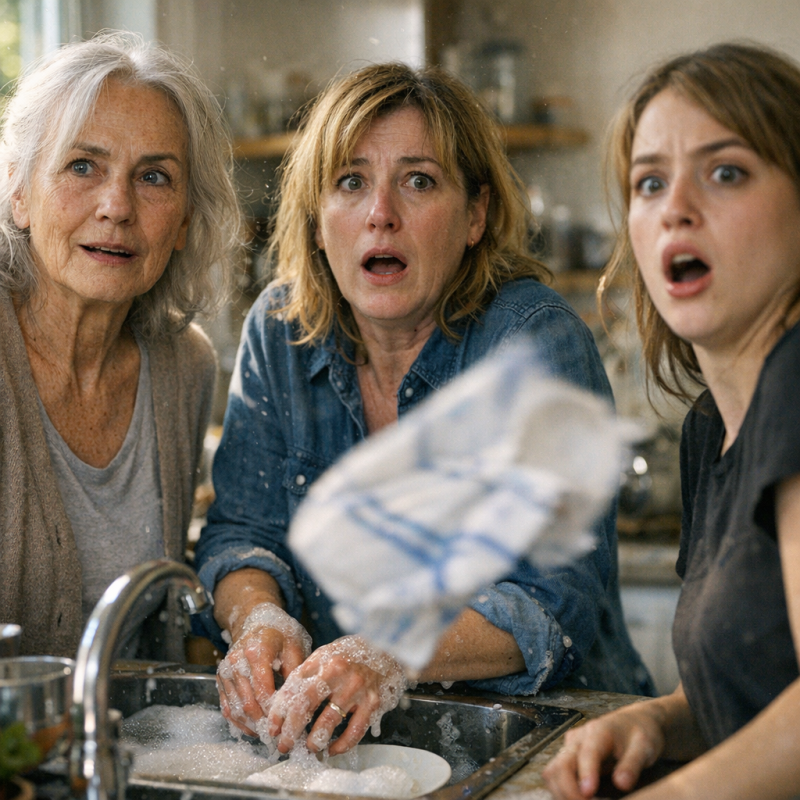 Image by FCT AI
The Diagnosis
Dr. Patterson's office smelled like vanilla air freshener trying to mask antiseptic, and I kept staring at the brain scan on his screen while he explained what 'progressive dementia' actually meant. No cure. No stopping it. Maybe five good years if we were lucky, maybe two. Mom cried quietly beside me, the kind of crying where you're trying so hard to hold it together that your shoulders shake. I wanted to ask practical questions, make plans, do something useful, but all I could think was that Grandpa should be here. He should be holding Mom's hand, asking about treatment options, being the stoic rock he'd always been. Instead, his chair sat empty. On the drive home, Mom stared out the window and said almost absently, 'Your grandfather wouldn't come. I asked him three times.' Her voice cracked. 'Sophie, I have no idea why he refused to be there.'
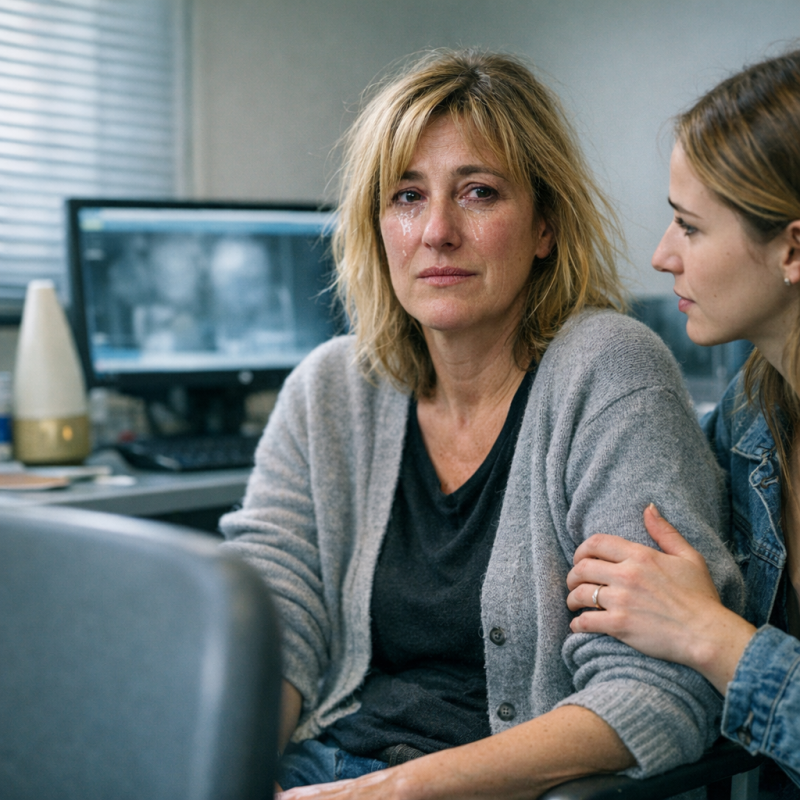 Image by FCT AI
The Distance
I found Grandpa Richard in his garage the next day, organizing tools that were already perfectly organized. When I told him what the doctor said—the timeline, the prognosis, all of it—he just nodded and adjusted a wrench on its hook. 'She'll need more help,' I said, waiting for something, anything. He grunted. Not grief, not fear, just this annoying acknowledgment like I'd told him the lawn needed mowing. I couldn't stop myself. 'Grandpa, aren't you scared?' I asked. 'This is Grandma. Your wife of fifty-three years.' He turned to look at me then, and his expression was so flat it made my skin crawl. 'I've dealt with worse, Sophie,' he said, then walked past me toward the house. Just like that. I stood there in the garage, surrounded by his meticulously labeled toolboxes, and realized I'd never actually seen my grandfather cry.
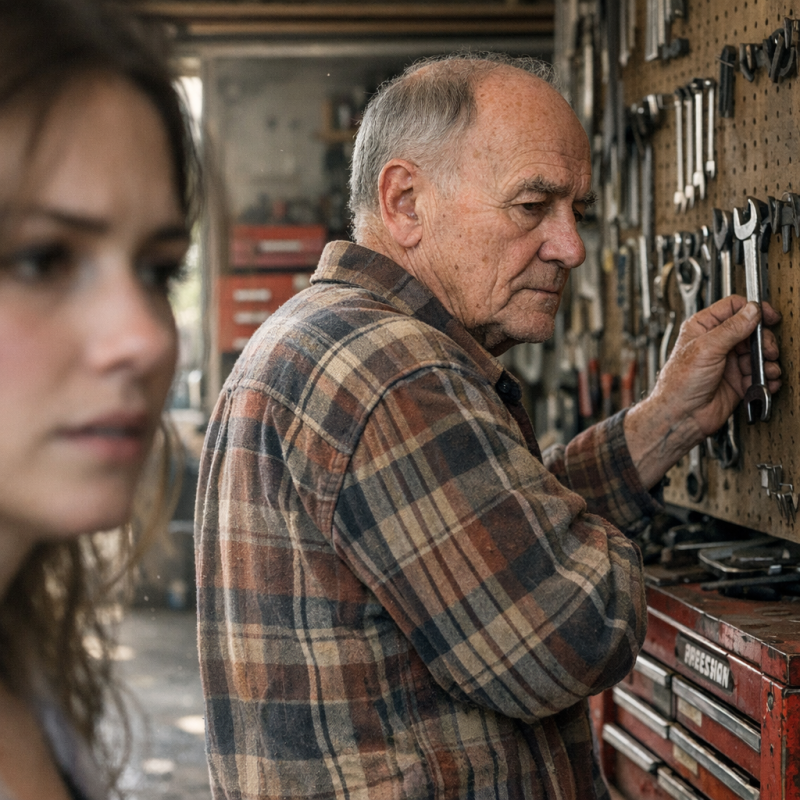 Image by FCT AI
Memory Fragments
Grandma Eleanor told me about the summer of 1978 four times in two weeks, and I started writing down the details because they never matched. First version: she and Grandpa drove through Colorado, stayed in a cabin, saw eagles. Second version: she went alone, needed space, came back different. Third version: there was no trip at all, she'd confused it with a magazine article. Mom was there for the fourth telling, and we both went quiet when Grandma smiled this strange, secretive smile and said, 'Your grandfather was working that summer. He had no idea where I actually went.' The way she said it—not confused, but deliberate, almost playful—made me glance at Mom. I expected her to correct the story, to remind Grandma of the 'real' version. Instead, Mom just stared at her own mother like she was looking at a stranger. 'Where did you go?' I asked carefully. But Grandma's eyes had already clouded over again, the lucidity gone, leaving only that unsettling smile behind.
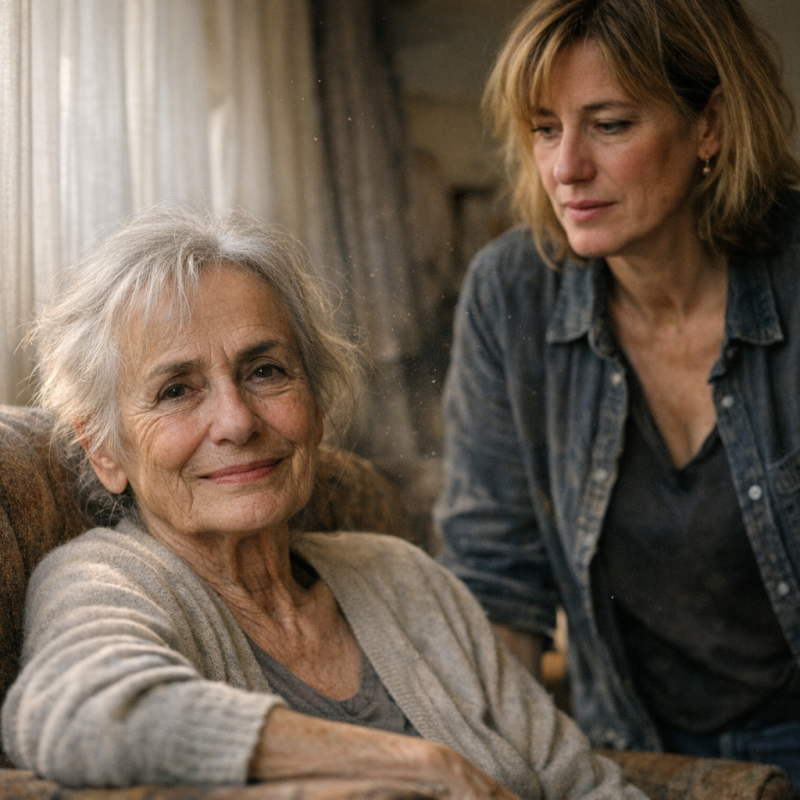 Image by FCT AI
Mom Steps In
Mom basically moved into their house after that. She managed Grandma's pill organizer, drove her to every appointment, made sure she ate proper meals. I helped when I could, but I had work, my own life. Grandpa had nothing but time, yet he never lifted a finger. He'd sit in his armchair reading the newspaper while Mom coaxed Grandma through breakfast ten feet away. It was infuriating. Last Tuesday, Mom finally snapped. 'Richard, could you please just sit with her for an hour while I go to the pharmacy?' Her voice was exhausted, desperate. He looked up from his crossword puzzle, and I swear something cold passed over his face. 'Eleanor made her choices a long time ago,' he said. 'She can live with the consequences.' Mom opened her mouth, then closed it. 'What choices?' I demanded. 'What are you even talking about?' But Grandpa just folded his newspaper and left the room, and he absolutely refused to elaborate.
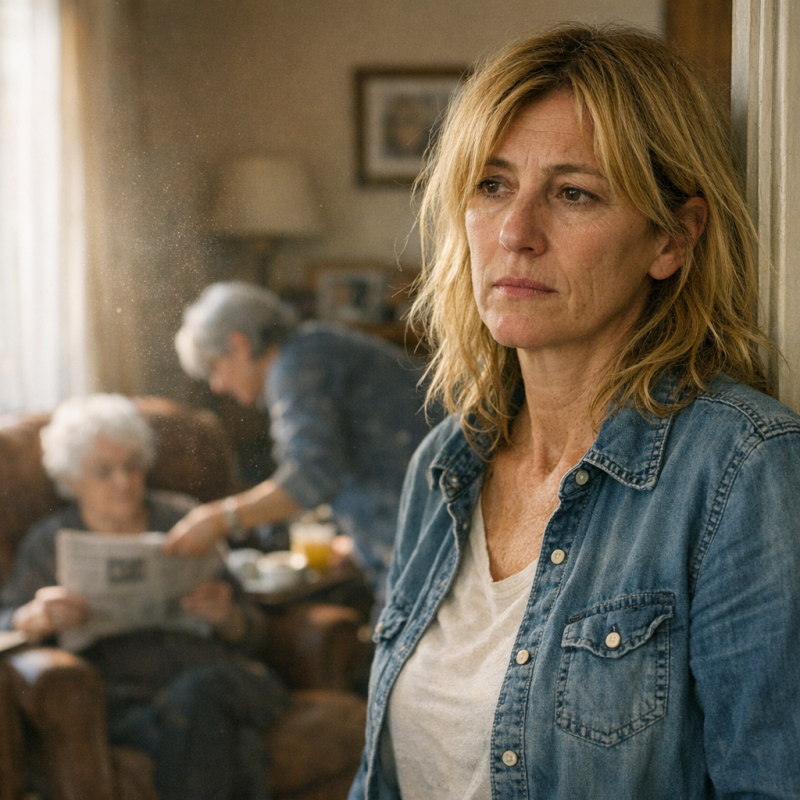 Image by FCT AI
The Spotless House
Their house had always felt like a museum—everything in its place, nothing ever moved, no clutter or chaos or life. Walking through it that weekend, I was hit by this wave of nostalgia mixed with something darker I couldn't name. The same beige carpet, the same brass fixtures, the same studio portraits from 1985 on the mantel. Nobody actually lived this way. Nobody except my grandparents, apparently. I wandered down the hallway, past the guest room I'd slept in as a kid, past the linen closet Mom had organized a dozen times. At the very end was a door I'd somehow never really noticed before. When I reached for the handle, I found it locked. 'Grandpa?' I called back. 'Why is this room locked?' He appeared in the hallway so quickly it startled me, his face unreadable. 'Storage,' he said flatly. 'Old tax documents. Nothing interesting.' His hand was already on my elbow, steering me away. He wouldn't tell me why he kept it locked, but the way he positioned himself between me and that door told me everything I needed to know—whatever was inside, he definitely didn't want me to see it.
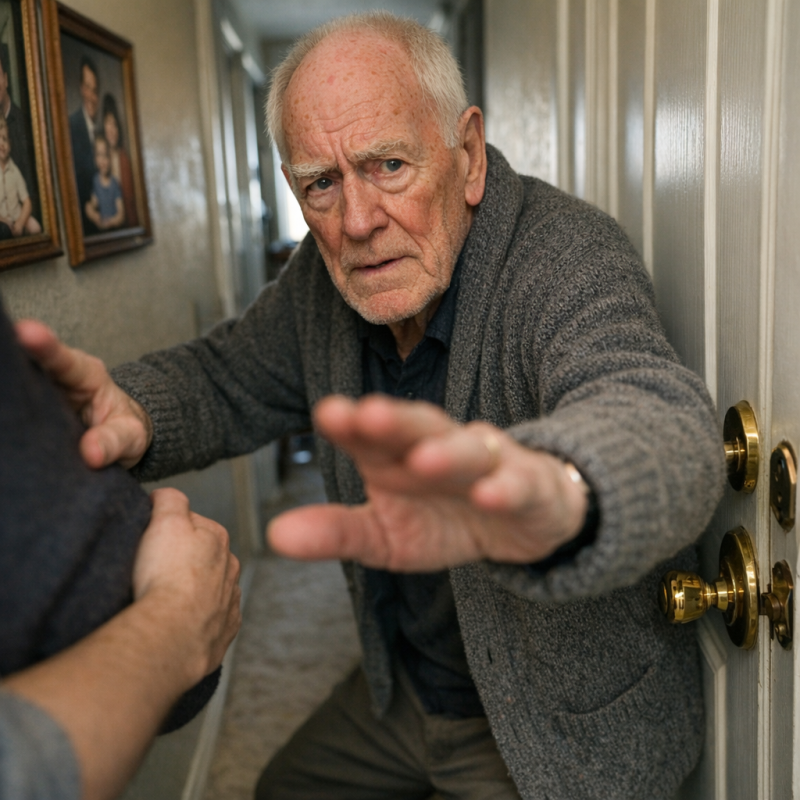 Image by FCT AI
The Sharp Woman
I was folding laundry in Grandma's room when she suddenly grabbed my wrist. Her grip was strong, urgent, and when I looked up, her eyes were completely clear—more lucid than I'd seen her in months. 'Sophie, listen to me,' she said. 'I wasn't always the person you think I was.' My heart started racing. 'What do you mean, Grandma?' She opened her mouth, closed it, searched for words. 'I did things. Kept secrets. Your grandfather, he... we made a bargain, and I've been paying for it ever since.' She looked almost desperate. 'There are things you need to know before I forget everything completely.' I leaned in closer. 'What things? What bargain?' But even as I asked, I could see the clarity draining from her face like water through cupped hands. Within seconds, she was looking at me blankly, asking if it was time for lunch. She'd forgotten the entire conversation. But the look in her eyes—that desperate, haunted look—I can still see it when I close my own.
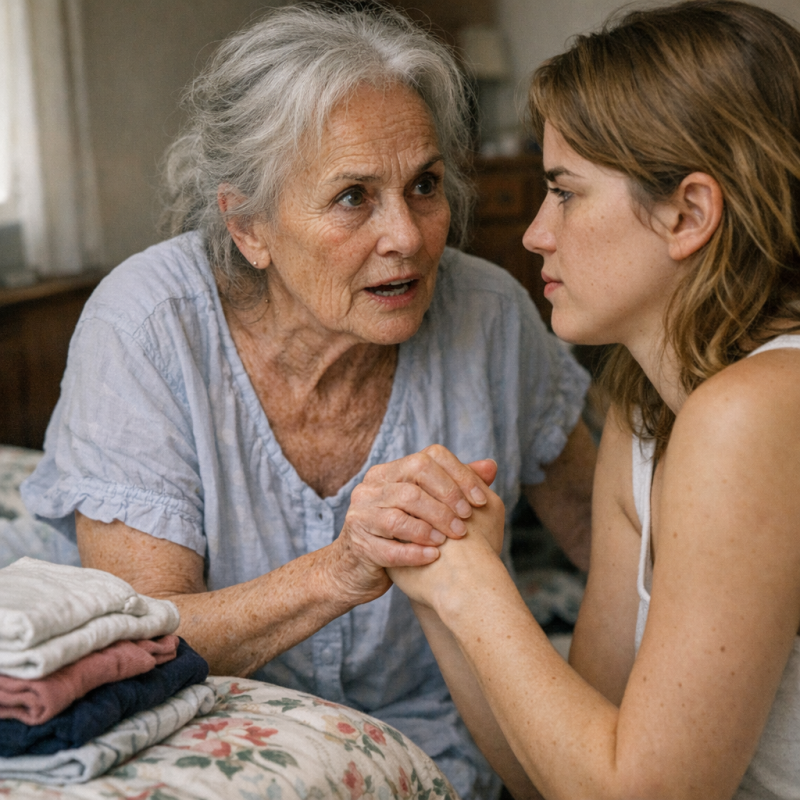 Image by FCT AI
The Doctor's Warning
Dr. Patterson called us in for a follow-up, and honestly, I thought it was just routine. Mom and I sat in those same uncomfortable chairs while he reviewed Grandma's latest scans. Then he set down his pen and looked at us both, but mostly at Mom. 'I need to prepare you for something,' he said carefully. 'As dementia progresses, patients often lose their social filters. Secrets they've kept buried for decades can suddenly surface. Things they've never told anyone.' My stomach dropped. 'What kind of things?' I asked. He chose his words precisely. 'Anything they've been carrying. Affairs, traumas, decisions they've hidden. The brain loses its ability to suppress these memories.' Mom's hand found mine, squeezed hard. 'Has she said something?' she whispered. Dr. Patterson's eyes stayed on her. 'Not yet. But I wanted you to be ready.' The way he looked at my mother when he said it—like he knew something terrible was coming, like maybe he'd already glimpsed the shape of it in Grandma's rambling—made me realize we were standing at the edge of something we couldn't come back from.
 Image by FCT AI
The Repeated Name
So here's where things got weird. We were visiting Grandma on a Tuesday—just me and Grandpa Richard this time—and she started saying this name. 'Marcus.' Over and over. 'Marcus would understand. Marcus always listened.' I looked at Grandpa, waiting for some explanation, but he just sat there staring at his hands. 'Who's Marcus, Grandma?' I asked gently. She smiled at me like I was stupid. 'Marcus. My Marcus.' I went through every family tree branch in my head. Uncles, cousins, old neighbors. Nothing. 'Grandpa, do you know who she means?' I tried to keep my voice casual. He stood up so abruptly his chair scraped against the floor. Didn't answer. Didn't even look at me. Just walked out of the room like I'd asked him something obscene. I sat there with Grandma still murmuring that name, feeling this weird prickle up my spine. The thing is, it wasn't confusion on his face when I asked. It was something else entirely. When I mentioned Marcus to Grandpa Richard, he left the room without saying a single word.
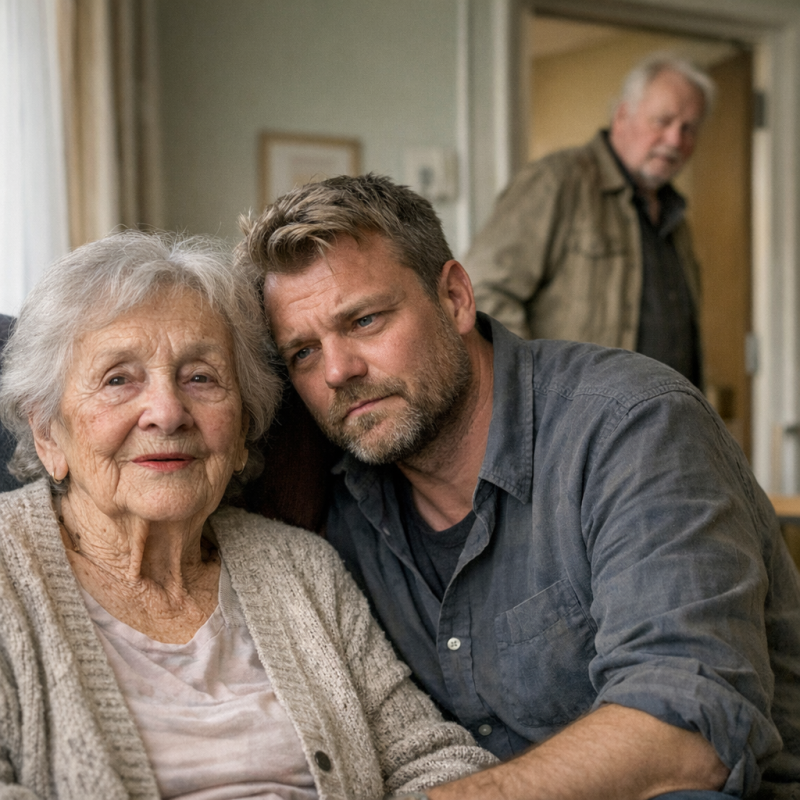 Image by FCT AI

History's most fascinating stories and darkest secrets, delivered to your inbox daily.
The Tension Builds
Mom noticed it first, actually. We were both there a few days later when Grandma started talking again, just her usual rambling, and I watched Grandpa's whole body go rigid. He leaned forward slightly, like he was straining to catch every word. 'Does he always do that?' Mom whispered to me. I'd been noticing it too but hadn't said anything. Every time Grandma opened her mouth, Richard would get this look—alert, tense, waiting. Not the concerned expression you'd expect from a worried husband. It was more like he was on guard duty. 'It's like he's listening for something specific,' I whispered back. Mom nodded slowly. We both watched him watch her. His jaw was clenched so tight I could see the muscle jumping. Grandma said something about the garden, completely innocent, and I saw him exhale. Actually exhale, like he'd been holding his breath. 'This doesn't feel right,' Mom said quietly. And she was right. It didn't feel like concern at all. It felt less like a husband caring for his sick wife and more like surveillance.
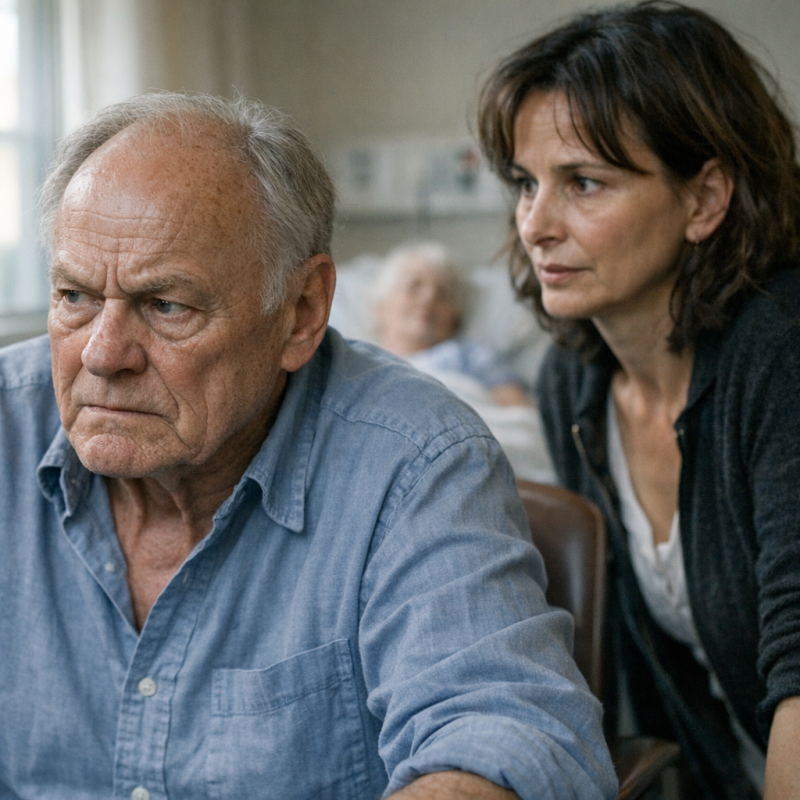 Image by FCT AI
The Errand
Mom needed to pick up Grandma's prescriptions, and I tagged along because honestly, we both needed to get out of that nursing home for a bit. We grabbed coffee, ran to the pharmacy, made small talk about nothing important. Then, sitting in the Walgreens parking lot, she just broke. 'I'm terrified, Sophie.' Her hands were shaking around her cup. 'Dr. Patterson said she might say things. Secrets. What if—' She couldn't finish. I reached over and squeezed her arm. 'Whatever it is, we'll deal with it together.' She nodded but didn't look convinced. 'I keep thinking about how Dad's been acting. Like he's waiting for something awful to come out.' We sat there for a minute, both of us staring through the windshield. Then we drove to Target for the other items on our list, and I thought maybe we'd dodged the hard conversation for today. We were pulling into the parking lot when Mom suddenly grabbed my arm. 'Sophie. Look.' I followed her gaze and felt my stomach drop. That's when we spotted their car in the parking lot—and everything changed.
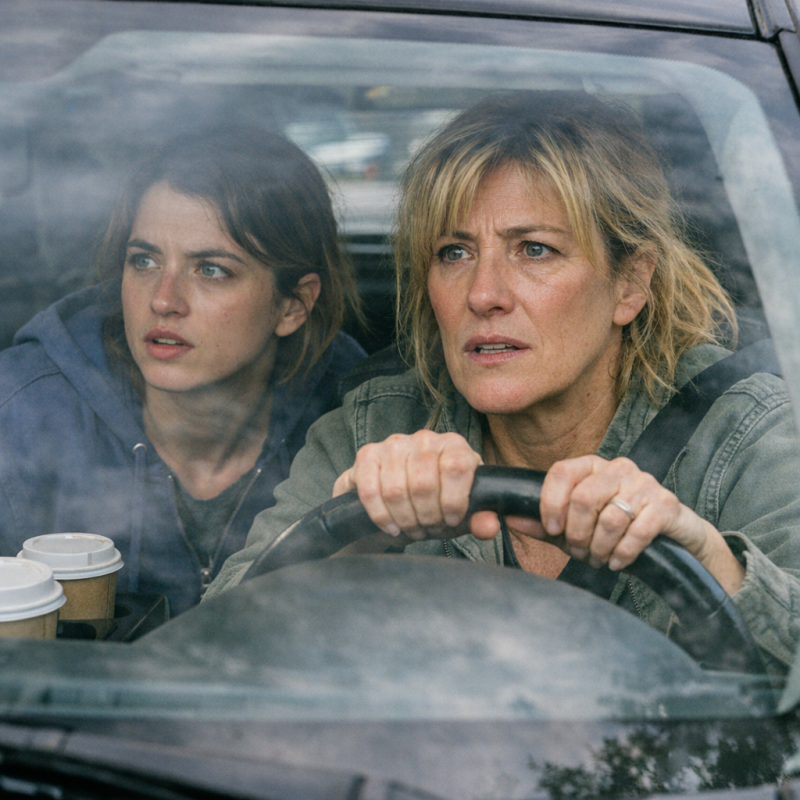 Image by FCT AI
The Parking Lot
Grandpa's car was parked at an angle, the driver's door hanging open. And I could hear Grandma before I could see her—screaming. Actually screaming. We ran over and found her leaning out the passenger window, yelling at some terrified woman in the car next to them. 'You think you're so clever! You think he doesn't know!' The woman looked panicked, trying to roll up her window. Grandpa was pulling at Grandma's arm, trying to get her back inside, but she wasn't budging. 'Grandma, stop!' I shouted, but she didn't even glance at me. 'I did the same thing! I had an affair too! Don't you see?' Mom made this horrible choking sound beside me. The stranger was backing out now, desperate to escape. But Grandma wasn't done. She turned toward us, her face flushed and wild, and that's when she shouted it loud enough for everyone in that parking lot to hear: 'I told him everything! I told him it wasn't just once!'
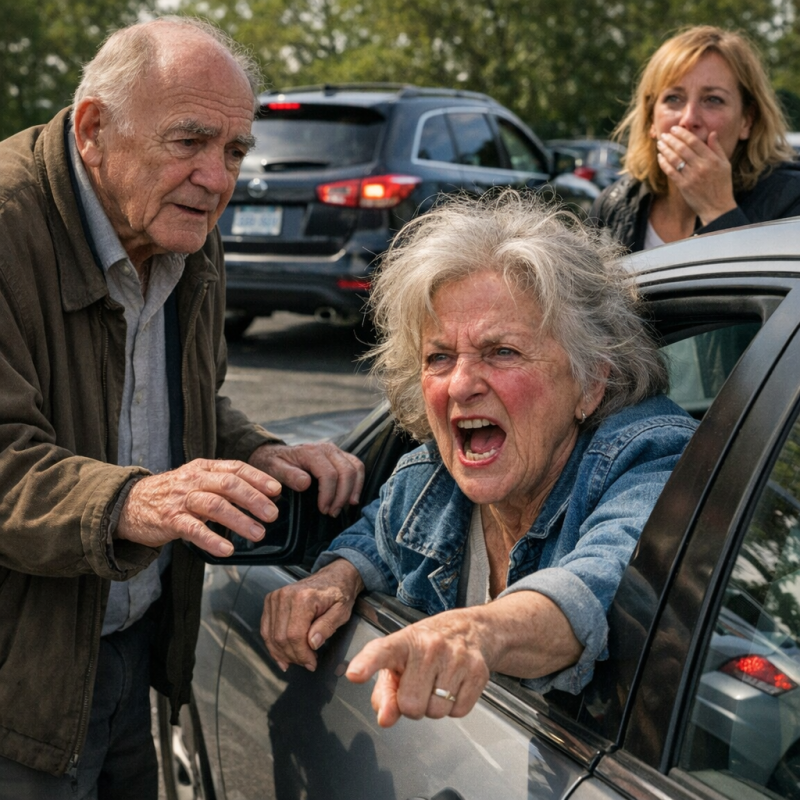 Image by FCT AI
The Word
I couldn't move. Couldn't breathe. The words just hung there in the air, impossible and real at the same time. Grandma kept shouting, something about years and lies and secrets, but it all blurred into noise. I looked at Mom and her face had gone completely white. She was staring at her mother like she'd never seen her before. Like she was a stranger. 'Mom?' I touched her arm and she flinched. Grandma was still going, her voice getting shriller, drawing stares from people loading groceries into their cars. I wanted to disappear. I wanted to rewind five minutes and not come to this parking lot at all. And then, cutting through all the chaos, I heard Grandpa's voice. It was quiet but it stopped everything. 'Get back in the car.' Not loud. Not emotional. Cold. Flat. Like ice. I turned to look at him and his face was completely blank. No shock. No pain. Nothing. Richard finally spoke, his voice like ice: 'Get back in the car.'
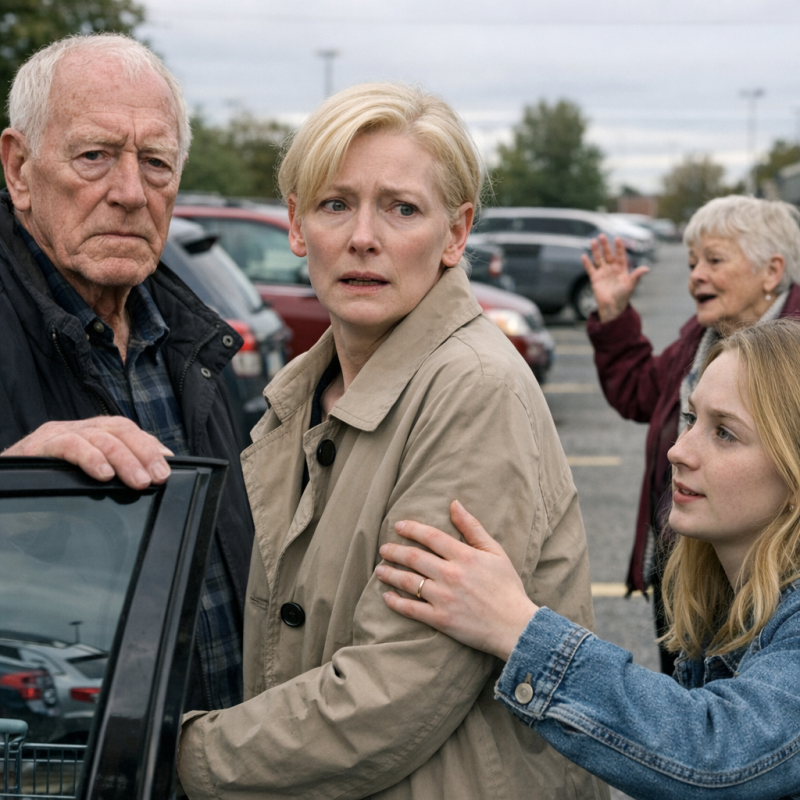 Image by FCT AI
The Laugh
Grandma laughed. Actually laughed. This brittle, horrible sound that made my skin crawl. 'Why do you care now, Richard?' She was looking right at him, and there was something sharp in her eyes despite the dementia. 'You didn't care back then. You didn't care when I told you.' Mom's hand found mine and gripped so hard it hurt. 'What is she talking about?' she whispered, but I had no answer. Grandma wasn't finished. 'It wasn't just once. It was years, Richard. Years with Marcus. And you knew.' She said it clearly, coherently, like the fog had lifted just for this moment. I looked at Grandpa, waiting for the shock, the denial, the anger—anything. But his expression didn't change at all. Not even a flicker. He just stood there, stone-faced, like she was reciting a grocery list. That's when it hit me. She said it wasn't just once—it was years—and Richard's expression didn't change at all.
 Image by FCT AI
The Aftermath
Somehow we got Grandma back in the car. I don't even remember how. Mom was shaking, I was shaking, and Grandpa just got in the driver's seat like nothing had happened. Like his wife hadn't just confessed to a years-long affair in a Target parking lot. They drove away and we stood there watching them go. I felt like I'd been punched. 'Mom?' She didn't respond at first. Just stared at the empty parking space where their car had been. People were still looking at us, and I wanted to scream at them to mind their own business. Finally, she turned to me, and her eyes were different. Harder. 'Did you see his face?' Her voice was barely a whisper. 'When she said it was years. Did you see?' I nodded slowly, my throat tight. The damage was done—the secret was out, and there was no taking it back. Mom turned to me and whispered, 'Did you see his face? He already knew.'
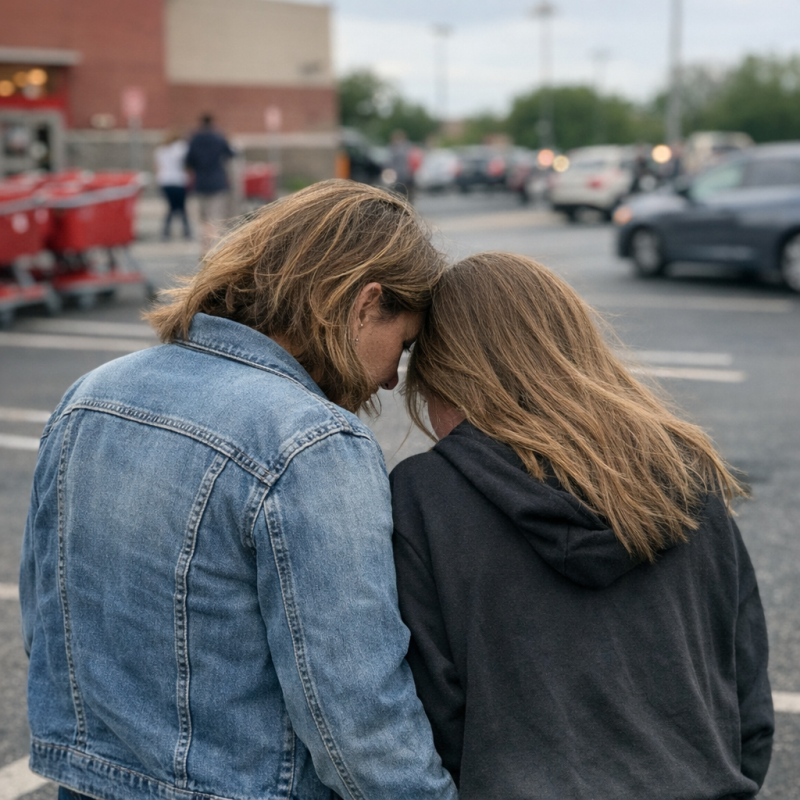 Image by FCT AI
The Ride Home
Mom didn't say anything else as we walked to her car. She just got in, started the engine, and pulled out of the parking lot. Her hands were gripping the steering wheel so tight her knuckles turned white. I kept stealing glances at her, waiting for her to cry or scream or something, but she just drove. Silent. Focused. We hit every red light on the way back to her house, and each time we stopped, I could see her jaw working, like she was having an entire conversation in her head. 'Mom, are you okay?' Stupid question, but I had to ask. She didn't answer. Just kept driving. We were pulling into her driveway when she finally spoke, and her voice was different than I'd ever heard it. Determined. Almost scary. 'I'm going to ask him.' She turned to look at me, and I saw something fierce in her eyes. 'Tonight. I'm going to confront him.' Finally, she said she was going to confront him—tonight.
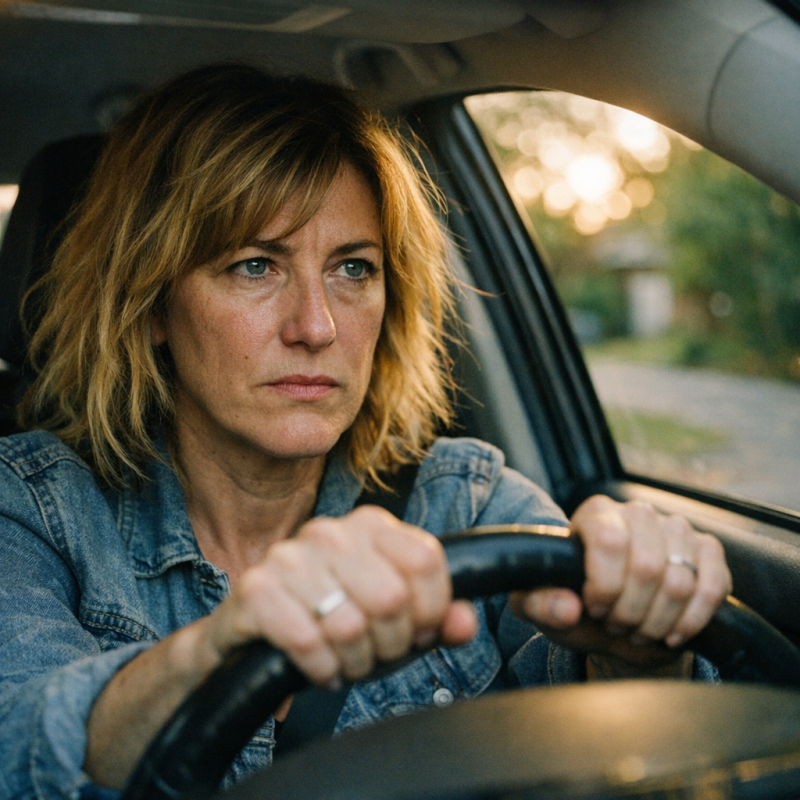 Image by FCT AI
The Confrontation Begins
Mom stormed into my grandparents' house like she owned the place, which I guess technically she kind of did now that Grandma was in the nursing home. Grandpa Richard was sitting in his usual chair, reading the newspaper like it was any other Tuesday evening. 'Did you know?' Mom's voice cut through the room. He didn't even look up at first. Just turned the page. 'Did I know what, Linda?' His voice was so calm it made my skin crawl. 'About Marcus. About the affair. Did you know?' I watched him fold the newspaper carefully, placing it on the side table. He looked at her then, and there wasn't a trace of surprise on his face. Not shock, not hurt, not even anger. 'Of course I knew,' he said simply. Mom actually stumbled backward like he'd hit her. I grabbed her arm to steady her. 'You knew? You knew and you just—what, you stayed married to her anyway?' He shrugged. Actually shrugged. Like we were discussing the weather. Then he tilted his head and asked, 'Why does it matter now?'
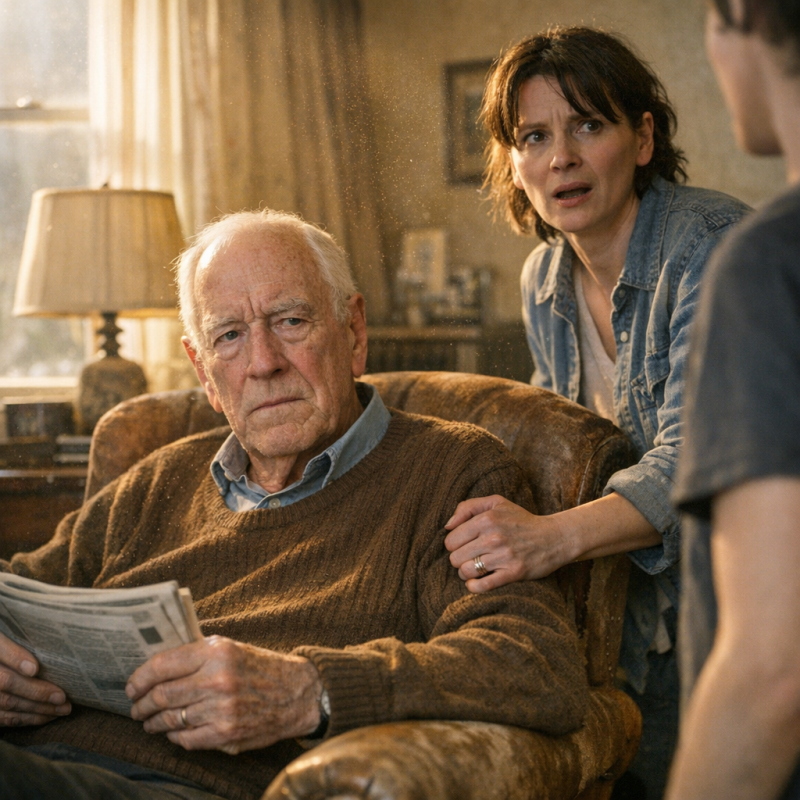 Image by FCT AI
The Second Bomb
The casual way he said it made my stomach turn. Mom was shaking, actually trembling with rage. 'Why does it matter? Dad, she had another family!' Grandpa Richard stood up slowly, smoothing down his sweater. 'And I had my own arrangements,' he said. 'Affairs, plural. It balanced things out.' I literally felt my jaw drop. This couldn't be real. This man I'd known my whole life, who'd always seemed so proper, so boring even—he was talking about infidelity like it was a business transaction. Mom looked like she might throw up. 'You're telling me you both just—what, agreed to cheat on each other?' 'We had an understanding,' he said, and I hated how reasonable he sounded. That's when Aunt Carol appeared in the doorway. I hadn't even heard her come in. Her face was red, tears streaming down her cheeks. 'How could you?' she said, her voice breaking. 'You told me you stayed for her. You said you loved her too much to leave.'
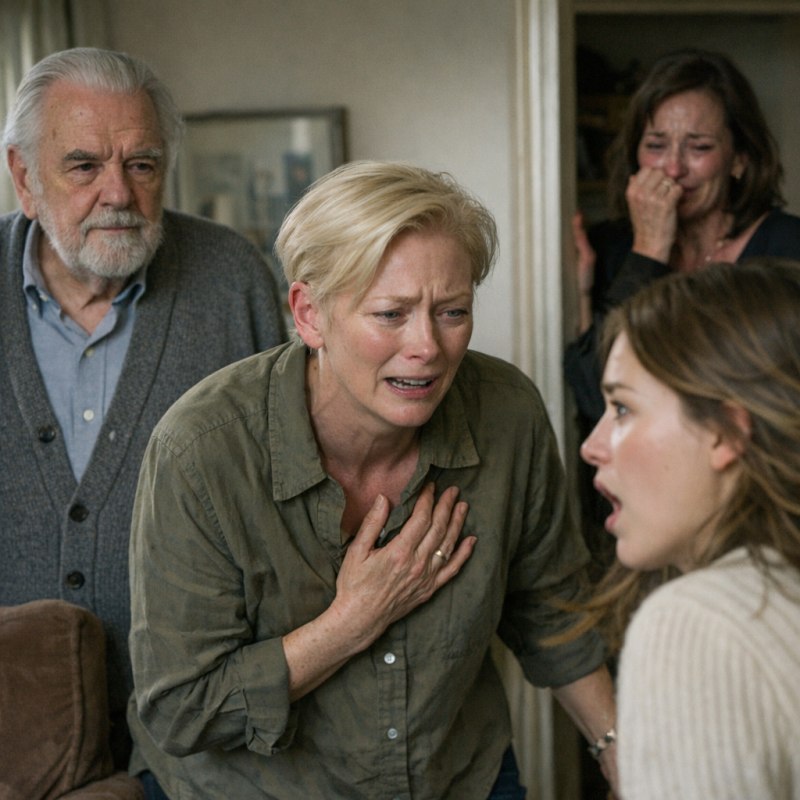 Image by FCT AI
The Family Meeting
Carol came all the way into the room, and suddenly it felt like we were having some kind of terrible family intervention. Mom collapsed onto the couch, and I sat beside her, my head spinning. Carol was pacing, wiping her eyes. 'He told me he was being noble,' she said to Mom. 'That he knew about Marcus but chose to stay because that's what you do in a marriage.' Grandpa Richard had left the room without a word, which honestly felt like a relief. The three of us sat there trying to piece together what kind of marriage my grandparents had actually had. Carol remembered them fighting constantly when she was young, then suddenly going cold and polite. Mom remembered the opposite—said they barely spoke when she was growing up. I remembered them as this boring old couple who watched game shows together. None of our versions matched. It was like we'd lived with completely different people. Then Carol went quiet, biting her lip. 'There's something else,' she said. 'Eleanor told me once, years ago, that she had a child nobody knew about.'
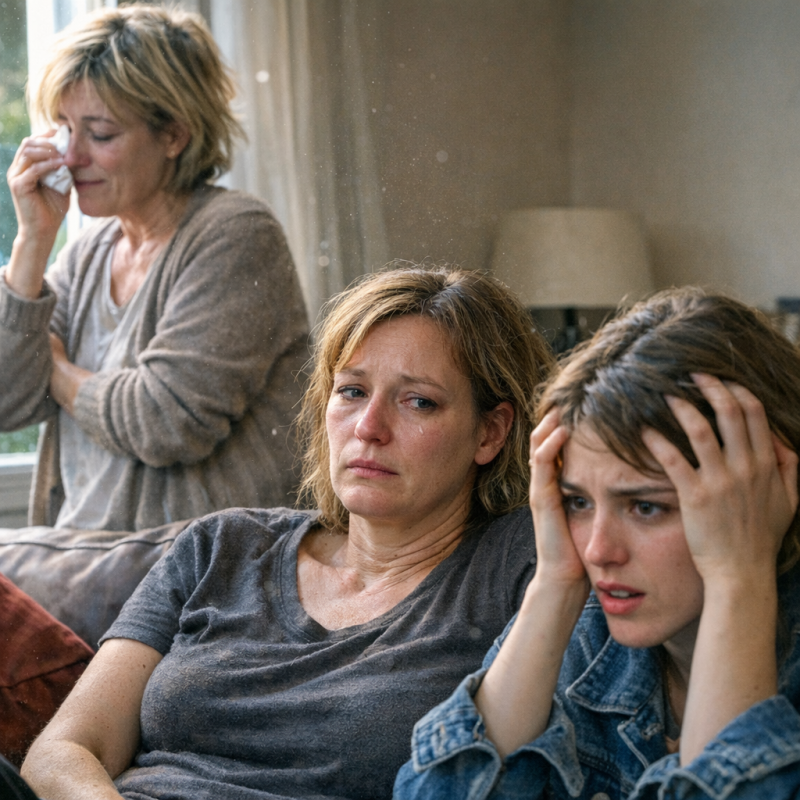 Image by FCT AI
The Denial
Mom's head snapped up. 'What? No. No, she would have told me.' Carol shook her head slowly. 'She told me right after you had Sophie, actually. We were at the hospital, and she was holding the baby, and she just started crying. Said she'd had to give up a child once.' I felt like the room was tilting. 'Aunt Carol, are you sure? Maybe she meant a miscarriage or—' 'She said 'give up,' Sophie. Not lost. Give up.' Mom was standing now, shaking her head violently. 'This is insane. Mom would never—we told each other everything. If she'd had another child, I would know.' But even as she said it, I could see the doubt creeping into her eyes. Carol's voice dropped. 'Would she have told you? Could she have?' Mom stared at her. 'What's that supposed to mean?' Carol glanced toward where Grandpa had disappeared. 'Why would she tell anyone?' she asked quietly. 'Richard made sure she couldn't.'
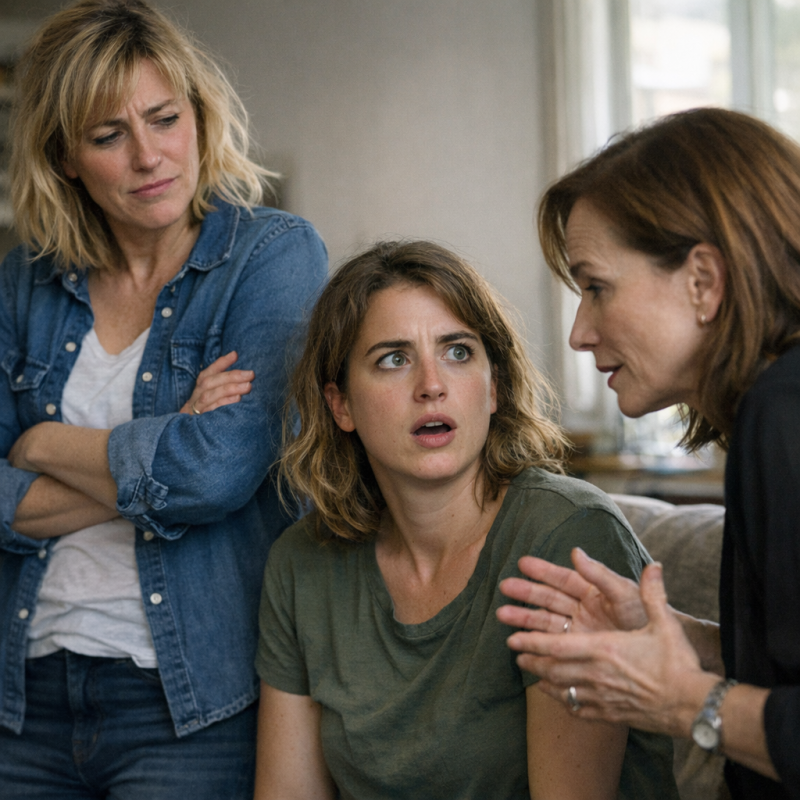 Image by FCT AI
The Decision to Investigate
After Carol left, Mom and I sat in silence for what felt like hours. Finally, she stood up with this look of determination I'd never seen before. 'I need to know the truth,' she said. 'All of it.' I nodded, even though part of me wanted to run away and pretend this whole nightmare wasn't happening. 'Where do we start?' She was already heading for the stairs. 'Your grandmother kept everything. Every document, every letter, every receipt. If there's proof of another child, it'll be somewhere in this house.' We started with the bedroom, going through drawers and boxes in the closet. Mom was methodical, checking every piece of paper. I kept expecting Grandpa to appear and stop us, but the house stayed quiet. He'd probably gone to bed, or maybe he just didn't care what we found. I was pulling down boxes from the top shelf when I turned to Mom. 'I want to help,' I said. 'I need to help.' She looked at me, and I saw her recognize the fear in my face. Because honestly? I was terrified of what we might find.
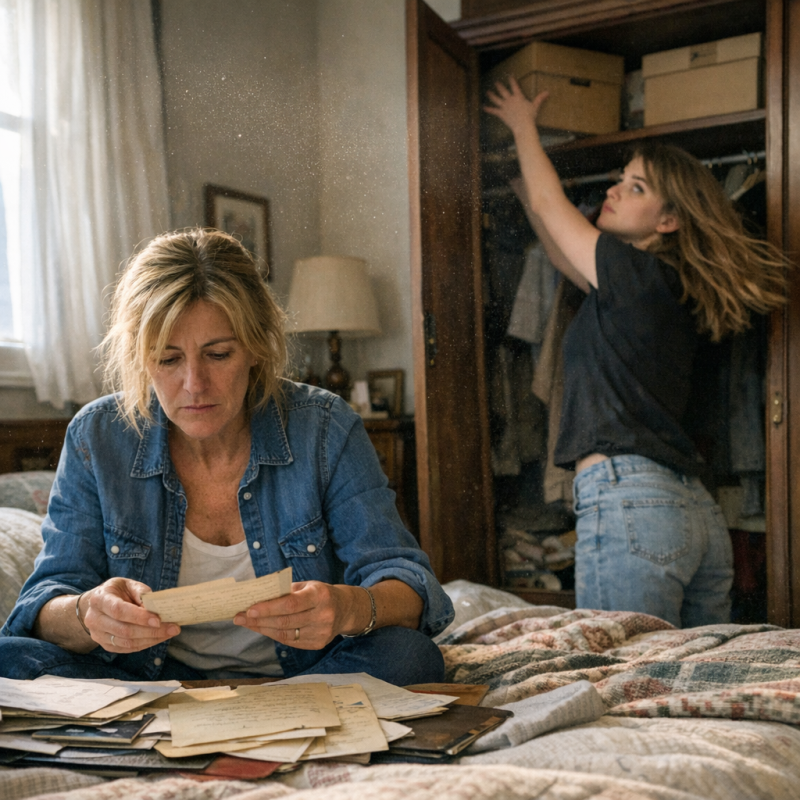 Image by FCT AI
The Boyfriend's Perspective
That night, I went back to my apartment and told Daniel everything. He listened without interrupting, which is one of the things I love about him. When I finished, he pulled me close and I just let myself cry into his shoulder. 'It's going to be okay,' he murmured. 'You'll figure this out.' But when I pulled back and looked at him, his expression was troubled. 'What?' I asked. He hesitated, choosing his words carefully. 'Sophie, I'm just thinking about what you said. About your grandfather knowing about Marcus, about him having his own affairs, about him being so calm when your mom confronted him.' I waited. 'What about it?' Daniel ran his hand through his hair. 'What if your grandfather isn't the victim here? What if he wanted this to stay hidden?' I started to argue, but the words died in my throat. Because Daniel had this look on his face that scared me. 'What if everything that's happening now, with the dementia, with the revelations—what if he wanted this to stay hidden?'
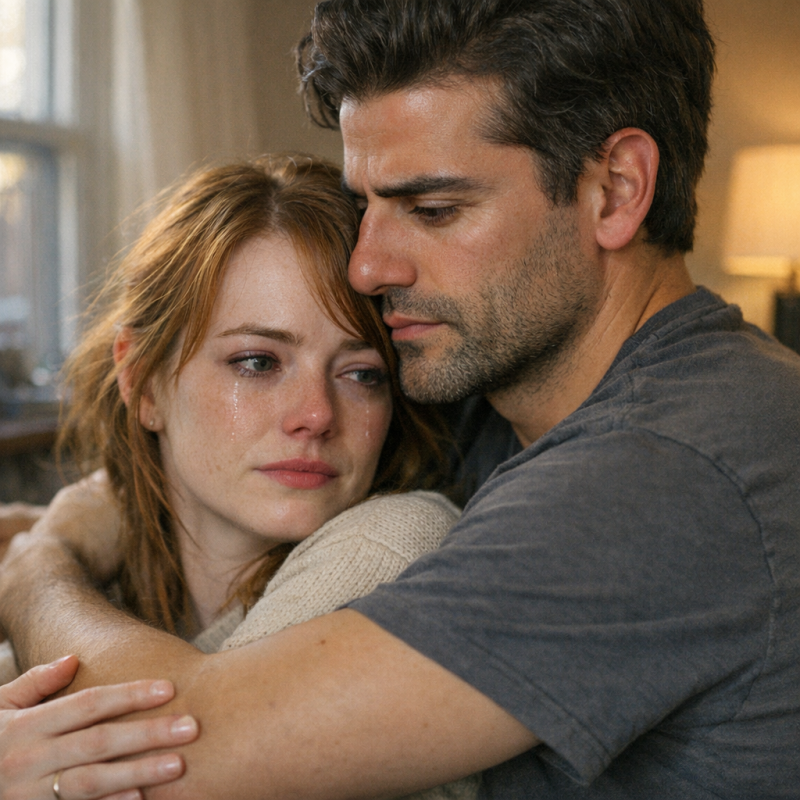 Image by FCT AI
The First Box
The next day, Mom called me at seven in the morning. She'd been searching through the night. I met her back at the house, and she looked exhausted but wired. 'I found something,' she said, leading me upstairs. In the back of Grandma's closet, behind a bunch of old coats, was a wooden box I'd never seen before. It wasn't locked, just closed with a simple latch. Mom's hands were shaking as she opened it. Inside were letters. Dozens of them, all carefully bundled with string. She picked up the first bundle, and I watched her face change as she read the return address. 'Who's Marcus?' I asked, even though I already knew. She didn't answer, just started reading. The handwriting was elegant, old-fashioned. The first letter started with 'My dearest Eleanor' and was signed 'Forever yours, Marcus.' Mom pulled out another bundle. Then another. They were all from Marcus, all addressed to different locations—some to the house, some to what looked like PO boxes. I started checking dates while Mom read. These letters spanned decades.
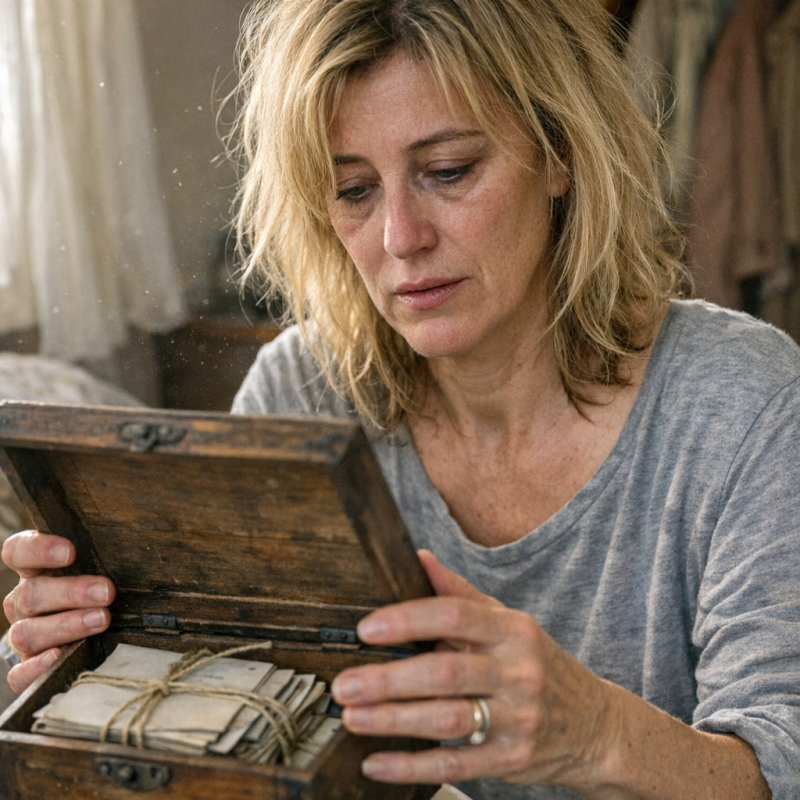 Image by FCT AI
The Timeline
Mom read through letter after letter, and I watched her face cycle through every emotion. She'd gasp, then cry, then laugh bitterly at something she'd read. I started organizing them chronologically, creating a timeline on the floor. 'Mom,' I said slowly, staring at the dates. 'Look at this.' The earliest letters were from 1962. Mom went pale. 'That can't be right.' But it was. I checked again. The affair—or relationship, or whatever it was—had started in 1962. Mom was born in 1964. She picked up one of the early letters with trembling hands and read it. Then another. 'He's talking about the future,' she whispered. 'About building a life together. About their plans.' I felt sick. The timeline was right there in front of us, undeniable. Marcus wasn't just some affair Grandma had later in life. This relationship had existed before Mom was even born. We both stared at those letters, and I could see the same terrible thought forming in her mind that was forming in mine. And the dates suggested it started before she was even born.
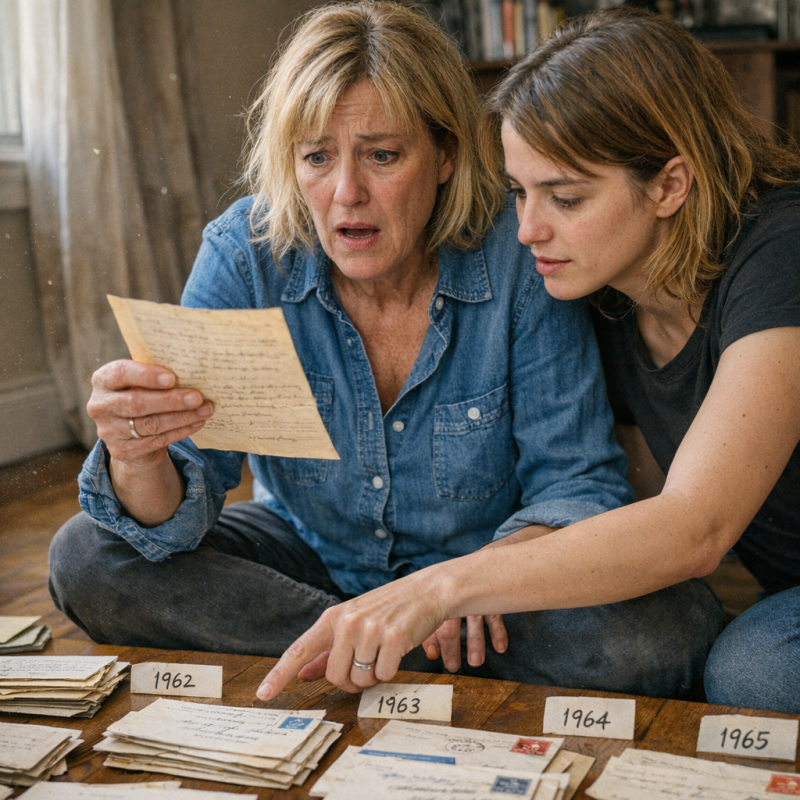 Image by FCT AI
The Paternity Question
Mom set down the letters and looked at me with this expression I'd never seen before. It was like she was staring at her entire life and watching it become unfamiliar. 'Sophie,' she said quietly, 'what if Richard isn't even my real father?' I opened my mouth, but nothing came out. The timeline was right there. The letters started in 1962. Mom was born in 1964. The math was simple and horrible. 'I don't know, Mom,' I finally managed. She picked up one of the early letters again, the one where Marcus talked about their future together, and her hands were shaking so badly she could barely hold it. 'My whole life, I thought I knew who I was. Where I came from.' Her voice cracked. 'What if everything I believed about myself is a lie?' I wanted to tell her she was overthinking it, that there had to be another explanation. But I'd seen the dates too. I'd read those letters. And honestly? I had no idea what to tell her. I don't know how to answer that—and I'm not sure I want to.
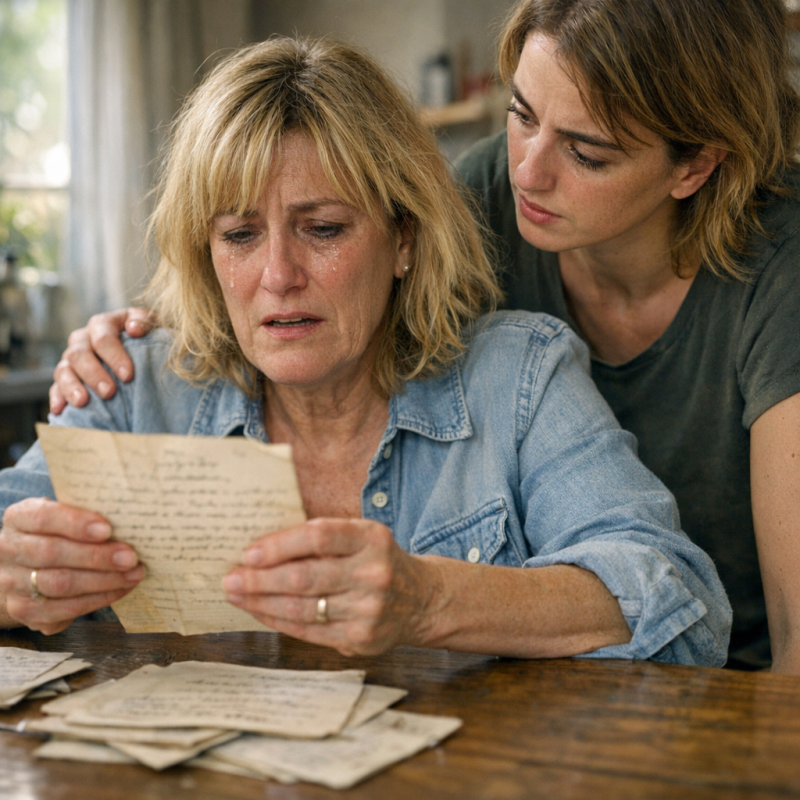 Image by FCT AI
The Photo Clue
We kept sorting through the letters, both of us moving on autopilot now, when something slipped out from between two pages. A photograph, the edges worn soft from age. Mom picked it up and went completely still. I leaned over to look. It showed Grandma Eleanor—younger, maybe in her thirties—standing next to a man who definitely wasn't Grandpa Richard. He had kind eyes and dark hair, and they were both looking down at a baby in Eleanor's arms. They looked happy. Actually happy, in a way I'd never seen Grandma look in any family photo. 'That must be Marcus,' Mom whispered. I felt this creeping dread settle into my stomach as I stared at that baby's face, trying to do the mental math again. Mom turned the photo over, and we both saw the handwriting on the back. The ink had faded to brown, but the words were still clear enough to read. On the back, someone wrote: 'Our little secret.'
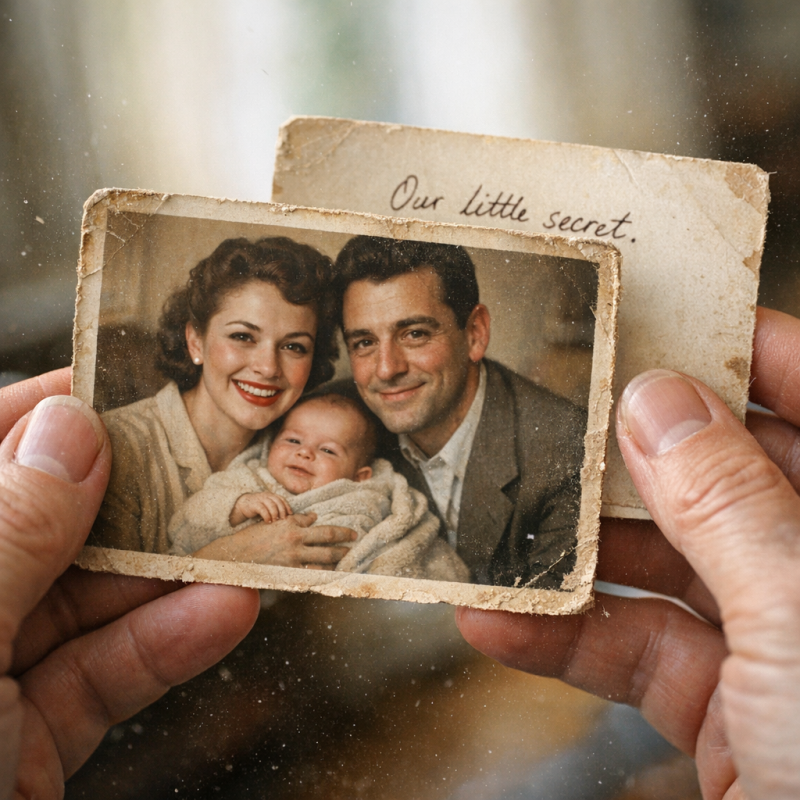 Image by FCT AI
The Age Calculation
Mom stared at that photo for what felt like forever. Then she grabbed one of the letters with a date on it—1978—and held it next to the photograph. 'Look at the date stamp,' she said, her voice strange and flat. I looked. The photo had been developed in July 1978. 'That baby can't be me,' Mom continued, doing the calculation out loud. 'I was born in '64. I would have been fourteen when this was taken.' The relief that washed over her face was immediate, and I felt it too—she wasn't the baby in the photo. Richard was her father after all. But then the relief curdled into something else as we both realized what this actually meant. 'So who is this baby?' I asked, even though I already knew the answer. Mom set the photo down carefully, like it might explode. 'Eleanor had another child,' she said slowly. 'With Marcus. In 1978.' We sat there in silence, that photo lying between us like evidence at a crime scene. Which means there's another child out there somewhere.
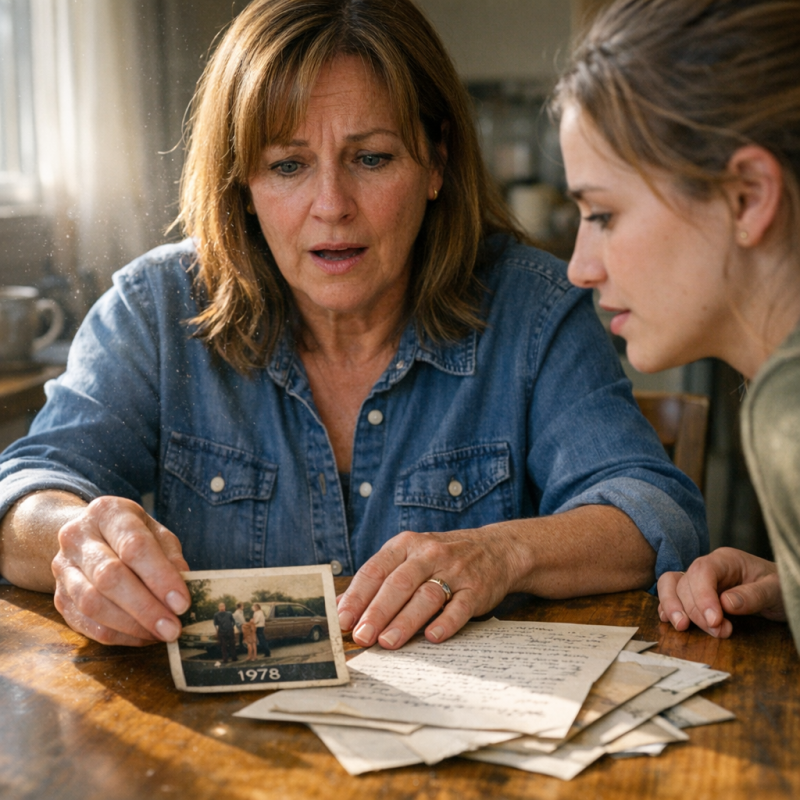 Image by FCT AI
The Search Intensifies
We tore through everything after that. Every box, every envelope, every scrap of paper in Grandma's house. We were looking for birth certificates, adoption papers, hospital records—anything that might tell us about this other child. 'There has to be something,' Mom kept saying, opening drawer after drawer in Grandma's desk. But here's the weird thing: there wasn't. We found Mom's birth certificate easily enough, and documents about Grandma and Richard's marriage, and even some old tax returns. But nothing about another baby. Nothing about a birth in 1978. It was like this child had been erased from the official record. 'This doesn't make sense,' I said, staring at the organized files in Grandma's cabinet. 'She kept everything. Why wouldn't there be any record of this?' Mom pulled out another folder, flipped through it, found nothing. 'Unless someone removed them,' she said quietly. The way the records had been sorted, you could almost see the gaps where documents should have been. But every document we find has been carefully scrubbed—someone didn't want this child found.
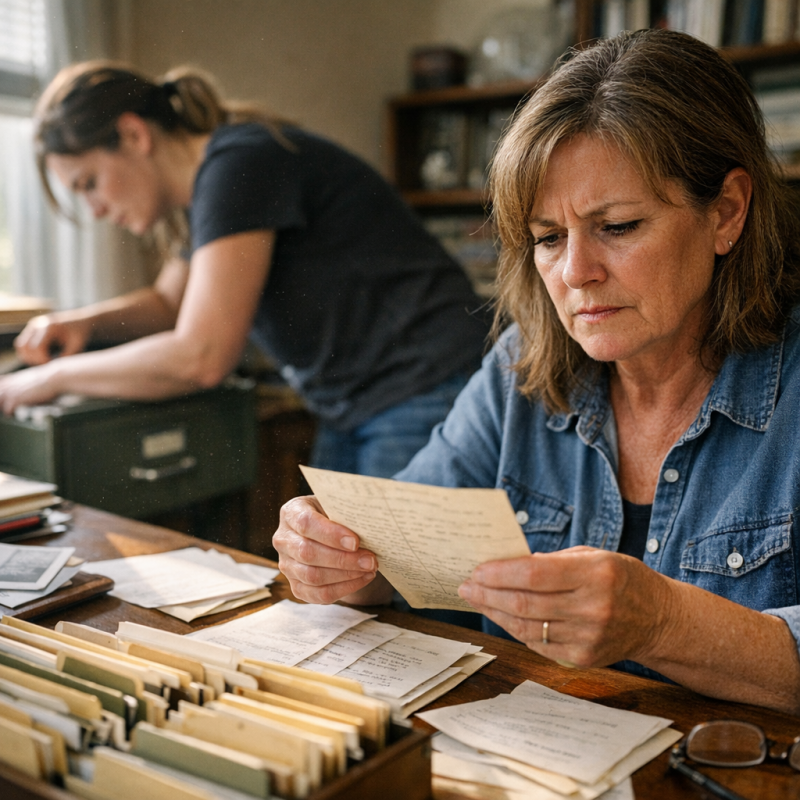 Image by FCT AI
Richard's Refusal
Mom called Grandpa Richard that night. I could hear her voice through the phone, shaking but determined. 'Dad, we found letters. And a photograph. We know about the baby.' There was a long silence. When he finally spoke, his voice was cold in a way I'd never heard before. 'Linda, you need to stop going through your mother's things.' 'I want to know about this child,' Mom pressed. 'I have a right to know if I have a sibling.' 'You have no idea what you're dealing with,' Richard said, and I could hear him clearly now—Mom had put the phone on speaker. 'Some things are buried for a reason.' 'I'm not stopping until I find out the truth.' Mom's voice was steel. The pause that followed made my skin crawl. 'You're going to regret this,' Richard said, each word deliberate and cold. Then the line went dead. Mom stared at the phone in her hand, and I watched her process what had just happened—her father had essentially threatened her. When she refuses, he says, 'You're going to regret this,' and walks out.
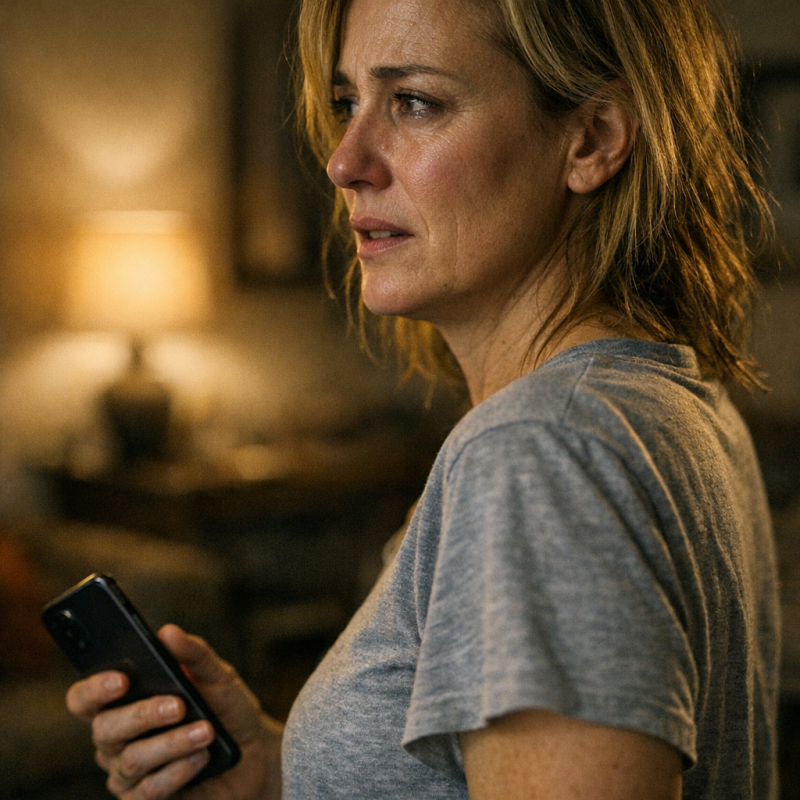 Image by FCT AI
The Locked Room
I waited until I knew Richard would be at his Tuesday morning golf game. He was nothing if not predictable about his routines. I still had a key to their house from when I used to check on Grandma before she went into Sunrise Gardens. My hands were shaking as I unlocked the door. The house felt different now, knowing what I knew. Like it was full of secrets pressed into the walls. I walked straight to the room at the end of the hallway—the one that was always locked, the one Richard said was just storage. I'd brought a screwdriver, thinking I'd have to pop the lock, but when I tried the handle, it turned. He'd forgotten to lock it. Or maybe he never thought anyone would dare try. Inside was nothing like storage. It was an office—neat, organized, deliberate. There was a desk, a filing cabinet, everything labeled and filed with almost military precision. I pulled open the top drawer of the cabinet and felt my breath catch. Inside, I find a filing cabinet filled with documents—all about someone named Claire.
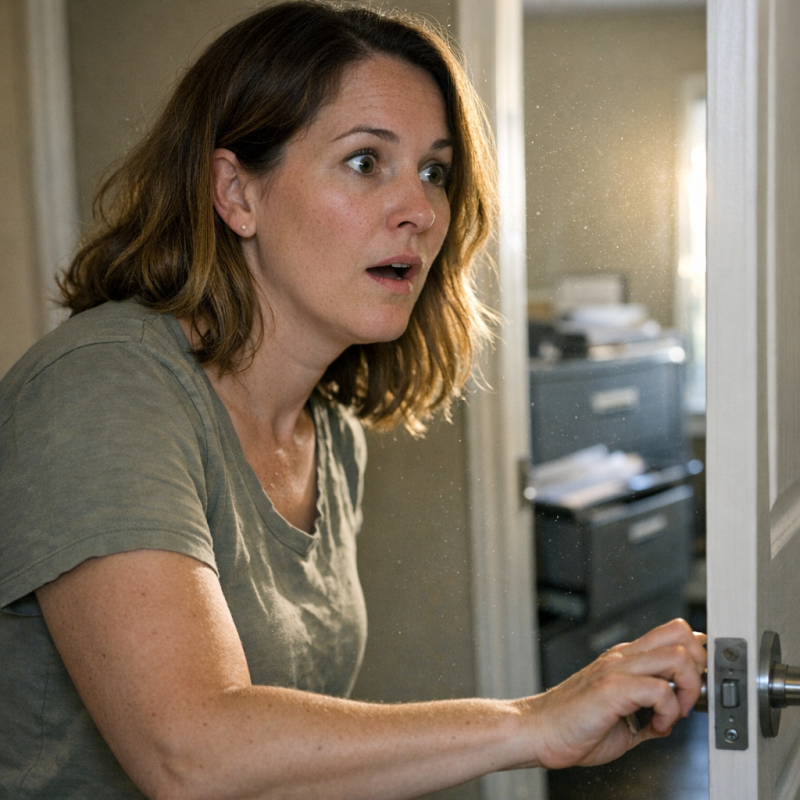 Image by FCT AI
The Filing Cabinet
The files were obsessively detailed. I pulled them out one by one, my hands shaking. A birth certificate: Claire Eleanor Harrison, born March 15, 1978. Mother: Eleanor Harrison. Father: Marcus Chen. School records from an elementary school in Portland. Report cards. Medical files documenting vaccines, childhood illnesses, everything. Richard had kept track of this child for decades. He'd documented her entire life like she was a subject in a study. There were even photographs—school pictures showing a girl growing up, looking more like Grandma in every successive photo. My aunt. I had an aunt I'd never known existed. I kept digging through the cabinet, finding more and more proof of Claire's existence, and then my hand hit something at the very bottom. A legal document, official court seal and everything. I pulled it out and read it twice because I couldn't believe what I was seeing. It was a restraining order, dated 1983. And at the bottom of the cabinet, there's a restraining order preventing Eleanor from contacting her.
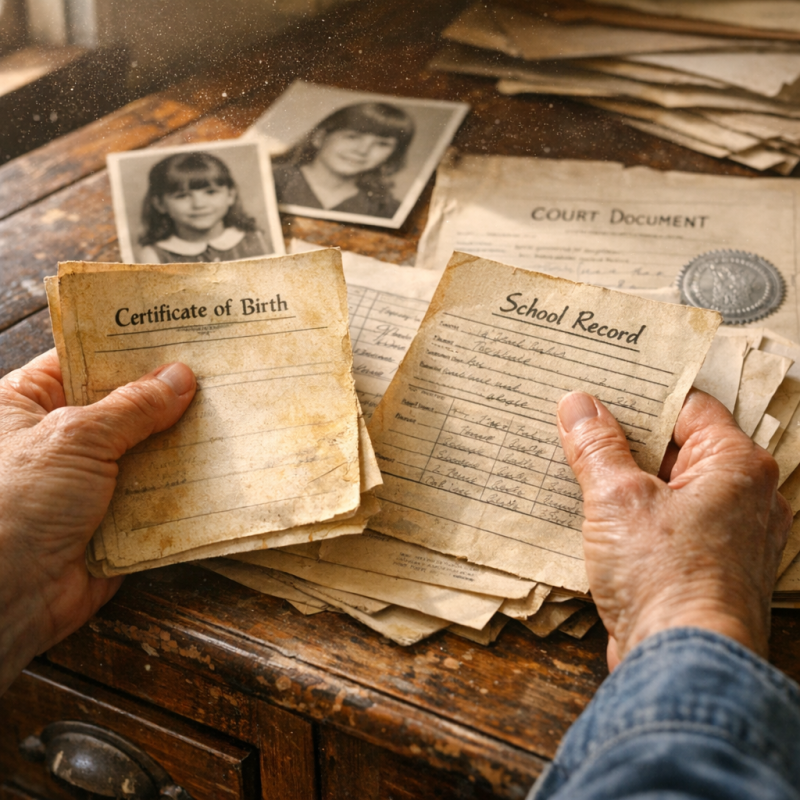 Image by FCT AI
The Phone Call
I didn't even think. I pulled out my phone and called Mom, my voice coming out high and panicked. 'Mom, you need to hear this. I broke into Richard's locked room.' 'Sophie, what—' 'There's a whole filing cabinet about her. Her name is Claire. Claire Eleanor Harrison. Born in 1978. Marcus was listed as the father.' I was talking too fast, barely breathing. 'And Mom, there's a restraining order. From 1983. Against Grandma. She wasn't allowed to contact her own daughter.' I heard Mom's sharp intake of breath. 'Do you have her information? Current address? Phone number?' 'Yeah, it's all here. Richard has everything. He's been tracking her for decades.' The line went quiet for a second, and I could practically hear Mom's mind working. When she spoke again, her voice had that quality it got when she'd made up her mind about something and nothing would change it. 'I'm calling Claire right now,' she said, and the line went dead before I could say another word, before I could tell her to wait, to think about this. She says, 'I'm calling Claire right now,' and hangs up before I can stop her.
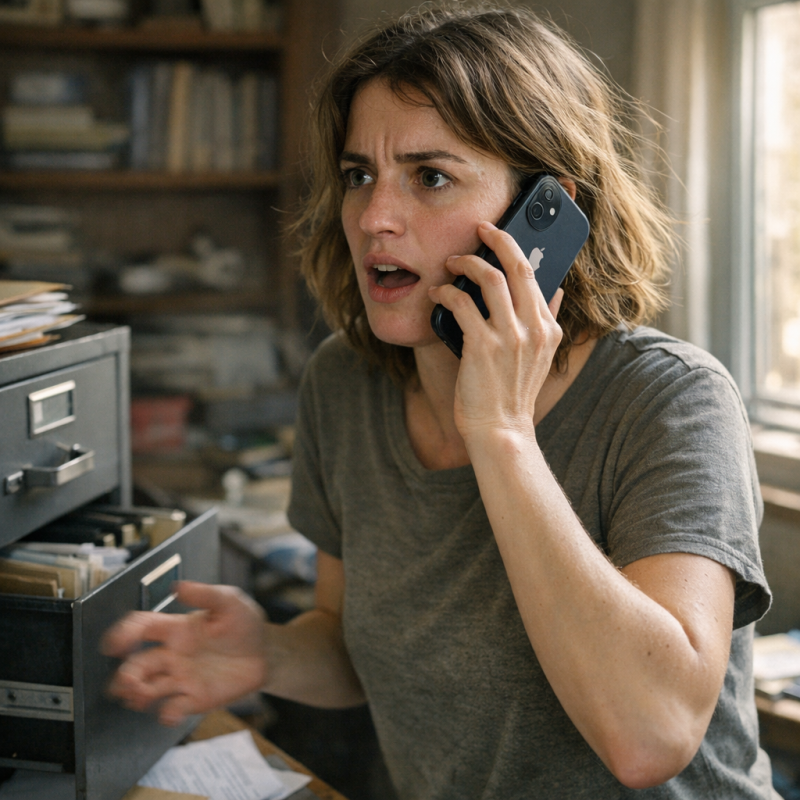 Image by FCT AI
The Message
Mom called me back twenty minutes later, her voice shaking. 'I left her a voicemail,' she said. 'I told her who I was. That I'm Linda, Eleanor's daughter. That I just found out about her and I'm so sorry, and that I'd really like to talk if she's willing.' I could hear how carefully she'd chosen those words, how much weight she'd put on each one. 'What if she doesn't call back?' I asked. 'What if she hates us?' 'Then we'll deserve it,' Mom said quietly, and hung up. Two hours felt like two days. I kept checking my phone even though Mom was the one who'd called Claire. I paced around Richard's house, unable to sit still, unable to stop imagining all the ways this could go wrong. Then my phone rang—Mom's number. I answered before the first ring finished. 'She called back,' Mom said, and I could hear she was crying. 'Sophie, the first thing she said was, 'I've been waiting for this call my entire life.'
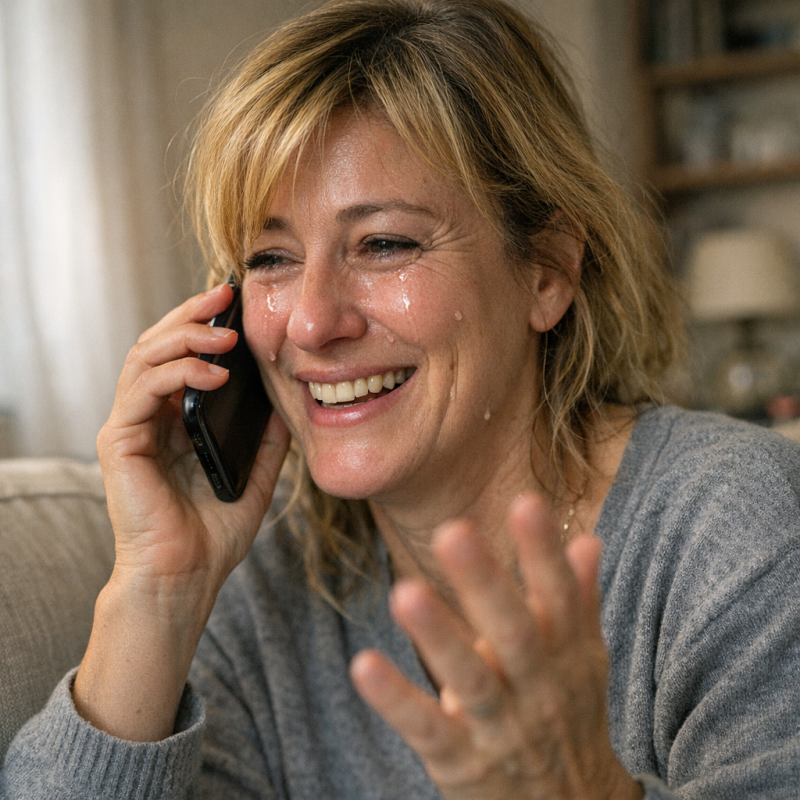 Image by FCT AI
Claire's Story Begins
Mom put Claire on speaker so I could hear. Her voice was soft, measured, like she'd rehearsed this conversation a thousand times in her head. 'I grew up knowing Eleanor was my mother,' Claire said. 'My dad—Marcus—he never hid it from me. He told me she'd wanted to keep me, that she loved me, but that circumstances made it impossible.' I watched Mom's face crumple. 'I tried to find her when I turned eighteen,' Claire continued. 'I hired a lawyer, tried to make contact. But there was a restraining order. I wasn't allowed anywhere near her.' 'Why?' Mom asked, her voice breaking. 'Who would do that?' There was a long pause on the other end. When Claire spoke again, her voice had gone cold. 'A man named Richard made sure of that,' she said. 'He made very certain I understood that if I ever tried to contact Eleanor or her family, there would be consequences.' Mom looked at me, and I saw something shift in her expression—from grief to something sharper, something angrier. Richard hadn't just known about Claire. He'd actively kept her away.
 Image by FCT AI
Meeting Marcus
Claire wanted to meet in person. She lived three hours away, in a small town I'd never heard of, and she said her father—Marcus—still lived there too. 'He's been waiting for this as long as I have,' she told Mom. So we drove out there the next day, both of us barely speaking, processing what we'd learned. Claire had given us the address of a diner, the kind with vinyl booths and pancakes served all day. When we walked in, I spotted them immediately—a woman about Mom's age with Eleanor's eyes, sitting next to an elderly man with kind features and gray hair. They both stood when they saw us. Marcus looked at Mom for a long moment, and I watched his eyes fill with tears. 'You look just like her,' he said softly. 'Just like Eleanor when I met her.' Mom started crying again, and they hugged—this man who was a complete stranger but also somehow family. When he pulled back, he looked at both of us, and his expression shifted to something darker, something haunted. 'Richard stole my family from me,' he said, and the weight of those words settled over the table like a physical thing.
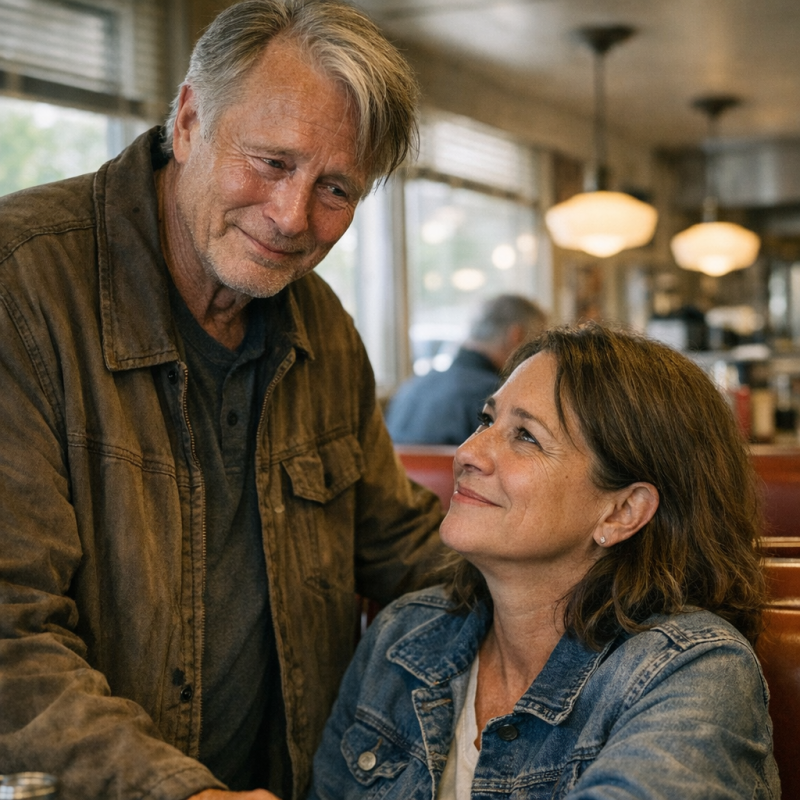 Image by FCT AI
Marcus's Version
We sat down and Marcus told us everything. His voice was steady but his hands shook as he spoke. 'Eleanor and I were in love,' he said. 'We were going to leave together. She was going to divorce Richard, and we were going to raise Claire as a family.' He looked at Mom. 'You would have been about nine years old. Eleanor was terrified of what it would do to you, but she was willing to fight for custody, to make it work.' 'What happened?' Mom asked. Marcus's jaw tightened. 'Richard found out. And he told Eleanor exactly what would happen if she left. He had connections—lawyers, judges, people who owed him favors. He said he'd destroy her reputation, claim she was an unfit mother, mentally unstable. He said he'd make sure she never saw you again.' I felt sick. 'So she stayed,' I said. Marcus nodded. 'He threatened to take everything if she didn't stay,' he said. 'Her daughter, her home, her entire life. And Eleanor believed him. She knew what kind of man Richard was—what he was capable of.'
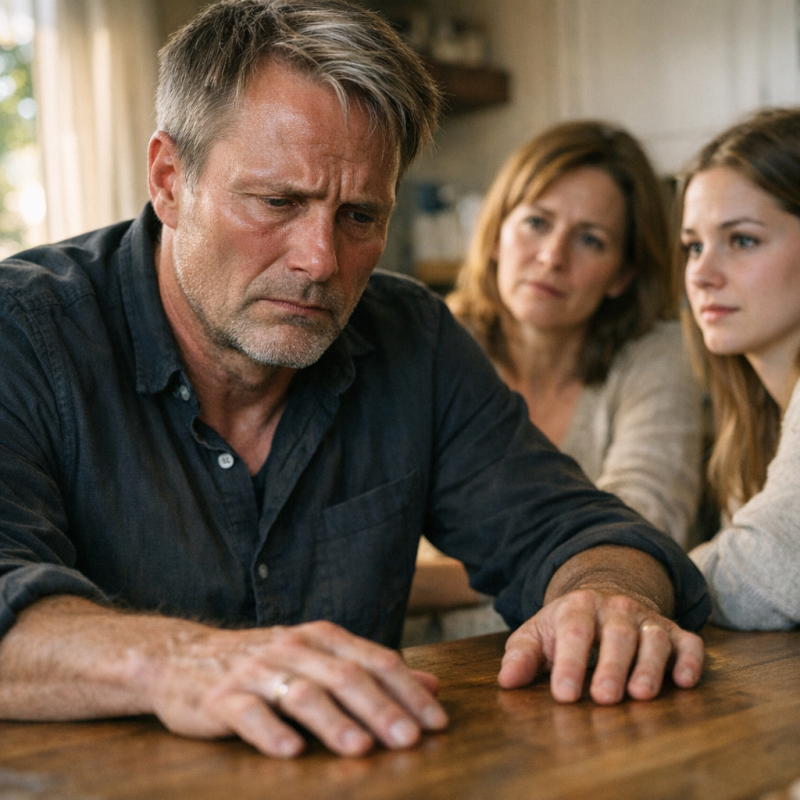 Image by FCT AI
The Legal Angle
Marcus explained how Richard had used every tool at his disposal. 'He had connections at the courthouse, knew exactly how to work the system,' Marcus said. 'Within weeks, there was a restraining order against Eleanor, claiming she was emotionally unstable and posed a risk to Claire's wellbeing.' Mom's face had gone pale. 'But that's insane. Grandma would never—' 'Of course she wouldn't,' Marcus interrupted gently. 'But Richard built a narrative. He had a psychiatrist willing to write reports. He had witnesses who'd testify to Eleanor's 'erratic behavior.' It was all fabricated, but it was legally airtight.' Claire reached across the table and took her father's hand. 'And because Mom was terrified of losing Linda,' she said, looking at my mother, 'she complied with everything. She signed whatever Richard put in front of her. She stayed in the marriage. She let him control her entire life.' I thought about Grandma Eleanor, about how quiet and careful she'd always been around Richard, how she'd seemed to shrink whenever he entered a room. It hadn't been just personality. It had been survival. And the cost of that survival had been her other daughter.
 Image by FCT AI
The Nursing Home Decision
We drove home in silence, both of us processing everything Marcus and Claire had told us. It was dark by the time we got back, and Mom pulled into my driveway instead of going home. We sat there with the engine off, neither of us moving. 'The nursing home,' Mom said finally. 'I kept wondering why he put her there so quickly. He said it was because he couldn't handle her care anymore, but she wasn't that bad yet. She was confused sometimes, but she didn't need that level of supervision.' I'd been thinking the same thing. 'He didn't put her there because he couldn't handle her,' I said slowly. 'He put her there to isolate her. To control who she talked to.' Mom turned to look at me, her face illuminated by the streetlight. 'And to keep her from talking,' I added, the realization hitting me like ice water. 'Think about it—once her dementia started, she might say anything. She might mention Claire, or Marcus, or what really happened.' Mom's face went white. 'So he locked her away where he could monitor every conversation, every visitor, every moment.'
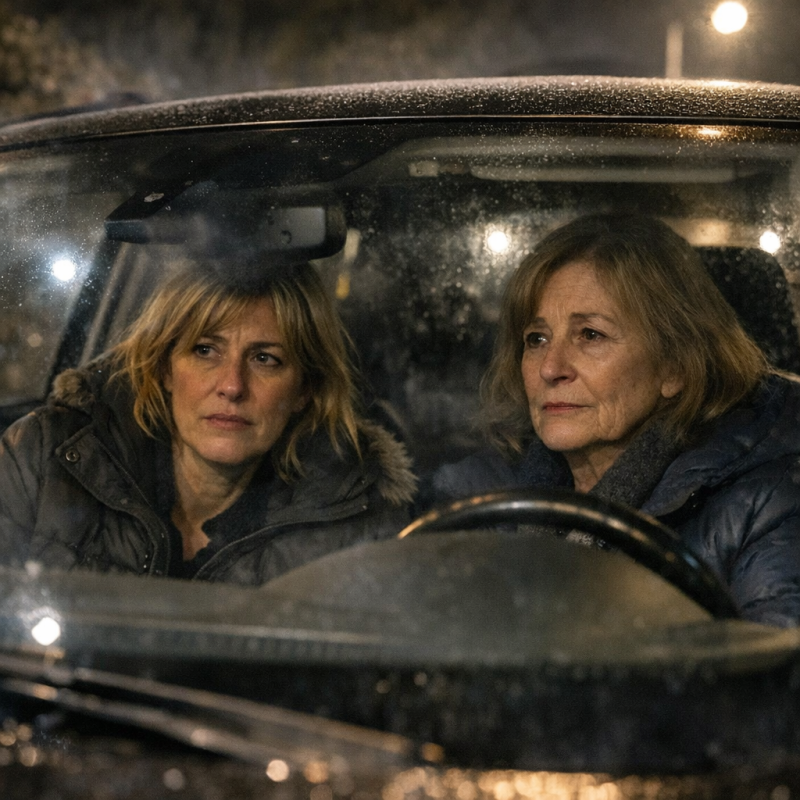 Image by FCT AI
Visiting Eleanor
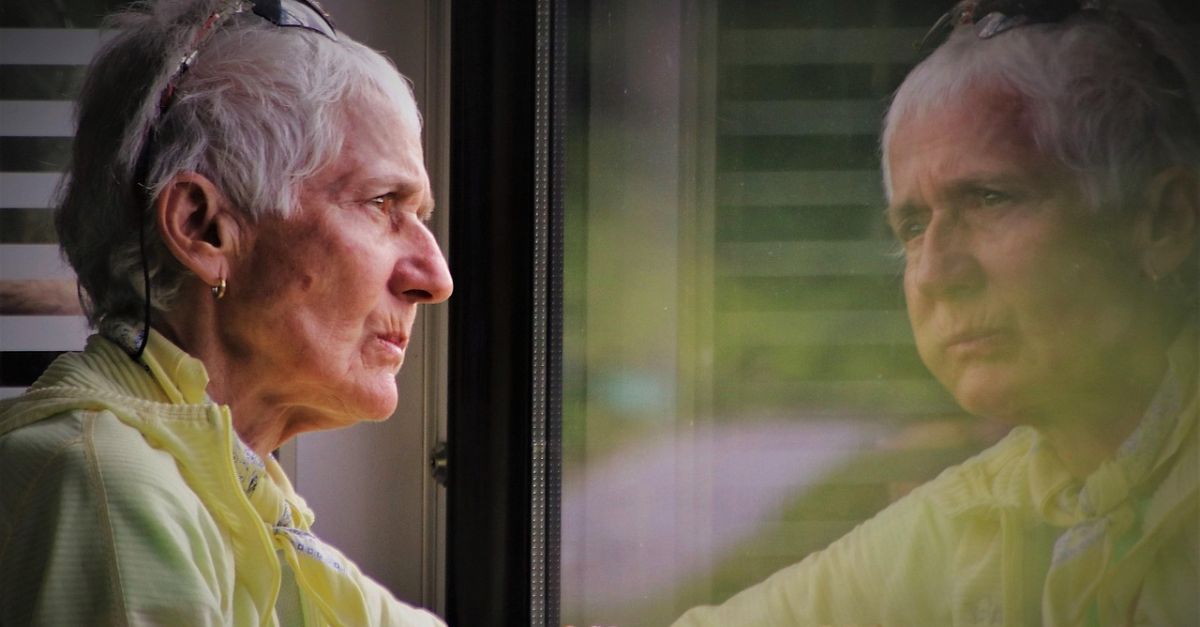
We went to the nursing home the next morning, both of us. Grandma Eleanor was in her room, staring out the window like she often did. 'Hi, Grandma,' Mom said softly, sitting beside her. 'It's Linda. And Sophie's here too.' Eleanor turned to look at us, and for a moment her eyes were cloudy, unfocused. Then something shifted. 'Linda,' she said, and her voice was clearer than I'd heard it in months. 'My Linda.' 'We met Claire,' Mom said gently. 'And Marcus. They told us everything.' I watched Eleanor's face transform—recognition, joy, terror, all flickering across her features in rapid succession. 'Claire,' she whispered. 'My baby. Is she—is she okay?' 'She's wonderful,' Mom said, crying now. 'She wants to see you.' Eleanor started crying too, but then her expression changed to something panicked. She grabbed my hand, her grip surprisingly strong, and pulled me close. Her eyes were lucid, completely present, and filled with decades of fear. 'He said if I told anyone, he'd take you all away from me,' she whispered, and I felt the full weight of what Richard had done—not just once, but every day for forty-five years.
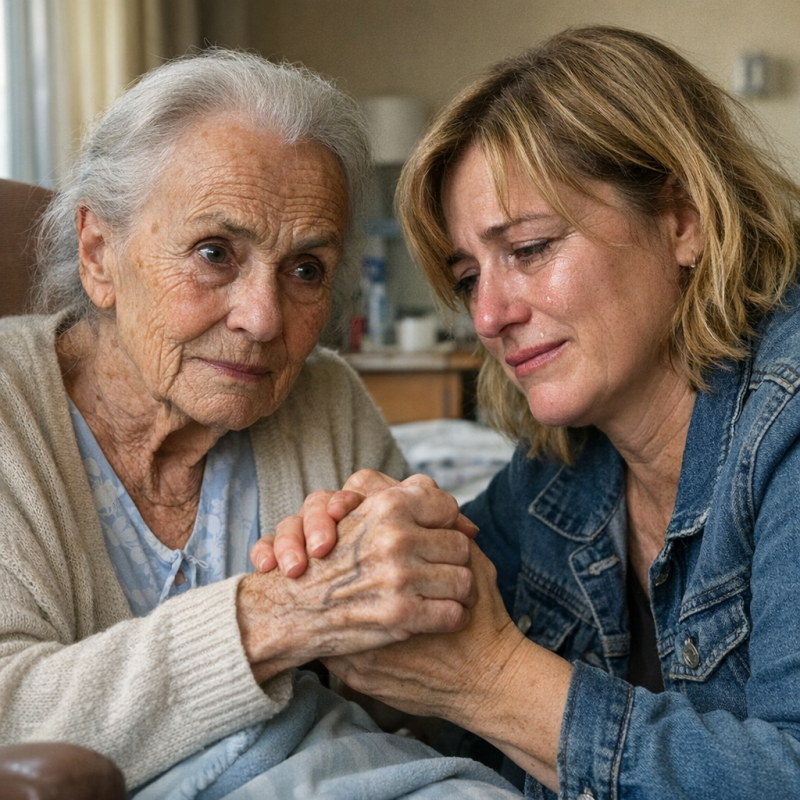 Image by FCT AI
The Pattern Emerges
Mom and I spent the rest of that day sitting in my living room, going through everything we knew. We made a timeline, wrote down every detail Marcus and Claire had shared, every moment we could remember when Richard had controlled a situation or shut down a conversation. 'The Christmas I asked about Grandma's past,' Mom said. 'Richard changed the subject so fast. I thought he was just being Richard, you know? Grumpy and dismissive.' 'And every time Grandma started to talk about her younger years,' I added. 'He'd interrupt her, redirect, sometimes just leave the room and she'd go quiet.' We kept finding them—these small moments that we'd dismissed as personality quirks or marital dynamics. But laid out like this, they formed a pattern. Richard hadn't just threatened Eleanor once and then passively benefited from her silence. He'd actively maintained it. Every conversation monitored, every relationship controlled, every potential exposure shut down before it could begin. It wasn't passive complicity—it was active suppression, and it had been happening for decades, right in front of us, invisible until now.
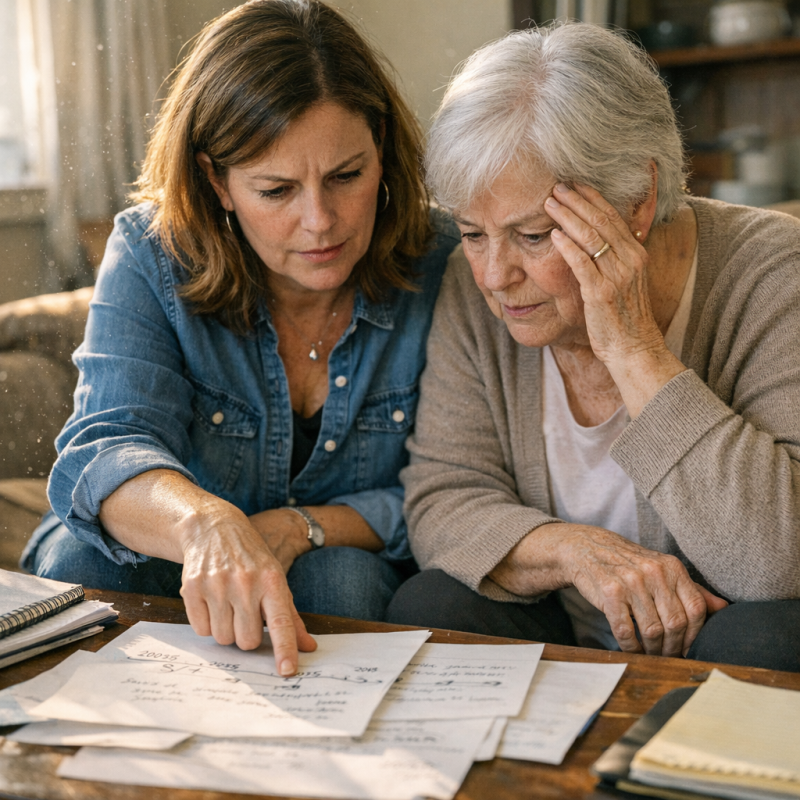 Image by FCT AI
Meeting Claire in Person
Claire chose a coffee shop in neutral territory—halfway between her home and ours, the kind of generic chain where nobody would remember us later. Mom and I got there twenty minutes early, both of us too anxious to wait at home. I kept watching the door, wondering if I'd recognize her, if the connection would be obvious or invisible. Then she walked in, and I swear to God, it was like watching a younger version of Grandma Eleanor step through the doorway. Same delicate features, same way of holding her shoulders, same slight hesitation before committing to a space. Mom saw it too—I heard her sharp intake of breath beside me. Claire spotted us immediately, probably seeing the same recognition in our faces that we saw in hers. She approached slowly, cautiously, like someone who'd learned not to trust easy welcomes. We all stood there for a moment, nobody quite knowing how to start this conversation. Then Claire pulled out the chair across from us, sat down with the careful precision of someone doing something they'd rehearsed a thousand times in their head, looked directly at Mom, and said, 'I've spent forty-five years wondering what it would be like to have a sister.'
 Image by FCT AI
Claire's Childhood
Claire talked for over an hour, and I don't think any of us moved. She described growing up in a house where her mother's name was spoken like a prayer and a curse—present in every conversation, absent from every moment that mattered. Marcus had told her everything when she turned twelve, thinking honesty was kindness. 'I knew she was alive,' Claire said, her voice steady but strained. 'I knew she was just a few hours away, living a whole other life with another daughter. And I knew Richard had made it impossible for us to be in the same room.' She talked about driving past our old house when she was sixteen, just to see it, to imagine Eleanor inside. About calling the landline once and hanging up when someone answered. About the birthdays, the holidays, the ordinary Tuesday afternoons when she'd wonder what Eleanor was doing and whether she ever thought about the daughter she'd lost. 'I didn't hate her,' Claire said quietly. 'I understood she'd been trapped. But Richard?' Her expression hardened. 'Every birthday, every holiday, I imagined what Eleanor was doing—and hated Richard for keeping us apart.'
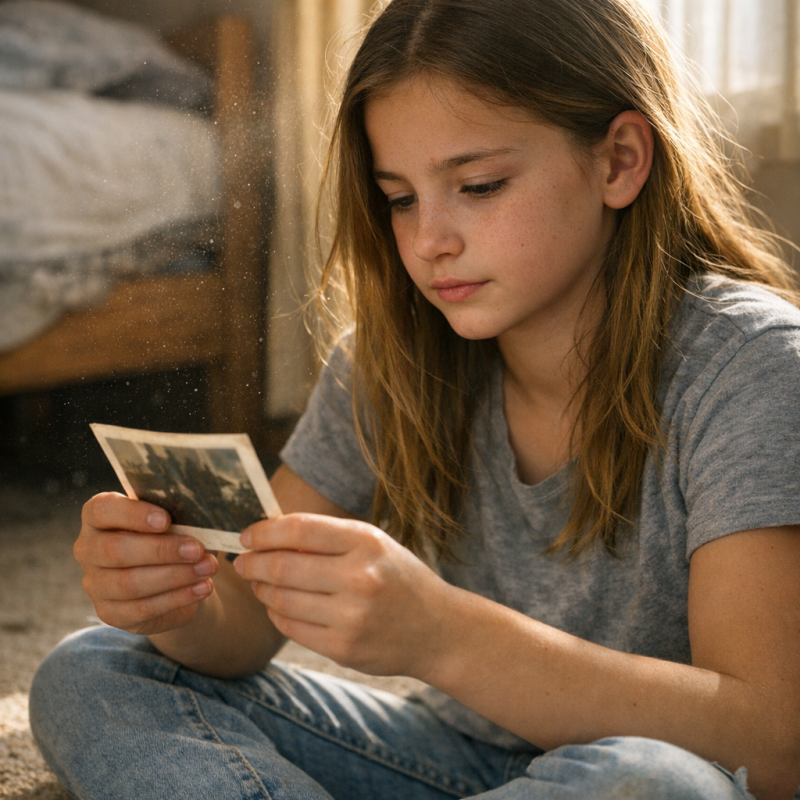 Image by FCT AI
The Financial Trail
Then Claire told us about the legal battle we'd never known existed. Marcus had tried to fight the restraining order when Claire was seven, hired a family attorney with money he didn't have. 'He thought if he could prove he was stable, that I was thriving, maybe they'd at least allow supervised visits,' Claire explained. 'Just let me see my mother once a year. That's all he wanted.' But Richard had lawyered up immediately, with the kind of attorneys who charge by the minute and bill for thinking about your case in the shower. Every motion Marcus filed, Richard countered with three more. Every hearing became a marathon of depositions and paperwork. 'It went on for two years,' Claire said. 'My dad spent everything—his savings, his retirement, borrowed from friends. Richard just kept going, kept filing, kept burning through money like it was nothing.' She reached into her bag and pulled out a manila folder, thick with yellowed documents. Legal bills, court filings, letters from attorneys explaining they couldn't continue without payment. 'He bankrupted my father just to keep me away.'
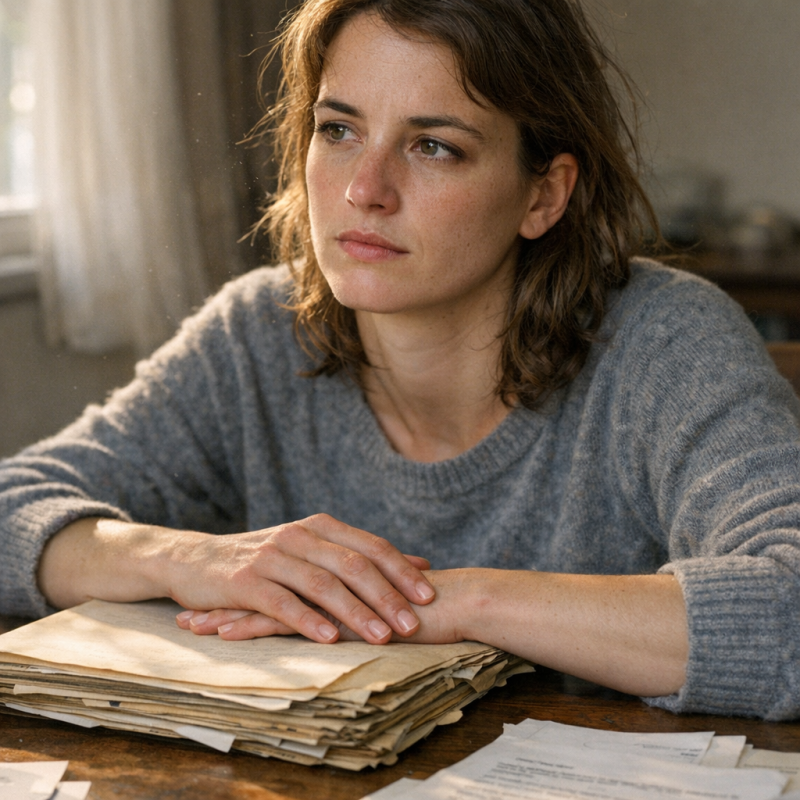 Image by FCT AI
The Control Mechanism
After Claire left, Mom and I sat in her car in the parking lot, neither of us ready to drive yet. 'He didn't just react to the affair,' Mom said slowly, like she was working through a math problem that had never quite added up before. 'He used it. All these years, I thought he was this wounded man who couldn't forgive, couldn't move past it. But that's not what this was.' I thought about every family dinner, every holiday, every ordinary interaction I'd witnessed between Richard and Eleanor. The way he'd watch her, not with love or even anger, but with something colder. Assessment. Calculation. 'He was keeping her in place,' I said, and Mom nodded. We'd both seen it—the way Eleanor would start to relax, to seem almost happy, and then Richard would say something, do something, just enough to pull her back. Not explosive, not dramatic. Just constant, steady pressure. I thought back to all the years I'd watched him silent and cold, and realized he wasn't suffering—he was winning.
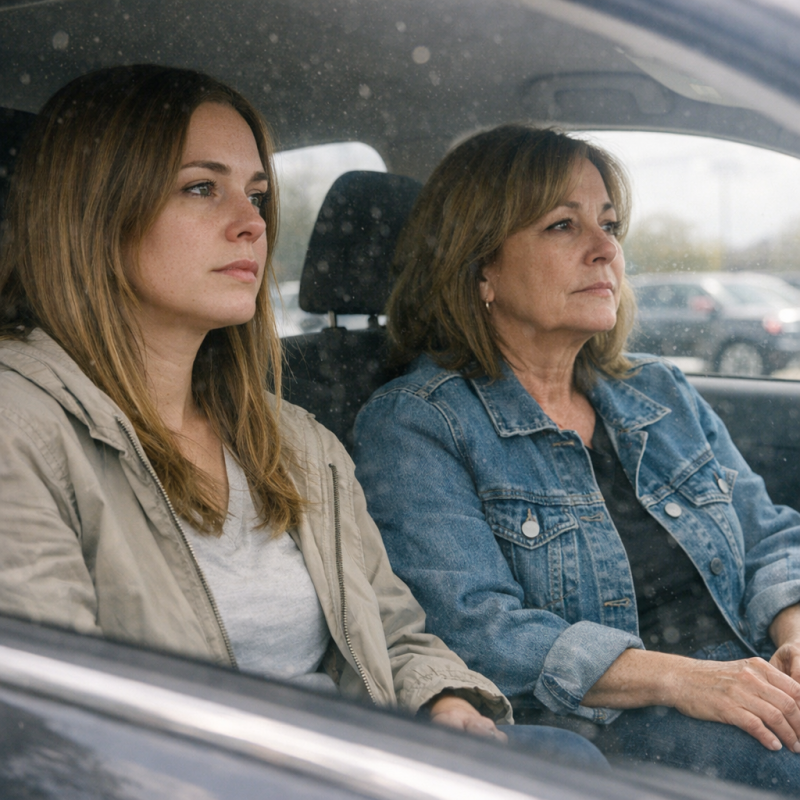 Image by FCT AI
The Attorney
Mom found Attorney Morrison through a colleague's recommendation—someone who specialized in elder law and family manipulation cases. We met him in his office downtown, a space that somehow managed to feel both expensive and worn, like he'd been doing this work too long to care about appearances. Mom laid out everything: the affair, the restraining order, the financial warfare against Marcus, the decades of isolation. Morrison listened without interrupting, making occasional notes in handwriting I couldn't read. When Mom finished, he was quiet for a long moment. 'What are you hoping to accomplish?' he asked. 'I don't know,' Mom admitted. 'Justice? Accountability? I just need someone who understands this to tell me if what he did was legal, even if it was monstrous.' Morrison picked up the folder we'd brought—copies of everything Claire had given us, everything we'd found. He flipped through slowly, his expression shifting from professional interest to something harder. He set the folder down carefully, the way you'd handle evidence at a crime scene. 'This is one of the most calculated campaigns of familial sabotage I've ever seen.'
 Image by FCT AI
The Hidden Correspondence
Morrison asked for time to review everything thoroughly, and three days later, he called us back to his office. This time, his expression was different—disturbed, almost angry. 'I requested Richard's legal files from the attorney who handled the restraining order,' he said. 'Most of it's standard procedure, but there's correspondence between Richard and his lawyer that's... unusual.' He slid several photocopied letters across the desk. They were dated 1979 through 1981, discussing 'strategy' and 'long-term containment.' Legal language wrapped around something uglier. I read one that made my stomach turn: Richard asking his attorney about 'maintaining leverage in perpetuity.' Another discussing the 'psychological value' of supervised visitation denials. Then Morrison pointed to a letter dated August 1980, and I felt Mom go rigid beside me. The language was coded but clear—Richard discussing Eleanor's ongoing compliance, Marcus's financial depletion, the sustainability of the arrangement. And then, in Richard's lawyer's response, one sentence that made everything crystallize: 'The child is the best insurance policy—she'll never leave if she thinks I'll use it.'
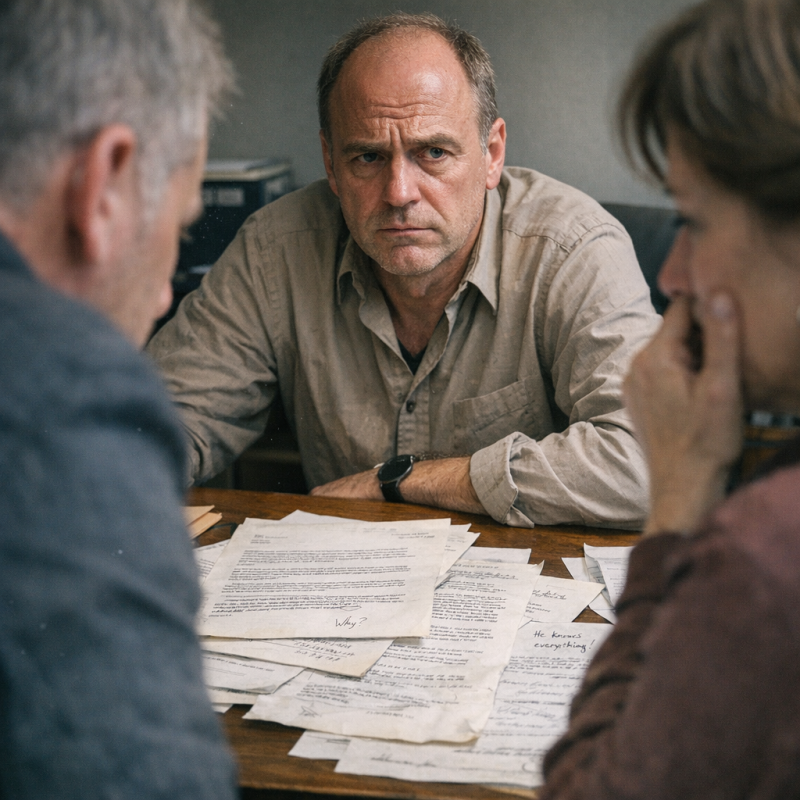 Image by FCT AI
The Final Piece
Morrison kept digging, and the next week, he found something that shouldn't have existed—a personal journal Richard had apparently kept during the initial separation, stored with his legal documents for reasons we couldn't fathom. Maybe insurance. Maybe pride. The entries were sparse but methodical, dated entries from late 1978 through early 1979, chronicling not his pain but his planning. 'She made a choice,' one entry read. 'Now I make the consequences.' Another described the restraining order filing in purely tactical terms: 'Attorney confirms child separation is legally defensible given affair circumstances. E will not fight—too much shame.' Then the supervised visitation denials: 'Each denial reinforces the cost. She needs to understand permanence.' The entries weren't the ravings of a wounded husband. They were a blueprint. A strategy. Mom's hands shook as she read them. I felt sick, but I kept reading, kept forcing myself to see it. The final entry was dated March 1979, after the custody arrangement was finalized. The last line read: 'She made the mistake. I'll make sure she pays for it—forever.'
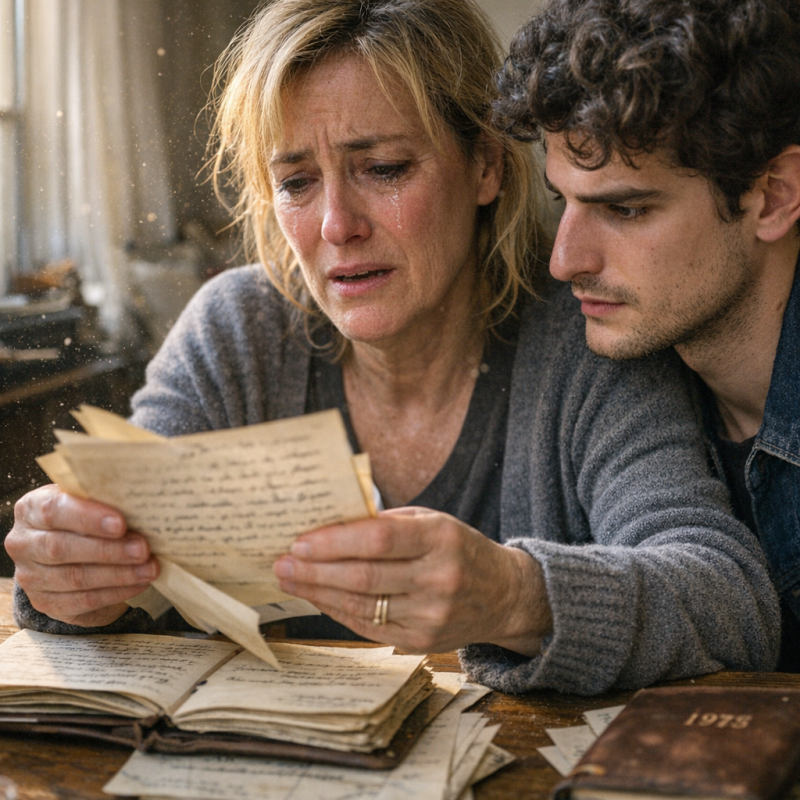 Image by FCT AI
The Full Truth
We met with Claire again, this time with Morrison present, and laid out everything we'd found. The letters. The journal. The legal strategy that had spanned decades. And finally, we could see it all clearly: Richard hadn't just known about Claire—he'd orchestrated her separation, weaponized it, maintained it for forty-five years, and used her existence as leverage to control every single aspect of Eleanor's life. Every decision Eleanor made, every relationship she maintained, every moment of potential happiness—Richard had monitored and managed it all, with Claire's absence hanging over Eleanor like a sword he could drop whenever she stepped out of line. 'And the nursing home?' Claire asked quietly. We'd gotten to that part. When Eleanor's dementia started eroding her filters, threatening to expose his decades-long manipulation to family and friends, Richard had placed her somewhere contained. Somewhere controlled. Not to protect her, but to protect his secret. Morrison pulled out Richard's documentation—because of course there was documentation. Meticulous records spanning decades. And the most horrifying part? He documented everything, keeping meticulous records not out of guilt, but as proof of his control.
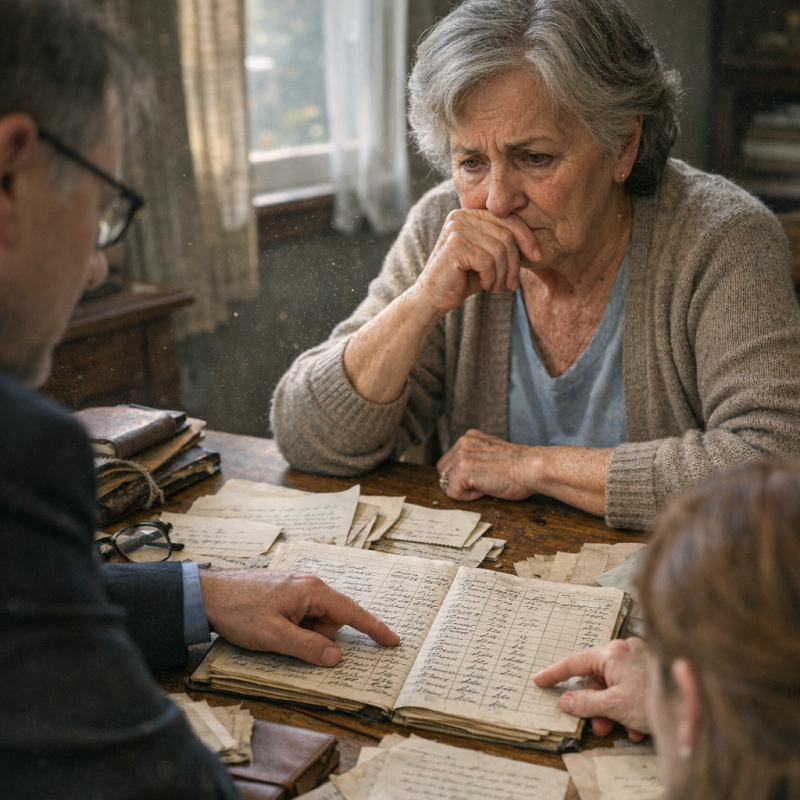 Image by FCT AI
Processing the Truth
We sat there in Morrison's office for what felt like hours, though it was probably only twenty minutes. None of us spoke. What do you even say when you realize someone spent forty-five years systematically destroying lives just because he could? Linda kept shaking her head, this tiny repetitive movement like her brain was trying to reject what we'd learned. Claire stared at the documents spread across the table—her entire stolen childhood laid out in legal memorandums and calculated correspondence. I felt numb, honestly. That kind of deliberate, sustained cruelty doesn't compute. You want there to be a reason, some trauma or mental illness that explains it. But sometimes people are just... methodical monsters. Morrison had excused himself to make calls, leaving us to process. The silence was suffocating. Finally, Claire looked up, and I saw something shift in her expression—shock crystallizing into something harder. Her jaw set. Her hands stopped trembling. She looked at me, then at Linda, and said the words I'd been both dreading and expecting. 'We need to confront him—together.'
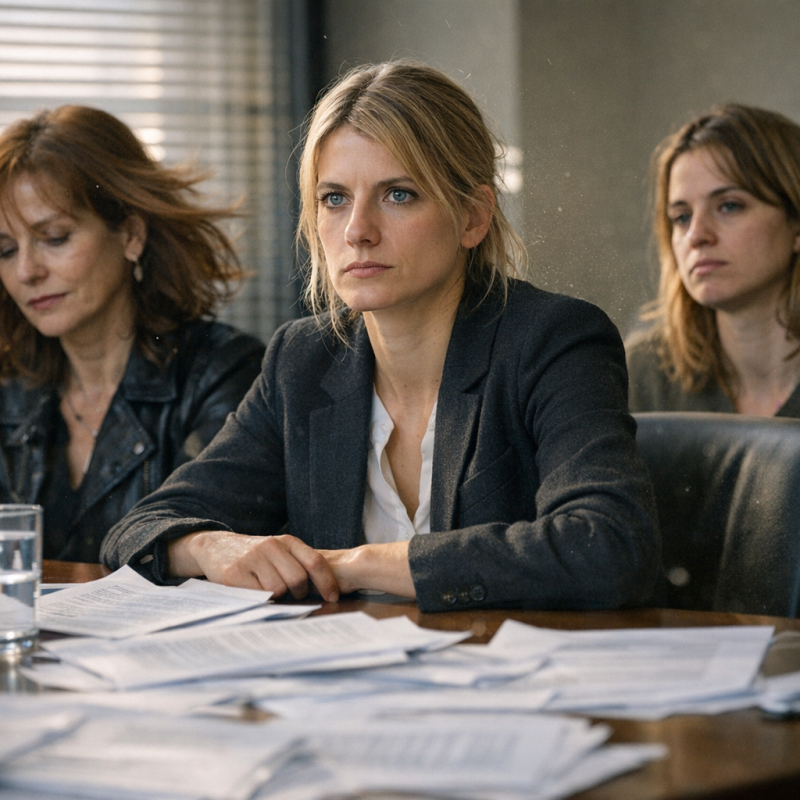 Image by FCT AI
Preparing for Confrontation
We spent the next two days gathering everything. The letters Claire had received through Marcus. Eleanor's journal entries. The legal documents Morrison had obtained showing Richard's decades-long manipulation. We organized it all chronologically, building an irrefutable timeline of control and destruction. Linda made copies of everything, paranoid that Richard might somehow destroy the evidence. I kept thinking about what we'd say, how we'd present it, whether confrontation would even matter to someone who'd spent forty-five years perfecting his system of control. Claire was eerily calm, focused. She'd waited her entire life for answers. Now she'd have them. When we finally drove to Richard's house—the same house where Eleanor had raised Linda, where family dinners had happened, where normalcy had been performed for decades—my stomach was churning. We pulled into the driveway with our boxes of evidence, our rehearsed questions, our righteous anger. And there he was, standing on the front porch with his hands in his pockets. Smiling. Not surprised, not defensive. Just... waiting. Like he'd known we'd figure it out eventually, and he'd been expecting us all along.
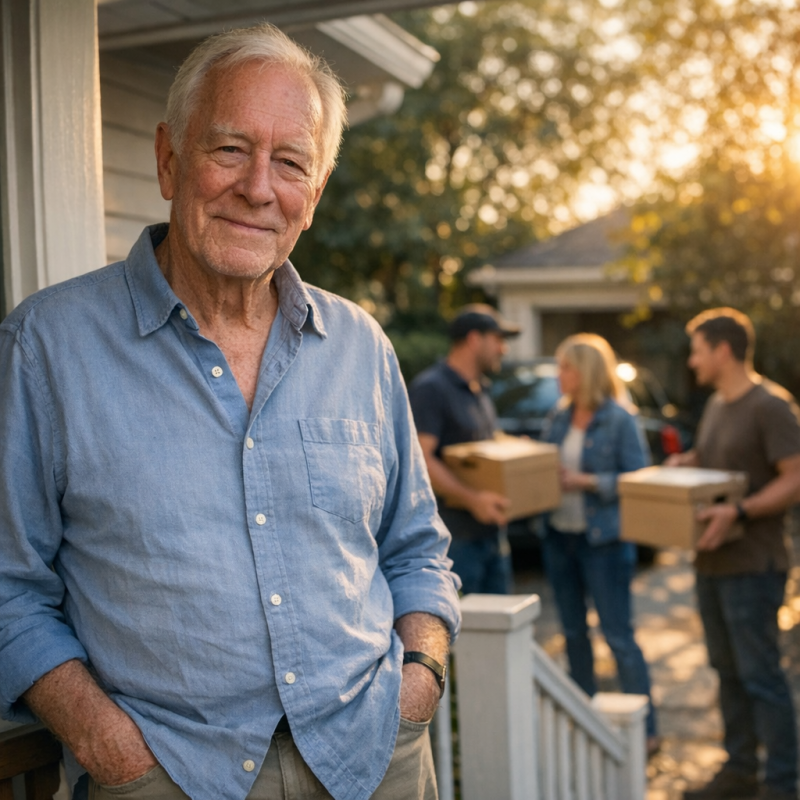 Image by FCT AI
The Confrontation
Linda didn't waste time. She walked straight up to him, dropped the box of documents at his feet, and demanded he explain himself. 'Why?' she asked, her voice shaking with fury. 'Why would you destroy so many lives just to maintain control?' Richard invited us inside like we were there for tea. He gestured to the living room, that same room where I'd sat as a child listening to him tell stories. We followed, too stunned to refuse. Claire set down her own box of letters, and Richard glanced at them with mild interest, like someone noting the weather. Morrison had joined us, standing by the door with his briefcase, ready to document everything. Linda started listing his crimes—separating Claire from Eleanor, using the affair as blackmail for decades, isolating Eleanor when her dementia threatened his secrets, weaponizing his own granddaughter's existence. She laid it all out, her voice getting louder, more desperate. And Richard just sat there, listening patiently. When she finally ran out of words, chest heaving, he turned to Claire. Really looked at her for the first time. And then he said, calm as anything: 'Because I could.'
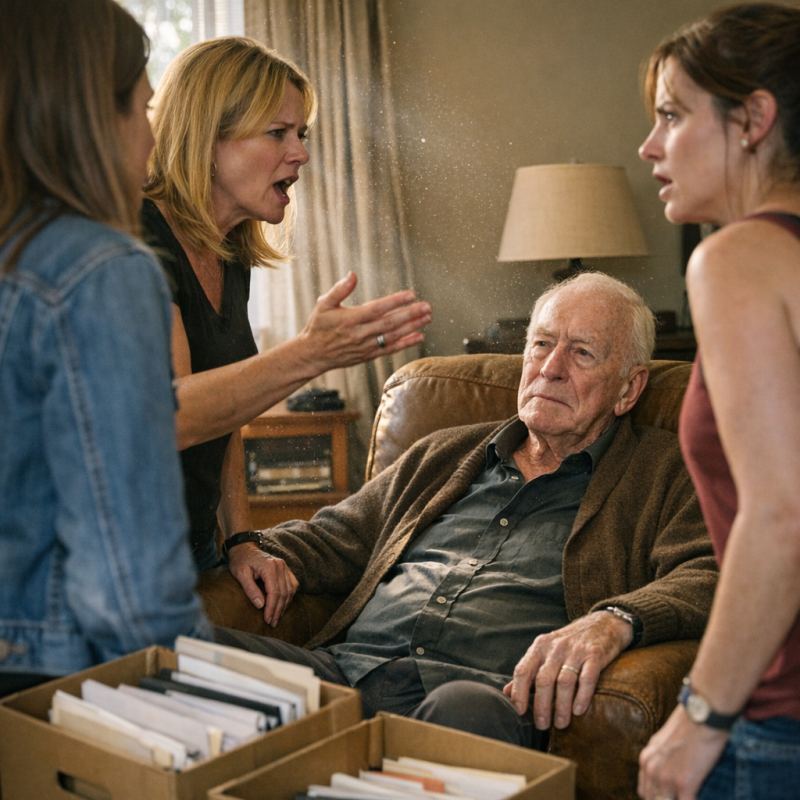 Image by FCT AI
Richard's Defense
He leaned back in his chair, utterly relaxed, and started explaining like he was describing a particularly clever investment strategy. Eleanor's affair, he said, had been 'inconvenient' at first. He'd been angry, sure. But then he realized what he'd been handed—leverage that would never expire, justification that would never be questioned. 'She gave me the perfect excuse to live exactly how I wanted without consequences,' he said, and I felt sick. He'd traveled for 'work' constantly, maintaining relationships we'd never know about. He'd made financial decisions without her input, citing her 'betrayal' as reason enough. He'd controlled every aspect of her life while presenting himself as the devoted, forgiving husband. And everyone had bought it. Everyone had pitied him. 'The affair gave me freedom,' he said, like freedom meant the right to torture someone for forty-five years. 'Every time she wanted something—to reconnect with Claire, to make her own choices, to question my decisions—I just had to remind her of what she'd done. What she'd cost us.' He smiled. 'She handed me the keys to my freedom, and I took them.'
 Image by FCT AI
Claire Speaks
Claire had been silent until then, just watching him with this expression I couldn't read. But when he finished his little speech about freedom, she stood up. Her voice came out steady, clear. 'You stole my entire childhood,' she said. 'My relationship with my mother. Decades of family. You kept me from my sister, my niece, everyone. You erased me.' Richard nodded, acknowledging the facts like she was reciting a grocery list. 'You had no right,' Claire continued, her composure starting to crack. 'I was a child. I didn't do anything to you. My mother made a mistake, and you punished me for it my entire life. Do you understand that? You stole my life.' I watched his face, waiting for remorse, for defensiveness, for anything human. He looked at her for a long moment. Then he said, 'I gave you Marcus. A good man, a stable home, a life away from all this dysfunction.' His voice was almost gentle, which made it worse. 'You should be grateful.' The air went out of the room. Claire actually stumbled backward, like he'd physically struck her.
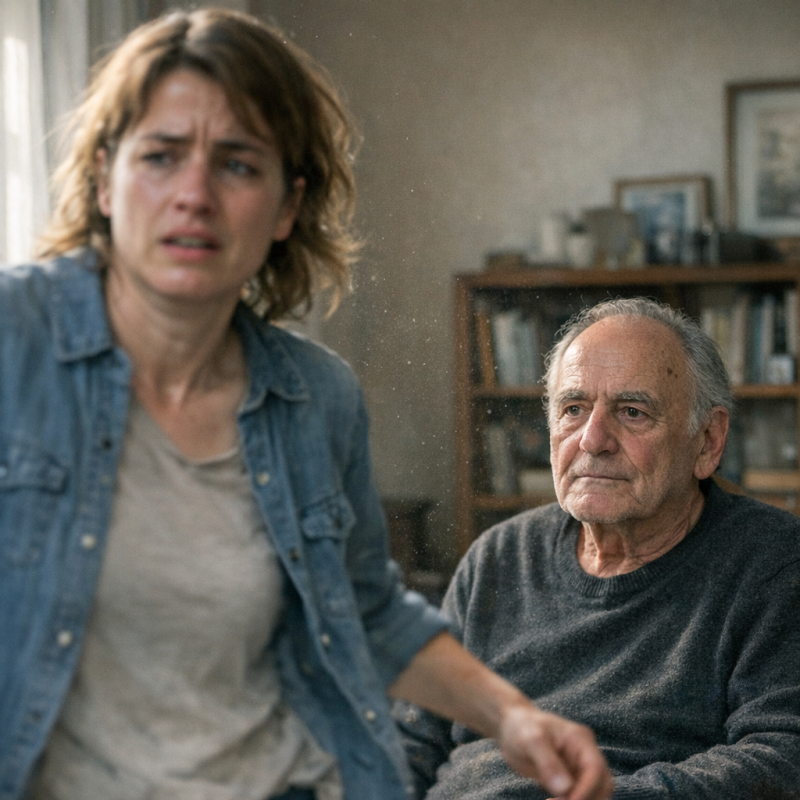 Image by FCT AI
Linda's Rage
Linda exploded. I'd never seen her like that—screaming, years of suppressed rage finally breaking free. She called him every name I'd ever heard and several I hadn't. She threw the photo albums we'd brought as evidence, pages scattering across his pristine living room. 'You used my mother as a pawn!' she shouted. 'You destroyed Claire's life! You're a monster!' Richard didn't flinch. Didn't raise his voice. Just sat there waiting for her to exhaust herself. Which made Linda angrier, more desperate. She kept trying to get a reaction, to make him feel something, anything. She brought up my childhood, how he'd been my hero, how he'd pretended to be this wonderful grandfather while orchestrating decades of cruelty. Nothing. He just watched her with this detached curiosity, like she was a specimen he was studying. Finally, when she ran out of steam, he shrugged. Actually shrugged. 'Your mother made her choice,' he said quietly. 'I made mine.' And that was it. No justification, no apology. Just that. Linda collapsed onto the couch, sobbing, and I realized we'd never reach him. You can't appeal to empathy someone doesn't have.
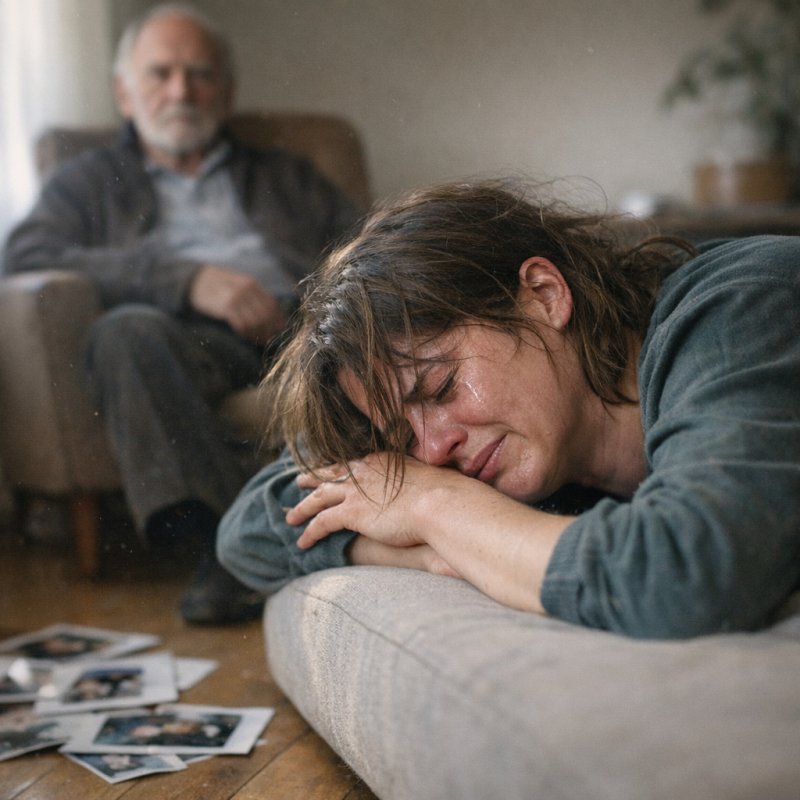 Image by FCT AI
The Legal Threat
Morrison stepped forward then, all business. He laid out the legal options—pursuing charges of fraud, coercion, emotional abuse. He detailed how Richard's documented control could constitute financial elder abuse, how the separation of Claire might be prosecuted as parental interference, how the pattern of manipulation could support multiple legal theories. He spoke in that careful attorney voice, presenting consequences like they were inevitable. Building a case. And Richard listened politely, nodding occasionally like Morrison was presenting an interesting academic argument. When Morrison finished, Richard actually smiled. Then he laughed. Not nervously, not manically—just genuinely amused. 'Go ahead,' he said, standing up and walking to his study. He returned with his own box, larger than ours, and set it on the coffee table. 'I've been preparing for this for forty-five years.' He opened it. Inside were legal documents, financial records, carefully crafted correspondence that painted him as the devoted caretaker and Eleanor as the unstable one. Decades of evidence supporting his version. 'Everything I did was documented, justified, and legal,' he said. 'You'll find I'm quite protected.' Morrison's face went pale. We'd brought evidence of his cruelty. He'd brought evidence of his cover-up.
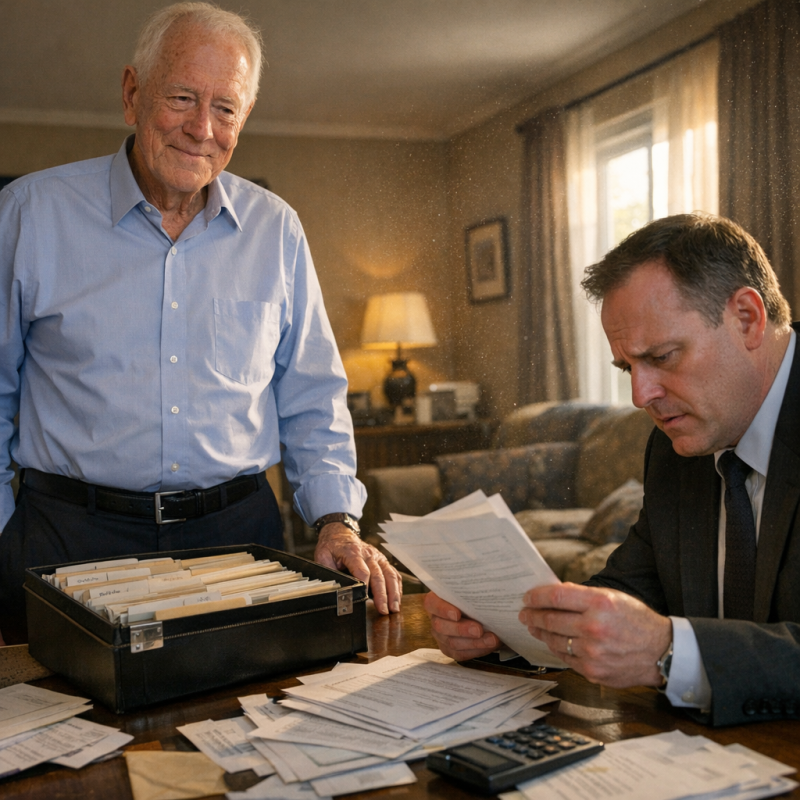 Image by FCT AI
Eleanor's Choice
That's when Linda played our final card. She'd brought Eleanor. We'd timed it for one of her increasingly rare lucid periods, and she'd insisted on coming. Linda helped her into the room, and Richard's expression shifted slightly—the first crack in his composure we'd seen. Eleanor looked at him, really looked at him, with those clear eyes that occasionally returned. She took in the evidence scattered around the room, the faces of her daughters, her granddaughter. Morrison quietly explained what we'd discovered, what Richard had done. Eleanor listened, nodding slowly. We waited for her rage, her grief, her condemnation. Instead, she reached out and touched Richard's hand. 'I forgive you,' she said simply. The words hung in the air. Richard's face went white. 'Eleanor,' he started, but she shook her head. 'I forgive you for all of it,' she repeated. 'The control, the cruelty, the decades of punishment. I forgive you.' And for the first time in this entire nightmare, Richard's mask slipped—because we could all see it clearly: he'd wanted her anger, needed her rage to justify what he'd done. Her forgiveness? That was the one thing he'd never prepared for.
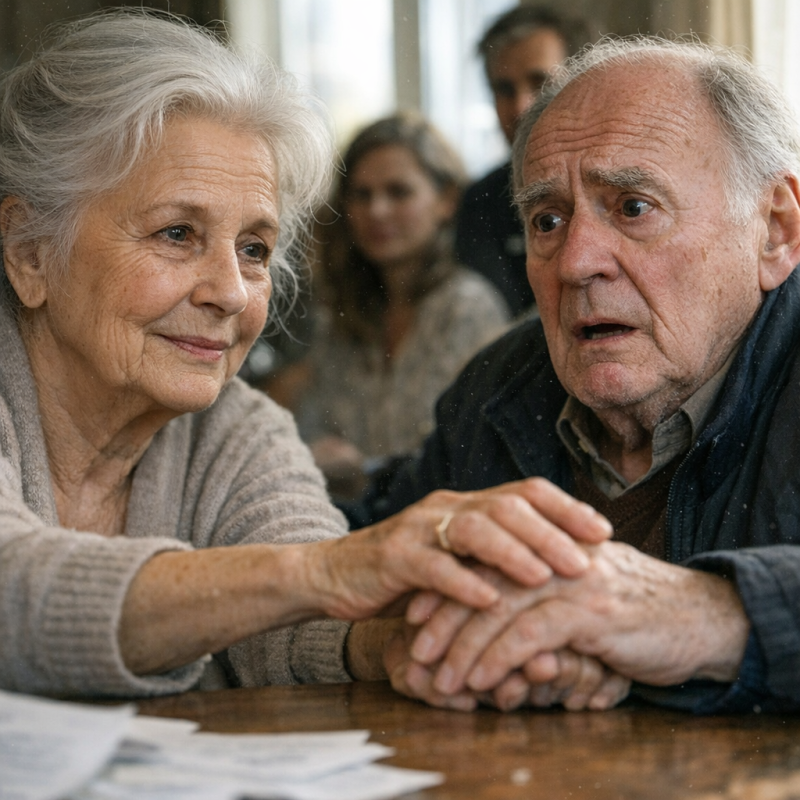 Image by FCT AI
Walking Away
We didn't need to discuss it. Linda stood first, gathering her things with deliberate movements. Claire followed, and then I did. Morrison had already packed up the evidence—the lawyers would handle what came next. Richard sat at the conference table, still and silent, watching us prepare to leave. He didn't apologize. Didn't explain. Didn't ask us to stay. Eleanor needed Linda's help to stand, her lucid moment already starting to fade at the edges. We'd made it to the door when Eleanor stopped. She turned back, and for just a second, her eyes were completely clear again. She looked at Richard—this man who'd controlled her entire adult life, who'd stolen her daughter and decades of memories. 'You kept me from Claire,' she said, her voice steady and certain. 'But you can't keep her from me anymore.' Then she let Linda guide her out into the hallway, and we walked away from Richard entirely, leaving him alone in that conference room with nothing but his empty victories and the life he'd built on lies.
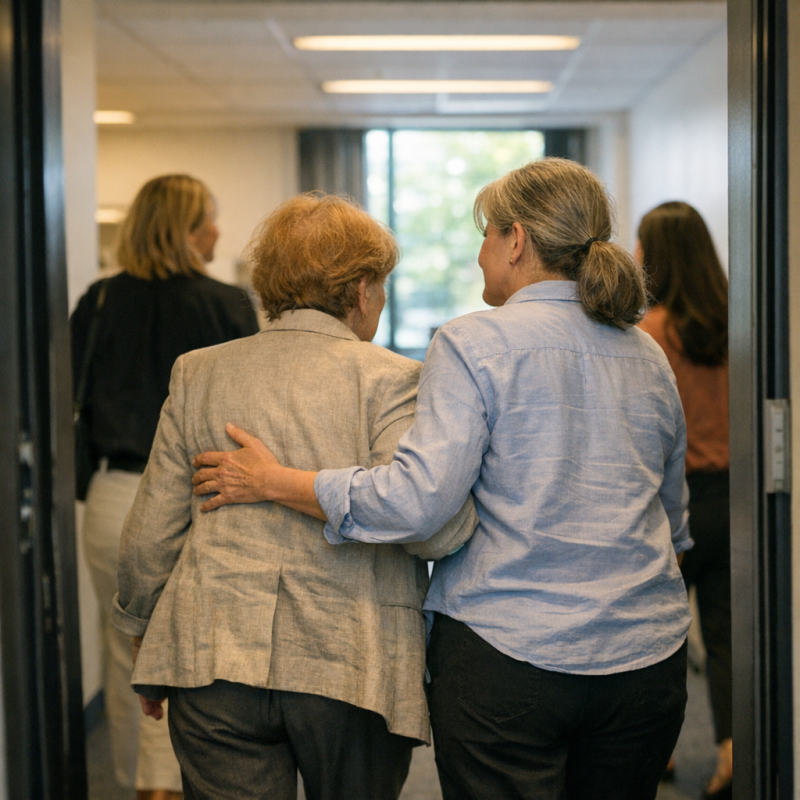 Image by FCT AI
Building a New Family
The months that followed were strange and beautiful and heartbreaking all at once. Claire came to Sunday dinners. She met Marcus properly, learned about our family traditions, told us stories about her life. We filled in the gaps for each other—fifty-four years of missed moments that we tried to compress into whatever time we had left. Linda taught Claire how to make Eleanor's lemon cake. I showed her photo albums Eleanor had kept, decades of pictures that suddenly made sense with Claire's existence. We celebrated Claire's birthday properly for the first time, all of us together. Eleanor had more bad days than good by then. Some mornings she didn't remember who Claire was, and I'd watch my aunt's face crumble before she carefully reintroduced herself. But the good days—God, the good days were everything. When Eleanor was lucid, she spent every moment with Claire, holding her hand, asking questions, apologizing, laughing at shared jokes only the two of them understood.
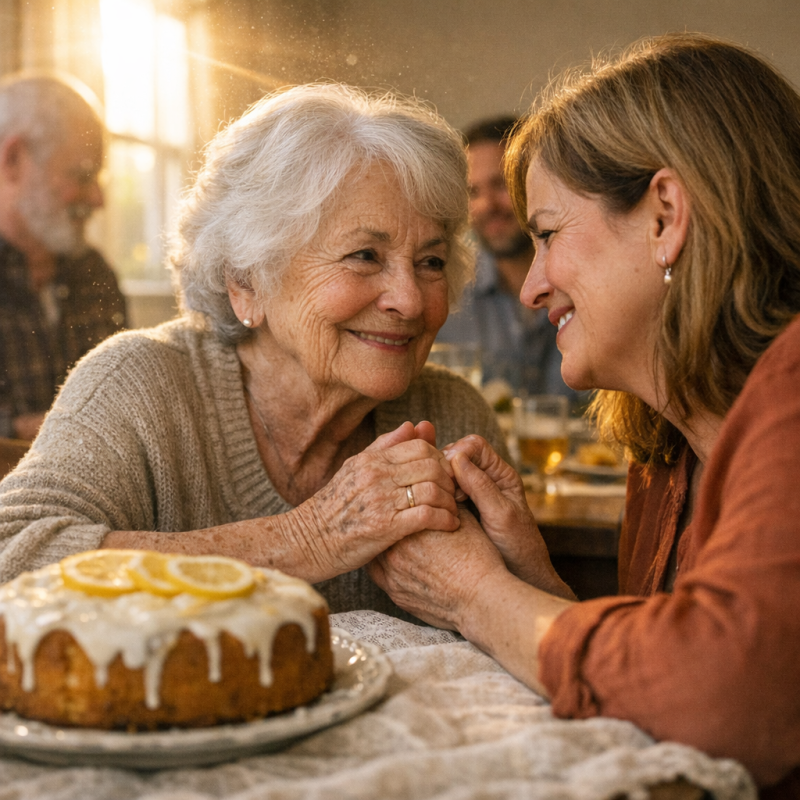 Image by FCT AI
The Final Goodbye
The decline came faster than we expected. One week Eleanor seemed stable, and the next she could barely stay awake. We brought her home from the facility, set up hospice care in Linda's guest room. The nurse said it would be days, maybe hours. Linda never left her side. Claire took time off work and drove down. Marcus came, brought flowers even though Eleanor was mostly unconscious. I held her hand and told her stories about my childhood, hoping some part of her could still hear me. She stirred occasionally, squeezed our fingers, made small sounds that might have been words. On the third day, she opened her eyes. Really opened them, clear and present like she used to be. She looked at each of us—Linda, me, Marcus—before her gaze settled on Claire. She smiled, squeezed Claire's hand with surprising strength. 'I never stopped loving you,' she whispered. Those were her last words. She closed her eyes, and she was gone.
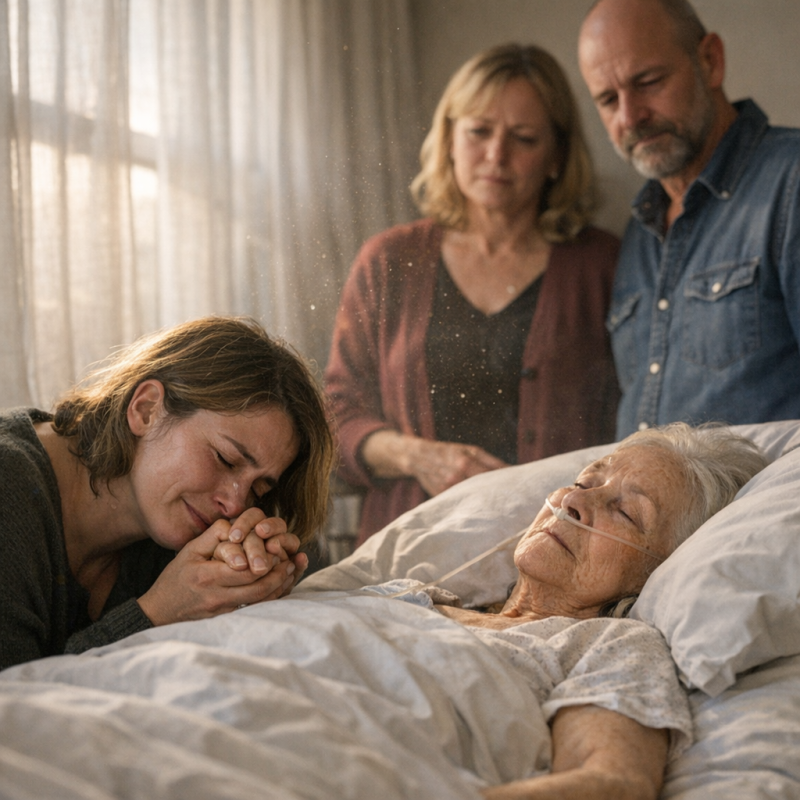 Image by FCT AI
What Remains
Richard didn't come to the funeral. We didn't invite him. He'd moved to a smaller place, we heard—some retirement community where nobody knew him. He got exactly what he'd wanted: complete control, a life built precisely to his specifications, a world where he made all the rules. We got something infinitely better. Claire and Linda talk on the phone every Sunday. Marcus proposed last month, and Claire's coming to the wedding. We're planning a trip to scatter some of Eleanor's ashes at that beach she loved, the one from the photos. Sometimes I think about Richard in that empty apartment, surrounded by his choices, and I wonder if he ever understands what he lost. But mostly I don't think about him at all. Because here's what I learned: sometimes the worst thing someone can do to you is give you exactly what you think you want, because I watched my grandfather get his wish, and it left him with nothing but an empty house and a lifetime of hollow victories.
 Image by FCT AI