The Room Full of Strangers
The conference room at Hartley & Associates smelled like old wood and expensive cologne. I'd arrived twenty minutes early, thinking I'd be one of the first, maybe share a quiet moment with the lawyer before things got started. Instead, I walked into what looked like a family reunion I'd never been invited to. There had to be at least thirty people crammed in there—cousins I'd met once at a wedding ten years ago, second cousins I'd never seen, and faces that were complete strangers but somehow shared my grandfather's nose or jawline. They all turned when I entered, and the conversations dropped to whispers. My aunt Patricia was crying softly near the window, dabbing her eyes with an actual handkerchief like we were in some period drama. Marcus, my uncle who'd skipped every holiday for the past decade, stood near the front with his arms crossed. Everyone suddenly cared so much about Lawrence Caldwell now that he was gone. Eleanor Cross, the estate lawyer, cleared her throat and adjusted her reading glasses. 'Now that everyone's here, we can begin,' she said, opening a leather folder. 'But I should warn you—Mr. Caldwell's will contains specific conditions.' Every single face in that room turned toward me.
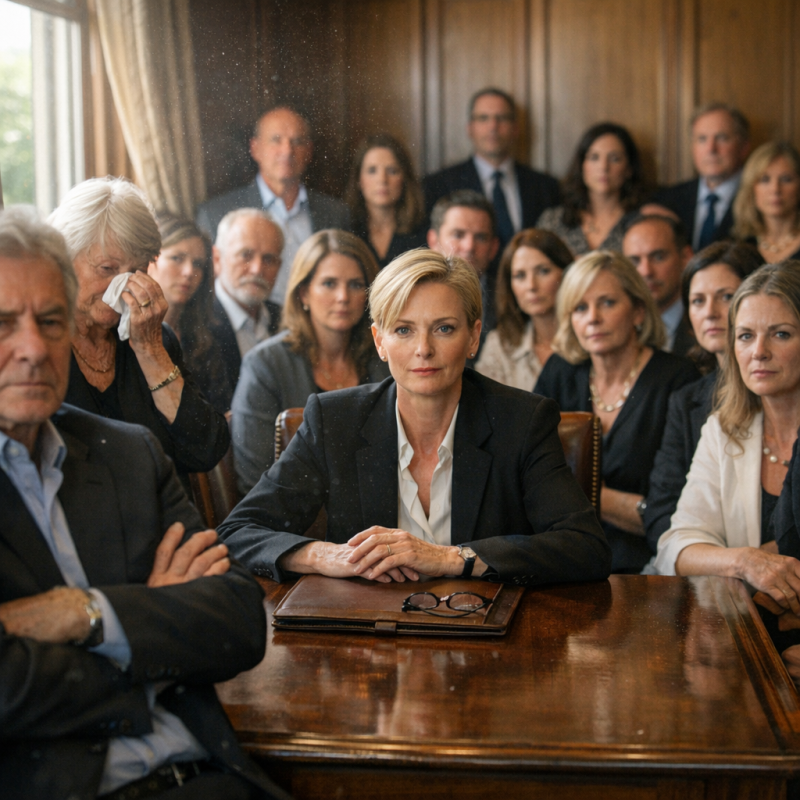 Image by FCT AI
Conditions and Consequences
Eleanor started reading, and the room went completely silent except for the sound of pages turning. Each relative had been left a substantial amount—we're talking life-changing money—but there was a catch. Marcus had to volunteer at a homeless shelter for six months. Diane needed to make amends with someone from her past. Trevor and Amy were supposed to complete marriage counseling and renew their vows. Every single bequest came with a personal task attached, something oddly specific that made people shift uncomfortably in their seats. I watched my relatives' faces cycle through confusion, calculation, and barely concealed frustration. Patricia kept nodding like she understood some deeper meaning, still clutching that handkerchief. Then Eleanor got to my name, and my stomach dropped. 'To my grandson Connor, I leave the remainder of my estate, unconditional and unrestricted.' People started murmuring. Eleanor held up her hand for silence and continued reading. 'In the event any beneficiary fails to complete their assigned conditions within the specified timeframe, their share will be considered forfeit.' She looked directly at me over her glasses. Then she said the words that changed everything: 'In the event of forfeiture, shares will be redistributed to the sole unconditional beneficiary—Connor.'
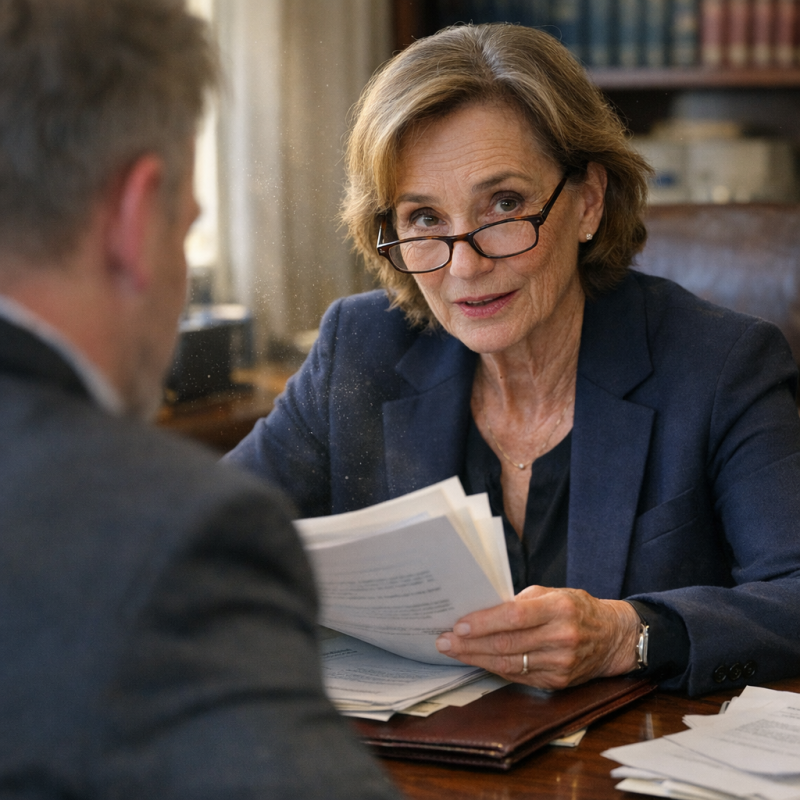 Image by FCT AI
The Memory Test
I kept thinking about the last real conversation I'd had with my grandfather, about four months before he died. We'd been sitting on his back porch, him with his whiskey and me with a beer, watching the sun set over the lake. He'd been quiet for a while, which wasn't unusual, but then he'd said something that stuck with me. 'Connor, you know what I've learned in seventy-eight years?' I'd shrugged, expecting some wisdom about hard work or integrity. 'The best way to know someone's character is to give them a choice—especially when money's involved.' I'd laughed it off, thinking he was just being philosophical the way old people get sometimes. He'd smiled, that knowing smile he had, and said, 'Sometimes you have to create the right circumstances. Give people a chance to show you exactly who they are.' At the time, I'd nodded and changed the subject to baseball. Now, standing outside the conference room trying to process what had just happened, those words hit different. A guy about my age approached me, hand extended. 'Richard Caldwell. Third cousin, I think? This is intense, right?' I thought my grandfather was being philosophical—I didn't realize he meant this room, these people, this moment.
 Image by FCT AI
First Accusations
Marcus caught me in the hallway before I could make it to the elevator. He'd always been intimidating—six-foot-three, former college linebacker, the kind of guy who takes up space just by existing. 'We need to talk,' he said, not asked. I stopped walking, felt my shoulders tense. 'What's up?' He stepped closer, and I could smell coffee on his breath. 'You really expect us to believe you didn't have anything to do with this? You were always his favorite, always hanging around.' I felt my face flush. 'I visited him, Marcus. That's called being a decent grandson.' He laughed, but there was no humor in it. 'Right. And coincidentally, you're the only one who gets a free ride while the rest of us jump through hoops like trained animals. You manipulated a dying old man.' People were starting to stare as they filed out of the conference room. I wanted to defend myself, wanted to explain that I was just as confused as everyone else, but Marcus wasn't finished. He leaned close and whispered, 'You think you've won something, but everyone in that room is watching you now.'
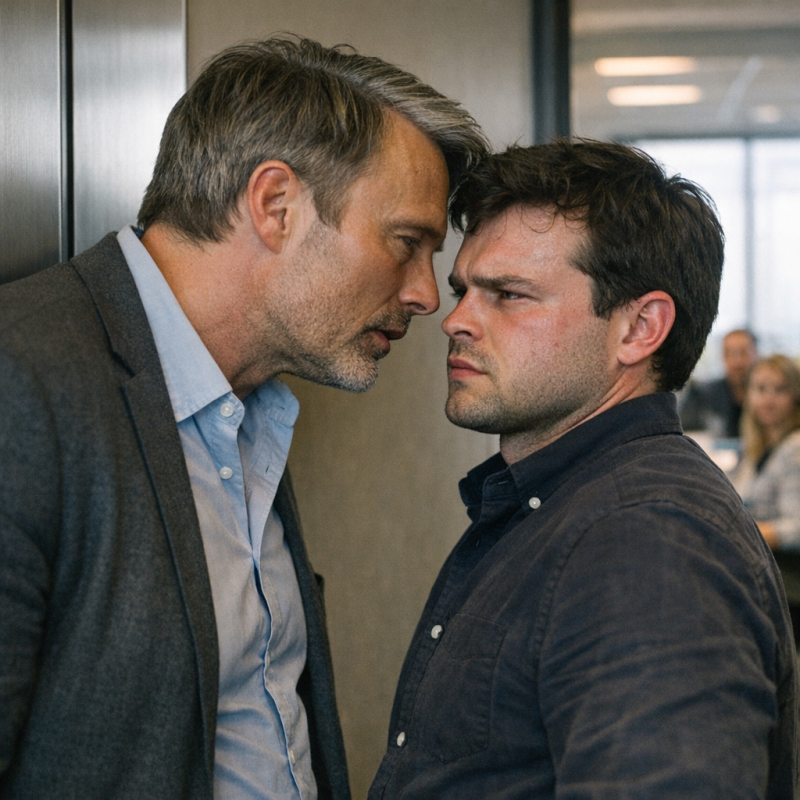 Image by FCT AI
Patricia's Kindness
I was sitting in my car, hands still shaking from the confrontation with Marcus, when someone tapped on my window. Patricia stood there with a gentle smile, and I rolled down the glass. 'Connor, honey, do you have a minute?' She'd always been the warm one in the family, the aunt who remembered birthdays and sent Christmas cards. I got out of the car, and she immediately pulled me into a hug. 'I know this must be overwhelming for you,' she said. 'Lawrence loved you so much. He talked about you constantly near the end.' Something about the way she said it made my chest tight. 'I just don't understand why he did this,' I admitted. She nodded sympathetically. 'Your grandfather was a complex man. But I think I understand what he was trying to do better than the others. He wanted to give people a chance to grow, to prove themselves.' A woman I didn't recognize stood a few feet away, watching us. Patricia noticed my glance. 'Oh, that's my friend Allison. She's been helping me cope with the grief.' Allison gave a small wave. Patricia squeezed my arm. 'Don't let Marcus or the others make you feel guilty. You deserve this.' As she left, something about her carefully chosen words felt rehearsed, but I couldn't place why.
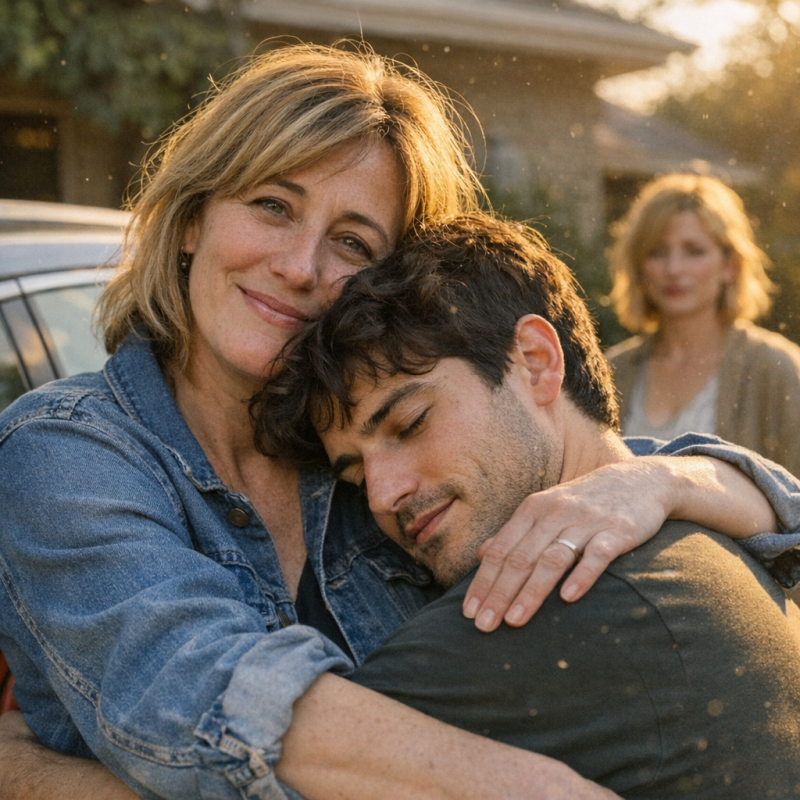 Image by FCT AI
The Conditions List
The full conditions document arrived by courier two days later—forty-seven pages of legal text and personal stipulations that read like my grandfather had hired a private investigator to dig into everyone's lives. I sat at my kitchen table with coffee going cold, reading through each condition with growing disbelief. Marcus had to volunteer at a homeless shelter because he'd once lobbied the city council to shut one down near his business. Trevor and Amy's marriage counseling requirement came after years of public arguments at family gatherings. But it was Diane's condition that really got me. She had to reconcile with a sister named Margaret and make amends for something that happened fifteen years ago. I didn't even know Diane had a sister. I'd never heard Margaret's name mentioned at any family event. I pulled out my phone and did some quick searching—found an old newspaper article about a lawsuit between business partners, Margaret's name buried in the details. My grandfather had somehow known about a betrayal that predated most of my adult life. How was that even possible? Diane's condition required her to reconcile with a sister she'd betrayed fifteen years ago—how did my grandfather even know about that?
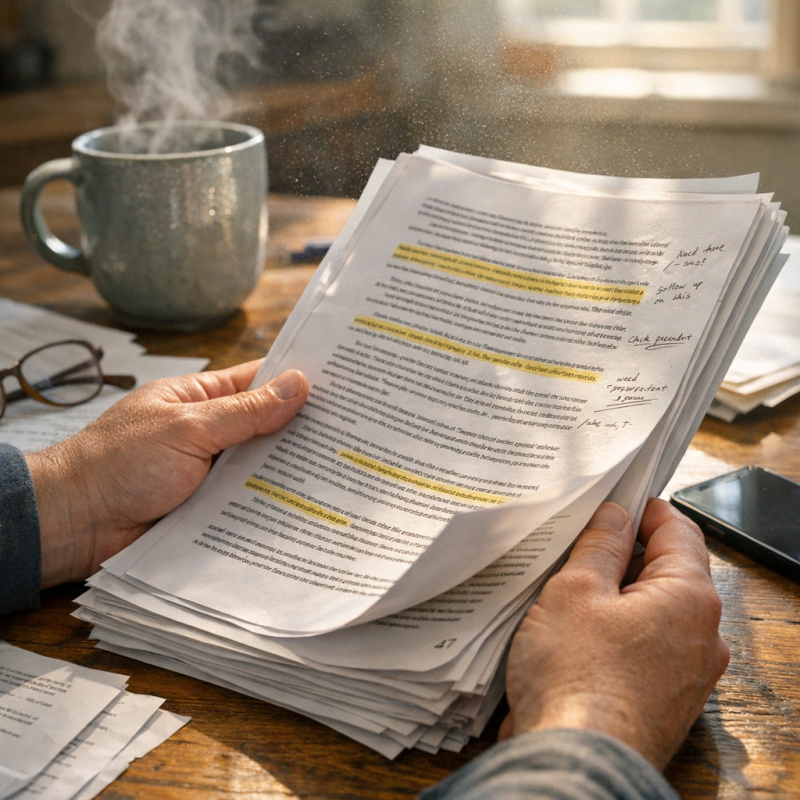 Image by FCT AI
The First Dropout
Trevor and Amy called a press conference. Actual news cameras and everything, like they were celebrities instead of just people who'd married into money. I watched it on my phone from a coffee shop, feeling sick to my stomach. 'We refuse to participate in Lawrence Caldwell's cruel game,' Trevor announced, Amy standing beside him with her arms crossed. 'Our marriage is private, and we won't be manipulated by a dead man's control issues.' The reporter asked if they understood they'd be forfeiting eight hundred thousand dollars. Amy laughed bitterly. 'Some things matter more than money. Our dignity, for one.' The video went viral in our extended family group chat—people I barely knew weighing in with opinions. Two hours later, Eleanor Cross called me. 'Mr. Caldwell, I need to inform you that Trevor and Amy Hutchinson have formally declined their bequest and forfeited their conditions.' Her voice was completely professional, no emotion. 'Per the terms of the will, their share reverts to you as the unconditional beneficiary.' I did the math in my head automatically. Eleanor confirmed their forfeiture, and I watched my inheritance grow by eight hundred thousand dollars in a single conversation.
 Image by FCT AI
A Visitor from the Past
Mr. Chen showed up at my apartment on a Saturday morning with a box of pastries from the bakery my grandfather used to love. I'd met him maybe three times in my life—a slight man in his late sixties who'd been Lawrence's business partner back in the eighties. 'I hope you don't mind the intrusion,' he said. 'Your grandfather and I used to have breakfast every Sunday. Old habit.' We sat at my tiny kitchen table, and he told me stories I'd never heard. About how Lawrence had once hired someone just to see if they'd steal from the register, then given them a second chance when they confessed. About business deals structured specifically to reveal which partners were trustworthy under pressure. 'Your grandfather believed character was observable,' Chen said, stirring sugar into his tea. 'Not through what people said, but through the choices they made when something was at stake.' I thought about the will, the conditions, everyone's reactions. 'So this was all intentional? He knew what would happen?' Chen smiled sadly. 'Your grandfather once told me he could design a situation that would reveal anyone's true nature,' Chen said. 'I see now he finally did it.'
 Image by FCT AI
Marcus's Attempt
Marcus started his volunteer work at Second Chance Shelter that Monday, and I knew within an hour because he posted about it. The photos were professionally lit—somehow—showing him serving soup with his sleeves rolled up just so, crouching beside a grateful-looking elderly man, high-fiving a kid. Every caption was a masterpiece of humble-bragging. 'Day one of giving back. Grandpa Lawrence taught me that real wealth is what you share. #ServiceMatters #LegacyOfLove.' He tagged the shelter, the foundation, even tagged me. By Wednesday, his Instagram looked like a campaign ad. The shelter director called to thank me for Marcus's 'enthusiasm,' but her tone suggested something else entirely. I drove by one afternoon and saw him through the window, phone in hand, repositioning a stack of donated coats for better lighting. He didn't see me watching. Didn't see the actual volunteers working behind him, hauling boxes, mopping floors. He was there for exactly two hours—I timed it—before leaving in his Porsche. I watched his posts, every caption perfectly crafted, every angle calculated, and wondered if my grandfather had predicted exactly this.
 Image by FCT AI

History's most fascinating stories and darkest secrets, delivered to your inbox daily.
Diane's Desperation
Diane asked me to come with her to see her sister in Connecticut, and I'm still not sure why I agreed. Maybe because she seemed genuinely nervous, or maybe because I wanted to see if anyone could actually pull this off. Her sister Lisa opened the door looking guarded, and the conversation went south immediately. 'I'm here to apologize,' Diane started, but Lisa cut her off. 'For which part? The money you stole from Mom's account, or telling everyone I was the one who did it?' Diane's face went hard. 'I didn't steal anything. I borrowed it. There's a difference.' I wanted to disappear into the floral couch. Lisa listed grievances spanning twenty years—loans never repaid, lies told to relatives, a business partnership Diane had gutted. Each accusation, Diane had an explanation, a justification, a reason why it wasn't really her fault. 'You've always been jealous,' Diane finally snapped. 'You can't stand that Dad liked me better.' The words hung there like poison. Her sister closed the door, and Diane turned to me with tears that looked more like rage than grief.
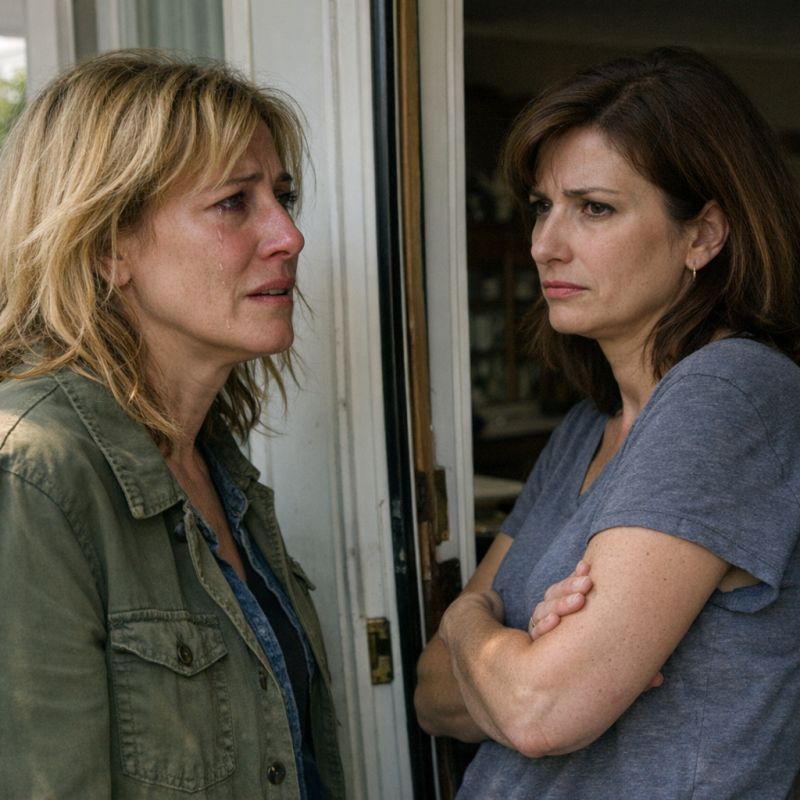 Image by FCT AI
The Legal Challenge
Richard's lawyer was a shark named Dennison who wore suits that cost more than my car. They invited me to a 'discussion' at his downtown office, all glass and steel and intimidation. Richard sat there looking righteous while Dennison laid out their case. The will's conditions, he argued, constituted undue influence—Lawrence had manipulated vulnerable family members with the promise of inheritance, then imposed impossible requirements designed to humiliate them. 'Your grandfather essentially created a psychological experiment using his own family as subjects,' Dennison said. 'No court would uphold this.' He had precedents, case law, expert witnesses ready to testify about emotional coercion. Richard nodded along like a man defending justice itself, not fighting for money. I called Eleanor afterward, trying not to sound panicked. She was calm, assured me the will had been structured to withstand exactly this kind of challenge. Lawrence had anticipated it, documented his sound mind, had multiple witnesses. 'But?' I asked, because I heard it in her voice. 'But Richard's lawyer found a procedural angle regarding the timeline of condition notifications,' she admitted. Eleanor assured me the will was ironclad, but Richard's lawyer had found something—a procedural angle that might actually work.
 Image by FCT AI
Patricia's Progress
Patricia submitted her first progress report to Eleanor with three months of documented volunteer work at Rosewood Senior Center. I went there myself to verify, feeling like a spy. The director, Valerie, practically glowed talking about her. 'Patricia comes every Tuesday and Thursday without fail. She reads to residents with vision problems, helps with letter writing, just sits with the ones who don't get visitors.' She showed me the sign-in sheets, all consistent. Introduced me to an elderly woman named Dorothy who said Patricia had helped her reconnect with a grandson she hadn't spoken to in years. 'She's patient,' Dorothy said. 'Really listens.' I watched through the community room window as Patricia helped another resident with a jigsaw puzzle, no phone in sight, no cameras. She looked... natural. Comfortable. Nothing like Marcus's performance or Diane's forced attempts. Valerie walked me out, mentioning how Patricia had already organized a donation drive and recruited two other regular volunteers. 'She understands this population,' Valerie said. 'You can't fake that kind of connection.' She was the only one making real progress, and I couldn't tell if that made me respect her or worry about what it meant.
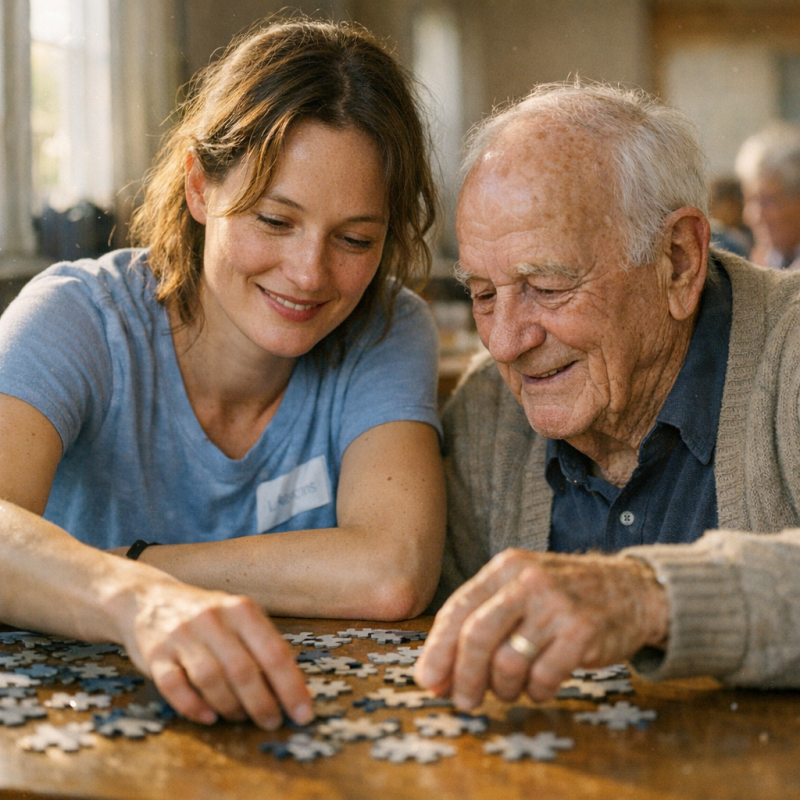 Image by FCT AI
The Second Forfeiture
The shelter director called Eleanor directly, and Eleanor called me. Marcus had been disqualified. The director had kept detailed records—Marcus appeared for photo opportunities but disappeared when actual work needed doing. He'd showed up seven times in six weeks, always with his photographer friend, always for less than three hours. Other volunteers reported he'd refused tasks he deemed 'beneath him' and spent most of his time on his phone. Eleanor scheduled the formal notification at her office. Marcus arrived fifteen minutes late, already defensive. When Eleanor delivered the news, he lost it completely. Threw his folder across the room, called the whole thing a sham. 'This was designed to fail!' he shouted. 'You can't judge someone's character in six months! The old man rigged this!' I sat there thinking about his Instagram posts, his Porsche, his two-hour shifts. But also thinking about the fact that my inheritance had just increased again. That I was benefiting from their failures, from conditions that maybe were impossible to meet authentically in such a short time. He screamed at Eleanor that this was all a setup, that the conditions were designed to fail—and maybe he was right.
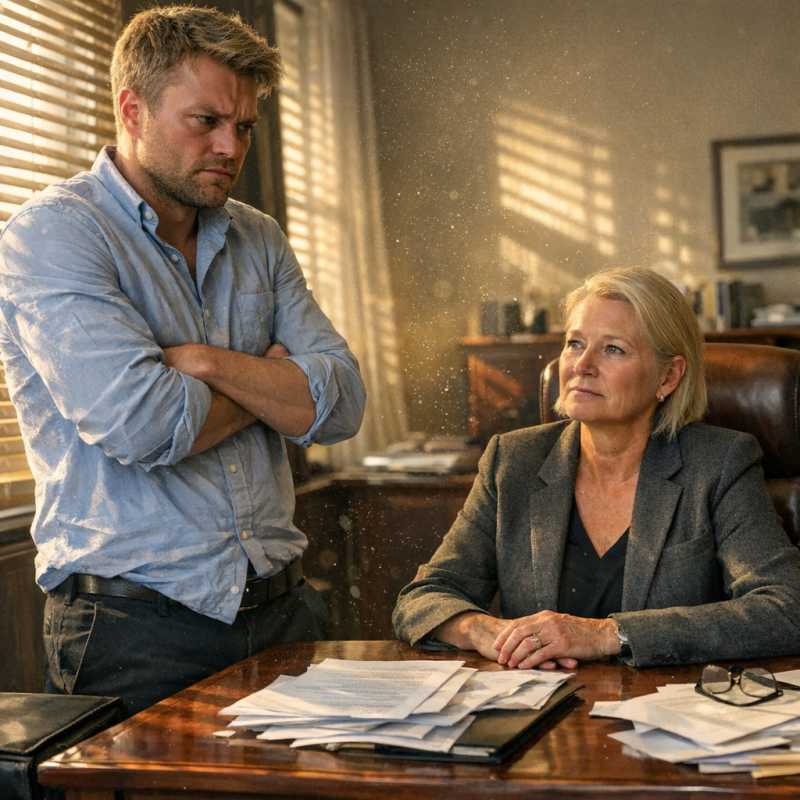 Image by FCT AI
Grandfather's Letters
I found the box in Lawrence's study while looking for old tax documents Eleanor needed. Letters, dozens of them, handwritten but never mailed. All addressed to family members, dated across twenty years. I shouldn't have read them, but I did. There was one to Marcus from 2015: 'I gave you three chances to tell me the truth about the construction costs. You lied each time. I know what you are.' One to Richard: 'You visit because you think I'm forgetting things, that you can take advantage. I forget nothing.' One to Diane after her divorce: 'You blame everyone but yourself. Until that changes, you'll keep losing what matters.' The observations were clinical, detailed, sad. He'd been watching them all, documenting patterns, waiting. The oldest letter was to my father, apologizing for not seeing his struggles sooner. I cried reading that one. Near the bottom, I found a letter dated five years ago, unsealed, as if he'd been revising it. One letter, dated five years ago, mentioned Patricia by name—'She understands what the others never will'—and I had no idea what that meant.
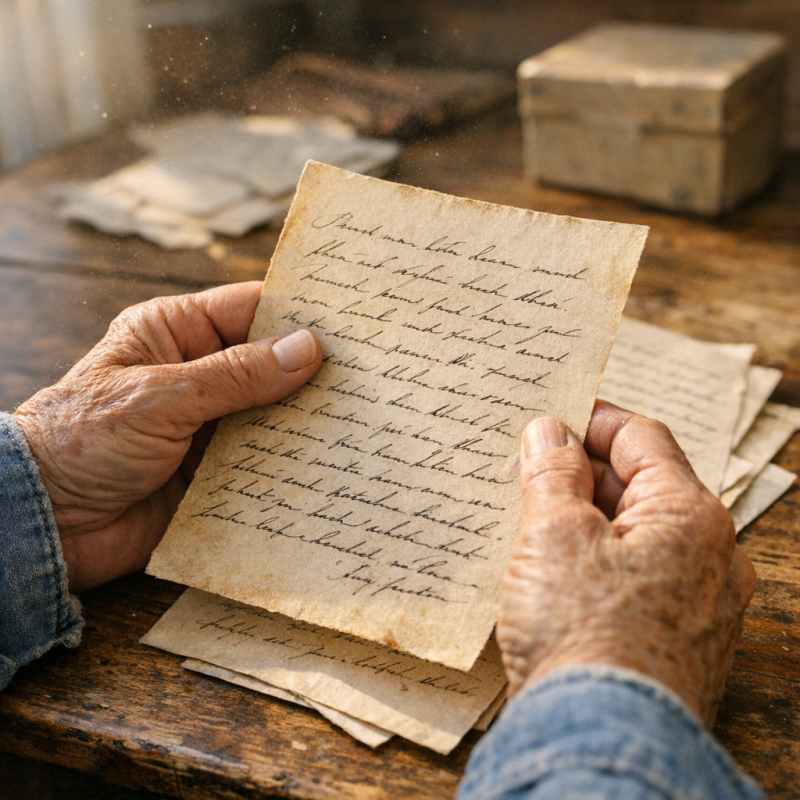 Image by FCT AI
Graham's Offer
Graham called me out of nowhere on a Thursday night. I barely remembered him—a second cousin, maybe third, who'd shown up to exactly one family Christmas when I was twelve. He suggested coffee, and I was curious enough to agree. We met at a place near his law office, and he got straight to it. 'This will is legally questionable and morally bankrupt,' he said, sliding a folder across the table. His firm had analyzed it. The conditions were arguably coercive, the concentrated inheritance potentially contestable. 'We challenge it together, split everything equally among all living descendants. Clean, fair, done.' He made it sound so reasonable. No more watching relatives humiliate themselves, no more judging their worthiness, no more being Lawrence's instrument. 'You didn't ask to be the arbiter of everyone's character,' Graham said. 'That's an unfair burden.' I thought about Marcus's rage, Diane's tears, the weight of deciding who deserved what. Graham leaned back, studying me. 'We're the same, you and me,' he said. 'We didn't ask for this circus. We can end it together.'
 Image by FCT AI
The Home Videos
The VHS tapes were labeled by year, stacked in Lawrence's bedroom closet behind old photo albums. I don't know what made me dig them out, but once I started watching, I couldn't stop. Family gatherings from the nineties, early two-thousands, all filmed from Lawrence's perspective. But he wasn't recording memories—he was studying. The camera would linger on faces during conversations, zoom in on hands, catch whispered exchanges in corners. In a 2003 Thanksgiving video, he filmed Richard pocketing silverware when he thought no one was looking. In another, Marcus lying to Aunt Sophie about why he needed to borrow money. Lawrence's own voice occasionally murmured observations: 'Third time this month,' or 'Note the deflection.' One clip showed a family dinner from maybe ten years ago. Lawrence had set the camera on a tripod, filming everyone, and I realized he was taking notes in a leather journal while people ate and talked. The camera stayed on him for a moment, and he looked up, directly into the lens. In one clip, he looked directly at the camera and said, 'They don't see what I see—but someday, they'll understand.'
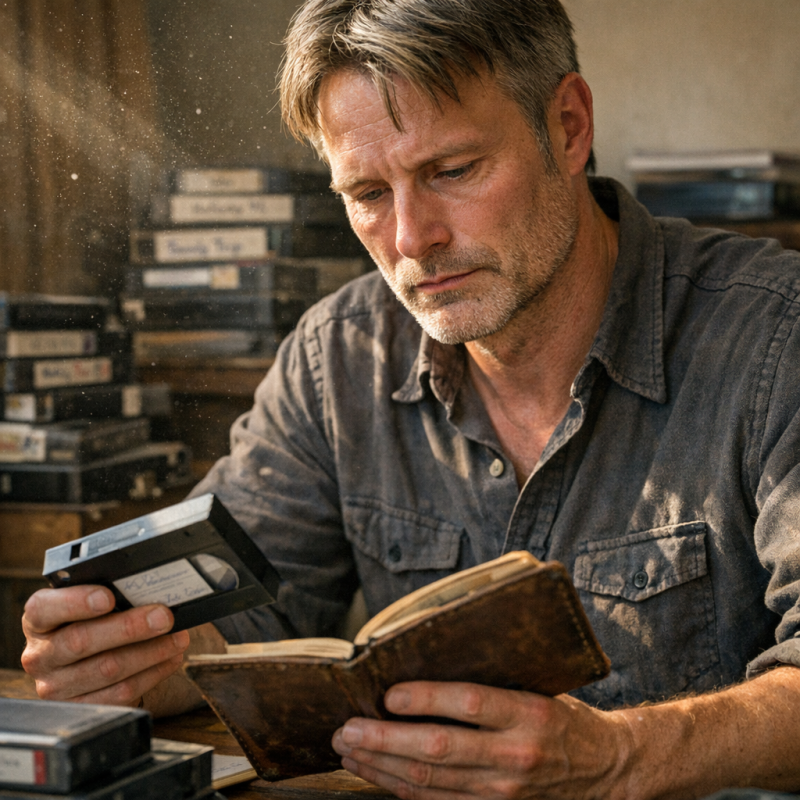 Image by FCT AI
Diane's Collapse
It happened at Eleanor's office during what was supposed to be a routine status meeting. Diane showed up unannounced, her face flushed, her hair pulled back so tight it looked painful. She'd been drinking—I could smell it when she walked past me. Richard tried to calm her down, but she shook him off. 'He's enjoying this,' she said, her voice rising. 'Look at him, sitting there so calm, watching all of us scramble.' I didn't know what to say. Patricia stepped between us, telling Diane she needed to leave, but that just made it worse. 'Of course you're defending him,' Diane spat. 'You're the only one he actually likes.' People in the waiting room were staring now. I felt my face burning, anger mixing with something that felt uncomfortably like guilt. Was she right? Had some part of me been tallying their failures, proving I was different? Eleanor called building security, but before they arrived, Diane turned to me one last time. She pointed at me with shaking hands and said, 'You're just like him—you're counting our mistakes, waiting for us to fail.'
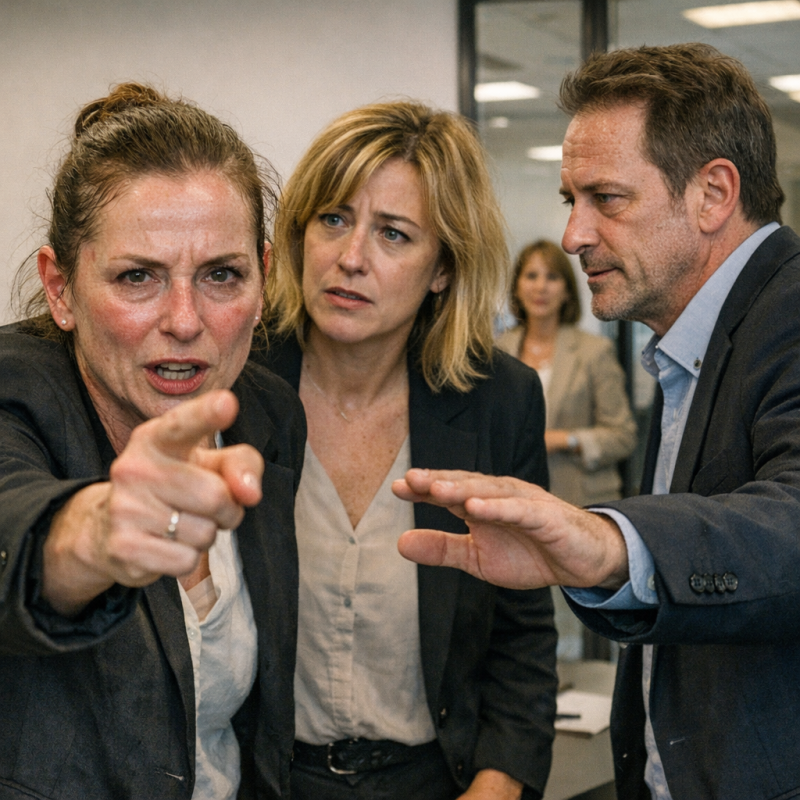 Image by FCT AI
The Court Ruling
The courtroom was smaller than I expected, wood-paneled and stuffy. Richard's lawyer argued that the will conditions constituted coercion, that Lawrence had been manipulated in his final years, that no reasonable person would structure inheritance this way. Eleanor presented Lawrence's medical records, testimony from Dr. Morrison, handwritten notes from Lawrence himself explaining his reasoning. The judge, a woman in her sixties with reading glasses on a chain, listened without expression. When she finally ruled, her voice was matter-of-fact. 'The testator was of sound mind. The conditions, while unconventional, are neither illegal nor unconscionable. They represent his clear and documented intent.' Richard's jaw clenched so hard I could see the muscle jumping. His lawyer gathered papers quickly, already talking about appeals that would go nowhere. Eleanor nodded at me across the aisle—we'd won, at least for now. But as people filed out, Richard hung back. He waited until it was just the two of us in the gallery. Richard stared at me across the courtroom, and his expression promised this wasn't over.
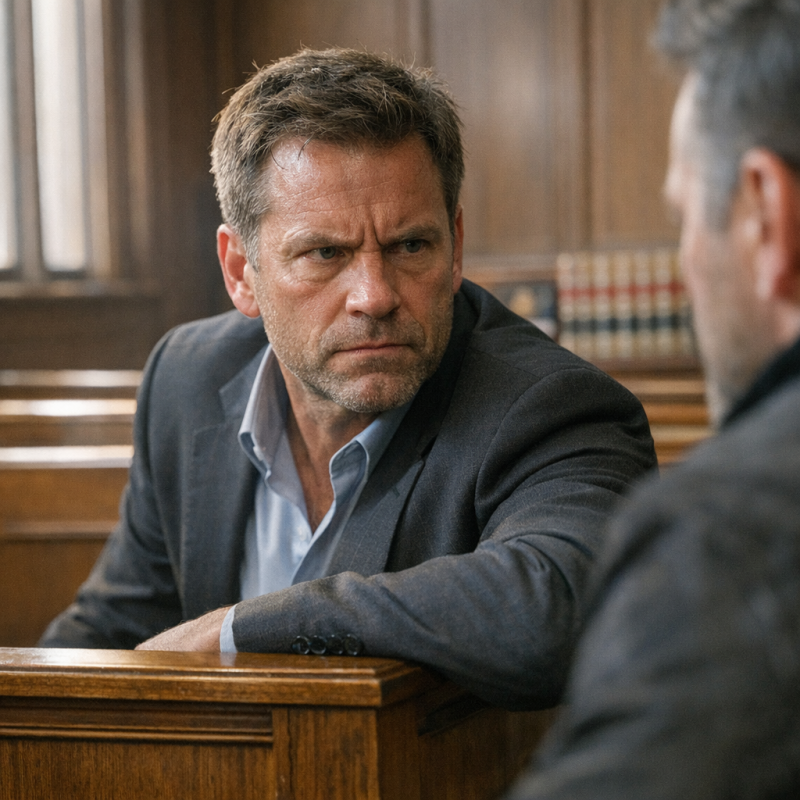 Image by FCT AI
Patricia's Story
Patricia invited me to coffee the day after the court ruling. She looked tired but relieved, and when she ordered, she paid for both of us without asking. 'I want to tell you about Lawrence and me,' she said. She'd met him twenty-three years ago at a charity function where she was working as an event coordinator. She'd been going through a divorce, broke and terrified, and Lawrence had somehow sensed it. He'd started showing up at events she organized, bringing her books on financial planning and self-worth. When her mother got sick, he'd sent flowers to the hospital every week. 'He never asked for anything,' she said, her eyes distant. 'He just showed up.' She pulled out her phone, scrolling through photos she'd transferred from old albums. There was Lawrence at her birthday dinner ten years ago. Lawrence helping her move into her current apartment. Lawrence at her mother's funeral, standing in the back. She showed me photos of them together over the years, and I realized she'd been around longer than I'd thought—present at events I didn't remember.
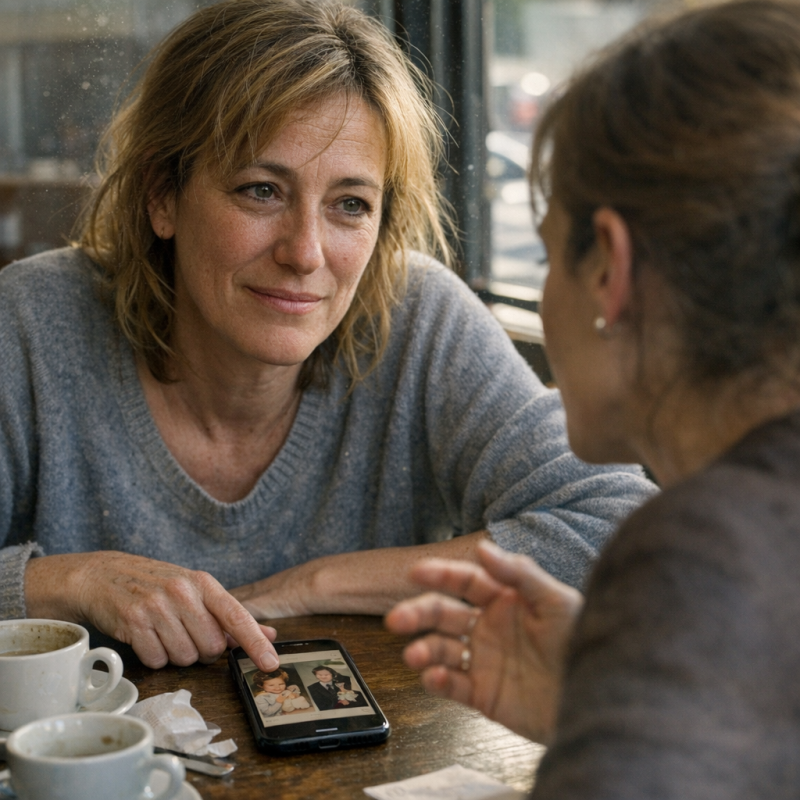 Image by FCT AI
The Third Forfeiture
Eleanor had drafted the forfeiture paperwork weeks ago, as if she'd known it would come to this. Diane sat across from her desk, arms crossed, mouth set in a thin line. The condition had been simple: apologize to her sister for a betrayal from fifteen years ago that had destroyed their relationship. Just admit wrongdoing. That's all. 'I have nothing to apologize for,' Diane said. 'She made her choices, I made mine.' Eleanor went through the legal language, explaining what forfeiture meant, giving Diane multiple opportunities to reconsider. I sat there feeling like I should leave, like witnessing this was intrusive. But Eleanor had insisted I be present—protocol, she said. Diane signed quickly, her signature angry and sharp. She stood, smoothed her skirt, and for a moment I thought she might just leave. Then she stopped at the door. Her eyes met mine, and something in them looked hollow, emptied out. As Eleanor processed the paperwork, Diane looked at me and said, 'You'll understand someday what it's like to lose everything that matters.'
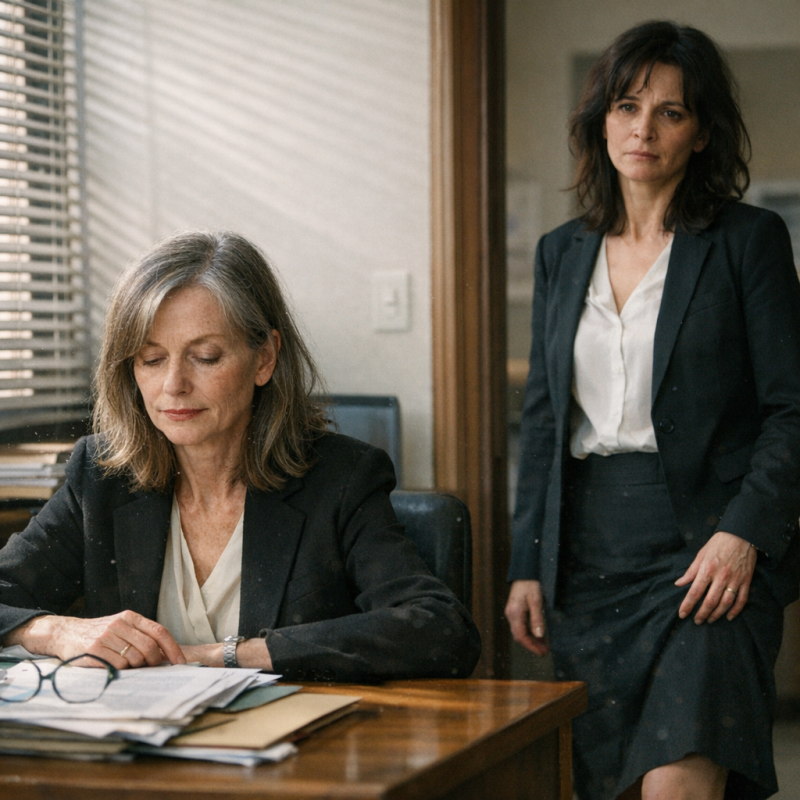 Image by FCT AI
Family History
I spent a week in Lawrence's study going through everything—old calendars, visitor logs from his assisted living facility, phone records Eleanor had subpoenaed for the court case. The pattern was stark. Marcus had visited twice in ten years, both times asking for money. Richard had come for Christmas maybe three times since 2005. Diane hadn't set foot in Lawrence's home since her mother's funeral in 2008. There were cousins I'd never met who'd sent birthday cards requesting loans. Even I had to admit my own record wasn't great—maybe once or twice a year until the last eighteen months. But then there was Patricia. Birthday cards every single year, never asking for anything, just checking in. Hospital visitor logs showing her name during his pneumonia scare, his hip surgery, his regular checkups. Holiday photos where she was just there, in the background, helping set tables or pouring drinks. She'd attended his neighborhood book club, driven him to doctor's appointments, organized his seventy-fifth birthday party. But Patricia's name appeared consistently—birthday cards, holiday visits, hospital stays—she'd been there all along, and no one else had.
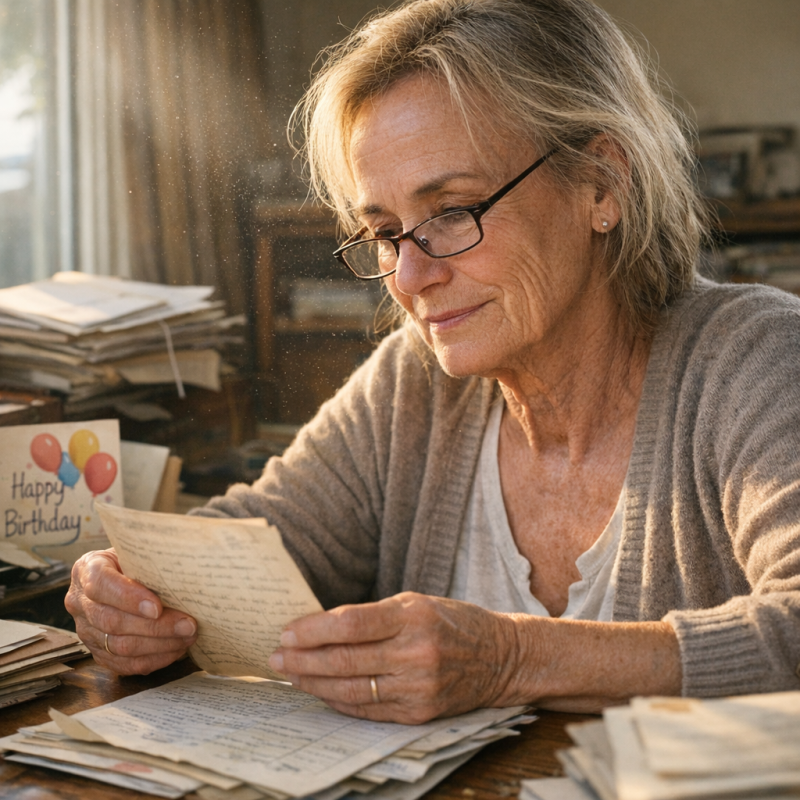 Image by FCT AI
Dr. Morrison's Revelation
Dr. Morrison agreed to meet me at her office after hours. She was exactly as I remembered from the funeral—sharp eyes, silver hair, the kind of doctor who doesn't waste time on pleasantries. 'Your grandfather was one of the most mentally acute patients I've ever treated,' she said. 'Right up until the day he died.' I asked about his state of mind when he was planning the will. She pulled out her notes, flipping through pages of appointments from his final year. 'He asked me unusual questions,' she said. 'About cognitive function, about whether I'd seen patients change fundamental behavioral patterns.' He'd wanted to know if people could overcome ingrained character flaws, whether external pressure could catalyze genuine transformation. He'd asked her opinion on estate planning as a teaching tool. She'd thought he was being philosophical until she saw the will after his death. 'He wasn't declining, Connor. He was designing.' She looked at me over her reading glasses, measuring whether I was ready for what came next. 'He asked me if greed was a permanent character trait or if it could be overcome through exposure,' she said. 'He was designing an experiment.'
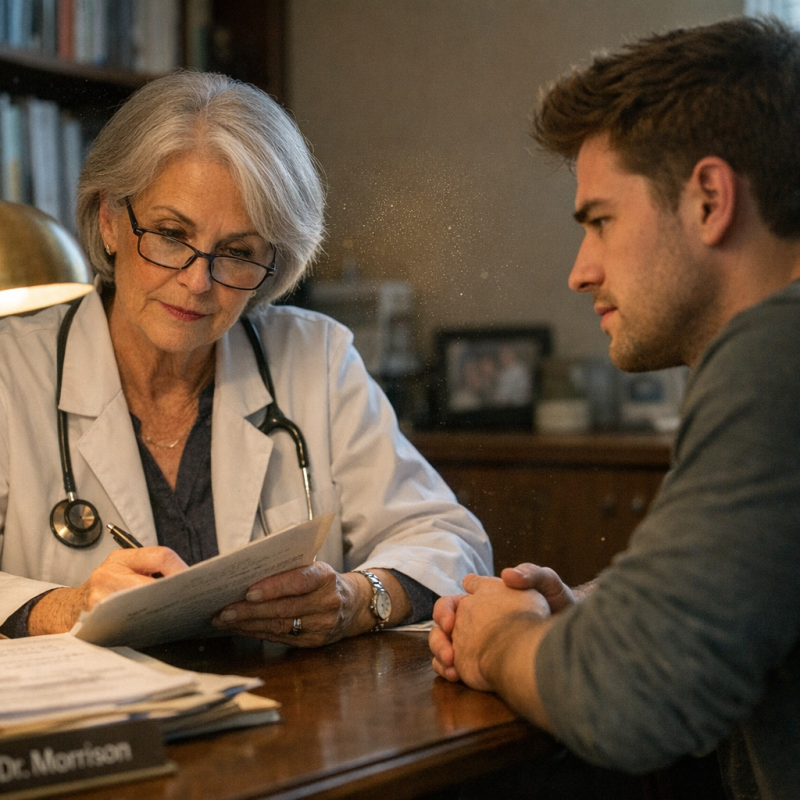 Image by FCT AI
Graham's Withdrawal
Graham stopped returning Eleanor's calls three weeks after our conversation at the coffee shop. His phone went straight to voicemail. His apartment building manager said he'd moved out, forwarding address unknown. His employer confirmed he'd resigned without notice. Eleanor needed his signature to process a formal forfeiture, needed him to appear before a notary, needed something to close his portion of the estate. But Graham had just vanished. I drove by his old apartment myself, feeling ridiculous but unable to shake the weirdness of it. The unit was already re-rented, the new tenants telling me they didn't know anything about the previous occupant. No forwarding mail, no information left behind. 'It was the strangest thing,' Eleanor said when I met her to discuss it. 'In twenty years of estate law, I've never had someone just disappear from a probate case.' She'd filed paperwork with the court, started a search process, but it would take months. Meanwhile, his share just sat there in limbo, unclaimed but not forfeited. Eleanor couldn't reach him to process his forfeiture formally—it was like he'd never existed at all.
 Image by FCT AI
Patricia's Second Milestone
Patricia's second milestone was community service—two hundred hours documented and verified, plus evidence of 'sustained personal growth.' Eleanor reviewed her submissions: volunteer work at literacy programs, meals on wheels, mentoring at-risk youth. Letters of recommendation from program directors. A journal documenting her emotional journey, which she'd shared voluntarily. It was thorough, genuine, exactly what the will's conditions required. We met at Eleanor's office for the official verification. Patricia looked calm, almost serene, as Eleanor checked off each requirement. She'd done everything right. Again. I found myself studying her face, looking for cracks, for something that felt manipulative or calculated. But she just seemed grateful, humble even. 'Thank you for being fair about this,' she said to me as we left. 'I know it can't be easy having me succeed when your family is struggling.' The comment should have felt gracious. Instead, it landed somewhere uncomfortable in my chest. She was the only one still in the running besides me, and I couldn't shake the feeling that this was exactly how it was supposed to go.
 Image by FCT AI
The Anonymous Letter
The envelope appeared in my mailbox on a Tuesday, plain white, no return address. Inside was a single typed page with three names I didn't recognize, three cities spread across the country, and three substantial inheritances. Each entry followed the same pattern: elderly person, caregiver relationship, unexpected bequest to Patricia Caldwell. The letter didn't make accusations exactly—just laid out facts and let me draw my own conclusions. 'Thought you should know who you're competing against,' it said at the bottom. No signature. I read it three times, my coffee going cold on the counter. Part of me wanted to crumple it up, call it jealous sabotage from whoever sent it. But another part couldn't stop seeing the pattern, couldn't ignore how perfectly it aligned with what was happening with Grandfather's estate. I had no idea if any of it was true, no way to verify these names and cities without seeming paranoid or vindictive. But I also couldn't unknow what I'd just read. The letter included three names, three cities, three fortunes—and no way to verify if any of it was true.
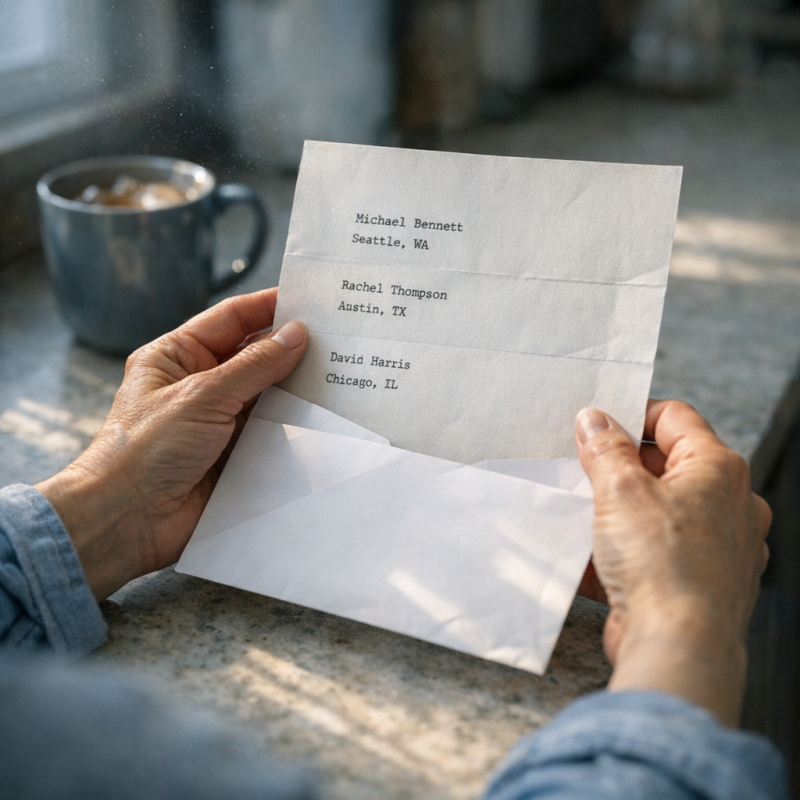 Image by FCT AI
Hiring the Investigator
I found James Reilly through a lawyer friend who owed me a favor. Private investigator, former detective, reputation for discretion. We met at a coffee shop in a neighborhood where I wouldn't run into anyone from the family. I slid the letter across the table, watched him read it without expression. 'You want to know if it's real,' he said. Not a question. I nodded. He asked about Patricia, about the will, about what I hoped to find. I didn't have a good answer for that last one. Part of me wanted him to prove the letter was garbage, wanted Patricia to be exactly who she appeared to be. But I needed to know. James quoted me a retainer, warned me that background checks take time, that patterns aren't proof of wrongdoing. 'Sometimes people are just unlucky,' he said. 'Or lucky, depending on how you look at it.' I wrote the check anyway. James took the case but warned me: 'Sometimes finding the truth means losing something you wanted to believe.'
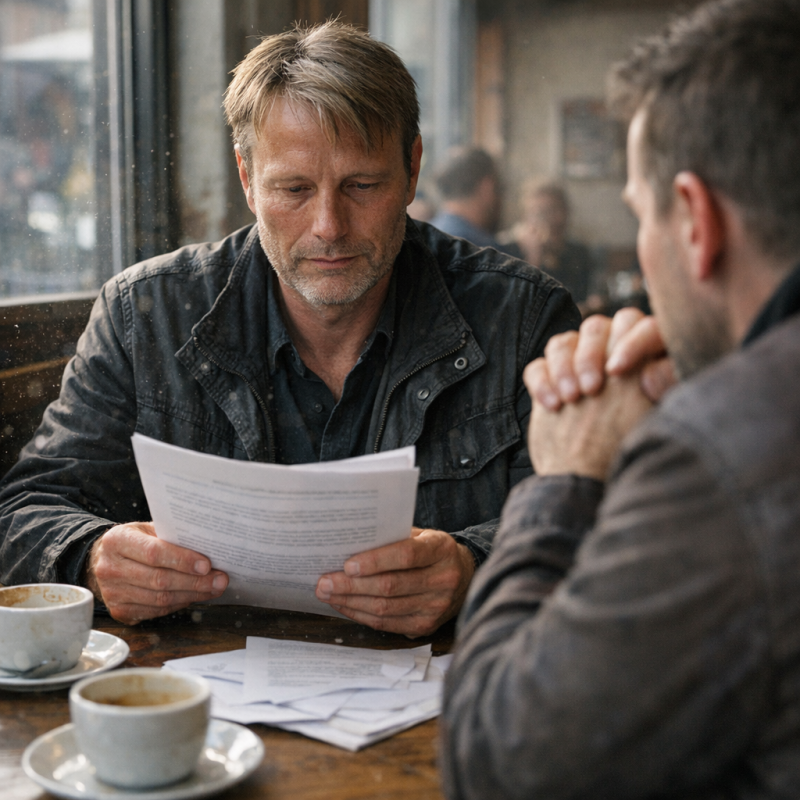 Image by FCT AI
Richard's Apology
Richard called and asked to meet for lunch, just the two of us. I almost said no, still raw from months of his accusations and legal threats. But something in his voice sounded different—quieter, less certain. He showed up looking older than I remembered, tired in a way that went beyond physical. 'I've been an idiot,' he said before I could even order. 'The will was fair. I've been so focused on what I thought I deserved that I forgot what actually matters.' He talked about his kids, about realizing he'd become the kind of father he'd always resented. It felt genuine, unscripted. I found myself accepting his apology, even suggesting we grab coffee regularly, rebuild something. As we left the restaurant, I felt lighter than I had in months. Then I saw Patricia waiting by the valet stand. Richard walked straight to her, and they exchanged a look—brief, loaded with meaning I couldn't decode. He seemed genuine, but as he left, I noticed him exchange a look with Patricia that I couldn't read.
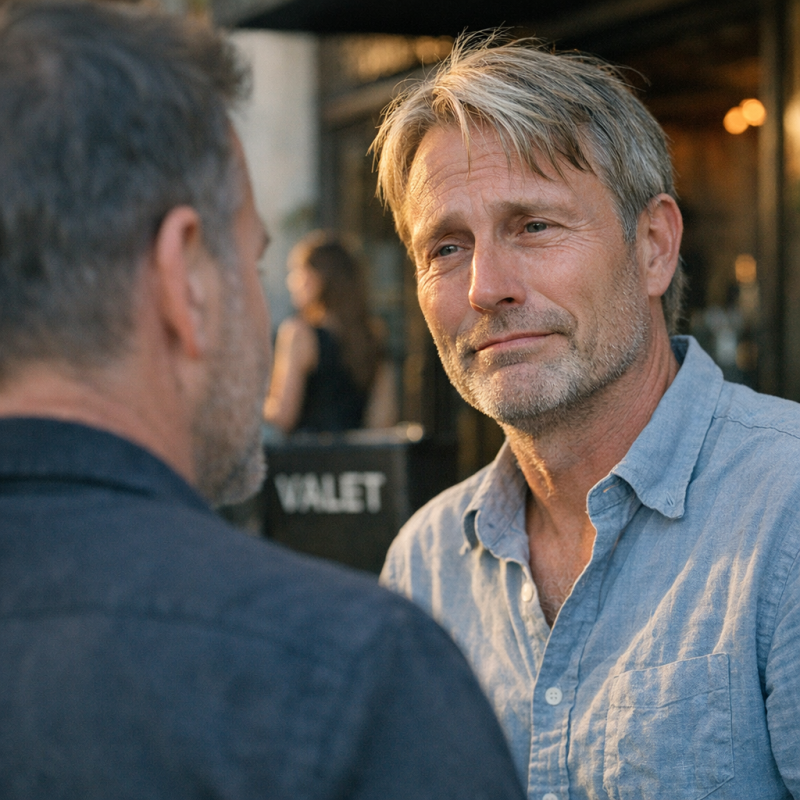 Image by FCT AI
The Fourth Forfeiture
Richard's forfeiture came two weeks later, formal and final. Eleanor read his statement: he couldn't complete the condition requiring him to make amends for business dealings because he still believed his actions were justified. 'I can't apologize for decisions I'd make again,' he wrote. There was something almost admirable about it—choosing honesty over inheritance. Eleanor filed the paperwork, made it official. Four down, just Patricia and me left. As everyone gathered their things, Richard pulled me aside near the elevators, his hand on my elbow. 'Connor, I need to tell you something,' he said quietly, glancing toward where Patricia chatted with Eleanor. 'I've been watching her, paying attention. Watch Patricia—she's not who you think she is.' His tone was urgent, almost pleading. I asked what he meant, but he just shook his head and stepped into the elevator. Before he left, he pulled me aside and whispered, 'Watch Patricia—she's not who you think she is.'
 Image by FCT AI
Patricia's Transparency
Patricia called me the next day and asked if we could talk. She suggested the botanical gardens, neutral territory, somewhere peaceful. We walked the paths between winter roses, and she started talking before I could bring anything up. 'I know there are questions about my past,' she said. 'People I cared for, people who remembered me in their wills.' She told me about Margaret in Boston, about David in Charleston, about Helen in Portland. All elderly, all alone, all grateful for companionship in their final years. She showed me photos on her phone—her reading to Margaret, gardening with David, playing cards with Helen. 'I loved them,' she said simply. 'And yes, they left me money. But I never asked for it, never expected it.' She was proactive, transparent, answering questions I hadn't asked yet. It should have reassured me. Instead, I couldn't shake the feeling of being one step behind, of watching a prepared performance. She explained everything the letter had hinted at—but her version made her sound like a compassionate caregiver, not a predator.
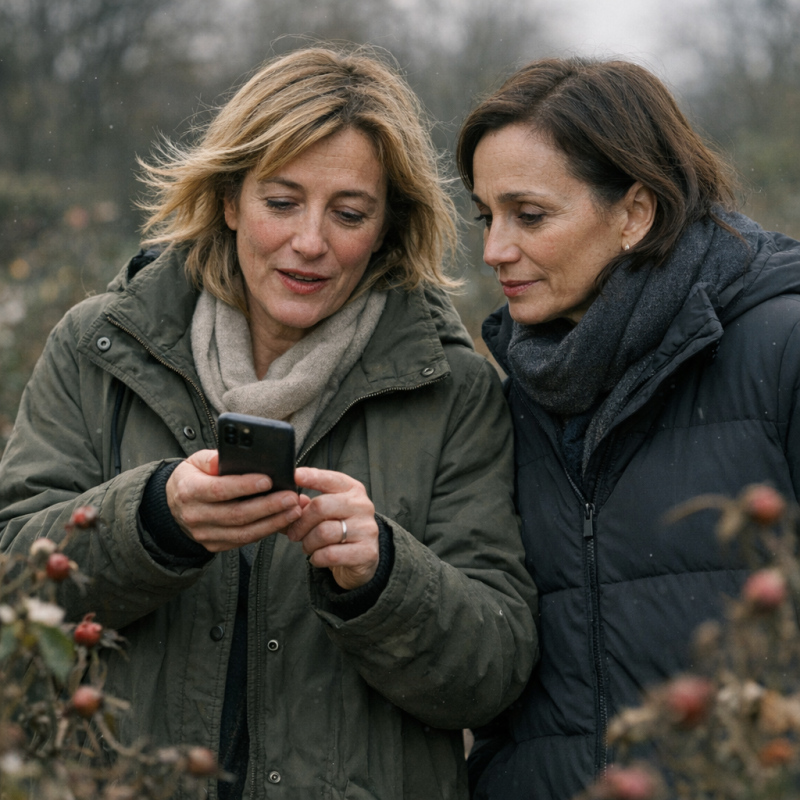 Image by FCT AI
The Investigator's First Report
James sent his preliminary report via encrypted email. I read it twice in my car before going into the office. Everything Patricia had told me checked out—the names, the cities, the relationships. Margaret, David, and Helen had all been real, all elderly and isolated, all genuinely cared for by Patricia in their final years. The bequests ranged from fifty thousand to three hundred thousand dollars. No suspicious circumstances, no contested wills, no family members crying foul. But the timeline James had constructed was damning in its precision: Patricia had moved to each city shortly before meeting each person, had stayed through their decline, had received her inheritance and moved on within months. Three times. Three elderly people, three cities, three windfalls. 'Legally, she's completely clean,' James wrote. 'Morally, ethically—that's for you to decide. But patterns like this don't usually happen by accident.' I stared at the screen, no closer to knowing what to believe. 'None of it's illegal,' James said. 'But that doesn't mean it's coincidence.'
 Image by FCT AI
Allison's Testimony
Allison reached out unexpectedly, asking to meet. We hadn't spoken since early in the will process, since her own forfeiture. She looked better than I remembered—clearer, more grounded. She wanted to talk about Patricia. 'I know people are suspicious of her,' Allison said. 'But she helped me through the worst period of my life. When I was bankrupt, when everyone else had written me off, she was there. No judgment, no expectations.' She described Patricia bringing groceries, helping with job applications, just listening when Allison needed to talk. 'She never asked for anything,' Allison insisted. 'Never even hinted that she wanted something in return.' It was convincing, exactly the kind of testimony that should have settled my doubts. But I needed to know more. 'How did you two meet?' I asked casually. Allison paused, her coffee cup halfway to her lips, something flickering across her face. 'Through Lawrence, actually—he introduced us years ago.'
 Image by FCT AI
The Conditional Dinner
Patricia invited me to dinner at a small Italian place downtown, intimate and quiet. We talked about everything except the will at first—books, travel, philosophy. Then she shifted the conversation to wealth, what it means, what it does to people. 'Your grandfather understood something most rich people never learn,' she said. 'That money is just a tool for revealing character, not building it.' She talked about inheritance, about how it can poison or liberate depending on the conditions attached. I found myself nodding, agreeing, feeling understood in a way I hadn't since Grandfather died. Then she quoted him directly: 'The only thing worse than leaving nothing is leaving everything unconditionally.' I froze. Those were his exact words, from a conversation we'd had in his study five years ago. I'd never shared it with anyone, never wrote it down. 'How do you know that?' I asked. Patricia took a sip of wine, her expression unreadable. She quoted my grandfather word for word—phrases I'd never told anyone—and when I asked how she knew them, she just smiled.
 Image by FCT AI
Eleanor's Observation
Eleanor called me into her office three days after that dinner with Patricia. She looked tired, like she'd been wrestling with something she didn't want to say. 'I need to speak with you off the record,' she said, gesturing for me to close the door. 'In thirty years of estate law, I've handled hundreds of conditional inheritances. Complex ones, simple ones, everything in between.' She paused, picking her words carefully. 'I've never seen anyone navigate conditions as perfectly as Patricia has. Every milestone met. Every deadline exceeded. Every requirement fulfilled without a single misstep.' I waited, sensing there was more. 'Some people grow into challenges,' Eleanor continued. 'They stumble, they adapt, they eventually succeed. It's messy but authentic. Patricia's journey hasn't been messy at all. It's been...' She trailed off, shaking her head. 'It's been flawless.' My stomach tightened. 'What are you saying?' Eleanor met my eyes with an expression I couldn't quite read—concern mixed with professional caution. 'It's either remarkable character,' she said, 'or remarkable preparation. I can't tell which.'
 Image by FCT AI
The Fifth Forfeiture
The last distant relative—a second cousin twice removed I'd met maybe once—forfeited two weeks later. Eleanor discovered he'd fabricated documentation for the required charitable work, using a fake nonprofit he'd created himself. The evidence was damning: backdated receipts, forged signatures, the whole thing. Eleanor removed him from consideration immediately, and he didn't even contest it. Just disappeared like the others. That left two people eligible for the inheritance: me and Patricia. I sat in my apartment that night, staring at the anonymous letter I'd received months ago, the one that had predicted exactly this outcome. 'They'll fall away one by one until only you and Patricia remain,' it had said. Every word had come true. Every single person who'd started this process with us was gone—some through legitimate failure, others through circumstances that felt too convenient to be random. The pattern was impossible to ignore now, yet I still had no proof of anything except my own growing paranoia. Now it was just me and Patricia, exactly as the anonymous letter had predicted.
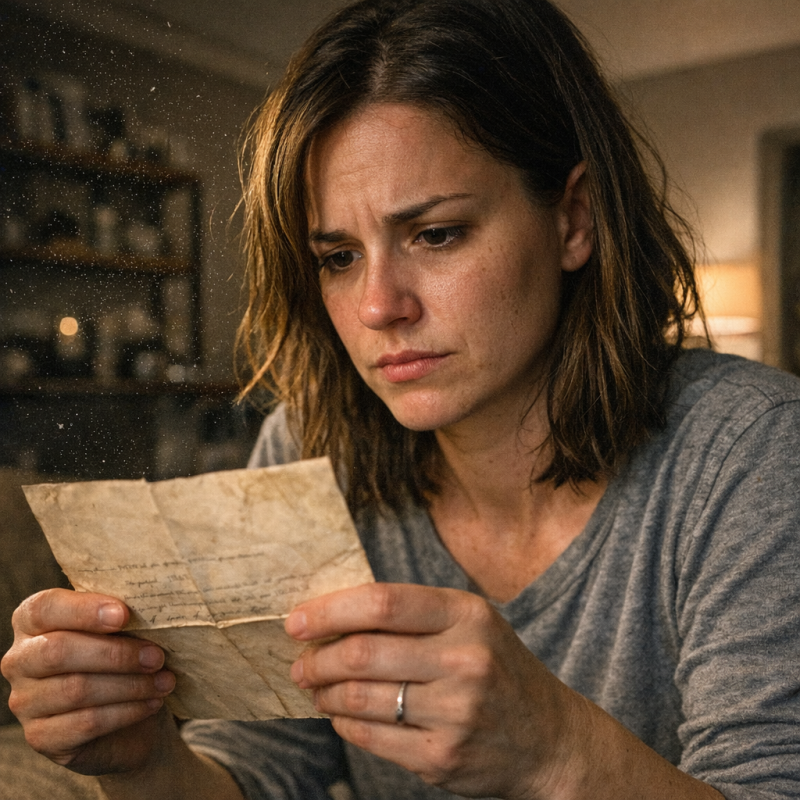 Image by FCT AI
Graham Resurfaces
Graham showed up at my door on a Tuesday morning, looking like he hadn't slept in days. I'd been furious when he'd vanished without explanation, but seeing him now, that anger mixed with something else—relief, maybe, or hope that he had answers. 'I'm sorry I left,' he said before I could even speak. 'But I discovered something about Patricia that I needed to verify first. Something I couldn't tell you without being certain.' He came inside, pacing my living room like a caged animal. 'I've been traveling,' he said. 'Tracking down the families of the people Patricia befriended before your grandfather. The ones who changed their wills in her favor.' My pulse quickened. 'And?' Graham stopped pacing and turned to face me, his expression grim. 'Three of them are dead. All elderly, all supposedly natural causes. I spoke with their surviving relatives, got access to old records, timeline documentation.' He pulled out a notebook, his hands shaking slightly. 'She was there when each of them died,' he said. 'Every single one—and she was always the last person they saw.'
 Image by FCT AI
The Investigator's Warning
James requested an urgent meeting at a coffee shop across town, somewhere we'd never met before. When I arrived, he was sitting in the back corner, looking uncomfortable in a way I'd never seen. 'I need to be straight with you,' he said as soon as I sat down. 'This investigation has crossed into territory I'm not comfortable with. Legal gray areas, implications that could be serious, things that might be better left alone.' I leaned forward. 'What did you find?' He pulled a manila folder from his bag but didn't open it, just rested his hand on top. 'I found connections. Patterns. Documentation that raises questions I can't answer without potentially breaking laws myself.' His voice was low, careful. 'I'm advising you, as someone who cares about your wellbeing, to stop here. To accept what you know and walk away from what you don't.' 'I can't do that,' I said. James nodded slowly, like he'd expected that answer. He pushed the file across the table without opening it and said, 'Read this alone, and decide if you really want to know.'
 Image by FCT AI
The File
I waited until I got home to open James's file. My hands were shaking as I spread the documents across my kitchen table. Inside were legal records going back fifteen years—lawsuits, settlements, quiet disputes that had been resolved before they ever reached trial. Patricia had been named in four separate legal actions brought by relatives of deceased benefactors, people who claimed she'd manipulated their elderly family members into changing their wills. Every case had been settled out of court with confidentiality agreements. The amounts weren't listed, but the pattern was clear. None of the plaintiffs had won, but none had been definitively disproven either—just paid off and silenced. I traced the timeline with my finger, watching Patricia's careful progression from one elderly benefactor to the next. The dates showed calculated gaps between each relationship, enough time for suspicion to fade. Then I reached the final page. The last entry was dated six months before my grandfather died—a notation that Patricia had begun volunteering at his favorite community center.
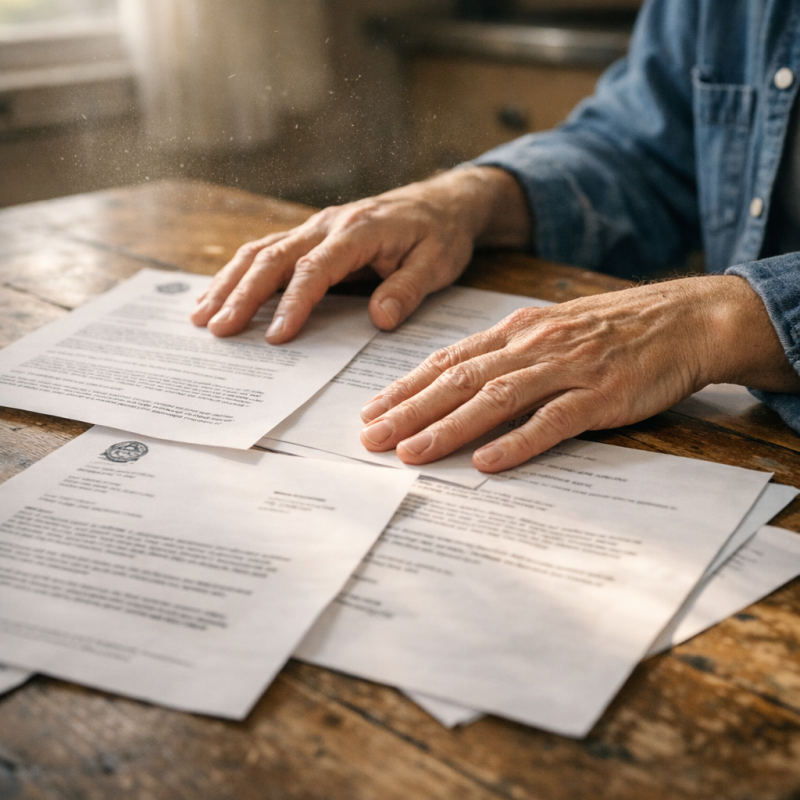 Image by FCT AI
Patricia's Final Milestone
Patricia completed her final condition on a Thursday afternoon in Eleanor's office. The community art program she'd developed had exceeded all benchmarks, the financial literacy courses had reached their enrollment targets, and her personal growth documentation was impeccable. Eleanor verified everything with the same meticulous care she'd shown throughout the process, but I noticed she didn't smile as she made the final notation. 'Congratulations, Patricia,' Eleanor said formally. 'You've fulfilled all requirements and are now eligible for your full inheritance.' Patricia's face lit up with genuine joy, or what looked like it anyway. She turned to me, arms outstretched. 'We both made it, Connor. Against all the odds, we both actually made it.' I forced myself to smile, to accept her embrace, to play the role of fellow heir celebrating our mutual success. She hugged me tightly, and I felt her hands pressing against my back, her breath warm against my shoulder. She hugged me in celebration, and I felt her hands on my back and wondered if this was how the others had felt—right before she took everything.
 Image by FCT AI
The Confrontation Setup
I spent three days planning what I'd say to Patricia, how I'd frame the questions, what approach might actually get her to reveal something true. I drafted speeches, rehearsed confrontations, imagined scenarios where she'd slip up and confirm what I suspected. But every version sounded wrong when I played it back in my head. 'I know what you did to the others' sounded like paranoid accusation without proof. 'I've been investigating your past' made me sound like the villain, not her. 'Why were you always there when they died?' could be explained away by the simple fact that she'd been their companion, their friend—exactly what she'd been hired or invited to be. Maybe that was the genius of it, if there even was an 'it' to begin with. Everything damning I'd discovered could also be interpreted as coincidence, as the bitterness of disappointed relatives, as the natural progression of an empathetic woman who connected with lonely elderly people. I arranged a private meeting with her anyway, setting it for her apartment where she'd feel comfortable, where her guard might be lower. I practiced what I'd say, but every version sounded like paranoia—and maybe that's what she'd counted on all along.
 Image by FCT AI
The Private Meeting
Patricia welcomed me into her apartment with her usual warmth, offering tea and settling into the chair across from me like we were just having another friendly conversation. I started carefully, asking about her work with elderly clients before my grandfather, framing it as curiosity about her background. She answered easily, openly, describing the relationships with the kind of fond detail that made them sound completely innocent. 'Did any of their families ever have concerns?' I asked, watching her face. 'About your closeness with them?' Patricia didn't hesitate, didn't flinch. 'Some did,' she said calmly. 'Grief makes people suspicious sometimes. They look for someone to blame when they feel guilty about not being there themselves.' It was a perfect answer, reasonable and sad. I pressed further, asking about the legal disputes James had found. Again, she responded without defensiveness, explaining each case as a misunderstanding, a family's pain misdirected. 'I was cleared of everything,' she said simply. 'Because there was nothing to clear.' I was getting nowhere, and she knew it. She answered every question calmly, almost as if she'd been expecting them—and then she asked one of her own: 'Did Lawrence ever tell you why he trusted me?'
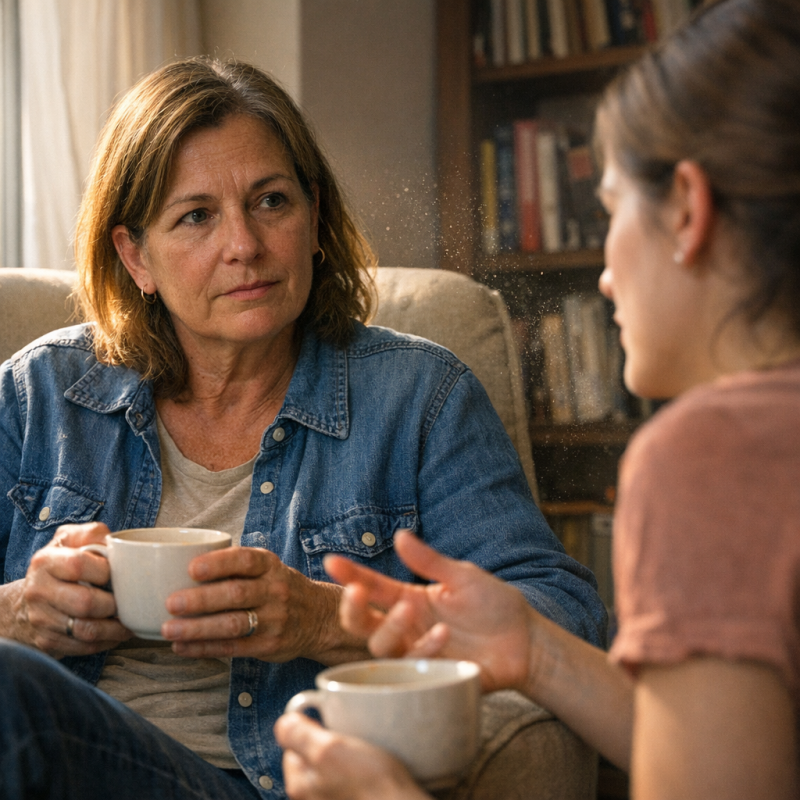 Image by FCT AI
Lawrence's Hidden Recording
I found the recording three days after my conversation with Patricia, tucked away in a locked drawer of my grandfather's desk that Eleanor's office had finally released to me. The flash drive was labeled simply 'For Connor,' dated six months before his death. My hands actually shook as I plugged it into my laptop. The video quality was sharp—he must have set it up carefully, positioned the camera himself in his study. Lawrence looked thinner than I remembered, but his eyes were clear, focused with that intensity he got when he was explaining something important. 'Connor,' he began, and hearing his voice again hit me harder than I expected. 'If you're watching this, several things have happened. Patricia has remained in your life. You've discovered her history. And you're trying to decide what it all means.' He paused, and I swear he was looking right through me. 'I need you to understand something before you make any decisions.' My heart was racing. This was it—he was going to tell me the truth about her, about everything. My grandfather's face filled the screen, and he said the words I'd been dreading: 'If you're watching this, it means Patricia passed the test—and now you need to understand what that means.'
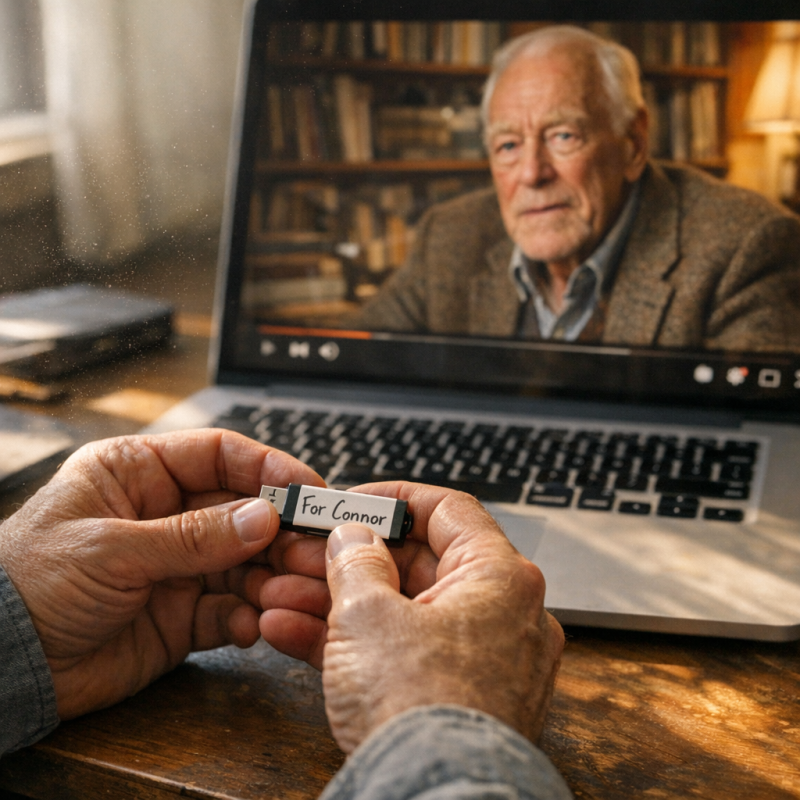 Image by FCT AI
The Recording's Message Part One
I hit pause, stared at the frozen image of Lawrence's face, then forced myself to press play again. 'I knew about Patricia's past when I hired her,' he said, his tone matter-of-fact. 'The other elderly clients, the inheritances, the families' accusations—all of it. I had it investigated thoroughly before she ever set foot in my home.' My stomach dropped. He'd known. The entire time, he'd known everything I'd just spent weeks uncovering. 'I didn't hire her despite her history, Connor. I hired her because of it.' He leaned forward slightly, and I could see that calculating expression I recognized from business negotiations. 'The will was never just about the family. It was about creating a situation where Patricia would be tested in ways she'd never been tested before. Where her patterns would either repeat or break.' He paused, choosing his words carefully. 'I wanted to see if proximity to genuine transformation—to people genuinely trying to change—would affect her. Or if she'd simply do what she's always done.' The recording stopped there, mid-thought, and I sat in the silence that followed. 'I knew what she was,' he said, 'and I wanted to see if she could become something different—or if she'd prove exactly what I suspected.'
 Image by FCT AI
Graham's Confession
Graham showed up at my apartment the next morning looking like he hadn't slept. I almost didn't let him in, still raw from the recording, but he had that urgent expression that meant whatever he'd come to say couldn't wait. 'I need to tell you something,' he started, not even sitting down. 'Something I should have told you from the beginning.' I crossed my arms, waiting. 'The family that hired me to investigate your grandfather's finances—they weren't just concerned investors. They were the Hendersons, the family of one of Patricia's previous benefactors.' My entire body went cold. 'They hired me two years ago, before your grandfather even died. They'd been tracking Patricia, waiting for her to attach herself to someone else.' He ran his hand through his hair, looking genuinely troubled. 'They couldn't get proof last time—the courts sided with her, everything looked legitimate on paper. But they're convinced she has a method, a pattern. They wanted someone inside when it happened again.' I wanted to throw him out, but I needed to hear this. 'They couldn't prove anything before,' he said, 'but they're convinced she'll slip up this time—and they want you to help them stop her.'
 Image by FCT AI
Eleanor's Dilemma
Eleanor called me into her office that afternoon with an urgency I'd never heard in her voice before. She had legal documents spread across her desk, her usual composure cracked around the edges. 'I've received formal demands from three separate law firms,' she said, sliding the papers toward me. 'All representing families of Patricia Caldwell's previous benefactors.' The letterhead was impressive—major firms, the kind that didn't file frivolous complaints. 'They're threatening injunctions against the estate distribution. They want me to freeze any payments to Patricia pending a full investigation into her relationship with Lawrence.' I scanned the documents, seeing phrases like 'pattern of undue influence' and 'systematic exploitation' repeated across all three. 'Can they do that?' I asked. Eleanor's expression was grim. 'They're arguing for it. I have some discretion as executor, especially given the unusual nature of Lawrence's will. But I can't hold things indefinitely without cause.' She looked at me directly, and I saw the impossible position she was in. 'I can stall for two weeks,' she said. 'After that, if you haven't found proof, Patricia gets everything she's entitled to.'
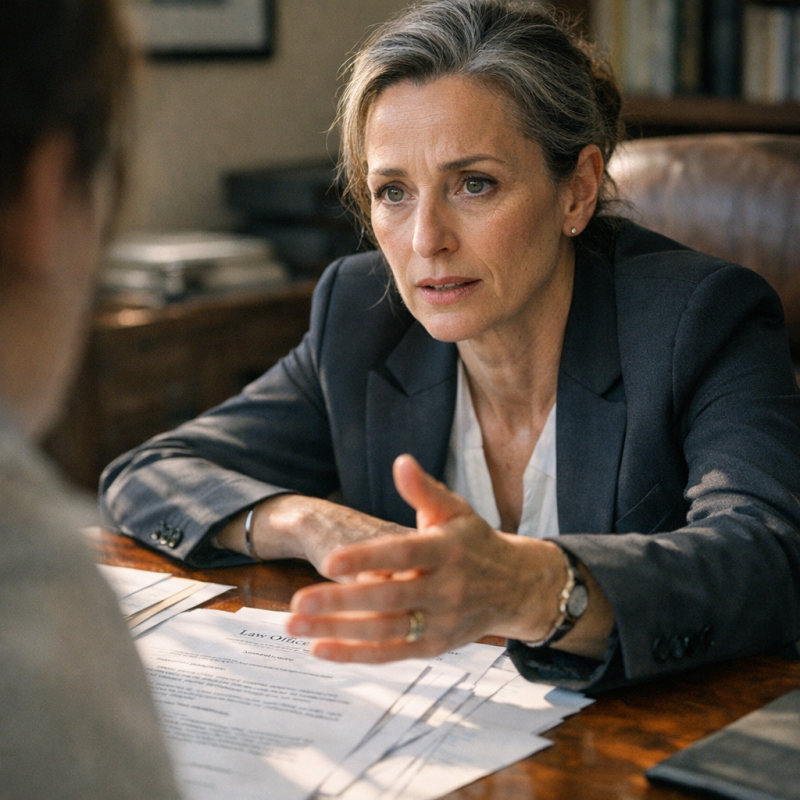 Image by FCT AI
The Previous Families
I met with them separately over the next four days—representatives from the Henderson family, the Porters, and the Castellanos. Three families, three deceased benefactors, three versions of the same story. The Hendersons' lawyer showed me photos of their grandfather with Patricia, documented her progression from hired caregiver to constant companion. The Porters' daughter described how Patricia had gradually isolated her father, convinced him his family didn't understand him. The Castellanos played me voicemails their uncle had left, his voice full of praise for 'the only person who really listens.' Every detail was familiar—the attentiveness, the emotional support during family conflicts, the quiet presence at the bedside during final days. And the inheritances, always substantial but never quite enough to trigger automatic legal scrutiny. 'She knows exactly how much she can take,' the Castellanos' son told me. 'Just under the threshold that would require forensic investigation.' But when I asked for proof of manipulation, of deliberate scheming, they had nothing concrete. Legal battles they'd lost, suspicions they couldn't substantiate, gut feelings that courts had dismissed. They all told the same story—a kind woman who became indispensable, who was there at the end, who inherited substantial sums—and they all believed she'd somehow orchestrated it.
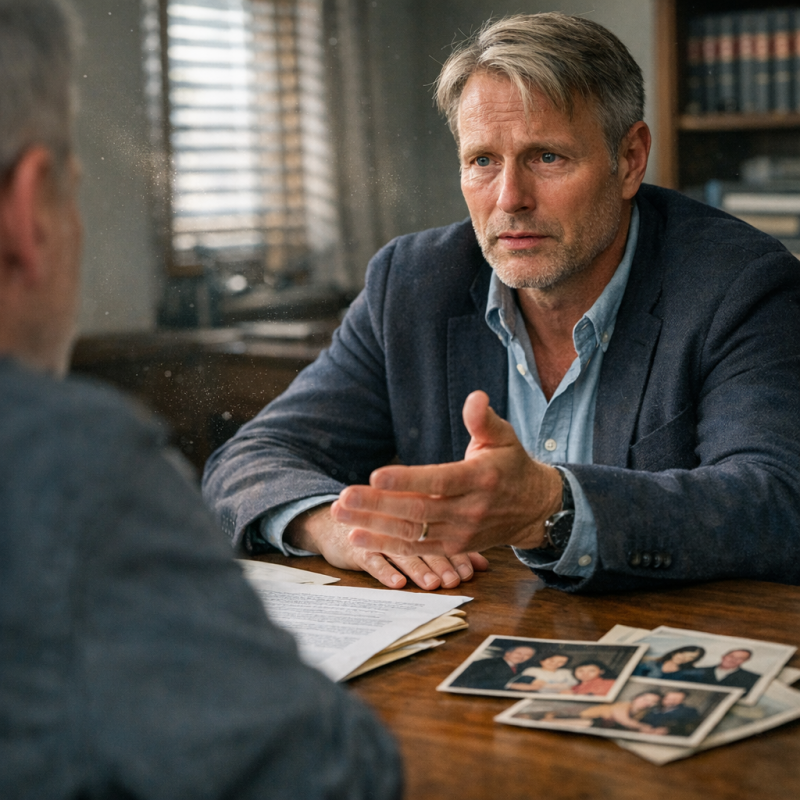 Image by FCT AI
Patricia's Counter-Evidence
Patricia asked to meet me the day after I spoke with the families. She arrived with a leather portfolio, her expression calm but resolute. 'I know you've been talking to them,' she said simply. 'I thought you should see the other side.' She opened the portfolio, revealing court documents from three separate probate cases. 'The Hendersons challenged the will. Here's the judge's ruling—relationship found to be genuine, no evidence of coercion. The Porters filed for undue influence. Dismissed after full investigation. The Castellanos tried to prove incompetence. Court-appointed psychiatrist confirmed their uncle's full mental capacity until the end.' She laid out each document methodically, letting me read the conclusions. Every investigation had cleared her. Every challenge had failed. 'I cared about these people,' she said quietly. 'They chose to leave me something because I was there when their families weren't. Because I listened. Because I didn't make them feel like a burden.' She looked at me then, and I saw something in her expression that made my chest tight. 'They can't accept that their relatives chose me,' she said softly. 'Just like your family can't accept that Lawrence chose you.'
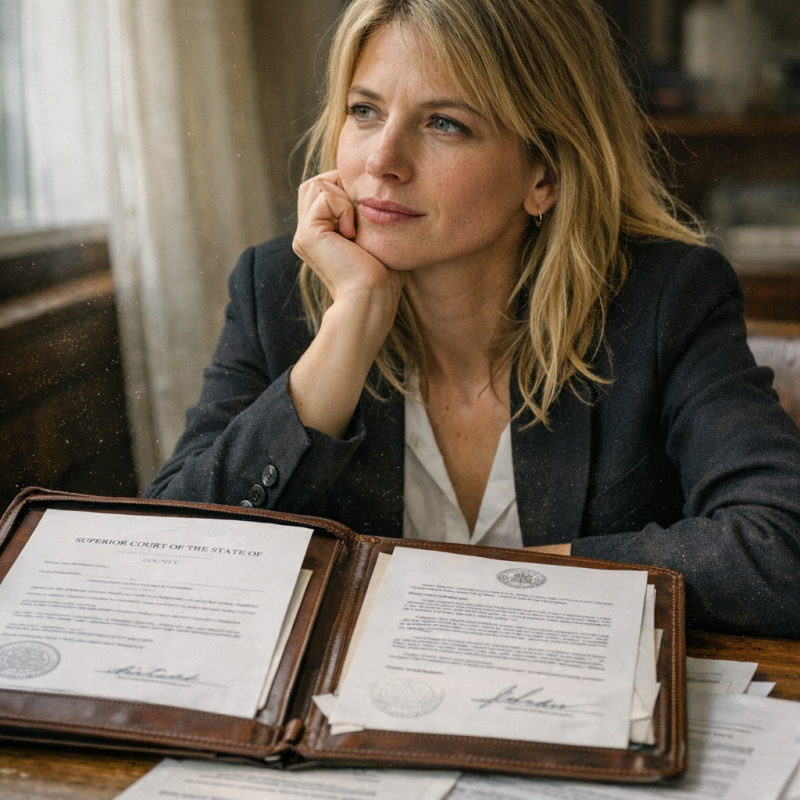 Image by FCT AI
The Recording's Message Part Two
I went back to the recording that night, discovering there was more I hadn't watched. Lawrence's face reappeared on screen, and he looked older somehow in this segment, more tired. 'If you've gotten this far, Connor, you've heard from everyone. Patricia, the families, probably Graham and Eleanor too. You're drowning in perspectives, and you don't know what to believe.' He was right, as always. 'Here's what I need you to understand about the final phase. This test was never just about Patricia. It was about both of you.' He shifted in his chair, and I could see the weight of whatever he was about to say. 'Patricia needed to be put in a situation where genuine change was possible but not guaranteed. Where she'd be surrounded by people trying to transform themselves, where her old patterns would be obvious and challenged.' He paused, his eyes sharp. 'But you, Connor—you needed something too. You needed to learn whether you could see someone for what they might become, not just what they've been. Whether you could extend the kind of faith that I placed in you.' The recording ended there, but his final words echoed. 'The real question isn't whether Patricia can change,' Lawrence said, looking directly into the camera. 'It's whether you'll believe she can.'
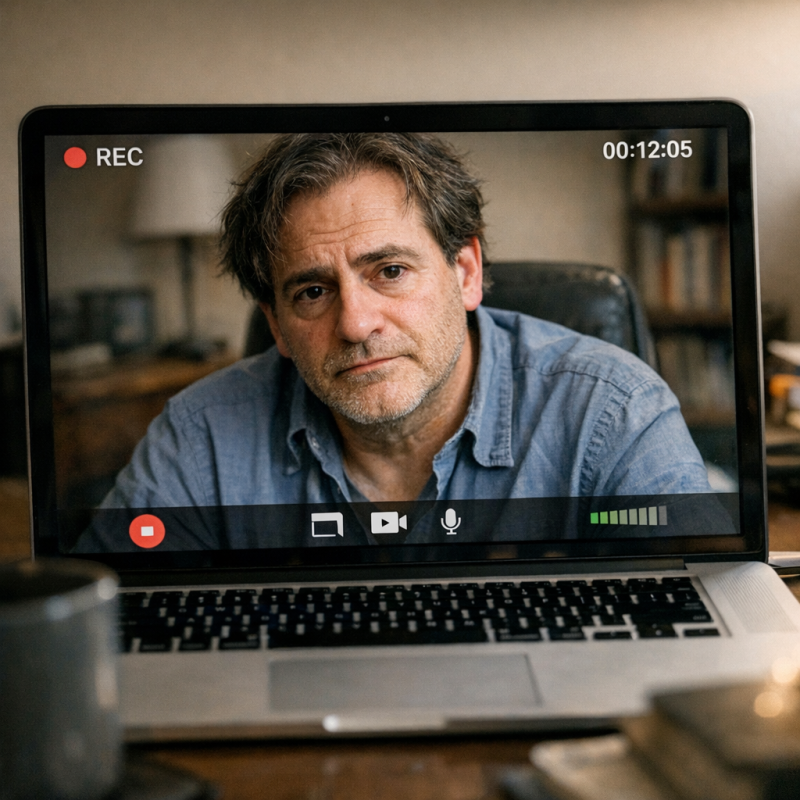 Image by FCT AI
The Truth Unveiled
The emails were buried in an archive file on Patricia's computer that Graham's contact managed to access—I don't want to know how, and I'm not proud that I looked. But I looked. And what I found destroyed everything I'd been trying to believe. The earliest message was dated four years ago, a detailed research report on my grandfather: his wealth, his family situation, his values, his fears. Patricia had hired an investigator to profile him before they'd ever met. Other emails showed her networking to get the caregiver referral, researching exactly what type of companion he'd respond to, studying his past statements about family and legacy. She'd crafted her entire personality around what would appeal to him. But the worst part was what came later—emails discussing my family members, analyzing our weaknesses, predicting exactly how the will conditions would fracture us. She'd fed my grandfather information, shaped his perceptions, suggested scenarios that became the very tests that destroyed my cousins. There were drafts of conversations, planned emotional moments, calculated vulnerabilities. She'd even anticipated my eventual investigation, prepared responses for every question I might ask. The emails showed everything—how she researched the family, positioned herself, manipulated his perceptions, ensured others would fail while she succeeded—it was all calculated, every single moment.
 Image by FCT AI
The Depth of the Scheme
I started pulling every thread I could find, going back through old family photos, event programs, anything that might show when Patricia first appeared in my grandfather's orbit. What I found made my stomach drop. The first mention I could trace was seven years ago—a charity gala my grandfather had attended, where Patricia had been working as an event coordinator. She'd sent him a thank-you note afterward that referenced a conversation about his late wife. I barely remembered that event myself. Then there was a hospital fundraiser two years later where she'd somehow ended up at his table. A follow-up email thanking him for his 'wisdom about legacy and purpose.' Birthday cards sent to him every year, casual and friendly, building rapport so gradually that it looked like natural friendship. She'd been there at a cousin's wedding I'd attended, hovering at the edges, never intrusive but present. Memorable enough that Lawrence would recognize her face when she eventually applied to be his companion. I'd walked past her probably a dozen times without noticing. She'd attended family events I'd forgotten about, sent cards I never noticed, created a presence so gradual that no one questioned it—until it was too late.
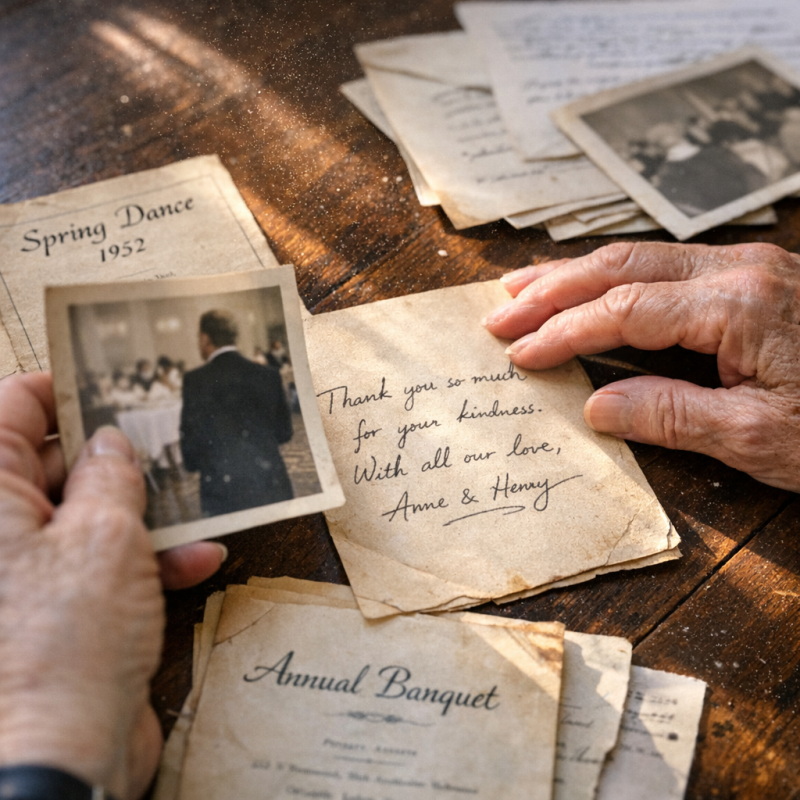 Image by FCT AI
The Impossible Choice
I had everything I needed to expose her. The emails, the timeline, the calculated manipulation spanning years. But when I sat down with Eleanor to discuss next steps, she dropped a legal bomb I hadn't anticipated. 'If you prove Patricia infiltrated Lawrence's life fraudulently,' she said carefully, 'you're essentially arguing that his mental state was compromised when he created the will. That he was under undue influence.' I stared at her. 'But he was.' Eleanor shook her head. 'Perhaps. But legally, that argument invalidates not just Patricia's conditions—it potentially invalidates the entire will structure. Including the conditions you completed. Including your inheritance.' The words hit me like a physical blow. Everything I'd built, the community center, the relationships I'd formed, the purpose I'd finally found—all of it was legally tied to a will that might collapse if I exposed the truth. 'The other families would file challenges,' Eleanor continued. 'Estate litigation could drag on for years. The foundation you've established could be frozen, dismantled, redistributed.' I sat there feeling the walls close in. Eleanor confirmed it: exposing Patricia might collapse the legal framework that protected everything Lawrence built—including my own inheritance.
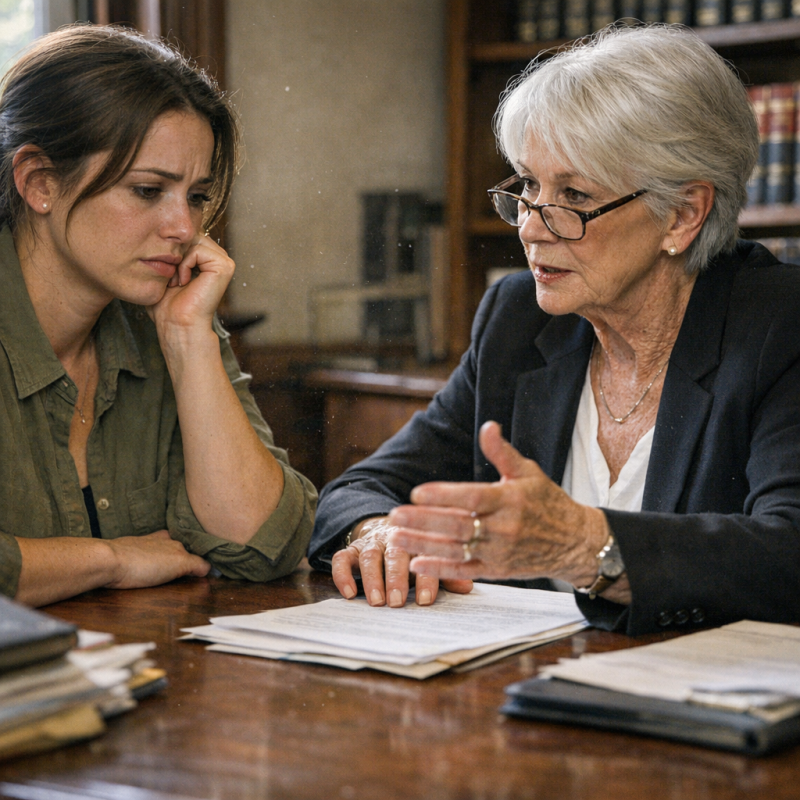 Image by FCT AI
The Final Confrontation Begins
I met Patricia in the library where this whole thing had started, the emails printed and stacked between us. I didn't ease into it. 'I know everything,' I said. 'The research, the positioning, the manipulation. All of it.' I expected denial, panic, tears. Instead, she looked at the documents calmly, then met my eyes without flinching. 'Yes,' she said simply. 'I did exactly what those emails describe. I researched your grandfather, positioned myself carefully, and adapted to become what he needed. Just like the will required.' The admission stunned me more than any lie could have. 'You're not even going to pretend—' 'Why would I?' Patricia interrupted. 'Connor, the will asked me to demonstrate growth, adaptation, and genuine connection. It didn't specify that I had to arrive pure and innocent. Your grandfather knew my history. He knew I'd been transactional, calculating, opportunistic. And he still wrote those conditions.' She leaned forward slightly. 'Lawrence knew what I was,' she said. 'He invited me anyway. The question is whether he wanted me to fail or succeed—and I think we both know the answer.'
 Image by FCT AI
Lawrence's Final Letter
Eleanor appeared at the library door holding a manila envelope I'd never seen before. 'There's something else,' she said quietly. 'Lawrence left specific instructions that this only be opened if Patricia successfully completed all her conditions.' She set it on the table between us, the seal still intact. 'He gave it to me separately, years ago. I've been waiting to see if this moment would come.' My hands shook slightly as I broke the seal. Patricia sat perfectly still, her expression unreadable. I pulled out several handwritten pages in my grandfather's distinctive script. Eleanor watched us both carefully. 'He was very specific,' she said. 'Both of you had to be present when it was opened. If Patricia failed, it was to be destroyed unread.' The weight of that instruction settled over us. This was his final word, saved specifically for this impossible moment. I looked at the first page, and my breath caught. The letter was addressed to both of us, and the first line read: 'If you're reading this together, then Patricia proved she could change—or proved she didn't need to.'
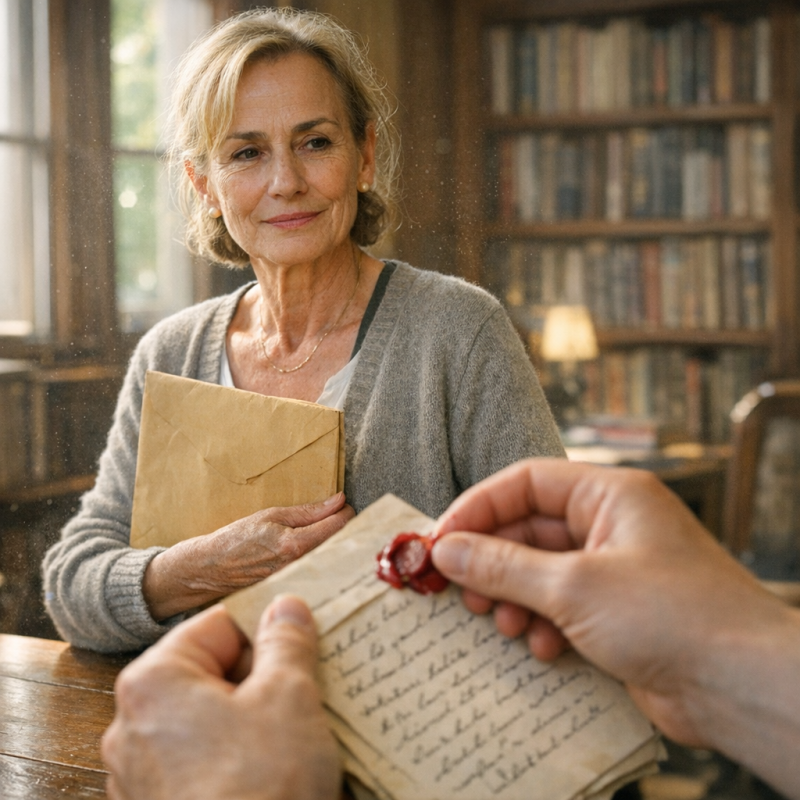 Image by FCT AI
The Letter's Revelation
I read the letter aloud, my voice barely steady. Lawrence had known everything—Patricia's background, her calculated approach, her history of manipulation. He'd known before he ever hired her as his companion. 'I watched her research me,' he wrote. 'Saw her craft her personality to match my values. A younger version of myself would have been furious at the presumption. But I recognized something in Patricia that reminded me of my own youth—the survival instinct that mistakes transaction for connection.' He described how he'd designed the will conditions specifically around her, creating challenges that would require genuine transformation rather than performance. 'Money can't buy change,' he continued. 'But the right conditions might inspire it. I gave Patricia an impossible choice: pursue wealth through manipulation, or discover something more valuable through authentic growth. The will wasn't meant to punish her for what she was—it was meant to offer her the chance to become something different.' I looked up at Patricia, whose eyes were glistening. The final paragraph destroyed me: 'The conditions weren't meant to exclude her,' he wrote. 'They were meant to transform her—and in doing so, reveal whether transformation is even possible.'
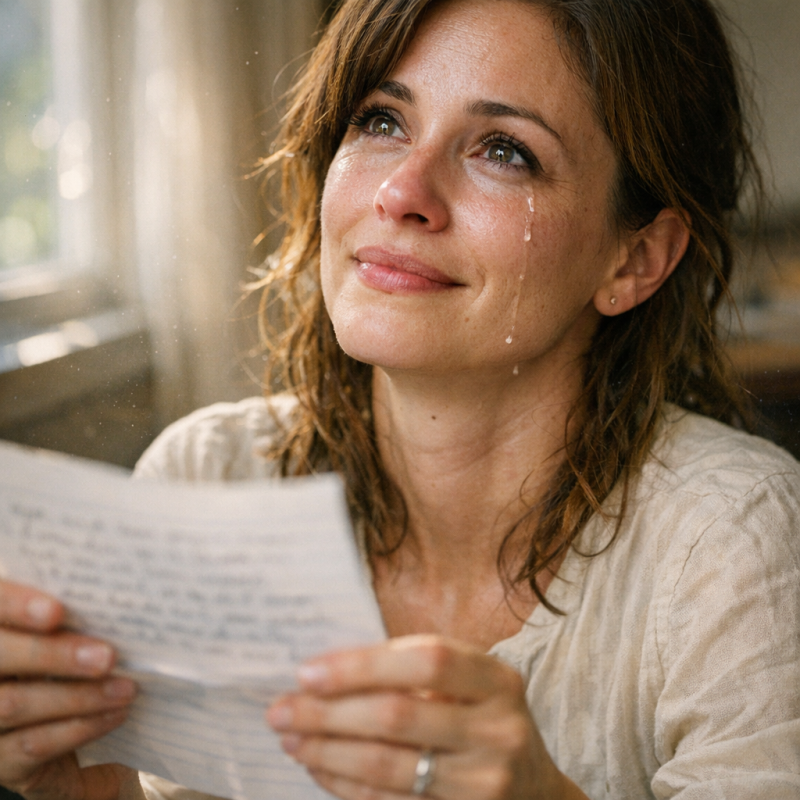 Image by FCT AI
Patricia's Choice
Patricia was quiet for a long moment after I finished reading. Then she pulled a document from her bag—legal papers I recognized immediately as inheritance forfeiture forms. 'I had these prepared last week,' she said, setting them on the table. 'Before you found the emails. Before this confrontation. Because your grandfather taught me something that actually was worth more than money.' I stared at the unsigned papers. 'What are you talking about?' 'Connection without transaction,' she said simply. 'Relationship without calculation. I spent years perfecting the art of strategic friendship, and it left me completely alone. The past eight months—actually trying to meet Lawrence's conditions, actually building something real—it was the first time I'd ever done that.' She pushed the papers toward me. 'So I'll forfeit. Walk away. Let the money go to wherever Eleanor determines it should go. I don't need to prove anything anymore.' I reached for the papers, but she held them back for a moment. She slid the forfeiture papers across the table, unsigned, and said, 'But I want you to decide—because that's the real test, isn't it?'
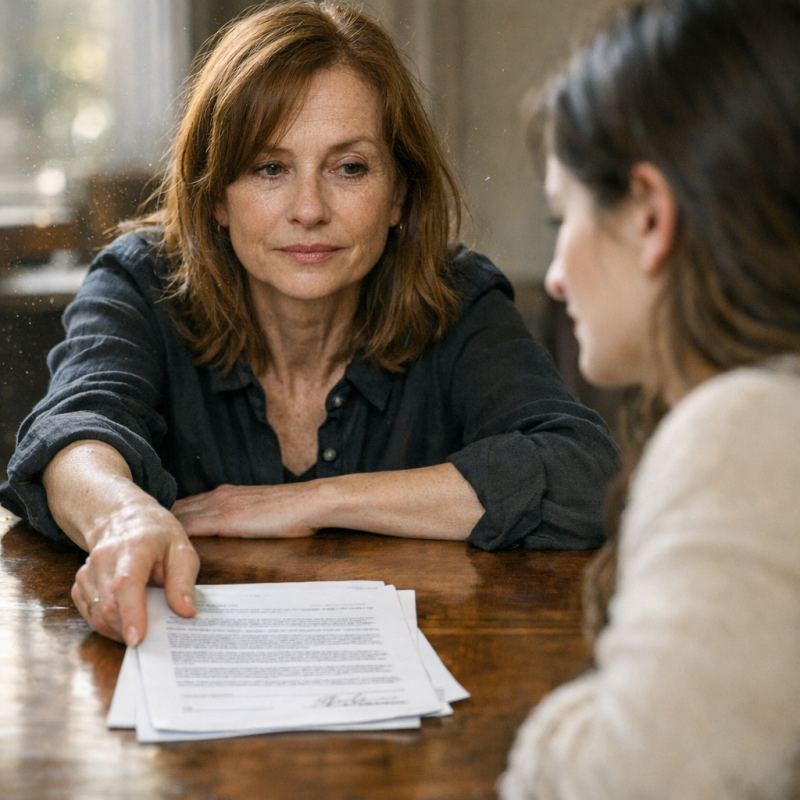 Image by FCT AI
The Other Families' Ultimatum
I had forty-eight hours to think about Patricia's offer before Graham showed up at my apartment with three other people I recognized—the adult children of the other benefactors Patricia had allegedly scammed. They had folders, documents, a lawyer on speakerphone. 'We've been comparing notes,' Graham said, his expression harder than I'd ever seen it. 'Patricia has a pattern going back fifteen years. My father wasn't the first, and yours wasn't the last.' They laid out their evidence: elderly people befriended, assets mysteriously redirected, families left with nothing. 'We're filing a lawsuit,' one woman said. 'Undue influence, fraud, elder abuse. But it'll be stronger if you join us. You have access to Lawrence's estate records, his recent communications. You're the key.' Graham leaned forward. 'She's playing you, Connor. This whole forfeiture thing is another manipulation. She knows you're the weak link—the one who wants to believe in redemption.' They gave me a deadline: support their lawsuit or be named as an impediment to justice. They gave me forty-eight hours to decide whose side I was on—Patricia's or theirs—and both choices felt like betrayal.
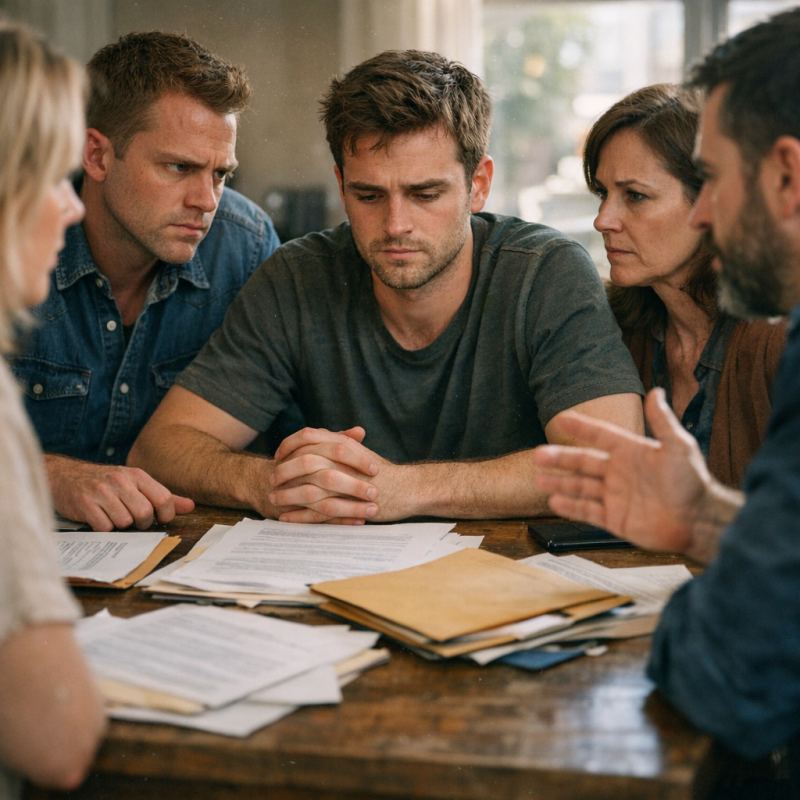 Image by FCT AI
Connor's Investigation
I couldn't decide based on words and documents anymore. I needed to see for myself what Patricia had actually been doing these past months. I started following her daily routine, watching from a distance like some kind of creep, but I needed to know. The community center visits were documented, required by the will. But on Thursday afternoon, she went somewhere else—a women's shelter in a neighborhood forty minutes from her apartment. I watched her spend two hours there, not performing or documenting, just talking with residents. Then she visited an elderly woman in a rent-controlled building, bringing groceries, staying for tea. I approached the woman later, after Patricia left. 'How do you know her?' I asked. The woman smiled warmly. 'Patricia? She's been visiting for months now. Such a dear friend. We met at the senior center, and she just kept coming back.' She didn't mention Lawrence. Didn't know about the will. Had no idea he'd even died. I felt my certainty crumbling. The homeless woman Patricia visited weekly didn't know about the will, the inheritance, or even that Lawrence had died—she just knew Patricia as a friend.
 Image by FCT AI
The Decision
I sat in Eleanor's office with the documents spread before me, my pen hovering over the signature line. She'd laid out both options—contest the will based on evidence of manipulation, or honor Lawrence's intentions and let Patricia receive her portion. 'There's no wrong answer here,' Eleanor said quietly. But that wasn't true. There was a wrong answer, I just couldn't know which one it was. I thought about the homeless woman who didn't know Lawrence had died. The shelter volunteers who'd never heard of the will. The elderly woman who just thought Patricia was her friend. And I thought about my grandfather, who'd orchestrated this entire thing knowing exactly what position it would put me in. He'd given me power, sure—but he'd also given me responsibility. The choice to punish or to believe. To demand certainty or to have faith. I picked up the pen. My hand was shaking as I signed my name, approving the full distribution to Patricia according to the will's terms. Eleanor witnessed it, her expression unreadable. I signed the documents that would change everything, knowing I'd never be certain if I chose right—but that's what faith is, isn't it?
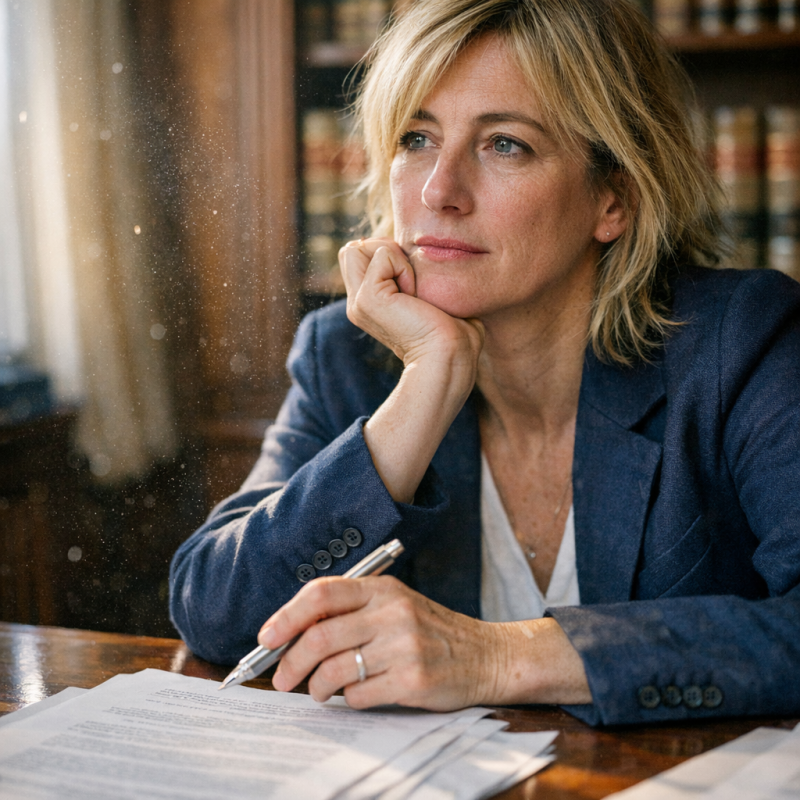 Image by FCT AI
The Inheritance Distributed
The formal distribution happened two weeks later in the same conference room where this whole thing had started. Patricia sat across from me, looking older somehow, more worn. Eleanor presented the final papers—ten million dollars to Patricia Caldwell, ten million to me, the remainder distributed to various charities as specified. We each signed. The money would transfer within forty-eight hours. Patricia's hands trembled slightly as she wrote her name. I wondered if she was thinking about Lawrence, about what she'd done to earn this, or if she was already planning how to spend it. When we finished, Eleanor collected the documents with professional efficiency. 'That concludes the estate distribution,' she said. Patricia stood, smoothed her skirt, and looked directly at me for the first time that day. Her eyes were complicated—gratitude mixed with something I couldn't quite read. 'Thank you for believing I could change,' she said quietly, then paused. 'Even if I didn't.' She left before I could respond, her words hanging in the air. As we signed the final papers, Patricia looked at me and said something that would haunt me for years: 'Thank you for believing I could change—even if I didn't.'
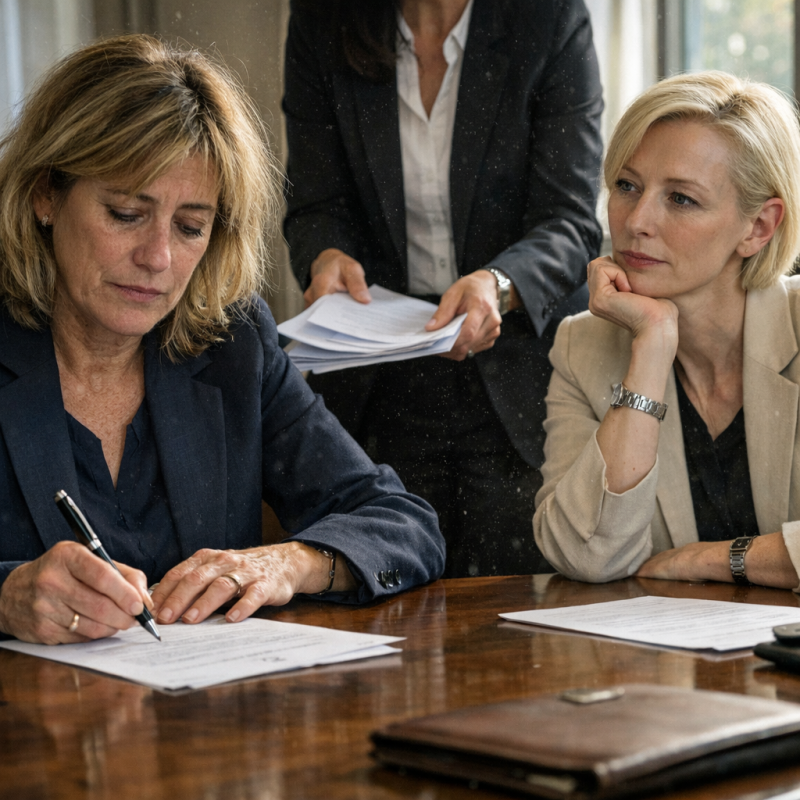 Image by FCT AI
Six Months Later
Six months passed. I'd stayed busy with my own life, trying not to obsess over whether I'd made the right call. Then I saw the article—'New Foundation Addresses Elder Isolation Crisis.' Patricia's name was listed as founder and primary donor. The Caldwell Connection Initiative, helping elderly people build social networks, avoid financial exploitation, connect with community resources. I thought it might be performative at first, damage control. So I went to the opening event at a community center in Brooklyn. Patricia was there, genuinely engaged, talking with a dozen elderly folks like they were old friends. Some of them were—I recognized the woman from the rent-controlled building. 'Connor,' Patricia said when she saw me. 'I'm glad you came.' She introduced me around. Each person had a story about how the foundation had helped them. Real stories, not manufactured ones. Medical bill assistance. Companionship programs. Legal aid for housing issues. I watched Patricia navigate the room, and I couldn't tell anymore where the performance ended and the real person began. I visited the foundation's opening, and Patricia introduced me to a dozen people whose lives she'd touched—and I wondered if my grandfather knew this would happen, or just hoped it might.
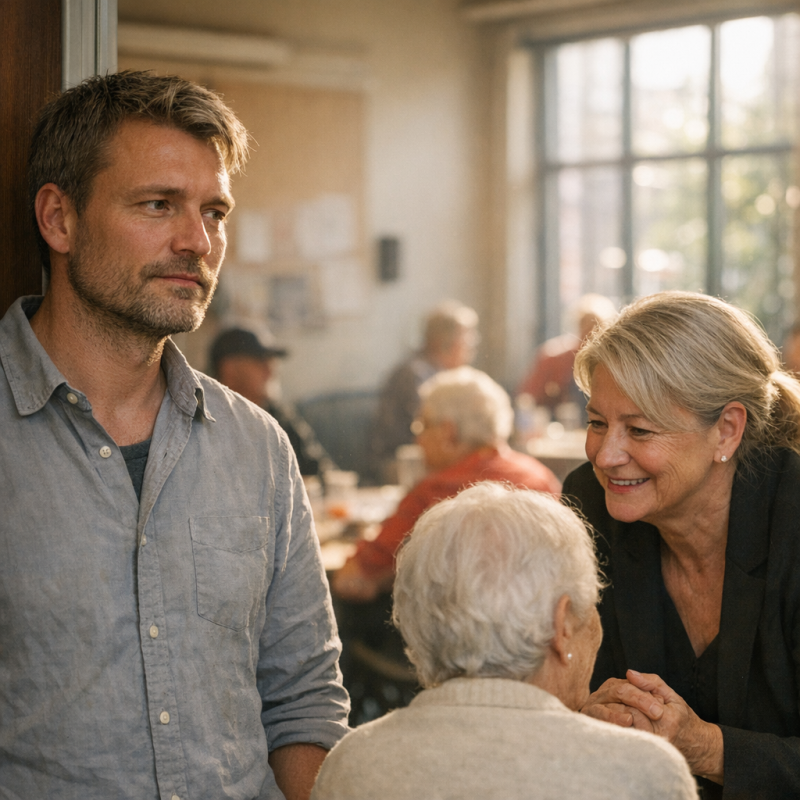 Image by FCT AI
The Final Lesson
I drove to Lawrence's grave on a gray afternoon in November, carrying the envelope Eleanor had given me months ago. The final letter, addressed in his handwriting: 'To Lawrence Caldwell, from Lawrence Caldwell.' I'd been afraid to open it, but I didn't need to anymore. I understood now. My grandfather hadn't been testing who deserved his money—he'd been testing who would believe in redemption over revenge. Who would choose possibility over certainty. He'd given Patricia a chance to become worthy, and he'd given me a choice about whether to let her take it. The greatest inheritance wasn't the money. It was the lesson that people aren't fixed things, that we become who we choose to be, and that sometimes the bravest thing is to believe in that transformation even when you can't be sure it's real. I placed the unopened letter on his headstone, next to the flowers someone else had left—probably Patricia. The wind picked up, rustling through the cemetery trees. I returned to Lawrence's grave and placed the final letter he'd left—the one addressed to himself—on his headstone, and I finally understood: he wasn't testing us to see who we were, but who we could choose to become.
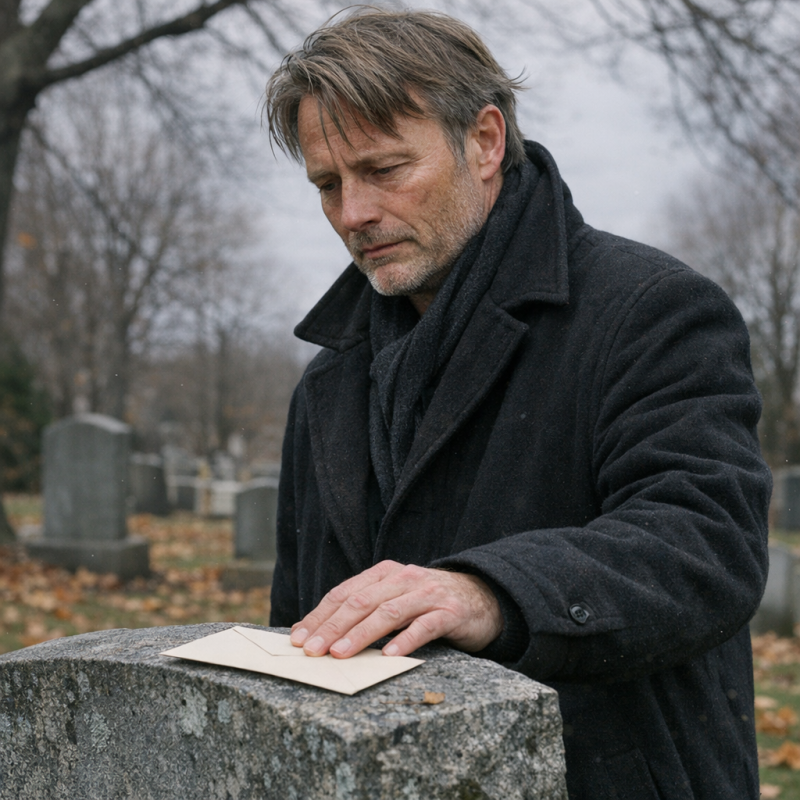 Image by FCT AI