The Demand
Greg cornered me right as I was clocking out on Friday. Not metaphorically cornered—he literally stepped in front of the break room door so I couldn't leave. 'I need you to cover Saturday and Sunday,' he said, arms crossed, voice casual like he was asking me to pass the stapler. I just stared at him. 'I requested those days off three weeks ago,' I said, keeping my voice steady. He gave me this smile, the kind that doesn't reach the eyes. 'Yeah, I know, but Jo's got an emergency and David's got the flu. You're reliable, Alex. I can count on you.' The way he said 'reliable' felt like a trap, like he was reminding me I'd always said yes before. He shifted his weight, blocking more of the doorway. 'So I'll see you at eight tomorrow, right?' It wasn't really a question. He thought he had me. He thought I'd fold like I always did, reschedule my life, apologize for the inconvenience of having plans. But Greg had no idea what I was about to say next.
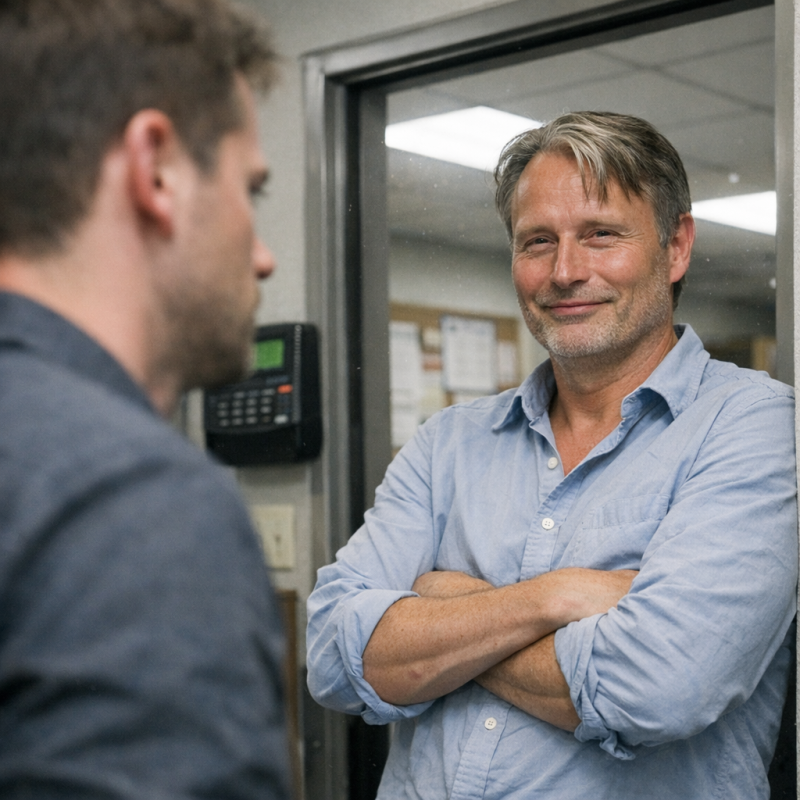 Image by FCT AI
The History
Six months ago, our old manager retired and everything changed. Linda used to ask if we could cover shifts—actually ask, like our answer mattered. She'd say, 'No pressure, just checking,' and she meant it. When Greg took over, he kept saying he wanted to 'streamline operations' and 'optimize scheduling efficiency,' which mostly meant the schedule changed every week and we never knew if we'd have our requested days off until the last minute. I'd watched him reshape the entire vibe of the place. Jo used to volunteer for extra shifts all the time, cheerfully picking up slack whenever someone needed help. She was that person, you know? The one who actually liked being useful. But last month when Greg asked her to cover a Sunday, she'd said no. I remembered being surprised. Then Mara said no to a random Tuesday night. Then David turned down a Saturday. Nobody said yes anymore, even Jo. And Jo was usually the one who volunteered—so why did everyone say no this time?
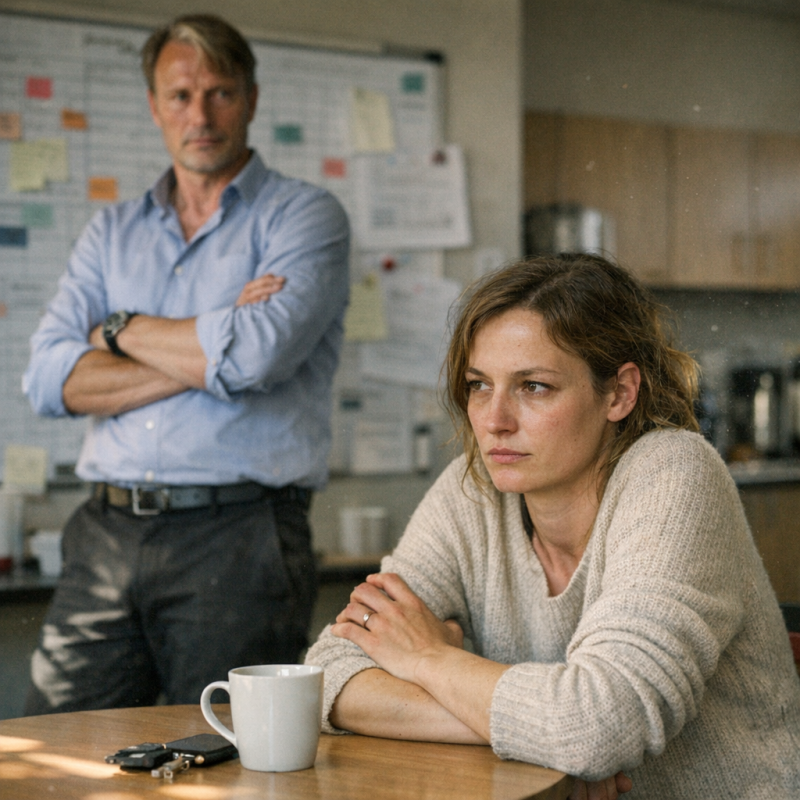 Image by FCT AI
The Pattern I Couldn't Name
Lying in bed that night, I kept replaying the last few months in my head. Greg had this habit of asking the same people whenever the schedule fell apart. Not everyone—just a few of us. Me, Jo, David, sometimes Mara. I'd assumed it was because we were good workers, dependable, whatever. But the more I thought about it, the weirder it seemed. There were twelve people on staff, but Greg only ever seemed to need the same four or five when things got 'urgent.' And things got urgent a lot under Greg. I wondered if he was just lazy, going to the people he knew would cave. Or maybe it was random and I was overthinking it. Maybe managers just develop favorites without realizing it. I told myself it didn't matter, that I was reading into coincidence. But every time I closed my eyes, I kept seeing the pattern. Four of us. Always the same requests. Always last minute. Always framed as emergencies. But I couldn't shake the feeling that it wasn't random.
 Image by FCT AI
The Plans That Mattered
My sister was flying in Saturday morning. We'd barely seen each other in over a year—she'd been dealing with her divorce, I'd been drowning in work, and we kept saying we'd visit and never did. Finally, she booked the ticket. We were going to spend the whole weekend together, just us, like when we were kids. I'd requested the days off five weeks in advance, filled out the form, submitted it through the system. Greg had even approved it—I remembered because I'd checked my email twice to make sure it went through. He knew. That was the part that kept eating at me. He absolutely knew those days mattered. I'd mentioned my sister was visiting when I submitted the request. He'd nodded, said, 'Family's important, no problem.' So why was he acting like my plans were negotiable? Why did he look so confident I'd cancel everything? And Greg knew I'd requested those days off.
 Image by FCT AI
The Office Silence
When I walked back onto the sales floor, Mara was restocking shelves near the registers. She glanced up, caught my eye, and her expression shifted immediately. It was like she was reading my face for information. I tried to look normal, but my heart was still pounding from the confrontation. David was at the far register, pretending to organize receipt tape, but I could feel him watching too. Even customers seemed like background noise compared to the sudden attention from my coworkers. I grabbed a returns cart and started sorting items, trying to look busy. Mara drifted closer, adjusting price tags on a display near me. 'Hey,' she said quietly, not looking directly at me. 'You okay?' I nodded, not trusting my voice yet. She moved another product, her movements deliberate and slow. The air felt thick with unasked questions. Finally, she leaned closer and whispered, 'You said no, didn't you?'
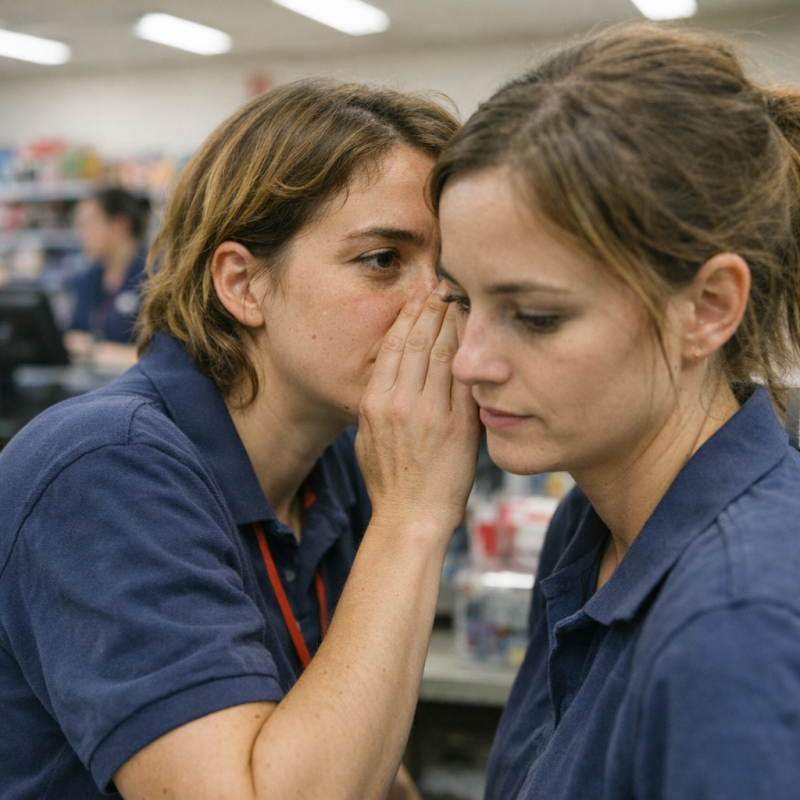 Image by FCT AI
The Whispered Question
Mara's eyes were wide, almost impressed. 'Are you worried?' she asked. Honestly? I hadn't thought that far ahead. In the moment, saying no felt like the only possible response—he was asking me to cancel on my sister, and that wasn't happening. But consequences? Retaliation? That hadn't crossed my mind until Mara said it out loud. 'Should I be worried?' I asked, trying to sound casual. She bit her lip, glanced toward Greg's office. 'I mean, probably not. It's just... some people have said no before.' The way she said it made my stomach twist. 'And?' I pressed. She shrugged, but it wasn't a casual shrug. 'I don't know exactly. They just... things got weird for them afterward.' She wouldn't meet my eyes. 'I'm sure it's fine,' she added quickly, but she didn't sound sure. Neither of us did. What if saying no wasn't the end—what if it was just the beginning?
 Image by FCT AI
The Lunch Room Conversation
Lunch break, David dropped into the chair across from me with his sandwich. 'Heard Greg's covering Saturday himself,' he said, grinning. 'He looked mad when he updated the schedule. Like, actually furious.' A weird rush of relief hit me. If Greg was covering it himself, then maybe that was the end of it. Maybe I'd worried for nothing. Mara sat down next to David, opening her salad container. 'Good for you,' she said to me. 'Seriously.' David took a bite, chewing thoughtfully. 'Yeah, someone needed to tell him no eventually. He's been pulling this for months.' I felt vindicated, almost proud. Then David swallowed and added casually, 'Just like when Hannah refused last year.' The relief drained out of me instantly. Hannah. I'd almost forgotten about her. Mara's fork paused halfway to her mouth. 'David,' she said quietly, a warning in her voice. But it was too late. Then David said something that made my stomach drop: 'Just like when Hannah refused last year.'
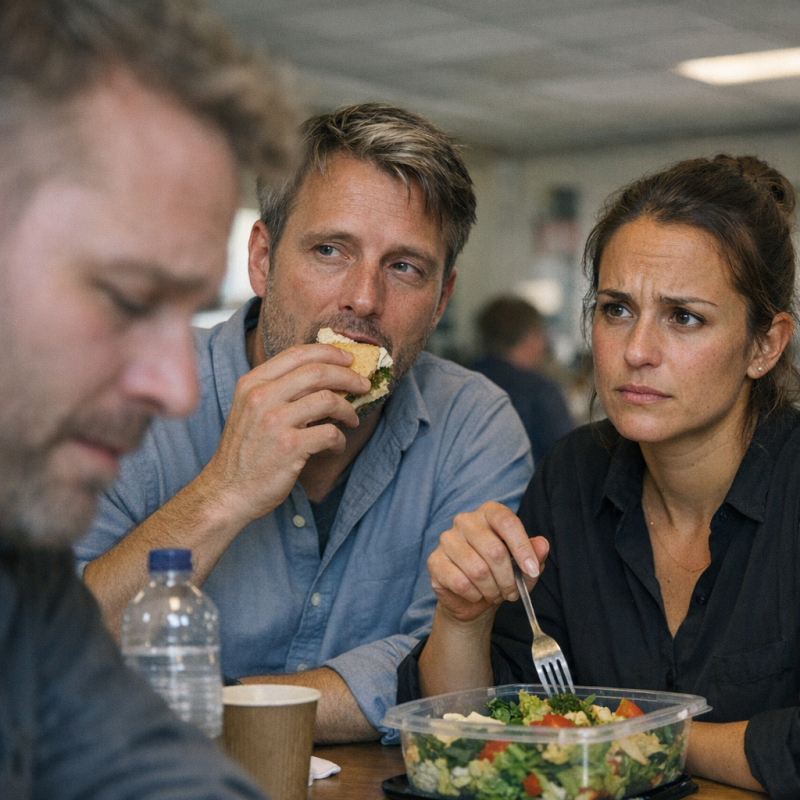 Image by FCT AI
Who Was Hannah?
I tried to remember Hannah clearly, but the details were fuzzy. She'd worked the register, I think. Quiet, competent, didn't talk much. One day she was there, and then she wasn't. I'd assumed she quit—people leave retail jobs all the time. But when exactly did she leave? I thought it was before Greg started, but now I wasn't sure. Had it been a few months before he arrived? Or was it after? The timeline felt slippery in my head, like trying to grab smoke. I remembered Greg's first week, remembered him introducing himself to everyone. But had Hannah been there that day? I genuinely couldn't recall. Maybe she'd already been gone. Or maybe I just hadn't noticed her absence until later because we'd never been close. The more I tried to pin down the memory, the more uncertain I became. It felt important suddenly, knowing exactly when she left. Or was it right after?
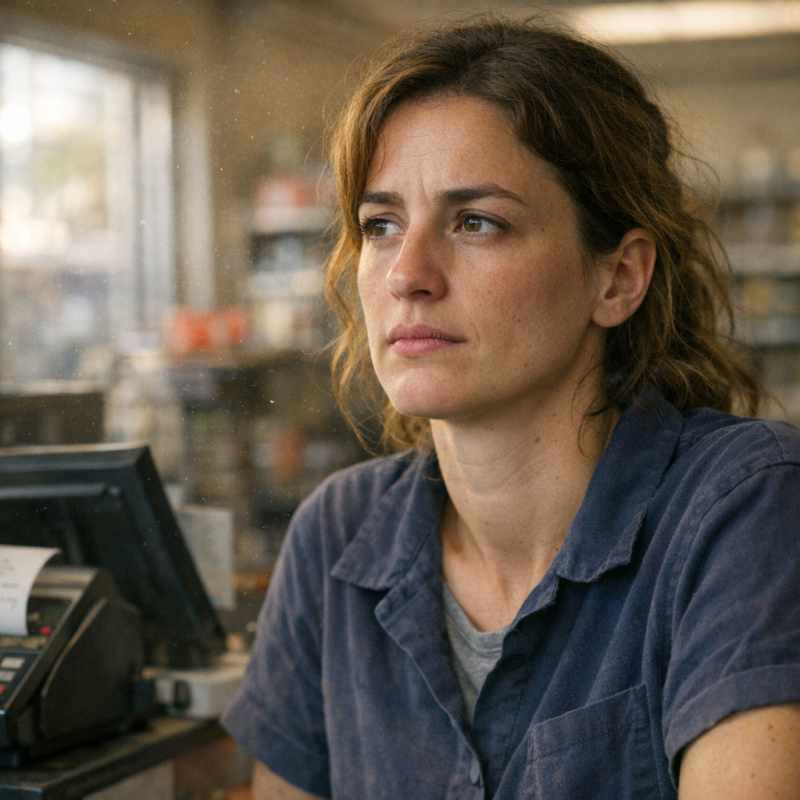 Image by FCT AI
The Weekend Arrives
Saturday morning felt like permission to breathe again. I went to brunch with my family, sat in the sunshine on my mom's patio, listened to my dad tell the same story about his college roommate for the hundredth time. Everyone was relaxed and laughing. I should have been relaxed too. Instead, I kept checking my phone. Every time it buzzed, my stomach dropped. I expected angry texts from Greg—something passive-aggressive about 'team players' or 'commitment' or whatever corporate speak he'd use to make me feel like garbage. But my phone just showed group chat messages and a notification about a sale at Target. Nothing from Greg. Not a single word. By late afternoon, I'd checked my phone maybe thirty times. Still nothing. Part of me felt relieved, obviously. But another part, the part that had been tensing for impact all day, didn't know what to do with the silence. It felt like standing on a beach watching the water pull way, way back before a wave. My sister was showing me photos from her trip, and I realized I'd been nodding without actually seeing them. But there was nothing—and somehow, that felt worse.
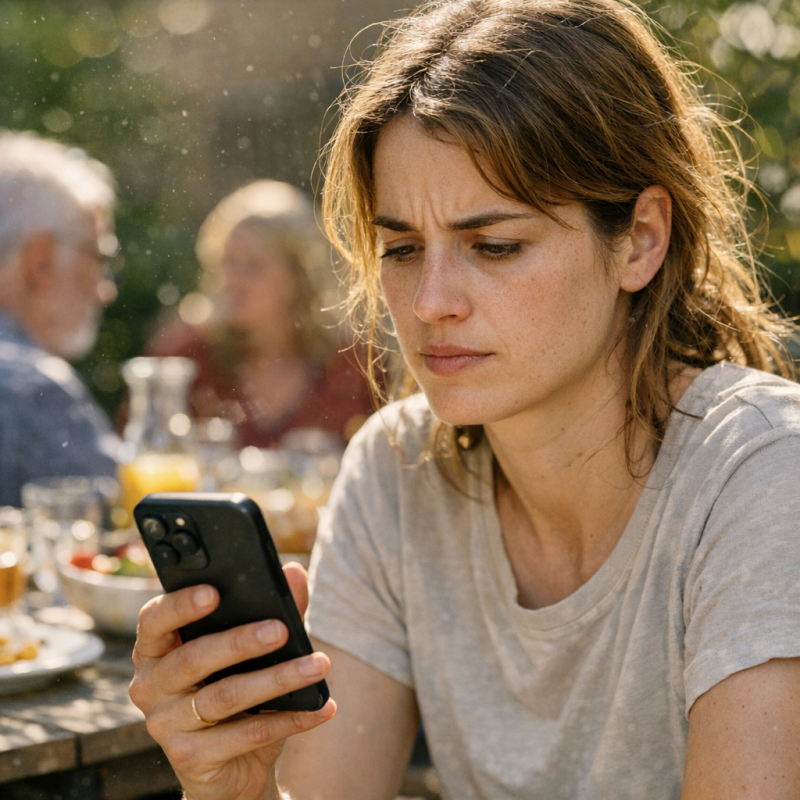 Image by FCT AI

History's most fascinating stories and darkest secrets, delivered to your inbox daily.
The Dinner I Couldn't Enjoy
Dinner was at this Italian place Lily loved, the kind with checkered tablecloths and bread that comes out hot enough to burn your fingers. She was talking about something—a coworker drama, maybe, or plans for her apartment. I was nodding, making the right noises, but in my head I was already at the store on Monday morning. I kept imagining walking in and seeing Greg's face. Would he be angry? Cold? Would he pull me aside immediately or wait until I was in the middle of something, make it public? I pictured different versions of the conversation, trying to prepare responses that wouldn't make things worse. 'Alex?' Lily waved a hand in front of my face. 'You're doing it again.' 'Sorry, what?' 'You're not here. You've checked out completely.' She wasn't wrong. I'd been cutting the same piece of chicken for probably two minutes. The anxiety was this constant static in my brain, drowning out everything else. I felt guilty for ruining dinner, for not being present, for making my family time about my stupid job. My sister asked if I was okay, and I realized I'd been holding my breath.
 Image by FCT AI
Sunday Morning Confession
Sunday morning, Lily cornered me in the kitchen while I was making coffee. 'Okay, what's actually going on?' So I told her everything. The schedule change, the text from Greg, saying no, the awful silence all weekend. It felt good to say it all out loud, to have someone else know the full story. She listened without interrupting, which is rare for her. When I finished, she was quiet for a minute, just stirring her tea. 'So you think he's going to fire you,' she finally said. The words hung there between us. I hadn't said that part out loud, hadn't let myself think it that directly. But hearing her say it made my chest tight. 'I don't know. Maybe? He can't fire me for saying no to one shift, can he?' 'Legally? Probably not. But managers find ways.' She said it matter-of-factly, like she'd seen it before. 'People get fired for "performance issues" that mysteriously start appearing after they stop being convenient.' I wanted to argue, to say Greg wouldn't do that, but I couldn't. The truth was I had no idea what he'd do. She listened quietly, then said something I didn't expect: 'You think he's going to fire you.'
 Image by FCT AI
The Hike I Tried to Enjoy
We went hiking Sunday afternoon, this trail we'd done a dozen times before. Lily was trying to keep things light, pointing out dogs we passed, making jokes about the guy in cargo shorts who was way too intense about his fitness watch. I laughed when I was supposed to laugh. But my brain wouldn't shut off. Monday morning was less than twenty-four hours away. In less than a day, I'd walk through those doors and face whatever was waiting. Greg's silence all weekend had only made it worse—I had nothing to prepare for, no situation to defend against. Just this vague dread that sat in my stomach like a stone. The trail climbed steadily upward, and my legs burned, but I barely noticed. 'You're not even here, are you?' Lily said, stopping to catch her breath. 'I'm here,' I said, but we both knew it was a lie. The weekend was supposed to be a break, a chance to reset. Instead, it felt like waiting. Like standing in line for something terrible I couldn't avoid. Every step forward felt like walking toward something I couldn't see yet.
 Image by FCT AI
Monday Morning Arrives
Monday morning, I walked into work with my shoulders already up around my ears. I'd rehearsed what I'd say if Greg confronted me—calm, professional, standing by my decision. But when I clocked in and saw him near the office, he just looked up and smiled. Not a fake smile. An actual, normal, 'good morning' smile. 'Hey Alex, how was your weekend?' His voice was light, friendly even. I stammered something about it being good, fine, relaxing. Waiting for the other shoe to drop. It didn't. He made small talk about the weather, mentioned we had a shipment coming in Tuesday, asked if I could help train the new seasonal hire later that week. Everything was completely, unnervingly normal. Like Friday's text conversation had never happened. Like I hadn't refused a direct request and spent the entire weekend convinced I was about to be fired. I should have felt relieved. Instead, every friendly word made my skin crawl. Mara caught my eye from across the store, her expression confused and wary. Something was off about this, and she felt it too. He even smiled at me—and that's when I knew something was wrong.
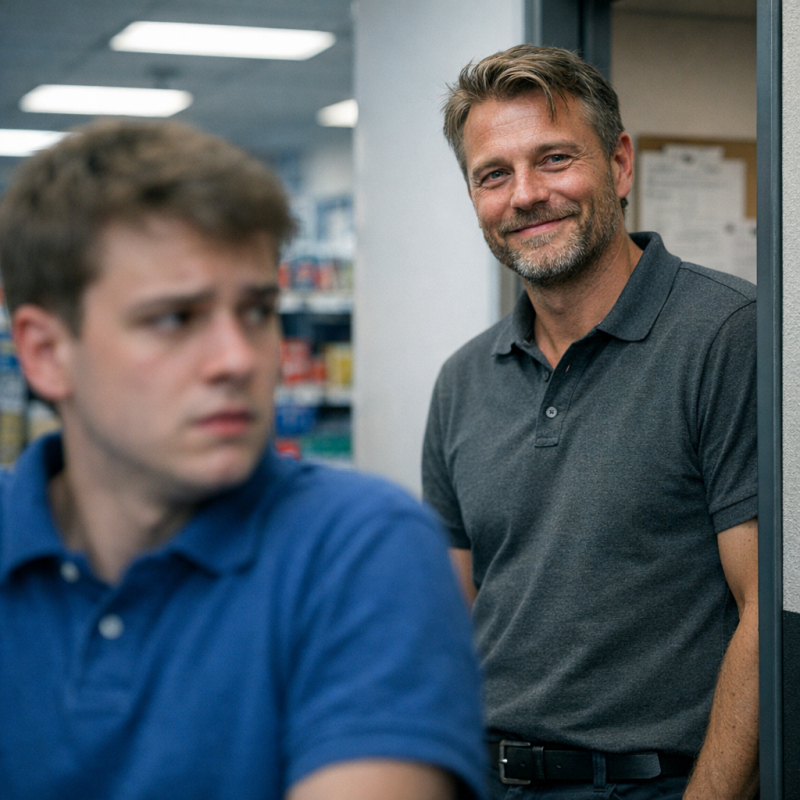 Image by FCT AI
The Too-Calm Manager
The whole day was like that. Greg was pleasant. Professional. Almost cheerful. He complimented Mara's work on the seasonal display. He helped a customer find a specific item instead of delegating it. He brought donuts to the break room and made a joke about Mondays being rough. Everyone was walking on eggshells, confused by the sudden personality shift. You could feel the tension in the air—people being extra careful, extra polite, like we were all waiting for him to suddenly snap. But he didn't. He stayed calm and friendly all day. By afternoon, I was more anxious than I'd been all weekend. At least anger would have made sense. This felt calculated somehow, though I couldn't say why. During our break, Mara and I sat in the back room, and she kept glancing toward the door. 'This is weird, right?' I said. 'It's not just me?' She bit her lip, considering. 'Do you remember Hannah? From before Greg started?' 'Sort of. She left around when he got hired, I think.' Mara pulled me aside and said, 'This is how it started with Hannah, too.'
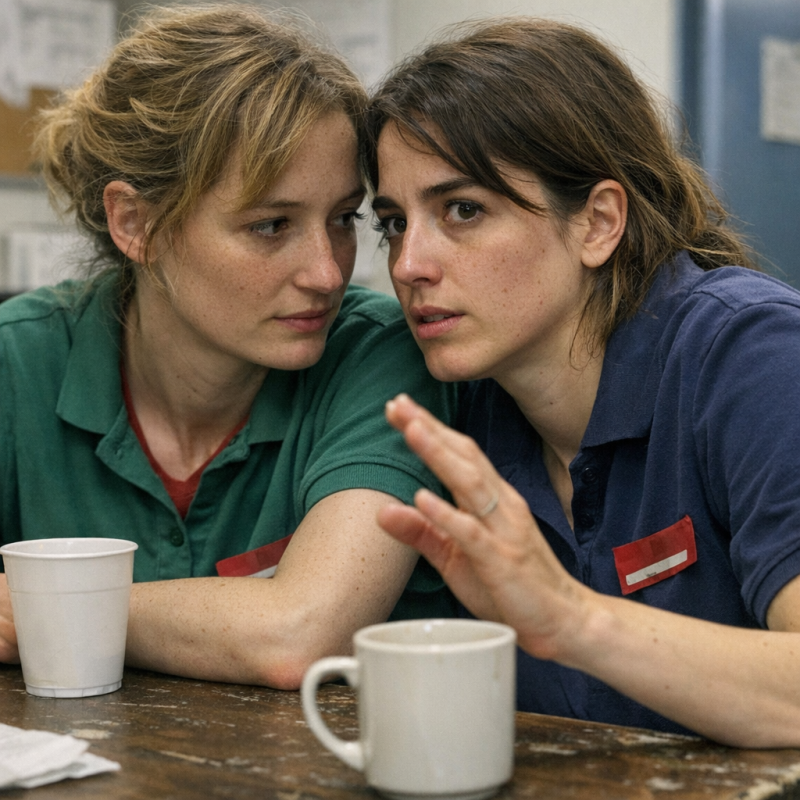 Image by FCT AI
The Question I Should Have Asked
That night, lying in bed, I realized something that made my stomach drop. I'd never actually asked what happened to Hannah. She was there, then she wasn't, and I'd just... accepted it. People leave retail jobs constantly, right? It's normal. Except now Mara's words kept playing in my head. 'This is how it started with Hannah, too.' How what started? What happened that made Hannah leave? Did she quit, or was she fired? And why would Greg's current behavior remind Mara of that situation? I tried to remember if anyone had ever actually said why Hannah left. Had there been an announcement, or had she just disappeared one day? I couldn't recall anyone mentioning her after she was gone, which seemed strange now that I thought about it. Usually when someone leaves, people talk about it for at least a week. But with Hannah, it was like she'd just... evaporated. No goodbye party, no 'we'll miss you' card being passed around. Just there one day, gone the next. And I'd never questioned it. Never thought to ask. And suddenly, not knowing felt dangerous.
 Image by FCT AI
The Search for Answers
The next morning before my shift, I logged into the company employee portal on my phone. There was a staff directory where you could look up people's contact information—we used it sometimes for shift swaps or if someone forgot their schedule. I searched for Hannah's name. Nothing came up. I tried her last name alone, thinking maybe I'd remembered her first name wrong. Still nothing. That was weird. Even employees who quit usually stayed in the system for a while, at least according to Marcus, who'd been there forever. I tried the archived employee section. Nothing. I even searched through old shift schedules from last year, which the system kept for payroll purposes. Her name had been completely removed from everything. No phone number, no emergency contact, no hire date. No evidence she'd ever worked there at all. Someone had gone through and systematically erased every trace of her from the company records. That wasn't normal. That wasn't just someone quitting and moving on. That took deliberate effort. It was like she'd never worked there at all.
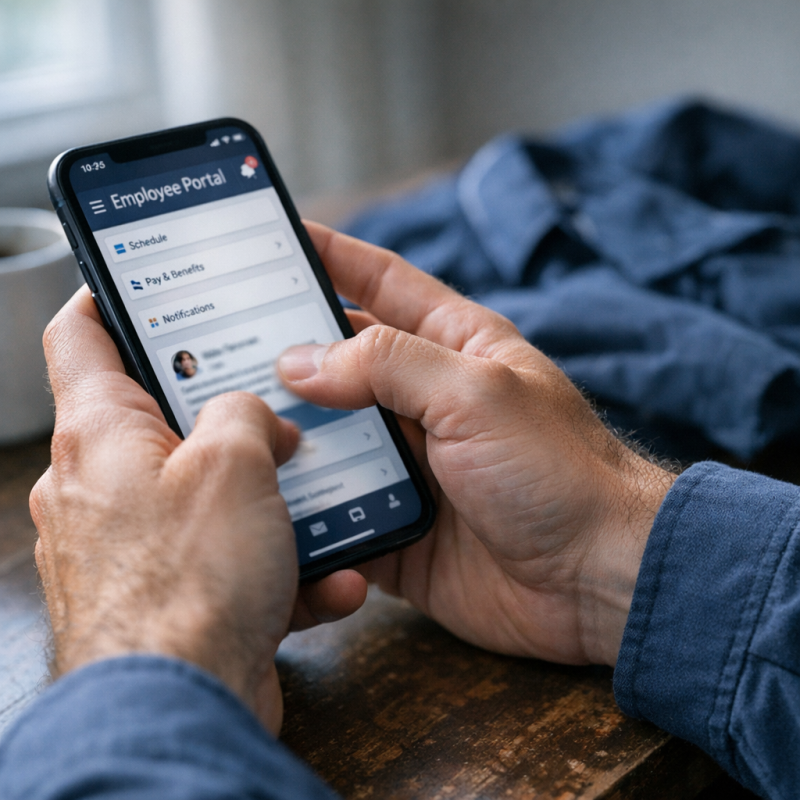 Image by FCT AI
David's Half-Story
I caught David during his break the next day, back by the loading dock where people went to avoid cameras. He was scrolling through his phone, and when I asked about Hannah, he looked up with this guarded expression I'd never seen on him before. 'Yeah, she worked here,' he said slowly. 'Like, two years maybe? She was good. Everyone liked her.' He looked back at his phone like that was the end of it. I pressed him—what happened, why did she leave? He shifted his weight, suddenly very interested in his shoelaces. 'Scheduling issues with Greg,' he mumbled. 'Just... you know. Conflicting availability.' That didn't make sense. You don't erase someone's entire employment record over scheduling conflicts. I asked what kind of issues, exactly, and David's face did this thing where it was like shutters closing. He stood up, pocketed his phone, said something about needing to get back to his section. His break wasn't even over. When I asked what kind of issues, David looked uncomfortable and changed the subject.
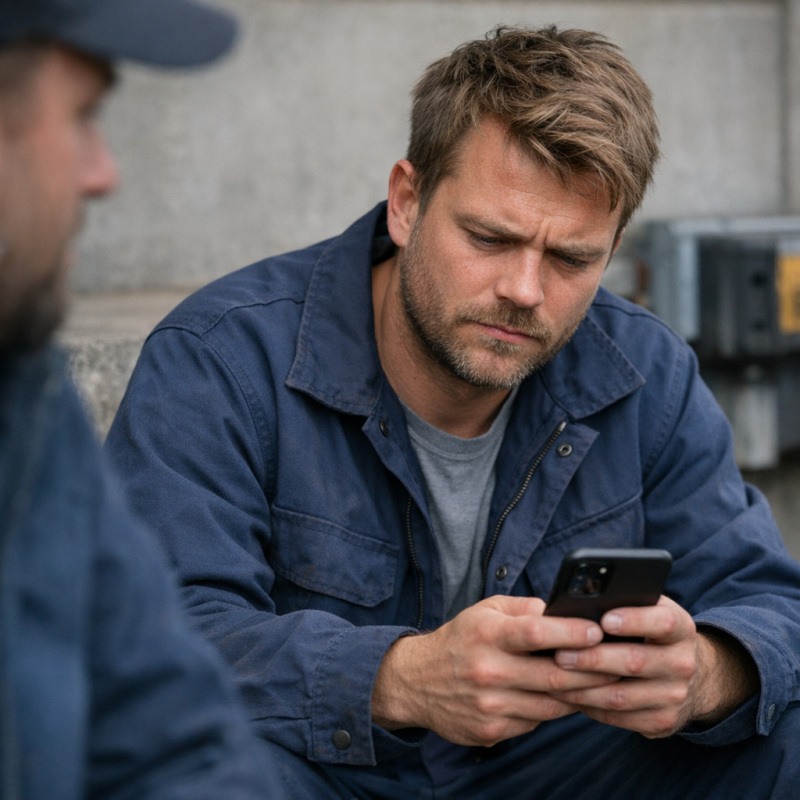 Image by FCT AI
The District Manager's Visit
Two days later, Rachel showed up. She was the district manager, someone we saw maybe twice a year, always unannounced. The moment she walked through the doors, Greg transformed into this completely different person—smiling, attentive, asking employees how they were doing by name. He actually knew everyone's name suddenly. He helped a customer find something in aisle six. Greg. Helping a customer. I watched this performance from the register, ringing up purchases on autopilot. Rachel walked the store with a tablet, taking notes, nodding at Greg's commentary about sales figures and inventory turnover. She seemed pleasant but professional, the kind of person who'd seen every retail trick in the book. The visit lasted maybe forty minutes. Greg stood at the entrance as she prepared to leave, all polished professionalism. Then Rachel looked past him, directly at me behind the register, and held my gaze for a long moment. She smiled slightly. 'I hear you're doing great work,' she said clearly, loud enough that Greg definitely heard. As she left, Rachel looked directly at me and said, 'I hear you're doing great work.'
 Image by FCT AI
The Shift After
The second Rachel's car pulled out of the parking lot, the professional Greg vanished like someone had flipped a switch. He went back to his office without a word to anyone. I felt this brief moment of relief—maybe her visit would keep him off my back for a while. But that relief lasted about an hour. When Greg came back onto the floor, something was different. He wasn't angry or confrontational. He was just... there. Every time I turned around, he was in my peripheral vision. Checking inventory near my register. Walking past. Standing at the end of my aisle supposedly reviewing something on his tablet. I'd look up from helping a customer, and there he'd be, three shelves down, watching. Not staring exactly—he'd always have plausible deniability, like he was just doing his job—but I could feel his attention on me like heat from a lamp. It made my skin crawl. I started making mistakes because I was so aware of being observed. My hands fumbled with change. I stammered through routine transactions. Every time I looked up, he was there, observing.
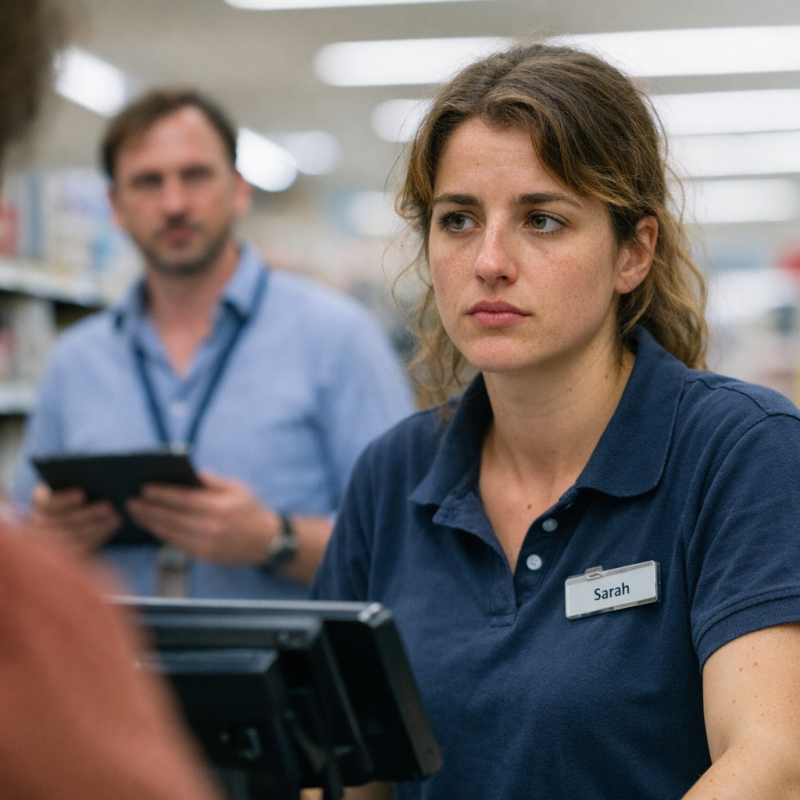 Image by FCT AI
The Small Criticisms
On Tuesday, Greg stopped me mid-shift to point out that I'd faced a shelf section incorrectly—products not pulled perfectly forward, labels not aligned. He was right. It was sloppy. But it was also the kind of thing that happened a dozen times a day with everyone, and he'd never mentioned it before. Wednesday, he called me over to show me how I'd logged a return wrong in the system. Again, technically correct—I'd used the wrong code. A mistake I'd probably made before without comment. Thursday, he pointed out that I'd taken my break four minutes late. Four minutes. I'd been helping an elderly customer load heavy items into her car, but apparently that didn't matter. Each time, he was perfectly calm and professional about it, just 'coaching' me on proper procedures. By Friday, I was wound so tight I could barely function. Mara caught me in the break room after the latest incident, my hands shaking as I tried to eat a sandwich. She glanced at the door, then leaned in close. Mara whispered, 'He's building a case.'
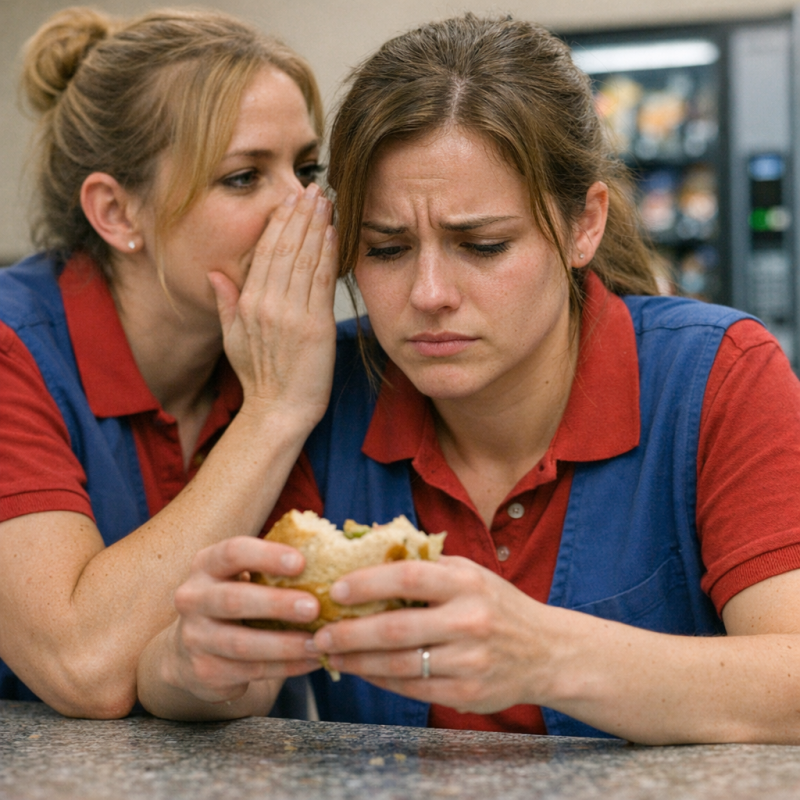 Image by FCT AI
What Does 'Building a Case' Mean?
I stared at Mara, not understanding. 'Building a case for what?' She sat down across from me, keeping her voice low even though we were alone. 'It's what he does,' she said. 'He finds little things—real mistakes, stuff you actually did wrong, nothing you can argue with—and he writes them down. Creates a paper trail. Makes it look like you're incompetent or not following procedures.' My sandwich felt like cardboard in my mouth. 'Why would he do that?' Mara gave me this look like I was being deliberately naive. 'So when he fires you, it's documented. HR can't question it because look, here's three weeks of performance issues.' Three weeks. The timeline hit me like cold water. That's how long I had, apparently, before this pattern would justify termination. I thought about Hannah's erased employment records. About David's uncomfortable silence. About Greg's constant surveillance. This wasn't random. This was systematic. Mara checked the time and stood to leave. Then she added, 'It usually takes about three weeks.'
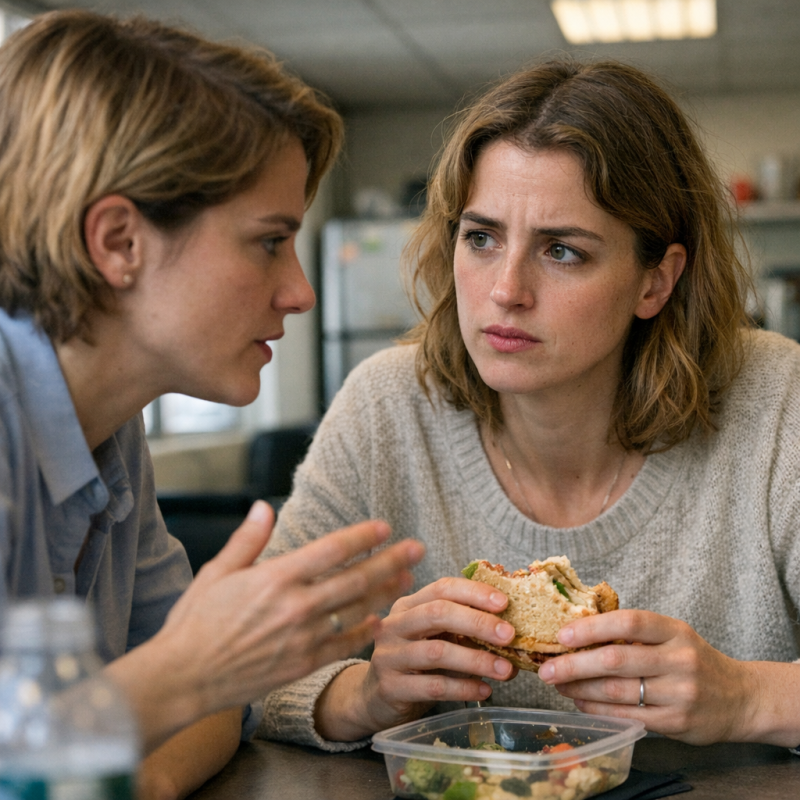 Image by FCT AI
Marcus's Warning
Marcus found me before my shift the next day, out in the parking lot. He'd been with the company for seven years, the kind of guy who knew where all the bodies were buried. 'You need to start writing everything down,' he said without preamble. No hello, no small talk. Just straight to the point. I must have looked confused because he continued: 'Every interaction with Greg. Date, time, what was said, who else was there. Everything.' He explained it quickly—if Greg was building a case against me, I needed my own documentation. Times he watched me. Criticisms he made. What he said, what I said back. Whether other employees got the same treatment for the same issues. Marcus made it sound like preparing for a legal battle, which terrified me but also made a grim kind of sense. Before he walked away, he paused, and something sad crossed his face. 'I wish someone had told Hannah the same thing,' he said quietly. The way he said her name—with regret, like he'd failed her somehow—made my stomach drop. He said he wished someone had told Hannah the same thing.
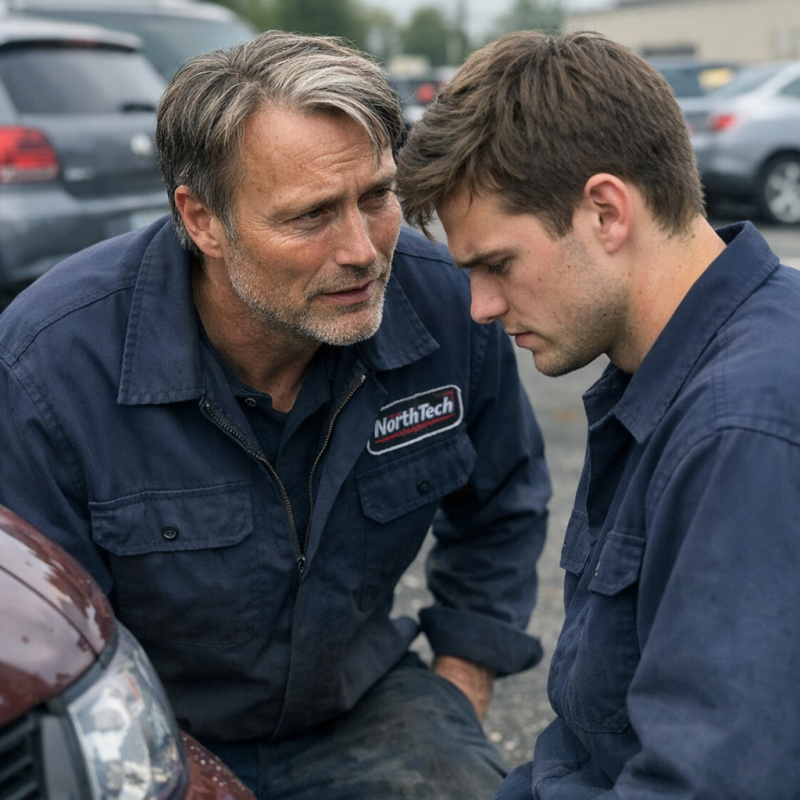 Image by FCT AI
The Documentation Begins
That night, I started a document on my laptop. I titled it 'Work Log' because calling it what it actually was—evidence of workplace harassment—felt too confrontational, too real. I went back through my phone calendar and texts with coworkers, reconstructing the timeline. The initial weekend shift request. My refusal. Hannah's name coming up. The erased employment records. David's evasive answers. Greg's transformation during Rachel's visit. Every instance of surveillance and criticism since. I wrote down dates, approximate times, exact quotes where I could remember them. Who else had been present. Whether Greg had corrected anyone else for similar issues—spoiler: he hadn't, at least not that I'd witnessed. The document grew faster than I expected. Every day brought new material. By the end of the week, I had detailed accounts of seventeen separate incidents—some small, some significant, all adding up to an unmistakable pattern. I sat back and stared at my screen, this growing record of targeted behavior. By the end of the week, the list was already three pages long.
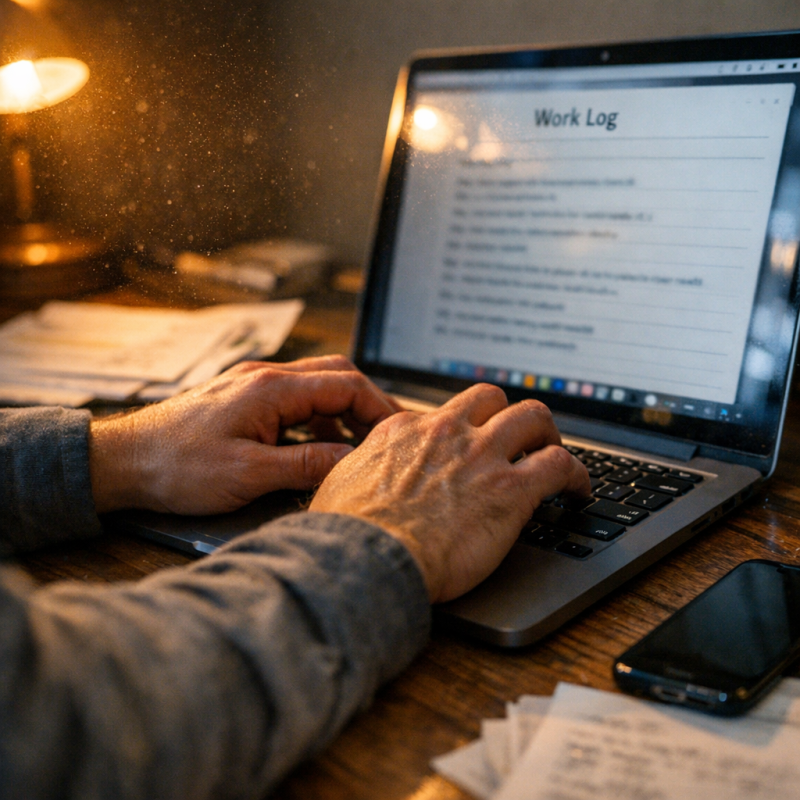 Image by FCT AI
Jo Returns
Jo came back on Monday, looking rested and apologetic. She found me during the mid-morning lull and thanked me for being honest about the weekend shift. 'I really appreciate that you didn't just say yes and then bail,' she said warmly. 'I respect people who set boundaries.' It felt good to hear that, like maybe I'd done the right thing after all. We talked for a few minutes about her time away, and she seemed genuinely grateful the 'emergency' had resolved itself. Then her expression shifted, became uncertain. She glanced around to make sure no one was listening. 'Can I ask you something?' she said quietly. 'Greg mentioned that you refused to cover because—' she hesitated, clearly uncomfortable, 'because you didn't care about the team?' The words hit me like a slap. Jo didn't sound like she believed him, exactly, but she'd felt the need to bring it up, which meant the story was circulating. Greg had been talking to people. Shaping a narrative. Making me the selfish one. Then she hesitated and said, 'Greg told me you refused because you didn't care about the team.'
 Image by FCT AI
The Narrative War
Over the next few days, I started noticing something strange. Different people mentioned my 'weekend situation' in passing, but the details kept shifting. Marcus said he'd heard I 'had family issues' that prevented me from covering shifts. That wasn't what I'd said. Then one of the evening crew mentioned that Greg told her I'd been 'inflexible about my availability.' Another coworker asked if everything was okay with me because apparently I'd been 'having attitude problems lately.' I hadn't spoken to most of these people in days. Greg was talking to everyone, spinning different versions depending on his audience. Each story made me look slightly worse—selfish, unreliable, difficult. But they were subtle enough that I couldn't point to any single lie and call it out. If I tried to correct people, I'd sound defensive. If I stayed quiet, the stories would solidify into truth. People were starting to look at me differently in the break room—not hostile exactly, but distant. Uncertain. I couldn't prove he was lying—but I could feel the team starting to doubt me.
 Image by FCT AI
The Schedule Change
Thursday afternoon, the new schedule went up on the corkboard near the time clock. I always checked it right away—it determined my entire week, my ability to plan anything. This time, my stomach dropped the moment I saw my name. Twelve hours. Total. For the entire week. I'd been scheduled for thirty to thirty-five every week since I started. I stared at the paper, thinking there had to be a mistake. Everyone else's hours looked normal. Marcus had his usual shifts. Even the newer hires had full schedules. Just mine had been gutted. I found Greg in his office, and he looked up with this expression of mild concern, like he'd been expecting me. 'Budget adjustments,' he said before I could even ask. 'Corporate's tightening things up. Had to trim some hours.' I glanced back toward the schedule board, visible through his office window. 'Everyone else's hours are the same,' I said. He shrugged. 'Different roles, different needs. It's temporary.' Greg said it was 'budget adjustments,' but everyone else's hours stayed the same.
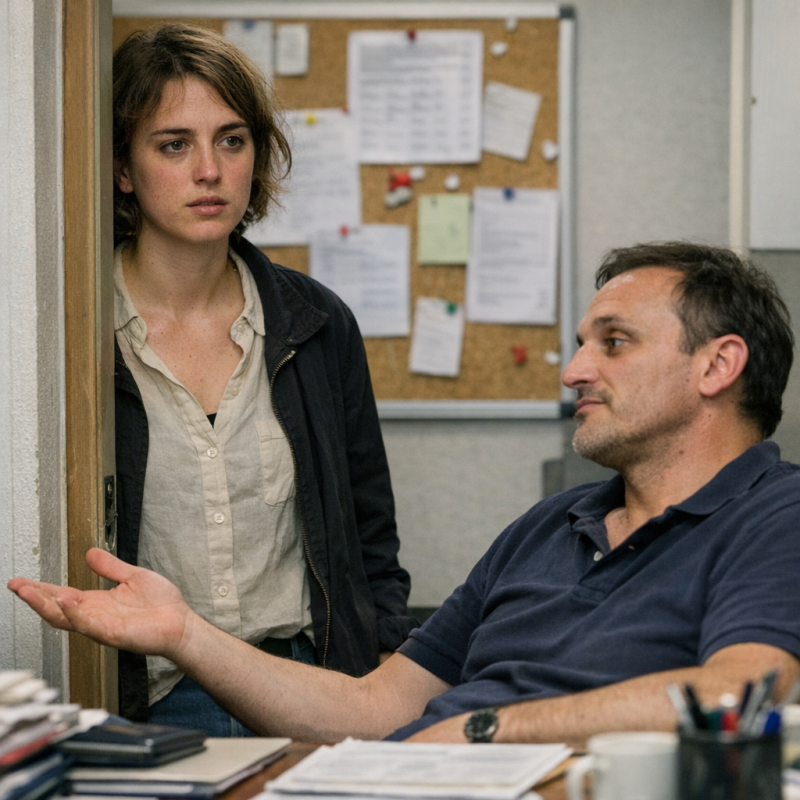 Image by FCT AI
The Impossible Choice
I did the math that night at my kitchen table, and it was brutal. Twelve hours a week wouldn't even cover rent, let alone utilities, groceries, my phone bill. I had maybe two weeks of savings if I stretched everything. After that, I'd be in real trouble. The obvious answer was to find another job, but I'd been job hunting when I landed this one—I knew how long it took. The market was tight. Most places wanted someone who could start immediately and commit long-term, and if I was desperate enough to take anything, I'd end up somewhere just as bad or worse. Applications took weeks to process. Interviews took longer. Reference checks, background checks, training schedules. Even if I started applying tomorrow and got lucky, I was looking at a month minimum before a first paycheck somewhere new. Greg knew this. He had to know this. The hour cut wasn't random—it was designed to create exactly this pressure. Agree to his terms, or watch everything fall apart. But finding a new job would take weeks—weeks I might not have.
 Image by FCT AI
Mara's Offer
I was sitting in my car after my shortened shift on Friday, trying not to cry, when Mara knocked on my window. I rolled it down, and she leaned against the door with this look of understanding that made my throat tight. 'You okay?' she asked. I wasn't, obviously, but I nodded anyway. She didn't buy it. 'Look,' she said, 'I know what just happened with your hours. And I know you're probably panicking about bills.' I started to say something about figuring it out, but she held up a hand. 'I can cover some stuff for you. A few weeks of rent, whatever you need. Just until you sort this out.' I stared at her. We weren't that close—we were friendly, but this was huge. 'Mara, I can't—' 'Yes, you can,' she said firmly. 'I've been where you are now. Exactly where you are.' The way she said it made me pause. When I asked what she meant, she glanced toward the building, then back at me. 'Greg tried this on me eight months ago.'
 Image by FCT AI
How Mara Survived
We went to a coffee shop a few blocks away, somewhere we wouldn't run into anyone from work. Mara told me everything. Eight months ago, Greg had started pressuring her to take unscheduled shifts, calling her at odd hours, guilt-tripping her when she said no. Then her hours got cut. Then she started hearing rumors about her 'attitude.' It was the same playbook, step by step. 'So what did you do?' I asked. She'd documented everything, she said. Every text, every conversation, every schedule change. Then she went to HR with a timeline and evidence. It worked—sort of. Her hours got restored, and Greg backed off for a while. But he didn't stop, she explained. He just got more careful. More subtle. The pressure never really went away; it just became harder to prove. 'The key,' she said, leaning forward, 'is that I never told him I was documenting. He didn't know I was building a case until I walked into HR with it.' She said the key was that she never told him she was documenting.
 Image by FCT AI
The HR Appointment
Monday morning, I called HR and scheduled a meeting for the following week. I kept it vague—just said I had some concerns about scheduling and workplace communication. The representative sounded professional and unsurprised, like she'd heard it all before. She booked me for Thursday at two. I didn't tell anyone except Mara and Marcus. I felt cautiously hopeful for the first time in days—like maybe I had a path forward that didn't involve just surviving Greg's manipulation. I started mentally preparing what I'd say, how I'd explain the pattern without sounding paranoid. Then Tuesday morning, Greg called me into his office before my shift even started. He was sitting behind his desk with his hands folded, wearing this expression of gentle concern that immediately set my nerves on edge. 'Alex,' he said, 'I wanted to check in with you. You seem stressed lately.' He paused, watching my face. 'Do you have any concerns you'd like to discuss with me first—before taking things elsewhere?' But the next morning, Greg asked me if I had any 'concerns' I wanted to discuss with him first.
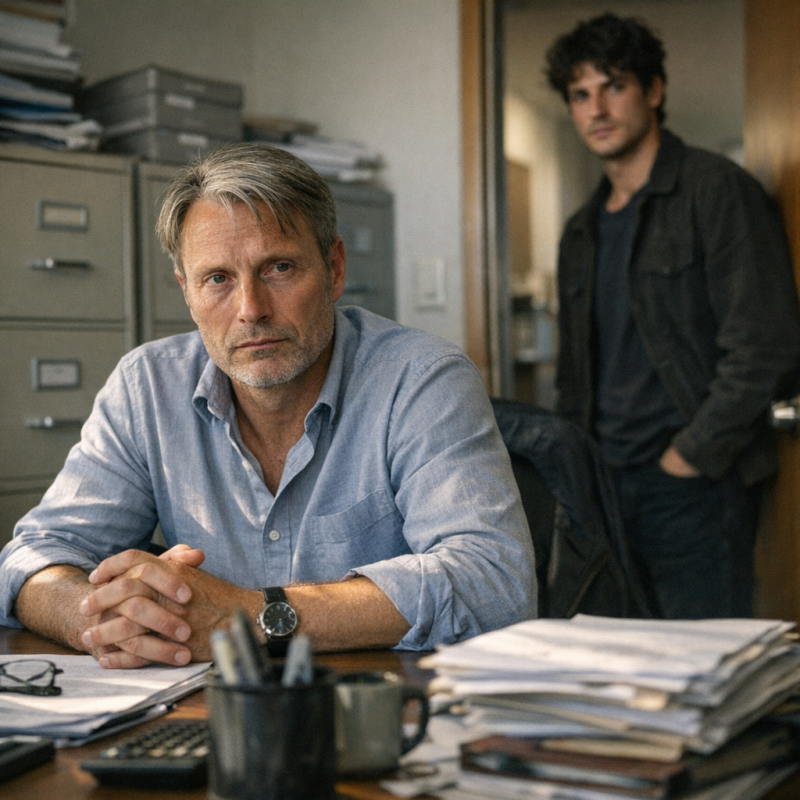 Image by FCT AI
Who Told Him?
I told Greg I was fine and got out of his office as quickly as possible, but my mind was racing. How did he know? I'd been so careful. I'd only told two people—Mara, who'd literally been through this herself, and Marcus, who'd been nothing but supportive. Neither of them would have said anything to Greg. It didn't make sense. I replayed the phone call to HR in my head, trying to remember if anyone had been nearby when I made it. I'd been in my car during lunch. Alone. No one could have overheard. I felt paranoid even thinking it, but had someone been monitoring my calls? That seemed absurd. Then, walking to my car after my shift, it hit me like ice water. The appointment confirmation. HR had sent me an email confirmation with the date, time, and subject: 'Meeting RE: workplace concerns.' And I'd opened it on my work computer during my break, like an idiot. Then I remembered: I'd sent the appointment confirmation email from my work computer.
 Image by FCT AI
The Pre-Emptive Meeting
Wednesday afternoon, the day before my HR meeting, Greg called me into his office again. This time there was a document sitting on his desk, several pages stapled together. 'I've been reviewing your performance,' he said, sliding it toward me, 'and I think we need to establish some clear goals.' It was titled 'Performance Improvement Plan.' I scanned the pages. The goals were incredibly vague—'demonstrate flexibility in scheduling,' 'improve team communication,' 'show initiative in supporting departmental needs.' There were no metrics, no specific benchmarks. Just subjective judgments that Greg could interpret however he wanted. 'This is a supportive tool,' he said, using that calm, reasonable voice. 'It protects both of us. Shows we're working together to address concerns.' He tapped the signature line at the bottom. 'If you sign this, we can resolve everything internally. No need to involve HR, make things complicated.' I stared at the document, my pulse hammering. This was a trap. If I signed, I'd be admitting there were performance problems—problems he'd invented. He said if I signed it, we could 'resolve this internally' without involving HR.
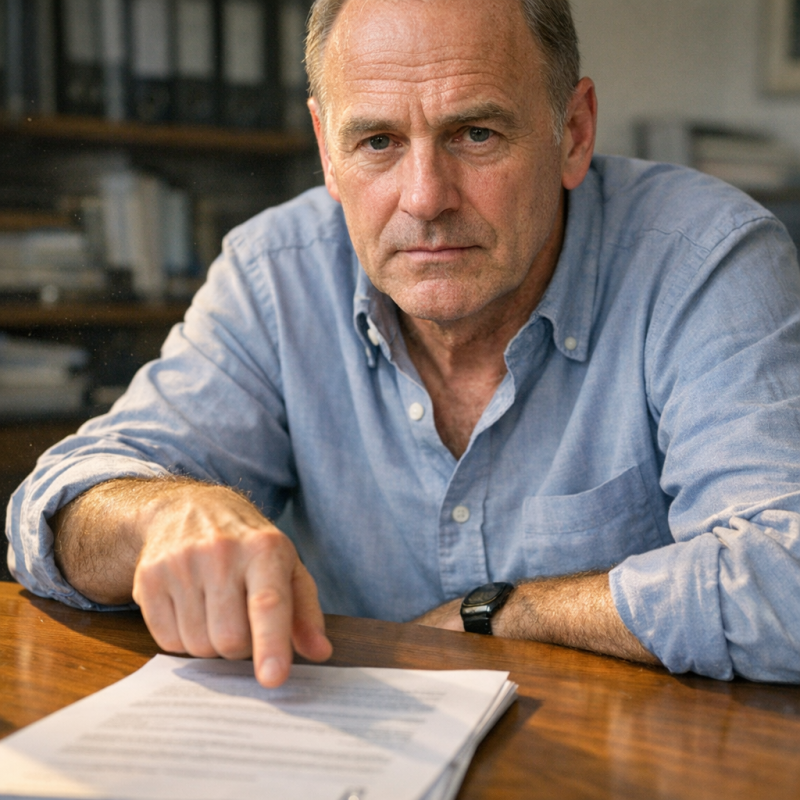 Image by FCT AI
I Didn't Sign
I looked at that signature line for a long moment. Everything in me wanted to just sign it, make this easier, avoid the conflict. That's what he was counting on, I realized. That's why he'd presented it right before my HR meeting—to give me an easy out, a way to back down. 'I need time to review this,' I said, keeping my voice as steady as I could manage. 'I'd like to discuss it with HR during our meeting tomorrow.' The change in his face was subtle but unmistakable. The friendly expression dropped for maybe two seconds. His jaw tightened. His eyes went flat and cold. Then, just as quickly, the mask slid back into place. 'Of course,' he said quietly. 'That's your right.' But his voice had changed too—still calm, but with something harder underneath. 'I was just trying to help you avoid unnecessary complications.' He took the document back, placed it in a folder, and closed it with a soft snap. 'We'll talk after your HR meeting, then.' I left his office with my hands shaking. The look on his face told me I'd just made things much worse.
 Image by FCT AI
The HR Meeting
Thursday morning, I sat in a windowless conference room with Jennifer from HR. She was maybe forty-five, perfectly professional in her blazer and neutral expression. I'd printed everything—the text messages, the schedule changes, photos of the schedules, my documentation of every interaction. I laid it all out on the table between us. She took notes while I talked, nodding occasionally. When I finished, she spent a long time reviewing the papers, saying nothing. 'I appreciate you bringing this to our attention,' she finally said. 'We take these concerns seriously.' But her tone was the same one you'd use to dismiss a customer complaint about expired coupons. 'That said, managers do have discretion in scheduling decisions. And I don't see anything here that suggests discrimination or harassment in the legal sense.' Legal sense. Those two words made my stomach drop. 'What about the PIP he tried to get me to sign?' I asked. 'Performance improvement plans are standard management tools,' she said smoothly. 'But I'll note that you declined to sign it.' She closed my folder and looked at me with something almost like sympathy. 'Alex, I have to ask—have you considered whether you're the right fit for the team environment?'
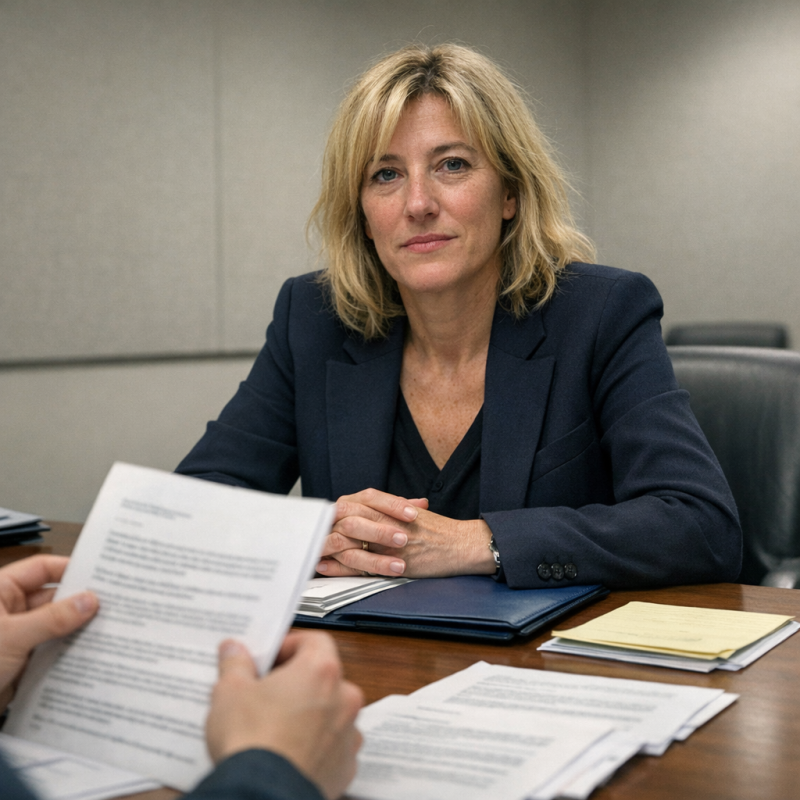 Image by FCT AI
The Aftermath
I walked back into the store Friday morning feeling like I had a target painted on my back. The HR meeting had been less than twenty-four hours ago, and somehow the atmosphere had completely shifted. Rachel, who usually greeted me when I came in, suddenly got very interested in straightening a display. Marcus glanced at me, then quickly looked away. Even customers seemed to pick up on the weird tension. I went to the break room to put my stuff in my locker, and the conversation at the table stopped dead. Two people I barely knew got up and left without a word. I felt like I was radioactive. Everyone knew something, and nobody wanted to get too close. I tried to focus on my work, but the silence was suffocating. People who usually chatted with me between customers now found reasons to be in other sections. I was restocking shelves near the registers when David appeared next to me. He looked uncomfortable, like he wasn't sure he should be talking to me. 'Hey,' he said quietly, glancing around to make sure no one was listening. 'We need to talk.' He paused, then added in barely more than a whisper: 'Greg told everyone you filed a complaint against him.'
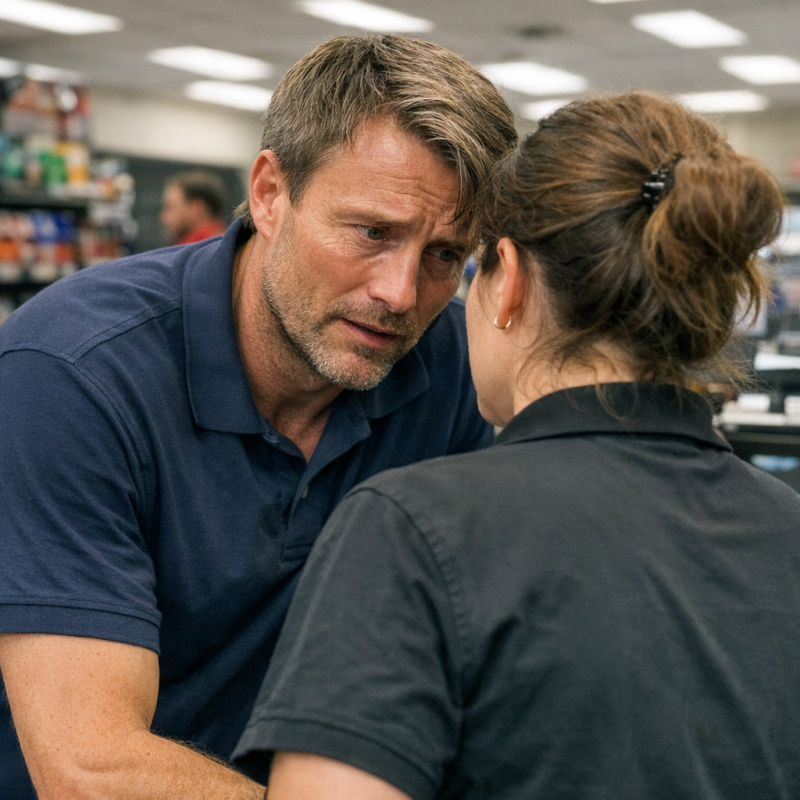 Image by FCT AI
Divided Loyalties
Over the next few days, the divide became impossible to ignore. There were people who wouldn't look at me at all—Rachel, a couple of the older staff members who'd worked with Greg for years. They acted like I'd committed some unforgivable betrayal. Then there were the others, the ones who'd approach me when Greg wasn't around. Mara pulled me aside in the stockroom on Saturday. 'I believe you,' she whispered. 'For what it's worth.' She looked terrified even saying it. David started taking his breaks at the same time as me, a silent show of solidarity that I knew could cost him. But he never said much, just sat there scrolling his phone while I picked at my lunch. A new hire named Chris, who'd only been there a month, told me quietly that Greg had pulled him aside and warned him I was 'creating drama' and to 'be careful about getting involved.' Some people were angry at me for disrupting the peace. Others were scared of becoming Greg's next target. A few seemed genuinely conflicted, like they wanted to support me but couldn't risk it. The store had split into two camps, and I was at the center of it.
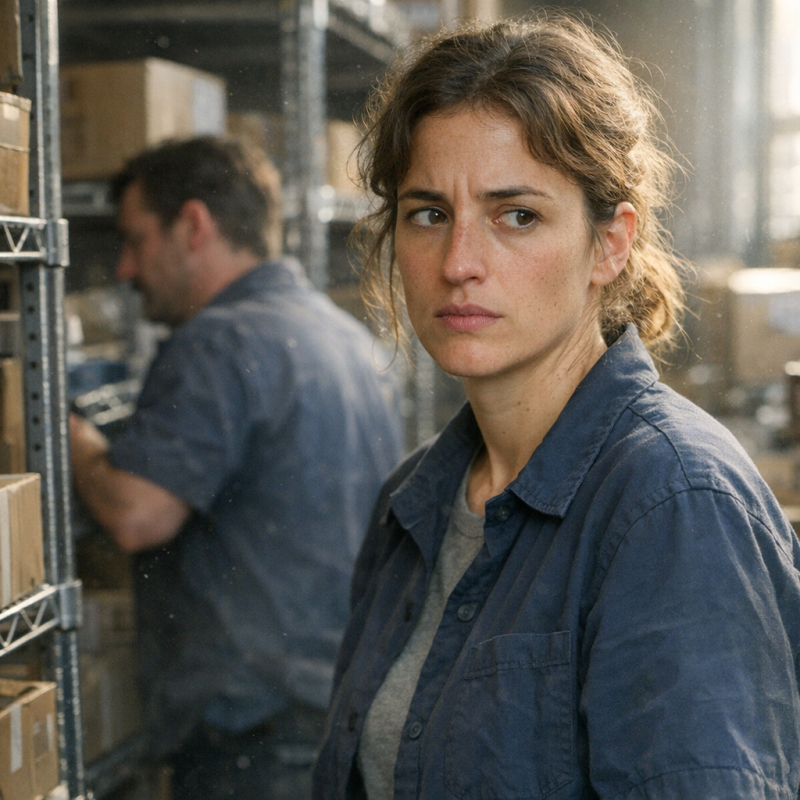 Image by FCT AI
The Second Cut
The new schedule went up on Tuesday. I stood there staring at it, feeling like I'd been punched in the stomach. Two shifts. Total. Both closing shifts, four hours each. Eight hours for the entire week. I made the math in my head instantly—that was maybe two hundred dollars after taxes, barely enough to cover my car payment. Definitely not enough for rent, groceries, insurance, anything else. Other people's names filled the slots where mine used to be, including several of the weekend shifts I'd been assigned before I said no. Greg walked past while I was standing there. 'Problem?' he asked mildly. 'This is eight hours,' I said, trying to keep my voice level. 'That's not enough to live on.' He gave me that sympathetic look that made my skin crawl. 'Business needs fluctuate, Alex. You understand.' But we both knew business was fine. The store was busy as ever. He was just squeezing me out, making it impossible to stay. Pushing me toward the door without actually firing me, so it would look like I quit. I couldn't survive on eight hours a week, and Greg knew it.
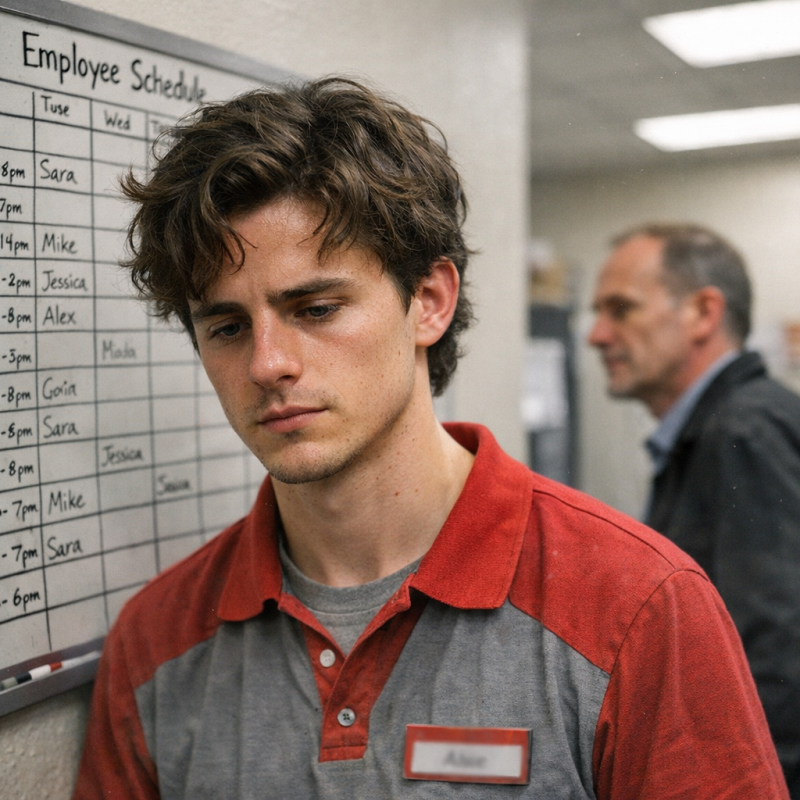 Image by FCT AI
The Breaking Point
I made it through my Thursday closing shift on autopilot, barely speaking to anyone. When I finally clocked out and walked to my car in the dark parking lot, something inside me just collapsed. I sat in the driver's seat with my hands on the steering wheel, and I couldn't make myself start the engine. I was so tired. Tired of fighting, tired of documenting everything, tired of being the person everyone avoided. Maybe it would be easier to just quit. Find something else. Stop making everyone uncomfortable. Let Greg win. I put my head down on the steering wheel and felt the tears come—not the angry crying from before, but the exhausted, defeated kind. The kind that means you're done. I didn't even hear the footsteps approaching until someone knocked on my window. I jerked my head up, wiping my face. It was Marcus. He looked agitated, glancing back toward the store. I rolled down the window. 'You okay?' he asked, though it was pretty obvious I wasn't. I started to say something dismissive, but he cut me off. 'There's something you need to see.'
 Image by FCT AI
The Hidden File
I followed Marcus back into the store, confused and still half-crying. He led me to the stockroom, checking over his shoulder like we were doing something illegal. From behind a stack of boxes, he pulled out a folder—the kind we used for administrative paperwork. 'I found this in the recycling bin in Greg's office,' he said. 'I was emptying trash after close yesterday.' Inside were printed documents, handwritten notes in Greg's writing. Employee names with dates next to them. Hannah's name was there, with a timeline spanning several weeks last year. Mara's name, with notes from a few months ago. And my name, with entries starting the week I'd said no to the weekend shift. 'Problem employee,' one note said next to Hannah's name. 'Refused schedule accommodation.' Next to Mara's: 'Attitude issues, resistant to feedback.' Next to mine: 'Inflexible scheduling, potential team disruption.' There were others too—names I didn't recognize, people who must have worked here before I started. Each with similar notes, dates, observations about their behavior. But it wasn't the names that shocked me—it was the dates and the pattern they revealed.
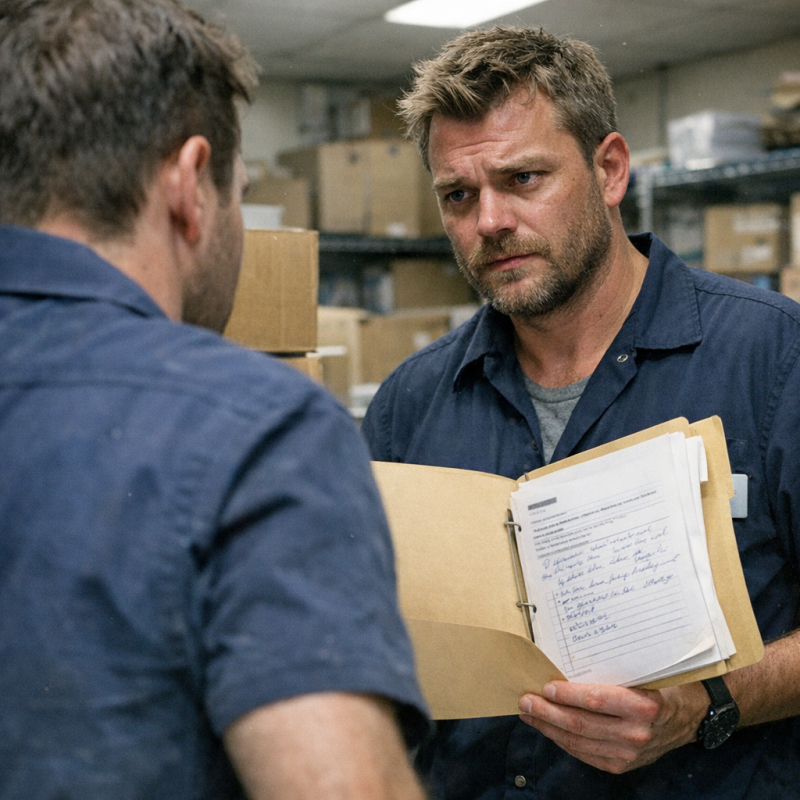 Image by FCT AI
The List
Marcus stood there while I read through the pages, my hands shaking. Each employee had the same sequence of notes. First, a request for schedule flexibility or weekend coverage. Then, a notation when they declined. After that, documentation of 'performance concerns'—attitude problems, communication issues, team conflicts. Then isolation—notes about 'discussing concerns with team members' or 'adjusting team dynamics.' Finally, either 'voluntary resignation' or 'termination for performance.' Hannah's timeline had taken six weeks from start to finish. The person before her, someone named Tyler, had taken eight. Mara had gotten to week five before something had changed, though her notes stopped abruptly without resolution. And me? I was on week three. The request. The refusal. The PIP attempt. The HR complaint. The hour reduction. I looked at Marcus. 'He's done this before,' I said. It wasn't a question. Marcus nodded grimly. 'Multiple times, looks like.' I counted the names in the folder. Seven people over the past two years. Every person who'd said no to weekend coverage had followed the exact same path—and I was next.
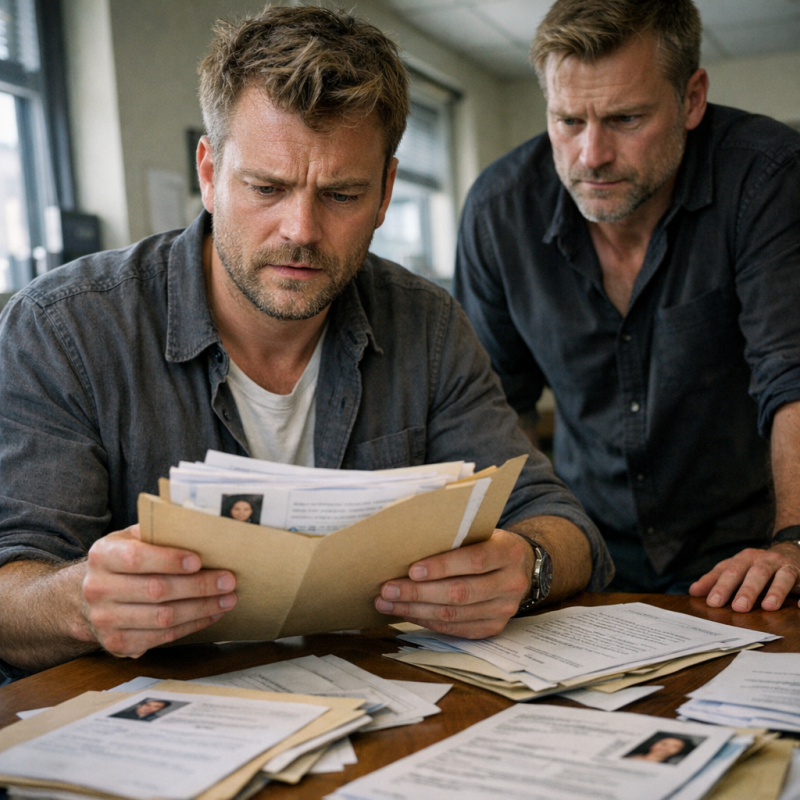 Image by FCT AI
Why Weekend Shifts?
I spread the papers across my kitchen table that night, looking for what connected these people. Hannah, Tyler, someone named Jess, a guy named Kevin—seven names total, seven people gone. Different ages, different positions, different reasons listed in their files. But as I traced through each timeline with my finger, something jumped out. Every single person had been asked to cover weekend shifts. Every single person had said no. Some had family commitments. Some had second jobs. Tyler's notes mentioned school. Hannah's file said she had 'availability concerns.' But they'd all refused weekend coverage at some point, and within weeks, they were gone. I checked Mara's file again. Request for weekend coverage: declined due to childcare. That's when her 'performance concerns' had started. My stomach twisted. Greg had asked me about that Saturday shift like it was urgent, like Jo's emergency was real and serious. But now I began to see it differently. It wasn't about needing coverage at all—it was about testing who would say no.
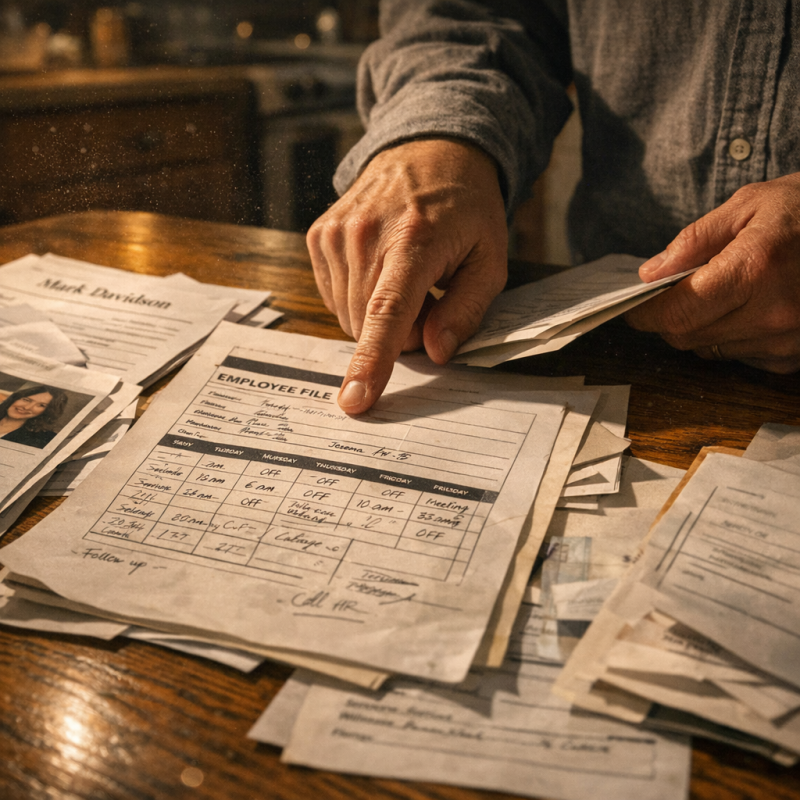 Image by FCT AI
The Three-Week Timeline
I grabbed a pen and started marking dates on each file. The pattern was almost mechanical. First documented refusal to a date range marked 'discussed termination recommendation'—I counted the days. Hannah: twenty-one days. Tyler: twenty-two days. Kevin: nineteen days. Jess: twenty-three days. Greg gave them three weeks. Three weeks from the moment they said no to the moment he sent their termination recommendation to corporate HR. Some lasted a few days longer if they pushed back or filed complaints, but the target window was always the same. Twenty-one days to build a case, document the problems, create the paper trail. My hands went cold as I pulled out my own calendar. Greg had asked me about the Saturday shift on the fourteenth. I'd refused that same day. Today was the second. I did the math twice to make sure. Three weeks from the fourteenth would be the sixth. Which meant I had exactly four days left before he sent my file to HR.
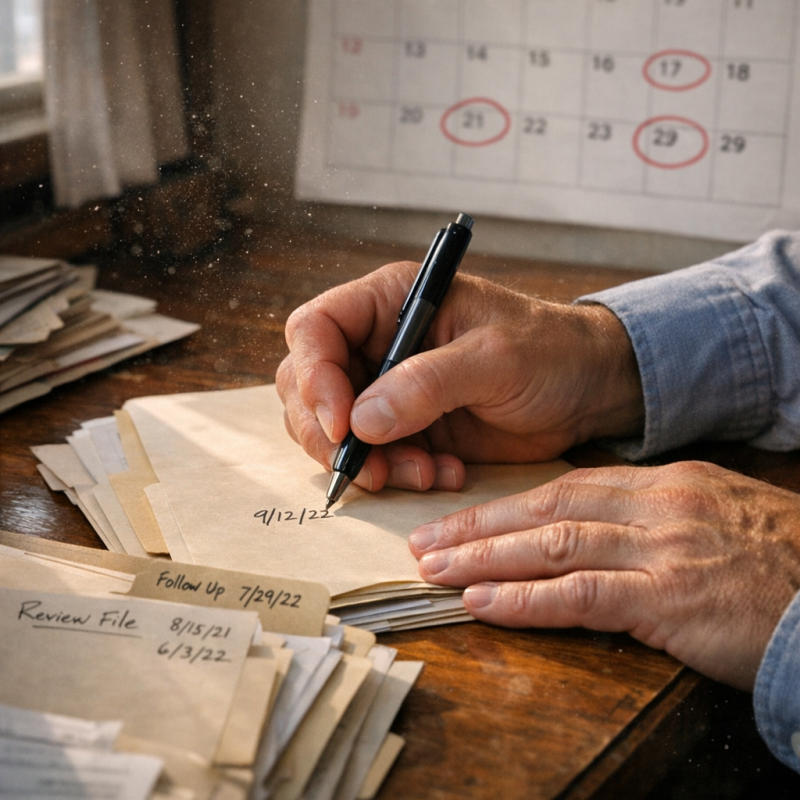 Image by FCT AI
The Plan
We met in Marcus's apartment the next evening—me, Marcus, and Mara. I'd texted them both after I figured out the timeline, and neither of them had seemed surprised. 'We need to get ahead of this,' Mara said, spreading the copied files across Marcus's coffee table. 'Before he submits anything to corporate.' Marcus leaned back, arms crossed. 'We have the pattern. We have the documents. But it's still just paper. We need something that proves intent.' I nodded, my mind racing. 'We need to show he's been manufacturing these situations. That it's deliberate.' Mara tapped one of the files. 'Jo's emergency. If we can prove that wasn't real, that Greg lied about it or exaggerated it to create pressure—' 'Then we prove he's been setting people up,' Marcus finished. I felt my pulse quicken. It was risky. Jo might not want to get involved. She might not even remember the details. But it was our strongest lead. Mara looked at me steadily. 'We need one more piece of evidence,' she said. 'Proof that Jo's emergency wasn't what Greg claimed.'
 Image by FCT AI
Approaching Jo
I found Jo on her break the next day, sitting outside with her phone. My heart was hammering. 'Hey,' I said, trying to sound casual. 'Can I ask you something about that weekend shift last month? The one Greg said was because of your family emergency?' Jo looked up, and something uncomfortable crossed her face. She put her phone down. 'Yeah?' I sat down next to her. 'Was it actually an emergency? I'm not trying to pry, I just—there's some stuff happening and I need to understand what's true.' She was quiet for a moment, then sighed. 'It wasn't an emergency,' she said quietly. 'It was approved vacation. I'd requested it two months before.' My stomach dropped. 'But Greg said—' 'I know what he said.' Jo looked miserable. 'He told me to call it a family emergency when I talked to you guys. He said it would make the shift change seem more urgent, that people would be more understanding.' I stared at her, barely breathing. She met my eyes, guilty and tired. 'He said it would help make things run smoother,' she continued. 'I didn't think it was a big deal at the time.'
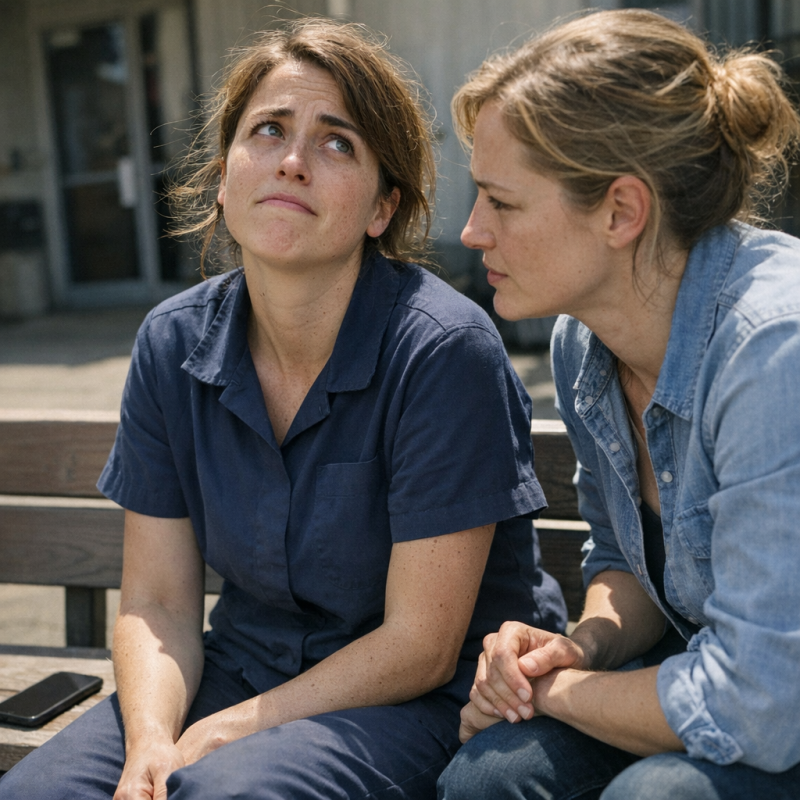 Image by FCT AI
Jo's Story
Jo twisted her hands together. 'He called me into his office after he approved my time off. Said he appreciated my flexibility and that he wanted to use my vacation as a 'teaching moment' for some of the other employees.' I felt my anger rising, but I kept my voice level. 'A teaching moment?' 'Yeah. He said some people on the team needed to learn to be more flexible, to step up when others needed coverage. He made it sound like he was doing something good—like he was helping the team grow or whatever.' She looked down. 'I thought it was weird, but he's the manager. I figured he knew what he was doing.' My chest felt tight. Greg had used Jo. He'd taken her legitimate vacation, reframed it as an emergency, and used it to test me. To test all of us. And Jo had gone along with it because she trusted him, because he'd made it sound reasonable. She wasn't the villain here. She was another piece on the board. I realized then, sitting there in the afternoon sun, that Jo had been used—we all had been.
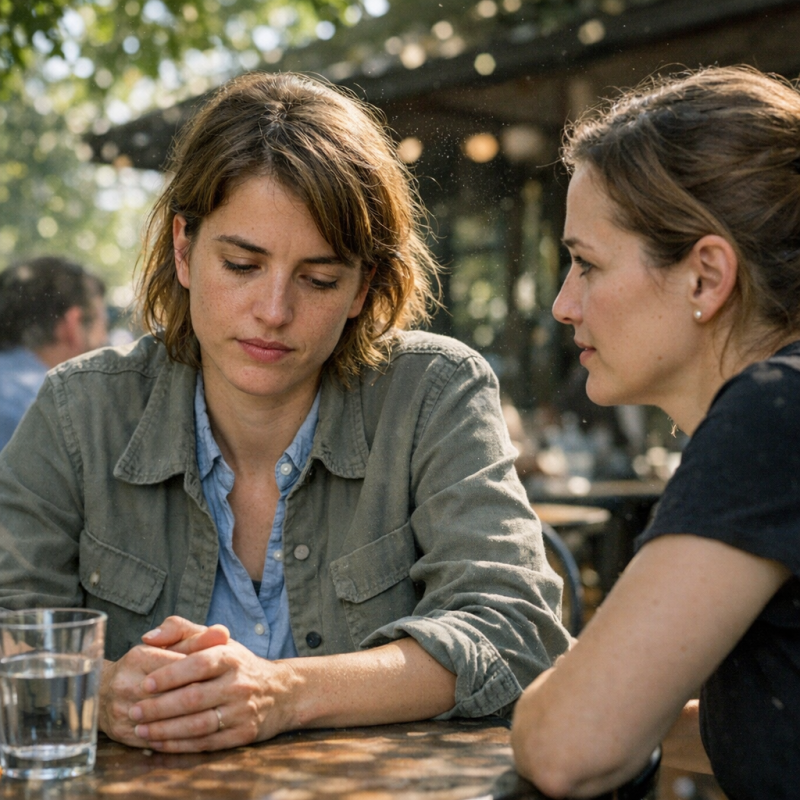 Image by FCT AI
The Recording
Back at Marcus's place that night, I told them what Jo had said. Mara's face went hard. 'So he manufactured the whole thing.' 'Yeah,' I said. 'The emergency never existed.' Marcus was quiet, then stood up and walked to his desk. 'There's something I need to tell you both.' He pulled out his phone, looking uncomfortable. 'I've been recording my conversations with Greg. Not all of them—just the ones where he's pulled me aside or said something that felt off.' Mara and I exchanged glances. 'Is that legal?' I asked. 'One-party consent state,' Marcus said. 'As long as I'm part of the conversation, I can record it.' He scrolled through his phone. 'I started doing it after he put me on a PIP last year. I wanted protection. Most of it's nothing useful—just him contradicting himself or being vague about expectations.' He stopped scrolling. 'But there's one from two weeks ago. I ran into him in the parking lot, and he was on the phone with someone—I think another manager. He didn't realize I was there.' Marcus hit play. Greg's voice came through, casual and clear: 'I'm telling you, it works. You just need to clean house of the entitled ones.'
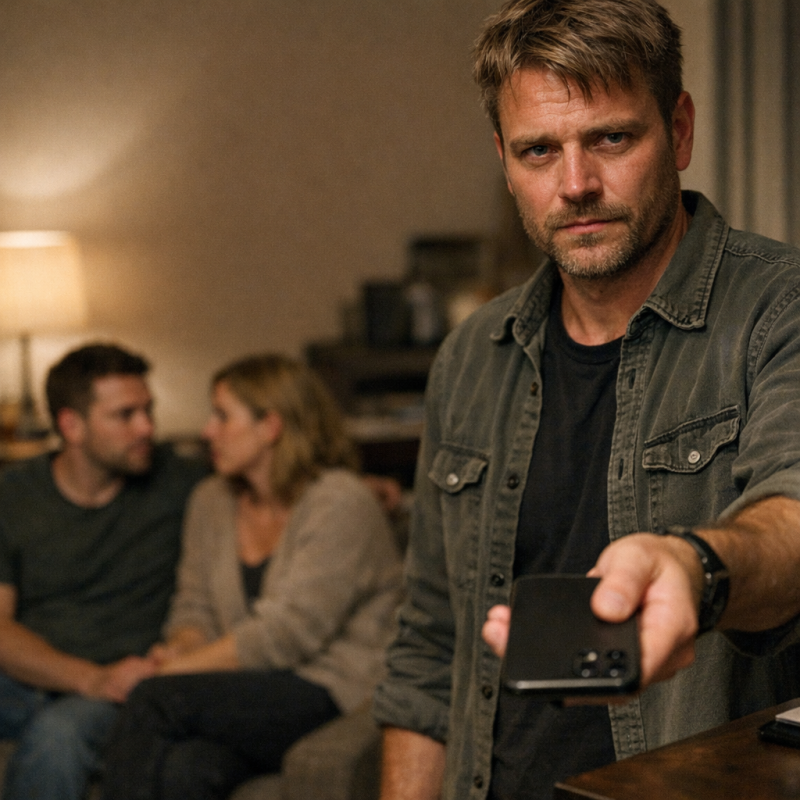 Image by FCT AI
Assembling the Case
We spent the next hour laying everything out like a prosecution case. Marcus printed the employee files and highlighted the timelines. Mara typed up a summary of the pattern—the weekend shift requests, the refusals, the three-week elimination window. I wrote down Jo's testimony, exactly as she'd told it to me. And Marcus organized the recordings, labeling each one with context and date. 'This is solid,' Mara said, scanning through everything. 'Anyone looking at this would see what he's been doing.' 'The question is, who's going to look at it?' Marcus asked. I knew what he meant. Lynn, our HR rep, reported directly to Greg. Even if we went to her, there was no guarantee she'd take it seriously or keep it confidential. We needed someone higher up. Someone who could actually do something. 'Rachel,' I said. 'The district manager. She came by a few weeks ago, remember?' Mara nodded slowly. 'Would she listen?' 'I don't know,' I admitted. 'But she's our best shot.' Marcus stacked the papers neatly. 'Then we better hope she's willing to hear us out,' he said. We had everything we needed—except someone at corporate who would listen.
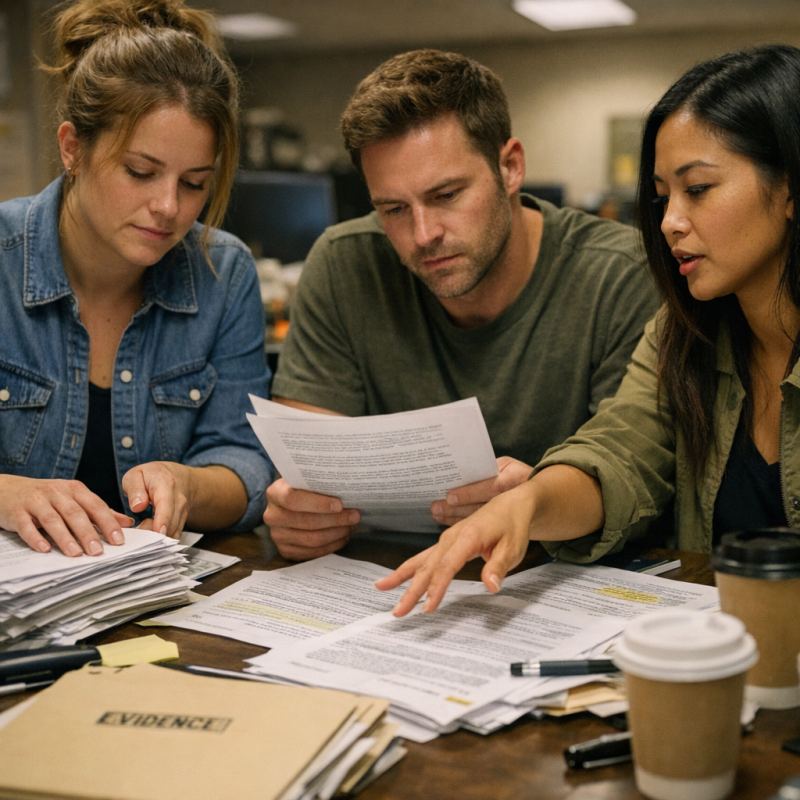 Image by FCT AI
The Pattern Revealed
Rachel agreed to meet us at a coffee shop two days later. She looked skeptical when we sat down, but she listened as I walked her through everything—the files, the timeline, Jo's statement, the recordings. When I finished, she sat back and exhaled slowly. 'I was afraid of this,' she said. My heart jumped. 'You knew?' 'I suspected. Greg's turnover rate has been high, but his performance metrics have been exceptional. I couldn't figure out how both things were true.' She looked at the papers spread between us. 'What you're describing—systematically removing employees who refuse unscheduled work and replacing them with more compliant workers—it used to be tolerated. Three other managers did the same thing before corporate changed the policy four years ago. We explicitly banned it.' Mara leaned forward. 'But Greg kept doing it.' 'Apparently.' Rachel's jaw tightened. 'He's been manufacturing emergencies, testing employees with last-minute requests, documenting refusals as performance problems, and cycling through staff to keep his metrics high and his labor costs flexible.' She met my eyes. 'This is a clear policy violation. And it's been happening under my watch.' Rachel pulled out her phone, her expression grim. 'Three other managers had done the same thing before corporate changed the policy,' she said. 'But Greg never stopped.'
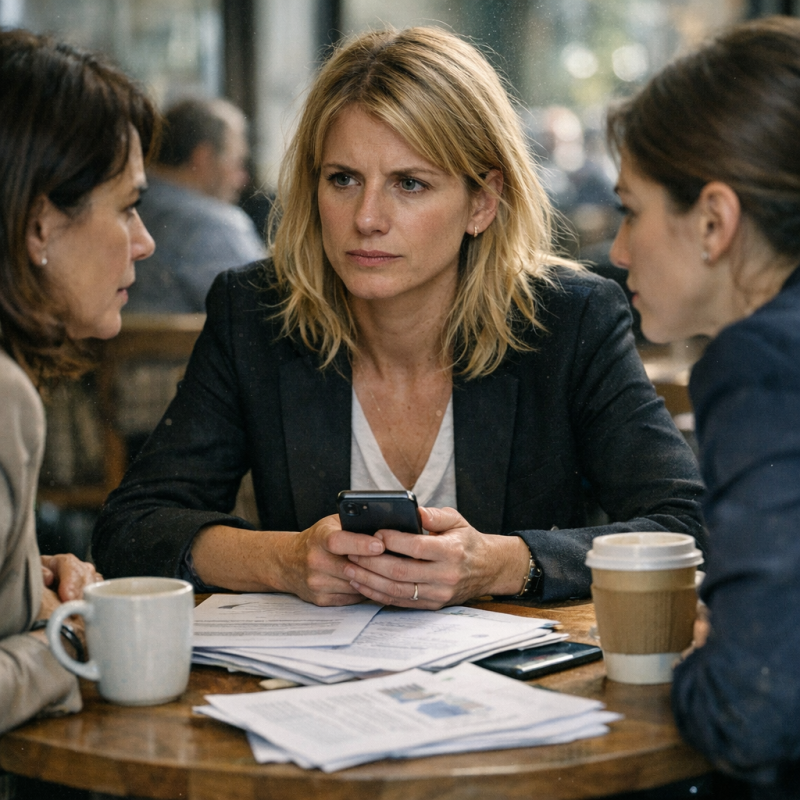 Image by FCT AI
The Corporate Investigation
Rachel made the call right there at the coffee shop. I watched her face shift into pure professional mode as she spoke to someone in corporate HR, laying out the basics with clinical precision. When she hung up, she looked directly at me. 'They're opening a formal investigation. Legal's already looping in.' My stomach did this weird flip—relief mixed with absolute terror. This was real now. Not just my documentation and suspicions, but an actual corporate investigation. Rachel explained the timeline: interviews would start tomorrow morning, unannounced. Greg wouldn't know anything until investigators walked through the door. 'They'll need statements from everyone who's been part of this pattern,' she said. 'Current staff, former employees if possible, anyone who witnessed the scheduling practices.' I nodded, trying to process. 'And Greg?' 'He'll be interviewed too. Standard procedure.' Her expression hardened. 'But they're treating this as a serious policy violation, Alex. You did the right thing bringing this forward.' I wanted to feel vindicated, but mostly I just felt anxious about what would happen when Greg realized what was coming. She said they'd need to interview everyone—including Greg—starting the next day.
 Image by FCT AI
The Last Shift Before
I showed up for my shift the next morning trying to act completely normal, which is basically impossible when you know corporate investigators are arriving in less than twenty-four hours to expose your manager's entire operation. Greg was in his usual spot behind the counter, doing his usual micro-managing thing, completely oblivious. I kept waiting for some sign that he knew, that someone had tipped him off, but there was nothing. He critiqued my register setup. He reminded David about some inventory task. He smiled at customers like he always did. The cognitive dissonance was wild—watching him perform 'good manager' while I knew exactly what was documented in those files sitting with corporate HR. Around mid-shift, he actually pulled me aside with this friendly expression. My heart nearly stopped. But he just wanted to chat about scheduling. The absolute audacity. I gave him my best neutral face and said I'd check my availability. He seemed satisfied. Then, right before my break, it happened. He actually asked me—cheerfully—if I'd 'reconsidered my attitude about weekend flexibility.'
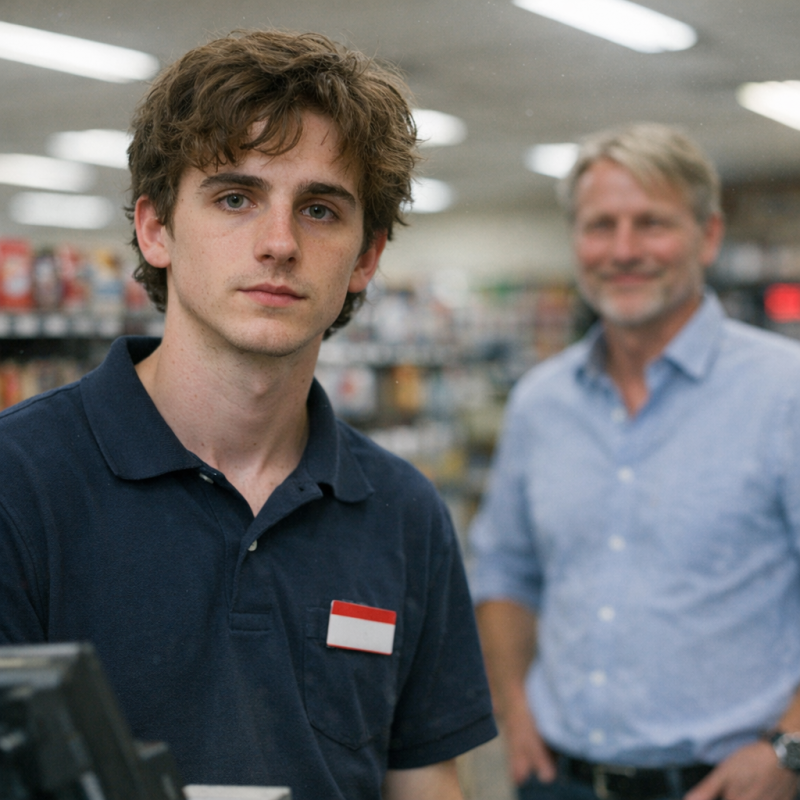 Image by FCT AI
The Investigators Arrive
They arrived exactly at opening. Two people in business casual with corporate badges, asking for Greg by name. I was restocking shelves when I saw them, and my entire body went cold with adrenaline. Greg came out of the back office with his usual confident stride, hand extended for a handshake, probably thinking this was some routine visit. The taller investigator introduced herself and asked if there was somewhere private they could talk. I watched Greg's expression—still pleasant, still professional—as he led them into his office. The door closed. I tried to focus on my work, but my hands were shaking. David caught my eye from across the store and mouthed 'Is that them?' I nodded slightly. For about ten minutes, nothing. Then I walked past the office window carrying a box of inventory, and I couldn't help glancing inside. Greg was sitting at his desk, and the investigators were standing, one of them holding a folder I recognized from Rachel's briefcase. Through the window, I watched his face change from confident to confused to pale.
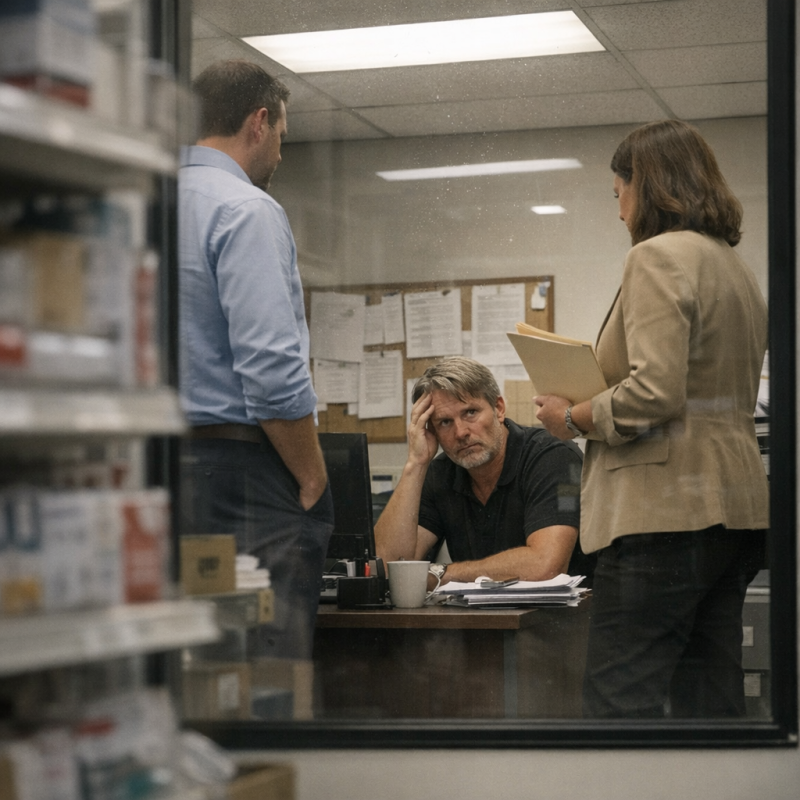 Image by FCT AI
The Interviews
They called us in one at a time, starting with the longest-tenured employees. Jo went first, then Marcus, then a couple of part-timers who'd been around for six months. The store ran with basically a skeleton crew all day—just whoever wasn't being interviewed keeping things minimally functional. Greg stayed in his office the entire time with the door closed. No one said much. We all knew what was happening, but there was this weird collective silence about it, like speaking it out loud would jinx something. I restocked the same shelf three times just to have something to do with my hands. Mara was called in around noon. She was in there for almost forty minutes. When she came out, she looked drained but determined. She didn't say anything, just squeezed my shoulder as she walked past. Then David went in. I'd been nervous about what he'd say—we'd never explicitly talked about whether he'd back me up officially. I watched the office door and tried not to spiral. When David came out from his interview, he looked at me and nodded slowly—he'd told them everything.
 Image by FCT AI
Alex's Interview
When they finally called my name, I grabbed the folder I'd been keeping in my bag—copies of everything, organized chronologically. The lead investigator, Sarah, gestured to a chair. 'We understand you initially brought these concerns to Rachel,' she said. I nodded and started laying out the documents: the schedule screenshots, the write-up copies, Jo's statement, the timeline I'd built. I walked them through it methodically—Greg's initial weekend request, the sudden scrutiny, the impossible standards, the pattern I'd noticed in the files. Sarah took notes while her colleague examined each document. I explained how I'd correlated the turnover with the scheduling conflicts, how the write-ups always followed refused overtime, how the bar kept moving. My voice stayed steady even though my hands were shaking. They asked clarifying questions. I answered each one with specific examples and dates. When I finished, there was a long pause. Sarah looked at her colleague, then back at me. The lead investigator closed her notebook and said, 'You've built a very thorough case, Alex.'
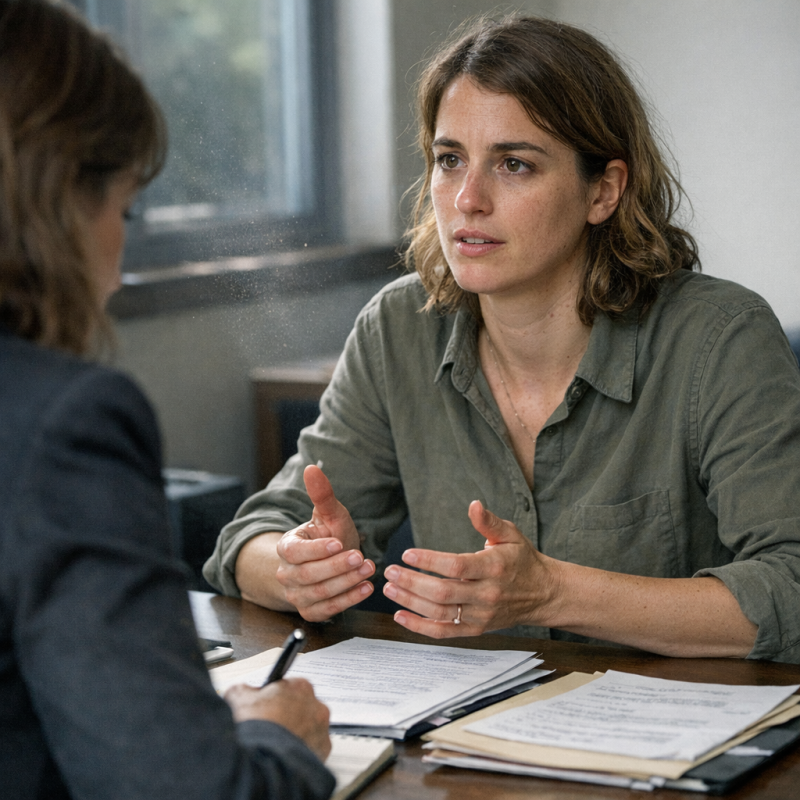 Image by FCT AI
Greg's Suspension
They made the announcement at the end of the day, gathering whoever was still on shift near the registers. Sarah kept it brief and professional: Greg was suspended pending the outcome of the investigation, effective immediately. Rachel would be taking over store management on a temporary basis. Greg would not be on the premises during the investigation period. I saw Greg emerge from his office with a small box of personal items—his coffee mug, a framed photo, some papers. Rachel stood near the door, her expression unreadable but firm. He didn't look at any of us at first, just walked with this rigid posture toward the exit. But then, right before he reached the door, he turned. His eyes scanned the group and landed on me. For just a second, we made direct eye contact. And here's the thing that surprised me: I didn't see anger. I didn't see the manipulative confidence I'd been documenting for weeks. As Greg packed his office, he looked at me once—and I saw real fear in his eyes.
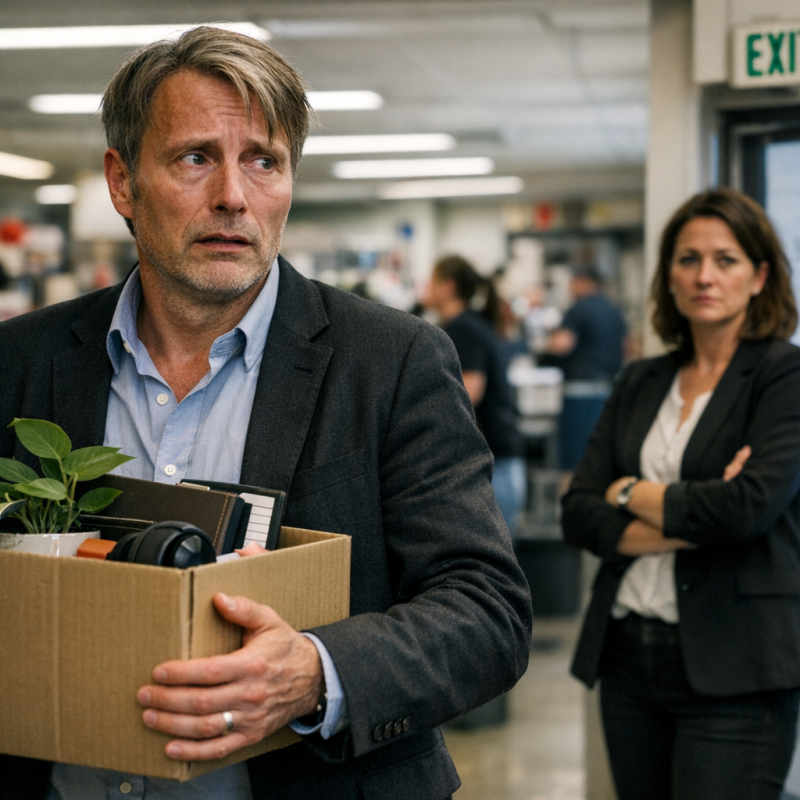 Image by FCT AI
The Team's Reaction
After he left, nobody moved for a solid minute. Then Jo let out this long exhale and said, 'Well. That just happened.' It broke the tension slightly. We sort of naturally gathered near the break room, this awkward cluster of people processing the same surreal experience. David looked shell-shocked. Marcus kept shaking his head. A couple of the newer employees seemed confused about what exactly had just transpired. Jo pulled me aside and quietly said, 'Thank you.' But her expression was complicated—grateful, yeah, but also something heavier. Mara sat down at the break table and put her head in her hands. 'I should have said something sooner,' she said to no one in particular. 'I watched him do this exact thing to Emma. And to Tyler before her. I just thought—I don't know what I thought. That it was normal? That it wasn't my business?' The guilt in the room was thick. We'd all been there, watching pieces of this pattern, but never connecting them or speaking up. Mara said what we were all thinking: 'How many people did we watch him do this to before Alex?'
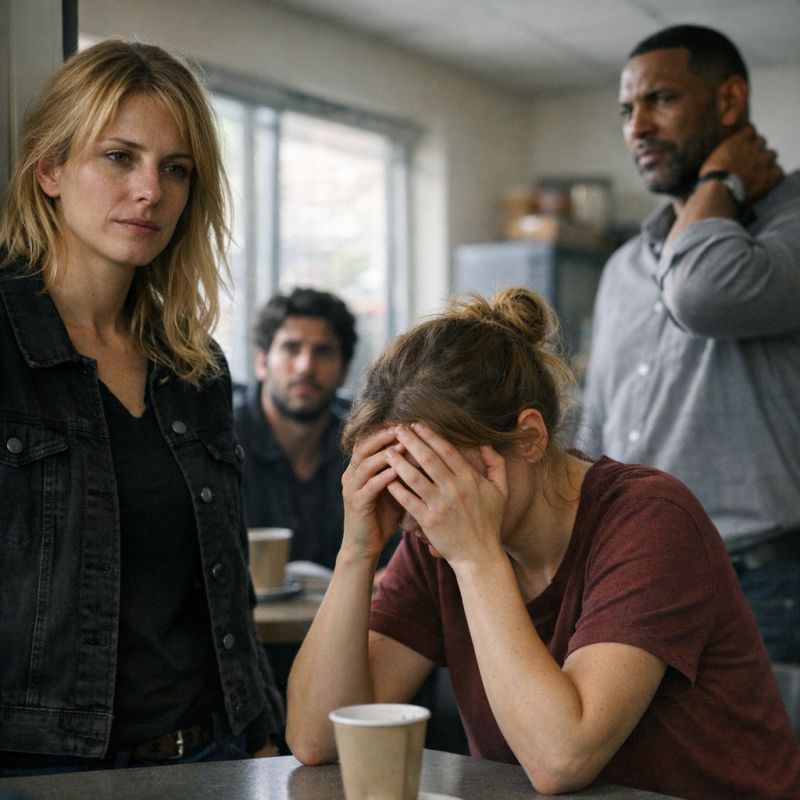 Image by FCT AI
Rachel's Apology
Rachel found me in the stock room about an hour before closing. I was reorganizing inventory that didn't need reorganizing, just trying to process everything. She leaned against the shelf and was quiet for a moment. 'I owe you an apology,' she finally said. I looked up, surprised. 'I should have caught this pattern months ago. Years ago, honestly.' She explained that she'd noticed Greg's turnover rate was unusually high, but his performance metrics were always so strong that she'd rationalized it—competitive retail environment, young workforce, people moving on naturally. 'I didn't ask the hard questions,' she said. 'I didn't look at why people were leaving or who was being written up. That's on me.' Her apology felt genuine, not like corporate damage control. 'The company banned these practices for a reason,' she continued. 'And I should have been monitoring more closely to make sure all managers were actually following the new policies.' She straightened up, her expression shifting to something more purposeful. She asked if I'd be willing to help develop new training to prevent this from happening at other stores.
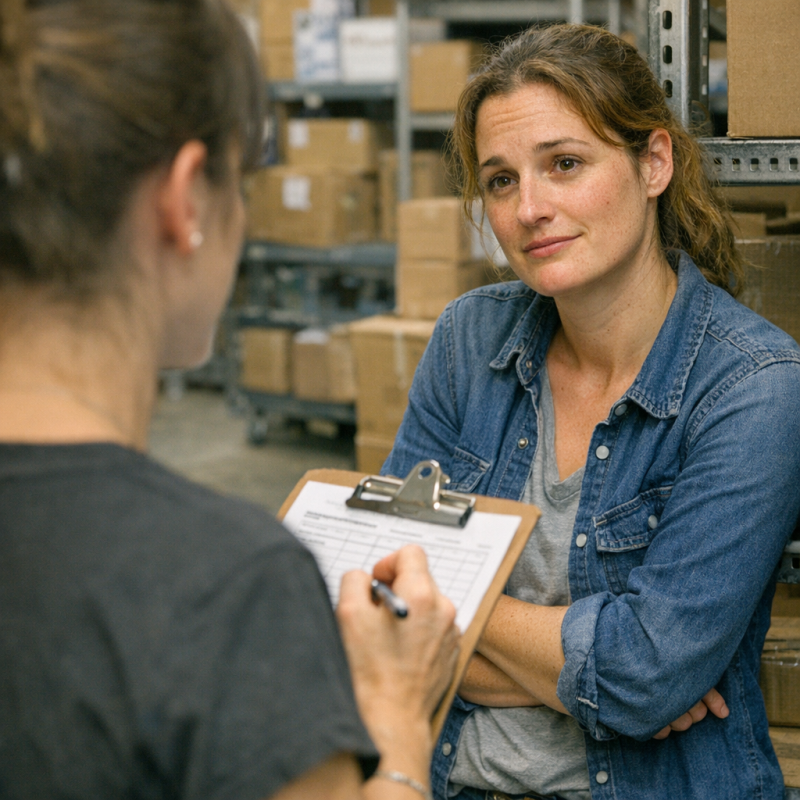 Image by FCT AI
The Investigation Concludes
Two weeks later, Rachel called me into the office—the same office where Greg had tried to intimidate me into compliance. She had a folder in front of her, and her expression was serious but satisfied. 'The investigation is complete,' she said. 'Corporate confirmed that Greg violated multiple company policies regarding scheduling practices, retaliation, and disciplinary documentation.' He wouldn't be returning, effective immediately. His termination was final. But then she said something that made my chest tight. 'We're also reaching out to three former employees who left under similar circumstances. They'll be contacted about potential compensation for what they went through.' She slid a paper across the desk with three names. I scanned the list, and my breath caught. Hannah's name was right there at the top. The girl who'd left right before I started, the one whose warning I'd brushed off because I thought she was just bitter. She'd been trying to tell me. She'd been trying to warn me. And now, maybe, she'd finally get some acknowledgment that what happened to her was real. Hannah was one of them.
 Image by FCT AI
The New Schedule
The first schedule under Rachel's management went up on Thursday, and I actually had to stare at it for a minute to make sure I was reading it right. It was fair. Balanced. Nobody was stuck with seven consecutive closing shifts or random mid-week schedule changes. Mara got her Tuesdays off like she'd been requesting for months. David wasn't scheduled during his college classes. And when I looked closer, I noticed something else—there were little notes next to certain shifts: 'Confirmed available' or 'Requested morning.' Rachel had actually asked people about their availability before making the schedule. What a concept. 'This feels weird, right?' Mara said, standing next to me. 'Like, suspiciously reasonable?' David laughed. 'I keep waiting for the catch.' But there wasn't one. It was just a schedule made by someone who understood that we had lives outside the store. That we weren't just interchangeable bodies to fill shifts. That our time mattered. It felt strange to work somewhere that treated us like people with lives outside the store.
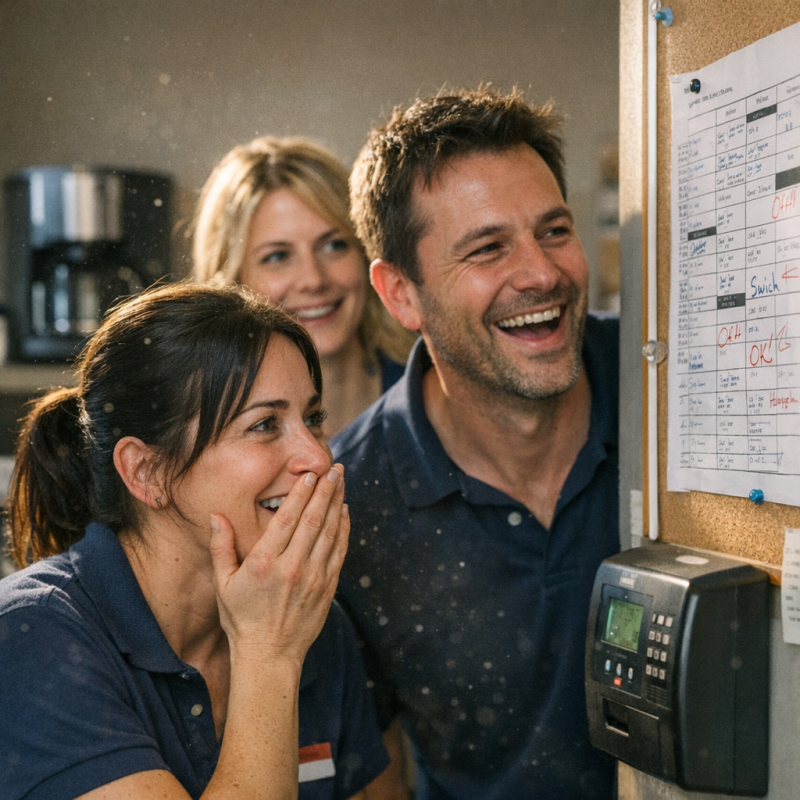 Image by FCT AI
Coffee with Hannah
Hannah agreed to meet me for coffee at a place near her new job. She looked different—more relaxed, like she'd been holding her breath for a year and finally exhaled. We talked for almost two hours, comparing our experiences with Greg, and the similarities were eerie. The same isolation tactics. The same impossible expectations. The same write-ups that appeared out of nowhere when you pushed back. 'I thought I was going crazy,' she admitted. 'Like maybe I really was the problem.' I told her I'd felt exactly the same way. She stirred her latte, quiet for a moment. 'When corporate contacted me about the investigation, I cried,' she said. 'Not because of the money they're offering—I mean, that helps—but because someone finally believed me.' She reached across the table and squeezed my hand. 'Thank you for not letting him get away with it. For fighting when I couldn't.' Her voice cracked slightly. 'You saved the people who came after me.'
 Image by FCT AI
The Moment I Said No
Sometimes I think about that moment in Greg's office when everything changed. When he told me I'd be working every weekend for the foreseeable future, and I said no. Just that one word. I'd been so scared in that moment, convinced I was making a huge mistake, that I'd lose my job or make everything worse. But that single refusal—that tiny act of setting a boundary—had unraveled everything Greg had carefully constructed. It revealed his whole system. Because people like Greg rely on compliance. They rely on you being too afraid or too tired or too unsure of yourself to push back. They count on you doubting your own reality. And when you stop complying, when you say that one simple word, their entire power structure cracks. I didn't save anyone by being brave or heroic. I just refused to keep pretending that what was happening was normal. And sometimes, that's enough. I'd learned that the smallest act of standing up for yourself can reveal the biggest truths about the people trying to control you—and sometimes, that's exactly what they're afraid you'll discover.
 Image by FCT AI