
The Smile
Martin's face was doing that thing again—the red creeping up from his collar, the vein pulsing at his temple. 'I'll be honest with you, Alex,' he said, leaning back in his chair like he was about to deliver a performance. 'If this attitude continues, your position here won't make it to the end of the week.' He was waiting for me to flinch. To apologize. To beg. Instead, I smiled. Not a smirk, not defiance—just a genuine, calm smile that seemed to confuse him more than any argument could have. His eyes narrowed. 'Is something funny?' I shook my head, still smiling. 'No, Martin. Nothing's funny.' What was I supposed to say? That I'd spent the last three weeks meticulously documenting every questionable transaction that crossed my desk? That I knew exactly where those missing budget allocations were going? He thought this was about the vacation request I'd submitted. He thought he was punishing me for having the audacity to ask for time off. He had no idea what I actually knew. I'd been documenting everything for weeks—and he had no idea.
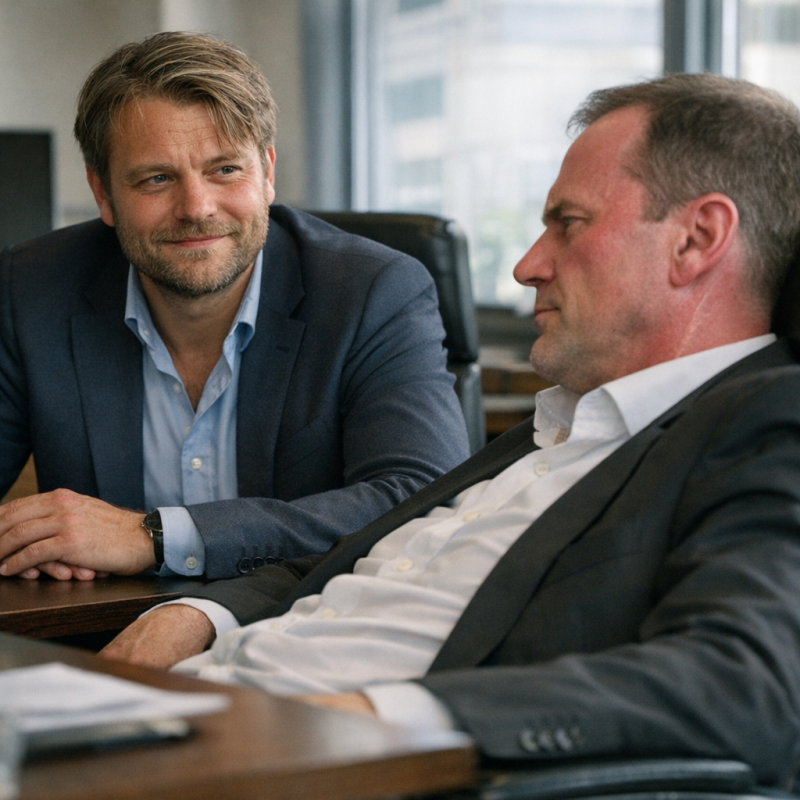 Image by FCT AI
Two Years Back
Two years earlier, I'd walked into that building feeling like I'd finally made it. The lobby had marble floors, actual art on the walls—not prints, but real paintings with little plaques underneath. The receptionist smiled like she meant it. When HR called to offer me the project coordination position, I'd actually jumped up from my couch and done a little victory dance in my apartment. My previous job had been at a startup where 'office' meant folding tables and the constant anxiety of wondering if we'd make payroll. This was different. This was stable. Professional. The kind of place where people had 401ks and talked about five-year plans. Martin had seemed perfect during the interview—sharp, organized, asking detailed questions about my process. He'd laughed at my joke about spreadsheet color-coding. 'We need someone who actually cares about the details,' he'd said, nodding with what looked like genuine respect. When he shook my hand, his grip was firm, confident. In the beginning, Martin seemed like exactly the kind of boss I needed.
 Image by FCT AI
First Cracks
The first time Martin pulled me aside to 'discuss concerns,' I figured it was just normal management stuff. He thought my email formatting was too casual. Fair enough—I adjusted. Then it was the way I scheduled meetings. Then how I labeled files in the shared drive. Each conversation was brief, almost friendly, but there was always this undertone I couldn't quite pin down. Like I was constantly disappointing him in small, unmeasurable ways. I started second-guessing everything. Was my subject line too wordy? Should I have CC'd someone else? Did I use too many exclamation points? My coworker Rachel told me I was overthinking it. 'You're doing great,' she said, but her voice didn't quite match her words. The weird part was my actual work product. Projects were finishing ahead of schedule. Clients were happy. The numbers were solid. When I checked my performance review, it said 'exceeds expectations'—so why did every conversation feel like a reprimand?
 Image by FCT AI
Late Night Emails
The late-night emails started around month six. At first, it was just one or two—questions that could've waited until morning but technically fell within 'work stuff.' Then it became a pattern. My phone would light up at 11:47 PM: 'Why did you choose vendor B for the Stevens project?' At 1:23 AM: 'I noticed you didn't include quarterly projections in today's report.' At 2:15 AM: 'We need to talk about your decision-making process.' These weren't urgent issues. They were minutiae, the kind of details that get ironed out in normal business hours. But there they were, timestamped in the middle of the night, each one a little test I hadn't studied for. I'd wake up to six new messages, each one questioning something I'd done the day before. My morning coffee routine became an exercise in damage control, scrolling through his concerns while my stomach knotted. I started keeping my phone on silent at night, but that only made the morning pile-up worse.
 Image by FCT AI
Public Criticism
The team meeting was supposed to be routine—just a quarterly update presentation I'd given a dozen times before. I was maybe three slides in, explaining the timeline adjustments we'd made to accommodate client feedback, when Martin cut me off mid-sentence. 'Wait,' he said, and the room went still. 'Why would you make that decision without consulting me first?' I blinked. We'd discussed it. I had the email thread. 'We talked about this on Tuesday,' I said carefully. 'The client specifically requested—' 'I don't recall that conversation,' he interrupted, his tone implying I was either lying or incompetent. Maybe both. 'And frankly, I'm concerned about your tendency to operate independently without proper oversight.' The silence was suffocating. Ten faces stared at their laptops or notepads, anywhere but at me. Heat crawled up my neck. My hands were shaking, so I gripped the edge of the table. The room went silent, and I saw Jennifer's eyes flick away from mine—like she'd seen this happen before.
 Image by FCT AI
The Overhaul Announcement
The announcement came down from senior management on a Wednesday afternoon. They were consolidating three client portfolios into our department—effective immediately. The conference room buzzed with nervous energy as our VP explained the restructure. More projects meant more visibility, she said, like that was supposed to be exciting rather than terrifying. I did the math in my head. We were already stretched thin. This would easily double our workload, maybe triple it during peak periods. Martin stood at the side of the room, arms crossed, nodding along with the VP's optimistic projections. When she finished, he stepped forward. 'I know this is a big change,' he said, scanning the room. His gaze landed on me and stayed there a beat too long. 'But I expect everyone to step up—no exceptions.' There was something pointed in his tone. A challenge. Or maybe a warning. I felt my jaw tighten. Fine, I thought. I'll step up. I'll do exactly what's required, and I'll document every single hour. Martin looked directly at me when he said, 'I expect everyone to step up—no exceptions.'
 Image by FCT AI
Twelve-Hour Days
The twelve-hour days became routine so fast it scared me. I'd arrive at seven-thirty, leave at eight, sometimes nine. My apartment became just a place where I slept and showered. I kept meticulous records—clock in, clock out, every minute logged in the company system like I was supposed to. Some people fudged their hours, rounded down, didn't want to seem like they couldn't handle the workload. Not me. If I was there, it went in the system. Eight-fifteen to eight-forty-five. Nine hundred and thirty to nine hundred and forty-eight. Precision felt like the only control I had left. My back ached from sitting. I developed this twitch in my right eye that wouldn't go away. Coffee stopped working around week two, so I just pushed through on spite and stubbornness. But I kept tracking. Every. Single. Hour. The overtime accumulation grew like a number I couldn't quite believe. By week three, I'd accumulated more leave time than I'd earned in my entire first year.
 Image by FCT AI
Coffee Break Confession
Jennifer caught me in the break room during one of my rare moments away from my desk. She poured her coffee slowly, deliberately, like she was working up to something. 'How are you holding up?' she asked, not quite meeting my eyes. I shrugged, going for casual. 'Tired, but managing.' She nodded, stirred her coffee even though she hadn't added anything to it. 'You know,' she said, her voice dropping, 'you're not the first coordinator Martin's had.' I knew that, obviously, but something in her tone made me pay attention. 'The woman before you—Elena. She was good. Really good. Maybe too good.' Jennifer glanced toward the door, then back at me. 'She lasted six months.' My stomach did a weird flip. 'She got a better offer?' I asked. Jennifer's expression was hard to read. Not quite sympathy, not quite warning. 'She didn't even give notice,' Jennifer said quietly. 'She just... stopped showing up.'
 Image by FCT AI
Budget Discrepancies
I was cross-referencing quarterly budget reports when I noticed it. Nothing dramatic—just two numbers that didn't quite line up. Project Delta's allocated budget showed $47,200 in one document, $49,800 in another. I stared at the screen, squinting like that would somehow make the numbers match. These reports came from the same quarter, supposedly pulled from the same source data. I checked the dates. Both filed within days of each other. The difference was only $2,600, easy enough to chalk up to a clerical error, maybe someone fat-fingering an entry. I'd seen plenty of mistakes in my three months here. People transposed digits, forgot decimal points, entered values in the wrong fields. It happened. Still, something about it bothered me enough that I highlighted the discrepancy in yellow and made a note in my spreadsheet. I thought about emailing Martin but decided against it—he'd probably see it as me bothering him with minor administrative noise. I flagged it for review and forgot about it—until I found three more discrepancies the next week.
 Image by FCT AI

History's most fascinating stories and darkest secrets, delivered to your inbox daily.
The Impossible Deadline
Martin appeared at my desk Thursday afternoon with a manila folder. 'I need a comprehensive analysis of the Riverdale contracts,' he said, dropping the folder in front of me. I opened it. Thirty-seven separate contracts, some running fifty pages. 'When do you need it?' I asked, already dreading the answer. 'Monday morning.' I looked up. It was already past three. 'Monday? Martin, that's—' 'Three full days,' he interrupted. 'Plenty of time.' It wasn't, though. This kind of analysis typically took two weeks, minimum. I'd need to review each contract, extract key terms, identify discrepancies, compile findings, write the summary report. 'I don't think that's realistic,' I said carefully. 'The standard timeline for this volume is—' 'I'm not interested in standard timelines.' His voice had that edge I was learning to recognize. 'I'm interested in results.' I felt my jaw tighten. 'I can try, but I can't guarantee—' When I explained it wasn't possible, he said, 'Then I guess you'll need to work smarter, not harder.'
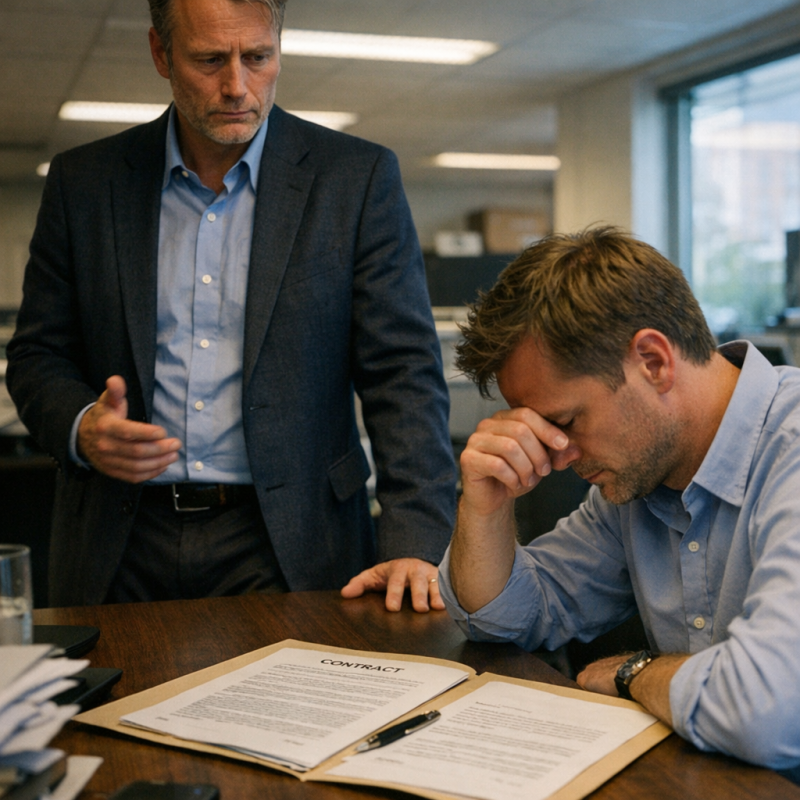 Image by FCT AI
All-Nighter
I left the office Friday at six, went home, ate something I don't remember, and came back at nine. The building was mostly empty, just security and a few workaholics from the compliance team on the fourth floor. I spread the contracts across my desk and started reading. By midnight, I'd finished twelve. By three AM, twenty-six. My eyes burned. Coffee kept me functional, but barely. The words started blurring together around four, and I had to stand up and pace to keep my brain working. I thought about Elena, the coordinator before me. Had Martin done this to her too? At 5:30 AM, I started compiling my findings. My hands shook from too much caffeine and not enough sleep, but the report came together. Comprehensive. Thorough. Exactly what he'd asked for. I proofread it twice, formatted it properly, attached all supporting documentation. At 6:47 AM, I hit send and felt something like triumph. My phone buzzed ten minutes later. I submitted the report at 6:47 AM—and Martin's response came back in ten minutes: 'This needs revision.'
 Image by FCT AI
David from Accounting
David from accounting had one of those faces that looked perpetually concerned, like he'd just discovered someone had miscategorized an expense. He appeared at my desk Tuesday morning holding a printout. 'Hey, sorry to bother you,' he said. 'I'm trying to reconcile last quarter's transfers and there's one I can't figure out.' I welcomed the distraction from the Riverdale revision Martin had rejected for the third time. 'Sure, what's up?' David laid the printout on my desk, pointing to a highlighted line. 'This budget transfer—$8,400 moved from Operations to Special Projects. But I don't have any approval documentation in my files, and the project code doesn't match anything in my records.' I pulled up my own files, found the transfer. 'It's here in my system. Transfer was approved...' I checked the authorization field. 'Martin approved it.' David's expression shifted. His eyebrows drew together, his mouth pressed into a thin line. Something flickered across his face that I couldn't quite identify—surprise, maybe, or concern, or recognition. 'Martin approved it,' I told him, and David's expression shifted to something I couldn't quite read.
 Image by FCT AI
Phantom Projects
I was coding expenses Thursday when I noticed expense code RP-447. It sat there among the legitimate project codes, completely unremarkable except for one thing: I didn't recognize it. I pulled up the active project database. RP-447 wasn't listed. I checked archived projects. Nothing. Maybe I'd typed it wrong. I double-checked the expense report—no, definitely RP-447. So I searched broader, running queries across every database I had access to. Operations, finance, client services, administrative. The code appeared in expense reports going back six months, thousands of dollars charged against it. But the actual project? It didn't exist. Not in any system. I tried RP-448, just to see. Same thing. Project expenses, no project. Then RP-451. RP-456. RP-462. All of them phantom projects that existed only in expense reports, charging real money to nothing. My stomach felt weird. This wasn't clerical error. You don't accidentally create consistent expense patterns across multiple non-existent projects. I ran the codes three times—they simply didn't exist anywhere in the system except the expense reports.
 Image by FCT AI
The Vacation Request
I'd worked seventy-six documented hours of overtime across three months. I had the timesheets to prove it, each one signed off by Martin himself. Company policy was clear: accumulated overtime entitled employees to proportional time off, and I'd earned more than a week. So I drafted the email carefully, professionally. Subject: Vacation Request. I outlined my overtime hours, referenced the relevant policy section, and requested a week off starting three weeks out—plenty of advance notice. I hit send on a Wednesday morning and went back to work. Thursday passed. No response. By Friday afternoon, I started wondering if he'd even seen it. I checked my sent folder three times to make sure it had actually gone through. It had. Monday came. Still nothing. I told myself he was busy, that my request wasn't priority, that I was being paranoid. Tuesday morning, I was halfway through my coffee when my inbox pinged. The subject line made my chest tighten. Two days of silence—then the message: 'Come see me in my office.'
 Image by FCT AI
The Office Confrontation
Martin's office always felt smaller than it actually was. He gestured to the chair across from his desk without looking up from his computer. I sat. He let me wait. Finally, he swiveled his monitor toward me, showing my vacation request email. 'This isn't a good time,' he said flatly. I'd anticipated pushback. 'I requested three weeks out specifically to allow for planning. And I've accumulated the overtime to justify—' 'Company policy is flexible,' he interrupted. 'It's a guideline, not a guarantee.' That wasn't true. I'd read the employee handbook cover to cover. 'The policy states that documented overtime entitles—' 'Alex.' His voice had gone cold. 'What the policy says and what's practical for this department are two different things. We need you here. Present. Focused.' I felt something shift in my chest. 'Are you denying my request?' 'I'm telling you that your position here depends on being cooperative,' he said, and I felt the ground shift beneath me.
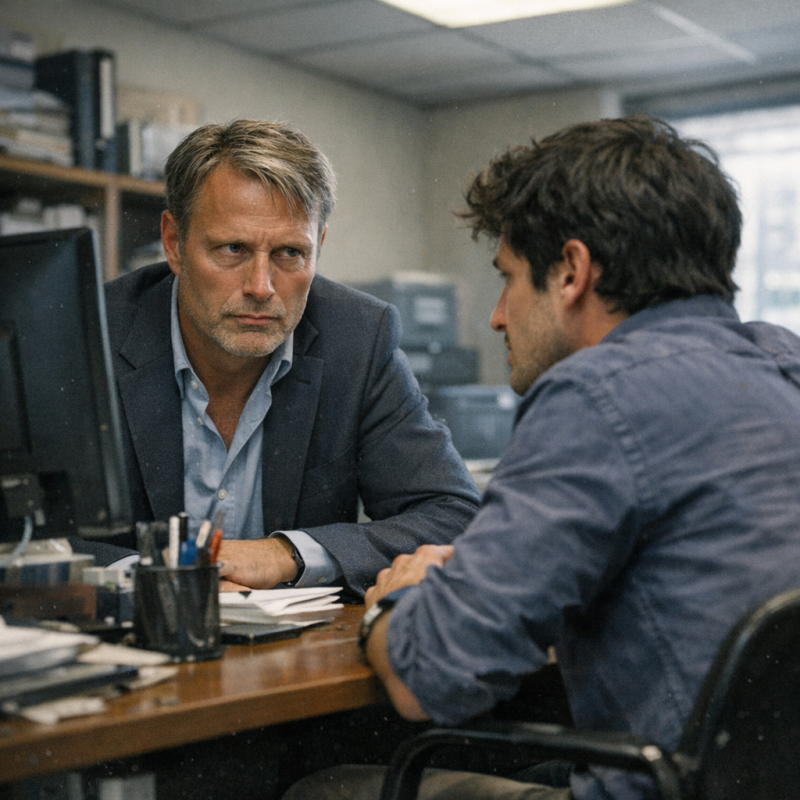 Image by FCT AI
The Smile Returns
I sat there across from Martin's desk, and something clicked into place. He’d just stated that my job could disappear. Explicitly. Over a legitimate vacation request supported by company policy and documented overtime. He'd put it in words, made it concrete. Before this moment, everything had been pressure and impossible deadlines and vague dissatisfaction. Deniable. But this? This was different. This was him saying my employment depended on ignoring established policy, on being 'cooperative' in ways that had nothing to do with actual job performance. And he'd done it in his office, during business hours, in response to a documented request I'd made through official channels. I thought about the phantom project codes. The budget discrepancies. David's unreadable expression. Elena, who'd stopped showing up. Martin thought he was asserting control, tightening his grip. But what he'd actually done was give me documentation of retaliation. Proof he’d warned me I could be fired — and not for performance, but for asserting legitimate rights. I felt my face shift into something that might have looked like a smile. The moment he crossed that line was the moment he gave me exactly what I needed.
 Image by FCT AI
Late Night Discovery
I stayed late that Thursday. Not because Martin wanted me to, but because the office was empty and I could think. I was clicking through department budgets, cross-referencing project codes I'd been tracking, when I accidentally opened a restricted folder. It shouldn't have been accessible from my login credentials. Maybe someone had misconfigured permissions. Maybe it was just luck. But there it was: a master file containing inter-departmental financial transfers going back three years. Hundreds of transactions. Marketing to Operations. Operations to Special Projects. Special Projects to vendors I'd never heard of. Each line item had approval signatures, timestamps, department codes. I scrolled through page after page, my coffee going cold beside my keyboard. The amounts were staggering. Ten thousand here. Fifty thousand there. Hundred-thousand-dollar transfers labeled as 'consulting fees' and 'professional services.' And then I saw the pattern that made my chest tighten. Martin's name appeared on every single approval line—transfers totaling millions of dollars.
 Image by FCT AI
Rachel's Warning
Rachel from HR caught me at the coffee machine Friday morning. She had that carefully casual tone people use when they're trying to say something important without actually saying it. 'Hey, Alex. How are things going?' I told her fine, everything was fine. She nodded slowly, adding cream to her coffee with deliberate focus. 'I noticed your vacation request came through. Just... be careful with timing on those.' I asked what she meant. She glanced toward the hallway, then back to me. 'Some managers see time-off requests during transitional periods as problematic. Not saying it's right, just saying it's how some people think.' Transitional periods. What transition? We weren't restructuring. No one was leaving. 'I'm just saying,' Rachel continued, 'documentation is your friend. Keep records of everything. Requests, responses, conversations.' She smiled, but it didn't reach her eyes. 'Some managers see time-off requests as... disloyalty,' she said, and I wondered if she was trying to warn me.
 Image by FCT AI
Documentation Begins
That afternoon, I set up a personal encrypted cloud folder. Not on the company system. Not on my work laptop. On my personal device, through a secure service with two-factor authentication. Then I started copying. Financial reports first—the master transfer file, the budget discrepancies I'd flagged months ago, the phantom project codes. I took screenshots of approval chains. I exported spreadsheets showing expense patterns. Every document got renamed with dates and clear descriptions. Every file got backed up twice. I worked methodically, taking breaks to do actual work whenever someone walked past my desk. It took three hours to copy everything I'd found so far. My hands were steady. My breathing was calm. This wasn't panic. This was preparation. This was building something Martin couldn't touch, couldn't delete, couldn't explain away. Every report, every signature, every timestamp—I saved everything where he could never find it.
 Image by FCT AI
The Shell Companies
I spent my lunch break Monday researching the vendor companies receiving Martin's approved payments. Most had generic names: 'Summit Business Solutions,' 'Cascade Consulting Group,' 'Meridian Professional Services.' I searched their business registrations through the state's public database. Summit Business Solutions had been incorporated two years ago. No website. No employees listed. No business filings beyond the minimum required paperwork. Cascade Consulting showed a registered agent but no actual office address. I kept digging. Meridian Professional Services listed its headquarters as a street address I recognized—I'd driven past it during a work trip last fall. I pulled up the location on the map and zoomed in on street view. It was a residential building. Just apartments. Four stories, maybe twenty units total. No ground-floor commercial space. No signage. No indication any business operated from that location. One company's registered address was a residential apartment in a city three hours away.
 Image by FCT AI
Weekend Work
My phone buzzed at 9:47 Saturday morning. Martin's name on the screen made my stomach drop before I even read the message. 'Need status update on the Henderson project ASAP. Can you send by noon?' The Henderson project. A minor client proposal that wasn't due for two weeks. Nothing urgent. Nothing that required weekend work. I stared at the message, then at the stack of financial documents I'd been reviewing on my kitchen table. This was the third weekend in a row he'd contacted me. Always with urgent requests that turned out to be non-urgent. Always demanding immediate attention on things that could easily wait until Monday. I typed back a professional response, saying I'd send something over. But I understood what he was doing. The constant interruptions. The manufactured emergencies. The barrage of low-priority tasks that consumed every spare moment. It wasn't about the project—it was about making sure I stayed too busy to think.
 Image by FCT AI
Jennifer's Story
Jennifer and I met for lunch Tuesday at the cafe down the street. I asked her casually how long she'd been with the company. Seven years, she said. Long enough to see a lot of people come and go. 'Speaking of which,' I said, trying to sound merely curious, 'did Martin have other project coordinators before me?' Her expression shifted. Something guarded crossed her face. 'Yeah. A few.' She picked at her salad. 'There was Elena, obviously. Before her was someone named Marcus, I think. And before that, two others whose names I'm forgetting. They all left pretty quickly.' I asked how quickly. Jennifer paused, calculating. 'Marcus made it maybe eight months. The one before him left after six. The first one... I think she lasted about ten months before transferring to a different department.' She looked at me directly. 'They all lasted less than a year,' she said. 'You've already broken the record.'
 Image by FCT AI
The Approval Timestamps
Wednesday evening I was reviewing the approval timestamps on those major financial transfers. The documents required multiple signatures according to company policy: department head approval, finance review, executive authorization. But something was off about the sequence. A seventy-thousand-dollar payment to Cascade Consulting had been submitted at 4:32 PM on a Friday. Finance review was timestamped 2:17 AM that same night. Executive authorization came through at 2:19 AM. Two minutes apart. In the middle of the night. On a weekend. I checked another transaction. Same pattern. Submitted during business hours, but all the actual approvals happened at 2 AM, 3 AM, timestamps that made no sense for a company our size. Our building required badge access after 6 PM. Security logs would show who was here. I cross-referenced five more major transfers. Every single one had those late-night approval chains. No one else was in the building—which meant no one else had reviewed them before Martin signed off.
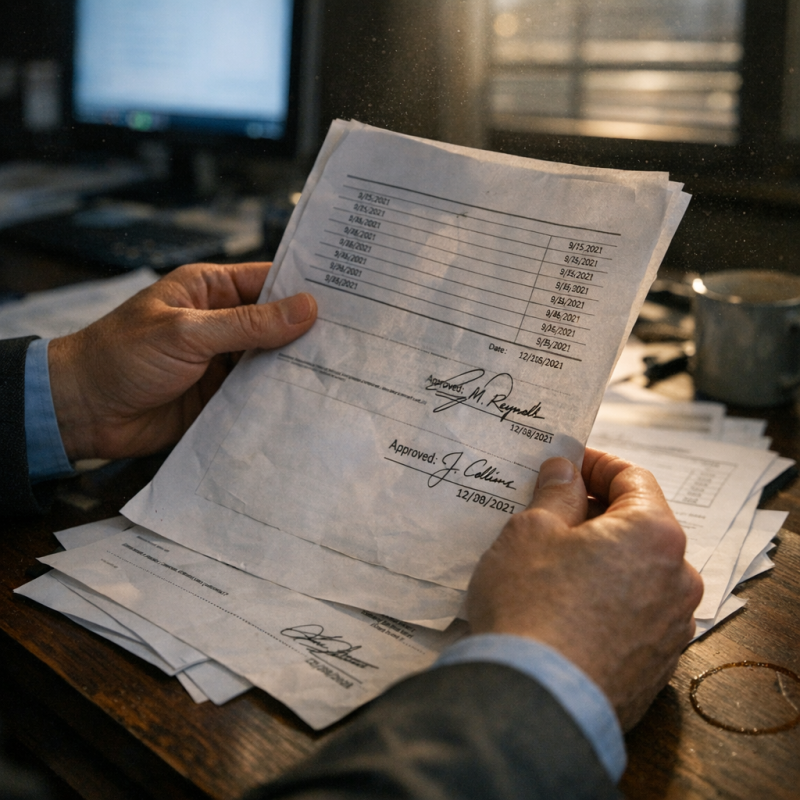 Image by FCT AI
The Performance Review
My quarterly performance review arrived Thursday morning. I opened the PDF expecting the worst after weeks of Martin's criticism. But the written evaluation was glowing. 'Exceptional attention to detail.' 'Consistently exceeds expectations.' 'Valuable asset to the team.' Overall rating: four out of five. I stared at the screen, confused. This didn't match anything Martin had said to me in person. Just yesterday he'd called my project timeline 'concerning' in front of three colleagues. Last week he'd questioned my 'commitment level' during a team meeting. Two weeks ago he'd implied my work quality was slipping. But this official document praised everything. I printed it out, added it to my growing evidence folder. Then I understood what I was looking at. He was building a paper trail—positive enough to avoid HR flags, but he was poisoning the team's perception of my work.
 Image by FCT AI
Greg's Visit
Greg appeared at my cubicle Monday afternoon, leaning against the partition with coffee in hand. I'd met him twice before at company events—senior director from logistics, friendly enough, one of those guys who actually remembered your name. 'Alex, right?' he said, smiling. 'I wanted to tell you, your work came up in last week's cross-departmental meeting. The reporting structure you built? Absolute game-changer for our quarterly reviews.' I blinked at him, startled. 'Thank you. That's really good to hear.' 'Martin was singing your praises,' Greg continued. 'Said you were one of the strongest coordinators he'd ever worked with. Real asset to the company.' I kept my expression neutral, but my mind was racing. Martin had been in that meeting praising me? While here, in private, he'd spent weeks questioning my competence? Greg chatted for another minute about integration possibilities, then headed off. I sat there, staring at my screen, pieces clicking into place. The glowing performance review. The public praise in meetings I wasn't part of. The private criticism that left no witnesses. 'Martin speaks very highly of you,' Greg had said—and I realized the gap between his public and private personas was a strategy.
 Image by FCT AI
The Transfer Pattern
That night I spread eighteen months of transfer records across my dining table, color-coding them by date. I'd been so focused on the amounts and destinations that I hadn't looked at the timing. But once I laid them out chronologically, the pattern was impossible to miss. March fifteenth. April sixteenth. May seventeenth. June fifteenth. Every single month, a transfer went through. Sometimes the amounts varied—fifty thousand here, ninety thousand there—but the timing was consistent. I grabbed my laptop and pulled up the payroll schedule. My stomach dropped. Payroll processed on the twelfth of each month. The fraudulent transfers happened within seventy-two hours afterward, every single time. It wasn't random. It wasn't opportunistic. This was systematic, carefully planned, designed to blend in with legitimate financial activity. When dozens of transactions were moving through the system, who'd notice one more? I photographed the timeline I'd created, added it to my evidence folder. This showed sophistication. This showed long-term planning. This showed someone who understood how to hide in plain sight. Every month, like clockwork, within three days of payroll processing—as if he was using legitimate transfers as cover.
 Image by FCT AI
The Second Request
Tuesday morning I logged into the HR portal and navigated to the time-off request system. My hands were steady as I typed. Requested dates: May twentieth through May twenty-seventh. Reason: Personal travel, planned months in advance. I attached documentation—the flight confirmation, the hotel booking, both non-refundable. Then I routed it through the official approval chain: Martin as direct supervisor, HR for final authorization. The system generated an automatic timestamp and confirmation number. I screenshot everything. This wasn't like our hallway conversation that left no trace, or my email he could claim he'd never seen. This was in the company database now, tracked and logged. Martin would get an automated notification he couldn't ignore. HR would see if he delayed responding. Every action—approval, denial, or silence—would be documented with dates and digital signatures. I saved the confirmation email to three different folders. If he wanted to keep gaslighting me about this vacation, he'd have to do it on the record now, in a system designed for accountability. This time, Martin couldn't pretend the conversation never happened—it was timestamped in the system.
 Image by FCT AI
Escalation Email
His response arrived Thursday afternoon, four hours before the approval deadline. The subject line: 'RE: Time Off Request - Concerns.' My notification showed he'd copied Sandra from HR, Greg from logistics, and Rebecca who managed the adjacent department. I opened it with my jaw clenched. The email was six paragraphs long. He questioned my timing—we had quarter-end reviews approaching. He questioned my planning—why hadn't I mentioned this earlier, despite our multiple conversations about it? He questioned my priorities—did I understand the workload implications for my colleagues? Each paragraph was professionally worded, perfectly reasonable on the surface, but the subtext was clear: I was being selfish, short-sighted, uncommitted to the team. 'While I understand the need for personal time,' he wrote, 'the timing of this request raises questions about alignment with departmental priorities.' I read it three times, fury building with each pass. Then I saved it to my evidence folder with the others. He was attacking me, yes. But he was also creating a perfect paper trail of his own behavior, documenting every step of his retaliation. He copied three other managers—turning my simple request into a public performance of my supposed inadequacy.
 Image by FCT AI
David's Question
David caught me at the coffee station Friday morning, his expression more serious than I'd seen it. 'Alex, can I ask you something? About a transfer you helped process back in January?' My pulse quickened, but I kept my voice casual. 'Sure, which one?' He glanced around, then lowered his voice. 'Invoice number J-4782. Payment to Clearwater Solutions, sixty-eight thousand dollars. I'm doing some reconciliation work and I can't verify the vendor. Their business registration looks off.' I remembered that one. I'd entered it myself, flagged the weird vendor name, but Martin had approved it. 'Martin authorized it,' I said carefully. 'I processed it per his instruction.' David nodded slowly, making notes. 'And the supporting documentation? Do you remember what was attached?' 'Standard invoice and purchase order,' I said. 'I can probably find the original request if you need it.' He met my eyes for a long moment. Something in his expression told me he was seeing the same patterns I'd seen. 'I'm not accusing anyone,' he said carefully, 'but could you tell me who authorized this?'
 Image by FCT AI
The Deleted Email
I was searching for an old budget email Tuesday morning when I noticed something odd. Back in November, David had sent a thread questioning a quarterly variance—I remembered it because Martin had been unusually defensive in his response. I'd forwarded the whole conversation to my personal folder to reference later. But when I searched the company server now, that thread didn't exist. I tried different search terms. Checked David's sent folder—I had permission from a previous project. Nothing. I checked the archive system, the backup server. The entire conversation had been removed from company records. My hands started shaking as I opened my personal email folder. There it was. Five messages back and forth, David asking detailed questions about budget allocations, Martin providing increasingly vague answers, then suddenly declaring the matter resolved. Someone with server access had gone in and deleted it. Someone wanted that conversation erased. I screenshot every message, backed them up to two different cloud services. This wasn't just about covering up fraud anymore. This was active destruction of evidence. But I still had the forwarded copy in my personal folder—someone wanted that conversation erased.
 Image by FCT AI
One-on-One Meeting
The meeting invitation appeared Wednesday morning: 'Career Development Discussion - Martin & Alex.' Thirty minutes, blocked off for that afternoon, conference room B. No agenda attached. I stared at my calendar, trying to read between the lines. We'd never had a 'career development discussion' before. My actual performance review had happened three weeks ago. This was something else. At two o'clock I walked into the small conference room. Martin was already there, his laptop closed, hands folded on the table. Professional smile. 'Alex, thanks for making time. I wanted to have a more informal conversation about your trajectory here. Where you see yourself going.' I sat across from him, keeping my posture relaxed even as my mind raced. 'I'm happy in my current role,' I said carefully. 'Learning a lot.' 'Of course,' he said. 'But I also want to make sure you feel supported. That you feel comfortable here. That there are no concerns affecting your work.' His tone was casual, almost friendly. But his eyes were watching me too carefully. He closed the door behind me and I realized this wasn't a conversation—it was a test.
 Image by FCT AI
The Loyalty Question
Martin leaned back in his chair, maintaining that same casual posture. 'I want to be direct with you, Alex. If there were ever any concerns about how this department operates, or questions about decisions being made, I'd want to know. Open communication is essential.' My heartbeat was loud in my ears, but I kept my expression neutral. This was it—he was probing to see what I knew. 'I appreciate that,' I said. 'I think the department runs well.' 'And the financial processes? You work closely with those. Any irregularities you've noticed? Anything that seems off?' He said it so smoothly, like he was genuinely concerned about operational efficiency. I met his eyes and lied to his face. 'No, everything seems straightforward. The systems make sense.' Something flickered across his expression—I couldn't quite read it. Relief? Doubt? He nodded slowly, that professional smile returning. 'Good. That's good to hear. I just wanted to check in, make sure you're feeling confident with everything.' We talked for another ten minutes about meaningless development goals. But the real conversation had already happened. 'No concerns,' I said, meeting his eyes—and I saw something flicker there that might have been relief or suspicion.
 Image by FCT AI
Sarah the Intern
Martin introduced Sarah on a Tuesday morning with that same professional smile I'd come to distrust. She was twenty-six, fresh-faced, enthusiastic about learning financial operations. 'Sarah will be shadowing you for the next few weeks,' he said, his hand on her shoulder. 'I want her to get a comprehensive understanding of how our systems work.' I smiled and welcomed her, played the helpful senior colleague. But something felt off immediately. Most interns rotate through different team members, get exposure to various roles. Sarah was assigned exclusively to me. Every project I worked on, every file I accessed, every meeting I attended—she was there, taking notes in that careful, precise way. 'I want Sarah to learn from the best,' Martin said when I asked about the arrangement. His smile didn't reach his eyes. She asked good questions, the kind that showed she was actually paying attention. Maybe too much attention. I caught her watching me when she thought I wasn't looking, that thoughtful expression on her face like she was cataloging everything I did. 'I want Sarah to learn from the best,' Martin said with a smile—but I wondered if she was there to watch me.
 Image by FCT AI
The Backup Plan
I spent that weekend creating insurance. Three encrypted USB drives, each containing complete copies of everything I'd found—the spreadsheets, the invoices, the vendor confirmations, all of it. I used military-grade encryption, the kind that would take years to crack even with serious resources. The first drive went into a safe deposit box at a bank across town, one I'd never mentioned to anyone at work. The second went to my brother in Seattle with strict instructions to keep it secure and unopened unless I specifically asked for it. The third I mailed to myself at my parents' address in Maine, marked 'Important Documents—Do Not Open.' It felt paranoid, excessive even. But Martin had already shown he could make things disappear—reports, files, entire data trails. I wasn't going to let him make the evidence disappear too. Each backup was completely independent, stored in a different location, accessible through different means. If something happened to me or my access was revoked, the evidence would still exist.
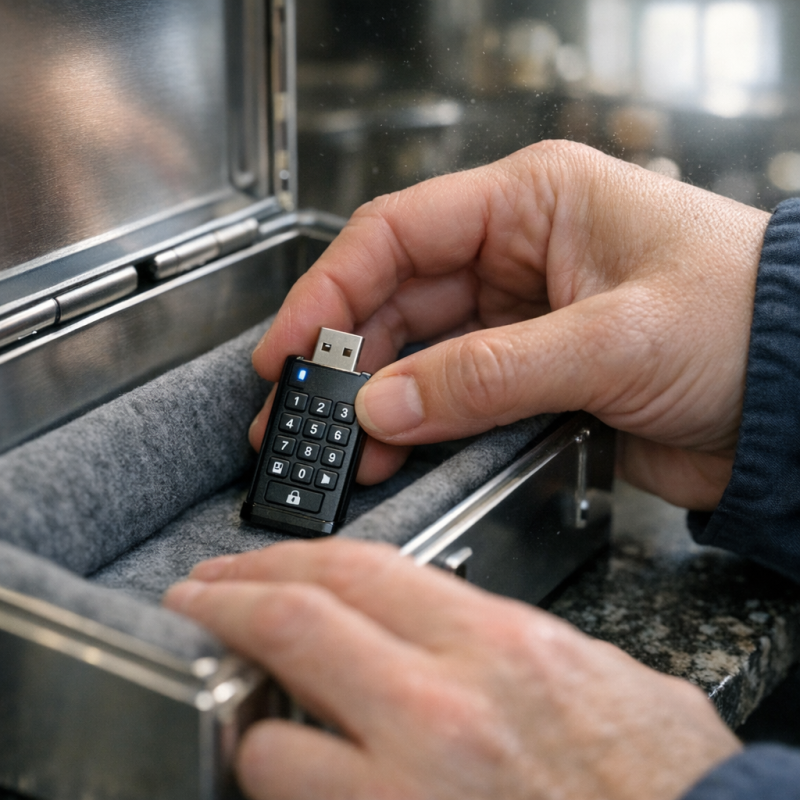 Image by FCT AI
Jennifer's Resignation
Jennifer made the announcement in the break room, trying to sound casual about it. She'd accepted a position at a consulting firm, better title, better pay. 'It's just time for a change,' she said, but her eyes told a different story. Everyone congratulated her, asked questions about the new role. Martin appeared just long enough to offer his best wishes, that professional mask firmly in place. After he left, the conversation continued, but Jennifer caught my eye across the room. Later, when I was refilling my coffee and the break room had mostly cleared, she moved close enough that our shoulders almost touched. Her voice was barely above a whisper, so quiet I almost missed it. 'Get out while you can.' I turned to look at her, but she was already walking away, her expression carefully neutral. She didn't elaborate, didn't explain. She didn't need to. The message was clear—she knew something was wrong, something bad enough that she was abandoning ship. And now I was losing the only person in the office who might have had my back. 'Get out while you can,' she whispered when no one else was listening.
 Image by FCT AI
The Missing Report
The quarterly efficiency report I'd submitted on Monday had vanished by Thursday. Not archived, not moved to a different folder—completely gone from the shared drive. I checked the deletion logs, the version history, every backup location. Nothing. It was like the file had never existed. I pulled up my sent emails, found the submission confirmation I'd sent to Martin. 'Quarterly report attached for your review.' Sent 9:47 AM Monday. And there it was—the read receipt. Opened Monday at 10:23 AM. I printed the receipt before it could disappear too. When I asked Martin about it in the hallway, his expression was perfectly confused. 'I never received any quarterly report from you, Alex. Are you sure you sent it?' I showed him the email thread on my phone. He frowned, scrolling through. 'That's strange. The attachment isn't showing up on my end. Must be a technical issue. Can you resend it?' His tone was concerned, helpful even. But I was looking at the read receipt in my other hand, the timestamp clear as day. When I asked Martin about it, he said he never received it—but I had the read receipt proving he'd opened it.
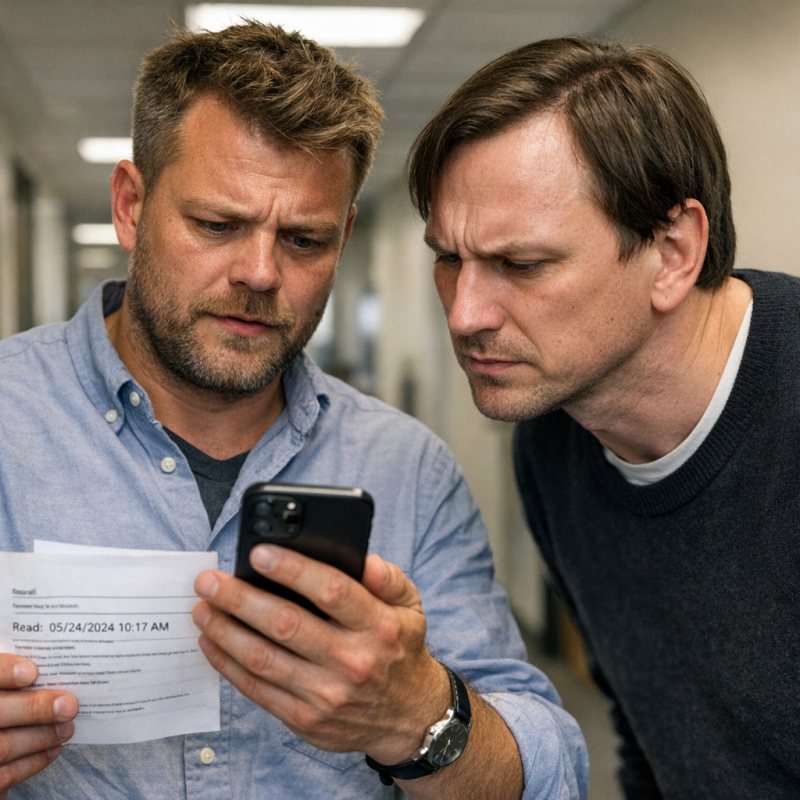 Image by FCT AI
Sarah's Questions
Sarah started asking questions during our third week together. Innocent at first—where did I keep reference materials, how was the archive organized. Then they got more specific. 'Where are the original vendor contracts stored?' she asked, pulling up a file I was working on. 'And do you have access to the payment authorization records too?' I answered carefully, keeping my tone educational. 'Most contracts are in the database. Payment records are in the finance system.' She nodded, making notes. 'And you can access both? That's convenient for cross-referencing.' The way she said it—not quite a statement, not quite a question. Like she was confirming something she already suspected. Over the next few days, she kept circling back. What level of system access did I have? Which folders could I view? How far back did the historical records go? Each question felt calculated, too precise to be casual curiosity. She wasn't learning how to do the work. She was mapping out exactly what I could see, what I could access, what I might have already found. The questions felt too specific, too focused—like she was mapping out exactly what I had access to.
 Image by FCT AI
The Audit Announcement
The email came from corporate on a Wednesday afternoon. 'Routine Financial Audit Scheduled—All Departments.' Standard language about compliance, transparency, operational excellence. The audit would begin in six weeks, conducted by an external firm. All financial records from the past three years would be reviewed. I read it twice, my heart rate picking up. This was it—the external scrutiny that could expose everything I'd found. I glanced across the office toward Martin's door. Through the glass wall, I could see him at his desk, staring at his computer screen. His jaw was tight, muscles working like he was grinding his teeth. As I watched, he ran both hands through his hair, a gesture I'd never seen from him before. His usual composure had cracked, just for a moment. He stood abruptly, paced to his window, then back to his desk. His movements were jerky, tense. When he picked up his phone, I could see his knuckles were white around it. Martin's jaw tightened when he read the message, and for the first time, I saw something close to fear in his expression.
 Image by FCT AI
Midnight Work Session
I'd forgotten my laptop charger at my desk, didn't realize until I got home that evening. It was past eleven when I drove back to the office, the parking garage nearly empty. Just two cars—mine and Martin's BMW. The floor was dark except for the emergency lighting and one office at the end of the hall. Martin's. I could see him through the glass wall from fifty feet away, hunched over his desk with files spread everywhere. Not his usual organized workspace—this was chaos. Papers scattered, folders stacked haphazardly, his computer screen casting blue light across his face. He was moving frantically, pulling documents from one pile, scanning them, tossing them aside. At one point he pressed both palms against his desk and just stood there, shoulders tight with tension. I'd never seen him like this—unguarded, almost frantic. The careful professional mask completely gone. I stood in the darkened hallway, far enough back that the emergency lighting wouldn't give me away. Thirty seconds I watched him, maybe more. Then I backed away slowly, retrieved my charger from my cubicle in the dark, and left. He didn't notice me in the hallway, and I watched him through the glass for thirty seconds before backing away silently.
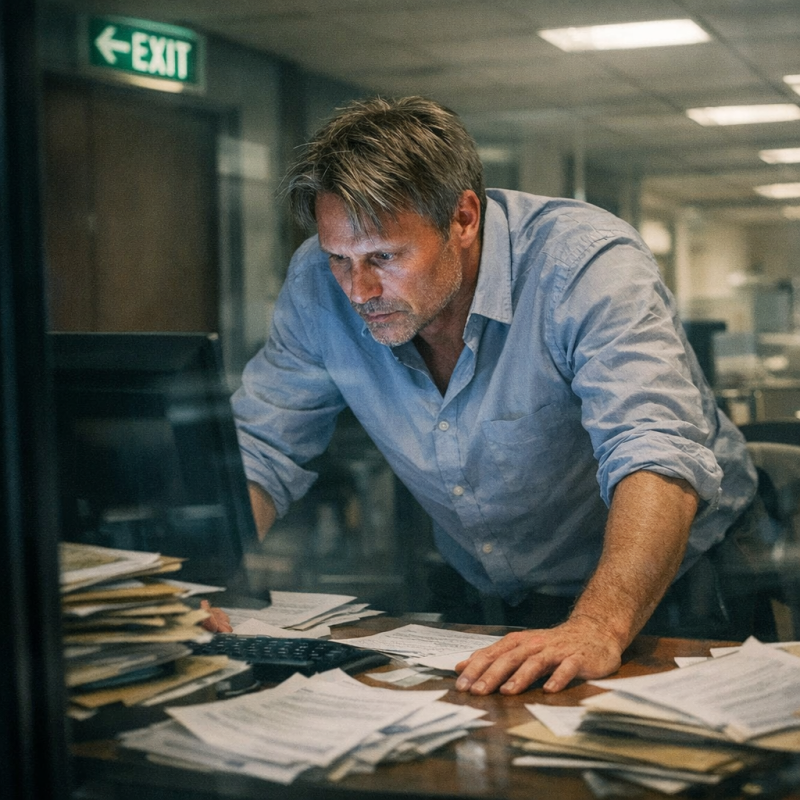 Image by FCT AI
David's Warning
David caught me by the elevator Friday morning, his expression serious in a way that made my stomach drop. 'Got a minute?' We stepped into an empty conference room, and he closed the door. 'Some flags are being raised internally,' he said quietly. 'Ahead of the audit. Financial inconsistencies in transaction processing.' My throat went dry. 'What kind of inconsistencies?' 'The kind that involve payment authorizations and vendor accounts. The kind that might look bad for whoever processed them, even if they were just following instructions.' He wasn't looking at me directly, studying the table instead. 'I don't know the details yet, but I wanted to give you a heads up. You process a lot of those transactions.' The implication hit me like cold water. They were preparing to make someone take the fall, and I was the obvious candidate. The person with access, with knowledge, with fingerprints all over the paperwork. Martin could position me as either an accomplice or a dupe, depending on which story played better. 'If you processed any of those transactions,' he said quietly, 'you might want to review your records very carefully.'
 Image by FCT AI
The Revised Timeline
Martin called a department meeting Monday afternoon, clipboard in hand like he was about to read us a proclamation. 'We need to accelerate our timeline,' he announced. 'The audit team wants everything wrapped up two weeks earlier than planned.' I watched faces around the table go pale. Sarah started frantically scribbling notes. Two coordinators from other teams looked like they might cry. 'I know it's aggressive,' Martin continued, his tone suggesting he didn't care if it was aggressive. 'But this is about showing the auditors we're proactive, organized, capable.' He started distributing revised deadlines—reports that were due in four weeks now due in two, presentations that needed complete overhauls by Friday. The workload was impossible. Literally impossible, unless we worked sixteen-hour days and stopped sleeping entirely. I stared at the revised timeline, my exhaustion giving way to a cold analytical clarity. This wasn't about being proactive. This was about burying us so deep in deliverables that we'd have no time to think, no energy to question, no bandwidth to look at anything except the immediate crisis in front of us. He was burying us in work—making sure no one had time to look closely at anything else.
 Image by FCT AI
The Email Chain
I found it by accident while searching my email for an old approval template. A forwarded chain from eighteen months ago, before I'd even started. Subject line: 'RE: Scheduling concerns.' My predecessor, Jennifer, had requested time off for a family emergency. Martin's response made my blood run cold. 'This demonstrates a concerning lack of commitment during a critical period. We need team members who prioritize departmental needs.' She'd pushed back, explaining it was her sister's surgery. His next email: 'Your loyalty to this department is in question. I need to know you're committed to being here when it matters.' The phrasing felt weirdly familiar. I scrolled through my own recent emails from Martin, the ones about my doctor's appointments, about leaving early that one Tuesday. 'Concerning pattern of unavailability.' 'Question your commitment to the team.' 'Need to see prioritization.' My hands started shaking. The same phrasing, the same accusations of disloyalty—it was almost word-for-word what he'd said to me.
 Image by FCT AI
Rachel's Office
I scheduled the meeting under 'Professional Development Discussion,' which sounded innocuous enough. Rachel's office was tucked in the HR wing, warm and oddly calming compared to the rest of the building. She offered coffee. I accepted, mostly to have something to do with my hands. 'So,' she said, settling behind her desk. 'You're interested in development opportunities?' I started with the script I'd rehearsed—talked about wanting to understand growth paths, skill development, maybe some leadership training. She nodded, taking notes, but her eyes were watching me in a way that suggested she knew this wasn't really about professional development. I tried to gauge her receptiveness. Asked careful questions about how HR supports employees through 'challenging work environments.' How they handle 'communication issues with management.' Rachel's pen stopped moving. She set it down slowly, leaning back in her chair, and I could see something shift in her expression—a kind of careful awareness. 'Before we talk about your development,' Rachel said slowly, 'is there anything else you need to discuss?'
 Image by FCT AI
The Personnel Files
I told Rachel I needed to review general personnel policies, which was technically true. She directed me to the shared HR documentation system, gave me a temporary access code. I started with termination procedures, employee retention statistics, standard stuff. Then I pulled up our department's history. The data was all there, clinical and impersonal. Names, dates, position titles, lengths of employment. I started highlighting the Operations Coordinator role specifically—my role, the position Martin supervised directly. Jennifer had lasted seven months. Before her, someone named Marcus: eight months. Before Marcus, a woman named Diane: nine months. I kept scrolling back. Four coordinators in five years—and every one of them left within nine months of starting. The other positions in the department showed normal retention. Project managers stayed for years. Analysts moved up or transferred after reasonable tenures. But coordinators? They vanished like clockwork, every single one of them cycling through in under a year, leaving abruptly, no forwarding information in most cases.
 Image by FCT AI
The Second Predecessor
LinkedIn gave me Marcus's contact information. He worked at a competitor now, seemed to be doing well based on his profile. I crafted the message carefully—identified myself as his successor, mentioned I was 'navigating some challenges' and wondered if he had any advice about working with Martin's management style. I tried to sound casual, professional, just someone reaching out for mentorship. Sent it before I could overthink it. His response came back the next morning. I opened it expecting maybe some diplomatic corporate-speak, perhaps a polite decline to comment on a former employer. Four words appeared on my screen: 'Get out. Trust me.' That was it. No elaboration, no explanation, no 'let's schedule a call to discuss.' Just those four words, blunt and immediate, like someone shouting a warning. I replied asking if we could talk, offering to meet for coffee, anything. The message showed as 'read' within an hour. He never responded. Her response came back in four words: 'Get out. Trust me.'
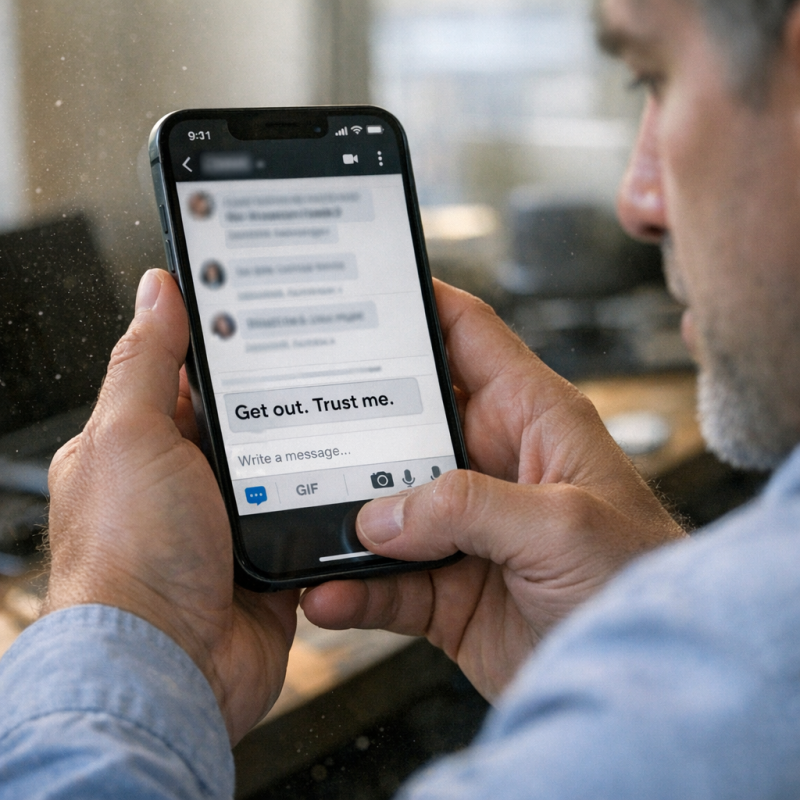 Image by FCT AI
Sarah's Slip
Sarah stopped by my desk Thursday with questions about a vendor reconciliation. We were talking through the process when she mentioned needing to cross-reference with 'that Clayton Industries file you processed last month.' I went still. I'd never told Sarah about Claytonville Industries—that was one of the suspicious vendors I'd been quietly investigating, and I'd been extremely careful not to mention it to anyone. 'How do you know about that file?' I asked, keeping my voice neutral. Her face went completely pale. Like someone who'd just realized they'd said something they absolutely shouldn't have. 'Oh, I... I think Martin mentioned it in passing,' she stammered. 'When he was explaining vendor management processes.' Martin wouldn't have mentioned a random vendor file in passing. He definitely wouldn't have mentioned that specific file—not unless he was monitoring exactly which files I was accessing, which transactions I was reviewing. Sarah was still standing there, looking like she wanted to sink through the floor. When I asked how she knew about that file, she went pale and said Martin had mentioned it in passing.
 Image by FCT AI
The Final Piece
I spent the weekend building a spreadsheet that probably looked insane to anyone who didn't understand what I was tracking. One column: coordinator departure dates. Another column: suspicious financial transfers from my analysis. I started mapping them, looking for any correlation between turnover and the fraud patterns I'd identified. The correlation wasn't just strong—it was perfect. Jennifer left in March two years ago. The suspicious transfers spiked dramatically that April, May, and June—then dropped back to baseline in July when Marcus started. Marcus left in February. Transfers spiked again in March, April, May. Normalized in June when Diane started her brief tenure. The pattern repeated with mechanical precision, every single cycle. During transition periods, when no coordinator was in place or a new one was still learning the systems, the fraudulent transfers increased. Once someone competent was settled in the role, actually processing transactions and potentially noticing irregularities, the transfers dropped back down. Every time someone left, the transfers increased for three months—until a new coordinator started and the pattern normalized.
 Image by FCT AI
The Pattern Revealed
I sat there staring at the spreadsheet, and suddenly everything clicked into horrible, perfect clarity. Martin wasn't just a bad boss. He wasn't randomly cruel or arbitrarily hostile. Every single thing he'd done to me—and to Jennifer, Marcus, Diane, all the others—had been completely intentional and strategic. He needed coordinators competent enough to process the legitimate transactions and maintain appearances. But the moment someone in that role became too competent, too observant, asked too many questions or showed signs of actually understanding the financial systems? They became a problem. So he systematically drove them out. Created hostile environments, manufactured conflicts, made their lives so miserable they'd quit before they could piece together what he was doing. The impossibly high standards, the constant criticism, the psychological pressure—it wasn't management incompetence. It was elimination strategy. He'd done it four times before me, probably more before that. I wasn't being bullied—I was being eliminated as a problem before I could expose him.

The Decision Point
I had two choices, and I understood them both perfectly. The safe option was right there—quit, take my evidence, and walk away like Jennifer, Marcus, Diane, and probably a dozen others before them. Get out with my sanity intact. Find another job. Move on with my life. Martin would keep doing what he was doing, sure, but that wouldn't be my problem anymore. Nobody would blame me for choosing survival. The other option was messier. Stay. Report everything. Risk retaliation, risk my career, risk becoming the cautionary tale that future coordinators whispered about. He had power, connections, and eighteen months of practice making people disappear without consequence. The smart play was obvious. But then I thought about Jennifer's face when she'd told me to leave before he destroyed me too. I thought about Marcus, who'd been so good at his job that he'd had to be eliminated. I thought about how many more people would sit at my desk after I left, how many more careers Martin would systematically dismantle to protect his scheme. Every other coordinator had chosen survival—but they'd left him free to keep stealing and destroying careers.
 Image by FCT AI
The Comprehensive File
I spent the next three days building the most comprehensive file I'd ever assembled. Every suspicious transaction got its own section, cross-referenced with dates and amounts. Every shell company transfer, every falsified approval, every piece of the financial puzzle laid out in chronological order. I documented the pattern of coordinator turnover with hiring dates, departure dates, and the escalation of hostile incidents that preceded each resignation. Jennifer's experience. Marcus's story. Diane's sudden exit. My own eighteen months of systematic harassment, complete with timestamps on emails and witness names for verbal incidents. I organized it all into a clear narrative that anyone could follow, even without an accounting background. The fraudulent transactions told one story. The pattern of retaliation against competent coordinators told another. Together, they showed exactly what Martin had been doing and why. I included copies of everything—original documents, email chains, transaction records, policy violations. I backed it all up in three different locations. By the time I finished, I had forty-seven pages of documented evidence. Eighteen months of embezzlement, four destroyed careers, and one very clear pattern of retaliation—all documented and ready.
 Image by FCT AI
The HR Meeting Request
I sent the email to Rachel at 6 PM on a Wednesday, when I knew she'd still be at her desk but Martin would already be gone. The subject line was simple: 'Urgent Meeting Request - Serious Compliance Concerns.' I kept the message brief and professional. I needed to discuss matters involving financial irregularities and workplace conduct that required immediate senior-level attention. Could she please arrange a meeting with herself and the senior HR director at their earliest convenience? Confidential and time-sensitive. I hit send before I could second-guess myself. Rachel responded within ten minutes. She could meet tomorrow morning at 9 AM with Margaret Chen, the senior director. The conference room on the executive floor. I should bring any documentation I felt was relevant. Her tone was professional but I could sense the heightened attention—'serious compliance concerns' were words that made HR directors sit up straight. I replied confirming the meeting, then sat back and stared at my screen. Tomorrow morning at 9 AM. Roughly fifteen hours from now. The meeting was scheduled for 9 AM the next morning—and there would be no turning back after I walked through that door.
 Image by FCT AI
The Morning Walk
I arrived at the office at 7:30 AM, a full ninety minutes before the meeting. The parking lot was mostly empty, just the usual early birds and people who treated work like their entire identity. I sat in my car for a few minutes, the evidence file on the passenger seat in a plain manila folder. It looked unremarkable. Just another office document. Inside it was enough to end Martin's career and possibly send him to prison. My hands were steady. That surprised me. I'd expected nerves, maybe even panic as the moment approached. Instead, I felt this weird calm, like I'd already made every decision that mattered and now I was just following through on the inevitable conclusion. I grabbed the folder and walked toward the building. The morning air was cool. My badge beeped as I scanned in. The lobby was quiet except for the hum of the HVAC system. I took the elevator to the third floor instead of going straight to the executive level. I wanted to see my desk one more time before everything changed. And I wanted to see if Martin was here yet. I saw Martin's car in the parking lot and felt nothing—no fear, no anger, just absolute certainty.
 Image by FCT AI
The HR Conference Room
Margaret Chen was already in the conference room when I arrived at 8:55 AM. She was in her mid-fifties, with steel-gray hair and the kind of presence that came from three decades of handling corporate crises. Rachel arrived a minute later, closing the door behind her. They both sat across from me, professional but clearly focused. I didn't waste time. I opened the folder and started walking them through it, section by section. The suspicious transactions first—dates, amounts, shell companies. I showed them how the patterns lined up, how the money moved through accounts that shouldn't exist. Margaret took notes. Rachel's expression stayed neutral at first, the way HR people are trained to look. Then I moved to the coordinator turnover pattern. Four people in eighteen months, all of them competent, all of them pushed out after they started asking questions or showing signs of understanding the financial systems too well. I showed them the documentation of harassment, the impossible standards, the systematic elimination strategy. That's when Rachel's expression started to shift. And then I showed them the shell company transfers, the falsified approvals with Martin's digital signature, the complete scope of the embezzlement. Rachel's expression shifted from professional concern to genuine shock as I showed her the shell company transfers.
 Image by FCT AI
The Investigation Begins
The meeting lasted two hours. By 11 AM, Margaret had made three phone calls I wasn't privy to, speaking in low tones outside the conference room. Rachel stayed with me, asking clarifying questions, taking copies of key documents. She apologized twice—once for not seeing the pattern earlier, once for not protecting the previous coordinators. I told her I understood. How could anyone see it without the complete picture? By noon, there were people in suits I'd never seen before moving through the executive hallway. Compliance team, I assumed. Margaret returned and asked me to remain available but to work from the small office next to HR rather than my usual desk. She wanted me separated from the situation while they conducted their initial assessment. 'Initial assessment' meant they were taking it seriously. I moved my laptop and waited. From the HR floor, I couldn't see much, but I could feel the energy shift in the building. People walked faster. Voices were quieter. Something was happening. Around 2 PM, I saw two senior vice presidents I recognized from company meetings heading toward the executive conference room with Margaret. I watched from my desk as people moved between offices with increasingly serious expressions—the machine was in motion.
 Image by FCT AI
Martin's Silence
Martin came in at his usual time, 9:15 AM, like it was any other Thursday. I watched from the HR floor as he walked past the elevator bay toward his office, coffee in hand, checking his phone. He had no idea. That was the strangest part—watching him move through his normal routine while the investigation was already active, while counsel was reviewing my evidence, while senior executives were being briefed on eighteen months of embezzlement and systematic harassment. He probably had emails to answer, reports to fabricate, transactions to approve. Maybe he was already planning how to push me out, what impossible task he'd assign next. From my temporary desk, I could occasionally see him through the glass walls when he moved between offices. His expression was normal. Confident, even. He attended a regular department meeting at 11 AM. Had lunch at his desk at 1 PM. Checked in with his team around 2:30. Just another day of maintaining the facade, managing his territory, keeping everyone under control. He didn't acknowledge me, but then again, he wouldn't have expected me to be on the HR floor. He didn't know I was watching. He still thought he could control the narrative—he had no idea it was already over.
 Image by FCT AI
The Summons
The email came at 3:47 PM. I saw it pop up on Martin's screen from across the office—I'd positioned myself where I had a clear sightline. He read it, and his posture changed slightly. Just a small shift, but I noticed. At 3:55, he stood up, straightened his tie, and grabbed a notepad like he was heading to a routine meeting. But I knew better. I'd seen the calendar invitation Margaret had accidentally left visible when she'd stepped out—Conference Room A, 4 PM, attendees including the CFO, General Counsel, and VP of Human Resources. Martin walked toward the executive floor with that same confident stride he always had. The one that said he owned every room he entered, that he was untouchable, that he'd outmaneuvered everyone who'd ever tried to question him. He passed the HR floor on his way to the elevator. I'd stepped into the hallway, folder still in my hand, watching him approach. For eighteen months, I'd been invisible to him unless he needed someone to berate or eliminate. Now, for just a second, his eyes found mine. He walked past my desk on the way to the conference room, and for just a moment, our eyes met—and he knew.
 Image by FCT AI
The Escort
It happened two days later, just before 11 AM. I was at my desk when I saw them coming—Martin walking between two security officers, carrying one of those sad little cardboard boxes they give you when you're being let go. He had his desk photos in there, a coffee mug, maybe a few files. That was all he got to take. The whole office went silent as they passed through. You could feel everyone trying not to stare while absolutely staring. Martin kept his eyes forward, his face completely blank, like he was walking through a lobby he'd never seen before. I'd imagined this moment a thousand times during those long months of documentation and fear. I'd pictured feeling triumphant, vindicated, maybe even smug. But watching him walk past—this man who'd terrorized me, who'd stolen millions, who'd tried to erase me from the company—I just felt tired. Relieved, yes. But also tired. The elevator doors opened. He stepped inside. The security officers flanked him on either side. And in that entire walk through the office, past all the people whose careers he'd controlled, whose lives he'd impacted, he didn't look at anyone as he walked through the office—especially not at me.
 Image by FCT AI
The Aftermath
The audit started within 48 hours. External forensic accountants, internal investigators, a complete review of procurement processes going back five years. They found everything I'd found, plus patterns I'd missed—vendors that didn't exist, contracts with inflated costs, kickbacks disguised as consulting fees. The company recovered about $3.8 million of the estimated $4.5 million Martin had siphoned. Not bad, considering how well he'd hidden it. They implemented new oversight procedures, separated approvals across departments, brought in an ethics officer. Corporate actually did something right for once. I got called into a meeting with the new interim VP—they'd promoted someone from another division. She thanked me formally, professionally. There was no parade, no announcement, no public recognition. That was fine. I didn't need it. But later that week, Rachel stopped by my desk. She closed the door to the small conference room and looked at me directly. 'I know you can't talk about it,' she said quietly. 'But I see the timeline. I see what you did.' She paused. 'They're saying your documentation probably saved us from millions more in losses. Just... thank you.' Rachel told me privately that my evidence had likely saved the company from millions more in losses.
 Image by FCT AI
The Vacation
Three weeks later, I submitted my vacation request. The same two weeks I'd asked for back when this whole thing started, back when Martin had warned he'd fire me if I didn't cancel. This time, HR approved it within an hour. No questions, no pushback. Just a simple confirmation email with a note: 'Enjoy your time off—you've earned it.' I didn't go anywhere exotic. Just drove to a cabin upstate, near a lake my family used to visit when I was a kid. I brought books I'd been meaning to read for months. I sat on the porch and watched the water. I slept for ten hours straight the first night. On the second day, I realized I'd been checking my phone constantly out of habit—looking for emergency emails that weren't coming, scanning for signs of retaliation that would never arrive. So I turned it off. Just pressed the power button and set it in a drawer. And that simple act—disconnecting, knowing I could disconnect without consequences—hit me harder than I expected. My hands were shaking slightly as I put the phone away. As I turned off my phone for the first time in two years, I realized how much weight I'd been carrying.
 Image by FCT AI
The Smile
When I came back to the office, everything looked the same but felt different. My desk, my coffee mug, the view from my window—all unchanged. But I was different. I kept thinking about that moment in Martin's office when he'd said my job might not last, when I'd smiled. People had asked me about it afterward—why I'd smiled, what I'd been thinking. For a while, I told them I was just relieved to know what I was dealing with. But sitting at my desk that first day back, watching the morning light come through the windows, I finally understood the real reason. That smile wasn't about revenge. It wasn't even really about protecting myself, though that's what I'd told myself at the time. It was about refusing to be erased. About choosing to exist, to matter, to push back when someone tried to make me disappear. Martin had built his whole operation on people being too scared to question him, too intimidated to look too closely. And maybe he'd gotten away with it for years because of people like me—people who kept their heads down and didn't make waves. But I'd made waves. I'd stopped him. I hadn't just protected myself—I'd stopped him from doing it to anyone else.
 Image by FCT AI