The Good Old Days
Look, I know everyone says their workplace used to be better 'back in the day,' but ours actually was. Our old manager, Michael, ran the department like a human being who remembered what it was like to not be in charge. He trusted us to do our jobs, didn't micromanage every bathroom break, and genuinely seemed to believe that treating people with basic dignity made them work harder. Wild concept, right? We had flexible hours as long as projects got done. We could take lunch when we needed it. If you had a doctor's appointment, you just told him and left—no interrogation, no guilt trip, no weird performance review six months later where it somehow came up again. The office felt like a place where adults worked, not a daycare center for people management thought might steal office supplies if left unsupervised. I remember thinking how lucky we were compared to friends who worked at other companies, places with those soul-crushing 'cultures' that made you want to update your résumé during lunch. Then Michael retired, and everything changed.
 Image by FCT AI
Meet Greg
Greg showed up on a Monday morning wearing a smile that looked like he'd practiced it in the mirror that morning. You know the type—too wide, held a second too long, with eyes that didn't quite match the enthusiasm. He did this whole introduction speech about 'synergy' and 'elevating our performance metrics' that felt like he was reading from a TED Talk he'd watched on the commute over. The words coming out of his mouth didn't sound like things a person would actually say in conversation, more like corporate mad libs. 'I'm really excited to ideate with you all about our growth trajectory,' he said, and I watched Jenna physically cringe two desks over. But okay, fine. New managers are always awkward on day one. They overcompensate. They try too hard. I've seen it before. What stuck with me, though, was what happened after lunch. He spent his first afternoon walking the floor, stopping behind each of our chairs, staring at our screens like he was memorizing something.
 Image by FCT AI
Productivity Theater
The first team meeting happened three days later, and Greg came armed with a PowerPoint that would've made a motivational speaker weep. He talked about 'optimizing our temporal resource allocation' and 'maximizing output per labor unit' while gesturing at charts that measured absolutely nothing relevant to our actual work. We're a customer service department. Our metrics are response times and resolution rates. But Greg kept circling back to something he called 'presence efficiency'—which, as far as I could tell, meant being visible at your desk as much as humanly possible. He used the phrase 'butts in seats' unironically. Twice. The whole presentation felt like he'd copied it from some other company in some other industry and just Find-And-Replaced the department name. I kept waiting for someone to ask what any of this had to do with helping customers, but everyone just nodded along, probably assuming this was just new-manager posturing that would fade after a few weeks. Jenna whispered to me during the meeting: 'Is he talking to us or reading from a script?'
 Image by FCT AI
The Clock Watching Begins
It started small. You'd get up to refill your coffee, and you'd catch Greg glancing at his watch. Come back five minutes later, and he'd look at it again, then scribble something in that stupid little notebook he carried everywhere. At first, I figured I was being paranoid—maybe he was just checking the time like a normal person. But then it kept happening. Every. Single. Time. Someone stood up, Greg's eyes would flick to the clock on the wall, then to his notebook. It wasn't subtle, but it also wasn't obvious enough to call out without sounding crazy. Like, what was I supposed to say? 'Hey Greg, stop looking at clocks'? I started testing it, getting up at random times just to see if he'd react. He always did. Same glance, same scribble, same weird little nod to himself like he was confirming a hypothesis. I thought it was paranoia until three different people mentioned noticing the exact same thing.
 Image by FCT AI
The Invisible Leash
Here's where it got really weird. You'd come back from a ten-minute break, settle back into your chair, and before you could even put your headset back on, Greg would materialize at your desk. 'Hey, quick question'—except it was never quick, and it was never actually a question. He'd need you to find some random email from two weeks ago, or explain a process you'd already documented, or review something that absolutely could have waited until the end of the day. Every single time you returned from being away. It was clockwork. I started keeping track in my head. Break at 10:15, Greg appears at 10:28. Lunch from 12:00 to 12:45, Greg needs 'just a minute' at 12:50. Bathroom at 2:30, he's hovering by 2:37. The timing was too consistent to be coincidence, but random enough that you couldn't prove a pattern if someone asked. And none of the tasks were urgent enough to justify the interruption. It was like he was training us—but for what, I couldn't figure out.
 Image by FCT AI
The Bathroom Meeting
Greg called an all-hands meeting on a Thursday afternoon with exactly one hour's notice, which already felt like a power move. We all filed into the conference room expecting some announcement about policy changes or new clients, but instead Greg dimmed the lights and pulled up a spreadsheet. 'I've been tracking our lost time,' he said, like he was revealing something scandalous. The spreadsheet showed timestamps—bathroom breaks, coffee runs, trips to the printer. He'd been logging everything. For weeks. He walked us through the data with this weirdly earnest tone, like he genuinely believed he was doing us a favor by pointing out that human beings occasionally need to pee during an eight-hour shift. Then he got to his point: accountability. 'Moving forward,' he said, 'we need to think critically about necessity versus habit.' He actually used the phrase 'bladder discipline.' I am not making that up. Jenna's mouth literally fell open. We all sat there in stunned silence, wondering if he was serious or testing our reactions.
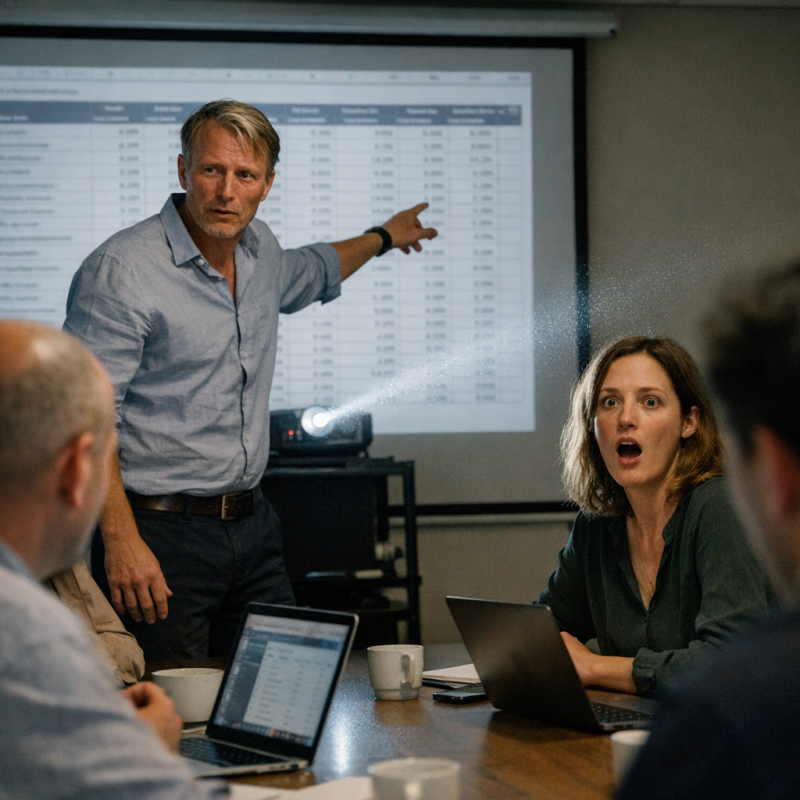 Image by FCT AI
The Morning Everything Changed
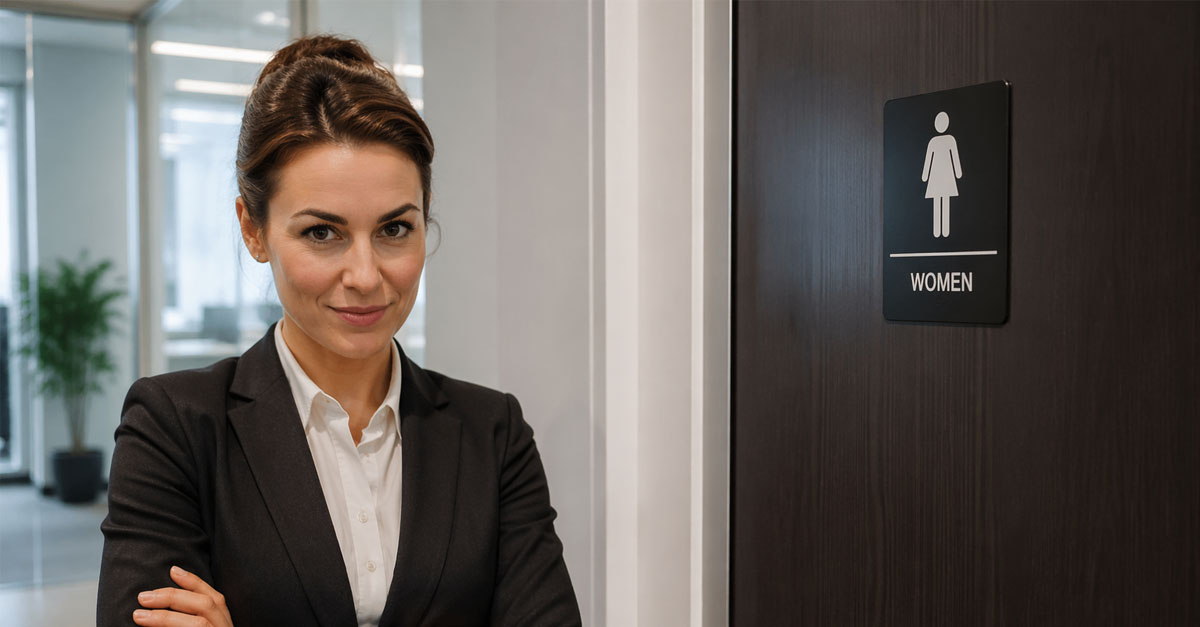
Monday morning, I walked into the building same as always, grabbed my coffee from the break room, and headed to my desk. About twenty minutes into checking emails, I needed the bathroom. Normal human function, right? I walked down the hall to the women's room and pulled the handle. Locked. Weird. I tried the one on the other side of the floor. Also locked. Then the single-stall near the kitchen. Locked. I stood there for a second, genuinely confused, wondering if there was some plumbing emergency nobody had mentioned. I walked back to my desk and saw Jenna standing in the hallway looking equally baffled. 'Are all the bathrooms locked for you too?' she asked. Turns out, every bathroom in our section was locked except one—the one directly across from Greg's office, positioned so you had to walk right past his window to reach it. At first we thought it was maintenance, but then someone asked Greg directly.
 Image by FCT AI
Greg's Explanation
Greg gathered us near his office with this infuriatingly calm expression, like he'd been expecting the question. 'It's a simple efficiency measure,' he said, holding up one hand like he was blessing us with wisdom. 'Multiple bathroom access points create unnecessary downtime and make accountability difficult to maintain. One centralized location reduces distractions and helps everyone stay focused.' He said it like it was the most reasonable thing in the world. Like he'd just explained why we organize files alphabetically. Someone asked about the other floors, and he shrugged. 'This is a pilot program for our department.' No apology. No acknowledgment that this was insane. Just corporate speak delivered with a straight face. Mark, who's usually pretty quiet, raised his hand. 'Is this even legal?' he asked. 'I'm pretty sure there are regulations about bathroom access.' Greg just smiled—not a friendly smile, but the kind that made your skin crawl. 'It's policy now,' he said.
 Image by FCT AI
The Walk of Shame
The first time I actually had to use that bathroom, I felt it. That slow, creeping dread as I stood up from my desk and realized I had no choice but to walk that hallway. You know that feeling when you're aware of every step you're taking? That's what it was like. Greg's office door was open—of course it was—and I could feel his eyes on me before I even got close. I tried to walk normally, tried to look casual, but how do you look casual when you're being forced to parade past your boss every time your bladder exists? I glanced over as I passed, just a quick look, and there he was. Sitting at his desk. Staring right at me. Not working, not typing, not on the phone. Just watching. And then—I swear I'm not making this up—he looked up, checked his watch, and wrote something down in a notebook.
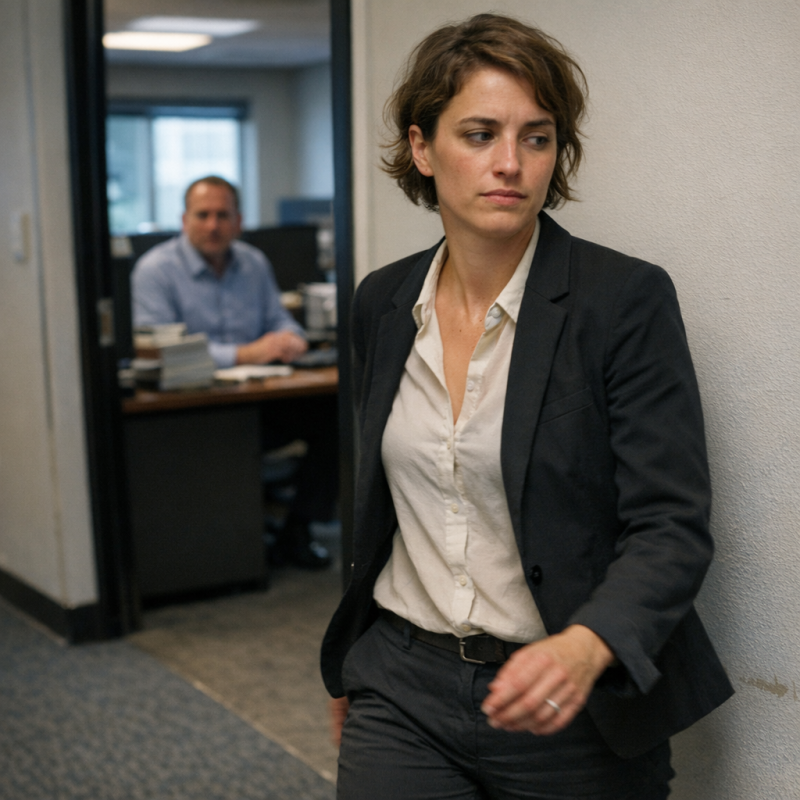 Image by FCT AI

History's most fascinating stories and darkest secrets, delivered to your inbox daily.
Coping Strategies
By the second day, we'd all started developing our little survival tactics. Some people started timing their bathroom breaks to coincide with Greg's meetings, which meant stalking his calendar like we were planning a heist. Others just held it as long as physically possible, which led to this weird collective discomfort you could feel in the air. Jenna told me she'd started walking to the coffee shop down the street just to use their restroom, which added fifteen minutes to her break and made her late coming back. 'Worth it,' she muttered, not looking at me. I tried drinking less water. Someone else brought in a giant thermos of coffee and then visibly regretted it by noon. We were all adapting, all finding our workarounds, all pretending this was sustainable. We'd become bathroom strategists, which is possibly the most depressing job skill I've ever developed. But the problem was, none of us could avoid that hallway forever.
 Image by FCT AI
The Stare
Then Greg changed tactics. At first, he'd just glance up when someone walked by—quick, casual, like he was checking the time. But by the third day, it became something else entirely. He started watching. Like, really watching. Making deliberate eye contact as you approached, holding it as you passed, following you with his eyes until you turned the corner. It was aggressive. It was intentional. And it was absolutely designed to make you squirm. I watched him do it to Mark, who looked straight ahead and pretended not to notice. I watched him do it to three other people in the span of an hour. And when it was my turn again, I felt my face get hot, felt that mix of embarrassment and rage that comes from being made to feel small for something completely normal. Jenna said it felt like he was daring us to complain.
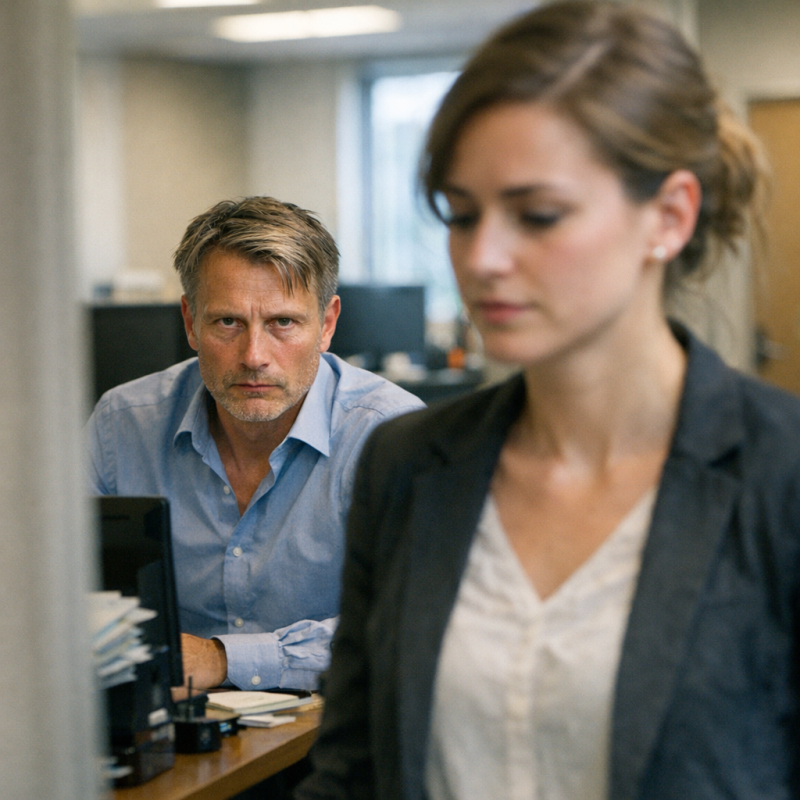 Image by FCT AI
Breaking Point Approaches
By day three, the whole office had this tense, crackling energy. You know when everyone's on edge and the smallest thing could set someone off? That's where we were. People were snapping at each other over nothing. Someone slammed a drawer so hard I jumped. The copy machine jammed and I heard actual cursing from the supply room. We were all uncomfortable, all irritable, all too aware of our own bodies in a way that made it impossible to focus on actual work. And the whispers had started. Quiet conversations by the coffee machine. Meaningful looks exchanged across desks. 'This is insane,' someone muttered behind me. 'There has to be something we can do,' someone else replied. I could feel something building, some kind of collective breaking point approaching, but nobody knew what to actually do about it. That's when Jenna pulled me aside and said, 'We need to do something about this.'
 Image by FCT AI
Jenna's Joke
We were standing by the windows, voices low, and Jenna had this look on her face I'd never seen before. 'You know what?' she said. 'If Greg wants to monitor our bathroom usage so badly, maybe we should give him something to actually monitor.' I snorted. It was such a perfectly bitter comment, the kind of dark humor we'd all been running on for days. But then she kept talking. 'I'm serious. What if we just... went? Like, constantly. Made it impossible for him to ignore. Made it so visible he'd have to acknowledge how insane this policy is.' I stared at her. She was turning it over in her head, I could see it, the joke becoming something real. 'Malicious compliance,' she said, testing the words. 'We follow his stupid rule so aggressively that it becomes his problem, not ours.' I laughed at first, but then I saw she wasn't joking anymore.
 Image by FCT AI
The Plan Takes Shape
We started quietly. Jenna talked to Mark at lunch. I pulled aside two people I trusted. 'Here's the thing,' I explained, keeping my voice low. 'We're not breaking any rules. We're just using the bathroom. Frequently. All of us. In rotation.' They got it immediately. That's the thing about workplace misery—it creates solidarity fast. Mark brought in three more people. Someone from accounting volunteered. By mid-afternoon, we had a group text going with twelve people, all committed. The plan was simple: every fifteen minutes, someone would get up and walk to the bathroom. Not running, not rushing. Just normal walking. Past Greg's office. Down the hall. Use the bathroom. Walk back. Legal. Necessary. Completely within our rights. 'We're just making the problem visible,' Jenna said, and I loved her for that framing. By the end of the day, we had twelve people committed to making Greg's life very, very visible.
 Image by FCT AI
The Night Before
That night, we finalized everything. Jenna created a schedule—nothing in writing, nothing in company email, just a shared understanding. I'd go first at 9:15. Mark at 9:30. Someone else at 9:45. We'd stagger throughout the day, keep it consistent, keep it visible. No coordination in the office. No obvious signaling. Just a steady, relentless stream of people exercising their basic human rights. I lay in bed that night staring at my ceiling, my heart doing this weird flutter thing. Was this crazy? Were we really doing this? What if it backfired? What if Greg retaliated? But then I remembered his face as he watched us, that deliberate eye contact, that notebook. The way he'd made something natural into something humiliating. And I thought, yeah. We're doing this. I barely slept. Kept rehearsing it in my head, kept imagining his reaction. But by morning, there was no backing out.
 Image by FCT AI
9:15 AM
9:15 AM. I stood up from my desk. My hands were actually shaking a little, which was ridiculous—I was just going to the bathroom. But it felt like more than that. It felt like the first move in a game we were all suddenly playing. I walked down the hallway at a normal pace. Greg's door was open. I didn't look at him directly, but I could see him in my peripheral vision. He glanced up, just like always. Checked his watch. I kept walking. Used the bathroom. Walked back. He was still at his desk, and I swear he tracked my entire return journey. Okay. Done. My part was over. I sat back down, and my heart was pounding like I'd just run a marathon. At 9:17, Mark stood up. Casual. Stretching slightly. Started walking toward the hallway. I watched Greg from my desk. Two minutes later, the second person followed, and I saw Greg's eyebrow twitch.
 Image by FCT AI
The Line Forms
Within ten minutes, there was an actual line. Like, a visible queue of people waiting for the bathroom, stretching right past Greg's office door. I'm not exaggerating—there were four people standing there at one point. They weren't bunched up or whispering or making it obvious. They just stood there, spaced politely apart, waiting their turn like it was the most natural thing in the world. Which, technically, it was. Jenna was third in line, scrolling through her phone like she had all the time in the world. Someone ahead of her was adjusting their watch. Normal bathroom-waiting behavior. Except it wasn't normal at all, and we all knew it. The hallway felt different—charged, somehow. I kept glancing over at Greg's office, pretending to work. His door was wide open like always. He looked up once. Twice. Then he just... stared. His eyes moved from the line to his computer screen, then back to the line, like he was trying to solve a puzzle. And I could see the exact moment he realized something was wrong.
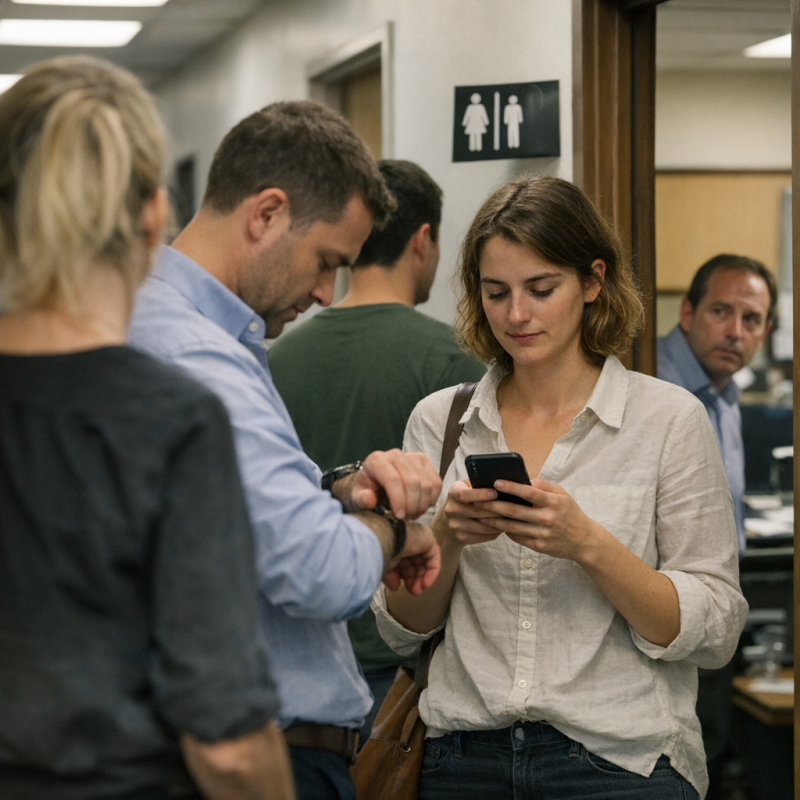 Image by FCT AI
Maximum Visibility
Here's the thing—everyone was taking their time. Not in an obvious way, but just... thoroughly. You could hear the water running for a solid thirty seconds while someone washed their hands. Someone else spent a minute fixing their hair in the mirror. All things you'd do anyway, right? Except now, with Greg watching, every single action became this hyper-visible performance of normal bathroom behavior. It was beautiful, honestly. The rotation was seamless. Someone would come out, walk back to their desk. Two minutes later, someone else would get up. The line never really disappeared. It would shrink to one person, then grow to three, then back to two. Constant movement. Constant presence right outside Greg's door. I watched him try to focus on his screen. He'd type a little, then his eyes would flick to the hallway. Type some more. Look up again. His neck was getting this weird rigid quality, like he was forcing himself not to turn his head but couldn't help it. By 10 AM, the rotation was seamless, and Greg hadn't looked away from his doorway in twenty minutes.
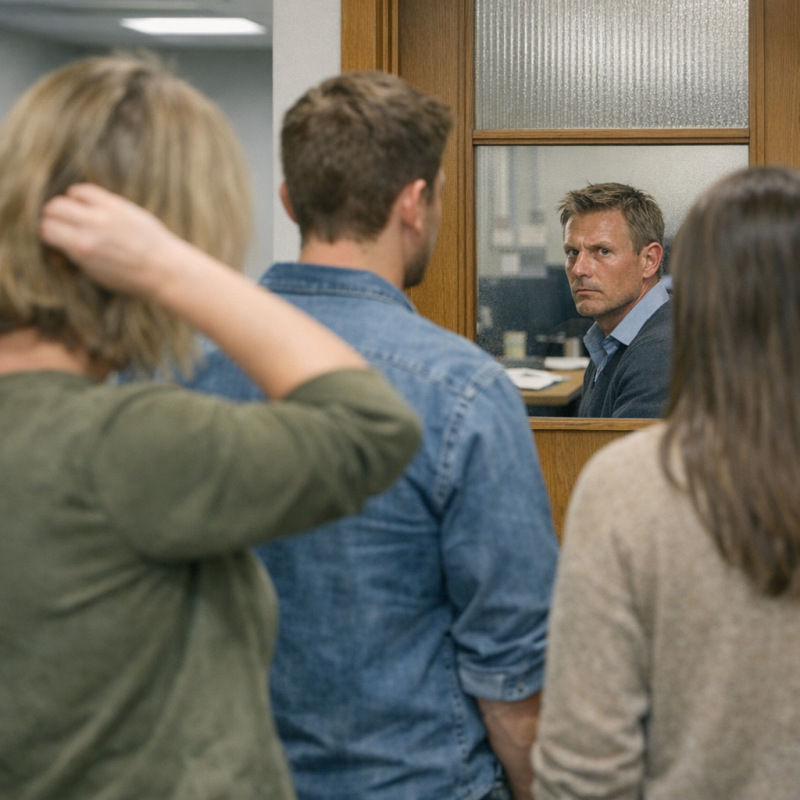 Image by FCT AI
Greg Tries to Ignore It
Greg tried. I'll give him that. He really, genuinely tried to pretend nothing was happening. He pulled up spreadsheets. Opened emails. Started typing responses. But you could see him losing the battle in real time. His shoulders were tense, hunched up near his ears. Every time someone walked past—and someone was always walking past—his eyes would track them. He'd watch them join the line, watch them wait, watch them enter the bathroom. Then he'd switch his attention back to his screen like he'd just remembered what he was supposed to be doing. It was mesmerizing to watch. At one point, I saw him reading the same email three times. I know because his lips were moving slightly, and he kept scrolling back to the top. He'd start to reply, get two sentences in, then delete everything and start over. The third time he did it, someone walked past humming softly under their breath, and Greg's whole body went rigid. I watched him type the same email three times because he kept looking up instead of at his screen.
 Image by FCT AI
The 11 AM Peak
Around 11 AM, the line hit peak capacity. Five people. I'd never seen five people waiting for the bathroom in this office, ever. It was absurd and perfect and terrifying all at once. Greg's office had become the epicenter of this quiet, stubborn protest, except it wasn't technically a protest at all. Just employees exercising their legal right to use the facilities. Jenna was back in line again—her third trip of the morning, which was completely reasonable if you'd had coffee. She caught my eye and her expression didn't change at all, but I knew. We all knew. This wasn't about bathrooms anymore. This was about every passive-aggressive policy, every petty power play, every moment we'd been made to feel watched and judged for basic human needs. The person at the front of the line walked past Greg's door slowly, and I swear to god, they were humming. Actually humming some tune I didn't recognize. And Greg's jaw clenched so tight I thought he'd crack a tooth.
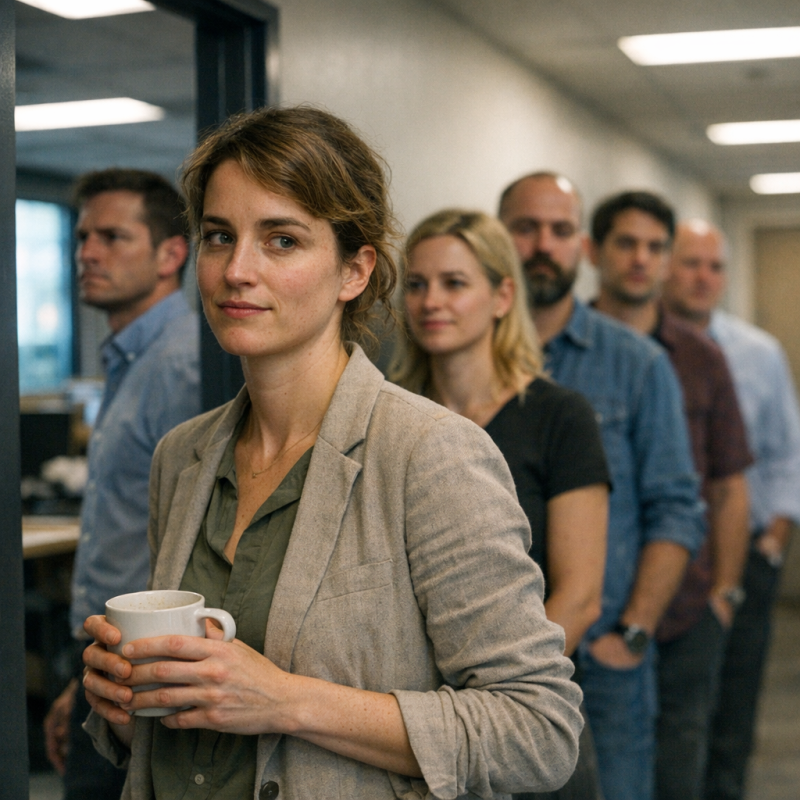 Image by FCT AI
Whispers and Glances
The other people in the office—the ones who hadn't been at Mark's apartment, who didn't know about the plan—they were starting to notice. I saw Sarah from design glance down the hallway, then look at her coworker with raised eyebrows. Someone from sales walked past and did a double-take at the line. You could see the questions forming. Why were so many people suddenly needing the bathroom? Why was there always someone waiting? It was subtle, but the awareness was spreading. People were exchanging looks. Little smirks. Those knowing glances you give when you realize something's happening but you're not quite sure what. And that's when it hit me—we weren't just making a point to Greg anymore. This was bigger than that. Every person who noticed, every confused or amused expression, was witnessing Greg's petty surveillance system backfire in spectacular fashion. We were making our grievance visible to everyone, not just him. The whole office was becoming aware that something was deeply weird about our bathroom situation. I realized we weren't just making a point to Greg anymore—we were making a point to everyone.
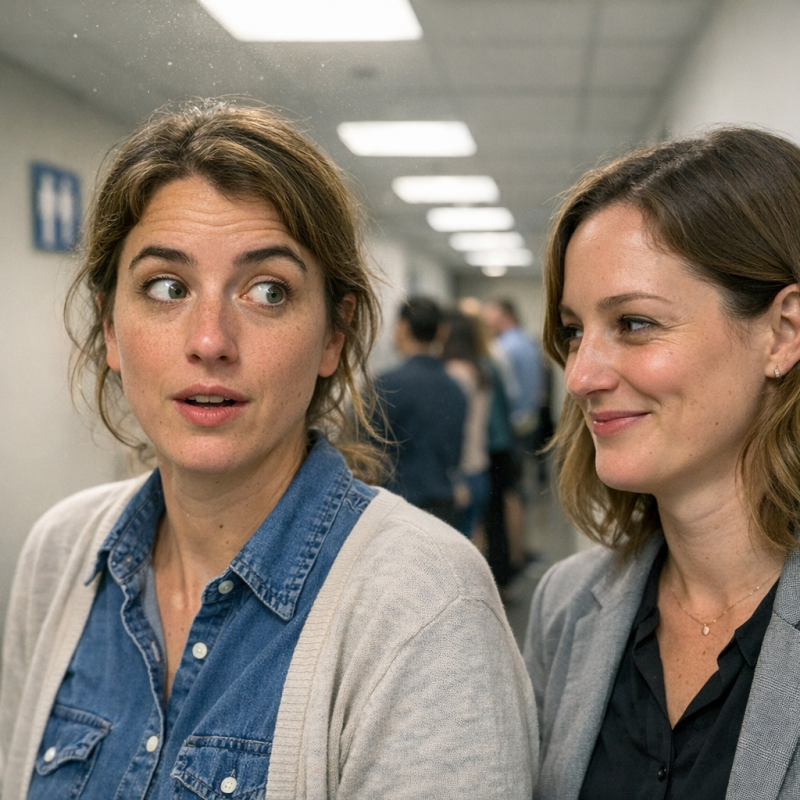 Image by FCT AI
Lunchtime Lull
Lunch came and the line finally thinned out. People were eating at their desks or stepping out to grab food. For about twenty minutes, the hallway was actually empty. Almost peaceful. That's when Greg emerged from his office. I was still at my desk, halfway through a sad desk salad, when I saw him step into the hallway. He looked... rattled. That's the only word for it. His hair was slightly messed up, like he'd been running his hands through it. His tie was loosened. He stood there in the middle of the hallway, just staring at the bathroom door. Not moving. Not checking his watch. Just staring. It was the weirdest thing I'd seen all day, and that's saying something given the morning we'd had. He looked confused, like he was trying to figure out a magic trick. Like the bathroom itself had somehow orchestrated a conspiracy against him. I took another bite of lettuce and watched. He stood there staring at the bathroom door like it had personally betrayed him.
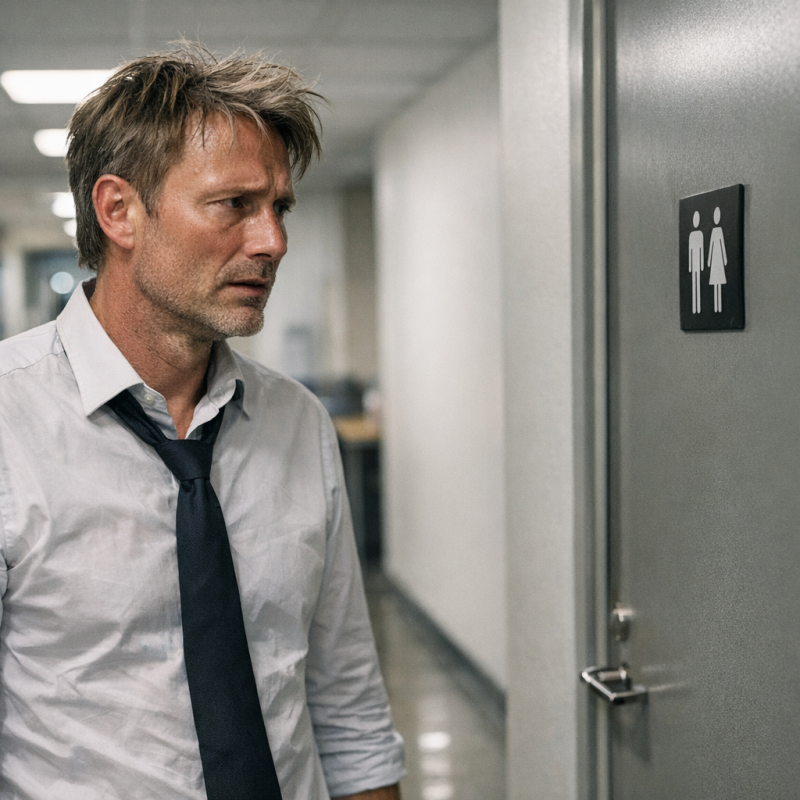 Image by FCT AI
Greg Finally Speaks
He finally snapped around 12:30. Jenna was walking down the hallway—her fourth trip, perfectly timed for after lunch—when Greg stepped directly into her path. 'What is going on?' he said. Not loud, not aggressive, but definitely demanding. His voice had this strained quality, like he was working very hard to sound casual. Jenna stopped and looked at him with this perfectly blank expression. 'I'm sorry?' she said. 'What's going on with...' He gestured vaguely at the bathroom, at the hallway, at everything. 'With all the... why is everyone suddenly...' He couldn't even finish the sentence. Couldn't articulate what was wrong because technically nothing was wrong. Jenna just blinked at him. 'Oh,' she said, like she'd just understood a very simple question. 'Just using the restroom, Greg.' Her voice was so flat, so matter-of-fact, so perfectly innocent. Greg's face went through about five different expressions in two seconds. She said, 'Just using the restroom, Greg,' and the look on his face was worth every uncomfortable minute.
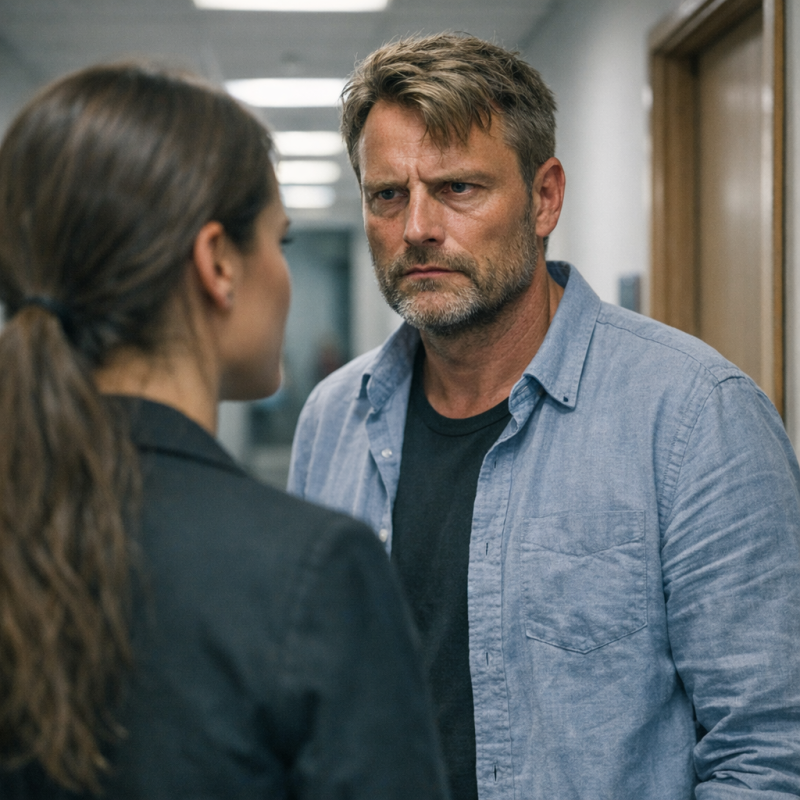 Image by FCT AI
Be More Efficient
Greg stood there for another few seconds, clearly trying to formulate a response that wouldn't make him sound insane. Finally, he said, 'Well, maybe everyone could be more... efficient about it.' Efficient. About using the bathroom. The irony was so thick you could choke on it. This was the man who'd created an entire surveillance system to track our bathroom habits, who'd made us feel like criminals for basic biological functions, and now he was asking us to be more efficient. Jenna just nodded seriously, like he'd made a completely reasonable suggestion. 'Sure thing,' she said, and walked past him toward the bathroom. Greg watched her go, then looked back down the hallway where two more people were already approaching. His policy had created this problem. His obsessive monitoring had backed everyone into a corner where the only way to push back was to follow his rules so precisely that they became absurd. And he still didn't get it. Or maybe he did, and that was worse. I almost laughed out loud, but I caught Jenna's eye and knew we were thinking the same thing: this was far from over.
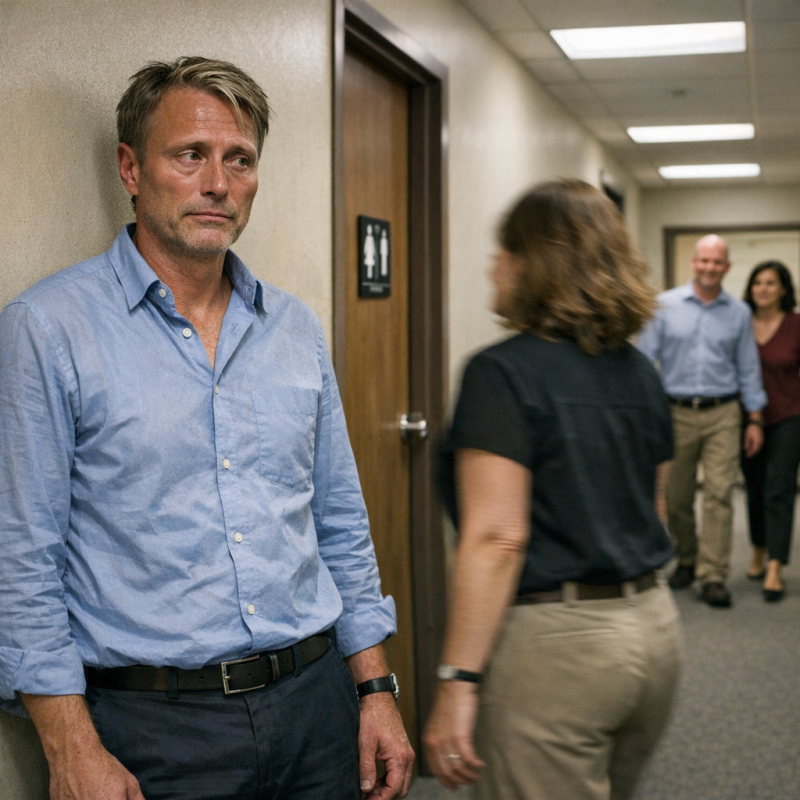 Image by FCT AI
Afternoon Persistence
After lunch, the line resumed with even more determination than before. People were basically energized by their midday break, ready to keep this thing going. Greg emerged from wherever he'd been hiding, took one look at the queue stretching down the hallway again, and retreated straight into his office. He didn't slam the door this time—just left it half-closed, like he wanted privacy but didn't want to seem completely defeated. I happened to walk past about twenty minutes later on my way to grab something from the printer. That's when I saw him. He was on the phone, and not in his usual 'conference call with corporate' posture. No, he was talking fast, gesturing wildly with his free hand, the kind of body language that screamed urgency or maybe desperation. I couldn't hear what he was saying through the door gap, but his expression kept shifting between agitated and pleading. Who was he calling? His boss? Legal? Some kind of workplace consultant who specialized in employee bathroom rebellions? But I could see him through the gap, and he was on the phone—talking fast, gesturing wildly.
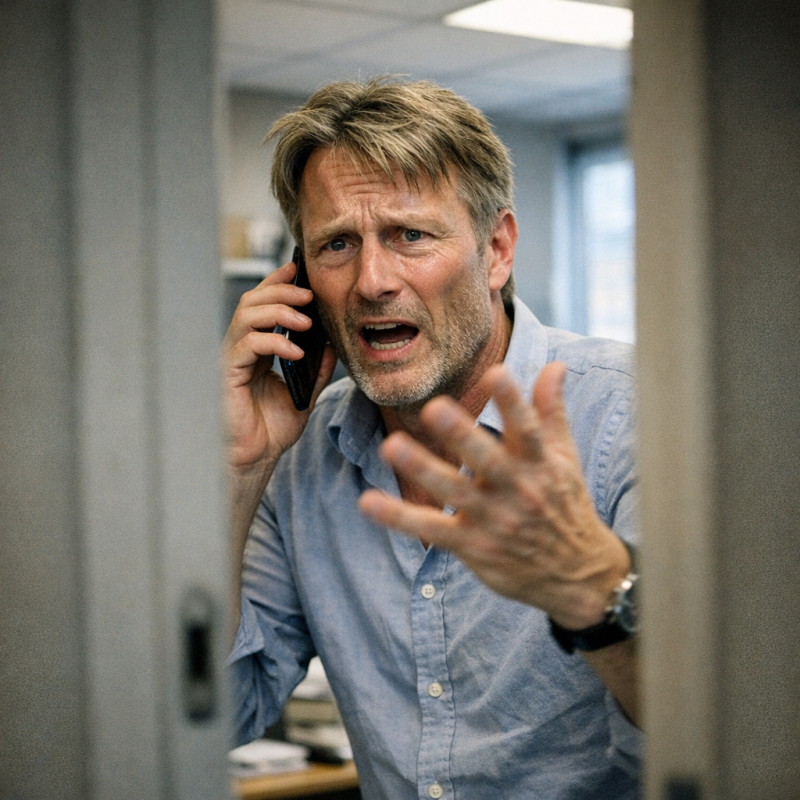 Image by FCT AI
Mark's Quiet Move
Mark had been pretty quiet throughout most of this whole bathroom saga, mostly just keeping his head down and following along with the group effort. But that afternoon I overheard him talking to someone near his desk—I think it was one of the newer guys—about how he'd been 'keeping records.' At first I thought he just meant like, mental notes or something. You know, the way you remember the particularly absurd moments at work to tell your friends later. But he mentioned something about timestamps and a shared folder, which seemed oddly thorough for casual water-cooler gossip. I was passing by with my coffee, not really trying to eavesdrop, but I caught enough to realize he'd been documenting way more than I had. Dates, times, specific incidents. The whole nine yards. He said something about 'covering our bases,' and I figured he just meant for our own records—like, in case Greg tried to claim we were all slacking off or something. It seemed smart but not particularly dramatic. Just Mark being methodical, which was totally in character for him.
 Image by FCT AI
The Notebook
Greg's notebook had been a constant presence since day one of the key system, but I'd never really paid close attention to it before. It was just part of his whole petty-tyrant aesthetic, you know? But when I happened to glance at it during one of his tracking sessions that afternoon, I noticed something unsettling. The thing was almost full. Like, he'd gone from a few scattered entries to page after page of dense notes. Names, times, durations—I could see the columns from several feet away. Why would anyone need that level of detail unless they were planning something bigger than just monitoring bathroom breaks? It gave me this weird crawling feeling in my stomach, the kind you get when you realize something is off but can't quite articulate what. Was this normal manager behavior, even for someone as controlling as Greg? Or was he building toward something? The notebook sat there on his desk like evidence at a crime scene, and I couldn't shake the unease it triggered. What exactly was he writing down, and why did he need that much detail?
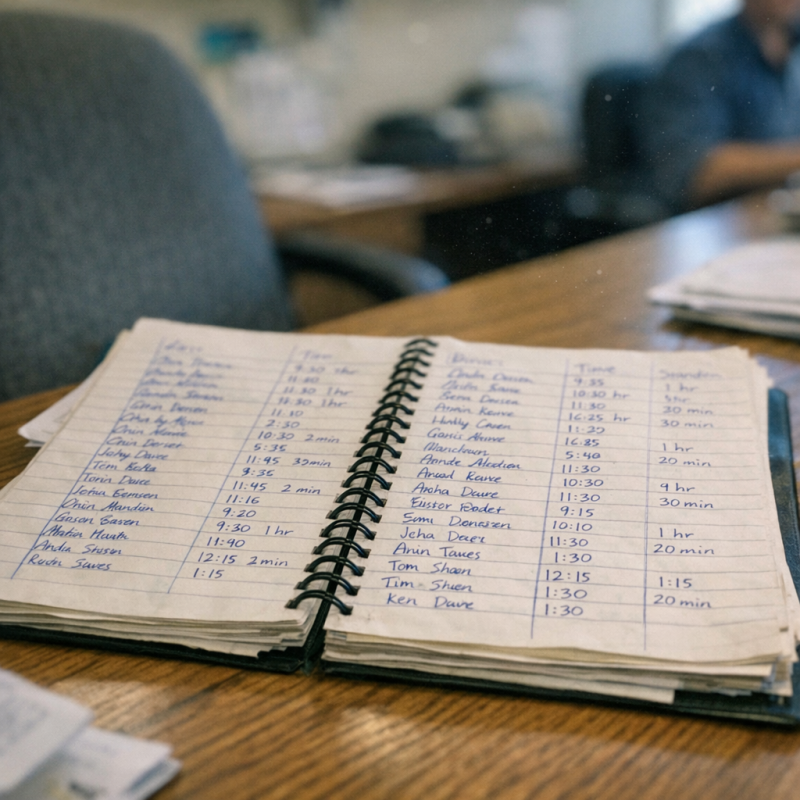 Image by FCT AI
Day Three Ends
By the time we hit the end of day three, everyone looked absolutely wiped. Maintaining this level of coordinated passive resistance was exhausting in ways I hadn't anticipated. But here's the thing—we were exhausted together. People were checking in with each other, offering to grab coffee for whoever was waiting in line, making jokes about our collective bladder capacity. It was weirdly bonding. Jenna caught my eye around four-thirty and just grinned, this tired but triumphant expression that said we were actually doing it. We were holding the line, literally and figuratively. For the first time since I'd started working there, the office felt like we were all on the same team instead of just random people sharing space. Then around five, Greg emerged from his office, grabbed his coat, and left without a single word to anyone. No announcement, no final check of his precious notebook, just gone. His entire demeanor screamed defeat—shoulders slumped, avoiding eye contact, moving quickly like he couldn't wait to escape. Greg left early without saying a word, and I wondered if he was finally ready to give up.
 Image by FCT AI
The Morning After
I'll admit, I walked into work the next morning with this tiny kernel of hope that maybe, just maybe, the bathroom doors would be unlocked and the whole nightmare would be over. Like Greg had gone home, realized how absurd this had all become, and decided to quietly back down overnight. Some of my coworkers clearly felt the same way—I could see it in how they glanced toward the bathrooms when they first arrived, that cautious optimism. But nope. Doors still locked. Keys still in Greg's desk drawer. And Greg himself? He showed up right on time looking more put-together than he had in days. Fresh shirt, better posture, this weird focused energy that immediately set off alarm bells in my head. There was no sign of the defeated man who'd slunk out early yesterday. Instead, he looked like someone who'd spent the evening formulating a new battle plan. He didn't say anything to anyone, just settled into his office and started going through his notebook again with this deliberate, methodical attention. If anything, he looked more determined than ever, and that's when I started to worry.
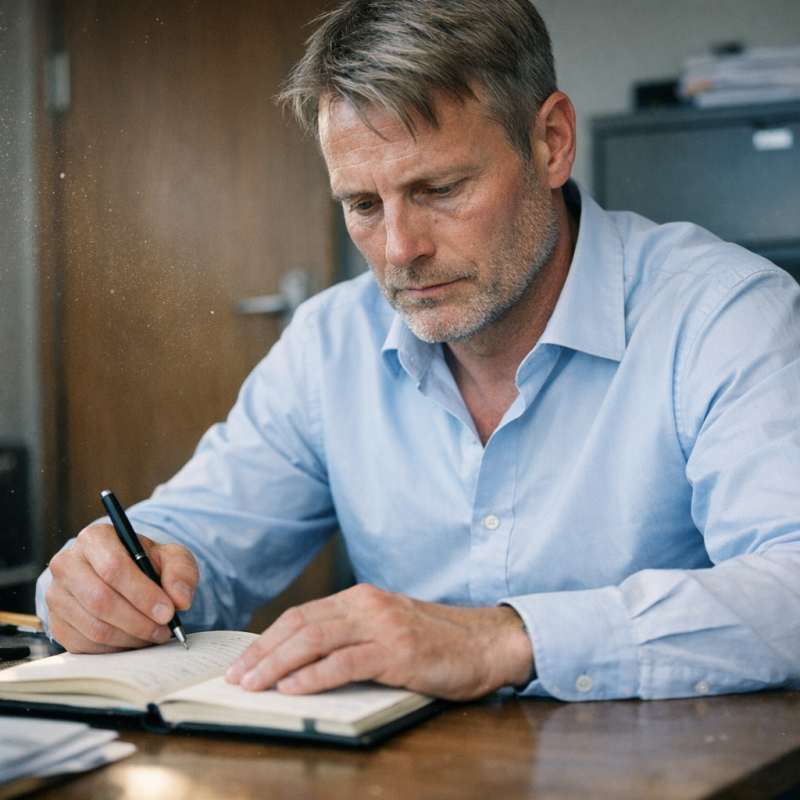 Image by FCT AI
Too Stubborn or Too Invested?
Jenna and I grabbed lunch together that day—well, more accurately, we grabbed sandwiches from the corner deli and ate them in the conference room because neither of us could face the awkwardness of the break room. We'd been doing this bathroom protest thing for days now, and Greg hadn't budged an inch. In fact, he seemed weirdly committed to maintaining his system despite the obvious chaos it was causing. 'Okay, real talk,' Jenna said, picking at her sandwich. 'Is he just, like, the most stubborn person alive? Or is something else going on here?' I'd been wondering the same thing, honestly. Most managers, even bad ones, would have quietly reversed course by now to save face. But Greg was doubling down in a way that felt almost irrational. 'I mean, he has to see this isn't working,' I said. 'The line, the time waste, all of it. So why keep going?' Jenna shook her head, staring at her food like it might have answers. She said, 'No one fights this hard over something this stupid unless there's more to it,' and I couldn't disagree.
 Image by FCT AI
The Second Phone Call
Late that afternoon, I happened to walk past Greg's office again—honestly, at this point I was maybe subconsciously monitoring him the way he monitored us—and caught him on another phone call. But this time his whole vibe was different. Where before he'd looked desperate and agitated, now he looked almost pleased. Satisfied, even. He was leaning back in his chair, nodding along to whatever the person on the other end was saying, occasionally interjecting with what looked like agreement. And he was writing more notes, but these seemed different somehow—quicker, more purposeful. Like he was taking down instructions rather than just recording observations. The call lasted maybe five minutes total. When he hung up, he sat there for a second just staring at his notebook with this expression I can only describe as smug. Then, and I swear this happened, he looked up directly at the bathroom line visible through his office window. Just stared at all of us waiting there. He hung up, looked directly at the bathroom line, and smiled—and it wasn't a friendly smile.
 Image by FCT AI
Whispers of Doubt
The cracks in our unity started showing up the next morning. I overheard a couple people near the coffee maker questioning whether we were playing this wrong. 'What if we're just making him angrier?' one of them said. 'What if he's, like, documenting all this to use against us somehow?' It was the kind of doubt that spreads fast in an anxious office environment. By midday, Mark pulled Jenna and me aside with similar concerns. 'I'm still on board,' he said carefully, 'but some people are getting nervous. Greg seems too calm now. Too confident.' He wasn't wrong. There was something off about Greg's recent demeanor, like he knew something we didn't. Jenna tried to rally everyone, reminding them that we were following his own rules, that we hadn't technically done anything wrong. But even as she said it, I could hear the uncertainty creeping into her voice. We were all feeling it—that nagging sense that maybe we'd walked into something we didn't fully understand. I wanted to reassure them, but honestly, I was starting to wonder the same thing.
 Image by FCT AI
Greg's New Habit
The printer near Greg's office started going absolutely wild the next day. Like, not just a few pages—I'm talking constant printing, the kind of rhythmic churning that makes you wonder if someone accidentally hit 'print all' on the entire company database. I walked past his office around 10 AM and saw him standing at the printer, collecting what looked like dozens of sheets. He was organizing them into a folder, very deliberately, checking each page before filing it away. The folder had a label I could read from where I stood: our department name, written in his precise handwriting. My chest tightened. This wasn't random documentation for his own reference. This was organized, methodical, like he was building a case for something. I tried to lean closer without being obvious, but the angle was wrong—I couldn't see what the documents actually said. All I knew was that every sheet that went into that folder felt like another nail in some coffin I didn't understand yet. I couldn't see what they said, but the fact that he was building a file on us made my stomach drop.
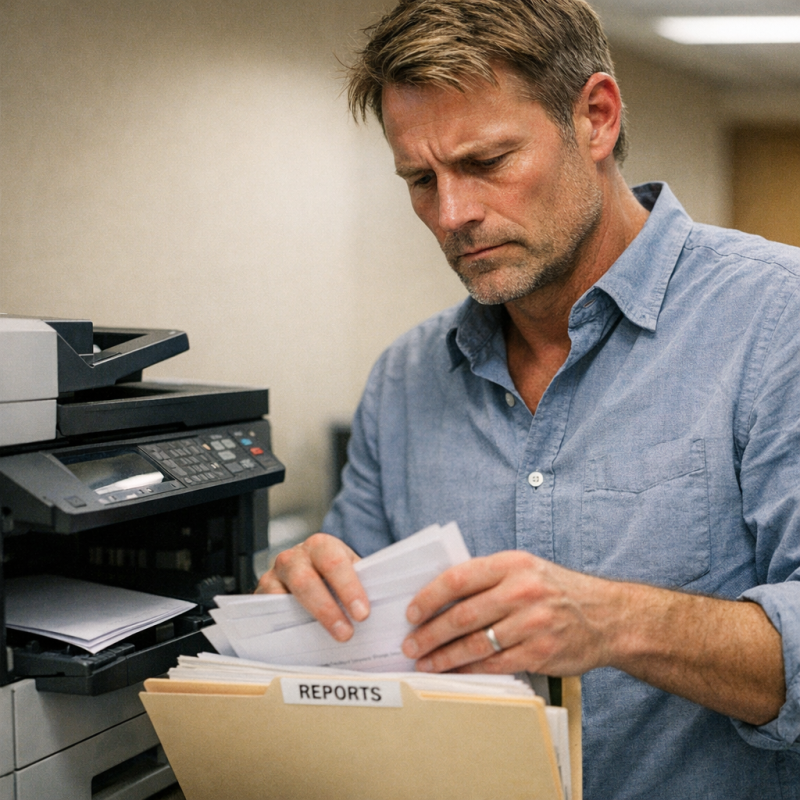 Image by FCT AI
The Tension Peaks
The office felt like it was holding its breath. Every time someone walked past Greg's door, they'd glance at that folder sitting on his desk—the one with our department name on it—like it was a bomb that might go off at any moment. We kept maintaining the bathroom line because honestly, what else could we do? Backing down now would feel like surrender, but continuing felt increasingly risky when we didn't know what Greg was planning. The tension was making people snap at each other over nothing. Someone microwaved fish in the break room and I genuinely thought Jenna might lose it. Nobody could focus. We were all just watching and waiting, stuck in this weird limbo between defiance and dread. I kept replaying the image of Greg at that printer, methodically building his case—whatever it was. The not knowing was worse than almost anything. We'd pushed back against his absurd policy, and now it felt like we were waiting for the other shoe to drop. That's when Mark pulled me aside and said, 'I need to tell you something.'
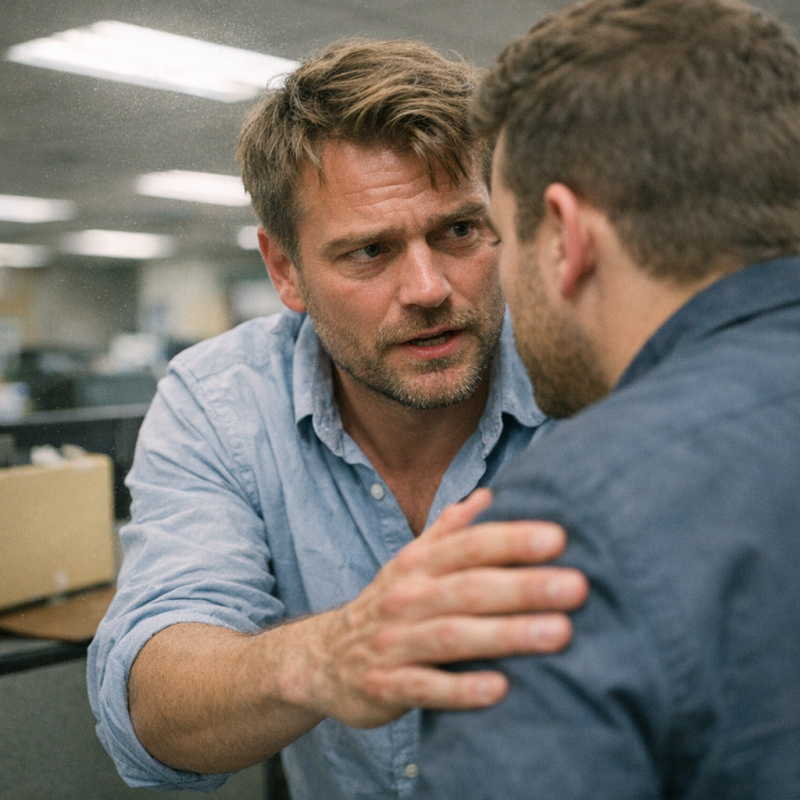 Image by FCT AI
Mark's Confession
Mark looked nervous, which wasn't like him. He led me into one of the empty conference rooms and shut the door. 'I filed an HR complaint,' he said, the words tumbling out fast. 'About the bathroom thing. I did it three days ago.' I just stared at him. 'You what?' He explained that he'd been documenting everything—the locked doors, the wait times, Greg's emails about productivity—and sent it all to corporate HR with a formal complaint about workplace conditions. 'They said they'd investigate,' he continued, running his hand through his hair. 'I didn't tell anyone because I didn't want to get hopes up if nothing came of it. But they've been asking me follow-up questions. They took it seriously.' My brain was trying to catch up. HR knew. This whole time we'd been maintaining this weird bathroom standoff, actual adults with authority had been quietly investigating. It felt surreal, like finding out the cavalry was already on the way while you were still planning your last stand. I stared at him and asked, 'When are they coming?' and he said, 'Today.'
 Image by FCT AI
Waiting for HR
The morning crawled by like time itself had gotten stuck in traffic. Every time the front door opened, my head snapped up expecting to see official-looking people with clipboards. Mark had said they were coming today but hadn't given me an exact time, which meant every minute felt loaded with possibility. Jenna knew something was up—I'd pulled her aside and whispered the basics—and she kept glancing at me with this mixture of hope and anxiety that probably mirrored my own expression. We maintained the bathroom line like always, but now it felt different. Before, it was defiance tinged with fear. Now it was evidence. We weren't just making a point anymore; we were documenting a problem that someone with actual power was about to witness. The line outside Greg's hallway had six people in it around lunchtime. Perfect timing, I remember thinking, though I wasn't sure for what. I kept checking my phone, watching the clock, trying to act normal while my heart hammered against my ribs. At 1:45 PM, two people in business attire walked through the front door carrying clipboards.
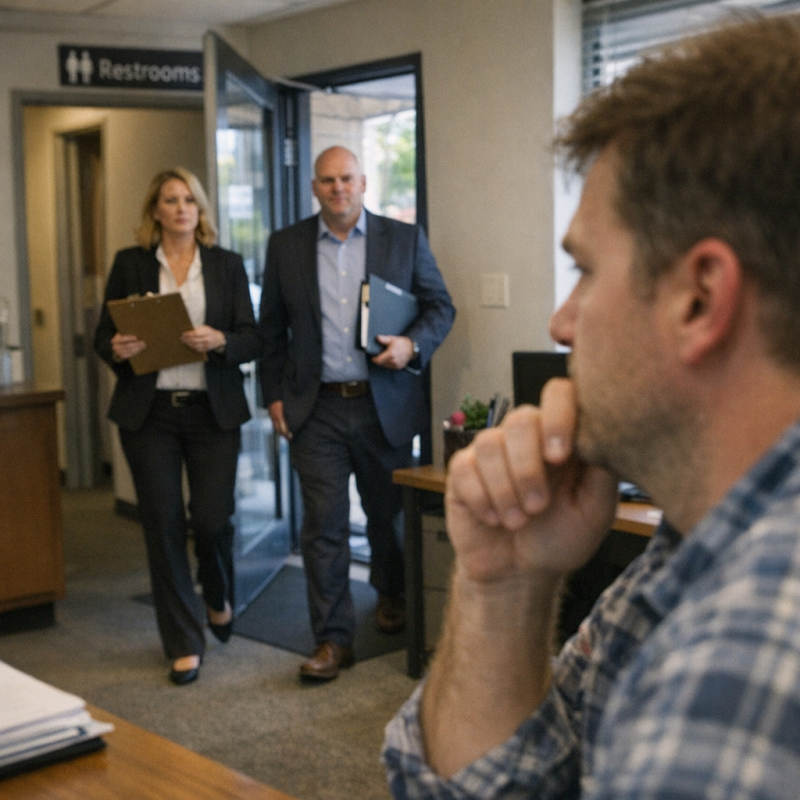 Image by FCT AI
HR Walks the Floor
They looked exactly like what HR representatives at a corporate headquarters should look like—professional, composed, carrying that air of authority that makes everyone suddenly sit up straighter at their desks. One was older, maybe early fifties, with sharp eyes that seemed to take in everything at once. The other was younger, methodical, writing notes on her clipboard as they moved through the office. They didn't announce themselves. They just started walking, checking doors, observing. I watched from my desk as they tried the bathroom door near the break room—locked, as always. The older one made a note. They moved systematically through the floor, testing each bathroom door, pausing to write things down. People were pretending to work but everyone was tracking their movement through the office like we were watching a slow-motion tennis match. The representatives didn't rush. They didn't look concerned or surprised. They just documented everything with this calm professionalism that somehow made it all feel more real. When they reached Greg's hallway, they stopped and stared at the line. They moved with deliberate calm, and when they reached Greg's hallway, they stopped and stared at the line.
 Image by FCT AI
The Long Line
The timing couldn't have been more perfect if we'd choreographed it. Six of us were standing in line outside Greg's bathroom—not because we'd planned some demonstration, but because that's just how it worked now. This was our normal. The line had become such a fixture that we barely thought about it anymore, but seeing these HR representatives stop and stare at it suddenly made me see it through fresh eyes. It looked completely absurd. Six grown adults queued up in a hallway like we were waiting for concert tickets, all because our boss had locked every other bathroom in the office. The older HR rep's eyebrows went up slightly. She looked at her colleague, then back at the line, then made a long note on her clipboard. The younger one actually counted us, I think—I saw her lips moving as her eyes tracked down the line. They stood there for what felt like forever but was probably only thirty seconds, just observing. The silence was thick. One of the reps turned to the other and said, 'This is exactly what the complaint described.'
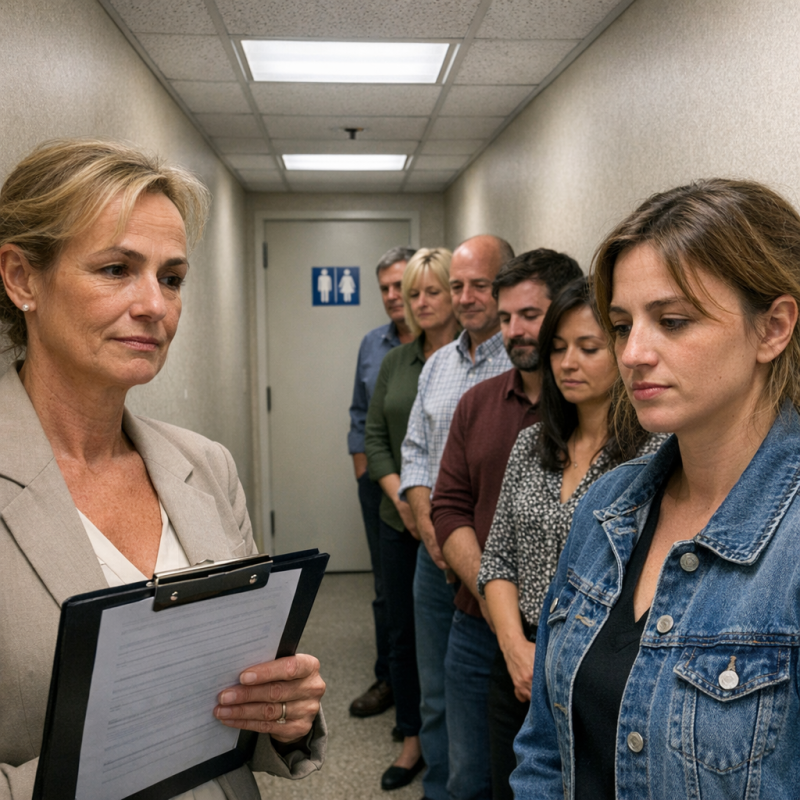 Image by FCT AI
Greg Is Summoned
The older HR representative knocked on Greg's door with the kind of authority that doesn't wait for permission. 'Mr. Hendricks? Can you step out here for a moment?' Greg emerged looking composed, but I caught the flicker of something in his eyes when he saw them—surprise, maybe, or calculation. 'We're from corporate HR,' the older rep said. 'We need you to explain your current bathroom access policy.' I was standing close enough to hear everything, pretending to be absorbed in something on my phone. Greg launched into what sounded like a prepared speech about facility management and workflow optimization, but his voice had this slight edge to it that hadn't been there before. The younger rep gestured toward the line of people still waiting. 'Can you explain why employees are waiting in queue for bathroom access?' Greg's jaw tightened. 'It's a temporary measure to ensure the executive facilities aren't overwhelmed,' he said, but even as the words came out, they sounded weak. He glanced at his notebook, then at the line, then back at HR—and I saw him hesitate.
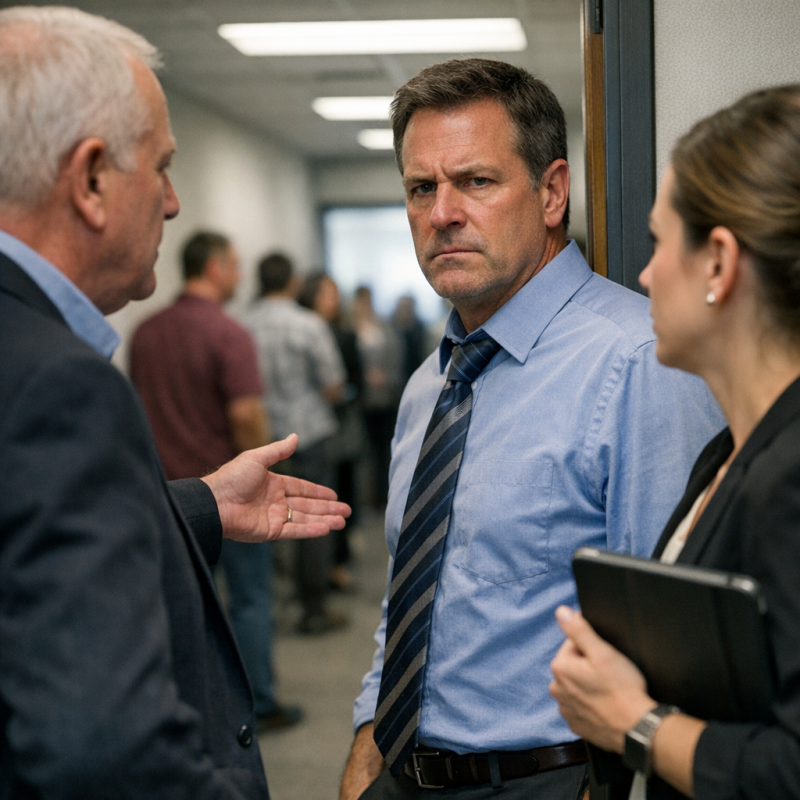 Image by FCT AI
The Productivity Speech, Redux
Greg tried again, pulling out his greatest hits from the staff meetings. 'This is about maintaining productivity standards,' he said, his voice stronger now, like he'd found his footing. 'When employees have unlimited bathroom access, we see increased time away from desks, decreased output metrics, and a general decline in workflow efficiency.' He was using the same corporate language that had sounded so authoritative in our team meetings, the same buzzwords that had initially made us question whether we were the problem. But standing in this hallway with six people queued up behind him and two HR representatives staring at the locked bathroom doors, it sounded hollow. Desperate, even. The older HR rep glanced at the line again, then back at Greg. Her expression was unreadable but her tone was dry. 'And how long do employees typically wait?' Greg opened his mouth, closed it. 'It varies,' he finally said. The younger rep checked her clipboard. 'We've observed wait times up to twelve minutes during our walk-through.' One of the HR reps gestured to the line and said, 'This seems to be creating the opposite effect.'
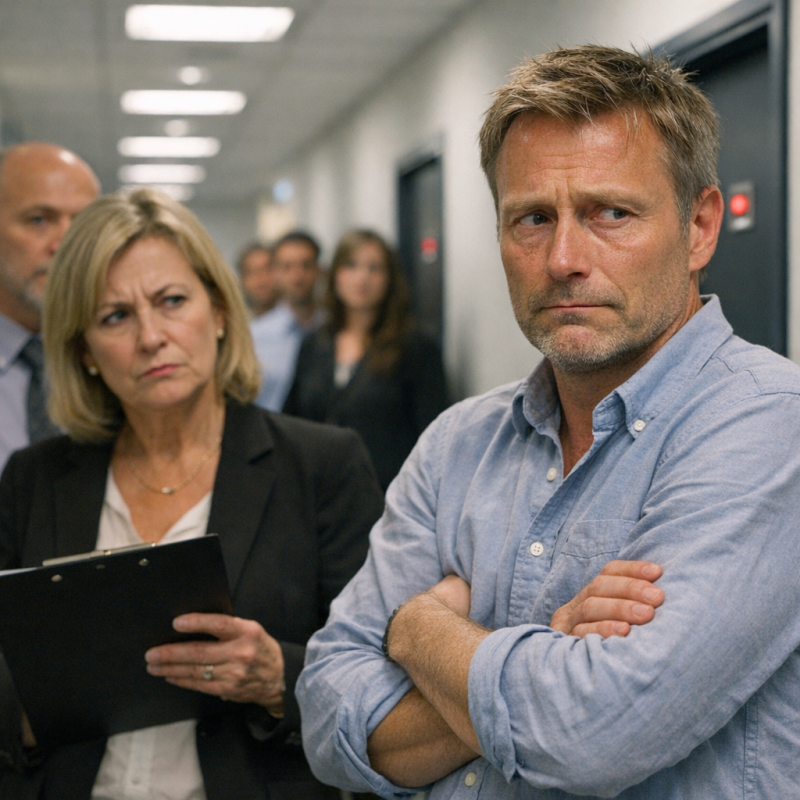 Image by FCT AI
The Folder
The older HR rep looked at Greg with this measured expression that I'd learned meant trouble. 'I'd like to see your documentation,' she said. It wasn't a request. Greg hesitated, and I swear I saw his hand tighten on the folder he'd been clutching. For a second, I thought he might actually refuse, which would've been wild considering these were corporate representatives who could absolutely make his life a living nightmare. But then he handed it over with this tight smile that didn't reach his eyes. 'Of course,' he said. 'I've been very thorough about tracking patterns.' The word 'patterns' hung there weird, and I couldn't quite figure out why it made my skin crawl. Both reps leaned in as the older one opened the folder, and I tried to crane my neck to see what was inside without being obvious about it. Pages and pages of something—printed emails maybe? Spreadsheets? The younger rep's eyebrows went up slightly, and she tapped one page, murmuring something I couldn't hear. They flipped through the pages, and I saw their expressions shift from professional neutrality to something colder.
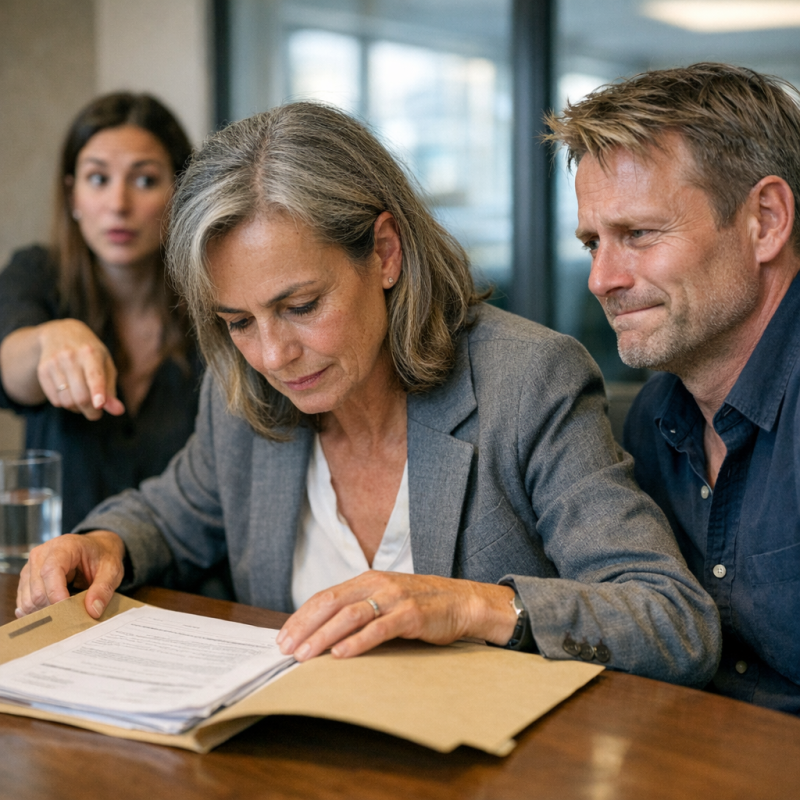 Image by FCT AI
Questions Behind Closed Doors
The older HR rep closed the folder with this deliberate care that somehow felt ominous. 'Mr. Harrison, I think we should continue this conversation somewhere more private,' she said, and it wasn't a suggestion. Greg nodded, his face doing this weird thing where he was trying to look cooperative but his jaw was clenched so tight I thought his teeth might crack. They moved toward the conference room, the one with the glass walls that let you see in but not hear anything, which was both a blessing and a curse in that moment. The rest of us just stood there in the hallway, pretending we weren't completely fixated on watching this unfold. I positioned myself near the water cooler—casual, right?—where I had a direct sightline. Greg sat down heavily, and even from that distance, I could see his shoulders were rigid. The younger rep was taking notes while the older one asked questions, her posture formal and unyielding. Through the glass wall, I could see Greg gesturing defensively, and one of the reps was shaking their head.
 Image by FCT AI
The Unlocking
I'm not kidding when I say that within an hour of that conference room meeting, maintenance showed up with their toolkit. Just appeared like they'd been summoned by some kind of emergency bat signal, except instead of fighting crime, they were unlocking bathroom doors. Jenna and I watched from our desks as they went methodically from one restroom to another, removing those ridiculous lock mechanisms Greg had installed. The sound of drills and metal clicking echoed through the office, and it felt surreal—like waking up from a bad dream where the nightmare logic finally breaks apart. 'Well, that was fast,' Jenna muttered, watching the maintenance guy emerge from the women's restroom and give us a thumbs up. I nodded, feeling this wash of relief that I could finally pee without requesting permission like a kindergartener. But underneath that relief was something else, something unsettling that I couldn't quite name. I felt relief, but also a nagging question: if it was that easy to fix, why did Greg fight so hard to keep it?
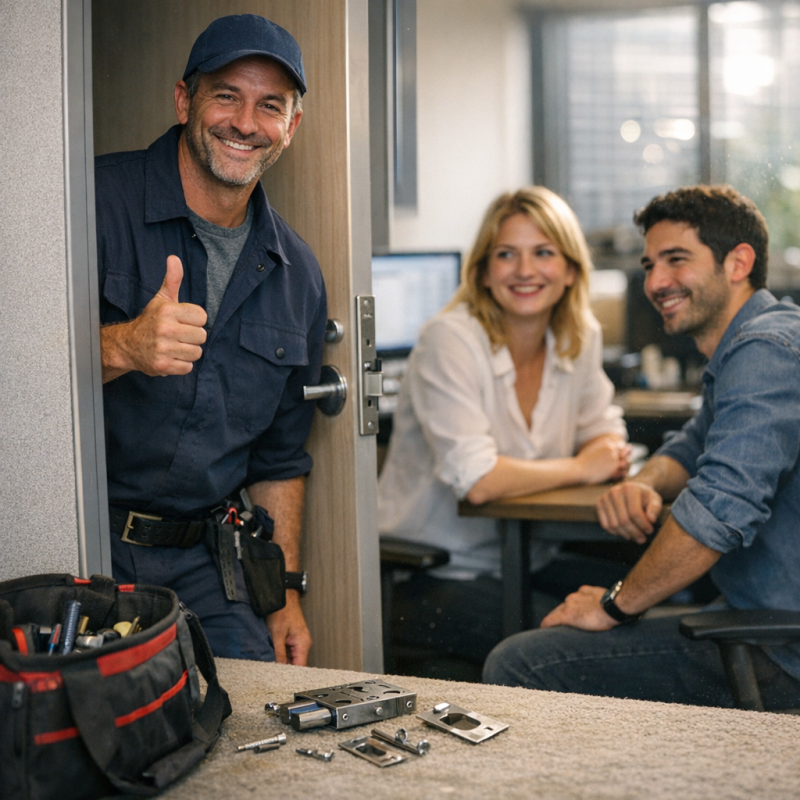 Image by FCT AI
Greg Leaves Early
About twenty minutes after the bathrooms were unlocked, Greg emerged from the conference room looking like he'd aged five years. I'm talking pale, drawn, with this sheen of sweat on his forehead that he kept wiping away with his sleeve. He didn't look at anyone as he walked to his office, grabbed his messenger bag, and started shoving things into it—his laptop, some files, that stupid motivational desk calendar he loved. The whole office had gone quiet, everyone pretending to work while actually watching this slow-motion car crash unfold. He walked past my desk without acknowledging my existence, which honestly was fine by me, but the look on his face wasn't the usual petty anger I'd seen before. This was different. This was fear, maybe, or shame, or both mixed together into something that made him look small and cornered. He left without saying goodbye to anyone, without his usual performance of authority. Jenna whispered, 'Something's really wrong—people don't look like that over a bad policy decision.'
 Image by FCT AI
The Email
The next morning, I opened my work email to find a message from HR sitting at the top of my inbox with the subject line 'Workplace Standards and Employee Rights Reminder.' You know those emails that are technically addressed to everyone but are really about one specific situation? This was that, cranked up to eleven. It was full of formal language about 'reviewing compliance with labor regulations' and 'ensuring all policies align with established employee protections' and my personal favorite, 'reaffirming our commitment to dignity and respect in the workplace.' There was a whole section about reasonable access to facilities being a basic standard, which felt like the corporate equivalent of subtweeting. They mentioned that all department policies were being audited and that any concerns about workplace conditions should be reported immediately through proper channels. The tone was so carefully neutral it practically screamed that something serious had gone down. It didn't mention Greg by name, but we all knew exactly who it was about.
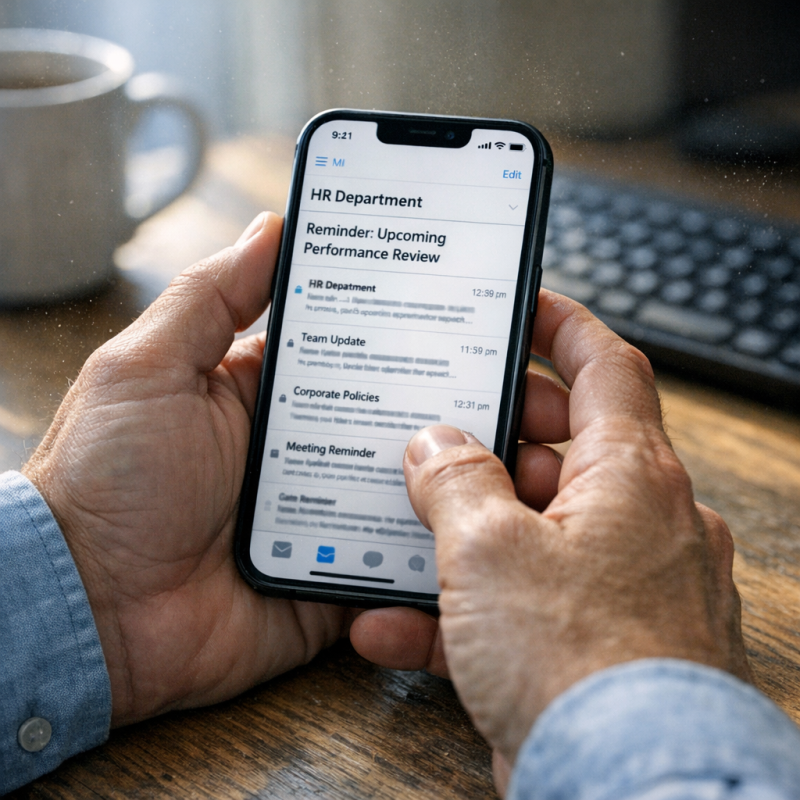 Image by FCT AI
Mark's Second Revelation
Mark caught me by the coffee machine that afternoon, glancing around like he was about to share classified information. 'So I heard something,' he said quietly, and I immediately leaned in because Mark's information was usually solid. He had this friend in HR—well, more like an acquaintance who owed him a favor—and apparently they'd let slip some details about Greg's folder. 'That documentation he was keeping? It wasn't just tracking bathroom breaks,' Mark said, his voice dropping even lower. 'He was building a case. Like, actual documentation trying to prove employee misconduct—time theft, productivity violations, insubordination.' My stomach dropped. 'What? How do you build misconduct from bathroom breaks?' Mark shook his head. 'That's the thing. He was documenting every time someone went over the allotted time, every instance of questioning the policy, cataloging it all like evidence for termination.' I felt my stomach turn as I realized the bathroom thing wasn't about control—it was about setting us up.
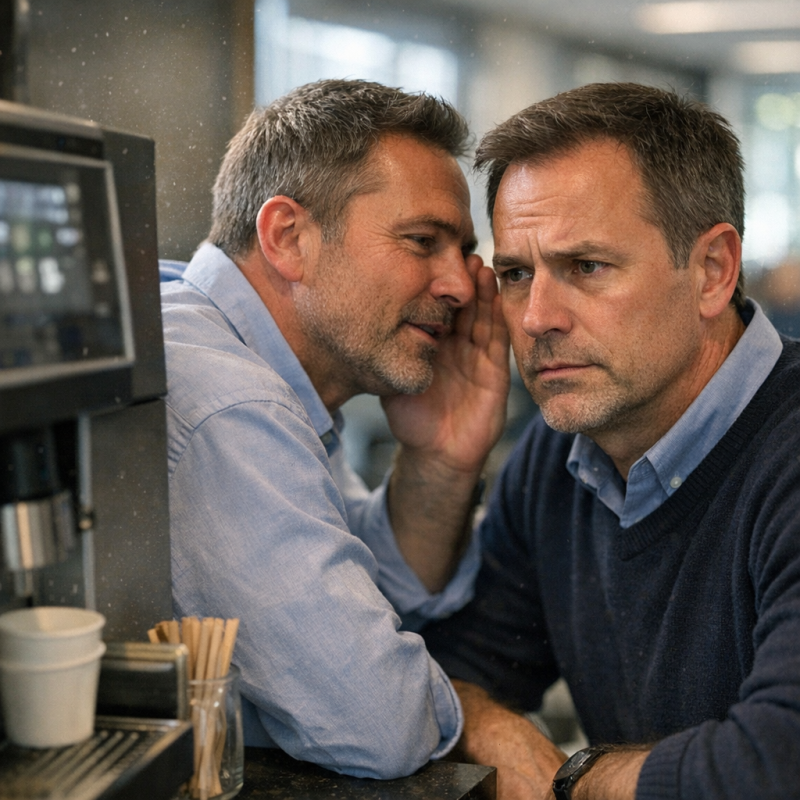 Image by FCT AI
The Waiting Game
Greg didn't show up to work the next day. Or the day after that. His office sat empty, door closed, and nobody from upper management said a word about where he was or when he'd be back. The silence was almost worse than knowing, because it left room for everyone's imagination to run wild. Jenna heard from someone in accounting that HR was still reviewing 'materials,' whatever that meant. Mark thought maybe Greg had been suspended pending investigation. Someone else claimed they'd seen him in the parking lot talking on his phone and looking agitated, but I'm pretty sure that was just office telephone-game nonsense. The rumors multiplied like rabbits, each one more dramatic than the last, and I found myself refreshing my email obsessively like some announcement would appear. But the thing that kept bothering me was the folder, and Greg's face when he'd handed it over, and the way the HR reps had looked at those pages. I started to suspect the bathroom policy was just the beginning of something much worse.
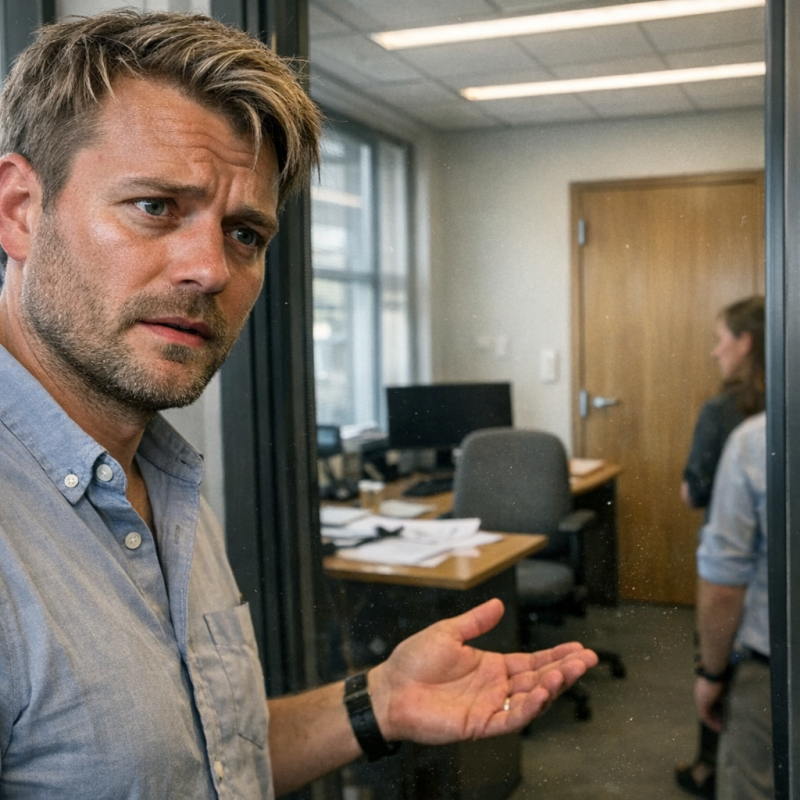 Image by FCT AI
The Truth Comes Out
On day three of Greg's absence, Mark appeared at my desk with his phone out and this look on his face that made my blood run cold. 'You need to see this,' he said, and Jenna rolled her chair over too. He'd been doing some digging—okay, full internet stalking—into Greg's employment history. Turns out our beloved manager had worked at two other companies before ours, both mid-sized firms similar to ours. And at both places, he'd left under interesting circumstances. Mark had found news articles, LinkedIn posts, even a blog entry from a former coworker. 'Look at this pattern,' Mark said, scrolling through screenshots. At the first company, Greg had implemented strict timekeeping policies, documented violations extensively, then used that documentation to justify laying off a third of his department. He'd gotten a restructuring bonus. At the second company? Same playbook, different excuse. The bathroom lockdown, the documentation, the impossible policy—it was all a deliberate scheme, and we'd almost fallen right into it.
 Image by FCT AI
Reframing Everything
That night, I couldn't sleep. I just kept replaying every single interaction with Greg, but now it all looked different—like watching a movie when you already know the twist. The constant watch-checking wasn't about punctuality; he was timing us, collecting data points for his documentation. Every time he wrote in that stupid notebook, he wasn't being petty—he was building a case against us. The way he'd hover near the bathroom, the sudden phone calls when someone took too long, his weird satisfaction when people complained about the policy. It was all deliberate. He wasn't a bad manager who didn't understand how humans work. He was a calculated predator who understood exactly what he was doing. That's what made my stomach turn. I'd spent weeks thinking he was just incompetent or on some weird power trip, when really he'd been systematically setting us up to lose our jobs so he could collect a bonus for 'improving efficiency.' The guy at the first company who'd written that blog post had called Greg 'methodical and cold.' Now I understood what he meant. The watch-checking, the notebook, the phone calls—every detail suddenly made horrifying sense.
 Image by FCT AI
How We Stopped It
The next morning, Jenna and I grabbed coffee before anyone else arrived, and I told her what I'd been thinking about all night. 'We actually stopped him,' I said. 'Like, completely by accident, but we dismantled his whole scheme.' She looked at me over her cup, waiting. 'Think about it,' I continued. 'His plan only works if he can quietly document our violations and present us as the problem employees. But we made it impossible to be quiet about it.' By staging that bathroom line protest, by making the absurdity visible to everyone including HR, we'd destroyed his ability to frame the narrative. He couldn't claim we were slackers abusing bathroom privileges when we were literally standing in a documented line following his exact policy. We'd turned his documentation against him. Jenna started laughing—not a happy laugh, more like disbelief. 'So our ridiculous protest actually saved our jobs?' 'Basically,' I said. 'We made it so he couldn't hide what he was doing.' By forcing him to confront the absurdity in front of HR, we'd dismantled his scheme before he could execute it.
 Image by FCT AI
HR's Investigation Deepens
By Tuesday, the whole office was buzzing with rumors. Mark came by my desk around ten, leaning in close. 'Corporate's involved now,' he said quietly. 'Like, actual corporate headquarters.' Apparently HR hadn't just investigated the bathroom policy—they'd started reviewing Greg's entire tenure at our company. Someone in accounting mentioned they'd been asked for records of department budgets and staffing changes from the past year. Another person heard that Greg's emails were being reviewed. This wasn't a local HR issue anymore; this had escalated to the kind of investigation where people lose careers, not just positions. I felt this weird mix of satisfaction and anxiety. Satisfaction because Greg deserved whatever was coming, but anxiety because who knew how deep this went or who else might get caught in the fallout? Mark pulled up a chair. 'My buddy in legal said something about them consulting with employment lawyers,' he whispered. 'They're checking if anything he did crossed into illegal territory.' My heart started pounding. Someone said they were talking to employment lawyers, and suddenly this wasn't just about bathrooms anymore.
 Image by FCT AI
Greg Returns
Thursday morning, Greg walked back into the office for the first time in over a week, and honestly? He looked terrible. Not just tired—defeated. The guy who used to stride around with his clipboard and superiority complex now shuffled to his office with his shoulders hunched, avoiding eye contact with everyone. He spent most of the day behind closed doors, and we could see silhouettes of people going in and out. HR, someone from corporate we didn't recognize, even our department VP at one point. Around three, I went to the break room, which shared a wall with Greg's office. The walls in our building are embarrassingly thin. I was refilling my water bottle when I heard his voice, muffled but desperate. 'I can explain the documentation,' he was saying. 'The context makes it clear I was trying to improve efficiency metrics, that's all.' There was a pause. 'No, I understand, but if you look at my track record—' Another pause, longer this time. His voice got quieter, pleading. 'Please, just let me present my side of this.' I stood there frozen with my water bottle overflowing into the sink. I overheard him on the phone saying, 'I can explain the documentation,' and he sounded desperate.
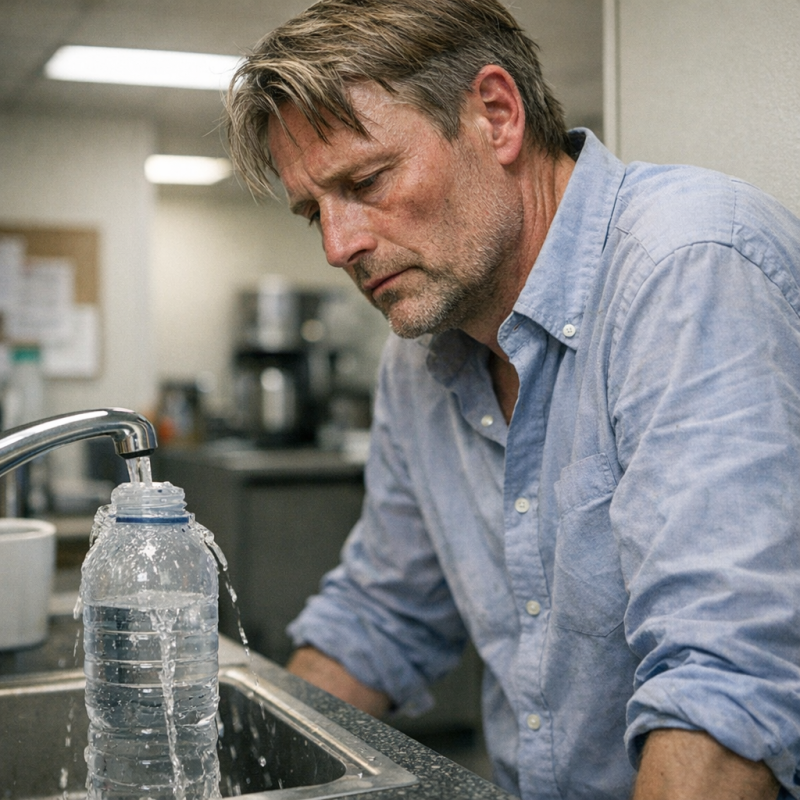 Image by FCT AI
The Apology Tour
Over the next few days, Greg embarked on what Jenna started calling his 'apology tour.' He approached people individually with these weird, stilted apologies that felt like someone had written him a script. I watched him corner people at their desks, hands clasped, face arranged in what was probably supposed to look contrite. When he finally got to me on Friday afternoon, I was ready. 'I wanted to apologize for any confusion or frustration the recent policy changes may have caused,' he said. Not 'I'm sorry I tried to document you out of a job,' just corporate-speak nonsense. 'I hope we can move forward productively,' he added, like we were colleagues who'd had a minor disagreement about meeting schedules. I just looked at him. Didn't nod, didn't speak, just maintained eye contact while he stood there waiting for absolution I had zero intention of giving. The silence stretched out, uncomfortable and heavy. His fake-apologetic expression started to crack around the edges. Finally, he mumbled something about getting back to work and walked away, and I felt absolutely nothing except maybe a grim satisfaction at not making it easy for him. When he got to me, he said, 'I hope we can move forward,' and I just stared at him until he walked away.
 Image by FCT AI
The Severance Package
By the following Monday, new rumors were circulating—these ones about severance packages and quiet exits. Mark heard from someone in HR that the company was negotiating with Greg to leave voluntarily. 'They're probably offering him a decent payout to just disappear without making noise,' Jenna said over lunch. 'Saves them from a lawsuit or bad press.' The three of us sat there picking at our food, processing this. On one hand, it felt like justice dodged. Greg was getting paid to leave after trying to destroy our livelihoods. He'd probably land somewhere else and do the same thing to different people. But on the other hand, a legal battle would drag on forever, cost the company money they'd eventually take out on us somehow, and Greg would be around the whole time. 'I kind of hate that he gets to walk away clean,' I admitted. Mark shrugged. 'He's not walking away clean. His reputation's done. Corporate knows what he tried to pull.' 'Still,' I said. But I didn't finish the thought because I didn't know how to articulate it. Part of me wanted him publicly destroyed, but another part just wanted him gone.
 Image by FCT AI
Greg's Last Day
Greg's last day was the following Friday, and it was the most anticlimactic ending you can imagine. No announcement, no farewell email, just Greg quietly packing his office while the rest of us pretended to work. I could see him through the glass walls, putting framed certificates into a box, unplugging his desk lamp, collecting scattered pens. People walked past his office without looking in, like he'd already stopped existing. Around four, he emerged carrying a single cardboard box and a briefcase. He walked through the department toward the exit, and I watched him go. His eyes swept across the room once, maybe looking for someone to acknowledge his departure, maybe just taking a last look at the place he'd tried to manipulate to his advantage. For a second, our eyes met. I thought I might feel triumph or anger or vindication, but there was nothing—just a blank acknowledgment that he was leaving and I was staying. He turned and walked out the door. As he walked out the door for the last time, he looked back once—and I felt absolutely nothing.
 Image by FCT AI
The Debrief
The Tuesday after Greg left, HR called a department meeting. The same woman who'd investigated the bathroom policy stood at the front of the conference room with a prepared statement that hit all the right notes—validation of our concerns, acknowledgment that policies had been implemented without proper review, assurances that they were conducting a comprehensive assessment of departmental procedures. 'We take workplace environment seriously,' she said, making eye contact with various people around the room. 'Your feedback has been invaluable, and we're committed to ensuring this doesn't happen again.' Mark, Jenna, and I exchanged glances. It was nice to hear, I guess. Nice to have someone officially admit we weren't crazy, that the bathroom thing had been as absurd as we thought. But where was this concern two months ago when we first complained? Where was this comprehensive policy review before Greg implemented his scheme? They were addressing the problem only after it had blown up in their faces. Still, she seemed genuine about the policy review, and our new interim manager was already acting more human. It felt like too little, too late—but at least someone was finally listening.
 Image by FCT AI
What We Learned
That afternoon, Jenna, Mark, and I grabbed coffee at the place across the street. We needed to debrief somewhere that wasn't the office, somewhere we could actually talk without worrying about who might overhear. 'So,' Jenna said, stirring her latte. 'We accidentally saved all our jobs by being petty about bathroom access.' Mark laughed, that exhausted kind of laugh you do when reality is too absurd to process any other way. 'I mean, technically we saved them by documenting everything and forcing HR to look at the budget fraud,' he said. 'But yeah, the bathroom thing was definitely the catalyst.' I thought about Greg's face during that meeting with the HR rep, the way his entire scheme had unraveled because he'd picked the most ridiculous hill to stand on. 'What gets me is that he could've gotten away with it,' I said. 'If he'd just been a normal amount of terrible, we never would've dug deep enough to find the real problem.' We sat there for a while, processing everything that had happened. The exhaustion, the vindication, the sheer weirdness of it all. Mark raised his cup and said, 'To malicious compliance,' and we all laughed—because what else could we do?
 Image by FCT AI
The New Normal
Over the next few weeks, the office slowly returned to something resembling normal. The bathrooms stayed unlocked, obviously. No more sign-in sheets, no more supervised breaks. Our interim manager was this woman from another department, someone who'd been around for years and actually seemed to understand how things worked. She didn't micromanage, didn't implement bizarre policies, didn't treat us like criminals who needed constant surveillance. It was... refreshing? Weird? Both? The department felt different though. Lighter, maybe, but also permanently changed. We'd all been through something together, and you don't just forget that. People were more willing to speak up now, more likely to question things that seemed off. There was this underlying awareness that bad management doesn't fix itself, that sometimes you have to make noise to be heard. I caught myself watching the new manager sometimes, looking for red flags, waiting for the other shoe to drop. Old habits, I guess. But she seemed solid. Professional. Normal. It's not the same as before Greg—but maybe that's not entirely a bad thing.
 Image by FCT AI
The Lingering Questions
Late one night, I found myself thinking about the alternate timeline. The one where we'd just accepted Greg's bathroom policy, where we'd grumbled but complied, where we'd let him document our 'excessive breaks' and 'poor time management' without pushing back. In that version, Greg's restructuring plan would've gone through. We would've been the documented poor performers, the easy targets, the obvious choices for layoffs. The budget would've balanced on paper, his bonus would've been approved, and he would've moved on to his next management position with a nice line on his résumé about 'successful departmental optimization.' Meanwhile, we'd all be job hunting, wondering what we'd done wrong, maybe even believing his narrative that we really were the problem. Nobody would've looked at those budget discrepancies. Nobody would've questioned the timing. The smoking gun would've stayed hidden in some filing cabinet until the retention period expired and everything got shredded. We'd all be unemployed right now, and Greg would be collecting his bonus—and nobody would have ever known the truth.
 Image by FCT AI
The Power of Making a Scene
Looking back now, the lesson isn't really about bathrooms or bad bosses or even corporate fraud. It's about refusing to suffer absurdity in silence. It's about trusting that when something feels wrong, it probably is—and that visibility is power. Greg counted on us being too embarrassed, too professional, too worried about our reputations to make a scene about something as mundane as bathroom access. He thought we'd quietly comply, that the sheer pettiness of the policy would keep us from fighting back. And honestly? He almost got away with it. But here's the thing about workplace absurdity: it thrives in darkness, in private complaints and quiet resignation. The moment we made it visible, the moment we documented everything and forced people to look at what was actually happening, the whole scheme fell apart. Sometimes the most powerful thing you can do is refuse to pretend everything's normal when it clearly isn't. Sometimes you have to be willing to look ridiculous fighting about something small because the small thing is actually the thread that unravels everything. Greg thought locking those bathrooms would give him control over us, but in the end, it gave us exactly what we needed to take it back.
 Image by FCT AI