The Silence
The first thing I remember is the light—too bright, too sharp, stabbing through my eyelids before I could figure out how to open them. My throat felt wrong, like something was lodged there that shouldn't be. When I finally managed to crack my eyes open, the ceiling tiles above me were beige and water-stained, and somewhere a machine was beeping in rhythm with what I assumed was my heartbeat. I tried to speak but nothing came out except a horrible clicking sound. Panic flooded through me. Then I turned my head—slowly, because everything hurt in ways I couldn't locate—and that's when I saw them. Marcus stood at the foot of my bed, his hands shoved in his pockets, his face drawn and pale. And next to him, on either side like some kind of weird receiving line, were my parents. My mother. My father. The three of them together in the same room. Marcus, who my parents didn't even know existed. Marcus, who I'd been hiding for eight months because I knew exactly how they'd react to a struggling artist with no health insurance. The three of them were looking at me with the same expression—and I realized they all knew something I didn't.
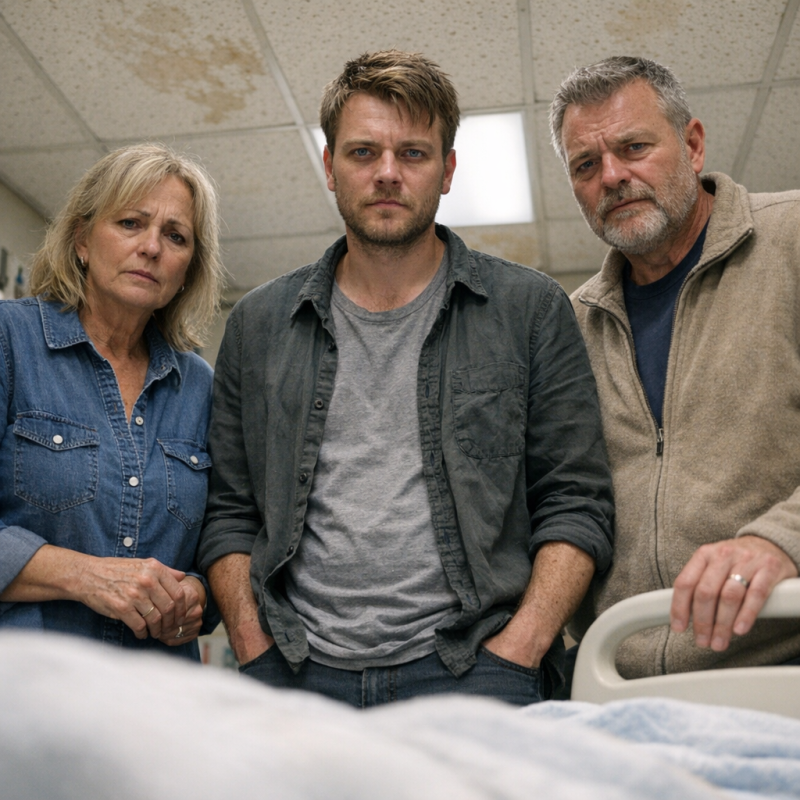 Image by FCT AI
Faces in the Light
I tried to sit up but my body wouldn't cooperate. My arms felt like they belonged to someone else, heavy and slow, and when I lifted my hand to touch my throat I felt plastic—a tube, taped to my neck. The terror must have shown on my face because my mother rushed forward. 'Sweetheart, don't try to talk,' she said, her voice thick with something that sounded like relief but felt like pity. 'You've been through so much.' I wanted to ask what she meant, wanted to scream actually, but all I could do was stare. Marcus moved closer, and that's when I noticed how comfortable he looked standing beside my father. How my dad's hand rested briefly on Marcus's shoulder—a gesture of what, solidarity? Since when did my father touch anyone like that, let alone a man he'd never met? I looked from face to face, searching for an explanation in their expressions. They all watched me with the same careful concern, like I might snap at any second. My mother reached for Marcus's hand—a gesture so casual it felt rehearsed—and my heart stopped.
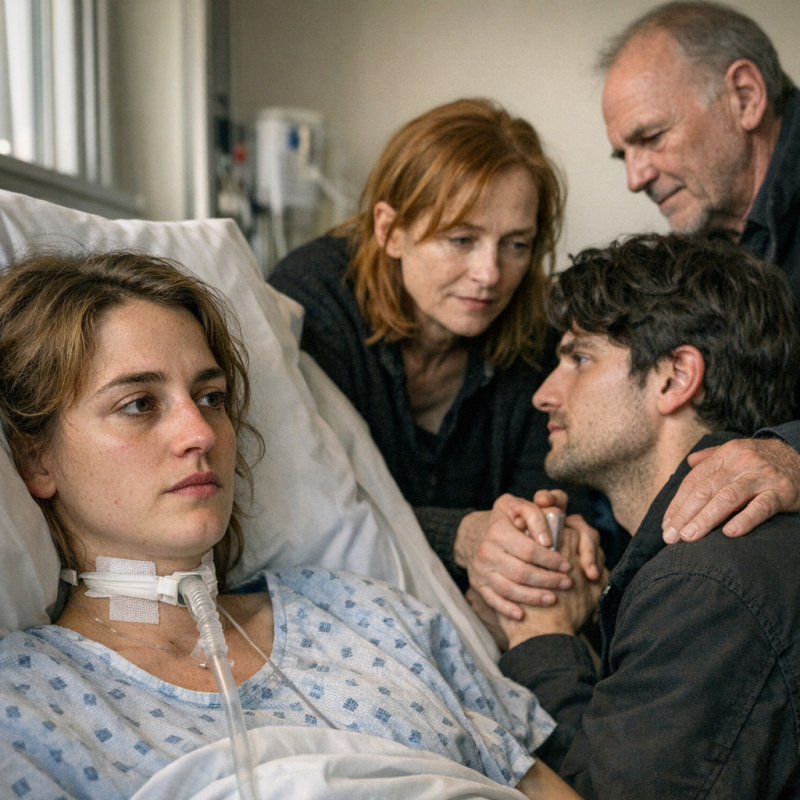 Image by FCT AI
What They Won't Say
Dr. Patel arrived sometime after what felt like hours but was probably only minutes. He was younger than I expected, with kind eyes that didn't quite match the gravity in his voice. 'Emily, you've been unconscious for some time,' he said, positioning himself at my bedside. 'You had a severe traumatic brain injury. We had to perform a tracheotomy to help you breathe, which is why you can't speak right now.' I nodded, or tried to. Everything felt sluggish, disconnected. He continued talking about swelling and Glasgow Coma Scale scores and recovery timelines, but I couldn't focus because I kept watching Marcus over the doctor's shoulder. My father stood next to him, arms crossed, nodding along like he'd heard this speech before. Like he belonged there. I gestured frantically—my hands clumsy, desperate—pointing at my wrist, miming a watch. The universal sign for 'how long?' Dr. Patel hesitated. His eyes flickered to the three of them standing behind him. And here's the thing that made my stomach drop: when he looked for permission to answer, he looked at Marcus first—not my parents—before answering.
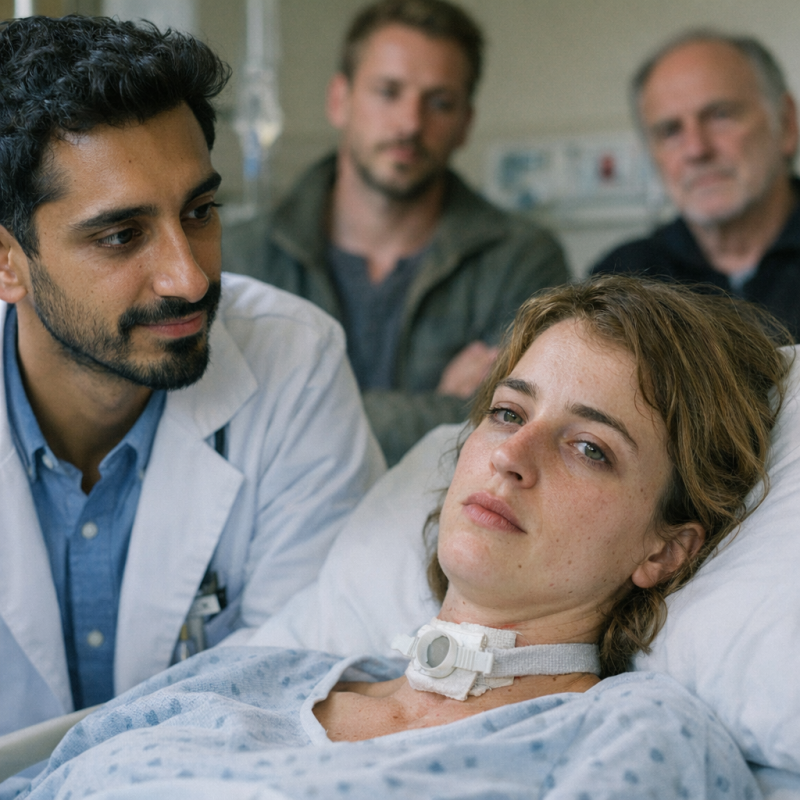 Image by FCT AI
Fragments of Before
When Nurse Rachel came to check my vitals—a woman with tired eyes and capable hands—I found myself drifting back to the before. To the night everything stopped. Marcus and I had been driving back from the coast, windows down, my hair whipping everywhere. We'd spent the weekend at this tiny beach rental, the kind of place where you can hear the ocean through the walls. It was perfect because it was ours alone, no questions, no judgment. My parents didn't know I'd gone. They thought I was at a work conference in Portland. God, the lies I'd told to keep those two parts of my life separate. I remembered Marcus reaching over to change the song, remembered laughing at something stupid he'd said about the seagulls that morning. The radio had been too loud. We'd been singing off-key to some eighties song neither of us really knew the words to. That's where my memory turned to fog—somewhere between the chorus and whatever came next. But lying there in that hospital bed, unable to speak or move properly, one detail suddenly crystallized with horrible clarity: the last thing I remembered was laughing in the car—and then I realized Marcus had been driving.
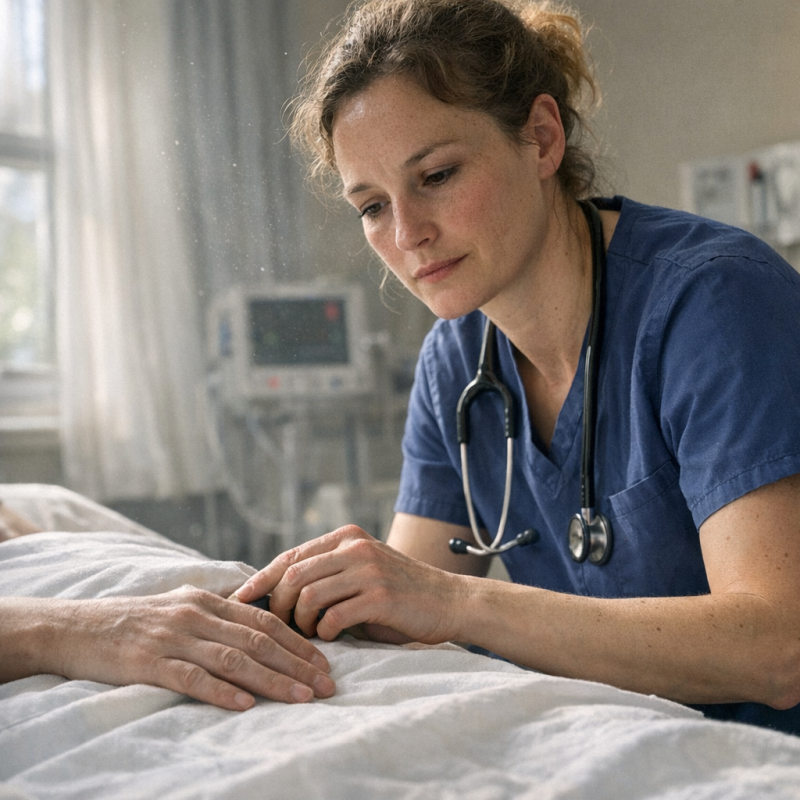 Image by FCT AI
The First Question
By the second day, they gave me a notepad and a pen. My hands shook when I tried to write, the letters coming out crooked and childlike, but at least it was communication. My mother sat beside me, reading a magazine she clearly wasn't absorbing, and I seized the moment. I scrawled across the page: 'How did you meet Marcus?' She looked up, startled, and I watched something flicker across her face—was it guilt? 'Oh, honey,' she said, setting the magazine aside. 'He called us from the hospital. The night of the accident. He was so worried about you.' I nodded slowly, processing. That made sense, I guess. In an emergency, you call the family. But then why did they seem so... close? So familiar? I wrote again: 'How did he know your number?' My mother's smile tightened just slightly at the corners. 'He found it in your phone, sweetheart. He's been wonderful through all of this. Really wonderful.' She squeezed my hand. The explanation was perfectly reasonable. It should have satisfied me. My mother said Marcus called them from the hospital—but she didn't say how he got their number.
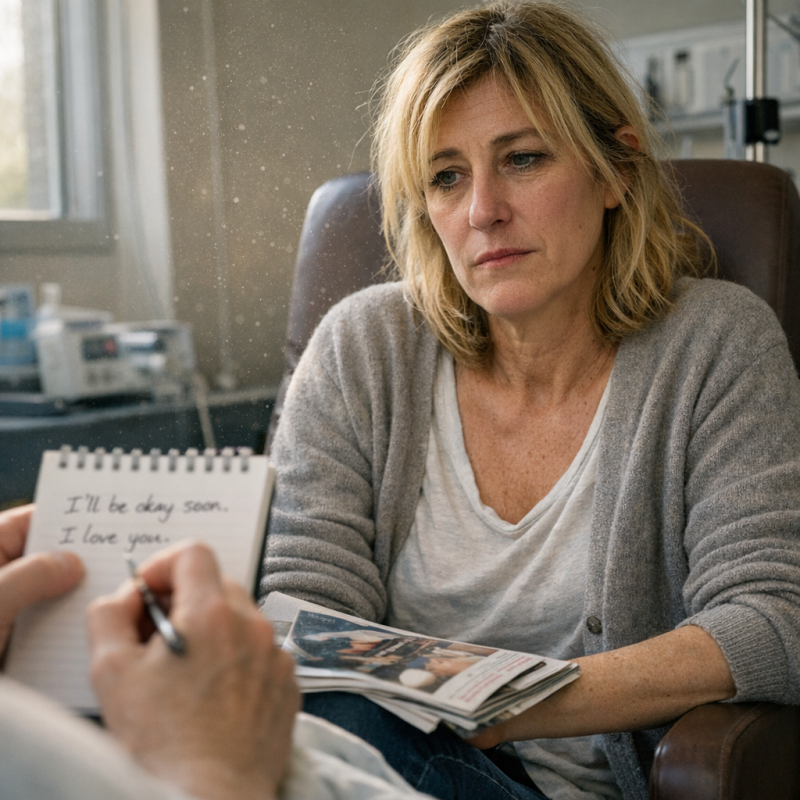 Image by FCT AI
Too Familiar
The thing that got me was how much my father liked him. I'd never seen my dad warm up to anyone I dated—not in high school, not in college, not ever. He'd been polite to my ex-boyfriend Jake for two years without ever actually engaging in a real conversation. But with Marcus, something was different. I watched them from my bed on the third day, Marcus perched on the radiator by the window, my father in the chair beside him. They were talking about basketball, of all things. 'No way the Blazers make it past the first round,' Marcus said, shaking his head. My father actually smiled—not his tight, polite smile, but a real one. 'I've been saying that for weeks,' he replied. 'Their defense is nonexistent.' They continued like that, back and forth, easy and natural. Marcus made some joke about a player's free throw percentage and my father laughed—a real laugh—and I couldn't remember the last time he'd done that with anyone I dated. I felt like I was watching through glass, separated from something that should have included me but somehow didn't anymore.
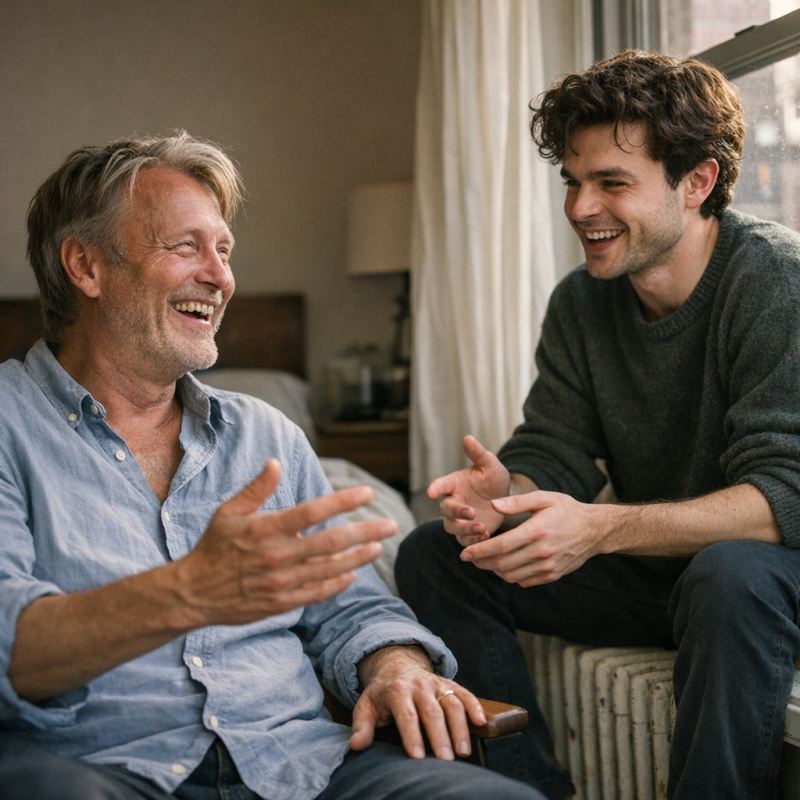 Image by FCT AI
The Mirror
Nurse Rachel helped me to the bathroom on day four. My legs wobbled like a newborn deer's, but I was determined to do this one thing myself. When I finally stood in front of the mirror, I had to grip the sink to stay upright. The face looking back at me was mine but also wasn't. Same brown eyes, same nose, same general bone structure. But something fundamental had shifted. I looked hollowed out somehow, like someone had reached inside and scooped out something essential. My skin was paler than I'd ever seen it, almost translucent under the fluorescent lights. My hair hung limp and lifeless around my face. I touched my cheek, watched the reflection do the same, trying to find what was different. Was it just weight loss? Muscle atrophy? The doctor said I'd been unconscious for two months. That would change anyone. But this felt deeper than physical. I searched my reflection for bruises, for scars, for some external evidence of trauma. There were no scars, no visible injuries—so why did I look like someone who'd lost something she couldn't name?
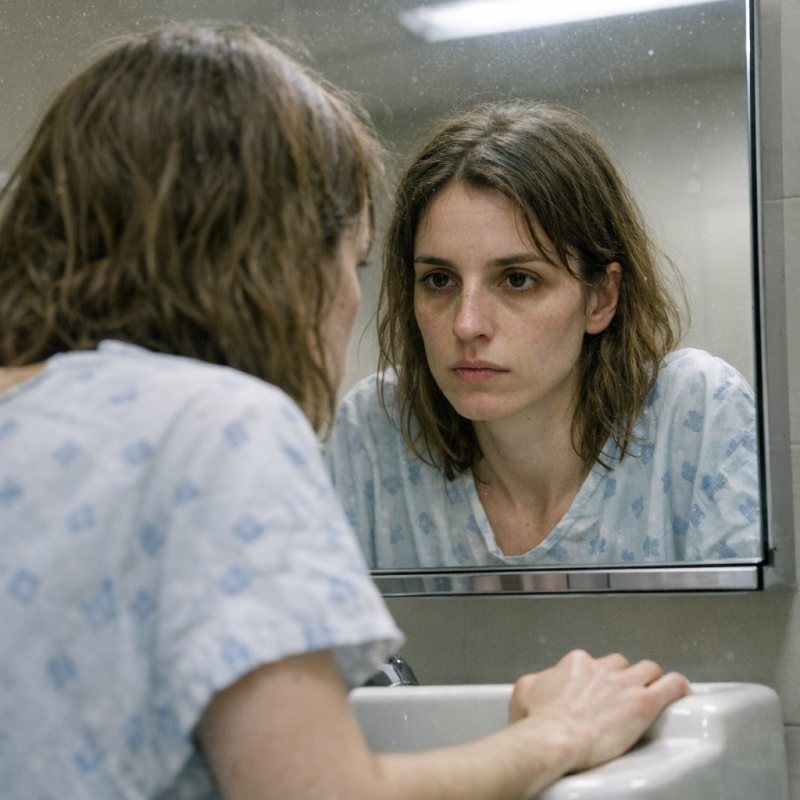 Image by FCT AI
Jenna's Visit
Jenna burst through the door on day five like a force of nature, her arms full of magazines and chocolate and the kind of chaotic energy I'd been desperately missing. 'Oh my god, Em,' she breathed, dropping everything on the chair and rushing to hug me as carefully as possible. For the first time since waking up, I felt tears sting my eyes. Real ones, not the frustrated kind. She pulled back, studying my face, and I could see her own eyes getting wet. 'I was so scared,' she whispered. We sat together, me writing questions on my notepad, her filling me in on work gossip and friend drama. Then Marcus appeared in the doorway with coffee for my parents, and I watched Jenna's entire expression change. Her eyebrows went up. She looked from him to me and back again. 'Hi,' Marcus said, giving her that easy smile of his. 'You must be Jenna. Emily's told me so much about you.' Jenna's face was pure confusion. After he left, she leaned in close and whispered, 'When were you going to tell me about him?' and I realized I couldn't answer—not just because I couldn't speak.
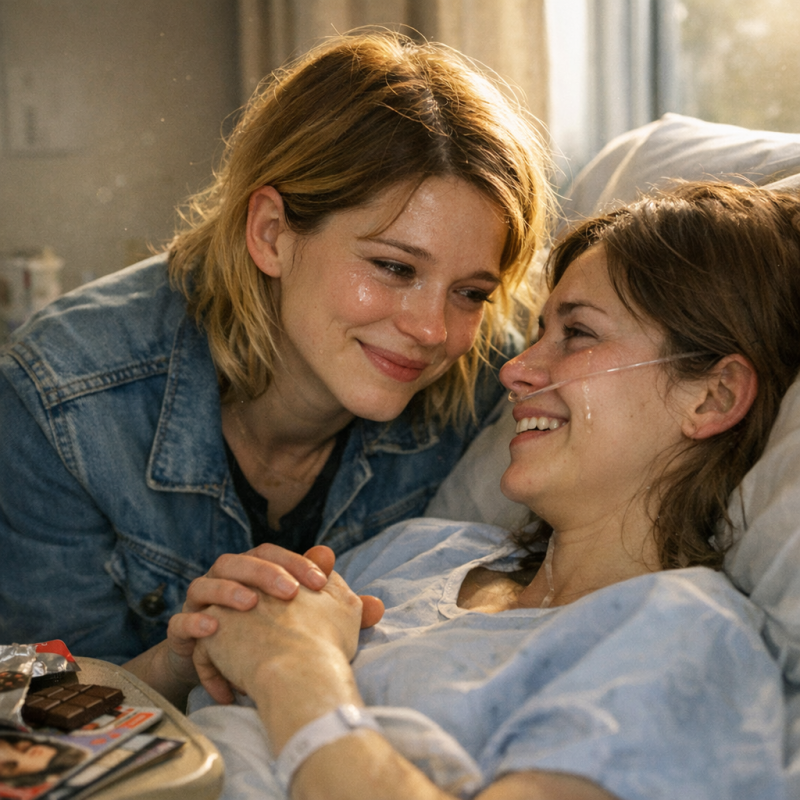 Image by FCT AI
The First Night Alone
The evening nurse had already done her rounds when Marcus settled back into the chair beside my bed, showing no signs of leaving. My parents had gone home an hour ago, exhausted. The hallway outside had gone quiet. I reached for my notepad and wrote: 'What happened? Before I woke up?' He leaned forward, took my hand, and his face arranged itself into this expression of tender concern that somehow felt... performed. 'I was there when you collapsed at the coffee shop,' he said, his voice smooth and measured. 'I called the ambulance. I rode with you to the hospital. I stayed with your parents during the surgery. I made sure the doctors had all your information.' Each sentence landed perfectly, like he'd practiced them. 'The first few days were the hardest,' he continued, rubbing his thumb across my knuckles. 'They didn't know if you'd wake up. But I knew you would. I never left your side.' I wrote: 'Why?' and watched him carefully. He gave me this sad, beautiful smile. 'I just did what anyone who loved you would do,' he said, but something about the way he said it made it sound rehearsed.
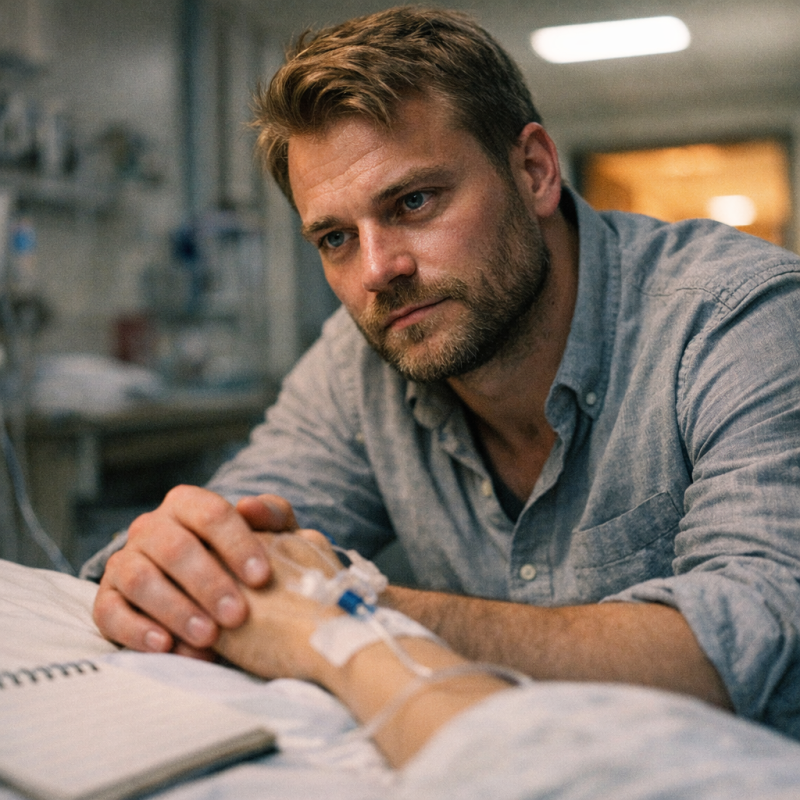 Image by FCT AI

History's most fascinating stories and darkest secrets, delivered to your inbox daily.
Medical Decisions
Dr. Patel came by during his morning rounds, and I saw my chance to get some real answers. I scribbled on my notepad: 'Who made medical decisions while I was out?' He glanced at my chart, then back at me with a professional smile. 'Your designated emergency contact handled all the consent forms and medical decisions,' he explained. 'Standard procedure when a patient is incapacitated.' I wrote quickly: 'Who?' expecting him to say my parents. Dr. Patel checked the chart again. 'Marcus Reeves. He's listed as your emergency contact and medical proxy. He was very thorough, very involved in your care plan.' My pen froze on the page. I stared at the words I'd just written, then scratched out: 'I never listed him.' Dr. Patel's expression didn't change, but I saw a flicker of something—concern, maybe? 'It's in our system,' he said carefully. 'Dated three months ago. He had all the proper documentation.' Three months ago, Marcus and I had barely started dating. I hadn't even told my friends about him yet. Dr. Patel said Marcus had been listed as my emergency contact—but I'd never listed anyone.
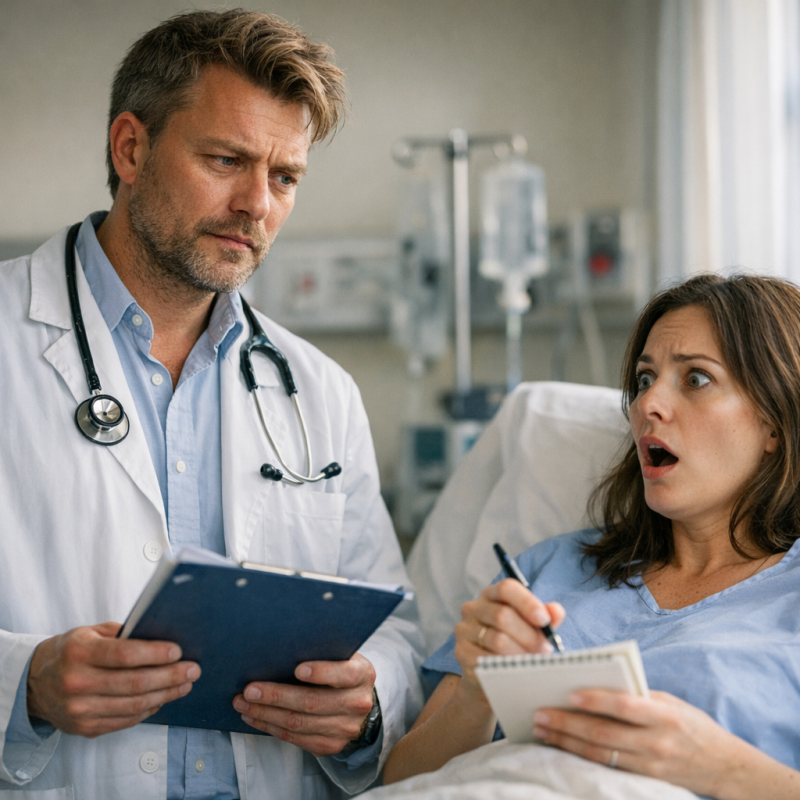 Image by FCT AI
The Engagement Ring
I was adjusting my blanket when I noticed it—a simple silver band on my left ring finger. I'd been in the hospital for almost a week and somehow hadn't registered it before. My hand felt heavier suddenly, foreign. When my mother came by that afternoon, I pointed to it, raising my eyebrows in question. Her face lit up with this bittersweet smile. 'Oh, honey. Marcus told us you two were engaged. He was so worried about what to do—whether to wait until you woke up to make it official or...' She trailed off, touching the ring gently. 'He said you'd been planning it together. He wanted you to have it, to give you something to wake up for.' I felt my chest tighten. Mom kept talking about how Marcus had shown them pictures on his phone, how he'd asked their blessing, how perfect it all was. I wanted to scream. Instead, I just nodded and smiled because what else could I do? I couldn't speak, couldn't explain that I had no memory of any of this. I stared at the ring, trying to remember him proposing, and came up empty—because it had never happened.
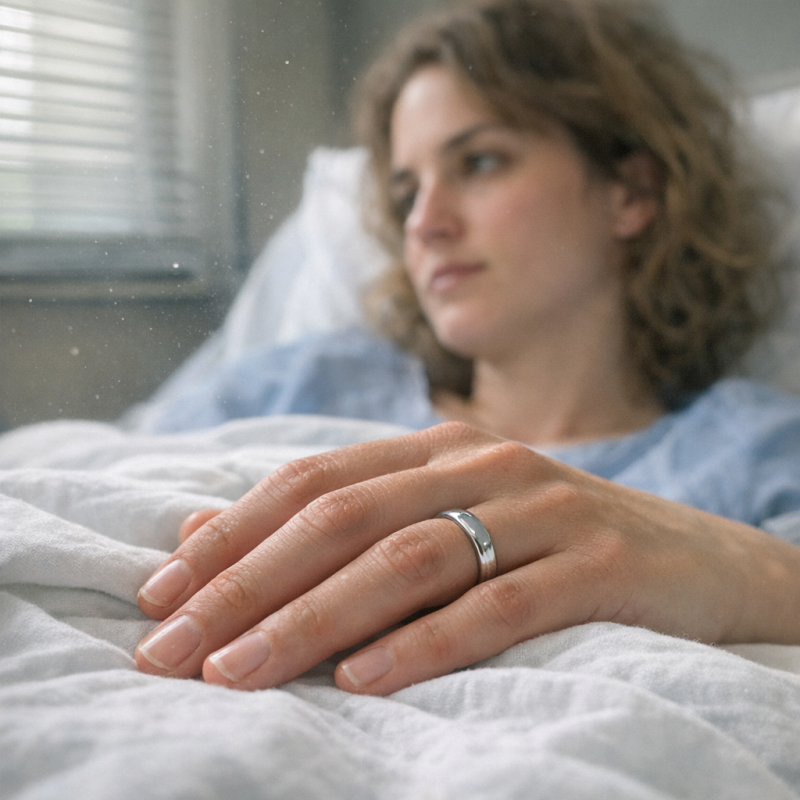 Image by FCT AI
Tom's Suspicion
My younger brother Tom showed up the next afternoon, and I could tell immediately something was on his mind. He's always been the skeptical one in our family, the one who questions everything. He made small talk for a few minutes, asked about my recovery, but his eyes kept darting to the door. When we were alone, he pulled his chair close to the bed and lowered his voice. 'Em, I need to ask you something, and I need you to be honest with me.' He paused, choosing his words carefully. 'This Marcus guy—were you really serious about him? Like, engaged serious?' I hesitated, then shook my head slightly. Tom's jaw tightened. 'That's what I thought. Mom and Dad are completely sold on him, but something feels off. I've tried talking to them, but they won't listen. They think I'm being paranoid.' He glanced at the door again. 'I did some digging. He's got no social media, no real digital footprint. For a guy who supposedly works in tech, that's weird, right?' I grabbed my notepad, hands shaking. Tom leaned in and whispered, 'Something about him doesn't add up—but Mom and Dad won't hear it.'
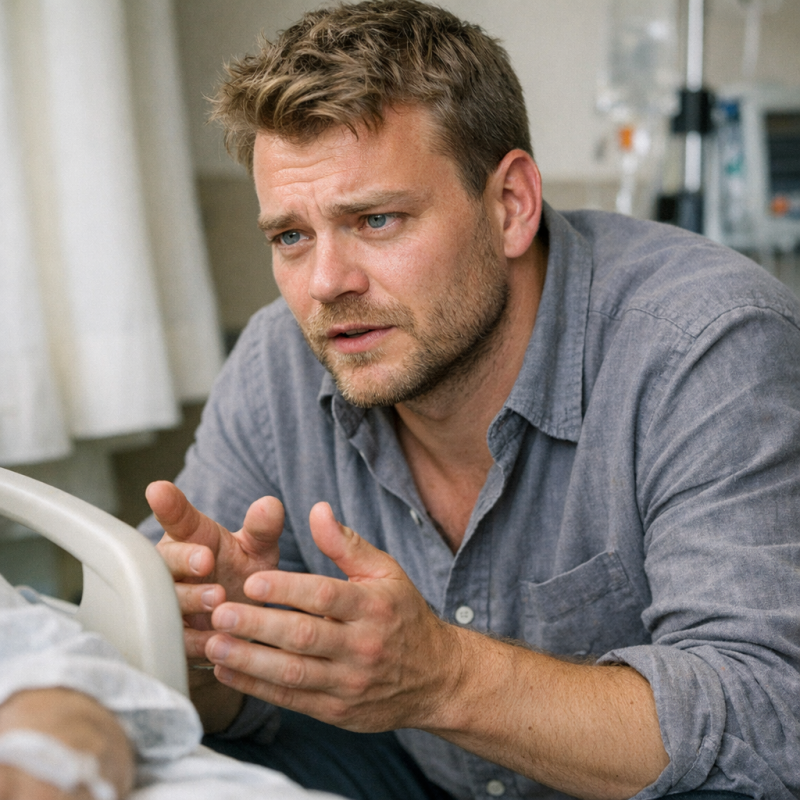 Image by FCT AI
Physical Therapy Begins
Physical therapy started on day eight, and I was actually excited about it—finally a chance to do something, to reclaim some control over my own body. The therapist, a kind woman named Angela, explained that we'd start slow, just trying to get me sitting up and eventually standing. Marcus arrived before we even began, settling into the corner chair with a supportive smile. Angela turned to me. 'Some patients prefer privacy during PT sessions. It can be frustrating, sometimes emotional. Would you like—' 'She prefers me here,' Marcus interrupted smoothly, standing up to move closer. 'We've talked about it. She doesn't like being alone, especially when she's struggling with something new. Right, Emily?' He looked at me expectantly, and Angela looked at me too, waiting for confirmation. I couldn't explain that we'd never discussed it, that I hadn't even known PT was starting today. So I just nodded, feeling something cold settle in my stomach. The therapist asked if I wanted privacy, and before I could respond, Marcus said I preferred him there.
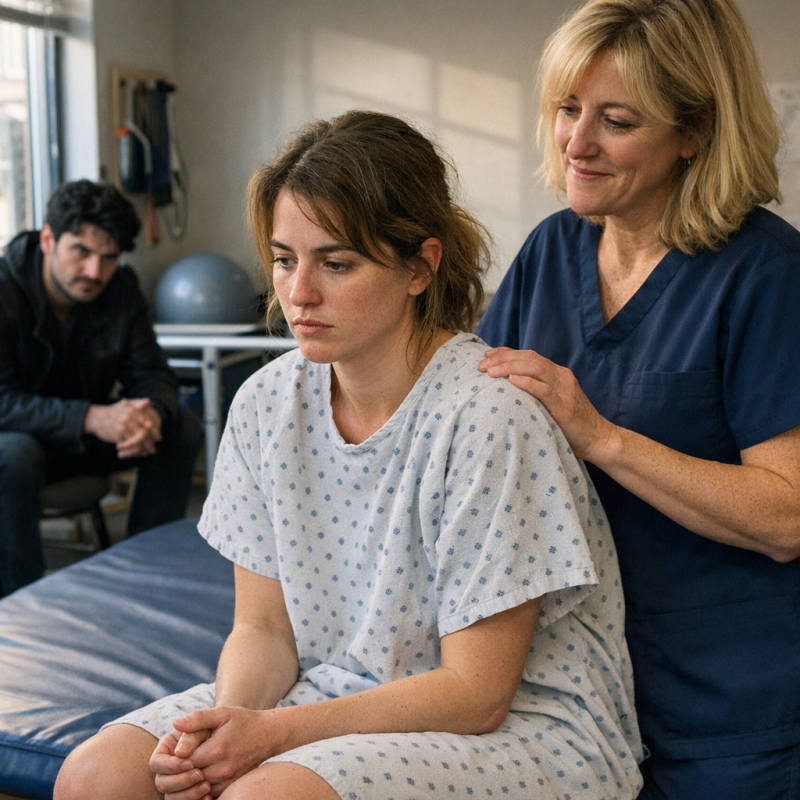 Image by FCT AI
The Apartment Key
My mother mentioned it casually, like it was the most natural thing in the world. 'Marcus has been so thoughtful, moving your things from your apartment into his place. It just makes sense, doesn't it? Especially now that you're engaged.' I must have looked confused because she continued, 'He didn't want you to worry about rent or anything while you're recovering. Your landlord was very understanding.' Marcus, sitting beside her, squeezed my hand. 'I wanted everything ready for when you come home,' he said. 'Your books, your clothes, everything you need. Your parents helped me get access.' I grabbed my notepad with my free hand and wrote: 'My apartment?' My mother smiled. 'Well, your lease was month-to-month anyway, dear. And you'll be living together now. Marcus handled all the logistics. We gave him the spare key you left with us for emergencies.' I stared at them both, feeling the walls closing in. I'd never given Marcus a key to my apartment. That spare key was for my parents only, for absolute emergencies. My mother said it made sense since we were engaged—but I'd never given him a key to my apartment.
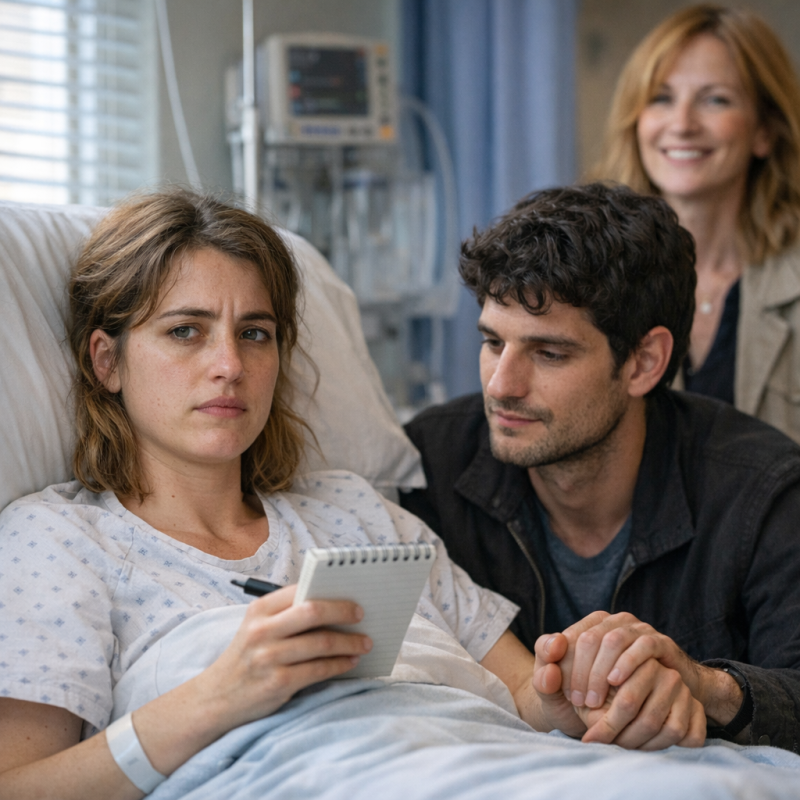 Image by FCT AI
Lauren's Warning
Marcus's sister Lauren came to visit on a Saturday afternoon. I hadn't even known he had a sister until she appeared in the doorway, introducing herself nervously. She was younger than Marcus, maybe mid-twenties, with the same dark eyes but none of his easy confidence. She seemed jumpy, glancing at Marcus constantly as they made small talk. He stayed close, one hand on my shoulder, steering the conversation away whenever Lauren tried to ask me direct questions. 'How are you really feeling?' she asked at one point, leaning forward like she actually wanted to know. Marcus answered for me, as usual. Lauren's jaw tightened. She stood abruptly, said she needed to use the restroom, and asked if I needed anything. When she came back, Marcus was on his phone, distracted. Lauren moved quickly, pressing something into my palm—a folded piece of paper, small enough to hide in my fist. Our eyes met for just a second. She looked terrified. 'I should go,' she said too loudly, backing toward the door. 'It was so good to meet you, Emily. I hope... I hope you feel better soon.' Lauren's hands shook as she handed me a folded note and whispered, 'Read this when you're alone.'
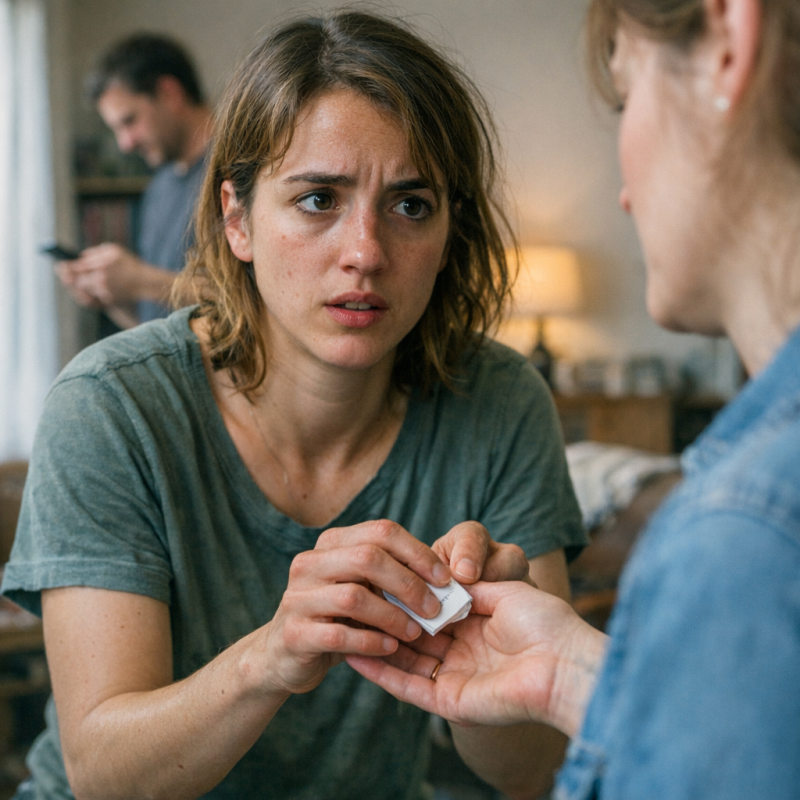 Image by FCT AI
The Note
I waited until two in the morning, when the hospital was at its quietest and Marcus had finally gone home. The night nurse had just finished her rounds. My hands trembled as I unfolded Lauren's note, smoothing it against my lap in the dim light. Her handwriting was rushed, almost frantic: 'Emily—I don't know how to tell you this, and I'm terrified he'll find out I said anything. My brother has done this before. Three years ago, there was another girlfriend. She was in a car accident, hospitalized for weeks. Marcus showed up at the hospital, convinced everyone he was her fiancé, made all her medical decisions. Her family believed him too. I tried to warn her parents, but they thought I was jealous or crazy. Six weeks after she woke up, she was gone. The medical examiner said it was complications from her injuries, but I've never believed it. Please be careful. Please don't trust him. And please, please don't let him know I told you.' The note ended with: 'Her name was Sophie—look her up.'
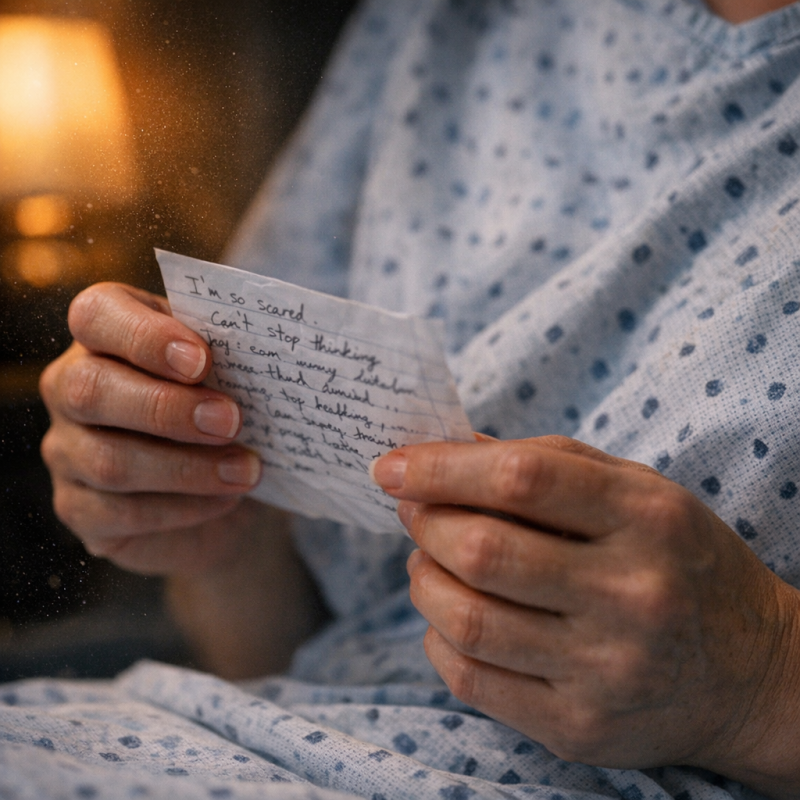 Image by FCT AI
Trapped Without Proof
The next morning, when my parents arrived, I tried everything. I grabbed the writing pad and scrawled frantically—'Marcus lying,' 'Not engaged,' 'Lauren warning'—until my mother gently took the pen away. 'Sweetheart, you're getting yourself worked up,' she said, exchanging a worried look with my father. I pointed at what I'd written, tapping the pad so hard it nearly tore. My father sat on the edge of the bed and took my hand. 'Emily, honey, you've been through tremendous trauma. The doctors said confusion and paranoia are normal after what you've experienced.' I shook my head violently, tried to write more, but my mother was already calling for the nurse. 'She's agitated,' she told the woman who appeared. 'Should we be concerned?' They talked about me like I wasn't there, like I was a child throwing a tantrum instead of a woman trying to save her own life. I saw the nurse make a note on her tablet—probably documenting my 'behavioral issues.' When I tried one more time to communicate, writing 'DANGER' in capital letters, my father said, 'You're confused, honey—Marcus saved your life,' and I realized they wouldn't believe me even if I could speak.
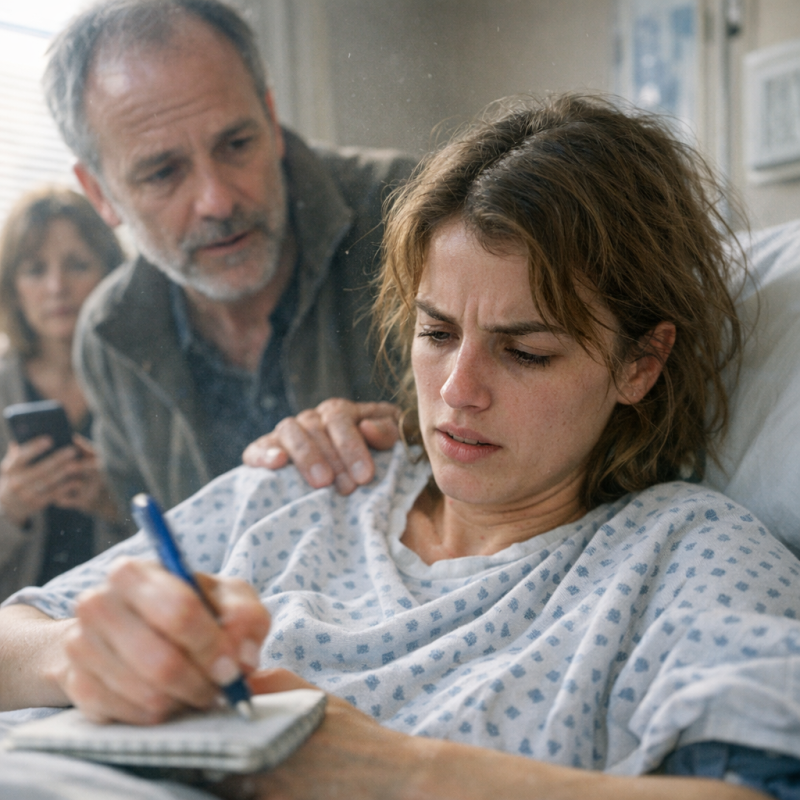 Image by FCT AI
The Financial Documents
Two days later, a hospital administrator brought me paperwork about insurance and billing. I glanced through it absently at first, then something caught my eye—a reference to account adjustments and direct payment arrangements. I gestured for more information, and she brought me printed statements, probably thinking I just wanted to understand the costs. What I saw made my blood run cold. There were my bank accounts, checking and savings, laid out in black and white. But the transactions from the past three weeks—transfers, payments, account modifications—none of them were mine. I'd never authorized any of it. My hands shook as I flipped through the pages. Utility payments from my account to an address I didn't recognize. A large transfer to something labeled 'Medical Equipment Rental.' Changes to my direct deposit. And then, at the bottom of the statement, in small print that I almost missed: account ownership had been modified. The bank statement showed transfers I didn't authorize—and Marcus's name was listed as a co-owner on my account.
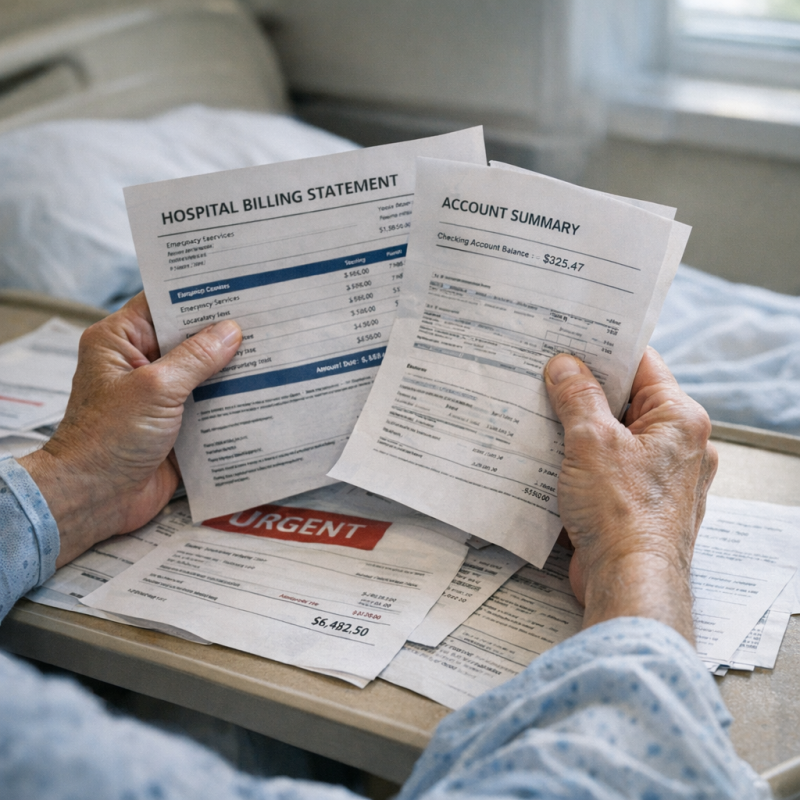 Image by FCT AI
The Social Worker
Patricia came by that afternoon—a hospital social worker doing discharge planning assessments. She was kind, thorough, asking about my support system and home situation. For a moment, I felt hope flicker in my chest. This was her job, wasn't it? To spot when patients were unsafe? I tried to signal my distress, writing 'HELP' on the pad, then pointing to the door when Marcus was mentioned. But Patricia just smiled and patted my hand. 'I know transitions are scary,' she said gently. 'It's completely normal to feel anxious.' I wrote more frantically: 'NOT SAFE.' She glanced at it and nodded sympathetically. 'You're safe, Emily. You're going to be just fine.' Then Marcus appeared in the doorway with coffee for everyone, and Patricia's whole face brightened. 'Oh, wonderful timing!' She stood to accept the cup, and they started talking about accessible bathroom modifications and physical therapy schedules. I watched him work his charm, watched her believe every word. When she gathered her files to leave, Patricia smiled kindly and said, 'You're so lucky to have such a devoted fiancé,' and I wanted to scream.
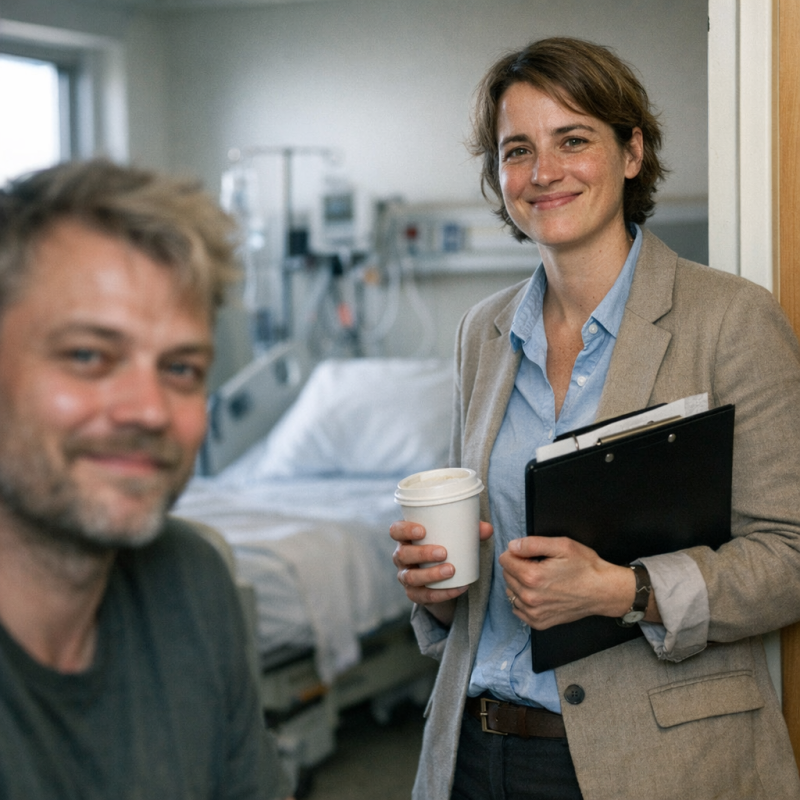 Image by FCT AI
Researching Sophie
Jenna slipped into my room late that night with a phone hidden in her scrubs pocket. 'Twenty minutes,' she whispered. 'That's all I can risk.' My fingers fumbled with the small screen as I typed Sophie's name into the search bar. The results loaded slowly, and then—there she was. Sophie Chen, 29, passed away eighteen months ago. The news article was brief, clinical: a tragic accident in her apartment, just six weeks after being discharged from the hospital following a serious car crash. The comments section was full of condolences, people saying how terrible it was, how she'd survived the accident only to pass away at home. I kept scrolling, searching for more. There—an obituary from her family. It mentioned her loving parents, her career as a teacher, her passion for hiking. And then, buried in the middle: 'Sophie is also survived by her fiancé, Marcus.' I felt my stomach drop. I clicked another link, found a memorial page someone had created. The timeline matched exactly what Lauren had described. Sophie's obituary mentioned she'd been engaged to someone named Marcus—and that her passing was ruled an accident.
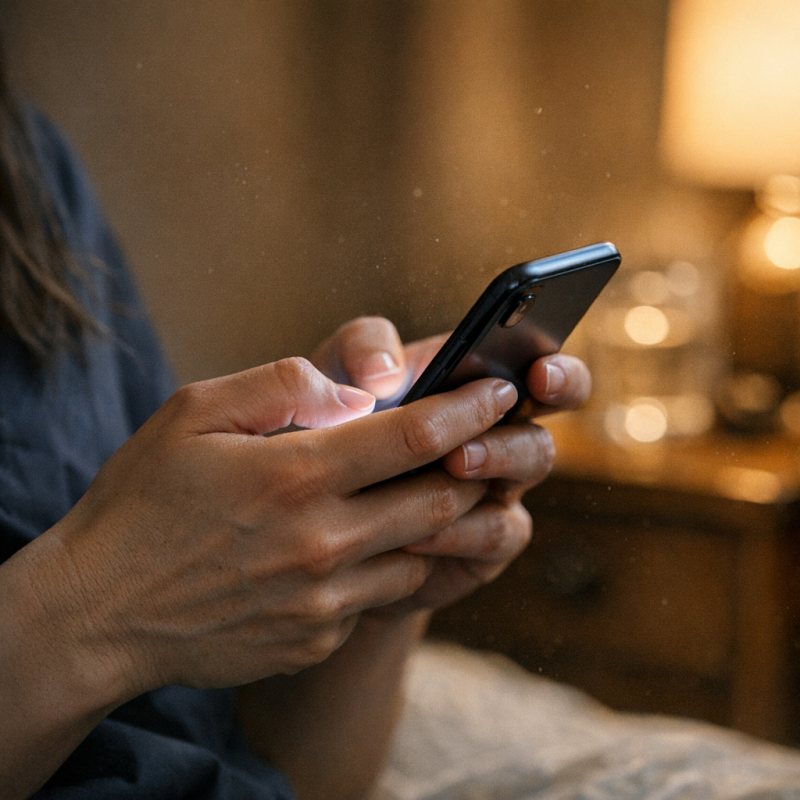 Image by FCT AI
The Discharge Plan
Dr. Patel came by during morning rounds with news I'd been dreading. 'Your recovery is progressing well,' he said, reviewing my chart. 'We're looking at discharge within the week.' My heart started racing before he even finished. 'Marcus has been very proactive about arrangements. You'll be moving into his apartment—it's all set up for your continued recovery. Grab bars in the bathroom, a shower chair, everything you'll need.' I reached for my writing pad with shaking hands, but Marcus was already there, appearing in the doorway like he'd been waiting for this exact moment. 'Isn't it great news?' he said, moving to my bedside. Dr. Patel smiled at him, then back at me. 'You'll need continued physical therapy, of course, and follow-up appointments, but you'll be much more comfortable in a home environment.' I tried to write 'NO' on the pad, pressing so hard the pen nearly tore through the paper. But Marcus gently took the pen from my hand and said, 'She's just tired.'
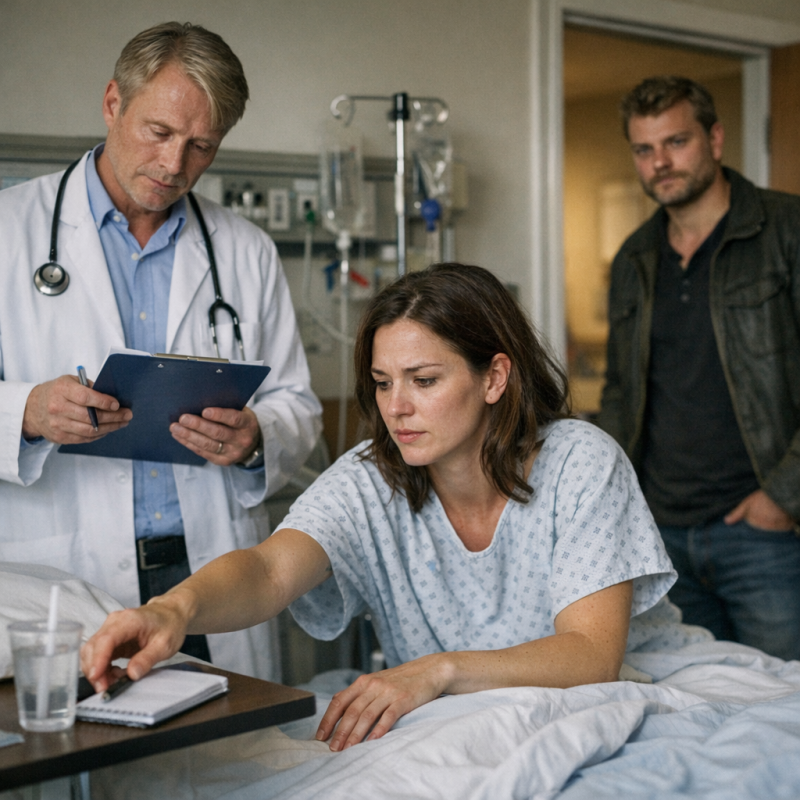 Image by FCT AI
Jenna's Plan
Jenna found a moment alone with me the next afternoon when Marcus had gone to 'run errands.' She checked the hallway twice before speaking. 'I contacted a lawyer,' she said quietly, urgently. 'A friend of mine who specializes in medical advocacy. I told her everything—the fake engagement, the financial stuff, Sophie.' Relief flooded through me so intensely I almost cried. Finally, someone who believed me, someone who could actually do something. But Jenna's expression remained grave. 'The problem is the legal framework. When you were unconscious, unable to make decisions, the hospital accepted Marcus as your next of kin. He somehow got medical power of attorney. My friend says we can challenge it, but it takes time—court filings, hearings, evidence.' She glanced at the door again. 'I showed her the bank statements you found. She says it's financial exploitation, potentially against the law, but proving it while you're still considered incapacitated is complicated.' My discharge date was in five days. We both knew what that meant. Jenna whispered, 'I believe you—but the law sees you as incapacitated, and him as your legal guardian.'
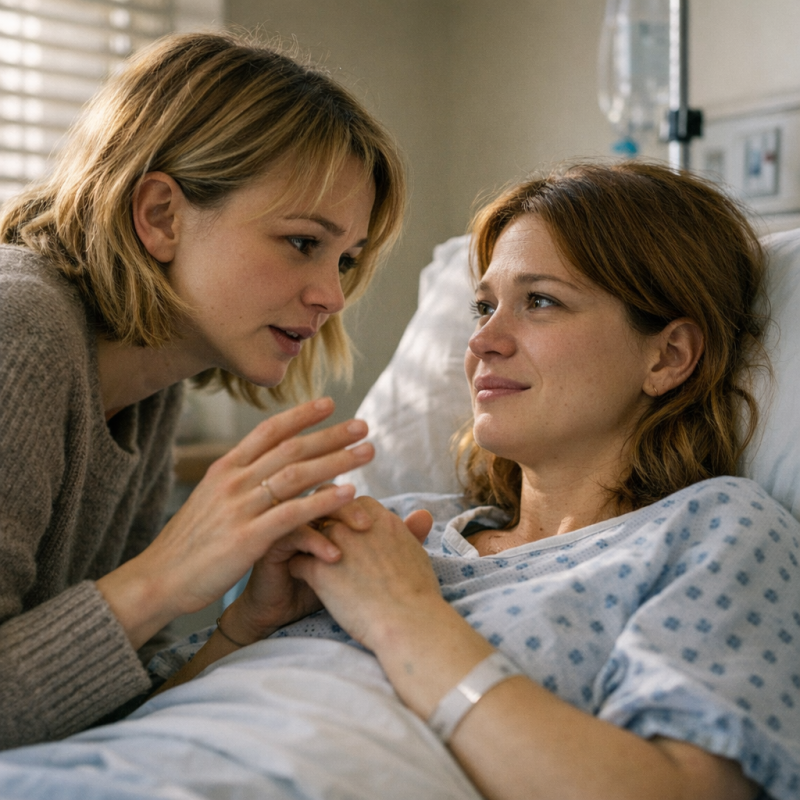 Image by FCT AI
Marcus's Confession
That evening, Marcus came alone. No flowers, no cheerful small talk. He sat in the chair beside my bed and was quiet for a long moment, just looking at me. Then he spoke. 'I know you didn't say yes,' he said softly. 'To the engagement. I know you never actually agreed to marry me.' My whole body went rigid. He continued, his voice calm, almost sad. 'But I had to do something, Emily. Your parents—they've always controlled you, made every decision for you. I've watched it for months, the way they dismiss what you want, the way they run your life.' He leaned forward, taking my hand. 'When the accident happened, I knew they'd take over completely. They'd make choices you'd never want, ship you off to some facility, manage everything. So I lied. I told everyone we were engaged so I could protect you from them.' He squeezed my hand, his eyes earnest. 'Everything I've done—the medical decisions, the planning, all of it—I did it because I love you. Because I knew you needed someone who actually sees you for who you are.' He said, 'I lied for us—because I love you,' and I realized he'd twisted everything into a story where he was the hero.
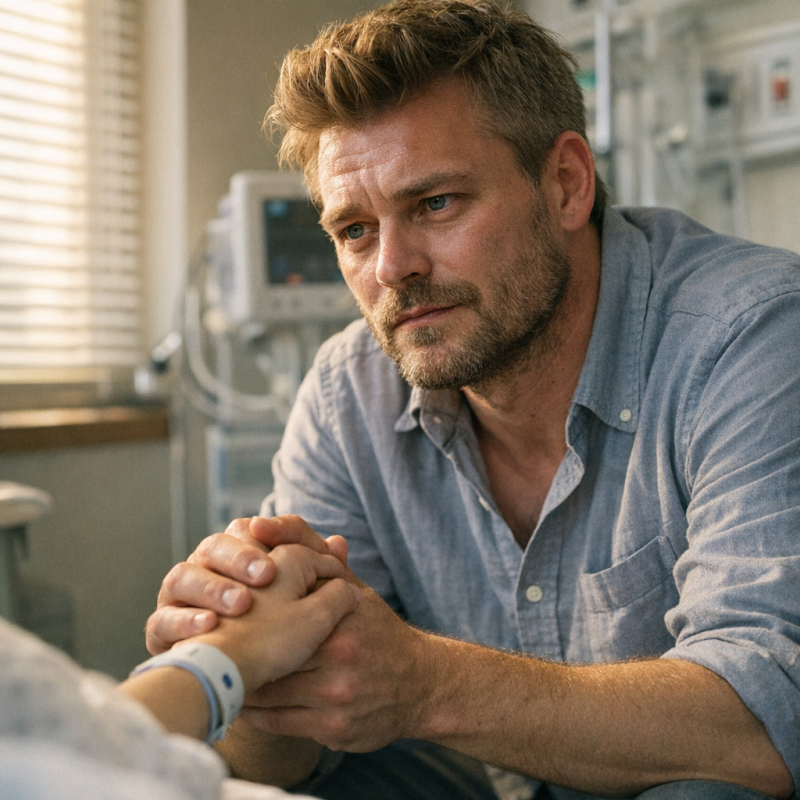 Image by FCT AI
The Tracheotomy Removal
The tracheotomy removal was scheduled for early morning. Dr. Patel explained the procedure would be quick, that I might feel some discomfort, that my voice would be hoarse at first. I'd been waiting for this moment for weeks—the chance to finally speak, to tell someone what was happening. But when I woke from the light sedation, Marcus was already there, positioned right beside the bed where the doctor would stand. 'How are you feeling?' Dr. Patel asked as he checked the site. I opened my mouth, and actual sound came out—rough, scratchy, but mine. 'Better,' I managed. It felt strange, wonderful, terrifying all at once. Marcus smiled and took my hand, his grip firm. Too firm. 'This is amazing,' he said to Dr. Patel. 'We've been waiting so long to hear her voice again.' The doctor nodded, making notes. 'Start slowly—don't strain yourself. Short sentences for now.' This was it. My chance. I looked at Dr. Patel, drew a breath, felt the words forming: 'I need to tell you something about—' Marcus's hand tightened on mine, his fingers digging into the bones of my wrist. I opened my mouth to tell the doctor the truth, and Marcus squeezed my hand so hard I gasped instead of spoke.
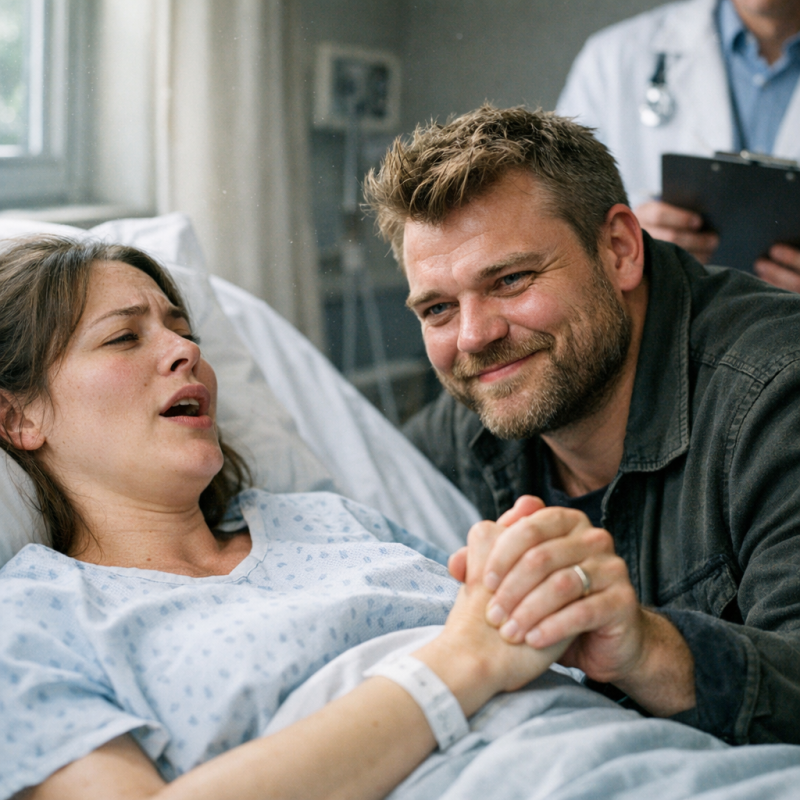 Image by FCT AI
First Words
My voice came out scratchy and weak, but it was mine. I practiced forming words while Nurse Rachel checked my vitals, the sounds feeling foreign in my throat. 'Water?' I managed, and she brought me a cup with a straw. Marcus sat beside me, his hand resting on my shoulder like a claim. I wanted to say everything—about the documents, the control, the way he'd manipulated everyone—but when I tried, the words tangled themselves into something harmless. 'I'm tired,' I said instead. Nurse Rachel nodded sympathetically. 'Of course you are, honey. You've been through so much.' I gathered my courage and tried again. 'I want... I want to go to my apartment. My own place.' I watched Nurse Rachel's face for understanding, for acknowledgment that I had the right to decide. But instead of looking at me, she glanced at Marcus. Actually looked at him, waiting for his response, as if I hadn't just spoken at all. He smiled gently and squeezed my shoulder. 'Let's see what the doctors say, okay? We want to make sure you're ready.' Nurse Rachel made a note on her chart, nodding in agreement. When I said I wanted to go to my own apartment, the nurse looked at Marcus for confirmation—not at me.
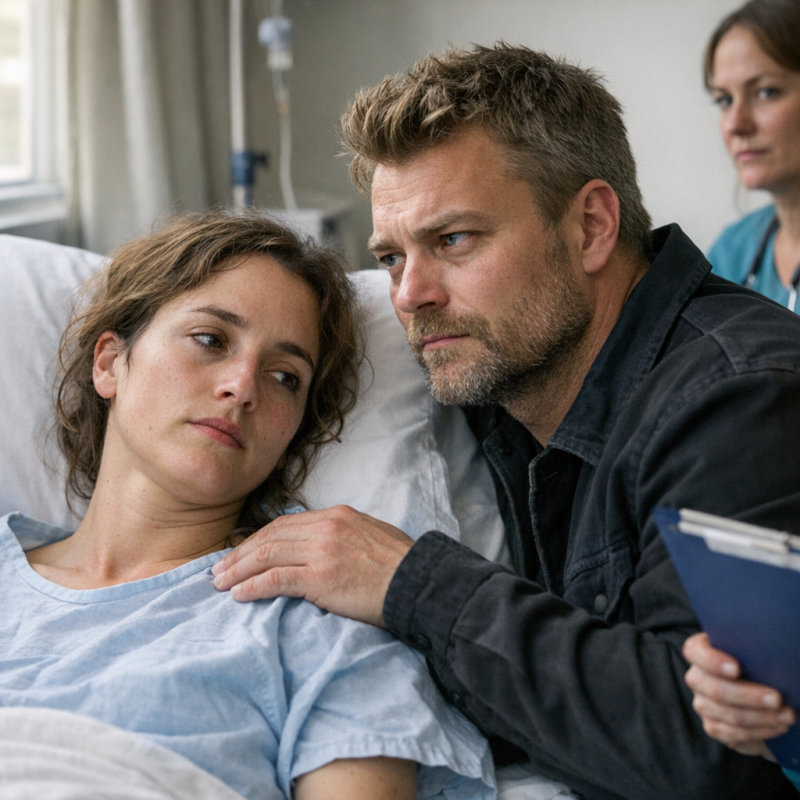 Image by FCT AI
Tom's Discovery
Tom showed up the next morning with a manila folder he wouldn't let Marcus see. He waited until Marcus went to get coffee, then pulled his chair close to my bed. 'I found something,' he said quietly, sliding papers across my lap. They were official documents—medical power of attorney forms, next-of-kin designations, consent for treatment. All filed by Marcus. All claiming we were engaged. I stared at the dates. They'd been submitted three days after my accident, when I was still unconscious. 'How did he—' I started, my new voice cracking. Tom pointed to a section near the bottom. 'He claimed you'd signed these before the accident. Said you'd done it when you found out you were pregnant, to protect the baby.' There was no baby. There never had been. My hands shook as I looked at the signature line, at the flowing script that spelled my name. It looked right. The loops and curves matched the way I signed checks, the particular slant of the 'E.' But I'd never seen these documents before in my life. Tom showed me the signature on the form—it looked like mine, but I'd never signed anything.
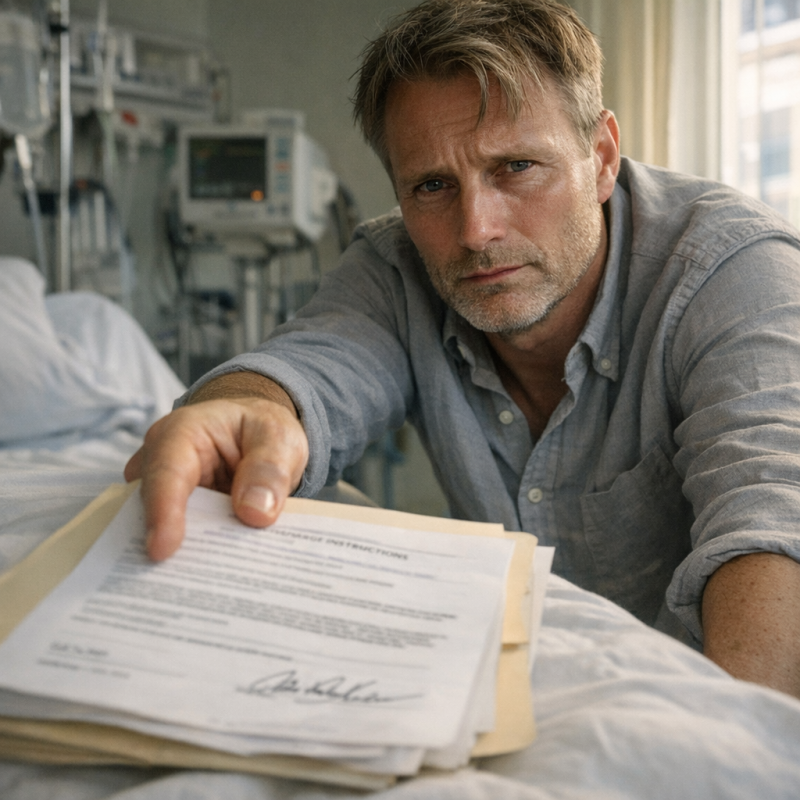 Image by FCT AI
The Confrontation Attempt
I waited until visiting hours ended, until my parents left and the hallway grew quiet. Marcus was scrolling through his phone when I spoke. 'I know about the documents,' I said, my voice steadier than I felt. 'The power of attorney forms. I never signed those.' He didn't look surprised. Didn't even look up. Just set his phone down slowly and turned to face me. 'No,' he agreed. 'You didn't.' The casual admission shocked me more than a denial would have. 'That's fraud,' I said. 'That's illegal.' He smiled then, but there was nothing warm in it. Nothing like the concerned boyfriend he played for everyone else. 'It's also done,' he said. 'Filed, notarized, accepted by the hospital administration.' I felt my heart hammering. 'I'll tell them. I'll tell Dr. Patel, my parents, everyone.' Marcus stood and walked to the door, checking that it was closed. Then he came back and leaned close, his breath warm against my ear. His voice was soft, almost gentle. He leaned close and whispered, 'Who do you think they'll believe—their daughter who just woke up confused, or the man who saved her?'
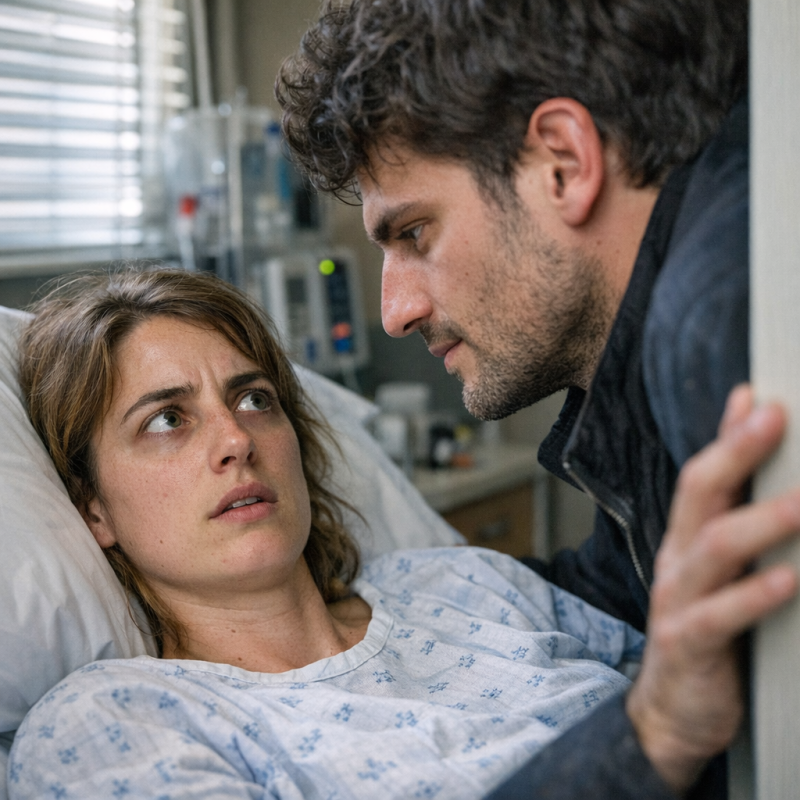 Image by FCT AI
Locked In
The discharge papers were signed by my parents, by Dr. Patel, by Marcus. Nobody asked me where I wanted to go. Marcus wheeled me out to his car, helped me into the passenger seat with careful hands that felt like shackles. 'Welcome home,' he said when we pulled up to an apartment building I'd never seen before. Not my apartment. His. He carried my bag up three flights of stairs while I struggled behind, my legs still weak from weeks in bed. The apartment was clean, modern, impersonal. 'You'll stay here while you recover,' he said, setting my bag in the bedroom. 'It's safer than you being alone.' I looked around for my phone, my wallet, my keys. None of my things were there. 'I need my phone,' I said. 'To call Jenna, to let people know I'm okay.' He smiled. 'You need to rest. I'll handle everything.' Then he kissed my forehead and left for work, or so he said. I waited until his footsteps faded down the stairs. Then I went to the door and tried the handle. It turned, but the door wouldn't open. I heard the deadbolt click from the outside when he left—and understood I was a prisoner in a place that was supposed to be home.
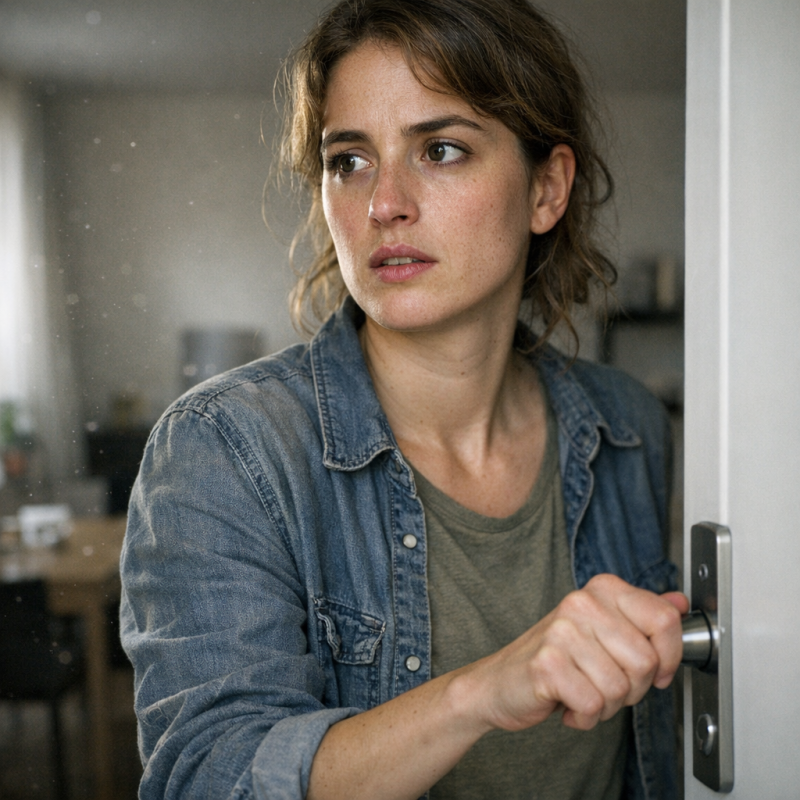 Image by FCT AI
The Neighbor
I heard voices in the hallway the next afternoon and saw my chance. Marcus had left for what he called 'a quick errand,' and the lock was apparently only meant to keep me in when he was gone longer. I opened the door and saw an older woman with grocery bags struggling with her keys. 'Excuse me,' I called out, my voice desperate. 'Can you help me? I need—' She turned, friendly and curious. 'Oh, hello! You must be Marcus's fiancée. He mentioned you'd be staying with him.' I opened my mouth to correct her, to explain, but then I heard footsteps on the stairs. Marcus appeared, slightly breathless, carrying a pharmacy bag. 'Emily! You shouldn't be out of bed.' He put his arm around me, supportive and concerned. 'I'm sorry, Mrs. Chen. She's still recovering from a serious accident. Brain injury. She gets confused sometimes.' Mrs. Chen's expression shifted to sympathy. 'Oh, you poor thing.' Marcus guided me back inside, still playing the devoted caretaker. 'The doctors said she might have some disorientation. Memory issues.' I tried to meet Mrs. Chen's eyes, to make her see. The neighbor smiled sympathetically and said, 'Hang in there, sweetie—brain injuries can be so disorienting.'
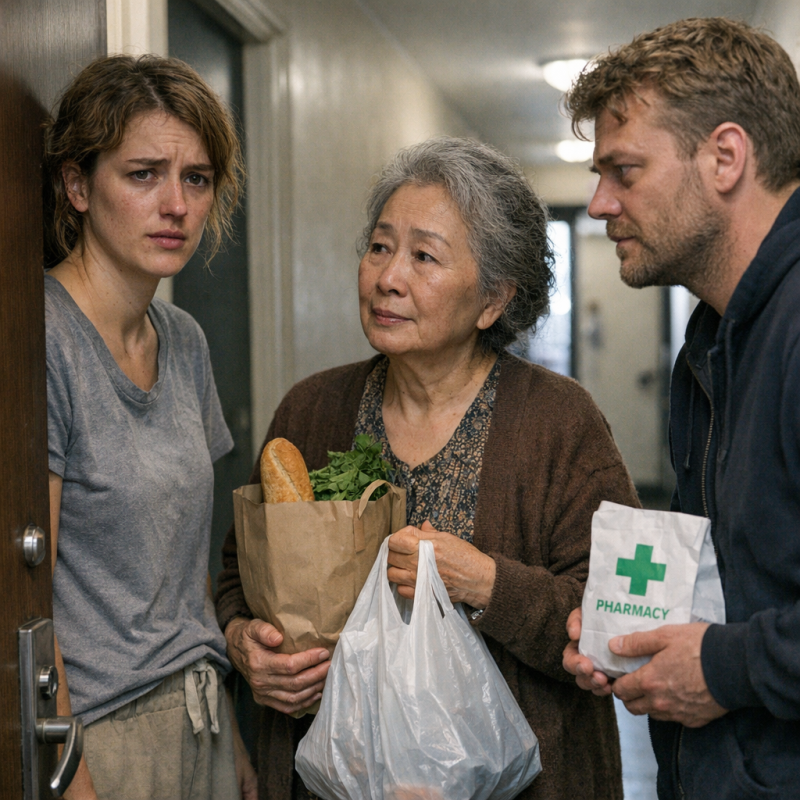 Image by FCT AI
Sophie's Sister
Jenna called me later that week—Marcus finally gave me a phone, but I could tell it was monitored. She talked about work, about the weather, about nothing important. But then she lowered her voice. 'I found her. Sophie's sister, Diane. She agreed to meet me.' I held my breath, pressing the phone closer. 'And?' 'It's the same pattern, Em. Exactly the same. Sophie was in the hospital after a car accident. Minor injuries, nothing serious. Then Marcus showed up, started visiting her, convinced the staff they were together. Within two weeks, he'd moved her into his apartment.' My chest tightened. 'What happened to her?' Jenna was quiet for a moment. 'She passed away three months later. Overdose, they said. Accidental. But Diane tried to tell the authorities something was wrong. Marcus had isolated Sophie completely. Changed her medications. Diane couldn't prove anything, though. He was too careful.' I heard Marcus's key in the lock and lowered my voice. 'I have to go.' Sophie's sister said, 'I tried to warn the authorities—but he was so convincing, and she was so vulnerable.'
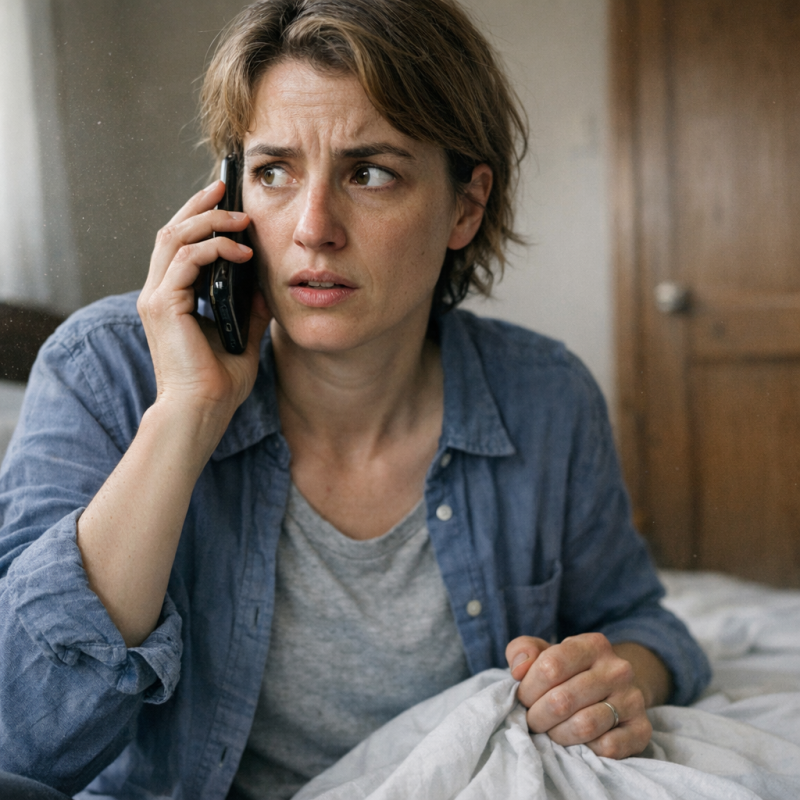 Image by FCT AI
The Cameras
I found the first camera while looking for a phone charger. It was tiny, tucked into the corner of a bookshelf, lens pointing at the couch where I spent most of my days. My blood went cold. I started searching then, really searching, and found them everywhere. One in the bedroom, angled at the bed. One in the bathroom, hidden in the smoke detector. One in the kitchen. I counted five total, probably more I couldn't see. They were professional quality, the kind you'd use for security systems. Or surveillance. I thought about every moment I'd spent alone in this apartment. Every conversation I'd had with Jenna. Every time I'd tried the door or searched for a way out. He'd seen all of it. Watched me like I was a lab rat in an experiment. My skin crawled. I walked to the bookshelf and stood directly in front of the lens, letting it capture my face. Letting him see that I knew. I stared directly into the camera lens and understood—he was watching me right now.
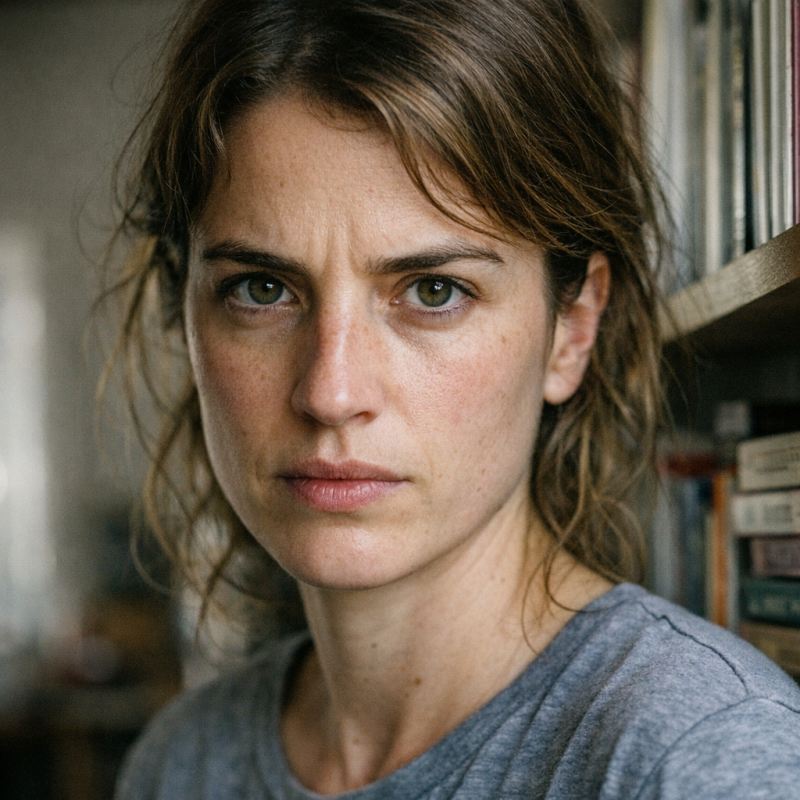 Image by FCT AI
Medication
Marcus came home with a white paper bag from the pharmacy. 'Dr. Patel called in your prescriptions,' he said, lining up orange bottles on the kitchen counter. 'Anti-anxiety medication, something for sleep, and this one's for the headaches.' I looked at the labels. None of them were medications Dr. Patel had mentioned in the hospital. 'I don't remember him prescribing these,' I said carefully. Marcus shrugged. 'You were pretty out of it during that last appointment. He's concerned about your recovery.' He shook out pills from each bottle, handed them to me with water. Watched while I brought them to my mouth. I pretended to swallow, keeping the pills tucked under my tongue. 'Good girl,' he said, and went to check his laptop. I waited until he was absorbed in the screen, then spit the pills into my palm and stuffed them between the couch cushions. That night, I did the same. And the next morning. By the third day, something shifted. The fog that had been clouding my thoughts started to lift. I could think more clearly, remember details better. I hid the pills under my tongue and spit them out later—and for the first time in days, my mind felt clear.
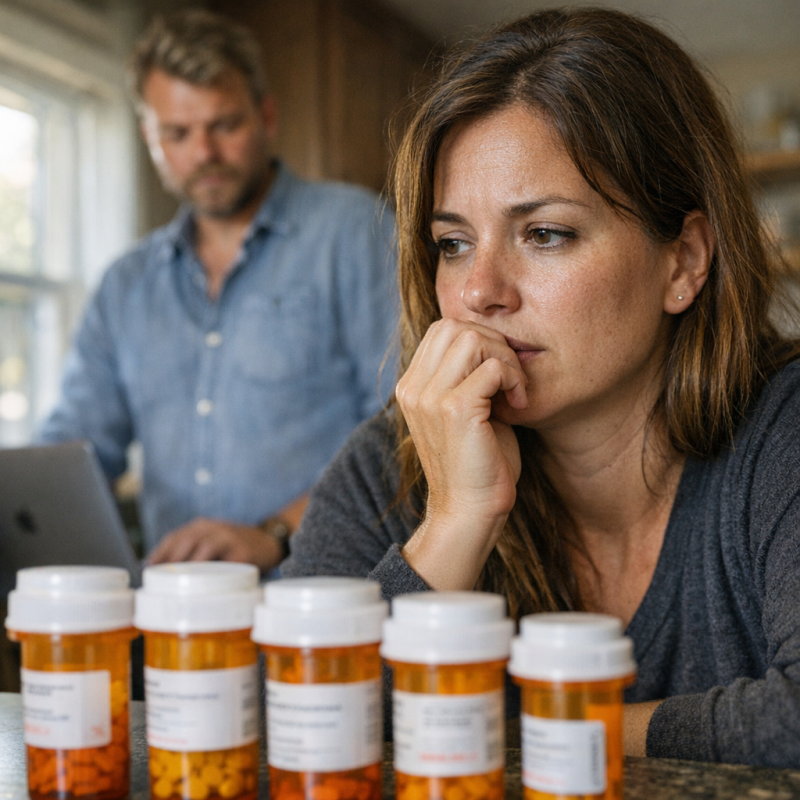 Image by FCT AI
The Window Call
I waited until Marcus went into the bedroom to make a work call. The apartment was on the third floor, and through the living room window, I could see people walking on the sidewalk below. My hands shook as I pressed against the glass. A woman in a green coat was coming closer. I started waving frantically, then pressed my palm flat against the window. She glanced up. Our eyes met. I mouthed the words as clearly as I could: 'Help me.' Her expression changed—confusion, then concern. She pulled out her phone. But then Marcus's reflection appeared behind me in the glass. 'What are you doing?' His voice was eerily calm. 'I was just—looking outside. Getting some air.' He guided me away from the window, his grip firm on my elbow. 'You shouldn't be up and around without me. You could fall.' The woman outside looked up again, but Marcus had already closed the curtains. That night, I heard drilling sounds. He installed locks on the windows that night and said, 'We can't have you falling—you're still so weak.'
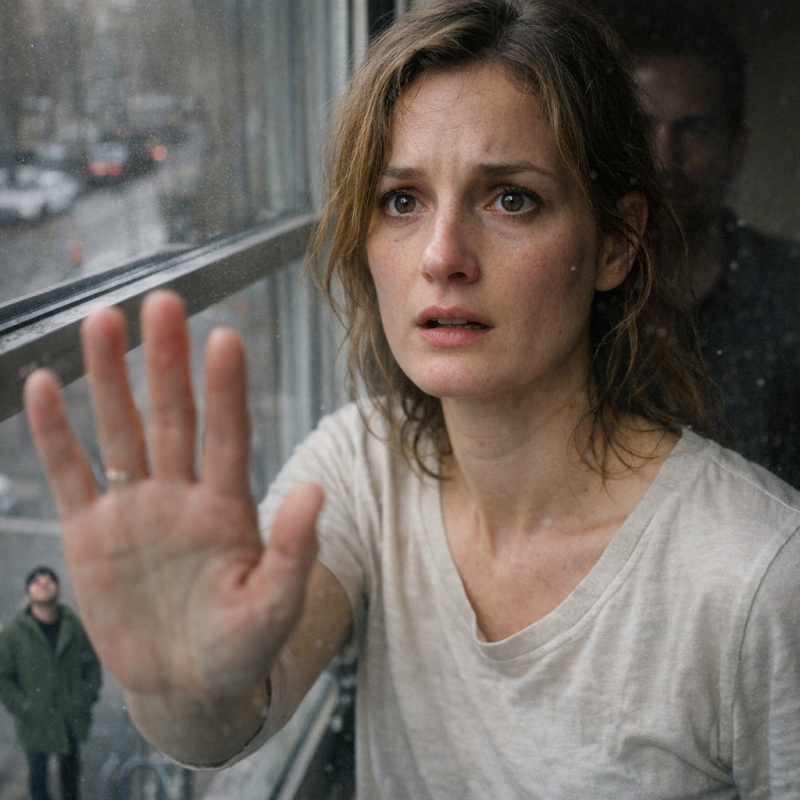 Image by FCT AI
Lauren Returns
Lauren showed up three days later with a container of soup and a stack of old paperbacks. Marcus let her in but hovered nearby, scrolling through his phone but clearly listening. 'I thought you might want something to read,' Lauren said, setting the books on the coffee table. 'Thanks,' I said, my voice careful. Marcus stepped into the bathroom, leaving the door cracked open. Lauren's hand shot out and grabbed mine. She pressed something small and hard into my palm—a flip phone, the cheap kind you can buy at convenience stores. I closed my fingers around it instantly, heart hammering. She leaned in like she was adjusting my blanket. 'Battery's charged. My number's programmed in. Delete everything after.' Her eyes were urgent, scared. I nodded slightly, slipping the phone under my thigh. The toilet flushed. Lauren sat back, her face composed. Marcus came back into the room, drying his hands. Lauren whispered, 'He did this to Sophie—don't let him do it to you,' before Marcus came back into the room.
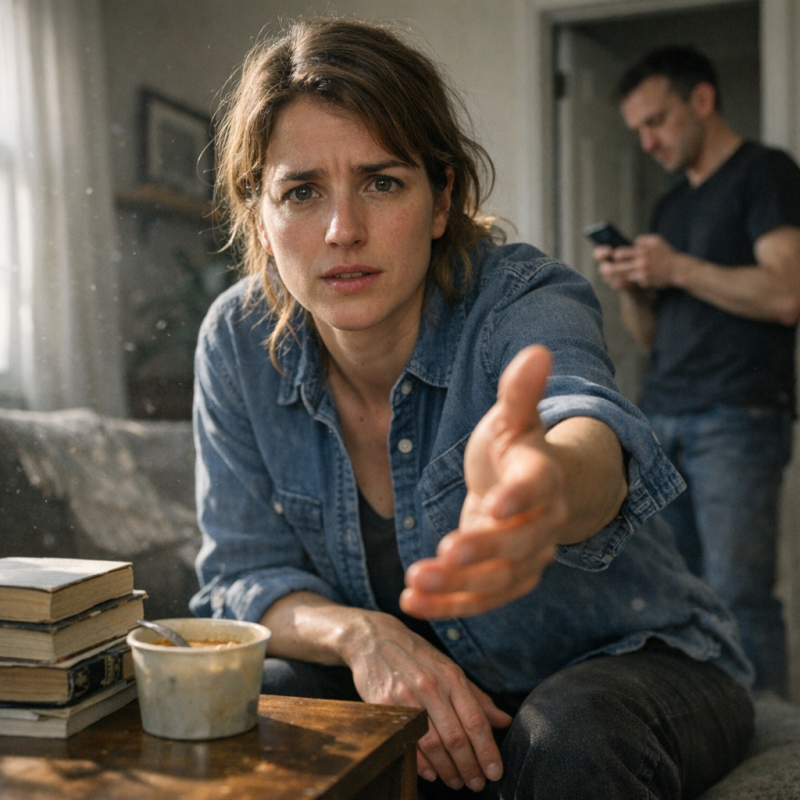 Image by FCT AI
The Lawyer's Call
I waited until Marcus left for a pharmacy run. My hands trembled as I pulled out the burner phone from where I'd hidden it inside the couch lining. I dialed the number for Jenna's lawyer that Lauren had also tucked into one of the books. The receptionist put me through immediately when I said it was an emergency. The lawyer listened to everything—the power of attorney, the isolation, the medications, the window locks. 'I need to revoke his guardianship,' I said. 'How do I do that?' There was a pause. 'It's complicated. You'd need to petition the court for a competency hearing, or provide evidence of coercion. Do you have any physical proof? Witnesses who can testify?' I thought of the pills hidden in the couch, the forged signatures I couldn't prove were forged. 'Not really. Not yet.' 'Then we have a problem,' she said gently. 'Without documentation or witness testimony, it's your word against his medical authority.' The lawyer said, 'Without proof of coercion or a competency hearing, legally you're still under his guardianship.'
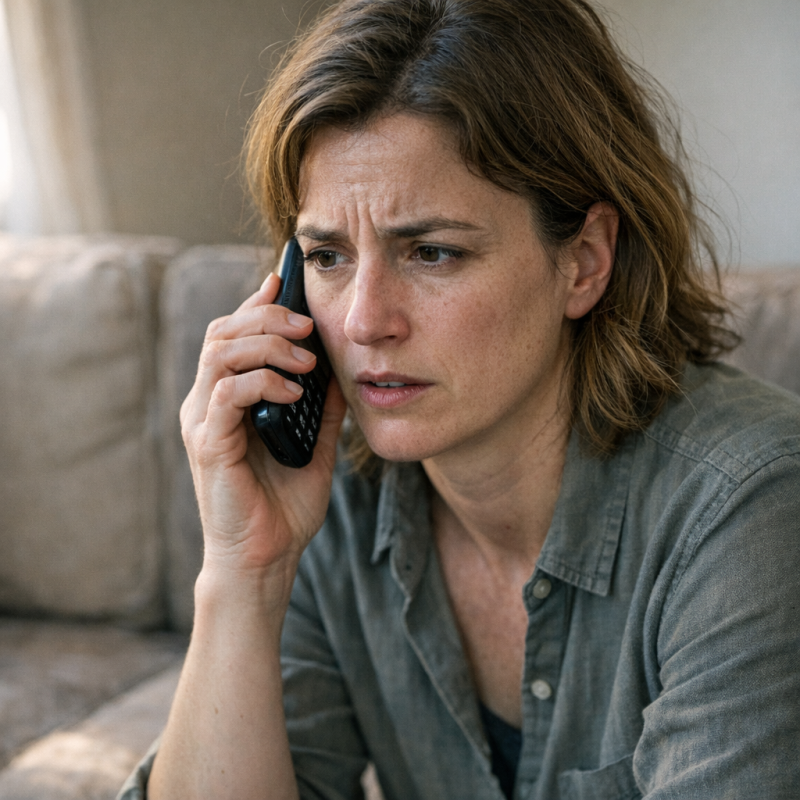 Image by FCT AI
The Insurance Policy
The next morning, Marcus left his laptop open on the kitchen counter. He was in the shower—I could hear the water running. I knew I had maybe five minutes. My fingers flew across the keyboard, opening his email, his documents folder. And that's when I found it. A PDF from an insurance company, dated two weeks before my accident. My name was listed as the insured. Marcus was the beneficiary. I clicked it open, my breath catching as I scanned the details. Two million dollars. Life insurance. But it was the fine print that made my blood run cold: the policy included an accidental loss of life clause that paid out double if I passed away within twelve months of issuance. I took a photo with the burner phone, my hands shaking so badly I almost dropped it. The shower shut off. I closed the laptop and scrambled back to the couch. The policy was for two million dollars—and it only paid out if I passed away within a year of the accident.
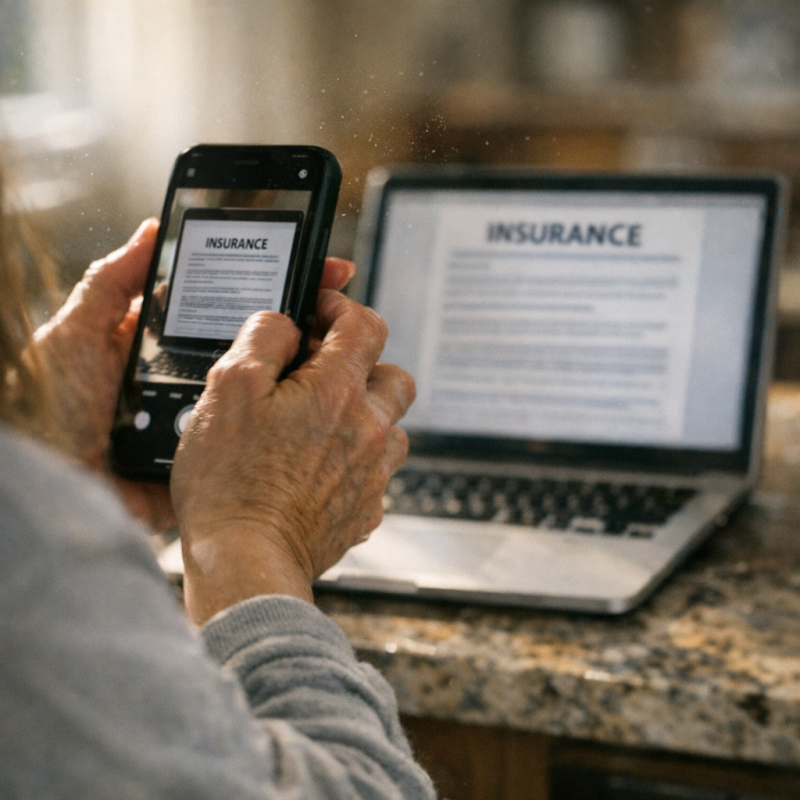 Image by FCT AI
Tom's Break-In
Marcus went out to meet with a client. He'd started doing that more often, leaving me locked in but seeming confident I wasn't going anywhere. I heard the fire escape window scrape open. Tom climbed through, breathing hard. 'Jesus, Em. We need to get you out of here now.' 'He'll call the authorities. He has guardianship—' 'I don't care. We'll figure it out later.' He tried to lift me, but my legs buckled. The weeks of limited movement, the medications still working their way out of my system—I couldn't stand on my own. Tom half-carried, half-dragged me toward the fire escape. We made it maybe ten feet before I heard it. The key sliding into the front door lock. Tom's face went white. 'Oh no.' He looked at me, then at the window, calculating whether we could make it. We couldn't. He squeezed my hand hard. We heard Marcus's key in the lock, and Tom whispered, 'Next time—I promise,' before climbing out the fire escape.
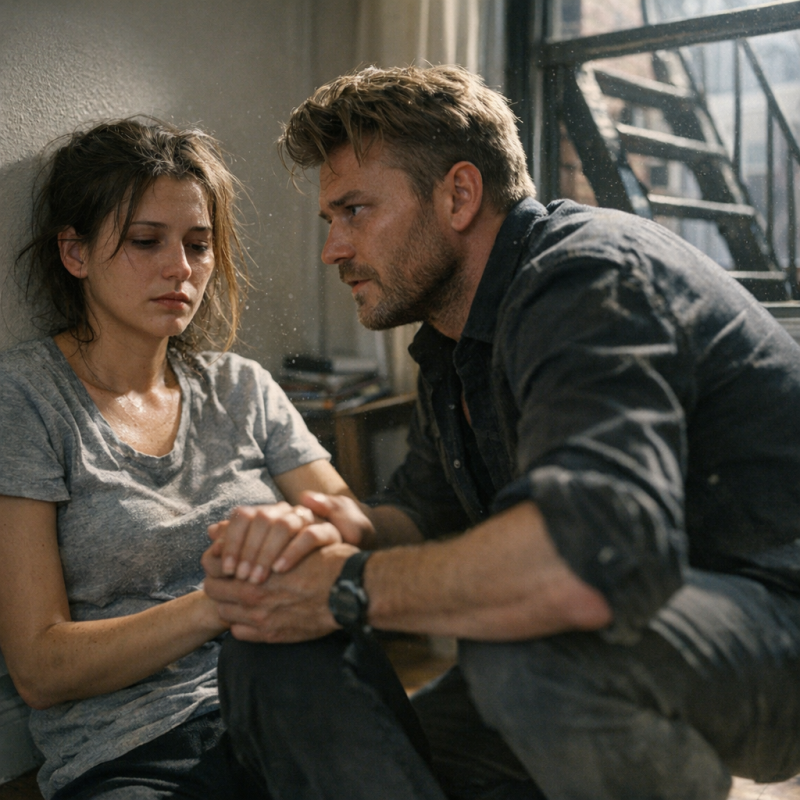 Image by FCT AI
The Fake Accident
Marcus found me sitting on the couch, exactly where Tom had left me. He didn't mention the open fire escape window. Just smiled and asked if I wanted lunch. That afternoon, I heard a crash from the bathroom. A thud, then Marcus calling my name in a strained voice. I found him on the floor by the tub, holding his arm at an odd angle. 'I slipped. I think it's broken.' But his eyes were too alert. Too calculating. He called 9-1-1, and when the paramedics arrived, he was the perfect victim. Brave, concerned about me more than himself. 'My girlfriend—she has a brain injury. She's been so confused lately, hurting herself.' I stared at him. What? He lifted his shirt, revealing bruises on his ribs that definitely hadn't been there yesterday. Dark purple, perfectly placed. The paramedic asked if I was safe at home, and before I could answer, Marcus showed them the 'bruises' I'd supposedly given myself.
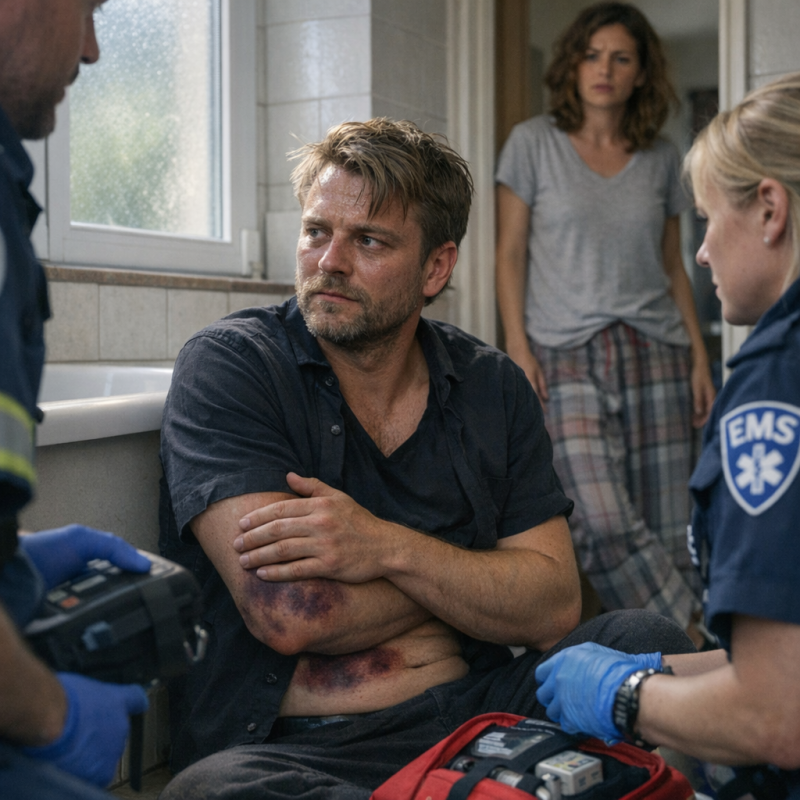 Image by FCT AI
Committed
The paramedic looked at me with pity. Marcus rode to the hospital in the ambulance, his 'broken arm' cradled dramatically. At the ER, he pulled a doctor aside. I couldn't hear everything, but I caught fragments: 'self-harm,' 'brain injury,' 'danger to herself.' The doctor nodded sympathetically. Two hours later, a psychiatric evaluation team arrived. They asked me questions I tried to answer carefully, rationally, but everything I said sounded paranoid even to my own ears. 'My boyfriend is trying to hurt me. He's keeping me prisoner. There's a life insurance policy.' The psychiatrist exchanged looks with Marcus. Papers were signed. Marcus's voice was choked with fake emotion as he told them he just wanted me to be safe, to get help. That he loved me too much to watch me deteriorate. They took me in an ambulance to a different hospital, a psychiatric facility. Marcus rode along, holding my hand. The orderly locked the door behind me, and I realized Marcus had just bought himself three days to do whatever he wanted.
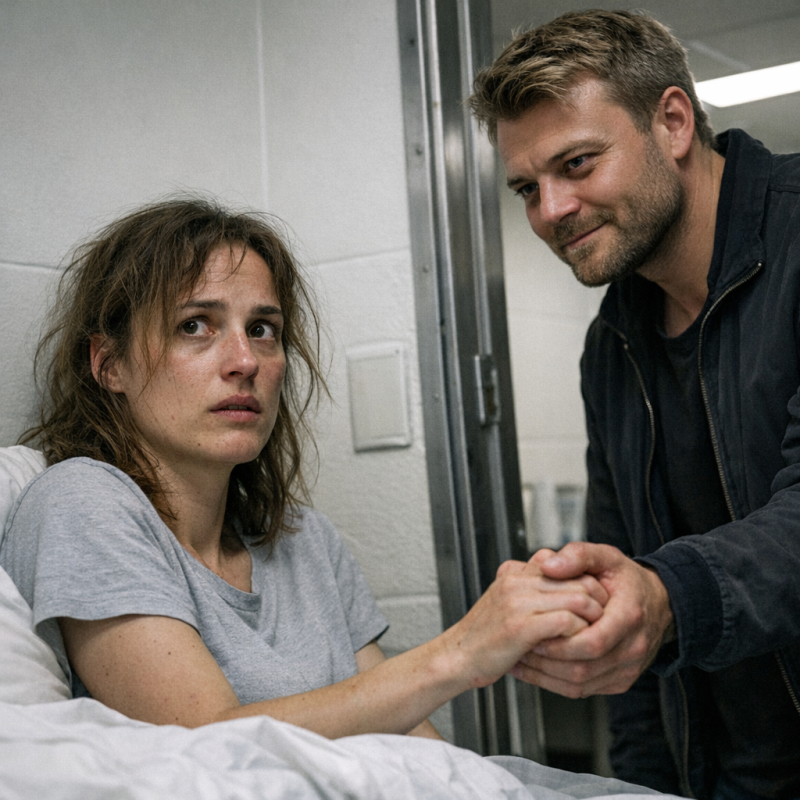 Image by FCT AI
Inside
The psychiatric ward was painted pale yellow, like that would make anyone feel better. I tried explaining to the nurse, then the social worker, then the psychiatrist who came for my intake evaluation. 'I'm not delusional. My boyfriend has me under fraudulent guardianship. He forged my signature. There's a life insurance policy—' The psychiatrist pulled up my medical records on her tablet. 'It says here you've been experiencing confusion, memory problems, paranoid ideation since your traumatic brain injury. Your partner reports you've been refusing medication, becoming increasingly agitated.' 'Because he's medicating me to keep me compliant!' She wrote something down. Didn't look up. 'Are you hearing voices? Seeing things that aren't there?' 'No, I'm seeing things that ARE there. Please, just call my friend Lauren, or my brother Tom—' 'We'll contact your emergency contacts. But right now, you need rest.' The psychiatrist said, 'It's common for TBI patients to develop paranoid delusions about caregivers,' and closed my file.
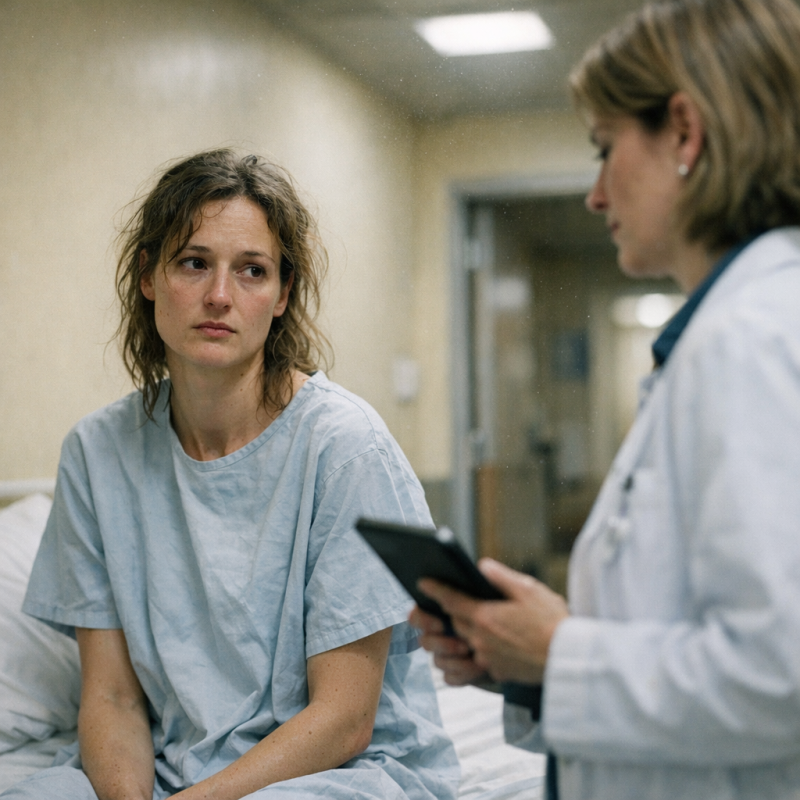 Image by FCT AI
Jenna's Move
I didn't know any of this was happening. While I sat in that pale yellow psychiatric ward trying to convince anyone who'd listen that I wasn't crazy, Jenna was already moving. She'd filed an emergency petition for guardianship that same day, and she didn't come alone. She brought Sophie's sister—a woman named Catherine who'd been silent for three years about what happened to Sophie, carrying guilt that wasn't hers to carry. Catherine told the court about the sudden guardianship papers that appeared when Sophie was too medicated to read them, about the life insurance policy Marcus had mentioned to family 'just in case,' about how Sophie became increasingly drowsy and confused in her final weeks. She described the same pattern I'd been living through. The same isolation. The same medication fog. The same financial paperwork Marcus pushed in front of someone too vulnerable to question it. Jenna presented bank records showing Marcus's financial access to my accounts, medical records documenting my sudden 'psychiatric decline' that coincided with questioning his authority, and testimony from Lauren about the forged signature. The judge listened to everything, then checked his calendar. The hearing was scheduled for three days away—the exact day my psychiatric hold would be released.
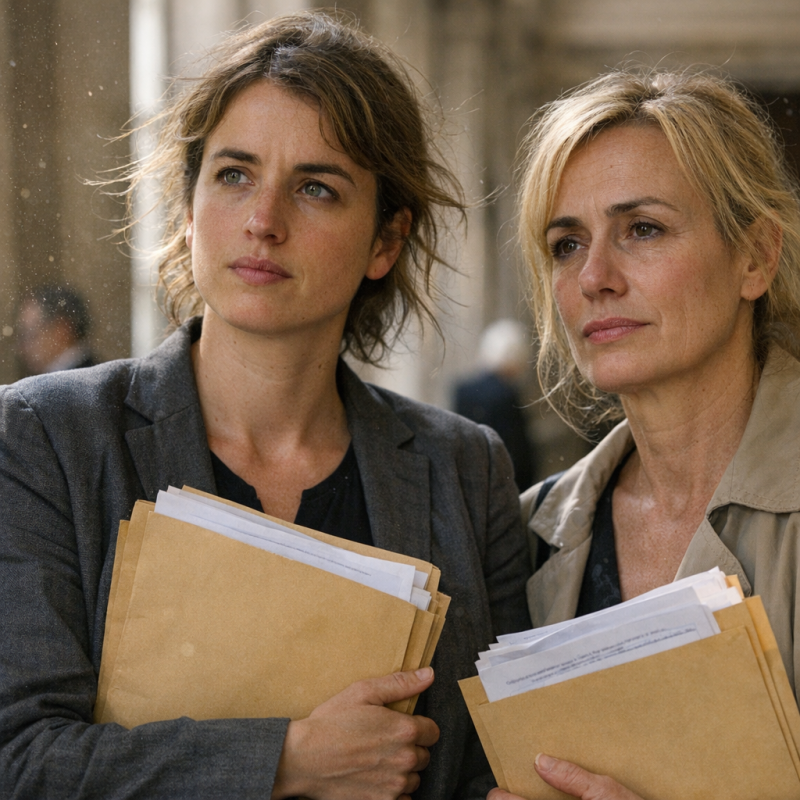 Image by FCT AI
The Voicemail
The hidden phone was still taped under the bathroom sink where I'd left it before the 'psychiatric episode' Marcus staged. I retrieved it during a supervised bathroom break, my hands shaking so badly I nearly dropped it. The battery was almost drained—fifteen percent remaining. I turned it on, watched it connect to the facility's guest wifi, and saw the notification. One voicemail. From Marcus. Left the day after he had me committed. I pressed play with my finger trembling over the screen. His voice was quiet, almost gentle, the way he used to sound when we first started dating. 'Emily, I know you're confused right now, but this resistance needs to stop. Sophie made things difficult too, and you know how that ended. I don't want to do this the hard way, but I will if you force me. When you get out, we're going to have a conversation about your future—or lack thereof. Cooperate, and it'll be peaceful. Keep fighting, and I'll end this the way Sophie's ended.' The message ended. I played it again. Then again. His voice on the recording was calm, clinical—and I finally had proof of his intent to harm me.
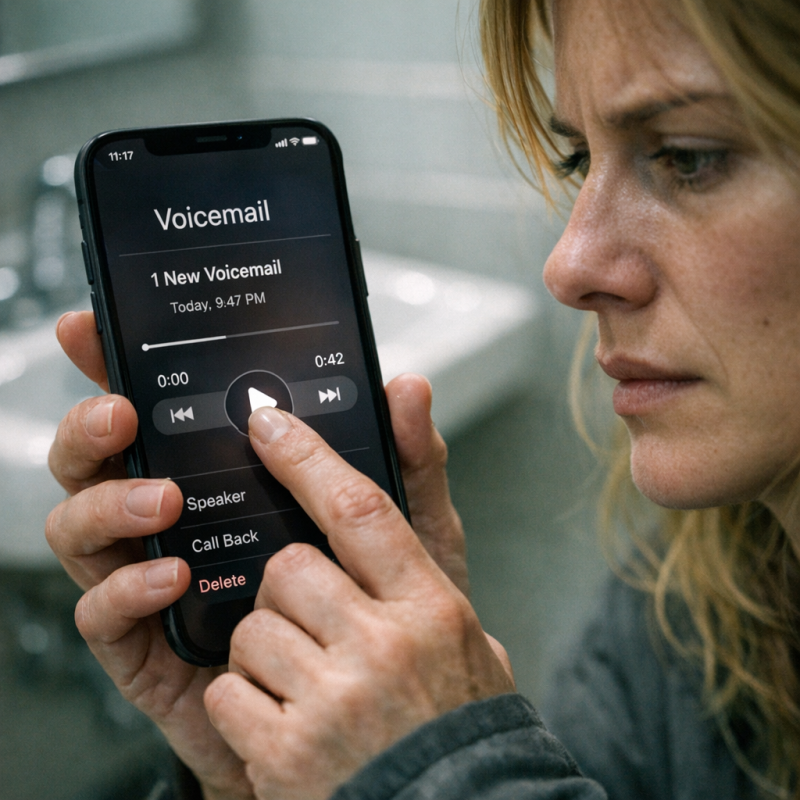 Image by FCT AI
The Orderly
The orderly's name was James. He'd been working the night shift on my ward for two days, and I'd noticed him watching me differently than the others—not with suspicion or pity, but with something that looked like recognition. When he came to do the evening vitals check, I took a chance. 'I need help,' I whispered. 'I have evidence that my boyfriend is trying to harm me, but I'm locked in here and no one believes me.' I expected him to call for the psychiatrist, to note 'paranoid delusions' in my chart. Instead, he glanced at the door and said quietly, 'What kind of evidence?' I showed him the phone, played him the voicemail. Watched his expression change from cautious to grim. 'I need someone to get this to my friend Jenna,' I said. 'She's filing for emergency guardianship but she needs this recording.' James was silent for a long moment, then nodded. 'Give me her number. I'll make sure she gets it.' He pulled out his own phone, had me forward the voicemail to his number so he could send it to Jenna. Then he handed me his card and whispered, 'My sister went through something similar—I believe you.'
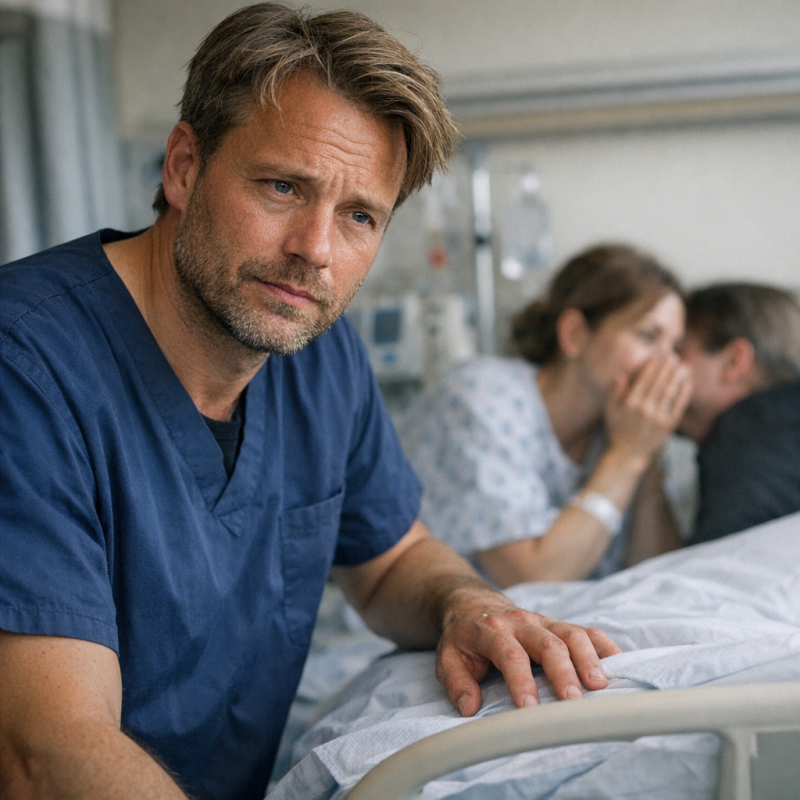 Image by FCT AI
Marcus Visits
Marcus came to visit the next afternoon during designated visiting hours. He signed in at the front desk, smiled at the nurses, played the concerned partner perfectly. When they brought him to the common room where I was sitting, he pulled up a chair close to mine, took my hand like he cared. 'How are you feeling, sweetheart?' he asked, loud enough for the staff to hear. Then, quieter: 'Did you get my message?' I tried to pull away but his grip tightened just slightly—not enough to leave marks, just enough to remind me he was in control. 'I'm getting out tomorrow,' I said. 'And you've lost guardianship. Jenna filed a petition.' His smile didn't waver. 'Guardianship hearings take weeks, Emily. You'll be released into my care tomorrow at four PM, and we'll go home together. By tomorrow night, you'll have taken too many of your anxiety pills—so tragic, everyone will say, that you just couldn't handle the recovery.' He was telling me exactly how he'd hurt me, and we were surrounded by witnesses who heard nothing. He kissed my forehead and whispered, 'Tomorrow night, it'll all be over—and everyone will say how tragic it was that you couldn't recover.'
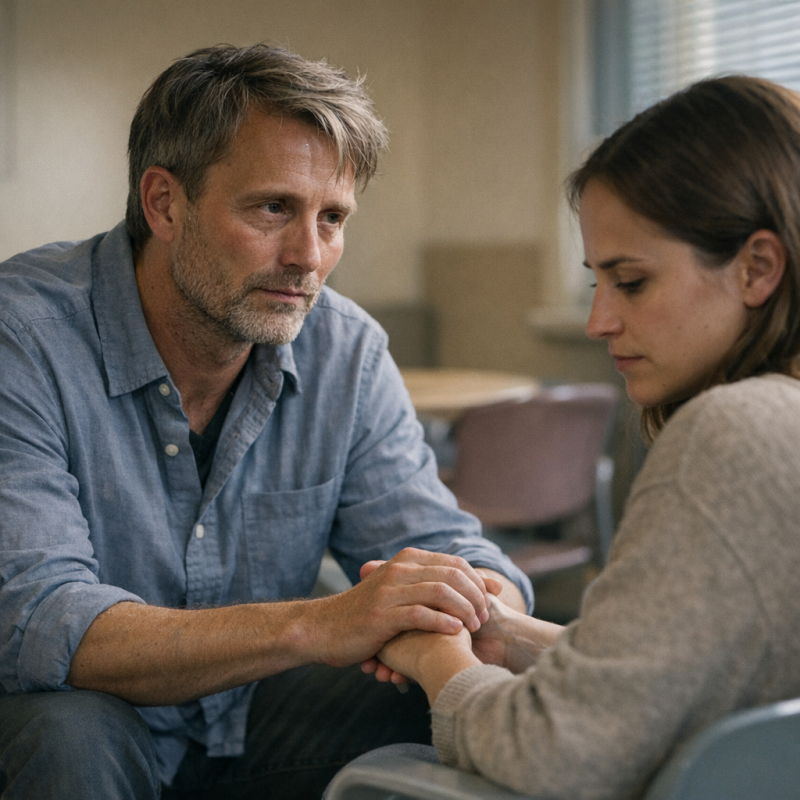 Image by FCT AI
The Hearing
The emergency hearing happened the next morning at nine AM. I didn't know about it until later—I was still in the psychiatric facility, counting down hours until my scheduled release into Marcus's custody. But Jenna was in that courtroom with a lawyer she'd hired using her own savings, and Catherine was there too, ready to testify again. Jenna presented the voicemail recording that James had forwarded. The judge listened to the whole thing, his expression darkening with each word. Then Catherine described Sophie's final months in detail—the guardianship papers, the isolation, the medication, the life insurance policy, the sudden passing ruled accidental overdose. The lawyer presented documentation showing Marcus had taken out a policy on me too, same company, same terms. Sophie's end-of-life certificate. My forged signature on the guardianship documents. Bank records showing Marcus had already begun transferring my savings. The prosecutor who'd been copied on the filing attended and asked to enter evidence into a official investigation. Marcus's attorney objected to everything, called it hearsay and circumstantial, but the voicemail was Marcus's own voice making an explicit warning. The judge listened to the recording one more time, then said, 'I'm issuing an immediate restraining order and transferring guardianship pending investigation.'
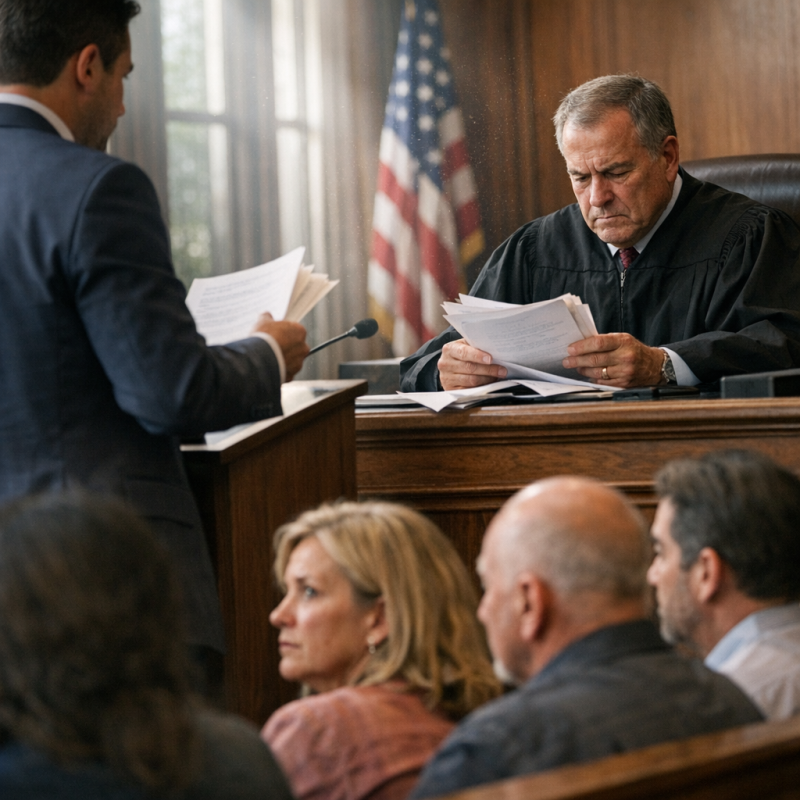 Image by FCT AI
Released
They released me at two PM, two hours before I was supposed to be discharged into Marcus's custody. My parents were there to pick me up—my actual parents, not Marcus. Mom was crying, Dad looked ten years older than the last time I'd seen him. The facility coordinator explained that guardianship had been emergency-transferred and that Marcus was prohibited from contact under a restraining order. I signed the discharge papers with shaking hands, couldn't quite believe this was real. Mom hugged me so tight I could barely breathe, kept saying 'I'm sorry, I'm so sorry' over and over. Dad loaded my few belongings into their car. I'd been in that place for four days total, but it felt like months. We walked through the facility doors together, and I breathed outside air for the first time since Marcus had me committed. That's when I saw him. Marcus was standing in the visitor parking lot, just beyond the property line where the restraining order didn't technically apply yet. He wasn't doing anything illegal—just standing there, watching. Our eyes met across the parking lot. He didn't look angry or desperate. He looked patient. Like someone who knew how to wait. As we drove away, I saw Marcus standing in the parking lot, watching us—and his expression said this wasn't over.
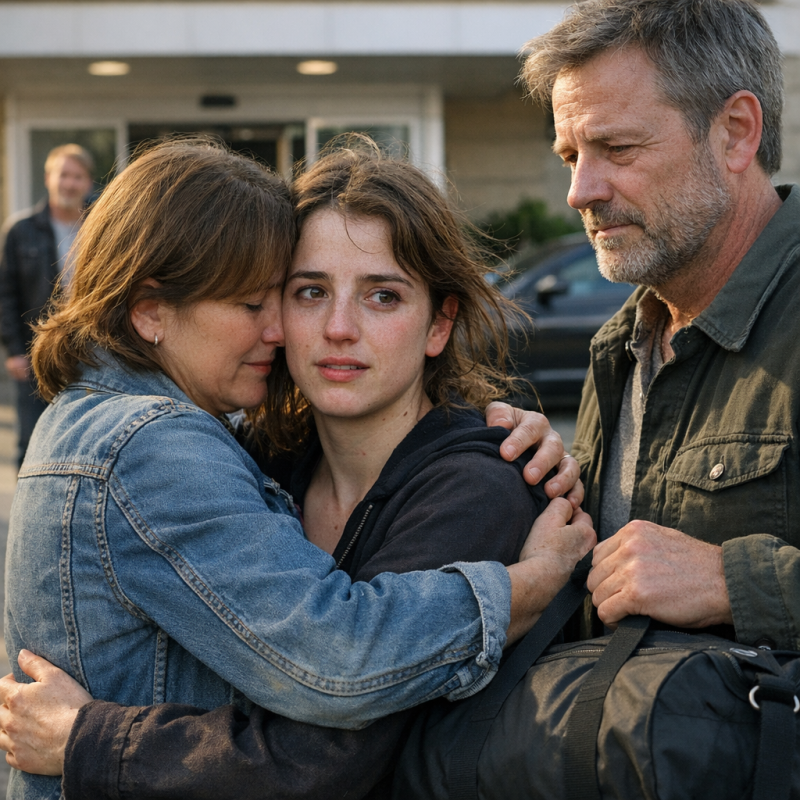 Image by FCT AI
Parents' Apology
That night, sitting in my parents' living room—the house I'd grown up in—we finally talked. Really talked. Mom explained how Marcus had approached them right after my coma, how he'd presented himself as the devoted boyfriend they'd never met because I'd been 'afraid they wouldn't approve of the age difference.' He'd told them I'd hidden the relationship because I was embarrassed, that I'd made him promise not to contact them. 'He knew exactly what to say,' Dad said quietly. 'He talked about wanting to protect you, about respecting your wishes, about how guilty he felt that he hadn't insisted on meeting us before the accident.' Marcus had shown them photos of us together—real photos from our relationship—and medical knowledge that convinced them he was qualified to make my care decisions. He'd exploited their guilt about the distance that had grown between us, their fear that I'd been struggling alone, their desperate need to believe someone had been taking care of me. 'Every time we questioned something, he had an answer,' Mom said. 'When you started acting confused about him, he showed us research about traumatic brain injuries and false memories. He studied us—he knew exactly what we needed to hear to trust him.'
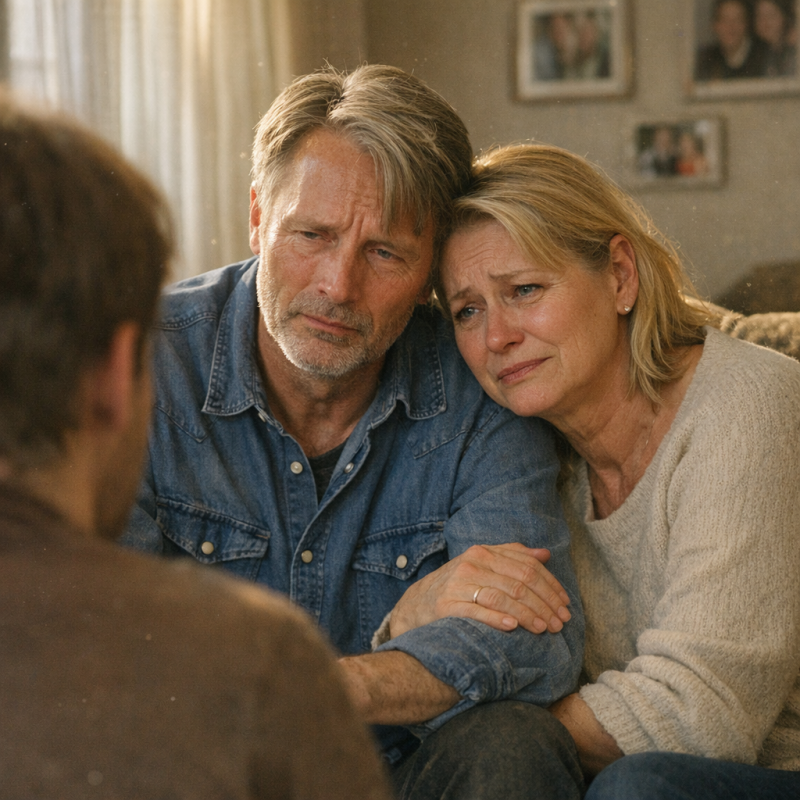 Image by FCT AI
The Pattern
The detective came to my parents' house three days later. Her name was Detective Morrison, and she'd been investigating Marcus since the prosecutor flagged Sophie's case for review. She sat across from me at the kitchen table and opened a file that made my stomach drop. 'We've identified a pattern,' she said. 'Sophie wasn't the first, and you weren't going to be the last.' She spread out photographs and documents. Three women before Sophie. All between ages twenty-five and thirty-five. All hospitalized for serious injuries or sudden illness. All isolated from family during recovery. All gone within months of discharge, ruled accidental overdoses or deliberate acts. All insured for significant amounts. And Marcus had been involved with every single one—sometimes as a boyfriend, sometimes as a 'concerned friend,' always positioned to gain medical proxy and financial access. He'd exploited the same legal vulnerabilities each time, targeted women when they were most vulnerable, moved to different states between victims. 'He's been doing this for at least eight years,' Morrison said. 'Probably longer, but these are the cases we can prove.' The detective showed me files on three women—all hospitalized, all isolated, all gone within months of 'recovery,' and all insured by Marcus.
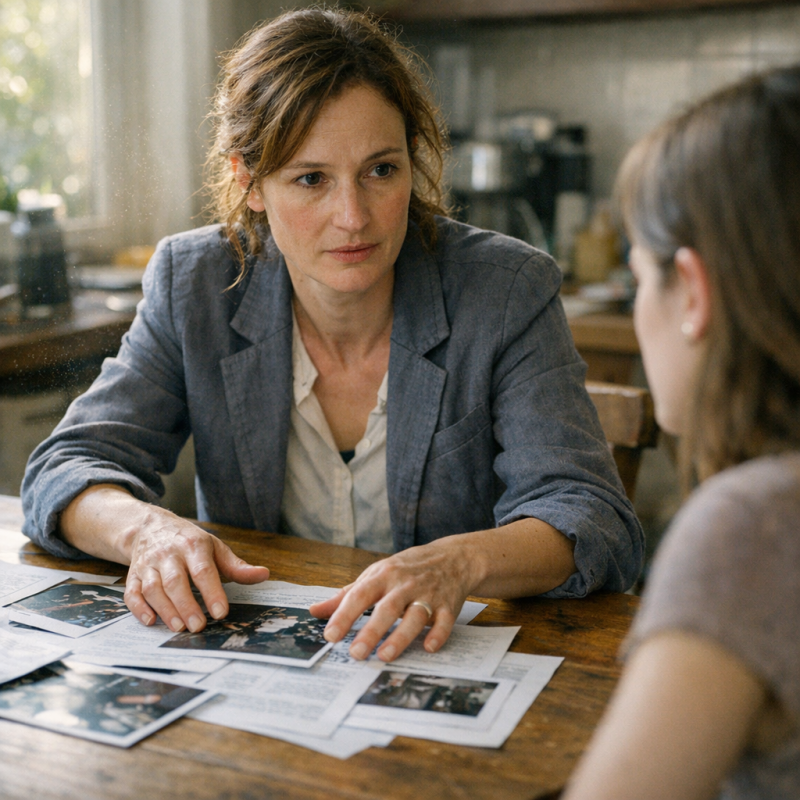 Image by FCT AI
The System He Built
Detective Morrison spread more documents across the table, and this is when I understood the true scope of what Marcus had done. He'd researched medical proxy laws in different states, finding the jurisdictions where oversight was weakest. He'd forged engagement documents for at least two victims, complete with fake family witnesses. He'd even cultivated relationships with hospital staff—nurses, patient advocates, social workers—people who could fast-track his paperwork or alert him when vulnerable patients arrived. 'He had a network,' Morrison said flatly. 'He'd befriend medical staff at bars near hospitals, take them to dinner, gain their trust. Some knew what he was doing. Most were just being helpful to someone they thought was genuinely concerned.' She showed me a spreadsheet he'd kept, tracking potential targets by age, insurance coverage, family situation. My name was on it, highlighted in yellow. He'd been watching me for three months before the accident. I wasn't a random victim of circumstance or a boyfriend who slowly revealed his darkness. The detective met my eyes with something close to sympathy. 'He wasn't just opportunistic—this was a business model, and you were his next mark.'
 Image by FCT AI
Building the Case
The next week was a blur of statements, evidence reviews, and constant officer presence at my parents' house. I gave testimony for hours, walking prosecutors through every manipulation, every forged signature, every lie Marcus had told. They had Sophie's case files, the other victims' records, his financial trail showing insurance payouts and quick relocations. Detective Morrison said my survival was the key—I was the only one who'd lived long enough to fight back, to gather evidence, to expose him. They assigned a protection detail. Two officers rotated shifts outside the house because Marcus knew where I was, and cornered predators were unpredictable. My parents installed new locks and a security system. Tom took leave from work to stay nearby. The prosecutor called on a Thursday afternoon, her voice tight with professional satisfaction. 'We have enough for arrest warrants on multiple counts—fraud, attempted murder, conspiracy. The judge signed off this morning.' I felt relief flood through me, the first real breath I'd taken in weeks. Then she paused, and my stomach dropped. 'But Marcus had disappeared.'
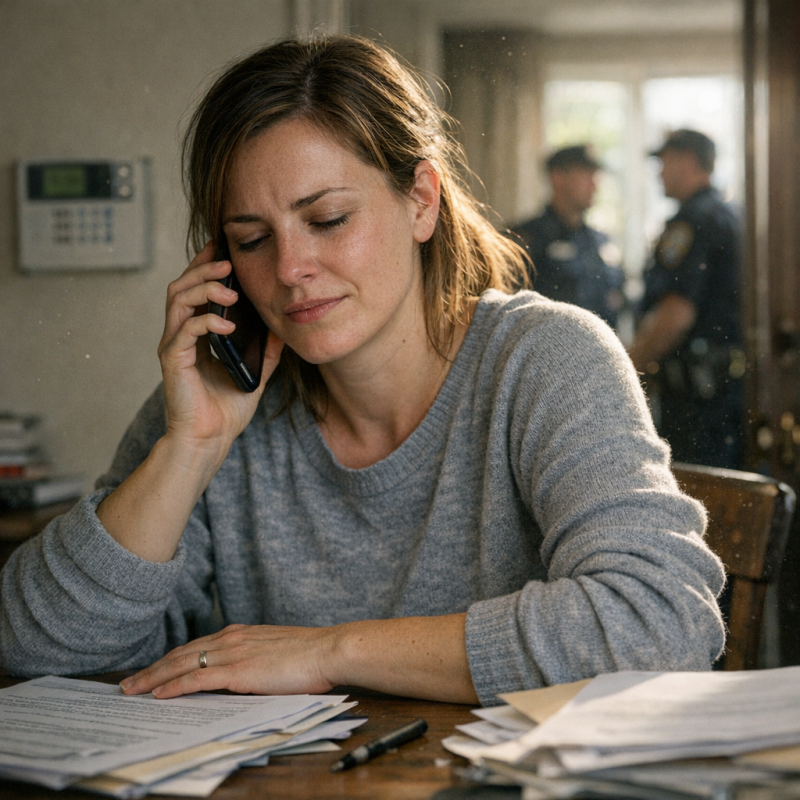 Image by FCT AI
He Comes Back
I woke to the sound of breaking glass at two in the morning. For a moment I thought I was dreaming, still trapped in that hospital bed with Marcus's voice in my ear. Then I heard footsteps on the stairs, slow and deliberate, and I knew. He'd come back. I reached for my phone but it wasn't on the nightstand—I'd left it charging downstairs like an idiot. The bedroom door opened. Marcus stood silhouetted in the doorway, and even in the darkness I could see he looked different. Unwashed, unshaven, wild-eyed. The carefully constructed mask had finally crumbled. 'You ruined everything,' he said quietly. His voice shook with rage. 'Eight years of work. Eight years of planning. And you—you were supposed to be easy. Compliant. Grateful.' He stepped into the room, and that's when I saw the knife in his hand, catching the moonlight through the window. My heart hammered so hard I thought I might pass out. He moved closer, and his face twisted into something inhuman. He raised the knife and said, 'If I can't have the insurance money, at least I'll have the satisfaction.'
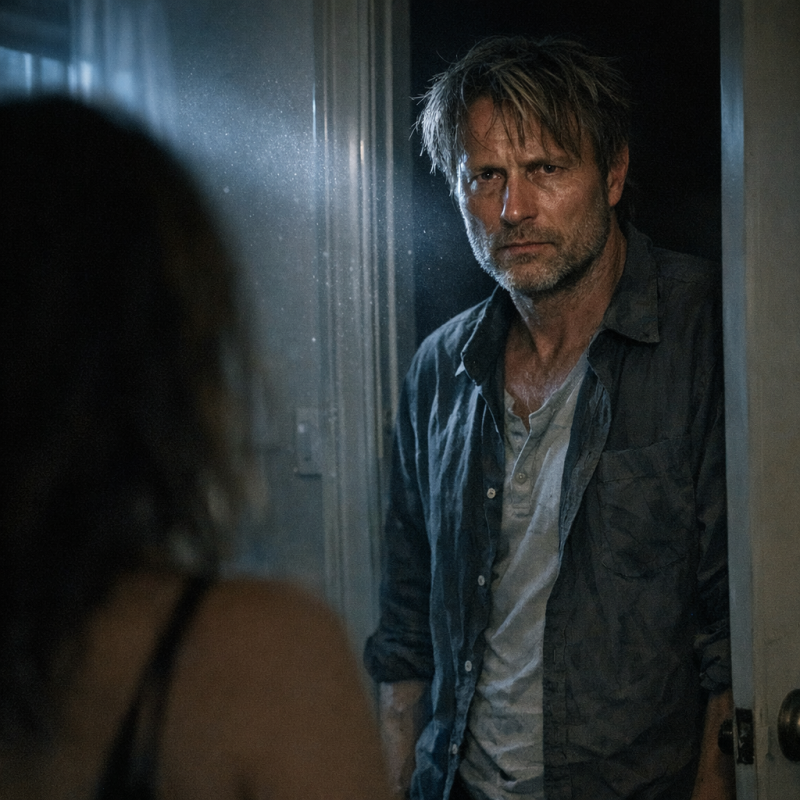 Image by FCT AI
The Fight
He lunged, and something in me just snapped. Not panic—pure survival instinct. I rolled off the bed as the knife came down, tearing through the pillow where my head had been seconds before. Months of physical therapy had rebuilt my strength, and adrenaline did the rest. He came at me again, but this time I was ready. I grabbed the bedside lamp and swung hard, catching his shoulder. He stumbled, surprised, and I saw it—the first crack in his control. 'You were supposed to be weak,' he snarled, recovering. But I wasn't weak anymore. I'd survived a coma, survived his manipulation, survived when three other women hadn't. When he came at me a third time, I didn't retreat. I stepped into his attack instead of away, the way Tom had taught me when we were kids playing around. I grabbed his wrist and twisted with everything I had, and the knife clattered to the floor. For the first time since I'd met him, I saw fear in his eyes instead of control.
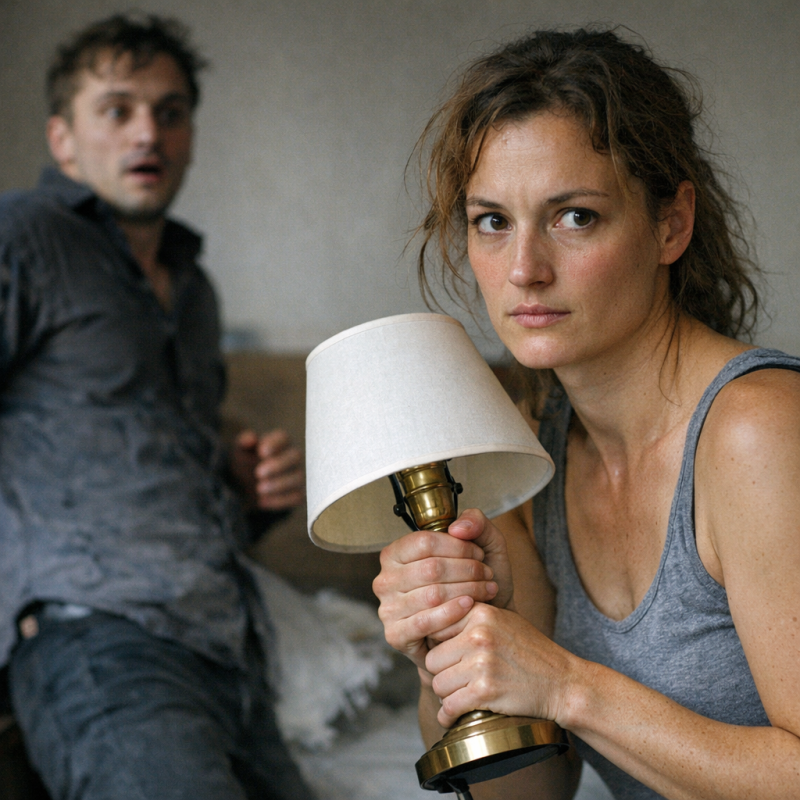 Image by FCT AI
Tom Arrives
The bedroom door crashed open. Tom and my father burst in—they'd heard the lamp shatter—and suddenly Marcus was pinned to the floor with my brother's knee in his back. Dad grabbed the knife while I collapsed against the wall, shaking uncontrollably. Someone must have called the authorities because sirens were already wailing in the distance, getting louder. Marcus struggled against Tom's hold, his face pressed into the carpet, and that perfect mask he'd worn for so long shattered completely. 'Get off me,' he screamed. 'She's mine—I chose her, I planned everything, she was supposed to pass away like the others!' The words spilled out in a torrent of rage and madness. Officers flooded the house within minutes, hauling him up and snapping handcuffs on his wrists. He fought them, still screaming, his voice rising to a shriek that made my skin crawl. As they dragged him toward the stairs, he twisted back to look at me one last time. His eyes were completely unhinged now, all pretense gone. As an officer dragged him away, Marcus screamed, 'You were supposed to be gone—Sophie's gone, they're all gone—why aren't you?'
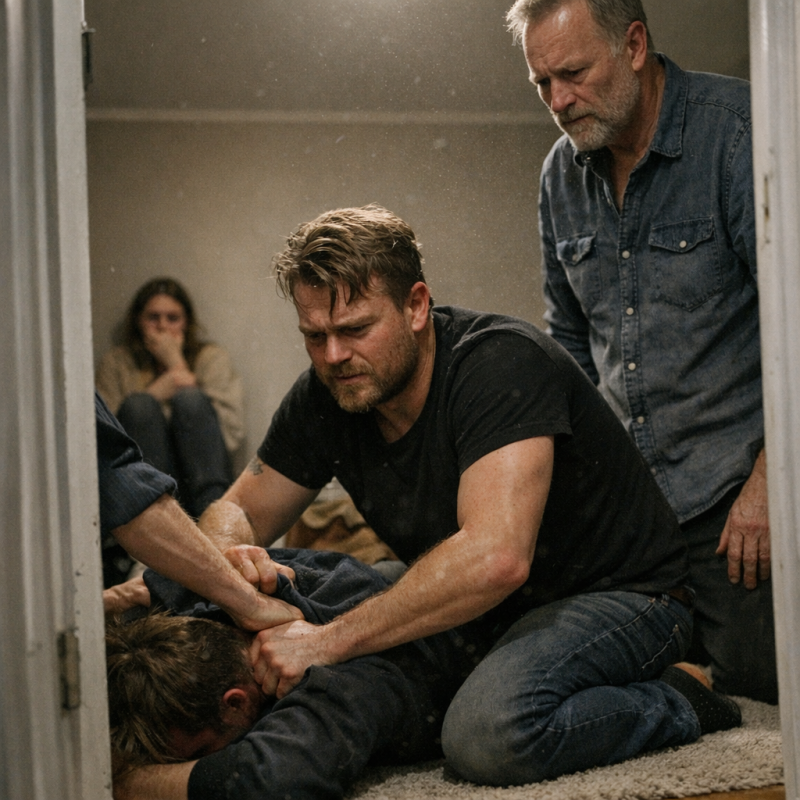 Image by FCT AI
Aftermath
I gave my statement at the kitchen table at four in the morning, still in my pajamas, my hands wrapped around a cup of tea I couldn't drink. Detective Morrison took notes while I walked through every detail of the attack—the broken window, the knife, his confession. My voice shook but I got through it. The officers had already documented everything upstairs, photographed the torn pillow and the weapon, collected evidence. Tom sat beside me the whole time, his hand on my shoulder. Morrison said Marcus was being held without bail, charged with attempted murder, breaking and entering, and multiple counts related to the other victims. His verbal confession in front of witnesses, combined with all the evidence we'd already gathered, meant the case was airtight. 'He's done,' she said firmly. 'Even his own lawyer is advising him to plead guilty. The prosecutor's pushing for consecutive life sentences.' I nodded, feeling something loosen in my chest—not quite relief, but maybe the beginning of it. The detective closed her notebook and met my eyes. The detective closed her notebook and said, 'His confession combined with your evidence means he'll never hurt anyone again.'
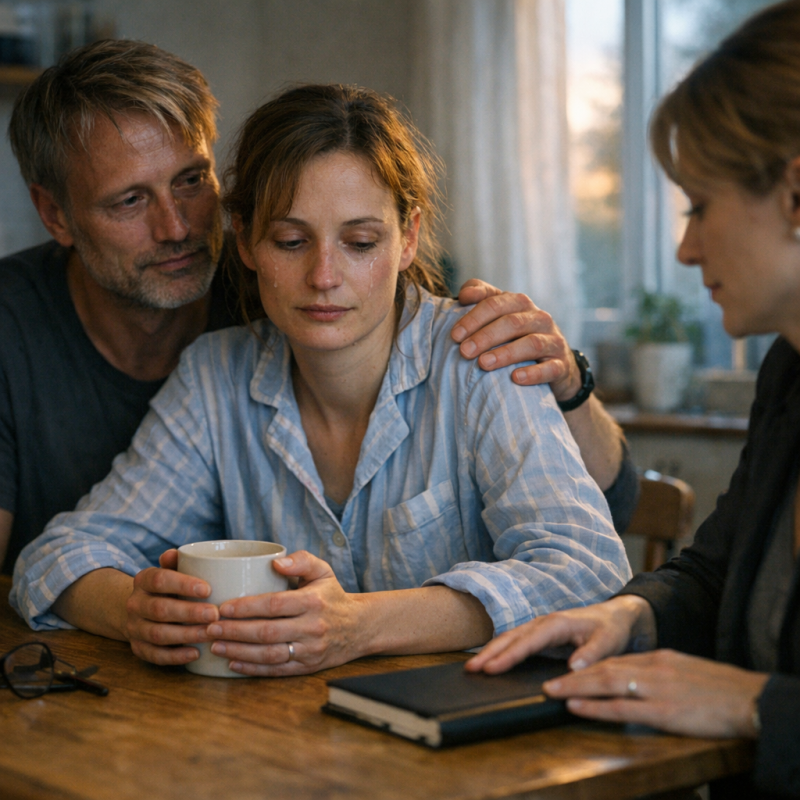 Image by FCT AI
Sophie's Sister Visits
Sophie's sister came to see me two weeks later. Her name was Rachel, and she looked so much like the photos I'd seen that it made my breath catch. She sat across from me in my parents' living room, her hands folded in her lap, and thanked me for what I'd done. 'The authorities reopened Sophie's case because of you,' she said quietly. 'They're reclassifying her passing as homicide. After two years of being told it was suicide, of people thinking she'd given up, we finally have the truth.' Her voice broke on the last word. I didn't know what to say. I'd survived mostly by accident and stubbornness, not through any particular courage or heroism. But Rachel reached across and took my hands. 'You did what Sophie couldn't,' she continued. 'You fought back. You exposed him. You made sure he'd never do this to anyone else.' Tears ran down her face, but she was smiling through them. 'Three other families are getting answers now because you refused to be another victim.' She pulled me into an embrace that felt like absolution I hadn't known I needed. She hugged me and whispered, 'Sophie would be proud—you survived when she couldn't.'
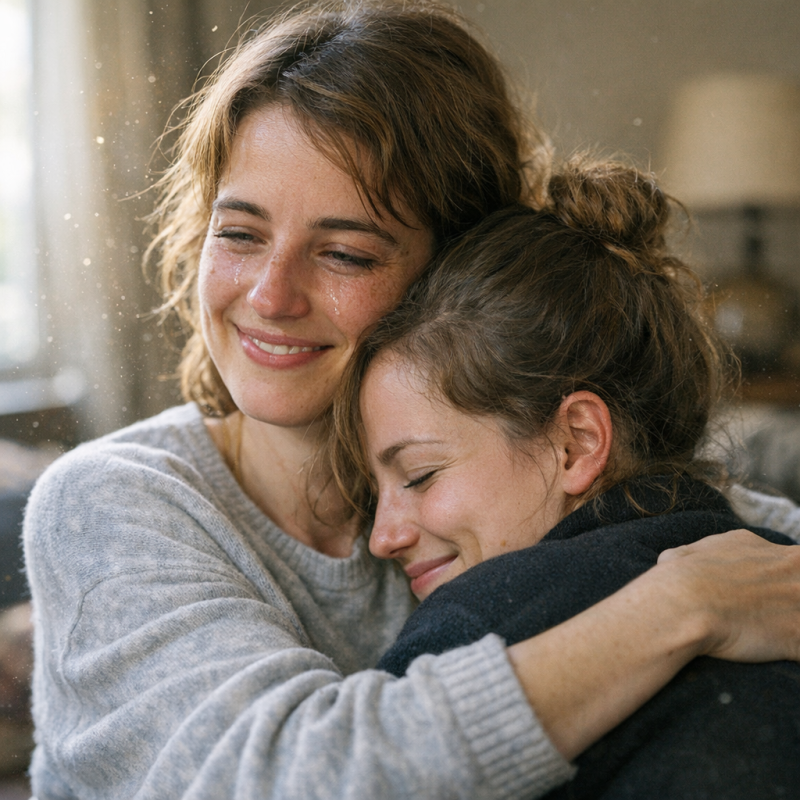 Image by FCT AI
Lauren's Confession
Lauren showed up unannounced on a Thursday afternoon. I almost didn't let her in—she was Marcus's sister, after all, part of the family that had enabled him. But something in her face stopped me. She looked devastated, hollowed out by guilt. We sat on the porch, the spring air warm between us. 'I should have stopped him,' she said without preamble. 'After Sophie passed away, I knew. I didn't have proof, but I knew in my gut what he'd done.' Her hands shook as she twisted them together. 'He's my brother. I grew up with him. And I was terrified no one would believe me if I came forward—that I'd destroy my family for nothing.' She looked at me then, her eyes red. 'When you started asking questions, when you stood up to him, I realized I'd been a coward. You gave me the courage to finally talk to the authorities.' I understood then that complicity wasn't always active—sometimes it was just fear and family loyalty colliding with horrific truth. Lauren's voice dropped to barely a whisper. She said, 'I knew what he did to Sophie—but I was his sister, and I didn't think anyone would believe me either.'
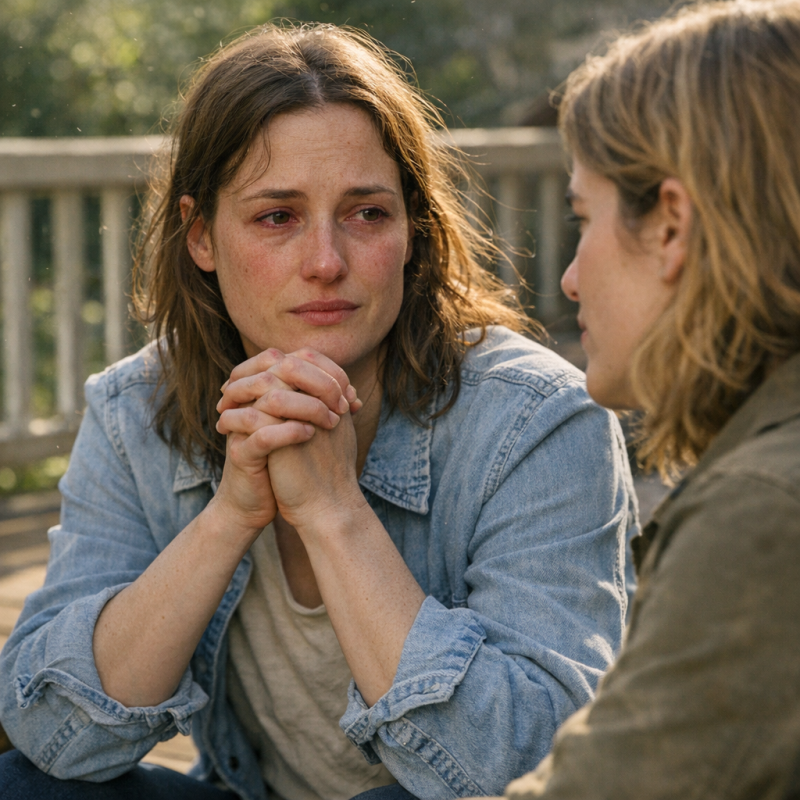 Image by FCT AI
The Trial Preparation
The prosecutor gave me a choice: written testimony or appear in person. She was kind about it, explained that victims aren't required to face those responsible, that I'd already been through enough. I sat in her office for a long time, staring at the case files stacked on her desk. Part of me wanted the easier path—submit my statement, avoid seeing Marcus's face, protect myself from one more confrontation. But I kept thinking about Sophie, about how she'd never gotten the chance to speak. About every woman who'd been silenced by fear or manipulation or circumstances beyond her control. Marcus had spent months making decisions about my life while I was unconscious, stripping away my agency piece by piece. He'd counted on me being too broken or too scared to challenge him. And maybe months ago, I would have been. But I'd clawed my way back through layers of gaslighting and legal battles. I'd found my voice again. The prosecutor looked at me expectantly, pen hovering over her notepad. I took a breath and felt something settle into place—a certainty I hadn't felt in months. I told the prosecutor I would testify in person—because I needed to look him in the eye and take my power back completely.
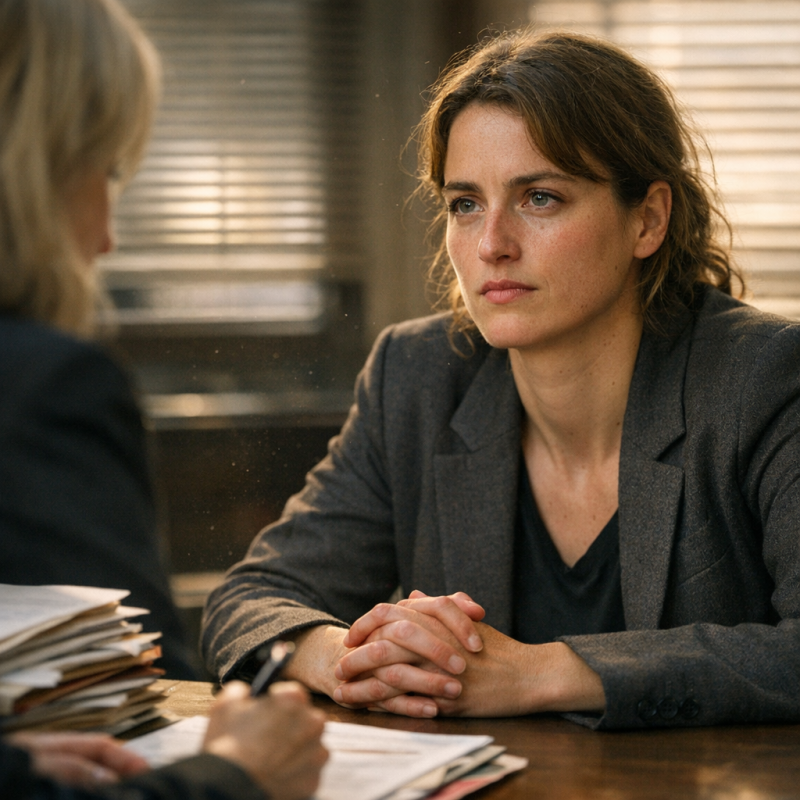 Image by FCT AI
Six Months Later
Six months after Marcus's conviction, I stood in my childhood bedroom packing the last of my things. The jury had deliberated for less than four hours. Sophie's family had been there for the verdict, and we'd held each other afterward, crying for what we'd lost and what we'd survived. The recovery wasn't linear—some days I still woke up disoriented, reaching for a sense of safety that took minutes to find. Therapy helped. Dr. Richardson had become someone I actually trusted, someone who understood that healing meant acknowledging the damage, not pretending it hadn't happened. I'd started sleeping through the night again. Started making plans that extended beyond the next legal deadline. My parents and I were rebuilding something too, though it looked different than before—more honest, more careful. We'd all learned that love without boundaries could become a weapon in someone else's hands. I caught my reflection in the mirror above my dresser, studying the face that had been mine all along but felt somehow new. The scar on my temple had faded to a thin white line. My eyes looked clearer, less haunted. I looked in the mirror and finally recognized the woman staring back—stronger, scarred, but whole.
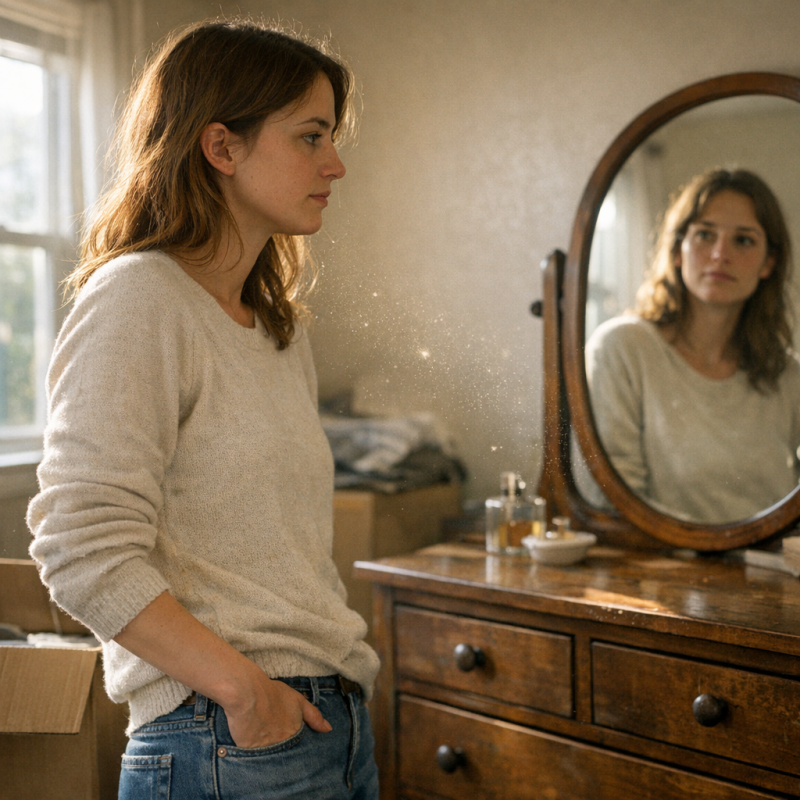 Image by FCT AI
Advocacy
The advocacy work started small—an interview with a local reporter about the loopholes in medical proxy laws, a conversation with a state legislator who'd been looking for a test case. But it grew. Turns out when you survive something that shouldn't be possible, people want to hear how you did it. More importantly, they want to know how to protect themselves and the people they love. I spoke at a healthcare policy conference in Boston, my hands shaking as I approached the podium. I talked about waking up to discover I'd lost everything to a man I'd trusted, about the gaps in the system that had enabled him. About Sophie, who deserved to have her story told. The audience was quiet, attentive. Afterward, people came up with questions, with horror in their eyes at how easily it could have been them. Some shared stories about elderly parents, about family members who'd been victimized by financial predators hiding behind healthcare decisions. A coalition formed around closing those loopholes—limiting proxy powers, requiring additional oversight, creating safeguards. It felt like something mattering beyond just my own survival. At my first advocacy event, three women approached me afterward—each with a story eerily similar to mine.
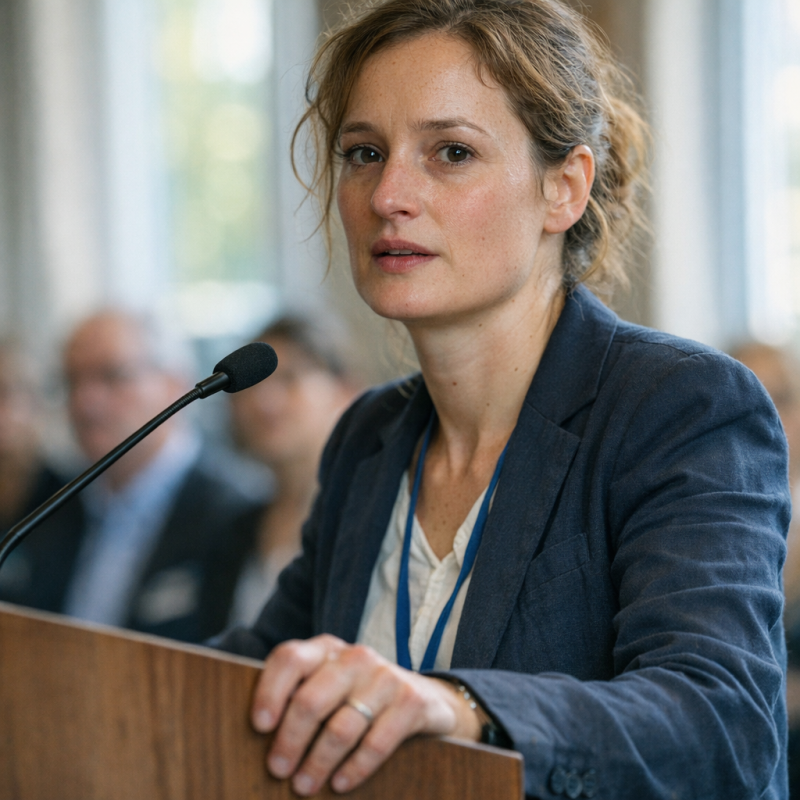 Image by FCT AI
Moving Forward
The apartment was small but mine. Studio, third floor, with windows that faced east so I could watch the sunrise. I'd signed the lease myself, submitted my own application, paid the deposit from the settlement money I'd fought to reclaim. No one had made this decision for me. No one could take it away. I set my keys on the counter and walked through the empty space, my footsteps echoing on hardwood floors. There wasn't much furniture yet—just the essentials I'd bought over the past few weeks, each purchase a small declaration of independence. A bed I'd chosen. A table where I'd eat meals on my own schedule. Bookshelves I'd fill with stories that had nothing to do with trauma or recovery. I thought about the silence I'd woken into all those months ago, how it had felt like drowning. How I'd had to fight my way back to my own voice, my own life, my own choices. The journey had been brutal and unfair and necessary. I wasn't the same person who'd gotten into Marcus's car that night. I'd lost things I'd never get back. But I'd also discovered a strength I hadn't known I possessed. I turned the key in my own door—my name on the lease, my choices ahead—and understood that the silence had ended the moment I decided to fight back.
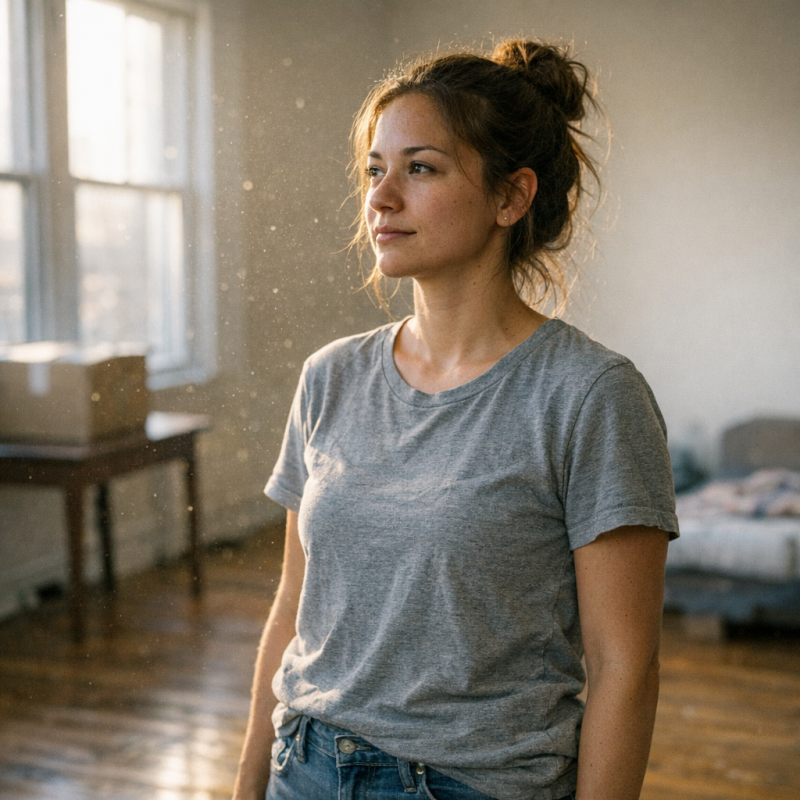 Image by FCT AI