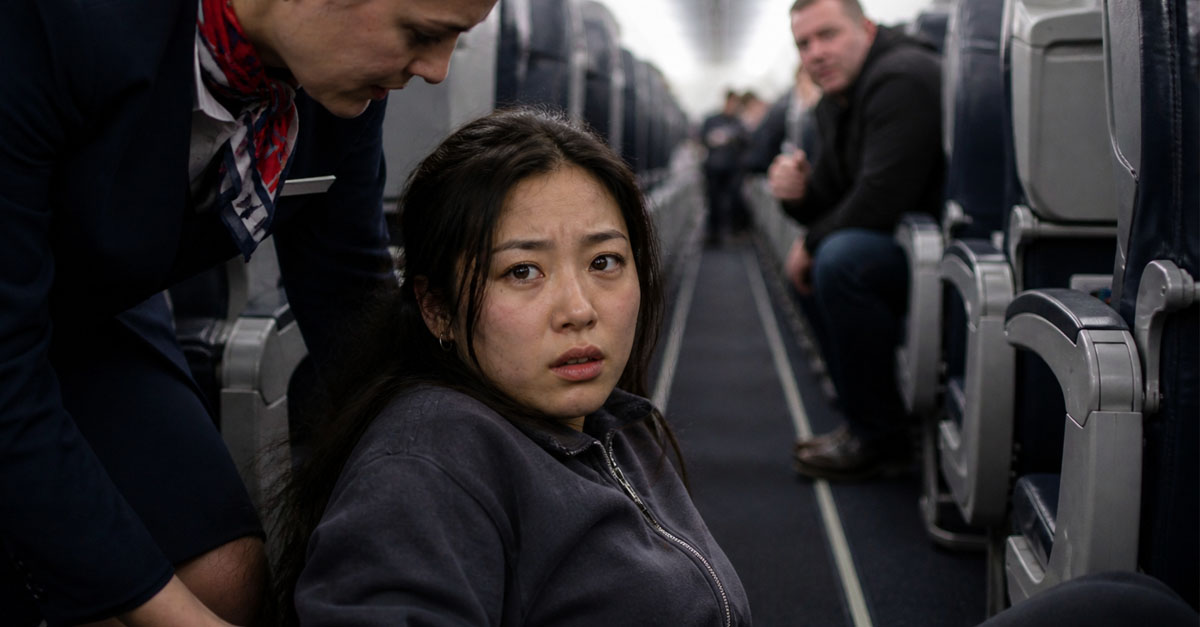
The Routine
I've done the Toronto to LA route so many times I could probably navigate the terminal blindfolded. That Thursday afternoon was no different—same pre-flight coffee, same polite nod to the gate agent, same exhaustion settling into my bones after three client meetings in two days. I settled into 14C and immediately adjusted my hearing aids, turning down the ambient noise setting because airports are terrible on my ears, even with good tech. That's when I noticed the guy across the aisle in 14F. Mid-forties, expensive watch, the kind of tense jaw you get from too many work emails. He was already tapping aggressively at his phone before we'd even pushed back from the gate. I remember thinking he looked like every burned-out executive I'd ever sat near. His frustration with the Wi-Fi seemed totally normal at first—we've all been there, right? He kept refreshing his screen, muttering under his breath, that universal posture of someone whose whole world depends on staying connected. I turned away and pulled out my own laptop, trying to ignore the mounting tension radiating from across the aisle. The man's frustration with the Wi-Fi seemed normal enough—until it wasn't.
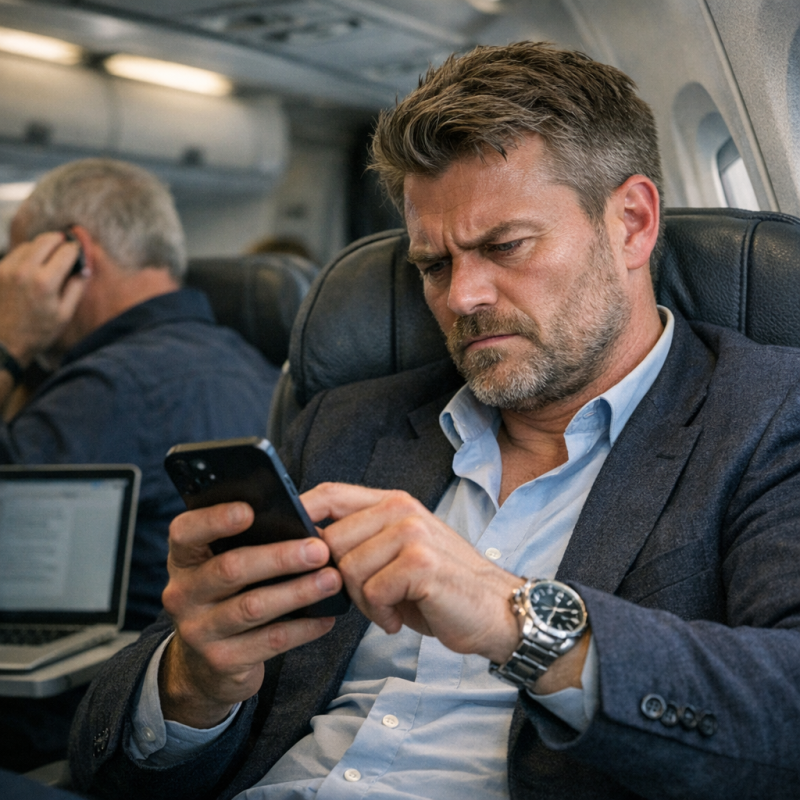 Image by FCT AI
Small Irritations
The flight attendants started their safety demonstration as we taxied, and I could still hear him across the aisle even with my hearing aids dialed down. 'This is ridiculous,' he said, loud enough that the woman in front of him glanced back. 'Absolutely ridiculous.' I've learned to read situations differently since losing most of my hearing in my twenties—you pick up on body language, on the quality of tension in someone's posture. This guy was wound tight. He jabbed at the call button twice, then three times. When Maria, one of the flight attendants, came over, I couldn't hear everything he said, but I caught phrases. 'Premium seat.' 'Promised connectivity.' 'Unacceptable.' She stayed calm and professional, that flight attendant smile never wavering, explaining something about the system coming online after takeoff. He didn't seem satisfied. The plane lifted off, and I tried to focus on my work, but I kept catching movement in my peripheral vision—him shifting, sighing dramatically, radiating impatience like heat. Other passengers were definitely noticing now. His voice carried in a way that made people turn—but I told myself it was just impatience.
 Image by FCT AI
Interference
About twenty minutes into the flight, I had my tray table down with my laptop open, responding to emails in that cramped airplane way we all know too well. I was mid-sentence when his knee slammed into my tray table from across the aisle—not across, beside me, I realized. He'd gotten up and was trying to squeeze past toward the aisle, except there wasn't room and he wasn't being careful. My laptop jumped. My coffee cup tipped. And both of my hearing aids popped out from the impact, that sickening little tumble that anyone who wears them dreads. The world went immediately muffled, like someone had wrapped my head in cotton. I felt the panic rise in my chest—those things cost four thousand dollars. I could see one on my lap, but the other had fallen somewhere below. Maria appeared, asking if I was okay, her lips moving in that concerned way. I nodded automatically and unbuckled my seatbelt, already leaning down to search the floor. I needed to find it before someone stepped on it. The world went quiet in an instant—and that's when I bent down to find them.
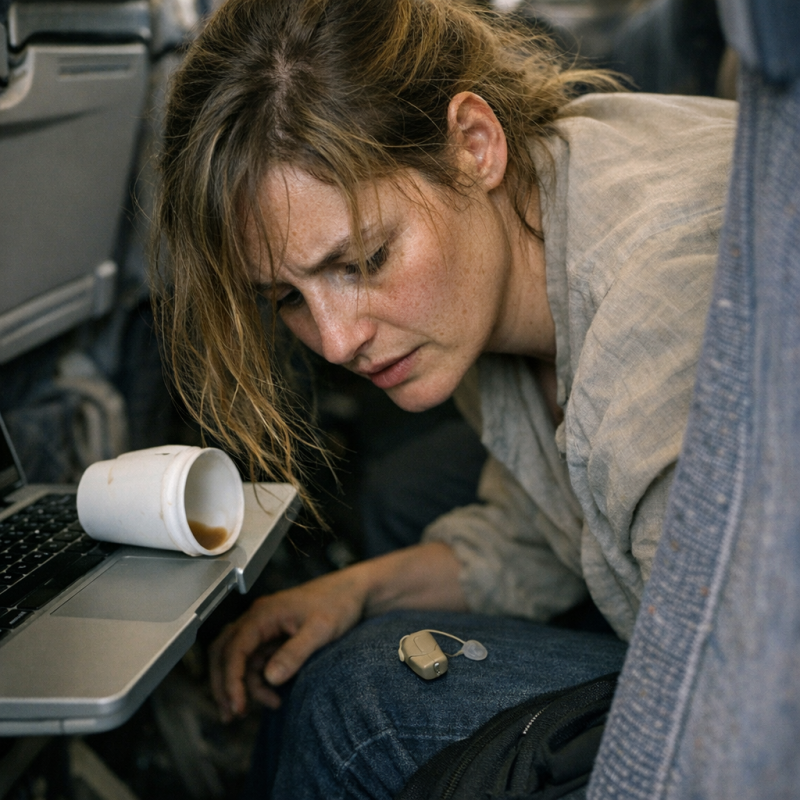 Image by FCT AI
Impact
I was bent at an awkward angle, one hand braced against the seat, the other sweeping the floor beneath me. My fingers brushed something small and plastic—there—when everything exploded into pain and light. The impact came from above and behind, something hard connecting with the back of my head with enough force that my vision went white, then red, then dark around the edges. I remember the sensation of falling but not the landing. I remember thinking, absurdly, that I still hadn't found my second hearing aid. There was shouting—I could feel it more than hear it, vibrations through the floor, through my body. Someone's hands on my shoulders. The cabin tilted or maybe I was tilting. Maria's face swam into view, her mouth forming words I couldn't process. The overhead lights seemed too bright and then too dim. I tried to say something, to explain about my hearing aid, but my tongue felt thick and wrong. The darkness was creeping in from all sides now, patient and inevitable. The last thing I felt was the impact—then nothing but darkness.
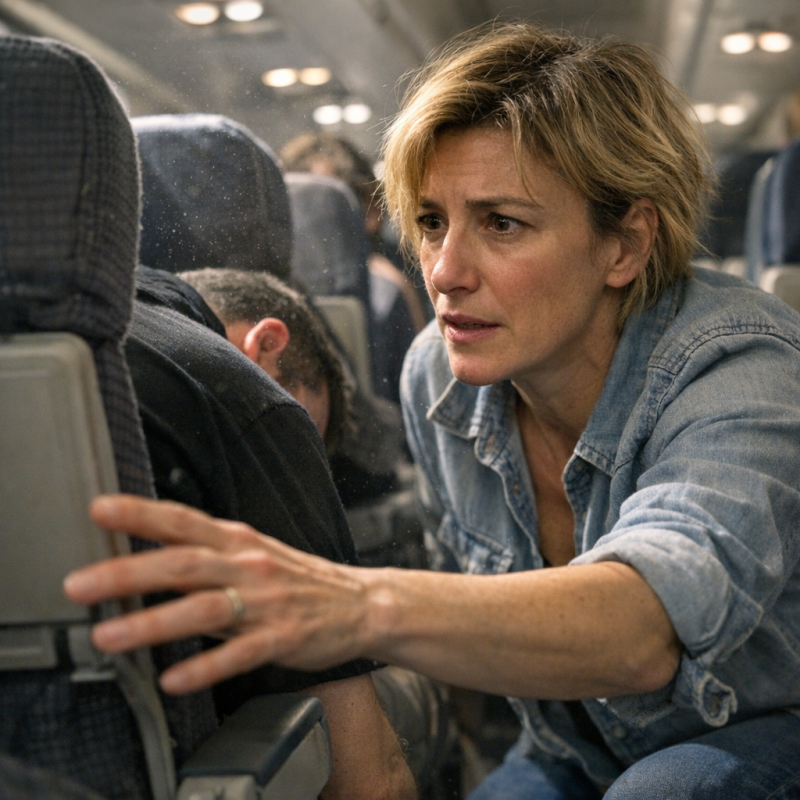 Image by FCT AI
Awakening
The first thing I registered was the texture of carpet against my cheek. Not my seat. The floor. I was on the floor of the airplane cabin, and that realization came with a spike of confusion that cut through the fog in my head. How did I get here? I tried to sit up and immediately regretted it—nausea rolled through me and the cabin spun. There were faces above me. Maria's, creased with concern. Another flight attendant I didn't recognize. A passenger with kind eyes who was holding something cold against my temple. My head throbbed with each heartbeat, a deep ache that made thinking difficult. I reached up automatically to adjust my hearing aids and found only one in place. The world sounded distant and wrong, everything coming from one side only. 'Don't move yet,' Maria was saying, and I could just barely make it out. 'We've called ahead. There'll be medics when we land.' I wanted to ask what happened, but the words stuck. Everyone was looking at me with this mix of concern and something else—something that made my stomach clench. I wasn't in my seat anymore—and everyone was looking at me like something terrible had happened.
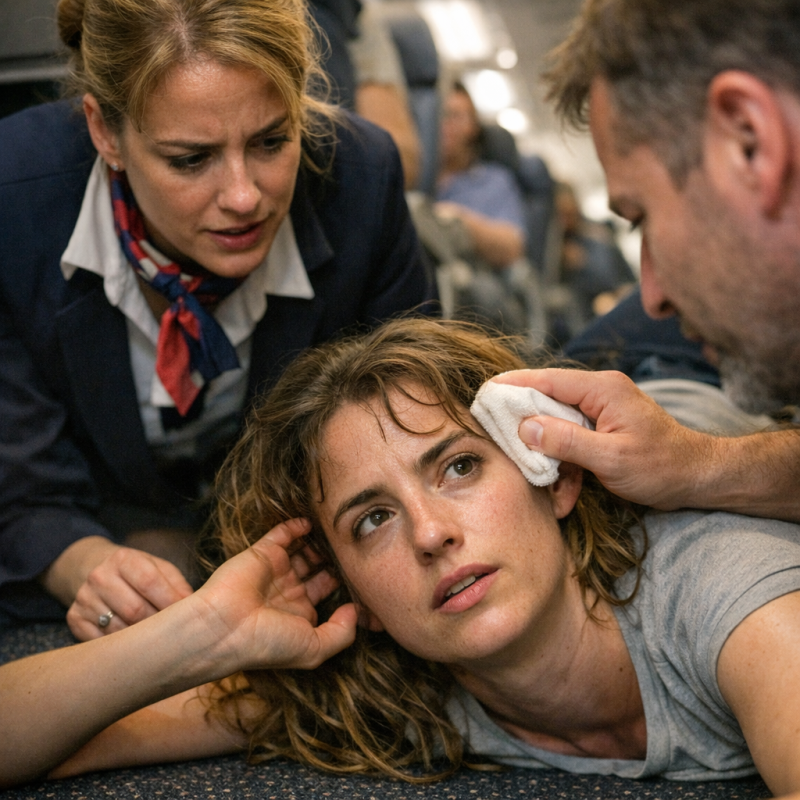 Image by FCT AI
Fragments
Maria crouched beside me, speaking slowly so I could read her lips. 'The man who hit you—we've restrained him. You're safe now.' Hit me? The words didn't compute at first. I remembered the tray table jerking, my hearing aids falling, bending down to find them. Then nothing. A gap in time that should have been filled with something but wasn't. 'He struck you while you were bent over,' Maria continued. 'We saw it happen. He's secured in the back now.' I could feel the other passengers watching, some filming probably, that inevitable modern response to crisis. My hand went to the back of my head and came away checking for blood. No blood, but a knot was already forming, tender and hot. 'Your hearing aids,' Maria said, producing both from her pocket. 'I found them. They're safe.' I took them with shaking hands, fitting the missing one back into place. Sound flooded back, overwhelming—the engine drone, worried murmurs, someone crying a few rows back. She said my hearing aids were safe—but that wasn't the part I needed to worry about.
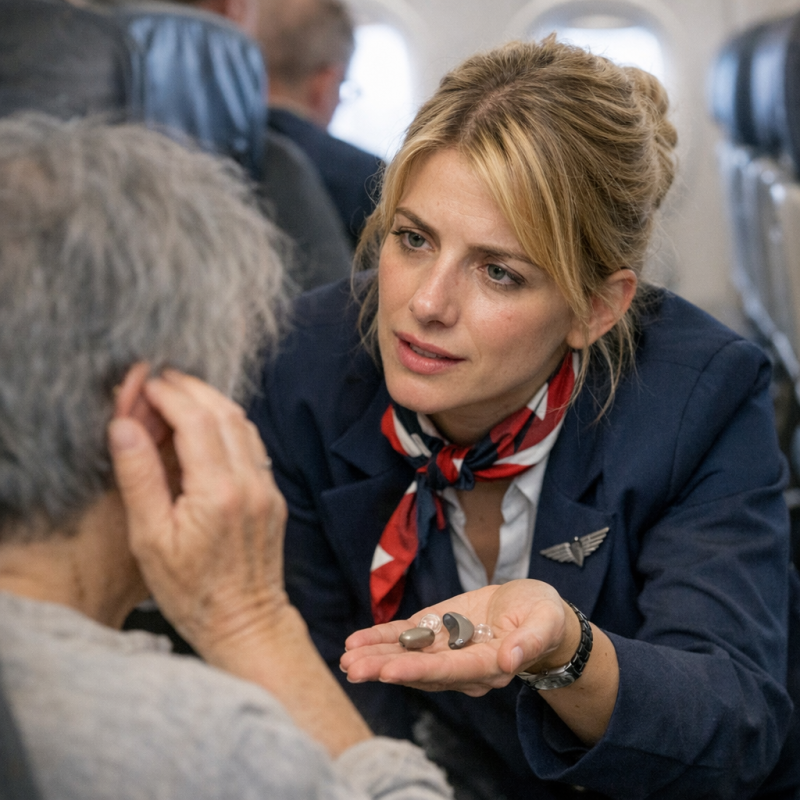 Image by FCT AI
The Restraint
They helped me into a seat closer to the front—not mine, someone had given it up. I was still dizzy, still trying to piece together what had happened. That's when I saw him. Derek, though I didn't know his name yet. He was in the back galley, visible through the gap between seats, with two male flight attendants on either side of him. His hands were zip-tied in front of him. But what struck me—what made my skin prickle with fresh unease—was his expression. He wasn't angry. He wasn't defiant. He looked genuinely confused, his eyes moving from face to face like he was trying to solve a puzzle he couldn't quite grasp. 'I don't understand,' I heard him say, his voice carrying forward. 'I didn't—why are you—' One of the attendants said something too quiet for me to catch. Derek's face crumpled, not with rage but with what looked like bewilderment. Like he'd woken up in the middle of a play without knowing his lines. It didn't make sense. People who assault strangers don't look like that afterward. He looked genuinely confused—like he didn't understand why they were holding him.
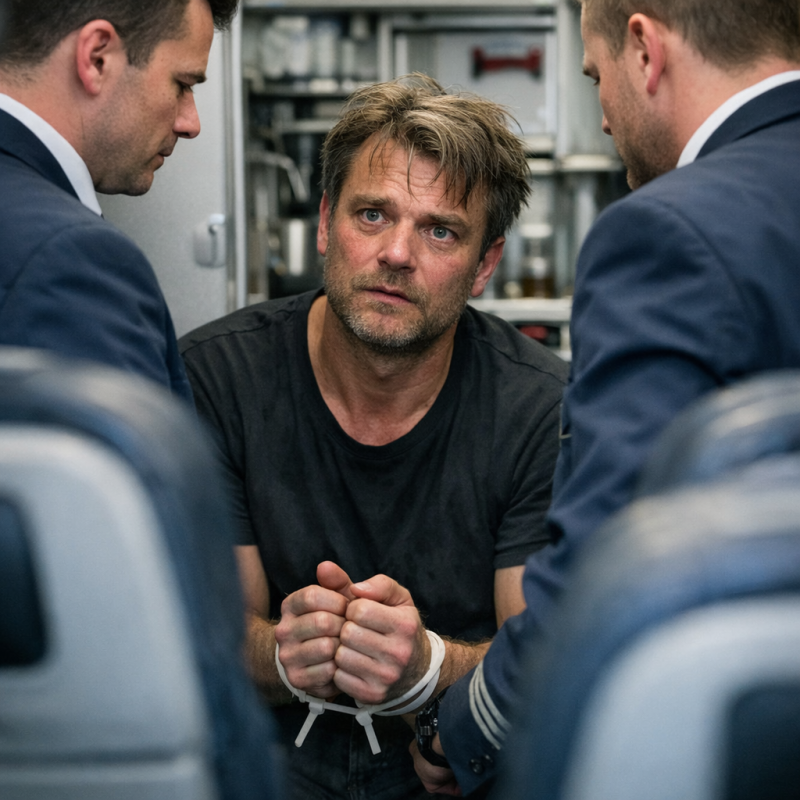 Image by FCT AI
The Witness
A young woman slid into the seat next to me. Mid-twenties, with anxious eyes and a tight grip on her phone. 'I'm Sara,' she said. 'I was right behind you. I saw the whole thing.' I turned to face her fully, needing to hear this. 'He just... he just hit you,' Sara continued, her words coming fast. 'You were bent down, looking for something, and he raised his hand and struck you on the head. There was no warning. You didn't provoke him. He just snapped.' Her testimony should have been validating—proof that I wasn't crazy, that this had really happened. But her hands were trembling where they clutched her phone. She kept glancing toward the back of the plane where Derek sat restrained. 'It was so sudden,' she said again. 'Like a switch flipped. One second he was just standing there, and the next...' She trailed off, shaking her head. Maria brought me ice wrapped in a cloth napkin. Sara accepted water with shaking fingers. The plane droned on toward LA, and I couldn't shake the wrongness of it all. Sara kept saying he just 'snapped'—but her hands were shaking when she said it.
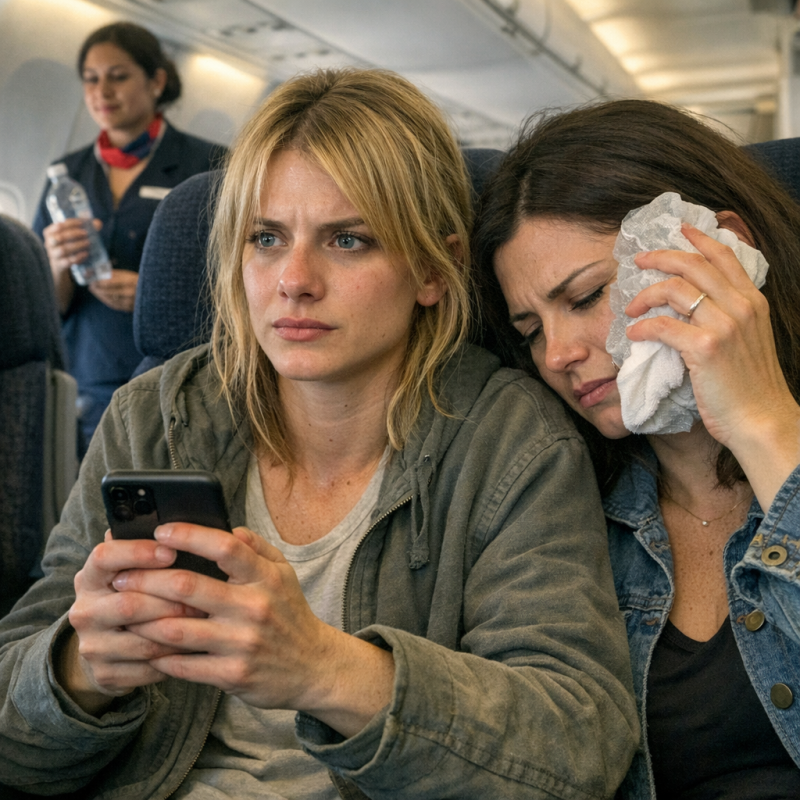 Image by FCT AI
The Explanation
Maria returned about twenty minutes later, her expression somewhere between sympathetic and uncertain. She crouched beside my seat, keeping her voice low. 'He's talking now,' she said. 'The captain wanted me to relay what he's saying.' I waited, my headache pulsing in time with my heartbeat. 'He claims he doesn't remember hitting you,' Maria continued. 'He says the last thing he recalls is standing in the aisle, and then suddenly he was being restrained by passengers.' I stared at her. She looked as uncomfortable delivering this message as I felt receiving it. 'He doesn't remember it at all,' she repeated, like maybe I hadn't heard her correctly the first time. But I had heard. I just couldn't comprehend it. Sara had watched him raise his hand and strike me. Multiple passengers had witnessed it. Maria herself had seen the aftermath. How could someone not remember something that happened maybe forty minutes ago? How could you black out a violent act you'd just committed while remaining conscious the entire time?
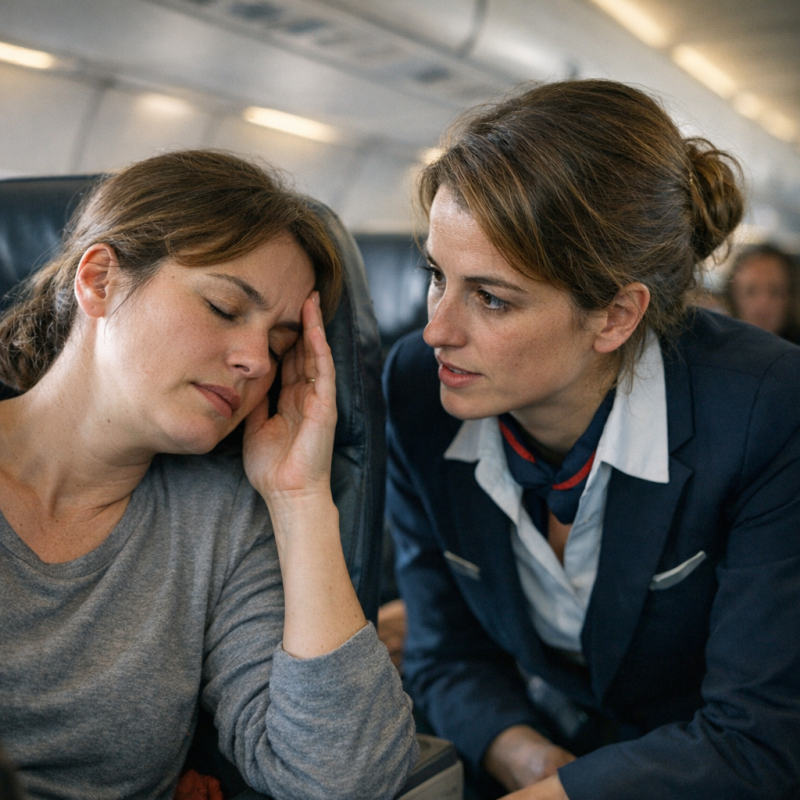 Image by FCT AI

History's most fascinating stories and darkest secrets, delivered to your inbox daily.
The Other Story
They let me speak to him—or rather, he insisted on speaking to me. Maria accompanied me to the back galley where Derek sat with zip ties on his wrists, two large men positioned on either side. His face was different now. Not angry. Confused. Almost pleading. 'Someone was messing with me,' he said, his voice tight. 'I know how this looks, but you were part of it. You were reaching for something. I saw you going for a weapon.' My mouth fell open. 'I was picking up my hearing aids,' I said slowly. 'I dropped them. I was bent down because I'm partially deaf and needed them back.' He shook his head, adamant. 'No. You were moving too fast. You were coordinating with the others. I had to stop you before—' Maria cut him off, steering me away. My hands were shaking again. He genuinely believed I'd been attacking him. He thought retrieving my hearing aids from the floor was a threat.
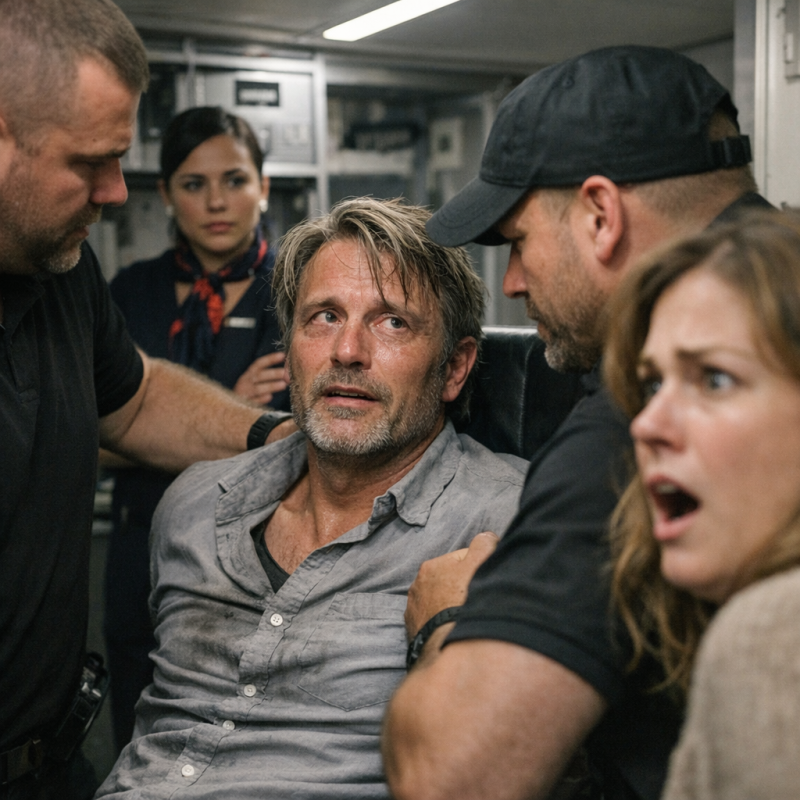 Image by FCT AI
Landing Protocol
The captain's voice crackled over the intercom about ten minutes later. 'Ladies and gentlemen, due to a security incident, we'll be making an emergency landing at Las Vegas McCarran International Airport. Law enforcement will meet the aircraft. Please remain seated with your seatbelts fastened.' The cabin erupted in whispers. Sara reached over and squeezed my hand. Maria appeared again, checking my ice pack, asking if I felt dizzy or nauseous. I did, actually, but I wasn't sure if it was from the blow to my head or from Derek's insistence that I'd been part of some coordinated attack. An attack that existed only in his mind. I glanced back toward where he sat, still restrained. He was staring straight ahead, his expression blank now. Completely empty. I wanted to feel relieved that we were landing, that police would handle this. But something about that blank stare made my skin crawl.
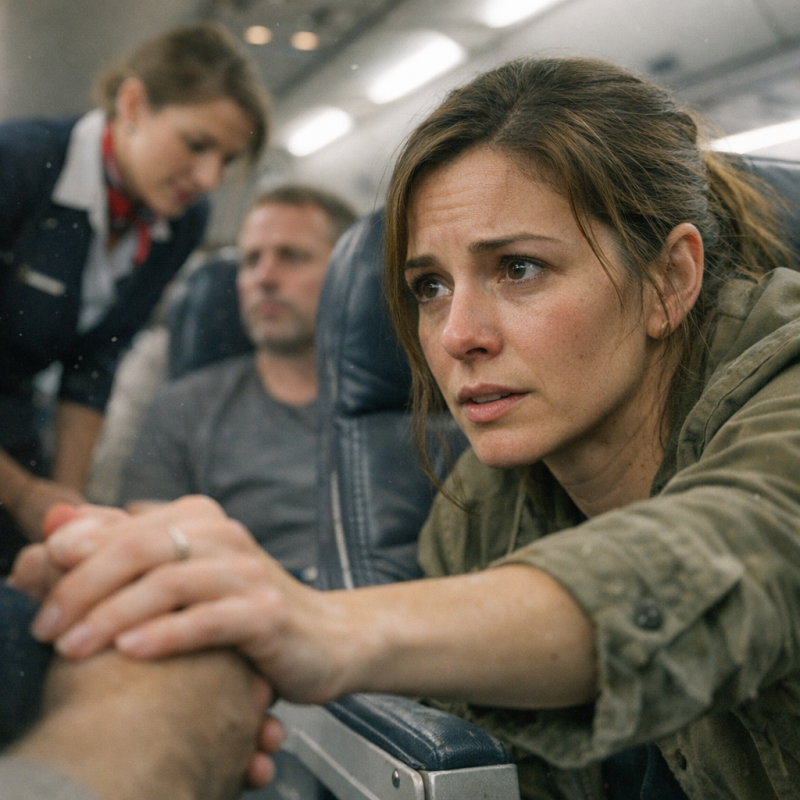 Image by FCT AI
The Ground
We touched down hard, and within minutes, the aircraft was surrounded. Airport security boarded first—four officers in uniform, moving with practiced efficiency. They escorted Derek off while the rest of us waited. I watched him walk down the aisle, his movements stiff, his face still wearing that unsettling blankness. Officer Chen, a man in his late thirties with sharp eyes and a calm demeanor, took my statement right there in my seat. I walked him through everything—my hearing aids falling, bending down, the sudden impact. 'And before he struck you, did he say anything unusual?' Chen asked, pen poised over his notepad. I opened my mouth, then closed it. Where did I even start? That Derek claimed not to remember? That he thought I was attacking him? That he'd mentioned 'others' coordinating with me? Chen waited patiently, but I couldn't figure out how to explain what I didn't understand myself.
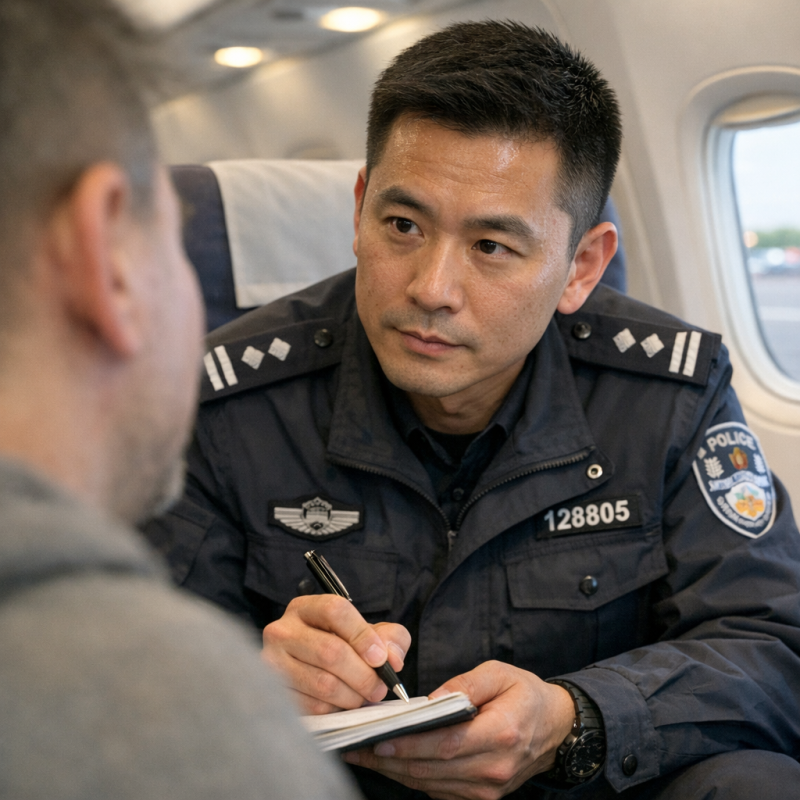 Image by FCT AI
Medical Check
Paramedics met me at the gate. A woman with kind eyes and efficient hands checked my pupils, asked me to follow her finger, pressed gently around the swelling on my head. 'You've got a decent contusion here,' she said. 'I'd recommend going to the ER for a CT scan. Head injuries can be tricky.' I nodded, which made everything spin slightly. They had me sit in a wheelchair even though I insisted I could walk. Hospital protocol, they said. I felt ridiculous being wheeled through the terminal while travelers stared. The male paramedic kept asking me questions—what day was it, who was president, could I remember what happened. Yes, I could remember. That was the problem. I could remember everything with crystal clarity. 'You're lucky,' the woman said as they loaded me into the ambulance. 'Could've been much worse.' Lucky. That word again. But sitting there with my head throbbing and Derek's confused face burned into my memory, I didn't feel lucky at all.
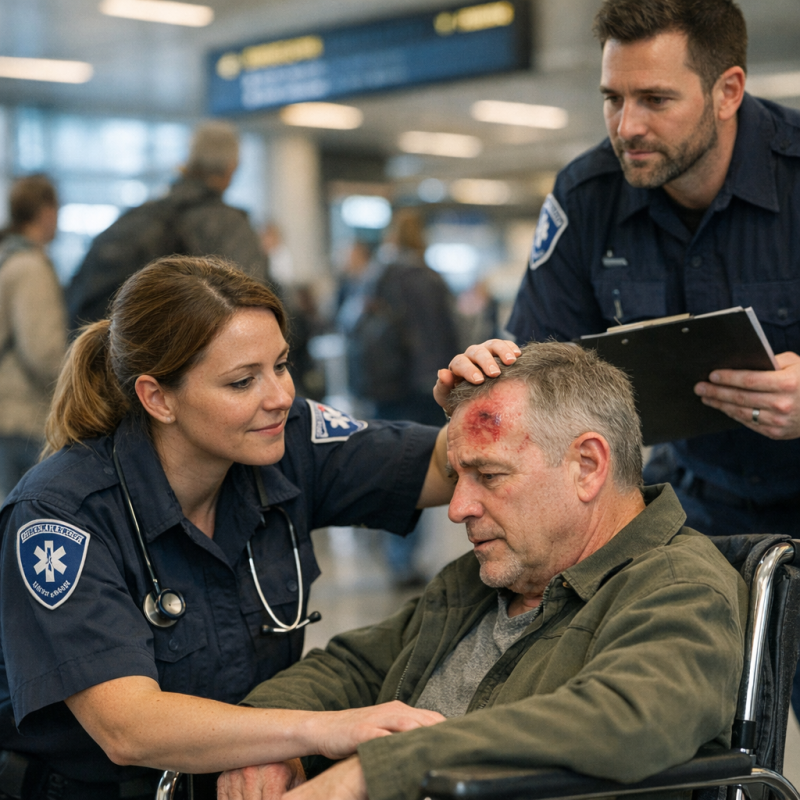 Image by FCT AI
The Video
Officer Chen found me in the ER waiting area before I'd even been called back. 'Quick update,' he said, sitting in the plastic chair beside me. 'The airline provided us with cabin footage. The incident was captured clearly on camera.' Relief flooded through me. 'So you can see what happened.' 'We can,' he confirmed. 'And it corroborates your account completely. You were bent down, he approached from behind and struck you. Unprovoked. Open and shut case from our perspective.' I should have felt vindicated. Instead, a knot formed in my stomach. 'What about what he's saying?' I asked. 'About me being part of some attack?' Chen's expression shifted slightly. 'He's sticking to that story. Seems genuinely convinced of it, actually. But the video shows the truth—you were retrieving something from the floor. Nothing threatening about it.' The video was clear, he said. Objective proof. So why did Derek seem so genuinely confused?
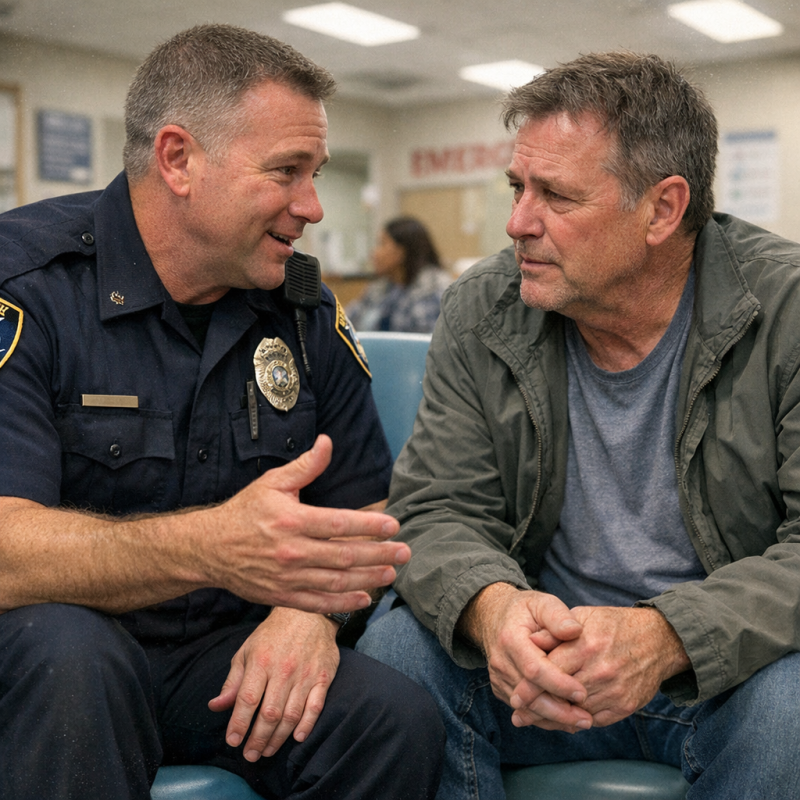 Image by FCT AI
Detective Morrison
A detective showed up just as the nurse was calling me back. Detective Morrison, tall and weathered, with the look of someone who'd seen too much. 'I'll only take a few minutes,' he promised, following me into the examination room. He asked the same questions as Chen, but with different emphasis. More interested in Derek's demeanor than the mechanics of the attack itself. 'You said he seemed confused after,' Morrison noted. 'Can you elaborate?' I described the blank stare, the genuine bewilderment in Derek's voice when he claimed not to remember. The way he'd insisted I was threatening him. Morrison's pen stopped moving. 'He mentioned others? That you were coordinating?' 'Yes,' I said. 'He seemed convinced there were multiple people involved in something. But it was just me, alone, picking up my hearing aids.' Morrison was quiet for a long moment, studying his notes. Then he paused, his eyes narrowing slightly. Like that detail meant something specific to him.
 Image by FCT AI
The Hospital
The CT scan took forever. I lay on the table while the machine whirred and clicked, trying not to move, trying not to think about Derek's face. Afterward, the doctor—a tired-looking woman with graying hair—reviewed the images. 'Good news. No brain bleed, no fracture. You've got a concussion, but it's mild. Rest, limited screens, follow up if symptoms worsen.' She handed me care instructions and a prescription for pain management. I should have felt relieved. My injury was real but not catastrophic. There was video evidence. Derek was in custody. This was over, essentially. Except it didn't feel over. As I sat in the discharge area, waiting for someone from the airline to arrange my hotel, I kept replaying Morrison's reaction when I'd mentioned Derek's confusion. The doctor had just confirmed my head injury was real—the swelling, the concussion, the physical evidence of being struck. But Derek's confusion had felt real too.
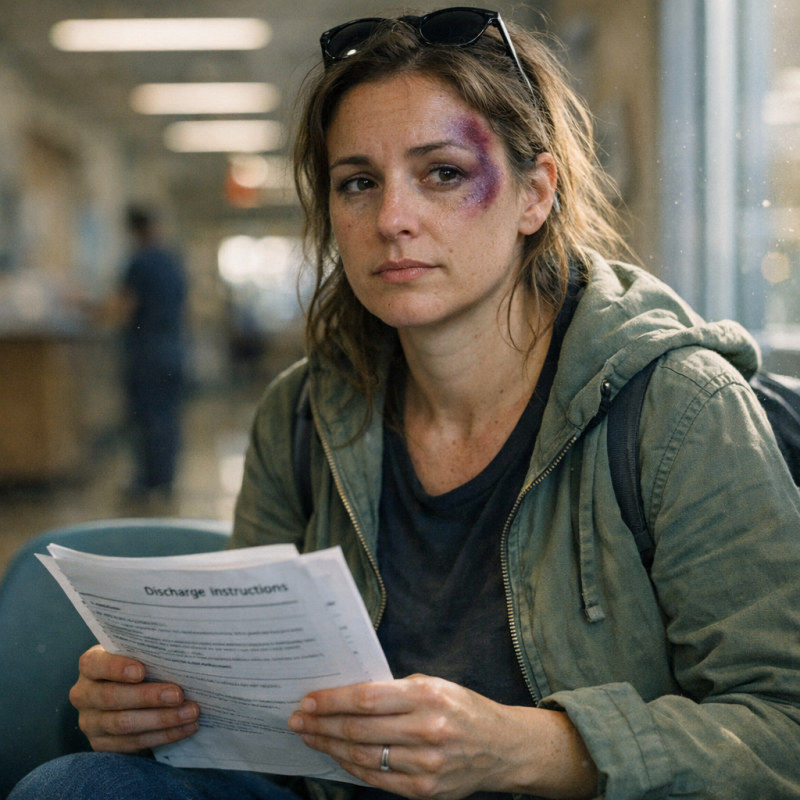 Image by FCT AI
The Call
Morrison called me around eight that evening. I was in the hotel room the airline had booked, lying on the bed with an ice pack pressed to my temple, when my phone buzzed. 'Ms. Chen, I wanted to update you on Mr. Patterson's interview,' he said, his tone measured. 'He's maintaining that he has no memory of the incident. He remembers boarding, remembers asking about Wi-Fi, and then... nothing until security was escorting him off the plane.' I shifted the ice pack, wincing. 'So he's claiming amnesia now?' Morrison paused. 'I've seen a lot of people try to fake memory loss. This... I'm not saying I believe him, but he seems genuinely distressed by the gaps. His lawyer is bringing in a psychiatrist.' My jaw tightened. Distressed or not, the bruises on my face weren't imaginary. The video existed. The witnesses existed. 'Detective, I don't care how sincere he seems. I have a concussion.' 'I understand,' Morrison said quietly. 'I just wanted you to know what we're dealing with.' What we were dealing with. As if his confusion somehow balanced out my injury. Sincere or not—I had the bruises to prove what he did.
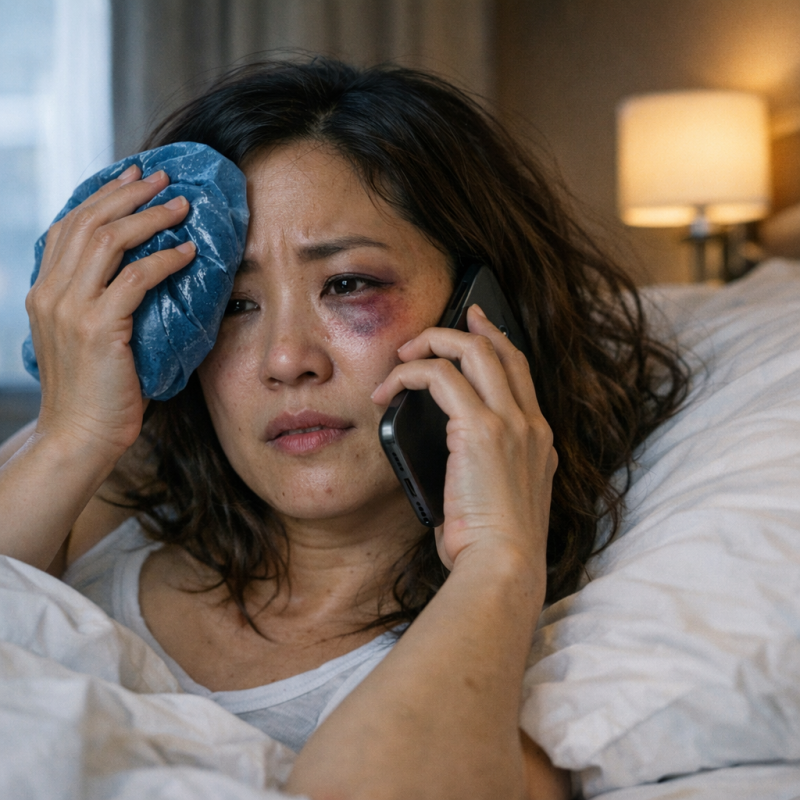 Image by FCT AI
Expert Opinion
The next morning, I had a follow-up appointment with Dr. Patel, a neurologist the hospital had referred me to. He reviewed my CT scans and asked about my symptoms—headache, sensitivity to light, the ringing in my ears that was worse than usual. Then I mentioned what Morrison had told me about Derek's amnesia claim. Dr. Patel set down his tablet and looked at me thoughtfully. 'Stress-induced amnesia is a documented phenomenon,' he said. 'In cases of extreme psychological distress, the brain can essentially... shut down certain recording functions. It's a protective mechanism.' I stared at him. 'So you're saying it's possible he doesn't remember hitting me?' 'Possible, yes. But it's exceedingly rare. We're talking about maybe a handful of legitimate cases in the literature for this type of scenario.' He paused. 'It would require extraordinary circumstances—severe pre-existing conditions, certain medications, extreme stressors aligning perfectly.' I nodded slowly, processing this. The medical jargon made it sound credible, but something still felt off. Possible didn't mean probable—and it didn't explain the Wi-Fi obsession.
 Image by FCT AI
Press Interest
By that afternoon, my phone was exploding. Three different news outlets had picked up the story—someone had leaked details from the police report, and now 'Air Rage Incident Leaves Deaf Passenger Injured' was trending regionally. My inbox filled with requests for interviews, comments, statements. One reporter left a voicemail asking if I felt the airline had done enough to protect vulnerable passengers. Another wanted to know if I thought Derek should face federal charges. I sat on the hotel bed, scrolling through the news alerts, feeling my stomach twist. They'd found Derek's LinkedIn, his Facebook. One article included his photo—the same confused, frightened expression I'd seen when they were escorting him away. The comments sections were vicious. People calling him a monster, demanding he be banned from flying permanently, speculating about his mental state in the cruelest possible terms. I should have felt vindicated. This was validation that what happened to me mattered, that Derek's actions had consequences. But reading those comments, seeing how quickly people constructed narratives from fragments... They wanted a villain—and Derek was perfect for the role.
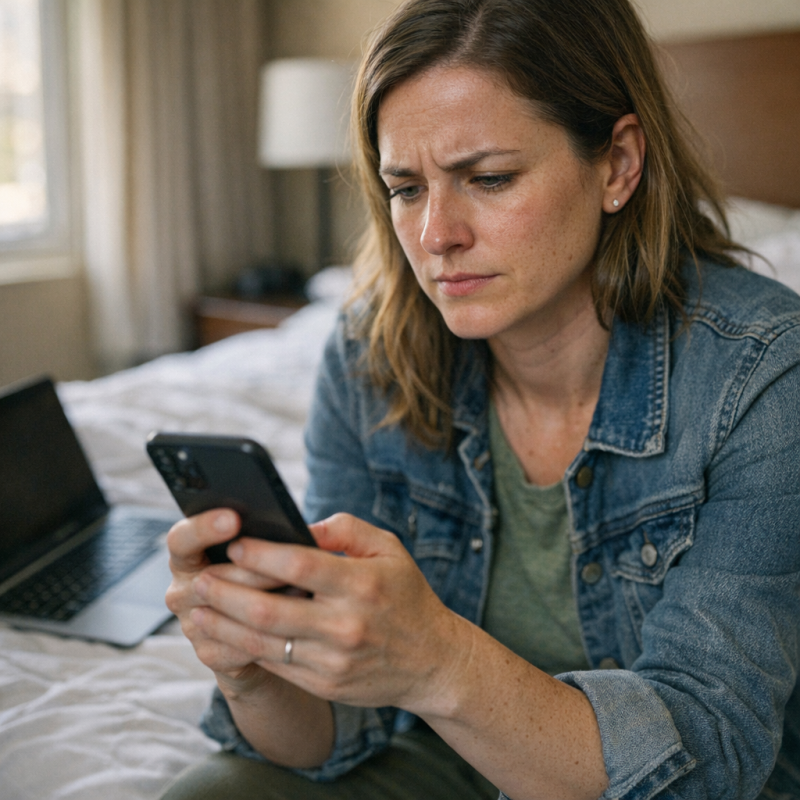 Image by FCT AI
The Airline's Position
That evening, I got a call from an airline representative named Hoffman. He had a smooth, practiced voice—the kind that's been trained to de-escalate and negotiate. 'Ms. Chen, first let me express how deeply sorry we are about your experience. We take passenger safety extremely seriously.' He went on for a while about their commitment to security, their protocols, how rare incidents like this were. Then came the pivot. 'We'd like to offer you compensation for your distress and medical expenses. Fifty thousand dollars, plus lifetime flight upgrades on our airline.' I sat up straighter, ignoring the throb in my head. 'That's... generous.' 'We think it's fair,' Hoffman said smoothly. 'Of course, we'd need you to sign a non-disclosure agreement. Standard practice in settlements like this. You'd agree not to discuss the incident publicly, not to pursue further legal action against the airline.' Something cold settled in my chest. Fifty thousand was more than generous—it was suspicious. 'I need time to think about it,' I said. 'Of course, of course. Take a few days.' But after we hung up, I couldn't shake the feeling that had crept over me. They wanted to make it go away quietly—which made me wonder what they knew.
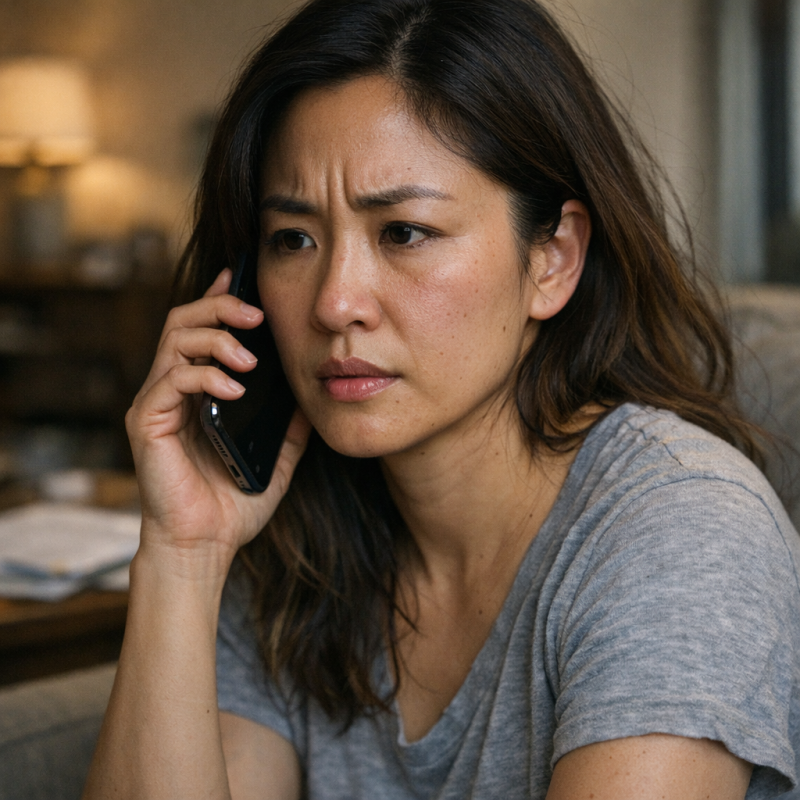 Image by FCT AI
Jamie's Advice
I called Jamie as soon as I hung up with Hoffman. Jamie and I had been friends since college—she was a paralegal now, the person I trusted most to cut through bullshit. 'Fifty thousand and they want you to sign an NDA?' she said immediately. 'Alex, do not sign anything without a lawyer looking at it first.' I'd expected her to say that, but hearing it still made my chest tighten. 'It's a lot of money, Jamie. And I just want this to be over.' 'I know,' she said, her voice gentler. 'But think about it. Why are they offering you anything? You were assaulted by another passenger, not an employee. Their liability is limited. So why are they throwing money at you?' I hadn't thought of it that way. 'Maybe they're just being decent?' 'Or maybe they're worried about something coming out. Something about how they handled the situation, or what they knew about this guy beforehand.' She paused. 'Alex, I'm not trying to make you paranoid. But this amount of money, this fast, with an NDA attached? That's not standard customer service.' I pressed my palm against my forehead, feeling the ache pulse beneath. Jamie said this wasn't just about the assault anymore—it was about what came after.
 Image by FCT AI
The Hearing Aids
Three days later, Morrison called to say I could pick up my hearing aids from evidence. They'd photographed them, documented them, and I was free to reclaim my property. I met him at the police station, signed the release forms, and he handed me a clear plastic bag. Through the plastic, I could see the damage immediately. The left hearing aid had a visible crack running along the casing—not enough to split it completely, but enough that I knew it wasn't just from falling. That kind of damage came from impact, from force. I held the bag up to the light, turning it slowly. The right one looked intact, but the left... I thought about Derek's hand connecting with my face, the way everything had gone silent and then exploded into pain. 'We documented everything,' Morrison said quietly, watching me. 'The damage is part of the evidence file.' I nodded, not trusting myself to speak. These weren't just expensive medical devices. They were my connection to the world, my way of navigating spaces that weren't built for people like me. And someone had damaged them. The crack in the casing reminded me that this wasn't just about memory—it was about what actually happened.
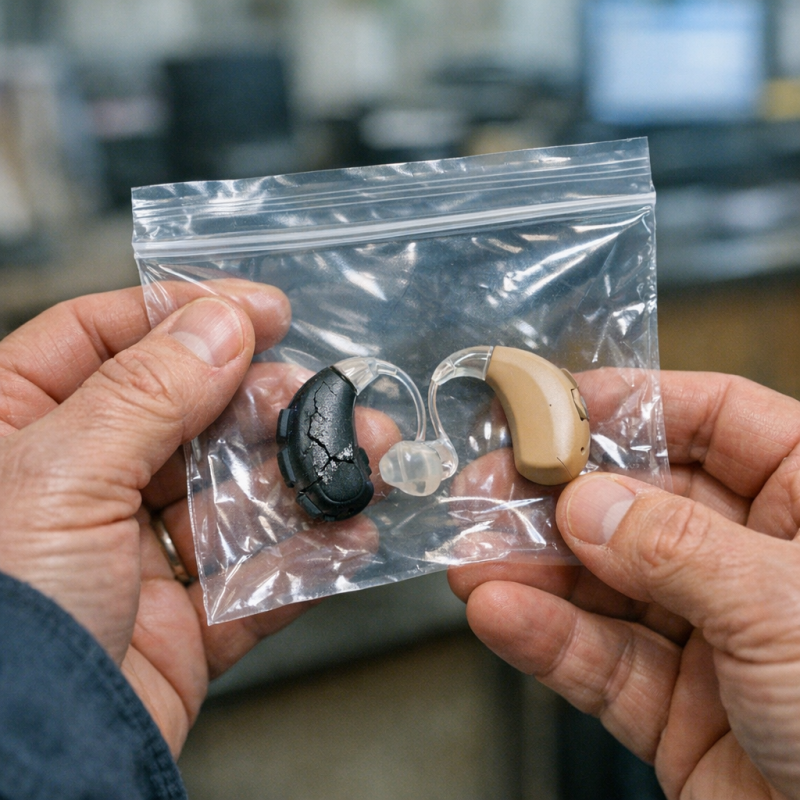 Image by FCT AI
Sara's Follow-up
Sara reached out to me that same evening through Facebook Messenger. 'Hey Alex, I hope you're recovering okay. I wanted you to know—a few of us from the flight have been talking, and we want to support your statement however we can. What happened to you was wrong, and we all saw it.' I read her message twice, feeling something loosen in my chest. Witnesses. People who'd been there, who'd seen what I'd seen. I wrote back thanking her, and she responded quickly. 'There's like five of us who are willing to give statements or testify or whatever you need. We all saw the same thing.' I should have felt relief. But then I scrolled through my news alerts and saw a new article—'Friends of Alleged Attacker Question Assault Narrative.' The piece interviewed people who knew Derek, who described him as gentle, conflict-averse, someone who'd never shown violent tendencies. Online, the comments were starting to split. Some people still supported me completely, but others were asking questions. Was there more to the story? Could something else have happened? I stared at Sara's message, at her words: 'We all saw the same thing.' She said we all saw the same thing—so why were people starting to doubt it?
 Image by FCT AI
Tom's Account
Tom—the guy who'd been sitting two rows behind me—reached out through the victim services coordinator. He wanted to give me his statement directly, he said, before talking to the media. We met at a coffee shop near the airport. He was younger than I'd expected, maybe early thirties, with nervous hands that kept fidgeting with his cup. 'I've been thinking about this constantly since it happened,' he said. 'And I want to be really clear about what I saw, because it's been bothering me.' I leaned forward, waiting. 'Derek definitely hit you. That's not in question. I saw his hand make contact, saw you fall. But...' He hesitated. 'The look on his face. I keep coming back to it. It wasn't angry. It wasn't aggressive. It was like... he wasn't there. Like he was looking through you, not at you.' My stomach turned over. 'What do you mean, not there?' 'I don't know how else to describe it. His eyes were open, he was moving, but it was like the lights were on and nobody was home. Does that make sense?' He looked at me helplessly. It didn't make sense. Nothing about this made sense anymore. Not there—what did that even mean?
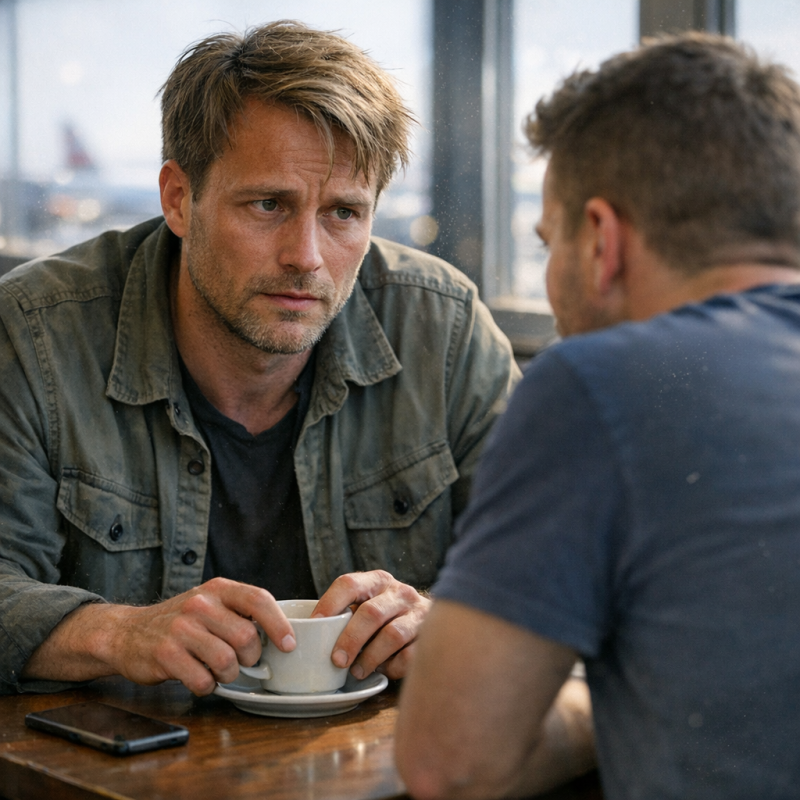 Image by FCT AI
The Video Review
Morrison called me into the station to review the footage. 'I want you to see this,' he said, pulling up the cabin video on his laptop. 'Tell me what you notice.' I watched myself sitting there, reading. Watched Derek stand up. Watched him move toward me. And here's the thing that made my skin crawl—his face. It was completely blank. Not angry. Not tense. Just... nothing. His mouth was slightly open, his eyes fixed on something, but there was no expression at all. It was like watching someone sleepwalk. 'See that?' Morrison pointed at the screen. 'That's what Tom was talking about. That's what the flight attendants saw.' I watched it again. Frame by frame. The moment before his hand made contact, his expression didn't change. No wincing, no grimacing, nothing that suggested intent or awareness. 'What does that mean?' I asked. Morrison shook his head slowly. 'I don't know. But it's not what assault usually looks like.' I couldn't stop staring at the frozen frame. His eyes were empty—like he was watching something I couldn't see.
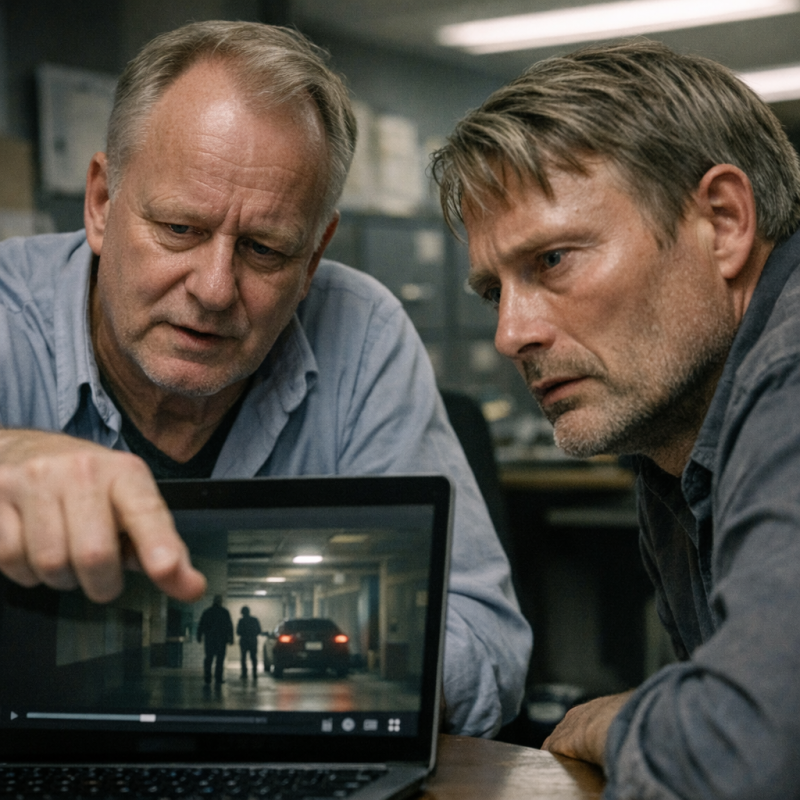 Image by FCT AI
The Charge
Derek was formally charged with assault three days later. Morrison called to tell me, and I felt this weird rush of validation mixed with something darker I couldn't name. 'The prosecutor's confident,' he said. 'But there's something you need to know.' Derek's lawyer had already filed a motion. Mental incapacity. They were claiming he wasn't in control of his actions, that he couldn't form the intent necessary for assault. 'Can they do that?' I asked. 'They're doing it,' Morrison said. 'And they've got medical records to back it up. Psychiatric history. Medication. The works.' I felt the ground shift under me again. This was supposed to be straightforward. Man hits woman. Man gets charged. But now they were turning it into something murky, something that made me look like I was misunderstanding the whole situation. 'What does that mean for the case?' 'It means it gets complicated,' Morrison said. I hung up feeling sick. They were building a defense around something I couldn't prove didn't exist.
 Image by FCT AI
Online Reaction
Someone leaked the story. Not just the basics—the whole thing. The blank expression, the mental incapacity defense, my hearing loss, everything. Within twenty-four hours it was everywhere. Reddit threads. Twitter debates. TikTok lawyers weighing in with their hot takes. Some people were furious on my behalf, calling Derek a coward hiding behind a convenient diagnosis. Others said I was exaggerating, that maybe I'd startled him, that mental illness was real and I was stigmatizing it. The comments sections were brutal. People who'd never met me, never been on that flight, suddenly had strong opinions about what really happened. Some said I was exploiting my disability for sympathy. Others said Derek was obviously faking to avoid consequences. A few suggested we were both lying. I stopped reading after the first day, but I couldn't stop knowing it was out there. Couldn't stop feeling the weight of thousands of strangers picking apart the worst moment of my life. Half the internet thought he was lying—the other half thought I was exaggerating.
 Image by FCT AI
Greenfield's Strategy
I met with my lawyer, Greenfield, in her office downtown. She was mid-forties, sharp, with this no-nonsense energy that usually made me feel safer. Not today. 'Here's what we're up against,' she said, spreading documents across her desk. 'They're claiming Derek experienced some kind of break from reality. That he wasn't conscious of his actions in any meaningful way.' I stared at the papers. Psychiatric evaluations. Medical histories. Expert witness lists. 'So what do we do?' 'We prove he was aware,' Greenfield said. 'We show that despite whatever was happening in his head, he still made choices. Still moved with purpose. Still targeted you specifically.' But how do you prove someone was aware? How do you look inside another person's mind and demonstrate what they knew or felt or understood? 'Is that even possible?' I asked. Greenfield's expression tightened. 'It has to be. Because if we can't prove awareness, the assault charge doesn't stick.' I left her office with a knot in my chest. Proving awareness meant proving something invisible—and I wasn't sure how.
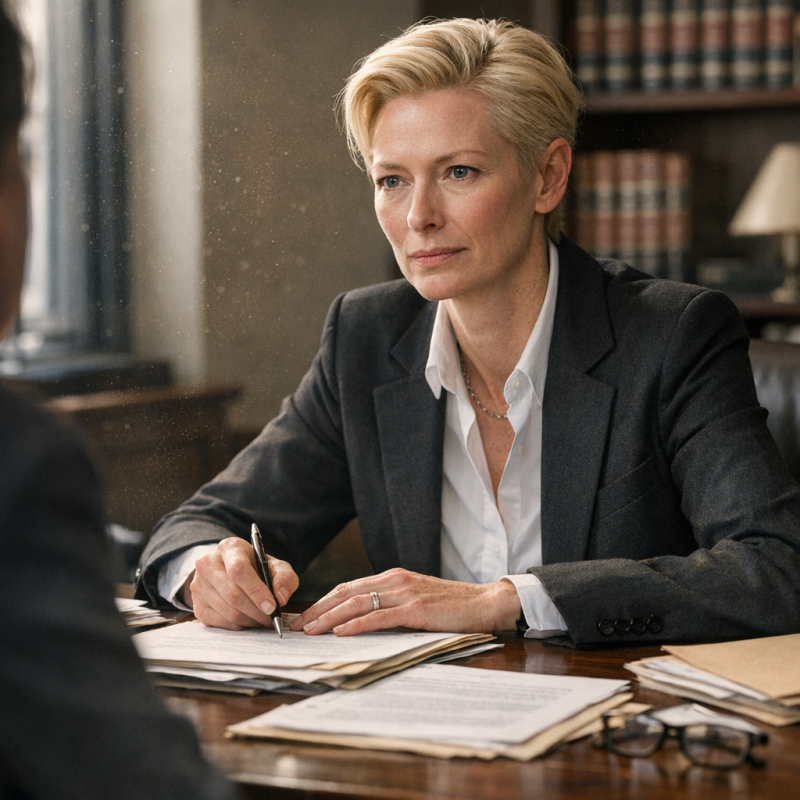 Image by FCT AI
The Medication List
Morrison called with an update that should have felt like progress. 'We got Derek's medical records. He took prescription medication the morning of the flight.' My pulse quickened. 'What kind of medication?' 'Anti-anxiety. Prescribed by his psychiatrist. He's been on it for six months.' I waited for the other shoe to drop. 'The thing is,' Morrison continued, 'we looked up the side effects. Drowsiness, dizziness, that kind of thing. Nothing about aggression or dissociation or whatever his lawyer's claiming.' I felt a small surge of relief. This was concrete. This was something we could use. 'So the medication doesn't explain it,' I said. 'Not based on the standard side effects, no. But his lawyer's bringing in experts who'll say everyone reacts differently, that rare reactions happen, that we can't rule it out.' Of course they were. Of course nothing could just be simple. 'Do you believe that?' I asked. Morrison was quiet for a moment. 'I believe something happened to him. I just don't know what.' The medication had side effects listed—but nothing that explained what happened.
 Image by FCT AI
The Psychiatrist's Report
Derek's psychiatrist submitted a formal report to the court. Greenfield forwarded it to me with a subject line that just said: 'Read this carefully.' I did. Three times. The psychiatrist described something called a dissociative episode—a state where someone's conscious awareness becomes disconnected from their actions. Where the brain essentially splits, and the person isn't fully present in their own body. It sounded like science fiction. It sounded like a convenient excuse. 'This is bullshit, right?' I asked Greenfield when we spoke. She was quiet for a beat too long. 'Actually, it's a real diagnosis. Documented. Well-researched. And if Derek experienced one—if he genuinely wasn't conscious of what he was doing—it changes everything.' My chest tightened. 'You're saying you believe him?' 'I'm saying I have to consider the possibility,' Greenfield said carefully. 'And so will the jury.' I felt the certainty I'd been clinging to start to crack. Dissociation sounded like a convenient excuse—until Greenfield said it might be real.
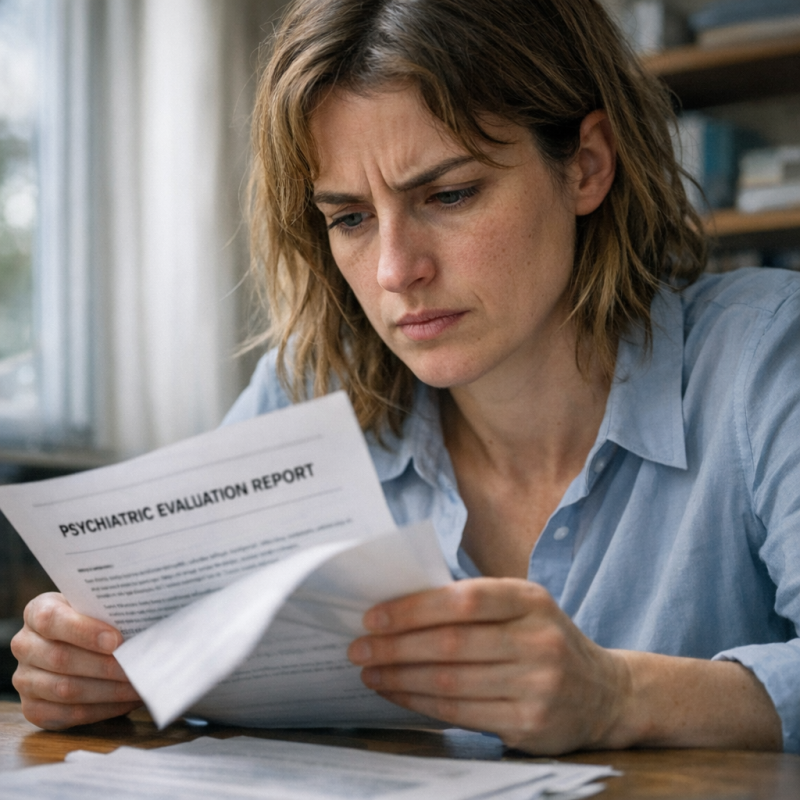 Image by FCT AI
Second-Guessing
I couldn't stop thinking about it. What if Derek really didn't understand what he was doing? What if his brain had short-circuited somehow, and he'd been as trapped in that moment as I was? I kept replaying the video in my mind. That blank expression. Those empty eyes. Tom's words: 'like the lights were on and nobody was home.' What if that wasn't an act? What if something had genuinely broken in his head, just for those few seconds, and I'd been in the wrong place at the wrong time? The thought made me feel sick and confused and angry all at once. Because even if it was true, even if he hadn't meant it—I was still hurt. I still fell. I still woke up terrified and disoriented with everyone staring at me. Intent didn't erase impact. But it mattered, didn't it? Legally, morally, it had to matter. I didn't know what I wanted anymore. Justice? Understanding? Both felt impossible now. But if he didn't understand—did that make it any less terrifying?
 Image by FCT AI
Karen's Testimony
Karen took the stand during the preliminary hearing. I'd seen photos of her in the news coverage, but seeing her in person was different. She looked exhausted. Scared. Her voice shook when she spoke. 'Derek has never been violent,' she said. 'Not once in ten years. He's gentle. He coaches our daughter's soccer team. He wouldn't—he couldn't—' Her lawyer guided her through it. Asked about that day, about after. 'When they told him what happened, he didn't believe it at first,' Karen said. 'He kept saying he didn't remember. That it didn't feel real. He was so confused.' She looked directly at me then, and I saw tears in her eyes. 'I know he hurt you. I know that's real. But the person who did that—that wasn't him. Something happened to him on that flight. Something broke.' Her voice cracked. 'And I'm terrified too. Just... not of him.' I felt something shift in my chest. Something complicated and uncomfortable. She was scared too—but not of him. She was scared for him.
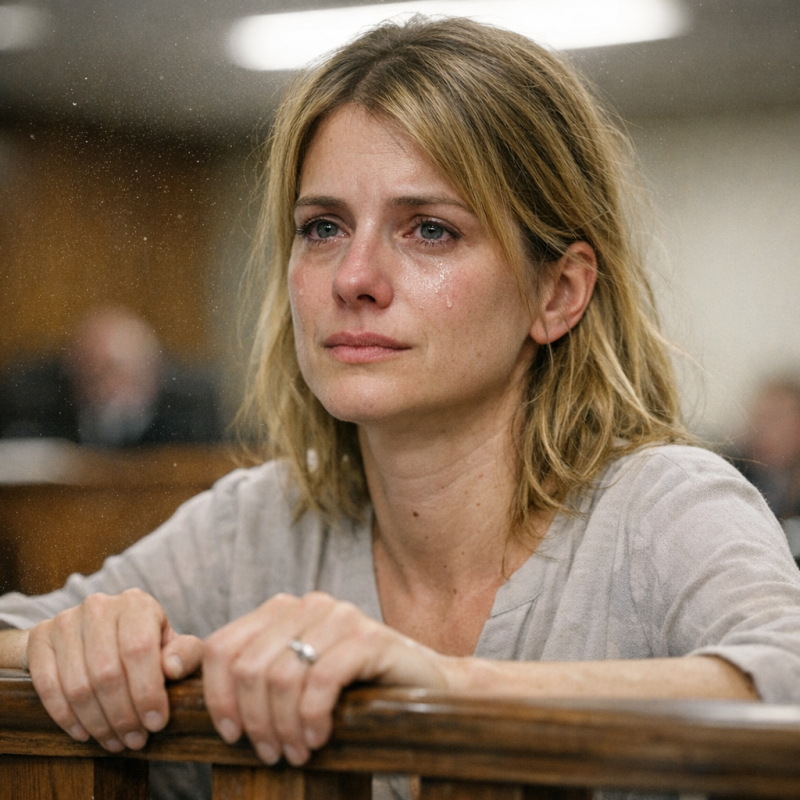 Image by FCT AI
The Pattern Search
Greenfield came back with Derek's background check a week later. I'd been expecting something—anything—that would make this make sense. A pattern. Prior complaints. Something that showed this wasn't out of nowhere. But there was nothing. 'Clean record,' Greenfield said, sliding the file across her desk. 'No arrests, no complaints, no incidents. Not even a speeding ticket in the last five years.' I stared at the pages. Employment records showed steady work, good references. His neighbors had nothing bad to say. His wife's statement matched everything else—he was gentle, reliable, boring in the best way. 'So what does that mean?' I asked. Greenfield leaned back in her chair. 'It means either this was completely out of character—a genuine first-time incident—or...' She trailed off, but I could fill in the blank. Or something else was going on. Something that didn't fit the normal patterns we look for. No history meant this was either a first time—or something else entirely.
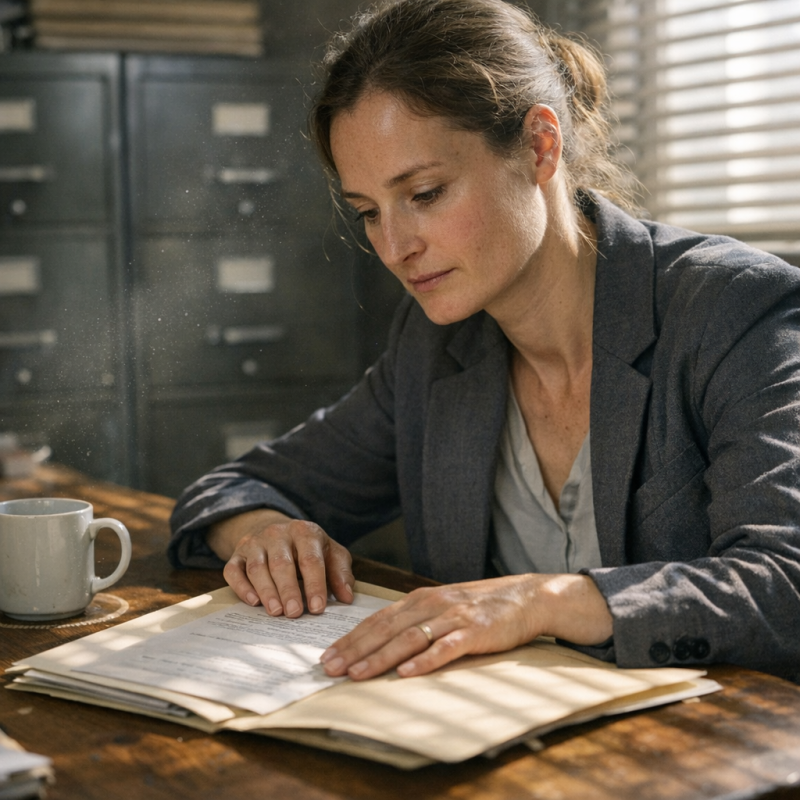 Image by FCT AI
The Neurology Consult
Greenfield brought in a neurologist the following week. Dr. Patel was soft-spoken, methodical, the kind of person who explained things in careful layers. 'Drug interactions can create what we call false perceptions,' he said. 'The brain receives incorrect signals and constructs a reality that feels completely authentic to the person experiencing it.' I shifted in my seat. 'You mean hallucinations?' 'Not quite,' Dr. Patel said. 'Hallucinations are seeing or hearing things that aren't there. False perceptions are different—the brain is processing real stimuli, but interpreting them incorrectly. The person genuinely believes what they're experiencing is happening.' Greenfield watched me carefully. 'So someone could believe they're being threatened when they're not?' Dr. Patel nodded. 'And they would react accordingly. With genuine fear, genuine anger. It wouldn't be an act.' My stomach twisted. This wasn't about Derek lying or faking. This was about his brain rewriting reality in real time, while it was happening. False perceptions weren't hallucinations—they were a brain rewriting reality in real time.
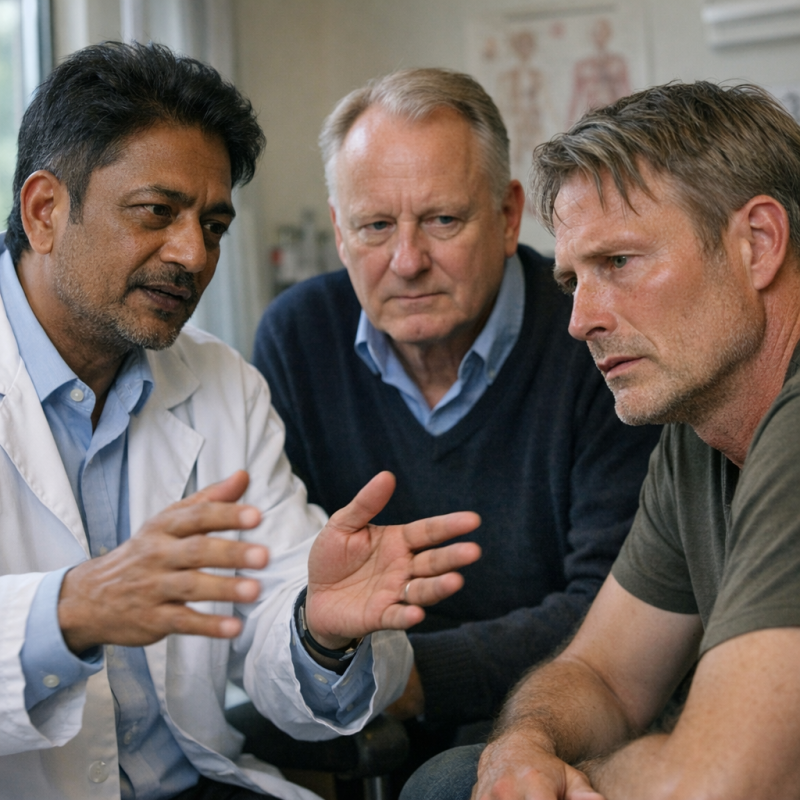 Image by FCT AI
The Wi-Fi Obsession
I couldn't stop thinking about the Wi-Fi. Derek's obsession with it had seemed so petty at the time—just another annoying passenger making everyone else's problem his own. But now, replaying it in my head, it felt different. The way he kept pressing the call button. The frustration in his voice that seemed disproportionate to the actual issue. The way he couldn't let it go, even when the flight attendant explained there was nothing she could do. What if that wasn't just annoyance? What if that was the beginning of something? I sat in my apartment, the memory playing on loop. His hands gripping the armrests. The tightness in his jaw. The way his breathing had changed—faster, shallower. I'd dismissed it as entitlement, as impatience. But what if those were early signs that something was going wrong in his brain? That his perception was already starting to fracture? What if the Wi-Fi wasn't the problem—what if it was just the first sign?
 Image by FCT AI
The Pharmacology Report
The pharmacologist who testified at the next hearing was matter-of-fact, almost clinical. She walked through Derek's medication list—an antihistamine for allergies, a beta-blocker for blood pressure, something for anxiety he took occasionally. On their own, nothing dangerous. But together, especially in certain conditions? 'Acute confusion is a documented side effect of this particular combination,' she said. 'Especially at altitude, where oxygen levels are lower and the body metabolizes medications differently.' Greenfield looked satisfied. I felt my jaw tighten. 'How common is that?' the judge asked. 'Rare,' the pharmacologist admitted. 'But documented.' That word again. Documented. Like that made it certain, made it Derek's get-out-of-jail-free card. But documented just meant possible. It meant this could have happened. It didn't mean it did happen. It didn't prove anything about that specific moment when his fist connected with my face. Could cause—but that didn't mean it did.
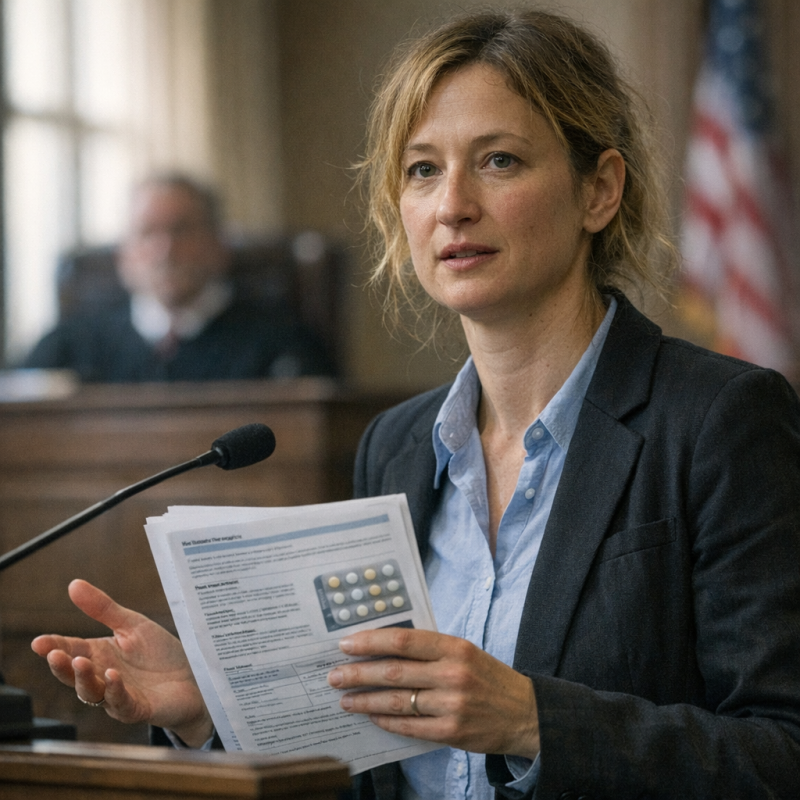 Image by FCT AI
The Lie Detector Offer
Derek's lawyer made the offer during a pre-trial conference. 'My client is willing to undergo polygraph testing regarding his memory of the incident,' he said. 'He maintains he has no recollection of striking Ms. Alex, and he's willing to prove his sincerity.' Greenfield looked at me. I could see the calculation in her eyes—weighing whether this helped or hurt us. 'Polygraphs aren't admissible in court,' she said carefully. The other lawyer nodded. 'We're aware. But it might provide clarity. Show good faith.' I felt something cold settle in my chest. Good faith. Like that mattered when my hearing aid had been smashed. Like sincerity could undo what happened. 'Polygraphs measure stress responses,' I said quietly. 'They measure whether someone believes what they're saying.' Greenfield gave me a small nod. Exactly. Derek could pass with flying colors, truly believing he didn't remember—and it wouldn't change anything about what he actually did. But polygraphs measured belief—not truth.
 Image by FCT AI
Dr. Lin's Analysis
Dr. Lin came recommended by the prosecution—a medical expert who'd testified in dozens of cases involving claimed medical defenses. She was precise, professional, and unfortunately, she backed up everything Derek's team had been saying. 'Dissociative episodes triggered by pharmaceutical interactions are well-documented in medical literature,' she told me in Greenfield's office. 'The patient experiences a disconnect between their actions and their conscious awareness. They're not faking—their brain is genuinely not forming memories of the event.' I felt my hands curl into fists. 'How convenient.' Dr. Lin's expression didn't change. 'I understand your frustration. But the science is clear. These episodes happen. They're rare, but they're real.' 'So he just gets away with it?' 'That's not for me to determine,' she said. 'I'm just here to explain what's medically possible.' Medically possible. Another phrase that meant nothing and everything. Documented didn't mean common—and it didn't mean I had to accept it.
The Memory Test
Morrison called me when the cognitive testing results came back. 'They're genuine,' he said, and I could hear the frustration in his voice. 'The neuropsych evaluation shows real gaps in his memory formation from that time period. It's not consistent with someone faking or lying.' I sat down hard on my couch. 'What does that mean for the case?' 'It means his defense has legitimate medical backing,' Morrison said. 'The gaps in his recall are measurable. Documentable.' That word again. I pressed my palm against my cheek, where the bruise had finally faded but the memory hadn't. 'He still hit me,' I said quietly. 'I know,' Morrison said. 'Both things can be true. He can have genuine memory gaps and you can have genuine injuries. That's what makes this so complicated.' Complicated. Like this was a puzzle to solve, not my life that got shattered at thirty thousand feet. The gaps were real—but I still had bruises that were real too.
 Image by FCT AI
The Burden of Proof
Greenfield laid it out plainly in her office. 'Proving malicious intent is becoming nearly impossible,' she said. 'The medical evidence supports a dissociative episode. The pharmacology backs up the drug interaction theory. His clean record suggests this was out of character. And the cognitive testing shows genuine memory gaps.' I stared at her. 'So that's it? He just walks?' 'I didn't say that,' Greenfield said carefully. 'But a jury is going to have reasonable doubt. They're going to see a man with no history of violence, documented medical issues, and genuine confusion about what happened.' My throat felt tight. 'And what about what I saw? What I felt?' 'I believe you,' Greenfield said. 'But belief isn't the same as proof in court. And right now, the burden of proof is working against us.' I thought about Karen on the stand. About Dr. Lin's carefully worded testimony. About Derek's blank face when they showed him the security footage. Impossible or not—I couldn't let this become just another story about a misunderstanding.
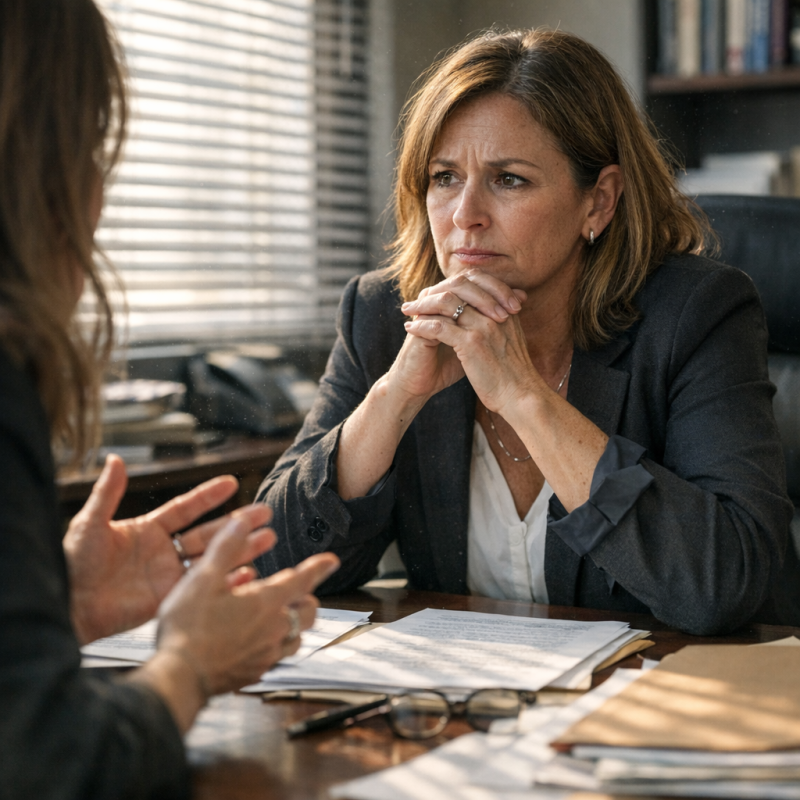 Image by FCT AI
The Doubt
I sat alone in my apartment that night and finally let myself think the thing I'd been avoiding. I didn't know what Derek had actually experienced anymore. I knew what I'd experienced—the fear, the pain, the terror of being hit and trapped. That was real. That happened. But his version? His blank confusion, his genuine-seeming bewilderment? Maybe that was real too. I kept replaying Karen's testimony, Dr. Lin's careful explanations, the way Derek looked at that security footage like he was watching a stranger. What if his brain had literally shown him something different than what was happening? What if, in that moment, he wasn't seeing me at all—wasn't seeing reality? The thought made me feel unmoored, like the ground beneath everything had shifted. I'd been so certain this was about truth versus lies, victim versus perpetrator. Clean lines. Clear roles. But maybe the truth wasn't that he was lying—maybe it was that we both experienced different realities.
 Image by FCT AI
The Medication Records
Detective Morrison called me two days later with the medication records. 'We found something,' he said. 'Derek's pill organizer from that morning—he'd taken a double dose of his antidepressant. The bottle count confirms it. He took his morning dose at home, then apparently took another dose from a separate bottle he kept in his carry-on.' My stomach dropped. 'He doubled up?' 'Looks accidental,' Morrison said. 'The pharmacist confirmed that doubling that particular medication, especially combined with the antihistamine he took for his allergies, could absolutely trigger a dissociative episode. It's documented.' I stared at my phone. A mistake. A simple, stupid mistake—the kind anyone could make when you're rushing, when you're not paying attention, when you keep pills in two places and forget what you've already taken. But did that matter? Did it change anything? He'd still hit me. I'd still been hurt. A mistake—or was it still his responsibility?
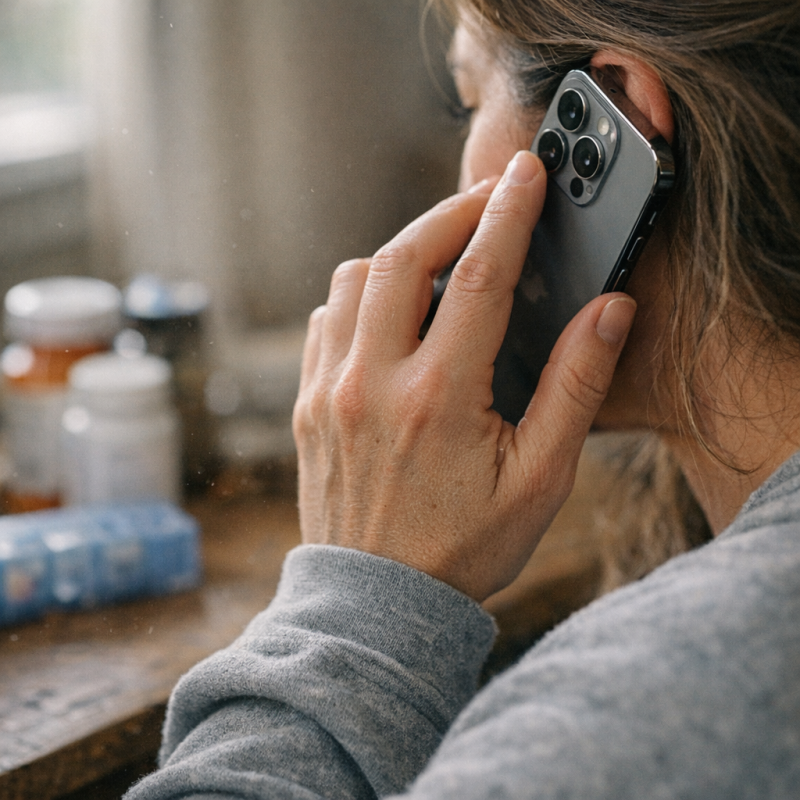 Image by FCT AI
The Precedent Case
Greenfield called me into her office with a case file. 'I found precedent,' she said, sliding it across her desk. 'Similar circumstances. Prescription drug interaction, dissociative episode, assault charges.' I opened the file. The defendant had been acquitted. Fully. 'The jury ruled he couldn't form criminal intent during a documented psychiatric event beyond his control,' Greenfield explained. 'The judge agreed. No negligence, no recklessness—just an unforeseeable medical reaction.' I felt my chest tighten. 'So he just walked away?' 'He was mandated to medication management counseling,' Greenfield said. 'But yes. No conviction, no record.' I stared at the pages. Legal precedent. A roadmap for exactly how Derek's case could play out. How a jury might see this not as an assault, but as a medical tragedy. How accountability could just evaporate into the complexity of brain chemistry and pharmaceutical side effects. Acquittal meant no accountability—and I wasn't ready for that.
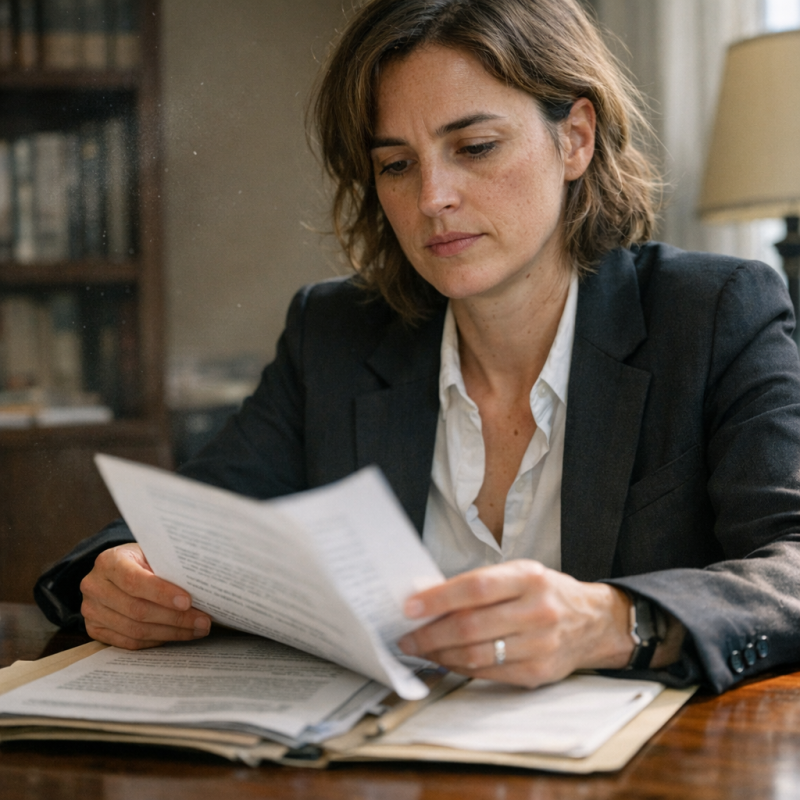 Image by FCT AI
The Apology Letter
The letter arrived at Greenfield's office, forwarded through proper legal channels. Handwritten. Two pages. I almost didn't read it. But I did. 'Dear Alex,' it started. 'I know an apology can't undo what happened to you. I know saying I'm sorry doesn't change that you were hurt, that you were afraid, that I caused that. I wish I could remember it. I wish I could understand what I did, what I was thinking, so I could at least give you that. But I can't. There's just nothing there. I'm told I hurt you, and I believe it—I see the evidence—but I can't access it. I can't explain it. And that terrifies me too, in a different way. I'm sorry. I'm so, incredibly sorry.' I read it three times. The handwriting was shaky. Some words were crossed out and rewritten. It felt real. Genuine. Not lawyer-crafted or strategic. Just... human. His words felt genuine—and that somehow made it worse.
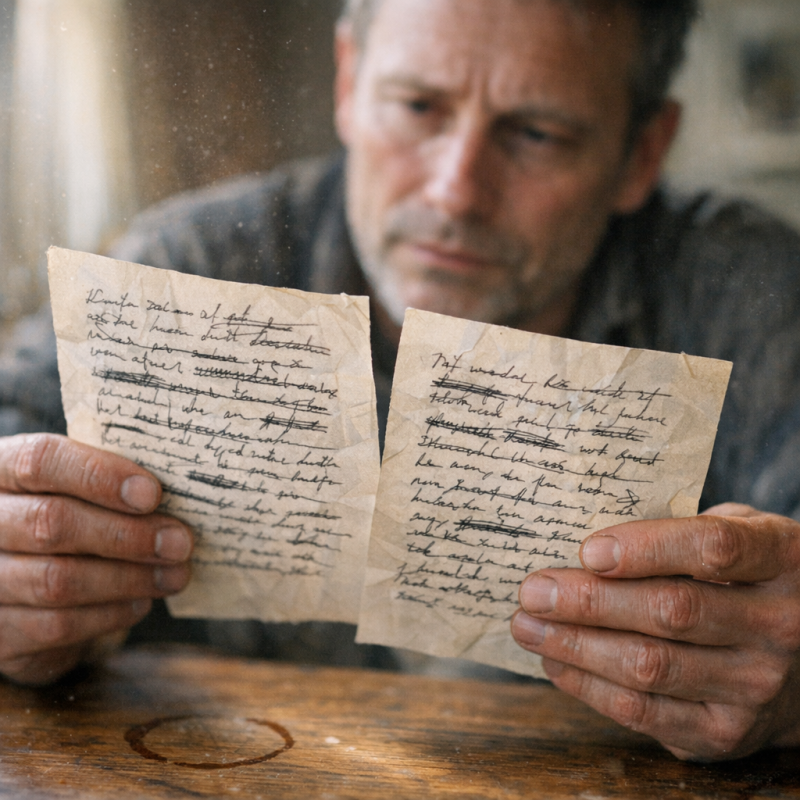 Image by FCT AI
The Brain Scan
Dr. Lin walked me through Derek's brain scans in her office, pointing to bright spots on the imaging. 'This is his baseline scan from six months ago,' she said. 'And this is from two days after the incident.' The difference was visible even to my untrained eye. 'These areas here—the prefrontal cortex, the temporal lobe—they show abnormal activity patterns consistent with dissociative states,' Dr. Lin continued. 'This isn't subjective. This is measurable neurological disruption.' I stared at the scans. 'So his brain really was... malfunctioning?' 'In a sense, yes,' Dr. Lin said carefully. 'The medication interaction created a temporary but significant alteration in how his brain processed reality. It's documented. It's real.' Real. The word sat heavy. The science was backing up his story. The physical evidence was there, glowing in those brain scans. But science couldn't measure what it felt like to be hit. Couldn't quantify my fear. The science was backing up his story—but science couldn't explain how I felt.
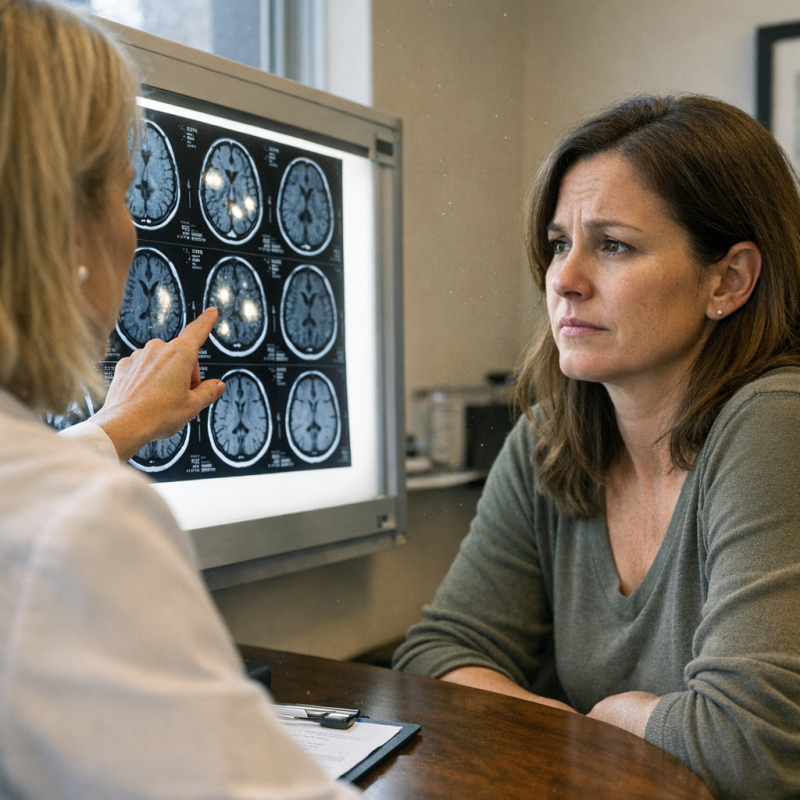 Image by FCT AI
The Witness Wavering
Sara called me out of the blue. We hadn't spoken since her testimony. 'I need to tell you something,' she said. 'I've been thinking about this a lot, and... I'm not sure anymore. About what he intended.' My throat went tight. 'What?' 'I saw what I saw,' Sara said quickly. 'You were hit, you were hurt, that's real. But after hearing all the medical stuff, the medication thing, the brain scans... I don't know if he meant to hurt you. I don't know if he even knew what he was doing.' I felt something crack inside me. 'You were there. You said—' 'I know what I said,' Sara interrupted. 'And I still believe something wrong happened. But intent? I can't say that anymore. Not with certainty.' She sounded genuinely conflicted. Genuinely uncertain. The one person who'd witnessed everything, who'd backed up my account without hesitation, was now wavering. Even the witnesses were changing their minds—was I the only one still holding on?
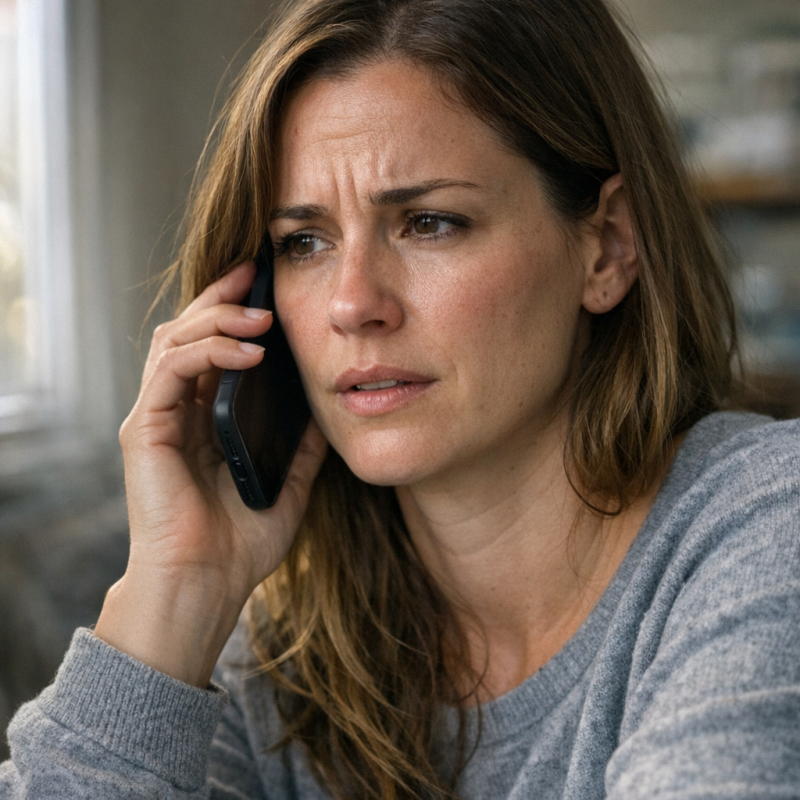 Image by FCT AI
The Final Testimony Preparation
Greenfield and I sat in the courthouse preparation room the night before my testimony. 'You need to understand how this is going to play,' she said. 'The defense has successfully reframed this from assault to accident. The jury is going to hear medical expert after medical expert explaining how Derek's brain was compromised. How he couldn't form intent. How this was a tragic confluence of circumstances.' I nodded slowly. I'd known this was coming. 'So what do I say?' 'You tell your truth,' Greenfield said. 'What you experienced. What you felt. What happened to you. That doesn't change, regardless of what was happening in his head.' Accident. The word kept echoing. An accident implied bad luck, unfortunate timing, no one's fault. But I hadn't tripped and fallen. I'd been hit. Someone's hands had made contact with my body. The cause might be complex, but the effect was still real. Accident implied no one was at fault—but someone still hurt me.
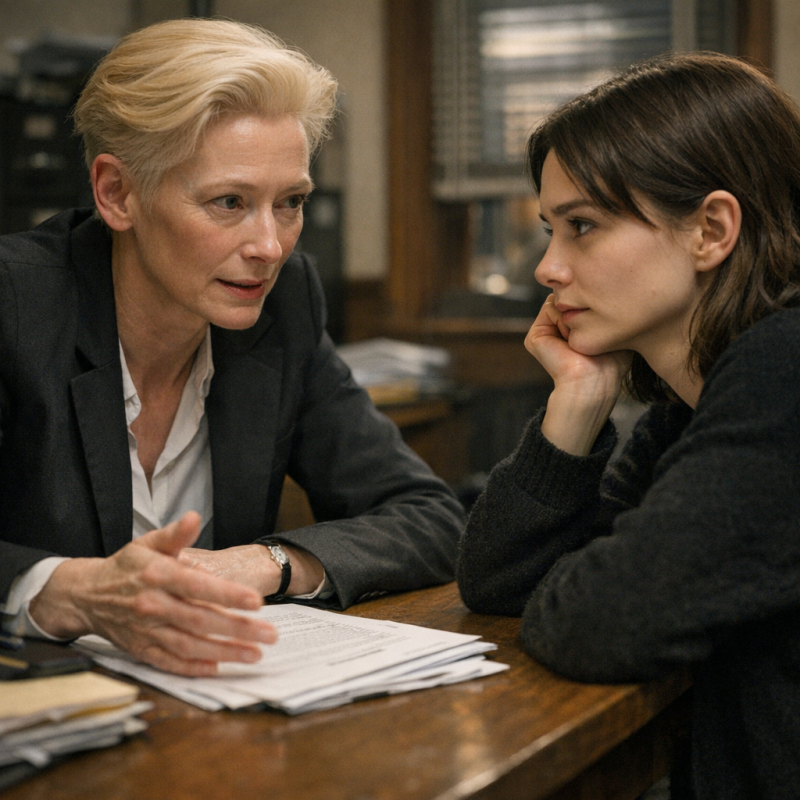 Image by FCT AI
The Truth
Dr. Lin's testimony was the one that finally made everything click into place. 'Mr. Derek experienced what we call a dissociative episode with confabulation,' she explained to the courtroom. 'His brain, compromised by the medication interaction, constructed false perceptions in real time. He wasn't lying about what he remembered—he was experiencing genuine false memories being created as the episode occurred. To him, those perceptions felt completely real.' She pulled up slides. Charts. Brain imaging. 'He could not distinguish between his constructed reality and actual reality during the episode. This is documented. This is measurable. This happens.' I sat there, watching her explain it. Derek genuinely believed his version because his brain had manufactured it as it happened. He wasn't faking. Wasn't manipulating. His brain had betrayed both of us—shown him one thing while his body did another. The twist wasn't that he was lying. It wasn't a lie, wasn't manipulation—it was his brain betraying both of us.
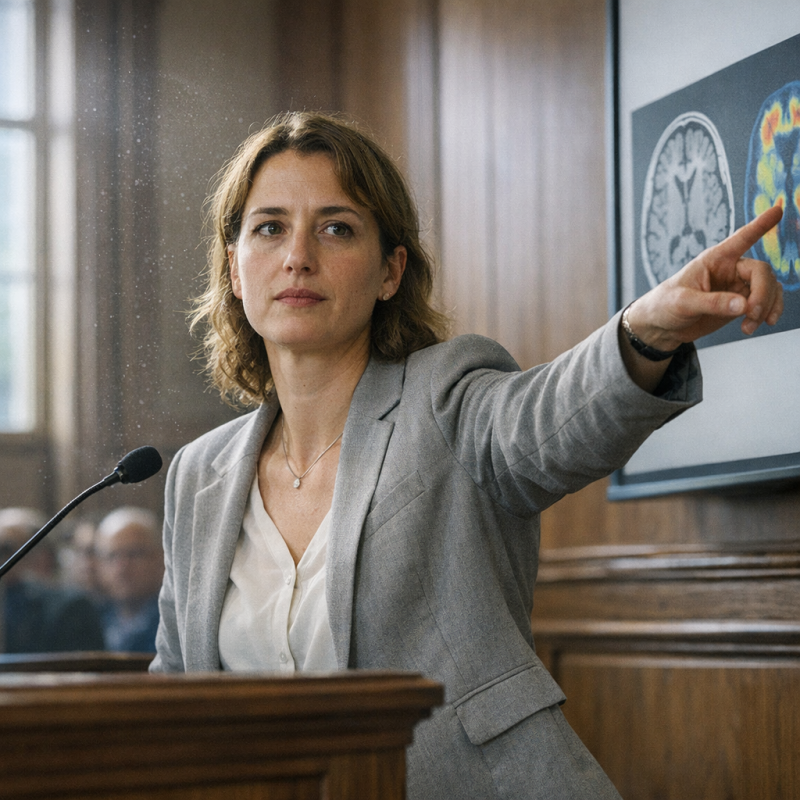 Image by FCT AI
The Courtroom Reaction
The courtroom went quiet after Dr. Lin stepped down. Not the tense quiet from before—something heavier. I watched the jurors' faces shift, watched them glance between me and Derek like they were trying to solve a math problem with no correct answer. My lawyer leaned over, whispered something I didn't catch. Across the aisle, Derek sat perfectly still, staring at his hands. The judge called a fifteen-minute recess. People started moving, murmuring, but I just sat there. Because what Dr. Lin had explained—what the brain scans and medication logs had proven—meant there was no villain in this story. Derek had hurt me. That was fact. But he hadn't chosen to hurt me. His brain had manufactured a reality that didn't exist, had made him experience things that never happened while his body did things he'd never remember. I'd needed someone to blame. Needed anger to have a target. But you can't rage at a medication interaction. Can't sue a dissociative episode. The people around me were processing the same impossible truth: two victims, one incident—and no one to blame.
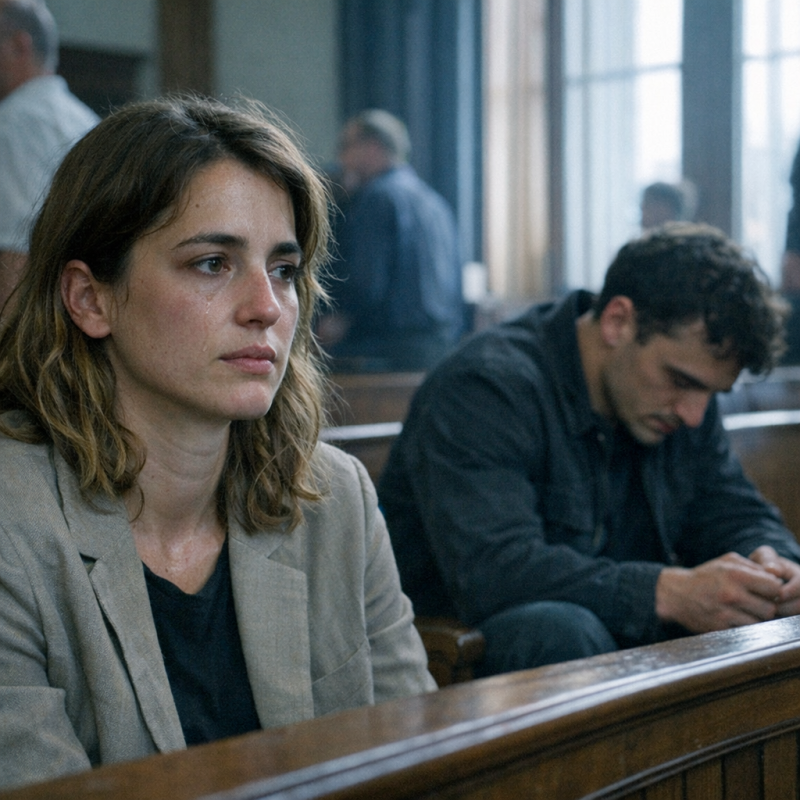 Image by FCT AI
Alex's Testimony
When they called me to testify, my legs barely worked. I'd rehearsed this. Gone over it with my lawyer a dozen times. But standing there, looking out at the courtroom, at Derek, at the jury—it all felt different. They asked about the flight. I told them. The turbulence, the impact, waking up to contradictory stories. I described the confusion, the terror of not knowing what had actually happened to me. My lawyer guided me through the medical aftermath, the hearing loss, the migraines, the months of not feeling safe. But then they asked if I believed Derek had intended to hurt me. And I paused. Because the easy answer, the satisfying answer, was yes. That's what I'd believed for months. But Dr. Lin's testimony sat between me and that simple truth. 'No,' I said finally. 'I don't think he intended it. But intention doesn't erase what happened to me.' I watched the jury absorb that. Watched Derek's shoulders shake slightly. I told the truth—all of it—even the parts that didn't fit the story I wanted to tell.
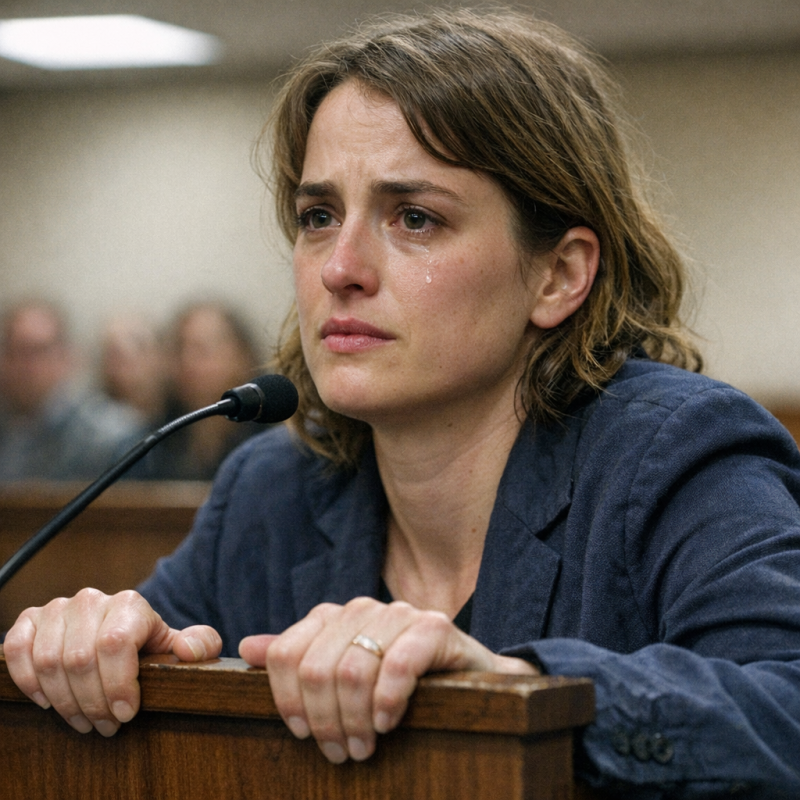 Image by FCT AI
Derek's Testimony
Derek's testimony was harder to watch than I'd expected. He walked to the stand slowly, like each step required decision. His lawyer asked him what he remembered from the flight. 'Fragments,' he said quietly. 'I remember feeling... wrong. Disconnected. I remember thinking the turbulence was something else, something threatening. But it's like watching a movie with half the frames missing.' His voice cracked. 'I don't remember touching anyone. Don't remember... hurting anyone.' He looked directly at me then, and I saw it—the same confusion I'd felt, the same desperate need for the world to make sense. 'When they told me what I'd done,' he continued, 'I didn't believe them. Couldn't believe them. Because in my memory, in what I experienced, none of that happened.' He wiped his eyes with the back of his hand. 'I'm told I hurt someone badly. I'm told I caused real damage. But I have no memory of it, and that's...' He stopped. Couldn't finish. He was crying—not for himself, but because he couldn't remember hurting me.
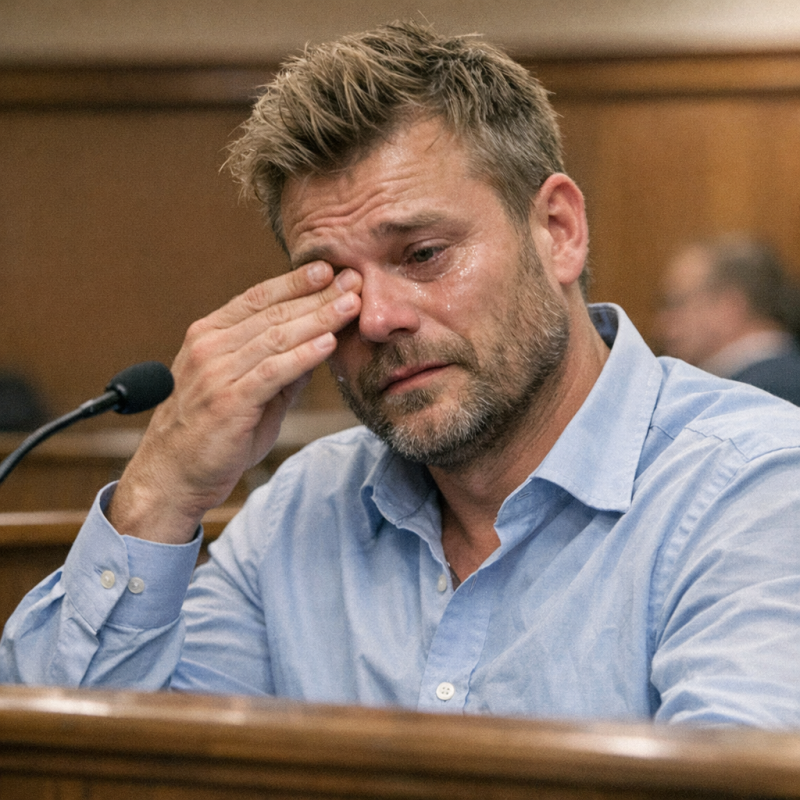 Image by FCT AI
The Verdict Deliberation
They sent us to separate rooms while the jury deliberated. Mine was small, windowless, with cheap plastic chairs and fluorescent lights that buzzed in a frequency I could almost feel. My lawyer checked her phone. My mom brought me coffee I didn't drink. I kept thinking about Derek in whatever room they'd put him in. Was he sitting in the same kind of plastic chair? Staring at the same kind of buzzing lights? The weirdness of it hit me—we'd both been passengers on the same flight, both ended up damaged by the same incident, and now we were both sitting in courthouse waiting rooms, hoping for... what? I wanted acknowledgment of what happened to me. Validation that my trauma was real. But what did Derek want? Forgiveness? Understanding? To wake up from this nightmare where his own brain had turned him into someone he wasn't? The parallelism felt cruel. We'd become mirror images of victimhood, waiting for twelve strangers to decide whose suffering mattered more. We were both waiting for the same verdict—but hoping for different things.
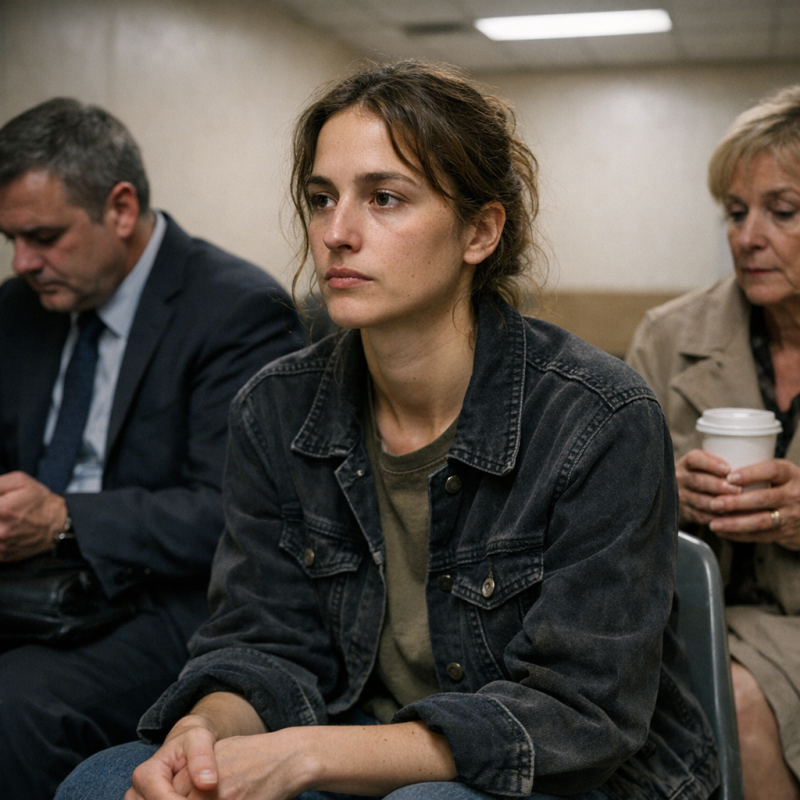 Image by FCT AI
The Verdict
The jury came back after four hours. We filed back into the courtroom, and I felt Derek's presence across the aisle like a physical weight. The forewoman stood. 'In the matter of the State versus Derek Morrison, on the charge of assault, we find the defendant not criminally responsible due to diminished capacity.' The words landed differently than I'd expected. Not relief. Not anger. Just... hollow. The judge explained what it meant—no criminal record, but mandated treatment, psychiatric evaluation, medication management protocols. Derek would face consequences, just not prison. My lawyer squeezed my hand. Across the room, Derek's shoulders dropped, but he wasn't celebrating. His lawyer was talking to him, but he just stared ahead, blank. The reporters behind me started typing frantically. This was the sound bite they'd wanted—the complicated verdict that would make good headlines. Derek hadn't been lying. Hadn't been malicious. But he'd still hurt me, still changed my life. The jury had found the only answer that fit the impossible question. Not guilty—but not innocent either.
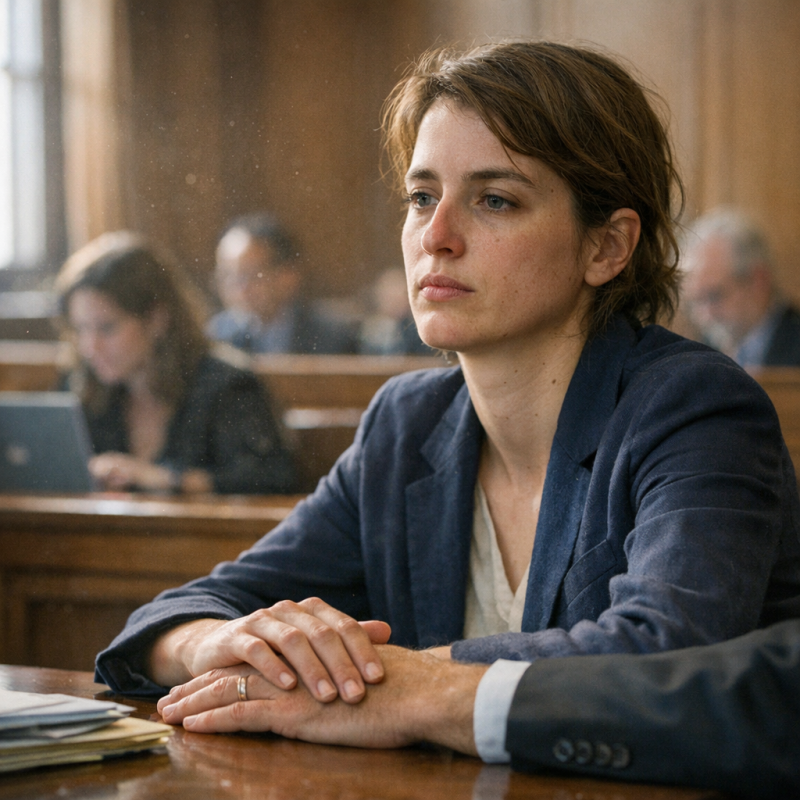 Image by FCT AI
The Aftermath
The news coverage started that evening. I watched it from my hotel room, volume cranked up so I could catch most of the words. 'A tragedy without villains,' one anchor called it. 'A case that challenges our understanding of culpability and victimhood.' They showed photos of me, of Derek, of the airplane. Medical experts weighed in, debated the implications, discussed medication interactions and legal precedent. They made it sound clean. Educational. A fascinating edge case for law schools to study. But I kept waiting for the part where someone said what I needed to hear—that Derek was wrong, that someone should pay, that my anger had a rightful target. It never came. Because the story they were telling didn't have a villain. Just two people damaged by circumstances neither could control. The legal system had given me the truth, had validated that my injuries were real, had even assigned responsibility in a technical sense. But the truth was messy and unsatisfying. But I needed a villain—because without one, where did my anger go?
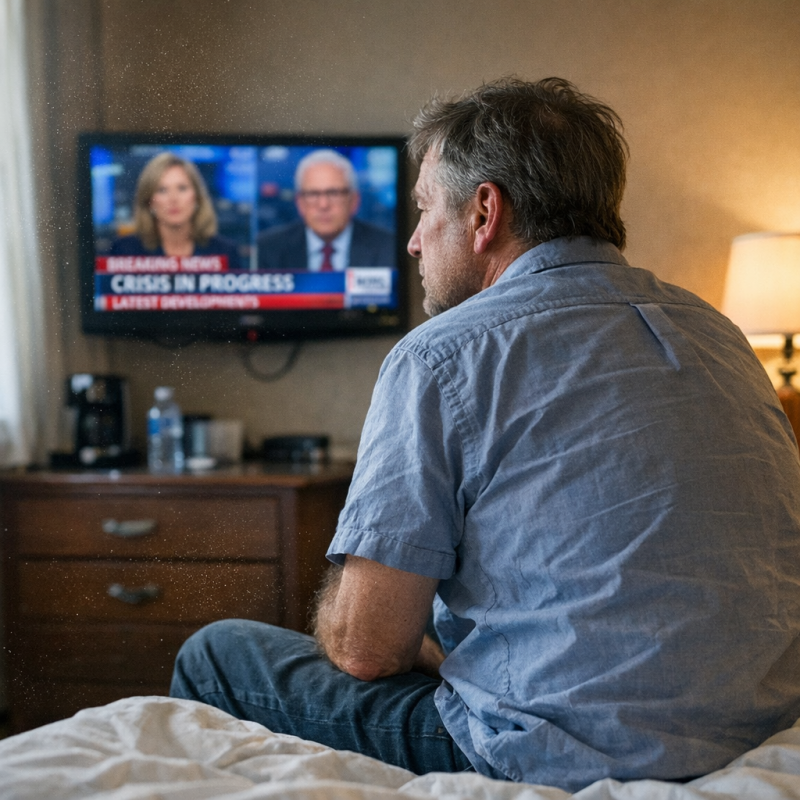 Image by FCT AI
The Encounter
I ran into him outside the courthouse completely by accident. I was leaving through the side entrance, trying to avoid reporters, and there he was, standing by a concrete pillar, looking lost. We both froze. For a few seconds, neither of us moved. Then he took a small step forward, hands shoved in his pockets. 'I don't...' he started, then stopped. Tried again. 'I don't know what to say to you.' I didn't either. Every conversation I'd imagined had involved screaming or crying or cold, cutting words. But standing there, looking at him—at this regular guy whose brain had betrayed him as thoroughly as the incident had betrayed me—I just felt tired. 'The doctors said you're doing better,' I offered. 'New medication protocol.' He nodded. 'Yeah. They're monitoring everything now. I'll probably never fly again.' We stood there in the awkward silence, two people bound by trauma neither of us had chosen. 'I'm sorry,' he said again, and his voice broke on the words. 'I know I've said it before, but I need you to know—' He said 'I'm sorry' again—and this time, I believed him.
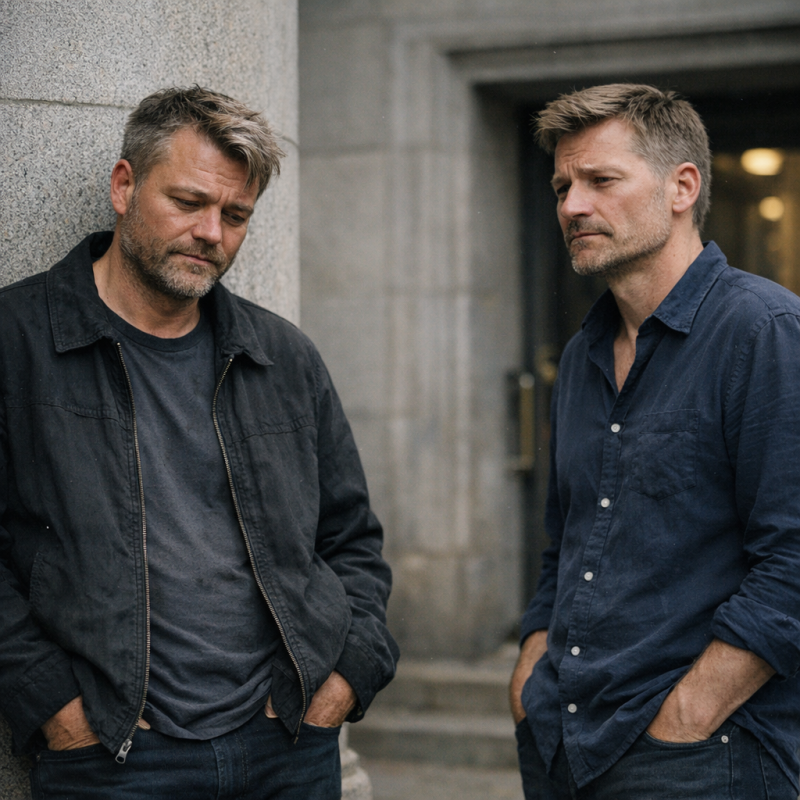 Image by FCT AI
The Civil Settlement
The airline's settlement offer came three weeks later. Hoffman, their representative, met me in a conference room that smelled like carpet cleaner and recycled air. He slid the papers across the table with the practiced neutrality of someone who'd done this before. The number was significant—enough to cover medical bills, ongoing treatment, lost wages, and then some. 'We want to be clear,' Hoffman said carefully, 'this settlement is not an admission of fault or liability.' Of course it wasn't. That's how these things worked. The airline hadn't done anything wrong—their crew had followed protocol, the flight had encountered standard turbulence, Derek's medication interaction wasn't something they could have predicted. But I'd still gotten hurt on their plane, and they were willing to pay to make the legal exposure go away. I signed the papers. My lawyer witnessed. Hoffman shook my hand with corporate sympathy. It felt anticlimactic, this final chapter reduced to signatures and wire transfers. But maybe that's what closure actually looked like—not cathartic, just... done. Money couldn't fix what happened—but it acknowledged that something did.
 Image by FCT AI
The New Normal
I started therapy two weeks after signing the settlement papers. My therapist, Dr. Chen, had this way of sitting completely still while I talked—not the performative stillness some people do, but genuine presence. I told her about Derek, about the turbulence, about waking up to conflicting stories. About how I kept trying to assemble the pieces into one coherent truth and they just wouldn't fit. 'What if there isn't one truth?' she asked during our fourth session. 'What if everyone experienced something real, just from different angles?' It felt like permission to stop trying so hard. We worked on managing the anxiety, the hypervigilance, the way my body still tensed whenever I heard sudden noises. Some days were better than others. I learned that healing wasn't linear—it was messy and contradictory, full of setbacks that felt like failures until I realized they were just part of the process. I stopped waiting for the moment when everything would suddenly make sense, when I'd have the full picture and could file the whole experience away neatly. Some stories don't have clean endings—and maybe that's the hardest truth.
 Image by FCT AI
Six Months Later
Six months later, I boarded a plane to Portland for my cousin's wedding. My hands shook while scanning my boarding pass. The flight attendant smiled the same professional smile they all had, and I felt my throat tighten. I'd chosen an aisle seat this time—easier to see everything, harder to feel trapped. The safety demonstration played, and I actually watched instead of zoning out like I used to. When we started taxiing, my heart rate spiked. I did the breathing exercises Dr. Chen taught me. Four counts in, hold, six counts out. A businessman next to me worked on his laptop, completely relaxed, and I envied that casual trust. The engines roared as we lifted off, and I gripped the armrest hard enough to hurt. But I didn't panic. I didn't flee. I sat with the fear and let it pass through me like turbulence—uncomfortable but survivable. By the time we leveled out at cruising altitude, something had shifted. I was still scared, but I was also here, doing it anyway. The hum of the engines felt different now—louder, and somehow more honest.
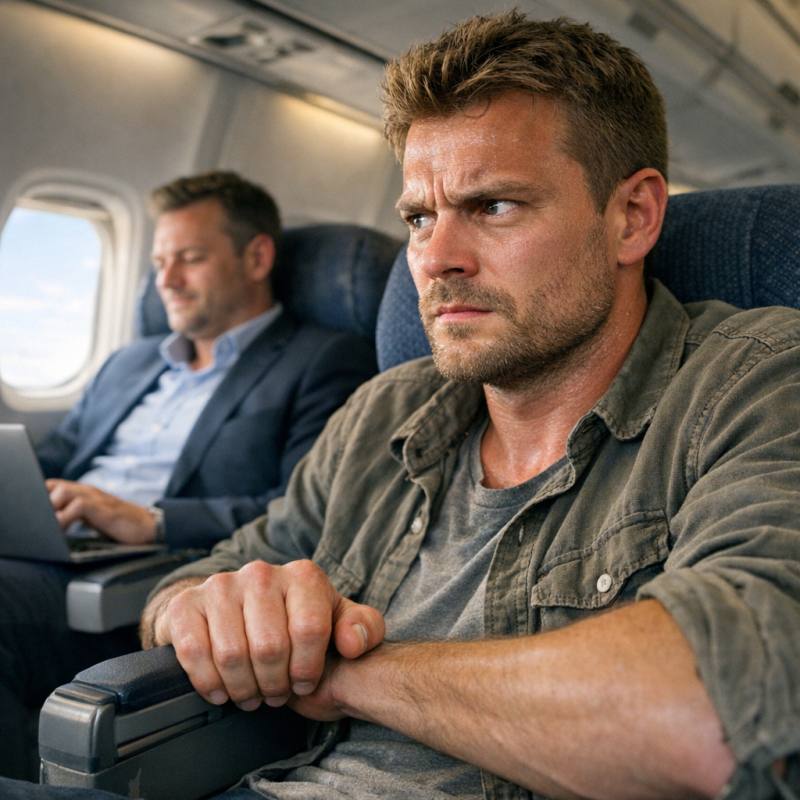 Image by FCT AI
The Letter
I wrote Derek a letter on a Tuesday night, sitting at my kitchen table with a cup of tea going cold beside me. I didn't know his address and had no intention of finding it. That wasn't the point. 'I've been trying to understand what happened,' I wrote, 'and I think maybe we both experienced something true.' I told him I was sorry his PTSD had been triggered, that I understood panic wasn't a choice. I also told him what it felt like to wake up injured, confused, surrounded by contradicting explanations. I didn't absolve him or condemn him. I just... acknowledged that we'd both been passengers on that flight, both changed by it in ways we didn't ask for. Writing it felt like lancing a wound—painful, necessary, ultimately relieving. When I finished, I folded the letter and put it in my desk drawer. Maybe someday I'd send it. Maybe I wouldn't. The act of writing had already done what I needed it to do—helped me articulate something I'd been carrying wordlessly for months. I didn't need him to read it—I just needed to write it.
 Image by FCT AI
What Remains
Looking back now, I realize the incident didn't just change what happened—it changed how I understand what 'happened' even means. I used to think truth was simple: either Derek hit me or he didn't, either the airline was negligent or they weren't. But reality turned out to be messier than that. People can genuinely remember things differently. Systems can fail without villains. Someone can hurt you without meaning to, and that doesn't erase the hurt or the lack of intention. I still have partial hearing loss in my left ear. I still get anxious on planes. But I also have more compassion now—for Derek's invisible wounds, for the flight attendants doing their best in chaos, for myself and the messy way I've processed all of this. Some people think forgiveness is binary, something you either do or don't. But I've learned it's more like grief—it comes in waves, changes shape, sometimes disappears and then resurfaces when you least expect it. I still don't know if I've forgiven him—but I've stopped needing to decide.
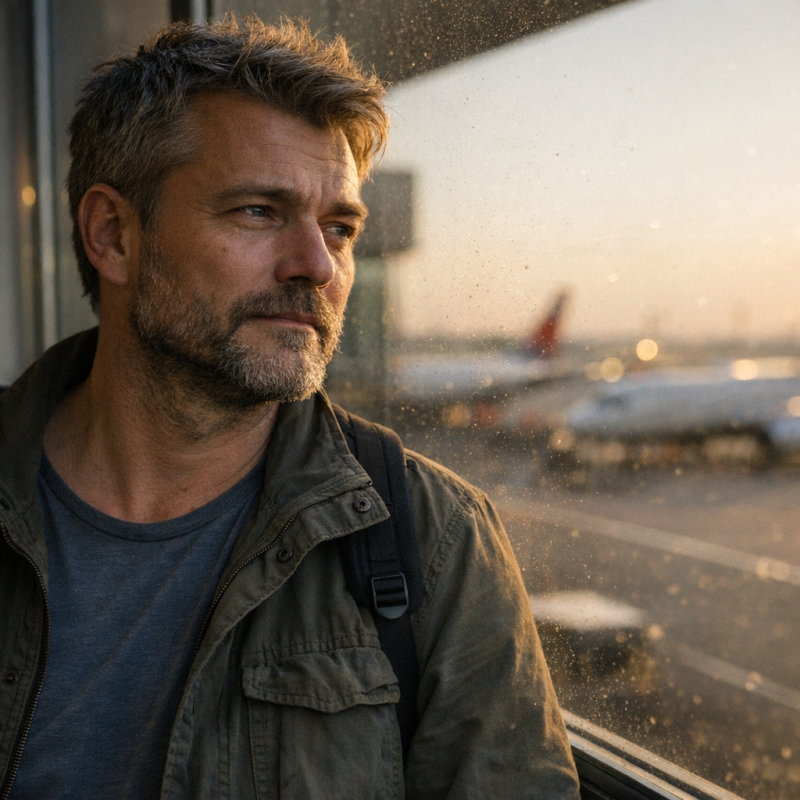 Image by FCT AI