
The Room With Two Beds
I was eight when someone finally asked me why I shared a bedroom with my dad. Until that moment, it had never occurred to me that our living arrangement was anything other than normal. Our room had two twin beds pushed against opposite walls, matching blue comforters that Mom had bought on sale at Target, and a window that looked out over the backyard. Dad's bed was closest to the door, mine by the window. He kept his side neat—alarm clock, reading glasses, a stack of paperbacks on the nightstand. My side was chaos—LEGOs, school papers, action figures scattered across the floor. Mom slept in the master bedroom on the other side of the house, down a hallway that might as well have been a different country. 'She needs her space,' Dad would say when I was younger and asked about it. 'Helps her sleep better.' It made sense to me the way everything makes sense when you're a kid and don't know any different. I never questioned it until the day someone else did.
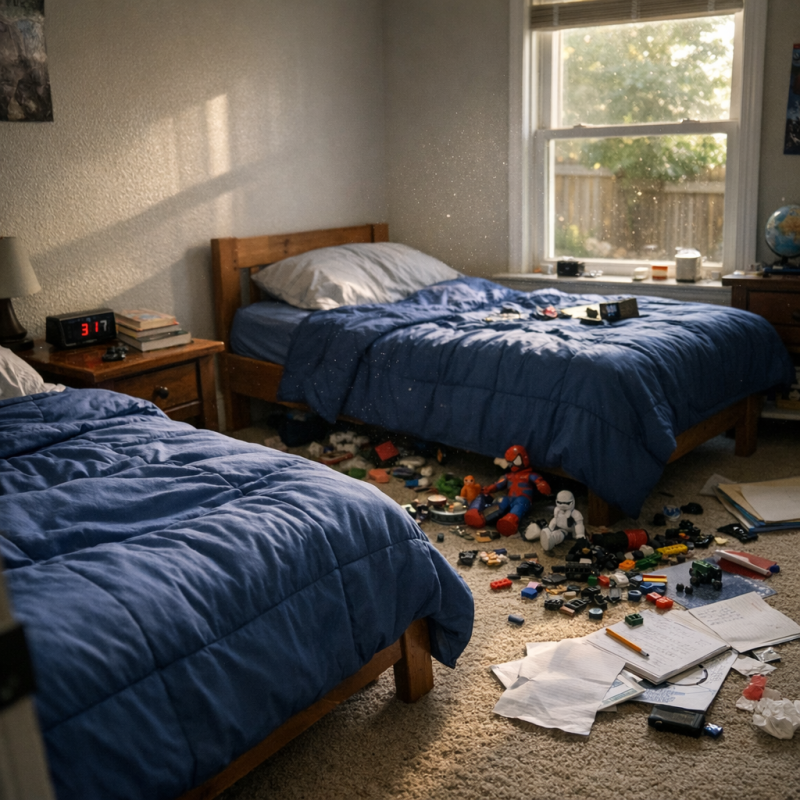 Image by FCT AI
The Vanishing Act
Dad had a way of disappearing on weekends. Not every weekend, but enough that I started to notice the pattern around age ten or eleven. He'd be there for Saturday morning cartoons, make pancakes shaped like Mickey Mouse ears, then announce he had 'errands' or 'work stuff' to handle. Sometimes he'd leave after lunch and not come back until Sunday evening, long after dinner was cleared away. Other times he'd vanish late at night, and I'd wake up to his empty bed, the covers still tucked in tight. I'd find him the next morning in the kitchen, exhausted, drinking coffee like it was medicine. 'Where do you go?' I asked him once, maybe twice. He'd ruffle my hair and say something vague about the office or helping a friend. When I asked Mom, she'd smile that tight smile of hers and say, 'Your father has responsibilities, sweetheart.' The smile never quite reached her eyes, though. When I asked where he went, Mom's smile didn't quite reach her eyes.
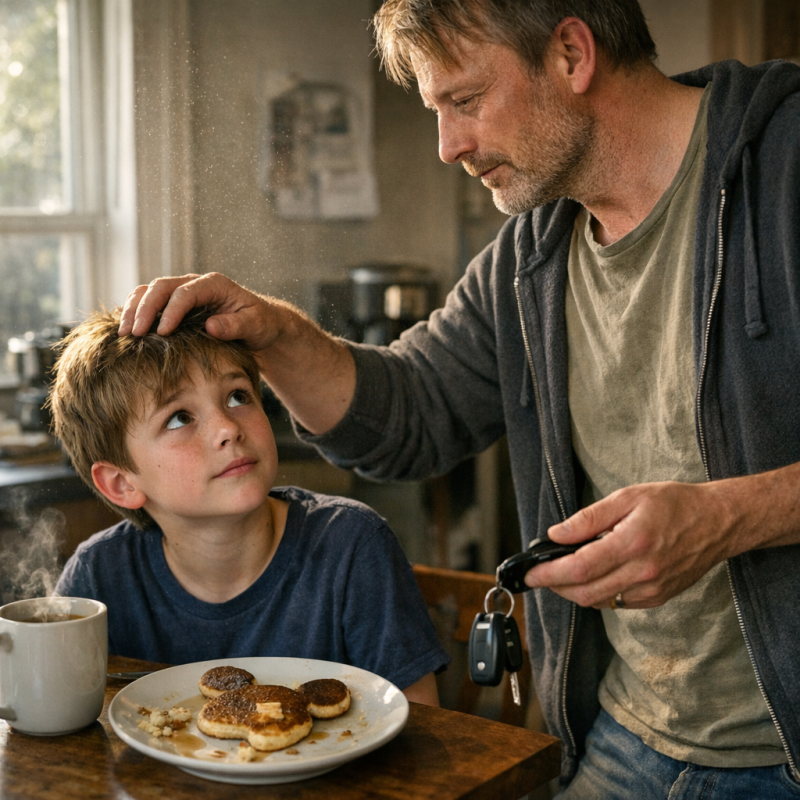 Image by FCT AI
Two Separate Worlds
Mom's bedroom was like stepping into a magazine spread—all cream-colored linens, decorative pillows arranged just so, and that faint lavender smell from the diffuser on her dresser. The carpet was pristine, vacuum lines perfectly parallel. I was allowed in there occasionally, usually when she wanted to show me something or if I was sick and she'd let me rest on her bed while she folded laundry. But it always felt temporary, like I was visiting a hotel room. The room I shared with Dad was completely different—lived-in, functional, a little messy despite his efforts to keep his half organized. There were water rings on the nightstands, scuffed baseboards, my old glow-in-the-dark stars peeling from the ceiling. Dad's cologne mixed with the smell of my dirty soccer cleats. It was home in a way Mom's room never was. She'd pass by our doorway sometimes and glance in, but she never entered. It was like they existed in parallel universes that only intersected at mealtimes.
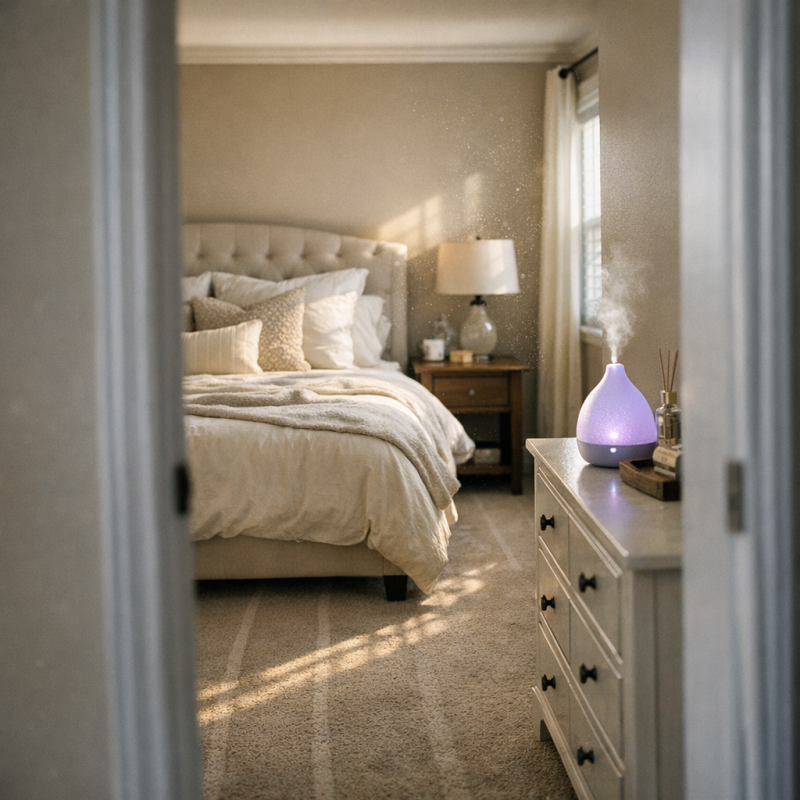 Image by FCT AI
The Quiet Kindness
The nights Dad was actually home, he'd help me with homework at the small desk we shared, his reading glasses perched on his nose as he explained long division or helped me memorize state capitals. He had this patient way of teaching, never frustrated when I didn't get it right away. After homework, we had this ritual—he'd read to me even when I got older and could read perfectly well myself. He did different voices for characters, made me laugh with exaggerated accents. When he tucked me in, he'd always say the same thing: 'Sleep tight, kiddo. See you in the morning.' And for those moments, everything felt right and normal and exactly how it should be. He was gentle, attentive, present in a way that made me feel safe. But there was something in his eyes sometimes, especially when he thought I wasn't looking—this faraway sadness, like part of him was always somewhere else. Even his kindness felt like it came from somewhere far away.
 Image by FCT AI
The Empty Chair
I started noticing around twelve or thirteen how Mom set the dinner table. On nights Dad was already home, she'd put out three plates, three sets of silverware, three glasses. But on nights when he wasn't there by five-thirty, she'd only set two places—one for her, one for me. She never waited to see if he'd show up. Never set his place hopefully, optimistically, just in case. It was like she'd developed this precise algorithm based on his patterns, or maybe she just knew his schedule better than I did. Or maybe—and this is what struck me even then—she'd learned not to expect him at all. When he did come home late and join us mid-meal, she'd get up wordlessly, retrieve his plate and silverware from the cabinet, and set his place without comment. No 'I wasn't sure you'd make it' or 'glad you're home.' Just silent efficiency, like accommodating a stranger. It was like she'd learned not to expect him—or maybe stopped wanting to.
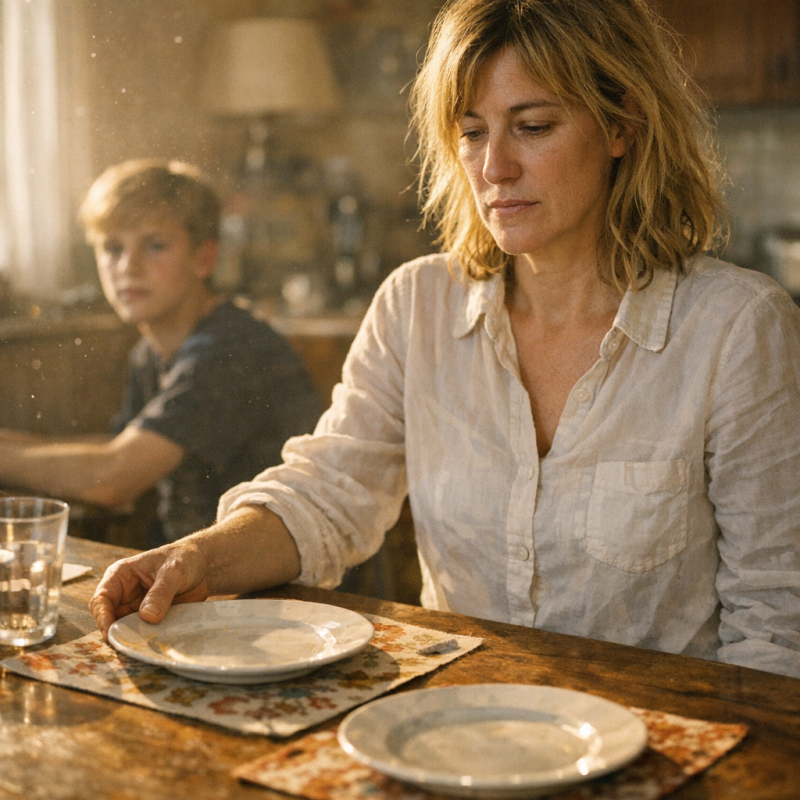 Image by FCT AI
School Nights
School nights had their own rhythm. Dad would usually be there for dinner, help me with homework, go through our bedtime routine. Then, around eight or nine, he'd change into different clothes—not pajamas, but jeans and a button-down, like he was going somewhere that required looking presentable. 'I've got to head out for a bit,' he'd say, grabbing his keys. 'Go to sleep, okay? School tomorrow.' I'd lie there in the dark, reading by flashlight or playing my Game Boy under the covers, waiting to hear him come back. Sometimes it was midnight. Often it was later. I learned to sleep through the sound of the front door opening, his footsteps in the hallway, the creak of our bedroom door, the rustle of him changing into pajamas in the dark. But sometimes I'd half-wake, check the glowing numbers on my alarm clock—1:47 a.m., 2:23 a.m. I'd wake to the sound of the door clicking shut and wonder what kind of work kept someone out until 2 a.m.
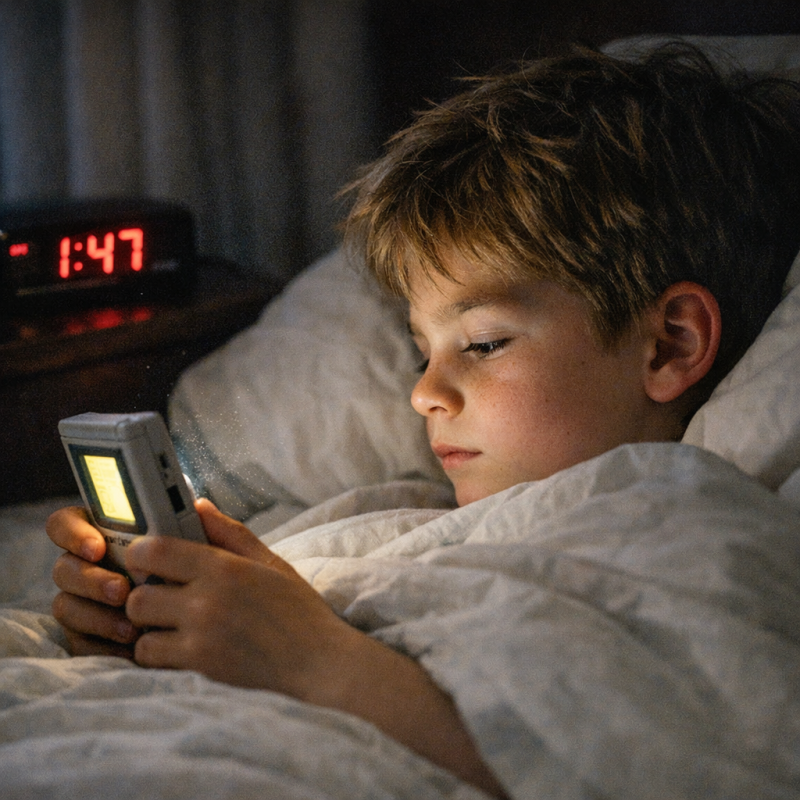 Image by FCT AI
Other Families
At school, I'd listen to other kids talk about their weekends—family movie nights, both parents at soccer games, Sunday dinners where everyone sat around the table together. My friend Jake's dad coached his Little League team. Emma's parents took her camping every summer, both of them. They'd complain about their parents being annoying or embarrassing, but it was the complaints of kids who had both parents around enough to be annoyed by them. I'd nod along, sometimes contribute a story about Mom or Dad separately, but I never quite knew how to explain our setup. It wasn't that we were broken exactly—divorce was common enough, and I knew plenty of kids who split time between houses. But we all lived together, just... separately. In different rooms, different schedules, different lives under the same roof. Nobody else seemed to have that particular arrangement. For the first time, I wondered if my normal wasn't everyone else's normal.
 Image by FCT AI
The Solo Act
The spring concert in sixth grade was the first time I really felt it—that absence, sharp and specific. I had a small solo in the choir performance, nothing major, but I'd been excited about it for weeks. Mom showed up early, saved a seat in the third row, took pictures with her digital camera. I kept scanning the audience during warm-ups, looking for Dad's face. The auditorium filled up, and I saw families settling in—two parents, sometimes grandparents, siblings. The lights dimmed. We performed. I nailed my solo, and Mom beamed from her seat, clapping louder than anyone. Afterward, she hugged me, told me I was wonderful, took me for ice cream. It should have been enough, and maybe it was ungrateful to want more, but I couldn't stop looking at the empty seat beside her. Dad sent a text apologizing—he had to work late again.
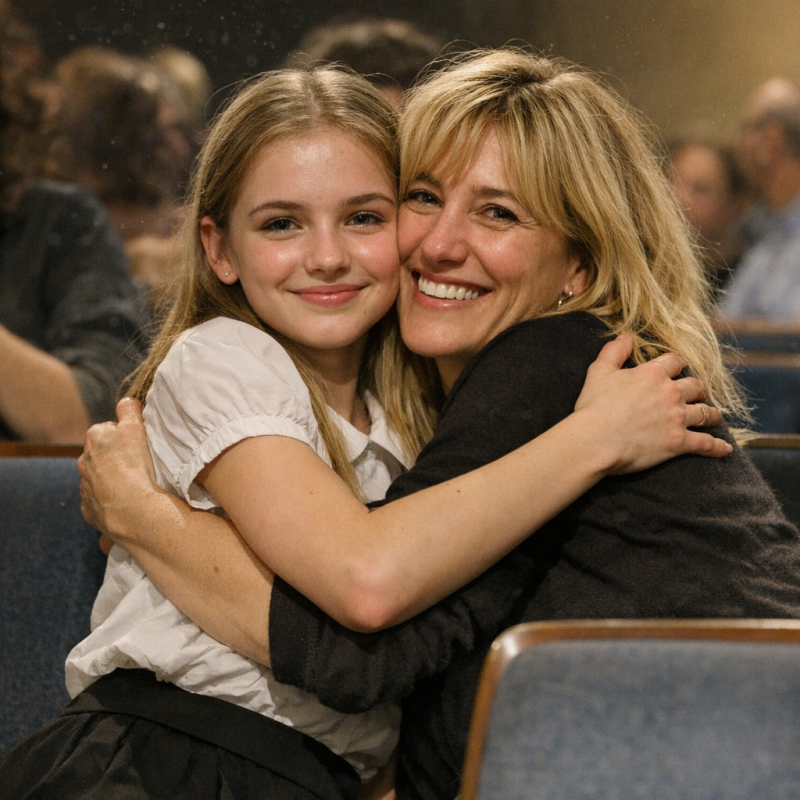 Image by FCT AI
The Polite Strangers
The dinner happened because my grandparents were visiting, and appearances mattered then. All four of us sat at the table—a configuration so rare it felt like a performance. Dad asked Mom to pass the salt. She did, without meeting his eyes. He thanked her with the same tone he'd use with a cashier. Mom mentioned something about my upcoming parent-teacher conference, and Dad nodded, said he'd try to make it this time, but they both knew he wouldn't. I watched them move around each other like dancers who'd memorized the steps but forgotten the music. There was no anger, which somehow made it worse. Anger would've implied they still cared enough to fight. This was something else—a practiced neutrality, a choreographed distance. My grandmother kept trying to create conversation, bless her, asking them both questions that required interaction. They complied, but barely. When Dad's hand accidentally brushed Mom's reaching for the bread basket, they both pulled back like they'd touched something hot. I pushed peas around my plate and realized I'd never seen them touch on purpose. Not once. They spoke like coworkers forced to share a break room, not people who'd once chosen each other.
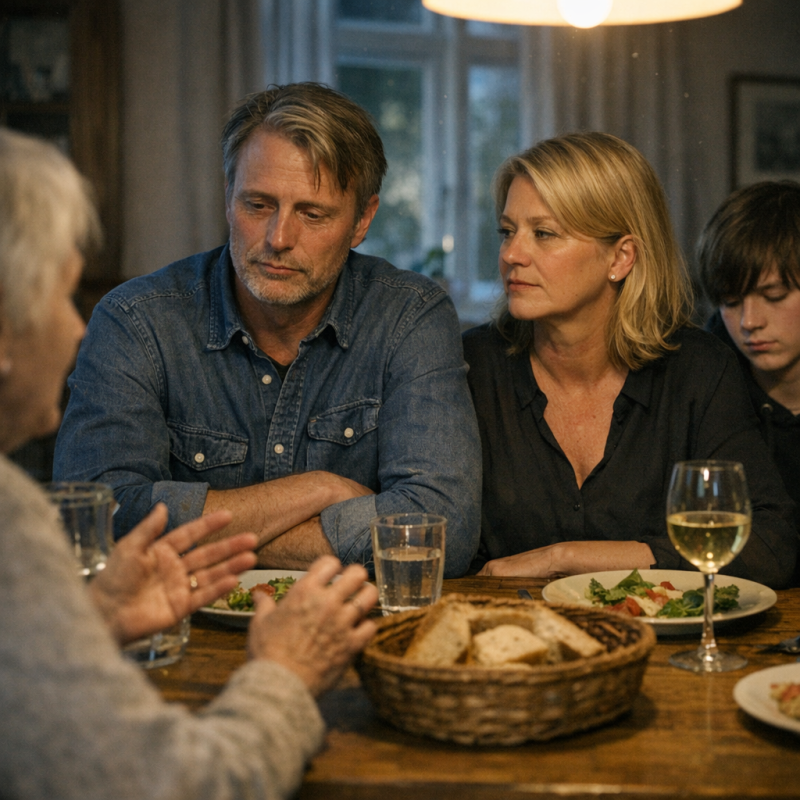 Image by FCT AI

History's most fascinating stories and darkest secrets, delivered to your inbox daily.
The Unanswered Questions
I cornered Mom in the kitchen a few days later while she was unloading the dishwasher. Just asked her straight out: 'Why don't you and Dad sleep in the same room?' She didn't even pause, just kept stacking plates in the cabinet. 'Your father snores terribly, honey. You know that.' I did know that—I heard it every night from the bed three feet away. But that answer had stopped making sense somewhere along the way. 'Other people's dads snore,' I said. 'Their moms deal with it.' She smiled that smile adults use when they're about to shut down a conversation. 'Every marriage is different, Alex. We make it work our way.' I wanted to ask why their way meant Dad lived in my room like a guest who never left, why they barely looked at each other, why our family felt like three separate people occupying the same house. But something in her posture told me I wouldn't get real answers, not then. She kissed my forehead and moved on to the silverware drawer. The explanation felt thinner each time I heard it.
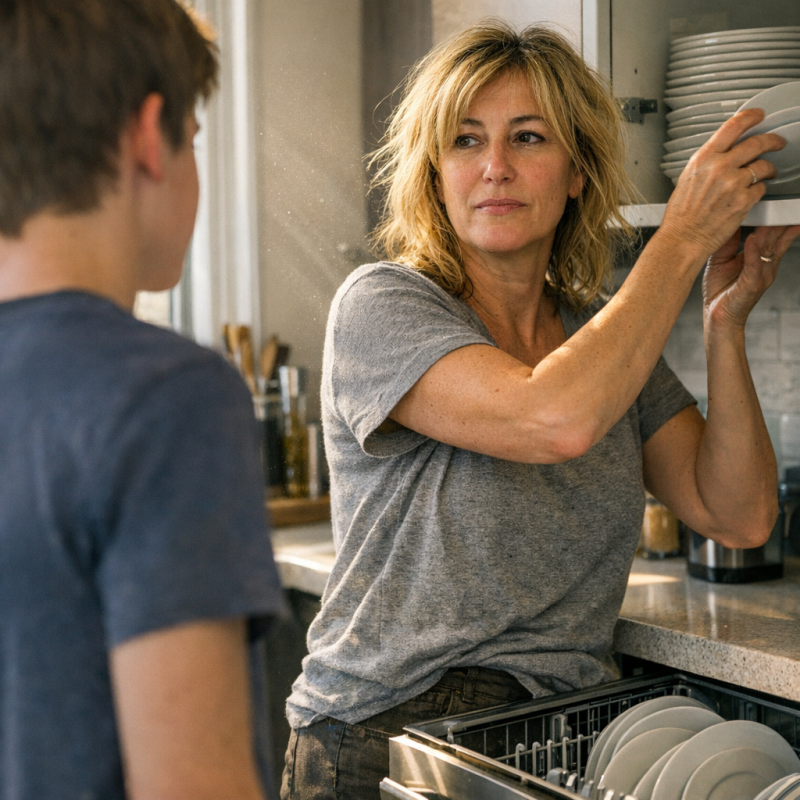 Image by FCT AI
The Age of Acceptance
Middle school swallowed me whole that fall, and honestly, it was easier to stop asking questions I knew wouldn't be answered. I had algebra homework and soccer practice and the constant anxiety of navigating cafeteria politics. The bedroom situation faded into background noise—weird, yes, but unchangeable, like having a birthmark or living in a house with terrible water pressure. My friends never came over anyway, so nobody asked about it. I stopped scanning for Dad at school events because I knew he wouldn't be there. I stopped waiting for my parents to act like the couples I saw in movies or at friends' houses. This was just how we were. Some families did Sunday dinners and game nights. We did polite distance and separate bedrooms and Dad's late-night returns that I'd trained myself to sleep through. I turned thirteen, then fourteen, and the questions that had burned so urgently when I was younger got buried under the weight of adolescent survival. I figured every family had secrets—I just didn't know mine yet.
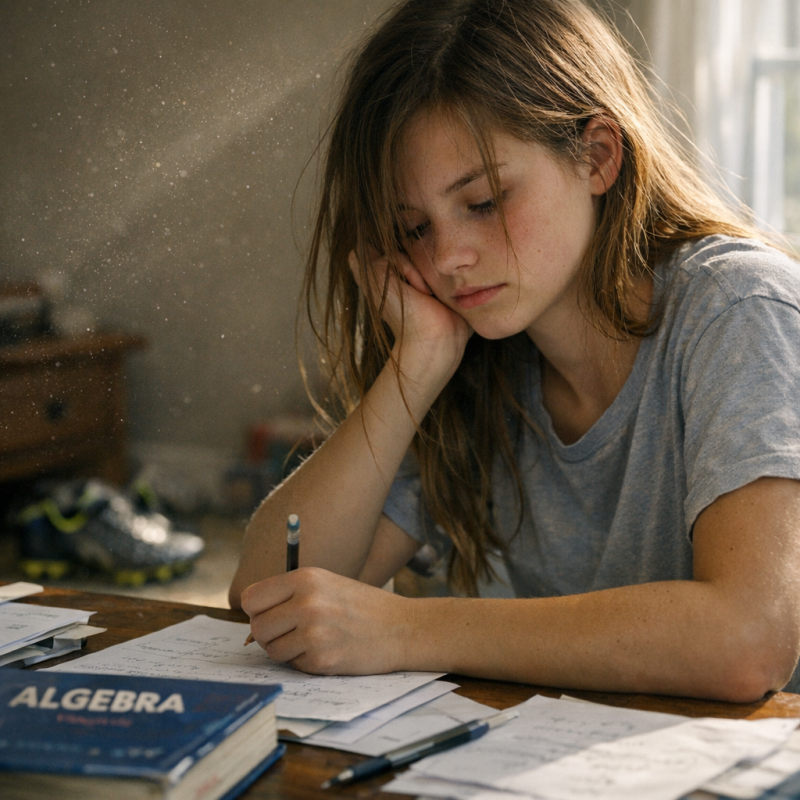 Image by FCT AI
The Sleepover
Marcus showed up on a Friday night with his backpack and sleeping bag, and I'd completely forgotten to prepare him. We'd been friends since sixth grade, but he'd never been to my house—we always hung out at his place or met up other places. He followed me upstairs, talking about some video game, and stopped dead in my doorway. Just froze. His eyes went from my bed to Dad's bed to the small dresser we shared to the way our stuff was mixed together in such an obviously permanent arrangement. 'Dude,' he said slowly. 'Why are there two beds in here?' My face went hot. 'My dad sleeps here.' The words sounded insane out loud. Marcus looked at me like I'd just told him we kept a live raccoon in the bathtub. 'Like... every night?' I nodded. 'Why?' And I didn't have an answer that wouldn't make it weirder, so I just shrugged and said something about my dad's snoring and my mom being a light sleeper. Marcus didn't say anything else about it, but I saw the judgment in his face, the confusion. The word 'weird' hung in the air between us like something I could never take back.
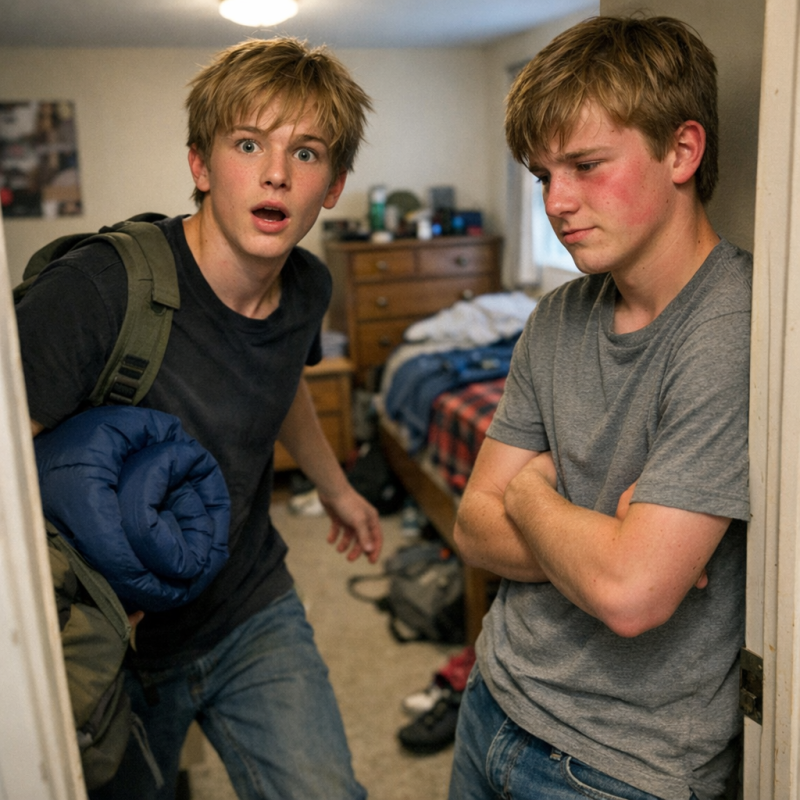 Image by FCT AI
The Shift
After Marcus left the next morning, I sat on my bed and really looked at the room for the first time in years. Two twin beds, parallel, with a nightstand between them. Dad's work clothes hanging in the closet next to my hoodies. His books on the shelf, his reading glasses on the dresser, his phone charger snaking across the floor to his side. This wasn't a temporary arrangement. This was a life someone had built—or been forced to build. I thought about Marcus's face, that flash of 'what the heck' before he'd politely looked away. I thought about all the friends I'd never invited over, all the excuses I'd made. I'd normalized something that wasn't normal, convinced myself everyone's family had quirks like this. But they didn't. Other kids' dads had their own bedrooms. Other kids' parents shared space like adults who'd chosen to build a life together. I grabbed my phone and googled 'why would parents sleep in separate rooms' and fell down a rabbit hole of articles about snoring and sleep disorders and 'sleep divorce' and none of it matched what I saw in my house. Suddenly, the room that had always felt safe felt like evidence of something wrong.
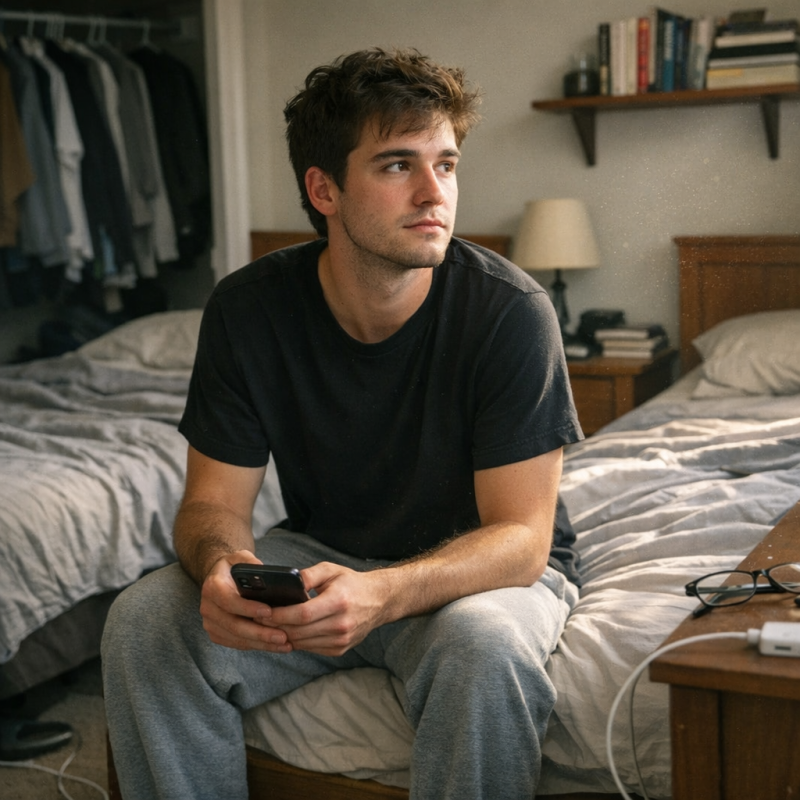 Image by FCT AI
The Late-Night Observation
I started staying awake on purpose, pretending to sleep but watching the door through barely-open eyes. It took three nights before Dad came home while I was still conscious. The clock read 1:47 a.m. when I heard his footsteps in the hallway, careful and quiet, the way you walk when you're trying not to disturb anyone. The door opened slowly. In the dim light from the hallway, I could see his silhouette—shoulders slumped, moving like every step took effort. He closed the door so gently the latch barely clicked. Then he just stood there. Didn't turn on the light, didn't move toward his bed. Just stood in the darkness like he was gathering courage to exist in this space. I kept my breathing steady, playing asleep, but I was watching through my eyelashes as he finally crossed to his bed. He didn't lie down right away. He sat on the edge of his bed in the dark for ten minutes before lying down—like he was gathering strength to exist in that room.
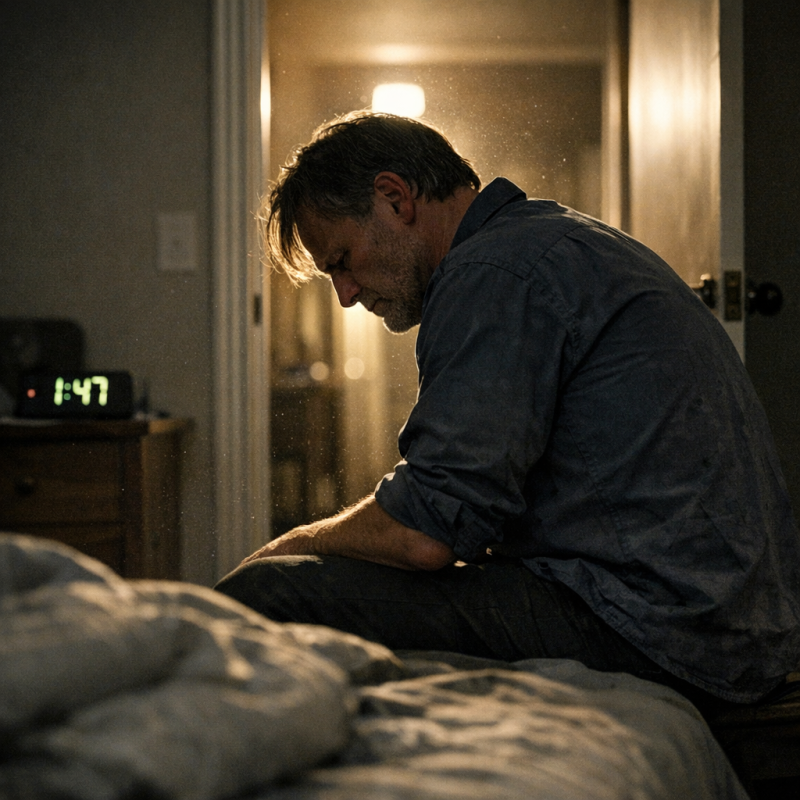 Image by FCT AI
The Forgotten Drawer
Mom sent me to find some old school photos she needed for a family scrapbook project—something in the hallway cabinet where we kept random stuff. I dug through boxes of holiday decorations and old electronics and tangled phone chargers, pushing things aside, when I noticed a stack of mail wedged in the back corner. All addressed to Dad. Some of it looked like junk—credit card offers, grocery store flyers—but it had that forgotten quality, like it had been deliberately placed somewhere it wouldn't be found. Why was Dad's mail hidden in a cabinet? Why wasn't it on the kitchen counter like everyone else's? I flipped through the envelopes, my heart starting to beat faster for reasons I couldn't quite name. Most of it was junk, but one envelope had official lettering—and it had been hidden beneath everything else.
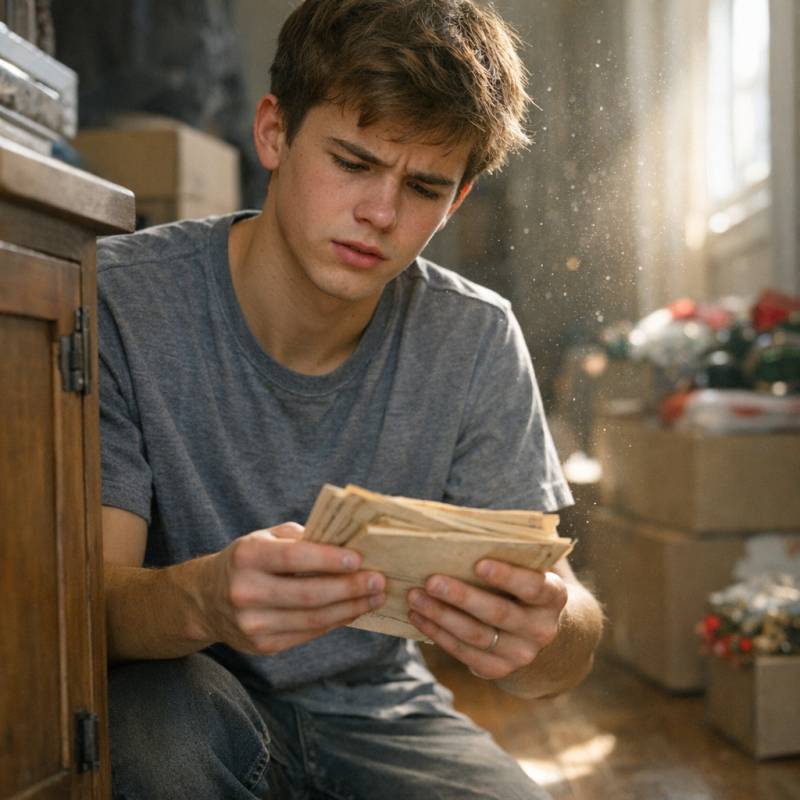 Image by FCT AI
The Boundary Crossed
I knew I shouldn't. I knew it was a violation, a line I couldn't uncross. But my fingers were already working at the envelope flap, carefully, like maybe I could reseal it and no one would know. The paper inside was thick, formal, with letterhead from some law office downtown. My eyes caught words in fragments: 'separation agreement,' 'terms outlined,' 'signed by both parties.' I had to read it three times before my brain would process what I was seeing. My parents were separated. Not divorced—separated. There was a date at the top: March 2007. I would've been two years old. Fifteen years ago. This document was fifteen years old, and I'd never known it existed. There were clauses about living arrangements, about maintaining appearances, about financial obligations. Legal language I didn't fully understand but recognized as important, as world-changing. My hands shook as I read words that didn't match the life I thought I knew.
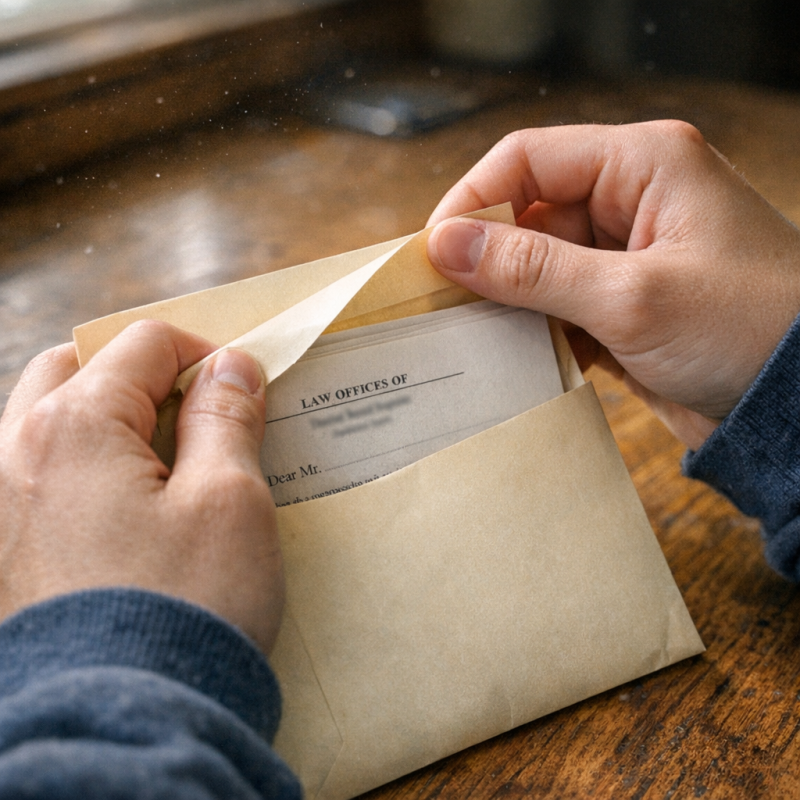 Image by FCT AI
The Impossible Truth
I read it again. Then again. Then one more time because surely I'd misunderstood something. 'Separated' didn't mean what I thought it meant, right? Maybe it was just legal terminology for some other arrangement I didn't understand. But no—the document was clear. My parents had legally separated when I was three years old. Not recently. Not after some fight I'd slept through last year. Fifteen years ago. I tried to think back to when I was three, but honestly, what do you remember from being three? Fragments, maybe. Feelings more than facts. Everything solid in my memory—every Christmas morning, every summer vacation, every mundane Tuesday night dinner—all of it happened after this piece of paper was signed. My entire conscious life had been built on top of this separation agreement I never knew existed. They'd been separated longer than they'd been together, at least in my lifetime. The math didn't make sense. The logic didn't hold. How do you separate from someone and then just... keep living with them? Keep sharing meals and a mortgage and a kid? The date on the document was from fourteen years ago—when I was three.
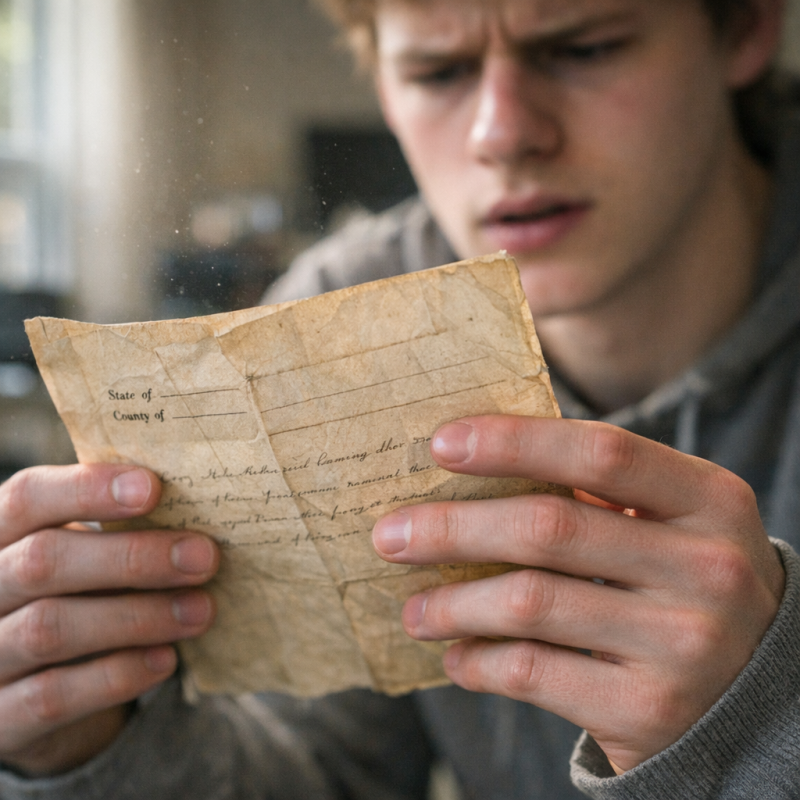 Image by FCT AI
The Confrontation Planned
I spent the whole afternoon rehearsing what I'd say when Mom got home from work. I paced my room, practiced different tones—angry, hurt, calm, accusatory. 'I found the separation agreement' sounded too confrontational. 'Can we talk about something I discovered?' sounded too passive. 'Why didn't you tell me?' felt like the right level of direct, but then what if she asked where I found it? I'd have to admit I'd been snooping through Dad's drawer, which would derail the whole conversation into a lecture about privacy and trust. God, the irony of that. I heard her car pull into the driveway around six. My heart started hammering. This was it. I was going to march downstairs and demand answers like the almost-adult I was supposed to be. I heard her keys in the door, heard her set down her bag with that familiar thud. I stood up, walked to my bedroom door, hand on the doorknob. Deep breath. You can do this. Just ask her directly. But when she came home, all my prepared words disappeared.
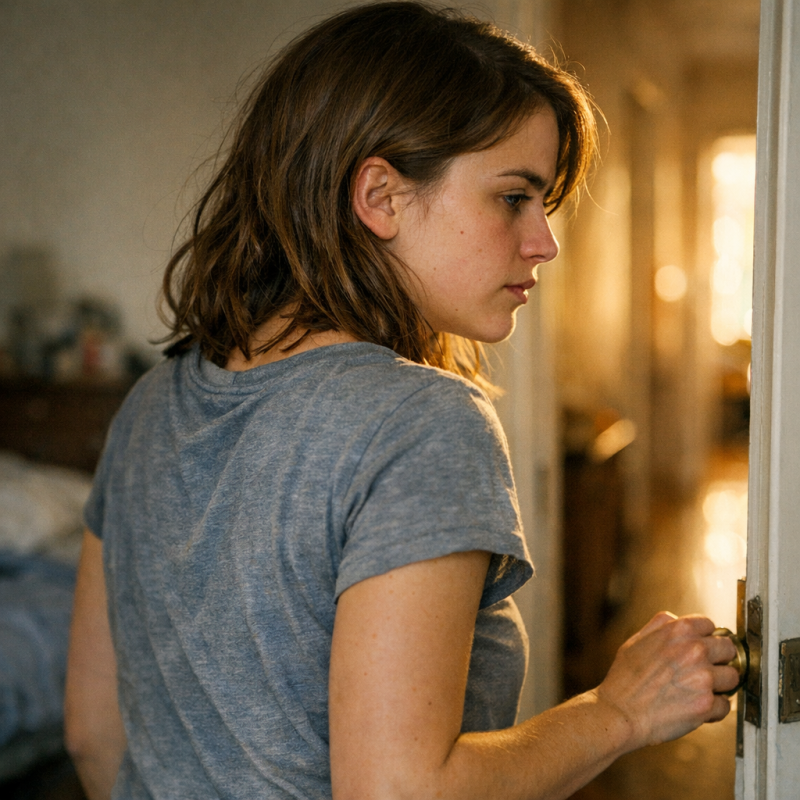 Image by FCT AI
The Question Asked
We made it through most of dinner in silence. Mom asked about school, I gave one-word answers, she didn't push. The casserole she'd made sat heavy on my plate. I pushed it around with my fork, building up courage with each pass. Finally, I just said it: 'What does it mean when parents are separated but still live together?' Mom's hand stopped moving. Just froze in midair. She looked at me with this expression I couldn't quite read—surprise, definitely, but something else underneath it. Calculation, maybe. 'Why are you asking that?' she said slowly. I could've backed down. Could've said I'd seen it in a movie or heard about it from a friend. But I was so tired of not knowing things, of living in this house where everyone seemed to be performing some script I'd never been given. 'I found the separation agreement,' I said. 'From 2007. I know you and Dad have been separated since I was three.' Her fork froze halfway to her mouth, and the silence stretched until it hurt.
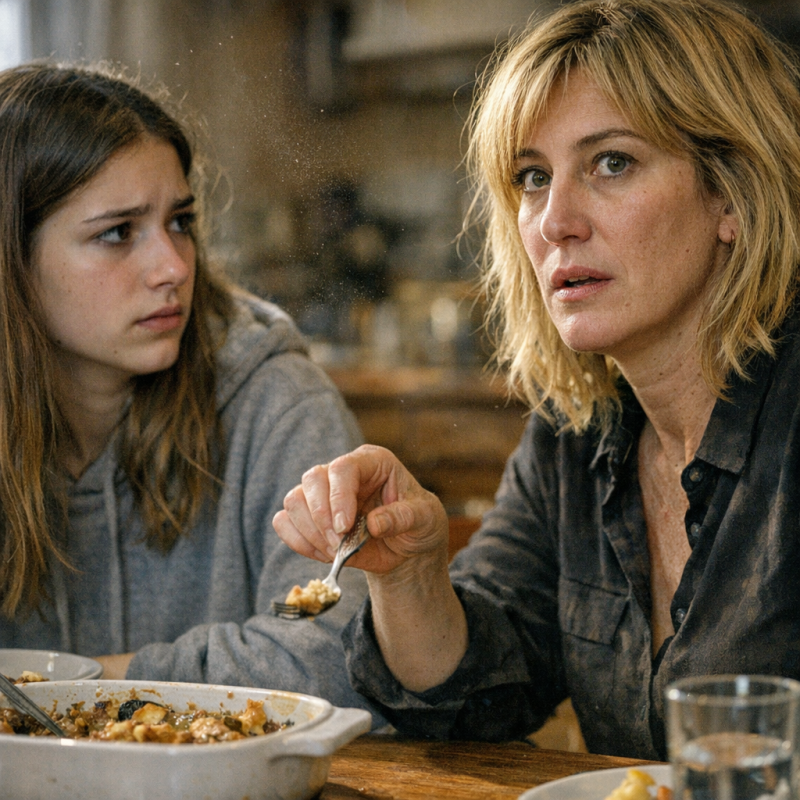 Image by FCT AI
The Partial Truth
Mom set down her fork very carefully, like it might shatter if she moved too quickly. She took a sip of water. Stalling, I realized. Buying time to figure out what to say. 'Yes,' she finally said. 'Your father and I decided to separate when you were very young. It was mutual, Alex. We both agreed it was for the best.' I waited for more, but she just looked at me like that explained everything. 'For the best,' I repeated. 'But you still live together.' 'We stayed in the same house to give you stability,' she said, and I swear her voice caught on that last word. Just a tiny waver, but I heard it. 'Children need consistency. A stable home. We didn't want to disrupt your life with separate houses and custody schedules. We both wanted to be here for you every day.' It sounded reasonable. It sounded almost noble, when she put it that way. But something about the way she said 'stability' made it sound rehearsed, like she'd practiced this explanation years ago and was just pulling it out now. She said they stayed in the same house to give me stability—but her voice wavered on the word 'stability.'
 Image by FCT AI
The Father's Side
I waited until after midnight, when I knew Mom would be asleep. Dad was still up—he usually was, reading in the living room or watching old movies with the volume low. I found him on the couch with a book he wasn't really reading. 'Can I ask you something?' I said. He looked up at me, and I saw something in his face shift. Like he knew what was coming. 'The separation agreement,' I continued. 'Mom told me about it. But I want to hear it from you.' He closed the book and set it aside. For a long moment, he didn't say anything. Just looked at me with this tired, sad expression that made him look way older than thirty-eight. 'What do you want to know?' he asked quietly. 'Why you stayed,' I said. 'Why you both stayed if you were separated.' He rubbed his face with both hands, the way he did when he was exhausted. 'It seemed like the right thing to do at the time,' he said. 'For you. For everyone.' He sighed like he'd been waiting years for this conversation and dreading it the entire time.
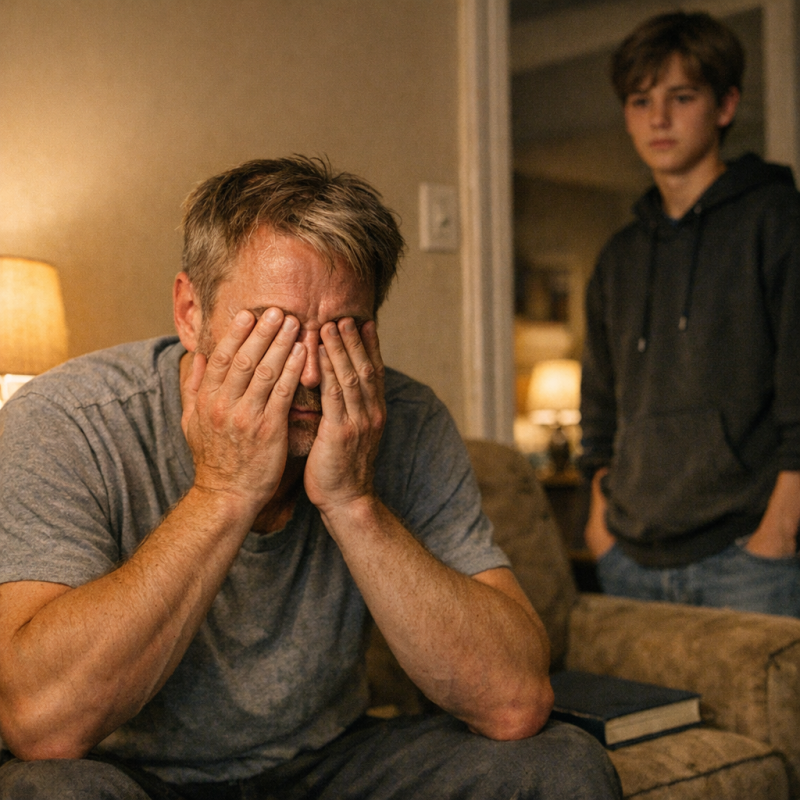 Image by FCT AI
The Aunt's Visit
Aunt Claire showed up the next weekend for Thanksgiving—Mom's older sister, who lived about three hours away and visited maybe twice a year. She had this way of looking at people that made you feel like she could see right through whatever face you were putting on. During the small talk over coffee, I watched her glance between Mom and Dad, studying them in a way that felt too knowing. After dinner, while Mom was in the kitchen, I caught Aunt Claire alone in the hallway. 'Did you know about the separation?' I asked, keeping my voice low. She looked at me for a long moment, something like sympathy crossing her face. 'I've always known, sweetheart,' she said. 'Since it happened.' 'So everyone knew except me,' I said, hearing the bitterness in my own voice. 'Can you tell me what actually happened? Why they stayed together?' She glanced toward the kitchen, where we could hear Mom loading the dishwasher. When I asked her about the separation, she glanced at Mom and said, 'That's not my story to tell.'
 Image by FCT AI
The Late-Night Conversation
I found Aunt Claire on the back porch later that night, smoking a cigarette she'd probably told Mom she'd quit. 'Please,' I said, sitting down next to her. 'I need to understand what happened. Nobody will give me a straight answer.' She took a long drag and exhaled slowly. 'What did your mom tell you?' she asked. 'That it was mutual. That they stayed together for my stability.' Aunt Claire made a sound that might have been a laugh or might have been something sadder. 'Your mother has her own version of events,' she said carefully. 'And I'm sure she believes it's true.' 'But what's your version?' I pressed. She looked at me then, really looked at me, and I saw something in her expression that made my stomach drop. Pity, maybe. Or concern. 'Your father is a good man,' she said finally. 'A very good man who made one very bad mistake. And your mother...' she paused, choosing words carefully. She looked at me with something like pity and said, 'Your mother is a very strong woman—sometimes too strong.'
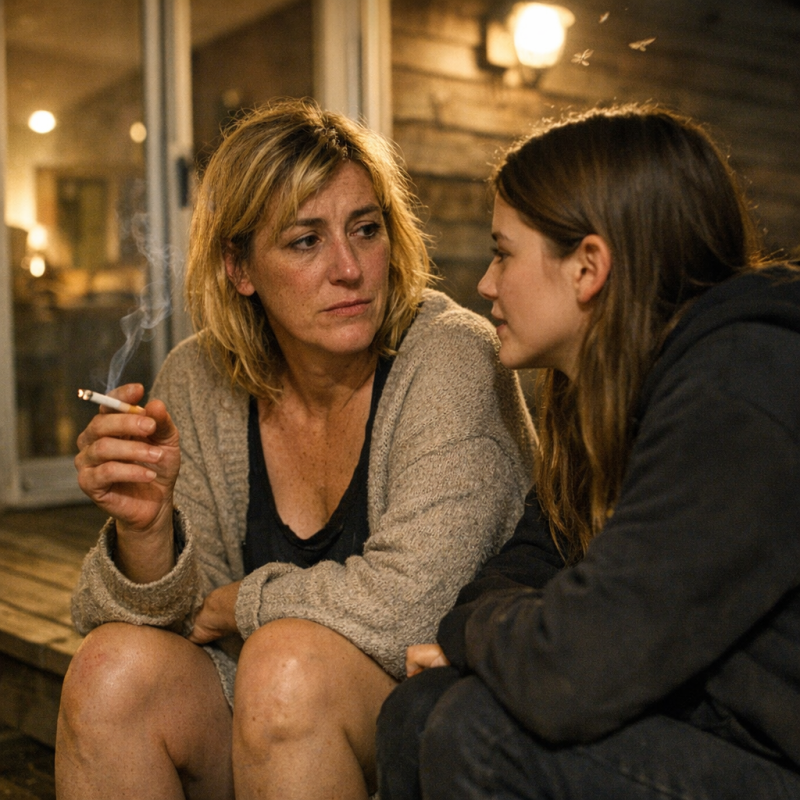 Image by FCT AI
The Financial Question
It was a few days later when I noticed it—really noticed it, I mean. Dad was at the kitchen table with his checkbook, paying bills like he did every month. But I'd never actually thought about it before. The mortgage check, the utilities, the insurance—all coming from his account. Mom made decent money at her job. Probably more than Dad, honestly. So why was he paying for everything? 'Dad,' I said, 'do you pay all the bills for the house?' He looked up, surprised by the question. 'Most of them, yes,' he said. 'But you and Mom are separated. Doesn't she pay for anything?' He set down his pen and looked uncomfortable. 'We have an arrangement,' he said carefully. 'From when we separated. I agreed to handle certain expenses.' 'But you don't even really live here,' I said, the frustration rising in my voice. 'You live in my room like a guest. Why should you pay for the whole house?' He picked up the pen again, not meeting my eyes. When I asked why, he just said, 'It's what I agreed to.'
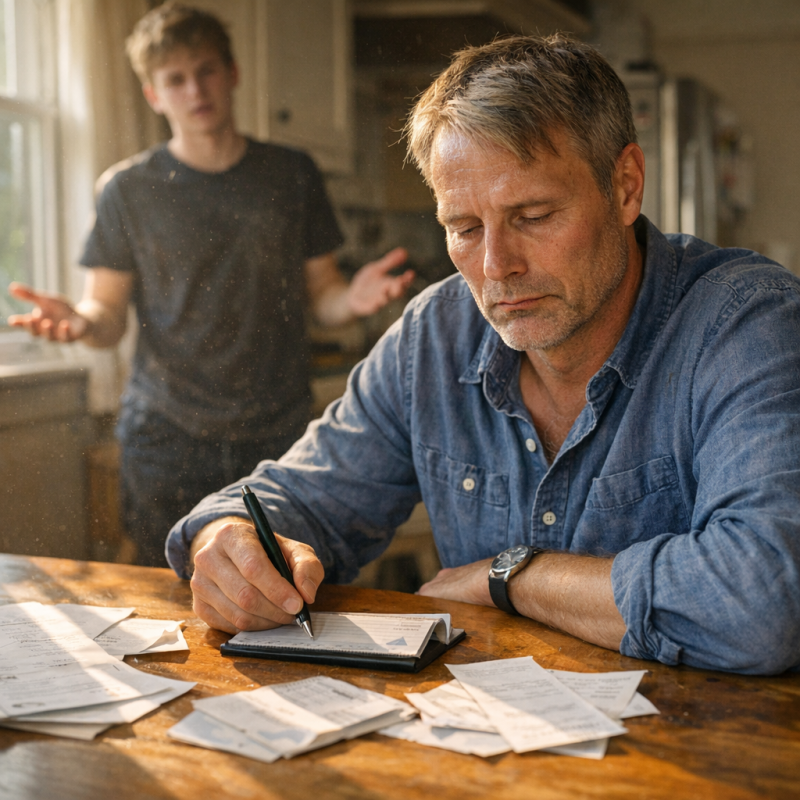 Image by FCT AI
The Bedroom Rules
It hit me one night when I couldn't sleep, staring at the ceiling while Dad snored across the room. I'd been turning it all over in my head—the bills, the arrangement, the way he talked about what he'd 'agreed to.' And then I remembered something from years ago. Mom telling him, 'You'll stay in Alex's room.' Not the guest room. Not the basement. My room specifically. I sat up in bed, the realization washing over me like cold water. The guest room had been empty this entire time. Clean sheets, plenty of space, a door that actually closed all the way. But Mom had insisted he share my room instead. She'd made that rule. I thought back to every conversation, every vague explanation about 'the arrangement.' Dad always deferred to what Mom wanted. Always followed her rules. This wasn't about his snoring or convenience or keeping the family close. This was deliberate. She wanted him right there, cramped in a kid's bedroom, sleeping on a camping cot like he didn't deserve better. It wasn't about snoring or convenience—it was about keeping him close enough to remind him of what he lost.
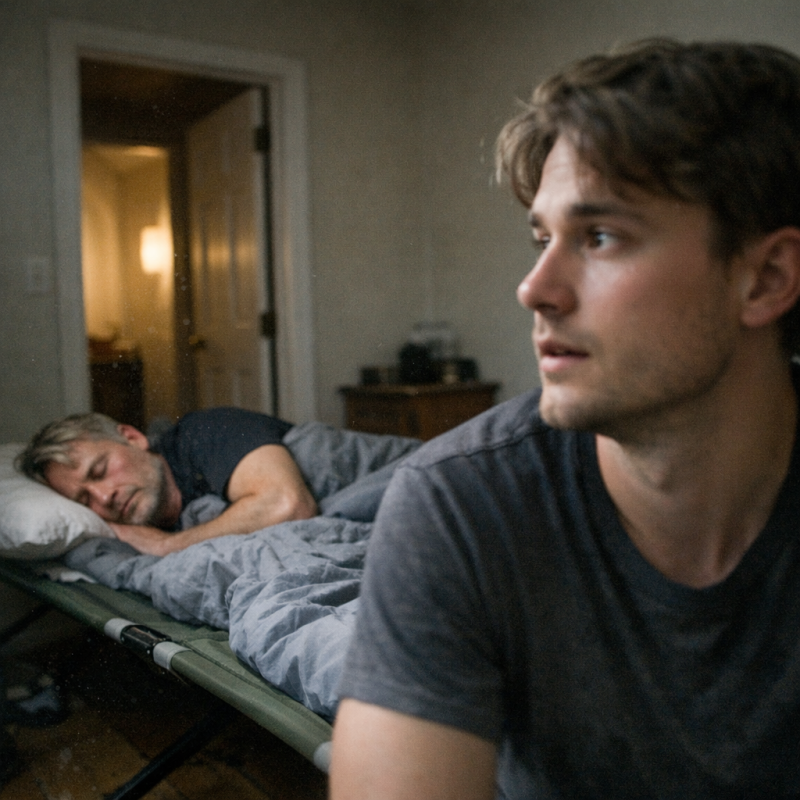 Image by FCT AI
The High School Years
By the time I was sixteen, I'd mostly stopped asking questions. What was the point? The answers were always the same non-answers, the same vague references to 'agreements' and 'what's best.' I'd learned to tune out the sound of Dad coming home from work, learned to time my showers so I wouldn't run into him in the hallway, learned to do homework with headphones on so I could pretend I had my own space. My friends complained about annoying siblings or strict parents. I just nodded along. High school was supposed to be about finding yourself, right? But how do you do that when your bedroom feels like a constant reminder that your family is fundamentally broken? I still noticed things—the way Mom watched Dad at dinner, the weekend disappearances, the careful distance they maintained. I noticed everything, actually. I'd just stopped expecting answers. The weirdness had become normal, or as normal as something that abnormal could be. I'd learned to live with the weirdness, but I never stopped hating it.
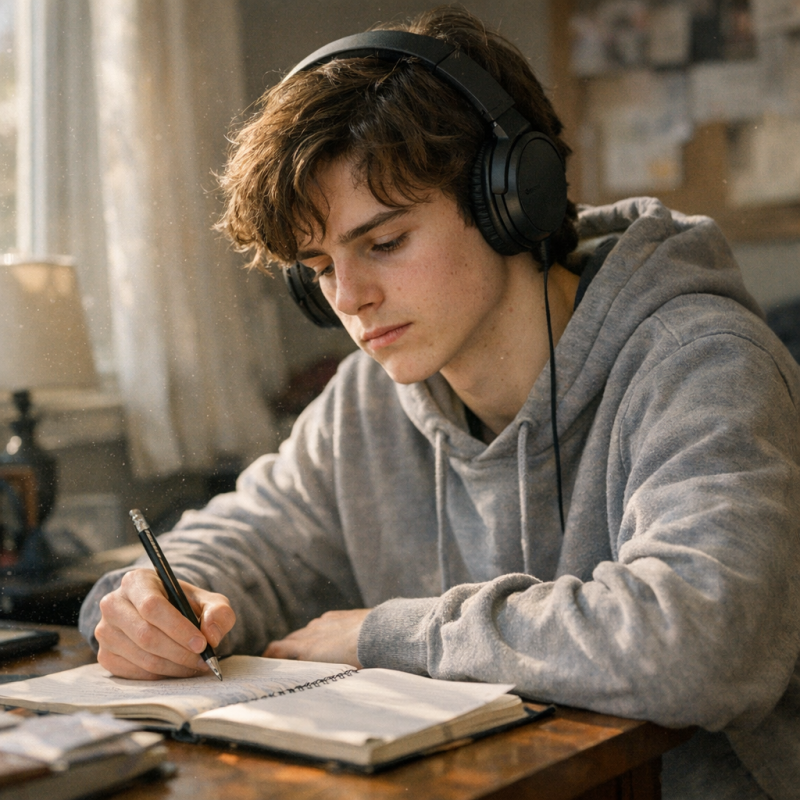 Image by FCT AI
The Social Avoidance
I became really good at meeting friends anywhere but home. Coffee shops, the mall, their houses—anywhere that didn't require explaining why my thirty-something dad slept on a cot in my bedroom. When people asked why they couldn't come over, I made excuses. 'My mom's weird about guests.' 'We're renovating.' 'Family stuff.' After a while, they stopped asking. I developed this whole alternate version of my life for school. In that version, my parents were normally divorced. I lived with my mom. My dad had his own place across town. Simple, clean, unremarkable. Nobody needed to know about the camping cot or the 3 a.m. bathroom traffic or the way my dad folded his clothes into a small corner of my closet like he was apologizing for existing. The effort of maintaining the lie was exhausting, but it was better than the truth. Because how do you explain something when you don't even understand it yourself? It was easier to pretend I had a normal life than to explain why mine wasn't.
 Image by FCT AI
The Girlfriend Question
Rachel and I had been dating for about two months when she brought it up. We were at her locker between classes, and she just casually said, 'So when do I get to meet your parents?' My stomach dropped. 'Why would you want to do that?' I said, trying to laugh it off. She looked at me like I'd grown a second head. 'Because that's what people do? I want to know your family.' I fumbled for an excuse—any excuse. My mom was busy with work. My dad traveled a lot. We weren't really the 'family dinner' type. She listened patiently, then said, 'Alex, we've been together two months. I've met your friends. It's weird that you're hiding me from your parents.' She wasn't wrong. And the more I tried to deflect, the more suspicious she became. Finally, I agreed to have her over for dinner the following week. I felt sick about it for days. How was I supposed to explain the sleeping arrangement? The weird tension? The way my parents orbited each other like damaged satellites? How could I explain something I didn't even understand myself?
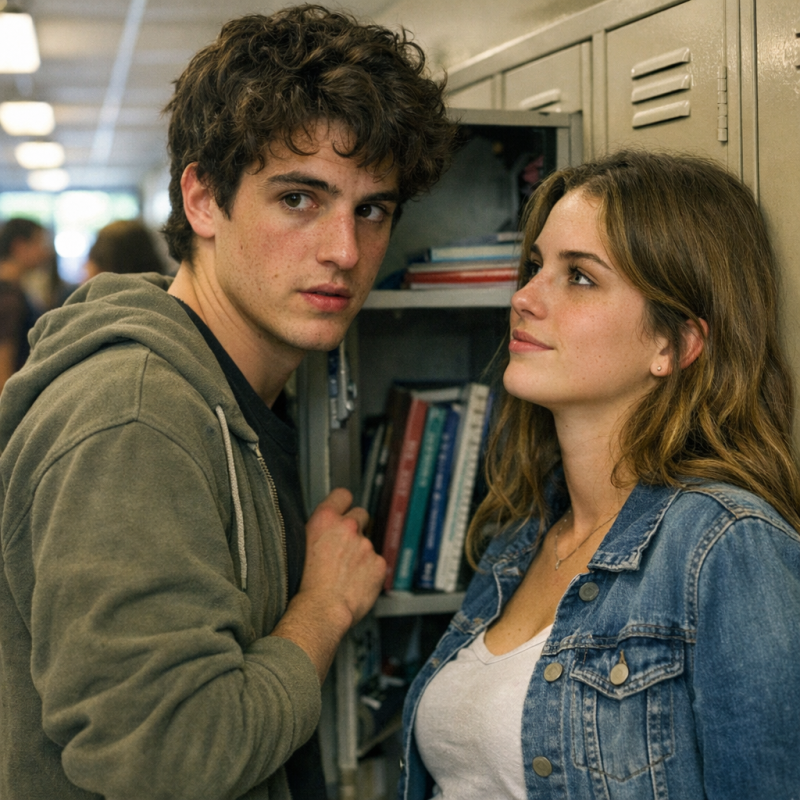 Image by FCT AI
The Awkward Dinner
The dinner was exactly as awful as I'd feared. Rachel arrived with flowers for my mom, who accepted them with a smile that didn't reach her eyes. Dad shook her hand formally, like she was a business associate. We sat at the table and the silence was deafening between bites. Rachel tried making conversation—asking about their jobs, commenting on the house. Mom answered in clipped sentences. Dad mostly looked at his plate. I watched Rachel's face as she slowly realized something was very wrong. The way Mom and Dad never looked at each other. The way they passed dishes without speaking. The careful, choreographed distance they maintained even in the same room. At one point, Rachel asked how they met, and the silence that followed was so painful I wanted to crawl under the table. Mom eventually gave a two-sentence answer. Dad said nothing. After Rachel left, we stood on my porch and she asked if my parents even liked each other, and I realized I'd never seen evidence they did.
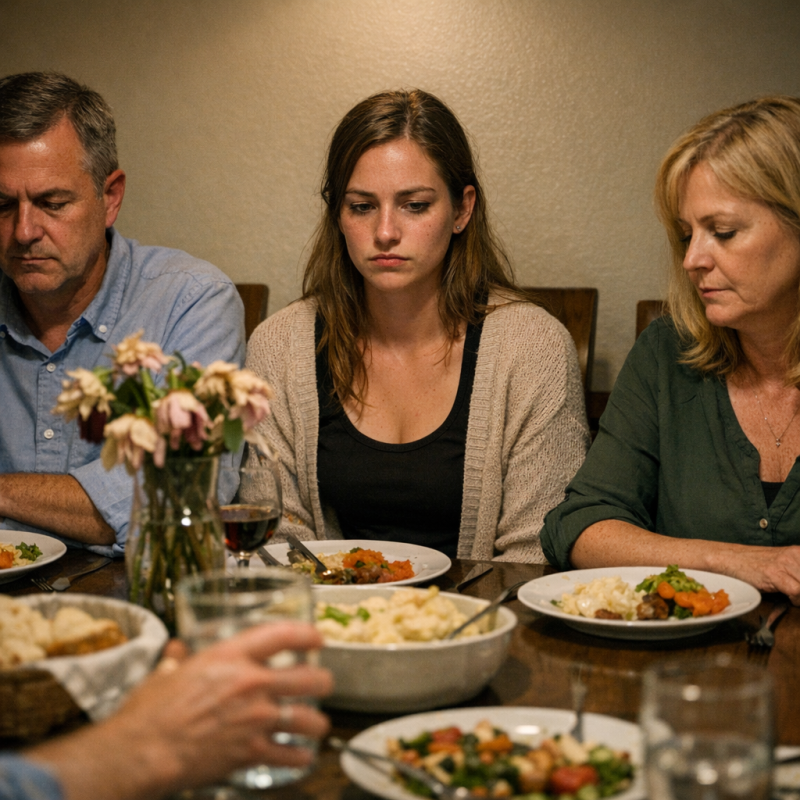 Image by FCT AI
The Weekend Tracker
I started keeping track after that. Every Friday night, Dad would mention he had to work over the weekend. Every Saturday morning, he'd be gone by eight. Every Sunday evening, he'd return looking exhausted. I grabbed a notebook and started documenting it. The dates, the times, the excuses. Within a month, the pattern was undeniable. It wasn't occasional overtime or random projects. It was consistent, scheduled, predictable. Every single weekend. I even checked the calendar against holidays—Thanksgiving weekend, gone. The weekend after Christmas, gone. It didn't matter what else was happening in our lives. Those weekends belonged to something else. Someone else? I didn't know. But the regularity of it felt deliberate. This wasn't about work emergencies or extra shifts. This was a commitment, a routine he'd built his life around. I stared at my notebook, at the rows of documented absences, and felt something cold settle in my chest. It wasn't random work—it was a schedule, like he had another life waiting for him somewhere else.
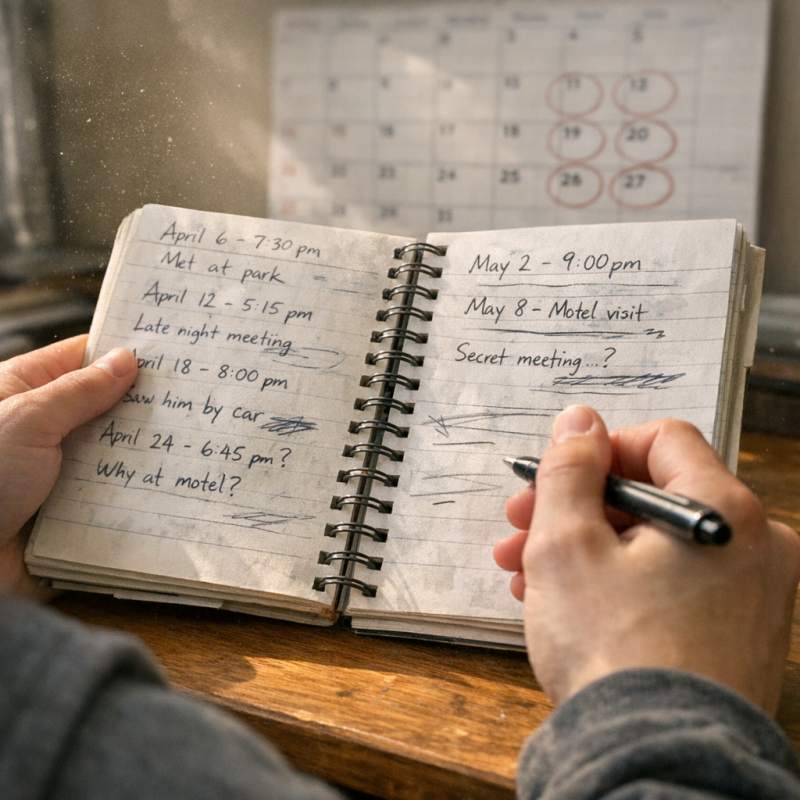 Image by FCT AI
The Follow Attempt
The next Saturday, I borrowed Mom's car claiming I needed to return library books. Instead, I parked down the street and waited. At 7:45, Dad emerged from the house carrying his work bag. I let him get a block ahead before following. My hands shook on the steering wheel. This felt wrong, sneaking around, spying on my own father. But I needed to know. He drove east, toward the older part of town where the factories used to be before they closed down. I tried staying back far enough that he wouldn't notice me, but close enough to keep him in sight. That's where I messed up. At a yellow light, I hesitated. He went through. I stopped. By the time I got through the intersection, he was gone. I drove around for another twenty minutes, searching the industrial streets with their abandoned warehouses and chain-link fences. Nothing. I pulled over, frustrated and confused. All I knew was he headed toward the industrial part of town—nowhere anyone would choose to spend their weekends.
 Image by FCT AI
The Overheard Argument
It was a Tuesday night, almost midnight. I'd gotten up to get water and heard voices from the kitchen. Mom and Dad, speaking in harsh whispers. I froze in the hallway. 'The agreement was clear,' Mom was saying. 'You don't get to renegotiate now.' Dad's voice was tired. 'I'm not trying to renegotiate. I'm asking if there's any end to this.' 'End to what? To you keeping your promises?' 'I've kept every promise,' Dad said, and there was something broken in his voice. 'I've paid everything. Done everything you asked. Lived by your rules for fifteen years.' 'Because it's what you owe.' Mom's voice was cold, harder than I'd ever heard it. 'You made your choice back then. This is the consequence.' There was a long silence. Then Dad spoke again, and the crack in his voice made my chest hurt. 'I've given you everything—what more do you want?'
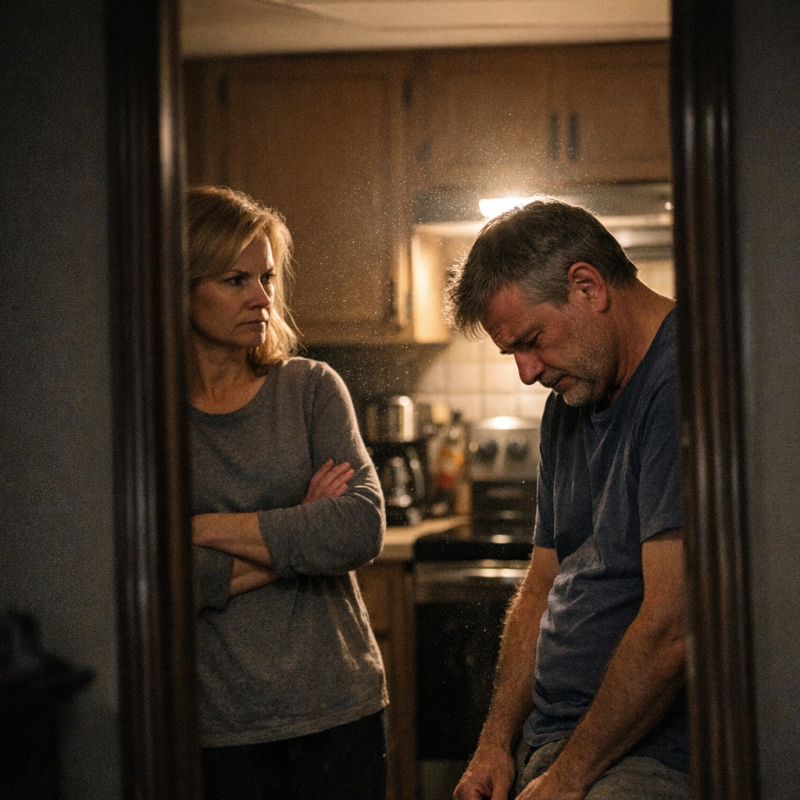 Image by FCT AI
The Breaking Point
I didn't plan it. I walked into the living room one Saturday afternoon where they were both sitting—Mom reading a magazine, Dad staring at his phone—and the words just exploded out of me. 'I want to know why we live like this.' They both looked up, startled. 'Why Dad sleeps in my room when there's a perfectly good guest room. Why you two can barely look at each other. Why everything in this house feels like a punishment.' Mom's face shifted, her expression hardening into something I'd never seen directed at me before. Dad went pale. 'Alex, this isn't—' Mom started, but I cut her off. 'Don't tell me it's not my business. I've lived this my entire life. I deserve to know why.' The silence that followed felt suffocating. Dad looked at Mom like he was waiting for permission to speak. Mom looked at me like I'd betrayed her somehow. 'You wouldn't understand,' she finally said, her voice ice. 'Try me,' I shot back. Mom's face went cold, and Dad looked like he wanted to disappear through the floor.
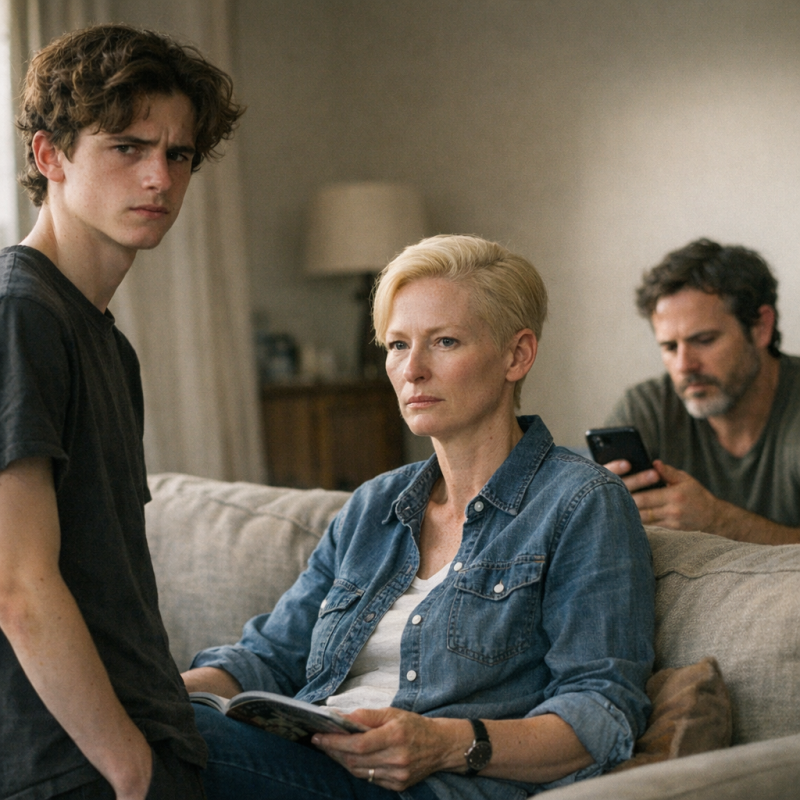 Image by FCT AI
The Conditional Love
Later that night, Mom came to my room. She sat on the edge of my bed with this sad, martyred expression that made my skin crawl. 'Your father and I stayed together for you,' she said softly. 'We could have divorced when you were little, but we didn't want to put you through that trauma. We wanted you to have a stable home.' I stared at her. 'This is stable?' 'You had both parents under one roof. You never had to choose between us or spend weekends shuttling back and forth. We sacrificed our own happiness so you could have a normal childhood.' The way she said it—like she was giving me this precious gift—made my stomach turn. 'So this is my fault?' I asked. 'Of course not, sweetheart. We made this choice out of love for you.' But that's exactly what it felt like. Like I was the reason Dad slept on a twin bed. Like I was the reason they were both miserable. Like their entire unhappy lives were my responsibility. I wanted to scream that I never asked for this—that I would have preferred the truth.
 Image by FCT AI
The Dad's Silence
I found Dad in the garage the next morning, organizing tools that didn't need organizing. 'Is that true?' I asked. 'What Mom said about staying together for me?' He didn't look up. 'Is that why you agreed to this?' I pressed. 'To sleeping in my room like that?' His hands stilled on the wrench he was holding. 'Dad, please. I need to understand.' He finally looked at me, and God, he looked so tired. Older than thirty-eight. 'It's complicated, Alex.' 'Then uncomplicate it. Why did you agree to this arrangement?' Something passed across his face—shame, maybe, or fear. 'Your mother and I... we had an understanding. About how things would work.' 'What kind of understanding?' 'The kind where everyone gets what they need.' 'Do you? Do you get what you need?' He set down the wrench carefully, like it might break. 'I get to be your father. I get to see you every day. That's what matters.' 'But why the bedroom? Why—' He just looked at me with exhausted eyes and said, 'Because I had no choice.'
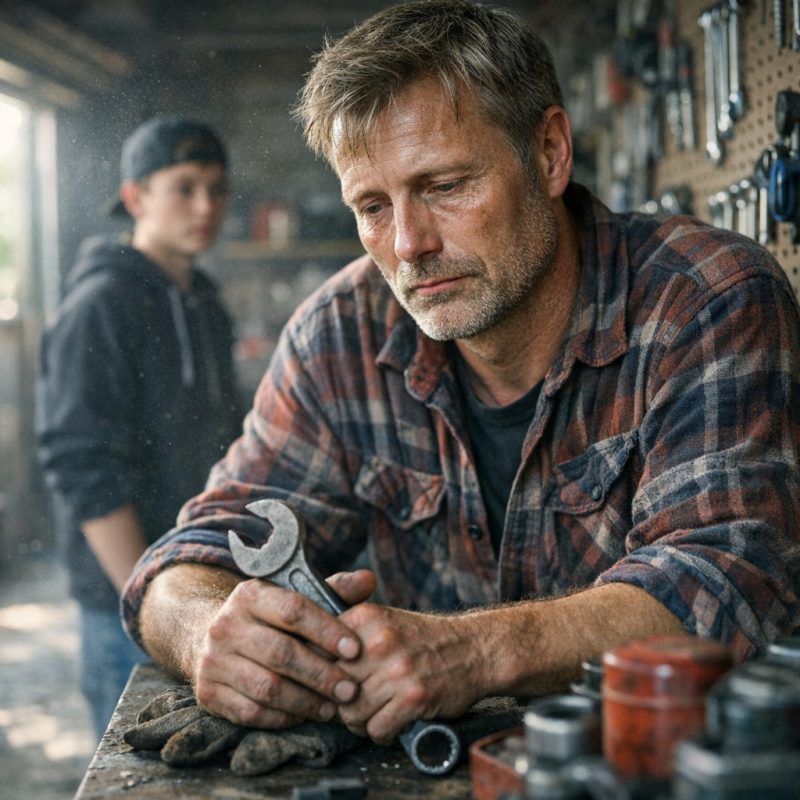 Image by FCT AI
The College Application
I started researching colleges that same week. Not local ones—I mean schools across the country. California. Oregon. Anywhere far enough that I'd have a legitimate excuse to leave. I filled out applications with this manic energy, like distance could solve everything. Boston University. University of Washington. Schools with strong financial aid programs because I knew I couldn't ask my parents for help. Each application felt like a tiny act of rebellion. Like I was building an escape route from this suffocating house and whatever twisted agreement kept us all trapped in it. My guidance counselor was thrilled at my sudden ambition. 'You've really blossomed this year,' she said, completely missing that I wasn't blossoming—I was fleeing. But every time I imagined myself in a dorm room somewhere, finally having my own space, finally breathing freely, I'd picture Dad alone in that twin bed. Still working two jobs. Still exhausted. Still trapped in whatever nightmare Mom had created. But leaving felt like abandoning Dad to a prison I was only beginning to understand.
 Image by FCT AI
The Second Job Discovery
I followed the warehouse lead on a Saturday. Told Mom I was meeting friends, then took the bus to the industrial area across town. Found Dad's car in the parking lot of a massive distribution center. I waited outside for an hour before I saw him emerge during a break, wearing a bright orange safety vest. He looked exhausted even from a distance. A heavy-set guy walked out with him—they were talking, and Dad was nodding at something. I texted Dad that I needed to talk. Twenty minutes later, he came out looking panicked. 'Alex? What are you doing here?' 'I could ask you the same thing,' I said. He rubbed his face. 'It's just weekend work. Extra money.' 'For what? What do you need extra money for?' He wouldn't meet my eyes. 'Things add up. The house, expenses.' But I'd seen our house. Seen Mom's bedroom with its expensive furniture, her closet full of clothes. He wasn't living another life—he was working himself to exhaustion just to afford this broken home.
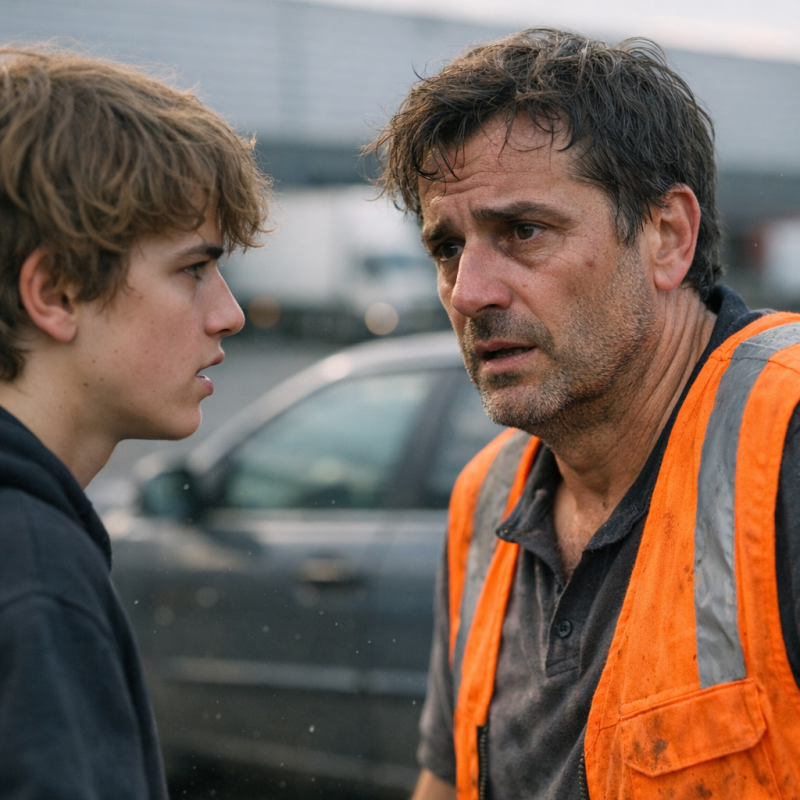 Image by FCT AI
The Coworker's Comment
The heavy-set guy—Daniel, according to his name tag—approached while Dad was getting us water from the vending machine. 'You're the kid?' he asked, friendly enough. 'That's me,' I said. 'Your dad talks about you constantly. Good man, your old man. Works harder than anyone here.' 'How long has he been doing this?' I asked. Daniel shrugged. 'Since before I started, and I've been here twelve years. Weekends, holidays—he never misses a shift. Always says he's gotta keep the peace at home.' Something in my chest tightened. 'Keep the peace?' 'Yeah, you know.' Daniel looked uncomfortable, like he'd said too much. 'Every marriage has its... arrangements.' Dad was walking back toward us, and Daniel lowered his voice. 'He's a good guy. Best coworker I ever had. Never complains, even though...' He trailed off. When I asked what he meant, Daniel just shook his head and said, 'Your old man's a saint—or a fool.'
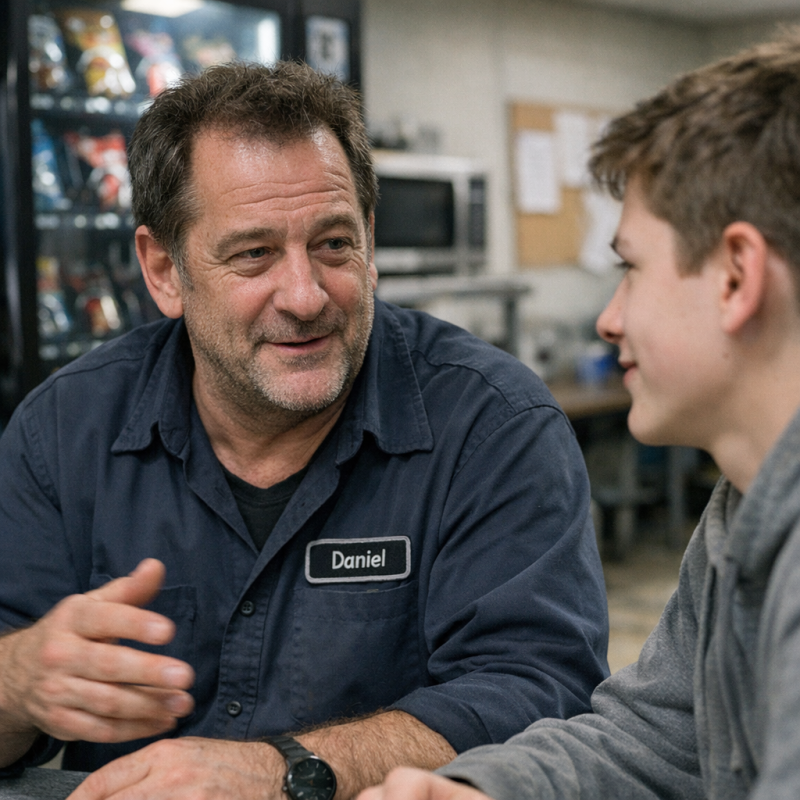 Image by FCT AI
The Financial Records
I waited until Dad left for his Sunday warehouse shift before I went into his room—our room. I'd never looked through his stuff before; it felt like a violation. But I needed to understand. His filing box was in the closet, organized with the same careful precision he brought to everything. Bank statements. Mortgage papers. Utility bills. Every single one in Dad's name. Every payment from his account. I pulled out months of statements, then years. The mortgage: Dad. The electric bill: Dad. Water, gas, internet, property taxes: Dad, Dad, Dad, Dad. There were no joint accounts. No contributions from Mom. She lived in that house, in her beautiful bedroom with her expensive tastes, and paid for exactly nothing. I found his pay stubs from both jobs, calculated what he was bringing in, what was going out. He was barely breaking even. She lived like a queen in her perfect bedroom while he worked two jobs and slept on a twin bed next to his teenage son.
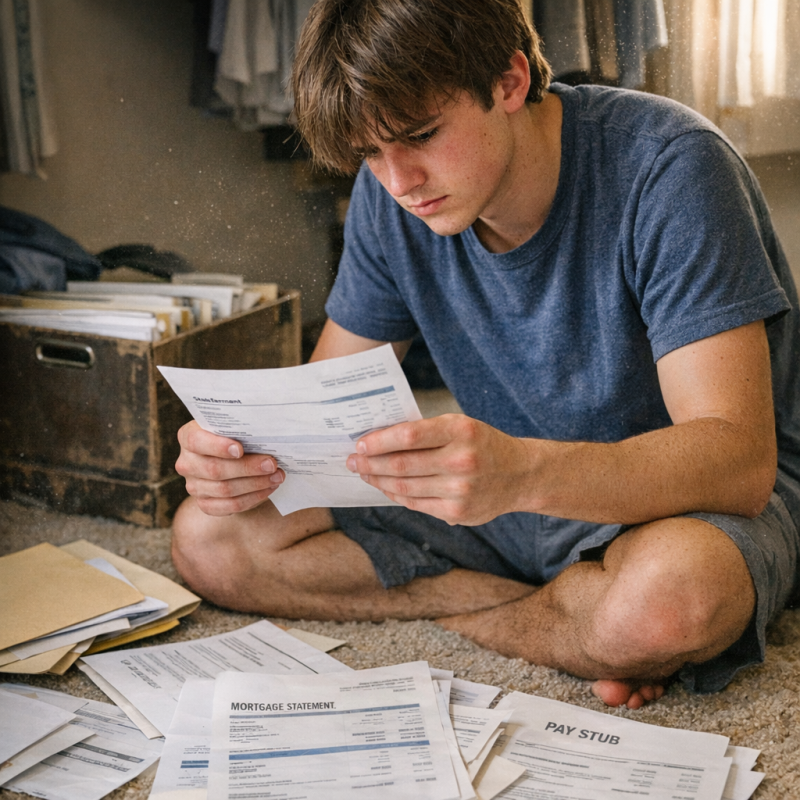 Image by FCT AI
The Bedroom Realization
I was putting the papers back when it hit me. The guest room. I walked down the hall and opened the door to the space we never used. It was fully furnished—a queen bed, a dresser, even a small desk. Clean but untouched, like a hotel room waiting for guests who never arrived. I tried to remember the last time anyone had slept there. Years. Maybe when my grandmother visited when I was twelve? The bed was made with nice sheets. There was space in the closet. A reading lamp. Everything someone would need for a private bedroom. Dad could have slept here this whole time. There was no reason—no logical, practical reason—for him to share a room with me. Not when this perfectly good bedroom sat empty year after year. Mom had two bedrooms to herself while Dad had none. This wasn't about space or logistics or keeping up appearances. This wasn't about 'what's best for Alex.' This wasn't about logistics or comfort—it was about humiliation.
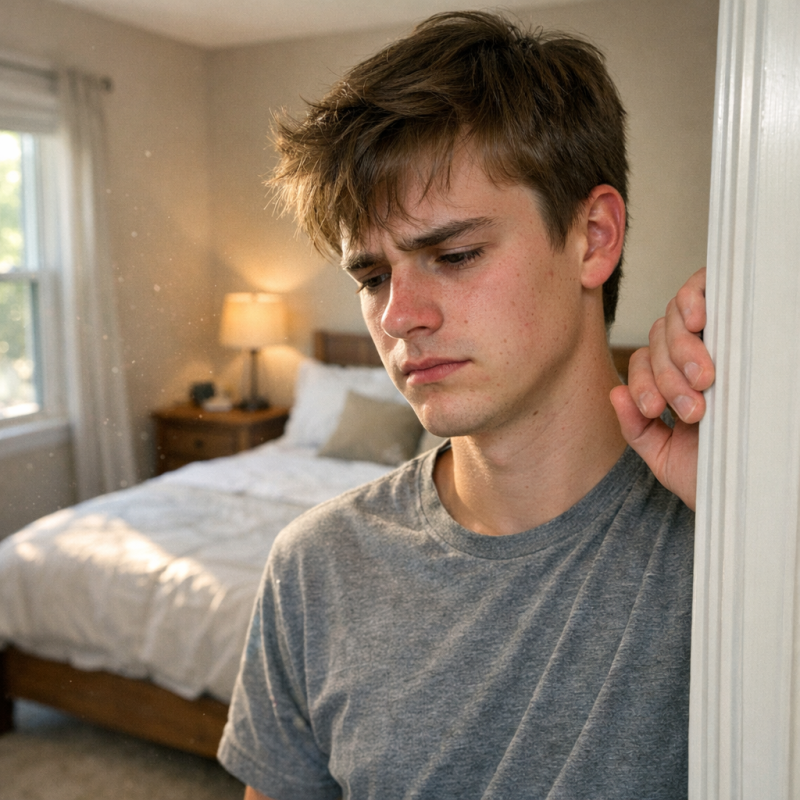 Image by FCT AI
The Ally Found
I told Rachel everything one night after dinner. We sat in her car outside a coffee shop, and I just unloaded—the shared bedroom, the separate bedrooms for Mom, the guest room that sat empty, all of it. She didn't interrupt once, just listened with this increasingly disturbed expression. When I finished, she was quiet for a moment. Then she said something that made my stomach drop. 'Alex, this doesn't sound like a separation. This sounds like she's keeping him hostage.' I started to protest—they'd agreed to stay together for me, right?—but Rachel shook her head. 'Did they though? Or did she decide the terms and he just... went along with it?' I'd never thought about it that way. I'd always assumed it was mutual, some kind of compromise they'd both chosen. But Rachel kept going. 'Think about it. She has two bedrooms. He has none. She controls the house. He works constantly and has nothing to show for it. That's not co-parenting. That's control.' Her words stuck with me: 'Your mom doesn't sound separated—she sounds like she's keeping him hostage.'
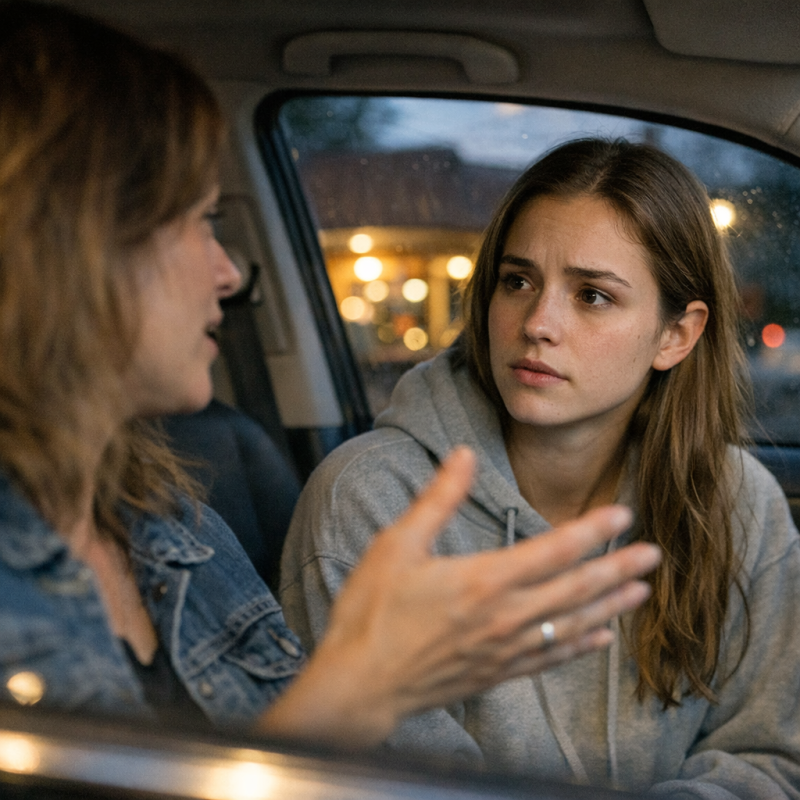 Image by FCT AI
The Night Watch
That night I couldn't sleep. I heard Dad come home around eleven—late shift again. I kept my eyes open in the darkness, listening to his footsteps in the hallway. He went to the bathroom first, then I heard him walking toward our room. But he stopped. I lifted my head slightly and could just barely see through the crack in our door. He was standing outside Mom's bedroom. Just standing there, completely still. Not knocking. Not trying the handle. Just staring at that closed door like it held something he'd lost forever. I watched him, this man who worked himself to exhaustion, who slept on a twin bed in his teenage son's room, who never complained or pushed back. And in that moment, watching his silhouette in the dim hallway light, I saw something I'd never recognized before. Grief. Deep, bone-tired grief. Not the fresh kind—the old kind that's settled into your marrow and become part of who you are. He stood there for almost a minute, staring at that closed door like he was mourning something that had died a long time ago.
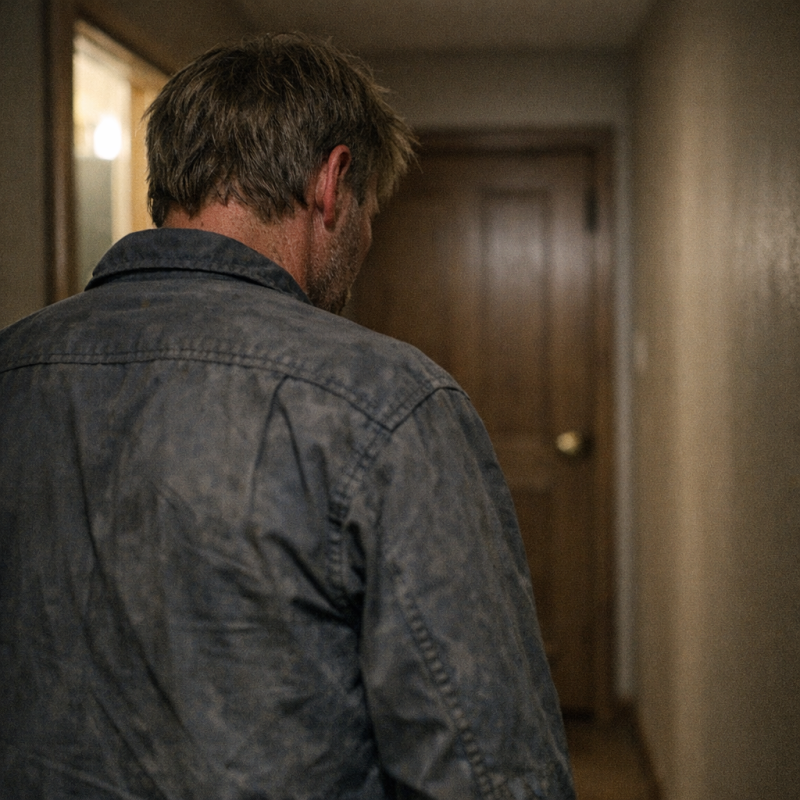 Image by FCT AI
The Direct Question
The next morning I waited until Mom left for her Saturday yoga class. Dad was making coffee, moving through the kitchen with that same exhausted efficiency he brought to everything. I sat at the table and just asked him. 'Why do you stay?' He froze mid-pour, coffee steaming into his mug. 'What do you mean?' he said, but his voice had gone careful. 'Here. In this house. In this... situation. Why do you stay?' He set down the coffee pot and leaned against the counter. For a long moment he didn't say anything. Then he opened his mouth like he was going to answer, closed it again, looked away. 'It's complicated, Alex.' 'So explain it to me. I'm seventeen. I'm not a kid anymore.' He rubbed his face with both hands, and I saw how tired he really was. Not just physically—tired in his soul. 'There are things you don't understand. Things that happened before—' 'Then help me understand.' He looked at me like I'd asked him to explain gravity—like the answer was so fundamental and terrible he didn't know where to start.
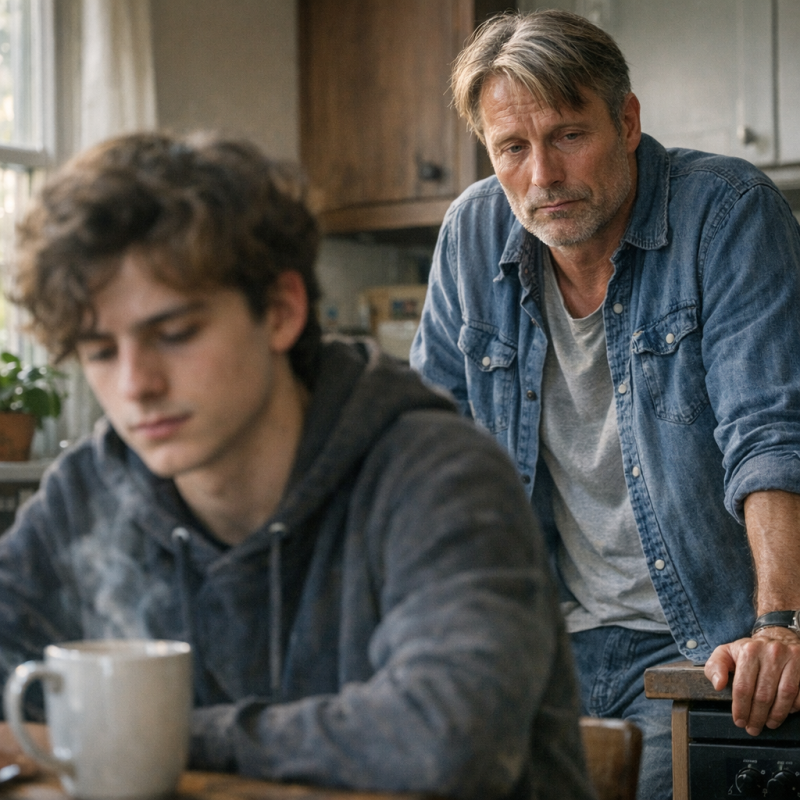 Image by FCT AI
The Partial Confession
He sat down across from me, hands wrapped around his coffee mug like it might anchor him. 'I made a mistake,' he said quietly. 'A long time ago. Before you'd remember.' I waited. My heart was pounding. 'What kind of mistake?' 'The kind that breaks things. That breaks trust. Your mother and I—we were different before. Happy, even. And I destroyed that.' His voice cracked slightly on the last word. 'We're all separated because you made a mistake?' I asked. He shook his head. 'We're separated because I betrayed her. Deeply. And she's never forgiven me for it.' 'Dad, what did you do?' He looked up at me then, and his eyes were wet. 'Something I'll regret for the rest of my life.' That was all he'd say. I pushed—I asked again, tried different angles—but he just kept shaking his head. 'It's not my story to tell anymore,' he said. 'It's hers. It's always been hers.' When I asked what he did, he just said, 'Something I'll regret for the rest of my life.'
 Image by FCT AI
The Aunt's Truth
I called Aunt Claire that afternoon. Demanded to meet her. She suggested a park near her apartment, probably sensing this wasn't a phone conversation. When I got there, she was waiting on a bench, looking resigned. 'You talked to your dad,' she said. It wasn't a question. 'He told me he made a mistake. That he betrayed Mom. But he won't tell me what actually happened.' Aunt Claire sighed deeply. 'Of course he won't. Your father's spent fifteen years flagellating himself. He probably thinks you're better off not knowing.' 'Well, I want to know. I deserve to know why my entire childhood has been like this.' She studied me for a long moment. Then she nodded. 'You're right. You do.' She took a breath. 'Your father had an affair when you were two years old. Not a long one, from what I understand. A few months. But your mother found out, and it destroyed her.' The world tilted slightly. An affair. 'And that's why they separated?' 'That's why your mother decided how your father would live for the rest of his life.' She sighed and said, 'Your father had an affair when you were two—and your mother decided he'd spend the rest of his life paying for it.'
 Image by FCT AI
The Betrayal Understood
I walked for hours after that conversation, trying to process it all. An affair. Dad had cheated on Mom when I was too young to remember, and she'd never forgiven him. Part of me got it—I understood betrayal, understood hurt. If someone did that to me, I'd probably hate them too. But fourteen years? Fourteen years of separate bedrooms and shared custody under the same roof and Dad sleeping on a twin bed in my room? I thought about the affair as a starting point, the inciting incident that had broken our family. It made sense as a catalyst. But it didn't explain the architecture of punishment that had followed. It didn't explain why Dad accepted it all without question, why he worked himself to death and came home to nothing, why he stood outside Mom's door at night looking like a ghost. Cheating was wrong—I wasn't excusing it. But there was something about the proportionality that didn't sit right with me. An affair was wrong—but fourteen years of this felt like something darker than justice.
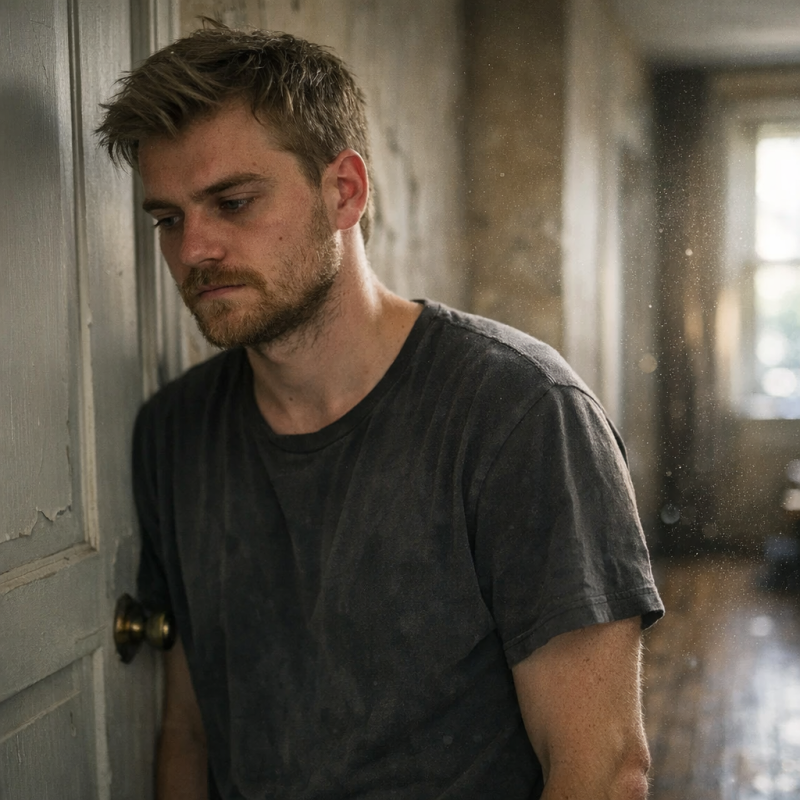 Image by FCT AI
The Document Search
I needed to see it in writing. Aunt Claire had mentioned some kind of agreement they'd made when they separated, and I was pretty sure Mom kept important documents in her filing cabinet. I waited until both my parents were out of the house—Mom at her book club, Dad at work. The filing cabinet wasn't even locked. I found the folder labeled 'Legal Documents' and pulled it out with shaking hands. There were mortgage papers, insurance policies, and then I saw it: a document dated fifteen years ago, right after my second birthday. I started reading. It wasn't what I expected at all. There was no mention of co-parenting or doing what was best for me. Instead, there were clauses about Dad's financial obligations, about household expenses he'd cover, about Mom's right to 'occupy the primary bedroom suite' while Dad would 'reside in alternative accommodation within the family home.' He'd signed away his salary, his privacy, his dignity. What I found wasn't a separation agreement at all—it was a financial contract that looked more like indentured servitude.
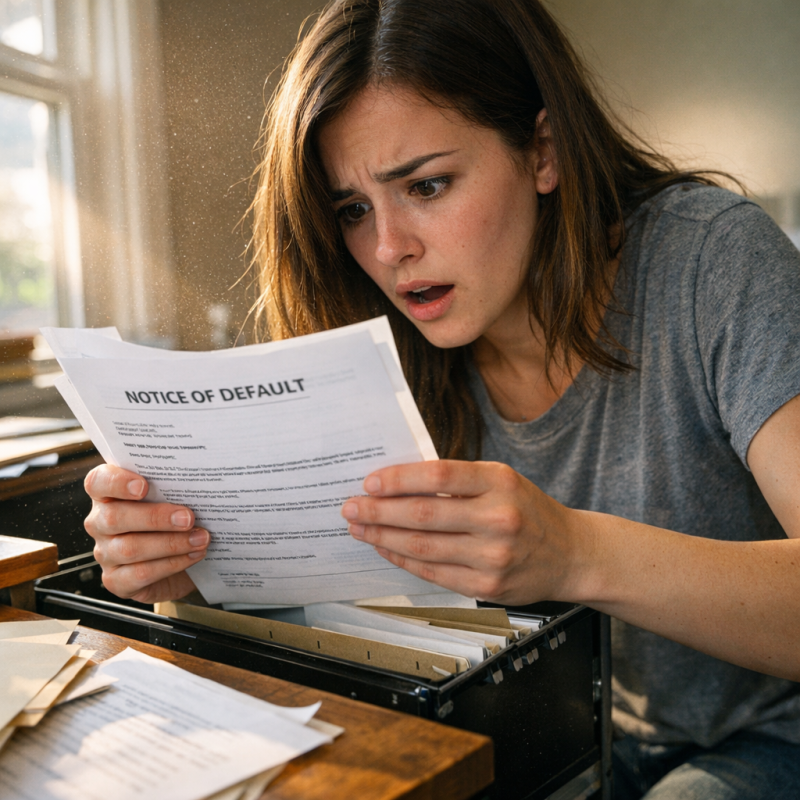 Image by FCT AI
The Punishment Revealed
I was still holding the document when Mom came home early. She saw the papers in my hands and her face went carefully neutral. 'We need to talk,' I said. For once, she didn't deflect or change the subject. We sat in the living room—her space—and I laid the document on the coffee table between us. 'This isn't about me. This was never about keeping the family together for my benefit.' She was quiet for a moment. Then she said, 'No. It wasn't.' Just like that. No denial. 'So what was it about?' I asked, even though I already knew. 'It was about making sure your father understood the consequences of his choices. He wanted to destroy our marriage? Fine. But he'd support me. He'd live under my roof, by my rules, with constant reminders of what he gave up.' Her voice was cold, matter-of-fact. 'The bedroom arrangement?' 'He didn't deserve privacy. Didn't deserve comfort. He deserved exactly what he got.' I felt sick. 'For fourteen years?' She looked me in the eye and said, 'He destroyed our marriage—I just made sure he'd never forget it.'
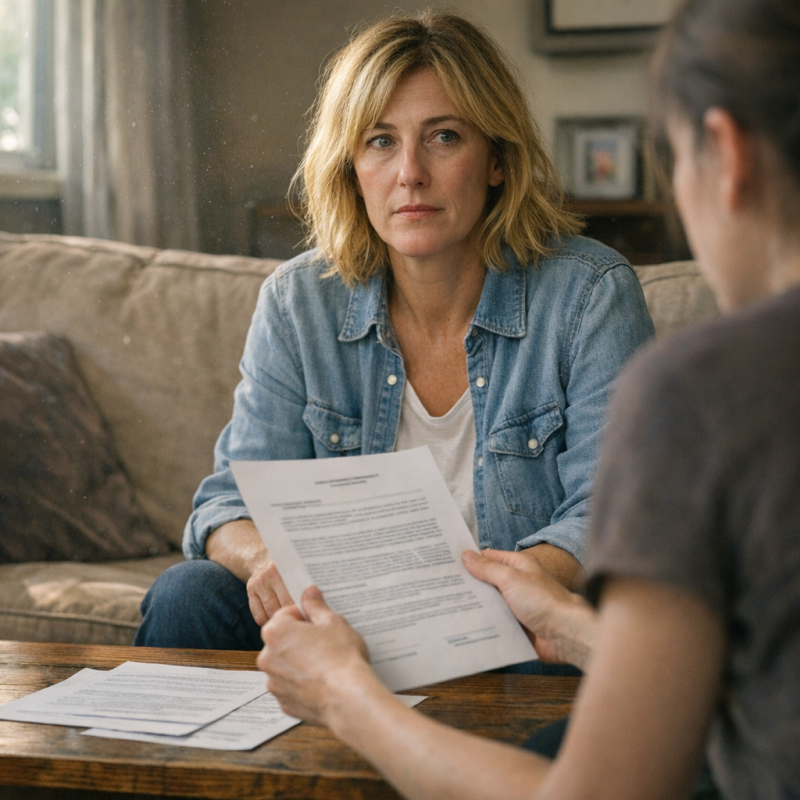 Image by FCT AI
The Reframed Childhood
I spent that night going through every memory like I was sorting through old photographs, except now I could see what was really happening in each frame. The bedroom arrangement wasn't about space or finances—it was designed humiliation. Every night Dad had to climb into that twin bed while Mom slept alone in their room. The financial control wasn't about stability—it was about making sure he couldn't leave even if he wanted to. Those weekend absences? I used to think Dad was working or avoiding us. Now I realized he was probably just escaping, finding whatever brief respite he could from living in a house designed to punish him. The separate meals, the silent treatments, the way Mom would make decisions without consulting him—it all clicked into place. I'd grown up thinking this was normal family dysfunction. Divorced parents who still lived together. Complicated adult stuff I didn't understand. But it wasn't complicated at all. It was systematic. It was deliberate. It was cruel. I wasn't raised in a broken home—I was raised in a torture chamber designed to look like a family.
 Image by FCT AI
The Professional Help
I found Dr. Singh through my university's counseling referral service. I told her everything in our first session—the bedroom, the document, Mom's confession, all of it. She listened without interrupting, taking notes occasionally. When I finished, I expected her to validate what I already knew: that Mom was abusive, that Dad was trapped, that I'd been a pawn in some twisted revenge plot. Instead, she put down her pen and leaned forward slightly. 'I want to ask you something that might be difficult,' she said. 'In all of this, has your father ever tried to leave?' I started to explain about the legal document, about the financial obligations, but she gently stopped me. 'I understand the constraints your mother created. But Alex, your father is an adult. He's employed. He has options, even difficult ones.' The room felt too small suddenly. 'Are you saying this is his fault?' 'I'm saying it's more complex than you might want it to be.' She listened to the whole story and said something that changed everything: 'Your father can leave—he always could. The question is why he hasn't.'
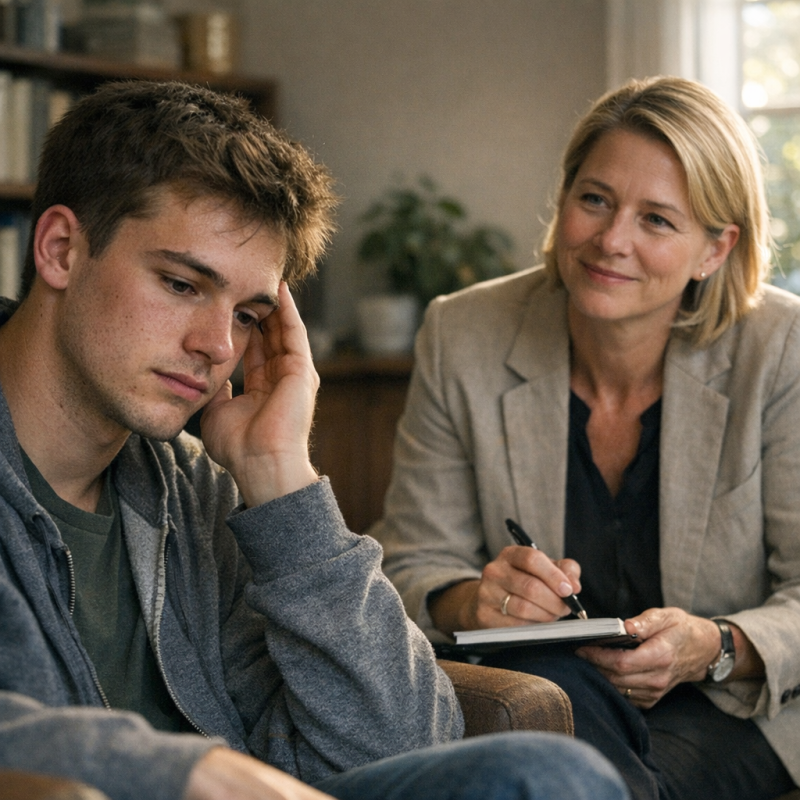 Image by FCT AI
The Father's Choice
I waited until Mom was out and Dad was home from work. We sat in the kitchen—neutral territory—and I asked him directly: 'Why didn't you leave?' I expected excuses about money or legal obligations or fear of what Mom might do. Instead, Dad was quiet for a long time. Then he said, 'Because she was right.' I didn't understand. 'Right about what?' 'About what I deserved. I had an affair, Alex. I broke our marriage vows. I hurt her in a way that—' His voice cracked. 'When she offered to let me stay, to still be part of your life, I thought it was generous. I thought I was getting off easy.' 'Easy? Dad, she's been punishing you for fourteen years.' 'I punished her first,' he said quietly. 'I destroyed what we had. Everything that came after—the bedroom, the rules, all of it—I accepted it because I believed I'd earned it.' My chest felt tight. 'You think you deserved to be treated like that?' He said, 'I broke our family, Alex. Everything that came after was just the price I had to pay.'
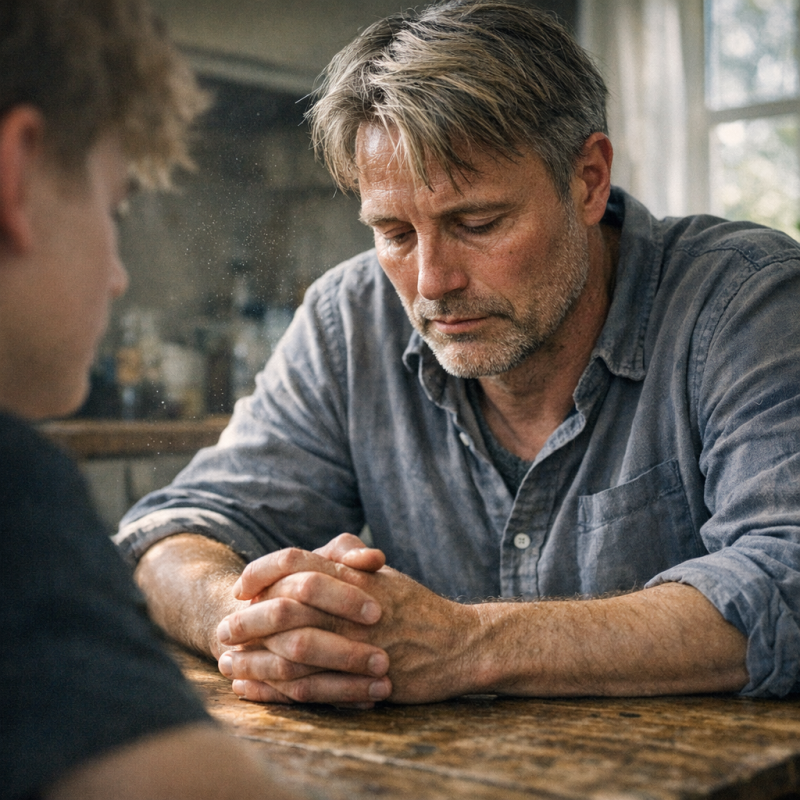 Image by FCT AI
The Breaking
I sat across from him and said the thing I'd been afraid to say: 'The price is too high. It's destroying you. It's destroying all of us.' Dad shook his head. 'You don't understand—' 'I understand that guilt isn't supposed to last forever. That punishment isn't supposed to be a life sentence. Dad, you had an affair. That was wrong. But what Mom's done for fourteen years? That's wrong too.' He looked at me like I was speaking a foreign language. 'She gave me a second chance.' 'She gave you a prison sentence with visiting hours.' My voice was shaking now. 'You think you're paying for what you did, but you're not. You're just—you're just slowly disappearing. And I've watched it happen my whole life and I didn't even realize it until now.' Something in his face started to crack. 'I don't know how to leave,' he whispered. 'I don't know how to stop believing I deserve this.' 'Then start by believing me when I tell you: this has to end.' For the first time in fourteen years, Dad started to cry.
 Image by FCT AI
The Ultimatum
I called a family meeting. Both of them sitting in the living room, me standing because I needed the height, the authority. 'This arrangement ends now,' I said. 'Either you two figure out how to move forward—therapy, separation, divorce, whatever—or I'm done. I'll finish school, and then I'm gone. And I won't come back.' Mom's expression didn't change. 'You're eighteen. You think you can dictate terms?' 'I'm not dictating. I'm telling you what I need to stay in this family. And what I need is for this punishment system to end.' Dad sat silent, hands folded. 'Your father can leave anytime he wants,' Mom said, her voice sharp. 'He chooses to stay.' 'Because you convinced him he deserved to be punished forever. Because you've spent fourteen years making him believe that leaving would make him an even worse person than he already thinks he is.' I looked at both of them. 'I'm not asking. I'm telling you. This ends, or I do.' Mom laughed and said, 'You think you can fix this with threats?'
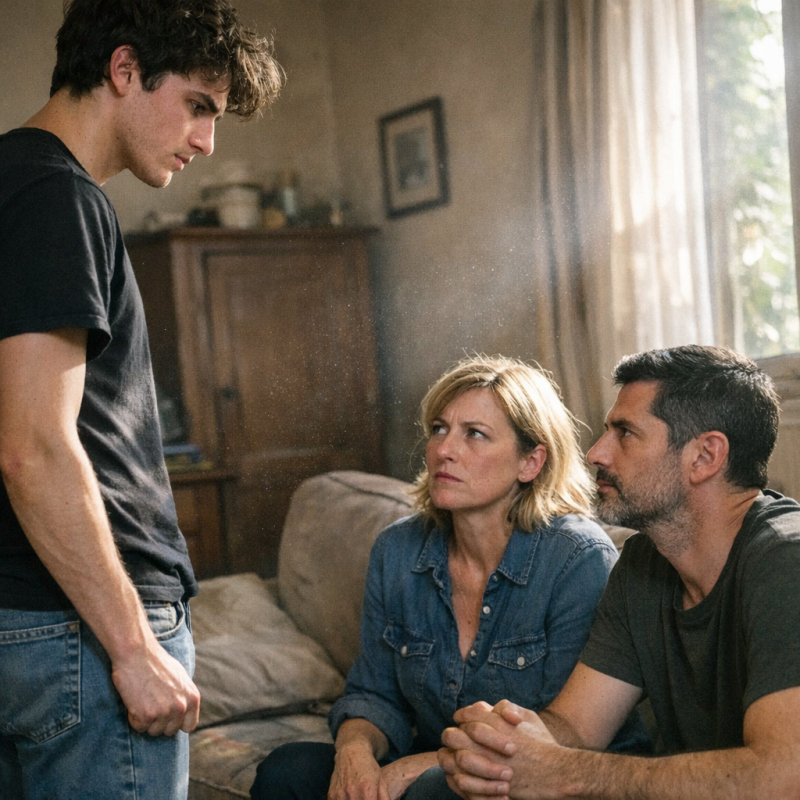 Image by FCT AI
The Mother's Defense
After Dad left the room, Mom turned to me with this expression I'd never seen before—raw and defensive and almost desperate. 'You want to know what it was like? Finding out your husband has been with someone else? That everything you built together meant so little he could just—' Her voice broke. 'I was the victim here, Alex. I was the one betrayed. The one left alone while he was out destroying our marriage.' 'So you decided to destroy him instead?' 'I decided to give him a second chance. I let him stay. I let him be your father.' 'Under conditions designed to humiliate him every single day.' She stood up, furious now. 'He humiliated me first. He made his choices. I just made sure he lived with the consequences.' 'For fourteen years.' 'Yes. For fourteen years. Because that's how long it takes for a betrayal like that to—' She stopped. 'Most women would've thrown him out immediately. I gave him the chance to make it right.' She said, 'I gave him a second chance by letting him stay—most women wouldn't have been that generous.'
 Image by FCT AI
The Alliance
Dad came back into the room, and I could see something had shifted in him. He looked at Mom directly—not down, not away, but directly—and said, 'I'm leaving.' Mom froze. 'What?' 'I'm leaving. Tonight. I'll find an apartment, figure out the finances, whatever I need to do. But I'm done.' His voice was steady for the first time in years. 'You don't mean that,' Mom said, but there was uncertainty creeping into her voice. 'I do. Alex is right. This has gone on long enough. I made a mistake fourteen years ago. A terrible one. But I've paid for it. We've all paid for it.' 'If you leave now—' 'I know. I know exactly what it means.' He glanced at me. 'But I can't do this anymore.' Mom's face went hard. She turned to Dad, then to me, calculating. 'Fine. Walk away. That's what you do, isn't it? When things get difficult, you run.' Then she looked at Dad like she was playing her final card. She looked at him like he'd slapped her and said, 'If you walk out that door, you lose Alex forever.'
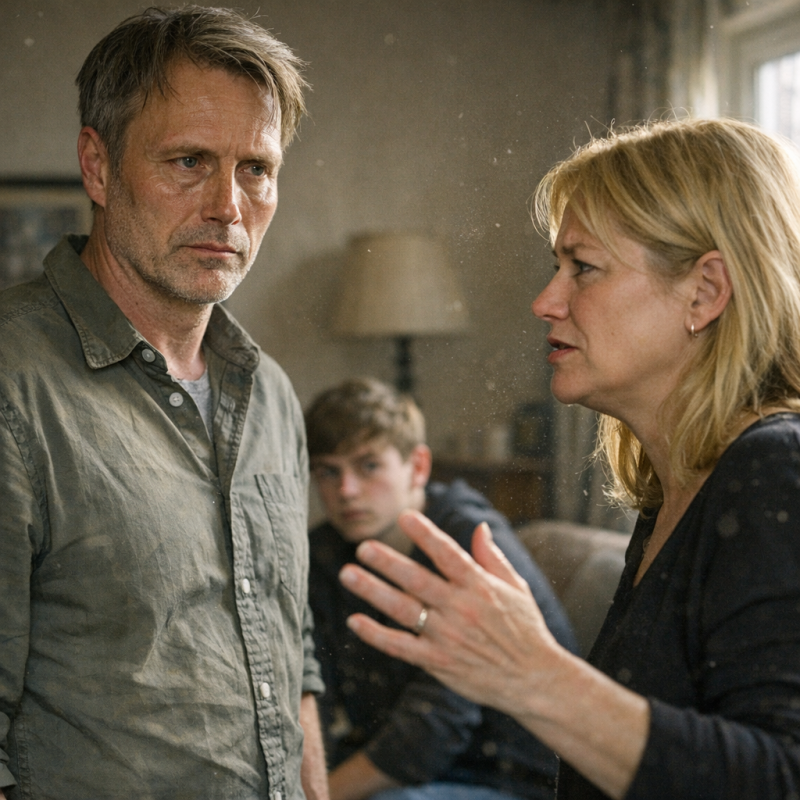 Image by FCT AI
The Choice Made
I stepped between them. 'No. He doesn't.' I looked at Dad. 'Leave. Please. I'll come visit. We'll have dinner. We'll figure it out. But you need to go.' Mom made a sound like she'd been struck. 'You're choosing him? After everything I've done for you?' 'You didn't do this for me. You never did.' I turned back to Dad. 'Pack a bag. I'll help you find a place tomorrow.' He stared at me like he couldn't quite believe it was happening. Then he nodded and went to the bedroom—the bedroom he'd shared with me for seventeen years. Mom stood in the living room, silent. When Dad came back with a duffel bag, she moved to the hallway, blocking his path for just a moment. Then she stepped aside, her face unreadable. 'This is a mistake,' she said quietly. Dad didn't answer. He just walked past her, and I followed him to the door. We stood there for a second, and he hugged me—brief and tight. Then he left. Dad packed a bag that night while Mom stood in the hallway, silent and stone-faced.
 Image by FCT AI
The Empty Room
I closed the door and stood there in the silence. The room felt enormous, like a cathedral built for two that now held only me. I sat on my bed—the one I'd slept in every night for seventeen years—and looked at the twin across from mine. Dad's bed. It still had his blanket on it, the navy blue one he'd folded every morning with hospital corners, a habit from some life before Mom. The pillow still held the impression of his head. I couldn't bring myself to smooth it out. This was supposed to feel like victory, like I'd finally done something right. Instead, it felt like standing in a graveyard. All those nights, he'd been right there. Three feet away. Suffering in silence while I slept, oblivious, dreaming kid dreams. I pulled my knees to my chest and let myself cry—really cry, for the first time since understanding what had happened. The twin bed across from mine sat empty, a monument to fourteen years of suffering I'd slept through.
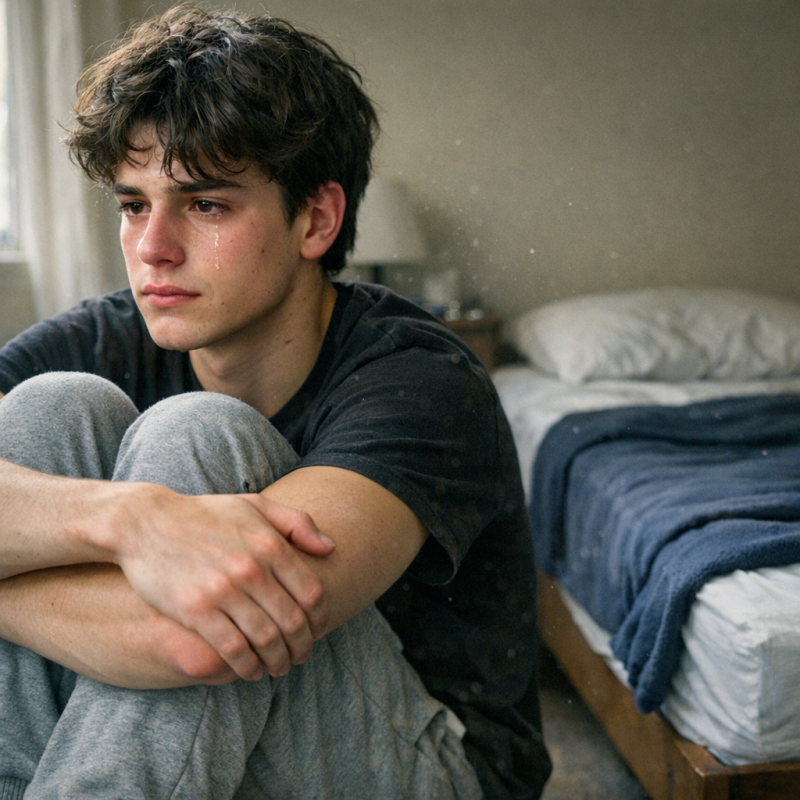 Image by FCT AI
The Aftermath
Six months later, I knocked on the door of Dad's apartment—a small one-bedroom in a building with actual working heat. He answered in a T-shirt and jeans, barefoot, relaxed. 'Hey, kiddo.' We'd had dinner every other week since he left, but this was different. This was him in his own space, a place Mom had never been. The apartment was sparse but clean. He had a couch. A TV. A coffee table with a book on it, open, like he'd actually been reading for pleasure. 'You look good,' I said, and meant it. He did. The permanent tension in his shoulders had eased. The shadows under his eyes had faded. He smiled—not the careful, measured smile I'd grown up with, but something genuine and unguarded. 'I feel good,' he said, and I believed him. We ordered takeout and watched a movie, and he laughed at the dumb jokes. Just laughed. No glancing toward the hallway. No stiffening at footsteps. He looked ten years younger, like freedom had returned something Mom had stolen long ago.
 Image by FCT AI
The Estrangement
Mom and I spoke maybe once a month, and only because I forced myself to answer her calls. She never apologized. Not once. Instead, she'd say things like, 'You'll understand when you're older,' or 'Marriage is complicated,' as if complexity excused cruelty. I tried, at first, to explain why what she'd done was wrong. She'd interrupt, defensive, insisting she'd 'kept the family together' and 'made sacrifices.' Once, she actually said, 'Your father was weak. I did what I had to do.' I stopped trying after that. I'd see her on holidays, stiff obligatory visits where we made small talk and avoided the past. She'd ask about school, work, my life, like we were acquaintances. Sometimes she'd slip, saying something like, 'If your father hadn't been so difficult,' and I'd stand up and leave. She never chased me. I think she knew she'd lost, but couldn't admit why. I'm older now, and I understand perfectly—I just don't forgive.
 Image by FCT AI
The New Normal
Looking back now, it's strange how something so abnormal became my normal for so long. I didn't question it because kids don't question their reality—they just live in it. Understanding the truth didn't erase those seventeen years. I still remember the sound of Dad's breathing across the room, the way the moonlight cut between our beds, the routine we built around captivity. But knowing changed everything. It changed how I see relationships, boundaries, what love actually means. I'm careful now, maybe too careful, about control. I notice when people manipulate. I speak up when something feels wrong. Dad and I have dinner every week. He's dating someone, cautiously, and she seems kind. Mom still calls, less often now. I answer sometimes. We're polite. Distant. It's better that way. I used to think every family had their quirks. Now I know the difference between quirks and cruelty—and I'll never confuse them again.
 Image by FCT AI