The Question I Couldn't Answer
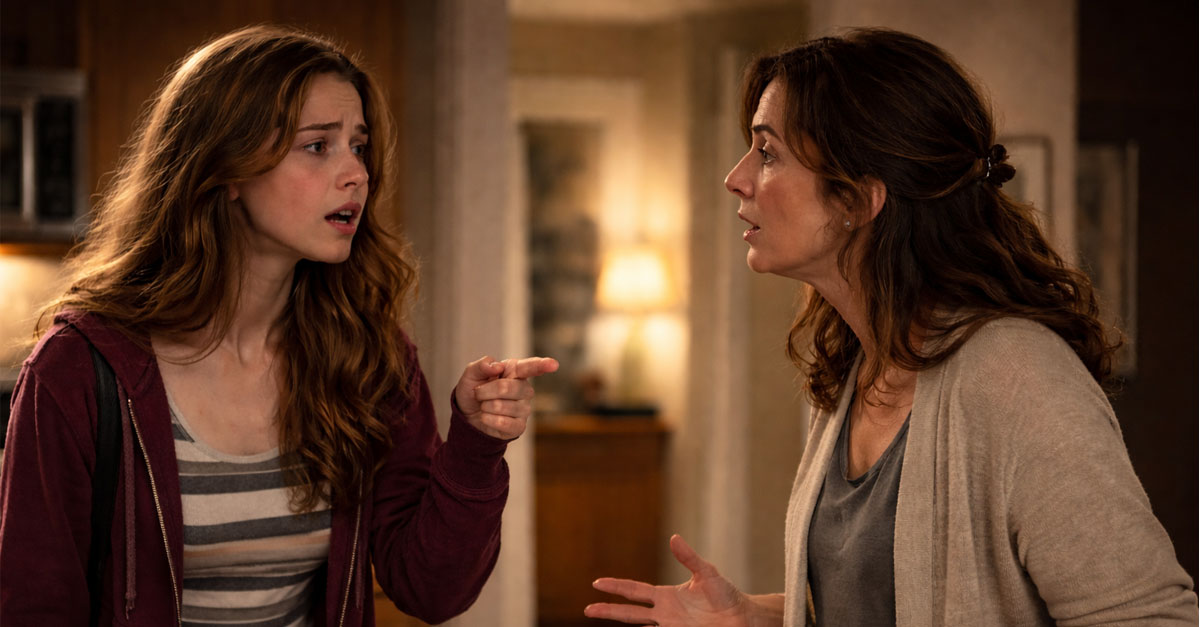
Sophie came into the kitchen that Tuesday afternoon with her laptop open, showing me scholarship applications she'd been researching. 'Mom,' she said, setting it down on the counter, 'how much do I actually have saved for college?' It was such a simple question. The kind any sixteen-year-old planning for her future should be able to ask. But I felt my throat tighten, and I turned back to the dishes I'd been washing, buying myself a few seconds. 'Well, you know, it's been a tough couple of years since your dad passed,' I started, my voice coming out higher than I intended. 'We've had to juggle things.' She didn't say anything right away, just stood there in that way teenagers do when they know you're avoiding something. I could feel her eyes on my back. 'That's not really an answer,' she said quietly. My hands stilled in the soapy water. I turned around, trying to arrange my face into something reassuring, but I could see I was already too late. Her eyes narrowed, and I knew the truth was about to come out.
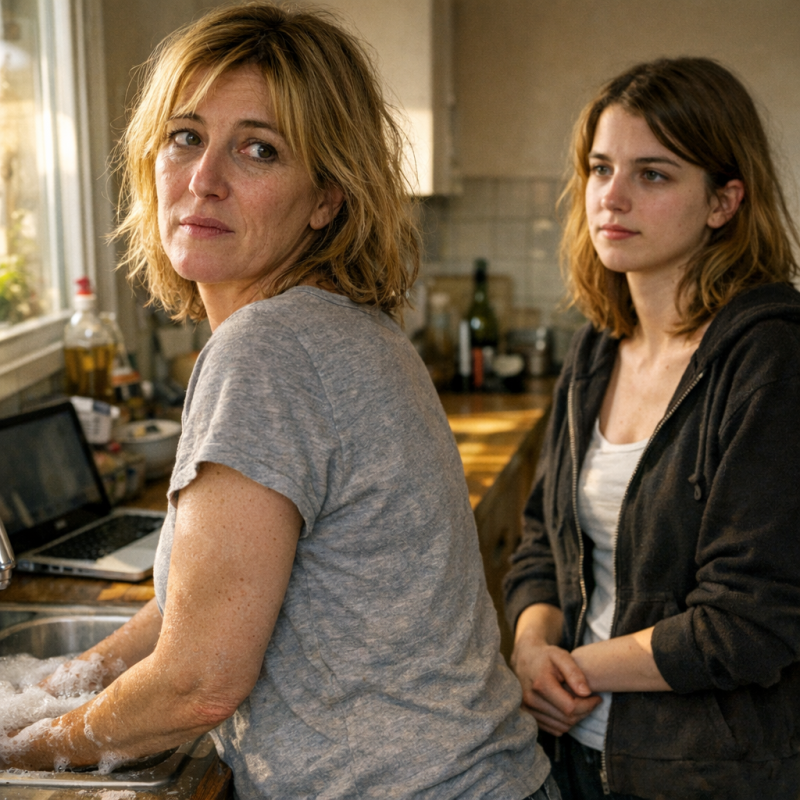 Image by FCT AI
Two Daughters, Two Worlds
Emily and Sophie have always been so different that sometimes I wondered if they actually shared DNA. Emily was my dreamer, the one who read by flashlight under her covers and filled notebooks with ideas about changing the world. She'd talk about molecular biology at dinner like some kids talked about TikTok. Sophie, though—Sophie was practical, grounded, the kid who balanced her own budget at fourteen and researched the best value for everything from sneakers to snacks. David used to joke that Emily had her head in the clouds while Sophie kept her feet firmly on the ground. He passed four years ago, sudden heart attack at forty-nine, and I'd been trying to be both parents ever since. I thought I understood what each girl needed. Emily needed support for her big ambitions. Sophie needed stability and structure. I gave them what I thought they required, made the decisions I thought were right, always with their best interests at heart. But understanding them and treating them fairly turned out to be two very different things.
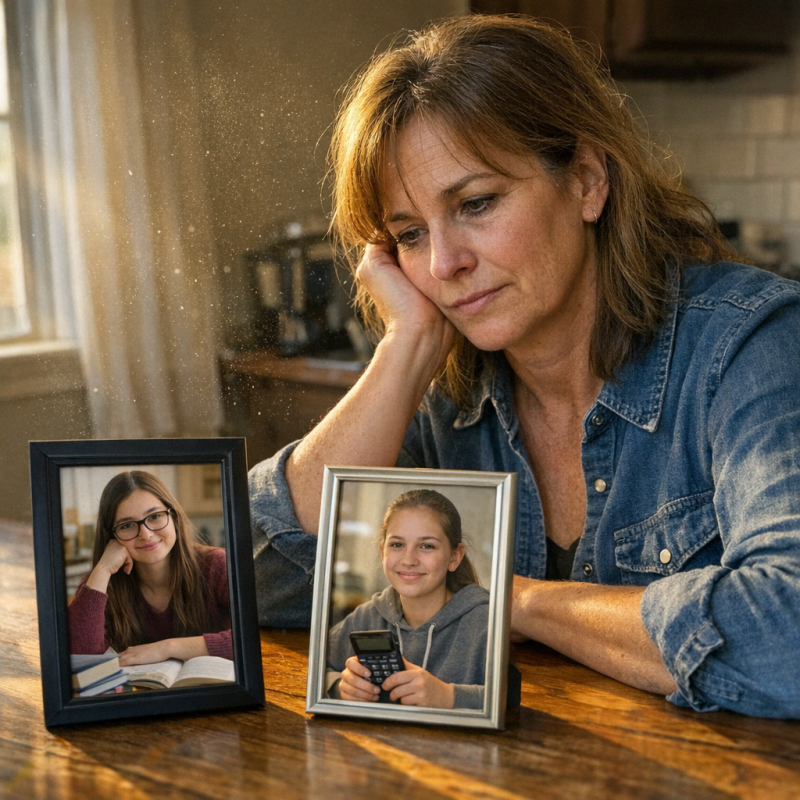 Image by FCT AI
The Years After David
After David's funeral, I sat both girls down at the kitchen table and made them a promise. We were in the thick of grief, none of us sleeping right, the house feeling too quiet without his awful singing in the shower. 'Your dad worked so hard to make sure you'd both have opportunities,' I told them, my voice shaking. 'I'm going to make sure you get the futures he wanted for you. Both of you.' Emily was crying, and Sophie just nodded, that serious expression she'd worn since she was little. David had started college funds for both of them when they were babies—nothing huge, but something. I took on extra nursing shifts, cut every corner I could find, put every spare dollar into those accounts. For three years, I kept that promise. I watched those balances grow, imagined both my girls walking across graduation stages in cap and gown. David would have been so proud. I was going to give them both everything. I just never imagined I'd have to choose between them.
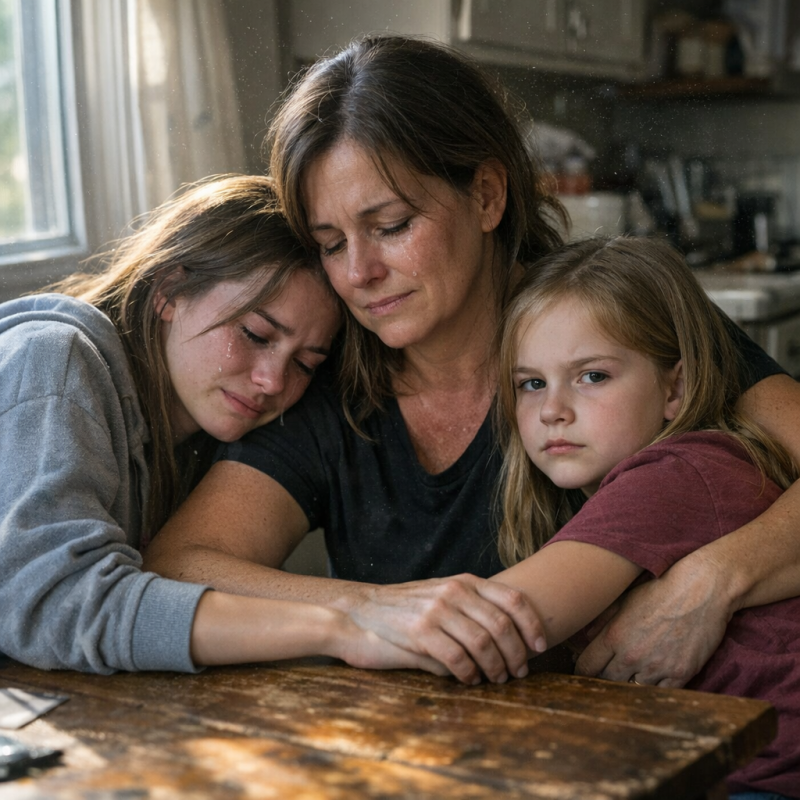 Image by FCT AI
Emily's Acceptance Letter
The day Emily's acceptance letter came from Stanford, she literally screamed. I was at work, and she sent me about fifty texts in a row, all caps, barely coherent. When I got home, she was bouncing around the living room, and Sophie was grinning, genuinely happy for her sister. We opened a bottle of cheap champagne I'd been saving for something special—this was it. 'To Emily, the future doctor!' Sophie toasted, and we clinked our mismatched glasses together. But later that night, after the girls went to bed, I sat with the financial aid letter and felt my stomach drop. Even with Emily's partial scholarship, we were looking at nearly forty thousand dollars a year. I did the math three times, hoping I'd made a mistake. Our savings, my salary, the remainder of David's life insurance that I'd stretched so carefully—it wasn't enough. Not even close. I smiled and told her we'd make it work, but I had no idea how.
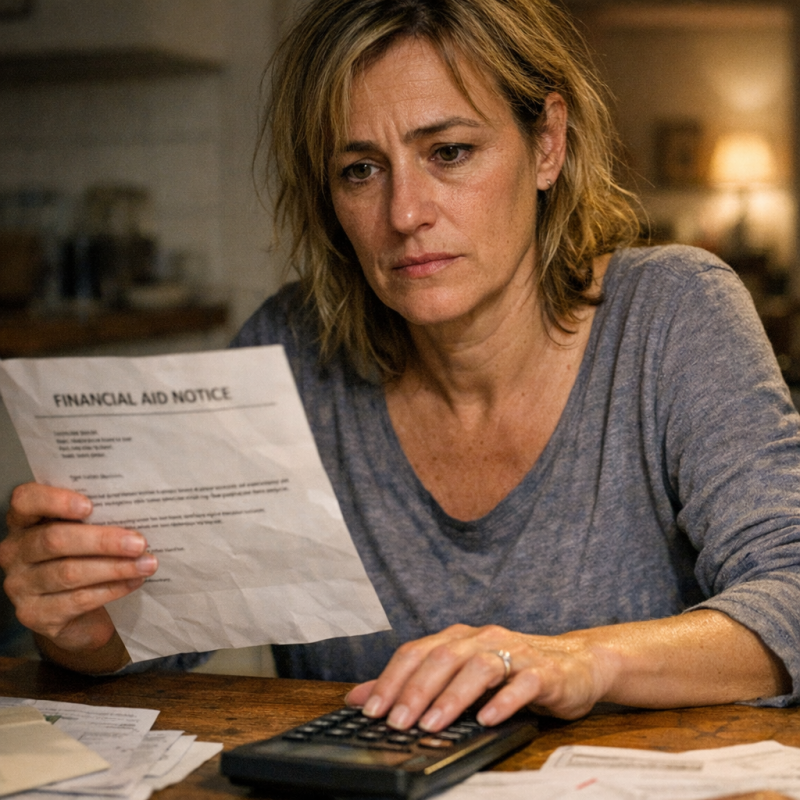 Image by FCT AI
Making It Work
I started picking up every extra shift the hospital would give me. Weekends, holidays, overnight doubles that left me so tired I sometimes couldn't remember driving home. Emily's first year at Stanford was everything she'd dreamed of—she'd video call me from study groups and campus events, her face lit up with excitement. I wore the same scrubs until they were practically threadbare, meal-prepped boring chicken and rice every Sunday, turned the heat down low enough that we all wore sweaters indoors. Sophie never complained, just quietly did her homework at the kitchen table and made herself peanut butter sandwiches for lunch. 'You're working too hard, Mom,' Emily said once during winter break, noticing the shadows under my eyes. 'I'm fine,' I told her, and I meant it. This was what parents did—you sacrificed so your kids could have better. The bills got paid, barely. Emily's tuition got covered, just. For a while, it almost felt sustainable—until it wasn't.
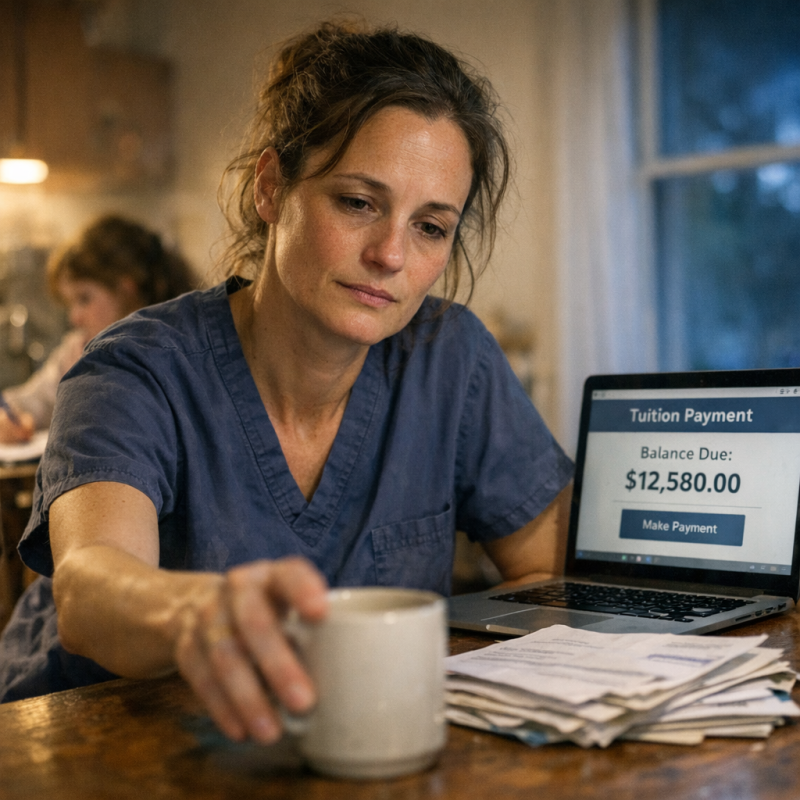 Image by FCT AI
The Call That Changed Everything
Emily's voice on the phone was wrong. That's the only way I can describe it. Thin, shaky, nothing like my confident daughter who usually called to share exciting news about her research projects. 'Mom, I need to talk to you about something,' she said, and I immediately put down the grocery bags I'd been unpacking. 'What's wrong, honey?' The words that came out then—they broke my heart. She was working twenty-five hours a week on top of her courseload, barely sleeping, her grades slipping just enough to put her scholarship at risk. If she lost that scholarship, she'd have to leave Stanford. All that work, all that potential, everything David had wanted for her—gone. 'I'm trying so hard,' she whispered, and I heard her crying. 'I just can't do everything at once.' I stood in my kitchen, phone pressed to my ear, feeling like I was watching my daughter drown through a window. She was drowning, and I was too far away to pull her to safety.
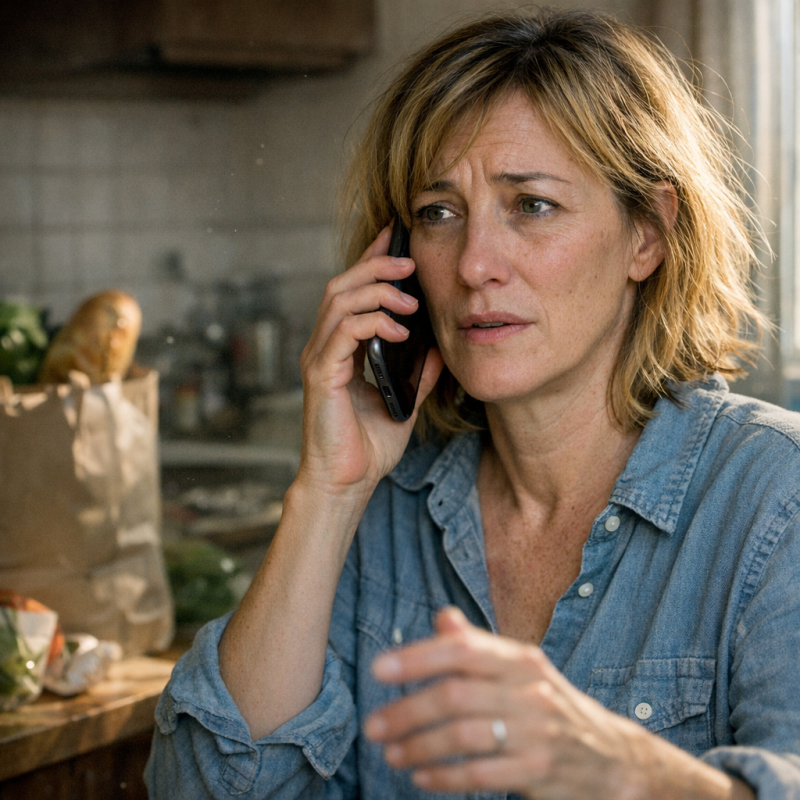 Image by FCT AI
The Sleepless Night
I didn't sleep that night. Not even close. I sat at the kitchen table with a calculator, my laptop, and a growing sense of panic, running through every possible option. Take out loans? My credit was already stretched thin. Pick up more shifts? I was already working fifty-five hours a week and barely functional. Ask family? David's parents were retired on fixed income, and my sister had her own kids to worry about. I made lists, crossed them out, made new ones. The numbers refused to cooperate no matter how many times I rearranged them. Around three in the morning, exhausted and desperate, my mind went to that other account. Sophie's college fund. It had grown to almost thirty thousand dollars—not touched, sitting there, waiting. Sophie was only sixteen. I had two years to replace it before she'd need it, right? I could borrow it, help Emily now, pay it back before Sophie even knew. It would be temporary, just a bridge to get through this crisis. And then I thought of Sophie's college fund.
 Image by FCT AI
Talking It Through
Claire and I grabbed coffee the next day, and I was so exhausted I nearly told her everything before my latte even arrived. She's been my friend since nursing school, seen me through David's passing and everything after. 'Emily's drowning in work and losing her scholarship,' I said, stirring my coffee obsessively. 'I don't know how to help her without completely destroying our finances.' Claire listened quietly, that thoughtful expression she gets. I mentioned, casually—too casually—that Sophie had a college fund sitting there, unused, for two more years. 'You could use some of it temporarily,' I suggested to myself out loud, testing how the words sounded. Claire set down her cup carefully. She looked at me for a long moment, and I could see her choosing her words. 'Have you talked to Sophie about this?' she asked. The question felt like cold water. 'She's sixteen, Claire. She doesn't need to worry about this stuff. I'm the parent.' Instead, she asked me a question I couldn't answer: 'Have you talked to Sophie about this?'
 Image by FCT AI
The Rationalization
I sat at my computer that night, staring at the transfer screen until the numbers blurred. It wasn't stealing—that's what I kept telling myself. It was borrowing. Sophie had two years before she'd need that money, and I'd work double shifts if I had to, pick up extra weekends, rebuild every penny before she even graduated. Emily needed help now, today, or she'd lose everything she'd worked for. I thought about David, about what he would have wanted, and convinced myself he'd understand. He'd always said family takes care of family. My hand shook as I typed in the amount—not all of it, just enough to cover Emily's expenses for the semester and get her back on track. Just temporary. Just until I could fix this. I hovered over the confirm button for what felt like an hour. Then I clicked it. The money moved in seconds, and I watched Sophie's account balance drop like a stone. Temporary became permanent the moment I made the transfer.
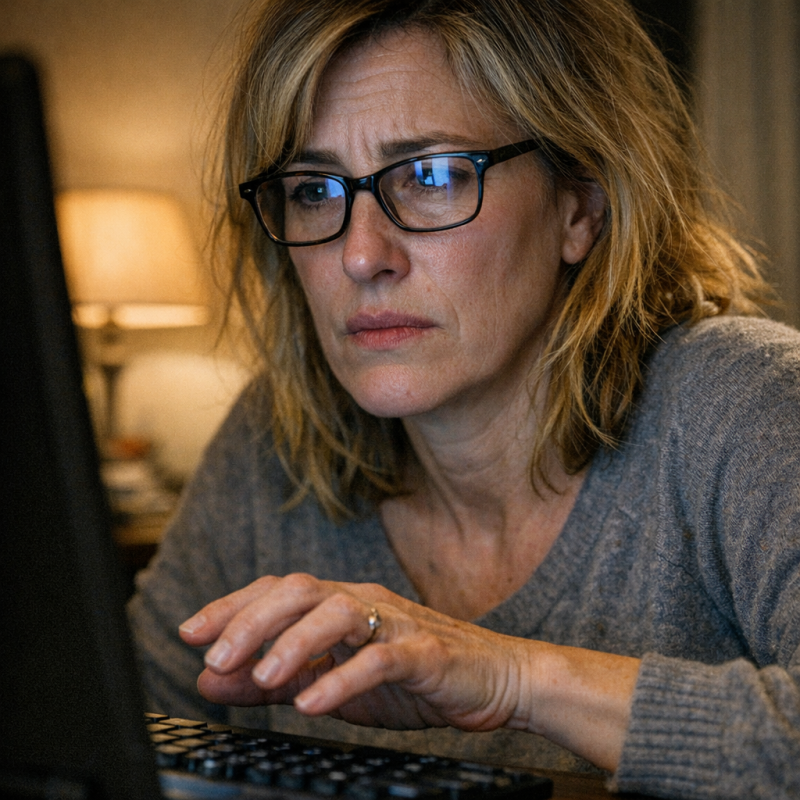 Image by FCT AI

History's most fascinating stories and darkest secrets, delivered to your inbox daily.
Emily's Relief
I called Emily the next morning, my coffee going cold while I rehearsed what to say. 'I found a way to help with your expenses,' I told her, keeping my voice light. 'You can cut back on work hours, focus on your grades.' The silence on her end lasted forever. Then she just broke. 'Mom, I—thank you. God, thank you. I didn't know how I was going to make it through this semester.' Her voice cracked, and I heard her crying, that exhausted kind of crying that comes from months of holding everything together. She told me she'd been having panic attacks before exams, that she'd stopped sleeping. 'You just saved my life,' she said, and I felt this surge of satisfaction, this warmth that maybe I'd made the right call after all. She asked where the money came from, casual curiosity, and I told her I'd been saving, had some extra from picking up shifts. She believed me instantly. Why wouldn't she? Almost.
 Image by FCT AI
Life Goes On
The weeks turned into months, and life settled into this strange normalcy I clung to desperately. Sophie would come home from school and do homework at the kitchen table, complaining about her calculus teacher or showing me funny videos on her phone. I'd make dinner, we'd watch shows together, and I'd tuck away every spare dollar I could find—twenty here, fifty there—into a separate account I'd opened. The math never worked out right. Even with extra shifts, even skipping expenses I shouldn't have skipped, the number climbed so slowly it felt like shoveling sand. But Sophie didn't notice anything. Why would she? Her life went on exactly as it always had. I went to her parent-teacher conferences, helped her study for the SAT, watched her stress about normal teenage things. At night, I'd lie awake calculating how many months until I could rebuild what I'd taken, and the timeline kept stretching further away. But secrets like mine don't stay buried forever.
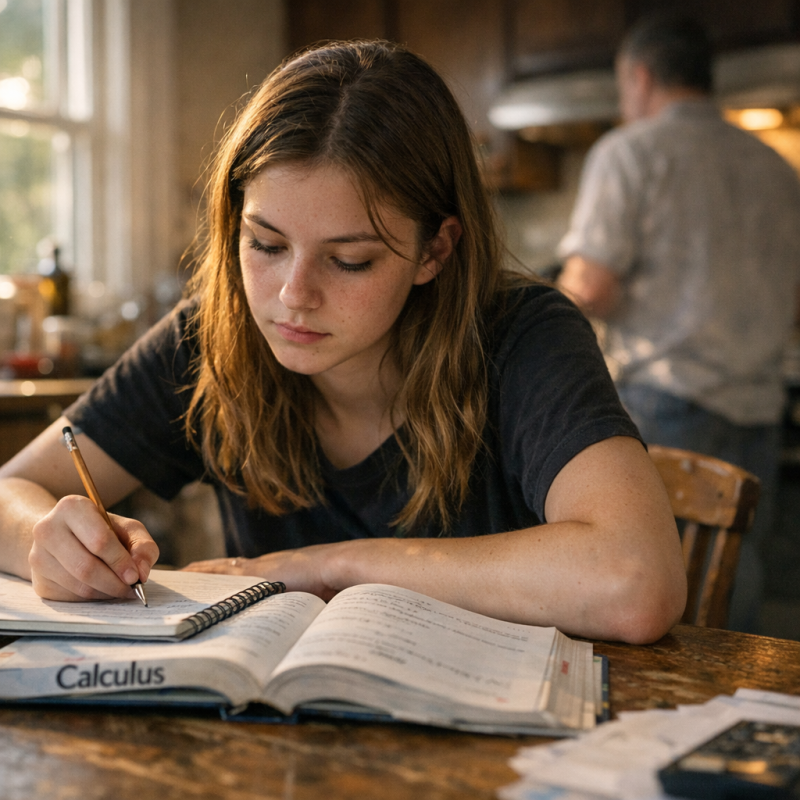 Image by FCT AI
Sophie's Junior Year
Sophie started bringing home college brochures in February—glossy things with students laughing on perfect green lawns. She'd spread them across the dining table after dinner, making piles for reach schools, target schools, safeties. 'This one has an amazing engineering program,' she'd say, eyes bright, showing me campuses I'd never be able to afford now. She made spreadsheets. She researched scholarships and highlighted deadlines in three different colors. Every conversation felt like a ticking clock. 'Mom, did you know this school gives merit aid for students with my GPA?' She was so excited, so trusting that the foundation we'd built was still there. I'd nod and smile and feel my chest tighten until I couldn't breathe. Some nights I'd sit in my car after work, just sitting in the parking lot, trying to figure out how to tell her. Or how to fix it before I had to. The extra shifts weren't enough. The savings account barely grew. I knew I was running out of time.
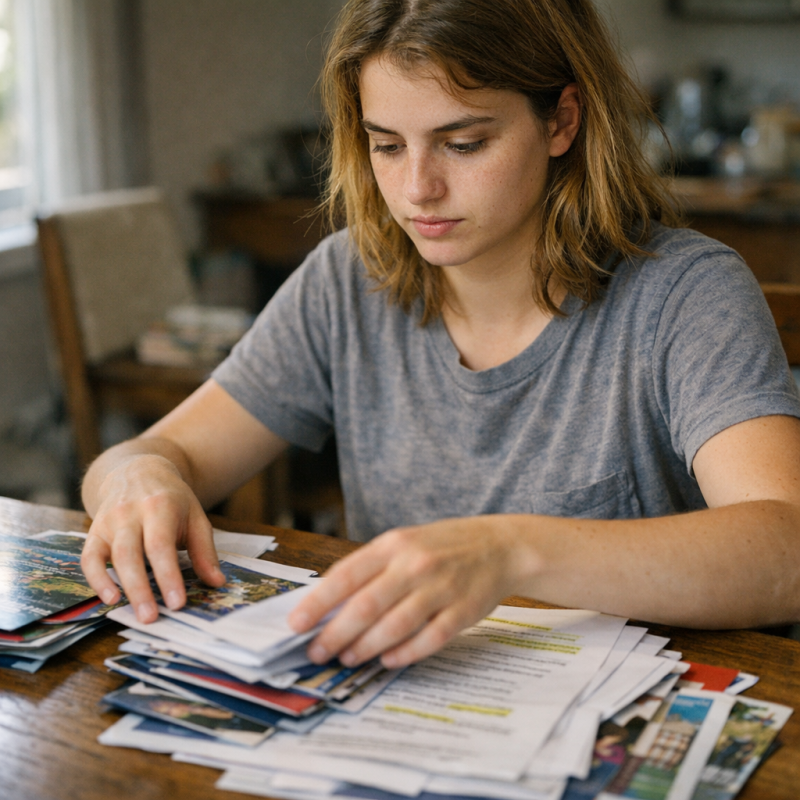 Image by FCT AI
Emily's Progress
Emily called me on a Tuesday in March, and I could hear the smile in her voice before she even said anything. 'I made dean's list, Mom. Straight A's this semester.' I felt this rush of pride so strong it almost knocked me over—my daughter, who'd been drowning six months ago, now thriving. She told me about her classes, about a professor who wanted her to help with research, about how everything finally felt possible again. 'I couldn't have done this without you,' she said, and those words should have felt good. They should have felt like validation. Instead, I felt sick. I congratulated her, told her how proud I was, meant every word. After we hung up, I sat at my kitchen table staring at nothing. One daughter was succeeding—really, genuinely succeeding—because I'd made a choice that the other daughter didn't even know about. Sophie's future for Emily's present. One daughter was thriving because the other didn't know what I'd sacrificed.
 Image by FCT AI
Meeting Marcus
Emily brought Marcus home for Thanksgiving, and he was everything you'd hope for—polite, funny, clearly crazy about her. He helped me with dishes without being asked and made Sophie laugh with terrible dad jokes. Watching them together at dinner, Emily's hand reaching for his, the way she smiled more easily than I'd seen in years—I felt this dangerous warmth spreading through my chest. Maybe I'd made the right choice after all. Maybe this is what David would have wanted. Sophie seemed to like Marcus, asking him about his major and teasing Emily about how he looked at her. It felt like family, like we were all okay. Like my decision had been justified by Emily's happiness, her stability, her future with this good man who loved her. For a few hours, I let myself believe the story I'd been telling myself. But then I'd catch sight of Sophie across the table, seventeen now and researching colleges, and the warmth would freeze. Right for one daughter didn't mean right for both.
 Image by FCT AI
The Budget Project
Sophie came home from school on a random Tuesday in January, dropping her backpack with unusual enthusiasm. 'We're doing this project in economics about budgeting for college,' she said, already pulling out her laptop. 'We have to create a realistic financial plan using our actual savings and expected costs.' She was excited about it, talking fast about interest rates and loan calculations. Then she looked up at me with those clear, trusting eyes. 'Can I see my college fund account? I need the actual numbers for the assignment.' The world tilted. I stood there holding a dish towel, my hands suddenly numb. 'Oh, um, I don't have that information right here,' I said, hearing how hollow my voice sounded. 'Let me find the paperwork. It's somewhere in my files.' Sophie's enthusiasm didn't dim. 'Okay, no rush. I just need it by Friday for the draft.' Friday. Three days. Three days to figure out what to say, how to say it. My stomach dropped.
 Image by FCT AI
Deflection
The next few days, I became an expert at deflection. Wednesday: 'Still looking for those documents, honey.' Thursday: 'You know what, I'll call the bank tomorrow and get you a printout.' Friday morning, Sophie found me before school. 'Did you get the account info?' she asked, and there was something different in her voice. Not accusatory, just... attentive. Careful. Like she was listening for something specific in my answer. 'The bank was closed when I called,' I lied, badly. 'I'll try again Monday.' I watched her face, saw something shift there. She nodded slowly, picked up her backpack. 'Okay,' she said quietly. 'Monday.' But she didn't move right away. She just stood there, looking at me with this expression I'd never seen before—like she was doing math in her head, adding up all my deflections and delays. Like she was starting to understand what the sum meant. She looked at me strangely, like she was seeing something she hadn't noticed before.
 Image by FCT AI
The Follow-Up
Saturday morning, Sophie appeared in the doorway of my bedroom before I'd even had coffee. 'I need the account information today,' she said. Not asking anymore. Stating. Her voice had this flatness to it that made my stomach drop. I sat up in bed, pulled my robe tighter around me like it could somehow protect me from what was coming. 'Sophie, honey, can we—' 'No,' she interrupted. 'No more waiting. No more excuses. I need to see it today.' There was steel in her voice I'd never heard before. This wasn't my accommodating daughter who always understood when things didn't go according to plan. This was someone who knew she was being lied to and had decided enough was enough. Ryan must have told her something, I thought wildly. Or maybe she'd tried to call the bank herself. Maybe she'd talked to Emily. The possibilities spun through my head, each one worse than the last. 'Okay,' I heard myself say. 'Let me make some coffee, and we'll sit down.' I sat her down at the kitchen table and tried to find the right words.
 Image by FCT AI
The Confession
The words came out in a rush, like I could outrun the damage if I just spoke fast enough. 'Emily was in crisis,' I started, my hands wrapped around my coffee mug. 'She was going to drop out, Sophie. She'd maxed out her loans and couldn't afford next semester, and she was so close to graduating, and if she didn't finish now she might never go back.' Sophie just watched me, her face completely still. 'I took eighteen thousand from your fund. I was going to pay it back before you needed it, I swear. You still have two years, and Emily only needed it for one semester, and I've been working extra shifts—' I was babbling now, trying to fill the space where her reaction should be. 'I thought it was the right thing. I thought I was helping both of you. Emily graduates, gets a good job, pays me back, and then your fund is whole again before you even need it.' I finally stopped talking, ran out of words. The silence that followed was the loudest thing I'd ever heard.
 Image by FCT AI
Sophie's First Reaction
I watched Sophie's face change in real time—like watching storm clouds roll across a clear sky. First there was confusion, her eyebrows pulling together as she processed what I'd said. Then understanding dawned, and with it came this flash of hurt so raw it made me want to look away. But I forced myself to keep watching as confusion hardened into something sharper. Her jaw clenched. Her hands, which had been flat on the table, curled into fists. She blinked rapidly, and I realized she was fighting back tears. 'You used my college money?' she asked, and her voice was so quiet, so controlled, it scared me more than if she'd screamed. That dangerous quietness—like the calm before something breaks. I opened my mouth to answer, but she held up a hand to stop me. Ryan appeared in the kitchen doorway behind her, must have heard the tone of our voices. He looked at me with such disappointment it nearly ruined me. 'You used my college money?' she asked, her voice dangerously quiet.
 Image by FCT AI
The Justification
'Sophie, you still have time,' I said, and even to my own ears it sounded desperate. 'You're only a sophomore. Emily needed the money right now, this semester. She was going to lose everything she'd worked for. You still have two full years before you even apply.' Sophie's expression didn't change. 'And I'm already working doubles at the restaurant. I'm picking up every extra shift I can. I'll have most of it replaced by the time you need it, I promise.' The words kept tumbling out, each justification somehow making me feel worse instead of better. 'Emily's almost done—she graduates in May. Then she'll get a job in her field, and she's already said she'll help pay you back. It'll all work out.' Sophie's eyes were wet now, but her voice stayed level. 'So you decided all of this without me?' 'I was protecting you,' I said. 'You had enough stress with school. I didn't want you to have to worry about Emily's problems too.' But every word I said seemed to make things worse.
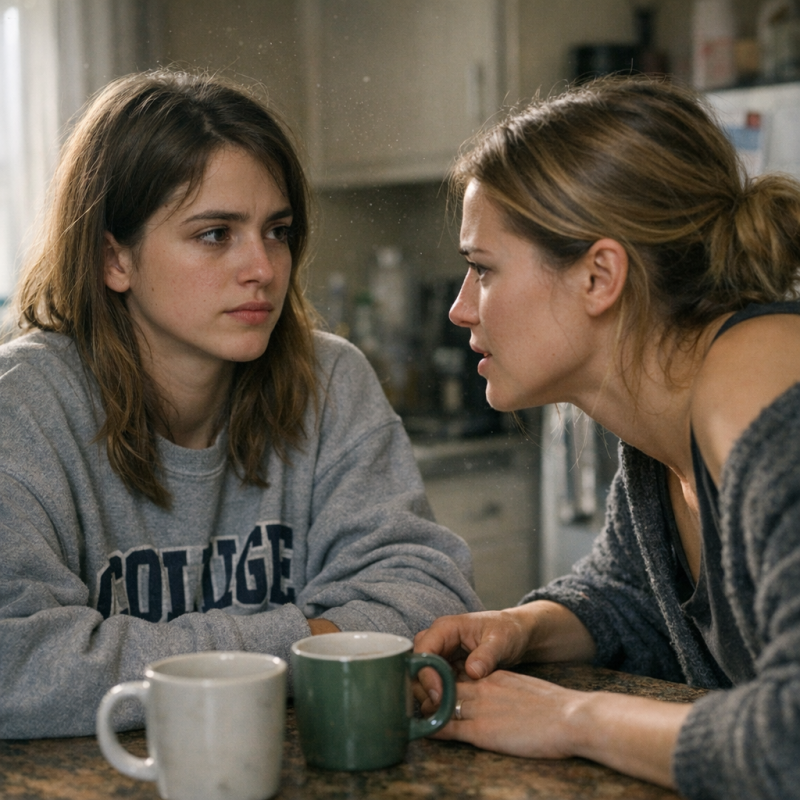 Image by FCT AI
The Accusation
'This is what you always do,' Sophie said, and now the tears were falling, streaking down her cheeks. 'Emily needs something, and everyone drops everything. Emily's struggling, so the whole family has to reorganize itself around her problems.' Her voice cracked. 'You've always seen her as the one worth investing in. The responsible one. The one with the real future. I'm just—what? The backup plan? The one whose dreams can wait because they're not as important?' 'That's not true,' I protested, but my voice sounded weak even to me. 'I love you both equally. I've always—' 'Then why didn't I get a say?' she cut me off. 'Why was it automatic that my money would go to Emily? Why did you decide my future was less urgent than hers?' I opened my mouth to argue, to tell her she was wrong, that I didn't favor Emily. But the words stuck in my throat. Because hadn't I always told Emily she could do anything, while telling Sophie to be practical? Hadn't I pushed Emily toward ambition while encouraging Sophie to be sensible? And I couldn't deny it—not convincingly, anyway.
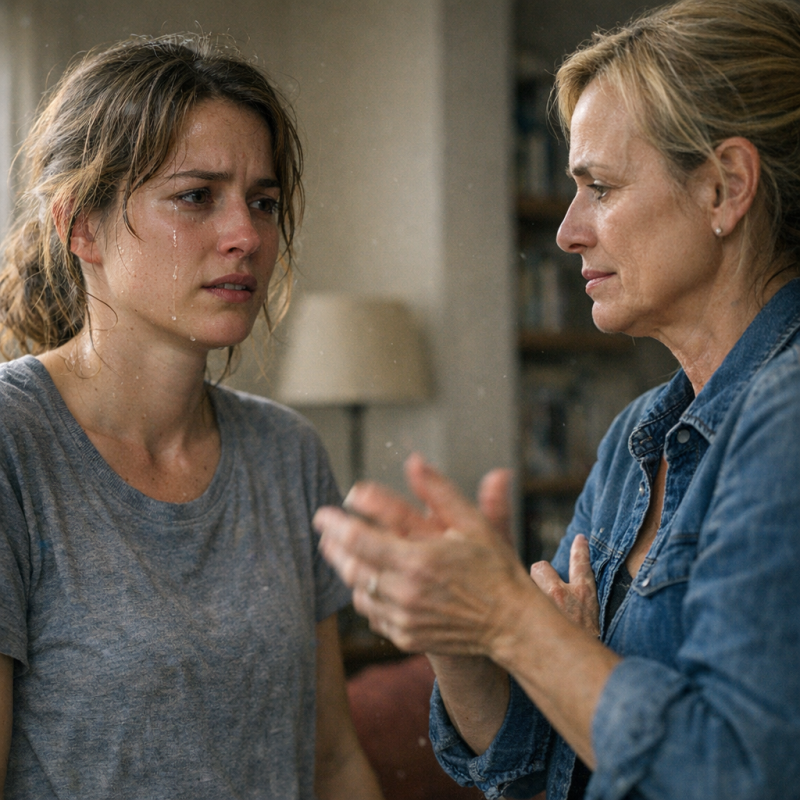 Image by FCT AI
The Spiral
'You want to know what kills me?' Sophie's voice rose now, two years of being second-best pouring out. 'I never complain. I get good grades, I work my part-time job, I help around the house, I don't cause problems like Emily does. And what do I get for it? My college fund stolen because Emily couldn't manage her finances again.' 'That's not fair,' I snapped back, my own voice rising to match hers. 'Emily didn't do this on purpose. Life happens, Sophie. Sometimes people need help. That's what family does.' 'Family asks!' she yelled. 'Family discusses things! Family doesn't just take what isn't theirs!' 'I'm your mother,' I said, and I could hear how defensive I sounded. 'I made a judgment call. I did what I thought was best for both of you.' 'You did what was best for Emily,' Sophie corrected. 'Like always.' The words hung between us, ugly and true and impossible to take back. We were both crying now, both hurt in ways that felt like they'd never heal. And then Sophie said something that stopped me cold.
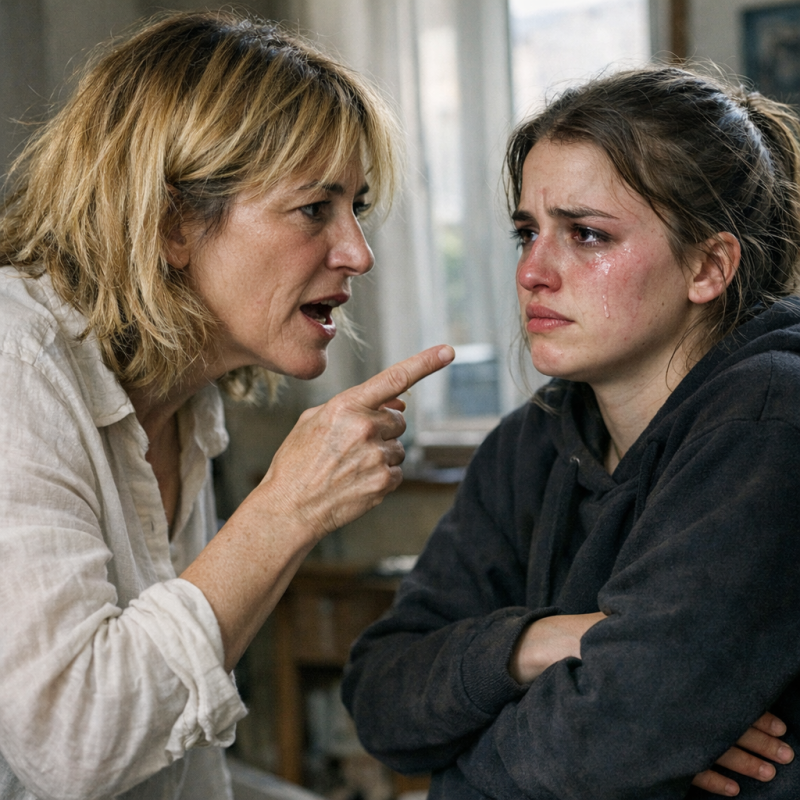 Image by FCT AI
The Worst Part
'The worst part isn't even the money,' Sophie said, her voice breaking. 'Do you understand that? I would have helped Emily. I love her. If you'd come to me and explained what was happening, if you'd asked me, I would have said yes.' She wiped her face with the back of her hand. 'I would have helped figure something out. Maybe not the whole amount, but something. We could have made a plan together. But you didn't give me that choice.' I felt like I'd been punched. 'You would have...?' 'Of course I would have,' she said, and now she just sounded tired. 'She's my sister. But you took that away from me. You decided I wasn't mature enough to be part of the conversation, that my opinion didn't matter, that it was easier to just take what you wanted and hope I wouldn't notice.' Her voice dropped to almost a whisper. 'You made me irrelevant in a decision about my own future. That's what hurts.' I'd taken away her choice, and that hurt more than anything else.
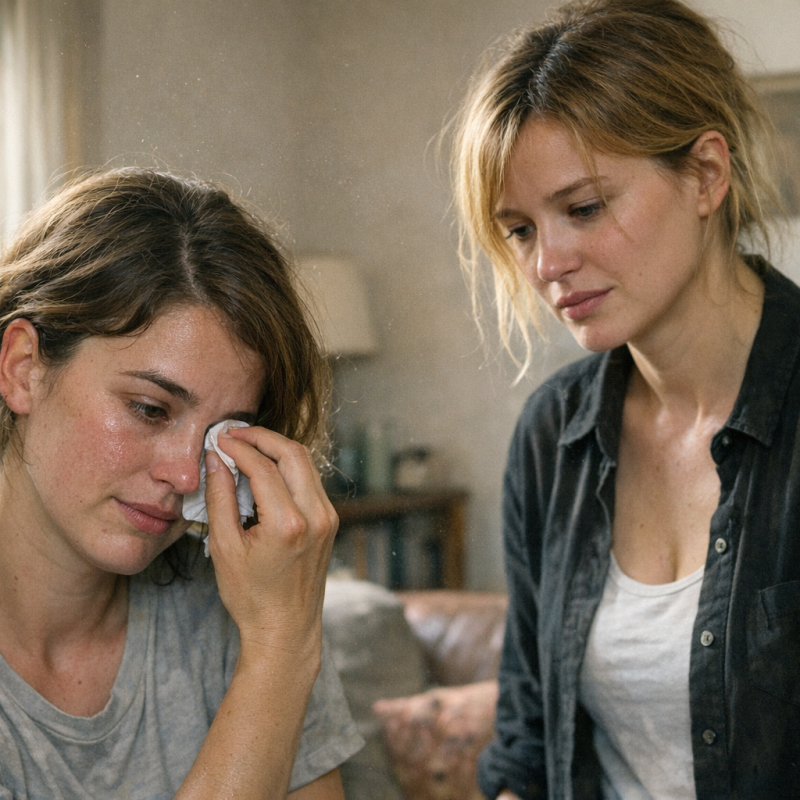 Image by FCT AI
The Apology
'Sophie, I'm so sorry,' I said, and the words felt pathetic, insufficient. 'I thought I was protecting you. I thought if I just handled it, you wouldn't have to carry the weight of it. You're still so young, and I'm the parent, and I thought—I really believed—I was doing the right thing.' I reached for her hand across the table, but she pulled away. 'I made a mistake. A huge mistake. I see that now. But please believe me when I say I did it out of love. For both of you.' Sophie stood up from the table, her chair scraping loudly against the floor. She looked at me for a long moment, and I could see her processing everything, see the hurt crystallizing into something harder. 'That's the problem, Mom,' she said quietly. 'You always think you're doing the right thing. You never stop to wonder if maybe, just maybe, you should ask us first.' Sophie wiped her tears and took a step back, looking at me with a clarity that cut deeper than any anger.
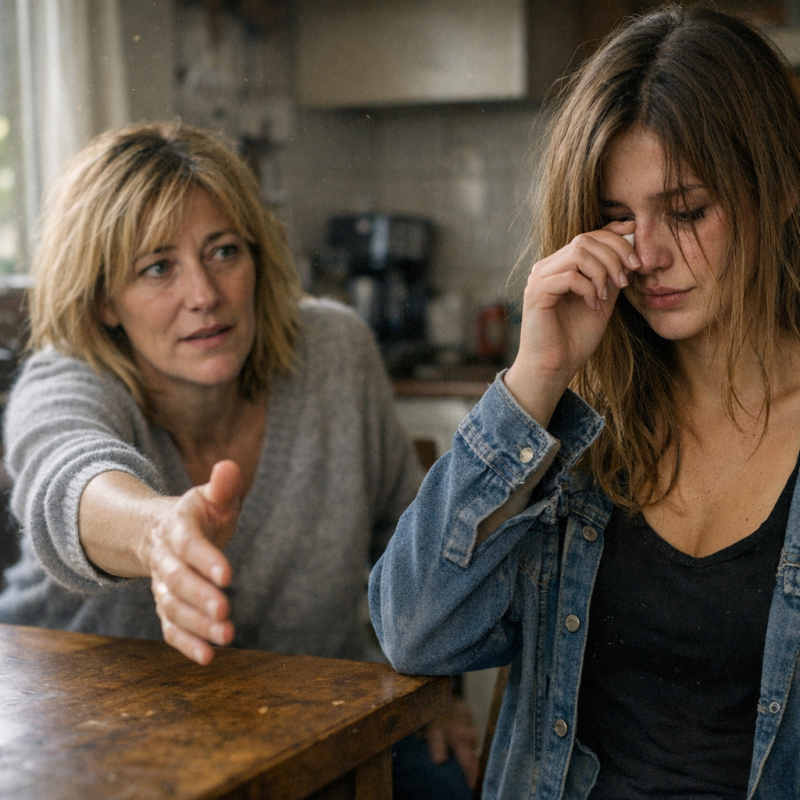 Image by FCT AI
You Sacrificed Me
She stood there for another moment, and I could see her gathering herself, pulling together all the hurt and anger into something she could carry. Her hands were trembling slightly at her sides. I wanted to say something, anything, to make it better, but my throat felt tight and useless. 'You didn't just help her,' she said finally, her voice quiet but steady. 'You sacrificed me.' The words hung in the air between us, and I felt them settle into my chest like stones. She turned and walked out of the kitchen, her footsteps echoing down the hallway, and then I heard her bedroom door close. Not slam. Just close. Somehow that was worse. I sat there at the table, staring at the spot where she'd been standing, and felt the truth of what she'd said wash over me. I'd told myself I was being a mother, being strong, making the hard choice. But what I'd actually done was decide that one daughter's future mattered more than the other's autonomy. That Emily's crisis was more important than Sophie's trust. And I knew she was right.
 Image by FCT AI
The Silence After
The next few days were brutal in their quietness. Sophie stopped talking to me except when absolutely necessary—'Yes,' 'No,' 'I don't know'—and even then, she wouldn't look at me. She'd come down for breakfast, grab something quick, and disappear back upstairs or out the door to school. When she came home, she went straight to her room. I'd hear her music playing softly through the walls, or sometimes just silence, which was somehow worse. The house felt colder than it ever had, even though it was the same temperature it always was. I found myself making excuses to walk past her room, hoping she'd open the door, hoping for any sign that she might soften. But she didn't. At dinner, if she bothered to come down at all, she ate quickly and left. She was polite enough, technically, but it was the politeness you'd show a stranger, not your mother. I tried asking about her day, about school, about anything, and got one-word answers. I'd broken something I didn't know how to fix.
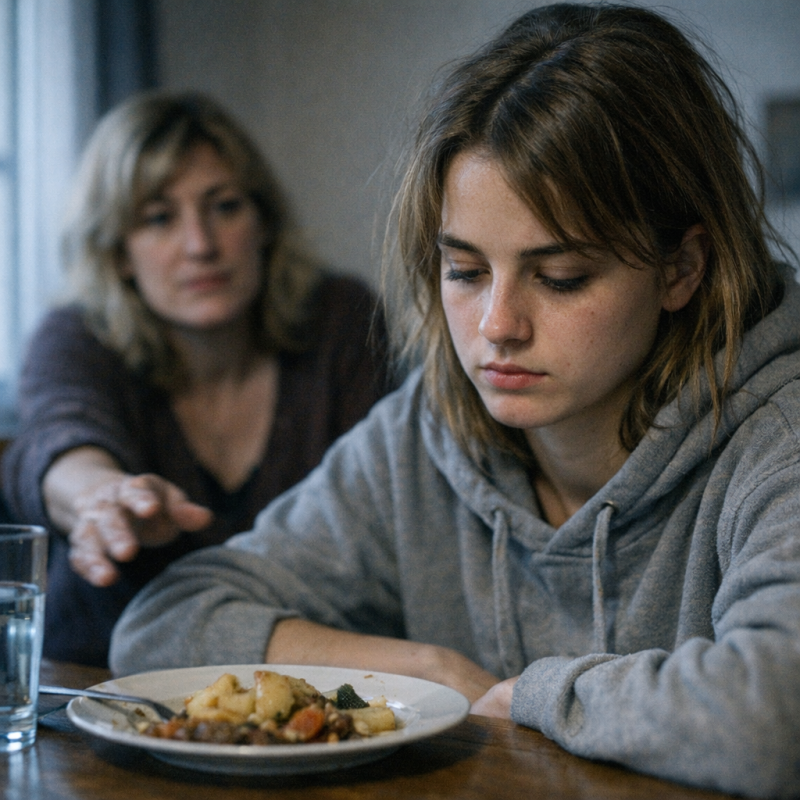 Image by FCT AI
Calling Emily
I called Emily because I couldn't carry it alone anymore, and when she answered, I could hear the surprise in her voice—I rarely called in the middle of the day. I told her everything. About Sophie finding out, about the fight, about the things Sophie had said. There was a long silence on the other end, and then Emily's voice came back shaky and small. 'Mom, I didn't know,' she said. 'I didn't know it was Sophie's money. You just said you had savings. I thought—' She trailed off, and I could hear her crying. 'Oh God, Mom, I would never have let you do that if I'd known. Never.' I tried to reassure her, told her it wasn't her fault, that I'd made the choice. But then she asked the question I'd been dreading. 'But why didn't you tell Sophie beforehand? Why didn't you at least ask her?' I opened my mouth to answer, to give her the same justifications I'd given Sophie, but they felt hollow now. But then she asked me why I hadn't told Sophie beforehand, and I had no good answer.
 Image by FCT AI
Emily's Offer
Emily called me back the next day with a plan. She'd been up all night thinking about it, she said, and she wanted to pay Sophie back. She'd been saving money from her job, and even though it wasn't the full amount yet, she could start making payments, set up a schedule, make this right. Her voice was earnest and desperate, and I loved her for trying. But I also knew, deep in my bones, that it wouldn't work. 'Em, that's incredibly generous,' I told her, 'but I don't think that's what Sophie needs right now.' She protested, insisting that at least it would show Sophie that we cared, that we were trying. I let her talk it through, let her feel like she was helping, because I understood the need to do something. But the truth sat heavy in my stomach. Emily offered to pay Sophie back from her own savings, but I knew that wouldn't fix what I'd broken. The damage wasn't about the money—it was about trust.
 Image by FCT AI
Watching Sophie Withdraw
Sophie spent more and more time away from me. In her room with the door closed, or out with friends whose names I barely knew anymore, or staying late at school for clubs I hadn't even realized she'd joined. She'd text me where she was—because she knew I'd worry otherwise—but that was it. No details, no conversations, no connection. I'd see her in passing, in the hallway or the kitchen, and each time I'd search her face for some sign of softening, some hint that she might be ready to talk. But her expression stayed carefully neutral, her eyes sliding past mine. I started keeping track of the hours we spent in the same house without actually speaking. It was like living with a ghost. She was there but not really there, present but unavailable. I'd hear her laughing on the phone with her friends, animated and alive, and then she'd walk past me in the kitchen with barely a glance. I wondered if she'd ever look at me the same way again.
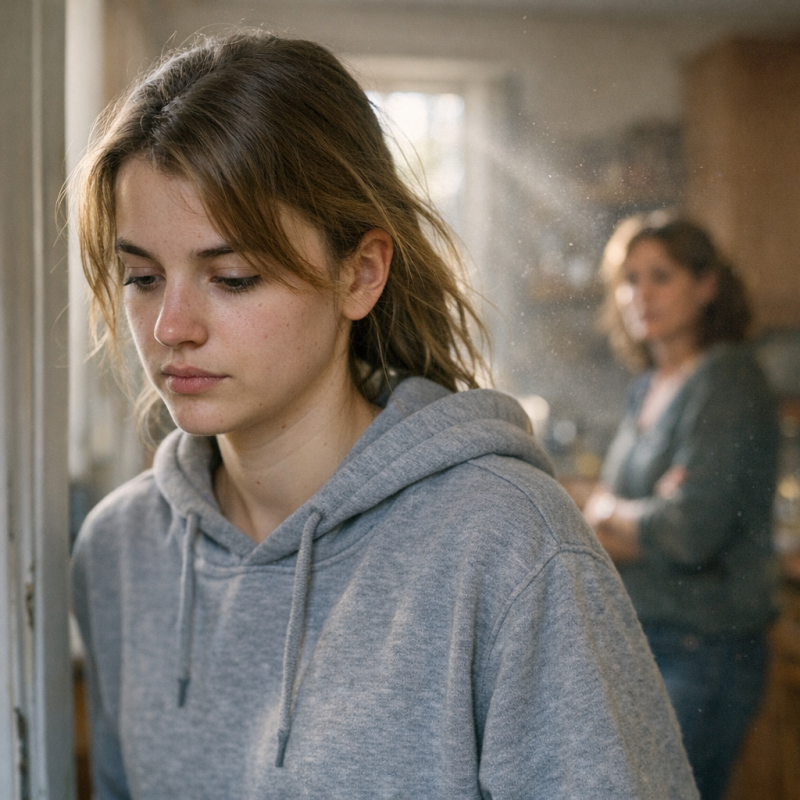 Image by FCT AI
Claire's Perspective
Claire came over with coffee and the determined look of someone who wasn't going to let me off easy. I'd texted her the basics, but she wanted to hear the whole thing in person. So I told her everything—the emergency, the choice, the fight, the silence. She listened without interrupting, sipping her coffee, her expression growing more serious with each detail. When I finally finished, she set her cup down and looked at me for a long moment. 'Okay,' she said slowly. 'I'm going to say something, and you're not going to like it.' I braced myself. 'You treated Sophie like a resource instead of a person,' she said, her voice gentle but firm. 'Like she was a means to an end instead of someone who deserved to be part of the decision.' I felt my throat tighten, wanted to argue, to defend myself, but the words wouldn't come. Because she was right. 'You treated Sophie like a resource instead of a person,' she said, and I couldn't argue.
 Image by FCT AI
The School Counselor
When my phone rang and I saw the school's number, my stomach dropped. It was Mrs. Patterson, Sophie's guidance counselor, and her tone was professionally concerned in that way school officials have perfected. She said Sophie had seemed distracted lately, not quite herself, and she wanted to check in to see if everything was okay at home. 'Has anything changed recently? Any stress she might be dealing with?' I felt my face flush even though she couldn't see me. I thought about telling her the truth—about the money, the betrayal, the silence that had taken over our house. But instead, I heard myself say, 'No, everything's fine. Maybe just normal teenage stuff, you know how it is.' Mrs. Patterson made a noncommittal sound. 'Well, if anything comes up, please let us know. We're here to support Sophie however we can.' I thanked her and hung up, then sat there staring at my phone. I told her everything was fine, and hated myself for lying.
 Image by FCT AI
The Dinner Table
I decided to try something normal, something that used to work—a family dinner. I made Sophie's favorite pasta dish, set the table with actual napkins, even lit a candle like we used to do on special occasions. When Sophie came downstairs and saw the setup, something flickered across her face, but she sat down without comment. I served the food, trying to keep my hands steady, and attempted small talk. 'How was school?' I asked. She shrugged. 'Fine.' I tried again. 'Any interesting classes today?' Another shrug. She pushed the pasta around her plate, taking small bites without really eating, her eyes fixed on her food. I asked about her weekend plans, about her friends, about anything I could think of. One-word answers, or sometimes just sounds of acknowledgment. Ten minutes in, she asked if she could be excused. I wanted to say no, to make her stay, but what would be the point? She left her half-full plate and disappeared back upstairs. I realized I was eating alone even when we were in the same room.
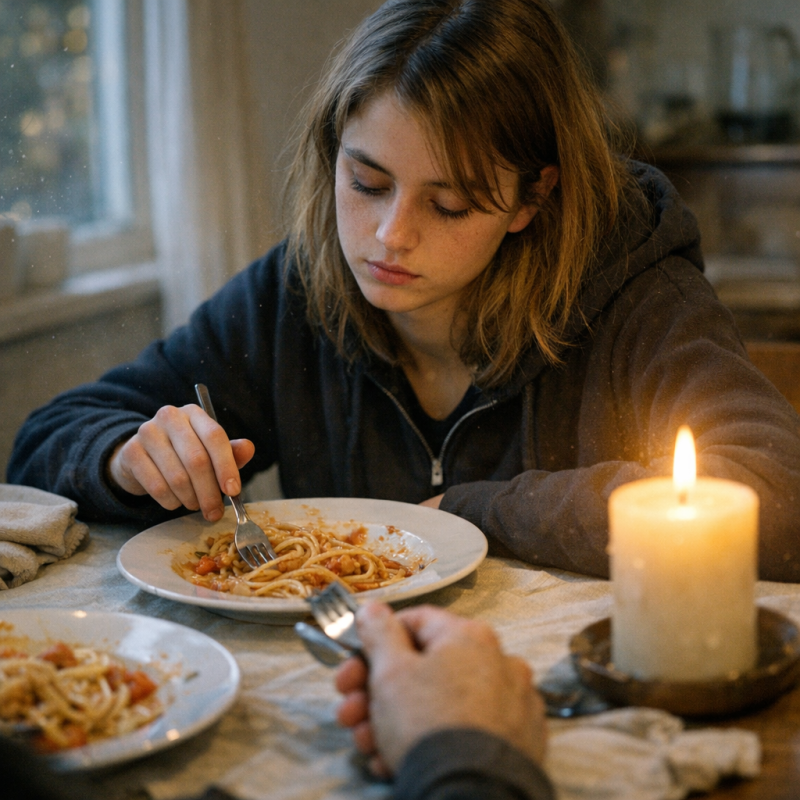 Image by FCT AI
Looking for Answers
I stayed up late searching online for advice on repairing broken trust. Every tab I opened promised solutions—'How to Rebuild Family Relationships,' 'Healing After Betrayal,' 'When Your Teen Won't Forgive You.' I read through them all, taking notes like I was cramming for an exam I was already failing. The advice was generic, frustratingly simple. Apologize sincerely. Give them space. Show consistency over time. Be patient. None of it felt like it applied to us. None of it captured the specific horror of what I'd done—taking money meant for one daughter's future to save the other's life, then watching the first one crumble when she found out I'd never even asked. The comment sections were worse. People shared success stories about rebuilding trust after arguments over curfews or borrowed cars. This wasn't that. This was something deeper, something that had severed a fundamental belief Sophie had in me. I closed my laptop around 3 AM, my eyes burning. Our damage felt too specific, too deep.
 Image by FCT AI
Sophie's Birthday
Sophie's seventeenth birthday came, and I tried to make it special. I bought her the art supplies she'd mentioned months ago, wrapped them carefully, and made her favorite breakfast. When she came downstairs that morning, I sang 'Happy Birthday' quietly, feeling ridiculous but desperate to mark the day somehow. She mumbled a thank you, opened the gift with barely a glance, and set it aside. I'd also written a card—one of those long, emotional ones where I poured out everything I wanted to say but couldn't seem to get across in person. I told her I was sorry, that I loved her, that I was trying. I left it on top of the wrapped present. She took the supplies to her room without reading it. That afternoon, Emily called to wish her happy birthday, and I heard Sophie laugh at something her sister said. The sound made my chest ache. Days passed. I'd go into Sophie's room to put away laundry and see my card still sitting on her desk, the envelope sealed. The card I wrote sat unopened on her desk for days.
 Image by FCT AI
Emily's Visit
Emily came home for spring break, and I had this flicker of hope that maybe she could get through to Sophie in a way I couldn't. She tried, I'll give her that. I heard them talking in Sophie's room, Emily's voice gentle but insistent. I couldn't make out the words, but I recognized the tone—she was advocating for me, trying to bridge the gap. Later, Emily came downstairs looking defeated. 'She's really hurt, Mom,' she said, like I didn't already know. 'I know you were trying to save my life, but...' She trailed off. I asked if Sophie had said anything, if there was any progress. Emily shook her head. 'She told me it wasn't my fault. She doesn't blame me at all. But you...' She didn't finish the sentence. She didn't need to. The next day, I watched Emily and Sophie leave together for coffee, and when they came back, they were chatting easily. The second I walked into the room, Sophie went quiet. Emily stayed for the whole week, but nothing changed. Sophie told Emily it wasn't her fault, but things between us stayed frozen.
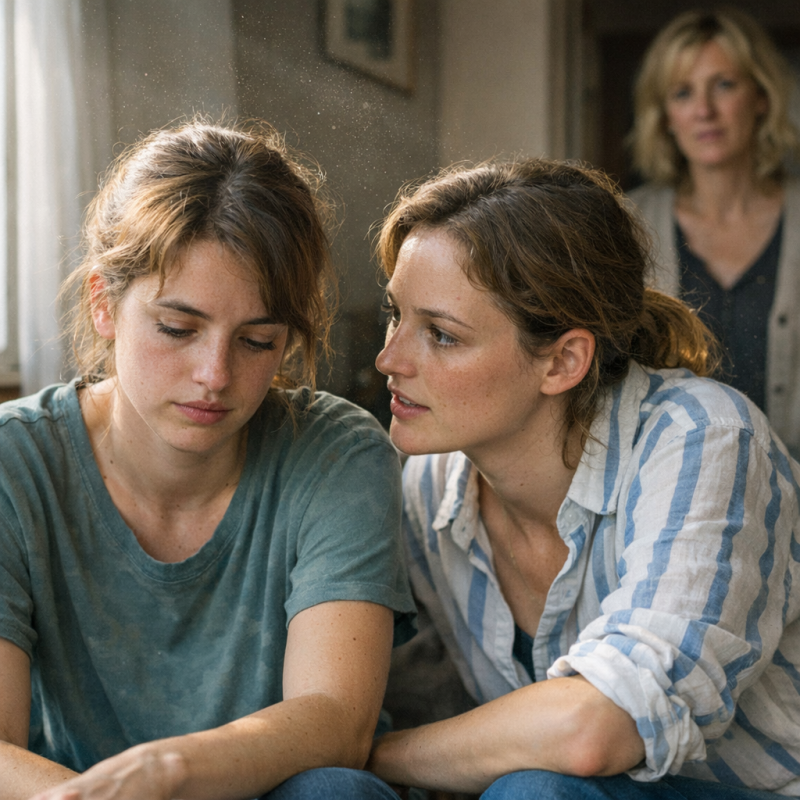 Image by FCT AI
The College Fair
I found the college brochures by accident. I was putting Sophie's clean laundry away and saw them tucked into her backpack—glossy pamphlets from state schools, private colleges, universities I'd never heard her mention. There was a crumpled map from a college fair dated the previous weekend. She'd gone without telling me. I stood there holding a brochure for a school three states away, feeling like I'd been punched. She was still planning, still moving forward with her life. That should have made me happy, right? Proof that I hadn't destroyed her future completely. But instead, I felt this crushing sense of exclusion. We used to talk about college together. I'd imagined us visiting campuses, discussing programs, me helping her weigh her options. Now she was doing it all alone, deliberately keeping me out of something that used to be ours to share. I carefully put the brochures back exactly where I'd found them, not wanting her to know I'd seen them. She was still planning her future—just without me in it.
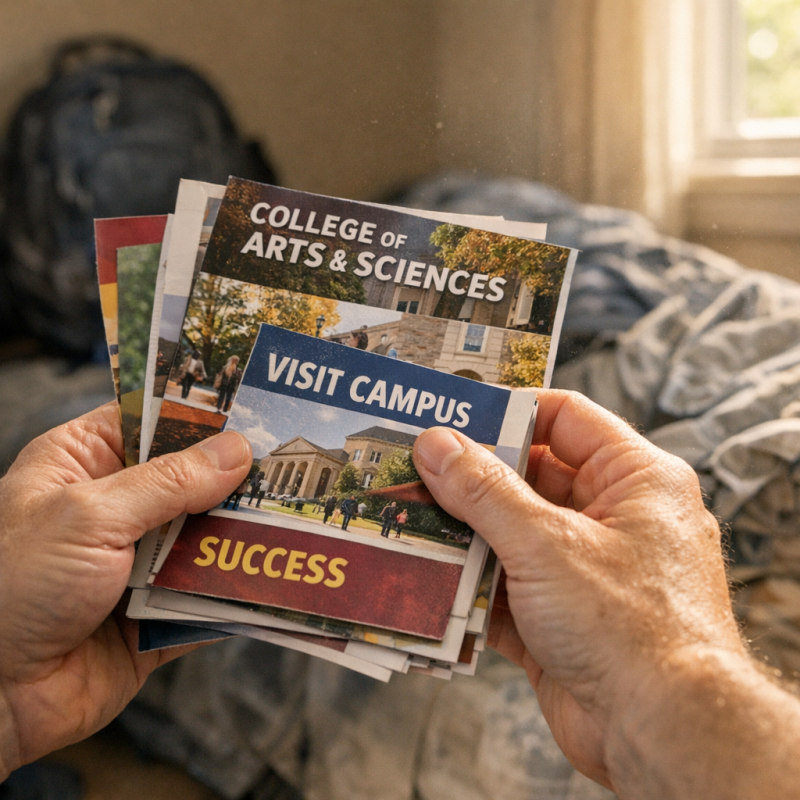 Image by FCT AI
The Money Talk
I caught Sophie at the kitchen table one evening and asked if we could talk about rebuilding her college fund. I'd been saving, working extra hours at my own job, researching loan options. I wanted her to know I had a plan, that I was taking this seriously. She looked up from her homework with that same blank expression she'd perfected. 'Sophie, I've been putting money aside each month, and I talked to a financial advisor about—' She held up her hand. 'I don't want to hear about it.' Her voice was flat, not angry, just done. 'But I need you to understand that I'm working to fix this,' I said. She closed her textbook with deliberate slowness. 'You can't fix it, Mom. What's done is done.' I tried to explain that we could still rebuild something, that there was time. She shook her head. 'I don't need you to fix this,' she said, standing up and gathering her books. I sat there after she left, replaying her words. 'I don't need you to fix this,' she said, and I realized she meant more than just the money.
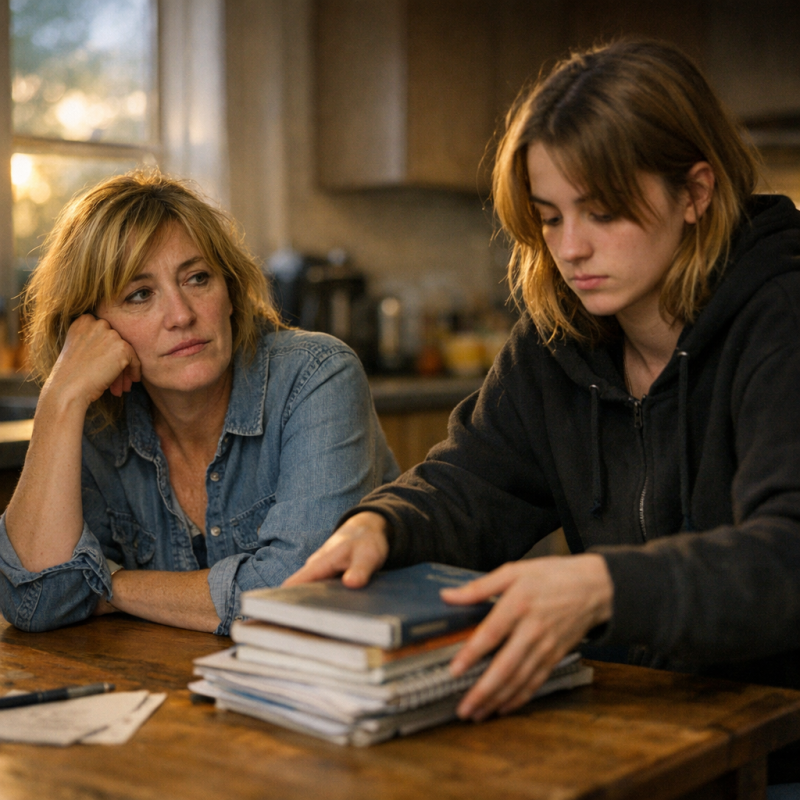 Image by FCT AI
Sleepless Nights
I lay awake most nights now, the ceiling fan clicking with each rotation like a metronome counting my failures. I'd replay the whole thing in my mind, over and over, trying to find the moment where I could have chosen differently. What if I'd sat both girls down together before touching the fund? What if I'd explained the situation to Sophie, asked for her blessing instead of just taking what I needed? She'd said she would have given it freely if I'd asked. I believed her. That's what got me—I believed her completely. But in that moment, when Emily was sick and terrified, when the bills were piling up and time was running out, asking had felt like a luxury I couldn't afford. It had felt like a burden I shouldn't place on a sixteen-year-old. Now I wondered if I'd been protecting Sophie or just protecting myself from a difficult conversation. Maybe I'd been afraid she'd say no. Maybe I hadn't trusted her enough to understand. The thoughts circled endlessly, wearing grooves in my brain. But I couldn't change the past—I could only live with what I'd done.
 Image by FCT AI
Ryan's Observation
Ryan showed up one Saturday looking for Sophie, who was already out. We'd always gotten along—he was one of those genuinely nice kids who still made small talk with parents. 'She's working,' I told him. He looked surprised. 'Again? She's been picking up so many shifts lately.' I tried to keep my face neutral. 'Has she?' I asked, like I had any idea what was going on in my daughter's life anymore. Ryan nodded, leaning against the doorframe. 'Yeah, like almost every weekend and a couple weeknights too. I barely see her outside of school.' He said it casually, just making conversation, but it hit me hard. What was she doing with all that money? Saving for college, obviously, but the intensity of it felt like something more. Was she trying to prove she didn't need me? Or was she just avoiding being home as much as possible, filling every hour so she wouldn't have to be under the same roof as me? I thanked Ryan and watched him leave. I wondered what she was saving for—or if she was just trying to escape the house.
 Image by FCT AI
The Graduation Approach
May arrived with that particular quality of light that meant the school year was ending. Sophie's junior year was almost over. I'd catch glimpses of her studying for finals, stressed in that normal teenage way that felt almost nostalgic compared to the tension between us. I did the math one sleepless night—she'd be a senior in just three months. One more year. One more year before she'd be filling out actual college applications, making actual decisions about where she'd spend the next four years of her life. One more year before she potentially left this house and never looked back. The urgency of it pressed on my chest. I'd wasted so much time already, months of cold silences and failed olive branches. How was I supposed to fix something this broken with time running out? I watched her at dinner one night, mechanically eating while scrolling her phone, and wondered if this was just how it would be now. This distant politeness, this careful avoidance. Maybe some things couldn't be repaired. Time was running out in more ways than one.
 Image by FCT AI
A Glimpse of Sophie
I was walking past Sophie's room one night in late May when I heard her voice through the crack in the door. She was on the phone, and I know I shouldn't have stopped to listen, but I did. 'Yeah, I've already applied to twelve different scholarships,' she was saying, her voice steady and confident. 'The Pell Grant calculator says I'll probably qualify, and the state university has that merit program for students with my GPA.' There was a pause while whoever she was talking to responded. 'No, I'm not worried. Between work-study, the scholarships I've already gotten notifications on, and what I've saved from my job, I've got it covered. I've been planning this for months.' Months. She'd been planning for months. I stood there in the hallway, my hand on the wall for support, listening to my daughter lay out a detailed financial plan for college. She knew about Pell Grants and merit programs. She'd applied to scholarships—plural. She had backup plans and contingencies. She sounded like an adult, competent and self-sufficient. She sounded like she had everything figured out—without me.
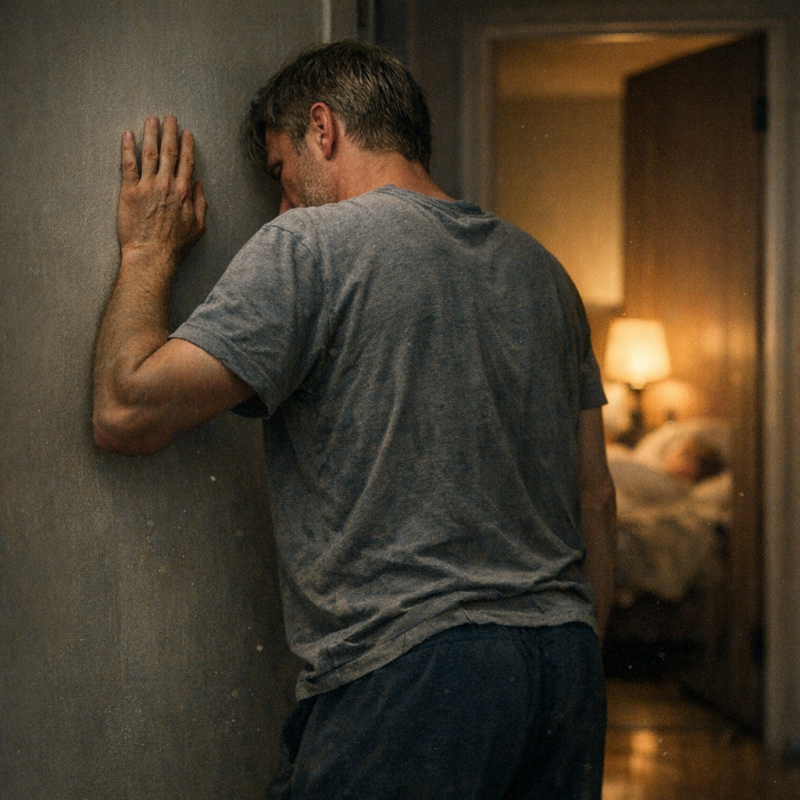 Image by FCT AI
Summer Plans
Two weeks later, Sophie caught me in the kitchen after dinner. 'I wanted to let you know I'm staying with Madison's family this summer,' she said, not quite meeting my eyes. 'I got that job at the resort up north, and they live closer, so it just makes more sense.' She was asking permission, technically, but her tone made it clear the decision was already made. 'Madison's mom said it's fine. I'll be working full-time, saving for school.' I opened my mouth to object, to say something about how she could commute from home, but the words got stuck in my throat. What was I going to do, force her to stay? Beg her to spend the summer in this house where we barely spoke? 'That sounds like a good opportunity,' I heard myself say. She nodded, already turning away. 'I'll be back to get my stuff next week.' And that was it. She was building a life that didn't include me, and I couldn't blame her.
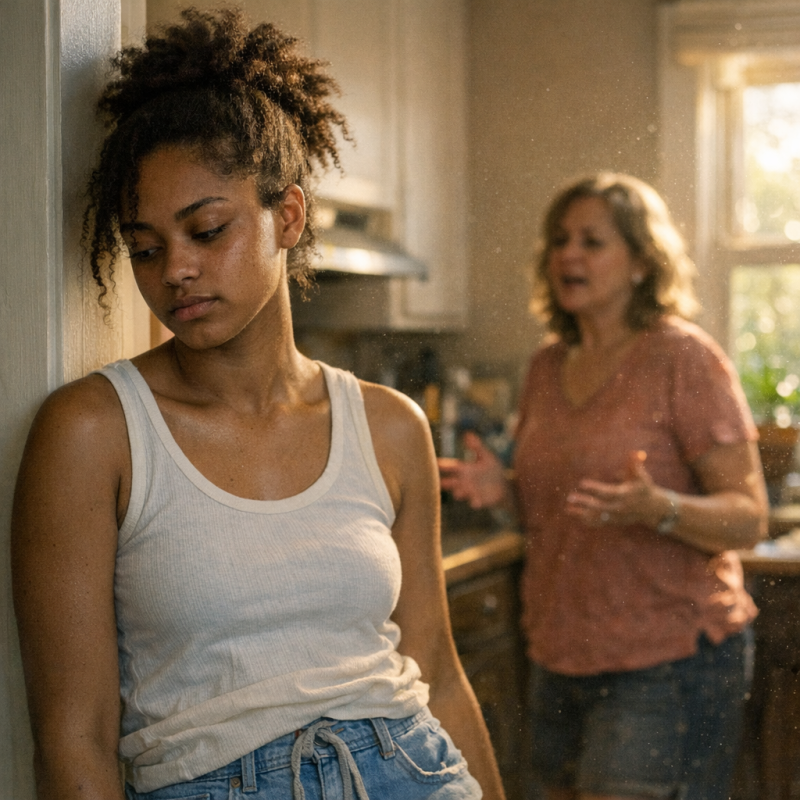 Image by FCT AI
Claire's Warning
Claire came over one evening in June, after Sophie had already left for the summer. We sat on the back porch with a bottle of red, and I told her about Sophie's summer plans, about the phone call I'd overheard. 'She's so independent now,' I said, trying to sound proud instead of abandoned. Claire was quiet for a long moment. 'You need to really listen to Sophie,' she finally said. 'Not just hear the words she's saying, but understand what she's actually trying to tell you.' I frowned. 'I have been listening. I've been trying for months.' 'Have you?' Claire asked gently. 'Or have you been listening for what you want to hear? For signs that she's forgiven you, that things can go back to normal?' The question hit harder than I expected. 'I don't understand,' I said. 'What do you think she's been trying to say?' Claire shook her head. 'That's the thing. You need to hear it from her. But really hear it.' I thought I had been listening, but maybe I'd only been hearing what I wanted to hear.
 Image by FCT AI
The Letter I Didn't Send
That night, I sat down and wrote Sophie a letter. I thought if I could just explain everything properly, if I could lay out exactly why I'd made the choices I'd made, she would understand. I wrote about the fear, the desperation, the impossible position I'd been in. I wrote about how much I loved her, how the decision had torn me apart. Four pages, front and back. When I read it over, though, it sounded wrong. It sounded like I was still defending myself, still asking her to understand me instead of trying to understand her. So I tore it up and started over. This time I focused on my regret, on how I wished I'd handled things differently. But that version just sounded like self-pity. I tore that one up too. I tried a third time, then a fourth. Each version revealed something I didn't like about myself—the defensiveness, the excuses, the way I kept centering my own pain. By midnight, my trash can was full of crumpled pages, and I had nothing to show for it.
 Image by FCT AI
Emily's Confession
Emily called me in mid-July. 'Mom, I need to tell you something,' she said. 'I've been talking to Sophie regularly. We FaceTime every week.' The relief I felt was immediate—thank God someone was reaching her. 'How is she?' I asked. 'She's good. She's really good, actually. She's working hard, saving everything she makes. And Mom, she's been applying for scholarships since, like, February. She's already won two of them. Small ones, but still.' February. That was before everything happened. Before Emily's diagnosis, before I touched the college fund. 'She has?' I whispered. 'Yeah. She has this whole spreadsheet. She's been planning this for months, completely on her own. She's going to be fine, Mom. She's got this figured out.' I should have felt pure relief. My daughter was going to be okay. But mixed in with that relief was this sharp, unexpected hurt. She'd shared all of this with Emily, with Madison's family, probably with Claire. With everyone but me.
 Image by FCT AI
The Question I Should Have Asked
I couldn't stop thinking about what Emily had told me. Sophie had been planning since February. She'd been applying for scholarships, building contingency plans, preparing for her future. All while I'd been making decisions for her, assuming she couldn't handle the situation, assuming she needed me to save her. What would have happened if I'd just asked her from the beginning? If I'd sat down with both girls and said, 'This is what we're facing, this is what Emily needs, what should we do?' Would Sophie have offered the money herself, like she'd said she would have? Would we have found other solutions together? Would she have shown me those scholarship applications, that spreadsheet, that careful planning? Maybe we could have tackled it as a family instead of me playing savior and destroyer all at once. Maybe I could have trusted her to be part of the decision instead of protecting her from it. Maybe she would have surprised me with her maturity and her generosity. But that was a question with an answer I'd never get to know.
 Image by FCT AI
Senior Year Begins
Sophie came home in late August for her senior year. She was tan from the summer, her hair lighter, and she seemed older somehow. She was polite at dinner, civil during the inevitable college planning conversations. She didn't slam doors or glare at me anymore. This was different—a calm, detached courtesy that was somehow worse than the anger had been. But I clung to that small civility like a lifeline. At least she was speaking to me. At least we were in the same room. At least there was this fragile peace, even if it felt more like a truce than true reconciliation. I told myself it was progress. I told myself to be patient, to be grateful for what little ground we'd recovered. Then one night in early September, she knocked on my bedroom door. 'Mom? Can we talk?' My heart stopped. Her tone was serious, purposeful. This wasn't small talk about her school schedule or what was for dinner. Then one night, she asked if we could talk, and my heart stopped.
 Image by FCT AI
The Truth I Didn't Know
We sat in the living room, Sophie on one end of the couch, me on the other. 'I need to tell you something,' she started. 'I've been working since sophomore year, saving money. I have almost eight thousand dollars in my savings account. And I've been applying for scholarships since February—I've already won three totaling six thousand dollars. I had a plan, Mom. I've always had a plan.' The words landed like physical blows. 'I don't understand,' I whispered. 'You never said—' 'You never asked,' she cut me off, not unkindly. 'You never asked what I thought, what I'd been doing, what I was willing to do. You just decided.' She took a breath. 'I'm not angry about the money. I mean, I was at first, but I get why you did it. Emily needed help. I would have given it freely if you'd just asked me. But you didn't ask. You assumed I couldn't handle knowing, couldn't handle making that choice myself. You treated me like a child who needed to be protected from the truth.' She wasn't angry about the money—she was angry because I'd assumed she couldn't handle the truth and made the decision for her.
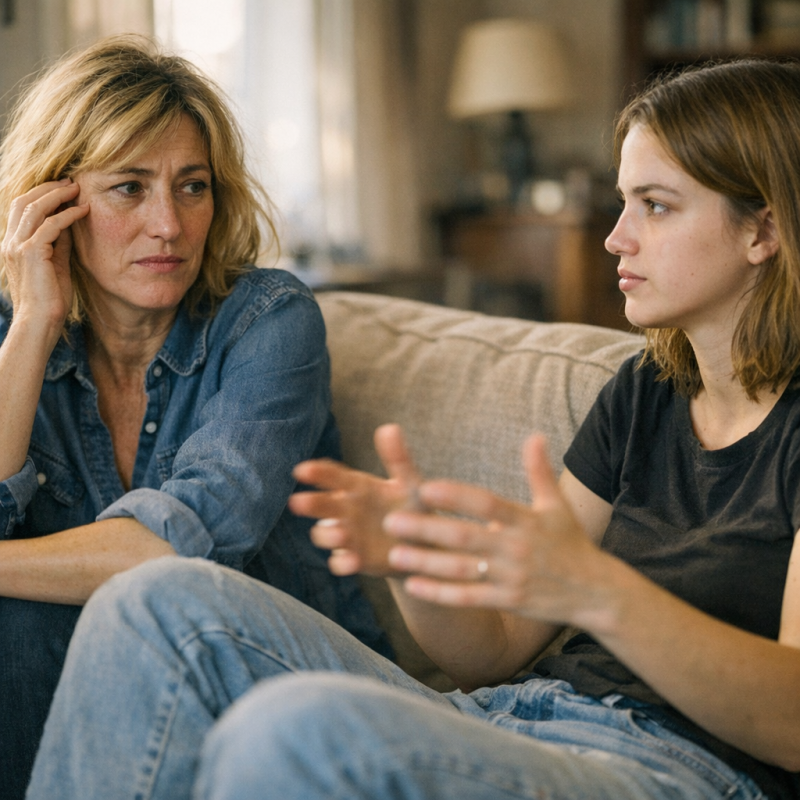 Image by FCT AI
Reframing Everything
It was like one of those optical illusions where you're staring at a vase and then suddenly you see two faces instead. Everything I'd done—every decision I'd made 'for her protection'—flipped in meaning. I'd thought I was shielding Sophie from an impossible burden. But what I'd actually done was decide she couldn't handle it. Decide she wasn't capable of processing difficult information and making mature choices. I'd looked at my daughter—who'd been working for four years, saving methodically, researching scholarships—and I'd seen a child who needed to be kept in the dark. 'You had eight thousand dollars,' I said quietly. 'You were planning everything.' Sophie nodded. 'I've been planning since freshman year, Mom. I knew college was expensive. I knew you and Dad were struggling after the divorce. I'm not stupid.' 'I never thought you were stupid,' I protested. 'No,' she agreed. 'You just thought I was too young to be trusted with the truth.' And there it was, crystal clear. I'd treated my capable, planning daughter like she was too young to understand—and that was the real wound.
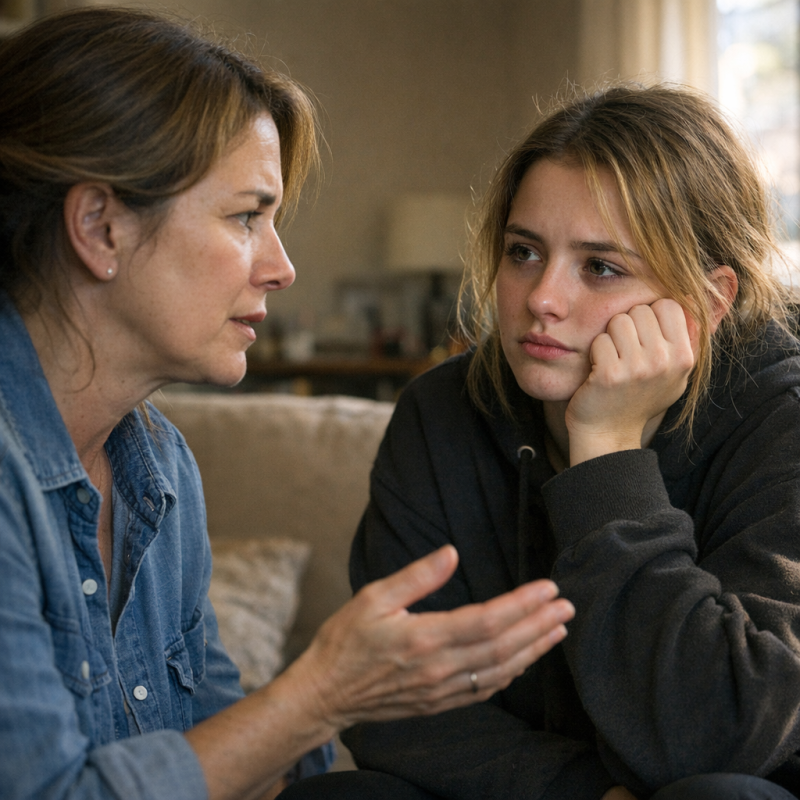 Image by FCT AI
Sophie's Hurt
'I keep thinking about how it happened,' Sophie said, her voice steady but sad. 'You found out Emily needed help, and you just... acted. You never once thought to come to me and say, hey, your sister's in trouble, what do you think we should do? You never gave me the chance to say yes.' I opened my mouth, then closed it. What could I say? 'I would have given the money, Mom. All of it, if that's what Emily needed. But I would have wanted to know. I would have wanted to be part of the decision.' Her eyes were wet now. 'What hurt wasn't losing the college fund. It was realizing that when things got hard, when a real crisis happened, you didn't see me as someone capable of handling it. You saw me as someone who needed to be managed.' She wiped her eyes. 'I thought we were closer than that. I thought you knew me better.' And I had to sit there and accept that she was absolutely right.
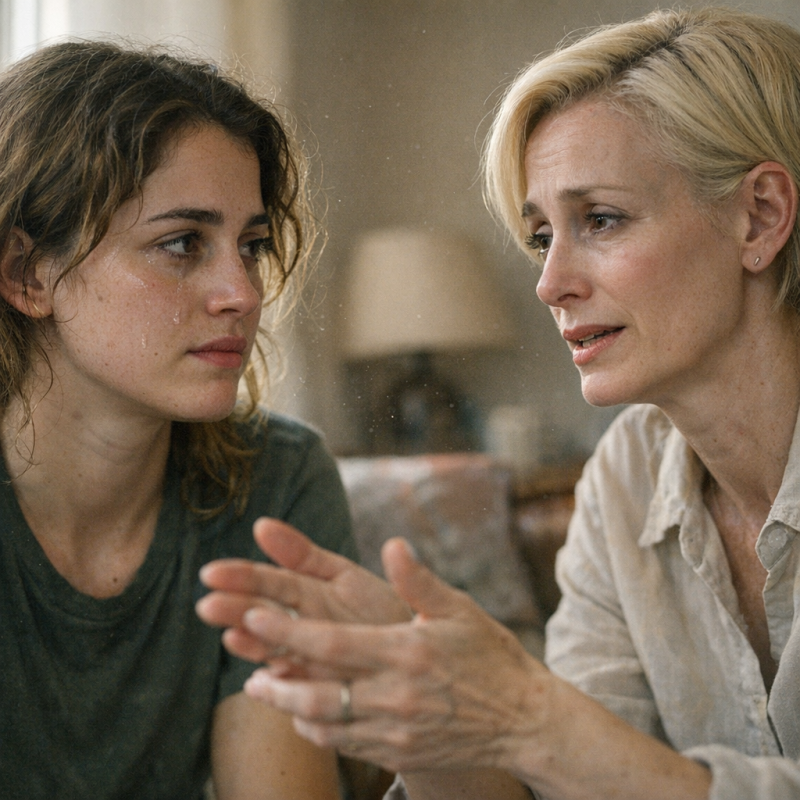 Image by FCT AI
The Scholarships
Sophie pulled out a folder from beside the couch—I hadn't even noticed it there. Inside were printouts, neatly organized in plastic sleeves. Scholarship applications, some marked 'submitted,' others 'awarded.' A spreadsheet breaking down estimated costs, her savings, her projected earnings from her part-time job. A timeline showing when she'd applied to different programs, which ones had financial aid deadlines, backup options if her first choices didn't work out. 'I made this in January,' she said, handing it to me. I flipped through it, feeling sicker with each page. It was thorough. Detailed. The work of someone who'd been taking her future seriously while I'd been assuming she was just a teenager who didn't think beyond next weekend. 'Sophie, I had no idea...' 'Because you didn't ask,' she said simply. 'You never asked what I was doing, what my plans were. You just assumed I hadn't thought about it.' I stared at the budget she'd created, the careful calculations. She'd been preparing for her future while I was undermining her present.
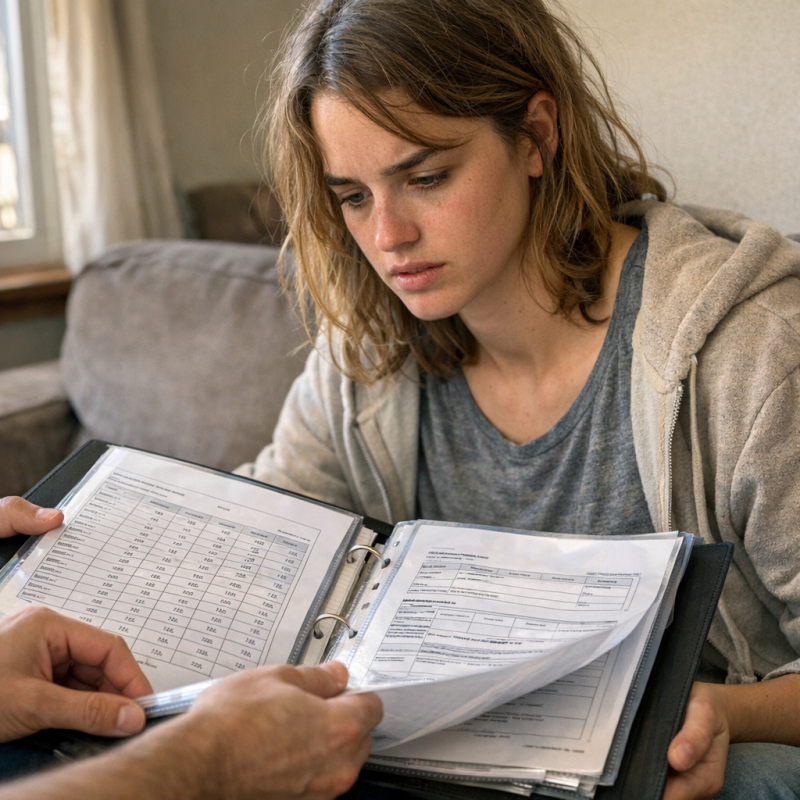 Image by FCT AI
What I Taken
I sat alone after Sophie went upstairs, that folder still in my hands. And I finally got it—really got it. The money was just money. I could work extra shifts, we could apply for loans, Sophie had her scholarships and savings. The money could be figured out. But what I'd actually taken from her? That was something else entirely. I'd taken her opportunity to be generous. To look her sister in the eye and say, 'I'm giving this to you because I love you.' I'd taken her chance to be consulted, to be brought into the family crisis as an equal member of the family instead of a child who needed protection from difficult realities. I'd taken her dignity. Her agency. Her right to make a hard choice and live with it on her own terms. Sophie would have given that money freely. She'd said so, and I believed her. But now she'd never get to. I'd made sure of that. And you can't pay that back with dollars.
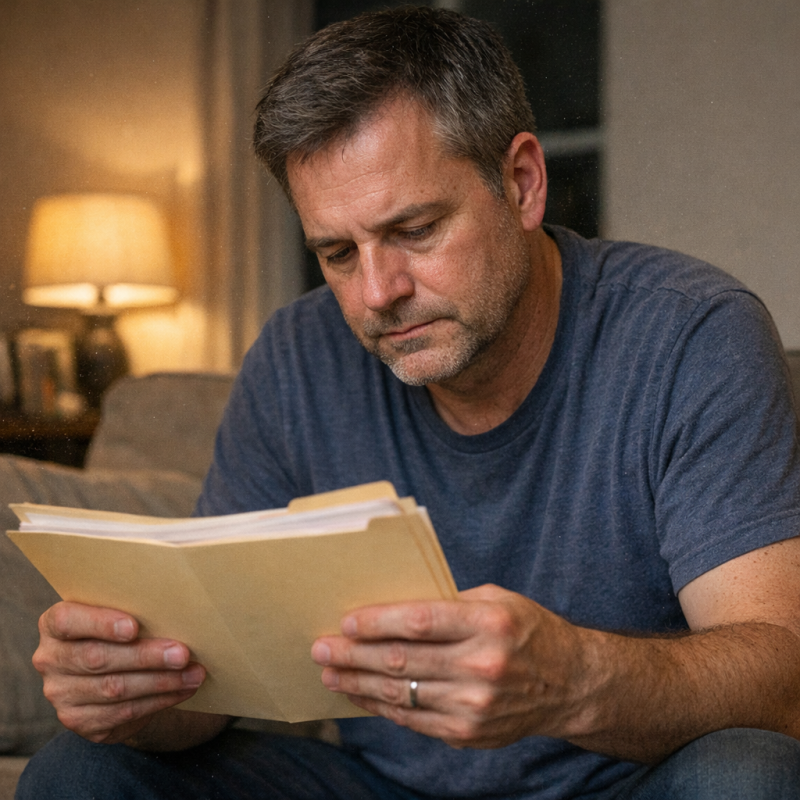 Image by FCT AI
Sophie's Terms
'I'll forgive you,' Sophie said the next morning over breakfast. We were both tired, eyes puffy from crying. 'I mean, I will eventually. I know you were trying to help Emily, and I love her too. I get why you did it.' She pushed her cereal around in the bowl. 'But Mom, I need you to understand that things between us aren't going to go back to how they were before. I can't just forget that when it mattered, you didn't trust me. That's going to take time.' I nodded, throat tight. 'And I need you to actually ask me about stuff from now on,' she continued. 'Not just big stuff. Everything. I need to know you see me as someone whose opinions matter.' 'I do,' I said. 'I will.' 'Good.' She stood up, put her bowl in the sink. 'But even when I forgive you, it'll still be different. That's just how it is.' Some trust, once broken, doesn't heal—it just scars over.
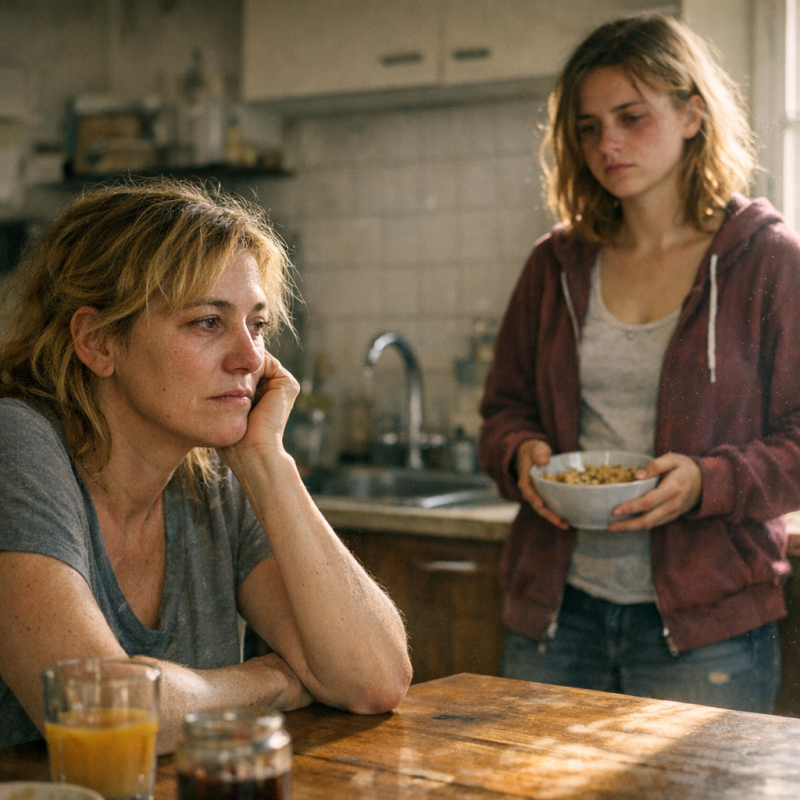 Image by FCT AI
Emily's Perspective
Emily called that afternoon. 'Mom, I talked to Sophie,' she said. 'She told me about the fund, about all of it.' My stomach dropped. 'Em, I'm so sorry you're in the middle of—' 'I wish you'd asked us,' she interrupted. 'Both of us. From the beginning.' She sighed, and I could hear traffic in the background—she was probably walking between classes. 'Like, I needed help. That's true. But Sophie and I could have talked about it. We could have figured something out together. Maybe she would've offered some, or maybe we could've all brainstormed other options. Made a plan as a family.' 'I was trying to protect you both,' I said weakly. 'I know. But we're not little kids anymore, Mom. Sophie's sixteen, I'm twenty. We can handle hard conversations. We can make sacrifices for each other—we want to, actually. But you didn't give us that chance.' She paused. 'You made it your burden to carry alone, and now it's this whole mess that didn't have to be a mess.' I'd tried so hard to protect them that I'd forgotten to include them.
 Image by FCT AI
The Pattern
That night I couldn't sleep, so I just lay there thinking. And I started seeing it everywhere—the pattern I'd been too close to notice. When Emily wanted to take a gap year before college, I'd pushed her into enrolling immediately because I 'knew' she wouldn't go back if she waited. When Sophie wanted to quit piano in middle school, I'd made her stick with it for another year because I 'knew' she'd regret stopping. When they argued about whose turn it was to choose the vacation spot, I'd just picked one myself because I 'knew' they'd never agree. Small things and big things, all the same pattern. Me deciding what was best. Me acting without consulting them. Me believing that because I was the mom, I had some special wisdom they didn't. I'd been doing this for years—making decisions for them instead of with them, always so sure I knew better. Always so certain that my role was to protect them from making mistakes rather than to help them navigate difficult choices. This wasn't the first time I'd done this—it was just the time it finally broke something.
 Image by FCT AI
Learning to Ask
I started small. 'What do you want for dinner?' I asked Sophie the next evening. She looked up from her homework, surprised. 'I don't know. Whatever.' 'No, really. What sounds good to you?' She studied my face for a moment, then said, 'Tacos?' So we made tacos. The next day: 'I'm thinking about painting the bathroom. What color do you think?' She suggested blue. I bought blue paint. 'There's a work thing Saturday night—would you rather I skip it and we do something, or would you prefer the house to yourself?' Sometimes she answered warmly, engaging with the questions like we were collaborating. Sometimes she was brief, almost dismissive, still hurt. I learned to accept both responses. I learned not to fill the silences or explain why I was asking. I just asked, and then I listened, and then I actually did what she suggested. Tiny increments. Baby steps toward rebuilding something I'd broken. She answered, sometimes warmly, sometimes not, and I learned to accept both.
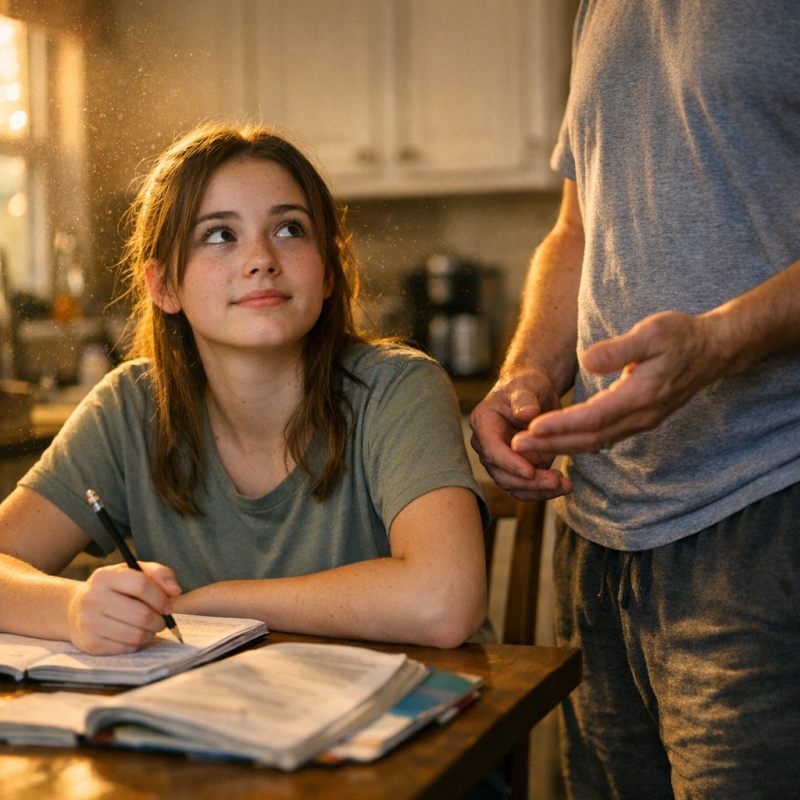 Image by FCT AI
Acceptance Letters
The letters came in March. Three of them. Sophie opened each one carefully, sitting at the kitchen table with her laptop open, comparing scholarship amounts and program details. I stayed in the doorway, not hovering, just... there. Available if she wanted to share. 'This one's offering almost a full ride,' she said, not quite looking at me. 'For the engineering program.' My chest tightened with pride and something sharper—the realization that she'd done this entirely on her own. The applications, the essays, the scholarship searches. I'd offered to help a dozen times. She'd politely declined every single one. 'That's incredible, Soph,' I said. She looked up then, and for the first time in months, she actually smiled at me. A real smile, not the careful, polite version I'd gotten used to. 'Yeah,' she said. 'It is.' She turned back to her laptop, making notes, planning her future in careful detail. She'd built her future without me—but she was willing to let me witness it.
 Image by FCT AI
The Replaced Fund
I'd been rebuilding the fund slowly, month by month, every spare dollar going back into that account. It wasn't the full amount yet—that would take another year, maybe more. But Emily's treatments were done, the medical bills manageable now with the payment plans we'd arranged. So I transferred everything I had back into Sophie's college fund. Twenty-three thousand dollars. Not the full thirty-five thousand I'd taken, but it was everything I could give right now. I showed her the transfer confirmation on my phone. 'I know it's not all of it yet,' I said. 'But I'm going to keep adding until it is.' Sophie looked at the screen, then at me. 'You didn't have to do this right now,' she said quietly. 'With the scholarships, I'll be okay.' 'I know. But I needed to.' She nodded, understanding something I couldn't quite articulate. 'Thank you,' she said, and the words felt heavier than they should. She thanked me quietly, and we both knew it was a gesture, not a solution.
Graduation Day
The auditorium was packed, hundreds of families crammed into folding chairs, everyone's phone ready to capture that walk across the stage. I sat toward the back, with Emily beside me. We'd arrived early, but I hadn't wanted to push for better seats, hadn't wanted to assume Sophie wanted me front and center. When they called her name, I stood without thinking. 'Sophie Mitchell,' the principal announced, and there she was in her cap and gown, walking with confidence, shaking hands, accepting her diploma. Emily grabbed my arm, both of us tearing up. I thought about the girl who'd sat at our kitchen table months ago, angry and betrayed, and looked at this young woman who'd rebuilt herself despite everything. At Sophie's high school graduation, I sat in the crowd and watched her walk across that stage, proud and independent and whole without me. Afterward, in the chaos of families reuniting, she found us. Found me. 'Want a picture?' she asked, almost shy about it. She found me afterward and let me take a picture with her, and it felt like a gift I hadn't earned.
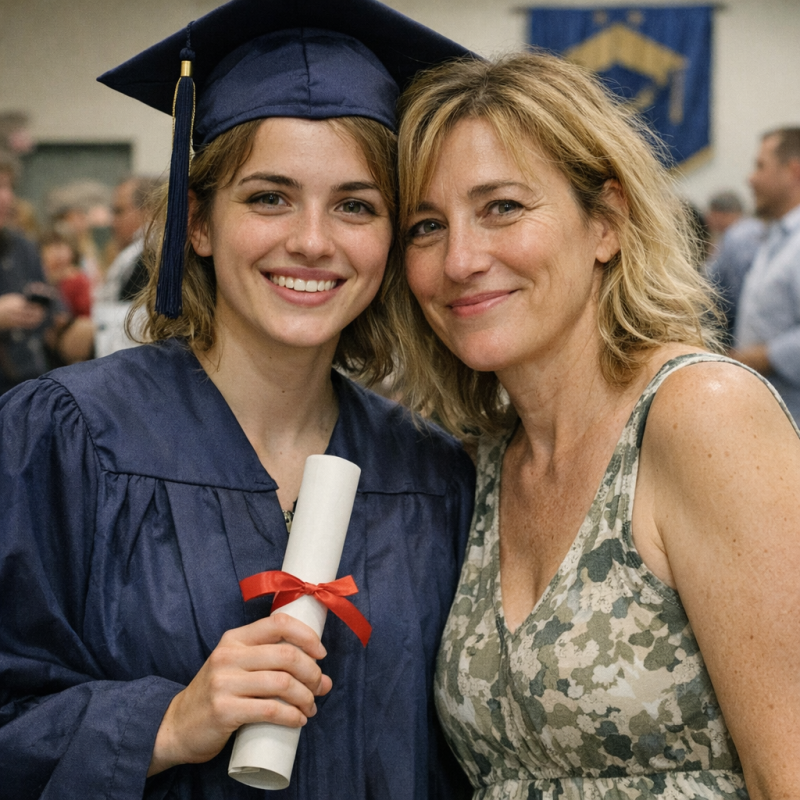 Image by FCT AI
Fair Isn't Always Understood
Here's what I learned, and I wish I'd learned it sooner: being a fair parent isn't about making the best decision you can with the information you have. It's not about loving your children equally or trying to balance some invisible scale. It's about trusting them enough to be part of the decision. I should have sat both my daughters down and said, 'Here's what we're facing. Here's what I'm thinking. What do you think?' Sophie would have said yes. I know that now. She would have given that money freely, just like she said. But I robbed her of that choice because I thought I was protecting her from an impossible burden. I learned that being a fair parent isn't about weighing decisions in your own mind—it's about trusting your children to be part of the weighing. Sophie's at college now. We text. We video call on Sundays, sometimes. She tells me about her classes, her roommate, the engineering projects that excite her. It's different than before. We'll never get that easy closeness back. Sophie and I would never have the relationship we once had, but maybe we could build something new—something built on respect instead of protection.
 Image by FCT AI