The Admission
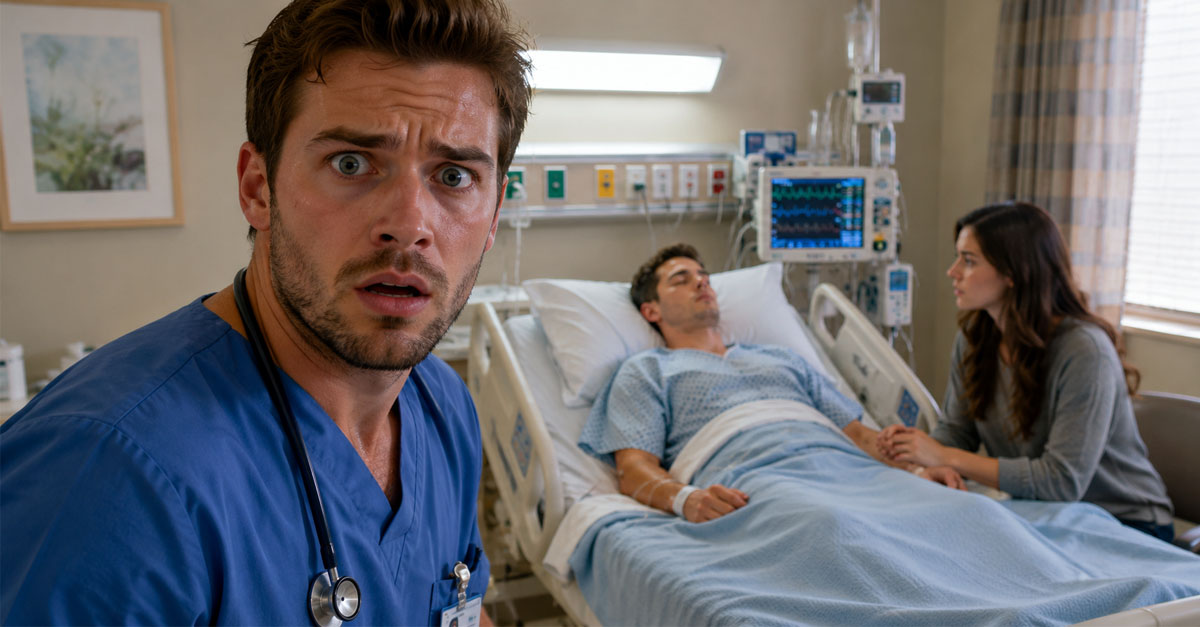
Jason came through those ICU doors on a non-rebreather mask at 100% oxygen, and he was still barely keeping his saturation above 88%. His chest X-ray looked like someone had poured milk into his lungs. Bilateral pneumonia, severe acute respiratory distress, the kind of case that makes you mentally prepare for intubation before the patient even gets settled into bed. I remember watching the monitor as we transferred him from the gurney, seeing those oxygen numbers flicker between 86 and 89, never quite reaching safe territory. His respiratory rate was 34, his work of breathing extreme. You could see every accessory muscle straining. He couldn't speak more than two words without gasping. Dr. Chen was already discussing ventilator settings at the foot of the bed while I got him connected to our monitoring system. His eyes had that wild, panicked look you see in people who can't breathe, that primal terror that overrides everything else. We got him positioned upright, maxed out his oxygen delivery, started the antibiotics and steroids. For the next six hours, it was touch and go. I had no idea that saving his life would be the easy part.
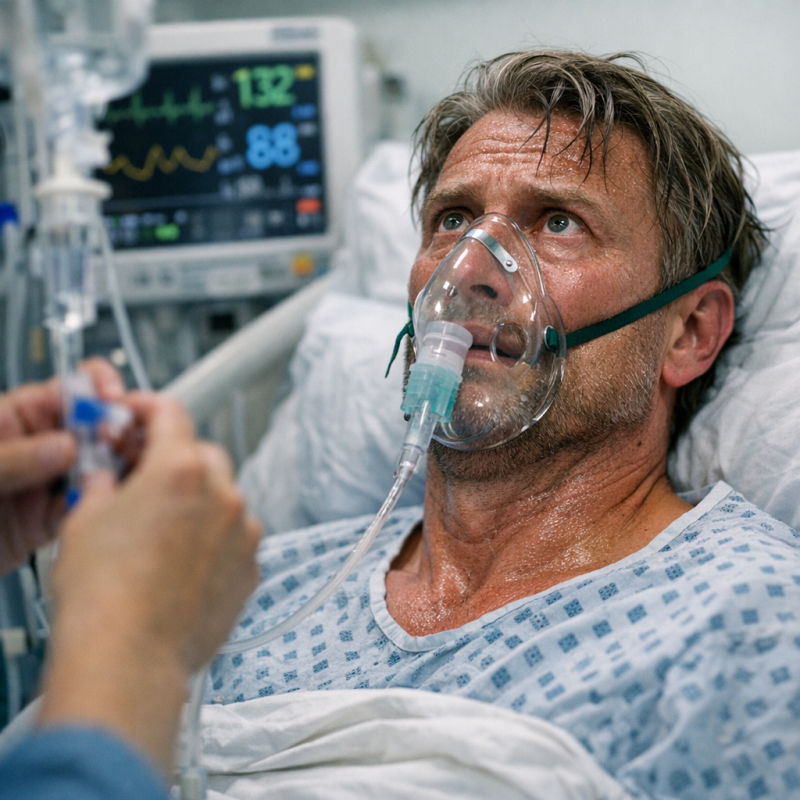 Image by FCT AI
The Girlfriend
The first time I met Melanie, she was standing over Jason's bed arguing with the respiratory therapist about pain medication. Lisa was trying to explain that the morphine could suppress his respiratory drive, which was exactly what we couldn't afford while his lungs were this compromised. Melanie kept interrupting, insisting Jason was in pain, that nobody was listening, that he needed more medication immediately. Her voice had this strained intensity, like she was barely holding herself together. I stepped in to try to mediate, explaining our plan to balance his comfort with his respiratory status. She turned to me with red-rimmed eyes and introduced herself as his girlfriend. 'He's suffered so much already,' she said. 'I just don't want him to be in pain.' I softened immediately. The ICU is terrifying for families, and everyone processes that fear differently. Some shut down, some get angry, some become hypervigilant. I assumed Melanie was the hypervigilant type. She seemed devoted, exhausted, clearly overwhelmed. Lisa eventually left to check on another patient, and Melanie settled into the chair beside Jason's bed, reaching for his hand. She kept saying 'nobody was listening to his pain' with an intensity that made the room feel smaller.
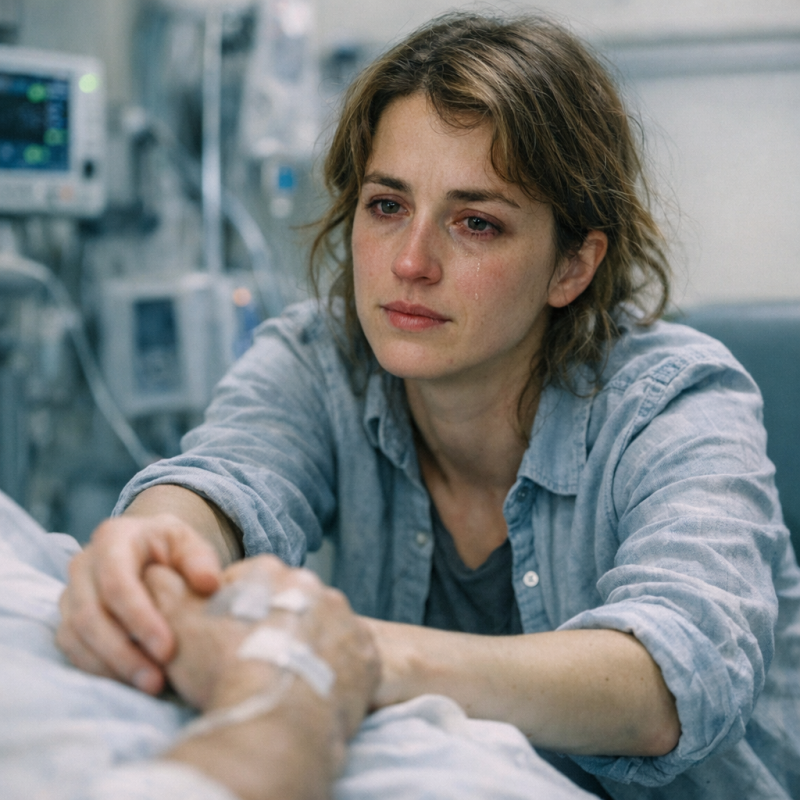 Image by FCT AI
Chart Review
Jason's medical history painted a picture of chronic pain, depression, and years of bouncing between emergency rooms. He'd had back surgery three years ago that never quite healed right, leading to ongoing lumbar pain and multiple medication trials. The chart documented a past opioid dependency that had been successfully managed through a pain clinic, though he'd been discharged from that program eight months ago for reasons that weren't entirely clear from the notes. Depression, anxiety, multiple previous hospitalizations for various complaints. Dr. Chen and I reviewed everything during afternoon rounds, trying to build a complete picture. 'Complex patient,' she said, which is physician code for a lot of things. His social history was sparse—no close family listed, worked sporadically in IT, lived locally. There were a lot of ER visits in the past year, mostly for pain management or respiratory complaints that had resolved. Nothing quite like this severity though. I felt for him. Chronic pain is brutal, and it intersects with mental health in ways that make everything harder. People like Jason fall through cracks in our healthcare system all the time. What the chart didn't show was the year he'd spent with the woman who now refused to leave his bedside.
 Image by FCT AI
The Vigil Begins
Melanie moved a reclining chair beside Jason's bed and made it clear she had no intention of leaving. She had a tote bag with changes of clothes, toiletries, phone chargers, snacks. She'd transformed the small corner of the ICU room into a kind of makeshift apartment. During my evening assessment, I noticed she'd taped a few photos to the wall beside his monitor—pictures of them hiking, at a restaurant, smiling at the beach. It actually warmed my heart a little. So many patients come through here completely alone, and having someone who cares that much makes a difference in outcomes. Melanie knew his preferences, advocated for his comfort, adjusted his pillow without being asked. When he dozed off, she sat quietly reading on her phone, never straying more than a few feet from the bed. She asked intelligent questions about his antibiotics, his oxygen requirements, his prognosis. She thanked me every time I came in, called me by name, treated every interaction with careful politeness. Most families appreciate a break from the ICU's intensity—the alarms, the lights, the constant activity—but she seemed to need to be there.
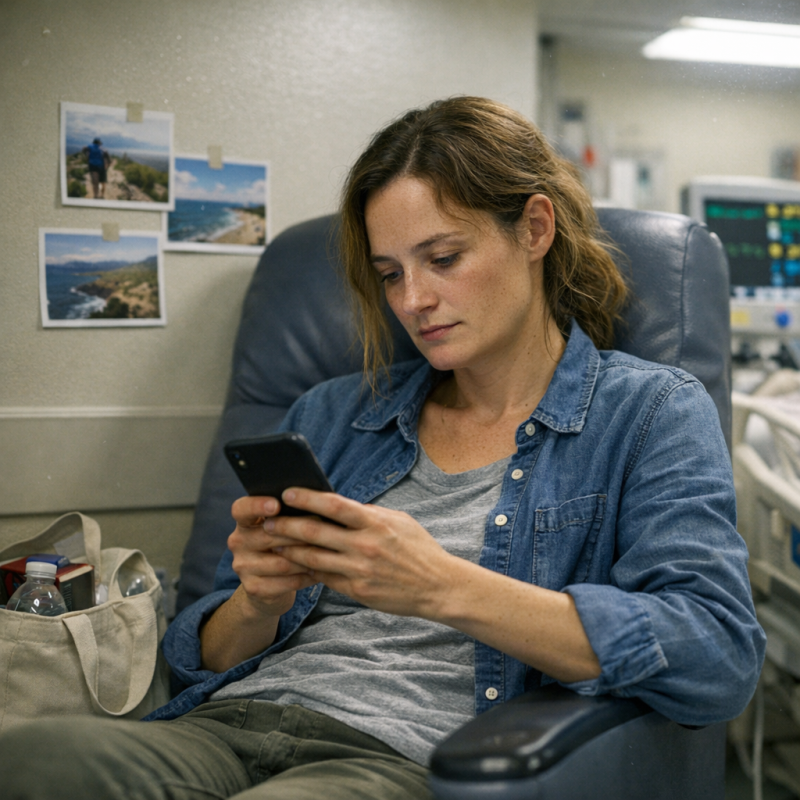 Image by FCT AI
The First Pattern
Every time I entered the room to administer medication, Melanie would ask exactly when the next dose was due. 'So that's the antibiotic now? When does his pain medication come?' 'You're giving the anticoagulant? What time is his next morphine?' 'Is that the steroid? How many hours until he can have more for pain?' It became a predictable rhythm. I'd scan the barcode, she'd ask about the schedule. I started answering before she finished the question, pulling up the medication administration record on my portable computer to show her the times. She'd nod seriously, sometimes taking notes on her phone. Marcus, the night shift nurse who took over from me at 7 p.m., mentioned it in passing during handoff. 'She's really on top of his medication schedule,' he said with a slight smile. 'Makes my job easier, actually—she reminds me if I'm running a few minutes late.' We both chuckled. Some families want to be kept in the loop about every detail, need that sense of control when everything else feels chaotic. It's not unusual. At the time, I thought she was just trying to stay informed.
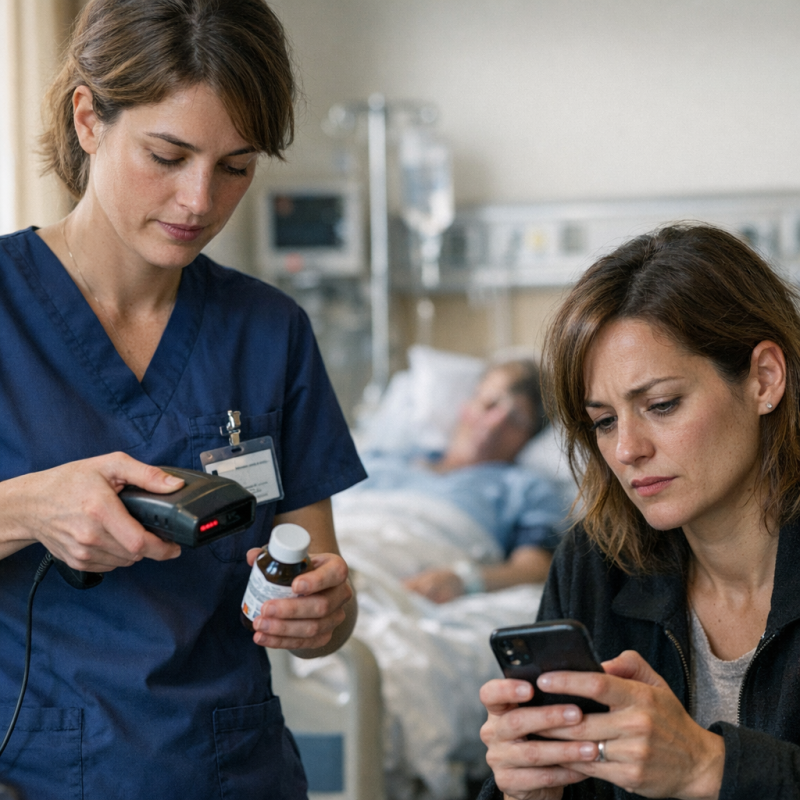 Image by FCT AI
Stabilization
Jason's oxygen levels started improving and his lungs sounded clearer during rounds. By day four, we'd weaned him down to 4 liters via nasal cannula, his saturation holding steady at 94%. His respiratory rate had normalized to the low twenties. The chest X-ray still looked rough, but Dr. Chen pointed out the improvement in the right lower lobe, the slight reduction in the infiltrates. His white blood cell count was trending downward. The antibiotics were working. He was eating small amounts, managing to carry on short conversations without gasping. I watched him joke weakly with Melanie about the hospital food, saw genuine color returning to his face. These are the moments that make the ICU bearable—when you pull someone back from the edge and watch their body remember how to function. Dr. Chen mentioned possible transfer to a step-down unit in another day or two if he continued improving. I documented everything carefully, noting his steady progress, his increased alertness, his improving lung sounds. The morning felt lighter. For the first time since admission, I allowed myself to believe he might actually recover.
 Image by FCT AI
The Waking Question
I walked in to find Melanie gently shaking Jason awake to ask if he was in pain, even though he'd been sleeping peacefully. His eyes opened slowly, confused and groggy. 'What's your pain level, baby?' she was saying softly. 'You need to tell them if you're hurting.' He mumbled something unclear, still half-asleep. She persisted: 'Is it a six? A seven? You need to be honest.' I must have made a noise because she looked up at me quickly. I tried to keep my voice neutral. 'He seemed comfortable—we should probably let him rest. Sleep is really important for healing.' She gave me this look that's hard to describe. Not quite defensive, not quite dismissive. Something that said I didn't understand, couldn't possibly understand. 'He never complains,' she explained. 'He downplays his pain because he doesn't want to be a burden. I have to ask, or he suffers in silence.' Jason had already closed his eyes again, looking almost embarrassed. I busied myself checking his IV site, but something felt off. When I suggested letting him rest, she looked at me like I didn't understand what he'd been through.
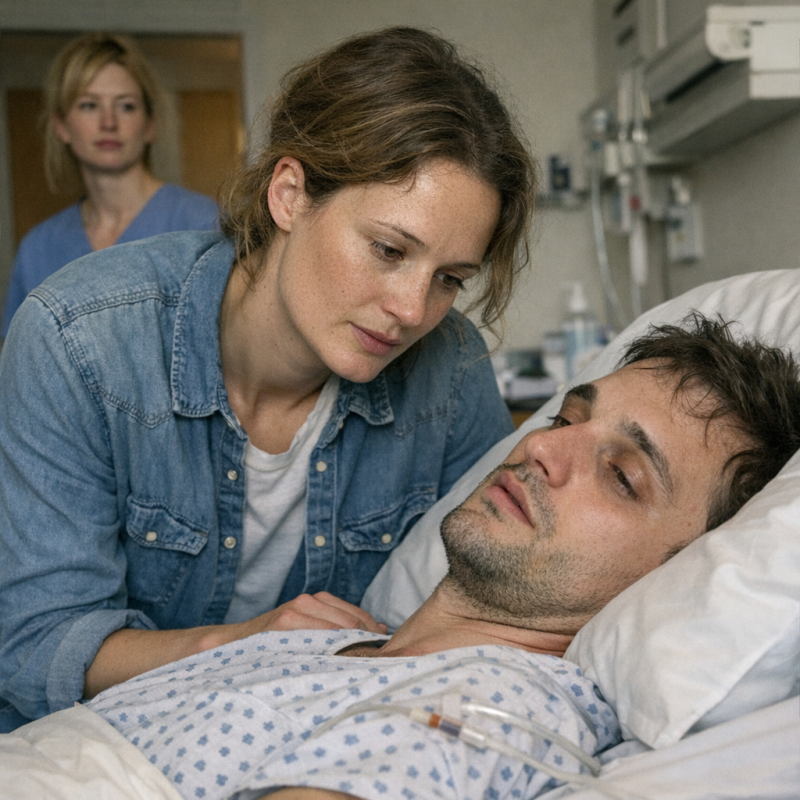 Image by FCT AI
Hallway Conversation
Nurse Carla mentioned quietly at the station that Melanie knew Jason's medication schedule better than some of the staff. 'I walked in ten minutes late with his antibiotics yesterday, and she was already asking where I was,' Carla said, shaking her head with an amused smile. 'She knows every single medication, every dosage, every interval. I've been a nurse for twenty years and I've never seen a family member that tuned in.' Another nurse chimed in about how Melanie had corrected her on the timing of a pain medication, pulled up her phone notes to show the schedule. We all kind of laughed about it, that slightly overwhelmed laugh you give when someone's helicopter behavior is intense but coming from a place of care. 'At least someone's paying attention,' I said, and we moved on to discussing other patients. But I noticed the comment stuck with me as I finished charting. I kept thinking about it during my drive home, Melanie's face when I'd suggested letting Jason sleep, the way she tracked every medication with that careful intensity. We laughed about it then, but the comment stuck with me longer than it should have.
 Image by FCT AI
The Explanation
She caught me in the hallway outside his room, her hand on my arm with this urgent pressure that made me stop. 'I need you to understand something,' she said, and her voice had this raw quality I hadn't heard before. She explained that Jason had been sick on and off for two years before they met, chronic pain that doctors kept dismissing as anxiety or drug-seeking behavior. 'They wouldn't listen to him,' she said, her eyes getting wet. 'He'd be in agony and they'd send him home with ibuprofen and a psychiatrist referral. I watched him suffer because nobody would take him seriously.' She told me about emergency room visits where nurses rolled their eyes, specialists who canceled appointments, a pain management doctor who suggested it was all in his head. 'I promised him I would never let that happen again,' she said. 'I will fight for his pain to be treated. I don't care if it makes me look crazy.' Her voice cracked on that last word. Her eyes filled with tears when she said it, and I wanted to believe her.
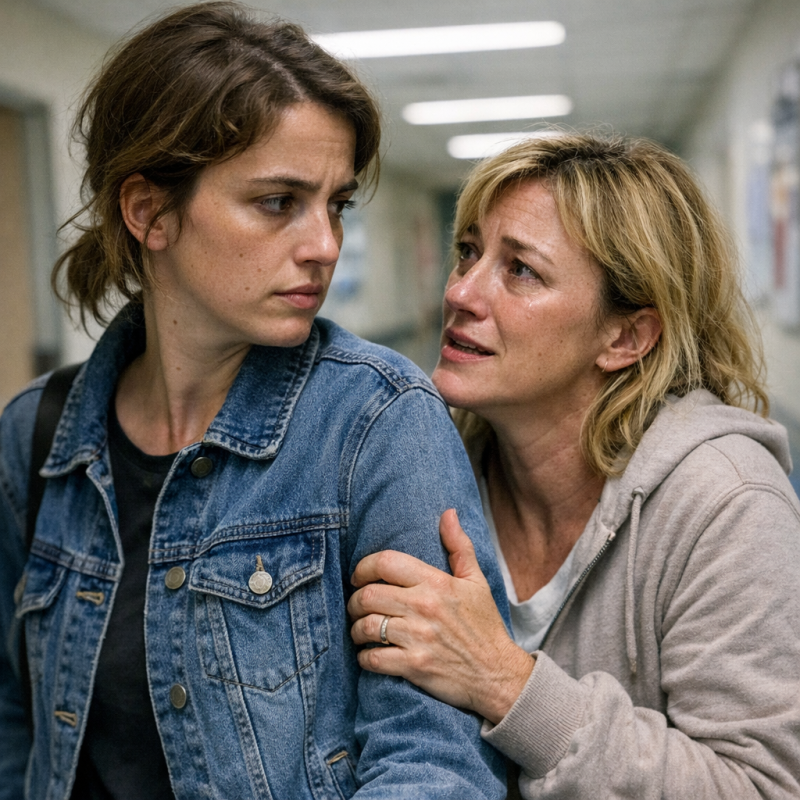 Image by FCT AI

History's most fascinating stories and darkest secrets, delivered to your inbox daily.
Respiratory Compromise
Dr. Chen pulled up a chair beside Jason's bed the next morning, speaking directly to both of them in that calm, authoritative way she has. 'I need you both to understand something important,' she said, looking at Melanie. 'Jason's respiratory system is still recovering. The pneumonia weakened his lungs significantly.' She explained that too many sedatives or pain medications could suppress his breathing reflex, especially the opioids Melanie kept requesting. 'We're balancing pain management with respiratory safety,' Dr. Chen said. 'If we overdo the sedatives, we risk respiratory failure. Do you understand?' Melanie nodded seriously, leaning forward with her hands clasped. 'I completely understand,' she said. 'His breathing comes first. I get it.' Dr. Chen seemed satisfied, made a note in Jason's chart, and moved on to her other patients. I went to check another patient's IV. Twenty minutes later, I was back at the nurses' station when Melanie appeared at my elbow. 'Has it been long enough for his next dose of pain medication?' she asked. Melanie nodded seriously, promised she understood, and then asked about pain medication again twenty minutes later.
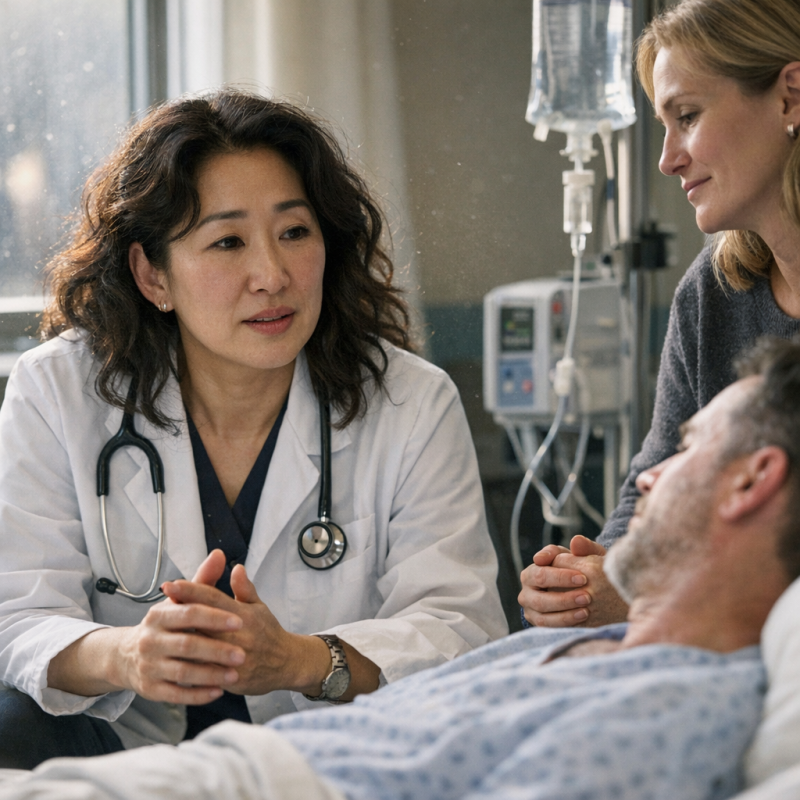 Image by FCT AI
Night Shift Observation
It was maybe two in the morning, that dead quiet time when half the unit is sleeping and you can actually hear the ventilators cycling. I was charting at the nurses' station when I glanced up and saw her through the window of Jason's room. She was adjusting his blankets, but not the way normal people do, not just tucking him in. She smoothed them with this deliberate precision, working from his shoulders down to his feet in exact, measured movements. Then she repositioned his arm on top of the blanket at a specific angle, stepped back to look at him, adjusted the arm again. She checked his IV line, followed it with her finger from the bag to his arm, then did it again. Everything had this careful, methodical quality, like she was following steps in her head. I watched for maybe five minutes, and she never stopped moving, never just sat with him. She touched his forehead, rearranged the water cup on his bedside table, straightened the corner of the blanket she'd already straightened twice. She moved like someone performing a ritual they'd rehearsed a hundred times before.
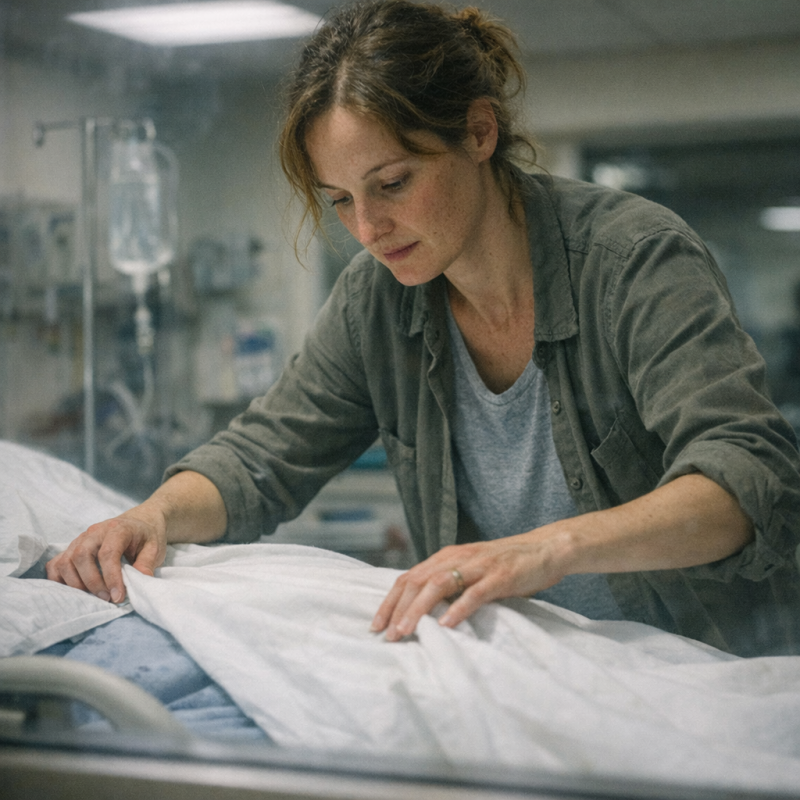 Image by FCT AI
Jason's Apology
Jason caught me alone during one of Melanie's coffee runs, and he had this apologetic look on his face that made me pause. 'I'm sorry about Melanie,' he said quietly. 'I know she's been intense about the medication thing.' He looked exhausted, dark circles under his eyes, but he managed a weak smile. 'She worries too much because she's seen me really suffer before. Back when the doctors wouldn't believe me about the pain.' He explained how she'd advocated for him at appointments, researched his symptoms, pushed for tests that other people had dismissed. 'Before I met her, I was pretty lost,' he said. 'Just cycling through emergency rooms, getting treated like I was faking it. She was the first person who actually believed me.' His voice got softer. 'She saved me, honestly. I don't know where I'd be without her.' The gratitude in his voice was so genuine it almost hurt to hear. I told him not to worry about it, that we understood she cared. He said she'd saved him, and at the time I thought he meant emotionally.
 Image by FCT AI
The Duration
I was adjusting his oxygen flow when I asked, just making conversation really, how long they'd been together. 'About a year,' Jason said, and there was something in his tone I couldn't quite place. Not hesitation exactly, more like careful measurement. 'Met her at a support group thing. For chronic pain patients.' He looked toward the door like he was checking if she was coming back. 'She just got me, you know? From day one. Understood the pain in a way nobody else did.' I nodded, made some comment about how lucky that was, finding someone who understands. But I kept thinking about it after I left his room. A year wasn't that long, really. Long enough to be serious but not long enough to know someone completely. I wondered what his medical history had looked like before that year, whether he'd really been dismissed by doctors or if there was more to the story. Something about the way he said it made me wonder what his life had looked like before her.
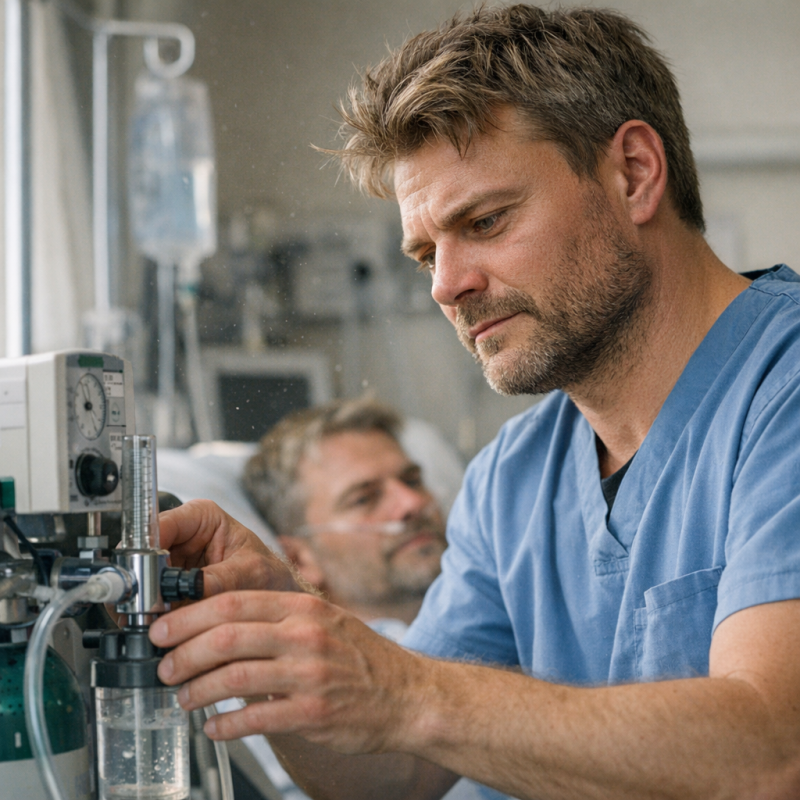 Image by FCT AI
Medication Logs
I pulled up Jason's electronic chart during a slow afternoon and went through every medication administration record since he'd been admitted. Every dose of morphine, every antibiotic, every sedative was documented exactly as it should be. Times matched up, dosages were appropriate, nothing was missing or duplicated. I checked the nursing notes too, and yeah, there were a lot of entries about Melanie's requests. 'Girlfriend asking about pain medication timing.' 'Family member concerned about patient comfort level.' 'Girlfriend requesting doctor consult regarding pain management.' But every request had been handled appropriately, evaluated, either granted or explained why not. The documentation was meticulous. Nothing was wrong. Nothing was out of place. No unexplained symptoms, no medication errors, no red flags in the chart that would justify this creeping feeling I couldn't shake. I closed the laptop and sat there for a minute, staring at the screen. By every measurable standard, we were doing everything right and Jason was improving. Everything was by the book, which somehow made me more uneasy than if something had been wrong.
 Image by FCT AI
The Improvement Continues
Dr. Chen was looking at Jason's latest chest X-ray on the computer when I walked up, and she had this satisfied expression that we don't see often enough in the ICU. 'Look at this,' she said, pointing to the screen. 'The consolidation is clearing nicely. His white count is down, oxygen saturation is stable on minimal support.' She pulled up his lab results, and yeah, everything looked better. Kidney function improving, inflammatory markers dropping. 'I think we can start talking about transferring him to progressive care in the next day or two,' Dr. Chen said. I felt this genuine relief, the kind you get when a patient you've worried about turns a real corner. We went in to tell Jason and Melanie the good news together. Jason smiled, said that sounded great. But Melanie went very still. Her face did this thing I couldn't quite read, something between fear and calculation. 'That's wonderful,' she said, but her voice was tight. We started discussing transferring him out of ICU, and I felt relieved until I saw Melanie's face.
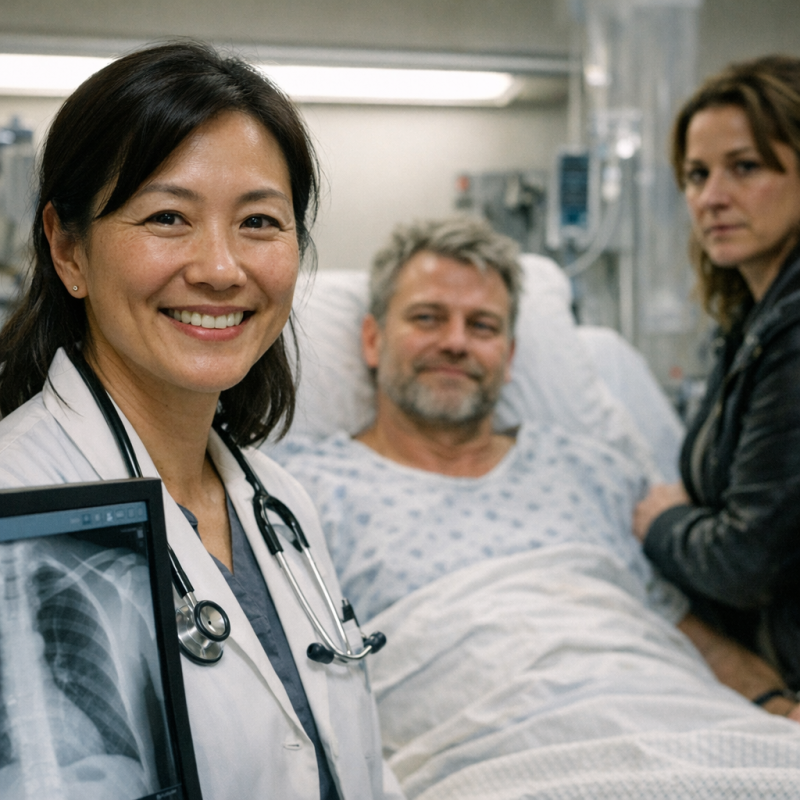 Image by FCT AI
Resistance
Melanie started asking questions immediately, and not the usual relieved-family-member questions. 'Is progressive care equipped to handle a respiratory emergency?' she asked. 'What if his oxygen levels drop again? Will there be the same nurse-to-patient ratio?' Dr. Chen patiently explained that progressive care was appropriate for his current condition, that he'd still be closely monitored. But Melanie pulled out her phone, started reading off statistics about post-ICU complications. 'I've been researching relapse rates,' she said. 'Patients with his severity of pneumonia have a fifteen percent chance of re-deterioration within seventy-two hours of transfer.' She listed potential complications, medication timing concerns, monitoring gaps. Dr. Chen looked at me briefly, and I could see she was trying to figure out if these were legitimate concerns or anxiety talking. 'I understand your worry,' Dr. Chen said carefully. 'But he's stable enough for the step-down unit.' Melanie's hands were shaking slightly as she held her phone. Most families celebrate leaving intensive care, but she sounded terrified.
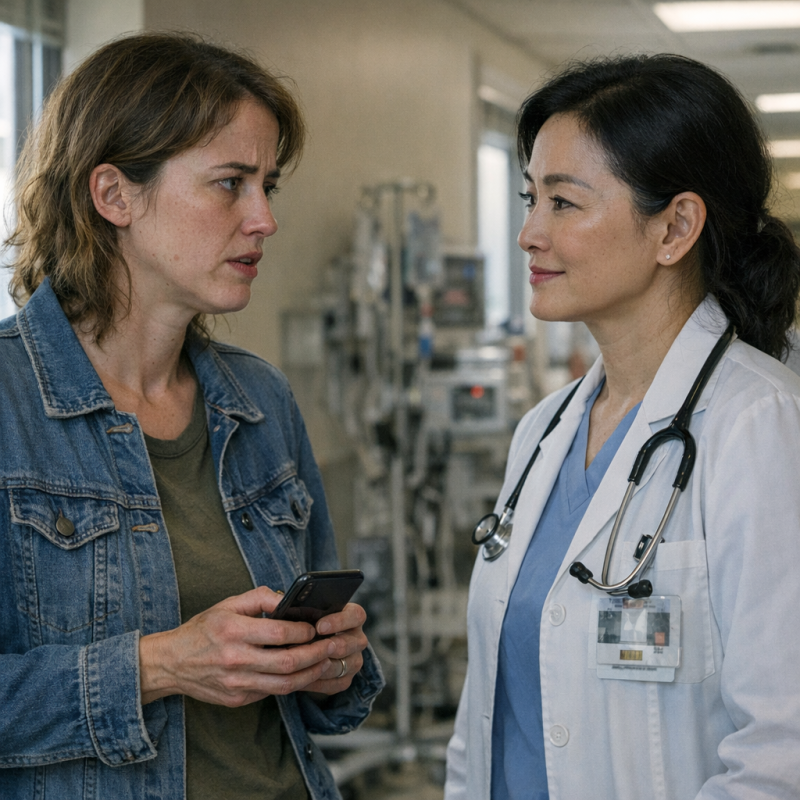 Image by FCT AI
The Transfer Decision
Dr. Chen turned from Melanie back to me, then looked at Jason's monitor one more time before making her decision. 'I appreciate your concerns,' she said, her voice measured and professional, 'but Jason is stable enough for progressive care. The transfer will happen tomorrow morning.' She explained it calmly, clinically—his oxygen levels were maintaining, his vitals were steady, he no longer required ICU-level intervention. It was the right call, the appropriate medical decision. But Melanie's entire body language changed when Dr. Chen said it was happening. Her shoulders went rigid. She opened her mouth like she was going to argue, then seemed to think better of it. Instead she just nodded, this tight little movement that didn't match her expression at all. 'If that's what you think is best,' she said, but her voice had this edge to it that made the hair on my arms stand up. Dr. Chen didn't seem to notice, or maybe she just chose to ignore it. She gave Jason some encouraging words about his progress and left to update his chart. Melanie's jaw tightened in a way that made me glad the decision wasn't up to her.
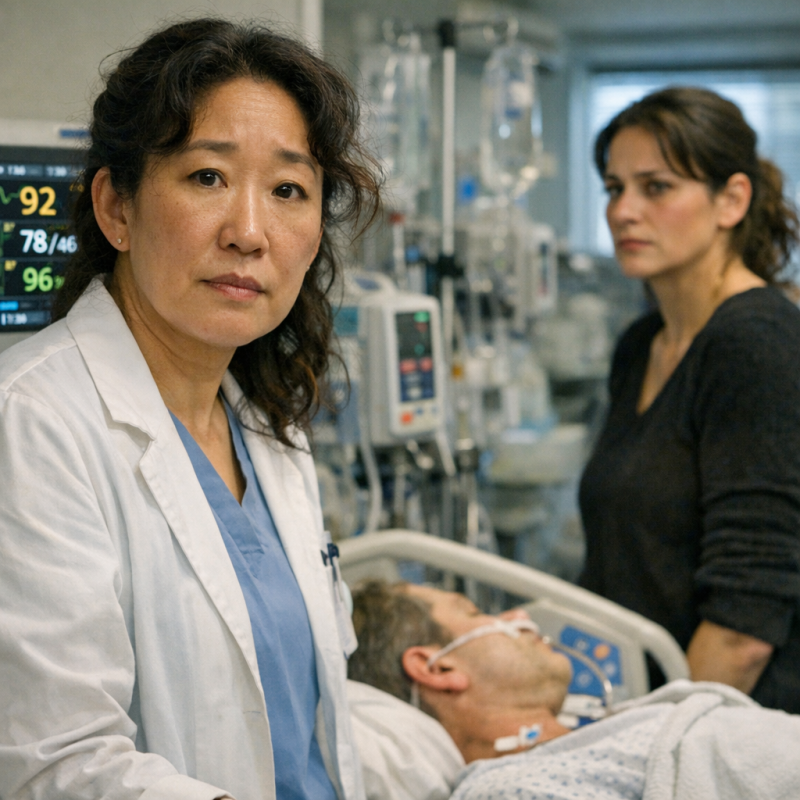 Image by FCT AI
Final ICU Night
I worked the night shift before Jason's transfer, and around two in the morning I went to check on him during my rounds. The lights in his room were off except for the glow from the monitors, and at first I thought he was alone. Then I saw her. Melanie was sitting in the chair beside his bed, completely still, just watching him breathe. Not looking at her phone, not reading, not doing anything. Just staring at his chest rising and falling. The whole scene felt wrong in a way I couldn't articulate. Most family members who stay overnight are fitfully sleeping or scrolling through their phones to stay awake. They don't just sit in the dark watching. I stepped into the room and she didn't even turn around, didn't acknowledge me at all. 'Melanie?' I said quietly. She finally looked at me, her face unreadable in the dim light. 'Everything okay?' I asked. She nodded slowly. 'Just making sure he's comfortable,' she said. Her voice was soft, almost tender. When I asked if she needed anything, she said she was just making sure he was comfortable.
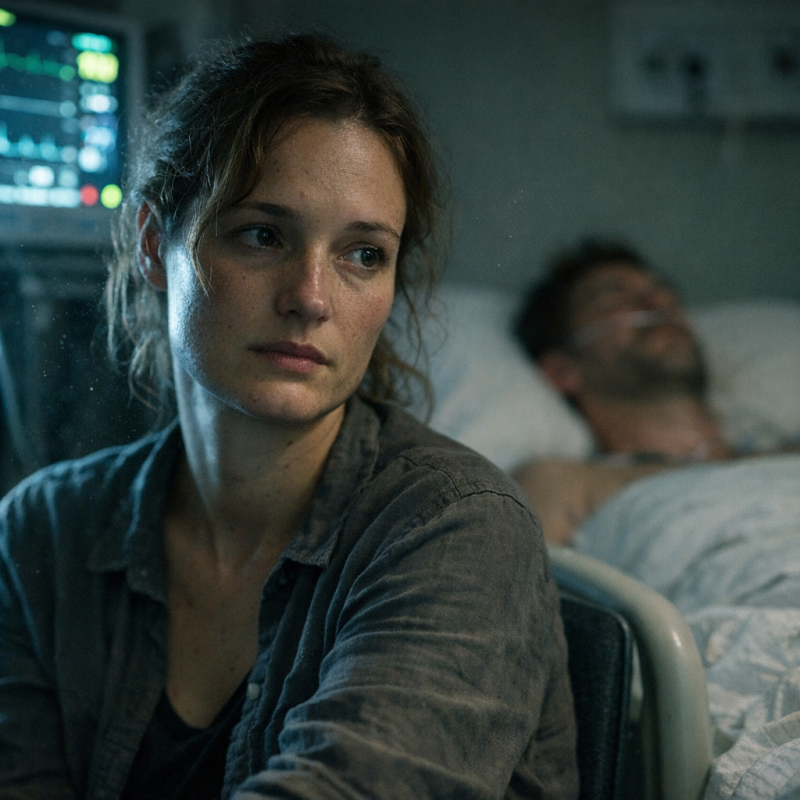 Image by FCT AI
The Move
The transport team came for Jason around ten-thirty the next morning. His vital signs were rock solid—oxygen saturation holding steady in the mid-nineties, heart rate normal, breathing comfortably. He was even joking with the transporters as they got him ready to move, asking if progressive care had better food than the ICU. It was the kind of transfer you love to see, the kind that reminds you why you became a nurse in the first place. Patients get better and they move on. Melanie walked alongside his gurney, her hand on his arm, playing the devoted girlfriend again. I watched them disappear down the hallway toward the elevators, and something in my chest loosened just slightly. Maybe I'd been reading too much into everything. Maybe she really was just an anxious partner who asked too many questions and hovered too much because she loved him. God knows I'd seen plenty of those over the years. As I went back to the nurses' station to finish my charting, I told myself my uneasiness about Melanie was just ICU paranoia, and I tried to let it go.
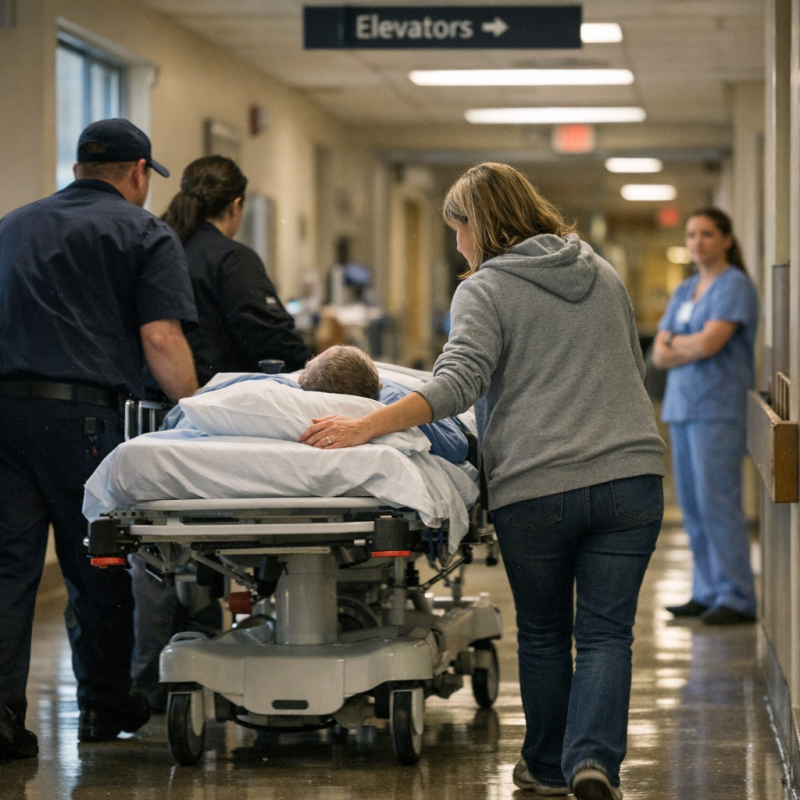 Image by FCT AI
The Code Blue
I was in the supply room restocking my med cart when I heard it. The overhead speakers crackled to life with that horrible tone that makes every hospital worker's blood pressure spike instantly. 'Code blue, fourth floor, room four-eighteen. Code blue, fourth floor, room four-eighteen.' My brain registered the room number before I'd even processed what I was hearing. That was Jason's room. He'd transferred maybe two hours ago, two and a half at most. I'd just seen him stable, talking, breathing fine. Code blues don't happen to patients like that. They don't happen that fast after transfer. But the announcement kept repeating and my legs were already moving, my med cart forgotten behind me. I ran past the elevators because they'd be too slow, hit the stairwell door hard enough that it slammed against the wall. Other staff were responding too, I could hear footsteps echoing above and below me, but all I could think about was getting to that room. I sprinted toward the stairs before I even realized I was moving.
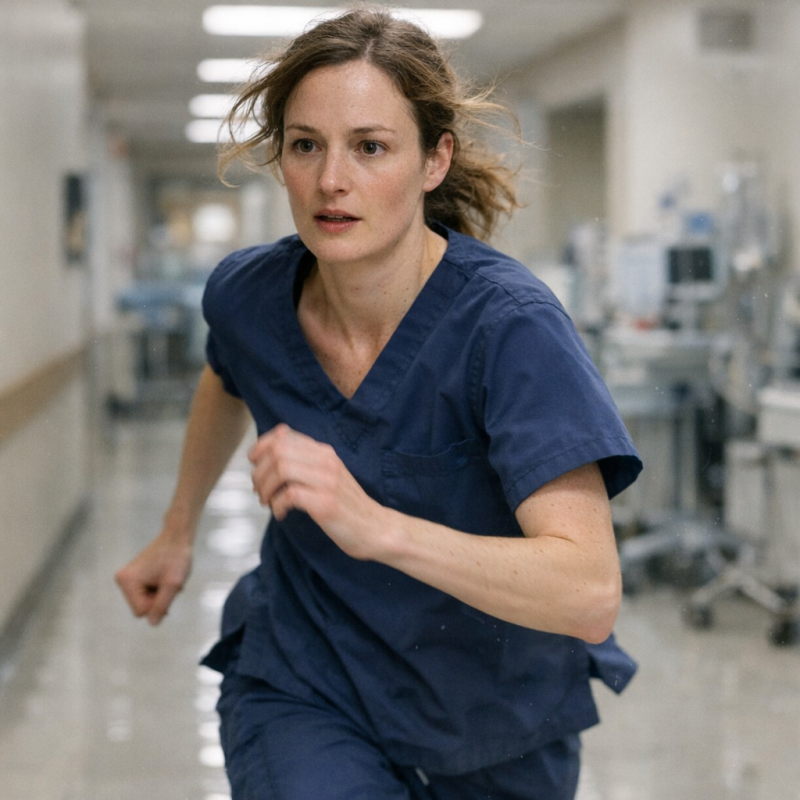 Image by FCT AI
Chaos
The scene in room four-eighteen was absolute chaos. Marcus was doing chest compressions, his face set in grim concentration, counting under his breath. Lisa from respiratory was bagging him manually, squeezing oxygen into his lungs between compressions. The monitor showed a heart rhythm that was barely there, just this thready, dying pattern. And his oxygen saturation—God, his oxygen saturation was in the sixties and dropping. Someone called out vital signs. Someone else was drawing up epinephrine. The progressive care nurses looked shell-shocked because this wasn't supposed to happen here, wasn't supposed to happen at all. 'How long has he been down?' I asked, shouldering my way to the bedside. 'Three minutes, maybe four,' Marcus said between compressions. 'He just crashed. No warning, nothing.' I looked at Jason's face and my stomach turned over. His lips were blue, his skin ashen gray. The color of someone who isn't getting oxygen, whose body is shutting down. He'd been stable just hours ago, and now he was gray.
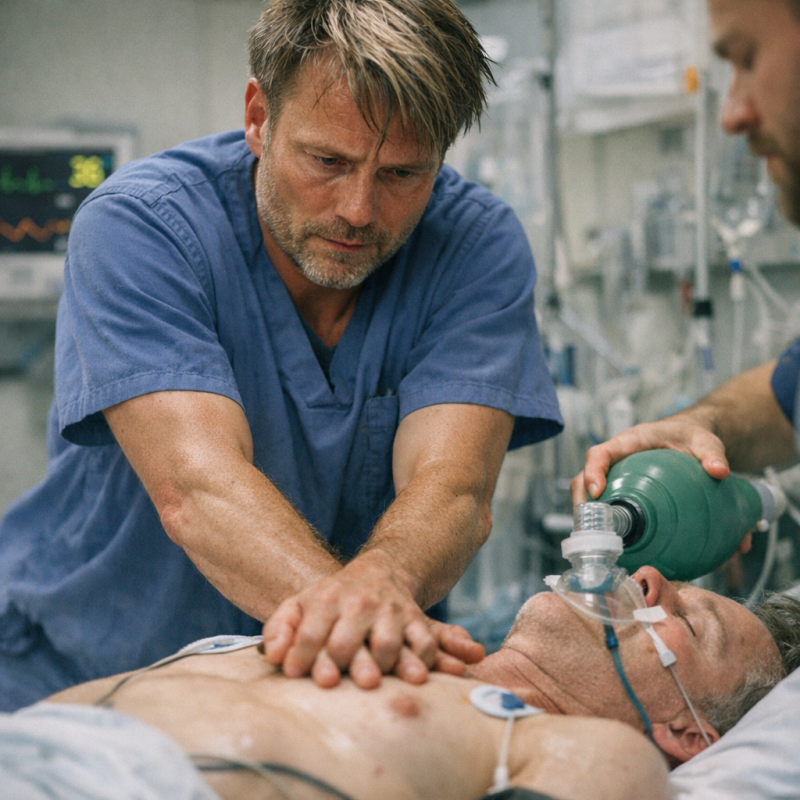 Image by FCT AI
Resuscitation
Dr. Chen arrived and immediately took control. 'Get me an airway kit, we need to intubate now,' she ordered. Lisa already had it ready, her hands steady despite the crisis. We worked like a choreographed team because we'd done this a hundred times before, but my hands were shaking more than usual. This was Jason. I'd taken care of him for days. Dr. Chen got the tube in on the first try, secured it quickly while Lisa connected the ventilator. 'Continue compressions,' Dr. Chen said. Marcus kept going, his arms probably burning by now but his rhythm never faltering. One minute passed. Two minutes. Then the monitor beeped and showed a real rhythm, an actual heartbeat. 'We've got a pulse,' someone called out. Marcus stopped compressions and we all watched the monitor like it might be lying to us. But no—Jason's heart was beating on its own again, his oxygen saturation slowly, painfully slowly, starting to climb. Dr. Chen checked his pupils, felt for his pulse at his wrist, watched his chest rise with the ventilator. Another few minutes and he probably wouldn't have made it.
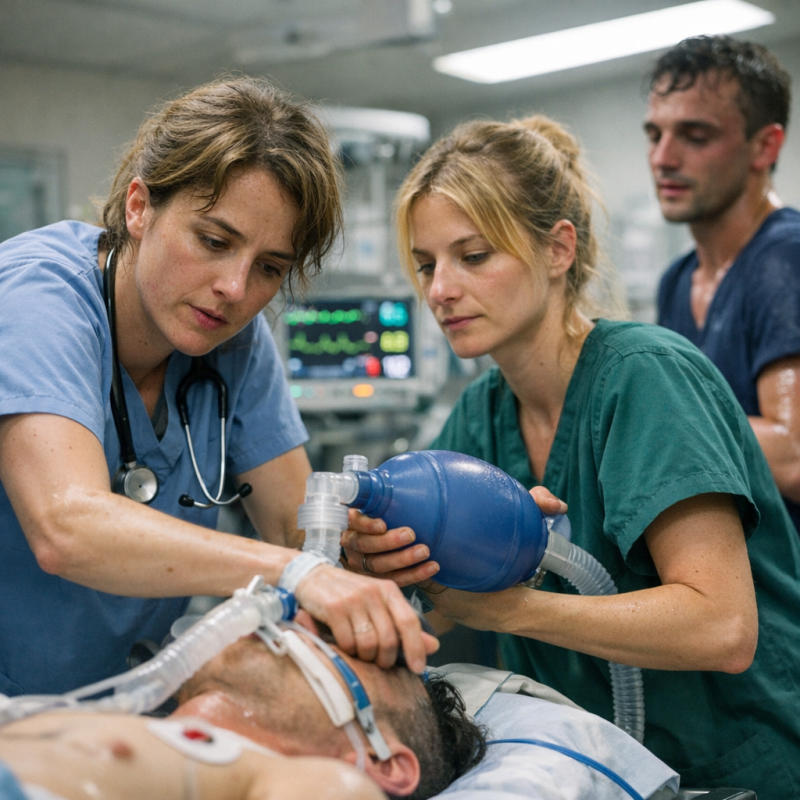 Image by FCT AI
Melanie's Reaction
As we stabilized Jason and the immediate crisis passed, I became aware of someone crying. Not quiet, private tears—loud, gasping sobs that filled the room. I looked over and saw Melanie pressed against the wall, her face buried in her hands, her whole body shaking. But when she looked up, her face was dry. Completely dry. No tear tracks, no redness, no actual tears. Just the sounds of crying without any physical evidence of it. It was the strangest thing I'd ever seen, this performance of grief that didn't quite match reality. 'I knew this would happen,' she said, her voice breaking on every word. 'I told you he wasn't ready, I told Dr. Chen, I knew he shouldn't leave the ICU.' She kept repeating it, this mantra of I-told-you-so wrapped in artificial hysteria. A nurse tried to comfort her but Melanie shook her off. 'He could have died,' she wailed. 'He almost did and nobody listened to me.' I stared at her, watching her perform, and something cold settled in my stomach. She kept repeating 'I knew this would happen, I told you he wasn't ready.'
 Image by FCT AI
Back to ICU
We got Jason back on the transport gurney and rushed him to the ICU, the ventilator hissing rhythmically as we moved. His vital signs were holding but fragile, like he might crash again at any second. The ICU team was ready for us, had already prepared his old room with fresh supplies and monitoring equipment. We transferred him carefully, reconnected all the lines and leads, adjusted the ventilator settings. He looked so much worse than he had just that morning—pale, unresponsive, back on full life support. Dr. Chen ordered a full workup: labs, chest x-ray, cultures, everything. We needed to know what had caused this sudden deterioration, this catastrophic crash that made no medical sense. As the team worked around Jason's bed, I found the charge nurse. 'I need to be his primary,' I said. She looked at me questioningly—I'd already worked a full shift, should have been heading home. 'Please,' I added. 'I know his case.' She must have heard something in my voice because she just nodded and updated the assignment board. This time, I made sure I was assigned as his primary nurse.
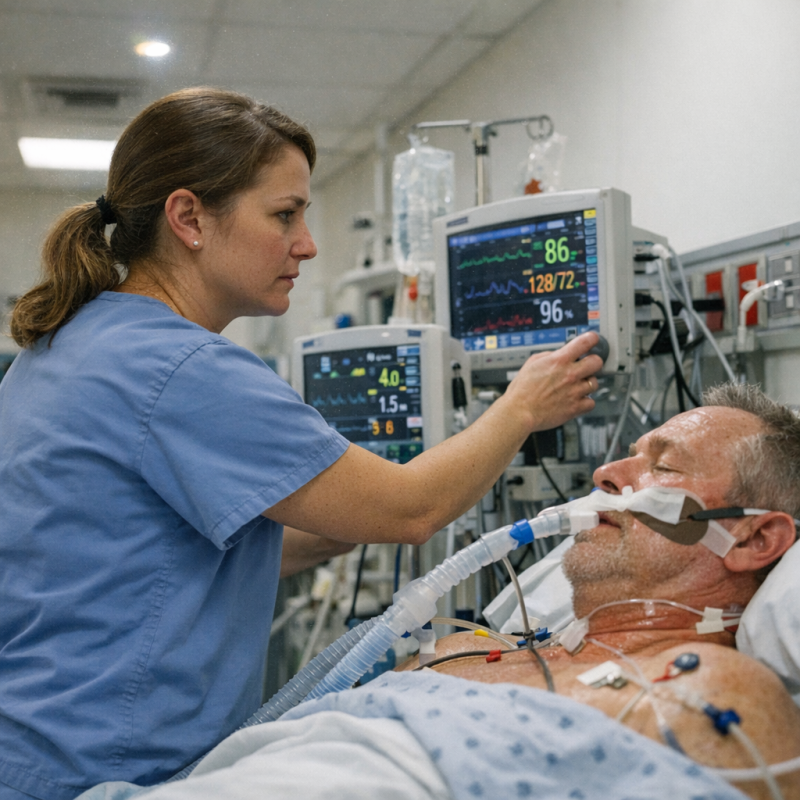 Image by FCT AI
Medical Mystery
Dr. Chen spread Jason's labs and imaging across the desk in the physician's workstation, her expression growing more troubled with each result she reviewed. I stood beside her, watching her finger trace across the values, searching for the smoking gun that would explain what we'd witnessed. His chest x-ray showed the pneumonia, yes, but it wasn't worse than before—if anything, it looked slightly improved from the antibiotics. His electrolytes were normal. Kidney function stable. Liver enzymes unremarkable. Blood cultures still pending, but nothing suggested septic shock. 'This doesn't make sense,' she said finally, looking up at me. 'A patient doesn't just stop breathing for no reason.' I nodded, feeling that cold dread settling deeper in my stomach. 'Could it be cardiac?' I asked, grasping. She shook her head. 'EKG shows nothing acute. Troponins are negative.' We stood there in silence, staring at numbers that should have told us something but instead told us nothing. A clear diagnosis would have been frightening, sure, but at least we'd know what we were fighting. Nothing fully explained what we'd seen, which scared us more than a clear diagnosis would have.
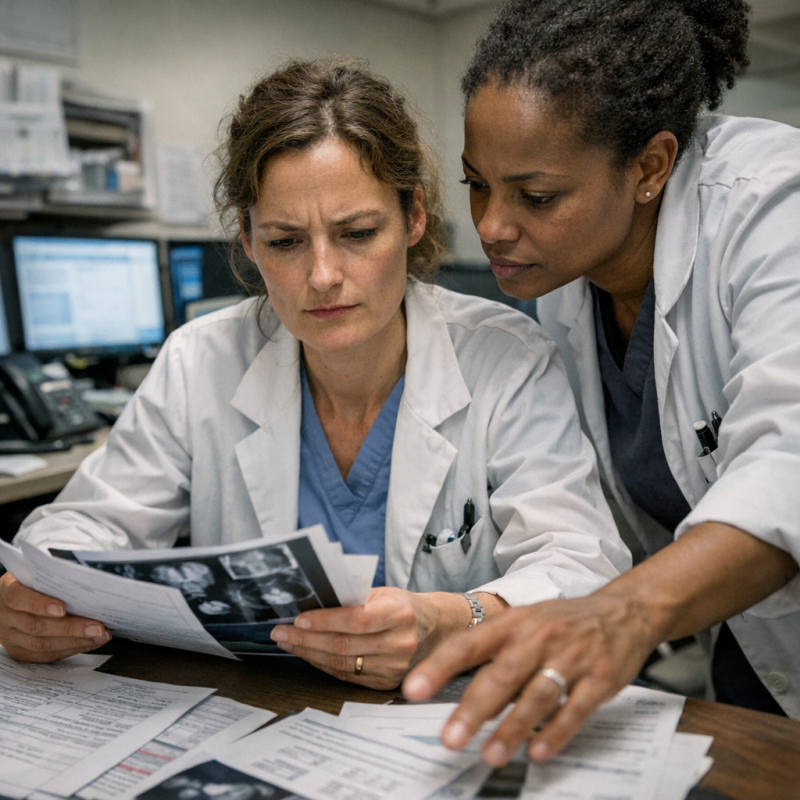 Image by FCT AI
The Pneumonia Theory
The pulmonologist stopped by during rounds and suggested maybe Jason's pneumonia had progressed more rapidly than the imaging could capture, that sometimes bacterial infections could cause sudden respiratory depression. Dr. Chen listened politely, but I could see the doubt in her eyes. She pulled up the serial chest x-rays, comparing today's film with yesterday's, then the day before. 'Look at the progression,' she said, pointing. 'It's gradual improvement, not sudden worsening.' The pulmonologist frowned, clearly uncomfortable. 'Well, perhaps a mucus plug, then? An acute airway obstruction?' But we'd suctioned Jason when we intubated him—his airway had been clear. Another physician suggested a pulmonary embolism, but the CT angiogram came back negative. Then maybe a seizure? But no witnessed activity, and his neuro exam was unchanged from baseline. We cycled through possibilities like we were checking boxes on a differential diagnosis list, but nothing fit. I could feel it in the room—the team throwing out theories because we needed something, anything, to explain this. We were grasping for explanations because the alternative was too unsettling to consider.
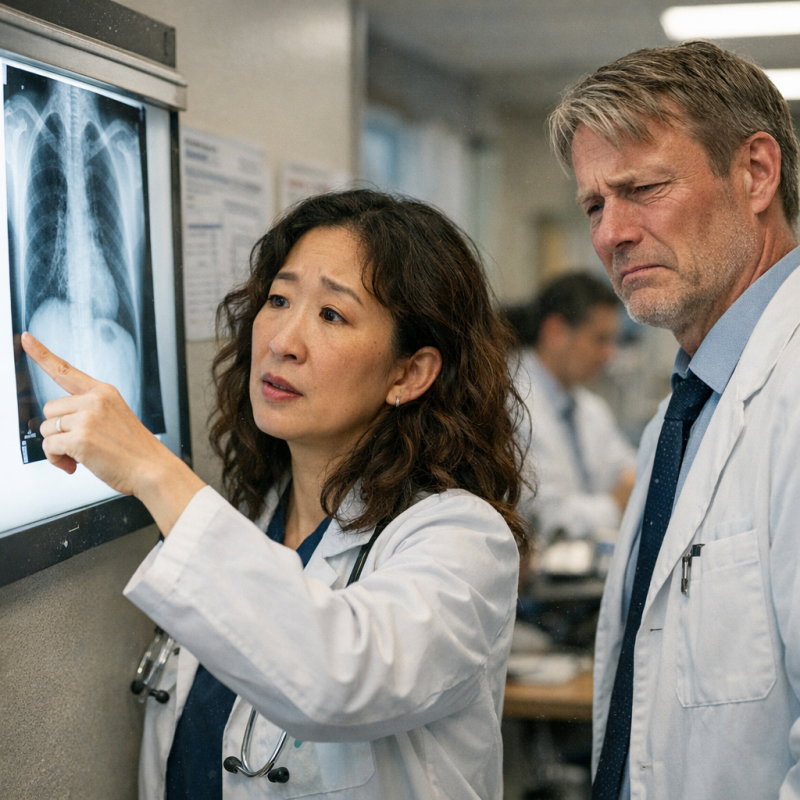 Image by FCT AI
Medication Question
During the afternoon huddle, Marcus quietly raised what we'd all been wondering. 'Is there any possibility he received too much sedation on the step-down floor?' he asked, his voice careful. 'Like, a medication error?' Carla immediately pulled up the electronic medication record, scanning through every entry from the past twenty-four hours. She'd been the one who'd helped with the transfer, and I could see the defensiveness in her shoulders. 'Everything administered matches what was ordered,' she said firmly. 'Times, doses, routes—all documented correctly.' We crowded around the screen, verifying. Pain medication given at eight AM, exactly as prescribed. Nothing else sedating. The step-down nurses had followed protocol perfectly. 'What about PRN doses?' someone asked. Carla shook her head. 'He didn't need any. He wasn't in pain, wasn't agitated.' Dr. Chen reviewed the pharmacy records too, confirming that only the prescribed doses had been dispensed. No extra medication had even left the medication room. It should have been reassuring, but instead it just left us with nowhere to go. The floor nurses insisted they'd administered exactly what was ordered, and the records confirmed it.
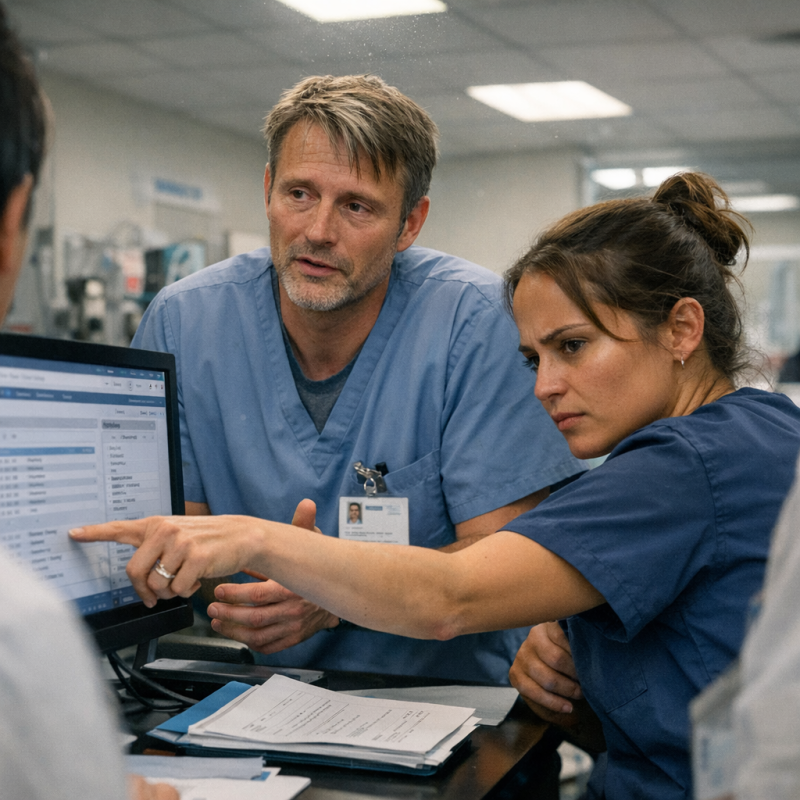 Image by FCT AI
The Detail
Carla lingered after the huddle broke up, something clearly weighing on her. 'There's one thing,' she said quietly, glancing around to make sure we weren't overheard. 'When we transferred Jason to step-down yesterday, his girlfriend—Melanie—she kept asking if she could help comfort him. Like, really insistent about it.' I felt my pulse quicken. 'What do you mean, help comfort him?' Carla shifted uncomfortably. 'She wanted to hold his hand, adjust his pillows, that kind of thing. Kept saying she knew how to calm him better than anyone.' My mouth went dry. 'And did you let her?' Carla nodded slowly. 'For a few minutes, yeah. We had a rapid response two doors down—patient next door started crashing—and the whole team had to respond. She offered to stay with Jason, said she'd call us if anything changed.' The room felt suddenly smaller. 'How long was she alone with him?' I asked, my voice barely steady. Carla looked miserable. 'Maybe ten minutes? Fifteen at most. When we got back, everything seemed fine. He was resting.' She'd been alone with him briefly while staff handled another patient emergency nearby.
 Image by FCT AI
Uncomfortable Silence
After Carla shared that detail, the nursing station went completely silent. Marcus was staring at his computer screen without actually seeing it. Carla was reorganizing supplies that didn't need reorganizing. I stood there frozen, watching them both avoid eye contact. The timing lined up too perfectly—Melanie alone with Jason, and less than an hour later he'd coded. But what could we say? That we suspected his girlfriend of... what, exactly? Harming him? Based on what evidence? A timeline? A feeling? The very idea seemed insane when I tried to form it into actual words. Marcus cleared his throat. 'I'm sure it's just a coincidence,' he said, but his tone suggested he didn't believe that at all. Carla nodded too quickly. 'Yeah, of course. I mean, she loves him. She's been here constantly, worried sick.' But her hands were shaking slightly as she restocked the drawer. We all knew what we were thinking. We all knew how it would sound if we voiced it. I looked at both of them, these colleagues I'd worked alongside for years, and saw my own fear reflected back. Nobody wanted to say out loud what we were all starting to think.
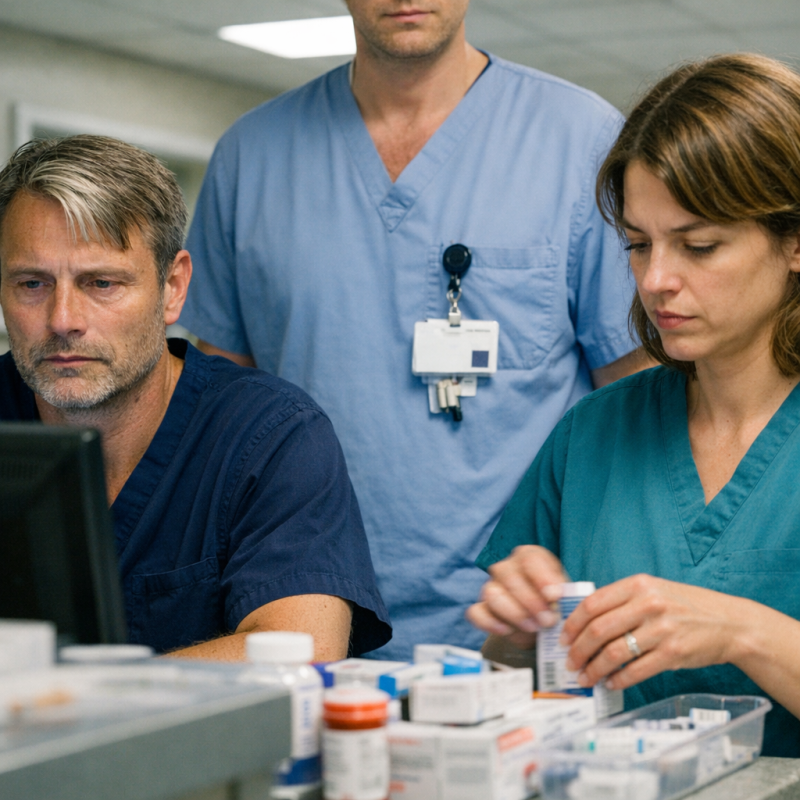 Image by FCT AI
The Return Vigil
Melanie returned to Jason's bedside an hour later, settling into the chair beside him with the same devoted expression she'd worn since day one. She reached out and carefully adjusted his IV line, smoothing the tape at the insertion site with gentle fingers. Then she repositioned his oxygen tubing, making sure it wasn't pressing against his face. Her movements were practiced, confident—the kind of familiarity that comes from doing something many times before. 'Is he comfortable?' she asked me, looking up with those concerned eyes. 'Can I get him anything? Does he need more pain medication?' I forced myself to smile. 'He's adequately sedated right now,' I said, stepping closer to the bedside. She nodded and went back to fussing with his blankets, tucking them more securely around his shoulders. I stayed in the room, charting at the computer workstation, keeping her in my peripheral vision. Every time she leaned forward to touch him, my heart rate spiked. Every time she asked about his medications, I felt myself tense. The monitors beeped steadily, tracking Jason's vital signs, but I found myself watching her more closely than I watched his monitors.
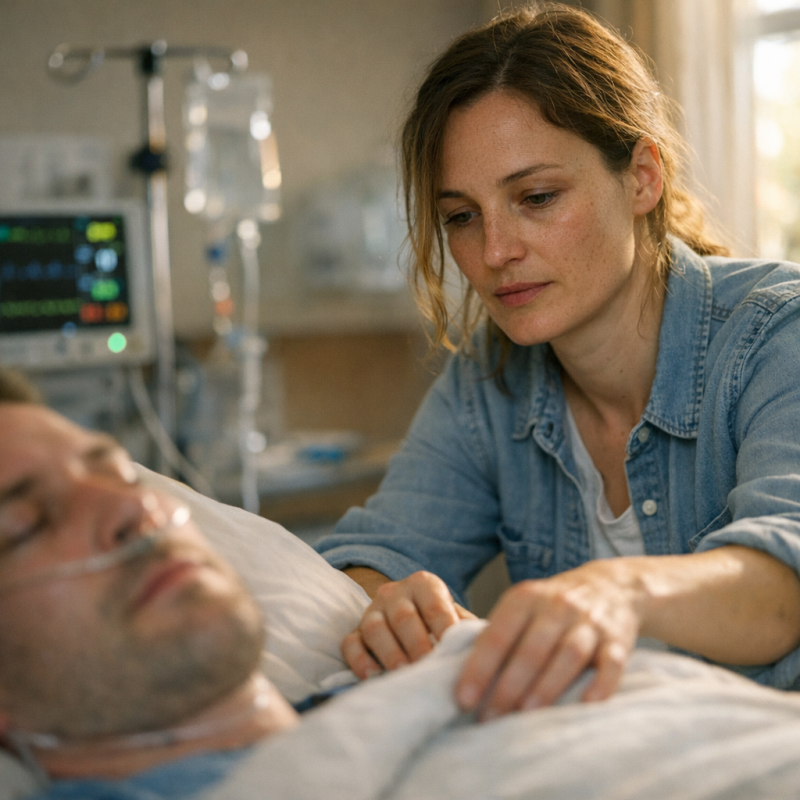 Image by FCT AI
Shift Change
When Marcus arrived for the night shift, I pulled him aside before he'd even set down his bag. We stepped into the supply room, away from potential eavesdroppers. 'I need you to do something,' I said quietly. 'Document every time Melanie touches Jason. Every time she asks about medications. Times, what she did, what she said—everything.' Marcus didn't look surprised. He just nodded slowly, his expression serious. 'How detailed do you want me to be?' he asked. 'As detailed as possible,' I said. 'Treat it like you're building a legal record.' He was quiet for a moment, processing the weight of what I was asking. Then he met my eyes. 'I've been thinking the same thing,' he said softly. 'After what Carla mentioned about the timing, and the way she's always so focused on his pain meds...' He trailed off, but I understood. We stood there in that cramped supply room, two nurses who'd seen enough in our careers to recognize when something felt wrong, even if we couldn't prove it yet. 'I'll chart everything,' he confirmed. She gave me a long look and said she'd been thinking the same thing.
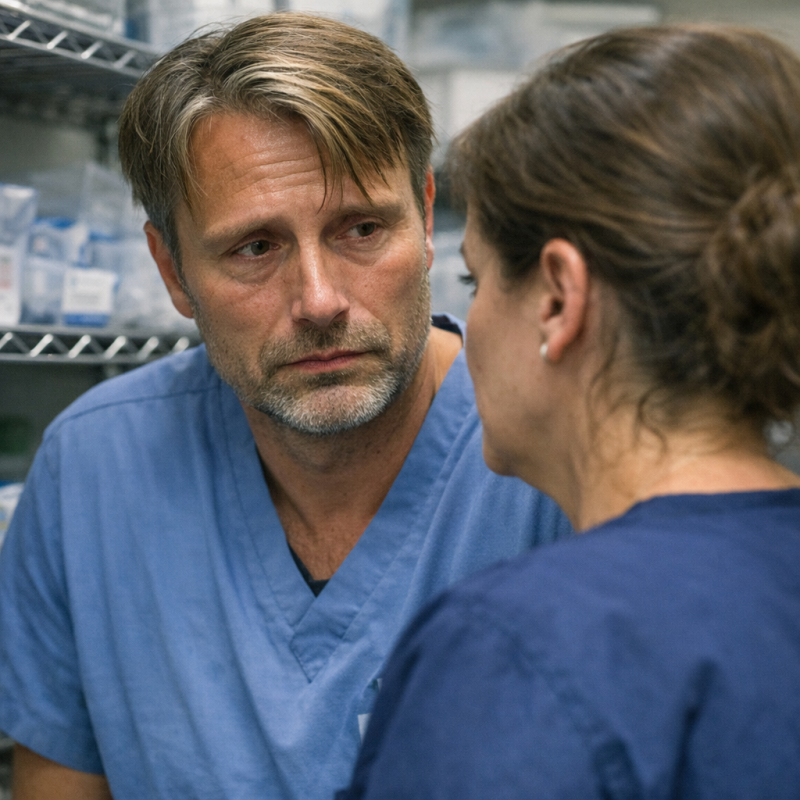 Image by FCT AI
The Request
I found Dr. Chen in her office, finishing notes from rounds. My hands were sweating as I closed the door behind me. 'I have a request,' I said, trying to keep my voice steady. 'I think we should review the security footage from the step-down floor yesterday. From around the time before Jason's code.' She looked up from her computer, her expression unreadable. 'Security footage? For what purpose?' I'd prepared for this, had my reasoning ready. 'Timeline verification,' I said carefully. 'To see exactly when his condition started to change, whether there were any observable signs we missed. It might help us understand what happened.' It was technically true, even if it wasn't the whole truth. Dr. Chen leaned back in her chair, her sharp eyes studying my face. I could feel her reading between the lines, understanding what I wasn't saying. The silence stretched between us, heavy with implication. I held her gaze, letting her see that I was serious, that this wasn't a casual request. Finally, she reached for her phone. 'I'll contact security,' she said quietly. She studied my face for a long moment before agreeing.
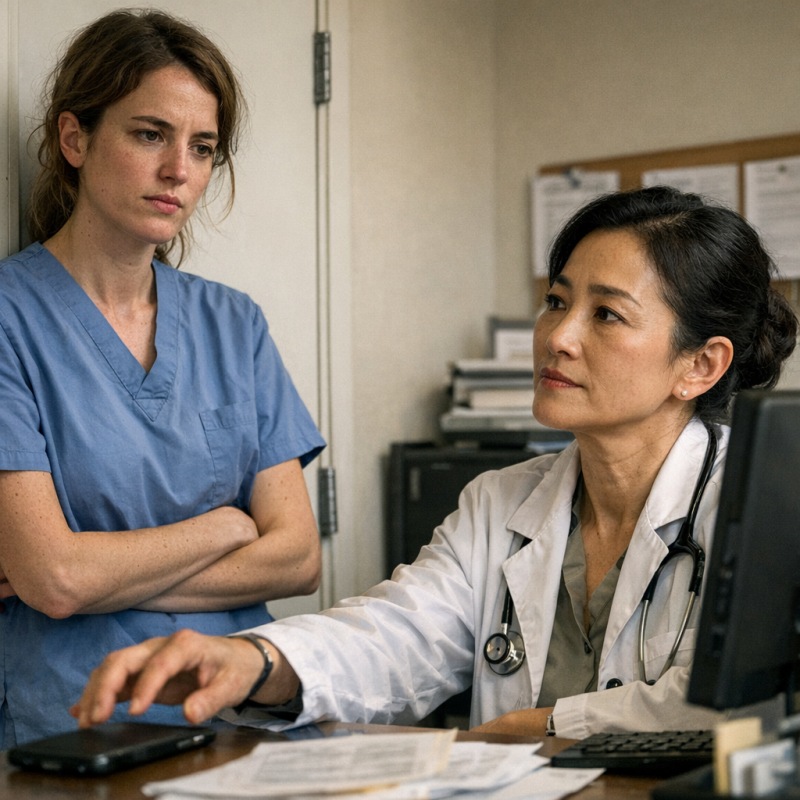 Image by FCT AI
The Footage
Security Officer Ramirez pulled up the hallway camera footage from shortly before the code blue, and the three of us crowded around his monitor. The timestamp read 14:23—about forty minutes before Jason arrested. I watched Melanie enter his room, her movements casual, unhurried. My heart pounded as the seconds ticked by on the screen. Five minutes passed. Then ten. I could see the tension in Dr. Chen's posture beside me, her arms crossed tightly. At 14:41, Melanie emerged from Jason's room. She glanced down the hallway—left, then right—with a quick, furtive movement that made my stomach clench. Then her hand moved to her purse. It was fast, practiced. She pulled something from her jacket pocket and stuffed it deep into her bag, her fingers working quickly before she smoothed her clothes and walked toward the elevator with that same calm, measured pace she always had. 'Can you rewind that?' Dr. Chen's voice was tight. Ramirez played it again. Same glance, same quick concealment, same practiced calm. What we saw made my blood run cold.
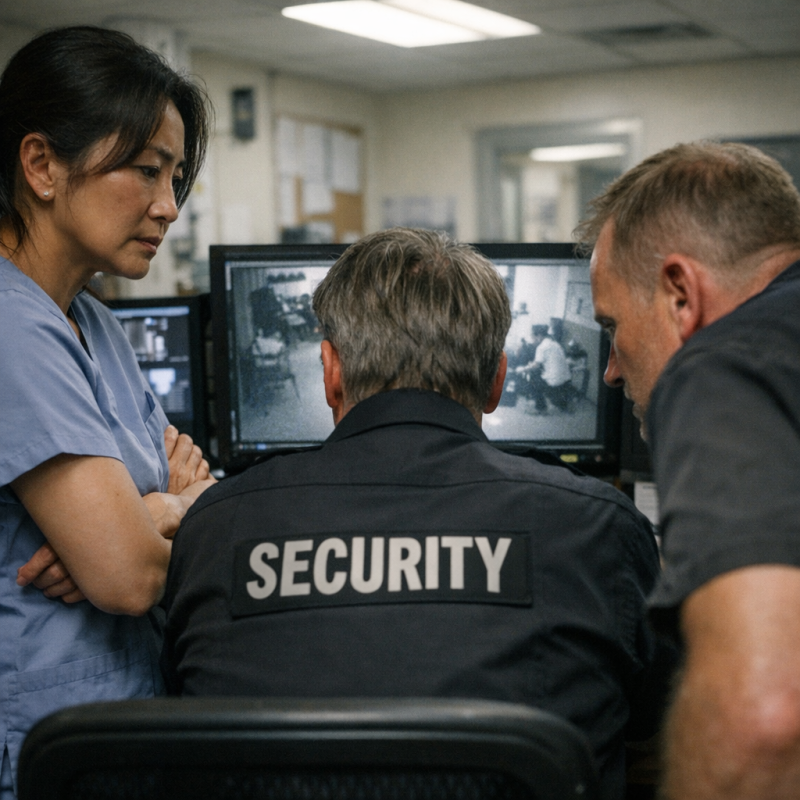 Image by FCT AI
The Image
On the screen, Melanie exited Jason's room and quickly stuffed something into her purse. 'There,' I said, pointing at the monitor. 'Right there.' Ramirez froze the frame and zoomed in, but the object in her hand was too small to identify clearly—just a dark shape disappearing into the leather bag. Still, the movement was unmistakable. Deliberate. Hidden. Dr. Chen leaned closer, her breath fogging slightly on the screen. 'What time did he code?' she asked quietly. I didn't need to check the chart. '15:17.' The math was simple. Sickening. Fifty-one minutes between Melanie leaving his room with something concealed in her purse and Jason's heart stopping. Enough time for whatever she'd given him to circulate, to metabolize, to nearly kill him. I felt dizzy watching the footage loop again. Her casual walk to the elevator. Her calm expression. Like she was just stepping out for coffee. 'Document the exact timestamps,' Dr. Chen told Ramirez, her voice steady but her hands shaking slightly. Not long after that timestamp, he arrested.
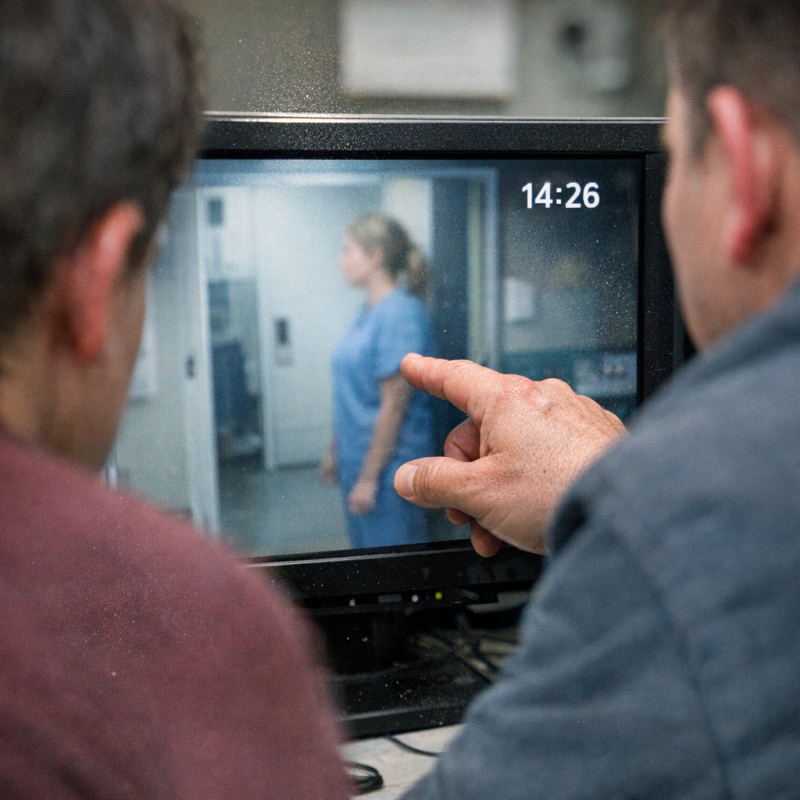 Image by FCT AI
The Protocol
Dr. Chen immediately contacted hospital administration and patient safety, her voice crisp and clinical as she explained what we'd found. I sat in her office, my hands clasped so tightly my knuckles were white, listening to her use phrases like 'suspicious activity' and 'potential harm to patient.' Within twenty minutes, the Chief Nursing Officer and Risk Management Director joined us. They reviewed the footage themselves, their faces growing grimmer with each replay. The CNO made another call—this one to legal. I watched the dominoes fall, each conversation escalating the situation to a level I'd never experienced in my career. 'We need to preserve the evidence,' the Risk Management Director said. 'And we need to protect the patient.' Someone mentioned reviewing pharmacy records again, checking for discrepancies. Another voice suggested immediate increased monitoring. Then Dr. Chen said it, the words I'd been both hoping for and dreading: 'We need to contact law enforcement.' The room went silent for a beat. The words 'law enforcement' were spoken for the first time, and everything became terrifyingly real.
 Image by FCT AI
Lockdown
Security was instructed to monitor Melanie discreetly without alerting her to our suspicions. Officer Ramirez set up a feed that would track her movements whenever she was in the hospital—hallways, elevators, the cafeteria. 'She can't know we're watching,' the Risk Management Director emphasized. 'If she suspects we're onto her, she could flee or destroy evidence.' I nodded, understanding the stakes but hating the performance we'd all have to maintain. Ramirez showed me the monitor setup in the security office—multiple camera angles covering Jason's room and the surrounding area. 'We'll have eyes on her constantly,' he assured me. I thought about walking back onto that floor, smiling at Melanie, chatting about Jason's vitals like nothing had changed. My stomach turned. But this was necessary. We needed to catch her if she tried anything else, needed to build the case that would protect Jason and maybe save the next victim. I left the security office and headed back to the ICU, my ID badge feeling heavier than usual. She sat at Jason's bedside completely unaware that we were watching her every move.
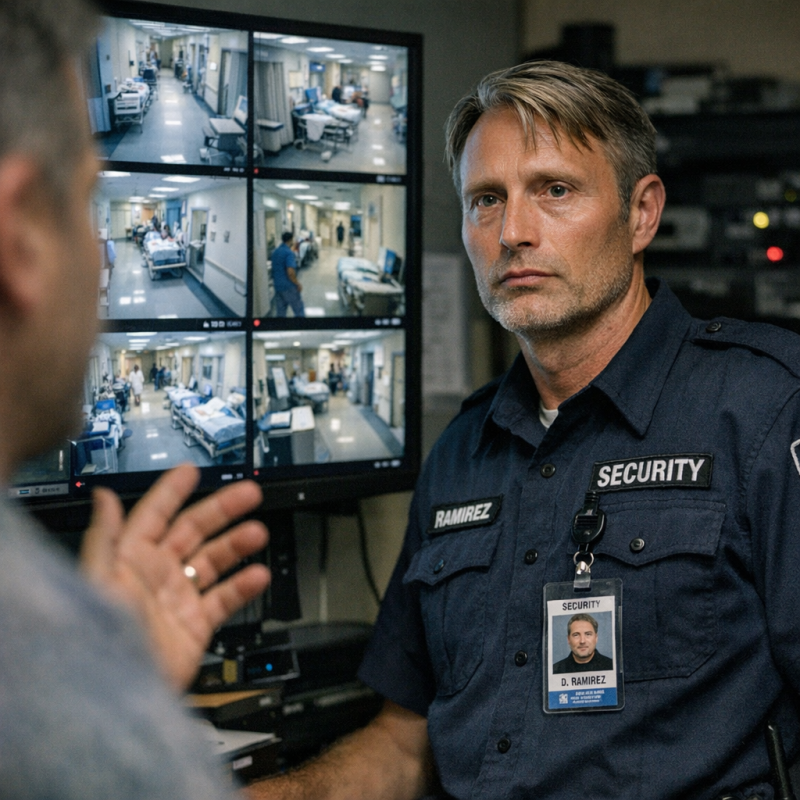 Image by FCT AI
The Wait
The next few hours passed in agonizing slow motion as we waited for law enforcement to arrive. I checked Jason's vitals every fifteen minutes instead of every hour, documenting everything obsessively. Each time I entered his room, Melanie looked up with that same sweet, concerned expression. 'How's he doing?' she'd ask, and I'd force myself to smile and give her the update. 'Stable. He's doing really well today.' The lies tasted bitter. I watched her hands constantly, paranoid that she'd slip him something right in front of me. My colleague Emma noticed my tension. 'You okay?' she whispered at the nurses' station. I couldn't tell her, couldn't explain why I was hovering near Room 8 like a hawk. The security cameras followed Melanie when she walked to the bathroom, when she got coffee from the family lounge, when she sat holding Jason's hand and stroking his hair with apparent tenderness. Each gesture that once seemed loving now looked sinister. Calculated. I kept wondering if Melanie could sense that something had changed.
 Image by FCT AI
Detective Morrison
Detective Morrison arrived in plain clothes and met with us in a private conference room on the administrative floor. He was older, maybe mid-fifties, with gray hair and the kind of weathered face that suggested he'd seen everything. Dr. Chen and I walked him through the timeline—the pattern of symptoms, the medication discrepancies, the security footage. He took notes in a small leather notebook, his expression neutral but his eyes sharp. 'Has she ever been alone with the patient when something happened?' he asked. I thought about the step-down unit code, about the insulin incident in the ICU. 'Yes. Multiple times.' He nodded slowly, processing. 'And you've increased monitoring now?' 'Constant visual surveillance,' Dr. Chen confirmed. 'We haven't left him alone with her since we reviewed the footage.' Detective Morrison tapped his pen against the notebook. 'Good. That's good.' Then he looked at me directly, and his next question hit like a punch. 'Do you believe the patient is in immediate danger right now?' I opened my mouth, then closed it. When he asked if we believed Jason was in immediate danger, I realized I didn't know how to answer.
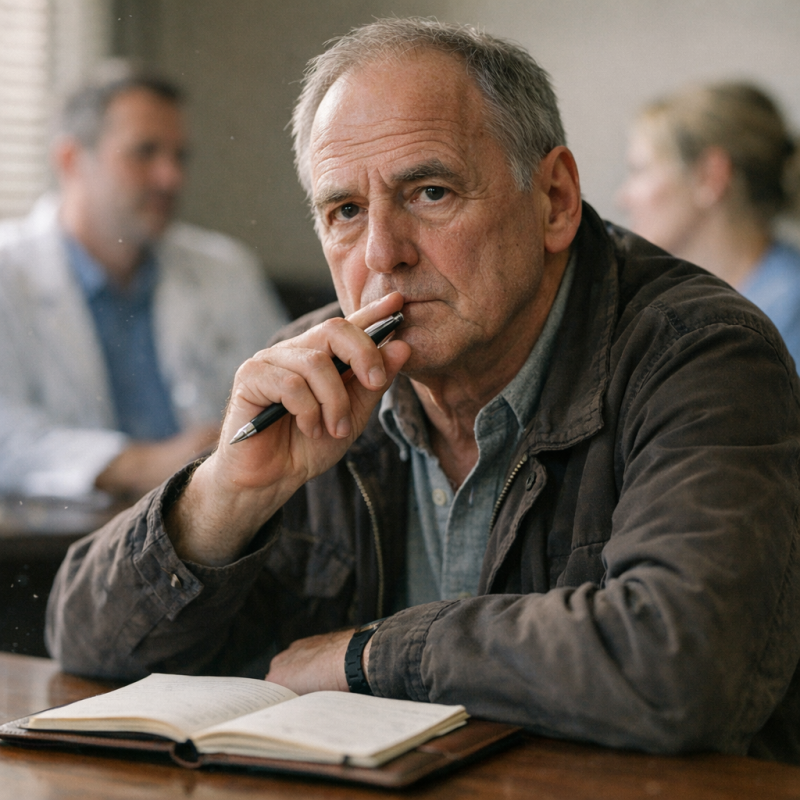 Image by FCT AI
The Confrontation Plan
Detective Morrison explained they would search Melanie's belongings with her consent or obtain a warrant if necessary. 'We'll move carefully,' he said. 'We need to make sure this is airtight. If she's done what you suspect, we can't give her any opportunity to walk on a technicality.' Dr. Chen asked about the timeline. 'How soon?' Morrison checked his watch. 'I'm coordinating with my sergeant now. We'll need to prepare the warrant application just in case she refuses consent. Could be later today, could be tomorrow morning.' My heart sank at the thought of another whole night of waiting. 'In the meantime,' he continued, looking between us, 'I need you both to keep things completely normal. Don't change his care routine, don't alter how you interact with her. Act like you know nothing.' I must have looked doubtful because he leaned forward, his voice firm. 'I know it's hard. But if she suspects we're investigating, she could destroy evidence or disappear. We get one shot at this.' He asked us to keep Jason's care routine completely normal so she wouldn't suspect anything before they were ready.
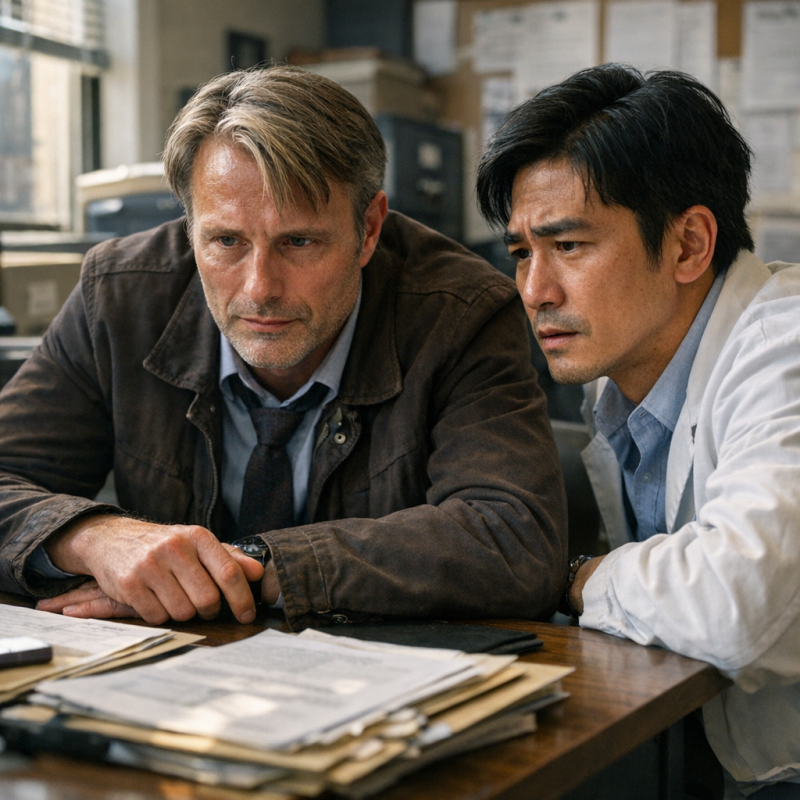 Image by FCT AI
Acting Normal
I walked back into Jason's room and administered his scheduled medications while Melanie watched closely, just like she always did. 'What's that one?' she asked, pointing to the IV bag I was hanging. 'Antibiotics,' I said, my voice somehow steady. 'Just his regular dose.' She nodded, satisfied, and I felt sick. The pills I crushed for his feeding tube, the flushes I administered, the vitals I checked—every single action felt amplified, performative. I was hyper-aware of my hands, my facial expressions, the tone of my voice. One wrong move, one slip, and she might realize we knew. Jason stirred slightly, his eyes fluttering but not opening. Melanie immediately reached for his hand. 'It's okay, baby,' she murmured. 'I'm right here.' I documented everything in his chart with trembling fingers, my handwriting nearly illegible. When I finished, I made myself smile at her. 'He's looking good today. Really stable.' She beamed at me, grateful and trusting. I wanted to scream. Pretending everything was fine felt like the hardest performance of my life.
 Image by FCT AI
The Search Request
Detective Morrison approached Melanie in the hallway outside Jason's room with Officer Ramirez standing a few feet behind. I watched from the nurses' station, my heart pounding so hard I could hear it in my ears. Morrison's voice was calm, almost casual. 'Ms. Harper, I hope you don't mind, but we're conducting a routine security review. Part of that process involves checking personal belongings brought into the ICU—just standard protocol for controlled substance tracking.' He smiled reassuringly. 'Would you consent to a quick search of your purse and bags? Completely voluntary, of course.' I held my breath. This was it. If she refused, we'd need a warrant, more time, more opportunities for her to dispose of evidence. Melanie looked at him, her expression open and confused. Then something happened that made my blood run cold. For just a second—maybe two—her face went completely blank. Not confused, not worried. Just... empty. Like she was calculating something behind her eyes. Then the smile returned, warm and cooperative. 'Of course,' she said brightly. 'Whatever helps. I have nothing to hide.'
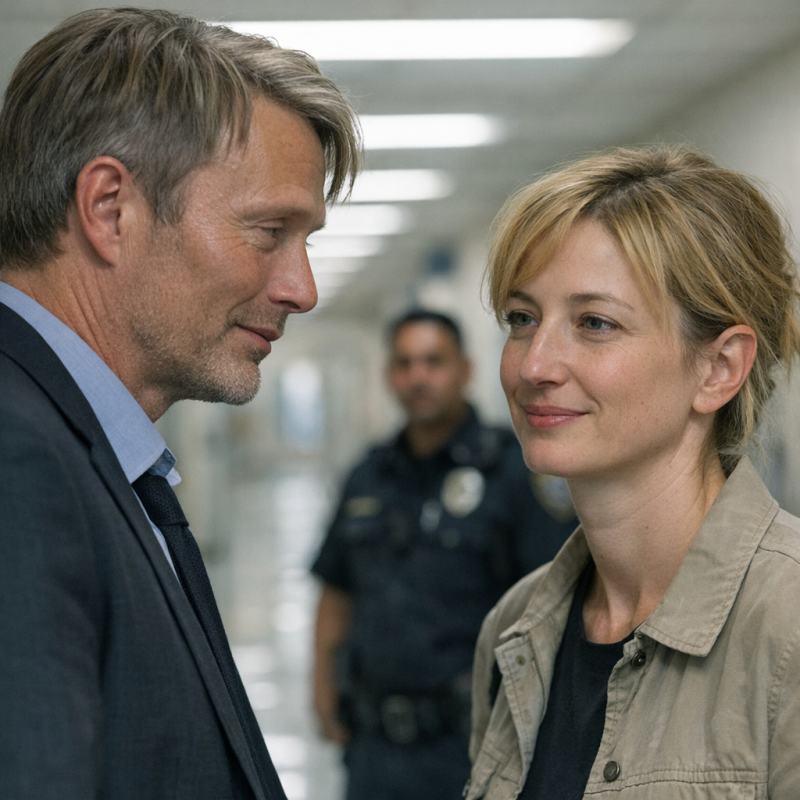 Image by FCT AI
The Discovery
Officer Ramirez spread the contents of Melanie's purse on a table in the conference room while Dr. Kim from pharmacy stood ready to identify any medications. Wallet, tissues, lip balm, gum. Then Ramirez pulled out a small zippered cosmetic bag. Inside was a plastic container, the kind you'd use for vitamins or travel supplements. He opened it carefully and I saw Morrison's expression harden. Pills. Maybe twenty or thirty of them, all mixed together, loose and unlabeled. Dr. Kim leaned in with gloved hands, separating them on the table. 'Oxycodone, definitely,' she said quietly, pointing. 'These are lorazepam. These look like zolpidem—Ambien.' She continued sorting while I watched through the doorway, feeling vindicated and horrified in equal measure. Morrison photographed everything methodically. Some were prescription opioids, some were anti-anxiety medications, and none of them—absolutely none—had been administered by hospital staff.
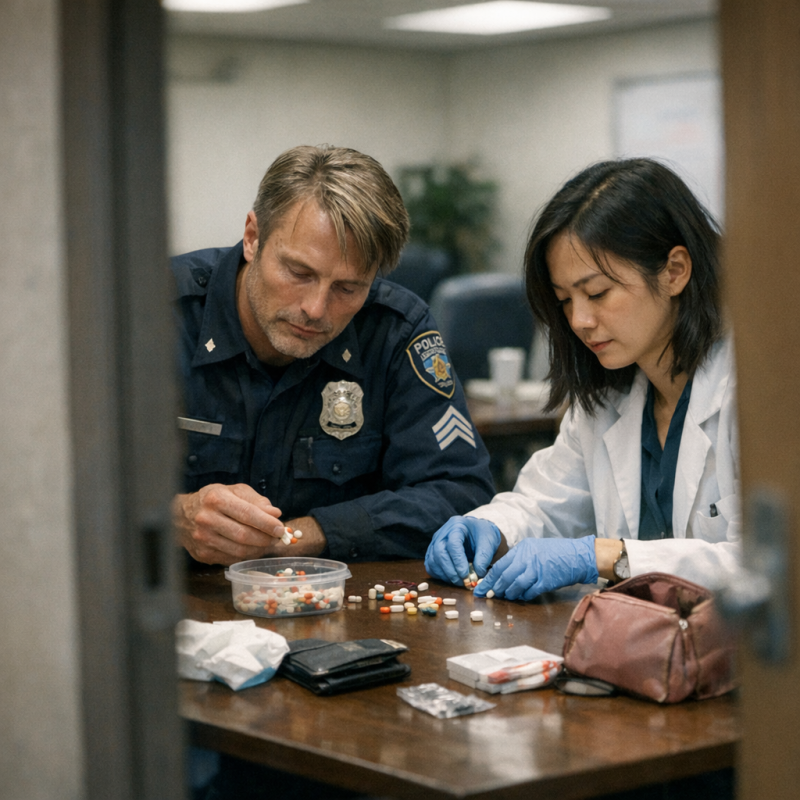 Image by FCT AI
Pharmacy Analysis
Dr. Kim immediately began documenting each pill type while Detective Morrison walked back toward Jason's room. I saw him speak briefly to Melanie, his tone still calm but his body language different now—authoritative. 'Ms. Harper, I need you to come with me to the conference room. We have some questions about what we found.' Melanie's eyebrows drew together. 'What? I don't understand. What did you find?' Morrison guided her gently but firmly down the hallway, away from Jason's door. Officer Ramirez positioned himself outside Jason's room, creating a physical barrier. I stood at the nurses' station, gripping the edge of the counter. Through the glass wall of the conference room, I could see Melanie sitting down, her hands gesturing as she spoke. At first her expression was confused, almost hurt. Then it shifted into something else—something harder to read. Not quite defensive, not quite afraid. Something calculated. I watched through the window as her face transformed, and I realized I was seeing the real person for the first time.
 Image by FCT AI
Blood Work
Dr. Chen found me at the nurses' station twenty minutes later, her expression grim. 'I'm ordering comprehensive toxicology on Jason,' she said quietly. 'We need to know exactly what's in his system beyond what we've administered.' I nodded, already pulling up his chart to enter the order. 'How long for results?' 'A few hours for preliminary, longer for the full panel,' she said. 'But Sarah, document everything you've given him—every medication, every dose, every time. We need a complete record of what came from us.' My hands shook slightly as I typed. Every medication administration was already documented in his MAR, but I went back through my nursing notes, adding timestamps, details, anything that would prove what we'd given him and what we hadn't. Dr. Chen watched me work. 'You knew something was wrong,' she said. It wasn't a question. 'I felt it,' I admitted. 'But I didn't know this.' The results would take hours, but I already knew what they'd find.
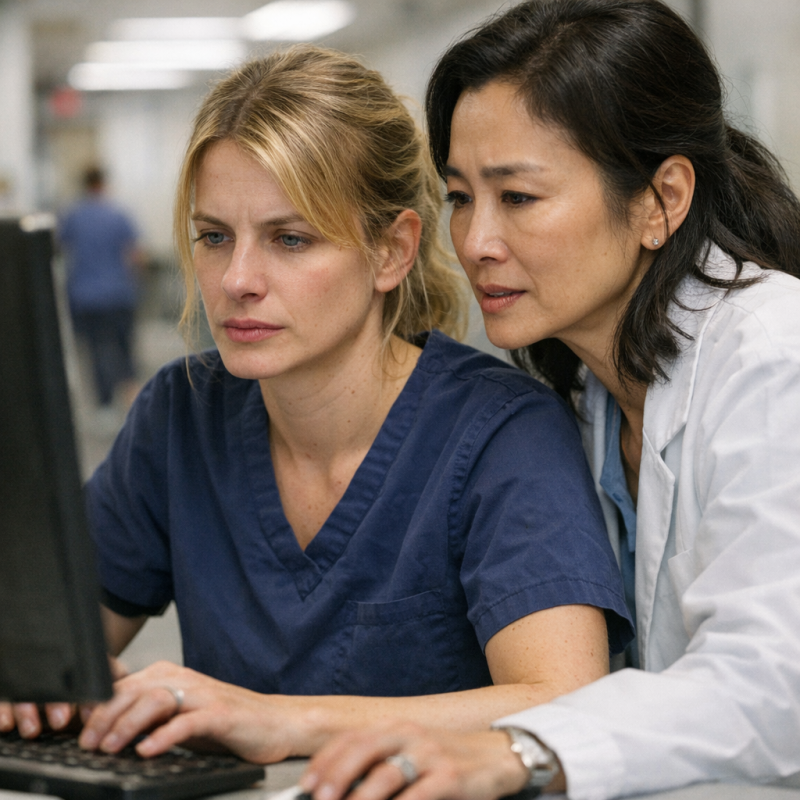 Image by FCT AI
The First Denial
I couldn't hear what was being said in the conference room, but I watched Detective Morrison take notes while Melanie talked, her hands moving expressively. After about twenty minutes, Morrison emerged and pulled Officer Ramirez aside. I was close enough to hear fragments. 'Says they're hers... anxiety... stress of Jason being sick...' He shook his head. Later, Morrison filled me in properly. Melanie claimed the pills were all hers, prescribed for her own anxiety about Jason's condition. She said she'd been taking them to cope with the stress of staying at the hospital. It was a reasonable enough explanation, actually. Except Morrison had asked the obvious follow-up question: 'Why are they loose in a container instead of in prescription bottles with your name on them?' That's when her story started shifting. First she said she'd transferred them for convenience. Then she said the bottles were at home. Then she mentioned something about getting some from a friend who had extras. Each answer contradicted the last. When asked why she had them loose in her purse instead of a prescription bottle, her answer kept changing.
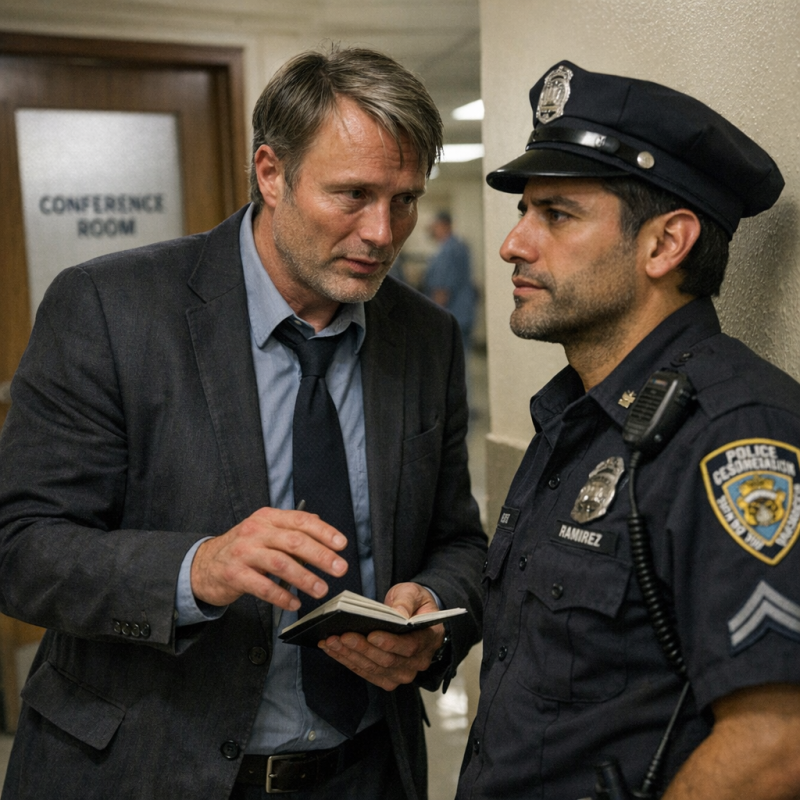 Image by FCT AI
The Second Story
An hour passed. I was checking Jason's vitals—he was stable, thank God—when Morrison approached the nurses' station again. His jaw was tight. 'She changed her story,' he said quietly. 'Now she's saying Jason asked her for the pills. Says we weren't treating his pain adequately and he begged her to bring medication from home to supplement what you were giving him.' I stared at him. 'That's impossible.' 'I know,' Morrison said. 'But that's what she's claiming now. That he was in terrible pain and you all weren't listening, so she was just trying to help him.' My mind raced. When would Jason have asked her? When would he have even been capable of asking? I pulled up his chart and turned the monitor toward Morrison. 'Look at this. His vent settings, his sedation scores. Detective, he's been unconscious on a ventilator for the past two days. He couldn't have asked her for anything.' Morrison leaned in, studying the documentation. Then he nodded slowly. 'That's what I needed to hear.' The problem was Jason had been unconscious on a ventilator for the past two days.
 Image by FCT AI
Toxicology Results
The lab called just after 4 PM. I was at the desk when Dr. Chen answered, her face growing darker with each word she heard. She hung up and immediately motioned for me and Dr. Kim to follow her into the medication room where we could speak privately. 'Preliminary toxicology is back,' she said. 'Jason's bloodstream contains significantly elevated levels of benzodiazepines and opioids.' Dr. Kim pulled out her phone, checking her photos of the pills. 'Consistent with what we found in her bag?' 'Consistent and then some,' Dr. Chen confirmed. 'The levels are way beyond therapeutic. Way beyond what we've charted.' My throat felt tight. 'How much beyond?' Dr. Chen's expression was furious. 'Enough to suppress respiratory drive. Enough to explain both code events.' The room seemed to tilt. I'd suspected, I'd worried, I'd documented, but hearing the actual confirmation felt like being punched. Enough to suppress breathing, enough to kill him, and all of it had been introduced outside of hospital protocol.
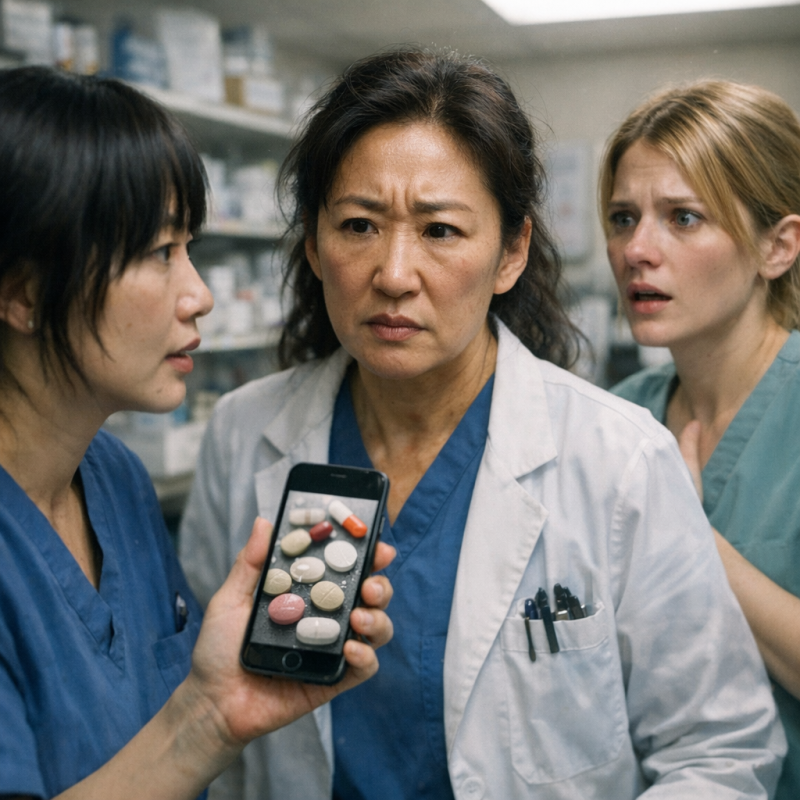 Image by FCT AI
The Pattern Revealed
Detective Morrison found me in the break room an hour later. I was shaking, unable to process what we'd uncovered. He sat down across from me, his expression grave. 'Sarah, there's something else you need to know. We ran Melanie Harper's name through our system and reached out to local PD where she used to live.' I looked up at him. 'And?' 'Her ex-boyfriend—she dated him for about two years—he was hospitalized four times for unexplained overdoses. Twice he nearly flatlined. Every incident happened while they were together, and they all stopped after he left her.' My stomach dropped. 'Oh my God.' Morrison nodded slowly. 'Nothing was ever proven. He never pressed charges, probably didn't even realize what was happening. But the pattern is there, and now we have evidence.' He leaned forward. 'This wasn't about helping Jason manage pain. This was about keeping him dependent and sedated, maintaining complete control over someone too sick to resist, and she'd nearly killed him doing it.'
 Image by FCT AI
Reframing Everything
I sat in that break room for another hour, just replaying everything in my head. Every single interaction with Melanie took on this horrifying new meaning. When she'd asked about Jason's pain levels constantly, she wasn't being a concerned girlfriend—she was assessing whether he was sedated enough. When she'd insisted he needed more medication, she wasn't advocating for his comfort, she was actively sabotaging his recovery. Those long hours at his bedside weren't devotion. They were surveillance, making sure no one caught on to what she was doing. The way she'd monitor who came and went from his room, how she'd positioned herself between Jason and anyone who tried to talk to him, how she'd speak for him even when he could speak for himself. It was all control. Every tearful declaration of love was actually a claim of ownership. Every time she'd said she couldn't imagine life without him, she'd meant it literally—she was determined to keep him too weak to leave. I felt sick realizing I'd witnessed abuse disguised as devotion for weeks. Melanie hadn't been protecting Jason from suffering, she'd been creating it.
 Image by FCT AI
The Ex-Boyfriend
Detective Morrison came back the next morning with more information. 'We spoke with Melanie's ex-boyfriend last night,' he said, pulling out his notebook. 'His name is David Chen—no relation to your Dr. Chen. He confirmed everything we suspected.' I leaned forward. 'What did he say?' Morrison flipped through his notes. 'He was hospitalized three times during their two-year relationship. Each time, doctors couldn't figure out what caused the overdoses. They tested for everything—street drugs, medication interactions, underlying conditions. Nothing made sense.' My hands were shaking. 'And after he left her?' 'That's the thing,' Morrison said grimly. 'He left her three years ago. Hasn't been hospitalized once since then. No unexplained symptoms, no mysterious overdoses, nothing. He told me he'd always thought he was just unlucky, that he had some weird medical condition they couldn't diagnose.' Morrison closed his notebook. 'But the hospitalizations stopped the day he moved out of their apartment. He'd always thought he was just unlucky until the day he left her and suddenly stopped nearly dying.'
 Image by FCT AI
The Arrest
I was at the nurses' station two hours later when I heard the commotion in the lobby. Security Officer Ramirez's voice came over the radio first, then I saw Detective Morrison heading toward the elevators with two uniformed officers. My stomach dropped. I followed them down, knowing what was about to happen but needing to see it. Melanie was sitting in the lobby, a coffee in her hand, probably waiting to come back up to Jason's room now that visiting hours had started. Morrison approached her calmly, showed his badge. 'Melanie Harper, you're under arrest for attempted murder and assault with intent to cause bodily harm.' Her coffee hit the floor. 'What? No, you don't understand—' The officers moved to either side of her as Morrison read her rights. She started screaming as they put the handcuffs on. 'I didn't do anything wrong! Jason needs me! He needs his medication, he's in pain, you're all hurting him!' People in the lobby were staring. Security was clearing a path. She screamed that we didn't understand, that Jason needed her, that she was the only one who really cared about his pain.
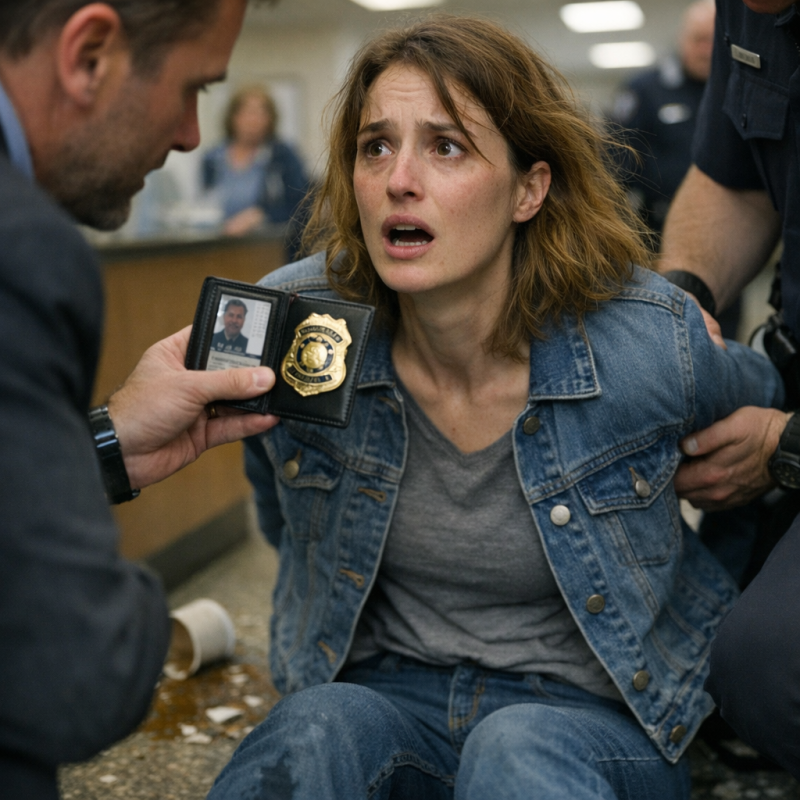 Image by FCT AI
The Removal
I followed them outside, keeping my distance but unable to look away. Melanie was still talking, still insisting, her voice getting more desperate as they guided her toward the police car. 'You're making a mistake,' she kept saying. 'I was helping him. I was the only one who listened when he said he was hurting. I was protecting him from all of you.' Morrison's face remained neutral as he opened the car door. She turned back toward the hospital, and for a second, our eyes met. There was something in her expression I couldn't quite read—was it fear? Confusion? Or genuine belief in what she was saying? 'I only wanted to help him,' she said, quieter now. 'He was suffering. I couldn't let him suffer.' They placed her in the back seat, and she continued talking even as they closed the door. I could see her lips moving through the window, still explaining, still justifying. Morrison caught my eye and shook his head slightly before getting in the front seat. I wondered if she actually believed that, or if she'd told the lie so many times it had become her truth.
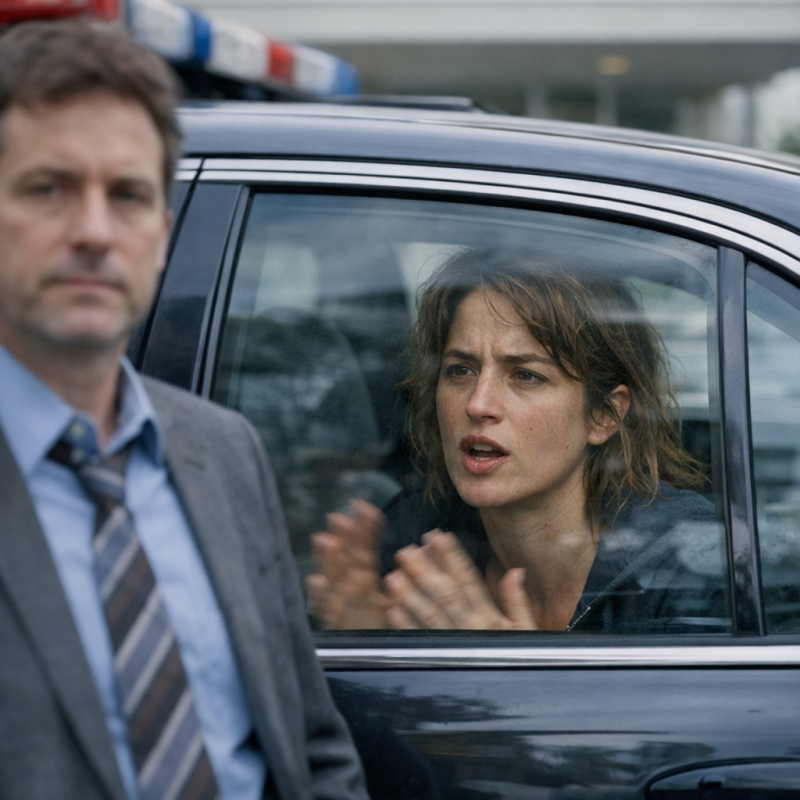 Image by FCT AI
The Silence
I went straight to Jason's room after that. He was still heavily sedated, his ventilator keeping steady rhythm, completely unaware that his life had just changed completely. The room felt different somehow. The air seemed lighter, less oppressive. I realized how much tension I'd been carrying every time Melanie was there, that constant low-level alertness that something wasn't right. Now that she was gone, I could finally breathe. Dr. Chen came in a few minutes later. 'I heard,' she said simply. We both looked at Jason, at the monitors showing his vitals were finally stabilizing after weeks of mysterious crashes. 'We need to start weaning him off sedation,' Dr. Chen said. 'Get him breathing on his own again, let him wake up.' I nodded, but my chest felt tight. 'How do we tell him?' Dr. Chen was quiet for a moment. 'Carefully. With support. And soon.' She put a hand on my shoulder. 'It's not going to be easy.' I knew she was right. But now came the harder part: telling Jason what the person he trusted most had done to him.
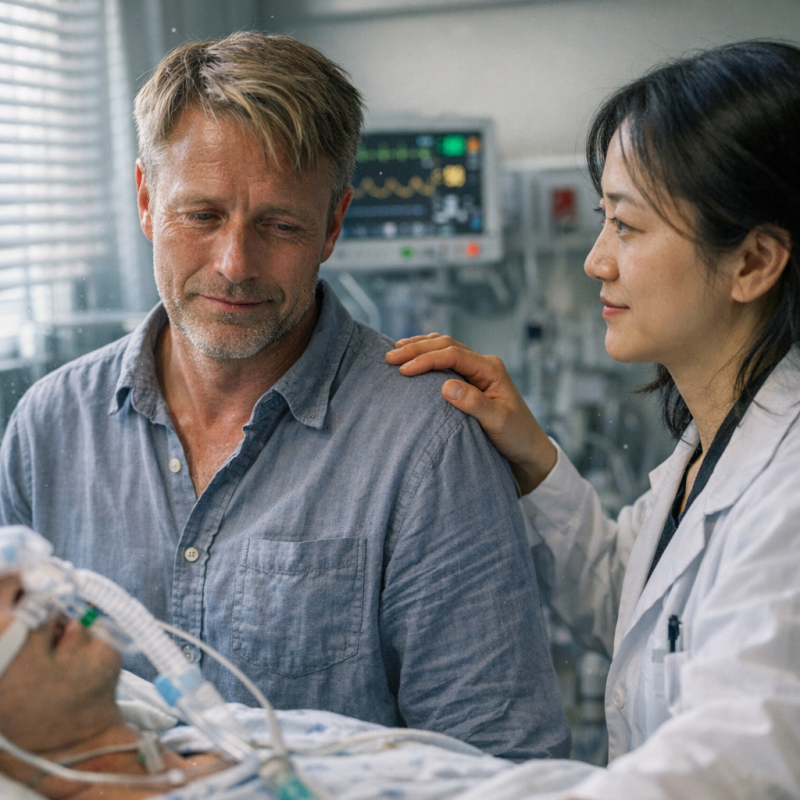 Image by FCT AI
Waking Up
Over the next three days, we gradually reduced Jason's sedation medications and let his body wake up naturally. First came small movements—fingers twitching, eyes moving under closed lids. Then more purposeful responses. By day three, he was breathing over the ventilator, fighting it slightly, which was actually a good sign. Dr. Chen made the call to extubate on the fourth day. I was there when he opened his eyes, really opened them, for the first time in weeks. He looked confused, disoriented, his gaze moving around the room trying to make sense of where he was. 'Jason,' I said softly. 'You're in the hospital. You're safe. You've been very sick, but you're getting better now.' He tried to speak but his throat was raw from the breathing tube. I gave him ice chips, waited while his voice came back raspy and weak. His eyes were still searching the room, looking for something. Someone. When he could finally form words, they broke my heart. The first question he asked when he could speak was where Melanie was.
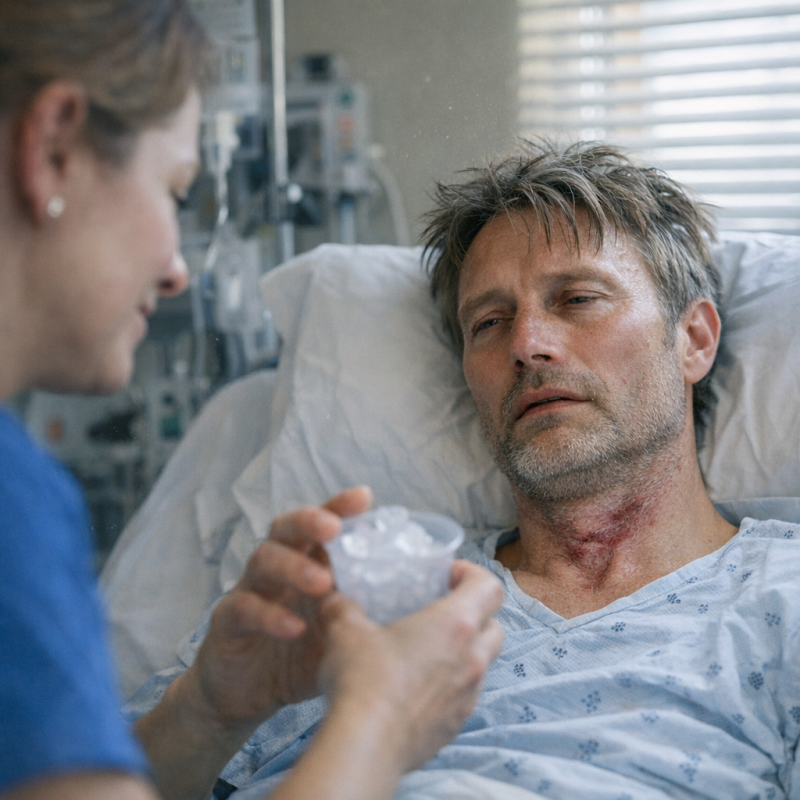 Image by FCT AI
The Truth
Dr. Chen and Detective Morrison came in together an hour later. Jason was more alert by then, sipping water, still weak but present. Morrison pulled a chair close to the bed while Dr. Chen stood on the other side. I stayed near the door, giving them space but unable to leave. 'Jason,' Dr. Chen began gently, 'we need to talk to you about what happened. About why you've been so sick.' He looked between them, confused. 'The sepsis...' 'The infections were real,' Morrison said. 'But there's more. We need to tell you about Melanie.' I watched Jason's face as they explained it. Slowly, carefully, with all the evidence. The lorazepam in his IV line. The camera footage. Her ex-boyfriend's similar hospitalizations. The pattern of overdoses. His expression went through so many changes—confusion, disbelief, denial, and finally, something that looked like his entire world collapsing. Dr. Chen held his hand while Morrison spoke. I could see him trying to process it, trying to reconcile the woman he loved with what they were telling him. I watched his face crumble as everything he thought he knew about the past year shattered.
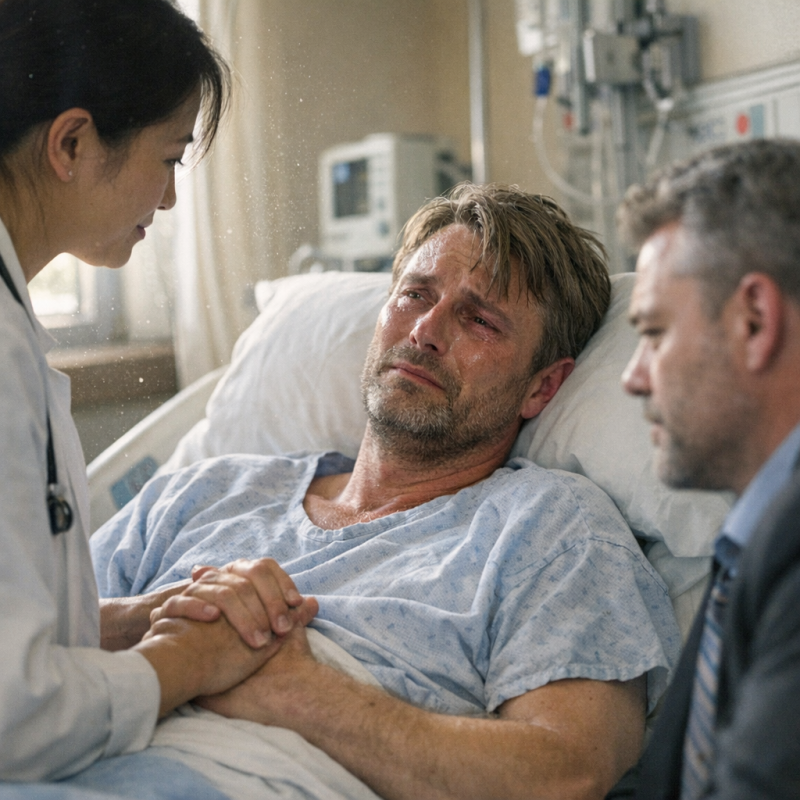 Image by FCT AI
The Betrayal
After Dr. Chen and Morrison left, I stayed with Jason. He didn't cry. He didn't rage or throw things or demand to see her. He just lay there, staring at the ceiling tiles, his face completely blank. The silence stretched out for what felt like hours. Finally, he spoke, his voice barely above a whisper. 'She told me she saved me. When I was first diagnosed, when everything was falling apart, she said she was going to save me.' I moved closer to the bed. 'Jason—' 'She said she'd take care of me,' he continued, still not looking at me. 'That she'd make sure I wasn't in pain. That she'd protect me.' His hand moved to his chest, where the central line had been. 'She was the only one who seemed to understand how scared I was.' I didn't know what to say. What could I say? He was right—she had saved him, in a twisted way. She'd kept him dependent and sedated, hovering near death, but always pulling him back. The worst part was realizing he'd been right, just not in the way he'd meant.
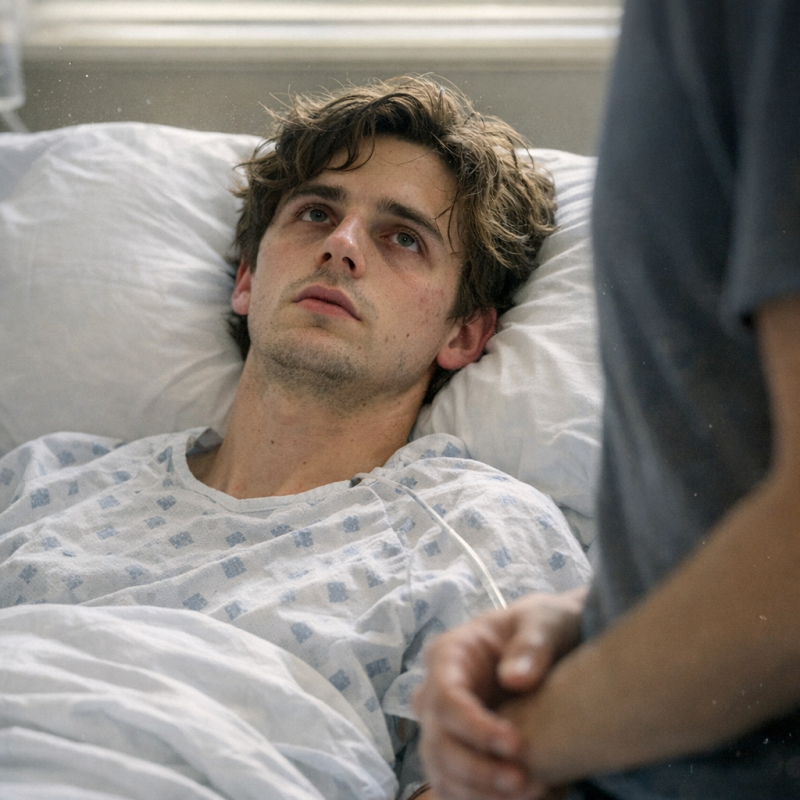 Image by FCT AI
The Decision
Detective Morrison came back two days later with paperwork and a victim advocate. I was changing Jason's IV when they arrived, and I could see his hands shaking on the blanket. Morrison pulled up a chair and explained the process—what charges they had evidence for, what a trial might look like, what Jason's options were. The advocate was gentle, professional, explaining his rights and the support available. Jason listened to everything, his face pale but focused. When Morrison finished, there was a long pause. Then Jason looked up and said, 'I want to press charges. Whatever needs to happen, I'll testify.' His voice was steady, stronger than I'd heard it in weeks. Morrison nodded and made notes while the advocate outlined next steps. I watched Jason's face as he signed the initial statements, and something had shifted in his expression—not anger exactly, but determination. A kind of clarity I hadn't seen before. It was the first time since waking up that he sounded like himself.
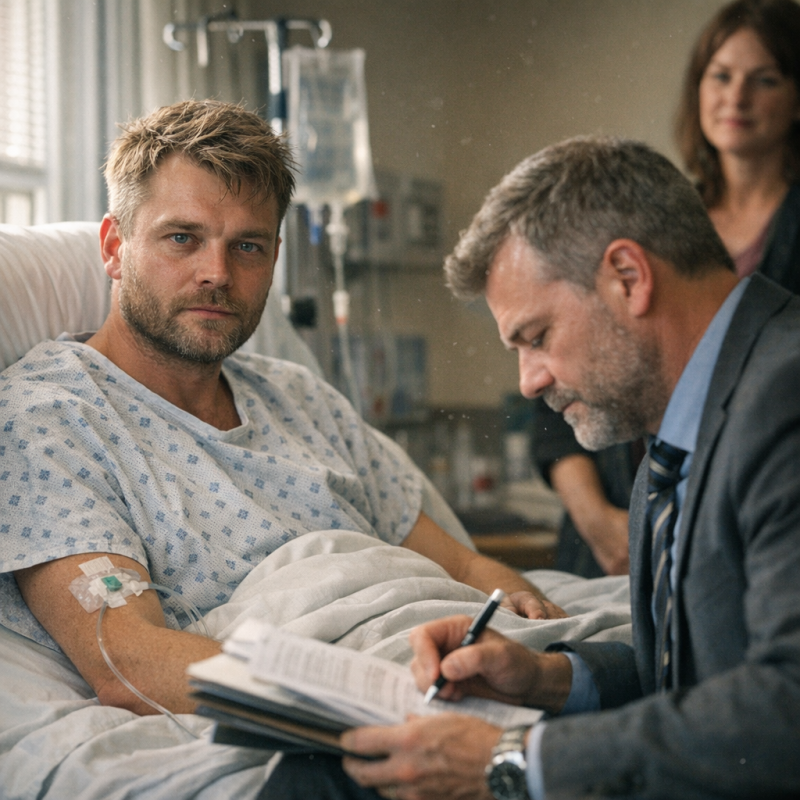 Image by FCT AI
Recovery Path
Over the following weeks, Jason's physical recovery progressed steadily. His lungs cleared, his oxygen levels stabilized, and he started doing short walks around the unit with physical therapy. The central line came out. His lab values normalized. Every day he looked more like a person who might actually leave the hospital and have a life again. I saw him during rounds, watched him gain strength, saw color return to his face. We didn't talk much about Melanie—he was focused on getting better, on moving forward. But sometimes I'd catch him staring at nothing, his expression distant and haunted. Once I found him in the hallway at two in the morning, just standing by the window. He said he couldn't sleep, that he kept having dreams where he was paralyzed and calling for help but no sound would come out. The psychologist visited him three times a week. Physical therapy could rebuild his body, but the emotional wounds would take much longer to heal, if they ever fully did.
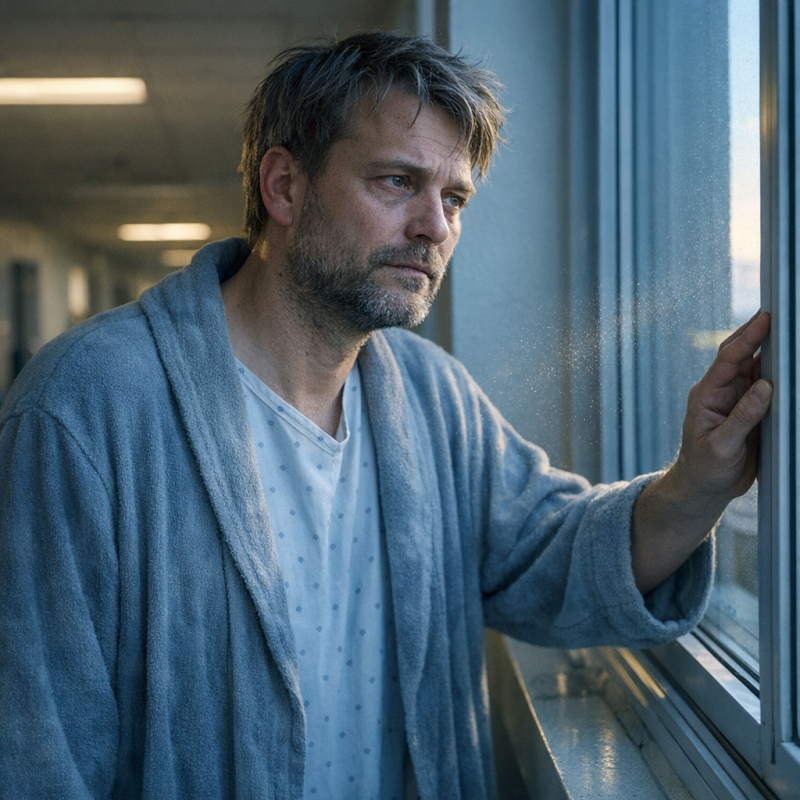 Image by FCT AI
The Charges
Melanie was formally charged with attempted murder. Detective Morrison stopped by to update me—two counts, based on the two documented incidents where Jason had nearly flatlined. The district attorney was building a case around the medication records, the surveillance footage, and Jason's testimony. Morrison mentioned, almost casually, that they were also reopening the ex-boyfriend's case. Apparently, medical records from his hospitalization showed similar patterns—unexplained complications, medication discrepancies, Melanie constantly at his bedside. He'd survived too, but barely. I asked Morrison how many cases they were looking at total. He shook his head. 'Hard to say. She worked at two other hospitals before this one. We're reaching out, but medical records from years ago, deaths that looked natural at the time...' He trailed off. Justice was moving forward, but I couldn't stop thinking about how many other victims there might have been that we'd never know about.
 Image by FCT AI
What Love Isn't
The last time I saw Jason before his discharge, he stopped by the nurse's station. He looked healthier—still thin, still tired, but present in a way he hadn't been before. He thanked me for seeing what he couldn't, for questioning what everyone else had accepted. I told him that wasn't something he needed to thank me for, that it was my job. Then I added that recognizing real care from control was something he'd have to relearn, that it would take time. He nodded, understanding what I meant. We shook hands, and he walked toward the elevators with his discharge papers, moving slowly but steadily. I watched him go, feeling both relief and a deep, lingering sadness. As he walked out of the ICU, I realized the most chilling truth wasn't just that Melanie had nearly killed him—it was that she'd spent months convincing everyone, including Jason himself, that her dangerous obsession was actually love.
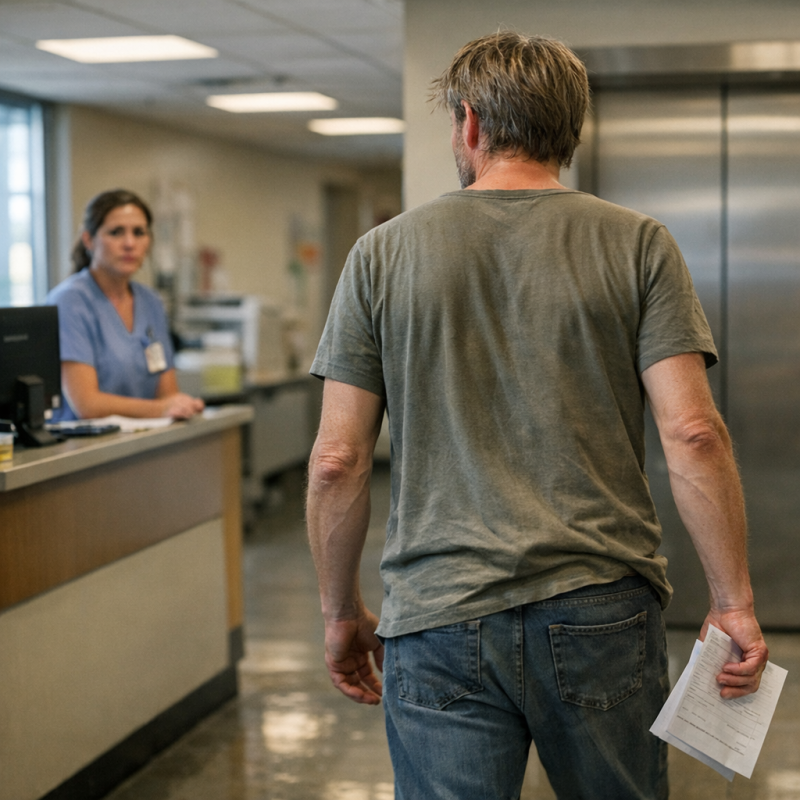 Image by FCT AI