The Client Who Didn't Look Guilty
Look, I've been doing criminal defense for twelve years, and you learn pretty quickly that everyone claims they're innocent. It's part of the job, right? So when Eric Hale walked into my office that Tuesday afternoon, I was already half-listening, already preparing my standard speech about plea bargains and realistic expectations. But something about him made me actually pause. He wasn't frantic or defensive. He just sat there in my visitor's chair, hands folded, and said he'd been arrested for DUI despite being completely sober. No slurred words. No fidgeting. Just this quiet, unshakeable certainty that made my professional skepticism waver just a bit. His clothes were neat—button-down shirt, khakis, wedding ring that looked worn in that comfortable way. 'I had one beer,' he told me. 'Maybe part of a second. I wasn't drunk, Ms. Chen. I know what drunk feels like, and I wasn't it.' Most clients can't maintain eye contact when they're lying. Eric didn't look away once. Then he reached into his briefcase and pulled out the police report, sliding it across my desk. That's when I saw the name typed at the bottom: Officer Mark Daniels.
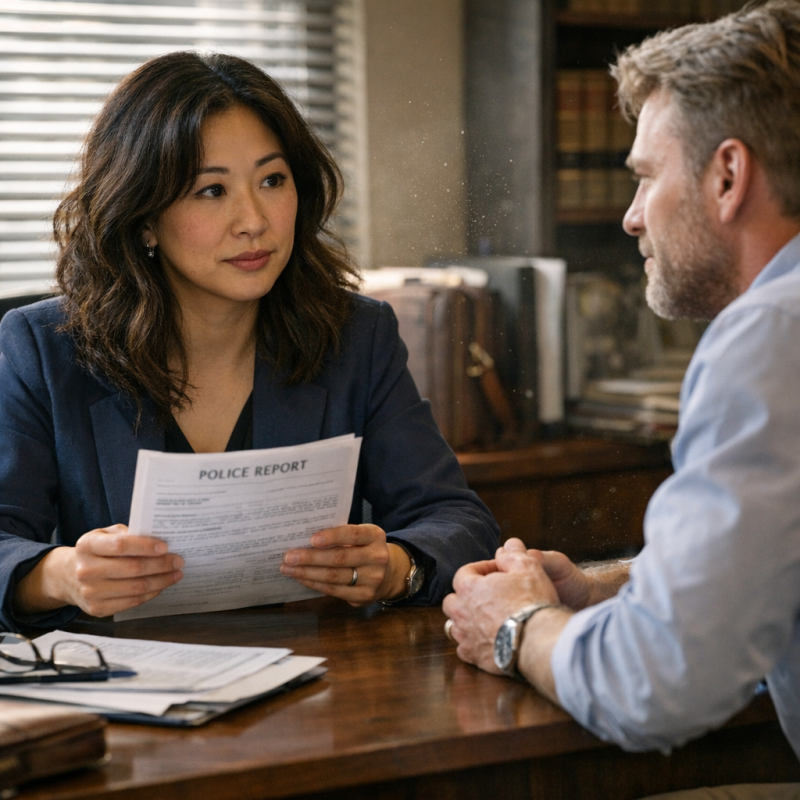 Image by FCT AI
The Handshake That Wasn't
The prosecutor's office arranged for me to meet Officer Daniels at the courthouse the following week, just a routine pre-trial discussion. He showed up fifteen minutes late, which already annoyed me, but what really got my attention was how he carried himself. You know that look some cops have? The one that says they've seen everything and you're not worth their full attention? Daniels had it in spades. He shook the prosecutor's hand firmly but barely glanced at me. When I asked him to walk me through the arrest sequence, he rattled it off like he was reciting a script he'd memorized years ago. Field sobriety tests failed. Slurred speech. Smell of alcohol. All the boxes checked. His voice had this rehearsed quality that made my skin prickle. I pressed him on the breathalyzer readings, and he mentioned—almost casually—that the equipment had been acting up that night. 'Happens sometimes,' he said with a shrug. When our meeting wrapped up, he walked past me without another word, but I noticed something odd. As he left, his hand rested casually on the body camera clipped to his chest—the same one he'd claimed wasn't working that night.
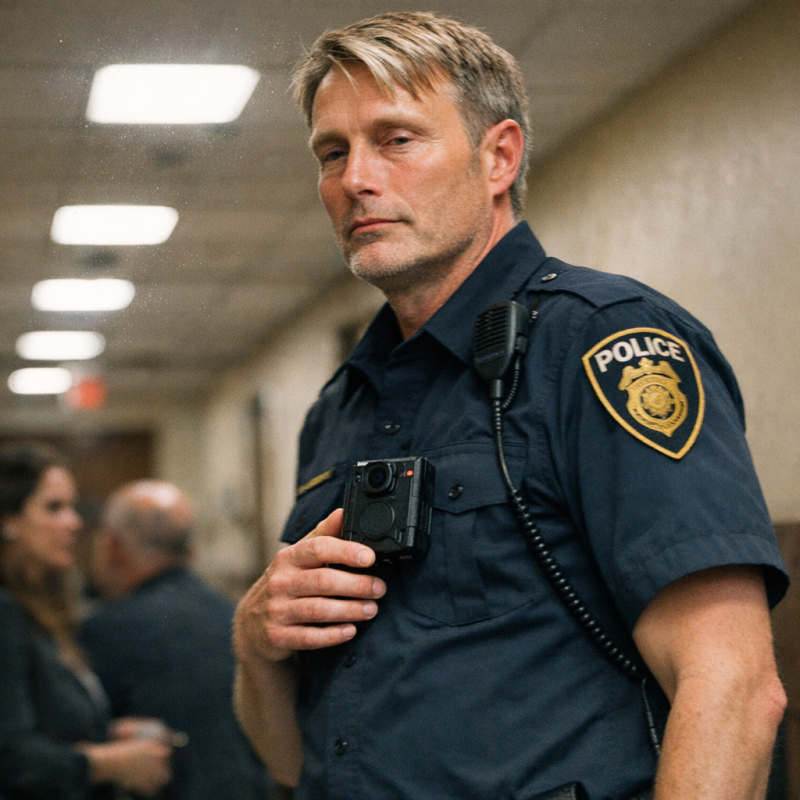 Image by FCT AI
One Drink, Maybe Two
I had Eric come back in two days later, and this time I needed details—everything he could remember about that night. He walked me through it methodically. He'd gone to O'Malley's after work with his colleague Marcus to celebrate closing a big contract. They'd ordered appetizers, talked shop. 'I had a beer when we got there,' he said. 'An IPA, I think. Then Marcus ordered a second round, but I only drank maybe half of mine because I was full from the food.' He remembered checking his phone around eight-thirty, calling his wife to say he was heading home soon. He remembered paying the tab, walking out to his car, reaching for his keys. Then the lights. The siren. Officer Daniels approaching his window. What struck me was how clear his memory was—no fuzzy edges, no convenient blanks. The only thing he couldn't pin down exactly was whether that second beer had been half-finished or closer to three-quarters full. We were wrapping up when he suddenly sat forward. 'Oh, there was something else,' he said. 'When I was walking to my car, I noticed someone sitting in a sedan across the street. Just watching. I remember thinking it was odd.'
 Image by FCT AI
The Wife Who Believes
Rebecca Hale came to my office the next afternoon without an appointment. My assistant buzzed me, sounding apologetic, but I told her to send Rebecca in. She sat down across from me with this quiet composure that reminded me immediately of Eric—same steady eye contact, same way of speaking without filler words. 'My husband doesn't lie,' she said simply. 'Not about big things, not about small things. If he says he wasn't drunk, he wasn't drunk.' I've heard variations of this from plenty of spouses, but something about the way she said it made me believe her. She told me about their two kids, about the promotion Eric had been working toward, about how a DUI conviction would tank his security clearance. The stakes suddenly felt heavier in that moment. Then she mentioned something that made me sit up straighter. 'Eric called me that night from outside the bar,' she said. 'I remember because I was putting the kids to bed and I had to step into the hallway. We talked for maybe three or four minutes.' I grabbed my copy of Daniels' report and scanned it quickly. According to his timeline, Eric was stumbling toward his vehicle at that exact moment.
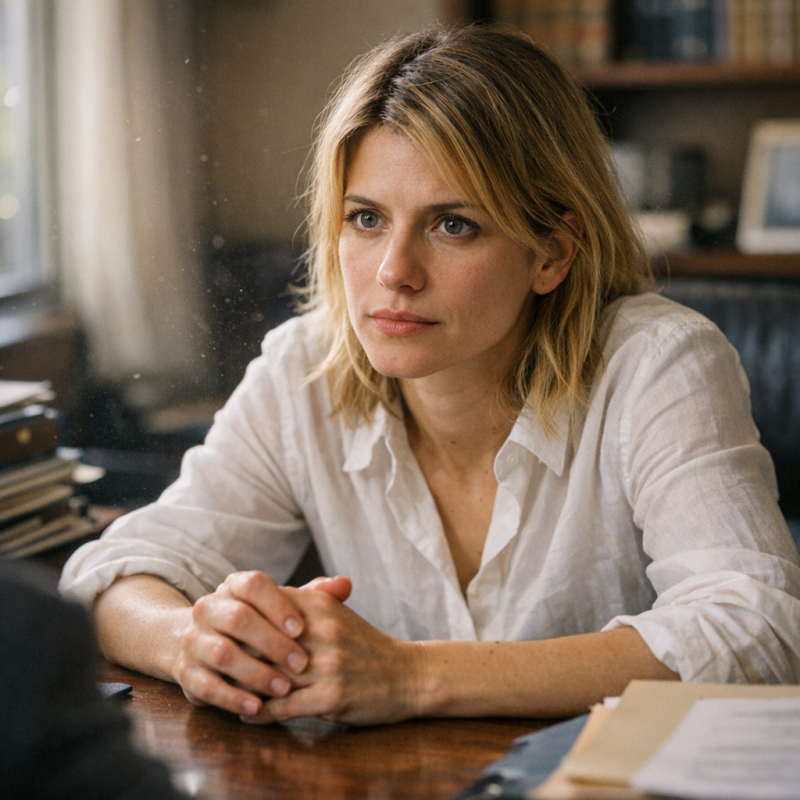 Image by FCT AI
The Police Report
That night I stayed late at the office, reading Daniels' arrest report for what had to be the third time. You know how sometimes you read something and it just feels off, even though you can't quite articulate why? That's what was happening here. Every sentence was perfect. Every observation was textbook probable cause. Subject exhibited impaired motor function. Subject failed horizontal gaze nystagmus test. Subject's speech was slurred and repetitive. It read like a training manual, like something written by someone who knew exactly what judges wanted to see. Real police reports usually have typos, weird phrasings, little human inconsistencies. This one was polished. Too polished. I kept flipping through the pages, looking for something—anything—that felt authentically spontaneous. Then I got to the attachments section. There, buried in the footnotes and forms, was a single line in small print that I'd almost missed the first two times: 'Recording equipment malfunction noted and logged.' Just sitting there, documented and official, like it was the most normal thing in the world. Like his body camera and dash cam both failing on the same night was just bad luck. But the way it was written, so casual and unremarkable, made my stomach twist. Recording equipment malfunction noted and logged.
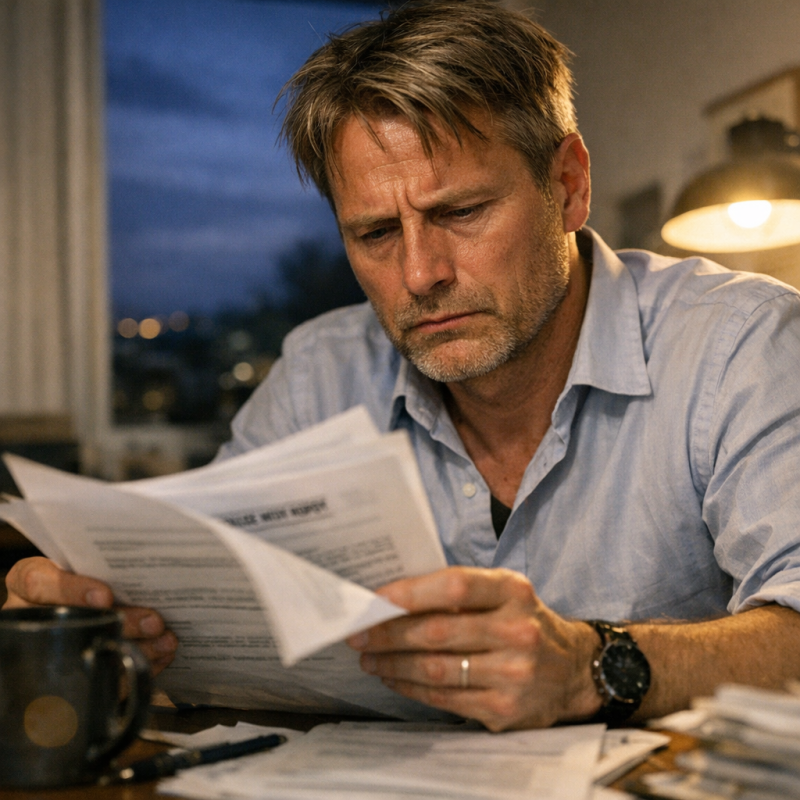 Image by FCT AI
The Colleague Who Remembers
Marcus Webb met me at a coffee shop near his office building, and within five minutes I knew he was going to be a solid witness. He had that engineer's precision—dates, times, specifics. 'Eric and I each ordered a Lagunitas IPA when we sat down,' he told me. 'I remember because the server asked if we wanted pints or bottles, and we said bottles.' They'd shared an appetizer sampler, stayed about ninety minutes. 'Eric finished most of his first beer, then I ordered a second round. But he barely touched the second one—switched to water because he said he had an early morning.' Marcus was certain about the timeline because he'd checked his phone when they asked for the check. Eight twenty-seven. Then Eric had stepped outside to call his wife, and Marcus had paid. 'I left maybe five minutes after Eric did,' Marcus said. 'When I walked out, I saw him standing by his car, talking on the phone.' He paused, frowning at the memory. 'And I remember seeing a police cruiser pulling into the lot. I thought maybe there was trouble inside the bar, but then I saw the cop walking straight toward Eric.'
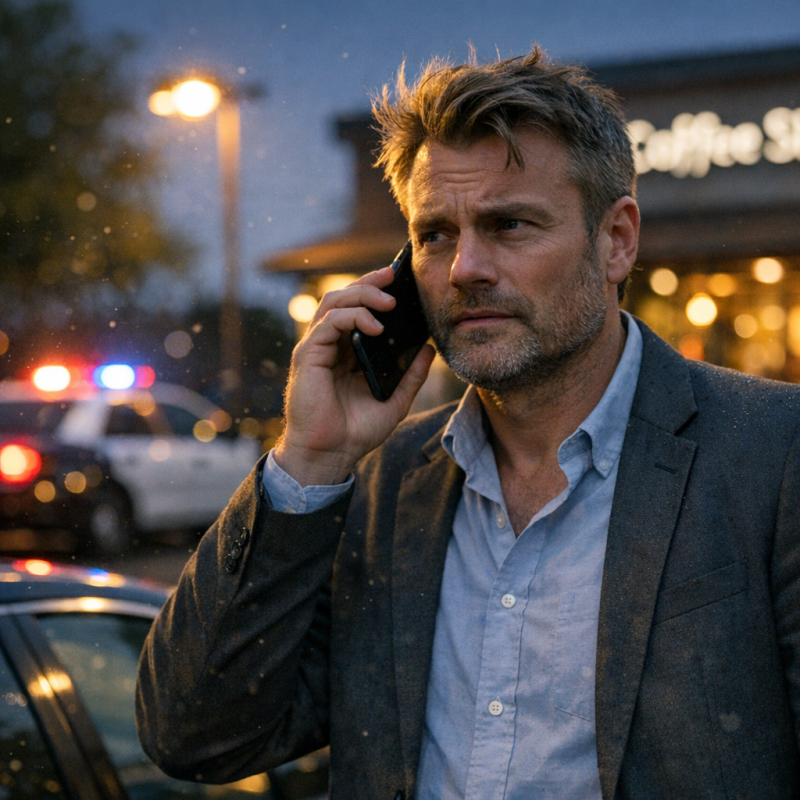 Image by FCT AI
Background Check
I'll be honest—I wanted to find something wrong with Officer Daniels' record. Some hint of misconduct, some pattern that would make my case easier. But when I ran the background check, everything came back clean. Too clean, actually. Seventeen years on the force. Multiple commendations for DUI enforcement. Letters of appreciation from MADD. A perfect service record with exactly zero complaints filed against him. The guy was basically a model officer on paper. I sat there staring at my computer screen, feeling my momentum deflate. Maybe I was wrong. Maybe Eric had misjudged his sobriety, and I was wasting everyone's time chasing shadows. But then something caught my eye as I scrolled through his arrest log. For most months, Daniels averaged six to eight DUI arrests. Consistent numbers, nothing unusual. Except for one stretch in 2018—May through July. Three full months where his arrest log showed exactly zero DUI stops. Not a single one. No explanation attached, no notation, nothing. Just this weird blank space in an otherwise perfectly documented career. I pulled up his commendation dates and found one from August 2018, right after the gap. What happened during those three missing months?
 Image by FCT AI
The Bar at Night
I drove to O'Malley's on a Thursday night, same day of the week as Eric's arrest, and parked where his car had been. The bar was moderately busy—not packed, but steady traffic. I stood outside for twenty minutes, just watching. The parking lot had decent lighting near the entrance, but where Eric had been parked? Different story. I walked over to his exact spot, stood there like he must have stood, keys probably in hand. The nearest streetlight was maybe thirty feet away, and it kept flickering—not constantly, but enough to notice. Shadows pooled around the cars. The building blocked most of the ambient light from the street. If Daniels had been watching from his cruiser, he would've seen Eric mostly in silhouette. There was no clear line of sight to the bar entrance, no obvious vantage point to observe someone's gait or behavior. And here's what really bothered me: the convenience store across the street had closed at nine, its parking lot empty. The sedan Eric remembered—the one with someone watching—would have been sitting in darkness. This corner wasn't randomly isolated. The streetlight above me flickered again, plunging everything into shadow, and I realized just how much of this location was deliberately, perfectly hidden.
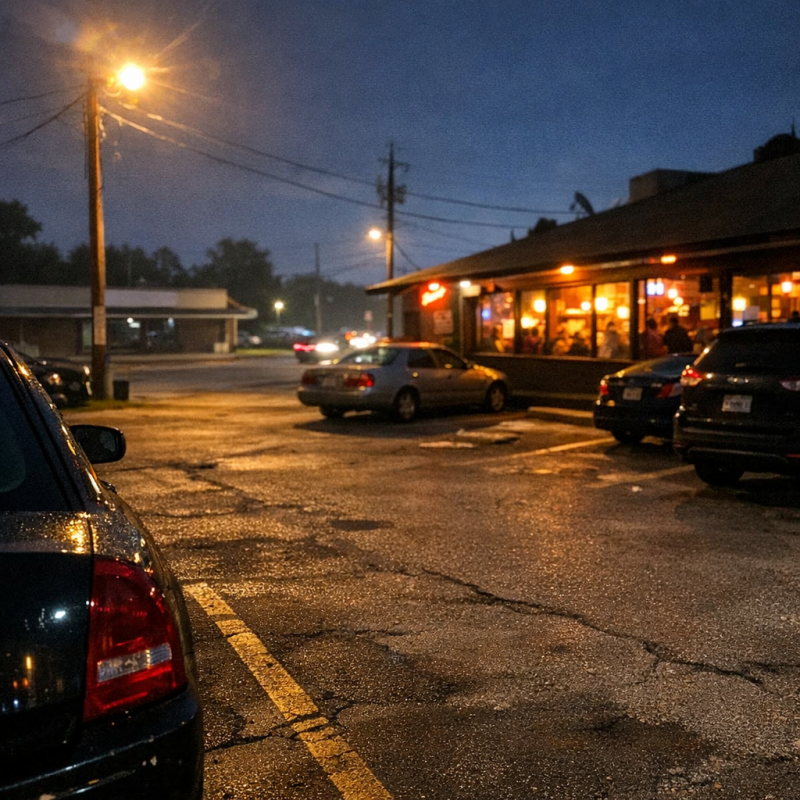 Image by FCT AI
No Cameras Here
I spent the next morning walking into every business within a three-block radius of O'Malley's, asking the same question: did their security cameras cover the street where Eric was arrested? The answer was consistently no. The convenience store's camera pointed at the register. The laundromat next door had one aimed at the washers. The gas station on the corner? Parking lot only, angled away from the intersection. Each time someone said no, I felt this weird prickling sensation at the back of my neck. I wasn't expecting full coverage, but this felt like more than bad luck. Even the bar itself had cameras—two of them—but they faced the entrance and the interior, not the lot. The owner, a guy named Mike with tired eyes, shrugged when I asked why. 'Nobody parks back there anyway,' he said. 'Too dark.' Then he paused, wiping down the counter. 'Though there's this cop who sits out there sometimes, late at night. Just watching, I guess. Keeps an eye on things.' He said it casually, like it was nothing. But my pulse kicked up, and I had to ask him to repeat the description of the cruiser.
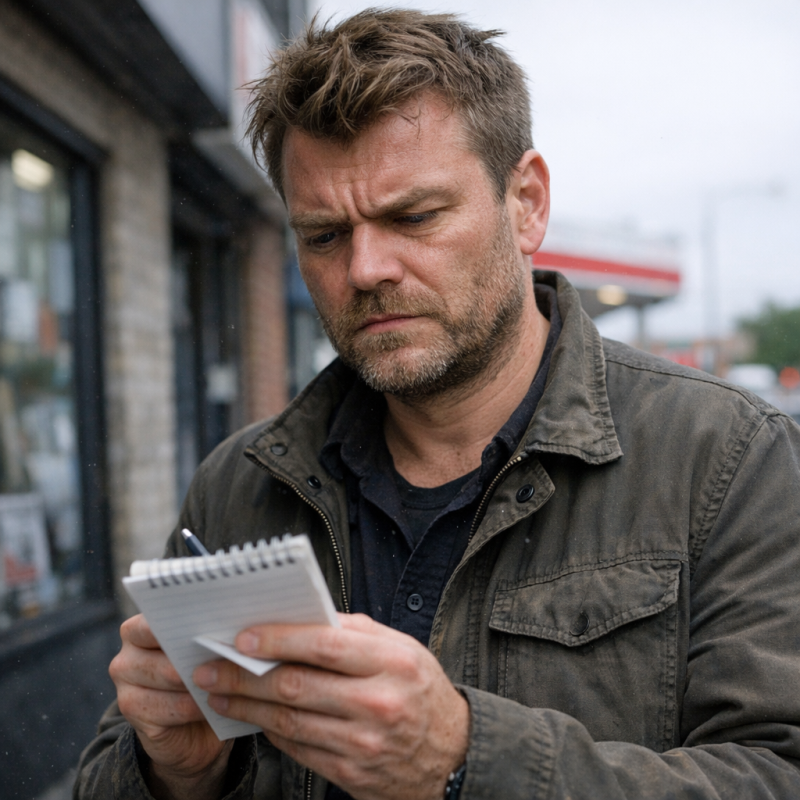 Image by FCT AI

History's most fascinating stories and darkest secrets, delivered to your inbox daily.
The Sealed Settlement
Two days later, I was grabbing coffee in the courthouse break room when another public defender, Tim, mentioned something in passing. He was complaining about sealed records in an old case, and Officer Daniels' name came up. I almost spilled my coffee. 'Wait, what case?' I asked, trying to keep my voice casual. Tim shrugged. 'Civil suit, maybe five or six years ago? I only remember because the plaintiff's attorney was a real pain about discovery. The whole thing got settled and sealed before it went anywhere.' He didn't know the details—didn't even seem that interested—but I was already mentally rearranging my afternoon. Back in my office, I pulled up the court database and searched Daniels' name. There it was: a civil complaint, filed and resolved within eight months. The case file was sealed. The plaintiff's name was redacted. The settlement terms were confidential. Every avenue I might have used to learn more was locked behind legal walls, and the more I stared at that screen, the more I needed to know what was hidden there.
 Image by FCT AI
Calling in a Favor
I scrolled through my contacts until I found her name: Rachel Kim, my law school study partner who'd gone into civil litigation at a mid-sized firm downtown. We'd kept in touch over the years, mostly holiday cards and occasional lunch meetups, but I knew she had access to databases I didn't. I called her that afternoon. 'Rachel, I need a favor,' I said, and explained what I was looking for without giving her too much detail. There was a pause on the other end. 'Sealed civil suit against a cop?' she asked. 'Sarah, you know those don't get sealed for no reason.' I did know. That's exactly why I needed to see it. She sighed, and I could hear her typing. 'Give me a few days. I'll see what I can dig up through back channels, maybe find someone who worked the case.' Then her voice dropped, more serious than I'd heard it in years. 'But if this goes where I think it's going, be careful. People don't seal cases to protect the plaintiff.' I thanked her and hung up, but her warning stayed with me, sharp and cold.
 Image by FCT AI
First Hearing
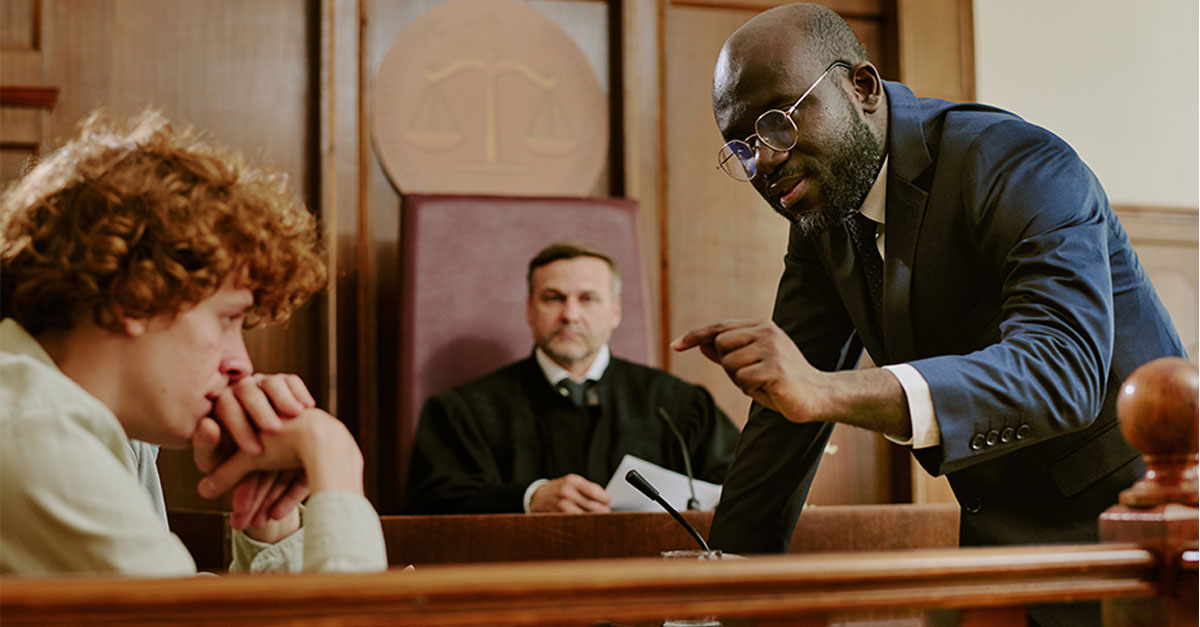
The preliminary hearing was held in Judge Patricia Caldwell's courtroom on a gray Monday morning. She was known for being fair but no-nonsense, the kind of judge who didn't tolerate games from either side. Eric sat beside me at the defense table, hands folded, looking smaller than he had in my office. Across the aisle, ADA Katherine Monroe shuffled her notes with the kind of calm confidence that made my stomach tighten. When Officer Daniels took the stand, he was everything a jury loves: composed, professional, detailed in his recollections. He described Eric's 'unsteady gait,' the smell of alcohol, the slurred speech. Monroe walked him through each element methodically, and I watched Judge Caldwell's face for any flicker of doubt. There was none. When Monroe finished, she returned to her table and glanced over at me with this small, knowing smile—the kind that said she'd already written her closing argument. That's when I realized she didn't just think she'd win this case. She thought it was already over.
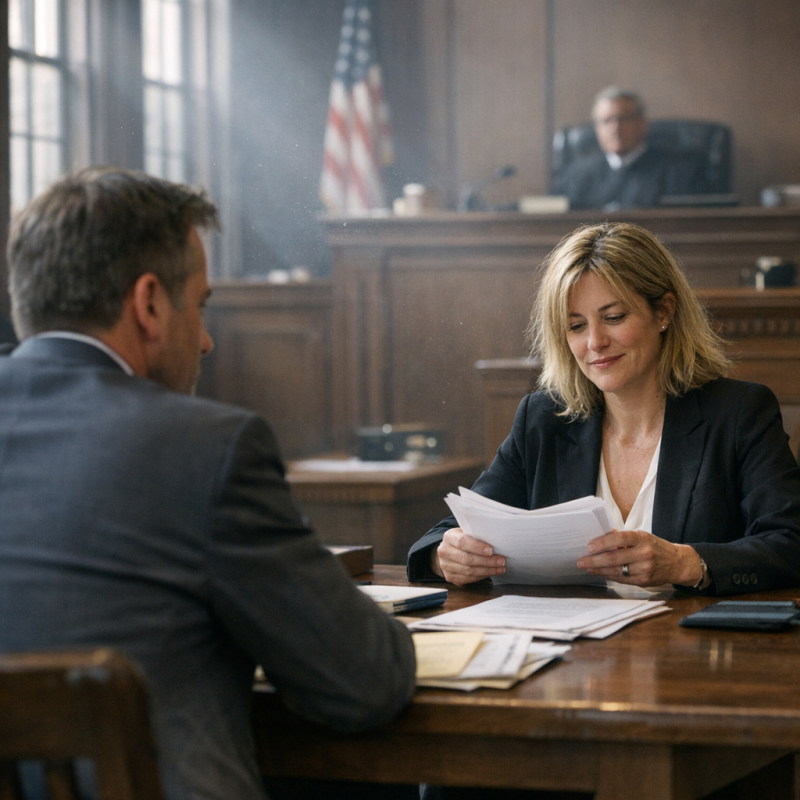 Image by FCT AI
Eric on the Stand
When Eric took the stand, I'd prepped him as much as I could: stay calm, tell the truth, don't get defensive. He did exactly that. His voice was steady as he described the night—two beers over three hours, the mechanical issues with his car, the confusion when Daniels approached him. I glanced at the jury box, searching their faces for something, anything that looked like belief. A couple of them were nodding slightly. One woman in the second row had her arms crossed, but her expression seemed more thoughtful than hostile. For a moment, I let myself hope. Then Monroe stood for cross-examination, and the air in the room shifted. She approached the witness stand slowly, holding her legal pad but not looking at it. 'Mr. Hale,' she said, her tone pleasant, almost conversational. 'Let me ask you something simple. How many drinks did you have that night?' Eric hesitated—just a fraction of a second, but it was enough. 'Two,' he said. 'Maybe two and a half.' And just like that, I watched doubt creep back into the jury's eyes.
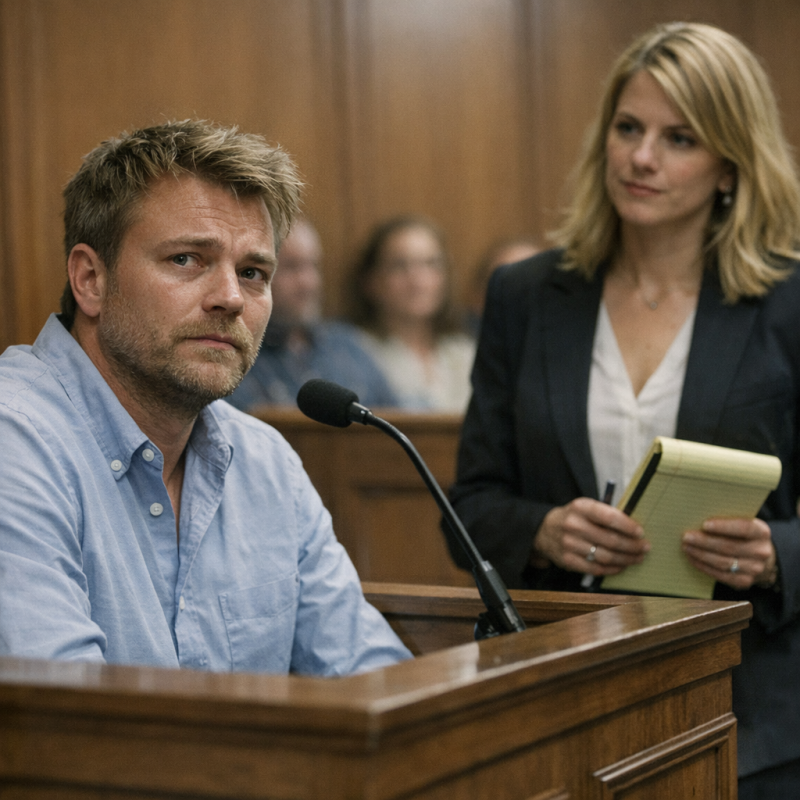 Image by FCT AI
The Jury's Doubt
After the hearing wrapped, I lingered near the back of the courtroom, watching the jury file out. You learn to read people in this job, and what I saw wasn't encouraging. They wanted to believe Eric—I could see that in the way a few of them avoided eye contact with Monroe, like they felt guilty for doubting him. But a cop's word carries weight, especially when he's in uniform, speaking clearly, with no obvious reason to lie. Eric and I didn't talk much as we left the courthouse. What was there to say? I told him I'd call him in a few days, and he nodded, already looking defeated. That night, I sat in my apartment with a glass of wine I barely touched, replaying Monroe's cross-examination in my head. I was wondering if I'd missed something, if there was an angle I hadn't considered, when my phone buzzed with a new email. It was from Rachel. The subject line was blank, but the message was only six words long: 'I found something. Call me.'
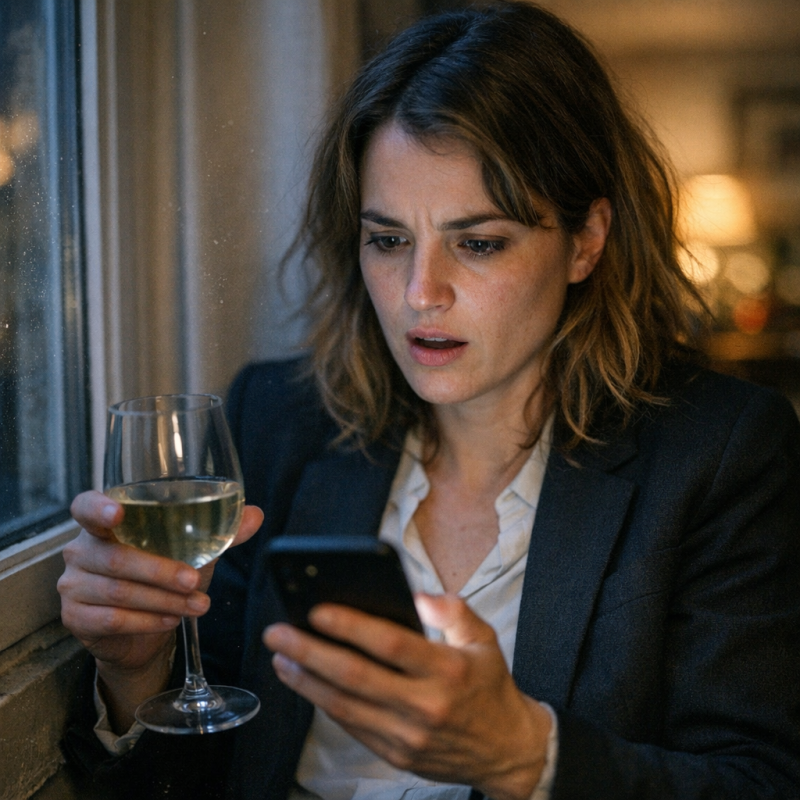 Image by FCT AI
The Deposition
Rachel didn't pick up when I called, so I tried James Park instead—a colleague who'd helped her pull the records. He answered on the second ring. 'Sarah, yeah, Rachel asked me to send you what we found. Check your email.' I opened my laptop, and there it was: partial deposition transcripts from the sealed case, twenty-three pages of testimony from a plaintiff whose name was still redacted. I started reading. Then I read it again. And a third time, because I needed to be absolutely sure I was seeing what I thought I was seeing. The plaintiff described being stopped outside a bar after leaving late one Friday night. No field sobriety test. No dash cam footage—technical malfunction. No witnesses. Just Officer Daniels' word that the plaintiff had been driving erratically and smelled of alcohol. The plaintiff insisted they'd had one drink, hours before. The language in the arrest report—verbatim phrases like 'bloodshot eyes' and 'unsteady gait'—matched Eric's report almost word for word. I sat back from my laptop, heart pounding. It wasn't proof of anything, not yet, but the similarities were too specific, too deliberate to be coincidence.
 Image by FCT AI
Too Similar to Ignore
I printed both arrest reports and laid them side by side on my desk, highlighting identical phrases. 'Bloodshot, watery eyes.' 'Odor of alcoholic beverage emanating from person.' 'Unsteady gait and slurred speech.' The language wasn't just similar—it was copy-pasted, like Daniels had a template he filled in each time. I kept reading, noting the circumstances. Both arrests happened late on Friday nights. Both happened near bars with limited visibility. Both involved malfunctioning equipment—dash cam in the first case, breathalyzer in Eric's. Both had no independent witnesses. I know cops use standardized language in reports; that's normal. But this felt different. This felt rehearsed. I leaned back in my chair, staring at the pages until my vision blurred. I couldn't prove a pattern yet—two cases weren't enough, and one was sealed for a reason. But something about seeing it laid out like that, the repetition of details, made my skin crawl. If Daniels had done this twice, what were the chances he'd only done it twice?
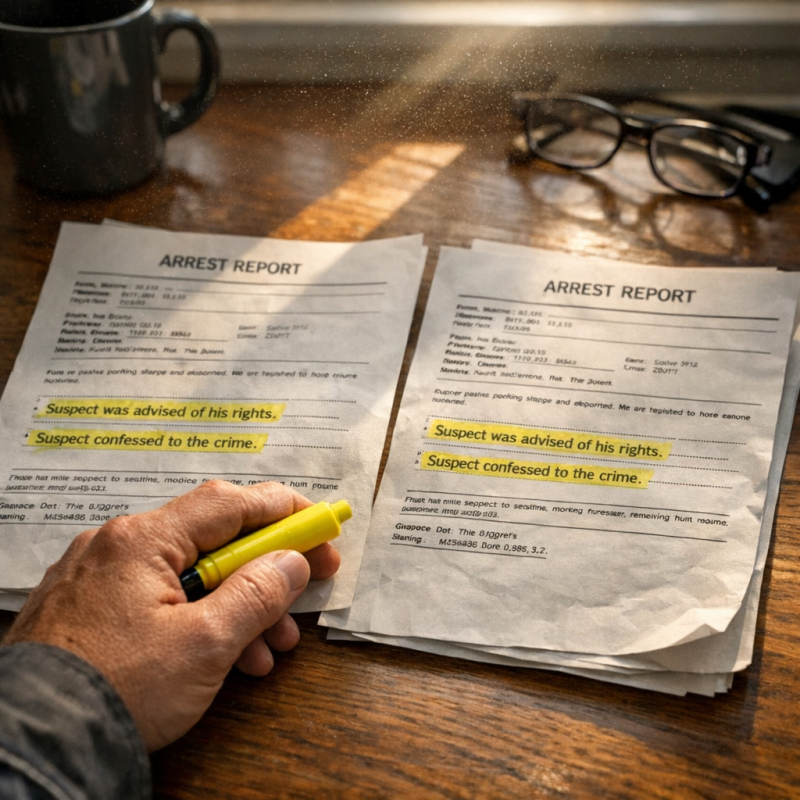 Image by FCT AI
Rebecca's Breaking Point
Rebecca called me on a Tuesday afternoon, and I knew from her voice something had broken. She wasn't crying yet, but she was close—that strained quality people get when they're trying to hold it together and failing. 'Eric's company lost another contract,' she said. 'The client Googled his name and found the arrest. They said they couldn't associate with someone under DUI charges.' I listened, feeling my jaw tighten. 'And Jake—our son—he came home from school yesterday with a bloody nose. Some kids were calling Eric a drunk driver.' Her voice cracked on that last part. I closed my eyes, gripping the phone harder. This wasn't just about Eric's record anymore. It was about their livelihood, their kid's safety, their entire life unraveling. 'I'm working on something,' I told her, trying to sound more confident than I felt. 'I think I'm close to finding evidence that could change everything.' There was a long silence on the other end. Then Rebecca asked me the question I'd been avoiding asking myself: 'Sarah, is this even winnable?'
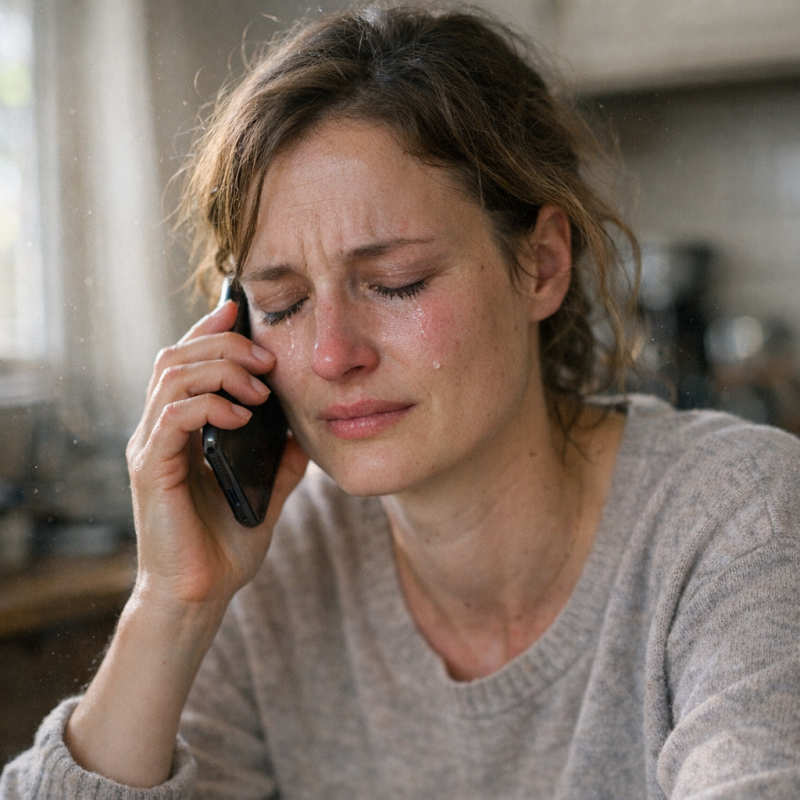 Image by FCT AI
The Name I Couldn't Find
I needed to talk to Marcus Chen, the plaintiff from that sealed case. If Daniels had done this before, Marcus could corroborate the pattern—assuming he'd be willing to violate the settlement agreement. I started with the basics: online searches, public records, social media. Nothing. The guy had no digital footprint, which seemed odd for someone in their thirties. I tried the address from the court filing, but the building manager said he'd moved out years ago with no forwarding information. I called every M. Chen in the county. Wrong numbers, disconnected lines, people who'd never heard of the case. It was like he'd evaporated. I spent three days chasing ghosts, growing more frustrated with each dead end. Then, on a hunch, I searched obituaries. Sometimes people disappear for the most permanent reason. And there it was—a small notice from six months ago. Marcus Chen, age thirty-four, survived by his parents and sister. No cause of death listed. I stared at the screen, feeling something cold settle in my chest. The one person who could have confirmed what Daniels did was gone.
 Image by FCT AI
Late Night Research
I couldn't interview Marcus, but maybe I could find others. That night, I went through the county's complaint database, searching for any mention of Officer Daniels. What I found made my hands shake. Complaint after complaint—filed by citizens, documented by the department, and every single one dismissed or marked 'unfounded.' Improper arrest procedures. Falsified evidence. Harassment. The details varied, but certain words kept appearing: 'no witnesses,' 'equipment malfunction,' 'Friday night.' I printed them all, spreading them across my apartment floor like puzzle pieces. There were dozens spanning five years. Too many to be coincidence, but each individual complaint had been investigated and cleared. How does someone rack up that many complaints and face zero consequences? I started to wonder if I was seeing something everyone had missed, or if people in power had decided not to look. One complaint from two years ago caught my eye. A woman claimed Daniels pulled her over for DUI at the intersection of Fifth and Morrison. I felt my pulse quicken. That was the exact same intersection where Eric was arrested.
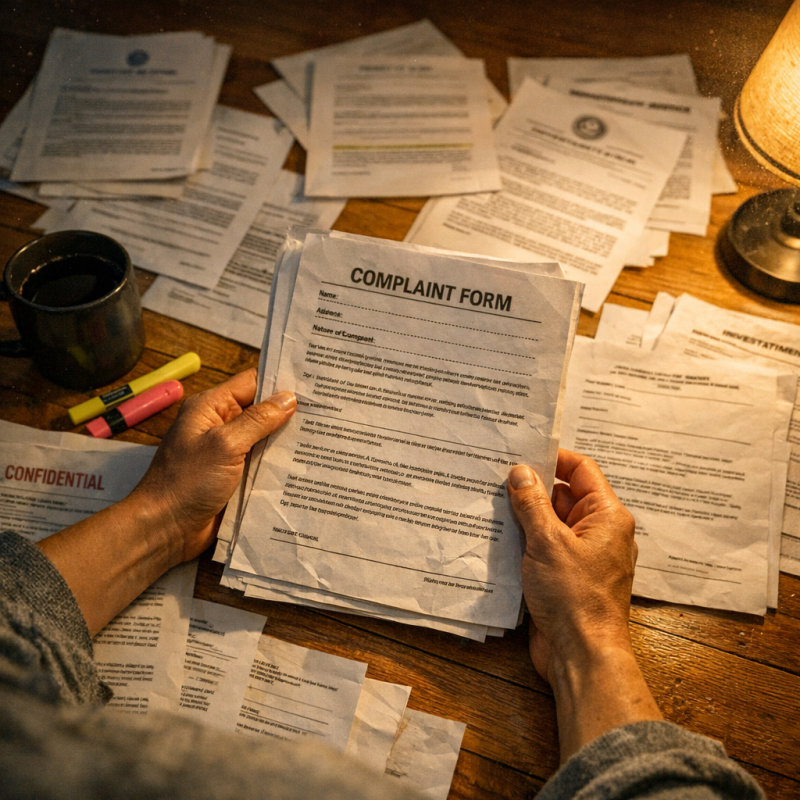 Image by FCT AI
The Corner Store
I drove out to Fifth and Morrison the next morning, parking where Eric said he'd been that night. He'd mentioned someone in a car nearby when Daniels pulled him over—someone who could have seen the whole thing. I'd dismissed it at the time because Eric couldn't describe them, but now I was desperate enough to try anything. The intersection was commercial—a dry cleaner, a pharmacy, a few closed storefronts with faded 'For Lease' signs. I walked the block slowly, looking for anything I'd missed. Most places were dark, clearly abandoned. But then I saw it, tucked on the corner: a small convenience store with barred windows and handwritten signs advertising cigarettes and lottery tickets. The kind of place that stays open late, that sees everything happening on the street. And above the door, mounted under the awning and pointed directly at the intersection, was a security camera. I stood there staring at it, my heart pounding. How had I not thought to look for this before?
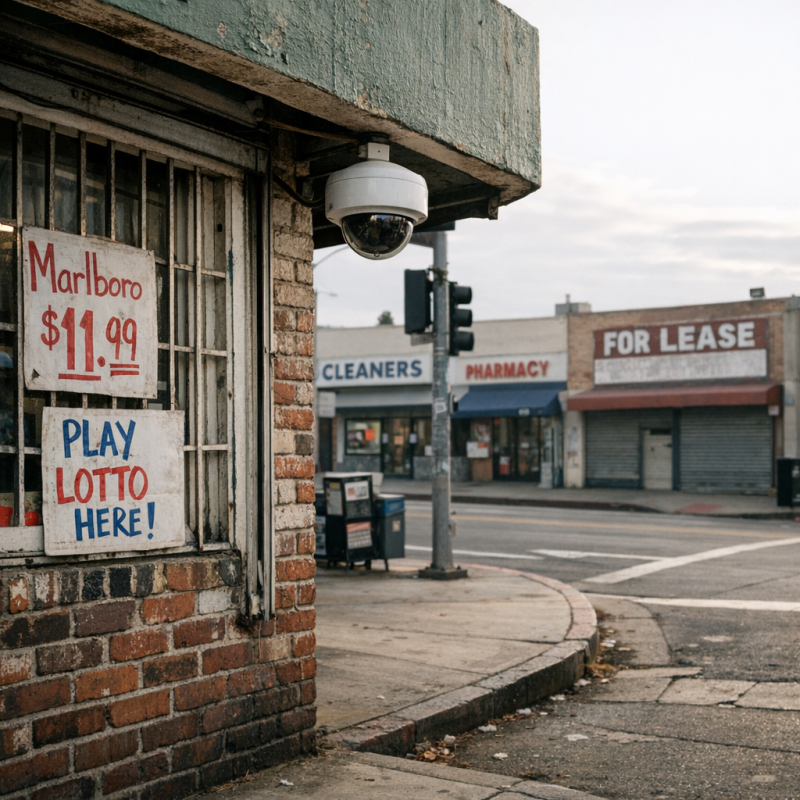 Image by FCT AI
The Reluctant Owner
The man behind the counter looked up when I walked in, his expression weary. I introduced myself, explained I was a lawyer working on a case. 'I need to ask about your security cameras,' I said, pointing outside. 'Do you keep footage from three months ago?' He shook his head immediately. 'System records over itself every two weeks. That footage is long gone.' I felt my hope deflate, but I pressed anyway. 'Is there any chance it got saved? Maybe backed up somewhere?' He looked at me like I was asking him to move a mountain. 'Lady, I run a convenience store. I don't have time to archive footage. And I don't want trouble with police.' That last part stung. 'I'm not trying to create trouble. I'm trying to prevent an innocent man from losing everything.' He turned away, restocking cigarettes. I stood there for a moment, feeling defeated, then headed for the door. My hand was on the handle when I heard his voice: 'Come back tomorrow. I'll check the old drives.'
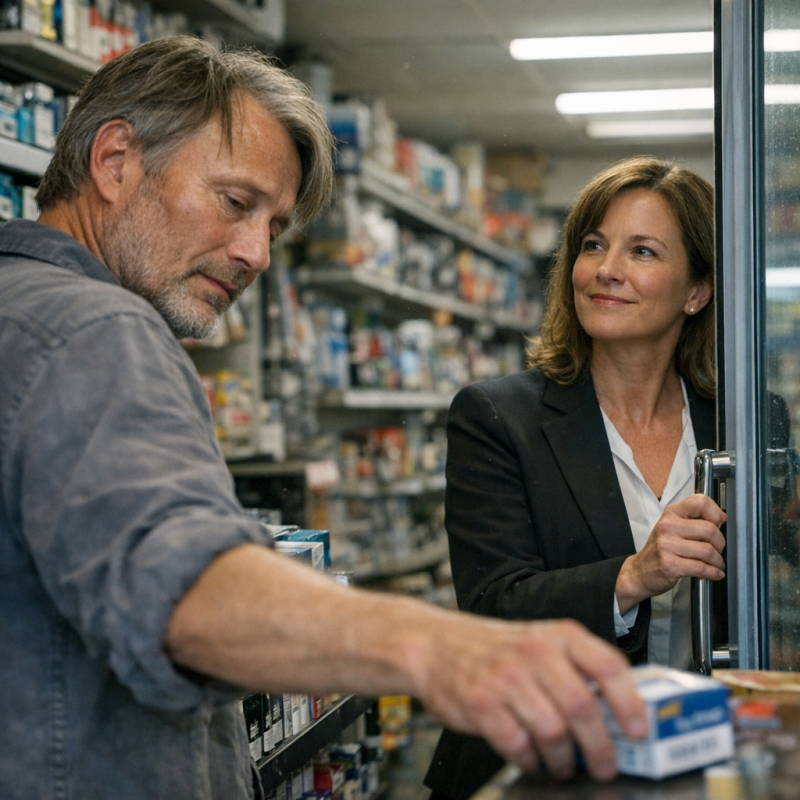 Image by FCT AI
The Footage
Mr. Patel—he'd introduced himself properly this time—led me to a cramped back office that smelled like cardboard and curry. He gestured to a stack of external hard drives on a metal shelf. 'My nephew set up automatic backups years ago,' he said. 'I forgot about them until last night.' He connected one to his ancient computer, clicking through folders with filenames that were just dates and timestamps. My leg bounced nervously as the files loaded. Then he found it—the night of Eric's arrest. The footage was grainy, black-and-white, the timestamp glowing in the corner. I leaned closer to the screen. There was Eric's car, pulled to the curb. And there was Eric himself, standing on the sidewalk, phone pressed to his ear. He looked annoyed, maybe, but his posture was steady. His movements were controlled and deliberate as he gestured while talking. Nothing about his body language suggested intoxication. Then a patrol car rolled into frame, roof lights flashing. Officer Daniels stepped out. I watched, barely breathing, as he approached Eric.
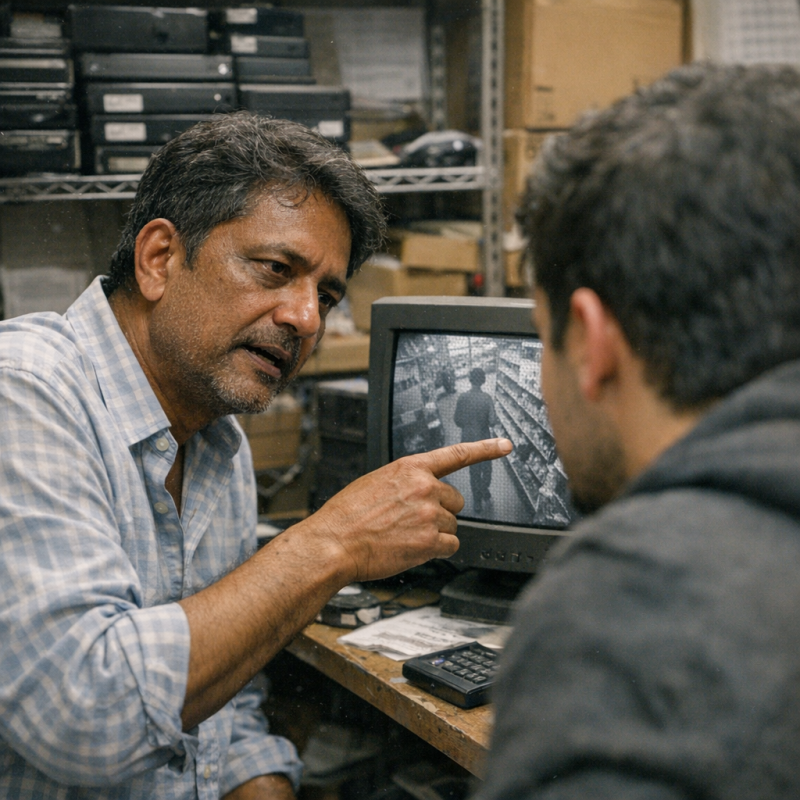 Image by FCT AI
Frame by Frame
I took the footage home and watched it seventeen times that night, analyzing every frame. Eric stayed calm throughout the interaction, his hands visible, his stance balanced. Daniels approached with his hand already on his cuffs. The timestamp showed the entire encounter lasted four minutes from when Daniels arrived until Eric was in handcuffs. Four minutes. According to Daniels's report, he'd administered a full field sobriety test: horizontal gaze nystagmus, walk-and-turn, one-leg stand. Those tests take at least ten minutes when done properly. I rewound and watched again. Daniels talked to Eric for maybe ninety seconds, then moved behind him and cuffed him. No heel-to-toe walk. No finger-to-nose test. No standing on one leg. The whole report was fabricated—not exaggerated or misremembered, but completely invented. I felt rage building in my chest, hot and righteous. This wasn't a mistake or an overzealous cop. This was deliberate. Daniels had written a detailed account of procedures he never performed, describing observations he never made. The footage didn't just prove Eric's innocence. It proved Daniels had lied about everything.
 Image by FCT AI
Telling Eric
I called Eric and Rebecca to my office the next day. They sat across from me, holding hands, looking fragile in a way that made my chest ache. I turned my laptop toward them and pressed play. I watched Eric's face as he saw himself on that grainy footage—calm, sober, cooperative. Watched him see Daniels skip every test the report claimed happened. When it ended, Rebecca was crying. Eric just stared at the screen, his jaw working. 'He lied about all of it,' Eric said quietly. It wasn't a question. 'Every word in that report,' I confirmed. 'The footage proves it.' Eric stood, paced to the window, then back. The hope in his eyes was almost painful to see—this was the first real evidence we'd had, the first thing that might actually save him. But mixed with that hope was something darker. Anger. The same anger I'd been feeling. He turned to me, and when he spoke, his voice was steady but intense: 'Sarah, how many others are there?'
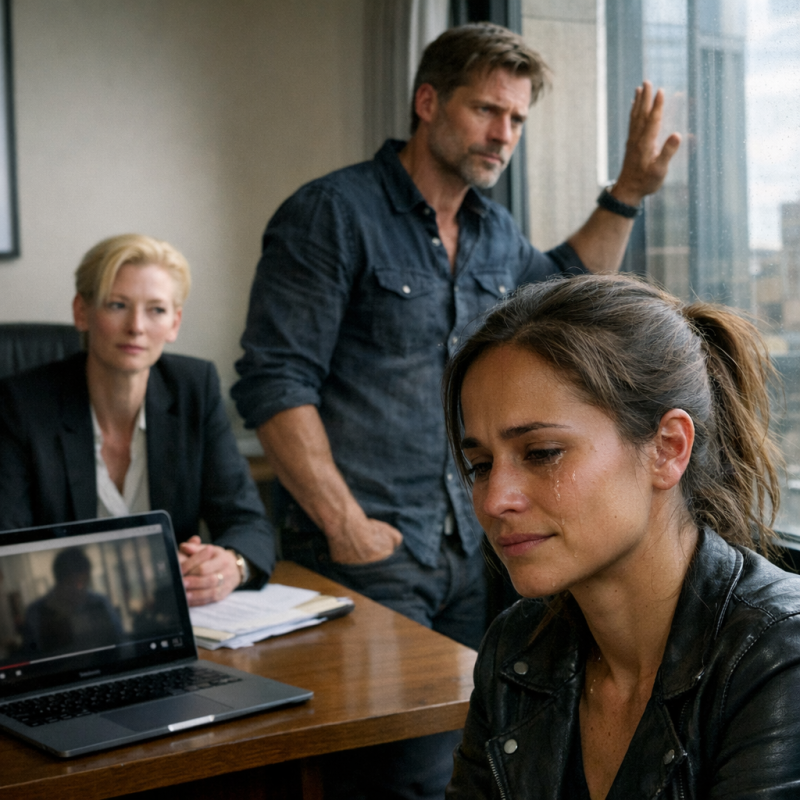 Image by FCT AI
Strategy Session
I sat in my office that night with a legal pad, mapping out every possible scenario. The footage was gold—absolute proof that Daniels had lied in his report. But I knew the moment I revealed it in discovery, Monroe would shift tactics. She'd have time to spin it, to find some technical explanation, to plant doubt before we ever got to trial. I needed Daniels on the stand first, under oath, locked into his story with no way out. Let him testify to everything in that report—the field sobriety tests he never administered, the observations he never made. The more detail he gave, the deeper the hole he'd dig himself. Only then would I pull out the footage and watch his credibility collapse in real time. I drew arrows on my pad, crossed them out, drew new ones. Timing was everything. Reveal too early, and they'd prepare. Wait too long, and I'd miss my window. My coffee went cold as I worked through the strategy, refining it until it felt airtight. Then I realized—if I used this too soon, they'd have time to discredit it.
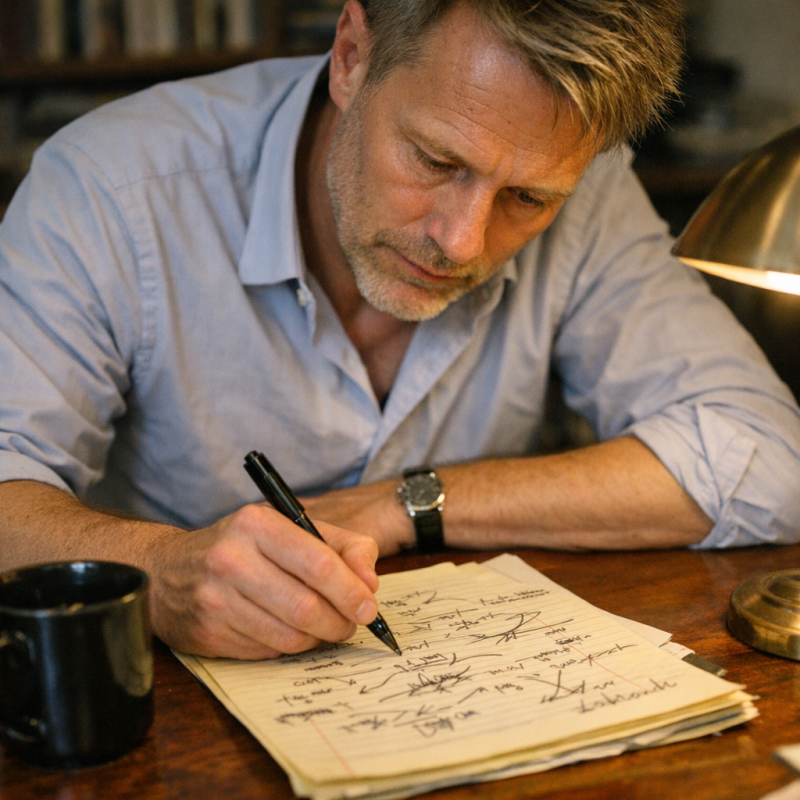 Image by FCT AI
Monroe's Confidence
Monroe called me three days before trial. She wanted to meet at her office, which already told me she was feeling confident. I brought Eric, and we sat across from her in one of those sterile conference rooms with the big table and the city seal on the wall. She slid a single sheet of paper toward us, wearing this smile that was all magnanimity and power. 'Reckless driving,' she said. 'No jail time. Minimal fine. Your client walks away with a clean conscience, we avoid tying up the court's resources.' She leaned back in her chair like she'd just done us the favor of a lifetime. Eric looked at the paper, then at me. I could see the temptation there—the exhaustion of these months, the fear of what trial might bring, the easy way out. But I'd seen that footage. I knew what we had. I met his eyes and gave the smallest shake of my head. His shoulders straightened. He pushed the paper back across the table. I looked at Monroe directly. 'We're going to trial.'
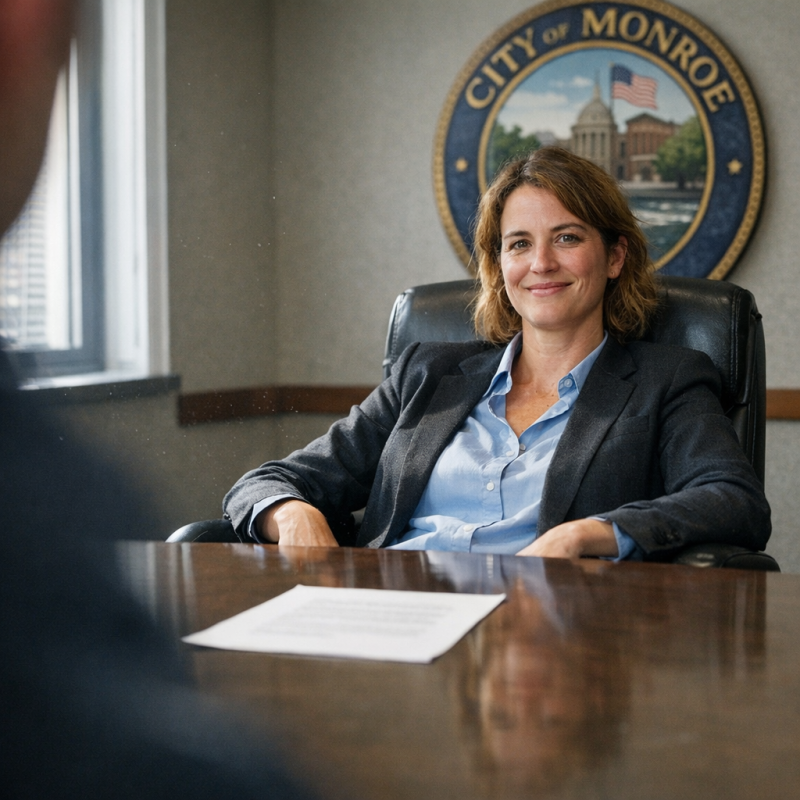 Image by FCT AI
Trial Preparation
We spent the next four days in my conference room, going over Eric's testimony until he could recite every detail in his sleep. What time did you leave the restaurant? What did you eat? How many drinks did you have, and over what period? Walk me through the stop. What did Officer Daniels say? What did you say? I made him repeat it forwards and backwards, challenged him on tiny inconsistencies, pushed him until his answers were automatic and unshakable. Rebecca sat in sometimes, playing the role of skeptical juror. 'But how do you KNOW you weren't impaired?' she'd ask, and Eric would explain about the food, the timing, the single beer hours earlier. We practiced his body language, his tone, the way he'd look at the jury when he answered. By the final session, he was steady. Composed. Believable. But the night before trial, as we were packing up, Eric paused at the door. His face was pale in the hallway light. 'What if they don't believe the footage?'
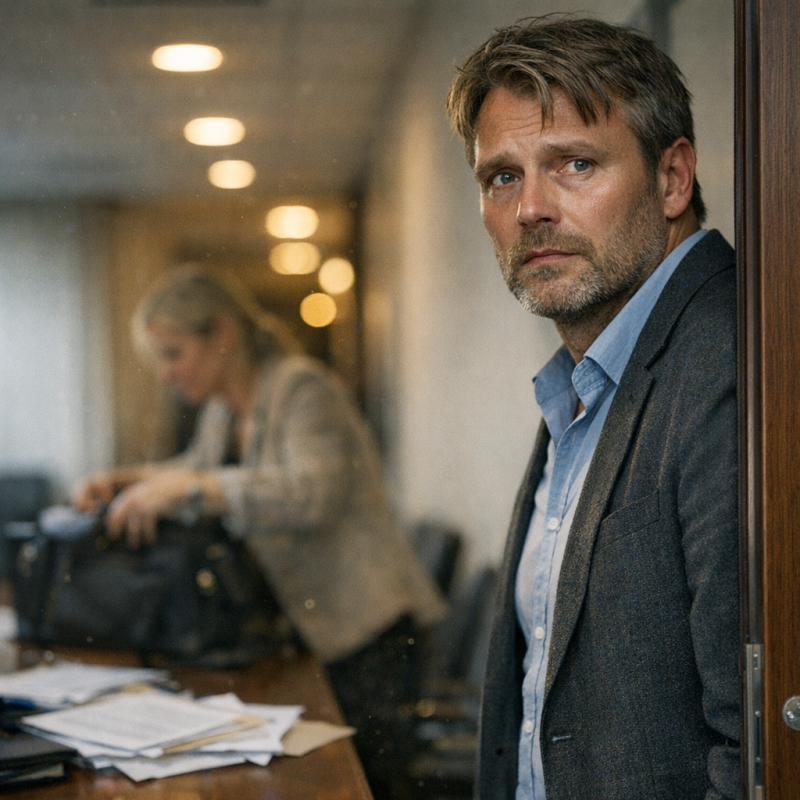 Image by FCT AI
Opening Statements
The courtroom felt smaller than I remembered, packed with potential jurors and the weight of everything riding on this. Judge Caldwell took the bench promptly at nine, and after jury selection, Monroe stood for her opening statement. She was good—I had to give her that. She painted Eric as a successful man who thought the rules didn't apply to him, who'd had too much to drink and gotten behind the wheel, endangering everyone on that road. She talked about Officer Daniels' years of experience, his dedication to public safety, the textbook signs of intoxication he'd observed. Her voice carried conviction, sympathy for potential victims, disappointment in Eric's choices. Some of the jurors were nodding. Then it was my turn. I stood, buttoned my jacket, and walked to the jury box. I didn't have Monroe's theatrical flair, but I had something better: the truth. I looked each juror in the eye as I spoke. I told them about reasonable doubt, about the burden of proof, about looking beyond assumptions. 'By the end of this trial, you'll know the truth.'
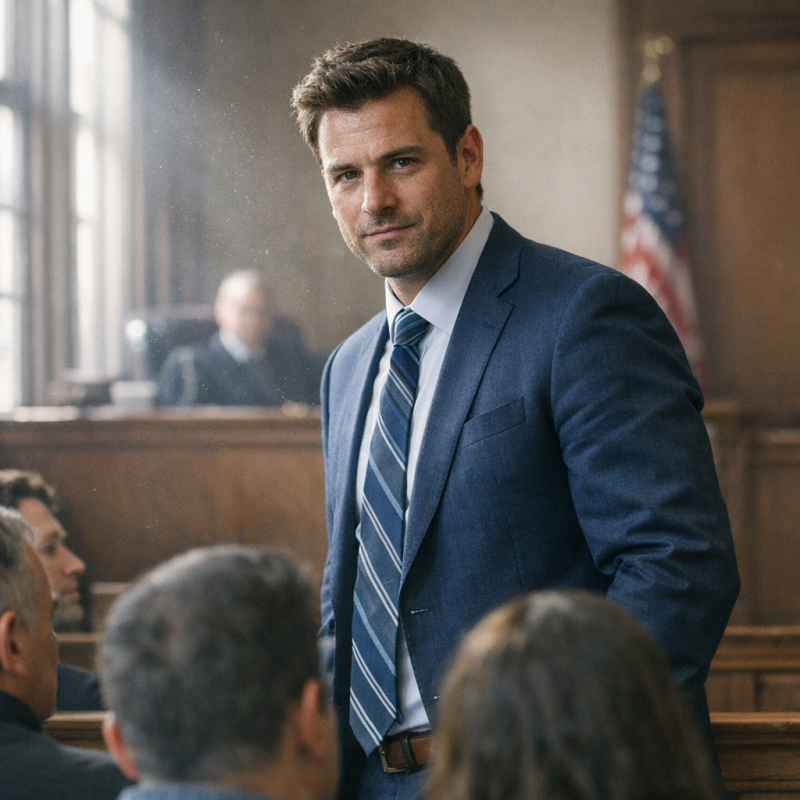 Image by FCT AI
Daniels Takes the Stand
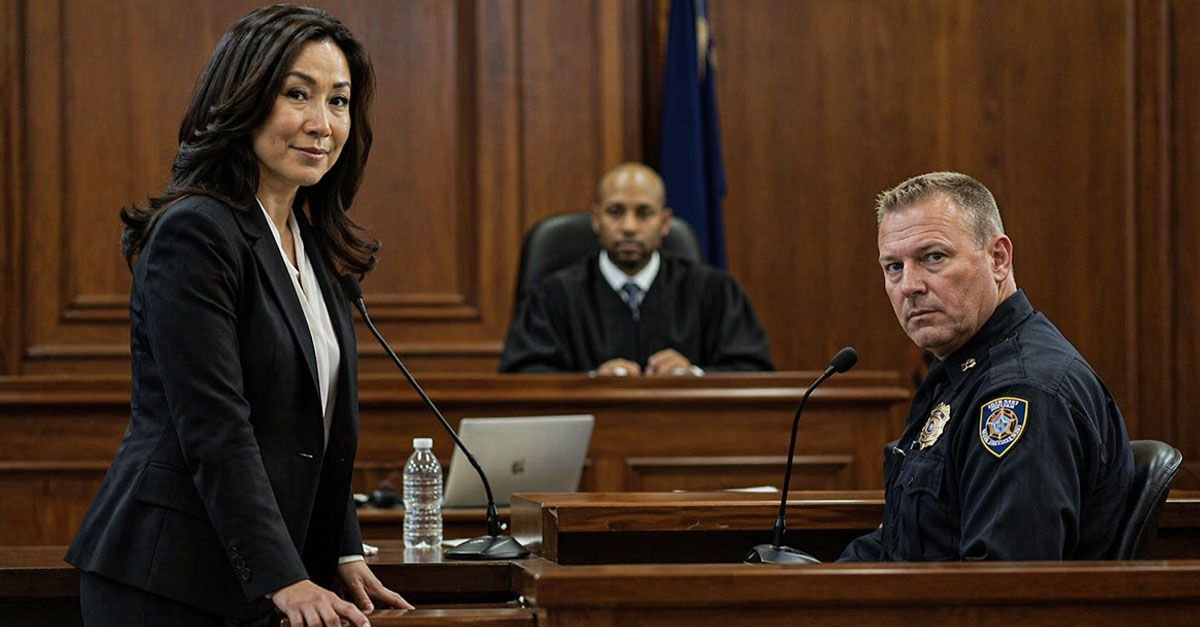
Monroe called Officer Daniels as her first witness, and he walked to the stand like he owned it. Uniform pressed, badge polished, that calm authority that makes juries trust cops instinctively. He was sworn in and settled into the witness chair like he'd done it a thousand times—because he probably had. Monroe walked him through his credentials, his training, his years of experience. Then she moved to the night in question. Daniels described pulling Eric over, approaching the vehicle, immediately noticing the signs of intoxication. 'Slurred speech, bloodshot eyes, the smell of alcohol,' he said, his voice steady and professional. He described administering the field sobriety tests in meticulous detail—the walk-and-turn, the one-leg stand, the horizontal gaze nystagmus test. Every word matched his report perfectly. I took notes, my pen moving across the page, but I was really watching the jury. They were buying it. Every word. He looked directly at them, his expression earnest and concerned. 'I've made hundreds of DUI arrests. This was textbook.'
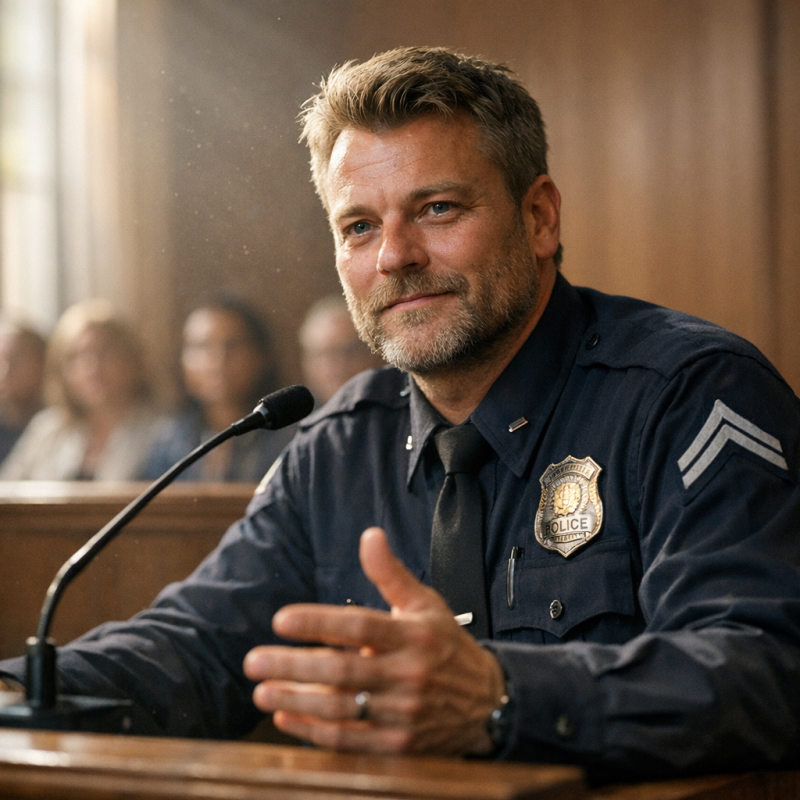 Image by FCT AI
The Perfect Story
Monroe continued her direct examination, and Daniels kept delivering. He described each test in painful detail—how Eric had swayed during the walk-and-turn, couldn't maintain balance on the one-leg stand, showed distinct nystagmus in both eyes. None of it had happened. I sat there listening to him describe events I'd watched NOT occur on that gas station footage, and I had to keep my face neutral. The jury was eating it up. One woman in the front row was taking notes. Monroe moved to the breathalyzer, and this was where Daniels showed his real skill. He explained the malfunction with just the right amount of professional regret—these things happen, equipment fails, but he'd documented everything thoroughly in his report. 'I wish we'd had that BAC reading,' he said, looking genuinely disappointed. 'But based on my observations and the failed field sobriety tests, I had more than enough probable cause for the arrest.' His timing was perfect. His delivery was flawless. Monroe asked him about his recording equipment, and he explained the malfunction with just the right amount of regret.
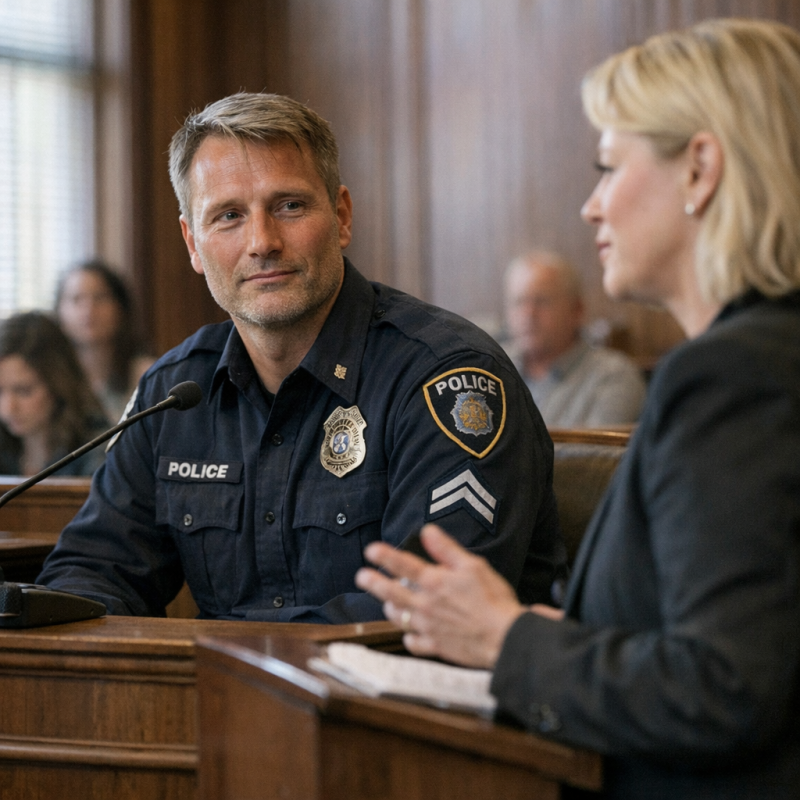 Image by FCT AI
My Turn
When Monroe finished, Judge Caldwell looked at me. 'Cross-examination, Ms. Chen?' I stood, gathering my notes, taking my time. Daniels watched me approach with that same calm confidence. I started with simple stuff—his shift that night, what time he'd started patrol, the route he'd been driving. Basic procedural questions that he answered easily, relaxing into the rhythm. I asked about his training, his certification, letting him talk about his expertise. The jury saw a seasoned professional being treated respectfully by the defense. Good. I wanted them comfortable before I started cutting. I moved to his equipment—the breathalyzer, the dashboard camera, standard protocols for their use and maintenance. He answered each question with practiced ease, occasionally glancing at the jury to include them in his responses. I nodded along, making notes, building a foundation. Then I shifted my weight, looked down at my legal pad, and looked back up at him. My tone stayed conversational, curious. 'How often would you say it malfunctions, Officer Daniels?'
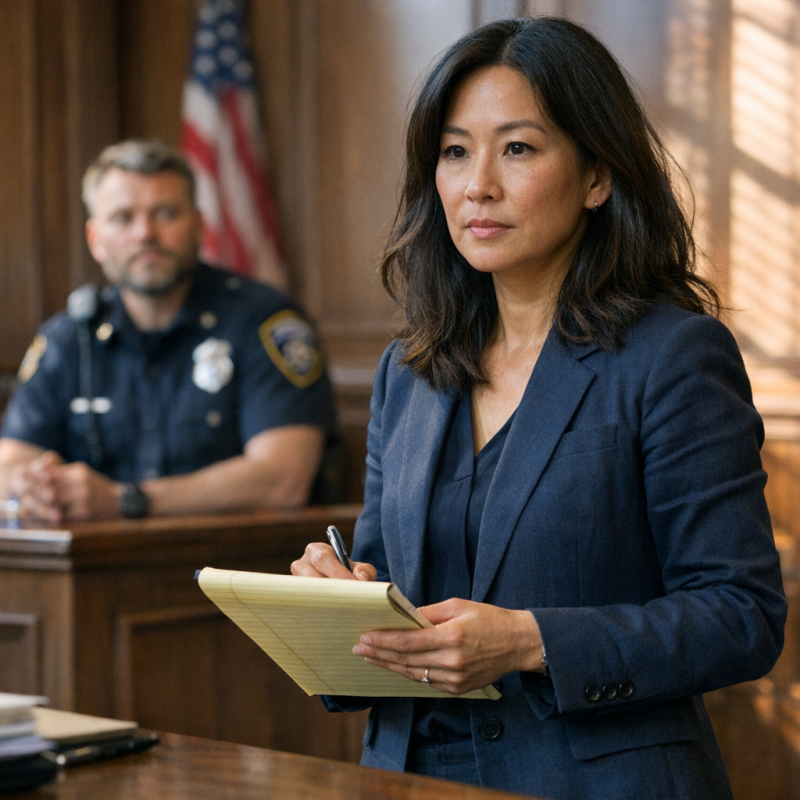 Image by FCT AI
The Pattern Emerges
Daniels paused—just a fraction of a second, but I caught it. 'The equipment? It's rare, but it happens.' I nodded like that made perfect sense. Then I walked to my table and picked up a stack of papers. 'I've obtained records of your arrests over the past three years,' I said, approaching the witness stand. 'Would you say you have equipment malfunctions more or less frequently than other officers in your department?' His jaw tightened. 'I couldn't say.' I entered the records into evidence over Monroe's objection, and Judge Caldwell allowed it. I read from them—twelve DUI arrests in three years where either the breathalyzer or the dashboard camera had malfunctioned. Twelve times Daniels had proceeded without that crucial evidence. The jury was leaning forward now. One man's eyebrows were raised. I wasn't saying what it meant—not yet. I was just laying it out, letting them see the pattern without naming it. Daniels shifted in his seat, his composure cracking at the edges. Monroe objected again, but the judge allowed it—and I saw doubt creeping into the jury's faces.
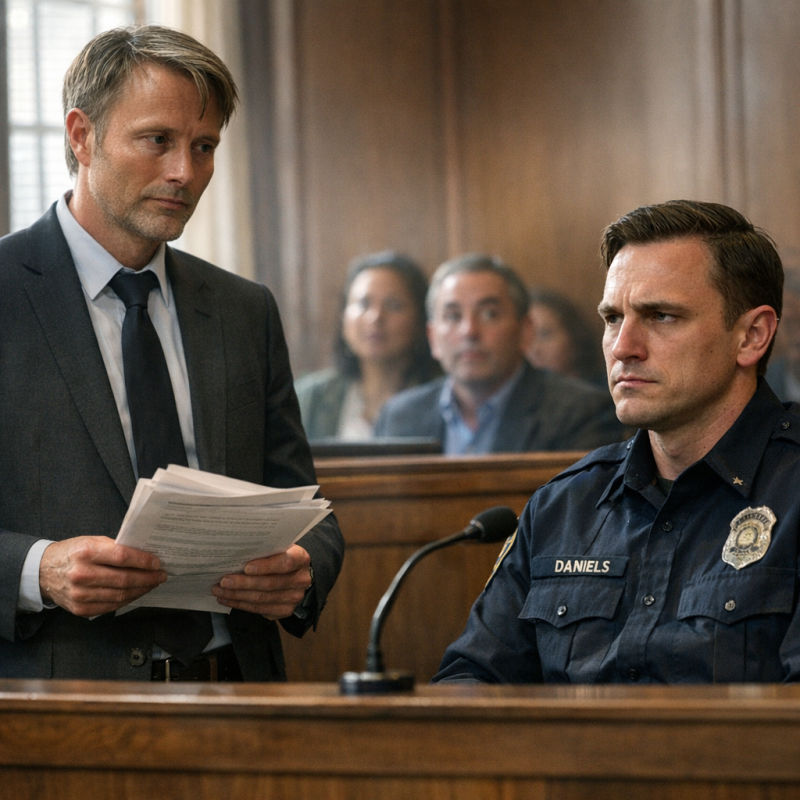 Image by FCT AI
Daniels Holds Firm
I pressed Daniels for another twenty minutes, but the man was a brick wall. Every question I threw at him, he deflected with the same measured confidence. 'I stand by my report.' 'I know what I observed.' 'My training is extensive.' The jury was listening, sure, but I could see them wavering. Equipment malfunctions create doubt, not certainty. One malfunction might be bad luck. Twelve might suggest a pattern. But 'might' doesn't win cases—not against a cop in uniform who looks the jury in the eye and swears he's telling the truth. When Judge Caldwell dismissed us for the day, I walked back to my office with that familiar knot in my stomach. I spread everything across my desk—the arrest report, the equipment records, Marcus's statement, Rebecca's phone logs. Then I pulled out the envelope I'd been saving. The footage from the bar across the street. My ace. I'd been holding it back, waiting for the right moment, and watching Daniels's unshakable confidence today made one thing clear: it was time to play my ace.
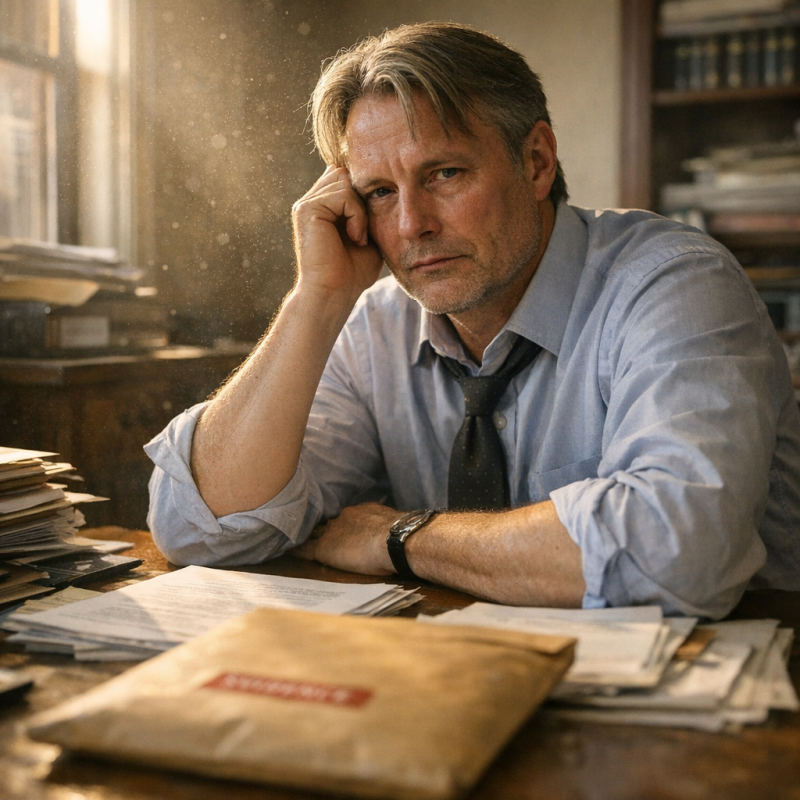 Image by FCT AI
Marcus Webb's Testimony
Marcus Webb took the stand the next morning looking exactly like what he was—a software engineer who'd rather be anywhere else. I walked him through the evening step by step. 'How many drinks did Eric have?' I asked. 'One beer,' Marcus said without hesitation. 'Then he switched to water. I remember because I was the one buying the rounds, and he kept waving me off.' The jury was taking notes now. 'Why do you remember that specifically?' 'Because I was driving that night too,' he said. 'We'd made a pact before we even left—one drink max, then water. Neither of us wanted to risk it.' Monroe stood for cross-examination with that shark smile she does. She tried everything—questioned his memory, suggested he was protecting his friend, implied he'd been too drunk himself to notice. But Marcus didn't budge. His answers stayed consistent, detailed, credible. When she finally sat down, looking frustrated, Marcus glanced at me, and I could see it in his eyes: 'I remember because I was driving that night too.'
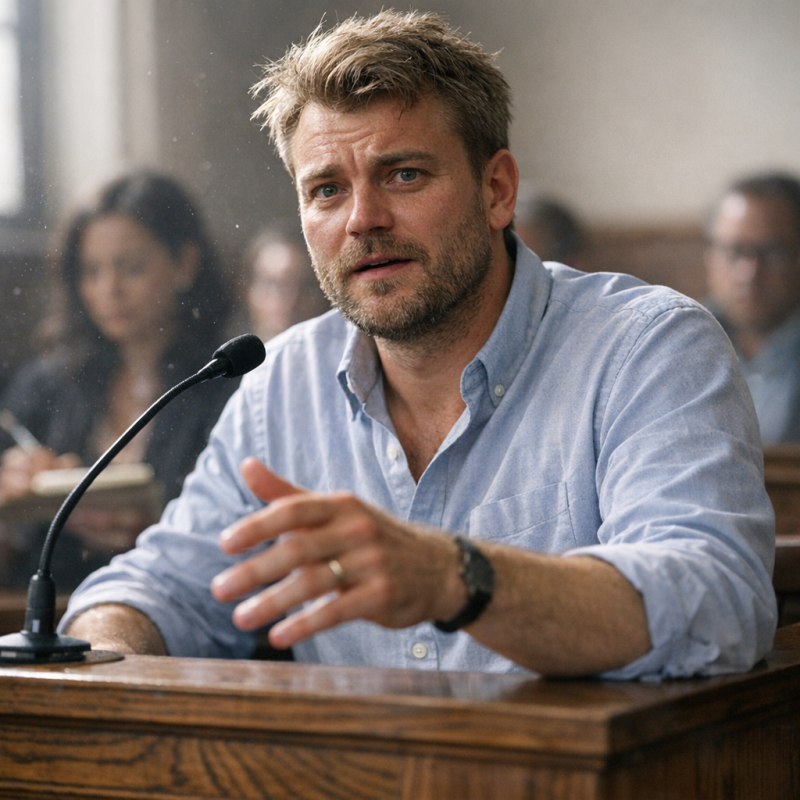 Image by FCT AI
Rebecca's Pain
Rebecca took the stand next, and I watched her hands shake as she was sworn in. She'd been dreading this moment—reliving the night her husband was arrested, the fear in his voice when he called. I kept my questions gentle. 'What time did Eric call you?' 'Nine forty-seven,' she said immediately. 'I remember because I looked at the clock when the phone rang.' That was critical—Daniels claimed Eric was stumbling at nine forty-five. 'How did he sound?' 'Scared. Confused. He said a cop had pulled him over and was making him do tests, but he didn't understand why.' Her voice cracked. 'He said he was fine, that he hadn't done anything wrong.' I nodded and asked her to show the jury her phone. Rebecca pulled it out, hands still trembling, and held up the call log. The timestamp was right there—9:47 PM, duration four minutes and thirty-two seconds. Monroe tried to suggest Rebecca was mistaken about the time, but the phone records don't lie. She pulled out her phone records, and the timestamp matched perfectly.
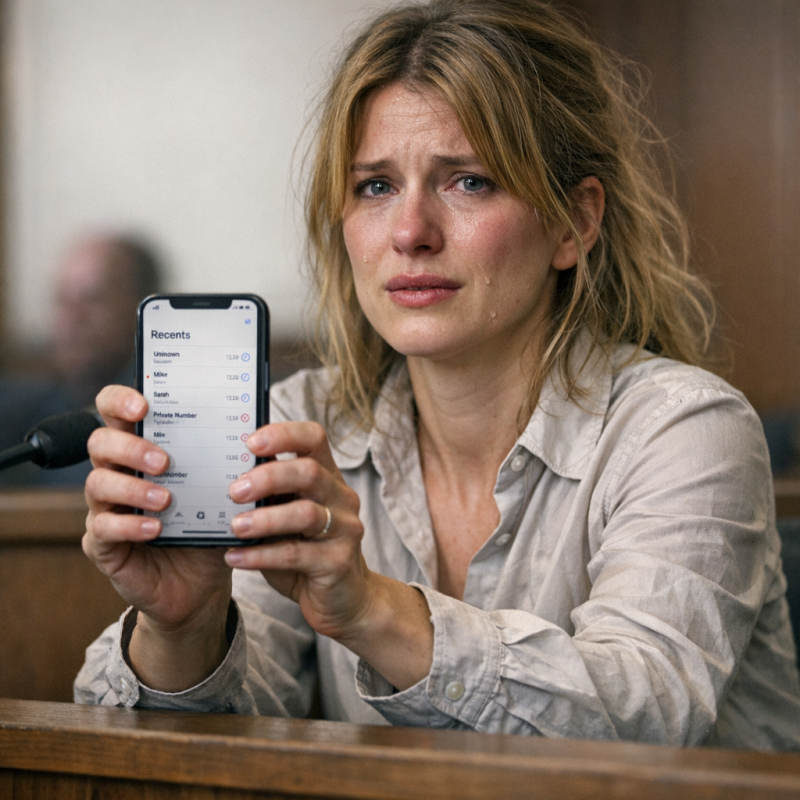 Image by FCT AI
The Prosecution Rests
Monroe wrapped up her case with a closing statement that hit all the expected notes—Officer Daniels's exemplary record, his years of service, the sacred duty of protecting the public from drunk drivers. She painted Eric as someone who'd made a mistake and couldn't accept responsibility. It was polished, professional, exactly what you'd expect from a career prosecutor who knows how to work a jury. Judge Caldwell called a recess before we started the defense case. I was packing up my files when I noticed movement near the prosecution table. Daniels had leaned over to whisper something in Monroe's ear. Her expression shifted—not quite a smile, more like satisfaction. Then they both turned and looked directly at me. Not a glance. A deliberate, measuring look that lasted just long enough to make my stomach drop. What did they know that I didn't? What were they expecting? The courtroom emptied around me, but I stayed frozen, watching them leave together, wondering what that look meant.
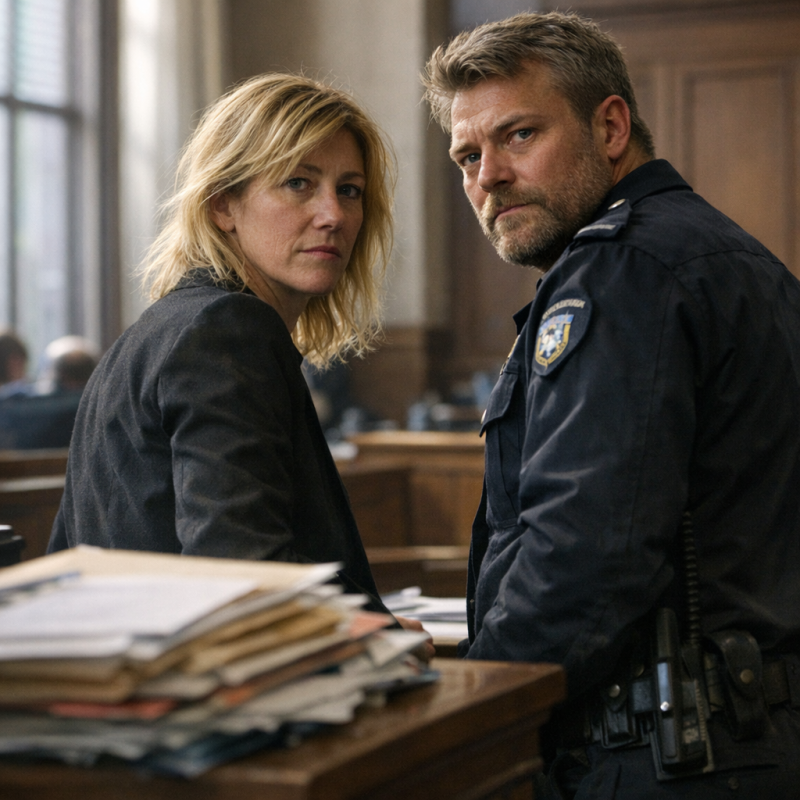 Image by FCT AI
The Defense Begins
I called Eric to the stand first thing the next morning. He wore the same gray suit he'd worn to every hearing—the only good suit he owned, Rebecca had told me once. His voice was steady as I walked him through that night. One beer. Water after that. The conversation with Marcus about a project deadline. The careful drive home, using his turn signal, staying five under the limit. 'Why were you so careful?' I asked. 'Because I always am,' he said simply. 'I've never had so much as a speeding ticket.' Monroe's cross-examination was brutal. She hammered him about the field sobriety tests, suggested he was lying about the water, implied his memory was convenient. 'Isn't it true you'd do anything to avoid this conviction?' she asked. Eric looked her straight in the eye. 'I'd tell the truth,' he said. 'Which is what I'm doing. I know what happened that night.' His voice didn't waver. Not once.
 Image by FCT AI
An Unexpected Ally
During the afternoon recess, I was standing in the hallway reviewing my notes for the next witness when someone touched my elbow. I turned to find Detective Angela Torres—I'd seen her around the courthouse before, but we'd never spoken. She was holding a manila folder, and her expression was carefully neutral. 'Ms. Chen,' she said quietly, glancing around to make sure we were alone. 'I think you should see this.' She pressed the folder into my hands before I could respond. I looked down—it was marked 'Internal Affairs' in red letters across the top, with a case number I didn't recognize. My heart started pounding. 'What is this?' I asked. Torres was already walking away, her shoes clicking against the tile floor. She paused, looked back over her shoulder, and I swear to God her eyes held something like regret. Or maybe solidarity. She said only four words before walking away: 'He's done this before.'
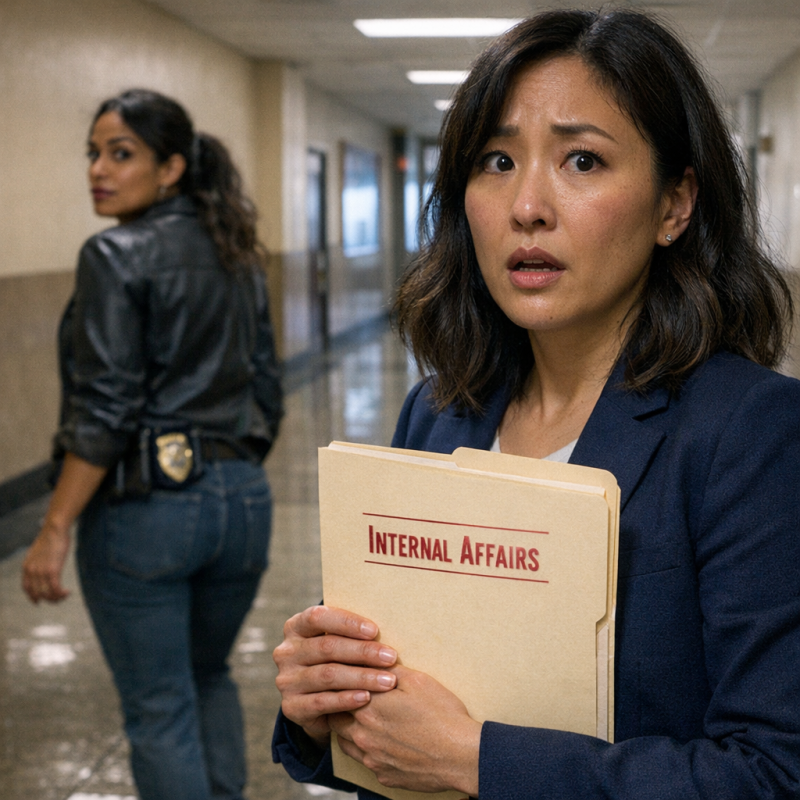 Image by FCT AI
The Internal Affairs File
I didn't sleep that night. I sat at my kitchen table with the IA file spread out in front of me and a pot of coffee going cold. Page after page of complaints against Officer Mark Daniels, stretching back nearly a decade. Excessive force allegations. Questionable arrests. Procedural violations. And buried in there, half a dozen complaints specifically about DUI stops—people swearing they weren't drunk, questioning why the camera wasn't working, why the breathalyzer malfunctioned. Every single complaint had been dismissed. 'Insufficient evidence.' 'Complainant not credible.' 'Officer's testimony deemed reliable.' I felt sick reading them. These weren't just bureaucratic failures—these were lives. Careers. Families. One complaint stood out, flagged with a sticky note in Torres's handwriting: 'Check this one.' A woman named Jennifer Aldrich, arrested three years ago for DUI. No camera footage. Equipment malfunction. And in the aftermath section, one devastating line: 'Complainant lost nursing license following conviction.' One complaint stood out: filed by a woman who lost her nursing license after a DUI arrest with no camera footage.
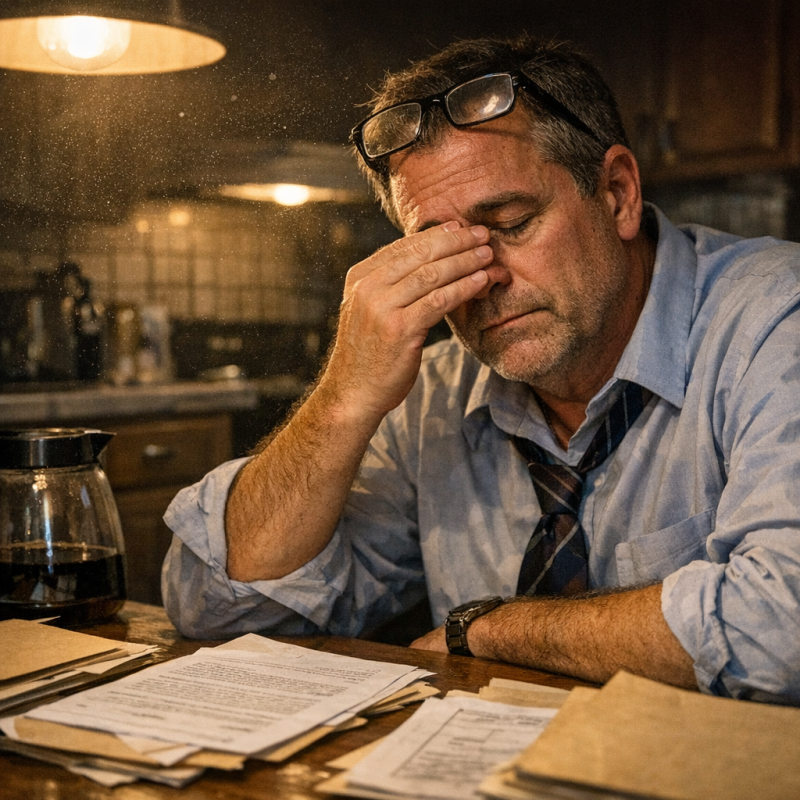 Image by FCT AI
The Nursing License
I found Jennifer Aldrich working the register at a pharmacy in West Falls. She looked up when I introduced myself, and I watched her face go pale. 'I don't want to talk about that,' she said immediately. But I pressed gently, told her about Eric, and eventually she agreed to meet me after her shift. We sat in my car in the parking lot while she told me her story. One glass of wine with dinner. A careful drive home. Daniels pulling her over for a 'broken taillight' that the mechanic later said was fine. Field sobriety tests she swears she passed. No camera. No breathalyzer. Just his word against hers. 'I couldn't work anymore,' she said, staring at her hands. 'Seven years of nursing school, twelve years in pediatrics. Gone.' I asked why she didn't fight it. Jennifer laughed bitterly. 'I wanted to. God, I wanted to.' She looked at me with hollow eyes. 'But my lawyer told me I'd never win against a cop's testimony.'
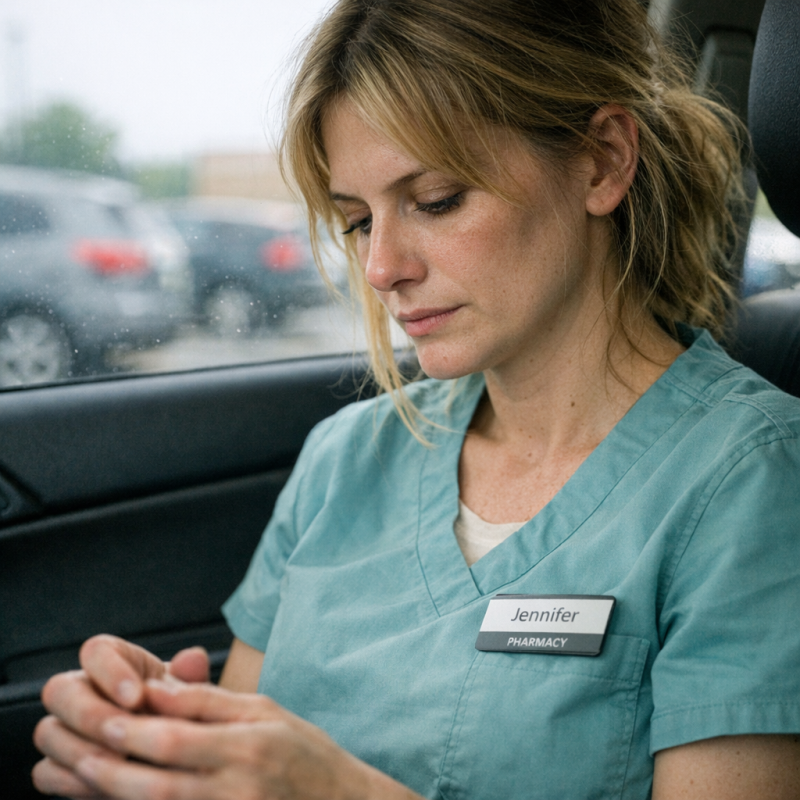 Image by FCT AI
David Marsh's Story
David Marsh met me at a coffee shop downtown, and the moment he started talking, I felt like I was listening to Jennifer's story all over again. He'd been driving home from a work dinner—two beers over three hours—when Daniels pulled him over near the same cluster of bars where Eric had been arrested. 'He said my lane discipline was off,' David told me, stirring his coffee without drinking it. 'Made me do the field tests on gravel in the dark. No camera, naturally. Said the breathalyzer was broken.' The details matched so perfectly I had to resist the urge to interrupt. David had wanted to fight it too, but his public defender convinced him to take a plea. 'Reckless driving instead of DUI. Still lost my security clearance, still lost my job.' He looked exhausted just remembering it. I showed him my notes on Jennifer's case, and he nodded at nearly every line. When he finished his coffee, he asked me something I'd been asking myself for weeks: 'Why does he keep getting away with it?'
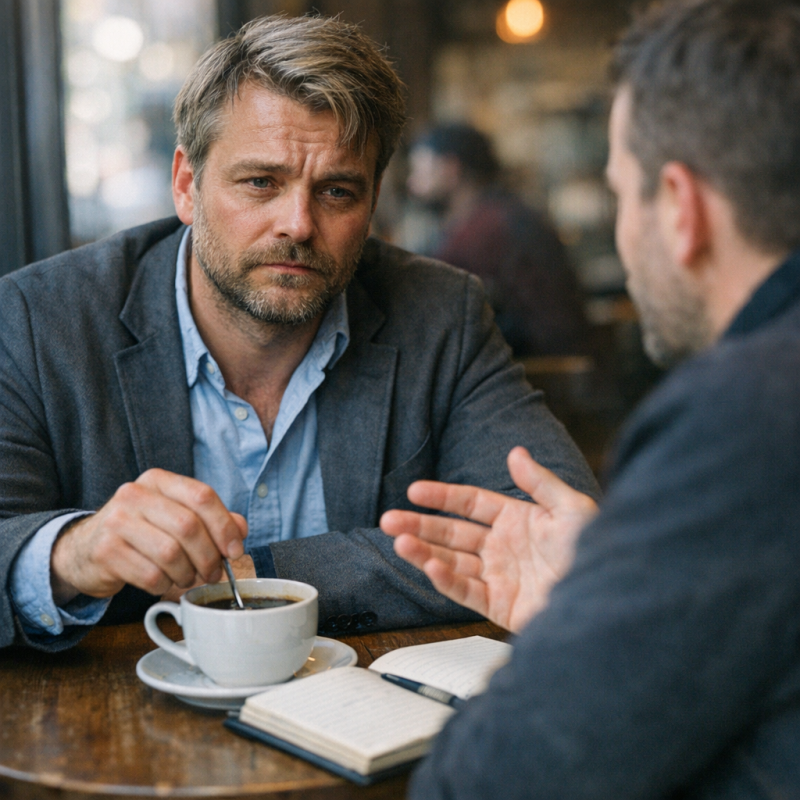 Image by FCT AI
Connecting the Dots
I spread everything across my dining room table that night—printouts, notes, maps. I marked every arrest location with a red dot, every equipment malfunction with a yellow star, every missing camera with a blue X. The pattern spread across the map like a disease. All the arrests happened within a three-block radius of bars with no security cameras. All the stops occurred between 10 PM and 2 AM on weekends. All the body cameras malfunctioned. All the breathalyzers broke. I stood back and stared at it, feeling something cold settle in my stomach. This many coincidences didn't make sense. Equipment fails sometimes, sure. Officers forget to activate cameras, it happens. But every single time? In the exact same circumstances? I started making a timeline, and that's when I saw it even more clearly. The arrests came in clusters—three or four in a month, then nothing for weeks. I couldn't prove it yet, couldn't say it with certainty. But it was starting to look like something far more deliberate than simple carelessness.
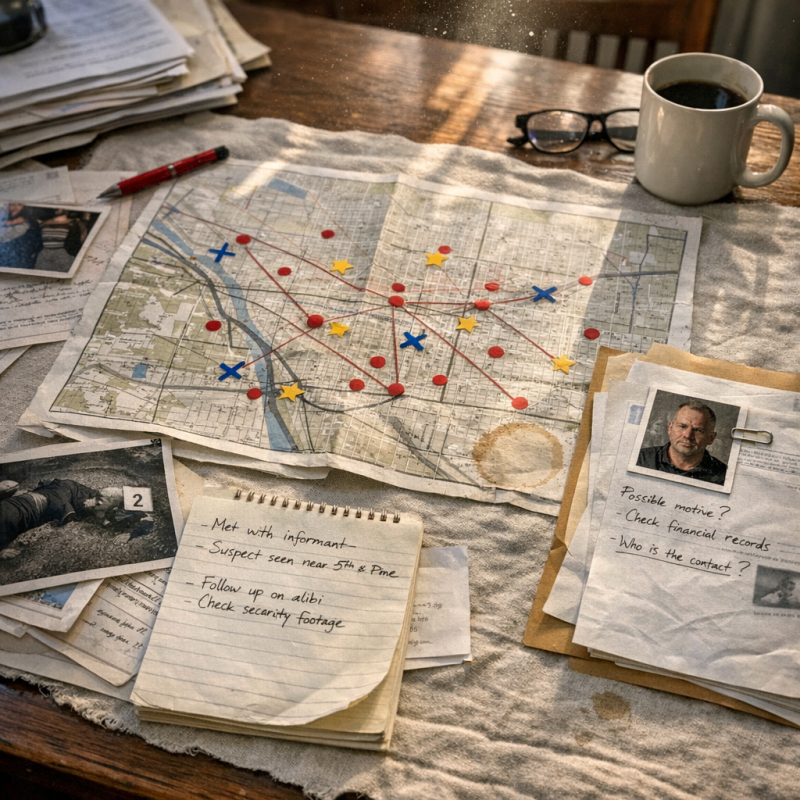 Image by FCT AI
The Settlement Pattern
The civil records took me three days to dig through, but they told a story I hadn't expected. Five of Daniels' arrest victims had filed lawsuits against the department—and every single one had settled out of court. I requested the documents, but most were sealed. What I could access showed the pattern clearly enough. The settlements were always small, ranging from $8,000 to $15,000. Not enough to make headlines. Not enough to trigger an internal investigation. Just enough to make angry people go away quietly. One settlement included a standard non-disparagement clause. Another required the plaintiff to withdraw their complaint against Daniels personally. I sat in the county records office staring at the files, feeling disturbed in a way I couldn't quite articulate. This wasn't just about bad arrests anymore. Someone—the city, the department, their lawyers—had seen multiple complaints against the same officer and decided the cheaper option was to pay people off rather than investigate. And the amounts were so carefully calibrated, so perfectly sized to disappear into bureaucratic budgets without raising questions.
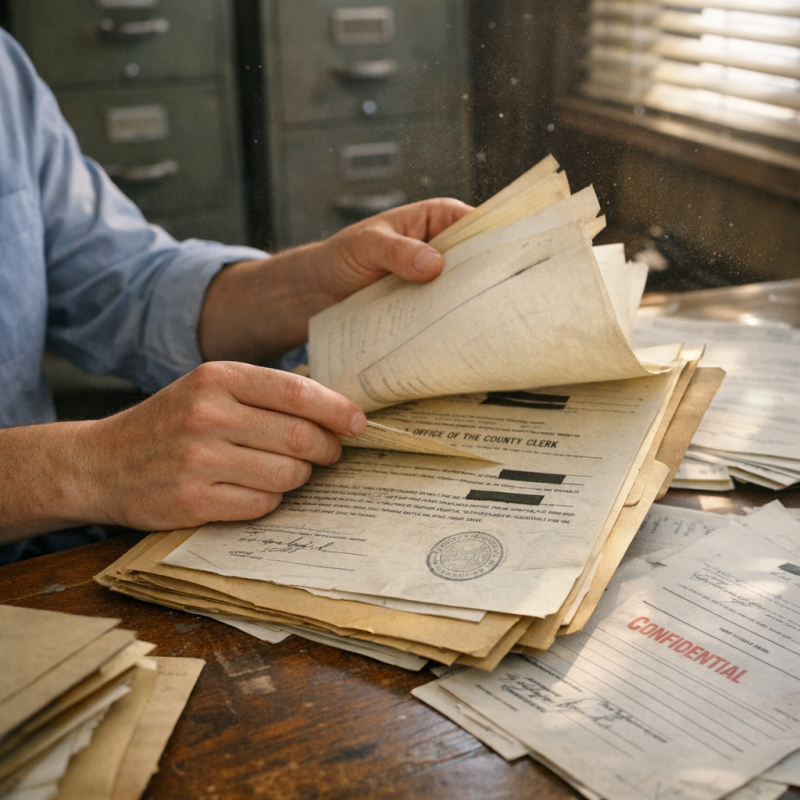 Image by FCT AI
Preparing the Bomb
I had the convenience store footage backed up in three places and a copy sitting in my office safe. It was the nuclear option, the kind of evidence that would blow the case wide open the moment I introduced it. But I'd been a defense attorney long enough to know that timing was everything. If I played the video too early, Monroe could pivot, Daniels could adjust his testimony, the department could start preparing their damage control. I needed Daniels committed first—fully, completely, under oath and on the record. I needed him to tell his version of events so many times and with such confidence that there would be no walking it back. No claiming he misremembered. No suggesting he might have been mistaken about the details. I spent an entire evening planning my approach, mapping out questions that would lock him into specifics. The stumbling. The attempted entry into the vehicle. The glassy eyes and slurred speech. Every detail of his fabrication needed to be carved into the court record in his own words. Only then would I show everyone what actually happened.
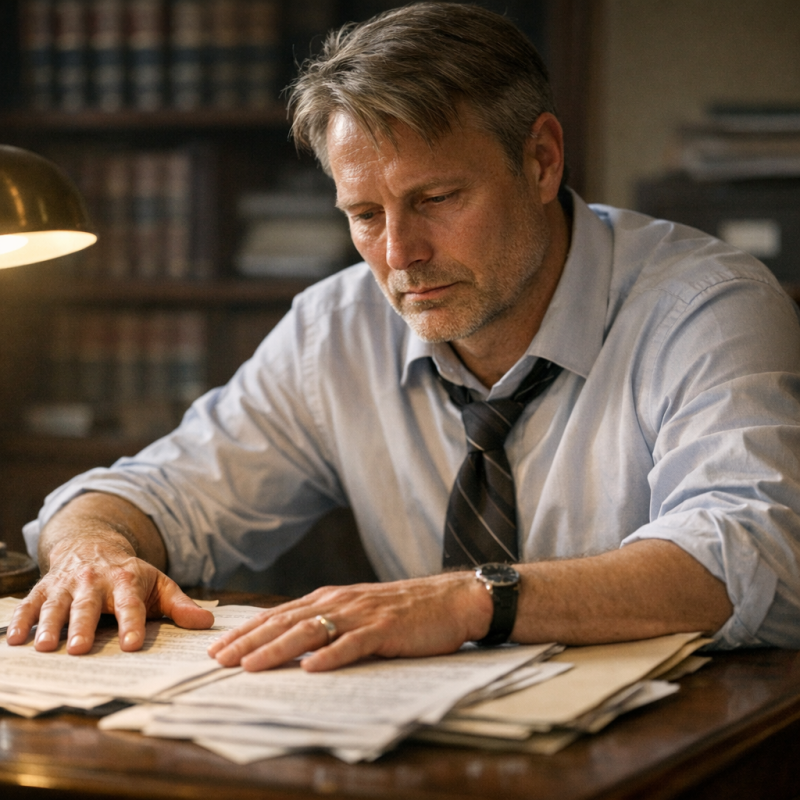 Image by FCT AI
Recall to the Stand
I filed the motion to recall Officer Daniels for additional cross-examination, and Monroe was on her feet objecting before Judge Caldwell finished reading it. 'Your Honor, the defense has already had ample opportunity to question Officer Daniels. This is just a delay tactic.' I kept my voice steady. 'Your Honor, new information has come to light that requires clarification from Officer Daniels. The defense has the right to thorough cross-examination.' Judge Caldwell studied me for a long moment, and I could see her weighing whether I was wasting the court's time. Finally she nodded. 'Motion granted. Officer Daniels will return to the stand tomorrow morning.' I caught Monroe's expression as we packed up—she looked worried in a way she hadn't before, like she was suddenly aware something was happening outside her control. The next morning, when Daniels walked to the witness stand, I watched his face carefully. He carried himself with the same confident bearing, the same unshakeable certainty. But just for a second, as he sat down and looked at me, I saw it—uncertainty flashing across his face for the first time.
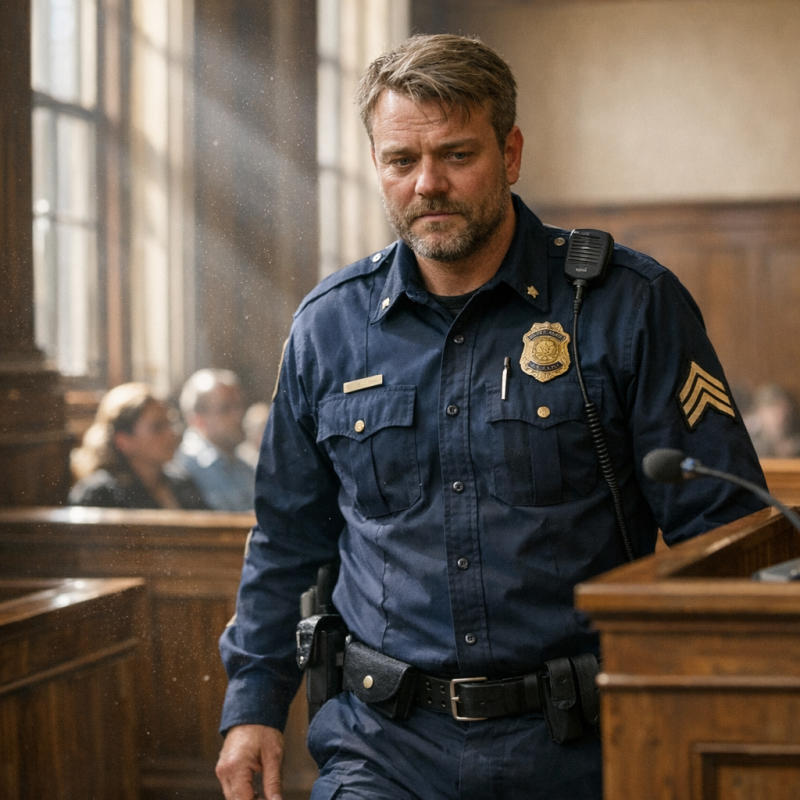 Image by FCT AI
Locking Him In
I started slowly, walking Daniels through his testimony again like I was simply confirming details for the record. 'Officer Daniels, you testified that you observed Mr. Hale outside McGinty's Bar on the night of March 14th, correct?' He nodded. 'That's correct.' I made him describe it all again—the stumbling walk, the fumbling with keys, the unsteady movements. With each answer, I got more specific. 'And you're certain he stumbled?' 'Yes.' 'You saw him reach for the driver's side door?' 'I did.' 'You observed him attempt to insert his keys?' 'Yes, ma'am.' I kept going, making him commit to every single detail, watching him grow more confident with each confirmation. He thought I was fumbling, that I had nothing new. Monroe looked almost bored. Finally, I asked him to describe the moment of the stop itself. Daniels leaned forward slightly, his voice clear and firm. 'I watched Mr. Hale stumble toward his vehicle and attempt to drive.' He said it like it was the most obvious thing in the world, like no one could possibly doubt him.
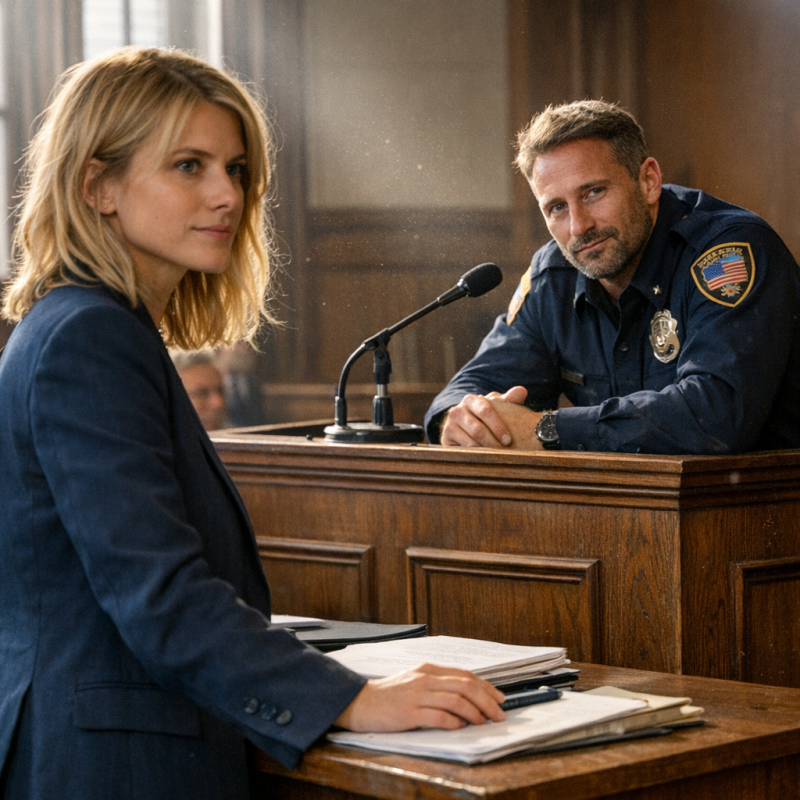 Image by FCT AI
The Question Before the Storm
I let silence fill the courtroom for a long moment, just standing there looking at my notes. I could feel everyone waiting—the judge, the jury, Monroe, Eric. Finally, I looked up at Daniels and asked the question I needed on record. 'Officer Daniels, I want to be absolutely clear. Are you certain that's what happened? That you saw Eric Hale stumble to his vehicle, attempt to enter it, and attempt to drive?' He didn't hesitate. If anything, he looked slightly annoyed at being asked to repeat himself. 'Yes, I'm certain.' I took a step closer to the witness stand. 'You observed him at the vehicle itself?' 'Yes.' 'Attempting to drive?' 'Yes.' 'And you're testifying under oath that this is what you witnessed?' Daniels looked me dead in the eye, his voice steady and unshakeable, the voice of a man who'd told this story so many times he believed it himself. 'Absolutely certain.' I nodded slowly, letting that answer hang in the air. 'Thank you, Officer. No further questions at this time.'
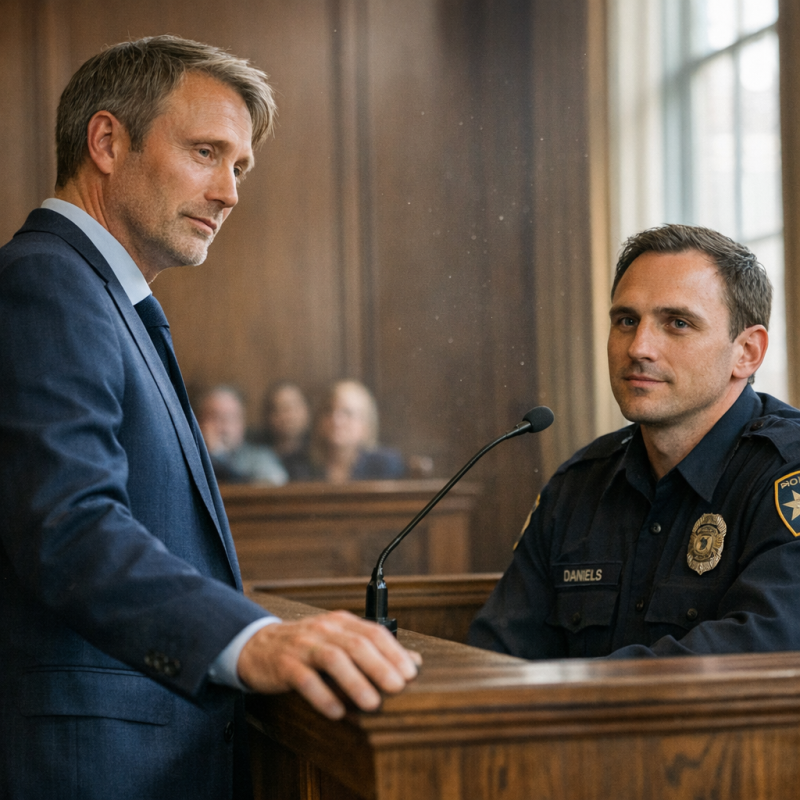 Image by FCT AI
The Truth Revealed
I walked back to my table and picked up the flash drive. 'Your Honor, the defense would like to introduce new evidence—security footage from the convenience store located at 847 Maple Street, directly across from McGinty's Bar.' Monroe shot to her feet, but Judge Caldwell was already nodding for me to proceed. The bailiff set up the screen, and I hit play. The footage was grainy black and white, but it showed everything. There was Eric, leaving the bar at 11:47 PM. There he was, walking steadily to the curb—not stumbling, not swaying. He stood there for six minutes checking his phone, clearly visible under the streetlight. At 11:53, a cab pulled up. Eric got in. The cab drove away. Two minutes later, Daniels' patrol car appeared, circled the block twice, then parked and waited. At 12:20, Eric returned in the same cab, paid the driver, and walked toward the bar entrance—where Daniels intercepted him. The courtroom was dead silent. I looked at Daniels and saw panic finally break through his composure. And that's when I understood the full scope of what I was looking at—this wasn't incompetence, it wasn't a few bad arrests. Daniels had built a system, arrest by arrest, year by year, targeting people he knew couldn't fight back.
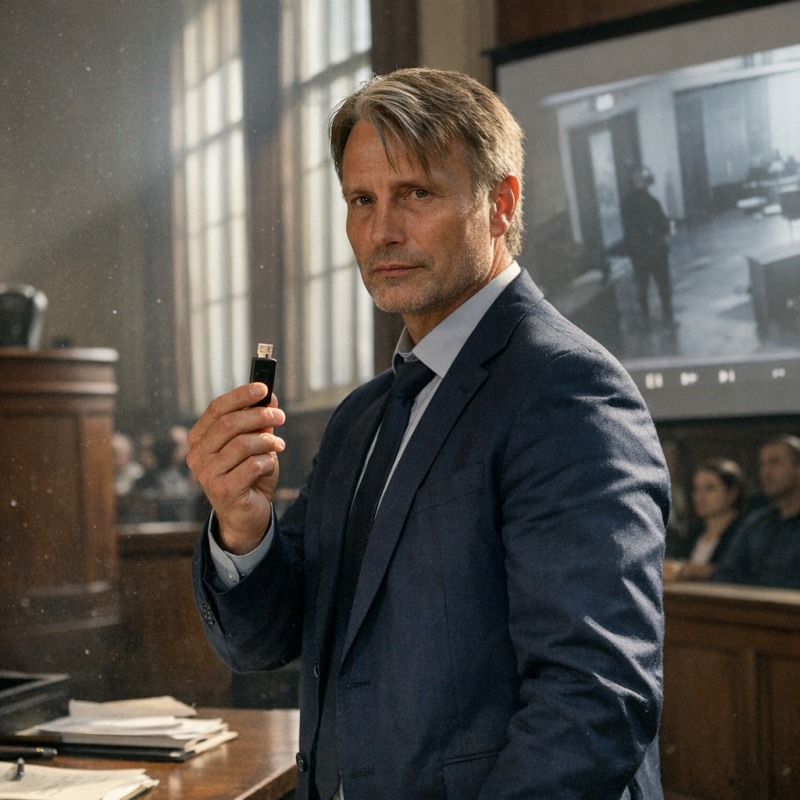 Image by FCT AI
The Unraveling
I walked toward the witness stand, holding the folder I'd kept close for weeks. 'Officer Daniels, I'd like to ask you about some other cases.' His jaw tightened. I opened the folder slowly. 'In 2019, you arrested Thomas Alvarez for DUI outside McGinty's Bar. Case settled quietly. In 2020, Marcus Washington, same charge, same location. Another settlement. In 2021, Jennifer Park—' Monroe objected, but Judge Caldwell overruled her. I kept going. 'Seven cases in five years, Officer. All at the same location, all with similar inconsistencies in your reports, all resulting in sealed settlements or dropped charges.' The courtroom buzzed. 'There were also three formal complaints filed against you with Internal Affairs, weren't there?' Daniels gripped the armrest. His composure was cracking like ice under pressure. 'Each complaint alleged fabricated evidence in DUI arrests. Each was closed without action.' I paused, letting the jury absorb it. 'Would you like to comment on this pattern?' His voice cracked when he said, 'I have no comment on those cases.'
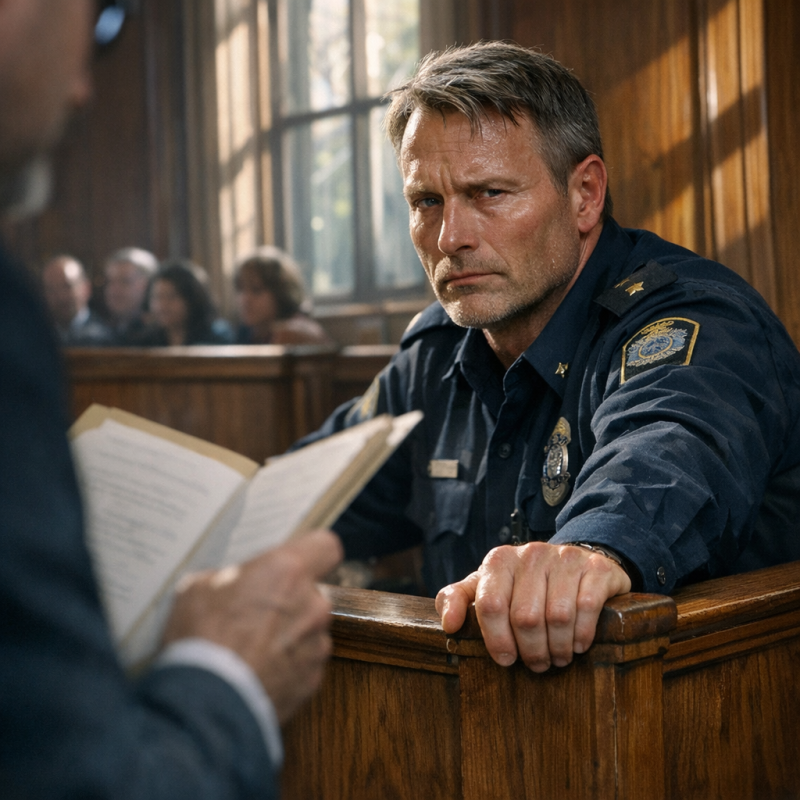 Image by FCT AI
Would You Like to Revise Your Statement?
I stayed at the witness stand, studying Daniels' face. 'Officer, given everything we've just discussed—the security footage, the pattern of arrests, the complaints—would you like to revise any part of your testimony today?' The question hung there. Monroe started to rise, then sat back down. She knew there was no good objection to make. Daniels opened his mouth, closed it. His eyes darted to the jury box, and I watched him calculate the math of his situation. Every juror was staring at him with expressions ranging from disgust to pity. He looked back at me, and something in his face just... collapsed. The arrogance, the authority, the certainty—all of it drained away. 'No,' he finally said, barely audible. 'No comment.' The silence that followed was absolute. Even the court reporter had stopped typing. I let the moment breathe, let the jury really see him. I looked at the jury, then back at Daniels, and I saw his career ending in real time.
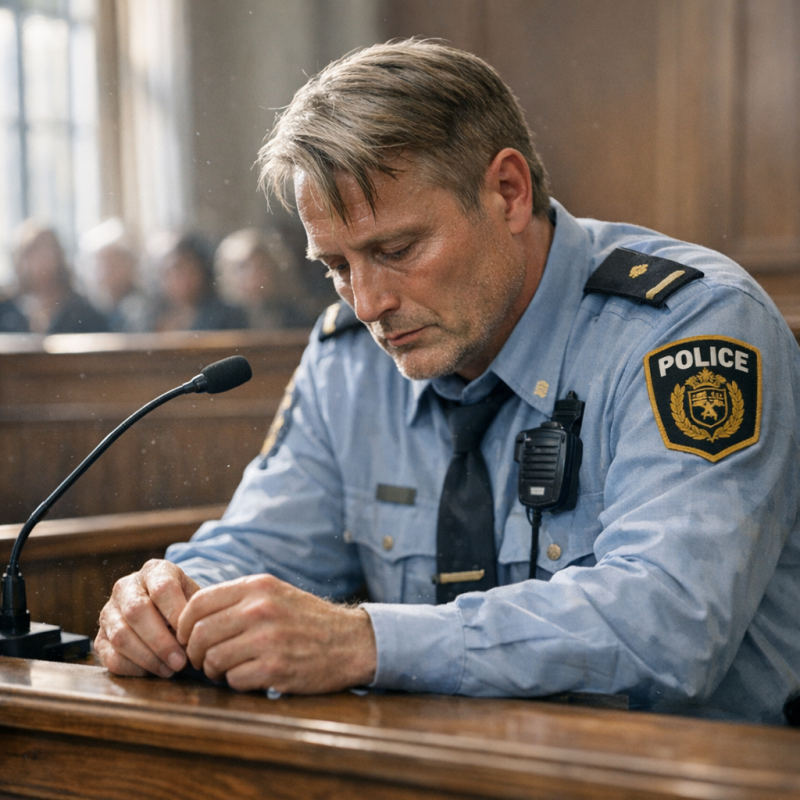 Image by FCT AI
Monroe's Scramble
Monroe was on her feet before I'd even returned to my table. 'Your Honor, the prosecution requests a brief recess.' Her voice was steady, but her hand shook slightly as she gathered her papers. Judge Caldwell granted fifteen minutes. I watched Monroe grab Daniels by the elbow and practically drag him into the hallway. Through the courtroom door's narrow window, I could see them in desperate conversation. Monroe was doing most of the talking, her hands gesturing sharply. Daniels kept shaking his head. At one point, she actually jabbed her finger into his chest. Eric leaned over. 'Is that good for us?' 'That,' I said, 'is panic.' When the bailiff called us back, Monroe returned alone. Daniels followed thirty seconds later, walking like a man headed to his own execution. Monroe wouldn't look at him. She arranged her files with mechanical precision, her movements too controlled. When we return, Monroe's face was pale, and I knew she'd realized her entire case had collapsed.
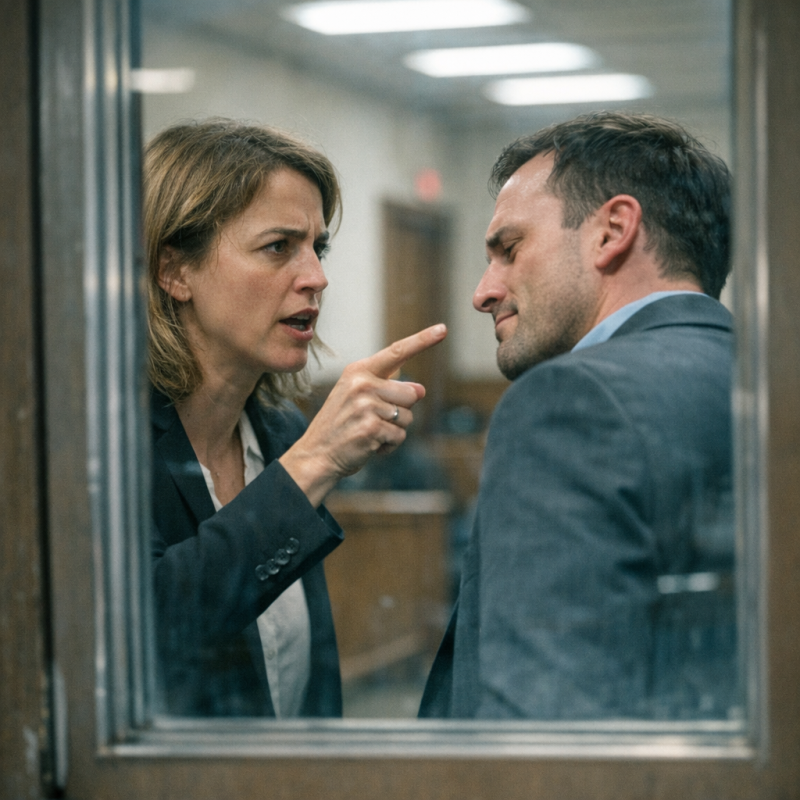 Image by FCT AI
The Prosecution's Retreat
Monroe stood for her closing argument with none of the confidence she'd shown during opening statements. 'Ladies and gentlemen,' she began, 'the state has presented evidence of the defendant's presence at a bar, of his operation of a vehicle, of the arresting officer's observations.' She paused, shuffling her notes. The natural rhythm of her speech was gone. 'We must consider the technical elements of the charge—whether the defendant had control of the vehicle, whether he demonstrated impairment...' She was dancing around Daniels' testimony like it was radioactive. Not once did she mention his credibility or his observations. Instead, she focused on dry legal technicalities: the definition of 'operation,' the burden of proof, the letter of the law. It felt hollow. Even the jury looked restless. She wrapped up quickly, probably ten minutes shorter than she'd planned. 'The state asks you to apply the law as written,' she concluded weakly. She avoided mentioning Daniels' testimony entirely, focusing instead on technicalities that felt hollow.
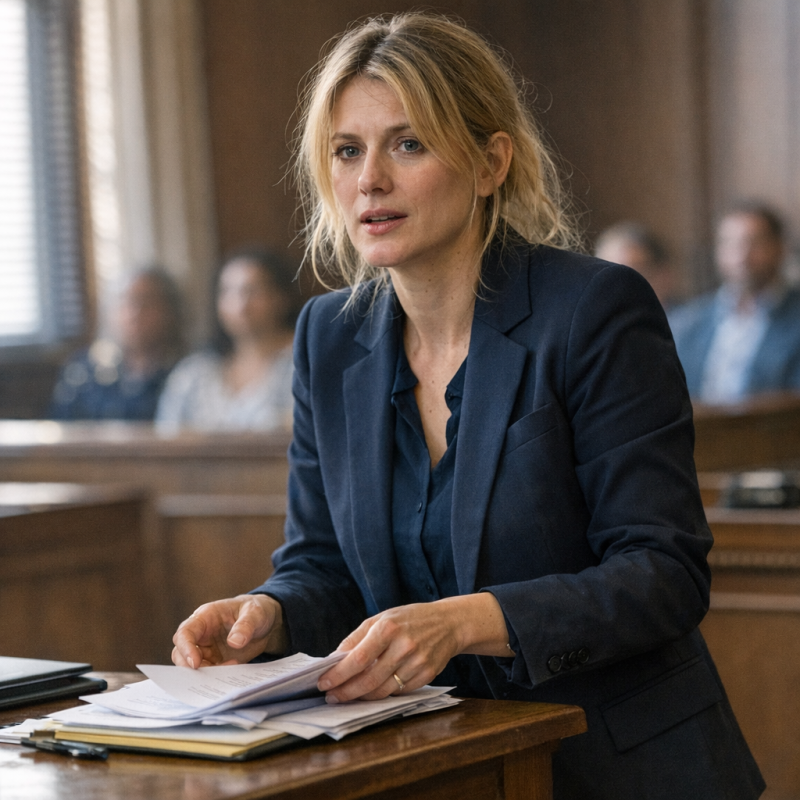 Image by FCT AI
My Closing Statement
I stood and walked to the jury box, making eye contact with each person. 'You've seen the footage. You've heard the officer's testimony. You've learned about his pattern.' I gestured to the screen. 'That video doesn't lie. It shows exactly what happened that night—Eric Hale leaving a bar sober, taking a cab home, returning in that same cab, and being arrested for a crime that never occurred.' I paused. 'Officer Daniels sat on that stand and told you Eric was stumbling drunk. The video proves otherwise. He told you Eric drove from the bar. The video proves otherwise. At every turn, the evidence contradicts his story.' Several jurors nodded. 'A badge doesn't guarantee truth—evidence does. And the evidence here is clear: Officer Daniels fabricated this arrest, just like he's done before.' I walked back toward Eric. 'This isn't about disrespecting law enforcement. It's about holding everyone accountable to the truth.' I pointed to Eric and said, 'This man's life was nearly destroyed by a lie, and today you have the power to set that right.'
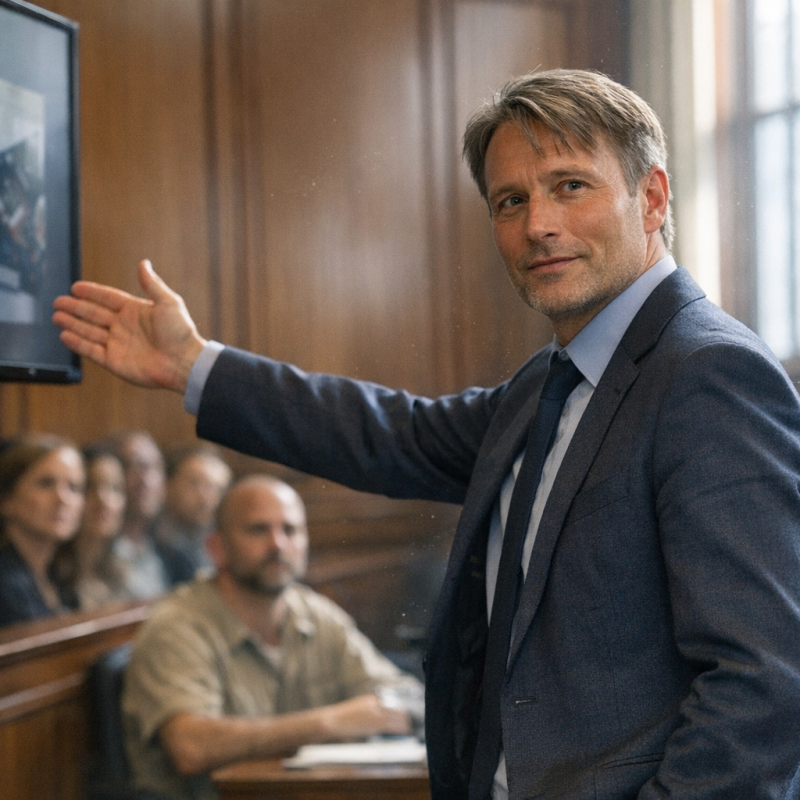 Image by FCT AI
The Wait
The jury filed out at 2:47 PM. Rebecca arrived twenty minutes later, slipping into the seat beside Eric. She took his hand without a word. We waited in the courtroom because none of us could bear to leave. Three hours felt like three days. I checked my phone compulsively, even though I knew the bailiff would notify us. Eric didn't move except to occasionally squeeze Rebecca's hand. At 5:30, my stomach was churning. I'd felt confident during closing, but now doubt crept in. Had I pushed too hard? Had the jury seen it as an attack on police in general? Monroe sat across the aisle, equally still. At 5:43, the bailiff emerged. 'We have a verdict.' The walk back to our table felt surreal. The jury filed in with unreadable expressions. I've heard people say you can predict a verdict by whether jurors look at the defendant, but half were looking at Eric and half weren't. When they filed back in, I searched their faces for any hint of what was coming.
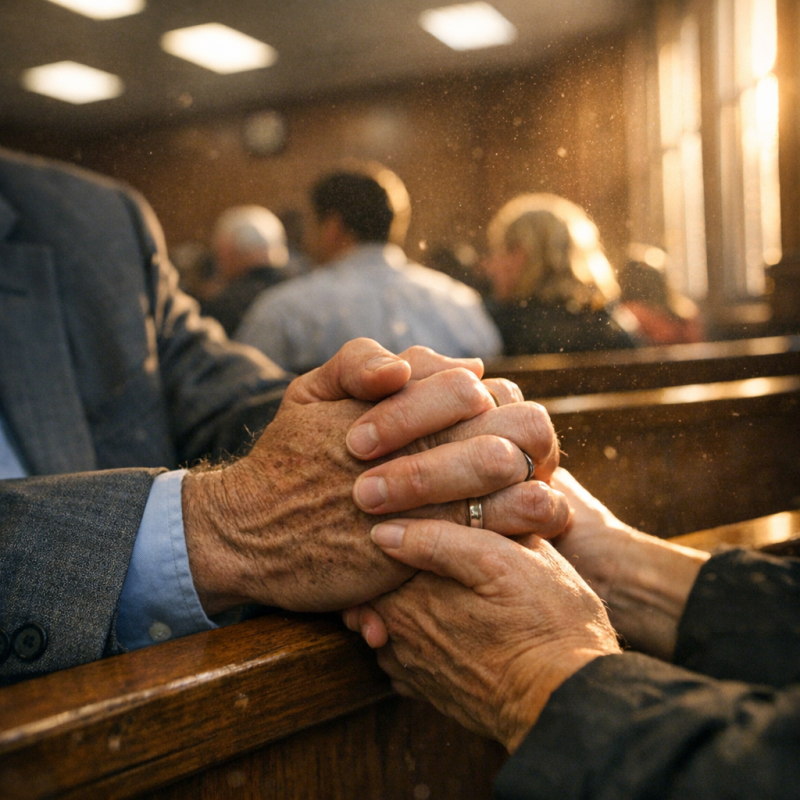 Image by FCT AI
The Verdict
Judge Caldwell looked at the foreman, a middle-aged woman in the front row. 'Has the jury reached a verdict?' 'We have, Your Honor.' The foreman stood, holding a slip of paper. The courtroom was so quiet I could hear my own heartbeat. 'In the case of the People versus Eric Hale, on the count of driving under the influence, we find the defendant not guilty.' Eric gasped. Rebecca started crying immediately. 'On the count of reckless endangerment, we find the defendant not guilty.' The foreman continued through all four counts, each one the same: not guilty, not guilty, not guilty. Judge Caldwell thanked the jury and officially dismissed them. The moment the gavel struck, Eric collapsed into his wife's arms. They held each other, both shaking with relief. I stayed standing, professional even now, but my eyes were burning. Judge Caldwell caught my gaze and gave me the smallest nod. Eric collapsed into his wife's arms, and I allowed myself one moment to feel what we'd accomplished.
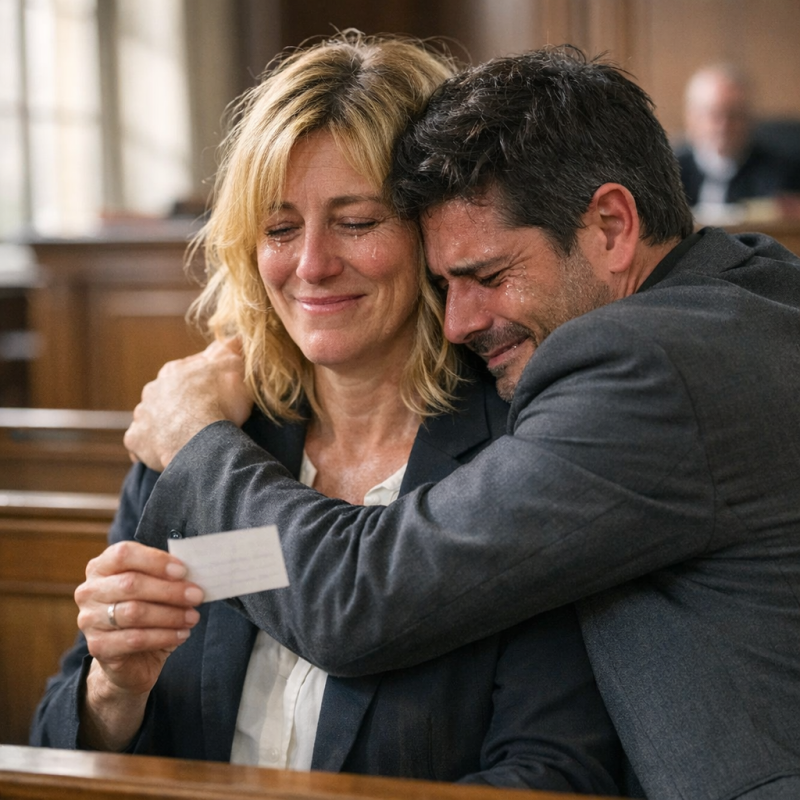 Image by FCT AI
Daniels Led Away
We gathered our things slowly, none of us quite ready to leave. The courtroom was emptying, journalists rushing to file their stories. Eric shook my hand, then pulled me into an unexpected hug. 'Thank you,' he whispered. 'Thank you for believing me.' Rebecca hugged me too. As we walked into the hallway, I spotted Daniels near the elevators. He was surrounded by three people in plain clothes—Internal Affairs, I realized, recognizing the badges on their belts. One of them was speaking quietly but firmly. Daniels wasn't arguing, wasn't even looking at them. His shoulders were slumped in defeat. Then I saw Detective Torres standing near the stairwell, watching the scene unfold. She'd been the one who'd confirmed the other victims for me, who'd quietly helped when her department wouldn't. Our eyes met across the crowded hallway. She gave me a single, deliberate nod, then gestured subtly toward Daniels and the IA officers. Detective Torres catches my eye and nods—the investigation is officially open.
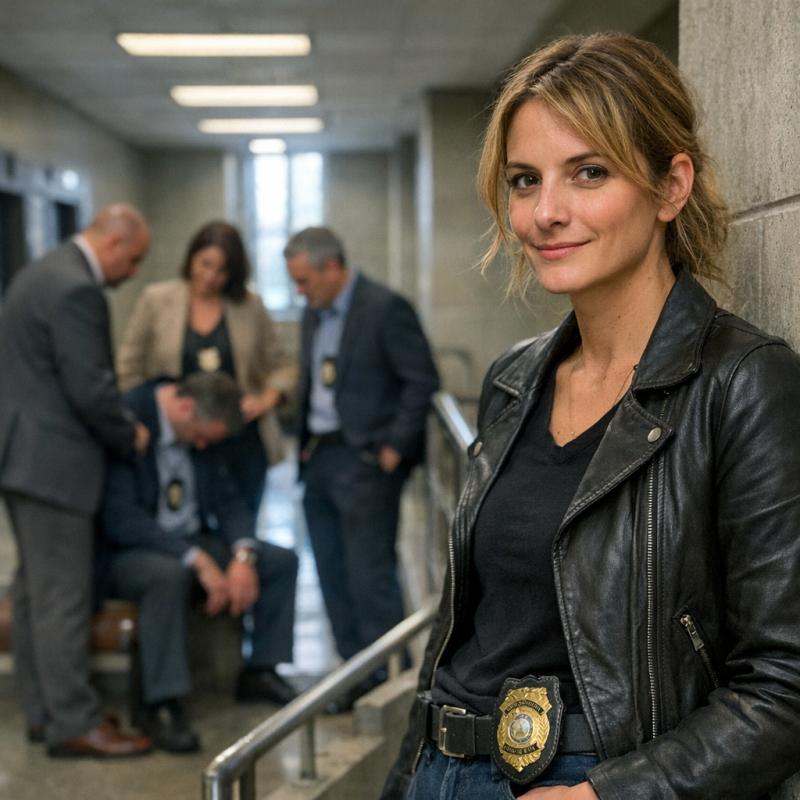 Image by FCT AI
The Press Conference
The press conference happened three days after the verdict. The police department held it in the main municipal building, TV cameras lined up in rows, microphones clustered at the podium like a bouquet. The Chief of Police stood there looking grim, flanked by two representatives from Internal Affairs. He read a prepared statement about 'serious allegations' and 'thorough investigation' and 'commitment to integrity.' His words were carefully chosen, meaningless in their precision. Then they opened it up for questions, and reporters started shouting. I stood near the back with Eric and Rebecca, watching the chaos unfold. One journalist asked if there were other victims. The Chief hesitated, then admitted they were 'looking into additional cases.' Another asked if Daniels would face criminal charges. 'That determination will be made after the investigation concludes,' came the non-answer. Then Eric stepped forward. I hadn't expected it, but he walked right up to the microphones. His voice was steady when he spoke: 'This isn't just about me—it's about everyone he hurt.'
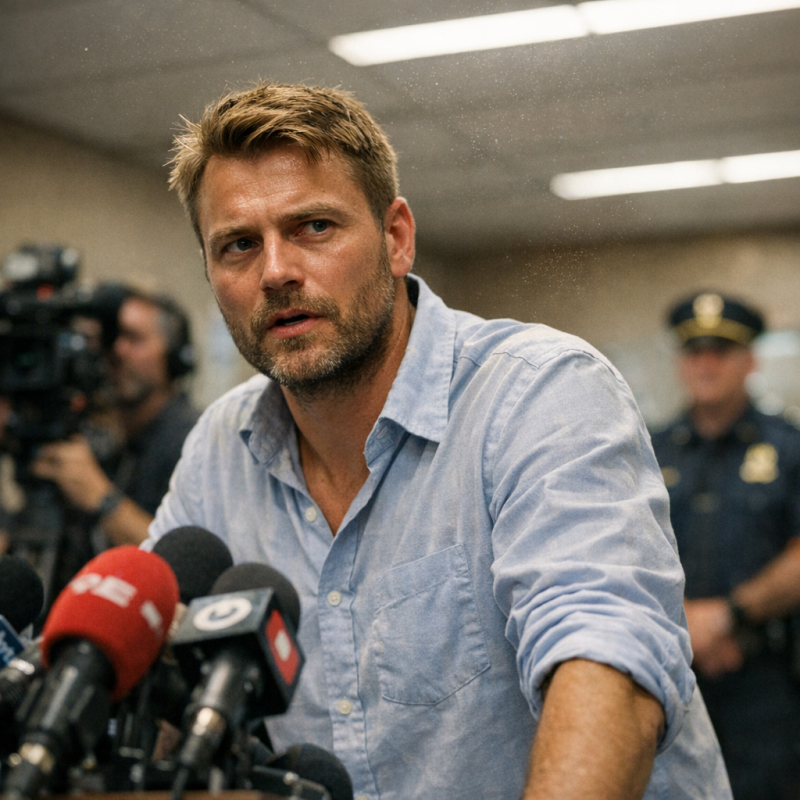 Image by FCT AI
Calls from the Past
The calls started the following week. My receptionist would transfer them to me with a particular tone in her voice—she'd learned to recognize them. Former defendants who'd taken plea deals. People who'd lost their licenses, their jobs, their freedom. Each conversation followed a similar pattern: they'd seen the news coverage, recognized Daniels' name, wondered if maybe, just maybe, their case had been tainted too. I started keeping a list. By the end of the first month, I had seventeen names. Some cases were too old to reopen. Others had procedural barriers. But a handful—maybe five or six—had real potential. I connected them with colleagues, shared case files, explained what evidence might still exist. Then, on a Thursday afternoon, my phone rang. The voice on the other end was familiar, though I hadn't heard it in months. It was the nurse from the database, the woman who'd lost everything over a DUI she swore never happened. Her question was simple, almost whispered: 'Is it too late for me?'
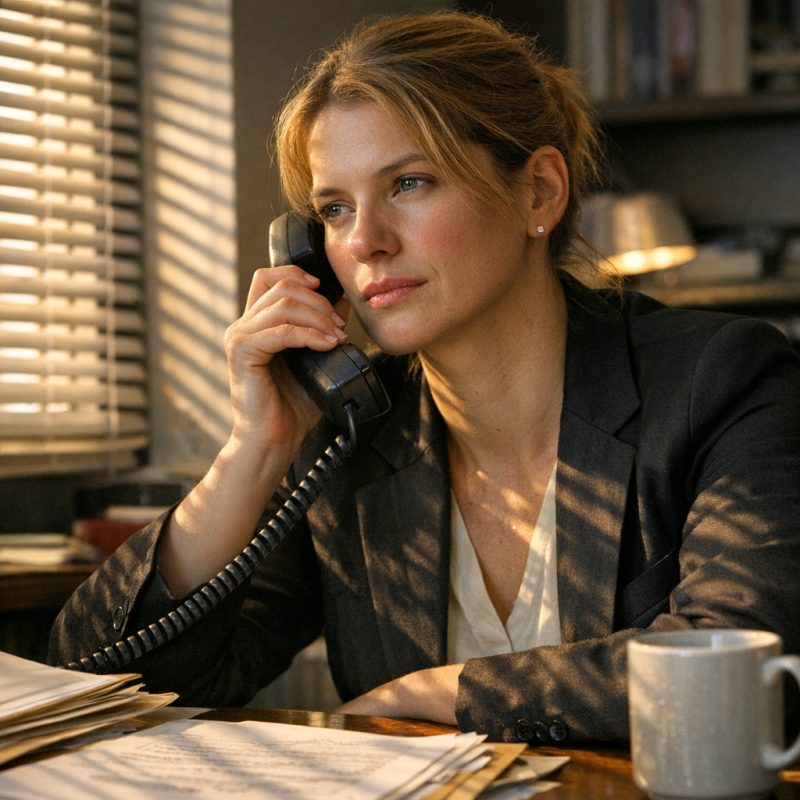 Image by FCT AI
Eric's New Beginning
Eric came by my office about two months later. He looked different—lighter somehow, like he'd finally shed a weight he'd been carrying. His landscaping business was picking up again. Clients who'd dropped him were coming back, apologizing, admitting they should have believed him all along. He'd rehired his crew. Rebecca had joined me for coffee that afternoon, and she told me about their son's soccer team winning the championship. 'Eric actually got to coach the final game,' she said, smiling. 'They wouldn't let him near the kids during the trial.' We talked for an hour, easy conversation about normal things—weekend plans, home repairs, nothing heavy. As they were leaving, Eric turned back at my office door. 'Thank you for believing me when no one else did,' he said quietly. After they left, I sat there for a long time, staring at the framed law degree on my wall. I realized something then, something I'd forgotten somewhere along the way: this was exactly why I'd become a lawyer.
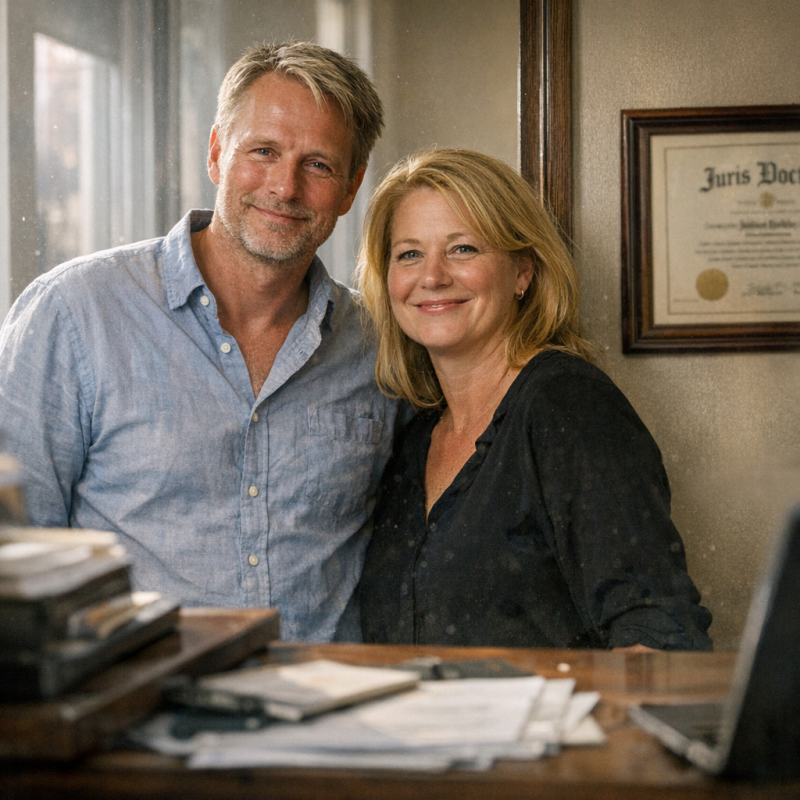 Image by FCT AI
The Crooked Cop's Reckoning
Six months after Eric's trial, I was having coffee when I saw the headline. Officer Mark Daniels had been formally charged with seventeen counts of official misconduct, eleven counts of perjury, and eight counts of falsifying government records. The charges covered cases spanning nearly a decade. The article detailed the investigation—how Internal Affairs had found patterns in his arrests, inconsistencies in his reports, evidence of systematic targeting. They'd interviewed dozens of his supposed 'drunk drivers.' The pattern was undeniable once someone actually looked. His trial was scheduled for the following spring. He'd already lost his badge, his pension under review. The Brotherhood of Police had issued a statement condemning his actions. I thought about all those people who'd spent years believing they were guilty, carrying that shame. The nurse who'd lost her license. The teacher who'd lost his job. Eric, who'd nearly lost everything. That crooked cop had spun his tales for years, destroying lives with his lies, never expecting someone would finally have an ace up their sleeve—and now, he was the one facing justice.
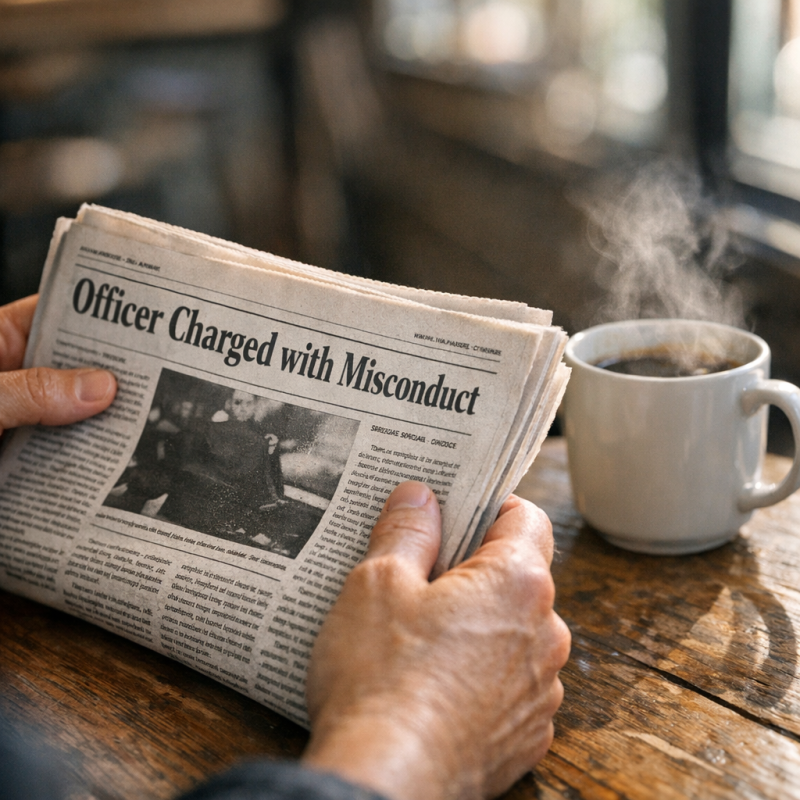 Image by FCT AI