The Envelope
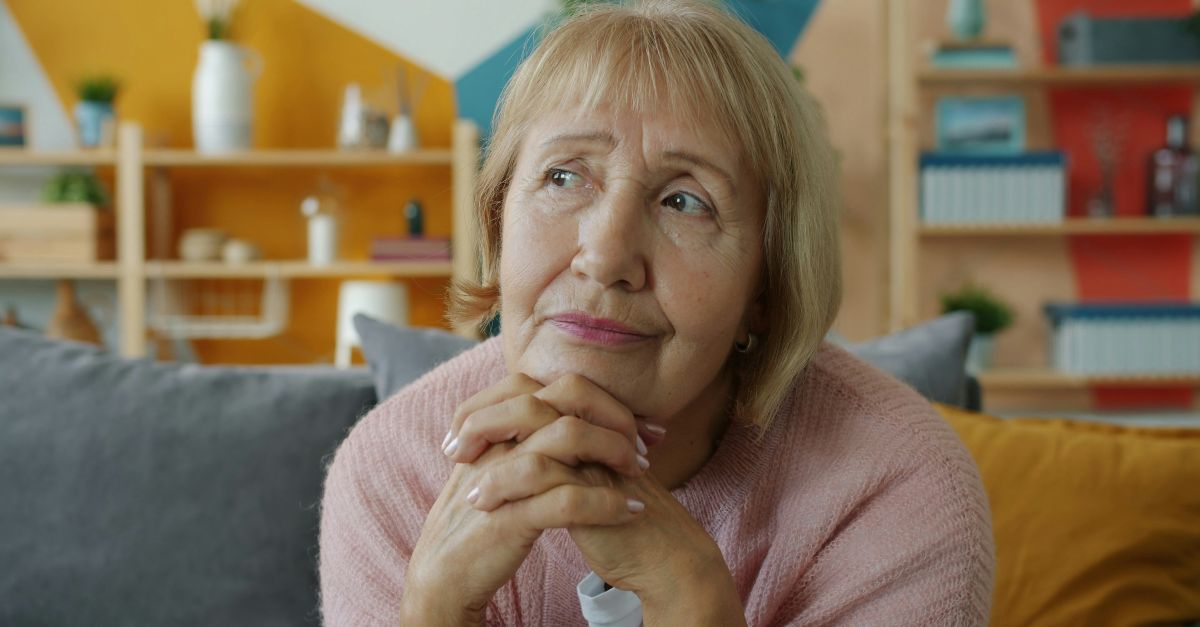
The envelope arrived on a Tuesday in April, tucked between the gas bill and a grocery store circular. I remember because I'd just come in from the garden, dirt still under my fingernails, and the spring sunshine had put me in such a good mood that I almost threw it away with the junk mail. Plain white envelope, no return address, my name typed in that generic computer font everyone uses now. Inside was a single sentence on printer paper: 'Ask Richard about 1983.' That's it. No signature, no explanation, no context. I stood there in the kitchen holding it, feeling foolish because it seemed like the kind of prank a bored teenager might pull. Richard was in his study working on his crossword—our comfortable Tuesday afternoon routine we'd maintained for years. I walked in and showed him the letter, expecting him to laugh it off, but his face went pale in a way I'd never seen before. He recovered quickly, too quickly, dismissing it with a wave of his hand. But I noticed how he folded it and tucked it into his shirt pocket rather than tossing it in the recycling bin. The postmark was from a town Richard once mentioned in passing—a town I had never thought to ask about.
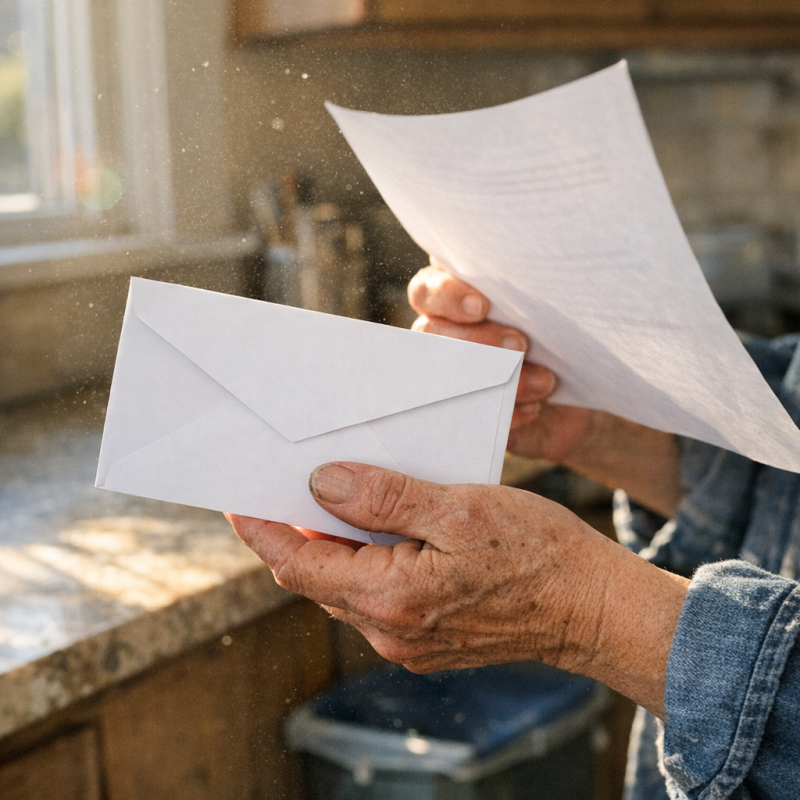 Image by FCT AI
The Reaction
Richard's laugh when I showed him the letter sounded wrong, like someone had turned down the volume on his usual easy warmth. He said it was probably just spam, maybe someone got our address mixed up, nothing to worry about. But his hands were doing that thing—rubbing his thumbs against his fingers in small, repetitive circles—that I'd only seen during his mother's funeral and when David crashed the car at seventeen. I tried to make conversation about dinner plans, garden plans, anything normal, but he kept glancing at his shirt pocket where he'd stashed the envelope. He ate maybe three bites at dinner and pushed the rest around his plate. When I asked if he felt alright, he said he was fine, just tired. Fine. After forty-two years of marriage, I could measure the weight of that particular lie. He suggested we watch television, then sat through an entire documentary about coral reefs without making a single comment, which anyone who knows Richard would tell you is impossible. I kept stealing glances at him, searching his profile for answers. That night, I woke at 3 a.m. to find his side of the bed empty and the light on downstairs.
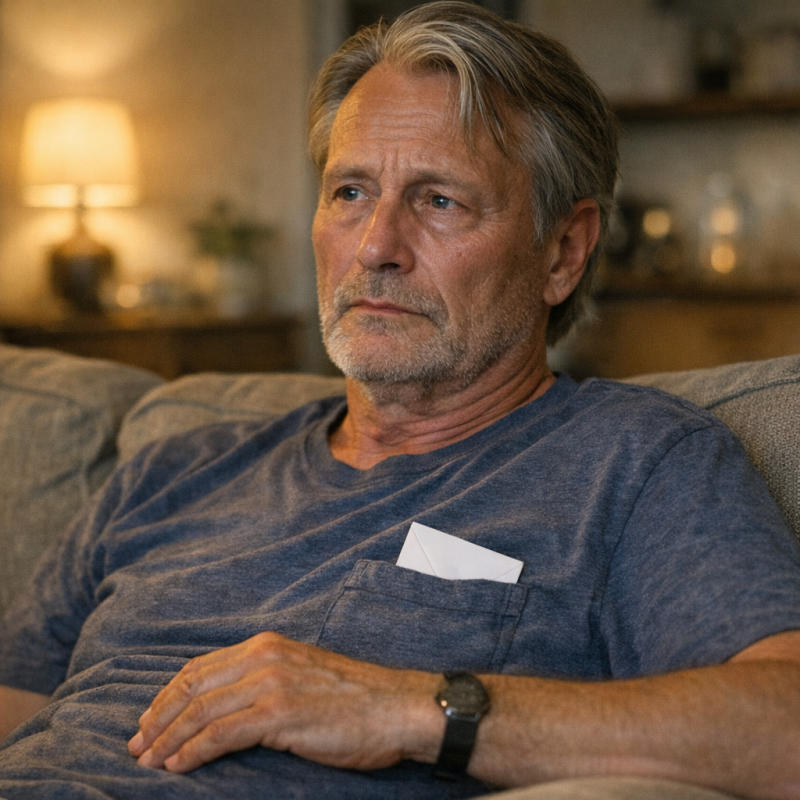 Image by FCT AI
Sleepless
I didn't go downstairs that night. Instead, I lay there in the dark counting all the things I'd never questioned. Richard told me he'd grown up in Ohio, moved around for work in his twenties, settled in Connecticut just before we met at that insurance company mixer in 1981. Simple story, straightforward, the kind of background that doesn't invite follow-up questions. But lying there at 3 a.m., I realized how little detail I actually knew. He had no siblings, both parents dead before I met him, no cousins he kept in touch with. No college friends who showed up at our wedding. No funny stories about past girlfriends or embarrassing roommate situations. It was like his life had started the night we met, and I'd been so wrapped up in building our future together that I'd never really examined his past. We'd been young—well, youngish—and so in love that history seemed irrelevant. Now I was cataloging decades of blank spaces in reverse, working backward through our marriage like someone reading a book from the last page. I turned on the bedside lamp at 4:30 a.m. and stared at our wedding photo on the dresser. I realized I had never seen a single photograph of Richard from before we met.
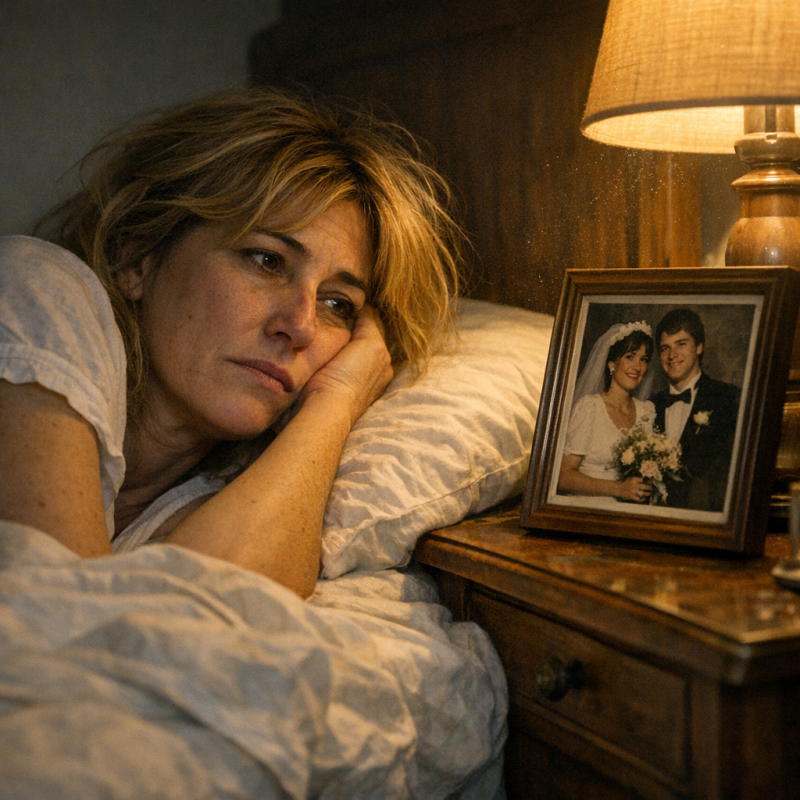 Image by FCT AI
The Postmark
The envelope was still in Richard's jacket pocket hanging in the hall closet. I took it out Thursday afternoon while he was at the hardware store, feeling like a criminal in my own home. The postmark read 'Millbrook, PA'—clear as day once I looked closely. My heart started racing because I remembered Richard mentioning Millbrook exactly once, maybe ten years ago, when we'd driven through Pennsylvania on vacation. He'd pointed at an exit sign and said something like, 'Lived there briefly once, terrible winter,' and I'd nodded and thought nothing more of it. Terrible winter. That's all I knew about an entire chapter of his life. I photographed the postmark with my phone, then carefully put the envelope back exactly as I'd found it. Friday morning at breakfast, I made myself sound casual, almost bored, when I said that Jennifer was thinking of visiting some small towns in Pennsylvania for antiques. 'Ever been to any good ones there?' I asked, buttering my toast like my pulse wasn't hammering in my throat. I tossed out a few names, saved Millbrook for last. When I casually brought up that town at breakfast, Richard's coffee cup froze halfway to his lips.
 Image by FCT AI
Checking the Mail
Richard started being home for mail delivery. Not obviously, not in a way I could point to and say, 'This is strange.' He'd just happen to be trimming the hedge near the mailbox, or taking out the recycling, or checking the tire pressure on my car right around 2 p.m. when the postal truck came through. On Monday, I watched from the kitchen window as he intercepted our mail carrier before she'd even reached the box. They chatted for a moment—Richard was always good with people—and then he walked back to the house sorting through the stack. When he came inside, he handed me a catalog and two credit card offers, said the rest was junk he'd already recycled. Maybe it was true. Maybe I was losing my mind. Tuesday he was out there again, and Wednesday. I started keeping track like some paranoid detective in a movie I'd normally find ridiculous. Thursday I had a dental appointment and came home at 1:45 p.m. Richard was sitting in the living room with the newspaper, but his reading glasses were in his shirt pocket and the paper was still folded. On the third day, I watched from the upstairs window as he stood by the mailbox, opening each piece before coming inside.
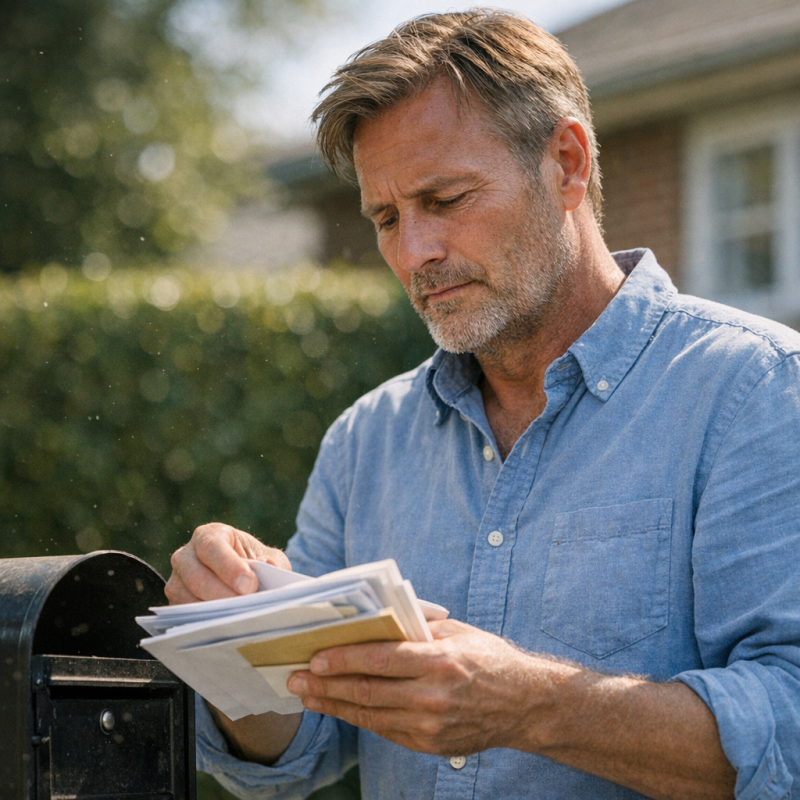 Image by FCT AI
Sunday Dinner
David came over on Sunday with bakery bread and stories about his kids' soccer season. Richard transformed the moment our son walked through the door—became the version of himself I'd known for four decades, warm and engaged and making terrible dad jokes. I watched him perform this familiar choreography: the hand on David's shoulder, the genuine interest in his grandson's science project, the easy laughter. Was this performance too, or was the strained silence between us the aberration? I couldn't tell anymore. I brought out the roast and listened to them talk about a documentary they'd both watched, some new hiking trail David wanted to try. Richard suggested they go together next month. Next month. I wondered if we'd still be sitting at this table next month or if everything would have imploded by then. David asked if I was feeling okay—I'd been quiet—and I blamed it on a headache. More lies to pile onto whatever foundation of lies we'd apparently built our marriage on. Richard squeezed my hand across the table, his touch familiar but suddenly foreign. As David talked about his own children, I wondered what other grandchildren might exist that I would never meet.
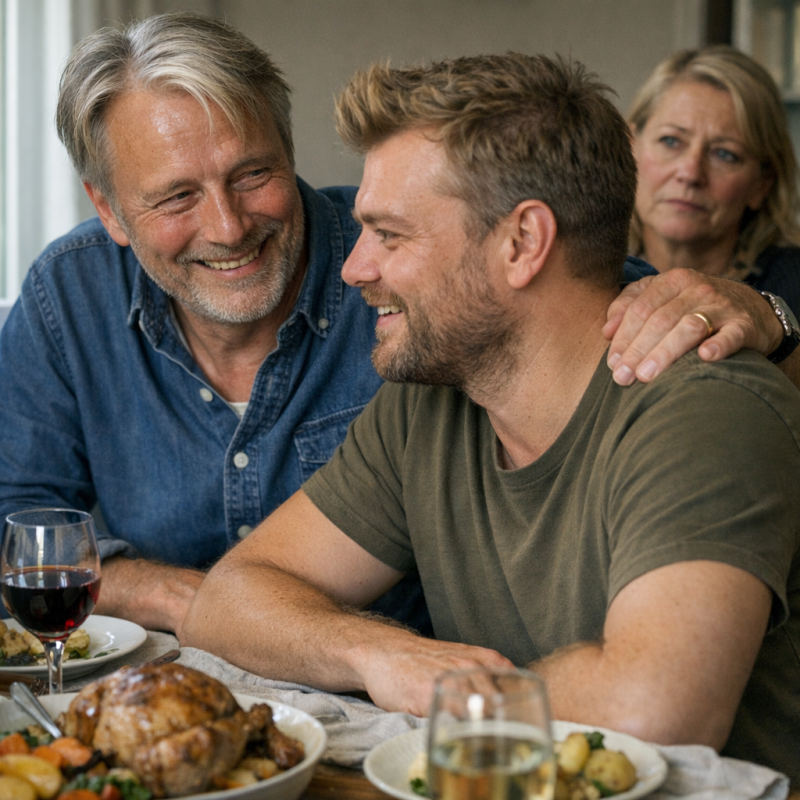 Image by FCT AI
The Phone Call
Jennifer called Tuesday evening while I was folding laundry. She wanted to talk about her boss, some frustrating project at work, nothing urgent but the kind of conversation we'd had a thousand times. I made the appropriate sympathetic sounds and asked the right follow-up questions, but my mind was somewhere else entirely. She paused at one point and said, 'Mom, are you sure you're okay? You sound distracted.' For a brief moment, I considered telling her everything—the letter, Richard's behavior, my spiraling thoughts at 3 a.m. We'd always been close, Jennifer and I. She'd understand, wouldn't she? Or would she think I was overreacting, seeing shadows where none existed? Would she defend her father, tell me I was being paranoid after forty-two years of marriage? What if I was wrong about all of this? But what if I was right? I heard Richard's footsteps coming down the hallway, his familiar uneven gait from that old knee injury. The study door opened. I opened my mouth to tell her, then heard Richard's footsteps in the hall and said instead that everything was fine.
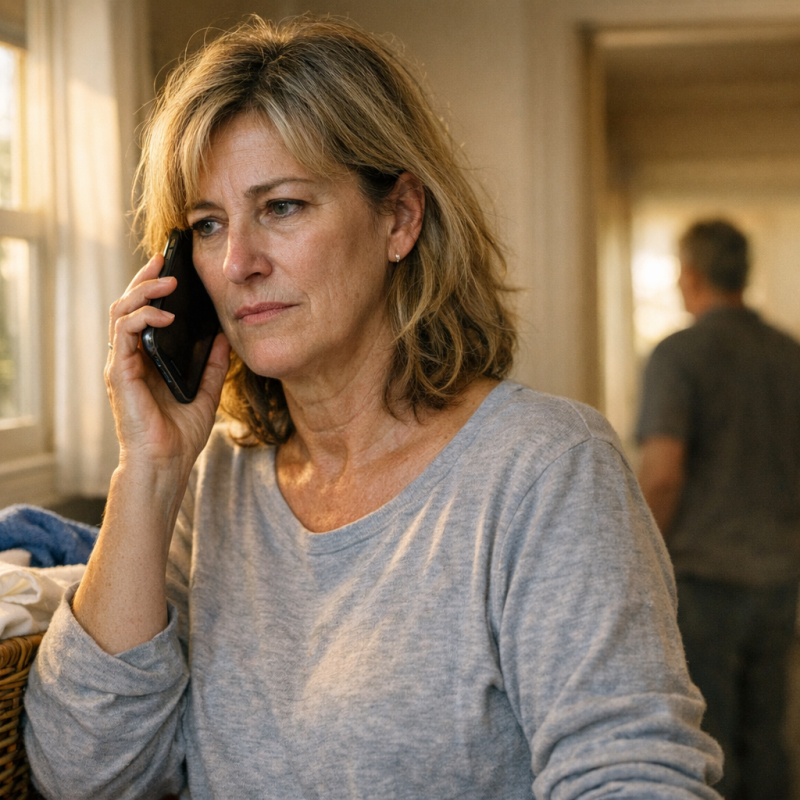 Image by FCT AI
The Second Letter
Thursday I faked a morning appointment and waited in the garage until Richard left for his weekly breakfast with his golf buddies. My hands were shaking as I stood by the mailbox at 1:50 p.m., feeling ridiculous and desperate and determined all at once. The postal truck arrived at 1:58 p.m. There were three pieces of mail—two catalogs and a thicker envelope with the same typed address format, same absence of return address. I took it all inside and locked myself in the bathroom like a teenager hiding contraband. The envelope contained photocopied documents: a birth certificate, a hospital record, a newspaper birth announcement from the Millbrook Gazette dated August 1982. Sarah Elizabeth Morrison, 6 lbs 4 oz, mother's name listed as Patricia Morrison. I stared at that birth certificate until the words blurred together, reading it over and over as if the information might change. August 1982. I was already dating Richard by then. We'd been together for nearly a year, talking about getting engaged. Under 'Father,' the birth certificate listed Richard's full name—middle initial and all.
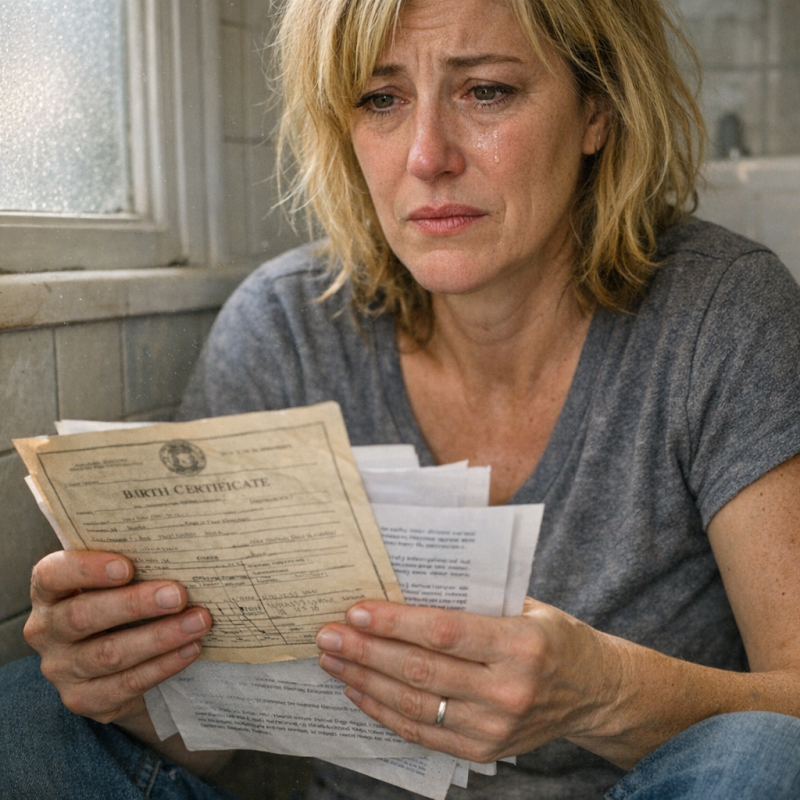 Image by FCT AI
The Confrontation
I waited until he came home from golf, until he'd settled into his chair with the newspaper, until everything looked completely normal. Then I walked over and placed the photocopied birth certificate on top of his crossword puzzle. I didn't say anything. I just stood there and watched his face. The color drained so completely I thought he might actually faint. His hands went to the paper, then pulled back like it was on fire. 'Margaret,' he started, but nothing followed. The silence stretched between us, thick and suffocating. I'd lived with this man for forty-two years. I knew every expression, every gesture, every tone of voice. I watched him open his mouth twice more without sound coming out. When he finally looked up at me, his eyes were wet, and I saw something I'd never seen there before—not just fear, but guilt that had been living there for decades, waiting to be discovered. Finally, he said, 'I was going to tell you,' and I realized those were the first words he'd ever spoken to me that I didn't believe.
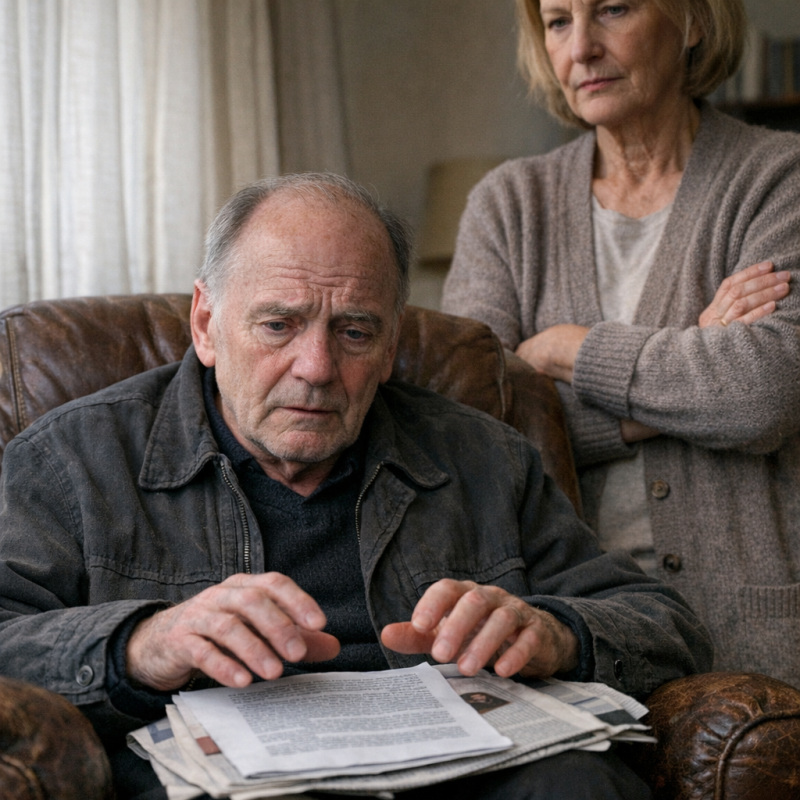 Image by FCT AI

History's most fascinating stories and darkest secrets, delivered to your inbox daily.
The Partial Truth
Richard talked for over an hour, sitting in that chair while I stood. He told me about Elaine—a woman he'd dated before me, someone he'd been 'casually seeing' in his early twenties. They'd broken up in early 1982, he said, and it hadn't been serious. Just one of those relationships that runs its course. He claimed he had no idea she was pregnant when they ended things. No idea there was a child. No idea about any of it until that first letter arrived three weeks ago. His voice sounded hollow, rehearsed almost, like he'd been preparing this speech in his head. He kept saying 'I swear' and 'you have to believe me,' which is something the Richard I knew never did. The Richard I knew stated facts plainly and let them speak for themselves. I stood there listening, my arms crossed, watching him build this story brick by brick. It was a good story, actually. Tidy. Almost believable. But if he never knew, why had his hands been shaking when he opened that first letter?
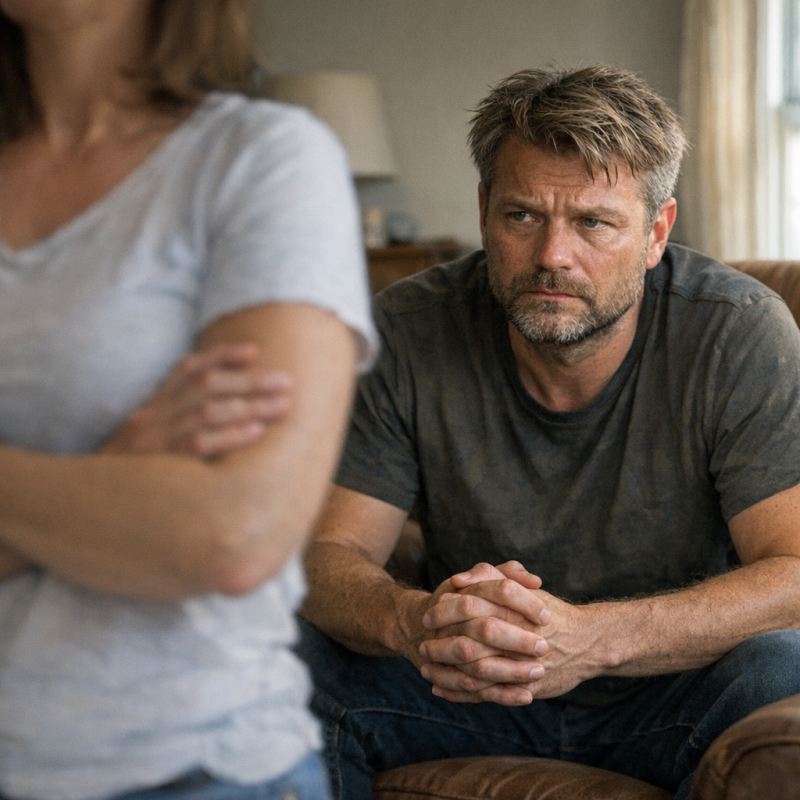 Image by FCT AI
Sleepless Arithmetic
I couldn't sleep that night. Richard was out cold beside me, his breathing deep and even like always, like nothing in the world had changed. I lay there in the dark doing math. Sarah Elizabeth Morrison, born August 1982. Not November. August. I'd misread it in my panic earlier—the newspaper announcement said August fifteenth. I pulled out my phone under the covers and opened the calculator app like a crazy person, counting backward. Nine months from August meant conception in November of the previous year. November 1981. Richard and I had our first date in January 1982. He'd told me that evening that he'd been single for 'a while,' that he'd been focusing on his career. I remembered because I'd felt relieved—no messy recent breakups, no emotional baggage. But if this Elaine woman gave birth in August 1982, she would have been showing by the time he asked me to be exclusive in March. She would have been obviously pregnant. If the baby was born in August 1982, Elaine would have been three months pregnant when Richard asked me to be his girlfriend.
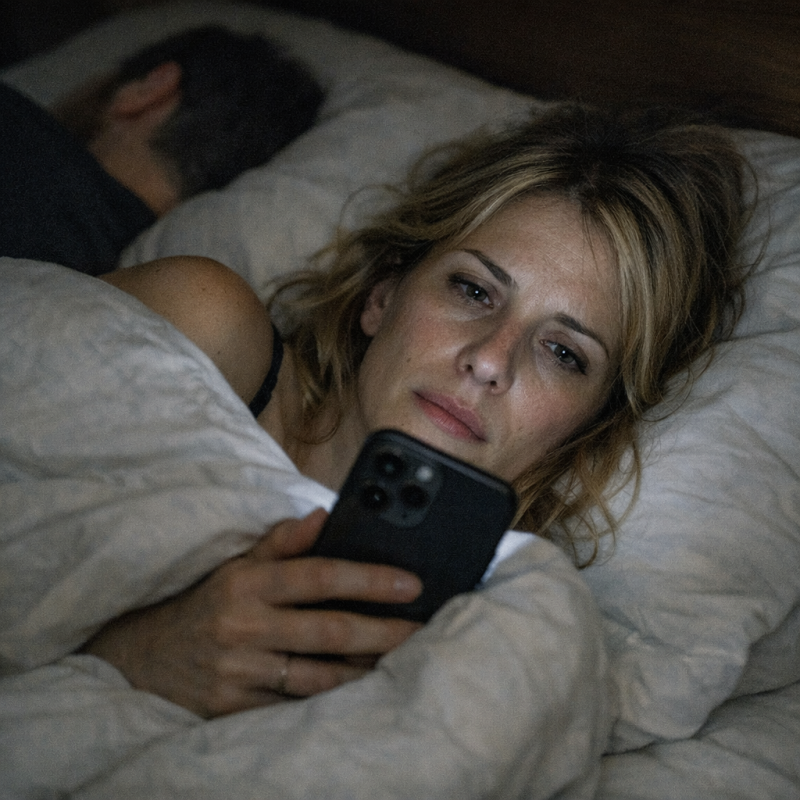 Image by FCT AI
The Question
At breakfast I asked him directly. 'When did you find out about the child?' Richard's coffee cup paused halfway to his mouth. He set it down carefully on the saucer. 'I told you. When the letter came.' 'No,' I said, keeping my voice level. 'When did you really find out?' Something flickered across his face. He looked at his coffee, at the wall, at the window—anywhere but at me. 'It was years later,' he finally said. 'How many years?' His jaw tightened. 'Does it matter?' 'Yes,' I said. 'It matters enormously.' He stood up then, walked to the sink with his cup even though it was still full. The morning light caught the silver in his hair. 'I don't remember exactly. A long time ago. When she was young.' 'She who? Sarah? Or Elaine?' 'Elaine contacted me. Years ago. I'm not sure when exactly.' He was rinsing a clean cup just to have something to do with his hands. He said 'years later,' but wouldn't meet my eyes when I asked exactly which year.
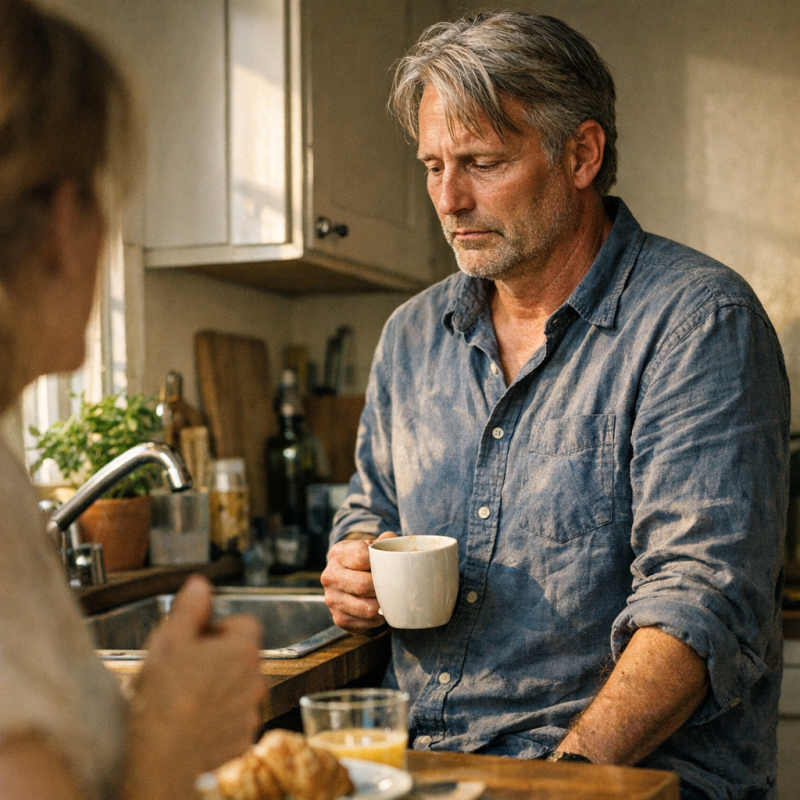 Image by FCT AI
The Admission
I didn't let it go. That evening, after dinner, I asked again. 'I need to know when Elaine contacted you.' Richard sat down heavily on the couch, suddenly looking every bit of his sixty-four years. 'It was about fifteen years ago,' he said quietly. 'Maybe sixteen. She sent a letter to my office.' Fifteen years. I did the math automatically—that would have been around the time we were planning Anna's wedding, when we'd been married for over twenty-five years. 'What did the letter say?' I asked. 'That she had my daughter. That the girl wanted to know who her father was.' His voice was flat, almost monotone. 'She included a photo. Sarah would have been in high school.' I sat down across from him, my legs suddenly unsteady. 'And what did you do?' The question hung there between us. Richard looked at his hands, at the carpet, at nothing. The silence stretched so long I thought he might not answer. When I asked what he did with that letter, the room filled with a silence that answered everything.
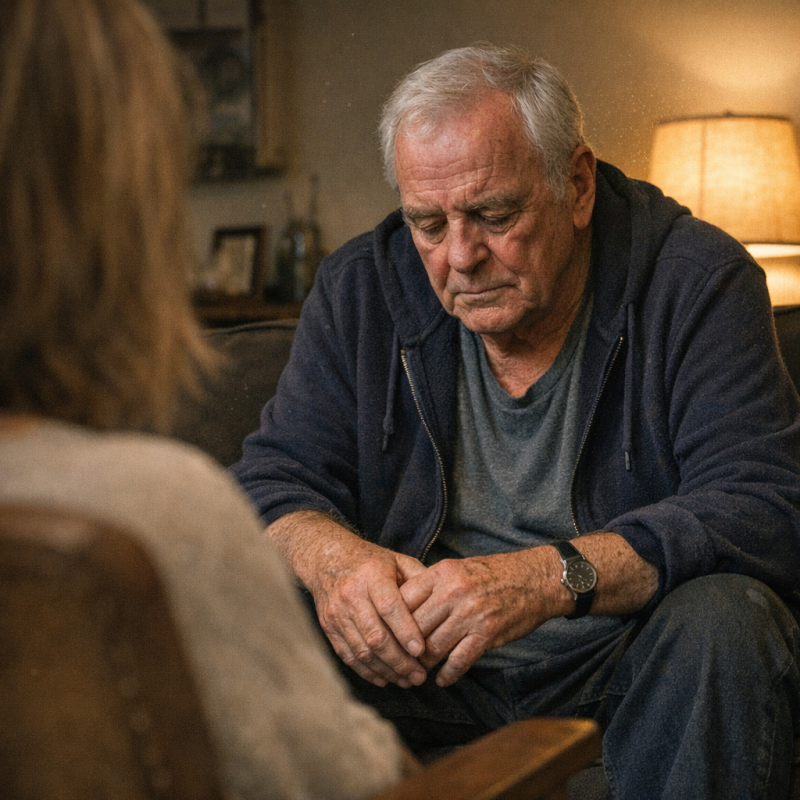 Image by FCT AI
Nothing
Finally, he spoke. 'Nothing. I did nothing.' The words came out barely above a whisper. 'I threw the letter away. I never responded.' I stared at him, trying to process what I was hearing. 'You knew you had a daughter, and you did nothing?' 'I panicked,' he said, his voice rising slightly. 'I didn't know what to do. We had our life, our family. Anna and Tom were still in high school. What was I supposed to say? How was I supposed to explain it?' 'You could have told me,' I said. 'You could have told me the truth.' 'I was afraid,' he said, and now he was looking at me, his eyes pleading. 'I was afraid of losing you. Of losing everything we'd built. So I just... I hoped it would go away. That she'd give up.' He was talking about a child. His child. A teenage girl who wanted to know her father, and he'd hoped she'd just give up. He said, 'I didn't want to lose you,' as if that justified abandoning his own child.
 Image by FCT AI
The Woman He Left
I couldn't let it rest. Every answer raised ten more questions. 'Tell me about Elaine,' I said the next morning. 'Not the sanitized version. The real story.' Richard closed his eyes. 'We dated for about a year,' he said. 'It was serious. Or I thought it was.' 'How serious?' He was quiet for a long time. 'We lived together.' The words hit me like a physical blow. In forty-two years, he had never once mentioned living with anyone before me. He'd always made it sound like he'd had a few casual girlfriends, nothing significant. 'For how long?' I asked. 'Eight months,' he said. 'We had an apartment in Millbrook. Near the hospital where she worked.' Eight months. That wasn't some college fling. That was a real relationship, a shared life. 'What happened?' I asked. 'I broke it off,' he said quietly. 'I wasn't ready for the level of commitment she wanted.' They had lived together for eight months, he finally admitted—eight months he had never mentioned in forty-two years.
 Image by FCT AI
The Separate Bedroom
That night, after Richard went to bed, I stood in our bedroom doorway for a long time just looking at the room. The bed we'd shared for decades. The dresser with our wedding photo. The whole architecture of our shared life. Then I went to the linen closet and pulled out sheets for the guest room. I heard Richard get up when I was making the bed. He appeared in the doorway, looking confused and small in his pajamas. 'What are you doing?' 'I need some space,' I said, smoothing the duvet. 'To think.' 'Margaret, please. We can work through this.' But I just shook my head. I couldn't look at him. Couldn't lie next to him and pretend I knew who he was anymore. 'I just need some time,' I said. He stood there for another minute, then nodded and walked away. I heard our bedroom door close down the hall. As I closed the door between us, I thought about all the other doors he had closed that I never knew existed.
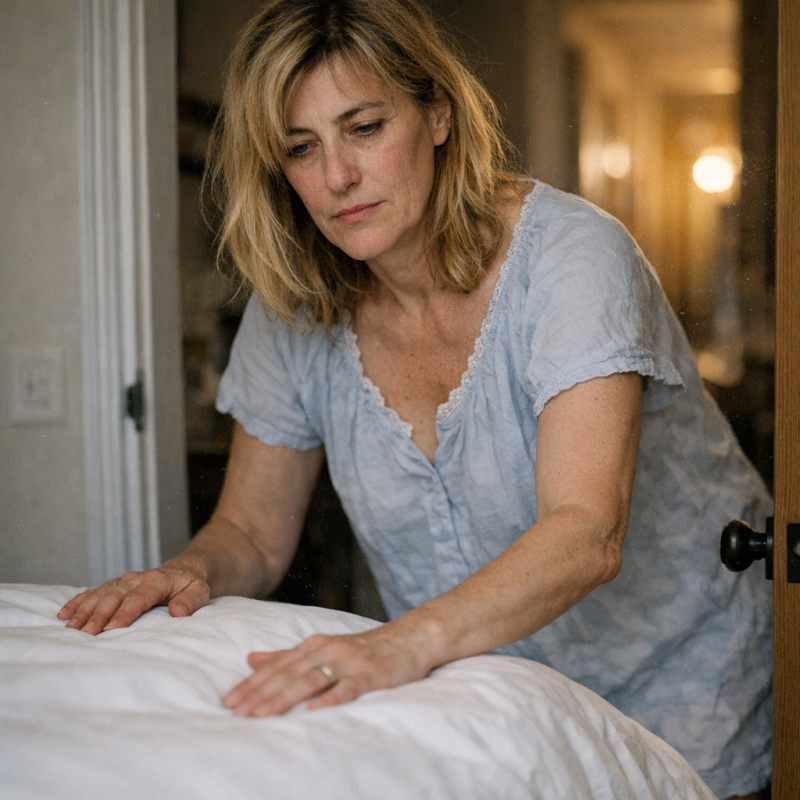 Image by FCT AI
The Waiting
The days after I moved into the guest room had this weird suspended quality, like we were both holding our breath. Richard kept checking the mailbox—sometimes twice a day. I'd see him through the window, standing there at the curb longer than necessary, just staring at the envelopes in his hands. We barely spoke except for the necessary things. 'There's coffee made.' 'I'll be home late.' That kind of thing. At night I'd hear him pacing in our old bedroom. Sometimes I'd wake up at three in the morning and find him sitting in the living room in the dark, just waiting. I started dreading the mail delivery myself, jumping at every sound that might be the mailman. But also kind of wanting it, you know? Because at least then we'd know what came next. The not knowing was its own kind of torture. We existed in this awful limbo, two people in the same house who couldn't really look at each other, both waiting for a stranger to decide our fate. A week passed with no third letter, and somehow the silence felt worse than the revelations.
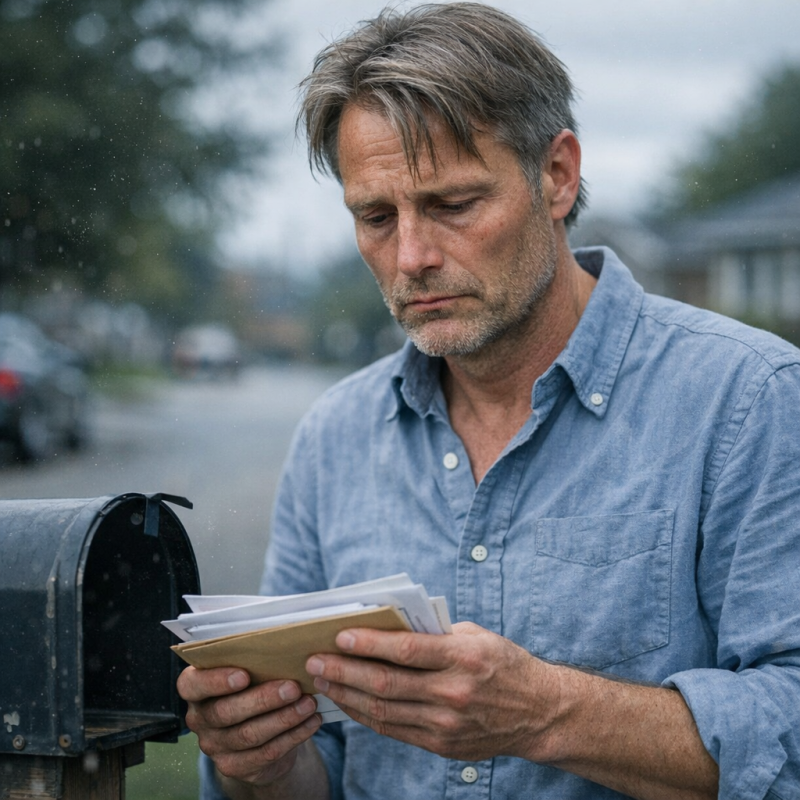 Image by FCT AI
The Pretense
David called on a Thursday to say he and Jennifer wanted to come for Sunday dinner. 'We haven't all been together in months, Mom,' he said, and I felt my stomach drop. Richard was standing in the kitchen doorway when I hung up. We just looked at each other. 'What do we tell them?' I asked. He rubbed his face with both hands. 'I don't know. Nothing? Not yet?' Part of me wanted to scream the truth right there. Call David back and tell him everything. Let Jennifer know who her father really was. But another part—the part that had been protecting our children for their entire lives—couldn't do it. Not like this. Not when we didn't even know what was coming next. 'They'll see something's wrong,' I said. 'We're sleeping in separate rooms, Richard.' 'We can make up the bed. Just for the day.' And there it was. The decision being made in real time. We'd lie. We'd pretend. We'd protect him even now. We agreed to say nothing to the kids, and I hated that we were still protecting him with shared lies.
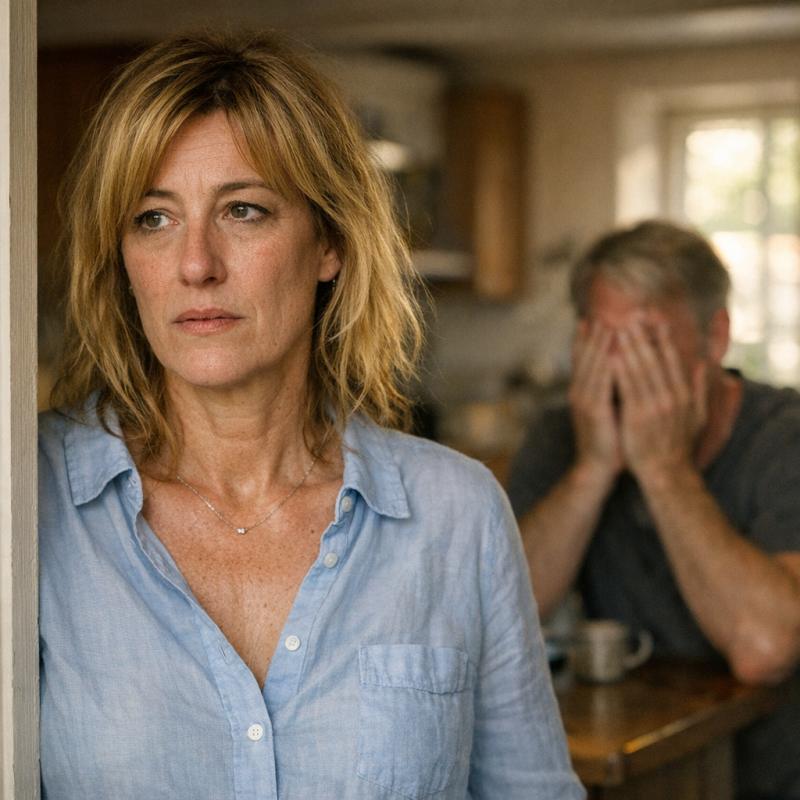 Image by FCT AI
Performance
I made pot roast, Richard's specialty that he always claimed credit for even though I'd been making it for decades. We'd remade our bed that morning, and I'd showered in our master bathroom like always, and when the kids arrived it was like stepping into a play I'd performed a thousand times. Richard kissed my cheek in the kitchen. I touched his shoulder when I passed him. We moved around each other with practiced ease, and the truly disturbing part was how natural it felt. Jennifer talked about her new project at work. David told us about his daughter's soccer team. Richard and I laughed at the right moments, added our own stories, poured wine. At one point Richard's hand was on the small of my back and I didn't even flinch. Just let it rest there like it belonged. Like he belonged. After dinner, we stood on the porch waving as they drove away. Jennifer had hugged us both goodbye and said how lucky she was to have parents who still loved each other after all these years.
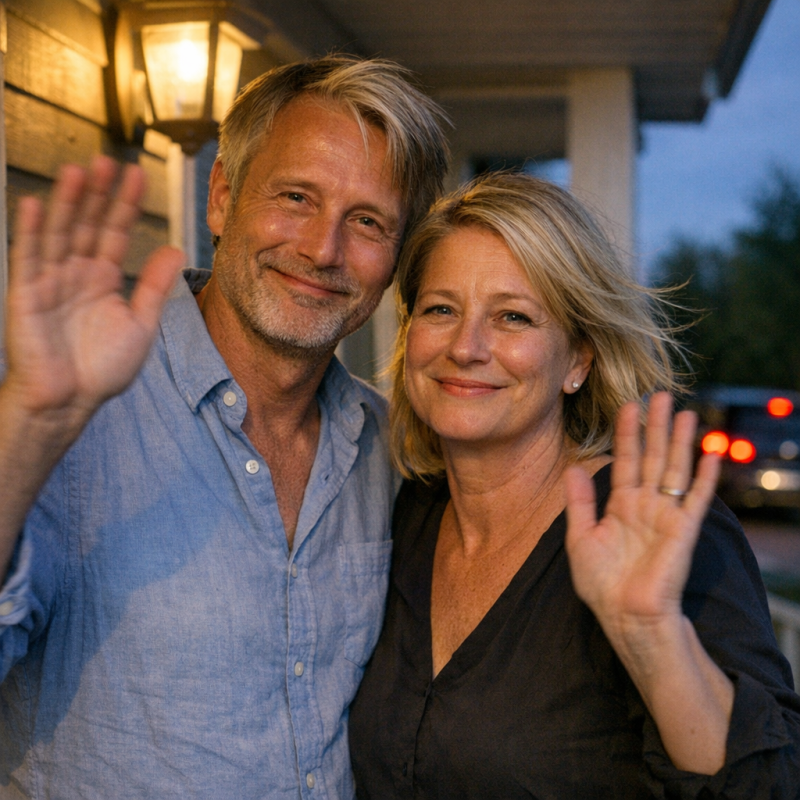 Image by FCT AI
Research
The Monday after the kids left, Richard went to work and I sat down at my laptop with coffee and started searching. I typed in Elaine's name with Richard's, with the year I thought it might have happened, with city names. Nothing. Just a few random people who weren't her. I tried variations—Elaine with different spellings, maiden names, married names I was guessing at. The child would be around thirty-eight now, I figured. Born in 1985 or 1986. But I had nothing to search for. No name, no location, no photographs. I felt ridiculous, like I was investigating my own life from the outside. I checked social media, old newspaper archives, public records databases. Every dead end made me feel more helpless and more desperate. How do you find someone when you don't even know what you're looking for? I spent four hours going in circles, my coffee getting cold, my back aching from hunching over the screen. Then I realized I was searching for the wrong name—I didn't know the child's name, only that they existed.
 Image by FCT AI
Claire
I called Claire that afternoon and asked if she could meet me. We sat in her kitchen, the same place we'd been having coffee for thirty years, and I finally said it all out loud. The letters. Elaine. The child Richard never told me about. My voice sounded strange to my own ears, like I was talking about someone else's life. Claire just listened, her face getting paler, her hand covering her mouth at certain parts. When I finished, she reached across the table and gripped my hand so hard it hurt. 'Jesus, Margaret,' she whispered. 'Forty-two years and he never said a word?' I nodded. Couldn't speak for a minute. Just having told someone made it more real somehow, but also less heavy. Like I'd been carrying this alone and now Claire was holding some of the weight. 'What are you going to do?' she asked. I shook my head. 'I don't know. Wait for another letter, I guess. See what they want.' Claire asked, 'Do you think she wants money?' and I realized I had no idea what the sender wanted.
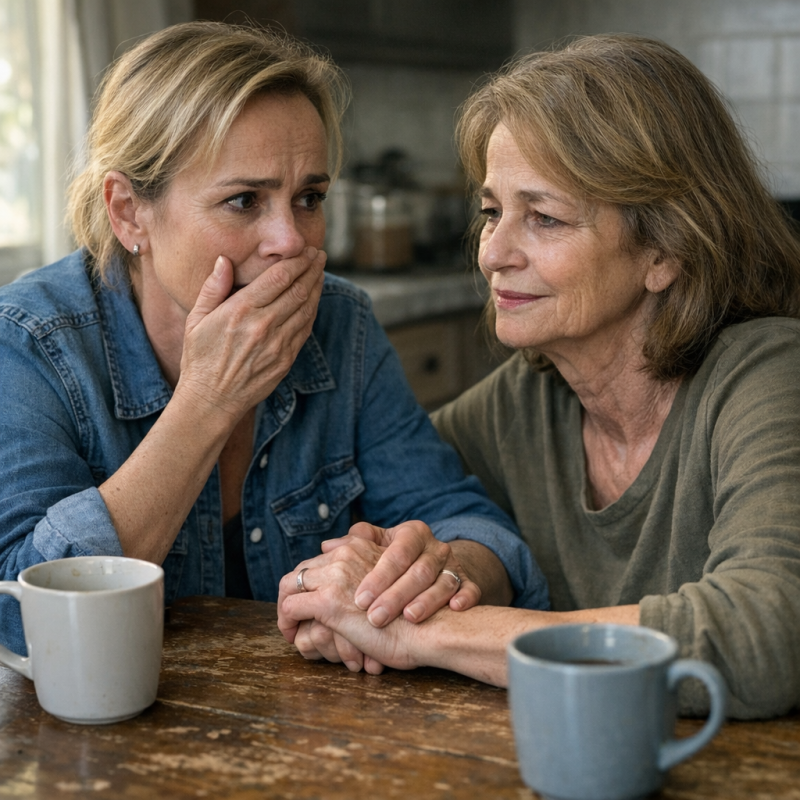 Image by FCT AI
Practical Questions
Claire started asking questions I hadn't even thought about. Legal questions. Whether this person could make financial claims against Richard or the estate. Whether our kids' inheritance could be affected. She asked about DNA tests, about proof, about what rights an adult child might have. I felt my chest tighten with each question. 'You need a lawyer,' Claire said. 'Not yet,' I told her. 'We don't even know what this person wants.' But Claire was practical, always had been. 'That's exactly why you need one. To know where you stand before they ask for anything.' She pulled out her phone and started typing. 'My cousin's a family lawyer. Let me get you her number.' I watched her, this friend who'd been my maid of honor, who'd helped me paint the nursery when I was pregnant with David, who thought she knew my marriage as well as I did. 'Does Richard want a relationship with this child?' she asked, looking up from her phone. When Claire asked if Richard wanted a relationship with his child, I realized he had never once expressed that desire.
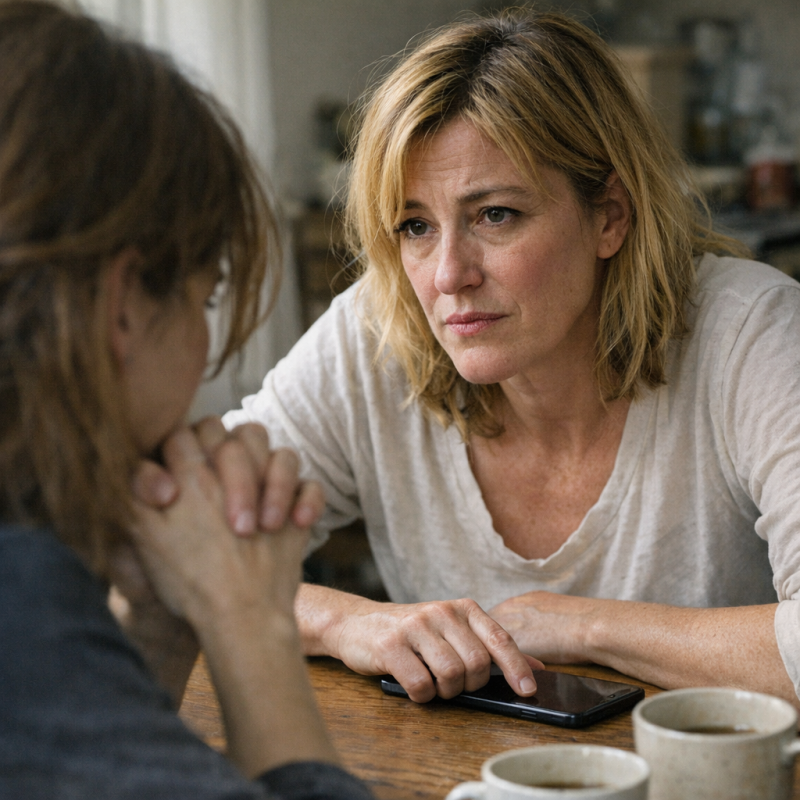 Image by FCT AI
The Third Letter
The third letter came on a Wednesday. I knew it was different the moment I saw it—there was a return address this time, a street in Portland, Oregon. The sender's name was printed clearly: Sarah M. Bennett. I stood at the mailbox holding it, my hands shaking. Inside, she'd included a photograph of herself. She had Richard's eyes. His chin. There was no mistaking it. The letter was shorter than the others, more direct. She said she'd been trying to find the courage to reach out for years. That her mother had told her about Richard when she turned eighteen, but she'd been too angry to do anything about it. Now she wanted to meet. To talk. To understand who her father was and why he'd never been part of her life. She gave me her phone number. Her email address. An invitation to contact her whenever I was ready. And then, almost as an afterthought in the last paragraph, she wrote that her mother had died six months ago, and I felt a terrible relief that Elaine couldn't tell her side of the story.
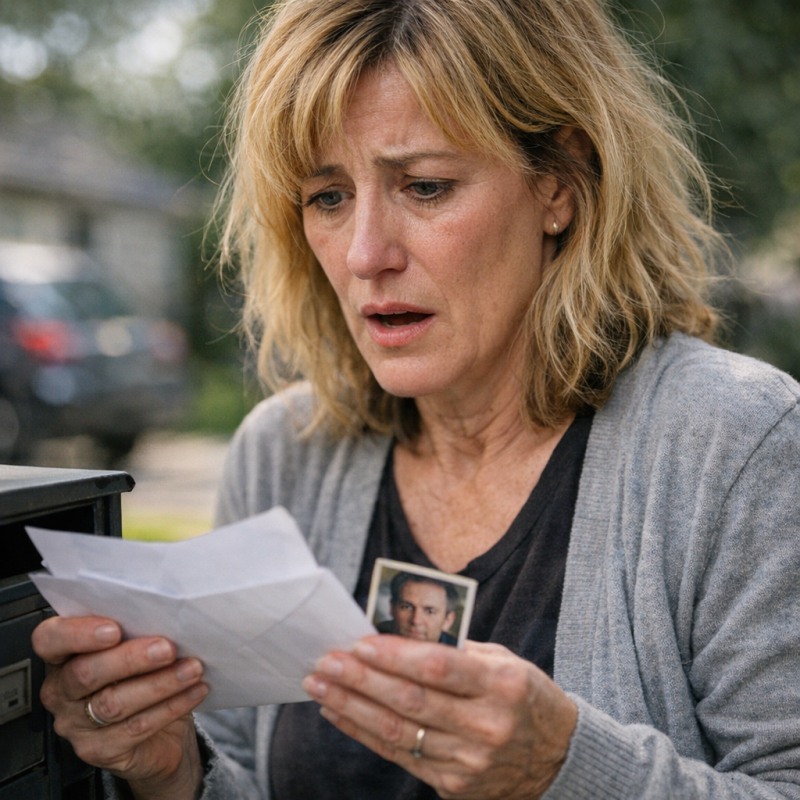 Image by FCT AI
The Name
Richard came home and I handed him the letter without saying anything. I watched his face as he read it. Watched him look at the photograph. He said her name—'Sarah'—and something about the way he said it, soft and familiar, made my blood run cold. 'You know her name,' I said. Not a question. He set the letter down on the kitchen table very carefully. 'Margaret—' 'How long have you known it?' He wouldn't look at me. Stared at that photograph instead, at his daughter's face looking up at him from glossy paper. 'A while.' 'How long is a while?' My voice was getting louder. I couldn't help it. He finally met my eyes. 'Twenty years. Maybe more. Elaine sent me a letter when Sarah graduated high school. Included a photo. Told me her name.' I felt the room tilt. Twenty years. Two decades of knowing. 'Did you respond?' 'No. I threw it away.' I asked him if he had ever tried to find her, and he said no—but he also admitted he had known her name for twenty years.
 Image by FCT AI
The Age
I did the math that night while Richard was in the shower. Sarah was forty-two years old. Forty-two. I counted backward from her birth year, cross-referenced it with our wedding date, and there it was—she'd been born the same month Richard proposed to me. The same month he'd gotten down on one knee in that Italian restaurant and told me he wanted to spend his life with me. While I'd been showing my ring to everyone, glowing with happiness, planning our future, Sarah had been a newborn somewhere in another state. I sat there with my calculator and felt sick. Had guilt driven him to propose? Had he looked at Elaine's pregnant belly or his newborn daughter and thought, 'I need to do the right thing somewhere,' even if it wasn't with them? Our entire marriage had existed in the shadow of his daughter's life. Every anniversary we celebrated, Sarah had been aging alongside it, marking time, a living calendar of his abandonment. The symbolism felt deliberately cruel, though I knew it was just math, just dates on a calendar. Sarah was born the same month Richard proposed to me, and I wondered if guilt had been part of his commitment.
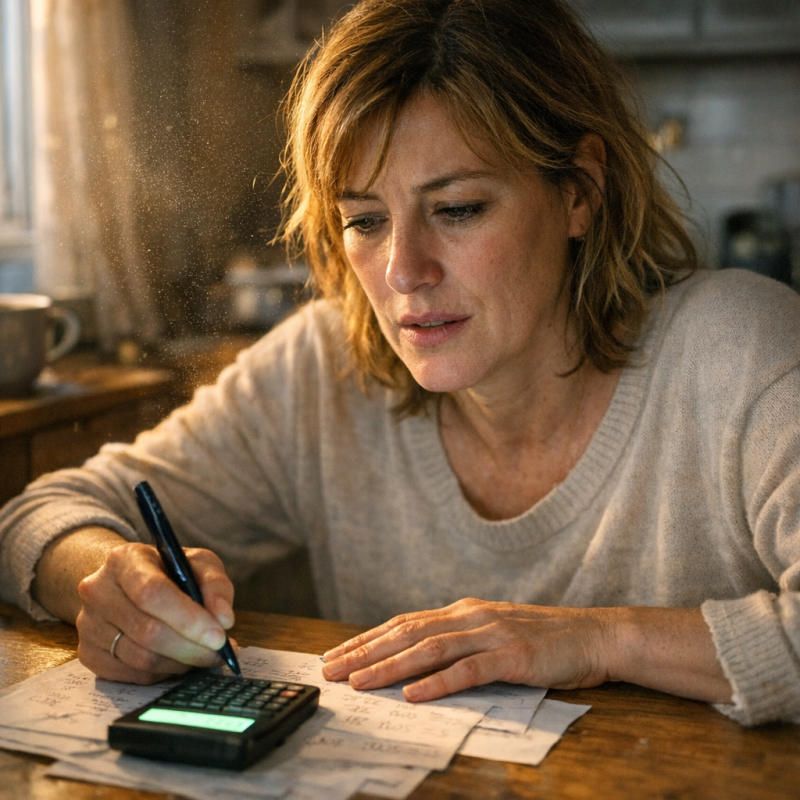 Image by FCT AI
The Decision
I told Richard the next morning that I was going to write back to Sarah. That I wanted to meet her. With or without him. He looked up from his coffee like I'd announced I was joining a cult. 'Why would you do that?' he asked. 'She's your daughter.' 'She's a stranger.' 'She's a stranger because you made her one.' He set his mug down hard enough that coffee sloshed over the rim. 'This has nothing to do with you, Margaret. This is my past. My mistake.' 'Your mistake is forty-two years old and she has your eyes and she's reaching out. I'm not going to ignore that.' 'I don't understand why you care about her at all.' That stopped me cold. I stared at him across our kitchen table, this man I'd shared a life with, and saw someone I didn't recognize. Why did I care? Because she was a person. Because she deserved better than erasure. Because someone should acknowledge her existence even if he wouldn't. He asked why I cared about her at all, and that question told me everything about who he really was.
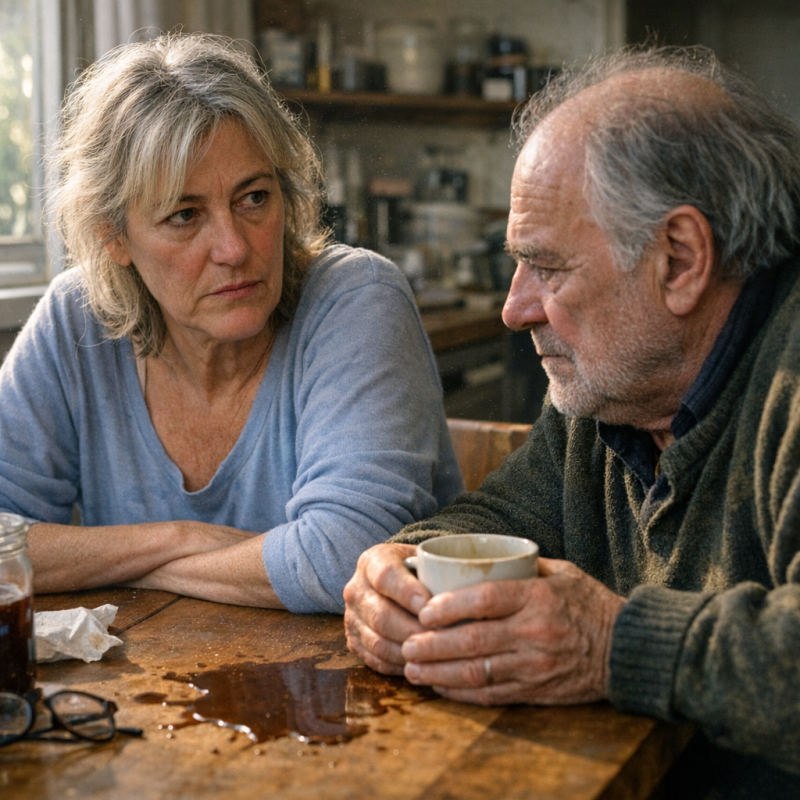 Image by FCT AI
The Response
I wrote the letter by hand. It felt important somehow, more personal than email or text. I suggested a coffee shop in a town roughly halfway between where I lived and where her return address indicated she might be—about ninety minutes for each of us. Neutral territory. I gave her my phone number in case she preferred to call. I kept it brief, warm but not overly familiar. I didn't mention Richard's refusal to come. I didn't know what she knew about me, about our marriage, about anything really. The letter took me three drafts to get right. Each time I thought I sounded either too distant or too eager, too apologetic or too defensive. Finally, I settled on simple honesty: I would very much like to meet you. I addressed the envelope carefully, double-checked the zip code. Richard watched from the doorway as I sealed it but said nothing. I walked it to the mailbox myself, stood there for a moment before dropping it in. As I sealed the envelope, I realized I was about to meet the proof of my husband's other life.
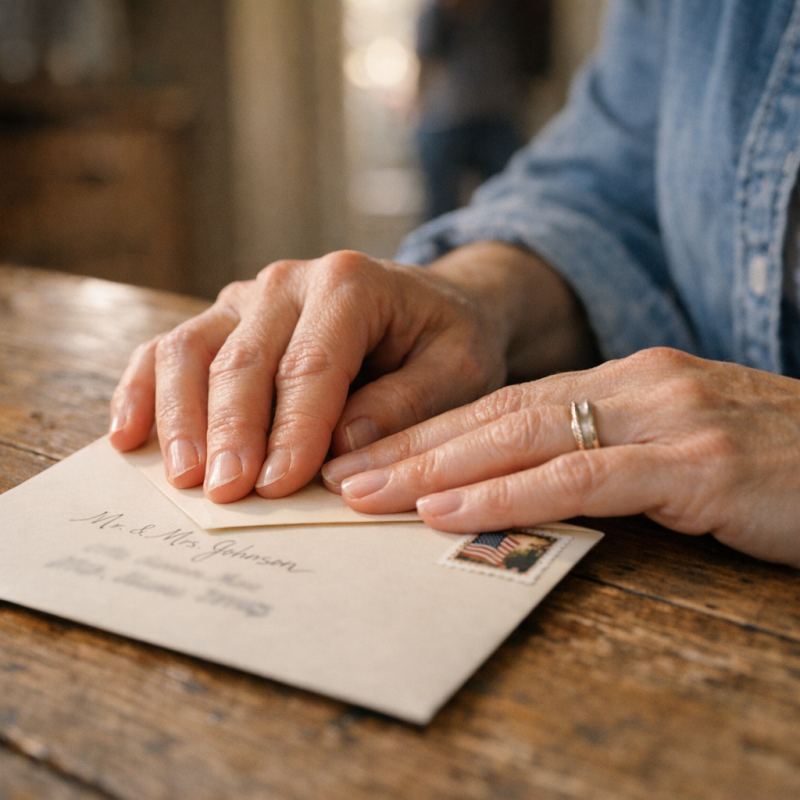 Image by FCT AI
The Days Before
The days before our meeting stretched out strangely. Time moved both too fast and too slow. I obsessed over small things—what to wear, whether to bring anything, how to greet her. Would we hug? Shake hands? What does one wear to meet the stepdaughter one never knew existed? I settled on a blue sweater, casual but put-together, not trying too hard. I rehearsed opening lines in my head. 'Thank you for writing.' Too formal. 'I'm so glad to finally meet you.' Too presumptuous—was I glad? I was terrified. I practiced explaining that I hadn't known about her, that Richard had kept this secret from me for our entire marriage. But every version sounded hollow, defensive. How could I explain forty-two years of ignorance without sounding willfully blind? Surely there had been signs. Surely I should have suspected something, noticed absences, questioned inconsistencies. What kind of wife doesn't know her husband has a whole other child? The kind who trusted too easily, maybe. Or the kind who didn't want to see. But how could I explain my ignorance without sounding willfully blind?
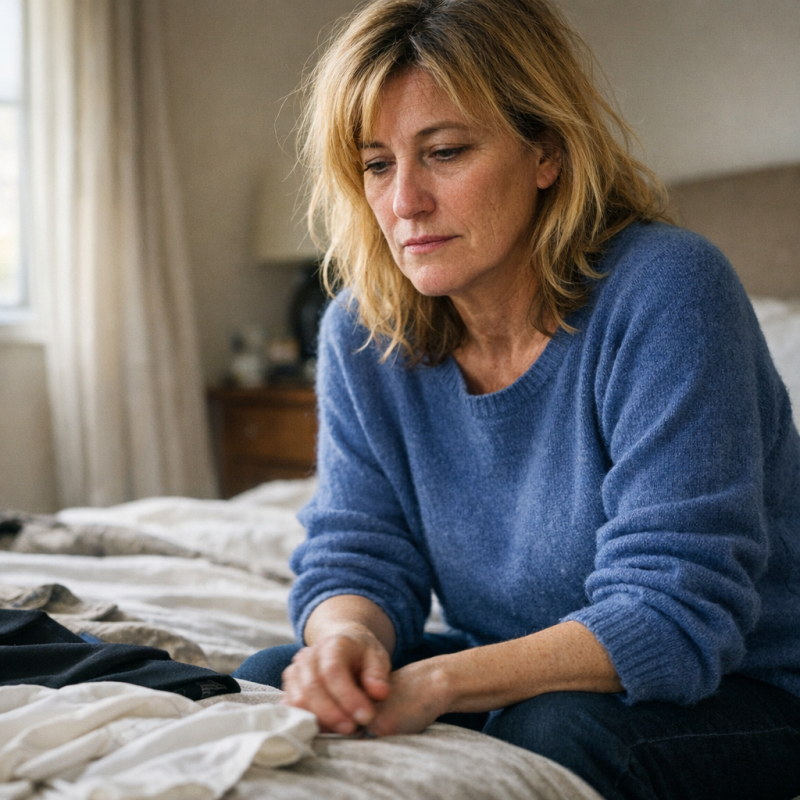 Image by FCT AI
Richard's Absence
Two days before the meeting, Richard told me he couldn't go. Not wouldn't—couldn't. As if it were physically impossible rather than a choice. 'I can't face her, Margaret. I don't know what I'd say.' I was folding laundry at the time. I remember setting down one of his shirts, smoothing it flat on the bed. 'Okay,' I said. He looked surprised, like he'd expected an argument. 'Okay?' 'If you can't go, you can't go.' And I meant it. I didn't ask him to reconsider, didn't try to convince him. Some part of me—a part that had been growing louder over the past weeks—actually preferred going alone. I didn't want to watch him fumble through apologies or excuses. Didn't want to see Sarah's face as her father failed her again in real time. She'd already lived through enough of his absence. Maybe I could at least spare her the performance of his discomfort, his guilt, his inadequacy. I realized I preferred going alone—that I didn't want to watch him fail his daughter again.
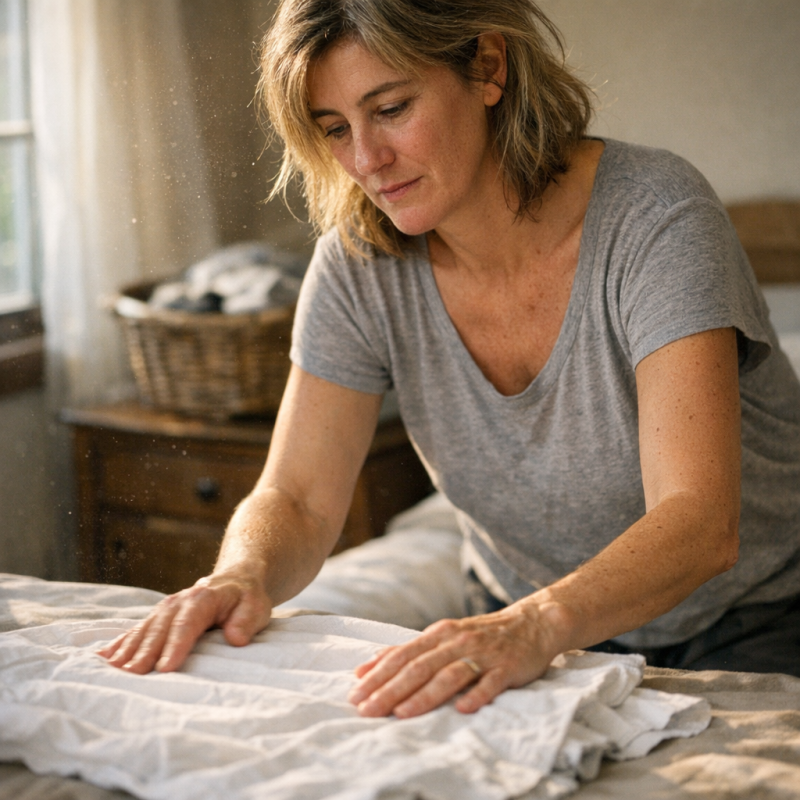 Image by FCT AI
The Drive
The drive took ninety minutes, just as I'd calculated. I left early, told Richard I had errands afterward though we both knew that wasn't true. The highway stretched out gray and endless. I rehearsed opening lines and abandoned them. 'I'm Margaret.' Too obvious. 'Your letter meant a lot to me.' Too presumptuous. 'I'm sorry for everything.' Too much, too soon. The GPS directed me through small towns I'd never visited, past strip malls and farm fields and auto body shops. Ordinary places where ordinary people lived ordinary lives—people who probably didn't have secret stepchildren waiting in coffee shops. I arrived fifteen minutes early, parked in the lot, turned off the engine. The coffee shop was one of those generic chains, identical to a thousand others. Through the window I could see people at tables, laptops open, conversations happening. Normal Saturday morning. I sat in my car, heart hammering, watching people enter and exit. A woman in her forties, dark hair. Could be her. Another woman, walking with confidence. Maybe. I arrived fifteen minutes early and sat in my car, watching people enter the coffee shop and wondering which one was her.
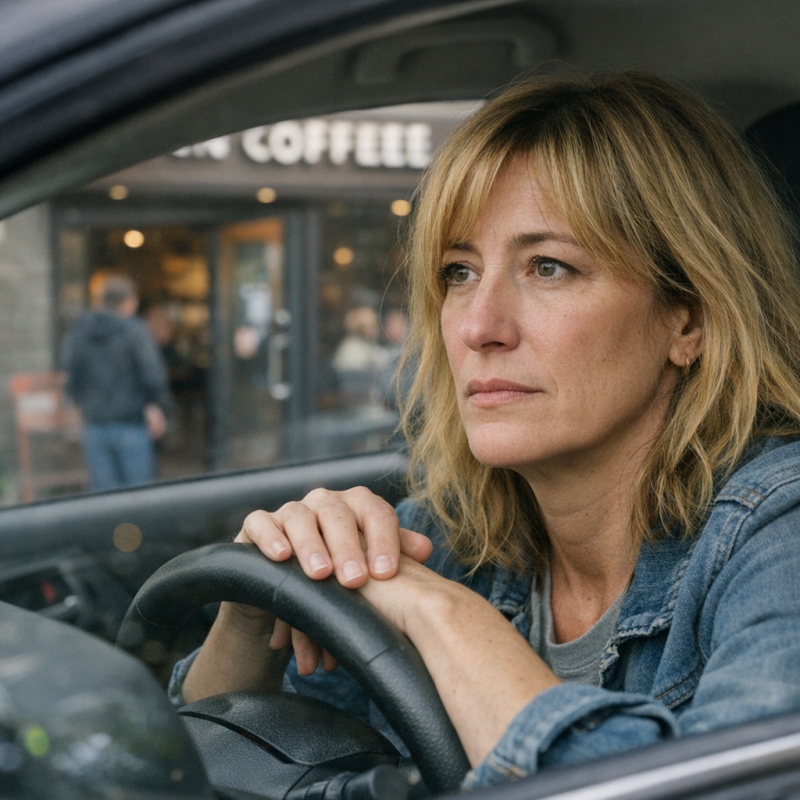 Image by FCT AI
First Sight
I recognized her the moment she walked through the door. Richard's eyes—that particular shade of hazel green, the slight downward tilt at the outer corners. His jawline too, softer on her but unmistakable. She was tall like him, moved with that same deliberate grace he had. She scanned the room and I stood up, some instinct overriding my nervousness. Our eyes met. She smiled—tentative, uncertain—and walked toward my table. 'Margaret?' 'Sarah.' Up close the resemblance was even stronger. Not just features but expressions, the way her mouth quirked slightly when she was thinking. I'd seen Richard make that exact face ten thousand times. How many family gatherings had we attended where people remarked on resemblances, joked about genetic inheritance? Here was proof of his DNA walking toward me in a coffee shop, undeniable. She'd clearly been studying photos of him, of us, of our family. Learning our faces while we pretended she didn't exist. She smiled when she saw me, and I thought, 'She's been looking at photos of him, studying our family, while we pretended she didn't exist.'
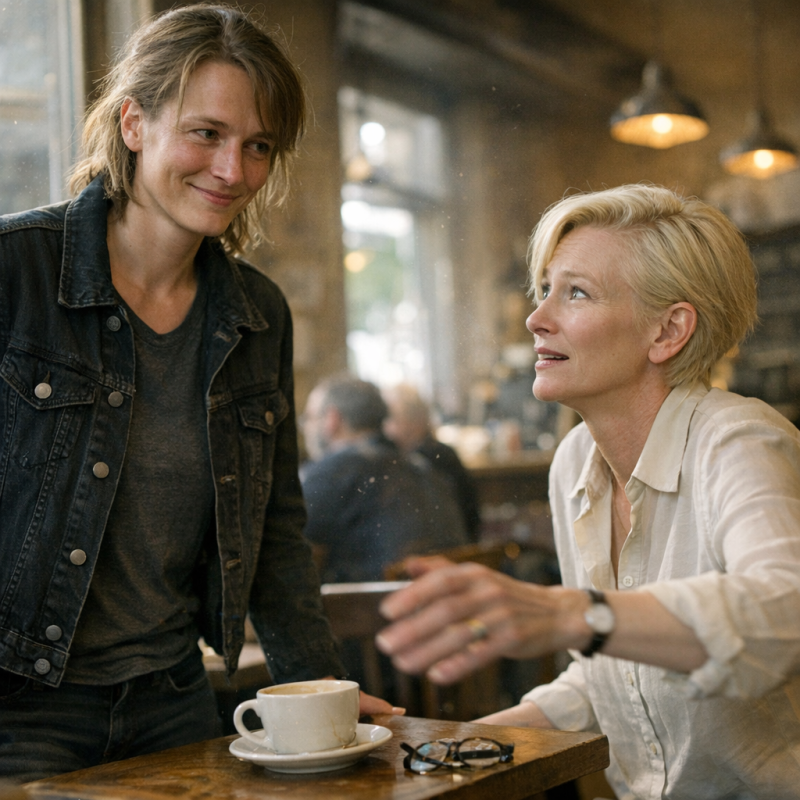 Image by FCT AI
Polite Strangers
Sarah was gracious. Unnervingly so. 'Thank you so much for coming,' she said, settling into her chair. 'How was your drive? Did you have trouble finding the place?' We discussed traffic patterns and GPS directions like acquaintances catching up over lunch. She asked if I wanted anything—her treat—and returned from the counter with two lattes, remembering that I'd said no sugar. Small courtesies that felt both kind and strange. She asked about my work, about the town where I lived, about whether I'd been to this area before. Polite conversation that skated over the enormous thing sitting between us. I kept waiting for her to crack, to show anger or pain or something real. But she maintained this composed exterior, this careful warmth that felt rehearsed. Maybe it was. Maybe she'd practiced this too, run through scenarios in her head just like I had. But her calmness was perfect, almost professional. It made my nervousness feel obvious by comparison, made me feel like I was failing some test I hadn't known I'd be taking. Her calmness made me more nervous, as if she had prepared for this conversation in ways I couldn't imagine.
 Image by FCT AI
Her Story
Sarah told me about her childhood with this measured, almost rehearsed calmness. She'd grown up knowing her father's name, knowing he lived a few hours away, knowing he had a family. 'Mom never hid it from me,' she said, stirring her latte. 'She said he wasn't ready to be a father, that it wasn't personal.' The way she said it—so neutral, so controlled—made my chest tighten. She talked about birthdays he missed, school events where other kids had dads. Her mother worked two jobs to keep them afloat. No child support, no visits, no phone calls. Just silence. 'She never spoke badly about him,' Sarah continued. 'She said people make choices, and we had to respect his.' I watched her face for cracks, for anger, but there was nothing. Just this careful composure. She'd learned to talk about abandonment like it was a weather pattern, something that happened to her rather than something someone did. Her tone stayed perfectly level as she described what forty-two years of absence actually looked like. She said her mother never spoke poorly of him, which somehow made it worse—the generosity wasted on a man who had sent nothing back.
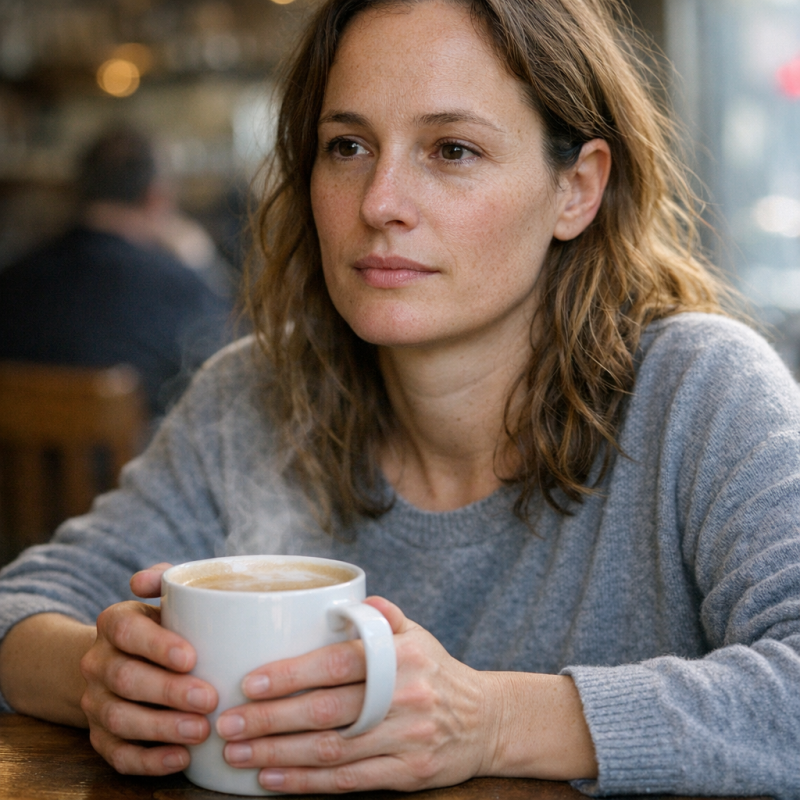 Image by FCT AI
The Question
Then she asked the question I'd been dreading. 'Did you know?' Sarah's eyes met mine across the table, and I felt my whole body tense. 'About me. Did you know I existed?' I shook my head, maybe too quickly. 'No. I had no idea. I swear, I didn't know.' The words tumbled out, desperate to convince her. 'I found the letter by accident. In his study. I wasn't snooping or anything—I was just looking for tax documents.' I could hear myself babbling, overexplaining, and forced myself to stop. 'I didn't know,' I said again, quieter. She studied my face for a long moment, and I felt like I was being evaluated, weighed. 'Okay,' she finally said. 'I believe you.' But her voice had this quality I couldn't quite identify. Not accusatory, but not entirely accepting either. The silence stretched between us, thick and uncomfortable. I wanted to say more, to somehow prove my innocence, but what else was there? Sarah nodded as if she believed me, but I saw something flicker across her face—disappointment, maybe, or pity.
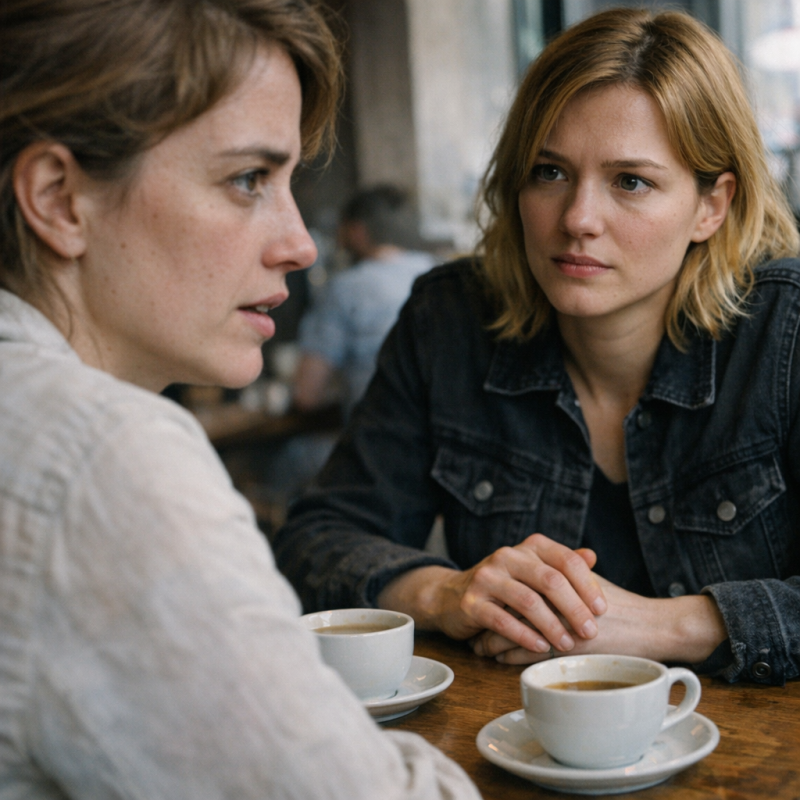 Image by FCT AI
Not Asking for Money
She leaned forward slightly, her hands wrapped around her cup. 'I want to be clear about something,' she said. 'I'm not asking for money. I'm not here to make financial claims or anything like that.' I felt myself relax fractionally, which was absurd—as if money would have been the simple problem. 'My mother left me her house, and I have a good job. I'm fine.' She paused, and I could see her choosing her words carefully. 'What I want is acknowledgment. I want him to admit that I exist, that I'm his daughter. I want to meet my half-siblings. I want to be part of the family, even if it's just... knowing each other.' Her voice stayed steady, reasonable. She wasn't demanding anything unreasonable, really. Just basic recognition. But sitting there, I felt this crushing weight settle over me. Money would have been easy. Write a check, set up a trust, done. This—what she was actually asking for—required something far more costly. It required Richard to face what he'd done, to confess it to our children, to let this truth reshape everything. She said she just wanted him to admit she existed, and I thought, 'That's the one thing he might never be able to give.'
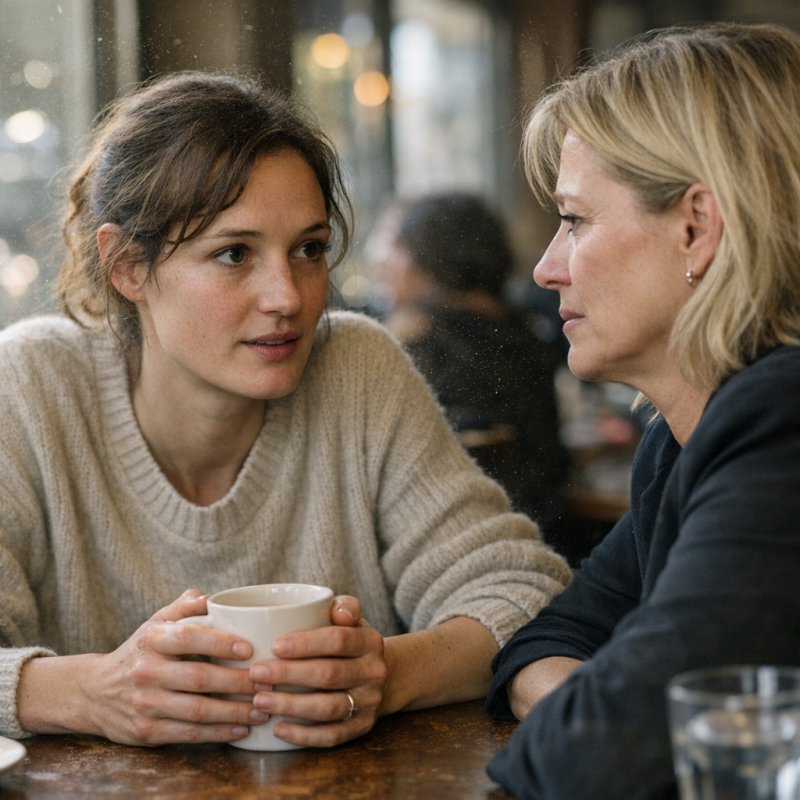 Image by FCT AI
The Photographs
Sarah pulled out her phone and scrolled to her photos. 'This is my mom,' she said, turning the screen toward me. Elaine looked younger than I'd expected, maybe late twenties in the picture. Dark hair, bright smile, standing in front of what looked like a modest apartment building. She looked happy. That's what got me—she looked genuinely happy despite everything Richard had put her through. Sarah swiped to another photo: Elaine and a little girl at a park, both laughing. Then another of them at a kitchen table, birthday cake between them. 'Mom made everything feel like an adventure,' Sarah said quietly. 'Even when things were hard.' I stared at these images of a parallel life I'd never known existed. A woman raising Richard's child alone, creating joy out of absence. Sarah showed me more—elementary school pictures, Halloween costumes, a graduation photo. Each image was a moment Richard had chosen to miss. In one photo, Sarah was maybe five years old, gap-toothed and grinning, holding up a drawing. I realized Richard had missed her entire childhood while reading bedtime stories to our children.
 Image by FCT AI
The Half-Siblings
Sarah set her phone down and looked at me directly. 'How are David and Jennifer?' she asked, and my stomach dropped. She said their names so naturally, like she'd known them for years. 'They're... they're good,' I managed. 'David's in Seattle, Jennifer's in Phoenix with her family.' Sarah nodded. 'David's an architect, right? And Jennifer teaches high school English?' I felt cold suddenly. 'Yes. How did you...' She gave a small, apologetic smile. 'I looked them up. I hope that doesn't seem creepy. I just wanted to know about my siblings.' Siblings. The word hung in the air. 'Jennifer's married to Tom Preston,' Sarah continued. 'They have two kids—Emma and Jake. David lives in Capitol Hill, works for a firm that specializes in sustainable design.' She recited these facts casually, but each one felt like a small invasion. I thought about David's Facebook page, Jennifer's Instagram, all the little details we'd shared publicly, never imagining who might be watching. She knew Jennifer's married name, David's profession, even where they lived—while they had no idea she existed.
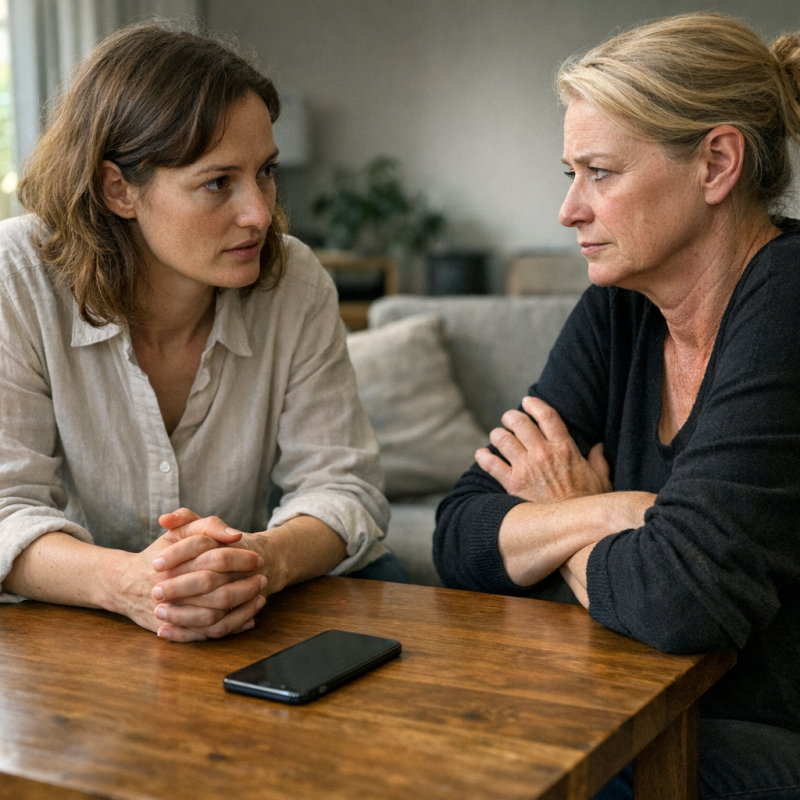 Image by FCT AI
The Proposal
Sarah took a breath, and I sensed we were getting to the real reason for this meeting. 'I'd like to meet them,' she said. 'David and Jennifer. I was thinking maybe we could arrange something—a family meeting where Richard could introduce me properly.' The word 'properly' stung. As if there were a proper way to introduce the daughter you'd hidden for four decades. 'I'm not trying to disrupt their lives,' she continued. 'I just want a chance to know them. To be acknowledged as their sister.' It was a reasonable request. That's what made it so impossible. Any other family might be able to navigate this—siblings meeting, however awkward, however complicated. But this required Richard to stand in front of our children and confess something that would fundamentally change how they saw him. It required him to be vulnerable, accountable, honest. Three things I wasn't sure he was capable of. 'I can ask him,' I heard myself say, though even as the words left my mouth, I knew how hollow they were. I tried to imagine that scene—Richard introducing the daughter he'd hidden for forty-two years—and couldn't picture him doing it.
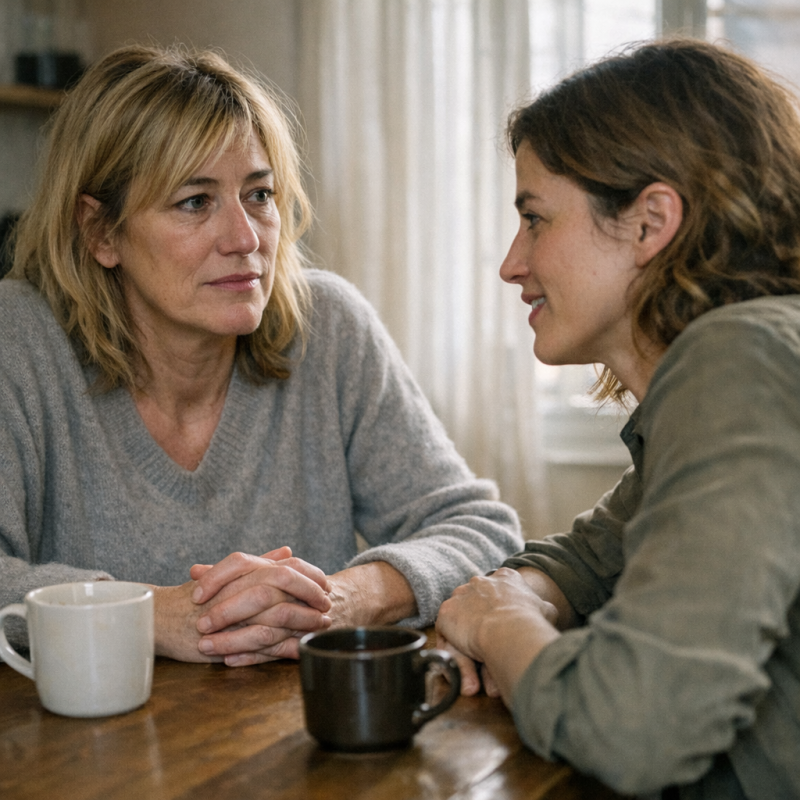 Image by FCT AI
Too Prepared
We talked for a few more minutes, logistics and possibilities, but I was only half-present. The other half of me was watching Sarah, noticing things I hadn't before. Her composure had never wavered, not once. Not when discussing her absent father, not when showing me photos of her childhood, not when making her requests. She had this calm, collected demeanor that seemed almost practiced. Every answer came quickly, confidently. When I'd asked about her mother's passing, she'd answered without hesitation, giving details about the cancer, the timeline, the funeral arrangements. Nothing inappropriate, but also nothing that seemed to catch her off-guard. I realized she'd anticipated every question I might ask and had responses ready. Even the photographs on her phone—she'd scrolled directly to them, as if she'd prepared the exact sequence she wanted to show me. The thought made me uncomfortable in a way I couldn't quite articulate. Maybe this was just how she processed grief, through control and preparation. Or maybe... I didn't know what the 'maybe' was yet. She had answers ready for questions I hadn't asked, as if she'd anticipated every turn of our conversation.
 Image by FCT AI
The Drive Home
The drive home felt longer than the drive there. My mind kept circling back through the conversation, replaying moments, examining details. Sarah had been so poised, so articulate, so prepared. It made sense, in a way—she'd probably been planning this meeting for months, maybe years. Of course she'd thought through what to say. But something nagged at me, something I couldn't quite name. The way she'd talked about her mother. Loving, yes. Respectful, absolutely. But there'd been this moment when she mentioned Elaine's death, and her mouth had done this thing—not quite a smile, but almost. Just for a second, there and gone. Maybe I'd imagined it. Maybe it was just a nervous tic, the way some people smile when they're uncomfortable. Grief does strange things to facial expressions. I knew that. But I couldn't stop seeing it in my mind, that brief flash of something that didn't quite match the words she was saying. The highway stretched ahead of me, familiar and unchanging. I kept thinking about how Sarah had smiled when talking about her mother's death—just a small, quick smile, there and gone.
 Image by FCT AI
Reporting Back
Richard was in the living room when I got home, reading something on his tablet. I sat down across from him and told him about the meeting. He listened without looking up, his face completely neutral. When I finished, he asked what she looked like. I described her—tall, dark hair, his eyes. He nodded once, then asked if she'd seemed stable. Stable. That's the word he chose. Not 'kind' or 'intelligent' or 'happy.' Stable, like she was a liability to assess. I told him she was a successful professional, that she seemed well-adjusted considering everything. He made a small sound, almost dismissive. Then he asked how much she wanted. I stared at him. 'She doesn't want money,' I said. He frowned, actually frowned, like I'd told him something that didn't compute. 'Then what does she want?' he asked, genuinely confused. I didn't answer right away because I was trying to process what I was seeing in his face. He asked if she wanted money, and when I said no, he seemed confused, as if that were the only reason people existed in his life.
 Image by FCT AI
The Request Delivered
The next morning, I told him Sarah wanted to meet the family. He was pouring coffee when I said it, and his hand stopped mid-pour. 'No,' he said. Just that. No explanation, no consideration. I asked him to at least think about it. He set the pot down too hard. 'I've thought about it for forty-two years, Margaret. The answer is no.' His voice had this edge I'd rarely heard. I pressed—gently, I thought—saying she just wanted to know her siblings, to understand where she came from. He turned to face me fully. 'She has no siblings. David and Jennifer are my children. She's...' He paused, choosing his words. 'She's someone Elaine claimed was mine.' I felt something cold settle in my chest. 'You never took a paternity test?' I asked. 'I wasn't going to give her that satisfaction,' he said. 'And I'm not giving this woman that satisfaction either.' I said, 'She's your daughter,' and he said, 'Legally, that might not even be true,' and I realized he'd never once acknowledged her as his.
 Image by FCT AI
The Lawyer
That afternoon, Richard mentioned he'd spoken to Gerald Whitmore—his attorney for thirty years. Just a preliminary conversation, he said. About his exposure. That's how he phrased it. His exposure. Like Sarah was a toxic spill, a public health hazard. I asked what kind of exposure concerned him. He talked about estate implications, potential claims, liability issues. Legal terms that turned a human being into a problem to be contained. 'She says she doesn't want money now,' he explained, 'but that could change. I need to understand my obligations, if any.' I watched him as he talked, really watched him. His jaw was set in that way it got when he was managing a business problem. Cool, analytical, strategic. This was his daughter he was discussing. A woman who'd grown up without him, who'd lost her mother, who just wanted to be acknowledged. And he was building a case file. Preparing his defense. Calculating his risk. He was building a defense against his own child, and I wondered when I had stopped recognizing my husband.
 Image by FCT AI
Sarah's Follow-Up
Sarah's email came three days later. Subject line: 'Following up on our conversation.' She wrote that she understood Richard might need time, but she hoped we could schedule something soon—maybe a casual coffee, just the three of us to start. Her tone was warm but persistent. There was a gentle pressure in the way she phrased things: 'I know this is difficult, but I've been waiting a long time.' And then: 'I don't want to intrude on your family, but I am family too.' Reasonable words. Completely reasonable. But something about reading them made my chest tight. I was caught between Richard's cold refusal and Sarah's patient insistence, and I didn't know how to navigate this space. I hadn't asked for this position—mediator between a father who wouldn't acknowledge his daughter and a daughter who deserved acknowledgment. I read the email three times, trying to figure out how to respond. She wrote, 'I understand this is difficult, but I've waited 42 years,' and I felt caught between two people I barely understood anymore.
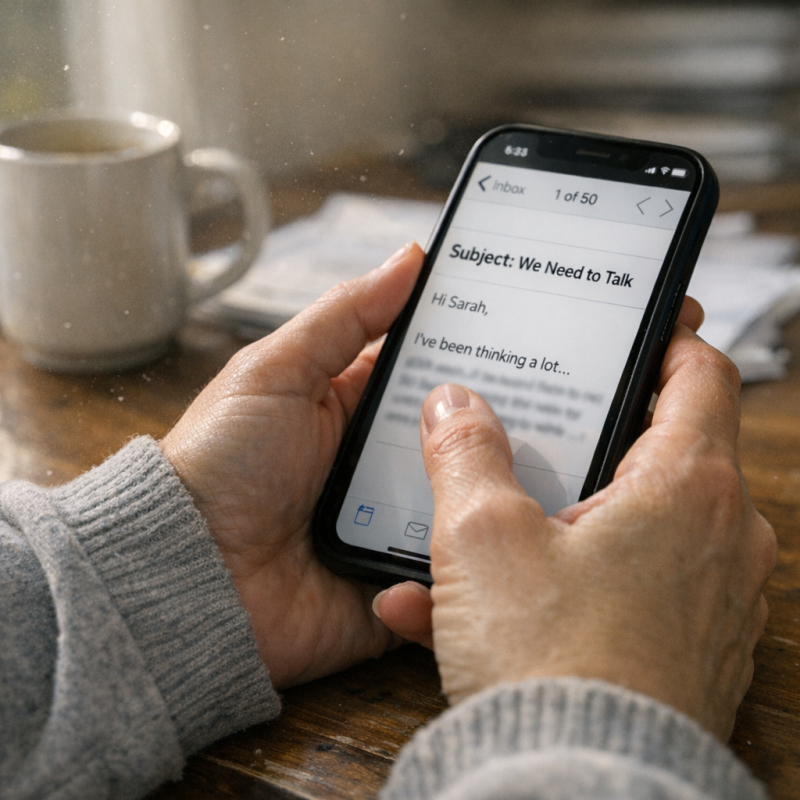 Image by FCT AI
The Second Meeting
We met again at the same café. I'd asked Sarah to give me one more conversation before I involved Richard directly. She agreed immediately, which should have been my first clue. I explained—as gently as I could—that Richard was struggling with this. That he needed more time. Sarah nodded thoughtfully, sipping her tea. 'How much time?' she asked. I didn't have an answer. She smiled then, not unkindly. 'I expected this,' she said. 'Men like Richard don't suddenly develop a conscience.' The phrasing struck me. Men like Richard. As if she'd categorized him, studied the type. I asked what she meant. She explained that she'd done research on absent fathers, read memoirs, joined support groups. 'There's a pattern,' she said. 'First denial, then legal concerns, then anger that you're disrupting their constructed life.' She recited it like a checklist. I sat there, watching her, and something shifted in my perception. The script was too perfect. The predictions too precise. She said, 'I expected this,' with such certainty that I wondered how long she'd been planning these conversations.
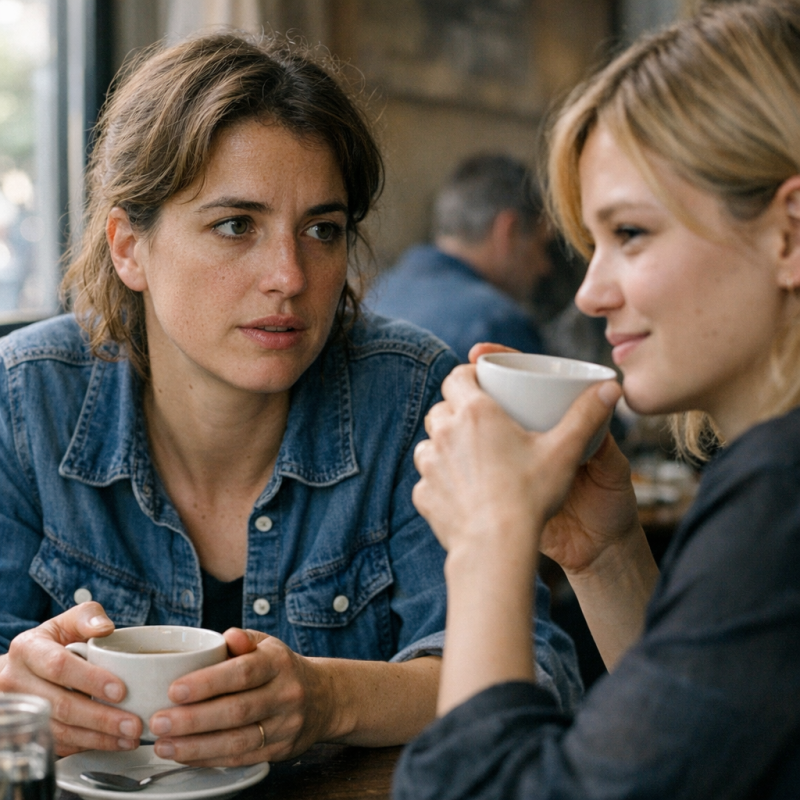 Image by FCT AI
The Friend's Warning
Claire called that evening. 'Don't be mad,' she started, which immediately made me nervous. She'd done some digging—just casual internet searching, she claimed. Looking into Sarah's background. 'I found her LinkedIn, her Facebook, some old Twitter posts,' Claire said. 'Margaret, there's a pattern.' My stomach clenched. Claire explained that five years ago, Sarah had very publicly called out a former employer for discrimination. Not just a complaint—a detailed, documented campaign with screenshots, timelines, witness statements. The company had settled quietly. 'Before that,' Claire continued, 'there was something with a landlord. And before that, an ex-boyfriend who she accused of financial manipulation.' Each situation had been meticulously documented, publicly aired, strategically escalated. 'I'm not saying she was wrong,' Claire said carefully. 'But she clearly knows how to build a case.' We met for coffee the next morning. Claire showed me Sarah's social media from five years ago, where she'd publicly called out a previous employer with forensic detail, and I felt my stomach drop.
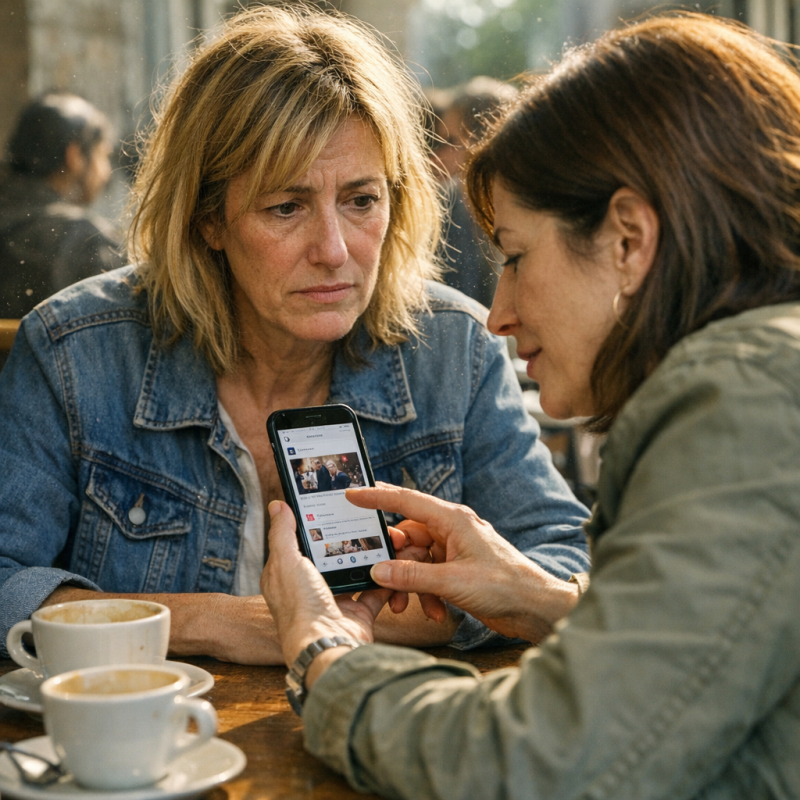 Image by FCT AI
The Research
I spent the next two days going through everything I could find about Sarah online. LinkedIn showed a successful career but several unexplained gaps. Facebook was mostly private, but her public posts revealed something: she documented everything. Photos with timestamps. Status updates about minor injustices—a rude waiter, a dishonest mechanic—written with the precision of someone building a record. Her Twitter history was more revealing. Threads about accountability, about men who escape consequences, about systems that protect the powerful. All articulate, all measured, all eerily strategic. She'd retweeted articles about public shaming as justice. She'd liked posts about exposing hidden truths. There was nothing explosive, nothing that screamed warning. Just a steady pattern of someone who believed in documenting wrongs and making them visible. Someone who prepared. Someone who planned. Someone who turned personal grievances into public record. Every post, every comment was measured and strategic, and I started to wonder if I was part of a case she'd been building all along.
 Image by FCT AI
The Fourth Letter
The envelope arrived on a Tuesday, addressed to David and Jennifer at our home address. I opened it before I'd fully processed what I was doing. Inside were two letters—identical, it turned out—plus a separate sheet. The letters told Sarah's story: her childhood without a father, her mother's struggles, the years of wondering. But attached was something else. A timeline. Dates and locations. Copies of Richard's business travel records from the late seventies. Photocopies of what appeared to be internal emails—how had she gotten those? A list of names: family members, Richard's former colleagues, people from our church. Each name had a checkmark beside it. At the bottom of the timeline was a note: 'Documentation provided for your review. Your father made choices that had consequences. Those consequences deserve acknowledgment.' This wasn't a daughter seeking connection. This was evidence. This was a prosecution. Inside was a detailed timeline of Richard's abandonment, complete with documentation, prepared like evidence for a trial—because that's exactly what this was.
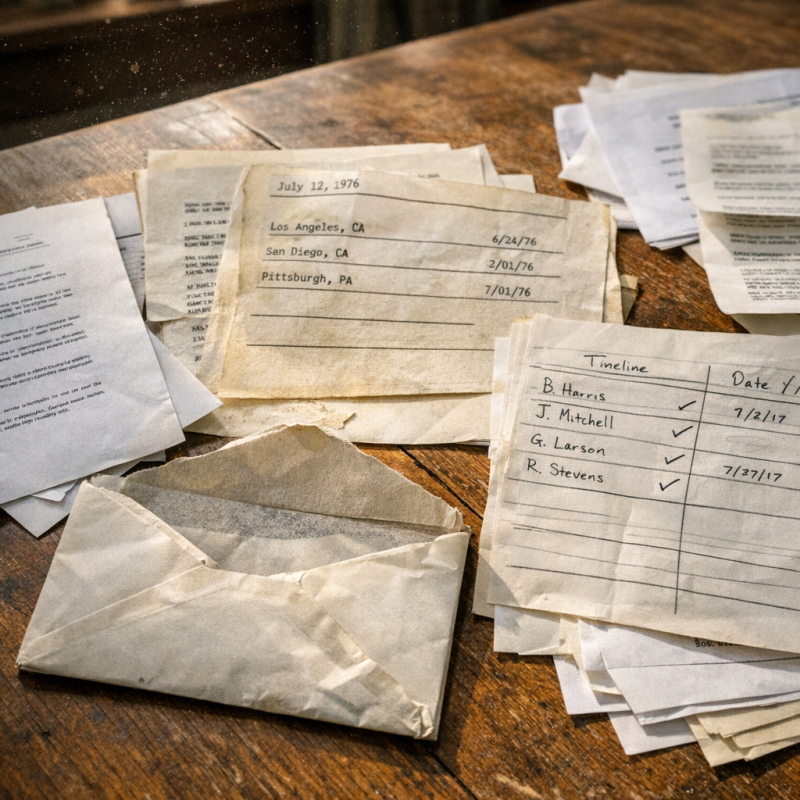 Image by FCT AI
The Campaign
I called Sarah from the kitchen, hands shaking so badly I almost dropped the phone twice. She answered on the second ring, her voice calm. Too calm. I asked her point-blank about the letters, about the timeline, about the list of names with checkmarks. There was a pause—not guilty, not defensive. Just waiting. Then she said, 'Yes. I sent them.' No apology. No explanation that would make it better. I said something about David and Jennifer, about how they didn't deserve to be ambushed like this. She laughed. Actually laughed. 'They're adults, Margaret. They can handle the truth about who their father really is.' I tried to reason with her, tried to explain that there were better ways to do this. She cut me off. 'Better for whom? For him? For you?' Her voice was ice. 'He doesn't deserve privacy when he stole my entire childhood,' and I realized she wanted to destroy him, not know him.
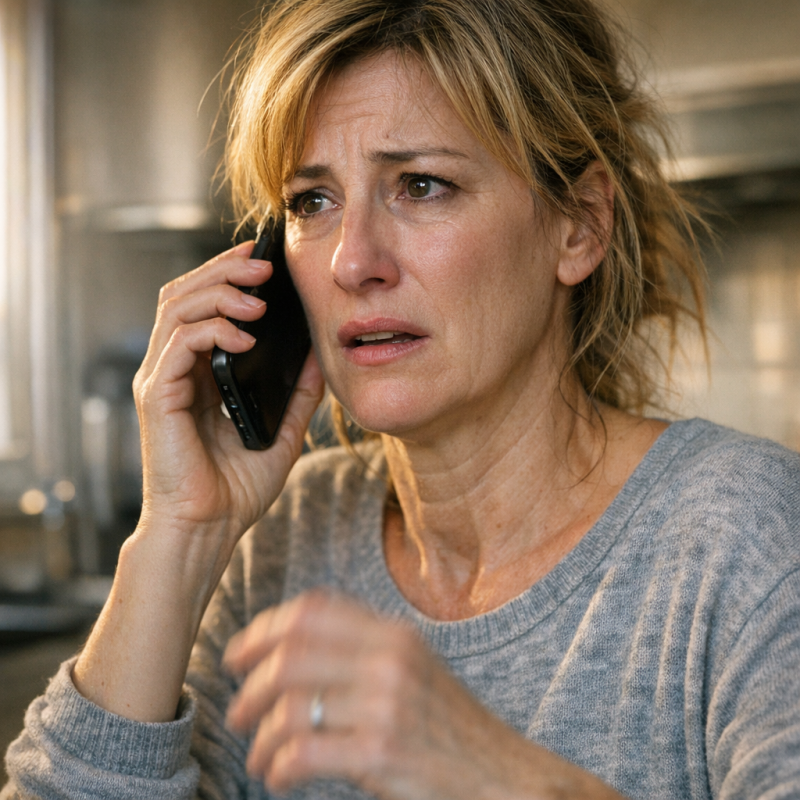 Image by FCT AI
The Other Children
I asked her why she was doing this, what she actually wanted. The silence stretched out so long I thought she'd hung up. Then she said, 'I wanted you to know you're not special.' My stomach dropped. She continued, her voice flat and factual. 'There are two others. At least two others that I've found.' I couldn't breathe. She told me about a woman in Ohio in 1976, another in Pennsylvania in 1978. Both got pregnant. Both were abandoned when they told Richard. She'd tracked them down through old addresses, cross-referenced with his employment records. One of those children was now forty-six. The other was forty-four. Both grew up without fathers. Both mothers struggled alone. Sarah had spoken to them. She had their stories. She had copies of birth certificates, old letters, proof that my husband had done this at least three times before he married me.
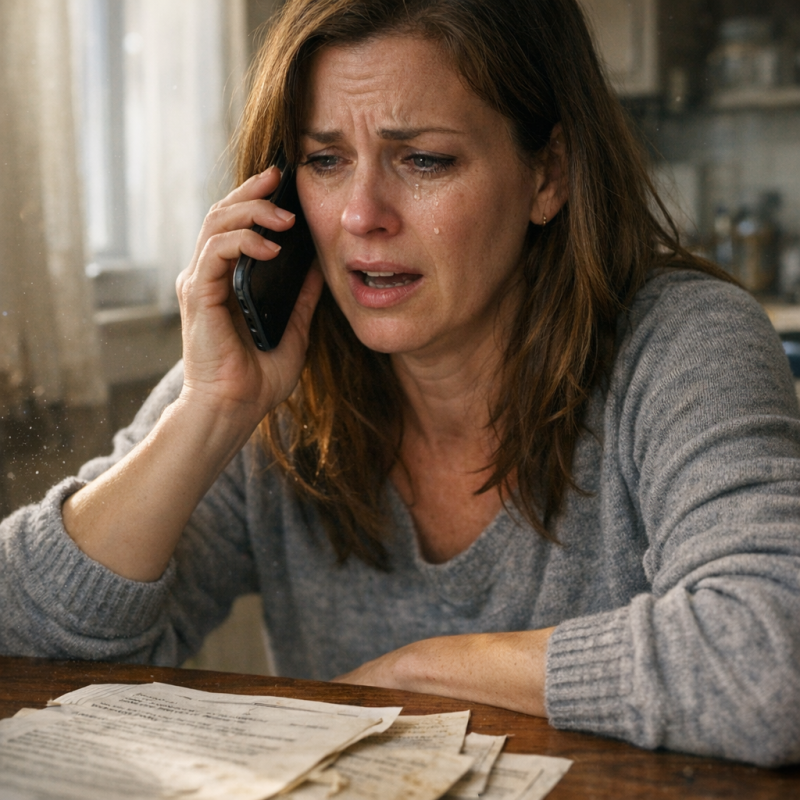 Image by FCT AI
The Ultimatum
I confronted Richard that night with everything Sarah had told me. I laid it all out—the Ohio woman, the Pennsylvania woman, the children he'd abandoned. I watched his face cycle through denial, then panic, then something worse: resignation. He sat down heavily on the bed. His hands covered his face. Then he started talking. Yes, there had been others. He'd been young, terrified, not ready. The first time it happened, he'd panicked and run. The second time, he knew what he was doing but did it anyway. By the time Sarah's mother got pregnant, it was almost a pattern—get out before it gets complicated. I stood there listening to him explain away three abandoned children like they were mistakes on a tax return. He kept saying he was different now, that he'd changed, that marrying me had changed him. I thought, 'You changed because you finally found someone who didn't get pregnant.'
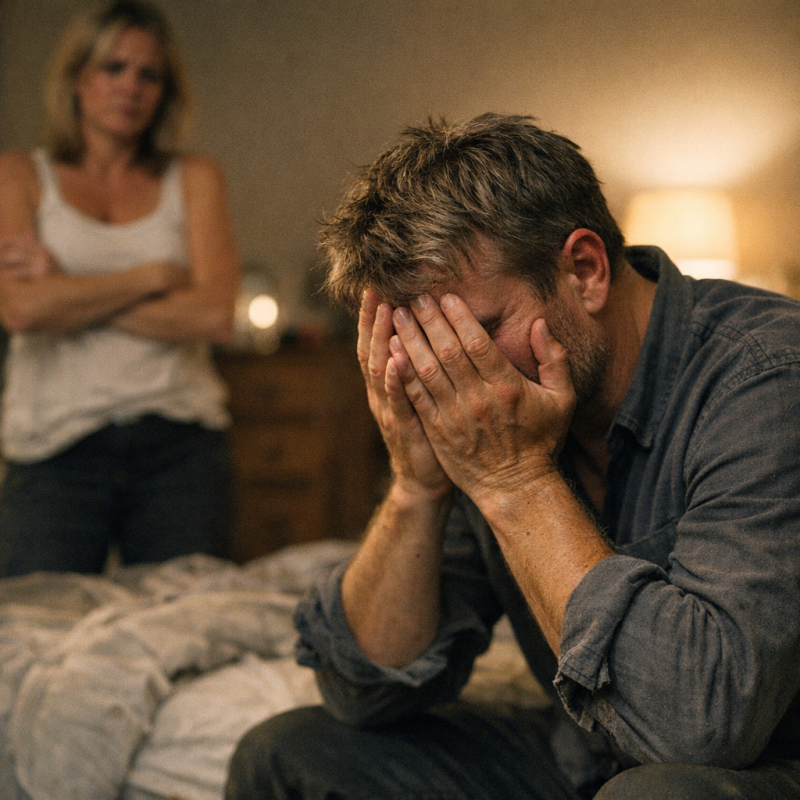 Image by FCT AI
The Collapse
Richard broke down then, really broke down. Tears, the whole thing. He kept saying he was young and scared, that he didn't know how to be a father, that he'd been raised by a hard man who never showed affection. All the justifications I might have found sympathetic forty-two years ago sounded hollow now. Because it wasn't once. It wasn't even twice. It was a pattern. A method. He chose himself every single time. He chose his comfort, his freedom, his unmarked future over three women and three children. Over Sarah. He was still talking, still trying to make me understand the fear he'd felt, the pressure. I wasn't even listening anymore. I was just watching him, this man I'd shared a life with, and seeing someone I didn't recognize. He reached for my hand, and I pulled away—the first time in forty-two years I couldn't bear his touch.
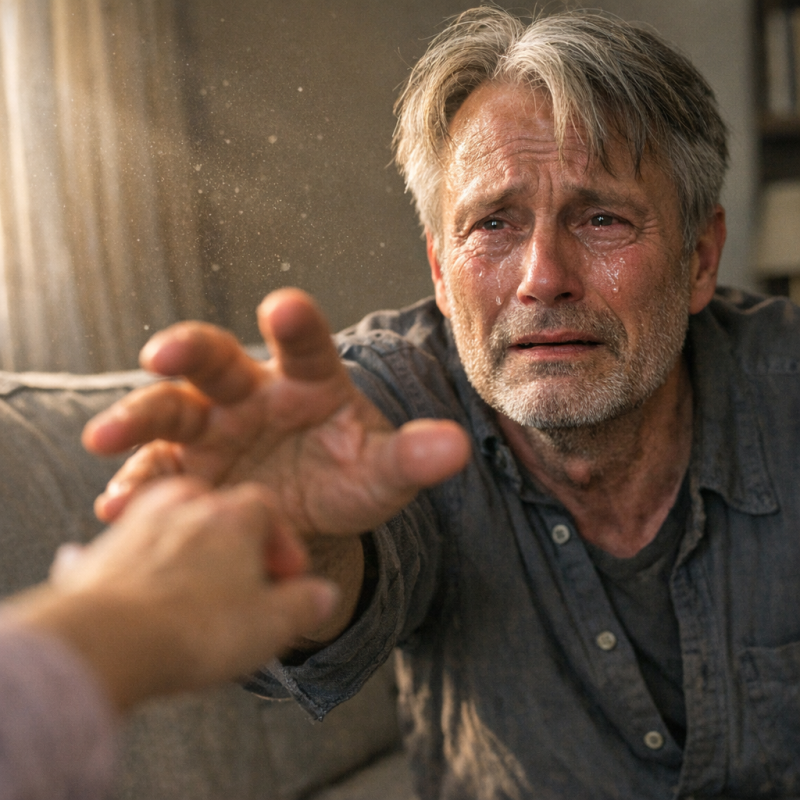 Image by FCT AI
The Choice
I told him I was going to call David and Jennifer. That they needed to hear this from me before Sarah's letters reached them. Richard's face went white. He started begging—actually begging. Please don't do this. Please don't destroy our family. Think of what this will do to the kids. Think of what people will say. He was grasping at anything, any argument that might make me stop. I just stood there, watching him plead. Finally he said, 'Everything we've built, Margaret. Everything we are. You'll destroy it all.' And something in me snapped. Not into anger. Into clarity. I looked at him—this man who'd been the center of my world for four decades—and I said it. Calmly. Clearly. 'You destroyed it forty-two years ago—I'm just finally admitting it.'
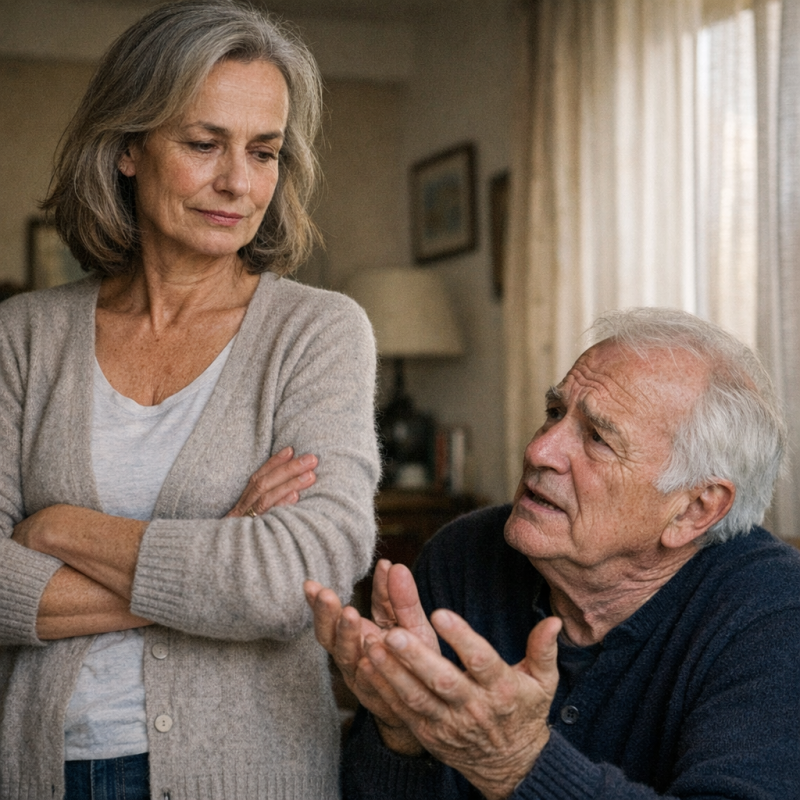 Image by FCT AI
Telling the Children
I called David and Jennifer the next morning. Asked them to come to the house that afternoon. Both of them. It was important. They arrived within an hour of each other, concern written all over their faces. Richard sat in his chair, silent. I told them everything. About Sarah. About the Ohio woman and her son. About the Pennsylvania woman and her daughter. About their father's pattern of abandonment. I watched my children's faces as I spoke. Jennifer's eyes filled with tears almost immediately. She kept looking at Richard, then at me, then back at Richard like she was trying to reconcile the man in the chair with what I was saying. David just went still. Completely still. His jaw tightened. His eyes fixed on his father with an expression I'd never seen before. Jennifer cried, but David just stared at Richard with an expression I'd never seen—as if looking at a stranger wearing his father's face.
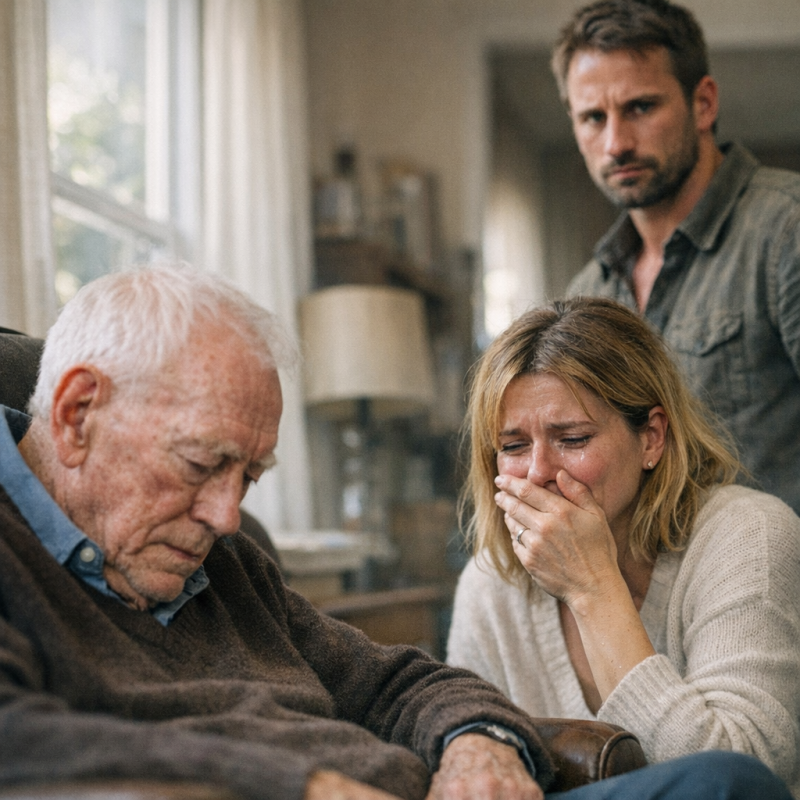 Image by FCT AI
The Accusations
After a long silence, David spoke. His voice was quiet, controlled. 'How long have you known?' The question was directed at me. Not at Richard. At me. I said I'd just found out, that Sarah had only recently contacted us. He shook his head slowly. 'No. How long have you really known? How long have you suspected something was wrong?' I tried to explain—the business trips, Richard's evasiveness, all of it had seemed normal at the time. David cut me off. 'Forty-two years, Mom. Forty-two years and you never once questioned anything?' Jennifer was crying harder now, but David's eyes never left my face. I could see it in his expression—doubt. Not about Richard. About me. About whether I'd been willfully blind all these years. I said I'd been blind, and he said, 'Or you just didn't want to see,' and I had no answer that didn't sound like a lie.
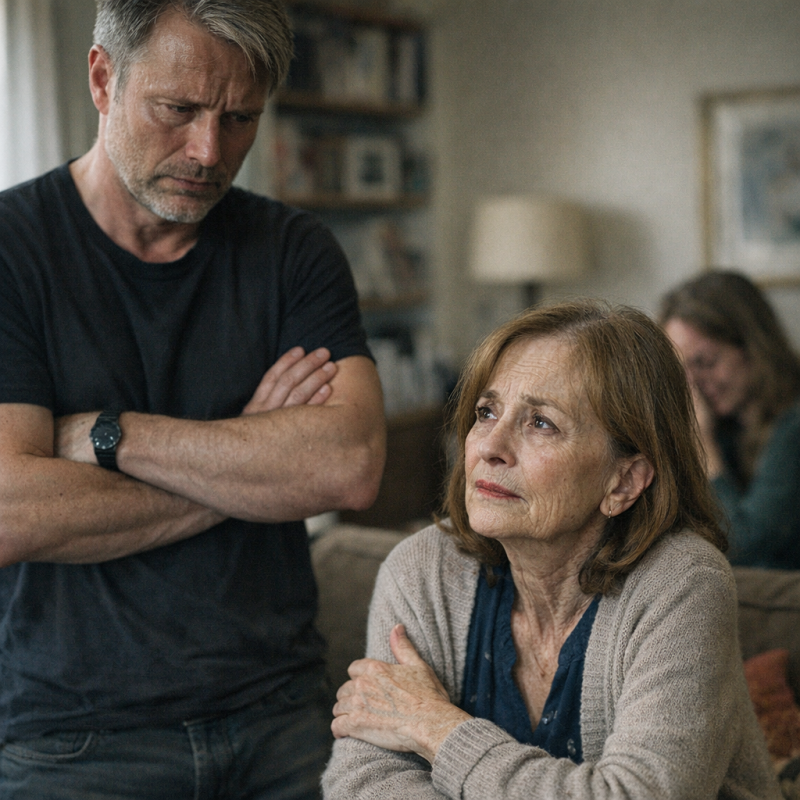 Image by FCT AI
Sarah's Victory
Sarah's letters started arriving everywhere two days later. Richard's former business partner called first, awkward and apologetic. Then Richard's college roommate. Then someone from the church board. Each call followed the same pattern—stunned silence, then careful questions, then uncomfortable excuses to hang up. I watched Richard check his phone obsessively, saw his face pale with each notification. By the end of the week, his phone had gone almost silent. The pastor called on Sunday morning. I answered. He was kind but firm. The elders had met. Given the circumstances, they felt it best if Richard stepped down from his leadership position immediately. Perhaps took some time away from services altogether. Until things settled. I thanked him and hung up. Richard was standing in the doorway, and I knew he'd heard. The pastor called to say Richard was no longer welcome in leadership, and I felt nothing—just empty recognition that this was what Sarah had wanted all along.
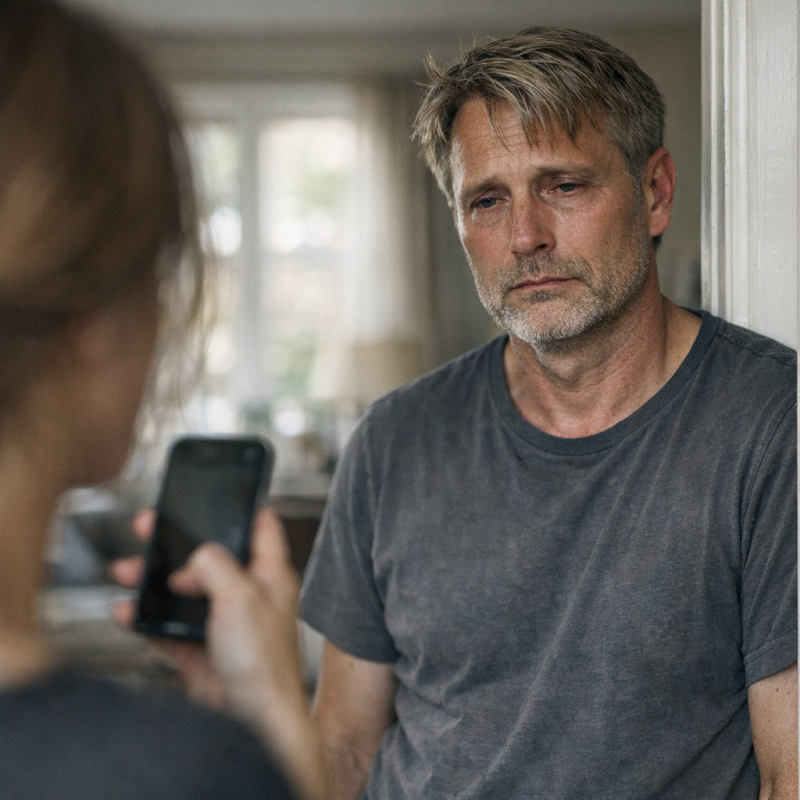 Image by FCT AI
The Question of Divorce
Claire brought wine, which I didn't touch. We sat at the kitchen table like we had a thousand times before, except nothing was the same. 'So are you leaving him?' she asked, direct as always. I opened my mouth to answer and realized I had no idea what to say. How do you divorce someone when you can't separate the real memories from the performed ones? The vacations, the dinners, the quiet Sunday mornings—were any of those genuine? Our daughter's wedding. My mother's funeral. Forty-two years of moments that felt true at the time. 'I don't know how to untangle it all,' I told her. She nodded, waited. 'Every memory I have is contaminated now. But they're still the only memories I've got.' I looked around the kitchen—the cabinets we'd picked out together, the table we'd refinished, the coffee maker he'd bought me for our twentieth anniversary. 'I don't know who I am if I'm not Richard's wife,' I said. Claire reached across the table, squeezed my hand. I'd built my entire adult life around a man I'd never actually known, and I had no idea who I was without him.
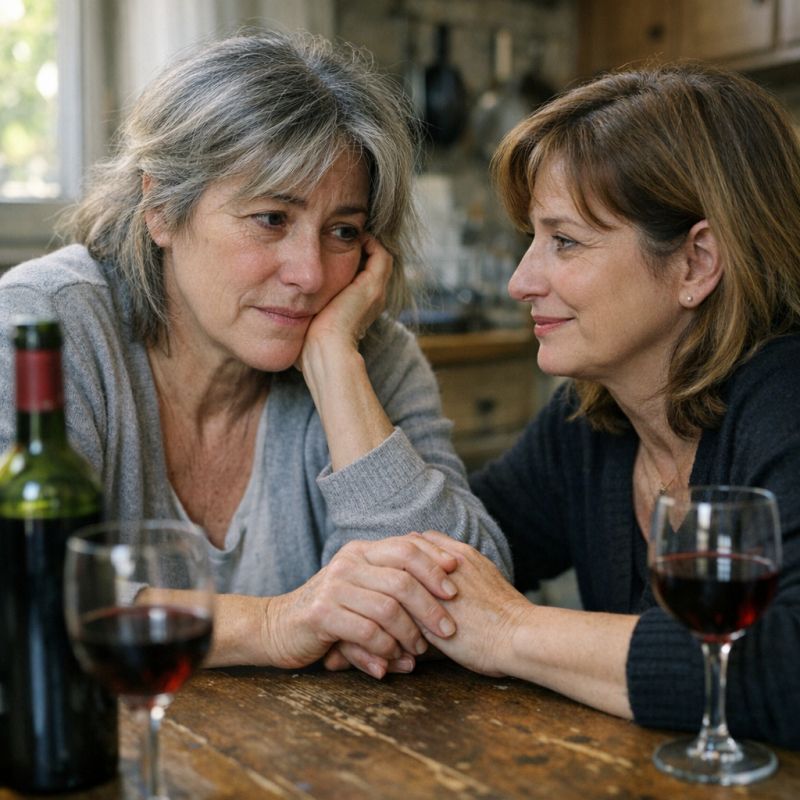 Image by FCT AI
Meeting the Others
I found them through Sarah's letters—names mentioned in passing, cities, years. It took me three weeks to work up the courage to reach out. The first woman, Janet, met me for coffee. She'd been Richard's girlfriend in Chicago in 1978, before he vanished. The second, Elena, video-called from Arizona. She'd been engaged to him in 1983. There were others. Each conversation followed a horrible pattern—the charm, the promises, the sudden disappearance without explanation. Janet said she'd thought she was crazy for years, blamed herself. Elena said she'd never trusted another man completely. We shared photos, timelines, details. The same restaurants in different cities. The same lines, the same gifts, the same careful construction of a future that never came. They were kind to me, these women. Understanding. We'd all loved different versions of the same performance. But when Elena said, 'At least you got the marriage,' I didn't know how to respond. I'd gotten forty-two years, yes. The house, the daughter, the appearance of permanence. One of them said, 'At least you got the marriage,' and I realized I didn't know if that was better or worse.
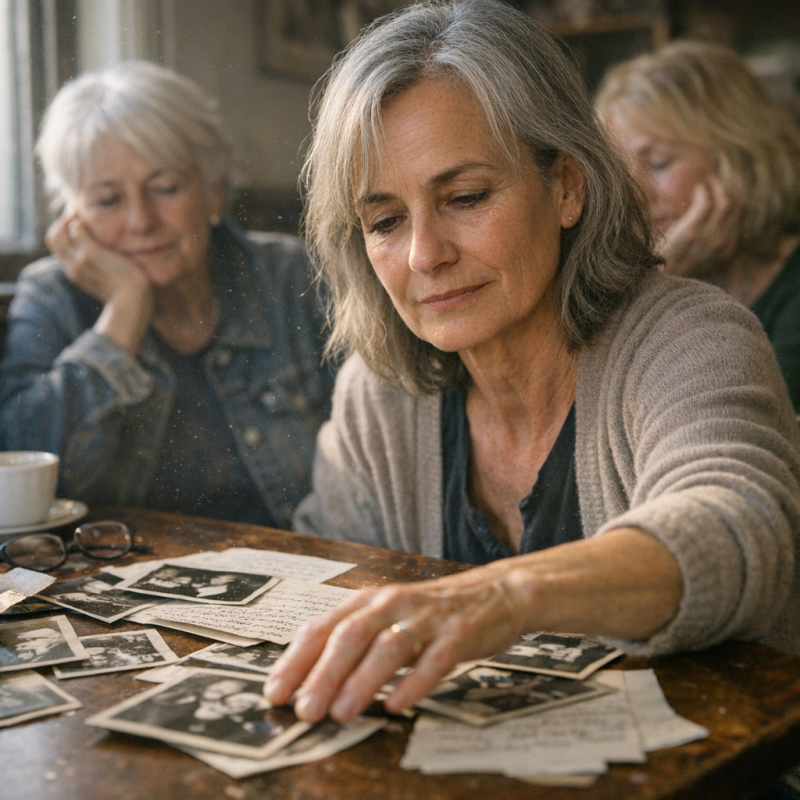 Image by FCT AI
The Separation
I told him on a Tuesday morning. No drama, no yelling. Just the simple truth: I needed space. Time to think without him in every room, filling every silence with his presence and his regret. 'How long?' he asked. His voice was small. 'I don't know,' I said. 'Maybe a few weeks. Maybe longer.' He nodded like he'd been expecting it. Started packing that afternoon. I stayed in the kitchen, listening to his footsteps upstairs, drawers opening and closing. When he came down with his suitcase, I noticed the box under his arm. Our photo albums. All of them. 'I thought I might...' he started, then stopped. 'I'll be at the Marriott on Route 9,' he said. I watched him load the car, methodical and careful like always. The albums went in first, protected. As he packed, I noticed he took the photo albums, and I realized he was already rewriting the story we'd lived.
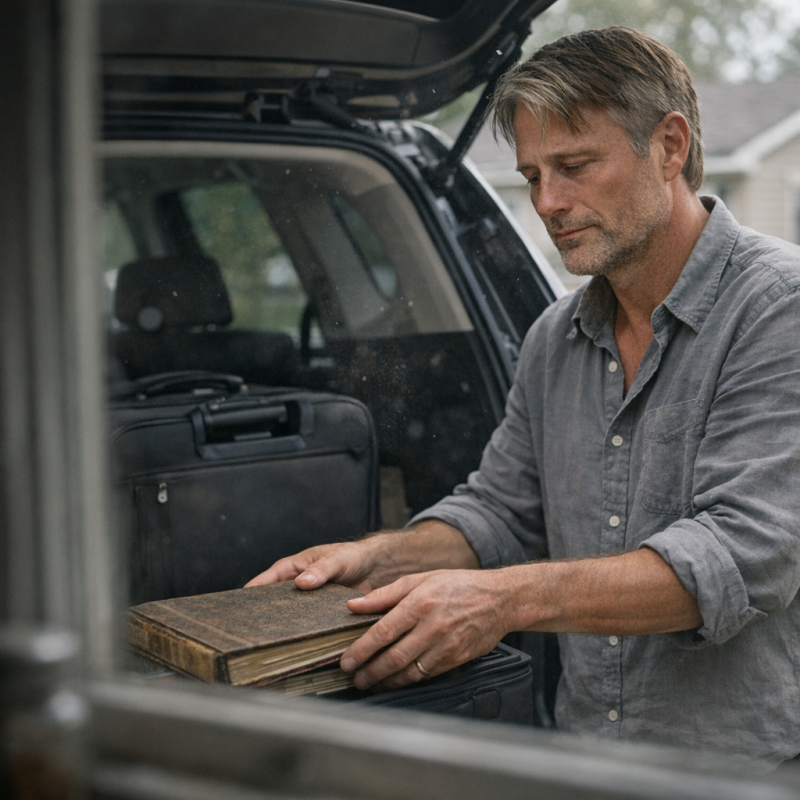 Image by FCT AI
The New Normal
Six months passed. Then eight. Richard stayed at the Marriott, then found a small apartment. We talked occasionally—logistics, finances, the careful distance of people who'd shared a life but couldn't share a future. The house felt different without him. Quieter. Sometimes lonely. But also, strangely, more honest. I started painting again, something I'd given up thirty years ago. Joined a book club. Had dinners with Claire where we talked about things that had nothing to do with Richard. Small things. New things. The mornings were hardest—waking up alone, making coffee for one. But I was learning to sit with the uncertainty, to stop needing every question answered. I didn't know if we'd divorce or reconcile. Didn't know what forgiveness looked like, or if it was even possible. But I was starting to know myself again, separate from the story he'd written for us. Sarah sent one final letter—an apology for the collateral damage—and I filed it away without responding, knowing some wounds serve better as reminders than closures.
 Image by FCT AI