The Message
So I'm sitting there at 1:47 AM, scrolling through Facebook because apparently I hate myself and need to see what people from high school are up to, when a message notification pops up. From someone named Evan Mitchell. I don't recognize the name, but the preview says 'I know this is going to sound strange, but I think we might be connected through your father.' Which, okay, lots of people reach out to me because of my dad. He's Daniel Vale, the novelist, and people are always trying to get to him through me. Usually it's aspiring writers or PhD students wanting interviews. I almost ignored it. Should have, probably. But I clicked anyway, and the guy's profile picture loads—just some basic shot of him standing near a beach, looking away from the camera, thirty-something with dark hair. Nothing remarkable. Except my stomach did this weird flip thing, and I got that prickling sensation on the back of my neck like when you walk into a room and know something's off but can't identify what. The sender's profile picture triggered something visceral in me—a feeling I couldn't name yet.
 Image by FCT AI
Famous Last Name
Growing up as Daniel Vale's daughter was like living in a house with beautiful furniture you weren't allowed to touch. My dad won the National Book Award when I was seven, and after that, everything changed. We moved from our normal two-bedroom apartment to a brownstone in Brooklyn Heights. Suddenly there were gates and security systems and an unlisted phone number. Dad became obsessive about privacy—no social media posts showing our address, no discussing his work-in-progress with anyone, no bringing friends over without advance warning. My mom said it was just how writers were, especially successful ones. People wanted pieces of him, she explained, and he needed to protect his creative space. I accepted it because, honestly, what else was I going to do? He was still the dad who made me pancakes on Sundays and helped with my college essays and called me every Wednesday evening without fail. But there were always locked rooms in that house, metaphorically speaking. Questions he'd redirect. Subjects that would make his jaw tighten. My dad's overprotectiveness always seemed like standard celebrity paranoia—until now.
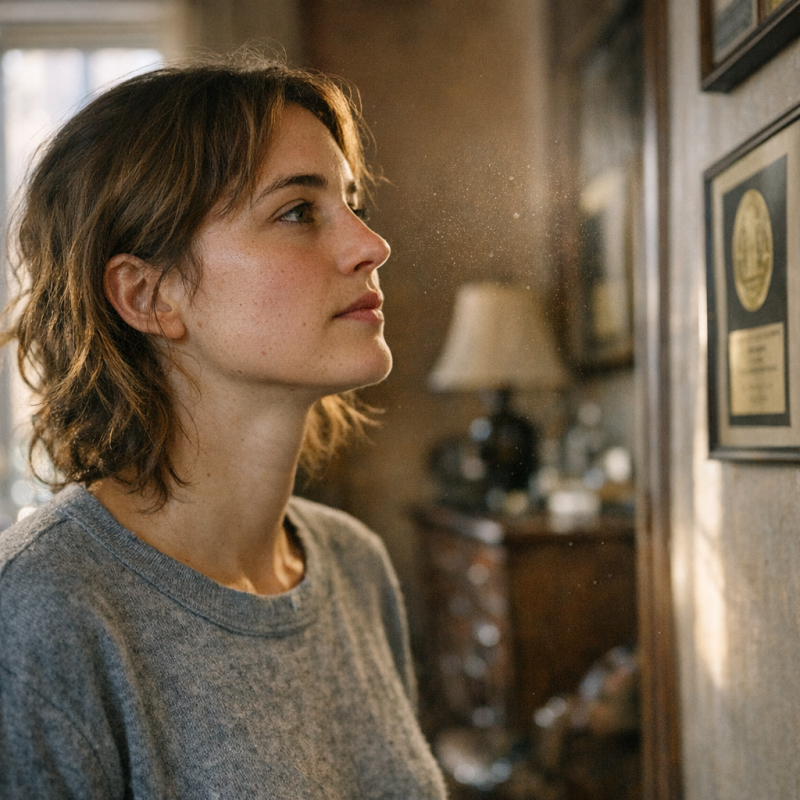 Image by FCT AI
You Look Exactly Like Someone
I waited until morning to reply, trying to sound politely curious but not encouraging. 'Hi Evan, thanks for reaching out. What kind of connection are you talking about?' Professional. Boundaried. Jessica, my best friend since college, read the exchange over my shoulder while we grabbed coffee the next day. 'It's probably nothing,' she said, but she had that look she gets when she thinks I'm being naive. Evan's response came through while we were still at the café: 'My mother knew your father in the early nineties. They were close. I've been trying to reach him for years, but I think his people screen messages. I'm not looking for anything, I promise. Just answers about that time in his life.' Then: 'Did your dad ever live in Oregon? Around 1992 or 1993?' I stared at my phone. My dad never talked about his twenties, that whole decade before he published his first novel at thirty-two. I'd always assumed he was just doing the usual struggling writer thing, waiting tables and working on his craft. When he asked if my dad ever lived in Oregon, something in my chest went cold.
 Image by FCT AI
The Polaroid
The photo came through three hours later. Just a simple message: 'I think you should see this.' Then the attachment loaded. It was a scanned Polaroid, the colors faded to that distinctive eighties-nineties amber tint. A young woman with curly dark hair stood next to a man I absolutely recognized as my father—maybe twenty-five years old, beard not yet gray, but definitely him. Same eyes, same crooked smile. He had his arm around the woman, and she was holding a little boy, maybe three years old, on her hip. They were standing in front of a house I'd never seen, somewhere with pine trees in the background. The woman was laughing at something off-camera. My dad looked happy in a way I'd never quite seen in our family photos—unguarded, young, free. I zoomed in on every detail, my heart hammering. The photo was real. No question. Not photoshopped, not staged. This had actually existed, this moment, this version of my father. The little boy in the photo looked exactly like the man messaging me.
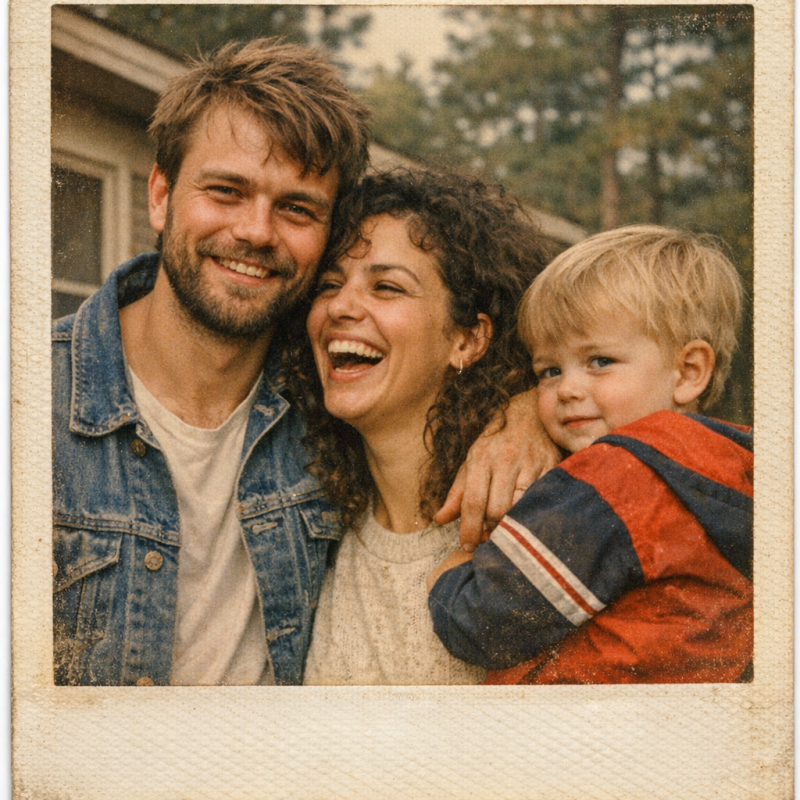 Image by FCT AI
Letters From the Attic
Evan's next message was longer, and I could feel the grief in it. 'My mother died six weeks ago. Pancreatic cancer. While cleaning out her apartment, I found boxes of letters and manuscript pages and photographs she'd never shown me. Some were addressed to your father. Others were drafts of letters she never sent. She kept everything hidden in the back of her closet for thirty years.' He sent photos of the letters—dated, postmarked, real. Claire Mitchell, that was his mother's name. The handwriting was elegant, slanted, desperate in places. I could only make out fragments in the photos, but certain phrases jumped out: 'You promised we'd figure this out together' and 'He asks about you' and 'I know you're scared but running doesn't solve anything.' Then Evan sent one more image. A letter with different handwriting—my father's distinctive scrawl that I'd recognize anywhere. It was addressed to Claire, dated March 1993. Most of it was cut off in the photo, but the visible section made my hands shake. One letter contained a phrase that made my blood run cold: 'If anything ever happens, it's safer if no one knows.'
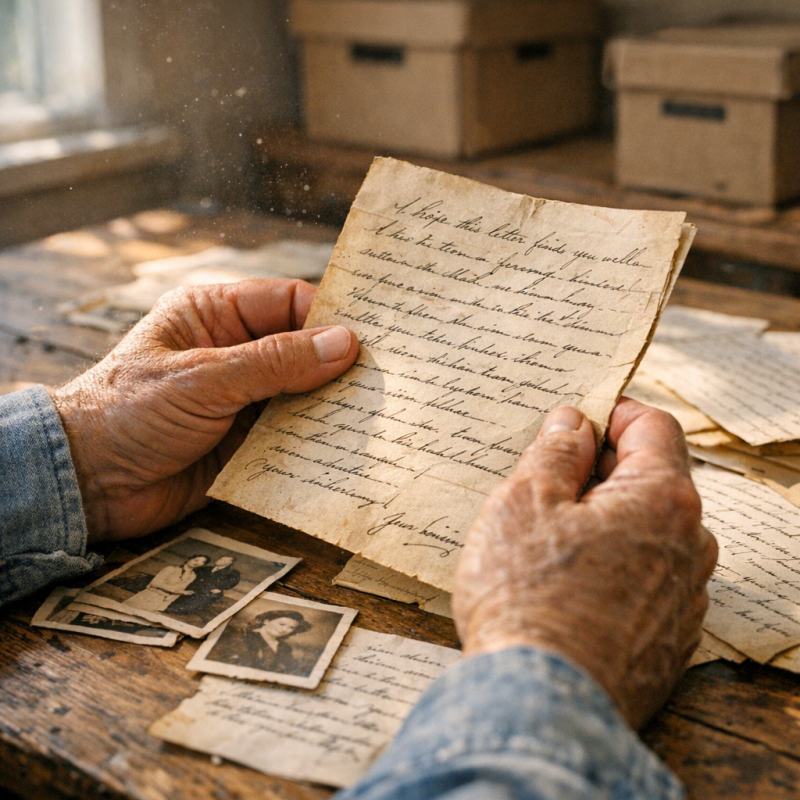 Image by FCT AI
Ignored Messages
I asked Evan why he was contacting me now, after his mother had kept this secret his whole life. His response came quickly, like he'd been waiting for the question. 'I found his email address in her papers. I've sent him probably fifteen messages over the last month. Nothing. Then I found his publisher's contact form and sent a letter through that. No response. His agent's website has a query system—tried that too. Radio silence. So I found you.' He paused, then: 'I'm not looking for money. I'm not trying to blow up his life or yours. My mother never asked him for child support, never threatened to expose him, nothing. But she saved everything, and now she's gone, and I just want to understand what happened. Why he left. Whether he ever thought about me. Whether he even knows I exist.' I read those words sitting on my apartment floor with my back against the couch, and I felt something crack in my chest. This wasn't some opportunistic stranger. This was a man grieving his mother and searching for a ghost. He didn't want money or fame—he just wanted to know why his father disappeared.
 Image by FCT AI
Sleepless
I didn't sleep that night. Instead, I opened my laptop and started searching. Claire Mitchell Oregon 1990s. Claire Mitchell writer. Claire Mitchell Daniel Vale. Most searches came up empty—she had essentially no digital footprint, which made sense for someone from that era who apparently lived quietly. But I found an old literary magazine archive from Portland that listed contributor names, and there she was: Claire Mitchell, published in 1992. A short story called 'The Leaving Season.' I found a genealogy site that confirmed her death six weeks ago in Eugene, Oregon. Survived by one son, Evan Mitchell. Everything he'd told me checked out. I looked at that Polaroid again, zoomed in until the pixels blurred. My father's face. Younger, happier, with his arm around this woman and her child. His child? I studied Evan's Facebook photos with new eyes. The shape of his jaw. The way his eyebrows arched. Oh god. Every search led to more questions, and by dawn I knew I had to confront my father.
 Image by FCT AI
The Kitchen Table
I drove to my dad's house in Montauk the next morning, didn't call ahead, just showed up at 10 AM with my phone clutched in my hand like a weapon. He answered the door in his weekend clothes, reading glasses pushed up on his head, surprised but pleased to see me. 'Emma, sweetheart, what are you doing out here?' I didn't say anything, just walked past him into the kitchen and put my phone on the table with the Polaroid pulled up. Then I stepped back and watched his face. The change was instant and total. All the color drained out of his skin, leaving him gray. His hand reached out to steady himself against the counter. His mouth opened and closed without sound. I'd seen my father angry before, seen him stressed and tired and frustrated. I'd seen him cry at my college graduation and at my mom's funeral. But this was something else entirely. This was terror, pure and primal, the kind that makes your body forget how to function. I had never seen my father look truly afraid before—not until that moment.
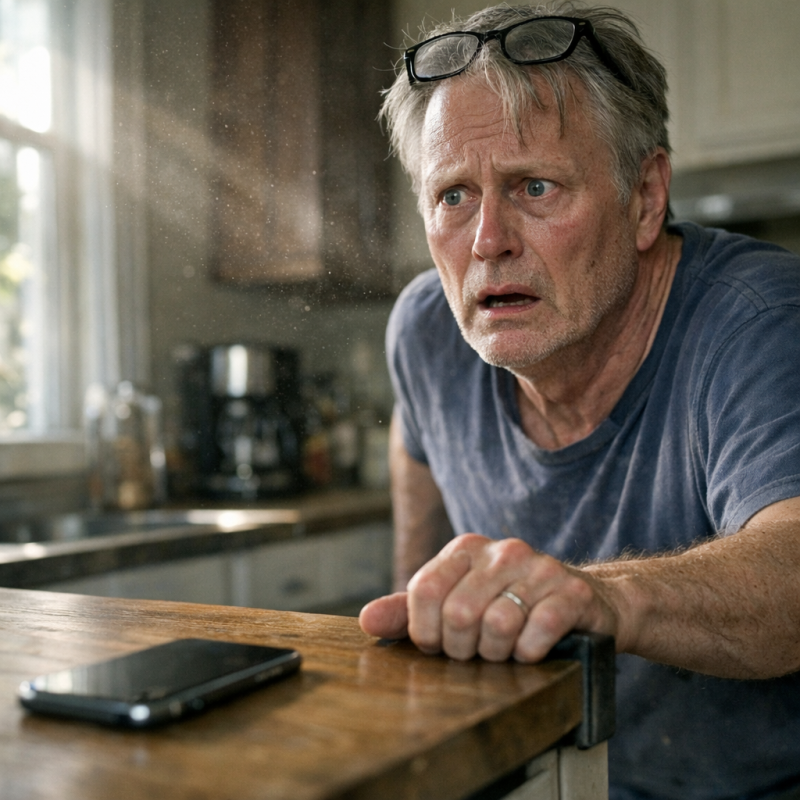 Image by FCT AI
I Always Knew This Day Might Come
He sat down heavily at the kitchen table, suddenly looking every one of his sixty-two years. 'I always knew this day might come,' he said, his voice barely above a whisper. 'I've been waiting for it.' That's when the anger started building in my chest. Not confusion, not questions—anger. Because he wasn't asking who Evan was or where this photo came from. He already knew. 'How long?' I asked. 'How long have you been waiting?' He looked up at me with those tired eyes, the ones I'd trusted my entire life. 'Thirty-four years, Emma. I've been waiting thirty-four years for this moment.' The kitchen felt too small suddenly, the air too thin. Thirty-four years. I did the math in my head. That was before he'd met my mom. Before he'd written his first novel. Before everything I knew about him had even started. 'Oregon,' he said, like the word itself was painful. 'It started in Oregon.' When he said he'd been waiting thirty-four years for this moment, I realized my entire childhood had been built on a secret.
 Image by FCT AI

History's most fascinating stories and darkest secrets, delivered to your inbox daily.
Claire
He told me about Claire Mitchell the way people talk about first loves—with this mixture of nostalgia and regret that made me uncomfortable. They'd met in Portland in 1989. She was a waitress at a diner near his apartment, trying to write a novel on her breaks. He was twenty-eight, teaching composition at Portland State, working on his own manuscript. 'She was brilliant,' he said, staring at his hands. 'Genuinely brilliant. Not just talented—sharp and observant in ways that made everyone else seem half-asleep.' They'd fallen hard and fast, the way you do in your twenties when you think intensity equals destiny. Late nights talking about books and stories. Weekends driving up the coast. She'd get these ideas, he said, these incredible narrative concepts that would knock him sideways. He described their apartment, her handwriting, the way she'd laugh at her own jokes. The details were too specific to be fabricated. But something about the way he framed it all bothered me—like he was describing a beautiful dream he'd had once, not a real person he'd abandoned. He spoke about her like she was the one that got away—but I was starting to suspect he was the one who ran.
 Image by FCT AI
Dangerous People
That's when the story took a turn I wasn't expecting. 'I was researching a novel,' he said, 'about corruption in the Portland restaurant industry. Small-time stuff, I thought. Health inspectors taking bribes, that kind of thing.' But he'd apparently stumbled onto something bigger—money laundering through restaurant supply companies, connections to organized crime families operating out of Seattle. He kept digging because he thought it would make the novel more authentic. Then federal investigators showed up at his apartment. They'd been watching the same people, and now they were watching him. This is where it gets weird. He actually got up and went to his office, came back with a folder of newspaper clippings and legal documents. Articles about federal investigations in Portland, 1989-1990. Letters on official letterhead. Even a photo of him with a man he identified as Marcus Chen, the attorney who'd helped him navigate everything. Marcus still handled his legal affairs, he said. I could call him if I wanted verification. He showed me newspaper clippings and legal documents—but something about the story felt too convenient.
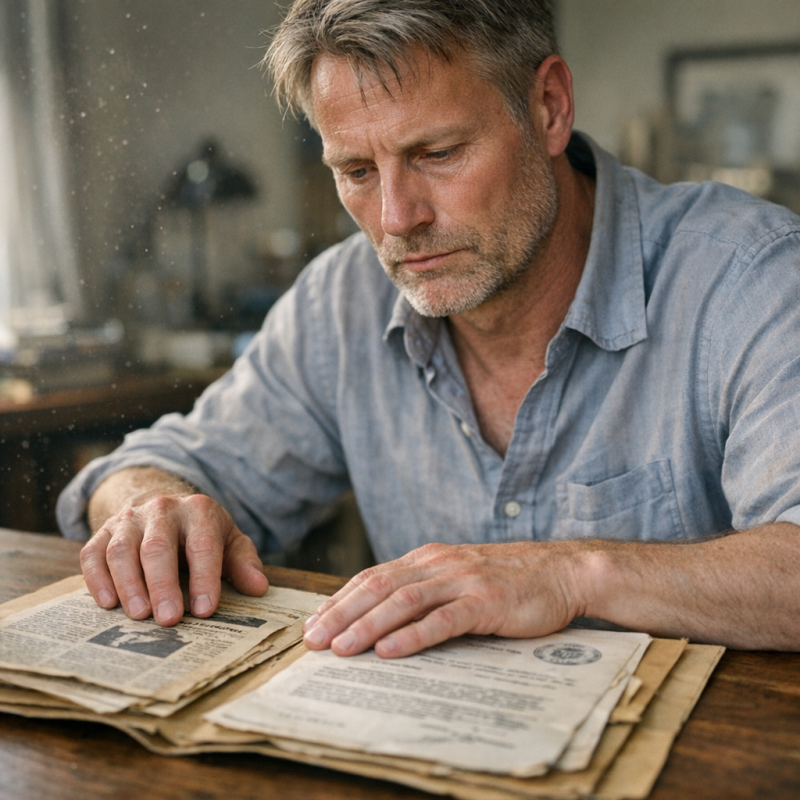 Image by FCT AI
The Witness
Here's where my dad's story became almost heroic, which should have been my first clue. He claimed he'd become a confidential civilian witness, providing information to federal prosecutors in exchange for protection. But here's the thing—he wasn't in danger himself, not initially. The danger was to Claire. She was pregnant by then, he said, just a few months along. They'd learned about the baby right around the time the investigators started circling. The men he'd been researching found out someone was talking. There were threats, vague at first, then more specific. Marcus advised him to disappear, to let the investigation proceed without him. 'I left to protect her,' he said, looking me straight in the eye. 'To protect them. If I'd stayed, if they'd known about the baby, about our connection...' He trailed off, letting me fill in the implications. It was a good story. It positioned him as selfless, as making an impossible choice for the right reasons. But I kept thinking about that newspaper article he'd shown me, the one about a key witness who'd vanished before the trial. It mentioned someone disappearing to avoid testifying. The newspaper article mentioned a witness who vanished—but it never said he was protecting anyone but himself.
 Image by FCT AI
Temporary Became Permanent
The disappearance was only supposed to last a few months, he insisted. Just until the trial concluded and the main players were sentenced. He'd moved to Boston, changed his routine, kept his head down. He'd sent one letter to Claire through Marcus, explaining he had to stay away for their safety. He never got a response. 'Then the novel sold,' he said quietly. 'The one I'd been working on—not the crime book, a different one. It got picked up, got attention, and suddenly I had this public profile I hadn't anticipated.' The publicity made returning to Portland impossible, he claimed. His face was on book jackets, in newspapers. If the wrong people saw him, made the connection back to Claire... 'It became complicated,' he said. 'The temporary thing became permanent, and then years passed, and the shame of it—the shame became its own kind of paralysis.' He met my mom two years later. Started the life I knew. Buried Oregon under layers of new history. 'They were better off without me,' he said, but it sounded rehearsed, like something he'd been telling himself for decades. He said they were better off without him, but I wondered if he was better off without them.
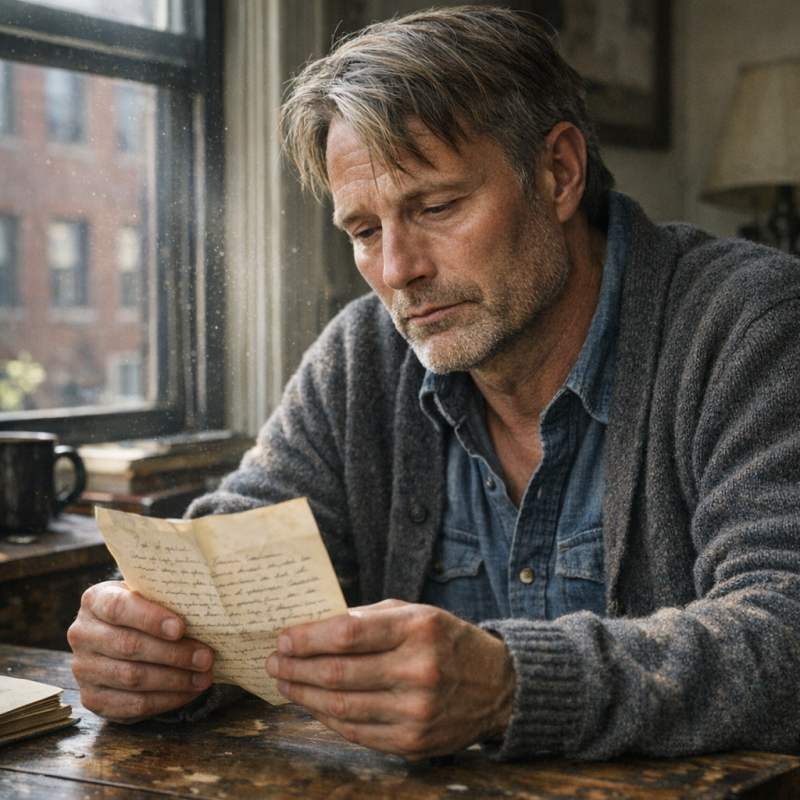 Image by FCT AI
Did You Know He Was Yours?
I sat with everything he'd told me for what felt like hours but was probably only minutes. My coffee had gone cold. Outside the window, the ocean looked gray and churning. Then I asked the question I'd been dreading. 'Did you know?' I said. 'When you left—did you know he was yours?' The pause before he answered told me everything. 'Yes,' he finally said. 'Claire called me a few days before I left. She was twelve weeks along. We were going to tell everyone together, make plans.' He rubbed his face with both hands. 'Marcus tried to find out what happened after I left. He learned she'd had a boy. I knew I had a son out there, Emma. I've always known.' The anger that had been building in me since I'd walked in the door finally crystallized into something sharp and clear. This wasn't a story about protection or impossible choices. This was a story about a man who'd abandoned his pregnant girlfriend and their child, then built a whole new life as if they'd never existed. For thirty-four years, he'd woken up every morning knowing he had a son somewhere. He knew—for thirty-four years, he knew he had a son and did nothing.
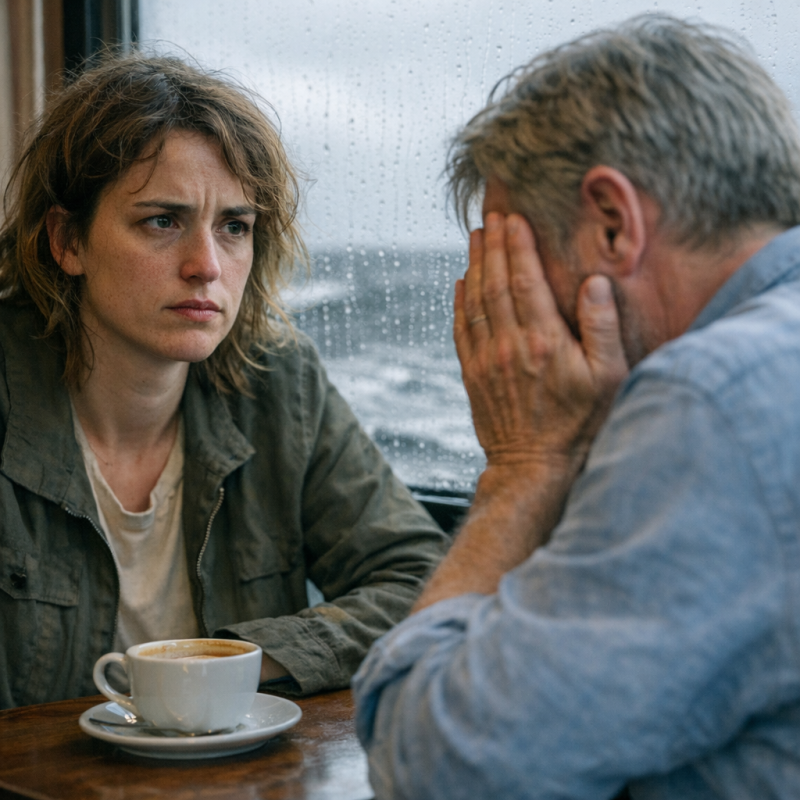 Image by FCT AI
Claire's Letter
That's when my dad dropped the detail that truly unsettled me. 'Evan's message mentioned his mother's death,' he said. 'Marcus did some research after you showed me that photo. Claire passed away six months ago. She left Evan a sealed letter, to be opened after she was gone.' I waited, sensing there was more. 'The letter explained everything—who I was, where I'd gone, why I'd disappeared. And apparently,' he paused, meeting my eyes, 'it mentioned you. By name. She'd been following my career, my life. She knew when I got married, when you were born. She'd kept track all these years.' The thought made my skin crawl. This woman I'd never met had been watching us from a distance, collecting information about my family like we were subjects in some long-term study. 'Why would she tell him about me?' I asked. 'Why specifically include my name?' My dad shook his head. 'I don't know. Maybe she wanted him to know he had a sister. Maybe she thought you deserved to know about him.' But I couldn't shake the feeling that it was more calculated than that. Claire had watched us from afar for years, waiting for the right moment to connect us.
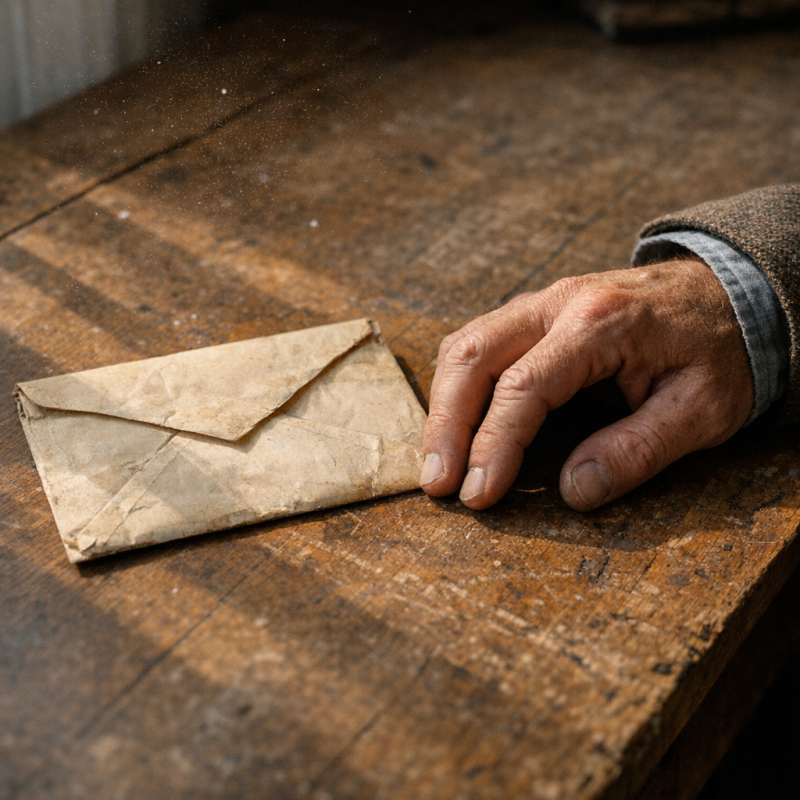 Image by FCT AI
Meeting Evan
Against my dad's wishes—he'd actually asked me not to respond to Evan at all—I sent a message suggesting we meet. I picked a coffee shop in the Village, neutral territory, public but not too crowded. I told myself I was doing it to get answers, to understand what Evan wanted. But honestly? Part of me just needed to see if he was real. To confirm this wasn't some elaborate catfishing scheme or identity theft situation. My dad called me twice that morning, both times with Marcus on the line, both times urging me to reconsider. 'Let me handle this,' he kept saying. 'Let Marcus handle this. You don't need to be involved.' But I was already involved. The moment Evan had sent me that message, I'd become part of this story whether I wanted to be or not. I got to the coffee shop fifteen minutes early, picked a table by the window, ordered a latte I didn't drink. Then the door opened at exactly 2 PM, and a tall man with dark hair walked in, scanning the room until his eyes found mine. When Evan walked through the door, I saw my father's eyes staring back at me.
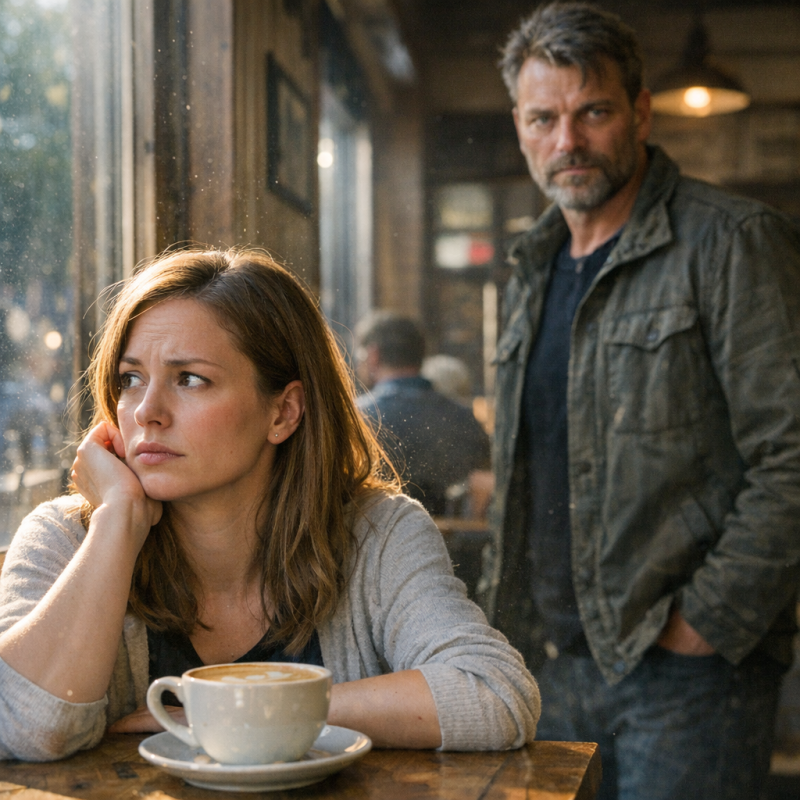 Image by FCT AI
The Man in the Photo
Evan ordered black coffee and pulled out his phone, scrolling to a photo of a woman with tired eyes standing in front of a trailer. 'This was home,' he said. His mother Claire worked two jobs—waitressing and cleaning houses—while my father was building his literary empire in Manhattan. Evan grew up wearing secondhand clothes, getting free lunch at school, watching his mom count change to pay for groceries. She never talked about his father, just said he 'wasn't in the picture.' He didn't know my dad's name until after she died, when he found the letters in her attic. 'I used to imagine he was dead,' Evan said, stirring his coffee without drinking it. 'That felt better than thinking he just didn't care.' I sat there in my Everlane sweater and designer jeans, feeling every dollar of privilege that separated us. My childhood had been private schools and summer camps and college without loans. His had been survival. He described a childhood of poverty and unanswered questions while our father became a millionaire.
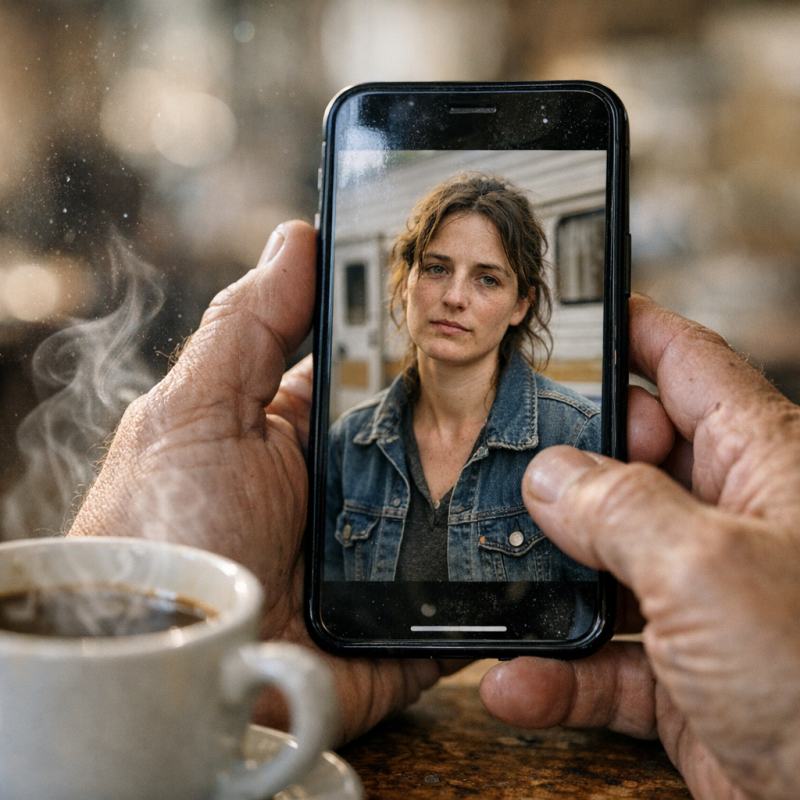 Image by FCT AI
Just Wanted to Know Why
I asked what he wanted—the question my father and Marcus had been circling around, the one they assumed had a dollar amount attached. Evan looked genuinely surprised. 'Nothing,' he said. 'I mean, I'm not here for money or to cause problems. I have a job, a life. I just...' He trailed off, looking out the window at people passing by. 'I just wanted to know why. Why she was worth leaving. Why I wasn't worth staying for.' It sounded so simple when he said it. So human. He didn't want revenge or a payout or to go to the press—he just wanted the answer to the question that had haunted him his whole life. I found myself nodding, understanding completely. If I'd grown up not knowing my father, I'd want answers too. He seemed relieved that I got it, that I wasn't treating him like a threat or a problem to be managed. We talked for another hour, and by the end, I felt like I'd found something I didn't know I was missing. His request seemed so simple, so reasonable—I didn't see the trap yet.
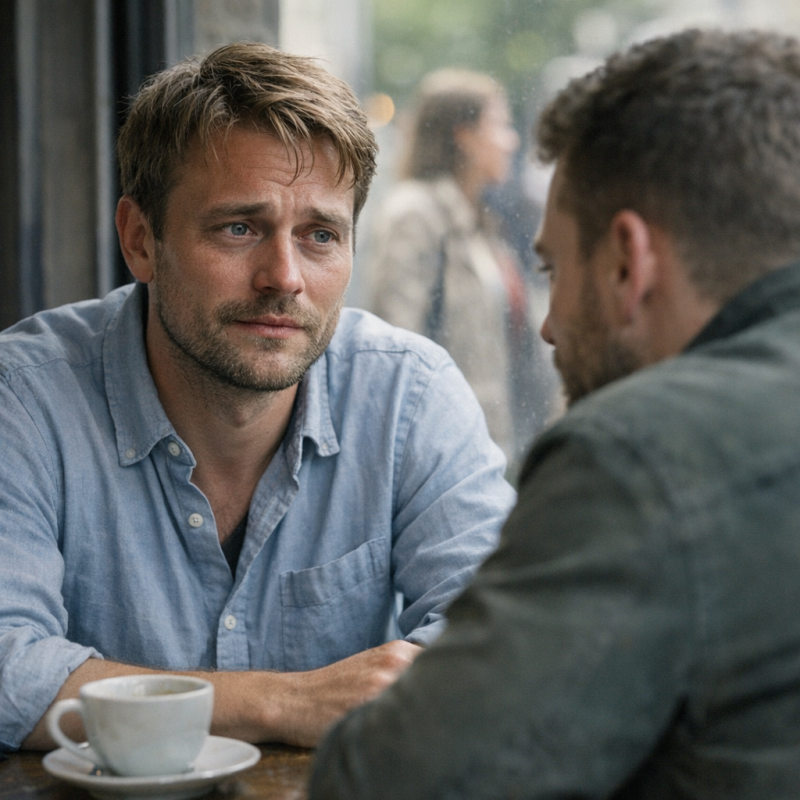 Image by FCT AI
The Box From the Attic
The next time we met, Evan brought a tote bag filled with items from Claire's attic. He spread them across the coffee shop table like evidence: photographs of a young couple I didn't recognize, love letters signed with my father's distinctive handwriting, ticket stubs from movies in the eighties. But the most striking items were manuscript pages—typewritten with handwritten edits in the margins. 'She kept everything,' Evan said softly. I picked up one of the pages, recognizing my father's handwriting immediately—those distinctive loops and slashes. But the story itself felt unfamiliar. The voice was different somehow, rawer than his published work. The themes were darker. I'd read everything my father had written, prided myself on knowing his style, but these pages felt like they'd been written by someone else entirely. 'What are these?' I asked. Evan shrugged. 'Early drafts, I think. She had boxes of them.' I kept reading, that strange feeling of wrongness growing stronger with each page. The manuscripts were in my father's handwriting, but the stories felt like they belonged to someone else.
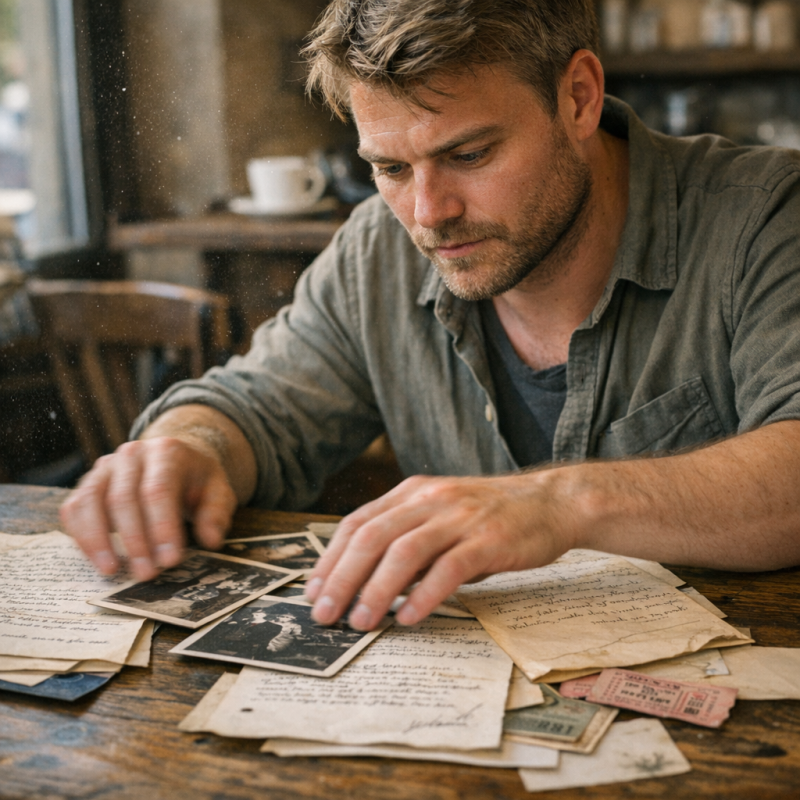 Image by FCT AI
Jessica's Warning
Jessica met me for drinks that Thursday, taking one look at my face and ordering us both wine. 'You've been spending a lot of time with this guy,' she said carefully. I'd been telling her about Evan—the coffee shop meetings, the artifacts from Claire's attic, how easy he was to talk to. How much we had in common despite everything. 'Don't you think it's weird?' she continued. 'That he just shows up out of nowhere with this perfect sob story?' I got defensive immediately. He wasn't playing me—he was hurting. He deserved answers. Jessica held up her hands. 'I'm not saying he's lying. I'm just saying... what do you actually know about him? Beyond what he's told you?' That stopped me cold. I knew his mother's name. I knew where he grew up. I knew his version of events. But I'd never verified any of it, never asked for proof beyond the documents he'd shown me. I'd just believed him because... why? Because he seemed genuine? Because I wanted to? Jessica asked what I really knew about Evan, and I realized the answer was almost nothing.
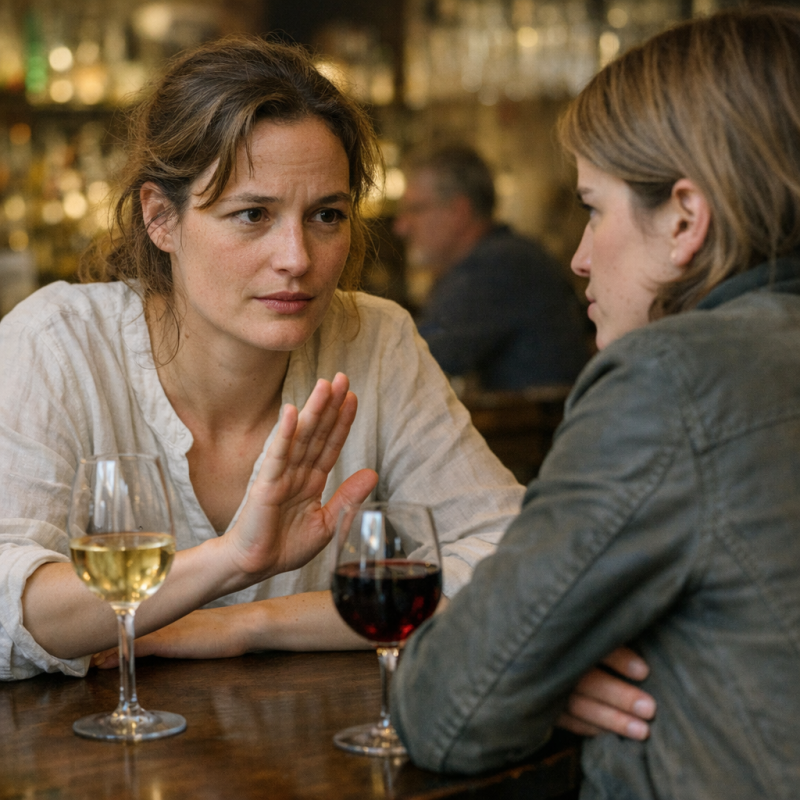 Image by FCT AI
Family Dinner
I convinced my father to meet Evan properly—a dinner at my apartment, neutral ground, just the three of us. I spent hours cooking, setting the table, imagining some kind of breakthrough moment where they'd recognize each other and start healing. Instead, it was like watching two actors who'd forgotten their lines. My father arrived early, pacing my kitchen, refusing wine. Evan showed up exactly on time with flowers and a strained smile. They shook hands like business associates. We sat down to eat, and the conversation lurched along in painful stops and starts. My father asked about Evan's job in web design. Evan asked about my father's current book. I tried to steer them toward real topics—their shared history, Claire, what happened—but they kept deflecting to safe territory. The silences grew longer and more uncomfortable. At one point, Evan mentioned growing up in Pennsylvania, and my father just nodded without elaborating, without asking questions, without showing any curiosity about the son he'd abandoned. They sat across from each other like strangers, and maybe that's exactly what they were.
 Image by FCT AI
Old Wounds
It was Evan who finally broke the careful politeness. 'Can I ask you something?' he said, setting down his fork. 'When you left my mother—when you chose your career over her—did you know she was pregnant?' My father went pale. 'It wasn't like that. It was complicated—' 'Was it?' Evan's voice stayed perfectly calm, almost gentle, which somehow made it worse. 'Because from where I'm sitting, it seems pretty simple. She loved you. She was going to have your baby. And you decided she wasn't worth the inconvenience.' My father started explaining—the timing, the pressure from his publisher, the impossibility of the situation—but every excuse just made him sound weaker. Evan listened with this slight smile that didn't reach his eyes, nodding along like he was confirming something he'd already known. He asked precise questions that my father fumbled to answer. He pointed out contradictions with surgical accuracy. He never raised his voice, never lost his composure, but every word landed like a blade. I sat there watching my father crumble under interrogation from his own son. Evan's voice stayed calm, but his words were surgical—he knew exactly where to cut.
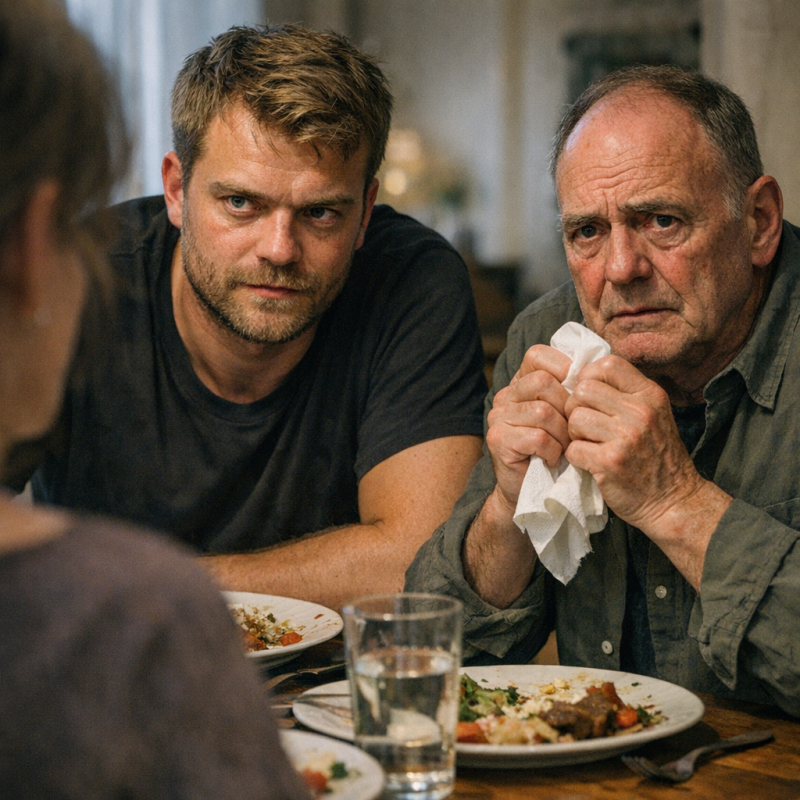 Image by FCT AI
Daniel's Apology
My father finally said the words Evan had supposedly come for: 'I'm sorry.' But even as he said them, I could hear the 'but' coming. 'I'm sorry you grew up without a father. I'm sorry your mother struggled. But you have to understand, I was young, I was broke, I had this one chance to make something of myself. If I'd stayed, I would have resented her, resented you. I would have been miserable.' Evan just stared at him. 'So you're saying you did me a favor?' My father backtracked, tried to rephrase, but the damage was done. Every apology came wrapped in justification. Every expression of regret was followed by an explanation of why he'd had no choice. He was sorry for the outcome but not the decision. Sorry Evan was hurt but not sorry for hurting him. I watched my son's face close off completely, that brief flicker of hope I'd glimpsed earlier extinguishing like a candle. He said he was sorry, but it sounded more like an excuse than an apology.
 Image by FCT AI
Evan Leaves
Evan stood up quietly, carefully folding his napkin and placing it beside his untouched plate. 'Thank you for dinner, Emma,' he said, not looking at my father. 'I appreciate you trying.' He moved toward the door with this terrible dignity, like he'd expected disappointment all along and was almost relieved to have it confirmed. My father started to say something—wait, or please, or I don't know what—but Evan was already gone, the door clicking shut behind him with gentle finality. We sat there in the wreckage of the evening, the table still set, the food getting cold. My father stared at the door like he might still change his mind, might still go after him. But he didn't move. Neither of us did. The silence felt heavier than any argument. I'd never seen my father cry, but his eyes were wet, his hands shaking slightly as he reached for his wine glass. He'd spent thirty-four years not thinking about this son, and now he'd have the rest of his life to regret it. After he left, my father looked smaller somehow, like he'd lost something he didn't know he still had.
 Image by FCT AI
Taking Sides
I kept replaying that dinner in my head, and every time I did, the narrative shifted a little more. My father, who I'd always seen as this dignified literary figure, had looked so small and defensive. Evan, who I'd initially viewed with skepticism, had walked out with his head high, hurt but not defeated. When had that reversal happened? I'd spent my whole life believing my father was the hero of every story, including his own. But watching him refuse to even try with Evan—watching him choose comfort over courage—something fundamental had cracked. Evan had come to us with nothing but hope and old photographs. He'd asked for so little, really. Just acknowledgment. Just basic human decency. And my father couldn't even give him that. I thought about all the times Dad had lectured me about integrity, about doing the right thing even when it was hard. Apparently those principles only applied when they didn't cost him anything. I started wondering what other convenient blind spots he might have. What other people he'd written off to protect his carefully constructed world. For the first time in my life, I wondered if my father was the person I'd always believed him to be.
 Image by FCT AI
The Manuscript Pages
Evan had mentioned manuscript pages, and I couldn't stop thinking about them. I messaged him—just casually, like I was curious about family history, not investigating my own father. We met at the same coffee shop, and he brought a folder, handling it like it was precious. 'These are photocopies,' he explained. 'The originals are in a safe deposit box.' Inside were pages of typewritten text, yellowed and fragile-looking even in reproduction. The prose was beautiful, haunting, immediately familiar. I'd read my father's breakthrough novel a dozen times. These passages weren't just similar—they were identical. But it was the dates in the corners that made my stomach drop. Some were handwritten, some stamped. May 1987. August 1987. November 1987. My father's novel was published in 1989, but he'd always said he wrote it in 1988, after the breakup, alone in a cabin in Vermont. These pages predated that entire story. I sat there staring at evidence I didn't want to process, my coffee going cold in my hands. The dates didn't add up, and suddenly I was looking at evidence I didn't want to understand.
 Image by FCT AI
Claire's Handwriting
Evan pulled out another set of pages, and these were different—handwritten notes on legal pads, the paper gone soft with age. 'My mother's handwriting,' he said quietly. I looked at the slanted, hurried script. Margin notes about character motivation. Entire paragraphs sketched out in shorthand. Plot structure diagrams that looked like spider webs. She'd been workshopping a novel, that much was clear. The themes were unmistakable: exile, memory, the way trauma echoes across generations. I'd written my thesis on those exact themes in my father's work. Professors called it his 'signature obsession.' But here it was in Claire's handwriting, dated two years before his novel came out. 'She was a writer?' I asked, though the evidence was right in front of me. 'She was brilliant,' Evan said simply. 'He never told you that part, did he?' He hadn't. In all Dad's stories about Claire, she'd been a girlfriend, a mistake, a youthful relationship that didn't work out. Never a colleague. Never a creative equal. I looked back at the notes, at passages I could recite from memory. The words were Claire's, but the story was my father's bestseller.
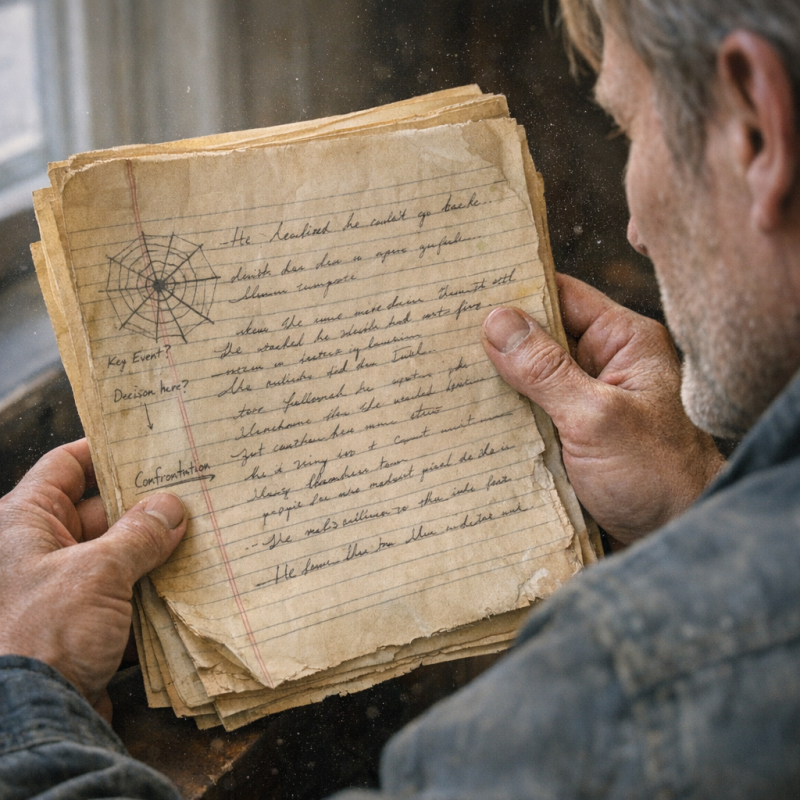 Image by FCT AI
The Breakthrough Novel
That night I did something I'd never done before—I fact-checked my father's life. His interviews were all online, dozens of them, the same origin story told over and over. He'd written the breakthrough novel in isolation, he always said. After a painful breakup, he'd rented a cabin in Vermont, written for six months straight, barely leaving the property. It was his 'wilderness period,' his 'dark night of the soul.' Except I now had manuscript pages dated from when he was still living with Claire in Brooklyn. I found his old publisher's catalog online—the novel was acquired in January 1988, which meant he'd submitted it in late 1987. Not after six months in Vermont. During the relationship, or right at the end. I checked the dedication page, something I'd never really thought about: 'For those we leave behind.' I'd always thought it was poetic. Now it felt sinister. I found a Paris Review interview from 1991 where he talked about writing 'in complete solitude, with nothing but my thoughts and regrets.' Another lie. The evidence kept piling up, each piece small but together forming a picture I couldn't ignore. He claimed to have written it in isolation, but the drafts were dated from when he was living with Claire.
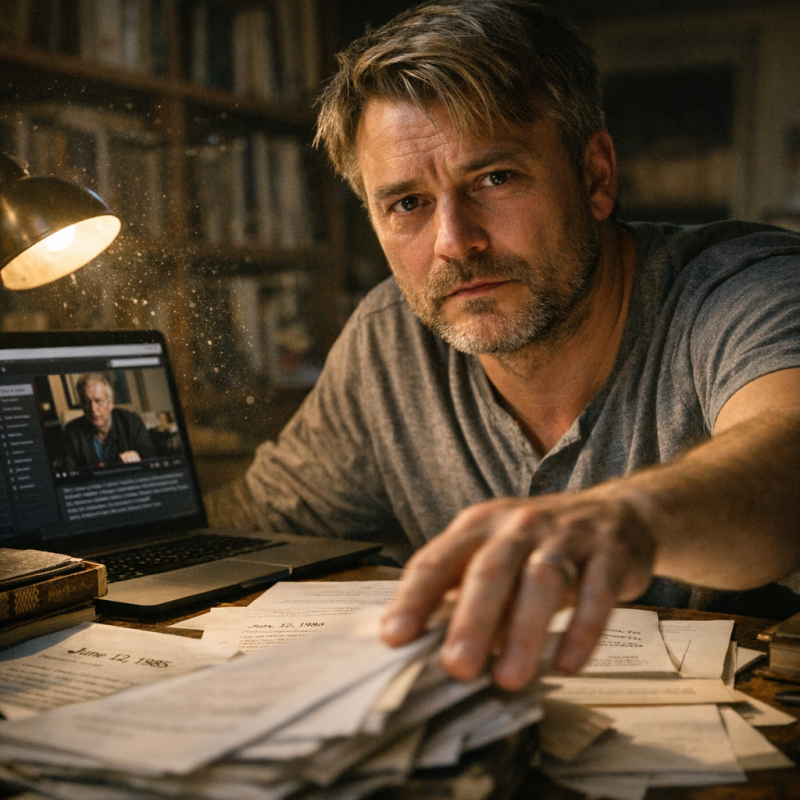 Image by FCT AI
Googling My Father
I started Googling Claire Mitchell obsessively, the way you do at 2 AM when you can't sleep. There was almost nothing. A few mentions in Brooklyn literary event listings from the mid-80s. One blurry group photo from a writers' workshop where someone had tagged 'Claire M.' in the comments. That was it. No social media, obviously—wrong generation—but also no obituary, no published work, no footprint at all. For comparison, I searched other people from that same writers' workshop photo. Most had at least something online—a book published by a small press, a teaching position at a community college, a blog, a mention in someone else's acknowledgments. Claire had nothing. She'd been erased so completely it felt deliberate. I thought about how thoroughly my father had scrubbed her from his personal narrative. How he'd reduced her to a character in his origin story, not a person with her own work and ambitions. Had he done the same thing to her public record? Or had she disappeared herself, running from something? The absence felt louder than any information I might have found. For someone who supposedly wrote a novel good enough to steal, Claire Mitchell barely existed online.
 Image by FCT AI
Marcus Chen's Visit
Marcus Chen showed up at my apartment unannounced, which should have been my first clue. He was my father's attorney, though I'd only met him a handful of times at book parties and award ceremonies. 'Your father's concerned about you,' he said, settling into my couch like we were old friends. 'He thinks this young man might be manipulating you.' Marcus had this smooth, reasonable tone that immediately put me on edge. He suggested Evan might be building some kind of case, gathering information, using me to get close to my father. 'Has he asked you about your father's finances? His contracts? Anything about intellectual property?' I thought about it. Evan had mostly asked about his mother, about their relationship, about family. Nothing legal. I said as much. Marcus nodded like I'd proven his point. 'That's how these things start. Slowly. Building trust.' He left his card, told me to call if Evan 'showed his true colors.' After he was gone, I sat there feeling contaminated. Maybe Marcus was right to warn me. Maybe I was being naive. But his visit felt like damage control, like circling the wagons. Marcus said Evan might be building a case, but I couldn't tell if he was protecting my father or hiding something.
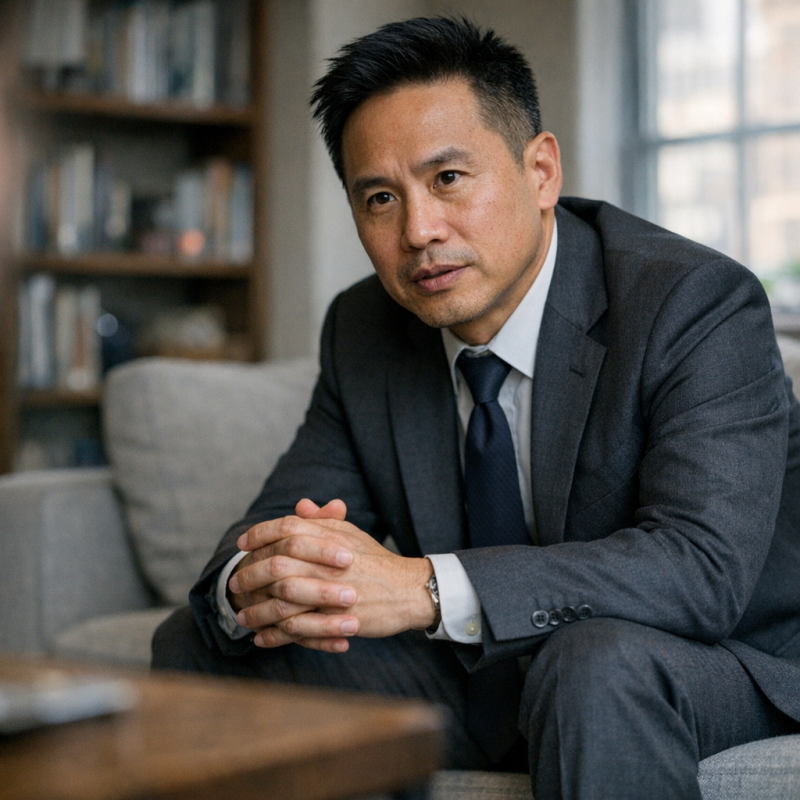 Image by FCT AI
Evan's Job
I was still holding Marcus's card when I did what I should have done weeks ago—I actually Googled Evan Mitchell. Not his mother, not the family history. Him. His LinkedIn came up first. He worked at a mid-size firm in Boston, and his title made my blood run cold: Paralegal, Intellectual Property Division. He specialized in copyright law, plagiarism cases, authorship disputes. The exact expertise you'd need if you were planning to prove someone stole a manuscript. I clicked through his profile. He'd been in IP law for eight years. Before that, he'd studied English literature at UMass, written his thesis on authorship and attribution in 20th century American fiction. This wasn't coincidence. This was a resume built for one specific purpose. I thought about how he'd downplayed his job when I'd asked, called it 'boring legal stuff, you wouldn't be interested.' How he'd steered every conversation back to emotional territory, to family and connection and his mother's memory. He'd let me see him as the wounded son, never as the attorney. I'd been so focused on the DNA test and the family drama that I'd missed the obvious question: why now? He'd downplayed his career, but now I wondered if his expertise had always been part of the plan.
 Image by FCT AI
The Second Meeting
I asked Evan to meet me again, and this time I came with questions instead of sympathy. We sat in the same coffee shop, but the whole energy was different. I didn't ease into it. 'Are you planning to sue my father?' I asked directly. He didn't look surprised by the question, which was answer enough. 'Marcus Chen came to see me,' I added. 'He seems to think you're building some kind of case.' Evan was quiet for a long moment, stirring his coffee. 'What do you think?' he finally asked. 'I think you work in intellectual property law and conveniently failed to mention that.' I watched his face carefully. 'I think you've been very strategic about what information you share.' He met my eyes then, and there was something harder in his expression than I'd seen before. 'I just want justice for my mother,' he said evenly. 'She deserves to be remembered for what she created, not erased from history.' It sounded noble, but it wasn't what I'd asked. 'That's not an answer,' I said. 'Are you planning legal action or not?' He looked me straight in the eye and said he just wanted justice for his mother—which wasn't really an answer.
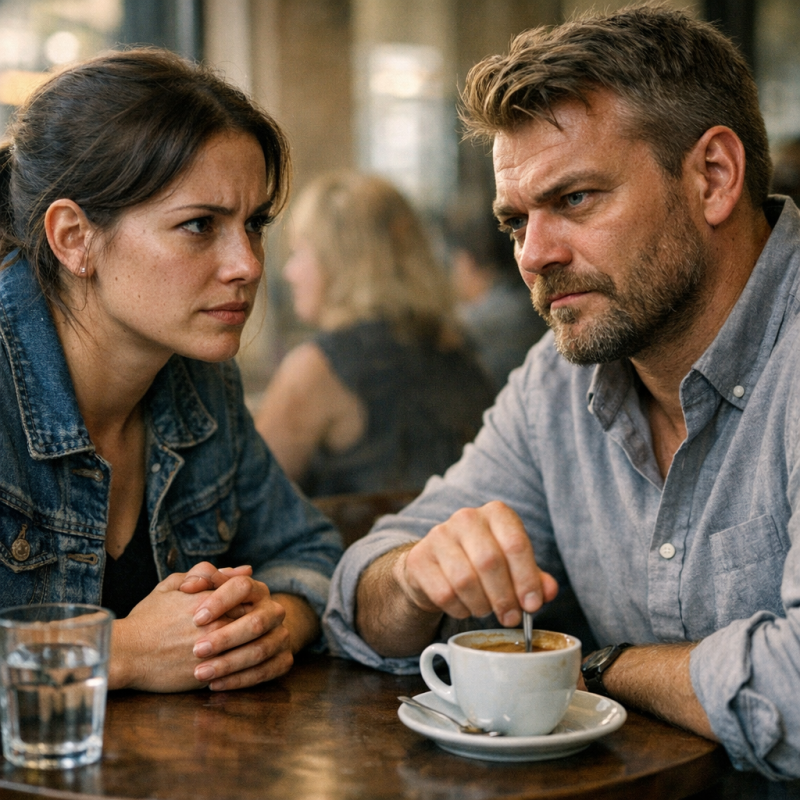 Image by FCT AI
Family Estate
Marcus Chen laid out the numbers in my father's kitchen, and I felt my stomach drop. 'Your father's estate is worth approximately seven million dollars,' he said, sliding a folder across the table. 'Between the royalties, investments, and property holdings.' I stared at the folder like it might bite me. I'd never really thought about my father's money—it was just Dad's career, you know? But seven million was real wealth. 'If Evan establishes paternity,' Marcus continued, 'he'd have a legitimate claim to a significant portion of that estate. Depending on how the court interprets your father's obligations, it could be anywhere from thirty to fifty percent.' The coffee I'd been drinking suddenly tasted bitter. Marcus watched my face carefully. 'I'm not saying that's his motivation,' he added. 'But you asked me to be honest about what's at stake.' I thought about all those conversations with Evan. His interest in Claire's work. His carefully worded questions about my father's career. His suggestion that we meet again and again. Suddenly Evan's interest in family history looked a lot more like interest in family money.
 Image by FCT AI
DNA Test
Evan brought up the DNA test casually, like it was the most reasonable thing in the world. We were sitting in my father's living room—the three of us together for the first time since this whole thing started. 'I think it would give us all clarity,' Evan said, looking between me and my father. 'A simple paternity test. Then we know for certain.' It made perfect sense. I waited for my father to agree. Instead, he went very still in his chair. 'I don't think that's necessary,' he said quietly. Evan's expression didn't change. 'Why not? If you're certain you're not my father, there's no risk.' 'It's invasive,' Dad replied. 'And it feels like a validation of this entire circus.' I watched this exchange feeling increasingly uncomfortable. 'Dad,' I said carefully. 'If it settles the question...' He turned to me, and there was something almost desperate in his eyes. 'Emma, I'm telling you the truth. I don't need a test to prove what I already know.' But that was the thing—his certainty should have made him eager to take the test, not resistant. My father's refusal to take a simple test made him look guilty of something, though I wasn't sure what anymore.
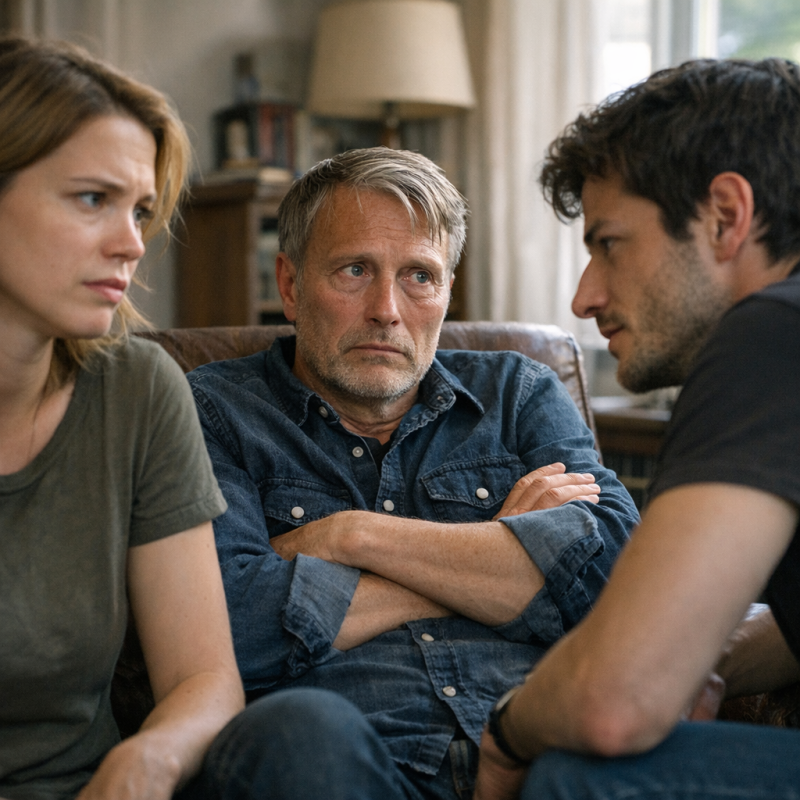 Image by FCT AI
Changing the Story
I cornered my father in his study the next morning and pulled up the witness protection timeline on my phone. 'You said you left Oregon in 1989,' I said. 'But the federal program you described—it didn't exist until 1992 in that form.' He looked up from his desk, tired. 'Emma...' 'And you said Claire was killed in a car accident,' I continued. 'But there's no death certificate. No accident report. I had Marcus check.' The silence stretched between us. Finally, he rubbed his face with both hands. 'I simplified some details,' he admitted. 'The witness protection aspect was more... informal. And I don't actually know how Claire died. I heard she passed away years ago, but I didn't have details.' 'Simplified,' I repeated. 'You mean you lied.' 'I compressed the narrative,' he said defensively. 'The emotional truth was the same. I had to leave Oregon quickly. I couldn't come back. Does it matter exactly why?' It mattered enormously. Each revision made everything else suspect. What other details had he 'compressed'? What other emotional truths were covering up factual lies? He called it 'narrative compression,' but it felt more like lying.
 Image by FCT AI
What Really Happened
My father closed his study door and sat down heavily. 'You want to know what really happened,' he said. It wasn't a question. I nodded, not trusting my voice. He was quiet for a long moment, staring at his hands. 'I wasn't running from the mob or drug dealers or anything dramatic like that,' he finally said. 'I was running from what I'd done.' The air in the room felt thick. 'Claire and I were together for three years,' he continued slowly. 'She was brilliant. So much more talented than I was. She had this manuscript she'd been working on—this beautiful, complex novel about identity and displacement.' My heart started beating faster. I knew where this was going, and I didn't want to hear it. 'When I left Oregon, I took something with me,' he said, and his voice cracked slightly. 'Something that didn't belong to me.' He looked up at me then, and the guilt in his eyes was bottomless. He started to tell me what actually happened in Oregon, and I realized the truth was so much worse.
 Image by FCT AI
The Manuscript Theft
My father's voice was barely above a whisper. 'My breakthrough novel—the one that launched my career—I took major sections from Claire's unpublished manuscript.' The room tilted slightly. I gripped the armrest of my chair. 'What do you mean, sections?' I asked. 'Whole chapters,' he said. 'Character arcs. The central metaphor. I told myself I was just borrowing her structure, that I'd transformed it enough. But Claire discovered what I'd done. She confronted me with both manuscripts side by side.' I felt sick. Everything I'd believed about my father, about his career, about his integrity—it was all built on theft. 'She threatened to expose me,' he continued. 'To go public with the evidence. So I left. I disappeared before she could destroy my career. I changed my name, moved across the country, and pretended none of it had happened.' His books lined the shelves around us. Awards and translations and critical praise. All of it stolen. 'You're telling me your entire career...' I couldn't finish the sentence. He nodded. 'Yes. My father's entire career was built on words he stole from the woman he claimed to love.'
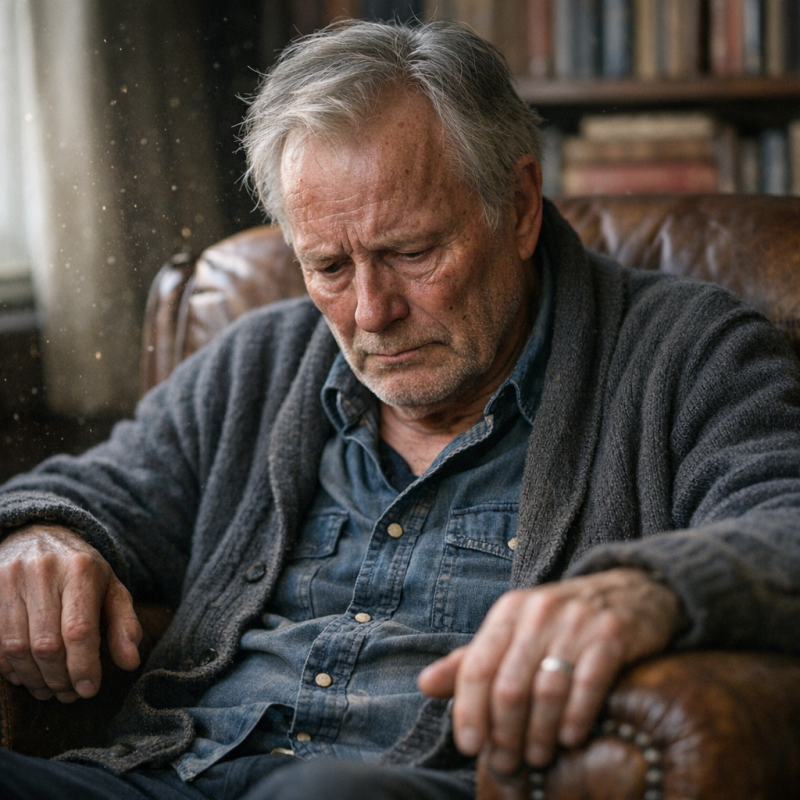 Image by FCT AI
The Detective
The detective showed up at my apartment three days later. She was tall, maybe late forties, with sharp eyes that missed nothing. 'Ms. Vale? I'm Detective Sarah Brennan. I was hoping to ask you a few questions about Evan Mitchell.' I let her in because what else could I do? We sat at my kitchen table, and she pulled out a small notebook. 'How long have you known Mr. Mitchell?' she asked. I told her about the Facebook message, the coffee meetings, the family connection. She wrote everything down. 'Has he asked you for money?' she asked. 'Or discussed your father's financial situation?' 'Not directly,' I said slowly. 'But his lawyer background came up. And inheritance did get mentioned.' Detective Brennan nodded like she'd expected this. 'I need you to be very careful around Mr. Mitchell,' she said. 'We're currently investigating him for fraud.' My mouth went dry. 'What kind of fraud?' 'I can't discuss the details of an ongoing investigation,' she said. 'But I can tell you he's done this before. The family connection story. The emotional appeals. It follows a pattern.' Detective Brennan said she was investigating Evan for fraud—but she wouldn't tell me what kind.
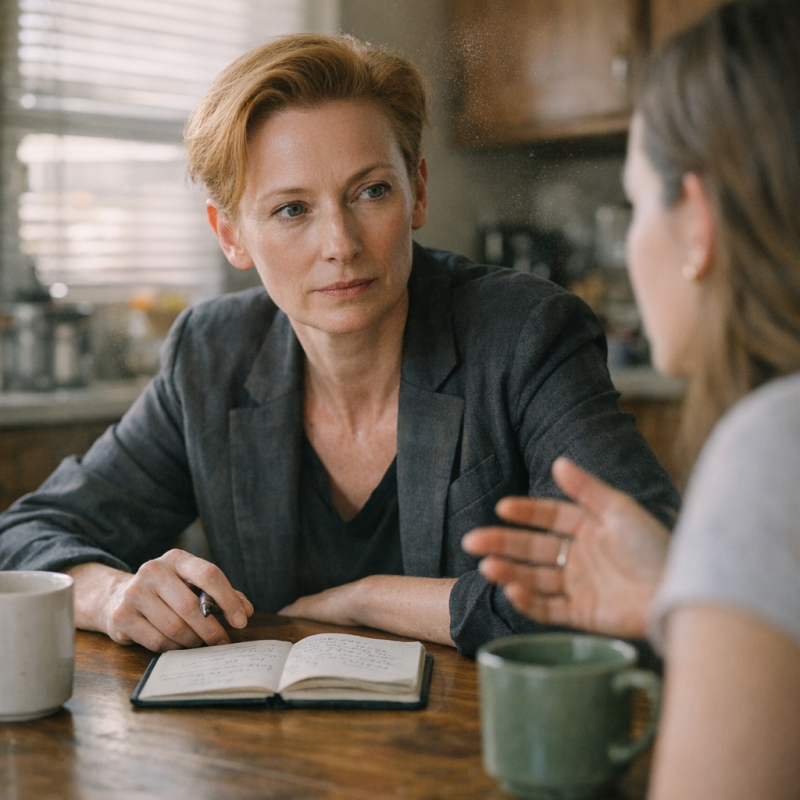 Image by FCT AI
Pattern of Behavior
Detective Brennan pulled out her phone and showed me a series of photos. Different people, different settings, but the same face: Evan Mitchell. 'Two years ago, he contacted a software executive in Seattle,' she explained. 'Claimed to be the son from a college relationship. The man paid him fifty thousand dollars before the DNA test proved there was no biological connection.' My hands felt cold. 'Then there was a widow in Portland. He said he was her late husband's son from an affair. She gave him access to financial records and nearly changed her will before her actual children intervened.' Another photo. Another family. 'And last year in San Francisco, he approached a tech entrepreneur with a similar story. That case is still in litigation.' I thought about how Evan had found me. How perfectly he'd known which emotional buttons to push. 'How does he choose his targets?' I asked. Detective Brennan looked at me with something like pity. 'Wealthy, isolated individuals with complicated family histories. People who want to believe in second chances.' She paused. 'This isn't the first time Evan had discovered a long-lost relative—it was the fourth.'
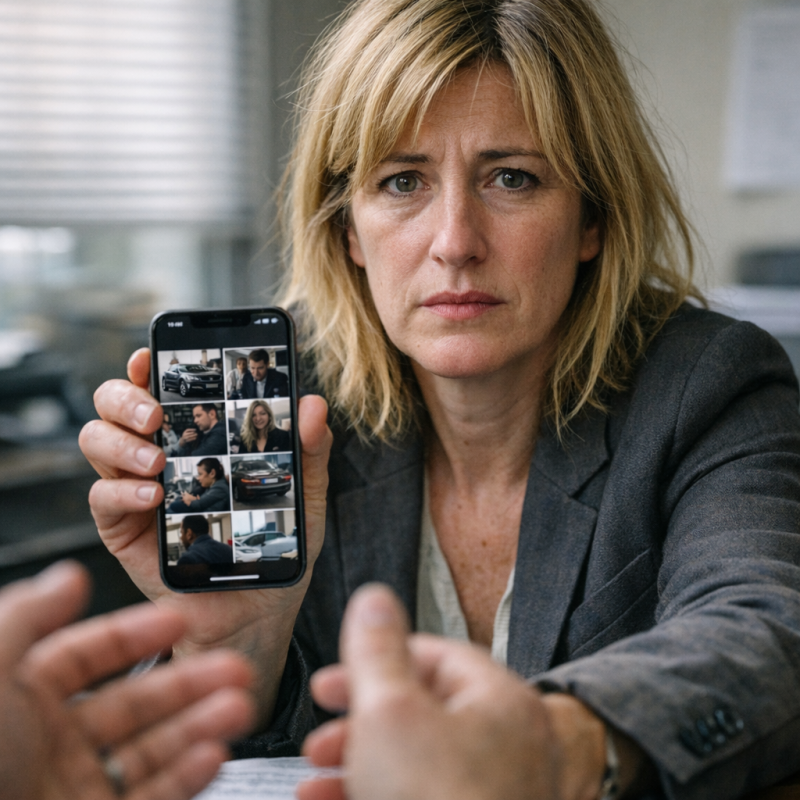 Image by FCT AI
Too Perfect
After Detective Brennan left, I sat alone replaying every conversation I'd had with Evan. The timing of his pauses when I asked difficult questions. The way he'd let me fill silences with my own assumptions. How he'd shared just enough vulnerability to make me want to comfort him, but never so much that it felt manipulative. I pulled up our Facebook messages and read them with new eyes. He'd researched my father's work extensively before contacting me—he'd mentioned specific novels, obscure interviews. He'd known exactly how to present himself: intelligent but not threatening, wounded but not bitter, curious but not demanding. And those moments when he'd seemed on the verge of tears talking about Claire? I'd thought I was witnessing genuine grief. Now I wondered if I'd just been watching a rehearsed performance. The way he'd suggested meeting in public places where I'd feel safe. The gradual escalation from curiosity to legal claims. Even his profession as an IP lawyer—how convenient that he'd have exactly the expertise needed to build a case against my father. Every word, every pause, every vulnerable moment—it had all been too perfect, too practiced.
The Other Families
I spent the next three days doing something I should have done from the beginning—I researched Evan Mitchell's professional history. Not the IP lawyer credentials he'd shown me, but actual cases, actual clients, actual outcomes. What I found made my stomach turn. There was a pattern buried in public records and obscure legal filings. A software executive in Seattle whose company suddenly settled a copyright claim. A romance novelist in Portland who'd paid an undisclosed sum to someone claiming her bestseller was based on their mother's unpublished manuscript. A retired screenwriter in Vancouver who'd been accused of stealing a treatment from a writing partner no one had heard from in decades. Every target had two things in common: significant wealth from creative work, and complicated pasts with plenty of gray areas. People who'd collaborated with others years ago. People who'd had messy professional divorces or acrimonious splits. People with just enough real guilt that when someone showed up with documents and accusations, they'd rather settle quietly than fight publicly. Evan hadn't been looking for family. He'd been shopping for marks. He specialized in finding people with secrets—people who would pay anything to make him go away.
 Image by FCT AI
Was Any of It Real?
Jessica came over that night and found me staring at my laptop, completely paralyzed by a new thought. 'What if none of it's real?' I said. 'What if he's not even Daniel's son?' She looked at me like I'd finally cracked. 'Emma, you saw the DNA results.' 'Did I though? I saw a document he brought to my apartment. I never verified it. I never asked for a copy to have independently tested. I just... believed him.' The words sounded insane coming out of my mouth, but once I started, I couldn't stop. 'He had real letters from my father. Real manuscript pages. But that doesn't mean he's related to Claire. Maybe he found those documents some other way. Maybe he bought them. Maybe Claire sold them before she died, or maybe he got them from her estate somehow.' Jessica sat down beside me, her face pale. 'You think he fabricated the biological connection?' 'I think he's lied about everything else,' I said, my voice shaking. If he'd lied about everything else, why would the DNA be real?
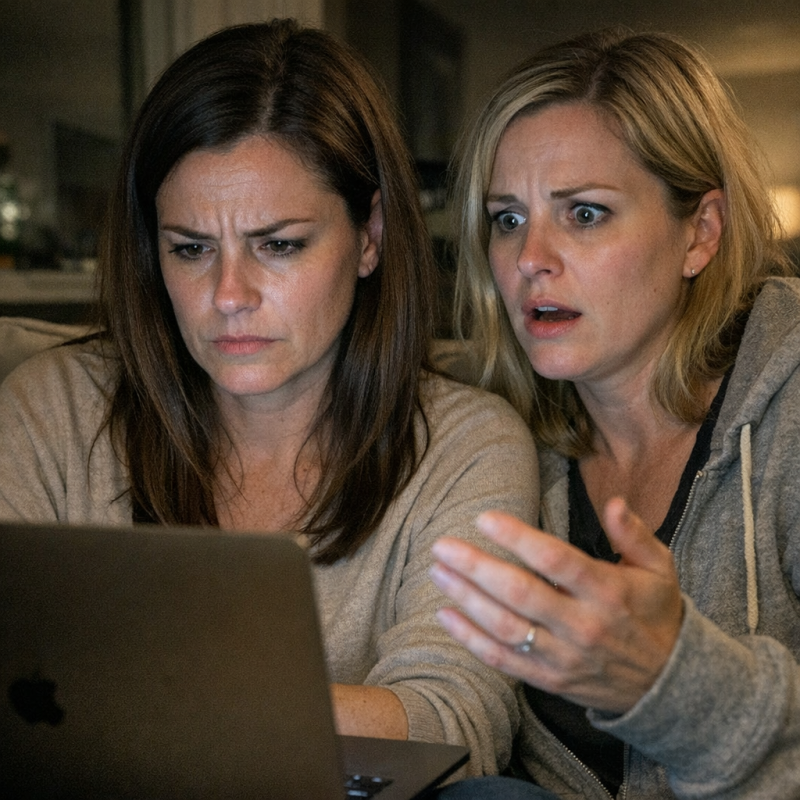 Image by FCT AI
The Real Claire
I found Margaret Henley through a writing workshop directory from the nineties. She'd been Claire Mitchell's critique partner and closest friend during the years Claire supposedly knew my father. We met at a coffee shop in Eugene, and Margaret brought a worn photo album. 'Claire died angry,' Margaret said simply. 'At the world, at herself, but mostly at Daniel Vale.' She showed me pictures of Claire in her fifties, sixties—hollow-eyed, defeated, nothing like the vibrant young woman in those old photographs. 'She never made it as a writer. Published a few short stories, but that was it. Worked retail until she couldn't anymore. And she blamed your father for all of it.' I felt something crack open in my chest. 'What did she say he did?' 'That he'd stolen her ideas. Her voice. That the novel that made him famous was built on their conversations, their collaboration, but he'd taken all the credit. She talked about it constantly toward the end. Bitterness just... consumed her.' Margaret's eyes were sad. Claire spent her last years telling anyone who would listen that Daniel Vale had stolen her life's work.
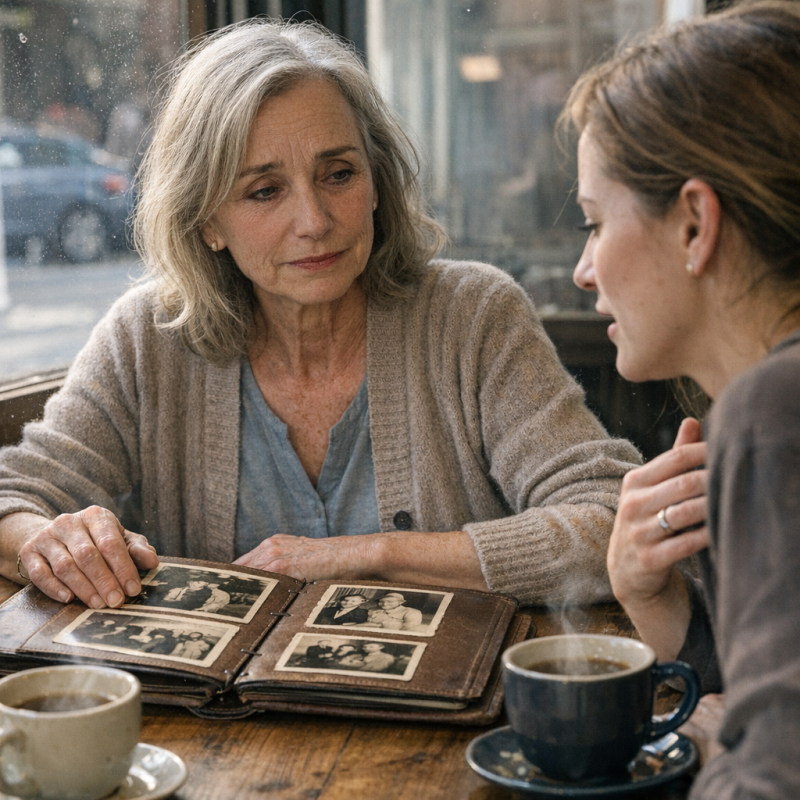 Image by FCT AI
The Letters Were Real
Marcus Chen called me into his office with news from the forensic document examiner he'd hired. I sat across from his desk, hands clenched, while he reviewed the report. 'The handwriting analysis confirms the letters are authentic,' he said carefully. 'Both your father's handwriting and Claire Mitchell's match known samples. The paper and ink are consistent with the time period. The manuscript annotations are definitely Daniel's work.' I felt dizzy. 'So Evan was telling the truth?' 'About the documents being real, yes. About what they prove?' Marcus shook his head. 'That's interpretation. These letters show a relationship. They show creative exchange. They don't prove theft or conspiracy or anything else Evan's claiming.' I stared at the report, at the technical language describing fiber analysis and spectroscopic dating. Evan had walked into my life with genuine artifacts from my father's past. He'd shown me real evidence of Daniel's relationship with Claire. But he'd wrapped those authentic pieces in a story that might be completely fabricated. The documents were real, which meant Evan had been telling the truth about some things—but which things?
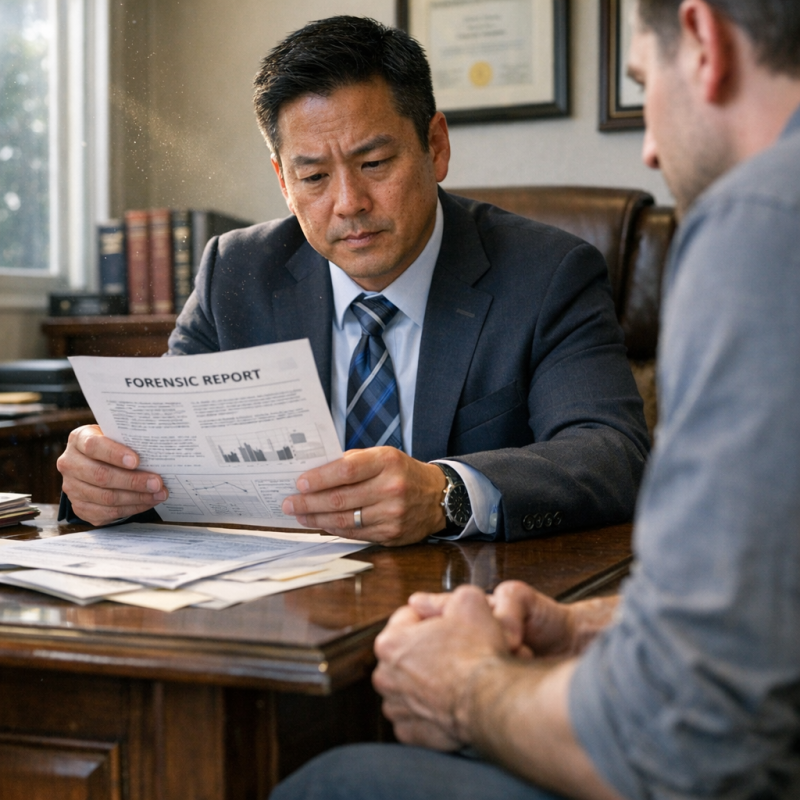 Image by FCT AI
The Financial Demand
The formal demand letter arrived by courier on a Tuesday afternoon. Marcus called me immediately. 'You need to come in. Now.' I'd expected this—Detective Brennan had warned me Evan would make his play eventually. But seeing the actual document, printed on expensive letterhead from a Los Angeles law firm, made everything suddenly concrete. The letter outlined Evan's claims in cold legal language: Claire Mitchell's intellectual property contributions to 'The Lighthouse Keeper,' quantified as approximately fifty percent of the creative work. Years of unpaid royalties. Emotional damages for the erasure of Claire's legacy. There was a detailed breakdown of my father's earnings from the novel—foreign rights, film options, speaking fees, everything. And at the bottom, a settlement offer to avoid 'costly and publicity-damaging litigation.' Marcus's face was grim. 'They want a response within thirty days.' I couldn't speak. I just stared at the number. The demand was for seven million dollars—roughly half of everything my father had earned from that novel.
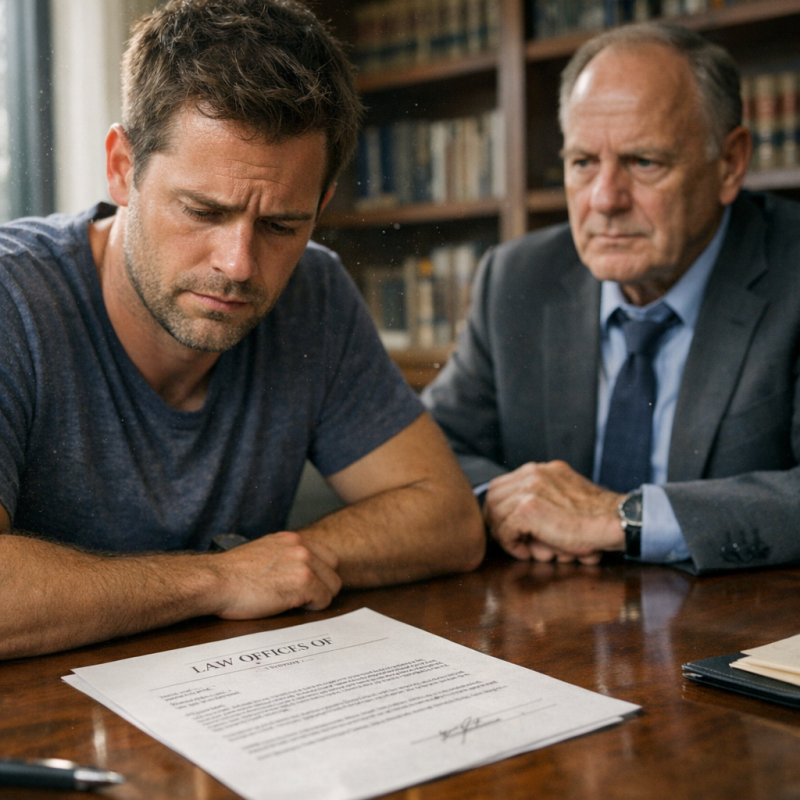 Image by FCT AI
Evan's Real Mother
Detective Brennan showed up at my apartment without calling first. Her expression told me everything before she even spoke. 'We found Evan Mitchell's birth mother,' she said. 'She's alive?' The world tilted. 'Very much alive. Her name is Susan Mitchell. She lives in Tucson. Never been to the Pacific Northwest. And she's never heard of Daniel Vale or Claire Mitchell.' I sat down hard on my couch. 'But... how?' 'Susan gave her son up for adoption when he was six months old. Open adoption. She's stayed in touch with him his whole life. She confirmed he's an attorney, confirmed his age and background. When I asked about Claire Mitchell, she had no idea what I was talking about.' My mind was racing, trying to reorganize everything I thought I knew. 'So Evan isn't Claire's son.' 'Not unless Claire adopted him without Susan's knowledge, which is legally impossible. Susan Mitchell is his biological mother. She has the birth certificate to prove it.' Brennan's voice was gentle but firm. The woman who raised Evan was named Susan Mitchell, and she'd never met my father in her life.
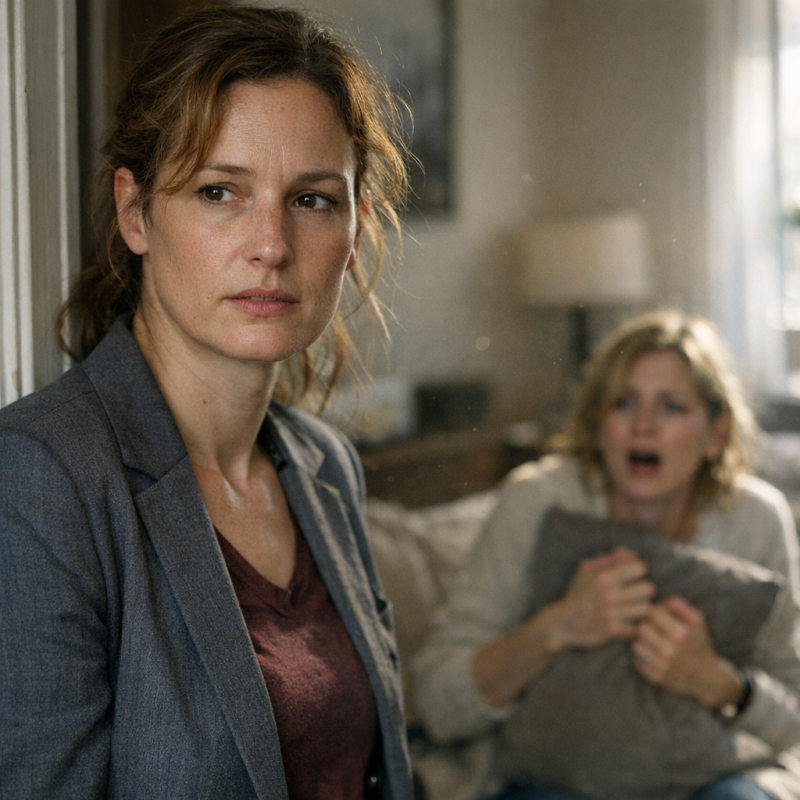 Image by FCT AI
Claire Had No Son
I spent the rest of that night tracking down every record I could find about Claire Mitchell's death. Obituary. Death certificate. Probate records. Each one confirmed what I already knew but hadn't wanted to see. Claire Mitchell died in 2019 in a nursing home in Sacramento. She'd outlived my father by three years. But here's what destroyed me: the obituary listed no survivors. No children. No close family. Just a brief notice paid for by the facility, mentioning her work as a writer and teacher. The probate records showed her modest estate—less than fifteen thousand dollars—had gone to pay final expenses. There was no mention of a son. No Evan. No one claiming to be her heir. If she'd had a child, if she'd raised him, if he'd been part of her life, there would have been something. Some trace. But there was nothing. She'd died alone, and Evan had known that. He'd known she couldn't contradict his story. Claire's obituary listed no survivors—Evan had built his entire story on a dead woman who couldn't contradict him.
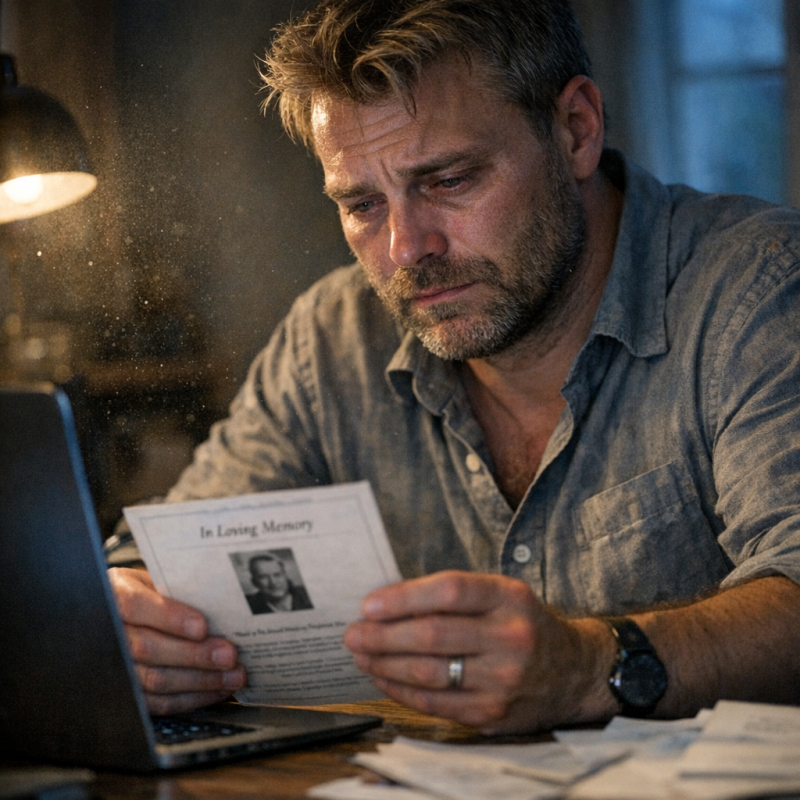 Image by FCT AI
The Architect
Detective Brennan walked me through it piece by piece, and I finally understood the full scope of what Evan had done. He'd researched my father's past, probably during that legal conference where they'd met. Found mentions of Claire Mitchell in old interviews, traced her through public records, discovered her bitterness and her lonely death. Then he'd constructed everything around that kernel of truth. The real letters and manuscripts—he'd probably bought them from Claire's estate sale or found them in her papers after she died. The DNA test was fake, printed on his own equipment. The Mitchell surname was his own mother's name, making it easy to claim a connection. He'd spent months, maybe years, building this identity. Learning about Claire's life, my father's work, crafting a story that mixed real grievances with fabricated family ties. And he'd targeted me specifically because I was young, lonely, still grieving, desperate to understand my father's secrets. I'd made it so easy for him. He wasn't my brother seeking answers—he was a con artist who'd spent months engineering my father's destruction.
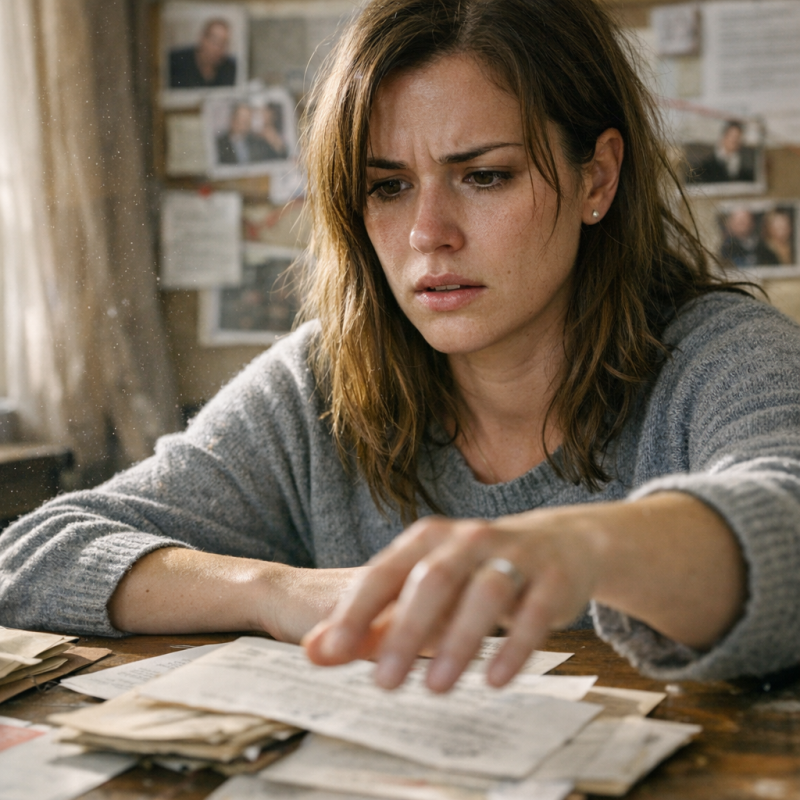 Image by FCT AI
Justice for Claire
Detective Brennan sent me transcripts of Evan's interviews, and reading through them was like watching someone's delusion unfold in real time. He wasn't just after money—honestly, the money seemed almost secondary. He kept talking about Claire Mitchell like she was some martyred saint, destroyed by my father's ambition. 'Someone had to speak for her,' he'd said. 'Someone had to make him pay for what he did to her career, her life.' He'd built this entire crusade around a woman whose manuscripts he'd probably bought at an estate sale. Marcus told me Evan had never even met Claire—she'd died two years before he started this whole scheme. But in his mind, he'd appointed himself her champion, her avenger. He'd convinced himself that destroying my father's reputation was noble, that the con and the extortion were justified because they served a higher purpose. It was almost sad, really, how he'd wrapped his greed in this cloak of righteousness. He'd convinced himself he was Claire's avenger, but he'd never even known her.
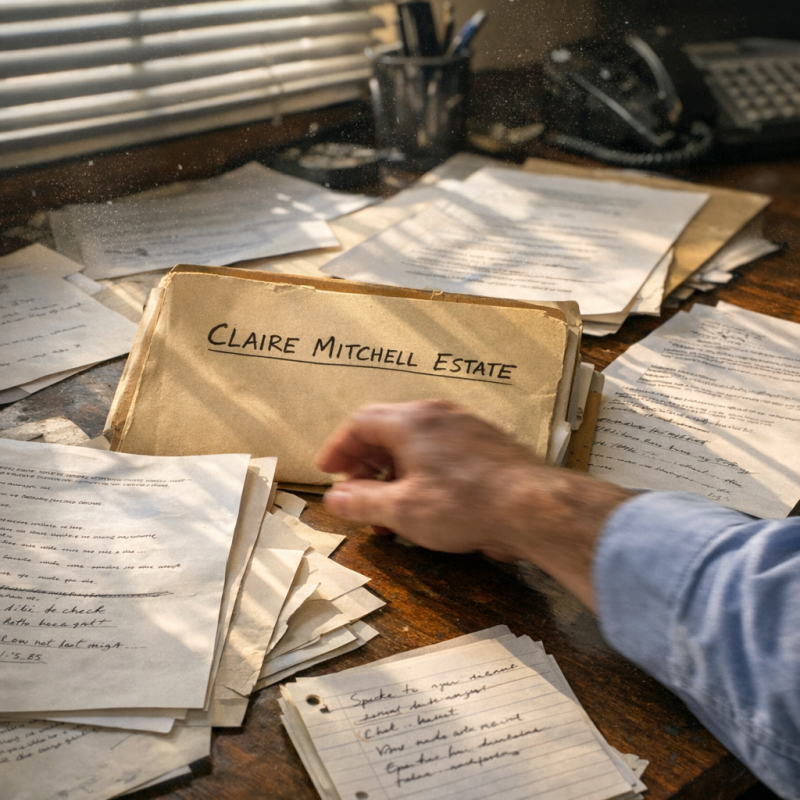 Image by FCT AI
The Public Story
Marcus called me the next morning, and I could hear the tension in his voice before he even spoke. 'Emma, we have a problem. A big one.' He'd received messages from three different journalists—all saying they'd been contacted by someone claiming to have proof that Daniel Vale had plagiarized his most famous work. Evan had sent them everything: the manuscripts, the fabricated DNA results, testimonials he'd probably written himself. He'd given them a deadline too. In seventy-two hours, he was releasing all of it publicly unless my father issued a confession and a settlement. 'He's forcing your father's hand,' Marcus said. 'Either Daniel controls the narrative now, or Evan does it for him.' I felt my stomach drop. This wasn't just about money anymore, wasn't just about family secrets. Evan was about to weaponize the media, turn my father into a cautionary tale for the Twitter generation. In seventy-two hours, the world would know my father as a fraud—unless I could stop it.
 Image by FCT AI
The Confrontation
I met Evan at a coffee shop in Cambridge, far enough from campus that we wouldn't run into anyone I knew. He looked calm when he walked in, almost serene, like he'd already won. I didn't waste time. I laid out everything Detective Brennan had found—the fake DNA test, the pattern of cons, his complete lack of connection to Claire Mitchell. 'You're not her son,' I said. 'You never even met her. This whole thing is fraud.' He listened patiently, sipping his coffee, and when I finished, he just shrugged. 'The documents are still real, Emma. Those manuscripts exist. Your father still took her work and built his career on it.' 'But you fabricated the family connection,' I said. 'You lied about everything else.' 'Maybe,' he said. 'But the plagiarism? That's true. And the truth will come out either way—through me, or through you, or through those journalists I've already contacted.' He smiled and said the documents were real, the plagiarism was real, and the truth would come out either way.
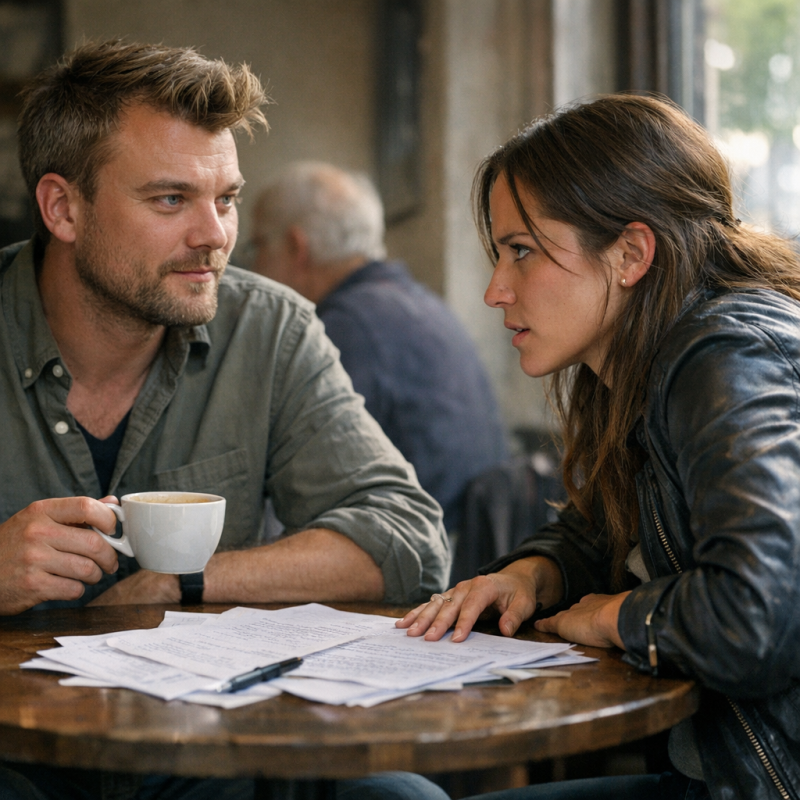 Image by FCT AI
Daniel's Choice
I told my father everything that night, sitting in his study surrounded by all those books that suddenly felt different, tainted. He listened without interrupting, his face growing older with each sentence. When I finished, he was quiet for a long time. Then he stood up and walked to his desk, pulled out the original manuscripts—the ones he'd kept hidden all these years. 'I've been running from this for thirty-four years,' he said quietly. 'Maybe it's time I stopped.' He wanted to go public. Not because Evan was forcing him, but because it was the right thing to do. He'd write a statement acknowledging what he'd taken from Claire, apologizing to her memory, accepting whatever consequences came. 'I won't let that man turn this into a spectacle,' he said. 'But I won't hide anymore either.' I should have argued, should have tried to protect him. Instead, I just nodded. My father chose truth over reputation, and I'd never been more proud or more terrified.
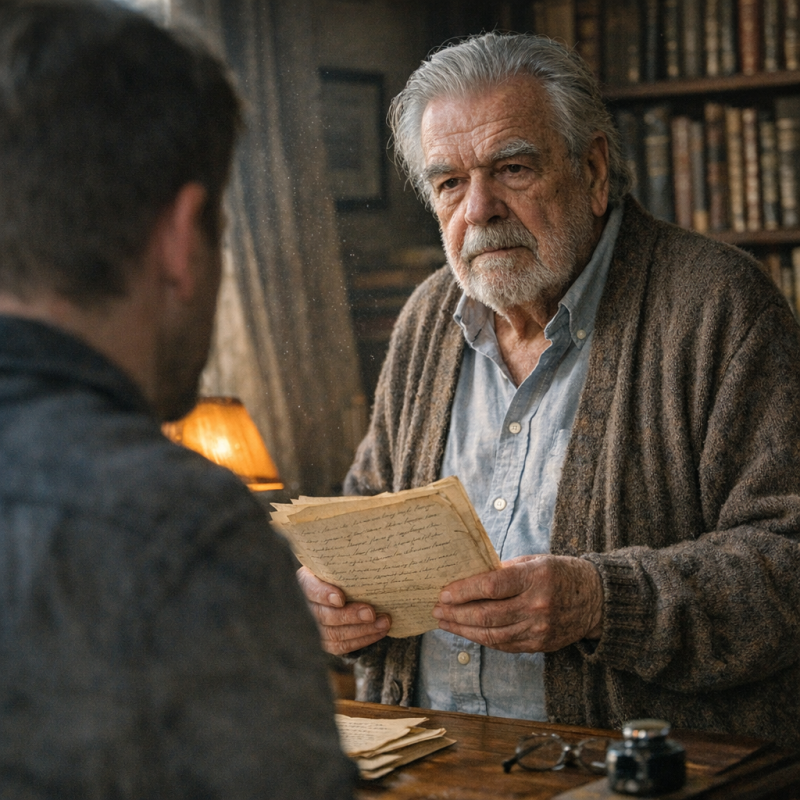 Image by FCT AI
The Press Conference
The press conference was held at the university two days later, before Evan's deadline expired. Marcus had arranged everything, set up a podium in one of the smaller auditorium halls. The room filled with reporters, cameras, the whole apparatus of public judgment. I sat in the back, watching my father take the microphone. His voice was steady as he explained it all—meeting Claire Mitchell in graduate school, how her ideas had shaped his novel, how he'd failed to properly credit her contribution. He called it what it was: plagiarism. Not homage, not inspiration. Theft. 'I cannot undo the past,' he said, 'but I can acknowledge it. I'm donating all future proceeds from the novel to establish a literary foundation in Claire Mitchell's name. She deserved better than she got from me, from the industry, from everyone.' The reporters erupted with questions, but for the first time in years, my father looked free.
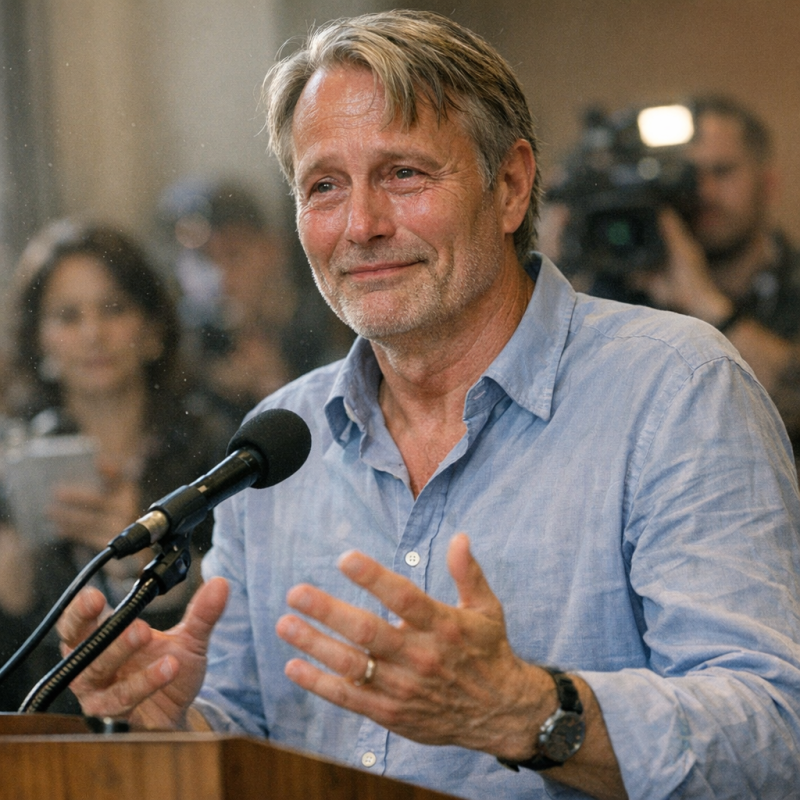 Image by FCT AI
Evan's Arrest
Evan was arrested three days after my father's press conference. Detective Brennan had been building her case the whole time, connecting him to at least two other families he'd targeted with similar schemes. When they came for him at his apartment in Somerville, I was there—Brennan had called me, asked if I wanted to see it through. I'm not sure why I went. Maybe I needed closure, or maybe I needed to see him finally face consequences. He looked surprised when the detective read him his rights, like he genuinely hadn't expected this outcome. 'The fraud charges,' Brennan explained, 'the extortion, the pattern of targeting wealthy families. We have enough.' They put him in handcuffs, and he didn't resist. But as they led him toward the door, he turned to look at me one last time. His expression was calm, almost satisfied. As they led him away, Evan looked at me one last time and said, 'At least people will know the truth.'
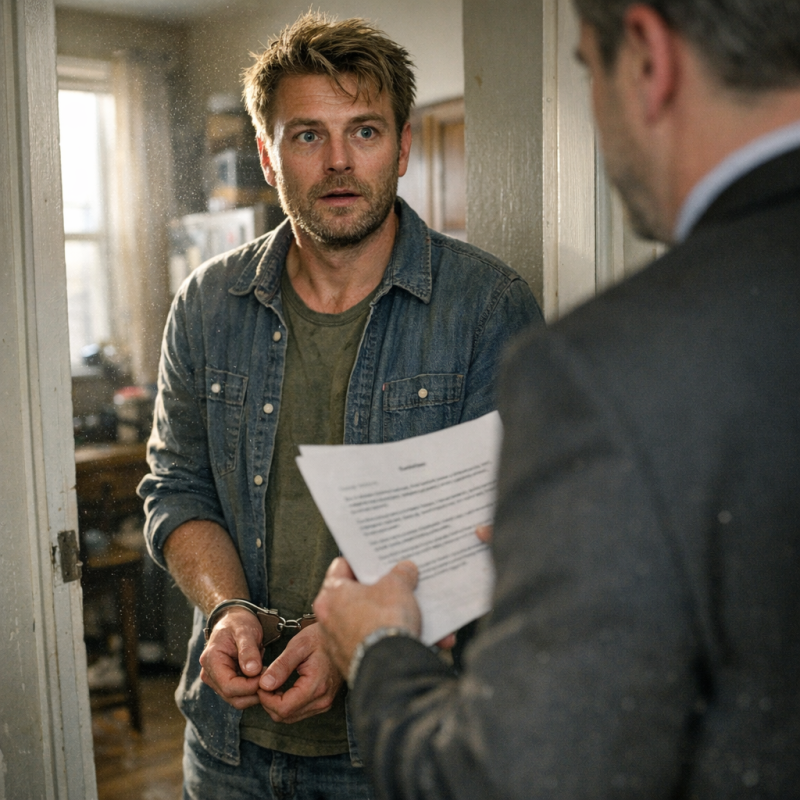 Image by FCT AI
The Internet Reacts
The internet did what the internet does—it exploded. Within hours of my father's press conference, the story was everywhere. Twitter threads dissecting every paragraph of his confession. Think pieces about artistic debt and moral accountability. Reddit communities debating whether thirty-four years of silence made him irredeemable or whether his honesty redeemed him. Some people called him a thief who'd built his career on a dead woman's genius. Others called him brave for coming forward, for choosing truth over his legacy. The literary Twitter crowd was particularly vicious, but smaller communities—writing groups, academic forums—were more measured, more conflicted. Nobody could agree on a single narrative. Was he a villain? A victim? Someone who'd made a terrible mistake and finally owned it? I stopped reading after the first day, but the notifications kept coming, the headlines kept updating. Some called my father a thief, others a hero for his honesty—nobody seemed to know what to do with the complicated truth.
 Image by FCT AI
Career Collapse
The professional consequences came swiftly. My father's publisher dropped him within a week, issuing a careful statement about 'ethical standards' and 'the integrity of our catalog.' Two universities that had extended teaching offers quietly rescinded them. His literary agent stopped returning calls. For a man who'd spent decades building this pristine reputation, watching it collapse was brutal. But something strange happened too. Smaller literary magazines reached out, asking if he'd be willing to write essays about artistic debt, about accountability. Independent presses offered to publish new work—honest work, they emphasized. A community college in Vermont invited him to teach a workshop on ethics in creative writing. They weren't the prestigious positions he'd once held, weren't the mainstream career he'd built. But they were real. At dinner last week, he looked different—tired, yes, but also lighter somehow. He lost his mainstream career, but he gained something he'd never had before: authenticity.
 Image by FCT AI
Claire's Foundation
The Claire Mitchell Literary Foundation launched three months after my father's public statement. He donated half his remaining savings—the money from his teaching years, not the tainted book royalties—plus all future income from his legitimate work. The foundation supports unpublished writers from marginalized backgrounds, offering grants, mentorship, and editorial assistance. No strings attached. No expectation of acknowledgment or gratitude. The first grant went to a Black woman from Oakland writing about gentrification. The second to a trans writer from rural Kentucky documenting healthcare access. The third to an Indigenous poet reclaiming creation stories. My father didn't attend the award ceremony. He didn't want photo opportunities or redemption narratives. Claire's daughter Sarah serves on the board, which felt important—someone who actually knew Claire, who understood what was stolen. At the second board meeting, Sarah pulled me aside. 'This doesn't fix anything,' she said quietly. 'But it's something real.' She was right. The foundation wouldn't bring Claire back, but it would make sure other voices weren't silenced.
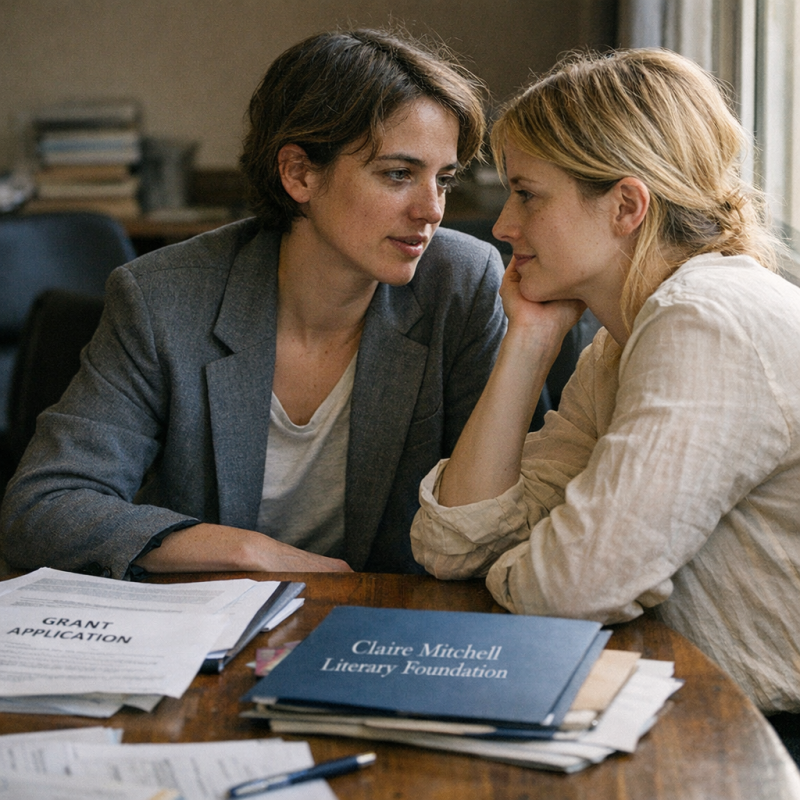 Image by FCT AI
Six Months Later
Six months after everything imploded, I met my father for our Sunday dinner. Same restaurant, same table by the window, but everything felt different. He looked older—the weight loss had carved new lines into his face, and his hair had gone fully gray. But he also seemed present in a way he never had before. We didn't talk about his upcoming workshop at the community college or the essay he was writing for a small journal. Instead, we talked about my graphic design work, about my therapy sessions, about how I was processing everything. He asked real questions and actually listened to the answers. No performances, no carefully constructed author persona. Just a father and daughter figuring out how to be honest with each other. When the check came, he didn't launch into some philosophical reflection about accountability or redemption. He just said, 'Same time next week?' I nodded. We still had dinner every Sunday, but now we talked about real things instead of maintaining the performance.
 Image by FCT AI
Evan's Trial
Evan's trial happened faster than I expected. He took a plea deal—admitted to fraud, forgery, and extortion in exchange for reduced sentencing and testimony about his methodology. The prosecutor was more interested in his techniques than punishment. Apparently, other cases had emerged, other situations where Evan had exploited family connections for financial gain. He wasn't just a conman. He was a pattern. The sentencing hearing was brief and oddly anticlimactic. The judge gave him eighteen months plus restitution, though there wasn't much left to recover. Evan had burned through most of the money on his lifestyle, on maintaining the illusion of success. I went to the hearing because my therapist thought closure might help. When they led him out of the courtroom in handcuffs, our eyes met for just a second. I waited for something—anger, satisfaction, maybe even sympathy for this broken person who shared my DNA. But I felt nothing. Just distance. Just relief that this chapter was finally, actually over. Emma attended the sentencing and when their eyes met across the courtroom, she felt nothing—not anger, not sympathy, just distance.
 Image by FCT AI
What We Inherit
I started writing about everything a month after Evan's sentencing. Not for publication at first, just for myself—trying to make sense of how a Facebook message had unraveled my entire understanding of family. But the more I wrote, the more I realized this wasn't just my father's story or Evan's story. It was mine too. I'd spent my whole life being Daniel Vale's daughter, living in the shadow of his mythology, never questioning the narrative I'd inherited. The essay took three months to finish. I wrote about discovering my half-brother, about uncovering my father's plagiarism, about watching a carefully constructed legacy collapse. But I also wrote about what comes after—about how families inherit both achievements and sins, and the only choice is whether to continue the pattern or break it. A small literary magazine accepted it for publication. They didn't care that I was Daniel Vale's daughter. They cared that the work was honest. I published the essay under my own name—Emma Vale—because some legacies are worth claiming, even the complicated ones.
 Image by FCT AI