

Here's something that'll make your next giggle session feel a bit weird: scientists genuinely can't figure out if your laughter evolved from joyful chimp panting or from the threatening bared-teeth displays that primates flash before they attack. It's one of evolutionary biology's most frustrating mysteries, and despite decades of research, the evidence keeps pointing in maddeningly contradictory directions. Your spontaneous chuckle at a funny meme might share its deepest roots with the aggressive grimace a macaque makes right before it lunges at a rival, or it could trace back to the breathless play sounds that young bonobos make while wrestling. Nobody knows for sure, and the confusion stems from the fact that primate facial expressions and vocalizations are astonishingly complex, serving multiple social functions that blur together across millions of years of evolution.
When Smiles Mean Trouble
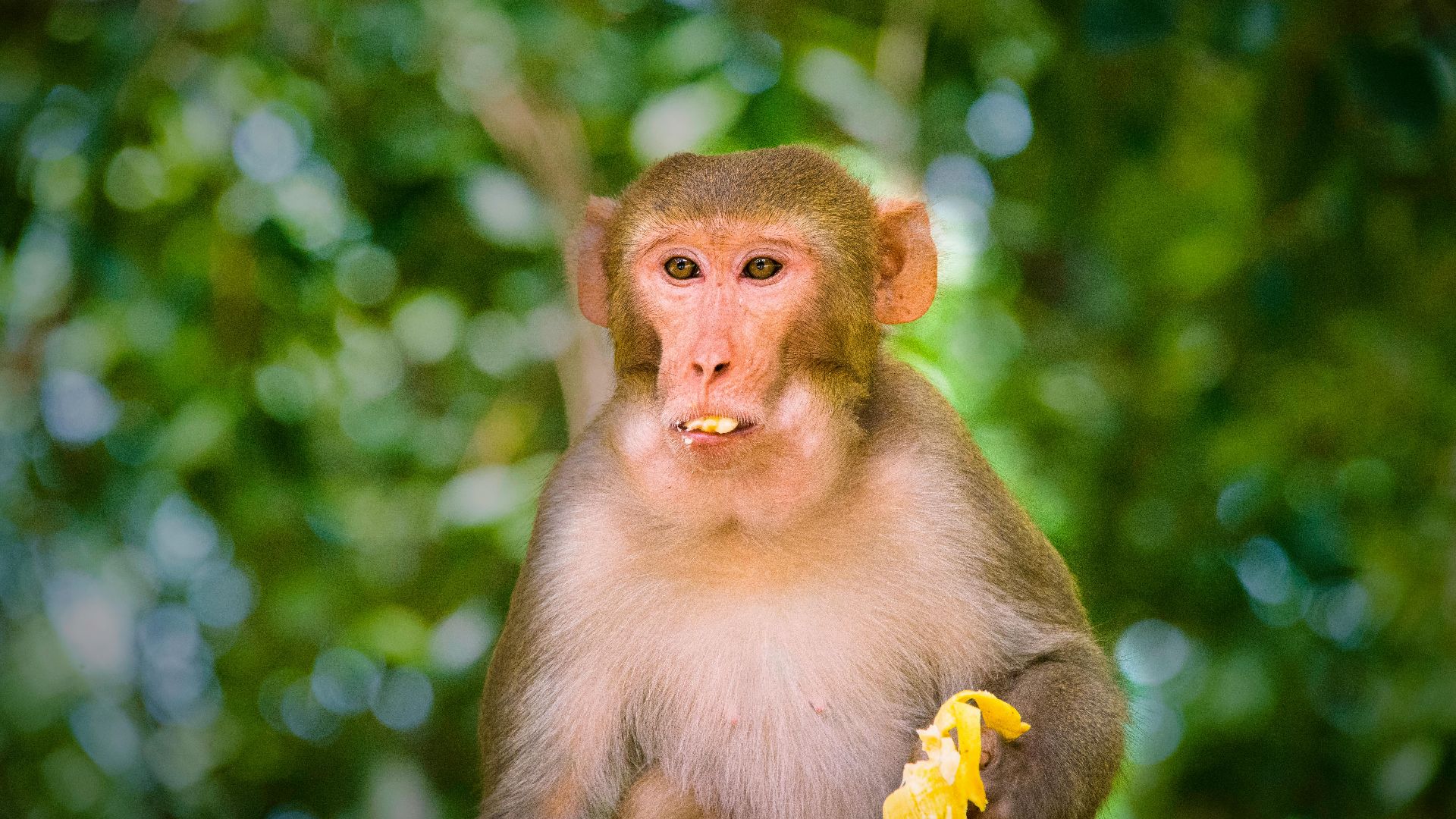
If you watch a group of rhesus macaques interact, you'll notice something unsettling: they bare their teeth constantly, but it rarely means they're happy. The "silent bared-teeth display" is actually a submissive gesture in most monkey species, something lower-ranking individuals do to appease dominant ones and avoid getting bitten. But here's where it gets complicated: in chimpanzees and bonobos, our closest relatives, this same expression starts looking more like a genuine smile, appearing during friendly interactions and play. Researchers have documented this shift across the primate family tree, and it suggests our human smile might have evolved from what was originally a fear grimace. The problem is that aggressive contexts never fully disappeared from the equation. Studies of gelada baboons show them combining bared-teeth faces with actual laughing sounds during rough play-fighting that teeters between fun and genuine aggression, making it impossible to cleanly separate "happy" from "threatening" in their communication system.
The Laugh-Pant Connection Nobody Can Prove
The alternative theory focuses on sound rather than facial expressions, pointing to the rhythmic panting noises that great apes make during play. Chimp laughter sounds nothing like human laughter; it's more like rapid, breathy exhalations that occur on both inhalation and exhalation, creating a "huh-huh-huh" pattern that accompanies tickling and chase games. Marina Davila Ross, a leading researcher in this field, recorded laugh patterns across several primate species and found a gradual evolution toward sounds that increasingly resemble human laughter as you move closer to our branch of the family tree. Orangutans, gorillas, chimps, and bonobos all produce these play vocalizations, and they're clearly linked to positive social bonding. Yet even this seemingly straightforward connection gets murky when you examine the contexts more carefully. Primatologists have recorded instances in which these panting sounds occur during aggressive encounters, territorial displays, and situations of high social tension in which playfulness seems entirely absent.
Why Evolution Won't Give Us A Straight Answer
The fundamental problem is that primate social behavior doesn't fit into neat categories that evolution can work with cleanly. An interaction between two chimps might start as play, escalate into genuine aggression, then circle back to playfulness within seconds, and their vocalizations and expressions reflect this fluidity. Robert Provine, who spent years studying human laughter, discovered that most human laughter doesn't even occur in response to humor. It happens during regular conversation as a social lubricant, sometimes in uncomfortable situations, sometimes as a dominance display, sometimes as genuine mirth.
This multipurpose nature might be the original state rather than something that evolved later. Well, recent neurological studies have shown that the brain circuits controlling laughter in humans overlap significantly with those that manage aggression and stress responses, suggesting that these behaviors share deep neural architecture. Until we can somehow observe our ancestors from six million years ago, we're left with fragmentary evidence from modern primates, all of whom have been evolving their own communication systems just as long as we have, making them imperfect windows into our past. The evolutionary record offers no clear answers, only tantalizing clues that point in multiple directions simultaneously. Your laughter remains a beautiful contradiction—possibly evolved from fear, possibly from joy, probably from something messily in between that defies our need for clean evolutionary narratives.